Identification and basic context
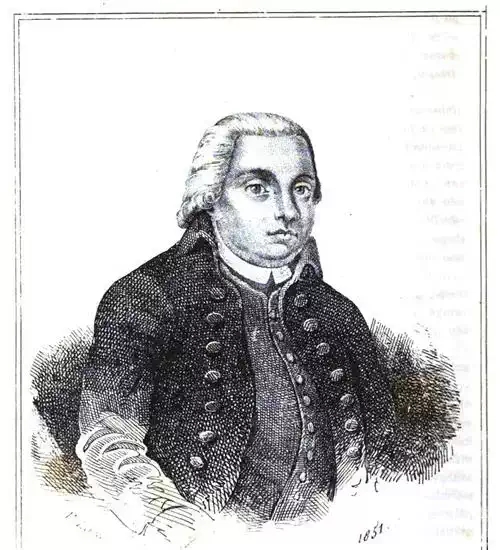
Domingos Caldas Barbosa, also known by the pseudonyms "D. Ana" and "Caldas", was a Luso-Brazilian poet and musician. He was born in Coimbra, Portugal, to a Portuguese father and a Brazilian mother. He died in Lisbon, Portugal. He is considered one of the most original figures of Arcadianism in Portuguese, especially for his fusion of poetry and music, and for his satirical and critical perspective on the society of the time.
Childhood and education
Caldas Barbosa's childhood and education are poorly documented. It is known that he lived in Portugal and Brazil, having a strong connection with Brazilian culture, especially with the customs and language of Rio de Janeiro. His musical education was a constant throughout his life, as he was a composer and performer himself, which directly influenced his poetic writing.
Literary career
Caldas Barbosa's literary career began with the publication of poems in periodicals of the time. He gained notoriety for his lyrical and, above all, satirical poetry. His main work, "O Colar de Pérolas" (1791), is a collection of verses that reflects his ability to blend the Arcadian style with a more popular and oral language. His work was influenced by his life between Portugal and Brazil, reflecting a hybrid culture.
Work, style, and literary characteristics
Caldas Barbosa's work is characterized by its musicality and strong connection to orality. His style combines elements of Arcadianism, such as pastoralism and classical mythology, with a more colloquial language and the influence of Brazilian rhythms. The themes addressed include love, nature, social criticism, and satire of the customs of the time. He frequently used the pseudonym "D. Ana", which gave him a feminine and ironic voice. His poetry is known for its vibrant rhythm, lightness, and humor.
Cultural and historical context
Caldas Barbosa lived in the transitional period from the 18th to the 19th century, a time of intense social and political changes in Portugal and Brazil. Arcadianism was in vogue, but he managed to innovate by incorporating elements of popular culture and music. His work reflects the cosmopolitan environment of Lisbon and the influence of Brazilian culture, in a context of colonial exploitation and the search for an emerging national identity.
Personal life
Details about Caldas Barbosa's personal life are limited. It is known that he was a musician and poet, and that he traveled between Portugal and Brazil. His connection with Rio de Janeiro seems to have been particularly significant. His public persona, associated with the pseudonym "D. Ana", suggests a form of irony and critical detachment from the social norms of the time.
Recognition and reception
Caldas Barbosa achieved recognition in his time, especially in the literary circles of Lisbon. His work "O Colar de Pérolas" was well received and contributed to his fame as a satirical and lyrical poet. Although his work may have been less academically studied than that of other Arcadian authors, he is recognized for his originality and his contribution to the diversification of lyricism in Portuguese.
Influences and legacy
Caldas Barbosa was influenced by Arcadian poetry and the European lyrical tradition, but he adapted these elements to a Luso-Brazilian context, incorporating musicality and orality. His work influenced later poetry, especially regarding the incorporation of popular elements and the exploration of satire with lightness. He is considered a precursor of modern poetry in some aspects, due to his formal and thematic freedom.
Interpretation and critical analysis
Caldas Barbosa's work is often interpreted as an expression of the hybrid Luso-Brazilian identity and as a testimony of the society of his time. His satirical poetry is seen as a biting, but elegant, commentary on the hypocrisies and customs of the elite. His musicality is a key element in the analysis of his work, which invites reading aloud and performance.
Curiosities and lesser-known aspects
The use of the pseudonym "D. Ana" is one of the most curious aspects of his career. Attributing a feminine voice and using irony to criticize society is a notable literary strategy. His skill as a musician and composer is another point of interest, distinguishing him from many other poets of the time.
Death and memory
Domingos Caldas Barbosa died in Lisbon. There are no records of significant posthumous publications, but his work, especially "O Colar de Pérolas", remains a landmark in Portuguese and Brazilian literature, remembered as a unique and innovative poet of Arcadianism.

 BR
BR