Identification and Basic Context
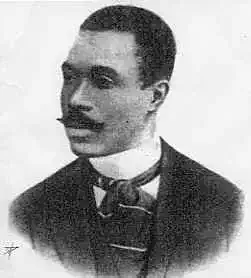
Full name: João da Cruz e Sousa
Pseudonym: Cruz e Sousa
Birth: November 24, 1861
Place of birth: Complexo de São José, Desterro (present-day Florianópolis), Santa Catarina, Brazil
Death: March 25, 1898
Place of death: Curicica, Rio de Janeiro, Brazil
Family background: Son of a Portuguese man and a freed slave woman, he grew up in a family with few resources but with some access to informal education. His racial background, as a mulatto, profoundly marked his life and work.
Nationality: Brazilian
Language of writing: Portuguese
Historical context: He lived and produced during the end of the Brazilian Empire and the beginning of the Republic, a period of great social and political transformations, but still marked by slavery and racism.
Childhood and Education
Son of a white Portuguese man and a black freed slave woman, Cruz e Sousa was informally educated by his stepfather, the military officer and teacher Galdino Jacobs, who gave him access to books and knowledge. His youth was marked by poverty and racial discrimination, challenges that shaped his worldview and artistic sensitivity. He had little formal education but was self-taught, devouring literary and philosophical works.
Literary Career
He began his literary career at a very young age, writing sonnets that already showed an inclination for lyricism and melancholy. His early work is sometimes associated with Parnassianism, but he soon evolved towards Symbolism, a movement of which he became one of the greatest exponents in Brazil. He published his first poems in newspapers and magazines of the time, gaining recognition for the originality of his style. The publication of "Broquéis" (1890) and "Faróis" (1891) consolidated his position as one of the most innovative poets of the period.
Work, Style, and Literary Characteristics
Main works: "Broquéis" (1890), "Faróis" (1891), "Antologia Poética" (posthumous, 1901).
Dominant themes: Spirituality, mysticism, transcendence, the ethereal, pain, suffering, death, the search for an ideal of purity and transcendence, platonic love, the mystery of existence, racial suffering.
Form and structure: Predominantly sonnets, but with innovative use of meter and rhyme, exploring sound and rhythm. He also used free verse in some poems.
Poetic devices: Intensive use of alliteration, assonance, synesthesia, metaphors, and symbols. Great musicality and suggestion, with a vocabulary that evokes the sublime and the impalpable.
Tone and poetic voice: Lyrical, elegiac, mystical, somber. The poetic voice is often that of a being tortured by earthly reality, seeking refuge in the spiritual world and transcendence.
Language and style: Erudite language, with a vocabulary that refers to the ethereal, the celestial, the mysterious, the somber. His hallmarks are dense imagery and suggestion.
Innovations: He introduced markedly Symbolist poetry to Brazil, exploring subjectivity, the unconscious, and the musicality of words in an unprecedented way.
Literary movements: Principal representative of Symbolism in Brazil.
Lesser-known works: "Os Segredos do Reinado" (poetry, 1878), "Escárnios" (prose, 1892).
Literary Work, Style, and Characteristics
Cultural and Historical Context
Cruz e Sousa wrote in a period of cultural and political effervescence in Brazil, with the end of slavery and the Proclamation of the Republic. However, racism persisted as a strong social barrier. Symbolism in Brazil, although with less impact than in Europe, found its main herald in Cruz e Sousa, with a work that distanced itself from the realism and scientism then in vogue. His interactions with other intellectuals were sometimes difficult, due to his social and racial condition.
Literary Work, Style, and Characteristics
Personal Life
Cruz e Sousa's life was marked by tragedy. He married Gavita, who died prematurely, and later married Dulcina, who accompanied him in his final years of suffering. Extreme poverty, tuberculosis, and alcoholism undermined his health and work capacity. His condition as a mulatto in a racist society added an immense weight to his existence, being an underlying theme in his work.
Literary Work, Style, and Characteristics
Recognition and Reception
Although he had some recognition during his lifetime, his legacy was only fully understood and valued posthumously. His work is now considered fundamental to Brazilian literature, marking a milestone of Symbolism. His poetry, with its deep musicality and existential despair, continues to captivate readers and critics.
Literary Work, Style, and Characteristics
Influences and Legacy
He was influenced by European Symbolist poets such as Verlaine and Mallarmé, but also by authors like Camões and Dante. His work influenced later Brazilian poets, especially those seeking greater formal and expressive freedom and an exploration of the spiritual dimension of art. He is considered one of the greatest lyric poets in the Portuguese language.
Literary Work, Style, and Characteristics
Interpretation and Critical Analysis
Cruz e Sousa's poetry is often interpreted as an expression of his personal and social suffering, transfigured into an ethereal and mystical lyricism. Critics highlight his ability to use language to evoke the unspeakable and the transcendent, as well as his deep melancholy. His work is a testament to the struggle against adversity and the search for redemption through art.
Literary Work, Style, and Characteristics
Curiosities and Lesser-Known Aspects
A curious aspect is the fact that he was a chess player, a game that requires strategy and abstraction, qualities that can be found in his poetry. He was also known for his peculiar handwriting. His humble life contrasted with the sophistication and depth of his poetic work.
Literary Work, Style, and Characteristics
Death and Memory
Cruz e Sousa died in 1898, in Rio de Janeiro, a victim of tuberculosis and alcoholism, in conditions of extreme poverty. Several works were published posthumously, such as "Antologia Poética" (1901), which helped consolidate his image as one of the great names in Brazilian poetry. His memory is honored as that of an artist who, despite all adversity, managed to create a work of singular beauty and depth.

 BR
BR