Identification and basic context
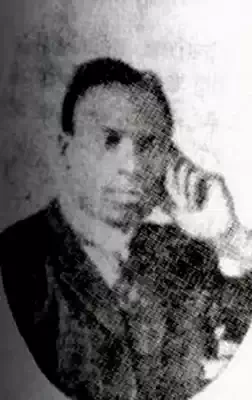
Costa Alegre was a Portuguese poet, whose real name is unknown or rarely disclosed. The pseudonym "Costa Alegre" evokes, perhaps ironically, a duality between the apparent lightness and the depth of his concerns. His work is written in Portuguese and his literary career developed in the context of Portuguese modernism, a period of intense artistic and literary renewal in Portugal.
Childhood and education
Little detailed information exists about Costa Alegre's childhood and education. However, his involvement with the modernist movement suggests an education that exposed him to European artistic and literary avant-gardes. He likely had contact with the ideas circulating in intellectual circles of the time, absorbing influences that would shape his poetic style.
Literary career
Costa Alegre's literary career is intrinsically linked to the modernist movement in Portugal. His early writing, although not precisely dated, falls within the general attempt to renew the language and poetic forms that characterized the first half of the 20th century. His work is marked by an evolution within the parameters of modernist experimentation, exploring new expressive possibilities.
Costa Alegre collaborated in important modernist publications, which served as a platform for disseminating his ideas and poetry. His activity as a poet was fundamental to the introduction of new themes and approaches in the Portuguese literary landscape.
Work, style, and literary characteristics
Costa Alegre's work, although not vast in volume, is remarkable for its audacity and innovation. His poems often address urban life, solitude, the fragmentation of identity, and existential anguish, central themes of modernism. He sought to express the complexity of the modern world through a language that breaks with traditional conventions.
The style of Costa Alegre is characterized by metrical experimentation and the use of free verse. His language is, at times, dense and imagistic, resorting to bold metaphors and innovative syntax to capture the speed and dissonance of contemporary life. The tone of his poetry can vary between the ironic, the satirical, and the deeply reflective.
He introduced formal innovations by challenging established poetic structures, seeking an equivalence between form and content that would more faithfully portray the modern experience. His work dialogues with tradition but refuses to imitate it, seeking a genuine expression of his time. Costa Alegre is associated with the modernist movement, contributing to its diversity.
Cultural and historical context
Costa Alegre lived and wrote in a period of great changes in Portugal and Europe, marked by the two World Wars, political instability, and rapid urbanization. Modernism, as a movement, emerged as a response to these transformations, and Costa Alegre's work reflects this atmosphere of questioning and the search for new forms of expression.
He was integrated into literary circles that sought to break with academicism and past-oriented aesthetics. His artistic position aligned with that of other modernists who sought an authentic modernity for Portuguese literature.
Personal life
Details about Costa Alegre's personal life are scarce. It is known that his dedication to poetry was intense, and his work reflects a keen sensitivity to the complexities of human and social life. Little is known about his personal relationships or civic involvement beyond his role in the literary movement.
Recognition and reception
Although Costa Alegre did not achieve the same prominence as other modernist poets, his work is recognized for its importance in the context of poetic renewal in Portugal. His work is valued by critics and scholars for its originality and its contribution to linguistic and formal experimentation.
Influences and legacy
Costa Alegre's influences undoubtedly stem from European avant-gardes and Portuguese modernist poets. His legacy lies in his courage to explore new forms and themes, paving the way for future generations of poets seeking a language more adapted to modernity.
Interpretation and critical analysis
Costa Alegre's poetry invites reflection on the human condition in modern society. His works are often analyzed from the perspective of fragmentation, alienation, and the search for meaning in a rapidly changing world.
Curiosities and lesser-known aspects
The pseudonym "Costa Alegre" itself can be seen as a curiosity, possibly a counterpoint to the seriousness or melancholy of many of his poems. The scarcity of biographical information about him adds a certain mystery to his figure, highlighting the focus on his literary work.
Death and memory
The circumstances of Costa Alegre's death and posthumous publications are not widely documented, which contributes to his somewhat elusive figure in the history of Portuguese literature.

 PT
PT