Identification and basic context
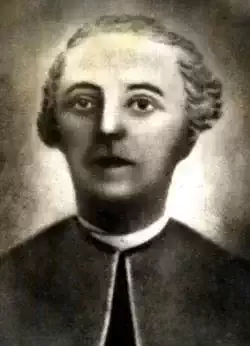
Cláudio Manuel da Costa was one of the main poets of Brazilian Arcadianism. He was born in Vila Rica (present-day Ouro Preto), Minas Gerais. He was a lawyer, magistrate, and poet, a central figure in the founding of the Arcádia Ultramarina, the first literary academy in Brazil.
Childhood and education
He stood out for his solid intellectual training, having studied Law in Coimbra, Portugal. This European education exposed him to the literary and philosophical currents of the Enlightenment and Classicism, which would profoundly influence his poetic work and his thought.
Literary career
His literary career was intrinsically linked to his role as a member of the Arcádia Ultramarina, where he used the pseudonym "Cláudio Gualtador". He began his poetic production in Portugal and consolidated it in Brazil, contributing to the affirmation of poetry with an Arcadian character in the Portuguese language.
Work, style, and literary characteristics
His most famous work is "Obras Poéticas" (Poetic Works) (published posthumously in 1768), which includes sonnets, odes, and eclogues. The dominant themes are idealized nature (bucolism), platonic love, reflection on simple life, and escape from urban agitation, in line with Arcadian precepts. His style is characterized by the pursuit of clarity, formal harmony, the use of antitheses, and polished language, with references to classical mythology. In "O Villa Rica", he describes his hometown in an idealized way. His poetry is an example of the adaptation of European Arcadianism to the Brazilian context.
Cultural and historical context
Cláudio Manuel da Costa lived during the height of the gold cycle in Minas Gerais, a period of great wealth and cultural effervescence, but also of political tensions that would lead to the Inconfidência Mineira, a movement in which he actively participated. His work reflects the ideals of freedom and the search for a distinct cultural identity, within a context of colonial domination.
Personal life
In addition to his literary activity, Cláudio Manuel da Costa held public office and played a prominent role in the political and social life of his time, being one of the leaders of the Inconfidência Mineira. His life was marked by civic commitment and the defense of ideals of autonomy.
Recognition and reception
He was one of the most respected poets of his time and is considered one of the founders of Brazilian literature. His work, although part of the Arcadian movement, has particularities that make it relevant to understanding the evolution of poetry in the Portuguese language.
Influences and legacy
Influenced by classical poets and Portuguese and Italian Arcadians, Cláudio Manuel da Costa, in turn, influenced later generations of Brazilian poets, consolidating the Arcadian tradition and paving the way for Romanticism.
Interpretation and critical analysis
The work of Cláudio Manuel da Costa is often analyzed from the perspective of Arcadianism, highlighting his ability to transpose European models to the Brazilian setting, as well as his participation in the political dissent of his time.
Curiosities and lesser-known aspects
He actively participated in the Inconfidência Mineira, a separatist movement against Portuguese rule, which led to his imprisonment and exile.
Death and memory
He died in Rio de Janeiro, after being arrested and exiled due to his participation in the Inconfidência Mineira. His memory is preserved as one of the pioneers of Brazilian literature and an important intellectual of his time.

 BR
BR