Identification and basic context
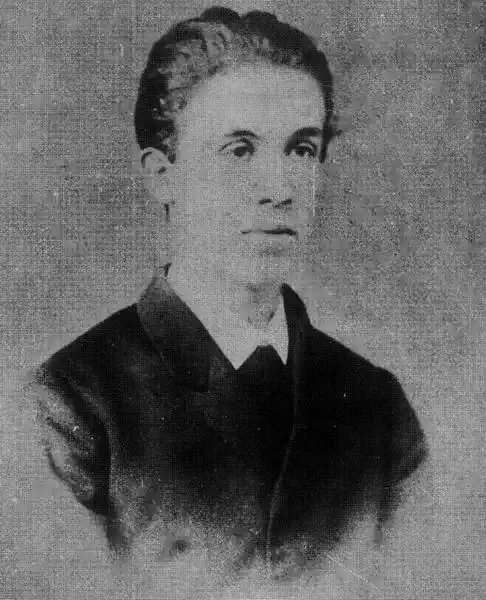
The poet's full name is João Cesário de Lacerda Verde. He was born in Lisbon on June 25, 1855, and died in the same city on June 26, 1886. He was the son of a wealthy bourgeois family, which allowed him a careful education. He was a Portuguese-language poet.
Childhood and education
Cesário Verde was born and grew up in a well-off family environment, which influenced his sensitivity and perspective. He attended secondary school at the Colégio de São Francisco de Paula and later enrolled at the University of Coimbra to study Philosophy, but did not complete the course. He was self-taught, with vast cultural and literary interests. Readings of classical and contemporary authors, as well as close observation of Lisbon's urban life, shaped his poetic vision.
Literary career
Cesário Verde began writing poetry in his youth. His main work, "O Livro de Cesário Verde" (The Book of Cesário Verde), was published posthumously in 1887, organized by his brother, Adolfo Verde. Cesário Verde's poetry evolved from an initial lyricism to a more realistic and descriptive approach, focusing on the details of urban and rural life. Although he did not actively collaborate in prominent literary magazines, his name would later be recognized posthumously as a landmark in Portuguese poetry.
Work, style, and literary characteristics
Work, style, and literary characteristics
Cesário Verde's most significant work is "O Livro de Cesário Verde" (1887). The dominant themes in his poetry include the city of Lisbon, nature, daily life, childhood, the human condition, and the ephemerality of time. It is characterized by the use of free verse and varied metrical forms, avoiding conventionalism. He uses poetic devices such as metaphor and synesthesia, creating vivid and sensory images. The tone of his poetry can vary between lyrical, contemplative, and ironic. His language is simultaneously simple and precise, capable of capturing beauty in the most mundane details. He is considered a precursor of modernism, with formal and thematic innovations that set him apart from the Romantic tradition.
Work, style, and literary characteristics
Cultural and historical context
Cesário Verde lived in a period of transition in Portugal, the late 19th century, marked by political instability and profound social and urban changes. His work engages with the modernization of Lisbon, contrasting urban life with nature. He is associated with a generation that sought new forms of poetic expression, distancing themselves from Romanticism. His poetry reflects a critical yet tender look at the society of his time.
Work, style, and literary characteristics
Personal life
Cesário Verde had a life marked by sensitivity and a certain melancholy. His relationship with his family, especially his mother, was important. He had no affective relationships that significantly shaped his work explicitly. He lived a discreet life, dedicated to poetry and observation of the world. He is not known to have had active political involvement.
Work, style, and literary characteristics
Recognition and reception
During his lifetime, Cesário Verde received very limited recognition. His work only gained prominence and due recognition after his death, with the publication of "O Livro de Cesário Verde". He is today considered one of the most important poets in 19th-century Portuguese literature and an unavoidable precursor of modernism.
Work, style, and literary characteristics
Influences and legacy
Cesário Verde was influenced by authors such as Baudelaire and by realist poetry. His legacy is immense, having influenced subsequent generations of Portuguese poets, including Fernando Pessoa and the Orpheu magazine group. His way of observing reality and transfiguring it poetically opened new paths for the Portuguese-language poetry.
Work, style, and literary characteristics
Interpretation and critical analysis
Cesário Verde's work has been the subject of numerous critical studies. His poetry is read as a profound meditation on existence, the fleetingness of time, and the intrinsic beauty of everyday life. The relationship between the urban and the natural, and how they intertwine in human perception, are central themes for the analysis of his work.
Work, style, and literary characteristics
Curiosities and lesser-known aspects
Cesário Verde was known for his discretion and introspection. His sensitivity was sharp, capturing details that went unnoticed by most. Although he attended the University of Coimbra, he did not adapt to the academic environment. His poetry, often considered melancholic, also reflects a deep tenderness for life and people.
Work, style, and literary characteristics
Death and memory
Cesário Verde died prematurely at the age of 31 due to tuberculosis. His early death left a sense of loss in Portuguese literature. Cesário Verde's memory is celebrated as that of a visionary poet who, with a concise but powerful body of work, revolutionized Portuguese-language poetry.

 PT
PT