
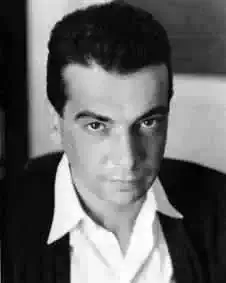
Carlos de Oliveira
 PT
PT
Carlos de Oliveira was a Portuguese poet, novelist, and short story writer, a central figure in 20th-century Portuguese literature. His poetic work, marked by dense language and profound reflection on the human condition, the land, and death, set a new standard in contemporary Portuguese poetry. As a novelist, he explored themes such as loneliness, incommunicability, and the search for identity in a changing society. Recognized for his originality and expressive power, Carlos de Oliveira left a multifaceted literary legacy, which spans lyrical poetry and introspective prose, with an unmistakable mark of stylistic rigor and thematic depth. His work continues to be studied and admired for its complexity and universality.
n. 1921-08-10, Belém · m. 1981-07-01, Lisboa
Bio
Identification and Basic Context
Full Name: Carlos da Fonseca Ferreira de Oliveira Pseudonyms or Heteronyms: Carlos de Oliveira Date and Place of Birth: April 14, 1921, Cucujães, Oliveira de Azeméis, Portugal Date and Place of Death: August 11, 1981, Lisbon, Portugal Family Background, Social Class, and Origin Cultural Context: Born into a family of rural landowners in Beira Alta, with ties to the land and traditions. His origins had a significant influence on his work, especially his poetry. Nationality: Portuguese Language(s) of Writing: Portuguese Historical Context in Which He Lived: Mid-20th century in Portugal, a period marked by the Estado Novo dictatorship, the colonial war, and profound social and cultural transformations.Childhood and Education
Spent his childhood and part of his youth in Cucujães, a rural environment that would deeply mark his sensibility and work. Attended the Liceu Nacional de Viseu and later the University of Coimbra, where he studied Law and subsequently Germanic Philology, in which he graduated. Early Influences: The rural landscape, popular religiosity, Portuguese literary classics, and foreign authors such as German and French poets. Literary, Philosophical, or Artistic Movements Absorbed: Although not strictly adhering to any movement, his work dialogues with Neorealism and Surrealism but develops an autonomous and innovative voice. Defining Events in Youth: The experience of country life and his subsequent academic training in Coimbra, a vibrant cultural and intellectual center.Literary Career
Start of Writing: Began writing poetry in his adolescence. Published his first poetry book, "Fidalguias," in 1941. Evolution Over Time: His work evolved from poetry more closely linked to tradition to more experimental and dense writing, both in poetry and prose. He went through different thematic and stylistic phases. Chronological Evolution of Work: Published poetry, short stories, and novels, demonstrating remarkable versatility. His poetic work is considered the most influential. Collaborations in Magazines, Newspapers, and Anthologies: Collaborated in various literary publications, such as "Revista de Portugal" and "O Tempo e o Modo." Activity as a Critic, Translator, or Editor: Worked as a literary critic and translator, enriching the Portuguese cultural landscape.Work, Style, and Literary Characteristics
Main Works: Poetry: "Fidalguias" (1941), "Mãe de Água" (1945), "O Coro e a Cólera" (1955), "A Habitação de David" (1960), "O Nó" (1971), "Trinta Poemas" (1974), "Obra Poética" (1977). Novel: "Afonso, o Muço" (1944), "Uma Abelha na Chuva" (1958), "A Seita dos Lenços Brancos" (1977). Short Story: "Contos" (1981). Dominant Themes: The land, childhood, death, solitude, incommunicability, memory, the human condition, the search for identity, the passage of time. Form and Structure: In poetry, he explored free verse with great metrical and rhythmic rigor, creating original and dense forms. In prose, the narrative structure is often fragmented and non-linear. Poetic Devices: Bold and surprising metaphors, intense rhythm, intrinsic musicality, syntactically expressive language. Tone and Poetic Voice: Introspective, melancholic, at times anguished, but always with lyrical and philosophical strength. Poetic Voice: Personal, yet universal, capable of transcending individual experience to touch upon the deepest existential questions. Language and Style: Dense, allusive language, with a rich and precise vocabulary. Complex and innovative syntactic constructions. Formal or Thematic Innovations: Introduced a new dimension in Portuguese poetry, combining a deep connection with the land and roots with an existentially and formally innovative reflection. Relationship with Tradition and Modernity: Successfully combined the heritage of traditional Portuguese poetry with the formal and thematic experiments of literary modernity. Associated Literary Movements: Although not affiliated with a single movement, his work is often associated with the Post-War period, with dialogues with Neorealism and Surrealism, but developing a unique aesthetic. Lesser-Known or Unpublished Works: "A Seita dos Lenços Brancos" is one of his later and less widely known, but equally significant, novels.Work, Style, and Literary Characteristics
Cultural and Historical Context His work reflects the tensions and difficulties of Portuguese society under dictatorship, war, and emigration. He lived and wrote during a period of great intellectual and artistic effervescence in Portugal. He engaged with other writers of his generation and authors from previous generations, creating a literary corpus that is both singular and integrated into a broader context. Political or Philosophical Stance: Although not an author of direct political intervention, his work reflects a deep concern with the human condition and social injustices, characteristic of his time.Work, Style, and Literary Characteristics
Personal Life Married to the writer Maria Alberta Menéres. He led a life dedicated to writing and study, marked by a reserved and introspective personality. Literary Friendships and Rivalries: Maintained relationships with other intellectuals and writers of his time in Portugal. Personal Experiences and Crises, Illnesses, or Conflicts: His work is permeated by a sensitivity to human fragility and the inevitability of death, suggesting possible internal conflicts and intense experiences. Parallel Professions: Worked as a high school teacher and held positions in the cultural sector. Religious, Spiritual, or Philosophical Beliefs: His work explores questions of transcendence and the meaning of life, without adhering to specific religious dogmas.Work, Style, and Literary Characteristics
Recognition and Reception The recognition of his work, both by critics and the public, was gradual and consolidated over time. He is considered one of the greatest Portuguese poets of the 20th century. Awards, Distinctions, and Institutional Recognition: Received several important literary awards. Critical Reception During Life vs. Posthumous Recognition: During his lifetime, he was already recognized for his literary quality. Posthumously, his status as a master of Portuguese poetry was definitively consolidated. Popularity vs. Academic Recognition: His work is studied in schools and universities, being widely recognized in academia, but also appreciated by readers seeking poetry of great depth and rigor.Work, Style, and Literary Characteristics
Influences and Legacy Authors Who Influenced Him: Fernando Pessoa, French Symbolist poets, German poets, Camões. Poets and Movements He Influenced: Influenced later generations of Portuguese-language poets through his formal innovation, the density of his language, and the depth of his reflection. Impact on National and World Literature: His work has a significant impact on Portuguese-language poetry and is internationally recognized. Entry into the Literary Canon: He is an unavoidable author in the canon of Portuguese literature. Academic Studies Dedicated to His Work: There is a vast critical bibliography on his work.Work, Style, and Literary Characteristics
Interpretation and Critical Analysis Carlos de Oliveira's work is rich in layers of meaning, allowing for multiple readings. His explorations of identity, the relationship with time, and death are central themes in critical analysis.Work, Style, and Literary Characteristics
Curiosities and Lesser-Known Aspects He was known for his reserved personality and his almost monastic dedication to writing. His poetic work is often described as "difficult," not due to obscurity, but because of its density and the demand it places on the reader's attention.Work, Style, and Literary Characteristics
Death and Memory He died in Lisbon in 1981. His death was felt as a great loss to Portuguese literature. His work continues to be published and disseminated, keeping his memory and literary legacy alive.Poems
0No poems found
Comments (0)
No comments yet. Be the first to comment.