
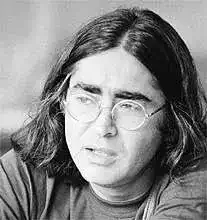
Cacaso
 BR
BR
Cacaso, pseudonym of Antônio de Pádua Danças, was a Brazilian poet and literary critic, a prominent figure in marginal poetry. His work is marked by irony, humor, and irreverence, addressing themes of urban daily life, social relations, and the human condition itself with a colloquial and accessible language. He stood out for his ability to blend the lyrical with the prosaic, the reflective with the fun, creating poetry that directly engaged the reader. His literary output, although concise, left a significant mark on contemporary Brazilian poetry, influencing later generations through its authenticity and the way it demystified poetic language, bringing it closer to life.
n. 1944-03-13, Uberaba · m. 1987-12-27, Rio de Janeiro
Bio
Identification and Basic Context
The Brazilian poet Cacaso, whose real name was Antônio de Pádua Danças, was born on January 25, 1944, in Rio de Janeiro. He used the pseudonym Cacaso for his literary work. He was known for his irreverent and colloquial writing.Childhood and Education
Antônio de Pádua Danças had a childhood and youth marked by Rio de Janeiro's middle class. He studied Letters at the Pontifical Catholic University of Rio de Janeiro (PUC-Rio), where he would later teach. This academic background in literature was fundamental to his work as a literary critic and to the very creation of his poetic work.Literary Career
Cacaso began his literary career in the context of the marginal poetry or Brazilian counterculture of the 1970s. His work began to gain prominence with the publication of books such as "Seus Olhos" (Your Eyes) (1975) and "Eu te amo porque te odeio" (I love you because I hate you) (1976), which drew attention for the originality and freshness of their language. In addition to being a poet, he was a university professor and literary critic, contributing articles and reviews to various publications.Work, Style, and Literary Characteristics
Cacaso's main works include "Seus Olhos" (1975), "Eu te amo porque te odeio" (1976), "Amor de Poeta" (Poet's Love) (1987), and "Na Corda Bamba" (On the Tightrope) (1997). The central themes of his poetry are love, the city, human relationships, melancholy, and the ephemerality of life, always approached with an ironic and tender perspective. His style is characterized by colloquial language, musicality, and the ability to move between lyricism and humor. He frequently used free verse and short forms, exploring conciseness and the power of words.Cultural and Historical Context
Cacaso lived and produced during a period of cultural effervescence in Brazil, especially during the military dictatorship. Marginal poetry, the movement with which he associated himself, emerged as an alternative form of expression and cultural resistance, with a strong critical and experimental bent. He dialogued with other poets of his generation, such as Chacal and Ana Cristina Cesar.Personal Life
Little is publicly known about his personal life, but his work often reflects a confessional tone and a keen sensitivity to the nuances of affective relationships. He was married to the writer Ana Cristina Cesar, a relationship that marked them both artistically.Recognition and Reception
Cacaso earned an important place in contemporary Brazilian poetry, being recognized for his originality and the strength of his language. His work is studied and appreciated, especially for its ability to renew the lyrical tradition with a modern and critical perspective.Influences and Legacy
Although his work is relatively short, Cacaso influenced later poets through his authenticity, irreverence, and the way he explored everyday life and emotions. His poetry is seen as a legacy of authenticity and renewal of poetic language.Interpretation and Critical Analysis
Cacaso's poetry is often analyzed from the perspective of deconstructing traditional poetic language and the insertion of the poet into the urban and social context. His work offers a melancholic and, at the same time, humorous view of existence.Curiosities and Lesser-Known Aspects
Cacaso was known for his subtle humor and an intellectual stance that did not take itself too seriously, a characteristic reflected in his poems. His relationship with Ana Cristina Cesar was a point of interest for literary criticism.Death and Memory
Antônio de Pádua Danças (Cacaso) passed away on October 30, 1988, in Rio de Janeiro. His premature death left a void in Brazilian poetry, but his work continues to be read and celebrated.Poems
0No poems found
Comments (0)
No comments yet. Be the first to comment.