Identification and Basic Context
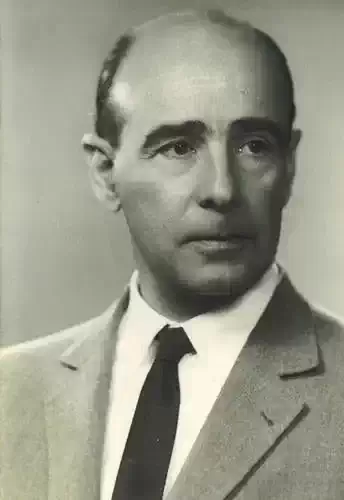
José Brilhante da Fonseca, better known as Branquinho da Fonseca, was a notable Portuguese writer, poet, and filmmaker. He was born in Lisbon in 1903 and died in 1995. His literary and artistic work developed during a period of great transformations in Portugal and the world, which is reflected in his creations.
Childhood and Education
Little is known about Branquinho da Fonseca's childhood and specific education, but his vast culture and the diversity of his interests suggest a path of self-taught learning and a deep immersion in various readings. His connection to the artistic and cultural scene in Lisbon was certainly an important formative factor.
Literary Career
Branquinho da Fonseca began his literary career, with a focus on poetry, but his work extended to prose and cinema, where he also left his mark. His evolution was characterized by constant formal and thematic experimentation, exploring different facets of artistic expression. He collaborated in various publications and anthologies, consolidating his presence in the Portuguese literary and cultural scene.
Work, Style, and Literary Characteristics
The work of Branquinho da Fonseca is rich and diverse, encompassing poetry, prose, and cinema. In poetry, themes such as the human condition, the ephemerality of time, and the search for meaning stand out. His style is marked by introspective lyricism, combined with careful language and strong musicality. He explored various poetic forms, without adhering to rigid conventions, demonstrating an inclination for experimentation. In prose, he addressed social critiques and existential reflections, with a tone that was sometimes melancholic, sometimes ironic. In cinema, he stood out for his artistic vision and the way he integrated literary elements into his productions.
Cultural and Historical Context
Branquinho da Fonseca lived and produced during a significant period of Portuguese history, encompassing part of the Estado Novo dictatorship and the transition to democracy. This social and political context, although not always the central theme of his work, permeates his reflections on freedom, identity, and the human condition. He was associated with literary and artistic circles of his time, engaging with other creators and actively participating in cultural life.
Personal Life
Aspects of Branquinho da Fonseca's personal life are less publicly known, but his dedication to the arts suggests an intense life focused on creation. His involvement in different artistic fields indicates a multifaceted personality and a restless spirit. His artistic and literary vision was likely shaped by his experiences and his worldview.
Recognition and Reception
Branquinho da Fonseca is recognized as a unique and important figure in Portuguese culture. His work, although perhaps not achieving the same massive popularity as other authors, is appreciated for its depth and originality. His contribution to Portuguese poetry, prose, and cinema is valued by critics and academics.
Influences and Legacy
Although direct influences on Branquinho da Fonseca are difficult to pinpoint, it is likely that he engaged with the Portuguese and European poetic tradition. His legacy lies in the originality of his style, the depth of his reflections, and his artistic versatility, which influenced later generations of creators in different fields.
Interpretation and Critical Analysis
The work of Branquinho da Fonseca invites diverse interpretations, exploring existential and philosophical themes such as the passage of time, loneliness, and the search for meaning. His poetry, in particular, has been the subject of critical analysis for its ability to evoke complex states of mind and to question reality.
Curiosities and Lesser-Known Aspects
An interesting aspect of his career is his foray into cinema, demonstrating a wide range of artistic talents and interests. His ability to move between literature and cinema reveals an integrated vision of art and its capacity for expression.
Death and Memory
Branquinho da Fonseca passed away in 1995, leaving behind a valuable literary and cinematographic collection. His memory is preserved through the dissemination and study of his work, which continues to be a reference point for understanding 20th-century Portuguese culture.

 PT
PT