Identification and Basic Context
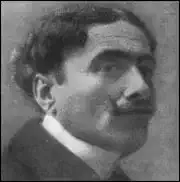
Augusto César de Lacerda Gil, more commonly known as Augusto Gil, was a Portuguese poet. He was born in Porto in 1873 and died in Lisbon in 1929. He was the son of a law professor and came from a family with intellectual traditions. He wrote predominantly in Portuguese.
Childhood and Education
Augusto Gil was born into a bourgeois and cultured family. His father was a Law professor at the University of Coimbra, which provided the young Augusto with an environment conducive to study and culture. He attended the Liceu Central do Porto and subsequently enrolled in the Faculty of Law at the University of Coimbra, where he graduated in 1897. During his academic career in Coimbra, he associated with figures who would later mark Portuguese literature, such as Camilo Pessanha and António Nobre, absorbing the influences of Symbolism and Parnassianism.
Literary Career
His literary career began in Coimbra, where he actively participated in the university's cultural life. He published his first poems in academic and literary journals. His work evolved from an initial phase influenced by Parnassianism to a more intimate and Symbolist lyricism. His poetic output was marked by notable consistency over time. He collaborated in various publications of the era, such as 'Revista de Portugal' and 'A Águia'.
Work, Style, and Literary Characteristics
His main works include 'Luar de Janeiro' (1890), 'Líricas' (1902), 'A Sombra do Carvalhal' (1910), and 'O Rio Sorri' (1927). The dominant themes in his poetry are love, death, time, saudade, nature, and the ephemerality of life. Formally, Augusto Gil demonstrated a remarkable mastery of traditional poetic forms, frequently using the sonnet with skill, but he also explored free verse. His poetry is characterized by its musicality, cadenced rhythm, and rich vocabulary. The poetic tone is often lyrical, elegiac, and melancholic, with a poetic voice that shifts between the personal and the universal. His style is refined and elegant, with subtle use of metaphors and careful language. Although linked to Symbolism, Augusto Gil developed a very personal style, marking a transition between nineteenth-century poetry and the new trends of the twentieth century.
Cultural and Historical Context
Augusto Gil lived in a period of profound transformations in Portugal, marked by the political instability of the late Monarchy and the advent of the Republic. He was part of the so-called "Generation of 1890" or "Transitional Generation," along with other poets who, like him, sought to renew Portuguese lyricism, distancing themselves from Romanticism and approaching European Symbolist and Parnassian influences. He maintained relationships with other important writers of his time, participating in literary circles and gatherings. His work reflects the sensibility and anxieties of a time of change and questioning.
Personal Life
Augusto Gil practiced law, but his passion for poetry marked his life. He maintained close relationships with other intellectuals and poets of his generation. His work reveals a refined sensitivity to existential issues and the beauty of nature.
Recognition and Reception
Augusto Gil was a recognized poet during his lifetime, considered one of the most important lyrical voices of his generation. His work was praised by critics for its formal quality and the depth of the sentiments expressed. He is an established name in the history of Portuguese literature.
Influences and Legacy
He was influenced by poets such as Camões and Antero de Quental, and by French Symbolist and Parnassian currents. His legacy lies in his ability to renew Portuguese poetry with sincere lyricism and careful form. He influenced later generations of poets with his technical mastery and the depth of his lyrical expression. His work continues to be studied and appreciated for its relevance in the Portuguese literary canon.
Interpretation and Critical Analysis
Augusto Gil's poetry is often analyzed from the perspective of Symbolism, highlighting his exploration of themes such as the fleetingness of time, the melancholy of lost love, and the pursuit of an unattainable ideal. Critics point to a certain emotional restraint in favor of formal perfection, but acknowledge the genuineness of his lyrical voice.
Curiosities and Lesser-Known Aspects
One curious aspect is his dual role as a jurist and poet, demonstrating his ability to reconcile his professional life with his literary vocation. His work is a testament to his profound connection to nature, which appears as a mirror of his emotions and reflections.
Death and Memory
Augusto Gil died in Lisbon in 1929. After his death, his work continued to be valued, consolidating his place as one of the great Portuguese lyric poets of the 20th century.

 PT
PT