Identification and basic context
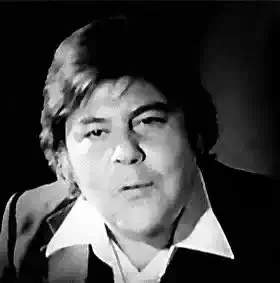
Ary dos Santos, full name Ary Fausto Figueiredo de Almeida dos Santos, was born on December 7, 1937, in Lisbon and died on June 14, 1984, also in Lisbon. Son of Ary dos Santos and Maria de Almeida dos Santos, he came from a middle-class family. He was Portuguese and wrote in Portuguese. He lived most of his life under the dictatorial regime of the Estado Novo in Portugal, a period of censorship and repression that influenced many artists of his generation.
Childhood and education
Ary dos Santos spent his childhood in Lisbon. His schooling was marked by a traditional education. From an early age, he showed a taste for reading and music, especially fado. He attended Law school at the University of Lisbon but did not complete his degree, dedicating himself more to poetry and music.
Literary career
His literary activity began in the 1950s, with the publication of poems in newspapers and literary magazines. His rise as a poet occurred mainly from the 1960s onwards, with the publication of his first book, "A Descoberta do Planeta" (1963). Ary dos Santos stood out as a lyricist, composing poems that were set to music by great names in Portuguese music, many of them linked to fado and protest songs. His poetic work evolved from a more intimate lyricism to poetry with a strong social and political character, especially after April 25, 1974.
Work, style, and literary characteristics
Ary dos Santos' most important works include "A Descoberta do Planeta" (1963), "O Sangue e a Rosa" (1969), "Entremaris" (1974), and "Outros Ontens" (1981). The dominant themes in his poetry are love, saudade, the ephemerality of time, beauty, death, and the human condition, with a strong component of social and political criticism, especially after April 25. In terms of form, he often used free verse, but with great attention to musicality and rhythm, which made him an exceptional lyricist. His poetic resources include expressive metaphors, sensory images, and a vocabulary that combines everyday language with refined lyricism. The poetic voice is often confessional, melancholic, and passionate, but also interventive and lucid. Ary dos Santos' language is fluid, accessible, yet loaded with emotion and depth. He is often associated with the Nova Canção Portuguesa movement and protest poetry, but his work transcends these categories, maintaining a unique identity.
Cultural and historical context
Ary dos Santos lived in a period marked by dictatorship in Portugal. His work reflected this context, especially through protest songs, which used poetry to express social and political discontent. He was a contemporary of other poets and singer-songwriters who shared the same spirit of protest. His philosophical stance was one of defending freedom and democracy. Portuguese society at the time, with its restrictions and yearnings for change, had a profound impact on his work, which became a mirror of the anxieties of his generation.
Personal life
Ary dos Santos' personal life was marked by an intense passion for poetry and music. He had significant romantic relationships that inspired many of his poems about love and saudade. His dedication to art, sometimes at the expense of his financial stability, is a remarkable aspect of his career. He was a man of conviction, and his connection to the cause of freedom and democracy was unwavering.
Recognition and reception
Ary dos Santos is widely recognized in Portugal as one of the great poets of the second half of the 20th century. His work, especially his song lyrics, achieved great popularity and continues to be sung and admired. He received several awards and distinctions throughout his career, and his work is studied in schools and universities. The recognition of his artistic value is unanimous.
Influences and legacy
Ary dos Santos was influenced by poets such as Fernando Pessoa and Luigi Pirandello, and by Portuguese popular music. His legacy is immense, both in poetry and music. He inspired numerous singer-songwriters and poets, and his lyrics have become classics of Portuguese music. His work continues to resonate with new generations due to its emotional depth and social relevance.
Interpretation and critical analysis
Ary dos Santos' poetry has been interpreted from various perspectives, highlighting the analysis of his amorous lyricism, his existential reflection, and his ability to translate the feelings and anxieties of the Portuguese people into verse. His poems explore the fragility of the human condition and the search for meaning in a constantly changing world.
Curiosities and lesser-known aspects
A curious aspect of his life is his deep connection to fado, a musical genre he knew how to renew with his poetic writing. His personality, sometimes described as melancholic and introspective, contrasted with the strength of his artistic interventions. "Bar Botequim," one of the places he frequented, became a mythical space associated with his figure.
Death and memory
Ary dos Santos died prematurely, a victim of cancer. His death left a void in Portuguese culture. His memory is celebrated through concerts, editions of his works, and the continuous dissemination of his songs, which remain alive and relevant.

 PT
PT