
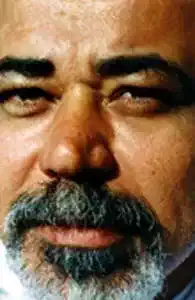
Artur Gomes
b. 1998
 PT
PT
PT
Artur Gomes was a Portuguese poet whose work is predominantly associated with surrealism and neorealism. His writing is characterized by the exploration of the unconscious, social criticism, and reflection on the human condition. Despite a less extensive poetic output compared to other authors, his distinct poetic voice and his ability to combine formal experimentation with a profound sense of commitment to social reality grant him a special place in 20th-century Portuguese poetry.
n. 1998-07-03, Uberlândia
1
Views
Bio
Identification and basic context
Artur Gomes was a Portuguese poet, whose work stands out for its connection to the surrealist and neorealist movements in Portugal. Born in 1925, his life and work were marked by the sociopolitical context of Portugal during the Estado Novo. His nationality was Portuguese, and his writing language was Portuguese.Childhood and education
Details about Artur Gomes's childhood and specific education are scarce in the available information. However, it is likely that his youth was lived during a period of great social and political instability in Portugal, which may have influenced his intellectual development and his subsequent inclination towards social and critical themes.Literary career
Artur Gomes's literary career is associated with poetry. Although his work may not have been extensive in volume, his participation in literary movements such as surrealism and neorealism indicates an active involvement with the cultural scene of his time. His writing reflects a duality, exploring both the recesses of the mind and the unconscious, as well as the social and political realities of the country.Work, style, and literary characteristics
Artur Gomes's work is characterized by a fusion of surrealist and neorealist elements. It explores the imaginary, the dreamlike, and the subconscious, as is typical of surrealism, but also addresses social themes, the lives of the working classes, and criticism of the prevailing dictatorial regime, characteristics of neorealism. His poetic style thus seeks to combine formal experimentation with a strong commitment to reality, giving his poetry a profound and reflective dimension.Cultural and historical context
Artur Gomes lived most of his adult life under the Estado Novo regime in Portugal. This dictatorial context, marked by censorship and repression, was an important backdrop for many artists and intellectuals of the time. The surrealist movement in Portugal, although less prominent than in other countries, and the neorealist movement, which sought to portray social reality and defend the values of a more just society, were the main artistic and ideological currents with which Gomes interacted. His poetry likely reflects the tensions and aspirations of a generation that yearned for freedom and greater social awareness.Personal life
Detailed information about Artur Gomes's personal life, including romantic relationships, family, friendships, or parallel professions, is not widely documented. The focus of the information is on his poetic work and his affiliation with literary movements.Recognition and reception
The recognition and reception of Artur Gomes's work may have been influenced by his positioning within specific literary movements and the political context of his time. Although he may not have achieved the same notoriety as other contemporary poets, his work is valued by those who study 20th-century Portuguese poetry, especially regarding the intersection between surrealism and neorealism.Influences and legacy
The influences on Artur Gomes's work naturally derive from the movements he embraced: surrealism, with its exploration of the unconscious and creative freedom, and neorealism, with its appeal to social justice and the representation of reality. His legacy lies in his contribution to the diversity of Portuguese poetry, demonstrating the possibility of reconciling aesthetic experimentation with social and political engagement.Interpretation and critical analysis
Artur Gomes's work invites critical analyses that address the dialectic between the inner and outer worlds, the dreamlike and the factual. The way he reconciles poetic language with social message is a central point for the interpretation of his poetry. Criticism may explore how he used lyricism and formal experimentation to circumvent censorship and express ideas of freedom and social criticism.Curiosities and lesser-known aspects
Specific details about curiosities or lesser-known aspects of Artur Gomes's life are not widely disclosed, which may indicate a more reserved profile or less media projection compared to other authors.Death and memory
The date and circumstances of Artur Gomes's death, as well as the existence of posthumous publications, are not easily accessible information, suggesting that his poetic legacy may have remained more restricted to academic circles and admirers of less mainstream Portuguese poetry.Poems
0No poems found
Comments (0)
Log in
to post a comment.
No comments yet. Be the first to comment.