
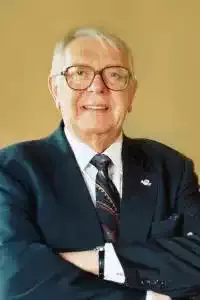
António Manuel Couto Viana
1923–2010
· lived 87 years
 PT
PT
PT
António Manuel Couto Viana was a Portuguese poet of great relevance, whose work is characterized by deep lyricism and a strong connection to the poetic tradition. His writing frequently explores themes such as nature, faith, saudade, and Portuguese identity, with an elaborate language and striking musicality. Associated with important literary movements, Couto Viana left a poetic legacy that reflects both his individual sensibility and a deep rooting in the culture and history of Portugal.
n. 1923-01-24, Viana do Castelo · m. 2010-06-08, Lisboa
3
Views
Bio
Identification and Basic Context
António Manuel Couto Viana (1910-1993) was a Portuguese poet. He was born in Seia and died in Coimbra. He had a deep connection with the Beira Alta region and Portuguese culture in general. His work is often associated with Neorealism and the Popular Poetry Movement.Childhood and Education
Couto Viana had a childhood marked by the rurality of Beira Alta, a region that profoundly influenced his sensibility and his work. He was educated in Coimbra, where he studied Law, but his passion for literature and poetry was a central element in his development.Literary Career
The beginning of his literary activity dates back to his youth, with publications in newspapers and magazines. Couto Viana was one of the founders of the magazine "Ateneu" in Coimbra. His work evolved over time, maintaining a line of lyricism and a strong sense of belonging to the Portuguese land and culture. He was also an active promoter of popular poetry.Work, Style, and Literary Characteristics
Among his main works are "O Coração e o Mundo" (1935), "As Horas de Ísis" (1940), and "O Vento de Trás-os-Montes" (1943). His recurring themes include nature, faith, melancholy, the homeland, and the life of the people. The poetic form used by Couto Viana varies, but there is a predilection for more traditional forms, with strong musicality and rhythm. His language is elaborate but accessible, seeking to capture the essence of the Portuguese soul. The poetic tone is often elegiac and confessional, with a voice that emanates authenticity and feeling.Work, Style, and Literary Characteristics
Couto Viana lived through a crucial period of Portuguese history, marked by the Estado Novo dictatorship. His work sometimes reflects a sense of social criticism and a love for the homeland that transcends political regimes. He was a contemporary of important Portuguese poets, with whom he dialogued and sometimes diverged in aesthetic terms.Work, Style, and Literary Characteristics
His connection with the Beira Alta region and the city of Coimbra was fundamental in his life. As a jurist, he balanced his profession with his literary activity. His faith and spirituality were also important aspects of his life, reflected in his poetry.Work, Style, and Literary Characteristics
António Manuel Couto Viana was recognized in his time, especially for his work in favor of popular poetry and for his lyrics with a national character. His work is an important part of 20th-century Portuguese literature.Work, Style, and Literary Characteristics
Couto Viana was influenced by the Portuguese poetic tradition, but also by popular poetry and by authors who knew how to capture the essence of the national spirit. His legacy lies in the preservation of authentic lyricism and his contribution to the valorization of Portuguese culture.Work, Style, and Literary Characteristics
Couto Viana's work can be interpreted from the perspective of Portuguese identity, the relationship between man and the land, and the search for spiritual transcendence. His poetry offers a sensitive look at the human condition.Work, Style, and Literary Characteristics
At times, Couto Viana's work is associated with a certain saudosismo, but a deeper analysis reveals a complexity that goes beyond simple lament.Work, Style, and Literary Characteristics
António Manuel Couto Viana passed away in 1993, leaving behind a body of work that continues to be studied and appreciated, honoring his memory as one of Portugal's notable poets.Poems
0No poems found
Comments (0)
Log in
to post a comment.
No comments yet. Be the first to comment.