Identification and basic context
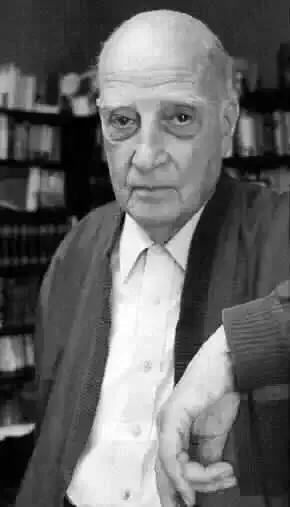
**Full name:** Rómulo de Carvalho
**Pseudonym:** António Gedeão
**Born:** November 24, 1906
**Place of birth:** Samora Correia, Portugal
**Died:** November 19, 1997
**Place of death:** Lisbon, Portugal
**Family background:** Son of primary school teachers, grew up in a cultured environment.
**Nationality:** Portuguese
**Language of writing:** Portuguese
Childhood and education
Born in Samora Correia, Rómulo de Carvalho's childhood was marked by the influence of his parents, both teachers. This early family education instilled in him from a young age a love for reading and knowledge. He attended secondary school in Lisbon, where he stood out for his intelligence and curiosity. He graduated in Historical-Natural Sciences from the Faculty of Sciences of the University of Lisbon. His scientific training, particularly in physics and chemistry, would be an indelible mark on his future poetic production, giving him a unique perspective on the relationship between science and art.
Literary career
Rómulo de Carvalho began his literary activity as an essayist and critic, but it was under the pseudonym António Gedeão that he achieved greater notoriety as a poet. His poetic debut came with the publication of "Movimento Perpétuo" (Perpetual Movement) in 1951. Throughout his career, he explored poetry as a means of reconciling scientific rigor with lyrical sensibility, which distinguished him from many contemporaries. He regularly published poems in various literary magazines and anthologies, consolidating his unique voice in the Portuguese poetic landscape.
Work, style, and literary characteristics
**Main works:** "Movimento Perpétuo" (1951), "As Mãos e os Anos" (The Hands and the Years) (1955), "O Trigo e o Vento" (The Wheat and the Wind) (1960), "Máquina de Fogo" (Fire Machine) (1961), "Legenda da Perda" (Legend of Loss) (1970), "Introdução à Poesia" (Introduction to Poetry) (1973).
**Dominant themes:** The universe, science (physics, chemistry, astronomy), time, matter, the human being, the existential condition, the quest for knowledge, the relationship between the micro and macrocosm.
**Form and structure:** Gedeão frequently used free verse, but with a strong concern for rhythm and musicality. His poetic structures were sometimes complex, reflecting his intellectual training, but always accessible.
**Poetic devices:** Profuse use of innovative metaphors and comparisons, many of them inspired by scientific concepts. His poetry is rich in visual and conceptual imagery.
**Tone and poetic voice:** The tone varies between the contemplative, the reflective, and the wonder at the mysteries of the universe. The poetic voice is often that of modern Man, confronted with the vastness of the cosmos and his own finitude, but with faith in reason and scientific discovery.
**Language and style:** Characterized by clear, precise, yet evocative language. He combines an erudite, sometimes technical vocabulary with lyrical sensibility, creating a unique and easily recognizable style.
**Innovations:** His main innovation was the organic integration of scientific language and concepts into poetry, elevating scientific discourse to an aesthetic and philosophical level.
**Literary movements:** Associated with Portuguese Modernism and, to some extent, with Neo-realism, due to his interest in the social and existential aspects of humanity, but with a distinctive approach.
**Lesser-known works:** "O Corpo" (The Body) (1957), "A Odisseia" (The Odyssey) (1965).
Work, style, and literary characteristics
**Cultural and historical context**
Coming from a family of teachers and having an academic career himself, Rómulo de Carvalho/António Gedeão lived and wrote during a period of great transformations in Portugal and the world, including the Estado Novo dictatorship and its consequences. His poetic work dialogued with the scientific advances of the time and with intellectual debates about the relationship between science, art, and philosophy. He was part of literary and academic circles, being a respected figure for his erudition and the originality of his work.
Work, style, and literary characteristics
**Personal life**
Rómulo de Carvalho married the poet and teacher Eugénia Malheiros da Fonseca. He dedicated a large part of his life to teaching and scientific research, being a full professor of Physics and Chemistry at the Faculty of Sciences of the University of Lisbon. He maintained a discreet life, but was active in intellectual circles. His philosophical beliefs were aligned with scientific humanism, valuing reason and the pursuit of knowledge as engines of human evolution.
Work, style, and literary characteristics
**Recognition and reception**
António Gedeão was widely recognized in Portugal as one of the most original and important poets of the 20th century. He received several literary awards, including the D. Dinis Prize from Casa de Mateus. His work is studied in schools and universities, and is considered a pillar of contemporary Portuguese poetry. His ability to make science accessible and beautiful through poetry earned him a prominent place both in academia and among the general public.
Work, style, and literary characteristics
**Influences and legacy**
Although his intellectual path was strongly influenced by science, Gedeão dialogued with Portuguese and universal poetic tradition. His work influenced later generations of poets who sought new ways to address existential and scientific themes in poetry. His legacy lies in how he demonstrated the possible symbiosis between scientific rigor and poetic expressiveness, opening new paths for literature.
Work, style, and literary characteristics
**Interpretation and critical analysis**
António Gedeão's work has been analyzed from various perspectives: its relationship with science, his humanist vision, and his ability to build bridges between scientific knowledge and human experience. Critics highlight his originality in exploring themes such as time and space, and how his poetry invites reflection on humanity's place in the universe. His scientific metaphors are often seen as profound existential metaphors.
Work, style, and literary characteristics
**Curiosities and lesser-known aspects**
Few know that, in addition to his prominent literary career, Rómulo de Carvalho was an important pedagogue and science communicator in Portugal. He was known for his lucidity and modesty. His writing, although sometimes technical, was deeply rooted in a humanist vision of the world, seeing science as a way to know and love reality.
Work, style, and literary characteristics
**Death and memory**
António Gedeão died in Lisbon, shortly before his 91st birthday. His publications occurred during his lifetime, and his memory is perpetuated through the study of his work, its inclusion in anthologies, and the recognition of his contribution to Portuguese poetry and culture. His name is intrinsically linked to poetry that manages to be, at the same time, rigorous and lyrical, scientific and human.

 PT
PT