
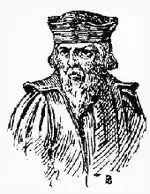
António Ferreira
1528–1569
· lived 41 years
 PT
PT
PT
António Ferreira was a Portuguese poet and playwright of the Renaissance, considered one of the central figures of Classicism in Portugal. His work, marked by erudition and formal rigor, sought to imitate Greco-Latin models, introducing new poetic forms and themes to the country. He was a pioneer in writing classical tragedies in Portuguese, exploring mythological and historical themes with elevated language and a profound aesthetic sense. His legacy is fundamental to the consolidation of the Portuguese literary canon.
n. 1528-01-01, Lisboa · m. 1569-11-29, Lisboa
8
Views
Bio
Identification and basic context
António Ferreira, often referred to as "the Classic", was a Portuguese poet and playwright. He was born and died in Lisbon. He belonged to the Portuguese Renaissance generation and wrote in Portuguese.Childhood and education
António Ferreira was born in Lisbon into a family of some social prominence. He received an excellent education, having studied Law in Coimbra, where he obtained his doctorate. During his studies, he deeply absorbed the humanist values of the Renaissance and the in-depth study of classical Greco-Latin authors, such as Virgil and Horace, who would become his greatest influences.Literary career
António Ferreira's literary career is marked by his attempt to renew Portuguese poetry and theater, following the precepts of Classicism. He began writing during his university years in Coimbra, under the influence of the university's intellectual environment and Renaissance ideals. His work developed around the imitation and adaptation of classical models, both in lyric poetry and dramatic poetry. He collaborated with other intellectuals of the time, but his main activity focused on literary production.Work, style, and literary characteristics
António Ferreira's main work includes "Poemas Lusitanos" (published posthumously in 1595), a collection that brings together sonnets, odes, eclogues, and elegies, and the tragedies "Tragédia de Inês de Castro" and "Tragédia de Bristo" (published in 1587). Dominant themes in his work are love (often in an idealized and Platonic form), death, the homeland, and reflection on the human condition, always filtered through a classical perspective. In terms of style, Ferreira is a master of form, predominantly using the sonnet and the decasyllabic verse, with exemplary metrical rigor. His language is elevated, learned, and sonorous, full of mythological allusions and classical references. The tone is often lyrical, sometimes elegiac, and his poetic voice seeks universality through adherence to classical models. He introduced classical tragedy to Portugal, adapting models such as Seneca's, and sought to elevate the Portuguese language to a level of literary sophistication comparable to classical languages.Work, style, and literary characteristics
Contexto cultural e histórico António Ferreira lived during the height of the Renaissance in Portugal, a period of great cultural effervescence and maritime expansion. He belonged to the so-called "Geração de Sá de Miranda", which was dedicated to the introduction and adaptation of classical genres and forms into Portuguese literature. His work reflects the humanist spirit of the time, with the valorization of knowledge, reason, and formal beauty. His dedication to classical models was a form of cultural affirmation and a pursuit of literary excellence.Work, style, and literary characteristics
Vida pessoal António Ferreira was a man of law and letters. In addition to his literary activity, he practiced law. His personal life, although not extensively documented in intimate details, was marked by dedication to study and literary production, within a context of strong intellectual rigor typical of the era.Work, style, and literary characteristics
Reconhecimento e receção António Ferreira was widely recognized during his lifetime and posthumously as one of the greatest figures of Portuguese classical poetry and theater. His work was considered a landmark in national literature, serving as a model for later generations of writers. He is seen as primarily responsible for the introduction and consolidation of Classicism in Portugal.Work, style, and literary characteristics
Influências e legado António Ferreira's main influences were the poets and playwrights of Classical Antiquity, such as Virgil, Horace, Ovid, and Seneca. His legacy is immense, as he not only enriched Portuguese poetry with new forms and themes but also inaugurated classical theater in Portuguese. He profoundly influenced poets like Luís de Camões and subsequent generations of classicist authors.Work, style, and literary characteristics
Interpretação e análise crítica António Ferreira's work is a paradigmatic example of Renaissance humanism and the pursuit of formal perfection. His tragedies explore human fragility in the face of destiny and the morality of actions, while his lyric poetry delves into the fleeting nature of time, the beauty and pain of love, always with a philosophical and erudite perspective.Work, style, and literary characteristics
Curiosidades e aspetos menos conhecidos A curiosity about António Ferreira is that he dedicated his legal knowledge to defending causes. Although his literary fame is prominent, his career as a jurist was also notable.Work, style, and literary characteristics
Morte e memória António Ferreira died in Lisbon. His most important works were published posthumously, which demonstrates the importance attributed to him by the literary community of the time. His memory is perpetuated as Portugal's "classical poet and playwright".Poems
0No poems found
Comments (0)
Log in
to post a comment.
No comments yet. Be the first to comment.