Identification and Basic Context
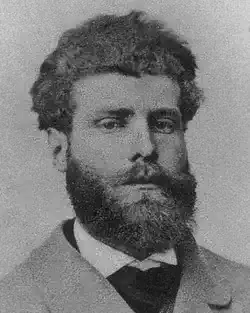
Antero de Figueiredo de Quental, better known as Antero de Quental, was a Portuguese poet, philosopher, and thinker. He was born in São Miguel, Azores, in 1842, and died in 1891, in Lisbon. He is considered one of the most important figures in 19th-century Portuguese literature and thought, associated with movements such as late Romanticism, Saudosismo, and Naturalism, and with a deep mysticism.
Childhood and Education
Born into a family of means and with an intellectual tradition, Antero had a childhood marked by religiosity and reading. He began his studies in Angra do Heroísmo and later moved to Lisbon to attend the Faculty of Law at the University of Coimbra. In Coimbra, he stood out for his intelligence and his literary and political activity, engaging in intellectual debates and founding the Sociedade do Gremio de Protecção. His intellectual training was vast, encompassing philosophy, literature, history, and theology.
Literary Career
The beginning of his literary activity in Coimbra was brilliant, with the publication of poems that already revealed his vocation and his restlessness. His work evolved from an initial more romantic and idealistic phase to a phase marked by a crisis of faith, philosophical doubt, and deep melancholy. He published important works such as 'Odes Modernas' (1865), 'Sonetos' (1861), and 'Raios de Extinta Luz' (1867). He was one of the protagonists of the "Questão Coimbrã" (Coimbra Question), an intellectual debate that pitted the old academic guard against new philosophical and literary ideas. His activity as a critic and polemicist was intense.
Work, Style, and Literary Characteristics
His main works, besides those already mentioned, include 'Causas da Decadência dos Povos Peninsulares' (Causes of the Decline of the Peninsular Peoples) and the prose 'Ensaios' (Essays). The central themes of his poetry are the search for God, doubt, faith, reason, death, eternity, solitude, love, and the destiny of humanity. Formally, Antero de Quental mastered poetic form, being known for his mastery of the sonnet, but also for the power of his 'Odes Modernas', which celebrated progress and science. His style is marked by conceptual density, philosophical depth, and an elegiac and dramatic tone. His poetic voice is one of constant, sometimes desperate, search for ultimate meaning in existence. His language is cultured and vigorous, with a rich and expressive vocabulary.
Work, Style, and Literary Characteristics
Cultural and Historical Context
Antero de Quental lived in a period of great intellectual effervescence and social change in Portugal and Europe. He was one of the main representatives of the so-called "Grupo do Cenáculo" (The Cenacle Group) or "Grupo dos Vencidos da Vida" (Group of the Vanquished of Life), which aimed to renew Portuguese culture. His work reflects the tensions between faith and science, between Romantic idealism and Positivist materialism. His philosophical position oscillated between idealism and deep skepticism, culminating in a spiritual crisis that marked the final years of his life. He was a social and political critic, advocating progressive ideas.
Work, Style, and Literary Characteristics
Personal Life
Antero de Quental's life was marked by profound spiritual and existential restlessness. He suffered from the loss of faith and intellectual solitude. His personal relationships, though significant, did not alleviate his anguish. His dedication to philosophy and poetry was total, often at the expense of his health and personal well-being. He lived modestly, devoting himself almost exclusively to study and writing.
Work, Style, and Literary Characteristics
Recognition and Reception
Antero de Quental was recognized during his lifetime as one of the greatest Portuguese poets and thinkers, although his work was subject to different interpretations and debates. The "Questão Coimbrã" and his participation in the "Grupo do Cenáculo" cemented his position as a central figure in literary and intellectual renewal. His recognition grew after his death, making him an unavoidable reference author in Portuguese literature.
Work, Style, and Literary Characteristics
Influences and Legacy
He was influenced by philosophers such as Hegel and Schopenhauer, and by poets such as Camões and Edgar Allan Poe. His legacy is immense, both in poetry and in philosophical thought. Antero de Quental paved the way for modern poetry in Portugal and introduced philosophical debate in depth into literature. He influenced generations of writers and thinkers with his intellectual courage and the depth of his existential questions. His name is firmly established in the Portuguese literary canon.
Work, Style, and Literary Characteristics
Interpretation and Critical Analysis
Antero de Quental's work is often analyzed from the perspective of his spiritual crisis and his struggle between faith and reason. His poems are seen as a reflection of the existential anguish of modern man. Critical analyses highlight his philosophical depth, his ability to express the complexity of the human soul, and his importance in the transition to contemporary thought.
Work, Style, and Literary Characteristics
Curiosities and Lesser-Known Aspects
A curious aspect of his life is his struggle against madness and his own perception that his mind was deteriorating. His radical dedication to the search for truth, even if it led him to pain and doubt, is a striking trait of his personality.
Work, Style, and Literary Characteristics
Death and Memory
Antero de Quental committed suicide in 1891, an act that many interpret as the culmination of his profound existential crisis. His premature death left an indelible mark on Portuguese literature. Posthumous publications continued to reveal the dimension of his work and thought.

 PT
PT