Identification and basic context
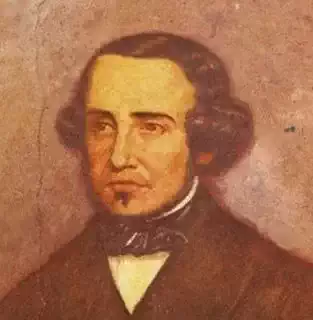
João Baptista da Silva Leitão de Almeida Garrett, better known as Almeida Garrett, was an influential Portuguese writer, poet, playwright, politician, journalist, and statesman. He was born on February 4, 1799, in Porto, and died in Lisbon on December 9, 1854. He was the son of a family of the minor agrarian nobility from Minho. His nationality was Portuguese, and he wrote in Portuguese. Garrett lived in a time of profound transformations in Portugal, marked by the Napoleonic Wars, the French Invasion, the Liberal Revolution of 1820, the Civil War between absolutists and liberals, and the consolidation of the liberal state.
Childhood and education
Almeida Garrett spent his childhood and youth in Porto and, later, in England, where his family took refuge during the French invasions. His initial education was provided by tutors and at the University of Coimbra, where he studied Law. It was in England that he came into contact with European Romantic literature, which decisively influenced his future work. The experience of exile and contact with other cultures shaped his liberal thinking and his vision of Portuguese national identity.
Literary career
Garrett's literary career is notable for its diversity and innovation. He began his career with poems of Neoclassical and Romantic inspiration, such as "O Gênio de Portugal" (1821). His work evolved considerably, exploring lyric poetry, epic poetry ("D. João de Castro", 1839), drama ("Frei Luís de Sousa", 1843), and the novel ("Viagens na Minha Terra", 1846). Garrett was a fervent defender of the Portuguese language and one of the promoters of Romanticism in Portugal. He collaborated in various publications and was one of the founders of the "Academia das Artes".
Work, style, and literary characteristics
Work, style, and literary characteristics
Garrett's work is characterized by its thematic and formal diversity. In poetry, he explored themes such as love, homeland, religion, and history. In theater, he revolutionized Portuguese drama with "Frei Luís de Sousa", which became a landmark of Romanticism for its dramatic intensity, the psychological depth of its characters, and its critique of religious and political intolerance. In "Viagens na Minha Terra", he created a new model for the Portuguese novel, combining narrative, philosophical digressions, and poetry, with a vibrant and innovative language. His style is marked by passion, lyricism, expressiveness, and the search for a language that reflected the Portuguese soul. He advocated for the renewal of meter and rhyme, and the incorporation of elements from popular tradition into literature.
Work, style, and literary characteristics
Cultural and historical context
Garrett was a central figure in the cultural and political life of Portugal in the 19th century. As a liberal, he actively participated in the political struggles of his time, being exiled on two occasions. His work reflects the tensions between absolutism and liberalism, the search for national identity after the French invasions, and the need for the country's modernization. He was a contemporary of figures such as Alexandre Herculano and Camilo Castelo Branco, with whom, however, he sometimes had tense relations.
Work, style, and literary characteristics
Personal life
Garrett's life was intense and multifaceted. He was a man of action, involved in political causes, but also a dedicated literary creator. His family relationships were marked by losses and challenges. His political career included positions such as deputy and Minister of Foreign Affairs. His dedication to the liberal cause and the cultural renewal of Portugal consumed much of his energy and life.
Work, style, and literary characteristics
Recognition and reception
Almeida Garrett is today considered one of the greatest figures in Portuguese literature and one of the founders of Romanticism in Portugal. During his lifetime, he was a controversial figure, admired by liberals and criticized by conservatives. His theatrical work, particularly "Frei Luís de Sousa", was acclaimed, and his novel "Viagens na Minha Terra" became a classic. He received various commissions and honors, but his life was also marked by difficulties and exiles.
Work, style, and literary characteristics
Influences and legacy
Garrett was influenced by authors such as Lord Byron, Victor Hugo, and Schiller, as well as by Portuguese literary tradition, including Camões. His work influenced later generations of Portuguese writers, consolidating Romanticism and opening paths for the renewal of national literature. His legacy lies in his defense of the Portuguese language, his ability to innovate in literary forms, and his deep connection between literature and civic life. His figure is central to the construction of the Portuguese literary canon.
Work, style, and literary characteristics
Interpretation and critical analysis
Garrett's work has been analyzed from various perspectives: its romantic dimension, its nationalism, its social and political critique, and its formal innovation. Analyses focus on the complexity of his characters, the strength of his dialogues, and how he integrated elements of popular tradition and Portuguese history into his creation. Critical debates address his relationship with liberalism and his role in shaping national identity.
Work, style, and literary characteristics
Curiosities and lesser-known aspects
Garrett was a fervent opponent of "love letters", considered by him an inferior and artificial literary genre. His well-known work "Viagens na Minha Terra" is often seen as a reflection of his own experiences and journeys through the country. His passion for theater led him to found the "Teatro Nacional D. Maria II".
Work, style, and literary characteristics
Death and memory
Almeida Garrett died in Lisbon in 1854, victim of a lung disease. His death was felt as a great loss to Portuguese culture. His memory is that of a great man of letters and a patriot, whose work continues to be read, studied, and admired, representing a fundamental pillar of Portuguese literature and thought.

 PT
PT