
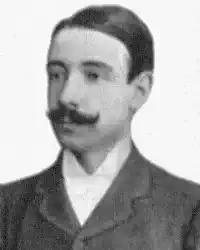
Alberto de Oliveira
 BR
BR
Alberto de Oliveira was a Brazilian poet, considered one of the greatest exponents of Parnassianism in Brazil. His work is marked by formal perfection, metrical rigor, and imagistic plasticity, distinctive characteristics of the movement. With a cultivated language and a rich vocabulary, he explored themes such as nature, idealized love, and classical mythology, always with an objective and descriptive approach. His poetry, although sometimes considered cold by some critics, is recognized for its musicality and aesthetic beauty.
n. 1857-04-28, Saquarema · m. 1937-01-19, Niterói
Bio
Identification and basic context
Alberto de Oliveira was a Brazilian poet, known for being one of the founders and main representatives of Parnassianism in Brazil. He was born in Rio de Janeiro and was a member of the Brazilian Academy of Letters.Childhood and education
From an early age, he showed interest in literature and classical culture. His education was marked by in-depth study of the Portuguese language and by reading European classical and Parnassian poets, which directly influenced his style.Literary career
The beginning of his literary career began with the publication of poems in newspapers and magazines of the time. His work was consolidated with the publication of books that established him as one of the great names of Parnassianism, alongside Olavo Bilac and Raimundo Correia. He was one of the founders and the first occupant of chair 4 of the Brazilian Academy of Letters.Work, style, and literary characteristics
His main works include "Primeiros Versos", "Poemas"; "Sonetos e Poemas"; "Meridiano"; "Versos e Rimas"; "Poesias". Alberto de Oliveira's style is markedly Parnassian, characterized by formal rigor, the search for the precise word, descriptive objectivity, and the exploration of themes such as nature, mythology, platonic love, and history. He predominantly used the sonnet and other fixed forms, with perfect meter and rhyme. His language is cultivated, rich in vocabulary, and with a strong visual and sonorous appeal. His poetry is known for its musicality and the plasticity of its images, with an often serene and contemplative tone.Cultural and historical context
He lived in a period of great cultural and literary effervescence in Brazil, during which Parnassianism established itself as one of the dominant currents. He was one of the founders of the Brazilian Academy of Letters, which sought the standardization and valorization of the national language and literature.Personal life
Alberto de Oliveira had a life dedicated to teaching and literature. His dedication to poetry was intense, reflected in the pursuit of formal perfection in his verses. He was known for his more reserved temperament and his profound erudition.Recognition and reception
He was widely recognized in his time as one of the greatest Brazilian poets, being one of the founders of the Brazilian Academy of Letters. His work is considered a landmark of Parnassianism in Brazil.Influences and legacy
Influenced by French Parnassian poets and classical tradition, Alberto de Oliveira, in turn, influenced later generations of Brazilian poets who sought formal improvement. His work is studied as one of the pillars of Parnassian poetry in the country.Interpretation and critical analysis
Critics point to the formal beauty and imagistic richness of his poetry, but some also note a certain coldness or emotional detachment in his verses. However, his technical mastery and his ability to evoke landscapes and feelings with precision are undeniable.Curiosities and lesser-known aspects
Alberto de Oliveira was a dedicated teacher and a profound scholar of the Portuguese language. His relentless pursuit of the exact word and the perfect form in his poems demonstrated his discipline and passion for the art of poetry.Death and memory
He passed away in Rio de Janeiro, leaving a significant legacy for Brazilian poetry, especially regarding the Parnassian movement.Poems
0No poems found
Comments (0)
No comments yet. Be the first to comment.