Identification and basic context
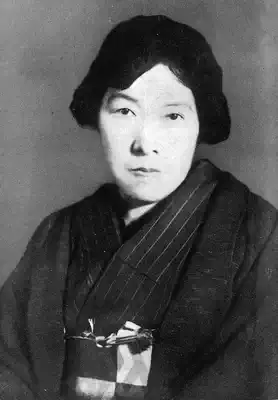
Akiko Yosano, born Shishū Yosano, was a Japanese poet and social activist. She was born on December 7, 1878, in Sakai, Osaka, and died on May 29, 1942, in Tokyo. Her family owned a prosperous teahouse, which provided her with a culturally rich environment and a considerable education for the time. She was fluent in Japanese and later became interested in foreign literature. She lived in a time of significant social, political, and cultural changes in Japan, during the Meiji, Taisho, and early Showa periods.
Childhood and education
Akiko grew up in an environment that valued education and culture. Her father owned a large library where she had access to Japanese and Chinese literary classics. From an early age, she showed an early talent for writing. She received a formal education but was largely self-taught in literary terms. She was strongly influenced by classical literature and Chinese poetry, as well as emerging feminist thought.
Literary career
The beginning of her literary career was marked by the publication of her first book of poems, "'Midaregami" (Tangled Hair), in 1901, which made a great impact with its boldness and lyricism. Her work evolved over time, addressing increasingly complex and social themes. She published extensively in literary magazines and anthologies. In addition to being a poet, she was also a literary critic and translator, contributing significantly to Japanese literary life.
Work, style, and literary characteristics
"'Midaregami" is considered her masterpiece, containing poems that explore themes of intense love, passion, and female desire with unprecedented honesty and strength in Japanese poetry of the time. Her style is characterized by emotional intensity, vivid use of imagery, and a confessional and lyrical tone. She addressed themes such as the condition of women, war, mortality, and spirituality. Her language is often dense, rich in metaphors, and with strong musicality. She innovated by expressing the female voice so directly and powerfully. She was associated with the Japanese symbolist movement, but her work transcends labels, being a pioneer in many aspects.
Work, style, and literary characteristics
Cultural and historical context
Akiko Yosano lived in a period of rapid Westernization and modernization of Japan, including the Sino-Japanese and Russo-Japanese Wars. She expressed criticism of these wars in her poetry. She was friends with many intellectuals and artists of the time, including the poet Tekkan Yosano, whom she married. She belonged to a generation of writers who sought to forge a modern literary identity for Japan. Her position as a female writer and activist often placed her in tension with conservative social norms.
Work, style, and literary characteristics
Personal life
Akiko Yosano had a complex and vibrant personal life. She married the poet Tekkan Yosano, and together they had thirteen children. Motherhood and family life were recurring themes in her work. She maintained friendships with many literary and intellectual figures but also faced criticism and controversy due to her liberal stance and feminist ideas. Her belief in gender equality and women's education shaped her life and her writing.
Work, style, and literary characteristics
Recognition and reception
Although her work caused initial shock, Akiko Yosano quickly gained recognition as one of the most important poetic voices of modern Japan. She was praised for her originality and emotional strength. Her influence extended across generations, and she is today considered a central figure in the Japanese literary canon, especially for her role in emancipating the female voice in poetry.
Work, style, and literary characteristics
Influences and legacy
She was influenced by classical Chinese and Japanese literature, as well as Western poetry. Her legacy is immense, inspiring countless female poets and activists around the world. Her work continues to be studied and admired for its social and artistic relevance. It is widely translated and internationally recognized.
Work, style, and literary characteristics
Interpretation and critical analysis
Akiko Yosano's work is often analyzed from a feminist perspective, highlighting her representation of female experience and desire. Her poems explore profound existential themes, such as the nature of love, mortality, and the pursuit of individual freedom.
Work, style, and literary characteristics
Curiosities and lesser-known aspects
Akiko Yosano was a fervent advocate for girls' education and founded a school for women. Her home in Tokyo became a meeting point for artists and intellectuals. She also had an intense personal life, with a complex relationship with her husband, Tekkan Yosano, who, despite his own infidelities, was an important creative partner.
Work, style, and literary characteristics
Death and memory
Akiko Yosano died in 1942 in Tokyo from a heart attack. Her death was felt as a great loss to literature and social activism in Japan. Posthumous publications continued to disseminate her work and legacy.

 JP
JP