
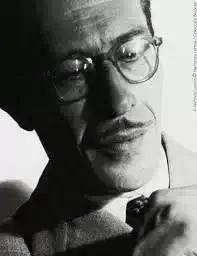
Adolfo Casais Monteiro
1908–1972
· lived 64 years
 PT
PT
PT
Adolfo Casais Monteiro was a Portuguese poet, essayist, and literary critic. He stood out for his poetry, marked by a deep reflection on the human condition, time, and memory, often expressed in restrained lyricism and great formal rigor. His essayistic work addressed crucial themes of Portuguese literature and culture in general, with remarkable analytical insight. He also served as a university professor and an active figure in the cultural landscape, leaving a significant intellectual legacy.
n. 1908-07-04, Porto · m. 1972-07-24, São Paulo
Bio
Identification and basic context
Full name: Adolfo Rodrigues Casais Monteiro Date and place of birth: October 19, 1908, Porto, Portugal Date and place of death: February 14, 1972, Lisbon, Portugal Family background, social class, and original cultural context: Born into a family of intellectuals and academics. His father, Joaquim de Carvalho, was a distinguished philosopher and university professor, which provided Adolfo Casais Monteiro with a family environment conducive to intellectual and cultural development. Nationality and writing language(s): Portuguese Historical context in which he lived: He lived much of his adult life during the Estado Novo in Portugal, an authoritarian regime that shaped the country's political, social, and cultural landscape. He witnessed the social transformations and international upheavals of the 20th century.Childhood and education
Family background and social environment: Grew up in a cultured and stimulating family environment, with a strong emphasis on education and intellectual debate, provided by his father, Joaquim de Carvalho. This family foundation was fundamental to his upbringing. Formal education and self-teaching: Attended the University of Coimbra, where he studied Law, but his literary and philosophical interests, instilled by his family environment, were decisive. He developed strong self-teaching skills in the humanities. Early influences (readings, culture, religion, politics): His intellectual formation was marked by readings of classical and contemporary authors, as well as by the influence of philosophical thought and European literature. His father's academic environment exposed him to discussions on culture, philosophy, and politics. Literary, philosophical, or artistic movements he absorbed: Although he did not rigidly adhere to any movement, his work reflects influences of European modernism, existentialism, and a deep questioning of the human condition. Significant events in his youth: His youth was marked by an intense interest in literature and philosophy, which gradually led him away from formal legal studies in favor of a deeper dedication to the arts and knowledge.Literary career
Beginning of writing (when and how he started): Began writing poetry and essays early on, encouraged by his family environment and his own literary vocation. The publication of his first works occurred in the 1930s and 1940s. Evolution over time (phases, changes in style): His poetic work evolved from a more formal expression to greater freedom, always maintaining rigor of thought and thematic depth. His phases can be characterized by increasing introspection and the exploration of existential themes. Chronological evolution of his work: Began with more lyrical and reflective poems, expanding to a substantial body of essayistic work, where he analyzed Portuguese literature and culture in general. Collaborations in magazines, newspapers, and anthologies: Actively collaborated in various significant literary and cultural publications in Portugal, contributing with poetry, essays, and criticism. Activity as a critic, translator, or editor: He was a notable literary critic, essayist, and university professor, dedicating himself to the analysis of Portuguese literature and the dissemination of contemporary thought. He did not distinguish himself as a translator or editor.Work, style, and literary characteristics
Work, style, and literary characteristics Main works with dates and production context: * 'Poesia' (1943): initial mark of his published poetic work. * 'Poemas' (1955): consolidation of his lyrical journey. * 'O Ensino da Poesia' (1961): one of his most influential essays on the art of poetry. * 'A Crítica Literária em Portugal' (1967): comprehensive analysis of Portuguese literary criticism. Dominant themes — love, death, time, nature, identity, homeland, spirituality, etc.: His central themes include reflection on the human condition, the ephemerality of time, memory, identity, the search for meaning, and spirituality, often addressed with an elegiac and existential tone. Form and structure — use of sonnet, free verse, fixed form, metrical experimentation: His poetry reveals a mastery of traditional forms, such as the sonnet, but also an openness to free verse, always with a concern for rigor and musicality. The structure of his poems reflects the clarity and depth of his thought. Poetic devices (metaphor, rhythm, musicality): He used devices such as metaphor, poetic imagery, and a measured rhythm to express his ideas and sensations, creating poetry of great density and expressiveness. Tone and poetic voice — lyrical, satirical, elegiac, epic, ironic, confessional: His poetic tone is predominantly lyrical, reflective, and elegiac, with a confessional voice that opens up to universal questions about existence. Poetic voice (personal, universal, fragmented, etc.): The poetic voice in Casais Monteiro tends to be personal, but transcends the self to reach a universal dimension, sharing concerns common to the human experience. Language and style — vocabulary, imagistic density, preferred rhetorical devices: His language is careful and precise, sometimes erudite, but accessible. The style is marked by clarity of thought, imagistic density, and the subtle use of rhetorical devices that enhance expressiveness. Formal or thematic innovations introduced in literature: Contributed to the modernization of Portuguese poetry with his reflective and existential approach, and to literary criticism with profound and contextualized analyses. Relationship with tradition and modernity: He knew how to reconcile respect for Portuguese literary tradition with an openness to modern currents, integrating them originally into his work. Literary movements associated (e.g., symbolism, modernism): Although not strictly belonging to a movement, his work dialogues with modernism through its concern with form and existential content. Lesser-known or unpublished works: His essayistic work, although less known to the general public than his poetry, is of equal importance and depth, covering a wide range of topics in Portuguese literature and culture.Work, style, and literary characteristics
Cultural and historical context Relationship with historical events (wars, revolutions, regimes): Lived under the Estado Novo regime, whose cultural and freedom of expression limitations represented a backdrop for his intellectual production. His work implicitly reflects the climate of repression and the yearning for freedom. Relationship with other writers or literary circles: Maintained contact with other intellectuals and writers of his generation, participating in debates and promoting the exchange of ideas within the Portuguese literary scene. Generation or movement to which he belongs (e.g., Romanticism, Modernism, Surrealism): Can be associated with a generation of intellectuals who, although not rigidly framed within a specific movement, shared a deep concern for modernity and the human condition in the Portuguese context of the 20th century. Political or philosophical stance: His work, while not overtly political, manifests a humanist and progressive stance, with a critical view of society and culture. Influence of society and culture on his work: The Portuguese society and culture of his time, marked by isolation and repression, influenced his work, which often focused on the individual condition and the search for transcendence. Dialogues and tensions with contemporaries: Engaged in intellectual and critical debates, dialoguing with the various currents of thought and literature of the time. Critical reception during his lifetime vs. posthumous recognition: During his lifetime, he was recognized by a select circle of attentive critics and readers. His recognition broadened after his death, with a re-evaluation of his poetic and essayistic work.Work, style, and literary characteristics
Personal life Significant affective and family relationships and how they shaped his work: His relationship with his father, Joaquim de Carvalho, was crucial to his intellectual formation. His personal experiences and reflections on love and human existence permeated his poetry. Literary friendships and rivalries: Maintained friendly relations and dialogue with other intellectuals of the time, although no major literary rivalries are known. Personal experiences and crises, illnesses, or conflicts: His life was marked by profound introspection and keen sensitivity to existential issues, which were reflected in his work. Parallel professions (if he did not live solely from poetry): He was a university professor at the Faculty of Letters of the University of Lisbon, where he taught Portuguese literature and literary theory, in addition to holding positions in literary criticism. Religious, spiritual, or philosophical beliefs: His work shows a deep spiritual and philosophical quest, exploring questions of meaning, transcendence, and the human condition. Political positions and civic engagement: Although he was not a prominent political activist, his humanist stance and implicit critique of the regime reflect civic awareness.Work, style, and literary characteristics
Recognition and reception Place in national and international literature: He is considered one of the most important poets and essayists in 20th-century Portuguese literature. His work has been the subject of study and reinterpretation. Awards, distinctions, and institutional recognition: Received some distinctions, but his greatest recognition lies in the continuous appreciation of his critical and poetic work. Critical reception at the time and over time: During his lifetime, he was appreciated by specialized criticism. Posthumously, his work has been the subject of more in-depth study, consolidating his place in the Portuguese literary canon. Popularity vs. academic recognition: Enjoys solid academic recognition, with his work being studied in universities. His popularity with the general public is more discreet, but his importance is undeniable.Work, style, and literary characteristics
Influences and legacy Authors who influenced him: Influenced by authors from the Portuguese literary tradition, as well as by contemporary European philosophers and poets, such as Rainer Maria Rilke. Poets and movements he influenced: His reflective poetry and his essayistic approach influenced later generations of poets and literary critics in Portugal, who found in his work a model of rigor and depth. Impact on national and world literature and later generations of poets: Contributed to the sophistication of critical thought and the renewal of Portuguese poetry, leaving a legacy of intellectual rigor and lyrical sensitivity. Entry into the literary canon: Firmly integrated into the canon of 20th-century Portuguese literature. Translations and international dissemination: His work has been translated into other languages, although its international dissemination is less extensive than that of some contemporaries. Adaptations (music, theater, cinema): There are no records of significant adaptations of his work for music, theater, or cinema. Academic studies dedicated to his work: His work has been the subject of numerous academic studies, master's and doctoral theses, confirming its continued interest.Work, style, and literary characteristics
Interpretation and critical analysis Possible readings of his work: His work can be read as a meditation on time, memory, human finitude, and the search for ultimate meaning. His poetry is often interpreted as an existential dialogue. Philosophical and existential themes: The human condition, temporality, death, loneliness, and the possibility of transcendence are central themes that run through his entire work, with echoes of existentialism and phenomenology. Controversies or critical debates: No major critical controversies are known to be associated with his work, which is generally viewed with admiration for its rigor and depth.Work, style, and literary characteristics
Curiosities and lesser-known aspects Lesser-known aspects of his personality: Known for his discretion and intellectual rigor, Casais Monteiro was a man of great depth and sensitivity, who combined his academic role with literary creation. Contradictions between life and work: No glaring contradictions between his life and work stand out; on the contrary, his intellectual production seems to have been a natural extension of his reflective temperament. Striking or anecdotal episodes that illuminate the author's profile: His academic career, his close relationship with his father, and his dedication to the study of Portuguese literature are aspects that define his profile. Objects, places, or rituals associated with poetic creation: Although there are no specific records of rituals, his academic environment and his deep reading of the literary tradition were certainly essential elements in his creative process. Writing habits: Given his background and profession, it is likely that his writing habits were marked by discipline and intellectual rigor. Curious episodes: No curious or anecdotal episodes about his life are widely publicized. Manuscripts, diaries, or correspondence: The existence of manuscripts, diaries, or correspondence relevant to understanding his work may exist in literary archives, but they are not generally publicly accessible.Work, style, and literary characteristics
Death and memory Circumstances of death: Died in Lisbon in 1972, due to illness. Posthumous publications: Although his main work was published during his lifetime, it is possible that collections or editions of unpublished or scattered texts were published posthumously.Poems
0No poems found
Comments (0)
Log in
to post a comment.
No comments yet. Be the first to comment.