
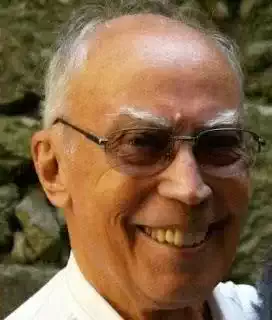
Fernando Couto
 PT
PT
Fernando Pessoa is widely recognized as one of the greatest poets in the Portuguese language and a central figure of modernism. He stood out for the creation of multiple heteronyms, each with their own personality, style, and work, which made him a multifaceted and innovative poet. His work explores profound themes such as identity, the fleetingness of time, melancholy, and the existential quest. Pessoa left a vast and complex literary legacy, with a production that spans poetry, prose, and criticism. His work, often published posthumously, continues to fascinate readers and critics with its originality, philosophical depth, and formal mastery, consolidating him as one of the most influential poets of the 20th century.
n. 1969-08-02, Espinho · m. 2013, Maputo, Moçambique
Biografía
Identification and basic context
Fernando António Nogueira Pessoa, known simply as Fernando Pessoa, was born in Lisbon. He used multiple pseudonyms and heteronyms throughout his literary career, the most famous being Alberto Caeiro, Ricardo Reis, Álvaro de Campos, and Bernardo Soares (semi-heteronym). His nationality was Portuguese, writing primarily in Portuguese, but also in English. He lived a large part of the 20th century, a period of profound social, political, and cultural transformations in Portugal and the world.Childhood and education
He spent part of his childhood and adolescence in Durban, South Africa, where his stepfather was consul. This experience gave him exceptional command of the English language and early contact with Anglophone literature, which would influence his work. Upon returning to Portugal, he attended secondary and university education, but his formative path was marked by strong self-study and intense reading, absorbing diverse philosophical and literary currents.Literary career
The beginning of his literary activity dates back to his youth, with the writing of poems in English. From then on, he developed a unique career marked by the creation of heteronyms, each with a distinct biography, style, and worldview. This multiplicity of voices allowed him to explore different facets of the human experience and poetic creation. He collaborated in various literary magazines of the time, such as "Orpheu", which became a landmark of Portuguese modernism. He was also a literary critic and translator.Work, style, and literary characteristics
Work, style, and literary characteristics Pessoa's work is vast and diverse, exploring themes such as the fragmentation of the self, existential anguish, the ephemerality of time, the search for identity, the relationship with reality, and saudade. The poetic form varies widely, from intimate lyricism to avant-garde experimentation, with emphasis on free verse and the exploration of different meters. His poetic resources are rich, with surprising metaphors and a unique musicality. The poetic voice is multifaceted, reflecting the different personalities of the heteronyms. The language is careful, sometimes dense and imagistic, with a vocabulary that oscillates between the archaic and the modern. He introduced formal and thematic innovations in the Portuguese literary landscape, engaging with tradition and projecting himself into modernity. He is associated with Modernism and Symbolism.Work, style, and literary characteristics
Cultural and historical context Pessoa lived in a time of great cultural effervescence and political instability in Portugal, with the end of the Monarchy and the establishment of the Republic. He maintained contact with other writers and intellectuals of his time, actively participating in cultural debates, particularly through the magazine "Orpheu". His work reflects the tensions and anxieties of his generation, as well as the social and political changes that Portugal was undergoing.Work, style, and literary characteristics
Personal life Pessoa's personal life was marked by a certain discretion and reclusion. Affective relationships, although not profusely documented, seem to have played a role in his introspection and in the exploration of themes such as love and solitude. Literary friendships were important, especially in the context of the "Orpheu" group. Professionally, he worked as a commercial correspondent, which allowed him a certain livelihood to dedicate himself to his passion for writing.Work, style, and literary characteristics
Recognition and reception During his lifetime, Pessoa's recognition was limited, with the publication of only one book in Portuguese, "Mensagem", and some scattered poems. It was after his death that the dimension of his work began to be fully grasped. Today, he is unanimously considered one of the greatest poets in universal literature, with his work widely studied and translated.Work, style, and literary characteristics
Influences and legacy Fernando Pessoa was influenced by authors such as Camões, Antero de Quental, Walt Whitman, and the French Symbolists. His legacy is immense, having influenced generations of poets in Portugal and Brazil, as well as in other countries. His experimentation with identity and the multiplicity of poetic voices profoundly marked 20th-century literature and continues to be an object of study and admiration.Work, style, and literary characteristics
Interpretation and critical analysis Pessoa's work has been the subject of numerous interpretations, exploring its philosophical and existential complexities. The themes of fragmented identity, anguish, dream, and reality are central to critical analysis. The genius in the creation of heteronyms and the exploration of human multiplicity are frequently debated aspects.Work, style, and literary characteristics
Curiosities and lesser-known aspects Pessoa maintained a detailed system for archiving his work, demonstrating remarkable rigor in organizing his vast estate. His writing habits were methodical, dedicating long hours to creation and revision. His correspondence reveals a more intimate and reflective side of his personality.Work, style, and literary characteristics
Death and memory Fernando Pessoa passed away in Lisbon. His death, relatively discreet, contrasted with the magnitude of his work, which would only be fully discovered and valued in the following decades, with the posthumous publication of a large part of his collection.Poemas
0No se encontraron poemas
Comentarios (0)
Aún no hay comentarios. Sé el primero en comentar.