
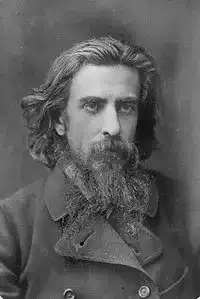
Vladimir Soloviov
1853–1900
· lived 47 years
 RU
RU
RU
Vladimir Solovyov was a prominent Russian philosopher, theologian, poet, and literary critic, considered one of the most important figures in 19th-century Russian thought. His work sought the reconciliation between faith and reason, exploring themes such as the unity of God, Sophia (Divine Wisdom), and 'Theanthropism' (the union of the divine and the human).
n. 1853-01-16, Moscovo · m. 1900-07-31, Uzkoye
2
Views
Bio
Vladimir Sergeyevich Solovyov (1853-1900) was a Russian philosopher, theologian, poet, and literary critic, born in Moscow. The son of a prominent historian, Solovyov demonstrated an acute intellect and a deep interest in religion and philosophy from an early age. His work is marked by the search for a synthesis between Western thought and Russian Orthodox tradition, as well as the attempt to unify philosophy, science, and religion. Central concepts in his thought include Sophia (Divine Wisdom), the 'unity of all being,' and 'Theanthropism,' the idea of a divinity that incarnates and unites with humanity. Solovyov was a fervent critic of the materialism and rationalism of his time, advocating for a spiritualized view of the cosmos and history. His writings, such as 'The Russia and the Universal Church' and 'The Basis of Knowledge,' had a lasting influence on Russian and international religious and philosophical thought.
Poems
0No poems found
Comments (0)
Log in
to post a comment.
No comments yet. Be the first to comment.