
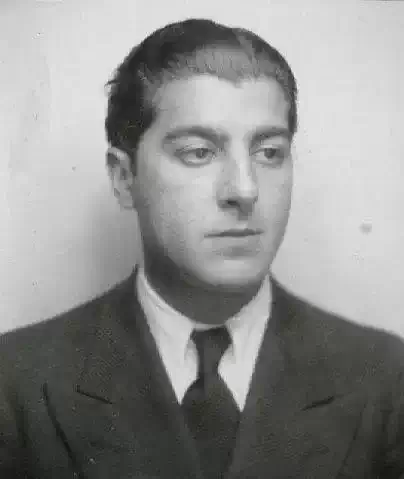
Tomáz Kim
1915–1967
· lived 51 years
 AO
AO
AO
Tomáz Kim is a poet who stands out for his contemporary approach to lyricism, exploring the complexity of the human condition, memory, and identity. His work is marked by incisive language and an unparalleled ability to move between the personal and the universal, reflecting on the fragilities and quests of the individual in the modern world. Kim's poetry invites introspection and questioning, using stylistic resources that give his compositions a unique depth.
n. 1915-02-02, Lobito · m. 1967-01-24, Lisboa
1
Views
Bio
Identification and basic context
Tomáz Kim is a Portuguese poet whose work has established itself in the contemporary literary scene. Identified by his writer's name, his poetic production is written in Portuguese. He lived and developed his career in the historical and cultural context of Portugal in the 20th and 21st centuries.Childhood and education
Information about Tomáz Kim's childhood and education is relatively scarce, but his work denotes a solid cultural background, with evident influences from diverse readings. It is likely that he absorbed literary and artistic movements that shaped his sensitivity, developing a critical spirit and a profound capacity for observation.Literary career
Tomáz Kim's literary career is marked by a consistent and recognized poetic production. He began his literary activity in the context of contemporary Portuguese poetry, consolidating his position through the publication of several books. His stylistic evolution reflects a growing maturity and an increasingly profound exploration of his chosen themes. He actively contributed to the literary scene through publications in magazines and participation in cultural events.Work, style, and literary characteristics
Tomáz Kim's work is multifaceted, addressing themes such as memory, identity, the passage of time, the city, and human relationships. His style is characterized by precise and sometimes fragmented language, exploring the evocative power of words and the creation of strong images. He frequently uses free verse, but with a strong rhythmic and musical sense. Kim's poetic voice is generally introspective and reflective, with a sometimes melancholic or ironic tone. His poetry dialogues with tradition but is clearly part of contemporary poetry currents, particularly in the realm of the so-called "prose poem" or hybrid forms that challenge traditional conventions.Cultural and historical context
Tomáz Kim developed his work in a period of significant transformations in Portugal, including the transition to democracy and European integration. His work reflects, in some way, the anxieties and social and cultural dynamics of that period. His position in the contemporary literary movement, although sometimes difficult to categorize into closed movements, places him as a prominent poet in recent Portuguese poetry.Personal life
Detailed information about Tomáz Kim's personal life is less accessible to the public. However, it can be inferred that his experiences, relationships, and individual reflections nourished his poetic writing, giving it the depth and authenticity that characterize his work. His personal beliefs and worldview are subtly conveyed through his verses.Recognition and reception
Tomáz Kim has been gaining a prominent place in contemporary Portuguese poetry. His work has been the subject of study and analysis by literary critics, and has received increasing recognition from readers and academics. His inclusion in anthologies and international projection contribute to his relevance.Influences and legacy
Tomáz Kim's influences on Portuguese poetry are visible in his approach to universal themes with contemporary and personal language. His work has influenced, and continues to influence, young poets seeking new forms of lyrical expression. His legacy lies in his ability to renew poetry through the exploration of the human condition in the modern world.Interpretation and critical analysis
Tomáz Kim's work has been interpreted from various perspectives, highlighting the exploration of identity fragmentation, the relationship between the individual and the urban space, and the complexity of memory. Critics have emphasized his formal mastery and the depth of his existential reflections.Curiosities and lesser-known aspects
Lesser-known aspects of Tomáz Kim's life, such as his writing habits, his places of inspiration, or anecdotal episodes that shaped his career, could enrich the public perception of the author and his work. The analysis of manuscripts or correspondence, if they exist, would reveal more about his creative process.Death and memory
The circumstances of Tomáz Kim's death and any posthumous publications are information that contributes to his complete biography and the perpetuation of his memory. His work continues to be revisited and to inspire new readers and creators.Poems
0No poems found
Comments (0)
Log in
to post a comment.
No comments yet. Be the first to comment.