
Work and Profession
Poems in this topic
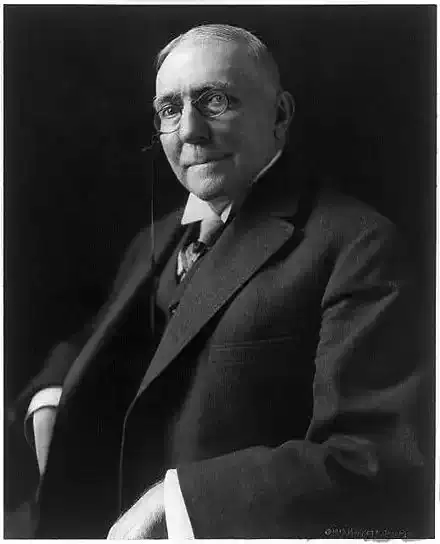
James Whitcomb Riley
Doc Sifers
Doc Sifers
Of all the doctors I could cite you to in this-'ere town
Doc Sifers is my favorite, jes' take him up and down!
Count in the Bethel Neighberhood, and Rollins, and Big Bear,
And Sifers' standin's jes' as good as ary doctor's there!
There's old Doc Wick, and Glenn, and Hall, and Wurgler, and McVeigh,
But I'll buck Sifers 'ginst 'em all and down 'em any day!
Most old Wick ever knowed, I s'pose, was _whisky!_ Wurgler--well,
He et morphine--ef actions shows, and facts' reliable!
But Sifers--though he ain't no sot, he's got his faults; and yit
When you _git_ Sifers one't, you've got _a doctor_, don't fergit!
He ain't much at his office, er his house, er anywhere
You'd natchurly think certain far to ketch the feller there.--
But don't blame Doc: he's got all sorts o' cur'ous notions--as
The feller says; his odd-come-shorts, like smart men mostly has.
He'll more'n like be potter'n 'round the Blacksmith Shop; er in
Some back lot, spadin' up the ground, er gradin' it agin.
Er at the workbench, planin' things; er buildin' little traps
To ketch birds; galvenizin' rings; er graftin' plums, perhaps.
Make anything! good as the best!--a gunstock--er a flute;
He whittled out a set o' chesstmen one't o' laurel root,
Durin' the Army--got his trade o' surgeon there--I own
To-day a finger-ring Doc made out of a Sesesh bone!
An' glued a fiddle one't far me--jes' all so busted you
'D a throwed the thing away, but he fixed her as good as new!
And take Doc, now, in _ager_, say, er _biles_, er _rheumatiz_,
And all afflictions thataway, and he's the best they is!
Er janders--milksick--I don't keer--k-yore anything he tries--
A abscess; getherin' in yer yeer; er granilated eyes!
There was the Widder Daubenspeck they all give up far dead;
A blame cowbuncle on her neck, and clean out of her head!
First had this doctor, what's-his-name, from 'Puddlesburg,' and then
This little red-head, 'Burnin' Shame' they call him--Dr. Glenn.
And they 'consulted' on the case, and claimed she'd haf to die,--
I jes' was joggin' by the place, and heerd her dorter cry,
And stops and calls her to the fence; and I-says-I, 'Let me
Send Sifers--bet you fifteen cents he'll k-yore her!' 'Well,' says
she,
'Light out!' she says: And, lipp-tee-cut! I loped in town, and rid
'Bout two hours more to find him, but I kussed him when I did!
He was down at the Gunsmith Shop a-stuffin' birds! Says he,
'My sulky's broke.' Says I, 'You hop right on and ride with me!'
I got him there.--'Well, Aunty, ten days k-yores you,' Sifers said,
'But what's yer idy livin' when yer jes' as good as dead?'
And there's Dave Banks--jes' back from war without a scratch--one
day
Got ketched up in a sickle-bar, a reaper runaway.--
His shoulders, arms, and hands and legs jes' sawed in strips! And
Jake
Dunn starts far Sifers--feller begs to shoot him far God-sake.
Doc, 'course, was gone, but he had penned the notice, 'At Big Bear--
Be back to-morry; Gone to 'tend the Bee Convention there.'
But Jake, he tracked him--rid and rode the whole endurin' night!
And 'bout the time the roosters crowed they both hove into sight.
Doc had to ampitate, but 'greed to save Dave's arms, and swore
He could a-saved his legs ef he'd ben there the day before.
Like when his wife's own mother died 'fore Sifers could be found,
And all the neighbors far and wide a' all jes' chasin' round;
Tel finally--I had to laugh--it's jes' like Doc, you know,--
Was learnin' far to telegraph, down at the old deepo.
But all they're faultin' Sifers far, there's none of 'em kin say
He's biggoty, er keerless, er not posted anyway;
He ain't built on the common plan of doctors now-a-days,
He's jes' a great, big, brainy man--that's where the trouble lays!
Of all the doctors I could cite you to in this-'ere town
Doc Sifers is my favorite, jes' take him up and down!
Count in the Bethel Neighberhood, and Rollins, and Big Bear,
And Sifers' standin's jes' as good as ary doctor's there!
There's old Doc Wick, and Glenn, and Hall, and Wurgler, and McVeigh,
But I'll buck Sifers 'ginst 'em all and down 'em any day!
Most old Wick ever knowed, I s'pose, was _whisky!_ Wurgler--well,
He et morphine--ef actions shows, and facts' reliable!
But Sifers--though he ain't no sot, he's got his faults; and yit
When you _git_ Sifers one't, you've got _a doctor_, don't fergit!
He ain't much at his office, er his house, er anywhere
You'd natchurly think certain far to ketch the feller there.--
But don't blame Doc: he's got all sorts o' cur'ous notions--as
The feller says; his odd-come-shorts, like smart men mostly has.
He'll more'n like be potter'n 'round the Blacksmith Shop; er in
Some back lot, spadin' up the ground, er gradin' it agin.
Er at the workbench, planin' things; er buildin' little traps
To ketch birds; galvenizin' rings; er graftin' plums, perhaps.
Make anything! good as the best!--a gunstock--er a flute;
He whittled out a set o' chesstmen one't o' laurel root,
Durin' the Army--got his trade o' surgeon there--I own
To-day a finger-ring Doc made out of a Sesesh bone!
An' glued a fiddle one't far me--jes' all so busted you
'D a throwed the thing away, but he fixed her as good as new!
And take Doc, now, in _ager_, say, er _biles_, er _rheumatiz_,
And all afflictions thataway, and he's the best they is!
Er janders--milksick--I don't keer--k-yore anything he tries--
A abscess; getherin' in yer yeer; er granilated eyes!
There was the Widder Daubenspeck they all give up far dead;
A blame cowbuncle on her neck, and clean out of her head!
First had this doctor, what's-his-name, from 'Puddlesburg,' and then
This little red-head, 'Burnin' Shame' they call him--Dr. Glenn.
And they 'consulted' on the case, and claimed she'd haf to die,--
I jes' was joggin' by the place, and heerd her dorter cry,
And stops and calls her to the fence; and I-says-I, 'Let me
Send Sifers--bet you fifteen cents he'll k-yore her!' 'Well,' says
she,
'Light out!' she says: And, lipp-tee-cut! I loped in town, and rid
'Bout two hours more to find him, but I kussed him when I did!
He was down at the Gunsmith Shop a-stuffin' birds! Says he,
'My sulky's broke.' Says I, 'You hop right on and ride with me!'
I got him there.--'Well, Aunty, ten days k-yores you,' Sifers said,
'But what's yer idy livin' when yer jes' as good as dead?'
And there's Dave Banks--jes' back from war without a scratch--one
day
Got ketched up in a sickle-bar, a reaper runaway.--
His shoulders, arms, and hands and legs jes' sawed in strips! And
Jake
Dunn starts far Sifers--feller begs to shoot him far God-sake.
Doc, 'course, was gone, but he had penned the notice, 'At Big Bear--
Be back to-morry; Gone to 'tend the Bee Convention there.'
But Jake, he tracked him--rid and rode the whole endurin' night!
And 'bout the time the roosters crowed they both hove into sight.
Doc had to ampitate, but 'greed to save Dave's arms, and swore
He could a-saved his legs ef he'd ben there the day before.
Like when his wife's own mother died 'fore Sifers could be found,
And all the neighbors far and wide a' all jes' chasin' round;
Tel finally--I had to laugh--it's jes' like Doc, you know,--
Was learnin' far to telegraph, down at the old deepo.
But all they're faultin' Sifers far, there's none of 'em kin say
He's biggoty, er keerless, er not posted anyway;
He ain't built on the common plan of doctors now-a-days,
He's jes' a great, big, brainy man--that's where the trouble lays!
284
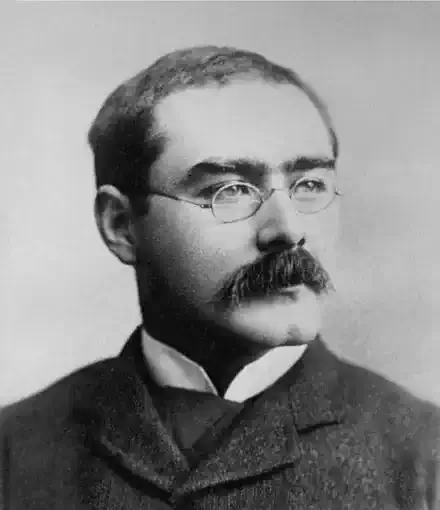
Rudyard Kipling
The Ballad of Bolivar
The Ballad of Bolivar
Seven men from all the world, back to Docks again,
Rolling down the Ratcliffe Road drunk and raising Cain:
Give the girls another drink 'fore we sign away --
We that took the ~Bolivar~ out across the Bay!
We put out from Sunderland loaded down with rails;
We put back to Sunderland 'cause our cargo shifted;
We put out from Sunderland -- met the winter gales --
Seven days and seven nights to the Start we drifted.
Racketing her rivets loose, smoke-stack white as snow,
All the coals adrift adeck, half the rails below,
Leaking like a lobster-pot, steering like a dray --
Out we took the ~Bolivar~, out across the Bay!
One by one the Lights came up, winked and let us by;
Mile by mile we waddled on, coal and fo'c'sle short;
Met a blow that laid us down, heard a bulkhead fly;
Left the ~Wolf~ behind us with a two-foot list to port.
Trailing like a wounded duck, working out her soul;
Clanging like a smithy-shop after every roll;
Just a funnel and a mast lurching through the spray --
So we threshed the ~Bolivar~ out across the Bay!
'Felt her hog and felt her sag, betted when she'd break;
Wondered every time she raced if she'd stand the shock;
Heard the seas like drunken men pounding at her strake;
Hoped the Lord 'ud keep his thumb on the plummer-block.
Banged against the iron decks, bilges choked with coal;
Flayed and frozen foot and hand, sick of heart and soul;
Last we prayed she'd buck herself into judgment Day --
Hi! we cursed the ~Bolivar~ knocking round the Bay!
O her nose flung up to sky, groaning to be still --
Up and down and back we went, never time for breath;
Then the money paid at Lloyd's caught her by the heel,
And the stars ran round and round dancin' at our death.
Aching for an hour's sleep, dozing off between;
'Heard the rotten rivets draw when she took it green;
'Watched the compass chase its tail like a cat at play --
That was on the ~Bolivar~, south across the Bay.
Once we saw between the squalls, lyin' head to swell --
Mad with work and weariness, wishin' they was we --
Some damned Liner's lights go by like a long hotel;
Cheered her from the ~Bolivar~ swampin' in the sea.
Then a grayback cleared us out, then the skipper laughed;
"Boys, the wheel has gone to Hell -- rig the winches aft!
Yoke the kicking rudder-head -- get her under way!"
So we steered her, pulley-haul, out across the Bay!
Just a pack o' rotten plates puttied up with tar,
In we came, an' time enough, 'cross Bilbao Bar.
Overloaded, undermanned, meant to founder, we
Euchred God Almighty's storm, bluffed the Eternal Sea!
Seven men from all the world, back to town again,
Rollin' down the Ratcliffe Road drunk and raising Cain:
Seven men from out of Hell. Ain't the owners gay,
'Cause we took the "Bolivar" safe across the Bay?
Seven men from all the world, back to Docks again,
Rolling down the Ratcliffe Road drunk and raising Cain:
Give the girls another drink 'fore we sign away --
We that took the ~Bolivar~ out across the Bay!
We put out from Sunderland loaded down with rails;
We put back to Sunderland 'cause our cargo shifted;
We put out from Sunderland -- met the winter gales --
Seven days and seven nights to the Start we drifted.
Racketing her rivets loose, smoke-stack white as snow,
All the coals adrift adeck, half the rails below,
Leaking like a lobster-pot, steering like a dray --
Out we took the ~Bolivar~, out across the Bay!
One by one the Lights came up, winked and let us by;
Mile by mile we waddled on, coal and fo'c'sle short;
Met a blow that laid us down, heard a bulkhead fly;
Left the ~Wolf~ behind us with a two-foot list to port.
Trailing like a wounded duck, working out her soul;
Clanging like a smithy-shop after every roll;
Just a funnel and a mast lurching through the spray --
So we threshed the ~Bolivar~ out across the Bay!
'Felt her hog and felt her sag, betted when she'd break;
Wondered every time she raced if she'd stand the shock;
Heard the seas like drunken men pounding at her strake;
Hoped the Lord 'ud keep his thumb on the plummer-block.
Banged against the iron decks, bilges choked with coal;
Flayed and frozen foot and hand, sick of heart and soul;
Last we prayed she'd buck herself into judgment Day --
Hi! we cursed the ~Bolivar~ knocking round the Bay!
O her nose flung up to sky, groaning to be still --
Up and down and back we went, never time for breath;
Then the money paid at Lloyd's caught her by the heel,
And the stars ran round and round dancin' at our death.
Aching for an hour's sleep, dozing off between;
'Heard the rotten rivets draw when she took it green;
'Watched the compass chase its tail like a cat at play --
That was on the ~Bolivar~, south across the Bay.
Once we saw between the squalls, lyin' head to swell --
Mad with work and weariness, wishin' they was we --
Some damned Liner's lights go by like a long hotel;
Cheered her from the ~Bolivar~ swampin' in the sea.
Then a grayback cleared us out, then the skipper laughed;
"Boys, the wheel has gone to Hell -- rig the winches aft!
Yoke the kicking rudder-head -- get her under way!"
So we steered her, pulley-haul, out across the Bay!
Just a pack o' rotten plates puttied up with tar,
In we came, an' time enough, 'cross Bilbao Bar.
Overloaded, undermanned, meant to founder, we
Euchred God Almighty's storm, bluffed the Eternal Sea!
Seven men from all the world, back to town again,
Rollin' down the Ratcliffe Road drunk and raising Cain:
Seven men from out of Hell. Ain't the owners gay,
'Cause we took the "Bolivar" safe across the Bay?
542
Rudyard Kipling
Sestina Of The Tramp-Royal
Sestina Of The Tramp-Royal
Speakin' in general, I 'ave tried 'em all,
The 'appy roads that take you o'er the world.
Speakin' in general, I 'ave found them good
For such as cannot use one bed too long,
But must get 'ence, the same as I 'ave done,
An' go observin' matters till they die.
What do it matter where or 'ow we die,
So long as we've our 'ealth to watch it all --
The different ways that different things are done,
An' men an' women lovin' in this world --
Takin' our chances as they come along,
An' when they ain't, pretendin' they are good?
In cash or credit -- no, it aren't no good;
You 'ave to 'ave the 'abit or you'd die,
Unless you lived your life but one day long,
Nor didn't prophesy nor fret at all,
But drew your tucker some'ow from the world,
An' never bothered what you might ha' done.
But, Gawd, what things are they I 'aven't done?
I've turned my 'and to most, an' turned it good,
In various situations round the world --
For 'im that doth not work must surely die;
But that's no reason man should labour all
'Is life on one same shift; life's none so long.
Therefore, from job to job I've moved along.
Pay couldn't 'old me when my time was done,
For something in my 'ead upset me all,
Till I 'ad dropped whatever 'twas for good,
An', out at sea, be'eld the dock-lights die,
An' met my mate -- the wind that tramps the world!
It's like a book, I think, this bloomin' world,
Which you can read and care for just so long,
But presently you feel that you will die
Unless you get the page you're readin' done,
An' turn another -- likely not so good;
But what you're after is to turn 'em all.
Gawd bless this world! Whatever she 'ath done --
Excep' when awful long -- I've found it good.
So write, before I die, "'E liked it all!"
Speakin' in general, I 'ave tried 'em all,
The 'appy roads that take you o'er the world.
Speakin' in general, I 'ave found them good
For such as cannot use one bed too long,
But must get 'ence, the same as I 'ave done,
An' go observin' matters till they die.
What do it matter where or 'ow we die,
So long as we've our 'ealth to watch it all --
The different ways that different things are done,
An' men an' women lovin' in this world --
Takin' our chances as they come along,
An' when they ain't, pretendin' they are good?
In cash or credit -- no, it aren't no good;
You 'ave to 'ave the 'abit or you'd die,
Unless you lived your life but one day long,
Nor didn't prophesy nor fret at all,
But drew your tucker some'ow from the world,
An' never bothered what you might ha' done.
But, Gawd, what things are they I 'aven't done?
I've turned my 'and to most, an' turned it good,
In various situations round the world --
For 'im that doth not work must surely die;
But that's no reason man should labour all
'Is life on one same shift; life's none so long.
Therefore, from job to job I've moved along.
Pay couldn't 'old me when my time was done,
For something in my 'ead upset me all,
Till I 'ad dropped whatever 'twas for good,
An', out at sea, be'eld the dock-lights die,
An' met my mate -- the wind that tramps the world!
It's like a book, I think, this bloomin' world,
Which you can read and care for just so long,
But presently you feel that you will die
Unless you get the page you're readin' done,
An' turn another -- likely not so good;
But what you're after is to turn 'em all.
Gawd bless this world! Whatever she 'ath done --
Excep' when awful long -- I've found it good.
So write, before I die, "'E liked it all!"
531
James Whitcomb Riley
As My Uncle Used To Say
As My Uncle Used To Say
I've thought a power on men and things,
As my uncle ust to say,--
And ef folks don't work as they pray, i jings!
W'y, they ain't no use to pray!
Ef you want somepin', and jes dead-set
A-pleadin' fer it with both eyes wet,
And _tears_ won't bring it, w'y, you try _sweat_,
As my uncle ust to say.
They's some don't know their A, B, Cs,
As my uncle ust to say,
And yit don't waste no candle-grease,
Ner whistle their lives away!
But ef they can't write no book, ner rhyme
No ringin' song fer to last all time,
They can blaze the way fer the march sublime,
As my uncle ust to say.
Whoever's Foreman of all things here,
As my uncle ust to say,
He knows each job 'at we 're best fit fer,
And our round-up, night and day:
And a-sizin' _His_ work, east and west,
And north and south, and worst and best
I ain't got nothin' to suggest,
As my uncle ust to say.
I've thought a power on men and things,
As my uncle ust to say,--
And ef folks don't work as they pray, i jings!
W'y, they ain't no use to pray!
Ef you want somepin', and jes dead-set
A-pleadin' fer it with both eyes wet,
And _tears_ won't bring it, w'y, you try _sweat_,
As my uncle ust to say.
They's some don't know their A, B, Cs,
As my uncle ust to say,
And yit don't waste no candle-grease,
Ner whistle their lives away!
But ef they can't write no book, ner rhyme
No ringin' song fer to last all time,
They can blaze the way fer the march sublime,
As my uncle ust to say.
Whoever's Foreman of all things here,
As my uncle ust to say,
He knows each job 'at we 're best fit fer,
And our round-up, night and day:
And a-sizin' _His_ work, east and west,
And north and south, and worst and best
I ain't got nothin' to suggest,
As my uncle ust to say.
275
Rudyard Kipling
Parade-Song of the Camp-Animals
Parade-Song of the Camp-Animals
Elephants of the Gun-Teams
We lent to Alexander the strength of Hercules,
The wisdom of our foreheads, the cunning of our knees.
We bowed our necks to service--they ne'er were loosed again,--
Make way there, way for the ten-foot teams
Of the Forty-Pounder train!
Gun-Bullocks
Those heroes in their harnesses avoid a cannon-ball,
And what they know of powder upsets them one and all;
Then we come into action and tug the guns again,--
Make way there, way for the twenty yoke
Of the Forty-Pounder train!
Cavalry Horses
By the brand on my withers, the finest of tunes
Is played by the Lancers, Hussars, and Dragoons,
And it's sweeter than "Stables" or "Water" to me,
The Cavalry Canter of "Bonnie Dundee!"
Then feed us and break us and handle and groom,
And give us good riders and plenty of room,
And launch us in column of squadron and see
The Way of the War-horse to "Bonnie Dundee!"
Screw-Gun Mules
As me and my companions were scrambling up a hill,
The path was lost in rolling stones, but we went forward still;
For we can wriggle and climb, my lads, an turn up everywhere
And it's our delight on a mountain height, with a leg or two to spare!
Good luck to every sergeant, then, that lets us pick our road:
Bad luck to all the driver-men that cannot pack a load!
For we can wriggle and climb, my lads, and turn up everywhere,
And it's our delight on a mountain height, with a leg or two to spare!
Commissariat Camels
We haven't a camelty tune of our own
To help us trollop along,
But every neck is a hair-trombone
(Rtt-ta-ta-ta! is a hair-trombone! )
And this is our marching-song:
Can't! Don't! Shan't! Won't!
Pass it along the line!
Somebody's pack has slid from his back,
'Wish it were only mine!
Somebody's load has tipped off in the road--
Cheer for a halt and a row!
Urrr! Yarrh! Grr! Arrh!
Somebody's catching it now!
All The Beasts Together
Children of the Camp are we,
Serving each in his degree;
Children of the yoke and goad,
Pack and harness, pad and load.
See our line across the plain,
Like a heel-rope bent again,
Reaching, writhing, rolling far,
Sweeping all away to war!
While the men that walk beside,
Dusty, silent, heavy-eyed,
Cannot tell why we or they
March and suffer day by day.
Children of the Camp are we,
Serving each in his degree;
Children of the yoke and goad,
Pack and harness, pad and load!
Elephants of the Gun-Teams
We lent to Alexander the strength of Hercules,
The wisdom of our foreheads, the cunning of our knees.
We bowed our necks to service--they ne'er were loosed again,--
Make way there, way for the ten-foot teams
Of the Forty-Pounder train!
Gun-Bullocks
Those heroes in their harnesses avoid a cannon-ball,
And what they know of powder upsets them one and all;
Then we come into action and tug the guns again,--
Make way there, way for the twenty yoke
Of the Forty-Pounder train!
Cavalry Horses
By the brand on my withers, the finest of tunes
Is played by the Lancers, Hussars, and Dragoons,
And it's sweeter than "Stables" or "Water" to me,
The Cavalry Canter of "Bonnie Dundee!"
Then feed us and break us and handle and groom,
And give us good riders and plenty of room,
And launch us in column of squadron and see
The Way of the War-horse to "Bonnie Dundee!"
Screw-Gun Mules
As me and my companions were scrambling up a hill,
The path was lost in rolling stones, but we went forward still;
For we can wriggle and climb, my lads, an turn up everywhere
And it's our delight on a mountain height, with a leg or two to spare!
Good luck to every sergeant, then, that lets us pick our road:
Bad luck to all the driver-men that cannot pack a load!
For we can wriggle and climb, my lads, and turn up everywhere,
And it's our delight on a mountain height, with a leg or two to spare!
Commissariat Camels
We haven't a camelty tune of our own
To help us trollop along,
But every neck is a hair-trombone
(Rtt-ta-ta-ta! is a hair-trombone! )
And this is our marching-song:
Can't! Don't! Shan't! Won't!
Pass it along the line!
Somebody's pack has slid from his back,
'Wish it were only mine!
Somebody's load has tipped off in the road--
Cheer for a halt and a row!
Urrr! Yarrh! Grr! Arrh!
Somebody's catching it now!
All The Beasts Together
Children of the Camp are we,
Serving each in his degree;
Children of the yoke and goad,
Pack and harness, pad and load.
See our line across the plain,
Like a heel-rope bent again,
Reaching, writhing, rolling far,
Sweeping all away to war!
While the men that walk beside,
Dusty, silent, heavy-eyed,
Cannot tell why we or they
March and suffer day by day.
Children of the Camp are we,
Serving each in his degree;
Children of the yoke and goad,
Pack and harness, pad and load!
413
Rudyard Kipling
Mulholland's Contract
Mulholland's Contract
The fear was on the cattle, for the gale was on the sea,
An' the pens broke up on the lower deck an' let the creatures free --
An' the lights went out on the lower deck, an' no one near but me.
I had been singin' to them to keep 'em quiet there,
For the lower deck is the dangerousest, requirin' constant care,
An' give to me as the strongest man, though used to drink and swear.
I see my chance was certain of bein' horned or trod,
For the lower deck was packed with steers thicker'n peas in a pod,
An' more pens broke at every roll -- so I made a Contract with God.
An' by the terms of the Contract, as I have read the same,
If He got me to port alive I would exalt His Name,
An' praise His Holy Majesty till further orders came.
He saved me from the cattle an' He saved me from the sea,
For they found me 'tween two drownded ones where the roll had landed me --
An' a four-inch crack on top of my head, as crazy as could be.
But that were done by a stanchion, an' not by a bullock at all,
An' I lay still for seven weeks convalessing of the fall,
An' readin' the shiny Scripture texts in the Seaman's Hospital.
An' I spoke to God of our Contract, an' He says to my prayer:
"I never puts on My ministers no more than they can bear.
So back you go to the cattle-boats an' preach My Gospel there.
"For human life is chancy at any kind of trade,
But most of all, as well you know, when the steers are mad-afraid;
So you go back to the cattle-boats an' preach 'em as I've said.
"They must quit drinkin' an' swearin', they mustn't knife on a blow,
They must quit gamblin' their wages, and you must preach it so;
For now those boats are more like Hell than anything else I know."
I didn't want to do it, for I knew what I should get,
An' I wanted to preach Religion, handsome an' out of the wet,
But the Word of the Lord were lain on me, an' I done what I was set.
I have been smit an' bruis]\ed, as warned would be the case,
An' turned my cheek to the smiter exactly as Scripture says;
But following that, I knocked him down an' led him up to Grace.
An' we have preaching on Sundays whenever the sea is calm,
An' I use no knife or pistol an' I never take no harm,
For the Lord abideth back of me to guide my fighting arm.
An' I sign for four-pound-ten a month and save the money clear,
An' I am in charge of the lower deck, an' I never lose a steer;
An' I believe in Almighty God an' preach His Gospel here.
The skippers say I'm crazy, but I can prove 'em wrong,
For I am in charge of the lower deck with all that doth belong --
~Which they would not give to a lunatic, and the competition so strong!~
The fear was on the cattle, for the gale was on the sea,
An' the pens broke up on the lower deck an' let the creatures free --
An' the lights went out on the lower deck, an' no one near but me.
I had been singin' to them to keep 'em quiet there,
For the lower deck is the dangerousest, requirin' constant care,
An' give to me as the strongest man, though used to drink and swear.
I see my chance was certain of bein' horned or trod,
For the lower deck was packed with steers thicker'n peas in a pod,
An' more pens broke at every roll -- so I made a Contract with God.
An' by the terms of the Contract, as I have read the same,
If He got me to port alive I would exalt His Name,
An' praise His Holy Majesty till further orders came.
He saved me from the cattle an' He saved me from the sea,
For they found me 'tween two drownded ones where the roll had landed me --
An' a four-inch crack on top of my head, as crazy as could be.
But that were done by a stanchion, an' not by a bullock at all,
An' I lay still for seven weeks convalessing of the fall,
An' readin' the shiny Scripture texts in the Seaman's Hospital.
An' I spoke to God of our Contract, an' He says to my prayer:
"I never puts on My ministers no more than they can bear.
So back you go to the cattle-boats an' preach My Gospel there.
"For human life is chancy at any kind of trade,
But most of all, as well you know, when the steers are mad-afraid;
So you go back to the cattle-boats an' preach 'em as I've said.
"They must quit drinkin' an' swearin', they mustn't knife on a blow,
They must quit gamblin' their wages, and you must preach it so;
For now those boats are more like Hell than anything else I know."
I didn't want to do it, for I knew what I should get,
An' I wanted to preach Religion, handsome an' out of the wet,
But the Word of the Lord were lain on me, an' I done what I was set.
I have been smit an' bruis]\ed, as warned would be the case,
An' turned my cheek to the smiter exactly as Scripture says;
But following that, I knocked him down an' led him up to Grace.
An' we have preaching on Sundays whenever the sea is calm,
An' I use no knife or pistol an' I never take no harm,
For the Lord abideth back of me to guide my fighting arm.
An' I sign for four-pound-ten a month and save the money clear,
An' I am in charge of the lower deck, an' I never lose a steer;
An' I believe in Almighty God an' preach His Gospel here.
The skippers say I'm crazy, but I can prove 'em wrong,
For I am in charge of the lower deck with all that doth belong --
~Which they would not give to a lunatic, and the competition so strong!~
451
Rudyard Kipling
McAndrew's Hymn
McAndrew's Hymn
Lord, Thou hast made this world below the shadow of a dream,
An', taught by time, I tak' it so -- exceptin' always Steam.
From coupler-flange to spindle-guide I see Thy Hand, O God --
Predestination in the stride o' yon connectin'-rod.
John Calvin might ha' forged the same -- enorrmous, certain, slow --
Ay, wrought it in the furnace-flame -- ~my~ "Institutio".
I cannot get my sleep to-night; old bones are hard to please;
I'll stand the middle watch up here -- alone wi' God an' these
My engines, after ninety days o' race an' rack an' strain
Through all the seas of all Thy world, slam-bangin' home again.
Slam-bang too much -- they knock a wee -- the crosshead-gibs are loose;
But thirty thousand mile o' sea has gied them fair excuse. . . .
Fine, clear an' dark -- a full-draught breeze, wi' Ushant out o' sight,
An' Ferguson relievin' Hay. Old girl, ye'll walk to-night!
His wife's at Plymouth. . . . Seventy --
One -- Two -- Three since he began --
Three turns for Mistress Ferguson. . .and who's to blame the man?
There's none at any port for me, by drivin' fast or slow,
Since Elsie Campbell went to Thee, Lord, thirty years ago.
(The year the ~Sarah Sands~ was burned. Oh roads we used to tread,
Fra' Maryhill to Pollokshaws -- fra' Govan to Parkhead!)
Not but they're ceevil on the Board. Ye'll hear Sir Kenneth say:
"Good-morrn, M'Andrew! Back again? An' how's your bilge to-day?"
Miscallin' technicalities but handin' me my chair
To drink Madeira wi' three Earls -- the auld Fleet Engineer,
That started as a boiler-whelp -- when steam and he were low.
I mind the time we used to serve a broken pipe wi' tow.
Ten pound was all the pressure then -- Eh! Eh! -- a man wad drive;
An' here, our workin' gauges give one hunder fifty-five!
We're creepin' on wi' each new rig -- less weight an' larger power:
There'll be the loco-boiler next an' thirty knots an hour!
Thirty an' more. What I ha' seen since ocean-steam began
Leaves me no doot for the machine: but what about the man?
The man that counts, wi' all his runs, one million mile o' sea:
Four time the span from earth to moon. . . . How far, O Lord, from Thee?
That wast beside him night an' day. Ye mind my first typhoon?
It scoughed the skipper on his way to jock wi' the saloon.
Three feet were on the stokehold-floor -- just slappin' to an' fro --
An' cast me on a furnace-door. I have the marks to show.
Marks! I ha' marks o' more than burns -- deep in my soul an' black,
An' times like this, when things go smooth, my wickudness comes back.
The sins o' four and forty years, all up an' down the seas,
Clack an' repeat like valves half-fed. . . . Forgie's our trespasses.
Nights when I'd come on deck to mark, wi' envy in my gaze,
The couples kittlin' in the dark between the funnel stays;
Years when I raked the ports wi' pride to fill my cup o' wrong --
Judge not, O Lord, my steps aside at Gay Street in Hong-Kong!
Blot out the wastrel hours of mine in sin when I abode --
Jane Harrigan's an' Number Nine, The Reddick an' Grant Road!
An' waur than all -- my crownin' sin -- rank blasphemy an' wild.
I was not four and twenty then -- Ye wadna judge a child?
I'd seen the Tropics first that run -- new fruit, new smells, new air --
How could I tell -- blind-fou wi' sun -- the Deil was lurkin' there?
By day like playhouse-scenes the shore slid past our sleepy eyes;
By night those soft, lasceevious stars leered from those velvet skies,
In port (we used no cargo-steam) I'd daunder down the streets --
An ijjit grinnin' in a dream -- for shells an' parrakeets,
An' walkin'-sticks o' carved bamboo an' blowfish stuffed an' dried --
Fillin' my bunk wi' rubbishry the Chief put overside.
Till, off Sambawa Head, Ye mind, I heard a land-breeze ca',
Milk-warm wi' breath o' spice an' bloom: "M'Andrew, come awa'!"
Firm, clear an' low -- no haste, no hate -- the ghostly whisper went,
Just statin' eevidential facts beyon' all argument:
"Your mither's God's a graspin' deil, the shadow o' yoursel',
Got out o' books by meenisters clean daft on Heaven an' Hell.
They mak' Him in the Broomielaw, o' Glasgie cold an' dirt,
A jealous, pridefu' fetich, lad, that's only strong to hurt,
Ye'll not go back to Him again an' kiss His red-hot rod,
But come wi' Us" (Now, who were ~They~?) "an' know the Leevin' God,
That does not kipper souls for sport or break a life in jest,
But swells the ripenin' cocoanuts an' ripes the woman's breast."
An' there it stopped: cut off: no more; that quiet, certain voice --
For me, six months o' twenty-four, to leave or take at choice.
'Twas on me like a thunderclap -- it racked me through an' through --
Temptation past the show o' speech, unnameable an' new --
The Sin against the Holy Ghost? . . . An' under all, our screw.
That storm blew by but left behind her anchor-shiftin' swell,
Thou knowest all my heart an' mind, Thou knowest, Lord, I fell.
Third on the ~Mary Gloster~ then, and first that night in Hell!
Yet was Thy hand beneath my head, about my feet Thy care --
Fra' Deli clear to Torres Strait, the trial o' despair,
But when we touched the Barrier Reef Thy answer to my prayer!
We dared not run that sea by night but lay an' held our fire,
An' I was drowsin' on the hatch -- sick -- sick wi' doubt an' tire:
"~Better the sight of eyes that see than wanderin' o' desire!~"
Ye mind that word? Clear as our gongs -- again, an' once again,
When rippin' down through coral-trash ran out our moorin'-chain;
An' by Thy Grace I had the Light to see my duty plain.
Light on the engine-room -- no more -- bright as our carbons burn.
I've lost it since a thousand times, but never past return.
. . . . .
Obsairve. Per annum we'll have here two thousand souls aboard --
Think not I dare to justify myself before the Lord,
But -- average fifteen hunder souls safe-borne fra' port to port --
I ~am~ o' service to my kind. Ye wadna blame the thought?
Maybe they steam from grace to wrath -- to sin by folly led, --
It isna mine to judge their path -- their lives are on my head.
Mine at the last -- when all is done it all comes back to me,
The fault that leaves six thousand ton a log upon the sea.
We'll tak' one stretch -- three weeks an' odd by any road ye steer --
Fra' Cape Town east to Wellington -- ye need an engineer.
Fail there -- ye've time to weld your shaft -- ay, eat it, ere ye're spoke;
Or make Kerguelen under sail -- three jiggers burned wi' smoke!
An' home again, the Rio run: it's no child's play to go
Steamin' to bell for fourteen days o' snow an' floe an' blow --
The bergs like kelpies overside that girn an' turn an' shift
Whaur, grindin' like the Mills o' God, goes by the big South drift.
(Hail, snow an' ice that praise the Lord: I've met them at their work,
An' wished we had anither route or they anither kirk.)
Yon's strain, hard strain, o' head an' hand, for though Thy Power brings
All skill to naught, Ye'll understand a man must think o' things.
Then, at the last, we'll get to port an' hoist their baggage clear --
The passengers, wi' gloves an' canes -- an' this is what I'll hear:
"Well, thank ye for a pleasant voyage. The tender's comin' now."
While I go testin' follower-bolts an' watch the skipper bow.
They've words for every one but me -- shake hands wi' half the crew,
Except the dour Scots engineer, the man they never knew.
An' yet I like the wark for all we've dam' few pickin's here --
No pension, an' the most we earn's four hunder pound a year.
Better myself abroad? Maybe. ~I'd~ sooner starve than sail
Wi' such as call a snifter-rod ~ross~. . .French for nightingale.
Commeesion on my stores? Some do; but I can not afford
To lie like stewards wi' patty-pans --. I'm older than the Board.
A bonus on the coal I save? Ou ay, the Scots are close,
But when I grudge the strength Ye gave I'll grudge their food to ~those~.
(There's bricks that I might recommend -- an' clink the fire-bars cruel.
No! Welsh -- Wangarti at the worst -- an' damn all patent fuel!)
Inventions? Ye must stay in port to mak' a patent pay.
My Deeferential Valve-Gear taught me how that business lay,
I blame no chaps wi' clearer head for aught they make or sell.
~I~ found that I could not invent an' look to these -- as well.
So, wrestled wi' Apollyon -- Nah! -- fretted like a bairn --
But burned the workin'-plans last run wi' all I hoped to earn.
Ye know how hard an Idol dies, an' what that meant to me --
E'en tak' it for a sacrifice acceptable to Thee. . . .
~Below there! Oiler! What's your wark? Ye find it runnin' hard?
Ye needn't swill the cap wi' oil -- this isn't the Cunard!
Ye thought? Ye are not paid to think. Go, sweat that off again!~
Tck! Tck! It's deeficult to sweer nor tak' The Name in vain!
Men, ay an' women, call me stern. Wi' these to oversee
Ye'll note I've little time to burn on social repartee.
The bairns see what their elders miss; they'll hunt me to an' fro,
Till for the sake of -- well, a kiss -- I tak' 'em down below.
That minds me of our Viscount loon -- Sir Kenneth's kin -- the chap
Wi' Russia leather tennis-shoon an' spar-decked yachtin'-cap.
I showed him round last week, o'er all -- an' at the last says he:
"Mister M'Andrew, don't you think steam spoils romance at sea?"
Damned ijjit! I'd been doon that morn to see what ailed the throws,
Manholin', on my back -- the cranks three inches off my nose.
Romance! Those first-class passengers they like it very well,
Printed an' bound in little books; but why don't poets tell?
I'm sick of all their quirks an' turns -- the loves an' doves they dream --
Lord, send a man like Robbie Burns to sing the Song o' Steam!
To match wi' Scotia's noblest speech yon orchestra sublime
Whaurto -- uplifted like the Just -- the tail-rods mark the time.
The crank-throws give the double-bass, the feed-pump sobs an' heaves,
An' now the main eccentrics start their quarrel on the sheaves:
Her time, her own appointed time, the rocking link-head bides,
Till -- hear that note? -- the rod's return
whings glimmerin' through the guides.
They're all awa'! True beat, full power, the clangin' chorus goes
Clear to the tunnel where they sit, my purrin' dynamos.
Interdependence absolute, foreseen, ordained, decreed,
To work, Ye'll note, at any tilt an' every rate o' speed.
Fra' skylight-lift to furnace-bars, backed, bolted, braced an' stayed,
An' singin' like the Mornin' Stars for joy that they are made;
While, out o' touch o' vanity, the sweatin' thrust-block says:
"Not unto us the praise, or man -- not unto us the praise!"
Now, a' together, hear them lift their lesson -- theirs an' mine:
"Law, Orrder, Duty an' Restraint, Obedience, Discipline!"
Mill, forge an' try-pit taught them that when roarin' they arose,
An' whiles I wonder if a soul was gied them wi' the blows.
Oh for a man to weld it then, in one trip-hammer strain,
Till even first-class passengers could tell the meanin' plain!
But no one cares except mysel' that serve an' understand
My seven thousand horse-power here.
Eh, Lord! They're grand -- they're grand!
Uplift am I? When first in store the new-made beasties stood,
Were Ye cast down that breathed the Word declarin' all things good?
Not so! O' that warld-liftin' joy no after-fall could vex,
Ye've left a glimmer still to cheer the Man -- the Arrtifex!
~That~ holds, in spite o' knock and scale, o' friction, waste an' slip,
An' by that light -- now, mark my word -- we'll build the Perfect Ship.
I'll never last to judge her lines or take her curve -- not I.
But I ha' lived an' I ha' worked. 'Be thanks to Thee, Most High!
An' I ha' done what I ha' done -- judge Thou if ill or well --
Always Thy Grace preventin' me. . . .
Losh! Yon's the "Stand by" bell.
Pilot so soon? His flare it is. The mornin'-watch is set.
Well, God be thanked, as I was sayin', I'm no Pelagian yet.
Now I'll tak' on. . . .
~'Morrn, Ferguson. Man, have ye ever thought
What your good leddy costs in coal? . . . I'll burn 'em down to port.
Lord, Thou hast made this world below the shadow of a dream,
An', taught by time, I tak' it so -- exceptin' always Steam.
From coupler-flange to spindle-guide I see Thy Hand, O God --
Predestination in the stride o' yon connectin'-rod.
John Calvin might ha' forged the same -- enorrmous, certain, slow --
Ay, wrought it in the furnace-flame -- ~my~ "Institutio".
I cannot get my sleep to-night; old bones are hard to please;
I'll stand the middle watch up here -- alone wi' God an' these
My engines, after ninety days o' race an' rack an' strain
Through all the seas of all Thy world, slam-bangin' home again.
Slam-bang too much -- they knock a wee -- the crosshead-gibs are loose;
But thirty thousand mile o' sea has gied them fair excuse. . . .
Fine, clear an' dark -- a full-draught breeze, wi' Ushant out o' sight,
An' Ferguson relievin' Hay. Old girl, ye'll walk to-night!
His wife's at Plymouth. . . . Seventy --
One -- Two -- Three since he began --
Three turns for Mistress Ferguson. . .and who's to blame the man?
There's none at any port for me, by drivin' fast or slow,
Since Elsie Campbell went to Thee, Lord, thirty years ago.
(The year the ~Sarah Sands~ was burned. Oh roads we used to tread,
Fra' Maryhill to Pollokshaws -- fra' Govan to Parkhead!)
Not but they're ceevil on the Board. Ye'll hear Sir Kenneth say:
"Good-morrn, M'Andrew! Back again? An' how's your bilge to-day?"
Miscallin' technicalities but handin' me my chair
To drink Madeira wi' three Earls -- the auld Fleet Engineer,
That started as a boiler-whelp -- when steam and he were low.
I mind the time we used to serve a broken pipe wi' tow.
Ten pound was all the pressure then -- Eh! Eh! -- a man wad drive;
An' here, our workin' gauges give one hunder fifty-five!
We're creepin' on wi' each new rig -- less weight an' larger power:
There'll be the loco-boiler next an' thirty knots an hour!
Thirty an' more. What I ha' seen since ocean-steam began
Leaves me no doot for the machine: but what about the man?
The man that counts, wi' all his runs, one million mile o' sea:
Four time the span from earth to moon. . . . How far, O Lord, from Thee?
That wast beside him night an' day. Ye mind my first typhoon?
It scoughed the skipper on his way to jock wi' the saloon.
Three feet were on the stokehold-floor -- just slappin' to an' fro --
An' cast me on a furnace-door. I have the marks to show.
Marks! I ha' marks o' more than burns -- deep in my soul an' black,
An' times like this, when things go smooth, my wickudness comes back.
The sins o' four and forty years, all up an' down the seas,
Clack an' repeat like valves half-fed. . . . Forgie's our trespasses.
Nights when I'd come on deck to mark, wi' envy in my gaze,
The couples kittlin' in the dark between the funnel stays;
Years when I raked the ports wi' pride to fill my cup o' wrong --
Judge not, O Lord, my steps aside at Gay Street in Hong-Kong!
Blot out the wastrel hours of mine in sin when I abode --
Jane Harrigan's an' Number Nine, The Reddick an' Grant Road!
An' waur than all -- my crownin' sin -- rank blasphemy an' wild.
I was not four and twenty then -- Ye wadna judge a child?
I'd seen the Tropics first that run -- new fruit, new smells, new air --
How could I tell -- blind-fou wi' sun -- the Deil was lurkin' there?
By day like playhouse-scenes the shore slid past our sleepy eyes;
By night those soft, lasceevious stars leered from those velvet skies,
In port (we used no cargo-steam) I'd daunder down the streets --
An ijjit grinnin' in a dream -- for shells an' parrakeets,
An' walkin'-sticks o' carved bamboo an' blowfish stuffed an' dried --
Fillin' my bunk wi' rubbishry the Chief put overside.
Till, off Sambawa Head, Ye mind, I heard a land-breeze ca',
Milk-warm wi' breath o' spice an' bloom: "M'Andrew, come awa'!"
Firm, clear an' low -- no haste, no hate -- the ghostly whisper went,
Just statin' eevidential facts beyon' all argument:
"Your mither's God's a graspin' deil, the shadow o' yoursel',
Got out o' books by meenisters clean daft on Heaven an' Hell.
They mak' Him in the Broomielaw, o' Glasgie cold an' dirt,
A jealous, pridefu' fetich, lad, that's only strong to hurt,
Ye'll not go back to Him again an' kiss His red-hot rod,
But come wi' Us" (Now, who were ~They~?) "an' know the Leevin' God,
That does not kipper souls for sport or break a life in jest,
But swells the ripenin' cocoanuts an' ripes the woman's breast."
An' there it stopped: cut off: no more; that quiet, certain voice --
For me, six months o' twenty-four, to leave or take at choice.
'Twas on me like a thunderclap -- it racked me through an' through --
Temptation past the show o' speech, unnameable an' new --
The Sin against the Holy Ghost? . . . An' under all, our screw.
That storm blew by but left behind her anchor-shiftin' swell,
Thou knowest all my heart an' mind, Thou knowest, Lord, I fell.
Third on the ~Mary Gloster~ then, and first that night in Hell!
Yet was Thy hand beneath my head, about my feet Thy care --
Fra' Deli clear to Torres Strait, the trial o' despair,
But when we touched the Barrier Reef Thy answer to my prayer!
We dared not run that sea by night but lay an' held our fire,
An' I was drowsin' on the hatch -- sick -- sick wi' doubt an' tire:
"~Better the sight of eyes that see than wanderin' o' desire!~"
Ye mind that word? Clear as our gongs -- again, an' once again,
When rippin' down through coral-trash ran out our moorin'-chain;
An' by Thy Grace I had the Light to see my duty plain.
Light on the engine-room -- no more -- bright as our carbons burn.
I've lost it since a thousand times, but never past return.
. . . . .
Obsairve. Per annum we'll have here two thousand souls aboard --
Think not I dare to justify myself before the Lord,
But -- average fifteen hunder souls safe-borne fra' port to port --
I ~am~ o' service to my kind. Ye wadna blame the thought?
Maybe they steam from grace to wrath -- to sin by folly led, --
It isna mine to judge their path -- their lives are on my head.
Mine at the last -- when all is done it all comes back to me,
The fault that leaves six thousand ton a log upon the sea.
We'll tak' one stretch -- three weeks an' odd by any road ye steer --
Fra' Cape Town east to Wellington -- ye need an engineer.
Fail there -- ye've time to weld your shaft -- ay, eat it, ere ye're spoke;
Or make Kerguelen under sail -- three jiggers burned wi' smoke!
An' home again, the Rio run: it's no child's play to go
Steamin' to bell for fourteen days o' snow an' floe an' blow --
The bergs like kelpies overside that girn an' turn an' shift
Whaur, grindin' like the Mills o' God, goes by the big South drift.
(Hail, snow an' ice that praise the Lord: I've met them at their work,
An' wished we had anither route or they anither kirk.)
Yon's strain, hard strain, o' head an' hand, for though Thy Power brings
All skill to naught, Ye'll understand a man must think o' things.
Then, at the last, we'll get to port an' hoist their baggage clear --
The passengers, wi' gloves an' canes -- an' this is what I'll hear:
"Well, thank ye for a pleasant voyage. The tender's comin' now."
While I go testin' follower-bolts an' watch the skipper bow.
They've words for every one but me -- shake hands wi' half the crew,
Except the dour Scots engineer, the man they never knew.
An' yet I like the wark for all we've dam' few pickin's here --
No pension, an' the most we earn's four hunder pound a year.
Better myself abroad? Maybe. ~I'd~ sooner starve than sail
Wi' such as call a snifter-rod ~ross~. . .French for nightingale.
Commeesion on my stores? Some do; but I can not afford
To lie like stewards wi' patty-pans --. I'm older than the Board.
A bonus on the coal I save? Ou ay, the Scots are close,
But when I grudge the strength Ye gave I'll grudge their food to ~those~.
(There's bricks that I might recommend -- an' clink the fire-bars cruel.
No! Welsh -- Wangarti at the worst -- an' damn all patent fuel!)
Inventions? Ye must stay in port to mak' a patent pay.
My Deeferential Valve-Gear taught me how that business lay,
I blame no chaps wi' clearer head for aught they make or sell.
~I~ found that I could not invent an' look to these -- as well.
So, wrestled wi' Apollyon -- Nah! -- fretted like a bairn --
But burned the workin'-plans last run wi' all I hoped to earn.
Ye know how hard an Idol dies, an' what that meant to me --
E'en tak' it for a sacrifice acceptable to Thee. . . .
~Below there! Oiler! What's your wark? Ye find it runnin' hard?
Ye needn't swill the cap wi' oil -- this isn't the Cunard!
Ye thought? Ye are not paid to think. Go, sweat that off again!~
Tck! Tck! It's deeficult to sweer nor tak' The Name in vain!
Men, ay an' women, call me stern. Wi' these to oversee
Ye'll note I've little time to burn on social repartee.
The bairns see what their elders miss; they'll hunt me to an' fro,
Till for the sake of -- well, a kiss -- I tak' 'em down below.
That minds me of our Viscount loon -- Sir Kenneth's kin -- the chap
Wi' Russia leather tennis-shoon an' spar-decked yachtin'-cap.
I showed him round last week, o'er all -- an' at the last says he:
"Mister M'Andrew, don't you think steam spoils romance at sea?"
Damned ijjit! I'd been doon that morn to see what ailed the throws,
Manholin', on my back -- the cranks three inches off my nose.
Romance! Those first-class passengers they like it very well,
Printed an' bound in little books; but why don't poets tell?
I'm sick of all their quirks an' turns -- the loves an' doves they dream --
Lord, send a man like Robbie Burns to sing the Song o' Steam!
To match wi' Scotia's noblest speech yon orchestra sublime
Whaurto -- uplifted like the Just -- the tail-rods mark the time.
The crank-throws give the double-bass, the feed-pump sobs an' heaves,
An' now the main eccentrics start their quarrel on the sheaves:
Her time, her own appointed time, the rocking link-head bides,
Till -- hear that note? -- the rod's return
whings glimmerin' through the guides.
They're all awa'! True beat, full power, the clangin' chorus goes
Clear to the tunnel where they sit, my purrin' dynamos.
Interdependence absolute, foreseen, ordained, decreed,
To work, Ye'll note, at any tilt an' every rate o' speed.
Fra' skylight-lift to furnace-bars, backed, bolted, braced an' stayed,
An' singin' like the Mornin' Stars for joy that they are made;
While, out o' touch o' vanity, the sweatin' thrust-block says:
"Not unto us the praise, or man -- not unto us the praise!"
Now, a' together, hear them lift their lesson -- theirs an' mine:
"Law, Orrder, Duty an' Restraint, Obedience, Discipline!"
Mill, forge an' try-pit taught them that when roarin' they arose,
An' whiles I wonder if a soul was gied them wi' the blows.
Oh for a man to weld it then, in one trip-hammer strain,
Till even first-class passengers could tell the meanin' plain!
But no one cares except mysel' that serve an' understand
My seven thousand horse-power here.
Eh, Lord! They're grand -- they're grand!
Uplift am I? When first in store the new-made beasties stood,
Were Ye cast down that breathed the Word declarin' all things good?
Not so! O' that warld-liftin' joy no after-fall could vex,
Ye've left a glimmer still to cheer the Man -- the Arrtifex!
~That~ holds, in spite o' knock and scale, o' friction, waste an' slip,
An' by that light -- now, mark my word -- we'll build the Perfect Ship.
I'll never last to judge her lines or take her curve -- not I.
But I ha' lived an' I ha' worked. 'Be thanks to Thee, Most High!
An' I ha' done what I ha' done -- judge Thou if ill or well --
Always Thy Grace preventin' me. . . .
Losh! Yon's the "Stand by" bell.
Pilot so soon? His flare it is. The mornin'-watch is set.
Well, God be thanked, as I was sayin', I'm no Pelagian yet.
Now I'll tak' on. . . .
~'Morrn, Ferguson. Man, have ye ever thought
What your good leddy costs in coal? . . . I'll burn 'em down to port.
467
Rudyard Kipling
M'Andrew's Hymn
M'Andrew's Hymn
Lord, Thou hast made this world below the shadow of a dream,
An', taught by time, I tak' it so -- exceptin' always Steam.
From coupler-flange to spindle-guide I see Thy Hand, O God --
Predestination in the stride o' yon connectin'-rod.
John Calvin might ha' forged the same -- enorrmous, certain, slow --
Ay, wrought it in the furnace-flame -- ~my~ "Institutio".
I cannot get my sleep to-night; old bones are hard to please;
I'll stand the middle watch up here -- alone wi' God an' these
My engines, after ninety days o' race an' rack an' strain
Through all the seas of all Thy world, slam-bangin' home again.
Slam-bang too much -- they knock a wee -- the crosshead-gibs are loose;
But thirty thousand mile o' sea has gied them fair excuse. . . .
Fine, clear an' dark -- a full-draught breeze, wi' Ushant out o' sight,
An' Ferguson relievin' Hay. Old girl, ye'll walk to-night!
His wife's at Plymouth. . . . Seventy --
One -- Two -- Three since he began --
Three turns for Mistress Ferguson. . .and who's to blame the man?
There's none at any port for me, by drivin' fast or slow,
Since Elsie Campbell went to Thee, Lord, thirty years ago.
(The year the ~Sarah Sands~ was burned. Oh roads we used to tread,
Fra' Maryhill to Pollokshaws -- fra' Govan to Parkhead!)
Not but they're ceevil on the Board. Ye'll hear Sir Kenneth say:
"Good-morrn, M'Andrew! Back again? An' how's your bilge to-day?"
Miscallin' technicalities but handin' me my chair
To drink Madeira wi' three Earls -- the auld Fleet Engineer,
That started as a boiler-whelp -- when steam and he were low.
I mind the time we used to serve a broken pipe wi' tow.
Ten pound was all the pressure then -- Eh! Eh! -- a man wad drive;
An' here, our workin' gauges give one hunder fifty-five!
We're creepin' on wi' each new rig -- less weight an' larger power:
There'll be the loco-boiler next an' thirty knots an hour!
Thirty an' more. What I ha' seen since ocean-steam began
Leaves me no doot for the machine: but what about the man?
The man that counts, wi' all his runs, one million mile o' sea:
Four time the span from earth to moon. . . . How far, O Lord, from Thee?
That wast beside him night an' day. Ye mind my first typhoon?
It scoughed the skipper on his way to jock wi' the saloon.
Three feet were on the stokehold-floor -- just slappin' to an' fro --
An' cast me on a furnace-door. I have the marks to show.
Marks! I ha' marks o' more than burns -- deep in my soul an' black,
An' times like this, when things go smooth, my wickudness comes back.
The sins o' four and forty years, all up an' down the seas,
Clack an' repeat like valves half-fed. . . . Forgie's our trespasses.
Nights when I'd come on deck to mark, wi' envy in my gaze,
The couples kittlin' in the dark between the funnel stays;
Years when I raked the ports wi' pride to fill my cup o' wrong --
Judge not, O Lord, my steps aside at Gay Street in Hong-Kong!
Blot out the wastrel hours of mine in sin when I abode --
Jane Harrigan's an' Number Nine, The Reddick an' Grant Road!
An' waur than all -- my crownin' sin -- rank blasphemy an' wild.
I was not four and twenty then -- Ye wadna judge a child?
I'd seen the Tropics first that run -- new fruit, new smells, new air --
How could I tell -- blind-fou wi' sun -- the Deil was lurkin' there?
By day like playhouse-scenes the shore slid past our sleepy eyes;
By night those soft, lasceevious stars leered from those velvet skies,
In port (we used no cargo-steam) I'd daunder down the streets --
An ijjit grinnin' in a dream -- for shells an' parrakeets,
An' walkin'-sticks o' carved bamboo an' blowfish stuffed an' dried --
Fillin' my bunk wi' rubbishry the Chief put overside.
Till, off Sambawa Head, Ye mind, I heard a land-breeze ca',
Milk-warm wi' breath o' spice an' bloom: "M'Andrew, come awa'!"
Firm, clear an' low -- no haste, no hate -- the ghostly whisper went,
Just statin' eevidential facts beyon' all argument:
"Your mither's God's a graspin' deil, the shadow o' yoursel',
Got out o' books by meenisters clean daft on Heaven an' Hell.
They mak' Him in the Broomielaw, o' Glasgie cold an' dirt,
A jealous, pridefu' fetich, lad, that's only strong to hurt,
Ye'll not go back to Him again an' kiss His red-hot rod,
But come wi' Us" (Now, who were ~They~?) "an' know the Leevin' God,
That does not kipper souls for sport or break a life in jest,
But swells the ripenin' cocoanuts an' ripes the woman's breast."
An' there it stopped: cut off: no more; that quiet, certain voice --
For me, six months o' twenty-four, to leave or take at choice.
'Twas on me like a thunderclap -- it racked me through an' through --
Temptation past the show o' speech, unnameable an' new --
The Sin against the Holy Ghost? . . . An' under all, our screw.
That storm blew by but left behind her anchor-shiftin' swell,
Thou knowest all my heart an' mind, Thou knowest, Lord, I fell.
Third on the ~Mary Gloster~ then, and first that night in Hell!
Yet was Thy hand beneath my head, about my feet Thy care --
Fra' Deli clear to Torres Strait, the trial o' despair,
But when we touched the Barrier Reef Thy answer to my prayer!
We dared not run that sea by night but lay an' held our fire,
An' I was drowsin' on the hatch -- sick -- sick wi' doubt an' tire:
"~Better the sight of eyes that see than wanderin' o' desire!~"
Ye mind that word? Clear as our gongs -- again, an' once again,
When rippin' down through coral-trash ran out our moorin'-chain;
An' by Thy Grace I had the Light to see my duty plain.
Light on the engine-room -- no more -- bright as our carbons burn.
I've lost it since a thousand times, but never past return.
Obsairve. Per annum we'll have here two thousand souls aboard --
Think not I dare to justify myself before the Lord,
But -- average fifteen hunder souls safe-borne fra' port to port --
I ~am~ o' service to my kind. Ye wadna blame the thought?
Maybe they steam from grace to wrath -- to sin by folly led, --
It isna mine to judge their path -- their lives are on my head.
Mine at the last -- when all is done it all comes back to me,
The fault that leaves six thousand ton a log upon the sea.
We'll tak' one stretch -- three weeks an' odd by any road ye steer --
Fra' Cape Town east to Wellington -- ye need an engineer.
Fail there -- ye've time to weld your shaft -- ay, eat it, ere ye're spoke;
Or make Kerguelen under sail -- three jiggers burned wi' smoke!
An' home again, the Rio run: it's no child's play to go
Steamin' to bell for fourteen days o' snow an' floe an' blow --
The bergs like kelpies overside that girn an' turn an' shift
Whaur, grindin' like the Mills o' God, goes by the big South drift.
(Hail, snow an' ice that praise the Lord: I've met them at their work,
An' wished we had anither route or they anither kirk.)
Yon's strain, hard strain, o' head an' hand, for though Thy Power brings
All skill to naught, Ye'll understand a man must think o' things.
Then, at the last, we'll get to port an' hoist their baggage clear --
The passengers, wi' gloves an' canes -- an' this is what I'll hear:
"Well, thank ye for a pleasant voyage. The tender's comin' now."
While I go testin' follower-bolts an' watch the skipper bow.
They've words for every one but me -- shake hands wi' half the crew,
Except the dour Scots engineer, the man they never knew.
An' yet I like the wark for all we've dam' few pickin's here --
No pension, an' the most we earn's four hunder pound a year.
Better myself abroad? Maybe. ~I'd~ sooner starve than sail
Wi' such as call a snifter-rod ~ross~. . .French for nightingale.
Commeesion on my stores? Some do; but I can not afford
To lie like stewards wi' patty-pans --. I'm older than the Board.
A bonus on the coal I save? Ou ay, the Scots are close,
But when I grudge the strength Ye gave I'll grudge their food to ~those~.
(There's bricks that I might recommend -- an' clink the fire-bars cruel.
No! Welsh -- Wangarti at the worst -- an' damn all patent fuel!)
Inventions? Ye must stay in port to mak' a patent pay.
My Deeferential Valve-Gear taught me how that business lay,
I blame no chaps wi' clearer head for aught they make or sell.
~I~ found that I could not invent an' look to these -- as well.
So, wrestled wi' Apollyon -- Nah! -- fretted like a bairn --
But burned the workin'-plans last run wi' all I hoped to earn.
Ye know how hard an Idol dies, an' what that meant to me --
E'en tak' it for a sacrifice acceptable to Thee. . . .
~Below there! Oiler! What's your wark? Ye find it runnin' hard?
Ye needn't swill the cap wi' oil -- this isn't the Cunard!
Ye thought? Ye are not paid to think. Go, sweat that off again!~
Tck! Tck! It's deeficult to sweer nor tak' The Name in vain!
Men, ay an' women, call me stern. Wi' these to oversee
Ye'll note I've little time to burn on social repartee.
The bairns see what their elders miss; they'll hunt me to an' fro,
Till for the sake of -- well, a kiss -- I tak' 'em down below.
That minds me of our Viscount loon -- Sir Kenneth's kin -- the chap
Wi' Russia leather tennis-shoon an' spar-decked yachtin'-cap.
I showed him round last week, o'er all -- an' at the last says he:
"Mister M'Andrew, don't you think steam spoils romance at sea?"
Damned ijjit! I'd been doon that morn to see what ailed the throws,
Manholin', on my back -- the cranks three inches off my nose.
Romance! Those first-class passengers they like it very well,
Printed an' bound in little books; but why don't poets tell?
I'm sick of all their quirks an' turns -- the loves an' doves they dream --
Lord, send a man like Robbie Burns to sing the Song o' Steam!
To match wi' Scotia's noblest speech yon orchestra sublime
Whaurto -- uplifted like the Just -- the tail-rods mark the time.
The crank-throws give the double-bass, the feed-pump sobs an' heaves,
An' now the main eccentrics start their quarrel on the sheaves:
Her time, her own appointed time, the rocking link-head bides,
Till -- hear that note? -- the rod's return
whings glimmerin' through the guides.
They're all awa'! True beat, full power, the clangin' chorus goes
Clear to the tunnel where they sit, my purrin' dynamos.
Interdependence absolute, foreseen, ordained, decreed,
To work, Ye'll note, at any tilt an' every rate o' speed.
Fra' skylight-lift to furnace-bars, backed, bolted, braced an' stayed,
An' singin' like the Mornin' Stars for joy that they are made;
While, out o' touch o' vanity, the sweatin' thrust-block says:
"Not unto us the praise, or man -- not unto us the praise!"
Now, a' together, hear them lift their lesson -- theirs an' mine:
"Law, Orrder, Duty an' Restraint, Obedience, Discipline!"
Mill, forge an' try-pit taught them that when roarin' they arose,
An' whiles I wonder if a soul was gied them wi' the blows.
Oh for a man to weld it then, in one trip-hammer strain,
Till even first-class passengers could tell the meanin' plain!
But no one cares except mysel' that serve an' understand
My seven thousand horse-power here.
Eh, Lord! They're grand -- they're grand!
Uplift am I? When first in store the new-made beasties stood,
Were Ye cast down that breathed the Word declarin' all things good?
Not so! O' that warld-liftin' joy no after-fall could vex,
Ye've left a glimmer still to cheer the Man -- the Arrtifex!
~That~ holds, in spite o' knock and scale, o' friction, waste an' slip,
An' by that light -- now, mark my word -- we'll build the Perfect Ship.
I'll never last to judge her lines or take her curve -- not I.
But I ha' lived an' I ha' worked. 'Be thanks to Thee, Most High!
An' I ha' done what I ha' done -- judge Thou if ill or well --
Always Thy Grace preventin' me. . . .
Losh! Yon's the "Stand by" bell.
Pilot so soon? His flare it is. The mornin'-watch is set.
Well, God be thanked, as I was sayin', I'm no Pelagian yet.
Now I'll tak' on. . . .
~'Morrn, Ferguson. Man, have ye ever thought
What your good leddy costs in coal? . . . I'll burn 'em down to port.
Lord, Thou hast made this world below the shadow of a dream,
An', taught by time, I tak' it so -- exceptin' always Steam.
From coupler-flange to spindle-guide I see Thy Hand, O God --
Predestination in the stride o' yon connectin'-rod.
John Calvin might ha' forged the same -- enorrmous, certain, slow --
Ay, wrought it in the furnace-flame -- ~my~ "Institutio".
I cannot get my sleep to-night; old bones are hard to please;
I'll stand the middle watch up here -- alone wi' God an' these
My engines, after ninety days o' race an' rack an' strain
Through all the seas of all Thy world, slam-bangin' home again.
Slam-bang too much -- they knock a wee -- the crosshead-gibs are loose;
But thirty thousand mile o' sea has gied them fair excuse. . . .
Fine, clear an' dark -- a full-draught breeze, wi' Ushant out o' sight,
An' Ferguson relievin' Hay. Old girl, ye'll walk to-night!
His wife's at Plymouth. . . . Seventy --
One -- Two -- Three since he began --
Three turns for Mistress Ferguson. . .and who's to blame the man?
There's none at any port for me, by drivin' fast or slow,
Since Elsie Campbell went to Thee, Lord, thirty years ago.
(The year the ~Sarah Sands~ was burned. Oh roads we used to tread,
Fra' Maryhill to Pollokshaws -- fra' Govan to Parkhead!)
Not but they're ceevil on the Board. Ye'll hear Sir Kenneth say:
"Good-morrn, M'Andrew! Back again? An' how's your bilge to-day?"
Miscallin' technicalities but handin' me my chair
To drink Madeira wi' three Earls -- the auld Fleet Engineer,
That started as a boiler-whelp -- when steam and he were low.
I mind the time we used to serve a broken pipe wi' tow.
Ten pound was all the pressure then -- Eh! Eh! -- a man wad drive;
An' here, our workin' gauges give one hunder fifty-five!
We're creepin' on wi' each new rig -- less weight an' larger power:
There'll be the loco-boiler next an' thirty knots an hour!
Thirty an' more. What I ha' seen since ocean-steam began
Leaves me no doot for the machine: but what about the man?
The man that counts, wi' all his runs, one million mile o' sea:
Four time the span from earth to moon. . . . How far, O Lord, from Thee?
That wast beside him night an' day. Ye mind my first typhoon?
It scoughed the skipper on his way to jock wi' the saloon.
Three feet were on the stokehold-floor -- just slappin' to an' fro --
An' cast me on a furnace-door. I have the marks to show.
Marks! I ha' marks o' more than burns -- deep in my soul an' black,
An' times like this, when things go smooth, my wickudness comes back.
The sins o' four and forty years, all up an' down the seas,
Clack an' repeat like valves half-fed. . . . Forgie's our trespasses.
Nights when I'd come on deck to mark, wi' envy in my gaze,
The couples kittlin' in the dark between the funnel stays;
Years when I raked the ports wi' pride to fill my cup o' wrong --
Judge not, O Lord, my steps aside at Gay Street in Hong-Kong!
Blot out the wastrel hours of mine in sin when I abode --
Jane Harrigan's an' Number Nine, The Reddick an' Grant Road!
An' waur than all -- my crownin' sin -- rank blasphemy an' wild.
I was not four and twenty then -- Ye wadna judge a child?
I'd seen the Tropics first that run -- new fruit, new smells, new air --
How could I tell -- blind-fou wi' sun -- the Deil was lurkin' there?
By day like playhouse-scenes the shore slid past our sleepy eyes;
By night those soft, lasceevious stars leered from those velvet skies,
In port (we used no cargo-steam) I'd daunder down the streets --
An ijjit grinnin' in a dream -- for shells an' parrakeets,
An' walkin'-sticks o' carved bamboo an' blowfish stuffed an' dried --
Fillin' my bunk wi' rubbishry the Chief put overside.
Till, off Sambawa Head, Ye mind, I heard a land-breeze ca',
Milk-warm wi' breath o' spice an' bloom: "M'Andrew, come awa'!"
Firm, clear an' low -- no haste, no hate -- the ghostly whisper went,
Just statin' eevidential facts beyon' all argument:
"Your mither's God's a graspin' deil, the shadow o' yoursel',
Got out o' books by meenisters clean daft on Heaven an' Hell.
They mak' Him in the Broomielaw, o' Glasgie cold an' dirt,
A jealous, pridefu' fetich, lad, that's only strong to hurt,
Ye'll not go back to Him again an' kiss His red-hot rod,
But come wi' Us" (Now, who were ~They~?) "an' know the Leevin' God,
That does not kipper souls for sport or break a life in jest,
But swells the ripenin' cocoanuts an' ripes the woman's breast."
An' there it stopped: cut off: no more; that quiet, certain voice --
For me, six months o' twenty-four, to leave or take at choice.
'Twas on me like a thunderclap -- it racked me through an' through --
Temptation past the show o' speech, unnameable an' new --
The Sin against the Holy Ghost? . . . An' under all, our screw.
That storm blew by but left behind her anchor-shiftin' swell,
Thou knowest all my heart an' mind, Thou knowest, Lord, I fell.
Third on the ~Mary Gloster~ then, and first that night in Hell!
Yet was Thy hand beneath my head, about my feet Thy care --
Fra' Deli clear to Torres Strait, the trial o' despair,
But when we touched the Barrier Reef Thy answer to my prayer!
We dared not run that sea by night but lay an' held our fire,
An' I was drowsin' on the hatch -- sick -- sick wi' doubt an' tire:
"~Better the sight of eyes that see than wanderin' o' desire!~"
Ye mind that word? Clear as our gongs -- again, an' once again,
When rippin' down through coral-trash ran out our moorin'-chain;
An' by Thy Grace I had the Light to see my duty plain.
Light on the engine-room -- no more -- bright as our carbons burn.
I've lost it since a thousand times, but never past return.
Obsairve. Per annum we'll have here two thousand souls aboard --
Think not I dare to justify myself before the Lord,
But -- average fifteen hunder souls safe-borne fra' port to port --
I ~am~ o' service to my kind. Ye wadna blame the thought?
Maybe they steam from grace to wrath -- to sin by folly led, --
It isna mine to judge their path -- their lives are on my head.
Mine at the last -- when all is done it all comes back to me,
The fault that leaves six thousand ton a log upon the sea.
We'll tak' one stretch -- three weeks an' odd by any road ye steer --
Fra' Cape Town east to Wellington -- ye need an engineer.
Fail there -- ye've time to weld your shaft -- ay, eat it, ere ye're spoke;
Or make Kerguelen under sail -- three jiggers burned wi' smoke!
An' home again, the Rio run: it's no child's play to go
Steamin' to bell for fourteen days o' snow an' floe an' blow --
The bergs like kelpies overside that girn an' turn an' shift
Whaur, grindin' like the Mills o' God, goes by the big South drift.
(Hail, snow an' ice that praise the Lord: I've met them at their work,
An' wished we had anither route or they anither kirk.)
Yon's strain, hard strain, o' head an' hand, for though Thy Power brings
All skill to naught, Ye'll understand a man must think o' things.
Then, at the last, we'll get to port an' hoist their baggage clear --
The passengers, wi' gloves an' canes -- an' this is what I'll hear:
"Well, thank ye for a pleasant voyage. The tender's comin' now."
While I go testin' follower-bolts an' watch the skipper bow.
They've words for every one but me -- shake hands wi' half the crew,
Except the dour Scots engineer, the man they never knew.
An' yet I like the wark for all we've dam' few pickin's here --
No pension, an' the most we earn's four hunder pound a year.
Better myself abroad? Maybe. ~I'd~ sooner starve than sail
Wi' such as call a snifter-rod ~ross~. . .French for nightingale.
Commeesion on my stores? Some do; but I can not afford
To lie like stewards wi' patty-pans --. I'm older than the Board.
A bonus on the coal I save? Ou ay, the Scots are close,
But when I grudge the strength Ye gave I'll grudge their food to ~those~.
(There's bricks that I might recommend -- an' clink the fire-bars cruel.
No! Welsh -- Wangarti at the worst -- an' damn all patent fuel!)
Inventions? Ye must stay in port to mak' a patent pay.
My Deeferential Valve-Gear taught me how that business lay,
I blame no chaps wi' clearer head for aught they make or sell.
~I~ found that I could not invent an' look to these -- as well.
So, wrestled wi' Apollyon -- Nah! -- fretted like a bairn --
But burned the workin'-plans last run wi' all I hoped to earn.
Ye know how hard an Idol dies, an' what that meant to me --
E'en tak' it for a sacrifice acceptable to Thee. . . .
~Below there! Oiler! What's your wark? Ye find it runnin' hard?
Ye needn't swill the cap wi' oil -- this isn't the Cunard!
Ye thought? Ye are not paid to think. Go, sweat that off again!~
Tck! Tck! It's deeficult to sweer nor tak' The Name in vain!
Men, ay an' women, call me stern. Wi' these to oversee
Ye'll note I've little time to burn on social repartee.
The bairns see what their elders miss; they'll hunt me to an' fro,
Till for the sake of -- well, a kiss -- I tak' 'em down below.
That minds me of our Viscount loon -- Sir Kenneth's kin -- the chap
Wi' Russia leather tennis-shoon an' spar-decked yachtin'-cap.
I showed him round last week, o'er all -- an' at the last says he:
"Mister M'Andrew, don't you think steam spoils romance at sea?"
Damned ijjit! I'd been doon that morn to see what ailed the throws,
Manholin', on my back -- the cranks three inches off my nose.
Romance! Those first-class passengers they like it very well,
Printed an' bound in little books; but why don't poets tell?
I'm sick of all their quirks an' turns -- the loves an' doves they dream --
Lord, send a man like Robbie Burns to sing the Song o' Steam!
To match wi' Scotia's noblest speech yon orchestra sublime
Whaurto -- uplifted like the Just -- the tail-rods mark the time.
The crank-throws give the double-bass, the feed-pump sobs an' heaves,
An' now the main eccentrics start their quarrel on the sheaves:
Her time, her own appointed time, the rocking link-head bides,
Till -- hear that note? -- the rod's return
whings glimmerin' through the guides.
They're all awa'! True beat, full power, the clangin' chorus goes
Clear to the tunnel where they sit, my purrin' dynamos.
Interdependence absolute, foreseen, ordained, decreed,
To work, Ye'll note, at any tilt an' every rate o' speed.
Fra' skylight-lift to furnace-bars, backed, bolted, braced an' stayed,
An' singin' like the Mornin' Stars for joy that they are made;
While, out o' touch o' vanity, the sweatin' thrust-block says:
"Not unto us the praise, or man -- not unto us the praise!"
Now, a' together, hear them lift their lesson -- theirs an' mine:
"Law, Orrder, Duty an' Restraint, Obedience, Discipline!"
Mill, forge an' try-pit taught them that when roarin' they arose,
An' whiles I wonder if a soul was gied them wi' the blows.
Oh for a man to weld it then, in one trip-hammer strain,
Till even first-class passengers could tell the meanin' plain!
But no one cares except mysel' that serve an' understand
My seven thousand horse-power here.
Eh, Lord! They're grand -- they're grand!
Uplift am I? When first in store the new-made beasties stood,
Were Ye cast down that breathed the Word declarin' all things good?
Not so! O' that warld-liftin' joy no after-fall could vex,
Ye've left a glimmer still to cheer the Man -- the Arrtifex!
~That~ holds, in spite o' knock and scale, o' friction, waste an' slip,
An' by that light -- now, mark my word -- we'll build the Perfect Ship.
I'll never last to judge her lines or take her curve -- not I.
But I ha' lived an' I ha' worked. 'Be thanks to Thee, Most High!
An' I ha' done what I ha' done -- judge Thou if ill or well --
Always Thy Grace preventin' me. . . .
Losh! Yon's the "Stand by" bell.
Pilot so soon? His flare it is. The mornin'-watch is set.
Well, God be thanked, as I was sayin', I'm no Pelagian yet.
Now I'll tak' on. . . .
~'Morrn, Ferguson. Man, have ye ever thought
What your good leddy costs in coal? . . . I'll burn 'em down to port.
395
James Whitcomb Riley
A Full Harvest
A Full Harvest
Seems like a feller'd ort 'o jes' to-day
Git down and roll and waller, don't you know,
In that-air stubble, and flop up and crow,
Seein' sich craps! I'll undertake to say
There're no wheat's ever turned out thataway
Afore this season!--Folks is keerless tho',
And too fergitful--'caze we'd ort 'o show
More thankfulness!--Jes' looky hyonder, hey?--
And watch that little reaper wadin' thue
That last old yaller hunk o' harvest-ground--
Jes' natchur'ly a-slicin' it in-two
Like honey-comb, and gaumin' it around
The field--like it had nothin' else to do
On'y jes' waste it all on me and you!
Seems like a feller'd ort 'o jes' to-day
Git down and roll and waller, don't you know,
In that-air stubble, and flop up and crow,
Seein' sich craps! I'll undertake to say
There're no wheat's ever turned out thataway
Afore this season!--Folks is keerless tho',
And too fergitful--'caze we'd ort 'o show
More thankfulness!--Jes' looky hyonder, hey?--
And watch that little reaper wadin' thue
That last old yaller hunk o' harvest-ground--
Jes' natchur'ly a-slicin' it in-two
Like honey-comb, and gaumin' it around
The field--like it had nothin' else to do
On'y jes' waste it all on me and you!
299
Rudyard Kipling
L'envoi To Life's Handicap
L'envoi To "Life's Handicap"
My new-cut ashlar takes the light
Where crimson-blank the windows flare;
By my own work, before the night,
Great Overseer I make my prayer.
If there be good in that I wrought,
Thy hand compelled it, Master, Thine;
Where I have failed to meet Thy thought
I know, through Thee, the blame is mine.
One instant's toil to Thee denied
Stands all Eternity's offence,
Of that I did with Thee to guide
To Thee, through Thee, be excellence.
Who, lest all thought of Eden fade,
Bring'st Eden to the craftsman's brain,
Godlike to muse o'er his own trade
And Manlike stand with God again.
The depth and dream of my desire,
The bitter paths wherein I stray,
Thou knowest Who hast made the Fire,
Thou knowest Who hast made the Clay!
One stone the more swings to her place
In that dread Temple of Thy Worth --
It is enough that through Thy grace
I saw naught common on Thy earth.
Take not that vision from my ken;
Oh whatsoe'er may spoil or speed,
Help me to need no aid from men
That I may help such men as need!
My new-cut ashlar takes the light
Where crimson-blank the windows flare;
By my own work, before the night,
Great Overseer I make my prayer.
If there be good in that I wrought,
Thy hand compelled it, Master, Thine;
Where I have failed to meet Thy thought
I know, through Thee, the blame is mine.
One instant's toil to Thee denied
Stands all Eternity's offence,
Of that I did with Thee to guide
To Thee, through Thee, be excellence.
Who, lest all thought of Eden fade,
Bring'st Eden to the craftsman's brain,
Godlike to muse o'er his own trade
And Manlike stand with God again.
The depth and dream of my desire,
The bitter paths wherein I stray,
Thou knowest Who hast made the Fire,
Thou knowest Who hast made the Clay!
One stone the more swings to her place
In that dread Temple of Thy Worth --
It is enough that through Thy grace
I saw naught common on Thy earth.
Take not that vision from my ken;
Oh whatsoe'er may spoil or speed,
Help me to need no aid from men
That I may help such men as need!
422
Rudyard Kipling
How the Camel Got His Hump
How the Camel Got His Hump
The Camel's hump is an ugly lump
Which well you may see at the Zoo;
But uglier yet is the hump we get
From having too little to do.
Kiddies and grown-ups too-oo-oo,
If we haven't enough to do-oo-oo,
We get the hump--
Cameelious hump--
The hump that is black and blue!
We climb out of bed with a frouzly head,
And a snarly-yarly voice.
We shiver and scowl and we grunt and we growl
At our bath and our boots and our toys;
And there ought to be a corner for me
(And I know' there is one for you)
When we get the hump--
Cameelious hump--
The hump that is black and blue!
The cure for this ill is not to sit still,
Or frowst with a book by the fire;
But to take a large hoe and a shovel also,
And dig till you gently perspire;
And then you will find that the sun and the wind,
And the Djinn of the Garden too,
Have lifted the hump--
The horrible hump--
The hump that is black and blue!
I get it as well as you-oo-oo--
If I haven't enough to do-oo-oo!
We all get hump--
Cameelious hump--
Kiddies and grown-ups too!
The Camel's hump is an ugly lump
Which well you may see at the Zoo;
But uglier yet is the hump we get
From having too little to do.
Kiddies and grown-ups too-oo-oo,
If we haven't enough to do-oo-oo,
We get the hump--
Cameelious hump--
The hump that is black and blue!
We climb out of bed with a frouzly head,
And a snarly-yarly voice.
We shiver and scowl and we grunt and we growl
At our bath and our boots and our toys;
And there ought to be a corner for me
(And I know' there is one for you)
When we get the hump--
Cameelious hump--
The hump that is black and blue!
The cure for this ill is not to sit still,
Or frowst with a book by the fire;
But to take a large hoe and a shovel also,
And dig till you gently perspire;
And then you will find that the sun and the wind,
And the Djinn of the Garden too,
Have lifted the hump--
The horrible hump--
The hump that is black and blue!
I get it as well as you-oo-oo--
If I haven't enough to do-oo-oo!
We all get hump--
Cameelious hump--
Kiddies and grown-ups too!
465
Rudyard Kipling
Giffen's Debt
Giffen's Debt
Imprimis he was "broke." Thereafter left
His Regiment and, later, took to drink;
Then, having lost the balance of his friends,
"Went Fantee" -- joined the people of the land,
Turned three parts Mussulman and one Hindu,
And lived among the Gauri villagers,
Who gave him shelter and a wife or twain.
And boasted that a thorough, full-blood sahib
Had come among them. Thus he spent his time,
Deeply indebted to the village shroff
(Who never asked for payment), always drunk,
Unclean, abominable, out-at-heels;
Forgetting that he was an Englishman.
You know they dammed the Gauri with a dam,
And all the good contractors scamped their work
And all the bad material at hand
Was used to dam the Gauri -- which was cheap,
And, therefore, proper. Then the Gauri burst,
And several hundred thousand cubic tons
Of water dropped into the valley, flop,
And drowned some five-and-twenty villagers,
And did a lakh or two of detriment
To crops and cattle. When the flood went down
We found him dead, beneath an old dead horse,
Full six miles down the valley. So we said
He was a victim to the Demon Drink,
And moralised upon him for a week,
And then forgot him. Which was natural.
But, in the valley of the Gauri, men
Beneath the shadow of the big new dam,
Relate a foolish legend of the flood,
Accounting for the little loss of life
(Only those five-and-twenty villagers)
In this wise: -- On the evening of the flood,
They heard the groaning of the rotten dam,
And voices of the Mountain Devils. Then
And incarnation of the local God,
Mounted upon a monster-neighing horse,
And flourishing a flail-like whip, came down,
Breathing ambrosia, to the villages,
And fell upon the simple villagers
With yells beyond the power of mortal throat,
And blows beyond the power of mortal hand,
And smote them with his flail-like whip, and drove
Them clamorous with terror up the hill,
And scattered, with the monster-neighing steed,
Their crazy cottages about their ears,
And generally cleared those villages.
Then came the water, and the local God,
Breathing ambrosia, flourishing his whip,
And mounted on his monster-neighing steed,
Went down the valley with the flying trees
And residue of homesteads, while they watched
Safe on the mountain-side these wondrous things,
And knew that they were much beloved of Heaven.
Wherefore, and when the dam was newly built,
They raised a temple to the local God,
And burnt all manner of unsavoury things
Upon his altar, and created priests,
And blew into a conch and banged a bell,
And told the story of the Gauri flood
With circumstance and much embroidery. . . .
So hi, the whiskified Objectionable,
Unclean, abominable, out-at-heels,
Became the tutelary Deity
Of all the Gauri valley villages,
And may in time become a Solar Myth.
Imprimis he was "broke." Thereafter left
His Regiment and, later, took to drink;
Then, having lost the balance of his friends,
"Went Fantee" -- joined the people of the land,
Turned three parts Mussulman and one Hindu,
And lived among the Gauri villagers,
Who gave him shelter and a wife or twain.
And boasted that a thorough, full-blood sahib
Had come among them. Thus he spent his time,
Deeply indebted to the village shroff
(Who never asked for payment), always drunk,
Unclean, abominable, out-at-heels;
Forgetting that he was an Englishman.
You know they dammed the Gauri with a dam,
And all the good contractors scamped their work
And all the bad material at hand
Was used to dam the Gauri -- which was cheap,
And, therefore, proper. Then the Gauri burst,
And several hundred thousand cubic tons
Of water dropped into the valley, flop,
And drowned some five-and-twenty villagers,
And did a lakh or two of detriment
To crops and cattle. When the flood went down
We found him dead, beneath an old dead horse,
Full six miles down the valley. So we said
He was a victim to the Demon Drink,
And moralised upon him for a week,
And then forgot him. Which was natural.
But, in the valley of the Gauri, men
Beneath the shadow of the big new dam,
Relate a foolish legend of the flood,
Accounting for the little loss of life
(Only those five-and-twenty villagers)
In this wise: -- On the evening of the flood,
They heard the groaning of the rotten dam,
And voices of the Mountain Devils. Then
And incarnation of the local God,
Mounted upon a monster-neighing horse,
And flourishing a flail-like whip, came down,
Breathing ambrosia, to the villages,
And fell upon the simple villagers
With yells beyond the power of mortal throat,
And blows beyond the power of mortal hand,
And smote them with his flail-like whip, and drove
Them clamorous with terror up the hill,
And scattered, with the monster-neighing steed,
Their crazy cottages about their ears,
And generally cleared those villages.
Then came the water, and the local God,
Breathing ambrosia, flourishing his whip,
And mounted on his monster-neighing steed,
Went down the valley with the flying trees
And residue of homesteads, while they watched
Safe on the mountain-side these wondrous things,
And knew that they were much beloved of Heaven.
Wherefore, and when the dam was newly built,
They raised a temple to the local God,
And burnt all manner of unsavoury things
Upon his altar, and created priests,
And blew into a conch and banged a bell,
And told the story of the Gauri flood
With circumstance and much embroidery. . . .
So hi, the whiskified Objectionable,
Unclean, abominable, out-at-heels,
Became the tutelary Deity
Of all the Gauri valley villages,
And may in time become a Solar Myth.
465
Rudyard Kipling
For To Admire
For To Admire
The Injian Ocean sets an' smiles
So sof', so bright, so bloomin' blue;
There aren't a wave for miles an' miles
Excep' the jiggle from the screw.
The ship is swep', the day is done,
The bugle's gone for smoke and play;
An' black agin' the settin' sun
The Lascar sings, "~Hum deckty hai!~" ["I'm looking out."]
For to admire an' for to see,
For to be'old this world so wide --
It never done no good to me,
But I can't drop it if I tried!
I see the sergeants pitchin' quoits,
I 'ear the women laugh an' talk,
I spy upon the quarter-deck
The orficers an' lydies walk.
I thinks about the things that was,
An' leans an' looks acrost the sea,
Till spite of all the crowded ship
There's no one lef' alive but me.
The things that was which I 'ave seen,
In barrick, camp, an' action too,
I tells them over by myself,
An' sometimes wonders if they're true;
For they was odd -- most awful odd --
But all the same now they are o'er,
There must be 'eaps o' plenty such,
An' if I wait I'll see some more.
Oh, I 'ave come upon the books,
An' frequent broke a barrick rule,
An' stood beside an' watched myself
Be'avin' like a bloomin' fool.
I paid my price for findin' out,
Nor never grutched the price I paid,
But sat in Clink without my boots,
Admirin' 'ow the world was made.
Be'old a crowd upon the beam,
An' 'umped above the sea appears
Old Aden, like a barrick-stove
That no one's lit for years an' years!
I passed by that when I began,
An' I go 'ome the road I came,
A time-expired soldier-man
With six years' service to 'is name.
My girl she said, "Oh, stay with me!"
My mother 'eld me to 'er breast.
They've never written none, an' so
They must 'ave gone with all the rest --
With all the rest which I 'ave seen
An' found an' known an' met along.
I cannot say the things I feel,
And so I sing my evenin' song:
For to admire an' for to see,
For to be'old this world so wide --
It never done no good to me,
But I can't drop it if I tried!
The Injian Ocean sets an' smiles
So sof', so bright, so bloomin' blue;
There aren't a wave for miles an' miles
Excep' the jiggle from the screw.
The ship is swep', the day is done,
The bugle's gone for smoke and play;
An' black agin' the settin' sun
The Lascar sings, "~Hum deckty hai!~" ["I'm looking out."]
For to admire an' for to see,
For to be'old this world so wide --
It never done no good to me,
But I can't drop it if I tried!
I see the sergeants pitchin' quoits,
I 'ear the women laugh an' talk,
I spy upon the quarter-deck
The orficers an' lydies walk.
I thinks about the things that was,
An' leans an' looks acrost the sea,
Till spite of all the crowded ship
There's no one lef' alive but me.
The things that was which I 'ave seen,
In barrick, camp, an' action too,
I tells them over by myself,
An' sometimes wonders if they're true;
For they was odd -- most awful odd --
But all the same now they are o'er,
There must be 'eaps o' plenty such,
An' if I wait I'll see some more.
Oh, I 'ave come upon the books,
An' frequent broke a barrick rule,
An' stood beside an' watched myself
Be'avin' like a bloomin' fool.
I paid my price for findin' out,
Nor never grutched the price I paid,
But sat in Clink without my boots,
Admirin' 'ow the world was made.
Be'old a crowd upon the beam,
An' 'umped above the sea appears
Old Aden, like a barrick-stove
That no one's lit for years an' years!
I passed by that when I began,
An' I go 'ome the road I came,
A time-expired soldier-man
With six years' service to 'is name.
My girl she said, "Oh, stay with me!"
My mother 'eld me to 'er breast.
They've never written none, an' so
They must 'ave gone with all the rest --
With all the rest which I 'ave seen
An' found an' known an' met along.
I cannot say the things I feel,
And so I sing my evenin' song:
For to admire an' for to see,
For to be'old this world so wide --
It never done no good to me,
But I can't drop it if I tried!
382
Rudyard Kipling
Columns
Columns
(Mobile Columns of the Boer War)
Out o' the wilderness, dusty an' dry
(Time, an' 'igh time to be trekkin' again!)
Oo is it 'eads to the Detail Supply?
A sectioin, a pompom, an' six 'undred men.
'Ere comes the clerk with 'is lantern an' keys
(Time, an 'igh time to be trekkin 'again!)
" Surplus of everything--draw what you please
"For the section, the pompom, an' six 'unrdred men."
"What are our orders an' where do we lay? .
(Time, an 'igh time to be trekkin' again!)
"You came after dark--you will leave before day,
"You section, you pompom, you six' undred men!"
Down the tin street, 'alf awake an 'unfed,
'Ark to 'em blessin' the Gen'ral in bed!
Now by the church an' the outspan they wind--
Over the ridge an' it's all lef' be'ind
For the section, etc.
Soon they will camp as the dawn's growin' grey,
Roll up for coffee an' sleep while they may--
The section , etc.
Read their 'ome letters, their papers an' such,
For they'll move after dark to astonish the Dutch
With a section, etc.
'Untin' for shade as the long hours pass--
Blankets on rifles or burrows in grass,
Lies the section, etc.
Dossin' or beatin' a shirt in the sun,
Watching chameleons or cleanin' a gun,
Waits the section, etc.
With nothin' but stillness as far as you please,
An' the silly mirage stringin' islands an' seas
Round the section, etc.
So they strips off their hide an' they grills in their bones,
Till the shadows crawl out from beneath the pore stones
Toward the section, etc.
An' the Mauser-bird stops an' the jacals begin
A the 'orse-guard comes up and the Gunners 'ook in
As a 'int the pompom an' six 'undred men . . . .
Off through the dark with the stars to rely on---
(Alpha Centauri an' somethin' Orion)
Moves the section, etc.
Same bloomin' 'ole which the ant-bear 'as broke,
Same bloomin' stumble an' same bloomin' joke
Down the section, etc.
Same "which is right?" where the cart-tracks divide,
Same "give it up" from the same clever guide
To the section, etc.
Same tumble-down on the same 'idden farm,
Same white-eyed Kaffir 'oo gives the alarm--
Of the section, etc.
Same shootin' wild at the end o' the night,
Same flyin'-tackle an' same messy fight,
By the section, etc.
Same ugly 'iccup an' same 'orrid squeal,
When it's too dark to see an' it's too late to feel
In the section, etc.
(Same batch of prisoners, 'airy an' still,
Watchin' their comrades bolt over the 'ill
From the section, etc.)
Same chilly glare in the eye of the sun
As 'e gets up displeasured to see what was done
By the section, etc.
Same splash o' pink on the stoep or the kraal,
An' the same quiet face which 'as finished with all
In the section, the pompom, an' six 'undred men.
Out o' the wilderness, dusty an' dry
(Time, an' 'igh time to be trekkin' again!)
' Oo is it 'eads to the Detail Supply ?
A section, a pompom, an 'six' 'undred men.
(Mobile Columns of the Boer War)
Out o' the wilderness, dusty an' dry
(Time, an' 'igh time to be trekkin' again!)
Oo is it 'eads to the Detail Supply?
A sectioin, a pompom, an' six 'undred men.
'Ere comes the clerk with 'is lantern an' keys
(Time, an 'igh time to be trekkin 'again!)
" Surplus of everything--draw what you please
"For the section, the pompom, an' six 'unrdred men."
"What are our orders an' where do we lay? .
(Time, an 'igh time to be trekkin' again!)
"You came after dark--you will leave before day,
"You section, you pompom, you six' undred men!"
Down the tin street, 'alf awake an 'unfed,
'Ark to 'em blessin' the Gen'ral in bed!
Now by the church an' the outspan they wind--
Over the ridge an' it's all lef' be'ind
For the section, etc.
Soon they will camp as the dawn's growin' grey,
Roll up for coffee an' sleep while they may--
The section , etc.
Read their 'ome letters, their papers an' such,
For they'll move after dark to astonish the Dutch
With a section, etc.
'Untin' for shade as the long hours pass--
Blankets on rifles or burrows in grass,
Lies the section, etc.
Dossin' or beatin' a shirt in the sun,
Watching chameleons or cleanin' a gun,
Waits the section, etc.
With nothin' but stillness as far as you please,
An' the silly mirage stringin' islands an' seas
Round the section, etc.
So they strips off their hide an' they grills in their bones,
Till the shadows crawl out from beneath the pore stones
Toward the section, etc.
An' the Mauser-bird stops an' the jacals begin
A the 'orse-guard comes up and the Gunners 'ook in
As a 'int the pompom an' six 'undred men . . . .
Off through the dark with the stars to rely on---
(Alpha Centauri an' somethin' Orion)
Moves the section, etc.
Same bloomin' 'ole which the ant-bear 'as broke,
Same bloomin' stumble an' same bloomin' joke
Down the section, etc.
Same "which is right?" where the cart-tracks divide,
Same "give it up" from the same clever guide
To the section, etc.
Same tumble-down on the same 'idden farm,
Same white-eyed Kaffir 'oo gives the alarm--
Of the section, etc.
Same shootin' wild at the end o' the night,
Same flyin'-tackle an' same messy fight,
By the section, etc.
Same ugly 'iccup an' same 'orrid squeal,
When it's too dark to see an' it's too late to feel
In the section, etc.
(Same batch of prisoners, 'airy an' still,
Watchin' their comrades bolt over the 'ill
From the section, etc.)
Same chilly glare in the eye of the sun
As 'e gets up displeasured to see what was done
By the section, etc.
Same splash o' pink on the stoep or the kraal,
An' the same quiet face which 'as finished with all
In the section, the pompom, an' six 'undred men.
Out o' the wilderness, dusty an' dry
(Time, an' 'igh time to be trekkin' again!)
' Oo is it 'eads to the Detail Supply ?
A section, a pompom, an 'six' 'undred men.
413
Rudyard Kipling
Cells
Cells
I've a head like a concertina: I've a tongue like a button-stick:
I've a mouth like an old potato, and I'm more than a little sick,
But I've had my fun o' the Corp'ral's Guard: I've made the cinders fly,
And I'm here in the Clink for a thundering drink
and blacking the Corporal's eye.
With a second-hand overcoat under my head,
And a beautiful view of the yard,
O it's pack-drill for me and a fortnight's C.B.
For "drunk and resisting the Guard!"
Mad drunk and resisting the Guard --
'Strewth, but I socked it them hard!
So it's pack-drill for me and a fortnight's C.B.
For "drunk and resisting the Guard."
I started o' canteen porter, I finished o' canteen beer,
But a dose o' gin that a mate slipped in, it was that that brought me here.
'Twas that and an extry double Guard that rubbed my nose in the dirt;
But I fell away with the Corp'ral's stock
and the best of the Corp'ral's shirt.
I left my cap in a public-house, my boots in the public road,
And Lord knows where, and I don't care, my belt and my tunic goed;
They'll stop my pay, they'll cut away the stripes I used to wear,
But I left my mark on the Corp'ral's face, and I think he'll keep it there!
My wife she cries on the barrack-gate, my kid in the barrack-yard,
It ain't that I mind the Ord'ly room -- it's ~that~ that cuts so hard.
I'll take my oath before them both that I will sure abstain,
But as soon as I'm in with a mate and gin, I know I'll do it again!
With a second-hand overcoat under my head,
And a beautiful view of the yard,
Yes, it's pack-drill for me and a fortnight's C.B.
For "drunk and resisting the Guard!"
Mad drunk and resisting the Guard --
'Strewth, but I socked it them hard!
So it's pack-drill for me and a fortnight's C.B.
For "drunk and resisting the Guard."
I've a head like a concertina: I've a tongue like a button-stick:
I've a mouth like an old potato, and I'm more than a little sick,
But I've had my fun o' the Corp'ral's Guard: I've made the cinders fly,
And I'm here in the Clink for a thundering drink
and blacking the Corporal's eye.
With a second-hand overcoat under my head,
And a beautiful view of the yard,
O it's pack-drill for me and a fortnight's C.B.
For "drunk and resisting the Guard!"
Mad drunk and resisting the Guard --
'Strewth, but I socked it them hard!
So it's pack-drill for me and a fortnight's C.B.
For "drunk and resisting the Guard."
I started o' canteen porter, I finished o' canteen beer,
But a dose o' gin that a mate slipped in, it was that that brought me here.
'Twas that and an extry double Guard that rubbed my nose in the dirt;
But I fell away with the Corp'ral's stock
and the best of the Corp'ral's shirt.
I left my cap in a public-house, my boots in the public road,
And Lord knows where, and I don't care, my belt and my tunic goed;
They'll stop my pay, they'll cut away the stripes I used to wear,
But I left my mark on the Corp'ral's face, and I think he'll keep it there!
My wife she cries on the barrack-gate, my kid in the barrack-yard,
It ain't that I mind the Ord'ly room -- it's ~that~ that cuts so hard.
I'll take my oath before them both that I will sure abstain,
But as soon as I'm in with a mate and gin, I know I'll do it again!
With a second-hand overcoat under my head,
And a beautiful view of the yard,
Yes, it's pack-drill for me and a fortnight's C.B.
For "drunk and resisting the Guard!"
Mad drunk and resisting the Guard --
'Strewth, but I socked it them hard!
So it's pack-drill for me and a fortnight's C.B.
For "drunk and resisting the Guard."
456
Rudyard Kipling
Banquet Night
Banquet Night
"ONCE in so often," King Solomon said,
Watching his quarrymen drill the stone,
"We will curb our garlic and wine and bread
And banquet together beneath my Throne,
And all Brethren shall come to that mess
As Fellow-Craftsmen-no more and no less."
"Send a swift shallop to Hiram of Tyre,
Felling and floating our beautiful trees,
Say that the Brethren and I desire
Talk with our Brethren who use the seas.
And we shall be happy to meet them at mess
As Fellow-Craftsmen-no more and no less."
"Carry this message to Hiram Abif-
Excellent master of forge and mine :-
I and the Brethren would like it if
He and the Brethren will come to dine
(Garments from Bozrah or morning-dress)
As Fellow-Craftsmen-no more and no less."
"God gave the Cedar their place-
Also the Bramble, the Fig and the Thorn-
But that is no reason to black a man's face
Because he is not what he hasn't been born.
And, as touching the Temple, I hold and profess
We are Fellow-Craftsmen-no more and no less."
So it was ordered and so it was done,
And the hewers of wood and the Masons of Mark,
With foc'sle hands of Sidon run
And Navy Lords from the ROYAL ARK,
Came and sat down and were merry at mess
As Fellow-Craftsmen-no more and no less.
The Quarries are hotter than Hiram's forge,
No one is safe from the dog-whip's reach.
It's mostly snowing up Lebanon gorge,
And it's always blowing off Joppa beach;
But once in so often, the messenger brings
Solomon's mandate : "Forget these things!
Brother to Beggars and Fellow to Kings,
Companion of Princes-forget these things!
Fellow-Craftsmen, forget these things!"
"ONCE in so often," King Solomon said,
Watching his quarrymen drill the stone,
"We will curb our garlic and wine and bread
And banquet together beneath my Throne,
And all Brethren shall come to that mess
As Fellow-Craftsmen-no more and no less."
"Send a swift shallop to Hiram of Tyre,
Felling and floating our beautiful trees,
Say that the Brethren and I desire
Talk with our Brethren who use the seas.
And we shall be happy to meet them at mess
As Fellow-Craftsmen-no more and no less."
"Carry this message to Hiram Abif-
Excellent master of forge and mine :-
I and the Brethren would like it if
He and the Brethren will come to dine
(Garments from Bozrah or morning-dress)
As Fellow-Craftsmen-no more and no less."
"God gave the Cedar their place-
Also the Bramble, the Fig and the Thorn-
But that is no reason to black a man's face
Because he is not what he hasn't been born.
And, as touching the Temple, I hold and profess
We are Fellow-Craftsmen-no more and no less."
So it was ordered and so it was done,
And the hewers of wood and the Masons of Mark,
With foc'sle hands of Sidon run
And Navy Lords from the ROYAL ARK,
Came and sat down and were merry at mess
As Fellow-Craftsmen-no more and no less.
The Quarries are hotter than Hiram's forge,
No one is safe from the dog-whip's reach.
It's mostly snowing up Lebanon gorge,
And it's always blowing off Joppa beach;
But once in so often, the messenger brings
Solomon's mandate : "Forget these things!
Brother to Beggars and Fellow to Kings,
Companion of Princes-forget these things!
Fellow-Craftsmen, forget these things!"
515
Rudyard Kipling
Back to the Army Again
Back to the Army Again
I'm 'ere in a ticky ulster an' a broken billycock 'at,
A-layin' on the sergeant I don't know a gun from a bat;
My shirt's doin' duty for jacket, my sock's stickin' out o' my boots,
An' I'm learnin' the damned old goose-step along o' the new recruits!
Back to Army again, sergeant,
Back to the Army again.
Don't look so 'ard, for I 'aven't no card,
I'm back to the Army again!
I done my six years' service. 'Er Majesty sez: "Good day --
You'll please to come when you're rung for, an' 'ere's your 'ole back-pay:
An' fourpence a day for baccy -- an' bloomin' gen'rous, too;
An' now you can make your fortune -- the same as your orf'cers do."
Back to the Army again, sergeant,
Back to the Army again.
'Ow did I learn to do right-about-turn?
I'm back to the Army again!
A man o' four-an'-twenty that 'asn't learned of a trade --
Beside "Reserve" agin' him -- 'e'd better be never made.
I tried my luck for a quarter, an' that was enough for me,
An' I thought of 'Er Majesty's barricks, an' I thought I'd go an' see.
Back to the Army again, sergeant,
Back to the Army again.
'Tisn't my fault if I dress when I 'alt --
I'm back to the Army again!
The sergeant arst no questions, but 'e winked the other eye,
'E sez to me, " 'Shun!" an' I shunted, the same as in days gone by;
For 'e saw the set o' my shoulders, an' I couldn't 'elp 'oldin' straight
When me an' the other rookies come under the barrik-gate.
Back to the Army again, sergeant,
Back to the Army again.
'Oo would ha' thought I could carry an' port?
I'm back to the Army again!
I took my bath, an' I wallered -- for, Gawd, I needed it so!
I smelt the smell o' the barricks, I 'eard the bugles go.
I 'eard the feet on the gravel -- the feet o' the men what drill --
An' I sez to my flutterin' 'eart-strings, I sez to 'em, "Peace, be still!"
Back to the Army again, sergeant,
Back to the Army again.
'Oo said I knew when the troopship was due?
I'm back to the Army again!
I carried my slops to the tailor; I sez to 'im, "None o' your lip!
You tight 'em over the shoulders, an' loose 'em over the 'ip,
For the set o' the tunic's 'orrid." An' 'e sez to me, "Strike me dead,
But I thought you was used to the business!" an' so 'e done what I said.
Back to the Army again, sergeant,
Back to the Army again.
Rather too free with my fancies? Wot -- me?
I'm back to the Army again!
Next week I'll 'ave 'em fitted; I'll buy me a swagger-cane;
They'll let me free o' the barricks to walk on the Hoe again,
In the name o' William Parsons, that used to be Edward Clay,
An' -- any pore beggar that wants it can draw my fourpence a day!
Back to the Army again, sergeant,
Back to the Army again.
Out o' the cold an' the rain, sergeant,
Out o' the cold an' the rain.
'Oo's there?
A man that's too good to be lost you,
A man that is 'andled an' made --
A man that will pay what 'e cost you
In learnin' the others their trade -- parade!
You're droppin' the pick o' the Army
Because you don't 'elp 'em remain,
But drives 'em to cheat to get out o' the street
An' back to the Army again!
I'm 'ere in a ticky ulster an' a broken billycock 'at,
A-layin' on the sergeant I don't know a gun from a bat;
My shirt's doin' duty for jacket, my sock's stickin' out o' my boots,
An' I'm learnin' the damned old goose-step along o' the new recruits!
Back to Army again, sergeant,
Back to the Army again.
Don't look so 'ard, for I 'aven't no card,
I'm back to the Army again!
I done my six years' service. 'Er Majesty sez: "Good day --
You'll please to come when you're rung for, an' 'ere's your 'ole back-pay:
An' fourpence a day for baccy -- an' bloomin' gen'rous, too;
An' now you can make your fortune -- the same as your orf'cers do."
Back to the Army again, sergeant,
Back to the Army again.
'Ow did I learn to do right-about-turn?
I'm back to the Army again!
A man o' four-an'-twenty that 'asn't learned of a trade --
Beside "Reserve" agin' him -- 'e'd better be never made.
I tried my luck for a quarter, an' that was enough for me,
An' I thought of 'Er Majesty's barricks, an' I thought I'd go an' see.
Back to the Army again, sergeant,
Back to the Army again.
'Tisn't my fault if I dress when I 'alt --
I'm back to the Army again!
The sergeant arst no questions, but 'e winked the other eye,
'E sez to me, " 'Shun!" an' I shunted, the same as in days gone by;
For 'e saw the set o' my shoulders, an' I couldn't 'elp 'oldin' straight
When me an' the other rookies come under the barrik-gate.
Back to the Army again, sergeant,
Back to the Army again.
'Oo would ha' thought I could carry an' port?
I'm back to the Army again!
I took my bath, an' I wallered -- for, Gawd, I needed it so!
I smelt the smell o' the barricks, I 'eard the bugles go.
I 'eard the feet on the gravel -- the feet o' the men what drill --
An' I sez to my flutterin' 'eart-strings, I sez to 'em, "Peace, be still!"
Back to the Army again, sergeant,
Back to the Army again.
'Oo said I knew when the troopship was due?
I'm back to the Army again!
I carried my slops to the tailor; I sez to 'im, "None o' your lip!
You tight 'em over the shoulders, an' loose 'em over the 'ip,
For the set o' the tunic's 'orrid." An' 'e sez to me, "Strike me dead,
But I thought you was used to the business!" an' so 'e done what I said.
Back to the Army again, sergeant,
Back to the Army again.
Rather too free with my fancies? Wot -- me?
I'm back to the Army again!
Next week I'll 'ave 'em fitted; I'll buy me a swagger-cane;
They'll let me free o' the barricks to walk on the Hoe again,
In the name o' William Parsons, that used to be Edward Clay,
An' -- any pore beggar that wants it can draw my fourpence a day!
Back to the Army again, sergeant,
Back to the Army again.
Out o' the cold an' the rain, sergeant,
Out o' the cold an' the rain.
'Oo's there?
A man that's too good to be lost you,
A man that is 'andled an' made --
A man that will pay what 'e cost you
In learnin' the others their trade -- parade!
You're droppin' the pick o' the Army
Because you don't 'elp 'em remain,
But drives 'em to cheat to get out o' the street
An' back to the Army again!
419
Rudyard Kipling
Anchor Song
Anchor Song
Heh! Walk her round. Heave, ah heave her short again!
Over, snatch her over, there, and hold her on the pawl.
Loose all sail, and brace your yards back and full --
Ready jib to pay her off and heave short all!
Well, ah fare you well; we can stay no more with you, my love --
Down, set down your liquor and your girl from off your knee;
For the wind has come to say:
"You must take me while you may,
If you'd go to Mother Carey
(Walk her down to Mother Carey!),
Oh, we're bound to Mother Carey where she feeds her chicks at sea!"
Heh! Walk her round. Break, ah break it out o' that!
Break our starboard-bower out, apeak, awash, and clear.
Port -- port she casts, with the harbour-mud beneath her foot,
And that's the last o' bottom we shall see this year!
Well, ah fare you well, for we've got to take her out again --
Take her out in ballast, riding light and cargo-free.
And it's time to clear and quit
When the hawser grips the bitt,
So we'll pay you with the foresheet and a promise from the sea!
Heh! Tally on. Aft and walk away with her!
Handsome to the cathead, now; O tally on the fall!
Stop, seize and fish, and easy on the davit-guy.
Up, well up the fluke of her, and inboard haul!
Well, ah fare you well, for the Channel wind's took hold of us,
Choking down our voices as we snatch the gaskets free.
And it's blowing up for night,
And she's dropping Light on Light,
And she's snorting under bonnets for a breath of open sea,
Wheel, full and by; but she'll smell her road alone to-night.
Sick she is and harbour-sick -- O sick to clear the land!
Roll down to Brest with the old Red Ensign over us --
Carry on and thrash her out with all she'll stand!
Well, ah fare you well, and it's Ushant slams the door on us,
Whirling like a windmill through the dirty scud to lee:
Till the last, last flicker goes
From the tumbling water-rows,
And we're off to Mother Carey
(Walk her down to Mother Carey!),
Oh, we're bound for Mother Carey where she feeds her chicks at sea!
Heh! Walk her round. Heave, ah heave her short again!
Over, snatch her over, there, and hold her on the pawl.
Loose all sail, and brace your yards back and full --
Ready jib to pay her off and heave short all!
Well, ah fare you well; we can stay no more with you, my love --
Down, set down your liquor and your girl from off your knee;
For the wind has come to say:
"You must take me while you may,
If you'd go to Mother Carey
(Walk her down to Mother Carey!),
Oh, we're bound to Mother Carey where she feeds her chicks at sea!"
Heh! Walk her round. Break, ah break it out o' that!
Break our starboard-bower out, apeak, awash, and clear.
Port -- port she casts, with the harbour-mud beneath her foot,
And that's the last o' bottom we shall see this year!
Well, ah fare you well, for we've got to take her out again --
Take her out in ballast, riding light and cargo-free.
And it's time to clear and quit
When the hawser grips the bitt,
So we'll pay you with the foresheet and a promise from the sea!
Heh! Tally on. Aft and walk away with her!
Handsome to the cathead, now; O tally on the fall!
Stop, seize and fish, and easy on the davit-guy.
Up, well up the fluke of her, and inboard haul!
Well, ah fare you well, for the Channel wind's took hold of us,
Choking down our voices as we snatch the gaskets free.
And it's blowing up for night,
And she's dropping Light on Light,
And she's snorting under bonnets for a breath of open sea,
Wheel, full and by; but she'll smell her road alone to-night.
Sick she is and harbour-sick -- O sick to clear the land!
Roll down to Brest with the old Red Ensign over us --
Carry on and thrash her out with all she'll stand!
Well, ah fare you well, and it's Ushant slams the door on us,
Whirling like a windmill through the dirty scud to lee:
Till the last, last flicker goes
From the tumbling water-rows,
And we're off to Mother Carey
(Walk her down to Mother Carey!),
Oh, we're bound for Mother Carey where she feeds her chicks at sea!
477
Rudyard Kipling
An Imperial Rescript
An Imperial Rescript
Now this is the tale of the Council the German Kaiser decreed,
To ease the strong of their burden, to help the weak in their need,
He sent a word to the peoples, who struggle, and pant, and sweat,
That the straw might be counted fairly and the tally of bricks be set.
The Lords of Their Hands assembled; from the East and the West they drew --
Baltimore, Lille, and Essen, Brummagem, Clyde, and Crewe.
And some were black from the furnace, and some were brown from the soil,
And some were blue from the dye-vat; but all were wearied of toil.
And the young King said: -- "I have found it, the road to the rest ye seek:
The strong shall wait for the weary, the hale shall halt for the weak;
With the even tramp of an army where no man breaks from the line,
Ye shall march to peace and plenty in the bond of brotherhood -- sign!"
The paper lay on the table, the strong heads bowed thereby,
And a wail went up from the peoples: -- "Ay, sign -- give rest, for we die!"
A hand was stretched to the goose-quill, a fist was cramped to scrawl,
When -- the laugh of a blue-eyed maiden ran clear through the council-hall.
And each one heard Her laughing as each one saw Her plain --
Saidie, Mimi, or Olga, Gretchen, or Mary Jane.
And the Spirit of Man that is in Him to the light of the vision woke;
And the men drew back from the paper, as a Yankee delegate spoke: --
"There's a girl in Jersey City who works on the telephone;
We're going to hitch our horses and dig for a house of our own,
With gas and water connections, and steam-heat through to the top;
And, W. Hohenzollern, I guess I shall work till I drop."
And an English delegate thundered: -- "The weak an' the lame be blowed!
I've a berth in the Sou'-West workshops, a home in the Wandsworth Road;
And till the 'sociation has footed my buryin' bill,
I work for the kids an' the missus. Pull up? I be damned if I will!"
And over the German benches the bearded whisper ran: --
"Lager, der girls und der dollars, dey makes or dey breaks a man.
If Schmitt haf collared der dollars, he collars der girl deremit;
But if Schmitt bust in der pizness, we collars der girl from Schmitt."
They passed one resolution: -- "Your sub-committee believe
You can lighten the curse of Adam when you've lightened the curse of Eve.
But till we are built like angels, with hammer and chisel and pen,
We will work for ourself and a woman, for ever and ever, amen."
Now this is the tale of the Council the German Kaiser held --
The day that they razored the Grindstone, the day that the Cat was belled,
The day of the Figs from Thistles, the day of the Twisted Sands,
The day that the laugh of a maiden made light of the Lords of Their Hands.
Now this is the tale of the Council the German Kaiser decreed,
To ease the strong of their burden, to help the weak in their need,
He sent a word to the peoples, who struggle, and pant, and sweat,
That the straw might be counted fairly and the tally of bricks be set.
The Lords of Their Hands assembled; from the East and the West they drew --
Baltimore, Lille, and Essen, Brummagem, Clyde, and Crewe.
And some were black from the furnace, and some were brown from the soil,
And some were blue from the dye-vat; but all were wearied of toil.
And the young King said: -- "I have found it, the road to the rest ye seek:
The strong shall wait for the weary, the hale shall halt for the weak;
With the even tramp of an army where no man breaks from the line,
Ye shall march to peace and plenty in the bond of brotherhood -- sign!"
The paper lay on the table, the strong heads bowed thereby,
And a wail went up from the peoples: -- "Ay, sign -- give rest, for we die!"
A hand was stretched to the goose-quill, a fist was cramped to scrawl,
When -- the laugh of a blue-eyed maiden ran clear through the council-hall.
And each one heard Her laughing as each one saw Her plain --
Saidie, Mimi, or Olga, Gretchen, or Mary Jane.
And the Spirit of Man that is in Him to the light of the vision woke;
And the men drew back from the paper, as a Yankee delegate spoke: --
"There's a girl in Jersey City who works on the telephone;
We're going to hitch our horses and dig for a house of our own,
With gas and water connections, and steam-heat through to the top;
And, W. Hohenzollern, I guess I shall work till I drop."
And an English delegate thundered: -- "The weak an' the lame be blowed!
I've a berth in the Sou'-West workshops, a home in the Wandsworth Road;
And till the 'sociation has footed my buryin' bill,
I work for the kids an' the missus. Pull up? I be damned if I will!"
And over the German benches the bearded whisper ran: --
"Lager, der girls und der dollars, dey makes or dey breaks a man.
If Schmitt haf collared der dollars, he collars der girl deremit;
But if Schmitt bust in der pizness, we collars der girl from Schmitt."
They passed one resolution: -- "Your sub-committee believe
You can lighten the curse of Adam when you've lightened the curse of Eve.
But till we are built like angels, with hammer and chisel and pen,
We will work for ourself and a woman, for ever and ever, amen."
Now this is the tale of the Council the German Kaiser held --
The day that they razored the Grindstone, the day that the Cat was belled,
The day of the Figs from Thistles, the day of the Twisted Sands,
The day that the laugh of a maiden made light of the Lords of Their Hands.
455
Rudyard Kipling
A Smuggler's Song
A Smuggler's Song
If you wake at midnight, and hear a horse's feet,
Don't go drawing back the blind, or looking in the street.
Them that ask no questions isn't told a lie.
Watch the wall, my darling, while the Gentlemen go by!
Five and twenty ponies,
Trotting through the dark --
Brandy for the Parson,
'Baccy for the Clerk;
Laces for a lady, letters for a spy,
And watch the wall, my darling, while the Gentlemen go by!
Running round the woodlump if you chance to find
Little barrels, roped and tarred, all full of brandy-wine,
Don't you shout to come and look, nor use 'em for your play.
Put the brishwood back again -- and they'll be gone next day!
If you see the stable-door setting open wide;
If you see a tired horse lying down inside;
If your mother mends a coat cut about and tore;
If the lining's wet and warm -- don't you ask no more!
If you meet King George's men, dressed in blue and red,
You be carefull what you say, and mindful what is said.
If they call you "pretty maid," and chuck you 'neath the chin,
Don't you tell where no one is, nor yet where no one's been!
Knocks and footsteps round the house -- whistles after dark --
You've no call for running out till the house-dogs bark.
Trusty's here, and Pincher's here, and see how dumb they lie --
They don't fret to follow when the Gentlemen go by!
If you do as you've been told, 'likely there's a chance,
You'll be given a dainty doll, all the way from France,
With a cap of Valenciennes, and a velvet hood --
A present from the Gentlemen, along o' being good!
Five and twenty ponies,
Trotting through the dark --
Brandy for the Parson,
'Baccy for the Clerk;
Them that asks no questions isn't told a lie --
Watch the wall, my darling, while the Gentlemen go by!
If you wake at midnight, and hear a horse's feet,
Don't go drawing back the blind, or looking in the street.
Them that ask no questions isn't told a lie.
Watch the wall, my darling, while the Gentlemen go by!
Five and twenty ponies,
Trotting through the dark --
Brandy for the Parson,
'Baccy for the Clerk;
Laces for a lady, letters for a spy,
And watch the wall, my darling, while the Gentlemen go by!
Running round the woodlump if you chance to find
Little barrels, roped and tarred, all full of brandy-wine,
Don't you shout to come and look, nor use 'em for your play.
Put the brishwood back again -- and they'll be gone next day!
If you see the stable-door setting open wide;
If you see a tired horse lying down inside;
If your mother mends a coat cut about and tore;
If the lining's wet and warm -- don't you ask no more!
If you meet King George's men, dressed in blue and red,
You be carefull what you say, and mindful what is said.
If they call you "pretty maid," and chuck you 'neath the chin,
Don't you tell where no one is, nor yet where no one's been!
Knocks and footsteps round the house -- whistles after dark --
You've no call for running out till the house-dogs bark.
Trusty's here, and Pincher's here, and see how dumb they lie --
They don't fret to follow when the Gentlemen go by!
If you do as you've been told, 'likely there's a chance,
You'll be given a dainty doll, all the way from France,
With a cap of Valenciennes, and a velvet hood --
A present from the Gentlemen, along o' being good!
Five and twenty ponies,
Trotting through the dark --
Brandy for the Parson,
'Baccy for the Clerk;
Them that asks no questions isn't told a lie --
Watch the wall, my darling, while the Gentlemen go by!
387
Rudyard Kipling
A Counting-Out Song
A Counting-Out Song
What is the song the children sing,
When doorway lilacs bloom in Spring,
And the Schools are loosed, and the games are played
That were deadly earnest when Earth was made?
Hear them chattering, shrill and hard,
After dinner-time, out in the yard,
As the sides are chosen and all submit
To the chance of the lot that shall make them "It."
(Singing) "Eenee, Meenee, Mainee, Mo!
Catch a nigger by the toe!
(If he hollers let him go!)
Eenee, Meenee. Mainee, Mo!
You-are-It!"
Eenee, Meenee, Mainee, and Mo
Were the First Big Four of the Long Ago,
When the Pole of the Earth sloped thirty degrees,
And Central Europe began to freeze,
And they needed Ambassadors staunch and stark
To steady the Tribes in the gathering dark:
But the frost was fierce and flesh was frail,
So they launched a Magic that could not fail.
(Singing) "Eenee, Meenee, Mainee, Mo!
Hear the wolves across the snow!
Some one has to kill 'em--so
Eenee, Meenee, Mainee, Mo
Make--you--It!"
Slowly the Glacial Epoch passed,
Central Europe thawed out at last;
And, under the slush of the melting snows
The first dim shapes of the Nations rose.
Rome, Britannia, Belgium, Gaul--
Flood and avalanche fathered them all;
And the First Big Four, as they watched the mess,
Pitied Man in his helplessness.
(Singing) "Eenee, Meenee, Mainee, Mo!
Trouble starts When Nations grow,
Some one has to stop it--so
Eenee, Meenee, Mainee, Mo!
Make-you-It!"
Thus it happened, but none can tell
What was the Power behind the spell--
Fear, or Duty, or Pride, or Faith--
That sent men shuddering out to death--
To cold and watching, and, worse than these,
Work, more work, when they looked for ease--
To the days discomfort, the nights despair,
In the hope of a prize that they never could share,
(Singing) "Eenee, Meenee, Mainee, Mo!
Man is born to Toil and Woe.
One will cure another--so
Eenee, Meenee, Mainee, Mo
Make--you--It!"
Once and again, as the Ice went North
The grass crept up to the Firth of Forth.
Once and again, as the Ice came South
The glaciers ground over Lossiemouth.
But, grass or glacier, cold or hot,
The men went out who would rather not,
And fought with the Tiger, the Pig and the Ape,
To hammer the world into decent shape.
(Singing) "Eenee, Meenee, Mainee, Mo!
What's the use of doing so?
Ask the Gods, for we don't know;
But Eenee, Meenee, Mainee, Mo
Make-us-It!"
Nothing is left of that terrible rune
But a tag of gibberish tacked to a tune
That ends the waiting and settles the claims
Of children arguing over their games;
For never yet has a boy been found
To shirk his turn when the turn came round;
Nor even a girl has been known to say
"If you laugh at me I shan't play."
For-- "Eenee, Meenee, Mainee, Mo,
(Don't you let the grown-ups know!)
You may hate it ever so,
But if you're chose you're bound to go,
When Eenee, Meenee, Mainee, Mo
Make-you-It!"
What is the song the children sing,
When doorway lilacs bloom in Spring,
And the Schools are loosed, and the games are played
That were deadly earnest when Earth was made?
Hear them chattering, shrill and hard,
After dinner-time, out in the yard,
As the sides are chosen and all submit
To the chance of the lot that shall make them "It."
(Singing) "Eenee, Meenee, Mainee, Mo!
Catch a nigger by the toe!
(If he hollers let him go!)
Eenee, Meenee. Mainee, Mo!
You-are-It!"
Eenee, Meenee, Mainee, and Mo
Were the First Big Four of the Long Ago,
When the Pole of the Earth sloped thirty degrees,
And Central Europe began to freeze,
And they needed Ambassadors staunch and stark
To steady the Tribes in the gathering dark:
But the frost was fierce and flesh was frail,
So they launched a Magic that could not fail.
(Singing) "Eenee, Meenee, Mainee, Mo!
Hear the wolves across the snow!
Some one has to kill 'em--so
Eenee, Meenee, Mainee, Mo
Make--you--It!"
Slowly the Glacial Epoch passed,
Central Europe thawed out at last;
And, under the slush of the melting snows
The first dim shapes of the Nations rose.
Rome, Britannia, Belgium, Gaul--
Flood and avalanche fathered them all;
And the First Big Four, as they watched the mess,
Pitied Man in his helplessness.
(Singing) "Eenee, Meenee, Mainee, Mo!
Trouble starts When Nations grow,
Some one has to stop it--so
Eenee, Meenee, Mainee, Mo!
Make-you-It!"
Thus it happened, but none can tell
What was the Power behind the spell--
Fear, or Duty, or Pride, or Faith--
That sent men shuddering out to death--
To cold and watching, and, worse than these,
Work, more work, when they looked for ease--
To the days discomfort, the nights despair,
In the hope of a prize that they never could share,
(Singing) "Eenee, Meenee, Mainee, Mo!
Man is born to Toil and Woe.
One will cure another--so
Eenee, Meenee, Mainee, Mo
Make--you--It!"
Once and again, as the Ice went North
The grass crept up to the Firth of Forth.
Once and again, as the Ice came South
The glaciers ground over Lossiemouth.
But, grass or glacier, cold or hot,
The men went out who would rather not,
And fought with the Tiger, the Pig and the Ape,
To hammer the world into decent shape.
(Singing) "Eenee, Meenee, Mainee, Mo!
What's the use of doing so?
Ask the Gods, for we don't know;
But Eenee, Meenee, Mainee, Mo
Make-us-It!"
Nothing is left of that terrible rune
But a tag of gibberish tacked to a tune
That ends the waiting and settles the claims
Of children arguing over their games;
For never yet has a boy been found
To shirk his turn when the turn came round;
Nor even a girl has been known to say
"If you laugh at me I shan't play."
For-- "Eenee, Meenee, Mainee, Mo,
(Don't you let the grown-ups know!)
You may hate it ever so,
But if you're chose you're bound to go,
When Eenee, Meenee, Mainee, Mo
Make-you-It!"
497
Rudyard Kipling
A Boy Scouts' Patrol Song
A Boy Scouts' Patrol Song
These are our regulations --
There's just one law for the Scout
And the first and the last, and the present and the past,
And the future and the perfect is "Look out!"
I, thou and he, look out!
We, ye and they, look out!
Though you didn't or you wouldn't
Or you hadn't or you couldn't;
You jolly well must look out!
Look out, when you start for the day
That your kit is packed to your mind;
There is no use going away
With half of it left behind.
Look out that your laces are tight,
And your boots are easy and stout,
Or you'll end with a blister at night.
(Chorus) All Patrols look out!
Look out for the birds of the air,
Look out for the beasts of the field --
They'll tell you how and where
The other side's concealed.
When the blackbird bolts from the copse,
Or the cattle are staring about,
The wise commander stops
And (chorus) All Patrols look out!
Look out when your front is clear,
And you feel you are bound to win.
Look out for your flank and your rear --
That's where surprises begin.
For the rustle that isn't a rat,
For the splash that isn't a trout,
For the boulder that may be a hat
(Chorus) All Patrols look out!
For the innocent knee-high grass,
For the ditch that never tells,
Look out! Look out ere you pass --
And look out for everything else!
A sign mis-read as you run
May turn retreat to a rout --
For all things under the sun
(Chorus) All Patrols look out!
Look out when your temper goes
At the end of a losing game;
When your boots are too tight for your toes;
And you answer and argue and blame.
It's the hardest part of the Low,
But it has to be learnt by the Scout --
For whining and shirking and "jaw"
(Chorus) All Patrols look out!
These are our regulations --
There's just one law for the Scout
And the first and the last, and the present and the past,
And the future and the perfect is "Look out!"
I, thou and he, look out!
We, ye and they, look out!
Though you didn't or you wouldn't
Or you hadn't or you couldn't;
You jolly well must look out!
Look out, when you start for the day
That your kit is packed to your mind;
There is no use going away
With half of it left behind.
Look out that your laces are tight,
And your boots are easy and stout,
Or you'll end with a blister at night.
(Chorus) All Patrols look out!
Look out for the birds of the air,
Look out for the beasts of the field --
They'll tell you how and where
The other side's concealed.
When the blackbird bolts from the copse,
Or the cattle are staring about,
The wise commander stops
And (chorus) All Patrols look out!
Look out when your front is clear,
And you feel you are bound to win.
Look out for your flank and your rear --
That's where surprises begin.
For the rustle that isn't a rat,
For the splash that isn't a trout,
For the boulder that may be a hat
(Chorus) All Patrols look out!
For the innocent knee-high grass,
For the ditch that never tells,
Look out! Look out ere you pass --
And look out for everything else!
A sign mis-read as you run
May turn retreat to a rout --
For all things under the sun
(Chorus) All Patrols look out!
Look out when your temper goes
At the end of a losing game;
When your boots are too tight for your toes;
And you answer and argue and blame.
It's the hardest part of the Low,
But it has to be learnt by the Scout --
For whining and shirking and "jaw"
(Chorus) All Patrols look out!
658
Rudyard Kipling
The Men That Fought At Minden
"The Men That Fought At Minden"
A Song of Instruction
The men that fought at Minden, they was rookies in their time --
So was them that fought at Waterloo!
All the 'ole command, yuss, from Minden to Maiwand,
They was once dam' sweeps like you!
Then do not be discouraged, 'Eaven is your 'elper,
We'll learn you not to forget;
An' you mustn't swear an' curse, or you'll only catch it worse,
For we'll make you soldiers yet!
The men that fought at Minden, they 'ad stocks beneath their chins,
Six inch 'igh an' more;
But fatigue it was their pride, and they ~would~ not be denied
To clean the cook-'ouse floor.
The men that fought at Minden, they had anarchistic bombs
Served to 'em by name of 'and-grenades;
But they got it in the eye (same as you will by-an'-by)
When they clubbed their field-parades.
The men that fought at Minden, they 'ad buttons up an' down,
Two-an'-twenty dozen of 'em told;
But they didn't grouse an' shirk at an hour's extry work,
They kept 'em bright as gold.
The men that fought at Minden, they was armed with musketoons,
Also, they was drilled by 'alberdiers;
I don't know what they were, but the sergeants took good care
They washed be'ind their ears.
The men that fought at Minden, they 'ad ever cash in 'and
Which they did not bank nor save,
But spent it gay an' free on their betters -- such as me --
For the good advice I gave.
The men that fought at Minden, they was civil -- yuss, they was --
Never didn't talk o' rights an' wrongs,
But they got it with the toe (same as you will get it -- so!) --
For interrupting songs.
The men that fought at Minden, they was several other things
Which I don't remember clear;
But ~that's~ the reason why, now the six-year men are dry,
The rooks will stand the beer!
Then do not be discouraged, 'Eaven is your 'elper,
We'll learn you not to forget;
An' you mustn't swear an' curse, or you'll only catch it worse,
For we'll make you soldiers yet!
Soldiers yet, if you've got it in you --
All for the sake of the Core;
Soldiers yet, if we 'ave to skin you --
Run an' get the beer, Johnny Raw -- Johnny Raw!
Ho! run an' get the beer, Johnny Raw!
A Song of Instruction
The men that fought at Minden, they was rookies in their time --
So was them that fought at Waterloo!
All the 'ole command, yuss, from Minden to Maiwand,
They was once dam' sweeps like you!
Then do not be discouraged, 'Eaven is your 'elper,
We'll learn you not to forget;
An' you mustn't swear an' curse, or you'll only catch it worse,
For we'll make you soldiers yet!
The men that fought at Minden, they 'ad stocks beneath their chins,
Six inch 'igh an' more;
But fatigue it was their pride, and they ~would~ not be denied
To clean the cook-'ouse floor.
The men that fought at Minden, they had anarchistic bombs
Served to 'em by name of 'and-grenades;
But they got it in the eye (same as you will by-an'-by)
When they clubbed their field-parades.
The men that fought at Minden, they 'ad buttons up an' down,
Two-an'-twenty dozen of 'em told;
But they didn't grouse an' shirk at an hour's extry work,
They kept 'em bright as gold.
The men that fought at Minden, they was armed with musketoons,
Also, they was drilled by 'alberdiers;
I don't know what they were, but the sergeants took good care
They washed be'ind their ears.
The men that fought at Minden, they 'ad ever cash in 'and
Which they did not bank nor save,
But spent it gay an' free on their betters -- such as me --
For the good advice I gave.
The men that fought at Minden, they was civil -- yuss, they was --
Never didn't talk o' rights an' wrongs,
But they got it with the toe (same as you will get it -- so!) --
For interrupting songs.
The men that fought at Minden, they was several other things
Which I don't remember clear;
But ~that's~ the reason why, now the six-year men are dry,
The rooks will stand the beer!
Then do not be discouraged, 'Eaven is your 'elper,
We'll learn you not to forget;
An' you mustn't swear an' curse, or you'll only catch it worse,
For we'll make you soldiers yet!
Soldiers yet, if you've got it in you --
All for the sake of the Core;
Soldiers yet, if we 'ave to skin you --
Run an' get the beer, Johnny Raw -- Johnny Raw!
Ho! run an' get the beer, Johnny Raw!
481
Rudyard Kipling
Snarleyow
"Snarleyow"
This 'appened in a battle to a batt'ry of the corps
Which is first among the women an' amazin' first in war;
An' what the bloomin' battle was I don't remember now,
But Two's off-lead 'e answered to the name o' ~Snarleyow~.
Down in the Infantry, nobody cares;
Down in the Cavalry, Colonel 'e swears;
But down in the lead with the wheel at the flog
Turns the bold Bombardier to a little whipped dog!
They was movin' into action, they was needed very sore,
To learn a little schoolin' to a native army corps,
They 'ad nipped against an uphill, they was tuckin' down the brow,
When a tricky, trundlin' roundshot give the knock to ~Snarleyow~.
They cut 'im loose an' left 'im -- 'e was almost tore in two --
But he tried to follow after as a well-trained 'orse should do;
'E went an' fouled the limber, an' the Driver's Brother squeals:
"Pull up, pull up for ~Snarleyow~ -- 'is head's between 'is 'eels!"
The Driver 'umped 'is shoulder, for the wheels was goin' round,
An' there ain't no "Stop, conductor!" when a batt'ry's changin' ground;
Sez 'e: "I broke the beggar in, an' very sad I feels,
But I couldn't pull up, not for ~you~ -- your 'ead between your 'eels!"
'E 'adn't 'ardly spoke the word, before a droppin' shell
A little right the batt'ry an' between the sections fell;
An' when the smoke 'ad cleared away, before the limber wheels,
There lay the Driver's Brother with 'is 'ead between 'is 'eels.
Then sez the Driver's Brother, an' 'is words was very plain,
"For Gawd's own sake get over me, an' put me out o' pain."
They saw 'is wounds was mortial, an' they judged that it was best,
So they took an' drove the limber straight across 'is back an' chest.
The Driver 'e give nothin' 'cept a little coughin' grunt,
But 'e swung 'is 'orses 'andsome when it came to "Action Front!"
An' if one wheel was juicy, you may lay your Monday head
'Twas juicier for the niggers when the case begun to spread.
The moril of this story, it is plainly to be seen:
You 'avn't got no families when servin' of the Queen --
You 'avn't got no brothers, fathers, sisters, wives, or sons --
If you want to win your battles take an' work your bloomin' guns!
Down in the Infantry, nobody cares;
Down in the Cavalry, Colonel 'e swears;
But down in the lead with the wheel at the flog
Turns the bold Bombardier to a little whipped dog!
This 'appened in a battle to a batt'ry of the corps
Which is first among the women an' amazin' first in war;
An' what the bloomin' battle was I don't remember now,
But Two's off-lead 'e answered to the name o' ~Snarleyow~.
Down in the Infantry, nobody cares;
Down in the Cavalry, Colonel 'e swears;
But down in the lead with the wheel at the flog
Turns the bold Bombardier to a little whipped dog!
They was movin' into action, they was needed very sore,
To learn a little schoolin' to a native army corps,
They 'ad nipped against an uphill, they was tuckin' down the brow,
When a tricky, trundlin' roundshot give the knock to ~Snarleyow~.
They cut 'im loose an' left 'im -- 'e was almost tore in two --
But he tried to follow after as a well-trained 'orse should do;
'E went an' fouled the limber, an' the Driver's Brother squeals:
"Pull up, pull up for ~Snarleyow~ -- 'is head's between 'is 'eels!"
The Driver 'umped 'is shoulder, for the wheels was goin' round,
An' there ain't no "Stop, conductor!" when a batt'ry's changin' ground;
Sez 'e: "I broke the beggar in, an' very sad I feels,
But I couldn't pull up, not for ~you~ -- your 'ead between your 'eels!"
'E 'adn't 'ardly spoke the word, before a droppin' shell
A little right the batt'ry an' between the sections fell;
An' when the smoke 'ad cleared away, before the limber wheels,
There lay the Driver's Brother with 'is 'ead between 'is 'eels.
Then sez the Driver's Brother, an' 'is words was very plain,
"For Gawd's own sake get over me, an' put me out o' pain."
They saw 'is wounds was mortial, an' they judged that it was best,
So they took an' drove the limber straight across 'is back an' chest.
The Driver 'e give nothin' 'cept a little coughin' grunt,
But 'e swung 'is 'orses 'andsome when it came to "Action Front!"
An' if one wheel was juicy, you may lay your Monday head
'Twas juicier for the niggers when the case begun to spread.
The moril of this story, it is plainly to be seen:
You 'avn't got no families when servin' of the Queen --
You 'avn't got no brothers, fathers, sisters, wives, or sons --
If you want to win your battles take an' work your bloomin' guns!
Down in the Infantry, nobody cares;
Down in the Cavalry, Colonel 'e swears;
But down in the lead with the wheel at the flog
Turns the bold Bombardier to a little whipped dog!
525
Page 1
Next