
Unrequited Love
Poems in this topic
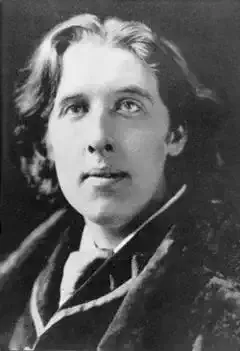
Oscar Wilde
Serenade (For Music)
The western wind is blowing fair
Across the dark AEgean sea,
And at the secret marble stair
My Tyrian galley waits for thee.
Come down! the purple sail is spread,
The watchman sleeps within the town,
O leave thy lily-flowered bed,
O Lady mine come down, come down!
She will not come, I know her well,
Of lover's vows she hath no care,
And little good a man can tell
Of one so cruel and so fair.
True love is but a woman's toy,
They never know the lover's pain,
And I who loved as loves a boy
Must love in vain, must love in vain.
O noble pilot, tell me true,
Is that the sheen of golden hair?
Or is it but the tangled dew
That binds the passion-flowers there?
Good sailor come and tell me now
Is that my Lady's lily hand?
Or is it but the gleaming prow,
Or is it but the silver sand?
No! no! 'tis not the tangled dew,
'Tis not the silver-fretted sand,
It is my own dear Lady true
With golden hair and lily hand!
O noble pilot, steer for Troy,
Good sailor, ply the labouring oar,
This is the Queen of life and joy
Whom we must bear from Grecian shore!
The waning sky grows faint and blue,
It wants an hour still of day,
Aboard! aboard! my gallant crew,
O Lady mine, away! away!
O noble pilot, steer for Troy,
Good sailor, ply the labouring oar,
O loved as only loves a boy!
O loved for ever evermore!
Across the dark AEgean sea,
And at the secret marble stair
My Tyrian galley waits for thee.
Come down! the purple sail is spread,
The watchman sleeps within the town,
O leave thy lily-flowered bed,
O Lady mine come down, come down!
She will not come, I know her well,
Of lover's vows she hath no care,
And little good a man can tell
Of one so cruel and so fair.
True love is but a woman's toy,
They never know the lover's pain,
And I who loved as loves a boy
Must love in vain, must love in vain.
O noble pilot, tell me true,
Is that the sheen of golden hair?
Or is it but the tangled dew
That binds the passion-flowers there?
Good sailor come and tell me now
Is that my Lady's lily hand?
Or is it but the gleaming prow,
Or is it but the silver sand?
No! no! 'tis not the tangled dew,
'Tis not the silver-fretted sand,
It is my own dear Lady true
With golden hair and lily hand!
O noble pilot, steer for Troy,
Good sailor, ply the labouring oar,
This is the Queen of life and joy
Whom we must bear from Grecian shore!
The waning sky grows faint and blue,
It wants an hour still of day,
Aboard! aboard! my gallant crew,
O Lady mine, away! away!
O noble pilot, steer for Troy,
Good sailor, ply the labouring oar,
O loved as only loves a boy!
O loved for ever evermore!
1,556
Oscar Wilde
Quia Multum Amavi
Dear Heart, I think the young impassioned priest
When first he takes from out the hidden shrine
His God imprisoned in the Eucharist,
And eats the bread, and drinks the dreadful wine,
Feels not such awful wonder as I felt
When first my smitten eyes beat full on thee,
And all night long before thy feet I knelt
Till thou wert wearied of Idolatry.
Ah! hadst thou liked me less and loved me more,
Through all those summer days of joy and rain,
I had not now been sorrow's heritor,
Or stood a lackey in the House of Pain.
Yet, though remorse, youth's white-faced seneschal,
Tread on my heels with all his retinue,
I am most glad I loved thee - think of all
The suns that go to make one speedwell blue!
When first he takes from out the hidden shrine
His God imprisoned in the Eucharist,
And eats the bread, and drinks the dreadful wine,
Feels not such awful wonder as I felt
When first my smitten eyes beat full on thee,
And all night long before thy feet I knelt
Till thou wert wearied of Idolatry.
Ah! hadst thou liked me less and loved me more,
Through all those summer days of joy and rain,
I had not now been sorrow's heritor,
Or stood a lackey in the House of Pain.
Yet, though remorse, youth's white-faced seneschal,
Tread on my heels with all his retinue,
I am most glad I loved thee - think of all
The suns that go to make one speedwell blue!
713
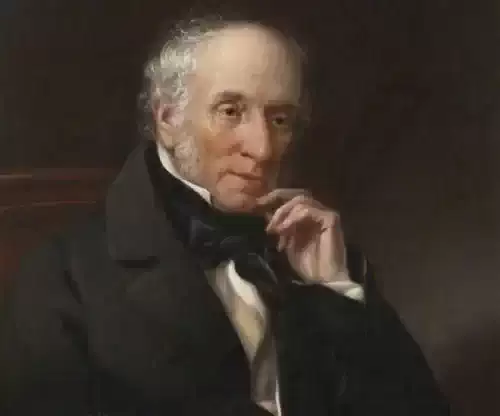
William Wordsworth
'Tis Said, That Some Have Died For Love
'Tis Said, That Some Have Died For Love
'Tis said, that some have died for love:
And here and there a churchyard grave is found
In the cold north's unhallowed ground,
Because the wretched man himself had slain,
His love was such a grievous pain.
And there is one whom I five years have known;
He dwells alone
Upon Helvellyn's side:
He loved--the pretty Barbara died;
And thus he makes his moan:
Three years had Barbara in her grave been laid
When thus his moan he made:
"Oh, move, thou Cottage, from behind that oak!
Or let the aged tree uprooted lie,
That in some other way yon smoke
May mount into the sky!
The clouds pass on; they from the heavens depart.
I look--the sky is empty space;
I know not what I trace;
But when I cease to look, my hand is on my heart.
"Oh! what a weight is in these shades! Ye leaves,
That murmur once so dear, when will it cease?
Your sound my heart of rest bereaves,
It robs my heart of peace.
Thou Thrush, that singest loud--and loud and free,
Into yon row of willows flit,
Upon that alder sit;
Or sing another song, or choose another tree.
"Roll back, sweet Rill! back to thy mountain-bounds,
And there for ever be thy waters chained!
For thou dost haunt the air with sounds
That cannot be sustained;
If still beneath that pine-tree's ragged bough
Headlong yon waterfall must come,
Oh let it then be dumb!
Be anything, sweet Rill, but that which thou art now.
"Thou Eglantine, so bright with sunny showers,
Proud as a rainbow spanning half the vale,
Thou one fair shrub, oh! shed thy flowers,
And stir not in the gale.
For thus to see thee nodding in the air,
To see thy arch thus stretch and bend,
Thus rise and thus descend,--
Disturbs me till the sight is more than I can dear."
The Man who makes this feverish complaint
Is one of giant stature, who could dance
Equipped from head to foot in iron mail.
Ah gentle Love! if ever thought was thine
To store up kindred hours for me, thy face
Turn from me, gentle Love! nor let me walk
Within the sound of Emma's voice, nor know
Such happiness as I have known to-day.
'Tis said, that some have died for love:
And here and there a churchyard grave is found
In the cold north's unhallowed ground,
Because the wretched man himself had slain,
His love was such a grievous pain.
And there is one whom I five years have known;
He dwells alone
Upon Helvellyn's side:
He loved--the pretty Barbara died;
And thus he makes his moan:
Three years had Barbara in her grave been laid
When thus his moan he made:
"Oh, move, thou Cottage, from behind that oak!
Or let the aged tree uprooted lie,
That in some other way yon smoke
May mount into the sky!
The clouds pass on; they from the heavens depart.
I look--the sky is empty space;
I know not what I trace;
But when I cease to look, my hand is on my heart.
"Oh! what a weight is in these shades! Ye leaves,
That murmur once so dear, when will it cease?
Your sound my heart of rest bereaves,
It robs my heart of peace.
Thou Thrush, that singest loud--and loud and free,
Into yon row of willows flit,
Upon that alder sit;
Or sing another song, or choose another tree.
"Roll back, sweet Rill! back to thy mountain-bounds,
And there for ever be thy waters chained!
For thou dost haunt the air with sounds
That cannot be sustained;
If still beneath that pine-tree's ragged bough
Headlong yon waterfall must come,
Oh let it then be dumb!
Be anything, sweet Rill, but that which thou art now.
"Thou Eglantine, so bright with sunny showers,
Proud as a rainbow spanning half the vale,
Thou one fair shrub, oh! shed thy flowers,
And stir not in the gale.
For thus to see thee nodding in the air,
To see thy arch thus stretch and bend,
Thus rise and thus descend,--
Disturbs me till the sight is more than I can dear."
The Man who makes this feverish complaint
Is one of giant stature, who could dance
Equipped from head to foot in iron mail.
Ah gentle Love! if ever thought was thine
To store up kindred hours for me, thy face
Turn from me, gentle Love! nor let me walk
Within the sound of Emma's voice, nor know
Such happiness as I have known to-day.
341

William Shakespeare
Sonnets to the Sundry Notes of Music
Sonnets to the Sundry Notes of Music
I.
IT was a lording's daughter, the fairest one of three,
That liked of her master as well as well might be,
Till looking on an Englishman, the fair'st that eye could see,
Her fancy fell a-turning.
Long was the combat doubtful that love with love did fight,
To leave the master loveless, or kill the gallant knight:
To put in practise either, alas, it was a spite
Unto the silly damsel!
But one must be refused; more mickle was the pain
That nothing could be used to turn them both to gain,
For of the two the trusty knight was wounded with disdain:
Alas, she could not help it!
Thus art with arms contending was victor of the day,
Which by a gift of learning did bear the maid away:
Then, lullaby, the learned man hath got the lady gay;
For now my song is ended.
II.
On a day, alack the day!
Love, whose month was ever May,
Spied a blossom passing fair,
Playing in the wanton air:
Through the velvet leaves the wind
All unseen, gan passage find;
That the lover, sick to death,
Wish'd himself the heaven's breath,
'Air,' quoth he, 'thy cheeks may blow;
Air, would I might triumph so!
But, alas! my hand hath sworn
Ne'er to pluck thee from thy thorn:
Vow, alack! for youth unmeet:
Youth, so apt to pluck a sweet.
Thou for whom Jove would swear
Juno but an Ethiope were;
Turning mortal for thy love.'
III.
My flocks feed not,
My ewes breed not,
My rams speed not,
All is amiss:
Love's denying,
Faith's defying,
Heart's renying,
Causer of this.
All my merry jigs are quite forgot,
All my lady's love is lost, God wot:
Where her faith was firmly fix'd in love,
There a nay is placed without remove.
One silly cross
Wrought all my loss;
O frowning Fortune, cursed, fickle dame!
For now I see
Inconstancy
More in women than in men remain.
In black mourn I,
All fears scorn I,
Love hath forlorn me,
Living in thrall:
Heart is bleeding,
All help needing,
O cruel speeding,
Fraughted with gall.
My shepherd's pipe can sound no deal;
My wether's bell rings doleful knell;
My curtail dog, that wont to have play'd
Plays not at all, but seems afraid;
My sighs so deep
Procure to weep,
In howling wise, to see my doleful plight.
How sighs resound
Through heartless ground,
Like a thousand vanquish'd men in bloody fight!
Clear wells spring not,
Sweet birds sing not,
Green plants bring not
Forth their dye;
Herds stand weeping,
Flocks all sleeping,
Nymphs back peeping
Fearfully:
All our pleasure known to us poor swains,
All our merry meetings on the plains,
All our evening sport from us is fled,
All our love is lost, for Love is dead
Farewell, sweet lass,
Thy like ne'er was
For a sweet content, the cause of all my moan:
Poor Corydon
Must live alone;
Other help for him I see that there is none.
IV.
When as thine eye hath chose the dame,
And stall'd the deer that thou shouldst strike,
Let reason rule things worthy blame,
As well as fancy partial might:
Take counsel of some wiser head,
Neither too young nor yet unwed.
And when thou comest thy tale to tell,
Smooth not thy tongue with filed talk,
Lest she some subtle practise smell,--
A cripple soon can find a halt;--
But plainly say thou lovest her well,
And set thy person forth to sell.
What though her frowning brows be bent,
Her cloudy looks will calm ere night:
And then too late she will repent
That thus dissembled her delight;
And twice desire, ere it be day,
That which with scorn she put away.
What though she strive to try her strength,
And ban and brawl, and say thee nay,
Her feeble force will yield at length,
When craft hath taught her thus to say,
'Had women been so strong as men,
In faith, you had not had it then.'
And to her will frame all thy ways;
Spare not to spend, and chiefly there
Where thy desert may merit praise,
By ringing in thy lady's ear:
The strongest castle, tower, and town,
The golden bullet beats it down.
Serve always with assured trust,
And in thy suit be humble true;
Unless thy lady prove unjust,
Press never thou to choose anew:
When time shall serve, be thou not slack
To proffer, though she put thee back.
The wiles and guiles that women work,
Dissembled with an outward show,
The tricks and toys that in them lurk,
The cock that treads them shall not know.
Have you not heard it said full oft,
A woman's nay doth stand for nought?
Think women still to strive with men,
To sin and never for to saint:
There is no heaven, by holy then,
When time with age doth them attaint.
Were kisses all the joys in bed,
One woman would another wed.
But, soft! enough, too much, I fear
Lest that my mistress hear my song,
She will not stick to round me i' the ear,
To teach my tongue to be so long:
Yet will she blush, here be it said,
To hear her secrets so bewray'd.
V.
Live with me, and be my love,
And we will all the pleasures prove
That hills and valleys, dales and fields,
And all the craggy mountains yields.
There will we sit upon the rocks,
And see the shepherds feed their flocks,
By shallow rivers, by whose falls
Melodious birds sing madrigals.
There will I make thee a bed of roses,
With a thousand fragrant posies,
A cap of flowers, and a kirtle
Embroider'd all with leaves of myrtle.
A belt of straw and ivy buds,
With coral clasps and amber studs;
And if these pleasures may thee move,
Then live with me and be my love.
LOVE'S ANSWER.
If that the world and love were young,
And truth in every shepherd's tongue,
These pretty pleasures might me move
To live with thee and be thy love.
VI.
As it fell upon a day
In the merry month of May,
Sitting in a pleasant shade
Which a grove of myrtles made,
Beasts did leap, and birds did sing,
Trees did grow, and plants did spring;
Every thing did banish moan,
Save the nightingale alone:
She, poor bird, as all forlorn,
Lean'd her breast up-till a thorn
And there sung the dolefull'st ditty,
That to hear it was great pity:
'Fie, fie, fie,' now would she cry;
'Tereu, tereu!' by and by;
That to hear her so complain,
Scarce I could from tears refrain;
For her griefs, so lively shown,
Made me think upon mine own.
Ah, thought I, thou mourn'st in vain!
None takes pity on thy pain:
Senseless trees they cannot hear thee;
Ruthless beasts they will not cheer thee:
King Pandion he is dead;
All thy friends are lapp'd in lead;
All thy fellow birds do sing,
Careless of thy sorrowing.
Even so, poor bird, like thee,
None alive will pity me.
Whilst as fickle Fortune smiled,
Thou and I were both beguiled.
Every one that flatters thee
Is no friend in misery.
Words are easy, like the wind;
Faithful friends are hard to find:
Every man will be thy friend
Whilst thou hast wherewith to spend;
But if store of crowns be scant,
No man will supply thy want.
If that one be prodigal,
Bountiful they will him call,
And with such-like flattering,
'Pity but he were a king;'
If he be addict to vice,
Quickly him they will entice;
If to women he be bent,
They have at commandement:
But if Fortune once do frown,
Then farewell his great renown
They that fawn'd on him before
Use his company no more.
He that is thy friend indeed,
He will help thee in thy need:
If thou sorrow, he will weep;
If thou wake, he cannot sleep;
Thus of every grief in heart
He with thee doth bear a part.
These are certain signs to know
Faithful friend from flattering foe.
I.
IT was a lording's daughter, the fairest one of three,
That liked of her master as well as well might be,
Till looking on an Englishman, the fair'st that eye could see,
Her fancy fell a-turning.
Long was the combat doubtful that love with love did fight,
To leave the master loveless, or kill the gallant knight:
To put in practise either, alas, it was a spite
Unto the silly damsel!
But one must be refused; more mickle was the pain
That nothing could be used to turn them both to gain,
For of the two the trusty knight was wounded with disdain:
Alas, she could not help it!
Thus art with arms contending was victor of the day,
Which by a gift of learning did bear the maid away:
Then, lullaby, the learned man hath got the lady gay;
For now my song is ended.
II.
On a day, alack the day!
Love, whose month was ever May,
Spied a blossom passing fair,
Playing in the wanton air:
Through the velvet leaves the wind
All unseen, gan passage find;
That the lover, sick to death,
Wish'd himself the heaven's breath,
'Air,' quoth he, 'thy cheeks may blow;
Air, would I might triumph so!
But, alas! my hand hath sworn
Ne'er to pluck thee from thy thorn:
Vow, alack! for youth unmeet:
Youth, so apt to pluck a sweet.
Thou for whom Jove would swear
Juno but an Ethiope were;
Turning mortal for thy love.'
III.
My flocks feed not,
My ewes breed not,
My rams speed not,
All is amiss:
Love's denying,
Faith's defying,
Heart's renying,
Causer of this.
All my merry jigs are quite forgot,
All my lady's love is lost, God wot:
Where her faith was firmly fix'd in love,
There a nay is placed without remove.
One silly cross
Wrought all my loss;
O frowning Fortune, cursed, fickle dame!
For now I see
Inconstancy
More in women than in men remain.
In black mourn I,
All fears scorn I,
Love hath forlorn me,
Living in thrall:
Heart is bleeding,
All help needing,
O cruel speeding,
Fraughted with gall.
My shepherd's pipe can sound no deal;
My wether's bell rings doleful knell;
My curtail dog, that wont to have play'd
Plays not at all, but seems afraid;
My sighs so deep
Procure to weep,
In howling wise, to see my doleful plight.
How sighs resound
Through heartless ground,
Like a thousand vanquish'd men in bloody fight!
Clear wells spring not,
Sweet birds sing not,
Green plants bring not
Forth their dye;
Herds stand weeping,
Flocks all sleeping,
Nymphs back peeping
Fearfully:
All our pleasure known to us poor swains,
All our merry meetings on the plains,
All our evening sport from us is fled,
All our love is lost, for Love is dead
Farewell, sweet lass,
Thy like ne'er was
For a sweet content, the cause of all my moan:
Poor Corydon
Must live alone;
Other help for him I see that there is none.
IV.
When as thine eye hath chose the dame,
And stall'd the deer that thou shouldst strike,
Let reason rule things worthy blame,
As well as fancy partial might:
Take counsel of some wiser head,
Neither too young nor yet unwed.
And when thou comest thy tale to tell,
Smooth not thy tongue with filed talk,
Lest she some subtle practise smell,--
A cripple soon can find a halt;--
But plainly say thou lovest her well,
And set thy person forth to sell.
What though her frowning brows be bent,
Her cloudy looks will calm ere night:
And then too late she will repent
That thus dissembled her delight;
And twice desire, ere it be day,
That which with scorn she put away.
What though she strive to try her strength,
And ban and brawl, and say thee nay,
Her feeble force will yield at length,
When craft hath taught her thus to say,
'Had women been so strong as men,
In faith, you had not had it then.'
And to her will frame all thy ways;
Spare not to spend, and chiefly there
Where thy desert may merit praise,
By ringing in thy lady's ear:
The strongest castle, tower, and town,
The golden bullet beats it down.
Serve always with assured trust,
And in thy suit be humble true;
Unless thy lady prove unjust,
Press never thou to choose anew:
When time shall serve, be thou not slack
To proffer, though she put thee back.
The wiles and guiles that women work,
Dissembled with an outward show,
The tricks and toys that in them lurk,
The cock that treads them shall not know.
Have you not heard it said full oft,
A woman's nay doth stand for nought?
Think women still to strive with men,
To sin and never for to saint:
There is no heaven, by holy then,
When time with age doth them attaint.
Were kisses all the joys in bed,
One woman would another wed.
But, soft! enough, too much, I fear
Lest that my mistress hear my song,
She will not stick to round me i' the ear,
To teach my tongue to be so long:
Yet will she blush, here be it said,
To hear her secrets so bewray'd.
V.
Live with me, and be my love,
And we will all the pleasures prove
That hills and valleys, dales and fields,
And all the craggy mountains yields.
There will we sit upon the rocks,
And see the shepherds feed their flocks,
By shallow rivers, by whose falls
Melodious birds sing madrigals.
There will I make thee a bed of roses,
With a thousand fragrant posies,
A cap of flowers, and a kirtle
Embroider'd all with leaves of myrtle.
A belt of straw and ivy buds,
With coral clasps and amber studs;
And if these pleasures may thee move,
Then live with me and be my love.
LOVE'S ANSWER.
If that the world and love were young,
And truth in every shepherd's tongue,
These pretty pleasures might me move
To live with thee and be thy love.
VI.
As it fell upon a day
In the merry month of May,
Sitting in a pleasant shade
Which a grove of myrtles made,
Beasts did leap, and birds did sing,
Trees did grow, and plants did spring;
Every thing did banish moan,
Save the nightingale alone:
She, poor bird, as all forlorn,
Lean'd her breast up-till a thorn
And there sung the dolefull'st ditty,
That to hear it was great pity:
'Fie, fie, fie,' now would she cry;
'Tereu, tereu!' by and by;
That to hear her so complain,
Scarce I could from tears refrain;
For her griefs, so lively shown,
Made me think upon mine own.
Ah, thought I, thou mourn'st in vain!
None takes pity on thy pain:
Senseless trees they cannot hear thee;
Ruthless beasts they will not cheer thee:
King Pandion he is dead;
All thy friends are lapp'd in lead;
All thy fellow birds do sing,
Careless of thy sorrowing.
Even so, poor bird, like thee,
None alive will pity me.
Whilst as fickle Fortune smiled,
Thou and I were both beguiled.
Every one that flatters thee
Is no friend in misery.
Words are easy, like the wind;
Faithful friends are hard to find:
Every man will be thy friend
Whilst thou hast wherewith to spend;
But if store of crowns be scant,
No man will supply thy want.
If that one be prodigal,
Bountiful they will him call,
And with such-like flattering,
'Pity but he were a king;'
If he be addict to vice,
Quickly him they will entice;
If to women he be bent,
They have at commandement:
But if Fortune once do frown,
Then farewell his great renown
They that fawn'd on him before
Use his company no more.
He that is thy friend indeed,
He will help thee in thy need:
If thou sorrow, he will weep;
If thou wake, he cannot sleep;
Thus of every grief in heart
He with thee doth bear a part.
These are certain signs to know
Faithful friend from flattering foe.
241
William Shakespeare
Sonnet CXXXI
Sonnet CXXXI
Thou art as tyrannous, so as thou art,
As those whose beauties proudly make them cruel;
For well thou know'st to my dear doting heart
Thou art the fairest and most precious jewel.
Yet, in good faith, some say that thee behold
Thy face hath not the power to make love groan:
To say they err I dare not be so bold,
Although I swear it to myself alone.
And, to be sure that is not false I swear,
A thousand groans, but thinking on thy face,
One on another's neck, do witness bear
Thy black is fairest in my judgment's place.
In nothing art thou black save in thy deeds,
And thence this slander, as I think, proceeds.
Thou art as tyrannous, so as thou art,
As those whose beauties proudly make them cruel;
For well thou know'st to my dear doting heart
Thou art the fairest and most precious jewel.
Yet, in good faith, some say that thee behold
Thy face hath not the power to make love groan:
To say they err I dare not be so bold,
Although I swear it to myself alone.
And, to be sure that is not false I swear,
A thousand groans, but thinking on thy face,
One on another's neck, do witness bear
Thy black is fairest in my judgment's place.
In nothing art thou black save in thy deeds,
And thence this slander, as I think, proceeds.
210
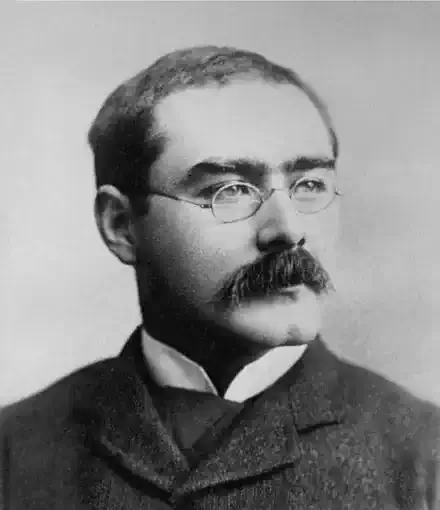
Rudyard Kipling
My Rival
My Rival
I go to concert, party, ball --
What profit is in these?
I sit alone against the wall
And strive to look at ease.
The incense that is mine by right
They burn before her shrine;
And that's because I'm seventeen
And She is forty-nine.
I cannot check my girlish blush,
My color comes and goes;
I redden to my finger-tips,
And sometimes to my nose.
But She is white where white should be,
And red where red should shine.
The blush that flies at seventeen
Is fixed at forty-nine.
I wish I had Her constant cheek;
I wish that I could sing
All sorts of funny little songs,
Not quite the proper thing.
I'm very gauche and very shy,
Her jokes aren't in my line;
And, worst of all, I'm seventeen
While She is forty-nine.
The young men come, the young men go
Each pink and white and neat,
She's older than their mothers, but
They grovel at Her feet.
They walk beside Her 'rickshaw wheels --
None ever walk by mine;
And that's because I'm seventeen
And She is foty-nine.
She rides with half a dozen men,
(She calls them "boys" and "mashers")
I trot along the Mall alone;
My prettiest frocks and sashes
Don't help to fill my programme-card,
And vainly I repine
From ten to two A.M. Ah me!
Would I were forty-nine!
She calls me "darling," "pet," and "dear,"
And "sweet retiring maid."
I'm always at the back, I know,
She puts me in the shade.
She introduces me to men,
"Cast" lovers, I opine,
For sixty takes to seventeen,
Nineteen to foty-nine.
But even She must older grow
And end Her dancing days,
She can't go on forever so
At concerts, balls and plays.
One ray of priceless hope I see
Before my footsteps shine;
Just think, that She'll be eighty-one
When I am forty-nine.
I go to concert, party, ball --
What profit is in these?
I sit alone against the wall
And strive to look at ease.
The incense that is mine by right
They burn before her shrine;
And that's because I'm seventeen
And She is forty-nine.
I cannot check my girlish blush,
My color comes and goes;
I redden to my finger-tips,
And sometimes to my nose.
But She is white where white should be,
And red where red should shine.
The blush that flies at seventeen
Is fixed at forty-nine.
I wish I had Her constant cheek;
I wish that I could sing
All sorts of funny little songs,
Not quite the proper thing.
I'm very gauche and very shy,
Her jokes aren't in my line;
And, worst of all, I'm seventeen
While She is forty-nine.
The young men come, the young men go
Each pink and white and neat,
She's older than their mothers, but
They grovel at Her feet.
They walk beside Her 'rickshaw wheels --
None ever walk by mine;
And that's because I'm seventeen
And She is foty-nine.
She rides with half a dozen men,
(She calls them "boys" and "mashers")
I trot along the Mall alone;
My prettiest frocks and sashes
Don't help to fill my programme-card,
And vainly I repine
From ten to two A.M. Ah me!
Would I were forty-nine!
She calls me "darling," "pet," and "dear,"
And "sweet retiring maid."
I'm always at the back, I know,
She puts me in the shade.
She introduces me to men,
"Cast" lovers, I opine,
For sixty takes to seventeen,
Nineteen to foty-nine.
But even She must older grow
And end Her dancing days,
She can't go on forever so
At concerts, balls and plays.
One ray of priceless hope I see
Before my footsteps shine;
Just think, that She'll be eighty-one
When I am forty-nine.
421
Rudyard Kipling
Brookland Road
Brookland Road
I was very well pleased with what I knowed,
I reckoned myself no fool --
Till I met with a maid on the Brookland Road,
That turned me back to school.
Low down-low down!
Where the liddle green lanterns shine --
O maids, I've done with 'ee all but one,
And she can never be mine!
'Twas right in the middest of a hot June night,
With thunder duntin' round,
And I see her face by the fairy-light
That beats from off the ground.
She only smiled and she never spoke,
She smiled and went away;
But when she'd gone my heart was broke
And my wits was clean astray.
O, stop your ringing and let me be --
Let be, O Brookland bells!
You'll ring Old Goodman out of the sea,
Before I wed one else!
Old Goodman's Farm is rank sea-sand,
And was this thousand year;
But it shall turn to rich plough-land
Before I change my dear.
O, Fairfield Church is water-bound
From autumn to the spring;
But it shall turn to high hill-ground
Before my bells do ring.
O, leave me walk on Brookland Road,
In the thunder and warm rain --
O, leave me look where my love goed,
And p'raps I'll see her again!
Low down -- low down!
Where the liddle green lanterns shine --
O maids, I've done with 'ee all but one,
And she can never be mine!
I was very well pleased with what I knowed,
I reckoned myself no fool --
Till I met with a maid on the Brookland Road,
That turned me back to school.
Low down-low down!
Where the liddle green lanterns shine --
O maids, I've done with 'ee all but one,
And she can never be mine!
'Twas right in the middest of a hot June night,
With thunder duntin' round,
And I see her face by the fairy-light
That beats from off the ground.
She only smiled and she never spoke,
She smiled and went away;
But when she'd gone my heart was broke
And my wits was clean astray.
O, stop your ringing and let me be --
Let be, O Brookland bells!
You'll ring Old Goodman out of the sea,
Before I wed one else!
Old Goodman's Farm is rank sea-sand,
And was this thousand year;
But it shall turn to rich plough-land
Before I change my dear.
O, Fairfield Church is water-bound
From autumn to the spring;
But it shall turn to high hill-ground
Before my bells do ring.
O, leave me walk on Brookland Road,
In the thunder and warm rain --
O, leave me look where my love goed,
And p'raps I'll see her again!
Low down -- low down!
Where the liddle green lanterns shine --
O maids, I've done with 'ee all but one,
And she can never be mine!
435

Horace
BkIII:X Cruel One
BkIII:X Cruel One
If you drank the water of furthest Don, Lyce,
married to some fierce husband, you’d still expose me
to the wailing winds of your native North country,
stretched out here by your cruel door.
Hear how the frame creaks, how the trees that are planted
inside your beautiful garden moan in the wind,
and how Jupiter’s pure power and divinity
ices over the fallen snow.
Set aside your disdain, it’s hateful to Venus,
lest the rope fly off, while the wheel is still turning:
you’re no Penelope, resistant to suitors,
nor born of Etruscan parents.
O, spare your suppliants, though nothing moves you,
not gifts, not my prayers, not your lover’s pallor,
that’s tinged with violet, nor your husband smitten
with a Pierian mistress,
you, no more pliant than an unbending oak-tree,
no gentler in spirit than a Moorish serpent.
My body won’t always put up with your threshold,
or the rain that falls from the sky.
If you drank the water of furthest Don, Lyce,
married to some fierce husband, you’d still expose me
to the wailing winds of your native North country,
stretched out here by your cruel door.
Hear how the frame creaks, how the trees that are planted
inside your beautiful garden moan in the wind,
and how Jupiter’s pure power and divinity
ices over the fallen snow.
Set aside your disdain, it’s hateful to Venus,
lest the rope fly off, while the wheel is still turning:
you’re no Penelope, resistant to suitors,
nor born of Etruscan parents.
O, spare your suppliants, though nothing moves you,
not gifts, not my prayers, not your lover’s pallor,
that’s tinged with violet, nor your husband smitten
with a Pierian mistress,
you, no more pliant than an unbending oak-tree,
no gentler in spirit than a Moorish serpent.
My body won’t always put up with your threshold,
or the rain that falls from the sky.
245

Sarah Teasdale
The Treasure
The Treasure
When they see my songs
They will sigh and say,
"Poor soul, wistful soul,
Lonely night and day."
They will never know
All your love for me
Surer than the spring,
Stronger than the sea;
Hidden out of sight
Like a miser's gold
In forsaken fields
Where the wind is cold.
When they see my songs
They will sigh and say,
"Poor soul, wistful soul,
Lonely night and day."
They will never know
All your love for me
Surer than the spring,
Stronger than the sea;
Hidden out of sight
Like a miser's gold
In forsaken fields
Where the wind is cold.
345
Sarah Teasdale
The Look
The Look
Strephon kissed me in the spring,
Robin in the fall,
But Colin only looked at me
And never kissed at all.
Strephon's kiss was lost in jest,
Robin's lost in play,
But the kiss in Colin's eyes
Haunts me night and day.
Strephon kissed me in the spring,
Robin in the fall,
But Colin only looked at me
And never kissed at all.
Strephon's kiss was lost in jest,
Robin's lost in play,
But the kiss in Colin's eyes
Haunts me night and day.
326
Sarah Teasdale
Pierrot
Pierrot
Pierrot stands in the garden
Beneath a waning moon,
And on his lute he fashions
A fragile silver tune.
Pierrot plays in the garden,
He thinks he plays for me,
But I am quite forgotten
Under the cherry tree.
Pierrot plays in the garden,
And all the roses know
That Pierrot loves his music, --
But I love Pierrot.
Pierrot stands in the garden
Beneath a waning moon,
And on his lute he fashions
A fragile silver tune.
Pierrot plays in the garden,
He thinks he plays for me,
But I am quite forgotten
Under the cherry tree.
Pierrot plays in the garden,
And all the roses know
That Pierrot loves his music, --
But I love Pierrot.
419
Sarah Teasdale
Debt
Debt
What do I owe to you
Who loved me deep and long?
You never gave my spirit wings
Or gave my heart a song.
But oh, to him I loved,
Who loved me not at all,
I owe the open gate
That led through heaven's wall.
What do I owe to you
Who loved me deep and long?
You never gave my spirit wings
Or gave my heart a song.
But oh, to him I loved,
Who loved me not at all,
I owe the open gate
That led through heaven's wall.
470
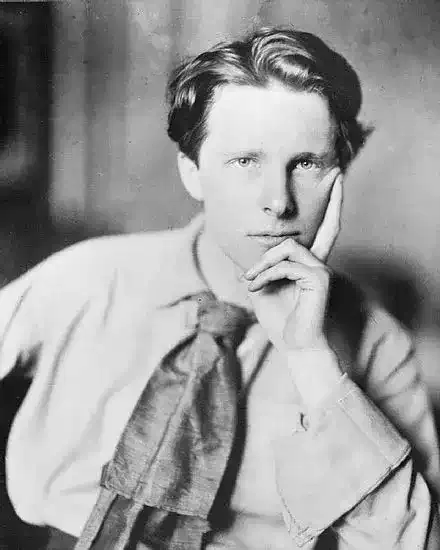
Rupert Brooke
Success
Success
I think if you had loved me when I wanted;
If I'd looked up one day, and seen your eyes,
And found my wild sick blasphemous prayer granted,
And your brown face, that's full of pity and wise,
Flushed suddenly; the white godhead in new fear
Intolerably so struggling, and so shamed;
Most holy and far, if you'd come all too near,
If earth had seen Earth's lordliest wild limbs tamed,
Shaken, and trapped, and shivering, for MY touch --
Myself should I have slain? or that foul you?
But this the strange gods, who had given so much,
To have seen and known you, this they might not do.
One last shame's spared me, one black word's unspoken;
And I'm alone; and you have not awoken.
I think if you had loved me when I wanted;
If I'd looked up one day, and seen your eyes,
And found my wild sick blasphemous prayer granted,
And your brown face, that's full of pity and wise,
Flushed suddenly; the white godhead in new fear
Intolerably so struggling, and so shamed;
Most holy and far, if you'd come all too near,
If earth had seen Earth's lordliest wild limbs tamed,
Shaken, and trapped, and shivering, for MY touch --
Myself should I have slain? or that foul you?
But this the strange gods, who had given so much,
To have seen and known you, this they might not do.
One last shame's spared me, one black word's unspoken;
And I'm alone; and you have not awoken.
187
Rupert Brooke
Sonnet: I said I splendidly loved you; it's not true
Sonnet: I said I splendidly loved you; it's not true
I said I splendidly loved you; it's not true.
Such long swift tides stir not a land-locked sea.
On gods or fools the high risk falls -- on you --
The clean clear bitter-sweet that's not for me.
Love soars from earth to ecstasies unwist.
Love is flung Lucifer-like from Heaven to Hell.
But -- there are wanderers in the middle mist,
Who cry for shadows, clutch, and cannot tell
Whether they love at all, or, loving, whom:
An old song's lady, a fool in fancy dress,
Or phantoms, or their own face on the gloom;
For love of Love, or from heart's loneliness.
Pleasure's not theirs, nor pain. They doubt, and sigh,
And do not love at all. Of these am I.
I said I splendidly loved you; it's not true.
Such long swift tides stir not a land-locked sea.
On gods or fools the high risk falls -- on you --
The clean clear bitter-sweet that's not for me.
Love soars from earth to ecstasies unwist.
Love is flung Lucifer-like from Heaven to Hell.
But -- there are wanderers in the middle mist,
Who cry for shadows, clutch, and cannot tell
Whether they love at all, or, loving, whom:
An old song's lady, a fool in fancy dress,
Or phantoms, or their own face on the gloom;
For love of Love, or from heart's loneliness.
Pleasure's not theirs, nor pain. They doubt, and sigh,
And do not love at all. Of these am I.
142

Robert W. Service
Maternity
Maternity
There once was a Square, such a square little Square,
And he loved a trim Triangle;
But she was a flirt and around her skirt
Vainly she made him dangle.
Oh he wanted to wed and he had no dread
Of domestic woes and wrangles;
For he thought that his fate was to procreate
Cute little Squares and Triangles.
Now it happened one day on that geometric way
There swaggered a big bold Cube.
With a haughty stare and he made that Square
Have the air of a perfect boob;
To his solid spell the Triangle fell,
And she thrilled with love's sweet sickness,
For she took delight in his breadth and height -
But how she adored his thickness!
So that poor little Square just died of despair,
For his love he could not strangle;
While the bold Cube led to the bridal bed
That cute and acute Triangle.
The Square's sad lot she has long forgot,
And his passionate pretensions . . .
For she dotes on her kids-Oh such cute Pyramids
In a world of three dimensions.
There once was a Square, such a square little Square,
And he loved a trim Triangle;
But she was a flirt and around her skirt
Vainly she made him dangle.
Oh he wanted to wed and he had no dread
Of domestic woes and wrangles;
For he thought that his fate was to procreate
Cute little Squares and Triangles.
Now it happened one day on that geometric way
There swaggered a big bold Cube.
With a haughty stare and he made that Square
Have the air of a perfect boob;
To his solid spell the Triangle fell,
And she thrilled with love's sweet sickness,
For she took delight in his breadth and height -
But how she adored his thickness!
So that poor little Square just died of despair,
For his love he could not strangle;
While the bold Cube led to the bridal bed
That cute and acute Triangle.
The Square's sad lot she has long forgot,
And his passionate pretensions . . .
For she dotes on her kids-Oh such cute Pyramids
In a world of three dimensions.
147
William Shakespeare
Sonnet CXLVIII
Sonnet CXLVIII
O me, what eyes hath Love put in my head,
Which have no correspondence with true sight!
Or, if they have, where is my judgment fled,
That censures falsely what they see aright?
If that be fair whereon my false eyes dote,
What means the world to say it is not so?
If it be not, then love doth well denote
Love's eye is not so true as all men's 'No.'
How can it? O, how can Love's eye be true,
That is so vex'd with watching and with tears?
No marvel then, though I mistake my view;
The sun itself sees not till heaven clears.
O cunning Love! with tears thou keep'st me blind,
Lest eyes well-seeing thy foul faults should find.
O me, what eyes hath Love put in my head,
Which have no correspondence with true sight!
Or, if they have, where is my judgment fled,
That censures falsely what they see aright?
If that be fair whereon my false eyes dote,
What means the world to say it is not so?
If it be not, then love doth well denote
Love's eye is not so true as all men's 'No.'
How can it? O, how can Love's eye be true,
That is so vex'd with watching and with tears?
No marvel then, though I mistake my view;
The sun itself sees not till heaven clears.
O cunning Love! with tears thou keep'st me blind,
Lest eyes well-seeing thy foul faults should find.
231
William Shakespeare
Sonnet CXLIX
Sonnet CXLIX
Canst thou, O cruel! say I love thee not,
When I against myself with thee partake?
Do I not think on thee, when I forgot
Am of myself, all tyrant, for thy sake?
Who hateth thee that I do call my friend?
On whom frown'st thou that I do fawn upon?
Nay, if thou lour'st on me, do I not spend
Revenge upon myself with present moan?
What merit do I in myself respect,
That is so proud thy service to despise,
When all my best doth worship thy defect,
Commanded by the motion of thine eyes?
But, love, hate on, for now I know thy mind;
Those that can see thou lovest, and I am blind.
Canst thou, O cruel! say I love thee not,
When I against myself with thee partake?
Do I not think on thee, when I forgot
Am of myself, all tyrant, for thy sake?
Who hateth thee that I do call my friend?
On whom frown'st thou that I do fawn upon?
Nay, if thou lour'st on me, do I not spend
Revenge upon myself with present moan?
What merit do I in myself respect,
That is so proud thy service to despise,
When all my best doth worship thy defect,
Commanded by the motion of thine eyes?
But, love, hate on, for now I know thy mind;
Those that can see thou lovest, and I am blind.
253
William Shakespeare
Sonnet CLII
Sonnet CLII
In loving thee thou know'st I am forsworn,
But thou art twice forsworn, to me love swearing,
In act thy bed-vow broke and new faith torn,
In vowing new hate after new love bearing.
But why of two oaths' breach do I accuse thee,
When I break twenty? I am perjured most;
For all my vows are oaths but to misuse thee
And all my honest faith in thee is lost,
For I have sworn deep oaths of thy deep kindness,
Oaths of thy love, thy truth, thy constancy,
And, to enlighten thee, gave eyes to blindness,
Or made them swear against the thing they see;
For I have sworn thee fair; more perjured I,
To swear against the truth so foul a lie!
In loving thee thou know'st I am forsworn,
But thou art twice forsworn, to me love swearing,
In act thy bed-vow broke and new faith torn,
In vowing new hate after new love bearing.
But why of two oaths' breach do I accuse thee,
When I break twenty? I am perjured most;
For all my vows are oaths but to misuse thee
And all my honest faith in thee is lost,
For I have sworn deep oaths of thy deep kindness,
Oaths of thy love, thy truth, thy constancy,
And, to enlighten thee, gave eyes to blindness,
Or made them swear against the thing they see;
For I have sworn thee fair; more perjured I,
To swear against the truth so foul a lie!
332
William Shakespeare
Sonnet CL
Sonnet CL
O, from what power hast thou this powerful might
With insufficiency my heart to sway?
To make me give the lie to my true sight,
And swear that brightness doth not grace the day?
Whence hast thou this becoming of things ill,
That in the very refuse of thy deeds
There is such strength and warrantize of skill
That, in my mind, thy worst all best exceeds?
Who taught thee how to make me love thee more
The more I hear and see just cause of hate?
O, though I love what others do abhor,
With others thou shouldst not abhor my state:
If thy unworthiness raised love in me,
More worthy I to be beloved of thee.
O, from what power hast thou this powerful might
With insufficiency my heart to sway?
To make me give the lie to my true sight,
And swear that brightness doth not grace the day?
Whence hast thou this becoming of things ill,
That in the very refuse of thy deeds
There is such strength and warrantize of skill
That, in my mind, thy worst all best exceeds?
Who taught thee how to make me love thee more
The more I hear and see just cause of hate?
O, though I love what others do abhor,
With others thou shouldst not abhor my state:
If thy unworthiness raised love in me,
More worthy I to be beloved of thee.
332
John Donne
A Self Accuser
A Self Accuser
Your mistress, that you follow whores, still taxeth
you ;
'Tis strange that she should thus confess it, though 't be true.
Your mistress, that you follow whores, still taxeth
you ;
'Tis strange that she should thus confess it, though 't be true.
278
William Shakespeare
Sonnet 86: Was it the proud full sail of his great verse
Sonnet 86: Was it the proud full sail of his great verse
Was it the proud full sail of his great verse,
Bound for the prize of all-too-precious you,
That did my ripe thoughts in my brain inhearse,
Making their tomb the womb wherein they grew?
Was it his spirit, by spirits taught to write
Above a mortal pitch, that struck me dead?
No, neither he, nor his compeers by night
Giving him aid, my verse astonishèd.
He nor that affable familiar ghost
Which nightly gulls him with intelligence,
As victors of my silence cannot boast;
I was not sick of any fear from thence.
But when your countenance filled up his line,
Then lacked I matter, that enfeebled mine.
Was it the proud full sail of his great verse,
Bound for the prize of all-too-precious you,
That did my ripe thoughts in my brain inhearse,
Making their tomb the womb wherein they grew?
Was it his spirit, by spirits taught to write
Above a mortal pitch, that struck me dead?
No, neither he, nor his compeers by night
Giving him aid, my verse astonishèd.
He nor that affable familiar ghost
Which nightly gulls him with intelligence,
As victors of my silence cannot boast;
I was not sick of any fear from thence.
But when your countenance filled up his line,
Then lacked I matter, that enfeebled mine.
324
John Donne
A dialogue between Sir Henry Wootton and Mr. Donne
A dialogue between Sir Henry Wootton and Mr. Donne
[W.]
IF her disdain least change in you can move,
You do not love,
For when that hope gives fuel to the fire,
You sell desire.
Love is not love, but given free ;
And so is mine ; so should yours be.
[D.]
Her heart, that weeps to hear of others' moan,
To mine is stone.
Her eyes, that weep a stranger's eyes to see,
Joy to wound me.
Yet I so well affect each part,
As—caused by them—I love my smart.
[W.]
Say her disdainings justly must be graced
With name of chaste ;
And that she frowns lest longing should exceed,
And raging breed ;
So her disdains can ne'er offend,
Unless self-love take private end.
[D.]
'Tis love breeds love in me, and cold disdain
Kills that again,
As water causeth fire to fret and fume,
Till all consume.
Who can of love more rich gift make,
That to Love's self for love's own sake?
I'll never dig in quarry of an heart
To have no part,
Nor roast in fiery eyes, which always are
Canicular.
Who this way would a lover prove,
May show his patience, not his love.
A frown may be sometimes for physic good,
But not for food ;
And for that raging humour there is sure
A gentler cure.
Why bar you love of private end,
Which never should to public tend?
[W.]
IF her disdain least change in you can move,
You do not love,
For when that hope gives fuel to the fire,
You sell desire.
Love is not love, but given free ;
And so is mine ; so should yours be.
[D.]
Her heart, that weeps to hear of others' moan,
To mine is stone.
Her eyes, that weep a stranger's eyes to see,
Joy to wound me.
Yet I so well affect each part,
As—caused by them—I love my smart.
[W.]
Say her disdainings justly must be graced
With name of chaste ;
And that she frowns lest longing should exceed,
And raging breed ;
So her disdains can ne'er offend,
Unless self-love take private end.
[D.]
'Tis love breeds love in me, and cold disdain
Kills that again,
As water causeth fire to fret and fume,
Till all consume.
Who can of love more rich gift make,
That to Love's self for love's own sake?
I'll never dig in quarry of an heart
To have no part,
Nor roast in fiery eyes, which always are
Canicular.
Who this way would a lover prove,
May show his patience, not his love.
A frown may be sometimes for physic good,
But not for food ;
And for that raging humour there is sure
A gentler cure.
Why bar you love of private end,
Which never should to public tend?
246

George Gordon Lord Byron
Translation Of A Romaic Love Song
Translation Of A Romaic Love Song
Ah! Love was never yet without
The pang, the agony, the doubt,
Which rends my heart with ceaseless sigh,
While day and night roll darkling by.
Without one friend to hear my woe,
I faint, I die beneath the blow.
That Love had arrows well I knew;
Alas! I find them poison'd too.
Birds, yet in freedom, shun the net
Which Love around your haunts hath set;
Or, circled by his fatal fire,
Your hearts shall burn, your hopes expire.
A bird of free and careless wing
Was I through many a smiling spring;
But caught within the subtle snare,
I burn, and feebly flutter there.
Who ne'er have loved, and loved in vain,
Can neither feel nor pity pain,
The cold repulse, the look askance,
The lightning of Love's angry glance.
In flattering dreams I deem'd thee mine;
Now hope, and he who hoped, decline'
Like melting wax, or withering flower,
I feel my passion, and thy power.
My light of life! ah, tell me why
That pouting lip, and alter'd eye?
My bird of love! my beauteous mate!
And art thou changed, and canst thou hate?
Mine eyes like wintry streams o'erflow:
What wretch with me would barter woe?
My bird! relent: one note could give
A charm to bid thy lover live.
My curdling blood, my madd'ning brain,
In silent anguish I sustain
And still thy heart, without partaking
One pang, exults while
mine is breaking.
Pour me the poison; fear not thou!
Thou canst not murder more than now:
I've lived to curse my natal day,
And Love, that thus can lingering slay.
My wounded soul, my bleeding breast,
Can patience preach thee into rest?
Alas! too late, I dearly know
That joy is harbinger of woe.
Ah! Love was never yet without
The pang, the agony, the doubt,
Which rends my heart with ceaseless sigh,
While day and night roll darkling by.
Without one friend to hear my woe,
I faint, I die beneath the blow.
That Love had arrows well I knew;
Alas! I find them poison'd too.
Birds, yet in freedom, shun the net
Which Love around your haunts hath set;
Or, circled by his fatal fire,
Your hearts shall burn, your hopes expire.
A bird of free and careless wing
Was I through many a smiling spring;
But caught within the subtle snare,
I burn, and feebly flutter there.
Who ne'er have loved, and loved in vain,
Can neither feel nor pity pain,
The cold repulse, the look askance,
The lightning of Love's angry glance.
In flattering dreams I deem'd thee mine;
Now hope, and he who hoped, decline'
Like melting wax, or withering flower,
I feel my passion, and thy power.
My light of life! ah, tell me why
That pouting lip, and alter'd eye?
My bird of love! my beauteous mate!
And art thou changed, and canst thou hate?
Mine eyes like wintry streams o'erflow:
What wretch with me would barter woe?
My bird! relent: one note could give
A charm to bid thy lover live.
My curdling blood, my madd'ning brain,
In silent anguish I sustain
And still thy heart, without partaking
One pang, exults while
mine is breaking.
Pour me the poison; fear not thou!
Thou canst not murder more than now:
I've lived to curse my natal day,
And Love, that thus can lingering slay.
My wounded soul, my bleeding breast,
Can patience preach thee into rest?
Alas! too late, I dearly know
That joy is harbinger of woe.
584
George Gordon Lord Byron
To M. S. G.
To M. S. G.
Whene'er I view those lips of thine,
Their hue invites my fervent kiss;
Yet, I forego that bliss divine,
Alas! it wereunhallow'd
bliss.
Whene'er I dream of that pure breast,
How could I dwell upon its snows!
Yet, is the daring wish represt,
For that,would
banish its repose.
A glance from thy soulsearching
eye
Can raise with hope, depress with fear;
Yet, I conceal my love,and
why?
I would not force a painful tear.
I ne'er have told my love, yet thou
Hast seen my ardent flame too well;
And shall I plead my passion now,
To make thy bosom's heaven a hell?
No! for thou never canst be mine,
United by the priest's decree:
By any ties but those divine,
Mine, my belov'd, thou ne'er shalt be.
Then let the secret fire consume,
Let it consume, thou shalt not know:
With joy I court a certain doom,
Rather than spread its guilty glow.
I will not ease my tortur'd heart,
By driving doveey'd
peace from thine;
Rather than such a sting impart,
Each thought presumptuous I resign.
Yes! yield those lips, for which I'd brave
More than I here shall dare to tell;
Thy innocence and mine to save,I
bid thee now a last farewell.
Yes! yield that breast, to seek despair
And hope no more thy soft embrace;
Which to obtain, my soul would dare,
All, all reproach, but thy disgrace.
At least from guilt shalt thou be free,
No matron shall thy shame reprove;
Though cureless pangs may prey on me,
No martyr shalt thou be to love.
Whene'er I view those lips of thine,
Their hue invites my fervent kiss;
Yet, I forego that bliss divine,
Alas! it wereunhallow'd
bliss.
Whene'er I dream of that pure breast,
How could I dwell upon its snows!
Yet, is the daring wish represt,
For that,would
banish its repose.
A glance from thy soulsearching
eye
Can raise with hope, depress with fear;
Yet, I conceal my love,and
why?
I would not force a painful tear.
I ne'er have told my love, yet thou
Hast seen my ardent flame too well;
And shall I plead my passion now,
To make thy bosom's heaven a hell?
No! for thou never canst be mine,
United by the priest's decree:
By any ties but those divine,
Mine, my belov'd, thou ne'er shalt be.
Then let the secret fire consume,
Let it consume, thou shalt not know:
With joy I court a certain doom,
Rather than spread its guilty glow.
I will not ease my tortur'd heart,
By driving doveey'd
peace from thine;
Rather than such a sting impart,
Each thought presumptuous I resign.
Yes! yield those lips, for which I'd brave
More than I here shall dare to tell;
Thy innocence and mine to save,I
bid thee now a last farewell.
Yes! yield that breast, to seek despair
And hope no more thy soft embrace;
Which to obtain, my soul would dare,
All, all reproach, but thy disgrace.
At least from guilt shalt thou be free,
No matron shall thy shame reprove;
Though cureless pangs may prey on me,
No martyr shalt thou be to love.
437
Page 1
Next