
Truth
Poems in this topic

William Shakespeare
The Passionate Pilgrim
The Passionate Pilgrim
I.
When my love swears that she is made of truth,
I do believe her, though I know she lies,
That she might think me some untutor'd youth,
Unskilful in the world's false forgeries,
Thus vainly thinking that she thinks me young,
Although I know my years be past the best,
I smiling credit her false-speaking tongue,
Outfacing faults in love with love's ill rest.
But wherefore says my love that she is young?
And wherefore say not I that I am old?
O, love's best habit is a soothing tongue,
And age, in love, loves not to have years told.
Therefore, I'll lie with love, and love with me,
Since that our faults in love thus smother'd be.
II.
Two loves I have, of comfort and despair,
That like two spirits do suggest me still;
My better angel is a man right fair,
My worser spirit a woman colour'd ill.
To win me soon to hell, my female evil
Tempteth my better angel from my side,
And would corrupt my saint to be a devil,
Wooing his purity with her fair pride.
And whether that my angel be turn'd fiend,
Suspect I may, yet not directly tell:
For being both to me, both to each friend,
I guess one angel in another's hell:
The truth I shall not know, but live in doubt,
Till my bad angel fire my good one out.
III.
Did not the heavenly rhetoric of thine eye,
'Gainst whom the world could not hold argument.
Persuade my heart to this false perjury?
Vows for thee broke deserve not punishment.
A woman I forswore; but I will prove,
Thou being a goddess, I forswore not thee:
My vow was earthly, thou a heavenly love:
Thy grace being gain'd cures all disgrace in me.
My vow was breath, and breath a vapour is;
Then, thou fair sun, that on this earth doth shine,
Exhale this vapour vow; in thee it is:
If broken, then it is no fault of mine.
If by me broke, what fool is not so wise
To break an oath, to win a paradise?
IV.
Sweet Cytherea, sitting by a brook
With young Adonis, lovely, fresh, and green,
Did court the lad with many a lovely look,
Such looks as none could look but beauty's queen,
She told him stories to delight his ear;
She show'd him favours to allure his eye;
To win his heart, she touch'd him here and there, --
Touches so soft still conquer chastity.
But whether unripe years did want conceit,
Or he refused to take her figured proffer,
The tender nibbler would not touch the bait,
But smile and jest at every gentle offer:
Then fell she on her back, fair queen, and toward:
He rose and ran away; ah, fool too froward!
V.
If love make me forsworn, how shall I swear to love?
O never faith could hold, if not to beauty vow'd:
Though to myself forsworn, to thee I'll constant prove;
Those thoughts, to me like oaks, to thee like osiers bow'd.
Study his bias leaves, and make his book thine eyes,
Where all those pleasures live that art can comprehend.
If knowledge be the mark, to know thee shall suffice;
Well learned is that tongue that well can thee commend;
All ignorant that soul that sees thee without wonder;
Which is to me some praise, that I thy parts admire:
Thy eye Jove's lightning seems, thy voice his dreadful thunder,
Which, not to anger bent, is music and sweet fire.
Celestial as thou art, O do not love that wrong,
To sing heaven's praise with such an earthly tongue.
VI.
Scarce had the sun dried up the dewy morn,
And scarce the herd gone to the hedge for shade,
When Cytherea, all in love forlorn,
A longing tarriance for Adonis made
Under an osier growing by a brook,
A brook where Adon used to cool his spleen:
Hot was the day; she hotter that did look
For his approach, that often there had been.
Anon he comes, and throws his mantle by,
And stood stark naked on the brook's green brim:
The sun look'd on the world with glorious eye,
Yet not so wistly as this queen on him.
He, spying her, bounced in, whereas he stood:
'O Jove,' quoth she, 'why was not I a flood!'
VII.
Fair is my love, but not so fair as fickle;
Mild as a dove, but neither true nor trusty;
Brighter than glass, and yet, as glass is brittle;
Softer than wax, and yet, as iron, rusty:
A lily pale, with damask dye to grace her,
None fairer, nor none falser to deface her.
Her lips to mine how often hath she joined,
Between each kiss her oaths of true love swearing!
How many tales to please me bath she coined,
Dreading my love, the loss thereof still fearing!
Yet in the midst of all her pure protestings,
Her faith, her oaths, her tears, and all were jestings.
She burn'd with love, as straw with fire flameth;
She burn'd out love, as soon as straw outburneth;
She framed the love, and yet she foil'd the framing;
She bade love last, and yet she fell a-turning.
Was this a lover, or a lecher whether?
Bad in the best, though excellent in neither.
VIII.
If music and sweet poetry agree,
As they must needs, the sister and the brother,
Then must the love be great 'twixt thee and me,
Because thou lovest the one, and I the other.
Dowland to thee is dear, whose heavenly touch
Upon the lute doth ravish human sense;
Spenser to me, whose deep conceit is such
As, passing all conceit, needs no defence.
Thou lovest to bear the sweet melodious sound
That Phoebus' lute, the queen of music, makes;
And I in deep delight am chiefly drown'd
Whenas himself to singing he betakes.
One god is god of both, as poets feign;
One knight loves both, and both in thee remain.
IX.
Fair was the morn when the fair queen of love,
Paler for sorrow than her milk-white dove,
For Adon's sake, a youngster proud and wild;
Her stand she takes upon a steep-up hill:
Anon Adonis comes with horn and hounds;
She, silly queen, with more than love's good will,
Forbade the boy he should not pass those grounds:
'Once,' quoth she, 'did I see a fair sweet youth
Here in these brakes deep-wounded with a boar,
Deep in the thigh, a spectacle of ruth!
See, in my thigh,' quoth she, 'here was the sore.
She showed hers: he saw more wounds than one,
And blushing fled, and left her all alone.
X.
Sweet rose, fair flower, untimely pluck'd, soon vaded,
Pluck'd in the bud, and vaded in the spring!
Bright orient pearl, alack, too timely shaded!
Fair creature, kill'd too soon by death's sharp sting!
Like a green plum that hangs upon a tree,
And falls, through wind, before the fall should he.
I weep for thee, and yet no cause I have;
For why thou left'st me nothing in thy will:
And yet thou left'st me more than I did crave;
For why I craved nothing of thee still:
O yes, dear friend, I pardon crave of thee,
Thy discontent thou didst bequeath to me.
XI.
Venus, with young Adonis sitting by her
Under a myrtle shade, began to woo him:
She told the youngling how god Mars did try her,
And as he fell to her, so fell she to him.
'Even thus,' quoth she, 'the warlike god embraced me,'
And then she clipp'd Adonis in her arms;
'Even thus,' quoth she, 'the warlike god unlaced me,'
As if the boy should use like loving charms;
'Even thus,' quoth she, 'he seized on my lips
And with her lips on his did act the seizure
And as she fetched breath, away he skips,
And would not take her meaning nor her pleasure.
Ah, that I had my lady at this bay,
To kiss and clip me till I run away!
XII.
Crabbed age and youth cannot live together
Youth is full of pleasance, age is full of care;
Youth like summer morn, age like winter weather;
Youth like summer brave, age like winter bare;
Youth is full of sport, age's breath is short;
Youth is nimble, age is lame;
Youth is hot and bold, age is weak and cold;
Youth is wild, and age is tame.
Age, I do abhor thee; youth, I do adore thee;
O, my love, my love is young!
Age, I do defy thee: O, sweet shepherd, hie thee,
For methinks thou stay'st too long.
XIII.
Beauty is but a vain and doubtful good;
A shining gloss that vadeth suddenly;
A flower that dies when first it gins to bud;
A brittle glass that's broken presently:
A doubtful good, a gloss, a glass, a flower,
Lost, vaded, broken, dead within an hour.
And as goods lost are seld or never found,
As vaded gloss no rubbing will refresh,
As flowers dead lie wither'd on the ground,
As broken glass no cement can redress,
So beauty blemish'd once's for ever lost,
In spite of physic, painting, pain and cost.
XIV.
Good night, good rest. Ah, neither be my share:
She bade good night that kept my rest away;
And daff'd me to a cabin hang'd with care,
To descant on the doubts of my decay.
'Farewell,' quoth she, 'and come again tomorrow:
Fare well I could not, for I supp'd with sorrow.
Yet at my parting sweetly did she smile,
In scorn or friendship, nill I construe whether:
'T may be, she joy'd to jest at my exile,
'T may be, again to make me wander thither:
'Wander,' a word for shadows like myself,
As take the pain, but cannot pluck the pelf.
XV.
Lord, how mine eyes throw gazes to the east!
My heart doth charge the watch; the morning rise
Doth cite each moving sense from idle rest.
Not daring trust the office of mine eyes,
While Philomela sits and sings, I sit and mark,
And wish her lays were tuned like the lark;
For she doth welcome daylight with her ditty,
And drives away dark dismal-dreaming night:
The night so pack'd, I post unto my pretty;
Heart hath his hope, and eyes their wished sight;
Sorrow changed to solace, solace mix'd with sorrow;
For why, she sigh'd and bade me come tomorrow.
Were I with her, the night would post too soon;
But now are minutes added to the hours;
To spite me now, each minute seems a moon;
Yet not for me, shine sun to succour flowers!
Pack night, peep day; good day, of night now borrow:
Short, night, to-night, and length thyself tomorrow.
I.
When my love swears that she is made of truth,
I do believe her, though I know she lies,
That she might think me some untutor'd youth,
Unskilful in the world's false forgeries,
Thus vainly thinking that she thinks me young,
Although I know my years be past the best,
I smiling credit her false-speaking tongue,
Outfacing faults in love with love's ill rest.
But wherefore says my love that she is young?
And wherefore say not I that I am old?
O, love's best habit is a soothing tongue,
And age, in love, loves not to have years told.
Therefore, I'll lie with love, and love with me,
Since that our faults in love thus smother'd be.
II.
Two loves I have, of comfort and despair,
That like two spirits do suggest me still;
My better angel is a man right fair,
My worser spirit a woman colour'd ill.
To win me soon to hell, my female evil
Tempteth my better angel from my side,
And would corrupt my saint to be a devil,
Wooing his purity with her fair pride.
And whether that my angel be turn'd fiend,
Suspect I may, yet not directly tell:
For being both to me, both to each friend,
I guess one angel in another's hell:
The truth I shall not know, but live in doubt,
Till my bad angel fire my good one out.
III.
Did not the heavenly rhetoric of thine eye,
'Gainst whom the world could not hold argument.
Persuade my heart to this false perjury?
Vows for thee broke deserve not punishment.
A woman I forswore; but I will prove,
Thou being a goddess, I forswore not thee:
My vow was earthly, thou a heavenly love:
Thy grace being gain'd cures all disgrace in me.
My vow was breath, and breath a vapour is;
Then, thou fair sun, that on this earth doth shine,
Exhale this vapour vow; in thee it is:
If broken, then it is no fault of mine.
If by me broke, what fool is not so wise
To break an oath, to win a paradise?
IV.
Sweet Cytherea, sitting by a brook
With young Adonis, lovely, fresh, and green,
Did court the lad with many a lovely look,
Such looks as none could look but beauty's queen,
She told him stories to delight his ear;
She show'd him favours to allure his eye;
To win his heart, she touch'd him here and there, --
Touches so soft still conquer chastity.
But whether unripe years did want conceit,
Or he refused to take her figured proffer,
The tender nibbler would not touch the bait,
But smile and jest at every gentle offer:
Then fell she on her back, fair queen, and toward:
He rose and ran away; ah, fool too froward!
V.
If love make me forsworn, how shall I swear to love?
O never faith could hold, if not to beauty vow'd:
Though to myself forsworn, to thee I'll constant prove;
Those thoughts, to me like oaks, to thee like osiers bow'd.
Study his bias leaves, and make his book thine eyes,
Where all those pleasures live that art can comprehend.
If knowledge be the mark, to know thee shall suffice;
Well learned is that tongue that well can thee commend;
All ignorant that soul that sees thee without wonder;
Which is to me some praise, that I thy parts admire:
Thy eye Jove's lightning seems, thy voice his dreadful thunder,
Which, not to anger bent, is music and sweet fire.
Celestial as thou art, O do not love that wrong,
To sing heaven's praise with such an earthly tongue.
VI.
Scarce had the sun dried up the dewy morn,
And scarce the herd gone to the hedge for shade,
When Cytherea, all in love forlorn,
A longing tarriance for Adonis made
Under an osier growing by a brook,
A brook where Adon used to cool his spleen:
Hot was the day; she hotter that did look
For his approach, that often there had been.
Anon he comes, and throws his mantle by,
And stood stark naked on the brook's green brim:
The sun look'd on the world with glorious eye,
Yet not so wistly as this queen on him.
He, spying her, bounced in, whereas he stood:
'O Jove,' quoth she, 'why was not I a flood!'
VII.
Fair is my love, but not so fair as fickle;
Mild as a dove, but neither true nor trusty;
Brighter than glass, and yet, as glass is brittle;
Softer than wax, and yet, as iron, rusty:
A lily pale, with damask dye to grace her,
None fairer, nor none falser to deface her.
Her lips to mine how often hath she joined,
Between each kiss her oaths of true love swearing!
How many tales to please me bath she coined,
Dreading my love, the loss thereof still fearing!
Yet in the midst of all her pure protestings,
Her faith, her oaths, her tears, and all were jestings.
She burn'd with love, as straw with fire flameth;
She burn'd out love, as soon as straw outburneth;
She framed the love, and yet she foil'd the framing;
She bade love last, and yet she fell a-turning.
Was this a lover, or a lecher whether?
Bad in the best, though excellent in neither.
VIII.
If music and sweet poetry agree,
As they must needs, the sister and the brother,
Then must the love be great 'twixt thee and me,
Because thou lovest the one, and I the other.
Dowland to thee is dear, whose heavenly touch
Upon the lute doth ravish human sense;
Spenser to me, whose deep conceit is such
As, passing all conceit, needs no defence.
Thou lovest to bear the sweet melodious sound
That Phoebus' lute, the queen of music, makes;
And I in deep delight am chiefly drown'd
Whenas himself to singing he betakes.
One god is god of both, as poets feign;
One knight loves both, and both in thee remain.
IX.
Fair was the morn when the fair queen of love,
Paler for sorrow than her milk-white dove,
For Adon's sake, a youngster proud and wild;
Her stand she takes upon a steep-up hill:
Anon Adonis comes with horn and hounds;
She, silly queen, with more than love's good will,
Forbade the boy he should not pass those grounds:
'Once,' quoth she, 'did I see a fair sweet youth
Here in these brakes deep-wounded with a boar,
Deep in the thigh, a spectacle of ruth!
See, in my thigh,' quoth she, 'here was the sore.
She showed hers: he saw more wounds than one,
And blushing fled, and left her all alone.
X.
Sweet rose, fair flower, untimely pluck'd, soon vaded,
Pluck'd in the bud, and vaded in the spring!
Bright orient pearl, alack, too timely shaded!
Fair creature, kill'd too soon by death's sharp sting!
Like a green plum that hangs upon a tree,
And falls, through wind, before the fall should he.
I weep for thee, and yet no cause I have;
For why thou left'st me nothing in thy will:
And yet thou left'st me more than I did crave;
For why I craved nothing of thee still:
O yes, dear friend, I pardon crave of thee,
Thy discontent thou didst bequeath to me.
XI.
Venus, with young Adonis sitting by her
Under a myrtle shade, began to woo him:
She told the youngling how god Mars did try her,
And as he fell to her, so fell she to him.
'Even thus,' quoth she, 'the warlike god embraced me,'
And then she clipp'd Adonis in her arms;
'Even thus,' quoth she, 'the warlike god unlaced me,'
As if the boy should use like loving charms;
'Even thus,' quoth she, 'he seized on my lips
And with her lips on his did act the seizure
And as she fetched breath, away he skips,
And would not take her meaning nor her pleasure.
Ah, that I had my lady at this bay,
To kiss and clip me till I run away!
XII.
Crabbed age and youth cannot live together
Youth is full of pleasance, age is full of care;
Youth like summer morn, age like winter weather;
Youth like summer brave, age like winter bare;
Youth is full of sport, age's breath is short;
Youth is nimble, age is lame;
Youth is hot and bold, age is weak and cold;
Youth is wild, and age is tame.
Age, I do abhor thee; youth, I do adore thee;
O, my love, my love is young!
Age, I do defy thee: O, sweet shepherd, hie thee,
For methinks thou stay'st too long.
XIII.
Beauty is but a vain and doubtful good;
A shining gloss that vadeth suddenly;
A flower that dies when first it gins to bud;
A brittle glass that's broken presently:
A doubtful good, a gloss, a glass, a flower,
Lost, vaded, broken, dead within an hour.
And as goods lost are seld or never found,
As vaded gloss no rubbing will refresh,
As flowers dead lie wither'd on the ground,
As broken glass no cement can redress,
So beauty blemish'd once's for ever lost,
In spite of physic, painting, pain and cost.
XIV.
Good night, good rest. Ah, neither be my share:
She bade good night that kept my rest away;
And daff'd me to a cabin hang'd with care,
To descant on the doubts of my decay.
'Farewell,' quoth she, 'and come again tomorrow:
Fare well I could not, for I supp'd with sorrow.
Yet at my parting sweetly did she smile,
In scorn or friendship, nill I construe whether:
'T may be, she joy'd to jest at my exile,
'T may be, again to make me wander thither:
'Wander,' a word for shadows like myself,
As take the pain, but cannot pluck the pelf.
XV.
Lord, how mine eyes throw gazes to the east!
My heart doth charge the watch; the morning rise
Doth cite each moving sense from idle rest.
Not daring trust the office of mine eyes,
While Philomela sits and sings, I sit and mark,
And wish her lays were tuned like the lark;
For she doth welcome daylight with her ditty,
And drives away dark dismal-dreaming night:
The night so pack'd, I post unto my pretty;
Heart hath his hope, and eyes their wished sight;
Sorrow changed to solace, solace mix'd with sorrow;
For why, she sigh'd and bade me come tomorrow.
Were I with her, the night would post too soon;
But now are minutes added to the hours;
To spite me now, each minute seems a moon;
Yet not for me, shine sun to succour flowers!
Pack night, peep day; good day, of night now borrow:
Short, night, to-night, and length thyself tomorrow.
288
William Shakespeare
Sonnets xix
Sonnets xix
TH' expense of Spirit in a waste of shame
Is lust in action; and till action, lust
Is perjured, murderous, bloody, full of blame,
Savage, extreme, rude, cruel, not to trust;
Enjoy'd no sooner but despised straight;
Past reason hunted; and, no sooner had,
Past reason hated, as a swallow'd bait
On purpose laid to make the taker mad:
Mad in pursuit, and in possession so;
Had, having, and in quest to have, extreme;
A bliss in proof, and proved, a very woe;
Before, a joy proposed; behind, a dream.
All this the world well knows; yet none knows well
To shun the heaven that leads men to this hell.
TH' expense of Spirit in a waste of shame
Is lust in action; and till action, lust
Is perjured, murderous, bloody, full of blame,
Savage, extreme, rude, cruel, not to trust;
Enjoy'd no sooner but despised straight;
Past reason hunted; and, no sooner had,
Past reason hated, as a swallow'd bait
On purpose laid to make the taker mad:
Mad in pursuit, and in possession so;
Had, having, and in quest to have, extreme;
A bliss in proof, and proved, a very woe;
Before, a joy proposed; behind, a dream.
All this the world well knows; yet none knows well
To shun the heaven that leads men to this hell.
299
William Shakespeare
Sonnet CXXXVIII
Sonnet CXXXVIII
When my love swears that she is made of truth
I do believe her, though I know she lies,
That she might think me some untutor'd youth,
Unlearned in the world's false subtleties.
Thus vainly thinking that she thinks me young,
Although she knows my days are past the best,
Simply I credit her false speaking tongue:
On both sides thus is simple truth suppress'd.
But wherefore says she not she is unjust?
And wherefore say not I that I am old?
O, love's best habit is in seeming trust,
And age in love loves not to have years told:
Therefore I lie with her and she with me,
And in our faults by lies we flatter'd be.
When my love swears that she is made of truth
I do believe her, though I know she lies,
That she might think me some untutor'd youth,
Unlearned in the world's false subtleties.
Thus vainly thinking that she thinks me young,
Although she knows my days are past the best,
Simply I credit her false speaking tongue:
On both sides thus is simple truth suppress'd.
But wherefore says she not she is unjust?
And wherefore say not I that I am old?
O, love's best habit is in seeming trust,
And age in love loves not to have years told:
Therefore I lie with her and she with me,
And in our faults by lies we flatter'd be.
278
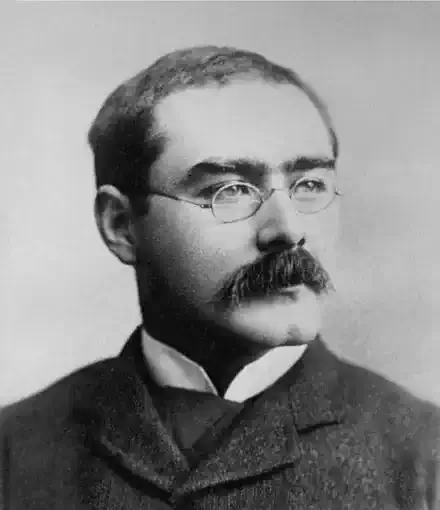
Rudyard Kipling
Poseidon's Law
Poseidon's Law
When the robust and Brass-bound Man commissioned first for sea
His fragile raft, Poseidon laughed, and "Mariner," said he,
"Behold, a Law immutable I lay on thee and thine,
That never shall ye act or tell a falsehood at my shrine.
"Let Zeus adjudge your landward kin whose votive meal and sale
At easy-cheated altars win oblivion for the fault,
But you the unhoodwinked wave shall test--the immediate gulf condemn--
Except ye owe the Fates a jest, be slow to jest with them.
Ye shall not clear by Greekly speech, nor cozen from your path
The twinkling shoal, the leeward beach, or Hadria's white-lipped wrath;
Nor tempt with painted cloth for wood my fraud-avenging hosts;
Nor make at all, or all make good, your bulwarks and your boasts.
Now and henceforward serve unshod, through wet and wakeful shifts,
A present and oppressive God, but take, to aid, my gifts--
The wide and windward-opening eye, the large and lavish hand,
The soul that cannot tell a lie--except upon the land!"
In dromond and in catafract--wet, wakeful, windward-eyed--
He kept Poseidon's Law intact (his ship and freight beside),
But, once discharged the dromond's hold, the bireme beached once more,
Splendaciously mendacious rolled the Brass-bound Man ashore....
The thranite now and thalamite are pressures low and high,
And where three hundred blades bit white the twin-propellers ply.
The God that hailed, the keel that sailed are changed beyond recall,
But the robust and Brass-bound Man he is not changed at all!
From Punt returned, from Phormio's Fleet, from Javan and Gadire,
He strongly occupies the seat about the tavern fire,
And, moist with much Falernian or smoked Massilian juice,
Revenges there the Brass-bound Man his long-enforced truce!
When the robust and Brass-bound Man commissioned first for sea
His fragile raft, Poseidon laughed, and "Mariner," said he,
"Behold, a Law immutable I lay on thee and thine,
That never shall ye act or tell a falsehood at my shrine.
"Let Zeus adjudge your landward kin whose votive meal and sale
At easy-cheated altars win oblivion for the fault,
But you the unhoodwinked wave shall test--the immediate gulf condemn--
Except ye owe the Fates a jest, be slow to jest with them.
Ye shall not clear by Greekly speech, nor cozen from your path
The twinkling shoal, the leeward beach, or Hadria's white-lipped wrath;
Nor tempt with painted cloth for wood my fraud-avenging hosts;
Nor make at all, or all make good, your bulwarks and your boasts.
Now and henceforward serve unshod, through wet and wakeful shifts,
A present and oppressive God, but take, to aid, my gifts--
The wide and windward-opening eye, the large and lavish hand,
The soul that cannot tell a lie--except upon the land!"
In dromond and in catafract--wet, wakeful, windward-eyed--
He kept Poseidon's Law intact (his ship and freight beside),
But, once discharged the dromond's hold, the bireme beached once more,
Splendaciously mendacious rolled the Brass-bound Man ashore....
The thranite now and thalamite are pressures low and high,
And where three hundred blades bit white the twin-propellers ply.
The God that hailed, the keel that sailed are changed beyond recall,
But the robust and Brass-bound Man he is not changed at all!
From Punt returned, from Phormio's Fleet, from Javan and Gadire,
He strongly occupies the seat about the tavern fire,
And, moist with much Falernian or smoked Massilian juice,
Revenges there the Brass-bound Man his long-enforced truce!
428
Rudyard Kipling
Gehazi
Gehazi
Whence comest thou, Gehazi,
So reverend to behold,
In scarlet and in ermines
And chain of England's gold?"
"From following after Naaman
To tell him all is well,
Whereby my zeal hath made me
A Judge in Israel."
Well done; well done, Gehazi!
Stretch forth thy ready hand,
Thou barely 'scaped from judgment,
Take oath to judge the land
Unswayed by gift of money
Or privy bribe, more base,
Of knowledge which is profit
In any market-place.
Search out and probe, Gehazi,
As thou of all carist try,
The truthful, well-weighed answer
That tells the blacker lie --
The loud, uneasy virtue
The anger feigned at will,
To overbear a witness
And make the Court keep still.
Take order now, Gehazi,
That no man talk aside
In secret with his judges
The while his case is tried.
Lest he should show them -- reason
To keep a matter hid,
And subtly lead the questions
Away from what he did.
Thou mirror of uprightness,
What ails thee at thy vows?
What means the risen whiteness
Of the skin between thy brows?
The boils that shine and burrow,
The sores that slough and bleed --
The leprosy of Naaman
On thee and all thy seed?
Stand up, stand up, Gehazi,
Draw close thy robe and go,
Gehazi, Judge in Israel,
A leper white as snow!
Whence comest thou, Gehazi,
So reverend to behold,
In scarlet and in ermines
And chain of England's gold?"
"From following after Naaman
To tell him all is well,
Whereby my zeal hath made me
A Judge in Israel."
Well done; well done, Gehazi!
Stretch forth thy ready hand,
Thou barely 'scaped from judgment,
Take oath to judge the land
Unswayed by gift of money
Or privy bribe, more base,
Of knowledge which is profit
In any market-place.
Search out and probe, Gehazi,
As thou of all carist try,
The truthful, well-weighed answer
That tells the blacker lie --
The loud, uneasy virtue
The anger feigned at will,
To overbear a witness
And make the Court keep still.
Take order now, Gehazi,
That no man talk aside
In secret with his judges
The while his case is tried.
Lest he should show them -- reason
To keep a matter hid,
And subtly lead the questions
Away from what he did.
Thou mirror of uprightness,
What ails thee at thy vows?
What means the risen whiteness
Of the skin between thy brows?
The boils that shine and burrow,
The sores that slough and bleed --
The leprosy of Naaman
On thee and all thy seed?
Stand up, stand up, Gehazi,
Draw close thy robe and go,
Gehazi, Judge in Israel,
A leper white as snow!
433

Jack Kerouac
The Scripture of the Golden Eternity
The Scripture of the Golden Eternity
1
Did I create that sky? Yes, for, if it was anything other than a conception in my mind I
wouldnt have said 'Sky'-That is why I am the golden eternity. There are not two of us
here, reader and writer, but one, one golden eternity, One-Which-It-Is, That-WhichEverything-
Is.
2
The awakened Buddha to show the way, the chosen Messiah to die in the degradation
of sentience, is the golden eternity. One that is what is, the golden eternity, or, God,
or, Tathagata-the name. The Named One. The human God. Sentient Godhood. Animate
Divine. The Deified One. The Verified One. The Free One. The Liberator. The Still One.
The settled One. The Established One. Golden Eternity. All is Well. The Empty One. The
Ready One. The Quitter. The Sitter. The Justified One. The Happy One.
3
That sky, if it was anything other than an illusion of my mortal mind I wouldnt have
said 'that sky.' Thus I made that sky, I am the golden eternity. I am Mortal Golden
Eternity.
4
I was awakened to show the way, chosen to die in the degradation of life, because I
am Mortal Golden Eternity.
5
I am the golden eternity in mortal animate form.
6
Strictly speaking, there is no me, because all is emptiness. I am empty, I am
non-existent. All is bliss.
7
This truth law has no more reality than the world.
8
You are the golden eternity because there is no me and no you, only one golden
eternity.
9
The Realizer. Entertain no imaginations whatever, for the thing is a no-thing. Knowing
this then is Human Godhood.
10
This world is the movie of what everything is, it is one movie, made of the same stuff
throughout, belonging to nobody, which is what everything is.
11
If we were not all the golden eternity we wouldnt be here. Because we are here we
cant help being pure. To tell man to be pure on account of the punishing angel that
punishes the bad and the rewarding angel that rewards the good would be like telling
the water 'Be Wet'-Never the less, all things depend on supreme reality, which is
already established as the record of Karma earned-fate.
12
God is not outside us but is just us, the living and the dead, the never-lived and
never-died. That we should learn it only now, is supreme reality, it was written a long
time ago in the archives of universal mind, it is already done, there's no more to do.
13
This is the knowledge that sees the golden eternity in all things, which is us, you, me,
and which is no longer us, you, me.
14
What name shall we give it which hath no name, the common eternal matter of the
mind? If we were to call it essence, some might think it meant perfume, or gold, or
honey. It is not even mind. It is not even discussible, groupable into words; it is not
even endless, in fact it is not even mysterious or inscrutably inexplicable; it is what is;
it is that; it is this. We could easily call the golden eternity 'This.' But 'what's in a
name?' asked Shakespeare. The golden eternity by another name would be as sweet. A
Tathagata, a God, a Buddha by another name, an Allah, a Sri Krishna, a Coyote, a
Brahma, a Mazda, a Messiah, an Amida, an Aremedeia, a Maitreya, a Palalakonuh, 1 2
3 4 5 6 7 8 would be as sweet. The golden eternity is X, the golden eternity is A, the
golden eternity is /\, the golden eternity is O, the golden eternity is [ ], the golden
eternity is t-h-e-g-o-l-d-e-n-e-t-e-r- n-i-t-y. In the beginning was the word; before the
beginning, in the beginningless infinite neverendingness, was the essence. Both the
word 'god' and the essence of the word, are emptiness. The form of emptiness which is
emptiness having taken the form of form, is what you see and hear and feel right now,
and what you taste and smell and think as you read this. Wait awhile, close your eyes,
let your breathing stop three seconds or so, listen to the inside silence in the womb of
the world, let your hands and nerve-ends drop, re-recognize the bliss you forgot, the
emptiness and essence and ecstasy of ever having been and ever to be the golden
eternity. This is the lesson you forgot.
15
The lesson was taught long ago in the other world systems that have naturally changed
into the empty and awake, and are here now smiling in our smile and scowling in our
scowl. It is only like the golden eternity pretending to be smiling and scowling to itself;
like a ripple on the smooth ocean of knowing. The fate of humanity is to vanish into the
golden eternity, return pouring into its hands which are not hands. The navel shall
receive, invert, and take back what'd issued forth; the ring of flesh shall close; the
personalities of long dead heroes are blank dirt.
16
The point is we're waiting, not how comfortable we are while waiting. Paleolithic man
waited by caves for the realization of why he was there, and hunted; modern men wait
in beautified homes and try to forget death and birth. We're waiting for the realization
that this is the golden eternity.
17
It came on time.
18
There is a blessedness surely to be believed, and that is that everything abides in
eternal ecstasy, now and forever.
19
Mother Kali eats herself back. All things but come to go. All these holy forms,
unmanifest, not even forms, truebodies of blank bright ecstasy, abiding in a trance, 'in
emptiness and silence' as it is pointed out in the Diamond-cutter, asked to be only
what they are: GLAD.
20
The secret God-grin in the trees and in the teapot, in ashes and fronds, fire and brick,
flesh and mental human hope. All things, far from yearning to be re-united with God,
had never left themselves and here they are, Dharmakaya, the body of the truth law,
the universal Thisness.
21
'Beyond the reach of change and fear, beyond all praise and blame,' the Lankavatara
Scripture knows to say, is he who is what he is in time and time-less-ness, in ego and
in ego-less-ness, in self and in self-less-ness.
22
Stare deep into the world before you as if it were the void: innumerable holy ghosts,
buddhies, and savior gods there hide, smiling. All the atoms emitting light inside
wavehood, there is no personal separation of any of it. A hummingbird can come into a
house and a hawk will not: so rest and be assured. While looking for the light, you may
suddenly be devoured by the darkness and find the true light.
23
Things dont tire of going and coming. The flies end up with the delicate viands.
24
The cause of the world's woe is birth, The cure of the world's woe is a bent stick.
25
Though it is everything, strictly speaking there is no golden eternity because
everything is nothing: there are no things and no goings and comings: for all is
emptiness, and emptiness is these forms, emptiness is this one formhood.
26
All these selfnesses have already vanished. Einstein measured that this present
universe is an expanding bubble, and you know what that means.
27
Discard such definite imaginations of phenomena as your own self, thou human being,
thou'rt a numberless mass of sun-motes: each mote a shrine. The same as to your
shyness of other selves, selfness as divided into infinite numbers of beings, or selfness
as identified as one self existing eternally. Be obliging and noble, be generous with
your time and help and possessions, and be kind, because the emptiness of this little
place of flesh you carry around and call your soul, your entity, is the same emptiness in
every direction of space unmeasurable emptiness, the same, one, and holy emptiness
everywhere: why be selfy and unfree, Man God, in your dream? Wake up, thou'rt
selfless and free. 'Even and upright your mind abides nowhere,' states Hui Neng of
China. We're all in heaven now.
28
Roaring dreams take place in a perfectly silent mind. Now that we know this, throw the
raft away.
29
Are you tightwad and are you mean, those are the true sins, and sin is only a
conception of ours, due to long habit. Are you generous and are you kind, those are
the true virtues, and they're only conceptions. The golden eternity rests beyond sin and
virtue, is attached to neither, is attached to nothing, is unattached, because the golden
eternity is Alone. The mold has rills but it is one mold. The field has curves but it is one
field. All things are different forms of the same thing. I call it the golden eternity-what
do you call it, brother? for the blessing and merit of virtue, and the punishment and
bad fate of sin, are alike just so many words.
30
Sociability is a big smile, and a big smile is nothing but teeth. Rest and be kind.
31
There's no need to deny that evil thing called GOOGOO, which doesnt exist, just as
there's no need to deny that evil thing called Sex and Rebirth, which also doesn't exist,
as it is only a form of emptiness. The bead of semen comes from a long line of
awakened natures that were your parent, a holy flow, a succession of saviors pouring
from the womb of the dark void and back into it, fantastic magic imagination of the
lightning, flash, plays, dreams, not even plays, dreams.
32
'The womb of exuberant fertility,' Ashvhaghosha called it, radiating forms out of its
womb of exuberant emptiness. In emptiness there is no Why, no knowledge of Why, no
ignorance of Why, no asking and no answering of Why, and no significance attached to
this.
33
A disturbed and frightened man is like the golden eternity experimentally pretending at
feeling the disturbed-and-frightened mood; a calm and joyous man, is like the golden
eternity pretending at experimenting with that experience; a man experiencing his
Sentient Being, is like the golden eternity pretending at trying that out too; a man who
has no thoughts, is like the golden eternity pretending at being itself; because the
emptiness of everything has no beginning and no end and at present is infinite.
34
'Love is all in all,' said Sainte Therese, choosing Love for her vocation and pouring out
her happiness, from her garden by the gate, with a gentle smile, pouring roses on the
earth, so that the beggar in the thunderbolt received of the endless offering of her dark
void. Man goes a-beggaring into nothingness. 'Ignorance is the father, Habit-Energy is
the Mother.' Opposites are not the same for the same reason they are the same.
35
The words 'atoms of dust' and 'the great universes' are only words. The idea that they
imply is only an idea. The belief that we live here in this existence, divided into various
beings, passing food in and out of ourselves, and casting off husks of bodies one after
another with no cessation and no definite or particular discrimination, is only an idea.
The seat of our Immortal Intelligence can be seen in that beating light between the
eyes the Wisdom Eye of the ancients: we know what we're doing: we're not disturbed:
because we're like the golden eternity pretending at playing the magic cardgame and
making believe it's real, it's a big dream, a joyous ecstasy of words and ideas and
flesh, an ethereal flower unfolding a folding back, a movie, an exuberant bunch of lines
bounding emptiness, the womb of Avalokitesvara, a vast secret silence, springtime in
the Void, happy young gods talking and drinking on a cloud. Our 32,000 chillicosms
bear all the marks of excellence. Blind milky light fills our night; and the morning is
crystal.
36
Give a gift to your brother, but there's no gift to compare with the giving of assurance
that he is the golden eternity. The true understanding of this would bring tears to your
eyes. The other shore is right here, forgive and forget, protect and reassure. Your
tormenters will be purified. Raise thy diamond hand. Have faith and wait. The course of
your days is a river rumbling over your rocky back. You're sitting at the bottom of the
world with a head of iron. Religion is thy sad heart. You're the golden eternity and it
must be done by you. And means one thing: Nothing-Ever-Happened. This is the
golden eternity.
37
When the Prince of the Kalinga severed the flesh from the limbs and body of Buddha,
even then the Buddha was free from any such ideas as his own self, other self, living
beings divided into many selves, or living beings united and identified into one eternal
self. The golden eternity isnt 'me.' Before you can know that you're dreaming you'll
wake up, Atman. Had the Buddha, the Awakened One, cherished any of these
imaginary judgments of and about things, he would have fallen into impatience and
hatred in his suffering. Instead, like Jesus on the Cross he saw the light and died kind,
loving all living things.
38
The world was spun out of a blade of grass: the world was spun out of a mind. Heaven
was spun out of a blade of grass: heaven was spun out of a mind. Neither will do you
much good, neither will do you much harm. The Oriental imperturbed, is the golden
eternity.
39
He is called a Yogi, his is called a Priest, a Minister, a Brahmin, a Parson, a Chaplain, a
Roshi, a Laoshih, a Master, a Patriarch, a Pope, a Spiritual Commissar, a Counselor,
and Adviser, a Bodhisattva-Mahasattva, an Old Man, a Saint, a Shaman, a Leader, who
thinks nothing of himself as separate from another self, not higher nor lower, no stages
and no definite attainments, no mysterious stigmata or secret holyhood, no wild dark
knowledge and no venerable authoritativeness, nay a giggling sage sweeping out of the
kitchen with a broom. After supper, a silent smoke. Because there is no definite
teaching: the world is undisciplined. Nature endlessly in every direction inward to your
body and outward into space.
40
Meditate outdoors. The dark trees at night are not really the dark trees at night, it's
only the golden eternity.
41
A mosquito as big as Mount Everest is much bigger than you think: a horse's hoof is
more delicate than it looks. An altar consecrated to the golden eternity, filled with
roses and lotuses and diamonds, is the cell of the humble prisoner, the cell so cold and
dreary. Boethius kissed the Robe of the Mother Truth in a Roman dungeon.
42
Do you think the emptiness of the sky will ever crumble away? Every little child knows
that everybody will go to heaven. Knowing that nothing ever happened is not really
knowing that nothing ever happened, it's the golden eternity. In other words, nothing
can compare with telling your brother and your sister that what happened, what is
happening, and what will happen, never really happened, is not really happening and
never will happen, it is only the golden eternity. Nothing was ever born, nothing will
ever die. Indeed, it didnt even happen that you heard about golden eternity through
the accidental reading of this scripture. The thing is easily false. There are no warnings
whatever issuing from the golden eternity: do what you want.
43
Even in dreams be kind, because anyway there is no time, no space, no mind. 'It's all
not-born,' said Bankei of Japan, whose mother heard this from her son did what we call
'died happy.' And even if she had died unhappy, dying unhappy is not really dying
unhappy, it's the golden eternity. It's impossible to exist, it's impossible to be
persecuted, it's impossible to miss your reward.
44
Eight hundred and four thousand myriads of Awakened Ones throughout numberless
swirls of epochs appeared to work hard to save a grain of sand, and it was only the
golden eternity. And their combined reward will be no greater and no lesser than what
will be won by a piece of dried turd. It's a reward beyond thought.
45
When you've understood this scripture, throw it away. If you cant understand this
scripture, throw it away. I insist on your freedom.
46
O everlasting Eternity, all things and all truth laws are no- things, in three ways, which
is the same way: AS THINGS OF TIME they dont exist because there is no furthest
atom than can be found or weighed or grasped, it is emptiness through and through,
matter and empty space too. AS THINGS OF MIND they dont exist, because the mind
that conceives and makes them out does so by seeing, hearing touching, smelling,
tasting, and mentally-noticing and without this mind they would not be seen or heard
or felt or smelled or tasted or mentally-noticed, they are discriminated that which
they're not necessarily by imaginary judgments of the mind, they are actually
dependent on the mind that makes them out, by themselves they are no-things, they
are really mental, seen only of the mind, they are really empty visions of the mind,
heaven is a vision, everything is a vision. What does it mean that I am in this endless
universe thinking I'm a man sitting under the stars on the terrace of earth, but actually
empty and awake throughout the emptiness and awakedness of everything? It means
that I am empty and awake, knowing that I am empty and awake, and that there's no
difference between me and anything else. It means that I have attained to that which
everything is.
47
The-Attainer-To-That-Which-Everything-Is, the Sanskrit Tathagata, has no ideas
whatever but abides in essence identically with the essence of all things, which is what
it is, in emptiness and silence. Imaginary meaning stretched to make mountains and as
far as the germ is concerned it stretched even further to make molehills. A million souls
dropped through hell but nobody saw them or counted them. A lot of large people isnt
really a lot of large people, it's only the golden eternity. When St. Francis went to
heaven he did not add to heaven nor detract from earth. Locate silence, possess space,
spot me the ego. 'From the beginning,' said the Sixth Patriarch of the China School,
'not a thing is.'
48
He who loves all life with his pity and intelligence isnt really he who loves all life with
his pity and intelligence, it's only natural. The universe is fully known because it is
ignored. Enlightenment comes when you dont care. This is a good tree stump I'm
sitting on. You cant even grasp your own pain let alone your eternal reward. I love you
because you're me. I love you because there's nothing else to do. It's just the natural
golden eternity.
49
What does it mean that those trees and mountains are magic and unreal?- It means
that those trees and mountains are magic and unreal. What does it mean that those
trees and mountains are not magic but real?- it means that those trees and mountains
are not magic but real. Men are just making imaginary judgments both ways, and all
the time it's just the same natural golden eternity.
50
If the golden eternity was anything other than mere words, you could not have said
'golden eternity.' This means that the words are used to point at the endless
nothingness of reality. If the endless nothingness of reality was anything other than
mere words, you could not have said 'endless nothingness of reality,' you could not
have said it. This means that the golden eternity is out of our word-reach, it refuses
steadfastly to be described, it runs away from us and leads us in. The name is not
really the name. The same way, you could not have said 'this world' if this world was
anything other than mere words. There's nothing there but just that. They've long
known that there's nothing to life but just the living of it. It Is What It Is and That's All
It Is.
51
There's no system of teaching and no reward for teaching the golden eternity, because
nothing has happened. In the golden eternity teaching and reward havent even
vanished let alone appeared. The golden eternity doesnt even have to be perfect. It is
very silly of me to talk about it. I talk about it simply because here I am dreaming that
I talk about it in a dream already ended, ages ago, from which I'm already awake, and
it was only an empty dreaming, in fact nothing whatever, in fact nothing ever
happened at all. The beauty of attaining the golden eternity is that nothing will be
acquired, at last.
52
Kindness and sympathy, understanding and encouragement, these give: they are
better than just presents and gifts: no reason in the world why not. Anyhow, be nice.
Remember the golden eternity is yourself. 'If someone will simply practice kindness,'
said Gotama to Subhuti, 'he will soon attain highest perfect wisdom.' Then he added:
'Kindness after all is only a word and it should be done on the spot without thought of
kindness.' By practicing kindness all over with everyone you will soon come into the
holy trance, infinite distinctions of personalities will become what they really
mysteriously are, our common and eternal blissstuff, the pureness of everything
forever, the great bright essence of mind, even and one thing everywhere the holy
eternal milky love, the white light everywhere everything, emptybliss, svaha, shining,
ready, and awake, the compassion in the sound of silence, the swarming myriad
trillionaire you are.
53
Everything's alright, form is emptiness and emptiness is form, and we're here forever,
in one form or another, which is empty. Everything's alright, we're not here, there, or
anywhere. Everything's alright, cats sleep.
54
The everlasting and tranquil essence, look around and see the smiling essence
everywhere. How wily was the world made, Maya, not-even-made.
55
There's the world in the daylight. If it was completely dark you wouldnt see it but it
would still be there. If you close your eyes you really see what it's like: mysterious
particle-swarming emptiness. On the moon big mosquitos of straw know this in the
kindness of their hearts. Truly speaking, unrecognizably sweet it all is. Don't worry
about nothing.
56
Imaginary judgments about things, in the Nothing-Ever-Happened wonderful void, you
dont even have to reject them, let alone accept them. 'That looks like a tree, let's call it
a tree,' said Coyote to Earthmaker at the beginning, and they walked around the
rootdrinker patting their bellies.
57
Perfectly selfless, the beauty of it, the butterfly doesnt take it as a personal
achievement, he just disappears through the trees. You too, kind and humble and
not-even-here, it wasnt in a greedy mood that you saw the light that belongs to
everybody.
58
Look at your little finger, the emptiness of it is no different than the emptiness of
infinity.
59
Cats yawn because they realize that there's nothing to do.
60
Up in heaven you wont remember all these tricks of yours. You wont even sigh 'Why?'
Whether as atomic dust or as great cities, what's the difference in all this stuff. A tree
is still only a rootdrinker. The puma's twisted face continues to look at the blue sky
with sightless eyes, Ah sweet divine and indescribable verdurous paradise planted in
mid-air! Caitanya, it's only consciousness. Not with thoughts of your mind, but in the
believing sweetness of your heart, you snap the link and open the golden door and
disappear into the bright room, the everlasting ecstasy, eternal Now. Soldier, follow
me! - there never was a war. Arjuna, dont fight! - why fight over nothing? Bless and sit
down.
61
I remember that I'm supposed to be a man and consciousness and I focus my eyes and
the print reappears and the words of the poor book are saying, 'The world, as God has
made it' and there are no words in my pitying heart to express the knowless loveliness
of the trance there was before I read those words, I had no such idea that there was a
world.
62
This world has no marks, signs, or evidence of existence, nor the noises in it, like
accident of wind or voices or heehawing animals, yet listen closely the eternal hush of
silence goes on and on throughout all this, and has been gong on, and will go on and
on. This is because the world is nothing but a dream and is just thought of and the
everlasting eternity pays no attention to it. At night under the moon, or in a quiet
room, hush now, the secret music of the Unborn goes on and on, beyond conception,
awake beyond existence. Properly speaking, awake is not really awake because the
golden eternity never went to sleep; you can tell by the constant sound of Silence
which cuts through this world like a magic diamond through the trick of your not
realizing that your mind caused the world.
63
The God of the American Plateau Indian was Coyote. He says: 'Earth! those beings
living on your surface, none of them disappearing, will all be transformed. When I have
spoken to them, when they have spoken to me, from that moment on, their words and
their bodies which they usually use to move about with, will all change. I will not have
heard them.'
64
I was smelling flowers in the yard, and when I stood up I took a deep breath and the
blood all rushed to my brain and I woke up dead on my back in the grass. I had
apparently fainted, or died, for about sixty seconds. My neighbor saw me but he
thought I had just suddenly thrown myself on the grass to enjoy the sun. During that
timeless moment of unconsciousness I saw the golden eternity. I saw heaven. In it
nothing had ever happened, the events of a million years ago were just as phantom
and ungraspable as the events of now, or the events of the next ten minutes. It was
perfect, the golden solitude, the golden emptiness, Something-Or- Other, something
surely humble. There was a rapturous ring of silence abiding perfectly. There was no
question of being alive or not being alive, of likes and dislikes, of near or far, no
question of giving or gratitude, no question of mercy or judgment, or of suffering or its
opposite or anything. It was the womb itself, aloneness, alaya vijnana the universal
store, the Great Free Treasure, the Great Victory, infinite completion, the joyful
mysterious essence of Arrangement. It seemed like one smiling smile, one adorable
adoration, one gracious and adorable charity, everlasting safety, refreshing afternoon,
roses, infinite brilliant immaterial gold ash, the Golden Age. The 'golden' came from the
sun in my eyelids, and the 'eternity' from my sudden instant realization as I woke up
that I had just been where it all came from and where it was all returning, the
everlasting So, and so never coming or going; therefore I call it the golden eternity but
you can call it anything you want. As I regained consciousness I felt so sorry I had a
body and a mind suddenly realizing I didn't even have a body and a mind and nothing
had ever happened and everything is alright forever and forever and forever, O thank
you thank you thank you.
65
This is the first teaching from the golden eternity.
66
The second teaching from the golden eternity is that there never was a first teaching
from the golden eternity. So be sure.
1
Did I create that sky? Yes, for, if it was anything other than a conception in my mind I
wouldnt have said 'Sky'-That is why I am the golden eternity. There are not two of us
here, reader and writer, but one, one golden eternity, One-Which-It-Is, That-WhichEverything-
Is.
2
The awakened Buddha to show the way, the chosen Messiah to die in the degradation
of sentience, is the golden eternity. One that is what is, the golden eternity, or, God,
or, Tathagata-the name. The Named One. The human God. Sentient Godhood. Animate
Divine. The Deified One. The Verified One. The Free One. The Liberator. The Still One.
The settled One. The Established One. Golden Eternity. All is Well. The Empty One. The
Ready One. The Quitter. The Sitter. The Justified One. The Happy One.
3
That sky, if it was anything other than an illusion of my mortal mind I wouldnt have
said 'that sky.' Thus I made that sky, I am the golden eternity. I am Mortal Golden
Eternity.
4
I was awakened to show the way, chosen to die in the degradation of life, because I
am Mortal Golden Eternity.
5
I am the golden eternity in mortal animate form.
6
Strictly speaking, there is no me, because all is emptiness. I am empty, I am
non-existent. All is bliss.
7
This truth law has no more reality than the world.
8
You are the golden eternity because there is no me and no you, only one golden
eternity.
9
The Realizer. Entertain no imaginations whatever, for the thing is a no-thing. Knowing
this then is Human Godhood.
10
This world is the movie of what everything is, it is one movie, made of the same stuff
throughout, belonging to nobody, which is what everything is.
11
If we were not all the golden eternity we wouldnt be here. Because we are here we
cant help being pure. To tell man to be pure on account of the punishing angel that
punishes the bad and the rewarding angel that rewards the good would be like telling
the water 'Be Wet'-Never the less, all things depend on supreme reality, which is
already established as the record of Karma earned-fate.
12
God is not outside us but is just us, the living and the dead, the never-lived and
never-died. That we should learn it only now, is supreme reality, it was written a long
time ago in the archives of universal mind, it is already done, there's no more to do.
13
This is the knowledge that sees the golden eternity in all things, which is us, you, me,
and which is no longer us, you, me.
14
What name shall we give it which hath no name, the common eternal matter of the
mind? If we were to call it essence, some might think it meant perfume, or gold, or
honey. It is not even mind. It is not even discussible, groupable into words; it is not
even endless, in fact it is not even mysterious or inscrutably inexplicable; it is what is;
it is that; it is this. We could easily call the golden eternity 'This.' But 'what's in a
name?' asked Shakespeare. The golden eternity by another name would be as sweet. A
Tathagata, a God, a Buddha by another name, an Allah, a Sri Krishna, a Coyote, a
Brahma, a Mazda, a Messiah, an Amida, an Aremedeia, a Maitreya, a Palalakonuh, 1 2
3 4 5 6 7 8 would be as sweet. The golden eternity is X, the golden eternity is A, the
golden eternity is /\, the golden eternity is O, the golden eternity is [ ], the golden
eternity is t-h-e-g-o-l-d-e-n-e-t-e-r- n-i-t-y. In the beginning was the word; before the
beginning, in the beginningless infinite neverendingness, was the essence. Both the
word 'god' and the essence of the word, are emptiness. The form of emptiness which is
emptiness having taken the form of form, is what you see and hear and feel right now,
and what you taste and smell and think as you read this. Wait awhile, close your eyes,
let your breathing stop three seconds or so, listen to the inside silence in the womb of
the world, let your hands and nerve-ends drop, re-recognize the bliss you forgot, the
emptiness and essence and ecstasy of ever having been and ever to be the golden
eternity. This is the lesson you forgot.
15
The lesson was taught long ago in the other world systems that have naturally changed
into the empty and awake, and are here now smiling in our smile and scowling in our
scowl. It is only like the golden eternity pretending to be smiling and scowling to itself;
like a ripple on the smooth ocean of knowing. The fate of humanity is to vanish into the
golden eternity, return pouring into its hands which are not hands. The navel shall
receive, invert, and take back what'd issued forth; the ring of flesh shall close; the
personalities of long dead heroes are blank dirt.
16
The point is we're waiting, not how comfortable we are while waiting. Paleolithic man
waited by caves for the realization of why he was there, and hunted; modern men wait
in beautified homes and try to forget death and birth. We're waiting for the realization
that this is the golden eternity.
17
It came on time.
18
There is a blessedness surely to be believed, and that is that everything abides in
eternal ecstasy, now and forever.
19
Mother Kali eats herself back. All things but come to go. All these holy forms,
unmanifest, not even forms, truebodies of blank bright ecstasy, abiding in a trance, 'in
emptiness and silence' as it is pointed out in the Diamond-cutter, asked to be only
what they are: GLAD.
20
The secret God-grin in the trees and in the teapot, in ashes and fronds, fire and brick,
flesh and mental human hope. All things, far from yearning to be re-united with God,
had never left themselves and here they are, Dharmakaya, the body of the truth law,
the universal Thisness.
21
'Beyond the reach of change and fear, beyond all praise and blame,' the Lankavatara
Scripture knows to say, is he who is what he is in time and time-less-ness, in ego and
in ego-less-ness, in self and in self-less-ness.
22
Stare deep into the world before you as if it were the void: innumerable holy ghosts,
buddhies, and savior gods there hide, smiling. All the atoms emitting light inside
wavehood, there is no personal separation of any of it. A hummingbird can come into a
house and a hawk will not: so rest and be assured. While looking for the light, you may
suddenly be devoured by the darkness and find the true light.
23
Things dont tire of going and coming. The flies end up with the delicate viands.
24
The cause of the world's woe is birth, The cure of the world's woe is a bent stick.
25
Though it is everything, strictly speaking there is no golden eternity because
everything is nothing: there are no things and no goings and comings: for all is
emptiness, and emptiness is these forms, emptiness is this one formhood.
26
All these selfnesses have already vanished. Einstein measured that this present
universe is an expanding bubble, and you know what that means.
27
Discard such definite imaginations of phenomena as your own self, thou human being,
thou'rt a numberless mass of sun-motes: each mote a shrine. The same as to your
shyness of other selves, selfness as divided into infinite numbers of beings, or selfness
as identified as one self existing eternally. Be obliging and noble, be generous with
your time and help and possessions, and be kind, because the emptiness of this little
place of flesh you carry around and call your soul, your entity, is the same emptiness in
every direction of space unmeasurable emptiness, the same, one, and holy emptiness
everywhere: why be selfy and unfree, Man God, in your dream? Wake up, thou'rt
selfless and free. 'Even and upright your mind abides nowhere,' states Hui Neng of
China. We're all in heaven now.
28
Roaring dreams take place in a perfectly silent mind. Now that we know this, throw the
raft away.
29
Are you tightwad and are you mean, those are the true sins, and sin is only a
conception of ours, due to long habit. Are you generous and are you kind, those are
the true virtues, and they're only conceptions. The golden eternity rests beyond sin and
virtue, is attached to neither, is attached to nothing, is unattached, because the golden
eternity is Alone. The mold has rills but it is one mold. The field has curves but it is one
field. All things are different forms of the same thing. I call it the golden eternity-what
do you call it, brother? for the blessing and merit of virtue, and the punishment and
bad fate of sin, are alike just so many words.
30
Sociability is a big smile, and a big smile is nothing but teeth. Rest and be kind.
31
There's no need to deny that evil thing called GOOGOO, which doesnt exist, just as
there's no need to deny that evil thing called Sex and Rebirth, which also doesn't exist,
as it is only a form of emptiness. The bead of semen comes from a long line of
awakened natures that were your parent, a holy flow, a succession of saviors pouring
from the womb of the dark void and back into it, fantastic magic imagination of the
lightning, flash, plays, dreams, not even plays, dreams.
32
'The womb of exuberant fertility,' Ashvhaghosha called it, radiating forms out of its
womb of exuberant emptiness. In emptiness there is no Why, no knowledge of Why, no
ignorance of Why, no asking and no answering of Why, and no significance attached to
this.
33
A disturbed and frightened man is like the golden eternity experimentally pretending at
feeling the disturbed-and-frightened mood; a calm and joyous man, is like the golden
eternity pretending at experimenting with that experience; a man experiencing his
Sentient Being, is like the golden eternity pretending at trying that out too; a man who
has no thoughts, is like the golden eternity pretending at being itself; because the
emptiness of everything has no beginning and no end and at present is infinite.
34
'Love is all in all,' said Sainte Therese, choosing Love for her vocation and pouring out
her happiness, from her garden by the gate, with a gentle smile, pouring roses on the
earth, so that the beggar in the thunderbolt received of the endless offering of her dark
void. Man goes a-beggaring into nothingness. 'Ignorance is the father, Habit-Energy is
the Mother.' Opposites are not the same for the same reason they are the same.
35
The words 'atoms of dust' and 'the great universes' are only words. The idea that they
imply is only an idea. The belief that we live here in this existence, divided into various
beings, passing food in and out of ourselves, and casting off husks of bodies one after
another with no cessation and no definite or particular discrimination, is only an idea.
The seat of our Immortal Intelligence can be seen in that beating light between the
eyes the Wisdom Eye of the ancients: we know what we're doing: we're not disturbed:
because we're like the golden eternity pretending at playing the magic cardgame and
making believe it's real, it's a big dream, a joyous ecstasy of words and ideas and
flesh, an ethereal flower unfolding a folding back, a movie, an exuberant bunch of lines
bounding emptiness, the womb of Avalokitesvara, a vast secret silence, springtime in
the Void, happy young gods talking and drinking on a cloud. Our 32,000 chillicosms
bear all the marks of excellence. Blind milky light fills our night; and the morning is
crystal.
36
Give a gift to your brother, but there's no gift to compare with the giving of assurance
that he is the golden eternity. The true understanding of this would bring tears to your
eyes. The other shore is right here, forgive and forget, protect and reassure. Your
tormenters will be purified. Raise thy diamond hand. Have faith and wait. The course of
your days is a river rumbling over your rocky back. You're sitting at the bottom of the
world with a head of iron. Religion is thy sad heart. You're the golden eternity and it
must be done by you. And means one thing: Nothing-Ever-Happened. This is the
golden eternity.
37
When the Prince of the Kalinga severed the flesh from the limbs and body of Buddha,
even then the Buddha was free from any such ideas as his own self, other self, living
beings divided into many selves, or living beings united and identified into one eternal
self. The golden eternity isnt 'me.' Before you can know that you're dreaming you'll
wake up, Atman. Had the Buddha, the Awakened One, cherished any of these
imaginary judgments of and about things, he would have fallen into impatience and
hatred in his suffering. Instead, like Jesus on the Cross he saw the light and died kind,
loving all living things.
38
The world was spun out of a blade of grass: the world was spun out of a mind. Heaven
was spun out of a blade of grass: heaven was spun out of a mind. Neither will do you
much good, neither will do you much harm. The Oriental imperturbed, is the golden
eternity.
39
He is called a Yogi, his is called a Priest, a Minister, a Brahmin, a Parson, a Chaplain, a
Roshi, a Laoshih, a Master, a Patriarch, a Pope, a Spiritual Commissar, a Counselor,
and Adviser, a Bodhisattva-Mahasattva, an Old Man, a Saint, a Shaman, a Leader, who
thinks nothing of himself as separate from another self, not higher nor lower, no stages
and no definite attainments, no mysterious stigmata or secret holyhood, no wild dark
knowledge and no venerable authoritativeness, nay a giggling sage sweeping out of the
kitchen with a broom. After supper, a silent smoke. Because there is no definite
teaching: the world is undisciplined. Nature endlessly in every direction inward to your
body and outward into space.
40
Meditate outdoors. The dark trees at night are not really the dark trees at night, it's
only the golden eternity.
41
A mosquito as big as Mount Everest is much bigger than you think: a horse's hoof is
more delicate than it looks. An altar consecrated to the golden eternity, filled with
roses and lotuses and diamonds, is the cell of the humble prisoner, the cell so cold and
dreary. Boethius kissed the Robe of the Mother Truth in a Roman dungeon.
42
Do you think the emptiness of the sky will ever crumble away? Every little child knows
that everybody will go to heaven. Knowing that nothing ever happened is not really
knowing that nothing ever happened, it's the golden eternity. In other words, nothing
can compare with telling your brother and your sister that what happened, what is
happening, and what will happen, never really happened, is not really happening and
never will happen, it is only the golden eternity. Nothing was ever born, nothing will
ever die. Indeed, it didnt even happen that you heard about golden eternity through
the accidental reading of this scripture. The thing is easily false. There are no warnings
whatever issuing from the golden eternity: do what you want.
43
Even in dreams be kind, because anyway there is no time, no space, no mind. 'It's all
not-born,' said Bankei of Japan, whose mother heard this from her son did what we call
'died happy.' And even if she had died unhappy, dying unhappy is not really dying
unhappy, it's the golden eternity. It's impossible to exist, it's impossible to be
persecuted, it's impossible to miss your reward.
44
Eight hundred and four thousand myriads of Awakened Ones throughout numberless
swirls of epochs appeared to work hard to save a grain of sand, and it was only the
golden eternity. And their combined reward will be no greater and no lesser than what
will be won by a piece of dried turd. It's a reward beyond thought.
45
When you've understood this scripture, throw it away. If you cant understand this
scripture, throw it away. I insist on your freedom.
46
O everlasting Eternity, all things and all truth laws are no- things, in three ways, which
is the same way: AS THINGS OF TIME they dont exist because there is no furthest
atom than can be found or weighed or grasped, it is emptiness through and through,
matter and empty space too. AS THINGS OF MIND they dont exist, because the mind
that conceives and makes them out does so by seeing, hearing touching, smelling,
tasting, and mentally-noticing and without this mind they would not be seen or heard
or felt or smelled or tasted or mentally-noticed, they are discriminated that which
they're not necessarily by imaginary judgments of the mind, they are actually
dependent on the mind that makes them out, by themselves they are no-things, they
are really mental, seen only of the mind, they are really empty visions of the mind,
heaven is a vision, everything is a vision. What does it mean that I am in this endless
universe thinking I'm a man sitting under the stars on the terrace of earth, but actually
empty and awake throughout the emptiness and awakedness of everything? It means
that I am empty and awake, knowing that I am empty and awake, and that there's no
difference between me and anything else. It means that I have attained to that which
everything is.
47
The-Attainer-To-That-Which-Everything-Is, the Sanskrit Tathagata, has no ideas
whatever but abides in essence identically with the essence of all things, which is what
it is, in emptiness and silence. Imaginary meaning stretched to make mountains and as
far as the germ is concerned it stretched even further to make molehills. A million souls
dropped through hell but nobody saw them or counted them. A lot of large people isnt
really a lot of large people, it's only the golden eternity. When St. Francis went to
heaven he did not add to heaven nor detract from earth. Locate silence, possess space,
spot me the ego. 'From the beginning,' said the Sixth Patriarch of the China School,
'not a thing is.'
48
He who loves all life with his pity and intelligence isnt really he who loves all life with
his pity and intelligence, it's only natural. The universe is fully known because it is
ignored. Enlightenment comes when you dont care. This is a good tree stump I'm
sitting on. You cant even grasp your own pain let alone your eternal reward. I love you
because you're me. I love you because there's nothing else to do. It's just the natural
golden eternity.
49
What does it mean that those trees and mountains are magic and unreal?- It means
that those trees and mountains are magic and unreal. What does it mean that those
trees and mountains are not magic but real?- it means that those trees and mountains
are not magic but real. Men are just making imaginary judgments both ways, and all
the time it's just the same natural golden eternity.
50
If the golden eternity was anything other than mere words, you could not have said
'golden eternity.' This means that the words are used to point at the endless
nothingness of reality. If the endless nothingness of reality was anything other than
mere words, you could not have said 'endless nothingness of reality,' you could not
have said it. This means that the golden eternity is out of our word-reach, it refuses
steadfastly to be described, it runs away from us and leads us in. The name is not
really the name. The same way, you could not have said 'this world' if this world was
anything other than mere words. There's nothing there but just that. They've long
known that there's nothing to life but just the living of it. It Is What It Is and That's All
It Is.
51
There's no system of teaching and no reward for teaching the golden eternity, because
nothing has happened. In the golden eternity teaching and reward havent even
vanished let alone appeared. The golden eternity doesnt even have to be perfect. It is
very silly of me to talk about it. I talk about it simply because here I am dreaming that
I talk about it in a dream already ended, ages ago, from which I'm already awake, and
it was only an empty dreaming, in fact nothing whatever, in fact nothing ever
happened at all. The beauty of attaining the golden eternity is that nothing will be
acquired, at last.
52
Kindness and sympathy, understanding and encouragement, these give: they are
better than just presents and gifts: no reason in the world why not. Anyhow, be nice.
Remember the golden eternity is yourself. 'If someone will simply practice kindness,'
said Gotama to Subhuti, 'he will soon attain highest perfect wisdom.' Then he added:
'Kindness after all is only a word and it should be done on the spot without thought of
kindness.' By practicing kindness all over with everyone you will soon come into the
holy trance, infinite distinctions of personalities will become what they really
mysteriously are, our common and eternal blissstuff, the pureness of everything
forever, the great bright essence of mind, even and one thing everywhere the holy
eternal milky love, the white light everywhere everything, emptybliss, svaha, shining,
ready, and awake, the compassion in the sound of silence, the swarming myriad
trillionaire you are.
53
Everything's alright, form is emptiness and emptiness is form, and we're here forever,
in one form or another, which is empty. Everything's alright, we're not here, there, or
anywhere. Everything's alright, cats sleep.
54
The everlasting and tranquil essence, look around and see the smiling essence
everywhere. How wily was the world made, Maya, not-even-made.
55
There's the world in the daylight. If it was completely dark you wouldnt see it but it
would still be there. If you close your eyes you really see what it's like: mysterious
particle-swarming emptiness. On the moon big mosquitos of straw know this in the
kindness of their hearts. Truly speaking, unrecognizably sweet it all is. Don't worry
about nothing.
56
Imaginary judgments about things, in the Nothing-Ever-Happened wonderful void, you
dont even have to reject them, let alone accept them. 'That looks like a tree, let's call it
a tree,' said Coyote to Earthmaker at the beginning, and they walked around the
rootdrinker patting their bellies.
57
Perfectly selfless, the beauty of it, the butterfly doesnt take it as a personal
achievement, he just disappears through the trees. You too, kind and humble and
not-even-here, it wasnt in a greedy mood that you saw the light that belongs to
everybody.
58
Look at your little finger, the emptiness of it is no different than the emptiness of
infinity.
59
Cats yawn because they realize that there's nothing to do.
60
Up in heaven you wont remember all these tricks of yours. You wont even sigh 'Why?'
Whether as atomic dust or as great cities, what's the difference in all this stuff. A tree
is still only a rootdrinker. The puma's twisted face continues to look at the blue sky
with sightless eyes, Ah sweet divine and indescribable verdurous paradise planted in
mid-air! Caitanya, it's only consciousness. Not with thoughts of your mind, but in the
believing sweetness of your heart, you snap the link and open the golden door and
disappear into the bright room, the everlasting ecstasy, eternal Now. Soldier, follow
me! - there never was a war. Arjuna, dont fight! - why fight over nothing? Bless and sit
down.
61
I remember that I'm supposed to be a man and consciousness and I focus my eyes and
the print reappears and the words of the poor book are saying, 'The world, as God has
made it' and there are no words in my pitying heart to express the knowless loveliness
of the trance there was before I read those words, I had no such idea that there was a
world.
62
This world has no marks, signs, or evidence of existence, nor the noises in it, like
accident of wind or voices or heehawing animals, yet listen closely the eternal hush of
silence goes on and on throughout all this, and has been gong on, and will go on and
on. This is because the world is nothing but a dream and is just thought of and the
everlasting eternity pays no attention to it. At night under the moon, or in a quiet
room, hush now, the secret music of the Unborn goes on and on, beyond conception,
awake beyond existence. Properly speaking, awake is not really awake because the
golden eternity never went to sleep; you can tell by the constant sound of Silence
which cuts through this world like a magic diamond through the trick of your not
realizing that your mind caused the world.
63
The God of the American Plateau Indian was Coyote. He says: 'Earth! those beings
living on your surface, none of them disappearing, will all be transformed. When I have
spoken to them, when they have spoken to me, from that moment on, their words and
their bodies which they usually use to move about with, will all change. I will not have
heard them.'
64
I was smelling flowers in the yard, and when I stood up I took a deep breath and the
blood all rushed to my brain and I woke up dead on my back in the grass. I had
apparently fainted, or died, for about sixty seconds. My neighbor saw me but he
thought I had just suddenly thrown myself on the grass to enjoy the sun. During that
timeless moment of unconsciousness I saw the golden eternity. I saw heaven. In it
nothing had ever happened, the events of a million years ago were just as phantom
and ungraspable as the events of now, or the events of the next ten minutes. It was
perfect, the golden solitude, the golden emptiness, Something-Or- Other, something
surely humble. There was a rapturous ring of silence abiding perfectly. There was no
question of being alive or not being alive, of likes and dislikes, of near or far, no
question of giving or gratitude, no question of mercy or judgment, or of suffering or its
opposite or anything. It was the womb itself, aloneness, alaya vijnana the universal
store, the Great Free Treasure, the Great Victory, infinite completion, the joyful
mysterious essence of Arrangement. It seemed like one smiling smile, one adorable
adoration, one gracious and adorable charity, everlasting safety, refreshing afternoon,
roses, infinite brilliant immaterial gold ash, the Golden Age. The 'golden' came from the
sun in my eyelids, and the 'eternity' from my sudden instant realization as I woke up
that I had just been where it all came from and where it was all returning, the
everlasting So, and so never coming or going; therefore I call it the golden eternity but
you can call it anything you want. As I regained consciousness I felt so sorry I had a
body and a mind suddenly realizing I didn't even have a body and a mind and nothing
had ever happened and everything is alright forever and forever and forever, O thank
you thank you thank you.
65
This is the first teaching from the golden eternity.
66
The second teaching from the golden eternity is that there never was a first teaching
from the golden eternity. So be sure.
395
Rudyard Kipling
A General Summary
A General Summary
We are very slightly changed
From the semi-apes who ranged
India's Prehistoric clay;
He that drew the longest bow
Ran his brother down, you know,
As we run men down to-day.
"Dowb," the first of all his race,
Met the Mammoth face to face
On the lake or in the cave:
Stole the steadiest canoe,
Ate the quarry others slew,
Died -- and took the finest grave.
When they scratched the reindeer-bone,
Some one made the sketch his own,
Filched it from the artist -- then,
Even in those early days,
Won a simple Viceroy's praise
Through the toil of other men.
Ere they hewed the Sphinx's visage
Favouritism governed kissage,
Even as it does in this age.
Who shall doubt "the secret hid
Under Cheops' pyramid"
Was that the contractor did
Cheops out of several millions?
Or that Joseph's sudden rise
To comptroller of Supplies
Was a fraud of monstrous size
On King Pharaoh's swart Civilians?
Thus, the artless songs I sing
Do not deal with anything
New or never said before.
As it was in the beginning
Is to-day official sinning,
And shall be for evermore!
We are very slightly changed
From the semi-apes who ranged
India's Prehistoric clay;
He that drew the longest bow
Ran his brother down, you know,
As we run men down to-day.
"Dowb," the first of all his race,
Met the Mammoth face to face
On the lake or in the cave:
Stole the steadiest canoe,
Ate the quarry others slew,
Died -- and took the finest grave.
When they scratched the reindeer-bone,
Some one made the sketch his own,
Filched it from the artist -- then,
Even in those early days,
Won a simple Viceroy's praise
Through the toil of other men.
Ere they hewed the Sphinx's visage
Favouritism governed kissage,
Even as it does in this age.
Who shall doubt "the secret hid
Under Cheops' pyramid"
Was that the contractor did
Cheops out of several millions?
Or that Joseph's sudden rise
To comptroller of Supplies
Was a fraud of monstrous size
On King Pharaoh's swart Civilians?
Thus, the artless songs I sing
Do not deal with anything
New or never said before.
As it was in the beginning
Is to-day official sinning,
And shall be for evermore!
470

Robert W. Service
White Christmas
White Christmas
My folks think I'm a serving maid
Each time I visit home;
They do not dream I ply a trade
As old as Greece or Rome;
For if they found I'd fouled their name
And was not white as snow,
I'm sure that they would die of shame . . .
Please, God, they'll never know.
I clean the paint from off my face,
In sober black I dress;
Of coquetry I leave no trace
To give them vague distress;
And though it causes me a pang
To play such sorry tricks,
About my neck I meekly hang
A silver crufix.
And so with humble step I go
Just like a child again,
To greet their Christmas candle-glow,
A soul without a stain;
So well I play my contrite part
I make myself believe
There's not a stain within my heart
On Holy Christmas Eve.
With double natures we are vext,
And what we feel, we are;
A saint one day, a sinner next,
A red light or a star;
A prostitute or proselyte,
And in each part sincere:
So I become a vestal white
One week in every year.
For this I say without demur
From out life's lurid lore,
Each righteous women has in her
A tincture of the whore;
While every harpy of the night,
As I have learned too well;
Holds in her heart a heaven-light
To ransom her from hell.
So I'll go home and sweep and dust;
I'll make the kitchen fire,
And be a model of daughters just
The best they could desire;
I'll fondle them and cook their food,
And Mother dear will say:
"Thank God! my darling is as good
As when she went away."
But after New Year's Day I'll fill
My bag and though they grieve,
I'll bid them both good-bye until
Another Christmas Eve;
And then . . . a knock upon the door:
I'll find them waiting there,
And angel-like I'll come once more
In answer to their prayer.
Then Lo! one night when candle-light
Gleams mystic on the snow,
And music swells of Christmas bells,
I'll come, no more to go:
The old folks need my love and care,
Their gold shall gild my dross,
And evermore my breast shall bear
My little silver cross.
My folks think I'm a serving maid
Each time I visit home;
They do not dream I ply a trade
As old as Greece or Rome;
For if they found I'd fouled their name
And was not white as snow,
I'm sure that they would die of shame . . .
Please, God, they'll never know.
I clean the paint from off my face,
In sober black I dress;
Of coquetry I leave no trace
To give them vague distress;
And though it causes me a pang
To play such sorry tricks,
About my neck I meekly hang
A silver crufix.
And so with humble step I go
Just like a child again,
To greet their Christmas candle-glow,
A soul without a stain;
So well I play my contrite part
I make myself believe
There's not a stain within my heart
On Holy Christmas Eve.
With double natures we are vext,
And what we feel, we are;
A saint one day, a sinner next,
A red light or a star;
A prostitute or proselyte,
And in each part sincere:
So I become a vestal white
One week in every year.
For this I say without demur
From out life's lurid lore,
Each righteous women has in her
A tincture of the whore;
While every harpy of the night,
As I have learned too well;
Holds in her heart a heaven-light
To ransom her from hell.
So I'll go home and sweep and dust;
I'll make the kitchen fire,
And be a model of daughters just
The best they could desire;
I'll fondle them and cook their food,
And Mother dear will say:
"Thank God! my darling is as good
As when she went away."
But after New Year's Day I'll fill
My bag and though they grieve,
I'll bid them both good-bye until
Another Christmas Eve;
And then . . . a knock upon the door:
I'll find them waiting there,
And angel-like I'll come once more
In answer to their prayer.
Then Lo! one night when candle-light
Gleams mystic on the snow,
And music swells of Christmas bells,
I'll come, no more to go:
The old folks need my love and care,
Their gold shall gild my dross,
And evermore my breast shall bear
My little silver cross.
232
Robert W. Service
Visibility
Visibility
Because my eyes were none to bright
Strong spectacles I bought,
And lo! there sprang into my sight
A life beyond my thought:
A world of wonder and delight
My magic lenses brought.
Aye, sudden leaping in my sight
The far became the near;
Life unbelievably was bright,
And vividly was clear.
My heart was lifted with delight,
Then--then I shrank in fear.
For faces I had thought were gay
I saw were lined with care,
While strange corruption and decay
Surprised me everywhere:
Dismayed I put my specs away,-Such
truth I could not bear.
And now I do not want to see
With clarity of view;
For while there's heaven hell may be
More tragically true:
Though dim may be Reality,
Sheer love shines through.
Because my eyes were none to bright
Strong spectacles I bought,
And lo! there sprang into my sight
A life beyond my thought:
A world of wonder and delight
My magic lenses brought.
Aye, sudden leaping in my sight
The far became the near;
Life unbelievably was bright,
And vividly was clear.
My heart was lifted with delight,
Then--then I shrank in fear.
For faces I had thought were gay
I saw were lined with care,
While strange corruption and decay
Surprised me everywhere:
Dismayed I put my specs away,-Such
truth I could not bear.
And now I do not want to see
With clarity of view;
For while there's heaven hell may be
More tragically true:
Though dim may be Reality,
Sheer love shines through.
248
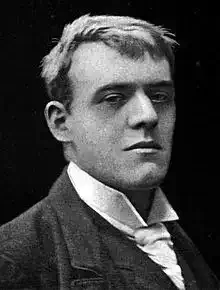
Hilaire Belloc
Matilda Who told Lies, and was Burned to Death
Matilda Who told Lies, and was Burned to Death
Matilda told such Dreadful Lies,
It made one Gasp and Stretch one's Eyes;
Her Aunt, who, from her Earliest Youth,
Had kept a Strict Regard for Truth,
Attempted to Believe Matilda:
The effort very nearly killed her,
And would have done so, had not She
Discovered this Infirmity.
For once, towards the Close of Day,
Matilda, growing tired of play,
And finding she was left alone,
Went tiptoe to the Telephone
And summoned the Immediate Aid
Of London's Noble Fire-Brigade.
Within an hour the Gallant Band
Were pouring in on every hand,
From Putney, Hackney Downs, and Bow.
With Courage high and Hearts a-glow,
They galloped, roaring through the Town,
'Matilda's House is Burning Down!'
Inspired by British Cheers and Loud
Proceeding from the Frenzied Crowd,
They ran their ladders through a score
Of windows on the Ball Room Floor;
And took Peculiar Pains to Souse
The Pictures up and down the House,
Until Matilda's Aunt succeeded
In showing them they were not needed;
And even then she had to pay
To get the Men to go away,
It happened that a few Weeks later
Her Aunt was off to the Theatre
To see that Interesting Play
The Second Mrs. Tanqueray.
She had refused to take her Niece
To hear this Entertaining Piece:
A Deprivation Just and Wise
To Punish her for Telling Lies.
That Night a Fire did break out--
You should have heard Matilda Shout!
You should have heard her Scream and Bawl,
And throw the window up and call
To People passing in the Street-(
The rapidly increasing Heat
Encouraging her to obtain
Their confidnce) -- but all in vain!
For every time she shouted 'Fire!'
They only answered 'Little Liar!'
And therefore when her Aunt returned,
Matilda, and the House, were Burned.
Matilda told such Dreadful Lies,
It made one Gasp and Stretch one's Eyes;
Her Aunt, who, from her Earliest Youth,
Had kept a Strict Regard for Truth,
Attempted to Believe Matilda:
The effort very nearly killed her,
And would have done so, had not She
Discovered this Infirmity.
For once, towards the Close of Day,
Matilda, growing tired of play,
And finding she was left alone,
Went tiptoe to the Telephone
And summoned the Immediate Aid
Of London's Noble Fire-Brigade.
Within an hour the Gallant Band
Were pouring in on every hand,
From Putney, Hackney Downs, and Bow.
With Courage high and Hearts a-glow,
They galloped, roaring through the Town,
'Matilda's House is Burning Down!'
Inspired by British Cheers and Loud
Proceeding from the Frenzied Crowd,
They ran their ladders through a score
Of windows on the Ball Room Floor;
And took Peculiar Pains to Souse
The Pictures up and down the House,
Until Matilda's Aunt succeeded
In showing them they were not needed;
And even then she had to pay
To get the Men to go away,
It happened that a few Weeks later
Her Aunt was off to the Theatre
To see that Interesting Play
The Second Mrs. Tanqueray.
She had refused to take her Niece
To hear this Entertaining Piece:
A Deprivation Just and Wise
To Punish her for Telling Lies.
That Night a Fire did break out--
You should have heard Matilda Shout!
You should have heard her Scream and Bawl,
And throw the window up and call
To People passing in the Street-(
The rapidly increasing Heat
Encouraging her to obtain
Their confidnce) -- but all in vain!
For every time she shouted 'Fire!'
They only answered 'Little Liar!'
And therefore when her Aunt returned,
Matilda, and the House, were Burned.
607
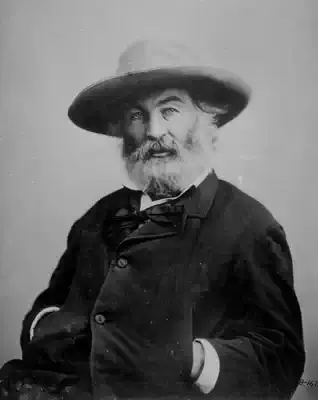
Walt Whitman
All Is Truth
All Is Truth
O ME, man of slack faith so long!
Standing aloof--denying portions so long;
Only aware to-day of compact, all-diffused truth;
Discovering to-day there is no lie, or form of lie, and can be none,
but grows as inevitably upon itself as the truth does upon
itself,
Or as any law of the earth, or any natural production of the earth
does.
(This is curious, and may not be realized immediately--But it must be
realized;
I feel in myself that I represent falsehoods equally with the rest,
And that the universe does.)
Where has fail'd a perfect return, indifferent of lies or the truth?
Is it upon the ground, or in water or fire? or in the spirit of man?
or in the meat and blood? 10
Meditating among liars, and retreating sternly into myself, I see
that there are really no liars or lies after all,
And that nothing fails its perfect return--And that what are called
lies are perfect returns,
And that each thing exactly represents itself, and what has preceded
it,
And that the truth includes all, and is compact, just as much as
space is compact,
And that there is no flaw or vacuum in the amount of the truth--but
that all is truth without exception;
And henceforth I will go celebrate anything I see or am,
And sing and laugh, and deny nothing.
O ME, man of slack faith so long!
Standing aloof--denying portions so long;
Only aware to-day of compact, all-diffused truth;
Discovering to-day there is no lie, or form of lie, and can be none,
but grows as inevitably upon itself as the truth does upon
itself,
Or as any law of the earth, or any natural production of the earth
does.
(This is curious, and may not be realized immediately--But it must be
realized;
I feel in myself that I represent falsehoods equally with the rest,
And that the universe does.)
Where has fail'd a perfect return, indifferent of lies or the truth?
Is it upon the ground, or in water or fire? or in the spirit of man?
or in the meat and blood? 10
Meditating among liars, and retreating sternly into myself, I see
that there are really no liars or lies after all,
And that nothing fails its perfect return--And that what are called
lies are perfect returns,
And that each thing exactly represents itself, and what has preceded
it,
And that the truth includes all, and is compact, just as much as
space is compact,
And that there is no flaw or vacuum in the amount of the truth--but
that all is truth without exception;
And henceforth I will go celebrate anything I see or am,
And sing and laugh, and deny nothing.
515
Rudyard Kipling
The Portent
The Portent
Horace, BK. V. Ode .
Oh, late withdrawn from human-kind
And following dreams we never knew!
Varus, what dream has Fate assigned
To trouble you?
Such virtue as commends of law
Of Virtue to the vulgar horde
Suffices not. You needs must draw
A righteous sword;
And, flagrant in well-doing, smite
The priests of Bacchus at their fane,
Lest any worshipper invite
The God again.
Whence public strife and naked crime
And-deadlier than the cup you shun--
A people schooled to mock, in time,
All law--not one.
Cease, then, to fashion State-made sin,
Nor give thy children cause to doubt
That Virtue springs from Iron within--
Not lead without.
Horace, BK. V. Ode .
Oh, late withdrawn from human-kind
And following dreams we never knew!
Varus, what dream has Fate assigned
To trouble you?
Such virtue as commends of law
Of Virtue to the vulgar horde
Suffices not. You needs must draw
A righteous sword;
And, flagrant in well-doing, smite
The priests of Bacchus at their fane,
Lest any worshipper invite
The God again.
Whence public strife and naked crime
And-deadlier than the cup you shun--
A people schooled to mock, in time,
All law--not one.
Cease, then, to fashion State-made sin,
Nor give thy children cause to doubt
That Virtue springs from Iron within--
Not lead without.
426
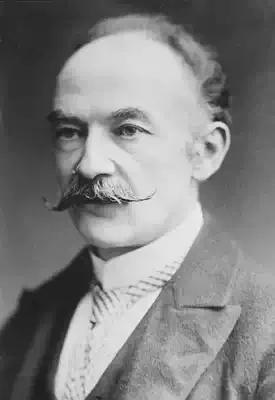
Thomas Hardy
Lausanne, In Gibbon's Old Garden: - p.m.
Lausanne, In Gibbon's Old Garden: - p.m.
(The th anniversary of the completion of the "Decline and Fall" at the same hour
and place)
A spirit seems to pass,
Formal in pose, but grave and grand withal:
He contemplates a volume stout and tall,
And far lamps fleck him through the thin acacias.
Anon the book is closed,
With "It is finished!" And at the alley's end
He turns, and soon on me his glances bend;
And, as from earth, comes speech--small, muted, yet composed.
"How fares the Truth now?--Ill?
--Do pens but slily further her advance?
May one not speed her but in phrase askance?
Do scribes aver the Comic to be Reverend still?
"Still rule those minds on earth
At whom sage Milton's wormwood words were hurled:
'Truth like a bastard comes into the world
Never without ill-fame to him who gives her birth'?"
(The th anniversary of the completion of the "Decline and Fall" at the same hour
and place)
A spirit seems to pass,
Formal in pose, but grave and grand withal:
He contemplates a volume stout and tall,
And far lamps fleck him through the thin acacias.
Anon the book is closed,
With "It is finished!" And at the alley's end
He turns, and soon on me his glances bend;
And, as from earth, comes speech--small, muted, yet composed.
"How fares the Truth now?--Ill?
--Do pens but slily further her advance?
May one not speed her but in phrase askance?
Do scribes aver the Comic to be Reverend still?
"Still rule those minds on earth
At whom sage Milton's wormwood words were hurled:
'Truth like a bastard comes into the world
Never without ill-fame to him who gives her birth'?"
165
Rudyard Kipling
The Fabulists
The Fabulists
-
When all the world would keep a matter hid,
Since Truth is seldom Friend to any crowd,
Men write in Fable, as old AEsop did,
Jesting at that which none will name aloud.
And this they needs must do, or it will fall
Unless they please they are not heard at all.
When desperate Folly daily laboureth
To work confusion upon all we have,
When diligent Sloth demandeth Freedom's death,
And banded Fear commandeth Honour's grave--
Even in that certain hour before the fall,
Unless men please they are not heard at all.
Needs must all please, yet some not all for need,
Needs must all toil, yet some not all for gain,
But that men taking pleasure may take heed
Whom present toil shall snatch from later pain.
Thus some have toiled, but their reward was small
Since, though they pleased, they were not heard at all.
This was the lock that lay upon our lips,
This was the yoke that we have undergone,
Denying us all pleasant fellowships
As in our time and generation.
Our pleasures unpursued age past recall,
And for our pains--we are not heard at all.
What man hears aught except the groaning guns?
What man heeds aught save what each instant brings?
When each man's life all imaged life outruns,
What man shall pleasure in imaginings?
So it hath fallen, as it was bound to fall,
We are not, nor we were not, heard at all.
-
When all the world would keep a matter hid,
Since Truth is seldom Friend to any crowd,
Men write in Fable, as old AEsop did,
Jesting at that which none will name aloud.
And this they needs must do, or it will fall
Unless they please they are not heard at all.
When desperate Folly daily laboureth
To work confusion upon all we have,
When diligent Sloth demandeth Freedom's death,
And banded Fear commandeth Honour's grave--
Even in that certain hour before the fall,
Unless men please they are not heard at all.
Needs must all please, yet some not all for need,
Needs must all toil, yet some not all for gain,
But that men taking pleasure may take heed
Whom present toil shall snatch from later pain.
Thus some have toiled, but their reward was small
Since, though they pleased, they were not heard at all.
This was the lock that lay upon our lips,
This was the yoke that we have undergone,
Denying us all pleasant fellowships
As in our time and generation.
Our pleasures unpursued age past recall,
And for our pains--we are not heard at all.
What man hears aught except the groaning guns?
What man heeds aught save what each instant brings?
When each man's life all imaged life outruns,
What man shall pleasure in imaginings?
So it hath fallen, as it was bound to fall,
We are not, nor we were not, heard at all.
503
William Shakespeare
Sonnet CXVI
Sonnet CXVI
Let me not to the marriage of true minds
Admit impediments. Love is not love
Which alters when it alteration finds,
Or bends with the remover to remove:
O no! it is an ever-fixed mark
That looks on tempests and is never shaken;
It is the star to every wandering bark,
Whose worth's unknown, although his height be taken.
Love's not Time's fool, though rosy lips and cheeks
Within his bending sickle's compass come:
Love alters not with his brief hours and weeks,
But bears it out even to the edge of doom.
If this be error and upon me proved,
I never writ, nor no man ever loved.
Let me not to the marriage of true minds
Admit impediments. Love is not love
Which alters when it alteration finds,
Or bends with the remover to remove:
O no! it is an ever-fixed mark
That looks on tempests and is never shaken;
It is the star to every wandering bark,
Whose worth's unknown, although his height be taken.
Love's not Time's fool, though rosy lips and cheeks
Within his bending sickle's compass come:
Love alters not with his brief hours and weeks,
But bears it out even to the edge of doom.
If this be error and upon me proved,
I never writ, nor no man ever loved.
331
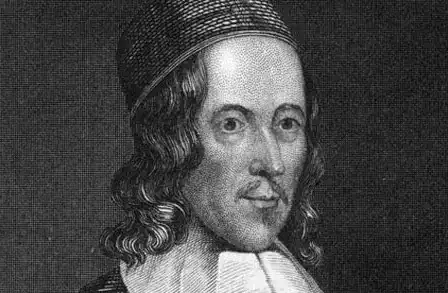
George Herbert
Sonnet (II)
Sonnet (II)
O
Sure Lord, there is enough in thee to dry
Oceans of Ink ; for, as the Deluge did
Cover the Earth, so doth thy Majesty :
Each Cloud distills thy praise, and doth forbid
Poets to turn it to another use.
Roses and Lillies speak thee ; and to make
A pair of Cheeks of them, is thy abuse.
Why should I Womens eyes for Chrystal take?
Such poor invention burns in their low mind,
Whose fire is wild, and doth not upward go
To praise, and on thee Lord, some Ink bestow.
Open the bones, and you shall nothing find
In the best face but filth, when Lord, in thee
The beauty lies, in the discovery
O
Sure Lord, there is enough in thee to dry
Oceans of Ink ; for, as the Deluge did
Cover the Earth, so doth thy Majesty :
Each Cloud distills thy praise, and doth forbid
Poets to turn it to another use.
Roses and Lillies speak thee ; and to make
A pair of Cheeks of them, is thy abuse.
Why should I Womens eyes for Chrystal take?
Such poor invention burns in their low mind,
Whose fire is wild, and doth not upward go
To praise, and on thee Lord, some Ink bestow.
Open the bones, and you shall nothing find
In the best face but filth, when Lord, in thee
The beauty lies, in the discovery
230

Ella Wheeler Wilcox
Words From The Wind
Words From The Wind
I called to the wind of the Winter,
As he sped like a steed on his way,
'Oh! rest for awhile on thy journey,
And answer these questions, I pray.
'Who is the foe to all virtue,
Who is the chieftain of crime?
Who blackens the forehead of beauty,
And cheateth the finger of time?
Who maketh the heart to be aged,
In the beautiful morning of youth?
Who is the herald of sorrow,
And who the assassin of Truth?
Who is the help-meet of Satan,
The agent of regions below?
Who the promoter of vices?
Who loadeth the bosom with woe?
Who stealeth the strength of the mighty?
Who stealeth the wits of the wise?
Who maketh the good and the noble
A thing that the meanest despise?'
And the wind of the wild Winter answered,
In a voice like a clarion call:
''Tis a beast legion-headed, a demon
Whom men christened 'King Alcohol.'
This is the help-meet that Satan
Sends out from the kingdom of hell,
A many-faced demon, who doeth
The work of the master right well;
For he weaveth his web round the noble,
And slayeth the soul with his breath.
Ah! this is the foe to all virtue,
And this is the agent of death.'
I called to the wind of the Winter,
As he sped like a steed on his way,
'Oh! rest for awhile on thy journey,
And answer these questions, I pray.
'Who is the foe to all virtue,
Who is the chieftain of crime?
Who blackens the forehead of beauty,
And cheateth the finger of time?
Who maketh the heart to be aged,
In the beautiful morning of youth?
Who is the herald of sorrow,
And who the assassin of Truth?
Who is the help-meet of Satan,
The agent of regions below?
Who the promoter of vices?
Who loadeth the bosom with woe?
Who stealeth the strength of the mighty?
Who stealeth the wits of the wise?
Who maketh the good and the noble
A thing that the meanest despise?'
And the wind of the wild Winter answered,
In a voice like a clarion call:
''Tis a beast legion-headed, a demon
Whom men christened 'King Alcohol.'
This is the help-meet that Satan
Sends out from the kingdom of hell,
A many-faced demon, who doeth
The work of the master right well;
For he weaveth his web round the noble,
And slayeth the soul with his breath.
Ah! this is the foe to all virtue,
And this is the agent of death.'
398

Emily Dickinson
The Truth—is stirless
The Truth—is stirless
780
The Truth—is stirless—
Other force—may be presumed to move—
This—then—is best for confidence—
When oldest Cedars swerve—
And Oaks untwist their fists—
And Mountains—feeble—lean—
How excellent a Body, that
Stands without a Bone—
How vigorous a Force
That holds without a Prop—
Truth stays Herself—and every man
That trusts Her—boldly up—
780
The Truth—is stirless—
Other force—may be presumed to move—
This—then—is best for confidence—
When oldest Cedars swerve—
And Oaks untwist their fists—
And Mountains—feeble—lean—
How excellent a Body, that
Stands without a Bone—
How vigorous a Force
That holds without a Prop—
Truth stays Herself—and every man
That trusts Her—boldly up—
236

George Gordon Lord Byron
Were My Bosom As False as Thou Deem'st It To Be
Were My Bosom As False as Thou Deem'st It To Be
Were my bosom as false as thou deem'st it to be,
I need not have wander'd from far Galilee;
It was but abjuring my creed to efface
The curse which, thou say'st, is the crime of my race.
If the bad never triumph, then God is with thee!
If the slave only sin, thou art spotless and free!
If the Exile on earth is an Outcast on high,
Live on in thy faith, but in mine I will die.
I have lost for that faith more than thou canst bestow,
As the God who permits thee to prosper doth know;
In his hand is my heart and my hope and
in thine
The land and the life which for him I resign.
Were my bosom as false as thou deem'st it to be,
I need not have wander'd from far Galilee;
It was but abjuring my creed to efface
The curse which, thou say'st, is the crime of my race.
If the bad never triumph, then God is with thee!
If the slave only sin, thou art spotless and free!
If the Exile on earth is an Outcast on high,
Live on in thy faith, but in mine I will die.
I have lost for that faith more than thou canst bestow,
As the God who permits thee to prosper doth know;
In his hand is my heart and my hope and
in thine
The land and the life which for him I resign.
365
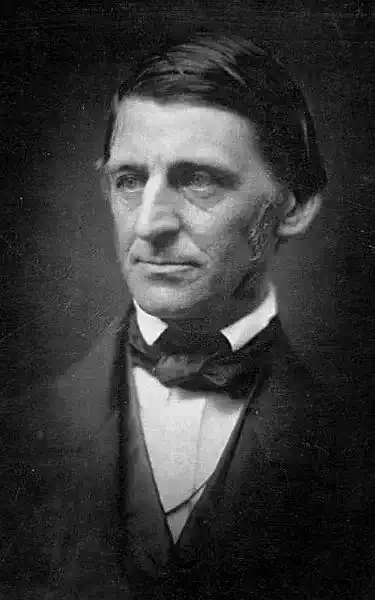
Ralph Waldo Emerson
Astræ
Astræ
Himself it was who wrote
His rank, and quartered his own coat.
There is no king nor sovereign state
That can fix a hero's rate;
Each to all is venerable,
Cap-a-pie invulnerable,
Until he write, where all eyes rest,
Slave or master on his breast.
I saw men go up and down
In the country and the town,
With this prayer upon their neck,
"Judgment and a judge we seek."
Not to monarchs they repair,
Nor to learned jurist's chair,
But they hurry to their peers,
To their kinsfolk and their dears,
Louder than with speech they pray,
What am I? companion; say.
And the friend not hesitates
To assign just place and mates,
Answers not in word or letter,
Yet is understood the better;—
Is to his friend a looking-glass,
Reflects his figure that doth pass.
Every wayfarer he meets
What himself declared, repeats;
What himself confessed, records;
Sentences him in his words,
The form is his own corporal form,
And his thought the penal worm.
Yet shine for ever virgin minds,
Loved by stars and purest winds,
Which, o'er passion throned sedate,
Have not hazarded their state,
Disconcert the searching spy,
Rendering to a curious eye
The durance of a granite ledge
To those who gaze from the sea's edge.
It is there for benefit,
It is there for purging light,
There for purifying storms,
And its depths reflect all forms;
It cannot parley with the mean,
Pure by impure is not seen.
For there's no sequestered grot,
Lone mountain tam, or isle forgot,
But justice journeying in the sphere
Daily stoops to harbor there.
Himself it was who wrote
His rank, and quartered his own coat.
There is no king nor sovereign state
That can fix a hero's rate;
Each to all is venerable,
Cap-a-pie invulnerable,
Until he write, where all eyes rest,
Slave or master on his breast.
I saw men go up and down
In the country and the town,
With this prayer upon their neck,
"Judgment and a judge we seek."
Not to monarchs they repair,
Nor to learned jurist's chair,
But they hurry to their peers,
To their kinsfolk and their dears,
Louder than with speech they pray,
What am I? companion; say.
And the friend not hesitates
To assign just place and mates,
Answers not in word or letter,
Yet is understood the better;—
Is to his friend a looking-glass,
Reflects his figure that doth pass.
Every wayfarer he meets
What himself declared, repeats;
What himself confessed, records;
Sentences him in his words,
The form is his own corporal form,
And his thought the penal worm.
Yet shine for ever virgin minds,
Loved by stars and purest winds,
Which, o'er passion throned sedate,
Have not hazarded their state,
Disconcert the searching spy,
Rendering to a curious eye
The durance of a granite ledge
To those who gaze from the sea's edge.
It is there for benefit,
It is there for purging light,
There for purifying storms,
And its depths reflect all forms;
It cannot parley with the mean,
Pure by impure is not seen.
For there's no sequestered grot,
Lone mountain tam, or isle forgot,
But justice journeying in the sphere
Daily stoops to harbor there.
318
George Gordon Lord Byron
To Romance
To Romance
Parent of golden dreams, Romance!
Auspicious Queen of childish joys,
Who lead'st along, in airy dance,
Thy votive train of girls and boys;
At length, in spells no longer bound,
I break the fetters of my youth;
No more I tread thy mystic round,
But leave thy realms for those of Truth.
And yet 'tis hard to quit the dreams
Which haunt the unsuspicious soul,
Where every nymph a goddess seems,
Whose eyes through rays immortal roll;
While Fancy holds her boundless reign,
And all assume a varied hue;
When Virgins seem no longer vain,
And even Woman's smiles are true.
And must we own thee, but a name,
And from thy hall of clouds descend?
Nor find a Sylph in every dame,
A Pylades in every friend?
But leave, at once, thy realms of air i
To mingling bands of fairy elves;
Confess that woman's false as fair,
And friends have feeling forthemselves?
With shame, I own, I've felt thy sway;
Repentant, now thy reign is o'er;
No more thy precepts I obey,
No more on fancied pinions soar;
Fond fool! to love a sparkling eye,
And think that eye to truth was dear;
To trust a passing wanton's sigh,
And melt beneath a wanton's tear!
Romance! disgusted with deceit,
Far from thy motley court I fly,
Where Affectation holds her seat,
And sickly Sensibility;
Whose silly tears can never flow
For any pangs excepting thine;
Who turns aside from real woe,
To steep in dew thy gaudy shrine.
Now join with sable Sympathy,
With cypress crown'd, array'd in weeds,
Who heaves with thee her simple sigh,
Whose breast for every bosom bleeds;
And call thy sylvan female choir,
To mourn a Swain for ever gone,
Who once could glow with equal fire,
But bends not now before thy throne.
Ye genial Nymphs, whose ready tears
On all occasions swiftly flow;
Whose bosoms heave with fancied fears,
With fancied flames and phrenzy glow
Say, will you mourn my absent name,
Apostate from your gentle train
An infant Bard, at least, may claim
From you a sympathetic strain.
Adieu, fond race! a long adieu!
The hour of fate is hovering nigh;
E'en now the gulf appears in view,
Where unlamented you must lie:
Oblivion's blackening lake is seen,
Convuls'd by gales you cannot weather,
Where you, and eke your gentle queen,
Alas! must perish altogether.
Parent of golden dreams, Romance!
Auspicious Queen of childish joys,
Who lead'st along, in airy dance,
Thy votive train of girls and boys;
At length, in spells no longer bound,
I break the fetters of my youth;
No more I tread thy mystic round,
But leave thy realms for those of Truth.
And yet 'tis hard to quit the dreams
Which haunt the unsuspicious soul,
Where every nymph a goddess seems,
Whose eyes through rays immortal roll;
While Fancy holds her boundless reign,
And all assume a varied hue;
When Virgins seem no longer vain,
And even Woman's smiles are true.
And must we own thee, but a name,
And from thy hall of clouds descend?
Nor find a Sylph in every dame,
A Pylades in every friend?
But leave, at once, thy realms of air i
To mingling bands of fairy elves;
Confess that woman's false as fair,
And friends have feeling forthemselves?
With shame, I own, I've felt thy sway;
Repentant, now thy reign is o'er;
No more thy precepts I obey,
No more on fancied pinions soar;
Fond fool! to love a sparkling eye,
And think that eye to truth was dear;
To trust a passing wanton's sigh,
And melt beneath a wanton's tear!
Romance! disgusted with deceit,
Far from thy motley court I fly,
Where Affectation holds her seat,
And sickly Sensibility;
Whose silly tears can never flow
For any pangs excepting thine;
Who turns aside from real woe,
To steep in dew thy gaudy shrine.
Now join with sable Sympathy,
With cypress crown'd, array'd in weeds,
Who heaves with thee her simple sigh,
Whose breast for every bosom bleeds;
And call thy sylvan female choir,
To mourn a Swain for ever gone,
Who once could glow with equal fire,
But bends not now before thy throne.
Ye genial Nymphs, whose ready tears
On all occasions swiftly flow;
Whose bosoms heave with fancied fears,
With fancied flames and phrenzy glow
Say, will you mourn my absent name,
Apostate from your gentle train
An infant Bard, at least, may claim
From you a sympathetic strain.
Adieu, fond race! a long adieu!
The hour of fate is hovering nigh;
E'en now the gulf appears in view,
Where unlamented you must lie:
Oblivion's blackening lake is seen,
Convuls'd by gales you cannot weather,
Where you, and eke your gentle queen,
Alas! must perish altogether.
533
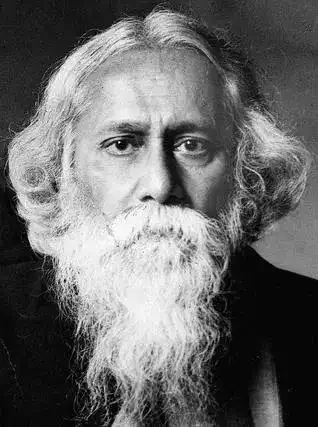
Rabindranath Tagore
Where The Mind Is Without Fear
Where The Mind Is Without Fear
Where the mind is without fear and the head is held high
Where knowledge is free
Where the world has not been broken up into fragments
By narrow domestic walls
Where words come out from the depth of truth
Where tireless striving stretches its arms towards perfection
Where the clear stream of reason has not lost its way
Into the dreary desert sand of dead habit
Where the mind is led forward by thee
Into ever-widening thought and action
Into that heaven of freedom, my Father, let my country awake
Where the mind is without fear and the head is held high
Where knowledge is free
Where the world has not been broken up into fragments
By narrow domestic walls
Where words come out from the depth of truth
Where tireless striving stretches its arms towards perfection
Where the clear stream of reason has not lost its way
Into the dreary desert sand of dead habit
Where the mind is led forward by thee
Into ever-widening thought and action
Into that heaven of freedom, my Father, let my country awake
500
William Shakespeare
Sonnet 48: How careful was I, when I took my way
Sonnet 48: How careful was I, when I took my way
How careful was I, when I took my way,
Each trifle under truest bars to thrust,
That to my use it might unusèd stay
From hands of falsehood, in sure wards of trust!
But thou, to whom my jewels trifles are,
Most worthy comfort, now my greatest grief,
Thou best of dearest, and mine only care,
Art left the prey of every vulgar thief.
Thee have I not locked up in any chest,
Save where thou art not—though I feel thou art—
Within the gentle closure of my breast,
From whence at pleasure thou mayst come and part;
And even thence thou wilt be stol'n, I fear,
For truth proves thievish for a prize so dear.
How careful was I, when I took my way,
Each trifle under truest bars to thrust,
That to my use it might unusèd stay
From hands of falsehood, in sure wards of trust!
But thou, to whom my jewels trifles are,
Most worthy comfort, now my greatest grief,
Thou best of dearest, and mine only care,
Art left the prey of every vulgar thief.
Thee have I not locked up in any chest,
Save where thou art not—though I feel thou art—
Within the gentle closure of my breast,
From whence at pleasure thou mayst come and part;
And even thence thou wilt be stol'n, I fear,
For truth proves thievish for a prize so dear.
269
Ella Wheeler Wilcox
What Had He Done?
What Had He Done?
I saw the farmer, when the day was done,
And the proud sun had sought his crimson bed,
And the mild stars came forward one by one-
I saw the sturdy farmer, and I said:
'What have you done to-day,
O farmer! say?'
'Oh! I have sown the wheat in yonder field,
And pruned my orchard to increase its yield,
And turned the furrow for a patch of corn:
This have I done, with other things, since morn.'
I saw the blacksmith in his smithy-door,
When day had vanished and the west grew red,
And all the busy noise and strife were o'er-
I saw the kingly blacksmith, and I said:
'What have you done to-day,
O blacksmith! say?
'Oh! I have made two plough-shares all complete,
And nailed the shoes on many horses' feet;
And-O my friend! I cannot tell you half,'
The man of muscle answered, with a laugh.
I saw the miller, when the day had gone,
And all the sunlight from the hills had fled,
And tender shadows crept across the lawn-
I saw the trusty miller, and I said:
'What have you done to-day,
O miller gray?'
'Oh! I have watched my mill from morn to night,
And never saw yon flour so snowy white.
And many are the mouths to-day I've fed,
I ween,' the merry miller laughed and said.
I saw another, when the night grew nigh,
And turned each daily toiler from his task,
When gold and crimson banners decked the sky-
I saw another, and I paused to ask:
'What have you done to-day,
Rumseller, say?'
But the rumseller turned with dropping head,
And not a single word in answer said.
What had he done? His work he knew full well
Was plunging human souls in deepest hell.
Alas! rumseller, on that awful day,
When death shall call you, and your race is run,
How can you answer? What can you hope to say?
When God shall ask you, 'What have you done?'
How can you meet the eye
Of the Most High?
When night approaches and the day grows late,
Think you to find the way to heaven's gate?
Think you to dwell with souls of righteous men?
Think you to enter in? If not, what then?
I saw the farmer, when the day was done,
And the proud sun had sought his crimson bed,
And the mild stars came forward one by one-
I saw the sturdy farmer, and I said:
'What have you done to-day,
O farmer! say?'
'Oh! I have sown the wheat in yonder field,
And pruned my orchard to increase its yield,
And turned the furrow for a patch of corn:
This have I done, with other things, since morn.'
I saw the blacksmith in his smithy-door,
When day had vanished and the west grew red,
And all the busy noise and strife were o'er-
I saw the kingly blacksmith, and I said:
'What have you done to-day,
O blacksmith! say?
'Oh! I have made two plough-shares all complete,
And nailed the shoes on many horses' feet;
And-O my friend! I cannot tell you half,'
The man of muscle answered, with a laugh.
I saw the miller, when the day had gone,
And all the sunlight from the hills had fled,
And tender shadows crept across the lawn-
I saw the trusty miller, and I said:
'What have you done to-day,
O miller gray?'
'Oh! I have watched my mill from morn to night,
And never saw yon flour so snowy white.
And many are the mouths to-day I've fed,
I ween,' the merry miller laughed and said.
I saw another, when the night grew nigh,
And turned each daily toiler from his task,
When gold and crimson banners decked the sky-
I saw another, and I paused to ask:
'What have you done to-day,
Rumseller, say?'
But the rumseller turned with dropping head,
And not a single word in answer said.
What had he done? His work he knew full well
Was plunging human souls in deepest hell.
Alas! rumseller, on that awful day,
When death shall call you, and your race is run,
How can you answer? What can you hope to say?
When God shall ask you, 'What have you done?'
How can you meet the eye
Of the Most High?
When night approaches and the day grows late,
Think you to find the way to heaven's gate?
Think you to dwell with souls of righteous men?
Think you to enter in? If not, what then?
430
Page 1
Next