
Trees, Forests and Mountains
Poems in this topic
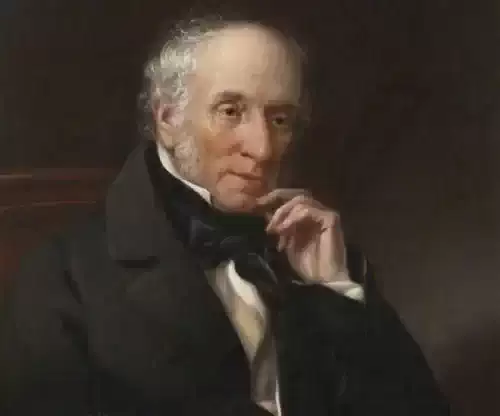
William Wordsworth
The Simplon Pass
The Simplon Pass
-Brook and road
Were fellow-travellers in this gloomy Pass,
And with them did we journey several hours
At a slow step. The immeasurable height
Of woods decaying, never to be decayed,
The stationary blasts of waterfalls,
And in the narrow rent, at every turn,
Winds thwarting winds bewildered and forlorn,
The torrents shooting from the clear blue sky,
The rocks that muttered close upon our ears,
Black drizzling crags that spake by the wayside
As if a voice were in them, the sick sight
And giddy prospect of the raving stream,
The unfettered clouds and region of the heavens,
Tumult and peace, the darkness and the light--
Were all like workings of one mind, the features
Of the same face, blossoms upon one tree,
Characters of the great Apocalypse,
The types and symbols of Eternity,
Of first and last, and midst, and without end.
-Brook and road
Were fellow-travellers in this gloomy Pass,
And with them did we journey several hours
At a slow step. The immeasurable height
Of woods decaying, never to be decayed,
The stationary blasts of waterfalls,
And in the narrow rent, at every turn,
Winds thwarting winds bewildered and forlorn,
The torrents shooting from the clear blue sky,
The rocks that muttered close upon our ears,
Black drizzling crags that spake by the wayside
As if a voice were in them, the sick sight
And giddy prospect of the raving stream,
The unfettered clouds and region of the heavens,
Tumult and peace, the darkness and the light--
Were all like workings of one mind, the features
Of the same face, blossoms upon one tree,
Characters of the great Apocalypse,
The types and symbols of Eternity,
Of first and last, and midst, and without end.
238
William Wordsworth
Simplon Pass, The
Simplon Pass, The
------Brook and road
Were fellow-travellers in this gloomy Pass,
And with them did we journey several hours
At a slow step. The immeasurable height
Of woods decaying, never to be decayed,
The stationary blasts of waterfalls,
And in the narrow rent, at every turn,
Winds thwarting winds bewildered and forlorn,
The torrents shooting from the clear blue sky,
The rocks that muttered close upon our ears,
Black drizzling crags that spake by the wayside
As if a voice were in them, the sick sight
And giddy prospect of the raving stream,
The unfettered clouds and region of the heavens,
Tumult and peace, the darkness and the light--
Were all like workings of one mind, the features
Of the same face, blossoms upon one tree,
Characters of the great Apocalypse,
The types and symbols of Eternity,
Of first, and last, and midst, and without end.
------Brook and road
Were fellow-travellers in this gloomy Pass,
And with them did we journey several hours
At a slow step. The immeasurable height
Of woods decaying, never to be decayed,
The stationary blasts of waterfalls,
And in the narrow rent, at every turn,
Winds thwarting winds bewildered and forlorn,
The torrents shooting from the clear blue sky,
The rocks that muttered close upon our ears,
Black drizzling crags that spake by the wayside
As if a voice were in them, the sick sight
And giddy prospect of the raving stream,
The unfettered clouds and region of the heavens,
Tumult and peace, the darkness and the light--
Were all like workings of one mind, the features
Of the same face, blossoms upon one tree,
Characters of the great Apocalypse,
The types and symbols of Eternity,
Of first, and last, and midst, and without end.
209
William Wordsworth
Oak and The Broom, The: A Pastoral Poem
Oak and The Broom, The: A Pastoral Poem
I
His simple truths did Andrew glean
Beside the babbling rills;
A careful student he had been
Among the woods and hills.
One winter's night, when through the trees
The wind was roaring, on his knees
His youngest born did Andrew hold:
And while the rest, a ruddy quire,
Were seated round their blazing fire,
This Tale the Shepherd told.
II
"I saw a crag, a lofty stone
As ever tempest beat!
Out of its head an Oak had grown,
A Broom out of its feet.
The time was March, a cheerful noon--
The thaw-wind, with the breath of June,
Breathed gently from the warm south-west:
When, in a voice sedate with age,
This Oak, a giant and a sage,
His neighbour thus addressed:--
III
"'Eight weary weeks, through rock and clay,
Along this mountain's edge,
The Frost hath wrought both night and day,
Wedge driving after wedge.
Look up! and think, above your head
What trouble, surely, will be bred;
Last night I heard a crash--'tis true,
The splinters took another road--
I see them yonder--what a load
For such a Thing as you!
IV
"'You are preparing as before,
To deck your slender shape;
And yet, just three years back--no more--
You had a strange escape:
Down from yon cliff a fragment broke;
It thundered down, with fire and smoke,
And hitherward pursued its way;
This ponderous block was caught by me,
And o'er your head, as you may see,
'Tis hanging to this day!
V
"'If breeze or bird to this rough steep
Your kind's first seed did bear;
The breeze had better been asleep,
The bird caught in a snare:
For you and your green twigs decoy
The little witless shepherd-boy
To come and slumber in your bower;
And, trust me, on some sultry noon,
Both you and he, Heaven knows how soon!
Will perish in one hour.
VI
"'From me this friendly warning take'--
The Broom began to doze,
And thus, to keep herself awake,
Did gently interpose:
'My thanks for your discourse are due;
That more than what you say is true,
I know, and I have known it long;
Frail is the bond by which we hold
Our being, whether young or old,
Wise, foolish, weak, or strong.
VII
"'Disasters, do the best we can,
Will reach both great and small;
And he is oft the wisest man,
Who is not wise at all.
For me, why should I wish to roam?
This spot is my paternal home,
It is my pleasant heritage;
My father many a happy year,
Spread here his careless blossoms, here
Attained a good old age.
VIII
"'Even such as his may be my lot.
What cause have I to haunt
My heart with terrors? Am I not
In truth a favoured plant!
On me such bounty Summer pours,
That I am covered o'er with flowers;
And, when the Frost is in the sky,
My branches are so fresh and gay
That you might look at me and say,
This Plant can never die.
IX
"'The butterfly, all green and gold,
To me hath often flown,
Here in my blossoms to behold
Wings lovely as his own.
When grass is chill with rain or dew,
Beneath my shade, the mother-ewe
Lies with her infant lamb; I see
The love they to each other make,
And the sweet joy which they partake,
It is a joy to me.'
X
"Her voice was blithe, her heart was light;
The Broom might have pursued
Her speech, until the stars of night
Their journey had renewed;
But in the branches of the oak
Two ravens now began to croak
Their nuptial song, a gladsome air;
And to her own green bower the breeze
That instant brought two stripling bees
To rest, or murmur there.
XI
"One night, my Children! from the north
There came a furious blast;
At break of day I ventured forth,
And near the cliff I passed.
The storm had fallen upon the Oak,
And struck him with a mighty stroke,
And whirled, and whirled him far away;
And, in one hospitable cleft,
The little careless Broom was left
To live for many a day."
I
His simple truths did Andrew glean
Beside the babbling rills;
A careful student he had been
Among the woods and hills.
One winter's night, when through the trees
The wind was roaring, on his knees
His youngest born did Andrew hold:
And while the rest, a ruddy quire,
Were seated round their blazing fire,
This Tale the Shepherd told.
II
"I saw a crag, a lofty stone
As ever tempest beat!
Out of its head an Oak had grown,
A Broom out of its feet.
The time was March, a cheerful noon--
The thaw-wind, with the breath of June,
Breathed gently from the warm south-west:
When, in a voice sedate with age,
This Oak, a giant and a sage,
His neighbour thus addressed:--
III
"'Eight weary weeks, through rock and clay,
Along this mountain's edge,
The Frost hath wrought both night and day,
Wedge driving after wedge.
Look up! and think, above your head
What trouble, surely, will be bred;
Last night I heard a crash--'tis true,
The splinters took another road--
I see them yonder--what a load
For such a Thing as you!
IV
"'You are preparing as before,
To deck your slender shape;
And yet, just three years back--no more--
You had a strange escape:
Down from yon cliff a fragment broke;
It thundered down, with fire and smoke,
And hitherward pursued its way;
This ponderous block was caught by me,
And o'er your head, as you may see,
'Tis hanging to this day!
V
"'If breeze or bird to this rough steep
Your kind's first seed did bear;
The breeze had better been asleep,
The bird caught in a snare:
For you and your green twigs decoy
The little witless shepherd-boy
To come and slumber in your bower;
And, trust me, on some sultry noon,
Both you and he, Heaven knows how soon!
Will perish in one hour.
VI
"'From me this friendly warning take'--
The Broom began to doze,
And thus, to keep herself awake,
Did gently interpose:
'My thanks for your discourse are due;
That more than what you say is true,
I know, and I have known it long;
Frail is the bond by which we hold
Our being, whether young or old,
Wise, foolish, weak, or strong.
VII
"'Disasters, do the best we can,
Will reach both great and small;
And he is oft the wisest man,
Who is not wise at all.
For me, why should I wish to roam?
This spot is my paternal home,
It is my pleasant heritage;
My father many a happy year,
Spread here his careless blossoms, here
Attained a good old age.
VIII
"'Even such as his may be my lot.
What cause have I to haunt
My heart with terrors? Am I not
In truth a favoured plant!
On me such bounty Summer pours,
That I am covered o'er with flowers;
And, when the Frost is in the sky,
My branches are so fresh and gay
That you might look at me and say,
This Plant can never die.
IX
"'The butterfly, all green and gold,
To me hath often flown,
Here in my blossoms to behold
Wings lovely as his own.
When grass is chill with rain or dew,
Beneath my shade, the mother-ewe
Lies with her infant lamb; I see
The love they to each other make,
And the sweet joy which they partake,
It is a joy to me.'
X
"Her voice was blithe, her heart was light;
The Broom might have pursued
Her speech, until the stars of night
Their journey had renewed;
But in the branches of the oak
Two ravens now began to croak
Their nuptial song, a gladsome air;
And to her own green bower the breeze
That instant brought two stripling bees
To rest, or murmur there.
XI
"One night, my Children! from the north
There came a furious blast;
At break of day I ventured forth,
And near the cliff I passed.
The storm had fallen upon the Oak,
And struck him with a mighty stroke,
And whirled, and whirled him far away;
And, in one hospitable cleft,
The little careless Broom was left
To live for many a day."
174

Jack Kerouac
Trees
Trees
But a tree has
a long suffering shapeIs
spread in half
by 2 limbed fate
Rises from gray rain
pavements
To traffic in the bleak
brown air
Of cities radar television
nameless dumb &numb mis connicumb
Throwing twigs the
color of ink To white souled
heaven, with
A reality of its own uses
But a tree has
a long suffering shapeIs
spread in half
by 2 limbed fate
Rises from gray rain
pavements
To traffic in the bleak
brown air
Of cities radar television
nameless dumb &numb mis connicumb
Throwing twigs the
color of ink To white souled
heaven, with
A reality of its own uses
347

Horace
BkIII:XXII To Diana
BkIII:XXII To Diana
Virgin protectress of the mountain and the grove,
who, called on three times, hears young girls, labouring
through childbirth, and rescues them from dying, O
triple formed goddess,
may it be yours, this pine-tree above my farm,
so that I may, happily, through passing years,
offer it the blood of a boar, that’s trying
its first sidelong thrusts.
Virgin protectress of the mountain and the grove,
who, called on three times, hears young girls, labouring
through childbirth, and rescues them from dying, O
triple formed goddess,
may it be yours, this pine-tree above my farm,
so that I may, happily, through passing years,
offer it the blood of a boar, that’s trying
its first sidelong thrusts.
225

Robert W. Service
The Mountain And The Lake
The Mountain And The Lake
I know a mountain thrilling to the stars,
Peerless and pure, and pinnacled with snow;
Glimpsing the golden dawn o'er coral bars,
Flaunting the vanisht sunset's garnet glow;
Proudly patrician, passionless, serene;
Soaring in silvered steeps where cloud-surfs break;
Virgin and vestal -- Oh, a very Queen!
And at her feet there dreams a quiet lake.
My lake adores my mountain -- well I know,
For I have watched it from its dawn-dream start,
Stilling its mirror to her splendid snow,
Framing her image in its trembling heart;
Glassing her graciousness of greening wood,
Kissing her throne, melodiously mad,
Thrilling responsive to her every mood,
Gloomed with her sadness, gay when she is glad.
My lake has dreamed and loved since time was born;
Will love and dream till time shall cease to be;
Gazing to Her in worship half forlorn,
Who looks towards the stars and will not see --
My peerless mountain, splendid in her scorn. . . .
Alas! poor little lake! Alas! poor me!
I know a mountain thrilling to the stars,
Peerless and pure, and pinnacled with snow;
Glimpsing the golden dawn o'er coral bars,
Flaunting the vanisht sunset's garnet glow;
Proudly patrician, passionless, serene;
Soaring in silvered steeps where cloud-surfs break;
Virgin and vestal -- Oh, a very Queen!
And at her feet there dreams a quiet lake.
My lake adores my mountain -- well I know,
For I have watched it from its dawn-dream start,
Stilling its mirror to her splendid snow,
Framing her image in its trembling heart;
Glassing her graciousness of greening wood,
Kissing her throne, melodiously mad,
Thrilling responsive to her every mood,
Gloomed with her sadness, gay when she is glad.
My lake has dreamed and loved since time was born;
Will love and dream till time shall cease to be;
Gazing to Her in worship half forlorn,
Who looks towards the stars and will not see --
My peerless mountain, splendid in her scorn. . . .
Alas! poor little lake! Alas! poor me!
188
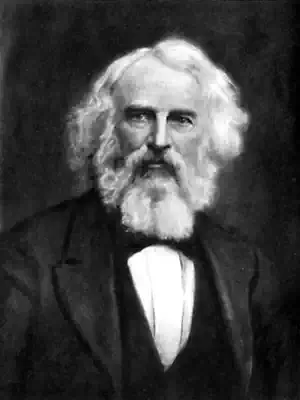
Henry Wadsworth Longfellow
Voices Of The Night : Prelude
Voices Of The Night : Prelude
Pleasant it was, when woods were green,
And winds were soft and low,
To lie amid some sylvan scene,
Where, the long drooping boughs between
Shadows dark and sunlight sheen
Alternate come and go;
Or where the denser grove receives
No sunlight from above
But the dark foliage interweaves
In one unbroken roof of leaves,
Underneath whose sloping eaves
The shadows hardly move.
Beneath some patriarchal tree
I lay upon the ground;
His hoary arms uplifted he,
And all the broad leaves over me
Clapped their little hands in glee,
With one continuous sound;--
A slumberous sound,--a sound that brings
The feelings of a dream,--
As of innumerable wings,
As, when a bell no longer swings,
Faint the hollow murmur rings
O'er meadow, lake, and stream.
And dreams of that which cannot die,
Bright visins, came to me,
As lapped in thought I used to lie,
And gaze into the summer sky,
Where the sailing clouds went by,
Like ships upon the sea;
Dreams that the soul of youth engage
Ere Fancy has been quelled;
Old legends of the monkish page.
Traditions of the saint and sage,
Tales that have the rime of age,
And chronicles of Eld.
And, loving still these quaint old themes,
Even in the city's throng
I feel the freshness of the streams,
That, crossed by shades and sunny gleams,
Water the green land of dreams,
The holy land of song.
Therefore, at Pentecost, which brings
The Spring, clothed like a bride,
When nestling buds unfold their wings,
And bishop's-caps have golden rings,
Musing upon many things,
I sought the woodlands wide.
The green trees whispered low and mild,
It was a sound of joy!
They were my playmates when a child
And rocked me in their arms so wild!
Still they looked at me and smiled
As if I were a boy;
And ever whispered, mild and low,
'Come, be a child once more!'
And waved their long arms to and fro,
And beckoned solemnly and slow;
O, I could not choose but go
Into the woodlands hoar;
Into the blithe and breathing air,
Into the solemn wood.
Solemn and silent everywhere!
Nature with folded hands seemed there,
Kneeling at her evening prayer!
Like one in prayer I stood.
Before me rose an avenue
Of tall and sombrous pines;
Abroad their fan-like branches grew,
And, where the sunshine darted throught
Spread a vapor soft and blue,
In long and sloping lines.
And, falling on my weary brain,
Like a fast-falling shower,
The dreams of youth came back again,
Low lispings of the summer rain,
Dropping on the ripened grain,
As once upon the flower.
Visions of childhood! Stay, O stay!
Ye were so sweet and wild!
And distant voices seemed to say,
'It cannot be! They pass away!
Other themes demand thy lay;
Thou art no more a child!
'The land of Song within thee lies,
Watered by living springs;
The lids of Fancy's sleepless eyes
Are gates unto that Paradise;
Holy thoughts, like stars, arise,
Its clouds are angels' wings.
'Learn, that henceforth thy song shall be
Not mountains capped with snow,
Nor forests sounding like the sea,
Nor rivers flowing ceaselessly,
Where the woodlands bend to see
The bending heavens below.
'There is a forest where the din
Of iron branches sounds!
A mighty river roara between,
And whosoever looks therein,
Sees the heavens all black with sin,--
Sees not ita depths, nor bounds.
'Athwart the swinging branches cast,
Soft rays of sunshine pour;
Then comes the fearful wintry blast;
Our hopes, like withered leaves, fall fast;
Pallid lips say, 'It is past!
We can return no more!'
'Look, then, into thine heart, and write!
Yes, into Life's deep stream!
All forms of sorrow and delight,
All solemn Voices of the Night,
That can soothe thee, or affright,--
Be these henceforth thy theme.'
Pleasant it was, when woods were green,
And winds were soft and low,
To lie amid some sylvan scene,
Where, the long drooping boughs between
Shadows dark and sunlight sheen
Alternate come and go;
Or where the denser grove receives
No sunlight from above
But the dark foliage interweaves
In one unbroken roof of leaves,
Underneath whose sloping eaves
The shadows hardly move.
Beneath some patriarchal tree
I lay upon the ground;
His hoary arms uplifted he,
And all the broad leaves over me
Clapped their little hands in glee,
With one continuous sound;--
A slumberous sound,--a sound that brings
The feelings of a dream,--
As of innumerable wings,
As, when a bell no longer swings,
Faint the hollow murmur rings
O'er meadow, lake, and stream.
And dreams of that which cannot die,
Bright visins, came to me,
As lapped in thought I used to lie,
And gaze into the summer sky,
Where the sailing clouds went by,
Like ships upon the sea;
Dreams that the soul of youth engage
Ere Fancy has been quelled;
Old legends of the monkish page.
Traditions of the saint and sage,
Tales that have the rime of age,
And chronicles of Eld.
And, loving still these quaint old themes,
Even in the city's throng
I feel the freshness of the streams,
That, crossed by shades and sunny gleams,
Water the green land of dreams,
The holy land of song.
Therefore, at Pentecost, which brings
The Spring, clothed like a bride,
When nestling buds unfold their wings,
And bishop's-caps have golden rings,
Musing upon many things,
I sought the woodlands wide.
The green trees whispered low and mild,
It was a sound of joy!
They were my playmates when a child
And rocked me in their arms so wild!
Still they looked at me and smiled
As if I were a boy;
And ever whispered, mild and low,
'Come, be a child once more!'
And waved their long arms to and fro,
And beckoned solemnly and slow;
O, I could not choose but go
Into the woodlands hoar;
Into the blithe and breathing air,
Into the solemn wood.
Solemn and silent everywhere!
Nature with folded hands seemed there,
Kneeling at her evening prayer!
Like one in prayer I stood.
Before me rose an avenue
Of tall and sombrous pines;
Abroad their fan-like branches grew,
And, where the sunshine darted throught
Spread a vapor soft and blue,
In long and sloping lines.
And, falling on my weary brain,
Like a fast-falling shower,
The dreams of youth came back again,
Low lispings of the summer rain,
Dropping on the ripened grain,
As once upon the flower.
Visions of childhood! Stay, O stay!
Ye were so sweet and wild!
And distant voices seemed to say,
'It cannot be! They pass away!
Other themes demand thy lay;
Thou art no more a child!
'The land of Song within thee lies,
Watered by living springs;
The lids of Fancy's sleepless eyes
Are gates unto that Paradise;
Holy thoughts, like stars, arise,
Its clouds are angels' wings.
'Learn, that henceforth thy song shall be
Not mountains capped with snow,
Nor forests sounding like the sea,
Nor rivers flowing ceaselessly,
Where the woodlands bend to see
The bending heavens below.
'There is a forest where the din
Of iron branches sounds!
A mighty river roara between,
And whosoever looks therein,
Sees the heavens all black with sin,--
Sees not ita depths, nor bounds.
'Athwart the swinging branches cast,
Soft rays of sunshine pour;
Then comes the fearful wintry blast;
Our hopes, like withered leaves, fall fast;
Pallid lips say, 'It is past!
We can return no more!'
'Look, then, into thine heart, and write!
Yes, into Life's deep stream!
All forms of sorrow and delight,
All solemn Voices of the Night,
That can soothe thee, or affright,--
Be these henceforth thy theme.'
296

Siegfried Sassoon
Wind in the Beechwood
Wind in the Beechwood
The glorying forest shakes and swings with glancing
Of boughs that dip and strain; young, slanting sprays
Beckon and shift like lissom creatures dancing,
While the blown beechwood streams with drifting rays.
Rooted in steadfast calm, grey stems are seen
Like weather-beaten masts; the wood, unfurled,
Seems as a ship with crowding sails of green
That sweeps across the lonely billowing world.
O luminous and lovely! Let your flowers,
Your ageless-squadroned wings, your surge and gleam,
Drown me in quivering brightness: let me fade
In the warm, rustling music of the hours
That guard your ancient wisdom, till my dream
Moves with the chant and whisper of the glade.
The glorying forest shakes and swings with glancing
Of boughs that dip and strain; young, slanting sprays
Beckon and shift like lissom creatures dancing,
While the blown beechwood streams with drifting rays.
Rooted in steadfast calm, grey stems are seen
Like weather-beaten masts; the wood, unfurled,
Seems as a ship with crowding sails of green
That sweeps across the lonely billowing world.
O luminous and lovely! Let your flowers,
Your ageless-squadroned wings, your surge and gleam,
Drown me in quivering brightness: let me fade
In the warm, rustling music of the hours
That guard your ancient wisdom, till my dream
Moves with the chant and whisper of the glade.
98
Siegfried Sassoon
Tree and Sky
Tree and Sky
Let my soul, a shining tree,
Silver branches lift towards thee,
Where on a hallowed winter’s night
The clear-eyed angels may alight.
And if there should be tempests in
My spirit, let them surge like din
Of noble melodies at war;
With fervour of such blades of triumph as are
Flashed in white orisons of saints who go
On shafts of glory to the ecstasies they know.
Let my soul, a shining tree,
Silver branches lift towards thee,
Where on a hallowed winter’s night
The clear-eyed angels may alight.
And if there should be tempests in
My spirit, let them surge like din
Of noble melodies at war;
With fervour of such blades of triumph as are
Flashed in white orisons of saints who go
On shafts of glory to the ecstasies they know.
97
Siegfried Sassoon
Dream-Forest
Dream-Forest
Where sunshine flecks the green,
Through towering woods my way
Goes winding all the day.
Scant are the flowers that bloom
Beneath the bosky screen
And cage of golden gloom.
Few are the birds that call,
Shrill-voiced and seldom seen.
Where silence masters all,
And light my footsteps fall,
The whispering runnels only
With blazing noon confer;
And comes no breeze to stir
The tangled thickets lonely.
Where sunshine flecks the green,
Through towering woods my way
Goes winding all the day.
Scant are the flowers that bloom
Beneath the bosky screen
And cage of golden gloom.
Few are the birds that call,
Shrill-voiced and seldom seen.
Where silence masters all,
And light my footsteps fall,
The whispering runnels only
With blazing noon confer;
And comes no breeze to stir
The tangled thickets lonely.
82
Henry Wadsworth Longfellow
The Terrestrial Paradise. (From Dante. Purgatorio, XXVIII.)
The Terrestrial Paradise. (From Dante. Purgatorio, XXVIII.)
Longing already to search in and round
The heavenly forest, dense and living-green,
Which tempered to the eyes the newborn day,
Withouten more delay I left the bank,
Crossing the level country slowly, slowly,
Over the soil, that everywhere breathed fragrance.
A gently-breathing air, that no mutation
Had in itself, smote me upon the forehead,
No heavier blow, than of a pleasant breeze,
Whereat the tremulous branches readily
Did all of them bow downward towards that side
Where its first shadow casts the Holy Mountain;
Yet not from their upright direction bent
So that the little birds upon their tops
Should cease the practice of their tuneful art;
But with full-throated joy, the hours of prime
Singing received they in the midst of foliage
That made monotonous burden to their rhymes,
Even as from branch to branch it gathering swells,
Through the pine forests on the shore of Chiassi,
When Aeolus unlooses the Sirocco.
Already my slow steps had led me on
Into the ancient wood so far, that I
Could see no more the place where I had entered.
And lo! my further course cut off a river,
Which, tow'rds the left hand, with its little waves,
Bent down the grass, that on its margin sprang.
All waters that on earth most limpid are,
Would seem to have within themselves some mixture,
Compared with that, which nothing doth conceal,
Although it moves on with a brown, brown current,
Under the shade perpetual, that never
Ray of the sun lets in, nor of the moon.
Longing already to search in and round
The heavenly forest, dense and living-green,
Which tempered to the eyes the newborn day,
Withouten more delay I left the bank,
Crossing the level country slowly, slowly,
Over the soil, that everywhere breathed fragrance.
A gently-breathing air, that no mutation
Had in itself, smote me upon the forehead,
No heavier blow, than of a pleasant breeze,
Whereat the tremulous branches readily
Did all of them bow downward towards that side
Where its first shadow casts the Holy Mountain;
Yet not from their upright direction bent
So that the little birds upon their tops
Should cease the practice of their tuneful art;
But with full-throated joy, the hours of prime
Singing received they in the midst of foliage
That made monotonous burden to their rhymes,
Even as from branch to branch it gathering swells,
Through the pine forests on the shore of Chiassi,
When Aeolus unlooses the Sirocco.
Already my slow steps had led me on
Into the ancient wood so far, that I
Could see no more the place where I had entered.
And lo! my further course cut off a river,
Which, tow'rds the left hand, with its little waves,
Bent down the grass, that on its margin sprang.
All waters that on earth most limpid are,
Would seem to have within themselves some mixture,
Compared with that, which nothing doth conceal,
Although it moves on with a brown, brown current,
Under the shade perpetual, that never
Ray of the sun lets in, nor of the moon.
289
Siegfried Sassoon
A Poplar and the Moon
A Poplar and the Moon
There stood a Poplar, tall and straight;
The fair, round Moon, uprisen late,
Made the long shadow on the grass
A ghostly bridge ’twixt heaven and me.
But May, with slumbrous nights, must pass;
And blustering winds will strip the tree.
And I’ve no magic to express
The moment of that loveliness;
So from these words you’ll never guess
The stars and lilies I could see.
There stood a Poplar, tall and straight;
The fair, round Moon, uprisen late,
Made the long shadow on the grass
A ghostly bridge ’twixt heaven and me.
But May, with slumbrous nights, must pass;
And blustering winds will strip the tree.
And I’ve no magic to express
The moment of that loveliness;
So from these words you’ll never guess
The stars and lilies I could see.
80
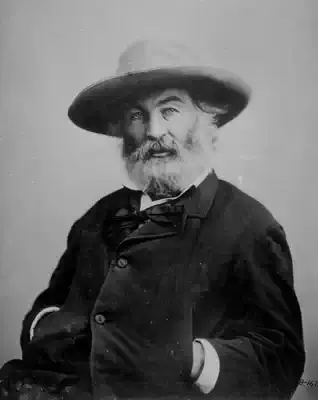
Walt Whitman
Song Of The Redwood-Tree
Song Of The Redwood-Tree
A CALIFORNIA song!
A prophecy and indirection--a thought impalpable, to breathe, as air;
A chorus of dryads, fading, departing--or hamadryads departing;
A murmuring, fateful, giant voice, out of the earth and sky,
Voice of a mighty dying tree in the Redwood forest dense.
Farewell, my brethren,
Farewell, O earth and sky--farewell, ye neighboring waters;
My time has ended, my term has come.
Along the northern coast,
Just back from the rock-bound shore, and the caves, 10
In the saline air from the sea, in the Mendocino country,
With the surge for bass and accompaniment low and hoarse,
With crackling blows of axes, sounding musically, driven by strong
arms,
Riven deep by the sharp tongues of the axes--there in the Redwood
forest dense,
I heard the mighty tree its death-chant chanting.
The choppers heard not--the camp shanties echoed not;
The quick-ear'd teamsters, and chain and jack-screw men, heard not,
As the wood-spirits came from their haunts of a thousand years, to
join the refrain;
But in my soul I plainly heard.
Murmuring out of its myriad leaves, 20
Down from its lofty top, rising two hundred feet high,
Out of its stalwart trunk and limbs--out of its foot-thick bark,
That chant of the seasons and time--chant, not of the past only, but
the future.
You untold life of me,
And all you venerable and innocent joys,
Perennial, hardy life of me, with joys, 'mid rain, and many a summer
sun,
And the white snows, and night, and the wild winds;
O the great patient, rugged joys! my soul's strong joys, unreck'd by
man;
(For know I bear the soul befitting me--I too have consciousness,
identity,
And all the rocks and mountains have--and all the earth;) 30
Joys of the life befitting me and brothers mine,
Our time, our term has come.
Nor yield we mournfully, majestic brothers,
We who have grandly fill'd our time;
With Nature's calm content, and tacit, huge delight,
We welcome what we wrought for through the past,
And leave the field for them.
For them predicted long,
For a superber Race--they too to grandly fill their time,
For them we abdicate--in them ourselves, ye forest kings! 40
In them these skies and airs--these mountain peaks--Shasta--Nevadas,
These huge, precipitous cliffs--this amplitude--these valleys grand-Yosemite,
To be in them absorb'd, assimilated.
Then to a loftier strain,
Still prouder, more ecstatic, rose the chant,
As if the heirs, the Deities of the West,
Joining, with master-tongue, bore part.
Not wan from Asia's fetishes,
Nor red from Europe's old dynastic slaughter-house,
(Area of murder-plots of thrones, with scent left yet of wars and
scaffolds every where,) 50
But come from Nature's long and harmless throes--peacefully builded
thence,
These virgin lands--Lands of the Western Shore,
To the new Culminating Man--to you, the Empire New,
You, promis'd long, we pledge, we dedicate.
You occult, deep volitions,
You average Spiritual Manhood, purpose of all, pois'd on yourself-giving,
not taking law,
You Womanhood divine, mistress and source of all, whence life and
love, and aught that comes from life and love,
You unseen Moral Essence of all the vast materials of America, (age
upon age, working in Death the same as Life,)
You that, sometimes known, oftener unknown, really shape and mould
the New World, adjusting it to Time and Space,
You hidden National Will, lying in your abysms, conceal'd, but ever
alert, 60
You past and present purposes, tenaciously pursued, may-be
unconscious of yourselves,
Unswerv'd by all the passing errors, perturbations of the surface;
You vital, universal, deathless germs, beneath all creeds, arts,
statutes, literatures,
Here build your homes for good--establish here--These areas entire,
Lands of the Western Shore,
We pledge, we dedicate to you.
For man of you--your characteristic Race,
Here may be hardy, sweet, gigantic grow--here tower, proportionate to
Nature,
Here climb the vast, pure spaces, unconfined, uncheck'd by wall or
roof,
Here laugh with storm or sun--here joy--here patiently inure,
Here heed himself, unfold himself (not others' formulas heed)--here
fill his time, 70
To duly fall, to aid, unreck'd at last,
To disappear, to serve.
Thus, on the northern coast,
In the echo of teamsters' calls, and the clinking chains, and the
music of choppers' axes,
The falling trunk and limbs, the crash, the muffled shriek, the
groan,
Such words combined from the Redwood-tree--as of wood-spirits' voices
ecstatic, ancient and rustling,
The century-lasting, unseen dryads, singing, withdrawing,
All their recesses of forests and mountains leaving,
From the Cascade range to the Wasatch--or Idaho far, or Utah,
To the deities of the Modern henceforth yielding, 80
The chorus and indications, the vistas of coming humanity--the
settlements, features all,
In the Mendocino woods I caught.
The flashing and golden pageant of California!
The sudden and gorgeous drama--the sunny and ample lands;
The long and varied stretch from Puget Sound to Colorado south;
Lands bathed in sweeter, rarer, healthier air--valleys and mountain
cliffs;
The fields of Nature long prepared and fallow--the silent, cyclic
chemistry;
The slow and steady ages plodding--the unoccupied surface ripening-
the rich ores forming beneath;
At last the New arriving, assuming, taking possession,
A swarming and busy race settling and organizing every where;
Ships coming in from the whole round world, and going out to the
whole world, 90
To India and China and Australia, and the thousand island paradises
of the Pacific;
Populous cities--the latest inventions--the steamers on the rivers-the
railroads--with many a thrifty farm, with machinery,
And wool, and wheat, and the grape--and diggings of yellow gold.
But more in you than these, Lands of the Western Shore!
(These but the means, the implements, the standing-ground,)
I see in you, certain to come, the promise of thousands of years,
till now deferr'd,
Promis'd, to be fulfill'd, our common kind, the Race.
The New Society at last, proportionate to Nature,
In Man of you, more than your mountain peaks, or stalwart trees
imperial, 100
In Woman more, far more, than all your gold, or vines, or even vital
air.
Fresh come, to a New World indeed, yet long prepared,
I see the Genius of the Modern, child of the Real and Ideal,
Clearing the ground for broad humanity, the true America, heir of the
past so grand,
To build a grander future.
A CALIFORNIA song!
A prophecy and indirection--a thought impalpable, to breathe, as air;
A chorus of dryads, fading, departing--or hamadryads departing;
A murmuring, fateful, giant voice, out of the earth and sky,
Voice of a mighty dying tree in the Redwood forest dense.
Farewell, my brethren,
Farewell, O earth and sky--farewell, ye neighboring waters;
My time has ended, my term has come.
Along the northern coast,
Just back from the rock-bound shore, and the caves, 10
In the saline air from the sea, in the Mendocino country,
With the surge for bass and accompaniment low and hoarse,
With crackling blows of axes, sounding musically, driven by strong
arms,
Riven deep by the sharp tongues of the axes--there in the Redwood
forest dense,
I heard the mighty tree its death-chant chanting.
The choppers heard not--the camp shanties echoed not;
The quick-ear'd teamsters, and chain and jack-screw men, heard not,
As the wood-spirits came from their haunts of a thousand years, to
join the refrain;
But in my soul I plainly heard.
Murmuring out of its myriad leaves, 20
Down from its lofty top, rising two hundred feet high,
Out of its stalwart trunk and limbs--out of its foot-thick bark,
That chant of the seasons and time--chant, not of the past only, but
the future.
You untold life of me,
And all you venerable and innocent joys,
Perennial, hardy life of me, with joys, 'mid rain, and many a summer
sun,
And the white snows, and night, and the wild winds;
O the great patient, rugged joys! my soul's strong joys, unreck'd by
man;
(For know I bear the soul befitting me--I too have consciousness,
identity,
And all the rocks and mountains have--and all the earth;) 30
Joys of the life befitting me and brothers mine,
Our time, our term has come.
Nor yield we mournfully, majestic brothers,
We who have grandly fill'd our time;
With Nature's calm content, and tacit, huge delight,
We welcome what we wrought for through the past,
And leave the field for them.
For them predicted long,
For a superber Race--they too to grandly fill their time,
For them we abdicate--in them ourselves, ye forest kings! 40
In them these skies and airs--these mountain peaks--Shasta--Nevadas,
These huge, precipitous cliffs--this amplitude--these valleys grand-Yosemite,
To be in them absorb'd, assimilated.
Then to a loftier strain,
Still prouder, more ecstatic, rose the chant,
As if the heirs, the Deities of the West,
Joining, with master-tongue, bore part.
Not wan from Asia's fetishes,
Nor red from Europe's old dynastic slaughter-house,
(Area of murder-plots of thrones, with scent left yet of wars and
scaffolds every where,) 50
But come from Nature's long and harmless throes--peacefully builded
thence,
These virgin lands--Lands of the Western Shore,
To the new Culminating Man--to you, the Empire New,
You, promis'd long, we pledge, we dedicate.
You occult, deep volitions,
You average Spiritual Manhood, purpose of all, pois'd on yourself-giving,
not taking law,
You Womanhood divine, mistress and source of all, whence life and
love, and aught that comes from life and love,
You unseen Moral Essence of all the vast materials of America, (age
upon age, working in Death the same as Life,)
You that, sometimes known, oftener unknown, really shape and mould
the New World, adjusting it to Time and Space,
You hidden National Will, lying in your abysms, conceal'd, but ever
alert, 60
You past and present purposes, tenaciously pursued, may-be
unconscious of yourselves,
Unswerv'd by all the passing errors, perturbations of the surface;
You vital, universal, deathless germs, beneath all creeds, arts,
statutes, literatures,
Here build your homes for good--establish here--These areas entire,
Lands of the Western Shore,
We pledge, we dedicate to you.
For man of you--your characteristic Race,
Here may be hardy, sweet, gigantic grow--here tower, proportionate to
Nature,
Here climb the vast, pure spaces, unconfined, uncheck'd by wall or
roof,
Here laugh with storm or sun--here joy--here patiently inure,
Here heed himself, unfold himself (not others' formulas heed)--here
fill his time, 70
To duly fall, to aid, unreck'd at last,
To disappear, to serve.
Thus, on the northern coast,
In the echo of teamsters' calls, and the clinking chains, and the
music of choppers' axes,
The falling trunk and limbs, the crash, the muffled shriek, the
groan,
Such words combined from the Redwood-tree--as of wood-spirits' voices
ecstatic, ancient and rustling,
The century-lasting, unseen dryads, singing, withdrawing,
All their recesses of forests and mountains leaving,
From the Cascade range to the Wasatch--or Idaho far, or Utah,
To the deities of the Modern henceforth yielding, 80
The chorus and indications, the vistas of coming humanity--the
settlements, features all,
In the Mendocino woods I caught.
The flashing and golden pageant of California!
The sudden and gorgeous drama--the sunny and ample lands;
The long and varied stretch from Puget Sound to Colorado south;
Lands bathed in sweeter, rarer, healthier air--valleys and mountain
cliffs;
The fields of Nature long prepared and fallow--the silent, cyclic
chemistry;
The slow and steady ages plodding--the unoccupied surface ripening-
the rich ores forming beneath;
At last the New arriving, assuming, taking possession,
A swarming and busy race settling and organizing every where;
Ships coming in from the whole round world, and going out to the
whole world, 90
To India and China and Australia, and the thousand island paradises
of the Pacific;
Populous cities--the latest inventions--the steamers on the rivers-the
railroads--with many a thrifty farm, with machinery,
And wool, and wheat, and the grape--and diggings of yellow gold.
But more in you than these, Lands of the Western Shore!
(These but the means, the implements, the standing-ground,)
I see in you, certain to come, the promise of thousands of years,
till now deferr'd,
Promis'd, to be fulfill'd, our common kind, the Race.
The New Society at last, proportionate to Nature,
In Man of you, more than your mountain peaks, or stalwart trees
imperial, 100
In Woman more, far more, than all your gold, or vines, or even vital
air.
Fresh come, to a New World indeed, yet long prepared,
I see the Genius of the Modern, child of the Real and Ideal,
Clearing the ground for broad humanity, the true America, heir of the
past so grand,
To build a grander future.
503
Henry Wadsworth Longfellow
The Song Of Hiawatha VII: Hiawatha's Sailing
The Song Of Hiawatha VII: Hiawatha's Sailing
'Give me of your bark, O Birch-tree!
Of your yellow bark, O Birch-tree!
Growing by the rushing river,
Tall and stately in the valley!
I a light canoe will build me,
Build a swift Cheemaun for sailing,
That shall float on the river,
Like a yellow leaf in Autumn,
Like a yellow water-lily!
'Lay aside your cloak, O Birch-tree!
Lay aside your white-skin wrapper,
For the Summer-time is coming,
And the sun is warm in heaven,
And you need no white-skin wrapper!'
Thus aloud cried Hiawatha
In the solitary forest,
By the rushing Taquamenaw,
When the birds were singing gayly,
In the Moon of Leaves were singing,
And the sun, from sleep awaking,
Started up and said, 'Behold me!
Gheezis, the great Sun, behold me!'
And the tree with all its branches
Rustled in the breeze of morning,
Saying, with a sigh of patience,
'Take my cloak, O Hiawatha!'
With his knife the tree he girdled;
Just beneath its lowest branches,
Just above the roots, he cut it,
Till the sap came oozing outward;
Down the trunk, from top to bottom,
Sheer he cleft the bark asunder,
With a wooden wedge he raised it,
Stripped it from the trunk unbroken.
'Give me of your boughs, O Cedar!
Of your strong and pliant branches,
My canoe to make more steady,
Make more strong and firm beneath me!'
Through the summit of the Cedar
Went a sound, a cry of horror,
Went a murmur of resistance;
But it whispered, bending downward,
'Take my boughs, O Hiawatha!'
Down he hewed the boughs of cedar,
Shaped them straightway to a frame-work,
Like two bows he formed and shaped them,
Like two bended bows together.
'Give me of your roots, O Tamarack!
Of your fibrous roots, O Larch-tree!
My canoe to bind together,
So to bind the ends together
That the water may not enter,
That the river may not wet me!'
And the Larch, with all its fibres,
Shivered in the air of morning,
Touched his forehead with its tassels,
Slid, with one long sigh of sorrow.
'Take them all, O Hiawatha!'
From the earth he tore the fibres,
Tore the tough roots of the Larch-tree,
Closely sewed the hark together,
Bound it closely to the frame-work.
'Give me of your balm, O Fir-tree!
Of your balsam and your resin,
So to close the seams together
That the water may not enter,
That the river may not wet me!'
And the Fir-tree, tall and sombre,
Sobbed through all its robes of darkness,
Rattled like a shore with pebbles,
Answered wailing, answered weeping,
'Take my balm, O Hiawatha!'
And he took the tears of balsam,
Took the resin of the Fir-tree,
Smeared therewith each seam and fissure,
Made each crevice safe from water.
'Give me of your quills, O Hedgehog!
All your quills, O Kagh, the Hedgehog!
I will make a necklace of them,
Make a girdle for my beauty,
And two stars to deck her bosom!'
From a hollow tree the Hedgehog
With his sleepy eyes looked at him,
Shot his shining quills, like arrows,
Saying with a drowsy murmur,
Through the tangle of his whiskers,
'Take my quills, O Hiawatha!'
From the ground the quills he gathered,
All the little shining arrows,
Stained them red and blue and yellow,
With the juice of roots and berries;
Into his canoe he wrought them,
Round its waist a shining girdle,
Round its bows a gleaming necklace,
On its breast two stars resplendent.
Thus the Birch Canoe was builded
In the valley, by the river,
In the bosom of the forest;
And the forest's life was in it,
All its mystery and its magic,
All the lightness of the birch-tree,
All the toughness of the cedar,
All the larch's supple sinews;
And it floated on the river
Like a yellow leaf in Autumn,
Like a yellow water-lily.
Paddles none had Hiawatha,
Paddles none he had or needed,
For his thoughts as paddles served him,
And his wishes served to guide him;
Swift or slow at will he glided,
Veered to right or left at pleasure.
Then he called aloud to Kwasind,
To his friend, the strong man, Kwasind,
Saying, 'Help me clear this river
Of its sunken logs and sand-bars.'
Straight into the river Kwasind
Plunged as if he were an otter,
Dived as if he were a beaver,
Stood up to his waist in water,
To his arm-pits in the river,
Swam and scouted in the river,
Tugged at sunken logs and branches,
With his hands he scooped the sand-bars,
With his feet the ooze and tangle.
And thus sailed my Hiawatha
Down the rushing Taquamenaw,
Sailed through all its bends and windings,
Sailed through all its deeps and shallows,
While his friend, the strong man, Kwasind,
Swam the deeps, the shallows waded.
Up and down the river went they,
In and out among its islands,
Cleared its bed of root and sand-bar,
Dragged the dead trees from its channel,
Made its passage safe and certain,
Made a pathway for the people,
From its springs among the mountains,
To the waters of Pauwating,
To the bay of Taquamenaw.
'Give me of your bark, O Birch-tree!
Of your yellow bark, O Birch-tree!
Growing by the rushing river,
Tall and stately in the valley!
I a light canoe will build me,
Build a swift Cheemaun for sailing,
That shall float on the river,
Like a yellow leaf in Autumn,
Like a yellow water-lily!
'Lay aside your cloak, O Birch-tree!
Lay aside your white-skin wrapper,
For the Summer-time is coming,
And the sun is warm in heaven,
And you need no white-skin wrapper!'
Thus aloud cried Hiawatha
In the solitary forest,
By the rushing Taquamenaw,
When the birds were singing gayly,
In the Moon of Leaves were singing,
And the sun, from sleep awaking,
Started up and said, 'Behold me!
Gheezis, the great Sun, behold me!'
And the tree with all its branches
Rustled in the breeze of morning,
Saying, with a sigh of patience,
'Take my cloak, O Hiawatha!'
With his knife the tree he girdled;
Just beneath its lowest branches,
Just above the roots, he cut it,
Till the sap came oozing outward;
Down the trunk, from top to bottom,
Sheer he cleft the bark asunder,
With a wooden wedge he raised it,
Stripped it from the trunk unbroken.
'Give me of your boughs, O Cedar!
Of your strong and pliant branches,
My canoe to make more steady,
Make more strong and firm beneath me!'
Through the summit of the Cedar
Went a sound, a cry of horror,
Went a murmur of resistance;
But it whispered, bending downward,
'Take my boughs, O Hiawatha!'
Down he hewed the boughs of cedar,
Shaped them straightway to a frame-work,
Like two bows he formed and shaped them,
Like two bended bows together.
'Give me of your roots, O Tamarack!
Of your fibrous roots, O Larch-tree!
My canoe to bind together,
So to bind the ends together
That the water may not enter,
That the river may not wet me!'
And the Larch, with all its fibres,
Shivered in the air of morning,
Touched his forehead with its tassels,
Slid, with one long sigh of sorrow.
'Take them all, O Hiawatha!'
From the earth he tore the fibres,
Tore the tough roots of the Larch-tree,
Closely sewed the hark together,
Bound it closely to the frame-work.
'Give me of your balm, O Fir-tree!
Of your balsam and your resin,
So to close the seams together
That the water may not enter,
That the river may not wet me!'
And the Fir-tree, tall and sombre,
Sobbed through all its robes of darkness,
Rattled like a shore with pebbles,
Answered wailing, answered weeping,
'Take my balm, O Hiawatha!'
And he took the tears of balsam,
Took the resin of the Fir-tree,
Smeared therewith each seam and fissure,
Made each crevice safe from water.
'Give me of your quills, O Hedgehog!
All your quills, O Kagh, the Hedgehog!
I will make a necklace of them,
Make a girdle for my beauty,
And two stars to deck her bosom!'
From a hollow tree the Hedgehog
With his sleepy eyes looked at him,
Shot his shining quills, like arrows,
Saying with a drowsy murmur,
Through the tangle of his whiskers,
'Take my quills, O Hiawatha!'
From the ground the quills he gathered,
All the little shining arrows,
Stained them red and blue and yellow,
With the juice of roots and berries;
Into his canoe he wrought them,
Round its waist a shining girdle,
Round its bows a gleaming necklace,
On its breast two stars resplendent.
Thus the Birch Canoe was builded
In the valley, by the river,
In the bosom of the forest;
And the forest's life was in it,
All its mystery and its magic,
All the lightness of the birch-tree,
All the toughness of the cedar,
All the larch's supple sinews;
And it floated on the river
Like a yellow leaf in Autumn,
Like a yellow water-lily.
Paddles none had Hiawatha,
Paddles none he had or needed,
For his thoughts as paddles served him,
And his wishes served to guide him;
Swift or slow at will he glided,
Veered to right or left at pleasure.
Then he called aloud to Kwasind,
To his friend, the strong man, Kwasind,
Saying, 'Help me clear this river
Of its sunken logs and sand-bars.'
Straight into the river Kwasind
Plunged as if he were an otter,
Dived as if he were a beaver,
Stood up to his waist in water,
To his arm-pits in the river,
Swam and scouted in the river,
Tugged at sunken logs and branches,
With his hands he scooped the sand-bars,
With his feet the ooze and tangle.
And thus sailed my Hiawatha
Down the rushing Taquamenaw,
Sailed through all its bends and windings,
Sailed through all its deeps and shallows,
While his friend, the strong man, Kwasind,
Swam the deeps, the shallows waded.
Up and down the river went they,
In and out among its islands,
Cleared its bed of root and sand-bar,
Dragged the dead trees from its channel,
Made its passage safe and certain,
Made a pathway for the people,
From its springs among the mountains,
To the waters of Pauwating,
To the bay of Taquamenaw.
287
Walt Whitman
For Him I Sing
For Him I Sing
FOR him I sing,
I raise the Present on the Past,
(As some perennial tree, out of its roots, the present on the past:)
With time and space I him dilate--and fuse the immortal laws,
To make himself, by them, the law unto himself.
FOR him I sing,
I raise the Present on the Past,
(As some perennial tree, out of its roots, the present on the past:)
With time and space I him dilate--and fuse the immortal laws,
To make himself, by them, the law unto himself.
432
Wallace Stevens
Anecdote of the Jar
Anecdote of the Jar
I placed a jar in Tennessee,
And round it was, upon a hill.
It made the slovenly wilderness
Surround that hill.
The wilderness rose up to it,
And sprawled around, no longer wild.
The jar was round upon the ground
And tall and of a port in air.
It took dominion everywhere.
The jar was gray and bare.
It did not give of bird or bush,
Like nothing else in Tennessee.
I placed a jar in Tennessee,
And round it was, upon a hill.
It made the slovenly wilderness
Surround that hill.
The wilderness rose up to it,
And sprawled around, no longer wild.
The jar was round upon the ground
And tall and of a port in air.
It took dominion everywhere.
The jar was gray and bare.
It did not give of bird or bush,
Like nothing else in Tennessee.
221
Rupert Brooke
Pine-Trees And The Sky: Evening
Pine-Trees And The Sky: Evening
I'd watched the sorrow of the evening sky,
And smelt the sea, and earth, and the warm clover,
And heard the waves, and the seagull's mocking cry.
And in them all was only the old cry,
That song they always sing -- "The best is over!
You may remember now, and think, and sigh,
O silly lover!"
And I was tired and sick that all was over,
And because I,
For all my thinking, never could recover
One moment of the good hours that were over.
And I was sorry and sick, and wished to die.
Then from the sad west turning wearily,
I saw the pines against the white north sky,
Very beautiful, and still, and bending over
Their sharp black heads against a quiet sky.
And there was peace in them; and I
Was happy, and forgot to play the lover,
And laughed, and did no longer wish to die;
Being glad of you, O pine-trees and the sky!
I'd watched the sorrow of the evening sky,
And smelt the sea, and earth, and the warm clover,
And heard the waves, and the seagull's mocking cry.
And in them all was only the old cry,
That song they always sing -- "The best is over!
You may remember now, and think, and sigh,
O silly lover!"
And I was tired and sick that all was over,
And because I,
For all my thinking, never could recover
One moment of the good hours that were over.
And I was sorry and sick, and wished to die.
Then from the sad west turning wearily,
I saw the pines against the white north sky,
Very beautiful, and still, and bending over
Their sharp black heads against a quiet sky.
And there was peace in them; and I
Was happy, and forgot to play the lover,
And laughed, and did no longer wish to die;
Being glad of you, O pine-trees and the sky!
146
Thomas Hardy
Transformations
Transformations
Portion of this yew
Is a man my grandsire knew,
Bosomed here at its foot:
This branch may be his wife,
A ruddy human life
Now turned to a green shoot.
These grasses must be made
Of her who often prayed,
Last century, for repose;
And the fair girl long ago
Whom I often tried to know
May be entering this rose.
So, they are not underground,
But as nerves and veins abound
In the growths of upper air,
And they feel the sun and rain,
And the energy again
That made them what they were!
Portion of this yew
Is a man my grandsire knew,
Bosomed here at its foot:
This branch may be his wife,
A ruddy human life
Now turned to a green shoot.
These grasses must be made
Of her who often prayed,
Last century, for repose;
And the fair girl long ago
Whom I often tried to know
May be entering this rose.
So, they are not underground,
But as nerves and veins abound
In the growths of upper air,
And they feel the sun and rain,
And the energy again
That made them what they were!
213
Rudyard Kipling
The Sea and the Hills
The Sea and the Hills
Who hath desired the Sea? -- the sight of salt water unbounded --
The heave and the halt and the hurl and the crash of the comber wind-hounded?
The sleek-barrelled swell before storm, grey, foamless, enormous, and growing --
Stark calm on the lap of the Line or the crazy-eyed hurricane blowing --
His Sea in no showing the same his Sea and the same 'neath each showing:
His Sea as she slackens or thrills?
So and no otherwise -- so and no otherwise -- hillmen desire their Hills!
Who hath desired the Sea? -- the immense and contemptuous surges?
The shudder, the stumble, the swerve, as the star-stabbing bow-sprit emerges?
The orderly clouds of the Trades, the ridged, roaring sapphire thereunder --
Unheralded cliff-haunting flaws and the headsail's low-volleying thunder --
His Sea in no wonder the same his Sea and the same through each wonder:
His Sea as she rages or stills?
So and no otherwise -- so and no otherwise -- hillmen desire their Hills.
Who hath desired the Sea? Her menaces swift as her mercies?
The in-rolling walls of the fog and the silver-winged breeze that disperses?
The unstable mined berg going South and the calvings and groans that declare it --
White water half-guessed overside and the moon breaking timely to bare it --
His Sea as his fathers have dared -- his Sea as his children shall dare it:
His Sea as she serves him or kills?
So and no otherwise -- so and no otherwise -- hillmen desire their Hills.
Who hath desired the Sea? Her excellent loneliness rather
Than forecourts of kings, and her outermost pits than the streets where men gather
Inland, among dust, under trees -- inland where the slayer may slay him --
Inland, out of reach of her arms, and the bosom whereon he must lay him
His Sea from the first that betrayed -- at the last that shall never betray him:
His Sea that his being fulfils?
So and no otherwise -- so and no otherwise -- hillmen desire their Hills.
Who hath desired the Sea? -- the sight of salt water unbounded --
The heave and the halt and the hurl and the crash of the comber wind-hounded?
The sleek-barrelled swell before storm, grey, foamless, enormous, and growing --
Stark calm on the lap of the Line or the crazy-eyed hurricane blowing --
His Sea in no showing the same his Sea and the same 'neath each showing:
His Sea as she slackens or thrills?
So and no otherwise -- so and no otherwise -- hillmen desire their Hills!
Who hath desired the Sea? -- the immense and contemptuous surges?
The shudder, the stumble, the swerve, as the star-stabbing bow-sprit emerges?
The orderly clouds of the Trades, the ridged, roaring sapphire thereunder --
Unheralded cliff-haunting flaws and the headsail's low-volleying thunder --
His Sea in no wonder the same his Sea and the same through each wonder:
His Sea as she rages or stills?
So and no otherwise -- so and no otherwise -- hillmen desire their Hills.
Who hath desired the Sea? Her menaces swift as her mercies?
The in-rolling walls of the fog and the silver-winged breeze that disperses?
The unstable mined berg going South and the calvings and groans that declare it --
White water half-guessed overside and the moon breaking timely to bare it --
His Sea as his fathers have dared -- his Sea as his children shall dare it:
His Sea as she serves him or kills?
So and no otherwise -- so and no otherwise -- hillmen desire their Hills.
Who hath desired the Sea? Her excellent loneliness rather
Than forecourts of kings, and her outermost pits than the streets where men gather
Inland, among dust, under trees -- inland where the slayer may slay him --
Inland, out of reach of her arms, and the bosom whereon he must lay him
His Sea from the first that betrayed -- at the last that shall never betray him:
His Sea that his being fulfils?
So and no otherwise -- so and no otherwise -- hillmen desire their Hills.
547
Rudyard Kipling
The Run of the Downs
The Run of the Downs
The Weald is good, the Downs are best---
I'll give you the run of 'em, East to West.
Beachy Head and Winddoor Hill,
They were once and they are still.
Firle Mount Caburn and Mount Harry
Go back as far as sums 'l carry.
Ditchling Beacon and Chanctonbury Ring
They have looked on many a thing,
And what those two have missed between 'em
I reckon Truleigh Hill has seen 'em.
Highden, Bignor and Duncton Down
Knew Old England before the Crown.
Linch Down, Treyford and Sunwood
Knew Old England before the Flood;
And when you end on the Hampshire side--
Butser's old as Time and Tide.
The Downs are sheep, the Weald is corn,
You be glad you are Sussex born!
The Weald is good, the Downs are best---
I'll give you the run of 'em, East to West.
Beachy Head and Winddoor Hill,
They were once and they are still.
Firle Mount Caburn and Mount Harry
Go back as far as sums 'l carry.
Ditchling Beacon and Chanctonbury Ring
They have looked on many a thing,
And what those two have missed between 'em
I reckon Truleigh Hill has seen 'em.
Highden, Bignor and Duncton Down
Knew Old England before the Crown.
Linch Down, Treyford and Sunwood
Knew Old England before the Flood;
And when you end on the Hampshire side--
Butser's old as Time and Tide.
The Downs are sheep, the Weald is corn,
You be glad you are Sussex born!
361
Rudyard Kipling
The Land
The Land
When Julius Fabricius, Sub-Prefect of the Weald,
In the days of Diocletian owned our Lower River-field,
He called to him Hobdenius-a Briton of the Clay,
Saying: "What about that River-piece for layin' in to hay?"
And the aged Hobden answered: "I remember as a lad
My father told your father that she wanted dreenin' bad.
An' the more that you neeglect her the less you'll get her clean.
Have it jest as you've a mind to, but, if I was you, I'd dreen."
So they drained it long and crossways in the lavish Roman style--
Still we find among the river-drift their flakes of ancient tile,
And in drouthy middle August, when the bones of meadows show,
We can trace the lines they followed sixteen hundred years ago.
Then Julius Fabricius died as even Prefects do,
And after certain centuries, Imperial Rome died too.
Then did robbers enter Britain from across the Northern main
And our Lower River-field was won by Ogier the Dane.
Well could Ogier work his war-boat --well could Ogier wield his brand--
Much he knew of foaming waters--not so much of farming land.
So he called to him a Hobden of the old unaltered blood,
Saying: "What about that River-piece; she doesn't look no good?"
And that aged Hobden answered "'Tain't for me not interfere.
But I've known that bit o' meadow now for five and fifty year.
Have it jest as you've a mind to, but I've proved it time on ' time,
If you want to change her nature you have got to give her lime!"
Ogier sent his wains to Lewes, twenty hours' solemn walk,
And drew back great abundance of the cool, grey, healing chalk.
And old Hobden spread it broadcast, never heeding what was in't.--
Which is why in cleaning ditches, now and then we find a flint.
Ogier died. His sons grew English -- Anglo-Saxon was their name--
Till out of blossomed Normandy another pirate came;
For Duke William conquered England and divided with his men,
And our Lower River-field he gave to William of Warenne.
But the Brook (you know her habit) rose one rainy autumn night
And tore down sodden flitches of the bank to left and right.
So, said William to his Bailiff as they rode their dripping rounds:
"Hob, what about that River-bit--the Brook's got up no bounds? "
And that aged Hobden answered: "'Tain't my business to advise,
But ye might ha' known 'twould happen from the way the valley lies.
Where ye can't hold back the water you must try and save the sile.
Hev it jest as you've a mind to, but, if I was you, I'd spile!"
They spiled along the water-course with trunks of willow-trees,
And planks of elms behind 'em and immortal oaken knees.
And when the spates of Autumn whirl the gravel-beds away
You can see their faithful fragments, iron-hard in iron clay.
. . . . . . . . . .
Georgii Quinti Anno Sexto, I, who own the River-field,
Am fortified with title-deeds, attested, signed and sealed,
Guaranteeing me, my assigns, my executors and heirs
All sorts of powers and profits which-are neither mine nor theirs,
I have rights of chase and warren, as my dignity requires.
I can fish-but Hobden tickles--I can shoot--but Hobden wires.
I repair, but he reopens, certain gaps which, men allege,
Have been used by every Hobden since a Hobden swapped a hedge.
Shall I dog his morning progress o'er the track-betraying dew?
Demand his dinner-basket into which my pheasant flew?
Confiscate his evening faggot under which my conies ran,
And summons him to judgment? I would sooner summons Pan.
His dead are in the churchyard--thirty generations laid.
Their names were old in history when Domesday Book was made;
And the passion and the piety and prowess of his line
Have seeded, rooted, fruited in some land the Law calls mine.
Not for any beast that burrows, not for any bird that flies,
Would I lose his large sound council, miss his keen amending eyes.
He is bailiff, woodman, wheelwright, field-surveyor, engineer,
And if flagrantly a poacher--'tain't for me to interfere.
"Hob, what about that River-bit?" I turn to him again,
With Fabricius and Ogier and William of Warenne.
"Hev it jest as you've a mind to, but"-and here he takes command.
For whoever pays the taxes old Mus' Hobden owns the land.
When Julius Fabricius, Sub-Prefect of the Weald,
In the days of Diocletian owned our Lower River-field,
He called to him Hobdenius-a Briton of the Clay,
Saying: "What about that River-piece for layin' in to hay?"
And the aged Hobden answered: "I remember as a lad
My father told your father that she wanted dreenin' bad.
An' the more that you neeglect her the less you'll get her clean.
Have it jest as you've a mind to, but, if I was you, I'd dreen."
So they drained it long and crossways in the lavish Roman style--
Still we find among the river-drift their flakes of ancient tile,
And in drouthy middle August, when the bones of meadows show,
We can trace the lines they followed sixteen hundred years ago.
Then Julius Fabricius died as even Prefects do,
And after certain centuries, Imperial Rome died too.
Then did robbers enter Britain from across the Northern main
And our Lower River-field was won by Ogier the Dane.
Well could Ogier work his war-boat --well could Ogier wield his brand--
Much he knew of foaming waters--not so much of farming land.
So he called to him a Hobden of the old unaltered blood,
Saying: "What about that River-piece; she doesn't look no good?"
And that aged Hobden answered "'Tain't for me not interfere.
But I've known that bit o' meadow now for five and fifty year.
Have it jest as you've a mind to, but I've proved it time on ' time,
If you want to change her nature you have got to give her lime!"
Ogier sent his wains to Lewes, twenty hours' solemn walk,
And drew back great abundance of the cool, grey, healing chalk.
And old Hobden spread it broadcast, never heeding what was in't.--
Which is why in cleaning ditches, now and then we find a flint.
Ogier died. His sons grew English -- Anglo-Saxon was their name--
Till out of blossomed Normandy another pirate came;
For Duke William conquered England and divided with his men,
And our Lower River-field he gave to William of Warenne.
But the Brook (you know her habit) rose one rainy autumn night
And tore down sodden flitches of the bank to left and right.
So, said William to his Bailiff as they rode their dripping rounds:
"Hob, what about that River-bit--the Brook's got up no bounds? "
And that aged Hobden answered: "'Tain't my business to advise,
But ye might ha' known 'twould happen from the way the valley lies.
Where ye can't hold back the water you must try and save the sile.
Hev it jest as you've a mind to, but, if I was you, I'd spile!"
They spiled along the water-course with trunks of willow-trees,
And planks of elms behind 'em and immortal oaken knees.
And when the spates of Autumn whirl the gravel-beds away
You can see their faithful fragments, iron-hard in iron clay.
. . . . . . . . . .
Georgii Quinti Anno Sexto, I, who own the River-field,
Am fortified with title-deeds, attested, signed and sealed,
Guaranteeing me, my assigns, my executors and heirs
All sorts of powers and profits which-are neither mine nor theirs,
I have rights of chase and warren, as my dignity requires.
I can fish-but Hobden tickles--I can shoot--but Hobden wires.
I repair, but he reopens, certain gaps which, men allege,
Have been used by every Hobden since a Hobden swapped a hedge.
Shall I dog his morning progress o'er the track-betraying dew?
Demand his dinner-basket into which my pheasant flew?
Confiscate his evening faggot under which my conies ran,
And summons him to judgment? I would sooner summons Pan.
His dead are in the churchyard--thirty generations laid.
Their names were old in history when Domesday Book was made;
And the passion and the piety and prowess of his line
Have seeded, rooted, fruited in some land the Law calls mine.
Not for any beast that burrows, not for any bird that flies,
Would I lose his large sound council, miss his keen amending eyes.
He is bailiff, woodman, wheelwright, field-surveyor, engineer,
And if flagrantly a poacher--'tain't for me to interfere.
"Hob, what about that River-bit?" I turn to him again,
With Fabricius and Ogier and William of Warenne.
"Hev it jest as you've a mind to, but"-and here he takes command.
For whoever pays the taxes old Mus' Hobden owns the land.
455
Ralph Waldo Emerson
My Garden
My Garden
If I could put my woods in song
And tell what's there enjoyed,
All men would to my gardens throng,
And leave the cities void.
In my plot no tulips blow,--
Snow-loving pines and oaks instead;
And rank the savage maples grow
From Spring's faint flush to Autumn red.
My garden is a forest ledge
Which older forests bound;
The banks slope down to the blue lake-edge,
Then plunge to depths profound.
Here once the Deluge ploughed,
Laid the terraces, one by one;
Ebbing later whence it flowed,
They bleach and dry in the sun.
The sowers made haste to depart,--
The wind and the birds which sowed it;
Not for fame, nor by rules of art,
Planted these, and tempests flowed it.
Waters that wash my garden-side
Play not in Nature's lawful web,
They heed not moon or solar tide,--
Five years elapse from flood to ebb.
Hither hasted, in old time, Jove,
And every god,--none did refuse;
And be sure at last came Love,
And after Love, the Muse.
Keen ears can catch a syllable,
As if one spake to another,
In the hemlocks tall, untamable,
And what the whispering grasses smother.
Æolian harps in the pine
Ring with the song of the Fates;
Infant Bacchus in the vine,--
Far distant yet his chorus waits.
Canst thou copy in verse one chime
Of the wood-bell's peal and cry,
Write in a book the morning's prime,
Or match with words that tender sky?
Wonderful verse of the gods,
Of one import, of varied tone;
They chant the bliss of their abodes
To man imprisoned in his own.
Ever the words of the gods resound;
But the porches of man's ear
Seldom in this low life's round
Are unsealed, that he may hear.
Wandering voices in the air
And murmurs in the wold
Speak what I cannot declare,
Yet cannot all withhold.
When the shadow fell on the lake,
The whirlwind in ripples wrote
Air-bells of fortune that shine and break,
And omens above thought.
But the meanings cleave to the lake,
Cannot be carried in book or urn;
Go thy ways now, come later back,
On waves and hedges still they burn.
These the fates of men forecast,
Of better men than live to-day;
If who can read them comes at last
He will spell in the sculpture,'Stay.'
If I could put my woods in song
And tell what's there enjoyed,
All men would to my gardens throng,
And leave the cities void.
In my plot no tulips blow,--
Snow-loving pines and oaks instead;
And rank the savage maples grow
From Spring's faint flush to Autumn red.
My garden is a forest ledge
Which older forests bound;
The banks slope down to the blue lake-edge,
Then plunge to depths profound.
Here once the Deluge ploughed,
Laid the terraces, one by one;
Ebbing later whence it flowed,
They bleach and dry in the sun.
The sowers made haste to depart,--
The wind and the birds which sowed it;
Not for fame, nor by rules of art,
Planted these, and tempests flowed it.
Waters that wash my garden-side
Play not in Nature's lawful web,
They heed not moon or solar tide,--
Five years elapse from flood to ebb.
Hither hasted, in old time, Jove,
And every god,--none did refuse;
And be sure at last came Love,
And after Love, the Muse.
Keen ears can catch a syllable,
As if one spake to another,
In the hemlocks tall, untamable,
And what the whispering grasses smother.
Æolian harps in the pine
Ring with the song of the Fates;
Infant Bacchus in the vine,--
Far distant yet his chorus waits.
Canst thou copy in verse one chime
Of the wood-bell's peal and cry,
Write in a book the morning's prime,
Or match with words that tender sky?
Wonderful verse of the gods,
Of one import, of varied tone;
They chant the bliss of their abodes
To man imprisoned in his own.
Ever the words of the gods resound;
But the porches of man's ear
Seldom in this low life's round
Are unsealed, that he may hear.
Wandering voices in the air
And murmurs in the wold
Speak what I cannot declare,
Yet cannot all withhold.
When the shadow fell on the lake,
The whirlwind in ripples wrote
Air-bells of fortune that shine and break,
And omens above thought.
But the meanings cleave to the lake,
Cannot be carried in book or urn;
Go thy ways now, come later back,
On waves and hedges still they burn.
These the fates of men forecast,
Of better men than live to-day;
If who can read them comes at last
He will spell in the sculpture,'Stay.'
347
Ralph Waldo Emerson
Monadnoc
Monadnoc
Thousand minstrels woke within me,
"Our music's in the hills; "—
Gayest pictures rose to win me,
Leopard-colored rills.
Up!—If thou knew'st who calls
To twilight parks of beech and pine,
High over the river intervals,
Above the ploughman's highest line,
Over the owner's farthest walls;—
Up!—where the airy citadel
O'erlooks the purging landscape's swell.
Let not unto the stones the day
Her lily and rose, her sea and land display;
Read the celestial sign!
Lo! the South answers to the North;
Bookworm, break this sloth urbane;
A greater Spirit bids thee forth,
Than the gray dreams which thee detain.
Mark how the climbing Oreads
Beckon thee to their arcades;
Youth, for a moment free as they,
Teach thy feet to feel the ground,
Ere yet arrive the wintry day
When Time thy feet has bound.
Accept the bounty of thy birth;
Taste the lordship of the earth.
I heard and I obeyed,
Assured that he who pressed the claim,
Well-known, but loving not a name,
Was not to be gainsaid.
Ere yet the summoning voice was still,
I turned to Cheshire's haughty hill.
From the fixed cone the cloud-rack flowed
Like ample banner flung abroad
Round about, a hundred miles,
With invitation to the sea, and to the bordering isles.
In his own loom's garment drest,
By his own bounty blest,
Fast abides this constant giver,
Pouring many a cheerful river;
To far eyes, an aërial isle,
Unploughed, which finer spirits pile,
Which morn and crimson evening paint
For bard, for lover, and for saint;
The country's core,
Inspirer, prophet evermore,
Pillar which God aloft had set
So that men might it not forget,
It should be their life's ornament,
And mix itself with each event;
Their calendar and dial,
Barometer, and chemic phial,
Garden of berries, perch of birds,
Pasture of pool-haunting herds,
Graced by each change of sum untold,
Earth-baking heat, stone-cleaving cold.
The Titan minds his sky-affairs,
Rich rents and wide alliance shares;
Mysteries of color daily laid
By the great sun in light and shade,
And, sweet varieties of chance,
And the mystic seasons' dance,
And thief-like step of liberal hours
Which thawed the snow-drift into flowers.
O wondrous craft of plant and stone
By eldest science done and shown!
Happy, I said, whose home is here,
Fair fortunes to the mountaineer!
Boon nature to his poorest shed
Has royal pleasure-grounds outspread.
Intent I searched the region round,
And in low hut my monarch found.
He was no eagle and no earl,
Alas! my foundling was a churl,
With heart of cat, and eyes of bug,
Dull victim of his pipe and mug;
Woe is me for my hopes' downfall!
Lord! is yon squalid peasant all
That this proud nursery could breed
For God's vicegerency and stead?
Time out of mind this forge of ores,
Quarry of spars in mountain pores,
Old cradle, hunting ground, and bier
Of wolf and otter, bear, and deer;
Well-built abode of many a race;
Tower of observance searching space;
Factory of river, and of rain;
Link in the alps' globe-girding chain;
By million changes skilled to tell
What in the Eternal standeth well,
And what obedient nature can,—
Is this colossal talisman
Kindly to creature, blood, and kind,
And speechless to the master's mind?
I thought to find the patriots
In whom the stock of freedom roots.
To myself I oft recount
Tales of many a famous mount.—
Wales, Scotland, Uri, Hungary's dells,
Roys, and Scanderbegs, and Tells.
Here now shall nature crowd her powers,
Her music, and her meteors,
And, lifting man to the blue deep
Where stars their perfect courses keep,
Like wise preceptor lure his eye
To sound the science of the sky,
And carry learning to its height
Of untried power and sane delight;
The Indian cheer, the frosty skies
Breed purer wits, inventive eyes,
Eyes that frame cities where none be,
And hands that stablish what these see:
And, by the moral of his place,
Hint summits of heroic grace;
Man in these crags a fastness find
To fight pollution of the mind;
In the wide thaw and ooze of wrong,
Adhere like this foundation strong,
The insanity of towns to stem
With simpleness for stratagem.
But if the brave old mould is broke,
And end in clowns the mountain-folk,
In tavern cheer and tavern joke,—
Sink, O mountain! in the swamp,
Hide in thy skies, O sovereign lap!
Perish like leaves the highland breed!
No sire survive, no son succeed!
Soft! let not the offended muse
Toil's hard hap with scorn accuse.
Many hamlets sought I then,
Many farms of mountain men;—
Found I not a minstrel seed,
But men of bone, and good at need.
Rallying round a parish steeple
Nestle warm the highland people,
Coarse and boisterous, yet mild,
Strong as giant, slow as child,
Smoking in a squalid room,
Where yet the westland breezes come.
Close hid in those rough guises lurk
Western magians, here they work;
Sweat and season are their arts,
Their talismans are ploughs and carts;
And well the youngest can command
Honey from the frozen land,
With sweet hay the swamp adorn,
Change the running sand to corn,
For wolves and foxes, lowing herds,
And for cold mosses, cream and curds;
Weave wood to canisters and mats,
Drain sweet maple-juice in vats.
No bird is safe that cuts the air,
From their rifle or their snare;
No fish in river or in lake,
But their long hands it thence will take;
And the country's iron face
Like wax their fashioning skill betrays,
To fill the hollows, sink the hills,
Bridge gulfs, drain swamps, build dams and mills,
And fit the bleak and howling place
For gardens of a finer race,
The world-soul knows his own affair,
Fore-looking when his hands prepare
For the next ages men of mould,
Well embodied, well ensouled,
He cools the present's fiery glow,
Sets the life pulse strong, but slow.
Bitter winds and fasts austere.
His quarantines and grottos, where
He slowly cures decrepit flesh,
And brings it infantile and fresh.
These exercises are the toys
And games with which he breathes his boys.
They bide their time, and well can prove,
If need were, their line from Jove,
Of the same stuff, and so allayed,
As that whereof the sun is made;
And of that fibre quick and strong
Whose throbs are love, whose thrills are song.
Now in sordid weeds they sleep,
Their secret now in dulness keep.
Yet, will you learn our ancient speech,
These the masters who can teach,
Fourscore or a hundred words
All their vocal muse affords,
These they turn in other fashion
Than the writer or the parson.
I can spare the college-bell,
And the learned lecture well.
Spare the clergy and libraries,
Institutes and dictionaries,
For the hardy English root
Thrives here unvalued underfoot.
Rude poets of the tavern hearth,
Squandering your unquoted mirth,
Which keeps the ground and never soars,
While Jake retorts and Reuben roars,
Tough and screaming as birch-bark,
Goes like bullet to its mark,
While the solid curse and jeer
Never balk the waiting ear:
To student ears keen-relished jokes
On truck, and stock, and farming-folks,—
Nought the mountain yields thereof
But savage health and sinews tough.
On the summit as I stood,
O'er the wide floor of plain and flood,
Seemed to me the towering hill
Was not altogether still,
But a quiet sense conveyed;
If I err not, thus it said:
Many feet in summer seek
Betimes my far-appearing peak;
In the dreaded winter-time,
None save dappling shadows climb
Under clouds my lonely head,
Old as the sun, old almost as the shade.
And comest thou
To see strange forests and new snow,
And tread uplifted land?
And leavest thou thy lowland race,
Here amid clouds to stand,
And would'st be my companion,
Where I gaze
And shall gaze
When forests fall, and man is gone,
Over tribes and over times
As the burning Lyre
Nearing me,
With its stars of northern fire,
In many a thousand years.
Ah! welcome, if thou bring
My secret in thy brain;
To mountain-top may muse's wing
With good allowance strain.
Gentle pilgrim, if thou know
The gamut old of Pan,
And how the hills began,
The frank blessings of the hill
Fall on thee, as fall they will.
'Tis the law of bush and stone—
Each can only take his own.
Let him heed who can and will,—
Enchantment fixed me here
To stand the hurts of time, until
In mightier chant I disappear.
If thou trowest
How the chemic eddies play
Pole to pole, and what they say,
And that these gray crags
Not on crags are hung,
But beads are of a rosary
On prayer and music strung;
And, credulous, through the granite seeming
Seest the smile of Reason beaming;
Can thy style-discerning eye
The hidden-working Builder spy,
Who builds, yet makes no chips, no din,
With hammer soft as snow-flake's flight;
Knowest thou this?
O pilgrim, wandering not amiss!
Already my rocks lie light,
And soon my cone will spin.
For the world was built in order,
And the atoms march in tune,
Rhyme the pipe, and time the warder,
Cannot forget the sun, the moon.
Orb and atom forth they prance,
When they hear from far the rune,
None so backward in the troop,
When the music and the dance
Reach his place and circumstance,
But knows the sun-creating sound,
And, though a pyramid, will bound.
Monadnoc is a mountain strong,
Tall and good my kind among,
But well I know, no mountain can
Measure with a perfect man;
For it is on Zodiack's writ,
Adamant is soft to wit;
And when the greater comes again,
With my music in his brain,
I shall pass as glides my shadow
Daily over hill and meadow.
Through all time
I hear the approaching feet
Along the flinty pathway beat
Of him that cometh, and shall come,—
Of him who shall as lightly bear
My daily load of woods and streams,
As now the round sky-cleaving boat
Which never strains its rocky beams,
Whose timbers, as they silent float,
Alps and Caucasus uprear,
And the long Alleghanies here,
And all town-sprinkled lands that be,
Sailing through stars with all their history.
Every morn I lift my head,
Gaze o'er New England underspread
South from Saint Lawrence to the Sound,
From Katshill east to the sea-bound.
Anchored fast for many an age,
I await the bard and sage,
Who in large thoughts, like fair pearl-seed,
Shall string Monadnoc like a bead.
Comes that cheerful troubadour,
This mound shall throb his face before,
As when with inward fires and pain
It rose a bubble from the plain.
When he cometh, I shall shed
From this well-spring in my head
Fountain drop of spicier worth
Than all vintage of the earth.
There's fruit upon my barren soil
Costlier far than wine or oil;
There's a berry blue and gold,—
Autumn-ripe its juices hold,
Sparta's stoutness, Bethlehem's heart,
Asia's rancor, Athens' art,
Slowsure Britain's secular might,
And the German's inward sight;
I will give my son to eat
Best of Pan's immortal meat,
Bread to eat and juice to drink,
So the thoughts that he shall think
Shall not be forms of stars, but stars,
Nor pictures pale, but Jove and Mars.
He comes, but not of that race bred
Who daily climb my specular head.
Oft as morning wreathes my scarf,
Fled the last plumule of the dark,
Pants up hither the spruce clerk
From South-Cove and City-wharf;
I take him up my rugged sides,
Half-repentant, scant of breath,—
Bead-eyes my granite chaos show,
And my midsummer snow;
Open the daunting map beneath,—
All his county, sea and land,
Dwarfed to measure of his hand;
His day's ride is a furlong space,
His city tops a glimmering haze:
I plant his eyes on the sky-hoop bounding;—
See there the grim gray rounding
Of the bullet of the earth
Whereon ye sail,
Tumbling steep
In the uncontinented deep;—
He looks on that, and he turns pale:
'Tis even so, this treacherous kite,
Farm-furrowed, town-incrusted sphere,
Thoughtless of its anxious freight,
Plunges eyeless on for ever,
And he, poor parasite,—
Cooped in a ship he cannot steer,
Who is the captain he knows not,
Port or pilot trows not,—
Risk or ruin he must share.
I scowl on him with my cloud,
With my north wind chill his blood,
I lame him clattering down the rocks,
And to live he is in fear.
Then, at last, I let him down
Once more into his dapper town,
To chatter frightened to his clan,
And forget me, if he can.
As in the old poetic fame
The gods are blind and lame,
And the simular despite
Betrays the more abounding might,
So call not waste that barren cone
Above the floral zone,
Where forests starve:
It is pure use;
What sheaves like those which here we glean and bind,
Of a celestial Ceres, and the Muse?
Ages are thy days,
Thou grand expressor of the present tense,
And type of permanence,
Firm ensign of the fatal Being,
Amid these coward shapes of joy and grief
That will not bide the seeing.
Hither we bring
Our insect miseries to the rocks,
And the whole flight with pestering wing
Vanish and end their murmuring,
Vanish beside these dedicated blocks,
Which, who can tell what mason laid?
Spoils of a front none need restore,
Replacing frieze and architrave;
Yet flowers each stone rosette and metope brave,
Still is the haughty pile erect
Of the old building Intellect.
Complement of human kind,
Having us at vantage still,
Our sumptuous indigence,
O barren mound! thy plenties fill.
We fool and prate,—
Thou art silent and sedate.
To million kinds and times one sense
The constant mountain doth dispense,
Shedding on all its snows and leaves,
One joy it joys, one grief it grieves.
Thou seest, O watchman tall!
Our towns and races grow and fall,
And imagest the stable Good
For which we all our lifetime grope,
In shifting form the formless mind;
And though the substance us elude,
We in thee the shadow find.
Thou in our astronomy
An opaker star,
Seen, haply, from afar,
Above the horizon's hoop.
A moment by the railway troop,
As o'er some bolder height they speed,—
By circumspect ambition,
By errant Gain,
By feasters, and the frivolous,—
Recallest us,
And makest sane.
Mute orator! well-skilled to plead,
And send conviction without phrase,
Thou dost supply
The shortness of our days,
And promise, on thy Founder's truth,
Long morrow to this mortal youth.
Thousand minstrels woke within me,
"Our music's in the hills; "—
Gayest pictures rose to win me,
Leopard-colored rills.
Up!—If thou knew'st who calls
To twilight parks of beech and pine,
High over the river intervals,
Above the ploughman's highest line,
Over the owner's farthest walls;—
Up!—where the airy citadel
O'erlooks the purging landscape's swell.
Let not unto the stones the day
Her lily and rose, her sea and land display;
Read the celestial sign!
Lo! the South answers to the North;
Bookworm, break this sloth urbane;
A greater Spirit bids thee forth,
Than the gray dreams which thee detain.
Mark how the climbing Oreads
Beckon thee to their arcades;
Youth, for a moment free as they,
Teach thy feet to feel the ground,
Ere yet arrive the wintry day
When Time thy feet has bound.
Accept the bounty of thy birth;
Taste the lordship of the earth.
I heard and I obeyed,
Assured that he who pressed the claim,
Well-known, but loving not a name,
Was not to be gainsaid.
Ere yet the summoning voice was still,
I turned to Cheshire's haughty hill.
From the fixed cone the cloud-rack flowed
Like ample banner flung abroad
Round about, a hundred miles,
With invitation to the sea, and to the bordering isles.
In his own loom's garment drest,
By his own bounty blest,
Fast abides this constant giver,
Pouring many a cheerful river;
To far eyes, an aërial isle,
Unploughed, which finer spirits pile,
Which morn and crimson evening paint
For bard, for lover, and for saint;
The country's core,
Inspirer, prophet evermore,
Pillar which God aloft had set
So that men might it not forget,
It should be their life's ornament,
And mix itself with each event;
Their calendar and dial,
Barometer, and chemic phial,
Garden of berries, perch of birds,
Pasture of pool-haunting herds,
Graced by each change of sum untold,
Earth-baking heat, stone-cleaving cold.
The Titan minds his sky-affairs,
Rich rents and wide alliance shares;
Mysteries of color daily laid
By the great sun in light and shade,
And, sweet varieties of chance,
And the mystic seasons' dance,
And thief-like step of liberal hours
Which thawed the snow-drift into flowers.
O wondrous craft of plant and stone
By eldest science done and shown!
Happy, I said, whose home is here,
Fair fortunes to the mountaineer!
Boon nature to his poorest shed
Has royal pleasure-grounds outspread.
Intent I searched the region round,
And in low hut my monarch found.
He was no eagle and no earl,
Alas! my foundling was a churl,
With heart of cat, and eyes of bug,
Dull victim of his pipe and mug;
Woe is me for my hopes' downfall!
Lord! is yon squalid peasant all
That this proud nursery could breed
For God's vicegerency and stead?
Time out of mind this forge of ores,
Quarry of spars in mountain pores,
Old cradle, hunting ground, and bier
Of wolf and otter, bear, and deer;
Well-built abode of many a race;
Tower of observance searching space;
Factory of river, and of rain;
Link in the alps' globe-girding chain;
By million changes skilled to tell
What in the Eternal standeth well,
And what obedient nature can,—
Is this colossal talisman
Kindly to creature, blood, and kind,
And speechless to the master's mind?
I thought to find the patriots
In whom the stock of freedom roots.
To myself I oft recount
Tales of many a famous mount.—
Wales, Scotland, Uri, Hungary's dells,
Roys, and Scanderbegs, and Tells.
Here now shall nature crowd her powers,
Her music, and her meteors,
And, lifting man to the blue deep
Where stars their perfect courses keep,
Like wise preceptor lure his eye
To sound the science of the sky,
And carry learning to its height
Of untried power and sane delight;
The Indian cheer, the frosty skies
Breed purer wits, inventive eyes,
Eyes that frame cities where none be,
And hands that stablish what these see:
And, by the moral of his place,
Hint summits of heroic grace;
Man in these crags a fastness find
To fight pollution of the mind;
In the wide thaw and ooze of wrong,
Adhere like this foundation strong,
The insanity of towns to stem
With simpleness for stratagem.
But if the brave old mould is broke,
And end in clowns the mountain-folk,
In tavern cheer and tavern joke,—
Sink, O mountain! in the swamp,
Hide in thy skies, O sovereign lap!
Perish like leaves the highland breed!
No sire survive, no son succeed!
Soft! let not the offended muse
Toil's hard hap with scorn accuse.
Many hamlets sought I then,
Many farms of mountain men;—
Found I not a minstrel seed,
But men of bone, and good at need.
Rallying round a parish steeple
Nestle warm the highland people,
Coarse and boisterous, yet mild,
Strong as giant, slow as child,
Smoking in a squalid room,
Where yet the westland breezes come.
Close hid in those rough guises lurk
Western magians, here they work;
Sweat and season are their arts,
Their talismans are ploughs and carts;
And well the youngest can command
Honey from the frozen land,
With sweet hay the swamp adorn,
Change the running sand to corn,
For wolves and foxes, lowing herds,
And for cold mosses, cream and curds;
Weave wood to canisters and mats,
Drain sweet maple-juice in vats.
No bird is safe that cuts the air,
From their rifle or their snare;
No fish in river or in lake,
But their long hands it thence will take;
And the country's iron face
Like wax their fashioning skill betrays,
To fill the hollows, sink the hills,
Bridge gulfs, drain swamps, build dams and mills,
And fit the bleak and howling place
For gardens of a finer race,
The world-soul knows his own affair,
Fore-looking when his hands prepare
For the next ages men of mould,
Well embodied, well ensouled,
He cools the present's fiery glow,
Sets the life pulse strong, but slow.
Bitter winds and fasts austere.
His quarantines and grottos, where
He slowly cures decrepit flesh,
And brings it infantile and fresh.
These exercises are the toys
And games with which he breathes his boys.
They bide their time, and well can prove,
If need were, their line from Jove,
Of the same stuff, and so allayed,
As that whereof the sun is made;
And of that fibre quick and strong
Whose throbs are love, whose thrills are song.
Now in sordid weeds they sleep,
Their secret now in dulness keep.
Yet, will you learn our ancient speech,
These the masters who can teach,
Fourscore or a hundred words
All their vocal muse affords,
These they turn in other fashion
Than the writer or the parson.
I can spare the college-bell,
And the learned lecture well.
Spare the clergy and libraries,
Institutes and dictionaries,
For the hardy English root
Thrives here unvalued underfoot.
Rude poets of the tavern hearth,
Squandering your unquoted mirth,
Which keeps the ground and never soars,
While Jake retorts and Reuben roars,
Tough and screaming as birch-bark,
Goes like bullet to its mark,
While the solid curse and jeer
Never balk the waiting ear:
To student ears keen-relished jokes
On truck, and stock, and farming-folks,—
Nought the mountain yields thereof
But savage health and sinews tough.
On the summit as I stood,
O'er the wide floor of plain and flood,
Seemed to me the towering hill
Was not altogether still,
But a quiet sense conveyed;
If I err not, thus it said:
Many feet in summer seek
Betimes my far-appearing peak;
In the dreaded winter-time,
None save dappling shadows climb
Under clouds my lonely head,
Old as the sun, old almost as the shade.
And comest thou
To see strange forests and new snow,
And tread uplifted land?
And leavest thou thy lowland race,
Here amid clouds to stand,
And would'st be my companion,
Where I gaze
And shall gaze
When forests fall, and man is gone,
Over tribes and over times
As the burning Lyre
Nearing me,
With its stars of northern fire,
In many a thousand years.
Ah! welcome, if thou bring
My secret in thy brain;
To mountain-top may muse's wing
With good allowance strain.
Gentle pilgrim, if thou know
The gamut old of Pan,
And how the hills began,
The frank blessings of the hill
Fall on thee, as fall they will.
'Tis the law of bush and stone—
Each can only take his own.
Let him heed who can and will,—
Enchantment fixed me here
To stand the hurts of time, until
In mightier chant I disappear.
If thou trowest
How the chemic eddies play
Pole to pole, and what they say,
And that these gray crags
Not on crags are hung,
But beads are of a rosary
On prayer and music strung;
And, credulous, through the granite seeming
Seest the smile of Reason beaming;
Can thy style-discerning eye
The hidden-working Builder spy,
Who builds, yet makes no chips, no din,
With hammer soft as snow-flake's flight;
Knowest thou this?
O pilgrim, wandering not amiss!
Already my rocks lie light,
And soon my cone will spin.
For the world was built in order,
And the atoms march in tune,
Rhyme the pipe, and time the warder,
Cannot forget the sun, the moon.
Orb and atom forth they prance,
When they hear from far the rune,
None so backward in the troop,
When the music and the dance
Reach his place and circumstance,
But knows the sun-creating sound,
And, though a pyramid, will bound.
Monadnoc is a mountain strong,
Tall and good my kind among,
But well I know, no mountain can
Measure with a perfect man;
For it is on Zodiack's writ,
Adamant is soft to wit;
And when the greater comes again,
With my music in his brain,
I shall pass as glides my shadow
Daily over hill and meadow.
Through all time
I hear the approaching feet
Along the flinty pathway beat
Of him that cometh, and shall come,—
Of him who shall as lightly bear
My daily load of woods and streams,
As now the round sky-cleaving boat
Which never strains its rocky beams,
Whose timbers, as they silent float,
Alps and Caucasus uprear,
And the long Alleghanies here,
And all town-sprinkled lands that be,
Sailing through stars with all their history.
Every morn I lift my head,
Gaze o'er New England underspread
South from Saint Lawrence to the Sound,
From Katshill east to the sea-bound.
Anchored fast for many an age,
I await the bard and sage,
Who in large thoughts, like fair pearl-seed,
Shall string Monadnoc like a bead.
Comes that cheerful troubadour,
This mound shall throb his face before,
As when with inward fires and pain
It rose a bubble from the plain.
When he cometh, I shall shed
From this well-spring in my head
Fountain drop of spicier worth
Than all vintage of the earth.
There's fruit upon my barren soil
Costlier far than wine or oil;
There's a berry blue and gold,—
Autumn-ripe its juices hold,
Sparta's stoutness, Bethlehem's heart,
Asia's rancor, Athens' art,
Slowsure Britain's secular might,
And the German's inward sight;
I will give my son to eat
Best of Pan's immortal meat,
Bread to eat and juice to drink,
So the thoughts that he shall think
Shall not be forms of stars, but stars,
Nor pictures pale, but Jove and Mars.
He comes, but not of that race bred
Who daily climb my specular head.
Oft as morning wreathes my scarf,
Fled the last plumule of the dark,
Pants up hither the spruce clerk
From South-Cove and City-wharf;
I take him up my rugged sides,
Half-repentant, scant of breath,—
Bead-eyes my granite chaos show,
And my midsummer snow;
Open the daunting map beneath,—
All his county, sea and land,
Dwarfed to measure of his hand;
His day's ride is a furlong space,
His city tops a glimmering haze:
I plant his eyes on the sky-hoop bounding;—
See there the grim gray rounding
Of the bullet of the earth
Whereon ye sail,
Tumbling steep
In the uncontinented deep;—
He looks on that, and he turns pale:
'Tis even so, this treacherous kite,
Farm-furrowed, town-incrusted sphere,
Thoughtless of its anxious freight,
Plunges eyeless on for ever,
And he, poor parasite,—
Cooped in a ship he cannot steer,
Who is the captain he knows not,
Port or pilot trows not,—
Risk or ruin he must share.
I scowl on him with my cloud,
With my north wind chill his blood,
I lame him clattering down the rocks,
And to live he is in fear.
Then, at last, I let him down
Once more into his dapper town,
To chatter frightened to his clan,
And forget me, if he can.
As in the old poetic fame
The gods are blind and lame,
And the simular despite
Betrays the more abounding might,
So call not waste that barren cone
Above the floral zone,
Where forests starve:
It is pure use;
What sheaves like those which here we glean and bind,
Of a celestial Ceres, and the Muse?
Ages are thy days,
Thou grand expressor of the present tense,
And type of permanence,
Firm ensign of the fatal Being,
Amid these coward shapes of joy and grief
That will not bide the seeing.
Hither we bring
Our insect miseries to the rocks,
And the whole flight with pestering wing
Vanish and end their murmuring,
Vanish beside these dedicated blocks,
Which, who can tell what mason laid?
Spoils of a front none need restore,
Replacing frieze and architrave;
Yet flowers each stone rosette and metope brave,
Still is the haughty pile erect
Of the old building Intellect.
Complement of human kind,
Having us at vantage still,
Our sumptuous indigence,
O barren mound! thy plenties fill.
We fool and prate,—
Thou art silent and sedate.
To million kinds and times one sense
The constant mountain doth dispense,
Shedding on all its snows and leaves,
One joy it joys, one grief it grieves.
Thou seest, O watchman tall!
Our towns and races grow and fall,
And imagest the stable Good
For which we all our lifetime grope,
In shifting form the formless mind;
And though the substance us elude,
We in thee the shadow find.
Thou in our astronomy
An opaker star,
Seen, haply, from afar,
Above the horizon's hoop.
A moment by the railway troop,
As o'er some bolder height they speed,—
By circumspect ambition,
By errant Gain,
By feasters, and the frivolous,—
Recallest us,
And makest sane.
Mute orator! well-skilled to plead,
And send conviction without phrase,
Thou dost supply
The shortness of our days,
And promise, on thy Founder's truth,
Long morrow to this mortal youth.
446
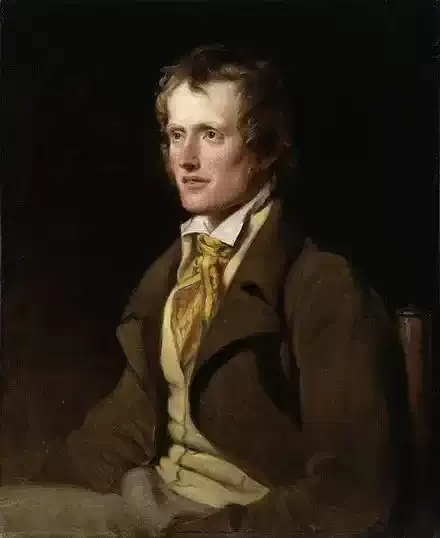
John Clare
Wood Rides
Wood Rides
Who hath not felt the influence that so calms
The weary mind in summers sultry hours
When wandering thickest woods beneath the arms
Of ancient oaks and brushing nameless flowers
That verge the little ride who hath not made
A minutes waste of time and sat him down
Upon a pleasant swell to gaze awhile
On crowding ferns bluebells and hazel leaves
And showers of lady smocks so called by toil
When boys sprote gathering sit on stulps and weave
Garlands while barkmen pill the fallen tree
-Then mid the green variety to start
Who hath (not) met that mood from turmoil free
And felt a placid joy refreshed at heart
Who hath not felt the influence that so calms
The weary mind in summers sultry hours
When wandering thickest woods beneath the arms
Of ancient oaks and brushing nameless flowers
That verge the little ride who hath not made
A minutes waste of time and sat him down
Upon a pleasant swell to gaze awhile
On crowding ferns bluebells and hazel leaves
And showers of lady smocks so called by toil
When boys sprote gathering sit on stulps and weave
Garlands while barkmen pill the fallen tree
-Then mid the green variety to start
Who hath (not) met that mood from turmoil free
And felt a placid joy refreshed at heart
375
Page 1
Next