
Toxic Relationships
Poems in this topic
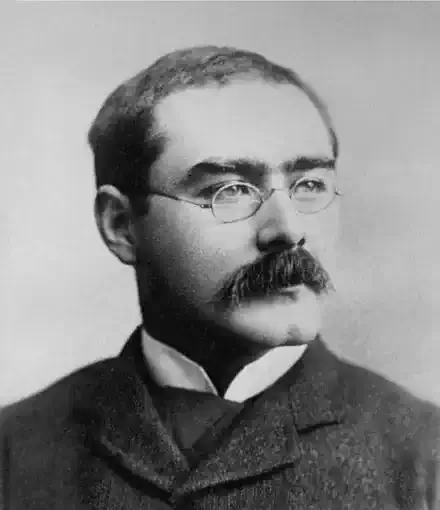
Rudyard Kipling
Delilah
Delilah
We have another viceroy now, -- those days are dead and done
Of Delilah Aberyswith and depraved Ulysses Gunne.
Delilah Aberyswith was a lady -- not too young --
With a perfect taste in dresses and a badly-bitted tongue,
With a thirst for information, and a greater thirst for praise,
And a little house in Simla in the Prehistoric Days.
By reason of her marriage to a gentleman in power,
Delilah was acquainted with the gossip of the hour;
And many little secrets, of the half-official kind,
Were whispered to Delilah, and she bore them all in mind.
She patronized extensively a man, Ulysses Gunne,
Whose mode of earning money was a low and shameful one.
He wrote for certain papers, which, as everybody knows,
Is worse than serving in a shop or scaring off the crows.
He praised her "queenly beauty" first; and, later on, he hinted
At the "vastness of her intellect" with compliment unstinted.
He went with her a-riding, and his love for her was such
That he lent her all his horses and -- she galled them very much.
One day, THEY brewed a secret of a fine financial sort;
It related to Appointments, to a Man and a Report.
'Twas almost wortth the keeping, -- only seven people knew it --
And Gunne rose up to seek the truth and patiently ensue it.
It was a Viceroy's Secret, but -- perhaps the wine was red --
Perhaps an Aged Concillor had lost his aged head --
Perhaps Delilah's eyes were bright -- Delilah's whispers sweet --
The Aged Member told her what 'twere treason to repeat.
Ulysses went a-riding, and they talked of love and flowers;
Ulysses went a-calling, and he called for several hours;
Ulysses went a-waltzing, and Delilah helped him dance --
Ulysses let the waltzes go, and waited for his chance.
The summer sun was setting, and the summer air was still,
The couple went a-walking in the shade of Summer Hill.
The wasteful sunset faded out in turkis-green and gold,
Ulysses pleaded softly, and . . . that bad Delilah told!
Next morn, a startled Empire learnt the all-important news;
Next week, the Aged Councillor was shaking in his shoes.
Next month, I met Delilah and she did not show the least
Hesitation in affirming that Ulysses was a "beast."
* * * * *
We have another Viceroy now, those days are dead and done --
Off, Delilah Aberyswith and most mean Ulysses Gunne!
We have another viceroy now, -- those days are dead and done
Of Delilah Aberyswith and depraved Ulysses Gunne.
Delilah Aberyswith was a lady -- not too young --
With a perfect taste in dresses and a badly-bitted tongue,
With a thirst for information, and a greater thirst for praise,
And a little house in Simla in the Prehistoric Days.
By reason of her marriage to a gentleman in power,
Delilah was acquainted with the gossip of the hour;
And many little secrets, of the half-official kind,
Were whispered to Delilah, and she bore them all in mind.
She patronized extensively a man, Ulysses Gunne,
Whose mode of earning money was a low and shameful one.
He wrote for certain papers, which, as everybody knows,
Is worse than serving in a shop or scaring off the crows.
He praised her "queenly beauty" first; and, later on, he hinted
At the "vastness of her intellect" with compliment unstinted.
He went with her a-riding, and his love for her was such
That he lent her all his horses and -- she galled them very much.
One day, THEY brewed a secret of a fine financial sort;
It related to Appointments, to a Man and a Report.
'Twas almost wortth the keeping, -- only seven people knew it --
And Gunne rose up to seek the truth and patiently ensue it.
It was a Viceroy's Secret, but -- perhaps the wine was red --
Perhaps an Aged Concillor had lost his aged head --
Perhaps Delilah's eyes were bright -- Delilah's whispers sweet --
The Aged Member told her what 'twere treason to repeat.
Ulysses went a-riding, and they talked of love and flowers;
Ulysses went a-calling, and he called for several hours;
Ulysses went a-waltzing, and Delilah helped him dance --
Ulysses let the waltzes go, and waited for his chance.
The summer sun was setting, and the summer air was still,
The couple went a-walking in the shade of Summer Hill.
The wasteful sunset faded out in turkis-green and gold,
Ulysses pleaded softly, and . . . that bad Delilah told!
Next morn, a startled Empire learnt the all-important news;
Next week, the Aged Councillor was shaking in his shoes.
Next month, I met Delilah and she did not show the least
Hesitation in affirming that Ulysses was a "beast."
* * * * *
We have another Viceroy now, those days are dead and done --
Off, Delilah Aberyswith and most mean Ulysses Gunne!
442
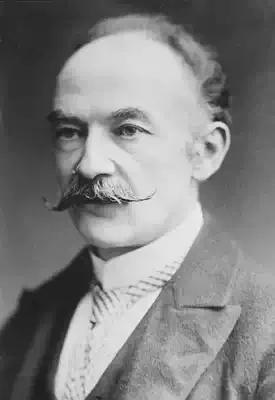
Thomas Hardy
The Fire at Tranter Sweatley’s
The Fire at Tranter Sweatley’s
The Fire at Tranter Sweatley’s
They had long met o’ Zundays—her true love and she—
And at junketings, maypoles, and flings;
But she bode wi’ a thirtover uncle, and he
Swore by noon and by night that her goodman should be
Naibor Sweatley—a gaffer oft weak at the knee
From taking o’ sommat more cheerful than tea—
Who tranted, and moved people’s things.
She cried, “O pray pity me!” Nought would he hear;
Then with wild rainy eyes she obeyed,
She chid when her Love was for clinking off wi’ her.
The pa’son was told, as the season drew near
To throw over pu’pit the names of the peäir
As fitting one flesh to be made.
The wedding-day dawned and the morning drew on;
The couple stood bridegroom and bride;
The evening was passed, and when midnight had gone
The folks horned out, “God save the King,” and anon
The two home-along gloomily hied.
The lover Tim Tankens mourned heart-sick and drear
To be thus of his darling deprived:
He roamed in the dark ath’art field, mound, and mere,
And, a’most without knowing it, found himself near
The house of the tranter, and now of his Dear,
Where the lantern-light showed ’em arrived.
The bride sought her cham’er so calm and so pale
That a Northern had thought her resigned;
But to eyes that had seen her in tide-times of weal,
Like the white cloud o’ smoke, the red battlefield’s vail,
That look spak’ of havoc behind.
The bridegroom yet laitered a beaker to drain,
Then reeled to the linhay for more,
When the candle-snoff kindled some chaff from his grain—
Flames spread, and red vlankers, wi’ might and wi’ main,
And round beams, thatch, and chimley-tun roar.
Young Tim away yond, rafted up by the light,
Through brimble and underwood tears,
Till he comes to the orchet, when crooping thereright
In the lewth of a codlin-tree, bivering wi’ fright,
Wi’ on’y her night-rail to screen her from sight,
His lonesome young Barbree appears.
Her cwold little figure half-naked he views
Played about by the frolicsome breeze,
Her light-tripping totties, her ten little tooes,
All bare and besprinkled wi’ Fall’s chilly dews,
While her great gallied eyes, through her hair hanging loose,
Sheened as stars through a tardle o’ trees.
She eyed en; and, as when a weir-hatch is drawn,
Her tears, penned by terror afore,
With a rushing of sobs in a shower were strawn,
Till her power to pour ’em seemed wasted and gone
From the heft o’ misfortune she bore.
“O Tim, my own Tim I must call ’ee—I will!
All the world ha’ turned round on me so!
Can you help her who loved ’ee, though acting so ill?
Can you pity her misery—feel for her still?
When worse than her body so quivering and chill
Is her heart in its winter o’ woe!
“I think I mid almost ha’ borne it,” she said,
“Had my griefs one by one come to hand;
But O, to be slave to thik husbird for bread,
And then, upon top o’ that, driven to wed,
And then, upon top o’ that, burnt out o’ bed,
Is more than my nater can stand!”
Tim’s soul like a lion ’ithin en outsprung—
(Tim had a great soul when his feelings were wrung)—
“Feel for ’ee, dear Barbree?” he cried;
And his warm working-jacket about her he flung,
Made a back, horsed her up, till behind him she clung
Like a chiel on a gipsy, her figure uphung
By the sleeves that around her he tied.
Over piggeries, and mixens, and apples, and hay,
They lumpered straight into the night;
And finding bylong where a halter-path lay,
At dawn reached Tim’s house, on’y seen on their way
By a naibor or two who were up wi’ the day;
But they gathered no clue to the sight.
Then tender Tim Tankens he searched here and there
For some garment to clothe her fair skin;
But though he had breeches and waistcoats to spare,
He had nothing quite seemly for Barbree to wear,
Who, half shrammed to death, stood and cried on a chair
At the caddle she found herself in.
There was one thing to do, and that one thing he did,
He lent her some clouts of his own,
And she took ’em perforce; and while in ’em she slid,
Tim turned to the winder, as modesty bid,
Thinking, “O that the picter my duty keeps hid
To the sight o’ my eyes mid be shown!”
In the tallet he stowed her; there huddied she lay,
Shortening sleeves, legs, and tails to her limbs;
But most o’ the time in a mortal bad way,
Well knowing that there’d be the divel to pay
If ’twere found that, instead o’ the elements’ prey,
She was living in lodgings at Tim’s.
“Where’s the tranter?” said men and boys; “where can er be?”
“Where’s the tranter?” said Barbree alone.
“Where on e’th is the tranter?” said everybod-y:
They sifted the dust of his perished roof-tree,
And all they could find was a bone.
Then the uncle cried, “Lord, pray have mercy on me!”
And in terror began to repent.
But before ’twas complete, and till sure she was free,
Barbree drew up her loft-ladder, tight turned her key—
Tim bringing up breakfast and dinner and tea—
Till the news of her hiding got vent.
Then followed the custom-kept rout, shout, and flare
Of a skimmington-ride through the naiborhood, ere
Folk had proof o’ wold Sweatley’s decay.
Whereupon decent people all stood in a stare,
Saying Tim and his lodger should risk it, and pair:
So he took her to church. An’ some laughing lads there
Cried to Tim, “After Sweatley!” She said, “I declare
I stand as a maiden to-day!”
The Fire at Tranter Sweatley’s
They had long met o’ Zundays—her true love and she—
And at junketings, maypoles, and flings;
But she bode wi’ a thirtover uncle, and he
Swore by noon and by night that her goodman should be
Naibor Sweatley—a gaffer oft weak at the knee
From taking o’ sommat more cheerful than tea—
Who tranted, and moved people’s things.
She cried, “O pray pity me!” Nought would he hear;
Then with wild rainy eyes she obeyed,
She chid when her Love was for clinking off wi’ her.
The pa’son was told, as the season drew near
To throw over pu’pit the names of the peäir
As fitting one flesh to be made.
The wedding-day dawned and the morning drew on;
The couple stood bridegroom and bride;
The evening was passed, and when midnight had gone
The folks horned out, “God save the King,” and anon
The two home-along gloomily hied.
The lover Tim Tankens mourned heart-sick and drear
To be thus of his darling deprived:
He roamed in the dark ath’art field, mound, and mere,
And, a’most without knowing it, found himself near
The house of the tranter, and now of his Dear,
Where the lantern-light showed ’em arrived.
The bride sought her cham’er so calm and so pale
That a Northern had thought her resigned;
But to eyes that had seen her in tide-times of weal,
Like the white cloud o’ smoke, the red battlefield’s vail,
That look spak’ of havoc behind.
The bridegroom yet laitered a beaker to drain,
Then reeled to the linhay for more,
When the candle-snoff kindled some chaff from his grain—
Flames spread, and red vlankers, wi’ might and wi’ main,
And round beams, thatch, and chimley-tun roar.
Young Tim away yond, rafted up by the light,
Through brimble and underwood tears,
Till he comes to the orchet, when crooping thereright
In the lewth of a codlin-tree, bivering wi’ fright,
Wi’ on’y her night-rail to screen her from sight,
His lonesome young Barbree appears.
Her cwold little figure half-naked he views
Played about by the frolicsome breeze,
Her light-tripping totties, her ten little tooes,
All bare and besprinkled wi’ Fall’s chilly dews,
While her great gallied eyes, through her hair hanging loose,
Sheened as stars through a tardle o’ trees.
She eyed en; and, as when a weir-hatch is drawn,
Her tears, penned by terror afore,
With a rushing of sobs in a shower were strawn,
Till her power to pour ’em seemed wasted and gone
From the heft o’ misfortune she bore.
“O Tim, my own Tim I must call ’ee—I will!
All the world ha’ turned round on me so!
Can you help her who loved ’ee, though acting so ill?
Can you pity her misery—feel for her still?
When worse than her body so quivering and chill
Is her heart in its winter o’ woe!
“I think I mid almost ha’ borne it,” she said,
“Had my griefs one by one come to hand;
But O, to be slave to thik husbird for bread,
And then, upon top o’ that, driven to wed,
And then, upon top o’ that, burnt out o’ bed,
Is more than my nater can stand!”
Tim’s soul like a lion ’ithin en outsprung—
(Tim had a great soul when his feelings were wrung)—
“Feel for ’ee, dear Barbree?” he cried;
And his warm working-jacket about her he flung,
Made a back, horsed her up, till behind him she clung
Like a chiel on a gipsy, her figure uphung
By the sleeves that around her he tied.
Over piggeries, and mixens, and apples, and hay,
They lumpered straight into the night;
And finding bylong where a halter-path lay,
At dawn reached Tim’s house, on’y seen on their way
By a naibor or two who were up wi’ the day;
But they gathered no clue to the sight.
Then tender Tim Tankens he searched here and there
For some garment to clothe her fair skin;
But though he had breeches and waistcoats to spare,
He had nothing quite seemly for Barbree to wear,
Who, half shrammed to death, stood and cried on a chair
At the caddle she found herself in.
There was one thing to do, and that one thing he did,
He lent her some clouts of his own,
And she took ’em perforce; and while in ’em she slid,
Tim turned to the winder, as modesty bid,
Thinking, “O that the picter my duty keeps hid
To the sight o’ my eyes mid be shown!”
In the tallet he stowed her; there huddied she lay,
Shortening sleeves, legs, and tails to her limbs;
But most o’ the time in a mortal bad way,
Well knowing that there’d be the divel to pay
If ’twere found that, instead o’ the elements’ prey,
She was living in lodgings at Tim’s.
“Where’s the tranter?” said men and boys; “where can er be?”
“Where’s the tranter?” said Barbree alone.
“Where on e’th is the tranter?” said everybod-y:
They sifted the dust of his perished roof-tree,
And all they could find was a bone.
Then the uncle cried, “Lord, pray have mercy on me!”
And in terror began to repent.
But before ’twas complete, and till sure she was free,
Barbree drew up her loft-ladder, tight turned her key—
Tim bringing up breakfast and dinner and tea—
Till the news of her hiding got vent.
Then followed the custom-kept rout, shout, and flare
Of a skimmington-ride through the naiborhood, ere
Folk had proof o’ wold Sweatley’s decay.
Whereupon decent people all stood in a stare,
Saying Tim and his lodger should risk it, and pair:
So he took her to church. An’ some laughing lads there
Cried to Tim, “After Sweatley!” She said, “I declare
I stand as a maiden to-day!”
194
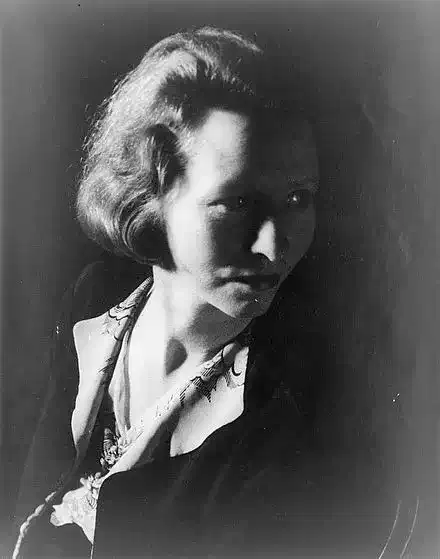
Edna St. Vincent Millay
Bluebeard
Bluebeard
This door you might not open, and you did;
So enter now, and see for what slight thing
You are betrayed... Here is no treasure hid,
No cauldron, no clear crystal mirroring
The sought-for truth, no heads of women slain
For greed like yours, no writhings of distress,
But only what you see... Look yet again—
An empty room, cobwebbed and comfortless.
Yet this alone out of my life I kept
Unto myself, lest any know me quite;
And you did so profane me when you crept
Unto the threshold of this room to-night
That I must never more behold your face.
This now is yours. I seek another place.
This door you might not open, and you did;
So enter now, and see for what slight thing
You are betrayed... Here is no treasure hid,
No cauldron, no clear crystal mirroring
The sought-for truth, no heads of women slain
For greed like yours, no writhings of distress,
But only what you see... Look yet again—
An empty room, cobwebbed and comfortless.
Yet this alone out of my life I kept
Unto myself, lest any know me quite;
And you did so profane me when you crept
Unto the threshold of this room to-night
That I must never more behold your face.
This now is yours. I seek another place.
310

Robert W. Service
Gypsy Jill
Gypsy Jill
They're hanging Bill at eight o' clock,
And millions will applaud.
He killed, and so they have to kill,
Such is the will of God.
His brother Tom is on my bed
To keep me comforted.
I see his bleary, blotchy face,
I hear his sodden snore.
He plans that he can take Bill's place;
I felt worse than a whore
As in his arms I cried all night,
Thinking of poor Bill's plight.
I keep my eyes upon the clock;
It nears the stroke of eight.
I think how bravely Bill will walk
To meet his gallows fate . . .
His loaded gun is in the tent,-I
know now what he meant.
Though Tom is boastful he will wed
With me, no more to part,
I'll put a bullet through his head,
Another through my heart:
At eight, stone-dead we three will be,
--Bill, Tom and me.
They're hanging Bill at eight o' clock,
And millions will applaud.
He killed, and so they have to kill,
Such is the will of God.
His brother Tom is on my bed
To keep me comforted.
I see his bleary, blotchy face,
I hear his sodden snore.
He plans that he can take Bill's place;
I felt worse than a whore
As in his arms I cried all night,
Thinking of poor Bill's plight.
I keep my eyes upon the clock;
It nears the stroke of eight.
I think how bravely Bill will walk
To meet his gallows fate . . .
His loaded gun is in the tent,-I
know now what he meant.
Though Tom is boastful he will wed
With me, no more to part,
I'll put a bullet through his head,
Another through my heart:
At eight, stone-dead we three will be,
--Bill, Tom and me.
174

Dylan Thomas
Into Her Lying Down Head
Into Her Lying Down Head
I
Into her lying down head
His enemies entered bed,
Under the encumbered eyelid,
Through the rippled drum of the hair-buried ear;
And Noah's rekindled now unkind dove
Flew man-bearing there.
Last night in a raping wave
Whales unreined from the green grave
In fountains of origin gave up their love,
Along her innocence glided
Jaun aflame and savagely young King Lear,
Queen Catherine howling bare
And Samson drowned in his hair,
The colossal intimacies of silent
Once seen strangers or shades on a stair;
There the dark blade and wanton sighing her down
To a haycock couch and the scythes of his arms
Rode and whistled a hundred times
Before the crowing morning climbed;
Man was the burning England she was sleep-walking, and the enamouring island
Made her limbs blind by luminous charms,
Sleep to a newborn sleep in a swaddling loin-leaf stroked and sang
And his runaway beloved childlike laid in the acorned sand.
II
There where a numberless tongue
Wound their room with a male moan,
His faith around her flew undone
And darkness hung the walls with baskets of snakes,
A furnace-nostrilled column-membered
Super-or-near man
Resembling to her dulled sense
The thief of adolescence,
Early imaginary half remembered
Oceanic lover alone
Jealousy cannot forget for all her sakes,
Made his bad bed in her good
Night, and enjoyed as he would.
Crying, white gowned, from the middle moonlit stages
Out to the tiered and hearing tide,
Close and far she announced the theft of the heart
In the taken body at many ages,
Trespasser and broken bride
Celebrating at her side
All blood-signed assailing and vanished marriages in which he had no lovely part
Nor could share, for his pride, to the least
Mutter and foul wingbeat of the solemnizing nightpriest
Her holy unholy hours with the always anonymous beast.
III
Two sand grains together in bed,
Head to heaven-circling head,
Singly lie with the whole wide shore,
The covering sea their nightfall with no names;
And out of every domed and soil-based shell
One voice in chains declaims
The female, deadly, and male
Libidinous betrayal,
Golden dissolving under the water veil.
A she bird sleeping brittle by
Her lover's wings that fold to-morrow's flight,
Within the nested treefork
Sings to the treading hawk
Carrion, paradise, chirrup my bright yolk.
A blade of grass longs with the meadow,
A stone lies lost and locked in the lark-high hill.
Open as to the air to the naked shadow
O she lies alone and still,
Innocent between two wars,
With the incestuous secret brother in the seconds to perpetuate the stars,
A man torn up mourns in the sole night.
And the second comers, the severers, the enemies from the deep
Forgotten dark, rest their pulse and bury their dead in her faithless sleep.
I
Into her lying down head
His enemies entered bed,
Under the encumbered eyelid,
Through the rippled drum of the hair-buried ear;
And Noah's rekindled now unkind dove
Flew man-bearing there.
Last night in a raping wave
Whales unreined from the green grave
In fountains of origin gave up their love,
Along her innocence glided
Jaun aflame and savagely young King Lear,
Queen Catherine howling bare
And Samson drowned in his hair,
The colossal intimacies of silent
Once seen strangers or shades on a stair;
There the dark blade and wanton sighing her down
To a haycock couch and the scythes of his arms
Rode and whistled a hundred times
Before the crowing morning climbed;
Man was the burning England she was sleep-walking, and the enamouring island
Made her limbs blind by luminous charms,
Sleep to a newborn sleep in a swaddling loin-leaf stroked and sang
And his runaway beloved childlike laid in the acorned sand.
II
There where a numberless tongue
Wound their room with a male moan,
His faith around her flew undone
And darkness hung the walls with baskets of snakes,
A furnace-nostrilled column-membered
Super-or-near man
Resembling to her dulled sense
The thief of adolescence,
Early imaginary half remembered
Oceanic lover alone
Jealousy cannot forget for all her sakes,
Made his bad bed in her good
Night, and enjoyed as he would.
Crying, white gowned, from the middle moonlit stages
Out to the tiered and hearing tide,
Close and far she announced the theft of the heart
In the taken body at many ages,
Trespasser and broken bride
Celebrating at her side
All blood-signed assailing and vanished marriages in which he had no lovely part
Nor could share, for his pride, to the least
Mutter and foul wingbeat of the solemnizing nightpriest
Her holy unholy hours with the always anonymous beast.
III
Two sand grains together in bed,
Head to heaven-circling head,
Singly lie with the whole wide shore,
The covering sea their nightfall with no names;
And out of every domed and soil-based shell
One voice in chains declaims
The female, deadly, and male
Libidinous betrayal,
Golden dissolving under the water veil.
A she bird sleeping brittle by
Her lover's wings that fold to-morrow's flight,
Within the nested treefork
Sings to the treading hawk
Carrion, paradise, chirrup my bright yolk.
A blade of grass longs with the meadow,
A stone lies lost and locked in the lark-high hill.
Open as to the air to the naked shadow
O she lies alone and still,
Innocent between two wars,
With the incestuous secret brother in the seconds to perpetuate the stars,
A man torn up mourns in the sole night.
And the second comers, the severers, the enemies from the deep
Forgotten dark, rest their pulse and bury their dead in her faithless sleep.
259
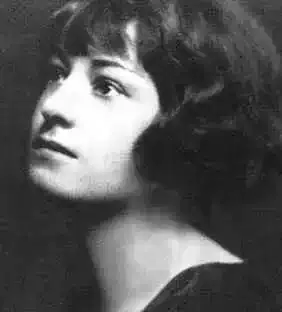
Dorothy Parker
Social Note
Social Note
Lady, lady, should you meet
One whose ways are all discreet,
One who murmurs that his wife
Is the lodestar of his life,
One who keeps assuring you
That he never was untrue,
Never loved another one . . .
Lady, lady, better run!
Lady, lady, should you meet
One whose ways are all discreet,
One who murmurs that his wife
Is the lodestar of his life,
One who keeps assuring you
That he never was untrue,
Never loved another one . . .
Lady, lady, better run!
286
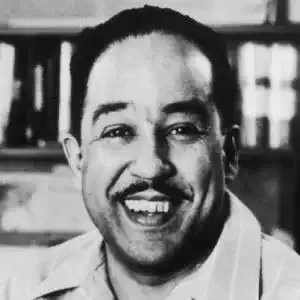
Langston Hughes
-50
-50
I’m all alone in this world, she said,
Ain’t got nobody to share my bed,
Ain’t got nobody to hold my hand—
The truth of the matter’s
I ain’t got no man.
Big Boy opened his mouth and said,
Trouble with you is
You ain’t got no head!
If you had a head and used your mind
You could have me with you
All the time.
She answered, Babe, what must I do?
He said, Share your bed—
And your money, too.
I’m all alone in this world, she said,
Ain’t got nobody to share my bed,
Ain’t got nobody to hold my hand—
The truth of the matter’s
I ain’t got no man.
Big Boy opened his mouth and said,
Trouble with you is
You ain’t got no head!
If you had a head and used your mind
You could have me with you
All the time.
She answered, Babe, what must I do?
He said, Share your bed—
And your money, too.
288

Anonymous
Frankie and Johnnie
Frankie and Johnnie
Frankie and Johnnie were lovers,
O, my Gawd, how they could love,
They swore to be true to each other,
As true as the stars above;
He was her man, but he done her wrong.
Frankie was a good woman,
As everybody knows,
Gave her man a hundred dollars,
To get him a suit of clothes;
He was her man, but he done her wrong.
Frankie and Johnnie went walking,
Johnnie in his bran' new suit,
"Oh, my Gawd," said Frankie,
"But don't my Johnnie look cute?"
He was her man, but he done her wrong.
Frankie went down to Memphis,
Went on the morning train,
Paid a hundred dollars,
Got Johnnie a watch and chain;
He was her man, but he done her wrong.
Frankie lived in a crib-house,
Crib-house with only two doors,
Gave her money to Johnnie,
He spent it on those parlour whores;
He was her man, but he done her wrong.
Frankie went down to the corner,
Went for a bucket of beer,
She said, "Oh, Mr. Bar-tender,
Has my loving Johnnie been here?
He is my man, and he's done me wrong."
"I won't make you no trouble,
I won't tell you no lie,
But I saw Johnnie an hour ago
With a girl named Nellie Bly;
He is your man, and he's doing you wrong."
Frankie went to the hock-shop,
Bought her a big forty-four,
Aimed that gun at the ceiling,
Shot a big hole in the floor;
"Now where's my man that's doing me wrong?"
Frankie went down to the hook-shop,
Looked in at a window so high,
There she saw her Johnnie,
Loving up Nellie Bly,
He was her man, but he done her wrong.
Frankie went up to the front door,
She rang the front-door bell,
Said, "Stand back, all you chippies,
Or I'll blow you all to hell;
I want my man, who's done me wrong."
Frankie went into the hook-shop,
She didn't go there for fun,
'Cause underneath her kimona
She toted that forty-four gun;
He was her man, but he done her wrong.
Frankie looked in at the keyhole,
And there before her eye,
She saw her Johnnie on the sofa,
A loving up Nellie Bly;
He was her man, but he done her wrong.
Frankie threw back her kimona,
Took out the little forty-four,
Roota-toot-toot, three times she shoot,
Right through that hardwood door;
He was her man, but he done her wrong.
Johnnie grabbed off his Stetson,
Said, "Oh, Gawd, Frankie, don't shoot!"
But she pressed hard on the trigger,
And the gun went roota-toot-toot;
He was her man, but he done her wrong.
"Roll me over easy,
Oh, roll me over slow,
Roll me over on my right side,
'Cause my left side hurts me so."
He was her man, but he done her wrong.
"Bring out your rubber-tyred buggy,
Bring out your rubber-tyred hack,
I'll take my man to the graveyard,
But I won't bring him back;
He was my man, but he done me wrong."
They brought out the rubber-tyred hearses,
They brought out the rubber-tyred hack,
Thirteen men went to the graveyard,
But only twelve came back;
He was her man, but he done her wrong.
"Bring 'round a hundred policemen,
Bring 'em around to-day,
And lock me in that jail-house,
Then throw the key away;
I shot my man, 'cause he done me wrong.
"I've saved up a little money,
I'll save up a little more,
I'll send it all to his widow,
And say it's from the girl next door;
He was my man, but he done me wrong."
Frankie went to the madame,
She fell down on her knees,
"Forgive me, Mrs. Halcome,
Forgive me, if you please;
I've killed my man, 'cause he done me wrong."
"Forgive you, Frankie darling?
Forgive you I never can.
Forgive you, Frankie darling,
For shooting your only man?
For he was your man, though he done you wrong."
Frankie went to the coffin,
Looked down at his face,
Said, "Oh, Lord, have mercy on me,
I'd like to take his place;
He was my man, but he done me wrong."
A rubber-tyred buggy,
A rubber-tyred hack,
Took poor Frankie to the jail-house
But it didn't bring her back;
He was her man, but he done her wrong.
Frankie sat in her prison,
Had no electric fan,
Told her little sister,
Never marry no sporting man;
"I had a man, but he done me wrong."
The Sheriff took Frankie to the gallows,
Hung her until she died,
They hung her for killing Johnnie,
And the undertaker waited outside;
She killed her man, 'cause he done her wrong.
Frankie and Johnnie were lovers,
O, my Gawd, how they could love,
They swore to be true to each other,
As true as the stars above;
He was her man, but he done her wrong.
Frankie was a good woman,
As everybody knows,
Gave her man a hundred dollars,
To get him a suit of clothes;
He was her man, but he done her wrong.
Frankie and Johnnie went walking,
Johnnie in his bran' new suit,
"Oh, my Gawd," said Frankie,
"But don't my Johnnie look cute?"
He was her man, but he done her wrong.
Frankie went down to Memphis,
Went on the morning train,
Paid a hundred dollars,
Got Johnnie a watch and chain;
He was her man, but he done her wrong.
Frankie lived in a crib-house,
Crib-house with only two doors,
Gave her money to Johnnie,
He spent it on those parlour whores;
He was her man, but he done her wrong.
Frankie went down to the corner,
Went for a bucket of beer,
She said, "Oh, Mr. Bar-tender,
Has my loving Johnnie been here?
He is my man, and he's done me wrong."
"I won't make you no trouble,
I won't tell you no lie,
But I saw Johnnie an hour ago
With a girl named Nellie Bly;
He is your man, and he's doing you wrong."
Frankie went to the hock-shop,
Bought her a big forty-four,
Aimed that gun at the ceiling,
Shot a big hole in the floor;
"Now where's my man that's doing me wrong?"
Frankie went down to the hook-shop,
Looked in at a window so high,
There she saw her Johnnie,
Loving up Nellie Bly,
He was her man, but he done her wrong.
Frankie went up to the front door,
She rang the front-door bell,
Said, "Stand back, all you chippies,
Or I'll blow you all to hell;
I want my man, who's done me wrong."
Frankie went into the hook-shop,
She didn't go there for fun,
'Cause underneath her kimona
She toted that forty-four gun;
He was her man, but he done her wrong.
Frankie looked in at the keyhole,
And there before her eye,
She saw her Johnnie on the sofa,
A loving up Nellie Bly;
He was her man, but he done her wrong.
Frankie threw back her kimona,
Took out the little forty-four,
Roota-toot-toot, three times she shoot,
Right through that hardwood door;
He was her man, but he done her wrong.
Johnnie grabbed off his Stetson,
Said, "Oh, Gawd, Frankie, don't shoot!"
But she pressed hard on the trigger,
And the gun went roota-toot-toot;
He was her man, but he done her wrong.
"Roll me over easy,
Oh, roll me over slow,
Roll me over on my right side,
'Cause my left side hurts me so."
He was her man, but he done her wrong.
"Bring out your rubber-tyred buggy,
Bring out your rubber-tyred hack,
I'll take my man to the graveyard,
But I won't bring him back;
He was my man, but he done me wrong."
They brought out the rubber-tyred hearses,
They brought out the rubber-tyred hack,
Thirteen men went to the graveyard,
But only twelve came back;
He was her man, but he done her wrong.
"Bring 'round a hundred policemen,
Bring 'em around to-day,
And lock me in that jail-house,
Then throw the key away;
I shot my man, 'cause he done me wrong.
"I've saved up a little money,
I'll save up a little more,
I'll send it all to his widow,
And say it's from the girl next door;
He was my man, but he done me wrong."
Frankie went to the madame,
She fell down on her knees,
"Forgive me, Mrs. Halcome,
Forgive me, if you please;
I've killed my man, 'cause he done me wrong."
"Forgive you, Frankie darling?
Forgive you I never can.
Forgive you, Frankie darling,
For shooting your only man?
For he was your man, though he done you wrong."
Frankie went to the coffin,
Looked down at his face,
Said, "Oh, Lord, have mercy on me,
I'd like to take his place;
He was my man, but he done me wrong."
A rubber-tyred buggy,
A rubber-tyred hack,
Took poor Frankie to the jail-house
But it didn't bring her back;
He was her man, but he done her wrong.
Frankie sat in her prison,
Had no electric fan,
Told her little sister,
Never marry no sporting man;
"I had a man, but he done me wrong."
The Sheriff took Frankie to the gallows,
Hung her until she died,
They hung her for killing Johnnie,
And the undertaker waited outside;
She killed her man, 'cause he done her wrong.
257

Henry Lawson
The Secret Whisky Cure
The Secret Whisky Cure
’Tis no tale of heroism, ’tis no tale of storm and strife,
But of ordinary boozing, and of dull domestic life—
Of the everlasting friction that most husbands must endure—
Tale of nagging and of drinking—and a secret whisky cure.
Name of Jones—perhaps you know him—small house-agent here in town—
(Friend of Smith, you know him also—likewise Robinson and Brown),
Just a hopeless little husband, whose deep sorrows were obscure,
And a bitter nagging Missis—and death seemed the only cure.
’Twas a common sordid marriage, and there’s little new to tell—
Save the pub to him was Heaven and his own home was a hell:
With the office in between them—purgatory to be sure—
And, as far as Jones could make out—well, there wasn’t any cure.
’Twas drink and nag—or nag and drink—whichever you prefer—
Till at last she couldn’t stand him any more than he could her.
Friends and relatives assisted, telling her (with motives pure)
That a legal separation was the only earthly cure.
So she went and saw a lawyer, who, in accents soft and low,
Asked her firstly if her husband had a bank account or no;
But he hadn’t and she hadn’t, they in fact were very poor,
So he bowed her out suggesting she should try some liquor cure.
She saw a drink cure advertised in the Sydney Bulletin—
Cure for brandy, cure for whisky, cure for rum and beer and gin,
And it could be given secret, it was tasteless, swift and sure—
So she purchased half a gallon of that Secret Whisky Cure.
And she put some in his coffee, smiling sweetly all the while,
And he started for the office rather puzzled by the smile—
Smile or frown he’d have a whisky, and you’ll say he was a boor—
But perhaps his wife had given him an overdose of Cure.
And he met a friend he hadn’t seen for seven years or more—
It was just upon the threshold of a private bar-room door—
And they coalised and entered straight away, you may be sure—
But of course they hadn’t reckoned with a Secret Whisky Cure.
Jones, he drank, turned pale, and, gasping, hurried out the back way quick,
Where, to his old chum’s amazement, he was violently sick;
Then they interviewed the landlord, but he swore the drink was pure—
It was only the beginning of the Secret Whisky Cure.
For Jones couldn’t stand the smell of even special whisky blends,
And shunned bar-rooms to the sorrow of his trusty drinking friends:
And they wondered, too, what evil genius had chanced to lure
Him from paths of booze and friendship—never dreaming of a Cure.
He had noticed, too, with terror that a something turned his feet,
When a pub was near, and swung him to the other side the street,
Till he thought the devils had him, and his person they’d immure
In a lunatic asylum where there wasn’t any Cure.
He consulted several doctors who were puzzled by the case—
As they mostly are, but never tell the patient to his face—
Some advised him ‘Try the Mountains for this malady obscure:’
But there wasn’t one could diagnose a Secret Whisky Cure.
And his wife, when he was sober?—Well, she nagged him all the more!
And he couldn’t drown his sorrow in the pewter as of yore:
So he shot himself at Manly and was sat upon by Woore,
And found rest amongst the spirits from the Secret Whisky Cure.
And the moral?—well, ’tis funny—or ’tis woman’s way with men—
She’s remarried to a publican who whacks her now and then,
And they get on fairly happy, he’s a brute and he’s a boor,
But she’s never tried her second with a Secret Whisky Cure.
’Tis no tale of heroism, ’tis no tale of storm and strife,
But of ordinary boozing, and of dull domestic life—
Of the everlasting friction that most husbands must endure—
Tale of nagging and of drinking—and a secret whisky cure.
Name of Jones—perhaps you know him—small house-agent here in town—
(Friend of Smith, you know him also—likewise Robinson and Brown),
Just a hopeless little husband, whose deep sorrows were obscure,
And a bitter nagging Missis—and death seemed the only cure.
’Twas a common sordid marriage, and there’s little new to tell—
Save the pub to him was Heaven and his own home was a hell:
With the office in between them—purgatory to be sure—
And, as far as Jones could make out—well, there wasn’t any cure.
’Twas drink and nag—or nag and drink—whichever you prefer—
Till at last she couldn’t stand him any more than he could her.
Friends and relatives assisted, telling her (with motives pure)
That a legal separation was the only earthly cure.
So she went and saw a lawyer, who, in accents soft and low,
Asked her firstly if her husband had a bank account or no;
But he hadn’t and she hadn’t, they in fact were very poor,
So he bowed her out suggesting she should try some liquor cure.
She saw a drink cure advertised in the Sydney Bulletin—
Cure for brandy, cure for whisky, cure for rum and beer and gin,
And it could be given secret, it was tasteless, swift and sure—
So she purchased half a gallon of that Secret Whisky Cure.
And she put some in his coffee, smiling sweetly all the while,
And he started for the office rather puzzled by the smile—
Smile or frown he’d have a whisky, and you’ll say he was a boor—
But perhaps his wife had given him an overdose of Cure.
And he met a friend he hadn’t seen for seven years or more—
It was just upon the threshold of a private bar-room door—
And they coalised and entered straight away, you may be sure—
But of course they hadn’t reckoned with a Secret Whisky Cure.
Jones, he drank, turned pale, and, gasping, hurried out the back way quick,
Where, to his old chum’s amazement, he was violently sick;
Then they interviewed the landlord, but he swore the drink was pure—
It was only the beginning of the Secret Whisky Cure.
For Jones couldn’t stand the smell of even special whisky blends,
And shunned bar-rooms to the sorrow of his trusty drinking friends:
And they wondered, too, what evil genius had chanced to lure
Him from paths of booze and friendship—never dreaming of a Cure.
He had noticed, too, with terror that a something turned his feet,
When a pub was near, and swung him to the other side the street,
Till he thought the devils had him, and his person they’d immure
In a lunatic asylum where there wasn’t any Cure.
He consulted several doctors who were puzzled by the case—
As they mostly are, but never tell the patient to his face—
Some advised him ‘Try the Mountains for this malady obscure:’
But there wasn’t one could diagnose a Secret Whisky Cure.
And his wife, when he was sober?—Well, she nagged him all the more!
And he couldn’t drown his sorrow in the pewter as of yore:
So he shot himself at Manly and was sat upon by Woore,
And found rest amongst the spirits from the Secret Whisky Cure.
And the moral?—well, ’tis funny—or ’tis woman’s way with men—
She’s remarried to a publican who whacks her now and then,
And they get on fairly happy, he’s a brute and he’s a boor,
But she’s never tried her second with a Secret Whisky Cure.
280
Henry Lawson
The Cab Lamps
The Cab Lamps
The crescent moon and clock tower are fair above the wall
Across the smothered lanes of ’Loo, the stifled vice and all,
And in the shadow yonder—like cats that wait for scraps—
The crowding cabs seem waiting—for you and me, perhaps.
The cab lamps are watching as they watched for you and me,
The cab lamps are a-watching and they watch unblinkingly.
The sea breeze in Macleay Street and star-angels over all,
But the slinking cabs of darkness keep their watch beside the wall.
Oh! the years we slipped like months—and the months like a day—
When our cabs slid from the stand—touched the kerb and sped away—
Oh! the cloak on girlish shoulders—Oh! the theatres and light!
And the private rooms and supper that were all in a night!
Oh! the rickshaw in Colombo! And the flat that no one knew,
Where the cab lamps watched Haymarket—London cabs for me and you.
Oh! the gay run “Home” by Paris when the world was ours to play
And the wild run back by Frisco that seems all in a day.
Oh! the cab lamps and rose curtains, when the lie called love seemed true,
While an honest wife and husband suffered by the lanes of ’Loo.
Oh! the health and strength and beauty and the money with its power—
And those two good lives we ruined that was all in an hour.
But the night policeman’s coming with a sharp suspicious eye,
And he’d shift us “quick and lively” to the sweet by and by.
So we’ll seek our frowsy bedroom, if the old hag lets us through—
Where our folks died broken-hearted in the cruel lanes of ’Loo.
The cab lamps are watching as they watched across the sea,
The cab lamps are watching, and they watch for you and me.
For you and me they waited, when the thing called love seemed true,
But the bull’s-eye of our midnight must not flash on me—and you.
The crescent moon and clock tower are fair above the wall
Across the smothered lanes of ’Loo, the stifled vice and all,
And in the shadow yonder—like cats that wait for scraps—
The crowding cabs seem waiting—for you and me, perhaps.
The cab lamps are watching as they watched for you and me,
The cab lamps are a-watching and they watch unblinkingly.
The sea breeze in Macleay Street and star-angels over all,
But the slinking cabs of darkness keep their watch beside the wall.
Oh! the years we slipped like months—and the months like a day—
When our cabs slid from the stand—touched the kerb and sped away—
Oh! the cloak on girlish shoulders—Oh! the theatres and light!
And the private rooms and supper that were all in a night!
Oh! the rickshaw in Colombo! And the flat that no one knew,
Where the cab lamps watched Haymarket—London cabs for me and you.
Oh! the gay run “Home” by Paris when the world was ours to play
And the wild run back by Frisco that seems all in a day.
Oh! the cab lamps and rose curtains, when the lie called love seemed true,
While an honest wife and husband suffered by the lanes of ’Loo.
Oh! the health and strength and beauty and the money with its power—
And those two good lives we ruined that was all in an hour.
But the night policeman’s coming with a sharp suspicious eye,
And he’d shift us “quick and lively” to the sweet by and by.
So we’ll seek our frowsy bedroom, if the old hag lets us through—
Where our folks died broken-hearted in the cruel lanes of ’Loo.
The cab lamps are watching as they watched across the sea,
The cab lamps are watching, and they watch for you and me.
For you and me they waited, when the thing called love seemed true,
But the bull’s-eye of our midnight must not flash on me—and you.
261