
Sky, Stars and Universe
Poems in this topic
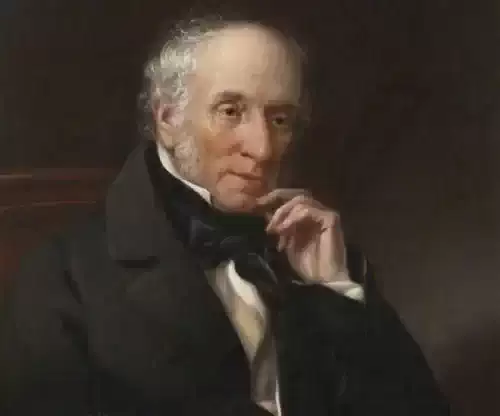
William Wordsworth
The Simplon Pass
The Simplon Pass
-Brook and road
Were fellow-travellers in this gloomy Pass,
And with them did we journey several hours
At a slow step. The immeasurable height
Of woods decaying, never to be decayed,
The stationary blasts of waterfalls,
And in the narrow rent, at every turn,
Winds thwarting winds bewildered and forlorn,
The torrents shooting from the clear blue sky,
The rocks that muttered close upon our ears,
Black drizzling crags that spake by the wayside
As if a voice were in them, the sick sight
And giddy prospect of the raving stream,
The unfettered clouds and region of the heavens,
Tumult and peace, the darkness and the light--
Were all like workings of one mind, the features
Of the same face, blossoms upon one tree,
Characters of the great Apocalypse,
The types and symbols of Eternity,
Of first and last, and midst, and without end.
-Brook and road
Were fellow-travellers in this gloomy Pass,
And with them did we journey several hours
At a slow step. The immeasurable height
Of woods decaying, never to be decayed,
The stationary blasts of waterfalls,
And in the narrow rent, at every turn,
Winds thwarting winds bewildered and forlorn,
The torrents shooting from the clear blue sky,
The rocks that muttered close upon our ears,
Black drizzling crags that spake by the wayside
As if a voice were in them, the sick sight
And giddy prospect of the raving stream,
The unfettered clouds and region of the heavens,
Tumult and peace, the darkness and the light--
Were all like workings of one mind, the features
Of the same face, blossoms upon one tree,
Characters of the great Apocalypse,
The types and symbols of Eternity,
Of first and last, and midst, and without end.
237
William Wordsworth
Simplon Pass, The
Simplon Pass, The
------Brook and road
Were fellow-travellers in this gloomy Pass,
And with them did we journey several hours
At a slow step. The immeasurable height
Of woods decaying, never to be decayed,
The stationary blasts of waterfalls,
And in the narrow rent, at every turn,
Winds thwarting winds bewildered and forlorn,
The torrents shooting from the clear blue sky,
The rocks that muttered close upon our ears,
Black drizzling crags that spake by the wayside
As if a voice were in them, the sick sight
And giddy prospect of the raving stream,
The unfettered clouds and region of the heavens,
Tumult and peace, the darkness and the light--
Were all like workings of one mind, the features
Of the same face, blossoms upon one tree,
Characters of the great Apocalypse,
The types and symbols of Eternity,
Of first, and last, and midst, and without end.
------Brook and road
Were fellow-travellers in this gloomy Pass,
And with them did we journey several hours
At a slow step. The immeasurable height
Of woods decaying, never to be decayed,
The stationary blasts of waterfalls,
And in the narrow rent, at every turn,
Winds thwarting winds bewildered and forlorn,
The torrents shooting from the clear blue sky,
The rocks that muttered close upon our ears,
Black drizzling crags that spake by the wayside
As if a voice were in them, the sick sight
And giddy prospect of the raving stream,
The unfettered clouds and region of the heavens,
Tumult and peace, the darkness and the light--
Were all like workings of one mind, the features
Of the same face, blossoms upon one tree,
Characters of the great Apocalypse,
The types and symbols of Eternity,
Of first, and last, and midst, and without end.
208
William Wordsworth
Peter Bell, A Tale
Peter Bell, A Tale
PROLOGUE
There's something in a flying horse,
There's something in a huge balloon;
But through the clouds I'll never float
Until I have a little Boat,
Shaped like the crescent-moon.
And now I 'have' a little Boat,
In shape a very crescent-moon
Fast through the clouds my boat can sail;
But if perchance your faith should fail,
Look up--and you shall see me soon!
The woods, my Friends, are round you roaring,
Rocking and roaring like a sea;
The noise of danger's in your ears,
And ye have all a thousand fears
Both for my little Boat and me!
Meanwhile untroubled I admire
The pointed horns of my canoe;
And, did not pity touch my breast,
To see how ye are all distrest,
Till my ribs ached, I'd laugh at you!
Away we go, my Boat and I--
Frail man ne'er sate in such another;
Whether among the winds we strive,
Or deep into the clouds we dive,
Each is contented with the other.
Away we go--and what care we
For treasons, tumults, and for wars?
We are as calm in our delight
As is the crescent-moon so bright
Among the scattered stars.
Up goes my Boat among the stars
Through many a breathless field of light,
Through many a long blue field of ether,
Leaving ten thousand stars beneath her:
Up goes my little Boat so bright!
The Crab, the Scorpion, and the Bull--
We pry among them all; have shot
High o'er the red-haired race of Mars,
Covered from top to toe with scars;
Such company I like it not!
The towns in Saturn are decayed,
And melancholy Spectres throng them;--
The Pleiads, that appear to kiss
Each other in the vast abyss,
With joy I sail among them.
Swift Mercury resounds with mirth,
Great Jove is full of stately bowers;
But these, and all that they contain,
What are they to that tiny grain,
That little Earth of ours?
Then back to Earth, the dear green Earth:--
Whole ages if I here should roam,
The world for my remarks and me
Would not a whit the better be;
I've left my heart at home.
See! there she is, the matchless Earth!
There spreads the famed Pacific Ocean!
Old Andes thrusts yon craggy spear
Through the grey clouds; the Alps are here,
Like waters in commotion!
Yon tawny slip is Libya's sands;
That silver thread the river Dnieper!
And look, where clothed in brightest green
Is a sweet Isle, of isles the Queen;
Ye fairies, from all evil keep her!
And see the town where I was born!
Around those happy fields we span
In boyish gambols;--I was lost
Where I have been, but on this coast
I feel I am a man.
Never did fifty things at once
Appear so lovely, never, never;--
How tunefully the forests ring!
To hear the earth's soft murmuring
Thus could I hang for ever!
"Shame on you!" cried my little Boat,
"Was ever such a homesick Loon,
Within a living Boat to sit,
And make no better use of it;
A Boat twin-sister of the crescent-moon!
"Ne'er in the breast of full-grown Poet
Fluttered so faint a heart before;--
Was it the music of the spheres
That overpowered your mortal ears?
--Such din shall trouble them no more.
"These nether precincts do not lack
Charms of their own;--then come with me;
I want a comrade, and for you
There's nothing that I would not do;
Nought is there that you shall not see.
"Haste! and above Siberian snows
We'll sport amid the boreal morning;
Will mingle with her lustres gliding
Among the stars, the stars now hiding,
And now the stars adorning.
"I know the secrets of a land
Where human foot did never stray;
Fair is that land as evening skies,
And cool, though in the depth it lies
Of burning Africa.
"Or we'll into the realm of Faery,
Among the lovely shades of things;
The shadowy forms of mountains bare,
And streams, and bowers, and ladies fair,
The shades of palaces and kings!
"Or, if you thirst with hardy zeal
Less quiet regions to explore,
Prompt voyage shall to you reveal
How earth and heaven are taught to feel
The might of magic lore!"
"My little vagrant Form of light,
My gay and beautiful Canoe,
Well have you played your friendly part;
As kindly take what from my heart
Experience forces--then adieu!
"Temptation lurks among your words;
But, while these pleasures you're pursuing
Without impediment or let,
No wonder if you quite forget
What on the earth is doing.
"There was a time when all mankind
Did listen with a faith sincere
To tuneful tongues in mystery versed;
'Then' Poets fearlessly rehearsed
The wonders of a wild career.
"Go--(but the world's a sleepy world,
And 'tis, I fear, an age too late)
Take with you some ambitious Youth!
For, restless Wanderer! I, in truth,
Am all unfit to be your mate.
"Long have I loved what I behold,
The night that calms, the day that cheers;
The common growth of mother-earth
Suffices me--her tears, her mirth,
Her humblest mirth and tears.
"The dragon's wing, the magic ring,
I shall not covet for my dower,
If I along that lowly way
With sympathetic heart may stray,
And with a soul of power.
"These given, what more need I desire
To stir, to soothe, or elevate?
What nobler marvels than the mind
May in life's daily prospect find,
May find or there create?
"A potent wand doth Sorrow wield;
What spell so strong as guilty Fear!
Repentance is a tender Sprite;
If aught on earth have heavenly might,
'Tis lodged within her silent tear.
"But grant my wishes,--let us now
Descend from this ethereal height;
Then take thy way, adventurous Skiff,
More daring far than Hippogriff,
And be thy own delight!
"To the stone-table in my garden,
Loved haunt of many a summer hour,
The Squire is come: his daughter Bess
Beside him in the cool recess
Sits blooming like a flower.
"With these are many more convened;
They know not I have been so far;--
I see them there, in number nine,
Beneath the spreading Weymouth-pine!
I see them--there they are!
"There sits the Vicar and his Dame;
And there my good friend, Stephen Otter;
And, ere the light of evening fail,
To them I must relate the Tale
Of Peter Bell the Potter."
Off flew the Boat--away she flees,
Spurning her freight with indignation!
And I, as well as I was able,
On two poor legs, toward my stone-table
Limped on with sore vexation.
"O, here he is!" cried little Bess--
She saw me at the garden-door;
"We've waited anxiously and long,"
They cried, and all around me throng,
Full nine of them or more!
"Reproach me not--your fears be still--
Be thankful we again have met;--
Resume, my Friends! within the shade
Your seats, and quickly shall be paid
The well-remembered debt."
I spake with faltering voice, like one
Not wholly rescued from the pale
Of a wild dream, or worse illusion;
But, straight, to cover my confusion,
Began the promised Tale.
PART FIRST
ALL by the moonlight river side
Groaned the poor Beast--alas! in vain;
The staff was raised to loftier height,
And the blows fell with heavier weight
As Peter struck--and struck again.
"Hold!" cried the Squire, "against the rules
Of common sense you're surely sinning;
This leap is for us all too bold;
Who Peter was, let that be told,
And start from the beginning."
----"A Potter, Sir, he was by trade,"
Said I, becoming quite collected;
"And wheresoever he appeared,
Full twenty times was Peter feared
For once that Peter was respected.
"He, two-and-thirty years or more,
Had been a wild and woodland rover;
Had heard the Atlantic surges roar
On farthest Cornwall's rocky shore,
And trod the cliffs of Dover.
"And he had seen Caernarvon's towers,
And well he knew the spire of Sarum;
And he had been where Lincoln bell
Flings o'er the fen that ponderous knell--
A far-renowned alarum!
"At Doncaster, at York, and Leeds,
And merry Carlisle had be been;
And all along the Lowlands fair,
All through the bonny shire of Ayr
And far as Aberdeen.
"And he had been at Inverness;
And Peter, by the mountain-rills,
Had danced his round with Highland lasses;
And he had lain beside his asses
On lofty Cheviot Hills:
"And he had trudged through Yorkshire dales,
Among the rocks and winding 'scars',
Where deep and low the hamlets lie
Beneath their little patch of sky
And little lot of stars:
"And all along the indented coast,
Bespattered with the salt-sea foam;
Where'er a knot of houses lay
On headland, or in hollow bay;--
Sure never man like him did roam!
"As well might Peter, in the Fleet,
Have been fast bound, a begging debtor;--
He travelled here, he travelled there,--
But not the value of a hair
Was heart or head the better.
"He roved among the vales and streams,
In the green wood and hollow dell;
They were his dwellings night and day,--
But nature ne'er could find the way
Into the heart of Peter Bell.
"In vain, through every changeful year,
Did Nature lead him as before;
A primrose by a river's brim
A yellow primrose was to him,
And it was nothing more.
"Small change it made on Peter's heart
To see his gentle panniered train
With more than vernal pleasure feeding,
Where'er the tender grass was leading
Its earliest green along the lane.
"In vain, through water, earth, and air,
The soul of happy sound was spread,
When Peter on some April morn,
Beneath the broom or budding thorn,
Made the warm earth his lazy bed.
"At noon, when, by the forest's edge
He lay beneath the branches high,
The soft blue shy did never melt
Into his heart; he never felt
The witchery of the soft blue sky!
"On a fair prospect some have looked
And felt, as I have heard them say,
As if the moving time had been
A thing as steadfast as the scene
On which they gazed themselves away.
"Within the breast of Peter Bell
These silent raptures found no place;
He was a Carl as wild and rude
As ever hue-and-cry pursued,
As ever ran a felon's race.
"Of all that lead a lawless life,
Of all that love their lawless lives,
In city or in village small,
He was the wildest far of all;--
He had a dozen wedded wives.
"Nay, start not!--wedded wives--and twelve!
But how one wife could e'er come near him,
In simple truth I cannot tell;
For, be it said of Peter Bell
To see him was to fear him.
"Though Nature could not touch his heart
By lovely forms, and silent weather,
And tender sounds, yet you might see
At once, that Peter Bell and she
Had often been together.
"A savage wildness round him hung
As of a dweller out of doors;
In his whole figure and his mien
A savage character was seen
Of mountains and of dreary moors.
"To all the unshaped half-human thoughts
Which solitary Nature feeds
'Mid summer storms or winter's ice,
Had Peter joined whatever vice
The cruel city breeds.
"His face was keen as is the wind
That cuts along the hawthorn-fence;--
Of courage you saw little there,
But, in its stead, a medley air
Of cunning and of impudence.
"He had a dark and sidelong walk,
And long and slouching was his gait;
Beneath his looks so bare and bold,
You might perceive, his spirit cold
Was playing with some inward bait.
"His forehead wrinkled was and furred;
A work, one half of which was done
By thinking of his 'whens' and 'hows;'
And half, by knitting of his brows
Beneath the glaring sun.
"There was a hardness in his cheek,
There was a hardness in his eye,
As if the man had fixed his face,
In many a solitary place,
Against the wind and open sky!"
ONE NIGHT, (and now my little Bess!
We've reached at last the promised Tale:)
One beautiful November night,
When the full moon was shining bright
Upon the rapid river Swale,
Along the river's winding banks
Peter was travelling all alone;--
Whether to buy or sell, or led
By pleasure running in his head,
To me was never known.
He trudged along through copse and brake,
He trudged along o'er hill and dale;
Nor for the moon cared he a tittle,
And for the stars he cared as little,
And for the murmuring river Swale.
But, chancing to espy a path
That promised to cut short the way
As many a wiser man hath done,
He left a trusty guide for one
That might his steps betray.
To a thick wood he soon is brought
Where cheerily his course he weaves,
And whistling loud may yet be heard,
Though often buried, like a bird
Darkling, among the boughs and leaves.
But quickly Peter's mood is changed,
And on he drives with cheeks that burn
In downright fury and in wrath;--
There's little sign the treacherous path
Will to the road return!
The path grows dim, and dimmer still;
Now up, now down, the Rover wends,
With all the sail that he can carry,
Till brought to a deserted quarry--
And there the pathway ends.
He paused--for shadows of strange shape,
Massy and black, before him lay;
But through the dark, and through the cold,
And through the yawning fissures old,
Did Peter boldly press his way
Right through the quarry;--and behold
A scene of soft and lovely hue!
Where blue and grey, and tender green,
Together make as sweet a scene
As ever human eye did view.
Beneath the clear blue sky he saw
A little field of meadow ground;
But field or meadow name it not;
Call it of earth a small green plot,
With rocks encompassed round,
The Swale flowed under the grey rocks,
But he flowed quiet and unseen;--
You need a strong and stormy gale
To bring the noises of the Swale
To that green spot, so calm and green!
And is there no one dwelling here,
No hermit with his beads and glass?
And does no little cottage look
Upon this soft and fertile nook?
Does no one live near this green grass?
Across the deep and quiet spot
Is Peter driving through the grass--
And now has reached the skirting trees;
When, turning round his head, he sees
A solitary Ass.
"A Prize!" cries Peter--but he first
Must spy about him far and near:
There's not a single house in sight,
No woodman's hut, no cottage light--
Peter, you need not fear!
There's nothing to be seen but woods,
And rocks that spread a hoary gleam,
And this one Beast, that from the bed
Of the green meadow hangs his head
Over the silent stream.
His head is with a halter bound;
The halter seizing, Peter leapt
Upon the Creature's back, and plied
With ready heels his shaggy side;
But still the Ass his station kept.
Then Peter gave a sudden jerk,
A jerk that from a dungeon-floor
Would have pulled up an iron ring;
But still the heavy-headed Thing
Stood just as he had stood before!
Quoth Peter, leaping from his seat,
"There is some plot against me laid;"
Once more the little meadow-ground
And all the hoary cliffs around
He cautiously surveyed,
All, all is silent--rocks and woods,
All still and silent--far and near!
Only the Ass, with motion dull,
Upon the pivot of his skull
Turns round his long left ear.
Thought Peter, What can mean all this?
Some ugly witchcraft must be here!
--Once more the Ass, with motion dull,
Upon the pivot of his skull
Turned round his long left ear.
Suspicion ripened into dread;
Yet with deliberate action slow,
His staff high-raising, in the pride
Of skill, upon the sounding hide,
He dealt a sturdy blow.
The poor Ass staggered with the shock;
And then, as if to take his ease,
In quiet uncomplaining mood,
Upon the spot where he had stood,
Dropped gently down upon his knees:
As gently on his side he fell;
And by the river's brink did lie;
And, while he lay like one that mourned,
The patient Beast on Peter turned
His shining hazel eye.
'Twas but one mild, reproachful look,
A look more tender than severe;
And straight in sorrow, not in dread,
He turned the eye-ball in his head
Towards the smooth river deep and clear.
Upon the Beast the sapling rings;
His lank sides heaved, his limbs they stirred;
He gave a groan, and then another,
Of that which went before the brother,
And then he gave a third.
All by the moonlight river side
He gave three miserable groans;
And not till now hath Peter seen
How gaunt the Creature is,--how lean
And sharp his staring bones!
With legs stretched out and stiff he lay:--
No word of kind commiseration
Fell at the sight from Peter's tongue;
With hard contempt his heart was wrung,
With hatred and vexation.
The meagre beast lay still as death;
And Peter's lips with fury quiver;
Quoth he, "You little mulish dog,
I'll fling your carcase like a log
Head-foremost down the river!"
An impious oath confirmed the threat--
Whereat from the earth on which he lay
To all the echoes, south and north,
And east and west, the Ass sent forth
A long and clamorous bray!
This outcry, on the heart of Peter,
Seems like a note of joy to strike,--
Joy at the heart of Peter knocks;
But in the echo of the rocks
Was something Peter did not like.
Whether to cheer his coward breast,
Or that he could not break the chain,
In this serene and solemn hour,
Twined round him by demoniac power,
To the blind work he turned again.
Among the rocks and winding crags;
Among the mountains far away;
Once more the ass did lengthen out
More ruefully a deep-drawn shout,
The hard dry see-saw of his horrible bray!
What is there now in Peter's heart!
Or whence the might of this strange sound?
The moon uneasy looked and dimmer,
The broad blue heavens appeared to glimmer,
And the rocks staggered all around--
From Peter's hand the sapling dropped!
Threat has he none to execute;
"If any one should come and see
That I am here, they'll think," quoth he,
"I'm helping this poor dying brute."
He scans the Ass from limb to limb,
And ventures now to uplift his eyes;
More steady looks the moon, and clear
More like themselves the rocks appear
And touch more quiet skies.
His scorn returns--his hate revives;
He stoops the Ass's neck to seize
With malice--that again takes flight;
For in the pool a startling sight
Meets him, among the inverted trees.
Is it the moon's distorted face?
The ghost-like image of a cloud?
Is it a gallows there portrayed?
Is Peter of himself afraid?
Is it a coffin,--or a shroud?
A grisly idol hewn in stone?
Or imp from witch's lap let fall?
Perhaps a ring of shining fairies?
Such as pursue their feared vagaries
In sylvan bower, or haunted hall?
Is it a fiend that to a stake
Of fire his desperate self is tethering?
Or stubborn spirit doomed to yell
In solitary ward or cell,
Ten thousand miles from all his brethren?
Never did pulse so quickly throb,
And never heart so loudly panted;
He looks, he cannot choose but look;
Like some one reading in a book--
A book that is enchanted.
Ah, well-a-day for Peter Bell!
He will be turned to iron soon,
Meet Statue for the court of Fear!
His hat is up--and every hair
Bristles, and whitens in the moon!
He looks, he ponders, looks again;
He sees a motion--hears a groan;
His eyes will burst--his heart will break--
He gives a loud and frightful shriek,
And back he falls, as if his life were flown!
PART SECOND
WE left our Hero in a trance,
Beneath the alders, near the river;
The Ass is by the river-side,
And, where the feeble breezes glide,
Upon the stream the moonbeams quiver.
A happy respite! but at length
He feels the glimmering of the moon;
Wakes with glazed eve. and feebly signing--
To sink, perhaps, where he is lying,
Into a second swoon!
He lifts his head, he sees his staff;
He touches--'tis to him a treasure!
Faint recollection seems to tell
That he is yet where mortals dwell--
A thought received with languid pleasure!
His head upon his elbow propped,
Becoming less and less perplexed,
Sky-ward he looks--to rock and wood--
And then--upon the glassy flood
His wandering eye is fixed.
Thought he, that is the face of one
In his last sleep securely bound!
So toward the stream his head he bent,
And downward thrust his staff, intent
The river's depth to sound.
'Now'--like a tempest-shattered bark,
That overwhelmed and prostrate lies,
And in a moment to the verge
Is lifted of a foaming surge--
Full suddenly the Ass doth rise!
His staring bones all shake with joy,
And close by Peter's side he stands:
While Peter o'er the river bends,
The little Ass his neck extends,
And fondly licks his hands.
Such life is in the Ass's eyes,
Such life is in his limbs and ears;
That Peter Bell, if he had been
The veriest coward ever seen,
Must now have thrown aside his fears.
The Ass looks on--and to his work
Is Peter quietly resigned;
He touches here--he touches there--
And now among the dead man's hair
His sapling Peter has entwined.
He pulls--and looks--and pulls again;
And he whom the poor Ass had lost,
The man who had been four days dead,
Head-foremost from the river's bed
Uprises like a ghost!
And Peter draws him to dry land;
And through the brain of Peter pass
Some poignant twitches, fast and faster,
"No doubt," quoth he, "he is the Master
Of this poor miserable Ass!"
The meagre Shadow that looks on--
What would he now? what is he doing?
His sudden fit of joy is flown,--
He on his knees hath laid him down,
As if he were his grief renewing;
But no--that Peter on his back
Must mount, he shows well as he can:
Thought Peter then, come weal or woe,
I'll do what he would have me do,
In pity to this poor drowned man.
With that resolve he boldly mounts
Upon the pleased and thankful Ass;
And then, without a moment's stay,
That earnest Creature turned away
Leaving the body on the grass.
Intent upon his faithful watch,
The Beast four days and nights had past;
A sweeter meadow ne'er was seen,
And there the Ass four days had been,
Nor ever once did break his fast:
Yet firm his step, and stout his heart;
The mead is crossed--the quarry's mouth
Is reached; but there the trusty guide
Into a thicket turns aside,
And deftly ambles towards the south.
When hark a burst of doleful sound!
And Peter honestly might say,
The like came never to his ears,
Though he has been, full thirty years,
A rover--night and day!
'Tis not a plover of the moors,
'Tis not a bittern of the fen;
Nor can it be a barking fox,
Nor night-bird chambered in the rocks,
Nor wild-cat in a woody glen!
The Ass is startled--and stops short
Right in the middle of the thicket;
And Peter, wont to whistle loud
Whether alone or in a crowd,
Is silent as a silent cricket.
What ails you now, my little Bess?
Well may you tremble and look grave!
This cry--that rings along the wood,
This cry--that floats adown the flood,
Comes from the entrance of a cave:
I see a blooming Wood-boy there,
And if I had the power to say
How sorrowful the wanderer is,
Your heart would be as sad as his
Till you had kissed his tears away!
Grasping a hawthorn branch in hand,
All bright with berries ripe and red,
Into the cavern's mouth he peeps;
Thence back into the moonlight creeps;
Whom seeks he--whom?--the silent dead:
His father!--Him doth he require--
Him hath he sought with fruitless pains,
Among the rocks, behind the trees;
Now creeping on his hands and knees,
Now running o'er the open plains.
And hither is he come at last,
When he through such a day has gone,
By this dark cave to be distrest
Like a poor bird--her plundered nest
Hovering around with dolorous moan!
Of that intense and piercing cry
The listening Ass conjectures well;
Wild as it is, he there can read
Some intermingled notes that plead
With touches irresistible.
But Peter--when he saw the Ass
Not only stop but turn, and change
The cherished tenor of his pace
That lamentable cry to chase--
It wrought in him conviction strange;
A faith that, for the dead man's sake
And this poor slave who loved him well,
Vengeance upon his head will fall,
Some visitation worse than all
Which ever till this night befell.
Meanwhile the Ass to reach his home,
Is striving stoutly as he may;
But, while he climbs the woody hill,
The cry grows weak--and weaker still;
And now at last it dies away.
So with his freight the Creature turns
Into a gloomy grove of beech,
Along the shade with footsteps true
Descending slowly, till the two
The open moonlight reach.
And there, along the narrow dell,
A fair smooth pathway you discern,
A length of green and open road--
As if it from a fountain flowed--
Winding away between the fern.
The rocks that tower on either side
Build up a wild fantastic scene;
Temples like those among the Hindoos,
And mosques, and spires, and abbey windows,
And castles all with ivy green!
And, while the Ass pursues his way,
Along this solitary dell,
As pensively his steps advance,
The mosques and spires change countenance
And look at Peter Bell!
That unintelligible cry
Hath left him high in preparation,--
Convinced that he, or soon or late,
This very night will meet his fate--
And so he sits in expectation!
The strenuous Animal hath clomb
With the green path; and now he wends
Where, shining like the smoothest sea,
In undisturbed immensity
A level plain extends.
But whence this faintly-rustling sound
By which the journeying pair are chased?
--A withered leaf is close behind,
Light plaything for the sportive wind
Upon that solitary waste.
When Peter spied the moving thing,
It only doubled his distress;
"Where there is not a bush or tree,
The very leaves they follow me--
So huge hath been my wickedness!"
To a close lane they now are come,
Where, as before, the enduring Ass
Moves on without a moment's stop,
Nor once turns round his head to crop
A bramble-leaf or blade of grass.
Between the hedges as they go,
The white dust sleeps upon the lane;
And Peter, ever and anon
Back-looking, sees, upon a stone,
Or in the dust, a crimson stain.
A stain--as of a drop of blood
By moonlight made more faint and wan;
Ha! why these sinkings of despair?
He knows not how the blood comes there--
And Peter is a wicked man.
At length he spies a bleeding wound,
Where he had struck the Ass's head;
He sees the blood, knows what it is,--
A glimpse of sudden joy was his,
But then it quickly fled;
Of him whom sudden death had seized
He thought,--of thee, O faithful Ass!
And once again those ghastly pains,
Shoot to and fro through heart and reins,
And through his brain like lightning pass.
PART THIRD
I'VE heard of one, a gentle Soul,
Though given to sadness and to gloom,
And for the fact will vouch,--one night
It chanced that by a taper's light
This man was reading in his room;
Bending, as you or I might bend
At night o'er any pious book,
When sudden blackness overspread
The snow-white page on which he read,
And made the good man round him look.
The chamber walls were dark all round,--
And to his book he turned again;
--The light had left the lonely taper,
And formed itself upon the paper
Into large letters--bright and plain!
The godly book was in his hand--
And, on the page, more black than coal,
Appeared, set forth in strange array,
A 'word'--which to his dying day
Perplexed the good man's gentle soul.
The ghostly word, thus plainly seen,
Did never from his lips depart;
But he hath said, poor gentle wight!
It brought full many a sin to light
Out of the bottom of his heart.
Dread Spirits! to confound the meek
Why wander from your course so far,
Disordering colour, form, and stature!
--Let good men feel the soul of nature,
And see things as they are.
Yet, potent Spirits! well I know,
How ye, that play with soul and sense,
Are not unused to trouble friends
Of goodness, for most gracious ends--
And this I speak in reverence!
But might I give advice to you,
Whom in my fear I love so well;
From men of pensive virtue go,
Dread Beings! and your empire show
On hearts like that of Peter Bell.
Your presence often have I felt
In darkness and the stormy night;
And, with like force, if need there be,
Ye can put forth your agency
When earth is calm, and heaven is bright.
Then, coming from the wayward world,
That powerful world in which ye dwell,
Come, Spirits of the Mind! and try
To-night, beneath the moonlight sky,
What may be done with Peter Bell!
--O, would that some more skilful voice
My further labour might prevent!
Kind Listeners, that around me sit,
I feel that I am all unfit
For such high argument.
I've played, I've danced, with my narration;
I loitered long ere I began:
Ye waited then on my good pleasure;
Pour out indulgence still, in measure
As liberal as ye can!
Our Travellers, ye remember well,
Are thridding a sequestered lane;
And Peter many tricks is trying,
And many anodynes applying,
To ease his conscience of its pain.
By this his heart is lighter far;
And, finding that he can account
So snugly for that crimson stain,
His evil spirit up again
Does like an empty bucket mount.
And Peter is a deep logician
Who hath no lack of wit mercurial;
"Blood drops--leaves rustle--yet," quoth he,
"This poor man never, but for me,
Could have had Christian burial.
"And, say the best you can, 'tis plain,
That here has been some wicked dealing;
No doubt the devil in me wrought;
I'm not the man who could have thought
An Ass like this was worth the stealing!"
So from his pocket Peter takes
His shining horn tobacco-box;
And, in a light and careless way,
As men who with their purpose play,
Upon the lid he knocks.
Let them whose voice can stop the clouds,
Whose cunning eye can see the wind,
Tell to a curious world the cause
Why, making here a sudden pause,
The Ass turned round his head, and 'grinned'.
Appalling process! I have marked
The like on heath, in lonely wood;
And, verily, have seldom met
A spectacle more hideous--yet
It suited Peter's present mood.
And, grinning in his turn, his teeth
He in jocose defiance showed--
When, to upset his spiteful mirth,
A murmur, pent within the earth,
In the dead earth beneath the road
Rolled audibly! it swept along,
A muffled noise--a rumbling sound!--
'Twas by a troop of miners made,
Plying with gunpowder their trade,
Some twenty fathoms under ground.
Small cause of dire effect! for, surely,
If ever mortal, King or Cotter,
Believed that earth was charged to quake
And yawn for his unworthy sake,
'Twas Peter Bell the Potter.
But, as an oak in breathless air
Will stand though to the centre hewn;
Or as the weakest things, if frost
Have stiffened them, maintain their post;
So he, beneath the gazing moon!--
The Beast bestriding thus, he reached
A spot where, in a sheltering cove,
A little chapel stands alone,
With greenest ivy overgrown,
And tufted with an ivy grove;
Dying insensibly away
From human thoughts and purposes,
It seemed--wall, window, roof and tower--
To bow to some transforming power,
And blend with the surrounding trees.
As ruinous a place it was,
Thought Peter, in the shire of Fife
That served my turn, when following still
From land to land a reckless will
I married my sixth wife!
The unheeding Ass moves slowly on,
And now is passing by an inn
Brim-full of a carousing crew,
That make, with curses not a few,
An uproar and a drunken din.
I cannot well express the thoughts
Which Peter in those noises found;--
A stifling power compressed his frame,
While-as a swimming darkness came
Over that dull and dreary sound.
For well did Peter know the sound;
The language of those drunken joys
To him, a jovial soul, I ween,
But a few hours ago, had been
A gladsome and a welcome noise.
'Now', turned adrift into the past,
He finds no solace in his course;
Like planet-stricken men of yore,
He trembles, smitten to the core
By strong compunction and remorse.
But, more than all, his heart is stung
To think of one, almost a child;
A sweet and playful Highland girl,
As light and beauteous as a squirrel,
As beauteous and as wild!
Her dwelling was a lonely house,
A cottage in a heathy dell;
And she put on her gown of green,
And left her mother at sixteen,
And followed Peter Bell.
But many good and pious thoughts
Had she; and, in the kirk to pray,
Two long Scotch miles, through rain or snow
To kirk she had been used to go,
Twice every Sabbath-day.
And, when she followed Peter Bell,
It was to lead an honest life;
For he, with tongue not used to falter,
Had pledged his troth before the altar
To love her as his wedded wife.
A mother's hope is hers;--but soon
She drooped and pined like one forlorn;
From Scripture she a name did borrow;
Benoni, or the child of sorrow,
She called her babe unborn.
For she had learned how Peter lived,
And took it in most grievous part;
She to the very bone was worn,
And, ere that little child was born,
Died of a broken heart.
And now the Spirits of the Mind
Are busy with poor Peter Bell;
Upon the rights of visual sense
Usurping, with a prevalence
More terrible than magic spell.
Close by a brake of flowering furze
(Above it shivering aspens play)
He sees an unsubstantial creature,
His very self in form and feature,
Not four yards from the broad highway:
And stretched beneath the furze he sees
The Highland girl--it is no other;
And hears her crying as she cried,
The very moment that she died,
"My mother! oh my mother!"
The sweat pours down from Peter's face,
So grievous is his heart's contrition;
With agony his eye-balls ache
While he beholds by the furze-brake
This miserable vision!
Calm is the well-deserving brute,
'His' peace hath no offence betrayed;
But now, while down that slope he wends,
A voice to Peter's ear ascends,
Resounding from the woody glade:
The voice, though clamorous as a horn
Re-echoed by a naked rock,
Comes from that tabernacle--List!
Within, a fervent Methodist
Is preaching to no heedless flock!
"Repent! repent!" he cries aloud,
"While yet ye may find mercy;--strive
To love the Lord with all your might;
Turn to him, seek him day and night,
And save your souls alive!
"Repent! repent! though ye have gone,
Through paths of wickedness and woe,
After the Babylonian harlot;
And, though your sins be red as scarlet,
They shall be white as snow!"
Even as he passed the door, these words
Did plainly come to Peter's ears;
And they such joyful tidings were,
The joy was more than he could bear!--
He melted into tears.
Sweet tears of hope and tenderness!
And fast they fell, a plenteous shower!
His nerves, his sinews seemed to melt;
Through all his iron frame was felt
A gentle, a relaxing, power!
Each fibre of his frame was weak;
Weak all the animal within;
But, in its helplessness, grew mild
And gentle as an infant child,
An infant that has known no sin.
'Tis said, meek Beast! that, through Heaven's grace,
He not unmoved did notice now
The cross upon thy shoulder scored,
For lasting impress, by the Lord
To whom all human-kind shall bow;
Memorial of his touch--that day
When Jesus humbly deigned to ride,
Entering the proud Jerusalem,
By an immeasurable stream
Of shouting people deified!
Meanwhile the persevering Ass,
Turned towards a gate that hung in view
Across a shady lane; his chest
Against the yielding gate he pressed
And quietly passed through.
And up the stony lane he goes;
No ghost more softly ever trod;
Among the stones and pebbles, he
Sets down his hoofs inaudibly,
As if with felt his hoofs were shod.
Along the lane the trusty Ass
Went twice two hundred yards or more,
And no one could have guessed his aim,--
Till to a lonely house he came,
And stopped beside the door.
Thought Peter, 'tis the poor man's home!
He listens--not a sound is heard
Save from the trickling household rill;
But, stepping o'er the cottage-sill,
Forthwith a little Girl appeared.
She to the Meeting-house was bound
In hopes some tidings there to gather:
No glimpse it is, no doubtful gleam;
She saw--and uttered with a scream,
"My father! here's my father!"
The very word was plainly heard,
Heard plainly by the wretched Mother--
Her joy was like a deep affright:
And forth she rushed into the light,
And saw it was another!
And, instantly, upon the earth,
Beneath the full moon shining bright,
Close to the Ass's feet she fell;
At the same moment Peter Bell
Dismounts in most unhappy plight.
As he beheld the Woman lie
Breathless and motionless, the mind
Of Peter sadly was confused;
But, though to such demands unused,
And helpless almost as the blind,
He raised her up; and, while he held
Her body propped against his knee,
The Woman waked--and when she spied
The poor Ass standing by her side,
She moaned most bitterly.
"Oh! God be praised--my heart's at ease--
For he is dead--I know it well!"
--At this she wept a bitter flood;
And, in the best way that he could,
His tale did Peter tell.
He trembles--he is pale as death;
His voice is weak with perturbation;
He turns aside his head, he pauses;
Poor Peter, from a thousand causes,
Is crippled sore in his narration.
At length she learned how he espied
The Ass in that small meadow-ground;
And that her Husband now lay dead,
Beside that luckless river's bed
In which he had been drowned.
A piercing look the Widow cast
Upon the Beast that near her stands;
She sees 'tis he, that 'tis the same;
She calls the poor Ass by his name,
And wrings, and wrings her hands.
"O wretched loss--untimely stroke!
If he had died upon his bed!
He knew not one forewarning pain;
He never will come home again--
Is dead, for ever dead!"
Beside the woman Peter stands;
His heart is opening more and more;
A holy sense pervades his mind;
He feels what he for human kind
Had never felt before.
At length, by Peter's arm sustained,
The Woman rises from the ground--
"Oh, mercy! something must be done,
My little Rachel, you must run,--
Some willing neighbour must be found.
"Make haste--my little Rachel--do,
The first you meet with--bid him come,
Ask him to lend his horse to-night,
And this good Man, whom Heaven requite,
Will help to bring the body home."
Away goes Rachel weeping loud;--
An Infant, waked by her distress,
Makes in the house a piteous cry;
And Peter hears the Mother sigh,
"Seven are they, and all fatherless!"
And now is Peter taught to feel
That man's heart is a holy thing;
And Nature, through a world of death,
Breathes into him a second breath,
More searching than the breath of spring.
Upon a stone the Woman sits
In agony of silent grief--
From his own thoughts did Peter start;
He longs to press her to his heart,
From love that cannot find relief.
But roused, as if through every limb
Had past a sudden shock of dread,
The Mother o'er the threshold flies,
And up the cottage stairs she hies,
And on the pillow lays her burning head.
And Peter turns his steps aside
Into a shade of darksome trees,
Where he sits down, he knows not how,
With his hands pressed against his brow,
His elbows on his tremulous knees.
There, self-involved, does Peter sit
Until no sign of life he makes,
As if his mind were sinking deep
Through years that have been long asleep
The trance is passed away--he wakes;
He lifts his head--and sees the Ass
Yet standing in the clear moonshine;
"When shall I be as good as thou?
Oh! would, poor beast, that I had now
A heart but half as good as thine!"
But 'He'--who deviously hath sought
His Father through the lonesome woods,
Hath sought, proclaiming to the ear
Of night his grief and sorrowful fear--
He comes, escaped from fields and floods;--
With weary pace is drawing nigh;
He sees the Ass--and nothing living
Had ever such a fit of joy
As hath this little orphan Boy,
For he has no misgiving!
Forth to the gentle Ass he springs,
And up about his neck he climbs;
In loving words he talks to him,
He kisses, kisses face and limb,--
He kisses him a thousand times!
This Peter sees, while in the shade
He stood beside the cottage-door;
And Peter Bell, the ruffian wild,
Sobs loud, he sobs even like a child,
"O God! I can endure no more!"
--Here ends my Tale: for in a trice
Arrived a neighbour with his horse;
Peter went forth with him straightway;
And, with due care, ere break of day,
Together they brought back the Corse.
And many years did this poor Ass,
Whom once it was my luck to see
Cropping the shrubs of Leming-Lane,
Help by his labour to maintain
The Widow and her family.
And Peter Bell, who, till that night,
Had been the wildest of his clan,
Forsook his crimes, renounced his folly,
And, after ten months' melancholy,
Became a good and honest man.
PROLOGUE
There's something in a flying horse,
There's something in a huge balloon;
But through the clouds I'll never float
Until I have a little Boat,
Shaped like the crescent-moon.
And now I 'have' a little Boat,
In shape a very crescent-moon
Fast through the clouds my boat can sail;
But if perchance your faith should fail,
Look up--and you shall see me soon!
The woods, my Friends, are round you roaring,
Rocking and roaring like a sea;
The noise of danger's in your ears,
And ye have all a thousand fears
Both for my little Boat and me!
Meanwhile untroubled I admire
The pointed horns of my canoe;
And, did not pity touch my breast,
To see how ye are all distrest,
Till my ribs ached, I'd laugh at you!
Away we go, my Boat and I--
Frail man ne'er sate in such another;
Whether among the winds we strive,
Or deep into the clouds we dive,
Each is contented with the other.
Away we go--and what care we
For treasons, tumults, and for wars?
We are as calm in our delight
As is the crescent-moon so bright
Among the scattered stars.
Up goes my Boat among the stars
Through many a breathless field of light,
Through many a long blue field of ether,
Leaving ten thousand stars beneath her:
Up goes my little Boat so bright!
The Crab, the Scorpion, and the Bull--
We pry among them all; have shot
High o'er the red-haired race of Mars,
Covered from top to toe with scars;
Such company I like it not!
The towns in Saturn are decayed,
And melancholy Spectres throng them;--
The Pleiads, that appear to kiss
Each other in the vast abyss,
With joy I sail among them.
Swift Mercury resounds with mirth,
Great Jove is full of stately bowers;
But these, and all that they contain,
What are they to that tiny grain,
That little Earth of ours?
Then back to Earth, the dear green Earth:--
Whole ages if I here should roam,
The world for my remarks and me
Would not a whit the better be;
I've left my heart at home.
See! there she is, the matchless Earth!
There spreads the famed Pacific Ocean!
Old Andes thrusts yon craggy spear
Through the grey clouds; the Alps are here,
Like waters in commotion!
Yon tawny slip is Libya's sands;
That silver thread the river Dnieper!
And look, where clothed in brightest green
Is a sweet Isle, of isles the Queen;
Ye fairies, from all evil keep her!
And see the town where I was born!
Around those happy fields we span
In boyish gambols;--I was lost
Where I have been, but on this coast
I feel I am a man.
Never did fifty things at once
Appear so lovely, never, never;--
How tunefully the forests ring!
To hear the earth's soft murmuring
Thus could I hang for ever!
"Shame on you!" cried my little Boat,
"Was ever such a homesick Loon,
Within a living Boat to sit,
And make no better use of it;
A Boat twin-sister of the crescent-moon!
"Ne'er in the breast of full-grown Poet
Fluttered so faint a heart before;--
Was it the music of the spheres
That overpowered your mortal ears?
--Such din shall trouble them no more.
"These nether precincts do not lack
Charms of their own;--then come with me;
I want a comrade, and for you
There's nothing that I would not do;
Nought is there that you shall not see.
"Haste! and above Siberian snows
We'll sport amid the boreal morning;
Will mingle with her lustres gliding
Among the stars, the stars now hiding,
And now the stars adorning.
"I know the secrets of a land
Where human foot did never stray;
Fair is that land as evening skies,
And cool, though in the depth it lies
Of burning Africa.
"Or we'll into the realm of Faery,
Among the lovely shades of things;
The shadowy forms of mountains bare,
And streams, and bowers, and ladies fair,
The shades of palaces and kings!
"Or, if you thirst with hardy zeal
Less quiet regions to explore,
Prompt voyage shall to you reveal
How earth and heaven are taught to feel
The might of magic lore!"
"My little vagrant Form of light,
My gay and beautiful Canoe,
Well have you played your friendly part;
As kindly take what from my heart
Experience forces--then adieu!
"Temptation lurks among your words;
But, while these pleasures you're pursuing
Without impediment or let,
No wonder if you quite forget
What on the earth is doing.
"There was a time when all mankind
Did listen with a faith sincere
To tuneful tongues in mystery versed;
'Then' Poets fearlessly rehearsed
The wonders of a wild career.
"Go--(but the world's a sleepy world,
And 'tis, I fear, an age too late)
Take with you some ambitious Youth!
For, restless Wanderer! I, in truth,
Am all unfit to be your mate.
"Long have I loved what I behold,
The night that calms, the day that cheers;
The common growth of mother-earth
Suffices me--her tears, her mirth,
Her humblest mirth and tears.
"The dragon's wing, the magic ring,
I shall not covet for my dower,
If I along that lowly way
With sympathetic heart may stray,
And with a soul of power.
"These given, what more need I desire
To stir, to soothe, or elevate?
What nobler marvels than the mind
May in life's daily prospect find,
May find or there create?
"A potent wand doth Sorrow wield;
What spell so strong as guilty Fear!
Repentance is a tender Sprite;
If aught on earth have heavenly might,
'Tis lodged within her silent tear.
"But grant my wishes,--let us now
Descend from this ethereal height;
Then take thy way, adventurous Skiff,
More daring far than Hippogriff,
And be thy own delight!
"To the stone-table in my garden,
Loved haunt of many a summer hour,
The Squire is come: his daughter Bess
Beside him in the cool recess
Sits blooming like a flower.
"With these are many more convened;
They know not I have been so far;--
I see them there, in number nine,
Beneath the spreading Weymouth-pine!
I see them--there they are!
"There sits the Vicar and his Dame;
And there my good friend, Stephen Otter;
And, ere the light of evening fail,
To them I must relate the Tale
Of Peter Bell the Potter."
Off flew the Boat--away she flees,
Spurning her freight with indignation!
And I, as well as I was able,
On two poor legs, toward my stone-table
Limped on with sore vexation.
"O, here he is!" cried little Bess--
She saw me at the garden-door;
"We've waited anxiously and long,"
They cried, and all around me throng,
Full nine of them or more!
"Reproach me not--your fears be still--
Be thankful we again have met;--
Resume, my Friends! within the shade
Your seats, and quickly shall be paid
The well-remembered debt."
I spake with faltering voice, like one
Not wholly rescued from the pale
Of a wild dream, or worse illusion;
But, straight, to cover my confusion,
Began the promised Tale.
PART FIRST
ALL by the moonlight river side
Groaned the poor Beast--alas! in vain;
The staff was raised to loftier height,
And the blows fell with heavier weight
As Peter struck--and struck again.
"Hold!" cried the Squire, "against the rules
Of common sense you're surely sinning;
This leap is for us all too bold;
Who Peter was, let that be told,
And start from the beginning."
----"A Potter, Sir, he was by trade,"
Said I, becoming quite collected;
"And wheresoever he appeared,
Full twenty times was Peter feared
For once that Peter was respected.
"He, two-and-thirty years or more,
Had been a wild and woodland rover;
Had heard the Atlantic surges roar
On farthest Cornwall's rocky shore,
And trod the cliffs of Dover.
"And he had seen Caernarvon's towers,
And well he knew the spire of Sarum;
And he had been where Lincoln bell
Flings o'er the fen that ponderous knell--
A far-renowned alarum!
"At Doncaster, at York, and Leeds,
And merry Carlisle had be been;
And all along the Lowlands fair,
All through the bonny shire of Ayr
And far as Aberdeen.
"And he had been at Inverness;
And Peter, by the mountain-rills,
Had danced his round with Highland lasses;
And he had lain beside his asses
On lofty Cheviot Hills:
"And he had trudged through Yorkshire dales,
Among the rocks and winding 'scars',
Where deep and low the hamlets lie
Beneath their little patch of sky
And little lot of stars:
"And all along the indented coast,
Bespattered with the salt-sea foam;
Where'er a knot of houses lay
On headland, or in hollow bay;--
Sure never man like him did roam!
"As well might Peter, in the Fleet,
Have been fast bound, a begging debtor;--
He travelled here, he travelled there,--
But not the value of a hair
Was heart or head the better.
"He roved among the vales and streams,
In the green wood and hollow dell;
They were his dwellings night and day,--
But nature ne'er could find the way
Into the heart of Peter Bell.
"In vain, through every changeful year,
Did Nature lead him as before;
A primrose by a river's brim
A yellow primrose was to him,
And it was nothing more.
"Small change it made on Peter's heart
To see his gentle panniered train
With more than vernal pleasure feeding,
Where'er the tender grass was leading
Its earliest green along the lane.
"In vain, through water, earth, and air,
The soul of happy sound was spread,
When Peter on some April morn,
Beneath the broom or budding thorn,
Made the warm earth his lazy bed.
"At noon, when, by the forest's edge
He lay beneath the branches high,
The soft blue shy did never melt
Into his heart; he never felt
The witchery of the soft blue sky!
"On a fair prospect some have looked
And felt, as I have heard them say,
As if the moving time had been
A thing as steadfast as the scene
On which they gazed themselves away.
"Within the breast of Peter Bell
These silent raptures found no place;
He was a Carl as wild and rude
As ever hue-and-cry pursued,
As ever ran a felon's race.
"Of all that lead a lawless life,
Of all that love their lawless lives,
In city or in village small,
He was the wildest far of all;--
He had a dozen wedded wives.
"Nay, start not!--wedded wives--and twelve!
But how one wife could e'er come near him,
In simple truth I cannot tell;
For, be it said of Peter Bell
To see him was to fear him.
"Though Nature could not touch his heart
By lovely forms, and silent weather,
And tender sounds, yet you might see
At once, that Peter Bell and she
Had often been together.
"A savage wildness round him hung
As of a dweller out of doors;
In his whole figure and his mien
A savage character was seen
Of mountains and of dreary moors.
"To all the unshaped half-human thoughts
Which solitary Nature feeds
'Mid summer storms or winter's ice,
Had Peter joined whatever vice
The cruel city breeds.
"His face was keen as is the wind
That cuts along the hawthorn-fence;--
Of courage you saw little there,
But, in its stead, a medley air
Of cunning and of impudence.
"He had a dark and sidelong walk,
And long and slouching was his gait;
Beneath his looks so bare and bold,
You might perceive, his spirit cold
Was playing with some inward bait.
"His forehead wrinkled was and furred;
A work, one half of which was done
By thinking of his 'whens' and 'hows;'
And half, by knitting of his brows
Beneath the glaring sun.
"There was a hardness in his cheek,
There was a hardness in his eye,
As if the man had fixed his face,
In many a solitary place,
Against the wind and open sky!"
ONE NIGHT, (and now my little Bess!
We've reached at last the promised Tale:)
One beautiful November night,
When the full moon was shining bright
Upon the rapid river Swale,
Along the river's winding banks
Peter was travelling all alone;--
Whether to buy or sell, or led
By pleasure running in his head,
To me was never known.
He trudged along through copse and brake,
He trudged along o'er hill and dale;
Nor for the moon cared he a tittle,
And for the stars he cared as little,
And for the murmuring river Swale.
But, chancing to espy a path
That promised to cut short the way
As many a wiser man hath done,
He left a trusty guide for one
That might his steps betray.
To a thick wood he soon is brought
Where cheerily his course he weaves,
And whistling loud may yet be heard,
Though often buried, like a bird
Darkling, among the boughs and leaves.
But quickly Peter's mood is changed,
And on he drives with cheeks that burn
In downright fury and in wrath;--
There's little sign the treacherous path
Will to the road return!
The path grows dim, and dimmer still;
Now up, now down, the Rover wends,
With all the sail that he can carry,
Till brought to a deserted quarry--
And there the pathway ends.
He paused--for shadows of strange shape,
Massy and black, before him lay;
But through the dark, and through the cold,
And through the yawning fissures old,
Did Peter boldly press his way
Right through the quarry;--and behold
A scene of soft and lovely hue!
Where blue and grey, and tender green,
Together make as sweet a scene
As ever human eye did view.
Beneath the clear blue sky he saw
A little field of meadow ground;
But field or meadow name it not;
Call it of earth a small green plot,
With rocks encompassed round,
The Swale flowed under the grey rocks,
But he flowed quiet and unseen;--
You need a strong and stormy gale
To bring the noises of the Swale
To that green spot, so calm and green!
And is there no one dwelling here,
No hermit with his beads and glass?
And does no little cottage look
Upon this soft and fertile nook?
Does no one live near this green grass?
Across the deep and quiet spot
Is Peter driving through the grass--
And now has reached the skirting trees;
When, turning round his head, he sees
A solitary Ass.
"A Prize!" cries Peter--but he first
Must spy about him far and near:
There's not a single house in sight,
No woodman's hut, no cottage light--
Peter, you need not fear!
There's nothing to be seen but woods,
And rocks that spread a hoary gleam,
And this one Beast, that from the bed
Of the green meadow hangs his head
Over the silent stream.
His head is with a halter bound;
The halter seizing, Peter leapt
Upon the Creature's back, and plied
With ready heels his shaggy side;
But still the Ass his station kept.
Then Peter gave a sudden jerk,
A jerk that from a dungeon-floor
Would have pulled up an iron ring;
But still the heavy-headed Thing
Stood just as he had stood before!
Quoth Peter, leaping from his seat,
"There is some plot against me laid;"
Once more the little meadow-ground
And all the hoary cliffs around
He cautiously surveyed,
All, all is silent--rocks and woods,
All still and silent--far and near!
Only the Ass, with motion dull,
Upon the pivot of his skull
Turns round his long left ear.
Thought Peter, What can mean all this?
Some ugly witchcraft must be here!
--Once more the Ass, with motion dull,
Upon the pivot of his skull
Turned round his long left ear.
Suspicion ripened into dread;
Yet with deliberate action slow,
His staff high-raising, in the pride
Of skill, upon the sounding hide,
He dealt a sturdy blow.
The poor Ass staggered with the shock;
And then, as if to take his ease,
In quiet uncomplaining mood,
Upon the spot where he had stood,
Dropped gently down upon his knees:
As gently on his side he fell;
And by the river's brink did lie;
And, while he lay like one that mourned,
The patient Beast on Peter turned
His shining hazel eye.
'Twas but one mild, reproachful look,
A look more tender than severe;
And straight in sorrow, not in dread,
He turned the eye-ball in his head
Towards the smooth river deep and clear.
Upon the Beast the sapling rings;
His lank sides heaved, his limbs they stirred;
He gave a groan, and then another,
Of that which went before the brother,
And then he gave a third.
All by the moonlight river side
He gave three miserable groans;
And not till now hath Peter seen
How gaunt the Creature is,--how lean
And sharp his staring bones!
With legs stretched out and stiff he lay:--
No word of kind commiseration
Fell at the sight from Peter's tongue;
With hard contempt his heart was wrung,
With hatred and vexation.
The meagre beast lay still as death;
And Peter's lips with fury quiver;
Quoth he, "You little mulish dog,
I'll fling your carcase like a log
Head-foremost down the river!"
An impious oath confirmed the threat--
Whereat from the earth on which he lay
To all the echoes, south and north,
And east and west, the Ass sent forth
A long and clamorous bray!
This outcry, on the heart of Peter,
Seems like a note of joy to strike,--
Joy at the heart of Peter knocks;
But in the echo of the rocks
Was something Peter did not like.
Whether to cheer his coward breast,
Or that he could not break the chain,
In this serene and solemn hour,
Twined round him by demoniac power,
To the blind work he turned again.
Among the rocks and winding crags;
Among the mountains far away;
Once more the ass did lengthen out
More ruefully a deep-drawn shout,
The hard dry see-saw of his horrible bray!
What is there now in Peter's heart!
Or whence the might of this strange sound?
The moon uneasy looked and dimmer,
The broad blue heavens appeared to glimmer,
And the rocks staggered all around--
From Peter's hand the sapling dropped!
Threat has he none to execute;
"If any one should come and see
That I am here, they'll think," quoth he,
"I'm helping this poor dying brute."
He scans the Ass from limb to limb,
And ventures now to uplift his eyes;
More steady looks the moon, and clear
More like themselves the rocks appear
And touch more quiet skies.
His scorn returns--his hate revives;
He stoops the Ass's neck to seize
With malice--that again takes flight;
For in the pool a startling sight
Meets him, among the inverted trees.
Is it the moon's distorted face?
The ghost-like image of a cloud?
Is it a gallows there portrayed?
Is Peter of himself afraid?
Is it a coffin,--or a shroud?
A grisly idol hewn in stone?
Or imp from witch's lap let fall?
Perhaps a ring of shining fairies?
Such as pursue their feared vagaries
In sylvan bower, or haunted hall?
Is it a fiend that to a stake
Of fire his desperate self is tethering?
Or stubborn spirit doomed to yell
In solitary ward or cell,
Ten thousand miles from all his brethren?
Never did pulse so quickly throb,
And never heart so loudly panted;
He looks, he cannot choose but look;
Like some one reading in a book--
A book that is enchanted.
Ah, well-a-day for Peter Bell!
He will be turned to iron soon,
Meet Statue for the court of Fear!
His hat is up--and every hair
Bristles, and whitens in the moon!
He looks, he ponders, looks again;
He sees a motion--hears a groan;
His eyes will burst--his heart will break--
He gives a loud and frightful shriek,
And back he falls, as if his life were flown!
PART SECOND
WE left our Hero in a trance,
Beneath the alders, near the river;
The Ass is by the river-side,
And, where the feeble breezes glide,
Upon the stream the moonbeams quiver.
A happy respite! but at length
He feels the glimmering of the moon;
Wakes with glazed eve. and feebly signing--
To sink, perhaps, where he is lying,
Into a second swoon!
He lifts his head, he sees his staff;
He touches--'tis to him a treasure!
Faint recollection seems to tell
That he is yet where mortals dwell--
A thought received with languid pleasure!
His head upon his elbow propped,
Becoming less and less perplexed,
Sky-ward he looks--to rock and wood--
And then--upon the glassy flood
His wandering eye is fixed.
Thought he, that is the face of one
In his last sleep securely bound!
So toward the stream his head he bent,
And downward thrust his staff, intent
The river's depth to sound.
'Now'--like a tempest-shattered bark,
That overwhelmed and prostrate lies,
And in a moment to the verge
Is lifted of a foaming surge--
Full suddenly the Ass doth rise!
His staring bones all shake with joy,
And close by Peter's side he stands:
While Peter o'er the river bends,
The little Ass his neck extends,
And fondly licks his hands.
Such life is in the Ass's eyes,
Such life is in his limbs and ears;
That Peter Bell, if he had been
The veriest coward ever seen,
Must now have thrown aside his fears.
The Ass looks on--and to his work
Is Peter quietly resigned;
He touches here--he touches there--
And now among the dead man's hair
His sapling Peter has entwined.
He pulls--and looks--and pulls again;
And he whom the poor Ass had lost,
The man who had been four days dead,
Head-foremost from the river's bed
Uprises like a ghost!
And Peter draws him to dry land;
And through the brain of Peter pass
Some poignant twitches, fast and faster,
"No doubt," quoth he, "he is the Master
Of this poor miserable Ass!"
The meagre Shadow that looks on--
What would he now? what is he doing?
His sudden fit of joy is flown,--
He on his knees hath laid him down,
As if he were his grief renewing;
But no--that Peter on his back
Must mount, he shows well as he can:
Thought Peter then, come weal or woe,
I'll do what he would have me do,
In pity to this poor drowned man.
With that resolve he boldly mounts
Upon the pleased and thankful Ass;
And then, without a moment's stay,
That earnest Creature turned away
Leaving the body on the grass.
Intent upon his faithful watch,
The Beast four days and nights had past;
A sweeter meadow ne'er was seen,
And there the Ass four days had been,
Nor ever once did break his fast:
Yet firm his step, and stout his heart;
The mead is crossed--the quarry's mouth
Is reached; but there the trusty guide
Into a thicket turns aside,
And deftly ambles towards the south.
When hark a burst of doleful sound!
And Peter honestly might say,
The like came never to his ears,
Though he has been, full thirty years,
A rover--night and day!
'Tis not a plover of the moors,
'Tis not a bittern of the fen;
Nor can it be a barking fox,
Nor night-bird chambered in the rocks,
Nor wild-cat in a woody glen!
The Ass is startled--and stops short
Right in the middle of the thicket;
And Peter, wont to whistle loud
Whether alone or in a crowd,
Is silent as a silent cricket.
What ails you now, my little Bess?
Well may you tremble and look grave!
This cry--that rings along the wood,
This cry--that floats adown the flood,
Comes from the entrance of a cave:
I see a blooming Wood-boy there,
And if I had the power to say
How sorrowful the wanderer is,
Your heart would be as sad as his
Till you had kissed his tears away!
Grasping a hawthorn branch in hand,
All bright with berries ripe and red,
Into the cavern's mouth he peeps;
Thence back into the moonlight creeps;
Whom seeks he--whom?--the silent dead:
His father!--Him doth he require--
Him hath he sought with fruitless pains,
Among the rocks, behind the trees;
Now creeping on his hands and knees,
Now running o'er the open plains.
And hither is he come at last,
When he through such a day has gone,
By this dark cave to be distrest
Like a poor bird--her plundered nest
Hovering around with dolorous moan!
Of that intense and piercing cry
The listening Ass conjectures well;
Wild as it is, he there can read
Some intermingled notes that plead
With touches irresistible.
But Peter--when he saw the Ass
Not only stop but turn, and change
The cherished tenor of his pace
That lamentable cry to chase--
It wrought in him conviction strange;
A faith that, for the dead man's sake
And this poor slave who loved him well,
Vengeance upon his head will fall,
Some visitation worse than all
Which ever till this night befell.
Meanwhile the Ass to reach his home,
Is striving stoutly as he may;
But, while he climbs the woody hill,
The cry grows weak--and weaker still;
And now at last it dies away.
So with his freight the Creature turns
Into a gloomy grove of beech,
Along the shade with footsteps true
Descending slowly, till the two
The open moonlight reach.
And there, along the narrow dell,
A fair smooth pathway you discern,
A length of green and open road--
As if it from a fountain flowed--
Winding away between the fern.
The rocks that tower on either side
Build up a wild fantastic scene;
Temples like those among the Hindoos,
And mosques, and spires, and abbey windows,
And castles all with ivy green!
And, while the Ass pursues his way,
Along this solitary dell,
As pensively his steps advance,
The mosques and spires change countenance
And look at Peter Bell!
That unintelligible cry
Hath left him high in preparation,--
Convinced that he, or soon or late,
This very night will meet his fate--
And so he sits in expectation!
The strenuous Animal hath clomb
With the green path; and now he wends
Where, shining like the smoothest sea,
In undisturbed immensity
A level plain extends.
But whence this faintly-rustling sound
By which the journeying pair are chased?
--A withered leaf is close behind,
Light plaything for the sportive wind
Upon that solitary waste.
When Peter spied the moving thing,
It only doubled his distress;
"Where there is not a bush or tree,
The very leaves they follow me--
So huge hath been my wickedness!"
To a close lane they now are come,
Where, as before, the enduring Ass
Moves on without a moment's stop,
Nor once turns round his head to crop
A bramble-leaf or blade of grass.
Between the hedges as they go,
The white dust sleeps upon the lane;
And Peter, ever and anon
Back-looking, sees, upon a stone,
Or in the dust, a crimson stain.
A stain--as of a drop of blood
By moonlight made more faint and wan;
Ha! why these sinkings of despair?
He knows not how the blood comes there--
And Peter is a wicked man.
At length he spies a bleeding wound,
Where he had struck the Ass's head;
He sees the blood, knows what it is,--
A glimpse of sudden joy was his,
But then it quickly fled;
Of him whom sudden death had seized
He thought,--of thee, O faithful Ass!
And once again those ghastly pains,
Shoot to and fro through heart and reins,
And through his brain like lightning pass.
PART THIRD
I'VE heard of one, a gentle Soul,
Though given to sadness and to gloom,
And for the fact will vouch,--one night
It chanced that by a taper's light
This man was reading in his room;
Bending, as you or I might bend
At night o'er any pious book,
When sudden blackness overspread
The snow-white page on which he read,
And made the good man round him look.
The chamber walls were dark all round,--
And to his book he turned again;
--The light had left the lonely taper,
And formed itself upon the paper
Into large letters--bright and plain!
The godly book was in his hand--
And, on the page, more black than coal,
Appeared, set forth in strange array,
A 'word'--which to his dying day
Perplexed the good man's gentle soul.
The ghostly word, thus plainly seen,
Did never from his lips depart;
But he hath said, poor gentle wight!
It brought full many a sin to light
Out of the bottom of his heart.
Dread Spirits! to confound the meek
Why wander from your course so far,
Disordering colour, form, and stature!
--Let good men feel the soul of nature,
And see things as they are.
Yet, potent Spirits! well I know,
How ye, that play with soul and sense,
Are not unused to trouble friends
Of goodness, for most gracious ends--
And this I speak in reverence!
But might I give advice to you,
Whom in my fear I love so well;
From men of pensive virtue go,
Dread Beings! and your empire show
On hearts like that of Peter Bell.
Your presence often have I felt
In darkness and the stormy night;
And, with like force, if need there be,
Ye can put forth your agency
When earth is calm, and heaven is bright.
Then, coming from the wayward world,
That powerful world in which ye dwell,
Come, Spirits of the Mind! and try
To-night, beneath the moonlight sky,
What may be done with Peter Bell!
--O, would that some more skilful voice
My further labour might prevent!
Kind Listeners, that around me sit,
I feel that I am all unfit
For such high argument.
I've played, I've danced, with my narration;
I loitered long ere I began:
Ye waited then on my good pleasure;
Pour out indulgence still, in measure
As liberal as ye can!
Our Travellers, ye remember well,
Are thridding a sequestered lane;
And Peter many tricks is trying,
And many anodynes applying,
To ease his conscience of its pain.
By this his heart is lighter far;
And, finding that he can account
So snugly for that crimson stain,
His evil spirit up again
Does like an empty bucket mount.
And Peter is a deep logician
Who hath no lack of wit mercurial;
"Blood drops--leaves rustle--yet," quoth he,
"This poor man never, but for me,
Could have had Christian burial.
"And, say the best you can, 'tis plain,
That here has been some wicked dealing;
No doubt the devil in me wrought;
I'm not the man who could have thought
An Ass like this was worth the stealing!"
So from his pocket Peter takes
His shining horn tobacco-box;
And, in a light and careless way,
As men who with their purpose play,
Upon the lid he knocks.
Let them whose voice can stop the clouds,
Whose cunning eye can see the wind,
Tell to a curious world the cause
Why, making here a sudden pause,
The Ass turned round his head, and 'grinned'.
Appalling process! I have marked
The like on heath, in lonely wood;
And, verily, have seldom met
A spectacle more hideous--yet
It suited Peter's present mood.
And, grinning in his turn, his teeth
He in jocose defiance showed--
When, to upset his spiteful mirth,
A murmur, pent within the earth,
In the dead earth beneath the road
Rolled audibly! it swept along,
A muffled noise--a rumbling sound!--
'Twas by a troop of miners made,
Plying with gunpowder their trade,
Some twenty fathoms under ground.
Small cause of dire effect! for, surely,
If ever mortal, King or Cotter,
Believed that earth was charged to quake
And yawn for his unworthy sake,
'Twas Peter Bell the Potter.
But, as an oak in breathless air
Will stand though to the centre hewn;
Or as the weakest things, if frost
Have stiffened them, maintain their post;
So he, beneath the gazing moon!--
The Beast bestriding thus, he reached
A spot where, in a sheltering cove,
A little chapel stands alone,
With greenest ivy overgrown,
And tufted with an ivy grove;
Dying insensibly away
From human thoughts and purposes,
It seemed--wall, window, roof and tower--
To bow to some transforming power,
And blend with the surrounding trees.
As ruinous a place it was,
Thought Peter, in the shire of Fife
That served my turn, when following still
From land to land a reckless will
I married my sixth wife!
The unheeding Ass moves slowly on,
And now is passing by an inn
Brim-full of a carousing crew,
That make, with curses not a few,
An uproar and a drunken din.
I cannot well express the thoughts
Which Peter in those noises found;--
A stifling power compressed his frame,
While-as a swimming darkness came
Over that dull and dreary sound.
For well did Peter know the sound;
The language of those drunken joys
To him, a jovial soul, I ween,
But a few hours ago, had been
A gladsome and a welcome noise.
'Now', turned adrift into the past,
He finds no solace in his course;
Like planet-stricken men of yore,
He trembles, smitten to the core
By strong compunction and remorse.
But, more than all, his heart is stung
To think of one, almost a child;
A sweet and playful Highland girl,
As light and beauteous as a squirrel,
As beauteous and as wild!
Her dwelling was a lonely house,
A cottage in a heathy dell;
And she put on her gown of green,
And left her mother at sixteen,
And followed Peter Bell.
But many good and pious thoughts
Had she; and, in the kirk to pray,
Two long Scotch miles, through rain or snow
To kirk she had been used to go,
Twice every Sabbath-day.
And, when she followed Peter Bell,
It was to lead an honest life;
For he, with tongue not used to falter,
Had pledged his troth before the altar
To love her as his wedded wife.
A mother's hope is hers;--but soon
She drooped and pined like one forlorn;
From Scripture she a name did borrow;
Benoni, or the child of sorrow,
She called her babe unborn.
For she had learned how Peter lived,
And took it in most grievous part;
She to the very bone was worn,
And, ere that little child was born,
Died of a broken heart.
And now the Spirits of the Mind
Are busy with poor Peter Bell;
Upon the rights of visual sense
Usurping, with a prevalence
More terrible than magic spell.
Close by a brake of flowering furze
(Above it shivering aspens play)
He sees an unsubstantial creature,
His very self in form and feature,
Not four yards from the broad highway:
And stretched beneath the furze he sees
The Highland girl--it is no other;
And hears her crying as she cried,
The very moment that she died,
"My mother! oh my mother!"
The sweat pours down from Peter's face,
So grievous is his heart's contrition;
With agony his eye-balls ache
While he beholds by the furze-brake
This miserable vision!
Calm is the well-deserving brute,
'His' peace hath no offence betrayed;
But now, while down that slope he wends,
A voice to Peter's ear ascends,
Resounding from the woody glade:
The voice, though clamorous as a horn
Re-echoed by a naked rock,
Comes from that tabernacle--List!
Within, a fervent Methodist
Is preaching to no heedless flock!
"Repent! repent!" he cries aloud,
"While yet ye may find mercy;--strive
To love the Lord with all your might;
Turn to him, seek him day and night,
And save your souls alive!
"Repent! repent! though ye have gone,
Through paths of wickedness and woe,
After the Babylonian harlot;
And, though your sins be red as scarlet,
They shall be white as snow!"
Even as he passed the door, these words
Did plainly come to Peter's ears;
And they such joyful tidings were,
The joy was more than he could bear!--
He melted into tears.
Sweet tears of hope and tenderness!
And fast they fell, a plenteous shower!
His nerves, his sinews seemed to melt;
Through all his iron frame was felt
A gentle, a relaxing, power!
Each fibre of his frame was weak;
Weak all the animal within;
But, in its helplessness, grew mild
And gentle as an infant child,
An infant that has known no sin.
'Tis said, meek Beast! that, through Heaven's grace,
He not unmoved did notice now
The cross upon thy shoulder scored,
For lasting impress, by the Lord
To whom all human-kind shall bow;
Memorial of his touch--that day
When Jesus humbly deigned to ride,
Entering the proud Jerusalem,
By an immeasurable stream
Of shouting people deified!
Meanwhile the persevering Ass,
Turned towards a gate that hung in view
Across a shady lane; his chest
Against the yielding gate he pressed
And quietly passed through.
And up the stony lane he goes;
No ghost more softly ever trod;
Among the stones and pebbles, he
Sets down his hoofs inaudibly,
As if with felt his hoofs were shod.
Along the lane the trusty Ass
Went twice two hundred yards or more,
And no one could have guessed his aim,--
Till to a lonely house he came,
And stopped beside the door.
Thought Peter, 'tis the poor man's home!
He listens--not a sound is heard
Save from the trickling household rill;
But, stepping o'er the cottage-sill,
Forthwith a little Girl appeared.
She to the Meeting-house was bound
In hopes some tidings there to gather:
No glimpse it is, no doubtful gleam;
She saw--and uttered with a scream,
"My father! here's my father!"
The very word was plainly heard,
Heard plainly by the wretched Mother--
Her joy was like a deep affright:
And forth she rushed into the light,
And saw it was another!
And, instantly, upon the earth,
Beneath the full moon shining bright,
Close to the Ass's feet she fell;
At the same moment Peter Bell
Dismounts in most unhappy plight.
As he beheld the Woman lie
Breathless and motionless, the mind
Of Peter sadly was confused;
But, though to such demands unused,
And helpless almost as the blind,
He raised her up; and, while he held
Her body propped against his knee,
The Woman waked--and when she spied
The poor Ass standing by her side,
She moaned most bitterly.
"Oh! God be praised--my heart's at ease--
For he is dead--I know it well!"
--At this she wept a bitter flood;
And, in the best way that he could,
His tale did Peter tell.
He trembles--he is pale as death;
His voice is weak with perturbation;
He turns aside his head, he pauses;
Poor Peter, from a thousand causes,
Is crippled sore in his narration.
At length she learned how he espied
The Ass in that small meadow-ground;
And that her Husband now lay dead,
Beside that luckless river's bed
In which he had been drowned.
A piercing look the Widow cast
Upon the Beast that near her stands;
She sees 'tis he, that 'tis the same;
She calls the poor Ass by his name,
And wrings, and wrings her hands.
"O wretched loss--untimely stroke!
If he had died upon his bed!
He knew not one forewarning pain;
He never will come home again--
Is dead, for ever dead!"
Beside the woman Peter stands;
His heart is opening more and more;
A holy sense pervades his mind;
He feels what he for human kind
Had never felt before.
At length, by Peter's arm sustained,
The Woman rises from the ground--
"Oh, mercy! something must be done,
My little Rachel, you must run,--
Some willing neighbour must be found.
"Make haste--my little Rachel--do,
The first you meet with--bid him come,
Ask him to lend his horse to-night,
And this good Man, whom Heaven requite,
Will help to bring the body home."
Away goes Rachel weeping loud;--
An Infant, waked by her distress,
Makes in the house a piteous cry;
And Peter hears the Mother sigh,
"Seven are they, and all fatherless!"
And now is Peter taught to feel
That man's heart is a holy thing;
And Nature, through a world of death,
Breathes into him a second breath,
More searching than the breath of spring.
Upon a stone the Woman sits
In agony of silent grief--
From his own thoughts did Peter start;
He longs to press her to his heart,
From love that cannot find relief.
But roused, as if through every limb
Had past a sudden shock of dread,
The Mother o'er the threshold flies,
And up the cottage stairs she hies,
And on the pillow lays her burning head.
And Peter turns his steps aside
Into a shade of darksome trees,
Where he sits down, he knows not how,
With his hands pressed against his brow,
His elbows on his tremulous knees.
There, self-involved, does Peter sit
Until no sign of life he makes,
As if his mind were sinking deep
Through years that have been long asleep
The trance is passed away--he wakes;
He lifts his head--and sees the Ass
Yet standing in the clear moonshine;
"When shall I be as good as thou?
Oh! would, poor beast, that I had now
A heart but half as good as thine!"
But 'He'--who deviously hath sought
His Father through the lonesome woods,
Hath sought, proclaiming to the ear
Of night his grief and sorrowful fear--
He comes, escaped from fields and floods;--
With weary pace is drawing nigh;
He sees the Ass--and nothing living
Had ever such a fit of joy
As hath this little orphan Boy,
For he has no misgiving!
Forth to the gentle Ass he springs,
And up about his neck he climbs;
In loving words he talks to him,
He kisses, kisses face and limb,--
He kisses him a thousand times!
This Peter sees, while in the shade
He stood beside the cottage-door;
And Peter Bell, the ruffian wild,
Sobs loud, he sobs even like a child,
"O God! I can endure no more!"
--Here ends my Tale: for in a trice
Arrived a neighbour with his horse;
Peter went forth with him straightway;
And, with due care, ere break of day,
Together they brought back the Corse.
And many years did this poor Ass,
Whom once it was my luck to see
Cropping the shrubs of Leming-Lane,
Help by his labour to maintain
The Widow and her family.
And Peter Bell, who, till that night,
Had been the wildest of his clan,
Forsook his crimes, renounced his folly,
And, after ten months' melancholy,
Became a good and honest man.
209
James Whitcomb Riley
A Man Of Many Parts
A Man Of Many Parts
It was a man of many parts,
Who in his coffer mind
Had stored the Classics and the Arts
And Sciences combined;
The purest gems of poesy
Came flashing from his pen--
The wholesome truths of History
He gave his fellow men.
He knew the stars from 'Dog' to Mars;
And he could tell you, too,
Their distances--as though the cars
Had often checked him through--
And time 'twould take to reach the sun,
Or by the 'Milky Way,'
Drop in upon the moon, or run
The homeward trip, or stay.
With Logic at his fingers' ends,
Theology in mind,
He often entertained his friends
Until they died resigned;
And with inquiring mind intent
Upon Alchemic arts
A dynamite experiment-.
. . . . . .
A man of many parts!
It was a man of many parts,
Who in his coffer mind
Had stored the Classics and the Arts
And Sciences combined;
The purest gems of poesy
Came flashing from his pen--
The wholesome truths of History
He gave his fellow men.
He knew the stars from 'Dog' to Mars;
And he could tell you, too,
Their distances--as though the cars
Had often checked him through--
And time 'twould take to reach the sun,
Or by the 'Milky Way,'
Drop in upon the moon, or run
The homeward trip, or stay.
With Logic at his fingers' ends,
Theology in mind,
He often entertained his friends
Until they died resigned;
And with inquiring mind intent
Upon Alchemic arts
A dynamite experiment-.
. . . . . .
A man of many parts!
272
Thomas Hardy
At a Lunar Eclipse
At a Lunar Eclipse
Thy shadow, Earth, from Pole to Central Sea,
Now steals along upon the Moon's meek shine
In even monochrome and curving line
Of imperturbable serenity.
How shall I link such sun-cast symmetry
With the torn troubled form I know as thine,
That profile, placid as a brow divine,
With continents of moil and misery?
And can immense Mortality but throw
So small a shade, and Heaven's high human scheme
Be hemmed within the coasts yon arc implies?
Is such the stellar gauge of earthly show,
Nation at war with nation, brains that teem,
Heroes, and women fairer than the skies?
Thy shadow, Earth, from Pole to Central Sea,
Now steals along upon the Moon's meek shine
In even monochrome and curving line
Of imperturbable serenity.
How shall I link such sun-cast symmetry
With the torn troubled form I know as thine,
That profile, placid as a brow divine,
With continents of moil and misery?
And can immense Mortality but throw
So small a shade, and Heaven's high human scheme
Be hemmed within the coasts yon arc implies?
Is such the stellar gauge of earthly show,
Nation at war with nation, brains that teem,
Heroes, and women fairer than the skies?
203
Henry Wadsworth Longfellow
Voices Of The Night : The Light Of Stars
Voices Of The Night : The Light Of Stars
The night is come, but not too soon;
And sinking silently,
All silently, the little moon
Drops down behind the sky.
There is no light in earth or heaven
But the cold light of stars;
And the first watch of night is given
To the red planet Mars.
Is it the tender star of love?
The star of love and dreams?
O no! from that blue tent above,
A hero's armor gleams.
And earnest thoughts within me rise,
When I behold afar,
Suspended in the evening skies,
The shield of that red star.
O star of strength! I see thee stand
And smile upon my pain;
Thou beckonest with thy mailed hand,
And I am strong again.
Within my breast there is no light
But the cold light of stars;
I give the first watch of the night
To the red planet Mars.
The star of the unconquered will,
He rises in my breast,
Serene, and resolute, and still,
And calm, and self-possessed.
And thou, too, whosoe'er thou art,
That readest this brief psalm,
As one by one thy hopes depart,
Be resolute and calm.
O fear not in a world like this,
And thou shalt know erelong,
Know how sublime a thing it is
To suffer and be strong.
The night is come, but not too soon;
And sinking silently,
All silently, the little moon
Drops down behind the sky.
There is no light in earth or heaven
But the cold light of stars;
And the first watch of night is given
To the red planet Mars.
Is it the tender star of love?
The star of love and dreams?
O no! from that blue tent above,
A hero's armor gleams.
And earnest thoughts within me rise,
When I behold afar,
Suspended in the evening skies,
The shield of that red star.
O star of strength! I see thee stand
And smile upon my pain;
Thou beckonest with thy mailed hand,
And I am strong again.
Within my breast there is no light
But the cold light of stars;
I give the first watch of the night
To the red planet Mars.
The star of the unconquered will,
He rises in my breast,
Serene, and resolute, and still,
And calm, and self-possessed.
And thou, too, whosoe'er thou art,
That readest this brief psalm,
As one by one thy hopes depart,
Be resolute and calm.
O fear not in a world like this,
And thou shalt know erelong,
Know how sublime a thing it is
To suffer and be strong.
215
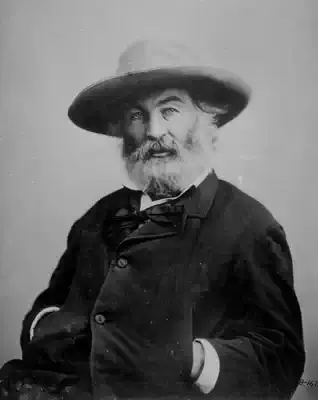
Walt Whitman
Year Of Meteors, 1859 '60
Year Of Meteors, 1859 '60
YEAR of meteors! brooding year!
I would bind in words retrospective, some of your deeds and signs;
I would sing your contest for the 19th Presidentiad;
I would sing how an old man, tall, with white hair, mounted the
scaffold in Virginia;
(I was at hand--silent I stood, with teeth shut close--I watch'd;
I stood very near you, old man, when cool and indifferent, but
trembling with age and your unheal'd wounds, you mounted the
scaffold;)
--I would sing in my copious song your census returns of The States,
The tables of population and products--I would sing of your ships and
their cargoes,
The proud black ships of Manhattan, arriving, some fill'd with
immigrants, some from the isthmus with cargoes of gold;
Songs thereof would I sing--to all that hitherward comes would I
welcome give; 10
And you would I sing, fair stripling! welcome to you from me, sweet
boy of England!
Remember you surging Manhattan's crowds, as you pass'd with your
cortege of nobles?
There in the crowds stood I, and singled you out with attachment;
I know not why, but I loved you... (and so go forth little song,
Far over sea speed like an arrow, carrying my love all folded,
And find in his palace the youth I love, and drop these lines at his
feet;)
--Nor forget I to sing of the wonder, the ship as she swam up my bay,
Well-shaped and stately the Great Eastern swam up my bay, she was 600
feet long,
Her, moving swiftly, surrounded by myriads of small craft, I forget
not to sing;
--Nor the comet that came unannounced out of the north, flaring in
heaven; 20
Nor the strange huge meteor procession, dazzling and clear, shooting
over our heads,
(A moment, a moment long, it sail'd its balls of unearthly light over
our heads,
Then departed, dropt in the night, and was gone;)
--Of such, and fitful as they, I sing--with gleams from them would I
gleam and patch these chants;
Your chants, O year all mottled with evil and good! year of
forebodings! year of the youth I love!
Year of comets and meteors transient and strange!--lo! even here, one
equally transient and strange!
As I flit through you hastily, soon to fall and be gone, what is this
book,
What am I myself but one of your meteors?
YEAR of meteors! brooding year!
I would bind in words retrospective, some of your deeds and signs;
I would sing your contest for the 19th Presidentiad;
I would sing how an old man, tall, with white hair, mounted the
scaffold in Virginia;
(I was at hand--silent I stood, with teeth shut close--I watch'd;
I stood very near you, old man, when cool and indifferent, but
trembling with age and your unheal'd wounds, you mounted the
scaffold;)
--I would sing in my copious song your census returns of The States,
The tables of population and products--I would sing of your ships and
their cargoes,
The proud black ships of Manhattan, arriving, some fill'd with
immigrants, some from the isthmus with cargoes of gold;
Songs thereof would I sing--to all that hitherward comes would I
welcome give; 10
And you would I sing, fair stripling! welcome to you from me, sweet
boy of England!
Remember you surging Manhattan's crowds, as you pass'd with your
cortege of nobles?
There in the crowds stood I, and singled you out with attachment;
I know not why, but I loved you... (and so go forth little song,
Far over sea speed like an arrow, carrying my love all folded,
And find in his palace the youth I love, and drop these lines at his
feet;)
--Nor forget I to sing of the wonder, the ship as she swam up my bay,
Well-shaped and stately the Great Eastern swam up my bay, she was 600
feet long,
Her, moving swiftly, surrounded by myriads of small craft, I forget
not to sing;
--Nor the comet that came unannounced out of the north, flaring in
heaven; 20
Nor the strange huge meteor procession, dazzling and clear, shooting
over our heads,
(A moment, a moment long, it sail'd its balls of unearthly light over
our heads,
Then departed, dropt in the night, and was gone;)
--Of such, and fitful as they, I sing--with gleams from them would I
gleam and patch these chants;
Your chants, O year all mottled with evil and good! year of
forebodings! year of the youth I love!
Year of comets and meteors transient and strange!--lo! even here, one
equally transient and strange!
As I flit through you hastily, soon to fall and be gone, what is this
book,
What am I myself but one of your meteors?
411
Walt Whitman
Vicouac On A Mountain Side
Vicouac On A Mountain Side
I SEE before me now, a traveling army halting;
Below, a fertile valley spread, with barns, and the orchards of
summer;
Behind, the terraced sides of a mountain, abrupt in places, rising
high;
Broken, with rocks, with clinging cedars, with tall shapes, dingily
seen;
The numerous camp-fires scatter'd near and far, some away up on the
mountain;
The shadowy forms of men and horses, looming, large-sized flickering;
And over all, the sky--the sky! far, far out of reach, studded,
breaking out, the eternal stars.
I SEE before me now, a traveling army halting;
Below, a fertile valley spread, with barns, and the orchards of
summer;
Behind, the terraced sides of a mountain, abrupt in places, rising
high;
Broken, with rocks, with clinging cedars, with tall shapes, dingily
seen;
The numerous camp-fires scatter'd near and far, some away up on the
mountain;
The shadowy forms of men and horses, looming, large-sized flickering;
And over all, the sky--the sky! far, far out of reach, studded,
breaking out, the eternal stars.
377
Walt Whitman
On The Beach At Night
On The Beach At Night
ON the beach, at night,
Stands a child, with her father,
Watching the east, the autumn sky.
Up through the darkness,
While ravening clouds, the burial clouds, in black masses spreading,
Lower, sullen and fast, athwart and down the sky,
Amid a transparent clear belt of ether yet left in the east,
Ascends, large and calm, the lord-star Jupiter;
And nigh at hand, only a very little above,
Swim the delicate brothers, the Pleiades. 10
From the beach, the child, holding the hand of her father,
Those burial-clouds that lower, victorious, soon to devour all,
Watching, silently weeps.
Weep not, child,
Weep not, my darling,
With these kisses let me remove your tears;
The ravening clouds shall not long be victorious,
They shall not long possess the sky--shall devour the stars only in
apparition:
Jupiter shall emerge--be patient--watch again another night--the
Pleiades shall emerge,
They are immortal--all those stars, both silvery and golden, shall
shine out again, 20
The great stars and the little ones shall shine out again--they
endure;
The vast immortal suns, and the long-enduring pensive moons, shall
again shine.
Then, dearest child, mournest thou only for Jupiter?
Considerest thou alone the burial of the stars?
Something there is,
(With my lips soothing thee, adding, I whisper,
I give thee the first suggestion, the problem and indirection,)
Something there is more immortal even than the stars,
(Many the burials, many the days and nights, passing away,)
Something that shall endure longer even than lustrous Jupiter, 30
Longer than sun, or any revolving satellite,
Or the radiant brothers, the Pleiades.
ON the beach, at night,
Stands a child, with her father,
Watching the east, the autumn sky.
Up through the darkness,
While ravening clouds, the burial clouds, in black masses spreading,
Lower, sullen and fast, athwart and down the sky,
Amid a transparent clear belt of ether yet left in the east,
Ascends, large and calm, the lord-star Jupiter;
And nigh at hand, only a very little above,
Swim the delicate brothers, the Pleiades. 10
From the beach, the child, holding the hand of her father,
Those burial-clouds that lower, victorious, soon to devour all,
Watching, silently weeps.
Weep not, child,
Weep not, my darling,
With these kisses let me remove your tears;
The ravening clouds shall not long be victorious,
They shall not long possess the sky--shall devour the stars only in
apparition:
Jupiter shall emerge--be patient--watch again another night--the
Pleiades shall emerge,
They are immortal--all those stars, both silvery and golden, shall
shine out again, 20
The great stars and the little ones shall shine out again--they
endure;
The vast immortal suns, and the long-enduring pensive moons, shall
again shine.
Then, dearest child, mournest thou only for Jupiter?
Considerest thou alone the burial of the stars?
Something there is,
(With my lips soothing thee, adding, I whisper,
I give thee the first suggestion, the problem and indirection,)
Something there is more immortal even than the stars,
(Many the burials, many the days and nights, passing away,)
Something that shall endure longer even than lustrous Jupiter, 30
Longer than sun, or any revolving satellite,
Or the radiant brothers, the Pleiades.
486
Henry Wadsworth Longfellow
The Rainbow
The Rainbow
My heart leaps up when I behold
A rainbow in the sky;
So was it when my life began;
So is it now I am a man;
So be it when I shall grow old,
Or let me die!
The Child is father of the Man;
And I could wish my days to be
Bound each to each by natural piety.
My heart leaps up when I behold
A rainbow in the sky;
So was it when my life began;
So is it now I am a man;
So be it when I shall grow old,
Or let me die!
The Child is father of the Man;
And I could wish my days to be
Bound each to each by natural piety.
305

Sarah Teasdale
To-nigh
To-nigh
The moon is a curving flower of gold,
The sky is still and blue;
The moon was made for the sky to hold,
And I for you.
The moon is a flower without a stem,
The sky is luminous;
Eternity was made for them,
To-night for us.
The moon is a curving flower of gold,
The sky is still and blue;
The moon was made for the sky to hold,
And I for you.
The moon is a flower without a stem,
The sky is luminous;
Eternity was made for them,
To-night for us.
423
Walt Whitman
Kosmos
Kosmos
WHO includes diversity, and is Nature,
Who is the amplitude of the earth, and the coarseness and sexuality
of the earth, and the great charity of the earth, and the
equilibrium also,
Who has not look'd forth from the windows, the eyes, for nothing, or
whose brain held audience with messengers for nothing;
Who contains believers and disbelievers--Who is the most majestic
lover;
Who holds duly his or her triune proportion of realism, spiritualism,
and of the aesthetic, or intellectual,
Who, having consider'd the Body, finds all its organs and parts good;
Who, out of the theory of the earth, and of his or her body,
understands by subtle analogies all other theories,
The theory of a city, a poem, and of the large politics of These
States;
Who believes not only in our globe, with its sun and moon, but in
other globes, with their suns and moons;
Who, constructing the house of himself or herself, not for a day, but
for all time, sees races, eras, dates, generations, 10
The past, the future, dwelling there, like space, inseparable
together.
WHO includes diversity, and is Nature,
Who is the amplitude of the earth, and the coarseness and sexuality
of the earth, and the great charity of the earth, and the
equilibrium also,
Who has not look'd forth from the windows, the eyes, for nothing, or
whose brain held audience with messengers for nothing;
Who contains believers and disbelievers--Who is the most majestic
lover;
Who holds duly his or her triune proportion of realism, spiritualism,
and of the aesthetic, or intellectual,
Who, having consider'd the Body, finds all its organs and parts good;
Who, out of the theory of the earth, and of his or her body,
understands by subtle analogies all other theories,
The theory of a city, a poem, and of the large politics of These
States;
Who believes not only in our globe, with its sun and moon, but in
other globes, with their suns and moons;
Who, constructing the house of himself or herself, not for a day, but
for all time, sees races, eras, dates, generations, 10
The past, the future, dwelling there, like space, inseparable
together.
594
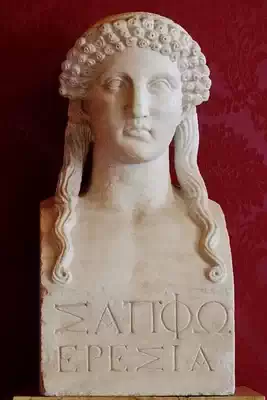
Sappho
Awed by her splendor
Awed by her splendor
Awed by her splendor
stars near the lovely
moon cover their own
bright faces
when she
is roundest and lights
earth with her silver
Awed by her splendor
stars near the lovely
moon cover their own
bright faces
when she
is roundest and lights
earth with her silver
406
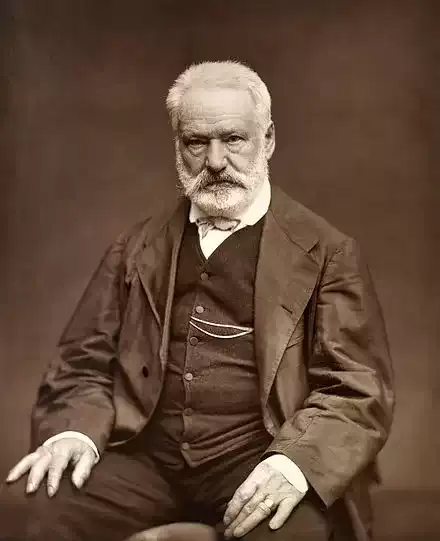
Victor Marie Hugo
Beneath their solemn beauty is a mystery infinite:
Beneath their solemn beauty is a mystery infinite:
If winter hue them like a pall, or if the summer night
Fantasy them starre brede.
If winter hue them like a pall, or if the summer night
Fantasy them starre brede.
136
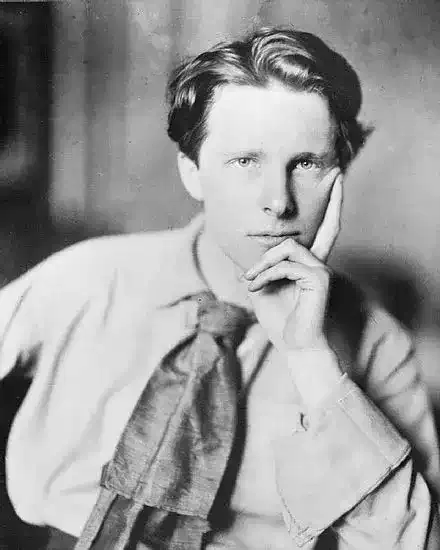
Rupert Brooke
Jolly Company, The
Jolly Company, The
The stars, a jolly company,
I envied, straying late and lonely;
And cried upon their revelry:
"O white companionship! You only
In love, in faith unbroken dwell,
Friends radiant and inseparable!"
Light-heart and glad they seemed to me
And merry comrades (EVEN SO
GOD OUT OF HEAVEN MAY LAUGH TO SEE
THE HAPPY CROWDS; AND NEVER KNOW
THAT IN HIS LONE OBSCURE DISTRESS
EACH WALKETH IN A WILDERNESS).
But I, remembering, pitied well
And loved them, who, with lonely light,
In empty infinite spaces dwell,
Disconsolate. For, all the night,
I heard the thin gnat-voices cry,
Star to faint star, across the sky.
The stars, a jolly company,
I envied, straying late and lonely;
And cried upon their revelry:
"O white companionship! You only
In love, in faith unbroken dwell,
Friends radiant and inseparable!"
Light-heart and glad they seemed to me
And merry comrades (EVEN SO
GOD OUT OF HEAVEN MAY LAUGH TO SEE
THE HAPPY CROWDS; AND NEVER KNOW
THAT IN HIS LONE OBSCURE DISTRESS
EACH WALKETH IN A WILDERNESS).
But I, remembering, pitied well
And loved them, who, with lonely light,
In empty infinite spaces dwell,
Disconsolate. For, all the night,
I heard the thin gnat-voices cry,
Star to faint star, across the sky.
202
Thomas Hardy
Zermat: To the Matterhorn (June-July, )
Zermat: To the Matterhorn (June-July, )
Thirty-two years since, up against the sun,
Seven shapes, thin atomies to lower sight,
Labouringly leapt and gained thy gabled height,
And four lives paid for what the seven had won.
They were the first by whom the deed was done,
And when I look at thee, my mind takes flight
To that day's tragic feat of manly might,
As though, till then, of history thou hadst none.
Yet ages ere men topped thee, late and soon
Thou watch'dst each night the planets lift and lower;
Thou gleam'dst to Joshua's pausing sun and moon,
And brav'dst the tokening sky when Caesar's power
Approached its bloody end: yea, saw'st that Noon
When darkness filled the earth till the ninth hour.
Thirty-two years since, up against the sun,
Seven shapes, thin atomies to lower sight,
Labouringly leapt and gained thy gabled height,
And four lives paid for what the seven had won.
They were the first by whom the deed was done,
And when I look at thee, my mind takes flight
To that day's tragic feat of manly might,
As though, till then, of history thou hadst none.
Yet ages ere men topped thee, late and soon
Thou watch'dst each night the planets lift and lower;
Thou gleam'dst to Joshua's pausing sun and moon,
And brav'dst the tokening sky when Caesar's power
Approached its bloody end: yea, saw'st that Noon
When darkness filled the earth till the ninth hour.
171
Henry Wadsworth Longfellow
Musings
Musings
I sat by my window one night,
And watched how the stars grew high;
And the earth and skies were a splendid sight
To a sober and musing eye.
From heaven the silver moon shone down
With gentle and mellow ray,
And beneath the crowded roofs of the town
In broad light and shadow lay.
A glory was on the silent sea,
And mainland and island too,
Till a haze came over the lowland lea,
And shrouded that beautiful blue.
Bright in the moon the autumn wood
Its crimson scarf unrolled,
And the trees like a splendid army stood
In a panoply of gold!
I saw them waving their banners high,
As their crests to the night wind bowed,
And a distant sound on the air went by,
Like the whispering of a crowd.
Then I watched from my window how fast
The lights all around me fled,
As the wearied man to his slumber passed
And the sick one to his bed.
All faded save one, that burned
With distant and steady light;
But that, too, went out -- and I turned
Where my own lamp within shone bright!
Thus, thought I, our joys must die,
Yes -- the brightest from earth we win:
Till each turns away, with a sign,
To the lamp that burns brightly within.
I sat by my window one night,
And watched how the stars grew high;
And the earth and skies were a splendid sight
To a sober and musing eye.
From heaven the silver moon shone down
With gentle and mellow ray,
And beneath the crowded roofs of the town
In broad light and shadow lay.
A glory was on the silent sea,
And mainland and island too,
Till a haze came over the lowland lea,
And shrouded that beautiful blue.
Bright in the moon the autumn wood
Its crimson scarf unrolled,
And the trees like a splendid army stood
In a panoply of gold!
I saw them waving their banners high,
As their crests to the night wind bowed,
And a distant sound on the air went by,
Like the whispering of a crowd.
Then I watched from my window how fast
The lights all around me fled,
As the wearied man to his slumber passed
And the sick one to his bed.
All faded save one, that burned
With distant and steady light;
But that, too, went out -- and I turned
Where my own lamp within shone bright!
Thus, thought I, our joys must die,
Yes -- the brightest from earth we win:
Till each turns away, with a sign,
To the lamp that burns brightly within.
260
Henry Wadsworth Longfellow
In The Harbour: Chimes
In The Harbour: Chimes
Sweet chimes! that in the loneliness of night
Salute the passing hour, and in the dark
And silent chambers of the household mark
The movements of the myriad orbs of light!
Through my closed eyelids, by the inner sight,
I see the constellations in the arc
Of their great circles moving on, and hark!
I almost hear them singing in their flight.
Better than sleep it is to lie awake,
O'er-canopied by the vast starry dome
Of the immeasurable sky; to feel
The slumbering world sink under us, and make
Hardly an eddy,--a mere rush of foam
On the great sea beneath a sinking keel.
Sweet chimes! that in the loneliness of night
Salute the passing hour, and in the dark
And silent chambers of the household mark
The movements of the myriad orbs of light!
Through my closed eyelids, by the inner sight,
I see the constellations in the arc
Of their great circles moving on, and hark!
I almost hear them singing in their flight.
Better than sleep it is to lie awake,
O'er-canopied by the vast starry dome
Of the immeasurable sky; to feel
The slumbering world sink under us, and make
Hardly an eddy,--a mere rush of foam
On the great sea beneath a sinking keel.
247

Emily Dickinson
Heaven-is what I cannot reach!
"Heaven"-is what I cannot reach!
239
"Heaven"-is what I cannot reach!
The Apple on the Tree-
Provided it do hopeless-hangThat-"
Heaven" is-to Me!
The Color, on the Cruising Cloud-
The interdicted Land-
Behind the Hill-the House behindThere-
Paradise-is found!
Her teasing Purples-Afternoons-
The credulous-decoyEnamored-
of the Conjuror-
That spurned us-Yesterday!
239
"Heaven"-is what I cannot reach!
The Apple on the Tree-
Provided it do hopeless-hangThat-"
Heaven" is-to Me!
The Color, on the Cruising Cloud-
The interdicted Land-
Behind the Hill-the House behindThere-
Paradise-is found!
Her teasing Purples-Afternoons-
The credulous-decoyEnamored-
of the Conjuror-
That spurned us-Yesterday!
296
Emily Dickinson
The Sun and Moon must make their haste
The Sun and Moon must make their haste
871
The Sun and Moon must make their haste-
The Stars express around
For in the Zones of Paradise
The Lord alone is burned-
His Eye, it is the East and West-
The North and South when He
Do concentrate His Countenance
Like Glow Worms, flee away-
Oh Poor and Far-
Oh Hindred Eye
That hunted for the Day-
The Lord a Candle entertains
Entirely for Thee-
871
The Sun and Moon must make their haste-
The Stars express around
For in the Zones of Paradise
The Lord alone is burned-
His Eye, it is the East and West-
The North and South when He
Do concentrate His Countenance
Like Glow Worms, flee away-
Oh Poor and Far-
Oh Hindred Eye
That hunted for the Day-
The Lord a Candle entertains
Entirely for Thee-
250
Emily Dickinson
The Skies can't keep their secret!
The Skies can't keep their secret!
191
The Skies can't keep their secret!
They tell it to the Hills-
The Hills just tell the Orchards-
And they-the Daffodils!
A Bird-by chance-that goes that way-
Soft overhears the whole-
If I should bribe the little Bird-
Who knows but she would tell?
I think I won't-howeverIt's
finer-not to know-
If Summer were an Axiom-
What sorcery had Snow?
So keep your secret-Father!
I would not-if I could,
Know what the Sapphire Fellows, do,
In your new-fashioned world!
191
The Skies can't keep their secret!
They tell it to the Hills-
The Hills just tell the Orchards-
And they-the Daffodils!
A Bird-by chance-that goes that way-
Soft overhears the whole-
If I should bribe the little Bird-
Who knows but she would tell?
I think I won't-howeverIt's
finer-not to know-
If Summer were an Axiom-
What sorcery had Snow?
So keep your secret-Father!
I would not-if I could,
Know what the Sapphire Fellows, do,
In your new-fashioned world!
284
Emily Dickinson
The Brain—is wider than the Sky
The Brain—is wider than the Sky
632
The Brain—is wider than the Sky—
For—put them side by side—
The one the other will contain
With ease—and You—beside—
The Brain is deeper than the sea—
For—hold them—Blue to Blue—
The one the other will absorb—
As Sponges—Buckets—do—
The Brain is just the weight of God—
For—Heft them—Pound for Pound—
And they will differ—if they do—
As Syllable from Sound—
632
The Brain—is wider than the Sky—
For—put them side by side—
The one the other will contain
With ease—and You—beside—
The Brain is deeper than the sea—
For—hold them—Blue to Blue—
The one the other will absorb—
As Sponges—Buckets—do—
The Brain is just the weight of God—
For—Heft them—Pound for Pound—
And they will differ—if they do—
As Syllable from Sound—
189
Emily Dickinson
The Brain-is wider than the Sky
The Brain-is wider than the Sky
632
The Brain-is wider than the SkyFor-
put them side by side-
The one the other will contain
With ease-and You-beside-
The Brain is deeper than the seaFor-
hold them-Blue to Blue-
The one the other will absorb-
As Sponges-Buckets-do-
The Brain is just the weight of GodFor-
Heft them-Pound for Pound-
And they will differ-if they do-
As Syllable from Sound-
632
The Brain-is wider than the SkyFor-
put them side by side-
The one the other will contain
With ease-and You-beside-
The Brain is deeper than the seaFor-
hold them-Blue to Blue-
The one the other will absorb-
As Sponges-Buckets-do-
The Brain is just the weight of GodFor-
Heft them-Pound for Pound-
And they will differ-if they do-
As Syllable from Sound-
223
Emily Dickinson
The Angle of a Landscape
The Angle of a Landscape
375
The Angle of a Landscape-
That every time I wake-
Between my Curtain and the Wall
Upon an ample Crack-
Like a Venetian-waiting-
Accosts my open eye-
Is just a Bough of Apples-
Held slanting, in the Sky-
The Pattern of a Chimney-
The Forehead of a HillSometimes-
a Vane's Forefinger-
But that's-Occasional-
The Seasons-shift-my Picture-
Upon my Emerald Bough,
I wake-to find no-EmeraldsThen-
Diamonds-which the Snow
From Polar Caskets-fetched me-
The Chimney-and the Hill-
And just the Steeple's fingerThese-
never stir at all-
375
The Angle of a Landscape-
That every time I wake-
Between my Curtain and the Wall
Upon an ample Crack-
Like a Venetian-waiting-
Accosts my open eye-
Is just a Bough of Apples-
Held slanting, in the Sky-
The Pattern of a Chimney-
The Forehead of a HillSometimes-
a Vane's Forefinger-
But that's-Occasional-
The Seasons-shift-my Picture-
Upon my Emerald Bough,
I wake-to find no-EmeraldsThen-
Diamonds-which the Snow
From Polar Caskets-fetched me-
The Chimney-and the Hill-
And just the Steeple's fingerThese-
never stir at all-
382
Page 1
Next