
Romantic Love
Poems in this topic

William Shakespeare
Shall I compare thee to a summer's day? (Sonnet 18)
Shall I compare thee to a summer's day? (Sonnet 18)
Shall I compare thee to a summer's day?
Thou art more lovely and more temperate.
Rough winds do shake the darling buds of May,
And summer's lease hath all too short a date.
Sometime too hot the eye of heaven shines,
And often is his gold complexion dimmed;
And every fair from fair sometime declines,
By chance, or nature's changing course, untrimmed;
But thy eternal summer shall not fade,
Nor lose possession of that fair thou ow'st,
Nor shall death brag thou wand'rest in his shade,
When in eternal lines to Time thou grow'st.
So long as men can breathe, or eyes can see,
So long lives this, and this gives life to thee.
Shall I compare thee to a summer's day?
Thou art more lovely and more temperate.
Rough winds do shake the darling buds of May,
And summer's lease hath all too short a date.
Sometime too hot the eye of heaven shines,
And often is his gold complexion dimmed;
And every fair from fair sometime declines,
By chance, or nature's changing course, untrimmed;
But thy eternal summer shall not fade,
Nor lose possession of that fair thou ow'st,
Nor shall death brag thou wand'rest in his shade,
When in eternal lines to Time thou grow'st.
So long as men can breathe, or eyes can see,
So long lives this, and this gives life to thee.
1,683
1
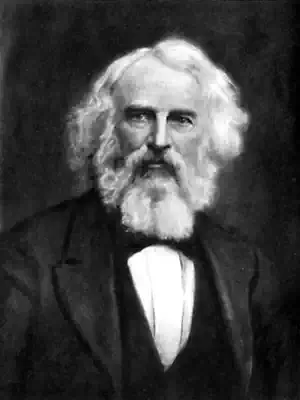
Henry Wadsworth Longfellow
Serenade from “The Spanish Student”
Serenade from “The Spanish Student”
STARS of the summer night!
Far in yon azure deeps,
Hide, hide your golden light!
She sleeps!
My lady sleeps!
Sleeps!
Moon of the summer night!
Far down yon western steeps,
Sink, sink in silver light!
She sleeps!
My lady sleeps!
Sleeps!
Wind of the summer night!
Where yonder woodbine creeps,
Fold, fold thy pinions light!
She sleeps!
My lady sleeps!
Sleeps!
Dreams of the summer night!
Tell her, her lover keeps
Watch! while in slumbers light
She sleeps!
My lady sleeps!
Sleeps!
STARS of the summer night!
Far in yon azure deeps,
Hide, hide your golden light!
She sleeps!
My lady sleeps!
Sleeps!
Moon of the summer night!
Far down yon western steeps,
Sink, sink in silver light!
She sleeps!
My lady sleeps!
Sleeps!
Wind of the summer night!
Where yonder woodbine creeps,
Fold, fold thy pinions light!
She sleeps!
My lady sleeps!
Sleeps!
Dreams of the summer night!
Tell her, her lover keeps
Watch! while in slumbers light
She sleeps!
My lady sleeps!
Sleeps!
941
1
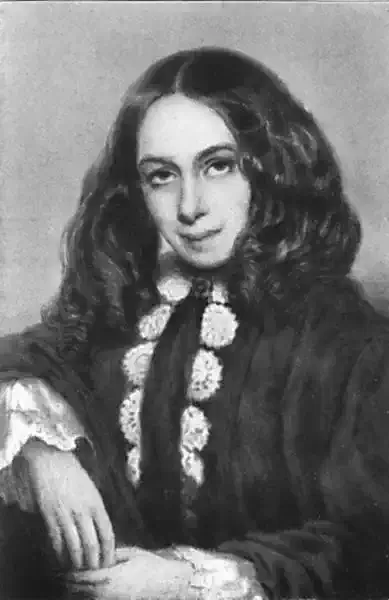
Elizabeth Barrett Browning
XXIV
XXIV
Let the world's sharpness, like a clasping knife,
Shut in upon itself and do no harm
In this close hand of Love, now soft and warm,
And let us hear no sound of human strife
After the click of the shutting. Life to life--
I lean upon thee, Dear, without alarm,
And feel as safe as guarded by a charm
Against the stab of worldlings, who if rife
Are weak to injure. Very whitely still
The lilies of our lives may reassure
Their blossoms from their roots, accessible
Alone to heavenly dews that drop not fewer,
Growing straight, out of man's reach, on the hill.
God only, who made us rich, can make us poor.
Let the world's sharpness, like a clasping knife,
Shut in upon itself and do no harm
In this close hand of Love, now soft and warm,
And let us hear no sound of human strife
After the click of the shutting. Life to life--
I lean upon thee, Dear, without alarm,
And feel as safe as guarded by a charm
Against the stab of worldlings, who if rife
Are weak to injure. Very whitely still
The lilies of our lives may reassure
Their blossoms from their roots, accessible
Alone to heavenly dews that drop not fewer,
Growing straight, out of man's reach, on the hill.
God only, who made us rich, can make us poor.
886
1
Elizabeth Barrett Browning
XXII
XXII
When our two souls stand up erect and strong,
Face to face, silent, drawing nigh and nigher,
Until the lengthening wings break into fire
At either curved point,--what bitter wrong
Can the earth do to us, that we should not long
Be here contented ? Think. In mounting higher,
The angels would press on us and aspire
To drop some golden orb of perfect song
Into our deep, dear silence. Let us stay
Rather on earth, Beloved,--where the unfit
Contrarious moods of men recoil away
And isolate pure spirits, and permit
A place to stand and love in for a day,
With darkness and the death-hour rounding it.
When our two souls stand up erect and strong,
Face to face, silent, drawing nigh and nigher,
Until the lengthening wings break into fire
At either curved point,--what bitter wrong
Can the earth do to us, that we should not long
Be here contented ? Think. In mounting higher,
The angels would press on us and aspire
To drop some golden orb of perfect song
Into our deep, dear silence. Let us stay
Rather on earth, Beloved,--where the unfit
Contrarious moods of men recoil away
And isolate pure spirits, and permit
A place to stand and love in for a day,
With darkness and the death-hour rounding it.
1,012
1
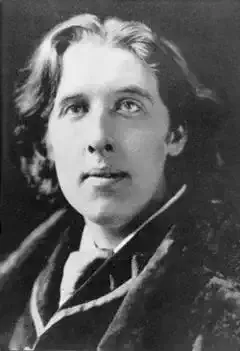
Oscar Wilde
Under The Balcony
O beautiful star with the crimson mouth!
O moon with the brows of gold!
Rise up, rise up, from the odorous south!
And light for my love her way,
Lest her little feet should stray
On the windy hill and the wold!
O beautiful star with the crimson mouth!
O moon with the brows of gold!
O ship that shakes on the desolate sea!
O ship with the wet, white sail!
Put in, put in, to the port to me!
For my love and I would go
To the land where the daffodils blow
In the heart of a violet dale!
O ship that shakes on the desolate sea!
O ship with the wet, white sail!
O rapturous bird with the low, sweet note!
O bird that sits on the spray!
Sing on, sing on, from your soft brown throat!
And my love in her little bed
Will listen, and lift her head
From the pillow, and come my way!
O rapturous bird with the low, sweet note!
O bird that sits on the spray!
O blossom that hangs in the tremulous air!
O blossom with lips of snow!
Come down, come down, for my love to wear!
You will die on her head in a crown,
You will die in a fold of her gown,
To her little light heart you will go!
O blossom that hangs in the tremulous air!
O blossom with lips of snow!
O moon with the brows of gold!
Rise up, rise up, from the odorous south!
And light for my love her way,
Lest her little feet should stray
On the windy hill and the wold!
O beautiful star with the crimson mouth!
O moon with the brows of gold!
O ship that shakes on the desolate sea!
O ship with the wet, white sail!
Put in, put in, to the port to me!
For my love and I would go
To the land where the daffodils blow
In the heart of a violet dale!
O ship that shakes on the desolate sea!
O ship with the wet, white sail!
O rapturous bird with the low, sweet note!
O bird that sits on the spray!
Sing on, sing on, from your soft brown throat!
And my love in her little bed
Will listen, and lift her head
From the pillow, and come my way!
O rapturous bird with the low, sweet note!
O bird that sits on the spray!
O blossom that hangs in the tremulous air!
O blossom with lips of snow!
Come down, come down, for my love to wear!
You will die on her head in a crown,
You will die in a fold of her gown,
To her little light heart you will go!
O blossom that hangs in the tremulous air!
O blossom with lips of snow!
697
Oscar Wilde
Like burnt-out torches by a sick man's bed
We caught the tread of dancing feet,
We loitered down the moonlit street,
And stopped beneath the harlot's house.
Inside, above the din and fray,
We heard the loud musicians play
The 'Treues Liebes Herz' of Strauss.
Like strange mechanical grotesques,
Making fantastic arabesques,
The shadows raced across the blind.
We watched the ghostly dancers spin
To sound of horn and violin,
Like black leaves wheeling in the wind.
Like wire-pulled automatons,
Slim silhouetted skeletons
Went sidling through the slow quadrille,
Then took each other by the hand,
And danced a stately saraband;
Their laughter echoed thin and shrill.
Sometimes a clockwork puppet pressed
A phantom lover to her breast,
Sometimes they seemed to try to sing.
Sometimes a horrible marionette
Came out, and smoked its cigarette
Upon the steps like a live thing.
Then, turning to my love, I said,
'The dead are dancing with the dead,
The dust is whirling with the dust.'
But she - she heard the violin,
And left my side, and entered in:
Love passed into the house of lust.
Then suddenly the tune went false,
The dancers wearied of the waltz,
The shadows ceased to wheel and whirl.
And down the long and silent street,
The dawn, with silver-sandalled feet,
Crept like a frightened girl.
We loitered down the moonlit street,
And stopped beneath the harlot's house.
Inside, above the din and fray,
We heard the loud musicians play
The 'Treues Liebes Herz' of Strauss.
Like strange mechanical grotesques,
Making fantastic arabesques,
The shadows raced across the blind.
We watched the ghostly dancers spin
To sound of horn and violin,
Like black leaves wheeling in the wind.
Like wire-pulled automatons,
Slim silhouetted skeletons
Went sidling through the slow quadrille,
Then took each other by the hand,
And danced a stately saraband;
Their laughter echoed thin and shrill.
Sometimes a clockwork puppet pressed
A phantom lover to her breast,
Sometimes they seemed to try to sing.
Sometimes a horrible marionette
Came out, and smoked its cigarette
Upon the steps like a live thing.
Then, turning to my love, I said,
'The dead are dancing with the dead,
The dust is whirling with the dust.'
But she - she heard the violin,
And left my side, and entered in:
Love passed into the house of lust.
Then suddenly the tune went false,
The dancers wearied of the waltz,
The shadows ceased to wheel and whirl.
And down the long and silent street,
The dawn, with silver-sandalled feet,
Crept like a frightened girl.
792
Oscar Wilde
Silentium Amoris
As often-times the too resplendent sun
Hurries the pallid and reluctant moon
Back to her sombre cave, ere she hath won
A single ballad from the nightingale,
So doth thy Beauty make my lips to fail,
And all my sweetest singing out of tune.
And as at dawn across the level mead
On wings impetuous some wind will come,
And with its too harsh kisses break the reed
Which was its only instrument of song,
So my too stormy passions work me wrong,
And for excess of Love my Love is dumb.
But surely unto Thee mine eyes did show
Why I am silent, and my lute unstrung;
Else it were better we should part, and go,
Thou to some lips of sweeter melody,
And I to nurse the barren memory
Of unkissed kisses, and songs never sung.
Hurries the pallid and reluctant moon
Back to her sombre cave, ere she hath won
A single ballad from the nightingale,
So doth thy Beauty make my lips to fail,
And all my sweetest singing out of tune.
And as at dawn across the level mead
On wings impetuous some wind will come,
And with its too harsh kisses break the reed
Which was its only instrument of song,
So my too stormy passions work me wrong,
And for excess of Love my Love is dumb.
But surely unto Thee mine eyes did show
Why I am silent, and my lute unstrung;
Else it were better we should part, and go,
Thou to some lips of sweeter melody,
And I to nurse the barren memory
Of unkissed kisses, and songs never sung.
713
Oscar Wilde
Santa Decca
The Gods are dead: no longer do we bring
To grey-eyed Pallas crowns of olive-leaves!
Demeter's child no more hath tithe of sheaves,
And in the noon the careless shepherds sing,
For Pan is dead, and all the wantoning
By secret glade and devious haunt is o'er:
Young Hylas seeks the water-springs no more;
Great Pan is dead, and Mary's son is King.
And yet - perchance in this sea-tranced isle,
Chewing the bitter fruit of memory,
Some God lies hidden in the asphodel.
Ah Love! if such there be, then it were well
For us to fly his anger: nay, but see,
The leaves are stirring: let us watch awhile.
CORFU.
To grey-eyed Pallas crowns of olive-leaves!
Demeter's child no more hath tithe of sheaves,
And in the noon the careless shepherds sing,
For Pan is dead, and all the wantoning
By secret glade and devious haunt is o'er:
Young Hylas seeks the water-springs no more;
Great Pan is dead, and Mary's son is King.
And yet - perchance in this sea-tranced isle,
Chewing the bitter fruit of memory,
Some God lies hidden in the asphodel.
Ah Love! if such there be, then it were well
For us to fly his anger: nay, but see,
The leaves are stirring: let us watch awhile.
CORFU.
712
Oscar Wilde
In The Gold Room - A Harmony
Her ivory hands on the ivory keys
Strayed in a fitful fantasy,
Like the silver gleam when the poplar trees
Rustle their pale-leaves listlessly,
Or the drifting foam of a restless sea
When the waves show their teeth in the flying breeze.
Her gold hair fell on the wall of gold
Like the delicate gossamer tangles spun
On the burnished disk of the marigold,
Or the sunflower turning to meet the sun
When the gloom of the dark blue night is done,
And the spear of the lily is aureoled.
And her sweet red lips on these lips of mine
Burned like the ruby fire set
In the swinging lamp of a crimson shrine,
Or the bleeding wounds of the pomegranate,
Or the heart of the lotus drenched and wet
With the spilt-out blood of the rose-red wine.
Strayed in a fitful fantasy,
Like the silver gleam when the poplar trees
Rustle their pale-leaves listlessly,
Or the drifting foam of a restless sea
When the waves show their teeth in the flying breeze.
Her gold hair fell on the wall of gold
Like the delicate gossamer tangles spun
On the burnished disk of the marigold,
Or the sunflower turning to meet the sun
When the gloom of the dark blue night is done,
And the spear of the lily is aureoled.
And her sweet red lips on these lips of mine
Burned like the ruby fire set
In the swinging lamp of a crimson shrine,
Or the bleeding wounds of the pomegranate,
Or the heart of the lotus drenched and wet
With the spilt-out blood of the rose-red wine.
656
Oscar Wilde
From Spring Days To Winter (For Music)
In the glad springtime when leaves were green,
O merrily the throstle sings!
I sought, amid the tangled sheen,
Love whom mine eyes had never seen,
O the glad dove has golden wings!
Between the blossoms red and white,
O merrily the throstle sings!
My love first came into my sight,
O perfect vision of delight,
O the glad dove has golden wings!
The yellow apples glowed like fire,
O merrily the throstle sings!
O Love too great for lip or lyre,
Blown rose of love and of desire,
O the glad dove has golden wings!
But now with snow the tree is grey,
Ah, sadly now the throstle sings!
My love is dead: ah! well-a-day,
See at her silent feet I lay
A dove with broken wings!
Ah, Love! ah, Love! that thou wert slain -
Fond Dove, fond Dove return again!
O merrily the throstle sings!
I sought, amid the tangled sheen,
Love whom mine eyes had never seen,
O the glad dove has golden wings!
Between the blossoms red and white,
O merrily the throstle sings!
My love first came into my sight,
O perfect vision of delight,
O the glad dove has golden wings!
The yellow apples glowed like fire,
O merrily the throstle sings!
O Love too great for lip or lyre,
Blown rose of love and of desire,
O the glad dove has golden wings!
But now with snow the tree is grey,
Ah, sadly now the throstle sings!
My love is dead: ah! well-a-day,
See at her silent feet I lay
A dove with broken wings!
Ah, Love! ah, Love! that thou wert slain -
Fond Dove, fond Dove return again!
581
Oscar Wilde
Endymion
The apple trees are hung with gold,
And birds are loud in Arcady,
The sheep lie bleating in the fold,
The wild goat runs across the wold,
But yesterday his love he told,
I know he will come back to me.
O rising moon! O Lady moon!
Be you my lover's sentinel,
You cannot choose but know him well,
For he is shod with purple shoon,
You cannot choose but know my love,
For he a shepherd's crook doth bear,
And he is soft as any dove,
And brown and curly is his hair.
The turtle now has ceased to call
Upon her crimson-footed groom,
The grey wolf prowls about the stall,
The lily's singing seneschal
Sleeps in the lily-bell, and all
The violet hills are lost in gloom.
O risen moon! O holy moon!
Stand on the top of Helice,
And if my own true love you see,
Ah! if you see the purple shoon,
The hazel crook, the lad's brown hair,
The goat-skin wrapped about his arm,
Tell him that I am waiting where
The rushlight glimmers in the Farm.
The falling dew is cold and chill,
And no bird sings in Arcady,
The little fauns have left the hill,
Even the tired daffodil
Has closed its gilded doors, and still
My lover comes not back to me.
False moon! False moon! O waning moon!
Where is my own true lover gone,
Where are the lips vermilion,
The shepherd's crook, the purple shoon?
Why spread that silver pavilion,
Why wear that veil of drifting mist?
Ah! thou hast young Endymion
Thou hast the lips that should be kissed!
And birds are loud in Arcady,
The sheep lie bleating in the fold,
The wild goat runs across the wold,
But yesterday his love he told,
I know he will come back to me.
O rising moon! O Lady moon!
Be you my lover's sentinel,
You cannot choose but know him well,
For he is shod with purple shoon,
You cannot choose but know my love,
For he a shepherd's crook doth bear,
And he is soft as any dove,
And brown and curly is his hair.
The turtle now has ceased to call
Upon her crimson-footed groom,
The grey wolf prowls about the stall,
The lily's singing seneschal
Sleeps in the lily-bell, and all
The violet hills are lost in gloom.
O risen moon! O holy moon!
Stand on the top of Helice,
And if my own true love you see,
Ah! if you see the purple shoon,
The hazel crook, the lad's brown hair,
The goat-skin wrapped about his arm,
Tell him that I am waiting where
The rushlight glimmers in the Farm.
The falling dew is cold and chill,
And no bird sings in Arcady,
The little fauns have left the hill,
Even the tired daffodil
Has closed its gilded doors, and still
My lover comes not back to me.
False moon! False moon! O waning moon!
Where is my own true lover gone,
Where are the lips vermilion,
The shepherd's crook, the purple shoon?
Why spread that silver pavilion,
Why wear that veil of drifting mist?
Ah! thou hast young Endymion
Thou hast the lips that should be kissed!
720
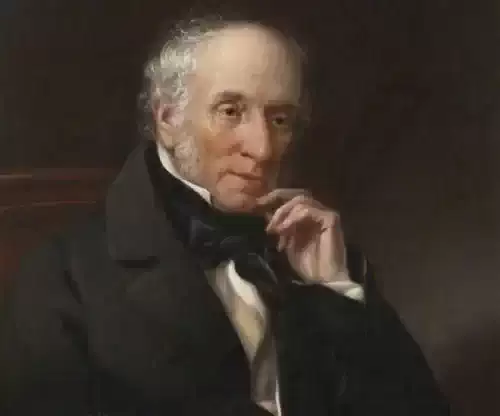
William Wordsworth
Strange Fits Of Passion
Strange Fits Of Passion
STRANGE fits of passion have I known:
And I will dare to tell,
But in the lover's ear alone,
What once to me befell.
When she I loved looked every day
Fresh as a rose in June,
I to her cottage bent my way,
Beneath an evening-moon.
Upon the moon I fixed my eye,
All over the wide lea;
With quickening pace my horse drew nigh
Those paths so dear to me.
And now we reached the orchard-plot;
And, as we climbed the hill,
The sinking moon to Lucy's cot
Came near, and nearer still.
In one of those sweet dreams I slept,
Kind Nature's gentlest boon!
And all the while my eye I kept
On the descending moon.
My horse moved on; hoof after hoof
He raised, and never stopped:
When down behind the cottage roof,
At once, the bright moon dropped.
What fond and wayward thoughts will slide
Into a Lover's head!
'O mercy!' to myself I cried,
'If Lucy hould be dead!'
STRANGE fits of passion have I known:
And I will dare to tell,
But in the lover's ear alone,
What once to me befell.
When she I loved looked every day
Fresh as a rose in June,
I to her cottage bent my way,
Beneath an evening-moon.
Upon the moon I fixed my eye,
All over the wide lea;
With quickening pace my horse drew nigh
Those paths so dear to me.
And now we reached the orchard-plot;
And, as we climbed the hill,
The sinking moon to Lucy's cot
Came near, and nearer still.
In one of those sweet dreams I slept,
Kind Nature's gentlest boon!
And all the while my eye I kept
On the descending moon.
My horse moved on; hoof after hoof
He raised, and never stopped:
When down behind the cottage roof,
At once, the bright moon dropped.
What fond and wayward thoughts will slide
Into a Lover's head!
'O mercy!' to myself I cried,
'If Lucy hould be dead!'
292
William Wordsworth
Ode Composed On A May Morning
Ode Composed On A May Morning
WHILE from the purpling east departs
The star that led the dawn,
Blithe Flora from her couch upstarts,
For May is on the lawn.
A quickening hope, a freshening glee,
Foreran the expected Power,
Whose first-drawn breath, from bush and tree,
Shakes off that pearly shower.
All Nature welcomes Her whose sway
Tempers the year's extremes;
Who scattereth lustres o'er noon-day,
Like morning's dewy gleams;
While mellow warble, sprightly trill,
The tremulous heart excite;
And hums the balmy air to still
The balance of delight.
Time was, blest Power! when youth and maids
At peep of dawn would rise,
And wander forth, in forest glades
Thy birth to solemnize.
Though mute the song---to grace the rite
Untouched the hawthorn bough,
Thy Spirit triumphs o'er the slight;
Man changes, but not Thou!
Thy feathered Lieges bill and wings
In love's disport employ;
Warmed by thy influence, creeping things
Awake to silent joy:
Queen art thou still for each gay plant
Where the slim wild deer roves;
And served in depths where fishes haunt
Their own mysterious groves.
Cloud-piercing peak, and trackless heath,
Instinctive homage pay;
Nor wants the dim-lit cave a wreath
To honor thee, sweet May!
Where cities fanned by thy brisk airs
Behold a smokeless sky,
Their puniest flower-pot-nursling dares
To open a bright eye.
And if, on this thy natal morn,
The pole, from which thy name
Hath not departed, stands forlorn
Of song and dance and game;
Still from the village-green a vow
Aspires to thee addrest,
Wherever peace is on the brow,
Or love within the breast.
Yes! where Love nestles thou canst teach
The soul to love the more;
Hearts also shall thy lessons reach
That never loved before.
Stript is the haughty one of pride,
The bashful freed from fear,
While rising, like the ocean-tide,
In flow the joyous year.
Hush, feeble lyre! weak words refuse
The service to prolong!
To yon exulting thrush the Muse
Entrusts the imperfect song;
His voice shall chant, in accents clear,
Throughout the live-long day,
Till the first silver star appear,
The sovereignty of May.
WHILE from the purpling east departs
The star that led the dawn,
Blithe Flora from her couch upstarts,
For May is on the lawn.
A quickening hope, a freshening glee,
Foreran the expected Power,
Whose first-drawn breath, from bush and tree,
Shakes off that pearly shower.
All Nature welcomes Her whose sway
Tempers the year's extremes;
Who scattereth lustres o'er noon-day,
Like morning's dewy gleams;
While mellow warble, sprightly trill,
The tremulous heart excite;
And hums the balmy air to still
The balance of delight.
Time was, blest Power! when youth and maids
At peep of dawn would rise,
And wander forth, in forest glades
Thy birth to solemnize.
Though mute the song---to grace the rite
Untouched the hawthorn bough,
Thy Spirit triumphs o'er the slight;
Man changes, but not Thou!
Thy feathered Lieges bill and wings
In love's disport employ;
Warmed by thy influence, creeping things
Awake to silent joy:
Queen art thou still for each gay plant
Where the slim wild deer roves;
And served in depths where fishes haunt
Their own mysterious groves.
Cloud-piercing peak, and trackless heath,
Instinctive homage pay;
Nor wants the dim-lit cave a wreath
To honor thee, sweet May!
Where cities fanned by thy brisk airs
Behold a smokeless sky,
Their puniest flower-pot-nursling dares
To open a bright eye.
And if, on this thy natal morn,
The pole, from which thy name
Hath not departed, stands forlorn
Of song and dance and game;
Still from the village-green a vow
Aspires to thee addrest,
Wherever peace is on the brow,
Or love within the breast.
Yes! where Love nestles thou canst teach
The soul to love the more;
Hearts also shall thy lessons reach
That never loved before.
Stript is the haughty one of pride,
The bashful freed from fear,
While rising, like the ocean-tide,
In flow the joyous year.
Hush, feeble lyre! weak words refuse
The service to prolong!
To yon exulting thrush the Muse
Entrusts the imperfect song;
His voice shall chant, in accents clear,
Throughout the live-long day,
Till the first silver star appear,
The sovereignty of May.
270
William Wordsworth
Ellen Irwin
Ellen Irwin
Fair Ellen Irwin, when she sate
Upon the braes of Kirtle,
Was lovely as a Grecian maid
Adorned with wreaths of myrtle;
Young Adam Bruce beside her lay,
And there did they beguile the day
With love and gentle speeches,
Beneath the budding beeches.
From many knights and many squires
The Bruce had been selected;
And Gordon, fairest of them all,
By Ellen was rejected.
Sad tidings to that noble Youth!
For it may be proclaimed with truth,
If Bruce hath loved sincerely,
That Gordon loves as dearly.
But what are Gordon's form and face,
His shattered hopes and crosses,
To them, 'mid Kirtle's pleasant braes,
Reclined on flowers and mosses?
Alas that ever he was born!
The Gordon, couched behind a thorn,
Sees them and their caressing;
Beholds them blest and blessing.
Proud Gordon, maddened by the thoughts
That through his brain are travelling,
Rushed forth, and at the heart of Bruce
He launched a deadly javelin!
Fair Ellen saw it as it came,
And, starting up to meet the same,
Did with her body cover
The Youth, her chosen lover.
And, falling into Bruce's arms,
Thus died the beauteous Ellen,
Thus, from the heart of her True-love,
The mortal spear repelling.
And Bruce, as soon as he had slain
The Gordon, sailed away to Spain;
And fought with rage incessant
Against the Moorish crescent.
But many days, and many months,
And many years ensuing,
This wretched Knight did vainly seek
The death that he was wooing.
So, coming his last help to crave,
Heart-broken, upon Ellen's grave
His body he extended,
And there his sorrow ended.
Now ye, who willingly have heard
The tale I have been telling,
May in Kirkconnel churchyard view
The grave of lovely Ellen:
By Ellen's side the Bruce is laid;
And, for the stone upon his head,
May no rude hand deface it,
And its forlorn "Hie jacet"!
Fair Ellen Irwin, when she sate
Upon the braes of Kirtle,
Was lovely as a Grecian maid
Adorned with wreaths of myrtle;
Young Adam Bruce beside her lay,
And there did they beguile the day
With love and gentle speeches,
Beneath the budding beeches.
From many knights and many squires
The Bruce had been selected;
And Gordon, fairest of them all,
By Ellen was rejected.
Sad tidings to that noble Youth!
For it may be proclaimed with truth,
If Bruce hath loved sincerely,
That Gordon loves as dearly.
But what are Gordon's form and face,
His shattered hopes and crosses,
To them, 'mid Kirtle's pleasant braes,
Reclined on flowers and mosses?
Alas that ever he was born!
The Gordon, couched behind a thorn,
Sees them and their caressing;
Beholds them blest and blessing.
Proud Gordon, maddened by the thoughts
That through his brain are travelling,
Rushed forth, and at the heart of Bruce
He launched a deadly javelin!
Fair Ellen saw it as it came,
And, starting up to meet the same,
Did with her body cover
The Youth, her chosen lover.
And, falling into Bruce's arms,
Thus died the beauteous Ellen,
Thus, from the heart of her True-love,
The mortal spear repelling.
And Bruce, as soon as he had slain
The Gordon, sailed away to Spain;
And fought with rage incessant
Against the Moorish crescent.
But many days, and many months,
And many years ensuing,
This wretched Knight did vainly seek
The death that he was wooing.
So, coming his last help to crave,
Heart-broken, upon Ellen's grave
His body he extended,
And there his sorrow ended.
Now ye, who willingly have heard
The tale I have been telling,
May in Kirkconnel churchyard view
The grave of lovely Ellen:
By Ellen's side the Bruce is laid;
And, for the stone upon his head,
May no rude hand deface it,
And its forlorn "Hie jacet"!
207
William Wordsworth
Strange Fits of Passion Have I Known
"Strange Fits of Passion Have I Known"
Strange fits of passion have I known:
And I will dare to tell,
But in the lover's ear alone,
What once to me befell.
When she I loved looked every day
Fresh as a rose in June,
I to her cottage bent my way,
Beneath an evening-moon.
Upon the moon I fixed my eye,
All over the wide lea;
With quickening pace my horse drew nigh
Those paths so dear to me.
And now we reached the orchard-plot;
And, as we climbed the hill,
The sinking moon to Lucy's cot
Came near, and nearer still.
In one of those sweet dreams I slept,
Kind Nature's gentlest boon!
And all the while my eye I kept
On the descending moon.
My horse moved on; hoof after hoof
He raised, and never stopped:
When down behind the cottage roof,
At once, the bright moon dropped.
What fond and wayward thoughts will slide
Into a Lover's head!
"O mercy!" to myself I cried,
"If Lucy hould be dead!"
Strange fits of passion have I known:
And I will dare to tell,
But in the lover's ear alone,
What once to me befell.
When she I loved looked every day
Fresh as a rose in June,
I to her cottage bent my way,
Beneath an evening-moon.
Upon the moon I fixed my eye,
All over the wide lea;
With quickening pace my horse drew nigh
Those paths so dear to me.
And now we reached the orchard-plot;
And, as we climbed the hill,
The sinking moon to Lucy's cot
Came near, and nearer still.
In one of those sweet dreams I slept,
Kind Nature's gentlest boon!
And all the while my eye I kept
On the descending moon.
My horse moved on; hoof after hoof
He raised, and never stopped:
When down behind the cottage roof,
At once, the bright moon dropped.
What fond and wayward thoughts will slide
Into a Lover's head!
"O mercy!" to myself I cried,
"If Lucy hould be dead!"
263
William Shakespeare
When in disgrace with fortune and men's eyes (Sonnet 29)
When in disgrace with fortune and men's eyes (Sonnet 29)
When in disgrace with fortune and men's eyes,
I all alone beweep my outcast state,
And trouble deaf heaven with my bootless cries,
And look upon myself and curse my fate,
wishing me like to one more rich in hope,
Featured like him, like him with friends possessed,
Desiring this man's art, and that man's scope,
With what I most enjoy contented least;
Yet in these thoughts myself almost despising,
Haply I think on thee--and then my state,
Like to the lark at break of day arising
From sullen earth sings hymns at heaven's gate;
For thy sweet love remembered such wealth brings,
That then I scorn to change my state with kings.
When in disgrace with fortune and men's eyes,
I all alone beweep my outcast state,
And trouble deaf heaven with my bootless cries,
And look upon myself and curse my fate,
wishing me like to one more rich in hope,
Featured like him, like him with friends possessed,
Desiring this man's art, and that man's scope,
With what I most enjoy contented least;
Yet in these thoughts myself almost despising,
Haply I think on thee--and then my state,
Like to the lark at break of day arising
From sullen earth sings hymns at heaven's gate;
For thy sweet love remembered such wealth brings,
That then I scorn to change my state with kings.
318
William Shakespeare
The Passionate Pilgrim
The Passionate Pilgrim
I.
When my love swears that she is made of truth,
I do believe her, though I know she lies,
That she might think me some untutor'd youth,
Unskilful in the world's false forgeries,
Thus vainly thinking that she thinks me young,
Although I know my years be past the best,
I smiling credit her false-speaking tongue,
Outfacing faults in love with love's ill rest.
But wherefore says my love that she is young?
And wherefore say not I that I am old?
O, love's best habit is a soothing tongue,
And age, in love, loves not to have years told.
Therefore, I'll lie with love, and love with me,
Since that our faults in love thus smother'd be.
II.
Two loves I have, of comfort and despair,
That like two spirits do suggest me still;
My better angel is a man right fair,
My worser spirit a woman colour'd ill.
To win me soon to hell, my female evil
Tempteth my better angel from my side,
And would corrupt my saint to be a devil,
Wooing his purity with her fair pride.
And whether that my angel be turn'd fiend,
Suspect I may, yet not directly tell:
For being both to me, both to each friend,
I guess one angel in another's hell:
The truth I shall not know, but live in doubt,
Till my bad angel fire my good one out.
III.
Did not the heavenly rhetoric of thine eye,
'Gainst whom the world could not hold argument.
Persuade my heart to this false perjury?
Vows for thee broke deserve not punishment.
A woman I forswore; but I will prove,
Thou being a goddess, I forswore not thee:
My vow was earthly, thou a heavenly love:
Thy grace being gain'd cures all disgrace in me.
My vow was breath, and breath a vapour is;
Then, thou fair sun, that on this earth doth shine,
Exhale this vapour vow; in thee it is:
If broken, then it is no fault of mine.
If by me broke, what fool is not so wise
To break an oath, to win a paradise?
IV.
Sweet Cytherea, sitting by a brook
With young Adonis, lovely, fresh, and green,
Did court the lad with many a lovely look,
Such looks as none could look but beauty's queen,
She told him stories to delight his ear;
She show'd him favours to allure his eye;
To win his heart, she touch'd him here and there, --
Touches so soft still conquer chastity.
But whether unripe years did want conceit,
Or he refused to take her figured proffer,
The tender nibbler would not touch the bait,
But smile and jest at every gentle offer:
Then fell she on her back, fair queen, and toward:
He rose and ran away; ah, fool too froward!
V.
If love make me forsworn, how shall I swear to love?
O never faith could hold, if not to beauty vow'd:
Though to myself forsworn, to thee I'll constant prove;
Those thoughts, to me like oaks, to thee like osiers bow'd.
Study his bias leaves, and make his book thine eyes,
Where all those pleasures live that art can comprehend.
If knowledge be the mark, to know thee shall suffice;
Well learned is that tongue that well can thee commend;
All ignorant that soul that sees thee without wonder;
Which is to me some praise, that I thy parts admire:
Thy eye Jove's lightning seems, thy voice his dreadful thunder,
Which, not to anger bent, is music and sweet fire.
Celestial as thou art, O do not love that wrong,
To sing heaven's praise with such an earthly tongue.
VI.
Scarce had the sun dried up the dewy morn,
And scarce the herd gone to the hedge for shade,
When Cytherea, all in love forlorn,
A longing tarriance for Adonis made
Under an osier growing by a brook,
A brook where Adon used to cool his spleen:
Hot was the day; she hotter that did look
For his approach, that often there had been.
Anon he comes, and throws his mantle by,
And stood stark naked on the brook's green brim:
The sun look'd on the world with glorious eye,
Yet not so wistly as this queen on him.
He, spying her, bounced in, whereas he stood:
'O Jove,' quoth she, 'why was not I a flood!'
VII.
Fair is my love, but not so fair as fickle;
Mild as a dove, but neither true nor trusty;
Brighter than glass, and yet, as glass is brittle;
Softer than wax, and yet, as iron, rusty:
A lily pale, with damask dye to grace her,
None fairer, nor none falser to deface her.
Her lips to mine how often hath she joined,
Between each kiss her oaths of true love swearing!
How many tales to please me bath she coined,
Dreading my love, the loss thereof still fearing!
Yet in the midst of all her pure protestings,
Her faith, her oaths, her tears, and all were jestings.
She burn'd with love, as straw with fire flameth;
She burn'd out love, as soon as straw outburneth;
She framed the love, and yet she foil'd the framing;
She bade love last, and yet she fell a-turning.
Was this a lover, or a lecher whether?
Bad in the best, though excellent in neither.
VIII.
If music and sweet poetry agree,
As they must needs, the sister and the brother,
Then must the love be great 'twixt thee and me,
Because thou lovest the one, and I the other.
Dowland to thee is dear, whose heavenly touch
Upon the lute doth ravish human sense;
Spenser to me, whose deep conceit is such
As, passing all conceit, needs no defence.
Thou lovest to bear the sweet melodious sound
That Phoebus' lute, the queen of music, makes;
And I in deep delight am chiefly drown'd
Whenas himself to singing he betakes.
One god is god of both, as poets feign;
One knight loves both, and both in thee remain.
IX.
Fair was the morn when the fair queen of love,
Paler for sorrow than her milk-white dove,
For Adon's sake, a youngster proud and wild;
Her stand she takes upon a steep-up hill:
Anon Adonis comes with horn and hounds;
She, silly queen, with more than love's good will,
Forbade the boy he should not pass those grounds:
'Once,' quoth she, 'did I see a fair sweet youth
Here in these brakes deep-wounded with a boar,
Deep in the thigh, a spectacle of ruth!
See, in my thigh,' quoth she, 'here was the sore.
She showed hers: he saw more wounds than one,
And blushing fled, and left her all alone.
X.
Sweet rose, fair flower, untimely pluck'd, soon vaded,
Pluck'd in the bud, and vaded in the spring!
Bright orient pearl, alack, too timely shaded!
Fair creature, kill'd too soon by death's sharp sting!
Like a green plum that hangs upon a tree,
And falls, through wind, before the fall should he.
I weep for thee, and yet no cause I have;
For why thou left'st me nothing in thy will:
And yet thou left'st me more than I did crave;
For why I craved nothing of thee still:
O yes, dear friend, I pardon crave of thee,
Thy discontent thou didst bequeath to me.
XI.
Venus, with young Adonis sitting by her
Under a myrtle shade, began to woo him:
She told the youngling how god Mars did try her,
And as he fell to her, so fell she to him.
'Even thus,' quoth she, 'the warlike god embraced me,'
And then she clipp'd Adonis in her arms;
'Even thus,' quoth she, 'the warlike god unlaced me,'
As if the boy should use like loving charms;
'Even thus,' quoth she, 'he seized on my lips
And with her lips on his did act the seizure
And as she fetched breath, away he skips,
And would not take her meaning nor her pleasure.
Ah, that I had my lady at this bay,
To kiss and clip me till I run away!
XII.
Crabbed age and youth cannot live together
Youth is full of pleasance, age is full of care;
Youth like summer morn, age like winter weather;
Youth like summer brave, age like winter bare;
Youth is full of sport, age's breath is short;
Youth is nimble, age is lame;
Youth is hot and bold, age is weak and cold;
Youth is wild, and age is tame.
Age, I do abhor thee; youth, I do adore thee;
O, my love, my love is young!
Age, I do defy thee: O, sweet shepherd, hie thee,
For methinks thou stay'st too long.
XIII.
Beauty is but a vain and doubtful good;
A shining gloss that vadeth suddenly;
A flower that dies when first it gins to bud;
A brittle glass that's broken presently:
A doubtful good, a gloss, a glass, a flower,
Lost, vaded, broken, dead within an hour.
And as goods lost are seld or never found,
As vaded gloss no rubbing will refresh,
As flowers dead lie wither'd on the ground,
As broken glass no cement can redress,
So beauty blemish'd once's for ever lost,
In spite of physic, painting, pain and cost.
XIV.
Good night, good rest. Ah, neither be my share:
She bade good night that kept my rest away;
And daff'd me to a cabin hang'd with care,
To descant on the doubts of my decay.
'Farewell,' quoth she, 'and come again tomorrow:
Fare well I could not, for I supp'd with sorrow.
Yet at my parting sweetly did she smile,
In scorn or friendship, nill I construe whether:
'T may be, she joy'd to jest at my exile,
'T may be, again to make me wander thither:
'Wander,' a word for shadows like myself,
As take the pain, but cannot pluck the pelf.
XV.
Lord, how mine eyes throw gazes to the east!
My heart doth charge the watch; the morning rise
Doth cite each moving sense from idle rest.
Not daring trust the office of mine eyes,
While Philomela sits and sings, I sit and mark,
And wish her lays were tuned like the lark;
For she doth welcome daylight with her ditty,
And drives away dark dismal-dreaming night:
The night so pack'd, I post unto my pretty;
Heart hath his hope, and eyes their wished sight;
Sorrow changed to solace, solace mix'd with sorrow;
For why, she sigh'd and bade me come tomorrow.
Were I with her, the night would post too soon;
But now are minutes added to the hours;
To spite me now, each minute seems a moon;
Yet not for me, shine sun to succour flowers!
Pack night, peep day; good day, of night now borrow:
Short, night, to-night, and length thyself tomorrow.
I.
When my love swears that she is made of truth,
I do believe her, though I know she lies,
That she might think me some untutor'd youth,
Unskilful in the world's false forgeries,
Thus vainly thinking that she thinks me young,
Although I know my years be past the best,
I smiling credit her false-speaking tongue,
Outfacing faults in love with love's ill rest.
But wherefore says my love that she is young?
And wherefore say not I that I am old?
O, love's best habit is a soothing tongue,
And age, in love, loves not to have years told.
Therefore, I'll lie with love, and love with me,
Since that our faults in love thus smother'd be.
II.
Two loves I have, of comfort and despair,
That like two spirits do suggest me still;
My better angel is a man right fair,
My worser spirit a woman colour'd ill.
To win me soon to hell, my female evil
Tempteth my better angel from my side,
And would corrupt my saint to be a devil,
Wooing his purity with her fair pride.
And whether that my angel be turn'd fiend,
Suspect I may, yet not directly tell:
For being both to me, both to each friend,
I guess one angel in another's hell:
The truth I shall not know, but live in doubt,
Till my bad angel fire my good one out.
III.
Did not the heavenly rhetoric of thine eye,
'Gainst whom the world could not hold argument.
Persuade my heart to this false perjury?
Vows for thee broke deserve not punishment.
A woman I forswore; but I will prove,
Thou being a goddess, I forswore not thee:
My vow was earthly, thou a heavenly love:
Thy grace being gain'd cures all disgrace in me.
My vow was breath, and breath a vapour is;
Then, thou fair sun, that on this earth doth shine,
Exhale this vapour vow; in thee it is:
If broken, then it is no fault of mine.
If by me broke, what fool is not so wise
To break an oath, to win a paradise?
IV.
Sweet Cytherea, sitting by a brook
With young Adonis, lovely, fresh, and green,
Did court the lad with many a lovely look,
Such looks as none could look but beauty's queen,
She told him stories to delight his ear;
She show'd him favours to allure his eye;
To win his heart, she touch'd him here and there, --
Touches so soft still conquer chastity.
But whether unripe years did want conceit,
Or he refused to take her figured proffer,
The tender nibbler would not touch the bait,
But smile and jest at every gentle offer:
Then fell she on her back, fair queen, and toward:
He rose and ran away; ah, fool too froward!
V.
If love make me forsworn, how shall I swear to love?
O never faith could hold, if not to beauty vow'd:
Though to myself forsworn, to thee I'll constant prove;
Those thoughts, to me like oaks, to thee like osiers bow'd.
Study his bias leaves, and make his book thine eyes,
Where all those pleasures live that art can comprehend.
If knowledge be the mark, to know thee shall suffice;
Well learned is that tongue that well can thee commend;
All ignorant that soul that sees thee without wonder;
Which is to me some praise, that I thy parts admire:
Thy eye Jove's lightning seems, thy voice his dreadful thunder,
Which, not to anger bent, is music and sweet fire.
Celestial as thou art, O do not love that wrong,
To sing heaven's praise with such an earthly tongue.
VI.
Scarce had the sun dried up the dewy morn,
And scarce the herd gone to the hedge for shade,
When Cytherea, all in love forlorn,
A longing tarriance for Adonis made
Under an osier growing by a brook,
A brook where Adon used to cool his spleen:
Hot was the day; she hotter that did look
For his approach, that often there had been.
Anon he comes, and throws his mantle by,
And stood stark naked on the brook's green brim:
The sun look'd on the world with glorious eye,
Yet not so wistly as this queen on him.
He, spying her, bounced in, whereas he stood:
'O Jove,' quoth she, 'why was not I a flood!'
VII.
Fair is my love, but not so fair as fickle;
Mild as a dove, but neither true nor trusty;
Brighter than glass, and yet, as glass is brittle;
Softer than wax, and yet, as iron, rusty:
A lily pale, with damask dye to grace her,
None fairer, nor none falser to deface her.
Her lips to mine how often hath she joined,
Between each kiss her oaths of true love swearing!
How many tales to please me bath she coined,
Dreading my love, the loss thereof still fearing!
Yet in the midst of all her pure protestings,
Her faith, her oaths, her tears, and all were jestings.
She burn'd with love, as straw with fire flameth;
She burn'd out love, as soon as straw outburneth;
She framed the love, and yet she foil'd the framing;
She bade love last, and yet she fell a-turning.
Was this a lover, or a lecher whether?
Bad in the best, though excellent in neither.
VIII.
If music and sweet poetry agree,
As they must needs, the sister and the brother,
Then must the love be great 'twixt thee and me,
Because thou lovest the one, and I the other.
Dowland to thee is dear, whose heavenly touch
Upon the lute doth ravish human sense;
Spenser to me, whose deep conceit is such
As, passing all conceit, needs no defence.
Thou lovest to bear the sweet melodious sound
That Phoebus' lute, the queen of music, makes;
And I in deep delight am chiefly drown'd
Whenas himself to singing he betakes.
One god is god of both, as poets feign;
One knight loves both, and both in thee remain.
IX.
Fair was the morn when the fair queen of love,
Paler for sorrow than her milk-white dove,
For Adon's sake, a youngster proud and wild;
Her stand she takes upon a steep-up hill:
Anon Adonis comes with horn and hounds;
She, silly queen, with more than love's good will,
Forbade the boy he should not pass those grounds:
'Once,' quoth she, 'did I see a fair sweet youth
Here in these brakes deep-wounded with a boar,
Deep in the thigh, a spectacle of ruth!
See, in my thigh,' quoth she, 'here was the sore.
She showed hers: he saw more wounds than one,
And blushing fled, and left her all alone.
X.
Sweet rose, fair flower, untimely pluck'd, soon vaded,
Pluck'd in the bud, and vaded in the spring!
Bright orient pearl, alack, too timely shaded!
Fair creature, kill'd too soon by death's sharp sting!
Like a green plum that hangs upon a tree,
And falls, through wind, before the fall should he.
I weep for thee, and yet no cause I have;
For why thou left'st me nothing in thy will:
And yet thou left'st me more than I did crave;
For why I craved nothing of thee still:
O yes, dear friend, I pardon crave of thee,
Thy discontent thou didst bequeath to me.
XI.
Venus, with young Adonis sitting by her
Under a myrtle shade, began to woo him:
She told the youngling how god Mars did try her,
And as he fell to her, so fell she to him.
'Even thus,' quoth she, 'the warlike god embraced me,'
And then she clipp'd Adonis in her arms;
'Even thus,' quoth she, 'the warlike god unlaced me,'
As if the boy should use like loving charms;
'Even thus,' quoth she, 'he seized on my lips
And with her lips on his did act the seizure
And as she fetched breath, away he skips,
And would not take her meaning nor her pleasure.
Ah, that I had my lady at this bay,
To kiss and clip me till I run away!
XII.
Crabbed age and youth cannot live together
Youth is full of pleasance, age is full of care;
Youth like summer morn, age like winter weather;
Youth like summer brave, age like winter bare;
Youth is full of sport, age's breath is short;
Youth is nimble, age is lame;
Youth is hot and bold, age is weak and cold;
Youth is wild, and age is tame.
Age, I do abhor thee; youth, I do adore thee;
O, my love, my love is young!
Age, I do defy thee: O, sweet shepherd, hie thee,
For methinks thou stay'st too long.
XIII.
Beauty is but a vain and doubtful good;
A shining gloss that vadeth suddenly;
A flower that dies when first it gins to bud;
A brittle glass that's broken presently:
A doubtful good, a gloss, a glass, a flower,
Lost, vaded, broken, dead within an hour.
And as goods lost are seld or never found,
As vaded gloss no rubbing will refresh,
As flowers dead lie wither'd on the ground,
As broken glass no cement can redress,
So beauty blemish'd once's for ever lost,
In spite of physic, painting, pain and cost.
XIV.
Good night, good rest. Ah, neither be my share:
She bade good night that kept my rest away;
And daff'd me to a cabin hang'd with care,
To descant on the doubts of my decay.
'Farewell,' quoth she, 'and come again tomorrow:
Fare well I could not, for I supp'd with sorrow.
Yet at my parting sweetly did she smile,
In scorn or friendship, nill I construe whether:
'T may be, she joy'd to jest at my exile,
'T may be, again to make me wander thither:
'Wander,' a word for shadows like myself,
As take the pain, but cannot pluck the pelf.
XV.
Lord, how mine eyes throw gazes to the east!
My heart doth charge the watch; the morning rise
Doth cite each moving sense from idle rest.
Not daring trust the office of mine eyes,
While Philomela sits and sings, I sit and mark,
And wish her lays were tuned like the lark;
For she doth welcome daylight with her ditty,
And drives away dark dismal-dreaming night:
The night so pack'd, I post unto my pretty;
Heart hath his hope, and eyes their wished sight;
Sorrow changed to solace, solace mix'd with sorrow;
For why, she sigh'd and bade me come tomorrow.
Were I with her, the night would post too soon;
But now are minutes added to the hours;
To spite me now, each minute seems a moon;
Yet not for me, shine sun to succour flowers!
Pack night, peep day; good day, of night now borrow:
Short, night, to-night, and length thyself tomorrow.
288
William Shakespeare
The Blossom
The Blossom
ON a day--alack the day!--
Love, whose month is ever May,
Spied a blossom passing fair
Playing in the wanton air:
Through the velvet leaves the wind
All unseen 'gan passage find;
That the lover, sick to death,
Wish'd himself the heaven's breath.
Air, quoth he, thy cheeks may blow;
Air, would I might triumph so!
But, alack, my hand is sworn
Ne'er to pluck thee from thy thorn:
Vow, alack, for youth unmeet;
Youth so apt to pluck a sweet!
Do not call it sin in me
That I am forsworn for thee;
Thou for whom e'en Jove would swear
Juno but an Ethiop were;
And deny himself for Jove,
Turning mortal for thy love.
ON a day--alack the day!--
Love, whose month is ever May,
Spied a blossom passing fair
Playing in the wanton air:
Through the velvet leaves the wind
All unseen 'gan passage find;
That the lover, sick to death,
Wish'd himself the heaven's breath.
Air, quoth he, thy cheeks may blow;
Air, would I might triumph so!
But, alack, my hand is sworn
Ne'er to pluck thee from thy thorn:
Vow, alack, for youth unmeet;
Youth so apt to pluck a sweet!
Do not call it sin in me
That I am forsworn for thee;
Thou for whom e'en Jove would swear
Juno but an Ethiop were;
And deny himself for Jove,
Turning mortal for thy love.
287
William Shakespeare
Take, O take those Lips away
Take, O take those Lips away
TAKE, O take those lips away,
That so sweetly were forsworn;
And those eyes, the break of day,
Lights that do mislead the morn!
But my kisses bring again,
Bring again;
Seals of love, but seal'd in vain,
Seal'd in vain!
TAKE, O take those lips away,
That so sweetly were forsworn;
And those eyes, the break of day,
Lights that do mislead the morn!
But my kisses bring again,
Bring again;
Seals of love, but seal'd in vain,
Seal'd in vain!
217
William Shakespeare
Sonnets XXIX: When, in disgrace with fortune and men's eyes
Sonnets XXIX: When, in disgrace with fortune and men's eyes
When, in disgrace with fortune and men's eyes,
I all alone beweep my outcast state
And trouble deaf heaven with my bootless cries
And look upon myself and curse my fate,
Wishing me like to one more rich in hope,
Featur'd like him, like him with friends possess'd,
Desiring this man's art and that man's scope,
With what I most enjoy contented least;
Yet in these thoughts myself almost despising,
Haply I think on thee, and then my state,
Like to the lark at break of day arising
From sullen earth, sings hymns at heaven's gate;
For thy sweet love remember'd such wealth brings
That then I scorn to change my state with kings.
When, in disgrace with fortune and men's eyes,
I all alone beweep my outcast state
And trouble deaf heaven with my bootless cries
And look upon myself and curse my fate,
Wishing me like to one more rich in hope,
Featur'd like him, like him with friends possess'd,
Desiring this man's art and that man's scope,
With what I most enjoy contented least;
Yet in these thoughts myself almost despising,
Haply I think on thee, and then my state,
Like to the lark at break of day arising
From sullen earth, sings hymns at heaven's gate;
For thy sweet love remember'd such wealth brings
That then I scorn to change my state with kings.
238
William Shakespeare
Sonnets xvii
Sonnets xvii
O NEVER say that I was false of heart,
Though absence seem'd my flame to qualify!
As easy might I from myself depart,
As from my soul, which in thy breast doth lie:
That is my home of love; if I have ranged,
Like him that travels I return again,
Just to the time, not with the time exchanged,
So that myself bring water for my stain.
Never believe, though in my nature reign'd
All frailties that besiege all kinds of blood,
That it could so prepost'rously be stain'd,
To leave for nothing all thy sum of good:
For nothing this wide Universe I call,
Save thou, my Rose; in it thou art my all.
O NEVER say that I was false of heart,
Though absence seem'd my flame to qualify!
As easy might I from myself depart,
As from my soul, which in thy breast doth lie:
That is my home of love; if I have ranged,
Like him that travels I return again,
Just to the time, not with the time exchanged,
So that myself bring water for my stain.
Never believe, though in my nature reign'd
All frailties that besiege all kinds of blood,
That it could so prepost'rously be stain'd,
To leave for nothing all thy sum of good:
For nothing this wide Universe I call,
Save thou, my Rose; in it thou art my all.
279
William Shakespeare
Sonnets vii
Sonnets vii
BEING your slave, what should I do but tend
Upon the hours and times of your desire?
I have no precious time at all to spend,
Nor services to do, till you require.
Nor dare I chide the world-without-end hour
Whilst I, my sovereign, watch the clock for you,
Nor think the bitterness of absence sour
When you have bid your servant once adieu;
Nor dare I question with my jealous thought
Where you may be, or your affairs suppose,
But, like a sad slave, stay and think of nought
Save, where you are how happy you make those!
So true a fool is love, that in your Will,
Though you do any thing, he thinks no ill.
BEING your slave, what should I do but tend
Upon the hours and times of your desire?
I have no precious time at all to spend,
Nor services to do, till you require.
Nor dare I chide the world-without-end hour
Whilst I, my sovereign, watch the clock for you,
Nor think the bitterness of absence sour
When you have bid your servant once adieu;
Nor dare I question with my jealous thought
Where you may be, or your affairs suppose,
But, like a sad slave, stay and think of nought
Save, where you are how happy you make those!
So true a fool is love, that in your Will,
Though you do any thing, he thinks no ill.
224
William Shakespeare
Sonnet XXXIX
Sonnet XXXIX
O, how thy worth with manners may I sing,
When thou art all the better part of me?
What can mine own praise to mine own self bring?
And what is 't but mine own when I praise thee?
Even for this let us divided live,
And our dear love lose name of single one,
That by this separation I may give
That due to thee which thou deservest alone.
O absence, what a torment wouldst thou prove,
Were it not thy sour leisure gave sweet leave
To entertain the time with thoughts of love,
Which time and thoughts so sweetly doth deceive,
And that thou teachest how to make one twain,
By praising him here who doth hence remain!
O, how thy worth with manners may I sing,
When thou art all the better part of me?
What can mine own praise to mine own self bring?
And what is 't but mine own when I praise thee?
Even for this let us divided live,
And our dear love lose name of single one,
That by this separation I may give
That due to thee which thou deservest alone.
O absence, what a torment wouldst thou prove,
Were it not thy sour leisure gave sweet leave
To entertain the time with thoughts of love,
Which time and thoughts so sweetly doth deceive,
And that thou teachest how to make one twain,
By praising him here who doth hence remain!
278
William Shakespeare
Sonnet XXXIII
Sonnet XXXIII
Full many a glorious morning have I seen
Flatter the mountain-tops with sovereign eye,
Kissing with golden face the meadows green,
Gilding pale streams with heavenly alchemy;
Anon permit the basest clouds to ride
With ugly rack on his celestial face,
And from the forlorn world his visage hide,
Stealing unseen to west with this disgrace:
Even so my sun one early morn did shine
With all triumphant splendor on my brow;
But out, alack! he was but one hour mine;
The region cloud hath mask'd him from me now.
Yet him for this my love no whit disdaineth;
Suns of the world may stain when heaven's sun staineth.
Full many a glorious morning have I seen
Flatter the mountain-tops with sovereign eye,
Kissing with golden face the meadows green,
Gilding pale streams with heavenly alchemy;
Anon permit the basest clouds to ride
With ugly rack on his celestial face,
And from the forlorn world his visage hide,
Stealing unseen to west with this disgrace:
Even so my sun one early morn did shine
With all triumphant splendor on my brow;
But out, alack! he was but one hour mine;
The region cloud hath mask'd him from me now.
Yet him for this my love no whit disdaineth;
Suns of the world may stain when heaven's sun staineth.
329
Page 1
Next