
Politics and Power
Poems in this topic
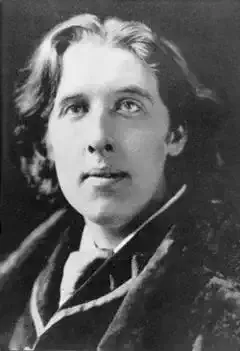
Oscar Wilde
Soneto: To Milton
Milton! I think thy spirit hath passed away
From these white cliffs and high-embattled towers;
This gorgeous fiery-coloured world of ours
Seems fallen into ashes dull and grey,
And the age changed unto a mimic play
Wherein we waste our else too-crowded hours:
For all our pomp and pageantry and powers
We are but fit to delve the common clay,
Seeing this little isle on which we stand,
This England, this sea-lion of the sea,
By ignorant demagogues is held in fee,
Who love her not: Dear God! is this the land
Which bare a triple empire in her hand
When Cromwell spake the word Democracy!
From these white cliffs and high-embattled towers;
This gorgeous fiery-coloured world of ours
Seems fallen into ashes dull and grey,
And the age changed unto a mimic play
Wherein we waste our else too-crowded hours:
For all our pomp and pageantry and powers
We are but fit to delve the common clay,
Seeing this little isle on which we stand,
This England, this sea-lion of the sea,
By ignorant demagogues is held in fee,
Who love her not: Dear God! is this the land
Which bare a triple empire in her hand
When Cromwell spake the word Democracy!
653
Oscar Wilde
Soneto: Sonnet To Liberty
Not that I love thy children, whose dull eyes
See nothing save their own unlovely woe,
Whose minds know nothing, nothing care to know,
But that the roar of thy Democracies,
Thy reigns of Terror, thy great Anarchies,
Mirror my wildest passions like the sea
And give my rage a brother -!Liberty!
For this sake only do thy dissonant cries
Delight my discreet soul, else might all kings
By bloody knout or treacherous cannonades
Rob nations of their rights inviolate
And I remain unmoved - and yet, and yet,
These Christs that die upon the barricades,
God knows it I am with them, in some things.
See nothing save their own unlovely woe,
Whose minds know nothing, nothing care to know,
But that the roar of thy Democracies,
Thy reigns of Terror, thy great Anarchies,
Mirror my wildest passions like the sea
And give my rage a brother -!Liberty!
For this sake only do thy dissonant cries
Delight my discreet soul, else might all kings
By bloody knout or treacherous cannonades
Rob nations of their rights inviolate
And I remain unmoved - and yet, and yet,
These Christs that die upon the barricades,
God knows it I am with them, in some things.
639
Oscar Wilde
Quantum Mutata
There was a time in Europe long ago
When no man died for freedom anywhere,
But England's lion leaping from its lair
Laid hands on the oppressor! it was so
While England could a great Republic show.
Witness the men of Piedmont, chiefest care
Of Cromwell, when with impotent despair
The Pontiff in his painted portico
Trembled before our stern ambassadors.
How comes it then that from such high estate
We have thus fallen, save that Luxury
With barren merchandise piles up the gate
Where noble thoughts and deeds should enter by:
Else might we still be Milton's heritors.
When no man died for freedom anywhere,
But England's lion leaping from its lair
Laid hands on the oppressor! it was so
While England could a great Republic show.
Witness the men of Piedmont, chiefest care
Of Cromwell, when with impotent despair
The Pontiff in his painted portico
Trembled before our stern ambassadors.
How comes it then that from such high estate
We have thus fallen, save that Luxury
With barren merchandise piles up the gate
Where noble thoughts and deeds should enter by:
Else might we still be Milton's heritors.
579
Oscar Wilde
Libertatis Sacra Fames
Albeit nurtured in democracy,
And liking best that state republican
Where every man is Kinglike and no man
Is crowned above his fellows, yet I see,
Spite of this modern fret for Liberty,
Better the rule of One, whom all obey,
Than to let clamorous demagogues betray
Our freedom with the kiss of anarchy.
Wherefore I love them not whose hands profane
Plant the red flag upon the piled-up street
For no right cause, beneath whose ignorant reign
Arts, Culture, Reverence, Honour, all things fade,
Save Treason and the dagger of her trade,
Or Murder with his silent bloody feet.
And liking best that state republican
Where every man is Kinglike and no man
Is crowned above his fellows, yet I see,
Spite of this modern fret for Liberty,
Better the rule of One, whom all obey,
Than to let clamorous demagogues betray
Our freedom with the kiss of anarchy.
Wherefore I love them not whose hands profane
Plant the red flag upon the piled-up street
For no right cause, beneath whose ignorant reign
Arts, Culture, Reverence, Honour, all things fade,
Save Treason and the dagger of her trade,
Or Murder with his silent bloody feet.
719
Oscar Wilde
Italia
Italia! thou art fallen, though with sheen
Of battle-spears thy clamorous armies stride
From the north Alps to the Sicilian tide!
Ay! fallen, though the nations hail thee Queen
Because rich gold in every town is seen,
And on thy sapphire-lake in tossing pride
Of wind-filled vans thy myriad galleys ride
Beneath one flag of red and white and green.
O Fair and Strong! O Strong and Fair in vain!
Look southward where Rome's desecrated town
Lies mourning for her God-anointed King!
Look heaven-ward! shall God allow this thing?
Nay! but some flame-girt Raphael shall come down,
And smite the Spoiler with the sword of pain.
VENICE.
Of battle-spears thy clamorous armies stride
From the north Alps to the Sicilian tide!
Ay! fallen, though the nations hail thee Queen
Because rich gold in every town is seen,
And on thy sapphire-lake in tossing pride
Of wind-filled vans thy myriad galleys ride
Beneath one flag of red and white and green.
O Fair and Strong! O Strong and Fair in vain!
Look southward where Rome's desecrated town
Lies mourning for her God-anointed King!
Look heaven-ward! shall God allow this thing?
Nay! but some flame-girt Raphael shall come down,
And smite the Spoiler with the sword of pain.
VENICE.
617
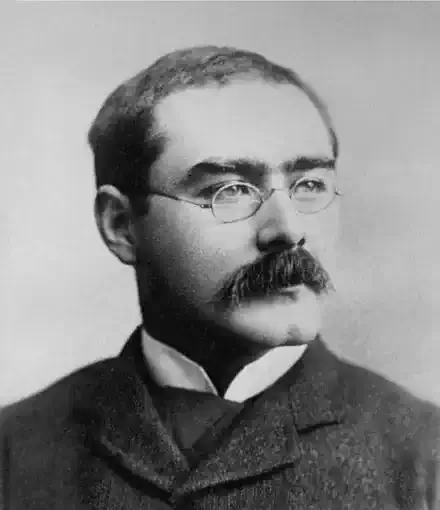
Rudyard Kipling
The Ballad Of The King's Mercy
The Ballad Of The King's Mercy
Abdhur Rahman, the Durani Chief, of him is the story told.
His mercy fills the Khyber hills -- his grace is manifold;
He has taken toll of the North and the South --
his glory reacheth far,
And they tell the tale of his charity from Balkh to Kandahar.
Before the old Peshawur Gate, where Kurd and Kaffir meet,
The Governor of Kabul dealt the Justice of the Street,
And that was strait as running noose and swift as plunging knife,
Tho' he who held the longer purse might hold the longer life.
There was a hound of Hindustan had struck a Euzufzai,
Wherefore they spat upon his face and led him out to die.
It chanced the King went forth that hour when throat was bared to knife;
The Kaffir grovelled under-hoof and clamoured for his life.
Then said the King: "Have hope, O friend! Yea, Death disgraced is hard;
Much honour shall be thine"; and called the Captain of the Guard,
Yar Khan, a bastard of the Blood, so city-babble saith,
And he was honoured of the King -- the which is salt to Death;
And he was son of Daoud Shah, the Reiver of the Plains,
And blood of old Durani Lords ran fire in his veins;
And 'twas to tame an Afghan pride nor Hell nor Heaven could bind,
The King would make him butcher to a yelping cur of Hind.
"Strike!" said the King. "King's blood art thou --
his death shall be his pride!"
Then louder, that the crowd might catch: "Fear not -- his arms are tied!"
Yar Khan drew clear the Khyber knife, and struck, and sheathed again.
"O man, thy will is done," quoth he; "a King this dog hath slain."
Abdhur Rahman, the Durani Chief, to the North and the South is sold.
The North and the South shall open their mouth
to a Ghilzai flag unrolled,
When the big guns speak to the Khyber peak, and his dog-Heratis fly:
Ye have heard the song -- How long? How long?
Wolves of the Abazai!
That night before the watch was set, when all the streets were clear,
The Governor of Kabul spoke: "My King, hast thou no fear?
Thou knowest -- thou hast heard," -- his speech died at his master's face.
And grimly said the Afghan King: "I rule the Afghan race.
My path is mine -- see thou to thine -- to-night upon thy bed
Think who there be in Kabul now that clamour for thy head."
That night when all the gates were shut to City and to throne,
Within a little garden-house the King lay down alone.
Before the sinking of the moon, which is the Night of Night,
Yar Khan came softly to the King to make his honour white.
The children of the town had mocked beneath his horse's hoofs,
The harlots of the town had hailed him "butcher!" from their roofs.
But as he groped against the wall, two hands upon him fell,
The King behind his shoulder spake: "Dead man, thou dost not well!
'Tis ill to jest with Kings by day and seek a boon by night;
And that thou bearest in thy hand is all too sharp to write.
But three days hence, if God be good, and if thy strength remain,
Thou shalt demand one boon of me and bless me in thy pain.
For I am merciful to all, and most of all to thee.
My butcher of the shambles, rest -- no knife hast thou for me!"
Abdhur Rahman, the Durani Chief,
holds hard by the South and the North;
But the Ghilzai knows, ere the melting snows,
when the swollen banks break forth,
When the red-coats crawl to the sungar wall,
and his Usbeg lances fail:
Ye have heard the song -- How long? How long?
Wolves of the Zuka Kheyl!
They stoned him in the rubbish-field when dawn was in the sky,
According to the written word, "See that he do not die."
They stoned him till the stones were piled above him on the plain,
And those the labouring limbs displaced they tumbled back again.
One watched beside the dreary mound that veiled the battered thing,
And him the King with laughter called the Herald of the King.
It was upon the second night, the night of Ramazan,
The watcher leaning earthward heard the message of Yar Khan.
From shattered breast through shrivelled lips broke forth the rattling breath,
"Creature of God, deliver me from agony of Death."
They sought the King among his girls, and risked their lives thereby:
"Protector of the Pitiful, give orders that he die!"
"Bid him endure until the day," a lagging answer came;
"The night is short, and he can pray and learn to bless my name."
Before the dawn three times he spoke, and on the day once more:
"Creature of God, deliver me, and bless the King therefor!"
They shot him at the morning prayer, to ease him of his pain,
And when he heard the matchlocks clink, he blessed the King again.
Which thing the singers made a song for all the world to sing,
So that the Outer Seas may know the mercy of the King.
Abdhur Rahman, the Durani Chief, of him is the story told,
He has opened his mouth to the North and the South,
they have stuffed his mouth with gold.
Ye know the truth of his tender ruth -- and sweet his favours are:
Ye have heard the song -- How long? How long?
from Balkh to Kandahar.
Abdhur Rahman, the Durani Chief, of him is the story told.
His mercy fills the Khyber hills -- his grace is manifold;
He has taken toll of the North and the South --
his glory reacheth far,
And they tell the tale of his charity from Balkh to Kandahar.
Before the old Peshawur Gate, where Kurd and Kaffir meet,
The Governor of Kabul dealt the Justice of the Street,
And that was strait as running noose and swift as plunging knife,
Tho' he who held the longer purse might hold the longer life.
There was a hound of Hindustan had struck a Euzufzai,
Wherefore they spat upon his face and led him out to die.
It chanced the King went forth that hour when throat was bared to knife;
The Kaffir grovelled under-hoof and clamoured for his life.
Then said the King: "Have hope, O friend! Yea, Death disgraced is hard;
Much honour shall be thine"; and called the Captain of the Guard,
Yar Khan, a bastard of the Blood, so city-babble saith,
And he was honoured of the King -- the which is salt to Death;
And he was son of Daoud Shah, the Reiver of the Plains,
And blood of old Durani Lords ran fire in his veins;
And 'twas to tame an Afghan pride nor Hell nor Heaven could bind,
The King would make him butcher to a yelping cur of Hind.
"Strike!" said the King. "King's blood art thou --
his death shall be his pride!"
Then louder, that the crowd might catch: "Fear not -- his arms are tied!"
Yar Khan drew clear the Khyber knife, and struck, and sheathed again.
"O man, thy will is done," quoth he; "a King this dog hath slain."
Abdhur Rahman, the Durani Chief, to the North and the South is sold.
The North and the South shall open their mouth
to a Ghilzai flag unrolled,
When the big guns speak to the Khyber peak, and his dog-Heratis fly:
Ye have heard the song -- How long? How long?
Wolves of the Abazai!
That night before the watch was set, when all the streets were clear,
The Governor of Kabul spoke: "My King, hast thou no fear?
Thou knowest -- thou hast heard," -- his speech died at his master's face.
And grimly said the Afghan King: "I rule the Afghan race.
My path is mine -- see thou to thine -- to-night upon thy bed
Think who there be in Kabul now that clamour for thy head."
That night when all the gates were shut to City and to throne,
Within a little garden-house the King lay down alone.
Before the sinking of the moon, which is the Night of Night,
Yar Khan came softly to the King to make his honour white.
The children of the town had mocked beneath his horse's hoofs,
The harlots of the town had hailed him "butcher!" from their roofs.
But as he groped against the wall, two hands upon him fell,
The King behind his shoulder spake: "Dead man, thou dost not well!
'Tis ill to jest with Kings by day and seek a boon by night;
And that thou bearest in thy hand is all too sharp to write.
But three days hence, if God be good, and if thy strength remain,
Thou shalt demand one boon of me and bless me in thy pain.
For I am merciful to all, and most of all to thee.
My butcher of the shambles, rest -- no knife hast thou for me!"
Abdhur Rahman, the Durani Chief,
holds hard by the South and the North;
But the Ghilzai knows, ere the melting snows,
when the swollen banks break forth,
When the red-coats crawl to the sungar wall,
and his Usbeg lances fail:
Ye have heard the song -- How long? How long?
Wolves of the Zuka Kheyl!
They stoned him in the rubbish-field when dawn was in the sky,
According to the written word, "See that he do not die."
They stoned him till the stones were piled above him on the plain,
And those the labouring limbs displaced they tumbled back again.
One watched beside the dreary mound that veiled the battered thing,
And him the King with laughter called the Herald of the King.
It was upon the second night, the night of Ramazan,
The watcher leaning earthward heard the message of Yar Khan.
From shattered breast through shrivelled lips broke forth the rattling breath,
"Creature of God, deliver me from agony of Death."
They sought the King among his girls, and risked their lives thereby:
"Protector of the Pitiful, give orders that he die!"
"Bid him endure until the day," a lagging answer came;
"The night is short, and he can pray and learn to bless my name."
Before the dawn three times he spoke, and on the day once more:
"Creature of God, deliver me, and bless the King therefor!"
They shot him at the morning prayer, to ease him of his pain,
And when he heard the matchlocks clink, he blessed the King again.
Which thing the singers made a song for all the world to sing,
So that the Outer Seas may know the mercy of the King.
Abdhur Rahman, the Durani Chief, of him is the story told,
He has opened his mouth to the North and the South,
they have stuffed his mouth with gold.
Ye know the truth of his tender ruth -- and sweet his favours are:
Ye have heard the song -- How long? How long?
from Balkh to Kandahar.
408
Rudyard Kipling
Romulus and Remus
Romulus and Remus
Canadian
Oh, little did the Wolf-Child care--
When first he planned his home,
What City should arise and bear
The weight and state of Rome.
A shiftless, westward-wandering tramp,
Checked by the Tiber flood,
He reared a wall around his camp
Of uninspired mud.
But when his brother leaped the Wall
And mocked its height and make,
He guessed the future of it all
And slew him for its sake.
Swift was the blow--swift as the thought
Which showed him in that hour
How unbelief may bring to naught
The early steps of Power.
Foreseeing Time's imperilled hopes
Of Glory, Grace, and Love--
All singers, Caesars, artists, Popes--
Would fail if Remus throve,
He sent his brother to the Gods,
And, when the fit was o'er,
Went on collecting turves and clods
To build the Wall once more!
Canadian
Oh, little did the Wolf-Child care--
When first he planned his home,
What City should arise and bear
The weight and state of Rome.
A shiftless, westward-wandering tramp,
Checked by the Tiber flood,
He reared a wall around his camp
Of uninspired mud.
But when his brother leaped the Wall
And mocked its height and make,
He guessed the future of it all
And slew him for its sake.
Swift was the blow--swift as the thought
Which showed him in that hour
How unbelief may bring to naught
The early steps of Power.
Foreseeing Time's imperilled hopes
Of Glory, Grace, and Love--
All singers, Caesars, artists, Popes--
Would fail if Remus throve,
He sent his brother to the Gods,
And, when the fit was o'er,
Went on collecting turves and clods
To build the Wall once more!
437
Rudyard Kipling
Public Waste
Public Waste
Walpole talks of "a man and his price."
List to a ditty queer --
The sale of a Deputy-Acting-Vice-
Resident-Engineer,
Bought like a bullock, hoof and hide,
By the Little Tin Gods on the Mountain Side.
By the Laws of the Family Circle 'tis written in letters of brass
That only a Colonel from Chatham can manage the Railways of State,
Because of the gold on his breeks, and the subjects wherein he must pass;
Because in all matters that deal not with Railways his knowledge is great.
Now Exeter Battleby Tring had laboured from boyhood to eld
On the Lines of the East and the West, and eke of the North and South;
Many Lines had he built and surveyed -- important the posts which he held;
And the Lords of the Iron Horse were dumb when he opened his mouth.
Black as the raven his garb, and his heresies jettier still --
Hinting that Railways required lifetimes of study and knowledge --
Never clanked sword by his side -- Vauban he knew not nor drill --
Nor was his name on the list of the men who had passed through the "College."
Wherefore the Little Tin Gods harried their little tin souls,
Seeing he came not from Chatham, jingled no spurs at his heels,
Knowing that, nevertheless, was he first on the Government rolls
For the billet of "Railway Instructor to Little Tin Gods on Wheels."
Letters not seldom they wrote him, "having the honour to state,"
It would be better for all men if he were laid on the shelf.
Much would accrue to his bank-book, an he consented to wait
Until the Little Tin Gods built him a berth for himself,
"Special, well paid, and exempt from the Law of the Fifty and Five,
Even to Ninety and Nine" -- these were the terms of the pact:
Thus did the Little Tin Gods (lon may Their Highnesses thrive!)
Silence his mouth with rupees, keeping their Circle intact;
Appointing a Colonel from Chatham who managed the Bhamo State Line
(The wich was on mile and one furlong -- a guaranteed twenty-inch gauge),
So Exeter Battleby Tring consented his claims to resign,
And died, on four thousand a month, in the ninetieth year of his age!
Walpole talks of "a man and his price."
List to a ditty queer --
The sale of a Deputy-Acting-Vice-
Resident-Engineer,
Bought like a bullock, hoof and hide,
By the Little Tin Gods on the Mountain Side.
By the Laws of the Family Circle 'tis written in letters of brass
That only a Colonel from Chatham can manage the Railways of State,
Because of the gold on his breeks, and the subjects wherein he must pass;
Because in all matters that deal not with Railways his knowledge is great.
Now Exeter Battleby Tring had laboured from boyhood to eld
On the Lines of the East and the West, and eke of the North and South;
Many Lines had he built and surveyed -- important the posts which he held;
And the Lords of the Iron Horse were dumb when he opened his mouth.
Black as the raven his garb, and his heresies jettier still --
Hinting that Railways required lifetimes of study and knowledge --
Never clanked sword by his side -- Vauban he knew not nor drill --
Nor was his name on the list of the men who had passed through the "College."
Wherefore the Little Tin Gods harried their little tin souls,
Seeing he came not from Chatham, jingled no spurs at his heels,
Knowing that, nevertheless, was he first on the Government rolls
For the billet of "Railway Instructor to Little Tin Gods on Wheels."
Letters not seldom they wrote him, "having the honour to state,"
It would be better for all men if he were laid on the shelf.
Much would accrue to his bank-book, an he consented to wait
Until the Little Tin Gods built him a berth for himself,
"Special, well paid, and exempt from the Law of the Fifty and Five,
Even to Ninety and Nine" -- these were the terms of the pact:
Thus did the Little Tin Gods (lon may Their Highnesses thrive!)
Silence his mouth with rupees, keeping their Circle intact;
Appointing a Colonel from Chatham who managed the Bhamo State Line
(The wich was on mile and one furlong -- a guaranteed twenty-inch gauge),
So Exeter Battleby Tring consented his claims to resign,
And died, on four thousand a month, in the ninetieth year of his age!
399
Rudyard Kipling
Poseidon's Law
Poseidon's Law
When the robust and Brass-bound Man commissioned first for sea
His fragile raft, Poseidon laughed, and "Mariner," said he,
"Behold, a Law immutable I lay on thee and thine,
That never shall ye act or tell a falsehood at my shrine.
"Let Zeus adjudge your landward kin whose votive meal and sale
At easy-cheated altars win oblivion for the fault,
But you the unhoodwinked wave shall test--the immediate gulf condemn--
Except ye owe the Fates a jest, be slow to jest with them.
Ye shall not clear by Greekly speech, nor cozen from your path
The twinkling shoal, the leeward beach, or Hadria's white-lipped wrath;
Nor tempt with painted cloth for wood my fraud-avenging hosts;
Nor make at all, or all make good, your bulwarks and your boasts.
Now and henceforward serve unshod, through wet and wakeful shifts,
A present and oppressive God, but take, to aid, my gifts--
The wide and windward-opening eye, the large and lavish hand,
The soul that cannot tell a lie--except upon the land!"
In dromond and in catafract--wet, wakeful, windward-eyed--
He kept Poseidon's Law intact (his ship and freight beside),
But, once discharged the dromond's hold, the bireme beached once more,
Splendaciously mendacious rolled the Brass-bound Man ashore....
The thranite now and thalamite are pressures low and high,
And where three hundred blades bit white the twin-propellers ply.
The God that hailed, the keel that sailed are changed beyond recall,
But the robust and Brass-bound Man he is not changed at all!
From Punt returned, from Phormio's Fleet, from Javan and Gadire,
He strongly occupies the seat about the tavern fire,
And, moist with much Falernian or smoked Massilian juice,
Revenges there the Brass-bound Man his long-enforced truce!
When the robust and Brass-bound Man commissioned first for sea
His fragile raft, Poseidon laughed, and "Mariner," said he,
"Behold, a Law immutable I lay on thee and thine,
That never shall ye act or tell a falsehood at my shrine.
"Let Zeus adjudge your landward kin whose votive meal and sale
At easy-cheated altars win oblivion for the fault,
But you the unhoodwinked wave shall test--the immediate gulf condemn--
Except ye owe the Fates a jest, be slow to jest with them.
Ye shall not clear by Greekly speech, nor cozen from your path
The twinkling shoal, the leeward beach, or Hadria's white-lipped wrath;
Nor tempt with painted cloth for wood my fraud-avenging hosts;
Nor make at all, or all make good, your bulwarks and your boasts.
Now and henceforward serve unshod, through wet and wakeful shifts,
A present and oppressive God, but take, to aid, my gifts--
The wide and windward-opening eye, the large and lavish hand,
The soul that cannot tell a lie--except upon the land!"
In dromond and in catafract--wet, wakeful, windward-eyed--
He kept Poseidon's Law intact (his ship and freight beside),
But, once discharged the dromond's hold, the bireme beached once more,
Splendaciously mendacious rolled the Brass-bound Man ashore....
The thranite now and thalamite are pressures low and high,
And where three hundred blades bit white the twin-propellers ply.
The God that hailed, the keel that sailed are changed beyond recall,
But the robust and Brass-bound Man he is not changed at all!
From Punt returned, from Phormio's Fleet, from Javan and Gadire,
He strongly occupies the seat about the tavern fire,
And, moist with much Falernian or smoked Massilian juice,
Revenges there the Brass-bound Man his long-enforced truce!
428
Rudyard Kipling
One Viceroy Resigns
One Viceroy Resigns
(Lord Dufferin to Lord Lansdowne)
So here's your Empire. No more wine, then?
Good.
We'll clear the Aides and khitmatgars away.
(You'll know that fat old fellow with the knife --
He keeps the Name Book, talks in English too,
And almost thinks himself the Government.)
O Youth, Youth, Youth! Forgive me, you're so young.
Forty from sixty -- twenty years of work
And power to back the working. Ay def mi!
You want to know, you want to see, to touch,
And, by your lights, to act. It's natural.
I wonder can I help you. Let me try.
You saw -- what did you see from Bombay east?
Enough to frighten any one but me?
Neat that! It frightened Me in Eighty-Four!
You shouldn't take a man from Canada
And bid him smoke in powder-magazines;
Nor with a Reputation such as -- Bah!
That ghost has haunted me for twenty years,
My Reputation now full blown -- Your fault --
Yours, with your stories of the strife at Home,
Who's up, who's down, who leads and who is led --
One reads so much, one hears so little here.
Well, now's your turn of exile. I go back
To Rome and leisure. All roads lead to Rome,
Or books -- the refuge of the destitute.
When you ... that brings me back to India. See!
Start clear. I couldn't. Egypt served my turn.
You'll never plumb the Oriental mind,
And if you did it isn't worth the toil.
Think of a sleek French priest in Canada;
Divide by twenty half-breeds. Multiply
By twice the Sphinx's silence. There's your East,
And you're as wise as ever. So am I.
Accept on trust and work in darkness, strike
At venture, stumble forward, make your mark,
(It's chalk on granite), then thank God no flame
Leaps from the rock to shrivel mark and man.
I'm clear -- my mark is made. Three months of drought
Had ruined much. It rained and washed away
The specks that might have gathered on my Name.
I took a country twice the size of France,
And shuttered up one doorway in the North.
I stand by those. You'll find that both will pay,
I pledged my Name on both -- they're yours to-night.
Hold to them -- they hold fame enough for two.
I'm old, but I shall live till Burma pays.
Men there -- not German traders -- Crsthw-te knows --
You'll find it in my papers. For the North
Guns always -- quietly -- but always guns.
You've seen your Council? Yes, they'll try to rule,
And prize their Reputations. Have you met
A grim lay-reader with a taste for coins,
And faith in Sin most men withhold from God?
He's gone to England. R-p-n knew his grip
And kicked. A Council always has its H-pes.
They look for nothing from the West but Death
Or Bath or Bournemouth. Here's their ground.
They fight
Until the middle classes take them back,
One of ten millions plus a C.S.I.
Or drop in harness. Legion of the Lost?
Not altogether -- earnest, narrow men,
But chiefly earnest, and they'll do your work,
And end by writing letters to the Times,
(Shall I write letters, answering H-nt-r -- fawn
With R-p-n on the Yorkshire grocers? Ugh!)
They have their Reputations. Look to one --
I work with him -- the smallest of them all,
White-haired, red-faced, who sat the plunging horse
Out in the garden. He's your right-hand man,
And dreams of tilting W-ls-y from the throne,
But while he dreams gives work we cannot buy;
He has his Reputation -- wants the Lords
By way of Frontier Roads. Meantime, I think,
He values very much the hand that falls
Upon his shoulder at the Council table --
Hates cats and knows his business; which is yours.
Your business! twice a hundered million souls.
Your business! I could tell you what I did
Some nights of Eighty-Five, at Simla, worth
A Kingdom's ransom. When a big ship drives,
God knows to what new reef the man at the whee!
Prays with the passengers. They lose their lives,
Or rescued go their way; but he's no man
To take his trick at the wheel again -- that's worse
Than drowning. Well, a galled Mashobra mule
(You'll see Mashobra) passed me on the Mall,
And I was -- some fool's wife and ducked and bowed
To show the others I would stop and speak.
Then the mule fell -- three galls, a hund-breadth each,
Behind the withers. Mrs. Whatsisname
Leers at the mule and me by turns, thweet thoul!
"How could they make him carry such a load!"
I saw -- it isn't often I dream dreams --
More than the mule that minute -- smoke and flame
From Simla to the haze below. That's weak.
You're younger. You'll dream dreams before you've done.
You've youth, that's one -- good workmen -- that means two
Fair chances in your favor. Fate's the third.
I know what I did. Do you ask me, "Preach"?
I answer by my past or else go back
To platitudes of rule -- or take you thus
In confidence and say: "You know the trick:
You've governed Canada. You know. You know!"
And all the while commend you to Fate's hand
(Here at the top on loses sight o' God),
Commend you, then, to something more than you --
The Other People's blunders and
. . . that's all.
I'd agonize to serve you if I could.
It's incommunicable, like the cast
That drops the tackle with the gut adry.
Too much -- too little -- there's your salmon lost!
And so I tell you nothing --with you luck,
And wonder -- how I wonder! -- for your sake
And triumph for my own. You're young, you're young,
You hold to half a hundred Shibboleths.
I'm old. I followed Power to the last,
Gave her my best, and Power followed Me.
It's worth it -- on my sould I'm speaking plain,
Here by the claret glasses! -- worth it all.
I gave -- no matter what I gave -- I win.
I know I win. Mine's work, good work that lives!
A country twice the size of France -- the North
Safeguarded. That's my record: sink the rest
And better if you can. The Rains may serve,
Rupees may rise -- three pence will give you Fame --
It's rash to hope for sixpence -- If they rise
Get guns, more guns, and lift the salt-tax.
Oh!
I told you what the Congress meant or thought?
I'll answer nothing. Half a year will prove
The full extent of time and thought you'll spare
To Congress. Ask a Lady Doctor once
How little Begums see the light -- deduce
Thence how the True Reformer's child is born.
It's interesting, curious . . . and vile.
I told the Turk he was a gentlman.
I told the Russian that his Tartar veins
Bled pure Parisian ichor; and he purred.
The Congress doesn't purr. I think it swears.
You're young -- you'll swear to ere you've reached the end.
The End! God help you, if there be a God.
(There must be one to startle Gl-dst-ne's soul
In that new land where all the wires are cut.
And Cr-ss snores anthems on the asphodel.)
God help you! And I'd help you if I could,
But that's beyond me. Yes, your speech was crude.
Sound claret after olives -- yours and mine;
But Medoc slips into vin ordinaire.
(I'll drink my first at Genoa to your health.)
Raise it to Hock. You'll never catch my style.
And, after all, the middle-classes grip
The middle-class -- for Brompton talk Earl's Court.
Perhaps you're right. I'll see you in the Times --
A quarter-column of eye-searing print,
A leader once a quarter -- then a war;
The Strand abellow through the fog: "Defeat!"
"'Orrible slaughter!" While you lie awake
And wonder. Oh, you'll wonder ere you're free!
I wonder now. The four years slide away
So fast, so fast, and leave me here alone.
R-y, C-lv-n, L-l, R-b-rts, B-ck, the rest,
Princes and Powers of Darkness troops and trains,
(I cannot sleep in trains), land piled on land,
Whitewash and weariness, red rockets, dust,
White snows that mocked me, palaces -- with draughts,
And W-stl-nd with the drafts he couldn't pay,
Poor W-ls-n reading his obituary.
Before he died, and H-pe, the man with bones,
And A-tch-s-n a dripping mackintosh
At Council in the Rains, his grating "Sirrr"
Half drowned by H-nt-r's silky: "Bat my lahnd."
Hunterian always: M-rsh-l spinning plates
Or standing on his head; the Rent Bill's roar,
A hundred thousand speeches, must red cloth,
And Smiths thrice happy if I call them Jones,
(I can't remember half their names) or reined
My pony on the Mall to greet their wives.
More trains, more troops, more dust, and then all's done.
Four years, and I forget. If I forget
How will they bear me in their minds? The North
Safeguarded -- nearly (R-b-rts knows the rest),
A country twice the size of France annexed.
That stays at least. The rest may pass -- may pass --
Your heritage -- and I can teach you nought.
"High trust," "vast honor," "interests twice as vast,"
"Due reverence to your Council" -- keep to those.
I envy you the twenty years you've gained,
But not the five to follow. What's that? One?
Two! -- Surely not so late. Good-night. Don't dream.
(Lord Dufferin to Lord Lansdowne)
So here's your Empire. No more wine, then?
Good.
We'll clear the Aides and khitmatgars away.
(You'll know that fat old fellow with the knife --
He keeps the Name Book, talks in English too,
And almost thinks himself the Government.)
O Youth, Youth, Youth! Forgive me, you're so young.
Forty from sixty -- twenty years of work
And power to back the working. Ay def mi!
You want to know, you want to see, to touch,
And, by your lights, to act. It's natural.
I wonder can I help you. Let me try.
You saw -- what did you see from Bombay east?
Enough to frighten any one but me?
Neat that! It frightened Me in Eighty-Four!
You shouldn't take a man from Canada
And bid him smoke in powder-magazines;
Nor with a Reputation such as -- Bah!
That ghost has haunted me for twenty years,
My Reputation now full blown -- Your fault --
Yours, with your stories of the strife at Home,
Who's up, who's down, who leads and who is led --
One reads so much, one hears so little here.
Well, now's your turn of exile. I go back
To Rome and leisure. All roads lead to Rome,
Or books -- the refuge of the destitute.
When you ... that brings me back to India. See!
Start clear. I couldn't. Egypt served my turn.
You'll never plumb the Oriental mind,
And if you did it isn't worth the toil.
Think of a sleek French priest in Canada;
Divide by twenty half-breeds. Multiply
By twice the Sphinx's silence. There's your East,
And you're as wise as ever. So am I.
Accept on trust and work in darkness, strike
At venture, stumble forward, make your mark,
(It's chalk on granite), then thank God no flame
Leaps from the rock to shrivel mark and man.
I'm clear -- my mark is made. Three months of drought
Had ruined much. It rained and washed away
The specks that might have gathered on my Name.
I took a country twice the size of France,
And shuttered up one doorway in the North.
I stand by those. You'll find that both will pay,
I pledged my Name on both -- they're yours to-night.
Hold to them -- they hold fame enough for two.
I'm old, but I shall live till Burma pays.
Men there -- not German traders -- Crsthw-te knows --
You'll find it in my papers. For the North
Guns always -- quietly -- but always guns.
You've seen your Council? Yes, they'll try to rule,
And prize their Reputations. Have you met
A grim lay-reader with a taste for coins,
And faith in Sin most men withhold from God?
He's gone to England. R-p-n knew his grip
And kicked. A Council always has its H-pes.
They look for nothing from the West but Death
Or Bath or Bournemouth. Here's their ground.
They fight
Until the middle classes take them back,
One of ten millions plus a C.S.I.
Or drop in harness. Legion of the Lost?
Not altogether -- earnest, narrow men,
But chiefly earnest, and they'll do your work,
And end by writing letters to the Times,
(Shall I write letters, answering H-nt-r -- fawn
With R-p-n on the Yorkshire grocers? Ugh!)
They have their Reputations. Look to one --
I work with him -- the smallest of them all,
White-haired, red-faced, who sat the plunging horse
Out in the garden. He's your right-hand man,
And dreams of tilting W-ls-y from the throne,
But while he dreams gives work we cannot buy;
He has his Reputation -- wants the Lords
By way of Frontier Roads. Meantime, I think,
He values very much the hand that falls
Upon his shoulder at the Council table --
Hates cats and knows his business; which is yours.
Your business! twice a hundered million souls.
Your business! I could tell you what I did
Some nights of Eighty-Five, at Simla, worth
A Kingdom's ransom. When a big ship drives,
God knows to what new reef the man at the whee!
Prays with the passengers. They lose their lives,
Or rescued go their way; but he's no man
To take his trick at the wheel again -- that's worse
Than drowning. Well, a galled Mashobra mule
(You'll see Mashobra) passed me on the Mall,
And I was -- some fool's wife and ducked and bowed
To show the others I would stop and speak.
Then the mule fell -- three galls, a hund-breadth each,
Behind the withers. Mrs. Whatsisname
Leers at the mule and me by turns, thweet thoul!
"How could they make him carry such a load!"
I saw -- it isn't often I dream dreams --
More than the mule that minute -- smoke and flame
From Simla to the haze below. That's weak.
You're younger. You'll dream dreams before you've done.
You've youth, that's one -- good workmen -- that means two
Fair chances in your favor. Fate's the third.
I know what I did. Do you ask me, "Preach"?
I answer by my past or else go back
To platitudes of rule -- or take you thus
In confidence and say: "You know the trick:
You've governed Canada. You know. You know!"
And all the while commend you to Fate's hand
(Here at the top on loses sight o' God),
Commend you, then, to something more than you --
The Other People's blunders and
. . . that's all.
I'd agonize to serve you if I could.
It's incommunicable, like the cast
That drops the tackle with the gut adry.
Too much -- too little -- there's your salmon lost!
And so I tell you nothing --with you luck,
And wonder -- how I wonder! -- for your sake
And triumph for my own. You're young, you're young,
You hold to half a hundred Shibboleths.
I'm old. I followed Power to the last,
Gave her my best, and Power followed Me.
It's worth it -- on my sould I'm speaking plain,
Here by the claret glasses! -- worth it all.
I gave -- no matter what I gave -- I win.
I know I win. Mine's work, good work that lives!
A country twice the size of France -- the North
Safeguarded. That's my record: sink the rest
And better if you can. The Rains may serve,
Rupees may rise -- three pence will give you Fame --
It's rash to hope for sixpence -- If they rise
Get guns, more guns, and lift the salt-tax.
Oh!
I told you what the Congress meant or thought?
I'll answer nothing. Half a year will prove
The full extent of time and thought you'll spare
To Congress. Ask a Lady Doctor once
How little Begums see the light -- deduce
Thence how the True Reformer's child is born.
It's interesting, curious . . . and vile.
I told the Turk he was a gentlman.
I told the Russian that his Tartar veins
Bled pure Parisian ichor; and he purred.
The Congress doesn't purr. I think it swears.
You're young -- you'll swear to ere you've reached the end.
The End! God help you, if there be a God.
(There must be one to startle Gl-dst-ne's soul
In that new land where all the wires are cut.
And Cr-ss snores anthems on the asphodel.)
God help you! And I'd help you if I could,
But that's beyond me. Yes, your speech was crude.
Sound claret after olives -- yours and mine;
But Medoc slips into vin ordinaire.
(I'll drink my first at Genoa to your health.)
Raise it to Hock. You'll never catch my style.
And, after all, the middle-classes grip
The middle-class -- for Brompton talk Earl's Court.
Perhaps you're right. I'll see you in the Times --
A quarter-column of eye-searing print,
A leader once a quarter -- then a war;
The Strand abellow through the fog: "Defeat!"
"'Orrible slaughter!" While you lie awake
And wonder. Oh, you'll wonder ere you're free!
I wonder now. The four years slide away
So fast, so fast, and leave me here alone.
R-y, C-lv-n, L-l, R-b-rts, B-ck, the rest,
Princes and Powers of Darkness troops and trains,
(I cannot sleep in trains), land piled on land,
Whitewash and weariness, red rockets, dust,
White snows that mocked me, palaces -- with draughts,
And W-stl-nd with the drafts he couldn't pay,
Poor W-ls-n reading his obituary.
Before he died, and H-pe, the man with bones,
And A-tch-s-n a dripping mackintosh
At Council in the Rains, his grating "Sirrr"
Half drowned by H-nt-r's silky: "Bat my lahnd."
Hunterian always: M-rsh-l spinning plates
Or standing on his head; the Rent Bill's roar,
A hundred thousand speeches, must red cloth,
And Smiths thrice happy if I call them Jones,
(I can't remember half their names) or reined
My pony on the Mall to greet their wives.
More trains, more troops, more dust, and then all's done.
Four years, and I forget. If I forget
How will they bear me in their minds? The North
Safeguarded -- nearly (R-b-rts knows the rest),
A country twice the size of France annexed.
That stays at least. The rest may pass -- may pass --
Your heritage -- and I can teach you nought.
"High trust," "vast honor," "interests twice as vast,"
"Due reverence to your Council" -- keep to those.
I envy you the twenty years you've gained,
But not the five to follow. What's that? One?
Two! -- Surely not so late. Good-night. Don't dream.
508
Rudyard Kipling
Mesopotamia
Mesopotamia
They shall not return to us, the resolute, the young,
The eager and whole-hearted whom we gave:
But the men who left them thriftily to die in their own dung,
Shall they come with years and honour to the grave?
They shall not return to us; the strong men coldly slain
In sight of help denied from day to day:
But the men who edged their agonies and chid them in their pain,
Are they too strong and wise to put away?
Our dead shall not return to us while Day and Night divide--
Never while the bars of sunset hold.
But the idle-minded overlings who quibbled while they died,
Shall they thrust for high employments as of old?
Shall we only threaten and be angry for an hour:
When the storm is ended shall we find
How softly but how swiftly they have sidled back to power
By the favour and contrivance of their kind?
Even while they soothe us, while they promise large amends,
Even while they make a show of fear,
Do they call upon their debtors, and take counsel with their
friends,
To conform and re-establish each career?
Their lives cannot repay us--their death could not undo--
The shame that they have laid upon our race.
But the slothfulness that wasted and the arrogance that slew,
Shell we leave it unabated in its place?
They shall not return to us, the resolute, the young,
The eager and whole-hearted whom we gave:
But the men who left them thriftily to die in their own dung,
Shall they come with years and honour to the grave?
They shall not return to us; the strong men coldly slain
In sight of help denied from day to day:
But the men who edged their agonies and chid them in their pain,
Are they too strong and wise to put away?
Our dead shall not return to us while Day and Night divide--
Never while the bars of sunset hold.
But the idle-minded overlings who quibbled while they died,
Shall they thrust for high employments as of old?
Shall we only threaten and be angry for an hour:
When the storm is ended shall we find
How softly but how swiftly they have sidled back to power
By the favour and contrivance of their kind?
Even while they soothe us, while they promise large amends,
Even while they make a show of fear,
Do they call upon their debtors, and take counsel with their
friends,
To conform and re-establish each career?
Their lives cannot repay us--their death could not undo--
The shame that they have laid upon our race.
But the slothfulness that wasted and the arrogance that slew,
Shell we leave it unabated in its place?
438
Rudyard Kipling
Macdonough's Song
Macdonough's Song
Whether the State can loose and bind
In Heaven as well as on Earth:
If it be wiser to kill mankind
Before or after the birth--
These are matters of high concern
Where State-kept schoolmen are;
But Holy State (we have lived to learn)
Endeth in Holy War.
Whether The People be led by The Lord,
Or lured by the loudest throat:
If it be quicker to die by the sword
Or cheaper to die by vote--
These are things we have dealt with once,
(And they will not rise from their grave)
For Holy People, however it runs,
Endeth in wholly Slave.
Whatsoever, for any cause,
Seeketh to take or give
Power above or beyond the Laws,
Suffer it not to live!
Holy State or Holy King--
Or Holy People's Will--
Have no truck with the senseless thing.
Order the guns and kill!
Saying --after--me:--
Once there was The People--Terror gave it birth;
Once there was The People and it made a Hell of Earth.
Earth arose and crushed it. Listen, O ye slain!
Once there was The People--it shall never be again!
Whether the State can loose and bind
In Heaven as well as on Earth:
If it be wiser to kill mankind
Before or after the birth--
These are matters of high concern
Where State-kept schoolmen are;
But Holy State (we have lived to learn)
Endeth in Holy War.
Whether The People be led by The Lord,
Or lured by the loudest throat:
If it be quicker to die by the sword
Or cheaper to die by vote--
These are things we have dealt with once,
(And they will not rise from their grave)
For Holy People, however it runs,
Endeth in wholly Slave.
Whatsoever, for any cause,
Seeketh to take or give
Power above or beyond the Laws,
Suffer it not to live!
Holy State or Holy King--
Or Holy People's Will--
Have no truck with the senseless thing.
Order the guns and kill!
Saying --after--me:--
Once there was The People--Terror gave it birth;
Once there was The People and it made a Hell of Earth.
Earth arose and crushed it. Listen, O ye slain!
Once there was The People--it shall never be again!
478
Rudyard Kipling
James I
James I
-
The child of Mary Queen of Scots,
A shifty mother's shiftless son,
Bred up among intrigues and plots,
Learned in all things, wise in none.
Ungainly, babbling, wasteful, weak,
Shrewd, clever, cowardly, pedantic,
The sight of steel would blanch his cheek,
The smell of baccy drive him frantic.
He was the author of his line--
He wrote that witches should be burnt;
He wrote that monarchs were divine,
And left a son who--proved they weren't!
-
The child of Mary Queen of Scots,
A shifty mother's shiftless son,
Bred up among intrigues and plots,
Learned in all things, wise in none.
Ungainly, babbling, wasteful, weak,
Shrewd, clever, cowardly, pedantic,
The sight of steel would blanch his cheek,
The smell of baccy drive him frantic.
He was the author of his line--
He wrote that witches should be burnt;
He wrote that monarchs were divine,
And left a son who--proved they weren't!
377
Rudyard Kipling
Delilah
Delilah
We have another viceroy now, -- those days are dead and done
Of Delilah Aberyswith and depraved Ulysses Gunne.
Delilah Aberyswith was a lady -- not too young --
With a perfect taste in dresses and a badly-bitted tongue,
With a thirst for information, and a greater thirst for praise,
And a little house in Simla in the Prehistoric Days.
By reason of her marriage to a gentleman in power,
Delilah was acquainted with the gossip of the hour;
And many little secrets, of the half-official kind,
Were whispered to Delilah, and she bore them all in mind.
She patronized extensively a man, Ulysses Gunne,
Whose mode of earning money was a low and shameful one.
He wrote for certain papers, which, as everybody knows,
Is worse than serving in a shop or scaring off the crows.
He praised her "queenly beauty" first; and, later on, he hinted
At the "vastness of her intellect" with compliment unstinted.
He went with her a-riding, and his love for her was such
That he lent her all his horses and -- she galled them very much.
One day, THEY brewed a secret of a fine financial sort;
It related to Appointments, to a Man and a Report.
'Twas almost wortth the keeping, -- only seven people knew it --
And Gunne rose up to seek the truth and patiently ensue it.
It was a Viceroy's Secret, but -- perhaps the wine was red --
Perhaps an Aged Concillor had lost his aged head --
Perhaps Delilah's eyes were bright -- Delilah's whispers sweet --
The Aged Member told her what 'twere treason to repeat.
Ulysses went a-riding, and they talked of love and flowers;
Ulysses went a-calling, and he called for several hours;
Ulysses went a-waltzing, and Delilah helped him dance --
Ulysses let the waltzes go, and waited for his chance.
The summer sun was setting, and the summer air was still,
The couple went a-walking in the shade of Summer Hill.
The wasteful sunset faded out in turkis-green and gold,
Ulysses pleaded softly, and . . . that bad Delilah told!
Next morn, a startled Empire learnt the all-important news;
Next week, the Aged Councillor was shaking in his shoes.
Next month, I met Delilah and she did not show the least
Hesitation in affirming that Ulysses was a "beast."
* * * * *
We have another Viceroy now, those days are dead and done --
Off, Delilah Aberyswith and most mean Ulysses Gunne!
We have another viceroy now, -- those days are dead and done
Of Delilah Aberyswith and depraved Ulysses Gunne.
Delilah Aberyswith was a lady -- not too young --
With a perfect taste in dresses and a badly-bitted tongue,
With a thirst for information, and a greater thirst for praise,
And a little house in Simla in the Prehistoric Days.
By reason of her marriage to a gentleman in power,
Delilah was acquainted with the gossip of the hour;
And many little secrets, of the half-official kind,
Were whispered to Delilah, and she bore them all in mind.
She patronized extensively a man, Ulysses Gunne,
Whose mode of earning money was a low and shameful one.
He wrote for certain papers, which, as everybody knows,
Is worse than serving in a shop or scaring off the crows.
He praised her "queenly beauty" first; and, later on, he hinted
At the "vastness of her intellect" with compliment unstinted.
He went with her a-riding, and his love for her was such
That he lent her all his horses and -- she galled them very much.
One day, THEY brewed a secret of a fine financial sort;
It related to Appointments, to a Man and a Report.
'Twas almost wortth the keeping, -- only seven people knew it --
And Gunne rose up to seek the truth and patiently ensue it.
It was a Viceroy's Secret, but -- perhaps the wine was red --
Perhaps an Aged Concillor had lost his aged head --
Perhaps Delilah's eyes were bright -- Delilah's whispers sweet --
The Aged Member told her what 'twere treason to repeat.
Ulysses went a-riding, and they talked of love and flowers;
Ulysses went a-calling, and he called for several hours;
Ulysses went a-waltzing, and Delilah helped him dance --
Ulysses let the waltzes go, and waited for his chance.
The summer sun was setting, and the summer air was still,
The couple went a-walking in the shade of Summer Hill.
The wasteful sunset faded out in turkis-green and gold,
Ulysses pleaded softly, and . . . that bad Delilah told!
Next morn, a startled Empire learnt the all-important news;
Next week, the Aged Councillor was shaking in his shoes.
Next month, I met Delilah and she did not show the least
Hesitation in affirming that Ulysses was a "beast."
* * * * *
We have another Viceroy now, those days are dead and done --
Off, Delilah Aberyswith and most mean Ulysses Gunne!
441
Rudyard Kipling
Dane-Geld
Dane-Geld
A.D. -
It is always a temptation to an armed and agile nation
To call upon a neighbour and to say:--
"We invaded you last night--we are quite prepared to fight,
Unless you pay us cash to go away."
And that is called asking for Dane-geld,
And the people who ask it explain
That you've only to pay 'em the Dane-geld
And then you'll get rid of the Dane!
It is always a temptation for a reach and lazy nation,
To puff and look important and to say:--
"Though we know we should defeat you, we have not the
time to meet you.
We will therefore pay you cash to go away."
And that is called paying the Dane-geld;
But we've proved it again and again,
That if once you have paid him the Dane-geld
You never get rid of the Dane.
It is wrong to put temptation in the path of any nation,
For fear they should succumb and go astray;
So when you are requested to pay up or be molested,
You will find it better policy to say:--
"We never pay any-one Dane-geld,
No matter how trifling the cost;
For the end of that game is oppression and shame,
And the nation that plays it is lost!"
A.D. -
It is always a temptation to an armed and agile nation
To call upon a neighbour and to say:--
"We invaded you last night--we are quite prepared to fight,
Unless you pay us cash to go away."
And that is called asking for Dane-geld,
And the people who ask it explain
That you've only to pay 'em the Dane-geld
And then you'll get rid of the Dane!
It is always a temptation for a reach and lazy nation,
To puff and look important and to say:--
"Though we know we should defeat you, we have not the
time to meet you.
We will therefore pay you cash to go away."
And that is called paying the Dane-geld;
But we've proved it again and again,
That if once you have paid him the Dane-geld
You never get rid of the Dane.
It is wrong to put temptation in the path of any nation,
For fear they should succumb and go astray;
So when you are requested to pay up or be molested,
You will find it better policy to say:--
"We never pay any-one Dane-geld,
No matter how trifling the cost;
For the end of that game is oppression and shame,
And the nation that plays it is lost!"
462

Horace
BkIV:XIV Drusus and Tiberius
BkIV:XIV Drusus and Tiberius
What care the Citizens and the Senators
shall take in immortalising your virtues,
granting you full honours, Augustus,
with titles and memorial plaques, O,
greatest of princes, wherever the sun shines
over the countries where people can live, you,
whose power in war the Vindelici
free of our Roman laws, till now, have learnt.
For, with your army, brave Drusus, demolished
the Genauni, that implacable race, in more
direct retaliation, the swift
Breuni, and their defences, established
on the formidable Alpine heights: and soon
Tiberius, the elder Nero, entered
that fierce fight, with his favourable
omens, defeating the wild Rhaetians:
it was wonderful to see with what destruction,
in contesting the war, he exhausted those minds
intent on the deaths of our freemen,
as the south wind, almost, when it troubles
the ungovernable waves, while the Pleiades’
constellation pierces the clouds, he was eager
to attack the hostile ranks, and drive
his neighing horse through the midst of their fire.
As, bull-like, the Aufidus rolls on, flowing
by the domains of Apulian Daunus,
when it rages and threatens fearful
destruction to their cultivated fields,
so Tiberius overwhelmed the armoured
ranks of barbarians, his fierce impetus
covering the earth, mowing down front
and rear, and conquering them without loss,
yours the troops, the strategy and the friendly
gods. For on that date when Alexandria
opened all its harbour, and empty
palaces to you, in supplication,
good Fortune, fifteen years later, delivered
a favourable outcome to the campaign,
and awarded fame, and the glory
hoped-for, to your imperial action.
The Spaniards, never conquered before, the Medes,
the Indians, marvel at you, the roving
Scythians, O eager protector
of Italy and Imperial Rome.
The Nile, that conceals its origin, hears you,
the Danube hears, and the swift-flowing Tigris,
the Ocean, filled with monsters, roaring
around the distant island of Britain,
and the regions of Gaul, unafraid of death,
and the stubborn Iberian land, hear you:
Sygambri, delighting in slaughter,
stand, with grounded weapons, worshipping you.
What care the Citizens and the Senators
shall take in immortalising your virtues,
granting you full honours, Augustus,
with titles and memorial plaques, O,
greatest of princes, wherever the sun shines
over the countries where people can live, you,
whose power in war the Vindelici
free of our Roman laws, till now, have learnt.
For, with your army, brave Drusus, demolished
the Genauni, that implacable race, in more
direct retaliation, the swift
Breuni, and their defences, established
on the formidable Alpine heights: and soon
Tiberius, the elder Nero, entered
that fierce fight, with his favourable
omens, defeating the wild Rhaetians:
it was wonderful to see with what destruction,
in contesting the war, he exhausted those minds
intent on the deaths of our freemen,
as the south wind, almost, when it troubles
the ungovernable waves, while the Pleiades’
constellation pierces the clouds, he was eager
to attack the hostile ranks, and drive
his neighing horse through the midst of their fire.
As, bull-like, the Aufidus rolls on, flowing
by the domains of Apulian Daunus,
when it rages and threatens fearful
destruction to their cultivated fields,
so Tiberius overwhelmed the armoured
ranks of barbarians, his fierce impetus
covering the earth, mowing down front
and rear, and conquering them without loss,
yours the troops, the strategy and the friendly
gods. For on that date when Alexandria
opened all its harbour, and empty
palaces to you, in supplication,
good Fortune, fifteen years later, delivered
a favourable outcome to the campaign,
and awarded fame, and the glory
hoped-for, to your imperial action.
The Spaniards, never conquered before, the Medes,
the Indians, marvel at you, the roving
Scythians, O eager protector
of Italy and Imperial Rome.
The Nile, that conceals its origin, hears you,
the Danube hears, and the swift-flowing Tigris,
the Ocean, filled with monsters, roaring
around the distant island of Britain,
and the regions of Gaul, unafraid of death,
and the stubborn Iberian land, hear you:
Sygambri, delighting in slaughter,
stand, with grounded weapons, worshipping you.
214
Rudyard Kipling
An Imperial Rescript
An Imperial Rescript
Now this is the tale of the Council the German Kaiser decreed,
To ease the strong of their burden, to help the weak in their need,
He sent a word to the peoples, who struggle, and pant, and sweat,
That the straw might be counted fairly and the tally of bricks be set.
The Lords of Their Hands assembled; from the East and the West they drew --
Baltimore, Lille, and Essen, Brummagem, Clyde, and Crewe.
And some were black from the furnace, and some were brown from the soil,
And some were blue from the dye-vat; but all were wearied of toil.
And the young King said: -- "I have found it, the road to the rest ye seek:
The strong shall wait for the weary, the hale shall halt for the weak;
With the even tramp of an army where no man breaks from the line,
Ye shall march to peace and plenty in the bond of brotherhood -- sign!"
The paper lay on the table, the strong heads bowed thereby,
And a wail went up from the peoples: -- "Ay, sign -- give rest, for we die!"
A hand was stretched to the goose-quill, a fist was cramped to scrawl,
When -- the laugh of a blue-eyed maiden ran clear through the council-hall.
And each one heard Her laughing as each one saw Her plain --
Saidie, Mimi, or Olga, Gretchen, or Mary Jane.
And the Spirit of Man that is in Him to the light of the vision woke;
And the men drew back from the paper, as a Yankee delegate spoke: --
"There's a girl in Jersey City who works on the telephone;
We're going to hitch our horses and dig for a house of our own,
With gas and water connections, and steam-heat through to the top;
And, W. Hohenzollern, I guess I shall work till I drop."
And an English delegate thundered: -- "The weak an' the lame be blowed!
I've a berth in the Sou'-West workshops, a home in the Wandsworth Road;
And till the 'sociation has footed my buryin' bill,
I work for the kids an' the missus. Pull up? I be damned if I will!"
And over the German benches the bearded whisper ran: --
"Lager, der girls und der dollars, dey makes or dey breaks a man.
If Schmitt haf collared der dollars, he collars der girl deremit;
But if Schmitt bust in der pizness, we collars der girl from Schmitt."
They passed one resolution: -- "Your sub-committee believe
You can lighten the curse of Adam when you've lightened the curse of Eve.
But till we are built like angels, with hammer and chisel and pen,
We will work for ourself and a woman, for ever and ever, amen."
Now this is the tale of the Council the German Kaiser held --
The day that they razored the Grindstone, the day that the Cat was belled,
The day of the Figs from Thistles, the day of the Twisted Sands,
The day that the laugh of a maiden made light of the Lords of Their Hands.
Now this is the tale of the Council the German Kaiser decreed,
To ease the strong of their burden, to help the weak in their need,
He sent a word to the peoples, who struggle, and pant, and sweat,
That the straw might be counted fairly and the tally of bricks be set.
The Lords of Their Hands assembled; from the East and the West they drew --
Baltimore, Lille, and Essen, Brummagem, Clyde, and Crewe.
And some were black from the furnace, and some were brown from the soil,
And some were blue from the dye-vat; but all were wearied of toil.
And the young King said: -- "I have found it, the road to the rest ye seek:
The strong shall wait for the weary, the hale shall halt for the weak;
With the even tramp of an army where no man breaks from the line,
Ye shall march to peace and plenty in the bond of brotherhood -- sign!"
The paper lay on the table, the strong heads bowed thereby,
And a wail went up from the peoples: -- "Ay, sign -- give rest, for we die!"
A hand was stretched to the goose-quill, a fist was cramped to scrawl,
When -- the laugh of a blue-eyed maiden ran clear through the council-hall.
And each one heard Her laughing as each one saw Her plain --
Saidie, Mimi, or Olga, Gretchen, or Mary Jane.
And the Spirit of Man that is in Him to the light of the vision woke;
And the men drew back from the paper, as a Yankee delegate spoke: --
"There's a girl in Jersey City who works on the telephone;
We're going to hitch our horses and dig for a house of our own,
With gas and water connections, and steam-heat through to the top;
And, W. Hohenzollern, I guess I shall work till I drop."
And an English delegate thundered: -- "The weak an' the lame be blowed!
I've a berth in the Sou'-West workshops, a home in the Wandsworth Road;
And till the 'sociation has footed my buryin' bill,
I work for the kids an' the missus. Pull up? I be damned if I will!"
And over the German benches the bearded whisper ran: --
"Lager, der girls und der dollars, dey makes or dey breaks a man.
If Schmitt haf collared der dollars, he collars der girl deremit;
But if Schmitt bust in der pizness, we collars der girl from Schmitt."
They passed one resolution: -- "Your sub-committee believe
You can lighten the curse of Adam when you've lightened the curse of Eve.
But till we are built like angels, with hammer and chisel and pen,
We will work for ourself and a woman, for ever and ever, amen."
Now this is the tale of the Council the German Kaiser held --
The day that they razored the Grindstone, the day that the Cat was belled,
The day of the Figs from Thistles, the day of the Twisted Sands,
The day that the laugh of a maiden made light of the Lords of Their Hands.
455
Horace
BkIII:XXIV Destructive Wealth
BkIII:XXIV Destructive Wealth
Though you’re richer than the untouched
riches of Araby, than wealthy India,
and you fill the land, and inshore
waters, with your deposits of builders’ rubble:
if dread Necessity fixes
her adamantine nails in your highest rooftops,
you’ll not free your spirit from fear,
nor free your very being from the noose of death.
Better to live like Scythians
in the Steppes, whose wagons haul their movable homes,
that’s custom, or the fierce Getae,
whose unallocated acres produce their fruits,
their harvests of rye, in common,
where cultivation’s not decided for more than
a year, and when one turn is done,
it’s carried on by other hands, as a duty.
There, as their own, the unselfish
women raise those children who have lost their mothers:
and the richly dowered wife never
rules her husband, or believes in shining lovers.
Their greatest dowry’s their parents’
virtue, and their own chastity, which is careful
of another’s husband, in pure
loyalty, sin is wrong and death’s its penalty.
O whoever would end impious
killing, and civil disorder, and would desire
to have ‘City Father’ inscribed
on their statues, let them be braver, and rein in
unbridled licence, and win fame
among posterity: since we, alas, for shame,
filled with envy, hate chaste virtue,
and only seek it when it’s hidden from our eyes.
What use are sad lamentations,
if crime is never suppressed by its punishment?
What use are all these empty laws
without the behaviour that should accompany them?
if neither those parts of the Earth
enclosed by heat, nor those far confines of the North,
snow frozen solid on the ground,
deter the trader, if cunning sailors conquer
the stormy seas, if poverty,
is considered a great disgrace, and directs us
to do and to bear everything,
and abandon the arduous paths of virtue?
Let’s send our jewels, our precious
stones, our destructive gold, to the Capitol, while
the crowd applauds, and raises its strident clamour,
or ship them to the nearest sea,
as causes of our deepest ills,
if we truly repent of all our wickedness.
Let the source of our perverted
greed be lost, and then let our inadequate minds
be trained in more serious things.
The inexperienced noble youth is unskilled
at staying in the saddle, he
fears to hunt, and he’s much better at playing games,
whether you order him to fool
with a Greek hoop, or you prefer forbidden dice,
while his father’s perjured trust cheats
his partner and his friends, hurrying to amass
money for his unworthy heir.
While it’s true that in this way his ill-gotten gains
increase, yet there’s always something
lacking in a fortune forever incomplete.
Though you’re richer than the untouched
riches of Araby, than wealthy India,
and you fill the land, and inshore
waters, with your deposits of builders’ rubble:
if dread Necessity fixes
her adamantine nails in your highest rooftops,
you’ll not free your spirit from fear,
nor free your very being from the noose of death.
Better to live like Scythians
in the Steppes, whose wagons haul their movable homes,
that’s custom, or the fierce Getae,
whose unallocated acres produce their fruits,
their harvests of rye, in common,
where cultivation’s not decided for more than
a year, and when one turn is done,
it’s carried on by other hands, as a duty.
There, as their own, the unselfish
women raise those children who have lost their mothers:
and the richly dowered wife never
rules her husband, or believes in shining lovers.
Their greatest dowry’s their parents’
virtue, and their own chastity, which is careful
of another’s husband, in pure
loyalty, sin is wrong and death’s its penalty.
O whoever would end impious
killing, and civil disorder, and would desire
to have ‘City Father’ inscribed
on their statues, let them be braver, and rein in
unbridled licence, and win fame
among posterity: since we, alas, for shame,
filled with envy, hate chaste virtue,
and only seek it when it’s hidden from our eyes.
What use are sad lamentations,
if crime is never suppressed by its punishment?
What use are all these empty laws
without the behaviour that should accompany them?
if neither those parts of the Earth
enclosed by heat, nor those far confines of the North,
snow frozen solid on the ground,
deter the trader, if cunning sailors conquer
the stormy seas, if poverty,
is considered a great disgrace, and directs us
to do and to bear everything,
and abandon the arduous paths of virtue?
Let’s send our jewels, our precious
stones, our destructive gold, to the Capitol, while
the crowd applauds, and raises its strident clamour,
or ship them to the nearest sea,
as causes of our deepest ills,
if we truly repent of all our wickedness.
Let the source of our perverted
greed be lost, and then let our inadequate minds
be trained in more serious things.
The inexperienced noble youth is unskilled
at staying in the saddle, he
fears to hunt, and he’s much better at playing games,
whether you order him to fool
with a Greek hoop, or you prefer forbidden dice,
while his father’s perjured trust cheats
his partner and his friends, hurrying to amass
money for his unworthy heir.
While it’s true that in this way his ill-gotten gains
increase, yet there’s always something
lacking in a fortune forever incomplete.
230
Rudyard Kipling
A General Summary
A General Summary
We are very slightly changed
From the semi-apes who ranged
India's Prehistoric clay;
He that drew the longest bow
Ran his brother down, you know,
As we run men down to-day.
"Dowb," the first of all his race,
Met the Mammoth face to face
On the lake or in the cave:
Stole the steadiest canoe,
Ate the quarry others slew,
Died -- and took the finest grave.
When they scratched the reindeer-bone,
Some one made the sketch his own,
Filched it from the artist -- then,
Even in those early days,
Won a simple Viceroy's praise
Through the toil of other men.
Ere they hewed the Sphinx's visage
Favouritism governed kissage,
Even as it does in this age.
Who shall doubt "the secret hid
Under Cheops' pyramid"
Was that the contractor did
Cheops out of several millions?
Or that Joseph's sudden rise
To comptroller of Supplies
Was a fraud of monstrous size
On King Pharaoh's swart Civilians?
Thus, the artless songs I sing
Do not deal with anything
New or never said before.
As it was in the beginning
Is to-day official sinning,
And shall be for evermore!
We are very slightly changed
From the semi-apes who ranged
India's Prehistoric clay;
He that drew the longest bow
Ran his brother down, you know,
As we run men down to-day.
"Dowb," the first of all his race,
Met the Mammoth face to face
On the lake or in the cave:
Stole the steadiest canoe,
Ate the quarry others slew,
Died -- and took the finest grave.
When they scratched the reindeer-bone,
Some one made the sketch his own,
Filched it from the artist -- then,
Even in those early days,
Won a simple Viceroy's praise
Through the toil of other men.
Ere they hewed the Sphinx's visage
Favouritism governed kissage,
Even as it does in this age.
Who shall doubt "the secret hid
Under Cheops' pyramid"
Was that the contractor did
Cheops out of several millions?
Or that Joseph's sudden rise
To comptroller of Supplies
Was a fraud of monstrous size
On King Pharaoh's swart Civilians?
Thus, the artless songs I sing
Do not deal with anything
New or never said before.
As it was in the beginning
Is to-day official sinning,
And shall be for evermore!
470
Rudyard Kipling
A Servant When He Reigneth
"A Servant When He Reigneth"
Three things make earth unquiet
And four she cannot brook
The godly Agur counted them
And put them in a book --
Those Four Tremendous Curses
With which mankind is cursed;
But a Servant when He Reigneth
Old Agur entered first.
An Handmaid that is Mistress
We need not call upon.
A Fool when he is full of Meat
Will fall asleep anon.
An Odious Woman Married
May bear a babe and mend;
But a Servant when He Reigneth
Is Confusion to the end.
His feet are swift to tumult,
His hands are slow to toil,
His ears are deaf to reason,
His lips are loud in broil.
He knows no use for power
Except to show his might.
He gives no heed to judgment
Unless it prove him right.
Because he served a master
Before his Kingship came,
And hid in all disaster
Behind his master's name,
So, when his Folly opens
The unnecessary hells,
A Servant when He Reigneth
Throws the blame on some one else.
His vows are lightly spoken,
His faith is hard to bind,
His trust is easy boken,
He fears his fellow-kind.
The nearest mob will move him
To break the pledge he gave --
Oh, a Servant when he Reigneth
Is more than ever slave!
Three things make earth unquiet
And four she cannot brook
The godly Agur counted them
And put them in a book --
Those Four Tremendous Curses
With which mankind is cursed;
But a Servant when He Reigneth
Old Agur entered first.
An Handmaid that is Mistress
We need not call upon.
A Fool when he is full of Meat
Will fall asleep anon.
An Odious Woman Married
May bear a babe and mend;
But a Servant when He Reigneth
Is Confusion to the end.
His feet are swift to tumult,
His hands are slow to toil,
His ears are deaf to reason,
His lips are loud in broil.
He knows no use for power
Except to show his might.
He gives no heed to judgment
Unless it prove him right.
Because he served a master
Before his Kingship came,
And hid in all disaster
Behind his master's name,
So, when his Folly opens
The unnecessary hells,
A Servant when He Reigneth
Throws the blame on some one else.
His vows are lightly spoken,
His faith is hard to bind,
His trust is easy boken,
He fears his fellow-kind.
The nearest mob will move him
To break the pledge he gave --
Oh, a Servant when he Reigneth
Is more than ever slave!
451
Horace
BkI:XIV The Ship of State
BkI:XIV The Ship of State
O ship the fresh tide carries back to sea again.
Where are you going! Quickly, run for harbour.
Can’t you see how your sides
have been stripped bare of oars,
how your shattered masts and yards are groaning loudly
in the swift south-westerly, and bare of rigging,
your hull can scarce tolerate
the overpowering waters?
You haven’t a single sail that’s still intact now,
no gods, that people call to when they’re in trouble.
Though you’re built of Pontic pine,
a child of those famous forests,
though you can boast of your race, and an idle name:
the fearful sailor puts no faith in gaudy keels.
You must beware of being
merely a plaything of the winds.
You, who not long ago were troubling weariness
to me, and now are my passion and anxious care,
avoid the glistening seas
between the shining Cyclades.
O ship the fresh tide carries back to sea again.
Where are you going! Quickly, run for harbour.
Can’t you see how your sides
have been stripped bare of oars,
how your shattered masts and yards are groaning loudly
in the swift south-westerly, and bare of rigging,
your hull can scarce tolerate
the overpowering waters?
You haven’t a single sail that’s still intact now,
no gods, that people call to when they’re in trouble.
Though you’re built of Pontic pine,
a child of those famous forests,
though you can boast of your race, and an idle name:
the fearful sailor puts no faith in gaudy keels.
You must beware of being
merely a plaything of the winds.
You, who not long ago were troubling weariness
to me, and now are my passion and anxious care,
avoid the glistening seas
between the shining Cyclades.
274
Horace
BkI:XII Praising Augustus
BkI:XII Praising Augustus
What god, man, or hero do you choose to praise
on the high pitched flute or the lyre, Clio?
Whose name will it be that joyfully resounds
in playful echoes,
either on shadowed slopes of Mount Helicon,
or on Pindus’s crest, or on cool Haemus,
where the trees followed thoughtlessly after
Orpheus’s call,
that held back the swift-running streams and the rush
of the breeze, by his mother the Muse’s art,
and seductively drew the listening oaks
with enchaining song?
Which shall I sing first of the praises reserved
for the Father, who commands mortals and gods,
who controls the seas, and the land, and the world’s
various seasons?
From whom nothing’s born that’s greater than he is,
and there’s nothing that’s like him or near him,
though Athene has honour approaching his,
she’s bravest in war:
I won’t be silent about you, O Bacchus,
or you Diana, virgin inimical
to wild creatures, or you Apollo, so feared
for your sure arrows.
I’ll sing Hercules, too, and Leda’s twin boys,
one famed for winning with horses, the other
in boxing. When their clear stars are shining bright
for those on the sea,
the storm-tossed water streams down from the headland,
the high winds die down, and the clouds disappear,
and, because they wish it, the menacing waves
repose in the deep.
I don’t know whether to speak next, after those,
of Romulus, or of Numa’s peaceful reign,
of Tarquin’s proud axes, or of that younger
Cato’s noble death.
Gratefully, I speak in distinguished verses
of Regulus: and the Scauri: and Paulus
careless of his life, when Hannibal conquered:
of Fabricius.
Of him, and of Curius with uncut hair,
and Camillus too, whom their harsh poverty
and their ancestral gods, and their ancient farms,
inured to struggle.
Marcellus’ glory grows like a tree, quietly
with time: the Julian constellation shines,
among the other stars, as the Moon among
the lesser fires.
Father, and guardian of the human race,
son of Saturn, the care of mighty Caesar
was given you by fate: may you reign forever
with Caesar below.
Whether its the conquered Persians, menacing
Latium, that he leads, in well-earned triumph,
or the Seres and the Indians who lie
beneath Eastern skies,
under you, he’ll rule the wide earth with justice:
you’ll shake Olympus with your heavy chariot,
you’ll send your hostile lightning down to shatter
once-pure sacred groves.
What god, man, or hero do you choose to praise
on the high pitched flute or the lyre, Clio?
Whose name will it be that joyfully resounds
in playful echoes,
either on shadowed slopes of Mount Helicon,
or on Pindus’s crest, or on cool Haemus,
where the trees followed thoughtlessly after
Orpheus’s call,
that held back the swift-running streams and the rush
of the breeze, by his mother the Muse’s art,
and seductively drew the listening oaks
with enchaining song?
Which shall I sing first of the praises reserved
for the Father, who commands mortals and gods,
who controls the seas, and the land, and the world’s
various seasons?
From whom nothing’s born that’s greater than he is,
and there’s nothing that’s like him or near him,
though Athene has honour approaching his,
she’s bravest in war:
I won’t be silent about you, O Bacchus,
or you Diana, virgin inimical
to wild creatures, or you Apollo, so feared
for your sure arrows.
I’ll sing Hercules, too, and Leda’s twin boys,
one famed for winning with horses, the other
in boxing. When their clear stars are shining bright
for those on the sea,
the storm-tossed water streams down from the headland,
the high winds die down, and the clouds disappear,
and, because they wish it, the menacing waves
repose in the deep.
I don’t know whether to speak next, after those,
of Romulus, or of Numa’s peaceful reign,
of Tarquin’s proud axes, or of that younger
Cato’s noble death.
Gratefully, I speak in distinguished verses
of Regulus: and the Scauri: and Paulus
careless of his life, when Hannibal conquered:
of Fabricius.
Of him, and of Curius with uncut hair,
and Camillus too, whom their harsh poverty
and their ancestral gods, and their ancient farms,
inured to struggle.
Marcellus’ glory grows like a tree, quietly
with time: the Julian constellation shines,
among the other stars, as the Moon among
the lesser fires.
Father, and guardian of the human race,
son of Saturn, the care of mighty Caesar
was given you by fate: may you reign forever
with Caesar below.
Whether its the conquered Persians, menacing
Latium, that he leads, in well-earned triumph,
or the Seres and the Indians who lie
beneath Eastern skies,
under you, he’ll rule the wide earth with justice:
you’ll shake Olympus with your heavy chariot,
you’ll send your hostile lightning down to shatter
once-pure sacred groves.
227
Horace
BkI:II To Augustus
BkI:II To Augustus
The Father’s sent enough dread hail
and snow to earth already, striking
sacred hills with fiery hand,
to scare the city,
and scare the people, lest again
we know Pyrrha’s age of pain
when Proteus his sea-herds drove
across high mountains,
and fishes lodged in all the elms,
that used to be the haunt of doves,
and the trembling roe-deer swam
the whelming waters.
We saw the yellow Tiber’s waves
hurled backwards from the Tuscan shore,
toppling Numa’s Regia and
the shrine of Vesta,
far too fierce now, the fond river,
in his revenge of wronged Ilia,
drowning the whole left bank, deep,
without permission.
Our children, fewer for their father’s
vices, will hear metal sharpened
that’s better destined for the Persians,
and of battles too.
Which gods shall the people call on
when the Empire falls in ruins?
With what prayer shall the virgins
tire heedless Vesta?
Whom will Jupiter assign to
expiate our sins? We pray you,
come, cloud veiling your bright shoulders,
far-sighted Apollo:
or laughing Venus Erycina,
if you will, whom Cupid circles,
or you, if you see your children
neglected, Leader,
you sated from the long campaign,
who love the war-shouts and the helmets,
and the Moor’s cruel face among his
blood-stained enemies.
Or you, winged son of kindly Maia,
changing shape on earth to human
form, and ready to be named as
Caesar’s avenger:
Don’t rush back to the sky, stay long
among the people of Quirinus,
no swifter breeze take you away,
unhappy with our
sins: here to delight in triumphs,
in being called our prince and father,
making sure the Medes are punished,
lead us, O Caesar.
The Father’s sent enough dread hail
and snow to earth already, striking
sacred hills with fiery hand,
to scare the city,
and scare the people, lest again
we know Pyrrha’s age of pain
when Proteus his sea-herds drove
across high mountains,
and fishes lodged in all the elms,
that used to be the haunt of doves,
and the trembling roe-deer swam
the whelming waters.
We saw the yellow Tiber’s waves
hurled backwards from the Tuscan shore,
toppling Numa’s Regia and
the shrine of Vesta,
far too fierce now, the fond river,
in his revenge of wronged Ilia,
drowning the whole left bank, deep,
without permission.
Our children, fewer for their father’s
vices, will hear metal sharpened
that’s better destined for the Persians,
and of battles too.
Which gods shall the people call on
when the Empire falls in ruins?
With what prayer shall the virgins
tire heedless Vesta?
Whom will Jupiter assign to
expiate our sins? We pray you,
come, cloud veiling your bright shoulders,
far-sighted Apollo:
or laughing Venus Erycina,
if you will, whom Cupid circles,
or you, if you see your children
neglected, Leader,
you sated from the long campaign,
who love the war-shouts and the helmets,
and the Moor’s cruel face among his
blood-stained enemies.
Or you, winged son of kindly Maia,
changing shape on earth to human
form, and ready to be named as
Caesar’s avenger:
Don’t rush back to the sky, stay long
among the people of Quirinus,
no swifter breeze take you away,
unhappy with our
sins: here to delight in triumphs,
in being called our prince and father,
making sure the Medes are punished,
lead us, O Caesar.
230

Homer
The Iliad: Book 8
The Iliad: Book 8
Now when Morning, clad in her robe of saffron, had begun to suffuse
light over the earth, Jove called the gods in council on the topmost
crest of serrated Olympus. Then he spoke and all the other gods gave
ear. "Hear me," said he, "gods and goddesses, that I may speak even as
I am minded. Let none of you neither goddess nor god try to cross
me, but obey me every one of you that I may bring this matter to an
end. If I see anyone acting apart and helping either Trojans or
Danaans, he shall be beaten inordinately ere he come back again to
Olympus; or I will hurl him down into dark Tartarus far into the
deepest pit under the earth, where the gates are iron and the floor
bronze, as far beneath Hades as heaven is high above the earth, that
you may learn how much the mightiest I am among you. Try me and find
out for yourselves. Hangs me a golden chain from heaven, and lay
hold of it all of you, gods and goddesses together- tug as you will,
you will not drag Jove the supreme counsellor from heaven to earth;
but were I to pull at it myself I should draw you up with earth and
sea into the bargain, then would I bind the chain about some
pinnacle of Olympus and leave you all dangling in the mid firmament.
So far am I above all others either of gods or men."
They were frightened and all of them of held their peace, for he had
spoken masterfully; but at last Minerva answered, "Father, son of
Saturn, king of kings, we all know that your might is not to be
gainsaid, but we are also sorry for the Danaan warriors, who are
perishing and coming to a bad end. We will, however, since you so
bid us, refrain from actual fighting, but we will make serviceable
suggestions to the Argives that they may not all of them perish in
your displeasure."
Jove smiled at her and answered, "Take heart, my child,
Trito-born; I am not really in earnest, and I wish to be kind to you."
With this he yoked his fleet horses, with hoofs of bronze and
manes of glittering gold. He girded himself also with gold about the
body, seized his gold whip and took his seat in his chariot. Thereon
he lashed his horses and they flew forward nothing loth midway twixt
earth and starry heaven. After a while he reached many-fountained Ida,
mother of wild beasts, and Gargarus, where are his grove and
fragrant altar. There the father of gods and men stayed his horses,
took them from the chariot, and hid them in a thick cloud; then he
took his seat all glorious upon the topmost crests, looking down
upon the city of Troy and the ships of the Achaeans.
The Achaeans took their morning meal hastily at the ships, and
afterwards put on their armour. The Trojans on the other hand likewise
armed themselves throughout the city, fewer in numbers but
nevertheless eager perforce to do battle for their wives and children.
All the gates were flung wide open, and horse and foot sallied forth
with the tramp as of a great multitude.
When they were got together in one place, shield clashed with
shield, and spear with spear, in the conflict of mail-clad men. Mighty
was the din as the bossed shields pressed hard on one anotherdeath-
cry and shout of triumph of slain and slayers, and the earth
ran red with blood.
Now so long as the day waxed and it was still morning their
weapons beat against one another, and the people fell, but when the
sun had reached mid-heaven, the sire of all balanced his golden
scales, and put two fates of death within them, one for the Trojans
and the other for the Achaeans. He took the balance by the middle, and
when he lifted it up the day of the Achaeans sank; the death-fraught
scale of the Achaeans settled down upon the ground, while that of
the Trojans rose heavenwards. Then he thundered aloud from Ida, and
sent the glare of his lightning upon the Achaeans; when they saw this,
pale fear fell upon them and they were sore afraid.
Idomeneus dared not stay nor yet Agamemnon, nor did the two
Ajaxes, servants of Mars, hold their ground. Nestor knight of Gerene
alone stood firm, bulwark of the Achaeans, not of his own will, but
one of his horses was disabled. Alexandrus husband of lovely Helen had
hit it with an arrow just on the top of its head where the mane begins
to grow away from the skull, a very deadly place. The horse bounded in
his anguish as the arrow pierced his brain, and his struggles threw
others into confusion. The old man instantly began cutting the
traces with his sword, but Hector's fleet horses bore down upon him
through the rout with their bold charioteer, even Hector himself,
and the old man would have perished there and then had not Diomed been
quick to mark, and with a loud cry called Ulysses to help him.
"Ulysses," he cried, "noble son of Laertes where are you flying
to, with your back turned like a coward? See that you are not struck
with a spear between the shoulders. Stay here and help me to defend
Nestor from this man's furious onset."
Ulysses would not give ear, but sped onward to the ships of the
Achaeans, and the son of Tydeus flinging himself alone into the
thick of the fight took his stand before the horses of the son of
Neleus. "Sir," said he, "these young warriors are pressing you hard,
your force is spent, and age is heavy upon you, your squire is naught,
and your horses are slow to move. Mount my chariot and see what the
horses of Tros can do- how cleverly they can scud hither and thither
over the plain either in flight or in pursuit. I took them from the
hero Aeneas. Let our squires attend to your own steeds, but let us
drive mine straight at the Trojans, that Hector may learn how
furiously I too can wield my spear."
Nestor knight of Gerene hearkened to his words. Thereon the
doughty squires, Sthenelus and kind-hearted Eurymedon, saw to Nestor's
horses, while the two both mounted Diomed's chariot. Nestor took the
reins in his hands and lashed the horses on; they were soon close up
with Hector, and the son of Tydeus aimed a spear at him as he was
charging full speed towards them. He missed him, but struck his
charioteer and squire Eniopeus son of noble Thebaeus in the breast
by the nipple while the reins were in his hands, so that he died there
and then, and the horses swerved as he fell headlong from the chariot.
Hector was greatly grieved at the loss of his charioteer, but let
him lie for all his sorrow, while he went in quest of another
driver; nor did his steeds have to go long without one, for he
presently found brave Archeptolemus the son of Iphitus, and made him
get up behind the horses, giving the reins into his hand.
All had then been lost and no help for it, for they would have
been penned up in Ilius like sheep, had not the sire of gods and men
been quick to mark, and hurled a fiery flaming thunderbolt which
fell just in front of Diomed's horses with a flare of burning
brimstone. The horses were frightened and tried to back beneath the
car, while the reins dropped from Nestor's hands. Then he was afraid
and said to Diomed, "Son of Tydeus, turn your horses in flight; see
you not that the hand of Jove is against you? To-day he vouchsafes
victory to Hector; to-morrow, if it so please him, he will again grant
it to ourselves; no man, however brave, may thwart the purpose of
Jove, for he is far stronger than any."
Diomed answered, "All that you have said is true; there is a grief
however which pierces me to the very heart, for Hector will talk among
the Trojans and say, 'The son of Tydeus fled before me to the
ships.' This is the vaunt he will make, and may earth then swallow
me."
"Son of Tydeus," replied Nestor, "what mean you? Though Hector say
that you are a coward the Trojans and Dardanians will not believe him,
nor yet the wives of the mighty warriors whom you have laid low."
So saying he turned the horses back through the thick of the battle,
and with a cry that rent the air the Trojans and Hector rained their
darts after them. Hector shouted to him and said, "Son of Tydeus,
the Danaans have done you honour hitherto as regards your place at
table, the meals they give you, and the filling of your cup with wine.
Henceforth they will despise you, for you are become no better than
a woman. Be off, girl and coward that you are, you shall not scale our
walls through any Hinching upon my part; neither shall you carry off
our wives in your ships, for I shall kill you with my own hand."
The son of Tydeus was in two minds whether or no to turn his
horses round again and fight him. Thrice did he doubt, and thrice
did Jove thunder from the heights of. Ida in token to the Trojans that
he would turn the battle in their favour. Hector then shouted to
them and said, "Trojans, Lycians, and Dardanians, lovers of close
fighting, be men, my friends, and fight with might and with main; I
see that Jove is minded to vouchsafe victory and great glory to
myself, while he will deal destruction upon the Danaans. Fools, for
having thought of building this weak and worthless wall. It shall
not stay my fury; my horses will spring lightly over their trench, and
when I am BOOK at their ships forget not to bring me fire that I may
burn them, while I slaughter the Argives who will be all dazed and
bewildered by the smoke."
Then he cried to his horses, "Xanthus and Podargus, and you Aethon
and goodly Lampus, pay me for your keep now and for all the
honey-sweet corn with which Andromache daughter of great Eetion has
fed you, and for she has mixed wine and water for you to drink
whenever you would, before doing so even for me who am her own
husband. Haste in pursuit, that we may take the shield of Nestor,
the fame of which ascends to heaven, for it is of solid gold, arm-rods
and all, and that we may strip from the shoulders of Diomed. the
cuirass which Vulcan made him. Could we take these two things, the
Achaeans would set sail in their ships this self-same night."
Thus did he vaunt, but Queen Juno made high Olympus quake as she
shook with rage upon her throne. Then said she to the mighty god of
Neptune, "What now, wide ruling lord of the earthquake? Can you find
no compassion in your heart for the dying Danaans, who bring you
many a welcome offering to Helice and to Aegae? Wish them well then.
If all of us who are with the Danaans were to drive the Trojans back
and keep Jove from helping them, he would have to sit there sulking
alone on Ida."
King Neptune was greatly troubled and answered, "Juno, rash of
tongue, what are you talking about? We other gods must not set
ourselves against Jove, for he is far stronger than we are."
Thus did they converse; but the whole space enclosed by the ditch,
from the ships even to the wall, was filled with horses and
warriors, who were pent up there by Hector son of Priam, now that
the hand of Jove was with him. He would even have set fire to the
ships and burned them, had not Queen Juno put it into the mind of
Agamemnon, to bestir himself and to encourage the Achaeans. To this
end he went round the ships and tents carrying a great purple cloak,
and took his stand by the huge black hull of Ulysses' ship, which
was middlemost of all; it was from this place that his voice would
carry farthest, on the one hand towards the tents of Ajax son of
Telamon, and on the other towards those of Achilles- for these two
heroes, well assured of their own strength, had valorously drawn up
their ships at the two ends of the line. From this spot then, with a
voice that could be heard afar, he shouted to the Danaans, saying,
"Argives, shame on you cowardly creatures, brave in semblance only;
where are now our vaunts that we should prove victorious- the vaunts
we made so vaingloriously in Lemnos, when we ate the flesh of horned
cattle and filled our mixing-bowls to the brim? You vowed that you
would each of you stand against a hundred or two hundred men, and
now you prove no match even for one- for Hector, who will be ere
long setting our ships in a blaze. Father Jove, did you ever so ruin a
great king and rob him so utterly of his greatness? yet, when to my
sorrow I was coming hither, I never let my ship pass your altars
without offering the fat and thigh-bones of heifers upon every one
of them, so eager was I to sack the city of Troy. Vouchsafe me then
this prayer- suffer us to escape at any rate with our lives, and let
not the Achaeans be so utterly vanquished by the Trojans."
Thus did he pray, and father Jove pitying his tears vouchsafed him
that his people should live, not die; forthwith he sent them an eagle,
most unfailingly portentous of all birds, with a young fawn in its
talons; the eagle dropped the fawn by the altar on which the
Achaeans sacrificed to Jove the lord of omens; When, therefore, the
people saw that the bird had come from Jove, they sprang more fiercely
upon the Trojans and fought more boldly.
There was no man of all the many Danaans who could then boast that
he had driven his horses over the trench and gone forth to fight
sooner than the son of Tydeus; long before any one else could do so he
slew an armed warrior of the Trojans, Agelaus the son of Phradmon.
He had turned his horses in flight, but the spear struck him in the
back midway between his shoulders and went right through his chest,
and his armour rang rattling round him as he fell forward from his
chariot.
After him came Agamemnon and Menelaus, sons of Atreus, the two
Ajaxes clothed in valour as with a garment, Idomeneus and his
companion in arms Meriones, peer of murderous Mars, and Eurypylus
the brave son of Euaemon. Ninth came Teucer with his bow, and took his
place under cover of the shield of Ajax son of Telamon. When Ajax
lifted his shield Teucer would peer round, and when he had hit any one
in the throng, the man would fall dead; then Teucer would hie back
to Ajax as a child to its mother, and again duck down under his
shield.
Which of the Trojans did brave Teucer first kill? Orsilochus, and
then Ormenus and Ophelestes, Daetor, Chromius, and godlike
Lycophontes, Amopaon son of Polyaemon, and Melanippus. these in turn
did he lay low upon the earth, and King Agamemnon was glad when he saw
him making havoc of the Trojans with his mighty bow. He went up to him
and said, "Teucer, man after my own heart, son of Telamon, captain
among the host, shoot on, and be at once the saving of the Danaans and
the glory of your father Telamon, who brought you up and took care
of you in his own house when you were a child, bastard though you
were. Cover him with glory though he is far off; I will promise and
I will assuredly perform; if aegis-bearing Jove and Minerva grant me
to sack the city of Ilius, you shall have the next best meed of honour
after my own- a tripod, or two horses with their chariot, or a woman
who shall go up into your bed."
And Teucer answered, "Most noble son of Atreus, you need not urge
me; from the moment we began to drive them back to Ilius, I have never
ceased so far as in me lies to look out for men whom I can shoot and
kill; I have shot eight barbed shafts, and all of them have been
buried in the flesh of warlike youths, but this mad dog I cannot hit."
As he spoke he aimed another arrow straight at Hector, for he was
bent on hitting him; nevertheless he missed him, and the arrow hit
Priam's brave son Gorgythion in the breast. His mother, fair
Castianeira, lovely as a goddess, had been married from Aesyme, and
now he bowed his head as a garden poppy in full bloom when it is
weighed down by showers in spring- even thus heavy bowed his head
beneath the weight of his helmet.
Again he aimed at Hector, for he was longing to hit him, and again
his arrow missed, for Apollo turned it aside; but he hit Hector's
brave charioteer Archeptolemus in the breast, by the nipple, as he was
driving furiously into the fight. The horses swerved aside as he
fell headlong from the chariot, and there was no life left in him.
Hector was greatly grieved at the loss of his charioteer, but for
all his sorrow he let him lie where he fell, and bade his brother
Cebriones, who was hard by, take the reins. Cebriones did as he had
said. Hector thereon with a loud cry sprang from his chariot to the
ground, and seizing a great stone made straight for Teucer with intent
kill him. Teucer had just taken an arrow from his quiver and had
laid it upon the bow-string, but Hector struck him with the jagged
stone as he was taking aim and drawing the string to his shoulder;
he hit him just where the collar-bone divides the neck from the chest,
a very deadly place, and broke the sinew of his arm so that his
wrist was less, and the bow dropped from his hand as he fell forward
on his knees. Ajax saw that his brother had fallen, and running
towards him bestrode him and sheltered him with his shield.
Meanwhile his two trusty squires, Mecisteus son of Echius, and
Alastor, came up and bore him to the ships groaning in his great pain.
glad when he saw
Jove now again put heart into the Trojans, and they drove the
Achaeans to their deep trench with Hector in all his glory at their
head. As a hound grips a wild boar or lion in flank or buttock when he
gives him chase, and watches warily for his wheeling, even so did
Hector follow close upon the Achaeans, ever killing the hindmost as
they rushed panic-stricken onwards. When they had fled through the set
stakes and trench and many Achaeans had been laid low at the hands
of the Trojans, they halted at their ships, calling upon one another
and praying every man instantly as they lifted up their hands to the
gods; but Hector wheeled his horses this way and that, his eyes
glaring like those of Gorgo or murderous Mars.
Juno when she saw them had pity upon them, and at once said to
Minerva, "Alas, child of aegis-bearing Jove, shall you and I take no
more thought for the dying Danaans, though it be the last time we ever
do so? See how they perish and come to a bad end before the onset of
but a single man. Hector the son of Priam rages with intolerable fury,
and has already done great mischief."
Minerva answered, "Would, indeed, this fellow might die in his own
land, and fall by the hands of the Achaeans; but my father Jove is mad
with spleen, ever foiling me, ever headstrong and unjust. He forgets
how often I saved his son when he was worn out by the labours
Eurystheus had laid on him. He would weep till his cry came up to
heaven, and then Jove would send me down to help him; if I had had the
sense to foresee all this, when Eurystheus sent him to the house of
Hades, to fetch the hell-hound from Erebus, he would never have come
back alive out of the deep waters of the river Styx. And now Jove
hates me, while he lets Thetis have her way because she kissed his
knees and took hold of his beard, when she was begging him to do
honour to Achilles. I shall know what to do next time he begins
calling me his grey-eyed darling. Get our horses ready, while I go
within the house of aegis-bearing Jove and put on my armour; we
shall then find out whether Priam's son Hector will be glad to meet us
in the highways of battle, or whether the Trojans will glut hounds and
vultures with the fat of their flesh as they he dead by the ships of
the Achaeans."
Thus did she speak and white-armed Juno, daughter of great Saturn,
obeyed her words; she set about harnessing her gold-bedizened
steeds, while Minerva daughter of aegis-bearing Jove flung her
richly vesture, made with her own hands, on to the threshold of her
father, and donned the shirt of Jove, arming herself for battle.
Then she stepped into her flaming chariot, and grasped the spear so
stout and sturdy and strong with which she quells the ranks of
heroes who have displeased her. Juno lashed her horses, and the
gates of heaven bellowed as they flew open of their own accordgates
over which the Hours preside, in whose hands are heaven and
Olympus, either to open the dense cloud that hides them or to close
it. Through these the goddesses drove their obedient steeds.
But father Jove when he saw them from Ida was very angry, and sent
winged Iris with a message to them. "Go," said he, "fleet Iris, turn
them back, and see that they do not come near me, for if we come to
fighting there will be mischief. This is what I say, and this is
what I mean to do. I will lame their horses for them; I will hurl them
from their chariot, and will break it in pieces. It will take them all
ten years to heal the wounds my lightning shall inflict upon them;
my grey-eyed daughter will then learn what quarrelling with her father
means. I am less surprised and angry with Juno, for whatever I say she
always contradicts me."
With this Iris went her way, fleet as the wind, from the heights
of Ida to the lofty summits of Olympus. She met the goddesses at the
outer gates of its many valleys and gave them her message. "What,"
said she, "are you about? Are you mad? The son of Saturn forbids
going. This is what he says, and this is he means to do, he will
lame your horses for you, he will hurl you from your chariot, and will
break it in pieces. It will take you all ten years to heal the
wounds his lightning will inflict upon you, that you may learn,
grey-eyed goddess, what quarrelling with your father means. He is less
hurt and angry with Juno, for whatever he says she always
contradicts him but you, bold bold hussy, will you really dare to
raise your huge spear in defiance of Jove?"
With this she left them, and Juno said to Minerva, "Of a truth,
child of aegis-bearing Jove, I am not for fighting men's battles
further in defiance of Jove. Let them live or die as luck will have
it, and let Jove mete out his judgements upon the Trojans and
Danaans according to his own pleasure."
She turned her steeds; the Hours presently unyoked them, made them
fast to their ambrosial mangers, and leaned the chariot against the
end wall of the courtyard. The two goddesses then sat down upon
their golden thrones, amid the company of the other gods; but they
were very angry.
Presently father Jove drove his chariot to Olympus, and entered
the assembly of gods. The mighty lord of the earthquake unyoked his
horses for him, set the car upon its stand, and threw a cloth over it.
Jove then sat down upon his golden throne and Olympus reeled beneath
him. Minerva and Juno sat alone, apart from Jove, and neither spoke
nor asked him questions, but Jove knew what they meant, and said,
"Minerva and Juno, why are you so angry? Are you fatigued with killing
so many of your dear friends the Trojans? Be this as it may, such is
the might of my hands that all the gods in Olympus cannot turn me; you
were both of you trembling all over ere ever you saw the fight and its
terrible doings. I tell you therefore-and it would have surely been- I
should have struck you with lighting, and your chariots would never
have brought you back again to Olympus."
Minerva and Juno groaned in spirit as they sat side by side and
brooded mischief for the Trojans. Minerva sat silent without a word,
for she was in a furious passion and bitterly incensed against her
father; but Juno could not contain herself and said, "What, dread
son of Saturn, are you talking about? We know how great your power is,
nevertheless we have compassion upon the Danaan warriors who are
perishing and coming to a bad end. We will, however, since you so
bid us, refrain from actual fighting, but we will make serviceable
suggestions to the Argives, that they may not all of them perish in
your displeasure."
And Jove answered, "To-morrow morning, Juno, if you choose to do so,
you will see the son of Saturn destroying large numbers of the
Argives, for fierce Hector shall not cease fighting till he has roused
the son of Peleus when they are fighting in dire straits at their
ships' sterns about the body of Patroclus. Like it or no, this is
how it is decreed; for aught I care, you may go to the lowest depths
beneath earth and sea, where Iapetus and Saturn dwell in lone Tartarus
with neither ray of light nor breath of wind to cheer them. You may go
on and on till you get there, and I shall not care one whit for your
displeasure; you are the greatest vixen living."
Juno made him no answer. The sun's glorious orb now sank into
Oceanus and drew down night over the land. Sorry indeed were the
Trojans when light failed them, but welcome and thrice prayed for
did darkness fall upon the Achaeans.
Then Hector led the Trojans back from the ships, and held a
council on the open space near the river, where there was a spot ear
corpses. They left their chariots and sat down on the ground to hear
the speech he made them. He grasped a spear eleven cubits long, the
bronze point of which gleamed in front of it, while the ring round the
spear-head was of gold Spear in hand he spoke. "Hear me," said he,
"Trojans, Dardanians, and allies. I deemed but now that I should
destroy the ships and all the Achaeans with them ere I went back to
Ilius, but darkness came on too soon. It was this alone that saved
them and their ships upon the seashore. Now, therefore, let us obey
the behests of night, and prepare our suppers. Take your horses out of
their chariots and give them their feeds of corn; then make speed to
bring sheep and cattle from the city; bring wine also and corn for
your horses and gather much wood, that from dark till dawn we may burn
watchfires whose flare may reach to heaven. For the Achaeans may try
to fly beyond the sea by night, and they must not embark scatheless
and unmolested; many a man among them must take a dart with him to
nurse at home, hit with spear or arrow as he is leaping on board his
ship, that others may fear to bring war and weeping upon the
Trojans. Moreover let the heralds tell it about the city that the
growing youths and grey-bearded men are to camp upon its
heaven-built walls. Let the women each of them light a great fire in
her house, and let watch be safely kept lest the town be entered by
surprise while the host is outside. See to it, brave Trojans, as I
have said, and let this suffice for the moment; at daybreak I will
instruct you further. I pray in hope to Jove and to the gods that we
may then drive those fate-sped hounds from our land, for 'tis the
fates that have borne them and their ships hither. This night,
therefore, let us keep watch, but with early morning let us put on our
armour and rouse fierce war at the ships of the Achaeans; I shall then
know whether brave Diomed the son of Tydeus will drive me back from
the ships to the wall, or whether I shall myself slay him and carry
off his bloodstained spoils. To-morrow let him show his mettle,
abide my spear if he dare. I ween that at break of day, he shall be
among the first to fall and many another of his comrades round him.
Would that I were as sure of being immortal and never growing old, and
of being worshipped like Minerva and Apollo, as I am that this day
will bring evil to the Argives."
Thus spoke Hector and the Trojans shouted applause. They took
their sweating steeds from under the yoke, and made them fast each
by his own chariot. They made haste to bring sheep and cattle from the
city, they brought wine also and corn from their houses and gathered
much wood. They then offered unblemished hecatombs to the immortals,
and the wind carried the sweet savour of sacrifice to heaven- but
the blessed gods partook not thereof, for they bitterly hated Ilius
with Priam and Priam's people. Thus high in hope they sat through
the livelong night by the highways of war, and many a watchfire did
they kindle. As when the stars shine clear, and the moon is brightthere
is not a breath of air, not a peak nor glade nor jutting
headland but it stands out in the ineffable radiance that breaks
from the serene of heaven; the stars can all of them be told and the
heart of the shepherd is glad- even thus shone the watchfires of the
Trojans before Ilius midway between the ships and the river Xanthus. A
thousand camp-fires gleamed upon the plain, and in the glow of each
there sat fifty men, while the horses, champing oats and corn beside
their chariots, waited till dawn should come.
Translated by Samuel Butler
Now when Morning, clad in her robe of saffron, had begun to suffuse
light over the earth, Jove called the gods in council on the topmost
crest of serrated Olympus. Then he spoke and all the other gods gave
ear. "Hear me," said he, "gods and goddesses, that I may speak even as
I am minded. Let none of you neither goddess nor god try to cross
me, but obey me every one of you that I may bring this matter to an
end. If I see anyone acting apart and helping either Trojans or
Danaans, he shall be beaten inordinately ere he come back again to
Olympus; or I will hurl him down into dark Tartarus far into the
deepest pit under the earth, where the gates are iron and the floor
bronze, as far beneath Hades as heaven is high above the earth, that
you may learn how much the mightiest I am among you. Try me and find
out for yourselves. Hangs me a golden chain from heaven, and lay
hold of it all of you, gods and goddesses together- tug as you will,
you will not drag Jove the supreme counsellor from heaven to earth;
but were I to pull at it myself I should draw you up with earth and
sea into the bargain, then would I bind the chain about some
pinnacle of Olympus and leave you all dangling in the mid firmament.
So far am I above all others either of gods or men."
They were frightened and all of them of held their peace, for he had
spoken masterfully; but at last Minerva answered, "Father, son of
Saturn, king of kings, we all know that your might is not to be
gainsaid, but we are also sorry for the Danaan warriors, who are
perishing and coming to a bad end. We will, however, since you so
bid us, refrain from actual fighting, but we will make serviceable
suggestions to the Argives that they may not all of them perish in
your displeasure."
Jove smiled at her and answered, "Take heart, my child,
Trito-born; I am not really in earnest, and I wish to be kind to you."
With this he yoked his fleet horses, with hoofs of bronze and
manes of glittering gold. He girded himself also with gold about the
body, seized his gold whip and took his seat in his chariot. Thereon
he lashed his horses and they flew forward nothing loth midway twixt
earth and starry heaven. After a while he reached many-fountained Ida,
mother of wild beasts, and Gargarus, where are his grove and
fragrant altar. There the father of gods and men stayed his horses,
took them from the chariot, and hid them in a thick cloud; then he
took his seat all glorious upon the topmost crests, looking down
upon the city of Troy and the ships of the Achaeans.
The Achaeans took their morning meal hastily at the ships, and
afterwards put on their armour. The Trojans on the other hand likewise
armed themselves throughout the city, fewer in numbers but
nevertheless eager perforce to do battle for their wives and children.
All the gates were flung wide open, and horse and foot sallied forth
with the tramp as of a great multitude.
When they were got together in one place, shield clashed with
shield, and spear with spear, in the conflict of mail-clad men. Mighty
was the din as the bossed shields pressed hard on one anotherdeath-
cry and shout of triumph of slain and slayers, and the earth
ran red with blood.
Now so long as the day waxed and it was still morning their
weapons beat against one another, and the people fell, but when the
sun had reached mid-heaven, the sire of all balanced his golden
scales, and put two fates of death within them, one for the Trojans
and the other for the Achaeans. He took the balance by the middle, and
when he lifted it up the day of the Achaeans sank; the death-fraught
scale of the Achaeans settled down upon the ground, while that of
the Trojans rose heavenwards. Then he thundered aloud from Ida, and
sent the glare of his lightning upon the Achaeans; when they saw this,
pale fear fell upon them and they were sore afraid.
Idomeneus dared not stay nor yet Agamemnon, nor did the two
Ajaxes, servants of Mars, hold their ground. Nestor knight of Gerene
alone stood firm, bulwark of the Achaeans, not of his own will, but
one of his horses was disabled. Alexandrus husband of lovely Helen had
hit it with an arrow just on the top of its head where the mane begins
to grow away from the skull, a very deadly place. The horse bounded in
his anguish as the arrow pierced his brain, and his struggles threw
others into confusion. The old man instantly began cutting the
traces with his sword, but Hector's fleet horses bore down upon him
through the rout with their bold charioteer, even Hector himself,
and the old man would have perished there and then had not Diomed been
quick to mark, and with a loud cry called Ulysses to help him.
"Ulysses," he cried, "noble son of Laertes where are you flying
to, with your back turned like a coward? See that you are not struck
with a spear between the shoulders. Stay here and help me to defend
Nestor from this man's furious onset."
Ulysses would not give ear, but sped onward to the ships of the
Achaeans, and the son of Tydeus flinging himself alone into the
thick of the fight took his stand before the horses of the son of
Neleus. "Sir," said he, "these young warriors are pressing you hard,
your force is spent, and age is heavy upon you, your squire is naught,
and your horses are slow to move. Mount my chariot and see what the
horses of Tros can do- how cleverly they can scud hither and thither
over the plain either in flight or in pursuit. I took them from the
hero Aeneas. Let our squires attend to your own steeds, but let us
drive mine straight at the Trojans, that Hector may learn how
furiously I too can wield my spear."
Nestor knight of Gerene hearkened to his words. Thereon the
doughty squires, Sthenelus and kind-hearted Eurymedon, saw to Nestor's
horses, while the two both mounted Diomed's chariot. Nestor took the
reins in his hands and lashed the horses on; they were soon close up
with Hector, and the son of Tydeus aimed a spear at him as he was
charging full speed towards them. He missed him, but struck his
charioteer and squire Eniopeus son of noble Thebaeus in the breast
by the nipple while the reins were in his hands, so that he died there
and then, and the horses swerved as he fell headlong from the chariot.
Hector was greatly grieved at the loss of his charioteer, but let
him lie for all his sorrow, while he went in quest of another
driver; nor did his steeds have to go long without one, for he
presently found brave Archeptolemus the son of Iphitus, and made him
get up behind the horses, giving the reins into his hand.
All had then been lost and no help for it, for they would have
been penned up in Ilius like sheep, had not the sire of gods and men
been quick to mark, and hurled a fiery flaming thunderbolt which
fell just in front of Diomed's horses with a flare of burning
brimstone. The horses were frightened and tried to back beneath the
car, while the reins dropped from Nestor's hands. Then he was afraid
and said to Diomed, "Son of Tydeus, turn your horses in flight; see
you not that the hand of Jove is against you? To-day he vouchsafes
victory to Hector; to-morrow, if it so please him, he will again grant
it to ourselves; no man, however brave, may thwart the purpose of
Jove, for he is far stronger than any."
Diomed answered, "All that you have said is true; there is a grief
however which pierces me to the very heart, for Hector will talk among
the Trojans and say, 'The son of Tydeus fled before me to the
ships.' This is the vaunt he will make, and may earth then swallow
me."
"Son of Tydeus," replied Nestor, "what mean you? Though Hector say
that you are a coward the Trojans and Dardanians will not believe him,
nor yet the wives of the mighty warriors whom you have laid low."
So saying he turned the horses back through the thick of the battle,
and with a cry that rent the air the Trojans and Hector rained their
darts after them. Hector shouted to him and said, "Son of Tydeus,
the Danaans have done you honour hitherto as regards your place at
table, the meals they give you, and the filling of your cup with wine.
Henceforth they will despise you, for you are become no better than
a woman. Be off, girl and coward that you are, you shall not scale our
walls through any Hinching upon my part; neither shall you carry off
our wives in your ships, for I shall kill you with my own hand."
The son of Tydeus was in two minds whether or no to turn his
horses round again and fight him. Thrice did he doubt, and thrice
did Jove thunder from the heights of. Ida in token to the Trojans that
he would turn the battle in their favour. Hector then shouted to
them and said, "Trojans, Lycians, and Dardanians, lovers of close
fighting, be men, my friends, and fight with might and with main; I
see that Jove is minded to vouchsafe victory and great glory to
myself, while he will deal destruction upon the Danaans. Fools, for
having thought of building this weak and worthless wall. It shall
not stay my fury; my horses will spring lightly over their trench, and
when I am BOOK at their ships forget not to bring me fire that I may
burn them, while I slaughter the Argives who will be all dazed and
bewildered by the smoke."
Then he cried to his horses, "Xanthus and Podargus, and you Aethon
and goodly Lampus, pay me for your keep now and for all the
honey-sweet corn with which Andromache daughter of great Eetion has
fed you, and for she has mixed wine and water for you to drink
whenever you would, before doing so even for me who am her own
husband. Haste in pursuit, that we may take the shield of Nestor,
the fame of which ascends to heaven, for it is of solid gold, arm-rods
and all, and that we may strip from the shoulders of Diomed. the
cuirass which Vulcan made him. Could we take these two things, the
Achaeans would set sail in their ships this self-same night."
Thus did he vaunt, but Queen Juno made high Olympus quake as she
shook with rage upon her throne. Then said she to the mighty god of
Neptune, "What now, wide ruling lord of the earthquake? Can you find
no compassion in your heart for the dying Danaans, who bring you
many a welcome offering to Helice and to Aegae? Wish them well then.
If all of us who are with the Danaans were to drive the Trojans back
and keep Jove from helping them, he would have to sit there sulking
alone on Ida."
King Neptune was greatly troubled and answered, "Juno, rash of
tongue, what are you talking about? We other gods must not set
ourselves against Jove, for he is far stronger than we are."
Thus did they converse; but the whole space enclosed by the ditch,
from the ships even to the wall, was filled with horses and
warriors, who were pent up there by Hector son of Priam, now that
the hand of Jove was with him. He would even have set fire to the
ships and burned them, had not Queen Juno put it into the mind of
Agamemnon, to bestir himself and to encourage the Achaeans. To this
end he went round the ships and tents carrying a great purple cloak,
and took his stand by the huge black hull of Ulysses' ship, which
was middlemost of all; it was from this place that his voice would
carry farthest, on the one hand towards the tents of Ajax son of
Telamon, and on the other towards those of Achilles- for these two
heroes, well assured of their own strength, had valorously drawn up
their ships at the two ends of the line. From this spot then, with a
voice that could be heard afar, he shouted to the Danaans, saying,
"Argives, shame on you cowardly creatures, brave in semblance only;
where are now our vaunts that we should prove victorious- the vaunts
we made so vaingloriously in Lemnos, when we ate the flesh of horned
cattle and filled our mixing-bowls to the brim? You vowed that you
would each of you stand against a hundred or two hundred men, and
now you prove no match even for one- for Hector, who will be ere
long setting our ships in a blaze. Father Jove, did you ever so ruin a
great king and rob him so utterly of his greatness? yet, when to my
sorrow I was coming hither, I never let my ship pass your altars
without offering the fat and thigh-bones of heifers upon every one
of them, so eager was I to sack the city of Troy. Vouchsafe me then
this prayer- suffer us to escape at any rate with our lives, and let
not the Achaeans be so utterly vanquished by the Trojans."
Thus did he pray, and father Jove pitying his tears vouchsafed him
that his people should live, not die; forthwith he sent them an eagle,
most unfailingly portentous of all birds, with a young fawn in its
talons; the eagle dropped the fawn by the altar on which the
Achaeans sacrificed to Jove the lord of omens; When, therefore, the
people saw that the bird had come from Jove, they sprang more fiercely
upon the Trojans and fought more boldly.
There was no man of all the many Danaans who could then boast that
he had driven his horses over the trench and gone forth to fight
sooner than the son of Tydeus; long before any one else could do so he
slew an armed warrior of the Trojans, Agelaus the son of Phradmon.
He had turned his horses in flight, but the spear struck him in the
back midway between his shoulders and went right through his chest,
and his armour rang rattling round him as he fell forward from his
chariot.
After him came Agamemnon and Menelaus, sons of Atreus, the two
Ajaxes clothed in valour as with a garment, Idomeneus and his
companion in arms Meriones, peer of murderous Mars, and Eurypylus
the brave son of Euaemon. Ninth came Teucer with his bow, and took his
place under cover of the shield of Ajax son of Telamon. When Ajax
lifted his shield Teucer would peer round, and when he had hit any one
in the throng, the man would fall dead; then Teucer would hie back
to Ajax as a child to its mother, and again duck down under his
shield.
Which of the Trojans did brave Teucer first kill? Orsilochus, and
then Ormenus and Ophelestes, Daetor, Chromius, and godlike
Lycophontes, Amopaon son of Polyaemon, and Melanippus. these in turn
did he lay low upon the earth, and King Agamemnon was glad when he saw
him making havoc of the Trojans with his mighty bow. He went up to him
and said, "Teucer, man after my own heart, son of Telamon, captain
among the host, shoot on, and be at once the saving of the Danaans and
the glory of your father Telamon, who brought you up and took care
of you in his own house when you were a child, bastard though you
were. Cover him with glory though he is far off; I will promise and
I will assuredly perform; if aegis-bearing Jove and Minerva grant me
to sack the city of Ilius, you shall have the next best meed of honour
after my own- a tripod, or two horses with their chariot, or a woman
who shall go up into your bed."
And Teucer answered, "Most noble son of Atreus, you need not urge
me; from the moment we began to drive them back to Ilius, I have never
ceased so far as in me lies to look out for men whom I can shoot and
kill; I have shot eight barbed shafts, and all of them have been
buried in the flesh of warlike youths, but this mad dog I cannot hit."
As he spoke he aimed another arrow straight at Hector, for he was
bent on hitting him; nevertheless he missed him, and the arrow hit
Priam's brave son Gorgythion in the breast. His mother, fair
Castianeira, lovely as a goddess, had been married from Aesyme, and
now he bowed his head as a garden poppy in full bloom when it is
weighed down by showers in spring- even thus heavy bowed his head
beneath the weight of his helmet.
Again he aimed at Hector, for he was longing to hit him, and again
his arrow missed, for Apollo turned it aside; but he hit Hector's
brave charioteer Archeptolemus in the breast, by the nipple, as he was
driving furiously into the fight. The horses swerved aside as he
fell headlong from the chariot, and there was no life left in him.
Hector was greatly grieved at the loss of his charioteer, but for
all his sorrow he let him lie where he fell, and bade his brother
Cebriones, who was hard by, take the reins. Cebriones did as he had
said. Hector thereon with a loud cry sprang from his chariot to the
ground, and seizing a great stone made straight for Teucer with intent
kill him. Teucer had just taken an arrow from his quiver and had
laid it upon the bow-string, but Hector struck him with the jagged
stone as he was taking aim and drawing the string to his shoulder;
he hit him just where the collar-bone divides the neck from the chest,
a very deadly place, and broke the sinew of his arm so that his
wrist was less, and the bow dropped from his hand as he fell forward
on his knees. Ajax saw that his brother had fallen, and running
towards him bestrode him and sheltered him with his shield.
Meanwhile his two trusty squires, Mecisteus son of Echius, and
Alastor, came up and bore him to the ships groaning in his great pain.
glad when he saw
Jove now again put heart into the Trojans, and they drove the
Achaeans to their deep trench with Hector in all his glory at their
head. As a hound grips a wild boar or lion in flank or buttock when he
gives him chase, and watches warily for his wheeling, even so did
Hector follow close upon the Achaeans, ever killing the hindmost as
they rushed panic-stricken onwards. When they had fled through the set
stakes and trench and many Achaeans had been laid low at the hands
of the Trojans, they halted at their ships, calling upon one another
and praying every man instantly as they lifted up their hands to the
gods; but Hector wheeled his horses this way and that, his eyes
glaring like those of Gorgo or murderous Mars.
Juno when she saw them had pity upon them, and at once said to
Minerva, "Alas, child of aegis-bearing Jove, shall you and I take no
more thought for the dying Danaans, though it be the last time we ever
do so? See how they perish and come to a bad end before the onset of
but a single man. Hector the son of Priam rages with intolerable fury,
and has already done great mischief."
Minerva answered, "Would, indeed, this fellow might die in his own
land, and fall by the hands of the Achaeans; but my father Jove is mad
with spleen, ever foiling me, ever headstrong and unjust. He forgets
how often I saved his son when he was worn out by the labours
Eurystheus had laid on him. He would weep till his cry came up to
heaven, and then Jove would send me down to help him; if I had had the
sense to foresee all this, when Eurystheus sent him to the house of
Hades, to fetch the hell-hound from Erebus, he would never have come
back alive out of the deep waters of the river Styx. And now Jove
hates me, while he lets Thetis have her way because she kissed his
knees and took hold of his beard, when she was begging him to do
honour to Achilles. I shall know what to do next time he begins
calling me his grey-eyed darling. Get our horses ready, while I go
within the house of aegis-bearing Jove and put on my armour; we
shall then find out whether Priam's son Hector will be glad to meet us
in the highways of battle, or whether the Trojans will glut hounds and
vultures with the fat of their flesh as they he dead by the ships of
the Achaeans."
Thus did she speak and white-armed Juno, daughter of great Saturn,
obeyed her words; she set about harnessing her gold-bedizened
steeds, while Minerva daughter of aegis-bearing Jove flung her
richly vesture, made with her own hands, on to the threshold of her
father, and donned the shirt of Jove, arming herself for battle.
Then she stepped into her flaming chariot, and grasped the spear so
stout and sturdy and strong with which she quells the ranks of
heroes who have displeased her. Juno lashed her horses, and the
gates of heaven bellowed as they flew open of their own accordgates
over which the Hours preside, in whose hands are heaven and
Olympus, either to open the dense cloud that hides them or to close
it. Through these the goddesses drove their obedient steeds.
But father Jove when he saw them from Ida was very angry, and sent
winged Iris with a message to them. "Go," said he, "fleet Iris, turn
them back, and see that they do not come near me, for if we come to
fighting there will be mischief. This is what I say, and this is
what I mean to do. I will lame their horses for them; I will hurl them
from their chariot, and will break it in pieces. It will take them all
ten years to heal the wounds my lightning shall inflict upon them;
my grey-eyed daughter will then learn what quarrelling with her father
means. I am less surprised and angry with Juno, for whatever I say she
always contradicts me."
With this Iris went her way, fleet as the wind, from the heights
of Ida to the lofty summits of Olympus. She met the goddesses at the
outer gates of its many valleys and gave them her message. "What,"
said she, "are you about? Are you mad? The son of Saturn forbids
going. This is what he says, and this is he means to do, he will
lame your horses for you, he will hurl you from your chariot, and will
break it in pieces. It will take you all ten years to heal the
wounds his lightning will inflict upon you, that you may learn,
grey-eyed goddess, what quarrelling with your father means. He is less
hurt and angry with Juno, for whatever he says she always
contradicts him but you, bold bold hussy, will you really dare to
raise your huge spear in defiance of Jove?"
With this she left them, and Juno said to Minerva, "Of a truth,
child of aegis-bearing Jove, I am not for fighting men's battles
further in defiance of Jove. Let them live or die as luck will have
it, and let Jove mete out his judgements upon the Trojans and
Danaans according to his own pleasure."
She turned her steeds; the Hours presently unyoked them, made them
fast to their ambrosial mangers, and leaned the chariot against the
end wall of the courtyard. The two goddesses then sat down upon
their golden thrones, amid the company of the other gods; but they
were very angry.
Presently father Jove drove his chariot to Olympus, and entered
the assembly of gods. The mighty lord of the earthquake unyoked his
horses for him, set the car upon its stand, and threw a cloth over it.
Jove then sat down upon his golden throne and Olympus reeled beneath
him. Minerva and Juno sat alone, apart from Jove, and neither spoke
nor asked him questions, but Jove knew what they meant, and said,
"Minerva and Juno, why are you so angry? Are you fatigued with killing
so many of your dear friends the Trojans? Be this as it may, such is
the might of my hands that all the gods in Olympus cannot turn me; you
were both of you trembling all over ere ever you saw the fight and its
terrible doings. I tell you therefore-and it would have surely been- I
should have struck you with lighting, and your chariots would never
have brought you back again to Olympus."
Minerva and Juno groaned in spirit as they sat side by side and
brooded mischief for the Trojans. Minerva sat silent without a word,
for she was in a furious passion and bitterly incensed against her
father; but Juno could not contain herself and said, "What, dread
son of Saturn, are you talking about? We know how great your power is,
nevertheless we have compassion upon the Danaan warriors who are
perishing and coming to a bad end. We will, however, since you so
bid us, refrain from actual fighting, but we will make serviceable
suggestions to the Argives, that they may not all of them perish in
your displeasure."
And Jove answered, "To-morrow morning, Juno, if you choose to do so,
you will see the son of Saturn destroying large numbers of the
Argives, for fierce Hector shall not cease fighting till he has roused
the son of Peleus when they are fighting in dire straits at their
ships' sterns about the body of Patroclus. Like it or no, this is
how it is decreed; for aught I care, you may go to the lowest depths
beneath earth and sea, where Iapetus and Saturn dwell in lone Tartarus
with neither ray of light nor breath of wind to cheer them. You may go
on and on till you get there, and I shall not care one whit for your
displeasure; you are the greatest vixen living."
Juno made him no answer. The sun's glorious orb now sank into
Oceanus and drew down night over the land. Sorry indeed were the
Trojans when light failed them, but welcome and thrice prayed for
did darkness fall upon the Achaeans.
Then Hector led the Trojans back from the ships, and held a
council on the open space near the river, where there was a spot ear
corpses. They left their chariots and sat down on the ground to hear
the speech he made them. He grasped a spear eleven cubits long, the
bronze point of which gleamed in front of it, while the ring round the
spear-head was of gold Spear in hand he spoke. "Hear me," said he,
"Trojans, Dardanians, and allies. I deemed but now that I should
destroy the ships and all the Achaeans with them ere I went back to
Ilius, but darkness came on too soon. It was this alone that saved
them and their ships upon the seashore. Now, therefore, let us obey
the behests of night, and prepare our suppers. Take your horses out of
their chariots and give them their feeds of corn; then make speed to
bring sheep and cattle from the city; bring wine also and corn for
your horses and gather much wood, that from dark till dawn we may burn
watchfires whose flare may reach to heaven. For the Achaeans may try
to fly beyond the sea by night, and they must not embark scatheless
and unmolested; many a man among them must take a dart with him to
nurse at home, hit with spear or arrow as he is leaping on board his
ship, that others may fear to bring war and weeping upon the
Trojans. Moreover let the heralds tell it about the city that the
growing youths and grey-bearded men are to camp upon its
heaven-built walls. Let the women each of them light a great fire in
her house, and let watch be safely kept lest the town be entered by
surprise while the host is outside. See to it, brave Trojans, as I
have said, and let this suffice for the moment; at daybreak I will
instruct you further. I pray in hope to Jove and to the gods that we
may then drive those fate-sped hounds from our land, for 'tis the
fates that have borne them and their ships hither. This night,
therefore, let us keep watch, but with early morning let us put on our
armour and rouse fierce war at the ships of the Achaeans; I shall then
know whether brave Diomed the son of Tydeus will drive me back from
the ships to the wall, or whether I shall myself slay him and carry
off his bloodstained spoils. To-morrow let him show his mettle,
abide my spear if he dare. I ween that at break of day, he shall be
among the first to fall and many another of his comrades round him.
Would that I were as sure of being immortal and never growing old, and
of being worshipped like Minerva and Apollo, as I am that this day
will bring evil to the Argives."
Thus spoke Hector and the Trojans shouted applause. They took
their sweating steeds from under the yoke, and made them fast each
by his own chariot. They made haste to bring sheep and cattle from the
city, they brought wine also and corn from their houses and gathered
much wood. They then offered unblemished hecatombs to the immortals,
and the wind carried the sweet savour of sacrifice to heaven- but
the blessed gods partook not thereof, for they bitterly hated Ilius
with Priam and Priam's people. Thus high in hope they sat through
the livelong night by the highways of war, and many a watchfire did
they kindle. As when the stars shine clear, and the moon is brightthere
is not a breath of air, not a peak nor glade nor jutting
headland but it stands out in the ineffable radiance that breaks
from the serene of heaven; the stars can all of them be told and the
heart of the shepherd is glad- even thus shone the watchfires of the
Trojans before Ilius midway between the ships and the river Xanthus. A
thousand camp-fires gleamed upon the plain, and in the glow of each
there sat fifty men, while the horses, champing oats and corn beside
their chariots, waited till dawn should come.
Translated by Samuel Butler
148
Page 1
Next