
Past and Future
Poems in this topic
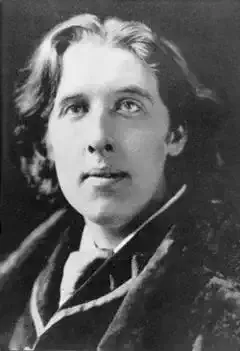
Oscar Wilde
Soneto: Holy Week at Genoa
I wandered through Scoglietto's far retreat,
The oranges on each o'erhanging spray
Burned as bright lamps of gold to shame the day;
Some startled bird with fluttering wings and fleet
Made snow of all the blossoms; at my feet
Like silver moons the pale narcissi lay:
And the curved waves that streaked the great green bay
Laughed i' the sun, and life seemed very sweet.
Outside the young boy-priest passed singing clear,
'Jesus the son of Mary has been slain,
O come and fill His sepulchre with flowers.'
Ah, God! Ah, God! those dear Hellenic hours
Had drowned all memory of Thy bitter pain,
The Cross, the Crown, the Soldiers and the Spear.
The oranges on each o'erhanging spray
Burned as bright lamps of gold to shame the day;
Some startled bird with fluttering wings and fleet
Made snow of all the blossoms; at my feet
Like silver moons the pale narcissi lay:
And the curved waves that streaked the great green bay
Laughed i' the sun, and life seemed very sweet.
Outside the young boy-priest passed singing clear,
'Jesus the son of Mary has been slain,
O come and fill His sepulchre with flowers.'
Ah, God! Ah, God! those dear Hellenic hours
Had drowned all memory of Thy bitter pain,
The Cross, the Crown, the Soldiers and the Spear.
651
Oscar Wilde
Soneto: Urbs Sacra Aeterna
Rome! what a scroll of History thine has been;
In the first days thy sword republican
Ruled the whole world for many an age's span:
Then of the peoples wert thou royal Queen,
Till in thy streets the bearded Goth was seen;
And now upon thy walls the breezes fan
(Ah, city crowned by God, discrowned by man!)
The hated flag of red and white and green.
When was thy glory! when in search for power
Thine eagles flew to greet the double sun,
And the wild nations shuddered at thy rod?
Nay, but thy glory tarried for this hour,
When pilgrims kneel before the Holy One,
The prisoned shepherd of the Church of God.
MONTRE MARIO
In the first days thy sword republican
Ruled the whole world for many an age's span:
Then of the peoples wert thou royal Queen,
Till in thy streets the bearded Goth was seen;
And now upon thy walls the breezes fan
(Ah, city crowned by God, discrowned by man!)
The hated flag of red and white and green.
When was thy glory! when in search for power
Thine eagles flew to greet the double sun,
And the wild nations shuddered at thy rod?
Nay, but thy glory tarried for this hour,
When pilgrims kneel before the Holy One,
The prisoned shepherd of the Church of God.
MONTRE MARIO
666
Oscar Wilde
Quantum Mutata
There was a time in Europe long ago
When no man died for freedom anywhere,
But England's lion leaping from its lair
Laid hands on the oppressor! it was so
While England could a great Republic show.
Witness the men of Piedmont, chiefest care
Of Cromwell, when with impotent despair
The Pontiff in his painted portico
Trembled before our stern ambassadors.
How comes it then that from such high estate
We have thus fallen, save that Luxury
With barren merchandise piles up the gate
Where noble thoughts and deeds should enter by:
Else might we still be Milton's heritors.
When no man died for freedom anywhere,
But England's lion leaping from its lair
Laid hands on the oppressor! it was so
While England could a great Republic show.
Witness the men of Piedmont, chiefest care
Of Cromwell, when with impotent despair
The Pontiff in his painted portico
Trembled before our stern ambassadors.
How comes it then that from such high estate
We have thus fallen, save that Luxury
With barren merchandise piles up the gate
Where noble thoughts and deeds should enter by:
Else might we still be Milton's heritors.
580
Oscar Wilde
Desespoir
The seasons send their ruin as they go,
For in the spring the narciss shows its head
Nor withers till the rose has flamed to red,
And in the autumn purple violets blow,
And the slim crocus stirs the winter snow;
Wherefore yon leafless trees will bloom again
And this grey land grow green with summer rain
And send up cowslips for some boy to mow.
But what of life whose bitter hungry sea
Flows at our heels, and gloom of sunless night
Covers the days which never more return?
Ambition, love and all the thoughts that burn
We lose too soon, and only find delight
In withered husks of some dead memory.
For in the spring the narciss shows its head
Nor withers till the rose has flamed to red,
And in the autumn purple violets blow,
And the slim crocus stirs the winter snow;
Wherefore yon leafless trees will bloom again
And this grey land grow green with summer rain
And send up cowslips for some boy to mow.
But what of life whose bitter hungry sea
Flows at our heels, and gloom of sunless night
Covers the days which never more return?
Ambition, love and all the thoughts that burn
We lose too soon, and only find delight
In withered husks of some dead memory.
1,259
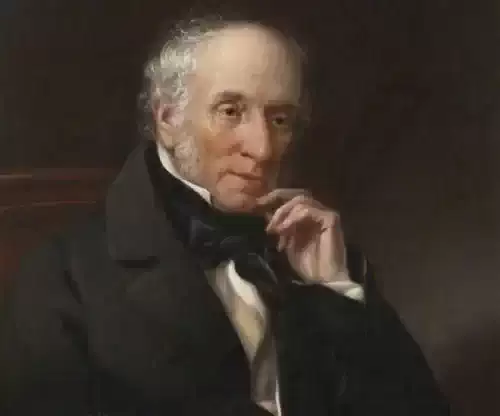
William Wordsworth
Written With a Pencil Upon a Stone In The Wall of The House, On The Island
Written With a Pencil Upon a Stone In The Wall of The House, On The Island
at Grasmere
Rude is this Edifice, and Thou hast seen
Buildings, albeit rude, that have maintained
Proportions more harmonious, and approached
To closer fellowship with ideal grace.
But take it in good part:--alas! the poor
Vitruvius of our village had no help
From the great City; never, upon leaves
Of red Morocco folio, saw displayed,
In long succession, pre-existing ghosts
Of Beauties yet unborn--the rustic Lodge
Antique, and Cottage with verandah graced,
Nor lacking, for fit company, alcove,
Green-house, shell-grot, and moss-lined hermitage.
Thou see'st a homely Pile, yet to these walls
The heifer comes in the snow-storm, and here
The new-dropped lamb finds shelter from the wind.
And hither does one Poet sometimes row
His pinnace, a small vagrant barge, up-piled
With plenteous store of heath and withered fern,
(A lading which he with his sickle cuts,
Among the mountains) and beneath this roof
He makes his summer couch, and here at noon
Spreads out his limbs, while, yet unshorn, the Sheep,
Panting beneath the burthen of their wool,
Lie round him, even as if they were a part
Of his own Household: nor, while from his bed
He looks, through the open door-place, toward the lake
And to the stirring breezes, does he want
Creations lovely as the work of sleep--
Fair sights, and visions of romantic joy!
at Grasmere
Rude is this Edifice, and Thou hast seen
Buildings, albeit rude, that have maintained
Proportions more harmonious, and approached
To closer fellowship with ideal grace.
But take it in good part:--alas! the poor
Vitruvius of our village had no help
From the great City; never, upon leaves
Of red Morocco folio, saw displayed,
In long succession, pre-existing ghosts
Of Beauties yet unborn--the rustic Lodge
Antique, and Cottage with verandah graced,
Nor lacking, for fit company, alcove,
Green-house, shell-grot, and moss-lined hermitage.
Thou see'st a homely Pile, yet to these walls
The heifer comes in the snow-storm, and here
The new-dropped lamb finds shelter from the wind.
And hither does one Poet sometimes row
His pinnace, a small vagrant barge, up-piled
With plenteous store of heath and withered fern,
(A lading which he with his sickle cuts,
Among the mountains) and beneath this roof
He makes his summer couch, and here at noon
Spreads out his limbs, while, yet unshorn, the Sheep,
Panting beneath the burthen of their wool,
Lie round him, even as if they were a part
Of his own Household: nor, while from his bed
He looks, through the open door-place, toward the lake
And to the stirring breezes, does he want
Creations lovely as the work of sleep--
Fair sights, and visions of romantic joy!
173
William Wordsworth
Wishing-gate, The
Wishing-gate, The
Hope rules a land forever green:
All powers that serve the bright-eyed Queen
Are confident and gay;
Clouds at her bidding disappear;
Points she to aught?---the bliss draws near,
And Fancy smooths the way.
Not such the land of Wishes---there
Dwell fruitless day-dreams, lawless prayer,
And thoughts with things at strife;
Yet how forlorn, should ye depart
Ye superstitions of the heart,
How poor, were human life!
When magic lore abjured its might,
Ye did not forfeit one dear right,
One tender claim abate;
Witness this symbol of your sway,
Surnving near the public way,
The rustic Wishing-gate!
Inquire not if the faery race
Shed kindly influence on the place,
Ere northward they retired;
If here a warrior left a spell,
Panting for glory as he fell;
Or here a saint expired.
Enough that all arouud is fair,
Composed with Nature's finest care,
And in her fondest love---
Peace to embosom and content---
To overawe the turbulent,
The selfish to reprove.
Yea! even the Stranger from afar,
Reclining on this moss-grown bar,
Unknowing, and unknown,
The infection of the ground partakes,
Longing for his Beloved---who maker
All happiness her own.
Then why should conscious Spirits fear
The mystic stirrings that are here,
The ancient faith disclaim?
The local Genius ne'er befriends
Desires whose course in folly ends,
Whose just reward is shame.
Smile if thou wilt, but not in scorn,
If some, by ceaseless pains outworn,
Here crave an easier lot;
If some have thirsted to renew
A broken vow, or bind a true,
With firmer, holier knot.
And not in vain, when thoughts are cast
Upon the irrevocable past,
Some Penitent sincere
May for a worthier future sigh,
While trickles from his downcast eye
No unavailing tear.
The Worldling, pining to be freed
From turmoil, who would turn or speed
The current of his fate,
Might stop before this favored scene,
At Nature's call, nor blush to lean
Upon the Wishing-gate.
The Sage, who feels how blind, how weak
Is man, though loth such help to seek,
Yet, passing, here might pause,
And thirst for insight to allay
Misgiving, while the crimson day
In quietness withdraws;
Or when the church-clock's knell profound
To Time's first step across the bound
Of midnight makes reply;
Time pressing on with starry crest,
To filial sleep upon the breast
Of dread eternity.
Hope rules a land forever green:
All powers that serve the bright-eyed Queen
Are confident and gay;
Clouds at her bidding disappear;
Points she to aught?---the bliss draws near,
And Fancy smooths the way.
Not such the land of Wishes---there
Dwell fruitless day-dreams, lawless prayer,
And thoughts with things at strife;
Yet how forlorn, should ye depart
Ye superstitions of the heart,
How poor, were human life!
When magic lore abjured its might,
Ye did not forfeit one dear right,
One tender claim abate;
Witness this symbol of your sway,
Surnving near the public way,
The rustic Wishing-gate!
Inquire not if the faery race
Shed kindly influence on the place,
Ere northward they retired;
If here a warrior left a spell,
Panting for glory as he fell;
Or here a saint expired.
Enough that all arouud is fair,
Composed with Nature's finest care,
And in her fondest love---
Peace to embosom and content---
To overawe the turbulent,
The selfish to reprove.
Yea! even the Stranger from afar,
Reclining on this moss-grown bar,
Unknowing, and unknown,
The infection of the ground partakes,
Longing for his Beloved---who maker
All happiness her own.
Then why should conscious Spirits fear
The mystic stirrings that are here,
The ancient faith disclaim?
The local Genius ne'er befriends
Desires whose course in folly ends,
Whose just reward is shame.
Smile if thou wilt, but not in scorn,
If some, by ceaseless pains outworn,
Here crave an easier lot;
If some have thirsted to renew
A broken vow, or bind a true,
With firmer, holier knot.
And not in vain, when thoughts are cast
Upon the irrevocable past,
Some Penitent sincere
May for a worthier future sigh,
While trickles from his downcast eye
No unavailing tear.
The Worldling, pining to be freed
From turmoil, who would turn or speed
The current of his fate,
Might stop before this favored scene,
At Nature's call, nor blush to lean
Upon the Wishing-gate.
The Sage, who feels how blind, how weak
Is man, though loth such help to seek,
Yet, passing, here might pause,
And thirst for insight to allay
Misgiving, while the crimson day
In quietness withdraws;
Or when the church-clock's knell profound
To Time's first step across the bound
Of midnight makes reply;
Time pressing on with starry crest,
To filial sleep upon the breast
Of dread eternity.
213
William Wordsworth
Rainbow, The
Rainbow, The
My heart leaps up when I behold
A Rainbow in the sky:
So was it when my life began;
So is it now I am a man;
So be it when I shall grow old,
Or let me die!
The Child is father of the man;
And I wish my days to be
Bound each to each by natural piety.
My heart leaps up when I behold
A Rainbow in the sky:
So was it when my life began;
So is it now I am a man;
So be it when I shall grow old,
Or let me die!
The Child is father of the man;
And I wish my days to be
Bound each to each by natural piety.
189
William Wordsworth
Peter Bell, A Tale
Peter Bell, A Tale
PROLOGUE
There's something in a flying horse,
There's something in a huge balloon;
But through the clouds I'll never float
Until I have a little Boat,
Shaped like the crescent-moon.
And now I 'have' a little Boat,
In shape a very crescent-moon
Fast through the clouds my boat can sail;
But if perchance your faith should fail,
Look up--and you shall see me soon!
The woods, my Friends, are round you roaring,
Rocking and roaring like a sea;
The noise of danger's in your ears,
And ye have all a thousand fears
Both for my little Boat and me!
Meanwhile untroubled I admire
The pointed horns of my canoe;
And, did not pity touch my breast,
To see how ye are all distrest,
Till my ribs ached, I'd laugh at you!
Away we go, my Boat and I--
Frail man ne'er sate in such another;
Whether among the winds we strive,
Or deep into the clouds we dive,
Each is contented with the other.
Away we go--and what care we
For treasons, tumults, and for wars?
We are as calm in our delight
As is the crescent-moon so bright
Among the scattered stars.
Up goes my Boat among the stars
Through many a breathless field of light,
Through many a long blue field of ether,
Leaving ten thousand stars beneath her:
Up goes my little Boat so bright!
The Crab, the Scorpion, and the Bull--
We pry among them all; have shot
High o'er the red-haired race of Mars,
Covered from top to toe with scars;
Such company I like it not!
The towns in Saturn are decayed,
And melancholy Spectres throng them;--
The Pleiads, that appear to kiss
Each other in the vast abyss,
With joy I sail among them.
Swift Mercury resounds with mirth,
Great Jove is full of stately bowers;
But these, and all that they contain,
What are they to that tiny grain,
That little Earth of ours?
Then back to Earth, the dear green Earth:--
Whole ages if I here should roam,
The world for my remarks and me
Would not a whit the better be;
I've left my heart at home.
See! there she is, the matchless Earth!
There spreads the famed Pacific Ocean!
Old Andes thrusts yon craggy spear
Through the grey clouds; the Alps are here,
Like waters in commotion!
Yon tawny slip is Libya's sands;
That silver thread the river Dnieper!
And look, where clothed in brightest green
Is a sweet Isle, of isles the Queen;
Ye fairies, from all evil keep her!
And see the town where I was born!
Around those happy fields we span
In boyish gambols;--I was lost
Where I have been, but on this coast
I feel I am a man.
Never did fifty things at once
Appear so lovely, never, never;--
How tunefully the forests ring!
To hear the earth's soft murmuring
Thus could I hang for ever!
"Shame on you!" cried my little Boat,
"Was ever such a homesick Loon,
Within a living Boat to sit,
And make no better use of it;
A Boat twin-sister of the crescent-moon!
"Ne'er in the breast of full-grown Poet
Fluttered so faint a heart before;--
Was it the music of the spheres
That overpowered your mortal ears?
--Such din shall trouble them no more.
"These nether precincts do not lack
Charms of their own;--then come with me;
I want a comrade, and for you
There's nothing that I would not do;
Nought is there that you shall not see.
"Haste! and above Siberian snows
We'll sport amid the boreal morning;
Will mingle with her lustres gliding
Among the stars, the stars now hiding,
And now the stars adorning.
"I know the secrets of a land
Where human foot did never stray;
Fair is that land as evening skies,
And cool, though in the depth it lies
Of burning Africa.
"Or we'll into the realm of Faery,
Among the lovely shades of things;
The shadowy forms of mountains bare,
And streams, and bowers, and ladies fair,
The shades of palaces and kings!
"Or, if you thirst with hardy zeal
Less quiet regions to explore,
Prompt voyage shall to you reveal
How earth and heaven are taught to feel
The might of magic lore!"
"My little vagrant Form of light,
My gay and beautiful Canoe,
Well have you played your friendly part;
As kindly take what from my heart
Experience forces--then adieu!
"Temptation lurks among your words;
But, while these pleasures you're pursuing
Without impediment or let,
No wonder if you quite forget
What on the earth is doing.
"There was a time when all mankind
Did listen with a faith sincere
To tuneful tongues in mystery versed;
'Then' Poets fearlessly rehearsed
The wonders of a wild career.
"Go--(but the world's a sleepy world,
And 'tis, I fear, an age too late)
Take with you some ambitious Youth!
For, restless Wanderer! I, in truth,
Am all unfit to be your mate.
"Long have I loved what I behold,
The night that calms, the day that cheers;
The common growth of mother-earth
Suffices me--her tears, her mirth,
Her humblest mirth and tears.
"The dragon's wing, the magic ring,
I shall not covet for my dower,
If I along that lowly way
With sympathetic heart may stray,
And with a soul of power.
"These given, what more need I desire
To stir, to soothe, or elevate?
What nobler marvels than the mind
May in life's daily prospect find,
May find or there create?
"A potent wand doth Sorrow wield;
What spell so strong as guilty Fear!
Repentance is a tender Sprite;
If aught on earth have heavenly might,
'Tis lodged within her silent tear.
"But grant my wishes,--let us now
Descend from this ethereal height;
Then take thy way, adventurous Skiff,
More daring far than Hippogriff,
And be thy own delight!
"To the stone-table in my garden,
Loved haunt of many a summer hour,
The Squire is come: his daughter Bess
Beside him in the cool recess
Sits blooming like a flower.
"With these are many more convened;
They know not I have been so far;--
I see them there, in number nine,
Beneath the spreading Weymouth-pine!
I see them--there they are!
"There sits the Vicar and his Dame;
And there my good friend, Stephen Otter;
And, ere the light of evening fail,
To them I must relate the Tale
Of Peter Bell the Potter."
Off flew the Boat--away she flees,
Spurning her freight with indignation!
And I, as well as I was able,
On two poor legs, toward my stone-table
Limped on with sore vexation.
"O, here he is!" cried little Bess--
She saw me at the garden-door;
"We've waited anxiously and long,"
They cried, and all around me throng,
Full nine of them or more!
"Reproach me not--your fears be still--
Be thankful we again have met;--
Resume, my Friends! within the shade
Your seats, and quickly shall be paid
The well-remembered debt."
I spake with faltering voice, like one
Not wholly rescued from the pale
Of a wild dream, or worse illusion;
But, straight, to cover my confusion,
Began the promised Tale.
PART FIRST
ALL by the moonlight river side
Groaned the poor Beast--alas! in vain;
The staff was raised to loftier height,
And the blows fell with heavier weight
As Peter struck--and struck again.
"Hold!" cried the Squire, "against the rules
Of common sense you're surely sinning;
This leap is for us all too bold;
Who Peter was, let that be told,
And start from the beginning."
----"A Potter, Sir, he was by trade,"
Said I, becoming quite collected;
"And wheresoever he appeared,
Full twenty times was Peter feared
For once that Peter was respected.
"He, two-and-thirty years or more,
Had been a wild and woodland rover;
Had heard the Atlantic surges roar
On farthest Cornwall's rocky shore,
And trod the cliffs of Dover.
"And he had seen Caernarvon's towers,
And well he knew the spire of Sarum;
And he had been where Lincoln bell
Flings o'er the fen that ponderous knell--
A far-renowned alarum!
"At Doncaster, at York, and Leeds,
And merry Carlisle had be been;
And all along the Lowlands fair,
All through the bonny shire of Ayr
And far as Aberdeen.
"And he had been at Inverness;
And Peter, by the mountain-rills,
Had danced his round with Highland lasses;
And he had lain beside his asses
On lofty Cheviot Hills:
"And he had trudged through Yorkshire dales,
Among the rocks and winding 'scars',
Where deep and low the hamlets lie
Beneath their little patch of sky
And little lot of stars:
"And all along the indented coast,
Bespattered with the salt-sea foam;
Where'er a knot of houses lay
On headland, or in hollow bay;--
Sure never man like him did roam!
"As well might Peter, in the Fleet,
Have been fast bound, a begging debtor;--
He travelled here, he travelled there,--
But not the value of a hair
Was heart or head the better.
"He roved among the vales and streams,
In the green wood and hollow dell;
They were his dwellings night and day,--
But nature ne'er could find the way
Into the heart of Peter Bell.
"In vain, through every changeful year,
Did Nature lead him as before;
A primrose by a river's brim
A yellow primrose was to him,
And it was nothing more.
"Small change it made on Peter's heart
To see his gentle panniered train
With more than vernal pleasure feeding,
Where'er the tender grass was leading
Its earliest green along the lane.
"In vain, through water, earth, and air,
The soul of happy sound was spread,
When Peter on some April morn,
Beneath the broom or budding thorn,
Made the warm earth his lazy bed.
"At noon, when, by the forest's edge
He lay beneath the branches high,
The soft blue shy did never melt
Into his heart; he never felt
The witchery of the soft blue sky!
"On a fair prospect some have looked
And felt, as I have heard them say,
As if the moving time had been
A thing as steadfast as the scene
On which they gazed themselves away.
"Within the breast of Peter Bell
These silent raptures found no place;
He was a Carl as wild and rude
As ever hue-and-cry pursued,
As ever ran a felon's race.
"Of all that lead a lawless life,
Of all that love their lawless lives,
In city or in village small,
He was the wildest far of all;--
He had a dozen wedded wives.
"Nay, start not!--wedded wives--and twelve!
But how one wife could e'er come near him,
In simple truth I cannot tell;
For, be it said of Peter Bell
To see him was to fear him.
"Though Nature could not touch his heart
By lovely forms, and silent weather,
And tender sounds, yet you might see
At once, that Peter Bell and she
Had often been together.
"A savage wildness round him hung
As of a dweller out of doors;
In his whole figure and his mien
A savage character was seen
Of mountains and of dreary moors.
"To all the unshaped half-human thoughts
Which solitary Nature feeds
'Mid summer storms or winter's ice,
Had Peter joined whatever vice
The cruel city breeds.
"His face was keen as is the wind
That cuts along the hawthorn-fence;--
Of courage you saw little there,
But, in its stead, a medley air
Of cunning and of impudence.
"He had a dark and sidelong walk,
And long and slouching was his gait;
Beneath his looks so bare and bold,
You might perceive, his spirit cold
Was playing with some inward bait.
"His forehead wrinkled was and furred;
A work, one half of which was done
By thinking of his 'whens' and 'hows;'
And half, by knitting of his brows
Beneath the glaring sun.
"There was a hardness in his cheek,
There was a hardness in his eye,
As if the man had fixed his face,
In many a solitary place,
Against the wind and open sky!"
ONE NIGHT, (and now my little Bess!
We've reached at last the promised Tale:)
One beautiful November night,
When the full moon was shining bright
Upon the rapid river Swale,
Along the river's winding banks
Peter was travelling all alone;--
Whether to buy or sell, or led
By pleasure running in his head,
To me was never known.
He trudged along through copse and brake,
He trudged along o'er hill and dale;
Nor for the moon cared he a tittle,
And for the stars he cared as little,
And for the murmuring river Swale.
But, chancing to espy a path
That promised to cut short the way
As many a wiser man hath done,
He left a trusty guide for one
That might his steps betray.
To a thick wood he soon is brought
Where cheerily his course he weaves,
And whistling loud may yet be heard,
Though often buried, like a bird
Darkling, among the boughs and leaves.
But quickly Peter's mood is changed,
And on he drives with cheeks that burn
In downright fury and in wrath;--
There's little sign the treacherous path
Will to the road return!
The path grows dim, and dimmer still;
Now up, now down, the Rover wends,
With all the sail that he can carry,
Till brought to a deserted quarry--
And there the pathway ends.
He paused--for shadows of strange shape,
Massy and black, before him lay;
But through the dark, and through the cold,
And through the yawning fissures old,
Did Peter boldly press his way
Right through the quarry;--and behold
A scene of soft and lovely hue!
Where blue and grey, and tender green,
Together make as sweet a scene
As ever human eye did view.
Beneath the clear blue sky he saw
A little field of meadow ground;
But field or meadow name it not;
Call it of earth a small green plot,
With rocks encompassed round,
The Swale flowed under the grey rocks,
But he flowed quiet and unseen;--
You need a strong and stormy gale
To bring the noises of the Swale
To that green spot, so calm and green!
And is there no one dwelling here,
No hermit with his beads and glass?
And does no little cottage look
Upon this soft and fertile nook?
Does no one live near this green grass?
Across the deep and quiet spot
Is Peter driving through the grass--
And now has reached the skirting trees;
When, turning round his head, he sees
A solitary Ass.
"A Prize!" cries Peter--but he first
Must spy about him far and near:
There's not a single house in sight,
No woodman's hut, no cottage light--
Peter, you need not fear!
There's nothing to be seen but woods,
And rocks that spread a hoary gleam,
And this one Beast, that from the bed
Of the green meadow hangs his head
Over the silent stream.
His head is with a halter bound;
The halter seizing, Peter leapt
Upon the Creature's back, and plied
With ready heels his shaggy side;
But still the Ass his station kept.
Then Peter gave a sudden jerk,
A jerk that from a dungeon-floor
Would have pulled up an iron ring;
But still the heavy-headed Thing
Stood just as he had stood before!
Quoth Peter, leaping from his seat,
"There is some plot against me laid;"
Once more the little meadow-ground
And all the hoary cliffs around
He cautiously surveyed,
All, all is silent--rocks and woods,
All still and silent--far and near!
Only the Ass, with motion dull,
Upon the pivot of his skull
Turns round his long left ear.
Thought Peter, What can mean all this?
Some ugly witchcraft must be here!
--Once more the Ass, with motion dull,
Upon the pivot of his skull
Turned round his long left ear.
Suspicion ripened into dread;
Yet with deliberate action slow,
His staff high-raising, in the pride
Of skill, upon the sounding hide,
He dealt a sturdy blow.
The poor Ass staggered with the shock;
And then, as if to take his ease,
In quiet uncomplaining mood,
Upon the spot where he had stood,
Dropped gently down upon his knees:
As gently on his side he fell;
And by the river's brink did lie;
And, while he lay like one that mourned,
The patient Beast on Peter turned
His shining hazel eye.
'Twas but one mild, reproachful look,
A look more tender than severe;
And straight in sorrow, not in dread,
He turned the eye-ball in his head
Towards the smooth river deep and clear.
Upon the Beast the sapling rings;
His lank sides heaved, his limbs they stirred;
He gave a groan, and then another,
Of that which went before the brother,
And then he gave a third.
All by the moonlight river side
He gave three miserable groans;
And not till now hath Peter seen
How gaunt the Creature is,--how lean
And sharp his staring bones!
With legs stretched out and stiff he lay:--
No word of kind commiseration
Fell at the sight from Peter's tongue;
With hard contempt his heart was wrung,
With hatred and vexation.
The meagre beast lay still as death;
And Peter's lips with fury quiver;
Quoth he, "You little mulish dog,
I'll fling your carcase like a log
Head-foremost down the river!"
An impious oath confirmed the threat--
Whereat from the earth on which he lay
To all the echoes, south and north,
And east and west, the Ass sent forth
A long and clamorous bray!
This outcry, on the heart of Peter,
Seems like a note of joy to strike,--
Joy at the heart of Peter knocks;
But in the echo of the rocks
Was something Peter did not like.
Whether to cheer his coward breast,
Or that he could not break the chain,
In this serene and solemn hour,
Twined round him by demoniac power,
To the blind work he turned again.
Among the rocks and winding crags;
Among the mountains far away;
Once more the ass did lengthen out
More ruefully a deep-drawn shout,
The hard dry see-saw of his horrible bray!
What is there now in Peter's heart!
Or whence the might of this strange sound?
The moon uneasy looked and dimmer,
The broad blue heavens appeared to glimmer,
And the rocks staggered all around--
From Peter's hand the sapling dropped!
Threat has he none to execute;
"If any one should come and see
That I am here, they'll think," quoth he,
"I'm helping this poor dying brute."
He scans the Ass from limb to limb,
And ventures now to uplift his eyes;
More steady looks the moon, and clear
More like themselves the rocks appear
And touch more quiet skies.
His scorn returns--his hate revives;
He stoops the Ass's neck to seize
With malice--that again takes flight;
For in the pool a startling sight
Meets him, among the inverted trees.
Is it the moon's distorted face?
The ghost-like image of a cloud?
Is it a gallows there portrayed?
Is Peter of himself afraid?
Is it a coffin,--or a shroud?
A grisly idol hewn in stone?
Or imp from witch's lap let fall?
Perhaps a ring of shining fairies?
Such as pursue their feared vagaries
In sylvan bower, or haunted hall?
Is it a fiend that to a stake
Of fire his desperate self is tethering?
Or stubborn spirit doomed to yell
In solitary ward or cell,
Ten thousand miles from all his brethren?
Never did pulse so quickly throb,
And never heart so loudly panted;
He looks, he cannot choose but look;
Like some one reading in a book--
A book that is enchanted.
Ah, well-a-day for Peter Bell!
He will be turned to iron soon,
Meet Statue for the court of Fear!
His hat is up--and every hair
Bristles, and whitens in the moon!
He looks, he ponders, looks again;
He sees a motion--hears a groan;
His eyes will burst--his heart will break--
He gives a loud and frightful shriek,
And back he falls, as if his life were flown!
PART SECOND
WE left our Hero in a trance,
Beneath the alders, near the river;
The Ass is by the river-side,
And, where the feeble breezes glide,
Upon the stream the moonbeams quiver.
A happy respite! but at length
He feels the glimmering of the moon;
Wakes with glazed eve. and feebly signing--
To sink, perhaps, where he is lying,
Into a second swoon!
He lifts his head, he sees his staff;
He touches--'tis to him a treasure!
Faint recollection seems to tell
That he is yet where mortals dwell--
A thought received with languid pleasure!
His head upon his elbow propped,
Becoming less and less perplexed,
Sky-ward he looks--to rock and wood--
And then--upon the glassy flood
His wandering eye is fixed.
Thought he, that is the face of one
In his last sleep securely bound!
So toward the stream his head he bent,
And downward thrust his staff, intent
The river's depth to sound.
'Now'--like a tempest-shattered bark,
That overwhelmed and prostrate lies,
And in a moment to the verge
Is lifted of a foaming surge--
Full suddenly the Ass doth rise!
His staring bones all shake with joy,
And close by Peter's side he stands:
While Peter o'er the river bends,
The little Ass his neck extends,
And fondly licks his hands.
Such life is in the Ass's eyes,
Such life is in his limbs and ears;
That Peter Bell, if he had been
The veriest coward ever seen,
Must now have thrown aside his fears.
The Ass looks on--and to his work
Is Peter quietly resigned;
He touches here--he touches there--
And now among the dead man's hair
His sapling Peter has entwined.
He pulls--and looks--and pulls again;
And he whom the poor Ass had lost,
The man who had been four days dead,
Head-foremost from the river's bed
Uprises like a ghost!
And Peter draws him to dry land;
And through the brain of Peter pass
Some poignant twitches, fast and faster,
"No doubt," quoth he, "he is the Master
Of this poor miserable Ass!"
The meagre Shadow that looks on--
What would he now? what is he doing?
His sudden fit of joy is flown,--
He on his knees hath laid him down,
As if he were his grief renewing;
But no--that Peter on his back
Must mount, he shows well as he can:
Thought Peter then, come weal or woe,
I'll do what he would have me do,
In pity to this poor drowned man.
With that resolve he boldly mounts
Upon the pleased and thankful Ass;
And then, without a moment's stay,
That earnest Creature turned away
Leaving the body on the grass.
Intent upon his faithful watch,
The Beast four days and nights had past;
A sweeter meadow ne'er was seen,
And there the Ass four days had been,
Nor ever once did break his fast:
Yet firm his step, and stout his heart;
The mead is crossed--the quarry's mouth
Is reached; but there the trusty guide
Into a thicket turns aside,
And deftly ambles towards the south.
When hark a burst of doleful sound!
And Peter honestly might say,
The like came never to his ears,
Though he has been, full thirty years,
A rover--night and day!
'Tis not a plover of the moors,
'Tis not a bittern of the fen;
Nor can it be a barking fox,
Nor night-bird chambered in the rocks,
Nor wild-cat in a woody glen!
The Ass is startled--and stops short
Right in the middle of the thicket;
And Peter, wont to whistle loud
Whether alone or in a crowd,
Is silent as a silent cricket.
What ails you now, my little Bess?
Well may you tremble and look grave!
This cry--that rings along the wood,
This cry--that floats adown the flood,
Comes from the entrance of a cave:
I see a blooming Wood-boy there,
And if I had the power to say
How sorrowful the wanderer is,
Your heart would be as sad as his
Till you had kissed his tears away!
Grasping a hawthorn branch in hand,
All bright with berries ripe and red,
Into the cavern's mouth he peeps;
Thence back into the moonlight creeps;
Whom seeks he--whom?--the silent dead:
His father!--Him doth he require--
Him hath he sought with fruitless pains,
Among the rocks, behind the trees;
Now creeping on his hands and knees,
Now running o'er the open plains.
And hither is he come at last,
When he through such a day has gone,
By this dark cave to be distrest
Like a poor bird--her plundered nest
Hovering around with dolorous moan!
Of that intense and piercing cry
The listening Ass conjectures well;
Wild as it is, he there can read
Some intermingled notes that plead
With touches irresistible.
But Peter--when he saw the Ass
Not only stop but turn, and change
The cherished tenor of his pace
That lamentable cry to chase--
It wrought in him conviction strange;
A faith that, for the dead man's sake
And this poor slave who loved him well,
Vengeance upon his head will fall,
Some visitation worse than all
Which ever till this night befell.
Meanwhile the Ass to reach his home,
Is striving stoutly as he may;
But, while he climbs the woody hill,
The cry grows weak--and weaker still;
And now at last it dies away.
So with his freight the Creature turns
Into a gloomy grove of beech,
Along the shade with footsteps true
Descending slowly, till the two
The open moonlight reach.
And there, along the narrow dell,
A fair smooth pathway you discern,
A length of green and open road--
As if it from a fountain flowed--
Winding away between the fern.
The rocks that tower on either side
Build up a wild fantastic scene;
Temples like those among the Hindoos,
And mosques, and spires, and abbey windows,
And castles all with ivy green!
And, while the Ass pursues his way,
Along this solitary dell,
As pensively his steps advance,
The mosques and spires change countenance
And look at Peter Bell!
That unintelligible cry
Hath left him high in preparation,--
Convinced that he, or soon or late,
This very night will meet his fate--
And so he sits in expectation!
The strenuous Animal hath clomb
With the green path; and now he wends
Where, shining like the smoothest sea,
In undisturbed immensity
A level plain extends.
But whence this faintly-rustling sound
By which the journeying pair are chased?
--A withered leaf is close behind,
Light plaything for the sportive wind
Upon that solitary waste.
When Peter spied the moving thing,
It only doubled his distress;
"Where there is not a bush or tree,
The very leaves they follow me--
So huge hath been my wickedness!"
To a close lane they now are come,
Where, as before, the enduring Ass
Moves on without a moment's stop,
Nor once turns round his head to crop
A bramble-leaf or blade of grass.
Between the hedges as they go,
The white dust sleeps upon the lane;
And Peter, ever and anon
Back-looking, sees, upon a stone,
Or in the dust, a crimson stain.
A stain--as of a drop of blood
By moonlight made more faint and wan;
Ha! why these sinkings of despair?
He knows not how the blood comes there--
And Peter is a wicked man.
At length he spies a bleeding wound,
Where he had struck the Ass's head;
He sees the blood, knows what it is,--
A glimpse of sudden joy was his,
But then it quickly fled;
Of him whom sudden death had seized
He thought,--of thee, O faithful Ass!
And once again those ghastly pains,
Shoot to and fro through heart and reins,
And through his brain like lightning pass.
PART THIRD
I'VE heard of one, a gentle Soul,
Though given to sadness and to gloom,
And for the fact will vouch,--one night
It chanced that by a taper's light
This man was reading in his room;
Bending, as you or I might bend
At night o'er any pious book,
When sudden blackness overspread
The snow-white page on which he read,
And made the good man round him look.
The chamber walls were dark all round,--
And to his book he turned again;
--The light had left the lonely taper,
And formed itself upon the paper
Into large letters--bright and plain!
The godly book was in his hand--
And, on the page, more black than coal,
Appeared, set forth in strange array,
A 'word'--which to his dying day
Perplexed the good man's gentle soul.
The ghostly word, thus plainly seen,
Did never from his lips depart;
But he hath said, poor gentle wight!
It brought full many a sin to light
Out of the bottom of his heart.
Dread Spirits! to confound the meek
Why wander from your course so far,
Disordering colour, form, and stature!
--Let good men feel the soul of nature,
And see things as they are.
Yet, potent Spirits! well I know,
How ye, that play with soul and sense,
Are not unused to trouble friends
Of goodness, for most gracious ends--
And this I speak in reverence!
But might I give advice to you,
Whom in my fear I love so well;
From men of pensive virtue go,
Dread Beings! and your empire show
On hearts like that of Peter Bell.
Your presence often have I felt
In darkness and the stormy night;
And, with like force, if need there be,
Ye can put forth your agency
When earth is calm, and heaven is bright.
Then, coming from the wayward world,
That powerful world in which ye dwell,
Come, Spirits of the Mind! and try
To-night, beneath the moonlight sky,
What may be done with Peter Bell!
--O, would that some more skilful voice
My further labour might prevent!
Kind Listeners, that around me sit,
I feel that I am all unfit
For such high argument.
I've played, I've danced, with my narration;
I loitered long ere I began:
Ye waited then on my good pleasure;
Pour out indulgence still, in measure
As liberal as ye can!
Our Travellers, ye remember well,
Are thridding a sequestered lane;
And Peter many tricks is trying,
And many anodynes applying,
To ease his conscience of its pain.
By this his heart is lighter far;
And, finding that he can account
So snugly for that crimson stain,
His evil spirit up again
Does like an empty bucket mount.
And Peter is a deep logician
Who hath no lack of wit mercurial;
"Blood drops--leaves rustle--yet," quoth he,
"This poor man never, but for me,
Could have had Christian burial.
"And, say the best you can, 'tis plain,
That here has been some wicked dealing;
No doubt the devil in me wrought;
I'm not the man who could have thought
An Ass like this was worth the stealing!"
So from his pocket Peter takes
His shining horn tobacco-box;
And, in a light and careless way,
As men who with their purpose play,
Upon the lid he knocks.
Let them whose voice can stop the clouds,
Whose cunning eye can see the wind,
Tell to a curious world the cause
Why, making here a sudden pause,
The Ass turned round his head, and 'grinned'.
Appalling process! I have marked
The like on heath, in lonely wood;
And, verily, have seldom met
A spectacle more hideous--yet
It suited Peter's present mood.
And, grinning in his turn, his teeth
He in jocose defiance showed--
When, to upset his spiteful mirth,
A murmur, pent within the earth,
In the dead earth beneath the road
Rolled audibly! it swept along,
A muffled noise--a rumbling sound!--
'Twas by a troop of miners made,
Plying with gunpowder their trade,
Some twenty fathoms under ground.
Small cause of dire effect! for, surely,
If ever mortal, King or Cotter,
Believed that earth was charged to quake
And yawn for his unworthy sake,
'Twas Peter Bell the Potter.
But, as an oak in breathless air
Will stand though to the centre hewn;
Or as the weakest things, if frost
Have stiffened them, maintain their post;
So he, beneath the gazing moon!--
The Beast bestriding thus, he reached
A spot where, in a sheltering cove,
A little chapel stands alone,
With greenest ivy overgrown,
And tufted with an ivy grove;
Dying insensibly away
From human thoughts and purposes,
It seemed--wall, window, roof and tower--
To bow to some transforming power,
And blend with the surrounding trees.
As ruinous a place it was,
Thought Peter, in the shire of Fife
That served my turn, when following still
From land to land a reckless will
I married my sixth wife!
The unheeding Ass moves slowly on,
And now is passing by an inn
Brim-full of a carousing crew,
That make, with curses not a few,
An uproar and a drunken din.
I cannot well express the thoughts
Which Peter in those noises found;--
A stifling power compressed his frame,
While-as a swimming darkness came
Over that dull and dreary sound.
For well did Peter know the sound;
The language of those drunken joys
To him, a jovial soul, I ween,
But a few hours ago, had been
A gladsome and a welcome noise.
'Now', turned adrift into the past,
He finds no solace in his course;
Like planet-stricken men of yore,
He trembles, smitten to the core
By strong compunction and remorse.
But, more than all, his heart is stung
To think of one, almost a child;
A sweet and playful Highland girl,
As light and beauteous as a squirrel,
As beauteous and as wild!
Her dwelling was a lonely house,
A cottage in a heathy dell;
And she put on her gown of green,
And left her mother at sixteen,
And followed Peter Bell.
But many good and pious thoughts
Had she; and, in the kirk to pray,
Two long Scotch miles, through rain or snow
To kirk she had been used to go,
Twice every Sabbath-day.
And, when she followed Peter Bell,
It was to lead an honest life;
For he, with tongue not used to falter,
Had pledged his troth before the altar
To love her as his wedded wife.
A mother's hope is hers;--but soon
She drooped and pined like one forlorn;
From Scripture she a name did borrow;
Benoni, or the child of sorrow,
She called her babe unborn.
For she had learned how Peter lived,
And took it in most grievous part;
She to the very bone was worn,
And, ere that little child was born,
Died of a broken heart.
And now the Spirits of the Mind
Are busy with poor Peter Bell;
Upon the rights of visual sense
Usurping, with a prevalence
More terrible than magic spell.
Close by a brake of flowering furze
(Above it shivering aspens play)
He sees an unsubstantial creature,
His very self in form and feature,
Not four yards from the broad highway:
And stretched beneath the furze he sees
The Highland girl--it is no other;
And hears her crying as she cried,
The very moment that she died,
"My mother! oh my mother!"
The sweat pours down from Peter's face,
So grievous is his heart's contrition;
With agony his eye-balls ache
While he beholds by the furze-brake
This miserable vision!
Calm is the well-deserving brute,
'His' peace hath no offence betrayed;
But now, while down that slope he wends,
A voice to Peter's ear ascends,
Resounding from the woody glade:
The voice, though clamorous as a horn
Re-echoed by a naked rock,
Comes from that tabernacle--List!
Within, a fervent Methodist
Is preaching to no heedless flock!
"Repent! repent!" he cries aloud,
"While yet ye may find mercy;--strive
To love the Lord with all your might;
Turn to him, seek him day and night,
And save your souls alive!
"Repent! repent! though ye have gone,
Through paths of wickedness and woe,
After the Babylonian harlot;
And, though your sins be red as scarlet,
They shall be white as snow!"
Even as he passed the door, these words
Did plainly come to Peter's ears;
And they such joyful tidings were,
The joy was more than he could bear!--
He melted into tears.
Sweet tears of hope and tenderness!
And fast they fell, a plenteous shower!
His nerves, his sinews seemed to melt;
Through all his iron frame was felt
A gentle, a relaxing, power!
Each fibre of his frame was weak;
Weak all the animal within;
But, in its helplessness, grew mild
And gentle as an infant child,
An infant that has known no sin.
'Tis said, meek Beast! that, through Heaven's grace,
He not unmoved did notice now
The cross upon thy shoulder scored,
For lasting impress, by the Lord
To whom all human-kind shall bow;
Memorial of his touch--that day
When Jesus humbly deigned to ride,
Entering the proud Jerusalem,
By an immeasurable stream
Of shouting people deified!
Meanwhile the persevering Ass,
Turned towards a gate that hung in view
Across a shady lane; his chest
Against the yielding gate he pressed
And quietly passed through.
And up the stony lane he goes;
No ghost more softly ever trod;
Among the stones and pebbles, he
Sets down his hoofs inaudibly,
As if with felt his hoofs were shod.
Along the lane the trusty Ass
Went twice two hundred yards or more,
And no one could have guessed his aim,--
Till to a lonely house he came,
And stopped beside the door.
Thought Peter, 'tis the poor man's home!
He listens--not a sound is heard
Save from the trickling household rill;
But, stepping o'er the cottage-sill,
Forthwith a little Girl appeared.
She to the Meeting-house was bound
In hopes some tidings there to gather:
No glimpse it is, no doubtful gleam;
She saw--and uttered with a scream,
"My father! here's my father!"
The very word was plainly heard,
Heard plainly by the wretched Mother--
Her joy was like a deep affright:
And forth she rushed into the light,
And saw it was another!
And, instantly, upon the earth,
Beneath the full moon shining bright,
Close to the Ass's feet she fell;
At the same moment Peter Bell
Dismounts in most unhappy plight.
As he beheld the Woman lie
Breathless and motionless, the mind
Of Peter sadly was confused;
But, though to such demands unused,
And helpless almost as the blind,
He raised her up; and, while he held
Her body propped against his knee,
The Woman waked--and when she spied
The poor Ass standing by her side,
She moaned most bitterly.
"Oh! God be praised--my heart's at ease--
For he is dead--I know it well!"
--At this she wept a bitter flood;
And, in the best way that he could,
His tale did Peter tell.
He trembles--he is pale as death;
His voice is weak with perturbation;
He turns aside his head, he pauses;
Poor Peter, from a thousand causes,
Is crippled sore in his narration.
At length she learned how he espied
The Ass in that small meadow-ground;
And that her Husband now lay dead,
Beside that luckless river's bed
In which he had been drowned.
A piercing look the Widow cast
Upon the Beast that near her stands;
She sees 'tis he, that 'tis the same;
She calls the poor Ass by his name,
And wrings, and wrings her hands.
"O wretched loss--untimely stroke!
If he had died upon his bed!
He knew not one forewarning pain;
He never will come home again--
Is dead, for ever dead!"
Beside the woman Peter stands;
His heart is opening more and more;
A holy sense pervades his mind;
He feels what he for human kind
Had never felt before.
At length, by Peter's arm sustained,
The Woman rises from the ground--
"Oh, mercy! something must be done,
My little Rachel, you must run,--
Some willing neighbour must be found.
"Make haste--my little Rachel--do,
The first you meet with--bid him come,
Ask him to lend his horse to-night,
And this good Man, whom Heaven requite,
Will help to bring the body home."
Away goes Rachel weeping loud;--
An Infant, waked by her distress,
Makes in the house a piteous cry;
And Peter hears the Mother sigh,
"Seven are they, and all fatherless!"
And now is Peter taught to feel
That man's heart is a holy thing;
And Nature, through a world of death,
Breathes into him a second breath,
More searching than the breath of spring.
Upon a stone the Woman sits
In agony of silent grief--
From his own thoughts did Peter start;
He longs to press her to his heart,
From love that cannot find relief.
But roused, as if through every limb
Had past a sudden shock of dread,
The Mother o'er the threshold flies,
And up the cottage stairs she hies,
And on the pillow lays her burning head.
And Peter turns his steps aside
Into a shade of darksome trees,
Where he sits down, he knows not how,
With his hands pressed against his brow,
His elbows on his tremulous knees.
There, self-involved, does Peter sit
Until no sign of life he makes,
As if his mind were sinking deep
Through years that have been long asleep
The trance is passed away--he wakes;
He lifts his head--and sees the Ass
Yet standing in the clear moonshine;
"When shall I be as good as thou?
Oh! would, poor beast, that I had now
A heart but half as good as thine!"
But 'He'--who deviously hath sought
His Father through the lonesome woods,
Hath sought, proclaiming to the ear
Of night his grief and sorrowful fear--
He comes, escaped from fields and floods;--
With weary pace is drawing nigh;
He sees the Ass--and nothing living
Had ever such a fit of joy
As hath this little orphan Boy,
For he has no misgiving!
Forth to the gentle Ass he springs,
And up about his neck he climbs;
In loving words he talks to him,
He kisses, kisses face and limb,--
He kisses him a thousand times!
This Peter sees, while in the shade
He stood beside the cottage-door;
And Peter Bell, the ruffian wild,
Sobs loud, he sobs even like a child,
"O God! I can endure no more!"
--Here ends my Tale: for in a trice
Arrived a neighbour with his horse;
Peter went forth with him straightway;
And, with due care, ere break of day,
Together they brought back the Corse.
And many years did this poor Ass,
Whom once it was my luck to see
Cropping the shrubs of Leming-Lane,
Help by his labour to maintain
The Widow and her family.
And Peter Bell, who, till that night,
Had been the wildest of his clan,
Forsook his crimes, renounced his folly,
And, after ten months' melancholy,
Became a good and honest man.
PROLOGUE
There's something in a flying horse,
There's something in a huge balloon;
But through the clouds I'll never float
Until I have a little Boat,
Shaped like the crescent-moon.
And now I 'have' a little Boat,
In shape a very crescent-moon
Fast through the clouds my boat can sail;
But if perchance your faith should fail,
Look up--and you shall see me soon!
The woods, my Friends, are round you roaring,
Rocking and roaring like a sea;
The noise of danger's in your ears,
And ye have all a thousand fears
Both for my little Boat and me!
Meanwhile untroubled I admire
The pointed horns of my canoe;
And, did not pity touch my breast,
To see how ye are all distrest,
Till my ribs ached, I'd laugh at you!
Away we go, my Boat and I--
Frail man ne'er sate in such another;
Whether among the winds we strive,
Or deep into the clouds we dive,
Each is contented with the other.
Away we go--and what care we
For treasons, tumults, and for wars?
We are as calm in our delight
As is the crescent-moon so bright
Among the scattered stars.
Up goes my Boat among the stars
Through many a breathless field of light,
Through many a long blue field of ether,
Leaving ten thousand stars beneath her:
Up goes my little Boat so bright!
The Crab, the Scorpion, and the Bull--
We pry among them all; have shot
High o'er the red-haired race of Mars,
Covered from top to toe with scars;
Such company I like it not!
The towns in Saturn are decayed,
And melancholy Spectres throng them;--
The Pleiads, that appear to kiss
Each other in the vast abyss,
With joy I sail among them.
Swift Mercury resounds with mirth,
Great Jove is full of stately bowers;
But these, and all that they contain,
What are they to that tiny grain,
That little Earth of ours?
Then back to Earth, the dear green Earth:--
Whole ages if I here should roam,
The world for my remarks and me
Would not a whit the better be;
I've left my heart at home.
See! there she is, the matchless Earth!
There spreads the famed Pacific Ocean!
Old Andes thrusts yon craggy spear
Through the grey clouds; the Alps are here,
Like waters in commotion!
Yon tawny slip is Libya's sands;
That silver thread the river Dnieper!
And look, where clothed in brightest green
Is a sweet Isle, of isles the Queen;
Ye fairies, from all evil keep her!
And see the town where I was born!
Around those happy fields we span
In boyish gambols;--I was lost
Where I have been, but on this coast
I feel I am a man.
Never did fifty things at once
Appear so lovely, never, never;--
How tunefully the forests ring!
To hear the earth's soft murmuring
Thus could I hang for ever!
"Shame on you!" cried my little Boat,
"Was ever such a homesick Loon,
Within a living Boat to sit,
And make no better use of it;
A Boat twin-sister of the crescent-moon!
"Ne'er in the breast of full-grown Poet
Fluttered so faint a heart before;--
Was it the music of the spheres
That overpowered your mortal ears?
--Such din shall trouble them no more.
"These nether precincts do not lack
Charms of their own;--then come with me;
I want a comrade, and for you
There's nothing that I would not do;
Nought is there that you shall not see.
"Haste! and above Siberian snows
We'll sport amid the boreal morning;
Will mingle with her lustres gliding
Among the stars, the stars now hiding,
And now the stars adorning.
"I know the secrets of a land
Where human foot did never stray;
Fair is that land as evening skies,
And cool, though in the depth it lies
Of burning Africa.
"Or we'll into the realm of Faery,
Among the lovely shades of things;
The shadowy forms of mountains bare,
And streams, and bowers, and ladies fair,
The shades of palaces and kings!
"Or, if you thirst with hardy zeal
Less quiet regions to explore,
Prompt voyage shall to you reveal
How earth and heaven are taught to feel
The might of magic lore!"
"My little vagrant Form of light,
My gay and beautiful Canoe,
Well have you played your friendly part;
As kindly take what from my heart
Experience forces--then adieu!
"Temptation lurks among your words;
But, while these pleasures you're pursuing
Without impediment or let,
No wonder if you quite forget
What on the earth is doing.
"There was a time when all mankind
Did listen with a faith sincere
To tuneful tongues in mystery versed;
'Then' Poets fearlessly rehearsed
The wonders of a wild career.
"Go--(but the world's a sleepy world,
And 'tis, I fear, an age too late)
Take with you some ambitious Youth!
For, restless Wanderer! I, in truth,
Am all unfit to be your mate.
"Long have I loved what I behold,
The night that calms, the day that cheers;
The common growth of mother-earth
Suffices me--her tears, her mirth,
Her humblest mirth and tears.
"The dragon's wing, the magic ring,
I shall not covet for my dower,
If I along that lowly way
With sympathetic heart may stray,
And with a soul of power.
"These given, what more need I desire
To stir, to soothe, or elevate?
What nobler marvels than the mind
May in life's daily prospect find,
May find or there create?
"A potent wand doth Sorrow wield;
What spell so strong as guilty Fear!
Repentance is a tender Sprite;
If aught on earth have heavenly might,
'Tis lodged within her silent tear.
"But grant my wishes,--let us now
Descend from this ethereal height;
Then take thy way, adventurous Skiff,
More daring far than Hippogriff,
And be thy own delight!
"To the stone-table in my garden,
Loved haunt of many a summer hour,
The Squire is come: his daughter Bess
Beside him in the cool recess
Sits blooming like a flower.
"With these are many more convened;
They know not I have been so far;--
I see them there, in number nine,
Beneath the spreading Weymouth-pine!
I see them--there they are!
"There sits the Vicar and his Dame;
And there my good friend, Stephen Otter;
And, ere the light of evening fail,
To them I must relate the Tale
Of Peter Bell the Potter."
Off flew the Boat--away she flees,
Spurning her freight with indignation!
And I, as well as I was able,
On two poor legs, toward my stone-table
Limped on with sore vexation.
"O, here he is!" cried little Bess--
She saw me at the garden-door;
"We've waited anxiously and long,"
They cried, and all around me throng,
Full nine of them or more!
"Reproach me not--your fears be still--
Be thankful we again have met;--
Resume, my Friends! within the shade
Your seats, and quickly shall be paid
The well-remembered debt."
I spake with faltering voice, like one
Not wholly rescued from the pale
Of a wild dream, or worse illusion;
But, straight, to cover my confusion,
Began the promised Tale.
PART FIRST
ALL by the moonlight river side
Groaned the poor Beast--alas! in vain;
The staff was raised to loftier height,
And the blows fell with heavier weight
As Peter struck--and struck again.
"Hold!" cried the Squire, "against the rules
Of common sense you're surely sinning;
This leap is for us all too bold;
Who Peter was, let that be told,
And start from the beginning."
----"A Potter, Sir, he was by trade,"
Said I, becoming quite collected;
"And wheresoever he appeared,
Full twenty times was Peter feared
For once that Peter was respected.
"He, two-and-thirty years or more,
Had been a wild and woodland rover;
Had heard the Atlantic surges roar
On farthest Cornwall's rocky shore,
And trod the cliffs of Dover.
"And he had seen Caernarvon's towers,
And well he knew the spire of Sarum;
And he had been where Lincoln bell
Flings o'er the fen that ponderous knell--
A far-renowned alarum!
"At Doncaster, at York, and Leeds,
And merry Carlisle had be been;
And all along the Lowlands fair,
All through the bonny shire of Ayr
And far as Aberdeen.
"And he had been at Inverness;
And Peter, by the mountain-rills,
Had danced his round with Highland lasses;
And he had lain beside his asses
On lofty Cheviot Hills:
"And he had trudged through Yorkshire dales,
Among the rocks and winding 'scars',
Where deep and low the hamlets lie
Beneath their little patch of sky
And little lot of stars:
"And all along the indented coast,
Bespattered with the salt-sea foam;
Where'er a knot of houses lay
On headland, or in hollow bay;--
Sure never man like him did roam!
"As well might Peter, in the Fleet,
Have been fast bound, a begging debtor;--
He travelled here, he travelled there,--
But not the value of a hair
Was heart or head the better.
"He roved among the vales and streams,
In the green wood and hollow dell;
They were his dwellings night and day,--
But nature ne'er could find the way
Into the heart of Peter Bell.
"In vain, through every changeful year,
Did Nature lead him as before;
A primrose by a river's brim
A yellow primrose was to him,
And it was nothing more.
"Small change it made on Peter's heart
To see his gentle panniered train
With more than vernal pleasure feeding,
Where'er the tender grass was leading
Its earliest green along the lane.
"In vain, through water, earth, and air,
The soul of happy sound was spread,
When Peter on some April morn,
Beneath the broom or budding thorn,
Made the warm earth his lazy bed.
"At noon, when, by the forest's edge
He lay beneath the branches high,
The soft blue shy did never melt
Into his heart; he never felt
The witchery of the soft blue sky!
"On a fair prospect some have looked
And felt, as I have heard them say,
As if the moving time had been
A thing as steadfast as the scene
On which they gazed themselves away.
"Within the breast of Peter Bell
These silent raptures found no place;
He was a Carl as wild and rude
As ever hue-and-cry pursued,
As ever ran a felon's race.
"Of all that lead a lawless life,
Of all that love their lawless lives,
In city or in village small,
He was the wildest far of all;--
He had a dozen wedded wives.
"Nay, start not!--wedded wives--and twelve!
But how one wife could e'er come near him,
In simple truth I cannot tell;
For, be it said of Peter Bell
To see him was to fear him.
"Though Nature could not touch his heart
By lovely forms, and silent weather,
And tender sounds, yet you might see
At once, that Peter Bell and she
Had often been together.
"A savage wildness round him hung
As of a dweller out of doors;
In his whole figure and his mien
A savage character was seen
Of mountains and of dreary moors.
"To all the unshaped half-human thoughts
Which solitary Nature feeds
'Mid summer storms or winter's ice,
Had Peter joined whatever vice
The cruel city breeds.
"His face was keen as is the wind
That cuts along the hawthorn-fence;--
Of courage you saw little there,
But, in its stead, a medley air
Of cunning and of impudence.
"He had a dark and sidelong walk,
And long and slouching was his gait;
Beneath his looks so bare and bold,
You might perceive, his spirit cold
Was playing with some inward bait.
"His forehead wrinkled was and furred;
A work, one half of which was done
By thinking of his 'whens' and 'hows;'
And half, by knitting of his brows
Beneath the glaring sun.
"There was a hardness in his cheek,
There was a hardness in his eye,
As if the man had fixed his face,
In many a solitary place,
Against the wind and open sky!"
ONE NIGHT, (and now my little Bess!
We've reached at last the promised Tale:)
One beautiful November night,
When the full moon was shining bright
Upon the rapid river Swale,
Along the river's winding banks
Peter was travelling all alone;--
Whether to buy or sell, or led
By pleasure running in his head,
To me was never known.
He trudged along through copse and brake,
He trudged along o'er hill and dale;
Nor for the moon cared he a tittle,
And for the stars he cared as little,
And for the murmuring river Swale.
But, chancing to espy a path
That promised to cut short the way
As many a wiser man hath done,
He left a trusty guide for one
That might his steps betray.
To a thick wood he soon is brought
Where cheerily his course he weaves,
And whistling loud may yet be heard,
Though often buried, like a bird
Darkling, among the boughs and leaves.
But quickly Peter's mood is changed,
And on he drives with cheeks that burn
In downright fury and in wrath;--
There's little sign the treacherous path
Will to the road return!
The path grows dim, and dimmer still;
Now up, now down, the Rover wends,
With all the sail that he can carry,
Till brought to a deserted quarry--
And there the pathway ends.
He paused--for shadows of strange shape,
Massy and black, before him lay;
But through the dark, and through the cold,
And through the yawning fissures old,
Did Peter boldly press his way
Right through the quarry;--and behold
A scene of soft and lovely hue!
Where blue and grey, and tender green,
Together make as sweet a scene
As ever human eye did view.
Beneath the clear blue sky he saw
A little field of meadow ground;
But field or meadow name it not;
Call it of earth a small green plot,
With rocks encompassed round,
The Swale flowed under the grey rocks,
But he flowed quiet and unseen;--
You need a strong and stormy gale
To bring the noises of the Swale
To that green spot, so calm and green!
And is there no one dwelling here,
No hermit with his beads and glass?
And does no little cottage look
Upon this soft and fertile nook?
Does no one live near this green grass?
Across the deep and quiet spot
Is Peter driving through the grass--
And now has reached the skirting trees;
When, turning round his head, he sees
A solitary Ass.
"A Prize!" cries Peter--but he first
Must spy about him far and near:
There's not a single house in sight,
No woodman's hut, no cottage light--
Peter, you need not fear!
There's nothing to be seen but woods,
And rocks that spread a hoary gleam,
And this one Beast, that from the bed
Of the green meadow hangs his head
Over the silent stream.
His head is with a halter bound;
The halter seizing, Peter leapt
Upon the Creature's back, and plied
With ready heels his shaggy side;
But still the Ass his station kept.
Then Peter gave a sudden jerk,
A jerk that from a dungeon-floor
Would have pulled up an iron ring;
But still the heavy-headed Thing
Stood just as he had stood before!
Quoth Peter, leaping from his seat,
"There is some plot against me laid;"
Once more the little meadow-ground
And all the hoary cliffs around
He cautiously surveyed,
All, all is silent--rocks and woods,
All still and silent--far and near!
Only the Ass, with motion dull,
Upon the pivot of his skull
Turns round his long left ear.
Thought Peter, What can mean all this?
Some ugly witchcraft must be here!
--Once more the Ass, with motion dull,
Upon the pivot of his skull
Turned round his long left ear.
Suspicion ripened into dread;
Yet with deliberate action slow,
His staff high-raising, in the pride
Of skill, upon the sounding hide,
He dealt a sturdy blow.
The poor Ass staggered with the shock;
And then, as if to take his ease,
In quiet uncomplaining mood,
Upon the spot where he had stood,
Dropped gently down upon his knees:
As gently on his side he fell;
And by the river's brink did lie;
And, while he lay like one that mourned,
The patient Beast on Peter turned
His shining hazel eye.
'Twas but one mild, reproachful look,
A look more tender than severe;
And straight in sorrow, not in dread,
He turned the eye-ball in his head
Towards the smooth river deep and clear.
Upon the Beast the sapling rings;
His lank sides heaved, his limbs they stirred;
He gave a groan, and then another,
Of that which went before the brother,
And then he gave a third.
All by the moonlight river side
He gave three miserable groans;
And not till now hath Peter seen
How gaunt the Creature is,--how lean
And sharp his staring bones!
With legs stretched out and stiff he lay:--
No word of kind commiseration
Fell at the sight from Peter's tongue;
With hard contempt his heart was wrung,
With hatred and vexation.
The meagre beast lay still as death;
And Peter's lips with fury quiver;
Quoth he, "You little mulish dog,
I'll fling your carcase like a log
Head-foremost down the river!"
An impious oath confirmed the threat--
Whereat from the earth on which he lay
To all the echoes, south and north,
And east and west, the Ass sent forth
A long and clamorous bray!
This outcry, on the heart of Peter,
Seems like a note of joy to strike,--
Joy at the heart of Peter knocks;
But in the echo of the rocks
Was something Peter did not like.
Whether to cheer his coward breast,
Or that he could not break the chain,
In this serene and solemn hour,
Twined round him by demoniac power,
To the blind work he turned again.
Among the rocks and winding crags;
Among the mountains far away;
Once more the ass did lengthen out
More ruefully a deep-drawn shout,
The hard dry see-saw of his horrible bray!
What is there now in Peter's heart!
Or whence the might of this strange sound?
The moon uneasy looked and dimmer,
The broad blue heavens appeared to glimmer,
And the rocks staggered all around--
From Peter's hand the sapling dropped!
Threat has he none to execute;
"If any one should come and see
That I am here, they'll think," quoth he,
"I'm helping this poor dying brute."
He scans the Ass from limb to limb,
And ventures now to uplift his eyes;
More steady looks the moon, and clear
More like themselves the rocks appear
And touch more quiet skies.
His scorn returns--his hate revives;
He stoops the Ass's neck to seize
With malice--that again takes flight;
For in the pool a startling sight
Meets him, among the inverted trees.
Is it the moon's distorted face?
The ghost-like image of a cloud?
Is it a gallows there portrayed?
Is Peter of himself afraid?
Is it a coffin,--or a shroud?
A grisly idol hewn in stone?
Or imp from witch's lap let fall?
Perhaps a ring of shining fairies?
Such as pursue their feared vagaries
In sylvan bower, or haunted hall?
Is it a fiend that to a stake
Of fire his desperate self is tethering?
Or stubborn spirit doomed to yell
In solitary ward or cell,
Ten thousand miles from all his brethren?
Never did pulse so quickly throb,
And never heart so loudly panted;
He looks, he cannot choose but look;
Like some one reading in a book--
A book that is enchanted.
Ah, well-a-day for Peter Bell!
He will be turned to iron soon,
Meet Statue for the court of Fear!
His hat is up--and every hair
Bristles, and whitens in the moon!
He looks, he ponders, looks again;
He sees a motion--hears a groan;
His eyes will burst--his heart will break--
He gives a loud and frightful shriek,
And back he falls, as if his life were flown!
PART SECOND
WE left our Hero in a trance,
Beneath the alders, near the river;
The Ass is by the river-side,
And, where the feeble breezes glide,
Upon the stream the moonbeams quiver.
A happy respite! but at length
He feels the glimmering of the moon;
Wakes with glazed eve. and feebly signing--
To sink, perhaps, where he is lying,
Into a second swoon!
He lifts his head, he sees his staff;
He touches--'tis to him a treasure!
Faint recollection seems to tell
That he is yet where mortals dwell--
A thought received with languid pleasure!
His head upon his elbow propped,
Becoming less and less perplexed,
Sky-ward he looks--to rock and wood--
And then--upon the glassy flood
His wandering eye is fixed.
Thought he, that is the face of one
In his last sleep securely bound!
So toward the stream his head he bent,
And downward thrust his staff, intent
The river's depth to sound.
'Now'--like a tempest-shattered bark,
That overwhelmed and prostrate lies,
And in a moment to the verge
Is lifted of a foaming surge--
Full suddenly the Ass doth rise!
His staring bones all shake with joy,
And close by Peter's side he stands:
While Peter o'er the river bends,
The little Ass his neck extends,
And fondly licks his hands.
Such life is in the Ass's eyes,
Such life is in his limbs and ears;
That Peter Bell, if he had been
The veriest coward ever seen,
Must now have thrown aside his fears.
The Ass looks on--and to his work
Is Peter quietly resigned;
He touches here--he touches there--
And now among the dead man's hair
His sapling Peter has entwined.
He pulls--and looks--and pulls again;
And he whom the poor Ass had lost,
The man who had been four days dead,
Head-foremost from the river's bed
Uprises like a ghost!
And Peter draws him to dry land;
And through the brain of Peter pass
Some poignant twitches, fast and faster,
"No doubt," quoth he, "he is the Master
Of this poor miserable Ass!"
The meagre Shadow that looks on--
What would he now? what is he doing?
His sudden fit of joy is flown,--
He on his knees hath laid him down,
As if he were his grief renewing;
But no--that Peter on his back
Must mount, he shows well as he can:
Thought Peter then, come weal or woe,
I'll do what he would have me do,
In pity to this poor drowned man.
With that resolve he boldly mounts
Upon the pleased and thankful Ass;
And then, without a moment's stay,
That earnest Creature turned away
Leaving the body on the grass.
Intent upon his faithful watch,
The Beast four days and nights had past;
A sweeter meadow ne'er was seen,
And there the Ass four days had been,
Nor ever once did break his fast:
Yet firm his step, and stout his heart;
The mead is crossed--the quarry's mouth
Is reached; but there the trusty guide
Into a thicket turns aside,
And deftly ambles towards the south.
When hark a burst of doleful sound!
And Peter honestly might say,
The like came never to his ears,
Though he has been, full thirty years,
A rover--night and day!
'Tis not a plover of the moors,
'Tis not a bittern of the fen;
Nor can it be a barking fox,
Nor night-bird chambered in the rocks,
Nor wild-cat in a woody glen!
The Ass is startled--and stops short
Right in the middle of the thicket;
And Peter, wont to whistle loud
Whether alone or in a crowd,
Is silent as a silent cricket.
What ails you now, my little Bess?
Well may you tremble and look grave!
This cry--that rings along the wood,
This cry--that floats adown the flood,
Comes from the entrance of a cave:
I see a blooming Wood-boy there,
And if I had the power to say
How sorrowful the wanderer is,
Your heart would be as sad as his
Till you had kissed his tears away!
Grasping a hawthorn branch in hand,
All bright with berries ripe and red,
Into the cavern's mouth he peeps;
Thence back into the moonlight creeps;
Whom seeks he--whom?--the silent dead:
His father!--Him doth he require--
Him hath he sought with fruitless pains,
Among the rocks, behind the trees;
Now creeping on his hands and knees,
Now running o'er the open plains.
And hither is he come at last,
When he through such a day has gone,
By this dark cave to be distrest
Like a poor bird--her plundered nest
Hovering around with dolorous moan!
Of that intense and piercing cry
The listening Ass conjectures well;
Wild as it is, he there can read
Some intermingled notes that plead
With touches irresistible.
But Peter--when he saw the Ass
Not only stop but turn, and change
The cherished tenor of his pace
That lamentable cry to chase--
It wrought in him conviction strange;
A faith that, for the dead man's sake
And this poor slave who loved him well,
Vengeance upon his head will fall,
Some visitation worse than all
Which ever till this night befell.
Meanwhile the Ass to reach his home,
Is striving stoutly as he may;
But, while he climbs the woody hill,
The cry grows weak--and weaker still;
And now at last it dies away.
So with his freight the Creature turns
Into a gloomy grove of beech,
Along the shade with footsteps true
Descending slowly, till the two
The open moonlight reach.
And there, along the narrow dell,
A fair smooth pathway you discern,
A length of green and open road--
As if it from a fountain flowed--
Winding away between the fern.
The rocks that tower on either side
Build up a wild fantastic scene;
Temples like those among the Hindoos,
And mosques, and spires, and abbey windows,
And castles all with ivy green!
And, while the Ass pursues his way,
Along this solitary dell,
As pensively his steps advance,
The mosques and spires change countenance
And look at Peter Bell!
That unintelligible cry
Hath left him high in preparation,--
Convinced that he, or soon or late,
This very night will meet his fate--
And so he sits in expectation!
The strenuous Animal hath clomb
With the green path; and now he wends
Where, shining like the smoothest sea,
In undisturbed immensity
A level plain extends.
But whence this faintly-rustling sound
By which the journeying pair are chased?
--A withered leaf is close behind,
Light plaything for the sportive wind
Upon that solitary waste.
When Peter spied the moving thing,
It only doubled his distress;
"Where there is not a bush or tree,
The very leaves they follow me--
So huge hath been my wickedness!"
To a close lane they now are come,
Where, as before, the enduring Ass
Moves on without a moment's stop,
Nor once turns round his head to crop
A bramble-leaf or blade of grass.
Between the hedges as they go,
The white dust sleeps upon the lane;
And Peter, ever and anon
Back-looking, sees, upon a stone,
Or in the dust, a crimson stain.
A stain--as of a drop of blood
By moonlight made more faint and wan;
Ha! why these sinkings of despair?
He knows not how the blood comes there--
And Peter is a wicked man.
At length he spies a bleeding wound,
Where he had struck the Ass's head;
He sees the blood, knows what it is,--
A glimpse of sudden joy was his,
But then it quickly fled;
Of him whom sudden death had seized
He thought,--of thee, O faithful Ass!
And once again those ghastly pains,
Shoot to and fro through heart and reins,
And through his brain like lightning pass.
PART THIRD
I'VE heard of one, a gentle Soul,
Though given to sadness and to gloom,
And for the fact will vouch,--one night
It chanced that by a taper's light
This man was reading in his room;
Bending, as you or I might bend
At night o'er any pious book,
When sudden blackness overspread
The snow-white page on which he read,
And made the good man round him look.
The chamber walls were dark all round,--
And to his book he turned again;
--The light had left the lonely taper,
And formed itself upon the paper
Into large letters--bright and plain!
The godly book was in his hand--
And, on the page, more black than coal,
Appeared, set forth in strange array,
A 'word'--which to his dying day
Perplexed the good man's gentle soul.
The ghostly word, thus plainly seen,
Did never from his lips depart;
But he hath said, poor gentle wight!
It brought full many a sin to light
Out of the bottom of his heart.
Dread Spirits! to confound the meek
Why wander from your course so far,
Disordering colour, form, and stature!
--Let good men feel the soul of nature,
And see things as they are.
Yet, potent Spirits! well I know,
How ye, that play with soul and sense,
Are not unused to trouble friends
Of goodness, for most gracious ends--
And this I speak in reverence!
But might I give advice to you,
Whom in my fear I love so well;
From men of pensive virtue go,
Dread Beings! and your empire show
On hearts like that of Peter Bell.
Your presence often have I felt
In darkness and the stormy night;
And, with like force, if need there be,
Ye can put forth your agency
When earth is calm, and heaven is bright.
Then, coming from the wayward world,
That powerful world in which ye dwell,
Come, Spirits of the Mind! and try
To-night, beneath the moonlight sky,
What may be done with Peter Bell!
--O, would that some more skilful voice
My further labour might prevent!
Kind Listeners, that around me sit,
I feel that I am all unfit
For such high argument.
I've played, I've danced, with my narration;
I loitered long ere I began:
Ye waited then on my good pleasure;
Pour out indulgence still, in measure
As liberal as ye can!
Our Travellers, ye remember well,
Are thridding a sequestered lane;
And Peter many tricks is trying,
And many anodynes applying,
To ease his conscience of its pain.
By this his heart is lighter far;
And, finding that he can account
So snugly for that crimson stain,
His evil spirit up again
Does like an empty bucket mount.
And Peter is a deep logician
Who hath no lack of wit mercurial;
"Blood drops--leaves rustle--yet," quoth he,
"This poor man never, but for me,
Could have had Christian burial.
"And, say the best you can, 'tis plain,
That here has been some wicked dealing;
No doubt the devil in me wrought;
I'm not the man who could have thought
An Ass like this was worth the stealing!"
So from his pocket Peter takes
His shining horn tobacco-box;
And, in a light and careless way,
As men who with their purpose play,
Upon the lid he knocks.
Let them whose voice can stop the clouds,
Whose cunning eye can see the wind,
Tell to a curious world the cause
Why, making here a sudden pause,
The Ass turned round his head, and 'grinned'.
Appalling process! I have marked
The like on heath, in lonely wood;
And, verily, have seldom met
A spectacle more hideous--yet
It suited Peter's present mood.
And, grinning in his turn, his teeth
He in jocose defiance showed--
When, to upset his spiteful mirth,
A murmur, pent within the earth,
In the dead earth beneath the road
Rolled audibly! it swept along,
A muffled noise--a rumbling sound!--
'Twas by a troop of miners made,
Plying with gunpowder their trade,
Some twenty fathoms under ground.
Small cause of dire effect! for, surely,
If ever mortal, King or Cotter,
Believed that earth was charged to quake
And yawn for his unworthy sake,
'Twas Peter Bell the Potter.
But, as an oak in breathless air
Will stand though to the centre hewn;
Or as the weakest things, if frost
Have stiffened them, maintain their post;
So he, beneath the gazing moon!--
The Beast bestriding thus, he reached
A spot where, in a sheltering cove,
A little chapel stands alone,
With greenest ivy overgrown,
And tufted with an ivy grove;
Dying insensibly away
From human thoughts and purposes,
It seemed--wall, window, roof and tower--
To bow to some transforming power,
And blend with the surrounding trees.
As ruinous a place it was,
Thought Peter, in the shire of Fife
That served my turn, when following still
From land to land a reckless will
I married my sixth wife!
The unheeding Ass moves slowly on,
And now is passing by an inn
Brim-full of a carousing crew,
That make, with curses not a few,
An uproar and a drunken din.
I cannot well express the thoughts
Which Peter in those noises found;--
A stifling power compressed his frame,
While-as a swimming darkness came
Over that dull and dreary sound.
For well did Peter know the sound;
The language of those drunken joys
To him, a jovial soul, I ween,
But a few hours ago, had been
A gladsome and a welcome noise.
'Now', turned adrift into the past,
He finds no solace in his course;
Like planet-stricken men of yore,
He trembles, smitten to the core
By strong compunction and remorse.
But, more than all, his heart is stung
To think of one, almost a child;
A sweet and playful Highland girl,
As light and beauteous as a squirrel,
As beauteous and as wild!
Her dwelling was a lonely house,
A cottage in a heathy dell;
And she put on her gown of green,
And left her mother at sixteen,
And followed Peter Bell.
But many good and pious thoughts
Had she; and, in the kirk to pray,
Two long Scotch miles, through rain or snow
To kirk she had been used to go,
Twice every Sabbath-day.
And, when she followed Peter Bell,
It was to lead an honest life;
For he, with tongue not used to falter,
Had pledged his troth before the altar
To love her as his wedded wife.
A mother's hope is hers;--but soon
She drooped and pined like one forlorn;
From Scripture she a name did borrow;
Benoni, or the child of sorrow,
She called her babe unborn.
For she had learned how Peter lived,
And took it in most grievous part;
She to the very bone was worn,
And, ere that little child was born,
Died of a broken heart.
And now the Spirits of the Mind
Are busy with poor Peter Bell;
Upon the rights of visual sense
Usurping, with a prevalence
More terrible than magic spell.
Close by a brake of flowering furze
(Above it shivering aspens play)
He sees an unsubstantial creature,
His very self in form and feature,
Not four yards from the broad highway:
And stretched beneath the furze he sees
The Highland girl--it is no other;
And hears her crying as she cried,
The very moment that she died,
"My mother! oh my mother!"
The sweat pours down from Peter's face,
So grievous is his heart's contrition;
With agony his eye-balls ache
While he beholds by the furze-brake
This miserable vision!
Calm is the well-deserving brute,
'His' peace hath no offence betrayed;
But now, while down that slope he wends,
A voice to Peter's ear ascends,
Resounding from the woody glade:
The voice, though clamorous as a horn
Re-echoed by a naked rock,
Comes from that tabernacle--List!
Within, a fervent Methodist
Is preaching to no heedless flock!
"Repent! repent!" he cries aloud,
"While yet ye may find mercy;--strive
To love the Lord with all your might;
Turn to him, seek him day and night,
And save your souls alive!
"Repent! repent! though ye have gone,
Through paths of wickedness and woe,
After the Babylonian harlot;
And, though your sins be red as scarlet,
They shall be white as snow!"
Even as he passed the door, these words
Did plainly come to Peter's ears;
And they such joyful tidings were,
The joy was more than he could bear!--
He melted into tears.
Sweet tears of hope and tenderness!
And fast they fell, a plenteous shower!
His nerves, his sinews seemed to melt;
Through all his iron frame was felt
A gentle, a relaxing, power!
Each fibre of his frame was weak;
Weak all the animal within;
But, in its helplessness, grew mild
And gentle as an infant child,
An infant that has known no sin.
'Tis said, meek Beast! that, through Heaven's grace,
He not unmoved did notice now
The cross upon thy shoulder scored,
For lasting impress, by the Lord
To whom all human-kind shall bow;
Memorial of his touch--that day
When Jesus humbly deigned to ride,
Entering the proud Jerusalem,
By an immeasurable stream
Of shouting people deified!
Meanwhile the persevering Ass,
Turned towards a gate that hung in view
Across a shady lane; his chest
Against the yielding gate he pressed
And quietly passed through.
And up the stony lane he goes;
No ghost more softly ever trod;
Among the stones and pebbles, he
Sets down his hoofs inaudibly,
As if with felt his hoofs were shod.
Along the lane the trusty Ass
Went twice two hundred yards or more,
And no one could have guessed his aim,--
Till to a lonely house he came,
And stopped beside the door.
Thought Peter, 'tis the poor man's home!
He listens--not a sound is heard
Save from the trickling household rill;
But, stepping o'er the cottage-sill,
Forthwith a little Girl appeared.
She to the Meeting-house was bound
In hopes some tidings there to gather:
No glimpse it is, no doubtful gleam;
She saw--and uttered with a scream,
"My father! here's my father!"
The very word was plainly heard,
Heard plainly by the wretched Mother--
Her joy was like a deep affright:
And forth she rushed into the light,
And saw it was another!
And, instantly, upon the earth,
Beneath the full moon shining bright,
Close to the Ass's feet she fell;
At the same moment Peter Bell
Dismounts in most unhappy plight.
As he beheld the Woman lie
Breathless and motionless, the mind
Of Peter sadly was confused;
But, though to such demands unused,
And helpless almost as the blind,
He raised her up; and, while he held
Her body propped against his knee,
The Woman waked--and when she spied
The poor Ass standing by her side,
She moaned most bitterly.
"Oh! God be praised--my heart's at ease--
For he is dead--I know it well!"
--At this she wept a bitter flood;
And, in the best way that he could,
His tale did Peter tell.
He trembles--he is pale as death;
His voice is weak with perturbation;
He turns aside his head, he pauses;
Poor Peter, from a thousand causes,
Is crippled sore in his narration.
At length she learned how he espied
The Ass in that small meadow-ground;
And that her Husband now lay dead,
Beside that luckless river's bed
In which he had been drowned.
A piercing look the Widow cast
Upon the Beast that near her stands;
She sees 'tis he, that 'tis the same;
She calls the poor Ass by his name,
And wrings, and wrings her hands.
"O wretched loss--untimely stroke!
If he had died upon his bed!
He knew not one forewarning pain;
He never will come home again--
Is dead, for ever dead!"
Beside the woman Peter stands;
His heart is opening more and more;
A holy sense pervades his mind;
He feels what he for human kind
Had never felt before.
At length, by Peter's arm sustained,
The Woman rises from the ground--
"Oh, mercy! something must be done,
My little Rachel, you must run,--
Some willing neighbour must be found.
"Make haste--my little Rachel--do,
The first you meet with--bid him come,
Ask him to lend his horse to-night,
And this good Man, whom Heaven requite,
Will help to bring the body home."
Away goes Rachel weeping loud;--
An Infant, waked by her distress,
Makes in the house a piteous cry;
And Peter hears the Mother sigh,
"Seven are they, and all fatherless!"
And now is Peter taught to feel
That man's heart is a holy thing;
And Nature, through a world of death,
Breathes into him a second breath,
More searching than the breath of spring.
Upon a stone the Woman sits
In agony of silent grief--
From his own thoughts did Peter start;
He longs to press her to his heart,
From love that cannot find relief.
But roused, as if through every limb
Had past a sudden shock of dread,
The Mother o'er the threshold flies,
And up the cottage stairs she hies,
And on the pillow lays her burning head.
And Peter turns his steps aside
Into a shade of darksome trees,
Where he sits down, he knows not how,
With his hands pressed against his brow,
His elbows on his tremulous knees.
There, self-involved, does Peter sit
Until no sign of life he makes,
As if his mind were sinking deep
Through years that have been long asleep
The trance is passed away--he wakes;
He lifts his head--and sees the Ass
Yet standing in the clear moonshine;
"When shall I be as good as thou?
Oh! would, poor beast, that I had now
A heart but half as good as thine!"
But 'He'--who deviously hath sought
His Father through the lonesome woods,
Hath sought, proclaiming to the ear
Of night his grief and sorrowful fear--
He comes, escaped from fields and floods;--
With weary pace is drawing nigh;
He sees the Ass--and nothing living
Had ever such a fit of joy
As hath this little orphan Boy,
For he has no misgiving!
Forth to the gentle Ass he springs,
And up about his neck he climbs;
In loving words he talks to him,
He kisses, kisses face and limb,--
He kisses him a thousand times!
This Peter sees, while in the shade
He stood beside the cottage-door;
And Peter Bell, the ruffian wild,
Sobs loud, he sobs even like a child,
"O God! I can endure no more!"
--Here ends my Tale: for in a trice
Arrived a neighbour with his horse;
Peter went forth with him straightway;
And, with due care, ere break of day,
Together they brought back the Corse.
And many years did this poor Ass,
Whom once it was my luck to see
Cropping the shrubs of Leming-Lane,
Help by his labour to maintain
The Widow and her family.
And Peter Bell, who, till that night,
Had been the wildest of his clan,
Forsook his crimes, renounced his folly,
And, after ten months' melancholy,
Became a good and honest man.
210
William Wordsworth
November,
November,
. Another year!--another deadly blow!
Another mighty Empire overthrown!
And We are left, or shall be left, alone;
The last that dare to struggle with the Foe.
'Tis well! from this day forward we shall know
That in ourselves our safety must be sought;
That by our own right hands it must be wrought;
That we must stand unpropped, or be laid low.
O dastard whom such foretaste doth not cheer!
We shall exult, if they who rule the land
Be men who hold its many blessings dear,
Wise, upright, valiant; not a servile band,
Who are to judge of danger which they fear,
And honour which they do not understand.
. Another year!--another deadly blow!
Another mighty Empire overthrown!
And We are left, or shall be left, alone;
The last that dare to struggle with the Foe.
'Tis well! from this day forward we shall know
That in ourselves our safety must be sought;
That by our own right hands it must be wrought;
That we must stand unpropped, or be laid low.
O dastard whom such foretaste doth not cheer!
We shall exult, if they who rule the land
Be men who hold its many blessings dear,
Wise, upright, valiant; not a servile band,
Who are to judge of danger which they fear,
And honour which they do not understand.
182

William Shakespeare
Sonnets xv
Sonnets xv
TO me, fair friend, you never can be old;
For as you were when first your eye I eyed,
Such seems your beauty still. Three Winters cold
Have from the forests shook three Summers' pride;
Three beauteous springs to yellow Autumn turn'd
In process of the seasons have I seen,
Three April perfumes in three hot Junes burn'd,
Since first I saw you fresh, which yet are green.
Ah! yet doth beauty, like a dial-hand,
Steal from his figure, and no pace perceived;
So your sweet hue, which methinks still doth stand,
Hath motion, and mine eye may be deceived:
For fear of which, hear this, thou age unbred:
Ere you were born was beauty's summer dead.
TO me, fair friend, you never can be old;
For as you were when first your eye I eyed,
Such seems your beauty still. Three Winters cold
Have from the forests shook three Summers' pride;
Three beauteous springs to yellow Autumn turn'd
In process of the seasons have I seen,
Three April perfumes in three hot Junes burn'd,
Since first I saw you fresh, which yet are green.
Ah! yet doth beauty, like a dial-hand,
Steal from his figure, and no pace perceived;
So your sweet hue, which methinks still doth stand,
Hath motion, and mine eye may be deceived:
For fear of which, hear this, thou age unbred:
Ere you were born was beauty's summer dead.
327
William Shakespeare
Sonnets xiii
Sonnets xiii
FROM you have I been absent in the spring,
When proud-pied April, dress'd in all his trim,
Hath put a spirit of youth in everything,
That heavy Saturn laugh'd and leap'd with him.
Yet nor the lays of birds, nor the sweet smell
Of different flowers in odour and in hue,
Could make me any summer's story tell,
Or from their proud lap pluck them where they grew;
Nor did I wonder at the Lily's white,
Nor praise the deep vermilion in the Rose;
They were but sweet, but figures of delight,
Drawn after you, you pattern of all those.
Yet seem'd it Winter still, and, you away,
As with your shadow I with these did play.
FROM you have I been absent in the spring,
When proud-pied April, dress'd in all his trim,
Hath put a spirit of youth in everything,
That heavy Saturn laugh'd and leap'd with him.
Yet nor the lays of birds, nor the sweet smell
Of different flowers in odour and in hue,
Could make me any summer's story tell,
Or from their proud lap pluck them where they grew;
Nor did I wonder at the Lily's white,
Nor praise the deep vermilion in the Rose;
They were but sweet, but figures of delight,
Drawn after you, you pattern of all those.
Yet seem'd it Winter still, and, you away,
As with your shadow I with these did play.
282
William Shakespeare
Sonnet XC
Sonnet XC
Then hate me when thou wilt; if ever, now;
Now, while the world is bent my deeds to cross,
Join with the spite of fortune, make me bow,
And do not drop in for an after-loss:
Ah, do not, when my heart hath 'scoped this sorrow,
Come in the rearward of a conquer'd woe;
Give not a windy night a rainy morrow,
To linger out a purposed overthrow.
If thou wilt leave me, do not leave me last,
When other petty griefs have done their spite
But in the onset come; so shall I taste
At first the very worst of fortune's might,
And other strains of woe, which now seem woe,
Compared with loss of thee will not seem so.
Then hate me when thou wilt; if ever, now;
Now, while the world is bent my deeds to cross,
Join with the spite of fortune, make me bow,
And do not drop in for an after-loss:
Ah, do not, when my heart hath 'scoped this sorrow,
Come in the rearward of a conquer'd woe;
Give not a windy night a rainy morrow,
To linger out a purposed overthrow.
If thou wilt leave me, do not leave me last,
When other petty griefs have done their spite
But in the onset come; so shall I taste
At first the very worst of fortune's might,
And other strains of woe, which now seem woe,
Compared with loss of thee will not seem so.
241
William Shakespeare
Sonnet LIX
Sonnet LIX
If there be nothing new, but that which is
Hath been before, how are our brains beguiled,
Which, labouring for invention, bear amiss
The second burden of a former child!
O, that record could with a backward look,
Even of five hundred courses of the sun,
Show me your image in some antique book,
Since mind at first in character was done!
That I might see what the old world could say
To this composed wonder of your frame;
Whether we are mended, or whether better they,
Or whether revolution be the same.
O, sure I am, the wits of former days
To subjects worse have given admiring praise.
If there be nothing new, but that which is
Hath been before, how are our brains beguiled,
Which, labouring for invention, bear amiss
The second burden of a former child!
O, that record could with a backward look,
Even of five hundred courses of the sun,
Show me your image in some antique book,
Since mind at first in character was done!
That I might see what the old world could say
To this composed wonder of your frame;
Whether we are mended, or whether better they,
Or whether revolution be the same.
O, sure I am, the wits of former days
To subjects worse have given admiring praise.
294
William Shakespeare
Sonnet L
Sonnet L
How heavy do I journey on the way,
When what I seek, my weary travel's end,
Doth teach that ease and that repose to say
'Thus far the miles are measured from thy friend!'
The beast that bears me, tired with my woe,
Plods dully on, to bear that weight in me,
As if by some instinct the wretch did know
His rider loved not speed, being made from thee:
The bloody spur cannot provoke him on
That sometimes anger thrusts into his hide;
Which heavily he answers with a groan,
More sharp to me than spurring to his side;
For that same groan doth put this in my mind;
My grief lies onward and my joy behind.
How heavy do I journey on the way,
When what I seek, my weary travel's end,
Doth teach that ease and that repose to say
'Thus far the miles are measured from thy friend!'
The beast that bears me, tired with my woe,
Plods dully on, to bear that weight in me,
As if by some instinct the wretch did know
His rider loved not speed, being made from thee:
The bloody spur cannot provoke him on
That sometimes anger thrusts into his hide;
Which heavily he answers with a groan,
More sharp to me than spurring to his side;
For that same groan doth put this in my mind;
My grief lies onward and my joy behind.
295
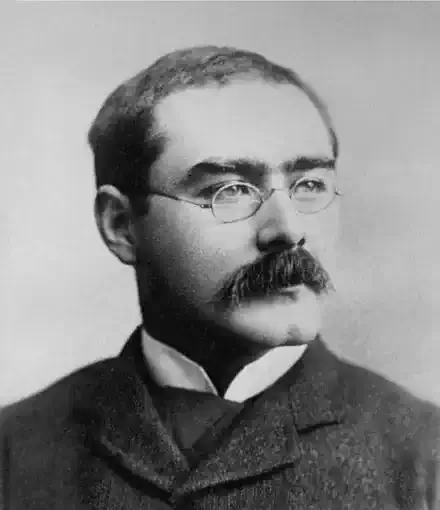
Rudyard Kipling
The Consolations of Memory
The Consolations of Memory
Circa -- Done out of Boethius by Geoffrey Chaucer
Blessed was our first age and morning-time. Then were no
waies tarren, ne no cars numberen, but each followed his owne
playing-busyness to go about singly or by large interspaces,
for to leden his viage after his luste and layen under clene hedge.
Jungling there was not, nor the overtaking wheele, and all those
now cruel clarions were full-hushed and full-still. Then nobile
horses, lest they should make the chariots moveable to run by
cause of this new feare, we did not press, and were apayed by
sweete thankes of him that drave. There was not cursings ne
adventure of death blinded bankes betweene, but good-fellowship
of yoke-mates at ignorance equal, and a one pillar of dust covered
all exodus.... But, see now how the blacke road hath
strippen herself of hearte and beauty where the dumbe lampe of
Tartarus winketh red, etc.
Circa -- Done out of Boethius by Geoffrey Chaucer
Blessed was our first age and morning-time. Then were no
waies tarren, ne no cars numberen, but each followed his owne
playing-busyness to go about singly or by large interspaces,
for to leden his viage after his luste and layen under clene hedge.
Jungling there was not, nor the overtaking wheele, and all those
now cruel clarions were full-hushed and full-still. Then nobile
horses, lest they should make the chariots moveable to run by
cause of this new feare, we did not press, and were apayed by
sweete thankes of him that drave. There was not cursings ne
adventure of death blinded bankes betweene, but good-fellowship
of yoke-mates at ignorance equal, and a one pillar of dust covered
all exodus.... But, see now how the blacke road hath
strippen herself of hearte and beauty where the dumbe lampe of
Tartarus winketh red, etc.
449
Rudyard Kipling
The Mary Gloster
The "Mary Gloster"
I've paid for your sickest fancies; I've humoured your crackedest whim --
Dick, it's your daddy, dying; you've got to listen to him!
Good for a fortnight, am I? The doctor told you? He lied.
I shall go under by morning, and -- Put that nurse outside.
'Never seen death yet, Dickie? Well, now is your time to learn,
And you'll wish you held my record before it comes to your turn.
Not counting the Line and the Foundry, the yards and the village, too,
I've made myself and a million; but I'm damned if I made you.
Master at two-and-twenty, and married at twenty-three --
Ten thousand men on the pay-roll, and forty freighters at sea!
Fifty years between 'em, and every year of it fight,
And now I'm Sir Anthony Gloster, dying, a baronite:
For I lunched with his Royal 'Ighness -- what was it the papers a-had?
"Not least of our merchant-princes." Dickie, that's me, your dad!
~I~ didn't begin with askings. ~I~ took my job and I stuck;
And I took the chances they wouldn't, an' now they're calling it luck.
Lord, what boats I've handled -- rotten and leaky and old!
Ran 'em, or -- opened the bilge-cock, precisely as I was told.
Grub that 'ud bind you crazy, and crews that 'ud turn you grey,
And a big fat lump of insurance to cover the risk on the way.
The others they dursn't do it; they said they valued their life
(They've served me since as skippers). ~I~ went, and I took my wife.
Over the world I drove 'em, married at twenty-three,
And your mother saving the money and making a man of me.
~I~ was content to be master, but she said there was better behind;
She took the chances I wouldn't, and I followed your mother blind.
She egged me to borrow the money, an' she helped me to clear the loan,
When we bought half shares in a cheap 'un and hoisted a flag of our own.
Patching and coaling on credit, and living the Lord knew how,
We started the Red Ox freighters -- we've eight-and-thirty now.
And those were the days of clippers, and the freights were clipper-freights,
And we knew we were making our fortune, but she died in Macassar Straits --
By the Little Paternosters, as you come to the Union Bank --
And we dropped her in fourteen fathom; I pricked it off where she sank.
Owners we were, full owners, and the boat was christened for her,
And she died in the ~Mary Gloster~. My heart, how young we were!
So I went on a spree round Java and well-nigh ran her ashore,
But your mother came and warned me and I wouldn't liquor no more:
Strict I stuck to my business, afraid to stop or I'd think,
Saving the money (she warned me), and letting the other men drink.
And I met M'Cullough in London (I'd turned five 'undred then),
And 'tween us we started the Foundry -- three forges and twenty men:
Cheap repairs for the cheap 'uns. It paid, and the business grew,
For I bought me a steam-lathe patent, and that was a gold mine too.
"Cheaper to build 'em than buy 'em," ~I~ said, but M'Cullough he shied,
And we wasted a year in talking before we moved to the Clyde.
And the Lines were all beginning, and we all of us started fair,
Building our engines like houses and staying the boilers square.
But M'Cullough 'e wanted cabins with marble and maple and all,
And Brussels an' Utrecht velvet, and baths and a Social Hall,
And pipes for closets all over, and cutting the frames too light,
But M'Cullough he died in the Sixties, and -- Well, I'm dying to-night. . . .
I knew -- ~I~ knew what was coming, when we bid on the ~Byfleet~'s keel --
They piddled and piffled with iron: I'd given my orders for steel!
Steel and the first expansions. It paid, I tell you, it paid,
When we came with our nine-knot freighters and collared the long-run trade!
And they asked me how I did it, and I gave 'em the Scripture text,
"You keep your light so shining a little in front o' the next!"
They copied all they could follow, but they couldn't copy my mind,
And I left 'em sweating and stealing a year and a half behind.
Then came the armour-contracts, but that was M'Cullough's side;
He was always best in the Foundry, but better, perhaps, he died.
I went through his private papers; the notes was plainer than print;
And I'm no fool to finish if a man'll give me a hint.
(I remember his widow was angry.) So I saw what the drawings meant,
And I started the six-inch rollers, and it paid me sixty per cent --
Sixty per cent ~with~ failures, and more than twice we could do,
And a quarter-million to credit, and I saved it all for you!
I thought -- it doesn't matter -- you seemed to favour your ma,
But you're nearer forty than thirty, and I know the kind you are.
Harrer an' Trinity College! I ought to ha' sent you to sea --
But I stood you an education, an' what have you done for me?
The things I knew was proper you wouldn't thank me to give,
And the things I knew was rotten you said was the way to live.
For you muddled with books and pictures, an' china an' etchin's an' fans,
And your rooms at college was beastly -- more like a whore's than a man's --
Till you married that thin-flanked woman, as white and as stale as a bone,
An' she gave you your social nonsense; but where's that kid o' your own?
I've seen your carriages blocking the half o' the Cromwell Road,
But never the doctor's brougham to help the missus unload.
(So there isn't even a grandchild, an' the Gloster family's done.)
Not like your mother, she isn't. ~She~ carried her freight each run.
But they died, the pore little beggars! At sea she had 'em -- they died.
Only you, an' you stood it; you haven't stood much beside.
Weak, a liar, and idle, and mean as a collier's whelp
Nosing for scraps in the galley. No help -- my son was no help!
So he gets three 'undred thousand, in trust and the interest paid.
I wouldn't give it you, Dickie -- you see, I made it in trade.
You're saved from soiling your fingers, and if you have no child,
It all comes back to the business. Gad, won't your wife be wild!
'Calls and calls in her carriage, her 'andkerchief up to 'er eye:
"Daddy! dear daddy's dyin'!" and doing her best to cry.
Grateful? Oh, yes, I'm grateful, but keep her away from here.
Your mother 'ud never ha' stood 'er, and, anyhow, women are queer. . . .
There's women will say I've married a second time.
Not quite! But give pore Aggie a hundred, and tell her your lawyers'll fight.
She was the best o' the boiling -- you'll meet her before it ends;
I'm in for a row with the mother -- I'll leave you settle my friends:
For a man he must go with a woman, which women don't understand --
Or the sort that say they can see it they aren't the marrying brand.
But I wanted to speak o' your mother that's Lady Gloster still --
I'm going to up and see her, without it's hurting the will.
Here! Take your hand off the bell-pull. Five thousand's waiting for you,
If you'll only listen a minute, and do as I bid you do.
They'll try to prove me crazy, and, if you bungle, they can;
And I've only you to trust to! (O God, why ain't he a man?)
There's some waste money on marbles, the same as M'Cullough tried --
Marbles and mausoleums -- but I call that sinful pride.
There's some ship bodies for burial -- we've carried 'em, soldered and packed;
Down in their wills they wrote it, and nobody called ~them~ cracked.
But me -- I've too much money, and people might. . . . All my fault:
It come o' hoping for grandsons and buying that Wokin' vault.
I'm sick o' the 'ole dam' business; I'm going back where I came.
Dick, you're the son o' my body, and you'll take charge o' the same!
I want to lie by your mother, ten thousand mile away,
And they'll want to send me to Woking; and that's where you'll earn your pay.
I've thought it out on the quiet, the same as it ought to be done --
Quiet, and decent, and proper -- an' here's your orders, my son.
You know the Line? You don't, though. You write to the Board, and tell
Your father's death has upset you an' you're goin' to cruise for a spell,
An' you'd like the ~Mary Gloster~ -- I've held her ready for this --
They'll put her in working order and you'll take her out as she is.
Yes, it was money idle when I patched her and put her aside
(Thank God, I can pay for my fancies!) -- the boat where your mother died,
By the Little Paternosters, as you come to the Union Bank,
We dropped her -- I think I told you -- and I pricked it off where she sank --
['Tiny she looked on the grating -- that oily, treacly sea --]
'Hundred and eighteen East, remember, and South just three.
Easy bearings to carry -- three South -- three to the dot;
But I gave M'Andrew a copy in case of dying -- or not.
And so you'll write to M'Andrew, he's Chief of the Maori Line;
They'll give him leave, if you ask 'em and say it's business o' mine.
I built three boats for the Maoris, an' very well pleased they were,
An' I've known Mac since the Fifties, and Mac knew me -- and her.
After the first stroke warned me I sent him the money to keep
Against the time you'd claim it, committin' your dad to the deep;
For you are the son o' my body, and Mac was my oldest friend,
I've never asked 'im to dinner, but he'll see it out to the end.
Stiff-necked Glasgow beggar, I've heard he's prayed for my soul,
But he couldn't lie if you paid him, and he'd starve before he stole!
He'll take the ~Mary~ in ballast -- you'll find her a lively ship;
And you'll take Sir Anthony Gloster, that goes on 'is wedding-trip,
Lashed in our old deck-cabin with all three port-holes wide,
The kick o' the screw beneath him and the round blue seas outside!
Sir Anthony Gloster's carriage -- our 'ouse-flag flyin' free --
Ten thousand men on the pay-roll and forty freighters at sea!
He made himself and a million, but this world is a fleetin' show,
And he'll go to the wife of 'is bosom the same as he ought to go --
By the heel of the Paternosters -- there isn't a chance to mistake --
And Mac'll pay you the money as soon as the bubbles break!
Five thousand for six weeks' cruising, the staunchest freighter afloat,
And Mac he'll give you your bonus the minute I'm out o' the boat!
He'll take you round to Macassar, and you'll come back alone;
He knows what I want o' the ~Mary~. . . . I'll do what I please with my own.
Your mother 'ud call it wasteful, but I've seven-and-thirty more;
I'll come in my private carriage and bid it wait at the door. . . .
For my son 'e was never a credit: 'e muddled with books and art,
And 'e lived on Sir Anthony's money and 'e broke Sir Anthony's heart.
There isn't even a grandchild, and the Gloster family's done --
The only one you left me, O mother, the only one!
Harrer and Trinity College -- me slavin' early an' late --
An' he thinks I'm dying crazy, and you're in Macassar Strait!
Flesh o' my flesh, my dearie, for ever an' ever amen,
That first stroke come for a warning; I ought to ha' gone to you then,
But -- cheap repairs for a cheap 'un -- the doctors said I'd do:
Mary, why didn't ~you~ warn me? I've allus heeded to you,
Excep' -- I know -- about women; but you are a spirit now;
An', wife, they was only women, and I was a man. That's how.
An' a man 'e must go with a woman, as you could not understand;
But I never talked 'em secrets. I paid 'em out o' hand.
Thank Gawd, I can pay for my fancies! Now what's five thousand to me,
For a berth off the Paternosters in the haven where I would be?
~I~ believe in the Resurrection, if I read my Bible plain,
But I wouldn't trust 'em at Wokin'; we're safer at sea again.
For the heart it shall go with the treasure -- go down to the sea in ships.
I'm sick of the hired women -- I'll kiss my girl on her lips!
I'll be content with my fountain, I'll drink from my own well,
And the wife of my youth shall charm me -- an' the rest can go to Hell!
(Dickie, ~he~ will, that's certain.) I'll lie in our standin'-bed,
An' Mac'll take her in ballast -- an' she trims best by the head. . . .
Down by the head an' sinkin', her fires are drawn and cold,
And the water's splashin' hollow on the skin of the empty hold --
Churning an' choking and chuckling, quiet and scummy and dark --
Full to her lower hatches and risin' steady. Hark!
That was the after-bulkhead. . . . She's flooded from stem to stern. . . .
Never seen death yet, Dickie? . . . Well, now is your time to learn!
I've paid for your sickest fancies; I've humoured your crackedest whim --
Dick, it's your daddy, dying; you've got to listen to him!
Good for a fortnight, am I? The doctor told you? He lied.
I shall go under by morning, and -- Put that nurse outside.
'Never seen death yet, Dickie? Well, now is your time to learn,
And you'll wish you held my record before it comes to your turn.
Not counting the Line and the Foundry, the yards and the village, too,
I've made myself and a million; but I'm damned if I made you.
Master at two-and-twenty, and married at twenty-three --
Ten thousand men on the pay-roll, and forty freighters at sea!
Fifty years between 'em, and every year of it fight,
And now I'm Sir Anthony Gloster, dying, a baronite:
For I lunched with his Royal 'Ighness -- what was it the papers a-had?
"Not least of our merchant-princes." Dickie, that's me, your dad!
~I~ didn't begin with askings. ~I~ took my job and I stuck;
And I took the chances they wouldn't, an' now they're calling it luck.
Lord, what boats I've handled -- rotten and leaky and old!
Ran 'em, or -- opened the bilge-cock, precisely as I was told.
Grub that 'ud bind you crazy, and crews that 'ud turn you grey,
And a big fat lump of insurance to cover the risk on the way.
The others they dursn't do it; they said they valued their life
(They've served me since as skippers). ~I~ went, and I took my wife.
Over the world I drove 'em, married at twenty-three,
And your mother saving the money and making a man of me.
~I~ was content to be master, but she said there was better behind;
She took the chances I wouldn't, and I followed your mother blind.
She egged me to borrow the money, an' she helped me to clear the loan,
When we bought half shares in a cheap 'un and hoisted a flag of our own.
Patching and coaling on credit, and living the Lord knew how,
We started the Red Ox freighters -- we've eight-and-thirty now.
And those were the days of clippers, and the freights were clipper-freights,
And we knew we were making our fortune, but she died in Macassar Straits --
By the Little Paternosters, as you come to the Union Bank --
And we dropped her in fourteen fathom; I pricked it off where she sank.
Owners we were, full owners, and the boat was christened for her,
And she died in the ~Mary Gloster~. My heart, how young we were!
So I went on a spree round Java and well-nigh ran her ashore,
But your mother came and warned me and I wouldn't liquor no more:
Strict I stuck to my business, afraid to stop or I'd think,
Saving the money (she warned me), and letting the other men drink.
And I met M'Cullough in London (I'd turned five 'undred then),
And 'tween us we started the Foundry -- three forges and twenty men:
Cheap repairs for the cheap 'uns. It paid, and the business grew,
For I bought me a steam-lathe patent, and that was a gold mine too.
"Cheaper to build 'em than buy 'em," ~I~ said, but M'Cullough he shied,
And we wasted a year in talking before we moved to the Clyde.
And the Lines were all beginning, and we all of us started fair,
Building our engines like houses and staying the boilers square.
But M'Cullough 'e wanted cabins with marble and maple and all,
And Brussels an' Utrecht velvet, and baths and a Social Hall,
And pipes for closets all over, and cutting the frames too light,
But M'Cullough he died in the Sixties, and -- Well, I'm dying to-night. . . .
I knew -- ~I~ knew what was coming, when we bid on the ~Byfleet~'s keel --
They piddled and piffled with iron: I'd given my orders for steel!
Steel and the first expansions. It paid, I tell you, it paid,
When we came with our nine-knot freighters and collared the long-run trade!
And they asked me how I did it, and I gave 'em the Scripture text,
"You keep your light so shining a little in front o' the next!"
They copied all they could follow, but they couldn't copy my mind,
And I left 'em sweating and stealing a year and a half behind.
Then came the armour-contracts, but that was M'Cullough's side;
He was always best in the Foundry, but better, perhaps, he died.
I went through his private papers; the notes was plainer than print;
And I'm no fool to finish if a man'll give me a hint.
(I remember his widow was angry.) So I saw what the drawings meant,
And I started the six-inch rollers, and it paid me sixty per cent --
Sixty per cent ~with~ failures, and more than twice we could do,
And a quarter-million to credit, and I saved it all for you!
I thought -- it doesn't matter -- you seemed to favour your ma,
But you're nearer forty than thirty, and I know the kind you are.
Harrer an' Trinity College! I ought to ha' sent you to sea --
But I stood you an education, an' what have you done for me?
The things I knew was proper you wouldn't thank me to give,
And the things I knew was rotten you said was the way to live.
For you muddled with books and pictures, an' china an' etchin's an' fans,
And your rooms at college was beastly -- more like a whore's than a man's --
Till you married that thin-flanked woman, as white and as stale as a bone,
An' she gave you your social nonsense; but where's that kid o' your own?
I've seen your carriages blocking the half o' the Cromwell Road,
But never the doctor's brougham to help the missus unload.
(So there isn't even a grandchild, an' the Gloster family's done.)
Not like your mother, she isn't. ~She~ carried her freight each run.
But they died, the pore little beggars! At sea she had 'em -- they died.
Only you, an' you stood it; you haven't stood much beside.
Weak, a liar, and idle, and mean as a collier's whelp
Nosing for scraps in the galley. No help -- my son was no help!
So he gets three 'undred thousand, in trust and the interest paid.
I wouldn't give it you, Dickie -- you see, I made it in trade.
You're saved from soiling your fingers, and if you have no child,
It all comes back to the business. Gad, won't your wife be wild!
'Calls and calls in her carriage, her 'andkerchief up to 'er eye:
"Daddy! dear daddy's dyin'!" and doing her best to cry.
Grateful? Oh, yes, I'm grateful, but keep her away from here.
Your mother 'ud never ha' stood 'er, and, anyhow, women are queer. . . .
There's women will say I've married a second time.
Not quite! But give pore Aggie a hundred, and tell her your lawyers'll fight.
She was the best o' the boiling -- you'll meet her before it ends;
I'm in for a row with the mother -- I'll leave you settle my friends:
For a man he must go with a woman, which women don't understand --
Or the sort that say they can see it they aren't the marrying brand.
But I wanted to speak o' your mother that's Lady Gloster still --
I'm going to up and see her, without it's hurting the will.
Here! Take your hand off the bell-pull. Five thousand's waiting for you,
If you'll only listen a minute, and do as I bid you do.
They'll try to prove me crazy, and, if you bungle, they can;
And I've only you to trust to! (O God, why ain't he a man?)
There's some waste money on marbles, the same as M'Cullough tried --
Marbles and mausoleums -- but I call that sinful pride.
There's some ship bodies for burial -- we've carried 'em, soldered and packed;
Down in their wills they wrote it, and nobody called ~them~ cracked.
But me -- I've too much money, and people might. . . . All my fault:
It come o' hoping for grandsons and buying that Wokin' vault.
I'm sick o' the 'ole dam' business; I'm going back where I came.
Dick, you're the son o' my body, and you'll take charge o' the same!
I want to lie by your mother, ten thousand mile away,
And they'll want to send me to Woking; and that's where you'll earn your pay.
I've thought it out on the quiet, the same as it ought to be done --
Quiet, and decent, and proper -- an' here's your orders, my son.
You know the Line? You don't, though. You write to the Board, and tell
Your father's death has upset you an' you're goin' to cruise for a spell,
An' you'd like the ~Mary Gloster~ -- I've held her ready for this --
They'll put her in working order and you'll take her out as she is.
Yes, it was money idle when I patched her and put her aside
(Thank God, I can pay for my fancies!) -- the boat where your mother died,
By the Little Paternosters, as you come to the Union Bank,
We dropped her -- I think I told you -- and I pricked it off where she sank --
['Tiny she looked on the grating -- that oily, treacly sea --]
'Hundred and eighteen East, remember, and South just three.
Easy bearings to carry -- three South -- three to the dot;
But I gave M'Andrew a copy in case of dying -- or not.
And so you'll write to M'Andrew, he's Chief of the Maori Line;
They'll give him leave, if you ask 'em and say it's business o' mine.
I built three boats for the Maoris, an' very well pleased they were,
An' I've known Mac since the Fifties, and Mac knew me -- and her.
After the first stroke warned me I sent him the money to keep
Against the time you'd claim it, committin' your dad to the deep;
For you are the son o' my body, and Mac was my oldest friend,
I've never asked 'im to dinner, but he'll see it out to the end.
Stiff-necked Glasgow beggar, I've heard he's prayed for my soul,
But he couldn't lie if you paid him, and he'd starve before he stole!
He'll take the ~Mary~ in ballast -- you'll find her a lively ship;
And you'll take Sir Anthony Gloster, that goes on 'is wedding-trip,
Lashed in our old deck-cabin with all three port-holes wide,
The kick o' the screw beneath him and the round blue seas outside!
Sir Anthony Gloster's carriage -- our 'ouse-flag flyin' free --
Ten thousand men on the pay-roll and forty freighters at sea!
He made himself and a million, but this world is a fleetin' show,
And he'll go to the wife of 'is bosom the same as he ought to go --
By the heel of the Paternosters -- there isn't a chance to mistake --
And Mac'll pay you the money as soon as the bubbles break!
Five thousand for six weeks' cruising, the staunchest freighter afloat,
And Mac he'll give you your bonus the minute I'm out o' the boat!
He'll take you round to Macassar, and you'll come back alone;
He knows what I want o' the ~Mary~. . . . I'll do what I please with my own.
Your mother 'ud call it wasteful, but I've seven-and-thirty more;
I'll come in my private carriage and bid it wait at the door. . . .
For my son 'e was never a credit: 'e muddled with books and art,
And 'e lived on Sir Anthony's money and 'e broke Sir Anthony's heart.
There isn't even a grandchild, and the Gloster family's done --
The only one you left me, O mother, the only one!
Harrer and Trinity College -- me slavin' early an' late --
An' he thinks I'm dying crazy, and you're in Macassar Strait!
Flesh o' my flesh, my dearie, for ever an' ever amen,
That first stroke come for a warning; I ought to ha' gone to you then,
But -- cheap repairs for a cheap 'un -- the doctors said I'd do:
Mary, why didn't ~you~ warn me? I've allus heeded to you,
Excep' -- I know -- about women; but you are a spirit now;
An', wife, they was only women, and I was a man. That's how.
An' a man 'e must go with a woman, as you could not understand;
But I never talked 'em secrets. I paid 'em out o' hand.
Thank Gawd, I can pay for my fancies! Now what's five thousand to me,
For a berth off the Paternosters in the haven where I would be?
~I~ believe in the Resurrection, if I read my Bible plain,
But I wouldn't trust 'em at Wokin'; we're safer at sea again.
For the heart it shall go with the treasure -- go down to the sea in ships.
I'm sick of the hired women -- I'll kiss my girl on her lips!
I'll be content with my fountain, I'll drink from my own well,
And the wife of my youth shall charm me -- an' the rest can go to Hell!
(Dickie, ~he~ will, that's certain.) I'll lie in our standin'-bed,
An' Mac'll take her in ballast -- an' she trims best by the head. . . .
Down by the head an' sinkin', her fires are drawn and cold,
And the water's splashin' hollow on the skin of the empty hold --
Churning an' choking and chuckling, quiet and scummy and dark --
Full to her lower hatches and risin' steady. Hark!
That was the after-bulkhead. . . . She's flooded from stem to stern. . . .
Never seen death yet, Dickie? . . . Well, now is your time to learn!
789
Rudyard Kipling
Sestina Of The Tramp-Royal
Sestina Of The Tramp-Royal
Speakin' in general, I 'ave tried 'em all,
The 'appy roads that take you o'er the world.
Speakin' in general, I 'ave found them good
For such as cannot use one bed too long,
But must get 'ence, the same as I 'ave done,
An' go observin' matters till they die.
What do it matter where or 'ow we die,
So long as we've our 'ealth to watch it all --
The different ways that different things are done,
An' men an' women lovin' in this world --
Takin' our chances as they come along,
An' when they ain't, pretendin' they are good?
In cash or credit -- no, it aren't no good;
You 'ave to 'ave the 'abit or you'd die,
Unless you lived your life but one day long,
Nor didn't prophesy nor fret at all,
But drew your tucker some'ow from the world,
An' never bothered what you might ha' done.
But, Gawd, what things are they I 'aven't done?
I've turned my 'and to most, an' turned it good,
In various situations round the world --
For 'im that doth not work must surely die;
But that's no reason man should labour all
'Is life on one same shift; life's none so long.
Therefore, from job to job I've moved along.
Pay couldn't 'old me when my time was done,
For something in my 'ead upset me all,
Till I 'ad dropped whatever 'twas for good,
An', out at sea, be'eld the dock-lights die,
An' met my mate -- the wind that tramps the world!
It's like a book, I think, this bloomin' world,
Which you can read and care for just so long,
But presently you feel that you will die
Unless you get the page you're readin' done,
An' turn another -- likely not so good;
But what you're after is to turn 'em all.
Gawd bless this world! Whatever she 'ath done --
Excep' when awful long -- I've found it good.
So write, before I die, "'E liked it all!"
Speakin' in general, I 'ave tried 'em all,
The 'appy roads that take you o'er the world.
Speakin' in general, I 'ave found them good
For such as cannot use one bed too long,
But must get 'ence, the same as I 'ave done,
An' go observin' matters till they die.
What do it matter where or 'ow we die,
So long as we've our 'ealth to watch it all --
The different ways that different things are done,
An' men an' women lovin' in this world --
Takin' our chances as they come along,
An' when they ain't, pretendin' they are good?
In cash or credit -- no, it aren't no good;
You 'ave to 'ave the 'abit or you'd die,
Unless you lived your life but one day long,
Nor didn't prophesy nor fret at all,
But drew your tucker some'ow from the world,
An' never bothered what you might ha' done.
But, Gawd, what things are they I 'aven't done?
I've turned my 'and to most, an' turned it good,
In various situations round the world --
For 'im that doth not work must surely die;
But that's no reason man should labour all
'Is life on one same shift; life's none so long.
Therefore, from job to job I've moved along.
Pay couldn't 'old me when my time was done,
For something in my 'ead upset me all,
Till I 'ad dropped whatever 'twas for good,
An', out at sea, be'eld the dock-lights die,
An' met my mate -- the wind that tramps the world!
It's like a book, I think, this bloomin' world,
Which you can read and care for just so long,
But presently you feel that you will die
Unless you get the page you're readin' done,
An' turn another -- likely not so good;
But what you're after is to turn 'em all.
Gawd bless this world! Whatever she 'ath done --
Excep' when awful long -- I've found it good.
So write, before I die, "'E liked it all!"
532
Rudyard Kipling
Recessional
Recessional
June ,
God of our fathers, known of old—
Lord of our far-flung battle-line—
Beneath whose awful Hand we hold
Dominion over palm and pine—
Lord God of Hosts, be with us yet,
Lest we forget, lest we forget!
The tumult and the shouting dies—
The captains and the kings depart—
Still stands Thine ancient sacrifice,
An humble and a contrite heart.
Lord God of Hosts, be with us yet,
Lest we forget, lest we forget!
Far-call’d our navies melt away—
On dune and headland sinks the fire—
Lo, all our pomp of yesterday
Is one with Nineveh and Tyre!
Judge of the Nations, spare us yet,
Lest we forget, lest we forget!
If, drunk with sight of power, we loose
Wild tongues that have not Thee in awe—
Such boasting as the Gentiles use
Or lesser breeds without the Law—
Lord God of Hosts, be with us yet,
Lest we forget, lest we forget!
For heathen heart that puts her trust
In reeking tube and iron shard—
All valiant dust that builds on dust,
And guarding calls not Thee to guard—
For frantic boast and foolish word,
Thy Mercy on Thy People, Lord!
June ,
God of our fathers, known of old—
Lord of our far-flung battle-line—
Beneath whose awful Hand we hold
Dominion over palm and pine—
Lord God of Hosts, be with us yet,
Lest we forget, lest we forget!
The tumult and the shouting dies—
The captains and the kings depart—
Still stands Thine ancient sacrifice,
An humble and a contrite heart.
Lord God of Hosts, be with us yet,
Lest we forget, lest we forget!
Far-call’d our navies melt away—
On dune and headland sinks the fire—
Lo, all our pomp of yesterday
Is one with Nineveh and Tyre!
Judge of the Nations, spare us yet,
Lest we forget, lest we forget!
If, drunk with sight of power, we loose
Wild tongues that have not Thee in awe—
Such boasting as the Gentiles use
Or lesser breeds without the Law—
Lord God of Hosts, be with us yet,
Lest we forget, lest we forget!
For heathen heart that puts her trust
In reeking tube and iron shard—
All valiant dust that builds on dust,
And guarding calls not Thee to guard—
For frantic boast and foolish word,
Thy Mercy on Thy People, Lord!
570
Rudyard Kipling
Our Fathers Also
Our Fathers Also
Thrones, Powers, Dominions, Peoples, Kings,
Are changing 'neath our hand.
Our fathers also see these things
But they do not understand.
By--they are by with mirth and tears,
Wit or the works of Desire-
Cushioned about on the kindly years
Between the wall and the fire.
The grapes are pressed, the corn is shocked--
Standeth no more to glean;
For the Gates of Love and Learning locked
When they went out between.
All lore our Lady Venus bares,
Signalled it was or told
By the dear lips long given to theirs
And longer to the mould.
All Profit, all Device, all Truth,
Written it was or said
By the mighty men of their mighty youth,
Which is mighty being dead.
The film that floats before their eyes
The Temple's Veil they call;
And the dust that on the Shewbread lies
Is holy over all.
Warn them of seas that slip our yoke,
Of slow-conspiring stars-
The ancient Front of Things unbroke
But heavy with new wars?
By--they are by with mirth and tears,
Wit or the waste of Desire-
Cushioned about on the kindly years
Between the wall and the fire!
Thrones, Powers, Dominions, Peoples, Kings,
Are changing 'neath our hand.
Our fathers also see these things
But they do not understand.
By--they are by with mirth and tears,
Wit or the works of Desire-
Cushioned about on the kindly years
Between the wall and the fire.
The grapes are pressed, the corn is shocked--
Standeth no more to glean;
For the Gates of Love and Learning locked
When they went out between.
All lore our Lady Venus bares,
Signalled it was or told
By the dear lips long given to theirs
And longer to the mould.
All Profit, all Device, all Truth,
Written it was or said
By the mighty men of their mighty youth,
Which is mighty being dead.
The film that floats before their eyes
The Temple's Veil they call;
And the dust that on the Shewbread lies
Is holy over all.
Warn them of seas that slip our yoke,
Of slow-conspiring stars-
The ancient Front of Things unbroke
But heavy with new wars?
By--they are by with mirth and tears,
Wit or the waste of Desire-
Cushioned about on the kindly years
Between the wall and the fire!
432
Rudyard Kipling
One Viceroy Resigns
One Viceroy Resigns
(Lord Dufferin to Lord Lansdowne)
So here's your Empire. No more wine, then?
Good.
We'll clear the Aides and khitmatgars away.
(You'll know that fat old fellow with the knife --
He keeps the Name Book, talks in English too,
And almost thinks himself the Government.)
O Youth, Youth, Youth! Forgive me, you're so young.
Forty from sixty -- twenty years of work
And power to back the working. Ay def mi!
You want to know, you want to see, to touch,
And, by your lights, to act. It's natural.
I wonder can I help you. Let me try.
You saw -- what did you see from Bombay east?
Enough to frighten any one but me?
Neat that! It frightened Me in Eighty-Four!
You shouldn't take a man from Canada
And bid him smoke in powder-magazines;
Nor with a Reputation such as -- Bah!
That ghost has haunted me for twenty years,
My Reputation now full blown -- Your fault --
Yours, with your stories of the strife at Home,
Who's up, who's down, who leads and who is led --
One reads so much, one hears so little here.
Well, now's your turn of exile. I go back
To Rome and leisure. All roads lead to Rome,
Or books -- the refuge of the destitute.
When you ... that brings me back to India. See!
Start clear. I couldn't. Egypt served my turn.
You'll never plumb the Oriental mind,
And if you did it isn't worth the toil.
Think of a sleek French priest in Canada;
Divide by twenty half-breeds. Multiply
By twice the Sphinx's silence. There's your East,
And you're as wise as ever. So am I.
Accept on trust and work in darkness, strike
At venture, stumble forward, make your mark,
(It's chalk on granite), then thank God no flame
Leaps from the rock to shrivel mark and man.
I'm clear -- my mark is made. Three months of drought
Had ruined much. It rained and washed away
The specks that might have gathered on my Name.
I took a country twice the size of France,
And shuttered up one doorway in the North.
I stand by those. You'll find that both will pay,
I pledged my Name on both -- they're yours to-night.
Hold to them -- they hold fame enough for two.
I'm old, but I shall live till Burma pays.
Men there -- not German traders -- Crsthw-te knows --
You'll find it in my papers. For the North
Guns always -- quietly -- but always guns.
You've seen your Council? Yes, they'll try to rule,
And prize their Reputations. Have you met
A grim lay-reader with a taste for coins,
And faith in Sin most men withhold from God?
He's gone to England. R-p-n knew his grip
And kicked. A Council always has its H-pes.
They look for nothing from the West but Death
Or Bath or Bournemouth. Here's their ground.
They fight
Until the middle classes take them back,
One of ten millions plus a C.S.I.
Or drop in harness. Legion of the Lost?
Not altogether -- earnest, narrow men,
But chiefly earnest, and they'll do your work,
And end by writing letters to the Times,
(Shall I write letters, answering H-nt-r -- fawn
With R-p-n on the Yorkshire grocers? Ugh!)
They have their Reputations. Look to one --
I work with him -- the smallest of them all,
White-haired, red-faced, who sat the plunging horse
Out in the garden. He's your right-hand man,
And dreams of tilting W-ls-y from the throne,
But while he dreams gives work we cannot buy;
He has his Reputation -- wants the Lords
By way of Frontier Roads. Meantime, I think,
He values very much the hand that falls
Upon his shoulder at the Council table --
Hates cats and knows his business; which is yours.
Your business! twice a hundered million souls.
Your business! I could tell you what I did
Some nights of Eighty-Five, at Simla, worth
A Kingdom's ransom. When a big ship drives,
God knows to what new reef the man at the whee!
Prays with the passengers. They lose their lives,
Or rescued go their way; but he's no man
To take his trick at the wheel again -- that's worse
Than drowning. Well, a galled Mashobra mule
(You'll see Mashobra) passed me on the Mall,
And I was -- some fool's wife and ducked and bowed
To show the others I would stop and speak.
Then the mule fell -- three galls, a hund-breadth each,
Behind the withers. Mrs. Whatsisname
Leers at the mule and me by turns, thweet thoul!
"How could they make him carry such a load!"
I saw -- it isn't often I dream dreams --
More than the mule that minute -- smoke and flame
From Simla to the haze below. That's weak.
You're younger. You'll dream dreams before you've done.
You've youth, that's one -- good workmen -- that means two
Fair chances in your favor. Fate's the third.
I know what I did. Do you ask me, "Preach"?
I answer by my past or else go back
To platitudes of rule -- or take you thus
In confidence and say: "You know the trick:
You've governed Canada. You know. You know!"
And all the while commend you to Fate's hand
(Here at the top on loses sight o' God),
Commend you, then, to something more than you --
The Other People's blunders and
. . . that's all.
I'd agonize to serve you if I could.
It's incommunicable, like the cast
That drops the tackle with the gut adry.
Too much -- too little -- there's your salmon lost!
And so I tell you nothing --with you luck,
And wonder -- how I wonder! -- for your sake
And triumph for my own. You're young, you're young,
You hold to half a hundred Shibboleths.
I'm old. I followed Power to the last,
Gave her my best, and Power followed Me.
It's worth it -- on my sould I'm speaking plain,
Here by the claret glasses! -- worth it all.
I gave -- no matter what I gave -- I win.
I know I win. Mine's work, good work that lives!
A country twice the size of France -- the North
Safeguarded. That's my record: sink the rest
And better if you can. The Rains may serve,
Rupees may rise -- three pence will give you Fame --
It's rash to hope for sixpence -- If they rise
Get guns, more guns, and lift the salt-tax.
Oh!
I told you what the Congress meant or thought?
I'll answer nothing. Half a year will prove
The full extent of time and thought you'll spare
To Congress. Ask a Lady Doctor once
How little Begums see the light -- deduce
Thence how the True Reformer's child is born.
It's interesting, curious . . . and vile.
I told the Turk he was a gentlman.
I told the Russian that his Tartar veins
Bled pure Parisian ichor; and he purred.
The Congress doesn't purr. I think it swears.
You're young -- you'll swear to ere you've reached the end.
The End! God help you, if there be a God.
(There must be one to startle Gl-dst-ne's soul
In that new land where all the wires are cut.
And Cr-ss snores anthems on the asphodel.)
God help you! And I'd help you if I could,
But that's beyond me. Yes, your speech was crude.
Sound claret after olives -- yours and mine;
But Medoc slips into vin ordinaire.
(I'll drink my first at Genoa to your health.)
Raise it to Hock. You'll never catch my style.
And, after all, the middle-classes grip
The middle-class -- for Brompton talk Earl's Court.
Perhaps you're right. I'll see you in the Times --
A quarter-column of eye-searing print,
A leader once a quarter -- then a war;
The Strand abellow through the fog: "Defeat!"
"'Orrible slaughter!" While you lie awake
And wonder. Oh, you'll wonder ere you're free!
I wonder now. The four years slide away
So fast, so fast, and leave me here alone.
R-y, C-lv-n, L-l, R-b-rts, B-ck, the rest,
Princes and Powers of Darkness troops and trains,
(I cannot sleep in trains), land piled on land,
Whitewash and weariness, red rockets, dust,
White snows that mocked me, palaces -- with draughts,
And W-stl-nd with the drafts he couldn't pay,
Poor W-ls-n reading his obituary.
Before he died, and H-pe, the man with bones,
And A-tch-s-n a dripping mackintosh
At Council in the Rains, his grating "Sirrr"
Half drowned by H-nt-r's silky: "Bat my lahnd."
Hunterian always: M-rsh-l spinning plates
Or standing on his head; the Rent Bill's roar,
A hundred thousand speeches, must red cloth,
And Smiths thrice happy if I call them Jones,
(I can't remember half their names) or reined
My pony on the Mall to greet their wives.
More trains, more troops, more dust, and then all's done.
Four years, and I forget. If I forget
How will they bear me in their minds? The North
Safeguarded -- nearly (R-b-rts knows the rest),
A country twice the size of France annexed.
That stays at least. The rest may pass -- may pass --
Your heritage -- and I can teach you nought.
"High trust," "vast honor," "interests twice as vast,"
"Due reverence to your Council" -- keep to those.
I envy you the twenty years you've gained,
But not the five to follow. What's that? One?
Two! -- Surely not so late. Good-night. Don't dream.
(Lord Dufferin to Lord Lansdowne)
So here's your Empire. No more wine, then?
Good.
We'll clear the Aides and khitmatgars away.
(You'll know that fat old fellow with the knife --
He keeps the Name Book, talks in English too,
And almost thinks himself the Government.)
O Youth, Youth, Youth! Forgive me, you're so young.
Forty from sixty -- twenty years of work
And power to back the working. Ay def mi!
You want to know, you want to see, to touch,
And, by your lights, to act. It's natural.
I wonder can I help you. Let me try.
You saw -- what did you see from Bombay east?
Enough to frighten any one but me?
Neat that! It frightened Me in Eighty-Four!
You shouldn't take a man from Canada
And bid him smoke in powder-magazines;
Nor with a Reputation such as -- Bah!
That ghost has haunted me for twenty years,
My Reputation now full blown -- Your fault --
Yours, with your stories of the strife at Home,
Who's up, who's down, who leads and who is led --
One reads so much, one hears so little here.
Well, now's your turn of exile. I go back
To Rome and leisure. All roads lead to Rome,
Or books -- the refuge of the destitute.
When you ... that brings me back to India. See!
Start clear. I couldn't. Egypt served my turn.
You'll never plumb the Oriental mind,
And if you did it isn't worth the toil.
Think of a sleek French priest in Canada;
Divide by twenty half-breeds. Multiply
By twice the Sphinx's silence. There's your East,
And you're as wise as ever. So am I.
Accept on trust and work in darkness, strike
At venture, stumble forward, make your mark,
(It's chalk on granite), then thank God no flame
Leaps from the rock to shrivel mark and man.
I'm clear -- my mark is made. Three months of drought
Had ruined much. It rained and washed away
The specks that might have gathered on my Name.
I took a country twice the size of France,
And shuttered up one doorway in the North.
I stand by those. You'll find that both will pay,
I pledged my Name on both -- they're yours to-night.
Hold to them -- they hold fame enough for two.
I'm old, but I shall live till Burma pays.
Men there -- not German traders -- Crsthw-te knows --
You'll find it in my papers. For the North
Guns always -- quietly -- but always guns.
You've seen your Council? Yes, they'll try to rule,
And prize their Reputations. Have you met
A grim lay-reader with a taste for coins,
And faith in Sin most men withhold from God?
He's gone to England. R-p-n knew his grip
And kicked. A Council always has its H-pes.
They look for nothing from the West but Death
Or Bath or Bournemouth. Here's their ground.
They fight
Until the middle classes take them back,
One of ten millions plus a C.S.I.
Or drop in harness. Legion of the Lost?
Not altogether -- earnest, narrow men,
But chiefly earnest, and they'll do your work,
And end by writing letters to the Times,
(Shall I write letters, answering H-nt-r -- fawn
With R-p-n on the Yorkshire grocers? Ugh!)
They have their Reputations. Look to one --
I work with him -- the smallest of them all,
White-haired, red-faced, who sat the plunging horse
Out in the garden. He's your right-hand man,
And dreams of tilting W-ls-y from the throne,
But while he dreams gives work we cannot buy;
He has his Reputation -- wants the Lords
By way of Frontier Roads. Meantime, I think,
He values very much the hand that falls
Upon his shoulder at the Council table --
Hates cats and knows his business; which is yours.
Your business! twice a hundered million souls.
Your business! I could tell you what I did
Some nights of Eighty-Five, at Simla, worth
A Kingdom's ransom. When a big ship drives,
God knows to what new reef the man at the whee!
Prays with the passengers. They lose their lives,
Or rescued go their way; but he's no man
To take his trick at the wheel again -- that's worse
Than drowning. Well, a galled Mashobra mule
(You'll see Mashobra) passed me on the Mall,
And I was -- some fool's wife and ducked and bowed
To show the others I would stop and speak.
Then the mule fell -- three galls, a hund-breadth each,
Behind the withers. Mrs. Whatsisname
Leers at the mule and me by turns, thweet thoul!
"How could they make him carry such a load!"
I saw -- it isn't often I dream dreams --
More than the mule that minute -- smoke and flame
From Simla to the haze below. That's weak.
You're younger. You'll dream dreams before you've done.
You've youth, that's one -- good workmen -- that means two
Fair chances in your favor. Fate's the third.
I know what I did. Do you ask me, "Preach"?
I answer by my past or else go back
To platitudes of rule -- or take you thus
In confidence and say: "You know the trick:
You've governed Canada. You know. You know!"
And all the while commend you to Fate's hand
(Here at the top on loses sight o' God),
Commend you, then, to something more than you --
The Other People's blunders and
. . . that's all.
I'd agonize to serve you if I could.
It's incommunicable, like the cast
That drops the tackle with the gut adry.
Too much -- too little -- there's your salmon lost!
And so I tell you nothing --with you luck,
And wonder -- how I wonder! -- for your sake
And triumph for my own. You're young, you're young,
You hold to half a hundred Shibboleths.
I'm old. I followed Power to the last,
Gave her my best, and Power followed Me.
It's worth it -- on my sould I'm speaking plain,
Here by the claret glasses! -- worth it all.
I gave -- no matter what I gave -- I win.
I know I win. Mine's work, good work that lives!
A country twice the size of France -- the North
Safeguarded. That's my record: sink the rest
And better if you can. The Rains may serve,
Rupees may rise -- three pence will give you Fame --
It's rash to hope for sixpence -- If they rise
Get guns, more guns, and lift the salt-tax.
Oh!
I told you what the Congress meant or thought?
I'll answer nothing. Half a year will prove
The full extent of time and thought you'll spare
To Congress. Ask a Lady Doctor once
How little Begums see the light -- deduce
Thence how the True Reformer's child is born.
It's interesting, curious . . . and vile.
I told the Turk he was a gentlman.
I told the Russian that his Tartar veins
Bled pure Parisian ichor; and he purred.
The Congress doesn't purr. I think it swears.
You're young -- you'll swear to ere you've reached the end.
The End! God help you, if there be a God.
(There must be one to startle Gl-dst-ne's soul
In that new land where all the wires are cut.
And Cr-ss snores anthems on the asphodel.)
God help you! And I'd help you if I could,
But that's beyond me. Yes, your speech was crude.
Sound claret after olives -- yours and mine;
But Medoc slips into vin ordinaire.
(I'll drink my first at Genoa to your health.)
Raise it to Hock. You'll never catch my style.
And, after all, the middle-classes grip
The middle-class -- for Brompton talk Earl's Court.
Perhaps you're right. I'll see you in the Times --
A quarter-column of eye-searing print,
A leader once a quarter -- then a war;
The Strand abellow through the fog: "Defeat!"
"'Orrible slaughter!" While you lie awake
And wonder. Oh, you'll wonder ere you're free!
I wonder now. The four years slide away
So fast, so fast, and leave me here alone.
R-y, C-lv-n, L-l, R-b-rts, B-ck, the rest,
Princes and Powers of Darkness troops and trains,
(I cannot sleep in trains), land piled on land,
Whitewash and weariness, red rockets, dust,
White snows that mocked me, palaces -- with draughts,
And W-stl-nd with the drafts he couldn't pay,
Poor W-ls-n reading his obituary.
Before he died, and H-pe, the man with bones,
And A-tch-s-n a dripping mackintosh
At Council in the Rains, his grating "Sirrr"
Half drowned by H-nt-r's silky: "Bat my lahnd."
Hunterian always: M-rsh-l spinning plates
Or standing on his head; the Rent Bill's roar,
A hundred thousand speeches, must red cloth,
And Smiths thrice happy if I call them Jones,
(I can't remember half their names) or reined
My pony on the Mall to greet their wives.
More trains, more troops, more dust, and then all's done.
Four years, and I forget. If I forget
How will they bear me in their minds? The North
Safeguarded -- nearly (R-b-rts knows the rest),
A country twice the size of France annexed.
That stays at least. The rest may pass -- may pass --
Your heritage -- and I can teach you nought.
"High trust," "vast honor," "interests twice as vast,"
"Due reverence to your Council" -- keep to those.
I envy you the twenty years you've gained,
But not the five to follow. What's that? One?
Two! -- Surely not so late. Good-night. Don't dream.
508
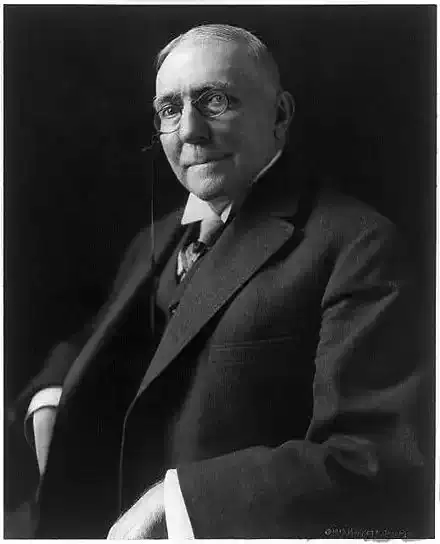
James Whitcomb Riley
A Passing Hail
A Passing Hail
Let us rest ourselves a bit!
Worry?-- wave your hand to it --
Kiss your finger-tips and smile
It farewell a little while.
Weary of the weary way
We have come from Yesterday,
Let us fret not, instead,
Of the wary way ahead.
Let us pause and catch our breath
On the hither side of death,
While we see the tender shoots
Of the grasses -- not the roots,--
While we yet look down -- not up --
To seek out the buttercup
And the daisy where they wave
O'er the green home of the grave.
Let us launch us smoothly on
The soft billows of the lawn,
And drift out across the main
Of our childish dreams again:
Voyage off, beneath the trees,
O'er the field's enchanted seas,
Where the lilies are our sails,
And our sea-gulls, nightingales:
Where no wilder storm shall beat
Than the wind that waves the wheat,
And no tempest-burst above
The old laughs we used to love:
Lose all troubles -- gain release,
Languor, and exceeding peace,
Cruising idly o'er the vast,
Calm mid-ocean of the Past.
Let us rest ourselves a bit!
Worry? -- Wave your hand to it --
Kiss your finger-tips and smile
It fare well a little while.
Let us rest ourselves a bit!
Worry?-- wave your hand to it --
Kiss your finger-tips and smile
It farewell a little while.
Weary of the weary way
We have come from Yesterday,
Let us fret not, instead,
Of the wary way ahead.
Let us pause and catch our breath
On the hither side of death,
While we see the tender shoots
Of the grasses -- not the roots,--
While we yet look down -- not up --
To seek out the buttercup
And the daisy where they wave
O'er the green home of the grave.
Let us launch us smoothly on
The soft billows of the lawn,
And drift out across the main
Of our childish dreams again:
Voyage off, beneath the trees,
O'er the field's enchanted seas,
Where the lilies are our sails,
And our sea-gulls, nightingales:
Where no wilder storm shall beat
Than the wind that waves the wheat,
And no tempest-burst above
The old laughs we used to love:
Lose all troubles -- gain release,
Languor, and exceeding peace,
Cruising idly o'er the vast,
Calm mid-ocean of the Past.
Let us rest ourselves a bit!
Worry? -- Wave your hand to it --
Kiss your finger-tips and smile
It fare well a little while.
295
James Whitcomb Riley
A Letter To A Friend
A Letter To A Friend
The past is like a story
I have listened to in dreams
That vanished in the glory
Of the Morning's early gleams;
And--at my shadow glancing--
I feel a loss of strength,
As the Day of Life advancing
Leaves it shorn of half its length.
But it's all in vain to worry
At the rapid race of Time--
And he flies in such a flurry
When I trip him with a rhyme,
I'll bother him no longer
Than to thank you for the thought
That 'my fame is growing stronger
As you really think it ought.'
And though I fall below it,
I might know as much of mirth
To live and die a poet
Of unacknowledged worth;
For Fame is but a vagrant--
Though a loyal one and brave,
And his laurels ne'er so fragrant
As when scattered o'er the grave.
The past is like a story
I have listened to in dreams
That vanished in the glory
Of the Morning's early gleams;
And--at my shadow glancing--
I feel a loss of strength,
As the Day of Life advancing
Leaves it shorn of half its length.
But it's all in vain to worry
At the rapid race of Time--
And he flies in such a flurry
When I trip him with a rhyme,
I'll bother him no longer
Than to thank you for the thought
That 'my fame is growing stronger
As you really think it ought.'
And though I fall below it,
I might know as much of mirth
To live and die a poet
Of unacknowledged worth;
For Fame is but a vagrant--
Though a loyal one and brave,
And his laurels ne'er so fragrant
As when scattered o'er the grave.
237
Rudyard Kipling
McAndrew's Hymn
McAndrew's Hymn
Lord, Thou hast made this world below the shadow of a dream,
An', taught by time, I tak' it so -- exceptin' always Steam.
From coupler-flange to spindle-guide I see Thy Hand, O God --
Predestination in the stride o' yon connectin'-rod.
John Calvin might ha' forged the same -- enorrmous, certain, slow --
Ay, wrought it in the furnace-flame -- ~my~ "Institutio".
I cannot get my sleep to-night; old bones are hard to please;
I'll stand the middle watch up here -- alone wi' God an' these
My engines, after ninety days o' race an' rack an' strain
Through all the seas of all Thy world, slam-bangin' home again.
Slam-bang too much -- they knock a wee -- the crosshead-gibs are loose;
But thirty thousand mile o' sea has gied them fair excuse. . . .
Fine, clear an' dark -- a full-draught breeze, wi' Ushant out o' sight,
An' Ferguson relievin' Hay. Old girl, ye'll walk to-night!
His wife's at Plymouth. . . . Seventy --
One -- Two -- Three since he began --
Three turns for Mistress Ferguson. . .and who's to blame the man?
There's none at any port for me, by drivin' fast or slow,
Since Elsie Campbell went to Thee, Lord, thirty years ago.
(The year the ~Sarah Sands~ was burned. Oh roads we used to tread,
Fra' Maryhill to Pollokshaws -- fra' Govan to Parkhead!)
Not but they're ceevil on the Board. Ye'll hear Sir Kenneth say:
"Good-morrn, M'Andrew! Back again? An' how's your bilge to-day?"
Miscallin' technicalities but handin' me my chair
To drink Madeira wi' three Earls -- the auld Fleet Engineer,
That started as a boiler-whelp -- when steam and he were low.
I mind the time we used to serve a broken pipe wi' tow.
Ten pound was all the pressure then -- Eh! Eh! -- a man wad drive;
An' here, our workin' gauges give one hunder fifty-five!
We're creepin' on wi' each new rig -- less weight an' larger power:
There'll be the loco-boiler next an' thirty knots an hour!
Thirty an' more. What I ha' seen since ocean-steam began
Leaves me no doot for the machine: but what about the man?
The man that counts, wi' all his runs, one million mile o' sea:
Four time the span from earth to moon. . . . How far, O Lord, from Thee?
That wast beside him night an' day. Ye mind my first typhoon?
It scoughed the skipper on his way to jock wi' the saloon.
Three feet were on the stokehold-floor -- just slappin' to an' fro --
An' cast me on a furnace-door. I have the marks to show.
Marks! I ha' marks o' more than burns -- deep in my soul an' black,
An' times like this, when things go smooth, my wickudness comes back.
The sins o' four and forty years, all up an' down the seas,
Clack an' repeat like valves half-fed. . . . Forgie's our trespasses.
Nights when I'd come on deck to mark, wi' envy in my gaze,
The couples kittlin' in the dark between the funnel stays;
Years when I raked the ports wi' pride to fill my cup o' wrong --
Judge not, O Lord, my steps aside at Gay Street in Hong-Kong!
Blot out the wastrel hours of mine in sin when I abode --
Jane Harrigan's an' Number Nine, The Reddick an' Grant Road!
An' waur than all -- my crownin' sin -- rank blasphemy an' wild.
I was not four and twenty then -- Ye wadna judge a child?
I'd seen the Tropics first that run -- new fruit, new smells, new air --
How could I tell -- blind-fou wi' sun -- the Deil was lurkin' there?
By day like playhouse-scenes the shore slid past our sleepy eyes;
By night those soft, lasceevious stars leered from those velvet skies,
In port (we used no cargo-steam) I'd daunder down the streets --
An ijjit grinnin' in a dream -- for shells an' parrakeets,
An' walkin'-sticks o' carved bamboo an' blowfish stuffed an' dried --
Fillin' my bunk wi' rubbishry the Chief put overside.
Till, off Sambawa Head, Ye mind, I heard a land-breeze ca',
Milk-warm wi' breath o' spice an' bloom: "M'Andrew, come awa'!"
Firm, clear an' low -- no haste, no hate -- the ghostly whisper went,
Just statin' eevidential facts beyon' all argument:
"Your mither's God's a graspin' deil, the shadow o' yoursel',
Got out o' books by meenisters clean daft on Heaven an' Hell.
They mak' Him in the Broomielaw, o' Glasgie cold an' dirt,
A jealous, pridefu' fetich, lad, that's only strong to hurt,
Ye'll not go back to Him again an' kiss His red-hot rod,
But come wi' Us" (Now, who were ~They~?) "an' know the Leevin' God,
That does not kipper souls for sport or break a life in jest,
But swells the ripenin' cocoanuts an' ripes the woman's breast."
An' there it stopped: cut off: no more; that quiet, certain voice --
For me, six months o' twenty-four, to leave or take at choice.
'Twas on me like a thunderclap -- it racked me through an' through --
Temptation past the show o' speech, unnameable an' new --
The Sin against the Holy Ghost? . . . An' under all, our screw.
That storm blew by but left behind her anchor-shiftin' swell,
Thou knowest all my heart an' mind, Thou knowest, Lord, I fell.
Third on the ~Mary Gloster~ then, and first that night in Hell!
Yet was Thy hand beneath my head, about my feet Thy care --
Fra' Deli clear to Torres Strait, the trial o' despair,
But when we touched the Barrier Reef Thy answer to my prayer!
We dared not run that sea by night but lay an' held our fire,
An' I was drowsin' on the hatch -- sick -- sick wi' doubt an' tire:
"~Better the sight of eyes that see than wanderin' o' desire!~"
Ye mind that word? Clear as our gongs -- again, an' once again,
When rippin' down through coral-trash ran out our moorin'-chain;
An' by Thy Grace I had the Light to see my duty plain.
Light on the engine-room -- no more -- bright as our carbons burn.
I've lost it since a thousand times, but never past return.
. . . . .
Obsairve. Per annum we'll have here two thousand souls aboard --
Think not I dare to justify myself before the Lord,
But -- average fifteen hunder souls safe-borne fra' port to port --
I ~am~ o' service to my kind. Ye wadna blame the thought?
Maybe they steam from grace to wrath -- to sin by folly led, --
It isna mine to judge their path -- their lives are on my head.
Mine at the last -- when all is done it all comes back to me,
The fault that leaves six thousand ton a log upon the sea.
We'll tak' one stretch -- three weeks an' odd by any road ye steer --
Fra' Cape Town east to Wellington -- ye need an engineer.
Fail there -- ye've time to weld your shaft -- ay, eat it, ere ye're spoke;
Or make Kerguelen under sail -- three jiggers burned wi' smoke!
An' home again, the Rio run: it's no child's play to go
Steamin' to bell for fourteen days o' snow an' floe an' blow --
The bergs like kelpies overside that girn an' turn an' shift
Whaur, grindin' like the Mills o' God, goes by the big South drift.
(Hail, snow an' ice that praise the Lord: I've met them at their work,
An' wished we had anither route or they anither kirk.)
Yon's strain, hard strain, o' head an' hand, for though Thy Power brings
All skill to naught, Ye'll understand a man must think o' things.
Then, at the last, we'll get to port an' hoist their baggage clear --
The passengers, wi' gloves an' canes -- an' this is what I'll hear:
"Well, thank ye for a pleasant voyage. The tender's comin' now."
While I go testin' follower-bolts an' watch the skipper bow.
They've words for every one but me -- shake hands wi' half the crew,
Except the dour Scots engineer, the man they never knew.
An' yet I like the wark for all we've dam' few pickin's here --
No pension, an' the most we earn's four hunder pound a year.
Better myself abroad? Maybe. ~I'd~ sooner starve than sail
Wi' such as call a snifter-rod ~ross~. . .French for nightingale.
Commeesion on my stores? Some do; but I can not afford
To lie like stewards wi' patty-pans --. I'm older than the Board.
A bonus on the coal I save? Ou ay, the Scots are close,
But when I grudge the strength Ye gave I'll grudge their food to ~those~.
(There's bricks that I might recommend -- an' clink the fire-bars cruel.
No! Welsh -- Wangarti at the worst -- an' damn all patent fuel!)
Inventions? Ye must stay in port to mak' a patent pay.
My Deeferential Valve-Gear taught me how that business lay,
I blame no chaps wi' clearer head for aught they make or sell.
~I~ found that I could not invent an' look to these -- as well.
So, wrestled wi' Apollyon -- Nah! -- fretted like a bairn --
But burned the workin'-plans last run wi' all I hoped to earn.
Ye know how hard an Idol dies, an' what that meant to me --
E'en tak' it for a sacrifice acceptable to Thee. . . .
~Below there! Oiler! What's your wark? Ye find it runnin' hard?
Ye needn't swill the cap wi' oil -- this isn't the Cunard!
Ye thought? Ye are not paid to think. Go, sweat that off again!~
Tck! Tck! It's deeficult to sweer nor tak' The Name in vain!
Men, ay an' women, call me stern. Wi' these to oversee
Ye'll note I've little time to burn on social repartee.
The bairns see what their elders miss; they'll hunt me to an' fro,
Till for the sake of -- well, a kiss -- I tak' 'em down below.
That minds me of our Viscount loon -- Sir Kenneth's kin -- the chap
Wi' Russia leather tennis-shoon an' spar-decked yachtin'-cap.
I showed him round last week, o'er all -- an' at the last says he:
"Mister M'Andrew, don't you think steam spoils romance at sea?"
Damned ijjit! I'd been doon that morn to see what ailed the throws,
Manholin', on my back -- the cranks three inches off my nose.
Romance! Those first-class passengers they like it very well,
Printed an' bound in little books; but why don't poets tell?
I'm sick of all their quirks an' turns -- the loves an' doves they dream --
Lord, send a man like Robbie Burns to sing the Song o' Steam!
To match wi' Scotia's noblest speech yon orchestra sublime
Whaurto -- uplifted like the Just -- the tail-rods mark the time.
The crank-throws give the double-bass, the feed-pump sobs an' heaves,
An' now the main eccentrics start their quarrel on the sheaves:
Her time, her own appointed time, the rocking link-head bides,
Till -- hear that note? -- the rod's return
whings glimmerin' through the guides.
They're all awa'! True beat, full power, the clangin' chorus goes
Clear to the tunnel where they sit, my purrin' dynamos.
Interdependence absolute, foreseen, ordained, decreed,
To work, Ye'll note, at any tilt an' every rate o' speed.
Fra' skylight-lift to furnace-bars, backed, bolted, braced an' stayed,
An' singin' like the Mornin' Stars for joy that they are made;
While, out o' touch o' vanity, the sweatin' thrust-block says:
"Not unto us the praise, or man -- not unto us the praise!"
Now, a' together, hear them lift their lesson -- theirs an' mine:
"Law, Orrder, Duty an' Restraint, Obedience, Discipline!"
Mill, forge an' try-pit taught them that when roarin' they arose,
An' whiles I wonder if a soul was gied them wi' the blows.
Oh for a man to weld it then, in one trip-hammer strain,
Till even first-class passengers could tell the meanin' plain!
But no one cares except mysel' that serve an' understand
My seven thousand horse-power here.
Eh, Lord! They're grand -- they're grand!
Uplift am I? When first in store the new-made beasties stood,
Were Ye cast down that breathed the Word declarin' all things good?
Not so! O' that warld-liftin' joy no after-fall could vex,
Ye've left a glimmer still to cheer the Man -- the Arrtifex!
~That~ holds, in spite o' knock and scale, o' friction, waste an' slip,
An' by that light -- now, mark my word -- we'll build the Perfect Ship.
I'll never last to judge her lines or take her curve -- not I.
But I ha' lived an' I ha' worked. 'Be thanks to Thee, Most High!
An' I ha' done what I ha' done -- judge Thou if ill or well --
Always Thy Grace preventin' me. . . .
Losh! Yon's the "Stand by" bell.
Pilot so soon? His flare it is. The mornin'-watch is set.
Well, God be thanked, as I was sayin', I'm no Pelagian yet.
Now I'll tak' on. . . .
~'Morrn, Ferguson. Man, have ye ever thought
What your good leddy costs in coal? . . . I'll burn 'em down to port.
Lord, Thou hast made this world below the shadow of a dream,
An', taught by time, I tak' it so -- exceptin' always Steam.
From coupler-flange to spindle-guide I see Thy Hand, O God --
Predestination in the stride o' yon connectin'-rod.
John Calvin might ha' forged the same -- enorrmous, certain, slow --
Ay, wrought it in the furnace-flame -- ~my~ "Institutio".
I cannot get my sleep to-night; old bones are hard to please;
I'll stand the middle watch up here -- alone wi' God an' these
My engines, after ninety days o' race an' rack an' strain
Through all the seas of all Thy world, slam-bangin' home again.
Slam-bang too much -- they knock a wee -- the crosshead-gibs are loose;
But thirty thousand mile o' sea has gied them fair excuse. . . .
Fine, clear an' dark -- a full-draught breeze, wi' Ushant out o' sight,
An' Ferguson relievin' Hay. Old girl, ye'll walk to-night!
His wife's at Plymouth. . . . Seventy --
One -- Two -- Three since he began --
Three turns for Mistress Ferguson. . .and who's to blame the man?
There's none at any port for me, by drivin' fast or slow,
Since Elsie Campbell went to Thee, Lord, thirty years ago.
(The year the ~Sarah Sands~ was burned. Oh roads we used to tread,
Fra' Maryhill to Pollokshaws -- fra' Govan to Parkhead!)
Not but they're ceevil on the Board. Ye'll hear Sir Kenneth say:
"Good-morrn, M'Andrew! Back again? An' how's your bilge to-day?"
Miscallin' technicalities but handin' me my chair
To drink Madeira wi' three Earls -- the auld Fleet Engineer,
That started as a boiler-whelp -- when steam and he were low.
I mind the time we used to serve a broken pipe wi' tow.
Ten pound was all the pressure then -- Eh! Eh! -- a man wad drive;
An' here, our workin' gauges give one hunder fifty-five!
We're creepin' on wi' each new rig -- less weight an' larger power:
There'll be the loco-boiler next an' thirty knots an hour!
Thirty an' more. What I ha' seen since ocean-steam began
Leaves me no doot for the machine: but what about the man?
The man that counts, wi' all his runs, one million mile o' sea:
Four time the span from earth to moon. . . . How far, O Lord, from Thee?
That wast beside him night an' day. Ye mind my first typhoon?
It scoughed the skipper on his way to jock wi' the saloon.
Three feet were on the stokehold-floor -- just slappin' to an' fro --
An' cast me on a furnace-door. I have the marks to show.
Marks! I ha' marks o' more than burns -- deep in my soul an' black,
An' times like this, when things go smooth, my wickudness comes back.
The sins o' four and forty years, all up an' down the seas,
Clack an' repeat like valves half-fed. . . . Forgie's our trespasses.
Nights when I'd come on deck to mark, wi' envy in my gaze,
The couples kittlin' in the dark between the funnel stays;
Years when I raked the ports wi' pride to fill my cup o' wrong --
Judge not, O Lord, my steps aside at Gay Street in Hong-Kong!
Blot out the wastrel hours of mine in sin when I abode --
Jane Harrigan's an' Number Nine, The Reddick an' Grant Road!
An' waur than all -- my crownin' sin -- rank blasphemy an' wild.
I was not four and twenty then -- Ye wadna judge a child?
I'd seen the Tropics first that run -- new fruit, new smells, new air --
How could I tell -- blind-fou wi' sun -- the Deil was lurkin' there?
By day like playhouse-scenes the shore slid past our sleepy eyes;
By night those soft, lasceevious stars leered from those velvet skies,
In port (we used no cargo-steam) I'd daunder down the streets --
An ijjit grinnin' in a dream -- for shells an' parrakeets,
An' walkin'-sticks o' carved bamboo an' blowfish stuffed an' dried --
Fillin' my bunk wi' rubbishry the Chief put overside.
Till, off Sambawa Head, Ye mind, I heard a land-breeze ca',
Milk-warm wi' breath o' spice an' bloom: "M'Andrew, come awa'!"
Firm, clear an' low -- no haste, no hate -- the ghostly whisper went,
Just statin' eevidential facts beyon' all argument:
"Your mither's God's a graspin' deil, the shadow o' yoursel',
Got out o' books by meenisters clean daft on Heaven an' Hell.
They mak' Him in the Broomielaw, o' Glasgie cold an' dirt,
A jealous, pridefu' fetich, lad, that's only strong to hurt,
Ye'll not go back to Him again an' kiss His red-hot rod,
But come wi' Us" (Now, who were ~They~?) "an' know the Leevin' God,
That does not kipper souls for sport or break a life in jest,
But swells the ripenin' cocoanuts an' ripes the woman's breast."
An' there it stopped: cut off: no more; that quiet, certain voice --
For me, six months o' twenty-four, to leave or take at choice.
'Twas on me like a thunderclap -- it racked me through an' through --
Temptation past the show o' speech, unnameable an' new --
The Sin against the Holy Ghost? . . . An' under all, our screw.
That storm blew by but left behind her anchor-shiftin' swell,
Thou knowest all my heart an' mind, Thou knowest, Lord, I fell.
Third on the ~Mary Gloster~ then, and first that night in Hell!
Yet was Thy hand beneath my head, about my feet Thy care --
Fra' Deli clear to Torres Strait, the trial o' despair,
But when we touched the Barrier Reef Thy answer to my prayer!
We dared not run that sea by night but lay an' held our fire,
An' I was drowsin' on the hatch -- sick -- sick wi' doubt an' tire:
"~Better the sight of eyes that see than wanderin' o' desire!~"
Ye mind that word? Clear as our gongs -- again, an' once again,
When rippin' down through coral-trash ran out our moorin'-chain;
An' by Thy Grace I had the Light to see my duty plain.
Light on the engine-room -- no more -- bright as our carbons burn.
I've lost it since a thousand times, but never past return.
. . . . .
Obsairve. Per annum we'll have here two thousand souls aboard --
Think not I dare to justify myself before the Lord,
But -- average fifteen hunder souls safe-borne fra' port to port --
I ~am~ o' service to my kind. Ye wadna blame the thought?
Maybe they steam from grace to wrath -- to sin by folly led, --
It isna mine to judge their path -- their lives are on my head.
Mine at the last -- when all is done it all comes back to me,
The fault that leaves six thousand ton a log upon the sea.
We'll tak' one stretch -- three weeks an' odd by any road ye steer --
Fra' Cape Town east to Wellington -- ye need an engineer.
Fail there -- ye've time to weld your shaft -- ay, eat it, ere ye're spoke;
Or make Kerguelen under sail -- three jiggers burned wi' smoke!
An' home again, the Rio run: it's no child's play to go
Steamin' to bell for fourteen days o' snow an' floe an' blow --
The bergs like kelpies overside that girn an' turn an' shift
Whaur, grindin' like the Mills o' God, goes by the big South drift.
(Hail, snow an' ice that praise the Lord: I've met them at their work,
An' wished we had anither route or they anither kirk.)
Yon's strain, hard strain, o' head an' hand, for though Thy Power brings
All skill to naught, Ye'll understand a man must think o' things.
Then, at the last, we'll get to port an' hoist their baggage clear --
The passengers, wi' gloves an' canes -- an' this is what I'll hear:
"Well, thank ye for a pleasant voyage. The tender's comin' now."
While I go testin' follower-bolts an' watch the skipper bow.
They've words for every one but me -- shake hands wi' half the crew,
Except the dour Scots engineer, the man they never knew.
An' yet I like the wark for all we've dam' few pickin's here --
No pension, an' the most we earn's four hunder pound a year.
Better myself abroad? Maybe. ~I'd~ sooner starve than sail
Wi' such as call a snifter-rod ~ross~. . .French for nightingale.
Commeesion on my stores? Some do; but I can not afford
To lie like stewards wi' patty-pans --. I'm older than the Board.
A bonus on the coal I save? Ou ay, the Scots are close,
But when I grudge the strength Ye gave I'll grudge their food to ~those~.
(There's bricks that I might recommend -- an' clink the fire-bars cruel.
No! Welsh -- Wangarti at the worst -- an' damn all patent fuel!)
Inventions? Ye must stay in port to mak' a patent pay.
My Deeferential Valve-Gear taught me how that business lay,
I blame no chaps wi' clearer head for aught they make or sell.
~I~ found that I could not invent an' look to these -- as well.
So, wrestled wi' Apollyon -- Nah! -- fretted like a bairn --
But burned the workin'-plans last run wi' all I hoped to earn.
Ye know how hard an Idol dies, an' what that meant to me --
E'en tak' it for a sacrifice acceptable to Thee. . . .
~Below there! Oiler! What's your wark? Ye find it runnin' hard?
Ye needn't swill the cap wi' oil -- this isn't the Cunard!
Ye thought? Ye are not paid to think. Go, sweat that off again!~
Tck! Tck! It's deeficult to sweer nor tak' The Name in vain!
Men, ay an' women, call me stern. Wi' these to oversee
Ye'll note I've little time to burn on social repartee.
The bairns see what their elders miss; they'll hunt me to an' fro,
Till for the sake of -- well, a kiss -- I tak' 'em down below.
That minds me of our Viscount loon -- Sir Kenneth's kin -- the chap
Wi' Russia leather tennis-shoon an' spar-decked yachtin'-cap.
I showed him round last week, o'er all -- an' at the last says he:
"Mister M'Andrew, don't you think steam spoils romance at sea?"
Damned ijjit! I'd been doon that morn to see what ailed the throws,
Manholin', on my back -- the cranks three inches off my nose.
Romance! Those first-class passengers they like it very well,
Printed an' bound in little books; but why don't poets tell?
I'm sick of all their quirks an' turns -- the loves an' doves they dream --
Lord, send a man like Robbie Burns to sing the Song o' Steam!
To match wi' Scotia's noblest speech yon orchestra sublime
Whaurto -- uplifted like the Just -- the tail-rods mark the time.
The crank-throws give the double-bass, the feed-pump sobs an' heaves,
An' now the main eccentrics start their quarrel on the sheaves:
Her time, her own appointed time, the rocking link-head bides,
Till -- hear that note? -- the rod's return
whings glimmerin' through the guides.
They're all awa'! True beat, full power, the clangin' chorus goes
Clear to the tunnel where they sit, my purrin' dynamos.
Interdependence absolute, foreseen, ordained, decreed,
To work, Ye'll note, at any tilt an' every rate o' speed.
Fra' skylight-lift to furnace-bars, backed, bolted, braced an' stayed,
An' singin' like the Mornin' Stars for joy that they are made;
While, out o' touch o' vanity, the sweatin' thrust-block says:
"Not unto us the praise, or man -- not unto us the praise!"
Now, a' together, hear them lift their lesson -- theirs an' mine:
"Law, Orrder, Duty an' Restraint, Obedience, Discipline!"
Mill, forge an' try-pit taught them that when roarin' they arose,
An' whiles I wonder if a soul was gied them wi' the blows.
Oh for a man to weld it then, in one trip-hammer strain,
Till even first-class passengers could tell the meanin' plain!
But no one cares except mysel' that serve an' understand
My seven thousand horse-power here.
Eh, Lord! They're grand -- they're grand!
Uplift am I? When first in store the new-made beasties stood,
Were Ye cast down that breathed the Word declarin' all things good?
Not so! O' that warld-liftin' joy no after-fall could vex,
Ye've left a glimmer still to cheer the Man -- the Arrtifex!
~That~ holds, in spite o' knock and scale, o' friction, waste an' slip,
An' by that light -- now, mark my word -- we'll build the Perfect Ship.
I'll never last to judge her lines or take her curve -- not I.
But I ha' lived an' I ha' worked. 'Be thanks to Thee, Most High!
An' I ha' done what I ha' done -- judge Thou if ill or well --
Always Thy Grace preventin' me. . . .
Losh! Yon's the "Stand by" bell.
Pilot so soon? His flare it is. The mornin'-watch is set.
Well, God be thanked, as I was sayin', I'm no Pelagian yet.
Now I'll tak' on. . . .
~'Morrn, Ferguson. Man, have ye ever thought
What your good leddy costs in coal? . . . I'll burn 'em down to port.
467
Rudyard Kipling
Kim
Kim
Unto whose use the pregnant suns are poised,
With idiot moons and stars retracting stars?
Creep thou between -- thy coming's all unnoised.
Heaven hath her high, as Earth her baser, wars.
Heir to these tumults, this affright, that fray
(By Adam's, fathers', own, sin bound alway);
Peer up, draw out thy horoscope and say
Which planet mends thy threadbare fate, or mars.
Unto whose use the pregnant suns are poised,
With idiot moons and stars retracting stars?
Creep thou between -- thy coming's all unnoised.
Heaven hath her high, as Earth her baser, wars.
Heir to these tumults, this affright, that fray
(By Adam's, fathers', own, sin bound alway);
Peer up, draw out thy horoscope and say
Which planet mends thy threadbare fate, or mars.
360
Page 1
Next