
Passion
Poems in this topic
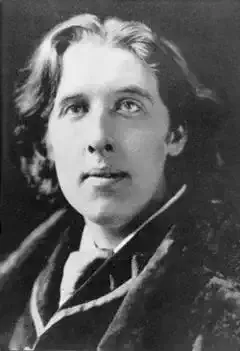
Oscar Wilde
Silentium Amoris
As often-times the too resplendent sun
Hurries the pallid and reluctant moon
Back to her sombre cave, ere she hath won
A single ballad from the nightingale,
So doth thy Beauty make my lips to fail,
And all my sweetest singing out of tune.
And as at dawn across the level mead
On wings impetuous some wind will come,
And with its too harsh kisses break the reed
Which was its only instrument of song,
So my too stormy passions work me wrong,
And for excess of Love my Love is dumb.
But surely unto Thee mine eyes did show
Why I am silent, and my lute unstrung;
Else it were better we should part, and go,
Thou to some lips of sweeter melody,
And I to nurse the barren memory
Of unkissed kisses, and songs never sung.
Hurries the pallid and reluctant moon
Back to her sombre cave, ere she hath won
A single ballad from the nightingale,
So doth thy Beauty make my lips to fail,
And all my sweetest singing out of tune.
And as at dawn across the level mead
On wings impetuous some wind will come,
And with its too harsh kisses break the reed
Which was its only instrument of song,
So my too stormy passions work me wrong,
And for excess of Love my Love is dumb.
But surely unto Thee mine eyes did show
Why I am silent, and my lute unstrung;
Else it were better we should part, and go,
Thou to some lips of sweeter melody,
And I to nurse the barren memory
Of unkissed kisses, and songs never sung.
714
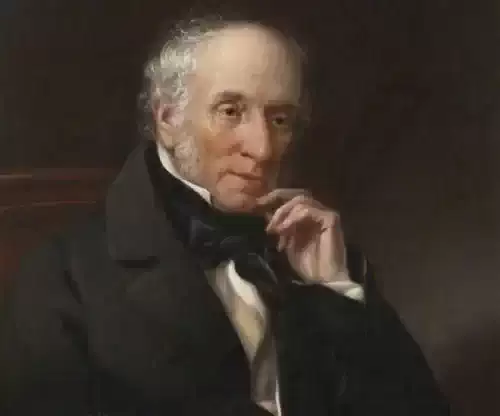
William Wordsworth
Hart-Leap Well
Hart-Leap Well
The Knight had ridden down from Wensley Moor
With the slow motion of a summer's cloud,
And now, as he approached a vassal's door,
"Bring forth another horse!" he cried aloud.
"Another horse!"--That shout the vassal heard
And saddled his best Steed, a comely grey;
Sir Walter mounted him; he was the third
Which he had mounted on that glorious day.
Joy sparkled in the prancing courser's eyes;
The horse and horseman are a happy pair;
But, though Sir Walter like a falcon flies,
There is a doleful silence in the air.
A rout this morning left Sir Walter's Hall,
That as they galloped made the echoes roar;
But horse and man are vanished, one and all;
Such race, I think, was never seen before.
Sir Walter, restless as a veering wind,
Calls to the few tired dogs that yet remain:
Blanch, Swift, and Music, noblest of their kind,
Follow, and up the weary mountain strain.
The Knight hallooed, he cheered and chid them on
With suppliant gestures and upbraidings stern;
But breath and eyesight fail; and, one by one,
The dogs are stretched among the mountain fern.
Where is the throng, the tumult of the race?
The bugles that so joyfully were blown?
--This chase it looks not like an earthly chase;
Sir Walter and the Hart are left alone.
The poor Hart toils along the mountainside;
I will not stop to tell how far he fled,
Nor will I mention by what death he died;
But now the Knight beholds him lying dead.
Dismounting, then, he leaned against a thorn;
He had no follower, dog, nor man, nor boy:
He neither cracked his whip, nor blew his horn,
But gazed upon the spoil with silent joy.
Close to the thorn on which Sir Walter leaned,
Stood his dumb partner in this glorious feat;
Weak as a lamb the hour that it is yeaned;
And white with foam as if with cleaving sleet.
Upon his side the Hart was lying stretched:
His nostril touched a spring beneath a hill,
And with the last deep groan his breath had fetched
The waters of the spring were trembling still.
And now, too happy for repose or rest,
(Never had living man such joyful lot!)
Sir Walter walked all round, north, south, and west,
And gazed and gazed upon that darling spot.
And climbing up the hill--(it was at least
Four roods of sheer ascent) Sir Walter found
Three several hoof-marks which the hunted Beast
Had left imprinted on the grassy ground.
Sir Walter wiped his face, and cried, "Till now
Such sight was never seen by human eyes:
Three leaps have borne him from this lofty brow,
Down to the very fountain where he lies.
"I'll build a pleasure-house upon this spot,
And a small arbour, made for rural joy;
'Twill be the traveller's shed, the pilgrim's cot,
A place of love for damsels that are coy.
"A cunning artist will I have to frame
A basin for that fountain in the dell!
And they who do make mention of the same,
From this day forth, shall call it HART-LEAP WELL.
"And, gallant Stag! to make thy praises known,
Another monument shall here be raised;
Three several pillars, each a rough-hewn stone,
And planted where thy hoofs the turf have grazed.
"And, in the summer-time when days are long,
I will come hither with my Paramour;
And with the dancers and the minstrel's song
We will make merry in that pleasant bower.
"Till the foundations of the mountains fail
My mansion with its arbour shall endure;--
The joy of them who till the fields of Swale,
And them who dwell among the woods of Ure!"
Then home he went, and left the Hart, stone-dead,
With breathless nostrils stretched above the spring.
--Soon did the Knight perform what he had said;
And far and wide the fame thereof did ring.
Ere thrice the Moon into her port had steered,
A cup of stone received the living well;
Three pillars of rude stone Sir Walter reared,
And built a house of pleasure in the dell.
And near the fountain, flowers of stature tall
With trailing plants and trees were intertwined,--
Which soon composed a little sylvan hall,
A leafy shelter from the sun and wind.
And thither, when the summer days were long,
Sir Walter led his wondering Paramour;
And with the dancers and the minstrel's song
Made merriment within that pleasant bower.
The Knight, Sir Walter, died in course of time,
And his bones lie in his paternal vale.--
But there is matter for a second rhyme,
And I to this would add another tale.
PART SECOND
THE moving accident is not my trade;
To freeze the blood I have no ready arts:
'Tis my delight, alone in summer shade,
To pipe a simple song for thinking hearts.
As I from Hawes to Richmond did repair,
It chanced that I saw standing in a dell
Three aspens at three corners of a square;
And one, not four yards distant, near a well.
What this imported I could ill divine:
And, pulling now the rein my horse to stop,
I saw three pillars standing in a line,--
The last stone-pillar on a dark hill-top.
The trees were grey, with neither arms nor head;
Half wasted the square mound of tawny green;
So that you just might say, as then I said,
"Here in old time the hand of man hath been."
I looked upon the hill both far and near,
More doleful place did never eye survey;
It seemed as if the spring-time came not here,
And Nature here were willing to decay.
I stood in various thoughts and fancies lost,
When one, who was in shepherd's garb attired,
Came up the hollow:--him did I accost,
And what this place might be I then inquired.
The Shepherd stopped, and that same story told
Which in my former rhyme I have rehearsed.
"A jolly place," said he, "in times of old!
But something ails it now: the spot is curst.
"You see these lifeless stumps of aspen wood--
Some say that they are beeches, others elms--
These were the bower; and here a mansion stood,
The finest palace of a hundred realms!
"The arbour does its own condition tell;
You see the stones, the fountain, and the stream;
But as to the great Lodge! you might as well
Hunt half a day for a forgotten dream.
"There's neither dog nor heifer, horse nor sheep,
Will wet his lips within that cup of stone;
And oftentimes, when all are fast asleep,
This water doth send forth a dolorous groan.
"Some say that here a murder has been done,
And blood cries out for blood: but, for my part,
I've guessed, when I've been sitting in the sun,
That it was all for that unhappy Hart.
"What thoughts must through the creature's brain have past!
Even from the topmost stone, upon the steep,
Are but three bounds--and look, Sir, at this last--
O Master! it has been a cruel leap.
"For thirteen hours he ran a desperate race;
And in my simple mind we cannot tell
What cause the Hart might have to love this place,
And come and make his deathbed near the well.
"Here on the grass perhaps asleep he sank,
Lulled by the fountain in the summer-tide;
This water was perhaps the first he drank
When he had wandered from his mother's side.
"In April here beneath the flowering thorn
He heard the birds their morning carols sing;
And he, perhaps, for aught we know, was born
Not half a furlong from that self-same spring.
"Now, here is neither grass nor pleasant shade;
The sun on drearier hollow never shone;
So will it be, as I have often said,
Till trees, and stones, and fountain, all are gone."
"Grey-headed Shepherd, thou hast spoken well;
Small difference lies between thy creed and mine:
This Beast not unobserved by Nature fell;
His death was mourned by sympathy divine.
"The Being, that is in the clouds and air,
That is in the green leaves among the groves,
Maintains a deep and reverential care
For the unoffending creatures whom he loves.
"The pleasure-house is dust:--behind, before,
This is no common waste, no common gloom;
But Nature, in due course of time, once more
Shall here put on her beauty and her bloom.
"She leaves these objects to a slow decay,
That what we are, and have been, may be known;
But at the coming of the milder day,
These monuments shall all be overgrown.
"One lesson, Shepherd, let us two divide,
Taught both by what she shows, and what conceals;
Never to blend our pleasure or our pride
With sorrow of the meanest thing that feels."
The Knight had ridden down from Wensley Moor
With the slow motion of a summer's cloud,
And now, as he approached a vassal's door,
"Bring forth another horse!" he cried aloud.
"Another horse!"--That shout the vassal heard
And saddled his best Steed, a comely grey;
Sir Walter mounted him; he was the third
Which he had mounted on that glorious day.
Joy sparkled in the prancing courser's eyes;
The horse and horseman are a happy pair;
But, though Sir Walter like a falcon flies,
There is a doleful silence in the air.
A rout this morning left Sir Walter's Hall,
That as they galloped made the echoes roar;
But horse and man are vanished, one and all;
Such race, I think, was never seen before.
Sir Walter, restless as a veering wind,
Calls to the few tired dogs that yet remain:
Blanch, Swift, and Music, noblest of their kind,
Follow, and up the weary mountain strain.
The Knight hallooed, he cheered and chid them on
With suppliant gestures and upbraidings stern;
But breath and eyesight fail; and, one by one,
The dogs are stretched among the mountain fern.
Where is the throng, the tumult of the race?
The bugles that so joyfully were blown?
--This chase it looks not like an earthly chase;
Sir Walter and the Hart are left alone.
The poor Hart toils along the mountainside;
I will not stop to tell how far he fled,
Nor will I mention by what death he died;
But now the Knight beholds him lying dead.
Dismounting, then, he leaned against a thorn;
He had no follower, dog, nor man, nor boy:
He neither cracked his whip, nor blew his horn,
But gazed upon the spoil with silent joy.
Close to the thorn on which Sir Walter leaned,
Stood his dumb partner in this glorious feat;
Weak as a lamb the hour that it is yeaned;
And white with foam as if with cleaving sleet.
Upon his side the Hart was lying stretched:
His nostril touched a spring beneath a hill,
And with the last deep groan his breath had fetched
The waters of the spring were trembling still.
And now, too happy for repose or rest,
(Never had living man such joyful lot!)
Sir Walter walked all round, north, south, and west,
And gazed and gazed upon that darling spot.
And climbing up the hill--(it was at least
Four roods of sheer ascent) Sir Walter found
Three several hoof-marks which the hunted Beast
Had left imprinted on the grassy ground.
Sir Walter wiped his face, and cried, "Till now
Such sight was never seen by human eyes:
Three leaps have borne him from this lofty brow,
Down to the very fountain where he lies.
"I'll build a pleasure-house upon this spot,
And a small arbour, made for rural joy;
'Twill be the traveller's shed, the pilgrim's cot,
A place of love for damsels that are coy.
"A cunning artist will I have to frame
A basin for that fountain in the dell!
And they who do make mention of the same,
From this day forth, shall call it HART-LEAP WELL.
"And, gallant Stag! to make thy praises known,
Another monument shall here be raised;
Three several pillars, each a rough-hewn stone,
And planted where thy hoofs the turf have grazed.
"And, in the summer-time when days are long,
I will come hither with my Paramour;
And with the dancers and the minstrel's song
We will make merry in that pleasant bower.
"Till the foundations of the mountains fail
My mansion with its arbour shall endure;--
The joy of them who till the fields of Swale,
And them who dwell among the woods of Ure!"
Then home he went, and left the Hart, stone-dead,
With breathless nostrils stretched above the spring.
--Soon did the Knight perform what he had said;
And far and wide the fame thereof did ring.
Ere thrice the Moon into her port had steered,
A cup of stone received the living well;
Three pillars of rude stone Sir Walter reared,
And built a house of pleasure in the dell.
And near the fountain, flowers of stature tall
With trailing plants and trees were intertwined,--
Which soon composed a little sylvan hall,
A leafy shelter from the sun and wind.
And thither, when the summer days were long,
Sir Walter led his wondering Paramour;
And with the dancers and the minstrel's song
Made merriment within that pleasant bower.
The Knight, Sir Walter, died in course of time,
And his bones lie in his paternal vale.--
But there is matter for a second rhyme,
And I to this would add another tale.
PART SECOND
THE moving accident is not my trade;
To freeze the blood I have no ready arts:
'Tis my delight, alone in summer shade,
To pipe a simple song for thinking hearts.
As I from Hawes to Richmond did repair,
It chanced that I saw standing in a dell
Three aspens at three corners of a square;
And one, not four yards distant, near a well.
What this imported I could ill divine:
And, pulling now the rein my horse to stop,
I saw three pillars standing in a line,--
The last stone-pillar on a dark hill-top.
The trees were grey, with neither arms nor head;
Half wasted the square mound of tawny green;
So that you just might say, as then I said,
"Here in old time the hand of man hath been."
I looked upon the hill both far and near,
More doleful place did never eye survey;
It seemed as if the spring-time came not here,
And Nature here were willing to decay.
I stood in various thoughts and fancies lost,
When one, who was in shepherd's garb attired,
Came up the hollow:--him did I accost,
And what this place might be I then inquired.
The Shepherd stopped, and that same story told
Which in my former rhyme I have rehearsed.
"A jolly place," said he, "in times of old!
But something ails it now: the spot is curst.
"You see these lifeless stumps of aspen wood--
Some say that they are beeches, others elms--
These were the bower; and here a mansion stood,
The finest palace of a hundred realms!
"The arbour does its own condition tell;
You see the stones, the fountain, and the stream;
But as to the great Lodge! you might as well
Hunt half a day for a forgotten dream.
"There's neither dog nor heifer, horse nor sheep,
Will wet his lips within that cup of stone;
And oftentimes, when all are fast asleep,
This water doth send forth a dolorous groan.
"Some say that here a murder has been done,
And blood cries out for blood: but, for my part,
I've guessed, when I've been sitting in the sun,
That it was all for that unhappy Hart.
"What thoughts must through the creature's brain have past!
Even from the topmost stone, upon the steep,
Are but three bounds--and look, Sir, at this last--
O Master! it has been a cruel leap.
"For thirteen hours he ran a desperate race;
And in my simple mind we cannot tell
What cause the Hart might have to love this place,
And come and make his deathbed near the well.
"Here on the grass perhaps asleep he sank,
Lulled by the fountain in the summer-tide;
This water was perhaps the first he drank
When he had wandered from his mother's side.
"In April here beneath the flowering thorn
He heard the birds their morning carols sing;
And he, perhaps, for aught we know, was born
Not half a furlong from that self-same spring.
"Now, here is neither grass nor pleasant shade;
The sun on drearier hollow never shone;
So will it be, as I have often said,
Till trees, and stones, and fountain, all are gone."
"Grey-headed Shepherd, thou hast spoken well;
Small difference lies between thy creed and mine:
This Beast not unobserved by Nature fell;
His death was mourned by sympathy divine.
"The Being, that is in the clouds and air,
That is in the green leaves among the groves,
Maintains a deep and reverential care
For the unoffending creatures whom he loves.
"The pleasure-house is dust:--behind, before,
This is no common waste, no common gloom;
But Nature, in due course of time, once more
Shall here put on her beauty and her bloom.
"She leaves these objects to a slow decay,
That what we are, and have been, may be known;
But at the coming of the milder day,
These monuments shall all be overgrown.
"One lesson, Shepherd, let us two divide,
Taught both by what she shows, and what conceals;
Never to blend our pleasure or our pride
With sorrow of the meanest thing that feels."
217
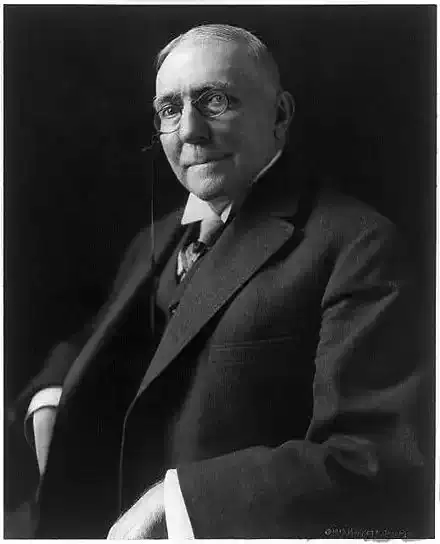
James Whitcomb Riley
Bedouin
Bedouin
O love is like an untamed steed!--
So hot of heart and wild of speed,
And with fierce freedom so in love,
The desert is not vast enough,
With all its leagues of glimmering sands,
To pasture it! Ah, that my hands
Were more than human in their strength,
That my deft lariat at length
Might safely noose this splendid thing
That so defies all conquering!
Ho! but to see it whirl and reel--
The sands spurt forward--and to feel
The quivering tension of the thong
That throned me high, with shriek and song!
To grapple tufts of tossing mane--
To spurn it to its feet again,
And then, sans saddle, rein or bit,
To lash the mad life out of it!
O love is like an untamed steed!--
So hot of heart and wild of speed,
And with fierce freedom so in love,
The desert is not vast enough,
With all its leagues of glimmering sands,
To pasture it! Ah, that my hands
Were more than human in their strength,
That my deft lariat at length
Might safely noose this splendid thing
That so defies all conquering!
Ho! but to see it whirl and reel--
The sands spurt forward--and to feel
The quivering tension of the thong
That throned me high, with shriek and song!
To grapple tufts of tossing mane--
To spurn it to its feet again,
And then, sans saddle, rein or bit,
To lash the mad life out of it!
292
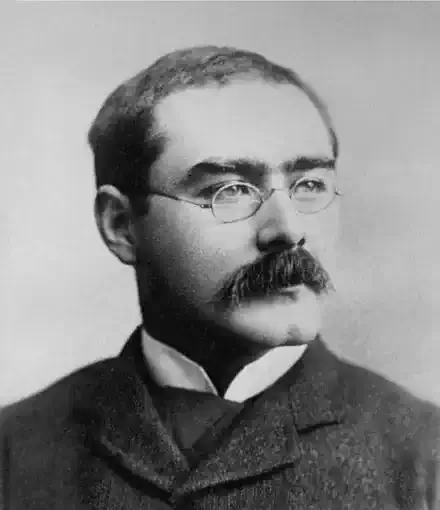
Rudyard Kipling
Red Dog
Red Dog
For our white and our excellent nights--for the nights of swift
running,
Fair ranging, far seeing, good hunting, sure cunning!
For the smells of the dawning, untainted, ere dew has departed!
For the rush through the mist, and the quarry blind-started!
For the cry of our mates when the sambhur has wheeled and is
standing at bay!
For the risk and the riot of night!
For the sleep at the lair-mouth by day!
It is met, and we go to the fight.
Bay! O bay!
For our white and our excellent nights--for the nights of swift
running,
Fair ranging, far seeing, good hunting, sure cunning!
For the smells of the dawning, untainted, ere dew has departed!
For the rush through the mist, and the quarry blind-started!
For the cry of our mates when the sambhur has wheeled and is
standing at bay!
For the risk and the riot of night!
For the sleep at the lair-mouth by day!
It is met, and we go to the fight.
Bay! O bay!
373
James Whitcomb Riley
An Autumnal Extravaganza
An Autumnal Extravaganza
With a sweeter voice than birds
Dare to twitter in their sleep,
Pipe for me a tune of words,
Till my dancing fancies leap
Into freedom vaster far
Than the realms of Reason are!
Sing for me with wilder fire
Than the lover ever sung,
From the time he twanged the lyre
When the world was baby-young.
O my maiden Autumn, you--
You have filled me through and through
With a passion so intense,
All of earthly eloquence
Fails, and falls, and swoons away
In your presence. Like as one
Who essays to look the sun
Fairly in the face, I say,
Though my eyes you dazzle blind
Greater dazzled is my mind.
So, my Autumn, let me kneel
At your feet and worship you!
Be my sweetheart; let me feel
Your caress; and tell me too
Why your smiles bewilder me--
Glancing into laughter, then
Trancing into calm again,
Till your meaning drowning lies
In the dim depths of your eyes.
Let me see the things you see
Down the depths of mystery!
Blow aside the hazy veil
From the daylight of your face
With the fragrance-ladened gale
Of your spicy breath and chase
Every dimple to its place.
Lift your gipsy finger-tips
To the roses of your lips,
And fling down to me a bud--
But an unblown kiss--but one--
It shall blossom in my blood,
Even after life is done--
When I dare to touch the brow
Your rare hair is veiling now--
When the rich, red-golden strands
Of the treasure in my hands
Shall be all of worldly worth
Heaven lifted from the earth,
Like a banner to have set
On its highest minaret.
With a sweeter voice than birds
Dare to twitter in their sleep,
Pipe for me a tune of words,
Till my dancing fancies leap
Into freedom vaster far
Than the realms of Reason are!
Sing for me with wilder fire
Than the lover ever sung,
From the time he twanged the lyre
When the world was baby-young.
O my maiden Autumn, you--
You have filled me through and through
With a passion so intense,
All of earthly eloquence
Fails, and falls, and swoons away
In your presence. Like as one
Who essays to look the sun
Fairly in the face, I say,
Though my eyes you dazzle blind
Greater dazzled is my mind.
So, my Autumn, let me kneel
At your feet and worship you!
Be my sweetheart; let me feel
Your caress; and tell me too
Why your smiles bewilder me--
Glancing into laughter, then
Trancing into calm again,
Till your meaning drowning lies
In the dim depths of your eyes.
Let me see the things you see
Down the depths of mystery!
Blow aside the hazy veil
From the daylight of your face
With the fragrance-ladened gale
Of your spicy breath and chase
Every dimple to its place.
Lift your gipsy finger-tips
To the roses of your lips,
And fling down to me a bud--
But an unblown kiss--but one--
It shall blossom in my blood,
Even after life is done--
When I dare to touch the brow
Your rare hair is veiling now--
When the rich, red-golden strands
Of the treasure in my hands
Shall be all of worldly worth
Heaven lifted from the earth,
Like a banner to have set
On its highest minaret.
255

Horace
BkI:XXVII Entanglement
BkI:XXVII Entanglement
To fight with wine-cups intended for pleasure
only suits Thracians: forget those barbarous
games, and keep modest Bacchus away
from all those bloodthirsty quarrels of yours.
The Persian scimitar’s quite out of keeping
with the wine and the lamplight: my friends restrain
all that impious clamour, and rest
on the couches, lean back on your elbows.
So you want me to drink up my share, as well,
of the heavy Falernian? Then let’s hear
Opuntian Megylla’s brother tell
by what wound, and what arrow, blessed, he dies.
Does your will waver? I’ll drink on no other
terms. Whatever the passion rules over you,
it’s not with a shameful fire it burns,
and you always sin with the noblest
of lovers. Whoever it is, ah, come now,
let it be heard by faithful ears – oh, you wretch!
What a Charybdis you’re swimming in,
my boy, you deserve a far better flame!
What magician, with Thessalian potions,
what enchantress, or what god could release you?
Caught by the triple-formed Chimaera,
even Pegasus could barely free you.
To fight with wine-cups intended for pleasure
only suits Thracians: forget those barbarous
games, and keep modest Bacchus away
from all those bloodthirsty quarrels of yours.
The Persian scimitar’s quite out of keeping
with the wine and the lamplight: my friends restrain
all that impious clamour, and rest
on the couches, lean back on your elbows.
So you want me to drink up my share, as well,
of the heavy Falernian? Then let’s hear
Opuntian Megylla’s brother tell
by what wound, and what arrow, blessed, he dies.
Does your will waver? I’ll drink on no other
terms. Whatever the passion rules over you,
it’s not with a shameful fire it burns,
and you always sin with the noblest
of lovers. Whoever it is, ah, come now,
let it be heard by faithful ears – oh, you wretch!
What a Charybdis you’re swimming in,
my boy, you deserve a far better flame!
What magician, with Thessalian potions,
what enchantress, or what god could release you?
Caught by the triple-formed Chimaera,
even Pegasus could barely free you.
233

Robert W. Service
Unholy Trinity
Unholy Trinity
Though Virtue hurt you Vice is nice;
Aye, Parson says it's wrong,
Yet for my pleasing I'll suffice
With Women, Wine and Song.
But though it be with jocund glee
my tavern voice is ringing,
Had I to chuck on of the three,
By gad! I'd give up singing.
Bu not the vine. What draught divine
Could better souse my throttle?
God never meant that mellow wine
Should languish in the bottle.
So Cellerman, your best bring up;
Let silver cobwebs mist it;
When gold or ruby brims the cup,
Could even saint resist it?
I love the ladies, yes, I do,
I always did and will;
I like with dainty dames to coo,
And have been known to bill.
Yes, I agree it's wrong of me,
So call me grey rapscallion,
But when a lusty lass I see
I whinny like a stallion.
Oh let me be a reprobate,
Your canting care defying;
I'll court that gay triumvirate
Right to the day I'm dying.
So troll until the rafter rings,
And may my life be long
To praise the Lord for precious things
like Women, Wine and Song.
Though Virtue hurt you Vice is nice;
Aye, Parson says it's wrong,
Yet for my pleasing I'll suffice
With Women, Wine and Song.
But though it be with jocund glee
my tavern voice is ringing,
Had I to chuck on of the three,
By gad! I'd give up singing.
Bu not the vine. What draught divine
Could better souse my throttle?
God never meant that mellow wine
Should languish in the bottle.
So Cellerman, your best bring up;
Let silver cobwebs mist it;
When gold or ruby brims the cup,
Could even saint resist it?
I love the ladies, yes, I do,
I always did and will;
I like with dainty dames to coo,
And have been known to bill.
Yes, I agree it's wrong of me,
So call me grey rapscallion,
But when a lusty lass I see
I whinny like a stallion.
Oh let me be a reprobate,
Your canting care defying;
I'll court that gay triumvirate
Right to the day I'm dying.
So troll until the rafter rings,
And may my life be long
To praise the Lord for precious things
like Women, Wine and Song.
190
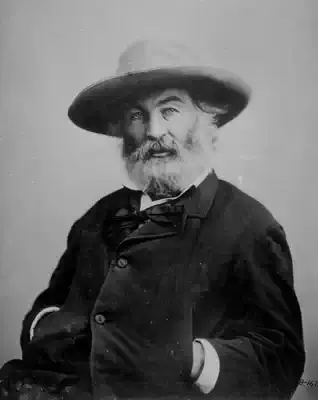
Walt Whitman
To Thee, Old Cause!
To Thee, Old Cause!
TO thee, old Cause!
Thou peerless, passionate, good cause!
Thou stern, remorseless, sweet Idea!
Deathless throughout the ages, races, lands!
After a strange, sad war--great war for thee,
(I think all war through time was really fought, and ever will be
really fought, for thee;)
These chants for thee--the eternal march of thee.
Thou orb of many orbs!
Thou seething principle! Thou well-kept, latent germ! Thou centre!
Around the idea of thee the strange sad war revolving, 10
With all its angry and vehement play of causes,
(With yet unknown results to come, for thrice a thousand years,)
These recitatives for thee--my Book and the War are one,
Merged in its spirit I and mine--as the contest hinged on thee,
As a wheel on its axis turns, this Book, unwitting to itself,
Around the Idea of thee.
TO thee, old Cause!
Thou peerless, passionate, good cause!
Thou stern, remorseless, sweet Idea!
Deathless throughout the ages, races, lands!
After a strange, sad war--great war for thee,
(I think all war through time was really fought, and ever will be
really fought, for thee;)
These chants for thee--the eternal march of thee.
Thou orb of many orbs!
Thou seething principle! Thou well-kept, latent germ! Thou centre!
Around the idea of thee the strange sad war revolving, 10
With all its angry and vehement play of causes,
(With yet unknown results to come, for thrice a thousand years,)
These recitatives for thee--my Book and the War are one,
Merged in its spirit I and mine--as the contest hinged on thee,
As a wheel on its axis turns, this Book, unwitting to itself,
Around the Idea of thee.
371
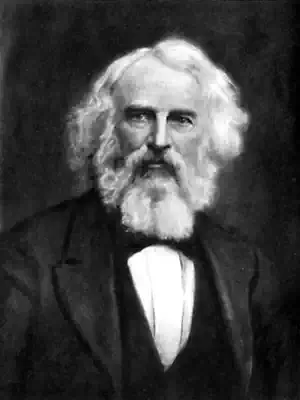
Henry Wadsworth Longfellow
The Song Of Hiawatha XII: The Son Of The Evening Star
The Song Of Hiawatha XII: The Son Of The Evening Star
Can it be the sun descending
O'er the level plain of water?
Or the Red Swan floating, flying,
Wounded by the magic arrow,
Staining all the waves with crimson,
With the crimson of its life-blood,
Filling all the air with splendor,
With the splendor of its plumage?
Yes; it is the sun descending,
Sinking down into the water;
All the sky is stained with purple,
All the water flushed with crimson!
No; it is the Red Swan floating,
Diving down beneath the water;
To the sky its wings are lifted,
With its blood the waves are reddened!
Over it the Star of Evening
Melts and trembles through the purple,
Hangs suspended in the twilight.
No; it is a bead of wampum
On the robes of the Great Spirit
As he passes through the twilight,
Walks in silence through the heavens.
This with joy beheld Iagoo
And he said in haste: 'Behold it!
See the sacred Star of Evening!
You shall hear a tale of wonder,
Hear the story of Osseo,
Son of the Evening Star, Osseo!
'Once, in days no more remembered,
Ages nearer the beginning,
When the heavens were closer to us,
And the Gods were more familiar,
In the North-land lived a hunter,
With ten young and comely daughters,
Tall and lithe as wands of willow;
Only Oweenee, the youngest,
She the wilful and the wayward,
She the silent, dreamy maiden,
Was the fairest of the sisters.
'All these women married warriors,
Married brave and haughty husbands;
Only Oweenee, the youngest,
Laughed and flouted all her lovers,
All her young and handsome suitors,
And then married old Osseo,
Old Osseo, poor and ugly,
Broken with age and weak with coughing,
Always coughing like a squirrel.
'Ah, but beautiful within him
Was the spirit of Osseo,
From the Evening Star descended,
Star of Evening, Star of Woman,
Star of tenderness and passion!
All its fire was in his bosom,
All its beauty in his spirit,
All its mystery in his being,
All its splendor in his language!
'And her lovers, the rejected,
Handsome men with belts of wampum,
Handsome men with paint and feathers.
Pointed at her in derision,
Followed her with jest and laughter.
But she said: 'I care not for you,
Care not for your belts of wampum,
Care not for your paint and feathers,
Care not for your jests and laughter;
I am happy with Osseo!'
'Once to some great feast invited,
Through the damp and dusk of evening,
Walked together the ten sisters,
Walked together with their husbands;
Slowly followed old Osseo,
With fair Oweenee beside him;
All the others chatted gayly,
These two only walked in silence.
'At the western sky Osseo
Gazed intent, as if imploring,
Often stopped and gazed imploring
At the trembling Star of Evening,
At the tender Star of Woman;
And they heard him murmur softly,
'Ah, showain nemeshin, Nosa!
Pity, pity me, my father!'
'Listen!' said the eldest sister,
'He is praying to his father!
What a pity that the old man
Does not stumble in the pathway,
Does not break his neck by falling!'
And they laughed till all the forest
Rang with their unseemly laughter.
'On their pathway through the woodlands
Lay an oak, by storms uprooted,
Lay the great trunk of an oak-tree,
Buried half in leaves and mosses,
Mouldering, crumbling, huge and hollow.
And Osseo, when he saw it,
Gave a shout, a cry of anguish,
Leaped into its yawning cavern,
At one end went in an old man,
Wasted, wrinkled, old, and ugly;
From the other came a young man,
Tall and straight and strong and handsome.
'Thus Osseo was transfigured,
Thus restored to youth and beauty;
But, alas for good Osseo,
And for Oweenee, the faithful!
Strangely, too, was she transfigured.
Changed into a weak old woman,
With a staff she tottered onward,
Wasted, wrinkled, old, and ugly!
And the sisters and their husbands
Laughed until the echoing forest
Rang with their unseemly laughter.
'But Osseo turned not from her,
Walked with slower step beside her,
Took her hand, as brown and withered
As an oak-leaf is in Winter,
Called her sweetheart, Nenemoosha,
Soothed her with soft words of kindness,
Till they reached the lodge of feasting,
Till they sat down in the wigwam,
Sacred to the Star of Evening,
To the tender Star of Woman.
'Wrapt in visions, lost in dreaming,
At the banquet sat Osseo;
All were merry, all were happy,
All were joyous but Osseo.
Neither food nor drink he tasted,
Neither did he speak nor listen;
But as one bewildered sat he,
Looking dreamily and sadly,
First at Oweenee, then upward
At the gleaming sky above them.
'Then a voice was heard, a whisper,
Coming from the starry distance,
Coming from the empty vastness,
Low, and musical, and tender;
And the voice said: 'O Osseo!
O my son, my best beloved!
Broken are the spells that bound you,
All the charms of the magicians,
All the magic powers of evil;
Come to me; ascend, Osseo!
''Taste the food that stands before you:
It is blessed and enchanted,
It has magic virtues in it,
It will change you to a spirit.
All your bowls and all your kettles
Shall be wood and clay no longer;
But the bowls be changed to wampum,
And the kettles shall be silver;
They shall shine like shells of scarlet,
Like the fire shall gleam and glimmer.
''And the women shall no longer
Bear the dreary doom of labor,
But be changed to birds, and glisten
With the beauty of the starlight,
Painted with the dusky splendors
Of the skies and clouds of evening!'
'What Osseo heard as whispers,
What as words he comprehended,
Was but music to the others,
Music as of birds afar off,
Of the whippoorwill afar off,
Of the lonely Wawonaissa
Singing in the darksome forest.
'Then the lodge began to tremble,
Straight began to shake and tremble,
And they felt it rising, rising,
Slowly through the air ascending,
From the darkness of the tree-tops
Forth into the dewy starlight,
Till it passed the topmost branches;
And behold! the wooden dishes
All were changed to shells of scarlet!
And behold! the earthen kettles
All were changed to bowls of silver!
And the roof-poles of the wigwam
Were as glittering rods of silver,
And the roof of bark upon them
As the shining shards of beetles.
'Then Osseo gazed around him,
And he saw the nine fair sisters,
All the sisters and their husbands,
Changed to birds of various plumage.
Some were jays and some were magpies,
Others thrushes, others blackbirds;
And they hopped, and sang, and twittered,
Perked and fluttered all their feathers,
Strutted in their shining plumage,
And their tails like fans unfolded.
'Only Oweenee, the youngest,
Was not changed, but sat in silence,
Wasted, wrinkled, old, and ugly,
Looking sadly at the others;
Till Osseo, gazing upward,
Gave another cry of anguish,
Such a cry as he had uttered
By the oak-tree in the forest.
'Then returned her youth and beauty,
And her soiled and tattered garments
Were transformed to robes of ermine,
And her staff became a feather,
Yes, a shining silver feather!
'And again the wigwam trembled,
Swayed and rushed through airy currents,
Through transparent cloud and vapor,
And amid celestial splendors
On the Evening Star alighted,
As a snow-flake falls on snow-flake,
As a leaf drops on a river,
As the thistledown on water.
'Forth with cheerful words of welcome
Came the father of Osseo,
He with radiant locks of silver,
He with eyes serene and tender.
And he said: `My son, Osseo,
Hang the cage of birds you bring there,
Hang the cage with rods of silver,
And the birds with glistening feathers,
At the doorway of my wigwam.'
'At the door he hung the bird-cage,
And they entered in and gladly
Listened to Osseo's father,
Ruler of the Star of Evening,
As he said: `O my Osseo!
I have had compassion on you,
Given you back your youth and beauty,
Into birds of various plumage
Changed your sisters and their husbands;
Changed them thus because they mocked you
In the figure of the old man,
In that aspect sad and wrinkled,
Could not see your heart of passion,
Could not see your youth immortal;
Only Oweenee, the faithful,
Saw your naked heart and loved you.
'`In the lodge that glimmers yonder,
In the little star that twinkles
Through the vapors, on the left hand,
Lives the envious Evil Spirit,
The Wabeno, the magician,
Who transformed you to an old man.
Take heed lest his beams fall on you,
For the rays he darts around him
Are the power of his enchantment,
Are the arrows that he uses.'
'Many years, in peace and quiet,
On the peaceful Star of Evening
Dwelt Osseo with his father;
Many years, in song and flutter,
At the doorway of the wigwam,
Hung the cage with rods of silver,
And fair Oweenee, the faithful,
Bore a son unto Osseo,
With the beauty of his mother,
With the courage of his father.
'And the boy grew up and prospered,
And Osseo, to delight him,
Made him little bows and arrows,
Opened the great cage of silver,
And let loose his aunts and uncles,
All those birds with glossy feathers,
For his little son to shoot at.
'Round and round they wheeled and darted,
Filled the Evening Star with music,
With their songs of joy and freedom
Filled the Evening Star with splendor,
With the fluttering of their plumage;
Till the boy, the little hunter,
Bent his bow and shot an arrow,
Shot a swift and fatal arrow,
And a bird, with shining feathers,
At his feet fell wounded sorely.
'But, O wondrous transformation!
`T was no bird he saw before him,
`T was a beautiful young woman,
With the arrow in her bosom!
'When her blood fell on the planet,
On the sacred Star of Evening,
Broken was the spell of magic,
Powerless was the strange enchantment,
And the youth, the fearless bowman,
Suddenly felt himself descending,
Held by unseen hands, but sinking
Downward through the empty spaces,
Downward through the clouds and vapors,
Till he rested on an island,
On an island, green and grassy,
Yonder in the Big-Sea-Water.
'After him he saw descending
All the birds with shining feathers,
Fluttering, falling, wafted downward,
Like the painted leaves of Autumn;
And the lodge with poles of silver,
With its roof like wings of beetles,
Like the shining shards of beetles,
By the winds of heaven uplifted,
Slowly sank upon the island,
Bringing back the good Osseo,
Bringing Oweenee, the faithful.
'Then the birds, again transfigured,
Reassumed the shape of mortals,
Took their shape, but not their stature;
They remained as Little People,
Like the pygmies, the Puk-Wudjies,
And on pleasant nights of Summer,
When the Evening Star was shining,
Hand in hand they danced together
On the island's craggy headlands,
On the sand-beach low and level.
'Still their glittering lodge is seen there,
On the tranquil Summer evenings,
And upon the shore the fisher
Sometimes hears their happy voices,
Sees them dancing in the starlight !'
When the story was completed,
When the wondrous tale was ended,
Looking round upon his listeners,
Solemnly Iagoo added:
'There are great men, I have known such,
Whom their people understand not,
Whom they even make a jest of,
Scoff and jeer at in derision.
From the story of Osseo
Let us learn the fate of jesters!'
All the wedding guests delighted
Listened to the marvellous story,
Listened laughing and applauding,
And they whispered to each other:
'Does he mean himself, I wonder?
And are we the aunts and uncles?'
Then again sang Chibiabos,
Sang a song of love and longing,
In those accents sweet and tender,
In those tones of pensive sadness,
Sang a maiden's lamentation
For her lover, her Algonquin.
'When I think of my beloved,
Ah me! think of my beloved,
When my heart is thinking of him,
O my sweetheart, my Algonquin!
'Ah me! when I parted from him,
Round my neck he hung the wampum,
As a pledge, the snow-white wampum,
O my sweetheart, my Algonquin!
'`I will go with you, he whispered,
Ah me! to your native country;
Let me go with you, he whispered,
O my sweetheart, my Algonquin!
'Far away, away, I answered,
Very far away, I answered,
Ah me! is my native country,
O my sweetheart, my Algonquin!
'When I looked back to behold him,
Where we parted, to behold him,
After me he still was gazing,
O my sweetheart, my Algonquin!
'By the tree he still was standing,
By the fallen tree was standing,
That had dropped into the water,
O my sweetheart, my Algonquin!
'When I think of my beloved,
Ah me! think of my beloved,
When my heart is thinking of him,
O my sweetheart, my Algonquin!'
Such was Hiawatha's Wedding,
Such the dance of Pau-Puk-Keewis,
Such the story of Iagoo,
Such the songs of Chibiabos;
Thus the wedding banquet ended,
And the wedding guests departed,
Leaving Hiawatha happy
With the night and Minnehaha.
Can it be the sun descending
O'er the level plain of water?
Or the Red Swan floating, flying,
Wounded by the magic arrow,
Staining all the waves with crimson,
With the crimson of its life-blood,
Filling all the air with splendor,
With the splendor of its plumage?
Yes; it is the sun descending,
Sinking down into the water;
All the sky is stained with purple,
All the water flushed with crimson!
No; it is the Red Swan floating,
Diving down beneath the water;
To the sky its wings are lifted,
With its blood the waves are reddened!
Over it the Star of Evening
Melts and trembles through the purple,
Hangs suspended in the twilight.
No; it is a bead of wampum
On the robes of the Great Spirit
As he passes through the twilight,
Walks in silence through the heavens.
This with joy beheld Iagoo
And he said in haste: 'Behold it!
See the sacred Star of Evening!
You shall hear a tale of wonder,
Hear the story of Osseo,
Son of the Evening Star, Osseo!
'Once, in days no more remembered,
Ages nearer the beginning,
When the heavens were closer to us,
And the Gods were more familiar,
In the North-land lived a hunter,
With ten young and comely daughters,
Tall and lithe as wands of willow;
Only Oweenee, the youngest,
She the wilful and the wayward,
She the silent, dreamy maiden,
Was the fairest of the sisters.
'All these women married warriors,
Married brave and haughty husbands;
Only Oweenee, the youngest,
Laughed and flouted all her lovers,
All her young and handsome suitors,
And then married old Osseo,
Old Osseo, poor and ugly,
Broken with age and weak with coughing,
Always coughing like a squirrel.
'Ah, but beautiful within him
Was the spirit of Osseo,
From the Evening Star descended,
Star of Evening, Star of Woman,
Star of tenderness and passion!
All its fire was in his bosom,
All its beauty in his spirit,
All its mystery in his being,
All its splendor in his language!
'And her lovers, the rejected,
Handsome men with belts of wampum,
Handsome men with paint and feathers.
Pointed at her in derision,
Followed her with jest and laughter.
But she said: 'I care not for you,
Care not for your belts of wampum,
Care not for your paint and feathers,
Care not for your jests and laughter;
I am happy with Osseo!'
'Once to some great feast invited,
Through the damp and dusk of evening,
Walked together the ten sisters,
Walked together with their husbands;
Slowly followed old Osseo,
With fair Oweenee beside him;
All the others chatted gayly,
These two only walked in silence.
'At the western sky Osseo
Gazed intent, as if imploring,
Often stopped and gazed imploring
At the trembling Star of Evening,
At the tender Star of Woman;
And they heard him murmur softly,
'Ah, showain nemeshin, Nosa!
Pity, pity me, my father!'
'Listen!' said the eldest sister,
'He is praying to his father!
What a pity that the old man
Does not stumble in the pathway,
Does not break his neck by falling!'
And they laughed till all the forest
Rang with their unseemly laughter.
'On their pathway through the woodlands
Lay an oak, by storms uprooted,
Lay the great trunk of an oak-tree,
Buried half in leaves and mosses,
Mouldering, crumbling, huge and hollow.
And Osseo, when he saw it,
Gave a shout, a cry of anguish,
Leaped into its yawning cavern,
At one end went in an old man,
Wasted, wrinkled, old, and ugly;
From the other came a young man,
Tall and straight and strong and handsome.
'Thus Osseo was transfigured,
Thus restored to youth and beauty;
But, alas for good Osseo,
And for Oweenee, the faithful!
Strangely, too, was she transfigured.
Changed into a weak old woman,
With a staff she tottered onward,
Wasted, wrinkled, old, and ugly!
And the sisters and their husbands
Laughed until the echoing forest
Rang with their unseemly laughter.
'But Osseo turned not from her,
Walked with slower step beside her,
Took her hand, as brown and withered
As an oak-leaf is in Winter,
Called her sweetheart, Nenemoosha,
Soothed her with soft words of kindness,
Till they reached the lodge of feasting,
Till they sat down in the wigwam,
Sacred to the Star of Evening,
To the tender Star of Woman.
'Wrapt in visions, lost in dreaming,
At the banquet sat Osseo;
All were merry, all were happy,
All were joyous but Osseo.
Neither food nor drink he tasted,
Neither did he speak nor listen;
But as one bewildered sat he,
Looking dreamily and sadly,
First at Oweenee, then upward
At the gleaming sky above them.
'Then a voice was heard, a whisper,
Coming from the starry distance,
Coming from the empty vastness,
Low, and musical, and tender;
And the voice said: 'O Osseo!
O my son, my best beloved!
Broken are the spells that bound you,
All the charms of the magicians,
All the magic powers of evil;
Come to me; ascend, Osseo!
''Taste the food that stands before you:
It is blessed and enchanted,
It has magic virtues in it,
It will change you to a spirit.
All your bowls and all your kettles
Shall be wood and clay no longer;
But the bowls be changed to wampum,
And the kettles shall be silver;
They shall shine like shells of scarlet,
Like the fire shall gleam and glimmer.
''And the women shall no longer
Bear the dreary doom of labor,
But be changed to birds, and glisten
With the beauty of the starlight,
Painted with the dusky splendors
Of the skies and clouds of evening!'
'What Osseo heard as whispers,
What as words he comprehended,
Was but music to the others,
Music as of birds afar off,
Of the whippoorwill afar off,
Of the lonely Wawonaissa
Singing in the darksome forest.
'Then the lodge began to tremble,
Straight began to shake and tremble,
And they felt it rising, rising,
Slowly through the air ascending,
From the darkness of the tree-tops
Forth into the dewy starlight,
Till it passed the topmost branches;
And behold! the wooden dishes
All were changed to shells of scarlet!
And behold! the earthen kettles
All were changed to bowls of silver!
And the roof-poles of the wigwam
Were as glittering rods of silver,
And the roof of bark upon them
As the shining shards of beetles.
'Then Osseo gazed around him,
And he saw the nine fair sisters,
All the sisters and their husbands,
Changed to birds of various plumage.
Some were jays and some were magpies,
Others thrushes, others blackbirds;
And they hopped, and sang, and twittered,
Perked and fluttered all their feathers,
Strutted in their shining plumage,
And their tails like fans unfolded.
'Only Oweenee, the youngest,
Was not changed, but sat in silence,
Wasted, wrinkled, old, and ugly,
Looking sadly at the others;
Till Osseo, gazing upward,
Gave another cry of anguish,
Such a cry as he had uttered
By the oak-tree in the forest.
'Then returned her youth and beauty,
And her soiled and tattered garments
Were transformed to robes of ermine,
And her staff became a feather,
Yes, a shining silver feather!
'And again the wigwam trembled,
Swayed and rushed through airy currents,
Through transparent cloud and vapor,
And amid celestial splendors
On the Evening Star alighted,
As a snow-flake falls on snow-flake,
As a leaf drops on a river,
As the thistledown on water.
'Forth with cheerful words of welcome
Came the father of Osseo,
He with radiant locks of silver,
He with eyes serene and tender.
And he said: `My son, Osseo,
Hang the cage of birds you bring there,
Hang the cage with rods of silver,
And the birds with glistening feathers,
At the doorway of my wigwam.'
'At the door he hung the bird-cage,
And they entered in and gladly
Listened to Osseo's father,
Ruler of the Star of Evening,
As he said: `O my Osseo!
I have had compassion on you,
Given you back your youth and beauty,
Into birds of various plumage
Changed your sisters and their husbands;
Changed them thus because they mocked you
In the figure of the old man,
In that aspect sad and wrinkled,
Could not see your heart of passion,
Could not see your youth immortal;
Only Oweenee, the faithful,
Saw your naked heart and loved you.
'`In the lodge that glimmers yonder,
In the little star that twinkles
Through the vapors, on the left hand,
Lives the envious Evil Spirit,
The Wabeno, the magician,
Who transformed you to an old man.
Take heed lest his beams fall on you,
For the rays he darts around him
Are the power of his enchantment,
Are the arrows that he uses.'
'Many years, in peace and quiet,
On the peaceful Star of Evening
Dwelt Osseo with his father;
Many years, in song and flutter,
At the doorway of the wigwam,
Hung the cage with rods of silver,
And fair Oweenee, the faithful,
Bore a son unto Osseo,
With the beauty of his mother,
With the courage of his father.
'And the boy grew up and prospered,
And Osseo, to delight him,
Made him little bows and arrows,
Opened the great cage of silver,
And let loose his aunts and uncles,
All those birds with glossy feathers,
For his little son to shoot at.
'Round and round they wheeled and darted,
Filled the Evening Star with music,
With their songs of joy and freedom
Filled the Evening Star with splendor,
With the fluttering of their plumage;
Till the boy, the little hunter,
Bent his bow and shot an arrow,
Shot a swift and fatal arrow,
And a bird, with shining feathers,
At his feet fell wounded sorely.
'But, O wondrous transformation!
`T was no bird he saw before him,
`T was a beautiful young woman,
With the arrow in her bosom!
'When her blood fell on the planet,
On the sacred Star of Evening,
Broken was the spell of magic,
Powerless was the strange enchantment,
And the youth, the fearless bowman,
Suddenly felt himself descending,
Held by unseen hands, but sinking
Downward through the empty spaces,
Downward through the clouds and vapors,
Till he rested on an island,
On an island, green and grassy,
Yonder in the Big-Sea-Water.
'After him he saw descending
All the birds with shining feathers,
Fluttering, falling, wafted downward,
Like the painted leaves of Autumn;
And the lodge with poles of silver,
With its roof like wings of beetles,
Like the shining shards of beetles,
By the winds of heaven uplifted,
Slowly sank upon the island,
Bringing back the good Osseo,
Bringing Oweenee, the faithful.
'Then the birds, again transfigured,
Reassumed the shape of mortals,
Took their shape, but not their stature;
They remained as Little People,
Like the pygmies, the Puk-Wudjies,
And on pleasant nights of Summer,
When the Evening Star was shining,
Hand in hand they danced together
On the island's craggy headlands,
On the sand-beach low and level.
'Still their glittering lodge is seen there,
On the tranquil Summer evenings,
And upon the shore the fisher
Sometimes hears their happy voices,
Sees them dancing in the starlight !'
When the story was completed,
When the wondrous tale was ended,
Looking round upon his listeners,
Solemnly Iagoo added:
'There are great men, I have known such,
Whom their people understand not,
Whom they even make a jest of,
Scoff and jeer at in derision.
From the story of Osseo
Let us learn the fate of jesters!'
All the wedding guests delighted
Listened to the marvellous story,
Listened laughing and applauding,
And they whispered to each other:
'Does he mean himself, I wonder?
And are we the aunts and uncles?'
Then again sang Chibiabos,
Sang a song of love and longing,
In those accents sweet and tender,
In those tones of pensive sadness,
Sang a maiden's lamentation
For her lover, her Algonquin.
'When I think of my beloved,
Ah me! think of my beloved,
When my heart is thinking of him,
O my sweetheart, my Algonquin!
'Ah me! when I parted from him,
Round my neck he hung the wampum,
As a pledge, the snow-white wampum,
O my sweetheart, my Algonquin!
'`I will go with you, he whispered,
Ah me! to your native country;
Let me go with you, he whispered,
O my sweetheart, my Algonquin!
'Far away, away, I answered,
Very far away, I answered,
Ah me! is my native country,
O my sweetheart, my Algonquin!
'When I looked back to behold him,
Where we parted, to behold him,
After me he still was gazing,
O my sweetheart, my Algonquin!
'By the tree he still was standing,
By the fallen tree was standing,
That had dropped into the water,
O my sweetheart, my Algonquin!
'When I think of my beloved,
Ah me! think of my beloved,
When my heart is thinking of him,
O my sweetheart, my Algonquin!'
Such was Hiawatha's Wedding,
Such the dance of Pau-Puk-Keewis,
Such the story of Iagoo,
Such the songs of Chibiabos;
Thus the wedding banquet ended,
And the wedding guests departed,
Leaving Hiawatha happy
With the night and Minnehaha.
257
Robert W. Service
Stamp Collector
Stamp Collector
My worldly wealth I hoard in albums three,
My life collection of rare postage stamps;
My room is cold and bare as you can see,
My coat is old and shabby as a tramp's;
Yet more to me than balances in banks,
My albums three are worth a million francs.
I keep them in that box beside my bed,
For who would dream such treasures it could hold;
But every day I take them out and spread
Each page, to gloat like miser o'er his gold:
Dearer to me than could be child or wife,
I would defend them with my very life.
They are my very life, for every night
over my catalogues I pore and pore;
I recognize rare items with delight,
Nothing I read but philatelic lore;
And when some specimen of choice I buy,
In all the world there's none more glad than I.
Behold my gem, my British penny black;
To pay its price I starved myself a year;
And many a night my dinner I would lack,
But when I bought it, oh, what radiant cheer!
Hitler made war that day - I did not care,
So long as my collection he would spare.
Look - my triangular Cape of Good Hope.
To purchase it I had to sell my car.
Now in my pocket for some sous I grope
To pay my omnibus when home is far,
And I am cold and hungry and footsore,
In haste to add some beauty to my store.
This very day, ah, what a joy was mine,
When in a dingy dealer's shop I found
This franc vermillion, eighteen forty-nine . . .
How painfully my heart began to pound!
(It's weak they say), I paid the modest price
And tremblingly I vanished in a trice.
But oh, my dream is that some day of days,
I might discover a Mauritius blue,
poking among the stamp-bins of the quais;
Who knows! They say there are but two;
Yet if a third one I should spy,
I think - God help me! I should faint and die. . . .
Poor Monsieur Pns, he's cold and dead,
One of those stamp-collecting cranks.
His garret held no crust of bread,
But albums worth a million francs.
on them his income he would spend,
By philatelic frenzy driven:
What did it profit in the end. . .
You can't take stamps to Heaven.
My worldly wealth I hoard in albums three,
My life collection of rare postage stamps;
My room is cold and bare as you can see,
My coat is old and shabby as a tramp's;
Yet more to me than balances in banks,
My albums three are worth a million francs.
I keep them in that box beside my bed,
For who would dream such treasures it could hold;
But every day I take them out and spread
Each page, to gloat like miser o'er his gold:
Dearer to me than could be child or wife,
I would defend them with my very life.
They are my very life, for every night
over my catalogues I pore and pore;
I recognize rare items with delight,
Nothing I read but philatelic lore;
And when some specimen of choice I buy,
In all the world there's none more glad than I.
Behold my gem, my British penny black;
To pay its price I starved myself a year;
And many a night my dinner I would lack,
But when I bought it, oh, what radiant cheer!
Hitler made war that day - I did not care,
So long as my collection he would spare.
Look - my triangular Cape of Good Hope.
To purchase it I had to sell my car.
Now in my pocket for some sous I grope
To pay my omnibus when home is far,
And I am cold and hungry and footsore,
In haste to add some beauty to my store.
This very day, ah, what a joy was mine,
When in a dingy dealer's shop I found
This franc vermillion, eighteen forty-nine . . .
How painfully my heart began to pound!
(It's weak they say), I paid the modest price
And tremblingly I vanished in a trice.
But oh, my dream is that some day of days,
I might discover a Mauritius blue,
poking among the stamp-bins of the quais;
Who knows! They say there are but two;
Yet if a third one I should spy,
I think - God help me! I should faint and die. . . .
Poor Monsieur Pns, he's cold and dead,
One of those stamp-collecting cranks.
His garret held no crust of bread,
But albums worth a million francs.
on them his income he would spend,
By philatelic frenzy driven:
What did it profit in the end. . .
You can't take stamps to Heaven.
166

Sarah Teasdale
I Am Not Yours
"I Am Not Yours"
I am not yours, not lost in you,
Not lost, although I long to be
Lost as a candle lit at noon,
Lost as a snowflake in the sea.
You love me, and I find you still
A spirit beautiful and bright,
Yet I am I, who long to be
Lost as a light is lost in light.
Oh plunge me deep in love -- put out
My senses, leave me deaf and blind,
Swept by the tempest of your love,
A taper in a rushing wind.
I am not yours, not lost in you,
Not lost, although I long to be
Lost as a candle lit at noon,
Lost as a snowflake in the sea.
You love me, and I find you still
A spirit beautiful and bright,
Yet I am I, who long to be
Lost as a light is lost in light.
Oh plunge me deep in love -- put out
My senses, leave me deaf and blind,
Swept by the tempest of your love,
A taper in a rushing wind.
434
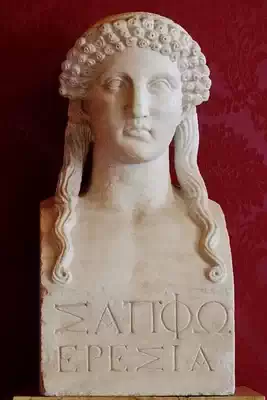
Sappho
With his venom
With his venom
With his venom
irresistible
and bittersweet
that loosener
of limbs, Love
reptile-like
strikes me down
With his venom
irresistible
and bittersweet
that loosener
of limbs, Love
reptile-like
strikes me down
585
Sappho
Ode to a Loved One
Ode to a Loved One
LEST as the immortal gods is he,
The youth who fondly sits by thee,
And hears and sees thee, all the while,
Softly speaks and sweetly smile.
'Twas this deprived my soul of rest,
And raised such tumults in my breast;
For, while I gazed, in transport tossed,
My breath was gone, my voice was lost;
My bosom glowed; the subtle flame
Ran quick through all my vital frame;
O'er my dim eyes a darkness hung;
My ears with hollow murmurs rung;
In dewy damps my limbs were chilled;
My blood with gentle horrors thrilled:
My feeble pulse forgot to play;
I fainted, sunk, and died away.
LEST as the immortal gods is he,
The youth who fondly sits by thee,
And hears and sees thee, all the while,
Softly speaks and sweetly smile.
'Twas this deprived my soul of rest,
And raised such tumults in my breast;
For, while I gazed, in transport tossed,
My breath was gone, my voice was lost;
My bosom glowed; the subtle flame
Ran quick through all my vital frame;
O'er my dim eyes a darkness hung;
My ears with hollow murmurs rung;
In dewy damps my limbs were chilled;
My blood with gentle horrors thrilled:
My feeble pulse forgot to play;
I fainted, sunk, and died away.
467
Sappho
Like the gods. . .
Like the gods. . .
In my eyes he matches the gods, that man who
sits there facing you--any man whatever--
listening from closeby to the sweetness of your
voice as you talk, the
sweetness of your laughter: yes, that--I swear it--
sets the heart to shaking inside my breast, since
once I look at you for a moment, I can't
speak any longer,
but my tongue breaks down, and then all at once a
subtle fire races inside my skin, my
eyes can't see a thing and a whirring whistle
thrums at my hearing,
cold sweat covers me and a trembling takes
ahold of me all over: I'm greener than the
grass is and appear to myself to be little
short of dying.
But all must be endured, since even a poor [
In my eyes he matches the gods, that man who
sits there facing you--any man whatever--
listening from closeby to the sweetness of your
voice as you talk, the
sweetness of your laughter: yes, that--I swear it--
sets the heart to shaking inside my breast, since
once I look at you for a moment, I can't
speak any longer,
but my tongue breaks down, and then all at once a
subtle fire races inside my skin, my
eyes can't see a thing and a whirring whistle
thrums at my hearing,
cold sweat covers me and a trembling takes
ahold of me all over: I'm greener than the
grass is and appear to myself to be little
short of dying.
But all must be endured, since even a poor [
471
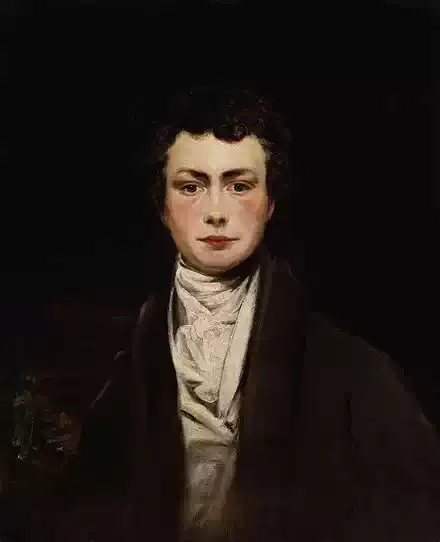
Thomas Moore
Thee, Thee, Only Thee
Thee, Thee, Only Thee
The dawning of morn, the daylight's sinking,
The night's long hours still find me thinking
Of thee, thee, only thee.
When friends are met, and goblets crown'd,
And smiles are near, that once enchanted,
Unreach'd by all that sunshine round,
My soul, like some dark spot, is haunted
By thee, thee, only thee.
Whatever in fame's high path could waken
My spirit once, is now forsaken
For thee, thee, only thee.
Like shores, by which some headlong bark
To the ocean hurries, resting never,
Life's scenes go by me, bright or dark,
I know not, heed not, hastening ever
To thee, thee, only thee.
I have not a joy but of thy bringing,
And pain itself seems sweet when springing
From thee, thee, only thee.
Like spells, that nought on earth can break,
Till lips, that know the charm, have spoken,
This heart, howe'er the world may wake
Its grief, its scorn, can but be broken
By thee, thee, only thee.
The dawning of morn, the daylight's sinking,
The night's long hours still find me thinking
Of thee, thee, only thee.
When friends are met, and goblets crown'd,
And smiles are near, that once enchanted,
Unreach'd by all that sunshine round,
My soul, like some dark spot, is haunted
By thee, thee, only thee.
Whatever in fame's high path could waken
My spirit once, is now forsaken
For thee, thee, only thee.
Like shores, by which some headlong bark
To the ocean hurries, resting never,
Life's scenes go by me, bright or dark,
I know not, heed not, hastening ever
To thee, thee, only thee.
I have not a joy but of thy bringing,
And pain itself seems sweet when springing
From thee, thee, only thee.
Like spells, that nought on earth can break,
Till lips, that know the charm, have spoken,
This heart, howe'er the world may wake
Its grief, its scorn, can but be broken
By thee, thee, only thee.
160
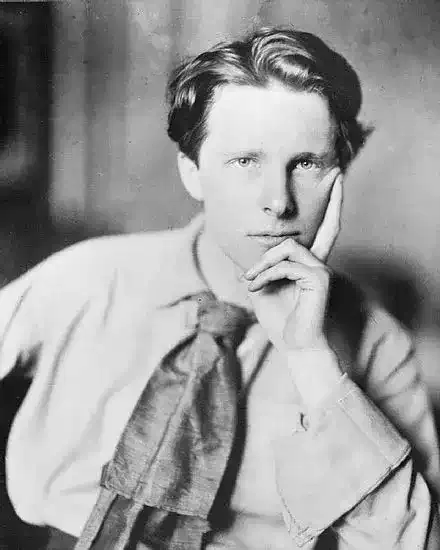
Rupert Brooke
Mummia
Mummia
As those of old drank mummia
To fire their limbs of lead,
Making dead kings from Africa
Stand pandar to their bed;
Drunk on the dead, and medicined
With spiced imperial dust,
In a short night they reeled to find
Ten centuries of lust.
So I, from paint, stone, tale, and rhyme,
Stuffed love's infinity,
And sucked all lovers of all time
To rarify ecstasy.
Helen's the hair shuts out from me
Verona's livid skies;
Gypsy the lips I press; and see
Two Antonys in your eyes.
The unheard invisible lovely dead
Lie with us in this place,
And ghostly hands above my head
Close face to straining face;
Their blood is wine along our limbs;
Their whispering voices wreathe
Savage forgotten drowsy hymns
Under the names we breathe;
Woven from their tomb, and one with it,
The night wherein we press;
Their thousand pitchy pyres have lit
Your flaming nakedness.
For the uttermost years have cried and clung
To kiss your mouth to mine;
And hair long dust was caught, was flung,
Hand shaken to hand divine,
And Life has fired, and Death not shaded,
All Time's uncounted bliss,
And the height o' the world has flamed and faded,
Love, that our love be this!
As those of old drank mummia
To fire their limbs of lead,
Making dead kings from Africa
Stand pandar to their bed;
Drunk on the dead, and medicined
With spiced imperial dust,
In a short night they reeled to find
Ten centuries of lust.
So I, from paint, stone, tale, and rhyme,
Stuffed love's infinity,
And sucked all lovers of all time
To rarify ecstasy.
Helen's the hair shuts out from me
Verona's livid skies;
Gypsy the lips I press; and see
Two Antonys in your eyes.
The unheard invisible lovely dead
Lie with us in this place,
And ghostly hands above my head
Close face to straining face;
Their blood is wine along our limbs;
Their whispering voices wreathe
Savage forgotten drowsy hymns
Under the names we breathe;
Woven from their tomb, and one with it,
The night wherein we press;
Their thousand pitchy pyres have lit
Your flaming nakedness.
For the uttermost years have cried and clung
To kiss your mouth to mine;
And hair long dust was caught, was flung,
Hand shaken to hand divine,
And Life has fired, and Death not shaded,
All Time's uncounted bliss,
And the height o' the world has flamed and faded,
Love, that our love be this!
203
Rupert Brooke
Libido
Libido
How should I know? The enormous wheels of will
Drove me cold-eyed on tired and sleepless feet.
Night was void arms and you a phantom still,
And day your far light swaying down the street.
As never fool for love, I starved for you;
My throat was dry and my eyes hot to see.
Your mouth so lying was most heaven in view,
And your remembered smell most agony.
Love wakens love! I felt your hot wrist shiver
And suddenly the mad victory I planned
Flashed real, in your burning bending head. . . .
My conqueror's blood was cool as a deep river
In shadow; and my heart beneath your hand
Quieter than a dead man on a bed.
How should I know? The enormous wheels of will
Drove me cold-eyed on tired and sleepless feet.
Night was void arms and you a phantom still,
And day your far light swaying down the street.
As never fool for love, I starved for you;
My throat was dry and my eyes hot to see.
Your mouth so lying was most heaven in view,
And your remembered smell most agony.
Love wakens love! I felt your hot wrist shiver
And suddenly the mad victory I planned
Flashed real, in your burning bending head. . . .
My conqueror's blood was cool as a deep river
In shadow; and my heart beneath your hand
Quieter than a dead man on a bed.
171
Thomas Moore
Quantum Est Quod Desit
Quantum Est Quod Desit
'Twas a new feeling - something more
Than we had dar'd to own before,
Which then we hid not;
We saw it in each other's eye,
And wish'd in every broken sigh
To speak, but did not!
She felt my lips' impassion'd touch;
'Twas the first time I dar'd so much,
And yet, she chid not;
But whisper'd o'er my burning brow,
'Oh! do you doubt I love you now?'
Sweet soul! I did not!
Warmly I felt her bosom thrill,
I prest it closer, closer still,
Though gently bid not;
Till - oh! the world hath seldom heard
Of lovers, who so nearly err'd,
And yet who - did not!
'Twas a new feeling - something more
Than we had dar'd to own before,
Which then we hid not;
We saw it in each other's eye,
And wish'd in every broken sigh
To speak, but did not!
She felt my lips' impassion'd touch;
'Twas the first time I dar'd so much,
And yet, she chid not;
But whisper'd o'er my burning brow,
'Oh! do you doubt I love you now?'
Sweet soul! I did not!
Warmly I felt her bosom thrill,
I prest it closer, closer still,
Though gently bid not;
Till - oh! the world hath seldom heard
Of lovers, who so nearly err'd,
And yet who - did not!
134
Rupert Brooke
Call, The
Call, The
Out of the nothingness of sleep,
The slow dreams of Eternity,
There was a thunder on the deep:
I came, because you called to me.
I broke the Night's primeval bars,
I dared the old abysmal curse,
And flashed through ranks of frightened stars
Suddenly on the universe!
The eternal silences were broken;
Hell became Heaven as I passed. --
What shall I give you as a token,
A sign that we have met, at last?
I'll break and forge the stars anew,
Shatter the heavens with a song;
Immortal in my love for you,
Because I love you, very strong.
Your mouth shall mock the old and wise,
Your laugh shall fill the world with flame,
I'll write upon the shrinking skies
The scarlet splendour of your name,
Till Heaven cracks, and Hell thereunder
Dies in her ultimate mad fire,
And darkness falls, with scornful thunder,
On dreams of men and men's desire.
Then only in the empty spaces,
Death, walking very silently,
Shall fear the glory of our faces
Through all the dark infinity.
So, clothed about with perfect love,
The eternal end shall find us one,
Alone above the Night, above
The dust of the dead gods, alone.
Out of the nothingness of sleep,
The slow dreams of Eternity,
There was a thunder on the deep:
I came, because you called to me.
I broke the Night's primeval bars,
I dared the old abysmal curse,
And flashed through ranks of frightened stars
Suddenly on the universe!
The eternal silences were broken;
Hell became Heaven as I passed. --
What shall I give you as a token,
A sign that we have met, at last?
I'll break and forge the stars anew,
Shatter the heavens with a song;
Immortal in my love for you,
Because I love you, very strong.
Your mouth shall mock the old and wise,
Your laugh shall fill the world with flame,
I'll write upon the shrinking skies
The scarlet splendour of your name,
Till Heaven cracks, and Hell thereunder
Dies in her ultimate mad fire,
And darkness falls, with scornful thunder,
On dreams of men and men's desire.
Then only in the empty spaces,
Death, walking very silently,
Shall fear the glory of our faces
Through all the dark infinity.
So, clothed about with perfect love,
The eternal end shall find us one,
Alone above the Night, above
The dust of the dead gods, alone.
187
Thomas Moore
Nay, Tell Me Not, Dear
Nay, Tell Me Not, Dear
Nay, tell me not, dear, that the goblet drowns
One charm of feeling, one fond regret;
Believe me, a few of thy angry frowns
Are all I've sunk in its bright wave yet.
Ne'er hath a beam
Been lost in the stream
That ever was shed from thy form or soul;
The spell of those eyes,
The balm of thy sighs,
Still float on the surface, and hallow by bowl.
Then fancy not, dearest, that wine can steal
One blissful dream of the heart from me;
Like founts that awaken the pilgrim's zeal,
The bowl but brightens my love for thee.
They tell us the Love in his fairy bower
Had two blush-roses, of birth divine;
He sprinkled the one with a rainbow's shower,
But bathed the other with mantling wine.
Soon did the buds
That drunk of the floods
Distill'd by the rainbow decline and fade;
While those which the tide
Of ruby had dyed
All blush'd into beauty, like thee, sweet maid!
Then fancy not, dearest, that wine can steal
One blissful dream of the heart from me;
Like founts that awaken the pilgrim's zeal,
The bowl but brightens my love for thee.
Nay, tell me not, dear, that the goblet drowns
One charm of feeling, one fond regret;
Believe me, a few of thy angry frowns
Are all I've sunk in its bright wave yet.
Ne'er hath a beam
Been lost in the stream
That ever was shed from thy form or soul;
The spell of those eyes,
The balm of thy sighs,
Still float on the surface, and hallow by bowl.
Then fancy not, dearest, that wine can steal
One blissful dream of the heart from me;
Like founts that awaken the pilgrim's zeal,
The bowl but brightens my love for thee.
They tell us the Love in his fairy bower
Had two blush-roses, of birth divine;
He sprinkled the one with a rainbow's shower,
But bathed the other with mantling wine.
Soon did the buds
That drunk of the floods
Distill'd by the rainbow decline and fade;
While those which the tide
Of ruby had dyed
All blush'd into beauty, like thee, sweet maid!
Then fancy not, dearest, that wine can steal
One blissful dream of the heart from me;
Like founts that awaken the pilgrim's zeal,
The bowl but brightens my love for thee.
167
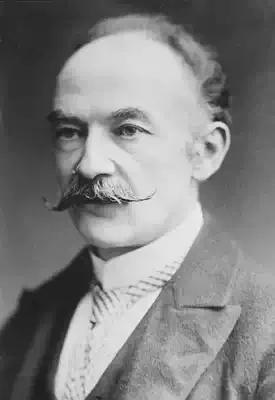
Thomas Hardy
She, to Him, IV
She, to Him, IV
This love puts all humanity from me;
I can but maledict her, pray her dead,
For giving love and getting love of thee—
Feeding a heart that else mine own had fed!
How much I love I know not, life not known,
Save as some unit I would add love by;
But this I know, my being is but thine own—
Fused from its separateness by ecstasy.
And thus I grasp thy amplitudes, of her
Ungrasped, though helped by nigh-regarding eyes;
Canst thou then hate me as an envier
Who see unrecked what I so dearly prize?
Believe me, Lost One, Love is lovelier
The more it shapes its moans in selfish-wise.
This love puts all humanity from me;
I can but maledict her, pray her dead,
For giving love and getting love of thee—
Feeding a heart that else mine own had fed!
How much I love I know not, life not known,
Save as some unit I would add love by;
But this I know, my being is but thine own—
Fused from its separateness by ecstasy.
And thus I grasp thy amplitudes, of her
Ungrasped, though helped by nigh-regarding eyes;
Canst thou then hate me as an envier
Who see unrecked what I so dearly prize?
Believe me, Lost One, Love is lovelier
The more it shapes its moans in selfish-wise.
201
Thomas Hardy
She, To Him IV
She, To Him IV
THIS love puts all humanity from me;
I can but maledict her, pray her dead,
For giving love and getting love of thee--
Feeding a heart that else mine own had fed!
How much I love I know not, life not known,
Save as some unit I would add love by;
But this I know, my being is but thine own--
Fused from its separateness by ecstasy.
And thus I grasp thy amplitudes, of her
Ungrasped, though helped by nigh-regarding eyes;
Canst thou then hate me as an envier
Who see unrecked what I so dearly prize?
Believe me, Lost One, Love is lovelier
The more it shapes its moans in selfish-wise.
THIS love puts all humanity from me;
I can but maledict her, pray her dead,
For giving love and getting love of thee--
Feeding a heart that else mine own had fed!
How much I love I know not, life not known,
Save as some unit I would add love by;
But this I know, my being is but thine own--
Fused from its separateness by ecstasy.
And thus I grasp thy amplitudes, of her
Ungrasped, though helped by nigh-regarding eyes;
Canst thou then hate me as an envier
Who see unrecked what I so dearly prize?
Believe me, Lost One, Love is lovelier
The more it shapes its moans in selfish-wise.
247
John Donne
Break of Day
Break of Day
'Tis true, 'tis day; what though it be?
O wilt thou therefore rise from me?
Why should we rise, because 'tis light?
Did we lie down, because 'twas night?
Love which in spite of darkness brought us hither
Should in despite of light keep us together.
Light hath no tongue, but is all eye;
If it could speak as well as spy,
This were the worst that it could say -
That being well, I fain would stay,
And that I loved my heart and honour so,
That I would not from her, that had them, go.
Must business thee from hence remove?
Oh, that's the worst disease of love!
The poor, the foul, the false, love can
Admit, but not the busied man.
He which hath business, and makes love, doth do
Such wrong as when a married man doth woo.
'Tis true, 'tis day; what though it be?
O wilt thou therefore rise from me?
Why should we rise, because 'tis light?
Did we lie down, because 'twas night?
Love which in spite of darkness brought us hither
Should in despite of light keep us together.
Light hath no tongue, but is all eye;
If it could speak as well as spy,
This were the worst that it could say -
That being well, I fain would stay,
And that I loved my heart and honour so,
That I would not from her, that had them, go.
Must business thee from hence remove?
Oh, that's the worst disease of love!
The poor, the foul, the false, love can
Admit, but not the busied man.
He which hath business, and makes love, doth do
Such wrong as when a married man doth woo.
314
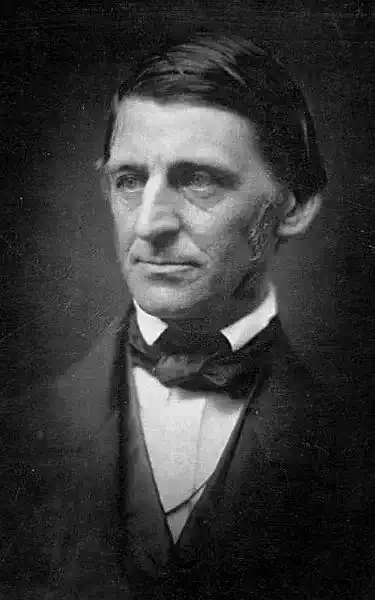
Ralph Waldo Emerson
Initial Love
Initial Love
Venus, when her son was lost,
Cried him up and down the coast,
In hamlets, palaces, and parks,
And told the truant by his marks,
Golden curls, and quiver, and bow;—
This befell long ago.
Time and tide are strangely changed,
Men and manners much deranged;
None will now find Cupid latent
By this foolish antique patent.
He came late along the waste,
Shod like a traveller for haste,
With malice dared me to proclaim him,
That the maids and boys might name him.
Boy no more, he wears all coats,
Frocks, and blouses, capes, capôtes,
He bears no bow, or quiver, or wand,
Nor chaplet on his head or hand:
Leave his weeds and heed his eyes,
All the rest he can disguise.
In the pit of his eyes a spark
Would bring back day if it were dark,
And,—if I tell you all my thought,
Though I comprehend it not,—
In those unfathomable orbs
Every function he absorbs;
He doth eat, and drink, and fish, and shoot,
And write, and reason, and compute,
And ride, and run, and have, and hold,
And whine, and flatter, and regret,
And kiss, and couple, and beget,
By those roving eye-balls bold;
Undaunted are their courages,
Right Cossacks in their forages;
Fleeter they than any creature,
They are his steeds and not his feature,
Inquisitive, and fierce, and fasting,
Restless, predatory, hasting,—
And they pounce on other eyes,
As lions on their prey;
And round their circles is writ,
Plainer than the day,
Underneath, within, above,
Love, love, love, love.
He lives in his eyes,
There doth digest, and work, and spin,
And buy, and sell, and lose, and win;
He rolls them with delighted motion,
Joy-tides swell their mimic ocean.
Yet holds he them with tortest rein,
That they may seize and entertain
The glance that to their glance opposes,
Like fiery honey sucked from roses.
He palmistry can understand,
Imbibing virtue by his hand
As if it were a living root;
The pulse of hands will make him mute;
With all his force he gathers balms
Into those wise thrilling palms.
Cupid is a casuist,
A mystic, and a cabalist,
Can your lurking Thought surprise,
And interpret your device;
Mainly versed in occult science,
In magic, and in clairvoyance.
Oft he keeps his fine ear strained,
And reason on her tiptoe pained,
For aery intelligence,
And for strange coincidence.
But it touches his quick heart
When Fate by omens takes his part,
And chance-dropt hints from Nature's sphere
Deeply soothe his anxious ear.
Heralds high before him run,
He has ushers many a one,
Spreads his welcome where he goes,
And touches all things with his rose.
All things wait for and divine him,—
How shall I dare to malign him,
Or accuse the god of sport?—
I must end my true report,
Painting him from head to foot,
In as far as I took note,
Trusting well the matchless power
Of this young-eyed emperor
Will clear his fame from every cloud,
With the bards, and with the crowd.
He is wilful, mutable,
Shy, untamed, inscrutable,
Swifter-fashioned than the fairies,
Substance mixed of pure contraries,
His vice some elder virtue's token,
And his good is evil spoken.
Failing sometimes of his own,
He is headstrong and alone;
He affects the wood and wild,
Like a flower-hunting child,
Buries himself in summer waves,
In trees, with beasts, in mines, and caves,
Loves nature like a horned cow,
Bird, or deer, or cariboo.
Shun him, nymphs, on the fleet horses!
He has a total world of wit,
O how wise are his discourses!
But he is the arch-hypocrite,
And through all science and all art,
Seeks alone his counterpart.
He is a Pundit of the east,
He is an augur and a priest,
And his soul will melt in prayer,
But word and wisdom are a snare;
Corrupted by the present toy,
He follows joy, and only joy.
There is no mask but he will wear,
He invented oaths to swear,
He paints, he carves, he chants, he prays,
And holds all stars in his embrace,
Godlike, —but 'tis for his fine pelf,
The social quintessence of self.
Well, said I, he is hypocrite,
And folly the end of his subtle wit,
He takes a sovran privilege
Not allowed to any liege,
For he does go behind all law,
And right into himself does draw,
For he is sovranly allied.
Heaven's oldest blood flows in his side,
And interchangeably at one
With every king on every throne,
That no God dare say him nay,
Or see the fault, or seen betray;
He has the Muses by the heart,
And the Parcæ all are of his part.
His many signs cannot be told,
He has not one mode, but manifold,
Many fashions and addresses,
Piques, reproaches, hurts, caresses,
Action, service, badinage,
He will preach like a friar,
And jump like Harlequin,
He will read like a crier,
And fight like a Paladin.
Boundless is his memory,
Plans immense his term prolong,
He is not of counted age,
Meaning always to be young.
And his wish is intimacy,
Intimater intimacy,
And a stricter privacy,
The impossible shall yet be done,
And being two shall still be one.
As the wave breaks to foam on shelves,
Then runs into a wave again,
So lovers melt their sundered selves,
Yet melted would be twain.
Venus, when her son was lost,
Cried him up and down the coast,
In hamlets, palaces, and parks,
And told the truant by his marks,
Golden curls, and quiver, and bow;—
This befell long ago.
Time and tide are strangely changed,
Men and manners much deranged;
None will now find Cupid latent
By this foolish antique patent.
He came late along the waste,
Shod like a traveller for haste,
With malice dared me to proclaim him,
That the maids and boys might name him.
Boy no more, he wears all coats,
Frocks, and blouses, capes, capôtes,
He bears no bow, or quiver, or wand,
Nor chaplet on his head or hand:
Leave his weeds and heed his eyes,
All the rest he can disguise.
In the pit of his eyes a spark
Would bring back day if it were dark,
And,—if I tell you all my thought,
Though I comprehend it not,—
In those unfathomable orbs
Every function he absorbs;
He doth eat, and drink, and fish, and shoot,
And write, and reason, and compute,
And ride, and run, and have, and hold,
And whine, and flatter, and regret,
And kiss, and couple, and beget,
By those roving eye-balls bold;
Undaunted are their courages,
Right Cossacks in their forages;
Fleeter they than any creature,
They are his steeds and not his feature,
Inquisitive, and fierce, and fasting,
Restless, predatory, hasting,—
And they pounce on other eyes,
As lions on their prey;
And round their circles is writ,
Plainer than the day,
Underneath, within, above,
Love, love, love, love.
He lives in his eyes,
There doth digest, and work, and spin,
And buy, and sell, and lose, and win;
He rolls them with delighted motion,
Joy-tides swell their mimic ocean.
Yet holds he them with tortest rein,
That they may seize and entertain
The glance that to their glance opposes,
Like fiery honey sucked from roses.
He palmistry can understand,
Imbibing virtue by his hand
As if it were a living root;
The pulse of hands will make him mute;
With all his force he gathers balms
Into those wise thrilling palms.
Cupid is a casuist,
A mystic, and a cabalist,
Can your lurking Thought surprise,
And interpret your device;
Mainly versed in occult science,
In magic, and in clairvoyance.
Oft he keeps his fine ear strained,
And reason on her tiptoe pained,
For aery intelligence,
And for strange coincidence.
But it touches his quick heart
When Fate by omens takes his part,
And chance-dropt hints from Nature's sphere
Deeply soothe his anxious ear.
Heralds high before him run,
He has ushers many a one,
Spreads his welcome where he goes,
And touches all things with his rose.
All things wait for and divine him,—
How shall I dare to malign him,
Or accuse the god of sport?—
I must end my true report,
Painting him from head to foot,
In as far as I took note,
Trusting well the matchless power
Of this young-eyed emperor
Will clear his fame from every cloud,
With the bards, and with the crowd.
He is wilful, mutable,
Shy, untamed, inscrutable,
Swifter-fashioned than the fairies,
Substance mixed of pure contraries,
His vice some elder virtue's token,
And his good is evil spoken.
Failing sometimes of his own,
He is headstrong and alone;
He affects the wood and wild,
Like a flower-hunting child,
Buries himself in summer waves,
In trees, with beasts, in mines, and caves,
Loves nature like a horned cow,
Bird, or deer, or cariboo.
Shun him, nymphs, on the fleet horses!
He has a total world of wit,
O how wise are his discourses!
But he is the arch-hypocrite,
And through all science and all art,
Seeks alone his counterpart.
He is a Pundit of the east,
He is an augur and a priest,
And his soul will melt in prayer,
But word and wisdom are a snare;
Corrupted by the present toy,
He follows joy, and only joy.
There is no mask but he will wear,
He invented oaths to swear,
He paints, he carves, he chants, he prays,
And holds all stars in his embrace,
Godlike, —but 'tis for his fine pelf,
The social quintessence of self.
Well, said I, he is hypocrite,
And folly the end of his subtle wit,
He takes a sovran privilege
Not allowed to any liege,
For he does go behind all law,
And right into himself does draw,
For he is sovranly allied.
Heaven's oldest blood flows in his side,
And interchangeably at one
With every king on every throne,
That no God dare say him nay,
Or see the fault, or seen betray;
He has the Muses by the heart,
And the Parcæ all are of his part.
His many signs cannot be told,
He has not one mode, but manifold,
Many fashions and addresses,
Piques, reproaches, hurts, caresses,
Action, service, badinage,
He will preach like a friar,
And jump like Harlequin,
He will read like a crier,
And fight like a Paladin.
Boundless is his memory,
Plans immense his term prolong,
He is not of counted age,
Meaning always to be young.
And his wish is intimacy,
Intimater intimacy,
And a stricter privacy,
The impossible shall yet be done,
And being two shall still be one.
As the wave breaks to foam on shelves,
Then runs into a wave again,
So lovers melt their sundered selves,
Yet melted would be twain.
406
Page 1
Next