
Old Age and Ageing
Poems in this topic

Dylan Thomas
Do Not Go Gentle Into That Good Night
Do not go gentle into that good night,
Old age should burn and rave at close of day;
Rage, rage against the dying of the light.
Though wise men at their end know dark is right,
Because their words had forked no lightning they
Do not go gentle into that good night.
Good men, the last wave by, crying how bright
Their frail deeds might have danced in a green bay,
Rage, rage against the dying of the light.
Wild men who caught and sang the sun in flight,
And learn, too late, they grieved it on its way,
Do not go gentle into that good night.
Grave men, near death, who see with blinding sight
Blind eyes could blaze like meteors and be gay,
Rage, rage against the dying of the light.
And you, my father, there on that sad height,
Curse, bless, me now with your fierce tears, I pray.
Do not go gentle into that good night.
Rage, rage against the dying of the light.
William Wordsworth
The Fountain
A Conversation
We talked with open heart, and tongue
Affectionate and true,
A pair of friends, though I was young,
And Matthew seventy-two.
We lay beneath a spreading oak,
Beside a mossy seat;
And from the turf a fountain broke
And gurgled at our feet.
`Now, Matthew!' said I, `let us match
This water's pleasant tune
With some old border-song, or catch
That suits a summer's noon;
`Or of the church-clock and the chimes
Sing here beneath the shade
That half-mad thing of witty rhymes
Which you last April made!'
In silence Matthew lay, and eyed
The spring beneath the tree;
And thus the dear old man replied,
The grey-haired man of glee:
`No check, no stay, this streamlet fears,
How merrily it goes!
'Twill murmur on a thousand years
And flow as now it flows.
`And here, on this delightful day,
I cannot choose but think
How oft, a vigorous man, I lay
Beside this fountain's brink.
`My eyes are dim with childish tears,
My heart is idly stirred,
For the same sound is in my ears
Which in those days I heard.
`Thus fares it still in our decay:
And yet the wiser mind
Mourns less for what Age takes away,
Than what it leaves behind.
`The blackbird amid leafy trees,
The lark above the hill,
Let loose their carols when they please,
Are quiet when they will.
`With Nature never do they wage
A foolish strife; they see
A happy youth, and their old age
Is beautiful and free:
`But we are pressed by heavy laws;
And often, glad no more,
We wear a face of joy, because
We have been glad of yore.
`If there be one who need bemoan
His kindred laid in earth,
The household hearts that were his own, -
It is the man of mirth.
`My days, my friend, are almost gone,
My life has been approved,
And many love me; but by none
Am I enough beloved.'
`Now both himself and me he wrongs,
The man who thus complains!
I live and sing my idle songs
Upon these happy plains:
`And, Matthew, for thy children dead
I'll be a son to thee!'
At this he grasped my hand and said
`Alas! that cannot be.'
We rose up from the fountain-side;
And down the smooth descent
Of the green sheep-track did we glide;
And through the wood we went;
And ere we came to Leonard's Rock
He sang those witty rhymes
About the crazy old church-clock,
And the bewildered chimes.
William Wordsworth
Simon Lee, The Old Huntsman
In the sweet shire of Cardigan,
Not far from pleasant Ivor-hall,
An old Man dwells, a little man,--
'Tis said he once was tall.
Full five-and-thirty years he lived
A running huntsman merry;
And still the centre of his cheek
Is red as a ripe cherry.
No man like him the horn could sound,
And hill and valley rang with glee
When Echo bandied, round and round,
The halloo of Simon Lee.
In those proud days, he little cared
For husbandry or tillage;
To blither tasks did Simon rouse
The sleepers of the village.
He all the country could outrun,
Could leave both man and horse behind;
And often, ere the chase was done,
He reeled, and was stone-blind.
And still there's something in the world
At which his heart rejoices;
For when the chiming hounds are out,
He dearly loves their voices!
But, oh the heavy change!--bereft
Of health, strength, friends, and kindred, see!
Old Simon to the world is left
In liveried poverty.
His Master's dead,--and no one now
Dwells in the Hall of Ivor;
Men, dogs, and horses, all are dead;
He is the sole survivor.
And he is lean and he is sick;
His body, dwindled and awry,
Rests upon ankles swoln and thick;
His legs are thin and dry.
One prop he has, and only one,
His wife, an aged woman,
Lives with him, near the waterfall,
Upon the village Common.
Beside their moss-grown hut of clay,
Not twenty paces from the door,
A scrap of land they have, but they
Are poorest of the poor.
This scrap of land he from the heath
Enclosed when he was stronger;
But what to them avails the land
Which he can till no longer?
Oft, working by her Husband's side,
Ruth does what Simon cannot do;
For she, with scanty cause for pride,
Is stouter of the two.
And, though you with your utmost skill
From labour could not wean them,
'Tis little, very little--all
That they can do between them.
Few months of life has he in store
As he to you will tell,
For still, the more he works, the more
Do his weak ankles swell.
My gentle Reader, I perceive
How patiently you've waited,
And now I fear that you expect
Some tale will be related.
O Reader! had you in your mind
Such stores as silent thought can bring,
O gentle Reader! you would find
A tale in every thing.
What more I have to say is short,
And you must kindly take it:
It is no tale; but, should you think,
Perhaps a tale you'll make it.
One summer-day I chanced to see
This old Man doing all he could
To unearth the root of an old tree,
A stump of rotten wood.
The mattock tottered in his hand;
So vain was his endeavour,
That at the root of the old tree
He might have worked for ever.
"You're overtasked, good Simon Lee,
Give me your tool," to him I said;
And at the word right gladly he
Received my proffered aid.
I struck, and with a single blow
The tangled root I severed,
At which the poor old Man so long
And vainly had endeavoured.
The tears into his eyes were brought,
And thanks and praises seemed to run
So fast out of his heart, I thought
They never would have done.
--I've heard of hearts unkind, kind deeds
With coldness still returning;
Alas! the gratitude of men
Hath oftener left me mourning.
William Wordsworth
I Know an Old Man Constrained to Dwell
I know an aged Man constrained to dwell
In a large house of public charity,
Where he abides, as in a Prisoner's cell,
With numbers near, alas! no company.
When he could creep about, at will, though poor
And forced to live on alms, this old Man fed
A Redbreast, one that to his cottage door
Came not, but in a lane partook his bread.
There, at the root of one particular tree,
An easy seat this worn-out Labourer found
While Robin pecked the crumbs upon his knee
Laid one by one, or scattered on the ground.
Dear intercourse was theirs, day after day;
What signs of mutual gladness when they met!
Think of their common peace, their simple play,
The parting moment and its fond regret.
Months passed in love that failed not to fulfil,
In spite of season's change, its own demand,
By fluttering pinions here and busy bill;
There by caresses from a tremulous hand.
Thus in the chosen spot a tie so strong
Was formed between the solitary pair,
That when his fate had housed him 'mid a throng
The Captive shunned all converse proffered there.
Wife, children, kindred, they were dead and gone;
But, if no evil hap his wishes crossed,
One living Stay was left, and on that one
Some recompence for all that he had lost.
Oh that the good old Man had power to prove,
By message sent through air or visible token,
That still he loves the Bird, and still must love;
That friendship lasts though fellowship is broken!
William Wordsworth
Fountain, The: A Conversation
We talked with open heart, and tongue
Affectionate and true,
A pair of friends, though I was young,
And Matthew seventy-two.
We lay beneath a spreading oak,
Beside a mossy seat;
And from the turf a fountain broke,
And gurgled at our feet.
"Now, Matthew!" said I, "let us match
This water's pleasant tune
With some old border-song, or catch
That suits a summer's noon;
"Or of the church-clock and the chimes
Sing here beneath the shade,
That half-mad thing of witty rhymes
Which you last April made!"
In silence Matthew lay, and eyed
The spring beneath the tree;
And thus the dear old Man replied,
The grey-haired man of glee:
"No check, no stay, this Streamlet fears;
How merrily it goes!
'Twill murmur on a thousand years,
And flow as now it flows.
"And here, on this delightful day,
I cannot choose but think
How oft, a vigorous man, I lay
Beside this fountain's brink.
"My eyes are dim with childish tears,
My heart is idly stirred,
For the same sound is in my ears
Which in those days I heard.
"Thus fares it still in our decay:
And yet the wiser mind
Mourns less for what age takes away
Than what it leaves behind.
"The blackbird amid leafy trees,
The lark above the hill,
Let loose their carols when they please
Are quiet when they will.
"With Nature never do 'they' wage
A foolish strife; they see
A happy youth, and their old age
Is beautiful and free:
"But we are pressed by heavy laws;
And often, glad no more,
We wear a face of joy, because
We have been glad of yore.
"If there be one who need bemoan
His kindred laid in earth,
The household hearts that were his own;
It is the man of mirth.
"My days, my Friend, are almost gone,
My life has been approved,
And many love me; but by none
Am I enough beloved."
"Now both himself and me he wrongs,
The man who thus complains;
I live and sing my idle songs
Upon these happy plains;
"And, Matthew, for thy children dead
I'll be a son to thee!"
At this he grasped my hand, and said,
"Alas! that cannot be."
We rose up from the fountain-side;
And down the smooth descent
Of the green sheep-track did we glide;
And through the wood we went;
And, ere we came to Leonard's rock,
He sang those witty rhymes
About the crazy old church-clock,
And the bewildered chimes.

William Shakespeare
Sonnet II: When Forty Winters Shall Besiege Thy Brow
When forty winters shall besiege thy brow,
And dig deep trenches in thy beauty's field,
Thy youth's proud livery, so gazed on now,
Will be a tatter'd weed, of small worth held:
Then being ask'd where all thy beauty lies,
Where all the treasure of thy lusty days,
To say, within thine own deep-sunken eyes,
Were an all-eating shame and thriftless praise.
How much more praise deserved thy beauty's use,
If thou couldst answer 'This fair child of mine
Shall sum my count and make my old excuse,'
Proving his beauty by succession thine!
This were to be new made when thou art old,
And see thy blood warm when thou feel'st it cold.
James Whitcomb Riley
Grandfather Squeers
'My grandfather Squeers,' said The Raggedy Man,
As he solemnly lighted his pipe and began-
'The most indestructible man, for his years,
And the grandest on earth, was my grandfather Squeers!
'He said, when he rounded his three-score-and-ten,
'I've the hang of it now and can do it again!'
'He had frozen his heels so repeatedly, he
Could tell by them just what the weather would be;
'And would laugh and declare, 'while the _Almanac_ would
Most falsely prognosticate, _he_ never could!'
'Such a hale constitution had grandfather Squeers
That, 'though he'd used '_navy_' for sixty odd years,
'He still chewed a dime's-worth six days of the week,
While the seventh he passed with a chew in each cheek:
'Then my grandfather Squeers had a singular knack
Of sitting around on the small of his back,
'With his legs like a letter Y stretched o'er the grate
Wherein 'twas his custom to ex-pec-tor-ate.
'He was fond of tobacco in _manifold_ ways,
And would sit on the door-step, of sunshiny days,
'And smoke leaf-tobacco he'd raised strictly for
The pipe he'd used all through The Mexican War.'
And The Raggedy Man said, refilling the bowl
Of his own pipe and leisurely picking a coal
From the stove with his finger and thumb, 'You can see
What a tee-nacious habit he's fastened on me!
'And my grandfather Squeers took a special delight
In pruning his corns every Saturday night
'With a horn-handled razor, whose edge he excused
By saying 'twas one that his grandfather used;
'And, though deeply etched in the haft of the same
Was the ever-euphonious Wostenholm's name,
''Twas my grandfather's custom to boast of the blade
As 'A Seth Thomas razor--the best ever made!'
'No Old Settlers' Meeting, or Pioneers' Fair,
Was complete without grandfather Squeers in the chair
'To lead off the programme by telling folks how
'He used to shoot deer where the Court-House stands now'-
'How 'he felt, of a truth, to live over the past,
When the country was wild and unbroken and vast,
''That the little log cabin was just plenty fine
For himself, his companion, and fambly of nine!-
''When they didn't have even a pump, or a tin,
But drunk surface-water, year out and year in,
''From the old-fashioned gourd that was sweeter, by odds,
Than the goblets of gold at the lips of the gods!''
Then The Raggedy Man paused to plaintively say
It was clockin' along to'rds the close of the day--
And he'd _ought_ to get back to his work on the lawn,--
Then dreamily blubbered his pipe and went on:
'His teeth were imperfect--my grandfather owned
That he couldn't eat oysters unless they were 'boned';
'And his eyes were so weak, and so feeble of sight,
He couldn't sleep with them unless, every night,
'He put on his spectacles--all he possessed,--
Three pairs--with his goggles on top of the rest.
'And my grandfather always, retiring at night,
Blew down the lamp-chimney to put out the light;
'Then he'd curl up on edge like a shaving, in bed,
And puff and smoke pipes in his sleep, it is said:
'And would snore oftentimes as the legends relate,
Till his folks were wrought up to a terrible state,-
'Then he'd snort, and rear up, and roll over; and there,
In the subsequent hush they could hear him chew air.
'And so glaringly bald was the top of his head
That many's the time he has musingly said,
'As his eyes journeyed o'er its reflex in the glass,-'
I must set out a few signs of _Keep Off the Grass!_'
'So remarkably deaf was my grandfather Squeers
That he had to wear lightning-rods over his ears
'To even hear thunder--and oftentimes then
He was forced to request it to thunder again.'
Rudyard Kipling
Shillin' A Day
My name is O'Kelly, I've heard the Revelly
From Birr to Bareilly, from Leeds to Lahore,
Hong-Kong and Peshawur,
Lucknow and Etawah,
And fifty-five more all endin' in "pore".
Black Death and his quickness, the depth and the thickness,
Of sorrow and sickness I've known on my way,
But I'm old and I'm nervis,
I'm cast from the Service,
And all I deserve is a shillin' a day.
(~Chorus~) Shillin' a day,
Bloomin' good pay --
Lucky to touch it, a shillin' a day!
Oh, it drives me half crazy to think of the days I
Went slap for the Ghazi, my sword at my side,
When we rode Hell-for-leather
Both squadrons together,
That didn't care whether we lived or we died.
But it's no use despairin', my wife must go charin'
An' me commissairin' the pay-bills to better,
So if me you be'old
In the wet and the cold,
By the Grand Metropold, won't you give me a letter?
(~Full chorus~) Give 'im a letter --
'Can't do no better,
Late Troop-Sergeant-Major an' -- runs with a letter!
Think what 'e's been,
Think what 'e's seen,
Think of his pension an' ----
GAWD SAVE THE QUEEN.
Rudyard Kipling
Old Fighting-Men
All the world over, nursing their scars,
Sit the old fighting-men broke in the wars--
Sit the old fighting-men, surly and grim
Mocking the lilt of the conquerors' hymn.
Dust of the battle o'erwhelmed them and hid.
Fame never found them for aught that they did.
Wounded and spent to the lazar they drew,
Lining the road where the Legions roll through.
Sons of the Laurel who press to your meed,
(Worthy God's pity most--you who succeed!)
Ere you go triumphing, crowned, to the stars,
Pity poor fighting-men, broke in the wars!

Horace
BkIV:X Age
O you who are cruel still, and a master of Venus’s gifts,
when a white, unexpected plumage surmounts all your arrogance,
and the tresses that wave on your shoulders have all been shorn away,
and the colour that now outshines the flower of the crimson rose
is transformed, my Ligurinus, and has changed into roughened skin:
whenever you look at your altered face in the mirror, you’ll say:
‘Why didn’t I have, when I was a youth, the mind I have today,
or why can’t those untouched cheeks return to visit this soul of mine?’
Horace
BkIII:XV Too Old
O, dear wife of poor Ibycus,
put an end to your wickedness, at last, and all
of your infamous goings-on:
now you are nearer the season for dying,
stop playing about with the girls,
and scattering a mist over shining stars.
What fits Pholoe is not quite
fitting for you, Chloris: while your daughter’s more
suited to storming the houses of lovers,
like a Bacchante stirred by the beating drum.
Her love for Nothus forces her
to gambol like a lascivious she-goat:
the wool that’s shorn near to noble
Luceria’s fitting for you, sad old thing,
not the dark red flower of the rose,
nor the lyre, nor the wine-jars drained to their dregs

Robert W. Service
Washerwife
The aged Queen who passed away
Had sixty servants, so they say;
Twice sixty hands her shoes to tie:
Two soapy ones have I.
The old Queen had of beds a score;
A cot have I and ask no more.
For when the last is said and done
One can but die in one.
The old Queen rightly thought that she
Was better than the likes o' me;
And yet I'm glad despite her grace
I am not in her place.
The old Queen's gone and I am here,
To eat my tripe and drink my beer,
Athinkin' as I wash my clothes:
We must have monarchs, I suppose . . .
Well, well,--'Taint no skin off my nose!
William Blake
Ah! Sunflower
Ah Sunflower, weary of time,
Who countest the steps of the sun;
Seeking after that sweet golden clime
Where the traveller's journey is done;
Where the Youth pined away with desire,
And the pale virgin shrouded in snow,
Arise from their graves, and aspire
Where my Sunflower wishes to go!
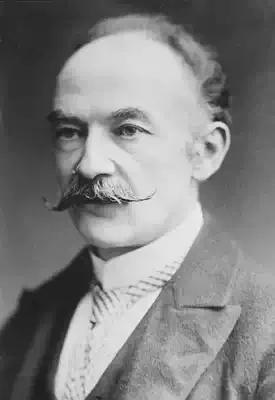
Thomas Hardy
An Ancient to Ancients
Where once we danced, where once we sang,
Gentlemen,
The floors are sunken, cobwebs hang,
And cracks creep; worms have fed upon
The doors. Yea, sprightlier times were then
Than now, with harps and tabrets gone,
Gentlemen!
Where once we rowed, where once we sailed,
Gentlemen,
And damsels took the tiller, veiled
Against too strong a stare (God wot
Their fancy, then or anywhen!)
Upon that shore we are clean forgot,
Gentlemen!
We have lost somewhat of that, afar and near,
Gentlemen,
The thinning of our ranks each year
Affords a hint we are nigh undone,
That shall not be ever again
The marked of many, loved of one,
Gentlemen.
In dance the polka hit our wish,
Gentlemen,
The paced quadrille, the spry schottische,
"Sir Roger."--And in opera spheres
The "Girl" (the famed "Bohemian"),
And "Trovatore" held the ears,
Gentlemen.
This season's paintings do not please,
Gentlemen
Like Etty, Mulready, Maclise;
Throbbing romance had waned and wanned;
No wizard wields the witching pen
Of Bulwer, Scott, Dumas, and Sand,
Gentlemen.
The bower we shrined to Tennyson,
Gentlemen,
Is roof-wrecked; damps there drip upon
Sagged seats, the creeper-nails are rust,
The spider is sole denizen;
Even she who voiced those rhymes is dust,
Gentlemen!
We who met sunrise sanguine-souled,
Gentlemen,
Are wearing weary. We are old;
These younger press; we feel our rout
Is imminent to Aïdes' den,--
That evening shades are stretching out,
Gentlemen!
And yet, though ours be failing frames,
Gentlemen,
So were some others' history names,
Who trode their track light-limbed and fast
As these youth, and not alien
From enterprise, to their long last,
Gentlemen.
Sophocles, Plato, Socrates,
Gentlemen,
Pythagoras, Thucydides,
Herodotus, and Homer,--yea,
Clement, Augustin, Origen,
Burnt brightlier towards their setting-day,
Gentlemen.
And ye, red-lipped and smooth-browed; list,
Gentlemen;
Much is there waits you we have missed;
Much lore we leave you worth the knowing,
Much, much has lain outside our ken;
Nay, rush not: time serves: we are going,
Gentlemen.
Robert W. Service
The Petit Vieux
"Sow your wild oats in your youth," so we're always told;
But I say with deeper sooth: "Sow them when you're old."
I'll be wise till I'm about seventy or so:
Then, by Gad! I'll blossom out as an ancient beau.
I'll assume a dashing air, laugh with loud Ha! ha! . . .
How my grandchildren will stare at their grandpapa!
Their perfection aureoled I will scandalize:
Won't I be a hoary old sinner in their eyes!
Watch me, how I'll learn to chaff barmaids in a bar;
Scotches daily, gayly quaff, puff a fierce cigar.
I will haunt the Tango teas, at the stage-door stand;
Wait for Dolly Dimpleknees, bouquet in my hand.
Then at seventy I'll take flutters at roulette;
While at eighty hope I'll make good at poker yet;
And in fashionable togs to the races go,
Gayest of the gay old dogs, ninety years or so.
"Sow your wild oats while you're young," that's what you are told;
Don't believe the foolish tongue -- sow 'em when you're old.
Till you're threescore years and ten, take my humble tip,
Sow your nice tame oats and then . . . Hi, boys! Let 'er rip.
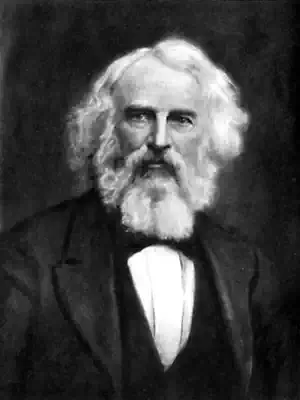
Henry Wadsworth Longfellow
Youth And Age. (Sonnet III.)
Oh give me back the days when loose and free
To my blind passion were the curb and rein,
Oh give me back the angelic face again,
With which all virtue buried seems to be!
Oh give my panting footsteps back to me,
That are in age so slow and fraught with pain,
And fire and moisture in the heart and brain,
If thou wouldst have me burn and weep for thee!
If it be true thou livest alone, Amor,
On the sweet-bitter tears of human hearts,
In an old man thou canst not wake desire;
Souls that have almost reached the other shore
Of a diviner love should feel the darts,
And be as tinder to a holier fire.
Robert W. Service
The Host
I never could imagine God:
I don't suppose I ever will.
Beside His altar fire I nod
With senile drowsiness but still
In old of age as sight grows dim
I have a sense of Him.
For when I count my sum of days
I find so many sweet and good,
My mind is full of peace and praise,
My heart aglow with gratitude.
For my long living in the sun
I want to thank someone.
Someone who has been kind to me;
Some power within, if not on high,
Who shaped my gentle destiny,
And led me pleasant pastures by:
Who taught me, whether gay or grave,
To love the life He gave.
A Host of charity and cheer,
Within a Tavern warm and bright;
Who smiles and bids me have no fear
As forth I fare into the night:
From whom I beg no Heav'n, but bless
For earthly happiness.
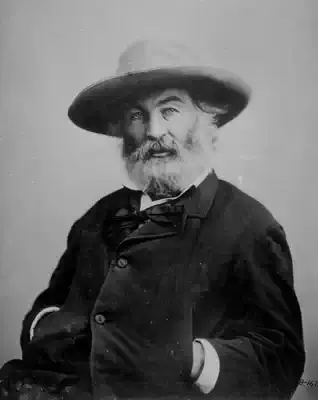
Walt Whitman
To Old Age
I SEE in you the estuary that enlarges and spreads itself grandly as
it pours in the great Sea.
Robert W. Service
The Centenarians
I asked of ancient gaffers three
The way of their ripe living,
And this is what they told to me
Without Misgiving.
The First: 'The why I've lived so long,
To my fond recollection
Is that for women, wine and song
I've had a predilection.
Full many a bawdy stave I've sung
With wenches of my choosing,
But of the joys that kept me young
The best was boozing.'
The Second: 'I'm a sage revered
Because I was a fool
And with the bourgeon of my beard
I kept my ardour cool.
On health I have conserved my hold
By never dissipating:
And that is why a hundred old
I'm celebrating.'
The Third: 'The explanation I
Have been so long a-olding,
Is that to wash I never try,
Despite conjugal scolding.
I hate the sight of soap and so
I seldom change my shirt:
Believe me, Brother, there is no
Preservative like dirt.'
So there you have the reasons three
Why age may you rejoice:
Booze, squalour and temerity,-Well,
you may take your choice.
Yet let me say, although it may
Your egoism hurt,
Of all the three it seems to me
The best is DIRT.
Walt Whitman
Beautiful Women
WOMEN sit, or move to and fro--some old, some young;
The young are beautiful--but the old are more beautiful than the
young.
Robert W. Service
Ripeness
With peace and rest
And wisdom sage,
Ripeness is best
Of every age.
With hands that fold
In pensive prayer,
For grave-yard mold
Prepare.
From fighting free
With fear forgot,
Let ripeness be,
Before the rot.
With heart of cheer
At eighty odd,
How man grows near
To God!
With passion spent
And life nigh run
Let us repent
The ill we've done.
And as we bless
With happy heart
Life's mellowness
--Depart.
Robert W. Service
Retired
I used to sing, when I was young,
The joy of idleness;
But now I'm grey I hold my tongue,
For frankly I confess
If I had not some job to do
I would be bored to death;
So I must toil until I'm through
With this asthmatic breath.
Where others slothfully would brood
beg for little chores,
To peel potatoes, chop the wood,
And even scrub the floors.
When slightly useful I can be,
I'm happy as a bboy;
Dish-washing is a boon to me,
And brushing boots a joy.
The young folks tell me: "Grandpa, please,
Don't be so manual;
You certainly have earned your ease -
Why don't you rest a spell?"
Say I: I'll have a heap of rest
On my sepulchral shelf;
So now please let me do my best
To justify myself."
For one must strive or one will die,
And work's our dearest friend;
God meant it so, and that is why
I'll toil unto the end.
I thank the Lord I'm full of beans,
So let me heft a hoe,
And I will don my garden jeans
And help the beans to grow.
Robert W. Service
Old Trouper
I was Mojeska's leading man
And famous parts I used to play,
But now I do the best I can
To earn my bread from day to day;
Here in this Burg of Breaking Hears,
Where one wins as a thousand fail,
I play a score of scurvy parts
Till Time writes Finis to my tale.
My wife is dead, my daughter wed,
With heaps of trouble of their own;
And though I hold aloft my head
I'm humble, scared and all alone . . .
To-night I burn each photograph,
Each record of my former fame,
And oh, how bitterly I laugh
And feed them to the hungry flame!
Behold how handsome I was then -
What glowing eye, what noble mien;
I towered above my fellow men,
And proudly strode the painted scene.
Ah, Vanity! What fools are we,
With empty ends and foolish aims . . .
There now, I fling with savage glee
My David Garrick to the flames.
"Is this a dagger that I see":
Oh, how I used to love that speech;
We were old-fashioned - "hams" maybe,
Yet we Young Arrogance could teach.
"Out, out brief candle!" There are gone
My Lear, my Hamlet and MacBeth;
And now by ashes cold and wan
I wait my cue, my prompter Death.
This life of ours is just a play;
Its end is fashioned from the start;
Fate writes each word we have to say,
And puppet-like we strut our part.
Once I wore laurels on my brow,
But now I wait, a sorry clown,
To make my furtive, farewell bow . . .
Haste Time! Oh, ring the Curtain down.
Robert W. Service
Old Sweethearts
Oh Maggie, do you mind the day
We went to school together,
And as we stoppit by the way
I rolled you in the heather?
My! but you were the bonny lass
And we were awfu' late for class.
Your locks are now as white as snow,
And you are ripe and wrinkled,
A grandmother ten times or so,
Yet how your blue eyes twinkled
At me above your spectacles,
Recalling naughty neck-tickles!
It must be fifty years today
I left you for the Yukon;
You haven't changed - your just as gay
And just as sweet to look on.
But can you see in this old fool
The lad who made you late for school?
Oh Maggie, ask me in to tea
And we can talk things over,
And contemplate the nuptial state,
For I am still your lover:
And though the bell be slow to chime
We'll no be grudgin' o' the time