
Music
Poems in this topic
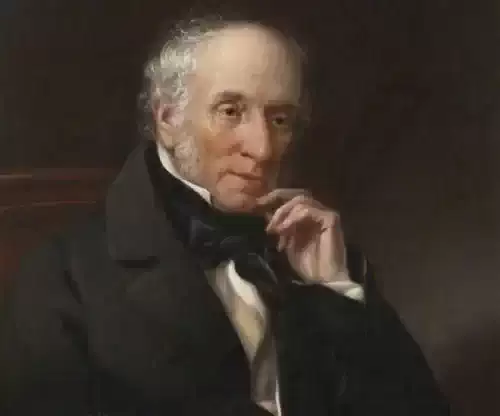
William Wordsworth
The Reaper
The Reaper
Behold her, single in the field,
Yon solitary Highland Lass!
Reaping and singing by herself;
Stop here, or gently pass!
Alone she cuts and binds the grain,
And sings a melancholy strain;
O listen! for the vale profound
Is overflowing with the sound.
No nightingale did ever chaunt
More welcome notes to weary bands
Of travellers in some shady haunt,
Among Arabian sands:
A voice so thrilling ne'er was heard
In spring-time from the cuckoo-bird
Breaking the silence of the seas
Among the farthest Hebrides.
Will no one tell me what she sings?
Perhaps the plaintive numbers flow
For old, unhappy, far-off things,
And battles long ago:
Or is it some more humble lay,
Familiar matter of today?
Some natural sorrow, loss, or pain,
That has been, and may be again!
Whate'er the theme, the maiden sang
As if her song could have no ending;
I saw her singing at her work,
And o'er the sickle bending;
I listened, motionless and still;
And as I mounted up the hill
The music in my heart I bore,
Long after it was heard no more.
Behold her, single in the field,
Yon solitary Highland Lass!
Reaping and singing by herself;
Stop here, or gently pass!
Alone she cuts and binds the grain,
And sings a melancholy strain;
O listen! for the vale profound
Is overflowing with the sound.
No nightingale did ever chaunt
More welcome notes to weary bands
Of travellers in some shady haunt,
Among Arabian sands:
A voice so thrilling ne'er was heard
In spring-time from the cuckoo-bird
Breaking the silence of the seas
Among the farthest Hebrides.
Will no one tell me what she sings?
Perhaps the plaintive numbers flow
For old, unhappy, far-off things,
And battles long ago:
Or is it some more humble lay,
Familiar matter of today?
Some natural sorrow, loss, or pain,
That has been, and may be again!
Whate'er the theme, the maiden sang
As if her song could have no ending;
I saw her singing at her work,
And o'er the sickle bending;
I listened, motionless and still;
And as I mounted up the hill
The music in my heart I bore,
Long after it was heard no more.
207

William Shakespeare
Sonnets to the Sundry Notes of Music
Sonnets to the Sundry Notes of Music
I.
IT was a lording's daughter, the fairest one of three,
That liked of her master as well as well might be,
Till looking on an Englishman, the fair'st that eye could see,
Her fancy fell a-turning.
Long was the combat doubtful that love with love did fight,
To leave the master loveless, or kill the gallant knight:
To put in practise either, alas, it was a spite
Unto the silly damsel!
But one must be refused; more mickle was the pain
That nothing could be used to turn them both to gain,
For of the two the trusty knight was wounded with disdain:
Alas, she could not help it!
Thus art with arms contending was victor of the day,
Which by a gift of learning did bear the maid away:
Then, lullaby, the learned man hath got the lady gay;
For now my song is ended.
II.
On a day, alack the day!
Love, whose month was ever May,
Spied a blossom passing fair,
Playing in the wanton air:
Through the velvet leaves the wind
All unseen, gan passage find;
That the lover, sick to death,
Wish'd himself the heaven's breath,
'Air,' quoth he, 'thy cheeks may blow;
Air, would I might triumph so!
But, alas! my hand hath sworn
Ne'er to pluck thee from thy thorn:
Vow, alack! for youth unmeet:
Youth, so apt to pluck a sweet.
Thou for whom Jove would swear
Juno but an Ethiope were;
Turning mortal for thy love.'
III.
My flocks feed not,
My ewes breed not,
My rams speed not,
All is amiss:
Love's denying,
Faith's defying,
Heart's renying,
Causer of this.
All my merry jigs are quite forgot,
All my lady's love is lost, God wot:
Where her faith was firmly fix'd in love,
There a nay is placed without remove.
One silly cross
Wrought all my loss;
O frowning Fortune, cursed, fickle dame!
For now I see
Inconstancy
More in women than in men remain.
In black mourn I,
All fears scorn I,
Love hath forlorn me,
Living in thrall:
Heart is bleeding,
All help needing,
O cruel speeding,
Fraughted with gall.
My shepherd's pipe can sound no deal;
My wether's bell rings doleful knell;
My curtail dog, that wont to have play'd
Plays not at all, but seems afraid;
My sighs so deep
Procure to weep,
In howling wise, to see my doleful plight.
How sighs resound
Through heartless ground,
Like a thousand vanquish'd men in bloody fight!
Clear wells spring not,
Sweet birds sing not,
Green plants bring not
Forth their dye;
Herds stand weeping,
Flocks all sleeping,
Nymphs back peeping
Fearfully:
All our pleasure known to us poor swains,
All our merry meetings on the plains,
All our evening sport from us is fled,
All our love is lost, for Love is dead
Farewell, sweet lass,
Thy like ne'er was
For a sweet content, the cause of all my moan:
Poor Corydon
Must live alone;
Other help for him I see that there is none.
IV.
When as thine eye hath chose the dame,
And stall'd the deer that thou shouldst strike,
Let reason rule things worthy blame,
As well as fancy partial might:
Take counsel of some wiser head,
Neither too young nor yet unwed.
And when thou comest thy tale to tell,
Smooth not thy tongue with filed talk,
Lest she some subtle practise smell,--
A cripple soon can find a halt;--
But plainly say thou lovest her well,
And set thy person forth to sell.
What though her frowning brows be bent,
Her cloudy looks will calm ere night:
And then too late she will repent
That thus dissembled her delight;
And twice desire, ere it be day,
That which with scorn she put away.
What though she strive to try her strength,
And ban and brawl, and say thee nay,
Her feeble force will yield at length,
When craft hath taught her thus to say,
'Had women been so strong as men,
In faith, you had not had it then.'
And to her will frame all thy ways;
Spare not to spend, and chiefly there
Where thy desert may merit praise,
By ringing in thy lady's ear:
The strongest castle, tower, and town,
The golden bullet beats it down.
Serve always with assured trust,
And in thy suit be humble true;
Unless thy lady prove unjust,
Press never thou to choose anew:
When time shall serve, be thou not slack
To proffer, though she put thee back.
The wiles and guiles that women work,
Dissembled with an outward show,
The tricks and toys that in them lurk,
The cock that treads them shall not know.
Have you not heard it said full oft,
A woman's nay doth stand for nought?
Think women still to strive with men,
To sin and never for to saint:
There is no heaven, by holy then,
When time with age doth them attaint.
Were kisses all the joys in bed,
One woman would another wed.
But, soft! enough, too much, I fear
Lest that my mistress hear my song,
She will not stick to round me i' the ear,
To teach my tongue to be so long:
Yet will she blush, here be it said,
To hear her secrets so bewray'd.
V.
Live with me, and be my love,
And we will all the pleasures prove
That hills and valleys, dales and fields,
And all the craggy mountains yields.
There will we sit upon the rocks,
And see the shepherds feed their flocks,
By shallow rivers, by whose falls
Melodious birds sing madrigals.
There will I make thee a bed of roses,
With a thousand fragrant posies,
A cap of flowers, and a kirtle
Embroider'd all with leaves of myrtle.
A belt of straw and ivy buds,
With coral clasps and amber studs;
And if these pleasures may thee move,
Then live with me and be my love.
LOVE'S ANSWER.
If that the world and love were young,
And truth in every shepherd's tongue,
These pretty pleasures might me move
To live with thee and be thy love.
VI.
As it fell upon a day
In the merry month of May,
Sitting in a pleasant shade
Which a grove of myrtles made,
Beasts did leap, and birds did sing,
Trees did grow, and plants did spring;
Every thing did banish moan,
Save the nightingale alone:
She, poor bird, as all forlorn,
Lean'd her breast up-till a thorn
And there sung the dolefull'st ditty,
That to hear it was great pity:
'Fie, fie, fie,' now would she cry;
'Tereu, tereu!' by and by;
That to hear her so complain,
Scarce I could from tears refrain;
For her griefs, so lively shown,
Made me think upon mine own.
Ah, thought I, thou mourn'st in vain!
None takes pity on thy pain:
Senseless trees they cannot hear thee;
Ruthless beasts they will not cheer thee:
King Pandion he is dead;
All thy friends are lapp'd in lead;
All thy fellow birds do sing,
Careless of thy sorrowing.
Even so, poor bird, like thee,
None alive will pity me.
Whilst as fickle Fortune smiled,
Thou and I were both beguiled.
Every one that flatters thee
Is no friend in misery.
Words are easy, like the wind;
Faithful friends are hard to find:
Every man will be thy friend
Whilst thou hast wherewith to spend;
But if store of crowns be scant,
No man will supply thy want.
If that one be prodigal,
Bountiful they will him call,
And with such-like flattering,
'Pity but he were a king;'
If he be addict to vice,
Quickly him they will entice;
If to women he be bent,
They have at commandement:
But if Fortune once do frown,
Then farewell his great renown
They that fawn'd on him before
Use his company no more.
He that is thy friend indeed,
He will help thee in thy need:
If thou sorrow, he will weep;
If thou wake, he cannot sleep;
Thus of every grief in heart
He with thee doth bear a part.
These are certain signs to know
Faithful friend from flattering foe.
I.
IT was a lording's daughter, the fairest one of three,
That liked of her master as well as well might be,
Till looking on an Englishman, the fair'st that eye could see,
Her fancy fell a-turning.
Long was the combat doubtful that love with love did fight,
To leave the master loveless, or kill the gallant knight:
To put in practise either, alas, it was a spite
Unto the silly damsel!
But one must be refused; more mickle was the pain
That nothing could be used to turn them both to gain,
For of the two the trusty knight was wounded with disdain:
Alas, she could not help it!
Thus art with arms contending was victor of the day,
Which by a gift of learning did bear the maid away:
Then, lullaby, the learned man hath got the lady gay;
For now my song is ended.
II.
On a day, alack the day!
Love, whose month was ever May,
Spied a blossom passing fair,
Playing in the wanton air:
Through the velvet leaves the wind
All unseen, gan passage find;
That the lover, sick to death,
Wish'd himself the heaven's breath,
'Air,' quoth he, 'thy cheeks may blow;
Air, would I might triumph so!
But, alas! my hand hath sworn
Ne'er to pluck thee from thy thorn:
Vow, alack! for youth unmeet:
Youth, so apt to pluck a sweet.
Thou for whom Jove would swear
Juno but an Ethiope were;
Turning mortal for thy love.'
III.
My flocks feed not,
My ewes breed not,
My rams speed not,
All is amiss:
Love's denying,
Faith's defying,
Heart's renying,
Causer of this.
All my merry jigs are quite forgot,
All my lady's love is lost, God wot:
Where her faith was firmly fix'd in love,
There a nay is placed without remove.
One silly cross
Wrought all my loss;
O frowning Fortune, cursed, fickle dame!
For now I see
Inconstancy
More in women than in men remain.
In black mourn I,
All fears scorn I,
Love hath forlorn me,
Living in thrall:
Heart is bleeding,
All help needing,
O cruel speeding,
Fraughted with gall.
My shepherd's pipe can sound no deal;
My wether's bell rings doleful knell;
My curtail dog, that wont to have play'd
Plays not at all, but seems afraid;
My sighs so deep
Procure to weep,
In howling wise, to see my doleful plight.
How sighs resound
Through heartless ground,
Like a thousand vanquish'd men in bloody fight!
Clear wells spring not,
Sweet birds sing not,
Green plants bring not
Forth their dye;
Herds stand weeping,
Flocks all sleeping,
Nymphs back peeping
Fearfully:
All our pleasure known to us poor swains,
All our merry meetings on the plains,
All our evening sport from us is fled,
All our love is lost, for Love is dead
Farewell, sweet lass,
Thy like ne'er was
For a sweet content, the cause of all my moan:
Poor Corydon
Must live alone;
Other help for him I see that there is none.
IV.
When as thine eye hath chose the dame,
And stall'd the deer that thou shouldst strike,
Let reason rule things worthy blame,
As well as fancy partial might:
Take counsel of some wiser head,
Neither too young nor yet unwed.
And when thou comest thy tale to tell,
Smooth not thy tongue with filed talk,
Lest she some subtle practise smell,--
A cripple soon can find a halt;--
But plainly say thou lovest her well,
And set thy person forth to sell.
What though her frowning brows be bent,
Her cloudy looks will calm ere night:
And then too late she will repent
That thus dissembled her delight;
And twice desire, ere it be day,
That which with scorn she put away.
What though she strive to try her strength,
And ban and brawl, and say thee nay,
Her feeble force will yield at length,
When craft hath taught her thus to say,
'Had women been so strong as men,
In faith, you had not had it then.'
And to her will frame all thy ways;
Spare not to spend, and chiefly there
Where thy desert may merit praise,
By ringing in thy lady's ear:
The strongest castle, tower, and town,
The golden bullet beats it down.
Serve always with assured trust,
And in thy suit be humble true;
Unless thy lady prove unjust,
Press never thou to choose anew:
When time shall serve, be thou not slack
To proffer, though she put thee back.
The wiles and guiles that women work,
Dissembled with an outward show,
The tricks and toys that in them lurk,
The cock that treads them shall not know.
Have you not heard it said full oft,
A woman's nay doth stand for nought?
Think women still to strive with men,
To sin and never for to saint:
There is no heaven, by holy then,
When time with age doth them attaint.
Were kisses all the joys in bed,
One woman would another wed.
But, soft! enough, too much, I fear
Lest that my mistress hear my song,
She will not stick to round me i' the ear,
To teach my tongue to be so long:
Yet will she blush, here be it said,
To hear her secrets so bewray'd.
V.
Live with me, and be my love,
And we will all the pleasures prove
That hills and valleys, dales and fields,
And all the craggy mountains yields.
There will we sit upon the rocks,
And see the shepherds feed their flocks,
By shallow rivers, by whose falls
Melodious birds sing madrigals.
There will I make thee a bed of roses,
With a thousand fragrant posies,
A cap of flowers, and a kirtle
Embroider'd all with leaves of myrtle.
A belt of straw and ivy buds,
With coral clasps and amber studs;
And if these pleasures may thee move,
Then live with me and be my love.
LOVE'S ANSWER.
If that the world and love were young,
And truth in every shepherd's tongue,
These pretty pleasures might me move
To live with thee and be thy love.
VI.
As it fell upon a day
In the merry month of May,
Sitting in a pleasant shade
Which a grove of myrtles made,
Beasts did leap, and birds did sing,
Trees did grow, and plants did spring;
Every thing did banish moan,
Save the nightingale alone:
She, poor bird, as all forlorn,
Lean'd her breast up-till a thorn
And there sung the dolefull'st ditty,
That to hear it was great pity:
'Fie, fie, fie,' now would she cry;
'Tereu, tereu!' by and by;
That to hear her so complain,
Scarce I could from tears refrain;
For her griefs, so lively shown,
Made me think upon mine own.
Ah, thought I, thou mourn'st in vain!
None takes pity on thy pain:
Senseless trees they cannot hear thee;
Ruthless beasts they will not cheer thee:
King Pandion he is dead;
All thy friends are lapp'd in lead;
All thy fellow birds do sing,
Careless of thy sorrowing.
Even so, poor bird, like thee,
None alive will pity me.
Whilst as fickle Fortune smiled,
Thou and I were both beguiled.
Every one that flatters thee
Is no friend in misery.
Words are easy, like the wind;
Faithful friends are hard to find:
Every man will be thy friend
Whilst thou hast wherewith to spend;
But if store of crowns be scant,
No man will supply thy want.
If that one be prodigal,
Bountiful they will him call,
And with such-like flattering,
'Pity but he were a king;'
If he be addict to vice,
Quickly him they will entice;
If to women he be bent,
They have at commandement:
But if Fortune once do frown,
Then farewell his great renown
They that fawn'd on him before
Use his company no more.
He that is thy friend indeed,
He will help thee in thy need:
If thou sorrow, he will weep;
If thou wake, he cannot sleep;
Thus of every grief in heart
He with thee doth bear a part.
These are certain signs to know
Faithful friend from flattering foe.
240
William Shakespeare
Sonnet VIII
Sonnet VIII
Music to hear, why hear'st thou music sadly?
Sweets with sweets war not, joy delights in joy.
Why lovest thou that which thou receivest not gladly,
Or else receivest with pleasure thine annoy?
If the true concord of well-tuned sounds,
By unions married, do offend thine ear,
They do but sweetly chide thee, who confounds
In singleness the parts that thou shouldst bear.
Mark how one string, sweet husband to another,
Strikes each in each by mutual ordering,
Resembling sire and child and happy mother
Who all in one, one pleasing note do sing:
Whose speechless song, being many, seeming one,
Sings this to thee: 'thou single wilt prove none.'
Music to hear, why hear'st thou music sadly?
Sweets with sweets war not, joy delights in joy.
Why lovest thou that which thou receivest not gladly,
Or else receivest with pleasure thine annoy?
If the true concord of well-tuned sounds,
By unions married, do offend thine ear,
They do but sweetly chide thee, who confounds
In singleness the parts that thou shouldst bear.
Mark how one string, sweet husband to another,
Strikes each in each by mutual ordering,
Resembling sire and child and happy mother
Who all in one, one pleasing note do sing:
Whose speechless song, being many, seeming one,
Sings this to thee: 'thou single wilt prove none.'
261
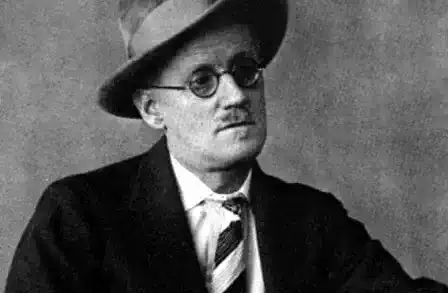
James Joyce
Strings in the Earth and Air
Strings in the Earth and Air
Strings in the earth and air
Make music sweet;
Strings by the river where
The willows meet.
There's music along the river
For Love wanders there,
Pale flowers on his mantle,
Dark leaves on his hair.
All softly playing,
With head to the music bent,
And fingers straying
Upon an instrument.
Strings in the earth and air
Make music sweet;
Strings by the river where
The willows meet.
There's music along the river
For Love wanders there,
Pale flowers on his mantle,
Dark leaves on his hair.
All softly playing,
With head to the music bent,
And fingers straying
Upon an instrument.
198

Horace
BkII:XII Terentia’s Singing
BkII:XII Terentia’s Singing
You’d not wish the theme of Numantia’s fierce wars
matched to the lyre’s soft tones, nor cruel Hannibal,
nor the Sicilian Sea turned to dark crimson
by the Carthaginians’ blood,
nor the savage Lapiths, and drunken Hylaeus
filled with excess wine, nor Hercules with his hand
taming the sons of earth, at the danger of which
ancient Saturn’s glittering house
was shaken: you’d be better yourself, Maecenas,
at writing prose histories of Caesar’s battles,
and telling us about all those menacing kings,
now led by the neck through the streets.
The Muse wishes me to speak of the sweet singing
of your lady Terentia, and speak of her bright
flashing eyes, and speak of that heart of hers, that is
so faithful in mutual love:
she to whom it’s not unbecoming to adopt
the lead among the dancers, or compete in wit,
or, that holy day that honours Diana, give
her arm in play to shining girls.
Would you exchange now, one hair of Terentia’s
for what rich Achaemenes owned, Mygdonian
wealth of fertile Phrygia, or
the Arabians’ well-stocked homes,
while she bends her neck for those passionate kisses,
or in gentle cruelty refuses to yield them,
more than he who asks likes having them taken: then
at times surprises by taking?
You’d not wish the theme of Numantia’s fierce wars
matched to the lyre’s soft tones, nor cruel Hannibal,
nor the Sicilian Sea turned to dark crimson
by the Carthaginians’ blood,
nor the savage Lapiths, and drunken Hylaeus
filled with excess wine, nor Hercules with his hand
taming the sons of earth, at the danger of which
ancient Saturn’s glittering house
was shaken: you’d be better yourself, Maecenas,
at writing prose histories of Caesar’s battles,
and telling us about all those menacing kings,
now led by the neck through the streets.
The Muse wishes me to speak of the sweet singing
of your lady Terentia, and speak of her bright
flashing eyes, and speak of that heart of hers, that is
so faithful in mutual love:
she to whom it’s not unbecoming to adopt
the lead among the dancers, or compete in wit,
or, that holy day that honours Diana, give
her arm in play to shining girls.
Would you exchange now, one hair of Terentia’s
for what rich Achaemenes owned, Mygdonian
wealth of fertile Phrygia, or
the Arabians’ well-stocked homes,
while she bends her neck for those passionate kisses,
or in gentle cruelty refuses to yield them,
more than he who asks likes having them taken: then
at times surprises by taking?
185
Horace
BkI:XXXII To the Lyre
BkI:XXXII To the Lyre
I’m called on. O Lyre, if I’ve ever played
idle things with you in the shade, that will live,
for a year or more, come and utter a song
now, of Italy:
you were first tuned by Alcaeus of Lesbos,
a man daring in war, yet still, amongst arms,
or after he’d moored his storm-driven boat
on a watery shore,
he sang of the Muses, Bacchus, and Venus
that boy of hers, Cupid, that hangs around her,
and that beautiful Lycus, with his dark eyes
and lovely dark hair.
O tortoiseshell, Phoebus’s glory, welcome
at the feasts of Jupiter, the almighty,
O sweet comfort and balm of our troubles, heal,
if I call you true!
I’m called on. O Lyre, if I’ve ever played
idle things with you in the shade, that will live,
for a year or more, come and utter a song
now, of Italy:
you were first tuned by Alcaeus of Lesbos,
a man daring in war, yet still, amongst arms,
or after he’d moored his storm-driven boat
on a watery shore,
he sang of the Muses, Bacchus, and Venus
that boy of hers, Cupid, that hangs around her,
and that beautiful Lycus, with his dark eyes
and lovely dark hair.
O tortoiseshell, Phoebus’s glory, welcome
at the feasts of Jupiter, the almighty,
O sweet comfort and balm of our troubles, heal,
if I call you true!
262

Robert W. Service
The Whistle Of Sandy McGraw
The Whistle Of Sandy McGraw
You may talk o' your lutes and your dulcimers fine,
Your harps and your tabors and cymbals and a',
But here in the trenches jist gie me for mine
The wee penny whistle o' Sandy McGraw.
Oh, it's: "Sandy, ma lad, will you lilt us a tune?"
And Sandy is willin' and trillin' like mad;
Sae silvery sweet that we a' throng aroun',
And some o' it's gay, but the maist o' it's sad.
Jist the wee simple airs that sink intae your hert,
And grup ye wi' love and wi' longin' for hame;
And ye glour like an owl till you're feelin' the stert
O' a tear, and you blink wi' a feelin' o' shame.
For his song's o' the heather, and here in the dirt
You listen and dream o' a land that's sae braw,
And he mak's you forget a' the harm and the hurt,
For he pipes like a laverock, does Sandy McGraw.
* * * * *
At Eepers I mind me when rank upon rank
We rose from the trenches and swept like the gale,
Till the rapid-fire guns got us fell on the flank
And the murderin' bullets came swishin' like hail:
Till a' that were left o' us faltered and broke;
Till it seemed for a moment a panicky rout,
When shrill through the fume and the flash and the smoke
The wee valiant voice o' a whistle piped out.
`The Campbells are Comin'': Then into the fray
We bounded wi' bayonets reekin' and raw,
And oh we fair revelled in glory that day,
Jist thanks to the whistle o' Sandy McGraw.
* * * * *
At Loose, it wis after a sconnersome fecht,
On the field o' the slain I wis crawlin' aboot;
And the rockets were burnin' red holes in the nicht;
And the guns they were veciously thunderin' oot;
When sudden I heard a bit sound like a sigh,
And there in a crump-hole a kiltie I saw:
"Whit ails ye, ma lad? Are ye woundit?" says I.
"I've lost ma wee whustle," says Sandy McGraw.
"'Twas oot by yon bing where we pressed the attack,
It drapped frae ma pooch, and between noo and dawn
There isna much time so I'm jist crawlin' back. . . ."
"Ye're daft, man!" I telt him, but Sandy wis gone.
Weel, I waited a wee, then I crawled oot masel,
And the big stuff wis gorin' and roarin' around,
And I seemed tae be under the oxter o' hell,
And Creation wis crackin' tae bits by the sound.
And I says in ma mind: "Gang ye back, ye auld fule!"
When I thrilled tae a note that wis saucy and sma';
And there in a crater, collected and cool,
Wi' his wee penny whistle wis Sandy McGraw.
Ay, there he wis playin' as gleg as could be,
And listenin' hard wis a spectacled Boche;
Then Sandy turned roon' and he noddit tae me,
And he says: "Dinna blab on me, Sergeant McTosh.
The auld chap is deein'. He likes me tae play.
It's makin' him happy. Jist see his een shine!"
And thrillin' and sweet in the hert o' the fray
Wee Sandy wis playin' The Watch on the Rhine.
* * * * *
The last scene o' a' -- 'twas the day that we took
That bit o' black ruin they ca' Labbiesell.
It seemed the hale hillside jist shivered and shook,
And the red skies were roarin' and spewin' oot shell.
And the Sergeants were cursin' tae keep us in hand,
And hard on the leash we were strainin' like dugs,
When upward we shot at the word o' command,
And the bullets were dingin' their songs in oor lugs.
And onward we swept wi' a yell and a cheer,
And a' wis destruction, confusion and din,
And we knew that the trench o' the Boches wis near,
And it seemed jist the safest bit hole tae be in.
So we a' tumbled doon, and the Boches were there,
And they held up their hands, and they yelled: "Kamarad!"
And I merched aff wi' ten, wi' their palms in the air,
And my! I wis prood-like, and my! I wis glad.
And I thocht: if ma lassie could see me jist then. . . .
When sudden I sobered at somethin' I saw,
And I stopped and I stared, and I halted ma men,
For there on a stretcher wis Sandy McGraw.
Weel, he looks in ma face, jist as game as ye please:
"Ye ken hoo I hate tae be workin'," says he;
"But noo I can play in the street for bawbees,
Wi' baith o' ma legs taken aff at the knee."
And though I could see he wis rackit wi' pain,
He reached for his whistle and stertit tae play;
And quaverin' sweet wis the pensive refrain:
The floors o' the forest are a' wede away.
Then sudden he stoppit: "Man, wis it no grand
Hoo we took a' them trenches?" . . . He shakit his heid:
"I'll -- no -- play -- nae -- mair ----" feebly doon frae his hand
Slipped the wee penny whistle and -- Sandy wis deid.
* * * * *
And so you may talk o' your Steinways and Strads,
Your wonderful organs and brasses sae braw;
But oot in the trenches jist gie me, ma lads,
Yon wee penny whistle o' Sandy McGraw.
You may talk o' your lutes and your dulcimers fine,
Your harps and your tabors and cymbals and a',
But here in the trenches jist gie me for mine
The wee penny whistle o' Sandy McGraw.
Oh, it's: "Sandy, ma lad, will you lilt us a tune?"
And Sandy is willin' and trillin' like mad;
Sae silvery sweet that we a' throng aroun',
And some o' it's gay, but the maist o' it's sad.
Jist the wee simple airs that sink intae your hert,
And grup ye wi' love and wi' longin' for hame;
And ye glour like an owl till you're feelin' the stert
O' a tear, and you blink wi' a feelin' o' shame.
For his song's o' the heather, and here in the dirt
You listen and dream o' a land that's sae braw,
And he mak's you forget a' the harm and the hurt,
For he pipes like a laverock, does Sandy McGraw.
* * * * *
At Eepers I mind me when rank upon rank
We rose from the trenches and swept like the gale,
Till the rapid-fire guns got us fell on the flank
And the murderin' bullets came swishin' like hail:
Till a' that were left o' us faltered and broke;
Till it seemed for a moment a panicky rout,
When shrill through the fume and the flash and the smoke
The wee valiant voice o' a whistle piped out.
`The Campbells are Comin'': Then into the fray
We bounded wi' bayonets reekin' and raw,
And oh we fair revelled in glory that day,
Jist thanks to the whistle o' Sandy McGraw.
* * * * *
At Loose, it wis after a sconnersome fecht,
On the field o' the slain I wis crawlin' aboot;
And the rockets were burnin' red holes in the nicht;
And the guns they were veciously thunderin' oot;
When sudden I heard a bit sound like a sigh,
And there in a crump-hole a kiltie I saw:
"Whit ails ye, ma lad? Are ye woundit?" says I.
"I've lost ma wee whustle," says Sandy McGraw.
"'Twas oot by yon bing where we pressed the attack,
It drapped frae ma pooch, and between noo and dawn
There isna much time so I'm jist crawlin' back. . . ."
"Ye're daft, man!" I telt him, but Sandy wis gone.
Weel, I waited a wee, then I crawled oot masel,
And the big stuff wis gorin' and roarin' around,
And I seemed tae be under the oxter o' hell,
And Creation wis crackin' tae bits by the sound.
And I says in ma mind: "Gang ye back, ye auld fule!"
When I thrilled tae a note that wis saucy and sma';
And there in a crater, collected and cool,
Wi' his wee penny whistle wis Sandy McGraw.
Ay, there he wis playin' as gleg as could be,
And listenin' hard wis a spectacled Boche;
Then Sandy turned roon' and he noddit tae me,
And he says: "Dinna blab on me, Sergeant McTosh.
The auld chap is deein'. He likes me tae play.
It's makin' him happy. Jist see his een shine!"
And thrillin' and sweet in the hert o' the fray
Wee Sandy wis playin' The Watch on the Rhine.
* * * * *
The last scene o' a' -- 'twas the day that we took
That bit o' black ruin they ca' Labbiesell.
It seemed the hale hillside jist shivered and shook,
And the red skies were roarin' and spewin' oot shell.
And the Sergeants were cursin' tae keep us in hand,
And hard on the leash we were strainin' like dugs,
When upward we shot at the word o' command,
And the bullets were dingin' their songs in oor lugs.
And onward we swept wi' a yell and a cheer,
And a' wis destruction, confusion and din,
And we knew that the trench o' the Boches wis near,
And it seemed jist the safest bit hole tae be in.
So we a' tumbled doon, and the Boches were there,
And they held up their hands, and they yelled: "Kamarad!"
And I merched aff wi' ten, wi' their palms in the air,
And my! I wis prood-like, and my! I wis glad.
And I thocht: if ma lassie could see me jist then. . . .
When sudden I sobered at somethin' I saw,
And I stopped and I stared, and I halted ma men,
For there on a stretcher wis Sandy McGraw.
Weel, he looks in ma face, jist as game as ye please:
"Ye ken hoo I hate tae be workin'," says he;
"But noo I can play in the street for bawbees,
Wi' baith o' ma legs taken aff at the knee."
And though I could see he wis rackit wi' pain,
He reached for his whistle and stertit tae play;
And quaverin' sweet wis the pensive refrain:
The floors o' the forest are a' wede away.
Then sudden he stoppit: "Man, wis it no grand
Hoo we took a' them trenches?" . . . He shakit his heid:
"I'll -- no -- play -- nae -- mair ----" feebly doon frae his hand
Slipped the wee penny whistle and -- Sandy wis deid.
* * * * *
And so you may talk o' your Steinways and Strads,
Your wonderful organs and brasses sae braw;
But oot in the trenches jist gie me, ma lads,
Yon wee penny whistle o' Sandy McGraw.
194

Wilfred Owen
I Know the Music
I Know the Music
All sounds have been as music to my listening:
Pacific lamentations of slow bells,
The crunch of boots on blue snow rosy-glistening,
Shuffle of autumn leaves; and all farewells:
Bugles that sadden all the evening air,
And country bells clamouring their last appeals
Before [the] music of the evening prayer;
Bridges, sonorous under carriage wheels.
Gurgle of sluicing surge through hollow rocks,
The gluttonous lapping of the waves on weeds,
Whisper of grass; the myriad-tinkling flocks,
The warbling drawl of flutes and shepherds' reeds.
The orchestral noises of October nights
Blowing ( ) symphonetic storms
Of startled clarions ( )
Drums, rumbling and rolling thunderous and ( ).
Thrilling of throstles in the keen blue dawn,
Bees fumbling and fuming over sainfoin-fields.
All sounds have been as music to my listening:
Pacific lamentations of slow bells,
The crunch of boots on blue snow rosy-glistening,
Shuffle of autumn leaves; and all farewells:
Bugles that sadden all the evening air,
And country bells clamouring their last appeals
Before [the] music of the evening prayer;
Bridges, sonorous under carriage wheels.
Gurgle of sluicing surge through hollow rocks,
The gluttonous lapping of the waves on weeds,
Whisper of grass; the myriad-tinkling flocks,
The warbling drawl of flutes and shepherds' reeds.
The orchestral noises of October nights
Blowing ( ) symphonetic storms
Of startled clarions ( )
Drums, rumbling and rolling thunderous and ( ).
Thrilling of throstles in the keen blue dawn,
Bees fumbling and fuming over sainfoin-fields.
121

Siegfried Sassoon
Tree and Sky
Tree and Sky
Let my soul, a shining tree,
Silver branches lift towards thee,
Where on a hallowed winter’s night
The clear-eyed angels may alight.
And if there should be tempests in
My spirit, let them surge like din
Of noble melodies at war;
With fervour of such blades of triumph as are
Flashed in white orisons of saints who go
On shafts of glory to the ecstasies they know.
Let my soul, a shining tree,
Silver branches lift towards thee,
Where on a hallowed winter’s night
The clear-eyed angels may alight.
And if there should be tempests in
My spirit, let them surge like din
Of noble melodies at war;
With fervour of such blades of triumph as are
Flashed in white orisons of saints who go
On shafts of glory to the ecstasies they know.
97
Walter De La Mare
Music
Music
When music sounds, gone is the earth I know,
And all her lovely things even lovelier grow;
Her flowers in vision flame, her forest trees
Lift burdened branches, stilled with ecstasies.
When music sounds, out of the water rise
Naiads whose beauty dims my waking eyes,
Rapt in strange dreams burns each enchanted face,
With solemn echoing stirs their dwelling-place.
When music sounds, all that I was I am
Ere to this haunt of brooding dust I came;
And from Time's woods break into distant song
The swift-winged hours, as I hasten along.
When music sounds, gone is the earth I know,
And all her lovely things even lovelier grow;
Her flowers in vision flame, her forest trees
Lift burdened branches, stilled with ecstasies.
When music sounds, out of the water rise
Naiads whose beauty dims my waking eyes,
Rapt in strange dreams burns each enchanted face,
With solemn echoing stirs their dwelling-place.
When music sounds, all that I was I am
Ere to this haunt of brooding dust I came;
And from Time's woods break into distant song
The swift-winged hours, as I hasten along.
326
Siegfried Sassoon
Secret Music
Secret Music
I keep such music in my brain
No din this side of death can quell;
Glory exulting over pain,
And beauty, garlanded in hell.
My dreaming spirit will not heed
The roar of guns that would destroy
My life that on the gloom can read
Proud-surging melodies of joy.
To the world’s end I went, and found
Death in his carnival of glare;
But in my torment I was crowned,
And music dawned above despair.
I keep such music in my brain
No din this side of death can quell;
Glory exulting over pain,
And beauty, garlanded in hell.
My dreaming spirit will not heed
The roar of guns that would destroy
My life that on the gloom can read
Proud-surging melodies of joy.
To the world’s end I went, and found
Death in his carnival of glare;
But in my torment I was crowned,
And music dawned above despair.
75
Siegfried Sassoon
Night-Piece
Night-Piece
Ye hooded witches, baleful shapes that moan,
Quench your fantastic lanterns and be still;
For now the moon through heaven sails alone,
Shedding her peaceful rays from hill to hill.
The faun from out his dim and secret place
Draws nigh the darkling pool and from his dream
Half-wakens, seeing there his sylvan face
Reflected, and the wistful eyes that gleam.
To his cold lips he sets the pipe to blow
Some drowsy note that charms the listening air:
The dryads from their trees come down and creep
Near to his side; monotonous and low,
He plays and plays till at the woodside there
Stirs to the voice of everlasting sleep.
Ye hooded witches, baleful shapes that moan,
Quench your fantastic lanterns and be still;
For now the moon through heaven sails alone,
Shedding her peaceful rays from hill to hill.
The faun from out his dim and secret place
Draws nigh the darkling pool and from his dream
Half-wakens, seeing there his sylvan face
Reflected, and the wistful eyes that gleam.
To his cold lips he sets the pipe to blow
Some drowsy note that charms the listening air:
The dryads from their trees come down and creep
Near to his side; monotonous and low,
He plays and plays till at the woodside there
Stirs to the voice of everlasting sleep.
90
Siegfried Sassoon
Joy-Bells
Joy-Bells
Ring your sweet bells; but let them be farewells
To the green-vista’d gladness of the past
That changed us into soldiers; swing your bells
To a joyful chime; but let it be the last.
What means this metal in windy belfries hung
When guns are all our need? Dissolve these bells
Whose tones are tuned for peace: with martial tongue
Let them cry doom and storm the sun with shells.
Bells are like fierce-browed prelates who proclaim
That ‘if our Lord returned He’d fight for us.’
So let our bells and bishops do the same,
Shoulder to shoulder with the motor-bus.
Ring your sweet bells; but let them be farewells
To the green-vista’d gladness of the past
That changed us into soldiers; swing your bells
To a joyful chime; but let it be the last.
What means this metal in windy belfries hung
When guns are all our need? Dissolve these bells
Whose tones are tuned for peace: with martial tongue
Let them cry doom and storm the sun with shells.
Bells are like fierce-browed prelates who proclaim
That ‘if our Lord returned He’d fight for us.’
So let our bells and bishops do the same,
Shoulder to shoulder with the motor-bus.
93
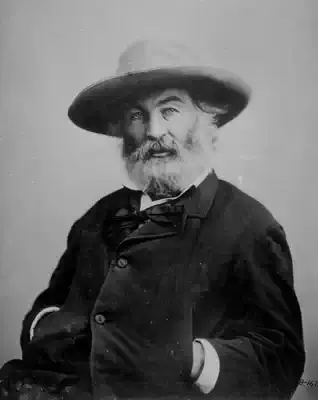
Walt Whitman
That Music Always Round Me
That Music Always Round Me
THAT music always round me, unceasing, unbeginning--yet long untaught
I did not hear;
But now the chorus I hear, and am elated;
A tenor, strong, ascending, with power and health, with glad notes of
day-break I hear,
A soprano, at intervals, sailing buoyantly over the tops of immense
waves,
A transparent bass, shuddering lusciously under and through the
universe,
The triumphant tutti--the funeral wailings, with sweet flutes and
violins--all these I fill myself with;
I hear not the volumes of sound merely--I am moved by the exquisite
meanings,
I listen to the different voices winding in and out, striving,
contending with fiery vehemence to excel each other in emotion;
I do not think the performers know themselves--but now I think I
begin to know them.
THAT music always round me, unceasing, unbeginning--yet long untaught
I did not hear;
But now the chorus I hear, and am elated;
A tenor, strong, ascending, with power and health, with glad notes of
day-break I hear,
A soprano, at intervals, sailing buoyantly over the tops of immense
waves,
A transparent bass, shuddering lusciously under and through the
universe,
The triumphant tutti--the funeral wailings, with sweet flutes and
violins--all these I fill myself with;
I hear not the volumes of sound merely--I am moved by the exquisite
meanings,
I listen to the different voices winding in and out, striving,
contending with fiery vehemence to excel each other in emotion;
I do not think the performers know themselves--but now I think I
begin to know them.
427
Walt Whitman
Proud Music Of The Storm
Proud Music Of The Storm
PROUD music of the storm!
Blast that careers so free, whistling across the prairies!
Strong hum of forest tree-tops! Wind of the mountains!
Personified dim shapes! you hidden orchestras!
You serenades of phantoms, with instruments alert,
Blending, with Nature's rhythmus, all the tongues of nations;
You chords left us by vast composers! you choruses!
You formless, free, religious dances! you from the Orient!
You undertone of rivers, roar of pouring cataracts;
You sounds from distant guns, with galloping cavalry! 10
Echoes of camps, with all the different bugle-calls!
Trooping tumultuous, filling the midnight late, bending me powerless,
Entering my lonesome slumber-chamber--Why have you seiz'd me?
Come forward, O my Soul, and let the rest retire;
Listen--lose not--it is toward thee they tend;
Parting the midnight, entering my slumber-chamber,
For thee they sing and dance, O Soul.
A festival song!
The duet of the bridegroom and the bride--a marriage-march,
With lips of love, and hearts of lovers, fill'd to the brim with
love; 20
The red-flush'd cheeks, and perfumes--the cortege swarming, full of
friendly faces, young and old,
To flutes' clear notes, and sounding harps' cantabile.
Now loud approaching drums!
Victoria! see'st thou in powder-smoke the banners torn but flying?
the rout of the baffled?
Hearest those shouts of a conquering army?
(Ah, Soul, the sobs of women--the wounded groaning in agony,
The hiss and crackle of flames--the blacken'd ruins--the embers of
cities,
The dirge and desolation of mankind.)
Now airs antique and medieval fill me!
I see and hear old harpers with their harps, at Welsh festivals: 30
I hear the minnesingers, singing their lays of love,
I hear the minstrels, gleemen, troubadours, of the feudal ages.
Now the great organ sounds,
Tremulous--while underneath, (as the hid footholds of the earth,
On which arising, rest, and leaping forth, depend,
All shapes of beauty, grace and strength--all hues we know,
Green blades of grass, and warbling birds--children that gambol and
play--the clouds of heaven above,)
The strong base stands, and its pulsations intermits not,
Bathing, supporting, merging all the rest--maternity of all the rest;
And with it every instrument in multitudes, 40
The players playing--all the world's musicians,
The solemn hymns and masses, rousing adoration,
All passionate heart-chants, sorrowful appeals,
The measureless sweet vocalists of ages,
And for their solvent setting, Earth's own diapason,
Of winds and woods and mighty ocean waves;
A new composite orchestra--binder of years and climes--ten-fold
renewer,
As of the far-back days the poets tell--the Paradiso,
The straying thence, the separation long, but now the wandering done,
The journey done, the Journeyman come home, 50
And Man and Art, with Nature fused again.
Tutti! for Earth and Heaven!
The Almighty Leader now for me, for once has signal'd with his wand.
The manly strophe of the husbands of the world,
And all the wives responding.
The tongues of violins!
(I think, O tongues, ye tell this heart, that cannot tell itself;
This brooding, yearning heart, that cannot tell itself.)
Ah, from a little child,
Thou knowest, Soul, how to me all sounds became music; 60
My mother's voice, in lullaby or hymn;
(The voice--O tender voices--memory's loving voices!
Last miracle of all--O dearest mother's, sister's, voices;)
The rain, the growing corn, the breeze among the long-leav'd corn,
The measur'd sea-surf, beating on the sand,
The twittering bird, the hawk's sharp scream,
The wild-fowl's notes at night, as flying low, migrating north or
south,
The psalm in the country church, or mid the clustering trees, the
open air camp-meeting,
The fiddler in the tavern--the glee, the long-strung sailor-song,
The lowing cattle, bleating sheep--the crowing cock at dawn. 70
All songs of current lands come sounding 'round me,
The German airs of friendship, wine and love,
Irish ballads, merry jigs and dances--English warbles,
Chansons of France, Scotch tunes--and o'er the rest,
Italia's peerless compositions.
Across the stage, with pallor on her face, yet lurid passion,
Stalks Norma, brandishing the dagger in her hand.
I see poor crazed Lucia's eyes' unnatural gleam;
Her hair down her back falls loose and dishevell'd.
I see where Ernani, walking the bridal garden, 80
Amid the scent of night-roses, radiant, holding his bride by the
hand,
Hears the infernal call, the death-pledge of the horn.
To crossing swords, and grey hairs bared to heaven,
The clear, electric base and baritone of the world,
The trombone duo--Libertad forever!
From Spanish chestnut trees' dense shade,
By old and heavy convent walls, a wailing song,
Song of lost love--the torch of youth and life quench'd in despair,
Song of the dying swan--Fernando's heart is breaking.
Awaking from her woes at last, retriev'd Amina sings; 90
Copious as stars, and glad as morning light, the torrents of her joy.
(The teeming lady comes!
The lustrious orb--Venus contralto--the blooming mother,
Sister of loftiest gods--Alboni's self I hear.)
I hear those odes, symphonies, operas;
I hear in the William Tell, the music of an arous'd and angry people;
I hear Meyerbeer's Huguenots, the Prophet, or Robert;
Gounod's Faust, or Mozart's Don Juan.
I hear the dance-music of all nations,
The waltz, (some delicious measure, lapsing, bathing me in
bliss;) 100
The bolero, to tinkling guitars and clattering castanets.
I see religious dances old and new,
I hear the sound of the Hebrew lyre,
I see the Crusaders marching, bearing the cross on high, to the
martial clang of cymbals;
I hear dervishes monotonously chanting, interspers'd with frantic
shouts, as they spin around, turning always towards Mecca;
I see the rapt religious dances of the Persians and the Arabs;
Again, at Eleusis, home of Ceres, I see the modern Greeks dancing,
I hear them clapping their hands, as they bend their bodies,
I hear the metrical shuffling of their feet.
I see again the wild old Corybantian dance, the performers wounding
each other; 110
I see the Roman youth, to the shrill sound of flageolets, throwing
and catching their weapons,
As they fall on their knees, and rise again.
I hear from the Mussulman mosque the muezzin calling;
I see the worshippers within, (nor form, nor sermon, argument, nor
word,
But silent, strange, devout--rais'd, glowing heads--extatic faces.)
I hear the Egyptian harp of many strings,
The primitive chants of the Nile boatmen;
The sacred imperial hymns of China,
To the delicate sounds of the king, (the stricken wood and stone;)
Or to Hindu flutes, and the fretting twang of the vina, 120
A band of bayaderes.
Now Asia, Africa leave me--Europe, seizing, inflates me;
To organs huge, and bands, I hear as from vast concourses of voices,
Luther's strong hymn, Eine feste Burg ist unser Gott;
Rossini's Stabat Mater dolorosa;
Or, floating in some high cathedral dim, with gorgeous color'd
windows,
The passionate Agnus Dei, or Gloria in Excelsis.
Composers! mighty maestros!
And you, sweet singers of old lands--Soprani! Tenori! Bassi!
To you a new bard, carolling free in the west,
Obeisant, sends his love. 130
(Such led to thee, O Soul!
All senses, shows and objects, lead to thee,
But now, it seems to me, sound leads o'er all the rest.)
I hear the annual singing of the children in St. Paul's Cathedral;
Or, under the high roof of some colossal hall, the symphonies,
oratorios of Beethoven, Handel, or Haydn;
The Creation, in billows of godhood laves me.
Give me to hold all sounds, (I, madly struggling, cry,)
Fill me with all the voices of the universe,
Endow me with their throbbings--Nature's also,
The tempests, waters, winds--operas and chants--marches and
dances, 140
Utter--pour in--for I would take them all.
Then I woke softly,
And pausing, questioning awhile the music of my dream,
And questioning all those reminiscences--the tempest in its fury,
And all the songs of sopranos and tenors,
And those rapt oriental dances, of religious fervor,
And the sweet varied instruments, and the diapason of organs,
And all the artless plaints of love, and grief and death,
I said to my silent, curious Soul, out of the bed of the slumber
chamber,
Come, for I have found the clue I sought so long, 150
Let us go forth refresh'd amid the day,
Cheerfully tallying life, walking the world, the real,
Nourish'd henceforth by our celestial dream.
And I said, moreover,
Haply, what thou hast heard, O Soul, was not the sound of winds,
Nor dream of raging storm, nor sea-hawk's flapping wings, nor harsh
scream,
Nor vocalism of sun-bright Italy,
Nor German organ majestic--nor vast concourse of voices--nor layers
of harmonies;
Nor strophes of husbands and wives--nor sound of marching soldiers,
Nor flutes, nor harps, nor the bugle-calls of camps; 160
But, to a new rhythmus fitted for thee,
Poems, bridging the way from Life to Death, vaguely wafted in night
air, uncaught, unwritten,
Which, let us go forth in the bold day, and write.
PROUD music of the storm!
Blast that careers so free, whistling across the prairies!
Strong hum of forest tree-tops! Wind of the mountains!
Personified dim shapes! you hidden orchestras!
You serenades of phantoms, with instruments alert,
Blending, with Nature's rhythmus, all the tongues of nations;
You chords left us by vast composers! you choruses!
You formless, free, religious dances! you from the Orient!
You undertone of rivers, roar of pouring cataracts;
You sounds from distant guns, with galloping cavalry! 10
Echoes of camps, with all the different bugle-calls!
Trooping tumultuous, filling the midnight late, bending me powerless,
Entering my lonesome slumber-chamber--Why have you seiz'd me?
Come forward, O my Soul, and let the rest retire;
Listen--lose not--it is toward thee they tend;
Parting the midnight, entering my slumber-chamber,
For thee they sing and dance, O Soul.
A festival song!
The duet of the bridegroom and the bride--a marriage-march,
With lips of love, and hearts of lovers, fill'd to the brim with
love; 20
The red-flush'd cheeks, and perfumes--the cortege swarming, full of
friendly faces, young and old,
To flutes' clear notes, and sounding harps' cantabile.
Now loud approaching drums!
Victoria! see'st thou in powder-smoke the banners torn but flying?
the rout of the baffled?
Hearest those shouts of a conquering army?
(Ah, Soul, the sobs of women--the wounded groaning in agony,
The hiss and crackle of flames--the blacken'd ruins--the embers of
cities,
The dirge and desolation of mankind.)
Now airs antique and medieval fill me!
I see and hear old harpers with their harps, at Welsh festivals: 30
I hear the minnesingers, singing their lays of love,
I hear the minstrels, gleemen, troubadours, of the feudal ages.
Now the great organ sounds,
Tremulous--while underneath, (as the hid footholds of the earth,
On which arising, rest, and leaping forth, depend,
All shapes of beauty, grace and strength--all hues we know,
Green blades of grass, and warbling birds--children that gambol and
play--the clouds of heaven above,)
The strong base stands, and its pulsations intermits not,
Bathing, supporting, merging all the rest--maternity of all the rest;
And with it every instrument in multitudes, 40
The players playing--all the world's musicians,
The solemn hymns and masses, rousing adoration,
All passionate heart-chants, sorrowful appeals,
The measureless sweet vocalists of ages,
And for their solvent setting, Earth's own diapason,
Of winds and woods and mighty ocean waves;
A new composite orchestra--binder of years and climes--ten-fold
renewer,
As of the far-back days the poets tell--the Paradiso,
The straying thence, the separation long, but now the wandering done,
The journey done, the Journeyman come home, 50
And Man and Art, with Nature fused again.
Tutti! for Earth and Heaven!
The Almighty Leader now for me, for once has signal'd with his wand.
The manly strophe of the husbands of the world,
And all the wives responding.
The tongues of violins!
(I think, O tongues, ye tell this heart, that cannot tell itself;
This brooding, yearning heart, that cannot tell itself.)
Ah, from a little child,
Thou knowest, Soul, how to me all sounds became music; 60
My mother's voice, in lullaby or hymn;
(The voice--O tender voices--memory's loving voices!
Last miracle of all--O dearest mother's, sister's, voices;)
The rain, the growing corn, the breeze among the long-leav'd corn,
The measur'd sea-surf, beating on the sand,
The twittering bird, the hawk's sharp scream,
The wild-fowl's notes at night, as flying low, migrating north or
south,
The psalm in the country church, or mid the clustering trees, the
open air camp-meeting,
The fiddler in the tavern--the glee, the long-strung sailor-song,
The lowing cattle, bleating sheep--the crowing cock at dawn. 70
All songs of current lands come sounding 'round me,
The German airs of friendship, wine and love,
Irish ballads, merry jigs and dances--English warbles,
Chansons of France, Scotch tunes--and o'er the rest,
Italia's peerless compositions.
Across the stage, with pallor on her face, yet lurid passion,
Stalks Norma, brandishing the dagger in her hand.
I see poor crazed Lucia's eyes' unnatural gleam;
Her hair down her back falls loose and dishevell'd.
I see where Ernani, walking the bridal garden, 80
Amid the scent of night-roses, radiant, holding his bride by the
hand,
Hears the infernal call, the death-pledge of the horn.
To crossing swords, and grey hairs bared to heaven,
The clear, electric base and baritone of the world,
The trombone duo--Libertad forever!
From Spanish chestnut trees' dense shade,
By old and heavy convent walls, a wailing song,
Song of lost love--the torch of youth and life quench'd in despair,
Song of the dying swan--Fernando's heart is breaking.
Awaking from her woes at last, retriev'd Amina sings; 90
Copious as stars, and glad as morning light, the torrents of her joy.
(The teeming lady comes!
The lustrious orb--Venus contralto--the blooming mother,
Sister of loftiest gods--Alboni's self I hear.)
I hear those odes, symphonies, operas;
I hear in the William Tell, the music of an arous'd and angry people;
I hear Meyerbeer's Huguenots, the Prophet, or Robert;
Gounod's Faust, or Mozart's Don Juan.
I hear the dance-music of all nations,
The waltz, (some delicious measure, lapsing, bathing me in
bliss;) 100
The bolero, to tinkling guitars and clattering castanets.
I see religious dances old and new,
I hear the sound of the Hebrew lyre,
I see the Crusaders marching, bearing the cross on high, to the
martial clang of cymbals;
I hear dervishes monotonously chanting, interspers'd with frantic
shouts, as they spin around, turning always towards Mecca;
I see the rapt religious dances of the Persians and the Arabs;
Again, at Eleusis, home of Ceres, I see the modern Greeks dancing,
I hear them clapping their hands, as they bend their bodies,
I hear the metrical shuffling of their feet.
I see again the wild old Corybantian dance, the performers wounding
each other; 110
I see the Roman youth, to the shrill sound of flageolets, throwing
and catching their weapons,
As they fall on their knees, and rise again.
I hear from the Mussulman mosque the muezzin calling;
I see the worshippers within, (nor form, nor sermon, argument, nor
word,
But silent, strange, devout--rais'd, glowing heads--extatic faces.)
I hear the Egyptian harp of many strings,
The primitive chants of the Nile boatmen;
The sacred imperial hymns of China,
To the delicate sounds of the king, (the stricken wood and stone;)
Or to Hindu flutes, and the fretting twang of the vina, 120
A band of bayaderes.
Now Asia, Africa leave me--Europe, seizing, inflates me;
To organs huge, and bands, I hear as from vast concourses of voices,
Luther's strong hymn, Eine feste Burg ist unser Gott;
Rossini's Stabat Mater dolorosa;
Or, floating in some high cathedral dim, with gorgeous color'd
windows,
The passionate Agnus Dei, or Gloria in Excelsis.
Composers! mighty maestros!
And you, sweet singers of old lands--Soprani! Tenori! Bassi!
To you a new bard, carolling free in the west,
Obeisant, sends his love. 130
(Such led to thee, O Soul!
All senses, shows and objects, lead to thee,
But now, it seems to me, sound leads o'er all the rest.)
I hear the annual singing of the children in St. Paul's Cathedral;
Or, under the high roof of some colossal hall, the symphonies,
oratorios of Beethoven, Handel, or Haydn;
The Creation, in billows of godhood laves me.
Give me to hold all sounds, (I, madly struggling, cry,)
Fill me with all the voices of the universe,
Endow me with their throbbings--Nature's also,
The tempests, waters, winds--operas and chants--marches and
dances, 140
Utter--pour in--for I would take them all.
Then I woke softly,
And pausing, questioning awhile the music of my dream,
And questioning all those reminiscences--the tempest in its fury,
And all the songs of sopranos and tenors,
And those rapt oriental dances, of religious fervor,
And the sweet varied instruments, and the diapason of organs,
And all the artless plaints of love, and grief and death,
I said to my silent, curious Soul, out of the bed of the slumber
chamber,
Come, for I have found the clue I sought so long, 150
Let us go forth refresh'd amid the day,
Cheerfully tallying life, walking the world, the real,
Nourish'd henceforth by our celestial dream.
And I said, moreover,
Haply, what thou hast heard, O Soul, was not the sound of winds,
Nor dream of raging storm, nor sea-hawk's flapping wings, nor harsh
scream,
Nor vocalism of sun-bright Italy,
Nor German organ majestic--nor vast concourse of voices--nor layers
of harmonies;
Nor strophes of husbands and wives--nor sound of marching soldiers,
Nor flutes, nor harps, nor the bugle-calls of camps; 160
But, to a new rhythmus fitted for thee,
Poems, bridging the way from Life to Death, vaguely wafted in night
air, uncaught, unwritten,
Which, let us go forth in the bold day, and write.
476
Robert W. Service
The Ballad Of How Macpherson Held The Floor
The Ballad Of How Macpherson Held The Floor
Said President MacConnachie to Treasurer MacCall:
"We ought to have a piper for our next Saint Andrew's Ball.
Yon squakin' saxophone gives me the syncopated gripes.
I'm sick of jazz, I want to hear the skirling of the pipes."
"Alas! it's true," said Tam MacCall. "The young folk of to-day
Are fox-trot mad and dinna ken a reel from Strathspey.
Now, what we want's a kiltie lad, primed up wi' mountain dew,
To strut the floor at supper time, and play a lilt or two.
In all the North there's only one; of him I've heard them speak:
His name is Jock MacPherson, and he lives on Boulder Creek;
An old-time hard-rock miner, and a wild and wastrel loon,
Who spends his nights in glory, playing pibrochs to the moon.
I'll seek him out; beyond a doubt on next Saint Andrew's night
We'll proudly hear the pipes to cheer and charm our appetite.
Oh lads were neat and lassies sweet who graced Saint Andrew's Ball;
But there was none so full of fun as Treasurer MacCall.
And as Maloney's rag-time bank struck up the newest hit,
He smiled a smile behind his hand, and chuckled: "Wait a bit."
And so with many a Celtic snort, with malice in his eye,
He watched the merry crowd cavort, till supper time drew nigh.
Then gleefully he seemed to steal, and sought the Nugget Bar,
Wherein there sat a tartaned chiel, as lonely as a star;
A huge and hairy Highlandman as hearty as a breeze,
A glass of whisky in his hand, his bag-pipes on his knees.
"Drink down your doch and doris, Jock," cried Treasurer MacCall;
"The time is ripe to up and pipe; they wait you in the hall.
Gird up your loins and grit your teeth, and here's a pint of hooch
To mind you of your native heath - jist pit it in your pooch.
Play on and on for all you're worth; you'll shame us if you stop.
Remember you're of Scottish birth - keep piping till you drop.
Aye, though a bunch of Willie boys should bluster and implore,
For the glory of the Highlands, lad, you've got to hold the floor."
The dancers were at supper, and the tables groaned with cheer,
When President MacConnachie exclaimed: "What do I hear?
Methinks it's like a chanter, and its coming from the hall."
"It's Jock MacPherson tuning up," cried Treasurer MacCall.
So up they jumped with shouts of glee, and gaily hurried forth.
Said they: "We never thought to see a piper in the North."
Aye, all the lads and lassies braw went buzzing out like bees,
And Jock MacPherson there they saw, with red and rugged knees.
Full six foot four he strode the floor, a grizzled son of Skye,
With glory in his whiskers and with whisky in his eye.
With skelping stride and Scottish pride he towered above them all:
"And is he no' a bonny sight?" said Treasurer MacCall.
While President MacConnachie was fairly daft with glee,
And there was jubilation in the Scottish Commy-tee.
But the dancers seemed uncertain, and they signified their doubt,
By dashing back to eat as fast as they had darted out.
And someone raised the question 'twixt the coffee and the cakes:
"Does the Piper walk to get away from all the noise he makes?"
Then reinforced with fancy food they slowly trickled forth,
And watching in patronizing mood the Piper of the North.
Proud, proud was Jock MacPherson, as he made his bag-pipes skirl,
And he set his sporran swinging, and he gave his kilts a whirl.
And President MacConnachie was jumping like a flea,
And there was joy and rapture in the Scottish Commy-tee.
"Jist let them have their saxophones wi' constipated squall;
We're having Heaven's music now," said Treasurer MacCall.
But the dancers waxed impatient, and they rather seemed to fret
For Maloney and the jazz of his Hibernian Quartette.
Yet little recked the Piper, as he swung with head on high,
Lamenting with MacCrimmon on the heather hills of Skye.
With Highland passion in his heart he held the centre floor;
Aye, Jock MacPherson played as he had never played before.
Maloney's Irish melodists were sitting in their place,
And as Maloney waited, there was wonder in his face.
'Twas sure the gorgeous music - Golly! wouldn't it be grand
If he could get MacPherson as a member of his band?
But the dancers moped and mumbled, as around the room they sat:
"We paid to dance," they grumbled; "But we cannot dance to that.
Of course we're not denying that it's really splendid stuff;
But it's mighty satisfying - don't you think we've had enough?"
"You've raised a pretty problem," answered Treasurer MacCall;
"For on Saint Andrew's Night, ye ken, the Piper rules the Ball."
Said President MacConnachie: "You've said a solemn thing.
Tradition holds him sacred, and he's got to have his fling.
But soon, no doubt, he'll weary out. Have patience; bide a wee."
"That's right. Respect the Piper," said the Scottish Commy-tee.
And so MacPherson stalked the floor, and fast the moments flew,
Till half an hour went past, as irritation grew and grew.
Then the dancers held a council, and with faces fiercely set,
They hailed Maloney, heading his Hibernian Quartette:
"It's long enough, we've waited. Come on, Mike, play up the Blues."
And Maloney hesitated, but he didn't dare refuse.
So banjo and piano, and guitar and saxophone
Contended with the shrilling of the chanter and the drone;
And the women's ears were muffled, so infernal was the din,
But MacPherson was unruffled, for he knew that he would win.
Then two bright boys jazzed round him, and they sought to play the clown,
But MacPherson jolted sideways, and the Sassenachs went down.
And as if it was a signal, with a wild and angry roar,
The gates of wrath were riven - yet MacPherson held the floor.
Aye, amid the rising tumult, still he strode with head on high,
With ribbands gaily streaming, yet with battle in his eye.
Amid the storm that gathered, still he stalked with Highland pride,
While President and Treasurer sprang bravely to his side.
And with ire and indignation that was glorious to see,
Around him in a body ringed the Scottish Commy-tee.
Their teeth were clenched with fury; their eyes with anger blazed:
"Ye manna touch the Piper," was the slogan that they raised.
Then blows were struck, and men went down; yet 'mid the rising fray
MacPherson towered in triumph -and he never ceased to play.
Alas! his faithful followers were but a gallant few,
And faced defeat, although they fought with all the skill they knew.
For President MacConnachie was seen to slip and fall,
And o'er his prostrate body stumbled Treasurer MacCall.
And as their foes with triumph roared, and leagured them about,
It looked as if their little band would soon be counted out.
For eyes were black and noses red, yet on that field of gore,
As resolute as Highland rock - MacPherson held the floor.
Maloney watched the battle, and his brows were bleakly set,
While with him paused and panted his Hibernian Quartette.
For sure it is an evil spite, and breaking to the heart,
For Irishman to watch a fight and not be taking part.
Then suddenly on high he soared, and tightened up his belt:
"And shall we see them crush," he roared, "a brother and a Celt?
A fellow artiste needs our aid. Come on, boys, take a hand."
Then down into the mêlée dashed Maloney and his band.
Now though it was Saint Andrew's Ball, yet men of every race,
That bow before the Great God Jazz were gathered in that place.
Yea, there were those who grunt: "Ya! Ya!" and those who squeak:
"We! We!"
Likewise Dutch, Dago, Swede and Finn, Polack and Portugee.
Yet like ripe grain before the gale that national hotch-potch
Went down before the fury of the Irish and the Scotch.
Aye, though they closed their gaping ranks and rallied to the fray,
To the Shamrock and the Thistle went the glory of the day.
You should have seen the carnage in the drooling light of dawn,
Yet 'mid the scene of slaughter Jock MacPherson playing on.
Though all lay low about him, yet he held his head on high,
And piped as if he stood upon the caller crags of Skye.
His face was grim as granite, and no favour did he ask,
Though weary were his mighty lungs and empty was his flask.
And when a fallen foe wailed out: "Say! when will you have done?"
MacPherson grinned and answered: "Hoots! She's only ha'f begun."
Aye, though his hands were bloody, and his knees were gay with gore,
A Grampian of Highland pride - MacPherson held the floor.
And still in Yukon valleys where the silent peaks look down,
They tell of how the Piper was invited up to town,
And he went in kilted glory, and he piped before them all,
But wouldn't stop his piping till he busted up the Ball.
Of that Homeric scrap they speak, and how the fight went on,
With sally and with rally till the breaking of the dawn.
And how the Piper towered like a rock amid the fray,
And the battle surged about him, but he never ceased to play.
Aye, by the lonely camp-fires, still they tell the story o'er
How the Sassenach was vanquished and - MacPherson held the floor.
Said President MacConnachie to Treasurer MacCall:
"We ought to have a piper for our next Saint Andrew's Ball.
Yon squakin' saxophone gives me the syncopated gripes.
I'm sick of jazz, I want to hear the skirling of the pipes."
"Alas! it's true," said Tam MacCall. "The young folk of to-day
Are fox-trot mad and dinna ken a reel from Strathspey.
Now, what we want's a kiltie lad, primed up wi' mountain dew,
To strut the floor at supper time, and play a lilt or two.
In all the North there's only one; of him I've heard them speak:
His name is Jock MacPherson, and he lives on Boulder Creek;
An old-time hard-rock miner, and a wild and wastrel loon,
Who spends his nights in glory, playing pibrochs to the moon.
I'll seek him out; beyond a doubt on next Saint Andrew's night
We'll proudly hear the pipes to cheer and charm our appetite.
Oh lads were neat and lassies sweet who graced Saint Andrew's Ball;
But there was none so full of fun as Treasurer MacCall.
And as Maloney's rag-time bank struck up the newest hit,
He smiled a smile behind his hand, and chuckled: "Wait a bit."
And so with many a Celtic snort, with malice in his eye,
He watched the merry crowd cavort, till supper time drew nigh.
Then gleefully he seemed to steal, and sought the Nugget Bar,
Wherein there sat a tartaned chiel, as lonely as a star;
A huge and hairy Highlandman as hearty as a breeze,
A glass of whisky in his hand, his bag-pipes on his knees.
"Drink down your doch and doris, Jock," cried Treasurer MacCall;
"The time is ripe to up and pipe; they wait you in the hall.
Gird up your loins and grit your teeth, and here's a pint of hooch
To mind you of your native heath - jist pit it in your pooch.
Play on and on for all you're worth; you'll shame us if you stop.
Remember you're of Scottish birth - keep piping till you drop.
Aye, though a bunch of Willie boys should bluster and implore,
For the glory of the Highlands, lad, you've got to hold the floor."
The dancers were at supper, and the tables groaned with cheer,
When President MacConnachie exclaimed: "What do I hear?
Methinks it's like a chanter, and its coming from the hall."
"It's Jock MacPherson tuning up," cried Treasurer MacCall.
So up they jumped with shouts of glee, and gaily hurried forth.
Said they: "We never thought to see a piper in the North."
Aye, all the lads and lassies braw went buzzing out like bees,
And Jock MacPherson there they saw, with red and rugged knees.
Full six foot four he strode the floor, a grizzled son of Skye,
With glory in his whiskers and with whisky in his eye.
With skelping stride and Scottish pride he towered above them all:
"And is he no' a bonny sight?" said Treasurer MacCall.
While President MacConnachie was fairly daft with glee,
And there was jubilation in the Scottish Commy-tee.
But the dancers seemed uncertain, and they signified their doubt,
By dashing back to eat as fast as they had darted out.
And someone raised the question 'twixt the coffee and the cakes:
"Does the Piper walk to get away from all the noise he makes?"
Then reinforced with fancy food they slowly trickled forth,
And watching in patronizing mood the Piper of the North.
Proud, proud was Jock MacPherson, as he made his bag-pipes skirl,
And he set his sporran swinging, and he gave his kilts a whirl.
And President MacConnachie was jumping like a flea,
And there was joy and rapture in the Scottish Commy-tee.
"Jist let them have their saxophones wi' constipated squall;
We're having Heaven's music now," said Treasurer MacCall.
But the dancers waxed impatient, and they rather seemed to fret
For Maloney and the jazz of his Hibernian Quartette.
Yet little recked the Piper, as he swung with head on high,
Lamenting with MacCrimmon on the heather hills of Skye.
With Highland passion in his heart he held the centre floor;
Aye, Jock MacPherson played as he had never played before.
Maloney's Irish melodists were sitting in their place,
And as Maloney waited, there was wonder in his face.
'Twas sure the gorgeous music - Golly! wouldn't it be grand
If he could get MacPherson as a member of his band?
But the dancers moped and mumbled, as around the room they sat:
"We paid to dance," they grumbled; "But we cannot dance to that.
Of course we're not denying that it's really splendid stuff;
But it's mighty satisfying - don't you think we've had enough?"
"You've raised a pretty problem," answered Treasurer MacCall;
"For on Saint Andrew's Night, ye ken, the Piper rules the Ball."
Said President MacConnachie: "You've said a solemn thing.
Tradition holds him sacred, and he's got to have his fling.
But soon, no doubt, he'll weary out. Have patience; bide a wee."
"That's right. Respect the Piper," said the Scottish Commy-tee.
And so MacPherson stalked the floor, and fast the moments flew,
Till half an hour went past, as irritation grew and grew.
Then the dancers held a council, and with faces fiercely set,
They hailed Maloney, heading his Hibernian Quartette:
"It's long enough, we've waited. Come on, Mike, play up the Blues."
And Maloney hesitated, but he didn't dare refuse.
So banjo and piano, and guitar and saxophone
Contended with the shrilling of the chanter and the drone;
And the women's ears were muffled, so infernal was the din,
But MacPherson was unruffled, for he knew that he would win.
Then two bright boys jazzed round him, and they sought to play the clown,
But MacPherson jolted sideways, and the Sassenachs went down.
And as if it was a signal, with a wild and angry roar,
The gates of wrath were riven - yet MacPherson held the floor.
Aye, amid the rising tumult, still he strode with head on high,
With ribbands gaily streaming, yet with battle in his eye.
Amid the storm that gathered, still he stalked with Highland pride,
While President and Treasurer sprang bravely to his side.
And with ire and indignation that was glorious to see,
Around him in a body ringed the Scottish Commy-tee.
Their teeth were clenched with fury; their eyes with anger blazed:
"Ye manna touch the Piper," was the slogan that they raised.
Then blows were struck, and men went down; yet 'mid the rising fray
MacPherson towered in triumph -and he never ceased to play.
Alas! his faithful followers were but a gallant few,
And faced defeat, although they fought with all the skill they knew.
For President MacConnachie was seen to slip and fall,
And o'er his prostrate body stumbled Treasurer MacCall.
And as their foes with triumph roared, and leagured them about,
It looked as if their little band would soon be counted out.
For eyes were black and noses red, yet on that field of gore,
As resolute as Highland rock - MacPherson held the floor.
Maloney watched the battle, and his brows were bleakly set,
While with him paused and panted his Hibernian Quartette.
For sure it is an evil spite, and breaking to the heart,
For Irishman to watch a fight and not be taking part.
Then suddenly on high he soared, and tightened up his belt:
"And shall we see them crush," he roared, "a brother and a Celt?
A fellow artiste needs our aid. Come on, boys, take a hand."
Then down into the mêlée dashed Maloney and his band.
Now though it was Saint Andrew's Ball, yet men of every race,
That bow before the Great God Jazz were gathered in that place.
Yea, there were those who grunt: "Ya! Ya!" and those who squeak:
"We! We!"
Likewise Dutch, Dago, Swede and Finn, Polack and Portugee.
Yet like ripe grain before the gale that national hotch-potch
Went down before the fury of the Irish and the Scotch.
Aye, though they closed their gaping ranks and rallied to the fray,
To the Shamrock and the Thistle went the glory of the day.
You should have seen the carnage in the drooling light of dawn,
Yet 'mid the scene of slaughter Jock MacPherson playing on.
Though all lay low about him, yet he held his head on high,
And piped as if he stood upon the caller crags of Skye.
His face was grim as granite, and no favour did he ask,
Though weary were his mighty lungs and empty was his flask.
And when a fallen foe wailed out: "Say! when will you have done?"
MacPherson grinned and answered: "Hoots! She's only ha'f begun."
Aye, though his hands were bloody, and his knees were gay with gore,
A Grampian of Highland pride - MacPherson held the floor.
And still in Yukon valleys where the silent peaks look down,
They tell of how the Piper was invited up to town,
And he went in kilted glory, and he piped before them all,
But wouldn't stop his piping till he busted up the Ball.
Of that Homeric scrap they speak, and how the fight went on,
With sally and with rally till the breaking of the dawn.
And how the Piper towered like a rock amid the fray,
And the battle surged about him, but he never ceased to play.
Aye, by the lonely camp-fires, still they tell the story o'er
How the Sassenach was vanquished and - MacPherson held the floor.
146
Walt Whitman
Italian Music In Dakota
Italian Music In Dakota
THROUGH the soft evening air enwrinding all,
Rocks, woods, fort, cannon, pacing sentries, endless wilds,
In dulcet streams, in flutes' and cornets' notes,
Electric, pensive, turbulent artificial,
(Yet strangely fitting even here, meanings unknown before,
Subtler than ever, more harmony, as if born here, related here,
Not to the city's fresco'd rooms, not to the audience of the opera
house,
Sounds, echoes, wandering strains, as really here at home,
Sonnambula's innocent love, trios with Norma's anguish,
And thy ecstatic chorus Poliuto;) 10
Ray'd in the limpid yellow slanting sundown,
Music, Italian music in Dakota.
While Nature, sovereign of this gnarl'd realm,
Lurking in hidden barbaric grim recesses,
Acknowledging rapport however far remov'd,
(As some old root or soil of earth its last-born flower or fruit,)
Listens well pleas'd.
THROUGH the soft evening air enwrinding all,
Rocks, woods, fort, cannon, pacing sentries, endless wilds,
In dulcet streams, in flutes' and cornets' notes,
Electric, pensive, turbulent artificial,
(Yet strangely fitting even here, meanings unknown before,
Subtler than ever, more harmony, as if born here, related here,
Not to the city's fresco'd rooms, not to the audience of the opera
house,
Sounds, echoes, wandering strains, as really here at home,
Sonnambula's innocent love, trios with Norma's anguish,
And thy ecstatic chorus Poliuto;) 10
Ray'd in the limpid yellow slanting sundown,
Music, Italian music in Dakota.
While Nature, sovereign of this gnarl'd realm,
Lurking in hidden barbaric grim recesses,
Acknowledging rapport however far remov'd,
(As some old root or soil of earth its last-born flower or fruit,)
Listens well pleas'd.
414

Sarah Teasdale
Song Making
Song Making
My heart cried like a beaten child
Ceaselessly all night long;
I had to take my own cries
And thread them into a song.
One was a cry at black midnight
And one when the first cock crew --
My heart was like a beaten child,
But no one ever knew.
Life, you have put me in your debt
And I must serve you long --
But oh, the debt is terrible
That must be paid in song.
My heart cried like a beaten child
Ceaselessly all night long;
I had to take my own cries
And thread them into a song.
One was a cry at black midnight
And one when the first cock crew --
My heart was like a beaten child,
But no one ever knew.
Life, you have put me in your debt
And I must serve you long --
But oh, the debt is terrible
That must be paid in song.
407
Walt Whitman
I Heard You, Solemn-sweep Pipes Of The Organ
I Heard You, Solemn-sweep Pipes Of The Organ
I HEARD you, solemn-sweet pipes of the organ, as last Sunday morn I
pass'd the church;
Winds of autumn!--as I walk'd the woods at dusk, I heard your longstretch'd
sighs, up above, so mournful;
I heard the perfect Italian tenor, singing at the opera--I heard the
soprano in the midst of the quartet singing;
... Heart of my love!--you too I heard, murmuring low, through one of
the wrists around my head;
Heard the pulse of you, when all was still, ringing little bells last
night under my ear.
I HEARD you, solemn-sweet pipes of the organ, as last Sunday morn I
pass'd the church;
Winds of autumn!--as I walk'd the woods at dusk, I heard your longstretch'd
sighs, up above, so mournful;
I heard the perfect Italian tenor, singing at the opera--I heard the
soprano in the midst of the quartet singing;
... Heart of my love!--you too I heard, murmuring low, through one of
the wrists around my head;
Heard the pulse of you, when all was still, ringing little bells last
night under my ear.
294
Sarah Teasdale
Night Song at Amalfi
Night Song at Amalfi
I asked the heaven of stars
What I should give my love --
It answered me with silence,
Silence above.
I asked the darkened sea
Down where the fishers go --
It answered me with silence,
Silence below.
Oh, I could give him weeping,
Or I could give him song --
But how can I give silence,
My whole life long?
I asked the heaven of stars
What I should give my love --
It answered me with silence,
Silence above.
I asked the darkened sea
Down where the fishers go --
It answered me with silence,
Silence below.
Oh, I could give him weeping,
Or I could give him song --
But how can I give silence,
My whole life long?
405
Sarah Teasdale
The Dreams of My Heart
"The Dreams of My Heart"
The dreams of my heart and my mind pass,
Nothing stays with me long,
But I have had from a child
The deep solace of song;
If that should ever leave me,
Let me find death and stay
With things whose tunes are played out and forgotten
Like the rain of yesterday.
The dreams of my heart and my mind pass,
Nothing stays with me long,
But I have had from a child
The deep solace of song;
If that should ever leave me,
Let me find death and stay
With things whose tunes are played out and forgotten
Like the rain of yesterday.
335
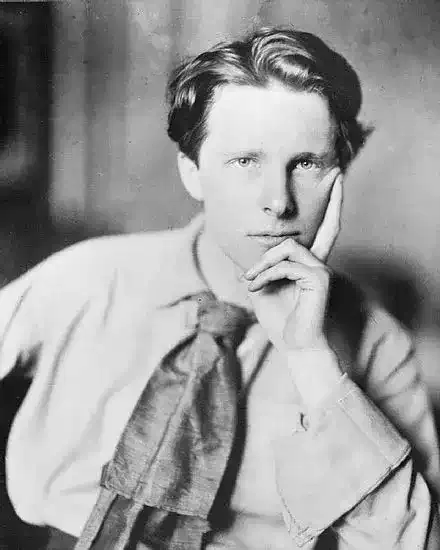
Rupert Brooke
Wagner
Wagner
Creeps in half wanton, half asleep,
One with a fat wide hairless face.
He likes love-music that is cheap;
Likes women in a crowded place;
And wants to hear the noise they're making.
His heavy eyelids droop half-over,
Great pouches swing beneath his eyes.
He listens, thinks himself the lover,
Heaves from his stomach wheezy sighs;
He likes to feel his heart's a-breaking.
The music swells. His gross legs quiver.
His little lips are bright with slime.
The music swells. The women shiver.
And all the while, in perfect time,
His pendulous stomach hangs a-shaking.
Creeps in half wanton, half asleep,
One with a fat wide hairless face.
He likes love-music that is cheap;
Likes women in a crowded place;
And wants to hear the noise they're making.
His heavy eyelids droop half-over,
Great pouches swing beneath his eyes.
He listens, thinks himself the lover,
Heaves from his stomach wheezy sighs;
He likes to feel his heart's a-breaking.
The music swells. His gross legs quiver.
His little lips are bright with slime.
The music swells. The women shiver.
And all the while, in perfect time,
His pendulous stomach hangs a-shaking.
196
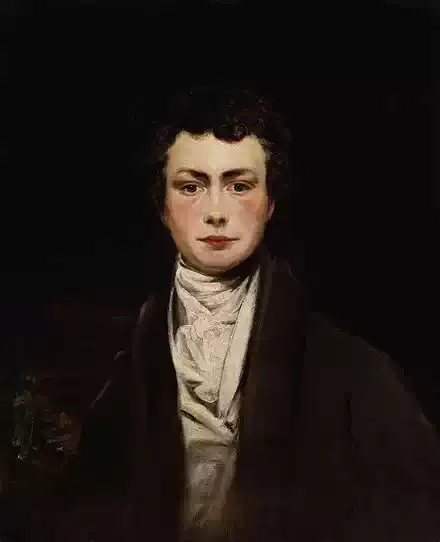
Thomas Moore
Twas One of Those Dreams
Twas One of Those Dreams
'TWAS one of those dreams, that by music are brought,
Like a bright summer haze, o'er the poet's warm thought --
When, lost in the future, his soul wanders on,
And all of this life, but its sweetness, is gone.
The wild notes he heard o'er the water were those
He had taught to sing Erin's dark bondage and woes,
And the breath of the bugle now wafted them o'er
From Dinis' green isle, to Glena's wooded shore.
He listen'd -- while, high o'er the eagle's rude nest,
The lingering sounds on their way loved to rest;
And the echoes sung back from their full mountain quire,
As if loath to let song to enchanting expire.
It seem'd as if every sweet note that died here
Was again brought to life in some airier sphere,
Some heaven in those hills, where the soul of the strain
That had ceased upon earth was awaking again!
Oh forgive, if, while listening to music, whose breath
Seem'd to circle his name with a charm against death,
He should feel a proud spirit within him proclaim,
"Even so shalt thou live in the echoes of Fame:
"Even so, though thy memory should now die away,
'Twill be caught up again in some happier day,
And the hearts and the voices of Erin prolong,
Through the answering Future, thy name and thy song."
'TWAS one of those dreams, that by music are brought,
Like a bright summer haze, o'er the poet's warm thought --
When, lost in the future, his soul wanders on,
And all of this life, but its sweetness, is gone.
The wild notes he heard o'er the water were those
He had taught to sing Erin's dark bondage and woes,
And the breath of the bugle now wafted them o'er
From Dinis' green isle, to Glena's wooded shore.
He listen'd -- while, high o'er the eagle's rude nest,
The lingering sounds on their way loved to rest;
And the echoes sung back from their full mountain quire,
As if loath to let song to enchanting expire.
It seem'd as if every sweet note that died here
Was again brought to life in some airier sphere,
Some heaven in those hills, where the soul of the strain
That had ceased upon earth was awaking again!
Oh forgive, if, while listening to music, whose breath
Seem'd to circle his name with a charm against death,
He should feel a proud spirit within him proclaim,
"Even so shalt thou live in the echoes of Fame:
"Even so, though thy memory should now die away,
'Twill be caught up again in some happier day,
And the hearts and the voices of Erin prolong,
Through the answering Future, thy name and thy song."
158
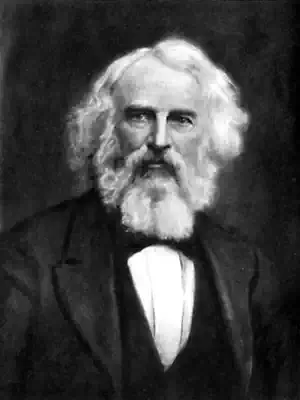
Henry Wadsworth Longfellow
Tales Of A Wayside Inn : Part 2. Interlude III.
Tales Of A Wayside Inn : Part 2. Interlude III.
'What was the end? I am ashamed
Not to remember Reynard's fate;
I have not read the book of late;
Was he not hanged?' the Poet said.
The Student gravely shook his head,
And answered: 'You exaggerate.
There was a tournament proclaimed,
And Reynard fought with Isegrim
The Wolf, and having vanquished him,
Rose to high honor in the State,
And Keeper of the Seals was named!'
At this the gay Sicilian laughed:
'Fight fire with fire, and craft with craft;
Successful cunning seems to be
The moral of your tale,' said he.
'Mine had a better, and the Jew's
Had none at all, that I could see;
His aim was only to amuse.'
Meanwhile from out its ebon case
His violin the Minstrel drew,
And having tuned its strings anew,
Now held it close in his embrace,
And poising in his outstretched hand
The bow, like a magician's wand,
He paused, and said, with beaming face:
'Last night my story was too long;
To-day I give you but a song,
An old tradition of the North;
But first, to put you in the mood,
I will a little while prelude,
And from this instrument draw forth
Something by way of overture.'
He played; at first the tones were pure
And tender as a summer night,
The full moon climbing to her height,
The sob and ripple of the seas,
The flapping of an idle sail;
And then by sudden and sharp degrees
The multiplied, wild harmonies
Freshened and burst into a gale;
A tempest howling through the dark,
A crash as of some shipwrecked bark.
A loud and melancholy wail.
Such was the prelude to the tale
Told by the Minstrel; and at times
He paused amid its varying rhymes,
And at each pause again broke in
The music of his violin,
With tones of sweetness or of fear,
Movements of trouble or of calm,
Creating their own atmosphere;
As sitting in a church we hear
Between the verses of the psalm
The organ playing soft and clear,
Or thundering on the startled ear.
'What was the end? I am ashamed
Not to remember Reynard's fate;
I have not read the book of late;
Was he not hanged?' the Poet said.
The Student gravely shook his head,
And answered: 'You exaggerate.
There was a tournament proclaimed,
And Reynard fought with Isegrim
The Wolf, and having vanquished him,
Rose to high honor in the State,
And Keeper of the Seals was named!'
At this the gay Sicilian laughed:
'Fight fire with fire, and craft with craft;
Successful cunning seems to be
The moral of your tale,' said he.
'Mine had a better, and the Jew's
Had none at all, that I could see;
His aim was only to amuse.'
Meanwhile from out its ebon case
His violin the Minstrel drew,
And having tuned its strings anew,
Now held it close in his embrace,
And poising in his outstretched hand
The bow, like a magician's wand,
He paused, and said, with beaming face:
'Last night my story was too long;
To-day I give you but a song,
An old tradition of the North;
But first, to put you in the mood,
I will a little while prelude,
And from this instrument draw forth
Something by way of overture.'
He played; at first the tones were pure
And tender as a summer night,
The full moon climbing to her height,
The sob and ripple of the seas,
The flapping of an idle sail;
And then by sudden and sharp degrees
The multiplied, wild harmonies
Freshened and burst into a gale;
A tempest howling through the dark,
A crash as of some shipwrecked bark.
A loud and melancholy wail.
Such was the prelude to the tale
Told by the Minstrel; and at times
He paused amid its varying rhymes,
And at each pause again broke in
The music of his violin,
With tones of sweetness or of fear,
Movements of trouble or of calm,
Creating their own atmosphere;
As sitting in a church we hear
Between the verses of the psalm
The organ playing soft and clear,
Or thundering on the startled ear.
307
Page 1
Next