
Money and Wealth
Poems in this topic

Vikram Seth
The Golden Gate - I (A novel in verse)
The Golden Gate - I (A novel in verse)
1.1.
To make a start more swift and weighty,
Hail Muse. Dear Reader, once upon
A time, say, circa 1980,
There lived a man. His name was John.
Successful in his field though only
Twenty-six, respected, lonely,
One evening as he walked across
Golden Gate Park, the ill-judged toss
Of a red frisbee almost brained him.
He thought, "Who'd gloat? Who would be glad?
Would anybody? " As it pained him,
He turned from this dispiriting theme
To ruminations less extreme.
1.2.
He tuned his thoughts to electronic
Circuitry. This soothed his mind.
He left irregular (moronic)
Sentimentality behind.
He thought of or-gates and of and-gates,
Of ROMs, of nor-gates, and of nand-gates,
Of nanoseconds, megabytes,
And bits and nibbles… but as flights
Of silhouetted birds move cawing
Across the pine-serrated sky,
Dragged from his cove, not knowing why,
He feels an urgent riptide drawing
Him far out, where, caught in the kelp
Of loneliness, he cries for help.
1.3.
John's looks are good. His dress is formal.
His voice is low. His mind is sound.
His appetite for work's abnormal.
A plastic name tag hangs around
His collar like a votive necklace.
Though well-paid, he is far from reckless,
Pays his rent promptly, jogs, does not
Smoke cigarettes, and rarely pot,
Eschews both church and heavy drinking,
Enjoys his garden, like to read
Eclectically from Mann to Bede.
(A surrogate, some say, for thinking.)
friends claim he's grown aloof and prim.
(His boss, though, is well-pleased with him.)
1.4.
Grey-eyed, blond-haired, aristocratic
In height, impatience, views, and face,
Discriminating though dogmatic,
Tender beneath a carapace
Of well-groomed tastes and tasteful grooming,
John, though his corporate stock is booming,
For all his mohair, serge, and tweed,
Senses his life has run to seed.
A passionate man, with equal parts of
Irritability and charm,
Without as such intending harm,
His flaring temper singed the hearts of
Several woman in the days
Before his chaste, ambitious phase.
1.5.
John notes the late September showers
Have tinged the blond hills round the bay
With a new green. He notes the flowers
In their pre-winter bloom. The way
That, when he was a child, the mystery
Of San Francisco's restless spark,
It strikes him now as, through the park,
Wrested from old dunes by the westward
Thrust of the greenbelt to the slow
Pacific swell, his footsteps go.
But it is late. The birds fly nestward
Towards the sunset, and the arc
Of darkness drifts across the park.
1.6.
It's Friday night. The unfettered city
Resounds with hedonistic glee.
John feels a cold cast of self-pity
Envelop him. No family
Cushions his solitude, or rather,
His mother's dead, his English father,
Retired in his native Kent,
Rarely responds to letters sent
(If rarely) by his transatlantic
Offspring. In letters to The Times
He rails against the nameless crimes
Of the post office. Waxing frantic
About delays from coast to coast,
He hones his wit and damns the post.
1.7.
A linkless node, no spouse or sibling,
No children - John wanders alone
Into an ice cream parlor. Nibbling
The edges of a sugar cone
By turns, a pair of high school lovers
Stand giggling. John, uncharmed, discovers
His favorite flavors, Pumpkin Pie
And Bubble Gum, decides to buy
A double scoop; sits down; but whether
His eyes fall on a knot of three
Schoolgirls, a clamorous family,
Or, munching cheerfully together,
A hippie and a Castro clone,
It hurts that only he's alone.
1.8.
He goes home, seeking consolation
Among old Beatles and Pink Floyd —
But "Girl" elicits mere frustration,
While "Money" leaves him more annoyed.
Alas, he hungers less for money
Than for a fleeting Taste of Honey.
Murmuring, "Money — it's a gas! …
The lunatic is on the grass,"
He pours himself a beer. Desires
And reminiscences intrude
Upon his unpropitious mood
Until he feels that he requires
A one-way Ticket to Ride — and soon —
Across the Dark Side of the Moon.
1.9.
He thinks back to his day at college,
To Phil, to Berkeley friends, to nights
When the pursuit of grades and knowledge
Foundered in beery jokes and fights.
Eheu fugaces… Silicon Valley
Lures to ambition's ulcer alley
Young graduates with siren screams
Of power and wealth beyond their dreams,
Ejects the lax, and drives the driven,
Burning their candles at both ends.
Thus files take precedence over friends,
Labor is lauded, leisure riven.
John kneels bareheaded and unshod
Before the Chip, a jealous God.
1.1.
To make a start more swift and weighty,
Hail Muse. Dear Reader, once upon
A time, say, circa 1980,
There lived a man. His name was John.
Successful in his field though only
Twenty-six, respected, lonely,
One evening as he walked across
Golden Gate Park, the ill-judged toss
Of a red frisbee almost brained him.
He thought, "Who'd gloat? Who would be glad?
Would anybody? " As it pained him,
He turned from this dispiriting theme
To ruminations less extreme.
1.2.
He tuned his thoughts to electronic
Circuitry. This soothed his mind.
He left irregular (moronic)
Sentimentality behind.
He thought of or-gates and of and-gates,
Of ROMs, of nor-gates, and of nand-gates,
Of nanoseconds, megabytes,
And bits and nibbles… but as flights
Of silhouetted birds move cawing
Across the pine-serrated sky,
Dragged from his cove, not knowing why,
He feels an urgent riptide drawing
Him far out, where, caught in the kelp
Of loneliness, he cries for help.
1.3.
John's looks are good. His dress is formal.
His voice is low. His mind is sound.
His appetite for work's abnormal.
A plastic name tag hangs around
His collar like a votive necklace.
Though well-paid, he is far from reckless,
Pays his rent promptly, jogs, does not
Smoke cigarettes, and rarely pot,
Eschews both church and heavy drinking,
Enjoys his garden, like to read
Eclectically from Mann to Bede.
(A surrogate, some say, for thinking.)
friends claim he's grown aloof and prim.
(His boss, though, is well-pleased with him.)
1.4.
Grey-eyed, blond-haired, aristocratic
In height, impatience, views, and face,
Discriminating though dogmatic,
Tender beneath a carapace
Of well-groomed tastes and tasteful grooming,
John, though his corporate stock is booming,
For all his mohair, serge, and tweed,
Senses his life has run to seed.
A passionate man, with equal parts of
Irritability and charm,
Without as such intending harm,
His flaring temper singed the hearts of
Several woman in the days
Before his chaste, ambitious phase.
1.5.
John notes the late September showers
Have tinged the blond hills round the bay
With a new green. He notes the flowers
In their pre-winter bloom. The way
That, when he was a child, the mystery
Of San Francisco's restless spark,
It strikes him now as, through the park,
Wrested from old dunes by the westward
Thrust of the greenbelt to the slow
Pacific swell, his footsteps go.
But it is late. The birds fly nestward
Towards the sunset, and the arc
Of darkness drifts across the park.
1.6.
It's Friday night. The unfettered city
Resounds with hedonistic glee.
John feels a cold cast of self-pity
Envelop him. No family
Cushions his solitude, or rather,
His mother's dead, his English father,
Retired in his native Kent,
Rarely responds to letters sent
(If rarely) by his transatlantic
Offspring. In letters to The Times
He rails against the nameless crimes
Of the post office. Waxing frantic
About delays from coast to coast,
He hones his wit and damns the post.
1.7.
A linkless node, no spouse or sibling,
No children - John wanders alone
Into an ice cream parlor. Nibbling
The edges of a sugar cone
By turns, a pair of high school lovers
Stand giggling. John, uncharmed, discovers
His favorite flavors, Pumpkin Pie
And Bubble Gum, decides to buy
A double scoop; sits down; but whether
His eyes fall on a knot of three
Schoolgirls, a clamorous family,
Or, munching cheerfully together,
A hippie and a Castro clone,
It hurts that only he's alone.
1.8.
He goes home, seeking consolation
Among old Beatles and Pink Floyd —
But "Girl" elicits mere frustration,
While "Money" leaves him more annoyed.
Alas, he hungers less for money
Than for a fleeting Taste of Honey.
Murmuring, "Money — it's a gas! …
The lunatic is on the grass,"
He pours himself a beer. Desires
And reminiscences intrude
Upon his unpropitious mood
Until he feels that he requires
A one-way Ticket to Ride — and soon —
Across the Dark Side of the Moon.
1.9.
He thinks back to his day at college,
To Phil, to Berkeley friends, to nights
When the pursuit of grades and knowledge
Foundered in beery jokes and fights.
Eheu fugaces… Silicon Valley
Lures to ambition's ulcer alley
Young graduates with siren screams
Of power and wealth beyond their dreams,
Ejects the lax, and drives the driven,
Burning their candles at both ends.
Thus files take precedence over friends,
Labor is lauded, leisure riven.
John kneels bareheaded and unshod
Before the Chip, a jealous God.
2,172
1
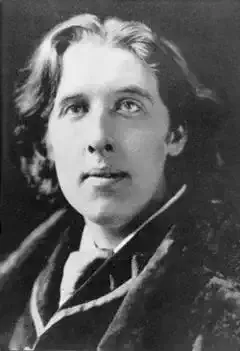
Oscar Wilde
Soneto: On the Sale by Auction of Keats' Love Letters
These are the letters which Endymion wrote
To one he loved in secret, and apart.
And now the brawlers of the auction mart
Bargain and bid for each poor blotted note,
Ay! for each separate pulse of passion quote
The merchant's price. I think they love not art
Who break the crystal of a poet's heart
That small and sickly eyes may glare and gloat.
Is it not said that many years ago,
In a far Eastern town, some soldiers ran
With torches through the midnight, and began
To wrangle for mean raiment, and to throw
Dice for the garments of a wretched man,
Not knowing the God's wonder, or His woe?
To one he loved in secret, and apart.
And now the brawlers of the auction mart
Bargain and bid for each poor blotted note,
Ay! for each separate pulse of passion quote
The merchant's price. I think they love not art
Who break the crystal of a poet's heart
That small and sickly eyes may glare and gloat.
Is it not said that many years ago,
In a far Eastern town, some soldiers ran
With torches through the midnight, and began
To wrangle for mean raiment, and to throw
Dice for the garments of a wretched man,
Not knowing the God's wonder, or His woe?
622
Oscar Wilde
Italia
Italia! thou art fallen, though with sheen
Of battle-spears thy clamorous armies stride
From the north Alps to the Sicilian tide!
Ay! fallen, though the nations hail thee Queen
Because rich gold in every town is seen,
And on thy sapphire-lake in tossing pride
Of wind-filled vans thy myriad galleys ride
Beneath one flag of red and white and green.
O Fair and Strong! O Strong and Fair in vain!
Look southward where Rome's desecrated town
Lies mourning for her God-anointed King!
Look heaven-ward! shall God allow this thing?
Nay! but some flame-girt Raphael shall come down,
And smite the Spoiler with the sword of pain.
VENICE.
Of battle-spears thy clamorous armies stride
From the north Alps to the Sicilian tide!
Ay! fallen, though the nations hail thee Queen
Because rich gold in every town is seen,
And on thy sapphire-lake in tossing pride
Of wind-filled vans thy myriad galleys ride
Beneath one flag of red and white and green.
O Fair and Strong! O Strong and Fair in vain!
Look southward where Rome's desecrated town
Lies mourning for her God-anointed King!
Look heaven-ward! shall God allow this thing?
Nay! but some flame-girt Raphael shall come down,
And smite the Spoiler with the sword of pain.
VENICE.
626
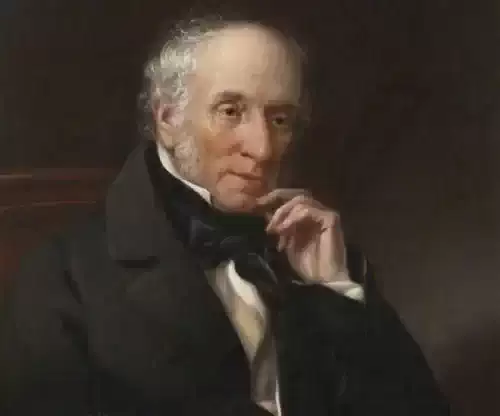
William Wordsworth
The world is too much with us; late and soon
The world is too much with us; late and soon
The world is too much with us; late and soon,
Getting and spending, we lay waste our powers;
Little we see in Nature that is ours;
We have given our hearts away, a sordid boon!
This Sea that bares her bosom to the moon;
The winds that will be howling at all hours,
And are up-gathered now like sleeping flowers,
For this, for everything, we are out of tune;
It moves us not.--Great God!I'd rather be
A pagan suckled in a creed outworn;
So might I, standing on this pleasant lea,
Have glimpses that would make me less forlorn;
Have sight of Proteus rising from the sea;
Or hear old Triton blow his wreathèd horn.
The world is too much with us; late and soon,
Getting and spending, we lay waste our powers;
Little we see in Nature that is ours;
We have given our hearts away, a sordid boon!
This Sea that bares her bosom to the moon;
The winds that will be howling at all hours,
And are up-gathered now like sleeping flowers,
For this, for everything, we are out of tune;
It moves us not.--Great God!I'd rather be
A pagan suckled in a creed outworn;
So might I, standing on this pleasant lea,
Have glimpses that would make me less forlorn;
Have sight of Proteus rising from the sea;
Or hear old Triton blow his wreathèd horn.
233
William Wordsworth
The World Is To Much With Us
The World Is To Much With Us
The world is too much with us; late and soon,
Getting and spending, we lay waste our powers:
Little we see in Nature that is ours;
We have given our hearts away, a sordid boon!
This Sea that bares her bosom to the moon;
The winds that will be howling at all hours,
And are up-gathered now like sleeping flowers;
For this, for everything, we are out of tune,
It moves us not.--Great God! I'd rather be
A Pagan suckled in a creed outworn;
So might I, standing on this pleasant lea,
Have glimpses that would make me less forlorn;
Have sight of Proteus rising from the sea;
Or hear old Triton blow his wreathed horn.
The world is too much with us; late and soon,
Getting and spending, we lay waste our powers:
Little we see in Nature that is ours;
We have given our hearts away, a sordid boon!
This Sea that bares her bosom to the moon;
The winds that will be howling at all hours,
And are up-gathered now like sleeping flowers;
For this, for everything, we are out of tune,
It moves us not.--Great God! I'd rather be
A Pagan suckled in a creed outworn;
So might I, standing on this pleasant lea,
Have glimpses that would make me less forlorn;
Have sight of Proteus rising from the sea;
Or hear old Triton blow his wreathed horn.
232
William Wordsworth
Simon Lee, The Old Huntsman
Simon Lee, The Old Huntsman
In the sweet shire of Cardigan,
Not far from pleasant Ivor-hall,
An old Man dwells, a little man,--
'Tis said he once was tall.
Full five-and-thirty years he lived
A running huntsman merry;
And still the centre of his cheek
Is red as a ripe cherry.
No man like him the horn could sound,
And hill and valley rang with glee
When Echo bandied, round and round,
The halloo of Simon Lee.
In those proud days, he little cared
For husbandry or tillage;
To blither tasks did Simon rouse
The sleepers of the village.
He all the country could outrun,
Could leave both man and horse behind;
And often, ere the chase was done,
He reeled, and was stone-blind.
And still there's something in the world
At which his heart rejoices;
For when the chiming hounds are out,
He dearly loves their voices!
But, oh the heavy change!--bereft
Of health, strength, friends, and kindred, see!
Old Simon to the world is left
In liveried poverty.
His Master's dead,--and no one now
Dwells in the Hall of Ivor;
Men, dogs, and horses, all are dead;
He is the sole survivor.
And he is lean and he is sick;
His body, dwindled and awry,
Rests upon ankles swoln and thick;
His legs are thin and dry.
One prop he has, and only one,
His wife, an aged woman,
Lives with him, near the waterfall,
Upon the village Common.
Beside their moss-grown hut of clay,
Not twenty paces from the door,
A scrap of land they have, but they
Are poorest of the poor.
This scrap of land he from the heath
Enclosed when he was stronger;
But what to them avails the land
Which he can till no longer?
Oft, working by her Husband's side,
Ruth does what Simon cannot do;
For she, with scanty cause for pride,
Is stouter of the two.
And, though you with your utmost skill
From labour could not wean them,
'Tis little, very little--all
That they can do between them.
Few months of life has he in store
As he to you will tell,
For still, the more he works, the more
Do his weak ankles swell.
My gentle Reader, I perceive
How patiently you've waited,
And now I fear that you expect
Some tale will be related.
O Reader! had you in your mind
Such stores as silent thought can bring,
O gentle Reader! you would find
A tale in every thing.
What more I have to say is short,
And you must kindly take it:
It is no tale; but, should you think,
Perhaps a tale you'll make it.
One summer-day I chanced to see
This old Man doing all he could
To unearth the root of an old tree,
A stump of rotten wood.
The mattock tottered in his hand;
So vain was his endeavour,
That at the root of the old tree
He might have worked for ever.
"You're overtasked, good Simon Lee,
Give me your tool," to him I said;
And at the word right gladly he
Received my proffered aid.
I struck, and with a single blow
The tangled root I severed,
At which the poor old Man so long
And vainly had endeavoured.
The tears into his eyes were brought,
And thanks and praises seemed to run
So fast out of his heart, I thought
They never would have done.
--I've heard of hearts unkind, kind deeds
With coldness still returning;
Alas! the gratitude of men
Hath oftener left me mourning.
In the sweet shire of Cardigan,
Not far from pleasant Ivor-hall,
An old Man dwells, a little man,--
'Tis said he once was tall.
Full five-and-thirty years he lived
A running huntsman merry;
And still the centre of his cheek
Is red as a ripe cherry.
No man like him the horn could sound,
And hill and valley rang with glee
When Echo bandied, round and round,
The halloo of Simon Lee.
In those proud days, he little cared
For husbandry or tillage;
To blither tasks did Simon rouse
The sleepers of the village.
He all the country could outrun,
Could leave both man and horse behind;
And often, ere the chase was done,
He reeled, and was stone-blind.
And still there's something in the world
At which his heart rejoices;
For when the chiming hounds are out,
He dearly loves their voices!
But, oh the heavy change!--bereft
Of health, strength, friends, and kindred, see!
Old Simon to the world is left
In liveried poverty.
His Master's dead,--and no one now
Dwells in the Hall of Ivor;
Men, dogs, and horses, all are dead;
He is the sole survivor.
And he is lean and he is sick;
His body, dwindled and awry,
Rests upon ankles swoln and thick;
His legs are thin and dry.
One prop he has, and only one,
His wife, an aged woman,
Lives with him, near the waterfall,
Upon the village Common.
Beside their moss-grown hut of clay,
Not twenty paces from the door,
A scrap of land they have, but they
Are poorest of the poor.
This scrap of land he from the heath
Enclosed when he was stronger;
But what to them avails the land
Which he can till no longer?
Oft, working by her Husband's side,
Ruth does what Simon cannot do;
For she, with scanty cause for pride,
Is stouter of the two.
And, though you with your utmost skill
From labour could not wean them,
'Tis little, very little--all
That they can do between them.
Few months of life has he in store
As he to you will tell,
For still, the more he works, the more
Do his weak ankles swell.
My gentle Reader, I perceive
How patiently you've waited,
And now I fear that you expect
Some tale will be related.
O Reader! had you in your mind
Such stores as silent thought can bring,
O gentle Reader! you would find
A tale in every thing.
What more I have to say is short,
And you must kindly take it:
It is no tale; but, should you think,
Perhaps a tale you'll make it.
One summer-day I chanced to see
This old Man doing all he could
To unearth the root of an old tree,
A stump of rotten wood.
The mattock tottered in his hand;
So vain was his endeavour,
That at the root of the old tree
He might have worked for ever.
"You're overtasked, good Simon Lee,
Give me your tool," to him I said;
And at the word right gladly he
Received my proffered aid.
I struck, and with a single blow
The tangled root I severed,
At which the poor old Man so long
And vainly had endeavoured.
The tears into his eyes were brought,
And thanks and praises seemed to run
So fast out of his heart, I thought
They never would have done.
--I've heard of hearts unkind, kind deeds
With coldness still returning;
Alas! the gratitude of men
Hath oftener left me mourning.
187
William Wordsworth
Last of The Flock, The
Last of The Flock, The
I
In distant countries have I been,
And yet I have not often seen
A healthy man, a man full grown,
Weep in the public roads, alone.
But such a one, on English ground,
And in the broad highway, I met;
Along the broad highway he came,
His cheeks with tears were wet:
Sturdy he seemed, though he was sad;
And in his arms a Lamb he had.
II
He saw me, and he turned aside,
As if he wished himself to hide:
And with his coat did then essay
To wipe those briny tears away.
I followed him, and said, "My friend,
What ails you? wherefore weep you so?"
--"Shame on me, Sir! this lusty Lamb,
He makes my tears to flow.
To-day I fetched him from the rock;
He is the last of all my flock,
III
"When I was young, a single man,
And after youthful follies ran,
Though little given to care and thought,
Yet, so it was, an ewe I bought;
And other sheep from her I raised,
As healthy sheep as you might see;
And then I married, and was rich
As I could wish to be;
Of sheep I numbered a full score,
And every year increased my store.
IV
"Year after year my stock it grew;
And from this one, this single ewe,
Full fifty comely sheep I raised,
As fine a flock as ever grazed!
Upon the Quantock hills they fed;
They throve, and we at home did thrive:
--This lusty Lamb of all my store
Is all that is alive;
And now I care not if we die,
And perish all of poverty.
V
"Six Children, Sir! had I to feed;
Hard labour in a time of need!
My pride was tamed, and in our grief
I of the Parish asked relief.
They said, I was a wealthy man;
My sheep upon the uplands fed,
And it was fit that thence I took
Whereof to buy us bread.
'Do this: how can we give to you,'
They cried, 'what to the poor is due?'
VI
"I sold a sheep, as they had said,
And bought my little children bread,
And they were healthy with their food
For me--it never did me good.
A woeful time it was for me,
To see the end of all my gains,
The pretty flock which I had reared
With all my care and pains,
To see it melt like snow away--
For me it was a woeful day.
VII
"Another still! and still another!
A little lamb, and then its mother!
It was a vein that never stopped--
Like blood-drops from my heart they dropped.
'Till thirty were not left alive
They dwindled, dwindled, one by one
And I may say, that many a time
I wished they all were gone--
Reckless of what might come at last
Were but the bitter struggle past.
VIII
"To wicked deeds I was inclined,
And wicked fancies crossed my mind;
And every man I chanced to see,
I thought he knew some ill of me:
No peace, no comfort could I find,
No ease, within doors or without;
And, crazily and wearily
I went my work about;
And oft was moved to flee from home,
And hide my head where wild beasts roam.
IX
"Sir! 'twas a precious flock to me,
As dear as my own children be;
For daily with my growing store
I loved my children more and more.
Alas! it was an evil time;
God cursed me in my sore distress;
I prayed, yet every day I thought
I loved my children less;
And every week, and every day,
My flock it seemed to melt away.
X
"They dwindled, Sir, sad sight to see!
From ten to five, from five to three,
A lamb, a wether, and a ewe;--
And then at last from three to two;
And, of my fifty, yesterday
I had but only one:
And here it lies upon my arm,
Alas! and I have none;--
To-day I fetched it from the rock;
It is the last of all my flock."
I
In distant countries have I been,
And yet I have not often seen
A healthy man, a man full grown,
Weep in the public roads, alone.
But such a one, on English ground,
And in the broad highway, I met;
Along the broad highway he came,
His cheeks with tears were wet:
Sturdy he seemed, though he was sad;
And in his arms a Lamb he had.
II
He saw me, and he turned aside,
As if he wished himself to hide:
And with his coat did then essay
To wipe those briny tears away.
I followed him, and said, "My friend,
What ails you? wherefore weep you so?"
--"Shame on me, Sir! this lusty Lamb,
He makes my tears to flow.
To-day I fetched him from the rock;
He is the last of all my flock,
III
"When I was young, a single man,
And after youthful follies ran,
Though little given to care and thought,
Yet, so it was, an ewe I bought;
And other sheep from her I raised,
As healthy sheep as you might see;
And then I married, and was rich
As I could wish to be;
Of sheep I numbered a full score,
And every year increased my store.
IV
"Year after year my stock it grew;
And from this one, this single ewe,
Full fifty comely sheep I raised,
As fine a flock as ever grazed!
Upon the Quantock hills they fed;
They throve, and we at home did thrive:
--This lusty Lamb of all my store
Is all that is alive;
And now I care not if we die,
And perish all of poverty.
V
"Six Children, Sir! had I to feed;
Hard labour in a time of need!
My pride was tamed, and in our grief
I of the Parish asked relief.
They said, I was a wealthy man;
My sheep upon the uplands fed,
And it was fit that thence I took
Whereof to buy us bread.
'Do this: how can we give to you,'
They cried, 'what to the poor is due?'
VI
"I sold a sheep, as they had said,
And bought my little children bread,
And they were healthy with their food
For me--it never did me good.
A woeful time it was for me,
To see the end of all my gains,
The pretty flock which I had reared
With all my care and pains,
To see it melt like snow away--
For me it was a woeful day.
VII
"Another still! and still another!
A little lamb, and then its mother!
It was a vein that never stopped--
Like blood-drops from my heart they dropped.
'Till thirty were not left alive
They dwindled, dwindled, one by one
And I may say, that many a time
I wished they all were gone--
Reckless of what might come at last
Were but the bitter struggle past.
VIII
"To wicked deeds I was inclined,
And wicked fancies crossed my mind;
And every man I chanced to see,
I thought he knew some ill of me:
No peace, no comfort could I find,
No ease, within doors or without;
And, crazily and wearily
I went my work about;
And oft was moved to flee from home,
And hide my head where wild beasts roam.
IX
"Sir! 'twas a precious flock to me,
As dear as my own children be;
For daily with my growing store
I loved my children more and more.
Alas! it was an evil time;
God cursed me in my sore distress;
I prayed, yet every day I thought
I loved my children less;
And every week, and every day,
My flock it seemed to melt away.
X
"They dwindled, Sir, sad sight to see!
From ten to five, from five to three,
A lamb, a wether, and a ewe;--
And then at last from three to two;
And, of my fifty, yesterday
I had but only one:
And here it lies upon my arm,
Alas! and I have none;--
To-day I fetched it from the rock;
It is the last of all my flock."
404
William Wordsworth
Is ample, and some little might be stored
Is ample, and some little might be stored
Wherewith to cheer him in the winter time."
Thus talking of that Peasant, we approached
Close to the spot where with his rod and line
He stood alone; whereat he turned his head
To greet us--and we saw a Mam worn down
By sickness, gaunt and lean, with sunken cheeks
And wasted limbs, his legs so long and lean
That for my single self I looked at them,
Forgetful of the body they sustained.--
Too weak to labour in the harvest field,
The Man was using his best skill to gain
A pittance from the dead unfeeling lake
That knew not of his wants. I will not say
What thoughts immediately were ours, nor how
The happy idleness of that sweet morn,
With all its lovely images, was changed
To serious musing and to self-reproach.
Nor did we fail to see within ourselves
What need there is to be reserved in speech,
And temper all our thoughts with charity.
--Therefore, unwilling to forget that day,
My Friend, Myself, and She who then received
The same admonishment, have called the place
By a memorial name, uncouth indeed
As e'er by mariner was given to bay
Or foreland, on a new-discovered coast;
And POINT RASH-JUDGMENT is the name it bears.
Wherewith to cheer him in the winter time."
Thus talking of that Peasant, we approached
Close to the spot where with his rod and line
He stood alone; whereat he turned his head
To greet us--and we saw a Mam worn down
By sickness, gaunt and lean, with sunken cheeks
And wasted limbs, his legs so long and lean
That for my single self I looked at them,
Forgetful of the body they sustained.--
Too weak to labour in the harvest field,
The Man was using his best skill to gain
A pittance from the dead unfeeling lake
That knew not of his wants. I will not say
What thoughts immediately were ours, nor how
The happy idleness of that sweet morn,
With all its lovely images, was changed
To serious musing and to self-reproach.
Nor did we fail to see within ourselves
What need there is to be reserved in speech,
And temper all our thoughts with charity.
--Therefore, unwilling to forget that day,
My Friend, Myself, and She who then received
The same admonishment, have called the place
By a memorial name, uncouth indeed
As e'er by mariner was given to bay
Or foreland, on a new-discovered coast;
And POINT RASH-JUDGMENT is the name it bears.
194

William Shakespeare
When in disgrace with fortune and men's eyes (Sonnet 29)
When in disgrace with fortune and men's eyes (Sonnet 29)
When in disgrace with fortune and men's eyes,
I all alone beweep my outcast state,
And trouble deaf heaven with my bootless cries,
And look upon myself and curse my fate,
wishing me like to one more rich in hope,
Featured like him, like him with friends possessed,
Desiring this man's art, and that man's scope,
With what I most enjoy contented least;
Yet in these thoughts myself almost despising,
Haply I think on thee--and then my state,
Like to the lark at break of day arising
From sullen earth sings hymns at heaven's gate;
For thy sweet love remembered such wealth brings,
That then I scorn to change my state with kings.
When in disgrace with fortune and men's eyes,
I all alone beweep my outcast state,
And trouble deaf heaven with my bootless cries,
And look upon myself and curse my fate,
wishing me like to one more rich in hope,
Featured like him, like him with friends possessed,
Desiring this man's art, and that man's scope,
With what I most enjoy contented least;
Yet in these thoughts myself almost despising,
Haply I think on thee--and then my state,
Like to the lark at break of day arising
From sullen earth sings hymns at heaven's gate;
For thy sweet love remembered such wealth brings,
That then I scorn to change my state with kings.
332
William Shakespeare
St. Crispin’s Day Speech: from Henry V
St. Crispin’s Day Speech: from Henry V
WESTMORELAND. O that we now had here
But one ten thousand of those men in England
That do no work to-day!
KING. What’s he that wishes so?
My cousin Westmoreland? No, my fair cousin;
If we are mark’d to die, we are enow
To do our country loss; and if to live,
The fewer men, the greater share of honour.
God’s will! I pray thee, wish not one man more.
By Jove, I am not covetous for gold,
Nor care I who doth feed upon my cost;
It yearns me not if men my garments wear;
Such outward things dwell not in my desires.
But if it be a sin to covet honour,
I am the most offending soul alive.
No, faith, my coz, wish not a man from England.
God’s peace! I would not lose so great an honour
As one man more methinks would share from me
For the best hope I have. O, do not wish one more!
Rather proclaim it, Westmoreland, through my host,
That he which hath no stomach to this fight,
Let him depart; his passport shall be made,
And crowns for convoy put into his purse;
We would not die in that man’s company
That fears his fellowship to die with us.
This day is call’d the feast of Crispian.
He that outlives this day, and comes safe home,
Will stand a tip-toe when this day is nam’d,
And rouse him at the name of Crispian.
He that shall live this day, and see old age,
Will yearly on the vigil feast his neighbours,
And say “To-morrow is Saint Crispian.”
Then will he strip his sleeve and show his scars,
And say “These wounds I had on Crispian’s day.”
Old men forget; yet all shall be forgot,
But he’ll remember, with advantages,
What feats he did that day. Then shall our names,
Familiar in his mouth as household words-
Harry the King, Bedford and Exeter,
Warwick and Talbot, Salisbury and Gloucester-
Be in their flowing cups freshly rememb’red.
This story shall the good man teach his son;
And Crispin Crispian shall ne’er go by,
From this day to the ending of the world,
But we in it shall be remembered-
We few, we happy few, we band of brothers;
For he to-day that sheds his blood with me
Shall be my brother; be he ne’er so vile,
This day shall gentle his condition;
And gentlemen in England now-a-bed
Shall think themselves accurs’d they were not here,
And hold their manhoods cheap whiles any speaks
That fought with us upon Saint Crispin’s day.
WESTMORELAND. O that we now had here
But one ten thousand of those men in England
That do no work to-day!
KING. What’s he that wishes so?
My cousin Westmoreland? No, my fair cousin;
If we are mark’d to die, we are enow
To do our country loss; and if to live,
The fewer men, the greater share of honour.
God’s will! I pray thee, wish not one man more.
By Jove, I am not covetous for gold,
Nor care I who doth feed upon my cost;
It yearns me not if men my garments wear;
Such outward things dwell not in my desires.
But if it be a sin to covet honour,
I am the most offending soul alive.
No, faith, my coz, wish not a man from England.
God’s peace! I would not lose so great an honour
As one man more methinks would share from me
For the best hope I have. O, do not wish one more!
Rather proclaim it, Westmoreland, through my host,
That he which hath no stomach to this fight,
Let him depart; his passport shall be made,
And crowns for convoy put into his purse;
We would not die in that man’s company
That fears his fellowship to die with us.
This day is call’d the feast of Crispian.
He that outlives this day, and comes safe home,
Will stand a tip-toe when this day is nam’d,
And rouse him at the name of Crispian.
He that shall live this day, and see old age,
Will yearly on the vigil feast his neighbours,
And say “To-morrow is Saint Crispian.”
Then will he strip his sleeve and show his scars,
And say “These wounds I had on Crispian’s day.”
Old men forget; yet all shall be forgot,
But he’ll remember, with advantages,
What feats he did that day. Then shall our names,
Familiar in his mouth as household words-
Harry the King, Bedford and Exeter,
Warwick and Talbot, Salisbury and Gloucester-
Be in their flowing cups freshly rememb’red.
This story shall the good man teach his son;
And Crispin Crispian shall ne’er go by,
From this day to the ending of the world,
But we in it shall be remembered-
We few, we happy few, we band of brothers;
For he to-day that sheds his blood with me
Shall be my brother; be he ne’er so vile,
This day shall gentle his condition;
And gentlemen in England now-a-bed
Shall think themselves accurs’d they were not here,
And hold their manhoods cheap whiles any speaks
That fought with us upon Saint Crispin’s day.
322
William Shakespeare
Sonnets XXIX: When, in disgrace with fortune and men's eyes
Sonnets XXIX: When, in disgrace with fortune and men's eyes
When, in disgrace with fortune and men's eyes,
I all alone beweep my outcast state
And trouble deaf heaven with my bootless cries
And look upon myself and curse my fate,
Wishing me like to one more rich in hope,
Featur'd like him, like him with friends possess'd,
Desiring this man's art and that man's scope,
With what I most enjoy contented least;
Yet in these thoughts myself almost despising,
Haply I think on thee, and then my state,
Like to the lark at break of day arising
From sullen earth, sings hymns at heaven's gate;
For thy sweet love remember'd such wealth brings
That then I scorn to change my state with kings.
When, in disgrace with fortune and men's eyes,
I all alone beweep my outcast state
And trouble deaf heaven with my bootless cries
And look upon myself and curse my fate,
Wishing me like to one more rich in hope,
Featur'd like him, like him with friends possess'd,
Desiring this man's art and that man's scope,
With what I most enjoy contented least;
Yet in these thoughts myself almost despising,
Haply I think on thee, and then my state,
Like to the lark at break of day arising
From sullen earth, sings hymns at heaven's gate;
For thy sweet love remember'd such wealth brings
That then I scorn to change my state with kings.
246
William Shakespeare
Sonnets ii
Sonnets ii
WHEN, in disgrace with Fortune and men's eyes,
I all alone beweep my outcast state,
And trouble deaf heaven with my bootless cries,
And look upon myself, and curse my fate,
Wishing me like to one more rich in hope,
Featured like him, like him with friends possest,
Desiring this man's art and that man's scope,
With what I most enjoy contented least;
Yet in these thoughts myself almost despising--
Haply I think on thee: and then my state,
Like to the Lark at break of day arising
From sullen earth, sings hymns at Heaven's gate;
For thy sweet love rememb'red such wealth brings
That then I scorn to change my state with Kings.
WHEN, in disgrace with Fortune and men's eyes,
I all alone beweep my outcast state,
And trouble deaf heaven with my bootless cries,
And look upon myself, and curse my fate,
Wishing me like to one more rich in hope,
Featured like him, like him with friends possest,
Desiring this man's art and that man's scope,
With what I most enjoy contented least;
Yet in these thoughts myself almost despising--
Haply I think on thee: and then my state,
Like to the Lark at break of day arising
From sullen earth, sings hymns at Heaven's gate;
For thy sweet love rememb'red such wealth brings
That then I scorn to change my state with Kings.
329
William Shakespeare
Sonnet XXIX: When, in disgrace with fortune and men's eyes
Sonnet XXIX: When, in disgrace with fortune and men's eyes
When, in disgrace with fortune and men's eyes,
I all alone beweep my outcast state
And trouble deaf heaven with my bootless cries
And look upon myself and curse my fate,
Wishing me like to one more rich in hope,
Featur'd like him, like him with friends possess'd,
Desiring this man's art and that man's scope,
With what I most enjoy contented least;
Yet in these thoughts myself almost despising,
Haply I think on thee, and then my state,
Like to the lark at break of day arising
From sullen earth, sings hymns at heaven's gate;
For thy sweet love remember'd such wealth brings
That then I scorn to change my state with kings.
When, in disgrace with fortune and men's eyes,
I all alone beweep my outcast state
And trouble deaf heaven with my bootless cries
And look upon myself and curse my fate,
Wishing me like to one more rich in hope,
Featur'd like him, like him with friends possess'd,
Desiring this man's art and that man's scope,
With what I most enjoy contented least;
Yet in these thoughts myself almost despising,
Haply I think on thee, and then my state,
Like to the lark at break of day arising
From sullen earth, sings hymns at heaven's gate;
For thy sweet love remember'd such wealth brings
That then I scorn to change my state with kings.
283
William Shakespeare
Sonnet LII
Sonnet LII
So am I as the rich, whose blessed key
Can bring him to his sweet up-locked treasure,
The which he will not every hour survey,
For blunting the fine point of seldom pleasure.
Therefore are feasts so solemn and so rare,
Since, seldom coming, in the long year set,
Like stones of worth they thinly placed are,
Or captain jewels in the carcanet.
So is the time that keeps you as my chest,
Or as the wardrobe which the robe doth hide,
To make some special instant special blest,
By new unfolding his imprison'd pride.
Blessed are you, whose worthiness gives scope,
Being had, to triumph, being lack'd, to hope.
So am I as the rich, whose blessed key
Can bring him to his sweet up-locked treasure,
The which he will not every hour survey,
For blunting the fine point of seldom pleasure.
Therefore are feasts so solemn and so rare,
Since, seldom coming, in the long year set,
Like stones of worth they thinly placed are,
Or captain jewels in the carcanet.
So is the time that keeps you as my chest,
Or as the wardrobe which the robe doth hide,
To make some special instant special blest,
By new unfolding his imprison'd pride.
Blessed are you, whose worthiness gives scope,
Being had, to triumph, being lack'd, to hope.
348
William Shakespeare
Sonnet IV: Unthrifty Loveliness, Why Dost Thou Spend
Sonnet IV: Unthrifty Loveliness, Why Dost Thou Spend
Unthrifty loveliness, why dost thou spend
Upon thy self thy beauty's legacy?
Nature's bequest gives nothing, but doth lend,
And being frank she lends to those are free:
Then, beauteous niggard, why dost thou abuse
The bounteous largess given thee to give?
Profitless usurer, why dost thou use
So great a sum of sums, yet canst not live?
For having traffic with thy self alone,
Thou of thy self thy sweet self dost deceive:
Then how when nature calls thee to be gone,
What acceptable audit canst thou leave?
Thy unused beauty must be tombed with thee,
Which, used, lives th' executor to be.
Unthrifty loveliness, why dost thou spend
Upon thy self thy beauty's legacy?
Nature's bequest gives nothing, but doth lend,
And being frank she lends to those are free:
Then, beauteous niggard, why dost thou abuse
The bounteous largess given thee to give?
Profitless usurer, why dost thou use
So great a sum of sums, yet canst not live?
For having traffic with thy self alone,
Thou of thy self thy sweet self dost deceive:
Then how when nature calls thee to be gone,
What acceptable audit canst thou leave?
Thy unused beauty must be tombed with thee,
Which, used, lives th' executor to be.
294
William Shakespeare
Sonnet II: When Forty Winters Shall Besiege Thy Brow
Sonnet II: When Forty Winters Shall Besiege Thy Brow
When forty winters shall besiege thy brow,
And dig deep trenches in thy beauty's field,
Thy youth's proud livery, so gazed on now,
Will be a tatter'd weed, of small worth held:
Then being ask'd where all thy beauty lies,
Where all the treasure of thy lusty days,
To say, within thine own deep-sunken eyes,
Were an all-eating shame and thriftless praise.
How much more praise deserved thy beauty's use,
If thou couldst answer 'This fair child of mine
Shall sum my count and make my old excuse,'
Proving his beauty by succession thine!
This were to be new made when thou art old,
And see thy blood warm when thou feel'st it cold.
When forty winters shall besiege thy brow,
And dig deep trenches in thy beauty's field,
Thy youth's proud livery, so gazed on now,
Will be a tatter'd weed, of small worth held:
Then being ask'd where all thy beauty lies,
Where all the treasure of thy lusty days,
To say, within thine own deep-sunken eyes,
Were an all-eating shame and thriftless praise.
How much more praise deserved thy beauty's use,
If thou couldst answer 'This fair child of mine
Shall sum my count and make my old excuse,'
Proving his beauty by succession thine!
This were to be new made when thou art old,
And see thy blood warm when thou feel'st it cold.
309
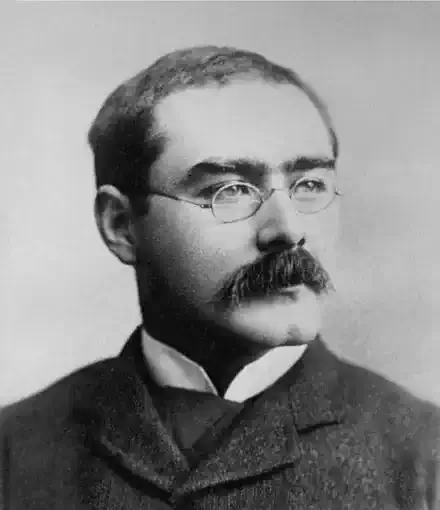
Rudyard Kipling
The Birthright
The Birthright
The miracle of our land's speech--so known
And long received, none marvel when 'tis shown!
We have such wealth as Rome at her most pride
Had not or (having) scattered not so wide;
Nor with such arrant prodigality,
Beneath her any pagan's foot let lie...
Lo! Diamond that cost some half their days
To find and t'other half to bring to blaze:
Rubies of every heat, wherethrough we scan
The fiercer and more fiery heart of man:
Emerald that with the uplifted billow vies,
And Sapphires evening remembered skies:
Pearl perfect, as immortal tears must show,
Bred, in deep waters, of a piercing woe;
And tender Turkis, so with charms y-writ,
Of woven gold, Time dares not bite on it.
Thereafter, in all manners worked and set,
Jade, coral, amber, crystal ivories, jet,--
Showing no more than various fancies, yet
Each a Life's token or Love's amulet
Which things, through timeless arrogance of use,
We neither guard nor garner, but abuse;
So that our scholars--nay, our children-fling
In sport or jest treasure to arm a King;
And the gross crowd, at feast or market, hold
Traffic perforce with dust of gems and gold!
The miracle of our land's speech--so known
And long received, none marvel when 'tis shown!
We have such wealth as Rome at her most pride
Had not or (having) scattered not so wide;
Nor with such arrant prodigality,
Beneath her any pagan's foot let lie...
Lo! Diamond that cost some half their days
To find and t'other half to bring to blaze:
Rubies of every heat, wherethrough we scan
The fiercer and more fiery heart of man:
Emerald that with the uplifted billow vies,
And Sapphires evening remembered skies:
Pearl perfect, as immortal tears must show,
Bred, in deep waters, of a piercing woe;
And tender Turkis, so with charms y-writ,
Of woven gold, Time dares not bite on it.
Thereafter, in all manners worked and set,
Jade, coral, amber, crystal ivories, jet,--
Showing no more than various fancies, yet
Each a Life's token or Love's amulet
Which things, through timeless arrogance of use,
We neither guard nor garner, but abuse;
So that our scholars--nay, our children-fling
In sport or jest treasure to arm a King;
And the gross crowd, at feast or market, hold
Traffic perforce with dust of gems and gold!
439
Rudyard Kipling
The Beginning of the Armadilloes
The Beginning of the Armadilloes
I've never sailed the Amazon,
I've never reached Brazil;
But the Don and Magdalena,
They can go there when they will!
Yes, weekly from Southampton
Great steamers, white and gold,
Go rolling down to Rio
(Roll down--roll down to Rio!).
And I'd like to roll to Rio
Some day before I'm old!
I've never seen a Jaguar,
Nor yet an Armadill--
He's dilloing in his armour,
And I s'pose I never will,
Unless I go to Rio
These wonders to behold--
Roll down--roll down to Rio--
Roll really down to Rio!
Oh, I'd love to roll to Rio
Some day before I'm old!
I've never sailed the Amazon,
I've never reached Brazil;
But the Don and Magdalena,
They can go there when they will!
Yes, weekly from Southampton
Great steamers, white and gold,
Go rolling down to Rio
(Roll down--roll down to Rio!).
And I'd like to roll to Rio
Some day before I'm old!
I've never seen a Jaguar,
Nor yet an Armadill--
He's dilloing in his armour,
And I s'pose I never will,
Unless I go to Rio
These wonders to behold--
Roll down--roll down to Rio--
Roll really down to Rio!
Oh, I'd love to roll to Rio
Some day before I'm old!
459
Rudyard Kipling
The Mary Gloster
The "Mary Gloster"
I've paid for your sickest fancies; I've humoured your crackedest whim --
Dick, it's your daddy, dying; you've got to listen to him!
Good for a fortnight, am I? The doctor told you? He lied.
I shall go under by morning, and -- Put that nurse outside.
'Never seen death yet, Dickie? Well, now is your time to learn,
And you'll wish you held my record before it comes to your turn.
Not counting the Line and the Foundry, the yards and the village, too,
I've made myself and a million; but I'm damned if I made you.
Master at two-and-twenty, and married at twenty-three --
Ten thousand men on the pay-roll, and forty freighters at sea!
Fifty years between 'em, and every year of it fight,
And now I'm Sir Anthony Gloster, dying, a baronite:
For I lunched with his Royal 'Ighness -- what was it the papers a-had?
"Not least of our merchant-princes." Dickie, that's me, your dad!
~I~ didn't begin with askings. ~I~ took my job and I stuck;
And I took the chances they wouldn't, an' now they're calling it luck.
Lord, what boats I've handled -- rotten and leaky and old!
Ran 'em, or -- opened the bilge-cock, precisely as I was told.
Grub that 'ud bind you crazy, and crews that 'ud turn you grey,
And a big fat lump of insurance to cover the risk on the way.
The others they dursn't do it; they said they valued their life
(They've served me since as skippers). ~I~ went, and I took my wife.
Over the world I drove 'em, married at twenty-three,
And your mother saving the money and making a man of me.
~I~ was content to be master, but she said there was better behind;
She took the chances I wouldn't, and I followed your mother blind.
She egged me to borrow the money, an' she helped me to clear the loan,
When we bought half shares in a cheap 'un and hoisted a flag of our own.
Patching and coaling on credit, and living the Lord knew how,
We started the Red Ox freighters -- we've eight-and-thirty now.
And those were the days of clippers, and the freights were clipper-freights,
And we knew we were making our fortune, but she died in Macassar Straits --
By the Little Paternosters, as you come to the Union Bank --
And we dropped her in fourteen fathom; I pricked it off where she sank.
Owners we were, full owners, and the boat was christened for her,
And she died in the ~Mary Gloster~. My heart, how young we were!
So I went on a spree round Java and well-nigh ran her ashore,
But your mother came and warned me and I wouldn't liquor no more:
Strict I stuck to my business, afraid to stop or I'd think,
Saving the money (she warned me), and letting the other men drink.
And I met M'Cullough in London (I'd turned five 'undred then),
And 'tween us we started the Foundry -- three forges and twenty men:
Cheap repairs for the cheap 'uns. It paid, and the business grew,
For I bought me a steam-lathe patent, and that was a gold mine too.
"Cheaper to build 'em than buy 'em," ~I~ said, but M'Cullough he shied,
And we wasted a year in talking before we moved to the Clyde.
And the Lines were all beginning, and we all of us started fair,
Building our engines like houses and staying the boilers square.
But M'Cullough 'e wanted cabins with marble and maple and all,
And Brussels an' Utrecht velvet, and baths and a Social Hall,
And pipes for closets all over, and cutting the frames too light,
But M'Cullough he died in the Sixties, and -- Well, I'm dying to-night. . . .
I knew -- ~I~ knew what was coming, when we bid on the ~Byfleet~'s keel --
They piddled and piffled with iron: I'd given my orders for steel!
Steel and the first expansions. It paid, I tell you, it paid,
When we came with our nine-knot freighters and collared the long-run trade!
And they asked me how I did it, and I gave 'em the Scripture text,
"You keep your light so shining a little in front o' the next!"
They copied all they could follow, but they couldn't copy my mind,
And I left 'em sweating and stealing a year and a half behind.
Then came the armour-contracts, but that was M'Cullough's side;
He was always best in the Foundry, but better, perhaps, he died.
I went through his private papers; the notes was plainer than print;
And I'm no fool to finish if a man'll give me a hint.
(I remember his widow was angry.) So I saw what the drawings meant,
And I started the six-inch rollers, and it paid me sixty per cent --
Sixty per cent ~with~ failures, and more than twice we could do,
And a quarter-million to credit, and I saved it all for you!
I thought -- it doesn't matter -- you seemed to favour your ma,
But you're nearer forty than thirty, and I know the kind you are.
Harrer an' Trinity College! I ought to ha' sent you to sea --
But I stood you an education, an' what have you done for me?
The things I knew was proper you wouldn't thank me to give,
And the things I knew was rotten you said was the way to live.
For you muddled with books and pictures, an' china an' etchin's an' fans,
And your rooms at college was beastly -- more like a whore's than a man's --
Till you married that thin-flanked woman, as white and as stale as a bone,
An' she gave you your social nonsense; but where's that kid o' your own?
I've seen your carriages blocking the half o' the Cromwell Road,
But never the doctor's brougham to help the missus unload.
(So there isn't even a grandchild, an' the Gloster family's done.)
Not like your mother, she isn't. ~She~ carried her freight each run.
But they died, the pore little beggars! At sea she had 'em -- they died.
Only you, an' you stood it; you haven't stood much beside.
Weak, a liar, and idle, and mean as a collier's whelp
Nosing for scraps in the galley. No help -- my son was no help!
So he gets three 'undred thousand, in trust and the interest paid.
I wouldn't give it you, Dickie -- you see, I made it in trade.
You're saved from soiling your fingers, and if you have no child,
It all comes back to the business. Gad, won't your wife be wild!
'Calls and calls in her carriage, her 'andkerchief up to 'er eye:
"Daddy! dear daddy's dyin'!" and doing her best to cry.
Grateful? Oh, yes, I'm grateful, but keep her away from here.
Your mother 'ud never ha' stood 'er, and, anyhow, women are queer. . . .
There's women will say I've married a second time.
Not quite! But give pore Aggie a hundred, and tell her your lawyers'll fight.
She was the best o' the boiling -- you'll meet her before it ends;
I'm in for a row with the mother -- I'll leave you settle my friends:
For a man he must go with a woman, which women don't understand --
Or the sort that say they can see it they aren't the marrying brand.
But I wanted to speak o' your mother that's Lady Gloster still --
I'm going to up and see her, without it's hurting the will.
Here! Take your hand off the bell-pull. Five thousand's waiting for you,
If you'll only listen a minute, and do as I bid you do.
They'll try to prove me crazy, and, if you bungle, they can;
And I've only you to trust to! (O God, why ain't he a man?)
There's some waste money on marbles, the same as M'Cullough tried --
Marbles and mausoleums -- but I call that sinful pride.
There's some ship bodies for burial -- we've carried 'em, soldered and packed;
Down in their wills they wrote it, and nobody called ~them~ cracked.
But me -- I've too much money, and people might. . . . All my fault:
It come o' hoping for grandsons and buying that Wokin' vault.
I'm sick o' the 'ole dam' business; I'm going back where I came.
Dick, you're the son o' my body, and you'll take charge o' the same!
I want to lie by your mother, ten thousand mile away,
And they'll want to send me to Woking; and that's where you'll earn your pay.
I've thought it out on the quiet, the same as it ought to be done --
Quiet, and decent, and proper -- an' here's your orders, my son.
You know the Line? You don't, though. You write to the Board, and tell
Your father's death has upset you an' you're goin' to cruise for a spell,
An' you'd like the ~Mary Gloster~ -- I've held her ready for this --
They'll put her in working order and you'll take her out as she is.
Yes, it was money idle when I patched her and put her aside
(Thank God, I can pay for my fancies!) -- the boat where your mother died,
By the Little Paternosters, as you come to the Union Bank,
We dropped her -- I think I told you -- and I pricked it off where she sank --
['Tiny she looked on the grating -- that oily, treacly sea --]
'Hundred and eighteen East, remember, and South just three.
Easy bearings to carry -- three South -- three to the dot;
But I gave M'Andrew a copy in case of dying -- or not.
And so you'll write to M'Andrew, he's Chief of the Maori Line;
They'll give him leave, if you ask 'em and say it's business o' mine.
I built three boats for the Maoris, an' very well pleased they were,
An' I've known Mac since the Fifties, and Mac knew me -- and her.
After the first stroke warned me I sent him the money to keep
Against the time you'd claim it, committin' your dad to the deep;
For you are the son o' my body, and Mac was my oldest friend,
I've never asked 'im to dinner, but he'll see it out to the end.
Stiff-necked Glasgow beggar, I've heard he's prayed for my soul,
But he couldn't lie if you paid him, and he'd starve before he stole!
He'll take the ~Mary~ in ballast -- you'll find her a lively ship;
And you'll take Sir Anthony Gloster, that goes on 'is wedding-trip,
Lashed in our old deck-cabin with all three port-holes wide,
The kick o' the screw beneath him and the round blue seas outside!
Sir Anthony Gloster's carriage -- our 'ouse-flag flyin' free --
Ten thousand men on the pay-roll and forty freighters at sea!
He made himself and a million, but this world is a fleetin' show,
And he'll go to the wife of 'is bosom the same as he ought to go --
By the heel of the Paternosters -- there isn't a chance to mistake --
And Mac'll pay you the money as soon as the bubbles break!
Five thousand for six weeks' cruising, the staunchest freighter afloat,
And Mac he'll give you your bonus the minute I'm out o' the boat!
He'll take you round to Macassar, and you'll come back alone;
He knows what I want o' the ~Mary~. . . . I'll do what I please with my own.
Your mother 'ud call it wasteful, but I've seven-and-thirty more;
I'll come in my private carriage and bid it wait at the door. . . .
For my son 'e was never a credit: 'e muddled with books and art,
And 'e lived on Sir Anthony's money and 'e broke Sir Anthony's heart.
There isn't even a grandchild, and the Gloster family's done --
The only one you left me, O mother, the only one!
Harrer and Trinity College -- me slavin' early an' late --
An' he thinks I'm dying crazy, and you're in Macassar Strait!
Flesh o' my flesh, my dearie, for ever an' ever amen,
That first stroke come for a warning; I ought to ha' gone to you then,
But -- cheap repairs for a cheap 'un -- the doctors said I'd do:
Mary, why didn't ~you~ warn me? I've allus heeded to you,
Excep' -- I know -- about women; but you are a spirit now;
An', wife, they was only women, and I was a man. That's how.
An' a man 'e must go with a woman, as you could not understand;
But I never talked 'em secrets. I paid 'em out o' hand.
Thank Gawd, I can pay for my fancies! Now what's five thousand to me,
For a berth off the Paternosters in the haven where I would be?
~I~ believe in the Resurrection, if I read my Bible plain,
But I wouldn't trust 'em at Wokin'; we're safer at sea again.
For the heart it shall go with the treasure -- go down to the sea in ships.
I'm sick of the hired women -- I'll kiss my girl on her lips!
I'll be content with my fountain, I'll drink from my own well,
And the wife of my youth shall charm me -- an' the rest can go to Hell!
(Dickie, ~he~ will, that's certain.) I'll lie in our standin'-bed,
An' Mac'll take her in ballast -- an' she trims best by the head. . . .
Down by the head an' sinkin', her fires are drawn and cold,
And the water's splashin' hollow on the skin of the empty hold --
Churning an' choking and chuckling, quiet and scummy and dark --
Full to her lower hatches and risin' steady. Hark!
That was the after-bulkhead. . . . She's flooded from stem to stern. . . .
Never seen death yet, Dickie? . . . Well, now is your time to learn!
I've paid for your sickest fancies; I've humoured your crackedest whim --
Dick, it's your daddy, dying; you've got to listen to him!
Good for a fortnight, am I? The doctor told you? He lied.
I shall go under by morning, and -- Put that nurse outside.
'Never seen death yet, Dickie? Well, now is your time to learn,
And you'll wish you held my record before it comes to your turn.
Not counting the Line and the Foundry, the yards and the village, too,
I've made myself and a million; but I'm damned if I made you.
Master at two-and-twenty, and married at twenty-three --
Ten thousand men on the pay-roll, and forty freighters at sea!
Fifty years between 'em, and every year of it fight,
And now I'm Sir Anthony Gloster, dying, a baronite:
For I lunched with his Royal 'Ighness -- what was it the papers a-had?
"Not least of our merchant-princes." Dickie, that's me, your dad!
~I~ didn't begin with askings. ~I~ took my job and I stuck;
And I took the chances they wouldn't, an' now they're calling it luck.
Lord, what boats I've handled -- rotten and leaky and old!
Ran 'em, or -- opened the bilge-cock, precisely as I was told.
Grub that 'ud bind you crazy, and crews that 'ud turn you grey,
And a big fat lump of insurance to cover the risk on the way.
The others they dursn't do it; they said they valued their life
(They've served me since as skippers). ~I~ went, and I took my wife.
Over the world I drove 'em, married at twenty-three,
And your mother saving the money and making a man of me.
~I~ was content to be master, but she said there was better behind;
She took the chances I wouldn't, and I followed your mother blind.
She egged me to borrow the money, an' she helped me to clear the loan,
When we bought half shares in a cheap 'un and hoisted a flag of our own.
Patching and coaling on credit, and living the Lord knew how,
We started the Red Ox freighters -- we've eight-and-thirty now.
And those were the days of clippers, and the freights were clipper-freights,
And we knew we were making our fortune, but she died in Macassar Straits --
By the Little Paternosters, as you come to the Union Bank --
And we dropped her in fourteen fathom; I pricked it off where she sank.
Owners we were, full owners, and the boat was christened for her,
And she died in the ~Mary Gloster~. My heart, how young we were!
So I went on a spree round Java and well-nigh ran her ashore,
But your mother came and warned me and I wouldn't liquor no more:
Strict I stuck to my business, afraid to stop or I'd think,
Saving the money (she warned me), and letting the other men drink.
And I met M'Cullough in London (I'd turned five 'undred then),
And 'tween us we started the Foundry -- three forges and twenty men:
Cheap repairs for the cheap 'uns. It paid, and the business grew,
For I bought me a steam-lathe patent, and that was a gold mine too.
"Cheaper to build 'em than buy 'em," ~I~ said, but M'Cullough he shied,
And we wasted a year in talking before we moved to the Clyde.
And the Lines were all beginning, and we all of us started fair,
Building our engines like houses and staying the boilers square.
But M'Cullough 'e wanted cabins with marble and maple and all,
And Brussels an' Utrecht velvet, and baths and a Social Hall,
And pipes for closets all over, and cutting the frames too light,
But M'Cullough he died in the Sixties, and -- Well, I'm dying to-night. . . .
I knew -- ~I~ knew what was coming, when we bid on the ~Byfleet~'s keel --
They piddled and piffled with iron: I'd given my orders for steel!
Steel and the first expansions. It paid, I tell you, it paid,
When we came with our nine-knot freighters and collared the long-run trade!
And they asked me how I did it, and I gave 'em the Scripture text,
"You keep your light so shining a little in front o' the next!"
They copied all they could follow, but they couldn't copy my mind,
And I left 'em sweating and stealing a year and a half behind.
Then came the armour-contracts, but that was M'Cullough's side;
He was always best in the Foundry, but better, perhaps, he died.
I went through his private papers; the notes was plainer than print;
And I'm no fool to finish if a man'll give me a hint.
(I remember his widow was angry.) So I saw what the drawings meant,
And I started the six-inch rollers, and it paid me sixty per cent --
Sixty per cent ~with~ failures, and more than twice we could do,
And a quarter-million to credit, and I saved it all for you!
I thought -- it doesn't matter -- you seemed to favour your ma,
But you're nearer forty than thirty, and I know the kind you are.
Harrer an' Trinity College! I ought to ha' sent you to sea --
But I stood you an education, an' what have you done for me?
The things I knew was proper you wouldn't thank me to give,
And the things I knew was rotten you said was the way to live.
For you muddled with books and pictures, an' china an' etchin's an' fans,
And your rooms at college was beastly -- more like a whore's than a man's --
Till you married that thin-flanked woman, as white and as stale as a bone,
An' she gave you your social nonsense; but where's that kid o' your own?
I've seen your carriages blocking the half o' the Cromwell Road,
But never the doctor's brougham to help the missus unload.
(So there isn't even a grandchild, an' the Gloster family's done.)
Not like your mother, she isn't. ~She~ carried her freight each run.
But they died, the pore little beggars! At sea she had 'em -- they died.
Only you, an' you stood it; you haven't stood much beside.
Weak, a liar, and idle, and mean as a collier's whelp
Nosing for scraps in the galley. No help -- my son was no help!
So he gets three 'undred thousand, in trust and the interest paid.
I wouldn't give it you, Dickie -- you see, I made it in trade.
You're saved from soiling your fingers, and if you have no child,
It all comes back to the business. Gad, won't your wife be wild!
'Calls and calls in her carriage, her 'andkerchief up to 'er eye:
"Daddy! dear daddy's dyin'!" and doing her best to cry.
Grateful? Oh, yes, I'm grateful, but keep her away from here.
Your mother 'ud never ha' stood 'er, and, anyhow, women are queer. . . .
There's women will say I've married a second time.
Not quite! But give pore Aggie a hundred, and tell her your lawyers'll fight.
She was the best o' the boiling -- you'll meet her before it ends;
I'm in for a row with the mother -- I'll leave you settle my friends:
For a man he must go with a woman, which women don't understand --
Or the sort that say they can see it they aren't the marrying brand.
But I wanted to speak o' your mother that's Lady Gloster still --
I'm going to up and see her, without it's hurting the will.
Here! Take your hand off the bell-pull. Five thousand's waiting for you,
If you'll only listen a minute, and do as I bid you do.
They'll try to prove me crazy, and, if you bungle, they can;
And I've only you to trust to! (O God, why ain't he a man?)
There's some waste money on marbles, the same as M'Cullough tried --
Marbles and mausoleums -- but I call that sinful pride.
There's some ship bodies for burial -- we've carried 'em, soldered and packed;
Down in their wills they wrote it, and nobody called ~them~ cracked.
But me -- I've too much money, and people might. . . . All my fault:
It come o' hoping for grandsons and buying that Wokin' vault.
I'm sick o' the 'ole dam' business; I'm going back where I came.
Dick, you're the son o' my body, and you'll take charge o' the same!
I want to lie by your mother, ten thousand mile away,
And they'll want to send me to Woking; and that's where you'll earn your pay.
I've thought it out on the quiet, the same as it ought to be done --
Quiet, and decent, and proper -- an' here's your orders, my son.
You know the Line? You don't, though. You write to the Board, and tell
Your father's death has upset you an' you're goin' to cruise for a spell,
An' you'd like the ~Mary Gloster~ -- I've held her ready for this --
They'll put her in working order and you'll take her out as she is.
Yes, it was money idle when I patched her and put her aside
(Thank God, I can pay for my fancies!) -- the boat where your mother died,
By the Little Paternosters, as you come to the Union Bank,
We dropped her -- I think I told you -- and I pricked it off where she sank --
['Tiny she looked on the grating -- that oily, treacly sea --]
'Hundred and eighteen East, remember, and South just three.
Easy bearings to carry -- three South -- three to the dot;
But I gave M'Andrew a copy in case of dying -- or not.
And so you'll write to M'Andrew, he's Chief of the Maori Line;
They'll give him leave, if you ask 'em and say it's business o' mine.
I built three boats for the Maoris, an' very well pleased they were,
An' I've known Mac since the Fifties, and Mac knew me -- and her.
After the first stroke warned me I sent him the money to keep
Against the time you'd claim it, committin' your dad to the deep;
For you are the son o' my body, and Mac was my oldest friend,
I've never asked 'im to dinner, but he'll see it out to the end.
Stiff-necked Glasgow beggar, I've heard he's prayed for my soul,
But he couldn't lie if you paid him, and he'd starve before he stole!
He'll take the ~Mary~ in ballast -- you'll find her a lively ship;
And you'll take Sir Anthony Gloster, that goes on 'is wedding-trip,
Lashed in our old deck-cabin with all three port-holes wide,
The kick o' the screw beneath him and the round blue seas outside!
Sir Anthony Gloster's carriage -- our 'ouse-flag flyin' free --
Ten thousand men on the pay-roll and forty freighters at sea!
He made himself and a million, but this world is a fleetin' show,
And he'll go to the wife of 'is bosom the same as he ought to go --
By the heel of the Paternosters -- there isn't a chance to mistake --
And Mac'll pay you the money as soon as the bubbles break!
Five thousand for six weeks' cruising, the staunchest freighter afloat,
And Mac he'll give you your bonus the minute I'm out o' the boat!
He'll take you round to Macassar, and you'll come back alone;
He knows what I want o' the ~Mary~. . . . I'll do what I please with my own.
Your mother 'ud call it wasteful, but I've seven-and-thirty more;
I'll come in my private carriage and bid it wait at the door. . . .
For my son 'e was never a credit: 'e muddled with books and art,
And 'e lived on Sir Anthony's money and 'e broke Sir Anthony's heart.
There isn't even a grandchild, and the Gloster family's done --
The only one you left me, O mother, the only one!
Harrer and Trinity College -- me slavin' early an' late --
An' he thinks I'm dying crazy, and you're in Macassar Strait!
Flesh o' my flesh, my dearie, for ever an' ever amen,
That first stroke come for a warning; I ought to ha' gone to you then,
But -- cheap repairs for a cheap 'un -- the doctors said I'd do:
Mary, why didn't ~you~ warn me? I've allus heeded to you,
Excep' -- I know -- about women; but you are a spirit now;
An', wife, they was only women, and I was a man. That's how.
An' a man 'e must go with a woman, as you could not understand;
But I never talked 'em secrets. I paid 'em out o' hand.
Thank Gawd, I can pay for my fancies! Now what's five thousand to me,
For a berth off the Paternosters in the haven where I would be?
~I~ believe in the Resurrection, if I read my Bible plain,
But I wouldn't trust 'em at Wokin'; we're safer at sea again.
For the heart it shall go with the treasure -- go down to the sea in ships.
I'm sick of the hired women -- I'll kiss my girl on her lips!
I'll be content with my fountain, I'll drink from my own well,
And the wife of my youth shall charm me -- an' the rest can go to Hell!
(Dickie, ~he~ will, that's certain.) I'll lie in our standin'-bed,
An' Mac'll take her in ballast -- an' she trims best by the head. . . .
Down by the head an' sinkin', her fires are drawn and cold,
And the water's splashin' hollow on the skin of the empty hold --
Churning an' choking and chuckling, quiet and scummy and dark --
Full to her lower hatches and risin' steady. Hark!
That was the after-bulkhead. . . . She's flooded from stem to stern. . . .
Never seen death yet, Dickie? . . . Well, now is your time to learn!
804
Rudyard Kipling
Song of the Fifth River
Song of the Fifth River
Where first by Eden Tree
The Four Great Rivers ran,
To each was appointed a Man
Her Prince and Ruler to be.
But after this was ordained
(The ancient legends' tell),
There came dark Israel,
For whom no River remained.
Then He Whom the Rivers obey
Said to him: "Fling on the ground
A handful of yellow clay,
And a Fifth Great River shall run,
Mightier than these Four,
In secret the Earth around;
And Her secret evermore,
Shall be shown to thee and thy Race."
So it was said and done.
And, deep in the veins of Earth,
And, fed by a thousand springs
That comfort the market-place,
Or sap the power of King,
The Fifth Great River had birth,
Even as it was foretold--
The Secret River of Gold!
And Israel laid down
His sceptre and his crown,
To brood on that River bank
Where the waters flashed and sank
And burrowed in earth and fell
And bided a season below,
For reason that none might know,
Save only Israel
He is Lord of the Last--
The Fifth, most wonderful, Flood.
He hears Her thunder past
And Her Song is in his blood.
He can foresay: "She will fall,"
For he knows which fountain dries
Behind which desert-belt
A thousand leagues to the South.
He can foresay: "She will rise."
He knows what far snows melt
Along what mountain-wall
A thousand leagues to the North,
He snuffs the coming drouth
As he snuffs the coming rain,
He knows what each will bring forth,
And turns it to his gain.
A Ruler without a Throne,
A Prince without a Sword,
Israel follows his quest.
In every land a guest,
Of many lands a lord,
In no land King is he.
But the Fifth Great River keeps
The secret of Her deeps
For Israel alone,
As it was ordered to be.
Where first by Eden Tree
The Four Great Rivers ran,
To each was appointed a Man
Her Prince and Ruler to be.
But after this was ordained
(The ancient legends' tell),
There came dark Israel,
For whom no River remained.
Then He Whom the Rivers obey
Said to him: "Fling on the ground
A handful of yellow clay,
And a Fifth Great River shall run,
Mightier than these Four,
In secret the Earth around;
And Her secret evermore,
Shall be shown to thee and thy Race."
So it was said and done.
And, deep in the veins of Earth,
And, fed by a thousand springs
That comfort the market-place,
Or sap the power of King,
The Fifth Great River had birth,
Even as it was foretold--
The Secret River of Gold!
And Israel laid down
His sceptre and his crown,
To brood on that River bank
Where the waters flashed and sank
And burrowed in earth and fell
And bided a season below,
For reason that none might know,
Save only Israel
He is Lord of the Last--
The Fifth, most wonderful, Flood.
He hears Her thunder past
And Her Song is in his blood.
He can foresay: "She will fall,"
For he knows which fountain dries
Behind which desert-belt
A thousand leagues to the South.
He can foresay: "She will rise."
He knows what far snows melt
Along what mountain-wall
A thousand leagues to the North,
He snuffs the coming drouth
As he snuffs the coming rain,
He knows what each will bring forth,
And turns it to his gain.
A Ruler without a Throne,
A Prince without a Sword,
Israel follows his quest.
In every land a guest,
Of many lands a lord,
In no land King is he.
But the Fifth Great River keeps
The secret of Her deeps
For Israel alone,
As it was ordered to be.
533
Rudyard Kipling
Public Waste
Public Waste
Walpole talks of "a man and his price."
List to a ditty queer --
The sale of a Deputy-Acting-Vice-
Resident-Engineer,
Bought like a bullock, hoof and hide,
By the Little Tin Gods on the Mountain Side.
By the Laws of the Family Circle 'tis written in letters of brass
That only a Colonel from Chatham can manage the Railways of State,
Because of the gold on his breeks, and the subjects wherein he must pass;
Because in all matters that deal not with Railways his knowledge is great.
Now Exeter Battleby Tring had laboured from boyhood to eld
On the Lines of the East and the West, and eke of the North and South;
Many Lines had he built and surveyed -- important the posts which he held;
And the Lords of the Iron Horse were dumb when he opened his mouth.
Black as the raven his garb, and his heresies jettier still --
Hinting that Railways required lifetimes of study and knowledge --
Never clanked sword by his side -- Vauban he knew not nor drill --
Nor was his name on the list of the men who had passed through the "College."
Wherefore the Little Tin Gods harried their little tin souls,
Seeing he came not from Chatham, jingled no spurs at his heels,
Knowing that, nevertheless, was he first on the Government rolls
For the billet of "Railway Instructor to Little Tin Gods on Wheels."
Letters not seldom they wrote him, "having the honour to state,"
It would be better for all men if he were laid on the shelf.
Much would accrue to his bank-book, an he consented to wait
Until the Little Tin Gods built him a berth for himself,
"Special, well paid, and exempt from the Law of the Fifty and Five,
Even to Ninety and Nine" -- these were the terms of the pact:
Thus did the Little Tin Gods (lon may Their Highnesses thrive!)
Silence his mouth with rupees, keeping their Circle intact;
Appointing a Colonel from Chatham who managed the Bhamo State Line
(The wich was on mile and one furlong -- a guaranteed twenty-inch gauge),
So Exeter Battleby Tring consented his claims to resign,
And died, on four thousand a month, in the ninetieth year of his age!
Walpole talks of "a man and his price."
List to a ditty queer --
The sale of a Deputy-Acting-Vice-
Resident-Engineer,
Bought like a bullock, hoof and hide,
By the Little Tin Gods on the Mountain Side.
By the Laws of the Family Circle 'tis written in letters of brass
That only a Colonel from Chatham can manage the Railways of State,
Because of the gold on his breeks, and the subjects wherein he must pass;
Because in all matters that deal not with Railways his knowledge is great.
Now Exeter Battleby Tring had laboured from boyhood to eld
On the Lines of the East and the West, and eke of the North and South;
Many Lines had he built and surveyed -- important the posts which he held;
And the Lords of the Iron Horse were dumb when he opened his mouth.
Black as the raven his garb, and his heresies jettier still --
Hinting that Railways required lifetimes of study and knowledge --
Never clanked sword by his side -- Vauban he knew not nor drill --
Nor was his name on the list of the men who had passed through the "College."
Wherefore the Little Tin Gods harried their little tin souls,
Seeing he came not from Chatham, jingled no spurs at his heels,
Knowing that, nevertheless, was he first on the Government rolls
For the billet of "Railway Instructor to Little Tin Gods on Wheels."
Letters not seldom they wrote him, "having the honour to state,"
It would be better for all men if he were laid on the shelf.
Much would accrue to his bank-book, an he consented to wait
Until the Little Tin Gods built him a berth for himself,
"Special, well paid, and exempt from the Law of the Fifty and Five,
Even to Ninety and Nine" -- these were the terms of the pact:
Thus did the Little Tin Gods (lon may Their Highnesses thrive!)
Silence his mouth with rupees, keeping their Circle intact;
Appointing a Colonel from Chatham who managed the Bhamo State Line
(The wich was on mile and one furlong -- a guaranteed twenty-inch gauge),
So Exeter Battleby Tring consented his claims to resign,
And died, on four thousand a month, in the ninetieth year of his age!
411
James Whitcomb Riley
A New Year's Time At Willards's
A New Year's Time At Willards's
1
The Hired Man Talks
There's old man Willards; an' his wife;
An' Marg'et-- S'repty's sister--; an'
There's me-- an' I'm the hired man;
An' Tomps McClure, you better yer life!
Well now, old Willards hain't so bad,
Considerin' the chance he's had.
Of course, he's rich, an' sleeps an' eats
Whenever he's a mind to: Takes
An' leans back in the Amen-seats
An' thanks the Lord fer all he makes--.
That's purty much all folks has got
Ag'inst the old man, like as not!
But there's his woman-- jes the turn
Of them-air two wild girls o' hern-Marg'et
an' S'repty-- allus in
Fer any cuttin'-up concern--
Church festibals, and foolishin'
Round Christmas-trees, an' New Year's sprees--
Set up to watch the Old Year go
An' New Year come-- sich things as these;
An' turkey-dinners, don't you know!
S'repty's younger, an' more gay,
An' purtier, an' finer dressed
Than Marg'et is-- but, lawzy-day!
She hain't the independentest!
'Take care!' old Willards used to say,
'Take care--! Let Marg'et have her way,
An' S'repty, you go off an' play
On your melodeum--!' But, best
Of all, comes Tomps! An' I'll be bound,
Ef he hain't jes the beatin'est
Young chap in all the country round!
Ef you knowed Tomps you'd like him, shore!
They hain't no man on top o' ground
Walks into my affections more--!
An' all the Settlement'll say
That Tomps was liked jes thataway
By ever'body, till he tuk
A shine to S'repty Willards--. Then
You'd ort'o see the old man buck
An' h'ist hisse'f, an' paw the dirt,
An' hint that 'common workin'-men
That didn't want their feelin's hurt
'Ud better hunt fer 'comp'ny' where
The folks was pore an' didn't care--!'
The pine-blank facts is--, the old man,
Last Christmas was a year ago,
Found out some presents Tomps had got
Fer S'repty, an' hit made him hot--
Set down an' tuk his pen in hand
An' writ to Tomps an' told him so
On legal cap, in white an' black,
An' give him jes to understand
'No Christmas-gifts o' 'lily-white'
An' bear's-ile could fix matters right,'
An' wropped 'em up an' sent 'em back!
Well, S'repty cried an' snuffled round
Consid'able. But Marg'et she
Toed out another sock, an' wound
Her knittin' up, an' drawed the tea,
An' then set on the supper-things,
An' went up in the loft an' dressed--
An' through it all you'd never guessed
What she was up to! An' she brings
Her best hat with her an her shawl,
An' gloves, an' redicule, an' all,
An' injirubbers, an' comes down
An' tells 'em she's a-goin' to town
To he'p the Christmas goin's-on
Her Church got up. An' go she does--
The best hosswoman ever was!
'An' what'll We do while you're gone?'
The old man says, a-tryin' to be
Agreeable. 'Oh! You?' says she--,
'You kin jaw S'repty, like you did,
An' slander Tomps!' An' off she rid!
Now, this is all I'm goin' to tell
Of this-here story-- that is, I
Have done my very level best
As fur as this, an' here I 'dwell,'
As auctioneers says, winkin' sly:
Hit's old man Willards tells the rest.
2
The Old Man Talks
Adzackly jes one year ago,
This New Year's day, Tomps comes to me--
In my own house, an' whilse the folks
Was gittin' dinner--, an' he pokes
His nose right in, an' says, says he:
'I got yer note-- an' read it slow!
You don't like me, ner I don't you,'
He says--, 'we're even there, you know!
But you've said, furder that no gal
Of yourn kin marry me, er shall,
An' I'd best shet off comin', too!'
An' then he says--, 'Well, them's Your views--;
But havin' talked with S'repty, we
Have both agreed to disagree
With your peculiar notions-- some;
An', that s the reason, I refuse
To quit a-comin' here, but come--
Not fer to threat, ner raise no skeer
An' spile yer turkey-dinner here--,
But jes fer S'repty's sake, to sheer
Yer New Year's. Shall I take a cheer?'
Well, blame-don! Ef I ever see
Sich impidence! I couldn't say
Not nary word! But Mother she
Sot out a cheer fer Tomps, an' they
Shuk hands an' turnt their back on me.
Then I riz-- mad as mad could be--!
But Marg'et says--, 'Now, Pap! You set
Right where you're settin'--! Don't you fret!
An' Tomps-- you warm yer feet!' says she,
'An throw yer mitts an' comfert on
The bed there! Where is S'repty gone!
The cabbage is a-scortchin'! Ma,
Stop cryin' there an' stir the slaw!'
Well--! What was Mother cryin' fer--?
I half riz up-- but Marg'et's chin
Hit squared-- an' I set down ag'in--
I allus was afeard o' her,
I was, by jucks! So there I set,
Betwixt a sinkin'-chill an' sweat,
An' scuffled with my wrath, an' shet
My teeth to mighty tight, you bet!
An' yit, fer all that I could do,
I eeched to jes git up an' whet
The carvin'-knife a rasp er two
On Tomps's ribs-- an' so would you--!
Fer he had riz an' faced around,
An' stood there, smilin', as they brung
The turkey in, all stuffed an' browned--
Too sweet fer nose, er tooth, er tongue!
With sniffs o' sage, an' p'r'aps a dash
Of old burnt brandy, steamin'-hot
Mixed kindo' in with apple-mash
An' mince-meat, an' the Lord knows what!
Nobody was a-talkin' then,
To 'filiate any awk'ardness--
No noise o' any kind but jes
The rattle o' the dishes when
They'd fetch 'em in an' set 'em down,
An' fix an' change 'em round an' round,
Like women does-- till Mother says--,
'Vittels is ready; Abner, call
Down S'repty-- she's up-stairs, I guess--.'
And Marg'et she says, 'Ef you bawl
Like that, she'll not come down at all!
Besides, we needn't wait till she
Gits down! Here Temps, set down by me,
An' Pap: say grace...!' Well, there I was--!
What could I do! I drapped my head
Behind my fists an' groaned; an' said--:
'Indulgent Parent! In Thy cause
We bow the head an' bend the knee
An' break the bread, an' pour the wine,
Feelin'--' (The stair-door suddently
Went bang! An' S'repty flounced by me--)
'Feelin',' I says, 'this feast is Thine--
This New Year's feast--' an' rap-rap-rap!
Went Marg'ets case-knife on her plate--
An' next, I heerd a sasser drap--,
Then I looked up, an' strange to state,
There S'repty set in Tomps lap--
An' huggin' him, as shore as fate!
An' Mother kissin' him k-slap!
An' Marg'et-- she chips in to drap
The ruther peert remark to me--:
'That 'grace' o' yourn,' she says, 'won't 'gee'--
This hain't no 'New Year's feast,'' says she--,
'This is a' Infair-Dinner, Pap!'
An' so it was--! Be'n married fer
Purt' nigh a week--! 'Twas Marg'et planned
The whole thing fer 'em, through an' through.
I'm rickonciled; an' understand,
I take things jes as they occur--,
Ef Marg'et liked Tomps, Tomps 'ud do--!
But I-says-I, a-holt his hand--,
'I'm glad you didn't marry Her-'
Cause Marg'et's my guardeen-- yes-sir--!
An' S'repty's good enough fer you!'
1
The Hired Man Talks
There's old man Willards; an' his wife;
An' Marg'et-- S'repty's sister--; an'
There's me-- an' I'm the hired man;
An' Tomps McClure, you better yer life!
Well now, old Willards hain't so bad,
Considerin' the chance he's had.
Of course, he's rich, an' sleeps an' eats
Whenever he's a mind to: Takes
An' leans back in the Amen-seats
An' thanks the Lord fer all he makes--.
That's purty much all folks has got
Ag'inst the old man, like as not!
But there's his woman-- jes the turn
Of them-air two wild girls o' hern-Marg'et
an' S'repty-- allus in
Fer any cuttin'-up concern--
Church festibals, and foolishin'
Round Christmas-trees, an' New Year's sprees--
Set up to watch the Old Year go
An' New Year come-- sich things as these;
An' turkey-dinners, don't you know!
S'repty's younger, an' more gay,
An' purtier, an' finer dressed
Than Marg'et is-- but, lawzy-day!
She hain't the independentest!
'Take care!' old Willards used to say,
'Take care--! Let Marg'et have her way,
An' S'repty, you go off an' play
On your melodeum--!' But, best
Of all, comes Tomps! An' I'll be bound,
Ef he hain't jes the beatin'est
Young chap in all the country round!
Ef you knowed Tomps you'd like him, shore!
They hain't no man on top o' ground
Walks into my affections more--!
An' all the Settlement'll say
That Tomps was liked jes thataway
By ever'body, till he tuk
A shine to S'repty Willards--. Then
You'd ort'o see the old man buck
An' h'ist hisse'f, an' paw the dirt,
An' hint that 'common workin'-men
That didn't want their feelin's hurt
'Ud better hunt fer 'comp'ny' where
The folks was pore an' didn't care--!'
The pine-blank facts is--, the old man,
Last Christmas was a year ago,
Found out some presents Tomps had got
Fer S'repty, an' hit made him hot--
Set down an' tuk his pen in hand
An' writ to Tomps an' told him so
On legal cap, in white an' black,
An' give him jes to understand
'No Christmas-gifts o' 'lily-white'
An' bear's-ile could fix matters right,'
An' wropped 'em up an' sent 'em back!
Well, S'repty cried an' snuffled round
Consid'able. But Marg'et she
Toed out another sock, an' wound
Her knittin' up, an' drawed the tea,
An' then set on the supper-things,
An' went up in the loft an' dressed--
An' through it all you'd never guessed
What she was up to! An' she brings
Her best hat with her an her shawl,
An' gloves, an' redicule, an' all,
An' injirubbers, an' comes down
An' tells 'em she's a-goin' to town
To he'p the Christmas goin's-on
Her Church got up. An' go she does--
The best hosswoman ever was!
'An' what'll We do while you're gone?'
The old man says, a-tryin' to be
Agreeable. 'Oh! You?' says she--,
'You kin jaw S'repty, like you did,
An' slander Tomps!' An' off she rid!
Now, this is all I'm goin' to tell
Of this-here story-- that is, I
Have done my very level best
As fur as this, an' here I 'dwell,'
As auctioneers says, winkin' sly:
Hit's old man Willards tells the rest.
2
The Old Man Talks
Adzackly jes one year ago,
This New Year's day, Tomps comes to me--
In my own house, an' whilse the folks
Was gittin' dinner--, an' he pokes
His nose right in, an' says, says he:
'I got yer note-- an' read it slow!
You don't like me, ner I don't you,'
He says--, 'we're even there, you know!
But you've said, furder that no gal
Of yourn kin marry me, er shall,
An' I'd best shet off comin', too!'
An' then he says--, 'Well, them's Your views--;
But havin' talked with S'repty, we
Have both agreed to disagree
With your peculiar notions-- some;
An', that s the reason, I refuse
To quit a-comin' here, but come--
Not fer to threat, ner raise no skeer
An' spile yer turkey-dinner here--,
But jes fer S'repty's sake, to sheer
Yer New Year's. Shall I take a cheer?'
Well, blame-don! Ef I ever see
Sich impidence! I couldn't say
Not nary word! But Mother she
Sot out a cheer fer Tomps, an' they
Shuk hands an' turnt their back on me.
Then I riz-- mad as mad could be--!
But Marg'et says--, 'Now, Pap! You set
Right where you're settin'--! Don't you fret!
An' Tomps-- you warm yer feet!' says she,
'An throw yer mitts an' comfert on
The bed there! Where is S'repty gone!
The cabbage is a-scortchin'! Ma,
Stop cryin' there an' stir the slaw!'
Well--! What was Mother cryin' fer--?
I half riz up-- but Marg'et's chin
Hit squared-- an' I set down ag'in--
I allus was afeard o' her,
I was, by jucks! So there I set,
Betwixt a sinkin'-chill an' sweat,
An' scuffled with my wrath, an' shet
My teeth to mighty tight, you bet!
An' yit, fer all that I could do,
I eeched to jes git up an' whet
The carvin'-knife a rasp er two
On Tomps's ribs-- an' so would you--!
Fer he had riz an' faced around,
An' stood there, smilin', as they brung
The turkey in, all stuffed an' browned--
Too sweet fer nose, er tooth, er tongue!
With sniffs o' sage, an' p'r'aps a dash
Of old burnt brandy, steamin'-hot
Mixed kindo' in with apple-mash
An' mince-meat, an' the Lord knows what!
Nobody was a-talkin' then,
To 'filiate any awk'ardness--
No noise o' any kind but jes
The rattle o' the dishes when
They'd fetch 'em in an' set 'em down,
An' fix an' change 'em round an' round,
Like women does-- till Mother says--,
'Vittels is ready; Abner, call
Down S'repty-- she's up-stairs, I guess--.'
And Marg'et she says, 'Ef you bawl
Like that, she'll not come down at all!
Besides, we needn't wait till she
Gits down! Here Temps, set down by me,
An' Pap: say grace...!' Well, there I was--!
What could I do! I drapped my head
Behind my fists an' groaned; an' said--:
'Indulgent Parent! In Thy cause
We bow the head an' bend the knee
An' break the bread, an' pour the wine,
Feelin'--' (The stair-door suddently
Went bang! An' S'repty flounced by me--)
'Feelin',' I says, 'this feast is Thine--
This New Year's feast--' an' rap-rap-rap!
Went Marg'ets case-knife on her plate--
An' next, I heerd a sasser drap--,
Then I looked up, an' strange to state,
There S'repty set in Tomps lap--
An' huggin' him, as shore as fate!
An' Mother kissin' him k-slap!
An' Marg'et-- she chips in to drap
The ruther peert remark to me--:
'That 'grace' o' yourn,' she says, 'won't 'gee'--
This hain't no 'New Year's feast,'' says she--,
'This is a' Infair-Dinner, Pap!'
An' so it was--! Be'n married fer
Purt' nigh a week--! 'Twas Marg'et planned
The whole thing fer 'em, through an' through.
I'm rickonciled; an' understand,
I take things jes as they occur--,
Ef Marg'et liked Tomps, Tomps 'ud do--!
But I-says-I, a-holt his hand--,
'I'm glad you didn't marry Her-'
Cause Marg'et's my guardeen-- yes-sir--!
An' S'repty's good enough fer you!'
277
James Whitcomb Riley
A Canary At The Farm
A Canary At The Farm
Folks has be'n to town, and Sahry
Fetched 'er home a pet canary--,
And of all the blame', contrary,
Aggervatin' things alive!
I love music-- that I love it
When it's free-- and plenty of it--;
But I kindo' git above it,
At a dollar-eighty-five!
Reason's plain as I'm a-sayin'--,
Jes' the idy, now, o' layin'
Out yer money, and a-payin'
Fer a willer-cage and bird,
When the medder-larks is wingin'
Round you, and the woods is ringin'
With the beautifullest singin'
That a mortal ever heard!
Sahry's sot, tho'--. So I tell her
He's a purty little feller,
With his wings o' creamy-yeller,
And his eyes keen as a cat;
And the twitter o' the critter
'Pears to absolutely glitter!
Guess I'll haf to go and git her
A high-priceter cage 'n that!
Folks has be'n to town, and Sahry
Fetched 'er home a pet canary--,
And of all the blame', contrary,
Aggervatin' things alive!
I love music-- that I love it
When it's free-- and plenty of it--;
But I kindo' git above it,
At a dollar-eighty-five!
Reason's plain as I'm a-sayin'--,
Jes' the idy, now, o' layin'
Out yer money, and a-payin'
Fer a willer-cage and bird,
When the medder-larks is wingin'
Round you, and the woods is ringin'
With the beautifullest singin'
That a mortal ever heard!
Sahry's sot, tho'--. So I tell her
He's a purty little feller,
With his wings o' creamy-yeller,
And his eyes keen as a cat;
And the twitter o' the critter
'Pears to absolutely glitter!
Guess I'll haf to go and git her
A high-priceter cage 'n that!
332
James Joyce
A Memory of the Players in a Mirror at Midnight
A Memory of the Players in a Mirror at Midnight
They mouth love's language. Gnash
The thirteen teeth
Your lean jaws grin with. Lash
Your itch and quailing, nude greed of the flesh.
Love's breath in you is stale, worded or sung,
As sour as cat's breath,
Harsh of tongue.
This grey that stares
Lies not, stark skin and bone.
Leave greasy lips their kissing. None
Will choose her what you see to mouth upon.
Dire hunger holds his hour.
Pluck forth your heart, saltblood, a fruit of tears.
Pluck and devour!
They mouth love's language. Gnash
The thirteen teeth
Your lean jaws grin with. Lash
Your itch and quailing, nude greed of the flesh.
Love's breath in you is stale, worded or sung,
As sour as cat's breath,
Harsh of tongue.
This grey that stares
Lies not, stark skin and bone.
Leave greasy lips their kissing. None
Will choose her what you see to mouth upon.
Dire hunger holds his hour.
Pluck forth your heart, saltblood, a fruit of tears.
Pluck and devour!
239
Page 1
Next