
Meetings and Missed Connections
Poems in this topic
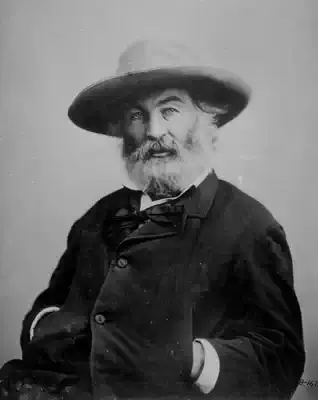
Walt Whitman
To You
To You
STRANGER! if you, passing, meet me, and desire to speak to me, why
should you not speak to me?
And why should I not speak to you?
STRANGER! if you, passing, meet me, and desire to speak to me, why
should you not speak to me?
And why should I not speak to you?
470

Robert W. Service
Romance
Romance
In Paris on a morn of May
I sent a radio transalantic
To catch a steamer on the way,
But oh the postal fuss was frantic;
They sent me here, they sent me there,
They were so courteous yet so canny;
Then as I wilted in despair
A Frenchman flipped me on the fanny.
'Twas only juts a gentle pat,
Yet oh what sympathy behind it!
I don't let anyone do that,
But somehow then I didn't mind it.
He seemed my worry to divine,
With kindly smile, that foreign mannie,
And as we stood in waiting line
With tender touch he tapped my fanny.
It brought a ripple of romance
Into that postal bureau dreary;
He gave me such a smiling glance
That somehow I felt gay and cheery.
For information on my case
The postal folk searched nook and cranny;
He gently tapped, with smiling face,
His reassurance on my fanny.
So I'll go back to Tennessee,
And they will ask: "How have you spent your
Brief holiday in gay Paree?"
But I'll not speak of my adventure.
Oh say I'm spectacled and grey,
Oh say I'm sixty and a grannie -
But say that morn of May
A Frenchman flipped me on the fanny!
In Paris on a morn of May
I sent a radio transalantic
To catch a steamer on the way,
But oh the postal fuss was frantic;
They sent me here, they sent me there,
They were so courteous yet so canny;
Then as I wilted in despair
A Frenchman flipped me on the fanny.
'Twas only juts a gentle pat,
Yet oh what sympathy behind it!
I don't let anyone do that,
But somehow then I didn't mind it.
He seemed my worry to divine,
With kindly smile, that foreign mannie,
And as we stood in waiting line
With tender touch he tapped my fanny.
It brought a ripple of romance
Into that postal bureau dreary;
He gave me such a smiling glance
That somehow I felt gay and cheery.
For information on my case
The postal folk searched nook and cranny;
He gently tapped, with smiling face,
His reassurance on my fanny.
So I'll go back to Tennessee,
And they will ask: "How have you spent your
Brief holiday in gay Paree?"
But I'll not speak of my adventure.
Oh say I'm spectacled and grey,
Oh say I'm sixty and a grannie -
But say that morn of May
A Frenchman flipped me on the fanny!
226

Vikram Seth
Round and Round
Round and Round
After a long and wretched flight
That stretched from daylight into night,
Where babies wept and tempers shattered
And the plane lurched and whiskey splattered
Over my plastic food, I came
To claim my bags from Baggage Claim
Around, the carousel went around
The anxious travelers sought and found
Their bags, intact or gently battered,
But to my foolish eyes what mattered
Was a brave suitcase, red and small,
That circled round, not mine at all.
I knew that bag. It must be hers.
We hadnt met in seven years!
And as the metal plates squealed and clattered
My happy memories chimed and chattered.
An old man pulled it of the Claim.
My bags appeared: I did the same.
After a long and wretched flight
That stretched from daylight into night,
Where babies wept and tempers shattered
And the plane lurched and whiskey splattered
Over my plastic food, I came
To claim my bags from Baggage Claim
Around, the carousel went around
The anxious travelers sought and found
Their bags, intact or gently battered,
But to my foolish eyes what mattered
Was a brave suitcase, red and small,
That circled round, not mine at all.
I knew that bag. It must be hers.
We hadnt met in seven years!
And as the metal plates squealed and clattered
My happy memories chimed and chattered.
An old man pulled it of the Claim.
My bags appeared: I did the same.
885
Vikram Seth
Mistaken
Mistaken
I smiled at you because I thought that you
Were someone else; you smiled back; and there grew
Between two strangers in a library
Something that seemes like love; but you loved me
(If that's the word) because you thought that I
Was other than I was. And by and by
We found we'd been mistaken all the while
From that first glance, that first mistaken smile.
I smiled at you because I thought that you
Were someone else; you smiled back; and there grew
Between two strangers in a library
Something that seemes like love; but you loved me
(If that's the word) because you thought that I
Was other than I was. And by and by
We found we'd been mistaken all the while
From that first glance, that first mistaken smile.
776
Robert W. Service
Mazie's Ghost
Mazie's Ghost
In London City I evade
For charming Burlington Arcade -
For thee in youth I met a maid
By name of Mazie,
Who lost no time in telling me
The Ritz put up a topping tea,
But having only shillings three
My smile was hazy.
:Instead," said I, "it might be sport
To take a bus to Hampton Court,"
(Her manner, I remarked, was short,)
But she assented.
We climbed on top, and all the way
I held her hand, I felt quite gay,
Bu Mazie, I regret to say,
Seemed discontented.
In fact we almost had a tiff.
It's true it rained and she was stiff,
And all she did was sneeze and sniff
And shudder coldly.
So I said: "Mazzie, there's the maze;
Let's frolic in its leafy ways,"
And buying tickets where one pays
I entered boldly.
The, as the game is, we were lots;
We dashed and darted, crissed and crossed,
But Mazie she got vexed and sauced
Me rather smartly.
There wasn't but us two about;
We hollered, no one heard our shout;
The rain poured down: "Oh let's get out,"
Cried Mazie tartly.
"Keep cool, says I. "You fool," says she;
"I'm sopping wet, I want my tea,
Please take me home," she wailed to me
In accents bitter.
Again we tried, this way and that,
Yet came to where we started at,
And Mazie acted like a cat,
A champion spitter.
She stomped and romped till all was blue,
Then sought herself to find the clue,
And when I saw her next 'twas through
A leafy screening;
"Come on, she cooed, "and join me here;
You'll take me to the Savoy, dear,
And Heidsieck shall our spirits cheer."
I got her meaning.
And yet I sought her everywhere;
I hurried here, I scurried there,
I took each likely lane, I swar,
As I surmised it:
The suddenly I saw once more,
Confronting me, the exit door,
And I was dashing through before
I realized it.
And there I spied a passing bus.
Thinks I: "It's mean to leave her thus,
But after all her fret and fuss
I can't abide her.
So I sped back to London town
And grubbed alone for half-a-crown,
On steak and kidney pie washed down
With sparkling cider.
But since I left that damsel fair,
The thought she may have perished there,
Of cold, starvation and dispair
Nigh drives me crazy.
So, stranger, if you should invade
The charming Burlington Arcade,
Tell me if you behold a shade,
Ghost of a most unhappy maid
By name of Mazie.
In London City I evade
For charming Burlington Arcade -
For thee in youth I met a maid
By name of Mazie,
Who lost no time in telling me
The Ritz put up a topping tea,
But having only shillings three
My smile was hazy.
:Instead," said I, "it might be sport
To take a bus to Hampton Court,"
(Her manner, I remarked, was short,)
But she assented.
We climbed on top, and all the way
I held her hand, I felt quite gay,
Bu Mazie, I regret to say,
Seemed discontented.
In fact we almost had a tiff.
It's true it rained and she was stiff,
And all she did was sneeze and sniff
And shudder coldly.
So I said: "Mazzie, there's the maze;
Let's frolic in its leafy ways,"
And buying tickets where one pays
I entered boldly.
The, as the game is, we were lots;
We dashed and darted, crissed and crossed,
But Mazie she got vexed and sauced
Me rather smartly.
There wasn't but us two about;
We hollered, no one heard our shout;
The rain poured down: "Oh let's get out,"
Cried Mazie tartly.
"Keep cool, says I. "You fool," says she;
"I'm sopping wet, I want my tea,
Please take me home," she wailed to me
In accents bitter.
Again we tried, this way and that,
Yet came to where we started at,
And Mazie acted like a cat,
A champion spitter.
She stomped and romped till all was blue,
Then sought herself to find the clue,
And when I saw her next 'twas through
A leafy screening;
"Come on, she cooed, "and join me here;
You'll take me to the Savoy, dear,
And Heidsieck shall our spirits cheer."
I got her meaning.
And yet I sought her everywhere;
I hurried here, I scurried there,
I took each likely lane, I swar,
As I surmised it:
The suddenly I saw once more,
Confronting me, the exit door,
And I was dashing through before
I realized it.
And there I spied a passing bus.
Thinks I: "It's mean to leave her thus,
But after all her fret and fuss
I can't abide her.
So I sped back to London town
And grubbed alone for half-a-crown,
On steak and kidney pie washed down
With sparkling cider.
But since I left that damsel fair,
The thought she may have perished there,
Of cold, starvation and dispair
Nigh drives me crazy.
So, stranger, if you should invade
The charming Burlington Arcade,
Tell me if you behold a shade,
Ghost of a most unhappy maid
By name of Mazie.
230
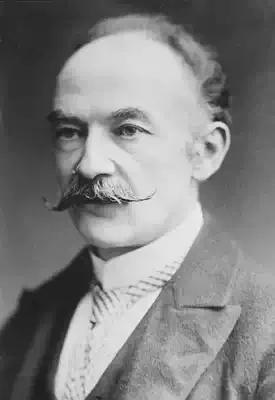
Thomas Hardy
Mismet
Mismet
He was leaning by a face,
He was looking into eyes,
And he knew a trysting-place,
And he heard seductive sighs;
But the face,
And the eyes,
And the place,
And the sighs,
Were not, alas, the right ones--the ones meet for him--
Though fine and sweet the features, and the feelings all abrim.
II
She was looking at a form,
She was listening for a tread,
She could feel a waft of charm
When a certain name was said;
But the form,
And the tread,
And the charm,
And name said,
Were the wrong ones for her, and ever would be so,
While the heritor of the right it would have saved her soul to know!
He was leaning by a face,
He was looking into eyes,
And he knew a trysting-place,
And he heard seductive sighs;
But the face,
And the eyes,
And the place,
And the sighs,
Were not, alas, the right ones--the ones meet for him--
Though fine and sweet the features, and the feelings all abrim.
II
She was looking at a form,
She was listening for a tread,
She could feel a waft of charm
When a certain name was said;
But the form,
And the tread,
And the charm,
And name said,
Were the wrong ones for her, and ever would be so,
While the heritor of the right it would have saved her soul to know!
230
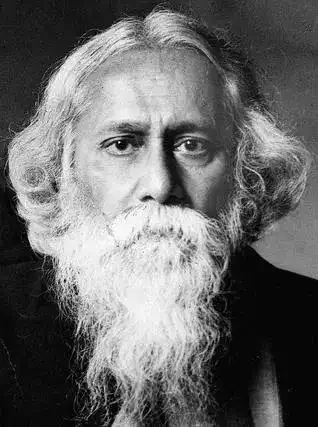
Rabindranath Tagore
When The Two Sisters Go To Fetch Water
When The Two Sisters Go To Fetch Water
WHEN the two sisters go to fetch water, they come to this spot and they smile.
They must be aware of somebody who stands behind the trees whenever they go to
fetch water.
The two sisters whisper to each other when they pass this spot.
They must have guessed the secret of that somebody who stands behind the trees
whenever they go to fetch water.
Their pitchers lurch suddenly, and water spills when they reach this spot.
They must have found out that somebody's heart is beating who stands behind the
trees whenever they go to fetch water.
The two sisters glance at each other when they come to this spot, and they smile.
There is a laughter in their swift-stepping feet, which makes confusion in somebody's
mind who stands behind the trees whenever they go to fetch water.
WHEN the two sisters go to fetch water, they come to this spot and they smile.
They must be aware of somebody who stands behind the trees whenever they go to
fetch water.
The two sisters whisper to each other when they pass this spot.
They must have guessed the secret of that somebody who stands behind the trees
whenever they go to fetch water.
Their pitchers lurch suddenly, and water spills when they reach this spot.
They must have found out that somebody's heart is beating who stands behind the
trees whenever they go to fetch water.
The two sisters glance at each other when they come to this spot, and they smile.
There is a laughter in their swift-stepping feet, which makes confusion in somebody's
mind who stands behind the trees whenever they go to fetch water.
581
Rabindranath Tagore
Untimely Leave
Untimely Leave
No more noisy, loud words from me---such is my master's will.
Henceforth I deal in whispers.
The speech of my heart will be carried on in murmurings of a song.
Men hasten to the King's market. All the buyers and sellers are there.
But I have my untimely leave in the middle of the day, in the thick of work.
Let then the flowers come out in my garden, though it is not their time;
and let the midday bees strike up their lazy hum.
Full many an hour have I spent in the strife of the good and the evil,
but now it is the pleasure of my playmate of the empty days to draw my heart on to
him;
and I know not why is this sudden call to what useless inconsequence!
No more noisy, loud words from me---such is my master's will.
Henceforth I deal in whispers.
The speech of my heart will be carried on in murmurings of a song.
Men hasten to the King's market. All the buyers and sellers are there.
But I have my untimely leave in the middle of the day, in the thick of work.
Let then the flowers come out in my garden, though it is not their time;
and let the midday bees strike up their lazy hum.
Full many an hour have I spent in the strife of the good and the evil,
but now it is the pleasure of my playmate of the empty days to draw my heart on to
him;
and I know not why is this sudden call to what useless inconsequence!
458

Emily Dickinson
So the Eyes accost—and sunder
So the Eyes accost—and sunder
752
So the Eyes accost—and sunder
In an Audience—
Stamped—occasionally—forever—
So may Countenance
Entertain—without addressing
Countenance of One
In a Neighboring Horizon—
Gone—as soon as known—
752
So the Eyes accost—and sunder
In an Audience—
Stamped—occasionally—forever—
So may Countenance
Entertain—without addressing
Countenance of One
In a Neighboring Horizon—
Gone—as soon as known—
174
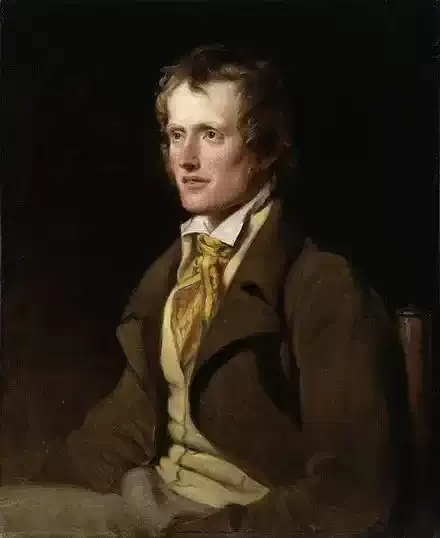
John Clare
The Cross Roads; Or, The Haymaker's Story
The Cross Roads; Or, The Haymaker's Story
Stopt by the storm, that long in sullen black
From the south-west stained its encroaching track,
Haymakers, hustling from the rain to hide,
Sought the grey willows by the pasture-side;
And there, while big drops bow the grassy stems,
And bleb the withering hay with pearly gems,
Dimple the brook, and patter in the leaves,
The song or tale an hour's restraint relieves.
And while the old dames gossip at their ease,
And pinch the snuff-box empty by degrees,
The young ones join in love's delightful themes,
Truths told by gipsies, and expounded dreams;
And mutter things kept secrets from the rest,
As sweethearts' names, and whom they love the best;
And dazzling ribbons they delight to show,
And last new favours of some veigling beau,
Who with such treachery tries their hearts to move,
And, like the highest, bribes the maidens' love.
The old dames, jealous of their whispered praise,
Throw in their hints of man's deluding ways;
And one, to give her counsels more effect,
And by example illustrate the fact
Of innocence oercome by flattering man,
Thrice tapped her box, and pinched, and thus began.
'Now wenches listen, and let lovers lie,
Ye'll hear a story ye may profit by;
I'm your age treble, with some oddments to't,
And right from wrong can tell, if ye'll but do't:
Ye need not giggle underneath your hat,
Mine's no joke-matter, let me tell you that;
So keep ye quiet till my story's told,
And don't despise your betters cause they're old.
'That grave ye've heard of, where the four roads meet,
Where walks the spirit in a winding-sheet,
Oft seen at night, by strangers passing late,
And tarrying neighbours that at market wait,
Stalking along as white as driven snow,
And long as one's shadow when the sun is low;
The girl that's buried there I knew her well,
And her whole history, if ye'll hark, can tell.
Her name was Jane, and neighbour's children we,
And old companions once, as ye may be;
And like to you, on Sundays often strolled
To gipsies' camps to have our fortunes told;
And oft, God rest her, in the fortune-book
Which we at hay-time in our pockets took,
Our pins at blindfold on the wheel we stuck,
When hers would always prick the worst of luck;
For try, poor thing, as often as she might,
Her point would always on the blank alight;
Which plainly shows the fortune one's to have,
As such like go unwedded to the grave,--
And so it proved.--The next succeeding May,
We both to service went from sports and play,
Though in the village still; as friends and kin
Thought neighbour's service better to begin.
So out we went:--Jane's place was reckoned good,
Though she bout life but little understood,
And had a master wild as wild can be,
And far unfit for such a child as she;
And soon the whisper went about the town,
That Jane's good looks procured her many a gown
From him, whose promise was to every one,
But whose intention was to wive with none.
Twas nought to wonder, though begun by guess;
For Jane was lovely in her Sunday dress,
And all expected such a rosy face
Would be her ruin--as was just the case.
The while the change was easily perceived,
Some months went by, ere I the tales believed;
For there are people nowadays, Lord knows,
Will sooner hatch up lies than mend their clothes;
And when with such-like tattle they begin,
Don't mind whose character they spoil a pin:
But passing neighbours often marked them smile,
And watched him take her milkpail oer a stile;
And many a time, as wandering closer by,
From Jenny's bosom met a heavy sigh;
And often marked her, as discoursing deep,
When doubts might rise to give just cause to weep,
Smothering their notice, by a wished disguise
To slive her apron corner to her eyes.
Such signs were mournful and alarming things,
And far more weighty than conjecture brings;
Though foes made double what they heard of all,
Swore lies as proofs, and prophesied her fall.
Poor thoughtless wench! it seems but Sunday past
Since we went out together for the last,
And plain enough indeed it was to find
She'd something more than common on her mind;
For she was always fond and full of chat,
In passing harmless jokes bout beaus and that,
But nothing then was scarcely talked about,
And what there was, I even forced it out.
A gloomy wanness spoiled her rosy cheek,
And doubts hung there it was not mine to seek;
She neer so much as mentioned things to come,
But sighed oer pleasures ere she left her home;
And now and then a mournful smile would raise
At freaks repeated of our younger days,
Which I brought up, while passing spots of ground
Where we, when children, 'hurly-burlied' round,
Or 'blindman-buffed' some morts of hours away--
Two games, poor thing, Jane dearly loved to play.
She smiled at these, but shook her head and sighed
When eer she thought my look was turned aside;
Nor turned she round, as was her former way,
To praise the thorn, white over then with May;
Nor stooped once, though thousands round her grew,
To pull a cowslip as she used to do:
For Jane in flowers delighted from a child--
I like the garden, but she loved the wild--
And oft on Sundays young men's gifts declined,
Posies from gardens of the sweetest kind,
And eager scrambled the dog-rose to get,
And woodbine-flowers at every bush she met.
The cowslip blossom, with its ruddy streak,
Would tempt her furlongs from the path to seek;
And gay long purple, with its tufty spike,
She'd wade oer shoes to reach it in the dyke;
And oft, while scratching through the briary woods
For tempting cuckoo-flowers and violet buds,
Poor Jane, I've known her crying sneak to town,
Fearing her mother, when she'd torn her gown.
Ah, these were days her conscience viewed with pain,
Which all are loth to lose, as well as Jane.
And, what I took more odd than all the rest,
Was, that same night she neer a wish exprest
To see the gipsies, so beloved before,
That lay a stone's throw from us on the moor:
I hinted it; she just replied again--
She once believed them, but had doubts since then.
And when we sought our cows, I called, 'Come mull!'
But she stood silent, for her heart was full.
She loved dumb things: and ere she had begun
To milk, caressed them more than eer she'd done;
But though her tears stood watering in her eye,
I little took it as her last good-bye;
For she was tender, and I've often known
Her mourn when beetles have been trampled on:
So I neer dreamed from this, what soon befell,
Till the next morning rang her passing-bell.
My story's long, but time's in plenty yet,
Since the black clouds betoken nought but wet;
And I'll een snatch a minute's breath or two,
And take another pinch, to help me through.
'So, as I said, next morn I heard the bell,
And passing neighbours crossed the street, to tell
That my poor partner Jenny had been found
In the old flag-pool, on the pasture, drowned.
God knows my heart! I twittered like a leaf,
And found too late the cause of Sunday's grief;
For every tongue was loosed to gabble oer
The slanderous things that secret passed before:
With truth or lies they need not then be strict,
The one they railed at could not contradict.
Twas now no secret of her being beguiled,
For every mouth knew Jenny died with child;
And though more cautious with a living name,
Each more than guessed her master bore the blame.
That very morning, it affects me still,
Ye know the foot-path sidles down the hill,
Ignorant as babe unborn I passed the pond
To milk as usual in our close beyond,
And cows were drinking at the water's edge,
And horses browsed among the flags and sedge,
And gnats and midges danced the water oer,
Just as I've marked them scores of times before,
And birds sat singing, as in mornings gone,--
While I as unconcerned went soodling on,
But little dreaming, as the wakening wind
Flapped the broad ash-leaves oer the pond reclin'd,
And oer the water crinked the curdled wave,
That Jane was sleeping in her watery grave.
The neatherd boy that used to tend the cows,
While getting whip-sticks from the dangling boughs
Of osiers drooping by the water-side,
Her bonnet floating on the top espied;
He knew it well, and hastened fearful down
To take the terror of his fears to town,--
A melancholy story, far too true;
And soon the village to the pasture flew,
Where, from the deepest hole the pond about,
They dragged poor Jenny's lifeless body out,
And took her home, where scarce an hour gone by
She had been living like to you and I.
I went with more, and kissed her for the last,
And thought with tears on pleasures that were past;
And, the last kindness left me then to do,
I went, at milking, where the blossoms grew,
And handfuls got of rose and lambtoe sweet,
And put them with her in her winding-sheet.
A wilful murder, jury made the crime;
Nor parson 'lowed to pray, nor bell to chime;
On the cross roads, far from her friends and kin,
The usual law for their ungodly sin
Who violent hands upon themselves have laid,
Poor Jane's last bed unchristian-like was made;
And there, like all whose last thoughts turn to heaven,
She sleeps, and doubtless hoped to be forgiven.
But, though I say't, for maids thus veigled in
I think the wicked men deserve the sin;
And sure enough we all at last shall see
The treachery punished as it ought to be.
For ere his wickedness pretended love,
Jane, I'll be bound, was spotless as the dove,
And's good a servant, still old folks allow,
As ever scoured a pail or milked a cow;
And ere he led her into ruin's way,
As gay and buxom as a summer's day:
The birds that ranted in the hedge-row boughs,
As night and morning we have sought our cows,
With yokes and buckets as she bounced along,
Were often deafed to silence with her song.
But now she's gone:--girls, shun deceitful men,
The worst of stumbles ye can fall agen;
Be deaf to them, and then, as twere, ye'll see
Your pleasures safe as under lock and key.
Throw not my words away, as many do;
They're gold in value, though they're cheap to you.
And husseys hearken, and be warned from this,
If ye love mothers, never do amiss:
Jane might love hers, but she forsook the plan
To make her happy, when she thought of man.
Poor tottering dame, it was too plainly known,
Her daughter's dying hastened on her own,
For from the day the tidings reached her door
She took to bed and looked up no more,
And, ere again another year came round,
She, well as Jane, was laid within the ground;
And all were grieved poor Goody's end to see:
No better neighbour entered house than she,
A harmless soul, with no abusive tongue,
Trig as new pins, and tight's the day was long;
And go the week about, nine times in ten
Ye'd find her house as cleanly as her sen.
But, Lord protect us! time such change does bring,
We cannot dream what oer our heads may hing;
The very house she lived in, stick and stone,
Since Goody died, has tumbled down and gone:
And where the marjoram once, and sage, and rue,
And balm, and mint, with curled-leaf parsley grew,
And double marygolds, and silver thyme,
And pumpkins neath the window used to climb;
And where I often when a child for hours
Tried through the pales to get the tempting flowers,
As lady's laces, everlasting peas,
True-love-lies-bleeding, with the hearts-at-ease,
And golden rods, and tansy running high
That oer the pale-tops smiled on passers-by,
Flowers in my time that every one would praise,
Though thrown like weeds from gardens nowadays;
Where these all grew, now henbane stinks and spreads,
And docks and thistles shake their seedy heads,
And yearly keep with nettles smothering oer;-
The house, the dame, the garden known no more:
While, neighbouring nigh, one lonely elder-tree
Is all that's left of what had used to be,
Marking the place, and bringing up with tears
The recollections of one's younger years.
And now I've done, ye're each at once as free
To take your trundle as ye used to be;
To take right ways, as Jenny should have ta'en,
Or headlong run, and be a second Jane;
For by one thoughtless girl that's acted ill
A thousand may be guided if they will:
As oft mong folks to labour bustling on,
We mark the foremost kick against a stone,
Or stumble oer a stile he meant to climb,
While hind ones see and shun the fall in time.
But ye, I will be bound, like far the best
Love's tickling nick-nacks and the laughing jest,
And ten times sooner than be warned by me,
Would each be sitting on some fellow's knee,
Sooner believe the lies wild chaps will tell
Than old dames' cautions, who would wish ye well:
So have your wills.'--She pinched her box again,
And ceased her tale, and listened to the rain,
Which still as usual pattered fast around,
And bowed the bent-head loaded to the ground;
While larks, their naked nest by force forsook,
Pruned their wet wings in bushes by the brook.
The maids, impatient now old Goody ceased,
As restless children from the school released,
Right gladly proving, what she'd just foretold,
That young ones' stories were preferred to old,
Turn to the whisperings of their former joy,
That oft deceive, but very rarely cloy.
Stopt by the storm, that long in sullen black
From the south-west stained its encroaching track,
Haymakers, hustling from the rain to hide,
Sought the grey willows by the pasture-side;
And there, while big drops bow the grassy stems,
And bleb the withering hay with pearly gems,
Dimple the brook, and patter in the leaves,
The song or tale an hour's restraint relieves.
And while the old dames gossip at their ease,
And pinch the snuff-box empty by degrees,
The young ones join in love's delightful themes,
Truths told by gipsies, and expounded dreams;
And mutter things kept secrets from the rest,
As sweethearts' names, and whom they love the best;
And dazzling ribbons they delight to show,
And last new favours of some veigling beau,
Who with such treachery tries their hearts to move,
And, like the highest, bribes the maidens' love.
The old dames, jealous of their whispered praise,
Throw in their hints of man's deluding ways;
And one, to give her counsels more effect,
And by example illustrate the fact
Of innocence oercome by flattering man,
Thrice tapped her box, and pinched, and thus began.
'Now wenches listen, and let lovers lie,
Ye'll hear a story ye may profit by;
I'm your age treble, with some oddments to't,
And right from wrong can tell, if ye'll but do't:
Ye need not giggle underneath your hat,
Mine's no joke-matter, let me tell you that;
So keep ye quiet till my story's told,
And don't despise your betters cause they're old.
'That grave ye've heard of, where the four roads meet,
Where walks the spirit in a winding-sheet,
Oft seen at night, by strangers passing late,
And tarrying neighbours that at market wait,
Stalking along as white as driven snow,
And long as one's shadow when the sun is low;
The girl that's buried there I knew her well,
And her whole history, if ye'll hark, can tell.
Her name was Jane, and neighbour's children we,
And old companions once, as ye may be;
And like to you, on Sundays often strolled
To gipsies' camps to have our fortunes told;
And oft, God rest her, in the fortune-book
Which we at hay-time in our pockets took,
Our pins at blindfold on the wheel we stuck,
When hers would always prick the worst of luck;
For try, poor thing, as often as she might,
Her point would always on the blank alight;
Which plainly shows the fortune one's to have,
As such like go unwedded to the grave,--
And so it proved.--The next succeeding May,
We both to service went from sports and play,
Though in the village still; as friends and kin
Thought neighbour's service better to begin.
So out we went:--Jane's place was reckoned good,
Though she bout life but little understood,
And had a master wild as wild can be,
And far unfit for such a child as she;
And soon the whisper went about the town,
That Jane's good looks procured her many a gown
From him, whose promise was to every one,
But whose intention was to wive with none.
Twas nought to wonder, though begun by guess;
For Jane was lovely in her Sunday dress,
And all expected such a rosy face
Would be her ruin--as was just the case.
The while the change was easily perceived,
Some months went by, ere I the tales believed;
For there are people nowadays, Lord knows,
Will sooner hatch up lies than mend their clothes;
And when with such-like tattle they begin,
Don't mind whose character they spoil a pin:
But passing neighbours often marked them smile,
And watched him take her milkpail oer a stile;
And many a time, as wandering closer by,
From Jenny's bosom met a heavy sigh;
And often marked her, as discoursing deep,
When doubts might rise to give just cause to weep,
Smothering their notice, by a wished disguise
To slive her apron corner to her eyes.
Such signs were mournful and alarming things,
And far more weighty than conjecture brings;
Though foes made double what they heard of all,
Swore lies as proofs, and prophesied her fall.
Poor thoughtless wench! it seems but Sunday past
Since we went out together for the last,
And plain enough indeed it was to find
She'd something more than common on her mind;
For she was always fond and full of chat,
In passing harmless jokes bout beaus and that,
But nothing then was scarcely talked about,
And what there was, I even forced it out.
A gloomy wanness spoiled her rosy cheek,
And doubts hung there it was not mine to seek;
She neer so much as mentioned things to come,
But sighed oer pleasures ere she left her home;
And now and then a mournful smile would raise
At freaks repeated of our younger days,
Which I brought up, while passing spots of ground
Where we, when children, 'hurly-burlied' round,
Or 'blindman-buffed' some morts of hours away--
Two games, poor thing, Jane dearly loved to play.
She smiled at these, but shook her head and sighed
When eer she thought my look was turned aside;
Nor turned she round, as was her former way,
To praise the thorn, white over then with May;
Nor stooped once, though thousands round her grew,
To pull a cowslip as she used to do:
For Jane in flowers delighted from a child--
I like the garden, but she loved the wild--
And oft on Sundays young men's gifts declined,
Posies from gardens of the sweetest kind,
And eager scrambled the dog-rose to get,
And woodbine-flowers at every bush she met.
The cowslip blossom, with its ruddy streak,
Would tempt her furlongs from the path to seek;
And gay long purple, with its tufty spike,
She'd wade oer shoes to reach it in the dyke;
And oft, while scratching through the briary woods
For tempting cuckoo-flowers and violet buds,
Poor Jane, I've known her crying sneak to town,
Fearing her mother, when she'd torn her gown.
Ah, these were days her conscience viewed with pain,
Which all are loth to lose, as well as Jane.
And, what I took more odd than all the rest,
Was, that same night she neer a wish exprest
To see the gipsies, so beloved before,
That lay a stone's throw from us on the moor:
I hinted it; she just replied again--
She once believed them, but had doubts since then.
And when we sought our cows, I called, 'Come mull!'
But she stood silent, for her heart was full.
She loved dumb things: and ere she had begun
To milk, caressed them more than eer she'd done;
But though her tears stood watering in her eye,
I little took it as her last good-bye;
For she was tender, and I've often known
Her mourn when beetles have been trampled on:
So I neer dreamed from this, what soon befell,
Till the next morning rang her passing-bell.
My story's long, but time's in plenty yet,
Since the black clouds betoken nought but wet;
And I'll een snatch a minute's breath or two,
And take another pinch, to help me through.
'So, as I said, next morn I heard the bell,
And passing neighbours crossed the street, to tell
That my poor partner Jenny had been found
In the old flag-pool, on the pasture, drowned.
God knows my heart! I twittered like a leaf,
And found too late the cause of Sunday's grief;
For every tongue was loosed to gabble oer
The slanderous things that secret passed before:
With truth or lies they need not then be strict,
The one they railed at could not contradict.
Twas now no secret of her being beguiled,
For every mouth knew Jenny died with child;
And though more cautious with a living name,
Each more than guessed her master bore the blame.
That very morning, it affects me still,
Ye know the foot-path sidles down the hill,
Ignorant as babe unborn I passed the pond
To milk as usual in our close beyond,
And cows were drinking at the water's edge,
And horses browsed among the flags and sedge,
And gnats and midges danced the water oer,
Just as I've marked them scores of times before,
And birds sat singing, as in mornings gone,--
While I as unconcerned went soodling on,
But little dreaming, as the wakening wind
Flapped the broad ash-leaves oer the pond reclin'd,
And oer the water crinked the curdled wave,
That Jane was sleeping in her watery grave.
The neatherd boy that used to tend the cows,
While getting whip-sticks from the dangling boughs
Of osiers drooping by the water-side,
Her bonnet floating on the top espied;
He knew it well, and hastened fearful down
To take the terror of his fears to town,--
A melancholy story, far too true;
And soon the village to the pasture flew,
Where, from the deepest hole the pond about,
They dragged poor Jenny's lifeless body out,
And took her home, where scarce an hour gone by
She had been living like to you and I.
I went with more, and kissed her for the last,
And thought with tears on pleasures that were past;
And, the last kindness left me then to do,
I went, at milking, where the blossoms grew,
And handfuls got of rose and lambtoe sweet,
And put them with her in her winding-sheet.
A wilful murder, jury made the crime;
Nor parson 'lowed to pray, nor bell to chime;
On the cross roads, far from her friends and kin,
The usual law for their ungodly sin
Who violent hands upon themselves have laid,
Poor Jane's last bed unchristian-like was made;
And there, like all whose last thoughts turn to heaven,
She sleeps, and doubtless hoped to be forgiven.
But, though I say't, for maids thus veigled in
I think the wicked men deserve the sin;
And sure enough we all at last shall see
The treachery punished as it ought to be.
For ere his wickedness pretended love,
Jane, I'll be bound, was spotless as the dove,
And's good a servant, still old folks allow,
As ever scoured a pail or milked a cow;
And ere he led her into ruin's way,
As gay and buxom as a summer's day:
The birds that ranted in the hedge-row boughs,
As night and morning we have sought our cows,
With yokes and buckets as she bounced along,
Were often deafed to silence with her song.
But now she's gone:--girls, shun deceitful men,
The worst of stumbles ye can fall agen;
Be deaf to them, and then, as twere, ye'll see
Your pleasures safe as under lock and key.
Throw not my words away, as many do;
They're gold in value, though they're cheap to you.
And husseys hearken, and be warned from this,
If ye love mothers, never do amiss:
Jane might love hers, but she forsook the plan
To make her happy, when she thought of man.
Poor tottering dame, it was too plainly known,
Her daughter's dying hastened on her own,
For from the day the tidings reached her door
She took to bed and looked up no more,
And, ere again another year came round,
She, well as Jane, was laid within the ground;
And all were grieved poor Goody's end to see:
No better neighbour entered house than she,
A harmless soul, with no abusive tongue,
Trig as new pins, and tight's the day was long;
And go the week about, nine times in ten
Ye'd find her house as cleanly as her sen.
But, Lord protect us! time such change does bring,
We cannot dream what oer our heads may hing;
The very house she lived in, stick and stone,
Since Goody died, has tumbled down and gone:
And where the marjoram once, and sage, and rue,
And balm, and mint, with curled-leaf parsley grew,
And double marygolds, and silver thyme,
And pumpkins neath the window used to climb;
And where I often when a child for hours
Tried through the pales to get the tempting flowers,
As lady's laces, everlasting peas,
True-love-lies-bleeding, with the hearts-at-ease,
And golden rods, and tansy running high
That oer the pale-tops smiled on passers-by,
Flowers in my time that every one would praise,
Though thrown like weeds from gardens nowadays;
Where these all grew, now henbane stinks and spreads,
And docks and thistles shake their seedy heads,
And yearly keep with nettles smothering oer;-
The house, the dame, the garden known no more:
While, neighbouring nigh, one lonely elder-tree
Is all that's left of what had used to be,
Marking the place, and bringing up with tears
The recollections of one's younger years.
And now I've done, ye're each at once as free
To take your trundle as ye used to be;
To take right ways, as Jenny should have ta'en,
Or headlong run, and be a second Jane;
For by one thoughtless girl that's acted ill
A thousand may be guided if they will:
As oft mong folks to labour bustling on,
We mark the foremost kick against a stone,
Or stumble oer a stile he meant to climb,
While hind ones see and shun the fall in time.
But ye, I will be bound, like far the best
Love's tickling nick-nacks and the laughing jest,
And ten times sooner than be warned by me,
Would each be sitting on some fellow's knee,
Sooner believe the lies wild chaps will tell
Than old dames' cautions, who would wish ye well:
So have your wills.'--She pinched her box again,
And ceased her tale, and listened to the rain,
Which still as usual pattered fast around,
And bowed the bent-head loaded to the ground;
While larks, their naked nest by force forsook,
Pruned their wet wings in bushes by the brook.
The maids, impatient now old Goody ceased,
As restless children from the school released,
Right gladly proving, what she'd just foretold,
That young ones' stories were preferred to old,
Turn to the whisperings of their former joy,
That oft deceive, but very rarely cloy.
317
Rabindranath Tagore
The Gardener IV: Ah Me
The Gardener IV: Ah Me
Ah me, why did they build my
house by the road to the market
town?
They moor their laden boats near
my trees.
They come and go and wander at
their will.
I sit and watch them; my time
wears on.
Turn them away I cannot. And
thus my days pass by.
Night and day their steps sound
by my door.
Vainly I cry, "I do not know
you."
Some of them are known to my
fingers, some to my nostrils, the
blood in my veins seems to know
them, and some are known to my
dreams.
Turn them away I cannot. I call
them and say, "Come to my house
whoever chooses. Yes, come."
In the morning the bell rings in the
temple.
They come with their baskets in
their hands.
Their feet are rosy red. The early
light of dawn is on their faces.
Turn them away I cannot. I call
them and I say, "Come to my garden
to gather flowers. Come hither."
In the mid-day the gong sounds
at the palace gate.
I know not why they leave their
work and linger near my hedge.
The flowers in their hair are pale
and faded; the notes are languid in
their flutes.
Turn them away I cannot. I call
them and say, "The shade is cool
under my trees. Come, friends."
At night the crickets chirp in the
woods.
Who is it that comes slowly to my
door and gently knocks?
I vaguely see the face, not a word
is spoken, the stillness of the sky is
all around.
Turn away my silent guest I
cannot. I look at the face through the
dark, and hours of dreams pass by.
Ah me, why did they build my
house by the road to the market
town?
They moor their laden boats near
my trees.
They come and go and wander at
their will.
I sit and watch them; my time
wears on.
Turn them away I cannot. And
thus my days pass by.
Night and day their steps sound
by my door.
Vainly I cry, "I do not know
you."
Some of them are known to my
fingers, some to my nostrils, the
blood in my veins seems to know
them, and some are known to my
dreams.
Turn them away I cannot. I call
them and say, "Come to my house
whoever chooses. Yes, come."
In the morning the bell rings in the
temple.
They come with their baskets in
their hands.
Their feet are rosy red. The early
light of dawn is on their faces.
Turn them away I cannot. I call
them and I say, "Come to my garden
to gather flowers. Come hither."
In the mid-day the gong sounds
at the palace gate.
I know not why they leave their
work and linger near my hedge.
The flowers in their hair are pale
and faded; the notes are languid in
their flutes.
Turn them away I cannot. I call
them and say, "The shade is cool
under my trees. Come, friends."
At night the crickets chirp in the
woods.
Who is it that comes slowly to my
door and gently knocks?
I vaguely see the face, not a word
is spoken, the stillness of the sky is
all around.
Turn away my silent guest I
cannot. I look at the face through the
dark, and hours of dreams pass by.
458
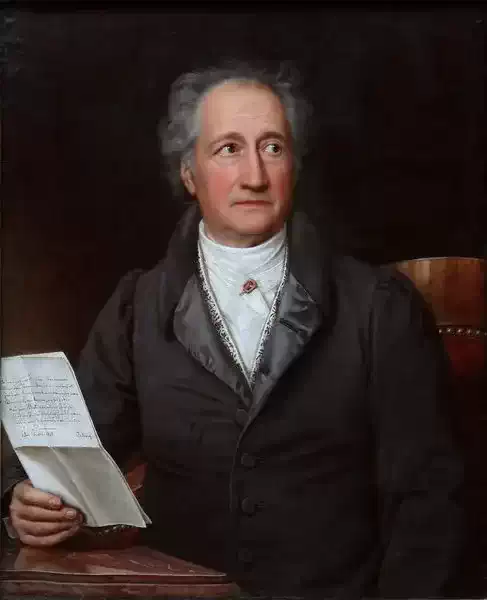
Johann Wolfgang Von Goethe
Welcome And Farewell
Welcome And Farewell
QUICK throbb'd my heart: to norse! haste, haste,
And lo! 'twas done with speed of light;
The evening soon the world embraced,
And o'er the mountains hung the night.
Soon stood, in robe of mist, the oak,
A tow'ring giant in his size,
Where darkness through the thicket broke,
And glared with hundred gloomy eyes.
From out a hill of clouds the moon
With mournful gaze began to peer:
The winds their soft wings flutter'd soon,
And murmur'd in mine awe-struck ear;
The night a thousand monsters made,
Yet fresh and joyous was my mind;
What fire within my veins then play'd!
What glow was in my bosom shrin'd!
I saw thee, and with tender pride
Felt thy sweet gaze pour joy on me;
While all my heart was at thy side.
And every breath I breath'd for thee.
The roseate hues that spring supplies
Were playing round thy features fair,
And love for me--ye Deities!
I hoped it, I deserved it ne'er!
But, when the morning sun return'd,
Departure filled with grief my heart:
Within thy kiss, what rapture burn'd!
But in thy look, what bitter smart!
I went--thy gaze to earth first roved
Thou follow'dst me with tearful eye:
And yet, what rapture to be loved!
And, Gods, to love--what ecstasy!
QUICK throbb'd my heart: to norse! haste, haste,
And lo! 'twas done with speed of light;
The evening soon the world embraced,
And o'er the mountains hung the night.
Soon stood, in robe of mist, the oak,
A tow'ring giant in his size,
Where darkness through the thicket broke,
And glared with hundred gloomy eyes.
From out a hill of clouds the moon
With mournful gaze began to peer:
The winds their soft wings flutter'd soon,
And murmur'd in mine awe-struck ear;
The night a thousand monsters made,
Yet fresh and joyous was my mind;
What fire within my veins then play'd!
What glow was in my bosom shrin'd!
I saw thee, and with tender pride
Felt thy sweet gaze pour joy on me;
While all my heart was at thy side.
And every breath I breath'd for thee.
The roseate hues that spring supplies
Were playing round thy features fair,
And love for me--ye Deities!
I hoped it, I deserved it ne'er!
But, when the morning sun return'd,
Departure filled with grief my heart:
Within thy kiss, what rapture burn'd!
But in thy look, what bitter smart!
I went--thy gaze to earth first roved
Thou follow'dst me with tearful eye:
And yet, what rapture to be loved!
And, Gods, to love--what ecstasy!
552
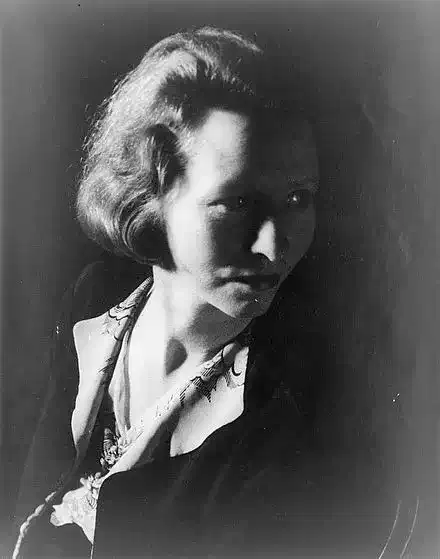
Edna St. Vincent Millay
And do you think that love itself
And do you think that love itself
And do you think that love itself,
Living in such an ugly house,
Can prosper long?
We meet and part;
Our talk is all of heres and nows,
Our conduct likewise; in no act
Is any future, any past;
Under our sly, unspoken pact,
I KNOW with whom I saw you last,
But I say nothing; and you know
At six-fifteen to whom I go—
Can even love be treated so?
I KNOW, but I do not insist,
Having stealth and tact, thought not enough,
What hour your eye is on your wrist.
No wild appeal, no mild rebuff
Deflates the hour, leaves the wine flat—
Yet if YOU drop the picked-up book
To intercept my clockward look—
Tell me, can love go on like that?
Even the bored, insulted heart,
That signed so long and tight a lease,
Can BREAK it CONTRACT, slump in peace.
And do you think that love itself,
Living in such an ugly house,
Can prosper long?
We meet and part;
Our talk is all of heres and nows,
Our conduct likewise; in no act
Is any future, any past;
Under our sly, unspoken pact,
I KNOW with whom I saw you last,
But I say nothing; and you know
At six-fifteen to whom I go—
Can even love be treated so?
I KNOW, but I do not insist,
Having stealth and tact, thought not enough,
What hour your eye is on your wrist.
No wild appeal, no mild rebuff
Deflates the hour, leaves the wine flat—
Yet if YOU drop the picked-up book
To intercept my clockward look—
Tell me, can love go on like that?
Even the bored, insulted heart,
That signed so long and tight a lease,
Can BREAK it CONTRACT, slump in peace.
316
Emily Dickinson
Within my reach!
Within my reach!
90
Within my reach!
I could have touched!
I might have chanced that way!
Soft sauntered thro' the village-
Sauntered as soft away!
So unsuspected Violets
Within the meadows go-
Too late for striving fingers
That passed, an hour ago!
90
Within my reach!
I could have touched!
I might have chanced that way!
Soft sauntered thro' the village-
Sauntered as soft away!
So unsuspected Violets
Within the meadows go-
Too late for striving fingers
That passed, an hour ago!
381

Christina Georgina Rossetti
Somewhere Or Other
Somewhere Or Other
Somewhere or other there must surely be
The face not seen, the voice not heard,
The heart that not yet - never yet - ah me!
Made answer to my word:
Somewhere or other, may be near or far;
Past land and sea, clean out of sight;
Beyond the wandering moon, beyond the star
That tracks her night by night:
Somewhere or other, may be far or near;
With just a wall, a hedge, between;
With just the last leaves of the dying year
Fallen on a turf grown green.
Somewhere or other there must surely be
The face not seen, the voice not heard,
The heart that not yet - never yet - ah me!
Made answer to my word:
Somewhere or other, may be near or far;
Past land and sea, clean out of sight;
Beyond the wandering moon, beyond the star
That tracks her night by night:
Somewhere or other, may be far or near;
With just a wall, a hedge, between;
With just the last leaves of the dying year
Fallen on a turf grown green.
218
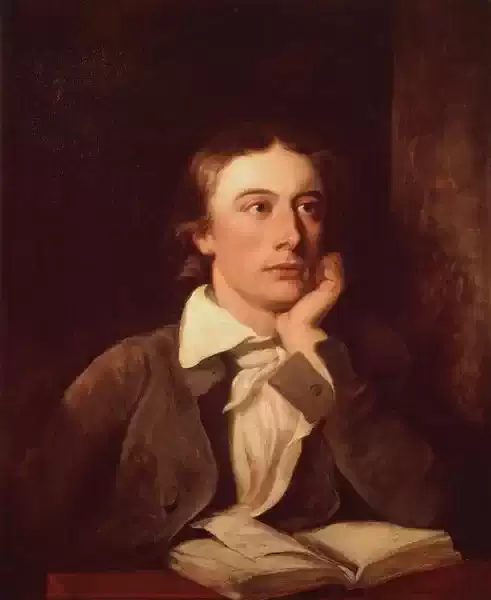
John Keats
A Party Of Lovers
A Party Of Lovers
Pensive they sit, and roll their languid eyes,
Nibble their toast, and cool their tea with sighs,
Or else forget the purpose of the night,
Forget their tea -- forget their appetite.
See with cross'd arms they sit -- ah! happy crew,
The fire is going out and no one rings
For coals, and therefore no coals Betty brings.
A fly is in the milk-pot -- must he die
By a humane society?
No, no; there Mr. Werter takes his spoon,
Inserts it, dips the handle, and lo! soon
The little straggler, sav'd from perils dark,
Across the teaboard draws a long wet mark.
Arise! take snuffers by the handle,
There's a large cauliflower in each candle.
A winding-sheet, ah me! I must away
To No. 7, just beyond the circus gay.
'Alas, my friend! your coat sits very well;
Where may your tailor live?' 'I may not tell.
O pardon me -- I'm absent now and then.
Where might my tailor live? I say again
I cannot tell, let me no more be teaz'd --
He lives in Wapping, might live where he pleas'd.'
Pensive they sit, and roll their languid eyes,
Nibble their toast, and cool their tea with sighs,
Or else forget the purpose of the night,
Forget their tea -- forget their appetite.
See with cross'd arms they sit -- ah! happy crew,
The fire is going out and no one rings
For coals, and therefore no coals Betty brings.
A fly is in the milk-pot -- must he die
By a humane society?
No, no; there Mr. Werter takes his spoon,
Inserts it, dips the handle, and lo! soon
The little straggler, sav'd from perils dark,
Across the teaboard draws a long wet mark.
Arise! take snuffers by the handle,
There's a large cauliflower in each candle.
A winding-sheet, ah me! I must away
To No. 7, just beyond the circus gay.
'Alas, my friend! your coat sits very well;
Where may your tailor live?' 'I may not tell.
O pardon me -- I'm absent now and then.
Where might my tailor live? I say again
I cannot tell, let me no more be teaz'd --
He lives in Wapping, might live where he pleas'd.'
413
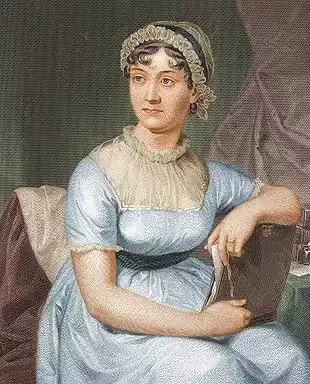
Jane Austen
This Little Bag
This Little Bag
This little bag I hope will prove
To be not vainly made--
For, if you should a needle want
It will afford you aid.
And as we are about to part
T'will serve another end,
For when you look upon the Bag
You'll recollect your friend
This little bag I hope will prove
To be not vainly made--
For, if you should a needle want
It will afford you aid.
And as we are about to part
T'will serve another end,
For when you look upon the Bag
You'll recollect your friend
145
Christina Georgina Rossetti
An Echo from Willowood
An Echo from Willowood
“Oh Ye, All Ye That Walk in Willowwood”
Two gaz’d into a pool, he gaz’d and she,
Not hand in hand, yet heart in heart, I think,
Pale and reluctant on the water’s brink
AS on the brink of parting which must be.
Each eyed the other’s aspect, she and he,
Each felt one hungering heart leap up and sink,
Each tasted bitterness which both must drink,
There on the brink of life’s dividing sea.
Lilies upon the surface, deep below
Two wistful faces craving each for each,
Resolute and reluctant without speech:—
A sudden ripple made the faces flow
One moment join’d, to vanish out of reach:
So these hearts join’d, and ah! were parted so.
“Oh Ye, All Ye That Walk in Willowwood”
Two gaz’d into a pool, he gaz’d and she,
Not hand in hand, yet heart in heart, I think,
Pale and reluctant on the water’s brink
AS on the brink of parting which must be.
Each eyed the other’s aspect, she and he,
Each felt one hungering heart leap up and sink,
Each tasted bitterness which both must drink,
There on the brink of life’s dividing sea.
Lilies upon the surface, deep below
Two wistful faces craving each for each,
Resolute and reluctant without speech:—
A sudden ripple made the faces flow
One moment join’d, to vanish out of reach:
So these hearts join’d, and ah! were parted so.
228

Robert Frost
Meeting And Passing
Meeting And Passing
As I went down the hill along the wall
There was a gate I had leaned at for the view
And had just turned from when I first saw you
As you came up the hill. We met. But all
We did that day was mingle great and small
Footprints in summer dust as if we drew
The figure of our being less that two
But more than one as yet. Your parasol
Pointed the decimal off with one deep thrust.
And all the time we talked you seemed to see
Something down there to smile at in the dust.
(Oh, it was without prejudice to me!)
Afterward I went past what you had passed
Before we met and you what I had passed.
As I went down the hill along the wall
There was a gate I had leaned at for the view
And had just turned from when I first saw you
As you came up the hill. We met. But all
We did that day was mingle great and small
Footprints in summer dust as if we drew
The figure of our being less that two
But more than one as yet. Your parasol
Pointed the decimal off with one deep thrust.
And all the time we talked you seemed to see
Something down there to smile at in the dust.
(Oh, it was without prejudice to me!)
Afterward I went past what you had passed
Before we met and you what I had passed.
389
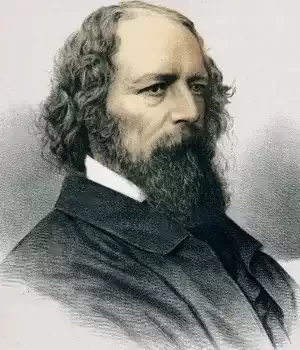
Alfred Lord Tennyson
Enoch Arden
Enoch Arden
Long lines of cliff breaking have left a chasm;
And in the chasm are foam and yellow sands;
Beyond, red roofs about a narrow wharf
In cluster; then a moulder'd church; and higher
A long street climbs to one tall-tower'd mill;
And high in heaven behind it a gray down
With Danish barrows; and a hazelwood,
By autumn nutters haunted, flourishes
Green in a cuplike hollow of the down.
Here on this beach a hundred years ago,
Three children of three houses, Annie Lee,
The prettiest little damsel in the port,
And Philip Ray the miller's only son,
And Enoch Arden, a rough sailor's lad
Made orphan by a winter shipwreck, play'd
Among the waste and lumber of the shore,
Hard coils of cordage, swarthy fishing-nets,
Anchors of rusty fluke, and boats updrawn,
And built their castles of dissolving sand
To watch them overflow'd, or following up
And flying the white breaker, daily left
The little footprint daily wash'd away.
A narrow cave ran in beneath the cliff:
In this the children play'd at keeping house.
Enoch was host one day, Philip the next,
While Annie still was mistress; but at times
Enoch would hold possession for a week:
`This is my house and this my little wife.'
`Mine too' said Philip `turn and turn about:'
When, if they quarrell'd, Enoch stronger-made
Was master: then would Philip, his blue eyes
All flooded with the helpless wrath of tears,
Shriek out `I hate you, Enoch,' and at this
The little wife would weep for company,
And pray them not to quarrel for her sake,
And say she would be little wife to both.
But when the dawn of rosy childhood past,
And the new warmth of life's ascending sun
Was felt by either, either fixt his heart
On that one girl; and Enoch spoke his love,
But Philip loved in silence; and the girl
Seem'd kinder unto Philip than to him;
But she loved Enoch; tho' she knew it not,
And would if ask'd deny it. Enoch set
A purpose evermore before his eyes,
To hoard all savings to the uttermost,
To purchase his own boat, and make a home
For Annie: and so prosper'd that at last
A luckier or a bolder fisherman,
A carefuller in peril, did not breathe
For leagues along that breaker-beaten coast
Than Enoch. Likewise had he served a year
On board a merchantman, and made himself
Full sailor; and he thrice had pluck'd a life
From the dread sweep of the down-streaming seas:
And all me look'd upon him favorably:
And ere he touch'd his one-and-twentieth May
He purchased his own boat, and made a home
For Annie, neat and nestlike, halfway up
The narrow street that clamber'd toward the mill.
Then, on a golden autumn eventide,
The younger people making holiday,
With bag and sack and basket, great and small,
Went nutting to the hazels. Philip stay'd
(His father lying sick and needing him)
An hour behind; but as he climb'd the hill,
Just where the prone edge of the wood began
To feather toward the hollow, saw the pair,
Enoch and Annie, sitting hand-in-hand,
His large gray eyes and weather-beaten face
All-kindled by a still and sacred fire,
That burn'd as on an altar. Philip look'd,
And in their eyes and faces read his doom;
Then, as their faces drew together, groan'd,
And slipt aside, and like a wounded life
Crept down into the hollows of the wood;
There, while the rest were loud in merrymaking,
Had his dark hour unseen, and rose and past
Bearing a lifelong hunger in his heart.
So these were wed, and merrily rang the bells,
And merrily ran the years, seven happy years,
Seven happy years of health and competence,
And mutual love and honorable toil;
With children; first a daughter. In him woke,
With his first babe's first cry, the noble wish
To save all earnings to the uttermost,
And give his child a better bringing-up
Than his had been, or hers; a wish renew'd,
When two years after came a boy to be
The rosy idol of her solitudes,
While Enoch was abroad on wrathful seas,
Or often journeying landward; for in truth
Enoch's white horse, and Enoch's ocean-spoil
In ocean-smelling osier, and his face,
Rough-redden'd with a thousand winter gales,
Not only to the market-cross were known,
But in the leafy lanes behind the down,
Far as the portal-warding lion-whelp,
And peacock-yewtree of the lonely Hall,
Whose Friday fare was Enoch's ministering.
Then came a change, as all things human change.
Ten miles to northward of the narrow port
Open'd a larger haven: thither used
Enoch at times to go by land or sea;
And once when there, and clambering on a mast
In harbor, by mischance he slipt and fell:
A limb was broken when they lifted him;
And while he lay recovering there, his wife
Bore him another son, a sickly one:
Another hand crept too across his trade
Taking her bread and theirs: and on him fell,
Altho' a grave and staid God-fearing man,
Yet lying thus inactive, doubt and gloom.
He seem'd, as in a nightmare of the night,
To see his children leading evermore
Low miserable lives of hand-to-mouth,
And her, he loved, a beggar: then he pray'd
`Save them from this, whatever comes to me.'
And while he pray'd, the master of that ship
Enoch had served in, hearing his mischance,
Came, for he knew the man and valued him,
Reporting of his vessel China-bound,
And wanting yet a boatswain. Would he go?
There yet were many weeks before she sail'd,
Sail'd from this port. Would Enoch have the place?
And Enoch all at once assented to it,
Rejoicing at that answer to his prayer.
So now that the shadow of mischance appear'd
No graver than as when some little cloud
Cuts off the fiery highway of the sun,
And isles a light in the offing: yet the wife--
When he was gone--the children--what to do?
Then Enoch lay long-pondering on his plans;
To sell the boat--and yet he loved her well--
How many a rough sea had he weather'd in her!
He knew her, as a horseman knows his horse--
And yet to sell her--then with what she brought
Buy goods and stores--set Annie forth in trade
With all that seamen needed or their wives--
So might she keep the house while he was gone.
Should he not trade himself out yonder? go
This voyage more than once? yea twice or thrice--
As oft as needed--last, returning rich,
Become the master of a larger craft,
With fuller profits lead an easier life,
Have all his pretty young ones educated,
And pass his days in peace among his own.
Thus Enoch in his heart determined all:
Then moving homeward came on Annie pale,
Nursing the sickly babe, her latest-born.
Forward she started with a happy cry,
And laid the feeble infant in his arms;
Whom Enoch took, and handled all his limbs,
Appraised his weight and fondled fatherlike,
But had no heart to break his purposes
To Annie, till the morrow, when he spoke.
Then first since Enoch's golden ring had girt
Her finger, Annie fought against his will:
Yet not with brawling opposition she,
But manifold entreaties, many a tear,
Many a sad kiss by day and night renew'd
(Sure that all evil would come out of it)
Besought him, supplicating, if he cared
For here or his dear children, not to go.
He not for his own self caring but her,
Her and her children, let her plead in vain;
So grieving held his will, and bore it thro'.
For Enoch parted with his old sea-friend,
Bought Annie goods and stores, and set his hand
To fit their little streetward sitting-room
With shelf and corner for the goods and stores.
So all day long till Enoch's last at home,
Shaking their pretty cabin, hammer and axe,
Auger and saw, while Annie seem'd to hear
Her own death-scaffold raising, shrill'd and rang,
Till this was ended, and his careful hand,--
The space was narrow,--having order'd all
Almost as neat and close as Nature packs
Her blossom or her seedling, paused; and he,
Who needs would work for Annie to the last,
Ascending tired, heavily slept till morn.
And Enoch faced this morning of farewell
Brightly and boldly. All his Annie's fears,
Save, as his Annie's, were a laughter to him.
Yet Enoch as a brave God-fearing man
Bow'd himself down, and in that mystery
Where God-in-man is one with man-in-God,
Pray'd for a blessing on his wife and babes
Whatever came to him: and then he said
`Annie, this voyage by the grace of God
Will bring fair weather yet to all of us.
Keep a clean hearth and a clear fire for me,
For I'll be back, my girl, before you know it.'
Then lightly rocking baby's cradle `and he,
This pretty, puny, weakly little one,-Nay--
for I love him all the better for it--
God bless him, he shall sit upon my knees
And I will tell him tales of foreign parts,
And make him merry, when I come home again.
Come Annie, come, cheer up before I go.'
Him running on thus hopefully she heard,
And almost hoped herself; but when he turn'd
The current of his talk to graver things
In sailor fashion roughly sermonizing
On providence and trust in Heaven, she heard,
Heard and not heard him; as the village girl,
Who sets her pitcher underneath the spring,
Musing on him that used to fill it for her,
Hears and not hears, and lets it overflow.
At length she spoke `O Enoch, you are wise;
And yet for all your wisdom well know I
That I shall look upon your face no more.'
`Well then,' said Enoch, `I shall look on yours.
Annie, the ship I sail in passes here
(He named the day) get you a seaman's glass,
Spy out my face, and laugh at all your fears.'
But when the last of those last moments came,
`Annie my girl, cheer up, be comforted,
Look to the babes, and till I come again,
Keep everything shipshape, for I must go.
And fear no more for me; or if you fear
Cast all your cares on God; that anchor holds.
Is He not yonder in those uttermost
Parts of the morning? if I flee to these
Can I go from Him? and the sea is His,
The sea is His: He made it.'
Enoch rose,
Cast his strong arms about his drooping wife,
And kiss'd his wonder-stricken little ones;
But for the third, sickly one, who slept
After a night of feverous wakefulness,
When Annie would have raised him Enoch said
`Wake him not; let him sleep; how should this child
Remember this?' and kiss'ed him in his cot.
But Annie from her baby's forehead clipt
A tiny curl, and gave it: this he kept
Thro' all his future; but now hastily caught
His bundle, waved his hand, and went his way.
She when the day, that Enoch mention'd, came,
Borrow'd a glass, but all in vain: perhaps
She could not fix the glass to suit her eye;
Perhaps her eye was dim, hand tremulous;
She saw him not: and while he stood on deck
Waving, the moment and the vessel past.
Ev'n to the last dip of the vanishing sail
She watch'd it, and departed weeping for him;
Then, tho' she mourn'd his absence as his grave,
Set her sad will no less to chime with his,
But throve not in her trade, not being bred
To barter, nor compensating the want
By shrewdness, neither capable of lies,
Nor asking overmuch and taking less,
And still foreboding `what would Enoch say?'
For more than once, in days of difficulty
And pressure, had she sold her wares for less
Than what she gave in buying what she sold:
She fail'd and sadden'd knowing it; and thus,
Expectant of that news that never came,
Gain'd for here own a scanty sustenance,
And lived a life of silent melancholy.
Now the third child was sickly-born and grew
Yet sicklier, tho' the mother cared for it
With all a mother's care: nevertheless,
Whether her business often call'd her from it,
Or thro' the want of what it needed most,
Or means to pay the voice who best could tell
What most it needed--howsoe'er it was,
After a lingering,--ere she was aware,--
Like the caged bird escaping suddenly,
The little innocent soul flitted away.
In that same week when Annie buried it,
Philip's true heart, which hunger'd for her peace
(Since Enoch left he had not look'd upon her),
Smote him, as having kept aloof so long.
`Surely' said Philip `I may see her now,
May be some little comfort;' therefore went,
Past thro' the solitary room in front,
Paused for a moment at an inner door,
Then struck it thrice, and, no one opening,
Enter'd; but Annie, seated with her grief,
Fresh from the burial of her little one,
Cared not to look on any human face,
But turn'd her own toward the wall and wept.
Then Philip standing up said falteringly
`Annie, I came to ask a favor of you.'
He spoke; the passion in her moan'd reply
`Favor from one so sad and so forlorn
As I am!' half abash'd him; yet unask'd,
His bashfulness and tenderness at war,
He set himself beside her, saying to her:
`I came to speak to you of what he wish'd,
Enoch, your husband: I have ever said
You chose the best among us--a strong man:
For where he fixt his heart he set his hand
To do the thing he will'd, and bore it thro'.
And wherefore did he go this weary way,
And leave you lonely? not to see the world--
For pleasure?--nay, but for the wherewithal
To give his babes a better bringing-up
Than his had been, or yours: that was his wish.
And if he come again, vext will he be
To find the precious morning hours were lost.
And it would vex him even in his grave,
If he could know his babes were running wild
Like colts about the waste. So Annie, now--
Have we not known each other all our lives?
I do beseech you by the love you bear
Him and his children not to say me nay--
For, if you will, when Enoch comes again
Why then he shall repay me--if you will,
Annie--for I am rich and well-to-do.
Now let me put the boy and girl to school:
This is the favor that I came to ask.'
Then Annie with her brows against the wall
Answer'd `I cannot look you in the face;
I seem so foolish and so broken down.
When you came in my sorrow broke me down;
And now I think your kindness breaks me down;
But Enoch lives; that is borne in on me:
He will repay you: money can be repaid;
Not kindness such as yours.'
And Philip ask'd
`Then you will let me, Annie?'
There she turn'd,
She rose, and fixt her swimming eyes upon him,
And dwelt a moment on his kindly face,
Then calling down a blessing on his head
Caught at his hand and wrung it passionately,
And past into the little garth beyond.
So lifted up in spirit he moved away.
Then Philip put the boy and girl to school,
And bought them needful books, and everyway,
Like one who does his duty by his own,
Made himself theirs; and tho' for Annie's sake,
Fearing the lazy gossip of the port,
He oft denied his heart his dearest wish,
And seldom crost her threshold, yet he sent
Gifts by the children, garden-herbs and fruit,
The late and early roses from his wall,
Or conies from the down, and now and then,
With some pretext of fineness in the meal
To save the offence of charitable, flour
From his tall mill that whistled on the waste.
But Philip did not fathom Annie's mind:
Scarce could the woman when he came upon her,
Out of full heart and boundless gratitude
Light on a broken word to thank him with.
But Philip was her children's all-in-all;
From distant corners of the street they ran
To greet his hearty welcome heartily;
Lords of his house and of his mill were they;
Worried his passive ear with petty wrongs
Or pleasures, hung upon him, play'd with him
And call'd him Father Philip. Philip gain'd
As Enoch lost; for Enoch seem'd to them
Uncertain as a vision or a dream,
Faint as a figure seen in early dawn
Down at the far end of an avenue,
Going we know not where: and so ten years,
Since Enoch left his hearth and native land,
Fled forward, and no news of Enoch came.
It chanced one evening Annie's children long'd
To go with others, nutting to the wood,
And Annie would go with them; then they begg'd
For Father Philip (as they call'd him) too:
Him, like the working bee in blossom-dust,
Blanch'd with his mill, they found; and saying to him
`Come with us Father Philip' he denied;
But when the children pluck'd at him to go,
He laugh'd, and yielding readily to their wish,
For was not Annie with them? and they went.
But after scaling half the weary down,
Just where the prone edge of the wood began
To feather toward the hollow, all her force
Fail'd her; and sighing `let me rest' she said.
So Philip rested with her well-content;
While all the younger ones with jubilant cries
Broke from their elders, and tumultuously
Down thro' the whitening hazels made a plunge
To the bottom, and dispersed, and beat or broke
The lithe reluctant boughs to tear away
Their tawny clusters, crying to each other
And calling, here and there, about the wood.
But Philip sitting at her side forgot
Her presence, and remember'd one dark hour
Here in this wood, when like a wounded life
He crept into the shadow: at last he said
Lifting his honest forehead `Listen, Annie,
How merry they are down yonder in the wood.'
`Tired, Annie?' for she did not speak a word.
`Tired?' but her face had fall'n upon her hands;
At which, as with a kind anger in him,
`The ship was lost' he said `the ship was lost!
No more of that! why should you kill yourself
And make them orphans quite?' And Annie said
`I thought not of it: but--I known not why--
Their voices make me feel so solitary.'
Then Philip coming somewhat closer spoke.
`Annie, there is a thing upon my mind,
And it has been upon my mind so long,
That tho' I know not when it first came there,
I know that it will out at last. O Annie,
It is beyond all hope, against all chance,
That he who left you ten long years ago
Should still be living; well then--let me speak:
I grieve to see you poor and wanting help:
I cannot help you as I wish to do
Unless--they say that women are so quick--
Perhaps you know what I would have you know--
I wish you for my wife. I fain would prove
A father to your children: I do think
They love me as a father: I am sure
That I love them as if they were mine own;
And I believe, if you were fast my wife,
That after all these sad uncertain years,
We might be still as happy as God grants
To any of His creatures. Think upon it:
For I am well-to-do--no kin, no care,
No burthen, save my care for you and yours:
And we have known each other all our lives,
And I have loved you longer than you know.'
Then answer'd Annie; tenderly she spoke:
`You have been as God's good angel in our house.
God bless you for it, God reward you for it,
Philip, with something happier than myself.
Can one live twice? can you be ever loved
As Enoch was? what is it that you ask?'
`I am content' he answer'd `to be loved
A little after Enoch.' `O' she cried
Scared as it were `dear Philip, wait a while:
If Enoch comes--but Enoch will not come--
Yet wait a year, a year is not so long:
Surely I shall be wiser in a year:
O wait a little!' Philip sadly said
`Annie, as I have waited all my life
I well may wait a little.' `Nay' she cried
`I am bound: you have my promise--in a year:
Will you not bide your year as I bide mine?'
And Philip answer'd `I will bide my year.'
Here both were mute, till Philip glancing up
Beheld the dead flame of the fallen day
Pass from the Danish barrow overhead;
Then fearing night and chill for Annie rose,
And sent his voice beneath him thro' the wood.
Up came the children laden with their spoil;
Then all descended to the port, and there
At Annie's door he paused and gave his hand,
Saying gently `Annie, when I spoke to you,
That was your hour of weakness. I was wrong.
I am always bound to you, but you are free.'
Then Annie weeping answer'd `I am bound.'
She spoke; and in one moment as it were,
While yet she went about her household ways,
Ev'n as she dwelt upon his latest words,
That he had loved her longer than she knew,
That autumn into autumn flash'd again,
And there he stood once more before her face,
Claiming her promise. `Is it a year?' she ask'd.
`Yes, if the nuts' he said `be ripe again:
Come out and see.' But she--she put him off--
So much to look to--such a change--a month--
Give her a month--she knew that she was bound--
A month--no more. Then Philip with his eyes
Full of that lifelong hunger, and his voice
Shaking a little like a drunkard's hand,
`Take your own time, Annie, take your own time.'
And Annie could have wept for pity of him;
And yet she held him on delayingly
With many a scarce-believable excuse,
Trying his truth and his long-sufferance,
Till half-another year had slipt away.
By this the lazy gossips of the port,
Abhorrent of a calculation crost,
Began to chafe as at a personal wrong.
Some thought that Philip did but trifle with her;
Some that she but held off to draw him on;
And others laugh'd at her and Philip too,
As simple folks that knew not their own minds;
And one, in whom all evil fancies clung
Like serpent eggs together, laughingly
Would hint a worse in either. Her own son
Was silent, tho' he often look'd his wish;
But evermore the daughter prest upon her
To wed the man so dear to all of them
And lift the household out of poverty;
And Philip's rosy face contracting grew
Careworn and wan; and all these things fell on her
Sharp as reproach.
At last one night it chanced
That Annie could not sleep, but earnestly
Pray'd for a sign `my Enoch is he gone?'
Then compass'd round by the blind wall of night
Brook'd not the expectant terror of her heart,
Started from bed, and struck herself a light,
Then desperately seized the holy Book,
Suddenly set it wide to find a sign,
Suddenly put her finger on the text,
`Under a palmtree.' That was nothing to her:
No meaning there: she closed the book and slept:
When lo! her Enoch sitting on a height,
Under a palmtree, over him the Sun:
`He is gone' she thought `he is happy, he is singing
Hosanna in the highest: yonder shines
The Sun of Righteousness, and these be palms
Whereof the happy people strowing cried
"Hosanna in the highest!"' Here she woke,
Resolved, sent for him and said wildly to him
`There is no reason why we should not wed.'
`Then for God's sake,' he answer'd, `both our sakes,
So you will wed me, let it be at once.'
So these were wed and merrily rang the bells,
Merrily rang the bells and they were wed.
But never merrily beat Annie's heart.
A footstep seem'd to fall beside her path,
She knew not whence; a whisper in her ear,
She knew not what; nor loved she to be left
Alone at home, nor ventured out alone.
What ail'd her then, that ere she enter'd, often
Her hand dwelt lingeringly on the latch,
Fearing to enter: Philip thought he knew:
Such doubts and fears were common to her state,
Being with child: but when her child was born,
Then her new child was as herself renew'd,
Then the new mother came about her heart,
Then her good Philip was her all-in-all,
And that mysterious instinct wholly died.
And where was Enoch? prosperously sail'd
The ship `Good Fortune,' tho' at setting forth
The Biscay, roughly ridging eastward, shook
And almost overwhelm'd her, yet unvext
She slipt across the summer of the world,
Then after a long tumble about the Cape
And frequent interchange of foul and fair,
She passing thro' the summer world again,
The breath of heaven came continually
And sent her sweetly by the golden isles,
Till silent in her oriental haven.
There Enoch traded for himself, and bought
Quaint monsters for the market of those times,
A gilded dragon, also, for the babes.
Less lucky her home-voyage: at first indeed
Thro' many a fair sea-circle, day by day,
Scarce-rocking, her full-busted figure-head
Stared o'er the ripple feathering from her bows:
Then follow'd calms, and then winds variable,
Then baffling, a long course of them; and last
Storm, such as drove her under moonless heavens
Till hard upon the cry of `breakers' came
The crash of ruin, and the loss of all
But Enoch and two others. Half the night,
Buoy'd upon floating tackle and broken spars,
These drifted, stranding on an isle at morn
Rich, but loneliest in a lonely sea.
No want was there of human sustenance,
Soft fruitage, mighty nuts, and nourishing roots;
Nor save for pity was it hard to take
The helpless life so wild that it was tame.
There in a seaward-gazing mountain-gorge
They built, and thatch'd with leaves of palm, a hut,
Half hut, half native cavern. So the three,
Set in this Eden of all plenteousness,
Dwelt with eternal summer, ill-content.
For one, the youngest, hardly more than boy,
Hurt in that night of sudden ruin and wreck,
Lay lingering out a three-years' death-in-life.
They could not leave him. After he was gone,
The two remaining found a fallen stem;
And Enoch's comrade, careless of himself,
Fire-hollowing this in Indian fashion, fell
Sun-stricken, and that other lived alone.
In those two deaths he read God's warning `wait.'
The mountain wooded to the peak, the lawns
And winding glades high up like ways to Heaven,
The slender coco's drooping crown of plumes,
The lightning flash of insect and of bird,
The lustre of the long convolvuluses
That coil'd around the stately stems, and ran
Ev'n to the limit of the land, the glows
And glories of the broad belt of the world,
All these he saw; but what he fain had seen
He could not see, the kindly human face,
Nor ever hear a kindly voice, but heard
The myriad shriek of wheeling ocean-fowl,
The league-long roller thundering on the reef,
The moving whisper of huge trees that branch'd
And blossom'd in the zenith, or the sweep
Of some precipitous rivulet to the wave,
As down the shore he ranged, or all day long
Sat often in the seaward-gazing gorge,
A shipwreck'd sailor, waiting for a sail:
No sail from day to day, but every day
The sunrise broken into scarlet shafts
Among the palms and ferns and precipices;
The blaze upon the waters to the east;
The blaze upon his island overhead;
The blaze upon the waters to the west;
Then the great stars that globed themselves in Heaven,
The hollower-bellowing ocean, and again
The scarlet shafts of sunrise--but no sail.
There often as he watch'd or seem'd to watch,
So still, the golden lizard on him paused,
A phantom made of many phantoms moved
Before him haunting him, or he himself
Moved haunting people, things and places, known
Far in a darker isle beyond the line;
The babes, their babble, Annie, the small house,
The climbing street, the mill, the leafy lanes,
The peacock-yewtree and the lonely Hall,
The horse he drove, the boat he sold, the chill
November dawns and dewy-glooming downs,
The gentle shower, the smell of dying leaves,
And the low moan of leaden-color'd seas.
Once likewise, in the ringing of his ears,
Tho' faintly, merrily--far and far away--
He heard the pealing of his parish bells;
Then, tho' he knew not wherefore, started up
Shuddering, and when the beauteous hateful isle
Return'd upon him, had not his poor heart
Spoken with That, which being everywhere
Lets none, who speaks with Him, seem all alone,
Surely the man had died of solitude.
Thus over Enoch's early-silvering head
The sunny and rainy seasons came and went
Year after year. His hopes to see his own,
And pace the sacred old familiar fields,
Not yet had perish'd, when his lonely doom
Came suddenly to an end. Another ship
(She wanted water) blown by baffling winds,
Like the Good Fortune, from her destined course,
Stay'd by this isle, not knowing where she lay:
For since the mate had seen at early dawn
Across a break on the mist-wreathen isle
The silent water slipping from the hills,
They sent a crew that landing burst away
In search of stream or fount, and fill'd the shores
With clamor. Downward from his mountain gorge
Stept the long-hair'd long-bearded solitary,
Brown, looking hardly human, strangely clad,
Muttering and mumbling, idiotlike it seem'd,
With inarticulate rage, and making signs
They knew not what: and yet he led the way
To where the rivulets of sweet water ran;
And ever as he mingled with the crew,
And heard them talking, his long-bounden tongue
Was loosen'd, till he made them understand;
Whom, when their casks were fill'd they took aboard:
And there the tale he utter'd brokenly,
Scarce credited at first but more and more,
Amazed and melted all who listen'd to it:
And clothes they gave him and free passage home;
But oft he work'd among the rest and shook
His isolation from him. None of these
Came from his county, or could answer him,
If question'd, aught of what he cared to know.
And dull the voyage was with long delays,
The vessel scarce sea-worthy; but evermore
His fancy fled before the lazy wind
Returning, till beneath a clouded moon
He like a lover down thro' all his blood
Drew in the dewy meadowy morning-breath
Of England, blown across her ghostly wall:
And that same morning officers and men
Levied a kindly tax upon themselves,
Pitying the lonely man, and gave him it:
Then moving up the coast they landed him,
Ev'n in that harbor whence he sail'd before.
There Enoch spoke no word to anyone,
But homeward--home--what home? had he a home?
His home, he walk'd. Bright was that afternoon,
Sunny but chill; till drawn thro' either chasm,
Where either haven open'd on the deeps,
Roll'd a sea-haze and whelm'd the world in gray;
Cut off the length of highway on before,
And left but narrow breadth to left and right
Of wither'd holt or tilth or pasturage.
On the nigh-naked tree the Robin piped
Disconsolate, and thro' the dripping haze
The dead weight of the dead leaf bore it down.
Thicker the drizzle grew, deeper the gloom;
Last, as it seem'd, a great mist-blotted light
Flared on him, and he came upon the place.
Then down the long street having slowly stolen,
His heart foreshadowing all calamity,
His eyes upon the stones, he reach'd the home
Where Annie lived and loved him, and his babes
In those far-off seven happy years were born;
But finding neither light nor murmur there
(A bill of sale gleam'd thro' the drizzle) crept
Still downward thinking `dead or dead to me!'
Down to the pool and narrow wharf he went,
Seeking a tavern which of old he knew,
A front of timber-crost antiquity,
So propt, worm-eaten, ruinously old,
He thought it must have gone; but he was gone
Who kept it; and his widow, Miriam Lane,
With daily-dwindling profits held the house;
A haunt of brawling seamen once, but now
Stiller, with yet a bed for wandering men.
There Enoch rested silently many days.
But Miriam Lane was good and garrulous,
Nor let him be, but often breaking in,
Told him, with other annals of the port,
Not knowing--Enoch was so brown, so bow'd,
So broken--all the story of his house.
His baby's death, her growing poverty,
How Philip put her little ones to school,
And kept them in it, his long wooing her,
Her slow consent, and marriage, and the birth
Of Philip's child: and o'er his countenance
No shadow past, nor motion: anyone,
Regarding, well had deem'd he felt the tale
Less than the teller: only when she closed
`Enoch, poor man, was cast away and lost'
He, shaking his gray head pathetically,
Repeated muttering `cast away and lost;'
Again in deeper inward whispers `lost!'
But Enoch yearn'd to see her face again;
`If I might look on her sweet face gain
And know that she is happy.' So the thought
Haunted and harass'd him, and drove him forth,
At evening when the dull November day
Was growing duller twilight, to the hill.
There he sat down gazing on all below;
There did a thousand memories roll upon him,
Unspeakable for sadness. By and by
The ruddy square of comfortable light,
Far-blazing from the rear of Philip's house,
Allured him, as the beacon-blaze allures
The bird of passage, till he madly strikes
Against it, and beats out his weary life.
For Philip's dwelling fronted on the street,
The latest house to landward; but behind,
With one small gate that open'd on the waste,
Flourish'd a little garden square and wall'd:
And in it throve an ancient evergreen,
A yewtree, and all round it ran a walk
Of shingle, and a walk divided it:
But Enoch shunn'd the middle walk and stole
Up by the wall, behind the yew; and thence
That which he better might have shunn'd, if griefs
Like his have worse or better, Enoch saw.
For cups and silver on the burnish'd board
Sparkled and shone; so genial was the hearth:
And on the right hand of the hearth he saw
Philip, the slighted suitor of old times,
Stout, rosy, with his babe across his knees;
And o'er her second father stoopt a girl,
A later but a loftier Annie Lee,
Fair-hair'd and tall, and from her lifted hand
Dangled a length of ribbon and a ring
To tempt the babe, who rear'd his creasy arms,
Caught at and ever miss'd it, and they laugh'd:
And on the left hand of the hearth he saw
The mother glancing often toward her babe,
But turning now and then to speak with him,
Her son, who stood beside her tall and strong,
And saying that which pleased him, for he smiled.
Now when the dead man come to life beheld
His wife his wife no more, and saw the babe
Hers, yet not his, upon the father's knee,
And all the warmth, the peace, the happiness,
And his own children tall and beautiful,
And him, that other, reigning in his place,
Lord of his rights and of his children's love,--
Then he, tho' Miriam Lane had told him all,
Because things seen are mightier than things heard,
Stagger'd and shook, holding the branch, and fear'd
To send abroad a shrill and terrible cry,
Which in one moment, like the blast of doom,
Would shatter all the happiness of the hearth.
He therefore turning softly like a thief,
Lest the harsh shingle should grate underfoot,
And feeling all along the garden-wall,
Lest he should swoon and tumble and be found,
Crept to the gate, and open'd it, and closed,
As lightly as a sick man's chamber-door,
Behind him, and came out upon the waste.
And there he would have knelt, but that his knees
Were feeble, so that falling prone he dug
His fingers into the wet earth, and pray'd.
`Too hard to bear! why did they take me hence?
O God Almighty, blessed Saviour, Thou
That didst uphold me on my lonely isle,
Uphold me, Father, in my loneliness
A little longer! aid me, give me strength
Not to tell her, never to let her know.
Help me no to break in upon her peace.
My children too! must I not speak to these?
They know me not. I should betray myself.
Never: not father's kiss for me--the girl
So like her mother, and the boy, my son.'
There speech and thought and nature fail'd a little,
And he lay tranced; but when he rose and paced
Back toward his solitary home again,
All down the long and narrow street he went
Beating it in upon his weary brain,
As tho' it were the burthen of a song,
`Not to tell her, never to let her know.'
He was not all unhappy. His resolve
Upbore him, and firm faith, and evermore
Prayer from a living source within the will,
And beating up thro' all the bitter world,
Like fountains of sweet water in the sea,
Kept him a living soul. `This miller's wife'
He said to Miriam `that you told me of,
Has she no fear that her first husband lives?'
`Ay ay, poor soul' said Miriam, `fear enow!
If you could tell her you had seen him dead,
Why, that would be her comfort;' and he thought
`After the Lord has call'd me she shall know,
I wait His time' and Enoch set himself,
Scorning an alms, to work whereby to live.
Almost to all things could he turn his hand.
Cooper he was and carpenter, and wrought
To make the boatmen fishing-nets, or help'd
At lading and unlading the tall barks,
That brought the stinted commerce of those days;
Thus earn'd a scanty living for himself:
Yet since he did but labor for himself,
Work without hope, there was not life in it
Whereby the man could live; and as the year
Roll'd itself round again to meet the day
When Enoch had return'd, a languor came
Upon him, gentle sickness, gradually
Weakening the man, till he could do no more,
But kept the house, his chair, and last his bed.
And Enoch bore his weakness cheerfully.
For sure no gladlier does the stranded wreck
See thro' the gray skirts of a lifting squall
The boat that bears the hope of life approach
To save the life despair'd of, than he saw
Death dawning on him, and the close of all.
For thro' that dawning gleam'd a kindlier hope
On Enoch thinking `after I am gone,
Then may she learn I loved her to the last.'
He call'd aloud for Miriam Lane and said
`Woman, I have a secret--only swear,
Before I tell you--swear upon the book
Not to reveal it, till you see me dead.'
`Dead' clamor'd the good woman `hear him talk!
I warrant, man, that we shall bring you round.'
`Swear' add Enoch sternly `on the book.'
And on the book, half-frighted, Miriam swore.
Then Enoch rolling his gray eyes upon her,
`Did you know Enoch Arden of this town?'
`Know him?' she said `I knew him far away.
Ay, ay, I mind him coming down the street;
Held his head high, and cared for no man, he.'
Slowly and sadly Enoch answer'd her;
`His head is low, and no man cares for him.
I think I have not three days more to live;
I am the man.' At which the woman gave
A half-incredulous, half-hysterical cry.
`You Arden, you! nay,--sure he was a foot
Higher than you be.' Enoch said again
`My God has bow'd me down to what I am;
My grief and solitude have broken me;
Nevertheless, know that I am he
Who married--but that name has twice been changed--
I married her who married Philip Ray.
Sit, listen.' Then he told her of his voyage,
His wreck, his lonely life, his coming back,
His gazing in on Annie, his resolve,
And how he kept it. As the woman heard,
Fast flow'd the current of her easy tears,
While in her heart she yearn'd incessantly
To rush abroad all round the little haven,
Proclaiming Enoch Arden and his woes;
But awed and promise-bounded she forbore,
Saying only `See your bairns before you go!
Eh, let me fetch 'em, Arden,' and arose
Eager to bring them down, for Enoch hung
A moment on her words, but then replied.
`Woman, disturb me not now at the last,
But let me hold my purpose till I die.
Sit down again; mark me and understand,
While I have power to speak. I charge you now,
When you shall see her, tell her that I died
Blessing her, praying for her, loving her;
Save for the bar between us, loving her
As when she laid her head beside my own.
And tell my daughter Annie, whom I saw
So like her mother, that my latest breath
Was spent in blessing her and praying for her.
And tell my son that I died blessing him.
And say to Philip that I blest him too;
He never meant us any thing but good.
But if my children care to see me dead,
Who hardly saw me living, let them come,
I am their father; but she must not come,
For my dead face would vex her after-life.
And now there is but one of all my blood,
Who will embrace me in the world-to-be:
This hair is his: she cut it off and gave it,
And I have borne it with me all these years,
And thought to bear it with me to my grave;
But now my mind is changed, for I shall see him,
My babe in bliss: wherefore when I am gone,
Take, give her this, for it may comfort her:
It will moreover be a token to her,
That I am he.'
He ceased; and Miriam Lane
Made such a voluble answer promising all,
That once again he roll'd his eyes upon her
Repeating all he wish'd, and once again
She promised.
Then the third night after this,
While Enoch slumber'd motionless and pale,
And Miriam watch'd and dozed at intervals,
There came so loud a calling of the sea,
That all the houses in the haven rang.
He woke, he rose, he spread his arms abroad
Crying with a loud voice `a sail! a sail!
I am saved'; and so fell back and spoke no more.
So past the strong heroic soul away.
And when they buried him the little port
Had seldom seen a costlier funeral.
Long lines of cliff breaking have left a chasm;
And in the chasm are foam and yellow sands;
Beyond, red roofs about a narrow wharf
In cluster; then a moulder'd church; and higher
A long street climbs to one tall-tower'd mill;
And high in heaven behind it a gray down
With Danish barrows; and a hazelwood,
By autumn nutters haunted, flourishes
Green in a cuplike hollow of the down.
Here on this beach a hundred years ago,
Three children of three houses, Annie Lee,
The prettiest little damsel in the port,
And Philip Ray the miller's only son,
And Enoch Arden, a rough sailor's lad
Made orphan by a winter shipwreck, play'd
Among the waste and lumber of the shore,
Hard coils of cordage, swarthy fishing-nets,
Anchors of rusty fluke, and boats updrawn,
And built their castles of dissolving sand
To watch them overflow'd, or following up
And flying the white breaker, daily left
The little footprint daily wash'd away.
A narrow cave ran in beneath the cliff:
In this the children play'd at keeping house.
Enoch was host one day, Philip the next,
While Annie still was mistress; but at times
Enoch would hold possession for a week:
`This is my house and this my little wife.'
`Mine too' said Philip `turn and turn about:'
When, if they quarrell'd, Enoch stronger-made
Was master: then would Philip, his blue eyes
All flooded with the helpless wrath of tears,
Shriek out `I hate you, Enoch,' and at this
The little wife would weep for company,
And pray them not to quarrel for her sake,
And say she would be little wife to both.
But when the dawn of rosy childhood past,
And the new warmth of life's ascending sun
Was felt by either, either fixt his heart
On that one girl; and Enoch spoke his love,
But Philip loved in silence; and the girl
Seem'd kinder unto Philip than to him;
But she loved Enoch; tho' she knew it not,
And would if ask'd deny it. Enoch set
A purpose evermore before his eyes,
To hoard all savings to the uttermost,
To purchase his own boat, and make a home
For Annie: and so prosper'd that at last
A luckier or a bolder fisherman,
A carefuller in peril, did not breathe
For leagues along that breaker-beaten coast
Than Enoch. Likewise had he served a year
On board a merchantman, and made himself
Full sailor; and he thrice had pluck'd a life
From the dread sweep of the down-streaming seas:
And all me look'd upon him favorably:
And ere he touch'd his one-and-twentieth May
He purchased his own boat, and made a home
For Annie, neat and nestlike, halfway up
The narrow street that clamber'd toward the mill.
Then, on a golden autumn eventide,
The younger people making holiday,
With bag and sack and basket, great and small,
Went nutting to the hazels. Philip stay'd
(His father lying sick and needing him)
An hour behind; but as he climb'd the hill,
Just where the prone edge of the wood began
To feather toward the hollow, saw the pair,
Enoch and Annie, sitting hand-in-hand,
His large gray eyes and weather-beaten face
All-kindled by a still and sacred fire,
That burn'd as on an altar. Philip look'd,
And in their eyes and faces read his doom;
Then, as their faces drew together, groan'd,
And slipt aside, and like a wounded life
Crept down into the hollows of the wood;
There, while the rest were loud in merrymaking,
Had his dark hour unseen, and rose and past
Bearing a lifelong hunger in his heart.
So these were wed, and merrily rang the bells,
And merrily ran the years, seven happy years,
Seven happy years of health and competence,
And mutual love and honorable toil;
With children; first a daughter. In him woke,
With his first babe's first cry, the noble wish
To save all earnings to the uttermost,
And give his child a better bringing-up
Than his had been, or hers; a wish renew'd,
When two years after came a boy to be
The rosy idol of her solitudes,
While Enoch was abroad on wrathful seas,
Or often journeying landward; for in truth
Enoch's white horse, and Enoch's ocean-spoil
In ocean-smelling osier, and his face,
Rough-redden'd with a thousand winter gales,
Not only to the market-cross were known,
But in the leafy lanes behind the down,
Far as the portal-warding lion-whelp,
And peacock-yewtree of the lonely Hall,
Whose Friday fare was Enoch's ministering.
Then came a change, as all things human change.
Ten miles to northward of the narrow port
Open'd a larger haven: thither used
Enoch at times to go by land or sea;
And once when there, and clambering on a mast
In harbor, by mischance he slipt and fell:
A limb was broken when they lifted him;
And while he lay recovering there, his wife
Bore him another son, a sickly one:
Another hand crept too across his trade
Taking her bread and theirs: and on him fell,
Altho' a grave and staid God-fearing man,
Yet lying thus inactive, doubt and gloom.
He seem'd, as in a nightmare of the night,
To see his children leading evermore
Low miserable lives of hand-to-mouth,
And her, he loved, a beggar: then he pray'd
`Save them from this, whatever comes to me.'
And while he pray'd, the master of that ship
Enoch had served in, hearing his mischance,
Came, for he knew the man and valued him,
Reporting of his vessel China-bound,
And wanting yet a boatswain. Would he go?
There yet were many weeks before she sail'd,
Sail'd from this port. Would Enoch have the place?
And Enoch all at once assented to it,
Rejoicing at that answer to his prayer.
So now that the shadow of mischance appear'd
No graver than as when some little cloud
Cuts off the fiery highway of the sun,
And isles a light in the offing: yet the wife--
When he was gone--the children--what to do?
Then Enoch lay long-pondering on his plans;
To sell the boat--and yet he loved her well--
How many a rough sea had he weather'd in her!
He knew her, as a horseman knows his horse--
And yet to sell her--then with what she brought
Buy goods and stores--set Annie forth in trade
With all that seamen needed or their wives--
So might she keep the house while he was gone.
Should he not trade himself out yonder? go
This voyage more than once? yea twice or thrice--
As oft as needed--last, returning rich,
Become the master of a larger craft,
With fuller profits lead an easier life,
Have all his pretty young ones educated,
And pass his days in peace among his own.
Thus Enoch in his heart determined all:
Then moving homeward came on Annie pale,
Nursing the sickly babe, her latest-born.
Forward she started with a happy cry,
And laid the feeble infant in his arms;
Whom Enoch took, and handled all his limbs,
Appraised his weight and fondled fatherlike,
But had no heart to break his purposes
To Annie, till the morrow, when he spoke.
Then first since Enoch's golden ring had girt
Her finger, Annie fought against his will:
Yet not with brawling opposition she,
But manifold entreaties, many a tear,
Many a sad kiss by day and night renew'd
(Sure that all evil would come out of it)
Besought him, supplicating, if he cared
For here or his dear children, not to go.
He not for his own self caring but her,
Her and her children, let her plead in vain;
So grieving held his will, and bore it thro'.
For Enoch parted with his old sea-friend,
Bought Annie goods and stores, and set his hand
To fit their little streetward sitting-room
With shelf and corner for the goods and stores.
So all day long till Enoch's last at home,
Shaking their pretty cabin, hammer and axe,
Auger and saw, while Annie seem'd to hear
Her own death-scaffold raising, shrill'd and rang,
Till this was ended, and his careful hand,--
The space was narrow,--having order'd all
Almost as neat and close as Nature packs
Her blossom or her seedling, paused; and he,
Who needs would work for Annie to the last,
Ascending tired, heavily slept till morn.
And Enoch faced this morning of farewell
Brightly and boldly. All his Annie's fears,
Save, as his Annie's, were a laughter to him.
Yet Enoch as a brave God-fearing man
Bow'd himself down, and in that mystery
Where God-in-man is one with man-in-God,
Pray'd for a blessing on his wife and babes
Whatever came to him: and then he said
`Annie, this voyage by the grace of God
Will bring fair weather yet to all of us.
Keep a clean hearth and a clear fire for me,
For I'll be back, my girl, before you know it.'
Then lightly rocking baby's cradle `and he,
This pretty, puny, weakly little one,-Nay--
for I love him all the better for it--
God bless him, he shall sit upon my knees
And I will tell him tales of foreign parts,
And make him merry, when I come home again.
Come Annie, come, cheer up before I go.'
Him running on thus hopefully she heard,
And almost hoped herself; but when he turn'd
The current of his talk to graver things
In sailor fashion roughly sermonizing
On providence and trust in Heaven, she heard,
Heard and not heard him; as the village girl,
Who sets her pitcher underneath the spring,
Musing on him that used to fill it for her,
Hears and not hears, and lets it overflow.
At length she spoke `O Enoch, you are wise;
And yet for all your wisdom well know I
That I shall look upon your face no more.'
`Well then,' said Enoch, `I shall look on yours.
Annie, the ship I sail in passes here
(He named the day) get you a seaman's glass,
Spy out my face, and laugh at all your fears.'
But when the last of those last moments came,
`Annie my girl, cheer up, be comforted,
Look to the babes, and till I come again,
Keep everything shipshape, for I must go.
And fear no more for me; or if you fear
Cast all your cares on God; that anchor holds.
Is He not yonder in those uttermost
Parts of the morning? if I flee to these
Can I go from Him? and the sea is His,
The sea is His: He made it.'
Enoch rose,
Cast his strong arms about his drooping wife,
And kiss'd his wonder-stricken little ones;
But for the third, sickly one, who slept
After a night of feverous wakefulness,
When Annie would have raised him Enoch said
`Wake him not; let him sleep; how should this child
Remember this?' and kiss'ed him in his cot.
But Annie from her baby's forehead clipt
A tiny curl, and gave it: this he kept
Thro' all his future; but now hastily caught
His bundle, waved his hand, and went his way.
She when the day, that Enoch mention'd, came,
Borrow'd a glass, but all in vain: perhaps
She could not fix the glass to suit her eye;
Perhaps her eye was dim, hand tremulous;
She saw him not: and while he stood on deck
Waving, the moment and the vessel past.
Ev'n to the last dip of the vanishing sail
She watch'd it, and departed weeping for him;
Then, tho' she mourn'd his absence as his grave,
Set her sad will no less to chime with his,
But throve not in her trade, not being bred
To barter, nor compensating the want
By shrewdness, neither capable of lies,
Nor asking overmuch and taking less,
And still foreboding `what would Enoch say?'
For more than once, in days of difficulty
And pressure, had she sold her wares for less
Than what she gave in buying what she sold:
She fail'd and sadden'd knowing it; and thus,
Expectant of that news that never came,
Gain'd for here own a scanty sustenance,
And lived a life of silent melancholy.
Now the third child was sickly-born and grew
Yet sicklier, tho' the mother cared for it
With all a mother's care: nevertheless,
Whether her business often call'd her from it,
Or thro' the want of what it needed most,
Or means to pay the voice who best could tell
What most it needed--howsoe'er it was,
After a lingering,--ere she was aware,--
Like the caged bird escaping suddenly,
The little innocent soul flitted away.
In that same week when Annie buried it,
Philip's true heart, which hunger'd for her peace
(Since Enoch left he had not look'd upon her),
Smote him, as having kept aloof so long.
`Surely' said Philip `I may see her now,
May be some little comfort;' therefore went,
Past thro' the solitary room in front,
Paused for a moment at an inner door,
Then struck it thrice, and, no one opening,
Enter'd; but Annie, seated with her grief,
Fresh from the burial of her little one,
Cared not to look on any human face,
But turn'd her own toward the wall and wept.
Then Philip standing up said falteringly
`Annie, I came to ask a favor of you.'
He spoke; the passion in her moan'd reply
`Favor from one so sad and so forlorn
As I am!' half abash'd him; yet unask'd,
His bashfulness and tenderness at war,
He set himself beside her, saying to her:
`I came to speak to you of what he wish'd,
Enoch, your husband: I have ever said
You chose the best among us--a strong man:
For where he fixt his heart he set his hand
To do the thing he will'd, and bore it thro'.
And wherefore did he go this weary way,
And leave you lonely? not to see the world--
For pleasure?--nay, but for the wherewithal
To give his babes a better bringing-up
Than his had been, or yours: that was his wish.
And if he come again, vext will he be
To find the precious morning hours were lost.
And it would vex him even in his grave,
If he could know his babes were running wild
Like colts about the waste. So Annie, now--
Have we not known each other all our lives?
I do beseech you by the love you bear
Him and his children not to say me nay--
For, if you will, when Enoch comes again
Why then he shall repay me--if you will,
Annie--for I am rich and well-to-do.
Now let me put the boy and girl to school:
This is the favor that I came to ask.'
Then Annie with her brows against the wall
Answer'd `I cannot look you in the face;
I seem so foolish and so broken down.
When you came in my sorrow broke me down;
And now I think your kindness breaks me down;
But Enoch lives; that is borne in on me:
He will repay you: money can be repaid;
Not kindness such as yours.'
And Philip ask'd
`Then you will let me, Annie?'
There she turn'd,
She rose, and fixt her swimming eyes upon him,
And dwelt a moment on his kindly face,
Then calling down a blessing on his head
Caught at his hand and wrung it passionately,
And past into the little garth beyond.
So lifted up in spirit he moved away.
Then Philip put the boy and girl to school,
And bought them needful books, and everyway,
Like one who does his duty by his own,
Made himself theirs; and tho' for Annie's sake,
Fearing the lazy gossip of the port,
He oft denied his heart his dearest wish,
And seldom crost her threshold, yet he sent
Gifts by the children, garden-herbs and fruit,
The late and early roses from his wall,
Or conies from the down, and now and then,
With some pretext of fineness in the meal
To save the offence of charitable, flour
From his tall mill that whistled on the waste.
But Philip did not fathom Annie's mind:
Scarce could the woman when he came upon her,
Out of full heart and boundless gratitude
Light on a broken word to thank him with.
But Philip was her children's all-in-all;
From distant corners of the street they ran
To greet his hearty welcome heartily;
Lords of his house and of his mill were they;
Worried his passive ear with petty wrongs
Or pleasures, hung upon him, play'd with him
And call'd him Father Philip. Philip gain'd
As Enoch lost; for Enoch seem'd to them
Uncertain as a vision or a dream,
Faint as a figure seen in early dawn
Down at the far end of an avenue,
Going we know not where: and so ten years,
Since Enoch left his hearth and native land,
Fled forward, and no news of Enoch came.
It chanced one evening Annie's children long'd
To go with others, nutting to the wood,
And Annie would go with them; then they begg'd
For Father Philip (as they call'd him) too:
Him, like the working bee in blossom-dust,
Blanch'd with his mill, they found; and saying to him
`Come with us Father Philip' he denied;
But when the children pluck'd at him to go,
He laugh'd, and yielding readily to their wish,
For was not Annie with them? and they went.
But after scaling half the weary down,
Just where the prone edge of the wood began
To feather toward the hollow, all her force
Fail'd her; and sighing `let me rest' she said.
So Philip rested with her well-content;
While all the younger ones with jubilant cries
Broke from their elders, and tumultuously
Down thro' the whitening hazels made a plunge
To the bottom, and dispersed, and beat or broke
The lithe reluctant boughs to tear away
Their tawny clusters, crying to each other
And calling, here and there, about the wood.
But Philip sitting at her side forgot
Her presence, and remember'd one dark hour
Here in this wood, when like a wounded life
He crept into the shadow: at last he said
Lifting his honest forehead `Listen, Annie,
How merry they are down yonder in the wood.'
`Tired, Annie?' for she did not speak a word.
`Tired?' but her face had fall'n upon her hands;
At which, as with a kind anger in him,
`The ship was lost' he said `the ship was lost!
No more of that! why should you kill yourself
And make them orphans quite?' And Annie said
`I thought not of it: but--I known not why--
Their voices make me feel so solitary.'
Then Philip coming somewhat closer spoke.
`Annie, there is a thing upon my mind,
And it has been upon my mind so long,
That tho' I know not when it first came there,
I know that it will out at last. O Annie,
It is beyond all hope, against all chance,
That he who left you ten long years ago
Should still be living; well then--let me speak:
I grieve to see you poor and wanting help:
I cannot help you as I wish to do
Unless--they say that women are so quick--
Perhaps you know what I would have you know--
I wish you for my wife. I fain would prove
A father to your children: I do think
They love me as a father: I am sure
That I love them as if they were mine own;
And I believe, if you were fast my wife,
That after all these sad uncertain years,
We might be still as happy as God grants
To any of His creatures. Think upon it:
For I am well-to-do--no kin, no care,
No burthen, save my care for you and yours:
And we have known each other all our lives,
And I have loved you longer than you know.'
Then answer'd Annie; tenderly she spoke:
`You have been as God's good angel in our house.
God bless you for it, God reward you for it,
Philip, with something happier than myself.
Can one live twice? can you be ever loved
As Enoch was? what is it that you ask?'
`I am content' he answer'd `to be loved
A little after Enoch.' `O' she cried
Scared as it were `dear Philip, wait a while:
If Enoch comes--but Enoch will not come--
Yet wait a year, a year is not so long:
Surely I shall be wiser in a year:
O wait a little!' Philip sadly said
`Annie, as I have waited all my life
I well may wait a little.' `Nay' she cried
`I am bound: you have my promise--in a year:
Will you not bide your year as I bide mine?'
And Philip answer'd `I will bide my year.'
Here both were mute, till Philip glancing up
Beheld the dead flame of the fallen day
Pass from the Danish barrow overhead;
Then fearing night and chill for Annie rose,
And sent his voice beneath him thro' the wood.
Up came the children laden with their spoil;
Then all descended to the port, and there
At Annie's door he paused and gave his hand,
Saying gently `Annie, when I spoke to you,
That was your hour of weakness. I was wrong.
I am always bound to you, but you are free.'
Then Annie weeping answer'd `I am bound.'
She spoke; and in one moment as it were,
While yet she went about her household ways,
Ev'n as she dwelt upon his latest words,
That he had loved her longer than she knew,
That autumn into autumn flash'd again,
And there he stood once more before her face,
Claiming her promise. `Is it a year?' she ask'd.
`Yes, if the nuts' he said `be ripe again:
Come out and see.' But she--she put him off--
So much to look to--such a change--a month--
Give her a month--she knew that she was bound--
A month--no more. Then Philip with his eyes
Full of that lifelong hunger, and his voice
Shaking a little like a drunkard's hand,
`Take your own time, Annie, take your own time.'
And Annie could have wept for pity of him;
And yet she held him on delayingly
With many a scarce-believable excuse,
Trying his truth and his long-sufferance,
Till half-another year had slipt away.
By this the lazy gossips of the port,
Abhorrent of a calculation crost,
Began to chafe as at a personal wrong.
Some thought that Philip did but trifle with her;
Some that she but held off to draw him on;
And others laugh'd at her and Philip too,
As simple folks that knew not their own minds;
And one, in whom all evil fancies clung
Like serpent eggs together, laughingly
Would hint a worse in either. Her own son
Was silent, tho' he often look'd his wish;
But evermore the daughter prest upon her
To wed the man so dear to all of them
And lift the household out of poverty;
And Philip's rosy face contracting grew
Careworn and wan; and all these things fell on her
Sharp as reproach.
At last one night it chanced
That Annie could not sleep, but earnestly
Pray'd for a sign `my Enoch is he gone?'
Then compass'd round by the blind wall of night
Brook'd not the expectant terror of her heart,
Started from bed, and struck herself a light,
Then desperately seized the holy Book,
Suddenly set it wide to find a sign,
Suddenly put her finger on the text,
`Under a palmtree.' That was nothing to her:
No meaning there: she closed the book and slept:
When lo! her Enoch sitting on a height,
Under a palmtree, over him the Sun:
`He is gone' she thought `he is happy, he is singing
Hosanna in the highest: yonder shines
The Sun of Righteousness, and these be palms
Whereof the happy people strowing cried
"Hosanna in the highest!"' Here she woke,
Resolved, sent for him and said wildly to him
`There is no reason why we should not wed.'
`Then for God's sake,' he answer'd, `both our sakes,
So you will wed me, let it be at once.'
So these were wed and merrily rang the bells,
Merrily rang the bells and they were wed.
But never merrily beat Annie's heart.
A footstep seem'd to fall beside her path,
She knew not whence; a whisper in her ear,
She knew not what; nor loved she to be left
Alone at home, nor ventured out alone.
What ail'd her then, that ere she enter'd, often
Her hand dwelt lingeringly on the latch,
Fearing to enter: Philip thought he knew:
Such doubts and fears were common to her state,
Being with child: but when her child was born,
Then her new child was as herself renew'd,
Then the new mother came about her heart,
Then her good Philip was her all-in-all,
And that mysterious instinct wholly died.
And where was Enoch? prosperously sail'd
The ship `Good Fortune,' tho' at setting forth
The Biscay, roughly ridging eastward, shook
And almost overwhelm'd her, yet unvext
She slipt across the summer of the world,
Then after a long tumble about the Cape
And frequent interchange of foul and fair,
She passing thro' the summer world again,
The breath of heaven came continually
And sent her sweetly by the golden isles,
Till silent in her oriental haven.
There Enoch traded for himself, and bought
Quaint monsters for the market of those times,
A gilded dragon, also, for the babes.
Less lucky her home-voyage: at first indeed
Thro' many a fair sea-circle, day by day,
Scarce-rocking, her full-busted figure-head
Stared o'er the ripple feathering from her bows:
Then follow'd calms, and then winds variable,
Then baffling, a long course of them; and last
Storm, such as drove her under moonless heavens
Till hard upon the cry of `breakers' came
The crash of ruin, and the loss of all
But Enoch and two others. Half the night,
Buoy'd upon floating tackle and broken spars,
These drifted, stranding on an isle at morn
Rich, but loneliest in a lonely sea.
No want was there of human sustenance,
Soft fruitage, mighty nuts, and nourishing roots;
Nor save for pity was it hard to take
The helpless life so wild that it was tame.
There in a seaward-gazing mountain-gorge
They built, and thatch'd with leaves of palm, a hut,
Half hut, half native cavern. So the three,
Set in this Eden of all plenteousness,
Dwelt with eternal summer, ill-content.
For one, the youngest, hardly more than boy,
Hurt in that night of sudden ruin and wreck,
Lay lingering out a three-years' death-in-life.
They could not leave him. After he was gone,
The two remaining found a fallen stem;
And Enoch's comrade, careless of himself,
Fire-hollowing this in Indian fashion, fell
Sun-stricken, and that other lived alone.
In those two deaths he read God's warning `wait.'
The mountain wooded to the peak, the lawns
And winding glades high up like ways to Heaven,
The slender coco's drooping crown of plumes,
The lightning flash of insect and of bird,
The lustre of the long convolvuluses
That coil'd around the stately stems, and ran
Ev'n to the limit of the land, the glows
And glories of the broad belt of the world,
All these he saw; but what he fain had seen
He could not see, the kindly human face,
Nor ever hear a kindly voice, but heard
The myriad shriek of wheeling ocean-fowl,
The league-long roller thundering on the reef,
The moving whisper of huge trees that branch'd
And blossom'd in the zenith, or the sweep
Of some precipitous rivulet to the wave,
As down the shore he ranged, or all day long
Sat often in the seaward-gazing gorge,
A shipwreck'd sailor, waiting for a sail:
No sail from day to day, but every day
The sunrise broken into scarlet shafts
Among the palms and ferns and precipices;
The blaze upon the waters to the east;
The blaze upon his island overhead;
The blaze upon the waters to the west;
Then the great stars that globed themselves in Heaven,
The hollower-bellowing ocean, and again
The scarlet shafts of sunrise--but no sail.
There often as he watch'd or seem'd to watch,
So still, the golden lizard on him paused,
A phantom made of many phantoms moved
Before him haunting him, or he himself
Moved haunting people, things and places, known
Far in a darker isle beyond the line;
The babes, their babble, Annie, the small house,
The climbing street, the mill, the leafy lanes,
The peacock-yewtree and the lonely Hall,
The horse he drove, the boat he sold, the chill
November dawns and dewy-glooming downs,
The gentle shower, the smell of dying leaves,
And the low moan of leaden-color'd seas.
Once likewise, in the ringing of his ears,
Tho' faintly, merrily--far and far away--
He heard the pealing of his parish bells;
Then, tho' he knew not wherefore, started up
Shuddering, and when the beauteous hateful isle
Return'd upon him, had not his poor heart
Spoken with That, which being everywhere
Lets none, who speaks with Him, seem all alone,
Surely the man had died of solitude.
Thus over Enoch's early-silvering head
The sunny and rainy seasons came and went
Year after year. His hopes to see his own,
And pace the sacred old familiar fields,
Not yet had perish'd, when his lonely doom
Came suddenly to an end. Another ship
(She wanted water) blown by baffling winds,
Like the Good Fortune, from her destined course,
Stay'd by this isle, not knowing where she lay:
For since the mate had seen at early dawn
Across a break on the mist-wreathen isle
The silent water slipping from the hills,
They sent a crew that landing burst away
In search of stream or fount, and fill'd the shores
With clamor. Downward from his mountain gorge
Stept the long-hair'd long-bearded solitary,
Brown, looking hardly human, strangely clad,
Muttering and mumbling, idiotlike it seem'd,
With inarticulate rage, and making signs
They knew not what: and yet he led the way
To where the rivulets of sweet water ran;
And ever as he mingled with the crew,
And heard them talking, his long-bounden tongue
Was loosen'd, till he made them understand;
Whom, when their casks were fill'd they took aboard:
And there the tale he utter'd brokenly,
Scarce credited at first but more and more,
Amazed and melted all who listen'd to it:
And clothes they gave him and free passage home;
But oft he work'd among the rest and shook
His isolation from him. None of these
Came from his county, or could answer him,
If question'd, aught of what he cared to know.
And dull the voyage was with long delays,
The vessel scarce sea-worthy; but evermore
His fancy fled before the lazy wind
Returning, till beneath a clouded moon
He like a lover down thro' all his blood
Drew in the dewy meadowy morning-breath
Of England, blown across her ghostly wall:
And that same morning officers and men
Levied a kindly tax upon themselves,
Pitying the lonely man, and gave him it:
Then moving up the coast they landed him,
Ev'n in that harbor whence he sail'd before.
There Enoch spoke no word to anyone,
But homeward--home--what home? had he a home?
His home, he walk'd. Bright was that afternoon,
Sunny but chill; till drawn thro' either chasm,
Where either haven open'd on the deeps,
Roll'd a sea-haze and whelm'd the world in gray;
Cut off the length of highway on before,
And left but narrow breadth to left and right
Of wither'd holt or tilth or pasturage.
On the nigh-naked tree the Robin piped
Disconsolate, and thro' the dripping haze
The dead weight of the dead leaf bore it down.
Thicker the drizzle grew, deeper the gloom;
Last, as it seem'd, a great mist-blotted light
Flared on him, and he came upon the place.
Then down the long street having slowly stolen,
His heart foreshadowing all calamity,
His eyes upon the stones, he reach'd the home
Where Annie lived and loved him, and his babes
In those far-off seven happy years were born;
But finding neither light nor murmur there
(A bill of sale gleam'd thro' the drizzle) crept
Still downward thinking `dead or dead to me!'
Down to the pool and narrow wharf he went,
Seeking a tavern which of old he knew,
A front of timber-crost antiquity,
So propt, worm-eaten, ruinously old,
He thought it must have gone; but he was gone
Who kept it; and his widow, Miriam Lane,
With daily-dwindling profits held the house;
A haunt of brawling seamen once, but now
Stiller, with yet a bed for wandering men.
There Enoch rested silently many days.
But Miriam Lane was good and garrulous,
Nor let him be, but often breaking in,
Told him, with other annals of the port,
Not knowing--Enoch was so brown, so bow'd,
So broken--all the story of his house.
His baby's death, her growing poverty,
How Philip put her little ones to school,
And kept them in it, his long wooing her,
Her slow consent, and marriage, and the birth
Of Philip's child: and o'er his countenance
No shadow past, nor motion: anyone,
Regarding, well had deem'd he felt the tale
Less than the teller: only when she closed
`Enoch, poor man, was cast away and lost'
He, shaking his gray head pathetically,
Repeated muttering `cast away and lost;'
Again in deeper inward whispers `lost!'
But Enoch yearn'd to see her face again;
`If I might look on her sweet face gain
And know that she is happy.' So the thought
Haunted and harass'd him, and drove him forth,
At evening when the dull November day
Was growing duller twilight, to the hill.
There he sat down gazing on all below;
There did a thousand memories roll upon him,
Unspeakable for sadness. By and by
The ruddy square of comfortable light,
Far-blazing from the rear of Philip's house,
Allured him, as the beacon-blaze allures
The bird of passage, till he madly strikes
Against it, and beats out his weary life.
For Philip's dwelling fronted on the street,
The latest house to landward; but behind,
With one small gate that open'd on the waste,
Flourish'd a little garden square and wall'd:
And in it throve an ancient evergreen,
A yewtree, and all round it ran a walk
Of shingle, and a walk divided it:
But Enoch shunn'd the middle walk and stole
Up by the wall, behind the yew; and thence
That which he better might have shunn'd, if griefs
Like his have worse or better, Enoch saw.
For cups and silver on the burnish'd board
Sparkled and shone; so genial was the hearth:
And on the right hand of the hearth he saw
Philip, the slighted suitor of old times,
Stout, rosy, with his babe across his knees;
And o'er her second father stoopt a girl,
A later but a loftier Annie Lee,
Fair-hair'd and tall, and from her lifted hand
Dangled a length of ribbon and a ring
To tempt the babe, who rear'd his creasy arms,
Caught at and ever miss'd it, and they laugh'd:
And on the left hand of the hearth he saw
The mother glancing often toward her babe,
But turning now and then to speak with him,
Her son, who stood beside her tall and strong,
And saying that which pleased him, for he smiled.
Now when the dead man come to life beheld
His wife his wife no more, and saw the babe
Hers, yet not his, upon the father's knee,
And all the warmth, the peace, the happiness,
And his own children tall and beautiful,
And him, that other, reigning in his place,
Lord of his rights and of his children's love,--
Then he, tho' Miriam Lane had told him all,
Because things seen are mightier than things heard,
Stagger'd and shook, holding the branch, and fear'd
To send abroad a shrill and terrible cry,
Which in one moment, like the blast of doom,
Would shatter all the happiness of the hearth.
He therefore turning softly like a thief,
Lest the harsh shingle should grate underfoot,
And feeling all along the garden-wall,
Lest he should swoon and tumble and be found,
Crept to the gate, and open'd it, and closed,
As lightly as a sick man's chamber-door,
Behind him, and came out upon the waste.
And there he would have knelt, but that his knees
Were feeble, so that falling prone he dug
His fingers into the wet earth, and pray'd.
`Too hard to bear! why did they take me hence?
O God Almighty, blessed Saviour, Thou
That didst uphold me on my lonely isle,
Uphold me, Father, in my loneliness
A little longer! aid me, give me strength
Not to tell her, never to let her know.
Help me no to break in upon her peace.
My children too! must I not speak to these?
They know me not. I should betray myself.
Never: not father's kiss for me--the girl
So like her mother, and the boy, my son.'
There speech and thought and nature fail'd a little,
And he lay tranced; but when he rose and paced
Back toward his solitary home again,
All down the long and narrow street he went
Beating it in upon his weary brain,
As tho' it were the burthen of a song,
`Not to tell her, never to let her know.'
He was not all unhappy. His resolve
Upbore him, and firm faith, and evermore
Prayer from a living source within the will,
And beating up thro' all the bitter world,
Like fountains of sweet water in the sea,
Kept him a living soul. `This miller's wife'
He said to Miriam `that you told me of,
Has she no fear that her first husband lives?'
`Ay ay, poor soul' said Miriam, `fear enow!
If you could tell her you had seen him dead,
Why, that would be her comfort;' and he thought
`After the Lord has call'd me she shall know,
I wait His time' and Enoch set himself,
Scorning an alms, to work whereby to live.
Almost to all things could he turn his hand.
Cooper he was and carpenter, and wrought
To make the boatmen fishing-nets, or help'd
At lading and unlading the tall barks,
That brought the stinted commerce of those days;
Thus earn'd a scanty living for himself:
Yet since he did but labor for himself,
Work without hope, there was not life in it
Whereby the man could live; and as the year
Roll'd itself round again to meet the day
When Enoch had return'd, a languor came
Upon him, gentle sickness, gradually
Weakening the man, till he could do no more,
But kept the house, his chair, and last his bed.
And Enoch bore his weakness cheerfully.
For sure no gladlier does the stranded wreck
See thro' the gray skirts of a lifting squall
The boat that bears the hope of life approach
To save the life despair'd of, than he saw
Death dawning on him, and the close of all.
For thro' that dawning gleam'd a kindlier hope
On Enoch thinking `after I am gone,
Then may she learn I loved her to the last.'
He call'd aloud for Miriam Lane and said
`Woman, I have a secret--only swear,
Before I tell you--swear upon the book
Not to reveal it, till you see me dead.'
`Dead' clamor'd the good woman `hear him talk!
I warrant, man, that we shall bring you round.'
`Swear' add Enoch sternly `on the book.'
And on the book, half-frighted, Miriam swore.
Then Enoch rolling his gray eyes upon her,
`Did you know Enoch Arden of this town?'
`Know him?' she said `I knew him far away.
Ay, ay, I mind him coming down the street;
Held his head high, and cared for no man, he.'
Slowly and sadly Enoch answer'd her;
`His head is low, and no man cares for him.
I think I have not three days more to live;
I am the man.' At which the woman gave
A half-incredulous, half-hysterical cry.
`You Arden, you! nay,--sure he was a foot
Higher than you be.' Enoch said again
`My God has bow'd me down to what I am;
My grief and solitude have broken me;
Nevertheless, know that I am he
Who married--but that name has twice been changed--
I married her who married Philip Ray.
Sit, listen.' Then he told her of his voyage,
His wreck, his lonely life, his coming back,
His gazing in on Annie, his resolve,
And how he kept it. As the woman heard,
Fast flow'd the current of her easy tears,
While in her heart she yearn'd incessantly
To rush abroad all round the little haven,
Proclaiming Enoch Arden and his woes;
But awed and promise-bounded she forbore,
Saying only `See your bairns before you go!
Eh, let me fetch 'em, Arden,' and arose
Eager to bring them down, for Enoch hung
A moment on her words, but then replied.
`Woman, disturb me not now at the last,
But let me hold my purpose till I die.
Sit down again; mark me and understand,
While I have power to speak. I charge you now,
When you shall see her, tell her that I died
Blessing her, praying for her, loving her;
Save for the bar between us, loving her
As when she laid her head beside my own.
And tell my daughter Annie, whom I saw
So like her mother, that my latest breath
Was spent in blessing her and praying for her.
And tell my son that I died blessing him.
And say to Philip that I blest him too;
He never meant us any thing but good.
But if my children care to see me dead,
Who hardly saw me living, let them come,
I am their father; but she must not come,
For my dead face would vex her after-life.
And now there is but one of all my blood,
Who will embrace me in the world-to-be:
This hair is his: she cut it off and gave it,
And I have borne it with me all these years,
And thought to bear it with me to my grave;
But now my mind is changed, for I shall see him,
My babe in bliss: wherefore when I am gone,
Take, give her this, for it may comfort her:
It will moreover be a token to her,
That I am he.'
He ceased; and Miriam Lane
Made such a voluble answer promising all,
That once again he roll'd his eyes upon her
Repeating all he wish'd, and once again
She promised.
Then the third night after this,
While Enoch slumber'd motionless and pale,
And Miriam watch'd and dozed at intervals,
There came so loud a calling of the sea,
That all the houses in the haven rang.
He woke, he rose, he spread his arms abroad
Crying with a loud voice `a sail! a sail!
I am saved'; and so fell back and spoke no more.
So past the strong heroic soul away.
And when they buried him the little port
Had seldom seen a costlier funeral.
425
James Whitcomb Riley
Noey's Night-Piece
Noey's Night-Piece
'They ain't much 'tale' about it!' Noey said.-'
K'tawby grapes wuz gittin' good-n-red
I rickollect; and Tubb Kingry and me
'Ud kindo' browse round town, daytime, to see
What neighbers 'peared to have the most to spare
'At wuz git-at-able and no dog there
When we come round to git 'em, say 'bout ten
O'clock at night when mostly old folks then
Wuz snorin' at each other like they yit
Helt some old grudge 'at never slep' a bit.
Well, at the _Pars'nige_--ef ye'll call to mind,-They's
'bout the biggest grape-arber you'll find
'Most anywheres.--And mostly there, we knowed
They wuz _k'tawbies_ thick as ever growed--
And more'n they'd _p'serve_.--Besides I've heerd
Ma say k'tawby-grape-p'serves jes 'peared
A waste o' sugar, anyhow!--And so
My conscience stayed outside and lem me go
With Tubb, one night, the back-way, clean up through
That long black arber to the end next to
The house, where the k'tawbies, don't you know,
Wuz thickest. And t'uz lucky we went _slow_,--
Fer jest as we wuz cropin' tords the gray-
End, like, of the old arber--heerd Tubb say
In a skeered whisper, 'Hold up! They's some one
Jes slippin' in here!--and _looks like a gun_
He's carryin'!' I _golly!_ we both spread
Out flat aginst the ground!
''What's that?' Tubb said.--
And jest then--'_plink! plunk! plink!_' we heerd something
Under the back-porch-winder.--Then, i jing!
Of course we rickollected 'bout the young
School-mam 'at wuz a-boardin' there, and sung,
And played on the melodium in the choir.--
And she 'uz 'bout as purty to admire
As any girl in town!--the fac's is, she
Jest _wuz_, them times, to a dead certainty,
The belle o' this-here bailywick!--But--Well,-I'd
best git back to what I'm tryin' to tell:--
It wuz some feller come to serenade
Miss Wetherell: And there he plunked and played
His old guitar, and sung, and kep' his eye
Set on her winder, blacker'n the sky!--
And black it _stayed_.--But mayby she wuz 'way
From home, er wore out--bein' _Saturday!_
'It _seemed_ a good-'eal _longer_, but I _know_
He sung and plunked there half a' hour er so
Afore, it 'peared like, he could ever git
His own free qualified consents to quit
And go off 'bout his business. When he went
I bet you could a-bought him fer a cent!
'And now, behold ye all!--as Tubb and me
Wuz 'bout to raise up,--right in front we see
A feller slippin' out the arber, square
Smack under that-air little winder where
The _other_ feller had been standin'.--And
The thing he wuz a-carryin' in his hand
Wuzn't no _gun_ at all!--It wuz a _flute_,--
And _whoop-ee!_ how it did git up and toot
And chirp and warble, tel a mockin'-bird
'Ud dast to never let hisse'f be heerd
Ferever, after sich miracalous, high
Jim-cracks and grand skyrootics played there by
Yer Cousin Rufus!--Yes-sir; it wuz him!--
And what's more,--all a-suddent that-air dim
Dark winder o' Miss Wetherell's wuz lit
Up like a' oyshture-sign, and under it
We see him sort o' wet his lips and smile
Down 'long his row o' dancin' fingers, while
He kindo' stiffened up and kinked his breath
And everlastin'ly jest blowed the peth
Out o' that-air old one-keyed flute o' his.
And, bless their hearts, that's all the 'tale' they is!'
And even as Noey closed, all radiantly
The unconscious hero of the history,
Returning, met a perfect driving storm
Of welcome--a reception strangely warm
And _unaccountable_, to _him_, although
Most _gratifying_,--and he told them so.
'I only urge,' he said, 'my right to be
Enlightened.' And a voice said: '_Certainly:_--
During your absence we agreed that you
Should tell us all a story, old or new,
Just in the immediate happy frame of mind
We knew you would return in.'
So, resigned,
The ready flutist tossed his hat aside--
Glanced at the children, smiled, and thus complied.
'They ain't much 'tale' about it!' Noey said.-'
K'tawby grapes wuz gittin' good-n-red
I rickollect; and Tubb Kingry and me
'Ud kindo' browse round town, daytime, to see
What neighbers 'peared to have the most to spare
'At wuz git-at-able and no dog there
When we come round to git 'em, say 'bout ten
O'clock at night when mostly old folks then
Wuz snorin' at each other like they yit
Helt some old grudge 'at never slep' a bit.
Well, at the _Pars'nige_--ef ye'll call to mind,-They's
'bout the biggest grape-arber you'll find
'Most anywheres.--And mostly there, we knowed
They wuz _k'tawbies_ thick as ever growed--
And more'n they'd _p'serve_.--Besides I've heerd
Ma say k'tawby-grape-p'serves jes 'peared
A waste o' sugar, anyhow!--And so
My conscience stayed outside and lem me go
With Tubb, one night, the back-way, clean up through
That long black arber to the end next to
The house, where the k'tawbies, don't you know,
Wuz thickest. And t'uz lucky we went _slow_,--
Fer jest as we wuz cropin' tords the gray-
End, like, of the old arber--heerd Tubb say
In a skeered whisper, 'Hold up! They's some one
Jes slippin' in here!--and _looks like a gun_
He's carryin'!' I _golly!_ we both spread
Out flat aginst the ground!
''What's that?' Tubb said.--
And jest then--'_plink! plunk! plink!_' we heerd something
Under the back-porch-winder.--Then, i jing!
Of course we rickollected 'bout the young
School-mam 'at wuz a-boardin' there, and sung,
And played on the melodium in the choir.--
And she 'uz 'bout as purty to admire
As any girl in town!--the fac's is, she
Jest _wuz_, them times, to a dead certainty,
The belle o' this-here bailywick!--But--Well,-I'd
best git back to what I'm tryin' to tell:--
It wuz some feller come to serenade
Miss Wetherell: And there he plunked and played
His old guitar, and sung, and kep' his eye
Set on her winder, blacker'n the sky!--
And black it _stayed_.--But mayby she wuz 'way
From home, er wore out--bein' _Saturday!_
'It _seemed_ a good-'eal _longer_, but I _know_
He sung and plunked there half a' hour er so
Afore, it 'peared like, he could ever git
His own free qualified consents to quit
And go off 'bout his business. When he went
I bet you could a-bought him fer a cent!
'And now, behold ye all!--as Tubb and me
Wuz 'bout to raise up,--right in front we see
A feller slippin' out the arber, square
Smack under that-air little winder where
The _other_ feller had been standin'.--And
The thing he wuz a-carryin' in his hand
Wuzn't no _gun_ at all!--It wuz a _flute_,--
And _whoop-ee!_ how it did git up and toot
And chirp and warble, tel a mockin'-bird
'Ud dast to never let hisse'f be heerd
Ferever, after sich miracalous, high
Jim-cracks and grand skyrootics played there by
Yer Cousin Rufus!--Yes-sir; it wuz him!--
And what's more,--all a-suddent that-air dim
Dark winder o' Miss Wetherell's wuz lit
Up like a' oyshture-sign, and under it
We see him sort o' wet his lips and smile
Down 'long his row o' dancin' fingers, while
He kindo' stiffened up and kinked his breath
And everlastin'ly jest blowed the peth
Out o' that-air old one-keyed flute o' his.
And, bless their hearts, that's all the 'tale' they is!'
And even as Noey closed, all radiantly
The unconscious hero of the history,
Returning, met a perfect driving storm
Of welcome--a reception strangely warm
And _unaccountable_, to _him_, although
Most _gratifying_,--and he told them so.
'I only urge,' he said, 'my right to be
Enlightened.' And a voice said: '_Certainly:_--
During your absence we agreed that you
Should tell us all a story, old or new,
Just in the immediate happy frame of mind
We knew you would return in.'
So, resigned,
The ready flutist tossed his hat aside--
Glanced at the children, smiled, and thus complied.
242
Boris Pasternak
Spring (Fragment 3)
Spring (Fragment 3)
Is it only dirt you notice?
Does the thaw not catch your glance?
As a dapple-grey fine stallion
Does it not through ditches dance?
Is it only birds that chatter
In the blueness of the skies,
Sipping through the straws of sunrays
Lemon liturgies on ice?
Only look, and you will see it:
From the rooftops to the ground
Moscow, all day long, like Kitezh
Lies, in light-blue water drowned.
Why are all the roofs transparent
And the colours crystal-bright?
Bricks like rushes gently swaying,
Mornings rush into the night.
Like a bog the town is swampy
And the scabs of snow are rare.
February, like saturated
Cottonwool in spirits, flares.
This white flame wears out the garrets,
And the air, in the oblique
Interplace of twigs and birds, is
Naked, weightless and unique.
In such days the crowds of people
Knock you down; you are unknown,
Nameless; and your girl is with them,
But you, too, are not alone.
Is it only dirt you notice?
Does the thaw not catch your glance?
As a dapple-grey fine stallion
Does it not through ditches dance?
Is it only birds that chatter
In the blueness of the skies,
Sipping through the straws of sunrays
Lemon liturgies on ice?
Only look, and you will see it:
From the rooftops to the ground
Moscow, all day long, like Kitezh
Lies, in light-blue water drowned.
Why are all the roofs transparent
And the colours crystal-bright?
Bricks like rushes gently swaying,
Mornings rush into the night.
Like a bog the town is swampy
And the scabs of snow are rare.
February, like saturated
Cottonwool in spirits, flares.
This white flame wears out the garrets,
And the air, in the oblique
Interplace of twigs and birds, is
Naked, weightless and unique.
In such days the crowds of people
Knock you down; you are unknown,
Nameless; and your girl is with them,
But you, too, are not alone.
496
Boris Pasternak
Railway Station
Railway Station
My dear railway station, my treasure
Of meetings and partings, my friend
In times of hard trials and pleasure,
Your favours have been without end.
My scarf would wrap up my whole being -
The train would pull up, with deep sighs,
The muzzles of brash harpies, leering,
Would puff wet white steam in our eyes.
I'd sit at your side for a moment -
A hug and a kiss, brief and rough.
Farewell then, my joy and my torment.
I'm going, conductor, I'm off!
And, shunting bad weather and sleepers,
The west would break open-I'd feel
It grab me with snowflakes to keep me
From falling down under the wheels.
A whistle dies down, echoed weakly,
Another flies from distant tracks.
A train comes past bare platforms sweeping -
A blizzard of many hunched backs.
And twilight is rearing to go,
And, lured by the smoke and the steam,
The wind and the field rush and now
I wish I could be one of them!
My dear railway station, my treasure
Of meetings and partings, my friend
In times of hard trials and pleasure,
Your favours have been without end.
My scarf would wrap up my whole being -
The train would pull up, with deep sighs,
The muzzles of brash harpies, leering,
Would puff wet white steam in our eyes.
I'd sit at your side for a moment -
A hug and a kiss, brief and rough.
Farewell then, my joy and my torment.
I'm going, conductor, I'm off!
And, shunting bad weather and sleepers,
The west would break open-I'd feel
It grab me with snowflakes to keep me
From falling down under the wheels.
A whistle dies down, echoed weakly,
Another flies from distant tracks.
A train comes past bare platforms sweeping -
A blizzard of many hunched backs.
And twilight is rearing to go,
And, lured by the smoke and the steam,
The wind and the field rush and now
I wish I could be one of them!
466
Boris Pasternak
Meeting
Meeting
The snow will dust the roadway,
And load the roofs still more.
I'll stretch my legs a little:
You're there outside the door.
Autumn, not winter coat,
Hat-none, galoshes-none.
You struggle with excitement
Out there all on your own.
Far, far into the darkness
Fences and trees withdraw.
You stand there on the corner,
Under the falling snow.
The water trickles down from
The kerchief that you wear
Into your sleeves, while dewdrops
Shine sparkling in your hair.
And now illumined by
A single strand of light
Are features, kerchief, figure
And coat of autumn cut.
There's wet snow on your lashes
And in your eyes, distress,
And your external image
Is all, all of apiece.
As if an iron point
With truly consummate art,
Dipped into antimony,
Had scribed you on my heart.
Those modest, humble features
Are in it now to stay,
And if the world's cruel-hearted,
That's merely by the way.
And therefore it is doubled,
All this night in snow;
To draw frontiers between us
Is more than I can do.
But who are we and whence,
If, of those years gone by,
Scandal alone remains
And we have ceased to be.
The snow will dust the roadway,
And load the roofs still more.
I'll stretch my legs a little:
You're there outside the door.
Autumn, not winter coat,
Hat-none, galoshes-none.
You struggle with excitement
Out there all on your own.
Far, far into the darkness
Fences and trees withdraw.
You stand there on the corner,
Under the falling snow.
The water trickles down from
The kerchief that you wear
Into your sleeves, while dewdrops
Shine sparkling in your hair.
And now illumined by
A single strand of light
Are features, kerchief, figure
And coat of autumn cut.
There's wet snow on your lashes
And in your eyes, distress,
And your external image
Is all, all of apiece.
As if an iron point
With truly consummate art,
Dipped into antimony,
Had scribed you on my heart.
Those modest, humble features
Are in it now to stay,
And if the world's cruel-hearted,
That's merely by the way.
And therefore it is doubled,
All this night in snow;
To draw frontiers between us
Is more than I can do.
But who are we and whence,
If, of those years gone by,
Scandal alone remains
And we have ceased to be.
517
Page 1
Next