
Literature and Words
Poems in this topic
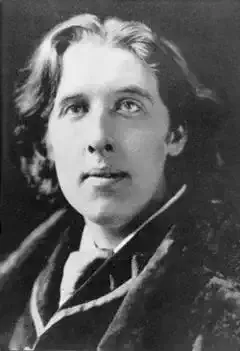
Oscar Wilde
A Vision
Two crowned Kings, and One that stood alone
With no green weight of laurels round his head,
But with sad eyes as one uncomforted,
And wearied with man's never-ceasing moan
For sins no bleating victim can atone,
And sweet long lips with tears and kisses fed.
Girt was he in a garment black and red,
And at his feet I marked a broken stone
Which sent up lilies, dove-like, to his knees.
Now at their sight, my heart being lit with flame,
I cried to Beatrice, 'Who are these?'
And she made answer, knowing well each name,
'AEschylos first, the second Sophokles,
And last (wide stream of tears!) Euripides.'
With no green weight of laurels round his head,
But with sad eyes as one uncomforted,
And wearied with man's never-ceasing moan
For sins no bleating victim can atone,
And sweet long lips with tears and kisses fed.
Girt was he in a garment black and red,
And at his feet I marked a broken stone
Which sent up lilies, dove-like, to his knees.
Now at their sight, my heart being lit with flame,
I cried to Beatrice, 'Who are these?'
And she made answer, knowing well each name,
'AEschylos first, the second Sophokles,
And last (wide stream of tears!) Euripides.'
2,016
1

Ezra Pound
Dum Capitolium Scandet
Dum Capitolium Scandet
How many will come after me
singing as well as I sing, none better;
Telling the heart of their truth
as I have taught them to tell it;
Fruit of my seed,
O my unnameable children.
Know then that I loved you from afore-time,
Clear speakers, naked in the sun, untrammelled.
How many will come after me
singing as well as I sing, none better;
Telling the heart of their truth
as I have taught them to tell it;
Fruit of my seed,
O my unnameable children.
Know then that I loved you from afore-time,
Clear speakers, naked in the sun, untrammelled.
1,114
1
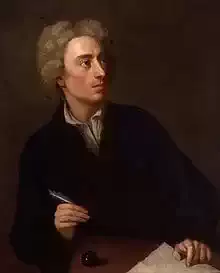
Alexander Pope
With sweeter notes each rising temple rung;
With sweeter notes each rising temple rung;
A Raphael painted and a Vida sung;
Immortal Vida! on whose honour'd brow
The poet's bays and critics ivy grow:
Cremona now shall ever boast they name,
As next in place to Mantua, next in fame!
But soon by impious arms from Latium chased,
Their ancient bounds the banish'd Muses pass'd;
Thence arts o'er all the northern world advance,
But critic learning flourish'd most in France;
The rules a nation born to serve obeys,
And Boileau still in right of Horace sways.
But we, brave Britons, foreign laws despised,
And kept unconquer'd and uncivilized;
Fierce for the liberties of wit, and bold,
We still defied the Romans, as of old.
Yet some there were, among the sounder few
Of those who less presumed and better knew,
Who durst assert the juster ancient cause,
And here restor'd WIt's fundamental laws.
Such was the Muse whose rules and practice tell
``Nature's chief masterpiece is writing well.''
Such was Roscommon, not more learn'd than good,
With manners gen'rous as his noble blood;
To him the wit of Greece and Rome was known,
And every author's merit but his own.
Such late was Walsh--the Muse's judge and friend,
Who justly knew to blame or to commend;
To failings mild but zealous for desert,
The clearest head, and the sincerest heart.
This humble praise, lamented Shade! receive;
This praise at least a grateful Muse may give:
The Muse whose early voice you taught to sing,
Prescribed her heights, and pruned her tender wing,
(Her guide now lost), no more attempts to rise,
But in low numbers short excursions tries;
Content if hence th'unlearn'd their wants may view,
The learn'd reflect on what before they knew;
Careless of censure, nor too fond of fame;
Still pleas'd to praise, yet not afraid to blame;
Averse alike to flatter or offend;
Not free from faults, nor yet too vain to mend.
A Raphael painted and a Vida sung;
Immortal Vida! on whose honour'd brow
The poet's bays and critics ivy grow:
Cremona now shall ever boast they name,
As next in place to Mantua, next in fame!
But soon by impious arms from Latium chased,
Their ancient bounds the banish'd Muses pass'd;
Thence arts o'er all the northern world advance,
But critic learning flourish'd most in France;
The rules a nation born to serve obeys,
And Boileau still in right of Horace sways.
But we, brave Britons, foreign laws despised,
And kept unconquer'd and uncivilized;
Fierce for the liberties of wit, and bold,
We still defied the Romans, as of old.
Yet some there were, among the sounder few
Of those who less presumed and better knew,
Who durst assert the juster ancient cause,
And here restor'd WIt's fundamental laws.
Such was the Muse whose rules and practice tell
``Nature's chief masterpiece is writing well.''
Such was Roscommon, not more learn'd than good,
With manners gen'rous as his noble blood;
To him the wit of Greece and Rome was known,
And every author's merit but his own.
Such late was Walsh--the Muse's judge and friend,
Who justly knew to blame or to commend;
To failings mild but zealous for desert,
The clearest head, and the sincerest heart.
This humble praise, lamented Shade! receive;
This praise at least a grateful Muse may give:
The Muse whose early voice you taught to sing,
Prescribed her heights, and pruned her tender wing,
(Her guide now lost), no more attempts to rise,
But in low numbers short excursions tries;
Content if hence th'unlearn'd their wants may view,
The learn'd reflect on what before they knew;
Careless of censure, nor too fond of fame;
Still pleas'd to praise, yet not afraid to blame;
Averse alike to flatter or offend;
Not free from faults, nor yet too vain to mend.
651
1
Oscar Wilde
Theocritus - A Villanelle
O singer of Persephone!
In the dim meadows desolate
Dost thou remember Sicily?
Still through the ivy flits the bee
Where Amaryllis lies in state;
O Singer of Persephone!
Simaetha calls on Hecate
And hears the wild dogs at the gate;
Dost thou remember Sicily?
Still by the light and laughing sea
Poor Polypheme bemoans his fate;
O Singer of Persephone!
And still in boyish rivalry
Young Daphnis challenges his mate;
Dost thou remember Sicily?
Slim Lacon keeps a goat for thee,
For thee the jocund shepherds wait;
O Singer of Persephone!
Dost thou remember Sicily?
In the dim meadows desolate
Dost thou remember Sicily?
Still through the ivy flits the bee
Where Amaryllis lies in state;
O Singer of Persephone!
Simaetha calls on Hecate
And hears the wild dogs at the gate;
Dost thou remember Sicily?
Still by the light and laughing sea
Poor Polypheme bemoans his fate;
O Singer of Persephone!
And still in boyish rivalry
Young Daphnis challenges his mate;
Dost thou remember Sicily?
Slim Lacon keeps a goat for thee,
For thee the jocund shepherds wait;
O Singer of Persephone!
Dost thou remember Sicily?
591
Oscar Wilde
Amor Intellectualis
Oft have we trod the vales of Castaly
And heard sweet notes of sylvan music blown
From antique reeds to common folk unknown:
And often launched our bark upon that sea
Which the nine Muses hold in empery,
And ploughed free furrows through the wave and foam,
Nor spread reluctant sail for more safe home
Till we had freighted well our argosy.
Of which despoiled treasures these remain,
Sordello's passion, and the honeyed line
Of young Endymion, lordly Tamburlaine
Driving his pampered jades, and more than these,
The seven-fold vision of the Florentine,
And grave-browed Milton's solemn harmonies.
And heard sweet notes of sylvan music blown
From antique reeds to common folk unknown:
And often launched our bark upon that sea
Which the nine Muses hold in empery,
And ploughed free furrows through the wave and foam,
Nor spread reluctant sail for more safe home
Till we had freighted well our argosy.
Of which despoiled treasures these remain,
Sordello's passion, and the honeyed line
Of young Endymion, lordly Tamburlaine
Driving his pampered jades, and more than these,
The seven-fold vision of the Florentine,
And grave-browed Milton's solemn harmonies.
784
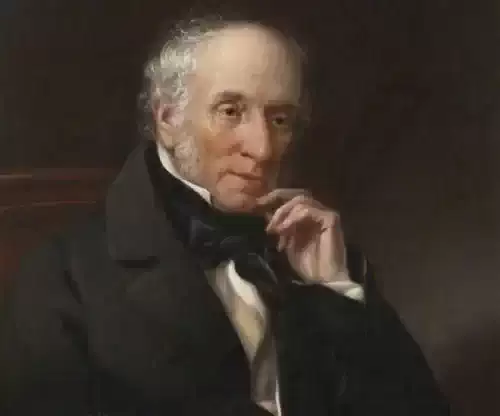
William Wordsworth
The Sonnet i
The Sonnet i
NUNS fret not at their convent's narrow room,
And hermits are contented with their cells,
And students with their pensive citadels;
Maids at the wheel, the weaver at his loom,
Sit blithe and happy; bees that soar for bloom,
High as the highest peak of Furness fells,
Will murmur by the hour in foxglove bells:
In truth the prison unto which we doom
Ourselves no prison is: and hence for me,
In sundry moods, 'twas pastime to be bound
Within the Sonnet's scanty plot of ground;
Pleased if some souls (for such there needs must be)
Who have felt the weight of too much liberty,
Should find brief solace there, as I have found.
NUNS fret not at their convent's narrow room,
And hermits are contented with their cells,
And students with their pensive citadels;
Maids at the wheel, the weaver at his loom,
Sit blithe and happy; bees that soar for bloom,
High as the highest peak of Furness fells,
Will murmur by the hour in foxglove bells:
In truth the prison unto which we doom
Ourselves no prison is: and hence for me,
In sundry moods, 'twas pastime to be bound
Within the Sonnet's scanty plot of ground;
Pleased if some souls (for such there needs must be)
Who have felt the weight of too much liberty,
Should find brief solace there, as I have found.
147
William Wordsworth
Scorn Not the Sonnet
Scorn Not the Sonnet
Scorn not the Sonnet; Critic, you have frowned,
Mindless of its just honours; with this key
Shakspeare unlocked his heart; the melody
Of this small lute gave ease to Petrarch's wound;
A thousand times this pipe did Tasso sound;
With it Camoens soothed an exile's grief;
The Sonnet glittered a gay myrtle leaf
Amid the cypress with which Dante crowned
His visionary brow: a glow-worm lamp,
It cheered mild Spenser, called from Faery-land
To struggle through dark ways; and when a damp
Fell round the path of Milton, in his hand
The Thing became a trumpet; whence he blew
Soul-animating strains--alas, too few!
Scorn not the Sonnet; Critic, you have frowned,
Mindless of its just honours; with this key
Shakspeare unlocked his heart; the melody
Of this small lute gave ease to Petrarch's wound;
A thousand times this pipe did Tasso sound;
With it Camoens soothed an exile's grief;
The Sonnet glittered a gay myrtle leaf
Amid the cypress with which Dante crowned
His visionary brow: a glow-worm lamp,
It cheered mild Spenser, called from Faery-land
To struggle through dark ways; and when a damp
Fell round the path of Milton, in his hand
The Thing became a trumpet; whence he blew
Soul-animating strains--alas, too few!
530
William Wordsworth
It is not to be Thought of
It is not to be Thought of
. It is not to be thought of that the Flood
Of British freedom, which, to the open sea
Of the world's praise, from dark antiquity
Hath flowed, "with pomp of waters, unwithstood,"
Roused though it be full often to a mood
Which spurns the check of salutary bands,
That this most famous Stream in bogs and sands
Should perish; and to evil and to good
Be lost for ever. In our halls is hung
Armoury of the invincible Knights of old:
We must be free or die, who speak the tongue
That Shakespeare spake; the faith and morals hold
Which Milton held.--In every thing we are sprung
Of Earth's first blood, have titles manifold.
. It is not to be thought of that the Flood
Of British freedom, which, to the open sea
Of the world's praise, from dark antiquity
Hath flowed, "with pomp of waters, unwithstood,"
Roused though it be full often to a mood
Which spurns the check of salutary bands,
That this most famous Stream in bogs and sands
Should perish; and to evil and to good
Be lost for ever. In our halls is hung
Armoury of the invincible Knights of old:
We must be free or die, who speak the tongue
That Shakespeare spake; the faith and morals hold
Which Milton held.--In every thing we are sprung
Of Earth's first blood, have titles manifold.
167

William Shakespeare
The Rival Poet Sonnets (78 - 86)
The Rival Poet Sonnets (78 - 86)
LXXVIII
So oft have I invoked thee for my Muse,
And found such fair assistance in my verse
As every alien pen hath got my use
And under thee their poesy disperse.
Thine eyes, that taught the dumb on high to sing
And heavy ignorance aloft to fly,
Have added feathers to the learned's wing
And given grace a double majesty.
Yet be most proud of that which I compile,
Whose influence is thine, and born of thee:
In others' works thou dost but mend the style,
And arts with thy sweet graces graced be;
But thou art all my art, and dost advance
As high as learning my rude ignorance.
LXXIX
Whilst I alone did call upon thy aid,
My verse alone had all thy gentle grace;
But now my gracious numbers are decay'd,
And my sick Muse doth give an other place.
I grant, sweet love, thy lovely argument
Deserves the travail of a worthier pen;
Yet what of thee thy poet doth invent
He robs thee of, and pays it thee again.
He lends thee virtue, and he stole that word
From thy behaviour; beauty doth he give,
And found it in thy cheek: he can afford
No praise to thee, but what in thee doth live.
Then thank him not for that which he doth say,
Since what he owes thee, thou thyself dost pay.
LXXX
O! how I faint when I of you do write,
Knowing a better spirit doth use your name,
And in the praise thereof spends all his might,
To make me tongue-tied speaking of your fame.
But since your worth, wide as the ocean is,
The humble as the proudest sail doth bear,
My saucy bark, inferior far to his,
On your broad main doth wilfully appear.
Your shallowest help will hold me up afloat,
Whilst he upon your soundless deep doth ride;
Or, being wrack'd, I am a worthless boat,
He of tall building, and of goodly pride:
Then if he thrive and I be cast away,
The worst was this, my love was my decay.
LXXXI
Or I shall live your epitaph to make,
Or you survive when I in earth am rotten,
From hence your memory death cannot take,
Although in me each part will be forgotten.
Your name from hence immortal life shall have,
Though I, once gone, to all the world must die:
The earth can yield me but a common grave,
When you entombed in men's eyes shall lie.
Your monument shall be my gentle verse,
Which eyes not yet created shall o'er-read;
And tongues to be, your being shall rehearse,
When all the breathers of this world are dead;
You still shall live, such virtue hath my pen,
Where breath most breathes, even in the mouths of men.
LXXXII
I grant thou wert not married to my Muse,
And therefore mayst without attaint o'erlook
The dedicated words which writers use
Of their fair subject, blessing every book.
Thou art as fair in knowledge as in hue,
Finding thy worth a limit past my praise;
And therefore art enforced to seek anew
Some fresher stamp of the time-bettering days.
And do so, love; yet when they have devis'd,
What strained touches rhetoric can lend,
Thou truly fair, wert truly sympathiz'd
In true plain words, by thy true-telling friend;
And their gross painting might be better usd
Where cheeks need blood; in thee it is abusd.
LXXXIII
I never saw that you did painting need,
And therefore to your fair no painting set;
I found, or thought I found, you did exceed
The barren tender of a poet's debt:
And therefore have I slept in your report,
That you yourself, being extant, well might show
How far a modern quill doth come too short,
Speaking of worth, what worth in you doth grow.
This silence for my sin you did impute,
Which shall be most my glory being dumb;
For I impair not beauty being mute,
When others would give life, and bring a tomb.
There lives more life in one of your fair eyes
Than both your poets can in praise devise.
LXXXIV
Who is it that says most, which can say more,
Than this rich praise, that you alone, are you,
In whose confine immured is the store
Which should example where your equal grew?
Lean penury within that pen doth dwell
That to his subject lends not some small glory;
But he that writes of you, if he can tell
That you are you, so dignifies his story.
Let him but copy what in you is writ,
Not making worse what nature made so clear,
And such a counterpart shall fame his wit,
Making his style admired every where.
You to your beauteous blessings add a curse,
Being fond on praise, which makes your praises worse.
LXXXV
My tongue-tied Muse in manners holds her still,
While comments of your praise richly compiled,
Reserve thy character with golden quill,
And precious phrase by all the Muses filed.
I think good thoughts, whilst others write good words,
And like unlettered clerk still cry 'Amen'
To every hymn that able spirit affords,
In polished form of well-refined pen.
Hearing you praised, I say ''tis so, 'tis true,'
And to the most of praise add something more;
But that is in my thought, whose love to you,
Though words come hindmost, holds his rank before.
Then others, for the breath of words respect,
Me for my dumb thoughts, speaking in effect.
LXXXVI
Was it the proud full sail of his great verse,
Bound for the prize of all too precious you,
That did my ripe thoughts in my brain inhearse,
Making their tomb the womb wherein they grew?
Was it his spirit, by spirits taught to write
Above a mortal pitch, that struck me dead?
No, neither he, nor his compeers by night
Giving him aid, my verse astonished.
He, nor that affable familiar ghost
Which nightly gulls him with intelligence,
As victors of my silence cannot boast;
I was not sick of any fear from thence:
But when your countenance filled up his line,
Then lacked I matter; that enfeebled mine.
LXXVIII
So oft have I invoked thee for my Muse,
And found such fair assistance in my verse
As every alien pen hath got my use
And under thee their poesy disperse.
Thine eyes, that taught the dumb on high to sing
And heavy ignorance aloft to fly,
Have added feathers to the learned's wing
And given grace a double majesty.
Yet be most proud of that which I compile,
Whose influence is thine, and born of thee:
In others' works thou dost but mend the style,
And arts with thy sweet graces graced be;
But thou art all my art, and dost advance
As high as learning my rude ignorance.
LXXIX
Whilst I alone did call upon thy aid,
My verse alone had all thy gentle grace;
But now my gracious numbers are decay'd,
And my sick Muse doth give an other place.
I grant, sweet love, thy lovely argument
Deserves the travail of a worthier pen;
Yet what of thee thy poet doth invent
He robs thee of, and pays it thee again.
He lends thee virtue, and he stole that word
From thy behaviour; beauty doth he give,
And found it in thy cheek: he can afford
No praise to thee, but what in thee doth live.
Then thank him not for that which he doth say,
Since what he owes thee, thou thyself dost pay.
LXXX
O! how I faint when I of you do write,
Knowing a better spirit doth use your name,
And in the praise thereof spends all his might,
To make me tongue-tied speaking of your fame.
But since your worth, wide as the ocean is,
The humble as the proudest sail doth bear,
My saucy bark, inferior far to his,
On your broad main doth wilfully appear.
Your shallowest help will hold me up afloat,
Whilst he upon your soundless deep doth ride;
Or, being wrack'd, I am a worthless boat,
He of tall building, and of goodly pride:
Then if he thrive and I be cast away,
The worst was this, my love was my decay.
LXXXI
Or I shall live your epitaph to make,
Or you survive when I in earth am rotten,
From hence your memory death cannot take,
Although in me each part will be forgotten.
Your name from hence immortal life shall have,
Though I, once gone, to all the world must die:
The earth can yield me but a common grave,
When you entombed in men's eyes shall lie.
Your monument shall be my gentle verse,
Which eyes not yet created shall o'er-read;
And tongues to be, your being shall rehearse,
When all the breathers of this world are dead;
You still shall live, such virtue hath my pen,
Where breath most breathes, even in the mouths of men.
LXXXII
I grant thou wert not married to my Muse,
And therefore mayst without attaint o'erlook
The dedicated words which writers use
Of their fair subject, blessing every book.
Thou art as fair in knowledge as in hue,
Finding thy worth a limit past my praise;
And therefore art enforced to seek anew
Some fresher stamp of the time-bettering days.
And do so, love; yet when they have devis'd,
What strained touches rhetoric can lend,
Thou truly fair, wert truly sympathiz'd
In true plain words, by thy true-telling friend;
And their gross painting might be better usd
Where cheeks need blood; in thee it is abusd.
LXXXIII
I never saw that you did painting need,
And therefore to your fair no painting set;
I found, or thought I found, you did exceed
The barren tender of a poet's debt:
And therefore have I slept in your report,
That you yourself, being extant, well might show
How far a modern quill doth come too short,
Speaking of worth, what worth in you doth grow.
This silence for my sin you did impute,
Which shall be most my glory being dumb;
For I impair not beauty being mute,
When others would give life, and bring a tomb.
There lives more life in one of your fair eyes
Than both your poets can in praise devise.
LXXXIV
Who is it that says most, which can say more,
Than this rich praise, that you alone, are you,
In whose confine immured is the store
Which should example where your equal grew?
Lean penury within that pen doth dwell
That to his subject lends not some small glory;
But he that writes of you, if he can tell
That you are you, so dignifies his story.
Let him but copy what in you is writ,
Not making worse what nature made so clear,
And such a counterpart shall fame his wit,
Making his style admired every where.
You to your beauteous blessings add a curse,
Being fond on praise, which makes your praises worse.
LXXXV
My tongue-tied Muse in manners holds her still,
While comments of your praise richly compiled,
Reserve thy character with golden quill,
And precious phrase by all the Muses filed.
I think good thoughts, whilst others write good words,
And like unlettered clerk still cry 'Amen'
To every hymn that able spirit affords,
In polished form of well-refined pen.
Hearing you praised, I say ''tis so, 'tis true,'
And to the most of praise add something more;
But that is in my thought, whose love to you,
Though words come hindmost, holds his rank before.
Then others, for the breath of words respect,
Me for my dumb thoughts, speaking in effect.
LXXXVI
Was it the proud full sail of his great verse,
Bound for the prize of all too precious you,
That did my ripe thoughts in my brain inhearse,
Making their tomb the womb wherein they grew?
Was it his spirit, by spirits taught to write
Above a mortal pitch, that struck me dead?
No, neither he, nor his compeers by night
Giving him aid, my verse astonished.
He, nor that affable familiar ghost
Which nightly gulls him with intelligence,
As victors of my silence cannot boast;
I was not sick of any fear from thence:
But when your countenance filled up his line,
Then lacked I matter; that enfeebled mine.
323
William Shakespeare
Sonnet LXXXI
Sonnet LXXXI
Or I shall live your epitaph to make,
Or you survive when I in earth am rotten;
From hence your memory death cannot take,
Although in me each part will be forgotten.
Your name from hence immortal life shall have,
Though I, once gone, to all the world must die:
The earth can yield me but a common grave,
When you entombed in men's eyes shall lie.
Your monument shall be my gentle verse,
Which eyes not yet created shall o'er-read,
And tongues to be your being shall rehearse
When all the breathers of this world are dead;
You still shall live--such virtue hath my pen-Where
breath most breathes, even in the mouths of men.
Or I shall live your epitaph to make,
Or you survive when I in earth am rotten;
From hence your memory death cannot take,
Although in me each part will be forgotten.
Your name from hence immortal life shall have,
Though I, once gone, to all the world must die:
The earth can yield me but a common grave,
When you entombed in men's eyes shall lie.
Your monument shall be my gentle verse,
Which eyes not yet created shall o'er-read,
And tongues to be your being shall rehearse
When all the breathers of this world are dead;
You still shall live--such virtue hath my pen-Where
breath most breathes, even in the mouths of men.
237
William Shakespeare
Sonnet LXXVI
Sonnet LXXVI
Why is my verse so barren of new pride,
So far from variation or quick change?
Why with the time do I not glance aside
To new-found methods and to compounds strange?
Why write I still all one, ever the same,
And keep invention in a noted weed,
That every word doth almost tell my name,
Showing their birth and where they did proceed?
O, know, sweet love, I always write of you,
And you and love are still my argument;
So all my best is dressing old words new,
Spending again what is already spent:
For as the sun is daily new and old,
So is my love still telling what is told.
Why is my verse so barren of new pride,
So far from variation or quick change?
Why with the time do I not glance aside
To new-found methods and to compounds strange?
Why write I still all one, ever the same,
And keep invention in a noted weed,
That every word doth almost tell my name,
Showing their birth and where they did proceed?
O, know, sweet love, I always write of you,
And you and love are still my argument;
So all my best is dressing old words new,
Spending again what is already spent:
For as the sun is daily new and old,
So is my love still telling what is told.
326
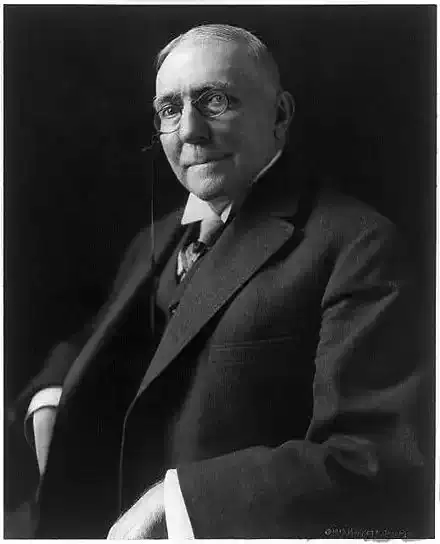
James Whitcomb Riley
A Letter To A Friend
A Letter To A Friend
The past is like a story
I have listened to in dreams
That vanished in the glory
Of the Morning's early gleams;
And--at my shadow glancing--
I feel a loss of strength,
As the Day of Life advancing
Leaves it shorn of half its length.
But it's all in vain to worry
At the rapid race of Time--
And he flies in such a flurry
When I trip him with a rhyme,
I'll bother him no longer
Than to thank you for the thought
That 'my fame is growing stronger
As you really think it ought.'
And though I fall below it,
I might know as much of mirth
To live and die a poet
Of unacknowledged worth;
For Fame is but a vagrant--
Though a loyal one and brave,
And his laurels ne'er so fragrant
As when scattered o'er the grave.
The past is like a story
I have listened to in dreams
That vanished in the glory
Of the Morning's early gleams;
And--at my shadow glancing--
I feel a loss of strength,
As the Day of Life advancing
Leaves it shorn of half its length.
But it's all in vain to worry
At the rapid race of Time--
And he flies in such a flurry
When I trip him with a rhyme,
I'll bother him no longer
Than to thank you for the thought
That 'my fame is growing stronger
As you really think it ought.'
And though I fall below it,
I might know as much of mirth
To live and die a poet
Of unacknowledged worth;
For Fame is but a vagrant--
Though a loyal one and brave,
And his laurels ne'er so fragrant
As when scattered o'er the grave.
236
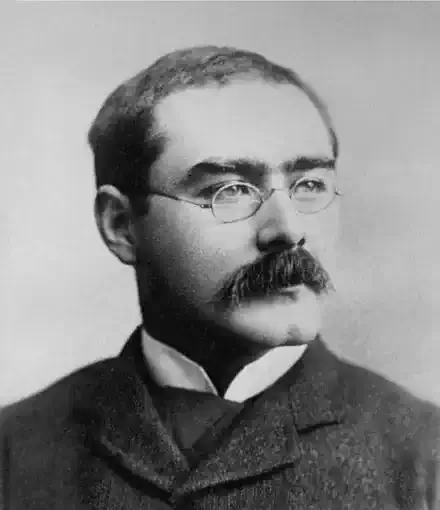
Rudyard Kipling
A Recantation
A Recantation
What boots it on the Gods to call?
Since, answered or unheard,
We perish with the Gods and all
Things made--except the Word.
Ere certain Fate had touched a heart
By fifty years made cold,
I judged thee, Lyde, and thy art
O'erblown and over-bold.
But he--but he, of whom bereft
I suffer vacant days--
He on his shield not meanly left
He cherished all thy lays.
Witness the magic coffer stocked
With convoluted runes
Wherein thy very voice was locked
And linked to circling tunes.
Witness thy portrait, smoke-defiled,
That decked his shelter-place.
Life seemed more present, wrote the child,
Beneath thy well-known face.
And when the grudging days restored
Him for a breath to home,
He, with fresh crowds of youth, adored
Thee making mirth in Rome.
Therefore, I humble, join the hosts,
Loyal and loud, who bow
To thee as Queen of Song--and ghosts,
For I remember how
Never more rampant rose the Hall
At thy audacious line
Than when the news came in from Gaul
Thy son had--followed mine.
But thou didst hide it in thy breast
And, capering, took the brunt
Of blaze and blare, and launched the jest
That swept next week the front.
Singer to children! Ours possessed
Sleep before noon--but thee,
Wakeful each midnight for the rest,
No holocaust shall free!
Yet they who use the Word assigned,
To hearten and make whole,
Not less than Gods have served mankind,
Though vultures rend their soul.
What boots it on the Gods to call?
Since, answered or unheard,
We perish with the Gods and all
Things made--except the Word.
Ere certain Fate had touched a heart
By fifty years made cold,
I judged thee, Lyde, and thy art
O'erblown and over-bold.
But he--but he, of whom bereft
I suffer vacant days--
He on his shield not meanly left
He cherished all thy lays.
Witness the magic coffer stocked
With convoluted runes
Wherein thy very voice was locked
And linked to circling tunes.
Witness thy portrait, smoke-defiled,
That decked his shelter-place.
Life seemed more present, wrote the child,
Beneath thy well-known face.
And when the grudging days restored
Him for a breath to home,
He, with fresh crowds of youth, adored
Thee making mirth in Rome.
Therefore, I humble, join the hosts,
Loyal and loud, who bow
To thee as Queen of Song--and ghosts,
For I remember how
Never more rampant rose the Hall
At thy audacious line
Than when the news came in from Gaul
Thy son had--followed mine.
But thou didst hide it in thy breast
And, capering, took the brunt
Of blaze and blare, and launched the jest
That swept next week the front.
Singer to children! Ours possessed
Sleep before noon--but thee,
Wakeful each midnight for the rest,
No holocaust shall free!
Yet they who use the Word assigned,
To hearten and make whole,
Not less than Gods have served mankind,
Though vultures rend their soul.
518
Rudyard Kipling
A Pageant of Elizabeth
A Pageant of Elizabeth
Written for "The Pageant of Parliament,"
Like Princes crowned they bore them--
Like Demi-Gods they wrought,
When the New World lay before them
In headlong fact and thought.
Fate and their foemen proved them
Above all meed of praise,
And Gloriana loved them,
And Shakespeare wrote them plays!
. . . . . . .
Now Valour, Youth, and Life's delight break forth
In flames of wondrous deed, and thought sublime---
Lightly to mould new worlds or lightly loose
Words that shall shake and shape all after-time!
Giants with giants, wits with wits engage,
And England-England-England takes the breath
Of morning, body and soul, till the great Age
Fulfills in one great chord:--Elizabeth!
Written for "The Pageant of Parliament,"
Like Princes crowned they bore them--
Like Demi-Gods they wrought,
When the New World lay before them
In headlong fact and thought.
Fate and their foemen proved them
Above all meed of praise,
And Gloriana loved them,
And Shakespeare wrote them plays!
. . . . . . .
Now Valour, Youth, and Life's delight break forth
In flames of wondrous deed, and thought sublime---
Lightly to mould new worlds or lightly loose
Words that shall shake and shape all after-time!
Giants with giants, wits with wits engage,
And England-England-England takes the breath
Of morning, body and soul, till the great Age
Fulfills in one great chord:--Elizabeth!
482

Horace
BkI:X To Mercury
BkI:X To Mercury
Mercury, eloquent grandson of Atlas,
I’ll sing of you, who wise with your training, shaped
the uncivilised ways of our new-born race,
with language, and grace
in the ways of wrestling, you the messenger
of Jove and the gods, and the curved lyre’s father,
skilful in hiding whatever pleases you,
with playful deceit.
While he tried to scare you, with his threatening voice,
unless you returned the cattle you’d stolen,
and so craftily, Apollo was laughing
missing his quiver.
And indeed, with your guidance, Priam carrying
rich gifts left Troy, escaped the proud Atridae,
Thessalian fires, and the menacing camp
threatening Ilium.
You bring virtuous souls to the happy shores,
controlling the bodiless crowds with your wand
of gold, pleasing to the gods of the heavens
and the gods below.
Mercury, eloquent grandson of Atlas,
I’ll sing of you, who wise with your training, shaped
the uncivilised ways of our new-born race,
with language, and grace
in the ways of wrestling, you the messenger
of Jove and the gods, and the curved lyre’s father,
skilful in hiding whatever pleases you,
with playful deceit.
While he tried to scare you, with his threatening voice,
unless you returned the cattle you’d stolen,
and so craftily, Apollo was laughing
missing his quiver.
And indeed, with your guidance, Priam carrying
rich gifts left Troy, escaped the proud Atridae,
Thessalian fires, and the menacing camp
threatening Ilium.
You bring virtuous souls to the happy shores,
controlling the bodiless crowds with your wand
of gold, pleasing to the gods of the heavens
and the gods below.
236

Robert W. Service
Your Poem
Your Poem
My poem may be yours indeed
In melody and tone,
If in its rhythm you can read
A music of your own;
If in its pale woof you can weave
Your lovelier design,
'Twill make my lyric, I believe,
More yours than mine.
I'm but a prompter at the best;
Crude cues are all I give.
In simple stanzas I suggest
'Tis you who make them live.
My bit of rhyme is but a frame,
And if my lines you quote,
I think, although they bear my name,
'Tis you who wrote.
Yours is the beauty that you see
In any words I sing;
The magic and the melody
'Tis you, dear friend, who bring.
Yea, by the glory and the gleam,
The loveliness that lures
Your thought to starry heights of dream,
The poem's yours.
My poem may be yours indeed
In melody and tone,
If in its rhythm you can read
A music of your own;
If in its pale woof you can weave
Your lovelier design,
'Twill make my lyric, I believe,
More yours than mine.
I'm but a prompter at the best;
Crude cues are all I give.
In simple stanzas I suggest
'Tis you who make them live.
My bit of rhyme is but a frame,
And if my lines you quote,
I think, although they bear my name,
'Tis you who wrote.
Yours is the beauty that you see
In any words I sing;
The magic and the melody
'Tis you, dear friend, who bring.
Yea, by the glory and the gleam,
The loveliness that lures
Your thought to starry heights of dream,
The poem's yours.
221
Horace
BkI:I The Dedication: To Maecenas
BkI:I The Dedication: To Maecenas
Maecenas, descendant of royal ancestors,
O my protector, and my sweet glory,
some are delighted by showers of dust,
Olympic dust, over their chariots, they
are raised to the gods, as Earth’s masters, by posts
clipping the red-hot wheels, by noble palms:
this man, if the fickle crowd of Citizens
compete to lift him to triple honours:
that one, if he’s stored away in his granary
whatever he gleaned from the Libyan threshing.
The peasant who loves to break clods in his native
fields, won’t be tempted, by living like Attalus,
to sail the seas, in fear, in a Cyprian boat.
The merchant afraid of the African winds as
they fight the Icarian waves, loves the peace
and the soil near his town, but quickly rebuilds
his shattered ships, unsuited to poverty.
There’s one who won’t scorn cups of old Massic,
nor to lose the best part of a whole day lying
under the greenwood tree, or softly
close to the head of sacred waters.
Many love camp, and the sound of trumpets
mixed with the horns, and the warfare hated
by mothers. The hunter, sweet wife forgotten,
stays out under frozen skies, if his faithful
hounds catch sight of a deer, or a Marsian
wild boar rampages, through his close meshes.
But the ivy, the glory of learned brows,
joins me to the gods on high: cool groves,
and the gathering of light nymphs and satyrs,
draw me from the throng, if Euterpe the Muse
won’t deny me her flute, and Polyhymnia
won’t refuse to exert herself on her Lesbian lyre.
And if you enter me among all the lyric poets,
my head too will be raised to touch the stars.
Maecenas, descendant of royal ancestors,
O my protector, and my sweet glory,
some are delighted by showers of dust,
Olympic dust, over their chariots, they
are raised to the gods, as Earth’s masters, by posts
clipping the red-hot wheels, by noble palms:
this man, if the fickle crowd of Citizens
compete to lift him to triple honours:
that one, if he’s stored away in his granary
whatever he gleaned from the Libyan threshing.
The peasant who loves to break clods in his native
fields, won’t be tempted, by living like Attalus,
to sail the seas, in fear, in a Cyprian boat.
The merchant afraid of the African winds as
they fight the Icarian waves, loves the peace
and the soil near his town, but quickly rebuilds
his shattered ships, unsuited to poverty.
There’s one who won’t scorn cups of old Massic,
nor to lose the best part of a whole day lying
under the greenwood tree, or softly
close to the head of sacred waters.
Many love camp, and the sound of trumpets
mixed with the horns, and the warfare hated
by mothers. The hunter, sweet wife forgotten,
stays out under frozen skies, if his faithful
hounds catch sight of a deer, or a Marsian
wild boar rampages, through his close meshes.
But the ivy, the glory of learned brows,
joins me to the gods on high: cool groves,
and the gathering of light nymphs and satyrs,
draw me from the throng, if Euterpe the Muse
won’t deny me her flute, and Polyhymnia
won’t refuse to exert herself on her Lesbian lyre.
And if you enter me among all the lyric poets,
my head too will be raised to touch the stars.
301

Homer
The Odyssey: Book 3
The Odyssey: Book 3
But as the sun was rising from the fair sea into the firmament of
heaven to shed Blight on mortals and immortals, they reached Pylos the
city of Neleus. Now the people of Pylos were gathered on the sea shore
to offer sacrifice of black bulls to Neptune lord of the Earthquake.
There were nine guilds with five hundred men in each, and there were
nine bulls to each guild. As they were eating the inward meats and
burning the thigh bones [on the embers] in the name of Neptune,
Telemachus and his crew arrived, furled their sails, brought their
ship to anchor, and went ashore.
Minerva led the way and Telemachus followed her. Presently she said,
"Telemachus, you must not be in the least shy or nervous; you have
taken this voyage to try and find out where your father is buried
and how he came by his end; so go straight up to Nestor that we may
see what he has got to tell us. Beg of him to speak the truth, and
he will tell no lies, for he is an excellent person."
"But how, Mentor," replied Telemachus, "dare I go up to Nestor,
and how am I to address him? I have never yet been used to holding
long conversations with people, and am ashamed to begin questioning
one who is so much older than myself."
"Some things, Telemachus," answered Minerva, "will be suggested to
you by your own instinct, and heaven will prompt you further; for I am
assured that the gods have been with you from the time of your birth
until now."
She then went quickly on, and Telemachus followed in her steps
till they reached the place where the guilds of the Pylian people were
assembled. There they found Nestor sitting with his sons, while his
company round him were busy getting dinner ready, and putting pieces
of meat on to the spits while other pieces were cooking. When they saw
the strangers they crowded round them, took them by the hand and
bade them take their places. Nestor's son Pisistratus at once
offered his hand to each of them, and seated them on some soft
sheepskins that were lying on the sands near his father and his
brother Thrasymedes. Then he gave them their portions of the inward
meats and poured wine for them into a golden cup, handing it to
Minerva first, and saluting her at the same time.
"Offer a prayer, sir," said he, "to King Neptune, for it is his
feast that you are joining; when you have duly prayed and made your
drink-offering, pass the cup to your friend that he may do so also.
I doubt not that he too lifts his hands in prayer, for man cannot live
without God in the world. Still he is younger than you are, and is
much of an age with myself, so I he handed I will give you the
precedence."
As he spoke he handed her the cup. Minerva thought it very right and
proper of him to have given it to herself first; she accordingly began
praying heartily to Neptune. "O thou," she cried, "that encirclest the
earth, vouchsafe to grant the prayers of thy servants that call upon
thee. More especially we pray thee send down thy grace on Nestor and
on his sons; thereafter also make the rest of the Pylian people some
handsome return for the goodly hecatomb they are offering you. Lastly,
grant Telemachus and myself a happy issue, in respect of the matter
that has brought us in our to Pylos."
When she had thus made an end of praying, she handed the cup to
Telemachus and he prayed likewise. By and by, when the outer meats
were roasted and had been taken off the spits, the carvers gave
every man his portion and they all made an excellent dinner. As soon
as they had had enough to eat and drink, Nestor, knight of Gerene,
began to speak.
"Now," said he, "that our guests have done their dinner, it will
be best to ask them who they are. Who, then, sir strangers, are you,
and from what port have you sailed? Are you traders? or do you sail
the seas as rovers with your hand against every man, and every man's
hand against you?"
Telemachus answered boldly, for Minerva had given him courage to ask
about his father and get himself a good name.
"Nestor," said he, "son of Neleus, honour to the Achaean name, you
ask whence we come, and I will tell you. We come from Ithaca under
Neritum, and the matter about which I would speak is of private not
public import. I seek news of my unhappy father Ulysses, who is said
to have sacked the town of Troy in company with yourself. We know what
fate befell each one of the other heroes who fought at Troy, but as
regards Ulysses heaven has hidden from us the knowledge even that he
is dead at all, for no one can certify us in what place he perished,
nor say whether he fell in battle on the mainland, or was lost at
sea amid the waves of Amphitrite. Therefore I am suppliant at your
knees, if haply you may be pleased to tell me of his melancholy end,
whether you saw it with your own eyes, or heard it from some other
traveller, for he was a man born to trouble. Do not soften things
out of any pity for me, but tell me in all plainness exactly what
you saw. If my brave father Ulysses ever did you loyal service, either
by word or deed, when you Achaeans were harassed among the Trojans,
bear it in mind now as in my favour and tell me truly all."
"My friend," answered Nestor, "you recall a time of much sorrow to
my mind, for the brave Achaeans suffered much both at sea, while
privateering under Achilles, and when fighting before the great city
of king Priam. Our best men all of them fell there- Ajax, Achilles,
Patroclus peer of gods in counsel, and my own dear son Antilochus, a
man singularly fleet of foot and in fight valiant. But we suffered
much more than this; what mortal tongue indeed could tell the whole
story? Though you were to stay here and question me for five years, or
even six, I could not tell you all that the Achaeans suffered, and you
would turn homeward weary of my tale before it ended. Nine long
years did we try every kind of stratagem, but the hand of heaven was
against us; during all this time there was no one who could compare
with your father in subtlety- if indeed you are his son- I can
hardly believe my eyes- and you talk just like him too- no one would
say that people of such different ages could speak so much alike. He
and I never had any kind of difference from first to last neither in
camp nor council, but in singleness of heart and purpose we advised
the Argives how all might be ordered for the best.
"When however, we had sacked the city of Priam, and were setting
sail in our ships as heaven had dispersed us, then Jove saw fit to vex
the Argives on their homeward voyage; for they had Not all been either
wise or understanding, and hence many came to a bad end through the
displeasure of Jove's daughter Minerva, who brought about a quarrel
between the two sons of Atreus.
"The sons of Atreus called a meeting which was not as it should
be, for it was sunset and the Achaeans were heavy with wine. When they
explained why they had called- the people together, it seemed that
Menelaus was for sailing homeward at once, and this displeased
Agamemnon, who thought that we should wait till we had offered
hecatombs to appease the anger of Minerva. Fool that he was, he
might have known that he would not prevail with her, for when the gods
have made up their minds they do not change them lightly. So the two
stood bandying hard words, whereon the Achaeans sprang to their feet
with a cry that rent the air, and were of two minds as to what they
should do.
"That night we rested and nursed our anger, for Jove was hatching
mischief against us. But in the morning some of us drew our ships into
the water and put our goods with our women on board, while the rest,
about half in number, stayed behind with Agamemnon. We- the other
half- embarked and sailed; and the ships went well, for heaven had
smoothed the sea. When we reached Tenedos we offered sacrifices to the
gods, for we were longing to get home; cruel Jove, however, did not
yet mean that we should do so, and raised a second quarrel in the
course of which some among us turned their ships back again, and
sailed away under Ulysses to make their peace with Agamemnon; but I,
and all the ships that were with me pressed forward, for I saw that
mischief was brewing. The son of Tydeus went on also with me, and
his crews with him. Later on Menelaus joined us at Lesbos, and found
us making up our minds about our course- for we did not know whether
to go outside Chios by the island of Psyra, keeping this to our
left, or inside Chios, over against the stormy headland of Mimas. So
we asked heaven for a sign, and were shown one to the effect that we
should be soonest out of danger if we headed our ships across the open
sea to Euboea. This we therefore did, and a fair wind sprang up
which gave us a quick passage during the night to Geraestus, where
we offered many sacrifices to Neptune for having helped us so far on
our way. Four days later Diomed and his men stationed their ships in
Argos, but I held on for Pylos, and the wind never fell light from the
day when heaven first made it fair for me.
"Therefore, my dear young friend, I returned without hearing
anything about the others. I know neither who got home safely nor
who were lost but, as in duty bound, I will give you without reserve
the reports that have reached me since I have been here in my own
house. They say the Myrmidons returned home safely under Achilles' son
Neoptolemus; so also did the valiant son of Poias, Philoctetes.
Idomeneus, again, lost no men at sea, and all his followers who
escaped death in the field got safe home with him to Crete. No
matter how far out of the world you live, you will have heard of
Agamemnon and the bad end he came to at the hands of Aegisthus- and
a fearful reckoning did Aegisthus presently pay. See what a good thing
it is for a man to leave a son behind him to do as Orestes did, who
killed false Aegisthus the murderer of his noble father. You too,
then- for you are a tall, smart-looking fellow- show your mettle and
make yourself a name in story."
"Nestor son of Neleus," answered Telemachus, "honour to the
Achaean name, the Achaeans applaud Orestes and his name will live
through all time for he has avenged his father nobly. Would that
heaven might grant me to do like vengeance on the insolence of the
wicked suitors, who are ill treating me and plotting my ruin; but
the gods have no such happiness in store for me and for my father,
so we must bear it as best we may."
"My friend," said Nestor, "now that you remind me, I remember to
have heard that your mother has many suitors, who are ill disposed
towards you and are making havoc of your estate. Do you submit to this
tamely, or are public feeling and the voice of heaven against you? Who
knows but what Ulysses may come back after all, and pay these
scoundrels in full, either single-handed or with a force of Achaeans
behind him? If Minerva were to take as great a liking to you as she
did to Ulysses when we were fighting before Troy (for I never yet
saw the gods so openly fond of any one as Minerva then was of your
father), if she would take as good care of you as she did of him,
these wooers would soon some of them him, forget their wooing."
Telemachus answered, "I can expect nothing of the kind; it would
be far too much to hope for. I dare not let myself think of it. Even
though the gods themselves willed it no such good fortune could befall
me."
On this Minerva said, "Telemachus, what are you talking about?
Heaven has a long arm if it is minded to save a man; and if it were
me, I should not care how much I suffered before getting home,
provided I could be safe when I was once there. I would rather this,
than get home quickly, and then be killed in my own house as Agamemnon
was by the treachery of Aegisthus and his wife. Still, death is
certain, and when a man's hour is come, not even the gods can save
him, no matter how fond they are of him."
"Mentor," answered Telemachus, "do not let us talk about it any
more. There is no chance of my father's ever coming back; the gods
have long since counselled his destruction. There is something else,
however, about which I should like to ask Nestor, for he knows much
more than any one else does. They say he has reigned for three
generations so that it is like talking to an immortal. Tell me,
therefore, Nestor, and tell me true; how did Agamemnon come to die
in that way? What was Menelaus doing? And how came false Aegisthus
to kill so far better a man than himself? Was Menelaus away from
Achaean Argos, voyaging elsewhither among mankind, that Aegisthus took
heart and killed Agamemnon?"
"I will tell you truly," answered Nestor, "and indeed you have
yourself divined how it all happened. If Menelaus when he got back
from Troy had found Aegisthus still alive in his house, there would
have been no barrow heaped up for him, not even when he was dead,
but he would have been thrown outside the city to dogs and vultures,
and not a woman would have mourned him, for he had done a deed of
great wickedness; but we were over there, fighting hard at Troy, and
Aegisthus who was taking his ease quietly in the heart of Argos,
cajoled Agamemnon's wife Clytemnestra with incessant flattery.
"At first she would have nothing to do with his wicked scheme, for
she was of a good natural disposition; moreover there was a bard
with her, to whom Agamemnon had given strict orders on setting out for
Troy, that he was to keep guard over his wife; but when heaven had
counselled her destruction, Aegisthus thus this bard off to a desert
island and left him there for crows and seagulls to batten upon- after
which she went willingly enough to the house of Aegisthus. Then he
offered many burnt sacrifices to the gods, and decorated many
temples with tapestries and gilding, for he had succeeded far beyond
his expectations.
"Meanwhile Menelaus and I were on our way home from Troy, on good
terms with one another. When we got to Sunium, which is the point of
Athens, Apollo with his painless shafts killed Phrontis the
steersman of Menelaus' ship (and never man knew better how to handle a
vessel in rough weather) so that he died then and there with the
helm in his hand, and Menelaus, though very anxious to press
forward, had to wait in order to bury his comrade and give him his due
funeral rites. Presently, when he too could put to sea again, and
had sailed on as far as the Malean heads, Jove counselled evil against
him and made it it blow hard till the waves ran mountains high. Here
he divided his fleet and took the one half towards Crete where the
Cydonians dwell round about the waters of the river Iardanus. There is
a high headland hereabouts stretching out into the sea from a place
called Gortyn, and all along this part of the coast as far as Phaestus
the sea runs high when there is a south wind blowing, but arter
Phaestus the coast is more protected, for a small headland can make
a great shelter. Here this part of the fleet was driven on to the
rocks and wrecked; but the crews just managed to save themselves. As
for the other five ships, they were taken by winds and seas to
Egypt, where Menelaus gathered much gold and substance among people of
an alien speech. Meanwhile Aegisthus here at home plotted his evil
deed. For seven years after he had killed Agamemnon he ruled in
Mycene, and the people were obedient under him, but in the eighth year
Orestes came back from Athens to be his bane, and killed the
murderer of his father. Then he celebrated the funeral rites of his
mother and of false Aegisthus by a banquet to the people of Argos, and
on that very day Menelaus came home, with as much treasure as his
ships could carry.
"Take my advice then, and do not go travelling about for long so far
from home, nor leave your property with such dangerous people in
your house; they will eat up everything you have among them, and you
will have been on a fool's errand. Still, I should advise you by all
means to go and visit Menelaus, who has lately come off a voyage among
such distant peoples as no man could ever hope to get back from,
when the winds had once carried him so far out of his reckoning;
even birds cannot fly the distance in a twelvemonth, so vast and
terrible are the seas that they must cross. Go to him, therefore, by
sea, and take your own men with you; or if you would rather travel
by land you can have a chariot, you can have horses, and here are my
sons who can escort you to Lacedaemon where Menelaus lives. Beg of him
to speak the truth, and he will tell you no lies, for he is an
excellent person."
As he spoke the sun set and it came on dark, whereon Minerva said,
"Sir, all that you have said is well; now, however, order the
tongues of the victims to be cut, and mix wine that we may make
drink-offerings to Neptune, and the other immortals, and then go to
bed, for it is bed time. People should go away early and not keep late
hours at a religious festival."
Thus spoke the daughter of Jove, and they obeyed her saying. Men
servants poured water over the hands of the guests, while pages filled
the mixing-bowls with wine and water, and handed it round after giving
every man his drink-offering; then they threw the tongues of the
victims into the fire, and stood up to make their drink-offerings.
When they had made their offerings and had drunk each as much as he
was minded, Minerva and Telemachus were forgoing on board their
ship, but Nestor caught them up at once and stayed them.
"Heaven and the immortal gods," he exclaimed, "forbid that you
should leave my house to go on board of a ship. Do you think I am so
poor and short of clothes, or that I have so few cloaks and as to be
unable to find comfortable beds both for myself and for my guests? Let
me tell you I have store both of rugs and cloaks, and shall not permit
the son of my old friend Ulysses to camp down on the deck of a shipnot
while I live- nor yet will my sons after me, but they will keep
open house as have done."
Then Minerva answered, "Sir, you have spoken well, and it will be
much better that Telemachus should do as you have said; he, therefore,
shall return with you and sleep at your house, but I must go back to
give orders to my crew, and keep them in good heart. I am the only
older person among them; the rest are all young men of Telemachus' own
age, who have taken this voyage out of friendship; so I must return to
the ship and sleep there. Moreover to-morrow I must go to the
Cauconians where I have a large sum of money long owing to me. As
for Telemachus, now that he is your guest, send him to Lacedaemon in a
chariot, and let one of your sons go with him. Be pleased also to
provide him with your best and fleetest horses."
When she had thus spoken, she flew away in the form of an eagle, and
all marvelled as they beheld it. Nestor was astonished, and took
Telemachus by the hand. "My friend," said he, "I see that you are
going to be a great hero some day, since the gods wait upon you thus
while you are still so young. This can have been none other of those
who dwell in heaven than Jove's redoubtable daughter, the
Trito-born, who showed such favour towards your brave father among the
Argives." "Holy queen," he continued, "vouchsafe to send down thy
grace upon myself, my good wife, and my children. In return, I will
offer you in sacrifice a broad-browed heifer of a year old,
unbroken, and never yet brought by man under the yoke. I will gild her
horns, and will offer her up to you in sacrifice."
Thus did he pray, and Minerva heard his prayer. He then led the
way to his own house, followed by his sons and sons-in-law. When
they had got there and had taken their places on the benches and
seats, he mixed them a bowl of sweet wine that was eleven years old
when the housekeeper took the lid off the jar that held it. As he
mixed the wine, he prayed much and made drink-offerings to Minerva,
daughter of Aegis-bearing Jove. Then, when they had made their
drink-offerings and had drunk each as much as he was minded, the
others went home to bed each in his own abode; but Nestor put
Telemachus to sleep in the room that was over the gateway along with
Pisistratus, who was the only unmarried son now left him. As for
himself, he slept in an inner room of the house, with the queen his
wife by his side.
Now when the child of morning, rosy-fingered Dawn, appeared,
Nestor left his couch and took his seat on the benches of white and
polished marble that stood in front of his house. Here aforetime sat
Neleus, peer of gods in counsel, but he was now dead, and had gone
to the house of Hades; so Nestor sat in his seat, sceptre in hand,
as guardian of the public weal. His sons as they left their rooms
gathered round him, Echephron, Stratius, Perseus, Aretus, and
Thrasymedes; the sixth son was Pisistratus, and when Telemachus joined
them they made him sit with them. Nestor then addressed them.
"My sons," said he, "make haste to do as I shall bid you. I wish
first and foremost to propitiate the great goddess Minerva, who
manifested herself visibly to me during yesterday's festivities. Go,
then, one or other of you to the plain, tell the stockman to look me
out a heifer, and come on here with it at once. Another must go to
Telemachus's ship, and invite all the crew, leaving two men only in
charge of the vessel. Some one else will run and fetch Laerceus the
goldsmith to gild the horns of the heifer. The rest, stay all of you
where you are; tell the maids in the house to prepare an excellent
dinner, and to fetch seats, and logs of wood for a burnt offering.
Tell them also- to bring me some clear spring water."
On this they hurried off on their several errands. The heifer was
brought in from the plain, and Telemachus's crew came from the ship;
the goldsmith brought the anvil, hammer, and tongs, with which he
worked his gold, and Minerva herself came to the sacrifice. Nestor
gave out the gold, and the smith gilded the horns of the heifer that
the goddess might have pleasure in their beauty. Then Stratius and
Echephron brought her in by the horns; Aretus fetched water from the
house in a ewer that had a flower pattern on it, and in his other hand
he held a basket of barley meal; sturdy Thrasymedes stood by with a
sharp axe, ready to strike the heifer, while Perseus held a bucket.
Then Nestor began with washing his hands and sprinkling the barley
meal, and he offered many a prayer to Minerva as he threw a lock
from the heifer's head upon the fire.
When they had done praying and sprinkling the barley meal
Thrasymedes dealt his blow, and brought the heifer down with a
stroke that cut through the tendons at the base of her neck, whereon
the daughters and daughters-in-law of Nestor, and his venerable wife
Eurydice (she was eldest daughter to Clymenus) screamed with
delight. Then they lifted the heifer's head from off the ground, and
Pisistratus cut her throat. When she had done bleeding and was quite
dead, they cut her up. They cut out the thigh bones all in due course,
wrapped them round in two layers of fat, and set some pieces of raw
meat on the top of them; then Nestor laid them upon the wood fire
and poured wine over them, while the young men stood near him with
five-pronged spits in their hands. When the thighs were burned and
they had tasted the inward meats, they cut the rest of the meat up
small, put the pieces on the spits and toasted them over the fire.
Meanwhile lovely Polycaste, Nestor's youngest daughter, washed
Telemachus. When she had washed him and anointed him with oil, she
brought him a fair mantle and shirt, and he looked like a god as he
came from the bath and took his seat by the side of Nestor. When the
outer meats were done they drew them off the spits and sat down to
dinner where they were waited upon by some worthy henchmen, who kept
pouring them out their wine in cups of gold. As soon as they had had
had enough to eat and drink Nestor said, "Sons, put Telemachus's
horses to the chariot that he may start at once."
Thus did he speak, and they did even as he had said, and yoked the
fleet horses to the chariot. The housekeeper packed them up a
provision of bread, wine, and sweetmeats fit for the sons of
princes. Then Telemachus got into the chariot, while Pisistratus
gathered up the reins and took his seat beside him. He lashed the
horses on and they flew forward nothing loth into the open country,
leaving the high citadel of Pylos behind them. All that day did they
travel, swaying the yoke upon their necks till the sun went down and
darkness was over all the land. Then they reached Pherae where Diocles
lived, who was son to Ortilochus and grandson to Alpheus. Here they
passed the night and Diocles entertained them hospitably. When the
child of morning, rosy-fingered Dawn; appeared, they again yoked their
horses and drove out through the gateway under the echoing
gatehouse. Pisistratus lashed the horses on and they flew forward
nothing loth; presently they came to the corn lands Of the open
country, and in the course of time completed their journey, so well
did their steeds take them.
Now when the sun had set and darkness was over the land,
Translated by Samuel Butler
But as the sun was rising from the fair sea into the firmament of
heaven to shed Blight on mortals and immortals, they reached Pylos the
city of Neleus. Now the people of Pylos were gathered on the sea shore
to offer sacrifice of black bulls to Neptune lord of the Earthquake.
There were nine guilds with five hundred men in each, and there were
nine bulls to each guild. As they were eating the inward meats and
burning the thigh bones [on the embers] in the name of Neptune,
Telemachus and his crew arrived, furled their sails, brought their
ship to anchor, and went ashore.
Minerva led the way and Telemachus followed her. Presently she said,
"Telemachus, you must not be in the least shy or nervous; you have
taken this voyage to try and find out where your father is buried
and how he came by his end; so go straight up to Nestor that we may
see what he has got to tell us. Beg of him to speak the truth, and
he will tell no lies, for he is an excellent person."
"But how, Mentor," replied Telemachus, "dare I go up to Nestor,
and how am I to address him? I have never yet been used to holding
long conversations with people, and am ashamed to begin questioning
one who is so much older than myself."
"Some things, Telemachus," answered Minerva, "will be suggested to
you by your own instinct, and heaven will prompt you further; for I am
assured that the gods have been with you from the time of your birth
until now."
She then went quickly on, and Telemachus followed in her steps
till they reached the place where the guilds of the Pylian people were
assembled. There they found Nestor sitting with his sons, while his
company round him were busy getting dinner ready, and putting pieces
of meat on to the spits while other pieces were cooking. When they saw
the strangers they crowded round them, took them by the hand and
bade them take their places. Nestor's son Pisistratus at once
offered his hand to each of them, and seated them on some soft
sheepskins that were lying on the sands near his father and his
brother Thrasymedes. Then he gave them their portions of the inward
meats and poured wine for them into a golden cup, handing it to
Minerva first, and saluting her at the same time.
"Offer a prayer, sir," said he, "to King Neptune, for it is his
feast that you are joining; when you have duly prayed and made your
drink-offering, pass the cup to your friend that he may do so also.
I doubt not that he too lifts his hands in prayer, for man cannot live
without God in the world. Still he is younger than you are, and is
much of an age with myself, so I he handed I will give you the
precedence."
As he spoke he handed her the cup. Minerva thought it very right and
proper of him to have given it to herself first; she accordingly began
praying heartily to Neptune. "O thou," she cried, "that encirclest the
earth, vouchsafe to grant the prayers of thy servants that call upon
thee. More especially we pray thee send down thy grace on Nestor and
on his sons; thereafter also make the rest of the Pylian people some
handsome return for the goodly hecatomb they are offering you. Lastly,
grant Telemachus and myself a happy issue, in respect of the matter
that has brought us in our to Pylos."
When she had thus made an end of praying, she handed the cup to
Telemachus and he prayed likewise. By and by, when the outer meats
were roasted and had been taken off the spits, the carvers gave
every man his portion and they all made an excellent dinner. As soon
as they had had enough to eat and drink, Nestor, knight of Gerene,
began to speak.
"Now," said he, "that our guests have done their dinner, it will
be best to ask them who they are. Who, then, sir strangers, are you,
and from what port have you sailed? Are you traders? or do you sail
the seas as rovers with your hand against every man, and every man's
hand against you?"
Telemachus answered boldly, for Minerva had given him courage to ask
about his father and get himself a good name.
"Nestor," said he, "son of Neleus, honour to the Achaean name, you
ask whence we come, and I will tell you. We come from Ithaca under
Neritum, and the matter about which I would speak is of private not
public import. I seek news of my unhappy father Ulysses, who is said
to have sacked the town of Troy in company with yourself. We know what
fate befell each one of the other heroes who fought at Troy, but as
regards Ulysses heaven has hidden from us the knowledge even that he
is dead at all, for no one can certify us in what place he perished,
nor say whether he fell in battle on the mainland, or was lost at
sea amid the waves of Amphitrite. Therefore I am suppliant at your
knees, if haply you may be pleased to tell me of his melancholy end,
whether you saw it with your own eyes, or heard it from some other
traveller, for he was a man born to trouble. Do not soften things
out of any pity for me, but tell me in all plainness exactly what
you saw. If my brave father Ulysses ever did you loyal service, either
by word or deed, when you Achaeans were harassed among the Trojans,
bear it in mind now as in my favour and tell me truly all."
"My friend," answered Nestor, "you recall a time of much sorrow to
my mind, for the brave Achaeans suffered much both at sea, while
privateering under Achilles, and when fighting before the great city
of king Priam. Our best men all of them fell there- Ajax, Achilles,
Patroclus peer of gods in counsel, and my own dear son Antilochus, a
man singularly fleet of foot and in fight valiant. But we suffered
much more than this; what mortal tongue indeed could tell the whole
story? Though you were to stay here and question me for five years, or
even six, I could not tell you all that the Achaeans suffered, and you
would turn homeward weary of my tale before it ended. Nine long
years did we try every kind of stratagem, but the hand of heaven was
against us; during all this time there was no one who could compare
with your father in subtlety- if indeed you are his son- I can
hardly believe my eyes- and you talk just like him too- no one would
say that people of such different ages could speak so much alike. He
and I never had any kind of difference from first to last neither in
camp nor council, but in singleness of heart and purpose we advised
the Argives how all might be ordered for the best.
"When however, we had sacked the city of Priam, and were setting
sail in our ships as heaven had dispersed us, then Jove saw fit to vex
the Argives on their homeward voyage; for they had Not all been either
wise or understanding, and hence many came to a bad end through the
displeasure of Jove's daughter Minerva, who brought about a quarrel
between the two sons of Atreus.
"The sons of Atreus called a meeting which was not as it should
be, for it was sunset and the Achaeans were heavy with wine. When they
explained why they had called- the people together, it seemed that
Menelaus was for sailing homeward at once, and this displeased
Agamemnon, who thought that we should wait till we had offered
hecatombs to appease the anger of Minerva. Fool that he was, he
might have known that he would not prevail with her, for when the gods
have made up their minds they do not change them lightly. So the two
stood bandying hard words, whereon the Achaeans sprang to their feet
with a cry that rent the air, and were of two minds as to what they
should do.
"That night we rested and nursed our anger, for Jove was hatching
mischief against us. But in the morning some of us drew our ships into
the water and put our goods with our women on board, while the rest,
about half in number, stayed behind with Agamemnon. We- the other
half- embarked and sailed; and the ships went well, for heaven had
smoothed the sea. When we reached Tenedos we offered sacrifices to the
gods, for we were longing to get home; cruel Jove, however, did not
yet mean that we should do so, and raised a second quarrel in the
course of which some among us turned their ships back again, and
sailed away under Ulysses to make their peace with Agamemnon; but I,
and all the ships that were with me pressed forward, for I saw that
mischief was brewing. The son of Tydeus went on also with me, and
his crews with him. Later on Menelaus joined us at Lesbos, and found
us making up our minds about our course- for we did not know whether
to go outside Chios by the island of Psyra, keeping this to our
left, or inside Chios, over against the stormy headland of Mimas. So
we asked heaven for a sign, and were shown one to the effect that we
should be soonest out of danger if we headed our ships across the open
sea to Euboea. This we therefore did, and a fair wind sprang up
which gave us a quick passage during the night to Geraestus, where
we offered many sacrifices to Neptune for having helped us so far on
our way. Four days later Diomed and his men stationed their ships in
Argos, but I held on for Pylos, and the wind never fell light from the
day when heaven first made it fair for me.
"Therefore, my dear young friend, I returned without hearing
anything about the others. I know neither who got home safely nor
who were lost but, as in duty bound, I will give you without reserve
the reports that have reached me since I have been here in my own
house. They say the Myrmidons returned home safely under Achilles' son
Neoptolemus; so also did the valiant son of Poias, Philoctetes.
Idomeneus, again, lost no men at sea, and all his followers who
escaped death in the field got safe home with him to Crete. No
matter how far out of the world you live, you will have heard of
Agamemnon and the bad end he came to at the hands of Aegisthus- and
a fearful reckoning did Aegisthus presently pay. See what a good thing
it is for a man to leave a son behind him to do as Orestes did, who
killed false Aegisthus the murderer of his noble father. You too,
then- for you are a tall, smart-looking fellow- show your mettle and
make yourself a name in story."
"Nestor son of Neleus," answered Telemachus, "honour to the
Achaean name, the Achaeans applaud Orestes and his name will live
through all time for he has avenged his father nobly. Would that
heaven might grant me to do like vengeance on the insolence of the
wicked suitors, who are ill treating me and plotting my ruin; but
the gods have no such happiness in store for me and for my father,
so we must bear it as best we may."
"My friend," said Nestor, "now that you remind me, I remember to
have heard that your mother has many suitors, who are ill disposed
towards you and are making havoc of your estate. Do you submit to this
tamely, or are public feeling and the voice of heaven against you? Who
knows but what Ulysses may come back after all, and pay these
scoundrels in full, either single-handed or with a force of Achaeans
behind him? If Minerva were to take as great a liking to you as she
did to Ulysses when we were fighting before Troy (for I never yet
saw the gods so openly fond of any one as Minerva then was of your
father), if she would take as good care of you as she did of him,
these wooers would soon some of them him, forget their wooing."
Telemachus answered, "I can expect nothing of the kind; it would
be far too much to hope for. I dare not let myself think of it. Even
though the gods themselves willed it no such good fortune could befall
me."
On this Minerva said, "Telemachus, what are you talking about?
Heaven has a long arm if it is minded to save a man; and if it were
me, I should not care how much I suffered before getting home,
provided I could be safe when I was once there. I would rather this,
than get home quickly, and then be killed in my own house as Agamemnon
was by the treachery of Aegisthus and his wife. Still, death is
certain, and when a man's hour is come, not even the gods can save
him, no matter how fond they are of him."
"Mentor," answered Telemachus, "do not let us talk about it any
more. There is no chance of my father's ever coming back; the gods
have long since counselled his destruction. There is something else,
however, about which I should like to ask Nestor, for he knows much
more than any one else does. They say he has reigned for three
generations so that it is like talking to an immortal. Tell me,
therefore, Nestor, and tell me true; how did Agamemnon come to die
in that way? What was Menelaus doing? And how came false Aegisthus
to kill so far better a man than himself? Was Menelaus away from
Achaean Argos, voyaging elsewhither among mankind, that Aegisthus took
heart and killed Agamemnon?"
"I will tell you truly," answered Nestor, "and indeed you have
yourself divined how it all happened. If Menelaus when he got back
from Troy had found Aegisthus still alive in his house, there would
have been no barrow heaped up for him, not even when he was dead,
but he would have been thrown outside the city to dogs and vultures,
and not a woman would have mourned him, for he had done a deed of
great wickedness; but we were over there, fighting hard at Troy, and
Aegisthus who was taking his ease quietly in the heart of Argos,
cajoled Agamemnon's wife Clytemnestra with incessant flattery.
"At first she would have nothing to do with his wicked scheme, for
she was of a good natural disposition; moreover there was a bard
with her, to whom Agamemnon had given strict orders on setting out for
Troy, that he was to keep guard over his wife; but when heaven had
counselled her destruction, Aegisthus thus this bard off to a desert
island and left him there for crows and seagulls to batten upon- after
which she went willingly enough to the house of Aegisthus. Then he
offered many burnt sacrifices to the gods, and decorated many
temples with tapestries and gilding, for he had succeeded far beyond
his expectations.
"Meanwhile Menelaus and I were on our way home from Troy, on good
terms with one another. When we got to Sunium, which is the point of
Athens, Apollo with his painless shafts killed Phrontis the
steersman of Menelaus' ship (and never man knew better how to handle a
vessel in rough weather) so that he died then and there with the
helm in his hand, and Menelaus, though very anxious to press
forward, had to wait in order to bury his comrade and give him his due
funeral rites. Presently, when he too could put to sea again, and
had sailed on as far as the Malean heads, Jove counselled evil against
him and made it it blow hard till the waves ran mountains high. Here
he divided his fleet and took the one half towards Crete where the
Cydonians dwell round about the waters of the river Iardanus. There is
a high headland hereabouts stretching out into the sea from a place
called Gortyn, and all along this part of the coast as far as Phaestus
the sea runs high when there is a south wind blowing, but arter
Phaestus the coast is more protected, for a small headland can make
a great shelter. Here this part of the fleet was driven on to the
rocks and wrecked; but the crews just managed to save themselves. As
for the other five ships, they were taken by winds and seas to
Egypt, where Menelaus gathered much gold and substance among people of
an alien speech. Meanwhile Aegisthus here at home plotted his evil
deed. For seven years after he had killed Agamemnon he ruled in
Mycene, and the people were obedient under him, but in the eighth year
Orestes came back from Athens to be his bane, and killed the
murderer of his father. Then he celebrated the funeral rites of his
mother and of false Aegisthus by a banquet to the people of Argos, and
on that very day Menelaus came home, with as much treasure as his
ships could carry.
"Take my advice then, and do not go travelling about for long so far
from home, nor leave your property with such dangerous people in
your house; they will eat up everything you have among them, and you
will have been on a fool's errand. Still, I should advise you by all
means to go and visit Menelaus, who has lately come off a voyage among
such distant peoples as no man could ever hope to get back from,
when the winds had once carried him so far out of his reckoning;
even birds cannot fly the distance in a twelvemonth, so vast and
terrible are the seas that they must cross. Go to him, therefore, by
sea, and take your own men with you; or if you would rather travel
by land you can have a chariot, you can have horses, and here are my
sons who can escort you to Lacedaemon where Menelaus lives. Beg of him
to speak the truth, and he will tell you no lies, for he is an
excellent person."
As he spoke the sun set and it came on dark, whereon Minerva said,
"Sir, all that you have said is well; now, however, order the
tongues of the victims to be cut, and mix wine that we may make
drink-offerings to Neptune, and the other immortals, and then go to
bed, for it is bed time. People should go away early and not keep late
hours at a religious festival."
Thus spoke the daughter of Jove, and they obeyed her saying. Men
servants poured water over the hands of the guests, while pages filled
the mixing-bowls with wine and water, and handed it round after giving
every man his drink-offering; then they threw the tongues of the
victims into the fire, and stood up to make their drink-offerings.
When they had made their offerings and had drunk each as much as he
was minded, Minerva and Telemachus were forgoing on board their
ship, but Nestor caught them up at once and stayed them.
"Heaven and the immortal gods," he exclaimed, "forbid that you
should leave my house to go on board of a ship. Do you think I am so
poor and short of clothes, or that I have so few cloaks and as to be
unable to find comfortable beds both for myself and for my guests? Let
me tell you I have store both of rugs and cloaks, and shall not permit
the son of my old friend Ulysses to camp down on the deck of a shipnot
while I live- nor yet will my sons after me, but they will keep
open house as have done."
Then Minerva answered, "Sir, you have spoken well, and it will be
much better that Telemachus should do as you have said; he, therefore,
shall return with you and sleep at your house, but I must go back to
give orders to my crew, and keep them in good heart. I am the only
older person among them; the rest are all young men of Telemachus' own
age, who have taken this voyage out of friendship; so I must return to
the ship and sleep there. Moreover to-morrow I must go to the
Cauconians where I have a large sum of money long owing to me. As
for Telemachus, now that he is your guest, send him to Lacedaemon in a
chariot, and let one of your sons go with him. Be pleased also to
provide him with your best and fleetest horses."
When she had thus spoken, she flew away in the form of an eagle, and
all marvelled as they beheld it. Nestor was astonished, and took
Telemachus by the hand. "My friend," said he, "I see that you are
going to be a great hero some day, since the gods wait upon you thus
while you are still so young. This can have been none other of those
who dwell in heaven than Jove's redoubtable daughter, the
Trito-born, who showed such favour towards your brave father among the
Argives." "Holy queen," he continued, "vouchsafe to send down thy
grace upon myself, my good wife, and my children. In return, I will
offer you in sacrifice a broad-browed heifer of a year old,
unbroken, and never yet brought by man under the yoke. I will gild her
horns, and will offer her up to you in sacrifice."
Thus did he pray, and Minerva heard his prayer. He then led the
way to his own house, followed by his sons and sons-in-law. When
they had got there and had taken their places on the benches and
seats, he mixed them a bowl of sweet wine that was eleven years old
when the housekeeper took the lid off the jar that held it. As he
mixed the wine, he prayed much and made drink-offerings to Minerva,
daughter of Aegis-bearing Jove. Then, when they had made their
drink-offerings and had drunk each as much as he was minded, the
others went home to bed each in his own abode; but Nestor put
Telemachus to sleep in the room that was over the gateway along with
Pisistratus, who was the only unmarried son now left him. As for
himself, he slept in an inner room of the house, with the queen his
wife by his side.
Now when the child of morning, rosy-fingered Dawn, appeared,
Nestor left his couch and took his seat on the benches of white and
polished marble that stood in front of his house. Here aforetime sat
Neleus, peer of gods in counsel, but he was now dead, and had gone
to the house of Hades; so Nestor sat in his seat, sceptre in hand,
as guardian of the public weal. His sons as they left their rooms
gathered round him, Echephron, Stratius, Perseus, Aretus, and
Thrasymedes; the sixth son was Pisistratus, and when Telemachus joined
them they made him sit with them. Nestor then addressed them.
"My sons," said he, "make haste to do as I shall bid you. I wish
first and foremost to propitiate the great goddess Minerva, who
manifested herself visibly to me during yesterday's festivities. Go,
then, one or other of you to the plain, tell the stockman to look me
out a heifer, and come on here with it at once. Another must go to
Telemachus's ship, and invite all the crew, leaving two men only in
charge of the vessel. Some one else will run and fetch Laerceus the
goldsmith to gild the horns of the heifer. The rest, stay all of you
where you are; tell the maids in the house to prepare an excellent
dinner, and to fetch seats, and logs of wood for a burnt offering.
Tell them also- to bring me some clear spring water."
On this they hurried off on their several errands. The heifer was
brought in from the plain, and Telemachus's crew came from the ship;
the goldsmith brought the anvil, hammer, and tongs, with which he
worked his gold, and Minerva herself came to the sacrifice. Nestor
gave out the gold, and the smith gilded the horns of the heifer that
the goddess might have pleasure in their beauty. Then Stratius and
Echephron brought her in by the horns; Aretus fetched water from the
house in a ewer that had a flower pattern on it, and in his other hand
he held a basket of barley meal; sturdy Thrasymedes stood by with a
sharp axe, ready to strike the heifer, while Perseus held a bucket.
Then Nestor began with washing his hands and sprinkling the barley
meal, and he offered many a prayer to Minerva as he threw a lock
from the heifer's head upon the fire.
When they had done praying and sprinkling the barley meal
Thrasymedes dealt his blow, and brought the heifer down with a
stroke that cut through the tendons at the base of her neck, whereon
the daughters and daughters-in-law of Nestor, and his venerable wife
Eurydice (she was eldest daughter to Clymenus) screamed with
delight. Then they lifted the heifer's head from off the ground, and
Pisistratus cut her throat. When she had done bleeding and was quite
dead, they cut her up. They cut out the thigh bones all in due course,
wrapped them round in two layers of fat, and set some pieces of raw
meat on the top of them; then Nestor laid them upon the wood fire
and poured wine over them, while the young men stood near him with
five-pronged spits in their hands. When the thighs were burned and
they had tasted the inward meats, they cut the rest of the meat up
small, put the pieces on the spits and toasted them over the fire.
Meanwhile lovely Polycaste, Nestor's youngest daughter, washed
Telemachus. When she had washed him and anointed him with oil, she
brought him a fair mantle and shirt, and he looked like a god as he
came from the bath and took his seat by the side of Nestor. When the
outer meats were done they drew them off the spits and sat down to
dinner where they were waited upon by some worthy henchmen, who kept
pouring them out their wine in cups of gold. As soon as they had had
had enough to eat and drink Nestor said, "Sons, put Telemachus's
horses to the chariot that he may start at once."
Thus did he speak, and they did even as he had said, and yoked the
fleet horses to the chariot. The housekeeper packed them up a
provision of bread, wine, and sweetmeats fit for the sons of
princes. Then Telemachus got into the chariot, while Pisistratus
gathered up the reins and took his seat beside him. He lashed the
horses on and they flew forward nothing loth into the open country,
leaving the high citadel of Pylos behind them. All that day did they
travel, swaying the yoke upon their necks till the sun went down and
darkness was over all the land. Then they reached Pherae where Diocles
lived, who was son to Ortilochus and grandson to Alpheus. Here they
passed the night and Diocles entertained them hospitably. When the
child of morning, rosy-fingered Dawn; appeared, they again yoked their
horses and drove out through the gateway under the echoing
gatehouse. Pisistratus lashed the horses on and they flew forward
nothing loth; presently they came to the corn lands Of the open
country, and in the course of time completed their journey, so well
did their steeds take them.
Now when the sun had set and darkness was over the land,
Translated by Samuel Butler
107
William Blake
An Imitation of Spenser
An Imitation of Spenser
Golden Apollo, that thro' heaven wide
Scatter'st the rays of light, and truth's beams,
In lucent words my darkling verses dight,
And wash my earthy mind in thy clear streams,
That wisdom may descend in fairy dreams,
All while the jocund hours in thy train
Scatter their fancies at thy poet's feet;
And when thou yields to night thy wide domain,
Let rays of truth enlight his sleeping brain.
For brutish Pan in vain might thee assay
With tinkling sounds to dash thy nervous verse,
Sound without sense; yet in his rude affray,
(For ignorance is Folly's leasing nurse
And love of Folly needs none other's curse)
Midas the praise hath gain'd of lengthen'd ears,
For which himself might deem him ne'er the worse
To sit in council with his modern peers,
And judge of tinkling rimes and elegances terse.
And thou, Mercurius, that with wingèd brow
Dost mount aloft into the yielding sky,
And thro' Heav'n's halls thy airy flight dost throw,
Entering with holy feet to where on high
Jove weighs the counsel of futurity;
Then, laden with eternal fate, dost go
Down, like a falling star, from autumn sky,
And o'er the surface of the silent deep dost fly:
If thou arrivest at the sandy shore
Where nought but envious hissing adders dwell,
Thy golden rod, thrown on t he dusty floor,
Can charm to harmony with potent spell.
Such is sweet Eloquence, that does dispel
Envy and Hate that thirst for human gore;
And cause in sweet society to dwell
Vile savage minds that lurk in lonely cell
O Mercury, assist my lab'ring sense
That round the circle of the world would fly,
As the wing'd eagle scorns the tow'ry fence
Of Alpine hills round his high aëry,
And searches thro' the corners of the sky,
Sports in the clouds to hear the thunder's sound,
And see the wingèd lightnings as they fly;
Then, bosom'd in an amber cloud, around
Plumes his wide wings, and seeks Sol's palace high.
And thou, O warrior maid invincible,
Arm'd with the terrors of Almighty Jove,
Pallas, Minerva, maiden terrible,
Lov'st thou to walk the peaceful solemn grove,
In solemn gloom of branches interwove?
Or bear'st thy AEgis o'er the burning field,
Where, like the sea, the waves of battle move?
Or have thy soft piteous eyes beheld
The weary wanderer thro' the desert rove?
Or does th' afflicted man thy heav'nly bosom move?
Golden Apollo, that thro' heaven wide
Scatter'st the rays of light, and truth's beams,
In lucent words my darkling verses dight,
And wash my earthy mind in thy clear streams,
That wisdom may descend in fairy dreams,
All while the jocund hours in thy train
Scatter their fancies at thy poet's feet;
And when thou yields to night thy wide domain,
Let rays of truth enlight his sleeping brain.
For brutish Pan in vain might thee assay
With tinkling sounds to dash thy nervous verse,
Sound without sense; yet in his rude affray,
(For ignorance is Folly's leasing nurse
And love of Folly needs none other's curse)
Midas the praise hath gain'd of lengthen'd ears,
For which himself might deem him ne'er the worse
To sit in council with his modern peers,
And judge of tinkling rimes and elegances terse.
And thou, Mercurius, that with wingèd brow
Dost mount aloft into the yielding sky,
And thro' Heav'n's halls thy airy flight dost throw,
Entering with holy feet to where on high
Jove weighs the counsel of futurity;
Then, laden with eternal fate, dost go
Down, like a falling star, from autumn sky,
And o'er the surface of the silent deep dost fly:
If thou arrivest at the sandy shore
Where nought but envious hissing adders dwell,
Thy golden rod, thrown on t he dusty floor,
Can charm to harmony with potent spell.
Such is sweet Eloquence, that does dispel
Envy and Hate that thirst for human gore;
And cause in sweet society to dwell
Vile savage minds that lurk in lonely cell
O Mercury, assist my lab'ring sense
That round the circle of the world would fly,
As the wing'd eagle scorns the tow'ry fence
Of Alpine hills round his high aëry,
And searches thro' the corners of the sky,
Sports in the clouds to hear the thunder's sound,
And see the wingèd lightnings as they fly;
Then, bosom'd in an amber cloud, around
Plumes his wide wings, and seeks Sol's palace high.
And thou, O warrior maid invincible,
Arm'd with the terrors of Almighty Jove,
Pallas, Minerva, maiden terrible,
Lov'st thou to walk the peaceful solemn grove,
In solemn gloom of branches interwove?
Or bear'st thy AEgis o'er the burning field,
Where, like the sea, the waves of battle move?
Or have thy soft piteous eyes beheld
The weary wanderer thro' the desert rove?
Or does th' afflicted man thy heav'nly bosom move?
425
Hilaire Belloc
An Author’s Hope
An Author’s Hope
When I am dead, I hope it may be said:
‘His sins were scarlet, but his books were read.’
When I am dead, I hope it may be said:
‘His sins were scarlet, but his books were read.’
503
Robert W. Service
The Old Armchair
The Old Armchair
In all the pubs from Troon to Ayr
Grandfather's father would repair
With Bobby Burns, a drouthy pair,
The glass to clink;
And oftenwhiles, when not too "fou,"
They'd roar a bawdy stave or two,
From midnight muk to morning dew,
And drink and drink.
And Grandfather, with eye aglow
And proper pride, would often show
An old armchair where long ago
The Bard would sit;
Reciting there with pawky glee
"The Lass that Made the Bed for Me;"
Or whiles a rhyme about the flea
That ne'er was writ.
Then I would seek the Poet's chair
And plant my kilted buttocks there,
And read with joy the Bard of Ayr
In my own tongue;
The Diel, the Daisy and the Louse
The Hare, the Haggis and the Mouse,
(What fornication and carouse!)
When I was young.
Though Kipling, Hardy, Stevenson
Have each my admiration won,
Today, my rhyme-race almost run,
My fancy turns
To him who did Pegasus prod
For me, Bard of my native sod,
The sinner best-loved of God
Rare Robbie Burns.
In all the pubs from Troon to Ayr
Grandfather's father would repair
With Bobby Burns, a drouthy pair,
The glass to clink;
And oftenwhiles, when not too "fou,"
They'd roar a bawdy stave or two,
From midnight muk to morning dew,
And drink and drink.
And Grandfather, with eye aglow
And proper pride, would often show
An old armchair where long ago
The Bard would sit;
Reciting there with pawky glee
"The Lass that Made the Bed for Me;"
Or whiles a rhyme about the flea
That ne'er was writ.
Then I would seek the Poet's chair
And plant my kilted buttocks there,
And read with joy the Bard of Ayr
In my own tongue;
The Diel, the Daisy and the Louse
The Hare, the Haggis and the Mouse,
(What fornication and carouse!)
When I was young.
Though Kipling, Hardy, Stevenson
Have each my admiration won,
Today, my rhyme-race almost run,
My fancy turns
To him who did Pegasus prod
For me, Bard of my native sod,
The sinner best-loved of God
Rare Robbie Burns.
183
Robert W. Service
The Missal Makers
The Missal Makers
To visit the Escurial
We took a motor bus,
And there a guide mercurial
Took charge of us.
He showed us through room after room,
And talked hour after hour,
Of place, crypt and royal tomb,
Of pomp and power.
But in bewilderment of grace
What pleased me most of all
Were ancient missals proud in place
In stately hall.
A thousand tomes there were at least,
All luminously bright,
That each a score of years some priest
Had toiled to write.
Poor patient monk who brushed and penned
From rise to set of sun!
And when his book came to an end,
His life was done.
With heart of love to God above
For guidance he would pray,
And here behold his art of gold
Undimmed today.
And as our homeward way we took,
The thought occurred to me -
If scribes would only write one book,
How good 'twould be!
Or if our authors had to scroll
Their words on vellum fair,
Their output might be very small,
But oh how rare!
So writers of today take note,
If you your souls would save,
Let every line be one to quote
And to engrave.
Then though you dismally are dead,
You will be cheered to know
your precious prose may still be read
-Ten years or so.
To visit the Escurial
We took a motor bus,
And there a guide mercurial
Took charge of us.
He showed us through room after room,
And talked hour after hour,
Of place, crypt and royal tomb,
Of pomp and power.
But in bewilderment of grace
What pleased me most of all
Were ancient missals proud in place
In stately hall.
A thousand tomes there were at least,
All luminously bright,
That each a score of years some priest
Had toiled to write.
Poor patient monk who brushed and penned
From rise to set of sun!
And when his book came to an end,
His life was done.
With heart of love to God above
For guidance he would pray,
And here behold his art of gold
Undimmed today.
And as our homeward way we took,
The thought occurred to me -
If scribes would only write one book,
How good 'twould be!
Or if our authors had to scroll
Their words on vellum fair,
Their output might be very small,
But oh how rare!
So writers of today take note,
If you your souls would save,
Let every line be one to quote
And to engrave.
Then though you dismally are dead,
You will be cheered to know
your precious prose may still be read
-Ten years or so.
130
Henry Wadsworth Longfellow
Vox Populi. (Birds Of Passage. Flight The Third)
Vox Populi. (Birds Of Passage. Flight The Third)
When Mazarvan the Magician
Journeyed westward through Cathay,
Nothing heard he but the praises
Of Badoura on his way.
But the lessening rumor ended
When he came to Khaledan,
There the folk were talking only
Of Prince Camaralzaman,
So it happens with the poets:
Every province hath its own;
Camaralzaman is famous
Where Badoura is unknown.
When Mazarvan the Magician
Journeyed westward through Cathay,
Nothing heard he but the praises
Of Badoura on his way.
But the lessening rumor ended
When he came to Khaledan,
There the folk were talking only
Of Prince Camaralzaman,
So it happens with the poets:
Every province hath its own;
Camaralzaman is famous
Where Badoura is unknown.
271

Spike Milligan
A Silly Poem
A Silly Poem
Said Hamlet to Ophelia,
I'll draw a sketch of thee,
What kind of pencil shall I use?
B or not B?
Said Hamlet to Ophelia,
I'll draw a sketch of thee,
What kind of pencil shall I use?
B or not B?
158
Page 1
Next