
Justice and Equality
Poems in this topic

Kazi Nazrul Islam
Don't be afraid, O human soul!
Don't be afraid, O human soul!
The power thrones of today represent devil's affair,
the power-hungry monsters are busy playing there.
Don't be afraid, O human soul! Don't break down in tear!
The drunkard of the underworld won't prevail much longer here.
With injustice and wrongs black-stained is his throne,
his sword is rusted with curse of those under oppression.
Painting the sky dark yellow approaches the monsoon storm in full power,
the greedy ones are beguiled thinking, this is beautiful twilight hour.
The fire they have spread around the world, now in its flame in turn,
like blazing fire, everywhere, these wretcheds will burn.
The traveler of the path of truth! Don't be afraid, don't fear!
Those who seek peace, defeat is not for them, my dear!
Sometimes the enemies of peace win in their disguise,
at the end only in humiliation and shame comes their inevitable demise.
Dusts of the road rise off the ground as wind blows strong,
if you think, they are on the rise, won't that be wrong?
Those who want to ascend above, these trash stand in their way;
they can make the road slippery, but the mud doesn't win the day.
In tranquility, win or defeat, we will treat the same,
if we win, we will dedicate it to His glory and name.
If we lose, we will be greeted by Him in the hereafter,
if we are battle-wounded, we will be His beloved, forever.
Sometimes they will win, but never shall we retreat!
Our Lord tests us - we will take it as His treat.
Does hatred ever bring back those who are lost?
To win their heart, with love first our heart must defrost.
Those who knowingly practice oppression and take away others' right,
it is against them, the sword of God is always ready and upright.
Don't be hard on those who, in ignorance, go astray!
They might return to the truth, if you show love, and pray!
In His one name, invite people of all nation;
Hold sword in hand, while offer your heart with love and affection.
The whole world would be in your favor, if at you His grace flashes;
all the enemies of the truth, you will see, will burn into ashes.
Those whose hearts among us are stained with temptation,
they also deserve discipline, before facing God's condemnation.
March forward, O the new warriors, indomitable!
Prevent our journey and progress? No one would be able!
Let faith and patience be the lasting friends - yours and mine.
On our path, the light of such and of moon will always shine.
Don't be afraid! Have no fear!
Falsehood will definitely disappear!
Truth will triumph, O my dear!
Those who treat the meek with bloody eyes, finished is their share!
This world belongs to people, not to any throne; declare!
Those who disgrace the blessed power from their power-bed,
at the command of the King of kings, they lose their head.
The rule of the ship-owners is ending; it won't be very long,
to the real king of the universe, all the countries will belong.
O blood-eyed vultures, monsters! Beware, beware!
To beguile others and make forget God's command, how do you dare?
We fear one God only; no one else do we fear!
Our guide is the Omnipotent, our Lord so dear!
Sky, earth, moon, planets, and stars are witnesses, I say,
as to who are the followers of truth, and who go astray.
Don't be afraid; have no fear!
Falsehood will surely disappear!
Truth will be triumphant, my dear!
[Original: Bhoy Koriyo Na, He Manobata; Translation: Mohammad Omar Farooq]
The power thrones of today represent devil's affair,
the power-hungry monsters are busy playing there.
Don't be afraid, O human soul! Don't break down in tear!
The drunkard of the underworld won't prevail much longer here.
With injustice and wrongs black-stained is his throne,
his sword is rusted with curse of those under oppression.
Painting the sky dark yellow approaches the monsoon storm in full power,
the greedy ones are beguiled thinking, this is beautiful twilight hour.
The fire they have spread around the world, now in its flame in turn,
like blazing fire, everywhere, these wretcheds will burn.
The traveler of the path of truth! Don't be afraid, don't fear!
Those who seek peace, defeat is not for them, my dear!
Sometimes the enemies of peace win in their disguise,
at the end only in humiliation and shame comes their inevitable demise.
Dusts of the road rise off the ground as wind blows strong,
if you think, they are on the rise, won't that be wrong?
Those who want to ascend above, these trash stand in their way;
they can make the road slippery, but the mud doesn't win the day.
In tranquility, win or defeat, we will treat the same,
if we win, we will dedicate it to His glory and name.
If we lose, we will be greeted by Him in the hereafter,
if we are battle-wounded, we will be His beloved, forever.
Sometimes they will win, but never shall we retreat!
Our Lord tests us - we will take it as His treat.
Does hatred ever bring back those who are lost?
To win their heart, with love first our heart must defrost.
Those who knowingly practice oppression and take away others' right,
it is against them, the sword of God is always ready and upright.
Don't be hard on those who, in ignorance, go astray!
They might return to the truth, if you show love, and pray!
In His one name, invite people of all nation;
Hold sword in hand, while offer your heart with love and affection.
The whole world would be in your favor, if at you His grace flashes;
all the enemies of the truth, you will see, will burn into ashes.
Those whose hearts among us are stained with temptation,
they also deserve discipline, before facing God's condemnation.
March forward, O the new warriors, indomitable!
Prevent our journey and progress? No one would be able!
Let faith and patience be the lasting friends - yours and mine.
On our path, the light of such and of moon will always shine.
Don't be afraid! Have no fear!
Falsehood will definitely disappear!
Truth will triumph, O my dear!
Those who treat the meek with bloody eyes, finished is their share!
This world belongs to people, not to any throne; declare!
Those who disgrace the blessed power from their power-bed,
at the command of the King of kings, they lose their head.
The rule of the ship-owners is ending; it won't be very long,
to the real king of the universe, all the countries will belong.
O blood-eyed vultures, monsters! Beware, beware!
To beguile others and make forget God's command, how do you dare?
We fear one God only; no one else do we fear!
Our guide is the Omnipotent, our Lord so dear!
Sky, earth, moon, planets, and stars are witnesses, I say,
as to who are the followers of truth, and who go astray.
Don't be afraid; have no fear!
Falsehood will surely disappear!
Truth will be triumphant, my dear!
[Original: Bhoy Koriyo Na, He Manobata; Translation: Mohammad Omar Farooq]
1,675
1

George Gordon Lord Byron
On Jordan's Banks
On Jordan's Banks
On Jordan's banks the Arab's camels stray,
On Sion's hill the False One's votaries pray,
The Baaladorer
bows on Sinai's steep Yet
there even
there Oh
God! thy thunders sleep:
There where
thy finger scorch'd the tablet stone!
There where
thy shadow to thy people shone!
Thy glory shrouded in its garb of fire:
Thyself none
living see and not expire!
Oh! in the lightning let thy glance appear;
Sweep from his shiver'd hand the oppressor's spear!
How long by tyrants shall thy land be trod?
How long thy temple worshipless, Oh God?
On Jordan's banks the Arab's camels stray,
On Sion's hill the False One's votaries pray,
The Baaladorer
bows on Sinai's steep Yet
there even
there Oh
God! thy thunders sleep:
There where
thy finger scorch'd the tablet stone!
There where
thy shadow to thy people shone!
Thy glory shrouded in its garb of fire:
Thyself none
living see and not expire!
Oh! in the lightning let thy glance appear;
Sweep from his shiver'd hand the oppressor's spear!
How long by tyrants shall thy land be trod?
How long thy temple worshipless, Oh God?
1,232
1
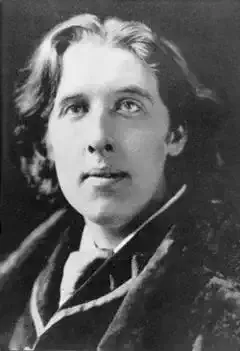
Oscar Wilde
Libertatis Sacra Fames
Albeit nurtured in democracy,
And liking best that state republican
Where every man is Kinglike and no man
Is crowned above his fellows, yet I see,
Spite of this modern fret for Liberty,
Better the rule of One, whom all obey,
Than to let clamorous demagogues betray
Our freedom with the kiss of anarchy.
Wherefore I love them not whose hands profane
Plant the red flag upon the piled-up street
For no right cause, beneath whose ignorant reign
Arts, Culture, Reverence, Honour, all things fade,
Save Treason and the dagger of her trade,
Or Murder with his silent bloody feet.
And liking best that state republican
Where every man is Kinglike and no man
Is crowned above his fellows, yet I see,
Spite of this modern fret for Liberty,
Better the rule of One, whom all obey,
Than to let clamorous demagogues betray
Our freedom with the kiss of anarchy.
Wherefore I love them not whose hands profane
Plant the red flag upon the piled-up street
For no right cause, beneath whose ignorant reign
Arts, Culture, Reverence, Honour, all things fade,
Save Treason and the dagger of her trade,
Or Murder with his silent bloody feet.
719
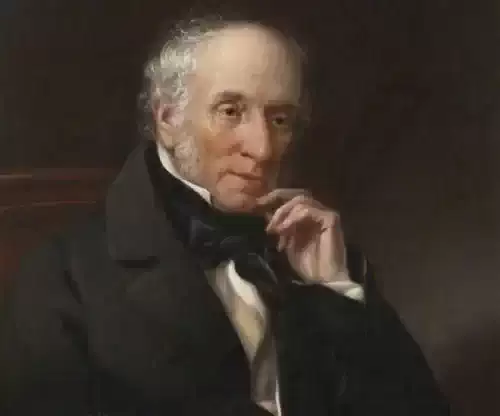
William Wordsworth
Andrew Jones
Andrew Jones
I hate that Andrew Jones; he'll breed
His children up to waste and pillage.
I wish the press-gang or the drum
With its tantara sound would come,
And sweep him from the village!
I said not this, because he loves
Through the long day to swear and tipple;
But for the poor dear sake of one
To whom a foul deed he had done,
A friendless man, a travelling cripple!
For this poor crawling helpless wretch,
Some horseman who was passing by,
A penny on the ground had thrown;
But the poor cripple was alone
And could not stoop--no help was nigh.
Inch-thick the dust lay on the ground
For it had long been droughty weather;
So with his staff the cripple wrought
Among the dust till he had brought
The half-pennies together.
It chanced that Andrew passed that way
Just at the time; and there he found
The cripple in the mid-day heat
Standing alone, and at his feet
He saw the penny on the ground.
He stopped and took the penny up:
And when the cripple nearer drew,
Quoth Andrew, "Under half-a-crown,
What a man finds is all his own,
And so, my Friend, good-day to you."
And 'hence' I said, that Andrew's boys
Will all be trained to waste and pillage;
And wished the press-gang, or the drum
With its tantara sound, would come
And sweep him from the village.
I hate that Andrew Jones; he'll breed
His children up to waste and pillage.
I wish the press-gang or the drum
With its tantara sound would come,
And sweep him from the village!
I said not this, because he loves
Through the long day to swear and tipple;
But for the poor dear sake of one
To whom a foul deed he had done,
A friendless man, a travelling cripple!
For this poor crawling helpless wretch,
Some horseman who was passing by,
A penny on the ground had thrown;
But the poor cripple was alone
And could not stoop--no help was nigh.
Inch-thick the dust lay on the ground
For it had long been droughty weather;
So with his staff the cripple wrought
Among the dust till he had brought
The half-pennies together.
It chanced that Andrew passed that way
Just at the time; and there he found
The cripple in the mid-day heat
Standing alone, and at his feet
He saw the penny on the ground.
He stopped and took the penny up:
And when the cripple nearer drew,
Quoth Andrew, "Under half-a-crown,
What a man finds is all his own,
And so, my Friend, good-day to you."
And 'hence' I said, that Andrew's boys
Will all be trained to waste and pillage;
And wished the press-gang, or the drum
With its tantara sound, would come
And sweep him from the village.
186
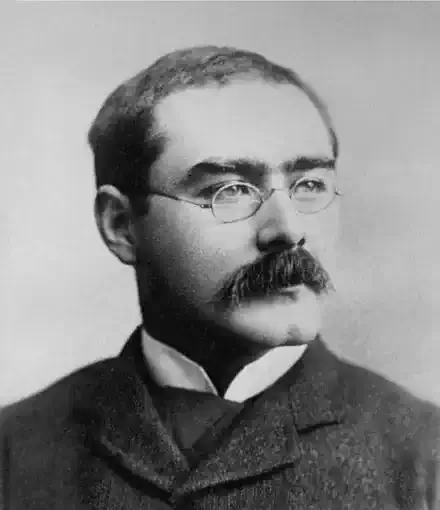
Rudyard Kipling
The Broken Men
The Broken Men
For things we never mention,
For Art misunderstood --
For excellent intention
That did not turn to good;
From ancient tales' renewing,
From clouds we would not clear --
Beyond the Law's pursuing
We fled, and settled here.
We took no tearful leaving,
We bade no long good-byes;
Men talked of crime and thieving,
Men wrote of fraud and lies.
To save our injured feelings
'T was time and time to go --
Behind was dock and Dartmoor,
Ahead lay Callao!
The widow and the orphan
That pray for ten per cent,
They clapped their trailers on us
To spy the road we went.
They watched the foreign sailings
(They scan the shipping still),
And that's your Christian people
Returning good for ill!
God bless the thoughtfull islands
Where never warrants come;
God bless the just Republics
That give a man a home,
That ask no foolish questions,
But set him on his feet;
And save his wife and daughters
From the workhouse and the street!
On church and square and market
The noonday silence falls;
You'll hear the drowsy mutter
Of the fountain in our halls.
Asleep amid the yuccas
The city takes her ease --
Till twilight brings the land-wind
To the clicking jalousies.
Day long the diamond weather,
The high, unaltered blue --
The smell of goats and incense
And the mule-bells tinkling through.
Day long the warder ocean
That keeps us from our kin,
And once a month our levee
When the English mail comes in.
You'll find us up and waiting
To treat you at the bar;
You'll find us less exclusive
Than the average English are.
We'll meet you with a carriage,
Too glad to show you round,
But -- we do not lunch on steamers,
For they are English ground.
We sail o' nights to England
And join our smiling Boards --
Our wives go in with Viscounts
And our daughters dance with Lords,
But behind our princely doings,
And behind each coup we make,
We feel there's Something Waiting,
And -- we meet It when we wake.
Ah God! One sniff of England --
To greet our flesh and blood --
To hear the traffic slurring
Once more through London mud!
Our towns of wasted honour --
Our streets of lost delight!
How stands the old Lord Warden?
Are Dover's cliffs still white?
For things we never mention,
For Art misunderstood --
For excellent intention
That did not turn to good;
From ancient tales' renewing,
From clouds we would not clear --
Beyond the Law's pursuing
We fled, and settled here.
We took no tearful leaving,
We bade no long good-byes;
Men talked of crime and thieving,
Men wrote of fraud and lies.
To save our injured feelings
'T was time and time to go --
Behind was dock and Dartmoor,
Ahead lay Callao!
The widow and the orphan
That pray for ten per cent,
They clapped their trailers on us
To spy the road we went.
They watched the foreign sailings
(They scan the shipping still),
And that's your Christian people
Returning good for ill!
God bless the thoughtfull islands
Where never warrants come;
God bless the just Republics
That give a man a home,
That ask no foolish questions,
But set him on his feet;
And save his wife and daughters
From the workhouse and the street!
On church and square and market
The noonday silence falls;
You'll hear the drowsy mutter
Of the fountain in our halls.
Asleep amid the yuccas
The city takes her ease --
Till twilight brings the land-wind
To the clicking jalousies.
Day long the diamond weather,
The high, unaltered blue --
The smell of goats and incense
And the mule-bells tinkling through.
Day long the warder ocean
That keeps us from our kin,
And once a month our levee
When the English mail comes in.
You'll find us up and waiting
To treat you at the bar;
You'll find us less exclusive
Than the average English are.
We'll meet you with a carriage,
Too glad to show you round,
But -- we do not lunch on steamers,
For they are English ground.
We sail o' nights to England
And join our smiling Boards --
Our wives go in with Viscounts
And our daughters dance with Lords,
But behind our princely doings,
And behind each coup we make,
We feel there's Something Waiting,
And -- we meet It when we wake.
Ah God! One sniff of England --
To greet our flesh and blood --
To hear the traffic slurring
Once more through London mud!
Our towns of wasted honour --
Our streets of lost delight!
How stands the old Lord Warden?
Are Dover's cliffs still white?
571
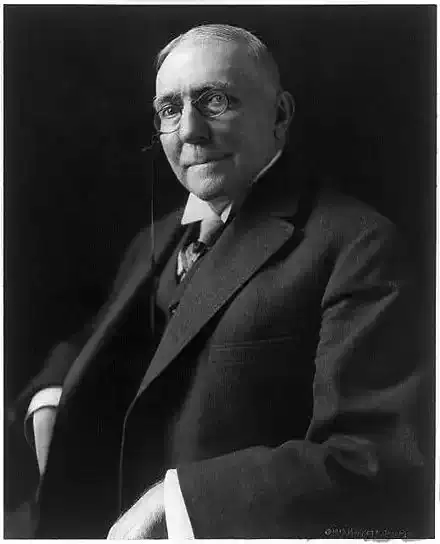
James Whitcomb Riley
Down On Wriggle Crick
Down On Wriggle Crick
'Best time to kill a hog's when he's fat.' --Old Saw.
Mostly folks is law-abidin'
Down on Wriggle Crick--,
Seein' they's no Squire residin'
In our bailywick;
No grand juries, no suppeenies,
Ner no vested rights to pick
Out yer man, jerk up and jail ef
He's outragin' Wriggle Crick!
Wriggle Crick hain't got no lawin',
Ner no suits to beat;
Ner no court-house gee-and-hawin'
Like a County-seat;
Hain't no waitin' round fer verdick,
Ner non-gittin' witness-fees;
Ner no thiefs 'at gits 'new heain's,'
By some lawyer slick as grease!
Wriggle Cricks's leadin' spirit
Is old Johnts Culwell--,
Keeps post-office, and right near it
Owns what's called 'The Grand Hotel--'
(Warehouse now--) buys wheat and ships it;
Gits out ties, and trades in stock,
And knows all the high-toned drummers
'Twixt South Bend and Mishawauk'
Last year comes along a feller--
Sharper 'an a lance-Stovepipe-
hat and silk umbreller,
And a boughten all-wool pants--,
Tinkerin of clocks and watches:
Says a trial's all he wants--
And rents out the tavern-office
Next to Uncle Johnts.
Well--. He tacked up his k'dentials,
And got down to biz--.
Captured Johnts by cuttin' stenchils
Fer them old wheat-sacks o' his--.
Fixed his clock, in the post-office--
Painted fer him, clean and slick,
'Crost his safe, in gold-leaf letters,
'J. Culwells's Wriggle Crick.'
Any kindo' job you keered to
Resk him with, and bring,
He'd fix fer you-- jest appeared to
Turn his hand to anything--!
Rings, er earbobs, er umbrellers--
Glue a cheer er chany doll--,
W'y, of all the beatin' fellers,
He Jest beat 'em all!
Made his friends, but wouldn't stop there--,
One mistake he learnt,
That was, sleepin' in his shop there--.
And one Sund'y night it burnt!
Come in one o' jest a-sweepin'
All the whole town high and dry--
And that feller, when they waked him,
Suffocatin', mighty nigh!
Johnts he drug him from the buildin',
He'pless-- 'peared to be--,
And the women and the childern
Drenchin' him with sympathy!
But I noticed Johnts helt on him
With a' extry lovin' grip,
And the men-folks gethered round him
In most warmest pardership!
That's the whole mess, grease-and-dopin'!
Johnt's safe was saved--,
But the lock was found sprung open,
And the inside caved.
Was no trial-- ner no jury--
Ner no jedge ner court-house-click--.
Circumstances alters cases
Down on Wriggle Crick!
'Best time to kill a hog's when he's fat.' --Old Saw.
Mostly folks is law-abidin'
Down on Wriggle Crick--,
Seein' they's no Squire residin'
In our bailywick;
No grand juries, no suppeenies,
Ner no vested rights to pick
Out yer man, jerk up and jail ef
He's outragin' Wriggle Crick!
Wriggle Crick hain't got no lawin',
Ner no suits to beat;
Ner no court-house gee-and-hawin'
Like a County-seat;
Hain't no waitin' round fer verdick,
Ner non-gittin' witness-fees;
Ner no thiefs 'at gits 'new heain's,'
By some lawyer slick as grease!
Wriggle Cricks's leadin' spirit
Is old Johnts Culwell--,
Keeps post-office, and right near it
Owns what's called 'The Grand Hotel--'
(Warehouse now--) buys wheat and ships it;
Gits out ties, and trades in stock,
And knows all the high-toned drummers
'Twixt South Bend and Mishawauk'
Last year comes along a feller--
Sharper 'an a lance-Stovepipe-
hat and silk umbreller,
And a boughten all-wool pants--,
Tinkerin of clocks and watches:
Says a trial's all he wants--
And rents out the tavern-office
Next to Uncle Johnts.
Well--. He tacked up his k'dentials,
And got down to biz--.
Captured Johnts by cuttin' stenchils
Fer them old wheat-sacks o' his--.
Fixed his clock, in the post-office--
Painted fer him, clean and slick,
'Crost his safe, in gold-leaf letters,
'J. Culwells's Wriggle Crick.'
Any kindo' job you keered to
Resk him with, and bring,
He'd fix fer you-- jest appeared to
Turn his hand to anything--!
Rings, er earbobs, er umbrellers--
Glue a cheer er chany doll--,
W'y, of all the beatin' fellers,
He Jest beat 'em all!
Made his friends, but wouldn't stop there--,
One mistake he learnt,
That was, sleepin' in his shop there--.
And one Sund'y night it burnt!
Come in one o' jest a-sweepin'
All the whole town high and dry--
And that feller, when they waked him,
Suffocatin', mighty nigh!
Johnts he drug him from the buildin',
He'pless-- 'peared to be--,
And the women and the childern
Drenchin' him with sympathy!
But I noticed Johnts helt on him
With a' extry lovin' grip,
And the men-folks gethered round him
In most warmest pardership!
That's the whole mess, grease-and-dopin'!
Johnt's safe was saved--,
But the lock was found sprung open,
And the inside caved.
Was no trial-- ner no jury--
Ner no jedge ner court-house-click--.
Circumstances alters cases
Down on Wriggle Crick!
285
Rudyard Kipling
The Ballad Of The King's Mercy
The Ballad Of The King's Mercy
Abdhur Rahman, the Durani Chief, of him is the story told.
His mercy fills the Khyber hills -- his grace is manifold;
He has taken toll of the North and the South --
his glory reacheth far,
And they tell the tale of his charity from Balkh to Kandahar.
Before the old Peshawur Gate, where Kurd and Kaffir meet,
The Governor of Kabul dealt the Justice of the Street,
And that was strait as running noose and swift as plunging knife,
Tho' he who held the longer purse might hold the longer life.
There was a hound of Hindustan had struck a Euzufzai,
Wherefore they spat upon his face and led him out to die.
It chanced the King went forth that hour when throat was bared to knife;
The Kaffir grovelled under-hoof and clamoured for his life.
Then said the King: "Have hope, O friend! Yea, Death disgraced is hard;
Much honour shall be thine"; and called the Captain of the Guard,
Yar Khan, a bastard of the Blood, so city-babble saith,
And he was honoured of the King -- the which is salt to Death;
And he was son of Daoud Shah, the Reiver of the Plains,
And blood of old Durani Lords ran fire in his veins;
And 'twas to tame an Afghan pride nor Hell nor Heaven could bind,
The King would make him butcher to a yelping cur of Hind.
"Strike!" said the King. "King's blood art thou --
his death shall be his pride!"
Then louder, that the crowd might catch: "Fear not -- his arms are tied!"
Yar Khan drew clear the Khyber knife, and struck, and sheathed again.
"O man, thy will is done," quoth he; "a King this dog hath slain."
Abdhur Rahman, the Durani Chief, to the North and the South is sold.
The North and the South shall open their mouth
to a Ghilzai flag unrolled,
When the big guns speak to the Khyber peak, and his dog-Heratis fly:
Ye have heard the song -- How long? How long?
Wolves of the Abazai!
That night before the watch was set, when all the streets were clear,
The Governor of Kabul spoke: "My King, hast thou no fear?
Thou knowest -- thou hast heard," -- his speech died at his master's face.
And grimly said the Afghan King: "I rule the Afghan race.
My path is mine -- see thou to thine -- to-night upon thy bed
Think who there be in Kabul now that clamour for thy head."
That night when all the gates were shut to City and to throne,
Within a little garden-house the King lay down alone.
Before the sinking of the moon, which is the Night of Night,
Yar Khan came softly to the King to make his honour white.
The children of the town had mocked beneath his horse's hoofs,
The harlots of the town had hailed him "butcher!" from their roofs.
But as he groped against the wall, two hands upon him fell,
The King behind his shoulder spake: "Dead man, thou dost not well!
'Tis ill to jest with Kings by day and seek a boon by night;
And that thou bearest in thy hand is all too sharp to write.
But three days hence, if God be good, and if thy strength remain,
Thou shalt demand one boon of me and bless me in thy pain.
For I am merciful to all, and most of all to thee.
My butcher of the shambles, rest -- no knife hast thou for me!"
Abdhur Rahman, the Durani Chief,
holds hard by the South and the North;
But the Ghilzai knows, ere the melting snows,
when the swollen banks break forth,
When the red-coats crawl to the sungar wall,
and his Usbeg lances fail:
Ye have heard the song -- How long? How long?
Wolves of the Zuka Kheyl!
They stoned him in the rubbish-field when dawn was in the sky,
According to the written word, "See that he do not die."
They stoned him till the stones were piled above him on the plain,
And those the labouring limbs displaced they tumbled back again.
One watched beside the dreary mound that veiled the battered thing,
And him the King with laughter called the Herald of the King.
It was upon the second night, the night of Ramazan,
The watcher leaning earthward heard the message of Yar Khan.
From shattered breast through shrivelled lips broke forth the rattling breath,
"Creature of God, deliver me from agony of Death."
They sought the King among his girls, and risked their lives thereby:
"Protector of the Pitiful, give orders that he die!"
"Bid him endure until the day," a lagging answer came;
"The night is short, and he can pray and learn to bless my name."
Before the dawn three times he spoke, and on the day once more:
"Creature of God, deliver me, and bless the King therefor!"
They shot him at the morning prayer, to ease him of his pain,
And when he heard the matchlocks clink, he blessed the King again.
Which thing the singers made a song for all the world to sing,
So that the Outer Seas may know the mercy of the King.
Abdhur Rahman, the Durani Chief, of him is the story told,
He has opened his mouth to the North and the South,
they have stuffed his mouth with gold.
Ye know the truth of his tender ruth -- and sweet his favours are:
Ye have heard the song -- How long? How long?
from Balkh to Kandahar.
Abdhur Rahman, the Durani Chief, of him is the story told.
His mercy fills the Khyber hills -- his grace is manifold;
He has taken toll of the North and the South --
his glory reacheth far,
And they tell the tale of his charity from Balkh to Kandahar.
Before the old Peshawur Gate, where Kurd and Kaffir meet,
The Governor of Kabul dealt the Justice of the Street,
And that was strait as running noose and swift as plunging knife,
Tho' he who held the longer purse might hold the longer life.
There was a hound of Hindustan had struck a Euzufzai,
Wherefore they spat upon his face and led him out to die.
It chanced the King went forth that hour when throat was bared to knife;
The Kaffir grovelled under-hoof and clamoured for his life.
Then said the King: "Have hope, O friend! Yea, Death disgraced is hard;
Much honour shall be thine"; and called the Captain of the Guard,
Yar Khan, a bastard of the Blood, so city-babble saith,
And he was honoured of the King -- the which is salt to Death;
And he was son of Daoud Shah, the Reiver of the Plains,
And blood of old Durani Lords ran fire in his veins;
And 'twas to tame an Afghan pride nor Hell nor Heaven could bind,
The King would make him butcher to a yelping cur of Hind.
"Strike!" said the King. "King's blood art thou --
his death shall be his pride!"
Then louder, that the crowd might catch: "Fear not -- his arms are tied!"
Yar Khan drew clear the Khyber knife, and struck, and sheathed again.
"O man, thy will is done," quoth he; "a King this dog hath slain."
Abdhur Rahman, the Durani Chief, to the North and the South is sold.
The North and the South shall open their mouth
to a Ghilzai flag unrolled,
When the big guns speak to the Khyber peak, and his dog-Heratis fly:
Ye have heard the song -- How long? How long?
Wolves of the Abazai!
That night before the watch was set, when all the streets were clear,
The Governor of Kabul spoke: "My King, hast thou no fear?
Thou knowest -- thou hast heard," -- his speech died at his master's face.
And grimly said the Afghan King: "I rule the Afghan race.
My path is mine -- see thou to thine -- to-night upon thy bed
Think who there be in Kabul now that clamour for thy head."
That night when all the gates were shut to City and to throne,
Within a little garden-house the King lay down alone.
Before the sinking of the moon, which is the Night of Night,
Yar Khan came softly to the King to make his honour white.
The children of the town had mocked beneath his horse's hoofs,
The harlots of the town had hailed him "butcher!" from their roofs.
But as he groped against the wall, two hands upon him fell,
The King behind his shoulder spake: "Dead man, thou dost not well!
'Tis ill to jest with Kings by day and seek a boon by night;
And that thou bearest in thy hand is all too sharp to write.
But three days hence, if God be good, and if thy strength remain,
Thou shalt demand one boon of me and bless me in thy pain.
For I am merciful to all, and most of all to thee.
My butcher of the shambles, rest -- no knife hast thou for me!"
Abdhur Rahman, the Durani Chief,
holds hard by the South and the North;
But the Ghilzai knows, ere the melting snows,
when the swollen banks break forth,
When the red-coats crawl to the sungar wall,
and his Usbeg lances fail:
Ye have heard the song -- How long? How long?
Wolves of the Zuka Kheyl!
They stoned him in the rubbish-field when dawn was in the sky,
According to the written word, "See that he do not die."
They stoned him till the stones were piled above him on the plain,
And those the labouring limbs displaced they tumbled back again.
One watched beside the dreary mound that veiled the battered thing,
And him the King with laughter called the Herald of the King.
It was upon the second night, the night of Ramazan,
The watcher leaning earthward heard the message of Yar Khan.
From shattered breast through shrivelled lips broke forth the rattling breath,
"Creature of God, deliver me from agony of Death."
They sought the King among his girls, and risked their lives thereby:
"Protector of the Pitiful, give orders that he die!"
"Bid him endure until the day," a lagging answer came;
"The night is short, and he can pray and learn to bless my name."
Before the dawn three times he spoke, and on the day once more:
"Creature of God, deliver me, and bless the King therefor!"
They shot him at the morning prayer, to ease him of his pain,
And when he heard the matchlocks clink, he blessed the King again.
Which thing the singers made a song for all the world to sing,
So that the Outer Seas may know the mercy of the King.
Abdhur Rahman, the Durani Chief, of him is the story told,
He has opened his mouth to the North and the South,
they have stuffed his mouth with gold.
Ye know the truth of his tender ruth -- and sweet his favours are:
Ye have heard the song -- How long? How long?
from Balkh to Kandahar.
408
Rudyard Kipling
Gehazi
Gehazi
Whence comest thou, Gehazi,
So reverend to behold,
In scarlet and in ermines
And chain of England's gold?"
"From following after Naaman
To tell him all is well,
Whereby my zeal hath made me
A Judge in Israel."
Well done; well done, Gehazi!
Stretch forth thy ready hand,
Thou barely 'scaped from judgment,
Take oath to judge the land
Unswayed by gift of money
Or privy bribe, more base,
Of knowledge which is profit
In any market-place.
Search out and probe, Gehazi,
As thou of all carist try,
The truthful, well-weighed answer
That tells the blacker lie --
The loud, uneasy virtue
The anger feigned at will,
To overbear a witness
And make the Court keep still.
Take order now, Gehazi,
That no man talk aside
In secret with his judges
The while his case is tried.
Lest he should show them -- reason
To keep a matter hid,
And subtly lead the questions
Away from what he did.
Thou mirror of uprightness,
What ails thee at thy vows?
What means the risen whiteness
Of the skin between thy brows?
The boils that shine and burrow,
The sores that slough and bleed --
The leprosy of Naaman
On thee and all thy seed?
Stand up, stand up, Gehazi,
Draw close thy robe and go,
Gehazi, Judge in Israel,
A leper white as snow!
Whence comest thou, Gehazi,
So reverend to behold,
In scarlet and in ermines
And chain of England's gold?"
"From following after Naaman
To tell him all is well,
Whereby my zeal hath made me
A Judge in Israel."
Well done; well done, Gehazi!
Stretch forth thy ready hand,
Thou barely 'scaped from judgment,
Take oath to judge the land
Unswayed by gift of money
Or privy bribe, more base,
Of knowledge which is profit
In any market-place.
Search out and probe, Gehazi,
As thou of all carist try,
The truthful, well-weighed answer
That tells the blacker lie --
The loud, uneasy virtue
The anger feigned at will,
To overbear a witness
And make the Court keep still.
Take order now, Gehazi,
That no man talk aside
In secret with his judges
The while his case is tried.
Lest he should show them -- reason
To keep a matter hid,
And subtly lead the questions
Away from what he did.
Thou mirror of uprightness,
What ails thee at thy vows?
What means the risen whiteness
Of the skin between thy brows?
The boils that shine and burrow,
The sores that slough and bleed --
The leprosy of Naaman
On thee and all thy seed?
Stand up, stand up, Gehazi,
Draw close thy robe and go,
Gehazi, Judge in Israel,
A leper white as snow!
433
Rudyard Kipling
Cleared
Cleared
(In Memory of a Commission)
Help for a patriot distressed, a spotless spirit hurt,
Help for an honourable clan sore trampled in the dirt!
From Queenstown Bay to Donegal, O listen to my song,
The honourable gentlemen have suffered grievous wrong.
Their noble names were mentioned -- O the burning black disgrace! --
By a brutal Saxon paper in an Irish shooting-case;
They sat upon it for a year, then steeled their heart to brave it,
And "coruscating innocence" the learned Judges gave it.
Bear witness, Heaven, of that grim crime beneath the surgeon's knife,
The honourable gentlemen deplored the loss of life!
Bear witness of those chanting choirs that burk and shirk and snigger,
No man laid hand upon the knife or finger to the trigger!
Cleared in the face of all mankind beneath the winking skies,
Like ph]oenixes from Ph]oenix Park (and what lay there) they rise!
Go shout it to the emerald seas -- give word to Erin now,
Her honourable gentlemen are cleared -- and this is how: --
They only paid the Moonlighter his cattle-hocking price,
They only helped the murderer with counsel's best advice,
But -- sure it keeps their honour white -- the learned Court believes
They never gave a piece of plate to murderers and thieves.
They never told the ramping crowd to card a woman's hide,
They never marked a man for death -- what fault of theirs he died? --
They only said "intimidate", and talked and went away --
By God, the boys that did the work were braver men than they!
Their sin it was that fed the fire -- small blame to them that heard --
The "bhoys" get drunk on rhetoric, and madden at a word --
They knew whom they were talking at, if they were Irish too,
The gentlemen that lied in Court, they knew, and well they knew.
They only took the Judas-gold from Fenians out of jail,
They only fawned for dollars on the blood-dyed Clanna-Gael.
If black is black or white is white, in black and white it's down,
They're only traitors to the Queen and rebels to the Crown.
"Cleared", honourable gentlemen! Be thankful it's no more: --
The widow's curse is on your house, the dead are at your door.
On you the shame of open shame, on you from North to South
The hand of every honest man flat-heeled across your mouth.
"Less black than we were painted"? -- Faith, no word of black was said;
The lightest touch was human blood, and that, you know, runs red.
It's sticking to your fist to-day for all your sneer and scoff,
And by the Judge's well-weighed word you cannot wipe it off.
Hold up those hands of innocence -- go, scare your sheep together,
The blundering, tripping tups that bleat behind the old bell-wether;
And if they snuff the taint and break to find another pen,
Tell them it's tar that glistens so, and daub them yours again!
"The charge is old"? -- As old as Cain -- as fresh as yesterday;
Old as the Ten Commandments -- have ye talked those laws away?
If words are words, or death is death, or powder sends the ball,
You spoke the words that sped the shot -- the curse be on you all.
"Our friends believe"? -- Of course they do -- as sheltered women may;
But have they seen the shrieking soul ripped from the quivering clay?
They! -- If their own front door is shut,
they'll swear the whole world's warm;
What do they know of dread of death or hanging fear of harm?
The secret half a county keeps, the whisper in the lane,
The shriek that tells the shot went home behind the broken pane,
The dry blood crisping in the sun that scares the honest bees,
And shows the "bhoys" have heard your talk -- what do they know of these?
But you -- you know -- ay, ten times more; the secrets of the dead,
Black terror on the country-side by word and whisper bred,
The mangled stallion's scream at night, the tail-cropped heifer's low.
Who set the whisper going first? You know, and well you know!
My soul! I'd sooner lie in jail for murder plain and straight,
Pure crime I'd done with my own hand for money, lust, or hate,
Than take a seat in Parliament by fellow-felons cheered,
While one of those "not provens" proved me cleared as you are cleared.
Cleared -- you that "lost" the League accounts -- go, guard our honour still,
Go, help to make our country's laws that broke God's law at will --
One hand stuck out behind the back, to signal "strike again";
The other on your dress-shirt-front to show your heart is clane.
If black is black or white is white, in black and white it's down,
You're only traitors to the Queen and rebels to the Crown.
If print is print or words are words, the learned Court perpends: --
We are not ruled by murderers, but only -- by their friends.
(In Memory of a Commission)
Help for a patriot distressed, a spotless spirit hurt,
Help for an honourable clan sore trampled in the dirt!
From Queenstown Bay to Donegal, O listen to my song,
The honourable gentlemen have suffered grievous wrong.
Their noble names were mentioned -- O the burning black disgrace! --
By a brutal Saxon paper in an Irish shooting-case;
They sat upon it for a year, then steeled their heart to brave it,
And "coruscating innocence" the learned Judges gave it.
Bear witness, Heaven, of that grim crime beneath the surgeon's knife,
The honourable gentlemen deplored the loss of life!
Bear witness of those chanting choirs that burk and shirk and snigger,
No man laid hand upon the knife or finger to the trigger!
Cleared in the face of all mankind beneath the winking skies,
Like ph]oenixes from Ph]oenix Park (and what lay there) they rise!
Go shout it to the emerald seas -- give word to Erin now,
Her honourable gentlemen are cleared -- and this is how: --
They only paid the Moonlighter his cattle-hocking price,
They only helped the murderer with counsel's best advice,
But -- sure it keeps their honour white -- the learned Court believes
They never gave a piece of plate to murderers and thieves.
They never told the ramping crowd to card a woman's hide,
They never marked a man for death -- what fault of theirs he died? --
They only said "intimidate", and talked and went away --
By God, the boys that did the work were braver men than they!
Their sin it was that fed the fire -- small blame to them that heard --
The "bhoys" get drunk on rhetoric, and madden at a word --
They knew whom they were talking at, if they were Irish too,
The gentlemen that lied in Court, they knew, and well they knew.
They only took the Judas-gold from Fenians out of jail,
They only fawned for dollars on the blood-dyed Clanna-Gael.
If black is black or white is white, in black and white it's down,
They're only traitors to the Queen and rebels to the Crown.
"Cleared", honourable gentlemen! Be thankful it's no more: --
The widow's curse is on your house, the dead are at your door.
On you the shame of open shame, on you from North to South
The hand of every honest man flat-heeled across your mouth.
"Less black than we were painted"? -- Faith, no word of black was said;
The lightest touch was human blood, and that, you know, runs red.
It's sticking to your fist to-day for all your sneer and scoff,
And by the Judge's well-weighed word you cannot wipe it off.
Hold up those hands of innocence -- go, scare your sheep together,
The blundering, tripping tups that bleat behind the old bell-wether;
And if they snuff the taint and break to find another pen,
Tell them it's tar that glistens so, and daub them yours again!
"The charge is old"? -- As old as Cain -- as fresh as yesterday;
Old as the Ten Commandments -- have ye talked those laws away?
If words are words, or death is death, or powder sends the ball,
You spoke the words that sped the shot -- the curse be on you all.
"Our friends believe"? -- Of course they do -- as sheltered women may;
But have they seen the shrieking soul ripped from the quivering clay?
They! -- If their own front door is shut,
they'll swear the whole world's warm;
What do they know of dread of death or hanging fear of harm?
The secret half a county keeps, the whisper in the lane,
The shriek that tells the shot went home behind the broken pane,
The dry blood crisping in the sun that scares the honest bees,
And shows the "bhoys" have heard your talk -- what do they know of these?
But you -- you know -- ay, ten times more; the secrets of the dead,
Black terror on the country-side by word and whisper bred,
The mangled stallion's scream at night, the tail-cropped heifer's low.
Who set the whisper going first? You know, and well you know!
My soul! I'd sooner lie in jail for murder plain and straight,
Pure crime I'd done with my own hand for money, lust, or hate,
Than take a seat in Parliament by fellow-felons cheered,
While one of those "not provens" proved me cleared as you are cleared.
Cleared -- you that "lost" the League accounts -- go, guard our honour still,
Go, help to make our country's laws that broke God's law at will --
One hand stuck out behind the back, to signal "strike again";
The other on your dress-shirt-front to show your heart is clane.
If black is black or white is white, in black and white it's down,
You're only traitors to the Queen and rebels to the Crown.
If print is print or words are words, the learned Court perpends: --
We are not ruled by murderers, but only -- by their friends.
442

Horace
BkIII:XXIV Destructive Wealth
BkIII:XXIV Destructive Wealth
Though you’re richer than the untouched
riches of Araby, than wealthy India,
and you fill the land, and inshore
waters, with your deposits of builders’ rubble:
if dread Necessity fixes
her adamantine nails in your highest rooftops,
you’ll not free your spirit from fear,
nor free your very being from the noose of death.
Better to live like Scythians
in the Steppes, whose wagons haul their movable homes,
that’s custom, or the fierce Getae,
whose unallocated acres produce their fruits,
their harvests of rye, in common,
where cultivation’s not decided for more than
a year, and when one turn is done,
it’s carried on by other hands, as a duty.
There, as their own, the unselfish
women raise those children who have lost their mothers:
and the richly dowered wife never
rules her husband, or believes in shining lovers.
Their greatest dowry’s their parents’
virtue, and their own chastity, which is careful
of another’s husband, in pure
loyalty, sin is wrong and death’s its penalty.
O whoever would end impious
killing, and civil disorder, and would desire
to have ‘City Father’ inscribed
on their statues, let them be braver, and rein in
unbridled licence, and win fame
among posterity: since we, alas, for shame,
filled with envy, hate chaste virtue,
and only seek it when it’s hidden from our eyes.
What use are sad lamentations,
if crime is never suppressed by its punishment?
What use are all these empty laws
without the behaviour that should accompany them?
if neither those parts of the Earth
enclosed by heat, nor those far confines of the North,
snow frozen solid on the ground,
deter the trader, if cunning sailors conquer
the stormy seas, if poverty,
is considered a great disgrace, and directs us
to do and to bear everything,
and abandon the arduous paths of virtue?
Let’s send our jewels, our precious
stones, our destructive gold, to the Capitol, while
the crowd applauds, and raises its strident clamour,
or ship them to the nearest sea,
as causes of our deepest ills,
if we truly repent of all our wickedness.
Let the source of our perverted
greed be lost, and then let our inadequate minds
be trained in more serious things.
The inexperienced noble youth is unskilled
at staying in the saddle, he
fears to hunt, and he’s much better at playing games,
whether you order him to fool
with a Greek hoop, or you prefer forbidden dice,
while his father’s perjured trust cheats
his partner and his friends, hurrying to amass
money for his unworthy heir.
While it’s true that in this way his ill-gotten gains
increase, yet there’s always something
lacking in a fortune forever incomplete.
Though you’re richer than the untouched
riches of Araby, than wealthy India,
and you fill the land, and inshore
waters, with your deposits of builders’ rubble:
if dread Necessity fixes
her adamantine nails in your highest rooftops,
you’ll not free your spirit from fear,
nor free your very being from the noose of death.
Better to live like Scythians
in the Steppes, whose wagons haul their movable homes,
that’s custom, or the fierce Getae,
whose unallocated acres produce their fruits,
their harvests of rye, in common,
where cultivation’s not decided for more than
a year, and when one turn is done,
it’s carried on by other hands, as a duty.
There, as their own, the unselfish
women raise those children who have lost their mothers:
and the richly dowered wife never
rules her husband, or believes in shining lovers.
Their greatest dowry’s their parents’
virtue, and their own chastity, which is careful
of another’s husband, in pure
loyalty, sin is wrong and death’s its penalty.
O whoever would end impious
killing, and civil disorder, and would desire
to have ‘City Father’ inscribed
on their statues, let them be braver, and rein in
unbridled licence, and win fame
among posterity: since we, alas, for shame,
filled with envy, hate chaste virtue,
and only seek it when it’s hidden from our eyes.
What use are sad lamentations,
if crime is never suppressed by its punishment?
What use are all these empty laws
without the behaviour that should accompany them?
if neither those parts of the Earth
enclosed by heat, nor those far confines of the North,
snow frozen solid on the ground,
deter the trader, if cunning sailors conquer
the stormy seas, if poverty,
is considered a great disgrace, and directs us
to do and to bear everything,
and abandon the arduous paths of virtue?
Let’s send our jewels, our precious
stones, our destructive gold, to the Capitol, while
the crowd applauds, and raises its strident clamour,
or ship them to the nearest sea,
as causes of our deepest ills,
if we truly repent of all our wickedness.
Let the source of our perverted
greed be lost, and then let our inadequate minds
be trained in more serious things.
The inexperienced noble youth is unskilled
at staying in the saddle, he
fears to hunt, and he’s much better at playing games,
whether you order him to fool
with a Greek hoop, or you prefer forbidden dice,
while his father’s perjured trust cheats
his partner and his friends, hurrying to amass
money for his unworthy heir.
While it’s true that in this way his ill-gotten gains
increase, yet there’s always something
lacking in a fortune forever incomplete.
230
Rudyard Kipling
Cleared
"Cleared"
(In Memory of a Commission)
Help for a patriot distressed, a spotless spirit hurt,
Help for an honourable clan sore trampled in the dirt!
From Queenstown Bay to Donegal, O listen to my song,
The honourable gentlemen have suffered grievous wrong.
Their noble names were mentioned -- O the burning black disgrace! --
By a brutal Saxon paper in an Irish shooting-case;
They sat upon it for a year, then steeled their heart to brave it,
And "coruscating innocence" the learned Judges gave it.
Bear witness, Heaven, of that grim crime beneath the surgeon's knife,
The honourable gentlemen deplored the loss of life!
Bear witness of those chanting choirs that burk and shirk and snigger,
No man laid hand upon the knife or finger to the trigger!
Cleared in the face of all mankind beneath the winking skies,
Like ph]oenixes from Ph]oenix Park (and what lay there) they rise!
Go shout it to the emerald seas -- give word to Erin now,
Her honourable gentlemen are cleared -- and this is how: --
They only paid the Moonlighter his cattle-hocking price,
They only helped the murderer with counsel's best advice,
But -- sure it keeps their honour white -- the learned Court believes
They never gave a piece of plate to murderers and thieves.
They never told the ramping crowd to card a woman's hide,
They never marked a man for death -- what fault of theirs he died? --
They only said "intimidate", and talked and went away --
By God, the boys that did the work were braver men than they!
Their sin it was that fed the fire -- small blame to them that heard --
The "bhoys" get drunk on rhetoric, and madden at a word --
They knew whom they were talking at, if they were Irish too,
The gentlemen that lied in Court, they knew, and well they knew.
They only took the Judas-gold from Fenians out of jail,
They only fawned for dollars on the blood-dyed Clanna-Gael.
If black is black or white is white, in black and white it's down,
They're only traitors to the Queen and rebels to the Crown.
"Cleared", honourable gentlemen! Be thankful it's no more: --
The widow's curse is on your house, the dead are at your door.
On you the shame of open shame, on you from North to South
The hand of every honest man flat-heeled across your mouth.
"Less black than we were painted"? -- Faith, no word of black was said;
The lightest touch was human blood, and that, you know, runs red.
It's sticking to your fist to-day for all your sneer and scoff,
And by the Judge's well-weighed word you cannot wipe it off.
Hold up those hands of innocence -- go, scare your sheep together,
The blundering, tripping tups that bleat behind the old bell-wether;
And if they snuff the taint and break to find another pen,
Tell them it's tar that glistens so, and daub them yours again!
"The charge is old"? -- As old as Cain -- as fresh as yesterday;
Old as the Ten Commandments -- have ye talked those laws away?
If words are words, or death is death, or powder sends the ball,
You spoke the words that sped the shot -- the curse be on you all.
"Our friends believe"? -- Of course they do -- as sheltered women may;
But have they seen the shrieking soul ripped from the quivering clay?
They! -- If their own front door is shut,
they'll swear the whole world's warm;
What do they know of dread of death or hanging fear of harm?
The secret half a county keeps, the whisper in the lane,
The shriek that tells the shot went home behind the broken pane,
The dry blood crisping in the sun that scares the honest bees,
And shows the "bhoys" have heard your talk -- what do they know of these?
But you -- you know -- ay, ten times more; the secrets of the dead,
Black terror on the country-side by word and whisper bred,
The mangled stallion's scream at night, the tail-cropped heifer's low.
Who set the whisper going first? You know, and well you know!
My soul! I'd sooner lie in jail for murder plain and straight,
Pure crime I'd done with my own hand for money, lust, or hate,
Than take a seat in Parliament by fellow-felons cheered,
While one of those "not provens" proved me cleared as you are cleared.
Cleared -- you that "lost" the League accounts -- go, guard our honour still,
Go, help to make our country's laws that broke God's law at will --
One hand stuck out behind the back, to signal "strike again";
The other on your dress-shirt-front to show your heart is clane.
If black is black or white is white, in black and white it's down,
You're only traitors to the Queen and rebels to the Crown.
If print is print or words are words, the learned Court perpends: --
We are not ruled by murderers, but only -- by their friends.
(In Memory of a Commission)
Help for a patriot distressed, a spotless spirit hurt,
Help for an honourable clan sore trampled in the dirt!
From Queenstown Bay to Donegal, O listen to my song,
The honourable gentlemen have suffered grievous wrong.
Their noble names were mentioned -- O the burning black disgrace! --
By a brutal Saxon paper in an Irish shooting-case;
They sat upon it for a year, then steeled their heart to brave it,
And "coruscating innocence" the learned Judges gave it.
Bear witness, Heaven, of that grim crime beneath the surgeon's knife,
The honourable gentlemen deplored the loss of life!
Bear witness of those chanting choirs that burk and shirk and snigger,
No man laid hand upon the knife or finger to the trigger!
Cleared in the face of all mankind beneath the winking skies,
Like ph]oenixes from Ph]oenix Park (and what lay there) they rise!
Go shout it to the emerald seas -- give word to Erin now,
Her honourable gentlemen are cleared -- and this is how: --
They only paid the Moonlighter his cattle-hocking price,
They only helped the murderer with counsel's best advice,
But -- sure it keeps their honour white -- the learned Court believes
They never gave a piece of plate to murderers and thieves.
They never told the ramping crowd to card a woman's hide,
They never marked a man for death -- what fault of theirs he died? --
They only said "intimidate", and talked and went away --
By God, the boys that did the work were braver men than they!
Their sin it was that fed the fire -- small blame to them that heard --
The "bhoys" get drunk on rhetoric, and madden at a word --
They knew whom they were talking at, if they were Irish too,
The gentlemen that lied in Court, they knew, and well they knew.
They only took the Judas-gold from Fenians out of jail,
They only fawned for dollars on the blood-dyed Clanna-Gael.
If black is black or white is white, in black and white it's down,
They're only traitors to the Queen and rebels to the Crown.
"Cleared", honourable gentlemen! Be thankful it's no more: --
The widow's curse is on your house, the dead are at your door.
On you the shame of open shame, on you from North to South
The hand of every honest man flat-heeled across your mouth.
"Less black than we were painted"? -- Faith, no word of black was said;
The lightest touch was human blood, and that, you know, runs red.
It's sticking to your fist to-day for all your sneer and scoff,
And by the Judge's well-weighed word you cannot wipe it off.
Hold up those hands of innocence -- go, scare your sheep together,
The blundering, tripping tups that bleat behind the old bell-wether;
And if they snuff the taint and break to find another pen,
Tell them it's tar that glistens so, and daub them yours again!
"The charge is old"? -- As old as Cain -- as fresh as yesterday;
Old as the Ten Commandments -- have ye talked those laws away?
If words are words, or death is death, or powder sends the ball,
You spoke the words that sped the shot -- the curse be on you all.
"Our friends believe"? -- Of course they do -- as sheltered women may;
But have they seen the shrieking soul ripped from the quivering clay?
They! -- If their own front door is shut,
they'll swear the whole world's warm;
What do they know of dread of death or hanging fear of harm?
The secret half a county keeps, the whisper in the lane,
The shriek that tells the shot went home behind the broken pane,
The dry blood crisping in the sun that scares the honest bees,
And shows the "bhoys" have heard your talk -- what do they know of these?
But you -- you know -- ay, ten times more; the secrets of the dead,
Black terror on the country-side by word and whisper bred,
The mangled stallion's scream at night, the tail-cropped heifer's low.
Who set the whisper going first? You know, and well you know!
My soul! I'd sooner lie in jail for murder plain and straight,
Pure crime I'd done with my own hand for money, lust, or hate,
Than take a seat in Parliament by fellow-felons cheered,
While one of those "not provens" proved me cleared as you are cleared.
Cleared -- you that "lost" the League accounts -- go, guard our honour still,
Go, help to make our country's laws that broke God's law at will --
One hand stuck out behind the back, to signal "strike again";
The other on your dress-shirt-front to show your heart is clane.
If black is black or white is white, in black and white it's down,
You're only traitors to the Queen and rebels to the Crown.
If print is print or words are words, the learned Court perpends: --
We are not ruled by murderers, but only -- by their friends.
442

Homer
The Odyssey: Book 2
The Odyssey: Book 2
Now when the child of morning, rosy-fingered Dawn, appeared,
Telemachus rose and dressed himself. He bound his sandals on to his
comely feet, girded his sword about his shoulder, and left his room
looking like an immortal god. He at once sent the criers round to call
the people in assembly, so they called them and the people gathered
thereon; then, when they were got together, he went to the place of
assembly spear in hand- not alone, for his two hounds went with him.
Minerva endowed him with a presence of such divine comeliness that all
marvelled at him as he went by, and when he took his place' in his
father's seat even the oldest councillors made way for him.
Aegyptius, a man bent double with age, and of infinite experience,
the first to speak His son Antiphus had gone with Ulysses to Ilius,
land of noble steeds, but the savage Cyclops had killed him when
they were all shut up in the cave, and had cooked his last dinner
for him, He had three sons left, of whom two still worked on their
father's land, while the third, Eurynomus, was one of the suitors;
nevertheless their father could not get over the loss of Antiphus, and
was still weeping for him when he began his speech.
"Men of Ithaca," he said, "hear my words. From the day Ulysses
left us there has been no meeting of our councillors until now; who
then can it be, whether old or young, that finds it so necessary to
convene us? Has he got wind of some host approaching, and does he wish
to warn us, or would he speak upon some other matter of public moment?
I am sure he is an excellent person, and I hope Jove will grant him
his heart's desire."
Telemachus took this speech as of good omen and rose at once, for he
was bursting with what he had to say. He stood in the middle of the
assembly and the good herald Pisenor brought him his staff. Then,
turning to Aegyptius, "Sir," said he, "it is I, as you will shortly
learn, who have convened you, for it is I who am the most aggrieved. I
have not got wind of any host approaching about which I would warn
you, nor is there any matter of public moment on which I would
speak. My grieveance is purely personal, and turns on two great
misfortunes which have fallen upon my house. The first of these is the
loss of my excellent father, who was chief among all you here present,
and was like a father to every one of you; the second is much more
serious, and ere long will be the utter ruin of my estate. The sons of
all the chief men among you are pestering my mother to marry them
against her will. They are afraid to go to her father Icarius,
asking him to choose the one he likes best, and to provide marriage
gifts for his daughter, but day by day they keep hanging about my
father's house, sacrificing our oxen, sheep, and fat goats for their
banquets, and never giving so much as a thought to the quantity of
wine they drink. No estate can stand such recklessness; we have now no
Ulysses to ward off harm from our doors, and I cannot hold my own
against them. I shall never all my days be as good a man as he was,
still I would indeed defend myself if I had power to do so, for I
cannot stand such treatment any longer; my house is being disgraced
and ruined. Have respect, therefore, to your own consciences and to
public opinion. Fear, too, the wrath of heaven, lest the gods should
be displeased and turn upon you. I pray you by Jove and Themis, who is
the beginning and the end of councils, [do not] hold back, my friends,
and leave me singlehanded- unless it be that my brave father Ulysses
did some wrong to the Achaeans which you would now avenge on me, by
aiding and abetting these suitors. Moreover, if I am to be eaten out
of house and home at all, I had rather you did the eating
yourselves, for I could then take action against you to some
purpose, and serve you with notices from house to house till I got
paid in full, whereas now I have no remedy."
With this Telemachus dashed his staff to the ground and burst into
tears. Every one was very sorry for him, but they all sat still and no
one ventured to make him an angry answer, save only Antinous, who
spoke thus:
"Telemachus, insolent braggart that you are, how dare you try to
throw the blame upon us suitors? It is your mother's fault not ours,
for she is a very artful woman. This three years past, and close on
four, she has been driving us out of our minds, by encouraging each
one of us, and sending him messages without meaning one word of what
she says. And then there was that other trick she played us. She set
up a great tambour frame in her room, and began to work on an enormous
piece of fine needlework. 'Sweet hearts,' said she, 'Ulysses is indeed
dead, still do not press me to marry again immediately, wait- for I
would not have skill in needlework perish unrecorded- till I have
completed a pall for the hero Laertes, to be in readiness against
the time when death shall take him. He is very rich, and the women
of the place will talk if he is laid out without a pall.'
"This was what she said, and we assented; whereon we could see her
working on her great web all day long, but at night she would unpick
the stitches again by torchlight. She fooled us in this way for
three years and we never found her out, but as time wore on and she
was now in her fourth year, one of her maids who knew what she was
doing told us, and we caught her in the act of undoing her work, so
she had to finish it whether she would or no. The suitors,
therefore, make you this answer, that both you and the Achaeans may
understand-'Send your mother away, and bid her marry the man of her
own and of her father's choice'; for I do not know what will happen if
she goes on plaguing us much longer with the airs she gives herself on
the score of the accomplishments Minerva has taught her, and because
she is so clever. We never yet heard of such a woman; we know all
about Tyro, Alcmena, Mycene, and the famous women of old, but they
were nothing to your mother, any one of them. It was not fair of her
to treat us in that way, and as long as she continues in the mind with
which heaven has now endowed her, so long shall we go on eating up
your estate; and I do not see why she should change, for she gets
all the honour and glory, and it is you who pay for it, not she.
Understand, then, that we will not go back to our lands, neither
here nor elsewhere, till she has made her choice and married some
one or other of us."
Telemachus answered, "Antinous, how can I drive the mother who
bore me from my father's house? My father is abroad and we do not know
whether he is alive or dead. It will be hard on me if I have to pay
Icarius the large sum which I must give him if I insist on sending his
daughter back to him. Not only will he deal rigorously with me, but
heaven will also punish me; for my mother when she leaves the house
will calf on the Erinyes to avenge her; besides, it would not be a
creditable thing to do, and I will have nothing to say to it. If you
choose to take offence at this, leave the house and feast elsewhere at
one another's houses at your own cost turn and turn about. If, on
the other hand, you elect to persist in spunging upon one man,
heaven help me, but Jove shall reckon with you in full, and when you
fall in my father's house there shall be no man to avenge you."
As he spoke Jove sent two eagles from the top of the mountain, and
they flew on and on with the wind, sailing side by side in their own
lordly flight. When they were right over the middle of the assembly
they wheeled and circled about, beating the air with their wings and
glaring death into the eyes of them that were below; then, fighting
fiercely and tearing at one another, they flew off towards the right
over the town. The people wondered as they saw them, and asked each
other what an this might be; whereon Halitherses, who was the best
prophet and reader of omens among them, spoke to them plainly and in
all honesty, saying:
"Hear me, men of Ithaca, and I speak more particularly to the
suitors, for I see mischief brewing for them. Ulysses is not going
to be away much longer; indeed he is close at hand to deal out death
and destruction, not on them alone, but on many another of us who live
in Ithaca. Let us then be wise in time, and put a stop to this
wickedness before he comes. Let the suitors do so of their own accord;
it will be better for them, for I am not prophesying without due
knowledge; everything has happened to Ulysses as I foretold when the
Argives set out for Troy, and he with them. I said that after going
through much hardship and losing all his men he should come home again
in the twentieth year and that no one would know him; and now all this
is coming true."
Eurymachus son of Polybus then said, "Go home, old man, and prophesy
to your own children, or it may be worse for them. I can read these
omens myself much better than you can; birds are always flying about
in the sunshine somewhere or other, but they seldom mean anything.
Ulysses has died in a far country, and it is a pity you are not dead
along with him, instead of prating here about omens and adding fuel to
the anger of Telemachus which is fierce enough as it is. I suppose you
think he will give you something for your family, but I tell youand
it shall surely be- when an old man like you, who should know
better, talks a young one over till he becomes troublesome, in the
first place his young friend will only fare so much the worse- he will
take nothing by it, for the suitors will prevent this- and in the
next, we will lay a heavier fine, sir, upon yourself than you will
at all like paying, for it will bear hardly upon you. As for
Telemachus, I warn him in the presence of you all to send his mother
back to her father, who will find her a husband and provide her with
all the marriage gifts so dear a daughter may expect. Till we shall go
on harassing him with our suit; for we fear no man, and care neither
for him, with all his fine speeches, nor for any fortune-telling of
yours. You may preach as much as you please, but we shall only hate
you the more. We shall go back and continue to eat up Telemachus's
estate without paying him, till such time as his mother leaves off
tormenting us by keeping us day after day on the tiptoe of
expectation, each vying with the other in his suit for a prize of such
rare perfection. Besides we cannot go after the other women whom we
should marry in due course, but for the way in which she treats us."
Then Telemachus said, "Eurymachus, and you other suitors, I shall
say no more, and entreat you no further, for the gods and the people
of Ithaca now know my story. Give me, then, a ship and a crew of
twenty men to take me hither and thither, and I will go to Sparta
and to Pylos in quest of my father who has so long been missing.
Some one may tell me something, or (and people often hear things in
this way) some heaven-sent message may direct me. If I can hear of him
as alive and on his way home I will put up with the waste you
suitors will make for yet another twelve months. If on the other
hand I hear of his death, I will return at once, celebrate his funeral
rites with all due pomp, build a barrow to his memory, and make my
mother marry again."
With these words he sat down, and Mentor who had been a friend of
Ulysses, and had been left in charge of everything with full authority
over the servants, rose to speak. He, then, plainly and in all honesty
addressed them thus:
"Hear me, men of Ithaca, I hope that you may never have a kind and
well-disposed ruler any more, nor one who will govern you equitably; I
hope that all your chiefs henceforward may be cruel and unjust, for
there is not one of you but has forgotten Ulysses, who ruled you as
though he were your father. I am not half so angry with the suitors,
for if they choose to do violence in the naughtiness of their
hearts, and wager their heads that Ulysses will not return, they can
take the high hand and eat up his estate, but as for you others I am
shocked at the way in which you all sit still without even trying to
stop such scandalous goings on-which you could do if you chose, for
you are many and they are few."
Leiocritus, son of Evenor, answered him saying, "Mentor, what
folly is all this, that you should set the people to stay us? It is
a hard thing for one man to fight with many about his victuals. Even
though Ulysses himself were to set upon us while we are feasting in
his house, and do his best to oust us, his wife, who wants him back so
very badly, would have small cause for rejoicing, and his blood
would be upon his own head if he fought against such great odds. There
is no sense in what you have been saying. Now, therefore, do you
people go about your business, and let his father's old friends,
Mentor and Halitherses, speed this boy on his journey, if he goes at
all- which I do not think he will, for he is more likely to stay where
he is till some one comes and tells him something."
On this he broke up the assembly, and every man went back to his own
abode, while the suitors returned to the house of Ulysses.
Then Telemachus went all alone by the sea side, washed his hands
in the grey waves, and prayed to Minerva.
"Hear me," he cried, "you god who visited me yesterday, and bade
me sail the seas in search of my father who has so long been
missing. I would obey you, but the Achaeans, and more particularly the
wicked suitors, are hindering me that I cannot do so."
As he thus prayed, Minerva came close up to him in the likeness
and with the voice of Mentor. "Telemachus," said she, "if you are made
of the same stuff as your father you will be neither fool nor coward
henceforward, for Ulysses never broke his word nor left his work
half done. If, then, you take after him, your voyage will not be
fruitless, but unless you have the blood of Ulysses and of Penelope in
your veins I see no likelihood of your succeeding. Sons are seldom
as good men as their fathers; they are generally worse, not better;
still, as you are not going to be either fool or coward
henceforward, and are not entirely without some share of your father's
wise discernment, I look with hope upon your undertaking. But mind you
never make common cause with any of those foolish suitors, for they
have neither sense nor virtue, and give no thought to death and to the
doom that will shortly fall on one and all of them, so that they shall
perish on the same day. As for your voyage, it shall not be long
delayed; your father was such an old friend of mine that I will find
you a ship, and will come with you myself. Now, however, return
home, and go about among the suitors; begin getting provisions ready
for your voyage; see everything well stowed, the wine in jars, and the
barley meal, which is the staff of life, in leathern bags, while I
go round the town and beat up volunteers at once. There are many ships
in Ithaca both old and new; I will run my eye over them for you and
will choose the best; we will get her ready and will put out to sea
without delay."
Thus spoke Minerva daughter of Jove, and Telemachus lost no time
in doing as the goddess told him. He went moodily and found the
suitors flaying goats and singeing pigs in the outer court. Antinous
came up to him at once and laughed as he took his hand in his own,
saying, "Telemachus, my fine fire-eater, bear no more ill blood
neither in word nor deed, but eat and drink with us as you used to do.
The Achaeans will find you in everything- a ship and a picked crew
to boot- so that you can set sail for Pylos at once and get news of
your noble father."
"Antinous," answered Telemachus, "I cannot eat in peace, nor take
pleasure of any kind with such men as you are. Was it not enough
that you should waste so much good property of mine while I was yet
a boy? Now that I am older and know more about it, I am also stronger,
and whether here among this people, or by going to Pylos, I will do
you all the harm I can. I shall go, and my going will not be in vain
though, thanks to you suitors, I have neither ship nor crew of my own,
and must be passenger not captain."
As he spoke he snatched his hand from that of Antinous. Meanwhile
the others went on getting dinner ready about the buildings, jeering
at him tauntingly as they did so.
"Telemachus," said one youngster, "means to be the death of us; I
suppose he thinks he can bring friends to help him from Pylos, or
again from Sparta, where he seems bent on going. Or will he go to
Ephyra as well, for poison to put in our wine and kill us?"
Another said, "Perhaps if Telemachus goes on board ship, he will
be like his father and perish far from his friends. In this case we
should have plenty to do, for we could then divide up his property
amongst us: as for the house we can let his mother and the man who
marries her have that."
This was how they talked. But Telemachus went down into the lofty
and spacious store-room where his father's treasure of gold and bronze
lay heaped up upon the floor, and where the linen and spare clothes
were kept in open chests. Here, too, there was a store of fragrant
olive oil, while casks of old, well-ripened wine, unblended and fit
for a god to drink, were ranged against the wall in case Ulysses
should come home again after all. The room was closed with well-made
doors opening in the middle; moreover the faithful old house-keeper
Euryclea, daughter of Ops the son of Pisenor, was in charge of
everything both night and day. Telemachus called her to the store-room
and said:
"Nurse, draw me off some of the best wine you have, after what you
are keeping for my father's own drinking, in case, poor man, he should
escape death, and find his way home again after all. Let me have
twelve jars, and see that they all have lids; also fill me some
well-sewn leathern bags with barley meal- about twenty measures in
all. Get these things put together at once, and say nothing about
it. I will take everything away this evening as soon as my mother
has gone upstairs for the night. I am going to Sparta and to Pylos
to see if I can hear anything about the return of my dear father.
When Euryclea heard this she began to cry, and spoke fondly to
him, saying, "My dear child, what ever can have put such notion as
that into your head? Where in the world do you want to go to- you, who
are the one hope of the house? Your poor father is dead and gone in
some foreign country nobody knows where, and as soon as your back is
turned these wicked ones here will be scheming to get you put out of
the way, and will share all your possessions among themselves; stay
where you are among your own people, and do not go wandering and
worrying your life out on the barren ocean."
"Fear not, nurse," answered Telemachus, "my scheme is not without
heaven's sanction; but swear that you will say nothing about all
this to my mother, till I have been away some ten or twelve days,
unless she hears of my having gone, and asks you; for I do not want
her to spoil her beauty by crying."
The old woman swore most solemnly that she would not, and when she
had completed her oath, she began drawing off the wine into jars,
and getting the barley meal into the bags, while Telemachus went
back to the suitors.
Then Minerva bethought her of another matter. She took his shape,
and went round the town to each one of the crew, telling them to
meet at the ship by sundown. She went also to Noemon son of
Phronius, and asked him to let her have a ship- which he was very
ready to do. When the sun had set and darkness was over all the
land, she got the ship into the water, put all the tackle on board her
that ships generally carry, and stationed her at the end of the
harbour. Presently the crew came up, and the goddess spoke
encouragingly to each of them.
Furthermore she went to the house of Ulysses, and threw the
suitors into a deep slumber. She caused their drink to fuddle them,
and made them drop their cups from their hands, so that instead of
sitting over their wine, they went back into the town to sleep, with
their eyes heavy and full of drowsiness. Then she took the form and
voice of Mentor, and called Telemachus to come outside.
"Telemachus," said she, "the men are on board and at their oars,
waiting for you to give your orders, so make haste and let us be off."
On this she led the way, while Telemachus followed in her steps.
When they got to the ship they found the crew waiting by the water
side, and Telemachus said, "Now my men, help me to get the stores on
board; they are all put together in the cloister, and my mother does
not know anything about it, nor any of the maid servants except one."
With these words he led the way and the others followed after.
When they had brought the things as he told them, Telemachus went on
board, Minerva going before him and taking her seat in the stern of
the vessel, while Telemachus sat beside her. Then the men loosed the
hawsers and took their places on the benches. Minerva sent them a fair
wind from the West, that whistled over the deep blue waves whereon
Telemachus told them to catch hold of the ropes and hoist sail, and
they did as he told them. They set the mast in its socket in the cross
plank, raised it, and made it fast with the forestays; then they
hoisted their white sails aloft with ropes of twisted ox hide. As
the sail bellied out with the wind, the ship flew through the deep
blue water, and the foam hissed against her bows as she sped onward.
Then they made all fast throughout the ship, filled the mixing-bowls
to the brim, and made drink offerings to the immortal gods that are
from everlasting, but more particularly to the grey-eyed daughter of
Jove.
Thus, then, the ship sped on her way through the watches of the
night from dark till dawn.
Translated by Samuel Butler
Now when the child of morning, rosy-fingered Dawn, appeared,
Telemachus rose and dressed himself. He bound his sandals on to his
comely feet, girded his sword about his shoulder, and left his room
looking like an immortal god. He at once sent the criers round to call
the people in assembly, so they called them and the people gathered
thereon; then, when they were got together, he went to the place of
assembly spear in hand- not alone, for his two hounds went with him.
Minerva endowed him with a presence of such divine comeliness that all
marvelled at him as he went by, and when he took his place' in his
father's seat even the oldest councillors made way for him.
Aegyptius, a man bent double with age, and of infinite experience,
the first to speak His son Antiphus had gone with Ulysses to Ilius,
land of noble steeds, but the savage Cyclops had killed him when
they were all shut up in the cave, and had cooked his last dinner
for him, He had three sons left, of whom two still worked on their
father's land, while the third, Eurynomus, was one of the suitors;
nevertheless their father could not get over the loss of Antiphus, and
was still weeping for him when he began his speech.
"Men of Ithaca," he said, "hear my words. From the day Ulysses
left us there has been no meeting of our councillors until now; who
then can it be, whether old or young, that finds it so necessary to
convene us? Has he got wind of some host approaching, and does he wish
to warn us, or would he speak upon some other matter of public moment?
I am sure he is an excellent person, and I hope Jove will grant him
his heart's desire."
Telemachus took this speech as of good omen and rose at once, for he
was bursting with what he had to say. He stood in the middle of the
assembly and the good herald Pisenor brought him his staff. Then,
turning to Aegyptius, "Sir," said he, "it is I, as you will shortly
learn, who have convened you, for it is I who am the most aggrieved. I
have not got wind of any host approaching about which I would warn
you, nor is there any matter of public moment on which I would
speak. My grieveance is purely personal, and turns on two great
misfortunes which have fallen upon my house. The first of these is the
loss of my excellent father, who was chief among all you here present,
and was like a father to every one of you; the second is much more
serious, and ere long will be the utter ruin of my estate. The sons of
all the chief men among you are pestering my mother to marry them
against her will. They are afraid to go to her father Icarius,
asking him to choose the one he likes best, and to provide marriage
gifts for his daughter, but day by day they keep hanging about my
father's house, sacrificing our oxen, sheep, and fat goats for their
banquets, and never giving so much as a thought to the quantity of
wine they drink. No estate can stand such recklessness; we have now no
Ulysses to ward off harm from our doors, and I cannot hold my own
against them. I shall never all my days be as good a man as he was,
still I would indeed defend myself if I had power to do so, for I
cannot stand such treatment any longer; my house is being disgraced
and ruined. Have respect, therefore, to your own consciences and to
public opinion. Fear, too, the wrath of heaven, lest the gods should
be displeased and turn upon you. I pray you by Jove and Themis, who is
the beginning and the end of councils, [do not] hold back, my friends,
and leave me singlehanded- unless it be that my brave father Ulysses
did some wrong to the Achaeans which you would now avenge on me, by
aiding and abetting these suitors. Moreover, if I am to be eaten out
of house and home at all, I had rather you did the eating
yourselves, for I could then take action against you to some
purpose, and serve you with notices from house to house till I got
paid in full, whereas now I have no remedy."
With this Telemachus dashed his staff to the ground and burst into
tears. Every one was very sorry for him, but they all sat still and no
one ventured to make him an angry answer, save only Antinous, who
spoke thus:
"Telemachus, insolent braggart that you are, how dare you try to
throw the blame upon us suitors? It is your mother's fault not ours,
for she is a very artful woman. This three years past, and close on
four, she has been driving us out of our minds, by encouraging each
one of us, and sending him messages without meaning one word of what
she says. And then there was that other trick she played us. She set
up a great tambour frame in her room, and began to work on an enormous
piece of fine needlework. 'Sweet hearts,' said she, 'Ulysses is indeed
dead, still do not press me to marry again immediately, wait- for I
would not have skill in needlework perish unrecorded- till I have
completed a pall for the hero Laertes, to be in readiness against
the time when death shall take him. He is very rich, and the women
of the place will talk if he is laid out without a pall.'
"This was what she said, and we assented; whereon we could see her
working on her great web all day long, but at night she would unpick
the stitches again by torchlight. She fooled us in this way for
three years and we never found her out, but as time wore on and she
was now in her fourth year, one of her maids who knew what she was
doing told us, and we caught her in the act of undoing her work, so
she had to finish it whether she would or no. The suitors,
therefore, make you this answer, that both you and the Achaeans may
understand-'Send your mother away, and bid her marry the man of her
own and of her father's choice'; for I do not know what will happen if
she goes on plaguing us much longer with the airs she gives herself on
the score of the accomplishments Minerva has taught her, and because
she is so clever. We never yet heard of such a woman; we know all
about Tyro, Alcmena, Mycene, and the famous women of old, but they
were nothing to your mother, any one of them. It was not fair of her
to treat us in that way, and as long as she continues in the mind with
which heaven has now endowed her, so long shall we go on eating up
your estate; and I do not see why she should change, for she gets
all the honour and glory, and it is you who pay for it, not she.
Understand, then, that we will not go back to our lands, neither
here nor elsewhere, till she has made her choice and married some
one or other of us."
Telemachus answered, "Antinous, how can I drive the mother who
bore me from my father's house? My father is abroad and we do not know
whether he is alive or dead. It will be hard on me if I have to pay
Icarius the large sum which I must give him if I insist on sending his
daughter back to him. Not only will he deal rigorously with me, but
heaven will also punish me; for my mother when she leaves the house
will calf on the Erinyes to avenge her; besides, it would not be a
creditable thing to do, and I will have nothing to say to it. If you
choose to take offence at this, leave the house and feast elsewhere at
one another's houses at your own cost turn and turn about. If, on
the other hand, you elect to persist in spunging upon one man,
heaven help me, but Jove shall reckon with you in full, and when you
fall in my father's house there shall be no man to avenge you."
As he spoke Jove sent two eagles from the top of the mountain, and
they flew on and on with the wind, sailing side by side in their own
lordly flight. When they were right over the middle of the assembly
they wheeled and circled about, beating the air with their wings and
glaring death into the eyes of them that were below; then, fighting
fiercely and tearing at one another, they flew off towards the right
over the town. The people wondered as they saw them, and asked each
other what an this might be; whereon Halitherses, who was the best
prophet and reader of omens among them, spoke to them plainly and in
all honesty, saying:
"Hear me, men of Ithaca, and I speak more particularly to the
suitors, for I see mischief brewing for them. Ulysses is not going
to be away much longer; indeed he is close at hand to deal out death
and destruction, not on them alone, but on many another of us who live
in Ithaca. Let us then be wise in time, and put a stop to this
wickedness before he comes. Let the suitors do so of their own accord;
it will be better for them, for I am not prophesying without due
knowledge; everything has happened to Ulysses as I foretold when the
Argives set out for Troy, and he with them. I said that after going
through much hardship and losing all his men he should come home again
in the twentieth year and that no one would know him; and now all this
is coming true."
Eurymachus son of Polybus then said, "Go home, old man, and prophesy
to your own children, or it may be worse for them. I can read these
omens myself much better than you can; birds are always flying about
in the sunshine somewhere or other, but they seldom mean anything.
Ulysses has died in a far country, and it is a pity you are not dead
along with him, instead of prating here about omens and adding fuel to
the anger of Telemachus which is fierce enough as it is. I suppose you
think he will give you something for your family, but I tell youand
it shall surely be- when an old man like you, who should know
better, talks a young one over till he becomes troublesome, in the
first place his young friend will only fare so much the worse- he will
take nothing by it, for the suitors will prevent this- and in the
next, we will lay a heavier fine, sir, upon yourself than you will
at all like paying, for it will bear hardly upon you. As for
Telemachus, I warn him in the presence of you all to send his mother
back to her father, who will find her a husband and provide her with
all the marriage gifts so dear a daughter may expect. Till we shall go
on harassing him with our suit; for we fear no man, and care neither
for him, with all his fine speeches, nor for any fortune-telling of
yours. You may preach as much as you please, but we shall only hate
you the more. We shall go back and continue to eat up Telemachus's
estate without paying him, till such time as his mother leaves off
tormenting us by keeping us day after day on the tiptoe of
expectation, each vying with the other in his suit for a prize of such
rare perfection. Besides we cannot go after the other women whom we
should marry in due course, but for the way in which she treats us."
Then Telemachus said, "Eurymachus, and you other suitors, I shall
say no more, and entreat you no further, for the gods and the people
of Ithaca now know my story. Give me, then, a ship and a crew of
twenty men to take me hither and thither, and I will go to Sparta
and to Pylos in quest of my father who has so long been missing.
Some one may tell me something, or (and people often hear things in
this way) some heaven-sent message may direct me. If I can hear of him
as alive and on his way home I will put up with the waste you
suitors will make for yet another twelve months. If on the other
hand I hear of his death, I will return at once, celebrate his funeral
rites with all due pomp, build a barrow to his memory, and make my
mother marry again."
With these words he sat down, and Mentor who had been a friend of
Ulysses, and had been left in charge of everything with full authority
over the servants, rose to speak. He, then, plainly and in all honesty
addressed them thus:
"Hear me, men of Ithaca, I hope that you may never have a kind and
well-disposed ruler any more, nor one who will govern you equitably; I
hope that all your chiefs henceforward may be cruel and unjust, for
there is not one of you but has forgotten Ulysses, who ruled you as
though he were your father. I am not half so angry with the suitors,
for if they choose to do violence in the naughtiness of their
hearts, and wager their heads that Ulysses will not return, they can
take the high hand and eat up his estate, but as for you others I am
shocked at the way in which you all sit still without even trying to
stop such scandalous goings on-which you could do if you chose, for
you are many and they are few."
Leiocritus, son of Evenor, answered him saying, "Mentor, what
folly is all this, that you should set the people to stay us? It is
a hard thing for one man to fight with many about his victuals. Even
though Ulysses himself were to set upon us while we are feasting in
his house, and do his best to oust us, his wife, who wants him back so
very badly, would have small cause for rejoicing, and his blood
would be upon his own head if he fought against such great odds. There
is no sense in what you have been saying. Now, therefore, do you
people go about your business, and let his father's old friends,
Mentor and Halitherses, speed this boy on his journey, if he goes at
all- which I do not think he will, for he is more likely to stay where
he is till some one comes and tells him something."
On this he broke up the assembly, and every man went back to his own
abode, while the suitors returned to the house of Ulysses.
Then Telemachus went all alone by the sea side, washed his hands
in the grey waves, and prayed to Minerva.
"Hear me," he cried, "you god who visited me yesterday, and bade
me sail the seas in search of my father who has so long been
missing. I would obey you, but the Achaeans, and more particularly the
wicked suitors, are hindering me that I cannot do so."
As he thus prayed, Minerva came close up to him in the likeness
and with the voice of Mentor. "Telemachus," said she, "if you are made
of the same stuff as your father you will be neither fool nor coward
henceforward, for Ulysses never broke his word nor left his work
half done. If, then, you take after him, your voyage will not be
fruitless, but unless you have the blood of Ulysses and of Penelope in
your veins I see no likelihood of your succeeding. Sons are seldom
as good men as their fathers; they are generally worse, not better;
still, as you are not going to be either fool or coward
henceforward, and are not entirely without some share of your father's
wise discernment, I look with hope upon your undertaking. But mind you
never make common cause with any of those foolish suitors, for they
have neither sense nor virtue, and give no thought to death and to the
doom that will shortly fall on one and all of them, so that they shall
perish on the same day. As for your voyage, it shall not be long
delayed; your father was such an old friend of mine that I will find
you a ship, and will come with you myself. Now, however, return
home, and go about among the suitors; begin getting provisions ready
for your voyage; see everything well stowed, the wine in jars, and the
barley meal, which is the staff of life, in leathern bags, while I
go round the town and beat up volunteers at once. There are many ships
in Ithaca both old and new; I will run my eye over them for you and
will choose the best; we will get her ready and will put out to sea
without delay."
Thus spoke Minerva daughter of Jove, and Telemachus lost no time
in doing as the goddess told him. He went moodily and found the
suitors flaying goats and singeing pigs in the outer court. Antinous
came up to him at once and laughed as he took his hand in his own,
saying, "Telemachus, my fine fire-eater, bear no more ill blood
neither in word nor deed, but eat and drink with us as you used to do.
The Achaeans will find you in everything- a ship and a picked crew
to boot- so that you can set sail for Pylos at once and get news of
your noble father."
"Antinous," answered Telemachus, "I cannot eat in peace, nor take
pleasure of any kind with such men as you are. Was it not enough
that you should waste so much good property of mine while I was yet
a boy? Now that I am older and know more about it, I am also stronger,
and whether here among this people, or by going to Pylos, I will do
you all the harm I can. I shall go, and my going will not be in vain
though, thanks to you suitors, I have neither ship nor crew of my own,
and must be passenger not captain."
As he spoke he snatched his hand from that of Antinous. Meanwhile
the others went on getting dinner ready about the buildings, jeering
at him tauntingly as they did so.
"Telemachus," said one youngster, "means to be the death of us; I
suppose he thinks he can bring friends to help him from Pylos, or
again from Sparta, where he seems bent on going. Or will he go to
Ephyra as well, for poison to put in our wine and kill us?"
Another said, "Perhaps if Telemachus goes on board ship, he will
be like his father and perish far from his friends. In this case we
should have plenty to do, for we could then divide up his property
amongst us: as for the house we can let his mother and the man who
marries her have that."
This was how they talked. But Telemachus went down into the lofty
and spacious store-room where his father's treasure of gold and bronze
lay heaped up upon the floor, and where the linen and spare clothes
were kept in open chests. Here, too, there was a store of fragrant
olive oil, while casks of old, well-ripened wine, unblended and fit
for a god to drink, were ranged against the wall in case Ulysses
should come home again after all. The room was closed with well-made
doors opening in the middle; moreover the faithful old house-keeper
Euryclea, daughter of Ops the son of Pisenor, was in charge of
everything both night and day. Telemachus called her to the store-room
and said:
"Nurse, draw me off some of the best wine you have, after what you
are keeping for my father's own drinking, in case, poor man, he should
escape death, and find his way home again after all. Let me have
twelve jars, and see that they all have lids; also fill me some
well-sewn leathern bags with barley meal- about twenty measures in
all. Get these things put together at once, and say nothing about
it. I will take everything away this evening as soon as my mother
has gone upstairs for the night. I am going to Sparta and to Pylos
to see if I can hear anything about the return of my dear father.
When Euryclea heard this she began to cry, and spoke fondly to
him, saying, "My dear child, what ever can have put such notion as
that into your head? Where in the world do you want to go to- you, who
are the one hope of the house? Your poor father is dead and gone in
some foreign country nobody knows where, and as soon as your back is
turned these wicked ones here will be scheming to get you put out of
the way, and will share all your possessions among themselves; stay
where you are among your own people, and do not go wandering and
worrying your life out on the barren ocean."
"Fear not, nurse," answered Telemachus, "my scheme is not without
heaven's sanction; but swear that you will say nothing about all
this to my mother, till I have been away some ten or twelve days,
unless she hears of my having gone, and asks you; for I do not want
her to spoil her beauty by crying."
The old woman swore most solemnly that she would not, and when she
had completed her oath, she began drawing off the wine into jars,
and getting the barley meal into the bags, while Telemachus went
back to the suitors.
Then Minerva bethought her of another matter. She took his shape,
and went round the town to each one of the crew, telling them to
meet at the ship by sundown. She went also to Noemon son of
Phronius, and asked him to let her have a ship- which he was very
ready to do. When the sun had set and darkness was over all the
land, she got the ship into the water, put all the tackle on board her
that ships generally carry, and stationed her at the end of the
harbour. Presently the crew came up, and the goddess spoke
encouragingly to each of them.
Furthermore she went to the house of Ulysses, and threw the
suitors into a deep slumber. She caused their drink to fuddle them,
and made them drop their cups from their hands, so that instead of
sitting over their wine, they went back into the town to sleep, with
their eyes heavy and full of drowsiness. Then she took the form and
voice of Mentor, and called Telemachus to come outside.
"Telemachus," said she, "the men are on board and at their oars,
waiting for you to give your orders, so make haste and let us be off."
On this she led the way, while Telemachus followed in her steps.
When they got to the ship they found the crew waiting by the water
side, and Telemachus said, "Now my men, help me to get the stores on
board; they are all put together in the cloister, and my mother does
not know anything about it, nor any of the maid servants except one."
With these words he led the way and the others followed after.
When they had brought the things as he told them, Telemachus went on
board, Minerva going before him and taking her seat in the stern of
the vessel, while Telemachus sat beside her. Then the men loosed the
hawsers and took their places on the benches. Minerva sent them a fair
wind from the West, that whistled over the deep blue waves whereon
Telemachus told them to catch hold of the ropes and hoist sail, and
they did as he told them. They set the mast in its socket in the cross
plank, raised it, and made it fast with the forestays; then they
hoisted their white sails aloft with ropes of twisted ox hide. As
the sail bellied out with the wind, the ship flew through the deep
blue water, and the foam hissed against her bows as she sped onward.
Then they made all fast throughout the ship, filled the mixing-bowls
to the brim, and made drink offerings to the immortal gods that are
from everlasting, but more particularly to the grey-eyed daughter of
Jove.
Thus, then, the ship sped on her way through the watches of the
night from dark till dawn.
Translated by Samuel Butler
134

Robert W. Service
Violet De Vere
Violet De Vere
You've heard of Violet de Vere, strip-teaser of renown,
Whose sitting-base out-faired the face of any girl in town;
Well, she was haled before the Bench for breachin' of the Peace,
Which signifies araisin' Cain, an' beatin' up the police.
So there she stood before the Court of ruddy Judge McGraw
Whom folks called Old Necessity, because he knew no law.
Aye, crackin' in a silken gown, an' sheddin' of a tear,
Ashine wi' gold an' precious stones sat Violet de Vere.
Old Judge McGraw looked dourly down an' stroked his silver beard.
Says he: "Although the Sheriff's bruised, the lady should be heared.
What can you say in your defence? We'll give you a square deal."
"I jest forget," said Violet. "Maybe it was my heel.
I always want to kick the gong when I am feelin' gay;
It's most unfortunate, I guess, his face was in the way."
Then scratchin' of his snowy pow the Judge looked down severe,
Where bright wi' paint like plaster saint sat Violet de Vere.
Says he: "I'm going to impose a twenty dollar fine."
Says Violet: "Your Honour, to your judgement I resign.
I realize I should not my agility reveal:
Next time I'll kick the Sheriff with my toe and not my heel.
I'm grateful to the Court because I'm not put in the clink;
There's twenty plunks to pay my fine,--but now I come to think:
Judge, darlin', you've been owin' me five bucks for near a year:
Take fifteen,--there! We'll call it square," said Violet de Vere.
You've heard of Violet de Vere, strip-teaser of renown,
Whose sitting-base out-faired the face of any girl in town;
Well, she was haled before the Bench for breachin' of the Peace,
Which signifies araisin' Cain, an' beatin' up the police.
So there she stood before the Court of ruddy Judge McGraw
Whom folks called Old Necessity, because he knew no law.
Aye, crackin' in a silken gown, an' sheddin' of a tear,
Ashine wi' gold an' precious stones sat Violet de Vere.
Old Judge McGraw looked dourly down an' stroked his silver beard.
Says he: "Although the Sheriff's bruised, the lady should be heared.
What can you say in your defence? We'll give you a square deal."
"I jest forget," said Violet. "Maybe it was my heel.
I always want to kick the gong when I am feelin' gay;
It's most unfortunate, I guess, his face was in the way."
Then scratchin' of his snowy pow the Judge looked down severe,
Where bright wi' paint like plaster saint sat Violet de Vere.
Says he: "I'm going to impose a twenty dollar fine."
Says Violet: "Your Honour, to your judgement I resign.
I realize I should not my agility reveal:
Next time I'll kick the Sheriff with my toe and not my heel.
I'm grateful to the Court because I'm not put in the clink;
There's twenty plunks to pay my fine,--but now I come to think:
Judge, darlin', you've been owin' me five bucks for near a year:
Take fifteen,--there! We'll call it square," said Violet de Vere.
196
Robert W. Service
Two Words
Two Words
'God' is composed of letters three,
But if you put an 'l'
Before the last it seems to me
A synonym for Hell.
For all of envy, greed and hate
The human heart can hold
Respond unto the devil's bait
Of Gold.
When God created Gold to be
For our adorning fit,
I little think he dreamed that we
Would come to worship it.
But when you ruefully have scanned
The chronicles of Time,
You'll find that lucre lends a hand
To Crime.
So if you are a millionaire,
To be of Heaven sure,
Give every penny you can spare
Unto the sick and poor.
From Gold strike out the evil 'ell,'
And so with letters odd
You can with peace of spirit spell
Just GOD.
'God' is composed of letters three,
But if you put an 'l'
Before the last it seems to me
A synonym for Hell.
For all of envy, greed and hate
The human heart can hold
Respond unto the devil's bait
Of Gold.
When God created Gold to be
For our adorning fit,
I little think he dreamed that we
Would come to worship it.
But when you ruefully have scanned
The chronicles of Time,
You'll find that lucre lends a hand
To Crime.
So if you are a millionaire,
To be of Heaven sure,
Give every penny you can spare
Unto the sick and poor.
From Gold strike out the evil 'ell,'
And so with letters odd
You can with peace of spirit spell
Just GOD.
196
Robert W. Service
The Silent Ones
The Silent Ones
I'm just an ordinary chap
Who comes home to his tea,
And mostly I don't care a rap
What people think of me;
I do my job and take my pay,
And love of peace expound;
But as I go my patient way,
--Don't push me round.
Though I respect authority
And order never flout,
When Law and Justice disagree
You can include me out.
The Welfare State I tolerate
If it is kept in bound,
But if you wish to rouse my hate
--Just push me round.
And that's the way with lots of us:
We want to feel we're free;
So labour governments we cuss
And mock at monarchy.
Yea, we are men of secret mirth,
And fury seldom sound;
But if you value peace on earth
--Don't push us round.
I'm just an ordinary chap
Who comes home to his tea,
And mostly I don't care a rap
What people think of me;
I do my job and take my pay,
And love of peace expound;
But as I go my patient way,
--Don't push me round.
Though I respect authority
And order never flout,
When Law and Justice disagree
You can include me out.
The Welfare State I tolerate
If it is kept in bound,
But if you wish to rouse my hate
--Just push me round.
And that's the way with lots of us:
We want to feel we're free;
So labour governments we cuss
And mock at monarchy.
Yea, we are men of secret mirth,
And fury seldom sound;
But if you value peace on earth
--Don't push us round.
197
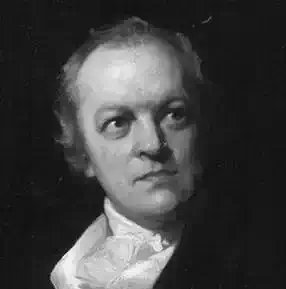
William Blake
A Little Boy Lost
A Little Boy Lost
v'Nought loves another as itself,
Nor venerates another so,
Nor is it possible to thought
A greater than itself to know.
'And, father, how can I love you
Or any of my brothers more?
I love you like the little bird
That picks up crumbs around the door.'
The Priest sat by and heard the child;
In trembling zeal he seized his hair,
He led him by his little coat,
And all admired the priestly care.
And standing on the altar high,
'Lo, what a fiend is here! said he:
'One who sets reason up for judge
Of our most holy mystery.'
The weeping child could not be heard,
The weeping parents wept in vain:
They stripped him to his little shirt,
And bound him in an iron chain,
And burned him in a holy place
Where many had been burned before;
The weeping parents wept in vain.
Are such thing done on Albion's shore?
v'Nought loves another as itself,
Nor venerates another so,
Nor is it possible to thought
A greater than itself to know.
'And, father, how can I love you
Or any of my brothers more?
I love you like the little bird
That picks up crumbs around the door.'
The Priest sat by and heard the child;
In trembling zeal he seized his hair,
He led him by his little coat,
And all admired the priestly care.
And standing on the altar high,
'Lo, what a fiend is here! said he:
'One who sets reason up for judge
Of our most holy mystery.'
The weeping child could not be heard,
The weeping parents wept in vain:
They stripped him to his little shirt,
And bound him in an iron chain,
And burned him in a holy place
Where many had been burned before;
The weeping parents wept in vain.
Are such thing done on Albion's shore?
520
Robert W. Service
The Prisoner
The Prisoner
Upspoke the culprit at the bar,
Conducting his own case:
'Your Lordship, I have gone to far,
But grant me of your grace.
As I was passing by a shop
I saw my arm go out,
And though I begged of it to stop,
It stole beyond a doubt.
'But why should my whole body be
Condemned to dungeon grim,
For what in fact was only the
Transgression of a limb?
So here before the Court I stand,
And beg in Justice' name:
Please penalise my arm and hand,
But not my frame.'
Outspoke the Judge with voice of ice,
Although a smile he hid:
'Quite right! You should not pay the price
For what one member did.
Your reasoning I must admit;
Your arm should gaol expect . . .
Three months! And if you follow it
The Court does not object.'
The culprit smiled with sudden charm,
Then to the Court's dismay,
Quickly removed a wooden arm
And went away.
Upspoke the culprit at the bar,
Conducting his own case:
'Your Lordship, I have gone to far,
But grant me of your grace.
As I was passing by a shop
I saw my arm go out,
And though I begged of it to stop,
It stole beyond a doubt.
'But why should my whole body be
Condemned to dungeon grim,
For what in fact was only the
Transgression of a limb?
So here before the Court I stand,
And beg in Justice' name:
Please penalise my arm and hand,
But not my frame.'
Outspoke the Judge with voice of ice,
Although a smile he hid:
'Quite right! You should not pay the price
For what one member did.
Your reasoning I must admit;
Your arm should gaol expect . . .
Three months! And if you follow it
The Court does not object.'
The culprit smiled with sudden charm,
Then to the Court's dismay,
Quickly removed a wooden arm
And went away.
229
Robert W. Service
The Outlaw
The Outlaw
A wild and woeful race he ran
Of lust and sin by land and sea;
Until, abhorred of God and man,
They swung him from the gallows-tree.
And then he climbed the Starry Stair,
And dumb and naked and alone,
With head unbowed and brazen glare,
He stood before the Judgment Throne.
The Keeper of the Records spoke:
"This man, O Lord, has mocked Thy Name.
The weak have wept beneath his yoke,
The strong have fled before his flame.
The blood of babes is on his sword;
His life is evil to the brim:
Look down, decree his doom, O Lord!
Lo! there is none will speak for him."
The golden trumpets blew a blast
That echoed in the crypts of Hell,
For there was Judgment to be passed,
And lips were hushed and silence fell.
The man was mute; he made no stir,
Erect before the Judgment Seat . . .
When all at once a mongrel cur
Crept out and cowered and licked his feet.
It licked his feet with whining cry.
Come Heav'n, come Hell, what did it care?
It leapt, it tried to catch his eye;
Its master, yea, its God was there.
Then, as a thrill of wonder sped
Through throngs of shining seraphim,
The Judge of All looked down and said:
"Lo! here is ONE who pleads for him.
"And who shall love of these the least,
And who by word or look or deed
Shall pity show to bird or beast,
By Me shall have a friend in need.
Aye, though his sin be black as night,
And though he stand 'mid men alone,
He shall be softened in My sight,
And find a pleader by My Throne.
"So let this man to glory win;
From life to life salvation glean;
By pain and sacrifice and sin,
Until he stand before Me -- clean.
For he who loves the least of these
(And here I say and here repeat)
Shall win himself an angel's pleas
For Mercy at My Judgment Seat."
A wild and woeful race he ran
Of lust and sin by land and sea;
Until, abhorred of God and man,
They swung him from the gallows-tree.
And then he climbed the Starry Stair,
And dumb and naked and alone,
With head unbowed and brazen glare,
He stood before the Judgment Throne.
The Keeper of the Records spoke:
"This man, O Lord, has mocked Thy Name.
The weak have wept beneath his yoke,
The strong have fled before his flame.
The blood of babes is on his sword;
His life is evil to the brim:
Look down, decree his doom, O Lord!
Lo! there is none will speak for him."
The golden trumpets blew a blast
That echoed in the crypts of Hell,
For there was Judgment to be passed,
And lips were hushed and silence fell.
The man was mute; he made no stir,
Erect before the Judgment Seat . . .
When all at once a mongrel cur
Crept out and cowered and licked his feet.
It licked his feet with whining cry.
Come Heav'n, come Hell, what did it care?
It leapt, it tried to catch his eye;
Its master, yea, its God was there.
Then, as a thrill of wonder sped
Through throngs of shining seraphim,
The Judge of All looked down and said:
"Lo! here is ONE who pleads for him.
"And who shall love of these the least,
And who by word or look or deed
Shall pity show to bird or beast,
By Me shall have a friend in need.
Aye, though his sin be black as night,
And though he stand 'mid men alone,
He shall be softened in My sight,
And find a pleader by My Throne.
"So let this man to glory win;
From life to life salvation glean;
By pain and sacrifice and sin,
Until he stand before Me -- clean.
For he who loves the least of these
(And here I say and here repeat)
Shall win himself an angel's pleas
For Mercy at My Judgment Seat."
182
Robert W. Service
The Judgement
The Judgement
The Judge looked down, his face was grim,
He scratched his ear;
The gangster's moll looked up at him
With eyes of fear.
She thought: 'This guy in velvet gown,
With balding pate,
Who now on me is looking down,
Can seal my fate.'
The Judge thought: 'Fifteen years or ten
I might decree.
Just let me say the word and then
Go home to tea.
But then this poor wretch might not be
So long alive . . .'
So with surprise he heard that he
Was saying 'Five'.
The Judge went home. His daughter's child
Was five that day;
And with sweet gifts around her piled
She laughed in play.
Then mused the Judge: 'Life oft bestows
Such evil odds.
May he who human mercy shows
Not count on God's?'
The Judge looked down, his face was grim,
He scratched his ear;
The gangster's moll looked up at him
With eyes of fear.
She thought: 'This guy in velvet gown,
With balding pate,
Who now on me is looking down,
Can seal my fate.'
The Judge thought: 'Fifteen years or ten
I might decree.
Just let me say the word and then
Go home to tea.
But then this poor wretch might not be
So long alive . . .'
So with surprise he heard that he
Was saying 'Five'.
The Judge went home. His daughter's child
Was five that day;
And with sweet gifts around her piled
She laughed in play.
Then mused the Judge: 'Life oft bestows
Such evil odds.
May he who human mercy shows
Not count on God's?'
223
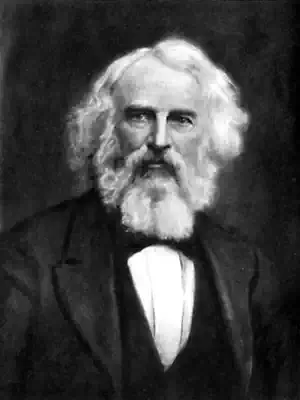
Henry Wadsworth Longfellow
To William E. Channing
To William E. Channing
The pages of thy book I read,
And as I closed each one,
My heart, responding, ever said,
"Servant of God! well done!"
Well done! Thy words are great and bold;
At times they seem to me,
Like Luther's, in the days of old,
Half-battles for the free.
Go on, until this land revokes
The old and chartered Lie,
The feudal curse, whose whips and yokes
Insult humanity.
A voice is ever at thy side
Speaking in tones of might,
Like the prophetic voice, that cried
To John in Patmos, "Write!"
Write! and tell out this bloody tale;
Record this dire eclipse,
This Day of Wrath, this Endless Wail,
This dread Apocalypse!
The pages of thy book I read,
And as I closed each one,
My heart, responding, ever said,
"Servant of God! well done!"
Well done! Thy words are great and bold;
At times they seem to me,
Like Luther's, in the days of old,
Half-battles for the free.
Go on, until this land revokes
The old and chartered Lie,
The feudal curse, whose whips and yokes
Insult humanity.
A voice is ever at thy side
Speaking in tones of might,
Like the prophetic voice, that cried
To John in Patmos, "Write!"
Write! and tell out this bloody tale;
Record this dire eclipse,
This Day of Wrath, this Endless Wail,
This dread Apocalypse!
399
Robert W. Service
The Healer
The Healer
"Tuberculosis should not be,"
The old professor said.
"If folks would hearken unto me
'Twould save a million dead.
Nay, no consumptive needs to die,
--A cure have I.
"From blood of turtle I've distilled
An elixir of worth;
Let every sufferer be thrilled
And sing for joy of earth;
Yet every doctor turns his back
And calls me quack.
"Alas! They do not want to cure,
For sickness is their meat;
So persecution I endure,
And die in dark defeat:
Ye lungers, listen to my call!
--I'll save you all."
The old Professor now is dead,
And turtles of the sea,
Knowing their blood they need not shed,
Are festive in their glee:
While sanitoriums are crammed
With legions dammed.
"Tuberculosis should not be,"
The old professor said.
"If folks would hearken unto me
'Twould save a million dead.
Nay, no consumptive needs to die,
--A cure have I.
"From blood of turtle I've distilled
An elixir of worth;
Let every sufferer be thrilled
And sing for joy of earth;
Yet every doctor turns his back
And calls me quack.
"Alas! They do not want to cure,
For sickness is their meat;
So persecution I endure,
And die in dark defeat:
Ye lungers, listen to my call!
--I'll save you all."
The old Professor now is dead,
And turtles of the sea,
Knowing their blood they need not shed,
Are festive in their glee:
While sanitoriums are crammed
With legions dammed.
242
Henry Wadsworth Longfellow
The Witnesses
The Witnesses
In Ocean's wide domains,
Half buried in the sands,
Lie skeletons in chains,
With shackled feet and hands.
Beyond the fall of dews,
Deeper than plummet lies,
Float ships, with all their crews,
No more to sink nor rise.
There the black Slave-ship swims,
Freighted with human forms,
Whose fettered, fleshless limbs
Are not the sport of storms.
These are the bones of Slaves;
They gleam from the abyss;
They cry, from yawning waves,
"We are the Witnesses!"
Within Earth's wide domains
Are markets for men's lives;
Their necks are galled with chains,
Their wrists are cramped with gyves.
Dead bodies, that the kite
In deserts makes its prey;
Murders, that with affright
Scare school-boys from their play!
All evil thoughts and deeds;
Anger, and lust, and pride;
The foulest, rankest weeds,
That choke Life's groaning tide!
These are the woes of Slaves;
They glare from the abyss;
They cry, from unknown graves,
"We are the Witnesses!"
In Ocean's wide domains,
Half buried in the sands,
Lie skeletons in chains,
With shackled feet and hands.
Beyond the fall of dews,
Deeper than plummet lies,
Float ships, with all their crews,
No more to sink nor rise.
There the black Slave-ship swims,
Freighted with human forms,
Whose fettered, fleshless limbs
Are not the sport of storms.
These are the bones of Slaves;
They gleam from the abyss;
They cry, from yawning waves,
"We are the Witnesses!"
Within Earth's wide domains
Are markets for men's lives;
Their necks are galled with chains,
Their wrists are cramped with gyves.
Dead bodies, that the kite
In deserts makes its prey;
Murders, that with affright
Scare school-boys from their play!
All evil thoughts and deeds;
Anger, and lust, and pride;
The foulest, rankest weeds,
That choke Life's groaning tide!
These are the woes of Slaves;
They glare from the abyss;
They cry, from unknown graves,
"We are the Witnesses!"
318
Robert W. Service
The Duel
The Duel
In Pat Mahoney's booze bazaar the fun was fast and free,
And Ragtime Billy spanked the baby grand;
While caroling a saucy song was Montreal Maree,
With sozzled sourdoughs giving her a hand.
When suddenly erupting in the gay and gilded hall,
A stranger draped himself upon the bar;
As in a voice like bedrock grit he hollered: "Drinks for all,"
And casually lit a long cigar.
He bore a battered stetson on the grizzle of his dome,
And a bunch of inky whiskers on his jaw;
The suddenly I knew the guy - 'twas Black Moran from Nome.
A guinney like greased lightening on the draw.
But no one got his number in that wild and wooly throng,
As they hailed his invitation with eclaw,
And they crowded round the stranger, but I knew something was wrong.
When in there stomped the Sheriff, Red McGraw.
Now Red McGraw from Arkansaw was noted for his spunk;
He had a dozen notches on his gun;
And whether he was sober or whether he was drunk,
He kept the lousy outlaws on the run.
So now he shouts: "Say, boys, there's been a hold-up Hunker Way,
And by this poke I'm throwin' on the bar,
I bet I'll get the bastard braced before another day,
Or send him where a dozen others are."
He banged the bag of gold-dust on the bar for all to see,
When in a lazy drawl the stranger spoke:
"As I'm the man you're lookin' for an feelin' mighty free,
I reckon, Sheriff, I'll jest take yer poke.
It's pleasant meetin' you like this, an' talkin' man to man,
For all the North had heard o' Ref McGraw.
I'm glad to make ye eat yer words, since I am Black Moran,
An' no man livin' beats me on the draw."
And as they boldly bellied, each man's hand was on his rod,
Yet at that dreaded name the Sheriff knew
A single fumbling movement and he'd go to meet his God,
The which he had no great desire to do.
So there they stood like carven wood and hushed was every breath,
We watched them glaring, staring eye to eye;
But neither drew, for either knew a second split meant death -
And so a minute . . . two . . . three three went by.
The sweat pricked on the Sheriff's brow as suddenly he broke
And limp and weak he wilted to the floor;
And then the stranger's hand shot out and grabbed the heavy poke
As jeeringly he backed up to the door.
"Say, folks," he cried, "I'm off downstream; no more of me you'll see,
But let me state the job was pretty raw. . . .
The guy that staged the robbery he thought to pin on me
Was your bastard Sheriff, Red McGraw."
In Pat Mahoney's booze bazaar the fun was fast and free,
And Ragtime Billy spanked the baby grand;
While caroling a saucy song was Montreal Maree,
With sozzled sourdoughs giving her a hand.
When suddenly erupting in the gay and gilded hall,
A stranger draped himself upon the bar;
As in a voice like bedrock grit he hollered: "Drinks for all,"
And casually lit a long cigar.
He bore a battered stetson on the grizzle of his dome,
And a bunch of inky whiskers on his jaw;
The suddenly I knew the guy - 'twas Black Moran from Nome.
A guinney like greased lightening on the draw.
But no one got his number in that wild and wooly throng,
As they hailed his invitation with eclaw,
And they crowded round the stranger, but I knew something was wrong.
When in there stomped the Sheriff, Red McGraw.
Now Red McGraw from Arkansaw was noted for his spunk;
He had a dozen notches on his gun;
And whether he was sober or whether he was drunk,
He kept the lousy outlaws on the run.
So now he shouts: "Say, boys, there's been a hold-up Hunker Way,
And by this poke I'm throwin' on the bar,
I bet I'll get the bastard braced before another day,
Or send him where a dozen others are."
He banged the bag of gold-dust on the bar for all to see,
When in a lazy drawl the stranger spoke:
"As I'm the man you're lookin' for an feelin' mighty free,
I reckon, Sheriff, I'll jest take yer poke.
It's pleasant meetin' you like this, an' talkin' man to man,
For all the North had heard o' Ref McGraw.
I'm glad to make ye eat yer words, since I am Black Moran,
An' no man livin' beats me on the draw."
And as they boldly bellied, each man's hand was on his rod,
Yet at that dreaded name the Sheriff knew
A single fumbling movement and he'd go to meet his God,
The which he had no great desire to do.
So there they stood like carven wood and hushed was every breath,
We watched them glaring, staring eye to eye;
But neither drew, for either knew a second split meant death -
And so a minute . . . two . . . three three went by.
The sweat pricked on the Sheriff's brow as suddenly he broke
And limp and weak he wilted to the floor;
And then the stranger's hand shot out and grabbed the heavy poke
As jeeringly he backed up to the door.
"Say, folks," he cried, "I'm off downstream; no more of me you'll see,
But let me state the job was pretty raw. . . .
The guy that staged the robbery he thought to pin on me
Was your bastard Sheriff, Red McGraw."
206
Robert W. Service
The Bandit
The Bandit
Upon his way to rob a Bank
He paused to watch a fire;
Though crowds were pressing rank on rank
He pushed a passage nigher;
Then sudden heard, piercing and wild,
The screaming of a child.
A Public Enemy was he,
A hater of the law;
He looked around for bravery
But only fear he saw;
Then to the craven crowds amaze
He plunged into the blaze.
How anguished was the waiting spell
Of horror and of pain!
Then--then from out that fiery hell
He staggered forth again:
The babe was safe, in blankets wrapt,
The man flame lapt.
His record was an evil one,
Of violence and sin.
No good on earth he'd ever done,
Yet--may he Heaven win!
A gangster he . . . Is it not odd?
--With guts of God.
Upon his way to rob a Bank
He paused to watch a fire;
Though crowds were pressing rank on rank
He pushed a passage nigher;
Then sudden heard, piercing and wild,
The screaming of a child.
A Public Enemy was he,
A hater of the law;
He looked around for bravery
But only fear he saw;
Then to the craven crowds amaze
He plunged into the blaze.
How anguished was the waiting spell
Of horror and of pain!
Then--then from out that fiery hell
He staggered forth again:
The babe was safe, in blankets wrapt,
The man flame lapt.
His record was an evil one,
Of violence and sin.
No good on earth he'd ever done,
Yet--may he Heaven win!
A gangster he . . . Is it not odd?
--With guts of God.
248
Page 1
Next