
Jealousy and Envy
Poems in this topic
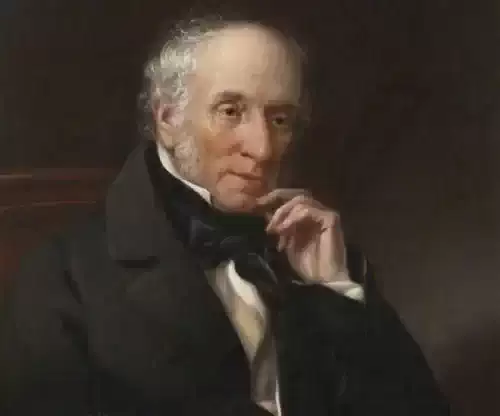
William Wordsworth
Ellen Irwin
Ellen Irwin
Fair Ellen Irwin, when she sate
Upon the braes of Kirtle,
Was lovely as a Grecian maid
Adorned with wreaths of myrtle;
Young Adam Bruce beside her lay,
And there did they beguile the day
With love and gentle speeches,
Beneath the budding beeches.
From many knights and many squires
The Bruce had been selected;
And Gordon, fairest of them all,
By Ellen was rejected.
Sad tidings to that noble Youth!
For it may be proclaimed with truth,
If Bruce hath loved sincerely,
That Gordon loves as dearly.
But what are Gordon's form and face,
His shattered hopes and crosses,
To them, 'mid Kirtle's pleasant braes,
Reclined on flowers and mosses?
Alas that ever he was born!
The Gordon, couched behind a thorn,
Sees them and their caressing;
Beholds them blest and blessing.
Proud Gordon, maddened by the thoughts
That through his brain are travelling,
Rushed forth, and at the heart of Bruce
He launched a deadly javelin!
Fair Ellen saw it as it came,
And, starting up to meet the same,
Did with her body cover
The Youth, her chosen lover.
And, falling into Bruce's arms,
Thus died the beauteous Ellen,
Thus, from the heart of her True-love,
The mortal spear repelling.
And Bruce, as soon as he had slain
The Gordon, sailed away to Spain;
And fought with rage incessant
Against the Moorish crescent.
But many days, and many months,
And many years ensuing,
This wretched Knight did vainly seek
The death that he was wooing.
So, coming his last help to crave,
Heart-broken, upon Ellen's grave
His body he extended,
And there his sorrow ended.
Now ye, who willingly have heard
The tale I have been telling,
May in Kirkconnel churchyard view
The grave of lovely Ellen:
By Ellen's side the Bruce is laid;
And, for the stone upon his head,
May no rude hand deface it,
And its forlorn "Hie jacet"!
Fair Ellen Irwin, when she sate
Upon the braes of Kirtle,
Was lovely as a Grecian maid
Adorned with wreaths of myrtle;
Young Adam Bruce beside her lay,
And there did they beguile the day
With love and gentle speeches,
Beneath the budding beeches.
From many knights and many squires
The Bruce had been selected;
And Gordon, fairest of them all,
By Ellen was rejected.
Sad tidings to that noble Youth!
For it may be proclaimed with truth,
If Bruce hath loved sincerely,
That Gordon loves as dearly.
But what are Gordon's form and face,
His shattered hopes and crosses,
To them, 'mid Kirtle's pleasant braes,
Reclined on flowers and mosses?
Alas that ever he was born!
The Gordon, couched behind a thorn,
Sees them and their caressing;
Beholds them blest and blessing.
Proud Gordon, maddened by the thoughts
That through his brain are travelling,
Rushed forth, and at the heart of Bruce
He launched a deadly javelin!
Fair Ellen saw it as it came,
And, starting up to meet the same,
Did with her body cover
The Youth, her chosen lover.
And, falling into Bruce's arms,
Thus died the beauteous Ellen,
Thus, from the heart of her True-love,
The mortal spear repelling.
And Bruce, as soon as he had slain
The Gordon, sailed away to Spain;
And fought with rage incessant
Against the Moorish crescent.
But many days, and many months,
And many years ensuing,
This wretched Knight did vainly seek
The death that he was wooing.
So, coming his last help to crave,
Heart-broken, upon Ellen's grave
His body he extended,
And there his sorrow ended.
Now ye, who willingly have heard
The tale I have been telling,
May in Kirkconnel churchyard view
The grave of lovely Ellen:
By Ellen's side the Bruce is laid;
And, for the stone upon his head,
May no rude hand deface it,
And its forlorn "Hie jacet"!
207

William Shakespeare
Sonnets vii
Sonnets vii
BEING your slave, what should I do but tend
Upon the hours and times of your desire?
I have no precious time at all to spend,
Nor services to do, till you require.
Nor dare I chide the world-without-end hour
Whilst I, my sovereign, watch the clock for you,
Nor think the bitterness of absence sour
When you have bid your servant once adieu;
Nor dare I question with my jealous thought
Where you may be, or your affairs suppose,
But, like a sad slave, stay and think of nought
Save, where you are how happy you make those!
So true a fool is love, that in your Will,
Though you do any thing, he thinks no ill.
BEING your slave, what should I do but tend
Upon the hours and times of your desire?
I have no precious time at all to spend,
Nor services to do, till you require.
Nor dare I chide the world-without-end hour
Whilst I, my sovereign, watch the clock for you,
Nor think the bitterness of absence sour
When you have bid your servant once adieu;
Nor dare I question with my jealous thought
Where you may be, or your affairs suppose,
But, like a sad slave, stay and think of nought
Save, where you are how happy you make those!
So true a fool is love, that in your Will,
Though you do any thing, he thinks no ill.
224
William Shakespeare
Sonnet LXI
Sonnet LXI
Is it thy will thy image should keep open
My heavy eyelids to the weary night?
Dost thou desire my slumbers should be broken,
While shadows like to thee do mock my sight?
Is it thy spirit that thou send'st from thee
So far from home into my deeds to pry,
To find out shames and idle hours in me,
The scope and tenor of thy jealousy?
O, no! thy love, though much, is not so great:
It is my love that keeps mine eye awake;
Mine own true love that doth my rest defeat,
To play the watchman ever for thy sake:
For thee watch I whilst thou dost wake elsewhere,
From me far off, with others all too near.
Is it thy will thy image should keep open
My heavy eyelids to the weary night?
Dost thou desire my slumbers should be broken,
While shadows like to thee do mock my sight?
Is it thy spirit that thou send'st from thee
So far from home into my deeds to pry,
To find out shames and idle hours in me,
The scope and tenor of thy jealousy?
O, no! thy love, though much, is not so great:
It is my love that keeps mine eye awake;
Mine own true love that doth my rest defeat,
To play the watchman ever for thy sake:
For thee watch I whilst thou dost wake elsewhere,
From me far off, with others all too near.
308
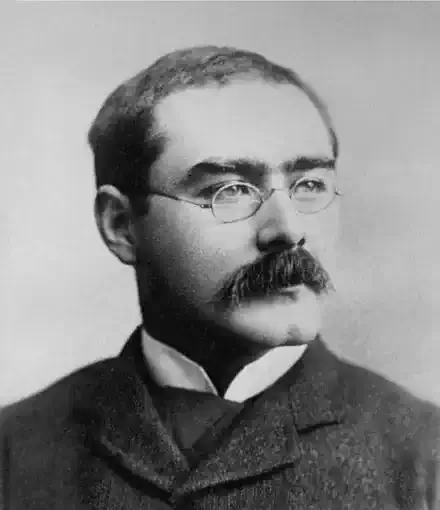
Rudyard Kipling
My Rival
My Rival
I go to concert, party, ball --
What profit is in these?
I sit alone against the wall
And strive to look at ease.
The incense that is mine by right
They burn before her shrine;
And that's because I'm seventeen
And She is forty-nine.
I cannot check my girlish blush,
My color comes and goes;
I redden to my finger-tips,
And sometimes to my nose.
But She is white where white should be,
And red where red should shine.
The blush that flies at seventeen
Is fixed at forty-nine.
I wish I had Her constant cheek;
I wish that I could sing
All sorts of funny little songs,
Not quite the proper thing.
I'm very gauche and very shy,
Her jokes aren't in my line;
And, worst of all, I'm seventeen
While She is forty-nine.
The young men come, the young men go
Each pink and white and neat,
She's older than their mothers, but
They grovel at Her feet.
They walk beside Her 'rickshaw wheels --
None ever walk by mine;
And that's because I'm seventeen
And She is foty-nine.
She rides with half a dozen men,
(She calls them "boys" and "mashers")
I trot along the Mall alone;
My prettiest frocks and sashes
Don't help to fill my programme-card,
And vainly I repine
From ten to two A.M. Ah me!
Would I were forty-nine!
She calls me "darling," "pet," and "dear,"
And "sweet retiring maid."
I'm always at the back, I know,
She puts me in the shade.
She introduces me to men,
"Cast" lovers, I opine,
For sixty takes to seventeen,
Nineteen to foty-nine.
But even She must older grow
And end Her dancing days,
She can't go on forever so
At concerts, balls and plays.
One ray of priceless hope I see
Before my footsteps shine;
Just think, that She'll be eighty-one
When I am forty-nine.
I go to concert, party, ball --
What profit is in these?
I sit alone against the wall
And strive to look at ease.
The incense that is mine by right
They burn before her shrine;
And that's because I'm seventeen
And She is forty-nine.
I cannot check my girlish blush,
My color comes and goes;
I redden to my finger-tips,
And sometimes to my nose.
But She is white where white should be,
And red where red should shine.
The blush that flies at seventeen
Is fixed at forty-nine.
I wish I had Her constant cheek;
I wish that I could sing
All sorts of funny little songs,
Not quite the proper thing.
I'm very gauche and very shy,
Her jokes aren't in my line;
And, worst of all, I'm seventeen
While She is forty-nine.
The young men come, the young men go
Each pink and white and neat,
She's older than their mothers, but
They grovel at Her feet.
They walk beside Her 'rickshaw wheels --
None ever walk by mine;
And that's because I'm seventeen
And She is foty-nine.
She rides with half a dozen men,
(She calls them "boys" and "mashers")
I trot along the Mall alone;
My prettiest frocks and sashes
Don't help to fill my programme-card,
And vainly I repine
From ten to two A.M. Ah me!
Would I were forty-nine!
She calls me "darling," "pet," and "dear,"
And "sweet retiring maid."
I'm always at the back, I know,
She puts me in the shade.
She introduces me to men,
"Cast" lovers, I opine,
For sixty takes to seventeen,
Nineteen to foty-nine.
But even She must older grow
And end Her dancing days,
She can't go on forever so
At concerts, balls and plays.
One ray of priceless hope I see
Before my footsteps shine;
Just think, that She'll be eighty-one
When I am forty-nine.
420
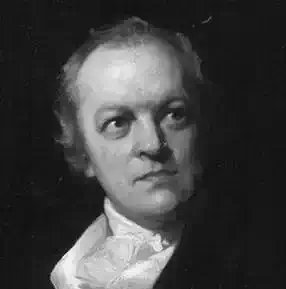
William Blake
Broken Love
Broken Love
MY Spectre around me night and day
Like a wild beast guards my way;
My Emanation far within
Weeps incessantly for my sin.
‘A fathomless and boundless deep,
There we wander, there we weep;
On the hungry craving wind
My Spectre follows thee behind.
‘He scents thy footsteps in the snow
Wheresoever thou dost go,
Thro’ the wintry hail and rain.
When wilt thou return again?
’Dost thou not in pride and scorn
Fill with tempests all my morn,
And with jealousies and fears
Fill my pleasant nights with tears?
‘Seven of my sweet loves thy knife
Has bereavèd of their life.
Their marble tombs I built with tears,
And with cold and shuddering fears.
‘Seven more loves weep night and day
Round the tombs where my loves lay,
And seven more loves attend each night
Around my couch with torches bright.
‘And seven more loves in my bed
Crown with wine my mournful head,
Pitying and forgiving all
Thy transgressions great and small.
‘When wilt thou return and view
My loves, and them to life renew?
When wilt thou return and live?
When wilt thou pity as I forgive?’
‘O’er my sins thou sit and moan:
Hast thou no sins of thy own?
O’er my sins thou sit and weep,
And lull thy own sins fast asleep.
‘What transgressions I commit
Are for thy transgressions fit.
They thy harlots, thou their slave;
And my bed becomes their grave.
‘Never, never, I return:
Still for victory I burn.
Living, thee alone I’ll have;
And when dead I’ll be thy grave.
‘Thro’ the Heaven and Earth and Hell
Thou shalt never, quell:
I will fly and thou pursue:
Night and morn the flight renew.’
‘Poor, pale, pitiable form
That I follow in a storm;
Iron tears and groans of lead
Bind around my aching head.
‘Till I turn from Female love
And root up the Infernal Grove,
I shall never worthy be
To step into Eternity.
‘And, to end thy cruel mocks,
Annihilate thee on the rocks,
And another form create
To be subservient to my fate.
‘Let us agree to give up love,
And root up the Infernal Grove;
Then shall we return and see
The worlds of happy Eternity.
‘And throughout all Eternity
I forgive you, you forgive me.
As our dear Redeemer said:
“This the Wine, and this the Bread.”’
MY Spectre around me night and day
Like a wild beast guards my way;
My Emanation far within
Weeps incessantly for my sin.
‘A fathomless and boundless deep,
There we wander, there we weep;
On the hungry craving wind
My Spectre follows thee behind.
‘He scents thy footsteps in the snow
Wheresoever thou dost go,
Thro’ the wintry hail and rain.
When wilt thou return again?
’Dost thou not in pride and scorn
Fill with tempests all my morn,
And with jealousies and fears
Fill my pleasant nights with tears?
‘Seven of my sweet loves thy knife
Has bereavèd of their life.
Their marble tombs I built with tears,
And with cold and shuddering fears.
‘Seven more loves weep night and day
Round the tombs where my loves lay,
And seven more loves attend each night
Around my couch with torches bright.
‘And seven more loves in my bed
Crown with wine my mournful head,
Pitying and forgiving all
Thy transgressions great and small.
‘When wilt thou return and view
My loves, and them to life renew?
When wilt thou return and live?
When wilt thou pity as I forgive?’
‘O’er my sins thou sit and moan:
Hast thou no sins of thy own?
O’er my sins thou sit and weep,
And lull thy own sins fast asleep.
‘What transgressions I commit
Are for thy transgressions fit.
They thy harlots, thou their slave;
And my bed becomes their grave.
‘Never, never, I return:
Still for victory I burn.
Living, thee alone I’ll have;
And when dead I’ll be thy grave.
‘Thro’ the Heaven and Earth and Hell
Thou shalt never, quell:
I will fly and thou pursue:
Night and morn the flight renew.’
‘Poor, pale, pitiable form
That I follow in a storm;
Iron tears and groans of lead
Bind around my aching head.
‘Till I turn from Female love
And root up the Infernal Grove,
I shall never worthy be
To step into Eternity.
‘And, to end thy cruel mocks,
Annihilate thee on the rocks,
And another form create
To be subservient to my fate.
‘Let us agree to give up love,
And root up the Infernal Grove;
Then shall we return and see
The worlds of happy Eternity.
‘And throughout all Eternity
I forgive you, you forgive me.
As our dear Redeemer said:
“This the Wine, and this the Bread.”’
494
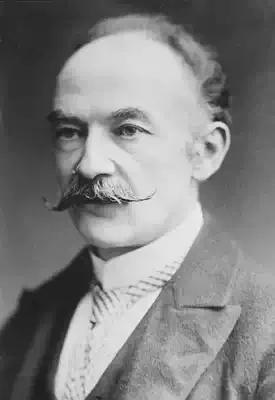
Thomas Hardy
She, to Him, IV
She, to Him, IV
This love puts all humanity from me;
I can but maledict her, pray her dead,
For giving love and getting love of thee—
Feeding a heart that else mine own had fed!
How much I love I know not, life not known,
Save as some unit I would add love by;
But this I know, my being is but thine own—
Fused from its separateness by ecstasy.
And thus I grasp thy amplitudes, of her
Ungrasped, though helped by nigh-regarding eyes;
Canst thou then hate me as an envier
Who see unrecked what I so dearly prize?
Believe me, Lost One, Love is lovelier
The more it shapes its moans in selfish-wise.
This love puts all humanity from me;
I can but maledict her, pray her dead,
For giving love and getting love of thee—
Feeding a heart that else mine own had fed!
How much I love I know not, life not known,
Save as some unit I would add love by;
But this I know, my being is but thine own—
Fused from its separateness by ecstasy.
And thus I grasp thy amplitudes, of her
Ungrasped, though helped by nigh-regarding eyes;
Canst thou then hate me as an envier
Who see unrecked what I so dearly prize?
Believe me, Lost One, Love is lovelier
The more it shapes its moans in selfish-wise.
201
Thomas Hardy
She, To Him IV
She, To Him IV
THIS love puts all humanity from me;
I can but maledict her, pray her dead,
For giving love and getting love of thee--
Feeding a heart that else mine own had fed!
How much I love I know not, life not known,
Save as some unit I would add love by;
But this I know, my being is but thine own--
Fused from its separateness by ecstasy.
And thus I grasp thy amplitudes, of her
Ungrasped, though helped by nigh-regarding eyes;
Canst thou then hate me as an envier
Who see unrecked what I so dearly prize?
Believe me, Lost One, Love is lovelier
The more it shapes its moans in selfish-wise.
THIS love puts all humanity from me;
I can but maledict her, pray her dead,
For giving love and getting love of thee--
Feeding a heart that else mine own had fed!
How much I love I know not, life not known,
Save as some unit I would add love by;
But this I know, my being is but thine own--
Fused from its separateness by ecstasy.
And thus I grasp thy amplitudes, of her
Ungrasped, though helped by nigh-regarding eyes;
Canst thou then hate me as an envier
Who see unrecked what I so dearly prize?
Believe me, Lost One, Love is lovelier
The more it shapes its moans in selfish-wise.
247
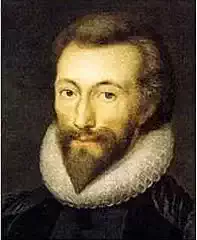
John Donne
Elegy I: Jealousy
Elegy I: Jealousy
Fond woman, which wouldst have thy husband die,
And yet complain'st of his great jealousy;
If swol'n with poison, he lay in his last bed,
His body with a sere-bark covered,
Drawing his breath, as thick and short, as can
The nimblest crocheting musician,
Ready with loathsome vomiting to spew
His soul out of one hell, into a new,
Made deaf with his poor kindred's howling cries,
Begging with few feigned tears, great legacies,
Thou wouldst not weep, but jolly and frolic be,
As a slave, which tomorrow should be free;
Yet weep'st thou, when thou seest him hungerly
Swallow his own death, hearts-bane jealousy.
O give him many thanks, he's courteous,
That in suspecting kindly warneth us
Wee must not, as we used, flout openly,
In scoffing riddles, his deformity;
Nor at his board together being sat,
With words, nor touch, scarce looks adulterate;
Nor when he swol'n, and pampered with great fare
Sits down, and snorts, caged in his basket chair,
Must we usurp his own bed any more,
Nor kiss and play in his house, as before.
Now I see many dangers; for that is
His realm, his castle, and his diocese.
But if, as envious men, which would revile
Their Prince, or coin his gold, themselves exile
Into another country, and do it there,
We play in another house, what should we fear?
There we will scorn his houshold policies,
His seely plots, and pensionary spies,
As the inhabitants of Thames' right side
Do London's Mayor; or Germans, the Pope's pride.
Fond woman, which wouldst have thy husband die,
And yet complain'st of his great jealousy;
If swol'n with poison, he lay in his last bed,
His body with a sere-bark covered,
Drawing his breath, as thick and short, as can
The nimblest crocheting musician,
Ready with loathsome vomiting to spew
His soul out of one hell, into a new,
Made deaf with his poor kindred's howling cries,
Begging with few feigned tears, great legacies,
Thou wouldst not weep, but jolly and frolic be,
As a slave, which tomorrow should be free;
Yet weep'st thou, when thou seest him hungerly
Swallow his own death, hearts-bane jealousy.
O give him many thanks, he's courteous,
That in suspecting kindly warneth us
Wee must not, as we used, flout openly,
In scoffing riddles, his deformity;
Nor at his board together being sat,
With words, nor touch, scarce looks adulterate;
Nor when he swol'n, and pampered with great fare
Sits down, and snorts, caged in his basket chair,
Must we usurp his own bed any more,
Nor kiss and play in his house, as before.
Now I see many dangers; for that is
His realm, his castle, and his diocese.
But if, as envious men, which would revile
Their Prince, or coin his gold, themselves exile
Into another country, and do it there,
We play in another house, what should we fear?
There we will scorn his houshold policies,
His seely plots, and pensionary spies,
As the inhabitants of Thames' right side
Do London's Mayor; or Germans, the Pope's pride.
285
William Shakespeare
Sonnet 57: Being your slave, what should I do but tend
Sonnet 57: Being your slave, what should I do but tend
Being your slave, what should I do but tend
Upon the hours and times of your desire?
I have no precious time at all to spend,
Nor services to do, till you require.
Nor dare I chide the world-without-end hour,
Whilst I, my sovereign, watch the clock for you,
Nor think the bitterness of absence sour
When you have bid your servant once adieu.
Nor dare I question with my jealous thought
Where you may be, or your affairs suppose,
But, like a sad slave, stay and think of naught
Save where you are, how happy you make those.
So true a fool is love that in your will,
Though you do any thing, he thinks no ill.
Being your slave, what should I do but tend
Upon the hours and times of your desire?
I have no precious time at all to spend,
Nor services to do, till you require.
Nor dare I chide the world-without-end hour,
Whilst I, my sovereign, watch the clock for you,
Nor think the bitterness of absence sour
When you have bid your servant once adieu.
Nor dare I question with my jealous thought
Where you may be, or your affairs suppose,
But, like a sad slave, stay and think of naught
Save where you are, how happy you make those.
So true a fool is love that in your will,
Though you do any thing, he thinks no ill.
305
William Shakespeare
Sonnet 42: That thou hast her, it is not all my grief
Sonnet 42: That thou hast her, it is not all my grief
That thou hast her, it is not all my grief,
And yet it may be said I loved her dearly;
That she hath thee is of my wailing chief,
A loss in love that touches me more nearly.
Loving offenders, thus I will excuse ye:
Thou dost love her because thou know'st I love her,
And for my sake even so doth she abuse me,
Suff'ring my friend for my sake to approve her.
If I lose thee, my loss is my love's gain,
And, losing her, my friend hath found that loss;
Both find each other, and I lose both twain,
And both for my sake lay on me this cross.
But here's the joy: my friend and I are one,
Sweet flattery! Then she loves but me alone.
That thou hast her, it is not all my grief,
And yet it may be said I loved her dearly;
That she hath thee is of my wailing chief,
A loss in love that touches me more nearly.
Loving offenders, thus I will excuse ye:
Thou dost love her because thou know'st I love her,
And for my sake even so doth she abuse me,
Suff'ring my friend for my sake to approve her.
If I lose thee, my loss is my love's gain,
And, losing her, my friend hath found that loss;
Both find each other, and I lose both twain,
And both for my sake lay on me this cross.
But here's the joy: my friend and I are one,
Sweet flattery! Then she loves but me alone.
281
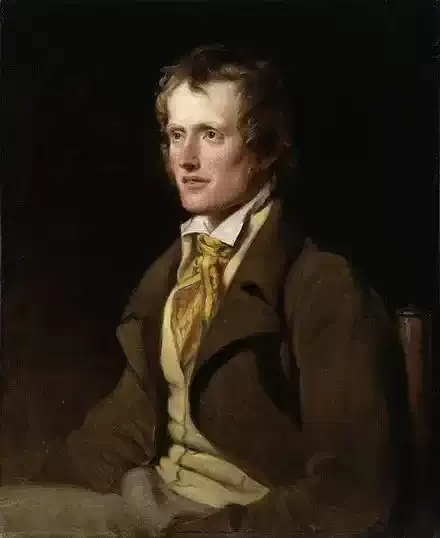
John Clare
Scandal
Scandal
She hastens out and scarcely pins her clothes
To hear the news and tell the news she knows;
She talks of sluts, marks each unmended gown,
Her self the dirtiest slut in all the town.
She stands with eager haste at slander's tale,
And drinks the news as drunkards drink their ale.
Excuse is ready at the biggest lie--
She only heard it and it passes bye.
The very cat looks up and knows her face
And hastens to the chair to get the place;
When once set down she never goes away,
Till tales are done and talk has nought to say.
She goes from house to house the village oer,
Her slander bothers everybody's door.
She hastens out and scarcely pins her clothes
To hear the news and tell the news she knows;
She talks of sluts, marks each unmended gown,
Her self the dirtiest slut in all the town.
She stands with eager haste at slander's tale,
And drinks the news as drunkards drink their ale.
Excuse is ready at the biggest lie--
She only heard it and it passes bye.
The very cat looks up and knows her face
And hastens to the chair to get the place;
When once set down she never goes away,
Till tales are done and talk has nought to say.
She goes from house to house the village oer,
Her slander bothers everybody's door.
323
William Blake
My Pretty Rose Tree
My Pretty Rose Tree
A flower was offered to me,
Such a flower as May never bore;
But I said 'I've a pretty rose tree,'
And I passed the sweet flower o'er.
Then I went to my pretty rose tree,
To tend her by day and by night;
But my rose turned away with jealousy,
And her thorns were my only delight.
A flower was offered to me,
Such a flower as May never bore;
But I said 'I've a pretty rose tree,'
And I passed the sweet flower o'er.
Then I went to my pretty rose tree,
To tend her by day and by night;
But my rose turned away with jealousy,
And her thorns were my only delight.
380
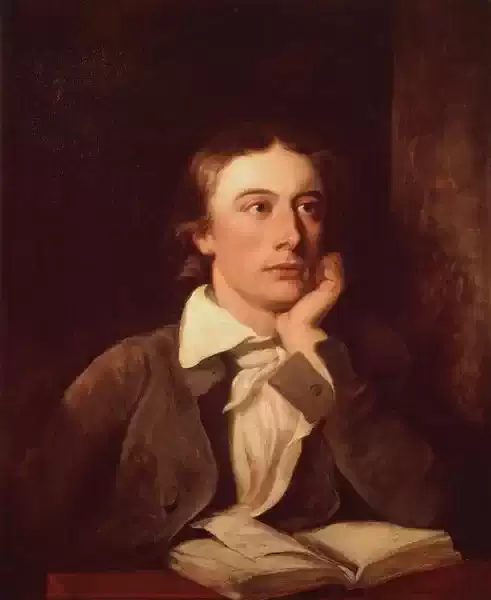
John Keats
Ode to Fanny
Ode to Fanny
Physician Nature! Let my spirit blood!
O ease my heart of verse and let me rest;
Throw me upon thy Tripod, till the flood
Of stifling numbers ebbs from my full breast.
A theme! a theme! great nature! give a theme;
Let me begin my dream.
I come -- I see thee, as thou standest there,
Beckon me not into the wintry air.
Ah! dearest love, sweet home of all my fears,
And hopes, and joys, and panting miseries, -To-
night, if I may guess, thy beauty wears
A smile of such delight,
As brilliant and as bright,
As when with ravished, aching, vassal eyes,
Lost in soft amaze,
I gaze, I gaze!
Who now, with greedy looks, eats up my feast?
What stare outfaces now my silver moon!
Ah! keep that hand unravished at the least;
Let, let, the amorous burn --
But pr'ythee, do not turn
The current of your heart from me so soon.
O! save, in charity,
The quickest pulse for me.
Save it for me, sweet love! though music breathe
Voluptuous visions into the warm air;
Though swimming through the dance's dangerous wreath,
Be like an April day,
Smiling and cold and gay,
A temperate lilly, temperate as fair;
Then, Heaven! there will be
A warmer June for me.
Why, this, you'll say, my Fanny! is not true:
Put your soft hand upon your snowy side,
Where the heart beats: confess -- 'tis nothing new --
Must not a woman be
A feather on the sea,
Sway'd to and fro by every wind and tide?
Of as uncertain speed
As blow-ball from the mead?
I know it -- and to know it is despair
To one who loves you as I love, sweet Fanny!
Whose heart goes fluttering for you every where,
Nor, when away you roam,
Dare keep its wretched home,
Love, love alone, his pains severe and many:
Then, loveliest! keep me free,
From torturing jealousy.
Ah! if you prize my subdued soul above
The poor, the fading, brief, pride of an hour;
Let none profane my Holy See of love,
Or with a rude hand break
The sacramental cake:
Let none else touch the just new-budded flower;
If not -- may my eyes close,
Love! on their lost repose.
Physician Nature! Let my spirit blood!
O ease my heart of verse and let me rest;
Throw me upon thy Tripod, till the flood
Of stifling numbers ebbs from my full breast.
A theme! a theme! great nature! give a theme;
Let me begin my dream.
I come -- I see thee, as thou standest there,
Beckon me not into the wintry air.
Ah! dearest love, sweet home of all my fears,
And hopes, and joys, and panting miseries, -To-
night, if I may guess, thy beauty wears
A smile of such delight,
As brilliant and as bright,
As when with ravished, aching, vassal eyes,
Lost in soft amaze,
I gaze, I gaze!
Who now, with greedy looks, eats up my feast?
What stare outfaces now my silver moon!
Ah! keep that hand unravished at the least;
Let, let, the amorous burn --
But pr'ythee, do not turn
The current of your heart from me so soon.
O! save, in charity,
The quickest pulse for me.
Save it for me, sweet love! though music breathe
Voluptuous visions into the warm air;
Though swimming through the dance's dangerous wreath,
Be like an April day,
Smiling and cold and gay,
A temperate lilly, temperate as fair;
Then, Heaven! there will be
A warmer June for me.
Why, this, you'll say, my Fanny! is not true:
Put your soft hand upon your snowy side,
Where the heart beats: confess -- 'tis nothing new --
Must not a woman be
A feather on the sea,
Sway'd to and fro by every wind and tide?
Of as uncertain speed
As blow-ball from the mead?
I know it -- and to know it is despair
To one who loves you as I love, sweet Fanny!
Whose heart goes fluttering for you every where,
Nor, when away you roam,
Dare keep its wretched home,
Love, love alone, his pains severe and many:
Then, loveliest! keep me free,
From torturing jealousy.
Ah! if you prize my subdued soul above
The poor, the fading, brief, pride of an hour;
Let none profane my Holy See of love,
Or with a rude hand break
The sacramental cake:
Let none else touch the just new-budded flower;
If not -- may my eyes close,
Love! on their lost repose.
454
John Keats
Lamia. Part II
Lamia. Part II
Love in a hut, with water and a crust,
Is—Love, forgive us!—cinders, ashes, dust;
Love in a palace is perhaps at last
More grievous torment than a hermit’s fast:—
That is a doubtful tale from faery land,
Hard for the non-elect to understand.
Had Lycius liv’d to hand his story down,
He might have given the moral a fresh frown,
Or clench’d it quite: but too short was their bliss
To breed distrust and hate, that make the soft voice hiss.
Besides, there, nightly, with terrific glare,
Love, jealous grown of so complete a pair,
Hover’d and buzz’d his wings, with fearful roar,
Above the lintel of their chamber door,
And down the passage cast a glow upon the floor.
For all this came a ruin: side by side
They were enthroned, in the even tide,
Upon a couch, near to a curtaining
Whose airy texture, from a golden string,
Floated into the room, and let appear
Unveil’d the summer heaven, blue and clear,
Betwixt two marble shafts:—there they reposed,
Where use had made it sweet, with eyelids closed,
Saving a tythe which love still open kept,
That they might see each other while they almost slept;
When from the slope side of a suburb hill,
Deafening the swallow’s twitter, came a thrill
Of trumpets—Lycius started—the sounds fled,
But left a thought, a buzzing in his head.
For the first time, since first he harbour’d in
That purple-lined palace of sweet sin,
His spirit pass’d beyond its golden bourn
Into the noisy world almost forsworn.
The lady, ever watchful, penetrant,
Saw this with pain, so arguing a want
Of something more, more than her empery
Of joys; and she began to moan and sigh
Because he mused beyond her, knowing well
That but a moment’s thought is passion’s passing bell.
“Why do you sigh, fair creature?” whisper’d he:
“Why do you think?” return’d she tenderly:
“You have deserted me;—where am I now?
“Not in your heart while care weighs on your brow:
“No, no, you have dismiss’d me; and I go
“From your breast houseless: ay, it must be so.”
He answer’d, bending to her open eyes,
Where he was mirror’d small in paradise,
“My silver planet, both of eve and morn!
“Why will you plead yourself so sad forlorn,
“While I am striving how to fill my heart
“With deeper crimson, and a double smart?
“How to entangle, trammel up and snare
“Your soul in mine, and labyrinth you there
“Like the hid scent in an unbudded rose?
“Ay, a sweet kiss—you see your mighty woes.
“My thoughts! shall I unveil them? Listen then!
“What mortal hath a prize, that other men
“May be confounded and abash’d withal,
“But lets it sometimes pace abroad majestical,
“And triumph, as in thee I should rejoice
“Amid the hoarse alarm of Corinth’s voice.
“Let my foes choke, and my friends shout afar,
“While through the thronged streets your bridal car
“Wheels round its dazzling spokes.”—The lady’s cheek
Trembled; she nothing said, but, pale and meek,
Arose and knelt before him, wept a rain
Of sorrows at his words; at last with pain
Beseeching him, the while his hand she wrung,
To change his purpose. He thereat was stung,
Perverse, with stronger fancy to reclaim
Her wild and timid nature to his aim:
Besides, for all his love, in self despite,
Against his better self, he took delight
Luxurious in her sorrows, soft and new.
His passion, cruel grown, took on a hue
Fierce and sanguineous as ’twas possible
In one whose brow had no dark veins to swell.
Fine was the mitigated fury, like
Apollo’s presence when in act to strike
The serpent—Ha, the serpent! certes, she
Was none. She burnt, she lov’d the tyranny,
And, all subdued, consented to the hour
When to the bridal he should lead his paramour.
Whispering in midnight silence, said the youth,
“Sure some sweet name thou hast, though, by my truth,
“I have not ask’d it, ever thinking thee
“Not mortal, but of heavenly progeny,
“As still I do. Hast any mortal name,
“Fit appellation for this dazzling frame?
“Or friends or kinsfolk on the citied earth,
“To share our marriage feast and nuptial mirth?”
“I have no friends,” said Lamia, “no, not one;
“My presence in wide Corinth hardly known:
“My parents’ bones are in their dusty urns
“Sepulchred, where no kindled incense burns,
“Seeing all their luckless race are dead, save me,
“And I neglect the holy rite for thee.
“Even as you list invite your many guests;
“But if, as now it seems, your vision rests
“With any pleasure on me, do not bid
“Old Apollonius—from him keep me hid.”
Lycius, perplex’d at words so blind and blank,
Made close inquiry; from whose touch she shrank,
Feigning a sleep; and he to the dull shade
Of deep sleep in a moment was betray’d.
It was the custom then to bring away
The bride from home at blushing shut of day,
Veil’d, in a chariot, heralded along
By strewn flowers, torches, and a marriage song,
With other pageants: but this fair unknown
Had not a friend. So being left alone,
(Lycius was gone to summon all his kin)
And knowing surely she could never win
His foolish heart from its mad pompousness,
She set herself, high-thoughted, how to dress
The misery in fit magnificence.
She did so, but ’tis doubtful how and whence
Came, and who were her subtle servitors.
About the halls, and to and from the doors,
There was a noise of wings, till in short space
The glowing banquet-room shone with wide-arched grace.
A haunting music, sole perhaps and lone
Supportress of the faery-roof, made moan
Throughout, as fearful the whole charm might fade.
Fresh carved cedar, mimicking a glade
Of palm and plantain, met from either side,
High in the midst, in honour of the bride:
Two palms and then two plantains, and so on,
From either side their stems branch’d one to one
All down the aisled place; and beneath all
There ran a stream of lamps straight on from wall to wall.
So canopied, lay an untasted feast
Teeming with odours. Lamia, regal drest,
Silently paced about, and as she went,
In pale contented sort of discontent,
Mission’d her viewless servants to enrich
The fretted splendour of each nook and niche.
Between the tree-stems, marbled plain at first,
Came jasper pannels; then, anon, there burst
Forth creeping imagery of slighter trees,
And with the larger wove in small intricacies.
Approving all, she faded at self-will,
And shut the chamber up, close, hush’d and still,
Complete and ready for the revels rude,
When dreadful guests would come to spoil her solitude.
The day appear’d, and all the gossip rout.
O senseless Lycius! Madman! wherefore flout
The silent-blessing fate, warm cloister’d hours,
And show to common eyes these secret bowers?
The herd approach’d; each guest, with busy brain,
Arriving at the portal, gaz’d amain,
And enter’d marveling: for they knew the street,
Remember’d it from childhood all complete
Without a gap, yet ne’er before had seen
That royal porch, that high-built fair demesne;
So in they hurried all, maz’d, curious and keen:
Save one, who look’d thereon with eye severe,
And with calm-planted steps walk’d in austere;
’Twas Apollonius: something too he laugh’d,
As though some knotty problem, that had daft
His patient thought, had now begun to thaw,
And solve and melt:—’twas just as he foresaw.
He met within the murmurous vestibule
His young disciple. “’Tis no common rule,
“Lycius,” said he, “for uninvited guest
“To force himself upon you, and infest
“With an unbidden presence the bright throng
“Of younger friends; yet must I do this wrong,
“And you forgive me.” Lycius blush’d, and led
The old man through the inner doors broad-spread;
With reconciling words and courteous mien
Turning into sweet milk the sophist’s spleen.
Of wealthy lustre was the banquet-room,
Fill’d with pervading brilliance and perfume:
Before each lucid pannel fuming stood
A censer fed with myrrh and spiced wood,
Each by a sacred tripod held aloft,
Whose slender feet wide-swerv’d upon the soft
Wool-woofed carpets: fifty wreaths of smoke
From fifty censers their light voyage took
To the high roof, still mimick’d as they rose
Along the mirror’d walls by twin-clouds odorous.
Twelve sphered tables, by silk seats insphered,
High as the level of a man’s breast rear’d
On libbard’s paws, upheld the heavy gold
Of cups and goblets, and the store thrice told
Of Ceres’ horn, and, in huge vessels, wine
Came from the gloomy tun with merry shine.
Thus loaded with a feast the tables stood,
Each shrining in the midst the image of a God.
When in an antichamber every guest
Had felt the cold full sponge to pleasure press’d,
By minist’ring slaves, upon his hands and feet,
And fragrant oils with ceremony meet
Pour’d on his hair, they all mov’d to the feast
In white robes, and themselves in order placed
Around the silken couches, wondering
Whence all this mighty cost and blaze of wealth could spring.
Soft went the music the soft air along,
While fluent Greek a vowel’d undersong
Kept up among the guests discoursing low
At first, for scarcely was the wine at flow;
But when the happy vintage touch’d their brains,
Louder they talk, and louder come the strains
Of powerful instruments:—the gorgeous dyes,
The space, the splendour of the draperies,
The roof of awful richness, nectarous cheer,
Beautiful slaves, and Lamia’s self, appear,
Now, when the wine has done its rosy deed,
And every soul from human trammels freed,
No more so strange; for merry wine, sweet wine,
Will make Elysian shades not too fair, too divine.
Soon was God Bacchus at meridian height;
Flush’d were their cheeks, and bright eyes double bright:
Garlands of every green, and every scent
From vales deflower’d, or forest-trees branch rent,
In baskets of bright osier’d gold were brought
High as the handles heap’d, to suit the thought
Of every guest; that each, as he did please,
Might fancy-fit his brows, silk-pillow’d at his ease.
What wreath for Lamia? What for Lycius?
What for the sage, old Apollonius?
Upon her aching forehead be there hung
The leaves of willow and of adder’s tongue;
And for the youth, quick, let us strip for him
The thyrsus, that his watching eyes may swim
Into forgetfulness; and, for the sage,
Let spear-grass and the spiteful thistle wage
War on his temples. Do not all charms fly
At the mere touch of cold philosophy?
There was an awful rainbow once in heaven:
We know her woof, her texture; she is given
In the dull catalogue of common things.
Philosophy will clip an Angel’s wings,
Conquer all mysteries by rule and line,
Empty the haunted air, and gnomed mine—
Unweave a rainbow, as it erewhile made
The tender-person’d Lamia melt into a shade.
By her glad Lycius sitting, in chief place,
Scarce saw in all the room another face,
Till, checking his love trance, a cup he took
Full brimm’d, and opposite sent forth a look
’Cross the broad table, to beseech a glance
From his old teacher’s wrinkled countenance,
And pledge him. The bald-head philosopher
Had fix’d his eye, without a twinkle or stir
Full on the alarmed beauty of the bride,
Brow-beating her fair form, and troubling her sweet pride.
Lycius then press’d her hand, with devout touch,
As pale it lay upon the rosy couch:
’Twas icy, and the cold ran through his veins;
Then sudden it grew hot, and all the pains
Of an unnatural heat shot to his heart.
“Lamia, what means this? Wherefore dost thou start?
“Know’st thou that man?” Poor Lamia answer’d not.
He gaz’d into her eyes, and not a jot
Own’d they the lovelorn piteous appeal:
More, more he gaz’d: his human senses reel:
Some hungry spell that loveliness absorbs;
There was no recognition in those orbs.
“Lamia!” he cried—and no soft-toned reply.
The many heard, and the loud revelry
Grew hush; the stately music no more breathes;
The myrtle sicken’d in a thousand wreaths.
By faint degrees, voice, lute, and pleasure ceased;
A deadly silence step by step increased,
Until it seem’d a horrid presence there,
And not a man but felt the terror in his hair.
“Lamia!” he shriek’d; and nothing but the shriek
With its sad echo did the silence break.
“Begone, foul dream!” he cried, gazing again
In the bride’s face, where now no azure vein
Wander’d on fair-spaced temples; no soft bloom
Misted the cheek; no passion to illume
The deep-recessed vision:—all was blight;
Lamia, no longer fair, there sat a deadly white.
“Shut, shut those juggling eyes, thou ruthless man!
“Turn them aside, wretch! or the righteous ban
“Of all the Gods, whose dreadful images
“Here represent their shadowy presences,
“May pierce them on the sudden with the thorn
“Of painful blindness; leaving thee forlorn,
“In trembling dotage to the feeblest fright
“Of conscience, for their long offended might,
“For all thine impious proud-heart sophistries,
“Unlawful magic, and enticing lies.
“Corinthians! look upon that gray-beard wretch!
“Mark how, possess’d, his lashless eyelids stretch
“Around his demon eyes! Corinthians, see!
“My sweet bride withers at their potency.”
“Fool!” said the sophist, in an under-tone
Gruff with contempt; which a death-nighing moan
From Lycius answer’d, as heart-struck and lost,
He sank supine beside the aching ghost.
“Fool! Fool!” repeated he, while his eyes still
Relented not, nor mov’d; “from every ill
“Of life have I preserv’d thee to this day,
“And shall I see thee made a serpent’s prey?
Then Lamia breath’d death breath; the sophist’s eye,
Like a sharp spear, went through her utterly,
Keen, cruel, perceant, stinging: she, as well
As her weak hand could any meaning tell,
Motion’d him to be silent; vainly so,
He look’d and look’d again a level--No!
“A Serpent!” echoed he; no sooner said,
Than with a frightful scream she vanished:
And Lycius’ arms were empty of delight,
As were his limbs of life, from that same night.
On the high couch he lay!—his friends came round--
Supported him—no pulse, or breath they found,
And, in its marriage robe, the heavy body wound.
Love in a hut, with water and a crust,
Is—Love, forgive us!—cinders, ashes, dust;
Love in a palace is perhaps at last
More grievous torment than a hermit’s fast:—
That is a doubtful tale from faery land,
Hard for the non-elect to understand.
Had Lycius liv’d to hand his story down,
He might have given the moral a fresh frown,
Or clench’d it quite: but too short was their bliss
To breed distrust and hate, that make the soft voice hiss.
Besides, there, nightly, with terrific glare,
Love, jealous grown of so complete a pair,
Hover’d and buzz’d his wings, with fearful roar,
Above the lintel of their chamber door,
And down the passage cast a glow upon the floor.
For all this came a ruin: side by side
They were enthroned, in the even tide,
Upon a couch, near to a curtaining
Whose airy texture, from a golden string,
Floated into the room, and let appear
Unveil’d the summer heaven, blue and clear,
Betwixt two marble shafts:—there they reposed,
Where use had made it sweet, with eyelids closed,
Saving a tythe which love still open kept,
That they might see each other while they almost slept;
When from the slope side of a suburb hill,
Deafening the swallow’s twitter, came a thrill
Of trumpets—Lycius started—the sounds fled,
But left a thought, a buzzing in his head.
For the first time, since first he harbour’d in
That purple-lined palace of sweet sin,
His spirit pass’d beyond its golden bourn
Into the noisy world almost forsworn.
The lady, ever watchful, penetrant,
Saw this with pain, so arguing a want
Of something more, more than her empery
Of joys; and she began to moan and sigh
Because he mused beyond her, knowing well
That but a moment’s thought is passion’s passing bell.
“Why do you sigh, fair creature?” whisper’d he:
“Why do you think?” return’d she tenderly:
“You have deserted me;—where am I now?
“Not in your heart while care weighs on your brow:
“No, no, you have dismiss’d me; and I go
“From your breast houseless: ay, it must be so.”
He answer’d, bending to her open eyes,
Where he was mirror’d small in paradise,
“My silver planet, both of eve and morn!
“Why will you plead yourself so sad forlorn,
“While I am striving how to fill my heart
“With deeper crimson, and a double smart?
“How to entangle, trammel up and snare
“Your soul in mine, and labyrinth you there
“Like the hid scent in an unbudded rose?
“Ay, a sweet kiss—you see your mighty woes.
“My thoughts! shall I unveil them? Listen then!
“What mortal hath a prize, that other men
“May be confounded and abash’d withal,
“But lets it sometimes pace abroad majestical,
“And triumph, as in thee I should rejoice
“Amid the hoarse alarm of Corinth’s voice.
“Let my foes choke, and my friends shout afar,
“While through the thronged streets your bridal car
“Wheels round its dazzling spokes.”—The lady’s cheek
Trembled; she nothing said, but, pale and meek,
Arose and knelt before him, wept a rain
Of sorrows at his words; at last with pain
Beseeching him, the while his hand she wrung,
To change his purpose. He thereat was stung,
Perverse, with stronger fancy to reclaim
Her wild and timid nature to his aim:
Besides, for all his love, in self despite,
Against his better self, he took delight
Luxurious in her sorrows, soft and new.
His passion, cruel grown, took on a hue
Fierce and sanguineous as ’twas possible
In one whose brow had no dark veins to swell.
Fine was the mitigated fury, like
Apollo’s presence when in act to strike
The serpent—Ha, the serpent! certes, she
Was none. She burnt, she lov’d the tyranny,
And, all subdued, consented to the hour
When to the bridal he should lead his paramour.
Whispering in midnight silence, said the youth,
“Sure some sweet name thou hast, though, by my truth,
“I have not ask’d it, ever thinking thee
“Not mortal, but of heavenly progeny,
“As still I do. Hast any mortal name,
“Fit appellation for this dazzling frame?
“Or friends or kinsfolk on the citied earth,
“To share our marriage feast and nuptial mirth?”
“I have no friends,” said Lamia, “no, not one;
“My presence in wide Corinth hardly known:
“My parents’ bones are in their dusty urns
“Sepulchred, where no kindled incense burns,
“Seeing all their luckless race are dead, save me,
“And I neglect the holy rite for thee.
“Even as you list invite your many guests;
“But if, as now it seems, your vision rests
“With any pleasure on me, do not bid
“Old Apollonius—from him keep me hid.”
Lycius, perplex’d at words so blind and blank,
Made close inquiry; from whose touch she shrank,
Feigning a sleep; and he to the dull shade
Of deep sleep in a moment was betray’d.
It was the custom then to bring away
The bride from home at blushing shut of day,
Veil’d, in a chariot, heralded along
By strewn flowers, torches, and a marriage song,
With other pageants: but this fair unknown
Had not a friend. So being left alone,
(Lycius was gone to summon all his kin)
And knowing surely she could never win
His foolish heart from its mad pompousness,
She set herself, high-thoughted, how to dress
The misery in fit magnificence.
She did so, but ’tis doubtful how and whence
Came, and who were her subtle servitors.
About the halls, and to and from the doors,
There was a noise of wings, till in short space
The glowing banquet-room shone with wide-arched grace.
A haunting music, sole perhaps and lone
Supportress of the faery-roof, made moan
Throughout, as fearful the whole charm might fade.
Fresh carved cedar, mimicking a glade
Of palm and plantain, met from either side,
High in the midst, in honour of the bride:
Two palms and then two plantains, and so on,
From either side their stems branch’d one to one
All down the aisled place; and beneath all
There ran a stream of lamps straight on from wall to wall.
So canopied, lay an untasted feast
Teeming with odours. Lamia, regal drest,
Silently paced about, and as she went,
In pale contented sort of discontent,
Mission’d her viewless servants to enrich
The fretted splendour of each nook and niche.
Between the tree-stems, marbled plain at first,
Came jasper pannels; then, anon, there burst
Forth creeping imagery of slighter trees,
And with the larger wove in small intricacies.
Approving all, she faded at self-will,
And shut the chamber up, close, hush’d and still,
Complete and ready for the revels rude,
When dreadful guests would come to spoil her solitude.
The day appear’d, and all the gossip rout.
O senseless Lycius! Madman! wherefore flout
The silent-blessing fate, warm cloister’d hours,
And show to common eyes these secret bowers?
The herd approach’d; each guest, with busy brain,
Arriving at the portal, gaz’d amain,
And enter’d marveling: for they knew the street,
Remember’d it from childhood all complete
Without a gap, yet ne’er before had seen
That royal porch, that high-built fair demesne;
So in they hurried all, maz’d, curious and keen:
Save one, who look’d thereon with eye severe,
And with calm-planted steps walk’d in austere;
’Twas Apollonius: something too he laugh’d,
As though some knotty problem, that had daft
His patient thought, had now begun to thaw,
And solve and melt:—’twas just as he foresaw.
He met within the murmurous vestibule
His young disciple. “’Tis no common rule,
“Lycius,” said he, “for uninvited guest
“To force himself upon you, and infest
“With an unbidden presence the bright throng
“Of younger friends; yet must I do this wrong,
“And you forgive me.” Lycius blush’d, and led
The old man through the inner doors broad-spread;
With reconciling words and courteous mien
Turning into sweet milk the sophist’s spleen.
Of wealthy lustre was the banquet-room,
Fill’d with pervading brilliance and perfume:
Before each lucid pannel fuming stood
A censer fed with myrrh and spiced wood,
Each by a sacred tripod held aloft,
Whose slender feet wide-swerv’d upon the soft
Wool-woofed carpets: fifty wreaths of smoke
From fifty censers their light voyage took
To the high roof, still mimick’d as they rose
Along the mirror’d walls by twin-clouds odorous.
Twelve sphered tables, by silk seats insphered,
High as the level of a man’s breast rear’d
On libbard’s paws, upheld the heavy gold
Of cups and goblets, and the store thrice told
Of Ceres’ horn, and, in huge vessels, wine
Came from the gloomy tun with merry shine.
Thus loaded with a feast the tables stood,
Each shrining in the midst the image of a God.
When in an antichamber every guest
Had felt the cold full sponge to pleasure press’d,
By minist’ring slaves, upon his hands and feet,
And fragrant oils with ceremony meet
Pour’d on his hair, they all mov’d to the feast
In white robes, and themselves in order placed
Around the silken couches, wondering
Whence all this mighty cost and blaze of wealth could spring.
Soft went the music the soft air along,
While fluent Greek a vowel’d undersong
Kept up among the guests discoursing low
At first, for scarcely was the wine at flow;
But when the happy vintage touch’d their brains,
Louder they talk, and louder come the strains
Of powerful instruments:—the gorgeous dyes,
The space, the splendour of the draperies,
The roof of awful richness, nectarous cheer,
Beautiful slaves, and Lamia’s self, appear,
Now, when the wine has done its rosy deed,
And every soul from human trammels freed,
No more so strange; for merry wine, sweet wine,
Will make Elysian shades not too fair, too divine.
Soon was God Bacchus at meridian height;
Flush’d were their cheeks, and bright eyes double bright:
Garlands of every green, and every scent
From vales deflower’d, or forest-trees branch rent,
In baskets of bright osier’d gold were brought
High as the handles heap’d, to suit the thought
Of every guest; that each, as he did please,
Might fancy-fit his brows, silk-pillow’d at his ease.
What wreath for Lamia? What for Lycius?
What for the sage, old Apollonius?
Upon her aching forehead be there hung
The leaves of willow and of adder’s tongue;
And for the youth, quick, let us strip for him
The thyrsus, that his watching eyes may swim
Into forgetfulness; and, for the sage,
Let spear-grass and the spiteful thistle wage
War on his temples. Do not all charms fly
At the mere touch of cold philosophy?
There was an awful rainbow once in heaven:
We know her woof, her texture; she is given
In the dull catalogue of common things.
Philosophy will clip an Angel’s wings,
Conquer all mysteries by rule and line,
Empty the haunted air, and gnomed mine—
Unweave a rainbow, as it erewhile made
The tender-person’d Lamia melt into a shade.
By her glad Lycius sitting, in chief place,
Scarce saw in all the room another face,
Till, checking his love trance, a cup he took
Full brimm’d, and opposite sent forth a look
’Cross the broad table, to beseech a glance
From his old teacher’s wrinkled countenance,
And pledge him. The bald-head philosopher
Had fix’d his eye, without a twinkle or stir
Full on the alarmed beauty of the bride,
Brow-beating her fair form, and troubling her sweet pride.
Lycius then press’d her hand, with devout touch,
As pale it lay upon the rosy couch:
’Twas icy, and the cold ran through his veins;
Then sudden it grew hot, and all the pains
Of an unnatural heat shot to his heart.
“Lamia, what means this? Wherefore dost thou start?
“Know’st thou that man?” Poor Lamia answer’d not.
He gaz’d into her eyes, and not a jot
Own’d they the lovelorn piteous appeal:
More, more he gaz’d: his human senses reel:
Some hungry spell that loveliness absorbs;
There was no recognition in those orbs.
“Lamia!” he cried—and no soft-toned reply.
The many heard, and the loud revelry
Grew hush; the stately music no more breathes;
The myrtle sicken’d in a thousand wreaths.
By faint degrees, voice, lute, and pleasure ceased;
A deadly silence step by step increased,
Until it seem’d a horrid presence there,
And not a man but felt the terror in his hair.
“Lamia!” he shriek’d; and nothing but the shriek
With its sad echo did the silence break.
“Begone, foul dream!” he cried, gazing again
In the bride’s face, where now no azure vein
Wander’d on fair-spaced temples; no soft bloom
Misted the cheek; no passion to illume
The deep-recessed vision:—all was blight;
Lamia, no longer fair, there sat a deadly white.
“Shut, shut those juggling eyes, thou ruthless man!
“Turn them aside, wretch! or the righteous ban
“Of all the Gods, whose dreadful images
“Here represent their shadowy presences,
“May pierce them on the sudden with the thorn
“Of painful blindness; leaving thee forlorn,
“In trembling dotage to the feeblest fright
“Of conscience, for their long offended might,
“For all thine impious proud-heart sophistries,
“Unlawful magic, and enticing lies.
“Corinthians! look upon that gray-beard wretch!
“Mark how, possess’d, his lashless eyelids stretch
“Around his demon eyes! Corinthians, see!
“My sweet bride withers at their potency.”
“Fool!” said the sophist, in an under-tone
Gruff with contempt; which a death-nighing moan
From Lycius answer’d, as heart-struck and lost,
He sank supine beside the aching ghost.
“Fool! Fool!” repeated he, while his eyes still
Relented not, nor mov’d; “from every ill
“Of life have I preserv’d thee to this day,
“And shall I see thee made a serpent’s prey?
Then Lamia breath’d death breath; the sophist’s eye,
Like a sharp spear, went through her utterly,
Keen, cruel, perceant, stinging: she, as well
As her weak hand could any meaning tell,
Motion’d him to be silent; vainly so,
He look’d and look’d again a level--No!
“A Serpent!” echoed he; no sooner said,
Than with a frightful scream she vanished:
And Lycius’ arms were empty of delight,
As were his limbs of life, from that same night.
On the high couch he lay!—his friends came round--
Supported him—no pulse, or breath they found,
And, in its marriage robe, the heavy body wound.
472

Jonathan Swift
Verses on the Death of Dr. Swift, D.S.P.D.
Verses on the Death of Dr. Swift, D.S.P.D.
As Rochefoucauld his maxims drew
From Nature, I believe 'em true:
They argue no corrupted mind
In him; the fault is in mankind.
This maxim more than all the rest
Is thought too base for human breast:
'In all distresses of our friends,
We first consult our private ends;
While Nature, kindly bent to ease us,
Points out some circumstance to please us.'
If this perhaps your patience move,
Let reason and experience prove.
We all behold with envious eyes
Our equal rais'd above our size.
Who would not at a crowded show
Stand high himself, keep others low?
I love my friend as well as you
But would not have him stop my view.
Then let him have the higher post:
I ask but for an inch at most.
If in a battle you should find
One, whom you love of all mankind,
Had some heroic action done,
A champion kill'd, or trophy won;
Rather than thus be overtopt,
Would you not wish his laurels cropt?
Dear honest Ned is in the gout,
Lies rack'd with pain, and you without:
How patiently you hear him groan!
How glad the case is not your own!
What poet would not grieve to see
His brethren write as well as he?
But rather than they should excel,
He'd wish his rivals all in hell.
Her end when emulation misses,
She turns to envy, stings and hisses:
The strongest friendship yields to pride,
Unless the odds be on our side.
Vain human kind! fantastic race!
Thy various follies who can trace?
Self-love, ambition, envy, pride,
Their empire in our hearts divide.
Give others riches, power, and station,
'Tis all on me a usurpation.
I have no title to aspire;
Yet, when you sink, I seem the higher.
In Pope I cannot read a line,
But with a sigh I wish it mine;
When he can in one couplet fix
More sense than I can do in six;
It gives me such a jealous fit,
I cry, 'Pox take him and his wit!'
Why must I be outdone by Gay
In my own hum'rous biting way?
Arbuthnot is no more my friend,
Who dares to irony pretend,
Which I was born to introduce,
Refin'd it first, and show'd its use.
St. John, as well as Pultney, knows
That I had some repute for prose;
And, till they drove me out of date,
Could maul a minister of state.
If they have mortify'd my pride,
And made me throw my pen aside;
If with such talents Heav'n has blest 'em,
Have I not reason to detest 'em?
To all my foes, dear Fortune, send
Thy gifts; but never to my friend:
I tamely can endure the first,
But this with envy makes me burst.
Thus much may serve by way of proem:
Proceed we therefore to our poem.
The time is not remote, when I
Must by the course of nature die;
When I foresee my special friends
Will try to find their private ends:
Tho' it is hardly understood
Which way my death can do them good,
Yet thus, methinks, I hear 'em speak:
'See, how the Dean begins to break!
Poor gentleman, he droops apace!
You plainly find it in his face.
That old vertigo in his head
Will never leave him till he's dead.
Besides, his memory decays:
He recollects not what he says;
He cannot call his friends to mind:
Forgets the place where last he din'd;
Plies you with stories o'er and o'er;
He told them fifty times before.
How does he fancy we can sit
To hear his out-of-fashion'd wit?
But he takes up with younger folks,
Who for his wine will bear his jokes.
Faith, he must make his stories shorter,
Or change his comrades once a quarter:
In half the time he talks them round,
There must another set be found.
'For poetry he's past his prime:
He takes an hour to find a rhyme;
His fire is out, his wit decay'd,
His fancy sunk, his Muse a jade.
I'd have him throw away his pen;-
But there's no talking to some men!'
And then their tenderness appears,
By adding largely to my years:
'He's older than he would be reckon'd
And well remembers Charles the Second.
'He hardly drinks a pint of wine;
And that, I doubt, is no good sign.
His stomach too begins to fail:
Last year we thought him strong and hale;
But now he's quite another thing:
I wish he may hold out till spring.'
Then hug themselves, and reason thus:
'It is not yet so bad with us.'
In such a case, they talk in tropes,
And by their fears express their hopes:
Some great misfortune to portend,
No enemy can match a friend.
With all the kindness they profess,
The merit of a lucky guess
(When daily 'How d'ye's' come of course,
And servants answer, 'Worse and worse!')
Would please 'em better, than to tell,
That, 'God be prais'd, the Dean is well.'
Then he who prophecy'd the best
Approves his foresight to the rest:
'You know I always fear'd the worst,
And often told you so at first.'
He'd rather choose that I should die,
Than his prediction prove a lie.
Not one foretells I shall recover;
But all agree to give me over.
Yet, should some neighbour feel a pain
Just in the parts where I complain,
How many a message would he send?
What hearty prayers that I should mend?
Inquire what regimen I kept,
What gave me ease, and how I slept?
And more lament when I was dead,
Than all the sniv'llers round my bed.
My good companions, never fear;
For though you may mistake a year,
Though your prognostics run too fast,
They must be verify'd at last.
Behold the fatal day arrive!
'How is the Dean?'-'He's just alive.'
Now the departing prayer is read;
'He hardly breathes.'-'The Dean is dead.'
Before the passing-bell begun,
The news thro' half the town has run.
'O, may we all for death prepare!
What has he left? and who's his heir?''
I know no more than what the news is;
'Tis all bequeath'd to public uses.''
To public use! a perfect whim!
What had the public done for him?
Mere envy, avarice, and pride:
He gave it all-but first he died.
And had the Dean, in all the nation,
No worthy friend, no poor relation?
So ready to do strangers good,
Forgetting his own flesh and blood?'
Now Grub-Street wits are all employ'd;
With elegies the town is cloy'd:
Some paragraph in ev'ry paper
To curse the Dean or bless the Drapier.
The doctors, tender of their fame,
Wisely on me lay all the blame:
'We must confess his case was nice;
But he would never take advice.
Had he been rul'd, for aught appears,
He might have liv'd these twenty years;
For, when we open'd him, we found
That all his vital parts were sound.'
From Dublin soon to London spread,
'Tis told at Court, the Dean is dead.
Kind Lady Suffolk in the spleen
Runs laughing up to tell the Queen.
The Queen, so gracious, mild, and good,
Cries, 'Is he gone! 'tis time he should.
He's dead, you say; why, let him rot:
I'm glad the medals were forgot.
I promis'd them, I own; but when?
I only was the Princess then;
But now, as consort of a king,
You know, 'tis quite a different thing.'
Now Chartres, at Sir Robert's levee,
Tells with a sneer the tidings heavy:
'Why, is he dead without his shoes?'
Cries Bob, 'I'm sorry for the news:
O, were the wretch but living still,
And in his place my good friend Will!
Or had a mitre on his head,
Provided Bolingbroke were dead!'
Now Curll his shop from rubbish drains:
Three genuine tomes of Swift's remains!
And then, to make them pass the glibber,
Revis'd by Tibbalds, Moore, and Cibber.
He'll treat me as he does my betters,
Publish my will, my life, my letters:
Revive the libels born to die;
Which Pope must bear, as well as I.
Here shift the scene, to represent
How those I love my death lament.
Poor Pope will grieve a month, and Gay
A week, and Arbuthnot a day.
St. John himself will scarce forbear
To bite his pen, and drop a tear.
The rest will give a shrug, and cry,
'I'm sorry-but we all must die!'
Indifference, clad in Wisdom's guise,
All fortitude of mind supplies:
For how can stony bowels melt
In those who never pity felt?
When we are lash'd, they kiss the rod,
Resigning to the will of God.
The fools, my juniors by a year,
Are tortur'd with suspense and fear;
Who wisely thought my age a screen,
When death approach'd, to stand between:
The screen remov'd, their hearts are trembling;
They mourn for me without dissembling.
My female friends, whose tender hearts
Have better learn'd to act their parts,
Receive the news in doleful dumps:
'The Dean is dead: (and what is trumps?)
Then, Lord have mercy on his soul!
(Ladies, I'll venture for the vole.)
Six deans, they say, must bear the pall:
(I wish I knew what king to call.)
Madam, your husband will attend
The funeral of so good a friend.
No, madam, 'tis a shocking sight:
And he's engag'd to-morrow night:
My Lady Club would take it ill,
If he should fail her at quadrille.
He lov'd the Dean-(I lead a heart)
But dearest friends, they say, must part.
His time was come: he ran his race;
We hope he's in a better place.'
Why do we grieve that friends should die?
No loss more easy to supply.
One year is past; a different scene!
No further mention of the Dean;
Who now, alas! no more is miss'd,
Than if he never did exist.
Where's now this fav'rite of Apollo!
Departed:-and his works must follow;
Must undergo the common fate;
His kind of wit is out of date.
Some country squire to Lintot goes,
Inquires for 'Swift in Verse and Prose.'
Says Lintot, 'I have heard the name;
He died a year ago.'-'The same.'
He searcheth all his shop in vain.
'Sir, you may find them in Duck-lane;
I sent them with a load of books,
Last Monday to the pastry-cook's.
To fancy they could live a year!
I find you're but a stranger here.
The Dean was famous in his time,
And had a kind of knack at rhyme.
His way of writing now is past;
The town hath got a better taste;
I keep no antiquated stuff,
But spick and span I have enough.
Pray do but give me leave to show 'em;
Here's Colley Cibber's birth-day poem.
This ode you never yet have seen,
By Stephen Duck, upon the Queen.
Then here's a letter finely penn'd
Against the Craftsman and his friend:
It clearly shows that all reflection
On ministers is disaffection.
Next, here's Sir Robert's vindication,
And Mr. Henley's last oration.
The hawkers have not got 'em yet:
Your honour please to buy a set?
'Here's Woolston's tracts, the twelfth edition;
'Tis read by every politician:
The country members, when in town,
To all their boroughs send them down;
You never met a thing so smart;
The courtiers have them all by heart:
Those maids of honour who can read
Are taught to use them for their creed.
The rev'rend author's good intention
Hath been rewarded with a pension.
He doth an honour to his gown,
By bravely running priestcraft down:
He shows, as sure as God's in Gloucester,
That Jesus was a grand imposter;
That all his miracles were cheats,
Perform'd as jugglers do their feats:
The church had never such a writer;
A shame he hath not got a mitre!'
Suppose me dead; and then suppose
A club assembled at the Rose ;
Where, from discourse of this and that,
I grow the subject of their chat.
And while they toss my name about,
With favour some, and some without,
One, quite indiff'rent in the cause,
My character impartial draws:
'The Dean, if we believe report,
Was never ill receiv'd at Court.
As for his works in verse and prose
I own myself no judge of those;
Nor can I tell what critics thought 'em:
But this I know, all people bought 'em.
As with a moral view design'd
To cure the vices of mankind:
His vein, ironically grave,
Expos'd the fool, and lash'd the knave.
To steal a hint was never known,
But what he writ was all his own.
'He never thought an honour done him,
Because a duke was proud to own him,
Would rather slip aside and choose
To talk with wits in dirty shoes;
Despis'd the fools with stars and garters,
So often seen caressing Chartres.
He never courted men in station,
Nor persons held in admiration;
Of no man's greatness was afraid,
Because he sought for no man's aid.
Though trusted long in great affairs
He gave himself no haughty airs:
Without regarding private ends,
Spent all his credit for his friends;
And only chose the wise and good;
No flatt'rers; no allies in blood:
But succour'd virtue in distress,
And seldom fail'd of good success;
As numbers in their hearts must own,
Who, but for him, had been unknown.
'With princes kept a due decorum,
But never stood in awe before 'em.
He follow'd David's lesson just:
'In princes never put thy trust';
And, would you make him truly sour,
Provoke him with a slave in pow'r.
The Irish senate if you nam'd,
With what impatience he declaim'd!
Fair Liberty was all his cry,
For her he stood prepar'd to die;
For her he boldly stood alone;
For her he oft expos'd his own.
Two kingdoms, just as faction led,
Had set a price upon his head;
But not a traitor could be found
To sell him for six hundred pound.
'Had he but spar'd his tongue and pen
He might have rose like other men:
But pow'r was never in his thought,
And wealth he valu'd not a groat:
Ingratitude he often found,
And pity'd those who meant the wound:
But kept the tenor of his mind,
To merit well of human kind:
Nor made a sacrifice of those
Who still were true, to please his foes.
He labour'd many a fruitless hour
To reconcile his friends in pow'r;
Saw mischief by a faction brewing,
While they pursu'd each other's ruin.
But, finding vain was all his care,
He left the Court in mere despair.
'And, oh! how short are human schemes!
Here ended all our golden dreams.
What St. John's skill in state affairs,
What Ormond's valour, Oxford's cares,
To save their sinking country lent,
Was all destroy'd by one event.
Too soon that precious life was ended,
On which alone our weal depended.
When up a dangerous faction starts,
With wrath and vengeance in their hearts;
By solemn League and Cov'nant bound,
To ruin, slaughter, and confound;
To turn religion to a fable,
And make the government a Babel;
Pervert the law, disgrace the gown,
Corrupt the senate, rob the crown;
To sacrifice old England's glory,
And make her infamous in story:
When such a tempest shook the land,
How could unguarded Virtue stand?
'With horror, grief, despair, the Dean
Beheld the dire destructive scene:
His friends in exile, or the tower,
Himself within the frown of power,
Pursu'd by base envenom'd pens,
Far to the land of slaves and fens;
A servile race in folly nurs'd,
Who truckle most when treated worst.
'By innocence and resolution,
He bore continual persecution,
While numbers to preferment rose,
Whose merits were, to be his foes;
When ev'n his own familiar friends,
Intent upon their private ends,
Like renegadoes now he feels,
Against him lifting up their heels.
'The Dean did by his pen defeat
An infamous destructive cheat;
Taught fools their int'rest how to know,
And gave them arms to ward the blow.
Envy hath own'd it was his doing,
To save that helpless land from ruin;
While they who at the steerage stood,
And reap'd the profit, sought his blood.
'To save them from their evil fate,
In him was held a crime of state.
A wicked monster on the bench,
Whose fury blood could never quench,
As vile and profligate a villain,
As modern Scroggs, or old Tresilian,
Who long all justice had discarded,
Nor fear'd he God, nor man regarded,
Vow'd on the Dean his rage to vent,
And make him of his zeal repent;
But Heav'n his innocence defends,
The grateful people stand his friends.
Not strains of law, nor judge's frown,
Nor topics brought to please the crown,
Nor witness hir'd, nor jury pick'd,
Prevail to bring him in convict.
'In exile, with a steady heart,
He spent his life's declining part;
Where folly, pride, and faction sway,
Remote from St. John, Pope, and Gay.
'His friendships there, to few confin'd,
Were always of the middling kind;
No fools of rank, a mongrel breed,
Who fain would pass for lords indeed:
Where titles gave no right or power
And peerage is a wither'd flower;
He would have held it a disgrace,
If such a wretch had known his face.
On rural squires, that kingdom's bane,
He vented oft his wrath in vain;
Biennial squires to market brought;
Who sell their souls and votes for nought;
The nation stripp'd, go joyful back,
To rob the church, their tenants rack,
Go snacks with thieves and rapparees,
And keep the peace to pick up fees;
In ev'ry job to have a share,
A jail or barrack to repair;
And turn the tax for public roads,
Commodious to their own abodes.
'Perhaps I may allow, the Dean
Had too much satire in his vein;
And seem'd determin'd not to starve it,
Because no age could more deserve it.
Yet malice never was his aim;
He lash'd the vice, but spar'd the name;
No individual could resent,
Where thousands equally were meant.
His satire points at no defect,
But what all mortals may correct;
For he abhorr'd that senseless tribe
Who call it humour when they gibe.
He spar'd a hump, or crooked nose,
Whose owners set not up for beaux.
True genuine dulness mov'd his pity,
Unless it offer'd to be witty.
Those who their ignorance confess'd
He ne'er offended with a jest;
But laugh'd to hear an idiot quote
A verse from Horace, learn'd by rote.
'He knew a hundred pleasant stories
With all the turns of Whigs and Tories:
Was cheerful to his dying day;
And friends would let him have his way.
'He gave the little wealth he had
To build a house for fools and mad;
And show'd by one satiric touch,
No nation wanted it so much.
That kingdom he hath left his debtor,
I wish it soon may have a better.'
As Rochefoucauld his maxims drew
From Nature, I believe 'em true:
They argue no corrupted mind
In him; the fault is in mankind.
This maxim more than all the rest
Is thought too base for human breast:
'In all distresses of our friends,
We first consult our private ends;
While Nature, kindly bent to ease us,
Points out some circumstance to please us.'
If this perhaps your patience move,
Let reason and experience prove.
We all behold with envious eyes
Our equal rais'd above our size.
Who would not at a crowded show
Stand high himself, keep others low?
I love my friend as well as you
But would not have him stop my view.
Then let him have the higher post:
I ask but for an inch at most.
If in a battle you should find
One, whom you love of all mankind,
Had some heroic action done,
A champion kill'd, or trophy won;
Rather than thus be overtopt,
Would you not wish his laurels cropt?
Dear honest Ned is in the gout,
Lies rack'd with pain, and you without:
How patiently you hear him groan!
How glad the case is not your own!
What poet would not grieve to see
His brethren write as well as he?
But rather than they should excel,
He'd wish his rivals all in hell.
Her end when emulation misses,
She turns to envy, stings and hisses:
The strongest friendship yields to pride,
Unless the odds be on our side.
Vain human kind! fantastic race!
Thy various follies who can trace?
Self-love, ambition, envy, pride,
Their empire in our hearts divide.
Give others riches, power, and station,
'Tis all on me a usurpation.
I have no title to aspire;
Yet, when you sink, I seem the higher.
In Pope I cannot read a line,
But with a sigh I wish it mine;
When he can in one couplet fix
More sense than I can do in six;
It gives me such a jealous fit,
I cry, 'Pox take him and his wit!'
Why must I be outdone by Gay
In my own hum'rous biting way?
Arbuthnot is no more my friend,
Who dares to irony pretend,
Which I was born to introduce,
Refin'd it first, and show'd its use.
St. John, as well as Pultney, knows
That I had some repute for prose;
And, till they drove me out of date,
Could maul a minister of state.
If they have mortify'd my pride,
And made me throw my pen aside;
If with such talents Heav'n has blest 'em,
Have I not reason to detest 'em?
To all my foes, dear Fortune, send
Thy gifts; but never to my friend:
I tamely can endure the first,
But this with envy makes me burst.
Thus much may serve by way of proem:
Proceed we therefore to our poem.
The time is not remote, when I
Must by the course of nature die;
When I foresee my special friends
Will try to find their private ends:
Tho' it is hardly understood
Which way my death can do them good,
Yet thus, methinks, I hear 'em speak:
'See, how the Dean begins to break!
Poor gentleman, he droops apace!
You plainly find it in his face.
That old vertigo in his head
Will never leave him till he's dead.
Besides, his memory decays:
He recollects not what he says;
He cannot call his friends to mind:
Forgets the place where last he din'd;
Plies you with stories o'er and o'er;
He told them fifty times before.
How does he fancy we can sit
To hear his out-of-fashion'd wit?
But he takes up with younger folks,
Who for his wine will bear his jokes.
Faith, he must make his stories shorter,
Or change his comrades once a quarter:
In half the time he talks them round,
There must another set be found.
'For poetry he's past his prime:
He takes an hour to find a rhyme;
His fire is out, his wit decay'd,
His fancy sunk, his Muse a jade.
I'd have him throw away his pen;-
But there's no talking to some men!'
And then their tenderness appears,
By adding largely to my years:
'He's older than he would be reckon'd
And well remembers Charles the Second.
'He hardly drinks a pint of wine;
And that, I doubt, is no good sign.
His stomach too begins to fail:
Last year we thought him strong and hale;
But now he's quite another thing:
I wish he may hold out till spring.'
Then hug themselves, and reason thus:
'It is not yet so bad with us.'
In such a case, they talk in tropes,
And by their fears express their hopes:
Some great misfortune to portend,
No enemy can match a friend.
With all the kindness they profess,
The merit of a lucky guess
(When daily 'How d'ye's' come of course,
And servants answer, 'Worse and worse!')
Would please 'em better, than to tell,
That, 'God be prais'd, the Dean is well.'
Then he who prophecy'd the best
Approves his foresight to the rest:
'You know I always fear'd the worst,
And often told you so at first.'
He'd rather choose that I should die,
Than his prediction prove a lie.
Not one foretells I shall recover;
But all agree to give me over.
Yet, should some neighbour feel a pain
Just in the parts where I complain,
How many a message would he send?
What hearty prayers that I should mend?
Inquire what regimen I kept,
What gave me ease, and how I slept?
And more lament when I was dead,
Than all the sniv'llers round my bed.
My good companions, never fear;
For though you may mistake a year,
Though your prognostics run too fast,
They must be verify'd at last.
Behold the fatal day arrive!
'How is the Dean?'-'He's just alive.'
Now the departing prayer is read;
'He hardly breathes.'-'The Dean is dead.'
Before the passing-bell begun,
The news thro' half the town has run.
'O, may we all for death prepare!
What has he left? and who's his heir?''
I know no more than what the news is;
'Tis all bequeath'd to public uses.''
To public use! a perfect whim!
What had the public done for him?
Mere envy, avarice, and pride:
He gave it all-but first he died.
And had the Dean, in all the nation,
No worthy friend, no poor relation?
So ready to do strangers good,
Forgetting his own flesh and blood?'
Now Grub-Street wits are all employ'd;
With elegies the town is cloy'd:
Some paragraph in ev'ry paper
To curse the Dean or bless the Drapier.
The doctors, tender of their fame,
Wisely on me lay all the blame:
'We must confess his case was nice;
But he would never take advice.
Had he been rul'd, for aught appears,
He might have liv'd these twenty years;
For, when we open'd him, we found
That all his vital parts were sound.'
From Dublin soon to London spread,
'Tis told at Court, the Dean is dead.
Kind Lady Suffolk in the spleen
Runs laughing up to tell the Queen.
The Queen, so gracious, mild, and good,
Cries, 'Is he gone! 'tis time he should.
He's dead, you say; why, let him rot:
I'm glad the medals were forgot.
I promis'd them, I own; but when?
I only was the Princess then;
But now, as consort of a king,
You know, 'tis quite a different thing.'
Now Chartres, at Sir Robert's levee,
Tells with a sneer the tidings heavy:
'Why, is he dead without his shoes?'
Cries Bob, 'I'm sorry for the news:
O, were the wretch but living still,
And in his place my good friend Will!
Or had a mitre on his head,
Provided Bolingbroke were dead!'
Now Curll his shop from rubbish drains:
Three genuine tomes of Swift's remains!
And then, to make them pass the glibber,
Revis'd by Tibbalds, Moore, and Cibber.
He'll treat me as he does my betters,
Publish my will, my life, my letters:
Revive the libels born to die;
Which Pope must bear, as well as I.
Here shift the scene, to represent
How those I love my death lament.
Poor Pope will grieve a month, and Gay
A week, and Arbuthnot a day.
St. John himself will scarce forbear
To bite his pen, and drop a tear.
The rest will give a shrug, and cry,
'I'm sorry-but we all must die!'
Indifference, clad in Wisdom's guise,
All fortitude of mind supplies:
For how can stony bowels melt
In those who never pity felt?
When we are lash'd, they kiss the rod,
Resigning to the will of God.
The fools, my juniors by a year,
Are tortur'd with suspense and fear;
Who wisely thought my age a screen,
When death approach'd, to stand between:
The screen remov'd, their hearts are trembling;
They mourn for me without dissembling.
My female friends, whose tender hearts
Have better learn'd to act their parts,
Receive the news in doleful dumps:
'The Dean is dead: (and what is trumps?)
Then, Lord have mercy on his soul!
(Ladies, I'll venture for the vole.)
Six deans, they say, must bear the pall:
(I wish I knew what king to call.)
Madam, your husband will attend
The funeral of so good a friend.
No, madam, 'tis a shocking sight:
And he's engag'd to-morrow night:
My Lady Club would take it ill,
If he should fail her at quadrille.
He lov'd the Dean-(I lead a heart)
But dearest friends, they say, must part.
His time was come: he ran his race;
We hope he's in a better place.'
Why do we grieve that friends should die?
No loss more easy to supply.
One year is past; a different scene!
No further mention of the Dean;
Who now, alas! no more is miss'd,
Than if he never did exist.
Where's now this fav'rite of Apollo!
Departed:-and his works must follow;
Must undergo the common fate;
His kind of wit is out of date.
Some country squire to Lintot goes,
Inquires for 'Swift in Verse and Prose.'
Says Lintot, 'I have heard the name;
He died a year ago.'-'The same.'
He searcheth all his shop in vain.
'Sir, you may find them in Duck-lane;
I sent them with a load of books,
Last Monday to the pastry-cook's.
To fancy they could live a year!
I find you're but a stranger here.
The Dean was famous in his time,
And had a kind of knack at rhyme.
His way of writing now is past;
The town hath got a better taste;
I keep no antiquated stuff,
But spick and span I have enough.
Pray do but give me leave to show 'em;
Here's Colley Cibber's birth-day poem.
This ode you never yet have seen,
By Stephen Duck, upon the Queen.
Then here's a letter finely penn'd
Against the Craftsman and his friend:
It clearly shows that all reflection
On ministers is disaffection.
Next, here's Sir Robert's vindication,
And Mr. Henley's last oration.
The hawkers have not got 'em yet:
Your honour please to buy a set?
'Here's Woolston's tracts, the twelfth edition;
'Tis read by every politician:
The country members, when in town,
To all their boroughs send them down;
You never met a thing so smart;
The courtiers have them all by heart:
Those maids of honour who can read
Are taught to use them for their creed.
The rev'rend author's good intention
Hath been rewarded with a pension.
He doth an honour to his gown,
By bravely running priestcraft down:
He shows, as sure as God's in Gloucester,
That Jesus was a grand imposter;
That all his miracles were cheats,
Perform'd as jugglers do their feats:
The church had never such a writer;
A shame he hath not got a mitre!'
Suppose me dead; and then suppose
A club assembled at the Rose ;
Where, from discourse of this and that,
I grow the subject of their chat.
And while they toss my name about,
With favour some, and some without,
One, quite indiff'rent in the cause,
My character impartial draws:
'The Dean, if we believe report,
Was never ill receiv'd at Court.
As for his works in verse and prose
I own myself no judge of those;
Nor can I tell what critics thought 'em:
But this I know, all people bought 'em.
As with a moral view design'd
To cure the vices of mankind:
His vein, ironically grave,
Expos'd the fool, and lash'd the knave.
To steal a hint was never known,
But what he writ was all his own.
'He never thought an honour done him,
Because a duke was proud to own him,
Would rather slip aside and choose
To talk with wits in dirty shoes;
Despis'd the fools with stars and garters,
So often seen caressing Chartres.
He never courted men in station,
Nor persons held in admiration;
Of no man's greatness was afraid,
Because he sought for no man's aid.
Though trusted long in great affairs
He gave himself no haughty airs:
Without regarding private ends,
Spent all his credit for his friends;
And only chose the wise and good;
No flatt'rers; no allies in blood:
But succour'd virtue in distress,
And seldom fail'd of good success;
As numbers in their hearts must own,
Who, but for him, had been unknown.
'With princes kept a due decorum,
But never stood in awe before 'em.
He follow'd David's lesson just:
'In princes never put thy trust';
And, would you make him truly sour,
Provoke him with a slave in pow'r.
The Irish senate if you nam'd,
With what impatience he declaim'd!
Fair Liberty was all his cry,
For her he stood prepar'd to die;
For her he boldly stood alone;
For her he oft expos'd his own.
Two kingdoms, just as faction led,
Had set a price upon his head;
But not a traitor could be found
To sell him for six hundred pound.
'Had he but spar'd his tongue and pen
He might have rose like other men:
But pow'r was never in his thought,
And wealth he valu'd not a groat:
Ingratitude he often found,
And pity'd those who meant the wound:
But kept the tenor of his mind,
To merit well of human kind:
Nor made a sacrifice of those
Who still were true, to please his foes.
He labour'd many a fruitless hour
To reconcile his friends in pow'r;
Saw mischief by a faction brewing,
While they pursu'd each other's ruin.
But, finding vain was all his care,
He left the Court in mere despair.
'And, oh! how short are human schemes!
Here ended all our golden dreams.
What St. John's skill in state affairs,
What Ormond's valour, Oxford's cares,
To save their sinking country lent,
Was all destroy'd by one event.
Too soon that precious life was ended,
On which alone our weal depended.
When up a dangerous faction starts,
With wrath and vengeance in their hearts;
By solemn League and Cov'nant bound,
To ruin, slaughter, and confound;
To turn religion to a fable,
And make the government a Babel;
Pervert the law, disgrace the gown,
Corrupt the senate, rob the crown;
To sacrifice old England's glory,
And make her infamous in story:
When such a tempest shook the land,
How could unguarded Virtue stand?
'With horror, grief, despair, the Dean
Beheld the dire destructive scene:
His friends in exile, or the tower,
Himself within the frown of power,
Pursu'd by base envenom'd pens,
Far to the land of slaves and fens;
A servile race in folly nurs'd,
Who truckle most when treated worst.
'By innocence and resolution,
He bore continual persecution,
While numbers to preferment rose,
Whose merits were, to be his foes;
When ev'n his own familiar friends,
Intent upon their private ends,
Like renegadoes now he feels,
Against him lifting up their heels.
'The Dean did by his pen defeat
An infamous destructive cheat;
Taught fools their int'rest how to know,
And gave them arms to ward the blow.
Envy hath own'd it was his doing,
To save that helpless land from ruin;
While they who at the steerage stood,
And reap'd the profit, sought his blood.
'To save them from their evil fate,
In him was held a crime of state.
A wicked monster on the bench,
Whose fury blood could never quench,
As vile and profligate a villain,
As modern Scroggs, or old Tresilian,
Who long all justice had discarded,
Nor fear'd he God, nor man regarded,
Vow'd on the Dean his rage to vent,
And make him of his zeal repent;
But Heav'n his innocence defends,
The grateful people stand his friends.
Not strains of law, nor judge's frown,
Nor topics brought to please the crown,
Nor witness hir'd, nor jury pick'd,
Prevail to bring him in convict.
'In exile, with a steady heart,
He spent his life's declining part;
Where folly, pride, and faction sway,
Remote from St. John, Pope, and Gay.
'His friendships there, to few confin'd,
Were always of the middling kind;
No fools of rank, a mongrel breed,
Who fain would pass for lords indeed:
Where titles gave no right or power
And peerage is a wither'd flower;
He would have held it a disgrace,
If such a wretch had known his face.
On rural squires, that kingdom's bane,
He vented oft his wrath in vain;
Biennial squires to market brought;
Who sell their souls and votes for nought;
The nation stripp'd, go joyful back,
To rob the church, their tenants rack,
Go snacks with thieves and rapparees,
And keep the peace to pick up fees;
In ev'ry job to have a share,
A jail or barrack to repair;
And turn the tax for public roads,
Commodious to their own abodes.
'Perhaps I may allow, the Dean
Had too much satire in his vein;
And seem'd determin'd not to starve it,
Because no age could more deserve it.
Yet malice never was his aim;
He lash'd the vice, but spar'd the name;
No individual could resent,
Where thousands equally were meant.
His satire points at no defect,
But what all mortals may correct;
For he abhorr'd that senseless tribe
Who call it humour when they gibe.
He spar'd a hump, or crooked nose,
Whose owners set not up for beaux.
True genuine dulness mov'd his pity,
Unless it offer'd to be witty.
Those who their ignorance confess'd
He ne'er offended with a jest;
But laugh'd to hear an idiot quote
A verse from Horace, learn'd by rote.
'He knew a hundred pleasant stories
With all the turns of Whigs and Tories:
Was cheerful to his dying day;
And friends would let him have his way.
'He gave the little wealth he had
To build a house for fools and mad;
And show'd by one satiric touch,
No nation wanted it so much.
That kingdom he hath left his debtor,
I wish it soon may have a better.'
265
John Donne
Song: Go and catch a falling star
Song: Go and catch a falling star
Go and catch a falling star,
Get with child a mandrake root,
Tell me where all past years are,
Or who cleft the devil's foot,
Teach me to hear mermaids singing,
Or to keep off envy's stinging,
And find
What wind
Serves to advance an honest mind.
If thou be'st born to strange sights,
Things invisible to see,
Ride ten thousand days and nights,
Till age snow white hairs on thee,
Thou, when thou return'st, wilt tell me,
All strange wonders that befell thee,
And swear,
No where
Lives a woman true, and fair.
If thou find'st one, let me know,
Such a pilgrimage were sweet;
Yet do not, I would not go,
Though at next door we might meet;
Though she were true, when you met her,
And last, till you write your letter,
Yet she
Will be
False, ere I come, to two, or three.
Go and catch a falling star,
Get with child a mandrake root,
Tell me where all past years are,
Or who cleft the devil's foot,
Teach me to hear mermaids singing,
Or to keep off envy's stinging,
And find
What wind
Serves to advance an honest mind.
If thou be'st born to strange sights,
Things invisible to see,
Ride ten thousand days and nights,
Till age snow white hairs on thee,
Thou, when thou return'st, wilt tell me,
All strange wonders that befell thee,
And swear,
No where
Lives a woman true, and fair.
If thou find'st one, let me know,
Such a pilgrimage were sweet;
Yet do not, I would not go,
Though at next door we might meet;
Though she were true, when you met her,
And last, till you write your letter,
Yet she
Will be
False, ere I come, to two, or three.
276
John Donne
Elegy XIV: Julia
Elegy XIV: Julia
Hark, news, O envy ; thou shalt hear descried
My Julia ; who as yet was ne'er envied.
To vomit gall in slander, swell her veins
With calumny, that hell itself disdains,
Is her continual practice ; does her best,
To tear opinion e'en out of the breast
Of dearest friends, and—which is worse than vile—
Sticks jealousy in wedlock ; her own child
Scapes not the showers of envy. To repeat
The monstrous fashions how, were alive to eat
Deare reputation ; would to God she were
But half so loth to act vice, as to hear
My mild reproof. Lived Mantuan now again
That female Mastix to limn with his pen,
This she Chimera that hath eyes of fire,
Burning with anger—anger feeds desire—
Tongued like the night crow, whose ill boding cries
Give out for nothing but new injuries ;
Her breath like to the juice in Tænarus,
That blasts the springs, though ne'er so prosperous ;
Her hands, I know not how, used more to spill
The food of others than herself to fill ;
But O ! her mind, that Orcus, which includes
Legions of mischiefs, countless multitudes
Of formless curses, projects unmade up,
Abuses yet unfashion'd, thoughts corrupt,
Misshapen cavils, palpable untroths,
Inevitable errors, self-accusing loaths.
These, like those atoms swarming in the sun,
Throng in her bosom for creation.
I blush to give her halfe her due ; yet say,
No poison's half so bad as Julia.
Hark, news, O envy ; thou shalt hear descried
My Julia ; who as yet was ne'er envied.
To vomit gall in slander, swell her veins
With calumny, that hell itself disdains,
Is her continual practice ; does her best,
To tear opinion e'en out of the breast
Of dearest friends, and—which is worse than vile—
Sticks jealousy in wedlock ; her own child
Scapes not the showers of envy. To repeat
The monstrous fashions how, were alive to eat
Deare reputation ; would to God she were
But half so loth to act vice, as to hear
My mild reproof. Lived Mantuan now again
That female Mastix to limn with his pen,
This she Chimera that hath eyes of fire,
Burning with anger—anger feeds desire—
Tongued like the night crow, whose ill boding cries
Give out for nothing but new injuries ;
Her breath like to the juice in Tænarus,
That blasts the springs, though ne'er so prosperous ;
Her hands, I know not how, used more to spill
The food of others than herself to fill ;
But O ! her mind, that Orcus, which includes
Legions of mischiefs, countless multitudes
Of formless curses, projects unmade up,
Abuses yet unfashion'd, thoughts corrupt,
Misshapen cavils, palpable untroths,
Inevitable errors, self-accusing loaths.
These, like those atoms swarming in the sun,
Throng in her bosom for creation.
I blush to give her halfe her due ; yet say,
No poison's half so bad as Julia.
308