
Humor e Ironia
Poems in this topic
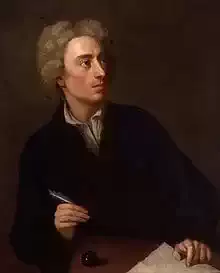
Alexander Pope
With sweeter notes each rising temple rung;
With sweeter notes each rising temple rung;
A Raphael painted and a Vida sung;
Immortal Vida! on whose honour'd brow
The poet's bays and critics ivy grow:
Cremona now shall ever boast they name,
As next in place to Mantua, next in fame!
But soon by impious arms from Latium chased,
Their ancient bounds the banish'd Muses pass'd;
Thence arts o'er all the northern world advance,
But critic learning flourish'd most in France;
The rules a nation born to serve obeys,
And Boileau still in right of Horace sways.
But we, brave Britons, foreign laws despised,
And kept unconquer'd and uncivilized;
Fierce for the liberties of wit, and bold,
We still defied the Romans, as of old.
Yet some there were, among the sounder few
Of those who less presumed and better knew,
Who durst assert the juster ancient cause,
And here restor'd WIt's fundamental laws.
Such was the Muse whose rules and practice tell
``Nature's chief masterpiece is writing well.''
Such was Roscommon, not more learn'd than good,
With manners gen'rous as his noble blood;
To him the wit of Greece and Rome was known,
And every author's merit but his own.
Such late was Walsh--the Muse's judge and friend,
Who justly knew to blame or to commend;
To failings mild but zealous for desert,
The clearest head, and the sincerest heart.
This humble praise, lamented Shade! receive;
This praise at least a grateful Muse may give:
The Muse whose early voice you taught to sing,
Prescribed her heights, and pruned her tender wing,
(Her guide now lost), no more attempts to rise,
But in low numbers short excursions tries;
Content if hence th'unlearn'd their wants may view,
The learn'd reflect on what before they knew;
Careless of censure, nor too fond of fame;
Still pleas'd to praise, yet not afraid to blame;
Averse alike to flatter or offend;
Not free from faults, nor yet too vain to mend.
A Raphael painted and a Vida sung;
Immortal Vida! on whose honour'd brow
The poet's bays and critics ivy grow:
Cremona now shall ever boast they name,
As next in place to Mantua, next in fame!
But soon by impious arms from Latium chased,
Their ancient bounds the banish'd Muses pass'd;
Thence arts o'er all the northern world advance,
But critic learning flourish'd most in France;
The rules a nation born to serve obeys,
And Boileau still in right of Horace sways.
But we, brave Britons, foreign laws despised,
And kept unconquer'd and uncivilized;
Fierce for the liberties of wit, and bold,
We still defied the Romans, as of old.
Yet some there were, among the sounder few
Of those who less presumed and better knew,
Who durst assert the juster ancient cause,
And here restor'd WIt's fundamental laws.
Such was the Muse whose rules and practice tell
``Nature's chief masterpiece is writing well.''
Such was Roscommon, not more learn'd than good,
With manners gen'rous as his noble blood;
To him the wit of Greece and Rome was known,
And every author's merit but his own.
Such late was Walsh--the Muse's judge and friend,
Who justly knew to blame or to commend;
To failings mild but zealous for desert,
The clearest head, and the sincerest heart.
This humble praise, lamented Shade! receive;
This praise at least a grateful Muse may give:
The Muse whose early voice you taught to sing,
Prescribed her heights, and pruned her tender wing,
(Her guide now lost), no more attempts to rise,
But in low numbers short excursions tries;
Content if hence th'unlearn'd their wants may view,
The learn'd reflect on what before they knew;
Careless of censure, nor too fond of fame;
Still pleas'd to praise, yet not afraid to blame;
Averse alike to flatter or offend;
Not free from faults, nor yet too vain to mend.
672
1
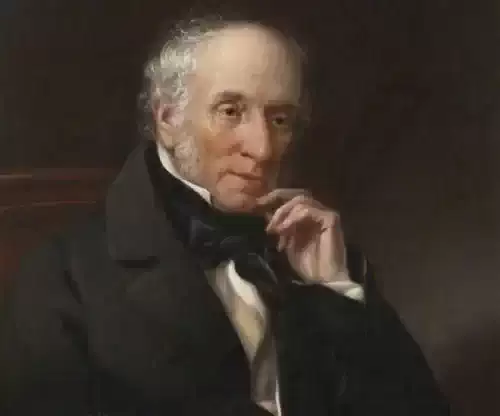
William Wordsworth
Rural Architecture
Rural Architecture
There's George Fisher, Charles Fleming, and Reginald Shore,
Three rosy-cheeked school-boys, the highest not more
Than the height of a counsellor's bag;
To the top of GREAT HOW did it please them to climb:
And there they built up, without mortar or lime,
A Man on the peak of the crag.
They built him of stones gathered up as they lay:
They built him and christened him all in one day,
An urchin both vigorous and hale;
And so without scruple they called him Ralph Jones.
Now Ralph is renowned for the length of his bones;
The Magog of Legberthwaite dale.
Just half a week after, the wind sallied forth,
And, in anger or merriment, out of the north,
Coming on with a terrible pother,
From the peak of the crag blew the giant away.
And what did these school-boys?--The very next day
They went and they built up another.
--Some little I've seen of blind boisterous works
By Christian disturbers more savage than Turks,
Spirits busy to do and undo:
At remembrance whereof my blood sometimes will flag;
Then, light-hearted Boys, to the top of the crag!
And I'll build up giant with you.
There's George Fisher, Charles Fleming, and Reginald Shore,
Three rosy-cheeked school-boys, the highest not more
Than the height of a counsellor's bag;
To the top of GREAT HOW did it please them to climb:
And there they built up, without mortar or lime,
A Man on the peak of the crag.
They built him of stones gathered up as they lay:
They built him and christened him all in one day,
An urchin both vigorous and hale;
And so without scruple they called him Ralph Jones.
Now Ralph is renowned for the length of his bones;
The Magog of Legberthwaite dale.
Just half a week after, the wind sallied forth,
And, in anger or merriment, out of the north,
Coming on with a terrible pother,
From the peak of the crag blew the giant away.
And what did these school-boys?--The very next day
They went and they built up another.
--Some little I've seen of blind boisterous works
By Christian disturbers more savage than Turks,
Spirits busy to do and undo:
At remembrance whereof my blood sometimes will flag;
Then, light-hearted Boys, to the top of the crag!
And I'll build up giant with you.
177
William Wordsworth
Peter Bell, A Tale
Peter Bell, A Tale
PROLOGUE
There's something in a flying horse,
There's something in a huge balloon;
But through the clouds I'll never float
Until I have a little Boat,
Shaped like the crescent-moon.
And now I 'have' a little Boat,
In shape a very crescent-moon
Fast through the clouds my boat can sail;
But if perchance your faith should fail,
Look up--and you shall see me soon!
The woods, my Friends, are round you roaring,
Rocking and roaring like a sea;
The noise of danger's in your ears,
And ye have all a thousand fears
Both for my little Boat and me!
Meanwhile untroubled I admire
The pointed horns of my canoe;
And, did not pity touch my breast,
To see how ye are all distrest,
Till my ribs ached, I'd laugh at you!
Away we go, my Boat and I--
Frail man ne'er sate in such another;
Whether among the winds we strive,
Or deep into the clouds we dive,
Each is contented with the other.
Away we go--and what care we
For treasons, tumults, and for wars?
We are as calm in our delight
As is the crescent-moon so bright
Among the scattered stars.
Up goes my Boat among the stars
Through many a breathless field of light,
Through many a long blue field of ether,
Leaving ten thousand stars beneath her:
Up goes my little Boat so bright!
The Crab, the Scorpion, and the Bull--
We pry among them all; have shot
High o'er the red-haired race of Mars,
Covered from top to toe with scars;
Such company I like it not!
The towns in Saturn are decayed,
And melancholy Spectres throng them;--
The Pleiads, that appear to kiss
Each other in the vast abyss,
With joy I sail among them.
Swift Mercury resounds with mirth,
Great Jove is full of stately bowers;
But these, and all that they contain,
What are they to that tiny grain,
That little Earth of ours?
Then back to Earth, the dear green Earth:--
Whole ages if I here should roam,
The world for my remarks and me
Would not a whit the better be;
I've left my heart at home.
See! there she is, the matchless Earth!
There spreads the famed Pacific Ocean!
Old Andes thrusts yon craggy spear
Through the grey clouds; the Alps are here,
Like waters in commotion!
Yon tawny slip is Libya's sands;
That silver thread the river Dnieper!
And look, where clothed in brightest green
Is a sweet Isle, of isles the Queen;
Ye fairies, from all evil keep her!
And see the town where I was born!
Around those happy fields we span
In boyish gambols;--I was lost
Where I have been, but on this coast
I feel I am a man.
Never did fifty things at once
Appear so lovely, never, never;--
How tunefully the forests ring!
To hear the earth's soft murmuring
Thus could I hang for ever!
"Shame on you!" cried my little Boat,
"Was ever such a homesick Loon,
Within a living Boat to sit,
And make no better use of it;
A Boat twin-sister of the crescent-moon!
"Ne'er in the breast of full-grown Poet
Fluttered so faint a heart before;--
Was it the music of the spheres
That overpowered your mortal ears?
--Such din shall trouble them no more.
"These nether precincts do not lack
Charms of their own;--then come with me;
I want a comrade, and for you
There's nothing that I would not do;
Nought is there that you shall not see.
"Haste! and above Siberian snows
We'll sport amid the boreal morning;
Will mingle with her lustres gliding
Among the stars, the stars now hiding,
And now the stars adorning.
"I know the secrets of a land
Where human foot did never stray;
Fair is that land as evening skies,
And cool, though in the depth it lies
Of burning Africa.
"Or we'll into the realm of Faery,
Among the lovely shades of things;
The shadowy forms of mountains bare,
And streams, and bowers, and ladies fair,
The shades of palaces and kings!
"Or, if you thirst with hardy zeal
Less quiet regions to explore,
Prompt voyage shall to you reveal
How earth and heaven are taught to feel
The might of magic lore!"
"My little vagrant Form of light,
My gay and beautiful Canoe,
Well have you played your friendly part;
As kindly take what from my heart
Experience forces--then adieu!
"Temptation lurks among your words;
But, while these pleasures you're pursuing
Without impediment or let,
No wonder if you quite forget
What on the earth is doing.
"There was a time when all mankind
Did listen with a faith sincere
To tuneful tongues in mystery versed;
'Then' Poets fearlessly rehearsed
The wonders of a wild career.
"Go--(but the world's a sleepy world,
And 'tis, I fear, an age too late)
Take with you some ambitious Youth!
For, restless Wanderer! I, in truth,
Am all unfit to be your mate.
"Long have I loved what I behold,
The night that calms, the day that cheers;
The common growth of mother-earth
Suffices me--her tears, her mirth,
Her humblest mirth and tears.
"The dragon's wing, the magic ring,
I shall not covet for my dower,
If I along that lowly way
With sympathetic heart may stray,
And with a soul of power.
"These given, what more need I desire
To stir, to soothe, or elevate?
What nobler marvels than the mind
May in life's daily prospect find,
May find or there create?
"A potent wand doth Sorrow wield;
What spell so strong as guilty Fear!
Repentance is a tender Sprite;
If aught on earth have heavenly might,
'Tis lodged within her silent tear.
"But grant my wishes,--let us now
Descend from this ethereal height;
Then take thy way, adventurous Skiff,
More daring far than Hippogriff,
And be thy own delight!
"To the stone-table in my garden,
Loved haunt of many a summer hour,
The Squire is come: his daughter Bess
Beside him in the cool recess
Sits blooming like a flower.
"With these are many more convened;
They know not I have been so far;--
I see them there, in number nine,
Beneath the spreading Weymouth-pine!
I see them--there they are!
"There sits the Vicar and his Dame;
And there my good friend, Stephen Otter;
And, ere the light of evening fail,
To them I must relate the Tale
Of Peter Bell the Potter."
Off flew the Boat--away she flees,
Spurning her freight with indignation!
And I, as well as I was able,
On two poor legs, toward my stone-table
Limped on with sore vexation.
"O, here he is!" cried little Bess--
She saw me at the garden-door;
"We've waited anxiously and long,"
They cried, and all around me throng,
Full nine of them or more!
"Reproach me not--your fears be still--
Be thankful we again have met;--
Resume, my Friends! within the shade
Your seats, and quickly shall be paid
The well-remembered debt."
I spake with faltering voice, like one
Not wholly rescued from the pale
Of a wild dream, or worse illusion;
But, straight, to cover my confusion,
Began the promised Tale.
PART FIRST
ALL by the moonlight river side
Groaned the poor Beast--alas! in vain;
The staff was raised to loftier height,
And the blows fell with heavier weight
As Peter struck--and struck again.
"Hold!" cried the Squire, "against the rules
Of common sense you're surely sinning;
This leap is for us all too bold;
Who Peter was, let that be told,
And start from the beginning."
----"A Potter, Sir, he was by trade,"
Said I, becoming quite collected;
"And wheresoever he appeared,
Full twenty times was Peter feared
For once that Peter was respected.
"He, two-and-thirty years or more,
Had been a wild and woodland rover;
Had heard the Atlantic surges roar
On farthest Cornwall's rocky shore,
And trod the cliffs of Dover.
"And he had seen Caernarvon's towers,
And well he knew the spire of Sarum;
And he had been where Lincoln bell
Flings o'er the fen that ponderous knell--
A far-renowned alarum!
"At Doncaster, at York, and Leeds,
And merry Carlisle had be been;
And all along the Lowlands fair,
All through the bonny shire of Ayr
And far as Aberdeen.
"And he had been at Inverness;
And Peter, by the mountain-rills,
Had danced his round with Highland lasses;
And he had lain beside his asses
On lofty Cheviot Hills:
"And he had trudged through Yorkshire dales,
Among the rocks and winding 'scars',
Where deep and low the hamlets lie
Beneath their little patch of sky
And little lot of stars:
"And all along the indented coast,
Bespattered with the salt-sea foam;
Where'er a knot of houses lay
On headland, or in hollow bay;--
Sure never man like him did roam!
"As well might Peter, in the Fleet,
Have been fast bound, a begging debtor;--
He travelled here, he travelled there,--
But not the value of a hair
Was heart or head the better.
"He roved among the vales and streams,
In the green wood and hollow dell;
They were his dwellings night and day,--
But nature ne'er could find the way
Into the heart of Peter Bell.
"In vain, through every changeful year,
Did Nature lead him as before;
A primrose by a river's brim
A yellow primrose was to him,
And it was nothing more.
"Small change it made on Peter's heart
To see his gentle panniered train
With more than vernal pleasure feeding,
Where'er the tender grass was leading
Its earliest green along the lane.
"In vain, through water, earth, and air,
The soul of happy sound was spread,
When Peter on some April morn,
Beneath the broom or budding thorn,
Made the warm earth his lazy bed.
"At noon, when, by the forest's edge
He lay beneath the branches high,
The soft blue shy did never melt
Into his heart; he never felt
The witchery of the soft blue sky!
"On a fair prospect some have looked
And felt, as I have heard them say,
As if the moving time had been
A thing as steadfast as the scene
On which they gazed themselves away.
"Within the breast of Peter Bell
These silent raptures found no place;
He was a Carl as wild and rude
As ever hue-and-cry pursued,
As ever ran a felon's race.
"Of all that lead a lawless life,
Of all that love their lawless lives,
In city or in village small,
He was the wildest far of all;--
He had a dozen wedded wives.
"Nay, start not!--wedded wives--and twelve!
But how one wife could e'er come near him,
In simple truth I cannot tell;
For, be it said of Peter Bell
To see him was to fear him.
"Though Nature could not touch his heart
By lovely forms, and silent weather,
And tender sounds, yet you might see
At once, that Peter Bell and she
Had often been together.
"A savage wildness round him hung
As of a dweller out of doors;
In his whole figure and his mien
A savage character was seen
Of mountains and of dreary moors.
"To all the unshaped half-human thoughts
Which solitary Nature feeds
'Mid summer storms or winter's ice,
Had Peter joined whatever vice
The cruel city breeds.
"His face was keen as is the wind
That cuts along the hawthorn-fence;--
Of courage you saw little there,
But, in its stead, a medley air
Of cunning and of impudence.
"He had a dark and sidelong walk,
And long and slouching was his gait;
Beneath his looks so bare and bold,
You might perceive, his spirit cold
Was playing with some inward bait.
"His forehead wrinkled was and furred;
A work, one half of which was done
By thinking of his 'whens' and 'hows;'
And half, by knitting of his brows
Beneath the glaring sun.
"There was a hardness in his cheek,
There was a hardness in his eye,
As if the man had fixed his face,
In many a solitary place,
Against the wind and open sky!"
ONE NIGHT, (and now my little Bess!
We've reached at last the promised Tale:)
One beautiful November night,
When the full moon was shining bright
Upon the rapid river Swale,
Along the river's winding banks
Peter was travelling all alone;--
Whether to buy or sell, or led
By pleasure running in his head,
To me was never known.
He trudged along through copse and brake,
He trudged along o'er hill and dale;
Nor for the moon cared he a tittle,
And for the stars he cared as little,
And for the murmuring river Swale.
But, chancing to espy a path
That promised to cut short the way
As many a wiser man hath done,
He left a trusty guide for one
That might his steps betray.
To a thick wood he soon is brought
Where cheerily his course he weaves,
And whistling loud may yet be heard,
Though often buried, like a bird
Darkling, among the boughs and leaves.
But quickly Peter's mood is changed,
And on he drives with cheeks that burn
In downright fury and in wrath;--
There's little sign the treacherous path
Will to the road return!
The path grows dim, and dimmer still;
Now up, now down, the Rover wends,
With all the sail that he can carry,
Till brought to a deserted quarry--
And there the pathway ends.
He paused--for shadows of strange shape,
Massy and black, before him lay;
But through the dark, and through the cold,
And through the yawning fissures old,
Did Peter boldly press his way
Right through the quarry;--and behold
A scene of soft and lovely hue!
Where blue and grey, and tender green,
Together make as sweet a scene
As ever human eye did view.
Beneath the clear blue sky he saw
A little field of meadow ground;
But field or meadow name it not;
Call it of earth a small green plot,
With rocks encompassed round,
The Swale flowed under the grey rocks,
But he flowed quiet and unseen;--
You need a strong and stormy gale
To bring the noises of the Swale
To that green spot, so calm and green!
And is there no one dwelling here,
No hermit with his beads and glass?
And does no little cottage look
Upon this soft and fertile nook?
Does no one live near this green grass?
Across the deep and quiet spot
Is Peter driving through the grass--
And now has reached the skirting trees;
When, turning round his head, he sees
A solitary Ass.
"A Prize!" cries Peter--but he first
Must spy about him far and near:
There's not a single house in sight,
No woodman's hut, no cottage light--
Peter, you need not fear!
There's nothing to be seen but woods,
And rocks that spread a hoary gleam,
And this one Beast, that from the bed
Of the green meadow hangs his head
Over the silent stream.
His head is with a halter bound;
The halter seizing, Peter leapt
Upon the Creature's back, and plied
With ready heels his shaggy side;
But still the Ass his station kept.
Then Peter gave a sudden jerk,
A jerk that from a dungeon-floor
Would have pulled up an iron ring;
But still the heavy-headed Thing
Stood just as he had stood before!
Quoth Peter, leaping from his seat,
"There is some plot against me laid;"
Once more the little meadow-ground
And all the hoary cliffs around
He cautiously surveyed,
All, all is silent--rocks and woods,
All still and silent--far and near!
Only the Ass, with motion dull,
Upon the pivot of his skull
Turns round his long left ear.
Thought Peter, What can mean all this?
Some ugly witchcraft must be here!
--Once more the Ass, with motion dull,
Upon the pivot of his skull
Turned round his long left ear.
Suspicion ripened into dread;
Yet with deliberate action slow,
His staff high-raising, in the pride
Of skill, upon the sounding hide,
He dealt a sturdy blow.
The poor Ass staggered with the shock;
And then, as if to take his ease,
In quiet uncomplaining mood,
Upon the spot where he had stood,
Dropped gently down upon his knees:
As gently on his side he fell;
And by the river's brink did lie;
And, while he lay like one that mourned,
The patient Beast on Peter turned
His shining hazel eye.
'Twas but one mild, reproachful look,
A look more tender than severe;
And straight in sorrow, not in dread,
He turned the eye-ball in his head
Towards the smooth river deep and clear.
Upon the Beast the sapling rings;
His lank sides heaved, his limbs they stirred;
He gave a groan, and then another,
Of that which went before the brother,
And then he gave a third.
All by the moonlight river side
He gave three miserable groans;
And not till now hath Peter seen
How gaunt the Creature is,--how lean
And sharp his staring bones!
With legs stretched out and stiff he lay:--
No word of kind commiseration
Fell at the sight from Peter's tongue;
With hard contempt his heart was wrung,
With hatred and vexation.
The meagre beast lay still as death;
And Peter's lips with fury quiver;
Quoth he, "You little mulish dog,
I'll fling your carcase like a log
Head-foremost down the river!"
An impious oath confirmed the threat--
Whereat from the earth on which he lay
To all the echoes, south and north,
And east and west, the Ass sent forth
A long and clamorous bray!
This outcry, on the heart of Peter,
Seems like a note of joy to strike,--
Joy at the heart of Peter knocks;
But in the echo of the rocks
Was something Peter did not like.
Whether to cheer his coward breast,
Or that he could not break the chain,
In this serene and solemn hour,
Twined round him by demoniac power,
To the blind work he turned again.
Among the rocks and winding crags;
Among the mountains far away;
Once more the ass did lengthen out
More ruefully a deep-drawn shout,
The hard dry see-saw of his horrible bray!
What is there now in Peter's heart!
Or whence the might of this strange sound?
The moon uneasy looked and dimmer,
The broad blue heavens appeared to glimmer,
And the rocks staggered all around--
From Peter's hand the sapling dropped!
Threat has he none to execute;
"If any one should come and see
That I am here, they'll think," quoth he,
"I'm helping this poor dying brute."
He scans the Ass from limb to limb,
And ventures now to uplift his eyes;
More steady looks the moon, and clear
More like themselves the rocks appear
And touch more quiet skies.
His scorn returns--his hate revives;
He stoops the Ass's neck to seize
With malice--that again takes flight;
For in the pool a startling sight
Meets him, among the inverted trees.
Is it the moon's distorted face?
The ghost-like image of a cloud?
Is it a gallows there portrayed?
Is Peter of himself afraid?
Is it a coffin,--or a shroud?
A grisly idol hewn in stone?
Or imp from witch's lap let fall?
Perhaps a ring of shining fairies?
Such as pursue their feared vagaries
In sylvan bower, or haunted hall?
Is it a fiend that to a stake
Of fire his desperate self is tethering?
Or stubborn spirit doomed to yell
In solitary ward or cell,
Ten thousand miles from all his brethren?
Never did pulse so quickly throb,
And never heart so loudly panted;
He looks, he cannot choose but look;
Like some one reading in a book--
A book that is enchanted.
Ah, well-a-day for Peter Bell!
He will be turned to iron soon,
Meet Statue for the court of Fear!
His hat is up--and every hair
Bristles, and whitens in the moon!
He looks, he ponders, looks again;
He sees a motion--hears a groan;
His eyes will burst--his heart will break--
He gives a loud and frightful shriek,
And back he falls, as if his life were flown!
PART SECOND
WE left our Hero in a trance,
Beneath the alders, near the river;
The Ass is by the river-side,
And, where the feeble breezes glide,
Upon the stream the moonbeams quiver.
A happy respite! but at length
He feels the glimmering of the moon;
Wakes with glazed eve. and feebly signing--
To sink, perhaps, where he is lying,
Into a second swoon!
He lifts his head, he sees his staff;
He touches--'tis to him a treasure!
Faint recollection seems to tell
That he is yet where mortals dwell--
A thought received with languid pleasure!
His head upon his elbow propped,
Becoming less and less perplexed,
Sky-ward he looks--to rock and wood--
And then--upon the glassy flood
His wandering eye is fixed.
Thought he, that is the face of one
In his last sleep securely bound!
So toward the stream his head he bent,
And downward thrust his staff, intent
The river's depth to sound.
'Now'--like a tempest-shattered bark,
That overwhelmed and prostrate lies,
And in a moment to the verge
Is lifted of a foaming surge--
Full suddenly the Ass doth rise!
His staring bones all shake with joy,
And close by Peter's side he stands:
While Peter o'er the river bends,
The little Ass his neck extends,
And fondly licks his hands.
Such life is in the Ass's eyes,
Such life is in his limbs and ears;
That Peter Bell, if he had been
The veriest coward ever seen,
Must now have thrown aside his fears.
The Ass looks on--and to his work
Is Peter quietly resigned;
He touches here--he touches there--
And now among the dead man's hair
His sapling Peter has entwined.
He pulls--and looks--and pulls again;
And he whom the poor Ass had lost,
The man who had been four days dead,
Head-foremost from the river's bed
Uprises like a ghost!
And Peter draws him to dry land;
And through the brain of Peter pass
Some poignant twitches, fast and faster,
"No doubt," quoth he, "he is the Master
Of this poor miserable Ass!"
The meagre Shadow that looks on--
What would he now? what is he doing?
His sudden fit of joy is flown,--
He on his knees hath laid him down,
As if he were his grief renewing;
But no--that Peter on his back
Must mount, he shows well as he can:
Thought Peter then, come weal or woe,
I'll do what he would have me do,
In pity to this poor drowned man.
With that resolve he boldly mounts
Upon the pleased and thankful Ass;
And then, without a moment's stay,
That earnest Creature turned away
Leaving the body on the grass.
Intent upon his faithful watch,
The Beast four days and nights had past;
A sweeter meadow ne'er was seen,
And there the Ass four days had been,
Nor ever once did break his fast:
Yet firm his step, and stout his heart;
The mead is crossed--the quarry's mouth
Is reached; but there the trusty guide
Into a thicket turns aside,
And deftly ambles towards the south.
When hark a burst of doleful sound!
And Peter honestly might say,
The like came never to his ears,
Though he has been, full thirty years,
A rover--night and day!
'Tis not a plover of the moors,
'Tis not a bittern of the fen;
Nor can it be a barking fox,
Nor night-bird chambered in the rocks,
Nor wild-cat in a woody glen!
The Ass is startled--and stops short
Right in the middle of the thicket;
And Peter, wont to whistle loud
Whether alone or in a crowd,
Is silent as a silent cricket.
What ails you now, my little Bess?
Well may you tremble and look grave!
This cry--that rings along the wood,
This cry--that floats adown the flood,
Comes from the entrance of a cave:
I see a blooming Wood-boy there,
And if I had the power to say
How sorrowful the wanderer is,
Your heart would be as sad as his
Till you had kissed his tears away!
Grasping a hawthorn branch in hand,
All bright with berries ripe and red,
Into the cavern's mouth he peeps;
Thence back into the moonlight creeps;
Whom seeks he--whom?--the silent dead:
His father!--Him doth he require--
Him hath he sought with fruitless pains,
Among the rocks, behind the trees;
Now creeping on his hands and knees,
Now running o'er the open plains.
And hither is he come at last,
When he through such a day has gone,
By this dark cave to be distrest
Like a poor bird--her plundered nest
Hovering around with dolorous moan!
Of that intense and piercing cry
The listening Ass conjectures well;
Wild as it is, he there can read
Some intermingled notes that plead
With touches irresistible.
But Peter--when he saw the Ass
Not only stop but turn, and change
The cherished tenor of his pace
That lamentable cry to chase--
It wrought in him conviction strange;
A faith that, for the dead man's sake
And this poor slave who loved him well,
Vengeance upon his head will fall,
Some visitation worse than all
Which ever till this night befell.
Meanwhile the Ass to reach his home,
Is striving stoutly as he may;
But, while he climbs the woody hill,
The cry grows weak--and weaker still;
And now at last it dies away.
So with his freight the Creature turns
Into a gloomy grove of beech,
Along the shade with footsteps true
Descending slowly, till the two
The open moonlight reach.
And there, along the narrow dell,
A fair smooth pathway you discern,
A length of green and open road--
As if it from a fountain flowed--
Winding away between the fern.
The rocks that tower on either side
Build up a wild fantastic scene;
Temples like those among the Hindoos,
And mosques, and spires, and abbey windows,
And castles all with ivy green!
And, while the Ass pursues his way,
Along this solitary dell,
As pensively his steps advance,
The mosques and spires change countenance
And look at Peter Bell!
That unintelligible cry
Hath left him high in preparation,--
Convinced that he, or soon or late,
This very night will meet his fate--
And so he sits in expectation!
The strenuous Animal hath clomb
With the green path; and now he wends
Where, shining like the smoothest sea,
In undisturbed immensity
A level plain extends.
But whence this faintly-rustling sound
By which the journeying pair are chased?
--A withered leaf is close behind,
Light plaything for the sportive wind
Upon that solitary waste.
When Peter spied the moving thing,
It only doubled his distress;
"Where there is not a bush or tree,
The very leaves they follow me--
So huge hath been my wickedness!"
To a close lane they now are come,
Where, as before, the enduring Ass
Moves on without a moment's stop,
Nor once turns round his head to crop
A bramble-leaf or blade of grass.
Between the hedges as they go,
The white dust sleeps upon the lane;
And Peter, ever and anon
Back-looking, sees, upon a stone,
Or in the dust, a crimson stain.
A stain--as of a drop of blood
By moonlight made more faint and wan;
Ha! why these sinkings of despair?
He knows not how the blood comes there--
And Peter is a wicked man.
At length he spies a bleeding wound,
Where he had struck the Ass's head;
He sees the blood, knows what it is,--
A glimpse of sudden joy was his,
But then it quickly fled;
Of him whom sudden death had seized
He thought,--of thee, O faithful Ass!
And once again those ghastly pains,
Shoot to and fro through heart and reins,
And through his brain like lightning pass.
PART THIRD
I'VE heard of one, a gentle Soul,
Though given to sadness and to gloom,
And for the fact will vouch,--one night
It chanced that by a taper's light
This man was reading in his room;
Bending, as you or I might bend
At night o'er any pious book,
When sudden blackness overspread
The snow-white page on which he read,
And made the good man round him look.
The chamber walls were dark all round,--
And to his book he turned again;
--The light had left the lonely taper,
And formed itself upon the paper
Into large letters--bright and plain!
The godly book was in his hand--
And, on the page, more black than coal,
Appeared, set forth in strange array,
A 'word'--which to his dying day
Perplexed the good man's gentle soul.
The ghostly word, thus plainly seen,
Did never from his lips depart;
But he hath said, poor gentle wight!
It brought full many a sin to light
Out of the bottom of his heart.
Dread Spirits! to confound the meek
Why wander from your course so far,
Disordering colour, form, and stature!
--Let good men feel the soul of nature,
And see things as they are.
Yet, potent Spirits! well I know,
How ye, that play with soul and sense,
Are not unused to trouble friends
Of goodness, for most gracious ends--
And this I speak in reverence!
But might I give advice to you,
Whom in my fear I love so well;
From men of pensive virtue go,
Dread Beings! and your empire show
On hearts like that of Peter Bell.
Your presence often have I felt
In darkness and the stormy night;
And, with like force, if need there be,
Ye can put forth your agency
When earth is calm, and heaven is bright.
Then, coming from the wayward world,
That powerful world in which ye dwell,
Come, Spirits of the Mind! and try
To-night, beneath the moonlight sky,
What may be done with Peter Bell!
--O, would that some more skilful voice
My further labour might prevent!
Kind Listeners, that around me sit,
I feel that I am all unfit
For such high argument.
I've played, I've danced, with my narration;
I loitered long ere I began:
Ye waited then on my good pleasure;
Pour out indulgence still, in measure
As liberal as ye can!
Our Travellers, ye remember well,
Are thridding a sequestered lane;
And Peter many tricks is trying,
And many anodynes applying,
To ease his conscience of its pain.
By this his heart is lighter far;
And, finding that he can account
So snugly for that crimson stain,
His evil spirit up again
Does like an empty bucket mount.
And Peter is a deep logician
Who hath no lack of wit mercurial;
"Blood drops--leaves rustle--yet," quoth he,
"This poor man never, but for me,
Could have had Christian burial.
"And, say the best you can, 'tis plain,
That here has been some wicked dealing;
No doubt the devil in me wrought;
I'm not the man who could have thought
An Ass like this was worth the stealing!"
So from his pocket Peter takes
His shining horn tobacco-box;
And, in a light and careless way,
As men who with their purpose play,
Upon the lid he knocks.
Let them whose voice can stop the clouds,
Whose cunning eye can see the wind,
Tell to a curious world the cause
Why, making here a sudden pause,
The Ass turned round his head, and 'grinned'.
Appalling process! I have marked
The like on heath, in lonely wood;
And, verily, have seldom met
A spectacle more hideous--yet
It suited Peter's present mood.
And, grinning in his turn, his teeth
He in jocose defiance showed--
When, to upset his spiteful mirth,
A murmur, pent within the earth,
In the dead earth beneath the road
Rolled audibly! it swept along,
A muffled noise--a rumbling sound!--
'Twas by a troop of miners made,
Plying with gunpowder their trade,
Some twenty fathoms under ground.
Small cause of dire effect! for, surely,
If ever mortal, King or Cotter,
Believed that earth was charged to quake
And yawn for his unworthy sake,
'Twas Peter Bell the Potter.
But, as an oak in breathless air
Will stand though to the centre hewn;
Or as the weakest things, if frost
Have stiffened them, maintain their post;
So he, beneath the gazing moon!--
The Beast bestriding thus, he reached
A spot where, in a sheltering cove,
A little chapel stands alone,
With greenest ivy overgrown,
And tufted with an ivy grove;
Dying insensibly away
From human thoughts and purposes,
It seemed--wall, window, roof and tower--
To bow to some transforming power,
And blend with the surrounding trees.
As ruinous a place it was,
Thought Peter, in the shire of Fife
That served my turn, when following still
From land to land a reckless will
I married my sixth wife!
The unheeding Ass moves slowly on,
And now is passing by an inn
Brim-full of a carousing crew,
That make, with curses not a few,
An uproar and a drunken din.
I cannot well express the thoughts
Which Peter in those noises found;--
A stifling power compressed his frame,
While-as a swimming darkness came
Over that dull and dreary sound.
For well did Peter know the sound;
The language of those drunken joys
To him, a jovial soul, I ween,
But a few hours ago, had been
A gladsome and a welcome noise.
'Now', turned adrift into the past,
He finds no solace in his course;
Like planet-stricken men of yore,
He trembles, smitten to the core
By strong compunction and remorse.
But, more than all, his heart is stung
To think of one, almost a child;
A sweet and playful Highland girl,
As light and beauteous as a squirrel,
As beauteous and as wild!
Her dwelling was a lonely house,
A cottage in a heathy dell;
And she put on her gown of green,
And left her mother at sixteen,
And followed Peter Bell.
But many good and pious thoughts
Had she; and, in the kirk to pray,
Two long Scotch miles, through rain or snow
To kirk she had been used to go,
Twice every Sabbath-day.
And, when she followed Peter Bell,
It was to lead an honest life;
For he, with tongue not used to falter,
Had pledged his troth before the altar
To love her as his wedded wife.
A mother's hope is hers;--but soon
She drooped and pined like one forlorn;
From Scripture she a name did borrow;
Benoni, or the child of sorrow,
She called her babe unborn.
For she had learned how Peter lived,
And took it in most grievous part;
She to the very bone was worn,
And, ere that little child was born,
Died of a broken heart.
And now the Spirits of the Mind
Are busy with poor Peter Bell;
Upon the rights of visual sense
Usurping, with a prevalence
More terrible than magic spell.
Close by a brake of flowering furze
(Above it shivering aspens play)
He sees an unsubstantial creature,
His very self in form and feature,
Not four yards from the broad highway:
And stretched beneath the furze he sees
The Highland girl--it is no other;
And hears her crying as she cried,
The very moment that she died,
"My mother! oh my mother!"
The sweat pours down from Peter's face,
So grievous is his heart's contrition;
With agony his eye-balls ache
While he beholds by the furze-brake
This miserable vision!
Calm is the well-deserving brute,
'His' peace hath no offence betrayed;
But now, while down that slope he wends,
A voice to Peter's ear ascends,
Resounding from the woody glade:
The voice, though clamorous as a horn
Re-echoed by a naked rock,
Comes from that tabernacle--List!
Within, a fervent Methodist
Is preaching to no heedless flock!
"Repent! repent!" he cries aloud,
"While yet ye may find mercy;--strive
To love the Lord with all your might;
Turn to him, seek him day and night,
And save your souls alive!
"Repent! repent! though ye have gone,
Through paths of wickedness and woe,
After the Babylonian harlot;
And, though your sins be red as scarlet,
They shall be white as snow!"
Even as he passed the door, these words
Did plainly come to Peter's ears;
And they such joyful tidings were,
The joy was more than he could bear!--
He melted into tears.
Sweet tears of hope and tenderness!
And fast they fell, a plenteous shower!
His nerves, his sinews seemed to melt;
Through all his iron frame was felt
A gentle, a relaxing, power!
Each fibre of his frame was weak;
Weak all the animal within;
But, in its helplessness, grew mild
And gentle as an infant child,
An infant that has known no sin.
'Tis said, meek Beast! that, through Heaven's grace,
He not unmoved did notice now
The cross upon thy shoulder scored,
For lasting impress, by the Lord
To whom all human-kind shall bow;
Memorial of his touch--that day
When Jesus humbly deigned to ride,
Entering the proud Jerusalem,
By an immeasurable stream
Of shouting people deified!
Meanwhile the persevering Ass,
Turned towards a gate that hung in view
Across a shady lane; his chest
Against the yielding gate he pressed
And quietly passed through.
And up the stony lane he goes;
No ghost more softly ever trod;
Among the stones and pebbles, he
Sets down his hoofs inaudibly,
As if with felt his hoofs were shod.
Along the lane the trusty Ass
Went twice two hundred yards or more,
And no one could have guessed his aim,--
Till to a lonely house he came,
And stopped beside the door.
Thought Peter, 'tis the poor man's home!
He listens--not a sound is heard
Save from the trickling household rill;
But, stepping o'er the cottage-sill,
Forthwith a little Girl appeared.
She to the Meeting-house was bound
In hopes some tidings there to gather:
No glimpse it is, no doubtful gleam;
She saw--and uttered with a scream,
"My father! here's my father!"
The very word was plainly heard,
Heard plainly by the wretched Mother--
Her joy was like a deep affright:
And forth she rushed into the light,
And saw it was another!
And, instantly, upon the earth,
Beneath the full moon shining bright,
Close to the Ass's feet she fell;
At the same moment Peter Bell
Dismounts in most unhappy plight.
As he beheld the Woman lie
Breathless and motionless, the mind
Of Peter sadly was confused;
But, though to such demands unused,
And helpless almost as the blind,
He raised her up; and, while he held
Her body propped against his knee,
The Woman waked--and when she spied
The poor Ass standing by her side,
She moaned most bitterly.
"Oh! God be praised--my heart's at ease--
For he is dead--I know it well!"
--At this she wept a bitter flood;
And, in the best way that he could,
His tale did Peter tell.
He trembles--he is pale as death;
His voice is weak with perturbation;
He turns aside his head, he pauses;
Poor Peter, from a thousand causes,
Is crippled sore in his narration.
At length she learned how he espied
The Ass in that small meadow-ground;
And that her Husband now lay dead,
Beside that luckless river's bed
In which he had been drowned.
A piercing look the Widow cast
Upon the Beast that near her stands;
She sees 'tis he, that 'tis the same;
She calls the poor Ass by his name,
And wrings, and wrings her hands.
"O wretched loss--untimely stroke!
If he had died upon his bed!
He knew not one forewarning pain;
He never will come home again--
Is dead, for ever dead!"
Beside the woman Peter stands;
His heart is opening more and more;
A holy sense pervades his mind;
He feels what he for human kind
Had never felt before.
At length, by Peter's arm sustained,
The Woman rises from the ground--
"Oh, mercy! something must be done,
My little Rachel, you must run,--
Some willing neighbour must be found.
"Make haste--my little Rachel--do,
The first you meet with--bid him come,
Ask him to lend his horse to-night,
And this good Man, whom Heaven requite,
Will help to bring the body home."
Away goes Rachel weeping loud;--
An Infant, waked by her distress,
Makes in the house a piteous cry;
And Peter hears the Mother sigh,
"Seven are they, and all fatherless!"
And now is Peter taught to feel
That man's heart is a holy thing;
And Nature, through a world of death,
Breathes into him a second breath,
More searching than the breath of spring.
Upon a stone the Woman sits
In agony of silent grief--
From his own thoughts did Peter start;
He longs to press her to his heart,
From love that cannot find relief.
But roused, as if through every limb
Had past a sudden shock of dread,
The Mother o'er the threshold flies,
And up the cottage stairs she hies,
And on the pillow lays her burning head.
And Peter turns his steps aside
Into a shade of darksome trees,
Where he sits down, he knows not how,
With his hands pressed against his brow,
His elbows on his tremulous knees.
There, self-involved, does Peter sit
Until no sign of life he makes,
As if his mind were sinking deep
Through years that have been long asleep
The trance is passed away--he wakes;
He lifts his head--and sees the Ass
Yet standing in the clear moonshine;
"When shall I be as good as thou?
Oh! would, poor beast, that I had now
A heart but half as good as thine!"
But 'He'--who deviously hath sought
His Father through the lonesome woods,
Hath sought, proclaiming to the ear
Of night his grief and sorrowful fear--
He comes, escaped from fields and floods;--
With weary pace is drawing nigh;
He sees the Ass--and nothing living
Had ever such a fit of joy
As hath this little orphan Boy,
For he has no misgiving!
Forth to the gentle Ass he springs,
And up about his neck he climbs;
In loving words he talks to him,
He kisses, kisses face and limb,--
He kisses him a thousand times!
This Peter sees, while in the shade
He stood beside the cottage-door;
And Peter Bell, the ruffian wild,
Sobs loud, he sobs even like a child,
"O God! I can endure no more!"
--Here ends my Tale: for in a trice
Arrived a neighbour with his horse;
Peter went forth with him straightway;
And, with due care, ere break of day,
Together they brought back the Corse.
And many years did this poor Ass,
Whom once it was my luck to see
Cropping the shrubs of Leming-Lane,
Help by his labour to maintain
The Widow and her family.
And Peter Bell, who, till that night,
Had been the wildest of his clan,
Forsook his crimes, renounced his folly,
And, after ten months' melancholy,
Became a good and honest man.
PROLOGUE
There's something in a flying horse,
There's something in a huge balloon;
But through the clouds I'll never float
Until I have a little Boat,
Shaped like the crescent-moon.
And now I 'have' a little Boat,
In shape a very crescent-moon
Fast through the clouds my boat can sail;
But if perchance your faith should fail,
Look up--and you shall see me soon!
The woods, my Friends, are round you roaring,
Rocking and roaring like a sea;
The noise of danger's in your ears,
And ye have all a thousand fears
Both for my little Boat and me!
Meanwhile untroubled I admire
The pointed horns of my canoe;
And, did not pity touch my breast,
To see how ye are all distrest,
Till my ribs ached, I'd laugh at you!
Away we go, my Boat and I--
Frail man ne'er sate in such another;
Whether among the winds we strive,
Or deep into the clouds we dive,
Each is contented with the other.
Away we go--and what care we
For treasons, tumults, and for wars?
We are as calm in our delight
As is the crescent-moon so bright
Among the scattered stars.
Up goes my Boat among the stars
Through many a breathless field of light,
Through many a long blue field of ether,
Leaving ten thousand stars beneath her:
Up goes my little Boat so bright!
The Crab, the Scorpion, and the Bull--
We pry among them all; have shot
High o'er the red-haired race of Mars,
Covered from top to toe with scars;
Such company I like it not!
The towns in Saturn are decayed,
And melancholy Spectres throng them;--
The Pleiads, that appear to kiss
Each other in the vast abyss,
With joy I sail among them.
Swift Mercury resounds with mirth,
Great Jove is full of stately bowers;
But these, and all that they contain,
What are they to that tiny grain,
That little Earth of ours?
Then back to Earth, the dear green Earth:--
Whole ages if I here should roam,
The world for my remarks and me
Would not a whit the better be;
I've left my heart at home.
See! there she is, the matchless Earth!
There spreads the famed Pacific Ocean!
Old Andes thrusts yon craggy spear
Through the grey clouds; the Alps are here,
Like waters in commotion!
Yon tawny slip is Libya's sands;
That silver thread the river Dnieper!
And look, where clothed in brightest green
Is a sweet Isle, of isles the Queen;
Ye fairies, from all evil keep her!
And see the town where I was born!
Around those happy fields we span
In boyish gambols;--I was lost
Where I have been, but on this coast
I feel I am a man.
Never did fifty things at once
Appear so lovely, never, never;--
How tunefully the forests ring!
To hear the earth's soft murmuring
Thus could I hang for ever!
"Shame on you!" cried my little Boat,
"Was ever such a homesick Loon,
Within a living Boat to sit,
And make no better use of it;
A Boat twin-sister of the crescent-moon!
"Ne'er in the breast of full-grown Poet
Fluttered so faint a heart before;--
Was it the music of the spheres
That overpowered your mortal ears?
--Such din shall trouble them no more.
"These nether precincts do not lack
Charms of their own;--then come with me;
I want a comrade, and for you
There's nothing that I would not do;
Nought is there that you shall not see.
"Haste! and above Siberian snows
We'll sport amid the boreal morning;
Will mingle with her lustres gliding
Among the stars, the stars now hiding,
And now the stars adorning.
"I know the secrets of a land
Where human foot did never stray;
Fair is that land as evening skies,
And cool, though in the depth it lies
Of burning Africa.
"Or we'll into the realm of Faery,
Among the lovely shades of things;
The shadowy forms of mountains bare,
And streams, and bowers, and ladies fair,
The shades of palaces and kings!
"Or, if you thirst with hardy zeal
Less quiet regions to explore,
Prompt voyage shall to you reveal
How earth and heaven are taught to feel
The might of magic lore!"
"My little vagrant Form of light,
My gay and beautiful Canoe,
Well have you played your friendly part;
As kindly take what from my heart
Experience forces--then adieu!
"Temptation lurks among your words;
But, while these pleasures you're pursuing
Without impediment or let,
No wonder if you quite forget
What on the earth is doing.
"There was a time when all mankind
Did listen with a faith sincere
To tuneful tongues in mystery versed;
'Then' Poets fearlessly rehearsed
The wonders of a wild career.
"Go--(but the world's a sleepy world,
And 'tis, I fear, an age too late)
Take with you some ambitious Youth!
For, restless Wanderer! I, in truth,
Am all unfit to be your mate.
"Long have I loved what I behold,
The night that calms, the day that cheers;
The common growth of mother-earth
Suffices me--her tears, her mirth,
Her humblest mirth and tears.
"The dragon's wing, the magic ring,
I shall not covet for my dower,
If I along that lowly way
With sympathetic heart may stray,
And with a soul of power.
"These given, what more need I desire
To stir, to soothe, or elevate?
What nobler marvels than the mind
May in life's daily prospect find,
May find or there create?
"A potent wand doth Sorrow wield;
What spell so strong as guilty Fear!
Repentance is a tender Sprite;
If aught on earth have heavenly might,
'Tis lodged within her silent tear.
"But grant my wishes,--let us now
Descend from this ethereal height;
Then take thy way, adventurous Skiff,
More daring far than Hippogriff,
And be thy own delight!
"To the stone-table in my garden,
Loved haunt of many a summer hour,
The Squire is come: his daughter Bess
Beside him in the cool recess
Sits blooming like a flower.
"With these are many more convened;
They know not I have been so far;--
I see them there, in number nine,
Beneath the spreading Weymouth-pine!
I see them--there they are!
"There sits the Vicar and his Dame;
And there my good friend, Stephen Otter;
And, ere the light of evening fail,
To them I must relate the Tale
Of Peter Bell the Potter."
Off flew the Boat--away she flees,
Spurning her freight with indignation!
And I, as well as I was able,
On two poor legs, toward my stone-table
Limped on with sore vexation.
"O, here he is!" cried little Bess--
She saw me at the garden-door;
"We've waited anxiously and long,"
They cried, and all around me throng,
Full nine of them or more!
"Reproach me not--your fears be still--
Be thankful we again have met;--
Resume, my Friends! within the shade
Your seats, and quickly shall be paid
The well-remembered debt."
I spake with faltering voice, like one
Not wholly rescued from the pale
Of a wild dream, or worse illusion;
But, straight, to cover my confusion,
Began the promised Tale.
PART FIRST
ALL by the moonlight river side
Groaned the poor Beast--alas! in vain;
The staff was raised to loftier height,
And the blows fell with heavier weight
As Peter struck--and struck again.
"Hold!" cried the Squire, "against the rules
Of common sense you're surely sinning;
This leap is for us all too bold;
Who Peter was, let that be told,
And start from the beginning."
----"A Potter, Sir, he was by trade,"
Said I, becoming quite collected;
"And wheresoever he appeared,
Full twenty times was Peter feared
For once that Peter was respected.
"He, two-and-thirty years or more,
Had been a wild and woodland rover;
Had heard the Atlantic surges roar
On farthest Cornwall's rocky shore,
And trod the cliffs of Dover.
"And he had seen Caernarvon's towers,
And well he knew the spire of Sarum;
And he had been where Lincoln bell
Flings o'er the fen that ponderous knell--
A far-renowned alarum!
"At Doncaster, at York, and Leeds,
And merry Carlisle had be been;
And all along the Lowlands fair,
All through the bonny shire of Ayr
And far as Aberdeen.
"And he had been at Inverness;
And Peter, by the mountain-rills,
Had danced his round with Highland lasses;
And he had lain beside his asses
On lofty Cheviot Hills:
"And he had trudged through Yorkshire dales,
Among the rocks and winding 'scars',
Where deep and low the hamlets lie
Beneath their little patch of sky
And little lot of stars:
"And all along the indented coast,
Bespattered with the salt-sea foam;
Where'er a knot of houses lay
On headland, or in hollow bay;--
Sure never man like him did roam!
"As well might Peter, in the Fleet,
Have been fast bound, a begging debtor;--
He travelled here, he travelled there,--
But not the value of a hair
Was heart or head the better.
"He roved among the vales and streams,
In the green wood and hollow dell;
They were his dwellings night and day,--
But nature ne'er could find the way
Into the heart of Peter Bell.
"In vain, through every changeful year,
Did Nature lead him as before;
A primrose by a river's brim
A yellow primrose was to him,
And it was nothing more.
"Small change it made on Peter's heart
To see his gentle panniered train
With more than vernal pleasure feeding,
Where'er the tender grass was leading
Its earliest green along the lane.
"In vain, through water, earth, and air,
The soul of happy sound was spread,
When Peter on some April morn,
Beneath the broom or budding thorn,
Made the warm earth his lazy bed.
"At noon, when, by the forest's edge
He lay beneath the branches high,
The soft blue shy did never melt
Into his heart; he never felt
The witchery of the soft blue sky!
"On a fair prospect some have looked
And felt, as I have heard them say,
As if the moving time had been
A thing as steadfast as the scene
On which they gazed themselves away.
"Within the breast of Peter Bell
These silent raptures found no place;
He was a Carl as wild and rude
As ever hue-and-cry pursued,
As ever ran a felon's race.
"Of all that lead a lawless life,
Of all that love their lawless lives,
In city or in village small,
He was the wildest far of all;--
He had a dozen wedded wives.
"Nay, start not!--wedded wives--and twelve!
But how one wife could e'er come near him,
In simple truth I cannot tell;
For, be it said of Peter Bell
To see him was to fear him.
"Though Nature could not touch his heart
By lovely forms, and silent weather,
And tender sounds, yet you might see
At once, that Peter Bell and she
Had often been together.
"A savage wildness round him hung
As of a dweller out of doors;
In his whole figure and his mien
A savage character was seen
Of mountains and of dreary moors.
"To all the unshaped half-human thoughts
Which solitary Nature feeds
'Mid summer storms or winter's ice,
Had Peter joined whatever vice
The cruel city breeds.
"His face was keen as is the wind
That cuts along the hawthorn-fence;--
Of courage you saw little there,
But, in its stead, a medley air
Of cunning and of impudence.
"He had a dark and sidelong walk,
And long and slouching was his gait;
Beneath his looks so bare and bold,
You might perceive, his spirit cold
Was playing with some inward bait.
"His forehead wrinkled was and furred;
A work, one half of which was done
By thinking of his 'whens' and 'hows;'
And half, by knitting of his brows
Beneath the glaring sun.
"There was a hardness in his cheek,
There was a hardness in his eye,
As if the man had fixed his face,
In many a solitary place,
Against the wind and open sky!"
ONE NIGHT, (and now my little Bess!
We've reached at last the promised Tale:)
One beautiful November night,
When the full moon was shining bright
Upon the rapid river Swale,
Along the river's winding banks
Peter was travelling all alone;--
Whether to buy or sell, or led
By pleasure running in his head,
To me was never known.
He trudged along through copse and brake,
He trudged along o'er hill and dale;
Nor for the moon cared he a tittle,
And for the stars he cared as little,
And for the murmuring river Swale.
But, chancing to espy a path
That promised to cut short the way
As many a wiser man hath done,
He left a trusty guide for one
That might his steps betray.
To a thick wood he soon is brought
Where cheerily his course he weaves,
And whistling loud may yet be heard,
Though often buried, like a bird
Darkling, among the boughs and leaves.
But quickly Peter's mood is changed,
And on he drives with cheeks that burn
In downright fury and in wrath;--
There's little sign the treacherous path
Will to the road return!
The path grows dim, and dimmer still;
Now up, now down, the Rover wends,
With all the sail that he can carry,
Till brought to a deserted quarry--
And there the pathway ends.
He paused--for shadows of strange shape,
Massy and black, before him lay;
But through the dark, and through the cold,
And through the yawning fissures old,
Did Peter boldly press his way
Right through the quarry;--and behold
A scene of soft and lovely hue!
Where blue and grey, and tender green,
Together make as sweet a scene
As ever human eye did view.
Beneath the clear blue sky he saw
A little field of meadow ground;
But field or meadow name it not;
Call it of earth a small green plot,
With rocks encompassed round,
The Swale flowed under the grey rocks,
But he flowed quiet and unseen;--
You need a strong and stormy gale
To bring the noises of the Swale
To that green spot, so calm and green!
And is there no one dwelling here,
No hermit with his beads and glass?
And does no little cottage look
Upon this soft and fertile nook?
Does no one live near this green grass?
Across the deep and quiet spot
Is Peter driving through the grass--
And now has reached the skirting trees;
When, turning round his head, he sees
A solitary Ass.
"A Prize!" cries Peter--but he first
Must spy about him far and near:
There's not a single house in sight,
No woodman's hut, no cottage light--
Peter, you need not fear!
There's nothing to be seen but woods,
And rocks that spread a hoary gleam,
And this one Beast, that from the bed
Of the green meadow hangs his head
Over the silent stream.
His head is with a halter bound;
The halter seizing, Peter leapt
Upon the Creature's back, and plied
With ready heels his shaggy side;
But still the Ass his station kept.
Then Peter gave a sudden jerk,
A jerk that from a dungeon-floor
Would have pulled up an iron ring;
But still the heavy-headed Thing
Stood just as he had stood before!
Quoth Peter, leaping from his seat,
"There is some plot against me laid;"
Once more the little meadow-ground
And all the hoary cliffs around
He cautiously surveyed,
All, all is silent--rocks and woods,
All still and silent--far and near!
Only the Ass, with motion dull,
Upon the pivot of his skull
Turns round his long left ear.
Thought Peter, What can mean all this?
Some ugly witchcraft must be here!
--Once more the Ass, with motion dull,
Upon the pivot of his skull
Turned round his long left ear.
Suspicion ripened into dread;
Yet with deliberate action slow,
His staff high-raising, in the pride
Of skill, upon the sounding hide,
He dealt a sturdy blow.
The poor Ass staggered with the shock;
And then, as if to take his ease,
In quiet uncomplaining mood,
Upon the spot where he had stood,
Dropped gently down upon his knees:
As gently on his side he fell;
And by the river's brink did lie;
And, while he lay like one that mourned,
The patient Beast on Peter turned
His shining hazel eye.
'Twas but one mild, reproachful look,
A look more tender than severe;
And straight in sorrow, not in dread,
He turned the eye-ball in his head
Towards the smooth river deep and clear.
Upon the Beast the sapling rings;
His lank sides heaved, his limbs they stirred;
He gave a groan, and then another,
Of that which went before the brother,
And then he gave a third.
All by the moonlight river side
He gave three miserable groans;
And not till now hath Peter seen
How gaunt the Creature is,--how lean
And sharp his staring bones!
With legs stretched out and stiff he lay:--
No word of kind commiseration
Fell at the sight from Peter's tongue;
With hard contempt his heart was wrung,
With hatred and vexation.
The meagre beast lay still as death;
And Peter's lips with fury quiver;
Quoth he, "You little mulish dog,
I'll fling your carcase like a log
Head-foremost down the river!"
An impious oath confirmed the threat--
Whereat from the earth on which he lay
To all the echoes, south and north,
And east and west, the Ass sent forth
A long and clamorous bray!
This outcry, on the heart of Peter,
Seems like a note of joy to strike,--
Joy at the heart of Peter knocks;
But in the echo of the rocks
Was something Peter did not like.
Whether to cheer his coward breast,
Or that he could not break the chain,
In this serene and solemn hour,
Twined round him by demoniac power,
To the blind work he turned again.
Among the rocks and winding crags;
Among the mountains far away;
Once more the ass did lengthen out
More ruefully a deep-drawn shout,
The hard dry see-saw of his horrible bray!
What is there now in Peter's heart!
Or whence the might of this strange sound?
The moon uneasy looked and dimmer,
The broad blue heavens appeared to glimmer,
And the rocks staggered all around--
From Peter's hand the sapling dropped!
Threat has he none to execute;
"If any one should come and see
That I am here, they'll think," quoth he,
"I'm helping this poor dying brute."
He scans the Ass from limb to limb,
And ventures now to uplift his eyes;
More steady looks the moon, and clear
More like themselves the rocks appear
And touch more quiet skies.
His scorn returns--his hate revives;
He stoops the Ass's neck to seize
With malice--that again takes flight;
For in the pool a startling sight
Meets him, among the inverted trees.
Is it the moon's distorted face?
The ghost-like image of a cloud?
Is it a gallows there portrayed?
Is Peter of himself afraid?
Is it a coffin,--or a shroud?
A grisly idol hewn in stone?
Or imp from witch's lap let fall?
Perhaps a ring of shining fairies?
Such as pursue their feared vagaries
In sylvan bower, or haunted hall?
Is it a fiend that to a stake
Of fire his desperate self is tethering?
Or stubborn spirit doomed to yell
In solitary ward or cell,
Ten thousand miles from all his brethren?
Never did pulse so quickly throb,
And never heart so loudly panted;
He looks, he cannot choose but look;
Like some one reading in a book--
A book that is enchanted.
Ah, well-a-day for Peter Bell!
He will be turned to iron soon,
Meet Statue for the court of Fear!
His hat is up--and every hair
Bristles, and whitens in the moon!
He looks, he ponders, looks again;
He sees a motion--hears a groan;
His eyes will burst--his heart will break--
He gives a loud and frightful shriek,
And back he falls, as if his life were flown!
PART SECOND
WE left our Hero in a trance,
Beneath the alders, near the river;
The Ass is by the river-side,
And, where the feeble breezes glide,
Upon the stream the moonbeams quiver.
A happy respite! but at length
He feels the glimmering of the moon;
Wakes with glazed eve. and feebly signing--
To sink, perhaps, where he is lying,
Into a second swoon!
He lifts his head, he sees his staff;
He touches--'tis to him a treasure!
Faint recollection seems to tell
That he is yet where mortals dwell--
A thought received with languid pleasure!
His head upon his elbow propped,
Becoming less and less perplexed,
Sky-ward he looks--to rock and wood--
And then--upon the glassy flood
His wandering eye is fixed.
Thought he, that is the face of one
In his last sleep securely bound!
So toward the stream his head he bent,
And downward thrust his staff, intent
The river's depth to sound.
'Now'--like a tempest-shattered bark,
That overwhelmed and prostrate lies,
And in a moment to the verge
Is lifted of a foaming surge--
Full suddenly the Ass doth rise!
His staring bones all shake with joy,
And close by Peter's side he stands:
While Peter o'er the river bends,
The little Ass his neck extends,
And fondly licks his hands.
Such life is in the Ass's eyes,
Such life is in his limbs and ears;
That Peter Bell, if he had been
The veriest coward ever seen,
Must now have thrown aside his fears.
The Ass looks on--and to his work
Is Peter quietly resigned;
He touches here--he touches there--
And now among the dead man's hair
His sapling Peter has entwined.
He pulls--and looks--and pulls again;
And he whom the poor Ass had lost,
The man who had been four days dead,
Head-foremost from the river's bed
Uprises like a ghost!
And Peter draws him to dry land;
And through the brain of Peter pass
Some poignant twitches, fast and faster,
"No doubt," quoth he, "he is the Master
Of this poor miserable Ass!"
The meagre Shadow that looks on--
What would he now? what is he doing?
His sudden fit of joy is flown,--
He on his knees hath laid him down,
As if he were his grief renewing;
But no--that Peter on his back
Must mount, he shows well as he can:
Thought Peter then, come weal or woe,
I'll do what he would have me do,
In pity to this poor drowned man.
With that resolve he boldly mounts
Upon the pleased and thankful Ass;
And then, without a moment's stay,
That earnest Creature turned away
Leaving the body on the grass.
Intent upon his faithful watch,
The Beast four days and nights had past;
A sweeter meadow ne'er was seen,
And there the Ass four days had been,
Nor ever once did break his fast:
Yet firm his step, and stout his heart;
The mead is crossed--the quarry's mouth
Is reached; but there the trusty guide
Into a thicket turns aside,
And deftly ambles towards the south.
When hark a burst of doleful sound!
And Peter honestly might say,
The like came never to his ears,
Though he has been, full thirty years,
A rover--night and day!
'Tis not a plover of the moors,
'Tis not a bittern of the fen;
Nor can it be a barking fox,
Nor night-bird chambered in the rocks,
Nor wild-cat in a woody glen!
The Ass is startled--and stops short
Right in the middle of the thicket;
And Peter, wont to whistle loud
Whether alone or in a crowd,
Is silent as a silent cricket.
What ails you now, my little Bess?
Well may you tremble and look grave!
This cry--that rings along the wood,
This cry--that floats adown the flood,
Comes from the entrance of a cave:
I see a blooming Wood-boy there,
And if I had the power to say
How sorrowful the wanderer is,
Your heart would be as sad as his
Till you had kissed his tears away!
Grasping a hawthorn branch in hand,
All bright with berries ripe and red,
Into the cavern's mouth he peeps;
Thence back into the moonlight creeps;
Whom seeks he--whom?--the silent dead:
His father!--Him doth he require--
Him hath he sought with fruitless pains,
Among the rocks, behind the trees;
Now creeping on his hands and knees,
Now running o'er the open plains.
And hither is he come at last,
When he through such a day has gone,
By this dark cave to be distrest
Like a poor bird--her plundered nest
Hovering around with dolorous moan!
Of that intense and piercing cry
The listening Ass conjectures well;
Wild as it is, he there can read
Some intermingled notes that plead
With touches irresistible.
But Peter--when he saw the Ass
Not only stop but turn, and change
The cherished tenor of his pace
That lamentable cry to chase--
It wrought in him conviction strange;
A faith that, for the dead man's sake
And this poor slave who loved him well,
Vengeance upon his head will fall,
Some visitation worse than all
Which ever till this night befell.
Meanwhile the Ass to reach his home,
Is striving stoutly as he may;
But, while he climbs the woody hill,
The cry grows weak--and weaker still;
And now at last it dies away.
So with his freight the Creature turns
Into a gloomy grove of beech,
Along the shade with footsteps true
Descending slowly, till the two
The open moonlight reach.
And there, along the narrow dell,
A fair smooth pathway you discern,
A length of green and open road--
As if it from a fountain flowed--
Winding away between the fern.
The rocks that tower on either side
Build up a wild fantastic scene;
Temples like those among the Hindoos,
And mosques, and spires, and abbey windows,
And castles all with ivy green!
And, while the Ass pursues his way,
Along this solitary dell,
As pensively his steps advance,
The mosques and spires change countenance
And look at Peter Bell!
That unintelligible cry
Hath left him high in preparation,--
Convinced that he, or soon or late,
This very night will meet his fate--
And so he sits in expectation!
The strenuous Animal hath clomb
With the green path; and now he wends
Where, shining like the smoothest sea,
In undisturbed immensity
A level plain extends.
But whence this faintly-rustling sound
By which the journeying pair are chased?
--A withered leaf is close behind,
Light plaything for the sportive wind
Upon that solitary waste.
When Peter spied the moving thing,
It only doubled his distress;
"Where there is not a bush or tree,
The very leaves they follow me--
So huge hath been my wickedness!"
To a close lane they now are come,
Where, as before, the enduring Ass
Moves on without a moment's stop,
Nor once turns round his head to crop
A bramble-leaf or blade of grass.
Between the hedges as they go,
The white dust sleeps upon the lane;
And Peter, ever and anon
Back-looking, sees, upon a stone,
Or in the dust, a crimson stain.
A stain--as of a drop of blood
By moonlight made more faint and wan;
Ha! why these sinkings of despair?
He knows not how the blood comes there--
And Peter is a wicked man.
At length he spies a bleeding wound,
Where he had struck the Ass's head;
He sees the blood, knows what it is,--
A glimpse of sudden joy was his,
But then it quickly fled;
Of him whom sudden death had seized
He thought,--of thee, O faithful Ass!
And once again those ghastly pains,
Shoot to and fro through heart and reins,
And through his brain like lightning pass.
PART THIRD
I'VE heard of one, a gentle Soul,
Though given to sadness and to gloom,
And for the fact will vouch,--one night
It chanced that by a taper's light
This man was reading in his room;
Bending, as you or I might bend
At night o'er any pious book,
When sudden blackness overspread
The snow-white page on which he read,
And made the good man round him look.
The chamber walls were dark all round,--
And to his book he turned again;
--The light had left the lonely taper,
And formed itself upon the paper
Into large letters--bright and plain!
The godly book was in his hand--
And, on the page, more black than coal,
Appeared, set forth in strange array,
A 'word'--which to his dying day
Perplexed the good man's gentle soul.
The ghostly word, thus plainly seen,
Did never from his lips depart;
But he hath said, poor gentle wight!
It brought full many a sin to light
Out of the bottom of his heart.
Dread Spirits! to confound the meek
Why wander from your course so far,
Disordering colour, form, and stature!
--Let good men feel the soul of nature,
And see things as they are.
Yet, potent Spirits! well I know,
How ye, that play with soul and sense,
Are not unused to trouble friends
Of goodness, for most gracious ends--
And this I speak in reverence!
But might I give advice to you,
Whom in my fear I love so well;
From men of pensive virtue go,
Dread Beings! and your empire show
On hearts like that of Peter Bell.
Your presence often have I felt
In darkness and the stormy night;
And, with like force, if need there be,
Ye can put forth your agency
When earth is calm, and heaven is bright.
Then, coming from the wayward world,
That powerful world in which ye dwell,
Come, Spirits of the Mind! and try
To-night, beneath the moonlight sky,
What may be done with Peter Bell!
--O, would that some more skilful voice
My further labour might prevent!
Kind Listeners, that around me sit,
I feel that I am all unfit
For such high argument.
I've played, I've danced, with my narration;
I loitered long ere I began:
Ye waited then on my good pleasure;
Pour out indulgence still, in measure
As liberal as ye can!
Our Travellers, ye remember well,
Are thridding a sequestered lane;
And Peter many tricks is trying,
And many anodynes applying,
To ease his conscience of its pain.
By this his heart is lighter far;
And, finding that he can account
So snugly for that crimson stain,
His evil spirit up again
Does like an empty bucket mount.
And Peter is a deep logician
Who hath no lack of wit mercurial;
"Blood drops--leaves rustle--yet," quoth he,
"This poor man never, but for me,
Could have had Christian burial.
"And, say the best you can, 'tis plain,
That here has been some wicked dealing;
No doubt the devil in me wrought;
I'm not the man who could have thought
An Ass like this was worth the stealing!"
So from his pocket Peter takes
His shining horn tobacco-box;
And, in a light and careless way,
As men who with their purpose play,
Upon the lid he knocks.
Let them whose voice can stop the clouds,
Whose cunning eye can see the wind,
Tell to a curious world the cause
Why, making here a sudden pause,
The Ass turned round his head, and 'grinned'.
Appalling process! I have marked
The like on heath, in lonely wood;
And, verily, have seldom met
A spectacle more hideous--yet
It suited Peter's present mood.
And, grinning in his turn, his teeth
He in jocose defiance showed--
When, to upset his spiteful mirth,
A murmur, pent within the earth,
In the dead earth beneath the road
Rolled audibly! it swept along,
A muffled noise--a rumbling sound!--
'Twas by a troop of miners made,
Plying with gunpowder their trade,
Some twenty fathoms under ground.
Small cause of dire effect! for, surely,
If ever mortal, King or Cotter,
Believed that earth was charged to quake
And yawn for his unworthy sake,
'Twas Peter Bell the Potter.
But, as an oak in breathless air
Will stand though to the centre hewn;
Or as the weakest things, if frost
Have stiffened them, maintain their post;
So he, beneath the gazing moon!--
The Beast bestriding thus, he reached
A spot where, in a sheltering cove,
A little chapel stands alone,
With greenest ivy overgrown,
And tufted with an ivy grove;
Dying insensibly away
From human thoughts and purposes,
It seemed--wall, window, roof and tower--
To bow to some transforming power,
And blend with the surrounding trees.
As ruinous a place it was,
Thought Peter, in the shire of Fife
That served my turn, when following still
From land to land a reckless will
I married my sixth wife!
The unheeding Ass moves slowly on,
And now is passing by an inn
Brim-full of a carousing crew,
That make, with curses not a few,
An uproar and a drunken din.
I cannot well express the thoughts
Which Peter in those noises found;--
A stifling power compressed his frame,
While-as a swimming darkness came
Over that dull and dreary sound.
For well did Peter know the sound;
The language of those drunken joys
To him, a jovial soul, I ween,
But a few hours ago, had been
A gladsome and a welcome noise.
'Now', turned adrift into the past,
He finds no solace in his course;
Like planet-stricken men of yore,
He trembles, smitten to the core
By strong compunction and remorse.
But, more than all, his heart is stung
To think of one, almost a child;
A sweet and playful Highland girl,
As light and beauteous as a squirrel,
As beauteous and as wild!
Her dwelling was a lonely house,
A cottage in a heathy dell;
And she put on her gown of green,
And left her mother at sixteen,
And followed Peter Bell.
But many good and pious thoughts
Had she; and, in the kirk to pray,
Two long Scotch miles, through rain or snow
To kirk she had been used to go,
Twice every Sabbath-day.
And, when she followed Peter Bell,
It was to lead an honest life;
For he, with tongue not used to falter,
Had pledged his troth before the altar
To love her as his wedded wife.
A mother's hope is hers;--but soon
She drooped and pined like one forlorn;
From Scripture she a name did borrow;
Benoni, or the child of sorrow,
She called her babe unborn.
For she had learned how Peter lived,
And took it in most grievous part;
She to the very bone was worn,
And, ere that little child was born,
Died of a broken heart.
And now the Spirits of the Mind
Are busy with poor Peter Bell;
Upon the rights of visual sense
Usurping, with a prevalence
More terrible than magic spell.
Close by a brake of flowering furze
(Above it shivering aspens play)
He sees an unsubstantial creature,
His very self in form and feature,
Not four yards from the broad highway:
And stretched beneath the furze he sees
The Highland girl--it is no other;
And hears her crying as she cried,
The very moment that she died,
"My mother! oh my mother!"
The sweat pours down from Peter's face,
So grievous is his heart's contrition;
With agony his eye-balls ache
While he beholds by the furze-brake
This miserable vision!
Calm is the well-deserving brute,
'His' peace hath no offence betrayed;
But now, while down that slope he wends,
A voice to Peter's ear ascends,
Resounding from the woody glade:
The voice, though clamorous as a horn
Re-echoed by a naked rock,
Comes from that tabernacle--List!
Within, a fervent Methodist
Is preaching to no heedless flock!
"Repent! repent!" he cries aloud,
"While yet ye may find mercy;--strive
To love the Lord with all your might;
Turn to him, seek him day and night,
And save your souls alive!
"Repent! repent! though ye have gone,
Through paths of wickedness and woe,
After the Babylonian harlot;
And, though your sins be red as scarlet,
They shall be white as snow!"
Even as he passed the door, these words
Did plainly come to Peter's ears;
And they such joyful tidings were,
The joy was more than he could bear!--
He melted into tears.
Sweet tears of hope and tenderness!
And fast they fell, a plenteous shower!
His nerves, his sinews seemed to melt;
Through all his iron frame was felt
A gentle, a relaxing, power!
Each fibre of his frame was weak;
Weak all the animal within;
But, in its helplessness, grew mild
And gentle as an infant child,
An infant that has known no sin.
'Tis said, meek Beast! that, through Heaven's grace,
He not unmoved did notice now
The cross upon thy shoulder scored,
For lasting impress, by the Lord
To whom all human-kind shall bow;
Memorial of his touch--that day
When Jesus humbly deigned to ride,
Entering the proud Jerusalem,
By an immeasurable stream
Of shouting people deified!
Meanwhile the persevering Ass,
Turned towards a gate that hung in view
Across a shady lane; his chest
Against the yielding gate he pressed
And quietly passed through.
And up the stony lane he goes;
No ghost more softly ever trod;
Among the stones and pebbles, he
Sets down his hoofs inaudibly,
As if with felt his hoofs were shod.
Along the lane the trusty Ass
Went twice two hundred yards or more,
And no one could have guessed his aim,--
Till to a lonely house he came,
And stopped beside the door.
Thought Peter, 'tis the poor man's home!
He listens--not a sound is heard
Save from the trickling household rill;
But, stepping o'er the cottage-sill,
Forthwith a little Girl appeared.
She to the Meeting-house was bound
In hopes some tidings there to gather:
No glimpse it is, no doubtful gleam;
She saw--and uttered with a scream,
"My father! here's my father!"
The very word was plainly heard,
Heard plainly by the wretched Mother--
Her joy was like a deep affright:
And forth she rushed into the light,
And saw it was another!
And, instantly, upon the earth,
Beneath the full moon shining bright,
Close to the Ass's feet she fell;
At the same moment Peter Bell
Dismounts in most unhappy plight.
As he beheld the Woman lie
Breathless and motionless, the mind
Of Peter sadly was confused;
But, though to such demands unused,
And helpless almost as the blind,
He raised her up; and, while he held
Her body propped against his knee,
The Woman waked--and when she spied
The poor Ass standing by her side,
She moaned most bitterly.
"Oh! God be praised--my heart's at ease--
For he is dead--I know it well!"
--At this she wept a bitter flood;
And, in the best way that he could,
His tale did Peter tell.
He trembles--he is pale as death;
His voice is weak with perturbation;
He turns aside his head, he pauses;
Poor Peter, from a thousand causes,
Is crippled sore in his narration.
At length she learned how he espied
The Ass in that small meadow-ground;
And that her Husband now lay dead,
Beside that luckless river's bed
In which he had been drowned.
A piercing look the Widow cast
Upon the Beast that near her stands;
She sees 'tis he, that 'tis the same;
She calls the poor Ass by his name,
And wrings, and wrings her hands.
"O wretched loss--untimely stroke!
If he had died upon his bed!
He knew not one forewarning pain;
He never will come home again--
Is dead, for ever dead!"
Beside the woman Peter stands;
His heart is opening more and more;
A holy sense pervades his mind;
He feels what he for human kind
Had never felt before.
At length, by Peter's arm sustained,
The Woman rises from the ground--
"Oh, mercy! something must be done,
My little Rachel, you must run,--
Some willing neighbour must be found.
"Make haste--my little Rachel--do,
The first you meet with--bid him come,
Ask him to lend his horse to-night,
And this good Man, whom Heaven requite,
Will help to bring the body home."
Away goes Rachel weeping loud;--
An Infant, waked by her distress,
Makes in the house a piteous cry;
And Peter hears the Mother sigh,
"Seven are they, and all fatherless!"
And now is Peter taught to feel
That man's heart is a holy thing;
And Nature, through a world of death,
Breathes into him a second breath,
More searching than the breath of spring.
Upon a stone the Woman sits
In agony of silent grief--
From his own thoughts did Peter start;
He longs to press her to his heart,
From love that cannot find relief.
But roused, as if through every limb
Had past a sudden shock of dread,
The Mother o'er the threshold flies,
And up the cottage stairs she hies,
And on the pillow lays her burning head.
And Peter turns his steps aside
Into a shade of darksome trees,
Where he sits down, he knows not how,
With his hands pressed against his brow,
His elbows on his tremulous knees.
There, self-involved, does Peter sit
Until no sign of life he makes,
As if his mind were sinking deep
Through years that have been long asleep
The trance is passed away--he wakes;
He lifts his head--and sees the Ass
Yet standing in the clear moonshine;
"When shall I be as good as thou?
Oh! would, poor beast, that I had now
A heart but half as good as thine!"
But 'He'--who deviously hath sought
His Father through the lonesome woods,
Hath sought, proclaiming to the ear
Of night his grief and sorrowful fear--
He comes, escaped from fields and floods;--
With weary pace is drawing nigh;
He sees the Ass--and nothing living
Had ever such a fit of joy
As hath this little orphan Boy,
For he has no misgiving!
Forth to the gentle Ass he springs,
And up about his neck he climbs;
In loving words he talks to him,
He kisses, kisses face and limb,--
He kisses him a thousand times!
This Peter sees, while in the shade
He stood beside the cottage-door;
And Peter Bell, the ruffian wild,
Sobs loud, he sobs even like a child,
"O God! I can endure no more!"
--Here ends my Tale: for in a trice
Arrived a neighbour with his horse;
Peter went forth with him straightway;
And, with due care, ere break of day,
Together they brought back the Corse.
And many years did this poor Ass,
Whom once it was my luck to see
Cropping the shrubs of Leming-Lane,
Help by his labour to maintain
The Widow and her family.
And Peter Bell, who, till that night,
Had been the wildest of his clan,
Forsook his crimes, renounced his folly,
And, after ten months' melancholy,
Became a good and honest man.
223
James Whitcomb Riley
Fool-Youngens
Fool-Youngens
Me an' Bert an' Minnie-Belle
Knows a joke, an' we won't tell!
No, we don't--'cause we don't know
_Why_ we got to laughin' so;
But we got to laughin' so,
'We ist kep' a-laughin'.
Wind wuz blowin' in the tree--
An' wuz only ist us three
Playin' there; an' ever' one
Ketched each other, like we done,
Squintin' up there at the sun
Like we wuz a-laughin'.
Nothin' funny anyway;
But I laughed, an' so did they--
An' we all three laughed, an' nen
Squint' our eyes an' laugh' again:
Ner we didn't ist _p'ten'_--
We wuz _shore-'nough_ laughin'.
'We ist laugh' an' laugh', tel Bert
Say he _can't_ quit an' it hurt.
Nen I _howl_, an' Minnie-Belle
She tear up the grass a spell
An' ist stop her yeers an' _yell_
Like she'd _die_ a-laughin'.
Never sich fool-youngens yit!
Nothin' funny,--not a bit!--
But we laugh' so; tel we whoop'
Purt'-nigh like we have the croup--
All so hoarse we'd wheeze an' whoop
An' ist _choke_ a-laughin'.
Me an' Bert an' Minnie-Belle
Knows a joke, an' we won't tell!
No, we don't--'cause we don't know
_Why_ we got to laughin' so;
But we got to laughin' so,
'We ist kep' a-laughin'.
Wind wuz blowin' in the tree--
An' wuz only ist us three
Playin' there; an' ever' one
Ketched each other, like we done,
Squintin' up there at the sun
Like we wuz a-laughin'.
Nothin' funny anyway;
But I laughed, an' so did they--
An' we all three laughed, an' nen
Squint' our eyes an' laugh' again:
Ner we didn't ist _p'ten'_--
We wuz _shore-'nough_ laughin'.
'We ist laugh' an' laugh', tel Bert
Say he _can't_ quit an' it hurt.
Nen I _howl_, an' Minnie-Belle
She tear up the grass a spell
An' ist stop her yeers an' _yell_
Like she'd _die_ a-laughin'.
Never sich fool-youngens yit!
Nothin' funny,--not a bit!--
But we laugh' so; tel we whoop'
Purt'-nigh like we have the croup--
All so hoarse we'd wheeze an' whoop
An' ist _choke_ a-laughin'.
309
James Whitcomb Riley
Elmer Brown
Elmer Brown
Awf'lest boy in this-here town
Er anywheres is Elmer Brown!
He'll mock you--yes, an' strangers, too,
An' make a face an' yell at you,-'_
Here's_ the way _you_ look!'
Yes, an' wunst in School one day,
An' Teacher's lookin' wite that way,
He helt his slate, an' hide his head,
An' maked a face at _her_, an' said,-'_
Here's_ the way _you_ look!'
An' sir! when Rosie Wheeler smile
One morning at him 'crosst the aisle,
He twist his face all up, an' black
His nose wiv ink, an' whisper back,-'_
Here's_ the way _you_ look!'
Wunst when his Aunt's all dressed to call,
An' kiss him good-bye in the hall,
An' latch the gate an' start away,
He holler out to her an' say,-'_
Here's_ the way _you_ look!'
An' when his Pa he read out loud
The speech he maked, an' feel so proud
It's in the paper--Elmer's Ma
She ketched him--wite behind his Pa,-'_
Here's_ the way _you_ look!'
Nen when his Ma she slip an' take
Him in the other room an' shake
Him good! w'y, he don't care--no-_sir_!--
He ist look up an' laugh at her,-'_
Here's_ the way _you_ look!'
Awf'lest boy in this-here town
Er anywheres is Elmer Brown!
He'll mock you--yes, an' strangers, too,
An' make a face an' yell at you,-'_
Here's_ the way _you_ look!'
Yes, an' wunst in School one day,
An' Teacher's lookin' wite that way,
He helt his slate, an' hide his head,
An' maked a face at _her_, an' said,-'_
Here's_ the way _you_ look!'
An' sir! when Rosie Wheeler smile
One morning at him 'crosst the aisle,
He twist his face all up, an' black
His nose wiv ink, an' whisper back,-'_
Here's_ the way _you_ look!'
Wunst when his Aunt's all dressed to call,
An' kiss him good-bye in the hall,
An' latch the gate an' start away,
He holler out to her an' say,-'_
Here's_ the way _you_ look!'
An' when his Pa he read out loud
The speech he maked, an' feel so proud
It's in the paper--Elmer's Ma
She ketched him--wite behind his Pa,-'_
Here's_ the way _you_ look!'
Nen when his Ma she slip an' take
Him in the other room an' shake
Him good! w'y, he don't care--no-_sir_!--
He ist look up an' laugh at her,-'_
Here's_ the way _you_ look!'
308
James Whitcomb Riley
Company Manners
Company Manners
When Bess gave her Dollies a Tea, said she,-'
It's unpolite, when they's Company,
To say you've drinked _two_ cups, you see,--
But say you've drinked _a couple_ of tea.'
When Bess gave her Dollies a Tea, said she,-'
It's unpolite, when they's Company,
To say you've drinked _two_ cups, you see,--
But say you've drinked _a couple_ of tea.'
291
James Whitcomb Riley
Billy's Alphabetical Animal Show
Billy's Alphabetical Animal Show
A was an elegant Ape
Who tied up his ears with red tape,
And wore a long veil
Half revealing his tail
Which was trimmed with jet bugles and crape.
B was a boastful old Bear
Who used to say,--'Hoomh! I declare
I can eat--if you'll get me
The children, and let me--
Ten babies, teeth, toenails and hair!'
C was a Codfish who sighed
When snatched from the home of his pride,
But could he, embrined,
Guess this fragrance behind,
How glad he would be that he died!
D was a dandified Dog
Who said,--'Though it's raining like fog
I wear no umbrellah,
Me boy, for a fellah
Might just as well travel incog!'
E was an elderly Eel
Who would say,--'Well, I really feel--
As my grandchildren wriggle
And shout 'I should giggle'--
A trifle run down at the heel!'
F was a Fowl who conceded
_Some_ hens might hatch more eggs than _she_ did,--
But she'd children as plenty
As eighteen or twenty,
And that was quite all that she needed.
G was a gluttonous Goat
Who, dining one day, _table-d'hote,_
Ordered soup-bone, _au fait_,
And fish, _papier-mache_,
And a _filet_ of Spring overcoat.
H was a high-cultured Hound
Who could clear forty feet at a bound,
And a coon once averred
That his howl could be heard
For five miles and three-quarters around.
I was an Ibex ambitious
To dive over chasms auspicious;
He would leap down a peak
And not light for a week,
And swear that the jump was delicious.
J was a Jackass who said
He had such a bad cold in his head,
If it wasn't for leaving
The rest of us grieving,
He'd really rather be dead.
K was a profligate Kite
Who would haunt the saloons every night;
And often he ust
To reel back to his roost
Too full to set up on it right.
L was a wary old Lynx
Who would say,--'Do you know wot I thinks?--
I thinks ef you happen
To ketch me a-nappin'
I'm ready to set up the drinks!'
M was a merry old Mole,
Who would snooze all the day in his hole,
Then--all night, a-rootin'
Around and galootin'-He'd
sing 'Johnny, Fill up the Bowl!'
N was a caustical Nautilus
Who sneered, 'I suppose, when they've _caught_ all us,
Like oysters they'll serve us,
And can us, preserve us,
And barrel, and pickle, and bottle us!'
O was an autocrat Owl--
Such a wise--such a wonderful fowl!
Why, for all the night through
He would hoot and hoo-hoo,
And hoot and hoo-hooter and howl!
P was a Pelican pet,
Who gobbled up all he could get;
He could eat on until
He was full to the bill,
And there he had lodgings to let!
Q was a querulous Quail,
Who said: 'It will little avail
The efforts of those
Of my foes who propose
To attempt to put salt on my tail!'
R was a ring-tailed Raccoon,
With eyes of the tinge of the moon,
And his nose a blue-black,
And the fur on his back
A sad sort of sallow maroon.
S is a Sculpin--you'll wish
Very much to have one on your dish,
Since all his bones grow
On the outside, and so
He's a very desirable fish.
T was a Turtle, of wealth,
Who went round with particular stealth,-'
Why,' said he, 'I'm afraid
Of being waylaid
When I even walk out for my health!'
U was a Unicorn curious,
With one horn, of a growth so _luxurious_,
He could level and stab it--
If you didn't grab it--
Clean through you, he was so blamed furious!
V was a vagabond Vulture
Who said: 'I don't want to insult yer,
But when you intrude
Where in lone solitude
I'm a-preyin', you're no man o' culture!'
W was a wild _Wood_chuck,
And you can just bet that he _could_ 'chuck'
He'd eat raw potatoes,
Green corn, and tomatoes,
And tree roots, and call it all '_good_ chuck!'
X was a kind of X-cuse
Of a some-sort-o'-thing that got loose
Before we could name it,
And cage it, and tame it,
And bring it in general use.
Y is the Yellowbird,--bright
As a petrified lump of star-light,
Or a handful of lightning-
Bugs, squeezed in the tight'ning
Pink fist of a boy, at night.
Z is the Zebra, of course!--
A kind of a clown-of-a-horse,--
Each other despising,
Yet neither devising
A way to obtain a divorce!
& here is the famous--what-is-it?
Walk up, Master Billy, and quiz it:
You've seen the _rest_ of 'em-Ain't
this the _best_ of 'em,
Right at the end of your visit?
A was an elegant Ape
Who tied up his ears with red tape,
And wore a long veil
Half revealing his tail
Which was trimmed with jet bugles and crape.
B was a boastful old Bear
Who used to say,--'Hoomh! I declare
I can eat--if you'll get me
The children, and let me--
Ten babies, teeth, toenails and hair!'
C was a Codfish who sighed
When snatched from the home of his pride,
But could he, embrined,
Guess this fragrance behind,
How glad he would be that he died!
D was a dandified Dog
Who said,--'Though it's raining like fog
I wear no umbrellah,
Me boy, for a fellah
Might just as well travel incog!'
E was an elderly Eel
Who would say,--'Well, I really feel--
As my grandchildren wriggle
And shout 'I should giggle'--
A trifle run down at the heel!'
F was a Fowl who conceded
_Some_ hens might hatch more eggs than _she_ did,--
But she'd children as plenty
As eighteen or twenty,
And that was quite all that she needed.
G was a gluttonous Goat
Who, dining one day, _table-d'hote,_
Ordered soup-bone, _au fait_,
And fish, _papier-mache_,
And a _filet_ of Spring overcoat.
H was a high-cultured Hound
Who could clear forty feet at a bound,
And a coon once averred
That his howl could be heard
For five miles and three-quarters around.
I was an Ibex ambitious
To dive over chasms auspicious;
He would leap down a peak
And not light for a week,
And swear that the jump was delicious.
J was a Jackass who said
He had such a bad cold in his head,
If it wasn't for leaving
The rest of us grieving,
He'd really rather be dead.
K was a profligate Kite
Who would haunt the saloons every night;
And often he ust
To reel back to his roost
Too full to set up on it right.
L was a wary old Lynx
Who would say,--'Do you know wot I thinks?--
I thinks ef you happen
To ketch me a-nappin'
I'm ready to set up the drinks!'
M was a merry old Mole,
Who would snooze all the day in his hole,
Then--all night, a-rootin'
Around and galootin'-He'd
sing 'Johnny, Fill up the Bowl!'
N was a caustical Nautilus
Who sneered, 'I suppose, when they've _caught_ all us,
Like oysters they'll serve us,
And can us, preserve us,
And barrel, and pickle, and bottle us!'
O was an autocrat Owl--
Such a wise--such a wonderful fowl!
Why, for all the night through
He would hoot and hoo-hoo,
And hoot and hoo-hooter and howl!
P was a Pelican pet,
Who gobbled up all he could get;
He could eat on until
He was full to the bill,
And there he had lodgings to let!
Q was a querulous Quail,
Who said: 'It will little avail
The efforts of those
Of my foes who propose
To attempt to put salt on my tail!'
R was a ring-tailed Raccoon,
With eyes of the tinge of the moon,
And his nose a blue-black,
And the fur on his back
A sad sort of sallow maroon.
S is a Sculpin--you'll wish
Very much to have one on your dish,
Since all his bones grow
On the outside, and so
He's a very desirable fish.
T was a Turtle, of wealth,
Who went round with particular stealth,-'
Why,' said he, 'I'm afraid
Of being waylaid
When I even walk out for my health!'
U was a Unicorn curious,
With one horn, of a growth so _luxurious_,
He could level and stab it--
If you didn't grab it--
Clean through you, he was so blamed furious!
V was a vagabond Vulture
Who said: 'I don't want to insult yer,
But when you intrude
Where in lone solitude
I'm a-preyin', you're no man o' culture!'
W was a wild _Wood_chuck,
And you can just bet that he _could_ 'chuck'
He'd eat raw potatoes,
Green corn, and tomatoes,
And tree roots, and call it all '_good_ chuck!'
X was a kind of X-cuse
Of a some-sort-o'-thing that got loose
Before we could name it,
And cage it, and tame it,
And bring it in general use.
Y is the Yellowbird,--bright
As a petrified lump of star-light,
Or a handful of lightning-
Bugs, squeezed in the tight'ning
Pink fist of a boy, at night.
Z is the Zebra, of course!--
A kind of a clown-of-a-horse,--
Each other despising,
Yet neither devising
A way to obtain a divorce!
& here is the famous--what-is-it?
Walk up, Master Billy, and quiz it:
You've seen the _rest_ of 'em-Ain't
this the _best_ of 'em,
Right at the end of your visit?
221
James Whitcomb Riley
A Prospective Visit
A Prospective Visit
While _any_ day was notable and dear
That gave the children Noey, history here
Records his advent emphasized indeed
With sharp italics, as he came to feed
The stock one special morning, fair and bright,
When Johnty and Bud met him, with delight
Unusual even as their extra dress--
Garbed as for holiday, with much excess
Of proud self-consciousness and vain conceit
In their new finery.--Far up the street
They called to Noey, as he came, that they,
As promised, both were going back that day
To _his_ house with him!
And by time that each
Had one of Noey's hands--ceasing their speech
And coyly anxious, in their new attire,
To wake the comment of their mute desire,--
Noey seemed rendered voiceless. Quite a while
They watched him furtively.--He seemed to smile
As though he would conceal it; and they saw
Him look away, and his lips purse and draw
In curious, twitching spasms, as though he might
Be whispering,--while in his eye the white
Predominated strangely.--Then the spell
Gave way, and his pent speech burst audible:
'They wuz two stylish little boys,
and they wuz mighty bold ones,
Had two new pairs o' britches made
out o' their daddy's old ones!'
And at the inspirational outbreak,
Both joker and his victims seemed to take
An equal share of laughter,--and all through
Their morning visit kept recurring to
The funny words and jingle of the rhyme
That just kept getting funnier all the time.
While _any_ day was notable and dear
That gave the children Noey, history here
Records his advent emphasized indeed
With sharp italics, as he came to feed
The stock one special morning, fair and bright,
When Johnty and Bud met him, with delight
Unusual even as their extra dress--
Garbed as for holiday, with much excess
Of proud self-consciousness and vain conceit
In their new finery.--Far up the street
They called to Noey, as he came, that they,
As promised, both were going back that day
To _his_ house with him!
And by time that each
Had one of Noey's hands--ceasing their speech
And coyly anxious, in their new attire,
To wake the comment of their mute desire,--
Noey seemed rendered voiceless. Quite a while
They watched him furtively.--He seemed to smile
As though he would conceal it; and they saw
Him look away, and his lips purse and draw
In curious, twitching spasms, as though he might
Be whispering,--while in his eye the white
Predominated strangely.--Then the spell
Gave way, and his pent speech burst audible:
'They wuz two stylish little boys,
and they wuz mighty bold ones,
Had two new pairs o' britches made
out o' their daddy's old ones!'
And at the inspirational outbreak,
Both joker and his victims seemed to take
An equal share of laughter,--and all through
Their morning visit kept recurring to
The funny words and jingle of the rhyme
That just kept getting funnier all the time.
255
James Whitcomb Riley
A Parent Reprimanded
A Parent Reprimanded
Sometimes I think 'at Parents does
Things ist about as bad as _us_--
Wite 'fore our vurry eyes, at that!
Fer one time Pa he scold' my Ma
'Cause he can't find his hat;
An' she ist _cried_, she did! An' I
Says, 'Ef you scold my Ma
Ever again an' make her cry,
Wy, you sha'n't _be_ my Pa!'
An' nen he laugh' an' find his hat
Ist wite where Ma she said it's at!
Sometimes I think 'at Parents does
Things ist about as bad as _us_--
Wite 'fore our vurry eyes, at that!
Fer one time Pa he scold' my Ma
'Cause he can't find his hat;
An' she ist _cried_, she did! An' I
Says, 'Ef you scold my Ma
Ever again an' make her cry,
Wy, you sha'n't _be_ my Pa!'
An' nen he laugh' an' find his hat
Ist wite where Ma she said it's at!
264
James Whitcomb Riley
A New Year's Time At Willards's
A New Year's Time At Willards's
1
The Hired Man Talks
There's old man Willards; an' his wife;
An' Marg'et-- S'repty's sister--; an'
There's me-- an' I'm the hired man;
An' Tomps McClure, you better yer life!
Well now, old Willards hain't so bad,
Considerin' the chance he's had.
Of course, he's rich, an' sleeps an' eats
Whenever he's a mind to: Takes
An' leans back in the Amen-seats
An' thanks the Lord fer all he makes--.
That's purty much all folks has got
Ag'inst the old man, like as not!
But there's his woman-- jes the turn
Of them-air two wild girls o' hern-Marg'et
an' S'repty-- allus in
Fer any cuttin'-up concern--
Church festibals, and foolishin'
Round Christmas-trees, an' New Year's sprees--
Set up to watch the Old Year go
An' New Year come-- sich things as these;
An' turkey-dinners, don't you know!
S'repty's younger, an' more gay,
An' purtier, an' finer dressed
Than Marg'et is-- but, lawzy-day!
She hain't the independentest!
'Take care!' old Willards used to say,
'Take care--! Let Marg'et have her way,
An' S'repty, you go off an' play
On your melodeum--!' But, best
Of all, comes Tomps! An' I'll be bound,
Ef he hain't jes the beatin'est
Young chap in all the country round!
Ef you knowed Tomps you'd like him, shore!
They hain't no man on top o' ground
Walks into my affections more--!
An' all the Settlement'll say
That Tomps was liked jes thataway
By ever'body, till he tuk
A shine to S'repty Willards--. Then
You'd ort'o see the old man buck
An' h'ist hisse'f, an' paw the dirt,
An' hint that 'common workin'-men
That didn't want their feelin's hurt
'Ud better hunt fer 'comp'ny' where
The folks was pore an' didn't care--!'
The pine-blank facts is--, the old man,
Last Christmas was a year ago,
Found out some presents Tomps had got
Fer S'repty, an' hit made him hot--
Set down an' tuk his pen in hand
An' writ to Tomps an' told him so
On legal cap, in white an' black,
An' give him jes to understand
'No Christmas-gifts o' 'lily-white'
An' bear's-ile could fix matters right,'
An' wropped 'em up an' sent 'em back!
Well, S'repty cried an' snuffled round
Consid'able. But Marg'et she
Toed out another sock, an' wound
Her knittin' up, an' drawed the tea,
An' then set on the supper-things,
An' went up in the loft an' dressed--
An' through it all you'd never guessed
What she was up to! An' she brings
Her best hat with her an her shawl,
An' gloves, an' redicule, an' all,
An' injirubbers, an' comes down
An' tells 'em she's a-goin' to town
To he'p the Christmas goin's-on
Her Church got up. An' go she does--
The best hosswoman ever was!
'An' what'll We do while you're gone?'
The old man says, a-tryin' to be
Agreeable. 'Oh! You?' says she--,
'You kin jaw S'repty, like you did,
An' slander Tomps!' An' off she rid!
Now, this is all I'm goin' to tell
Of this-here story-- that is, I
Have done my very level best
As fur as this, an' here I 'dwell,'
As auctioneers says, winkin' sly:
Hit's old man Willards tells the rest.
2
The Old Man Talks
Adzackly jes one year ago,
This New Year's day, Tomps comes to me--
In my own house, an' whilse the folks
Was gittin' dinner--, an' he pokes
His nose right in, an' says, says he:
'I got yer note-- an' read it slow!
You don't like me, ner I don't you,'
He says--, 'we're even there, you know!
But you've said, furder that no gal
Of yourn kin marry me, er shall,
An' I'd best shet off comin', too!'
An' then he says--, 'Well, them's Your views--;
But havin' talked with S'repty, we
Have both agreed to disagree
With your peculiar notions-- some;
An', that s the reason, I refuse
To quit a-comin' here, but come--
Not fer to threat, ner raise no skeer
An' spile yer turkey-dinner here--,
But jes fer S'repty's sake, to sheer
Yer New Year's. Shall I take a cheer?'
Well, blame-don! Ef I ever see
Sich impidence! I couldn't say
Not nary word! But Mother she
Sot out a cheer fer Tomps, an' they
Shuk hands an' turnt their back on me.
Then I riz-- mad as mad could be--!
But Marg'et says--, 'Now, Pap! You set
Right where you're settin'--! Don't you fret!
An' Tomps-- you warm yer feet!' says she,
'An throw yer mitts an' comfert on
The bed there! Where is S'repty gone!
The cabbage is a-scortchin'! Ma,
Stop cryin' there an' stir the slaw!'
Well--! What was Mother cryin' fer--?
I half riz up-- but Marg'et's chin
Hit squared-- an' I set down ag'in--
I allus was afeard o' her,
I was, by jucks! So there I set,
Betwixt a sinkin'-chill an' sweat,
An' scuffled with my wrath, an' shet
My teeth to mighty tight, you bet!
An' yit, fer all that I could do,
I eeched to jes git up an' whet
The carvin'-knife a rasp er two
On Tomps's ribs-- an' so would you--!
Fer he had riz an' faced around,
An' stood there, smilin', as they brung
The turkey in, all stuffed an' browned--
Too sweet fer nose, er tooth, er tongue!
With sniffs o' sage, an' p'r'aps a dash
Of old burnt brandy, steamin'-hot
Mixed kindo' in with apple-mash
An' mince-meat, an' the Lord knows what!
Nobody was a-talkin' then,
To 'filiate any awk'ardness--
No noise o' any kind but jes
The rattle o' the dishes when
They'd fetch 'em in an' set 'em down,
An' fix an' change 'em round an' round,
Like women does-- till Mother says--,
'Vittels is ready; Abner, call
Down S'repty-- she's up-stairs, I guess--.'
And Marg'et she says, 'Ef you bawl
Like that, she'll not come down at all!
Besides, we needn't wait till she
Gits down! Here Temps, set down by me,
An' Pap: say grace...!' Well, there I was--!
What could I do! I drapped my head
Behind my fists an' groaned; an' said--:
'Indulgent Parent! In Thy cause
We bow the head an' bend the knee
An' break the bread, an' pour the wine,
Feelin'--' (The stair-door suddently
Went bang! An' S'repty flounced by me--)
'Feelin',' I says, 'this feast is Thine--
This New Year's feast--' an' rap-rap-rap!
Went Marg'ets case-knife on her plate--
An' next, I heerd a sasser drap--,
Then I looked up, an' strange to state,
There S'repty set in Tomps lap--
An' huggin' him, as shore as fate!
An' Mother kissin' him k-slap!
An' Marg'et-- she chips in to drap
The ruther peert remark to me--:
'That 'grace' o' yourn,' she says, 'won't 'gee'--
This hain't no 'New Year's feast,'' says she--,
'This is a' Infair-Dinner, Pap!'
An' so it was--! Be'n married fer
Purt' nigh a week--! 'Twas Marg'et planned
The whole thing fer 'em, through an' through.
I'm rickonciled; an' understand,
I take things jes as they occur--,
Ef Marg'et liked Tomps, Tomps 'ud do--!
But I-says-I, a-holt his hand--,
'I'm glad you didn't marry Her-'
Cause Marg'et's my guardeen-- yes-sir--!
An' S'repty's good enough fer you!'
1
The Hired Man Talks
There's old man Willards; an' his wife;
An' Marg'et-- S'repty's sister--; an'
There's me-- an' I'm the hired man;
An' Tomps McClure, you better yer life!
Well now, old Willards hain't so bad,
Considerin' the chance he's had.
Of course, he's rich, an' sleeps an' eats
Whenever he's a mind to: Takes
An' leans back in the Amen-seats
An' thanks the Lord fer all he makes--.
That's purty much all folks has got
Ag'inst the old man, like as not!
But there's his woman-- jes the turn
Of them-air two wild girls o' hern-Marg'et
an' S'repty-- allus in
Fer any cuttin'-up concern--
Church festibals, and foolishin'
Round Christmas-trees, an' New Year's sprees--
Set up to watch the Old Year go
An' New Year come-- sich things as these;
An' turkey-dinners, don't you know!
S'repty's younger, an' more gay,
An' purtier, an' finer dressed
Than Marg'et is-- but, lawzy-day!
She hain't the independentest!
'Take care!' old Willards used to say,
'Take care--! Let Marg'et have her way,
An' S'repty, you go off an' play
On your melodeum--!' But, best
Of all, comes Tomps! An' I'll be bound,
Ef he hain't jes the beatin'est
Young chap in all the country round!
Ef you knowed Tomps you'd like him, shore!
They hain't no man on top o' ground
Walks into my affections more--!
An' all the Settlement'll say
That Tomps was liked jes thataway
By ever'body, till he tuk
A shine to S'repty Willards--. Then
You'd ort'o see the old man buck
An' h'ist hisse'f, an' paw the dirt,
An' hint that 'common workin'-men
That didn't want their feelin's hurt
'Ud better hunt fer 'comp'ny' where
The folks was pore an' didn't care--!'
The pine-blank facts is--, the old man,
Last Christmas was a year ago,
Found out some presents Tomps had got
Fer S'repty, an' hit made him hot--
Set down an' tuk his pen in hand
An' writ to Tomps an' told him so
On legal cap, in white an' black,
An' give him jes to understand
'No Christmas-gifts o' 'lily-white'
An' bear's-ile could fix matters right,'
An' wropped 'em up an' sent 'em back!
Well, S'repty cried an' snuffled round
Consid'able. But Marg'et she
Toed out another sock, an' wound
Her knittin' up, an' drawed the tea,
An' then set on the supper-things,
An' went up in the loft an' dressed--
An' through it all you'd never guessed
What she was up to! An' she brings
Her best hat with her an her shawl,
An' gloves, an' redicule, an' all,
An' injirubbers, an' comes down
An' tells 'em she's a-goin' to town
To he'p the Christmas goin's-on
Her Church got up. An' go she does--
The best hosswoman ever was!
'An' what'll We do while you're gone?'
The old man says, a-tryin' to be
Agreeable. 'Oh! You?' says she--,
'You kin jaw S'repty, like you did,
An' slander Tomps!' An' off she rid!
Now, this is all I'm goin' to tell
Of this-here story-- that is, I
Have done my very level best
As fur as this, an' here I 'dwell,'
As auctioneers says, winkin' sly:
Hit's old man Willards tells the rest.
2
The Old Man Talks
Adzackly jes one year ago,
This New Year's day, Tomps comes to me--
In my own house, an' whilse the folks
Was gittin' dinner--, an' he pokes
His nose right in, an' says, says he:
'I got yer note-- an' read it slow!
You don't like me, ner I don't you,'
He says--, 'we're even there, you know!
But you've said, furder that no gal
Of yourn kin marry me, er shall,
An' I'd best shet off comin', too!'
An' then he says--, 'Well, them's Your views--;
But havin' talked with S'repty, we
Have both agreed to disagree
With your peculiar notions-- some;
An', that s the reason, I refuse
To quit a-comin' here, but come--
Not fer to threat, ner raise no skeer
An' spile yer turkey-dinner here--,
But jes fer S'repty's sake, to sheer
Yer New Year's. Shall I take a cheer?'
Well, blame-don! Ef I ever see
Sich impidence! I couldn't say
Not nary word! But Mother she
Sot out a cheer fer Tomps, an' they
Shuk hands an' turnt their back on me.
Then I riz-- mad as mad could be--!
But Marg'et says--, 'Now, Pap! You set
Right where you're settin'--! Don't you fret!
An' Tomps-- you warm yer feet!' says she,
'An throw yer mitts an' comfert on
The bed there! Where is S'repty gone!
The cabbage is a-scortchin'! Ma,
Stop cryin' there an' stir the slaw!'
Well--! What was Mother cryin' fer--?
I half riz up-- but Marg'et's chin
Hit squared-- an' I set down ag'in--
I allus was afeard o' her,
I was, by jucks! So there I set,
Betwixt a sinkin'-chill an' sweat,
An' scuffled with my wrath, an' shet
My teeth to mighty tight, you bet!
An' yit, fer all that I could do,
I eeched to jes git up an' whet
The carvin'-knife a rasp er two
On Tomps's ribs-- an' so would you--!
Fer he had riz an' faced around,
An' stood there, smilin', as they brung
The turkey in, all stuffed an' browned--
Too sweet fer nose, er tooth, er tongue!
With sniffs o' sage, an' p'r'aps a dash
Of old burnt brandy, steamin'-hot
Mixed kindo' in with apple-mash
An' mince-meat, an' the Lord knows what!
Nobody was a-talkin' then,
To 'filiate any awk'ardness--
No noise o' any kind but jes
The rattle o' the dishes when
They'd fetch 'em in an' set 'em down,
An' fix an' change 'em round an' round,
Like women does-- till Mother says--,
'Vittels is ready; Abner, call
Down S'repty-- she's up-stairs, I guess--.'
And Marg'et she says, 'Ef you bawl
Like that, she'll not come down at all!
Besides, we needn't wait till she
Gits down! Here Temps, set down by me,
An' Pap: say grace...!' Well, there I was--!
What could I do! I drapped my head
Behind my fists an' groaned; an' said--:
'Indulgent Parent! In Thy cause
We bow the head an' bend the knee
An' break the bread, an' pour the wine,
Feelin'--' (The stair-door suddently
Went bang! An' S'repty flounced by me--)
'Feelin',' I says, 'this feast is Thine--
This New Year's feast--' an' rap-rap-rap!
Went Marg'ets case-knife on her plate--
An' next, I heerd a sasser drap--,
Then I looked up, an' strange to state,
There S'repty set in Tomps lap--
An' huggin' him, as shore as fate!
An' Mother kissin' him k-slap!
An' Marg'et-- she chips in to drap
The ruther peert remark to me--:
'That 'grace' o' yourn,' she says, 'won't 'gee'--
This hain't no 'New Year's feast,'' says she--,
'This is a' Infair-Dinner, Pap!'
An' so it was--! Be'n married fer
Purt' nigh a week--! 'Twas Marg'et planned
The whole thing fer 'em, through an' through.
I'm rickonciled; an' understand,
I take things jes as they occur--,
Ef Marg'et liked Tomps, Tomps 'ud do--!
But I-says-I, a-holt his hand--,
'I'm glad you didn't marry Her-'
Cause Marg'et's my guardeen-- yes-sir--!
An' S'repty's good enough fer you!'
277
James Whitcomb Riley
A Liz Town Humorist
A Liz Town Humorist
Settin' round the stove, last night,
Down at Wess's store, was me
And Mart Strimples, Tunk, and White,
And Doc Bills, and two er three
Fellers o' the Mudsock tribe
No use tryin' to describe!
And says Doc, he says, says he--,
'Talkin' 'bout good things to eat,
Ripe mushmillon's hard to beat!'
I chawed on. And Mart he 'lowed
Wortermillon beat the mush--.
'Red,' he says, 'and juicy-- Hush--!
I'll jes' leave it to the crowd!'
Then a Mudsock chap, says he--,
'Punkin's good enough fer me--
Punkin pies, I mean,' he says--,
Them beats millons--! What say, Wess?
I chawed on. And Wess says--, 'Well,
You jes' fetch that wife of mine
All yer wortermillon-rine--,
And she'll bile it down a spell--
In with sorghum, I suppose,
And what else, Lord only knows--!
But I'm here to tell all hands
Them p'serves meets my demands!'
I chawed on. And White he says--,
'Well, I'll jes' stand, in with Wess-I'm
no hog!' And Tunk says--, 'I
Guess I'll pastur' out on pie
With the Mudsock boys!' says he;
'Now what's yourn?' he says to me:
I chawed on-- fer-- quite a spell
Then I speaks up, slow and dry--,
Jes' tobacker!' I-says-I--.
And you'd ort o' heerd 'em yell!
Settin' round the stove, last night,
Down at Wess's store, was me
And Mart Strimples, Tunk, and White,
And Doc Bills, and two er three
Fellers o' the Mudsock tribe
No use tryin' to describe!
And says Doc, he says, says he--,
'Talkin' 'bout good things to eat,
Ripe mushmillon's hard to beat!'
I chawed on. And Mart he 'lowed
Wortermillon beat the mush--.
'Red,' he says, 'and juicy-- Hush--!
I'll jes' leave it to the crowd!'
Then a Mudsock chap, says he--,
'Punkin's good enough fer me--
Punkin pies, I mean,' he says--,
Them beats millons--! What say, Wess?
I chawed on. And Wess says--, 'Well,
You jes' fetch that wife of mine
All yer wortermillon-rine--,
And she'll bile it down a spell--
In with sorghum, I suppose,
And what else, Lord only knows--!
But I'm here to tell all hands
Them p'serves meets my demands!'
I chawed on. And White he says--,
'Well, I'll jes' stand, in with Wess-I'm
no hog!' And Tunk says--, 'I
Guess I'll pastur' out on pie
With the Mudsock boys!' says he;
'Now what's yourn?' he says to me:
I chawed on-- fer-- quite a spell
Then I speaks up, slow and dry--,
Jes' tobacker!' I-says-I--.
And you'd ort o' heerd 'em yell!
277
James Whitcomb Riley
A Home-Made Fairy Tale
A Home-Made Fairy Tale
Bud, come here to your uncle a spell,
And I'll tell you something you mustn't tell--
For it's a secret and shore-'nuf true,
And maybe I oughtn't to tell it to you--!
But out in the garden, under the shade
Of the apple-trees, where we romped and played
Till the moon was up, and you thought I'd gone
Fast asleep--, That was all put on!
For I was a-watchin' something queer
Goin' on there in the grass, my dear--!
'Way down deep in it, there I see
A little dude-Fairy who winked at me,
And snapped his fingers, and laughed as low
And fine as the whine of a mus-kee-to!
I kept still-- watchin' him closer-- and
I noticed a little guitar in his hand,
Which he leant 'ginst a little dead bee-- and laid
His cigarette down on a clean grass-blade,
And then climbed up on the shell of a snail--
Carefully dusting his swallowtail--
And pulling up, by a waxed web-thread,
This little guitar, you remember. I said!
And there he trinkled and trilled a tune--,
'My Love, so Fair, Tans in the Moon!'
Till presently, out of the clover-top
He seemed to be singing to, came k'pop!
The purtiest, daintiest Fairy face
In all this world, or any place!
Then the little ser'nader waved his hand,
As much as to say, 'We'll excuse you!' and
I heard, as I squinted my eyelids to,
A kiss like the drip of a drop of dew!
Bud, come here to your uncle a spell,
And I'll tell you something you mustn't tell--
For it's a secret and shore-'nuf true,
And maybe I oughtn't to tell it to you--!
But out in the garden, under the shade
Of the apple-trees, where we romped and played
Till the moon was up, and you thought I'd gone
Fast asleep--, That was all put on!
For I was a-watchin' something queer
Goin' on there in the grass, my dear--!
'Way down deep in it, there I see
A little dude-Fairy who winked at me,
And snapped his fingers, and laughed as low
And fine as the whine of a mus-kee-to!
I kept still-- watchin' him closer-- and
I noticed a little guitar in his hand,
Which he leant 'ginst a little dead bee-- and laid
His cigarette down on a clean grass-blade,
And then climbed up on the shell of a snail--
Carefully dusting his swallowtail--
And pulling up, by a waxed web-thread,
This little guitar, you remember. I said!
And there he trinkled and trilled a tune--,
'My Love, so Fair, Tans in the Moon!'
Till presently, out of the clover-top
He seemed to be singing to, came k'pop!
The purtiest, daintiest Fairy face
In all this world, or any place!
Then the little ser'nader waved his hand,
As much as to say, 'We'll excuse you!' and
I heard, as I squinted my eyelids to,
A kiss like the drip of a drop of dew!
342

Jack Prelutsky
Super Samson Simpson
Super Samson Simpson
I am Super Samson Simpson,
I'm superlatively strong,
I like to carry elephants,
I do it all day long,
I pick up half a dozen
and hoist them in the air,
it's really somewhat simple,
for I have strength to spare.
My muscles are enormous,
they bulge from top to toe,
and when I carry elephants,
they ripple to and fro,
but I am not the strongest
in the Simpson family,
for when I carry elephants,
my grandma carries me.
I am Super Samson Simpson,
I'm superlatively strong,
I like to carry elephants,
I do it all day long,
I pick up half a dozen
and hoist them in the air,
it's really somewhat simple,
for I have strength to spare.
My muscles are enormous,
they bulge from top to toe,
and when I carry elephants,
they ripple to and fro,
but I am not the strongest
in the Simpson family,
for when I carry elephants,
my grandma carries me.
170
Jack Prelutsky
Dora Diller
Dora Diller
'My stomach's full of butterflies!'
lamented Dora Diller.
Her mother sighed. 'That's no surprise,
you ate a caterpillar!'
'My stomach's full of butterflies!'
lamented Dora Diller.
Her mother sighed. 'That's no surprise,
you ate a caterpillar!'
130
Jack Prelutsky
Be Glad Your Nose is on Your Face
Be Glad Your Nose is on Your Face
Be glad your nose is on your face,
not pasted on some other place,
for if it were where it is not,
you might dislike your nose a lot.
Imagine if your precious nose
were sandwiched in between your toes,
that clearly would not be a treat,
for you'd be forced to smell your feet.
Your nose would be a source of dread
were it attached atop your head,
it soon would drive you to despair,
forever tickled by your hair.
Within your ear, your nose would be
an absolute catastrophe,
for when you were obliged to sneeze,
your brain would rattle from the breeze.
Your nose, instead, through thick and thin,
remains between your eyes and chin,
not pasted on some other place-be
glad your nose is on your face!
Be glad your nose is on your face,
not pasted on some other place,
for if it were where it is not,
you might dislike your nose a lot.
Imagine if your precious nose
were sandwiched in between your toes,
that clearly would not be a treat,
for you'd be forced to smell your feet.
Your nose would be a source of dread
were it attached atop your head,
it soon would drive you to despair,
forever tickled by your hair.
Within your ear, your nose would be
an absolute catastrophe,
for when you were obliged to sneeze,
your brain would rattle from the breeze.
Your nose, instead, through thick and thin,
remains between your eyes and chin,
not pasted on some other place-be
glad your nose is on your face!
162
Jack Prelutsky
As Soon as Fred Gets Out of Bed
As Soon as Fred Gets Out of Bed
As soon as Fred gets out of bed,
his underwear goes on his head.
His mother laughs, "Don't put it there,
a head's no place for underwear!"
But near his ears, above his brains,
is where Fred's underwear remains.
At night when Fred goes back to bed,
he deftly plucks it off his head.
His mother switches off the light
and softly croons, "Good night! Good night!"
And then, for reasons no one knows,
Fred's underwear goes on his toes.
As soon as Fred gets out of bed,
his underwear goes on his head.
His mother laughs, "Don't put it there,
a head's no place for underwear!"
But near his ears, above his brains,
is where Fred's underwear remains.
At night when Fred goes back to bed,
he deftly plucks it off his head.
His mother switches off the light
and softly croons, "Good night! Good night!"
And then, for reasons no one knows,
Fred's underwear goes on his toes.
146
Rudyard Kipling
Bill 'Awkins
Bill 'Awkins
"'As anybody seen Bill 'Awkins?"
"Now 'ow in the devil would I know?"
"'E's taken my girl out walkin',
An' I've got to tell 'im so --
Gawd -- bless -- 'im!
I've got to tell 'im so."
"D'yer know what 'e's like, Bill 'Awkins?"
"Now what in the devil would I care?"
"'E's the livin', breathin' image of an organ-grinder's monkey,
With a pound of grease in 'is 'air --
Gawd -- bless -- 'im!
An' a pound o' grease in 'is 'air."
"An' s'pose you met Bill 'Awkins,
Now what in the devil 'ud ye do?"
"I'd open 'is cheek to 'is chin-strap buckle,
An' bung up 'is both eyes, too --
Gawd -- bless -- 'im!
An' bung up 'is both eyes, too!"
"Look 'ere, where 'e comes, Bill 'Awkins!
Now what in the devil will you say?"
"It isn't fit an' proper to be fightin' on a Sunday,
So I'll pass 'im the time o' day --
Gawd -- bless -- 'im!
I'll pass 'im the time o' day!"
"'As anybody seen Bill 'Awkins?"
"Now 'ow in the devil would I know?"
"'E's taken my girl out walkin',
An' I've got to tell 'im so --
Gawd -- bless -- 'im!
I've got to tell 'im so."
"D'yer know what 'e's like, Bill 'Awkins?"
"Now what in the devil would I care?"
"'E's the livin', breathin' image of an organ-grinder's monkey,
With a pound of grease in 'is 'air --
Gawd -- bless -- 'im!
An' a pound o' grease in 'is 'air."
"An' s'pose you met Bill 'Awkins,
Now what in the devil 'ud ye do?"
"I'd open 'is cheek to 'is chin-strap buckle,
An' bung up 'is both eyes, too --
Gawd -- bless -- 'im!
An' bung up 'is both eyes, too!"
"Look 'ere, where 'e comes, Bill 'Awkins!
Now what in the devil will you say?"
"It isn't fit an' proper to be fightin' on a Sunday,
So I'll pass 'im the time o' day --
Gawd -- bless -- 'im!
I'll pass 'im the time o' day!"
394

Roger Mcgough
Q
Q
I join the queue
We move up nicely.
I ask the lady in front
What are we queuing for.
'To join another queue,'
She explains.
'How pointless,' I say,
'I'm leaving.' She points
To another long queue.
'Then you must get in line.'
I join the queue.
We move up nicely.
I join the queue
We move up nicely.
I ask the lady in front
What are we queuing for.
'To join another queue,'
She explains.
'How pointless,' I say,
'I'm leaving.' She points
To another long queue.
'Then you must get in line.'
I join the queue.
We move up nicely.
690
Roger Mcgough
Goodbat Nightman
Goodbat Nightman
God bless all policemen
and fighters of crime,
May thieves go to jail
for a very long time.
They've had a hard day
helping clean up the town,
Now they hang from the mantelpiece
both upside down.
A glass of warm blood
and then straight up the stairs,
Batman and Robin
are saying their prayers.
* * *
They've locked all the doors
and they've put out the bat,
Put on their batjamas
(They like doing that)
They've filled their batwater-bottles
made their batbeds,
With two springy battresses
for sleepy batheads.
They're closing red eyes
and they're counting black sheep,
Batman and Robin
are falling asleep.
God bless all policemen
and fighters of crime,
May thieves go to jail
for a very long time.
They've had a hard day
helping clean up the town,
Now they hang from the mantelpiece
both upside down.
A glass of warm blood
and then straight up the stairs,
Batman and Robin
are saying their prayers.
* * *
They've locked all the doors
and they've put out the bat,
Put on their batjamas
(They like doing that)
They've filled their batwater-bottles
made their batbeds,
With two springy battresses
for sleepy batheads.
They're closing red eyes
and they're counting black sheep,
Batman and Robin
are falling asleep.
671

Robert W. Service
Violet De Vere
Violet De Vere
You've heard of Violet de Vere, strip-teaser of renown,
Whose sitting-base out-faired the face of any girl in town;
Well, she was haled before the Bench for breachin' of the Peace,
Which signifies araisin' Cain, an' beatin' up the police.
So there she stood before the Court of ruddy Judge McGraw
Whom folks called Old Necessity, because he knew no law.
Aye, crackin' in a silken gown, an' sheddin' of a tear,
Ashine wi' gold an' precious stones sat Violet de Vere.
Old Judge McGraw looked dourly down an' stroked his silver beard.
Says he: "Although the Sheriff's bruised, the lady should be heared.
What can you say in your defence? We'll give you a square deal."
"I jest forget," said Violet. "Maybe it was my heel.
I always want to kick the gong when I am feelin' gay;
It's most unfortunate, I guess, his face was in the way."
Then scratchin' of his snowy pow the Judge looked down severe,
Where bright wi' paint like plaster saint sat Violet de Vere.
Says he: "I'm going to impose a twenty dollar fine."
Says Violet: "Your Honour, to your judgement I resign.
I realize I should not my agility reveal:
Next time I'll kick the Sheriff with my toe and not my heel.
I'm grateful to the Court because I'm not put in the clink;
There's twenty plunks to pay my fine,--but now I come to think:
Judge, darlin', you've been owin' me five bucks for near a year:
Take fifteen,--there! We'll call it square," said Violet de Vere.
You've heard of Violet de Vere, strip-teaser of renown,
Whose sitting-base out-faired the face of any girl in town;
Well, she was haled before the Bench for breachin' of the Peace,
Which signifies araisin' Cain, an' beatin' up the police.
So there she stood before the Court of ruddy Judge McGraw
Whom folks called Old Necessity, because he knew no law.
Aye, crackin' in a silken gown, an' sheddin' of a tear,
Ashine wi' gold an' precious stones sat Violet de Vere.
Old Judge McGraw looked dourly down an' stroked his silver beard.
Says he: "Although the Sheriff's bruised, the lady should be heared.
What can you say in your defence? We'll give you a square deal."
"I jest forget," said Violet. "Maybe it was my heel.
I always want to kick the gong when I am feelin' gay;
It's most unfortunate, I guess, his face was in the way."
Then scratchin' of his snowy pow the Judge looked down severe,
Where bright wi' paint like plaster saint sat Violet de Vere.
Says he: "I'm going to impose a twenty dollar fine."
Says Violet: "Your Honour, to your judgement I resign.
I realize I should not my agility reveal:
Next time I'll kick the Sheriff with my toe and not my heel.
I'm grateful to the Court because I'm not put in the clink;
There's twenty plunks to pay my fine,--but now I come to think:
Judge, darlin', you've been owin' me five bucks for near a year:
Take fifteen,--there! We'll call it square," said Violet de Vere.
206
Robert W. Service
Vanity
Vanity
My tangoing seemed to delight her;
With me it was love at first sight.
I mentioned That I was a writer:
She asked me: "What is it you write?"
"Oh, only best-sellers," I told her.
Their titles? . . . She shook her blonde head;
The atmosphere seemed to grow colder:
Not one of my books had she read.
Oh, she was a beauty ensnaring,
And I was an author of note;
But little I saw she'd be caring
If never a novel I wrote.
Alas for the caprice of Cupid!
Alack for the phantom of Fame!
I thought her just homely and stupid:
She didn't know even my name.
I saw her a score of years after;
She gushed as I took off my hat;
But inwardly loud was my laughter,
For she was enormously fat.
Thank heaven I'd not made that error;
I saw Love drive off in a hearse;
But I too retreated in terror . . .
She started to quote me my verse.
My tangoing seemed to delight her;
With me it was love at first sight.
I mentioned That I was a writer:
She asked me: "What is it you write?"
"Oh, only best-sellers," I told her.
Their titles? . . . She shook her blonde head;
The atmosphere seemed to grow colder:
Not one of my books had she read.
Oh, she was a beauty ensnaring,
And I was an author of note;
But little I saw she'd be caring
If never a novel I wrote.
Alas for the caprice of Cupid!
Alack for the phantom of Fame!
I thought her just homely and stupid:
She didn't know even my name.
I saw her a score of years after;
She gushed as I took off my hat;
But inwardly loud was my laughter,
For she was enormously fat.
Thank heaven I'd not made that error;
I saw Love drive off in a hearse;
But I too retreated in terror . . .
She started to quote me my verse.
192
Robert W. Service
The Three Bares
The Three Bares
Ma tried to wash her garden slacks but couldn't get 'em clean
And so she thought she'd soak 'em in a bucket o' benzine.
It worked all right. She wrung 'em out then wondered what she'd do
With all that bucket load of high explosive residue.
She knew that it was dangerous to scatter it around,
For Grandpa liked to throw his lighted matches on the ground.
Somehow she didn't dare to pour it down the kitchen sink,
And what the heck to do with it, poor Ma jest couldn't think.
Then Nature seemed to give the clue, as down the garden lot
She spied the edifice that graced a solitary spot,
Their Palace of Necessity, the family joy and pride,
Enshrined in morning-glory vine, with graded seats inside;
Jest like that cabin Goldylocks found occupied by three,
But in this case B-E-A-R was spelt B-A-R-E----
A tiny seat for Baby Bare, a medium for Ma,
A full-sized section sacred to the Bare of Grandpapa.
Well, Ma was mighty glad to get that worry off her mind,
And hefting up the bucket so combustibly inclined,
She hurried down the garden to that refuge so discreet,
And dumped the liquid menace safely through the centre seat.
Next morning old Grandpa arose; he made a hearty meal,
And sniffed the air and said: 'By Gosh! how full of beans I feel.
Darned if I ain't as fresh as paint; my joy will be complete
With jest a quiet session on the usual morning seat;
To smoke me pipe an' meditate, an' maybe write a pome,
For that's the time when bits o' rhyme gits jiggin' in me dome.'
He sat down on that special seat slicked shiny by his age,
And looking like Walt Whitman, jest a silver-whiskered sage,
He filled his corn-cob to the brim and tapped it snugly down,
And chuckled: 'Of a perfect day I reckon this the crown.'
He lit the weed, it soothed his need, it was so soft and sweet:
And then he dropped the lighted match clean through the middle seat.
His little grand-child Rosyleen cried from the kichen door:
'Oh, Ma, come quick; there's sompin wrong; I heared a dreffel roar;
Oh, Ma, I see a sheet of flame; it's rising high and higher...
Oh, Mummy dear, I sadly fear our comfort-cot's caught fire.'
Poor Ma was thrilled with horror at them words o' Rosyleen.
She thought of Grandpa's matches and that bucket of benzine;
So down the garden geared on high, she ran with all her power,
For regular was Grandpa, and she knew it was his hour.
Then graspin' gaspin' Rosyleen she peered into the fire,
A roarin' soarin' furnace now, perchance old Grandpa's pyre....
But as them twain expressed their pain they heard a hearty cheer----
Behold the old rapscallion squattinn' in the duck pond near,
His silver whiskers singed away, a gosh-almighty wreck,
Wi' half a yard o' toilet seat entwined about his neck....
He cried: 'Say, folks, oh, did ye hear the big blow-out I made?
It scared me stiff - I hope you-uns was not too much afraid?
But now I best be crawlin' out o' this dog-gasted wet....
For what I aim to figger out is----WHAT THE HECK I ET?'
Ma tried to wash her garden slacks but couldn't get 'em clean
And so she thought she'd soak 'em in a bucket o' benzine.
It worked all right. She wrung 'em out then wondered what she'd do
With all that bucket load of high explosive residue.
She knew that it was dangerous to scatter it around,
For Grandpa liked to throw his lighted matches on the ground.
Somehow she didn't dare to pour it down the kitchen sink,
And what the heck to do with it, poor Ma jest couldn't think.
Then Nature seemed to give the clue, as down the garden lot
She spied the edifice that graced a solitary spot,
Their Palace of Necessity, the family joy and pride,
Enshrined in morning-glory vine, with graded seats inside;
Jest like that cabin Goldylocks found occupied by three,
But in this case B-E-A-R was spelt B-A-R-E----
A tiny seat for Baby Bare, a medium for Ma,
A full-sized section sacred to the Bare of Grandpapa.
Well, Ma was mighty glad to get that worry off her mind,
And hefting up the bucket so combustibly inclined,
She hurried down the garden to that refuge so discreet,
And dumped the liquid menace safely through the centre seat.
Next morning old Grandpa arose; he made a hearty meal,
And sniffed the air and said: 'By Gosh! how full of beans I feel.
Darned if I ain't as fresh as paint; my joy will be complete
With jest a quiet session on the usual morning seat;
To smoke me pipe an' meditate, an' maybe write a pome,
For that's the time when bits o' rhyme gits jiggin' in me dome.'
He sat down on that special seat slicked shiny by his age,
And looking like Walt Whitman, jest a silver-whiskered sage,
He filled his corn-cob to the brim and tapped it snugly down,
And chuckled: 'Of a perfect day I reckon this the crown.'
He lit the weed, it soothed his need, it was so soft and sweet:
And then he dropped the lighted match clean through the middle seat.
His little grand-child Rosyleen cried from the kichen door:
'Oh, Ma, come quick; there's sompin wrong; I heared a dreffel roar;
Oh, Ma, I see a sheet of flame; it's rising high and higher...
Oh, Mummy dear, I sadly fear our comfort-cot's caught fire.'
Poor Ma was thrilled with horror at them words o' Rosyleen.
She thought of Grandpa's matches and that bucket of benzine;
So down the garden geared on high, she ran with all her power,
For regular was Grandpa, and she knew it was his hour.
Then graspin' gaspin' Rosyleen she peered into the fire,
A roarin' soarin' furnace now, perchance old Grandpa's pyre....
But as them twain expressed their pain they heard a hearty cheer----
Behold the old rapscallion squattinn' in the duck pond near,
His silver whiskers singed away, a gosh-almighty wreck,
Wi' half a yard o' toilet seat entwined about his neck....
He cried: 'Say, folks, oh, did ye hear the big blow-out I made?
It scared me stiff - I hope you-uns was not too much afraid?
But now I best be crawlin' out o' this dog-gasted wet....
For what I aim to figger out is----WHAT THE HECK I ET?'
209
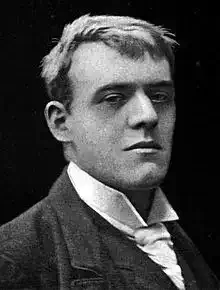
Hilaire Belloc
Epitah on the Politician Himself
Epitah on the Politician Himself
Here richly, with ridiculous display,
The Politician's corpse was laid away.
While all of his acquaintance sneered and slanged
I wept: for I had longed to see him hanged.
Another on the Same
This, the last ornament among the peers,
Bribed, bullied, swindled and blackmailed for years:
But Death's what even Politicians fail
To bribe or swindle, bully or blackmail.
On Another Politician
The Politician, dead and turned to clay,
Will make a clout to keep the wind away.
I am not fond of draughts, and yet I doubt
If I could get myself to touch that clout.
On Yet Another
Fame to her darling Shifter glory gives;
And Shifter is immortal while he lives.
Epitah Upon Himself
Lauda tu Ilarion audacem et splendidum,
Who was always beginning things and never ended 'em.
Here richly, with ridiculous display,
The Politician's corpse was laid away.
While all of his acquaintance sneered and slanged
I wept: for I had longed to see him hanged.
Another on the Same
This, the last ornament among the peers,
Bribed, bullied, swindled and blackmailed for years:
But Death's what even Politicians fail
To bribe or swindle, bully or blackmail.
On Another Politician
The Politician, dead and turned to clay,
Will make a clout to keep the wind away.
I am not fond of draughts, and yet I doubt
If I could get myself to touch that clout.
On Yet Another
Fame to her darling Shifter glory gives;
And Shifter is immortal while he lives.
Epitah Upon Himself
Lauda tu Ilarion audacem et splendidum,
Who was always beginning things and never ended 'em.
622
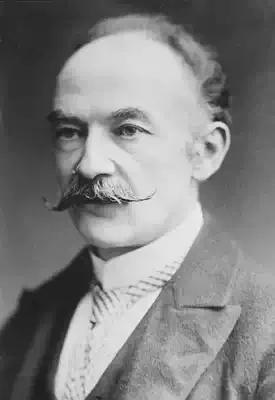
Thomas Hardy
Channel Firing
Channel Firing
That night your great guns, unawares,
Shook all our coffins as we lay,
And broke the chancel window-squares,
We thought it was the judgement day
And sat upright. While drearisome
Arose the howl of wakened hounds:
The mouse let fall the altar-crumb,
The worms drew back into the mounds,
The glebe cow drooled. Till God called, "No;
It's gunnery practice out at sea
Just as before you went below;
The world is as it used to be:
"All nations striving strong to make
Red war yet redder. Mad as hatters
They do more for Christés sake
Than you who are helpless in such matters.
"That this is not the judgment hour
For some of them's a blessed thing,
For if it were they'd have to scour
Hells floor for so much threatening...
"Ha, ha. It will be warmer when
I blow the trumpet (if indeed
I ever do; for you are men,
And rest eternal sorely need)."
So down we lay again. "I wonder,
Will the world ever saner be,"
Said one, "than when He sent us under
In our indifferent century!"
And many a skeleton shook his head.
"Instead of preaching forty year,"
My neighbor Oarson Thirdly said,
"I wish I had stuck to pipes and beer."
Again the guns disturbed the hour,
Roaring their readiness to avenge,
As far inland as Stourton Tower,
And Camelot, and starlit Stonehenge.
That night your great guns, unawares,
Shook all our coffins as we lay,
And broke the chancel window-squares,
We thought it was the judgement day
And sat upright. While drearisome
Arose the howl of wakened hounds:
The mouse let fall the altar-crumb,
The worms drew back into the mounds,
The glebe cow drooled. Till God called, "No;
It's gunnery practice out at sea
Just as before you went below;
The world is as it used to be:
"All nations striving strong to make
Red war yet redder. Mad as hatters
They do more for Christés sake
Than you who are helpless in such matters.
"That this is not the judgment hour
For some of them's a blessed thing,
For if it were they'd have to scour
Hells floor for so much threatening...
"Ha, ha. It will be warmer when
I blow the trumpet (if indeed
I ever do; for you are men,
And rest eternal sorely need)."
So down we lay again. "I wonder,
Will the world ever saner be,"
Said one, "than when He sent us under
In our indifferent century!"
And many a skeleton shook his head.
"Instead of preaching forty year,"
My neighbor Oarson Thirdly said,
"I wish I had stuck to pipes and beer."
Again the guns disturbed the hour,
Roaring their readiness to avenge,
As far inland as Stourton Tower,
And Camelot, and starlit Stonehenge.
221
Page 1
Next