
Gender Identity
Poems in this topic

Ella Wheeler Wilcox
Custer: Book Second
Custer: Book Second
I
Oh, for the power to call to aid, of mine
Own humble Muse, the famed and sacred nine.
Then might she fitly sing, and only then,
Of those intrepid and unflinching men
Who knew no homes save ever moving tents,
And who 'twixt fierce unfriendly elements
And wild barbarians warred. Yet unfraid,
Since love impels thy strains, sing, sing, my modest maid.
II
Relate how Custer in midwinter sought
Far Washita's cold shores; tell why he fought
With savage nomads fortressed in deep snows.
Woman, thou source of half the sad world's woes
And all its joys, what sanguinary strife
Has vexed the earth and made contention rife
Because of thee! For, hidden in man's heart,
Ay, in his very soul, of his true self a part,
III
The natural impulse and the wish belongs
To win thy favor and redress thy wrongs.
Alas! for woman, and for man, alas!
If that dread hour should ever come to pass,
When, through her new-born passion for control,
She drives that beauteous impulse from his soul.
What were her vaunted independence worth
If to obtain she sells her sweetest rights of birth?
IV
God formed fair woman for her true estateMan's
tender comrade, and his equal mate,
Not his competitor in toil and trade.
While coarser man, with greater strength was made
To fight her battles and her rights protect.
Ay! to protect the rights of earth's elect
(The virgin maiden and the spotless wife)
From immemorial time has man laid down his life.
V
And now brave Custer's valiant army pressed
Across the dangerous desert of the West,
To rescue fair white captives from the hands
Of brutal Cheyenne and Comanche bands,
On Washita's bleak banks. Nine hundred strong
It moved its slow determined way along,
Past frontier homes left dark and desolate
By the wild Indians' fierce and unrelenting hate;
VI
Past forts where ranchmen, strong of heart and bold,
Wept now like orphaned children as they told,
With quivering muscles and with anguished breath,
Of captured wives, whose fate was worse than death;
Past naked bodies whose disfiguring wounds
Spoke of the hellish hate of human hounds;
Past bleaching skeleton and rifled grave,
On pressed th' avenging host, to rescue and to save.
VII
Uncertain Nature, like a fickle friend,
(Worse than the foe on whom we may depend)
Turned on these dauntless souls a brow of wrath
And hurled her icy jav'lins in their path.
With treacherous quicksands, and with storms that blight,
Entrapped their footsteps and confused their sight.
'Yet on,' urged Custer, 'on at any cost,
No hour is there to waste, no moment to be lost.'
VIII
Determined, silent, on they rode, and on,
Like fabled Centaurs, men and steeds seemed one.
No bugle echoed and no voice spoke near,
Lest on some lurking Indian's list'ning ear
The sound might fall. Through swift descending snow
The stealthy guides crept, tracing out the foe;
No fire was lighted, and no halt was made
From haggard gray-lipped dawn till night lent friendly shade.
IX
Then, by the shelt'ring river's bank at last,
The weary warriors paused for their repast.
A couch of ice and falling shows for spread
Made many a suffering soldier's chilling bed.
They slept to dream of glory and delight,
While the pale fingers of the pitying night
Wove ghostly winding sheets for that doomed score
Who, ere another eve, should sleep to wake no more.
X
But those who slept not, saw with startled eyes
Far off, athwart dim unprotecting skies,
Ascending slowly with majestic grace,
A lustrous rocket, rising out of space.
'Behold the signal of the foe,' cried one,
The field is lost before the strife's begun.
Yet no! for see! yon rays spread near and far;
It is the day's first smile, the radiant morning star.
XI
The long hours counting till the daylight broke,
In whispered words the restless warriors spoke.
They talked of battles, but they thought of home
(For hearts are faithful though the feet may roam).
Brave Hamilton, all eager for the strife,
Mused o'er that two-fold mystery-death and life;
'And when I die,' quoth he, 'mine be the part
To fall upon the field, a bullet in my heart.'
XII
At break of dawn the scouts crept in to say
The foe was camped a rifle shot away.
The baying of a dog, an infant's cry
Pierced through the air; sleep fled from every eye.
To horse! to arms! the dead demand the dead!
Let the grand charge upon the lodge be led!
Let the Mosaic law, life for a life
Pay the long standing debt of blood. War to the knife!
XIII
So spake each heart in that unholy rage
Which fires the brain, when war the thoughts engage.
War, hideous war, appealing to the worst
In complex man, and waking that wild thirst
For human blood which blood alone can slake.
Yet for their country's safety, and the sake
Of tortured captives moaning in alarm
The Indian must be made to fear the law's strong arm.
XIV
A noble vengeance burned in Custer's breast,
But, as he led his army to the crest,
Above the wigwams, ready for the charge
He felt the heart within him, swelling large
With human pity, as an infant's wail
Shrilled once again above the wintry gale.
Then hosts of murdered children seemed to rise;
And shame his halting thought with sad accusing eyes,
XV
And urge him on to action. Stern of brow
The just avenger, and the General now,
He gives the silent signal to the band
Which, all impatient, waits for his command.
Cold lips to colder metal press; the air
Echoes those merry strains which mean despair
For sleeping chieftain and for toiling squaw,
But joy to those stern hearts which glory in the law
XVI
Of murder paying murder's awful debt.
And now four squadrons in one charge are met.
From east and west, from north and south they come,
At call of bugle and at roll of drum.
Their rifles rain hot hail upon the foe,
Who flee from danger in death's jaws to go.
The Indians fight like maddened bulls at bay,
And dying shriek and groan, wound the young ear of day.
XVII
A pallid captive and a white-browed boy
Add to the tumult piercing cries of joy,
As forth they fly, with high hope animate.
A hideous squaw pursues them with her hate;
Her knife descends with sickening force and sound;
Their bloody entrails stain the snow-clad ground.
She shouts with glee, then yells with rage and falls
Dead by her victims' side, pierced by avenging balls.
XVIII
Now war runs riot, carnage reigns supreme.
All thoughts of mercy fade from Custer's scheme.
Inhuman methods for inhuman foes,
Who feed on horrors and exult in woes.
To conquer and subdue alone remains
In dealing with the red man on the plains.
The breast that knows no conscience yields to fear,
Strike! let the Indian meet his master now and here.
XIX
With thoughts like these was Custer's mind engaged.
The gentlest are the sternest when enraged.
All felt the swift contagion of his ire,
For he was one who could arouse and fire
The coldest heart, so ardent was his own.
His fearless eye, his calm intrepid tone,
Bespoke the leader, strong with conscious power,
Whom following friends will bless, while foes will curse and cower.
XX
Again they charge! and now among the killed
Lies Hamilton, his wish so soon fulfilled,
Brave Elliott pursues across the field
The flying foe, his own young life to yield.
But like the leaves in some autumnal gale
The red men fall in Washita's wild vale.
Each painted face and black befeathered head
Still more repulsive seems with death's grim pallor wed.
XXI
New forces gather on surrounding knolls,
And fierce and fiercer war's red river rolls.
With bright-hued pennants flying from each lance
The gayly costumed Kiowas advance.
And bold Comanches (Bedouins of the land)
Infuse fresh spirit in the Cheyenne band.
While from the ambush of some dark ravine
Flash arrows aimed by hands, unerring and unseen.
XXIII
The hours advance; the storm clouds roll away;
Still furious and more furious grows the fray.
The yellow sun makes ghastlier still the sight
Of painted corpses, staring in its light.
No longer slaves, but comrades of their griefs,
The squaws augment the forces of their chiefs.
They chant weird dirges in a minor key,
While from the narrow door of wigwam and tepee
XXIII
Cold glittering eyes above cold glittering steel
Their deadly purpose and their hate reveal.
The click of pistols and the crack of guns
Proclaim war's daughters dangerous as her sons.
She who would wield the soldier's sword and lance
Must be prepared to take the soldier's chance.
She who would shoot must serve as target, too;
The battle-frenzied men, infuriate now pursue.
XXIV
And blood of warrior, woman and papoose,
Flow free as waters when some dam breaks loose;
Consuming fire, the wanton friend of war
(Whom allies worship and whom foes abhor)
Now trails her crimson garments through the street,
And ruin marks the passing of her feet.
Full three-score lodges smoke upon the plain,
And all the vale is strewn with bodies of the slain.
XXV
And those who are not numbered with the dead
Before all-conquering Custer now are led.
To soothe their woes, and calm their fears he seeks;
An Osage guide interprets while he speaks.
The vanquished captives, humbled, cowed and spent
Read in the victor's eye his kind intent.
The modern victor is as kind as brave;
His captive is his guest, not his insulted slave.
XXVI
Mahwissa, sister of the slaughtered chief
Of all the Cheyennes, listens; and her grief
Yields now to hope; and o'er her withered face
There flits the stealthy cunning of her race.
Then forth she steps, and thus begins to speak:
'To aid the fallen and support the weak
Is man's true province; and to ease the pain
Of those o'er whom it is his purpose now to reign.
XXVII
'Let the strong chief unite with theirs his life,
And take this black-eyed maiden for a wife.'
Then, moving with an air of proud command,
She leads a dusky damsel by the hand,
And places her at wondering Custer's side,
Invoking choicest blessings on the bride
And all unwilling groom, who thus replies.
'Fair is the Indian maid, with bright bewildering eyes,
XXVIII
'But fairer still is one who, year on year,
Has borne man's burdens, conquered woman's fear;
And at my side rode mile on weary mile,
And faced all deaths, all dangers, with a smile,
Wise as Minerva, as Diana brave,
Is she whom generous gods in kindness gave
To share the hardships of my wandering life,
Companion, comrade, friend, my loved and loyal wife.
XXIX
'The white chief weds but one. Take back thy maid.'
He ceased, and o'er Mahwissa's face a shade
Of mingled scorn and pity and surprise
Sweeps as she slow retreats, and thus replies:
'Rich is the pale-faced chief in battle fame,
But poor is he who but one wife may claim.
Wives are the red-skinned heroes' rightful spoil;
In war they prove his strength, in times of peace they toil.'
XXX
But hark! The bugle echoes o'er the plains
And sounds again those merry Celtic strains
Which oft have called light feet to lilting dance,
But now they mean the order to advance.
Along the river's bank, beyond the hill
Two thousand foemen lodge, unconquered still.
Ere falls night's curtain on this bloody play,
The army must proceed, with feint of further fray.
XXXI
The weary warriors mount their foam-flecked steeds,
With flags unfurled the dauntless host proceeds.
What though the foe outnumbers two to one?
Boldness achieves what strength oft leaves undone;
A daring mein will cause brute force to cower,
And courage is the secret source of power.
As Custer's column wheels upon their sight
The frightened red men yield the untried field by flight.
XXXII
Yet when these conquering heroes sink to rest,
Dissatisfaction gnaws the leader's breast,
For far away across vast seas of snows
Held prisoners still by hostile Arapahoes
And Cheyennes unsubdued, two captives wait.
On God and Custer hangs their future fate.
May the Great Spirit nerve the mortal's arm
To rescue suffering souls from worse than death's alarm.
XXXIII
But ere they seek to rescue the oppressed,
The valiant dead, in state, are laid to rest.
Mourned Hamilton, the faithful and the brave,
Nine hundred comrades follow to the grave;
And close behind the banner-hidden corse
All draped in black, walks mournfully his horse;
While tears of sound drip through the sunlit day.
A soldier may not weep, but drums and bugles may.
XXXIV
Now, Muse, recount, how after long delays
And dangerous marches through untrodden ways,
Where cold and hunger on each hour attend,
At last the army gains the journey's end.
An Indian village bursts upon the eye;
Two hundred lodges, sleep-encompassed lie,
There captives moan their anguished prayers through tears,
While in the silent dawn the armied answer nears.
XXXV
To snatch two fragile victims from the foe
Nine hundred men have traversed leagues of snow.
Each woe they suffered in a hostile land
The flame of vengeance in their bosoms fanned.
They thirst for slaughter, and the signal wait
To wrest the captives from their horrid fate.
Each warrior's hand upon his rifle falls,
Each savage soldier's heart for awful bloodshed calls.
XXXVI
And one, in years a youth, in woe a man,
Sad Brewster, scarred by sorrow's blighting ban,
Looks, panting, where his captive sister sleeps,
And o'er his face the shade of murder creeps.
His nostrils quiver like a hungry beast
Who scents anear the bloody carnal feast.
He longs to leap down in that slumbering vale
And leave no foe alive to tell the awful tale.
XXXVII
Not so, calm Custer. Sick of gory strife,
He hopes for rescue with no loss of life;
And plans that bloodless battle of the plains
Where reasoning mind outwits mere savage brains.
The sullen soldiers follow where he leads;
No gun is emptied, and no foeman bleeds.
Fierce for the fight and eager for the fray
They look upon their Chief in undisguised dismay.
XXXVIII
He hears the murmur of their discontent,
But sneers can never change a strong mind's bent.
He knows his purpose and he does not swerve.
And with a quiet mien and steady nerve
He meets dark looks where'er his steps may go,
And silence that is bruising as a blow,
Where late were smiles and words of ardent praise.
So pass the lagging weeks of wearying delays.
XXXIX
Inaction is not always what it seems,
And Custer's mind with plan and project teems.
Fixed in his peaceful purpose he abides
With none takes counsel and in none confides;
But slowly weaves about the foe a net
Which leaves them wholly at his mercy, yet
He strikes no fateful blow; he takes no life,
And holds in check his men, who pant for bloody strife.
XL
Intrepid warrior and skilled diplomate,
In his strong hands he holds the red man's fate.
The craftiest plot he checks with counterplot,
Till tribe by tribe the tricky foe is brought
To fear his vengeance and to know his power.
As man's fixed gaze will make a wild beast cower,
So these crude souls feel that unflinching will
Which draws them by its force, yet does not deign to kill.
XLI
And one by one the hostile Indians send
Their chiefs to seek a peaceful treaty's end.
Great councils follow; skill with cunning copes
And conquers it; and Custer sees his hopes
So long delayed, like stars storm hidden, rise
To radiate with splendor all his skies.
The stubborn Cheyennes, cowed at last by fear,
Leading the captive pair, o'er spring-touched hills appear.
XLII
With breath suspended, now the whole command
Waits the approach of that equestrian band.
Nearer it comes, still nearer, then a cry,
Half sob, half shriek, goes piercing God's blue sky,
And Brewster, like a nimble-footed doe,
Or like an arrow hurrying from a bow,
Shoots swiftly through the intervening space
And that lost sister clasps, in sorrowing love's embrace.
XLIII
And men who leaned o'er Hamilton's rude bier
And saw his dead dear face without a tear,
Strong souls who early learned the manly art
Of keeping from the eye what's in the heart,
Soldiers who look unmoved on death's pale brow,
Avert their eyes, to hide their moisture now.
The briny flood forced back from shores of woe,
Needs but to touch the strands of joy to overflow.
XLIV
About the captives welcoming warriors crowd,
All eyes are wet, and Brewster sobs aloud.
Alas, the ravage wrought by toil and woe
On faces that were fair twelve moons ago.
Bronzed by exposure to the heat and cold,
Still young in years, yet prematurely old,
By insults humbled and by labor worn,
They stand in youth's bright hour, of all youth's graces shorn.
XLV
A scanty garment rudely made of sacks
Hangs from their loins; bright blankets drape their backs;
About their necks are twisted tangled strings
Of gaudy beads, while tinkling wire and rings
Of yellow brass on wrists and fingers glow.
Thus, to assuage the anger of the foe
The cunning Indians decked the captive pair
Who in one year have known a lifetime of despair.
XLVI
But love can resurrect from sorrow's tomb
The vanished beauty and the faded bloom,
As sunlight lifts the bruised flower from the sod,
Can lift crushed hearts to hope, for love is God.
Already now in freedom's glad release
The hunted look of fear gives place to peace,
And in their eyes at thought of home appears
That rainbow light of joy which brightest shines through tears.
XLVII
About the leader thick the warriors crowd;
Late loud in censure, now in praises loud,
They laud the tactics, and the skill extol
Which gained a bloodless yet a glorious goal.
Alone and lonely in the path of right
Full many a brave soul walks. When gods requite
And crown his actions as their worth demands,
Among admiring throngs the hero always stands.
XLVIII
Back to the East the valorous squadrons sweep;
The earth, arousing from her long, cold sleep,
Throws from her breast the coverlet of snow,
Revealing Spring's soft charms which lie below.
Suppressed emotions in each heart arise,
The wooer wakens and the warrior dies.
The bird of prey is vanquished by the dove,
And thoughts of bloody strife give place to thoughts of love.
XLIX
The mighty plains, devoid of whispering trees,
Guard well the secrets of departed seas.
Where once great tides swept by with ebb and flow
The scorching sun looks down in tearless woe.
And fierce tornadoes in ungoverned pain
Mourn still the loss of that mysterious main.
Across this ocean bed the soldiers fly-
Home is the gleaming goal that lures each eager eye.
L
Like some elixir which the gods prepare,
They drink the viewless tonic of the air,
Sweet with the breath of startled antelopes
Which speed before them over swelling slopes.
Now like a serpent writhing o'er the moor,
The column curves and makes a slight detour,
As Custer leads a thousand men away
To save a ground bird's nest which in the footpath lay.
LI
Mile following mile, against the leaning skies
Far off they see a dull dark cloud arise.
The hunter's instinct in each heart is stirred,
Beholding there in one stupendous herd
A hundred thousand buffaloes. Oh great
Unwieldy proof of Nature's cruder state,
Rough remnant of a prehistoric day,
Thou, with the red man, too, must shortly pass away.
LII
Upon those spreading plains is there not room
For man and bison, that he seals its doom?
What pleasure lies and what seductive charm
In slaying with no purpose but to harm?
Alas, that man, unable to create,
Should thirst forever to exterminate,
And in destruction find his fiercest joy.
The gods alone create, gods only should destroy.
LIII
The flying hosts a straggling bull pursue;
Unerring aim, the skillful Custer drew.
The wounded beast turns madly in despair
And man and horse are lifted high in air.
The conscious steed needs not the guiding rein;
Back with a bound and one quick cry of pain
He springs, and halts, well knowing where must fall
In that protected frame, the sure death dealing ball.
LIV
With minds intent upon the morrow's feast,
The men surround the carcass of the beast.
Rolled on his back, he lies with lolling tongue,
Soon to the saddle savory steaks are hung.
And from his mighty head, great tufts of hair
Are cut as trophies for some lady fair.
To vultures then they leave the torn remains
Of what an hour ago was monarch of the plains.
LV
Far off, two bulls in jealous war engage,
Their blood-shot eye balls roll in furious rage;
With maddened hoofs they mutilate the ground
And loud their angry bellowings resound;
With shaggy heads bent low they plunge and roar,
Till both broad bellies drip with purple gore.
Meanwhile, the heifer, whom the twain desire,
Stands browsing near the pair, indifferent to their ire.
LVI
At last she lifts her lazy head and heeds
The clattering hoofs of swift advancing steeds.
Off to the herd with cumb'rous gait she runs
And leaves the bulls to face the threatening guns.
No more for them the free life of the plains,
Its mating pleasures and its warring pains.
Their quivering flesh shall feed unnumbered foes,
Their tufted tails adorn the soldiers' saddle bows.
LVII
Now into camp the conquering hosts advance;
On burnished arms the brilliant sunbeams glance.
Brave Custer leads, blonde as the gods of old;
Back from his brow blow clustering locks of gold,
And, like a jewel in a brook, there lies,
Far in the depths of his blue guarded eyes,
The thought of one whose smiling lips upcurled,
Mean more of joy to him than plaudits of the world.
LVIII
The troops in columns of platoons appear
Close to the leader following. Ah, here
The poetry of war is fully seen,
Its prose forgotten; as against the green
Of Mother Nature, uniformed in blue,
The soldiers pass for Sheridan's review.
The motion-music of the moving throng,
Is like a silent tune, set to a wordless song.
LIX
The guides and trailers, weird in war's array,
Precede the troops along the grassy way.
They chant wild songs, and with loud noise and stress,
In savage manner savage joy express.
The Indian captives, blanketed in red,
On ponies mounted, by the scouts are led.
Like sumach bushes, etched on evening skies,
Against the blue-clad troops, this patch of color lies.
LX
High o'er the scene vast music billows bound,
And all the air is liquid with the sound
Of those invisible compelling waves.
Perchance they reach the low and lonely graves
Where sleep brave Elliott and Hamilton,
And whisper there the tale of victory won;
Or do the souls of soldiers tried and true
Come at the bugle call, and march in grand review?
LXI
The pleased Commander watches in surprise
This splendid pageant surge before his eyes.
Not in those mighty battle days of old
Did scenes like this upon his sight unfold.
But now it passes. Drums and bugles cease
To dash war billows on the shores of Peace.
The victors smile on fair broad bosomed Sleep
While in her soothing arms, the vanquished cease to weep
I
Oh, for the power to call to aid, of mine
Own humble Muse, the famed and sacred nine.
Then might she fitly sing, and only then,
Of those intrepid and unflinching men
Who knew no homes save ever moving tents,
And who 'twixt fierce unfriendly elements
And wild barbarians warred. Yet unfraid,
Since love impels thy strains, sing, sing, my modest maid.
II
Relate how Custer in midwinter sought
Far Washita's cold shores; tell why he fought
With savage nomads fortressed in deep snows.
Woman, thou source of half the sad world's woes
And all its joys, what sanguinary strife
Has vexed the earth and made contention rife
Because of thee! For, hidden in man's heart,
Ay, in his very soul, of his true self a part,
III
The natural impulse and the wish belongs
To win thy favor and redress thy wrongs.
Alas! for woman, and for man, alas!
If that dread hour should ever come to pass,
When, through her new-born passion for control,
She drives that beauteous impulse from his soul.
What were her vaunted independence worth
If to obtain she sells her sweetest rights of birth?
IV
God formed fair woman for her true estateMan's
tender comrade, and his equal mate,
Not his competitor in toil and trade.
While coarser man, with greater strength was made
To fight her battles and her rights protect.
Ay! to protect the rights of earth's elect
(The virgin maiden and the spotless wife)
From immemorial time has man laid down his life.
V
And now brave Custer's valiant army pressed
Across the dangerous desert of the West,
To rescue fair white captives from the hands
Of brutal Cheyenne and Comanche bands,
On Washita's bleak banks. Nine hundred strong
It moved its slow determined way along,
Past frontier homes left dark and desolate
By the wild Indians' fierce and unrelenting hate;
VI
Past forts where ranchmen, strong of heart and bold,
Wept now like orphaned children as they told,
With quivering muscles and with anguished breath,
Of captured wives, whose fate was worse than death;
Past naked bodies whose disfiguring wounds
Spoke of the hellish hate of human hounds;
Past bleaching skeleton and rifled grave,
On pressed th' avenging host, to rescue and to save.
VII
Uncertain Nature, like a fickle friend,
(Worse than the foe on whom we may depend)
Turned on these dauntless souls a brow of wrath
And hurled her icy jav'lins in their path.
With treacherous quicksands, and with storms that blight,
Entrapped their footsteps and confused their sight.
'Yet on,' urged Custer, 'on at any cost,
No hour is there to waste, no moment to be lost.'
VIII
Determined, silent, on they rode, and on,
Like fabled Centaurs, men and steeds seemed one.
No bugle echoed and no voice spoke near,
Lest on some lurking Indian's list'ning ear
The sound might fall. Through swift descending snow
The stealthy guides crept, tracing out the foe;
No fire was lighted, and no halt was made
From haggard gray-lipped dawn till night lent friendly shade.
IX
Then, by the shelt'ring river's bank at last,
The weary warriors paused for their repast.
A couch of ice and falling shows for spread
Made many a suffering soldier's chilling bed.
They slept to dream of glory and delight,
While the pale fingers of the pitying night
Wove ghostly winding sheets for that doomed score
Who, ere another eve, should sleep to wake no more.
X
But those who slept not, saw with startled eyes
Far off, athwart dim unprotecting skies,
Ascending slowly with majestic grace,
A lustrous rocket, rising out of space.
'Behold the signal of the foe,' cried one,
The field is lost before the strife's begun.
Yet no! for see! yon rays spread near and far;
It is the day's first smile, the radiant morning star.
XI
The long hours counting till the daylight broke,
In whispered words the restless warriors spoke.
They talked of battles, but they thought of home
(For hearts are faithful though the feet may roam).
Brave Hamilton, all eager for the strife,
Mused o'er that two-fold mystery-death and life;
'And when I die,' quoth he, 'mine be the part
To fall upon the field, a bullet in my heart.'
XII
At break of dawn the scouts crept in to say
The foe was camped a rifle shot away.
The baying of a dog, an infant's cry
Pierced through the air; sleep fled from every eye.
To horse! to arms! the dead demand the dead!
Let the grand charge upon the lodge be led!
Let the Mosaic law, life for a life
Pay the long standing debt of blood. War to the knife!
XIII
So spake each heart in that unholy rage
Which fires the brain, when war the thoughts engage.
War, hideous war, appealing to the worst
In complex man, and waking that wild thirst
For human blood which blood alone can slake.
Yet for their country's safety, and the sake
Of tortured captives moaning in alarm
The Indian must be made to fear the law's strong arm.
XIV
A noble vengeance burned in Custer's breast,
But, as he led his army to the crest,
Above the wigwams, ready for the charge
He felt the heart within him, swelling large
With human pity, as an infant's wail
Shrilled once again above the wintry gale.
Then hosts of murdered children seemed to rise;
And shame his halting thought with sad accusing eyes,
XV
And urge him on to action. Stern of brow
The just avenger, and the General now,
He gives the silent signal to the band
Which, all impatient, waits for his command.
Cold lips to colder metal press; the air
Echoes those merry strains which mean despair
For sleeping chieftain and for toiling squaw,
But joy to those stern hearts which glory in the law
XVI
Of murder paying murder's awful debt.
And now four squadrons in one charge are met.
From east and west, from north and south they come,
At call of bugle and at roll of drum.
Their rifles rain hot hail upon the foe,
Who flee from danger in death's jaws to go.
The Indians fight like maddened bulls at bay,
And dying shriek and groan, wound the young ear of day.
XVII
A pallid captive and a white-browed boy
Add to the tumult piercing cries of joy,
As forth they fly, with high hope animate.
A hideous squaw pursues them with her hate;
Her knife descends with sickening force and sound;
Their bloody entrails stain the snow-clad ground.
She shouts with glee, then yells with rage and falls
Dead by her victims' side, pierced by avenging balls.
XVIII
Now war runs riot, carnage reigns supreme.
All thoughts of mercy fade from Custer's scheme.
Inhuman methods for inhuman foes,
Who feed on horrors and exult in woes.
To conquer and subdue alone remains
In dealing with the red man on the plains.
The breast that knows no conscience yields to fear,
Strike! let the Indian meet his master now and here.
XIX
With thoughts like these was Custer's mind engaged.
The gentlest are the sternest when enraged.
All felt the swift contagion of his ire,
For he was one who could arouse and fire
The coldest heart, so ardent was his own.
His fearless eye, his calm intrepid tone,
Bespoke the leader, strong with conscious power,
Whom following friends will bless, while foes will curse and cower.
XX
Again they charge! and now among the killed
Lies Hamilton, his wish so soon fulfilled,
Brave Elliott pursues across the field
The flying foe, his own young life to yield.
But like the leaves in some autumnal gale
The red men fall in Washita's wild vale.
Each painted face and black befeathered head
Still more repulsive seems with death's grim pallor wed.
XXI
New forces gather on surrounding knolls,
And fierce and fiercer war's red river rolls.
With bright-hued pennants flying from each lance
The gayly costumed Kiowas advance.
And bold Comanches (Bedouins of the land)
Infuse fresh spirit in the Cheyenne band.
While from the ambush of some dark ravine
Flash arrows aimed by hands, unerring and unseen.
XXIII
The hours advance; the storm clouds roll away;
Still furious and more furious grows the fray.
The yellow sun makes ghastlier still the sight
Of painted corpses, staring in its light.
No longer slaves, but comrades of their griefs,
The squaws augment the forces of their chiefs.
They chant weird dirges in a minor key,
While from the narrow door of wigwam and tepee
XXIII
Cold glittering eyes above cold glittering steel
Their deadly purpose and their hate reveal.
The click of pistols and the crack of guns
Proclaim war's daughters dangerous as her sons.
She who would wield the soldier's sword and lance
Must be prepared to take the soldier's chance.
She who would shoot must serve as target, too;
The battle-frenzied men, infuriate now pursue.
XXIV
And blood of warrior, woman and papoose,
Flow free as waters when some dam breaks loose;
Consuming fire, the wanton friend of war
(Whom allies worship and whom foes abhor)
Now trails her crimson garments through the street,
And ruin marks the passing of her feet.
Full three-score lodges smoke upon the plain,
And all the vale is strewn with bodies of the slain.
XXV
And those who are not numbered with the dead
Before all-conquering Custer now are led.
To soothe their woes, and calm their fears he seeks;
An Osage guide interprets while he speaks.
The vanquished captives, humbled, cowed and spent
Read in the victor's eye his kind intent.
The modern victor is as kind as brave;
His captive is his guest, not his insulted slave.
XXVI
Mahwissa, sister of the slaughtered chief
Of all the Cheyennes, listens; and her grief
Yields now to hope; and o'er her withered face
There flits the stealthy cunning of her race.
Then forth she steps, and thus begins to speak:
'To aid the fallen and support the weak
Is man's true province; and to ease the pain
Of those o'er whom it is his purpose now to reign.
XXVII
'Let the strong chief unite with theirs his life,
And take this black-eyed maiden for a wife.'
Then, moving with an air of proud command,
She leads a dusky damsel by the hand,
And places her at wondering Custer's side,
Invoking choicest blessings on the bride
And all unwilling groom, who thus replies.
'Fair is the Indian maid, with bright bewildering eyes,
XXVIII
'But fairer still is one who, year on year,
Has borne man's burdens, conquered woman's fear;
And at my side rode mile on weary mile,
And faced all deaths, all dangers, with a smile,
Wise as Minerva, as Diana brave,
Is she whom generous gods in kindness gave
To share the hardships of my wandering life,
Companion, comrade, friend, my loved and loyal wife.
XXIX
'The white chief weds but one. Take back thy maid.'
He ceased, and o'er Mahwissa's face a shade
Of mingled scorn and pity and surprise
Sweeps as she slow retreats, and thus replies:
'Rich is the pale-faced chief in battle fame,
But poor is he who but one wife may claim.
Wives are the red-skinned heroes' rightful spoil;
In war they prove his strength, in times of peace they toil.'
XXX
But hark! The bugle echoes o'er the plains
And sounds again those merry Celtic strains
Which oft have called light feet to lilting dance,
But now they mean the order to advance.
Along the river's bank, beyond the hill
Two thousand foemen lodge, unconquered still.
Ere falls night's curtain on this bloody play,
The army must proceed, with feint of further fray.
XXXI
The weary warriors mount their foam-flecked steeds,
With flags unfurled the dauntless host proceeds.
What though the foe outnumbers two to one?
Boldness achieves what strength oft leaves undone;
A daring mein will cause brute force to cower,
And courage is the secret source of power.
As Custer's column wheels upon their sight
The frightened red men yield the untried field by flight.
XXXII
Yet when these conquering heroes sink to rest,
Dissatisfaction gnaws the leader's breast,
For far away across vast seas of snows
Held prisoners still by hostile Arapahoes
And Cheyennes unsubdued, two captives wait.
On God and Custer hangs their future fate.
May the Great Spirit nerve the mortal's arm
To rescue suffering souls from worse than death's alarm.
XXXIII
But ere they seek to rescue the oppressed,
The valiant dead, in state, are laid to rest.
Mourned Hamilton, the faithful and the brave,
Nine hundred comrades follow to the grave;
And close behind the banner-hidden corse
All draped in black, walks mournfully his horse;
While tears of sound drip through the sunlit day.
A soldier may not weep, but drums and bugles may.
XXXIV
Now, Muse, recount, how after long delays
And dangerous marches through untrodden ways,
Where cold and hunger on each hour attend,
At last the army gains the journey's end.
An Indian village bursts upon the eye;
Two hundred lodges, sleep-encompassed lie,
There captives moan their anguished prayers through tears,
While in the silent dawn the armied answer nears.
XXXV
To snatch two fragile victims from the foe
Nine hundred men have traversed leagues of snow.
Each woe they suffered in a hostile land
The flame of vengeance in their bosoms fanned.
They thirst for slaughter, and the signal wait
To wrest the captives from their horrid fate.
Each warrior's hand upon his rifle falls,
Each savage soldier's heart for awful bloodshed calls.
XXXVI
And one, in years a youth, in woe a man,
Sad Brewster, scarred by sorrow's blighting ban,
Looks, panting, where his captive sister sleeps,
And o'er his face the shade of murder creeps.
His nostrils quiver like a hungry beast
Who scents anear the bloody carnal feast.
He longs to leap down in that slumbering vale
And leave no foe alive to tell the awful tale.
XXXVII
Not so, calm Custer. Sick of gory strife,
He hopes for rescue with no loss of life;
And plans that bloodless battle of the plains
Where reasoning mind outwits mere savage brains.
The sullen soldiers follow where he leads;
No gun is emptied, and no foeman bleeds.
Fierce for the fight and eager for the fray
They look upon their Chief in undisguised dismay.
XXXVIII
He hears the murmur of their discontent,
But sneers can never change a strong mind's bent.
He knows his purpose and he does not swerve.
And with a quiet mien and steady nerve
He meets dark looks where'er his steps may go,
And silence that is bruising as a blow,
Where late were smiles and words of ardent praise.
So pass the lagging weeks of wearying delays.
XXXIX
Inaction is not always what it seems,
And Custer's mind with plan and project teems.
Fixed in his peaceful purpose he abides
With none takes counsel and in none confides;
But slowly weaves about the foe a net
Which leaves them wholly at his mercy, yet
He strikes no fateful blow; he takes no life,
And holds in check his men, who pant for bloody strife.
XL
Intrepid warrior and skilled diplomate,
In his strong hands he holds the red man's fate.
The craftiest plot he checks with counterplot,
Till tribe by tribe the tricky foe is brought
To fear his vengeance and to know his power.
As man's fixed gaze will make a wild beast cower,
So these crude souls feel that unflinching will
Which draws them by its force, yet does not deign to kill.
XLI
And one by one the hostile Indians send
Their chiefs to seek a peaceful treaty's end.
Great councils follow; skill with cunning copes
And conquers it; and Custer sees his hopes
So long delayed, like stars storm hidden, rise
To radiate with splendor all his skies.
The stubborn Cheyennes, cowed at last by fear,
Leading the captive pair, o'er spring-touched hills appear.
XLII
With breath suspended, now the whole command
Waits the approach of that equestrian band.
Nearer it comes, still nearer, then a cry,
Half sob, half shriek, goes piercing God's blue sky,
And Brewster, like a nimble-footed doe,
Or like an arrow hurrying from a bow,
Shoots swiftly through the intervening space
And that lost sister clasps, in sorrowing love's embrace.
XLIII
And men who leaned o'er Hamilton's rude bier
And saw his dead dear face without a tear,
Strong souls who early learned the manly art
Of keeping from the eye what's in the heart,
Soldiers who look unmoved on death's pale brow,
Avert their eyes, to hide their moisture now.
The briny flood forced back from shores of woe,
Needs but to touch the strands of joy to overflow.
XLIV
About the captives welcoming warriors crowd,
All eyes are wet, and Brewster sobs aloud.
Alas, the ravage wrought by toil and woe
On faces that were fair twelve moons ago.
Bronzed by exposure to the heat and cold,
Still young in years, yet prematurely old,
By insults humbled and by labor worn,
They stand in youth's bright hour, of all youth's graces shorn.
XLV
A scanty garment rudely made of sacks
Hangs from their loins; bright blankets drape their backs;
About their necks are twisted tangled strings
Of gaudy beads, while tinkling wire and rings
Of yellow brass on wrists and fingers glow.
Thus, to assuage the anger of the foe
The cunning Indians decked the captive pair
Who in one year have known a lifetime of despair.
XLVI
But love can resurrect from sorrow's tomb
The vanished beauty and the faded bloom,
As sunlight lifts the bruised flower from the sod,
Can lift crushed hearts to hope, for love is God.
Already now in freedom's glad release
The hunted look of fear gives place to peace,
And in their eyes at thought of home appears
That rainbow light of joy which brightest shines through tears.
XLVII
About the leader thick the warriors crowd;
Late loud in censure, now in praises loud,
They laud the tactics, and the skill extol
Which gained a bloodless yet a glorious goal.
Alone and lonely in the path of right
Full many a brave soul walks. When gods requite
And crown his actions as their worth demands,
Among admiring throngs the hero always stands.
XLVIII
Back to the East the valorous squadrons sweep;
The earth, arousing from her long, cold sleep,
Throws from her breast the coverlet of snow,
Revealing Spring's soft charms which lie below.
Suppressed emotions in each heart arise,
The wooer wakens and the warrior dies.
The bird of prey is vanquished by the dove,
And thoughts of bloody strife give place to thoughts of love.
XLIX
The mighty plains, devoid of whispering trees,
Guard well the secrets of departed seas.
Where once great tides swept by with ebb and flow
The scorching sun looks down in tearless woe.
And fierce tornadoes in ungoverned pain
Mourn still the loss of that mysterious main.
Across this ocean bed the soldiers fly-
Home is the gleaming goal that lures each eager eye.
L
Like some elixir which the gods prepare,
They drink the viewless tonic of the air,
Sweet with the breath of startled antelopes
Which speed before them over swelling slopes.
Now like a serpent writhing o'er the moor,
The column curves and makes a slight detour,
As Custer leads a thousand men away
To save a ground bird's nest which in the footpath lay.
LI
Mile following mile, against the leaning skies
Far off they see a dull dark cloud arise.
The hunter's instinct in each heart is stirred,
Beholding there in one stupendous herd
A hundred thousand buffaloes. Oh great
Unwieldy proof of Nature's cruder state,
Rough remnant of a prehistoric day,
Thou, with the red man, too, must shortly pass away.
LII
Upon those spreading plains is there not room
For man and bison, that he seals its doom?
What pleasure lies and what seductive charm
In slaying with no purpose but to harm?
Alas, that man, unable to create,
Should thirst forever to exterminate,
And in destruction find his fiercest joy.
The gods alone create, gods only should destroy.
LIII
The flying hosts a straggling bull pursue;
Unerring aim, the skillful Custer drew.
The wounded beast turns madly in despair
And man and horse are lifted high in air.
The conscious steed needs not the guiding rein;
Back with a bound and one quick cry of pain
He springs, and halts, well knowing where must fall
In that protected frame, the sure death dealing ball.
LIV
With minds intent upon the morrow's feast,
The men surround the carcass of the beast.
Rolled on his back, he lies with lolling tongue,
Soon to the saddle savory steaks are hung.
And from his mighty head, great tufts of hair
Are cut as trophies for some lady fair.
To vultures then they leave the torn remains
Of what an hour ago was monarch of the plains.
LV
Far off, two bulls in jealous war engage,
Their blood-shot eye balls roll in furious rage;
With maddened hoofs they mutilate the ground
And loud their angry bellowings resound;
With shaggy heads bent low they plunge and roar,
Till both broad bellies drip with purple gore.
Meanwhile, the heifer, whom the twain desire,
Stands browsing near the pair, indifferent to their ire.
LVI
At last she lifts her lazy head and heeds
The clattering hoofs of swift advancing steeds.
Off to the herd with cumb'rous gait she runs
And leaves the bulls to face the threatening guns.
No more for them the free life of the plains,
Its mating pleasures and its warring pains.
Their quivering flesh shall feed unnumbered foes,
Their tufted tails adorn the soldiers' saddle bows.
LVII
Now into camp the conquering hosts advance;
On burnished arms the brilliant sunbeams glance.
Brave Custer leads, blonde as the gods of old;
Back from his brow blow clustering locks of gold,
And, like a jewel in a brook, there lies,
Far in the depths of his blue guarded eyes,
The thought of one whose smiling lips upcurled,
Mean more of joy to him than plaudits of the world.
LVIII
The troops in columns of platoons appear
Close to the leader following. Ah, here
The poetry of war is fully seen,
Its prose forgotten; as against the green
Of Mother Nature, uniformed in blue,
The soldiers pass for Sheridan's review.
The motion-music of the moving throng,
Is like a silent tune, set to a wordless song.
LIX
The guides and trailers, weird in war's array,
Precede the troops along the grassy way.
They chant wild songs, and with loud noise and stress,
In savage manner savage joy express.
The Indian captives, blanketed in red,
On ponies mounted, by the scouts are led.
Like sumach bushes, etched on evening skies,
Against the blue-clad troops, this patch of color lies.
LX
High o'er the scene vast music billows bound,
And all the air is liquid with the sound
Of those invisible compelling waves.
Perchance they reach the low and lonely graves
Where sleep brave Elliott and Hamilton,
And whisper there the tale of victory won;
Or do the souls of soldiers tried and true
Come at the bugle call, and march in grand review?
LXI
The pleased Commander watches in surprise
This splendid pageant surge before his eyes.
Not in those mighty battle days of old
Did scenes like this upon his sight unfold.
But now it passes. Drums and bugles cease
To dash war billows on the shores of Peace.
The victors smile on fair broad bosomed Sleep
While in her soothing arms, the vanquished cease to weep
1,106
1

Robert W. Service
Treat 'Em Rough
Treat 'Em Rough
First time I dared propose,
A callow lad was I;
I donned my Sunday clothes,
I wore my Old School Tie.
Awaiting me Louise
Was dolled to beat the band,
So going on my knees
I begged her hand.
Oh yes, she gave me her hand,-A
box upon the ear;
I could not understand,
I blinked away a tear.
Then scornfully she said:
'Next time you kneel before
A maid, young man don't spread
Your hankey on the floor.'
So next time I proposed,
Thinks I, I'll treat 'em rough.
Her name was Lily Rose,
I gave her he-man stuff.
I yanked her on my knee,
And as her ear I bit,
To my amazement she
Seemed to like it.
The old cave-men knew best;
Grab girlies by the hair,
And though they may protest
Drag them into your lair.
So young men seeking mates,
Take my tip, if rejected:
A modern maid just hates
To be respected.
First time I dared propose,
A callow lad was I;
I donned my Sunday clothes,
I wore my Old School Tie.
Awaiting me Louise
Was dolled to beat the band,
So going on my knees
I begged her hand.
Oh yes, she gave me her hand,-A
box upon the ear;
I could not understand,
I blinked away a tear.
Then scornfully she said:
'Next time you kneel before
A maid, young man don't spread
Your hankey on the floor.'
So next time I proposed,
Thinks I, I'll treat 'em rough.
Her name was Lily Rose,
I gave her he-man stuff.
I yanked her on my knee,
And as her ear I bit,
To my amazement she
Seemed to like it.
The old cave-men knew best;
Grab girlies by the hair,
And though they may protest
Drag them into your lair.
So young men seeking mates,
Take my tip, if rejected:
A modern maid just hates
To be respected.
178

Spike Milligan
A Silly Poem
A Silly Poem
Said Hamlet to Ophelia,
I'll draw a sketch of thee,
What kind of pencil shall I use?
B or not B?
Said Hamlet to Ophelia,
I'll draw a sketch of thee,
What kind of pencil shall I use?
B or not B?
158
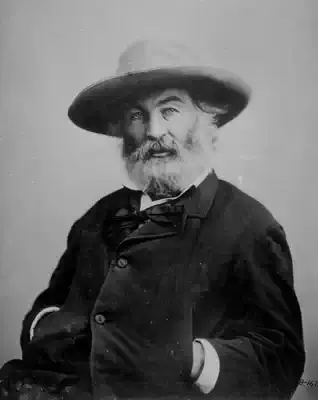
Walt Whitman
Visor'd
Visor'd
A MASK--a perpetual natural disguiser of herself,
Concealing her face, concealing her form,
Changes and transformations every hour, every moment,
Falling upon her even when she sleeps.
A MASK--a perpetual natural disguiser of herself,
Concealing her face, concealing her form,
Changes and transformations every hour, every moment,
Falling upon her even when she sleeps.
335
Walt Whitman
Unfolded Out Of The Folds
Unfolded Out Of The Folds
UNFOLDED out of the folds of the woman, man comes unfolded, and is
always to come unfolded;
Unfolded only out of the superbest woman of the earth, is to come the
superbest man of the earth;
Unfolded out of the friendliest woman, is to come the friendliest
man;
Unfolded only out of the perfect body of a woman, can a man be form'd
of perfect body;
Unfolded only out of the inimitable poem of the woman, can come the
poems of man--(only thence have my poems come;)
Unfolded out of the strong and arrogant woman I love, only thence can
appear the strong and arrogant man I love;
Unfolded by brawny embraces from the well-muscled woman I love, only
thence come the brawny embraces of the man;
Unfolded out of the folds of the woman's brain, come all the folds of
the man's brain, duly obedient;
Unfolded out of the justice of the woman, all justice is unfolded;
Unfolded out of the sympathy of the woman is all sympathy: 10
A man is a great thing upon the earth, and through eternity--but
every jot of the greatness of man is unfolded out of woman,
First the man is shaped in the woman, he can then be shaped in
himself.
UNFOLDED out of the folds of the woman, man comes unfolded, and is
always to come unfolded;
Unfolded only out of the superbest woman of the earth, is to come the
superbest man of the earth;
Unfolded out of the friendliest woman, is to come the friendliest
man;
Unfolded only out of the perfect body of a woman, can a man be form'd
of perfect body;
Unfolded only out of the inimitable poem of the woman, can come the
poems of man--(only thence have my poems come;)
Unfolded out of the strong and arrogant woman I love, only thence can
appear the strong and arrogant man I love;
Unfolded by brawny embraces from the well-muscled woman I love, only
thence come the brawny embraces of the man;
Unfolded out of the folds of the woman's brain, come all the folds of
the man's brain, duly obedient;
Unfolded out of the justice of the woman, all justice is unfolded;
Unfolded out of the sympathy of the woman is all sympathy: 10
A man is a great thing upon the earth, and through eternity--but
every jot of the greatness of man is unfolded out of woman,
First the man is shaped in the woman, he can then be shaped in
himself.
385
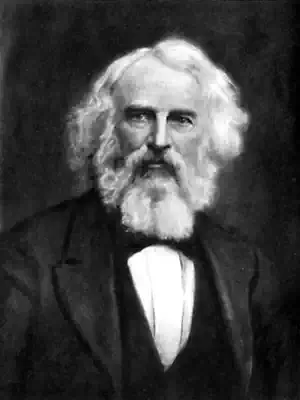
Henry Wadsworth Longfellow
The Masque Of Pandora
The Masque Of Pandora
THE WORKSHOP OF HEPHAESTUS
HEPHAESTUS (standing before the statue of Pandora.)
Not fashioned out of gold, like Hera's throne,
Nor forged of iron like the thunderbolts
Of Zeus omnipotent, or other works
Wrought by my hands at Lemnos or Olympus,
But moulded in soft clay, that unresisting
Yields itself to the touch, this lovely form
Before me stands, perfect in every part.
Not Aphrodite's self appeared more fair,
When first upwafted by caressing winds
She came to high Olympus, and the gods
Paid homage to her beauty. Thus her hair
Was cinctured; thus her floating drapery
Was like a cloud about her, and her face
Was radiant with the sunshine and the sea.
THE VOICE OF ZEUS.
Is thy work done, Hephaestus?
HEPHAESTUS.
It is finished!
THE VOICE.
Not finished till I breathe the breath of life
Into her nostrils, and she moves and speaks.
HEPHAESTUS.
Will she become immortal like ourselves?
THE VOICE.
The form that thou hast fashioned out of clay
Is of the earth and mortal; but the spirit,
The life, the exhalation of my breath,
Is of diviner essence and immortal.
The gods shall shower on her their benefactions,
She shall possess all gifts: the gift of song,
The gift of eloquence, the gift of beauty,
The fascination and the nameless charm
That shall lead all men captive.
HEPHAESTUS.
Wherefore? wherefore?
(A wind shakes the house.)
I hear the rushing of a mighty wind
Through all the halls and chambers of my house!
Her parted lips inhale it, and her bosom
Heaves with the inspiration. As a reed
Beside a river in the rippling current
Bends to and fro, she bows or lifts her head.
She gazes round about as if amazed;
She is alive; she breathes, but yet she speaks not!
(PANDORA descends from the pedestal.)
CHORUS OF THE GRACES
AGLAIA.
In the workshop of Hephaestus
What is this I see?
Have the Gods to four increased us
Who were only three?
Beautiful in form and feature,
Lovely as the day,
Can there be so fair a creature
Formed of common clay?
THALIA.
O sweet, pale face! O lovely eyes of azure,
Clear as the waters of a brook that run
Limpid and laughing in the summer sun!
O golden hair that like a miser's treasure
In its abundance overflows the measure!
O graceful form, that cloudlike floatest on
With the soft, undulating gait of one
Who moveth as if motion were a pleasure!
By what name shall I call thee? Nymph or Muse,
Callirrhoe or Urania? Some sweet name
Whose every syllable is a caress
Would best befit thee; but I cannot choose,
Nor do I care to choose; for still the same,
Nameless or named, will be thy loveliness.
EUPHROSYNE.
Dowered with all celestial gifts,
Skilled in every art
That ennobles and uplifts
And delights the heart,
Fair on earth shall be thy fame
As thy face is fair,
And Pandora be the name
Thou henceforth shalt bear.
II.
OLYMPUS
HERMES (putting on his sandals.)
Much must he toil who serves the Immortal Gods,
And I, who am their herald, most of all.
No rest have I, nor respite. I no sooner
Unclasp the winged sandals from my feet,
Than I again must clasp them, and depart
Upon some foolish errand. But to-day
The errand is not foolish. Never yet
With greater joy did I obey the summons
That sends me earthward. I will fly so swiftly
That my caduceus in the whistling air
Shall make a sound like the Pandaean pipes,
Cheating the shepherds; for to-day I go,
Commissioned by high-thundering Zeus, to lead
A maiden to Prometheus, in his tower,
And by my cunning arguments persuade him
To marry her. What mischief lies concealed
In this design I know not; but I know
Who thinks of marrying hath already taken
One step upon the road to penitence.
Such embassies delight me. Forth I launch
On the sustaining air, nor fear to fall
Like Icarus, nor swerve aside like him
Who drove amiss Hyperion's fiery steeds.
I sink, I fly! The yielding element
Folds itself round about me like an arm,
And holds me as a mother holds her child.
III.
TOWER OF PROMETHEUS ON MOUNT CAUCASUS
PROMETHEUS.
I hear the trumpet of Alectryon
Proclaim the dawn. The stars begin to fade,
And all the heavens are full of prophecies
And evil auguries. Blood-red last night
I saw great Kronos rise; the crescent moon
Sank through the mist, as if it were the scythe
His parricidal hand had flung far down
The western steeps. O ye Immortal Gods,
What evil are ye plotting and contriving?
(HERMES and PANDORA at the threshold.)
PANDORA.
I cannot cross the threshold. An unseen
And icy hand repels me. These blank walls
Oppress me with their weight!
PROMETHEUS.
Powerful ye are,
But not omnipotent. Ye cannot fight
Against Necessity. The Fates control you,
As they do us, and so far we are equals!
PANDORA.
Motionless, passionless, companionless,
He sits there muttering in his beard. His voice
Is like a river flowing underground!
HERMES.
Prometheus, hail!
PROMETHEUS.
Who calls me?
HERMES.
It is I.
Dost thou not know me?
PROMETHEUS.
By thy winged cap
And winged heels I know thee. Thou art Hermes,
Captain of thieves! Hast thou again been stealing
The heifers of Admetus in the sweet
Meadows of asphodel? or Hera's girdle?
Or the earth-shaking trident of Poseidon?
HERMES.
And thou, Prometheus; say, hast thou again
Been stealing fire from Helios' chariot-wheels
To light thy furnaces?
PROMETHEUS.
Why comest thou hither
So early in the dawn?
HERMES.
The Immortal Gods
Know naught of late or early. Zeus himself
The omnipotent hath sent me.
PROMETHEUS.
For what purpose?
HERMES.
To bring this maiden to thee.
PROMETHEUS.
I mistrust
The Gods and all their gifts. If they have sent her
It is for no good purpose.
HERMES.
What disaster
Could she bring on thy house, who is a woman?
PROMETHEUS.
The Gods are not my friends, nor am I theirs.
Whatever comes from them, though in a shape
As beautiful as this, is evil only.
Who art thou?
PANDORA.
One who, though to thee unknown,
Yet knoweth thee.
PROMETHEUS.
How shouldst thou know me, woman?
PANDORA.
Who knoweth not Prometheus the humane?
PROMETHEUS.
Prometheus the unfortunate; to whom
Both Gods and men have shown themselves ungrateful.
When every spark was quenched on every hearth
Throughout the earth, I brought to man the fire
And all its ministrations. My reward
Hath been the rock and vulture.
HERMES.
But the Gods
At last relent and pardon.
PROMETHEUS.
They relent not;
They pardon not; they are implacable,
Revengeful, unforgiving!
HERMES.
As a pledge
Of reconciliation they have sent to thee
This divine being, to be thy companion,
And bring into thy melancholy house
The sunshine and the fragrance of her youth.
PROMETHEUS.
I need them not. I have within myself
All that my heart desires; the ideal beauty
Which the creative faculty of mind
Fashions and follows in a thousand shapes
More lovely than the real. My own thoughts
Are my companions; my designs and labors
And aspirations are my only friends.
HERMES.
Decide not rashly. The decision made
Can never be recalled. The Gods implore not,
Plead not, solicit not; they only offer
Choice and occasion, which once being passed
Return no more. Dost thou accept the gift?
PROMETHEUS.
No gift of theirs, in whatsoever shape
It comes to me, with whatsoever charm
To fascinate my sense, will I receive.
Leave me.
PANDORA.
Let us go hence. I will not stay.
HERMES.
We leave thee to thy vacant dreams, and all
The silence and the solitude of thought,
The endless bitterness of unbelief,
The loneliness of existence without love.
CHORUS OF THE FATES
CLOTHO.
How the Titan, the defiant,
The self-centred, self-reliant,
Wrapped in visions and illusions,
Robs himself of life's best gifts!
Till by all the storm-winds shaken,
By the blast of fate o'ertaken,
Hopeless, helpless, and forsaken,
In the mists of his confusions
To the reefs of doom he drifts!
LACHESIS.
Sorely tried and sorely tempted,
From no agonies exempted,
In the penance of his trial,
And the discipline of pain;
Often by illusions cheated,
Often baffled and defeated
In the tasks to be completed,
He, by toil and self-denial,
To the highest shall attain.
ATROPOS.
Tempt no more the noble schemer;
Bear unto some idle dreamer
This new toy and fascination,
This new dalliance and delight!
To the garden where reposes
Epimetheus crowned with roses,
To the door that never closes
Upon pleasure and temptation,
Bring this vision of the night!
IV.
THE AIR
HERMES (returning to Olympus.)
As lonely as the tower that he inhabits,
As firm and cold as are the crags about him,
Prometheus stands. The thunderbolts of Zeus
Alone can move him; but the tender heart
Of Epimetheus, burning at white heat,
Hammers and flames like all his brother's forges!
Now as an arrow from Hyperion's bow,
My errand done, I fly, I float, I soar
Into the air, returning to Olympus.
O joy of motion! O delight to cleave
The infinite realms of space, the liquid ether,
Through the warm sunshine and the cooling cloud,
Myself as light as sunbeam or as cloud!
With one touch of my swift and winged feet,
I spurn the solid earth, and leave it rocking
As rocks the bough from which a bird takes wing.
V.
THE HOUSE OF EPIMETHEUS
EPIMETHEUS.
Beautiful apparition! go not hence!
Surely thou art a Goddess, for thy voice
Is a celestial melody, and thy form
Self-poised as if it floated on the air!
PANDORA.
No Goddess am I, nor of heavenly birth,
But a mere woman fashioned out of clay
And mortal as the rest.
EPIMETHEUS.
Thy face is fair;
There is a wonder in thine azure eyes
That fascinates me. Thy whole presence seems
A soft desire, a breathing thought of love.
Say, would thy star like Merope's grow dim
If thou shouldst wed beneath thee?
PANDORA.
Ask me not;
I cannot answer thee. I only know
The Gods have sent me hither.
EPIMETHEUS.
I believe,
And thus believing am most fortunate.
It was not Hermes led thee here, but Eros,
And swifter than his arrows were thine eves
In wounding me. There was no moment's space
Between my seeing thee and loving thee.
O, what a telltale face thou hast! Again
I see the wonder in thy tender eyes.
PANDORA.
They do but answer to the love in thine,
Yet secretly I wonder thou shouldst love me.
Thou knowest me not.
EPIMETHEUS.
Perhaps I know thee better
Than had I known thee longer. Yet it seems
That I have always known thee, and but now
Have found thee. Ah, I have been waiting long.
PANDORA.
How beautiful is this house! The atmosphere
Breathes rest and comfort, and the many chambers
Seem full of welcomes.
EPIMETHEUS.
They not only seem,
But truly are. This dwelling and its master
Belong to thee.
PANDORA.
Here let me stay forever!
There is a spell upon me.
EPIMETHEUS.
Thou thyself
Art the enchantress, and I feel thy power
Envelop me, and wrap my soul and sense
In an Elysian dream.
PANDORA.
O, let me stay.
How beautiful are all things round about me,
Multiplied by the mirrors on the walls!
What treasures hast thou here! Yon oaken chest,
Carven with figures and embossed with gold,
Is wonderful to look upon! What choice
And precious things dost thou keep hidden in it?
EPIMETHEUS.
I know not. 'T is a mystery.
PANDORA.
Hast thou never
Lifted the lid?
EPIMETHEUS.
The oracle forbids.
Safely concealed there from all mortal eyes
Forever sleeps the secret of the Gods.
Seek not to know what they have hidden from thee,
Till they themselves reveal it.
PANDORA.
As thou wilt.
EPIMETHEUS.
Let us go forth from this mysterious place.
The garden walks are pleasant at this hour;
The nightingales among the sheltering boughs
Of populous and many-nested trees
Shall teach me how to woo thee, and shall tell me
By what resistless charms or incantations
They won their mates.
PANDORA.
Thou dost not need a teacher.
(They go out.)
CHORUS OF THE EUMENIDES.
What the Immortals
Confide to thy keeping,
Tell unto no man;
Waking or sleeping,
Closed be thy portals
To friend as to foeman.
Silence conceals it;
The word that is spoken
Betrays and reveals it;
By breath or by token
The charm may be broken.
With shafts of their splendors
The Gods unforgiving
Pursue the offenders,
The dead and the living!
Fortune forsakes them,
Nor earth shall abide them,
Nor Tartarus hide them;
Swift wrath overtakes them!
With useless endeavor,
Forever, forever,
Is Sisyphus rolling
His stone up the mountain!
Immersed in the fountain,
Tantalus tastes not
The water that wastes not!
Through ages increasing
The pangs that afflict him,
With motion unceasing
The wheel of Ixion
Shall torture its victim!
VI.
IN THE GARDEN
EPIMETHEUS.
Yon snow-white cloud that sails sublime in ether
Is but the sovereign Zeus, who like a swan
Flies to fair-ankled Leda!
PANDORA.
Or perchance
Ixion's cloud, the shadowy shape of Hera,
That bore the Centaurs.
EPIMETHEUS.
The divine and human.
CHORUS OF BIRDS.
Gently swaying to and fro,
Rocked by all the winds that blow,
Bright with sunshine from above
Dark with shadow from below,
Beak to beak and breast to breast
In the cradle of their nest,
Lie the fledglings of our love.
ECHO.
Love! love!
EPIMETHEUS.
Hark! listen! Hear how sweetly overhead
The feathered flute-players pipe their songs of love,
And echo answers, love and only love.
CHORUS OF BIRDS.
Every flutter of the wing,
Every note of song we sing,
Every murmur, every tone,
Is of love and love alone.
ECHO.
Love alone!
EPIMETHEUS.
Who would not love, if loving she might be
Changed like Callisto to a star in heaven?
PANDORA.
Ah, who would love, if loving she might be
Like Semele consumed and burnt to ashes?
EPIMETHEUS.
Whence knowest thou these stories?
PANDORA.
Hermes taught me;
He told me all the history of the Gods.
CHORUS OF REEDS.
Evermore a sound shall be
In the reeds of Arcady,
Evermore a low lament
Of unrest and discontent,
As the story is retold
Of the nymph so coy and cold,
Who with frightened feet outran
The pursuing steps of Pan.
EPIMETHEUS.
The pipe of Pan out of these reeds is made,
And when he plays upon it to the shepherds
They pity him, so mournful is the sound.
Be thou not coy and cold as Syrinx was.
PANDORA.
Nor thou as Pan be rude and mannerless.
PROMETHEUS (without).
Ho! Epimetheus!
EPIMETHEUS.
'T is my brother's voice;
A sound unwelcome and inopportune
As was the braying of Silenus' ass,
Once heard in Cybele's garden.
PANDORA.
Let me go.
I would not be found here. I would not see him.
(She escapes among the trees.)
CHORUS OF DRYADES.
Haste and hide thee,
Ere too late,
In these thickets intricate;
Lest Prometheus
See and chide thee,
Lest some hurt
Or harm betide thee,
Haste and hide thee!
PROMETHEUS (entering.)
Who was it fled from here? I saw a shape
Flitting among the trees.
EPIMETHEUS.
It was Pandora.
PROMETHEUS.
O Epimetheus! Is it then in vain
That I have warned thee? Let me now implore.
Thou harborest in thy house a dangerous guest.
EPIMETHEUS.
Whom the Gods love they honor with such guests.
PROMETHEUS.
Whom the Gods would destroy they first make mad.
EPIMETHEUS.
Shall I refuse the gifts they send to me?
PROMETHEUS.
Reject all gifts that come from higher powers.
EPIMETHEUS.
Such gifts as this are not to be rejected.
PROMETHEUS.
Make not thyself the slave of any woman.
EPIMETHEUS.
Make not thyself the judge of any man.
PROMETHEUS.
I judge thee not; for thou art more than man;
Thou art descended from Titanic race,
And hast a Titan's strength, and faculties
That make thee godlike; and thou sittest here
Like Heracles spinning Omphale's flax,
And beaten with her sandals.
EPIMETHEUS.
O my brother!
Thou drivest me to madness with thy taunts.
PROMETHEUS.
And me thou drivest to madness with thy follies.
Come with me to my tower on Caucasus:
See there my forges in the roaring caverns,
Beneficent to man, and taste the joy
That springs from labor. Read with me the stars,
And learn the virtues that lie hidden in plants,
And all things that are useful.
EPIMETHEUS.
O my brother!
I am not as thou art. Thou dost inherit
Our father's strength, and I our mother's weakness:
The softness of the Oceanides,
The yielding nature that cannot resist.
PROMETHEUS.
Because thou wilt not.
EPIMETHEUS.
Nay; because I cannot.
PROMETHEUS.
Assert thyself; rise up to thy full height;
Shake from thy soul these dreams effeminate,
These passions born of indolence and ease.
Resolve, and thou art free. But breathe the air
Of mountains, and their unapproachable summits
Will lift thee to the level of themselves.
EPIMETHEUS.
The roar of forests and of waterfalls,
The rushing of a mighty wind, with loud
And undistinguishable voices calling,
Are in my ear!
PROMETHEUS.
O, listen and obey.
EPIMETHEUS.
Thou leadest me as a child, I follow thee.
(They go out.)
CHORUS OF OREADES.
Centuries old are the monntains;
Their foreheads wrinkled and rifted
Helios crowns by day,
Pallid Selene by night;
From their bosoms uptossed
The snows are driven and drifted,
Like Tithonus' beard
Streaming dishevelled and white.
Thunder and tempest of wind
Their trumpets blow in the vastness;
Phantoms of mist and rain,
Cloud and the shadow of cloud,
Pass and repass by the gates
Of their inaccessible fastness;
Ever unmoved they stand,
Solemn, eternal, and proud,
VOICES OF THE WATERS.
Flooded by rain and snow
In their inexhaustible sources,
Swollen by affluent streams
Hurrying onward and hurled
Headlong over the crags,
The impetuous water-courses,
Rush and roar and plunge
Down to the nethermost world.
Say, have the solid rocks
Into streams of silver been melted,
Flowing over the plains,
Spreading to lakes in the fields?
Or have the mountains, the giants,
The ice-helmed, the forest-belted,
Scattered their arms abroad;
Flung in the meadows their shields?
VOICES OF THE WINDS.
High on their turreted cliffs
That bolts of thunder have shattered,
Storm-winds muster and blow
Trumpets of terrible breath;
Then from the gateways rush,
And before them routed and scattered
Sullen the cloud-rack flies,
Pale with the pallor of death.
Onward the hurricane rides,
And flee for shelter the shepherds;
White are the frightened leaves,
Harvests with terror are white;
Panic seizes the herds,
And even the lions and leopards,
Prowling no longer for prey,
Crouch in their caverns with fright.
VOICES OF THE FOREST.
Guarding the mountains around
Majestic the forests are standing,
Bright are their crested helms,
Dark is their armor of leaves;
Filled with the breath of freedom
Each bosom subsiding, expanding,
Now like the ocean sinks,
Now like the ocean upheaves.
Planted firm on the rock,
With foreheads stern and defiant,
Loud they shout to the winds,
Loud to the tempest they call;
Naught but Olympian thunders,
That blasted Titan and Giant,
Them can uproot and o'erthrow,
Shaking the earth with their fall.
CHORUS OF OREADES.
These are the Voices Three
Of winds and forests and fountains,
Voices of earth and of air,
Murmur and rushing of streams,
Making together one sound,
The mysterious voice of the mountains,
Waking the sluggard that sleeps,
Waking the dreamer of dreams.
These are the Voices Three,
That speak of endless endeavor,
Speak of endurance and strength,
Triumph and fulness of fame,
Sounding about the world,
An inspiration forever,
Stirring the hearts of men,
Shaping their end and their aim.
VII.
THE HOUSE OF EPIMETHEUS
PANDORA.
Left to myself I wander as I will,
And as my fancy leads me, through this house,
Nor could I ask a dwelling more complete
Were I indeed the Goddess that he deems me.
No mansion of Olympus, framed to be
The habitation of the Immortal Gods,
Can be more beautiful. And this is mine
And more than this, the love wherewith he crowns me.
As if impelled by powers invisible
And irresistible, my steps return
Unto this spacious hall. All corridors
And passages lead hither, and all doors
But open into it. Yon mysterious chest
Attracts and fascinates me. Would I knew
What there lies hidden! But the oracle
Forbids. Ah me! The secret then is safe.
So would it be if it were in my keeping.
A crowd of shadowy faces from the mirrors
That line these walls are watching me. I dare not
Lift up the lid. A hundred times the act
Would be repeated, and the secret seen
By twice a hundred incorporeal eyes.
(She walks to the other side of the hall.)
My feet are weary, wandering to and fro,
My eyes with seeing and my heart with waiting.
I will lie here and rest till he returns,
Who is my dawn, my day, my Helios.
(Throws herself upon a couch, and falls asleep.)
ZEPHYRUS.
Come from thy caverns dark and deep.
O son of Erebus and Night;
All sense of hearing and of sight
Enfold in the serene delight
And quietude of sleep!
Set all the silent sentinels
To bar and guard the Ivory Gate,
And keep the evil dreams of fate
And falsehood and infernal hate
Imprisoned in their cells.
But open wide the Gate of Horn,
Whence, beautiful as planets, rise
The dreams of truth, with starry eyes,
And all the wondrous prophecies
And visions of the morn.
CHORUS OF DREAMS FROM THE IVORY GATE.
Ye sentinels of sleep,
It is in vain ye keep
Your drowsy watch before the Ivory Gate;
Though closed the portal seems,
The airy feet of dreams
Ye cannot thus in walls incarcerate.
We phantoms are and dreams
Born by Tartarean streams,
As ministers of the infernal powers;
O son of Erebus
And Night, behold! we thus
Elude your watchful warders on the towers!
From gloomy Tartarus
The Fates have summoned us
To whisper in her ear, who lies asleep,
A tale to fan the fire
Of her insane desire
To know a secret that the Gods would keep.
This passion, in their ire,
The Gods themselves inspire,
To vex mankind with evils manifold,
So that disease and pain
O'er the whole earth may reign,
And nevermore return the Age of Gold.
PANDORA (waking).
A voice said in my sleep: 'Do not delay:
Do not delay; the golden moments fly!
The oracle hath forbidden; yet not thee
Doth it forbid, but Epimetheus only!'
I am alone. These faces in the mirrors
Are but the shadows and phantoms of myself;
They cannot help nor hinder. No one sees me,
Save the all-seeing Gods, who, knowing good
And knowing evil, have created me
Such as I am, and filled me with desire
Of knowing good and evil like themselves.
(She approaches the chest.)
I hesitate no longer. Weal or woe,
Or life or death, the moment shall decide.
(She lifts the lid. A dense mist rises from
the chest, and fills the room. PANDORA
falls senseless on the floor. Storm without.)
CHORUS OF DREAMS FROM THE GATE OF HORN.
Yes, the moment shall decide!
It already hath decided;
And the secret once confided
To the keeping of the Titan
Now is flying far and wide,
Whispered, told on every side,
To disquiet and to frighten.
Fever of the heart and brain,
Sorrow, pestilence, and pain,
Moans of anguish, maniac laughter,
All the evils that hereafter
Shall afflict and vex mankind,
All into the air have risen
From the chambers of their prison;
Only Hope remains behind.
VIII.
IN THE GARDEN
EPIMETHEUS.
The storm is past, but it hath left behind it
Ruin and desolation. All the walks
Are strewn with shattered boughs; the birds are silent;
The flowers, downtrodden by the wind, lie dead;
The swollen rivulet sobs with secret pain,
The melancholy reeds whisper together
As if some dreadful deed had been committed
They dare not name, and all the air is heavy
With an unspoken sorrow! Premonitions,
Foreshadowings of some terrible disaster
Oppress my heart. Ye Gods, avert the omen!
PANDORA (coming from the house).
O Epimetheus, I no longer dare
To lift mine eyes to thine, nor hear thy voice,
Being no longer worthy of thy love.
EPIMETHEUS.
What hast thou done?
PANDORA.
Forgive me not, but kill me.
EPIMETHEUS.
What hast thou done?
PANDORA.
I pray for death, not pardon.
EPIMETHEUS.
What hast thou done?
PANDORA.
I dare not speak of it.
EPIMETHEUS.
Thy pallor and thy silence terrify me!
PANDORA.
I have brought wrath and ruin on thy house!
My heart hath braved the oracle that guarded
The fatal secret from us, and my hand
Lifted the lid of the mysterious chest!
EPIMETHEUS.
Then all is lost! I am indeed undone.
PANDORA.
I pray for punishment, and not for pardon.
EPIMETHEUS.
Mine is the fault not thine. On me shall fall
The vengeance of the Gods, for I betrayed
Their secret when, in evil hour, I said
It was a secret; when, in evil hour,
I left thee here alone to this temptation.
Why did I leave thee?
PANDORA.
Why didst thou return?
Eternal absence would have been to me
The greatest punishment. To be left alone
And face to face with my own crime, had been
Just retribution. Upon me, ye Gods,
Let all your vengeance fall!
EPIMETHEUS.
On thee and me.
I do not love thee less for what is done,
And cannot be undone. Thy very weakness
Hath brought thee nearer to me, and henceforth
My love will have a sense of pity in it,
Making it less a worship than before.
PANDORA.
Pity me not; pity is degradation.
Love me and kill me.
EPIMETHEUS.
Beautiful Pandora!
Thou art a Goddess still!
PANDORA.
I am a woman;
And the insurgent demon in my nature,
That made me brave the oracle, revolts
At pity and compassion. Let me die;
What else remains for me?
EPIMETHEUS.
Youth, hope, and love:
To build a new life on a ruined life,
To make the future fairer than the past,
And make the past appear a troubled dream.
Even now in passing through the garden walks
Upon the ground I saw a fallen nest
Ruined and full of rain; and over me
Beheld the uncomplaining birds already
Busy in building a new habitation.
PANDORA.
Auspicious omen!
EPIMETHEUS.
May the Eumenides
Put out their torches and behold us not,
And fling away their whips of scorpions
And touch us not.
PANDORA.
Me let them punish.
Only through punishment of our evil deeds,
Only through suffering, are we reconciled
To the immortal Gods and to ourselves.
CHORUS OF THE EUMENIDES.
Never shall souls like these
Escape the Eumenides,
The daughters dark of Acheron and Night!
Unquenched our torches glare,
Our scourges in the air
Send forth prophetic sounds before they smite.
Never by lapse of time
The soul defaced by crime
Into its former self returns again;
For every guilty deed
Holds in itself the seed
Of retribution and undying pain.
Never shall be the loss
Restored, till Helios
Hath purified them with his heavenly fires;
Then what was lost is won,
And the new life begun,
Kindled with nobler passions and desires.
THE WORKSHOP OF HEPHAESTUS
HEPHAESTUS (standing before the statue of Pandora.)
Not fashioned out of gold, like Hera's throne,
Nor forged of iron like the thunderbolts
Of Zeus omnipotent, or other works
Wrought by my hands at Lemnos or Olympus,
But moulded in soft clay, that unresisting
Yields itself to the touch, this lovely form
Before me stands, perfect in every part.
Not Aphrodite's self appeared more fair,
When first upwafted by caressing winds
She came to high Olympus, and the gods
Paid homage to her beauty. Thus her hair
Was cinctured; thus her floating drapery
Was like a cloud about her, and her face
Was radiant with the sunshine and the sea.
THE VOICE OF ZEUS.
Is thy work done, Hephaestus?
HEPHAESTUS.
It is finished!
THE VOICE.
Not finished till I breathe the breath of life
Into her nostrils, and she moves and speaks.
HEPHAESTUS.
Will she become immortal like ourselves?
THE VOICE.
The form that thou hast fashioned out of clay
Is of the earth and mortal; but the spirit,
The life, the exhalation of my breath,
Is of diviner essence and immortal.
The gods shall shower on her their benefactions,
She shall possess all gifts: the gift of song,
The gift of eloquence, the gift of beauty,
The fascination and the nameless charm
That shall lead all men captive.
HEPHAESTUS.
Wherefore? wherefore?
(A wind shakes the house.)
I hear the rushing of a mighty wind
Through all the halls and chambers of my house!
Her parted lips inhale it, and her bosom
Heaves with the inspiration. As a reed
Beside a river in the rippling current
Bends to and fro, she bows or lifts her head.
She gazes round about as if amazed;
She is alive; she breathes, but yet she speaks not!
(PANDORA descends from the pedestal.)
CHORUS OF THE GRACES
AGLAIA.
In the workshop of Hephaestus
What is this I see?
Have the Gods to four increased us
Who were only three?
Beautiful in form and feature,
Lovely as the day,
Can there be so fair a creature
Formed of common clay?
THALIA.
O sweet, pale face! O lovely eyes of azure,
Clear as the waters of a brook that run
Limpid and laughing in the summer sun!
O golden hair that like a miser's treasure
In its abundance overflows the measure!
O graceful form, that cloudlike floatest on
With the soft, undulating gait of one
Who moveth as if motion were a pleasure!
By what name shall I call thee? Nymph or Muse,
Callirrhoe or Urania? Some sweet name
Whose every syllable is a caress
Would best befit thee; but I cannot choose,
Nor do I care to choose; for still the same,
Nameless or named, will be thy loveliness.
EUPHROSYNE.
Dowered with all celestial gifts,
Skilled in every art
That ennobles and uplifts
And delights the heart,
Fair on earth shall be thy fame
As thy face is fair,
And Pandora be the name
Thou henceforth shalt bear.
II.
OLYMPUS
HERMES (putting on his sandals.)
Much must he toil who serves the Immortal Gods,
And I, who am their herald, most of all.
No rest have I, nor respite. I no sooner
Unclasp the winged sandals from my feet,
Than I again must clasp them, and depart
Upon some foolish errand. But to-day
The errand is not foolish. Never yet
With greater joy did I obey the summons
That sends me earthward. I will fly so swiftly
That my caduceus in the whistling air
Shall make a sound like the Pandaean pipes,
Cheating the shepherds; for to-day I go,
Commissioned by high-thundering Zeus, to lead
A maiden to Prometheus, in his tower,
And by my cunning arguments persuade him
To marry her. What mischief lies concealed
In this design I know not; but I know
Who thinks of marrying hath already taken
One step upon the road to penitence.
Such embassies delight me. Forth I launch
On the sustaining air, nor fear to fall
Like Icarus, nor swerve aside like him
Who drove amiss Hyperion's fiery steeds.
I sink, I fly! The yielding element
Folds itself round about me like an arm,
And holds me as a mother holds her child.
III.
TOWER OF PROMETHEUS ON MOUNT CAUCASUS
PROMETHEUS.
I hear the trumpet of Alectryon
Proclaim the dawn. The stars begin to fade,
And all the heavens are full of prophecies
And evil auguries. Blood-red last night
I saw great Kronos rise; the crescent moon
Sank through the mist, as if it were the scythe
His parricidal hand had flung far down
The western steeps. O ye Immortal Gods,
What evil are ye plotting and contriving?
(HERMES and PANDORA at the threshold.)
PANDORA.
I cannot cross the threshold. An unseen
And icy hand repels me. These blank walls
Oppress me with their weight!
PROMETHEUS.
Powerful ye are,
But not omnipotent. Ye cannot fight
Against Necessity. The Fates control you,
As they do us, and so far we are equals!
PANDORA.
Motionless, passionless, companionless,
He sits there muttering in his beard. His voice
Is like a river flowing underground!
HERMES.
Prometheus, hail!
PROMETHEUS.
Who calls me?
HERMES.
It is I.
Dost thou not know me?
PROMETHEUS.
By thy winged cap
And winged heels I know thee. Thou art Hermes,
Captain of thieves! Hast thou again been stealing
The heifers of Admetus in the sweet
Meadows of asphodel? or Hera's girdle?
Or the earth-shaking trident of Poseidon?
HERMES.
And thou, Prometheus; say, hast thou again
Been stealing fire from Helios' chariot-wheels
To light thy furnaces?
PROMETHEUS.
Why comest thou hither
So early in the dawn?
HERMES.
The Immortal Gods
Know naught of late or early. Zeus himself
The omnipotent hath sent me.
PROMETHEUS.
For what purpose?
HERMES.
To bring this maiden to thee.
PROMETHEUS.
I mistrust
The Gods and all their gifts. If they have sent her
It is for no good purpose.
HERMES.
What disaster
Could she bring on thy house, who is a woman?
PROMETHEUS.
The Gods are not my friends, nor am I theirs.
Whatever comes from them, though in a shape
As beautiful as this, is evil only.
Who art thou?
PANDORA.
One who, though to thee unknown,
Yet knoweth thee.
PROMETHEUS.
How shouldst thou know me, woman?
PANDORA.
Who knoweth not Prometheus the humane?
PROMETHEUS.
Prometheus the unfortunate; to whom
Both Gods and men have shown themselves ungrateful.
When every spark was quenched on every hearth
Throughout the earth, I brought to man the fire
And all its ministrations. My reward
Hath been the rock and vulture.
HERMES.
But the Gods
At last relent and pardon.
PROMETHEUS.
They relent not;
They pardon not; they are implacable,
Revengeful, unforgiving!
HERMES.
As a pledge
Of reconciliation they have sent to thee
This divine being, to be thy companion,
And bring into thy melancholy house
The sunshine and the fragrance of her youth.
PROMETHEUS.
I need them not. I have within myself
All that my heart desires; the ideal beauty
Which the creative faculty of mind
Fashions and follows in a thousand shapes
More lovely than the real. My own thoughts
Are my companions; my designs and labors
And aspirations are my only friends.
HERMES.
Decide not rashly. The decision made
Can never be recalled. The Gods implore not,
Plead not, solicit not; they only offer
Choice and occasion, which once being passed
Return no more. Dost thou accept the gift?
PROMETHEUS.
No gift of theirs, in whatsoever shape
It comes to me, with whatsoever charm
To fascinate my sense, will I receive.
Leave me.
PANDORA.
Let us go hence. I will not stay.
HERMES.
We leave thee to thy vacant dreams, and all
The silence and the solitude of thought,
The endless bitterness of unbelief,
The loneliness of existence without love.
CHORUS OF THE FATES
CLOTHO.
How the Titan, the defiant,
The self-centred, self-reliant,
Wrapped in visions and illusions,
Robs himself of life's best gifts!
Till by all the storm-winds shaken,
By the blast of fate o'ertaken,
Hopeless, helpless, and forsaken,
In the mists of his confusions
To the reefs of doom he drifts!
LACHESIS.
Sorely tried and sorely tempted,
From no agonies exempted,
In the penance of his trial,
And the discipline of pain;
Often by illusions cheated,
Often baffled and defeated
In the tasks to be completed,
He, by toil and self-denial,
To the highest shall attain.
ATROPOS.
Tempt no more the noble schemer;
Bear unto some idle dreamer
This new toy and fascination,
This new dalliance and delight!
To the garden where reposes
Epimetheus crowned with roses,
To the door that never closes
Upon pleasure and temptation,
Bring this vision of the night!
IV.
THE AIR
HERMES (returning to Olympus.)
As lonely as the tower that he inhabits,
As firm and cold as are the crags about him,
Prometheus stands. The thunderbolts of Zeus
Alone can move him; but the tender heart
Of Epimetheus, burning at white heat,
Hammers and flames like all his brother's forges!
Now as an arrow from Hyperion's bow,
My errand done, I fly, I float, I soar
Into the air, returning to Olympus.
O joy of motion! O delight to cleave
The infinite realms of space, the liquid ether,
Through the warm sunshine and the cooling cloud,
Myself as light as sunbeam or as cloud!
With one touch of my swift and winged feet,
I spurn the solid earth, and leave it rocking
As rocks the bough from which a bird takes wing.
V.
THE HOUSE OF EPIMETHEUS
EPIMETHEUS.
Beautiful apparition! go not hence!
Surely thou art a Goddess, for thy voice
Is a celestial melody, and thy form
Self-poised as if it floated on the air!
PANDORA.
No Goddess am I, nor of heavenly birth,
But a mere woman fashioned out of clay
And mortal as the rest.
EPIMETHEUS.
Thy face is fair;
There is a wonder in thine azure eyes
That fascinates me. Thy whole presence seems
A soft desire, a breathing thought of love.
Say, would thy star like Merope's grow dim
If thou shouldst wed beneath thee?
PANDORA.
Ask me not;
I cannot answer thee. I only know
The Gods have sent me hither.
EPIMETHEUS.
I believe,
And thus believing am most fortunate.
It was not Hermes led thee here, but Eros,
And swifter than his arrows were thine eves
In wounding me. There was no moment's space
Between my seeing thee and loving thee.
O, what a telltale face thou hast! Again
I see the wonder in thy tender eyes.
PANDORA.
They do but answer to the love in thine,
Yet secretly I wonder thou shouldst love me.
Thou knowest me not.
EPIMETHEUS.
Perhaps I know thee better
Than had I known thee longer. Yet it seems
That I have always known thee, and but now
Have found thee. Ah, I have been waiting long.
PANDORA.
How beautiful is this house! The atmosphere
Breathes rest and comfort, and the many chambers
Seem full of welcomes.
EPIMETHEUS.
They not only seem,
But truly are. This dwelling and its master
Belong to thee.
PANDORA.
Here let me stay forever!
There is a spell upon me.
EPIMETHEUS.
Thou thyself
Art the enchantress, and I feel thy power
Envelop me, and wrap my soul and sense
In an Elysian dream.
PANDORA.
O, let me stay.
How beautiful are all things round about me,
Multiplied by the mirrors on the walls!
What treasures hast thou here! Yon oaken chest,
Carven with figures and embossed with gold,
Is wonderful to look upon! What choice
And precious things dost thou keep hidden in it?
EPIMETHEUS.
I know not. 'T is a mystery.
PANDORA.
Hast thou never
Lifted the lid?
EPIMETHEUS.
The oracle forbids.
Safely concealed there from all mortal eyes
Forever sleeps the secret of the Gods.
Seek not to know what they have hidden from thee,
Till they themselves reveal it.
PANDORA.
As thou wilt.
EPIMETHEUS.
Let us go forth from this mysterious place.
The garden walks are pleasant at this hour;
The nightingales among the sheltering boughs
Of populous and many-nested trees
Shall teach me how to woo thee, and shall tell me
By what resistless charms or incantations
They won their mates.
PANDORA.
Thou dost not need a teacher.
(They go out.)
CHORUS OF THE EUMENIDES.
What the Immortals
Confide to thy keeping,
Tell unto no man;
Waking or sleeping,
Closed be thy portals
To friend as to foeman.
Silence conceals it;
The word that is spoken
Betrays and reveals it;
By breath or by token
The charm may be broken.
With shafts of their splendors
The Gods unforgiving
Pursue the offenders,
The dead and the living!
Fortune forsakes them,
Nor earth shall abide them,
Nor Tartarus hide them;
Swift wrath overtakes them!
With useless endeavor,
Forever, forever,
Is Sisyphus rolling
His stone up the mountain!
Immersed in the fountain,
Tantalus tastes not
The water that wastes not!
Through ages increasing
The pangs that afflict him,
With motion unceasing
The wheel of Ixion
Shall torture its victim!
VI.
IN THE GARDEN
EPIMETHEUS.
Yon snow-white cloud that sails sublime in ether
Is but the sovereign Zeus, who like a swan
Flies to fair-ankled Leda!
PANDORA.
Or perchance
Ixion's cloud, the shadowy shape of Hera,
That bore the Centaurs.
EPIMETHEUS.
The divine and human.
CHORUS OF BIRDS.
Gently swaying to and fro,
Rocked by all the winds that blow,
Bright with sunshine from above
Dark with shadow from below,
Beak to beak and breast to breast
In the cradle of their nest,
Lie the fledglings of our love.
ECHO.
Love! love!
EPIMETHEUS.
Hark! listen! Hear how sweetly overhead
The feathered flute-players pipe their songs of love,
And echo answers, love and only love.
CHORUS OF BIRDS.
Every flutter of the wing,
Every note of song we sing,
Every murmur, every tone,
Is of love and love alone.
ECHO.
Love alone!
EPIMETHEUS.
Who would not love, if loving she might be
Changed like Callisto to a star in heaven?
PANDORA.
Ah, who would love, if loving she might be
Like Semele consumed and burnt to ashes?
EPIMETHEUS.
Whence knowest thou these stories?
PANDORA.
Hermes taught me;
He told me all the history of the Gods.
CHORUS OF REEDS.
Evermore a sound shall be
In the reeds of Arcady,
Evermore a low lament
Of unrest and discontent,
As the story is retold
Of the nymph so coy and cold,
Who with frightened feet outran
The pursuing steps of Pan.
EPIMETHEUS.
The pipe of Pan out of these reeds is made,
And when he plays upon it to the shepherds
They pity him, so mournful is the sound.
Be thou not coy and cold as Syrinx was.
PANDORA.
Nor thou as Pan be rude and mannerless.
PROMETHEUS (without).
Ho! Epimetheus!
EPIMETHEUS.
'T is my brother's voice;
A sound unwelcome and inopportune
As was the braying of Silenus' ass,
Once heard in Cybele's garden.
PANDORA.
Let me go.
I would not be found here. I would not see him.
(She escapes among the trees.)
CHORUS OF DRYADES.
Haste and hide thee,
Ere too late,
In these thickets intricate;
Lest Prometheus
See and chide thee,
Lest some hurt
Or harm betide thee,
Haste and hide thee!
PROMETHEUS (entering.)
Who was it fled from here? I saw a shape
Flitting among the trees.
EPIMETHEUS.
It was Pandora.
PROMETHEUS.
O Epimetheus! Is it then in vain
That I have warned thee? Let me now implore.
Thou harborest in thy house a dangerous guest.
EPIMETHEUS.
Whom the Gods love they honor with such guests.
PROMETHEUS.
Whom the Gods would destroy they first make mad.
EPIMETHEUS.
Shall I refuse the gifts they send to me?
PROMETHEUS.
Reject all gifts that come from higher powers.
EPIMETHEUS.
Such gifts as this are not to be rejected.
PROMETHEUS.
Make not thyself the slave of any woman.
EPIMETHEUS.
Make not thyself the judge of any man.
PROMETHEUS.
I judge thee not; for thou art more than man;
Thou art descended from Titanic race,
And hast a Titan's strength, and faculties
That make thee godlike; and thou sittest here
Like Heracles spinning Omphale's flax,
And beaten with her sandals.
EPIMETHEUS.
O my brother!
Thou drivest me to madness with thy taunts.
PROMETHEUS.
And me thou drivest to madness with thy follies.
Come with me to my tower on Caucasus:
See there my forges in the roaring caverns,
Beneficent to man, and taste the joy
That springs from labor. Read with me the stars,
And learn the virtues that lie hidden in plants,
And all things that are useful.
EPIMETHEUS.
O my brother!
I am not as thou art. Thou dost inherit
Our father's strength, and I our mother's weakness:
The softness of the Oceanides,
The yielding nature that cannot resist.
PROMETHEUS.
Because thou wilt not.
EPIMETHEUS.
Nay; because I cannot.
PROMETHEUS.
Assert thyself; rise up to thy full height;
Shake from thy soul these dreams effeminate,
These passions born of indolence and ease.
Resolve, and thou art free. But breathe the air
Of mountains, and their unapproachable summits
Will lift thee to the level of themselves.
EPIMETHEUS.
The roar of forests and of waterfalls,
The rushing of a mighty wind, with loud
And undistinguishable voices calling,
Are in my ear!
PROMETHEUS.
O, listen and obey.
EPIMETHEUS.
Thou leadest me as a child, I follow thee.
(They go out.)
CHORUS OF OREADES.
Centuries old are the monntains;
Their foreheads wrinkled and rifted
Helios crowns by day,
Pallid Selene by night;
From their bosoms uptossed
The snows are driven and drifted,
Like Tithonus' beard
Streaming dishevelled and white.
Thunder and tempest of wind
Their trumpets blow in the vastness;
Phantoms of mist and rain,
Cloud and the shadow of cloud,
Pass and repass by the gates
Of their inaccessible fastness;
Ever unmoved they stand,
Solemn, eternal, and proud,
VOICES OF THE WATERS.
Flooded by rain and snow
In their inexhaustible sources,
Swollen by affluent streams
Hurrying onward and hurled
Headlong over the crags,
The impetuous water-courses,
Rush and roar and plunge
Down to the nethermost world.
Say, have the solid rocks
Into streams of silver been melted,
Flowing over the plains,
Spreading to lakes in the fields?
Or have the mountains, the giants,
The ice-helmed, the forest-belted,
Scattered their arms abroad;
Flung in the meadows their shields?
VOICES OF THE WINDS.
High on their turreted cliffs
That bolts of thunder have shattered,
Storm-winds muster and blow
Trumpets of terrible breath;
Then from the gateways rush,
And before them routed and scattered
Sullen the cloud-rack flies,
Pale with the pallor of death.
Onward the hurricane rides,
And flee for shelter the shepherds;
White are the frightened leaves,
Harvests with terror are white;
Panic seizes the herds,
And even the lions and leopards,
Prowling no longer for prey,
Crouch in their caverns with fright.
VOICES OF THE FOREST.
Guarding the mountains around
Majestic the forests are standing,
Bright are their crested helms,
Dark is their armor of leaves;
Filled with the breath of freedom
Each bosom subsiding, expanding,
Now like the ocean sinks,
Now like the ocean upheaves.
Planted firm on the rock,
With foreheads stern and defiant,
Loud they shout to the winds,
Loud to the tempest they call;
Naught but Olympian thunders,
That blasted Titan and Giant,
Them can uproot and o'erthrow,
Shaking the earth with their fall.
CHORUS OF OREADES.
These are the Voices Three
Of winds and forests and fountains,
Voices of earth and of air,
Murmur and rushing of streams,
Making together one sound,
The mysterious voice of the mountains,
Waking the sluggard that sleeps,
Waking the dreamer of dreams.
These are the Voices Three,
That speak of endless endeavor,
Speak of endurance and strength,
Triumph and fulness of fame,
Sounding about the world,
An inspiration forever,
Stirring the hearts of men,
Shaping their end and their aim.
VII.
THE HOUSE OF EPIMETHEUS
PANDORA.
Left to myself I wander as I will,
And as my fancy leads me, through this house,
Nor could I ask a dwelling more complete
Were I indeed the Goddess that he deems me.
No mansion of Olympus, framed to be
The habitation of the Immortal Gods,
Can be more beautiful. And this is mine
And more than this, the love wherewith he crowns me.
As if impelled by powers invisible
And irresistible, my steps return
Unto this spacious hall. All corridors
And passages lead hither, and all doors
But open into it. Yon mysterious chest
Attracts and fascinates me. Would I knew
What there lies hidden! But the oracle
Forbids. Ah me! The secret then is safe.
So would it be if it were in my keeping.
A crowd of shadowy faces from the mirrors
That line these walls are watching me. I dare not
Lift up the lid. A hundred times the act
Would be repeated, and the secret seen
By twice a hundred incorporeal eyes.
(She walks to the other side of the hall.)
My feet are weary, wandering to and fro,
My eyes with seeing and my heart with waiting.
I will lie here and rest till he returns,
Who is my dawn, my day, my Helios.
(Throws herself upon a couch, and falls asleep.)
ZEPHYRUS.
Come from thy caverns dark and deep.
O son of Erebus and Night;
All sense of hearing and of sight
Enfold in the serene delight
And quietude of sleep!
Set all the silent sentinels
To bar and guard the Ivory Gate,
And keep the evil dreams of fate
And falsehood and infernal hate
Imprisoned in their cells.
But open wide the Gate of Horn,
Whence, beautiful as planets, rise
The dreams of truth, with starry eyes,
And all the wondrous prophecies
And visions of the morn.
CHORUS OF DREAMS FROM THE IVORY GATE.
Ye sentinels of sleep,
It is in vain ye keep
Your drowsy watch before the Ivory Gate;
Though closed the portal seems,
The airy feet of dreams
Ye cannot thus in walls incarcerate.
We phantoms are and dreams
Born by Tartarean streams,
As ministers of the infernal powers;
O son of Erebus
And Night, behold! we thus
Elude your watchful warders on the towers!
From gloomy Tartarus
The Fates have summoned us
To whisper in her ear, who lies asleep,
A tale to fan the fire
Of her insane desire
To know a secret that the Gods would keep.
This passion, in their ire,
The Gods themselves inspire,
To vex mankind with evils manifold,
So that disease and pain
O'er the whole earth may reign,
And nevermore return the Age of Gold.
PANDORA (waking).
A voice said in my sleep: 'Do not delay:
Do not delay; the golden moments fly!
The oracle hath forbidden; yet not thee
Doth it forbid, but Epimetheus only!'
I am alone. These faces in the mirrors
Are but the shadows and phantoms of myself;
They cannot help nor hinder. No one sees me,
Save the all-seeing Gods, who, knowing good
And knowing evil, have created me
Such as I am, and filled me with desire
Of knowing good and evil like themselves.
(She approaches the chest.)
I hesitate no longer. Weal or woe,
Or life or death, the moment shall decide.
(She lifts the lid. A dense mist rises from
the chest, and fills the room. PANDORA
falls senseless on the floor. Storm without.)
CHORUS OF DREAMS FROM THE GATE OF HORN.
Yes, the moment shall decide!
It already hath decided;
And the secret once confided
To the keeping of the Titan
Now is flying far and wide,
Whispered, told on every side,
To disquiet and to frighten.
Fever of the heart and brain,
Sorrow, pestilence, and pain,
Moans of anguish, maniac laughter,
All the evils that hereafter
Shall afflict and vex mankind,
All into the air have risen
From the chambers of their prison;
Only Hope remains behind.
VIII.
IN THE GARDEN
EPIMETHEUS.
The storm is past, but it hath left behind it
Ruin and desolation. All the walks
Are strewn with shattered boughs; the birds are silent;
The flowers, downtrodden by the wind, lie dead;
The swollen rivulet sobs with secret pain,
The melancholy reeds whisper together
As if some dreadful deed had been committed
They dare not name, and all the air is heavy
With an unspoken sorrow! Premonitions,
Foreshadowings of some terrible disaster
Oppress my heart. Ye Gods, avert the omen!
PANDORA (coming from the house).
O Epimetheus, I no longer dare
To lift mine eyes to thine, nor hear thy voice,
Being no longer worthy of thy love.
EPIMETHEUS.
What hast thou done?
PANDORA.
Forgive me not, but kill me.
EPIMETHEUS.
What hast thou done?
PANDORA.
I pray for death, not pardon.
EPIMETHEUS.
What hast thou done?
PANDORA.
I dare not speak of it.
EPIMETHEUS.
Thy pallor and thy silence terrify me!
PANDORA.
I have brought wrath and ruin on thy house!
My heart hath braved the oracle that guarded
The fatal secret from us, and my hand
Lifted the lid of the mysterious chest!
EPIMETHEUS.
Then all is lost! I am indeed undone.
PANDORA.
I pray for punishment, and not for pardon.
EPIMETHEUS.
Mine is the fault not thine. On me shall fall
The vengeance of the Gods, for I betrayed
Their secret when, in evil hour, I said
It was a secret; when, in evil hour,
I left thee here alone to this temptation.
Why did I leave thee?
PANDORA.
Why didst thou return?
Eternal absence would have been to me
The greatest punishment. To be left alone
And face to face with my own crime, had been
Just retribution. Upon me, ye Gods,
Let all your vengeance fall!
EPIMETHEUS.
On thee and me.
I do not love thee less for what is done,
And cannot be undone. Thy very weakness
Hath brought thee nearer to me, and henceforth
My love will have a sense of pity in it,
Making it less a worship than before.
PANDORA.
Pity me not; pity is degradation.
Love me and kill me.
EPIMETHEUS.
Beautiful Pandora!
Thou art a Goddess still!
PANDORA.
I am a woman;
And the insurgent demon in my nature,
That made me brave the oracle, revolts
At pity and compassion. Let me die;
What else remains for me?
EPIMETHEUS.
Youth, hope, and love:
To build a new life on a ruined life,
To make the future fairer than the past,
And make the past appear a troubled dream.
Even now in passing through the garden walks
Upon the ground I saw a fallen nest
Ruined and full of rain; and over me
Beheld the uncomplaining birds already
Busy in building a new habitation.
PANDORA.
Auspicious omen!
EPIMETHEUS.
May the Eumenides
Put out their torches and behold us not,
And fling away their whips of scorpions
And touch us not.
PANDORA.
Me let them punish.
Only through punishment of our evil deeds,
Only through suffering, are we reconciled
To the immortal Gods and to ourselves.
CHORUS OF THE EUMENIDES.
Never shall souls like these
Escape the Eumenides,
The daughters dark of Acheron and Night!
Unquenched our torches glare,
Our scourges in the air
Send forth prophetic sounds before they smite.
Never by lapse of time
The soul defaced by crime
Into its former self returns again;
For every guilty deed
Holds in itself the seed
Of retribution and undying pain.
Never shall be the loss
Restored, till Helios
Hath purified them with his heavenly fires;
Then what was lost is won,
And the new life begun,
Kindled with nobler passions and desires.
379
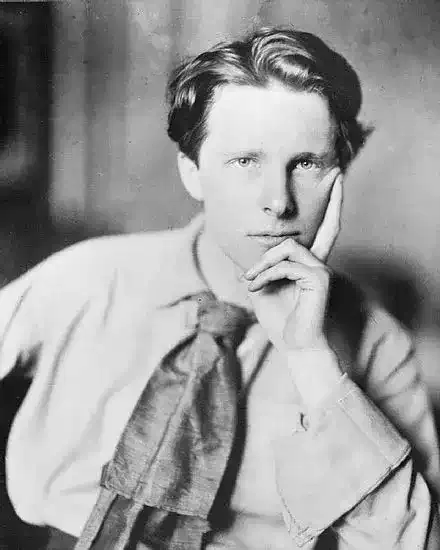
Rupert Brooke
There's Wisdom In Women
There's Wisdom In Women
"Oh love is fair, and love is rare;" my dear one she said,
"But love goes lightly over." I bowed her foolish head,
And kissed her hair and laughed at her. Such a child was she;
So new to love, so true to love, and she spoke so bitterly.
But there's wisdom in women, of more than they have known,
And thoughts go blowing through them, are wiser than their own,
Or how should my dear one, being ignorant and young,
Have cried on love so bitterly, with so true a tongue?
"Oh love is fair, and love is rare;" my dear one she said,
"But love goes lightly over." I bowed her foolish head,
And kissed her hair and laughed at her. Such a child was she;
So new to love, so true to love, and she spoke so bitterly.
But there's wisdom in women, of more than they have known,
And thoughts go blowing through them, are wiser than their own,
Or how should my dear one, being ignorant and young,
Have cried on love so bitterly, with so true a tongue?
198
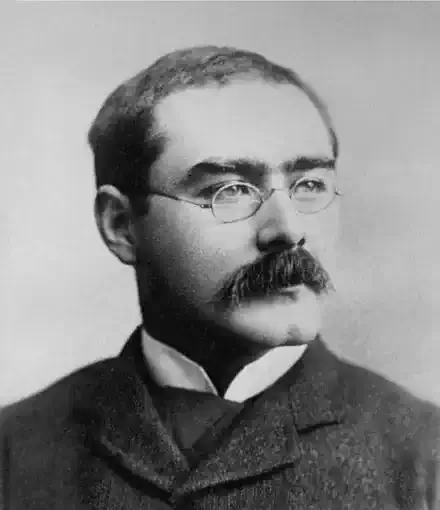
Rudyard Kipling
The Female of the Species
The Female of the Species
When the Himalayan peasant meets the he-bear in his pride,
He shouts to scare the monster who will often turn aside.
But the she-bear thus accosted rends the peasant tooth and nail,
For the female of the species is more deadly than the male.
When Nag, the wayside cobra, hears the careless foot of man,
He will sometimes wriggle sideways and avoid it if he can,
But his mate makes no such motion where she camps beside the trail -
For the female of the species is more deadly than the male.
When the early Jesuit fathers preached to Hurons and Choctaws,
They prayed to be delivered from the vengeance of the squaws -
'Twas the women, not the warriors, turned those stark enthusiasts pale -
For the female of the species is more deadly than the male.
Man's timid heart is bursting with the things he must not say,
For the Woman that God gave him isn't his to give away;
But when hunter meets with husband, each confirms the others tale -
The female of the species is more deadly than the male.
Man, a bear in most relations, worm and savage otherwise,
Man propounds negotiations, Man accepts the compromise;
Very rarely will he squarely push the logic of a fact
To its ultimate conclusion in unmitigated act.
Fear, or foolishness, impels him, ere he lay the wicked low,
To concede some form of trial even to his fiercest foe.
Mirth obscene diverts his anger; Doubt and Pity oft perplex
Him in dealing with an issue - to the scandal of the Sex!
But the Woman that God gave him, every fibre of her frame
Proves her launched for one sole issue, armed and engined for the same,
And to serve that single issue, lest the generations fail,
The female of the species must be deadlier than the male.
She who faces Death by torture for each life beneath her breast
May not deal in doubt or pity - must not swerve for fact or jest.
These be purely male diversions - not in these her honor dwells -
She, the Other Law we live by, is that Law and nothing else!
She can bring no more to living than the powers that make her great
As the Mother of the Infant and the Mistress of the Mate;
And when Babe and Man are lacking and she strides unclaimed to claim
Her right as femme (and baron), her equipment is the same.
She is wedded to convictions - in default of grosser ties;
Her contentions are her children, Heaven help him, who denies!
He will meet no cool discussion, but the instant, white-hot wild
Wakened female of the species warring as for spouse and child.
Unprovoked and awful charges - even so the she-bear fights;
Speech that drips, corrodes and poisons - even so the cobra bites;
Scientific vivisection of one nerve till it is raw,
And the victim writhes with anguish - like the Jesuit with the squaw!
So it comes that Man, the coward, when he gathers to confer
With his fellow-braves in council, dare not leave a place for her
Where, at war with Life and Conscience, he uplifts his erring hands
To some God of abstract justice - which no woman understands.
And Man knows it! Knows, moreover, that the Woman that God gave him
Must command but may not govern; shall enthrall but not enslave him.
And She knows, because She warns him and Her instincts never fail,
That the female of Her species is more deadly than the male!
When the Himalayan peasant meets the he-bear in his pride,
He shouts to scare the monster who will often turn aside.
But the she-bear thus accosted rends the peasant tooth and nail,
For the female of the species is more deadly than the male.
When Nag, the wayside cobra, hears the careless foot of man,
He will sometimes wriggle sideways and avoid it if he can,
But his mate makes no such motion where she camps beside the trail -
For the female of the species is more deadly than the male.
When the early Jesuit fathers preached to Hurons and Choctaws,
They prayed to be delivered from the vengeance of the squaws -
'Twas the women, not the warriors, turned those stark enthusiasts pale -
For the female of the species is more deadly than the male.
Man's timid heart is bursting with the things he must not say,
For the Woman that God gave him isn't his to give away;
But when hunter meets with husband, each confirms the others tale -
The female of the species is more deadly than the male.
Man, a bear in most relations, worm and savage otherwise,
Man propounds negotiations, Man accepts the compromise;
Very rarely will he squarely push the logic of a fact
To its ultimate conclusion in unmitigated act.
Fear, or foolishness, impels him, ere he lay the wicked low,
To concede some form of trial even to his fiercest foe.
Mirth obscene diverts his anger; Doubt and Pity oft perplex
Him in dealing with an issue - to the scandal of the Sex!
But the Woman that God gave him, every fibre of her frame
Proves her launched for one sole issue, armed and engined for the same,
And to serve that single issue, lest the generations fail,
The female of the species must be deadlier than the male.
She who faces Death by torture for each life beneath her breast
May not deal in doubt or pity - must not swerve for fact or jest.
These be purely male diversions - not in these her honor dwells -
She, the Other Law we live by, is that Law and nothing else!
She can bring no more to living than the powers that make her great
As the Mother of the Infant and the Mistress of the Mate;
And when Babe and Man are lacking and she strides unclaimed to claim
Her right as femme (and baron), her equipment is the same.
She is wedded to convictions - in default of grosser ties;
Her contentions are her children, Heaven help him, who denies!
He will meet no cool discussion, but the instant, white-hot wild
Wakened female of the species warring as for spouse and child.
Unprovoked and awful charges - even so the she-bear fights;
Speech that drips, corrodes and poisons - even so the cobra bites;
Scientific vivisection of one nerve till it is raw,
And the victim writhes with anguish - like the Jesuit with the squaw!
So it comes that Man, the coward, when he gathers to confer
With his fellow-braves in council, dare not leave a place for her
Where, at war with Life and Conscience, he uplifts his erring hands
To some God of abstract justice - which no woman understands.
And Man knows it! Knows, moreover, that the Woman that God gave him
Must command but may not govern; shall enthrall but not enslave him.
And She knows, because She warns him and Her instincts never fail,
That the female of Her species is more deadly than the male!
589
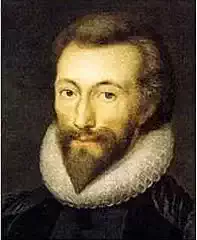
John Donne
Community
Community
Good we must love, and must hate ill,
For ill is ill, and good good still ;
But there are things indifferent,
Which wee may neither hate, nor love,
But one, and then another prove,
As we shall find our fancy bent.
If then at first wise Nature had
Made women either good or bad,
Then some wee might hate, and some choose ;
But since she did them so create,
That we may neither love, nor hate,
Only this rests, all all may use.
If they were good it would be seen ;
Good is as visible as green,
And to all eyes itself betrays.
If they were bad, they could not last ;
Bad doth itself, and others waste ;
So they deserve nor blame, nor praise.
But they are ours as fruits are ours ;
He that but tastes, he that devours,
And he that leaves all, doth as well ;
Changed loves are but changed sorts of meat ;
And when he hath the kernel eat,
Who doth not fling away the shell?
Good we must love, and must hate ill,
For ill is ill, and good good still ;
But there are things indifferent,
Which wee may neither hate, nor love,
But one, and then another prove,
As we shall find our fancy bent.
If then at first wise Nature had
Made women either good or bad,
Then some wee might hate, and some choose ;
But since she did them so create,
That we may neither love, nor hate,
Only this rests, all all may use.
If they were good it would be seen ;
Good is as visible as green,
And to all eyes itself betrays.
If they were bad, they could not last ;
Bad doth itself, and others waste ;
So they deserve nor blame, nor praise.
But they are ours as fruits are ours ;
He that but tastes, he that devours,
And he that leaves all, doth as well ;
Changed loves are but changed sorts of meat ;
And when he hath the kernel eat,
Who doth not fling away the shell?
292
Ella Wheeler Wilcox
Woman To Man
Woman To Man
You do but jest, sir, and you jest not well,
How could the hand be enemy of the arm,
Or seed and sod be rivals! How could light
Feel jealousy of heat, plant of the leaf
Or competition dwell 'twixt lip and smile?
Are we not part and parcel of yourselves?
Like strands in one great braid we intertwine
And make the perfect whole. You could not be,
Unless we gave you birth; we are the soil
From which you sprang, yet sterile were that soil
Save as you planted. (Though in the Book we read
One woman bore a child with no man's aid
We find no record of a man-child born
Without the aid of woman! Fatherhood
Is but a small achievement at the best
While motherhood comprises heaven and hell.)
This ever-growing argument of sex
Is most unseemly, and devoid of sense.
Why waste more time in controversy, when
There is not time enough for all of love,
Our rightful occupation in this life.
Why prate of our defects, of where we fail
When just the story of our worth would need
Eternity for telling, and our best
Development comes ever thro' your praise,
As through our praise you reach your highest self.
Oh! had you not been miser of your praise
And let our virtues be their own reward
The old established, order of the world
Would never have been changed. Small blame is ours
For this unsexing of ourselves, and worse
Effeminizing of the male. We were
Content, sir, till you starved us, heart and brain.
All we have done, or wise, or otherwise
Traced to the root, was done for love of you.
Let us taboo all vain comparisons,
And go forth as God meant us, hand in hand,
Companions, mates and comrades evermore;
Two parts of one divinely ordained whole.
You do but jest, sir, and you jest not well,
How could the hand be enemy of the arm,
Or seed and sod be rivals! How could light
Feel jealousy of heat, plant of the leaf
Or competition dwell 'twixt lip and smile?
Are we not part and parcel of yourselves?
Like strands in one great braid we intertwine
And make the perfect whole. You could not be,
Unless we gave you birth; we are the soil
From which you sprang, yet sterile were that soil
Save as you planted. (Though in the Book we read
One woman bore a child with no man's aid
We find no record of a man-child born
Without the aid of woman! Fatherhood
Is but a small achievement at the best
While motherhood comprises heaven and hell.)
This ever-growing argument of sex
Is most unseemly, and devoid of sense.
Why waste more time in controversy, when
There is not time enough for all of love,
Our rightful occupation in this life.
Why prate of our defects, of where we fail
When just the story of our worth would need
Eternity for telling, and our best
Development comes ever thro' your praise,
As through our praise you reach your highest self.
Oh! had you not been miser of your praise
And let our virtues be their own reward
The old established, order of the world
Would never have been changed. Small blame is ours
For this unsexing of ourselves, and worse
Effeminizing of the male. We were
Content, sir, till you starved us, heart and brain.
All we have done, or wise, or otherwise
Traced to the root, was done for love of you.
Let us taboo all vain comparisons,
And go forth as God meant us, hand in hand,
Companions, mates and comrades evermore;
Two parts of one divinely ordained whole.
325
Ella Wheeler Wilcox
Woman
Woman
Give us that grand word ‘woman’ once again,
And let’s have done with ‘lady’: one’s a term
Full of fine force, strong, beautiful, and firm,
Fit for the noblest use of tongue or pen;
And one’s a word for lackeys. One suggests
The Mother, Wife, and Sister! One the dame
Whose costly robe, mayhap, gives her the name,
One word upon its own strength leans and rests;
The other minces tiptoe. Who would be
The perfect woman must grow brave of heart
And broad of soul to play her troubled part
Well in life’s drama. While each day we see
The ‘perfect lady’ skilled in what to do
And what to say, grace in each tone and act
(‘Tis taught in schools, but needs some native tact) ,
Yet narrow in her mind as in her shoe.
Give the first place then to the nobler phrase,
And leave the lesser word for lesser praise.
Give us that grand word ‘woman’ once again,
And let’s have done with ‘lady’: one’s a term
Full of fine force, strong, beautiful, and firm,
Fit for the noblest use of tongue or pen;
And one’s a word for lackeys. One suggests
The Mother, Wife, and Sister! One the dame
Whose costly robe, mayhap, gives her the name,
One word upon its own strength leans and rests;
The other minces tiptoe. Who would be
The perfect woman must grow brave of heart
And broad of soul to play her troubled part
Well in life’s drama. While each day we see
The ‘perfect lady’ skilled in what to do
And what to say, grace in each tone and act
(‘Tis taught in schools, but needs some native tact) ,
Yet narrow in her mind as in her shoe.
Give the first place then to the nobler phrase,
And leave the lesser word for lesser praise.
414
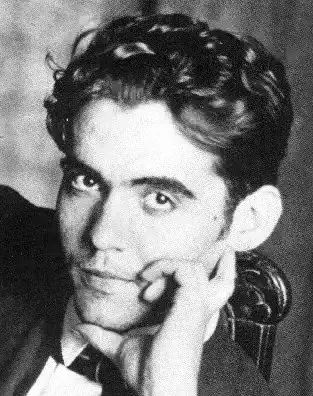
Federico García Lorca
Ode to Walt Whitman
Ode to Walt Whitman
By the East River and the Bronx
boys were singing, exposing their waists
with the wheel, with oil, leather, and the hammer.
Ninety thousand miners taking silver from the rocks
and children drawing stairs and perspectives.
But none of them could sleep,
none of them wanted to be the river,
none of them loved the huge leaves
or the shoreline's blue tongue.
By the East River and the Queensboro
boys were battling with industry
and the Jews sold to the river faun
the rose of circumcision,
and over bridges and rooftops, the mouth of the sky emptied
herds of bison driven by the wind.
But none of them paused,
none of them wanted to be a cloud,
none of them looked for ferns
or the yellow wheel of a tambourine.
As soon as the moon rises
the pulleys will spin to alter the sky;
a border of needles will besiege memory
and the coffins will bear away those who don't work.
New York, mire,
New York, mire and death.
What angel is hidden in your cheek?
Whose perfect voice will sing the truths of wheat?
Who, the terrible dream of your stained anemones?
Not for a moment, Walt Whitman, lovely old man,
have I failed to see your beard full of butterflies,
nor your corduroy shoulders frayed by the moon,
nor your thighs pure as Apollo's,
nor your voice like a column of ash,
old man, beautiful as the mist,
you moaned like a bird
with its sex pierced by a needle.
Enemy of the satyr,
enemy of the vine,
and lover of bodies beneath rough cloth...
Not for a moment, virile beauty,
who among mountains of coal, billboards, and railroads,
dreamed of becoming a river and sleeping like a river
with that comrade who would place in your breast
the small ache of an ignorant leopard.
Not for a moment, Adam of blood, Macho,
man alone at sea, Walt Whitman, lovely old man,
because on penthouse roofs,
gathered at bars,
emerging in bunches from the sewers,
trembling between the legs of chauffeurs,
or spinning on dance floors wet with absinthe,
the faggots, Walt Whitman, point you out.
He's one, too! That's right! And they land
on your luminous chaste beard,
blonds from the north, blacks from the sands,
crowds of howls and gestures,
like cats or like snakes,
the faggots, Walt Whitman, the faggots,
clouded with tears, flesh for the whip,
the boot, or the teeth of the lion tamers.
He's one, too! That's right! Stained fingers
point to the shore of your dream
when a friend eats your apple
with a slight taste of gasoline
and the sun sings in the navels
of boys who play under bridges.
But you didn't look for scratched eyes,
nor the darkest swamp where someone submerges children,
nor frozen saliva,
nor the curves slit open like a toad's belly
that the faggots wear in cars and on terraces
while the moon lashes them on the street corners of terror.
You looked for a naked body like a river.
Bull and dream who would join wheel with seaweed,
father of your agony, camellia of your death,
who would groan in the blaze of your hidden equator.
Because it's all right if a man doesn't look for his delight
in tomorrow morning's jungle of blood.
The sky has shores where life is avoided
and there are bodies that shouldn't repeat themselves in the dawn.
Agony, agony, dream, ferment, and dream.
This is the world, my friend, agony, agony.
Bodies decompose beneath the city clocks,
war passes by in tears, followed by a million gray rats,
the rich give their mistresses
small illuminated dying things,
and life is neither noble, nor good, nor sacred.
Man is able, if he wishes, to guide his desire
through a vein of coral or a heavenly naked body.
Tomorrow, loves will become stones, and Time
a breeze that drowses in the branches.
That's why I don't raise my voice, old Walt Whitman,
against the little boy who writes
the name of a girl on his pillow,
nor against the boy who dresses as a bride
in the darkness of the wardrobe,
nor against the solitary men in casinos
who drink prostitution's water with revulsion,
nor against the men with that green look in their eyes
who love other men and burn their lips in silence.
But yes against you, urban faggots,
tumescent flesh and unclean thoughts.
Mothers of mud. Harpies. Sleepless enemies
of the love that bestows crowns of joy.
Always against you, who give boys
drops of foul death with bitter poison.
Always against you,
Fairies of North America,
Pájaros of Havana,
Jotos of Mexico,
Sarasas of Cádiz,
Apios of Seville,
Cancos of Madrid,
Floras of Alicante,
Adelaidas of Portugal.
Faggots of the world, murderers of doves!
Slaves of women. Their bedroom bitches.
Opening in public squares like feverish fans
or ambushed in rigid hemlock landscapes.
No quarter given! Death
spills from your eyes
and gathers gray flowers at the mire's edge.
No quarter given! Attention!
Let the confused, the pure,
the classical, the celebrated, the supplicants
close the doors of the bacchanal to you.
And you, lovely Walt Whitman, stay asleep on the Hudson's banks
with your beard toward the pole, openhanded.
Soft clay or snow, your tongue calls for
comrades to keep watch over your unbodied gazelle.
Sleep on, nothing remains.
Dancing walls stir the prairies
and America drowns itself in machinery and lament.
I want the powerful air from the deepest night
to blow away flowers and inscriptions from the arch where you sleep,
and a black child to inform the gold-craving whites
that the kingdom of grain has arrived.
By the East River and the Bronx
boys were singing, exposing their waists
with the wheel, with oil, leather, and the hammer.
Ninety thousand miners taking silver from the rocks
and children drawing stairs and perspectives.
But none of them could sleep,
none of them wanted to be the river,
none of them loved the huge leaves
or the shoreline's blue tongue.
By the East River and the Queensboro
boys were battling with industry
and the Jews sold to the river faun
the rose of circumcision,
and over bridges and rooftops, the mouth of the sky emptied
herds of bison driven by the wind.
But none of them paused,
none of them wanted to be a cloud,
none of them looked for ferns
or the yellow wheel of a tambourine.
As soon as the moon rises
the pulleys will spin to alter the sky;
a border of needles will besiege memory
and the coffins will bear away those who don't work.
New York, mire,
New York, mire and death.
What angel is hidden in your cheek?
Whose perfect voice will sing the truths of wheat?
Who, the terrible dream of your stained anemones?
Not for a moment, Walt Whitman, lovely old man,
have I failed to see your beard full of butterflies,
nor your corduroy shoulders frayed by the moon,
nor your thighs pure as Apollo's,
nor your voice like a column of ash,
old man, beautiful as the mist,
you moaned like a bird
with its sex pierced by a needle.
Enemy of the satyr,
enemy of the vine,
and lover of bodies beneath rough cloth...
Not for a moment, virile beauty,
who among mountains of coal, billboards, and railroads,
dreamed of becoming a river and sleeping like a river
with that comrade who would place in your breast
the small ache of an ignorant leopard.
Not for a moment, Adam of blood, Macho,
man alone at sea, Walt Whitman, lovely old man,
because on penthouse roofs,
gathered at bars,
emerging in bunches from the sewers,
trembling between the legs of chauffeurs,
or spinning on dance floors wet with absinthe,
the faggots, Walt Whitman, point you out.
He's one, too! That's right! And they land
on your luminous chaste beard,
blonds from the north, blacks from the sands,
crowds of howls and gestures,
like cats or like snakes,
the faggots, Walt Whitman, the faggots,
clouded with tears, flesh for the whip,
the boot, or the teeth of the lion tamers.
He's one, too! That's right! Stained fingers
point to the shore of your dream
when a friend eats your apple
with a slight taste of gasoline
and the sun sings in the navels
of boys who play under bridges.
But you didn't look for scratched eyes,
nor the darkest swamp where someone submerges children,
nor frozen saliva,
nor the curves slit open like a toad's belly
that the faggots wear in cars and on terraces
while the moon lashes them on the street corners of terror.
You looked for a naked body like a river.
Bull and dream who would join wheel with seaweed,
father of your agony, camellia of your death,
who would groan in the blaze of your hidden equator.
Because it's all right if a man doesn't look for his delight
in tomorrow morning's jungle of blood.
The sky has shores where life is avoided
and there are bodies that shouldn't repeat themselves in the dawn.
Agony, agony, dream, ferment, and dream.
This is the world, my friend, agony, agony.
Bodies decompose beneath the city clocks,
war passes by in tears, followed by a million gray rats,
the rich give their mistresses
small illuminated dying things,
and life is neither noble, nor good, nor sacred.
Man is able, if he wishes, to guide his desire
through a vein of coral or a heavenly naked body.
Tomorrow, loves will become stones, and Time
a breeze that drowses in the branches.
That's why I don't raise my voice, old Walt Whitman,
against the little boy who writes
the name of a girl on his pillow,
nor against the boy who dresses as a bride
in the darkness of the wardrobe,
nor against the solitary men in casinos
who drink prostitution's water with revulsion,
nor against the men with that green look in their eyes
who love other men and burn their lips in silence.
But yes against you, urban faggots,
tumescent flesh and unclean thoughts.
Mothers of mud. Harpies. Sleepless enemies
of the love that bestows crowns of joy.
Always against you, who give boys
drops of foul death with bitter poison.
Always against you,
Fairies of North America,
Pájaros of Havana,
Jotos of Mexico,
Sarasas of Cádiz,
Apios of Seville,
Cancos of Madrid,
Floras of Alicante,
Adelaidas of Portugal.
Faggots of the world, murderers of doves!
Slaves of women. Their bedroom bitches.
Opening in public squares like feverish fans
or ambushed in rigid hemlock landscapes.
No quarter given! Death
spills from your eyes
and gathers gray flowers at the mire's edge.
No quarter given! Attention!
Let the confused, the pure,
the classical, the celebrated, the supplicants
close the doors of the bacchanal to you.
And you, lovely Walt Whitman, stay asleep on the Hudson's banks
with your beard toward the pole, openhanded.
Soft clay or snow, your tongue calls for
comrades to keep watch over your unbodied gazelle.
Sleep on, nothing remains.
Dancing walls stir the prairies
and America drowns itself in machinery and lament.
I want the powerful air from the deepest night
to blow away flowers and inscriptions from the arch where you sleep,
and a black child to inform the gold-craving whites
that the kingdom of grain has arrived.
710
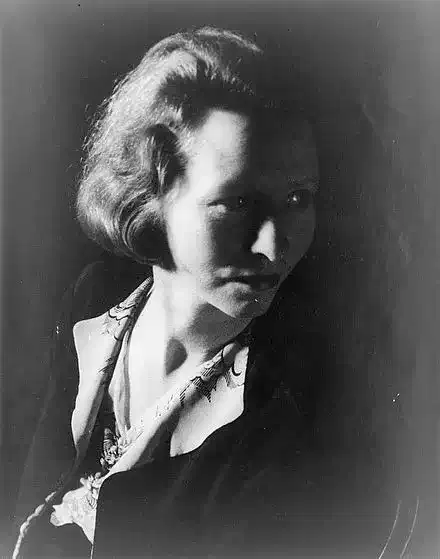
Edna St. Vincent Millay
I, Being Born a Woman and Distressed
I, Being Born a Woman and Distressed
I, being born a woman and distressed
By all the needs and notions of my kind,
Am urged by your propinquity to find
Your person fair, and feel a certain zest
To bear your body's weight upon my breast:
So subtly is the fume of life designed,
To clarify the pulse and cloud the mind,
And leave me once again undone, possessed.
Think not for this, however, the poor treason
Of my stout blood against my staggering brain,
I shall remember you with love, or season
My scorn wtih pity, -- let me make it plain:
I find this frenzy insufficient reason
For conversation when we meet again.
I, being born a woman and distressed
By all the needs and notions of my kind,
Am urged by your propinquity to find
Your person fair, and feel a certain zest
To bear your body's weight upon my breast:
So subtly is the fume of life designed,
To clarify the pulse and cloud the mind,
And leave me once again undone, possessed.
Think not for this, however, the poor treason
Of my stout blood against my staggering brain,
I shall remember you with love, or season
My scorn wtih pity, -- let me make it plain:
I find this frenzy insufficient reason
For conversation when we meet again.
287
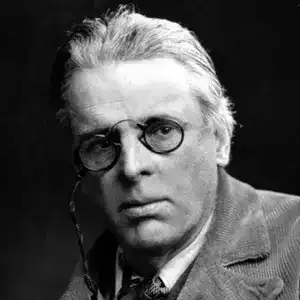
William Butler Yeats
Michael Robartes and the Dancer
Michael Robartes and the Dancer
He. Opinion is not worth a rush;
In this altar-piece the knight,
Who grips his long spear so to push
That dragon through the fading light,
Loved the lady; and it's plain
The half-dead dragon was her thought,
That every morning rose again
And dug its claws and shrieked and fought.
Could the impossible come to pass
She would have time to turn her eyes,
Her lover thought, upon the glass
And on the instant would grow wise.
She. You mean they argued.
He. Put it so;
But bear in mind your lover's wage
Is what your looking-glass can show,
And that he will turn green with rage
At all that is not pictured there.
She. May I not put myself to college?
He. Go pluck Athena by the hair;
For what mere book can grant a knowledge
With an impassioned gravity
Appropriate to that beating breast,
That vigorous thigh, that dreaming eye?
And may the devil take the rest.
She. And must no beautiful woman be
Learned like a man?
He. Paul Veronese
And all his sacred company
Imagined bodies all their days
By the lagoon you love so much,
For proud, soft, ceremonious proof
That all must come to sight and touch;
While Michael Angelo's Sistine roof
His 'Morning' and his 'Night' disclose
How sinew that has been pulled tight,
Or it may be loosened in repose,
Can rule by supernatural right
Yet be but sinew.
She. I have heard said
There is great danger in the body.
He. Did God in portioning wine and bread
Give man His thought or His mere body?
She. My wretched dragon is perplexed.
He. I have principles to prove me right.
It follows from this Latin text
That blest souls are not composite,
And that all beautiful women may
Live in uncomposite blessedness,
And lead us to the like -- if they
Will banish every thought, unless
The lineaments that please their view
When the long looking-glass is full,
Even from the foot-sole think it too.
She. They say such different things at school.
He. Opinion is not worth a rush;
In this altar-piece the knight,
Who grips his long spear so to push
That dragon through the fading light,
Loved the lady; and it's plain
The half-dead dragon was her thought,
That every morning rose again
And dug its claws and shrieked and fought.
Could the impossible come to pass
She would have time to turn her eyes,
Her lover thought, upon the glass
And on the instant would grow wise.
She. You mean they argued.
He. Put it so;
But bear in mind your lover's wage
Is what your looking-glass can show,
And that he will turn green with rage
At all that is not pictured there.
She. May I not put myself to college?
He. Go pluck Athena by the hair;
For what mere book can grant a knowledge
With an impassioned gravity
Appropriate to that beating breast,
That vigorous thigh, that dreaming eye?
And may the devil take the rest.
She. And must no beautiful woman be
Learned like a man?
He. Paul Veronese
And all his sacred company
Imagined bodies all their days
By the lagoon you love so much,
For proud, soft, ceremonious proof
That all must come to sight and touch;
While Michael Angelo's Sistine roof
His 'Morning' and his 'Night' disclose
How sinew that has been pulled tight,
Or it may be loosened in repose,
Can rule by supernatural right
Yet be but sinew.
She. I have heard said
There is great danger in the body.
He. Did God in portioning wine and bread
Give man His thought or His mere body?
She. My wretched dragon is perplexed.
He. I have principles to prove me right.
It follows from this Latin text
That blest souls are not composite,
And that all beautiful women may
Live in uncomposite blessedness,
And lead us to the like -- if they
Will banish every thought, unless
The lineaments that please their view
When the long looking-glass is full,
Even from the foot-sole think it too.
She. They say such different things at school.
342

Jalal ad-Din Rumi
Masnawi
Masnawi
In the prologue to the Masnavi Rumi hailed Love and its sweet madness that heals all
infirmities, and he exhorted the reader to burst the bonds to silver and gold to be free.
The Beloved is all in all and is only veiled by the lover. Rumi identified the first cause of
all things as God and considered all second causes subordinate to that. Human minds
recognize the second causes, but only prophets perceive the action of the first cause.
One story tells of a clever rabbit who warned the lion about another lion and showed
the lion his own image in a well, causing him to attack it and drown. After delivering
his companions from the tyrannical lion, the rabbit urges them to engage in the more
difficult warfare against their own inward lusts. In a debate between trusting God and
human exertion, Rumi quoted the prophet Muhammad as saying, "Trust in God, yet tie
the camel's leg." He also mentioned the adage that the worker is the friend of God; so
in trusting in providence one need not neglect to use means. Exerting oneself can be
giving thanks for God's blessings; but he asked if fatalism shows gratitude.
God is hidden and has no opposite, not seen by us yet seeing us. Form is born of the
formless but ultimately returns to the formless. An arrow shot by God cannot remain in
the air but must return to God. Rumi reconciled God's agency with human free will and
found the divine voice in the inward voice. Those in close communion with God are
free, but the one who does not love is fettered by compulsion. God is the agency and
first cause of our actions, but human will as the second cause finds recompense in hell
or with the Friend. God is like the soul, and the world is like the body. The good and
evil of bodies comes from souls. When the sanctuary of true prayer is revealed to one,
it is shameful to turn back to mere formal religion. Rumi confirmed Muhammad's view
that women hold dominion over the wise and men of heart; but violent fools, lacking
tenderness, gentleness, and friendship, try to hold the upper hand over women,
because they are swayed by their animal nature. The human qualities of love and
tenderness can control the animal passions. Rumi concluded that woman is a ray of
God and the Creator's self.
When the Light of God illumines the inner person, one is freed from effects and has no
need of signs for the assurance of love. Beauty busies itself with a mirror. Since not
being is the mirror of being, the wise choose the self-abnegation of not being so that
being may be displayed in that not being. The wealthy show their liberality on the poor,
and the hungry are the mirror of bread. Those recognizing and confessing their defects
are hastening toward perfection; but whoever considers oneself perfect already is not
advancing. The poet suggested driving out this sickness of arrogance with tears from
the heart. The fault of the devil (Iblis) was in thinking himself better than others, and
the same weakness lurks in the soul of all creatures. Heart knowledge bears people up
in friendship, but body knowledge weighs them down with burdens.
Rumi wrote how through love all things become better. Doing kindness is the game of
the good, who seek to alleviate suffering in the world. Wherever there is a pain, a
remedy is sent. Call on God so that the love of God may manifest. Rumi recommended
the proverb that the moral way is not to find fault with others but to be admonished by
their bad example. The mosque built in the hearts of the saints is the place for all
worship, for God dwells there. Rumi began the third book of his Masnavi as follows:
In the Name of God the Compassionate, the Merciful.
The sciences of (Divine) Wisdom are God's armies,
wherewith He strengthens the spirits of the initiates,
and purifies their knowledge from the defilement of ignorance,
their justice from the defilement of iniquity,
their generosity from the defilement of ostentation,
and their forbearance from the defilement of foolishness;
and brings near to them whatever was far from them
in respect of the understanding of the state hereafter;
and makes easy to them whatever was hard to them
in respect of obedience (to Him) and zealous endeavor (to serve Him).
A sage warns travelers that if they kill a baby elephant to eat, its parents will probably
track them down and kill them; yet they do so, although one refrains from the killing
and eating. As they sleep, a huge elephant smells their breath and kills all those who
had eaten the young elephant but spares the one who had abstained. From foul breath
the stench of pride, lust, and greed rises to heaven. Pain may be better than dominion
in the world so that one may call on God in secret; the cries of the sorrowful come
from burning hearts. Rumi also told the story of the Hindus feeling the different parts
of an elephant in a dark room. He emphasized that in substance all religions are one
and the same, because all praises are directed to God's light. They err only because
they have mistaken opinions. Sinners and criminals betray themselves especially in
times of passion and angry talk. Prophets warn you of hidden dangers the worldly
cannot see. Humans have the ability to engage in any action, but for Rumi worship of
God is the main object of human existence.
Rumi wrote that Sufism is to find joy in the heart whenever distress and care assail it.
He believed the power of choice is like capital yielding profit, but he advised us to
remember well the day of final accounting. Many of his stories are designed to show
the difference between what is self-evident by experience and what is inferred through
the authority of others. His philosophy of evolution of consciousness is encapsulated in
the following verses:
I died as inanimate matter and arose a plant,
I died as a plant and rose again an animal.
I died as an animal and arose a man.
Why then should I fear to become less by dying?
I shall die once again as a man
To rise an angel perfect from head to foot!
Again when I suffer dissolution as an angel,
I shall become what passes the conception of man!
Let me then become non-existent, for non-existence
Sings to me in organ tones, "To him shall we return."
When the love of God arises in your heart, without doubt God also feels love for you.
The soul loves wisdom, knowledge, and exalted things; but the body desires houses,
gardens, vineyards, food, and material goods. Rumi also believed that there is no
absolute bad; the evils in the world are only relative. A serpent's poison protects its
own life; but in relation to a person it can mean death. When what is hateful leads you
to your beloved, it immediately becomes agreeable to you. Solomon built the temple
by hiring workers, for humans can be controlled by money.
Men are as demons, and lust of wealth their chain,
Which drags them forth to toil in shop and field.
This chain is made of their fears and anxieties.
Deem not that these men have no chain upon them.
It causes them to engage in labor and the chase,
It forces them to toil in mines and on the sea,
It urges them towards good and towards evil.
Rumi warned against bad friends who can be like weeds in the temple of the heart; for
if a liking for bad friends grows in you, they can subvert you and your temple. He also
warned against the judges who confine their view to externals and base their decisions
on outward appearances; these heretics have secretly shed the blood of many
believers. Partial reason cannot see beyond the grave; but true reason looks beyond to
the day of judgment and thus is able to steer a better course in this world. Therefore it
is better for those with partial reason to follow the guidance of the saints.
In the fifth book of the Masnavi Rumi included several stories to illustrate why one
should cut down the duck of gluttony, the cock of concupiscence, the peacock of
ambition and ostentation, and the crow of bad desires. The story of how Muhammad
converted a glutton who drank the milk of seven goats and then made a mess after
being locked in a room shows the humility of the prophet in cleaning up the mess
himself. He concluded that the infidels eat with seven bellies but the faithful with one.
The peacock catches people by displaying itself. Pursuing the vulgar is like hunting a
pig; the fatigue is extensive, and it is unlawful to eat it. Love alone is worth pursuing,
but how can God be contained in anyone's trap? The most deadly evil eye is the eye of
self-approval. The greed of the gluttonous duck is limited as is the greed of the lusty
snake; but the peacock's ambition to rule can be many times as great. Worldly wealth
and even accomplishments can be enemies to the spiritual life. These are the human
trials that create virtue. If there were no temptations, there could be no virtue.
Abraham killed the crow of desire in response to the command of God so that he would
not crave anything else, and he killed the cock to subjugate pernicious desires.
Rumi suggested that God uses prophets and saints as mirrors to instruct people while
the divine remains hidden behind the mirrors. People hear the words from the mirrors
but are ignorant that they are spoken by universal reason or the word of God.
Ultimately God will place in people's hands their books of greed and generosity, of sin
and piety, whatever they have practiced. When they awake on that morning, all the
good and evil they have done will recur to them. After enumerating their faults, God in
the end will grant them pardon as a free gift. To tell an angry person of faults, one
must have a face as hard as a mirror to reflect the ugliness without fear or favor. Like
'Attar, Rumi wrote of the mystic's attaining annihilation, but he explained that the end
and object of negation is to attain the subsequent affirmation just as the cardinal
principle of Islam "There is no God" concludes with the affirmation "but God," and to
the mystic this really means "There is nothing but God." Negation of the individual self
clears the way for apprehending the existence of the One. The intoxication of life in
pleasures and occupations which veil the truth should pass into the spiritual
intoxication that lifts people to the beatific vision of eternal truth.
In the Discourses Rumi presented his teachings more directly. In the first chapter he
suggested that the true scholar should serve God above the prince so that in their
encounters the scholar will give more than take, thus making princes visitors of
scholars rather than the reverse. Rumi advised stripping prejudices from one's
discriminative faculty by seeing a friend in Faith, which is knowing who is one's true
friend. Those who spend time with the undiscriminating have that faculty deteriorate
and are unable to recognize a true friend in the Faith. Rumi taught the universal
principle that if you have done evil, you have done it to yourself, for how could
wickedness reach out to affect God? Yet when you become straight, all your
crookedness will disappear; so beware but have hope! Those who assist an oppressor
will find that God gives the oppressor power over them. God loves us by reproving us.
One reproves friends, not a stranger. So long as you perceive longing and regret within
yourself, that is proof that God loves and cares for you. If you perceive a fault in your
brother, that fault is also within yourself. The learned are like mirrors. Get rid of that
fault in yourself, for what distresses you about the other person distresses you inside
yourself.
Rumi taught that all things in relation to God are good and perfect, but in relation to
humans some things are considered bad. To a king prisons and gallows are part of the
ornament of his kingdom; but Rumi asked if to his people they are the same as robes
of honor. He argued that faith is better than prayer, because faith without prayer is
beneficial, but prayer without faith is not. Rumi explained to his disciples that the
desire to see the Master may prevent them from perceiving the Master without a veil.
He went on,
So it is with all desires and affections, all loves and fondnesses
which people have for every variety of thingfather,
mother, heaven, earth, gardens, palaces,
branches of knowledge, acts, things to eat and drink.
The man of God realizes that all these desires are the desire for God,
and all those things are veils.
When men pass out of this world and behold that King without those veils,
then they will realize that all these things were veils and coverings,
their quest being in reality that One Thing.
All difficulties will then be resolved,
and they will hear in their hearts
the answer to all questions and all problems,
and every thing will be seen face to face.
Rumi suggested God created these veils because if God's beauty were displayed
without veils, we would not be able to endure and enjoy it just as the Sun lights up the
world and warms us. The Sun enables trees and orchards to become fruitful, and its
energy makes fruit that is unripe, bitter, and sour become mature and sweet. Yet if the
Sun came too near, it would not bestow benefits but destroy the whole world.
Rumi compared this world to the dream of a sleeper. It seems real while it is
happening; but when one awakes, one does not benefit from the material things one
had while asleep. The present then depends on what one requested while asleep. God
teaches in every way. A thief hanged on the gallows is an object lesson as is the
person whom the king gives a robe of honor; but you should consider the difference
between those two preachers. Even suffering is a divine grace, and hell becomes a
place of worship as souls turn back to God just as being in prison or suffering pain
often urges one to pray for relief. Yet after people are released or healed, they often
forget to seek God. Believers, however, do not need to suffer, because even in ease
they are mindful that suffering is constantly present. An intelligent child that has been
punished does not forget the punishment; but the stupid child forgets it and is
punished again. The wickedness and vice of humans can be great, because they are
what veil the better element, which is also great. These veils cannot be removed
without great striving, and Rumi recommended that the best method is to mingle with
friends who have turned their backs to the world and their faces to God.
In the prologue to the Masnavi Rumi hailed Love and its sweet madness that heals all
infirmities, and he exhorted the reader to burst the bonds to silver and gold to be free.
The Beloved is all in all and is only veiled by the lover. Rumi identified the first cause of
all things as God and considered all second causes subordinate to that. Human minds
recognize the second causes, but only prophets perceive the action of the first cause.
One story tells of a clever rabbit who warned the lion about another lion and showed
the lion his own image in a well, causing him to attack it and drown. After delivering
his companions from the tyrannical lion, the rabbit urges them to engage in the more
difficult warfare against their own inward lusts. In a debate between trusting God and
human exertion, Rumi quoted the prophet Muhammad as saying, "Trust in God, yet tie
the camel's leg." He also mentioned the adage that the worker is the friend of God; so
in trusting in providence one need not neglect to use means. Exerting oneself can be
giving thanks for God's blessings; but he asked if fatalism shows gratitude.
God is hidden and has no opposite, not seen by us yet seeing us. Form is born of the
formless but ultimately returns to the formless. An arrow shot by God cannot remain in
the air but must return to God. Rumi reconciled God's agency with human free will and
found the divine voice in the inward voice. Those in close communion with God are
free, but the one who does not love is fettered by compulsion. God is the agency and
first cause of our actions, but human will as the second cause finds recompense in hell
or with the Friend. God is like the soul, and the world is like the body. The good and
evil of bodies comes from souls. When the sanctuary of true prayer is revealed to one,
it is shameful to turn back to mere formal religion. Rumi confirmed Muhammad's view
that women hold dominion over the wise and men of heart; but violent fools, lacking
tenderness, gentleness, and friendship, try to hold the upper hand over women,
because they are swayed by their animal nature. The human qualities of love and
tenderness can control the animal passions. Rumi concluded that woman is a ray of
God and the Creator's self.
When the Light of God illumines the inner person, one is freed from effects and has no
need of signs for the assurance of love. Beauty busies itself with a mirror. Since not
being is the mirror of being, the wise choose the self-abnegation of not being so that
being may be displayed in that not being. The wealthy show their liberality on the poor,
and the hungry are the mirror of bread. Those recognizing and confessing their defects
are hastening toward perfection; but whoever considers oneself perfect already is not
advancing. The poet suggested driving out this sickness of arrogance with tears from
the heart. The fault of the devil (Iblis) was in thinking himself better than others, and
the same weakness lurks in the soul of all creatures. Heart knowledge bears people up
in friendship, but body knowledge weighs them down with burdens.
Rumi wrote how through love all things become better. Doing kindness is the game of
the good, who seek to alleviate suffering in the world. Wherever there is a pain, a
remedy is sent. Call on God so that the love of God may manifest. Rumi recommended
the proverb that the moral way is not to find fault with others but to be admonished by
their bad example. The mosque built in the hearts of the saints is the place for all
worship, for God dwells there. Rumi began the third book of his Masnavi as follows:
In the Name of God the Compassionate, the Merciful.
The sciences of (Divine) Wisdom are God's armies,
wherewith He strengthens the spirits of the initiates,
and purifies their knowledge from the defilement of ignorance,
their justice from the defilement of iniquity,
their generosity from the defilement of ostentation,
and their forbearance from the defilement of foolishness;
and brings near to them whatever was far from them
in respect of the understanding of the state hereafter;
and makes easy to them whatever was hard to them
in respect of obedience (to Him) and zealous endeavor (to serve Him).
A sage warns travelers that if they kill a baby elephant to eat, its parents will probably
track them down and kill them; yet they do so, although one refrains from the killing
and eating. As they sleep, a huge elephant smells their breath and kills all those who
had eaten the young elephant but spares the one who had abstained. From foul breath
the stench of pride, lust, and greed rises to heaven. Pain may be better than dominion
in the world so that one may call on God in secret; the cries of the sorrowful come
from burning hearts. Rumi also told the story of the Hindus feeling the different parts
of an elephant in a dark room. He emphasized that in substance all religions are one
and the same, because all praises are directed to God's light. They err only because
they have mistaken opinions. Sinners and criminals betray themselves especially in
times of passion and angry talk. Prophets warn you of hidden dangers the worldly
cannot see. Humans have the ability to engage in any action, but for Rumi worship of
God is the main object of human existence.
Rumi wrote that Sufism is to find joy in the heart whenever distress and care assail it.
He believed the power of choice is like capital yielding profit, but he advised us to
remember well the day of final accounting. Many of his stories are designed to show
the difference between what is self-evident by experience and what is inferred through
the authority of others. His philosophy of evolution of consciousness is encapsulated in
the following verses:
I died as inanimate matter and arose a plant,
I died as a plant and rose again an animal.
I died as an animal and arose a man.
Why then should I fear to become less by dying?
I shall die once again as a man
To rise an angel perfect from head to foot!
Again when I suffer dissolution as an angel,
I shall become what passes the conception of man!
Let me then become non-existent, for non-existence
Sings to me in organ tones, "To him shall we return."
When the love of God arises in your heart, without doubt God also feels love for you.
The soul loves wisdom, knowledge, and exalted things; but the body desires houses,
gardens, vineyards, food, and material goods. Rumi also believed that there is no
absolute bad; the evils in the world are only relative. A serpent's poison protects its
own life; but in relation to a person it can mean death. When what is hateful leads you
to your beloved, it immediately becomes agreeable to you. Solomon built the temple
by hiring workers, for humans can be controlled by money.
Men are as demons, and lust of wealth their chain,
Which drags them forth to toil in shop and field.
This chain is made of their fears and anxieties.
Deem not that these men have no chain upon them.
It causes them to engage in labor and the chase,
It forces them to toil in mines and on the sea,
It urges them towards good and towards evil.
Rumi warned against bad friends who can be like weeds in the temple of the heart; for
if a liking for bad friends grows in you, they can subvert you and your temple. He also
warned against the judges who confine their view to externals and base their decisions
on outward appearances; these heretics have secretly shed the blood of many
believers. Partial reason cannot see beyond the grave; but true reason looks beyond to
the day of judgment and thus is able to steer a better course in this world. Therefore it
is better for those with partial reason to follow the guidance of the saints.
In the fifth book of the Masnavi Rumi included several stories to illustrate why one
should cut down the duck of gluttony, the cock of concupiscence, the peacock of
ambition and ostentation, and the crow of bad desires. The story of how Muhammad
converted a glutton who drank the milk of seven goats and then made a mess after
being locked in a room shows the humility of the prophet in cleaning up the mess
himself. He concluded that the infidels eat with seven bellies but the faithful with one.
The peacock catches people by displaying itself. Pursuing the vulgar is like hunting a
pig; the fatigue is extensive, and it is unlawful to eat it. Love alone is worth pursuing,
but how can God be contained in anyone's trap? The most deadly evil eye is the eye of
self-approval. The greed of the gluttonous duck is limited as is the greed of the lusty
snake; but the peacock's ambition to rule can be many times as great. Worldly wealth
and even accomplishments can be enemies to the spiritual life. These are the human
trials that create virtue. If there were no temptations, there could be no virtue.
Abraham killed the crow of desire in response to the command of God so that he would
not crave anything else, and he killed the cock to subjugate pernicious desires.
Rumi suggested that God uses prophets and saints as mirrors to instruct people while
the divine remains hidden behind the mirrors. People hear the words from the mirrors
but are ignorant that they are spoken by universal reason or the word of God.
Ultimately God will place in people's hands their books of greed and generosity, of sin
and piety, whatever they have practiced. When they awake on that morning, all the
good and evil they have done will recur to them. After enumerating their faults, God in
the end will grant them pardon as a free gift. To tell an angry person of faults, one
must have a face as hard as a mirror to reflect the ugliness without fear or favor. Like
'Attar, Rumi wrote of the mystic's attaining annihilation, but he explained that the end
and object of negation is to attain the subsequent affirmation just as the cardinal
principle of Islam "There is no God" concludes with the affirmation "but God," and to
the mystic this really means "There is nothing but God." Negation of the individual self
clears the way for apprehending the existence of the One. The intoxication of life in
pleasures and occupations which veil the truth should pass into the spiritual
intoxication that lifts people to the beatific vision of eternal truth.
In the Discourses Rumi presented his teachings more directly. In the first chapter he
suggested that the true scholar should serve God above the prince so that in their
encounters the scholar will give more than take, thus making princes visitors of
scholars rather than the reverse. Rumi advised stripping prejudices from one's
discriminative faculty by seeing a friend in Faith, which is knowing who is one's true
friend. Those who spend time with the undiscriminating have that faculty deteriorate
and are unable to recognize a true friend in the Faith. Rumi taught the universal
principle that if you have done evil, you have done it to yourself, for how could
wickedness reach out to affect God? Yet when you become straight, all your
crookedness will disappear; so beware but have hope! Those who assist an oppressor
will find that God gives the oppressor power over them. God loves us by reproving us.
One reproves friends, not a stranger. So long as you perceive longing and regret within
yourself, that is proof that God loves and cares for you. If you perceive a fault in your
brother, that fault is also within yourself. The learned are like mirrors. Get rid of that
fault in yourself, for what distresses you about the other person distresses you inside
yourself.
Rumi taught that all things in relation to God are good and perfect, but in relation to
humans some things are considered bad. To a king prisons and gallows are part of the
ornament of his kingdom; but Rumi asked if to his people they are the same as robes
of honor. He argued that faith is better than prayer, because faith without prayer is
beneficial, but prayer without faith is not. Rumi explained to his disciples that the
desire to see the Master may prevent them from perceiving the Master without a veil.
He went on,
So it is with all desires and affections, all loves and fondnesses
which people have for every variety of thingfather,
mother, heaven, earth, gardens, palaces,
branches of knowledge, acts, things to eat and drink.
The man of God realizes that all these desires are the desire for God,
and all those things are veils.
When men pass out of this world and behold that King without those veils,
then they will realize that all these things were veils and coverings,
their quest being in reality that One Thing.
All difficulties will then be resolved,
and they will hear in their hearts
the answer to all questions and all problems,
and every thing will be seen face to face.
Rumi suggested God created these veils because if God's beauty were displayed
without veils, we would not be able to endure and enjoy it just as the Sun lights up the
world and warms us. The Sun enables trees and orchards to become fruitful, and its
energy makes fruit that is unripe, bitter, and sour become mature and sweet. Yet if the
Sun came too near, it would not bestow benefits but destroy the whole world.
Rumi compared this world to the dream of a sleeper. It seems real while it is
happening; but when one awakes, one does not benefit from the material things one
had while asleep. The present then depends on what one requested while asleep. God
teaches in every way. A thief hanged on the gallows is an object lesson as is the
person whom the king gives a robe of honor; but you should consider the difference
between those two preachers. Even suffering is a divine grace, and hell becomes a
place of worship as souls turn back to God just as being in prison or suffering pain
often urges one to pray for relief. Yet after people are released or healed, they often
forget to seek God. Believers, however, do not need to suffer, because even in ease
they are mindful that suffering is constantly present. An intelligent child that has been
punished does not forget the punishment; but the stupid child forgets it and is
punished again. The wickedness and vice of humans can be great, because they are
what veil the better element, which is also great. These veils cannot be removed
without great striving, and Rumi recommended that the best method is to mingle with
friends who have turned their backs to the world and their faces to God.
96
Robert W. Service
Florrie
Florrie
Because I was a wonton wild
And welcomed many a lover,
Who is the father of my child
I wish I could discover.
For though I know it is not right
In tender arms to tarry,
A barmaid has to be polite
To Tom and Dick and Harry.
My truest love was Poacher Jim:
I wish my babe was his'n.
Yet I can't father it on him
Because he was in prison.
As uniforms I like, I had
A soldier and a sailor;
Then there was Pete the painter lad,
And Timothy the tailor.
Though virtue hurt you vice ain't nice;
They say to err is human;
Alas! one pays a bitter price,
It's hell to be a woman.
Oh dear! Why was I born a lass
Who hated to say: No, sir.
I'd better in my sorry pass
Blame Mister Simms, the grocer.
Because I was a wonton wild
And welcomed many a lover,
Who is the father of my child
I wish I could discover.
For though I know it is not right
In tender arms to tarry,
A barmaid has to be polite
To Tom and Dick and Harry.
My truest love was Poacher Jim:
I wish my babe was his'n.
Yet I can't father it on him
Because he was in prison.
As uniforms I like, I had
A soldier and a sailor;
Then there was Pete the painter lad,
And Timothy the tailor.
Though virtue hurt you vice ain't nice;
They say to err is human;
Alas! one pays a bitter price,
It's hell to be a woman.
Oh dear! Why was I born a lass
Who hated to say: No, sir.
I'd better in my sorry pass
Blame Mister Simms, the grocer.
188
Mao Zedong
Militia Women Inscription on a Photograph
Militia Women Inscription on a Photograph
How bright and brave they look, shouldering five-foot rifles
On the parade ground lit up by the first gleams of day.
China's daughters have high-aspiring minds,
They love their battle array, not silks and satins.
How bright and brave they look, shouldering five-foot rifles
On the parade ground lit up by the first gleams of day.
China's daughters have high-aspiring minds,
They love their battle array, not silks and satins.
299
Langston Hughes
Cultural Exchange
Cultural Exchange
In the Quarter of the Negroes
Where the doors are doors of paper
Dust of dingy atoms
Blows a scratchy sound.
Amorphous jack-o'-Lanterns caper
And the wind won't wait for midnight
For fun to blow doors down.
By the river and the railroad
With fluid far-off goind
Boundaries bind unbinding
A whirl of whisteles blowing.
No trains or steamboats going--
Yet Leontyne's unpacking.
In the Quarter of the Negroes
Where the doorknob lets in Lieder
More than German ever bore,
Her yesterday past grandpa--
Not of her own doing--
In a pot of collard greens
Is gently stewing.
Pushcarts fold and unfold
In a supermarket sea.
And we better find out, mama,
Where is the colored laundromat
Since we move dup to Mount Vernon.
In the pot begind the paper doors
on the old iron stove what's cooking?
What's smelling, Leontyne?
Lieder, lovely Lieder
And a leaf of collard green.
Lovely Lieder, Leontyne.
You know, right at Christmas
They asked me if my blackness,
Would it rub off?
I said, Ask your mama.
Dreams and nightmares!
Nightmares, dreams, oh!
Dreaming that the Negroes
Of the South have taken over--
Voted all the Dixiecrats
Right out of power--
Comes the COLORED HOUR:
Martin Luther King is Governor of Georgia,
Dr. Rufus Clement his Chief Adviser,
A. Philip Randolph the High Grand Worthy.
In white pillared mansions
Sitting on their wide verandas,
Wealthy Negroes have white servants,
White sharecroppers work the black plantations,
And colored children have white mammies:
Mammy Faubus
Mammy Eastland
Mammy Wallace
Dear, dear darling old white mammies--
Sometimes even buried with our family.
Dear old
Mammy Faubus!
Culture, they say, is a two-way street:
Hand me my mint julep, mammny.
Hurry up!
Make haste!
In the Quarter of the Negroes
Where the doors are doors of paper
Dust of dingy atoms
Blows a scratchy sound.
Amorphous jack-o'-Lanterns caper
And the wind won't wait for midnight
For fun to blow doors down.
By the river and the railroad
With fluid far-off goind
Boundaries bind unbinding
A whirl of whisteles blowing.
No trains or steamboats going--
Yet Leontyne's unpacking.
In the Quarter of the Negroes
Where the doorknob lets in Lieder
More than German ever bore,
Her yesterday past grandpa--
Not of her own doing--
In a pot of collard greens
Is gently stewing.
Pushcarts fold and unfold
In a supermarket sea.
And we better find out, mama,
Where is the colored laundromat
Since we move dup to Mount Vernon.
In the pot begind the paper doors
on the old iron stove what's cooking?
What's smelling, Leontyne?
Lieder, lovely Lieder
And a leaf of collard green.
Lovely Lieder, Leontyne.
You know, right at Christmas
They asked me if my blackness,
Would it rub off?
I said, Ask your mama.
Dreams and nightmares!
Nightmares, dreams, oh!
Dreaming that the Negroes
Of the South have taken over--
Voted all the Dixiecrats
Right out of power--
Comes the COLORED HOUR:
Martin Luther King is Governor of Georgia,
Dr. Rufus Clement his Chief Adviser,
A. Philip Randolph the High Grand Worthy.
In white pillared mansions
Sitting on their wide verandas,
Wealthy Negroes have white servants,
White sharecroppers work the black plantations,
And colored children have white mammies:
Mammy Faubus
Mammy Eastland
Mammy Wallace
Dear, dear darling old white mammies--
Sometimes even buried with our family.
Dear old
Mammy Faubus!
Culture, they say, is a two-way street:
Hand me my mint julep, mammny.
Hurry up!
Make haste!
476
Elizabeth Barrett Browning
To George Sand: A Recognition
To George Sand: A Recognition
TRUE genius, but true woman ! dost deny
The woman's nature with a manly scorn
And break away the gauds and armlets worn
By weaker women in captivity?
Ah, vain denial ! that revolted cry
Is sobbed in by a woman's voice forlorn, _
Thy woman's hair, my sister, all unshorn
Floats back dishevelled strength in agony
Disproving thy man's name: and while before
The world thou burnest in a poet-fire,
We see thy woman-heart beat evermore
Through the large flame. Beat purer, heart, and higher,
Till God unsex thee on the heavenly shore
Where unincarnate spirits purely aspire !
TRUE genius, but true woman ! dost deny
The woman's nature with a manly scorn
And break away the gauds and armlets worn
By weaker women in captivity?
Ah, vain denial ! that revolted cry
Is sobbed in by a woman's voice forlorn, _
Thy woman's hair, my sister, all unshorn
Floats back dishevelled strength in agony
Disproving thy man's name: and while before
The world thou burnest in a poet-fire,
We see thy woman-heart beat evermore
Through the large flame. Beat purer, heart, and higher,
Till God unsex thee on the heavenly shore
Where unincarnate spirits purely aspire !
458
Alfred Lord Tennyson
The Princess (part 3)
The Princess (part 3)
Morn in the wake of the morning star
Came furrowing all the orient into gold.
We rose, and each by other drest with care
Descended to the court that lay three parts
In shadow, but the Muses' heads were touched
Above the darkness from their native East.
There while we stood beside the fount, and watched
Or seemed to watch the dancing bubble, approached
Melissa, tinged with wan from lack of sleep,
Or grief, and glowing round her dewy eyes
The circled Iris of a night of tears;
'And fly,' she cried, 'O fly, while yet you may!
My mother knows:' and when I asked her 'how,'
'My fault' she wept 'my fault! and yet not mine;
Yet mine in part. O hear me, pardon me.
My mother, 'tis her wont from night to night
To rail at Lady Psyche and her side.
She says the Princess should have been the Head,
Herself and Lady Psyche the two arms;
And so it was agreed when first they came;
But Lady Psyche was the right hand now,
And the left, or not, or seldom used;
Hers more than half the students, all the love.
And so last night she fell to canvass you:
~Her~ countrywomen! she did not envy her.
"Who ever saw such wild barbarians?
Girls?--more like men!" and at these words the snake,
My secret, seemed to stir within my breast;
And oh, Sirs, could I help it, but my cheek
Began to burn and burn, and her lynx eye
To fix and make me hotter, till she laughed:
"O marvellously modest maiden, you!
Men! girls, like men! why, if they had been men
You need not set your thoughts in rubric thus
For wholesale comment." Pardon, I am shamed
That I must needs repeat for my excuse
What looks so little graceful: "men" (for still
My mother went revolving on the word)
"And so they are,--very like men indeed--
And with that woman closeted for hours!"
Then came these dreadful words out one by one,
"Why--these--~are~--men:" I shuddered: "and you know it."
"O ask me nothing," I said: "And she knows too,
And she conceals it." So my mother clutched
The truth at once, but with no word from me;
And now thus early risen she goes to inform
The Princess: Lady Psyche will be crushed;
But you may yet be saved, and therefore fly;
But heal me with your pardon ere you go.'
'What pardon, sweet Melissa, for a blush?'
Said Cyril: 'Pale one, blush again: than wear
Those lilies, better blush our lives away.
Yet let us breathe for one hour more in Heaven'
He added, 'lest some classic Angel speak
In scorn of us, "They mounted, Ganymedes,
To tumble, Vulcans, on the second morn."
But I will melt this marble into wax
To yield us farther furlough:' and he went.
Melissa shook her doubtful curls, and thought
He scarce would prosper. 'Tell us,' Florian asked,
'How grew this feud betwixt the right and left.'
'O long ago,' she said, 'betwixt these two
Division smoulders hidden; 'tis my mother,
Too jealous, often fretful as the wind
Pent in a crevice: much I bear with her:
I never knew my father, but she says
(God help her) she was wedded to a fool;
And still she railed against the state of things.
She had the care of Lady Ida's youth,
And from the Queen's decease she brought her up.
But when your sister came she won the heart
Of Ida: they were still together, grew
(For so they said themselves) inosculated;
Consonant chords that shiver to one note;
One mind in all things: yet my mother still
Affirms your Psyche thieved her theories,
And angled with them for her pupil's love:
She calls her plagiarist; I know not what:
But I must go: I dare not tarry,' and light,
As flies the shadow of a bird, she fled.
Then murmured Florian gazing after her,
'An open-hearted maiden, true and pure.
If I could love, why this were she: how pretty
Her blushing was, and how she blushed again,
As if to close with Cyril's random wish:
Not like your Princess crammed with erring pride,
Nor like poor Psyche whom she drags in tow.'
'The crane,' I said, 'may chatter of the crane,
The dove may murmur of the dove, but I
An eagle clang an eagle to the sphere.
My princess, O my princess! true she errs,
But in her own grand way: being herself
Three times more noble than three score of men,
She sees herself in every woman else,
And so she wears her error like a crown
To blind the truth and me: for her, and her,
Hebes are they to hand ambrosia, mix
The nectar; but--ah she--whene'er she moves
The Samian Herè rises and she speaks
A Memnon smitten with the morning Sun.'
So saying from the court we paced, and gained
The terrace ranged along the Northern front,
And leaning there on those balusters, high
Above the empurpled champaign, drank the gale
That blown about the foliage underneath,
And sated with the innumerable rose,
Beat balm upon our eyelids. Hither came
Cyril, and yawning 'O hard task,' he cried;
'No fighting shadows here! I forced a way
Through opposition crabbed and gnarled.
Better to clear prime forests, heave and thump
A league of street in summer solstice down,
Than hammer at this reverend gentlewoman.
I knocked and, bidden, entered; found her there
At point to move, and settled in her eyes
The green malignant light of coming storm.
Sir, I was courteous, every phrase well-oiled,
As man's could be; yet maiden-meek I prayed
Concealment: she demanded who we were,
And why we came? I fabled nothing fair,
But, your example pilot, told her all.
Up went the hushed amaze of hand and eye.
But when I dwelt upon your old affiance,
She answered sharply that I talked astray.
I urged the fierce inscription on the gate,
And our three lives. True--we had limed ourselves
With open eyes, and we must take the chance.
But such extremes, I told her, well might harm
The woman's cause. "Not more than now," she said,
"So puddled as it is with favouritism."
I tried the mother's heart. Shame might befall
Melissa, knowing, saying not she knew:
Her answer was "Leave me to deal with that."
I spoke of war to come and many deaths,
And she replied, her duty was to speak,
And duty duty, clear of consequences.
I grew discouraged, Sir; but since I knew
No rock so hard but that a little wave
May beat admission in a thousand years,
I recommenced; "Decide not ere you pause.
I find you here but in the second place,
Some say the third--the authentic foundress you.
I offer boldly: we will seat you highest:
Wink at our advent: help my prince to gain
His rightful bride, and here I promise you
Some palace in our land, where you shall reign
The head and heart of all our fair she-world,
And your great name flow on with broadening time
For ever." Well, she balanced this a little,
And told me she would answer us today,
meantime be mute: thus much, nor more I gained.'
He ceasing, came a message from the Head.
'That afternoon the Princess rode to take
The dip of certain strata to the North.
Would we go with her? we should find the land
Worth seeing; and the river made a fall
Out yonder:' then she pointed on to where
A double hill ran up his furrowy forks
Beyond the thick-leaved platans of the vale.
Agreed to, this, the day fled on through all
Its range of duties to the appointed hour.
Then summoned to the porch we went. She stood
Among her maidens, higher by the head,
Her back against a pillar, her foot on one
Of those tame leopards. Kittenlike he rolled
And pawed about her sandal. I drew near;
I gazed. On a sudden my strange seizure came
Upon me, the weird vision of our house:
The Princess Ida seemed a hollow show,
Her gay-furred cats a painted fantasy,
Her college and her maidens, empty masks,
And I myself the shadow of a dream,
For all things were and were not. Yet I felt
My heart beat thick with passion and with awe;
Then from my breast the involuntary sigh
Brake, as she smote me with the light of eyes
That lent my knee desire to kneel, and shook
My pulses, till to horse we got, and so
Went forth in long retinue following up
The river as it narrowed to the hills.
I rode beside her and to me she said:
'O friend, we trust that you esteemed us not
Too harsh to your companion yestermorn;
Unwillingly we spake.' 'No--not to her,'
I answered, 'but to one of whom we spake
Your Highness might have seemed the thing you say.'
'Again?' she cried, 'are you ambassadresses
From him to me? we give you, being strange,
A license: speak, and let the topic die.'
I stammered that I knew him--could have wished-'
Our king expects--was there no precontract?
There is no truer-hearted--ah, you seem
All he prefigured, and he could not see
The bird of passage flying south but longed
To follow: surely, if your Highness keep
Your purport, you will shock him even to death,
Or baser courses, children of despair.'
'Poor boy,' she said, 'can he not read--no books?
Quoit, tennis, ball--no games? nor deals in that
Which men delight in, martial exercise?
To nurse a blind ideal like a girl,
Methinks he seems no better than a girl;
As girls were once, as we ourself have been:
We had our dreams; perhaps he mixt with them:
We touch on our dead self, nor shun to do it,
Being other--since we learnt our meaning here,
To lift the woman's fallen divinity
Upon an even pedestal with man.'
She paused, and added with a haughtier smile
'And as to precontracts, we move, my friend,
At no man's beck, but know ourself and thee,
O Vashti, noble Vashti! Summoned out
She kept her state, and left the drunken king
To brawl at Shushan underneath the palms.'
'Alas your Highness breathes full East,' I said,
'On that which leans to you. I know the Prince,
I prize his truth: and then how vast a work
To assail this gray preëminence of man!
You grant me license; might I use it? think;
Ere half be done perchance your life may fail;
Then comes the feebler heiress of your plan,
And takes and ruins all; and thus your pains
May only make that footprint upon sand
Which old-recurring waves of prejudice
Resmooth to nothing: might I dread that you,
With only Fame for spouse and your great deeds
For issue, yet may live in vain, and miss,
Meanwhile, what every woman counts her due,
Love, children, happiness?'
And she exclaimed,
'Peace, you young savage of the Northern wild!
What! though your Prince's love were like a God's,
Have we not made ourself the sacrifice?
You are bold indeed: we are not talked to thus:
Yet will we say for children, would they grew
Like field-flowers everywhere! we like them well:
But children die; and let me tell you, girl,
Howe'er you babble, great deeds cannot die;
They with the sun and moon renew their light
For ever, blessing those that look on them.
Children--that men may pluck them from our hearts,
Kill us with pity, break us with ourselves-O--
children--there is nothing upon earth
More miserable than she that has a son
And sees him err: nor would we work for fame;
Though she perhaps might reap the applause of Great,
Who earns the one POU STO whence after-hands
May move the world, though she herself effect
But little: wherefore up and act, nor shrink
For fear our solid aim be dissipated
By frail successors. Would, indeed, we had been,
In lieu of many mortal flies, a race
Of giants living, each, a thousand years,
That we might see our own work out, and watch
The sandy footprint harden into stone.'
I answered nothing, doubtful in myself
If that strange Poet-princess with her grand
Imaginations might at all be won.
And she broke out interpreting my thoughts:
'No doubt we seem a kind of monster to you;
We are used to that: for women, up till this
Cramped under worse than South-sea-isle taboo,
Dwarfs of the gynæceum, fail so far
In high desire, they know not, cannot guess
How much their welfare is a passion to us.
If we could give them surer, quicker proof--
Oh if our end were less achievable
By slow approaches, than by single act
Of immolation, any phase of death,
We were as prompt to spring against the pikes,
Or down the fiery gulf as talk of it,
To compass our dear sisters' liberties.'
She bowed as if to veil a noble tear;
And up we came to where the river sloped
To plunge in cataract, shattering on black blocks
A breadth of thunder. O'er it shook the woods,
And danced the colour, and, below, stuck out
The bones of some vast bulk that lived and roared
Before man was. She gazed awhile and said,
'As these rude bones to us, are we to her
That will be.' 'Dare we dream of that,' I asked,
'Which wrought us, as the workman and his work,
That practice betters?' 'How,' she cried, 'you love
The metaphysics! read and earn our prize,
A golden brooch: beneath an emerald plane
Sits Diotima, teaching him that died
Of hemlock; our device; wrought to the life;
She rapt upon her subject, he on her:
For there are schools for all.' 'And yet' I said
'Methinks I have not found among them all
One anatomic.' 'Nay, we thought of that,'
She answered, 'but it pleased us not: in truth
We shudder but to dream our maids should ape
Those monstrous males that carve the living hound,
And cram him with the fragments of the grave,
Or in the dark dissolving human heart,
And holy secrets of this microcosm,
Dabbling a shameless hand with shameful jest,
Encarnalize their spirits: yet we know
Knowledge is knowledge, and this matter hangs:
Howbeit ourself, foreseeing casualty,
Nor willing men should come among us, learnt,
For many weary moons before we came,
This craft of healing. Were you sick, ourself
Would tend upon you. To your question now,
Which touches on the workman and his work.
Let there be light and there was light: 'tis so:
For was, and is, and will be, are but is;
And all creation is one act at once,
The birth of light: but we that are not all,
As parts, can see but parts, now this, now that,
And live, perforce, from thought to thought, and make
One act a phantom of succession: thus
Our weakness somehow shapes the shadow, Time;
But in the shadow will we work, and mould
The woman to the fuller day.'
She spake
With kindled eyes; we rode a league beyond,
And, o'er a bridge of pinewood crossing, came
On flowery levels underneath the crag,
Full of all beauty. 'O how sweet' I said
(For I was half-oblivious of my mask)
'To linger here with one that loved us.' 'Yea,'
She answered, 'or with fair philosophies
That lift the fancy; for indeed these fields
Are lovely, lovelier not the Elysian lawns,
Where paced the Demigods of old, and saw
The soft white vapour streak the crownèd towers
Built to the Sun:' then, turning to her maids,
'Pitch our pavilion here upon the sward;
Lay out the viands.' At the word, they raised
A tent of satin, elaborately wrought
With fair Corinna's triumph; here she stood,
Engirt with many a florid maiden-cheek,
The woman-conqueror; woman-conquered there
The bearded Victor of ten-thousand hymns,
And all the men mourned at his side: but we
Set forth to climb; then, climbing, Cyril kept
With Psyche, with Melissa Florian, I
With mine affianced. Many a little hand
Glanced like a touch of sunshine on the rocks,
Many a light foot shone like a jewel set
In the dark crag: and then we turned, we wound
About the cliffs, the copses, out and in,
Hammering and clinking, chattering stony names
Of shales and hornblende, rag and trap and tuff,
Amygdaloid and trachyte, till the Sun
Grew broader toward his death and fell, and all
The rosy heights came out above the lawns.
The splendour falls on castle walls
And snowy summits old in story:
The long light shakes across the lakes,
And the wild cataract leaps in glory.
Blow, bugle, blow, set the wild echoes flying,
Blow, bugle; answer, echoes, dying, dying, dying.
O hark, O hear! how thin and clear,
And thinner, clearer, farther going!
O sweet and far from cliff and scar
The horns of Elfland faintly blowing!
Blow, let us hear the purple glens replying:
Blow, bugle; answer, echoes, dying, dying, dying.
O love, they die in yon rich sky,
They faint on hill or field or river:
Our echoes roll from soul to soul,
And grow for ever and for ever.
Blow, bugle, blow, set the wild echoes flying,
And answer, echoes, answer, dying, dying, dying.
Morn in the wake of the morning star
Came furrowing all the orient into gold.
We rose, and each by other drest with care
Descended to the court that lay three parts
In shadow, but the Muses' heads were touched
Above the darkness from their native East.
There while we stood beside the fount, and watched
Or seemed to watch the dancing bubble, approached
Melissa, tinged with wan from lack of sleep,
Or grief, and glowing round her dewy eyes
The circled Iris of a night of tears;
'And fly,' she cried, 'O fly, while yet you may!
My mother knows:' and when I asked her 'how,'
'My fault' she wept 'my fault! and yet not mine;
Yet mine in part. O hear me, pardon me.
My mother, 'tis her wont from night to night
To rail at Lady Psyche and her side.
She says the Princess should have been the Head,
Herself and Lady Psyche the two arms;
And so it was agreed when first they came;
But Lady Psyche was the right hand now,
And the left, or not, or seldom used;
Hers more than half the students, all the love.
And so last night she fell to canvass you:
~Her~ countrywomen! she did not envy her.
"Who ever saw such wild barbarians?
Girls?--more like men!" and at these words the snake,
My secret, seemed to stir within my breast;
And oh, Sirs, could I help it, but my cheek
Began to burn and burn, and her lynx eye
To fix and make me hotter, till she laughed:
"O marvellously modest maiden, you!
Men! girls, like men! why, if they had been men
You need not set your thoughts in rubric thus
For wholesale comment." Pardon, I am shamed
That I must needs repeat for my excuse
What looks so little graceful: "men" (for still
My mother went revolving on the word)
"And so they are,--very like men indeed--
And with that woman closeted for hours!"
Then came these dreadful words out one by one,
"Why--these--~are~--men:" I shuddered: "and you know it."
"O ask me nothing," I said: "And she knows too,
And she conceals it." So my mother clutched
The truth at once, but with no word from me;
And now thus early risen she goes to inform
The Princess: Lady Psyche will be crushed;
But you may yet be saved, and therefore fly;
But heal me with your pardon ere you go.'
'What pardon, sweet Melissa, for a blush?'
Said Cyril: 'Pale one, blush again: than wear
Those lilies, better blush our lives away.
Yet let us breathe for one hour more in Heaven'
He added, 'lest some classic Angel speak
In scorn of us, "They mounted, Ganymedes,
To tumble, Vulcans, on the second morn."
But I will melt this marble into wax
To yield us farther furlough:' and he went.
Melissa shook her doubtful curls, and thought
He scarce would prosper. 'Tell us,' Florian asked,
'How grew this feud betwixt the right and left.'
'O long ago,' she said, 'betwixt these two
Division smoulders hidden; 'tis my mother,
Too jealous, often fretful as the wind
Pent in a crevice: much I bear with her:
I never knew my father, but she says
(God help her) she was wedded to a fool;
And still she railed against the state of things.
She had the care of Lady Ida's youth,
And from the Queen's decease she brought her up.
But when your sister came she won the heart
Of Ida: they were still together, grew
(For so they said themselves) inosculated;
Consonant chords that shiver to one note;
One mind in all things: yet my mother still
Affirms your Psyche thieved her theories,
And angled with them for her pupil's love:
She calls her plagiarist; I know not what:
But I must go: I dare not tarry,' and light,
As flies the shadow of a bird, she fled.
Then murmured Florian gazing after her,
'An open-hearted maiden, true and pure.
If I could love, why this were she: how pretty
Her blushing was, and how she blushed again,
As if to close with Cyril's random wish:
Not like your Princess crammed with erring pride,
Nor like poor Psyche whom she drags in tow.'
'The crane,' I said, 'may chatter of the crane,
The dove may murmur of the dove, but I
An eagle clang an eagle to the sphere.
My princess, O my princess! true she errs,
But in her own grand way: being herself
Three times more noble than three score of men,
She sees herself in every woman else,
And so she wears her error like a crown
To blind the truth and me: for her, and her,
Hebes are they to hand ambrosia, mix
The nectar; but--ah she--whene'er she moves
The Samian Herè rises and she speaks
A Memnon smitten with the morning Sun.'
So saying from the court we paced, and gained
The terrace ranged along the Northern front,
And leaning there on those balusters, high
Above the empurpled champaign, drank the gale
That blown about the foliage underneath,
And sated with the innumerable rose,
Beat balm upon our eyelids. Hither came
Cyril, and yawning 'O hard task,' he cried;
'No fighting shadows here! I forced a way
Through opposition crabbed and gnarled.
Better to clear prime forests, heave and thump
A league of street in summer solstice down,
Than hammer at this reverend gentlewoman.
I knocked and, bidden, entered; found her there
At point to move, and settled in her eyes
The green malignant light of coming storm.
Sir, I was courteous, every phrase well-oiled,
As man's could be; yet maiden-meek I prayed
Concealment: she demanded who we were,
And why we came? I fabled nothing fair,
But, your example pilot, told her all.
Up went the hushed amaze of hand and eye.
But when I dwelt upon your old affiance,
She answered sharply that I talked astray.
I urged the fierce inscription on the gate,
And our three lives. True--we had limed ourselves
With open eyes, and we must take the chance.
But such extremes, I told her, well might harm
The woman's cause. "Not more than now," she said,
"So puddled as it is with favouritism."
I tried the mother's heart. Shame might befall
Melissa, knowing, saying not she knew:
Her answer was "Leave me to deal with that."
I spoke of war to come and many deaths,
And she replied, her duty was to speak,
And duty duty, clear of consequences.
I grew discouraged, Sir; but since I knew
No rock so hard but that a little wave
May beat admission in a thousand years,
I recommenced; "Decide not ere you pause.
I find you here but in the second place,
Some say the third--the authentic foundress you.
I offer boldly: we will seat you highest:
Wink at our advent: help my prince to gain
His rightful bride, and here I promise you
Some palace in our land, where you shall reign
The head and heart of all our fair she-world,
And your great name flow on with broadening time
For ever." Well, she balanced this a little,
And told me she would answer us today,
meantime be mute: thus much, nor more I gained.'
He ceasing, came a message from the Head.
'That afternoon the Princess rode to take
The dip of certain strata to the North.
Would we go with her? we should find the land
Worth seeing; and the river made a fall
Out yonder:' then she pointed on to where
A double hill ran up his furrowy forks
Beyond the thick-leaved platans of the vale.
Agreed to, this, the day fled on through all
Its range of duties to the appointed hour.
Then summoned to the porch we went. She stood
Among her maidens, higher by the head,
Her back against a pillar, her foot on one
Of those tame leopards. Kittenlike he rolled
And pawed about her sandal. I drew near;
I gazed. On a sudden my strange seizure came
Upon me, the weird vision of our house:
The Princess Ida seemed a hollow show,
Her gay-furred cats a painted fantasy,
Her college and her maidens, empty masks,
And I myself the shadow of a dream,
For all things were and were not. Yet I felt
My heart beat thick with passion and with awe;
Then from my breast the involuntary sigh
Brake, as she smote me with the light of eyes
That lent my knee desire to kneel, and shook
My pulses, till to horse we got, and so
Went forth in long retinue following up
The river as it narrowed to the hills.
I rode beside her and to me she said:
'O friend, we trust that you esteemed us not
Too harsh to your companion yestermorn;
Unwillingly we spake.' 'No--not to her,'
I answered, 'but to one of whom we spake
Your Highness might have seemed the thing you say.'
'Again?' she cried, 'are you ambassadresses
From him to me? we give you, being strange,
A license: speak, and let the topic die.'
I stammered that I knew him--could have wished-'
Our king expects--was there no precontract?
There is no truer-hearted--ah, you seem
All he prefigured, and he could not see
The bird of passage flying south but longed
To follow: surely, if your Highness keep
Your purport, you will shock him even to death,
Or baser courses, children of despair.'
'Poor boy,' she said, 'can he not read--no books?
Quoit, tennis, ball--no games? nor deals in that
Which men delight in, martial exercise?
To nurse a blind ideal like a girl,
Methinks he seems no better than a girl;
As girls were once, as we ourself have been:
We had our dreams; perhaps he mixt with them:
We touch on our dead self, nor shun to do it,
Being other--since we learnt our meaning here,
To lift the woman's fallen divinity
Upon an even pedestal with man.'
She paused, and added with a haughtier smile
'And as to precontracts, we move, my friend,
At no man's beck, but know ourself and thee,
O Vashti, noble Vashti! Summoned out
She kept her state, and left the drunken king
To brawl at Shushan underneath the palms.'
'Alas your Highness breathes full East,' I said,
'On that which leans to you. I know the Prince,
I prize his truth: and then how vast a work
To assail this gray preëminence of man!
You grant me license; might I use it? think;
Ere half be done perchance your life may fail;
Then comes the feebler heiress of your plan,
And takes and ruins all; and thus your pains
May only make that footprint upon sand
Which old-recurring waves of prejudice
Resmooth to nothing: might I dread that you,
With only Fame for spouse and your great deeds
For issue, yet may live in vain, and miss,
Meanwhile, what every woman counts her due,
Love, children, happiness?'
And she exclaimed,
'Peace, you young savage of the Northern wild!
What! though your Prince's love were like a God's,
Have we not made ourself the sacrifice?
You are bold indeed: we are not talked to thus:
Yet will we say for children, would they grew
Like field-flowers everywhere! we like them well:
But children die; and let me tell you, girl,
Howe'er you babble, great deeds cannot die;
They with the sun and moon renew their light
For ever, blessing those that look on them.
Children--that men may pluck them from our hearts,
Kill us with pity, break us with ourselves-O--
children--there is nothing upon earth
More miserable than she that has a son
And sees him err: nor would we work for fame;
Though she perhaps might reap the applause of Great,
Who earns the one POU STO whence after-hands
May move the world, though she herself effect
But little: wherefore up and act, nor shrink
For fear our solid aim be dissipated
By frail successors. Would, indeed, we had been,
In lieu of many mortal flies, a race
Of giants living, each, a thousand years,
That we might see our own work out, and watch
The sandy footprint harden into stone.'
I answered nothing, doubtful in myself
If that strange Poet-princess with her grand
Imaginations might at all be won.
And she broke out interpreting my thoughts:
'No doubt we seem a kind of monster to you;
We are used to that: for women, up till this
Cramped under worse than South-sea-isle taboo,
Dwarfs of the gynæceum, fail so far
In high desire, they know not, cannot guess
How much their welfare is a passion to us.
If we could give them surer, quicker proof--
Oh if our end were less achievable
By slow approaches, than by single act
Of immolation, any phase of death,
We were as prompt to spring against the pikes,
Or down the fiery gulf as talk of it,
To compass our dear sisters' liberties.'
She bowed as if to veil a noble tear;
And up we came to where the river sloped
To plunge in cataract, shattering on black blocks
A breadth of thunder. O'er it shook the woods,
And danced the colour, and, below, stuck out
The bones of some vast bulk that lived and roared
Before man was. She gazed awhile and said,
'As these rude bones to us, are we to her
That will be.' 'Dare we dream of that,' I asked,
'Which wrought us, as the workman and his work,
That practice betters?' 'How,' she cried, 'you love
The metaphysics! read and earn our prize,
A golden brooch: beneath an emerald plane
Sits Diotima, teaching him that died
Of hemlock; our device; wrought to the life;
She rapt upon her subject, he on her:
For there are schools for all.' 'And yet' I said
'Methinks I have not found among them all
One anatomic.' 'Nay, we thought of that,'
She answered, 'but it pleased us not: in truth
We shudder but to dream our maids should ape
Those monstrous males that carve the living hound,
And cram him with the fragments of the grave,
Or in the dark dissolving human heart,
And holy secrets of this microcosm,
Dabbling a shameless hand with shameful jest,
Encarnalize their spirits: yet we know
Knowledge is knowledge, and this matter hangs:
Howbeit ourself, foreseeing casualty,
Nor willing men should come among us, learnt,
For many weary moons before we came,
This craft of healing. Were you sick, ourself
Would tend upon you. To your question now,
Which touches on the workman and his work.
Let there be light and there was light: 'tis so:
For was, and is, and will be, are but is;
And all creation is one act at once,
The birth of light: but we that are not all,
As parts, can see but parts, now this, now that,
And live, perforce, from thought to thought, and make
One act a phantom of succession: thus
Our weakness somehow shapes the shadow, Time;
But in the shadow will we work, and mould
The woman to the fuller day.'
She spake
With kindled eyes; we rode a league beyond,
And, o'er a bridge of pinewood crossing, came
On flowery levels underneath the crag,
Full of all beauty. 'O how sweet' I said
(For I was half-oblivious of my mask)
'To linger here with one that loved us.' 'Yea,'
She answered, 'or with fair philosophies
That lift the fancy; for indeed these fields
Are lovely, lovelier not the Elysian lawns,
Where paced the Demigods of old, and saw
The soft white vapour streak the crownèd towers
Built to the Sun:' then, turning to her maids,
'Pitch our pavilion here upon the sward;
Lay out the viands.' At the word, they raised
A tent of satin, elaborately wrought
With fair Corinna's triumph; here she stood,
Engirt with many a florid maiden-cheek,
The woman-conqueror; woman-conquered there
The bearded Victor of ten-thousand hymns,
And all the men mourned at his side: but we
Set forth to climb; then, climbing, Cyril kept
With Psyche, with Melissa Florian, I
With mine affianced. Many a little hand
Glanced like a touch of sunshine on the rocks,
Many a light foot shone like a jewel set
In the dark crag: and then we turned, we wound
About the cliffs, the copses, out and in,
Hammering and clinking, chattering stony names
Of shales and hornblende, rag and trap and tuff,
Amygdaloid and trachyte, till the Sun
Grew broader toward his death and fell, and all
The rosy heights came out above the lawns.
The splendour falls on castle walls
And snowy summits old in story:
The long light shakes across the lakes,
And the wild cataract leaps in glory.
Blow, bugle, blow, set the wild echoes flying,
Blow, bugle; answer, echoes, dying, dying, dying.
O hark, O hear! how thin and clear,
And thinner, clearer, farther going!
O sweet and far from cliff and scar
The horns of Elfland faintly blowing!
Blow, let us hear the purple glens replying:
Blow, bugle; answer, echoes, dying, dying, dying.
O love, they die in yon rich sky,
They faint on hill or field or river:
Our echoes roll from soul to soul,
And grow for ever and for ever.
Blow, bugle, blow, set the wild echoes flying,
And answer, echoes, answer, dying, dying, dying.
412

Ogden Nash
Song To Be Sung by the Father of Infant Female Children
Song To Be Sung by the Father of Infant Female Children
My heart leaps up when I behold
A rainbow in the sky;
Contrariwise, my blood runs cold
When little boys go by.
For little boys as little boys,
No special hate I carry,
But now and then they grow to men,
And when they do, they marry.
No matter how they tarry,
Eventually they marry.
And, swine among the pearls,
They marry little girls.
Oh, somewhere, somewhere, an infant plays,
With parents who feed and clothe him.
Their lips are sticky with pride and praise,
But I have begun to loathe him.
Yes, I loathe with loathing shameless
This child who to me is nameless.
This bachelor child in his carriage
Gives never a thought to marriage,
But a person can hardly say knife
Before he will hunt him a wife.
I never see an infant (male),
A-sleeping in the sun,
Without I turn a trifle pale
And think is he the one?
Oh, first he'll want to crop his curls,
And then he'll want a pony,
And then he'll think of pretty girls,
And holy matrimony.
A cat without a mouse
Is he without a spouse.
Oh, somewhere he bubbles bubbles of milk,
And quietly sucks his thumbs.
His cheeks are roses painted on silk,
And his teeth are tucked in his gums.
But alas the teeth will begin to grow,
And the bubbles will cease to bubble;
Given a score of years or so,
The roses will turn to stubble.
He'll sell a bond, or he'll write a book,
And his eyes will get that acquisitive look,
And raging and ravenous for the kill,
He'll boldly ask for the hand of Jill.
This infant whose middle
Is diapered still
Will want to marry My daughter Jill.
Oh sweet be his slumber and moist his middle!
My dreams, I fear, are infanticiddle.
A fig for embryo Lohengrins!
I'll open all his safety pins,
I'll pepper his powder, and salt his bottle,
And give him readings from Aristotle.
Sand for his spinach I'll gladly bring,
And Tabasco sauce for his teething ring.
Then perhaps he'll struggle though fire and water
To marry somebody else's daughter.
My heart leaps up when I behold
A rainbow in the sky;
Contrariwise, my blood runs cold
When little boys go by.
For little boys as little boys,
No special hate I carry,
But now and then they grow to men,
And when they do, they marry.
No matter how they tarry,
Eventually they marry.
And, swine among the pearls,
They marry little girls.
Oh, somewhere, somewhere, an infant plays,
With parents who feed and clothe him.
Their lips are sticky with pride and praise,
But I have begun to loathe him.
Yes, I loathe with loathing shameless
This child who to me is nameless.
This bachelor child in his carriage
Gives never a thought to marriage,
But a person can hardly say knife
Before he will hunt him a wife.
I never see an infant (male),
A-sleeping in the sun,
Without I turn a trifle pale
And think is he the one?
Oh, first he'll want to crop his curls,
And then he'll want a pony,
And then he'll think of pretty girls,
And holy matrimony.
A cat without a mouse
Is he without a spouse.
Oh, somewhere he bubbles bubbles of milk,
And quietly sucks his thumbs.
His cheeks are roses painted on silk,
And his teeth are tucked in his gums.
But alas the teeth will begin to grow,
And the bubbles will cease to bubble;
Given a score of years or so,
The roses will turn to stubble.
He'll sell a bond, or he'll write a book,
And his eyes will get that acquisitive look,
And raging and ravenous for the kill,
He'll boldly ask for the hand of Jill.
This infant whose middle
Is diapered still
Will want to marry My daughter Jill.
Oh sweet be his slumber and moist his middle!
My dreams, I fear, are infanticiddle.
A fig for embryo Lohengrins!
I'll open all his safety pins,
I'll pepper his powder, and salt his bottle,
And give him readings from Aristotle.
Sand for his spinach I'll gladly bring,
And Tabasco sauce for his teething ring.
Then perhaps he'll struggle though fire and water
To marry somebody else's daughter.
179

Gwendolyn Brooks
The Independent Man
The Independent Man
Now who could take you off to tiny life
In one room or in two rooms or in three
And cork you smartly, like the flask of wine
You are? Not any woman. Not a wife.
You'd let her twirl you, give her a good glee
Showing your leaping ruby to a friend.
Though twirling would be meek. Since not a cork
Could you allow, for being made so free.
A woman would be wise to think it well
If once a week you only rang the bell.
Now who could take you off to tiny life
In one room or in two rooms or in three
And cork you smartly, like the flask of wine
You are? Not any woman. Not a wife.
You'd let her twirl you, give her a good glee
Showing your leaping ruby to a friend.
Though twirling would be meek. Since not a cork
Could you allow, for being made so free.
A woman would be wise to think it well
If once a week you only rang the bell.
243
Alexander Pope
To Lady Mary Wortley Montagu
To Lady Mary Wortley Montagu
I.
In beauty, or wit,
No mortal as yet
To question your empire has dared:
But men of discerning
Have thought that in learning
To yield to a lady was hard.
II.
Impertinent schools,
With musty dull rules,
Have reading to females denied;
So Papists refuse
The Bible to use,
Lest flocks should be wise as their guide.
III.
'Twas a woman at first
(Indeed she was curst)
In knowledge that tasted delight,
And sages agree
The laws should decree
To the first possessor the right.
IV.
Then bravely, fair dame,
Resume the old claim,
Which to your whole sex does belong;
And let men receive,
From a second bright Eve,
The knowledge of right and of wrong.
V.
But if the first Eve
Hard doom did receive,
When only one apple had she,
What a punishment new
Shall be found out for you,
Who tasting, have robb'd the whole tree?
I.
In beauty, or wit,
No mortal as yet
To question your empire has dared:
But men of discerning
Have thought that in learning
To yield to a lady was hard.
II.
Impertinent schools,
With musty dull rules,
Have reading to females denied;
So Papists refuse
The Bible to use,
Lest flocks should be wise as their guide.
III.
'Twas a woman at first
(Indeed she was curst)
In knowledge that tasted delight,
And sages agree
The laws should decree
To the first possessor the right.
IV.
Then bravely, fair dame,
Resume the old claim,
Which to your whole sex does belong;
And let men receive,
From a second bright Eve,
The knowledge of right and of wrong.
V.
But if the first Eve
Hard doom did receive,
When only one apple had she,
What a punishment new
Shall be found out for you,
Who tasting, have robb'd the whole tree?
342
Gwendolyn Brooks
Primer For Blacks
Primer For Blacks
Blackness
is a title,
is a preoccupation,
is a commitment Blacks
are to comprehend—
and in which you are
to perceive your Glory.
The conscious shout
of all that is white is
“It’s Great to be white.”
The conscious shout
of the slack in Black is
'It's Great to be white.'
Thus all that is white
has white strength and yours.
The word Black
has geographic power,
pulls everybody in:
Blacks here—
Blacks there—
Blacks wherever they may be.
And remember, you Blacks, what they told you—
remember your Education:
“one Drop—one Drop
maketh a brand new Black.”
Oh mighty Drop.
______And because they have given us kindly
so many more of our people
Blackness
stretches over the land.
Blackness—
the Black of it,
the rust-red of it,
the milk and cream of it,
the tan and yellow-tan of it,
the deep-brown middle-brown high-brown of it,
the “olive” and ochre of it—
Blackness
marches on.
The huge, the pungent object of our prime out-ride
is to Comprehend,
to salute and to Love the fact that we are Black,
which is our “ultimate Reality,”
which is the lone ground
from which our meaningful metamorphosis,
from which our prosperous staccato,
group or individual, can rise.
Self-shriveled Blacks.
Begin with gaunt and marvelous concession:
YOU are our costume and our fundamental bone.
All of you—
you COLORED ones,
you NEGRO ones,
those of you who proudly cry
“I’m half INDian”—
those of you who proudly screech
“I’VE got the blood of George WASHington in MY veins”
ALL of you—
you proper Blacks,
you half-Blacks,
you wish-I-weren’t Blacks,
Niggeroes and Niggerenes.
You.
Blackness
is a title,
is a preoccupation,
is a commitment Blacks
are to comprehend—
and in which you are
to perceive your Glory.
The conscious shout
of all that is white is
“It’s Great to be white.”
The conscious shout
of the slack in Black is
'It's Great to be white.'
Thus all that is white
has white strength and yours.
The word Black
has geographic power,
pulls everybody in:
Blacks here—
Blacks there—
Blacks wherever they may be.
And remember, you Blacks, what they told you—
remember your Education:
“one Drop—one Drop
maketh a brand new Black.”
Oh mighty Drop.
______And because they have given us kindly
so many more of our people
Blackness
stretches over the land.
Blackness—
the Black of it,
the rust-red of it,
the milk and cream of it,
the tan and yellow-tan of it,
the deep-brown middle-brown high-brown of it,
the “olive” and ochre of it—
Blackness
marches on.
The huge, the pungent object of our prime out-ride
is to Comprehend,
to salute and to Love the fact that we are Black,
which is our “ultimate Reality,”
which is the lone ground
from which our meaningful metamorphosis,
from which our prosperous staccato,
group or individual, can rise.
Self-shriveled Blacks.
Begin with gaunt and marvelous concession:
YOU are our costume and our fundamental bone.
All of you—
you COLORED ones,
you NEGRO ones,
those of you who proudly cry
“I’m half INDian”—
those of you who proudly screech
“I’VE got the blood of George WASHington in MY veins”
ALL of you—
you proper Blacks,
you half-Blacks,
you wish-I-weren’t Blacks,
Niggeroes and Niggerenes.
You.
227
Page 1
Next