
Ethics and Morality
Poems in this topic

Dylan Thomas
Do Not Go Gentle Into That Good Night
Do not go gentle into that good night,
Old age should burn and rave at close of day;
Rage, rage against the dying of the light.
Though wise men at their end know dark is right,
Because their words had forked no lightning they
Do not go gentle into that good night.
Good men, the last wave by, crying how bright
Their frail deeds might have danced in a green bay,
Rage, rage against the dying of the light.
Wild men who caught and sang the sun in flight,
And learn, too late, they grieved it on its way,
Do not go gentle into that good night.
Grave men, near death, who see with blinding sight
Blind eyes could blaze like meteors and be gay,
Rage, rage against the dying of the light.
And you, my father, there on that sad height,
Curse, bless, me now with your fierce tears, I pray.
Do not go gentle into that good night.
Rage, rage against the dying of the light.

Kazi Nazrul Islam
Don't be afraid, O human soul!
The power thrones of today represent devil's affair,
the power-hungry monsters are busy playing there.
Don't be afraid, O human soul! Don't break down in tear!
The drunkard of the underworld won't prevail much longer here.
With injustice and wrongs black-stained is his throne,
his sword is rusted with curse of those under oppression.
Painting the sky dark yellow approaches the monsoon storm in full power,
the greedy ones are beguiled thinking, this is beautiful twilight hour.
The fire they have spread around the world, now in its flame in turn,
like blazing fire, everywhere, these wretcheds will burn.
The traveler of the path of truth! Don't be afraid, don't fear!
Those who seek peace, defeat is not for them, my dear!
Sometimes the enemies of peace win in their disguise,
at the end only in humiliation and shame comes their inevitable demise.
Dusts of the road rise off the ground as wind blows strong,
if you think, they are on the rise, won't that be wrong?
Those who want to ascend above, these trash stand in their way;
they can make the road slippery, but the mud doesn't win the day.
In tranquility, win or defeat, we will treat the same,
if we win, we will dedicate it to His glory and name.
If we lose, we will be greeted by Him in the hereafter,
if we are battle-wounded, we will be His beloved, forever.
Sometimes they will win, but never shall we retreat!
Our Lord tests us - we will take it as His treat.
Does hatred ever bring back those who are lost?
To win their heart, with love first our heart must defrost.
Those who knowingly practice oppression and take away others' right,
it is against them, the sword of God is always ready and upright.
Don't be hard on those who, in ignorance, go astray!
They might return to the truth, if you show love, and pray!
In His one name, invite people of all nation;
Hold sword in hand, while offer your heart with love and affection.
The whole world would be in your favor, if at you His grace flashes;
all the enemies of the truth, you will see, will burn into ashes.
Those whose hearts among us are stained with temptation,
they also deserve discipline, before facing God's condemnation.
March forward, O the new warriors, indomitable!
Prevent our journey and progress? No one would be able!
Let faith and patience be the lasting friends - yours and mine.
On our path, the light of such and of moon will always shine.
Don't be afraid! Have no fear!
Falsehood will definitely disappear!
Truth will triumph, O my dear!
Those who treat the meek with bloody eyes, finished is their share!
This world belongs to people, not to any throne; declare!
Those who disgrace the blessed power from their power-bed,
at the command of the King of kings, they lose their head.
The rule of the ship-owners is ending; it won't be very long,
to the real king of the universe, all the countries will belong.
O blood-eyed vultures, monsters! Beware, beware!
To beguile others and make forget God's command, how do you dare?
We fear one God only; no one else do we fear!
Our guide is the Omnipotent, our Lord so dear!
Sky, earth, moon, planets, and stars are witnesses, I say,
as to who are the followers of truth, and who go astray.
Don't be afraid; have no fear!
Falsehood will surely disappear!
Truth will be triumphant, my dear!
[Original: Bhoy Koriyo Na, He Manobata; Translation: Mohammad Omar Farooq]
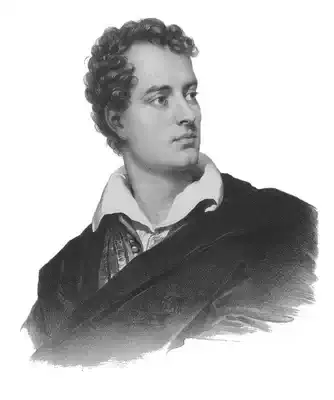
Lord Byron
On Jordan's Banks
On Jordan's banks the Arab's camels stray,
On Sion's hill the False One's votaries pray,
The Baaladorer
bows on Sinai's steep Yet
there even
there Oh
God! thy thunders sleep:
There where
thy finger scorch'd the tablet stone!
There where
thy shadow to thy people shone!
Thy glory shrouded in its garb of fire:
Thyself none
living see and not expire!
Oh! in the lightning let thy glance appear;
Sweep from his shiver'd hand the oppressor's spear!
How long by tyrants shall thy land be trod?
How long thy temple worshipless, Oh God?

Ella Wheeler Wilcox
Custer: Book Second
I
Oh, for the power to call to aid, of mine
Own humble Muse, the famed and sacred nine.
Then might she fitly sing, and only then,
Of those intrepid and unflinching men
Who knew no homes save ever moving tents,
And who 'twixt fierce unfriendly elements
And wild barbarians warred. Yet unfraid,
Since love impels thy strains, sing, sing, my modest maid.
II
Relate how Custer in midwinter sought
Far Washita's cold shores; tell why he fought
With savage nomads fortressed in deep snows.
Woman, thou source of half the sad world's woes
And all its joys, what sanguinary strife
Has vexed the earth and made contention rife
Because of thee! For, hidden in man's heart,
Ay, in his very soul, of his true self a part,
III
The natural impulse and the wish belongs
To win thy favor and redress thy wrongs.
Alas! for woman, and for man, alas!
If that dread hour should ever come to pass,
When, through her new-born passion for control,
She drives that beauteous impulse from his soul.
What were her vaunted independence worth
If to obtain she sells her sweetest rights of birth?
IV
God formed fair woman for her true estateMan's
tender comrade, and his equal mate,
Not his competitor in toil and trade.
While coarser man, with greater strength was made
To fight her battles and her rights protect.
Ay! to protect the rights of earth's elect
(The virgin maiden and the spotless wife)
From immemorial time has man laid down his life.
V
And now brave Custer's valiant army pressed
Across the dangerous desert of the West,
To rescue fair white captives from the hands
Of brutal Cheyenne and Comanche bands,
On Washita's bleak banks. Nine hundred strong
It moved its slow determined way along,
Past frontier homes left dark and desolate
By the wild Indians' fierce and unrelenting hate;
VI
Past forts where ranchmen, strong of heart and bold,
Wept now like orphaned children as they told,
With quivering muscles and with anguished breath,
Of captured wives, whose fate was worse than death;
Past naked bodies whose disfiguring wounds
Spoke of the hellish hate of human hounds;
Past bleaching skeleton and rifled grave,
On pressed th' avenging host, to rescue and to save.
VII
Uncertain Nature, like a fickle friend,
(Worse than the foe on whom we may depend)
Turned on these dauntless souls a brow of wrath
And hurled her icy jav'lins in their path.
With treacherous quicksands, and with storms that blight,
Entrapped their footsteps and confused their sight.
'Yet on,' urged Custer, 'on at any cost,
No hour is there to waste, no moment to be lost.'
VIII
Determined, silent, on they rode, and on,
Like fabled Centaurs, men and steeds seemed one.
No bugle echoed and no voice spoke near,
Lest on some lurking Indian's list'ning ear
The sound might fall. Through swift descending snow
The stealthy guides crept, tracing out the foe;
No fire was lighted, and no halt was made
From haggard gray-lipped dawn till night lent friendly shade.
IX
Then, by the shelt'ring river's bank at last,
The weary warriors paused for their repast.
A couch of ice and falling shows for spread
Made many a suffering soldier's chilling bed.
They slept to dream of glory and delight,
While the pale fingers of the pitying night
Wove ghostly winding sheets for that doomed score
Who, ere another eve, should sleep to wake no more.
X
But those who slept not, saw with startled eyes
Far off, athwart dim unprotecting skies,
Ascending slowly with majestic grace,
A lustrous rocket, rising out of space.
'Behold the signal of the foe,' cried one,
The field is lost before the strife's begun.
Yet no! for see! yon rays spread near and far;
It is the day's first smile, the radiant morning star.
XI
The long hours counting till the daylight broke,
In whispered words the restless warriors spoke.
They talked of battles, but they thought of home
(For hearts are faithful though the feet may roam).
Brave Hamilton, all eager for the strife,
Mused o'er that two-fold mystery-death and life;
'And when I die,' quoth he, 'mine be the part
To fall upon the field, a bullet in my heart.'
XII
At break of dawn the scouts crept in to say
The foe was camped a rifle shot away.
The baying of a dog, an infant's cry
Pierced through the air; sleep fled from every eye.
To horse! to arms! the dead demand the dead!
Let the grand charge upon the lodge be led!
Let the Mosaic law, life for a life
Pay the long standing debt of blood. War to the knife!
XIII
So spake each heart in that unholy rage
Which fires the brain, when war the thoughts engage.
War, hideous war, appealing to the worst
In complex man, and waking that wild thirst
For human blood which blood alone can slake.
Yet for their country's safety, and the sake
Of tortured captives moaning in alarm
The Indian must be made to fear the law's strong arm.
XIV
A noble vengeance burned in Custer's breast,
But, as he led his army to the crest,
Above the wigwams, ready for the charge
He felt the heart within him, swelling large
With human pity, as an infant's wail
Shrilled once again above the wintry gale.
Then hosts of murdered children seemed to rise;
And shame his halting thought with sad accusing eyes,
XV
And urge him on to action. Stern of brow
The just avenger, and the General now,
He gives the silent signal to the band
Which, all impatient, waits for his command.
Cold lips to colder metal press; the air
Echoes those merry strains which mean despair
For sleeping chieftain and for toiling squaw,
But joy to those stern hearts which glory in the law
XVI
Of murder paying murder's awful debt.
And now four squadrons in one charge are met.
From east and west, from north and south they come,
At call of bugle and at roll of drum.
Their rifles rain hot hail upon the foe,
Who flee from danger in death's jaws to go.
The Indians fight like maddened bulls at bay,
And dying shriek and groan, wound the young ear of day.
XVII
A pallid captive and a white-browed boy
Add to the tumult piercing cries of joy,
As forth they fly, with high hope animate.
A hideous squaw pursues them with her hate;
Her knife descends with sickening force and sound;
Their bloody entrails stain the snow-clad ground.
She shouts with glee, then yells with rage and falls
Dead by her victims' side, pierced by avenging balls.
XVIII
Now war runs riot, carnage reigns supreme.
All thoughts of mercy fade from Custer's scheme.
Inhuman methods for inhuman foes,
Who feed on horrors and exult in woes.
To conquer and subdue alone remains
In dealing with the red man on the plains.
The breast that knows no conscience yields to fear,
Strike! let the Indian meet his master now and here.
XIX
With thoughts like these was Custer's mind engaged.
The gentlest are the sternest when enraged.
All felt the swift contagion of his ire,
For he was one who could arouse and fire
The coldest heart, so ardent was his own.
His fearless eye, his calm intrepid tone,
Bespoke the leader, strong with conscious power,
Whom following friends will bless, while foes will curse and cower.
XX
Again they charge! and now among the killed
Lies Hamilton, his wish so soon fulfilled,
Brave Elliott pursues across the field
The flying foe, his own young life to yield.
But like the leaves in some autumnal gale
The red men fall in Washita's wild vale.
Each painted face and black befeathered head
Still more repulsive seems with death's grim pallor wed.
XXI
New forces gather on surrounding knolls,
And fierce and fiercer war's red river rolls.
With bright-hued pennants flying from each lance
The gayly costumed Kiowas advance.
And bold Comanches (Bedouins of the land)
Infuse fresh spirit in the Cheyenne band.
While from the ambush of some dark ravine
Flash arrows aimed by hands, unerring and unseen.
XXIII
The hours advance; the storm clouds roll away;
Still furious and more furious grows the fray.
The yellow sun makes ghastlier still the sight
Of painted corpses, staring in its light.
No longer slaves, but comrades of their griefs,
The squaws augment the forces of their chiefs.
They chant weird dirges in a minor key,
While from the narrow door of wigwam and tepee
XXIII
Cold glittering eyes above cold glittering steel
Their deadly purpose and their hate reveal.
The click of pistols and the crack of guns
Proclaim war's daughters dangerous as her sons.
She who would wield the soldier's sword and lance
Must be prepared to take the soldier's chance.
She who would shoot must serve as target, too;
The battle-frenzied men, infuriate now pursue.
XXIV
And blood of warrior, woman and papoose,
Flow free as waters when some dam breaks loose;
Consuming fire, the wanton friend of war
(Whom allies worship and whom foes abhor)
Now trails her crimson garments through the street,
And ruin marks the passing of her feet.
Full three-score lodges smoke upon the plain,
And all the vale is strewn with bodies of the slain.
XXV
And those who are not numbered with the dead
Before all-conquering Custer now are led.
To soothe their woes, and calm their fears he seeks;
An Osage guide interprets while he speaks.
The vanquished captives, humbled, cowed and spent
Read in the victor's eye his kind intent.
The modern victor is as kind as brave;
His captive is his guest, not his insulted slave.
XXVI
Mahwissa, sister of the slaughtered chief
Of all the Cheyennes, listens; and her grief
Yields now to hope; and o'er her withered face
There flits the stealthy cunning of her race.
Then forth she steps, and thus begins to speak:
'To aid the fallen and support the weak
Is man's true province; and to ease the pain
Of those o'er whom it is his purpose now to reign.
XXVII
'Let the strong chief unite with theirs his life,
And take this black-eyed maiden for a wife.'
Then, moving with an air of proud command,
She leads a dusky damsel by the hand,
And places her at wondering Custer's side,
Invoking choicest blessings on the bride
And all unwilling groom, who thus replies.
'Fair is the Indian maid, with bright bewildering eyes,
XXVIII
'But fairer still is one who, year on year,
Has borne man's burdens, conquered woman's fear;
And at my side rode mile on weary mile,
And faced all deaths, all dangers, with a smile,
Wise as Minerva, as Diana brave,
Is she whom generous gods in kindness gave
To share the hardships of my wandering life,
Companion, comrade, friend, my loved and loyal wife.
XXIX
'The white chief weds but one. Take back thy maid.'
He ceased, and o'er Mahwissa's face a shade
Of mingled scorn and pity and surprise
Sweeps as she slow retreats, and thus replies:
'Rich is the pale-faced chief in battle fame,
But poor is he who but one wife may claim.
Wives are the red-skinned heroes' rightful spoil;
In war they prove his strength, in times of peace they toil.'
XXX
But hark! The bugle echoes o'er the plains
And sounds again those merry Celtic strains
Which oft have called light feet to lilting dance,
But now they mean the order to advance.
Along the river's bank, beyond the hill
Two thousand foemen lodge, unconquered still.
Ere falls night's curtain on this bloody play,
The army must proceed, with feint of further fray.
XXXI
The weary warriors mount their foam-flecked steeds,
With flags unfurled the dauntless host proceeds.
What though the foe outnumbers two to one?
Boldness achieves what strength oft leaves undone;
A daring mein will cause brute force to cower,
And courage is the secret source of power.
As Custer's column wheels upon their sight
The frightened red men yield the untried field by flight.
XXXII
Yet when these conquering heroes sink to rest,
Dissatisfaction gnaws the leader's breast,
For far away across vast seas of snows
Held prisoners still by hostile Arapahoes
And Cheyennes unsubdued, two captives wait.
On God and Custer hangs their future fate.
May the Great Spirit nerve the mortal's arm
To rescue suffering souls from worse than death's alarm.
XXXIII
But ere they seek to rescue the oppressed,
The valiant dead, in state, are laid to rest.
Mourned Hamilton, the faithful and the brave,
Nine hundred comrades follow to the grave;
And close behind the banner-hidden corse
All draped in black, walks mournfully his horse;
While tears of sound drip through the sunlit day.
A soldier may not weep, but drums and bugles may.
XXXIV
Now, Muse, recount, how after long delays
And dangerous marches through untrodden ways,
Where cold and hunger on each hour attend,
At last the army gains the journey's end.
An Indian village bursts upon the eye;
Two hundred lodges, sleep-encompassed lie,
There captives moan their anguished prayers through tears,
While in the silent dawn the armied answer nears.
XXXV
To snatch two fragile victims from the foe
Nine hundred men have traversed leagues of snow.
Each woe they suffered in a hostile land
The flame of vengeance in their bosoms fanned.
They thirst for slaughter, and the signal wait
To wrest the captives from their horrid fate.
Each warrior's hand upon his rifle falls,
Each savage soldier's heart for awful bloodshed calls.
XXXVI
And one, in years a youth, in woe a man,
Sad Brewster, scarred by sorrow's blighting ban,
Looks, panting, where his captive sister sleeps,
And o'er his face the shade of murder creeps.
His nostrils quiver like a hungry beast
Who scents anear the bloody carnal feast.
He longs to leap down in that slumbering vale
And leave no foe alive to tell the awful tale.
XXXVII
Not so, calm Custer. Sick of gory strife,
He hopes for rescue with no loss of life;
And plans that bloodless battle of the plains
Where reasoning mind outwits mere savage brains.
The sullen soldiers follow where he leads;
No gun is emptied, and no foeman bleeds.
Fierce for the fight and eager for the fray
They look upon their Chief in undisguised dismay.
XXXVIII
He hears the murmur of their discontent,
But sneers can never change a strong mind's bent.
He knows his purpose and he does not swerve.
And with a quiet mien and steady nerve
He meets dark looks where'er his steps may go,
And silence that is bruising as a blow,
Where late were smiles and words of ardent praise.
So pass the lagging weeks of wearying delays.
XXXIX
Inaction is not always what it seems,
And Custer's mind with plan and project teems.
Fixed in his peaceful purpose he abides
With none takes counsel and in none confides;
But slowly weaves about the foe a net
Which leaves them wholly at his mercy, yet
He strikes no fateful blow; he takes no life,
And holds in check his men, who pant for bloody strife.
XL
Intrepid warrior and skilled diplomate,
In his strong hands he holds the red man's fate.
The craftiest plot he checks with counterplot,
Till tribe by tribe the tricky foe is brought
To fear his vengeance and to know his power.
As man's fixed gaze will make a wild beast cower,
So these crude souls feel that unflinching will
Which draws them by its force, yet does not deign to kill.
XLI
And one by one the hostile Indians send
Their chiefs to seek a peaceful treaty's end.
Great councils follow; skill with cunning copes
And conquers it; and Custer sees his hopes
So long delayed, like stars storm hidden, rise
To radiate with splendor all his skies.
The stubborn Cheyennes, cowed at last by fear,
Leading the captive pair, o'er spring-touched hills appear.
XLII
With breath suspended, now the whole command
Waits the approach of that equestrian band.
Nearer it comes, still nearer, then a cry,
Half sob, half shriek, goes piercing God's blue sky,
And Brewster, like a nimble-footed doe,
Or like an arrow hurrying from a bow,
Shoots swiftly through the intervening space
And that lost sister clasps, in sorrowing love's embrace.
XLIII
And men who leaned o'er Hamilton's rude bier
And saw his dead dear face without a tear,
Strong souls who early learned the manly art
Of keeping from the eye what's in the heart,
Soldiers who look unmoved on death's pale brow,
Avert their eyes, to hide their moisture now.
The briny flood forced back from shores of woe,
Needs but to touch the strands of joy to overflow.
XLIV
About the captives welcoming warriors crowd,
All eyes are wet, and Brewster sobs aloud.
Alas, the ravage wrought by toil and woe
On faces that were fair twelve moons ago.
Bronzed by exposure to the heat and cold,
Still young in years, yet prematurely old,
By insults humbled and by labor worn,
They stand in youth's bright hour, of all youth's graces shorn.
XLV
A scanty garment rudely made of sacks
Hangs from their loins; bright blankets drape their backs;
About their necks are twisted tangled strings
Of gaudy beads, while tinkling wire and rings
Of yellow brass on wrists and fingers glow.
Thus, to assuage the anger of the foe
The cunning Indians decked the captive pair
Who in one year have known a lifetime of despair.
XLVI
But love can resurrect from sorrow's tomb
The vanished beauty and the faded bloom,
As sunlight lifts the bruised flower from the sod,
Can lift crushed hearts to hope, for love is God.
Already now in freedom's glad release
The hunted look of fear gives place to peace,
And in their eyes at thought of home appears
That rainbow light of joy which brightest shines through tears.
XLVII
About the leader thick the warriors crowd;
Late loud in censure, now in praises loud,
They laud the tactics, and the skill extol
Which gained a bloodless yet a glorious goal.
Alone and lonely in the path of right
Full many a brave soul walks. When gods requite
And crown his actions as their worth demands,
Among admiring throngs the hero always stands.
XLVIII
Back to the East the valorous squadrons sweep;
The earth, arousing from her long, cold sleep,
Throws from her breast the coverlet of snow,
Revealing Spring's soft charms which lie below.
Suppressed emotions in each heart arise,
The wooer wakens and the warrior dies.
The bird of prey is vanquished by the dove,
And thoughts of bloody strife give place to thoughts of love.
XLIX
The mighty plains, devoid of whispering trees,
Guard well the secrets of departed seas.
Where once great tides swept by with ebb and flow
The scorching sun looks down in tearless woe.
And fierce tornadoes in ungoverned pain
Mourn still the loss of that mysterious main.
Across this ocean bed the soldiers fly-
Home is the gleaming goal that lures each eager eye.
L
Like some elixir which the gods prepare,
They drink the viewless tonic of the air,
Sweet with the breath of startled antelopes
Which speed before them over swelling slopes.
Now like a serpent writhing o'er the moor,
The column curves and makes a slight detour,
As Custer leads a thousand men away
To save a ground bird's nest which in the footpath lay.
LI
Mile following mile, against the leaning skies
Far off they see a dull dark cloud arise.
The hunter's instinct in each heart is stirred,
Beholding there in one stupendous herd
A hundred thousand buffaloes. Oh great
Unwieldy proof of Nature's cruder state,
Rough remnant of a prehistoric day,
Thou, with the red man, too, must shortly pass away.
LII
Upon those spreading plains is there not room
For man and bison, that he seals its doom?
What pleasure lies and what seductive charm
In slaying with no purpose but to harm?
Alas, that man, unable to create,
Should thirst forever to exterminate,
And in destruction find his fiercest joy.
The gods alone create, gods only should destroy.
LIII
The flying hosts a straggling bull pursue;
Unerring aim, the skillful Custer drew.
The wounded beast turns madly in despair
And man and horse are lifted high in air.
The conscious steed needs not the guiding rein;
Back with a bound and one quick cry of pain
He springs, and halts, well knowing where must fall
In that protected frame, the sure death dealing ball.
LIV
With minds intent upon the morrow's feast,
The men surround the carcass of the beast.
Rolled on his back, he lies with lolling tongue,
Soon to the saddle savory steaks are hung.
And from his mighty head, great tufts of hair
Are cut as trophies for some lady fair.
To vultures then they leave the torn remains
Of what an hour ago was monarch of the plains.
LV
Far off, two bulls in jealous war engage,
Their blood-shot eye balls roll in furious rage;
With maddened hoofs they mutilate the ground
And loud their angry bellowings resound;
With shaggy heads bent low they plunge and roar,
Till both broad bellies drip with purple gore.
Meanwhile, the heifer, whom the twain desire,
Stands browsing near the pair, indifferent to their ire.
LVI
At last she lifts her lazy head and heeds
The clattering hoofs of swift advancing steeds.
Off to the herd with cumb'rous gait she runs
And leaves the bulls to face the threatening guns.
No more for them the free life of the plains,
Its mating pleasures and its warring pains.
Their quivering flesh shall feed unnumbered foes,
Their tufted tails adorn the soldiers' saddle bows.
LVII
Now into camp the conquering hosts advance;
On burnished arms the brilliant sunbeams glance.
Brave Custer leads, blonde as the gods of old;
Back from his brow blow clustering locks of gold,
And, like a jewel in a brook, there lies,
Far in the depths of his blue guarded eyes,
The thought of one whose smiling lips upcurled,
Mean more of joy to him than plaudits of the world.
LVIII
The troops in columns of platoons appear
Close to the leader following. Ah, here
The poetry of war is fully seen,
Its prose forgotten; as against the green
Of Mother Nature, uniformed in blue,
The soldiers pass for Sheridan's review.
The motion-music of the moving throng,
Is like a silent tune, set to a wordless song.
LIX
The guides and trailers, weird in war's array,
Precede the troops along the grassy way.
They chant wild songs, and with loud noise and stress,
In savage manner savage joy express.
The Indian captives, blanketed in red,
On ponies mounted, by the scouts are led.
Like sumach bushes, etched on evening skies,
Against the blue-clad troops, this patch of color lies.
LX
High o'er the scene vast music billows bound,
And all the air is liquid with the sound
Of those invisible compelling waves.
Perchance they reach the low and lonely graves
Where sleep brave Elliott and Hamilton,
And whisper there the tale of victory won;
Or do the souls of soldiers tried and true
Come at the bugle call, and march in grand review?
LXI
The pleased Commander watches in surprise
This splendid pageant surge before his eyes.
Not in those mighty battle days of old
Did scenes like this upon his sight unfold.
But now it passes. Drums and bugles cease
To dash war billows on the shores of Peace.
The victors smile on fair broad bosomed Sleep
While in her soothing arms, the vanquished cease to weep

Edgar Albert Guest
A Father's Prayer
Lord, make me tolerant and wise;
Incline my ears to hear him through;
Let him not stand with downcast eyes,
Fearing to trust me and be true.
Instruct me so that I may know
The way my son and I should go.
When he shall err, as once did I,
Or boyhood folly bids him stray,
Let me not into anger fly
And drive the good in him away.
Teach me to win his trust, that he
Shall keep no secret hid from me.
Lord, strengthen me that I may be .
A fit example for my son.
Grant he may never hear or see
A shameful deed that I have done.
However sorely I am tried,
Let me not undermine his pride.
In spite of years and temples gray,
Still let my spirit beat with joy;
Teach me to share in all his play
And be a comrade with my boy.
Wherever we may chance to be,
Let him find happiness with me.
Lord, as his father, now I pray
For manhood's strength and counsel wise;
Let me deal justly, day by day,
In all that fatherhood implies.
To be his father, keep me fit;
Let me not play the hypocrite!
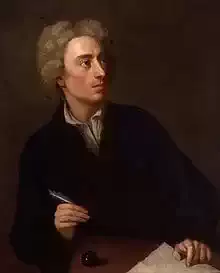
Alexander Pope
With sweeter notes each rising temple rung;
A Raphael painted and a Vida sung;
Immortal Vida! on whose honour'd brow
The poet's bays and critics ivy grow:
Cremona now shall ever boast they name,
As next in place to Mantua, next in fame!
But soon by impious arms from Latium chased,
Their ancient bounds the banish'd Muses pass'd;
Thence arts o'er all the northern world advance,
But critic learning flourish'd most in France;
The rules a nation born to serve obeys,
And Boileau still in right of Horace sways.
But we, brave Britons, foreign laws despised,
And kept unconquer'd and uncivilized;
Fierce for the liberties of wit, and bold,
We still defied the Romans, as of old.
Yet some there were, among the sounder few
Of those who less presumed and better knew,
Who durst assert the juster ancient cause,
And here restor'd WIt's fundamental laws.
Such was the Muse whose rules and practice tell
``Nature's chief masterpiece is writing well.''
Such was Roscommon, not more learn'd than good,
With manners gen'rous as his noble blood;
To him the wit of Greece and Rome was known,
And every author's merit but his own.
Such late was Walsh--the Muse's judge and friend,
Who justly knew to blame or to commend;
To failings mild but zealous for desert,
The clearest head, and the sincerest heart.
This humble praise, lamented Shade! receive;
This praise at least a grateful Muse may give:
The Muse whose early voice you taught to sing,
Prescribed her heights, and pruned her tender wing,
(Her guide now lost), no more attempts to rise,
But in low numbers short excursions tries;
Content if hence th'unlearn'd their wants may view,
The learn'd reflect on what before they knew;
Careless of censure, nor too fond of fame;
Still pleas'd to praise, yet not afraid to blame;
Averse alike to flatter or offend;
Not free from faults, nor yet too vain to mend.
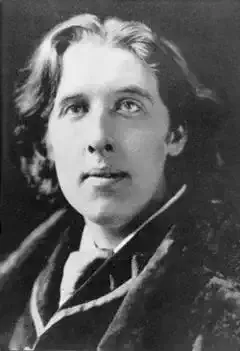
Oscar Wilde
Tristitiae
With garnered gold in wide domain,
Nor heeds the splashing of the rain,
The crashing down of forest trees.
O well for him who ne'er hath known
The travail of the hungry years,
A father grey with grief and tears,
A mother weeping all alone.
But well for him whose foot hath trod
The weary road of toil and strife,
Yet from the sorrows of his life.
Builds ladders to be nearer God.
Oscar Wilde
The Dole Of The King's Daughter (Breton)
And seven in the sky;
Seven sins on the King's daughter,
Deep in her soul to lie.
Red roses are at her feet,
(Roses are red in her red-gold hair)
And O where her bosom and girdle meet
Red roses are hidden there.
Fair is the knight who lieth slain
Amid the rush and reed,
See the lean fishes that are fain
Upon dead men to feed.
Sweet is the page that lieth there,
(Cloth of gold is goodly prey,)
See the black ravens in the air,
Black, O black as the night are they.
What do they there so stark and dead?
(There is blood upon her hand)
Why are the lilies flecked with red?
(There is blood on the river sand.)
There are two that ride from the south and east,
And two from the north and west,
For the black raven a goodly feast,
For the King's daughter rest.
There is one man who loves her true,
(Red, O red, is the stain of gore!)
He hath duggen a grave by the darksome yew,
(One grave will do for four.)
No moon in the still heaven,
In the black water none,
The sins on her soul are seven,
The sin upon his is one.
Oscar Wilde
Taedium Vitae
This paltry age's gaudy livery,
To let each base hand filch my treasury,
To mesh my soul within a woman's hair,
And be mere Fortune's lackeyed groom, - I swear
I love it not! these things are less to me
Than the thin foam that frets upon the sea,
Less than the thistledown of summer air
Which hath no seed: better to stand aloof
Far from these slanderous fools who mock my life
Knowing me not, better the lowliest roof
Fit for the meanest hind to sojourn in,
Than to go back to that hoarse cave of strife
Where my white soul first kissed the mouth of sin.
Oscar Wilde
Quantum Mutata
When no man died for freedom anywhere,
But England's lion leaping from its lair
Laid hands on the oppressor! it was so
While England could a great Republic show.
Witness the men of Piedmont, chiefest care
Of Cromwell, when with impotent despair
The Pontiff in his painted portico
Trembled before our stern ambassadors.
How comes it then that from such high estate
We have thus fallen, save that Luxury
With barren merchandise piles up the gate
Where noble thoughts and deeds should enter by:
Else might we still be Milton's heritors.
Oscar Wilde
Louis Napoleon
When far away upon a barbarous strand,
In fight unequal, by an obscure hand,
Fell the last scion of thy brood of Kings!
Poor boy! thou shalt not flaunt thy cloak of red,
Or ride in state through Paris in the van
Of thy returning legions, but instead
Thy mother France, free and republican,
Shall on thy dead and crownless forehead place
The better laurels of a soldier's crown,
That not dishonoured should thy soul go down
To tell the mighty Sire of thy race
That France hath kissed the mouth of Liberty,
And found it sweeter than his honied bees,
And that the giant wave Democracy
Breaks on the shores where Kings lay couched at ease.
Oscar Wilde
Libertatis Sacra Fames
And liking best that state republican
Where every man is Kinglike and no man
Is crowned above his fellows, yet I see,
Spite of this modern fret for Liberty,
Better the rule of One, whom all obey,
Than to let clamorous demagogues betray
Our freedom with the kiss of anarchy.
Wherefore I love them not whose hands profane
Plant the red flag upon the piled-up street
For no right cause, beneath whose ignorant reign
Arts, Culture, Reverence, Honour, all things fade,
Save Treason and the dagger of her trade,
Or Murder with his silent bloody feet.
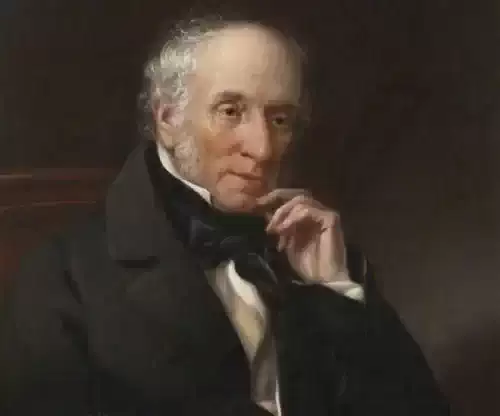
William Wordsworth
Written in London. September,
. O Friend! I know not which way I must look
For comfort, being, as I am, opprest,
To think that now our life is only drest
For show; mean handy-work of craftsman, cook,
Or groom! -- We must run glittering like a brook
In the open sunshine, or we are unblest:
The wealthiest man among us is the best:
No grandeur now in nature or in book
Delights us. Rapine, avarice, expense,
This is idolatry; and these we adore:
Plain living and high thinking are no more:
The homely beauty of the good old cause
Is gone; our peace, our fearful innocence,
And pure religion breathing household laws.
William Wordsworth
To A Sexton
Let thy wheel-barrow alone--
Wherefore, Sexton, piling still
In thy bone-house bone on bone?
'Tis already like a hill
In a field of battle made,
Where three thousand skulls are laid;
These died in peace each with the other,--
Father, sister, friend, and brother.
Mark the spot to which I point!
From this platform, eight feet square,
Take not even a finger-joint:
Andrew's whole fire-side is there.
Here, alone, before thine eyes,
Simon's sickly daughter lies,
From weakness now, and pain defended,
Whom he twenty winters tended.
Look but at the gardener's pride--
How he glories, when he sees
Roses, lilies, side by side,
Violets in families!
By the heart of Man, his tears,
By his hopes and by his fears,
Thou, too heedless, art the Warden
Of a far superior garden.
Thus then, each to other dear,
Let them all in quiet lie,
Andrew there, and Susan here,
Neighbours in mortality.
And, should I live through sun and rain
Seven widowed years without my Jane,
O Sexton, do not then remove her,
Let one grave hold the Loved and Lover!
William Wordsworth
The Tables Turned
Up! up! my Friend, and quit your books;
Or surely you'll grow double:
Up! up! my Friend, and clear your looks;
Why all this toil and trouble?
The sun above the mountain's head,
A freshening lustre mellow
Through all the long green fields has spread,
His first sweet evening yellow.
Books! 'tis a dull and endless strife:
Come, hear the woodland linnet,
How sweet his music! on my life,
There's more of wisdom in it.
And hark! how blithe the throstle sings!
He, too, is no mean preacher:
Come forth into the light of things,
Let Nature be your teacher.
She has a world of ready wealth,
Our minds and hearts to bless--
Spontaneous wisdom breathed by health,
Truth breathed by cheerfulness.
One impulse from a vernal wood
May teach you more of man,
Of moral evil and of good,
Than all the sages can.
Sweet is the lore which Nature brings;
Our meddling intellect
Mis-shapes the beauteous forms of things:--
We murder to dissect.
Enough of Science and of Art;
Close up those barren leaves;
Come forth, and bring with you a heart
That watches and receives.
William Wordsworth
The Russian Fugitive
I
ENOUGH of rose-bud lips, and eyes
Like harebells bathed in dew,
Of cheek that with carnation vies,
And veins of violet hue;
Earth wants not beauty that may scorn
A likening to frail flowers;
Yea, to the stars, if they were born
For seasons and for hours.
Through Moscow's gates, with gold unbarred,
Stepped One at dead of night,
Whom such high beauty could not guard
From meditated blight;
By stealth she passed, and fled as fast
As doth the hunted fawn,
Nor stopped, till in the dappling east
Appeared unwelcome dawn.
Seven days she lurked in brake and field,
Seven nights her course renewed,
Sustained by what her scrip might yield,
Or berries of the wood;
At length, in darkness travelling on,
When lowly doors were shut,
The haven of her hope she won,
Her foster-mother's hut.
'To put your love to dangerous proof
I come,' said she, 'from far;
For I have left my Father's roof,
In terror of the czar.'
No answer did the Matron give,
No second look she cast,
But hung upon the fugitive,
Embracing and embraced.
She led the Lady to a seat
Beside the glimmering fire,
Bathed duteously her wayworn feet,
Prevented each desire:---
The cricket chirped, the house-dog dozed,
And on that simple bed,
Where she in childhood had reposed,
Now rests her weary head.
When she, whose couch had been the sod,
Whose curtain, pine or thorn,
Had breathed a sigh of thanks to God,
Who comforts the forlorn;
While over her the Matron bent
Sleep sealed her eyes, and stole
Feeling from limbs with travel spent,
And trouble from the soul.
Refreshed, the Wanderer rose at morn,
And soon again was dight
In those unworthy vestments worn
Through long and perilous flight;
And 'O beloved Nurse,' she said,
'My thanks with silent tears
Have unto Heaven and You been paid:
Now listen to my fears !
'Have you forgot'---and here she smiled---
'The babbling flatteries
You lavished on me when a child
Disporting round your knees?
I was your lambkin, and your bird,
Your star, your gem, your flower;
Light words, that were more lightly heard
In many a cloudless hour!
'The blossom you so fondly praised
Is come to bitter fruit;
A mighty One upon me gazed;
I spurned his lawless suit,
And must be hidden from his wrath:
You, Foster-father dear,
Will guide me in my forward path;
I may not tarry here!
'I cannot bring to utter woe
Your proved fidelity.'---
'Dear Child, sweet Mistress, say not so!
For you we both would die.'
'Nay, nay, I come with semblance feigned
And cheek embrowned by art;
Yet, being inwardly unstained,
With courage will depart.'
'But whither would you, could you, flee?
A poor Man's counsel take;
The Holy Virgin gives to me
A thought for your dear sake;
Rest, shielded by our Lady's grace,
And soon shall you be led
Forth to a safe abiding-place,
Where never foot doth tread.'
II
THE dwelling of this faithful pair
In a straggling village stood,
For One who breathed unquiet air
A dangerous neighbourhood;
But wide around lay forest ground
With thickets rough and blind;
And pine-trees made a heavy shade
Impervious to the wind.
And there, sequestered from the eight,
Was spread a treacherous swamp,
On which the noonday sun shed light
As from a lonely lamp;
And midway in the unsafe morass,
A single Island rose
Of firm dry ground, with healthful grass
Adorned, and shady boughs.
The Woodman knew, for such the craft
This Russian vassal plied,
That never fowler's gun, nor shaft
Of archer, there was tried;
A sanctuary seemed the spot
From all intrusion free;
And there he planned an artful Cot
For perfect secrecy.
With earnest pains unchecked by dread
Of Power's far-stretching hand,
The bold good Man his labor sped
At nature's pure command;
Heart-soothed, and busy as a wren,
While, in a hollow nook,
She moulds her sight-eluding den
Above a murmuring brook.
His task accomplished to his mind,
The twain ere break of day
Creep forth, and through the forest wind
Their solitary way;
Few words they speak, nor dare to slack
Their pace from mile to mile,
Till they have crossed the quaking marsh,
And reached the lonely Isle.
The sun above the pine-trees showed
A bright and cheerful face;
And Ina looked for her abode,
The promised hiding-place;
She sought in vain, the Woodman smiled;
No threshold could be seen,
Nor roof, nor window;Ñall seemed wild
As it had ever been.
Advancing, you might guess an hour,
The front with such nice care
Is masked, 'if house it be or bower,'
But in they entered are;
As shaggy as were wall and roof
With branches intertwined,
So smooth was all within, air-proof,
And delicately lined:
And hearth was there, and maple dish,
And cups in seemly rows,
And couch---all ready to a wish
For nurture or repose;
And Heaven doth to her virtue grant
That here she may abide
In solitude, with every want
By cautious love supplied.
No queen, before a shouting crowd,
Led on in bridal state,
E'er struggled with a heart so proud,
Entering her palace gate:
Rejoiced to bid the world farewell,
No saintly anchoress
E'er took possession of her cell
With deeper thankfulness.
'Father of all, upon thy care
And mercy am I thrown;
Be thou my safeguard!'---such her prayer
When she was left alone,
Kneeling amid the wilderness
When joy had passed away,
And smiles, fond efforts of distress
To hide what they betray!
The prayer is heard, the Saints have seen,
Diffused through form and face,
Resolves devotedly serene;
That monumental grace
Of Faith, which doth all passions tame
That Reason should control;
And shows in the untrembling frame
A statue of the soul.
III
'TIS sung in ancient minstrelsy
That Phoebus wont to wear
The leaves of any pleasant tree
Around his golden hair;
Till Daphne, desperate with pursuit
Of his imperious love,
At her own prayer transformed, took root,
A laurel in the grove.
Then did the Penitent adorn
His brow with laurel green;
And 'mid his bright locks never shorn
No meaner leaf was seen;
And poets sage, through every age,
About their temples wound
The bay; and conquerors thanked the Gods,
With laurel chaplets crowned,
Into the mists of fabling Time
So far runs back the praise
Of Beauty, that disdains to climb
Along forbidden ways;
That scorns temptation; power defies
Where mutual love is not;
And to the tomb for rescue flies
When life would be a blot.
To this fair Votaress, a fate
More mild doth Heaven ordain
Upon her Island desolate;
And word, not breathed in vain,
Might tell what intercourse she found,
Her silence to endear;
What birds she tamed, what flowers the ground
Sent forth her peace to cheer.
To one mute Presence, above all,
Her soothed affections clung,
A picture on the cabin wall
By Russian usage hung---
The Mother-maid, whose countenance bright
With love abridged the day;
And, communed with by taper light,
Chased spectral fears away.
And oft as either Guardian came,
The joy in that retreat
Might any common friendship shame,
So high their heart would beat;
And to the lone Recluse, whate'er
They brought, each visiting
Was like the crowding of the year
With a new burst of spring.
But, when she of her Parents thought,
The pang was hard to bear;
And, if with all things not enwrought,
That trouble still is near.
Before her flight she had not dared
Their constancy to prove,
Too much the heroic Daughter feared
The weakness of their love.
Dark is the past to them, and dark
The future still must be,
Till pitying Saints conduct her bark
Into a safer sea---
Or gentle Nature close her eyes,
And set her Spirit free
From the altar of this sacrifice,
In vestal purity.
Yet, when above the forest-glooms
The white swans southward passed,
High as the pitch of their swift plume
Her fancy rode the blast;
And bore her toward the fields of France
Her Father's native land,
To mingle in the rustic dance,
The happiest of the band!
Of those beloved fields she oft
Had heard her Father tell
In phrase that now with echoes soft
Haunted her lonely cell;
She saw the hereditary bowers,
She heard the ancestral stream;
The Kremlin and its haughty towers
Forgotten like a dream !
IV
THE ever-changing Moon had traced
Twelve times her monthly round,
When through the unfrequented Waste
Was heard a startling sound;
A shout thrice sent from one who chased
At speed a wounded deer,
Bounding through branches interlaced,
And where the wood was clear.
The fainting creature took the marsh,
And toward the Island fled,
While plovers screamed with tumult harsh
Above his antlered head;
This, Ina saw; and, pale with fear,
Shrunk to her citadel;
The desperate deer rushed on, and near
The tangled covert fell.
Across the marsh, the game in view,
The Hunter followed fast,
Nor paused, till o'er the stag he blew
A death-proclaiming blast;
Then, resting on her upright mind,
Came forth the Maid---'In me
Behold,' she said, ' a stricken Hind
Pursued by destiny!
'From your deportment, Sir! I deem
That you have worn a sword,
And will not hold in light esteem
A suffering woman's word;
There is my covert, there perchance
I might have lain concealed,
My fortunes hid, my countenance
Not even to you revealed.
'Tears might be shed, and I might pray,
Crouching and terrified,
That what has been unveiled to day,
You would in mystery hide;
But I will not defile with dust
The knee that bend to adore
The God in heaven;---attend, be just;
This ask I, and no more!
'I speak not of the winter's cold,
For summer's heat exchanged,
While I have lodged in this rough hold,
From social life estranged;
Nor yet of trouble and alarms:
High Heaven is my defence;
And every season has soft arms
For injured Innocence.
'From Moscow to the Wilderness
It was my choice to come,
Lest virtue should be harborless,
And honor want a home;
And happy were I, if the Czar
Retain his lawless will,
To end life here like this poor deer,
Or a lamb on a green hill.'
'Are you the Maid,' the Stranger cried,
'From Gallic parents sprung,
Whose vanishing was rumored wide,
Sad theme for every tongue;
Who foiled an Emperor's eager quest?
You, Lady, forced to wear
These rude habiliments, and rest
Your head in this dark lair!'
But wonder, pity, soon were quelled;
And in her face and mien
The soul's pure brightness she beheld
Without a veil between:
He loved, he hoped,---a holy flame
Kindled 'mid rapturous tears;
The passion of a moment came
As on the wings of years.
'Such bounty is no gift of chance,'
Exclaimed he; 'righteous Heaven,
Preparing your deliverance,
To me the charge hath given.
The Czar full oft in words, and deeds
Is stormy and self-willed;
But, when the Lady Catherine pleads,
His violence is stilled.
'Leave open to my wish the course,
And I to her will go;
From that humane and heavenly source,
Good, only good, can flow.''
Faint sanction given, the Cavalier
Was eager to depart,
Though question followed question, dear
To the Maiden's filial heart.
Light was his step,---his hopes, more light,
Kept pace with his desires;
And the fifth morning gave him sight
Of Moscow's glittering spires.
He sued:---heart-smitten by the wrong,
To the lorn Fugitive
The Emperor sent a pledge as strong
As sovereign power could give.
O more than mighty change! If e'er
Amazement rose to pain,
And joy's excess produced a fear
Of something void and vain;
'Twas when the Parents, who had mourned
So long the lost as dead,
Beheld their only Child returned,
The household floor to tread.
Soon gratitude gave way to love
Within the Maiden's breast:
Delivered and Deliverer move
In bridal garments drest;
Meek Catherine had her own reward;
The Czar bestowed a dower;
And universal Moscow shared
The triumph of that hour.
Flowers strewed the ground; the nuptial feast
Was held with costly state;
And there, 'mid many a noble guest,
The foster-parent sate;
Encouraged by the imperial eye,
They shrank not into shade;
Great as their bliss, the honor high
To them and nature paid!
William Wordsworth
Simon Lee, The Old Huntsman
In the sweet shire of Cardigan,
Not far from pleasant Ivor-hall,
An old Man dwells, a little man,--
'Tis said he once was tall.
Full five-and-thirty years he lived
A running huntsman merry;
And still the centre of his cheek
Is red as a ripe cherry.
No man like him the horn could sound,
And hill and valley rang with glee
When Echo bandied, round and round,
The halloo of Simon Lee.
In those proud days, he little cared
For husbandry or tillage;
To blither tasks did Simon rouse
The sleepers of the village.
He all the country could outrun,
Could leave both man and horse behind;
And often, ere the chase was done,
He reeled, and was stone-blind.
And still there's something in the world
At which his heart rejoices;
For when the chiming hounds are out,
He dearly loves their voices!
But, oh the heavy change!--bereft
Of health, strength, friends, and kindred, see!
Old Simon to the world is left
In liveried poverty.
His Master's dead,--and no one now
Dwells in the Hall of Ivor;
Men, dogs, and horses, all are dead;
He is the sole survivor.
And he is lean and he is sick;
His body, dwindled and awry,
Rests upon ankles swoln and thick;
His legs are thin and dry.
One prop he has, and only one,
His wife, an aged woman,
Lives with him, near the waterfall,
Upon the village Common.
Beside their moss-grown hut of clay,
Not twenty paces from the door,
A scrap of land they have, but they
Are poorest of the poor.
This scrap of land he from the heath
Enclosed when he was stronger;
But what to them avails the land
Which he can till no longer?
Oft, working by her Husband's side,
Ruth does what Simon cannot do;
For she, with scanty cause for pride,
Is stouter of the two.
And, though you with your utmost skill
From labour could not wean them,
'Tis little, very little--all
That they can do between them.
Few months of life has he in store
As he to you will tell,
For still, the more he works, the more
Do his weak ankles swell.
My gentle Reader, I perceive
How patiently you've waited,
And now I fear that you expect
Some tale will be related.
O Reader! had you in your mind
Such stores as silent thought can bring,
O gentle Reader! you would find
A tale in every thing.
What more I have to say is short,
And you must kindly take it:
It is no tale; but, should you think,
Perhaps a tale you'll make it.
One summer-day I chanced to see
This old Man doing all he could
To unearth the root of an old tree,
A stump of rotten wood.
The mattock tottered in his hand;
So vain was his endeavour,
That at the root of the old tree
He might have worked for ever.
"You're overtasked, good Simon Lee,
Give me your tool," to him I said;
And at the word right gladly he
Received my proffered aid.
I struck, and with a single blow
The tangled root I severed,
At which the poor old Man so long
And vainly had endeavoured.
The tears into his eyes were brought,
And thanks and praises seemed to run
So fast out of his heart, I thought
They never would have done.
--I've heard of hearts unkind, kind deeds
With coldness still returning;
Alas! the gratitude of men
Hath oftener left me mourning.
William Wordsworth
On the Extinction of the Venetian Republic
ONCE did she hold the gorgeous East in fee;
And was the safeguard of the West: the worth
Of Venice did not fall below her birth,
Venice, the eldest Child of Liberty.
She was a maiden City, bright and free;
No guile seduced, no force could violate;
And, when she took unto herself a mate,
She must espouse the everlasting Sea.
And what if she had seen those glories fade,
Those titles vanish, and that strength decay;
Yet shall some tribute of regret be paid
When her long life hath reach'd its final day:
Men are we, and must grieve when even the Shade
Of that which once was great is pass'd away.
William Wordsworth
Old Cumberland Beggar, The
I saw an aged Beggar in my walk;
And he was seated, by the highway side,
On a low structure of rude masonry
Built at the foot of a huge hill, that they
Who lead their horses down the steep rough road
May thence remount at ease. The aged Man
Had placed his staff across the broad smooth stone
That overlays the pile; and, from a bag
All white with flour, the dole of village dames,
He drew his scraps and fragments, one by one;
And scanned them with a fixed and serious look
Of idle computation. In the sun,
Upon the second step of that small pile,
Surrounded by those wild unpeopled hills,
He sat, and ate his food in solitude:
And ever, scattered from his palsied hand,
That, still attempting to prevent the waste,
Was baffled still, the crumbs in little showers
Fell on the ground; and the small mountain birds,
Not venturing yet to peck their destined meal,
Approached within the length of half his staff.
Him from my childhood have I known; and then
He was so old, he seems not older now;
He travels on, a solitary Man,
So helpless in appearance, that for him
The sauntering Horseman throws not with a slack
And careless hand his alms upon the ground,
But stops,--that he may safely lodge the coin
Within the old Man's hat; nor quits him so,
But still, when he has given his horse the rein,
Watches the aged Beggar with a look
Sidelong, and half-reverted. She who tends
The toll-gate, when in summer at her door
She turns her wheel, if on the road she sees
The aged beggar coming, quits her work,
And lifts the latch for him that he may pass.
The post-boy, when his rattling wheels o'ertake
The aged Beggar in the woody lane,
Shouts to him from behind; and if, thus warned,
The old man does not change his course, the boy
Turns with less noisy wheels to the roadside,
And passes gently by, without a curse
Upon his lips, or anger at his heart.
He travels on, a solitary Man;
His age has no companion. On the ground
His eyes are turned, and, as he moves along
'They' move along the ground; and, evermore,
Instead of common and habitual sight
Of fields with rural works, of hill and dale,
And the blue sky, one little span of earth
Is all his prospect. Thus, from day to day,
Bow-bent, his eyes for ever on the ground,
He plies his weary journey; seeing still,
And seldom knowing that he sees, some straw,
Some scattered leaf, or marks which, in one track,
The nails of cart or chariot-wheel have left
Impressed on the white road,--in the same line,
At distance still the same. Poor Traveller!
His staff trails with him; scarcely do his feet
Disturb the summer dust; he is so still
In look and motion, that the cottage curs,
Ere he has passed the door, will turn away,
Weary of barking at him. Boys and girls,
The vacant and the busy, maids and youths,
And urchins newly breeched--all pass him by:
Him even the slow-paced waggon leaves behind.
But deem not this Man useless.--Statesmen! ye
Who are so restless in your wisdom, ye
Who have a broom still ready in your hands
To rid the world of nuisances; ye proud,
Heart-swoln, while in your pride ye contemplate
Your talents, power, or wisdom, deem him not
A burthen of the earth! 'Tis Nature's law
That none, the meanest of created things,
Or forms created the most vile and brute,
The dullest or most noxious, should exist
Divorced from good--a spirit and pulse of good,
A life and soul, to every mode of being
Inseparably linked. Then be assured
That least of all can aught--that ever owned
The heaven-regarding eye and front sublime
Which man is born to--sink, howe'er depressed,
So low as to be scorned without a sin;
Without offence to God cast out of view;
Like the dry remnant of a garden-flower
Whose seeds are shed, or as an implement
Worn out and worthless. While from door to door,
This old Man creeps, the villagers in him
Behold a record which together binds
Past deeds and offices of charity,
Else unremembered, and so keeps alive
The kindly mood in hearts which lapse of years,
And that half-wisdom half-experience gives,
Make slow to feel, and by sure steps resign
To selfishness and cold oblivious cares.
Among the farms and solitary huts,
Hamlets and thinly-scattered villages,
Where'er the aged Beggar takes his rounds,
The mild necessity of use compels
To acts of love; and habit does the work
Of reason; yet prepares that after-joy
Which reason cherishes. And thus the soul,
By that sweet taste of pleasure unpursued,
Doth find herself insensibly disposed
To virtue and true goodness.
Some there are,
By their good works exalted, lofty minds
And meditative, authors of delight
And happiness, which to the end of time
Will live, and spread, and kindle: even such minds
In childhood, from this solitary Being,
Or from like wanderer, haply have received
(A thing more precious far than all that books
Or the solicitudes of love can do!)
That first mild touch of sympathy and thought,
In which they found their kindred with a world
Where want and sorrow were. The easy man
Who sits at his own door,--and, like the pear
That overhangs his head from the green wall,
Feeds in the sunshine; the robust and young,
The prosperous and unthinking, they who live
Sheltered, and flourish in a little grove
Of their own kindred;--all behold in him
A silent monitor, which on their minds
Must needs impress a transitory thought
Of self-congratulation, to the heart
Of each recalling his peculiar boons,
His charters and exemptions; and, perchance,
Though he to no one give the fortitude
And circumspection needful to preserve
His present blessings, and to husband up
The respite of the season, he, at least,
And 'tis no vulgar service, makes them felt.
Yet further.----Many, I believe, there are
Who live a life of virtuous decency,
Men who can hear the Decalogue and feel
No self-reproach; who of the moral law
Established in the land where they abide
Are strict observers; and not negligent
In acts of love to those with whom they dwell,
Their kindred, and the children of their blood.
Praise be to such, and to their slumbers peace!
--But of the poor man ask, the abject poor;
Go, and demand of him, if there be here
In this cold abstinence from evil deeds,
And these inevitable charities,
Wherewith to satisfy the human soul?
No--man is dear to man; the poorest poor
Long for some moments in a weary life
When they can know and feel that they have been,
Themselves, the fathers and the dealers-out
Of some small blessings; have been kind to such
As needed kindness, for this single cause,
That we have all of us one human heart.
--Such pleasure is to one kind Being known,
My neighbour, when with punctual care, each week
Duly as Friday comes, though pressed herself
By her own wants, she from her store of meal
Takes one unsparing handful for the scrip
Of this old Mendicant, and, from her door
Returning with exhilarated heart,
Sits by her fire, and builds her hope in heaven.
Then let him pass, a blessing on his head!
And while in that vast solitude to which
The tide of things has borne him, he appears
To breathe and live but for himself alone,
Unblamed, uninjured, let him bear about
The good which the benignant law of Heaven
Has hung around him: and, while life is his,
Still let him prompt the unlettered villagers
To tender offices and pensive thoughts.
--Then let him pass, a blessing on his head!
And, long as he can wander, let him breathe
The freshness of the valleys; let his blood
Struggle with frosty air and winter snows;
And let the chartered wind that sweeps the heath
Beat his grey locks against his withered face.
Reverence the hope whose vital anxiousness
Gives the last human interest to his heart.
May never HOUSE, misnamed of INDUSTRY,
Make him a captive!--for that pent-up din,
Those life-consuming sounds that clog the air,
Be his the natural silence of old age!
Let him be free of mountain solitudes;
And have around him, whether heard or not,
The pleasant melody of woodland birds.
Few are his pleasures: if his eyes have now
Been doomed so long to settle upon earth
That not without some effort they behold
The countenance of the horizontal sun,
Rising or setting, let the light at least
Find a free entrance to their languid orbs.
And let him, 'where' and 'when' he will, sit down
Beneath the trees, or on a grassy bank
Of highway side, and with the little birds
Share his chance-gathered meal; and, finally,
As in the eye of Nature he has lived,
So in the eye of Nature let him die!
William Wordsworth
Oak and The Broom, The: A Pastoral Poem
I
His simple truths did Andrew glean
Beside the babbling rills;
A careful student he had been
Among the woods and hills.
One winter's night, when through the trees
The wind was roaring, on his knees
His youngest born did Andrew hold:
And while the rest, a ruddy quire,
Were seated round their blazing fire,
This Tale the Shepherd told.
II
"I saw a crag, a lofty stone
As ever tempest beat!
Out of its head an Oak had grown,
A Broom out of its feet.
The time was March, a cheerful noon--
The thaw-wind, with the breath of June,
Breathed gently from the warm south-west:
When, in a voice sedate with age,
This Oak, a giant and a sage,
His neighbour thus addressed:--
III
"'Eight weary weeks, through rock and clay,
Along this mountain's edge,
The Frost hath wrought both night and day,
Wedge driving after wedge.
Look up! and think, above your head
What trouble, surely, will be bred;
Last night I heard a crash--'tis true,
The splinters took another road--
I see them yonder--what a load
For such a Thing as you!
IV
"'You are preparing as before,
To deck your slender shape;
And yet, just three years back--no more--
You had a strange escape:
Down from yon cliff a fragment broke;
It thundered down, with fire and smoke,
And hitherward pursued its way;
This ponderous block was caught by me,
And o'er your head, as you may see,
'Tis hanging to this day!
V
"'If breeze or bird to this rough steep
Your kind's first seed did bear;
The breeze had better been asleep,
The bird caught in a snare:
For you and your green twigs decoy
The little witless shepherd-boy
To come and slumber in your bower;
And, trust me, on some sultry noon,
Both you and he, Heaven knows how soon!
Will perish in one hour.
VI
"'From me this friendly warning take'--
The Broom began to doze,
And thus, to keep herself awake,
Did gently interpose:
'My thanks for your discourse are due;
That more than what you say is true,
I know, and I have known it long;
Frail is the bond by which we hold
Our being, whether young or old,
Wise, foolish, weak, or strong.
VII
"'Disasters, do the best we can,
Will reach both great and small;
And he is oft the wisest man,
Who is not wise at all.
For me, why should I wish to roam?
This spot is my paternal home,
It is my pleasant heritage;
My father many a happy year,
Spread here his careless blossoms, here
Attained a good old age.
VIII
"'Even such as his may be my lot.
What cause have I to haunt
My heart with terrors? Am I not
In truth a favoured plant!
On me such bounty Summer pours,
That I am covered o'er with flowers;
And, when the Frost is in the sky,
My branches are so fresh and gay
That you might look at me and say,
This Plant can never die.
IX
"'The butterfly, all green and gold,
To me hath often flown,
Here in my blossoms to behold
Wings lovely as his own.
When grass is chill with rain or dew,
Beneath my shade, the mother-ewe
Lies with her infant lamb; I see
The love they to each other make,
And the sweet joy which they partake,
It is a joy to me.'
X
"Her voice was blithe, her heart was light;
The Broom might have pursued
Her speech, until the stars of night
Their journey had renewed;
But in the branches of the oak
Two ravens now began to croak
Their nuptial song, a gladsome air;
And to her own green bower the breeze
That instant brought two stripling bees
To rest, or murmur there.
XI
"One night, my Children! from the north
There came a furious blast;
At break of day I ventured forth,
And near the cliff I passed.
The storm had fallen upon the Oak,
And struck him with a mighty stroke,
And whirled, and whirled him far away;
And, in one hospitable cleft,
The little careless Broom was left
To live for many a day."
William Wordsworth
Nutting
---------------------It seems a day
(I speak of one from many singled out)
One of those heavenly days that cannot die;
When, in the eagerness of boyish hope,
I left our cottage-threshold, sallying forth
With a huge wallet o'er my shoulders slung,
A nutting-crook in hand; and turned my steps
Tow'rd some far-distant wood, a Figure quaint,
Tricked out in proud disguise of cast-off weeds
Which for that service had been husbanded,
By exhortation of my frugal Dame--
Motley accoutrement, of power to smile
At thorns, and brakes, and brambles,--and, in truth,
More ragged than need was! O'er pathless rocks,
Through beds of matted fern, and tangled thickets,
Forcing my way, I came to one dear nook
Unvisited, where not a broken bough
Drooped with its withered leaves, ungracious sign
Of devastation; but the hazels rose
Tall and erect, with tempting clusters hung,
A virgin scene!--A little while I stood,
Breathing with such suppression of the heart
As joy delights in; and, with wise restraint
Voluptuous, fearless of a rival, eyed
The banquet;--or beneath the trees I sate
Among the flowers, and with the flowers I played;
A temper known to those, who, after long
And weary expectation, have been blest
With sudden happiness beyond all hope.
Perhaps it was a bower beneath whose leaves
The violets of five seasons re-appear
And fade, unseen by any human eye;
Where fairy water-breaks do murmur on
For ever; and I saw the sparkling foam,
And--with my cheek on one of those green stones
That, fleeced with moss, under the shady trees,
Lay round me, scattered like a flock of sheep--
I heard the murmur and the murmuring sound,
In that sweet mood when pleasure loves to pay
Tribute to ease; and, of its joy secure,
The heart luxuriates with indifferent things,
Wasting its kindliness on stocks and stones,
And on the vacant air. Then up I rose,
And dragged to earth both branch and bough, with crash
And merciless ravage: and the shady nook
Of hazels, and the green and mossy bower,
Deformed and sullied, patiently gave up
Their quiet being: and, unless I now
Confound my present feelings with the past;
Ere from the mutilated bower I turned
Exulting, rich beyond the wealth of kings,
I felt a sense of pain when I beheld
The silent trees, and saw the intruding sky--
Then, dearest Maiden, move along these shades
In gentleness of heart; with gentle hand
Touch--for there is a spirit in the woods.
William Wordsworth
November,
. Another year!--another deadly blow!
Another mighty Empire overthrown!
And We are left, or shall be left, alone;
The last that dare to struggle with the Foe.
'Tis well! from this day forward we shall know
That in ourselves our safety must be sought;
That by our own right hands it must be wrought;
That we must stand unpropped, or be laid low.
O dastard whom such foretaste doth not cheer!
We shall exult, if they who rule the land
Be men who hold its many blessings dear,
Wise, upright, valiant; not a servile band,
Who are to judge of danger which they fear,
And honour which they do not understand.
William Wordsworth
Last of The Flock, The
I
In distant countries have I been,
And yet I have not often seen
A healthy man, a man full grown,
Weep in the public roads, alone.
But such a one, on English ground,
And in the broad highway, I met;
Along the broad highway he came,
His cheeks with tears were wet:
Sturdy he seemed, though he was sad;
And in his arms a Lamb he had.
II
He saw me, and he turned aside,
As if he wished himself to hide:
And with his coat did then essay
To wipe those briny tears away.
I followed him, and said, "My friend,
What ails you? wherefore weep you so?"
--"Shame on me, Sir! this lusty Lamb,
He makes my tears to flow.
To-day I fetched him from the rock;
He is the last of all my flock,
III
"When I was young, a single man,
And after youthful follies ran,
Though little given to care and thought,
Yet, so it was, an ewe I bought;
And other sheep from her I raised,
As healthy sheep as you might see;
And then I married, and was rich
As I could wish to be;
Of sheep I numbered a full score,
And every year increased my store.
IV
"Year after year my stock it grew;
And from this one, this single ewe,
Full fifty comely sheep I raised,
As fine a flock as ever grazed!
Upon the Quantock hills they fed;
They throve, and we at home did thrive:
--This lusty Lamb of all my store
Is all that is alive;
And now I care not if we die,
And perish all of poverty.
V
"Six Children, Sir! had I to feed;
Hard labour in a time of need!
My pride was tamed, and in our grief
I of the Parish asked relief.
They said, I was a wealthy man;
My sheep upon the uplands fed,
And it was fit that thence I took
Whereof to buy us bread.
'Do this: how can we give to you,'
They cried, 'what to the poor is due?'
VI
"I sold a sheep, as they had said,
And bought my little children bread,
And they were healthy with their food
For me--it never did me good.
A woeful time it was for me,
To see the end of all my gains,
The pretty flock which I had reared
With all my care and pains,
To see it melt like snow away--
For me it was a woeful day.
VII
"Another still! and still another!
A little lamb, and then its mother!
It was a vein that never stopped--
Like blood-drops from my heart they dropped.
'Till thirty were not left alive
They dwindled, dwindled, one by one
And I may say, that many a time
I wished they all were gone--
Reckless of what might come at last
Were but the bitter struggle past.
VIII
"To wicked deeds I was inclined,
And wicked fancies crossed my mind;
And every man I chanced to see,
I thought he knew some ill of me:
No peace, no comfort could I find,
No ease, within doors or without;
And, crazily and wearily
I went my work about;
And oft was moved to flee from home,
And hide my head where wild beasts roam.
IX
"Sir! 'twas a precious flock to me,
As dear as my own children be;
For daily with my growing store
I loved my children more and more.
Alas! it was an evil time;
God cursed me in my sore distress;
I prayed, yet every day I thought
I loved my children less;
And every week, and every day,
My flock it seemed to melt away.
X
"They dwindled, Sir, sad sight to see!
From ten to five, from five to three,
A lamb, a wether, and a ewe;--
And then at last from three to two;
And, of my fifty, yesterday
I had but only one:
And here it lies upon my arm,
Alas! and I have none;--
To-day I fetched it from the rock;
It is the last of all my flock."
William Wordsworth
It is not to be Thought of
. It is not to be thought of that the Flood
Of British freedom, which, to the open sea
Of the world's praise, from dark antiquity
Hath flowed, "with pomp of waters, unwithstood,"
Roused though it be full often to a mood
Which spurns the check of salutary bands,
That this most famous Stream in bogs and sands
Should perish; and to evil and to good
Be lost for ever. In our halls is hung
Armoury of the invincible Knights of old:
We must be free or die, who speak the tongue
That Shakespeare spake; the faith and morals hold
Which Milton held.--In every thing we are sprung
Of Earth's first blood, have titles manifold.