
Education and Knowledge
Poems in this topic
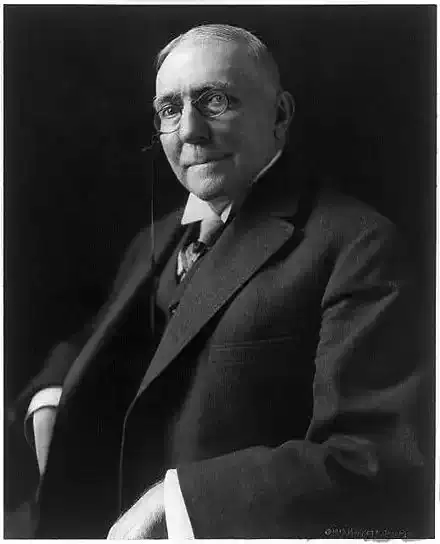
James Whitcomb Riley
Friday Afternoon
Friday Afternoon
To William Morris Pierson
[1868-1870]
Of the wealth of facts and fancies
That our memories may recall,
The old school-day romances
Are the dearest, after all!--.
When some sweet thought revises
The half-forgotten tune
That opened 'Exercises'
On 'Friday Afternoon.'
We seem to hear the clicking
Of the pencil and the pen,
And the solemn, ceaseless ticking
Of the timepiece ticking then;
And we note the watchful master,
As he waves the warning rod,
With our own heart beating faster
Than the boy's who threw the wad.
Some little hand uplifted,
And the creaking of a shoe:--
A problem left unsifted
For the teacher's hand to do:
The murmured hum of learning--
And the flutter of a book;
The smell of something burning,
And the school's inquiring look.
The bashful boy in blushes;
And the girl, with glancing eyes,
Who hides her smiles, and hushes
The laugh about to rise,--
Then, with a quick invention,
Assumes a serious face,
To meet the words, 'Attention!
Every scholar in his place!'
The opening song, page 20.--
Ah! dear old 'Golden Wreath,'
You willed your sweets in plenty;
And some who look beneath
The leaves of Time will linger,
And loving tears will start,
As Fancy trails her finger
O'er the index of the heart.
'Good News from Home'--We hear it
Welling tremulous, yet clear
And holy as the spirit
Of the song we used to hear-
'Good news for me' (A throbbing
And an aching melody)-'
Has come across the'--(sobbing,
Yea, and salty) 'dark blue sea!'
Or the paean 'Scotland's burning!'
With its mighty surge and swell
Of chorus, still returning
To its universal yell--
Till we're almost glad to drop to
Something sad and full of pain--
And 'Skip verse three,' and stop, too,
Ere our hearts are broke again.
Then 'the big girls'' compositions,
With their doubt, and hope, and glow
Of heart and face,--conditions
Of 'the big boys'--even so,--
When themes of 'Spring,' and 'Summer'
And of 'Fall,' and 'Winter-time'
Droop our heads and hold us dumber
Than the sleigh-bell's fancied chime.
Elocutionary science-(
Still in changeless infancy!)--
With its 'Cataline's Defiance,'
And 'The Banner of the Free':
Or, lured from Grandma's attic,
A ramshackle 'rocker' there,
Adds a skreek of the dramatic
To the poet's 'Old Arm-Chair.'
Or the 'Speech of Logan' shifts us
From the pathos, to the fire;
And Tell (with Gessler) lifts us
Many noble notches higher.--
Till a youngster, far from sunny,
With sad eyes of watery blue,
Winds up with something 'funny,'
Like 'Cock-a-doodle-do!'
Then a dialogue--selected
For its realistic worth:--
The Cruel Boy detected
With a turtle turned to earth
Back downward; and, in pleading,
The Good Boy--strangely gay
At such a sad proceeding--
Says, 'Turn him over, pray!'
So the exercises taper
Through gradations of delight
To the reading of 'The Paper,'
Which is entertaining--quite!
For it goes ahead and mentions
'If a certain Mr. O.
Has serious intentions
That he ought to tell her so.'
It also 'Asks permission
To intimate to 'John'
The dubious condition
Of the ground he's standing on';
And, dropping the suggestion
To 'mind what he's about,'
It stuns him with the question:
'Does his mother know he's out?'
And among the contributions
To this 'Academic Press'
Are 'Versified Effusions'
By--'Our lady editress'--
Which fact is proudly stated
By the CHIEF of the concern,-'
Though the verse communicated
Bears the pen-name 'Fanny Fern.' '
. . . . . .
When all has been recited,
And the teacher's bell is heard,
And visitors, invited,
Have dropped a kindly word,
A hush of holy feeling
Falls down upon us there,
As though the day were kneeling,
With the twilight for the prayer.
. . . . . .
Midst the wealth of facts and fancies
That our memories may recall,
Thus the old school-day romances
Are the dearest, after all!--
When some sweet thought revises
The half-forgotten tune
That opened 'Exercises,'
On 'Friday Afternoon.'
To William Morris Pierson
[1868-1870]
Of the wealth of facts and fancies
That our memories may recall,
The old school-day romances
Are the dearest, after all!--.
When some sweet thought revises
The half-forgotten tune
That opened 'Exercises'
On 'Friday Afternoon.'
We seem to hear the clicking
Of the pencil and the pen,
And the solemn, ceaseless ticking
Of the timepiece ticking then;
And we note the watchful master,
As he waves the warning rod,
With our own heart beating faster
Than the boy's who threw the wad.
Some little hand uplifted,
And the creaking of a shoe:--
A problem left unsifted
For the teacher's hand to do:
The murmured hum of learning--
And the flutter of a book;
The smell of something burning,
And the school's inquiring look.
The bashful boy in blushes;
And the girl, with glancing eyes,
Who hides her smiles, and hushes
The laugh about to rise,--
Then, with a quick invention,
Assumes a serious face,
To meet the words, 'Attention!
Every scholar in his place!'
The opening song, page 20.--
Ah! dear old 'Golden Wreath,'
You willed your sweets in plenty;
And some who look beneath
The leaves of Time will linger,
And loving tears will start,
As Fancy trails her finger
O'er the index of the heart.
'Good News from Home'--We hear it
Welling tremulous, yet clear
And holy as the spirit
Of the song we used to hear-
'Good news for me' (A throbbing
And an aching melody)-'
Has come across the'--(sobbing,
Yea, and salty) 'dark blue sea!'
Or the paean 'Scotland's burning!'
With its mighty surge and swell
Of chorus, still returning
To its universal yell--
Till we're almost glad to drop to
Something sad and full of pain--
And 'Skip verse three,' and stop, too,
Ere our hearts are broke again.
Then 'the big girls'' compositions,
With their doubt, and hope, and glow
Of heart and face,--conditions
Of 'the big boys'--even so,--
When themes of 'Spring,' and 'Summer'
And of 'Fall,' and 'Winter-time'
Droop our heads and hold us dumber
Than the sleigh-bell's fancied chime.
Elocutionary science-(
Still in changeless infancy!)--
With its 'Cataline's Defiance,'
And 'The Banner of the Free':
Or, lured from Grandma's attic,
A ramshackle 'rocker' there,
Adds a skreek of the dramatic
To the poet's 'Old Arm-Chair.'
Or the 'Speech of Logan' shifts us
From the pathos, to the fire;
And Tell (with Gessler) lifts us
Many noble notches higher.--
Till a youngster, far from sunny,
With sad eyes of watery blue,
Winds up with something 'funny,'
Like 'Cock-a-doodle-do!'
Then a dialogue--selected
For its realistic worth:--
The Cruel Boy detected
With a turtle turned to earth
Back downward; and, in pleading,
The Good Boy--strangely gay
At such a sad proceeding--
Says, 'Turn him over, pray!'
So the exercises taper
Through gradations of delight
To the reading of 'The Paper,'
Which is entertaining--quite!
For it goes ahead and mentions
'If a certain Mr. O.
Has serious intentions
That he ought to tell her so.'
It also 'Asks permission
To intimate to 'John'
The dubious condition
Of the ground he's standing on';
And, dropping the suggestion
To 'mind what he's about,'
It stuns him with the question:
'Does his mother know he's out?'
And among the contributions
To this 'Academic Press'
Are 'Versified Effusions'
By--'Our lady editress'--
Which fact is proudly stated
By the CHIEF of the concern,-'
Though the verse communicated
Bears the pen-name 'Fanny Fern.' '
. . . . . .
When all has been recited,
And the teacher's bell is heard,
And visitors, invited,
Have dropped a kindly word,
A hush of holy feeling
Falls down upon us there,
As though the day were kneeling,
With the twilight for the prayer.
. . . . . .
Midst the wealth of facts and fancies
That our memories may recall,
Thus the old school-day romances
Are the dearest, after all!--
When some sweet thought revises
The half-forgotten tune
That opened 'Exercises,'
On 'Friday Afternoon.'
323
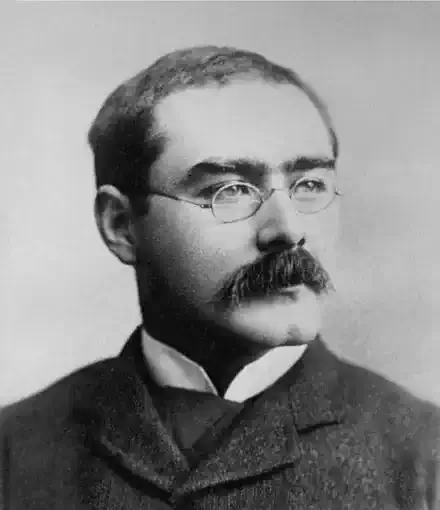
Rudyard Kipling
The Boy Scouts' Patrol Song
The Boy Scouts' Patrol Song
These are our regulations --
There's just one law for the Scout
And the first and the last, and the present and the past,
And the future and the perfect is "Look out!"
I, thou and he, look out!
We, ye and they, look out!
Though you didn't or you wouldn't
Or you hadn't or you couldn't;
You jolly well must look out!
Look out, when you start for the day
That your kit is packed to your mind;
There is no use going away
With half of it left behind.
Look out that your laces are tight,
And your boots are easy and stout,
Or you'll end with a blister at night.
(Chorus) All Patrols look out!
Look out for the birds of the air,
Look out for the beasts of the field --
They'll tell you how and where
The other side's concealed.
When the blackbird bolts from the copse,
Or the cattle are staring about,
The wise commander stops
And (chorus) All Patrols look out!
Look out when your front is clear,
And you feel you are bound to win.
Look out for your flank and your rear --
That's where surprises begin.
For the rustle that isn't a rat,
For the splash that isn't a trout,
For the boulder that may be a hat
(Chorus) All Patrols look out!
For the innocent knee-high grass,
For the ditch that never tells,
Look out! Look out ere you pass --
And look out for everything else!
A sign mis-read as you run
May turn retreat to a rout --
For all things under the sun
(Chorus) All Patrols look out!
Look out when your temper goes
At the end of a losing game;
When your boots are too tight for your toes;
And you answer and argue and blame.
It's the hardest part of the Low,
But it has to be learnt by the Scout --
For whining and shirking and "jaw"
(Chorus) All Patrols look out!
These are our regulations --
There's just one law for the Scout
And the first and the last, and the present and the past,
And the future and the perfect is "Look out!"
I, thou and he, look out!
We, ye and they, look out!
Though you didn't or you wouldn't
Or you hadn't or you couldn't;
You jolly well must look out!
Look out, when you start for the day
That your kit is packed to your mind;
There is no use going away
With half of it left behind.
Look out that your laces are tight,
And your boots are easy and stout,
Or you'll end with a blister at night.
(Chorus) All Patrols look out!
Look out for the birds of the air,
Look out for the beasts of the field --
They'll tell you how and where
The other side's concealed.
When the blackbird bolts from the copse,
Or the cattle are staring about,
The wise commander stops
And (chorus) All Patrols look out!
Look out when your front is clear,
And you feel you are bound to win.
Look out for your flank and your rear --
That's where surprises begin.
For the rustle that isn't a rat,
For the splash that isn't a trout,
For the boulder that may be a hat
(Chorus) All Patrols look out!
For the innocent knee-high grass,
For the ditch that never tells,
Look out! Look out ere you pass --
And look out for everything else!
A sign mis-read as you run
May turn retreat to a rout --
For all things under the sun
(Chorus) All Patrols look out!
Look out when your temper goes
At the end of a losing game;
When your boots are too tight for your toes;
And you answer and argue and blame.
It's the hardest part of the Low,
But it has to be learnt by the Scout --
For whining and shirking and "jaw"
(Chorus) All Patrols look out!
568
James Whitcomb Riley
A Noted Traveler
A Noted Traveler
Even in such a scene of senseless play
The children were surprised one summer-day
By a strange man who called across the fence,
Inquiring for their father's residence;
And, being answered that this was the place,
Opened the gate, and with a radiant face,
Came in and sat down with them in the shade
And waited--till the absent father made
His noon appearance, with a warmth and zest
That told he had no ordinary guest
In this man whose low-spoken name he knew
At once, demurring as the stranger drew
A stuffy notebook out and turned and set
A big fat finger on a page and let
The writing thereon testify instead
Of further speech. And as the father read
All silently, the curious children took
Exacting inventory both of book
And man:--He wore a long-napped white fur-hat
Pulled firmly on his head, and under that
Rather long silvery hair, or iron-gray--
For he was not an old man,--anyway,
Not beyond sixty. And he wore a pair
Of square-framed spectacles--or rather there
Were two more than a pair,--the extra two
Flared at the corners, at the eyes' side-view,
In as redundant vision as the eyes
Of grasshoppers or bees or dragonflies.
Later the children heard the father say
He was 'A Noted Traveler,' and would stay
Some days with them--In which time host and guest
Discussed, alone, in deepest interest,
Some vague, mysterious matter that defied
The wistful children, loitering outside
The spare-room door. There Bud acquired a quite
New list of big words--such as 'Disunite,'
And 'Shibboleth,' and 'Aristocracy,'
And 'Juggernaut,' and 'Squatter Sovereignty,'
And 'Anti-slavery,' 'Emancipate,'
'Irrepressible conflict,' and 'The Great
Battle of Armageddon'--obviously
A pamphlet brought from Washington, D. C.,
And spread among such friends as might occur
Of like views with 'The Noted Traveler.'
Even in such a scene of senseless play
The children were surprised one summer-day
By a strange man who called across the fence,
Inquiring for their father's residence;
And, being answered that this was the place,
Opened the gate, and with a radiant face,
Came in and sat down with them in the shade
And waited--till the absent father made
His noon appearance, with a warmth and zest
That told he had no ordinary guest
In this man whose low-spoken name he knew
At once, demurring as the stranger drew
A stuffy notebook out and turned and set
A big fat finger on a page and let
The writing thereon testify instead
Of further speech. And as the father read
All silently, the curious children took
Exacting inventory both of book
And man:--He wore a long-napped white fur-hat
Pulled firmly on his head, and under that
Rather long silvery hair, or iron-gray--
For he was not an old man,--anyway,
Not beyond sixty. And he wore a pair
Of square-framed spectacles--or rather there
Were two more than a pair,--the extra two
Flared at the corners, at the eyes' side-view,
In as redundant vision as the eyes
Of grasshoppers or bees or dragonflies.
Later the children heard the father say
He was 'A Noted Traveler,' and would stay
Some days with them--In which time host and guest
Discussed, alone, in deepest interest,
Some vague, mysterious matter that defied
The wistful children, loitering outside
The spare-room door. There Bud acquired a quite
New list of big words--such as 'Disunite,'
And 'Shibboleth,' and 'Aristocracy,'
And 'Juggernaut,' and 'Squatter Sovereignty,'
And 'Anti-slavery,' 'Emancipate,'
'Irrepressible conflict,' and 'The Great
Battle of Armageddon'--obviously
A pamphlet brought from Washington, D. C.,
And spread among such friends as might occur
Of like views with 'The Noted Traveler.'
279
James Whitcomb Riley
A Man Of Many Parts
A Man Of Many Parts
It was a man of many parts,
Who in his coffer mind
Had stored the Classics and the Arts
And Sciences combined;
The purest gems of poesy
Came flashing from his pen--
The wholesome truths of History
He gave his fellow men.
He knew the stars from 'Dog' to Mars;
And he could tell you, too,
Their distances--as though the cars
Had often checked him through--
And time 'twould take to reach the sun,
Or by the 'Milky Way,'
Drop in upon the moon, or run
The homeward trip, or stay.
With Logic at his fingers' ends,
Theology in mind,
He often entertained his friends
Until they died resigned;
And with inquiring mind intent
Upon Alchemic arts
A dynamite experiment-.
. . . . . .
A man of many parts!
It was a man of many parts,
Who in his coffer mind
Had stored the Classics and the Arts
And Sciences combined;
The purest gems of poesy
Came flashing from his pen--
The wholesome truths of History
He gave his fellow men.
He knew the stars from 'Dog' to Mars;
And he could tell you, too,
Their distances--as though the cars
Had often checked him through--
And time 'twould take to reach the sun,
Or by the 'Milky Way,'
Drop in upon the moon, or run
The homeward trip, or stay.
With Logic at his fingers' ends,
Theology in mind,
He often entertained his friends
Until they died resigned;
And with inquiring mind intent
Upon Alchemic arts
A dynamite experiment-.
. . . . . .
A man of many parts!
272
Rudyard Kipling
Arithmetic on the Frontier
Arithmetic on the Frontier
A great and glorious thing it is
To learn, for seven years or so,
The Lord knows what of that and this,
Ere reckoned fit to face the foe --
The flying bullet down the Pass,
That whistles clear: "All flesh is grass."
Three hundred pounds per annum spent
On making brain and body meeter
For all the murderous intent
Comprised in "villanous saltpetre!"
And after -- ask the Yusufzaies
What comes of all our 'ologies.
A scrimmage in a Border Station --
A canter down some dark defile --
Two thousand pounds of education
Drops to a ten-rupee jezail --
The Crammer's boast, the Squadron's pride,
Shot like a rabbit in a ride!
No proposition Euclid wrote,
No formulae the text-books know,
Will turn the bullet from your coat,
Or ward the tulwar's downward blow
Strike hard who cares -- shoot straight who can --
The odds are on the cheaper man.
One sword-knot stolen from the camp
Will pay for all the school expenses
Of any Kurrum Valley scamp
Who knows no word of moods and tenses,
But, being blessed with perfect sight,
Picks off our messmates left and right.
With home-bred hordes the hillsides teem,
The troop-ships bring us one by one,
At vast expense of time and steam,
To slay Afridis where they run.
The "captives of our bow and spear"
Are cheap -- alas! as we are dear.
A great and glorious thing it is
To learn, for seven years or so,
The Lord knows what of that and this,
Ere reckoned fit to face the foe --
The flying bullet down the Pass,
That whistles clear: "All flesh is grass."
Three hundred pounds per annum spent
On making brain and body meeter
For all the murderous intent
Comprised in "villanous saltpetre!"
And after -- ask the Yusufzaies
What comes of all our 'ologies.
A scrimmage in a Border Station --
A canter down some dark defile --
Two thousand pounds of education
Drops to a ten-rupee jezail --
The Crammer's boast, the Squadron's pride,
Shot like a rabbit in a ride!
No proposition Euclid wrote,
No formulae the text-books know,
Will turn the bullet from your coat,
Or ward the tulwar's downward blow
Strike hard who cares -- shoot straight who can --
The odds are on the cheaper man.
One sword-knot stolen from the camp
Will pay for all the school expenses
Of any Kurrum Valley scamp
Who knows no word of moods and tenses,
But, being blessed with perfect sight,
Picks off our messmates left and right.
With home-bred hordes the hillsides teem,
The troop-ships bring us one by one,
At vast expense of time and steam,
To slay Afridis where they run.
The "captives of our bow and spear"
Are cheap -- alas! as we are dear.
473

Robert W. Service
Tom
Tom
That Tom was poor was sure a pity,
Such guts for learning had the lad;
He took to Greek like babe to titty,
And he was mathematic mad.
I loved to prime him up with knowledge,
A brighter lad I never knew;
I dreamed that he would go to college
And there be honoured too.
But no! His Dad said, "Son, I need you
To keep the kettle on the boil;
No longer can I clothe and feed you,
Buy study books and midnight oil.
I carry on as best I'm able,
A humble tailor, as you know;
And you must squat cross-legged a table
And learn to snip and sew."
And that is what poor Tom is doing.
He bravely makes the best of it;
But as he "fits" you he is knowing
That he himself is a misfit;
And thinks as he fulfils his calling,
With patient heart yet deep distaste,
Like clippings from his shears down-falling,
--He, too, is Waste.
That Tom was poor was sure a pity,
Such guts for learning had the lad;
He took to Greek like babe to titty,
And he was mathematic mad.
I loved to prime him up with knowledge,
A brighter lad I never knew;
I dreamed that he would go to college
And there be honoured too.
But no! His Dad said, "Son, I need you
To keep the kettle on the boil;
No longer can I clothe and feed you,
Buy study books and midnight oil.
I carry on as best I'm able,
A humble tailor, as you know;
And you must squat cross-legged a table
And learn to snip and sew."
And that is what poor Tom is doing.
He bravely makes the best of it;
But as he "fits" you he is knowing
That he himself is a misfit;
And thinks as he fulfils his calling,
With patient heart yet deep distaste,
Like clippings from his shears down-falling,
--He, too, is Waste.
202
Hilaire Belloc
The Whale
The Whale
The Whale that wanders round the Pole
Is not a table fish.
You cannot bake or boil him whole
Nor serve him in a dish;
But you may cut his blubber up
And melt it down for oil.
And so replace the colza bean
(A product of the soil).
These facts should all be noted down
And ruminated on,
By every boy in Oxford town
Who wants to be a Don.
The Whale that wanders round the Pole
Is not a table fish.
You cannot bake or boil him whole
Nor serve him in a dish;
But you may cut his blubber up
And melt it down for oil.
And so replace the colza bean
(A product of the soil).
These facts should all be noted down
And ruminated on,
By every boy in Oxford town
Who wants to be a Don.
319
Hilaire Belloc
Sarah Byng, Who Could Not Read And Was Tossed Into A Thorny Hedge By A
Sarah Byng, Who Could Not Read And Was Tossed Into A Thorny Hedge By A
Bull
Some years ago you heard me sing
My doubts on Alexander Byng.
His sister Sarah now inspires
My jaded Muse, my failing fires.
Of Sarah Byng the tale is told
How when the child was twelve years old
She could not read or write a line.
Her sister Jane, though barely nine,
Could spout the Catechism through
And parts of Matthew Arnold too,
While little Bill who came between
Was quite unnaturally keen
On 'Athalie', by Jean Racine.
But not so Sarah! Not so Sal!
She was a most uncultured girl
Who didn't care a pinch of snuff
For any literary stuff
And gave the classics all a miss.
Observe the consequence of this!
As she was walking home one day,
Upon the fields across her way
A gate, securely padlocked, stood,
And by its side a piece of wood
On which was painted plain and full,
BEWARE THE VERY FURIOUS BULL
Alas! The young illiterate
Went blindly forward to her fate,
And ignorantly climbed the gate!
Now happily the Bull that day
Was rather in the mood for play
Than goring people through and through
As Bulls so very often do;
He tossed her lightly with his horns
Into a prickly hedge of thorns,
And stood by laughing while she strode
And pushed and struggled to the road.
The lesson was not lost upon
The child, who since has always gone
A long way round to keep away
From signs, whatever they may say,
And leaves a padlocked gate alone.
Moreover she has wisely grown
Confirmed in her instinctive guess
That literature breeds distress.
Bull
Some years ago you heard me sing
My doubts on Alexander Byng.
His sister Sarah now inspires
My jaded Muse, my failing fires.
Of Sarah Byng the tale is told
How when the child was twelve years old
She could not read or write a line.
Her sister Jane, though barely nine,
Could spout the Catechism through
And parts of Matthew Arnold too,
While little Bill who came between
Was quite unnaturally keen
On 'Athalie', by Jean Racine.
But not so Sarah! Not so Sal!
She was a most uncultured girl
Who didn't care a pinch of snuff
For any literary stuff
And gave the classics all a miss.
Observe the consequence of this!
As she was walking home one day,
Upon the fields across her way
A gate, securely padlocked, stood,
And by its side a piece of wood
On which was painted plain and full,
BEWARE THE VERY FURIOUS BULL
Alas! The young illiterate
Went blindly forward to her fate,
And ignorantly climbed the gate!
Now happily the Bull that day
Was rather in the mood for play
Than goring people through and through
As Bulls so very often do;
He tossed her lightly with his horns
Into a prickly hedge of thorns,
And stood by laughing while she strode
And pushed and struggled to the road.
The lesson was not lost upon
The child, who since has always gone
A long way round to keep away
From signs, whatever they may say,
And leaves a padlocked gate alone.
Moreover she has wisely grown
Confirmed in her instinctive guess
That literature breeds distress.
419
Robert W. Service
The Shorter Catechism
The Shorter Catechism
I burned my fingers on the stove
And wept with bitterness;
But poor old Auntie Maggie strove
To comfort my distress.
Said she: 'Think, lassie, how you'll burn
Like any wicked besom
In fires of hell if you don't learn
Your Shorter Catechism.'
A man's chief end is it began,
(No mention of a woman's),
To glorify--I think it ran,
The God who made poor humans.
And as I learned, I thought: if this-(
My distaste growing stronger),
The Shorter Catechism is,
Lord save us from the longer.
The years have passed and I begin
(Although I'm far from clever),
To doubt if when we die in sin
Our bodies grill forever.
Now I've more surface space to burn,
Since I am tall and lissom,
I think it's hell enough to learn
The Shorter Catechism.
I burned my fingers on the stove
And wept with bitterness;
But poor old Auntie Maggie strove
To comfort my distress.
Said she: 'Think, lassie, how you'll burn
Like any wicked besom
In fires of hell if you don't learn
Your Shorter Catechism.'
A man's chief end is it began,
(No mention of a woman's),
To glorify--I think it ran,
The God who made poor humans.
And as I learned, I thought: if this-(
My distaste growing stronger),
The Shorter Catechism is,
Lord save us from the longer.
The years have passed and I begin
(Although I'm far from clever),
To doubt if when we die in sin
Our bodies grill forever.
Now I've more surface space to burn,
Since I am tall and lissom,
I think it's hell enough to learn
The Shorter Catechism.
219

Wilfred Owen
Schoolmistress
Schoolmistress
Schoolmistress
Having, with bold Horatius, stamped her feet
And waved a final swashing arabesque
O'er the brave days of old, she ceased to bleat,
Slapped her Macaulay back upon the desk,
Resuned her calm gaze and her lofty seat.
There, while she heard the classic lines repeat,
Once more the teacher's face clenched stern;
For through the window, looking on the street,
Three soldiers hailed her. She made no return.
One was called 'Orace whom she would not greet.
Schoolmistress
Having, with bold Horatius, stamped her feet
And waved a final swashing arabesque
O'er the brave days of old, she ceased to bleat,
Slapped her Macaulay back upon the desk,
Resuned her calm gaze and her lofty seat.
There, while she heard the classic lines repeat,
Once more the teacher's face clenched stern;
For through the window, looking on the street,
Three soldiers hailed her. She made no return.
One was called 'Orace whom she would not greet.
103
Rudyard Kipling
The Threshold
The Threshold
In their deepest caverns of limestone
They pictured the Gods of Food--
The Horse, the Elk, and the Bison
That the hunting might be good;
With the Gods of Death and Terror--
The Mammoth, Tiger, and Bear.
And the pictures moved in the torchlight
To show that the Gods were there!
But that was before Ionia--
(Or the Seven Holy Islands of Ionia)
Any of the Mountains of Ionia,
Had bared their peaks to the air.
The close years packed behind them,
As the glaciers bite and grind,
Filling the new-gouged valleys
With Gods of every kind.
Gods of all-reaching power--
Gods of all-searching eyes--
But each to be wooed by worship
And won by sacrifice.
Till, after many winters, rose Ionia--
(Strange men brooding in Ionia)
Crystal-eyed Sages of Ionia
Who said, "These tales are lies.
"We dream one Breath in all things,
"That blows all things between.
"We dream one Matter in all things--
"Eternal, changeless, unseen.
"'That the heart of the Matter is single
"Till the Breath shall bid it bring forth--
"By choosing or losing its neighbour--
"All things made upon Earth."
But Earth was wiser than Ionia
(Babylon and Egypt than Ionia)
And they overlaid the teaching of Ionia
And the Truth was choked at birth.
It died at the Gate of Knowledge--
The Key to the Gate in its hand--
And the anxious priests and wizards
Re-blinded the wakening land;
For they showed, by answering echoes,
And chasing clouds as they rose,
How shadows should stand for bulwarks
Between mankind and its woes.
It was then that men bethought them of Ionia
(The few that had not allforgot Ionia)
Or the Word that was whispered in Ionia;
And they turned from the shadows and the shows.
They found one Breath in all things,
That moves all things between.
They proved one Matter in all things--
Eternal, changeless, unseen;
That the heart of the Matter was single
Till the Breath should bid it bring forth--
Even as men whispered in Ionia,
(Resolute, unsatisfied Ionia)
Ere the Word was stifled in Ionia--
All things known upon earth!
In their deepest caverns of limestone
They pictured the Gods of Food--
The Horse, the Elk, and the Bison
That the hunting might be good;
With the Gods of Death and Terror--
The Mammoth, Tiger, and Bear.
And the pictures moved in the torchlight
To show that the Gods were there!
But that was before Ionia--
(Or the Seven Holy Islands of Ionia)
Any of the Mountains of Ionia,
Had bared their peaks to the air.
The close years packed behind them,
As the glaciers bite and grind,
Filling the new-gouged valleys
With Gods of every kind.
Gods of all-reaching power--
Gods of all-searching eyes--
But each to be wooed by worship
And won by sacrifice.
Till, after many winters, rose Ionia--
(Strange men brooding in Ionia)
Crystal-eyed Sages of Ionia
Who said, "These tales are lies.
"We dream one Breath in all things,
"That blows all things between.
"We dream one Matter in all things--
"Eternal, changeless, unseen.
"'That the heart of the Matter is single
"Till the Breath shall bid it bring forth--
"By choosing or losing its neighbour--
"All things made upon Earth."
But Earth was wiser than Ionia
(Babylon and Egypt than Ionia)
And they overlaid the teaching of Ionia
And the Truth was choked at birth.
It died at the Gate of Knowledge--
The Key to the Gate in its hand--
And the anxious priests and wizards
Re-blinded the wakening land;
For they showed, by answering echoes,
And chasing clouds as they rose,
How shadows should stand for bulwarks
Between mankind and its woes.
It was then that men bethought them of Ionia
(The few that had not allforgot Ionia)
Or the Word that was whispered in Ionia;
And they turned from the shadows and the shows.
They found one Breath in all things,
That moves all things between.
They proved one Matter in all things--
Eternal, changeless, unseen;
That the heart of the Matter was single
Till the Breath should bid it bring forth--
Even as men whispered in Ionia,
(Resolute, unsatisfied Ionia)
Ere the Word was stifled in Ionia--
All things known upon earth!
432
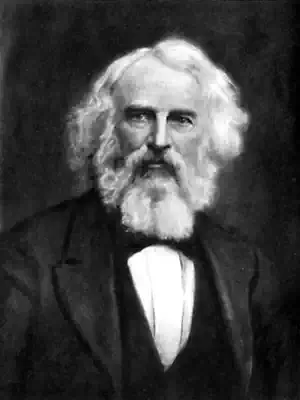
Henry Wadsworth Longfellow
Morituri Salutamus: Poem for the Fiftieth Anniversary of th
Morituri Salutamus: Poem for the Fiftieth Anniversary of th
Tempora labuntur, tacitisque senescimus annis,
Et fugiunt freno non remorante dies.
Ovid, Fastorum, Lib. vi.
"O Cæsar, we who are about to die
Salute you!" was the gladiators' cry
In the arena, standing face to face
With death and with the Roman populace.
O ye familiar scenes,--ye groves of pine,
That once were mine and are no longer mine,-Thou
river, widening through the meadows green
To the vast sea, so near and yet unseen,-Ye
halls, in whose seclusion and repose
Phantoms of fame, like exhalations, rose
And vanished,--we who are about to die,
Salute you; earth and air and sea and sky,
And the Imperial Sun that scatters down
His sovereign splendors upon grove and town.
Ye do not answer us! ye do not hear!
We are forgotten; and in your austere
And calm indifference, ye little care
Whether we come or go, or whence or where.
What passing generations fill these halls,
What passing voices echo from these walls,
Ye heed not; we are only as the blast,
A moment heard, and then forever past.
Not so the teachers who in earlier days
Led our bewildered feet through learning's maze;
They answer us--alas! what have I said?
What greetings come there from the voiceless dead?
What salutation, welcome, or reply?
What pressure from the hands that lifeless lie?
They are no longer here; they all are gone
Into the land of shadows,--all save one.
Honor and reverence, and the good repute
That follows faithful service as its fruit,
Be unto him, whom living we salute.
The great Italian poet, when he made
His dreadful journey to the realms of shade,
Met there the old instructor of his youth,
And cried in tones of pity and of ruth:
"Oh, never from the memory of my heart
Your dear, paternal image shall depart,
Who while on earth, ere yet by death surprised,
Taught me how mortals are immortalized;
How grateful am I for that patient care
All my life long my language shall declare."
To-day we make the poet's words our own,
And utter them in plaintive undertone;
Nor to the living only be they said,
But to the other living called the dead,
Whose dear, paternal images appear
Not wrapped in gloom, but robed in sunshine here;
Whose simple lives, complete and without flaw,
Were part and parcel of great Nature's law;
Who said not to their Lord, as if afraid,
"Here is thy talent in a napkin laid,"
But labored in their sphere, as men who live
In the delight that work alone can give.
Peace be to them; eternal peace and rest,
And the fulfilment of the great behest:
"Ye have been faithful over a few things,
Over ten cities shall ye reign as kings."
And ye who fill the places we once filled,
And follow in the furrows that we tilled,
Young men, whose generous hearts are beating high,
We who are old, and are about to die,
Salute you; hail you; take your hands in ours,
And crown you with our welcome as with flowers!
How beautiful is youth! how bright it gleams
With its illusions, aspirations, dreams!
Book of Beginnings, Story without End,
Each maid a heroine, and each man a friend!
Aladdin's Lamp, and Fortunatus' Purse,
That holds the treasures of the universe!
All possibilities are in its hands,
No danger daunts it, and no foe withstands;
In its sublime audacity of faith,
"Be thou removed!" it to the mountain saith,
And with ambitious feet, secure and proud,
Ascends the ladder leaning on the cloud!
As ancient Priam at the Scæan gate
Sat on the walls of Troy in regal state
With the old men, too old and weak to fight,
Chirping like grasshoppers in their delight
To see the embattled hosts, with spear and shield,
Of Trojans and Achaians in the field;
So from the snowy summits of our years
We see you in the plain, as each appears,
And question of you; asking, "Who is he
That towers above the others? Which may be
Atreides, Menelaus, Odysseus,
Ajax the great, or bold Idomeneus?"
Let him not boast who puts his armor on
As he who puts it off, the battle done.
Study yourselves; and most of all note well
Wherein kind Nature meant you to excel.
Not every blossom ripens into fruit;
Minerva, the inventress of the flute,
Flung it aside, when she her face surveyed
Distorted in a fountain as she played;
The unlucky Marsyas found it, and his fate
Was one to make the bravest hesitate.
Write on your doors the saying wise and old,
"Be bold! be bold!" and everywhere, "Be bold;
Be not too bold!" Yet better the excess
Than the defect; better the more than less;
Better like Hector in the field to die,
Than like a perfumed Paris turn and fly.
And now, my classmates; ye remaining few
That number not the half of those we knew,
Ye, against whose familiar names not yet
The fatal asterisk of death is set,
Ye I salute! The horologe of Time
Strikes the half-century with a solemn chime,
And summons us together once again,
The joy of meeting not unmixed with pain.
Where are the others? Voices from the deep
Caverns of darkness answer me: "They sleep!"
I name no names; instinctively I feel
Each at some well-remembered grave will kneel,
And from the inscription wipe the weeds and moss,
For every heart best knoweth its own loss.
I see their scattered gravestones gleaming white
Through the pale dusk of the impending night;
O'er all alike the impartial sunset throws
Its golden lilies mingled with the rose;
We give to each a tender thought, and pass
Out of the graveyards with their tangled grass,
Unto these scenes frequented by our feet
When we were young, and life was fresh and sweet.
What shall I say to you? What can I say
Better than silence is? When I survey
This throng of faces turned to meet my own,
Friendly and fair, and yet to me unknown,
Transformed the very landscape seems to be;
It is the same, yet not the same to me.
So many memories crowd upon my brain,
So many ghosts are in the wooded plain,
I fain would steal away, with noiseless tread,
As from a house where some one lieth dead.
I cannot go;--I pause;--I hesitate;
My feet reluctant linger at the gate;
As one who struggles in a troubled dream
To speak and cannot, to myself I seem.
Vanish the dream! Vanish the idle fears!
Vanish the rolling mists of fifty years!
Whatever time or space may intervene,
I will not be a stranger in this scene.
Here every doubt, all indecision, ends;
Hail, my companions, comrades, classmates, friends!
Ah me! the fifty years since last we met
Seem to me fifty folios bound and set
By Time, the great transcriber, on his shelves,
Wherein are written the histories of ourselves.
What tragedies, what comedies, are there;
What joy and grief, what rapture and despair!
What chronicles of triumph and defeat,
Of struggle, and temptation, and retreat!
What records of regrets, and doubts, and fears!
What pages blotted, blistered by our tears!
What lovely landscapes on the margin shine,
What sweet, angelic faces, what divine
And holy images of love and trust,
Undimmed by age, unsoiled by damp or dust!
Whose hand shall dare to open and explore
These volumes, closed and clasped forevermore?
Not mine. With reverential feet I pass;
I hear a voice that cries, "Alas! alas!
Whatever hath been written shall remain,
Nor be erased nor written o'er again;
The unwritten only still belongs to thee:
Take heed, and ponder well what that shall be."
As children frightened by a thunder-cloud
Are reassured if some one reads aloud
A tale of wonder, with enchantment fraught,
Or wild adventure, that diverts their thought,
Let me endeavor with a tale to chase
The gathering shadows of the time and place,
And banish what we all too deeply feel
Wholly to say, or wholly to conceal.
In mediæval Rome, I know not where,
There stood an image with its arm in air,
And on its lifted finger, shining clear,
A golden ring with the device, "Strike here!"
Greatly the people wondered, though none guessed
The meaning that these words but half expressed,
Until a learned clerk, who at noonday
With downcast eyes was passing on his way,
Paused, and observed the spot, and marked it well,
Whereon the shadow of the finger fell;
And, coming back at midnight, delved, and found
A secret stairway leading underground.
Down this he passed into a spacious hall,
Lit by a flaming jewel on the wall;
And opposite, in threatening attitude,
With bow and shaft a brazen statue stood.
Upon its forehead, like a coronet,
Were these mysterious words of menace set:
"That which I am, I am; my fatal aim
None can escape, not even yon luminous flame!"
Midway the hall was a fair table placed,
With cloth of gold, and golden cups enchased
With rubies, and the plates and knives were gold,
And gold the bread and viands manifold.
Around it, silent, motionless, and sad,
Were seated gallant knights in armor clad,
And ladies beautiful with plume and zone,
But they were stone, their hearts within were stone;
And the vast hall was filled in every part
With silent crowds, stony in face and heart.
Long at the scene, bewildered and amazed
The trembling clerk in speechless wonder gazed;
Then from the table, by his greed made bold,
He seized a goblet and a knife of gold,
And suddenly from their seats the guests upsprang,
The vaulted ceiling with loud clamors rang,
The archer sped his arrow, at their call,
Shattering the lambent jewel on the wall,
And all was dark around and overhead;-Stark
on the floor the luckless clerk lay dead!
The writer of this legend then records
Its ghostly application in these words:
The image is the Adversary old,
Whose beckoning finger points to realms of gold;
Our lusts and passions are the downward stair
That leads the soul from a diviner air;
The archer, Death; the flaming jewel, Life;
Terrestrial goods, the goblet and the knife;
The knights and ladies, all whose flesh and bone
By avarice have been hardened into stone;
The clerk, the scholar whom the love of pelf
Tempts from his books and from his nobler self.
The scholar and the world! The endless strife,
The discord in the harmonies of life!
The love of learning, the sequestered nooks,
And all the sweet serenity of books;
The market-place, the eager love of gain,
Whose aim is vanity, and whose end is pain!
But why, you ask me, should this tale be told
To men grown old, or who are growing old?
It is too late! Ah, nothing is too late
Till the tired heart shall cease to palpitate.
Cato learned Greek at eighty; Sophocles
Wrote his grand Oedipus, and Simonides
Bore off the prize of verse from his compeers,
When each had numbered more than fourscore years,
And Theophrastus, at fourscore and ten,
Had but begun his "Characters of Men."
Chaucer, at Woodstock with the nightingales,
At sixty wrote the Canterbury Tales;
Goethe at Weimar, toiling to the last,
Completed Faust when eighty years were past.
These are indeed exceptions; but they show
How far the gulf-stream of our youth may flow
Into the arctic regions of our lives,
Where little else than life itself survives.
As the barometer foretells the storm
While still the skies are clear, the weather warm
So something in us, as old age draws near,
Betrays the pressure of the atmosphere.
The nimble mercury, ere we are aware,
Descends the elastic ladder of the air;
The telltale blood in artery and vein
Sinks from its higher levels in the brain;
Whatever poet, orator, or sage
May say of it, old age is still old age.
It is the waning, not the crescent moon;
The dusk of evening, not the blaze of noon;
It is not strength, but weakness; not desire,
But its surcease; not the fierce heat of fire,
The burning and consuming element,
But that of ashes and of embers spent,
In which some living sparks we still discern,
Enough to warm, but not enough to burn.
What then? Shall we sit idly down and say
The night hath come; it is no longer day?
The night hath not yet come; we are not quite
Cut off from labor by the failing light;
Something remains for us to do or dare;
Even the oldest tree some fruit may bear;
Not Oedipus Coloneus, or Greek Ode,
Or tales of pilgrims that one morning rode
Out of the gateway of the Tabard Inn,
But other something, would we but begin;
For age is opportunity no less
Than youth itself, though in another dress,
And as the evening twilight fades away
The sky is filled with stars, invisible by day.
Tempora labuntur, tacitisque senescimus annis,
Et fugiunt freno non remorante dies.
Ovid, Fastorum, Lib. vi.
"O Cæsar, we who are about to die
Salute you!" was the gladiators' cry
In the arena, standing face to face
With death and with the Roman populace.
O ye familiar scenes,--ye groves of pine,
That once were mine and are no longer mine,-Thou
river, widening through the meadows green
To the vast sea, so near and yet unseen,-Ye
halls, in whose seclusion and repose
Phantoms of fame, like exhalations, rose
And vanished,--we who are about to die,
Salute you; earth and air and sea and sky,
And the Imperial Sun that scatters down
His sovereign splendors upon grove and town.
Ye do not answer us! ye do not hear!
We are forgotten; and in your austere
And calm indifference, ye little care
Whether we come or go, or whence or where.
What passing generations fill these halls,
What passing voices echo from these walls,
Ye heed not; we are only as the blast,
A moment heard, and then forever past.
Not so the teachers who in earlier days
Led our bewildered feet through learning's maze;
They answer us--alas! what have I said?
What greetings come there from the voiceless dead?
What salutation, welcome, or reply?
What pressure from the hands that lifeless lie?
They are no longer here; they all are gone
Into the land of shadows,--all save one.
Honor and reverence, and the good repute
That follows faithful service as its fruit,
Be unto him, whom living we salute.
The great Italian poet, when he made
His dreadful journey to the realms of shade,
Met there the old instructor of his youth,
And cried in tones of pity and of ruth:
"Oh, never from the memory of my heart
Your dear, paternal image shall depart,
Who while on earth, ere yet by death surprised,
Taught me how mortals are immortalized;
How grateful am I for that patient care
All my life long my language shall declare."
To-day we make the poet's words our own,
And utter them in plaintive undertone;
Nor to the living only be they said,
But to the other living called the dead,
Whose dear, paternal images appear
Not wrapped in gloom, but robed in sunshine here;
Whose simple lives, complete and without flaw,
Were part and parcel of great Nature's law;
Who said not to their Lord, as if afraid,
"Here is thy talent in a napkin laid,"
But labored in their sphere, as men who live
In the delight that work alone can give.
Peace be to them; eternal peace and rest,
And the fulfilment of the great behest:
"Ye have been faithful over a few things,
Over ten cities shall ye reign as kings."
And ye who fill the places we once filled,
And follow in the furrows that we tilled,
Young men, whose generous hearts are beating high,
We who are old, and are about to die,
Salute you; hail you; take your hands in ours,
And crown you with our welcome as with flowers!
How beautiful is youth! how bright it gleams
With its illusions, aspirations, dreams!
Book of Beginnings, Story without End,
Each maid a heroine, and each man a friend!
Aladdin's Lamp, and Fortunatus' Purse,
That holds the treasures of the universe!
All possibilities are in its hands,
No danger daunts it, and no foe withstands;
In its sublime audacity of faith,
"Be thou removed!" it to the mountain saith,
And with ambitious feet, secure and proud,
Ascends the ladder leaning on the cloud!
As ancient Priam at the Scæan gate
Sat on the walls of Troy in regal state
With the old men, too old and weak to fight,
Chirping like grasshoppers in their delight
To see the embattled hosts, with spear and shield,
Of Trojans and Achaians in the field;
So from the snowy summits of our years
We see you in the plain, as each appears,
And question of you; asking, "Who is he
That towers above the others? Which may be
Atreides, Menelaus, Odysseus,
Ajax the great, or bold Idomeneus?"
Let him not boast who puts his armor on
As he who puts it off, the battle done.
Study yourselves; and most of all note well
Wherein kind Nature meant you to excel.
Not every blossom ripens into fruit;
Minerva, the inventress of the flute,
Flung it aside, when she her face surveyed
Distorted in a fountain as she played;
The unlucky Marsyas found it, and his fate
Was one to make the bravest hesitate.
Write on your doors the saying wise and old,
"Be bold! be bold!" and everywhere, "Be bold;
Be not too bold!" Yet better the excess
Than the defect; better the more than less;
Better like Hector in the field to die,
Than like a perfumed Paris turn and fly.
And now, my classmates; ye remaining few
That number not the half of those we knew,
Ye, against whose familiar names not yet
The fatal asterisk of death is set,
Ye I salute! The horologe of Time
Strikes the half-century with a solemn chime,
And summons us together once again,
The joy of meeting not unmixed with pain.
Where are the others? Voices from the deep
Caverns of darkness answer me: "They sleep!"
I name no names; instinctively I feel
Each at some well-remembered grave will kneel,
And from the inscription wipe the weeds and moss,
For every heart best knoweth its own loss.
I see their scattered gravestones gleaming white
Through the pale dusk of the impending night;
O'er all alike the impartial sunset throws
Its golden lilies mingled with the rose;
We give to each a tender thought, and pass
Out of the graveyards with their tangled grass,
Unto these scenes frequented by our feet
When we were young, and life was fresh and sweet.
What shall I say to you? What can I say
Better than silence is? When I survey
This throng of faces turned to meet my own,
Friendly and fair, and yet to me unknown,
Transformed the very landscape seems to be;
It is the same, yet not the same to me.
So many memories crowd upon my brain,
So many ghosts are in the wooded plain,
I fain would steal away, with noiseless tread,
As from a house where some one lieth dead.
I cannot go;--I pause;--I hesitate;
My feet reluctant linger at the gate;
As one who struggles in a troubled dream
To speak and cannot, to myself I seem.
Vanish the dream! Vanish the idle fears!
Vanish the rolling mists of fifty years!
Whatever time or space may intervene,
I will not be a stranger in this scene.
Here every doubt, all indecision, ends;
Hail, my companions, comrades, classmates, friends!
Ah me! the fifty years since last we met
Seem to me fifty folios bound and set
By Time, the great transcriber, on his shelves,
Wherein are written the histories of ourselves.
What tragedies, what comedies, are there;
What joy and grief, what rapture and despair!
What chronicles of triumph and defeat,
Of struggle, and temptation, and retreat!
What records of regrets, and doubts, and fears!
What pages blotted, blistered by our tears!
What lovely landscapes on the margin shine,
What sweet, angelic faces, what divine
And holy images of love and trust,
Undimmed by age, unsoiled by damp or dust!
Whose hand shall dare to open and explore
These volumes, closed and clasped forevermore?
Not mine. With reverential feet I pass;
I hear a voice that cries, "Alas! alas!
Whatever hath been written shall remain,
Nor be erased nor written o'er again;
The unwritten only still belongs to thee:
Take heed, and ponder well what that shall be."
As children frightened by a thunder-cloud
Are reassured if some one reads aloud
A tale of wonder, with enchantment fraught,
Or wild adventure, that diverts their thought,
Let me endeavor with a tale to chase
The gathering shadows of the time and place,
And banish what we all too deeply feel
Wholly to say, or wholly to conceal.
In mediæval Rome, I know not where,
There stood an image with its arm in air,
And on its lifted finger, shining clear,
A golden ring with the device, "Strike here!"
Greatly the people wondered, though none guessed
The meaning that these words but half expressed,
Until a learned clerk, who at noonday
With downcast eyes was passing on his way,
Paused, and observed the spot, and marked it well,
Whereon the shadow of the finger fell;
And, coming back at midnight, delved, and found
A secret stairway leading underground.
Down this he passed into a spacious hall,
Lit by a flaming jewel on the wall;
And opposite, in threatening attitude,
With bow and shaft a brazen statue stood.
Upon its forehead, like a coronet,
Were these mysterious words of menace set:
"That which I am, I am; my fatal aim
None can escape, not even yon luminous flame!"
Midway the hall was a fair table placed,
With cloth of gold, and golden cups enchased
With rubies, and the plates and knives were gold,
And gold the bread and viands manifold.
Around it, silent, motionless, and sad,
Were seated gallant knights in armor clad,
And ladies beautiful with plume and zone,
But they were stone, their hearts within were stone;
And the vast hall was filled in every part
With silent crowds, stony in face and heart.
Long at the scene, bewildered and amazed
The trembling clerk in speechless wonder gazed;
Then from the table, by his greed made bold,
He seized a goblet and a knife of gold,
And suddenly from their seats the guests upsprang,
The vaulted ceiling with loud clamors rang,
The archer sped his arrow, at their call,
Shattering the lambent jewel on the wall,
And all was dark around and overhead;-Stark
on the floor the luckless clerk lay dead!
The writer of this legend then records
Its ghostly application in these words:
The image is the Adversary old,
Whose beckoning finger points to realms of gold;
Our lusts and passions are the downward stair
That leads the soul from a diviner air;
The archer, Death; the flaming jewel, Life;
Terrestrial goods, the goblet and the knife;
The knights and ladies, all whose flesh and bone
By avarice have been hardened into stone;
The clerk, the scholar whom the love of pelf
Tempts from his books and from his nobler self.
The scholar and the world! The endless strife,
The discord in the harmonies of life!
The love of learning, the sequestered nooks,
And all the sweet serenity of books;
The market-place, the eager love of gain,
Whose aim is vanity, and whose end is pain!
But why, you ask me, should this tale be told
To men grown old, or who are growing old?
It is too late! Ah, nothing is too late
Till the tired heart shall cease to palpitate.
Cato learned Greek at eighty; Sophocles
Wrote his grand Oedipus, and Simonides
Bore off the prize of verse from his compeers,
When each had numbered more than fourscore years,
And Theophrastus, at fourscore and ten,
Had but begun his "Characters of Men."
Chaucer, at Woodstock with the nightingales,
At sixty wrote the Canterbury Tales;
Goethe at Weimar, toiling to the last,
Completed Faust when eighty years were past.
These are indeed exceptions; but they show
How far the gulf-stream of our youth may flow
Into the arctic regions of our lives,
Where little else than life itself survives.
As the barometer foretells the storm
While still the skies are clear, the weather warm
So something in us, as old age draws near,
Betrays the pressure of the atmosphere.
The nimble mercury, ere we are aware,
Descends the elastic ladder of the air;
The telltale blood in artery and vein
Sinks from its higher levels in the brain;
Whatever poet, orator, or sage
May say of it, old age is still old age.
It is the waning, not the crescent moon;
The dusk of evening, not the blaze of noon;
It is not strength, but weakness; not desire,
But its surcease; not the fierce heat of fire,
The burning and consuming element,
But that of ashes and of embers spent,
In which some living sparks we still discern,
Enough to warm, but not enough to burn.
What then? Shall we sit idly down and say
The night hath come; it is no longer day?
The night hath not yet come; we are not quite
Cut off from labor by the failing light;
Something remains for us to do or dare;
Even the oldest tree some fruit may bear;
Not Oedipus Coloneus, or Greek Ode,
Or tales of pilgrims that one morning rode
Out of the gateway of the Tabard Inn,
But other something, would we but begin;
For age is opportunity no less
Than youth itself, though in another dress,
And as the evening twilight fades away
The sky is filled with stars, invisible by day.
326
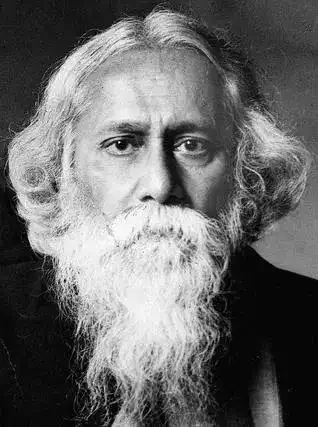
Rabindranath Tagore
Where The Mind Is Without Fear
Where The Mind Is Without Fear
Where the mind is without fear and the head is held high
Where knowledge is free
Where the world has not been broken up into fragments
By narrow domestic walls
Where words come out from the depth of truth
Where tireless striving stretches its arms towards perfection
Where the clear stream of reason has not lost its way
Into the dreary desert sand of dead habit
Where the mind is led forward by thee
Into ever-widening thought and action
Into that heaven of freedom, my Father, let my country awake
Where the mind is without fear and the head is held high
Where knowledge is free
Where the world has not been broken up into fragments
By narrow domestic walls
Where words come out from the depth of truth
Where tireless striving stretches its arms towards perfection
Where the clear stream of reason has not lost its way
Into the dreary desert sand of dead habit
Where the mind is led forward by thee
Into ever-widening thought and action
Into that heaven of freedom, my Father, let my country awake
500

George Gordon Lord Byron
Thoughts Suggested By A College Examination
Thoughts Suggested By A College Examination
High in the midst, surrounded by his peers,
MAGNUS his ample front sublime up rears:
Placed on his chair of state, he seems a god.
While Sophs and Freshmen tremble at his nod.
As all around sit wrapt in speechless gloom,
His voice in thunder shakes the sounding dome;
Denouncing dire reproach to luckless fools,
Unskill'd to plod in mathematic rules.
Happy the youth in Euclid's axiorn tried,
Though littie versed in any art beside;
Who, scarcely skill'd an English line tc pen,
Scans Attic metres with a critic's ken.
What, though he knows not how his fathers bled,
When civil discord piled the fields with dead,
When Edward bade his conquering bands advance
Or Henry trampled on the crest of France.
Though marvelling at the name of Magna Charta,
Yet well he recollects the laws of Sparta;
Can tell what edicts sage Lycurgus made,
While Blackstone's on the shelf neglected laid;
Of Grecian dramas vaunts the deathless fame,
Of Avon's bard remembering scarce the name.
Such is the youth whose scientific pate
Classhonours,
medals, fellowships, await
Or even, perhaps, the declamation prize
If to such glorious height he lifts his eyes.
But lo! no common orator can hope
The envied silver cup within his scope.
Not that our heads much eloquence require,
Th' ATHENIAN'S glowing style, or Tully's fire.
A manner clear or warm is useless, since
We do not try by speaking to convince.
Be other orators of pleasing proud,We
speak to please ourselves, not move the crowd:
Our gravity prefers the muttering tone,
A proper mixture of the squeak and groan:
No borrow'd grace of action must he seen;
The slightest motion would displease the Dean;
Whilst everv staring graduate would prate
Against what he could never imitate.
The man who hopes t' obtain the promised cup
Must in one posture stand, and ne'er look up;
Nor stop, but rattle over every word No
matter what, so it can not be heard.
Thus let him hurry on, nor think to rest:
Who speaks the fastest's sure to speak the best;
Who utters most within the shortest space
May safely hope to win the wordy race.
The sons of science these, who, thus repaid,
Linger in ease in Granta's sluggish shade;
Where on Cam's sedgy banks supine they lie,
Unknown, unhonour'd live, unweptfor
die:
Dull as the pictures which adorn their halls,
They think all learning fix'd within their walls:
In manners rude, in foolish forms precise,
All modern arts affecting to despise;
Yet prizing Bentley's, Brunck's, or Porson's note,
More than the verse on which the critic wrote:
Vain as their honours, heavy as their ale,
Sad as their wit, and tedious as their tale;
To friendship dead, though not untaught to feel
When Self and Church demand a bigot zeal.
With eager haste they court the lord of power,
Whether 'tis Pitt or Petty rules the hour;
To him, with suppliant smiles, they bend the head,
While distant mitres to their eyes are spread.
But should a storm o'erwhelm him with disgrace,
They'd fly to seek the next who fill'd his place.
Such are the men who learning's treasures guard!
Such is their practice, such is their reward!
This much, at least, we may presume to say The
premium can't exceed the price they pay.
High in the midst, surrounded by his peers,
MAGNUS his ample front sublime up rears:
Placed on his chair of state, he seems a god.
While Sophs and Freshmen tremble at his nod.
As all around sit wrapt in speechless gloom,
His voice in thunder shakes the sounding dome;
Denouncing dire reproach to luckless fools,
Unskill'd to plod in mathematic rules.
Happy the youth in Euclid's axiorn tried,
Though littie versed in any art beside;
Who, scarcely skill'd an English line tc pen,
Scans Attic metres with a critic's ken.
What, though he knows not how his fathers bled,
When civil discord piled the fields with dead,
When Edward bade his conquering bands advance
Or Henry trampled on the crest of France.
Though marvelling at the name of Magna Charta,
Yet well he recollects the laws of Sparta;
Can tell what edicts sage Lycurgus made,
While Blackstone's on the shelf neglected laid;
Of Grecian dramas vaunts the deathless fame,
Of Avon's bard remembering scarce the name.
Such is the youth whose scientific pate
Classhonours,
medals, fellowships, await
Or even, perhaps, the declamation prize
If to such glorious height he lifts his eyes.
But lo! no common orator can hope
The envied silver cup within his scope.
Not that our heads much eloquence require,
Th' ATHENIAN'S glowing style, or Tully's fire.
A manner clear or warm is useless, since
We do not try by speaking to convince.
Be other orators of pleasing proud,We
speak to please ourselves, not move the crowd:
Our gravity prefers the muttering tone,
A proper mixture of the squeak and groan:
No borrow'd grace of action must he seen;
The slightest motion would displease the Dean;
Whilst everv staring graduate would prate
Against what he could never imitate.
The man who hopes t' obtain the promised cup
Must in one posture stand, and ne'er look up;
Nor stop, but rattle over every word No
matter what, so it can not be heard.
Thus let him hurry on, nor think to rest:
Who speaks the fastest's sure to speak the best;
Who utters most within the shortest space
May safely hope to win the wordy race.
The sons of science these, who, thus repaid,
Linger in ease in Granta's sluggish shade;
Where on Cam's sedgy banks supine they lie,
Unknown, unhonour'd live, unweptfor
die:
Dull as the pictures which adorn their halls,
They think all learning fix'd within their walls:
In manners rude, in foolish forms precise,
All modern arts affecting to despise;
Yet prizing Bentley's, Brunck's, or Porson's note,
More than the verse on which the critic wrote:
Vain as their honours, heavy as their ale,
Sad as their wit, and tedious as their tale;
To friendship dead, though not untaught to feel
When Self and Church demand a bigot zeal.
With eager haste they court the lord of power,
Whether 'tis Pitt or Petty rules the hour;
To him, with suppliant smiles, they bend the head,
While distant mitres to their eyes are spread.
But should a storm o'erwhelm him with disgrace,
They'd fly to seek the next who fill'd his place.
Such are the men who learning's treasures guard!
Such is their practice, such is their reward!
This much, at least, we may presume to say The
premium can't exceed the price they pay.
356

Edward Lear
He Lived at Dingle Bank
He Lived at Dingle Bank
He lived at Dingle Bank - he did; -
He lived at Dingle Bank;
And in his garden was one Quail,
Four tulips and a Tank:
And from his window he could see
The otion and the River Dee.
His house stood on a Cliff, - it did,
Its aspic it was cool;
And many thousand little boys
Resorted to his school,
Where if of progress they could boast
He gave them heaps of buttered toast.
But he grew rabid-wroth, he did,
If they neglected books,
And dragged them to adjacent Cliffs
With beastly Button Hooks,
And there with fatuous glee he threw
Them down into the ocean blue.
And in the sea they sway, they did, -
All playfully about,
And some eventually became
Sponges, or speckled trout: -
But Liverpool doth all bewail
Their Fate; - likewise his Garden Quail.
He lived at Dingle Bank - he did; -
He lived at Dingle Bank;
And in his garden was one Quail,
Four tulips and a Tank:
And from his window he could see
The otion and the River Dee.
His house stood on a Cliff, - it did,
Its aspic it was cool;
And many thousand little boys
Resorted to his school,
Where if of progress they could boast
He gave them heaps of buttered toast.
But he grew rabid-wroth, he did,
If they neglected books,
And dragged them to adjacent Cliffs
With beastly Button Hooks,
And there with fatuous glee he threw
Them down into the ocean blue.
And in the sea they sway, they did, -
All playfully about,
And some eventually became
Sponges, or speckled trout: -
But Liverpool doth all bewail
Their Fate; - likewise his Garden Quail.
206
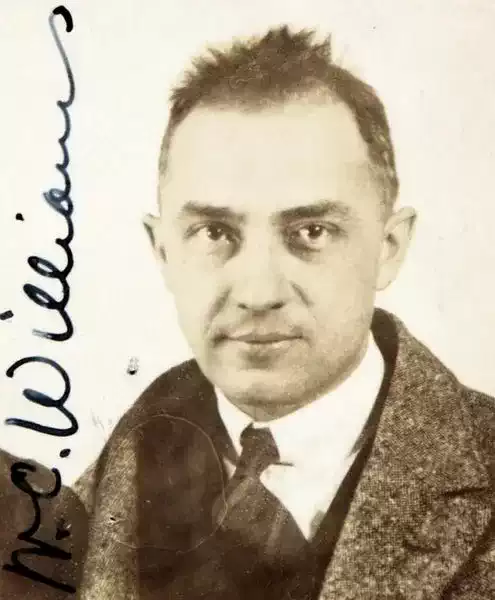
William Carlos Williams
The Poor
The Poor
By constantly tormenting them
with reminders of the lice in
their children's hair, the
School Physician first
brought their hatred down on him.
But by this familiarity
they grew used to him, and so,
at last,
took him for their friend and adviser.
By constantly tormenting them
with reminders of the lice in
their children's hair, the
School Physician first
brought their hatred down on him.
But by this familiarity
they grew used to him, and so,
at last,
took him for their friend and adviser.
415

Edward Estlin Cummings
Ballad of the Scholar's Lament
Ballad of the Scholar's Lament
When I have struggled through three hundred years
of Roman history, and hastened o'er
Some French play-(though I have my private fears
Of flunking sorely when I take the floor
In class),-when I have steeped my soul in gore
And Greek, and figured over half a ream
With Algebra, which I do (not) adore,
How shall I manage to compose a theme?
It's well enough to talk of poor and peers,
And munch the golden apples' shiny core,
And lay a lot of heroes on their biers;While
the great Alec, knocking down a score,
Takes out his handkerchief, boohoo-ing, "More!"But
harshly I awaken from my dream,
To find a new,-er,-privilege,-in store:
How shall I manage to compose a theme?
After I've swallowed prophecies of seers,
And trailed Aeneas from the Trojan shore,
Learned how Achilles, after many jeers,
On piggy Agamemnon got to sore,
And heard how Hercules, Esq., tore
Around, and swept and dusted with a stream,
There's one last duty,-let's not call it bore,How
shall I manage to compose a theme?
Envoi
Of what avail is all my mighty lore?
I beat my breast, I tear my hair, I scream:
"Behold, I have a Herculean chore.
How shall I manage to compose a theme?"
When I have struggled through three hundred years
of Roman history, and hastened o'er
Some French play-(though I have my private fears
Of flunking sorely when I take the floor
In class),-when I have steeped my soul in gore
And Greek, and figured over half a ream
With Algebra, which I do (not) adore,
How shall I manage to compose a theme?
It's well enough to talk of poor and peers,
And munch the golden apples' shiny core,
And lay a lot of heroes on their biers;While
the great Alec, knocking down a score,
Takes out his handkerchief, boohoo-ing, "More!"But
harshly I awaken from my dream,
To find a new,-er,-privilege,-in store:
How shall I manage to compose a theme?
After I've swallowed prophecies of seers,
And trailed Aeneas from the Trojan shore,
Learned how Achilles, after many jeers,
On piggy Agamemnon got to sore,
And heard how Hercules, Esq., tore
Around, and swept and dusted with a stream,
There's one last duty,-let's not call it bore,How
shall I manage to compose a theme?
Envoi
Of what avail is all my mighty lore?
I beat my breast, I tear my hair, I scream:
"Behold, I have a Herculean chore.
How shall I manage to compose a theme?"
585

Ezra Pound
The Logical Conclusion
The Logical Conclusion
When earth's last thesis is copied
From the theses that went before,
When idea from fact has departed
And bare-boned factlets shall bore,
When all joy shall have fled from study
And scholarship reign supreme;
When truth shall 'baaa' on the hill crests
And no one shall dare to dream;
When all the good poems have been buried
With comment annoted in full
And art shall bow down in homage
To scholarship's zinc-plated bull,
When there shall be nothing to research
But the notes of annoted notes,
And Baalam's ass shall inquire
The price of imported oats;
Then no one shall tell him the answer
For each shall know the one fact
That lies in the special ass-ignment
From which he is making his tract.
So the ass shall sigh uninstructed
While each in his separate book
Shall grind for the love of grinding
And only the devil shall look.
Against the 'germanic' system of graduate study and insane specialization in the
Inanities.
When earth's last thesis is copied
From the theses that went before,
When idea from fact has departed
And bare-boned factlets shall bore,
When all joy shall have fled from study
And scholarship reign supreme;
When truth shall 'baaa' on the hill crests
And no one shall dare to dream;
When all the good poems have been buried
With comment annoted in full
And art shall bow down in homage
To scholarship's zinc-plated bull,
When there shall be nothing to research
But the notes of annoted notes,
And Baalam's ass shall inquire
The price of imported oats;
Then no one shall tell him the answer
For each shall know the one fact
That lies in the special ass-ignment
From which he is making his tract.
So the ass shall sigh uninstructed
While each in his separate book
Shall grind for the love of grinding
And only the devil shall look.
Against the 'germanic' system of graduate study and insane specialization in the
Inanities.
447

Ella Wheeler Wilcox
That's The Way
That's The Way
Just a little every dayThat's
the way!
Seeds in darkness swell and grow,
Tiny blades push through the snow;
Never any flower of May
Leaps to blossom in a burst,
Slowly, slowly, as the first,
That's the way.
Just a little every day.
Just a little every dayThat's
the way,
Children learn to read and write
Bit by bit and mite by mite,
Never any one I say
Leaps to knowledge and its power;
Slowly, slowly, hour by hour,
That's the way!
Just a little every day.
Just a little every dayThat's
the way!
Seeds in darkness swell and grow,
Tiny blades push through the snow;
Never any flower of May
Leaps to blossom in a burst,
Slowly, slowly, as the first,
That's the way.
Just a little every day.
Just a little every dayThat's
the way,
Children learn to read and write
Bit by bit and mite by mite,
Never any one I say
Leaps to knowledge and its power;
Slowly, slowly, hour by hour,
That's the way!
Just a little every day.
447

Phillis Wheatley
To The Rev. Dr. Thomas Amory, On Reading His Sermons On Daily Devotion, In
To The Rev. Dr. Thomas Amory, On Reading His Sermons On Daily Devotion, In
Which that Duty Is Recommended And Assisted
TO cultivate in ev'ry noble mind
Habitual grace, and sentiments refin'd,
Thus while you strive to mend the human heart,
Thus while the heav'nly precepts you impart,
O may each bosom catch the sacred fire,
And youthful minds to Virtue's throne aspire!
When God's eternal ways you set in sight,
And Virtue shines in all her native light,
In vain would Vice her works in night conceal,
For Wisdom's eye pervades the sable veil.
Artists may paint the sun's effulgent rays,
But Amory's pen the brighter God displays:
While his great works in Amory's pages shine,
And while he proves his essence all divine,
The Atheist sure no more can boast aloud
Of chance, or nature, and exclude the God;
As if the clay without the potter's aid
Should rise in various forms, and shapes self-made,
Or worlds above with orb o'er orb profound
Self-mov'd could run the everlasting round.
It cannot be--unerring Wisdom guides
With eye propitious, and o'er all presides.
Still prosper, Amory! still may'st thou receive
The warmest blessings which a muse can give,
And when this transitory state is o'er,
When kingdoms fall, and fleeting Fame's no more,
May Amory triumph in immortal fame,
A nobler title, and superior name!
Which that Duty Is Recommended And Assisted
TO cultivate in ev'ry noble mind
Habitual grace, and sentiments refin'd,
Thus while you strive to mend the human heart,
Thus while the heav'nly precepts you impart,
O may each bosom catch the sacred fire,
And youthful minds to Virtue's throne aspire!
When God's eternal ways you set in sight,
And Virtue shines in all her native light,
In vain would Vice her works in night conceal,
For Wisdom's eye pervades the sable veil.
Artists may paint the sun's effulgent rays,
But Amory's pen the brighter God displays:
While his great works in Amory's pages shine,
And while he proves his essence all divine,
The Atheist sure no more can boast aloud
Of chance, or nature, and exclude the God;
As if the clay without the potter's aid
Should rise in various forms, and shapes self-made,
Or worlds above with orb o'er orb profound
Self-mov'd could run the everlasting round.
It cannot be--unerring Wisdom guides
With eye propitious, and o'er all presides.
Still prosper, Amory! still may'st thou receive
The warmest blessings which a muse can give,
And when this transitory state is o'er,
When kingdoms fall, and fleeting Fame's no more,
May Amory triumph in immortal fame,
A nobler title, and superior name!
217
Johann Wolfgang Von Goethe
The Originals
The Originals
A FELLOW says: "I own no school or college;
No master lives whom I acknowledge;
And pray don't entertain the thought
That from the dead I e'er learnt aught."
This, if I rightly understand,
Means: "I'm a blockhead at first hand."
A FELLOW says: "I own no school or college;
No master lives whom I acknowledge;
And pray don't entertain the thought
That from the dead I e'er learnt aught."
This, if I rightly understand,
Means: "I'm a blockhead at first hand."
374
Johann Wolfgang Von Goethe
Songs
Songs
SONGS are like painted window-panes!
In darkness wrapp'd the church remains,
If from the market-place we view it;
Thus sees the ignoramus through it.
No wonder that he deems it tame,--
And all his life 'twill be the same.
But let us now inside repair,
And greet the holy Chapel there!
At once the whole seems clear and bright,
Each ornament is bathed in light,
And fraught with meaning to the sight.
God's children! thus your fortune prize,
Be edified, and feast your eyes!
SONGS are like painted window-panes!
In darkness wrapp'd the church remains,
If from the market-place we view it;
Thus sees the ignoramus through it.
No wonder that he deems it tame,--
And all his life 'twill be the same.
But let us now inside repair,
And greet the holy Chapel there!
At once the whole seems clear and bright,
Each ornament is bathed in light,
And fraught with meaning to the sight.
God's children! thus your fortune prize,
Be edified, and feast your eyes!
417
William Blake
The Schoolboy
The Schoolboy
I love to rise in a summer morn
When the birds sing on every tree;
The distant huntsman winds his horn,
And the skylark sings with me.
O! what sweet company!
But to go to school on a summer morn,
O! it drives all joy away;
Under a cruel eye outworn,
The little ones spend the day
In sighing and dismay.
Ah! then at times I drooping sit,
And spend many an anxious hour,
Nor in my book can I take delight,
Nor sit in learning's bower,
Worn thro' with the dreary shower.
How can the bird that is born for joy
Sit in a cage and sing?
How can a child, when fears annoy,
But droop his tender wing,
And forget his youthful spring?
O! father and mother, if buds are nipped
And blossoms blown away,
And if the tender plants are stripped
Of their joy in the springing day,
By sorrow and care's dismay,
How shall the summer arise in joy,
Or the summer's fruits appear?
Or how shall we gather what griefs destroy,
Or bless the mellowing year,
When the blasts of winter appear?
I love to rise in a summer morn
When the birds sing on every tree;
The distant huntsman winds his horn,
And the skylark sings with me.
O! what sweet company!
But to go to school on a summer morn,
O! it drives all joy away;
Under a cruel eye outworn,
The little ones spend the day
In sighing and dismay.
Ah! then at times I drooping sit,
And spend many an anxious hour,
Nor in my book can I take delight,
Nor sit in learning's bower,
Worn thro' with the dreary shower.
How can the bird that is born for joy
Sit in a cage and sing?
How can a child, when fears annoy,
But droop his tender wing,
And forget his youthful spring?
O! father and mother, if buds are nipped
And blossoms blown away,
And if the tender plants are stripped
Of their joy in the springing day,
By sorrow and care's dismay,
How shall the summer arise in joy,
Or the summer's fruits appear?
Or how shall we gather what griefs destroy,
Or bless the mellowing year,
When the blasts of winter appear?
758
William Blake
Schoolboy, The
Schoolboy, The
I love to rise in a summer morn
When the birds sing on every tree;
The distant huntsman winds his horn,
And the skylark sings with me.
O! what sweet company!
But to go to school on a summer morn,
O! it drives all joy away;
Under a cruel eye outworn,
The little ones spend the day
In sighing and dismay.
Ah! then at times I drooping sit,
And spend many an anxious hour,
Nor in my book can I take delight,
Nor sit in learning's bower,
Worn thro' with the dreary shower.
How can the bird that is born for joy
Sit in a cage and sing?
How can a child, when fears annoy,
But droop his tender wing,
And forget his youthful spring?
O! father and mother, if buds are nipped
And blossoms blown away,
And if the tender plants are stripped
Of their joy in the springing day,
By sorrow and care's dismay,
How shall the summer arise in joy,
Or the summer's fruits appear?
Or how shall we gather what griefs destroy,
Or bless the mellowing year,
When the blasts of winter appear?
I love to rise in a summer morn
When the birds sing on every tree;
The distant huntsman winds his horn,
And the skylark sings with me.
O! what sweet company!
But to go to school on a summer morn,
O! it drives all joy away;
Under a cruel eye outworn,
The little ones spend the day
In sighing and dismay.
Ah! then at times I drooping sit,
And spend many an anxious hour,
Nor in my book can I take delight,
Nor sit in learning's bower,
Worn thro' with the dreary shower.
How can the bird that is born for joy
Sit in a cage and sing?
How can a child, when fears annoy,
But droop his tender wing,
And forget his youthful spring?
O! father and mother, if buds are nipped
And blossoms blown away,
And if the tender plants are stripped
Of their joy in the springing day,
By sorrow and care's dismay,
How shall the summer arise in joy,
Or the summer's fruits appear?
Or how shall we gather what griefs destroy,
Or bless the mellowing year,
When the blasts of winter appear?
434
Page 1
Next