
Death and Mourning
Poems in this topic

Dylan Thomas
Do Not Go Gentle Into That Good Night
Do not go gentle into that good night,
Old age should burn and rave at close of day;
Rage, rage against the dying of the light.
Though wise men at their end know dark is right,
Because their words had forked no lightning they
Do not go gentle into that good night.
Good men, the last wave by, crying how bright
Their frail deeds might have danced in a green bay,
Rage, rage against the dying of the light.
Wild men who caught and sang the sun in flight,
And learn, too late, they grieved it on its way,
Do not go gentle into that good night.
Grave men, near death, who see with blinding sight
Blind eyes could blaze like meteors and be gay,
Rage, rage against the dying of the light.
And you, my father, there on that sad height,
Curse, bless, me now with your fierce tears, I pray.
Do not go gentle into that good night.
Rage, rage against the dying of the light.

Carl Sandburg
Grass
Shovel them under and let me work
-I am the grass; I cover all.
And pile them high at Gettysburg
And pile them high at Ypres and Verdun.
Shovel them under and let me work.
Two years, ten years, and the passengers ask the conductor:
What place is this?
Where are we now?
I am the grass.
Let me work.
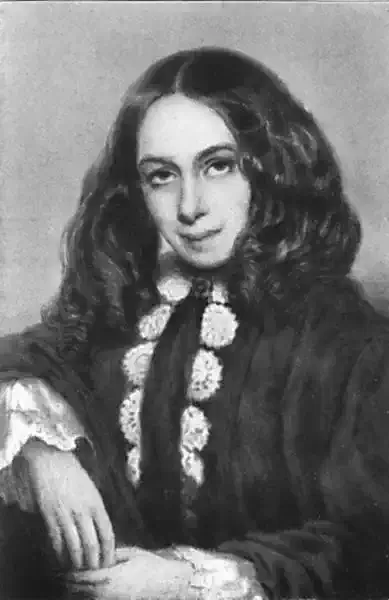
Elizabeth Barrett Browning
XXII
When our two souls stand up erect and strong,
Face to face, silent, drawing nigh and nigher,
Until the lengthening wings break into fire
At either curved point,--what bitter wrong
Can the earth do to us, that we should not long
Be here contented ? Think. In mounting higher,
The angels would press on us and aspire
To drop some golden orb of perfect song
Into our deep, dear silence. Let us stay
Rather on earth, Beloved,--where the unfit
Contrarious moods of men recoil away
And isolate pure spirits, and permit
A place to stand and love in for a day,
With darkness and the death-hour rounding it.
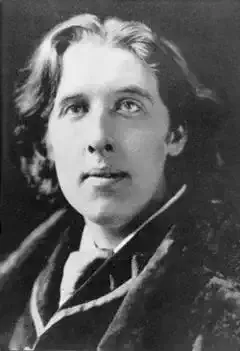
Oscar Wilde
The Grave Of Shelley
Gaunt cypress-trees stand round the sun-bleached stone;
Here doth the little night-owl make her throne,
And the slight lizard show his jewelled head.
And, where the chaliced poppies flame to red,
In the still chamber of yon pyramid
Surely some Old-World Sphinx lurks darkly hid,
Grim warder of this pleasaunce of the dead.
Ah! sweet indeed to rest within the womb
Of Earth, great mother of eternal sleep,
But sweeter far for thee a restless tomb
In the blue cavern of an echoing deep,
Or where the tall ships founder in the gloom
Against the rocks of some wave-shattered steep.
ROME.
Oscar Wilde
The Dole Of The King's Daughter (Breton)
And seven in the sky;
Seven sins on the King's daughter,
Deep in her soul to lie.
Red roses are at her feet,
(Roses are red in her red-gold hair)
And O where her bosom and girdle meet
Red roses are hidden there.
Fair is the knight who lieth slain
Amid the rush and reed,
See the lean fishes that are fain
Upon dead men to feed.
Sweet is the page that lieth there,
(Cloth of gold is goodly prey,)
See the black ravens in the air,
Black, O black as the night are they.
What do they there so stark and dead?
(There is blood upon her hand)
Why are the lilies flecked with red?
(There is blood on the river sand.)
There are two that ride from the south and east,
And two from the north and west,
For the black raven a goodly feast,
For the King's daughter rest.
There is one man who loves her true,
(Red, O red, is the stain of gore!)
He hath duggen a grave by the darksome yew,
(One grave will do for four.)
No moon in the still heaven,
In the black water none,
The sins on her soul are seven,
The sin upon his is one.
Oscar Wilde
Requiescat
Under the snow,
Speak gently, she can hear
The daisies grow.
All her bright golden hair
Tarnished with rust,
She that was young and fair
Fallen to dust.
Lily-like, white as snow,
She hardly knew
She was a woman, so
Sweetly she grew.
Coffin-board, heavy stone,
Lie on her breast,
I vex my heart alone,
She is at rest.
Peace, Peace, she cannot hear
Lyre or sonnet,
All my life's buried here,
Heap earth upon it.
AVIGNON
Oscar Wilde
Chanson
Are goodly gifts for thee,
And a hempen rope for your own love
To hang upon a tree.
For you a House of Ivory,
(Roses are white in the rose-bower)!
A narrow bed for me to lie,
(White, O white, is the hemlock flower)!
Myrtle and jessamine for you,
(O the red rose is fair to see)!
For me the cypress and the rue,
(Finest of all is rosemary)!
For you three lovers of your hand,
(Green grass where a man lies dead)!
For me three paces on the sand,
(Plant lilies at my head)!
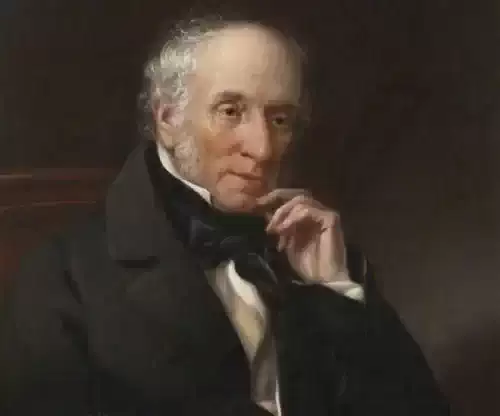
William Wordsworth
To A Sexton
Let thy wheel-barrow alone--
Wherefore, Sexton, piling still
In thy bone-house bone on bone?
'Tis already like a hill
In a field of battle made,
Where three thousand skulls are laid;
These died in peace each with the other,--
Father, sister, friend, and brother.
Mark the spot to which I point!
From this platform, eight feet square,
Take not even a finger-joint:
Andrew's whole fire-side is there.
Here, alone, before thine eyes,
Simon's sickly daughter lies,
From weakness now, and pain defended,
Whom he twenty winters tended.
Look but at the gardener's pride--
How he glories, when he sees
Roses, lilies, side by side,
Violets in families!
By the heart of Man, his tears,
By his hopes and by his fears,
Thou, too heedless, art the Warden
Of a far superior garden.
Thus then, each to other dear,
Let them all in quiet lie,
Andrew there, and Susan here,
Neighbours in mortality.
And, should I live through sun and rain
Seven widowed years without my Jane,
O Sexton, do not then remove her,
Let one grave hold the Loved and Lover!
William Wordsworth
The Seven Sisters
Or, The Solitude Of Binnorie
SEVEN Daughter had Lord Archibald,
All children of one mother:
You could not say in one short day
What love they bore each other.
A garland, of seven lilies, wrought!
Seven sisters that together dwell;
But he, bold Knight as ever fought,
Their Father, took of them no thought,
He loved the wars so well.
Sing, mournfully, oh! mournfully,
The solitude of Binnorie!
Fresh blows the wind, a western wind,
And from the shores of Erin,
Across the wave, a Rover brave
To Binnorie is steering:
Right onward to the Scottish strand
The gallant ship is borne;
The warriors leap upon the land,
And hark! the Leader of the band
Hath blown his bugle horn.
Sing, mournfully, oh! mournfully,
The solitude of Binnorie!
Beside a grotto of their own,
With boughs above them closing,
The Seven are laid, and in the shade
They lie like fawns reposing.
But now, upstarting with affright
At noise of man and steed,
Away they fly to left, to rightÑ
Of your fair household, Father-knight,
Methinks you take small heed!
Sing, mournfully, oh! mournfully,
The solitude of Binnorie!
Away the even fair Campbells fly,
And, over hill and hollow,
With menace proud, and insult loud,
The youthful Rovers follow.
Cried they, 'Your Father loves to roam:
Enough for him to find
The empty house when he comes home;
For us your yellow ringlets comb,
For us be fair and kind!'
Sing, mournfully, oh! mournfully,
The solitude of Binnorie!
Some close behind, some side to side,
Like clouds in stormy weather;
They run, and cry, 'Nay, let us die,
And let us die together.'
A lake was near; the shore was steep;
There never foot had been;
They ran, and with a deperate leap
Together plunged into the deep,
Nor ever more were seen.
Sing, mournfully, oh! mournfully,
The solitude of Binnorie!
The stream that flows out of the lake,
As through the glen it rambles,
Repeats a moan o'er moss and stone,
For those seven lovely Campbells.
Seven little Islands, green and bare,
Have risen from out the deep:
The fishers say, those sisters fair,
By faeries all are buried there,
And there together sleep.
Sing, mournfully, oh! mournfully,
The solitude of Binnorie!
William Wordsworth
Lucy iv
THREE years she grew in sun and shower;
Then Nature said, 'A lovelier flower
On earth was never sown;
This child I to myself will take;
She shall be mine, and I will make
A lady of my own.
"Myself will to my darling be
Both law and impulse: and with me
The girl, in rock and plain,
In earth and heaven, in glade and bower,
Shall feel an overseeing power
To kindle or restrain.
'She shall be sportive as the fawn
That wild with glee across the lawn
Or up the mountain springs;
And hers shall be the breathing balm,
And hers the silence and the calm
Of mute insensate things.
'The floating clouds their state shall lend
To her; for her the willow bend;
Nor shall she fail to see
Even in the motions of the storm
Grace that shall mould the maiden's form
By silent sympathy.
'The stars of midnight shall be dear
To her; and she shall lean her ear
In many a secret place
Where rivulets dance their wayward round,
And beauty born of murmuring sound
Shall pass into her face.
'And vital feelings of delight
Shall rear her form to stately height,
Her virgin bosom swell;
Such thoughts to Lucy I will give
While she and I together live
Here in this happy dell.'
Thus Nature spake--The work was done--
How soon my Lucy's race was run!
She died, and left to me
This heath, this calm, and quiet scene;
The memory of what has been,
And never more will be.
William Wordsworth
Extempore Effusion upon the Death of James Hogg
. When first, descending from the moorlands,
I saw the Stream of Yarrow glide
Along a bare and open valley,
The Ettrick Shepherd was my guide.
When last along its banks I wandered,
Through groves that had begun to shed
Their golden leaves upon the pathways,
My steps the Border-minstrel led.
The mighty Minstrel breathes no longer,
'Mid mouldering ruins low he lies;
And death upon the braes of Yarrow,
Has closed the Shepherd-poet's eyes:
Nor has the rolling year twice measured,
From sign to sign, its stedfast course,
Since every mortal power of Coleridge
Was frozen at its marvellous source;
The rapt One, of the godlike forehead,
The heaven-eyed creature sleeps in earth:
And Lamb, the frolic and the gentle,
Has vanished from his lonely hearth.
Like clouds that rake the mountain-summits,
Or waves that own no curbing hand,
How fast has brother followed brother,
From sunshine to the sunless land!
Yet I, whose lids from infant slumber
Were earlier raised, remain to hear
A timid voice, that asks in whispers,
"Who next will drop and disappear?"
Our haughty life is crowned with darkness,
Like London with its own black wreath,
On which with thee, O Crabbe! forth-looking,
I gazed from Hampstead's breezy heath.
As if but yesterday departed,
Thou too art gone before; but why,
O'er ripe fruit, seasonably gathered,
Should frail survivors heave a sigh?
Mourn rather for that holy Spirit,
Sweet as the spring, as ocean deep;
For Her who, ere her summer faded,
Has sunk into a breathless sleep.
No more of old romantic sorrows,
For slaughtered Youth or love-lorn Maid!
With sharper grief is Yarrow smitten,
And Ettrick mourns with her their Poet dead.
William Wordsworth
Elegiac Stanzas
Lulled by the sound of pastoral bells,
Rude Nature's Pilgrims did we go,
From the dread summit of the Queen
Of mountains, through a deep ravine,
Where, in her holy chapel, dwells
"Our Lady of the Snow."
The sky was blue, the air was mild;
Free were the streams and green the bowers;
As if, to rough assaults unknown,
The genial spot had 'ever' shown
A countenance that as sweetly smiled--
The face of summer-hours.
And we were gay, our hearts at ease;
With pleasure dancing through the frame
We journeyed; all we knew of care--
Our path that straggled here and there;
Of trouble--but the fluttering breeze;
Of Winter--but a name.
If foresight could have rent the veil
Of three short days--but hush--no more!
Calm is the grave, and calmer none
Than that to which thy cares are gone,
Thou Victim of the stormy gale;
Asleep on ZURICH'S shore!
O GODDARD! what art thou?--a name--
A sunbeam followed by a shade!
Nor more, for aught that time supplies,
The great, the experienced, and the wise:
Too much from this frail earth we claim,
And therefore are betrayed.
We met, while festive mirth ran wild,
Where, from a deep lake's mighty urn,
Forth slips, like an enfranchised slave,
A sea-green river, proud to lave,
With current swift and undefiled,
The towers of old LUCERNE.
We parted upon solemn ground
Far-lifted towards the unfading sky;
But all our thoughts were 'then' of Earth,
That gives to common pleasures birth;
And nothing in our hearts we found
That prompted even a sigh.
Fetch, sympathising Powers of air,
Fetch, ye that post o'er seas and lands,
Herbs, moistened by Virginian dew,
A most untimely grave to strew,
Whose turf may never know the care
Of 'kindred' human hands!
Beloved by every gentle Muse
He left his Transatlantic home:
Europe, a realised romance,
Had opened on his eager glance;
What present bliss!--what golden views!
What stores for years to come!
Though lodged within no vigorous frame,
His soul her daily tasks renewed,
Blithe as the lark on sun-gilt wings
High poised--or as the wren that sings
In shady places, to proclaim
Her modest gratitude.
Not vain is sadly-uttered praise;
The words of truth's memorial vow
Are sweet as morning fragrance shed
From flowers 'mid GOLDAU'S ruins bred;
As evening's fondly-lingering rays,
On RIGHI'S silent brow.
Lamented Youth! to thy cold clay
Fit obsequies the Stranger paid;
And piety shall guard the Stone
Which hath not left the spot unknown
Where the wild waves resigned their prey--
And 'that' which marks thy bed.
And, when thy Mother weeps for Thee,
Lost Youth! a solitary Mother;
This tribute from a casual Friend
A not unwelcome aid may lend,
To feed the tender luxury,
The rising pang to smother.
William Wordsworth
A Slumber Did My Spirit Seal
A slumber did my spirit seal
I had no human fears:
She seemed a thing that could not feel
The touch of earthly years.
No motion has she now, no force;
She neither hears nor sees;
Rolled round in earth's diurnal course,
With rocks, and stones, and trees.
William Wordsworth
Three Years She Grew in Sun and Shower,
Three years she grew in sun and shower,
Then Nature said, "A lovelier flower
On earth was never sown;
This Child I to myself will take;
She shall be mine, and I will make
A Lady of my own.
"Myself will to my darling be
Both law and impulse: and with me
The Girl, in rock and plain
In earth and heaven, in glade and bower,
Shall feel an overseeing power
To kindle or restrain.
"She shall be sportive as the fawn
That wild with glee across the lawn
Or up the mountain springs;
And her's shall be the breathing balm,
And her's the silence and the calm
Of mute insensate things.
"The floating clouds their state shall lend
To her; for her the willow bend;
Nor shall she fail to see
Even in the motions of the Storm
Grace that shall mold the Maiden's form
By silent sympathy.
"The stars of midnight shall be dear
To her; and she shall lean her ear
In many a secret place
Where rivulets dance their wayward round,
And beauty born of murmuring sound
Shall pass into her face.
"And vital feelings of delight
Shall rear her form to stately height,
Her virgin bosom swell;
Such thoughts to Lucy I will give
While she and I together live
Here in this happy dell."
Thus Nature spake---The work was done---
How soon my Lucy's race was run!
She died, and left to me
This heath, this calm, and quiet scene;
The memory of what has been,
And never more will be.

William Shakespeare
Sonnet LXXIII
That time of year thou mayst in me behold
When yellow leaves, or none, or few, do hang
Upon those boughs which shake against the cold,
Bare ruin'd choirs, where late the sweet birds sang.
In me thou seest the twilight of such day
As after sunset fadeth in the west,
Which by and by black night doth take away,
Death's second self, that seals up all in rest.
In me thou see'st the glowing of such fire
That on the ashes of his youth doth lie,
As the death-bed whereon it must expire
Consumed with that which it was nourish'd by.
This thou perceivest, which makes thy love more strong,
To love that well which thou must leave ere long.
William Shakespeare
Sonnet LXVI
Tired with all these, for restful death I cry,
As, to behold desert a beggar born,
And needy nothing trimm'd in jollity,
And purest faith unhappily forsworn,
And guilded honour shamefully misplaced,
And maiden virtue rudely strumpeted,
And right perfection wrongfully disgraced,
And strength by limping sway disabled,
And art made tongue-tied by authority,
And folly doctor-like controlling skill,
And simple truth miscall'd simplicity,
And captive good attending captain ill:
Tired with all these, from these would I be gone,
Save that, to die, I leave my love alone.
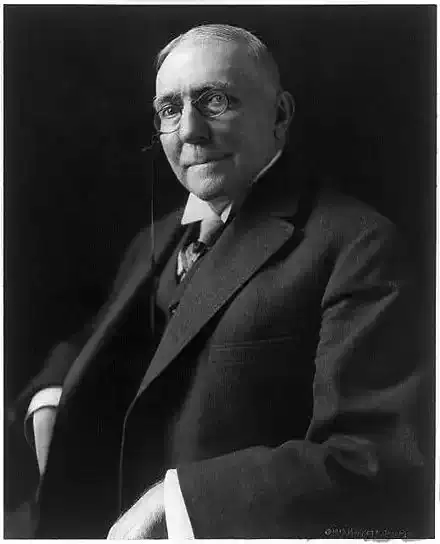
James Whitcomb Riley
Harlie
Fold the little waxen hands
Lightly. Let your warmest tears
Speak regrets, but never fears,--
Heaven understands!
Let the sad heart, o'er the tomb,
Lift again and burst in bloom
Fragrant with a prayer as sweet
As the lily at your feet.
Bend and kiss the folded eyes--
They are only feigning sleep
While their truant glances peep
Into Paradise.
See, the face, though cold and white,
Holds a hint of some delight
E'en with Death, whose finger-tips
Rest upon the frozen lips.
When, within the years to come,
Vanished echoes live once more--
Pattering footsteps on the floor,
And the sounds of home,--
Let your arms in fancy fold
Little Harlie as of old--
As of old and as he waits
At the City's golden gates.
James Whitcomb Riley
By Her White Bed
By her white bed I muse a little space:
She fell asleep--not very long ago,--
And yet the grass was here and not the snow--
The leaf, the bud, the blossom, and--her face!-Midsummer's
heaven above us, and the grace
Of Lovers own day, from dawn to afterglow;
The fireflies' glimmering, and the sweet and low
Plaint of the whip-poor-wills, and every place
In thicker twilight for the roses' scent.
Then _night_.--She slept--in such tranquility,
I walk atiptoe still, nor _dare_ to weep,
Feeling, in all this hush, she rests content--
That though God stood to wake her for me, she
Would mutely plead: 'Nay, Lord! Let _him_ so sleep.'
James Whitcomb Riley
At Crown Hill
Leave him here in the fresh
greening grasses and trees
And the symbols of love, and the solace of these-
The saintly white lilies and blossoms he keeps
In endless caress as
he breathlessly sleeps.
The tears of our eyes wrong the scene of his rest,
For the sky's at its clearest-the sun's at its best-
The earth at its greenest- its wild bud and bloom
At its sweetest-and sweetest its honey'd perfume.
Home! Home!-Leave him here in his lordly estate,
And with never a tear as we turn from the gate!
Turn back to the home that will know him no more,-
The vines at the window-the sun through the door,-
Nor sound of his voice, nor the light of his face!...
But the birds will sing on, and the rose, in his place,
Will tenderly smile til we daringly feign
He is home with us still, though the tremulous rain
Of our tears reappear, and again all is bloom,
And all prayerless we sob in the long-darkened room.
Heaven portions it thus-the old mystery dim,-
It is midnight to us-it is morning to him
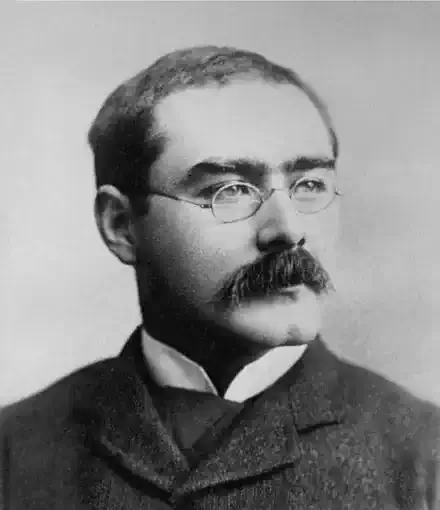
Rudyard Kipling
Russia to the Pacifists
God rest you, peaceful gentlemen, let nothing you dismay,
But--leave your sports a little while--the dead are borne
this way!
Armies dead and Cities dead, past all count or care.
God rest you, merry gentlemen, what portent see you there?
Singing:--Break ground for a wearied host
That have no ground to keep.
Give them the rest that they covet most . . .
And who shall next to sleep, good sirs,
In such a trench to sleep?
God rest you, peaceful gentlemen, but give us leave to pass.
We go to dig a nation's grave as great as England was.
For this Kingdom and this Glory and this Power and this Pride
Three hundred years it flourished--in three hundred days it
died.
Singing:--Pour oil for a frozen throng,
That lie about the ways.
Give them the warmth they have lacked so
long . . .
And what shall be next to blaze, good sirs,
On such a pyre to blaze?
God rest you, thoughtful gentlemen, and send your sleep is light!
Remains of this dominion no shadow, sound, or sight,
Except the sound of weeping and the sight of burning fire,
And the shadow of a people that is trampled into mire.
Singing:--Break bread for a starving folk
That perish in the field.
Give them their food as they take the yoke . . .
And who shall be next to yield, good sirs,
For such a bribe to yield?
God rest you merry gentlemen, and keep you in your mirth!
Was ever Kingdom turned so soon to ashes, blood and earth?
'Twixt the summer and the snow-seeding-time and frost--
Arms and victual, hope and counsel, name and country lost!
Singing:--Let down by the foot and the head--
Shovel and smooth it all !
So do we bury a Nation dead . . .
And who shall be next to fall, good sirs,
With your good help to fall?
Rudyard Kipling
Heriot's Ford
"What's that that hirples at my side?"
The foe that you must fight, my lord.
"That rides as fast as I can ride?"
The shadow of your might, my lord.
"Then wheel my horse against the foe!"
He's down and overpast, my lord.
You war against the sunset-glow,
The judgment follows fast, my lord!
"Oh, who will stay the sun's descent?"
King Joshua he is dead, my lord.
"I need an hour to repent!"
'Tis what our sister said, my lord.
"Oh, do not slay me in my sins!"
You're safe awhile with us, my lord.
"Nay, kill me ere my fear begins!"
We would not serve you thus, my lord.
"Where is the doom that I must face?"
Three little leagues away, my lord.
"Then mend the horses' laggard pace!"
We need them for next day, my lord.
"Next day--next day! Unloose my cords!"
Our sister needed none, my lord.
You had no mind to face our swords,
And--where can cowards run, my lord?
"You would not kill the soul alive?"
'Twas thus our sister cried, my lord.
"I dare not die with none to shrive."
But so our sister died, my lord.
"Then wipe the sweat from brow and cheek."
It runnels forth afresh, my lord.
"Uphold me--for the flesh is weak."
You've finished with the Flesh, my lord!
Rudyard Kipling
Blue Roses
Roses red and roses white
Plucked I for my love's delight.
She would none of all my posies--
Bade me gather her blue roses.
Half the world I wandered through,
Seeking where such flowers grew.
Half the world unto my quest
Answered me with laugh and jest.
Home I came at wintertide,
But my silly love had died
Seeking with her latest breath
Roses from the arms of Death.
It may be beyond the grave
She shall find what she would have.
Mine was but an idle quest--
Roses white and red are best!
Rudyard Kipling
A Ripple Song
Once red ripple came to land
In the golden sunset burning--
Lapped against a maiden's hand,
By the ford returning.
Dainty foot and gentle breast--
Here, across, be glad and rest.
"Maiden, wait," the ripple saith;
"Wait awhile, for I am Death!"
"Where my lover calls I go--
Shame it were to treat him coldly--
'Twas a fish that circled so,
Turning over boldly."
Dainty foot and tender heart,
Wait the loaded ferry-raft.
"Wait, ah, wait!" the ripple saith;
"Maiden, wait, for I am Death!"
"When my lover calls I haste--
Dame Disdain was never wedded!"
Ripple-ripple round her waist,
Clear the current eddied.
Foolish heart and faithful hand,
Little feet that touched no land.
Far away the ripple sped,
Ripple-ripple running red!

Horace
BkII:XIV Eheu Fugaces
Oh how the years fly, Postumus, Postumus,
they’re slipping away, virtue brings no respite
from the wrinkles that furrow our brow,
impending old age, Death the invincible:
not even, my friend, if with three hundred bulls
every day, you appease pitiless Pluto,
jailor of three-bodied Geryon,
who imprisons Tityos by the sad
stream, that every one of us must sail over,
whoever we are that enjoy earth’s riches,
whether we’re wealthy, or whether we are
the most destitute of humble farmers.
In vain we’ll escape from bloodiest warfare,
from the breakers’ roar in the Adriatic,
in vain, on the autumn seas, we’ll fear
the southerly that shatters our bodies:
We’re destined to gaze at Cocytus, winding,
dark languid river: the infamous daughters
of Danaus: and at Sisyphus,
son of Aeolus, condemned to long toil.
We’re destined to leave earth, home, our loving wife,
nor will a single tree, that you planted here,
follow you, it’s briefly-known master,
except for the much-detested cypress.
A worthier heir will drink your Caecuban,
that cellar a hundred keys are protecting,
and stain the street with a vintage wine,
finer than those at the Pontiff’s table.