
Courage and Strength
Poems in this topic

Dylan Thomas
Do Not Go Gentle Into That Good Night
Do not go gentle into that good night,
Old age should burn and rave at close of day;
Rage, rage against the dying of the light.
Though wise men at their end know dark is right,
Because their words had forked no lightning they
Do not go gentle into that good night.
Good men, the last wave by, crying how bright
Their frail deeds might have danced in a green bay,
Rage, rage against the dying of the light.
Wild men who caught and sang the sun in flight,
And learn, too late, they grieved it on its way,
Do not go gentle into that good night.
Grave men, near death, who see with blinding sight
Blind eyes could blaze like meteors and be gay,
Rage, rage against the dying of the light.
And you, my father, there on that sad height,
Curse, bless, me now with your fierce tears, I pray.
Do not go gentle into that good night.
Rage, rage against the dying of the light.

Ella Wheeler Wilcox
Custer: Book Second
I
Oh, for the power to call to aid, of mine
Own humble Muse, the famed and sacred nine.
Then might she fitly sing, and only then,
Of those intrepid and unflinching men
Who knew no homes save ever moving tents,
And who 'twixt fierce unfriendly elements
And wild barbarians warred. Yet unfraid,
Since love impels thy strains, sing, sing, my modest maid.
II
Relate how Custer in midwinter sought
Far Washita's cold shores; tell why he fought
With savage nomads fortressed in deep snows.
Woman, thou source of half the sad world's woes
And all its joys, what sanguinary strife
Has vexed the earth and made contention rife
Because of thee! For, hidden in man's heart,
Ay, in his very soul, of his true self a part,
III
The natural impulse and the wish belongs
To win thy favor and redress thy wrongs.
Alas! for woman, and for man, alas!
If that dread hour should ever come to pass,
When, through her new-born passion for control,
She drives that beauteous impulse from his soul.
What were her vaunted independence worth
If to obtain she sells her sweetest rights of birth?
IV
God formed fair woman for her true estateMan's
tender comrade, and his equal mate,
Not his competitor in toil and trade.
While coarser man, with greater strength was made
To fight her battles and her rights protect.
Ay! to protect the rights of earth's elect
(The virgin maiden and the spotless wife)
From immemorial time has man laid down his life.
V
And now brave Custer's valiant army pressed
Across the dangerous desert of the West,
To rescue fair white captives from the hands
Of brutal Cheyenne and Comanche bands,
On Washita's bleak banks. Nine hundred strong
It moved its slow determined way along,
Past frontier homes left dark and desolate
By the wild Indians' fierce and unrelenting hate;
VI
Past forts where ranchmen, strong of heart and bold,
Wept now like orphaned children as they told,
With quivering muscles and with anguished breath,
Of captured wives, whose fate was worse than death;
Past naked bodies whose disfiguring wounds
Spoke of the hellish hate of human hounds;
Past bleaching skeleton and rifled grave,
On pressed th' avenging host, to rescue and to save.
VII
Uncertain Nature, like a fickle friend,
(Worse than the foe on whom we may depend)
Turned on these dauntless souls a brow of wrath
And hurled her icy jav'lins in their path.
With treacherous quicksands, and with storms that blight,
Entrapped their footsteps and confused their sight.
'Yet on,' urged Custer, 'on at any cost,
No hour is there to waste, no moment to be lost.'
VIII
Determined, silent, on they rode, and on,
Like fabled Centaurs, men and steeds seemed one.
No bugle echoed and no voice spoke near,
Lest on some lurking Indian's list'ning ear
The sound might fall. Through swift descending snow
The stealthy guides crept, tracing out the foe;
No fire was lighted, and no halt was made
From haggard gray-lipped dawn till night lent friendly shade.
IX
Then, by the shelt'ring river's bank at last,
The weary warriors paused for their repast.
A couch of ice and falling shows for spread
Made many a suffering soldier's chilling bed.
They slept to dream of glory and delight,
While the pale fingers of the pitying night
Wove ghostly winding sheets for that doomed score
Who, ere another eve, should sleep to wake no more.
X
But those who slept not, saw with startled eyes
Far off, athwart dim unprotecting skies,
Ascending slowly with majestic grace,
A lustrous rocket, rising out of space.
'Behold the signal of the foe,' cried one,
The field is lost before the strife's begun.
Yet no! for see! yon rays spread near and far;
It is the day's first smile, the radiant morning star.
XI
The long hours counting till the daylight broke,
In whispered words the restless warriors spoke.
They talked of battles, but they thought of home
(For hearts are faithful though the feet may roam).
Brave Hamilton, all eager for the strife,
Mused o'er that two-fold mystery-death and life;
'And when I die,' quoth he, 'mine be the part
To fall upon the field, a bullet in my heart.'
XII
At break of dawn the scouts crept in to say
The foe was camped a rifle shot away.
The baying of a dog, an infant's cry
Pierced through the air; sleep fled from every eye.
To horse! to arms! the dead demand the dead!
Let the grand charge upon the lodge be led!
Let the Mosaic law, life for a life
Pay the long standing debt of blood. War to the knife!
XIII
So spake each heart in that unholy rage
Which fires the brain, when war the thoughts engage.
War, hideous war, appealing to the worst
In complex man, and waking that wild thirst
For human blood which blood alone can slake.
Yet for their country's safety, and the sake
Of tortured captives moaning in alarm
The Indian must be made to fear the law's strong arm.
XIV
A noble vengeance burned in Custer's breast,
But, as he led his army to the crest,
Above the wigwams, ready for the charge
He felt the heart within him, swelling large
With human pity, as an infant's wail
Shrilled once again above the wintry gale.
Then hosts of murdered children seemed to rise;
And shame his halting thought with sad accusing eyes,
XV
And urge him on to action. Stern of brow
The just avenger, and the General now,
He gives the silent signal to the band
Which, all impatient, waits for his command.
Cold lips to colder metal press; the air
Echoes those merry strains which mean despair
For sleeping chieftain and for toiling squaw,
But joy to those stern hearts which glory in the law
XVI
Of murder paying murder's awful debt.
And now four squadrons in one charge are met.
From east and west, from north and south they come,
At call of bugle and at roll of drum.
Their rifles rain hot hail upon the foe,
Who flee from danger in death's jaws to go.
The Indians fight like maddened bulls at bay,
And dying shriek and groan, wound the young ear of day.
XVII
A pallid captive and a white-browed boy
Add to the tumult piercing cries of joy,
As forth they fly, with high hope animate.
A hideous squaw pursues them with her hate;
Her knife descends with sickening force and sound;
Their bloody entrails stain the snow-clad ground.
She shouts with glee, then yells with rage and falls
Dead by her victims' side, pierced by avenging balls.
XVIII
Now war runs riot, carnage reigns supreme.
All thoughts of mercy fade from Custer's scheme.
Inhuman methods for inhuman foes,
Who feed on horrors and exult in woes.
To conquer and subdue alone remains
In dealing with the red man on the plains.
The breast that knows no conscience yields to fear,
Strike! let the Indian meet his master now and here.
XIX
With thoughts like these was Custer's mind engaged.
The gentlest are the sternest when enraged.
All felt the swift contagion of his ire,
For he was one who could arouse and fire
The coldest heart, so ardent was his own.
His fearless eye, his calm intrepid tone,
Bespoke the leader, strong with conscious power,
Whom following friends will bless, while foes will curse and cower.
XX
Again they charge! and now among the killed
Lies Hamilton, his wish so soon fulfilled,
Brave Elliott pursues across the field
The flying foe, his own young life to yield.
But like the leaves in some autumnal gale
The red men fall in Washita's wild vale.
Each painted face and black befeathered head
Still more repulsive seems with death's grim pallor wed.
XXI
New forces gather on surrounding knolls,
And fierce and fiercer war's red river rolls.
With bright-hued pennants flying from each lance
The gayly costumed Kiowas advance.
And bold Comanches (Bedouins of the land)
Infuse fresh spirit in the Cheyenne band.
While from the ambush of some dark ravine
Flash arrows aimed by hands, unerring and unseen.
XXIII
The hours advance; the storm clouds roll away;
Still furious and more furious grows the fray.
The yellow sun makes ghastlier still the sight
Of painted corpses, staring in its light.
No longer slaves, but comrades of their griefs,
The squaws augment the forces of their chiefs.
They chant weird dirges in a minor key,
While from the narrow door of wigwam and tepee
XXIII
Cold glittering eyes above cold glittering steel
Their deadly purpose and their hate reveal.
The click of pistols and the crack of guns
Proclaim war's daughters dangerous as her sons.
She who would wield the soldier's sword and lance
Must be prepared to take the soldier's chance.
She who would shoot must serve as target, too;
The battle-frenzied men, infuriate now pursue.
XXIV
And blood of warrior, woman and papoose,
Flow free as waters when some dam breaks loose;
Consuming fire, the wanton friend of war
(Whom allies worship and whom foes abhor)
Now trails her crimson garments through the street,
And ruin marks the passing of her feet.
Full three-score lodges smoke upon the plain,
And all the vale is strewn with bodies of the slain.
XXV
And those who are not numbered with the dead
Before all-conquering Custer now are led.
To soothe their woes, and calm their fears he seeks;
An Osage guide interprets while he speaks.
The vanquished captives, humbled, cowed and spent
Read in the victor's eye his kind intent.
The modern victor is as kind as brave;
His captive is his guest, not his insulted slave.
XXVI
Mahwissa, sister of the slaughtered chief
Of all the Cheyennes, listens; and her grief
Yields now to hope; and o'er her withered face
There flits the stealthy cunning of her race.
Then forth she steps, and thus begins to speak:
'To aid the fallen and support the weak
Is man's true province; and to ease the pain
Of those o'er whom it is his purpose now to reign.
XXVII
'Let the strong chief unite with theirs his life,
And take this black-eyed maiden for a wife.'
Then, moving with an air of proud command,
She leads a dusky damsel by the hand,
And places her at wondering Custer's side,
Invoking choicest blessings on the bride
And all unwilling groom, who thus replies.
'Fair is the Indian maid, with bright bewildering eyes,
XXVIII
'But fairer still is one who, year on year,
Has borne man's burdens, conquered woman's fear;
And at my side rode mile on weary mile,
And faced all deaths, all dangers, with a smile,
Wise as Minerva, as Diana brave,
Is she whom generous gods in kindness gave
To share the hardships of my wandering life,
Companion, comrade, friend, my loved and loyal wife.
XXIX
'The white chief weds but one. Take back thy maid.'
He ceased, and o'er Mahwissa's face a shade
Of mingled scorn and pity and surprise
Sweeps as she slow retreats, and thus replies:
'Rich is the pale-faced chief in battle fame,
But poor is he who but one wife may claim.
Wives are the red-skinned heroes' rightful spoil;
In war they prove his strength, in times of peace they toil.'
XXX
But hark! The bugle echoes o'er the plains
And sounds again those merry Celtic strains
Which oft have called light feet to lilting dance,
But now they mean the order to advance.
Along the river's bank, beyond the hill
Two thousand foemen lodge, unconquered still.
Ere falls night's curtain on this bloody play,
The army must proceed, with feint of further fray.
XXXI
The weary warriors mount their foam-flecked steeds,
With flags unfurled the dauntless host proceeds.
What though the foe outnumbers two to one?
Boldness achieves what strength oft leaves undone;
A daring mein will cause brute force to cower,
And courage is the secret source of power.
As Custer's column wheels upon their sight
The frightened red men yield the untried field by flight.
XXXII
Yet when these conquering heroes sink to rest,
Dissatisfaction gnaws the leader's breast,
For far away across vast seas of snows
Held prisoners still by hostile Arapahoes
And Cheyennes unsubdued, two captives wait.
On God and Custer hangs their future fate.
May the Great Spirit nerve the mortal's arm
To rescue suffering souls from worse than death's alarm.
XXXIII
But ere they seek to rescue the oppressed,
The valiant dead, in state, are laid to rest.
Mourned Hamilton, the faithful and the brave,
Nine hundred comrades follow to the grave;
And close behind the banner-hidden corse
All draped in black, walks mournfully his horse;
While tears of sound drip through the sunlit day.
A soldier may not weep, but drums and bugles may.
XXXIV
Now, Muse, recount, how after long delays
And dangerous marches through untrodden ways,
Where cold and hunger on each hour attend,
At last the army gains the journey's end.
An Indian village bursts upon the eye;
Two hundred lodges, sleep-encompassed lie,
There captives moan their anguished prayers through tears,
While in the silent dawn the armied answer nears.
XXXV
To snatch two fragile victims from the foe
Nine hundred men have traversed leagues of snow.
Each woe they suffered in a hostile land
The flame of vengeance in their bosoms fanned.
They thirst for slaughter, and the signal wait
To wrest the captives from their horrid fate.
Each warrior's hand upon his rifle falls,
Each savage soldier's heart for awful bloodshed calls.
XXXVI
And one, in years a youth, in woe a man,
Sad Brewster, scarred by sorrow's blighting ban,
Looks, panting, where his captive sister sleeps,
And o'er his face the shade of murder creeps.
His nostrils quiver like a hungry beast
Who scents anear the bloody carnal feast.
He longs to leap down in that slumbering vale
And leave no foe alive to tell the awful tale.
XXXVII
Not so, calm Custer. Sick of gory strife,
He hopes for rescue with no loss of life;
And plans that bloodless battle of the plains
Where reasoning mind outwits mere savage brains.
The sullen soldiers follow where he leads;
No gun is emptied, and no foeman bleeds.
Fierce for the fight and eager for the fray
They look upon their Chief in undisguised dismay.
XXXVIII
He hears the murmur of their discontent,
But sneers can never change a strong mind's bent.
He knows his purpose and he does not swerve.
And with a quiet mien and steady nerve
He meets dark looks where'er his steps may go,
And silence that is bruising as a blow,
Where late were smiles and words of ardent praise.
So pass the lagging weeks of wearying delays.
XXXIX
Inaction is not always what it seems,
And Custer's mind with plan and project teems.
Fixed in his peaceful purpose he abides
With none takes counsel and in none confides;
But slowly weaves about the foe a net
Which leaves them wholly at his mercy, yet
He strikes no fateful blow; he takes no life,
And holds in check his men, who pant for bloody strife.
XL
Intrepid warrior and skilled diplomate,
In his strong hands he holds the red man's fate.
The craftiest plot he checks with counterplot,
Till tribe by tribe the tricky foe is brought
To fear his vengeance and to know his power.
As man's fixed gaze will make a wild beast cower,
So these crude souls feel that unflinching will
Which draws them by its force, yet does not deign to kill.
XLI
And one by one the hostile Indians send
Their chiefs to seek a peaceful treaty's end.
Great councils follow; skill with cunning copes
And conquers it; and Custer sees his hopes
So long delayed, like stars storm hidden, rise
To radiate with splendor all his skies.
The stubborn Cheyennes, cowed at last by fear,
Leading the captive pair, o'er spring-touched hills appear.
XLII
With breath suspended, now the whole command
Waits the approach of that equestrian band.
Nearer it comes, still nearer, then a cry,
Half sob, half shriek, goes piercing God's blue sky,
And Brewster, like a nimble-footed doe,
Or like an arrow hurrying from a bow,
Shoots swiftly through the intervening space
And that lost sister clasps, in sorrowing love's embrace.
XLIII
And men who leaned o'er Hamilton's rude bier
And saw his dead dear face without a tear,
Strong souls who early learned the manly art
Of keeping from the eye what's in the heart,
Soldiers who look unmoved on death's pale brow,
Avert their eyes, to hide their moisture now.
The briny flood forced back from shores of woe,
Needs but to touch the strands of joy to overflow.
XLIV
About the captives welcoming warriors crowd,
All eyes are wet, and Brewster sobs aloud.
Alas, the ravage wrought by toil and woe
On faces that were fair twelve moons ago.
Bronzed by exposure to the heat and cold,
Still young in years, yet prematurely old,
By insults humbled and by labor worn,
They stand in youth's bright hour, of all youth's graces shorn.
XLV
A scanty garment rudely made of sacks
Hangs from their loins; bright blankets drape their backs;
About their necks are twisted tangled strings
Of gaudy beads, while tinkling wire and rings
Of yellow brass on wrists and fingers glow.
Thus, to assuage the anger of the foe
The cunning Indians decked the captive pair
Who in one year have known a lifetime of despair.
XLVI
But love can resurrect from sorrow's tomb
The vanished beauty and the faded bloom,
As sunlight lifts the bruised flower from the sod,
Can lift crushed hearts to hope, for love is God.
Already now in freedom's glad release
The hunted look of fear gives place to peace,
And in their eyes at thought of home appears
That rainbow light of joy which brightest shines through tears.
XLVII
About the leader thick the warriors crowd;
Late loud in censure, now in praises loud,
They laud the tactics, and the skill extol
Which gained a bloodless yet a glorious goal.
Alone and lonely in the path of right
Full many a brave soul walks. When gods requite
And crown his actions as their worth demands,
Among admiring throngs the hero always stands.
XLVIII
Back to the East the valorous squadrons sweep;
The earth, arousing from her long, cold sleep,
Throws from her breast the coverlet of snow,
Revealing Spring's soft charms which lie below.
Suppressed emotions in each heart arise,
The wooer wakens and the warrior dies.
The bird of prey is vanquished by the dove,
And thoughts of bloody strife give place to thoughts of love.
XLIX
The mighty plains, devoid of whispering trees,
Guard well the secrets of departed seas.
Where once great tides swept by with ebb and flow
The scorching sun looks down in tearless woe.
And fierce tornadoes in ungoverned pain
Mourn still the loss of that mysterious main.
Across this ocean bed the soldiers fly-
Home is the gleaming goal that lures each eager eye.
L
Like some elixir which the gods prepare,
They drink the viewless tonic of the air,
Sweet with the breath of startled antelopes
Which speed before them over swelling slopes.
Now like a serpent writhing o'er the moor,
The column curves and makes a slight detour,
As Custer leads a thousand men away
To save a ground bird's nest which in the footpath lay.
LI
Mile following mile, against the leaning skies
Far off they see a dull dark cloud arise.
The hunter's instinct in each heart is stirred,
Beholding there in one stupendous herd
A hundred thousand buffaloes. Oh great
Unwieldy proof of Nature's cruder state,
Rough remnant of a prehistoric day,
Thou, with the red man, too, must shortly pass away.
LII
Upon those spreading plains is there not room
For man and bison, that he seals its doom?
What pleasure lies and what seductive charm
In slaying with no purpose but to harm?
Alas, that man, unable to create,
Should thirst forever to exterminate,
And in destruction find his fiercest joy.
The gods alone create, gods only should destroy.
LIII
The flying hosts a straggling bull pursue;
Unerring aim, the skillful Custer drew.
The wounded beast turns madly in despair
And man and horse are lifted high in air.
The conscious steed needs not the guiding rein;
Back with a bound and one quick cry of pain
He springs, and halts, well knowing where must fall
In that protected frame, the sure death dealing ball.
LIV
With minds intent upon the morrow's feast,
The men surround the carcass of the beast.
Rolled on his back, he lies with lolling tongue,
Soon to the saddle savory steaks are hung.
And from his mighty head, great tufts of hair
Are cut as trophies for some lady fair.
To vultures then they leave the torn remains
Of what an hour ago was monarch of the plains.
LV
Far off, two bulls in jealous war engage,
Their blood-shot eye balls roll in furious rage;
With maddened hoofs they mutilate the ground
And loud their angry bellowings resound;
With shaggy heads bent low they plunge and roar,
Till both broad bellies drip with purple gore.
Meanwhile, the heifer, whom the twain desire,
Stands browsing near the pair, indifferent to their ire.
LVI
At last she lifts her lazy head and heeds
The clattering hoofs of swift advancing steeds.
Off to the herd with cumb'rous gait she runs
And leaves the bulls to face the threatening guns.
No more for them the free life of the plains,
Its mating pleasures and its warring pains.
Their quivering flesh shall feed unnumbered foes,
Their tufted tails adorn the soldiers' saddle bows.
LVII
Now into camp the conquering hosts advance;
On burnished arms the brilliant sunbeams glance.
Brave Custer leads, blonde as the gods of old;
Back from his brow blow clustering locks of gold,
And, like a jewel in a brook, there lies,
Far in the depths of his blue guarded eyes,
The thought of one whose smiling lips upcurled,
Mean more of joy to him than plaudits of the world.
LVIII
The troops in columns of platoons appear
Close to the leader following. Ah, here
The poetry of war is fully seen,
Its prose forgotten; as against the green
Of Mother Nature, uniformed in blue,
The soldiers pass for Sheridan's review.
The motion-music of the moving throng,
Is like a silent tune, set to a wordless song.
LIX
The guides and trailers, weird in war's array,
Precede the troops along the grassy way.
They chant wild songs, and with loud noise and stress,
In savage manner savage joy express.
The Indian captives, blanketed in red,
On ponies mounted, by the scouts are led.
Like sumach bushes, etched on evening skies,
Against the blue-clad troops, this patch of color lies.
LX
High o'er the scene vast music billows bound,
And all the air is liquid with the sound
Of those invisible compelling waves.
Perchance they reach the low and lonely graves
Where sleep brave Elliott and Hamilton,
And whisper there the tale of victory won;
Or do the souls of soldiers tried and true
Come at the bugle call, and march in grand review?
LXI
The pleased Commander watches in surprise
This splendid pageant surge before his eyes.
Not in those mighty battle days of old
Did scenes like this upon his sight unfold.
But now it passes. Drums and bugles cease
To dash war billows on the shores of Peace.
The victors smile on fair broad bosomed Sleep
While in her soothing arms, the vanquished cease to weep
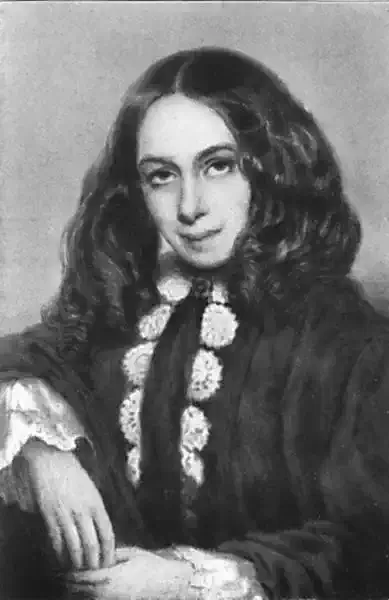
Elizabeth Barrett Browning
XXIV
Let the world's sharpness, like a clasping knife,
Shut in upon itself and do no harm
In this close hand of Love, now soft and warm,
And let us hear no sound of human strife
After the click of the shutting. Life to life--
I lean upon thee, Dear, without alarm,
And feel as safe as guarded by a charm
Against the stab of worldlings, who if rife
Are weak to injure. Very whitely still
The lilies of our lives may reassure
Their blossoms from their roots, accessible
Alone to heavenly dews that drop not fewer,
Growing straight, out of man's reach, on the hill.
God only, who made us rich, can make us poor.
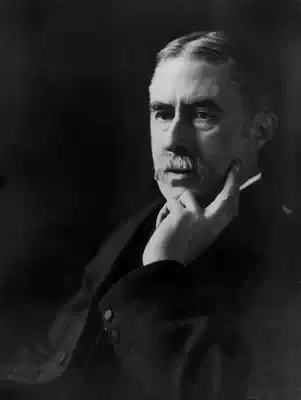
Alfred Edward Housman
Reveille
Wake: the silver dusk returning
Up the beach of darkness brims,
And the ship of sunrise burning
Strands upon the eastern rims.
Wake: the vaulted shadow shatters,
Trampled to the floor it spanned,
And the tent of night in tatters
Straws the sky-pavilioned land.
Up, lad, up, 'tis late for lying:
Hear the drums of morning play;
Hark, the empty highways crying
"Who'll beyond the hills away?"
Towns and countries woo together,
Forelands beacon, belfries call;
Never lad that trod on leather
Lived to feast his heart with all.
Up, lad: thews that lie and cumber
Sunlit pallets never thrive;
Morns abed and daylight slumber
Were not meant for man alive.
Clay lies still, but blood's a rover;
Breath's a ware that will not keep.
Up, lad: when the journey's over
There'll be time enough to sleep.
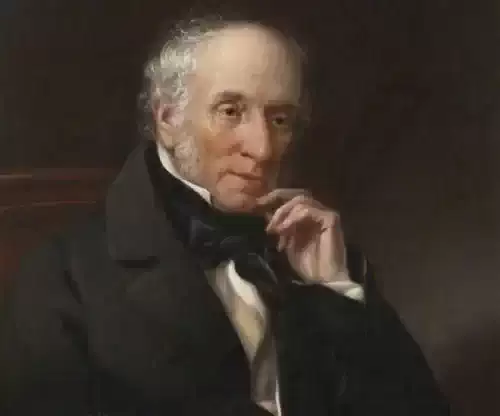
William Wordsworth
The Russian Fugitive
I
ENOUGH of rose-bud lips, and eyes
Like harebells bathed in dew,
Of cheek that with carnation vies,
And veins of violet hue;
Earth wants not beauty that may scorn
A likening to frail flowers;
Yea, to the stars, if they were born
For seasons and for hours.
Through Moscow's gates, with gold unbarred,
Stepped One at dead of night,
Whom such high beauty could not guard
From meditated blight;
By stealth she passed, and fled as fast
As doth the hunted fawn,
Nor stopped, till in the dappling east
Appeared unwelcome dawn.
Seven days she lurked in brake and field,
Seven nights her course renewed,
Sustained by what her scrip might yield,
Or berries of the wood;
At length, in darkness travelling on,
When lowly doors were shut,
The haven of her hope she won,
Her foster-mother's hut.
'To put your love to dangerous proof
I come,' said she, 'from far;
For I have left my Father's roof,
In terror of the czar.'
No answer did the Matron give,
No second look she cast,
But hung upon the fugitive,
Embracing and embraced.
She led the Lady to a seat
Beside the glimmering fire,
Bathed duteously her wayworn feet,
Prevented each desire:---
The cricket chirped, the house-dog dozed,
And on that simple bed,
Where she in childhood had reposed,
Now rests her weary head.
When she, whose couch had been the sod,
Whose curtain, pine or thorn,
Had breathed a sigh of thanks to God,
Who comforts the forlorn;
While over her the Matron bent
Sleep sealed her eyes, and stole
Feeling from limbs with travel spent,
And trouble from the soul.
Refreshed, the Wanderer rose at morn,
And soon again was dight
In those unworthy vestments worn
Through long and perilous flight;
And 'O beloved Nurse,' she said,
'My thanks with silent tears
Have unto Heaven and You been paid:
Now listen to my fears !
'Have you forgot'---and here she smiled---
'The babbling flatteries
You lavished on me when a child
Disporting round your knees?
I was your lambkin, and your bird,
Your star, your gem, your flower;
Light words, that were more lightly heard
In many a cloudless hour!
'The blossom you so fondly praised
Is come to bitter fruit;
A mighty One upon me gazed;
I spurned his lawless suit,
And must be hidden from his wrath:
You, Foster-father dear,
Will guide me in my forward path;
I may not tarry here!
'I cannot bring to utter woe
Your proved fidelity.'---
'Dear Child, sweet Mistress, say not so!
For you we both would die.'
'Nay, nay, I come with semblance feigned
And cheek embrowned by art;
Yet, being inwardly unstained,
With courage will depart.'
'But whither would you, could you, flee?
A poor Man's counsel take;
The Holy Virgin gives to me
A thought for your dear sake;
Rest, shielded by our Lady's grace,
And soon shall you be led
Forth to a safe abiding-place,
Where never foot doth tread.'
II
THE dwelling of this faithful pair
In a straggling village stood,
For One who breathed unquiet air
A dangerous neighbourhood;
But wide around lay forest ground
With thickets rough and blind;
And pine-trees made a heavy shade
Impervious to the wind.
And there, sequestered from the eight,
Was spread a treacherous swamp,
On which the noonday sun shed light
As from a lonely lamp;
And midway in the unsafe morass,
A single Island rose
Of firm dry ground, with healthful grass
Adorned, and shady boughs.
The Woodman knew, for such the craft
This Russian vassal plied,
That never fowler's gun, nor shaft
Of archer, there was tried;
A sanctuary seemed the spot
From all intrusion free;
And there he planned an artful Cot
For perfect secrecy.
With earnest pains unchecked by dread
Of Power's far-stretching hand,
The bold good Man his labor sped
At nature's pure command;
Heart-soothed, and busy as a wren,
While, in a hollow nook,
She moulds her sight-eluding den
Above a murmuring brook.
His task accomplished to his mind,
The twain ere break of day
Creep forth, and through the forest wind
Their solitary way;
Few words they speak, nor dare to slack
Their pace from mile to mile,
Till they have crossed the quaking marsh,
And reached the lonely Isle.
The sun above the pine-trees showed
A bright and cheerful face;
And Ina looked for her abode,
The promised hiding-place;
She sought in vain, the Woodman smiled;
No threshold could be seen,
Nor roof, nor window;Ñall seemed wild
As it had ever been.
Advancing, you might guess an hour,
The front with such nice care
Is masked, 'if house it be or bower,'
But in they entered are;
As shaggy as were wall and roof
With branches intertwined,
So smooth was all within, air-proof,
And delicately lined:
And hearth was there, and maple dish,
And cups in seemly rows,
And couch---all ready to a wish
For nurture or repose;
And Heaven doth to her virtue grant
That here she may abide
In solitude, with every want
By cautious love supplied.
No queen, before a shouting crowd,
Led on in bridal state,
E'er struggled with a heart so proud,
Entering her palace gate:
Rejoiced to bid the world farewell,
No saintly anchoress
E'er took possession of her cell
With deeper thankfulness.
'Father of all, upon thy care
And mercy am I thrown;
Be thou my safeguard!'---such her prayer
When she was left alone,
Kneeling amid the wilderness
When joy had passed away,
And smiles, fond efforts of distress
To hide what they betray!
The prayer is heard, the Saints have seen,
Diffused through form and face,
Resolves devotedly serene;
That monumental grace
Of Faith, which doth all passions tame
That Reason should control;
And shows in the untrembling frame
A statue of the soul.
III
'TIS sung in ancient minstrelsy
That Phoebus wont to wear
The leaves of any pleasant tree
Around his golden hair;
Till Daphne, desperate with pursuit
Of his imperious love,
At her own prayer transformed, took root,
A laurel in the grove.
Then did the Penitent adorn
His brow with laurel green;
And 'mid his bright locks never shorn
No meaner leaf was seen;
And poets sage, through every age,
About their temples wound
The bay; and conquerors thanked the Gods,
With laurel chaplets crowned,
Into the mists of fabling Time
So far runs back the praise
Of Beauty, that disdains to climb
Along forbidden ways;
That scorns temptation; power defies
Where mutual love is not;
And to the tomb for rescue flies
When life would be a blot.
To this fair Votaress, a fate
More mild doth Heaven ordain
Upon her Island desolate;
And word, not breathed in vain,
Might tell what intercourse she found,
Her silence to endear;
What birds she tamed, what flowers the ground
Sent forth her peace to cheer.
To one mute Presence, above all,
Her soothed affections clung,
A picture on the cabin wall
By Russian usage hung---
The Mother-maid, whose countenance bright
With love abridged the day;
And, communed with by taper light,
Chased spectral fears away.
And oft as either Guardian came,
The joy in that retreat
Might any common friendship shame,
So high their heart would beat;
And to the lone Recluse, whate'er
They brought, each visiting
Was like the crowding of the year
With a new burst of spring.
But, when she of her Parents thought,
The pang was hard to bear;
And, if with all things not enwrought,
That trouble still is near.
Before her flight she had not dared
Their constancy to prove,
Too much the heroic Daughter feared
The weakness of their love.
Dark is the past to them, and dark
The future still must be,
Till pitying Saints conduct her bark
Into a safer sea---
Or gentle Nature close her eyes,
And set her Spirit free
From the altar of this sacrifice,
In vestal purity.
Yet, when above the forest-glooms
The white swans southward passed,
High as the pitch of their swift plume
Her fancy rode the blast;
And bore her toward the fields of France
Her Father's native land,
To mingle in the rustic dance,
The happiest of the band!
Of those beloved fields she oft
Had heard her Father tell
In phrase that now with echoes soft
Haunted her lonely cell;
She saw the hereditary bowers,
She heard the ancestral stream;
The Kremlin and its haughty towers
Forgotten like a dream !
IV
THE ever-changing Moon had traced
Twelve times her monthly round,
When through the unfrequented Waste
Was heard a startling sound;
A shout thrice sent from one who chased
At speed a wounded deer,
Bounding through branches interlaced,
And where the wood was clear.
The fainting creature took the marsh,
And toward the Island fled,
While plovers screamed with tumult harsh
Above his antlered head;
This, Ina saw; and, pale with fear,
Shrunk to her citadel;
The desperate deer rushed on, and near
The tangled covert fell.
Across the marsh, the game in view,
The Hunter followed fast,
Nor paused, till o'er the stag he blew
A death-proclaiming blast;
Then, resting on her upright mind,
Came forth the Maid---'In me
Behold,' she said, ' a stricken Hind
Pursued by destiny!
'From your deportment, Sir! I deem
That you have worn a sword,
And will not hold in light esteem
A suffering woman's word;
There is my covert, there perchance
I might have lain concealed,
My fortunes hid, my countenance
Not even to you revealed.
'Tears might be shed, and I might pray,
Crouching and terrified,
That what has been unveiled to day,
You would in mystery hide;
But I will not defile with dust
The knee that bend to adore
The God in heaven;---attend, be just;
This ask I, and no more!
'I speak not of the winter's cold,
For summer's heat exchanged,
While I have lodged in this rough hold,
From social life estranged;
Nor yet of trouble and alarms:
High Heaven is my defence;
And every season has soft arms
For injured Innocence.
'From Moscow to the Wilderness
It was my choice to come,
Lest virtue should be harborless,
And honor want a home;
And happy were I, if the Czar
Retain his lawless will,
To end life here like this poor deer,
Or a lamb on a green hill.'
'Are you the Maid,' the Stranger cried,
'From Gallic parents sprung,
Whose vanishing was rumored wide,
Sad theme for every tongue;
Who foiled an Emperor's eager quest?
You, Lady, forced to wear
These rude habiliments, and rest
Your head in this dark lair!'
But wonder, pity, soon were quelled;
And in her face and mien
The soul's pure brightness she beheld
Without a veil between:
He loved, he hoped,---a holy flame
Kindled 'mid rapturous tears;
The passion of a moment came
As on the wings of years.
'Such bounty is no gift of chance,'
Exclaimed he; 'righteous Heaven,
Preparing your deliverance,
To me the charge hath given.
The Czar full oft in words, and deeds
Is stormy and self-willed;
But, when the Lady Catherine pleads,
His violence is stilled.
'Leave open to my wish the course,
And I to her will go;
From that humane and heavenly source,
Good, only good, can flow.''
Faint sanction given, the Cavalier
Was eager to depart,
Though question followed question, dear
To the Maiden's filial heart.
Light was his step,---his hopes, more light,
Kept pace with his desires;
And the fifth morning gave him sight
Of Moscow's glittering spires.
He sued:---heart-smitten by the wrong,
To the lorn Fugitive
The Emperor sent a pledge as strong
As sovereign power could give.
O more than mighty change! If e'er
Amazement rose to pain,
And joy's excess produced a fear
Of something void and vain;
'Twas when the Parents, who had mourned
So long the lost as dead,
Beheld their only Child returned,
The household floor to tread.
Soon gratitude gave way to love
Within the Maiden's breast:
Delivered and Deliverer move
In bridal garments drest;
Meek Catherine had her own reward;
The Czar bestowed a dower;
And universal Moscow shared
The triumph of that hour.
Flowers strewed the ground; the nuptial feast
Was held with costly state;
And there, 'mid many a noble guest,
The foster-parent sate;
Encouraged by the imperial eye,
They shrank not into shade;
Great as their bliss, the honor high
To them and nature paid!
William Wordsworth
The Power of Armies Is a Visible Thing
The power of Armies is a visible thing,
Formal, and circumscribed in time and space;
But who the limits of that power shall trace
Which a brave People into light can bring
Or hide, at will,--for freedom combating
By just revenge inflamed? No foot may chase,
No eye can follow, to a fatal place
That power, that spirit, whether on the wing
Like the strong wind, or sleeping like the wind
Within its awful caves.--From year to year
Springs this indigenous produce far and near;
No craft this subtle element can bind,
Rising like water from the soil, to find
In every nook a lip that it may cheer.
William Wordsworth
Rural Architecture
There's George Fisher, Charles Fleming, and Reginald Shore,
Three rosy-cheeked school-boys, the highest not more
Than the height of a counsellor's bag;
To the top of GREAT HOW did it please them to climb:
And there they built up, without mortar or lime,
A Man on the peak of the crag.
They built him of stones gathered up as they lay:
They built him and christened him all in one day,
An urchin both vigorous and hale;
And so without scruple they called him Ralph Jones.
Now Ralph is renowned for the length of his bones;
The Magog of Legberthwaite dale.
Just half a week after, the wind sallied forth,
And, in anger or merriment, out of the north,
Coming on with a terrible pother,
From the peak of the crag blew the giant away.
And what did these school-boys?--The very next day
They went and they built up another.
--Some little I've seen of blind boisterous works
By Christian disturbers more savage than Turks,
Spirits busy to do and undo:
At remembrance whereof my blood sometimes will flag;
Then, light-hearted Boys, to the top of the crag!
And I'll build up giant with you.
William Wordsworth
November,
. Another year!--another deadly blow!
Another mighty Empire overthrown!
And We are left, or shall be left, alone;
The last that dare to struggle with the Foe.
'Tis well! from this day forward we shall know
That in ourselves our safety must be sought;
That by our own right hands it must be wrought;
That we must stand unpropped, or be laid low.
O dastard whom such foretaste doth not cheer!
We shall exult, if they who rule the land
Be men who hold its many blessings dear,
Wise, upright, valiant; not a servile band,
Who are to judge of danger which they fear,
And honour which they do not understand.
William Wordsworth
It is not to be Thought of
. It is not to be thought of that the Flood
Of British freedom, which, to the open sea
Of the world's praise, from dark antiquity
Hath flowed, "with pomp of waters, unwithstood,"
Roused though it be full often to a mood
Which spurns the check of salutary bands,
That this most famous Stream in bogs and sands
Should perish; and to evil and to good
Be lost for ever. In our halls is hung
Armoury of the invincible Knights of old:
We must be free or die, who speak the tongue
That Shakespeare spake; the faith and morals hold
Which Milton held.--In every thing we are sprung
Of Earth's first blood, have titles manifold.
William Wordsworth
England iv
IT is not to be thought of that the flood
Of British freedom, which, to the open sea
Of the world's praise, from dark antiquity
Hath flow'd, 'with pomp of waters, unwithstood,'
Roused though it be full often to a mood
Which spurns the check of salutary bands,--
That this most famous stream in bogs and sands
Should perish; and to evil and to good
Be lost for ever. In our halls is hung
Armoury of the invincible Knights of old:
We must be free or die, who speak the tongue
That Shakespeare spake; the faith and morals hold
Which Milton held.--In everything we are sprung
Of Earth's first blood, have titles manifold.
William Wordsworth
England ii
MILTON! thou shouldst be living at this hour:
England hath need of thee: she is a fen
Of stagnant waters: altar, sword, and pen,
Fireside, the heroic wealth of hall and bower,
Have forfeited their ancient English dower
Of inward happiness. We are selfish men;
O raise us up, return to us again,
And give us manners, virtue, freedom, power!
Thy soul was like a Star, and dwelt apart;
Thou hadst a voice whose sound was like the sea:
Pure as the naked heavens, majestic, free,
So didst thou travel on life's common way,
In cheerful godliness; and yet thy heart
The lowliest duties on herself did lay.
William Wordsworth
Character of the Happy Warrior
. Who is the happy Warrior? Who is he
That every man in arms should wish to be?
--It is the generous Spirit, who, when brought
Among the tasks of real life, hath wrought
Upon the plan that pleased his boyish thought:
Whose high endeavours are an inward light
That makes the path before him always bright;
Who, with a natural instinct to discern
What knowledge can perform, is diligent to learn;
Abides by this resolve, and stops not there,
But makes his moral being his prime care;
Who, doomed to go in company with Pain,
And Fear, and Bloodshed, miserable train!
Turns his necessity to glorious gain;
In face of these doth exercise a power
Which is our human nature's highest dower:
Controls them and subdues, transmutes, bereaves
Of their bad influence, and their good receives:
By objects, which might force the soul to abate
Her feeling, rendered more compassionate;
Is placable--because occasions rise
So often that demand such sacrifice;
More skilful in self-knowledge, even more pure,
As tempted more; more able to endure,
As more exposed to suffering and distress;
Thence, also, more alive to tenderness.
--'Tis he whose law is reason; who depends
Upon that law as on the best of friends;
Whence, in a state where men are tempted still
To evil for a guard against worse ill,
And what in quality or act is best
Doth seldom on a right foundation rest,
He labours good on good to fix, and owes
To virtue every triumph that he knows:
--Who, if he rise to station of command,
Rises by open means; and there will stand
On honourable terms, or else retire,
And in himself possess his own desire;
Who comprehends his trust, and to the same
Keeps faithful with a singleness of aim;
And therefore does not stoop, nor lie in wait
For wealth, or honours, or for worldly state;
Whom they must follow; on whose head must fall,
Like showers of manna, if they come at all:
Whose powers shed round him in the common strife,
Or mild concerns of ordinary life,
A constant influence, a peculiar grace;
But who, if he be called upon to face
Some awful moment to which Heaven has joined
Great issues, good or bad for human kind,
Is happy as a Lover; and attired
With sudden brightness, like a Man inspired;
And, through the heat of conflict, keeps the law
In calmness made, and sees what he foresaw;
Or if an unexpected call succeed,
Come when it will, is equal to the need:
--He who, though thus endued as with a sense
And faculty for storm and turbulence,
Is yet a Soul whose master-bias leans
To homefelt pleasures and to gentle scenes;
Sweet images! which, wheresoe'er he be,
Are at his heart; and such fidelity
It is his darling passion to approve;
More brave for this, that he hath much to love:--
'Tis, finally, the Man, who, lifted high,
Conspicuous object in a Nation's eye,
Or left unthought-of in obscurity,--
Who, with a toward or untoward lot,
Prosperous or adverse, to his wish or not--
Plays, in the many games of life, that one
Where what he most doth value must be won:
Whom neither shape or danger can dismay,
Nor thought of tender happiness betray;
Who, not content that former worth stand fast,
Looks forward, persevering to the last,
From well to better, daily self-surpast:
Who, whether praise of him must walk the earth
For ever, and to noble deeds give birth,
Or he must fall, to sleep without his fame,
And leave a dead unprofitable name--
Finds comfort in himself and in his cause;
And, while the mortal mist is gathering, draws
His breath in confidence of Heaven's applause:
This is the happy Warrior; this is he
That every man in arms should wish to be.
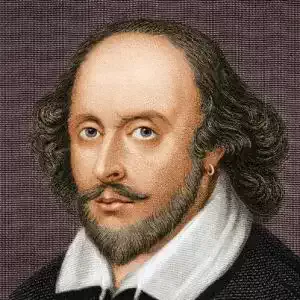
William Shakespeare
St. Crispin’s Day Speech: from Henry V
WESTMORELAND. O that we now had here
But one ten thousand of those men in England
That do no work to-day!
KING. What’s he that wishes so?
My cousin Westmoreland? No, my fair cousin;
If we are mark’d to die, we are enow
To do our country loss; and if to live,
The fewer men, the greater share of honour.
God’s will! I pray thee, wish not one man more.
By Jove, I am not covetous for gold,
Nor care I who doth feed upon my cost;
It yearns me not if men my garments wear;
Such outward things dwell not in my desires.
But if it be a sin to covet honour,
I am the most offending soul alive.
No, faith, my coz, wish not a man from England.
God’s peace! I would not lose so great an honour
As one man more methinks would share from me
For the best hope I have. O, do not wish one more!
Rather proclaim it, Westmoreland, through my host,
That he which hath no stomach to this fight,
Let him depart; his passport shall be made,
And crowns for convoy put into his purse;
We would not die in that man’s company
That fears his fellowship to die with us.
This day is call’d the feast of Crispian.
He that outlives this day, and comes safe home,
Will stand a tip-toe when this day is nam’d,
And rouse him at the name of Crispian.
He that shall live this day, and see old age,
Will yearly on the vigil feast his neighbours,
And say “To-morrow is Saint Crispian.”
Then will he strip his sleeve and show his scars,
And say “These wounds I had on Crispian’s day.”
Old men forget; yet all shall be forgot,
But he’ll remember, with advantages,
What feats he did that day. Then shall our names,
Familiar in his mouth as household words-
Harry the King, Bedford and Exeter,
Warwick and Talbot, Salisbury and Gloucester-
Be in their flowing cups freshly rememb’red.
This story shall the good man teach his son;
And Crispin Crispian shall ne’er go by,
From this day to the ending of the world,
But we in it shall be remembered-
We few, we happy few, we band of brothers;
For he to-day that sheds his blood with me
Shall be my brother; be he ne’er so vile,
This day shall gentle his condition;
And gentlemen in England now-a-bed
Shall think themselves accurs’d they were not here,
And hold their manhoods cheap whiles any speaks
That fought with us upon Saint Crispin’s day.
Rudyard Kipling
The Conversion of Aurelian McGoggin
Ride with an idle whip, ride with an unused heel,
But, once in a way, there will come a day
When the colt must be taught to feel
The lash that falls, and the curb that galls, and the sting
of the rowelled steel.
James Whitcomb Riley
Grant At Rest-- August 8, 1885
Sir Launcelot rode overthwart and endlong in a wide forest, and held no
path but as wild adventure led him... And he returned and came again to his
horse, and took off his saddle and his bridle, and let him pasture; and
unlaced his helm, and ungirdled his sword, and laid him down to sleep upon
his shield before the cross. --Age of Chivalary
_Grant_
What shall we say of the soldier. Grant,
His sword put by and his great soul free?
How shall we cheer him now or chant
His requiem befittingly?
The fields of his conquest now are seen
Ranged no more with his armed men--
But the rank and file of the gold and green
Of the waving grain is there again.
Though his valiant life is a nation's pride,
And his death heroic and half divine,
And our grief as great as the world is wide,
There breaks in speech but a single line--:
We loved him living, revere him dead--!
A silence then on our lips is laid:
We can say no thing that has not been said,
Nor pray one prayer that has not been prayed.
But a spirit within us speaks: and lo,
We lean and listen to wondrous words
That have a sound as of winds that blow,
And the voice of waters and low of herds;
And we hear, as the song flows on serene,
The neigh of horses, and then the beat
Of hooves that skurry o'er pastures green,
And the patter and pad of a boy's bare feet.
A brave lad, wearing a manly brow,
Knit as with problems of grave dispute,
And a face, like the bloom of the orchard bough,
Pink and pallid, but resolute;
And flushed it grows as the clover-bloom,
And fresh it gleams as the morning dew,
As he reins his steed where the quick quails boom
Up from the grasses he races through.
And ho! As he rides what dreams are his?
And what have the breezes to suggest--?
Do they whisper to him of shells that whiz
O'er fields made ruddy with wrongs redressed?
Does the hawk above him an Eagle float?
Does he thrill and his boyish heart beat high,
Hearing the ribbon about his throat
Flap as a Flag as the winds go by?
And does he dream of the Warrior's fame--
This Western boy in his rustic dress?
For in miniature, this is the man that came
Riding out of the Wilderness--!
The selfsame figure-- the knitted brow--
The eyes full steady-- the lips full mute--
And the face, like the bloom of the orchard bough,
Pink and pallid, but resolute.
Ay, this is the man, with features grim
And stoical as the Sphinx's own,
That heard the harsh guns calling him,
As musical as the bugle blown,
When the sweet spring heavens were clouded o'er
With a tempest, glowering and wild,
And our country's flag bowed down before
Its bursting wrath as a stricken child.
Thus, ready mounted and booted and spurred,
He loosed his bridle and dashed away--!
Like a roll of drums were his hoof-beats heard,
Like the shriek of the fife his charger's neigh!
And over his shoulder and backward blown,
We heard his voice, and we saw the sod
Reel, as our wild steeds chased his own
As though hurled on by the hand of God!
And still, in fancy, we see him ride
In the blood-red front of a hundred frays,
His face set stolid, but glorified
As a knight's of the old Arthurian days:
And victor ever as courtly too,
Gently lifting the vanquished foe,
And staying him with a hand as true
As dealt the deadly avenging blow.
So brighter than all of the cluster of stars
Of the flag enshrouding his form to-day,
His face shines forth from the grime of wars
With a glory that shall not pass away:
He rests at last: he has borne his part
Of salutes and salvos and cheers on cheers--
But O the sobs of his country's heart,
And the driving rain of a nations tears!
Rudyard Kipling
The Boy Scouts' Patrol Song
These are our regulations --
There's just one law for the Scout
And the first and the last, and the present and the past,
And the future and the perfect is "Look out!"
I, thou and he, look out!
We, ye and they, look out!
Though you didn't or you wouldn't
Or you hadn't or you couldn't;
You jolly well must look out!
Look out, when you start for the day
That your kit is packed to your mind;
There is no use going away
With half of it left behind.
Look out that your laces are tight,
And your boots are easy and stout,
Or you'll end with a blister at night.
(Chorus) All Patrols look out!
Look out for the birds of the air,
Look out for the beasts of the field --
They'll tell you how and where
The other side's concealed.
When the blackbird bolts from the copse,
Or the cattle are staring about,
The wise commander stops
And (chorus) All Patrols look out!
Look out when your front is clear,
And you feel you are bound to win.
Look out for your flank and your rear --
That's where surprises begin.
For the rustle that isn't a rat,
For the splash that isn't a trout,
For the boulder that may be a hat
(Chorus) All Patrols look out!
For the innocent knee-high grass,
For the ditch that never tells,
Look out! Look out ere you pass --
And look out for everything else!
A sign mis-read as you run
May turn retreat to a rout --
For all things under the sun
(Chorus) All Patrols look out!
Look out when your temper goes
At the end of a losing game;
When your boots are too tight for your toes;
And you answer and argue and blame.
It's the hardest part of the Low,
But it has to be learnt by the Scout --
For whining and shirking and "jaw"
(Chorus) All Patrols look out!
Rudyard Kipling
The Benefactors
Ah! What avails the classic bent
And what the cultured word,
Against the undoctored incident
That actually occurred?
And what is Art whereto we press
Through paint and prose and rhyme--
When Nature in her nakedness
Defeats us every time?
It is not learning, grace nor gear,
Nor easy meat and drink,
But bitter pinch of pain and fear
That makes creation think.
When in this world's unpleasing youth
Our godlike race began,
The longest arm, the sharpest tooth,
Gave man control of man;
Till, bruised and bitten to the bone
And taught by pain and fear,
He learned to deal the far-off stone,
And poke the long, safe spear.
So tooth and nail were obsolete
As means against a foe,
Till, bored by uniform defeat,
Some genius built the bow.
Then stone and javelin proved as vain
As old-time tooth and nail;
Till, spurred anew by fear and pain,
Man fashioned coats of mail.
Then was there safety for the rich
And danger for the poor,
Till someone mixed a powder which
Redressed the scale once more.
Helmet and armour disappeared
With sword and bow and pike,
And, when the smoke of battle cleared,
All men were armed alike. . . .
And when ten million such were slain
To please one crazy king,
Man, schooled in bulk by fear and pain,
Grew weary of the thing;
And, at the very hour designed,
To enslave him past recall,
His tooth-stone-arrow-gun-shy mind
Turned and abolished all.
All Power, each Tyrant, every Mob
Whose head has grown too large,
Ends by destroying its own job
And works its own discharge;
And Man, whose mere necessities
Move all things from his path,
Trembles meanwhile at their decrees,
And deprecates their wrath!
Rudyard Kipling
The Bell Buoy
They christened my brother of old--
And a saintly name he bears--
They gave him his place to hold
At the head of the belfry-stairs,
Where the minister-towers stand
And the breeding kestrels cry.
Would I change with my brother a league inland?
(Shoal! 'Ware shoal!) Not I!
In the flush of the hot June prime,
O'er sleek flood-tides afire,
I hear him hurry the chime
To the bidding of checked Desire;
Till the sweated ringers tire
And the wild bob-majors die.
Could I wait for my turn in the godly choir?
(Shoal! 'Ware shoal!) Not I!
When the smoking scud is blown--
When the greasy wind-rack lowers--
Apart and at peace and alone,
He counts the changeless hours.
He wars with darkling Powers
(I war with a darkling sea);
Would he stoop to my work in the gusty mirk?
(Shoal! 'Ware shoal!) Not he!
There was never a priest to pray
There was never a hand to toll,
When they made me guard of the bay,
And moored me over the shoal.
I rock, I reel, and I roll--
My four great hammers ply--
Could I speak or be still at the Church's will?
(Shoal! 'Ware shoal!) Not I!
The landward marks have failed,
The fog-bank glides unguessed,
The seaward lights are veiled,
The spent deep feigns her rest:
But my ear is laid to her breast,
I lift to the swell--I cry!
Could I wait in sloth on the Church's oath?
(Shoal! 'Ware shoal!) Not I!
At the careless end of night
I thrill to the nearing screw;
I turn in the clearing light
And I call to the drowsy crew;
And the mud boils foul and blue
As the blind bow backs away.
Will they give me their thanks if they clear the banks?
(Shoal! 'Ware shoal!) Not they!
The beach-pools cake and skim,
The bursting spray-heads freeze,
I gather on crown and rim
The grey, grained ice of the seas,
Where, sheathed from bitt to trees,
The plunging colliers lie.
Would I barter my place for the Church's grace?
(Shoal! 'Ware shoal!) Not I!
Through the blur of the whirling snow,
Or the black of the inky sleet,
The lanterns gather and grow,
And I look for the homeward fleet.
Rattle of block and sheet--
"Ready about-stand by!"
Shall I ask them a fee ere they fetch the quay?
(Shoal! 'Ware shoal!) Not I!
I dip and I surge and I swing
In the rip of the racing tide,
By the gates of doom I sing,
On the horns of death I ride.
A ship-length overside,
Between the course and the sand,
Fretted and bound I bide
Peril whereof I cry.
Would I change with my brother a league inland?
(Shoal! 'Ware shoal!) Not I!
Rudyard Kipling
The Ballad Of The King's Mercy
Abdhur Rahman, the Durani Chief, of him is the story told.
His mercy fills the Khyber hills -- his grace is manifold;
He has taken toll of the North and the South --
his glory reacheth far,
And they tell the tale of his charity from Balkh to Kandahar.
Before the old Peshawur Gate, where Kurd and Kaffir meet,
The Governor of Kabul dealt the Justice of the Street,
And that was strait as running noose and swift as plunging knife,
Tho' he who held the longer purse might hold the longer life.
There was a hound of Hindustan had struck a Euzufzai,
Wherefore they spat upon his face and led him out to die.
It chanced the King went forth that hour when throat was bared to knife;
The Kaffir grovelled under-hoof and clamoured for his life.
Then said the King: "Have hope, O friend! Yea, Death disgraced is hard;
Much honour shall be thine"; and called the Captain of the Guard,
Yar Khan, a bastard of the Blood, so city-babble saith,
And he was honoured of the King -- the which is salt to Death;
And he was son of Daoud Shah, the Reiver of the Plains,
And blood of old Durani Lords ran fire in his veins;
And 'twas to tame an Afghan pride nor Hell nor Heaven could bind,
The King would make him butcher to a yelping cur of Hind.
"Strike!" said the King. "King's blood art thou --
his death shall be his pride!"
Then louder, that the crowd might catch: "Fear not -- his arms are tied!"
Yar Khan drew clear the Khyber knife, and struck, and sheathed again.
"O man, thy will is done," quoth he; "a King this dog hath slain."
Abdhur Rahman, the Durani Chief, to the North and the South is sold.
The North and the South shall open their mouth
to a Ghilzai flag unrolled,
When the big guns speak to the Khyber peak, and his dog-Heratis fly:
Ye have heard the song -- How long? How long?
Wolves of the Abazai!
That night before the watch was set, when all the streets were clear,
The Governor of Kabul spoke: "My King, hast thou no fear?
Thou knowest -- thou hast heard," -- his speech died at his master's face.
And grimly said the Afghan King: "I rule the Afghan race.
My path is mine -- see thou to thine -- to-night upon thy bed
Think who there be in Kabul now that clamour for thy head."
That night when all the gates were shut to City and to throne,
Within a little garden-house the King lay down alone.
Before the sinking of the moon, which is the Night of Night,
Yar Khan came softly to the King to make his honour white.
The children of the town had mocked beneath his horse's hoofs,
The harlots of the town had hailed him "butcher!" from their roofs.
But as he groped against the wall, two hands upon him fell,
The King behind his shoulder spake: "Dead man, thou dost not well!
'Tis ill to jest with Kings by day and seek a boon by night;
And that thou bearest in thy hand is all too sharp to write.
But three days hence, if God be good, and if thy strength remain,
Thou shalt demand one boon of me and bless me in thy pain.
For I am merciful to all, and most of all to thee.
My butcher of the shambles, rest -- no knife hast thou for me!"
Abdhur Rahman, the Durani Chief,
holds hard by the South and the North;
But the Ghilzai knows, ere the melting snows,
when the swollen banks break forth,
When the red-coats crawl to the sungar wall,
and his Usbeg lances fail:
Ye have heard the song -- How long? How long?
Wolves of the Zuka Kheyl!
They stoned him in the rubbish-field when dawn was in the sky,
According to the written word, "See that he do not die."
They stoned him till the stones were piled above him on the plain,
And those the labouring limbs displaced they tumbled back again.
One watched beside the dreary mound that veiled the battered thing,
And him the King with laughter called the Herald of the King.
It was upon the second night, the night of Ramazan,
The watcher leaning earthward heard the message of Yar Khan.
From shattered breast through shrivelled lips broke forth the rattling breath,
"Creature of God, deliver me from agony of Death."
They sought the King among his girls, and risked their lives thereby:
"Protector of the Pitiful, give orders that he die!"
"Bid him endure until the day," a lagging answer came;
"The night is short, and he can pray and learn to bless my name."
Before the dawn three times he spoke, and on the day once more:
"Creature of God, deliver me, and bless the King therefor!"
They shot him at the morning prayer, to ease him of his pain,
And when he heard the matchlocks clink, he blessed the King again.
Which thing the singers made a song for all the world to sing,
So that the Outer Seas may know the mercy of the King.
Abdhur Rahman, the Durani Chief, of him is the story told,
He has opened his mouth to the North and the South,
they have stuffed his mouth with gold.
Ye know the truth of his tender ruth -- and sweet his favours are:
Ye have heard the song -- How long? How long?
from Balkh to Kandahar.
Rudyard Kipling
The Ballad of the Clampherdown
It was our war-ship Clampherdown
Would sweep the Channel clean,
Wherefore she kept her hatches close
When the merry Channel chops arose,
To save the bleached marine.
She had one bow-gun of a hundred ton
And a great stern-gun beside.
They dipped their noses deep in the sea,
They racked their stays and stanchions free
In the wash of the wind-whipped tide.
It was our war-ship Clampherdown,
Fell in with a cruiser light
That carried the dainty Hotchkiss gun
And a pair of heels wherewith to run
From the grip of a close-fought fight.
She opened fire at seven miles --
As ye shoot at a bobbing cork --
And once she fired and twice she fired,
Till the bow-gun dropped like a lily tired
That lolls upon the stalk.
"Captain, the bow-gun melts apace,
The deck-beams break below,
'Twere well to rest for an hour or twain,
And botch the shattered plates again."
And he answered, "Make it so."
She opened fire within the mile --
As ye shoot at the flying duck --
And the great stern-gun shot fair and true,
With the heave of the ship, to the stainless blue,
And the great stern-turret stuck.
"Captain, the turret fills with steam,
The feed-pipes burst below --
You can hear the hiss of the helpless ram,
You can hear the twisted runners jam."
And he answered, "Turn and go!"
It was our war-ship Clampherdown,
And grimly did she roll;
Swung round to take the cruiser's fire
As the White Whale faces the Thresher's ire
When they war by the frozen Pole.
"Captain, the shells are falling fast,
And faster still fall we;
And it is not meet for English stock
To bide in the heart of an eight-day clock
The death they cannot see."
"Lie down, lie down, my bold A.B.,
We drift upon her beam;
We dare not ram, for she can run;
And dare ye fire another gun,
And die in the peeling steam?"
It was our war-ship Clampherdown
That carried an armour-belt;
But fifty feet at stern and bow
Lay bare as the paunch of the purser's sow,
To the hail of the Nordenfeldt.
"Captain, they hack us through and through;
The chilled steel bolts are swift!
We have emptied our bunkers in open sea,
Their shrapnel bursts where our coal should be."
And he answered, "Let her drift."
It was our war-ship Clampherdown,
Swung round upon the tide,
Her two dumb guns glared south and north,
And the blood and the bubbling steam ran forth,
And she ground the cruiser's side.
"Captain, they cry, the fight is done,
They bid you send your sword."
And he answered, "Grapple her stern and bow.
They have asked for the steel. They shall have it now;
Out cutlasses and board!"
It was our war-ship Clampherdown
Spewed up four hundred men;
And the scalded stokers yelped delight,
As they rolled in the waist and heard the fight,
Stamp o'er their steel-walled pen.
They cleared the cruiser end to end,
From conning-tower to hold.
They fought as they fought in Nelson's fleet;
They were stripped to the waist, they were bare to the feet,
As it was in the days of old.
It was the sinking Clampherdown
Heaved up her battered side --
And carried a million pounds in steel,
To the cod and the corpse-fed conger-eel,
And the scour of the Channel tide.
It was the crew of the Clampherdown
Stood out to sweep the sea,
On a cruiser won from an ancient foe,
As it was in the days of long ago,
And as it still shall be!
Rudyard Kipling
The Ballad of Bolivar
Seven men from all the world, back to Docks again,
Rolling down the Ratcliffe Road drunk and raising Cain:
Give the girls another drink 'fore we sign away --
We that took the ~Bolivar~ out across the Bay!
We put out from Sunderland loaded down with rails;
We put back to Sunderland 'cause our cargo shifted;
We put out from Sunderland -- met the winter gales --
Seven days and seven nights to the Start we drifted.
Racketing her rivets loose, smoke-stack white as snow,
All the coals adrift adeck, half the rails below,
Leaking like a lobster-pot, steering like a dray --
Out we took the ~Bolivar~, out across the Bay!
One by one the Lights came up, winked and let us by;
Mile by mile we waddled on, coal and fo'c'sle short;
Met a blow that laid us down, heard a bulkhead fly;
Left the ~Wolf~ behind us with a two-foot list to port.
Trailing like a wounded duck, working out her soul;
Clanging like a smithy-shop after every roll;
Just a funnel and a mast lurching through the spray --
So we threshed the ~Bolivar~ out across the Bay!
'Felt her hog and felt her sag, betted when she'd break;
Wondered every time she raced if she'd stand the shock;
Heard the seas like drunken men pounding at her strake;
Hoped the Lord 'ud keep his thumb on the plummer-block.
Banged against the iron decks, bilges choked with coal;
Flayed and frozen foot and hand, sick of heart and soul;
Last we prayed she'd buck herself into judgment Day --
Hi! we cursed the ~Bolivar~ knocking round the Bay!
O her nose flung up to sky, groaning to be still --
Up and down and back we went, never time for breath;
Then the money paid at Lloyd's caught her by the heel,
And the stars ran round and round dancin' at our death.
Aching for an hour's sleep, dozing off between;
'Heard the rotten rivets draw when she took it green;
'Watched the compass chase its tail like a cat at play --
That was on the ~Bolivar~, south across the Bay.
Once we saw between the squalls, lyin' head to swell --
Mad with work and weariness, wishin' they was we --
Some damned Liner's lights go by like a long hotel;
Cheered her from the ~Bolivar~ swampin' in the sea.
Then a grayback cleared us out, then the skipper laughed;
"Boys, the wheel has gone to Hell -- rig the winches aft!
Yoke the kicking rudder-head -- get her under way!"
So we steered her, pulley-haul, out across the Bay!
Just a pack o' rotten plates puttied up with tar,
In we came, an' time enough, 'cross Bilbao Bar.
Overloaded, undermanned, meant to founder, we
Euchred God Almighty's storm, bluffed the Eternal Sea!
Seven men from all the world, back to town again,
Rollin' down the Ratcliffe Road drunk and raising Cain:
Seven men from out of Hell. Ain't the owners gay,
'Cause we took the "Bolivar" safe across the Bay?
Rudyard Kipling
The American Rebellion
Before
Twas not while England's sword unsheathed
Put half a world to flight,
Nor while their new-built cities breathed
Secure behind her might;
Not while she poured from Pole to Line
Treasure and ships and men--
These worshippers at Freedoms shrine
They did not quit her then!
Not till their toes were driven forth
By England o'er the main--
Not till the Frenchman from the North
Had gone with shattered Spain;
Not till the clean-swept oceans showed
No hostile flag unrolled,
Did they remember that they owed
To Freedom--and were bold!
After
The snow lies thick on Valley Forge,
The ice on the Delaware,
But the poor dead soldiers of King George
They neither know nor care.
Not though the earliest primrose break
On the sunny side of the lane,
And scuffling rookeries awake
Their England' s spring again.
They will not stir when the drifts are gone,
Or the ice melts out of the bay:
And the men that served with Washington
Lie all as still as they.
They will not stir though the mayflower blows
In the moist dark woods of pine,
And every rock-strewn pasture shows
Mullein and columbine.
Each for his land, in a fair fight,
Encountered strove, and died,
And the kindly earth that knows no spite
Covers them side by side.
She is too busy to think of war;
She has all the world to make gay;
And, behold, the yearly flowers are
Where they were in our fathers' day!
Golden-rod by the pasture-wall
When the columbine is dead,
And sumach leaves that turn, in fall,
Bright as the blood they shed.
Rudyard Kipling
Snarleyow
This 'appened in a battle to a batt'ry of the corps
Which is first among the women an' amazin' first in war;
An' what the bloomin' battle was I don't remember now,
But Two's off-lead 'e answered to the name o' ~Snarleyow~.
Down in the Infantry, nobody cares;
Down in the Cavalry, Colonel 'e swears;
But down in the lead with the wheel at the flog
Turns the bold Bombardier to a little whipped dog!
They was movin' into action, they was needed very sore,
To learn a little schoolin' to a native army corps,
They 'ad nipped against an uphill, they was tuckin' down the brow,
When a tricky, trundlin' roundshot give the knock to ~Snarleyow~.
They cut 'im loose an' left 'im -- 'e was almost tore in two --
But he tried to follow after as a well-trained 'orse should do;
'E went an' fouled the limber, an' the Driver's Brother squeals:
"Pull up, pull up for ~Snarleyow~ -- 'is head's between 'is 'eels!"
The Driver 'umped 'is shoulder, for the wheels was goin' round,
An' there ain't no "Stop, conductor!" when a batt'ry's changin' ground;
Sez 'e: "I broke the beggar in, an' very sad I feels,
But I couldn't pull up, not for ~you~ -- your 'ead between your 'eels!"
'E 'adn't 'ardly spoke the word, before a droppin' shell
A little right the batt'ry an' between the sections fell;
An' when the smoke 'ad cleared away, before the limber wheels,
There lay the Driver's Brother with 'is 'ead between 'is 'eels.
Then sez the Driver's Brother, an' 'is words was very plain,
"For Gawd's own sake get over me, an' put me out o' pain."
They saw 'is wounds was mortial, an' they judged that it was best,
So they took an' drove the limber straight across 'is back an' chest.
The Driver 'e give nothin' 'cept a little coughin' grunt,
But 'e swung 'is 'orses 'andsome when it came to "Action Front!"
An' if one wheel was juicy, you may lay your Monday head
'Twas juicier for the niggers when the case begun to spread.
The moril of this story, it is plainly to be seen:
You 'avn't got no families when servin' of the Queen --
You 'avn't got no brothers, fathers, sisters, wives, or sons --
If you want to win your battles take an' work your bloomin' guns!
Down in the Infantry, nobody cares;
Down in the Cavalry, Colonel 'e swears;
But down in the lead with the wheel at the flog
Turns the bold Bombardier to a little whipped dog!
Rudyard Kipling
Screw-Guns
Smokin' my pipe on the mountings, sniffin' the mornin' cool,
I walks in my old brown gaiters along o' my old brown mule,
With seventy gunners be'ind me, an' never a beggar forgets
It's only the pick of the Army
that handles the dear little pets -- 'Tss! 'Tss!
For you all love the screw-guns -- the screw-guns they all love you!
So when we call round with a few guns,
o' course you will know what to do -- hoo! hoo!
Jest send in your Chief an' surrender --
it's worse if you fights or you runs:
You can go where you please, you can skid up the trees,
but you don't get away from the guns!
They sends us along where the roads are, but mostly we goes where they ain't:
We'd climb up the side of a sign-board an' trust to the stick o' the paint:
We've chivied the Naga an' Looshai, we've give the Afreedeeman fits,
For we fancies ourselves at two thousand,
we guns that are built in two bits -- 'Tss! 'Tss!
For you all love the screw-guns . . .
If a man doesn't work, why, we drills 'im an' teaches 'im 'ow to behave;
If a beggar can't march, why, we kills 'im an' rattles 'im into 'is grave.
You've got to stand up to our business an' spring without snatchin' or fuss.
D'you say that you sweat with the field-guns?
By God, you must lather with us -- 'Tss! 'Tss!
For you all love the screw-guns . . .
The eagles is screamin' around us, the river's a-moanin' below,
We're clear o' the pine an' the oak-scrub,
we're out on the rocks an' the snow,
An' the wind is as thin as a whip-lash what carries away to the plains
The rattle an' stamp o' the lead-mules --
the jinglety-jink o' the chains -- 'Tss! 'Tss!
For you all love the screw-guns . . .
There's a wheel on the Horns o' the Mornin',
an' a wheel on the edge o' the Pit,
An' a drop into nothin' beneath you as straight as a beggar can spit:
With the sweat runnin' out o' your shirt-sleeves,
an' the sun off the snow in your face,
An' 'arf o' the men on the drag-ropes
to hold the old gun in 'er place -- 'Tss! 'Tss!
For you all love the screw-guns . . .
Smokin' my pipe on the mountings, sniffin' the mornin' cool,
I climbs in my old brown gaiters along o' my old brown mule.
The monkey can say what our road was --
the wild-goat 'e knows where we passed.
Stand easy, you long-eared old darlin's!
Out drag-ropes! With shrapnel! Hold fast -- 'Tss! 'Tss!
For you all love the screw-guns -- the screw-guns they all love you!
So when we take tea with a few guns,
o' course you will know what to do -- hoo! hoo!
Jest send in your Chief an' surrender --
it's worse if you fights or you runs:
You may hide in the caves, they'll be only your graves,
but you can't get away from the guns!