
Anguish
Poems in this topic

Emily Dickinson
We see-Comparatively
We see-Comparatively
534
We see-Comparatively-
The Thing so towering high
We could not grasp its segment
Unaided-Yesterday-
This Morning's finer Verdict-
Makes scarcely worth the toil-
A furrow-Our Cordillera-
Our Apennine-a Knoll-
Perhaps 'tis kindly-done us-
The Anguish-and the loss-
The wrenching-for His Firmament
The Thing belonged to us-
To spare these Striding Spirits
Some Morning of Chagrin-
The waking in a Gnat's-embrace-
Our Giants-further on-
534
We see-Comparatively-
The Thing so towering high
We could not grasp its segment
Unaided-Yesterday-
This Morning's finer Verdict-
Makes scarcely worth the toil-
A furrow-Our Cordillera-
Our Apennine-a Knoll-
Perhaps 'tis kindly-done us-
The Anguish-and the loss-
The wrenching-for His Firmament
The Thing belonged to us-
To spare these Striding Spirits
Some Morning of Chagrin-
The waking in a Gnat's-embrace-
Our Giants-further on-
999
1

Edward Estlin Cummings
I Am A Beggar Always
I Am A Beggar Always
i am a beggar always
who begs in your mind
(slightly smiling, patient, unspeaking
with a sign on his
chest
BLIND)yes i
am this person of whom somehow
you are never wholly rid(and who
does not ask for more than
just enough dreams to
live on)
after all, kid
you might as well
toss him a few thoughts
a little love preferably,
anything which you can't
pass off on other people: for
instance a
plugged promise
the he will maybe (hearing something
fall into his hat)go wandering
after it with fingers;till having
found
what was thrown away
himself
taptaptaps out of your brain, hopes, life
to(carefully turning a
corner)never bother you any more
Anonymous submission.
i am a beggar always
who begs in your mind
(slightly smiling, patient, unspeaking
with a sign on his
chest
BLIND)yes i
am this person of whom somehow
you are never wholly rid(and who
does not ask for more than
just enough dreams to
live on)
after all, kid
you might as well
toss him a few thoughts
a little love preferably,
anything which you can't
pass off on other people: for
instance a
plugged promise
the he will maybe (hearing something
fall into his hat)go wandering
after it with fingers;till having
found
what was thrown away
himself
taptaptaps out of your brain, hopes, life
to(carefully turning a
corner)never bother you any more
Anonymous submission.
1,338
1
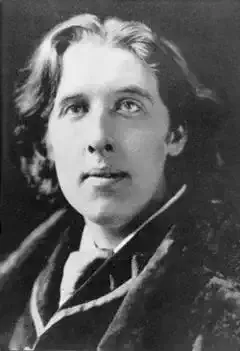
Oscar Wilde
Soneto: E Tenebris
Come down, O Christ, and help me! reach Thy hand,
For I am drowning in a stormier sea
Than Simon on Thy lake of Galilee:
The wine of life is spilt upon the sand,
My heart is as some famine-murdered land
Whence all good things have perished utterly,
And well I know my soul in Hell must lie
If I this night before God's throne should stand.
'He sleeps perchance, or rideth to the chase,
Like Baal, when his prophets howled that name
From morn to noon on Carmel's smitten height.'
Nay, peace, I shall behold, before the night,
The feet of brass, the robe more white than flame,
The wounded hands, the weary human face.
For I am drowning in a stormier sea
Than Simon on Thy lake of Galilee:
The wine of life is spilt upon the sand,
My heart is as some famine-murdered land
Whence all good things have perished utterly,
And well I know my soul in Hell must lie
If I this night before God's throne should stand.
'He sleeps perchance, or rideth to the chase,
Like Baal, when his prophets howled that name
From morn to noon on Carmel's smitten height.'
Nay, peace, I shall behold, before the night,
The feet of brass, the robe more white than flame,
The wounded hands, the weary human face.
616
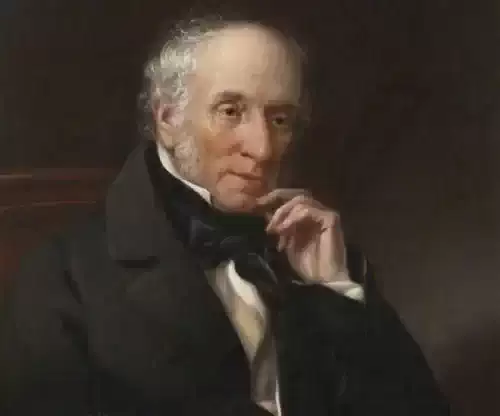
William Wordsworth
Lament of Mary Queen of Scots, on The Eve of a New Year
Lament of Mary Queen of Scots, on The Eve of a New Year
Smile of the Moon!---for I so name
That silent greeting from above;
A gentle flash of light that came
From her whom drooping captives love;
Or art thou of still higher birth?
Thou that didst part the clouds of earth,
My torpor to reprove!
Bright boon of pitying Heaven!---alas,
I may not trust thy placid cheer!
Pondering that Time tonight will pass
The threshold of another year;
For years to me are sad and dull;
My very moments are too full
Of hopelessness and fear.
And yet, the soul-awakening gleam,
That struck perchance the farthest cone
Of Scotland's rocky wilds, did seem
To visit me, and me alone;
Me, unapproached by any friend,
Save those who to my sorrow lend
Tears due unto their own.
To night the church-tower bells will ring
Through these wide realms a festire peal;
To the new year a welcoming;
A tuneful offering for the weal
Of happy millions lulled in deep;
While I am forced to watch and weep,
By wounds that may not heal.
Born all too high, by wedlock raised
Still higherÑto be cast thus low!
Would that mine eyes had never gazed
On aught of more ambitious show
Than the sweet flowerets of the fields
---It is my royal state that yields
This bitterness of woe.
Yet how?---for I, if there be truth
In the world's voice, was passing fair;
And beauty, for confiding youth,
Those shocks of passion can prepare
That kill the bloom before its time;
And blanch, without the owner's crime,
The most resplendent hair.
Unblest distinction! showered on me
To bind a lingering life in chains:
All that could quit my grasp, or flee,
Is gone;---but not the subtle stains
Fixed in the spirit; for even here
Can I be proud that jealous fear
Of what I was remains.
A Woman rules my prison's key;
A sister Queen, against the bent
O£ law and holiest sympathy,
Detains me, doubtful of the event;
Great God, who feel'st for my distress,
My thoughts are all that I possess,
O keep them innocent!
Farewell desire of human aid,
Which abject mortals vainly court!
By friends deceived, by foes betrayed,
Of fears the prey, of hopes the sport;
Nought but the world-redeeming Cross
Is able to support my loss,
My burthen to support.
Hark! the death-note of the year
Sounded by the castle-clock!
From her sunk eyes a stagnant tear
Stole forth, unsettled by the shock;
But oft the woods renewed their green,
Ere the tired head of Scotland's Queen
Reposed upon the block!
Smile of the Moon!---for I so name
That silent greeting from above;
A gentle flash of light that came
From her whom drooping captives love;
Or art thou of still higher birth?
Thou that didst part the clouds of earth,
My torpor to reprove!
Bright boon of pitying Heaven!---alas,
I may not trust thy placid cheer!
Pondering that Time tonight will pass
The threshold of another year;
For years to me are sad and dull;
My very moments are too full
Of hopelessness and fear.
And yet, the soul-awakening gleam,
That struck perchance the farthest cone
Of Scotland's rocky wilds, did seem
To visit me, and me alone;
Me, unapproached by any friend,
Save those who to my sorrow lend
Tears due unto their own.
To night the church-tower bells will ring
Through these wide realms a festire peal;
To the new year a welcoming;
A tuneful offering for the weal
Of happy millions lulled in deep;
While I am forced to watch and weep,
By wounds that may not heal.
Born all too high, by wedlock raised
Still higherÑto be cast thus low!
Would that mine eyes had never gazed
On aught of more ambitious show
Than the sweet flowerets of the fields
---It is my royal state that yields
This bitterness of woe.
Yet how?---for I, if there be truth
In the world's voice, was passing fair;
And beauty, for confiding youth,
Those shocks of passion can prepare
That kill the bloom before its time;
And blanch, without the owner's crime,
The most resplendent hair.
Unblest distinction! showered on me
To bind a lingering life in chains:
All that could quit my grasp, or flee,
Is gone;---but not the subtle stains
Fixed in the spirit; for even here
Can I be proud that jealous fear
Of what I was remains.
A Woman rules my prison's key;
A sister Queen, against the bent
O£ law and holiest sympathy,
Detains me, doubtful of the event;
Great God, who feel'st for my distress,
My thoughts are all that I possess,
O keep them innocent!
Farewell desire of human aid,
Which abject mortals vainly court!
By friends deceived, by foes betrayed,
Of fears the prey, of hopes the sport;
Nought but the world-redeeming Cross
Is able to support my loss,
My burthen to support.
Hark! the death-note of the year
Sounded by the castle-clock!
From her sunk eyes a stagnant tear
Stole forth, unsettled by the shock;
But oft the woods renewed their green,
Ere the tired head of Scotland's Queen
Reposed upon the block!
251
William Wordsworth
Strange Fits of Passion Have I Known
"Strange Fits of Passion Have I Known"
Strange fits of passion have I known:
And I will dare to tell,
But in the lover's ear alone,
What once to me befell.
When she I loved looked every day
Fresh as a rose in June,
I to her cottage bent my way,
Beneath an evening-moon.
Upon the moon I fixed my eye,
All over the wide lea;
With quickening pace my horse drew nigh
Those paths so dear to me.
And now we reached the orchard-plot;
And, as we climbed the hill,
The sinking moon to Lucy's cot
Came near, and nearer still.
In one of those sweet dreams I slept,
Kind Nature's gentlest boon!
And all the while my eye I kept
On the descending moon.
My horse moved on; hoof after hoof
He raised, and never stopped:
When down behind the cottage roof,
At once, the bright moon dropped.
What fond and wayward thoughts will slide
Into a Lover's head!
"O mercy!" to myself I cried,
"If Lucy hould be dead!"
Strange fits of passion have I known:
And I will dare to tell,
But in the lover's ear alone,
What once to me befell.
When she I loved looked every day
Fresh as a rose in June,
I to her cottage bent my way,
Beneath an evening-moon.
Upon the moon I fixed my eye,
All over the wide lea;
With quickening pace my horse drew nigh
Those paths so dear to me.
And now we reached the orchard-plot;
And, as we climbed the hill,
The sinking moon to Lucy's cot
Came near, and nearer still.
In one of those sweet dreams I slept,
Kind Nature's gentlest boon!
And all the while my eye I kept
On the descending moon.
My horse moved on; hoof after hoof
He raised, and never stopped:
When down behind the cottage roof,
At once, the bright moon dropped.
What fond and wayward thoughts will slide
Into a Lover's head!
"O mercy!" to myself I cried,
"If Lucy hould be dead!"
263

William Shakespeare
When in disgrace with fortune and men's eyes (Sonnet 29)
When in disgrace with fortune and men's eyes (Sonnet 29)
When in disgrace with fortune and men's eyes,
I all alone beweep my outcast state,
And trouble deaf heaven with my bootless cries,
And look upon myself and curse my fate,
wishing me like to one more rich in hope,
Featured like him, like him with friends possessed,
Desiring this man's art, and that man's scope,
With what I most enjoy contented least;
Yet in these thoughts myself almost despising,
Haply I think on thee--and then my state,
Like to the lark at break of day arising
From sullen earth sings hymns at heaven's gate;
For thy sweet love remembered such wealth brings,
That then I scorn to change my state with kings.
When in disgrace with fortune and men's eyes,
I all alone beweep my outcast state,
And trouble deaf heaven with my bootless cries,
And look upon myself and curse my fate,
wishing me like to one more rich in hope,
Featured like him, like him with friends possessed,
Desiring this man's art, and that man's scope,
With what I most enjoy contented least;
Yet in these thoughts myself almost despising,
Haply I think on thee--and then my state,
Like to the lark at break of day arising
From sullen earth sings hymns at heaven's gate;
For thy sweet love remembered such wealth brings,
That then I scorn to change my state with kings.
318
William Shakespeare
Sonnet XXIX: When, in disgrace with fortune and men's eyes
Sonnet XXIX: When, in disgrace with fortune and men's eyes
When, in disgrace with fortune and men's eyes,
I all alone beweep my outcast state
And trouble deaf heaven with my bootless cries
And look upon myself and curse my fate,
Wishing me like to one more rich in hope,
Featur'd like him, like him with friends possess'd,
Desiring this man's art and that man's scope,
With what I most enjoy contented least;
Yet in these thoughts myself almost despising,
Haply I think on thee, and then my state,
Like to the lark at break of day arising
From sullen earth, sings hymns at heaven's gate;
For thy sweet love remember'd such wealth brings
That then I scorn to change my state with kings.
When, in disgrace with fortune and men's eyes,
I all alone beweep my outcast state
And trouble deaf heaven with my bootless cries
And look upon myself and curse my fate,
Wishing me like to one more rich in hope,
Featur'd like him, like him with friends possess'd,
Desiring this man's art and that man's scope,
With what I most enjoy contented least;
Yet in these thoughts myself almost despising,
Haply I think on thee, and then my state,
Like to the lark at break of day arising
From sullen earth, sings hymns at heaven's gate;
For thy sweet love remember'd such wealth brings
That then I scorn to change my state with kings.
267
William Shakespeare
Sonnet XC
Sonnet XC
Then hate me when thou wilt; if ever, now;
Now, while the world is bent my deeds to cross,
Join with the spite of fortune, make me bow,
And do not drop in for an after-loss:
Ah, do not, when my heart hath 'scoped this sorrow,
Come in the rearward of a conquer'd woe;
Give not a windy night a rainy morrow,
To linger out a purposed overthrow.
If thou wilt leave me, do not leave me last,
When other petty griefs have done their spite
But in the onset come; so shall I taste
At first the very worst of fortune's might,
And other strains of woe, which now seem woe,
Compared with loss of thee will not seem so.
Then hate me when thou wilt; if ever, now;
Now, while the world is bent my deeds to cross,
Join with the spite of fortune, make me bow,
And do not drop in for an after-loss:
Ah, do not, when my heart hath 'scoped this sorrow,
Come in the rearward of a conquer'd woe;
Give not a windy night a rainy morrow,
To linger out a purposed overthrow.
If thou wilt leave me, do not leave me last,
When other petty griefs have done their spite
But in the onset come; so shall I taste
At first the very worst of fortune's might,
And other strains of woe, which now seem woe,
Compared with loss of thee will not seem so.
240
William Shakespeare
Sonnet CXXXIX
Sonnet CXXXIX
O, call not me to justify the wrong
That thy unkindness lays upon my heart;
Wound me not with thine eye but with thy tongue;
Use power with power and slay me not by art.
Tell me thou lovest elsewhere, but in my sight,
Dear heart, forbear to glance thine eye aside:
What need'st thou wound with cunning when thy might
Is more than my o'er-press'd defense can bide?
Let me excuse thee: ah! my love well knows
Her pretty looks have been mine enemies,
And therefore from my face she turns my foes,
That they elsewhere might dart their injuries:
Yet do not so; but since I am near slain,
Kill me outright with looks and rid my pain.
O, call not me to justify the wrong
That thy unkindness lays upon my heart;
Wound me not with thine eye but with thy tongue;
Use power with power and slay me not by art.
Tell me thou lovest elsewhere, but in my sight,
Dear heart, forbear to glance thine eye aside:
What need'st thou wound with cunning when thy might
Is more than my o'er-press'd defense can bide?
Let me excuse thee: ah! my love well knows
Her pretty looks have been mine enemies,
And therefore from my face she turns my foes,
That they elsewhere might dart their injuries:
Yet do not so; but since I am near slain,
Kill me outright with looks and rid my pain.
279
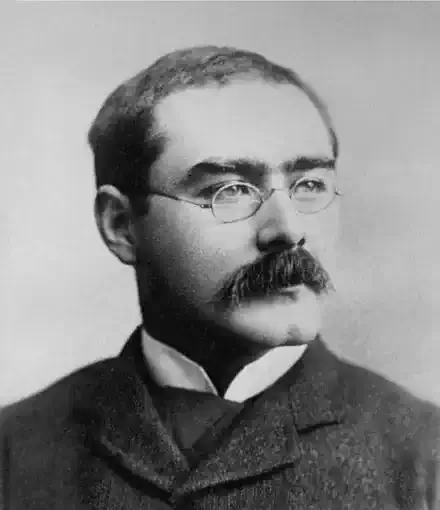
Rudyard Kipling
The City of Sleep
The City of Sleep
Over the edge of the purple down,
Where the single lamplight gleams,
Know ye the road to the Merciful Town
That is hard by the Sea of Dreams--
Where the poor may lay their wrongs away,
And the sick may forget to weep?
But we--pity us! Oh, pity us!
We wakeful; ah, pity us! --
We must go back with Policeman Day--
Back from the City of Sleep!
Weary they turn from the scroll and crown,
Fetter and prayer and plough--
They that go up to the Merciful Town,
For her gates are closing now.
It is their right in the Baths of Night
Body and soul to steep,
But we--pity us! ah, pity us!
We wakeful; oh, pity us!--
We must go back with Policeman Day--
Back from the City of Sleep!
Over the edge of the purple down,
Ere the tender dreams begin,
Look--we may look--at the Merciful Town,
But we may not enter in!
Outcasts all, from her guarded wall
Back to our watch we creep:
We--pity us! ah, pity us!
We wakeful; oh, pity us!--
We that go back with Policeman Day--
Back from the City of Sleep!
Over the edge of the purple down,
Where the single lamplight gleams,
Know ye the road to the Merciful Town
That is hard by the Sea of Dreams--
Where the poor may lay their wrongs away,
And the sick may forget to weep?
But we--pity us! Oh, pity us!
We wakeful; ah, pity us! --
We must go back with Policeman Day--
Back from the City of Sleep!
Weary they turn from the scroll and crown,
Fetter and prayer and plough--
They that go up to the Merciful Town,
For her gates are closing now.
It is their right in the Baths of Night
Body and soul to steep,
But we--pity us! ah, pity us!
We wakeful; oh, pity us!--
We must go back with Policeman Day--
Back from the City of Sleep!
Over the edge of the purple down,
Ere the tender dreams begin,
Look--we may look--at the Merciful Town,
But we may not enter in!
Outcasts all, from her guarded wall
Back to our watch we creep:
We--pity us! ah, pity us!
We wakeful; oh, pity us!--
We that go back with Policeman Day--
Back from the City of Sleep!
393
Rudyard Kipling
The Benefactors
The Benefactors
Ah! What avails the classic bent
And what the cultured word,
Against the undoctored incident
That actually occurred?
And what is Art whereto we press
Through paint and prose and rhyme--
When Nature in her nakedness
Defeats us every time?
It is not learning, grace nor gear,
Nor easy meat and drink,
But bitter pinch of pain and fear
That makes creation think.
When in this world's unpleasing youth
Our godlike race began,
The longest arm, the sharpest tooth,
Gave man control of man;
Till, bruised and bitten to the bone
And taught by pain and fear,
He learned to deal the far-off stone,
And poke the long, safe spear.
So tooth and nail were obsolete
As means against a foe,
Till, bored by uniform defeat,
Some genius built the bow.
Then stone and javelin proved as vain
As old-time tooth and nail;
Till, spurred anew by fear and pain,
Man fashioned coats of mail.
Then was there safety for the rich
And danger for the poor,
Till someone mixed a powder which
Redressed the scale once more.
Helmet and armour disappeared
With sword and bow and pike,
And, when the smoke of battle cleared,
All men were armed alike. . . .
And when ten million such were slain
To please one crazy king,
Man, schooled in bulk by fear and pain,
Grew weary of the thing;
And, at the very hour designed,
To enslave him past recall,
His tooth-stone-arrow-gun-shy mind
Turned and abolished all.
All Power, each Tyrant, every Mob
Whose head has grown too large,
Ends by destroying its own job
And works its own discharge;
And Man, whose mere necessities
Move all things from his path,
Trembles meanwhile at their decrees,
And deprecates their wrath!
Ah! What avails the classic bent
And what the cultured word,
Against the undoctored incident
That actually occurred?
And what is Art whereto we press
Through paint and prose and rhyme--
When Nature in her nakedness
Defeats us every time?
It is not learning, grace nor gear,
Nor easy meat and drink,
But bitter pinch of pain and fear
That makes creation think.
When in this world's unpleasing youth
Our godlike race began,
The longest arm, the sharpest tooth,
Gave man control of man;
Till, bruised and bitten to the bone
And taught by pain and fear,
He learned to deal the far-off stone,
And poke the long, safe spear.
So tooth and nail were obsolete
As means against a foe,
Till, bored by uniform defeat,
Some genius built the bow.
Then stone and javelin proved as vain
As old-time tooth and nail;
Till, spurred anew by fear and pain,
Man fashioned coats of mail.
Then was there safety for the rich
And danger for the poor,
Till someone mixed a powder which
Redressed the scale once more.
Helmet and armour disappeared
With sword and bow and pike,
And, when the smoke of battle cleared,
All men were armed alike. . . .
And when ten million such were slain
To please one crazy king,
Man, schooled in bulk by fear and pain,
Grew weary of the thing;
And, at the very hour designed,
To enslave him past recall,
His tooth-stone-arrow-gun-shy mind
Turned and abolished all.
All Power, each Tyrant, every Mob
Whose head has grown too large,
Ends by destroying its own job
And works its own discharge;
And Man, whose mere necessities
Move all things from his path,
Trembles meanwhile at their decrees,
And deprecates their wrath!
453
Rudyard Kipling
The Beginner
The Beginner
After He Has Been Extemporising On an Instrument Not Of His Own Invention --
Browning
Lo! What is this that I make -- sudden, supreme, unrehearsed --
This that my clutch in the crowd pressed at a venture has raised?
Forward and onward I sprang when I thought (as I ought) I reversed,
And a cab like martagon opes and I sit in the wreckage dazed.
And someone is taking my name, and the driver is rending the air
With cries for my blood and my gold, and a snickering news-boy brings
My cap, wheel-pashed from the kerb. I must run her home for repair,
Where she leers with her bonnet awry--flat on the nether springs!
After He Has Been Extemporising On an Instrument Not Of His Own Invention --
Browning
Lo! What is this that I make -- sudden, supreme, unrehearsed --
This that my clutch in the crowd pressed at a venture has raised?
Forward and onward I sprang when I thought (as I ought) I reversed,
And a cab like martagon opes and I sit in the wreckage dazed.
And someone is taking my name, and the driver is rending the air
With cries for my blood and my gold, and a snickering news-boy brings
My cap, wheel-pashed from the kerb. I must run her home for repair,
Where she leers with her bonnet awry--flat on the nether springs!
437
Rudyard Kipling
The Ballad of Fisher's Boarding-House
The Ballad of Fisher's Boarding-House
That night, when through the mooring-chains
The wide-eyed corpse rolled free,
To blunder down by Garden Reach
And rot at Kedgeree,
The tale the Hughli told the shoal
The lean shoal told to me.
'T was Fultah Fisher's boarding-house,
Where sailor-men reside,
And there were men of all the ports
From Mississip to Clyde,
And regally they spat and smoked,
And fearsomely they lied.
They lied about the purple Sea
That gave them scanty bread,
They lied about the Earth beneath,
The Heavens overhead,
For they had looked too often on
Black rum when that was red.
They told their tales of wreck and wrong,
Of shame and lust and fraud,
They backed their toughest statements with
The Brimstone of the Lord,
And crackling oaths went to and fro
Across the fist-banged board.
And there was Hans the blue-eyed Dane,
Bull-throated, bare of arm,
Who carried on his hairy chest
The maid Ultruda's charm --
The little silver crucifix
That keeps a man from harm.
And there was Jake Withouth-the-Ears,
And Pamba the Malay,
And Carboy Gin the Guinea cook,
And Luz from Vigo Bay,
And Honest Jack who sold them slops
And harvested their pay.
And there was Salem Hardieker,
A lean Bostonian he --
Russ, German, English, Halfbreed, Finn,
Yank, Dane, and Portuguee,
At Fultah Fisher's boarding-house
The rested from the sea.
Now Anne of Austria shared their drinks,
Collinga knew her fame,
From Tarnau in Galicia
To Juan Bazaar she came,
To eat the bread of infamy
And take the wage of shame.
She held a dozen men to heel --
Rich spoil of war was hers,
In hose and gown and ring and chain,
From twenty mariners,
And, by Port Law, that week, men called
her Salem Hardieker's.
But seamen learnt -- what landsmen know --
That neither gifts nor gain
Can hold a winking Light o' Love
Or Fancy's flight restrain,
When Anne of Austria rolled her eyes
On Hans the blue-eyed Dane.
Since Life is strife, and strife means knife,
From Howrah to the Bay,
And he may die before the dawn
Who liquored out the day,
In Fultah Fisher's boarding-house
We woo while yet we may.
But cold was Hans the blue-eyed Dane,
Bull-throated, bare of arm,
And laughter shook the chest beneath
The maid Ultruda's charm --
The little silver crucifix
That keeps a man from harm.
"You speak to Salem Hardieker;
"You was his girl, I know.
"I ship mineselfs to-morrow, see,
"Und round the Skaw we go,
"South, down the Cattegat, by Hjelm,
"To Besser in Saro."
When love rejected turns to hate,
All ill betide the man.
"You speak to Salem Hardieker" --
She spoke as woman can.
A scream -- a sob -- "He called me -- names!"
And then the fray began.
An oath from Salem Hardieker,
A shriek upon the stairs,
A dance of shadows on the wall,
A knife-thrust unawares --
And Hans came down, as cattle drop,
Across the broken chairs.
. . . . . .
In Anne of Austria's trembling hands
The weary head fell low: --
"I ship mineselfs to-morrow, straight
"For Besser in Saro;
"Und there Ultruda comes to me
"At Easter, und I go
"South, down the Cattegat -- What's here?
"There -- are -- no -- lights -- to guide!"
The mutter ceased, the spirit passed,
And Anne of Austria cried
In Fultah Fisher's boarding-house
When Hans the mighty died.
Thus slew they Hans the blue-eyed Dane,
Bull-throated, bare of arm,
But Anne of Austria looted first
The maid Ultruda's charm --
The little silver crucifix
That keeps a man from harm.
That night, when through the mooring-chains
The wide-eyed corpse rolled free,
To blunder down by Garden Reach
And rot at Kedgeree,
The tale the Hughli told the shoal
The lean shoal told to me.
'T was Fultah Fisher's boarding-house,
Where sailor-men reside,
And there were men of all the ports
From Mississip to Clyde,
And regally they spat and smoked,
And fearsomely they lied.
They lied about the purple Sea
That gave them scanty bread,
They lied about the Earth beneath,
The Heavens overhead,
For they had looked too often on
Black rum when that was red.
They told their tales of wreck and wrong,
Of shame and lust and fraud,
They backed their toughest statements with
The Brimstone of the Lord,
And crackling oaths went to and fro
Across the fist-banged board.
And there was Hans the blue-eyed Dane,
Bull-throated, bare of arm,
Who carried on his hairy chest
The maid Ultruda's charm --
The little silver crucifix
That keeps a man from harm.
And there was Jake Withouth-the-Ears,
And Pamba the Malay,
And Carboy Gin the Guinea cook,
And Luz from Vigo Bay,
And Honest Jack who sold them slops
And harvested their pay.
And there was Salem Hardieker,
A lean Bostonian he --
Russ, German, English, Halfbreed, Finn,
Yank, Dane, and Portuguee,
At Fultah Fisher's boarding-house
The rested from the sea.
Now Anne of Austria shared their drinks,
Collinga knew her fame,
From Tarnau in Galicia
To Juan Bazaar she came,
To eat the bread of infamy
And take the wage of shame.
She held a dozen men to heel --
Rich spoil of war was hers,
In hose and gown and ring and chain,
From twenty mariners,
And, by Port Law, that week, men called
her Salem Hardieker's.
But seamen learnt -- what landsmen know --
That neither gifts nor gain
Can hold a winking Light o' Love
Or Fancy's flight restrain,
When Anne of Austria rolled her eyes
On Hans the blue-eyed Dane.
Since Life is strife, and strife means knife,
From Howrah to the Bay,
And he may die before the dawn
Who liquored out the day,
In Fultah Fisher's boarding-house
We woo while yet we may.
But cold was Hans the blue-eyed Dane,
Bull-throated, bare of arm,
And laughter shook the chest beneath
The maid Ultruda's charm --
The little silver crucifix
That keeps a man from harm.
"You speak to Salem Hardieker;
"You was his girl, I know.
"I ship mineselfs to-morrow, see,
"Und round the Skaw we go,
"South, down the Cattegat, by Hjelm,
"To Besser in Saro."
When love rejected turns to hate,
All ill betide the man.
"You speak to Salem Hardieker" --
She spoke as woman can.
A scream -- a sob -- "He called me -- names!"
And then the fray began.
An oath from Salem Hardieker,
A shriek upon the stairs,
A dance of shadows on the wall,
A knife-thrust unawares --
And Hans came down, as cattle drop,
Across the broken chairs.
. . . . . .
In Anne of Austria's trembling hands
The weary head fell low: --
"I ship mineselfs to-morrow, straight
"For Besser in Saro;
"Und there Ultruda comes to me
"At Easter, und I go
"South, down the Cattegat -- What's here?
"There -- are -- no -- lights -- to guide!"
The mutter ceased, the spirit passed,
And Anne of Austria cried
In Fultah Fisher's boarding-house
When Hans the mighty died.
Thus slew they Hans the blue-eyed Dane,
Bull-throated, bare of arm,
But Anne of Austria looted first
The maid Ultruda's charm --
The little silver crucifix
That keeps a man from harm.
320
Rudyard Kipling
The Mary Gloster
The "Mary Gloster"
I've paid for your sickest fancies; I've humoured your crackedest whim --
Dick, it's your daddy, dying; you've got to listen to him!
Good for a fortnight, am I? The doctor told you? He lied.
I shall go under by morning, and -- Put that nurse outside.
'Never seen death yet, Dickie? Well, now is your time to learn,
And you'll wish you held my record before it comes to your turn.
Not counting the Line and the Foundry, the yards and the village, too,
I've made myself and a million; but I'm damned if I made you.
Master at two-and-twenty, and married at twenty-three --
Ten thousand men on the pay-roll, and forty freighters at sea!
Fifty years between 'em, and every year of it fight,
And now I'm Sir Anthony Gloster, dying, a baronite:
For I lunched with his Royal 'Ighness -- what was it the papers a-had?
"Not least of our merchant-princes." Dickie, that's me, your dad!
~I~ didn't begin with askings. ~I~ took my job and I stuck;
And I took the chances they wouldn't, an' now they're calling it luck.
Lord, what boats I've handled -- rotten and leaky and old!
Ran 'em, or -- opened the bilge-cock, precisely as I was told.
Grub that 'ud bind you crazy, and crews that 'ud turn you grey,
And a big fat lump of insurance to cover the risk on the way.
The others they dursn't do it; they said they valued their life
(They've served me since as skippers). ~I~ went, and I took my wife.
Over the world I drove 'em, married at twenty-three,
And your mother saving the money and making a man of me.
~I~ was content to be master, but she said there was better behind;
She took the chances I wouldn't, and I followed your mother blind.
She egged me to borrow the money, an' she helped me to clear the loan,
When we bought half shares in a cheap 'un and hoisted a flag of our own.
Patching and coaling on credit, and living the Lord knew how,
We started the Red Ox freighters -- we've eight-and-thirty now.
And those were the days of clippers, and the freights were clipper-freights,
And we knew we were making our fortune, but she died in Macassar Straits --
By the Little Paternosters, as you come to the Union Bank --
And we dropped her in fourteen fathom; I pricked it off where she sank.
Owners we were, full owners, and the boat was christened for her,
And she died in the ~Mary Gloster~. My heart, how young we were!
So I went on a spree round Java and well-nigh ran her ashore,
But your mother came and warned me and I wouldn't liquor no more:
Strict I stuck to my business, afraid to stop or I'd think,
Saving the money (she warned me), and letting the other men drink.
And I met M'Cullough in London (I'd turned five 'undred then),
And 'tween us we started the Foundry -- three forges and twenty men:
Cheap repairs for the cheap 'uns. It paid, and the business grew,
For I bought me a steam-lathe patent, and that was a gold mine too.
"Cheaper to build 'em than buy 'em," ~I~ said, but M'Cullough he shied,
And we wasted a year in talking before we moved to the Clyde.
And the Lines were all beginning, and we all of us started fair,
Building our engines like houses and staying the boilers square.
But M'Cullough 'e wanted cabins with marble and maple and all,
And Brussels an' Utrecht velvet, and baths and a Social Hall,
And pipes for closets all over, and cutting the frames too light,
But M'Cullough he died in the Sixties, and -- Well, I'm dying to-night. . . .
I knew -- ~I~ knew what was coming, when we bid on the ~Byfleet~'s keel --
They piddled and piffled with iron: I'd given my orders for steel!
Steel and the first expansions. It paid, I tell you, it paid,
When we came with our nine-knot freighters and collared the long-run trade!
And they asked me how I did it, and I gave 'em the Scripture text,
"You keep your light so shining a little in front o' the next!"
They copied all they could follow, but they couldn't copy my mind,
And I left 'em sweating and stealing a year and a half behind.
Then came the armour-contracts, but that was M'Cullough's side;
He was always best in the Foundry, but better, perhaps, he died.
I went through his private papers; the notes was plainer than print;
And I'm no fool to finish if a man'll give me a hint.
(I remember his widow was angry.) So I saw what the drawings meant,
And I started the six-inch rollers, and it paid me sixty per cent --
Sixty per cent ~with~ failures, and more than twice we could do,
And a quarter-million to credit, and I saved it all for you!
I thought -- it doesn't matter -- you seemed to favour your ma,
But you're nearer forty than thirty, and I know the kind you are.
Harrer an' Trinity College! I ought to ha' sent you to sea --
But I stood you an education, an' what have you done for me?
The things I knew was proper you wouldn't thank me to give,
And the things I knew was rotten you said was the way to live.
For you muddled with books and pictures, an' china an' etchin's an' fans,
And your rooms at college was beastly -- more like a whore's than a man's --
Till you married that thin-flanked woman, as white and as stale as a bone,
An' she gave you your social nonsense; but where's that kid o' your own?
I've seen your carriages blocking the half o' the Cromwell Road,
But never the doctor's brougham to help the missus unload.
(So there isn't even a grandchild, an' the Gloster family's done.)
Not like your mother, she isn't. ~She~ carried her freight each run.
But they died, the pore little beggars! At sea she had 'em -- they died.
Only you, an' you stood it; you haven't stood much beside.
Weak, a liar, and idle, and mean as a collier's whelp
Nosing for scraps in the galley. No help -- my son was no help!
So he gets three 'undred thousand, in trust and the interest paid.
I wouldn't give it you, Dickie -- you see, I made it in trade.
You're saved from soiling your fingers, and if you have no child,
It all comes back to the business. Gad, won't your wife be wild!
'Calls and calls in her carriage, her 'andkerchief up to 'er eye:
"Daddy! dear daddy's dyin'!" and doing her best to cry.
Grateful? Oh, yes, I'm grateful, but keep her away from here.
Your mother 'ud never ha' stood 'er, and, anyhow, women are queer. . . .
There's women will say I've married a second time.
Not quite! But give pore Aggie a hundred, and tell her your lawyers'll fight.
She was the best o' the boiling -- you'll meet her before it ends;
I'm in for a row with the mother -- I'll leave you settle my friends:
For a man he must go with a woman, which women don't understand --
Or the sort that say they can see it they aren't the marrying brand.
But I wanted to speak o' your mother that's Lady Gloster still --
I'm going to up and see her, without it's hurting the will.
Here! Take your hand off the bell-pull. Five thousand's waiting for you,
If you'll only listen a minute, and do as I bid you do.
They'll try to prove me crazy, and, if you bungle, they can;
And I've only you to trust to! (O God, why ain't he a man?)
There's some waste money on marbles, the same as M'Cullough tried --
Marbles and mausoleums -- but I call that sinful pride.
There's some ship bodies for burial -- we've carried 'em, soldered and packed;
Down in their wills they wrote it, and nobody called ~them~ cracked.
But me -- I've too much money, and people might. . . . All my fault:
It come o' hoping for grandsons and buying that Wokin' vault.
I'm sick o' the 'ole dam' business; I'm going back where I came.
Dick, you're the son o' my body, and you'll take charge o' the same!
I want to lie by your mother, ten thousand mile away,
And they'll want to send me to Woking; and that's where you'll earn your pay.
I've thought it out on the quiet, the same as it ought to be done --
Quiet, and decent, and proper -- an' here's your orders, my son.
You know the Line? You don't, though. You write to the Board, and tell
Your father's death has upset you an' you're goin' to cruise for a spell,
An' you'd like the ~Mary Gloster~ -- I've held her ready for this --
They'll put her in working order and you'll take her out as she is.
Yes, it was money idle when I patched her and put her aside
(Thank God, I can pay for my fancies!) -- the boat where your mother died,
By the Little Paternosters, as you come to the Union Bank,
We dropped her -- I think I told you -- and I pricked it off where she sank --
['Tiny she looked on the grating -- that oily, treacly sea --]
'Hundred and eighteen East, remember, and South just three.
Easy bearings to carry -- three South -- three to the dot;
But I gave M'Andrew a copy in case of dying -- or not.
And so you'll write to M'Andrew, he's Chief of the Maori Line;
They'll give him leave, if you ask 'em and say it's business o' mine.
I built three boats for the Maoris, an' very well pleased they were,
An' I've known Mac since the Fifties, and Mac knew me -- and her.
After the first stroke warned me I sent him the money to keep
Against the time you'd claim it, committin' your dad to the deep;
For you are the son o' my body, and Mac was my oldest friend,
I've never asked 'im to dinner, but he'll see it out to the end.
Stiff-necked Glasgow beggar, I've heard he's prayed for my soul,
But he couldn't lie if you paid him, and he'd starve before he stole!
He'll take the ~Mary~ in ballast -- you'll find her a lively ship;
And you'll take Sir Anthony Gloster, that goes on 'is wedding-trip,
Lashed in our old deck-cabin with all three port-holes wide,
The kick o' the screw beneath him and the round blue seas outside!
Sir Anthony Gloster's carriage -- our 'ouse-flag flyin' free --
Ten thousand men on the pay-roll and forty freighters at sea!
He made himself and a million, but this world is a fleetin' show,
And he'll go to the wife of 'is bosom the same as he ought to go --
By the heel of the Paternosters -- there isn't a chance to mistake --
And Mac'll pay you the money as soon as the bubbles break!
Five thousand for six weeks' cruising, the staunchest freighter afloat,
And Mac he'll give you your bonus the minute I'm out o' the boat!
He'll take you round to Macassar, and you'll come back alone;
He knows what I want o' the ~Mary~. . . . I'll do what I please with my own.
Your mother 'ud call it wasteful, but I've seven-and-thirty more;
I'll come in my private carriage and bid it wait at the door. . . .
For my son 'e was never a credit: 'e muddled with books and art,
And 'e lived on Sir Anthony's money and 'e broke Sir Anthony's heart.
There isn't even a grandchild, and the Gloster family's done --
The only one you left me, O mother, the only one!
Harrer and Trinity College -- me slavin' early an' late --
An' he thinks I'm dying crazy, and you're in Macassar Strait!
Flesh o' my flesh, my dearie, for ever an' ever amen,
That first stroke come for a warning; I ought to ha' gone to you then,
But -- cheap repairs for a cheap 'un -- the doctors said I'd do:
Mary, why didn't ~you~ warn me? I've allus heeded to you,
Excep' -- I know -- about women; but you are a spirit now;
An', wife, they was only women, and I was a man. That's how.
An' a man 'e must go with a woman, as you could not understand;
But I never talked 'em secrets. I paid 'em out o' hand.
Thank Gawd, I can pay for my fancies! Now what's five thousand to me,
For a berth off the Paternosters in the haven where I would be?
~I~ believe in the Resurrection, if I read my Bible plain,
But I wouldn't trust 'em at Wokin'; we're safer at sea again.
For the heart it shall go with the treasure -- go down to the sea in ships.
I'm sick of the hired women -- I'll kiss my girl on her lips!
I'll be content with my fountain, I'll drink from my own well,
And the wife of my youth shall charm me -- an' the rest can go to Hell!
(Dickie, ~he~ will, that's certain.) I'll lie in our standin'-bed,
An' Mac'll take her in ballast -- an' she trims best by the head. . . .
Down by the head an' sinkin', her fires are drawn and cold,
And the water's splashin' hollow on the skin of the empty hold --
Churning an' choking and chuckling, quiet and scummy and dark --
Full to her lower hatches and risin' steady. Hark!
That was the after-bulkhead. . . . She's flooded from stem to stern. . . .
Never seen death yet, Dickie? . . . Well, now is your time to learn!
I've paid for your sickest fancies; I've humoured your crackedest whim --
Dick, it's your daddy, dying; you've got to listen to him!
Good for a fortnight, am I? The doctor told you? He lied.
I shall go under by morning, and -- Put that nurse outside.
'Never seen death yet, Dickie? Well, now is your time to learn,
And you'll wish you held my record before it comes to your turn.
Not counting the Line and the Foundry, the yards and the village, too,
I've made myself and a million; but I'm damned if I made you.
Master at two-and-twenty, and married at twenty-three --
Ten thousand men on the pay-roll, and forty freighters at sea!
Fifty years between 'em, and every year of it fight,
And now I'm Sir Anthony Gloster, dying, a baronite:
For I lunched with his Royal 'Ighness -- what was it the papers a-had?
"Not least of our merchant-princes." Dickie, that's me, your dad!
~I~ didn't begin with askings. ~I~ took my job and I stuck;
And I took the chances they wouldn't, an' now they're calling it luck.
Lord, what boats I've handled -- rotten and leaky and old!
Ran 'em, or -- opened the bilge-cock, precisely as I was told.
Grub that 'ud bind you crazy, and crews that 'ud turn you grey,
And a big fat lump of insurance to cover the risk on the way.
The others they dursn't do it; they said they valued their life
(They've served me since as skippers). ~I~ went, and I took my wife.
Over the world I drove 'em, married at twenty-three,
And your mother saving the money and making a man of me.
~I~ was content to be master, but she said there was better behind;
She took the chances I wouldn't, and I followed your mother blind.
She egged me to borrow the money, an' she helped me to clear the loan,
When we bought half shares in a cheap 'un and hoisted a flag of our own.
Patching and coaling on credit, and living the Lord knew how,
We started the Red Ox freighters -- we've eight-and-thirty now.
And those were the days of clippers, and the freights were clipper-freights,
And we knew we were making our fortune, but she died in Macassar Straits --
By the Little Paternosters, as you come to the Union Bank --
And we dropped her in fourteen fathom; I pricked it off where she sank.
Owners we were, full owners, and the boat was christened for her,
And she died in the ~Mary Gloster~. My heart, how young we were!
So I went on a spree round Java and well-nigh ran her ashore,
But your mother came and warned me and I wouldn't liquor no more:
Strict I stuck to my business, afraid to stop or I'd think,
Saving the money (she warned me), and letting the other men drink.
And I met M'Cullough in London (I'd turned five 'undred then),
And 'tween us we started the Foundry -- three forges and twenty men:
Cheap repairs for the cheap 'uns. It paid, and the business grew,
For I bought me a steam-lathe patent, and that was a gold mine too.
"Cheaper to build 'em than buy 'em," ~I~ said, but M'Cullough he shied,
And we wasted a year in talking before we moved to the Clyde.
And the Lines were all beginning, and we all of us started fair,
Building our engines like houses and staying the boilers square.
But M'Cullough 'e wanted cabins with marble and maple and all,
And Brussels an' Utrecht velvet, and baths and a Social Hall,
And pipes for closets all over, and cutting the frames too light,
But M'Cullough he died in the Sixties, and -- Well, I'm dying to-night. . . .
I knew -- ~I~ knew what was coming, when we bid on the ~Byfleet~'s keel --
They piddled and piffled with iron: I'd given my orders for steel!
Steel and the first expansions. It paid, I tell you, it paid,
When we came with our nine-knot freighters and collared the long-run trade!
And they asked me how I did it, and I gave 'em the Scripture text,
"You keep your light so shining a little in front o' the next!"
They copied all they could follow, but they couldn't copy my mind,
And I left 'em sweating and stealing a year and a half behind.
Then came the armour-contracts, but that was M'Cullough's side;
He was always best in the Foundry, but better, perhaps, he died.
I went through his private papers; the notes was plainer than print;
And I'm no fool to finish if a man'll give me a hint.
(I remember his widow was angry.) So I saw what the drawings meant,
And I started the six-inch rollers, and it paid me sixty per cent --
Sixty per cent ~with~ failures, and more than twice we could do,
And a quarter-million to credit, and I saved it all for you!
I thought -- it doesn't matter -- you seemed to favour your ma,
But you're nearer forty than thirty, and I know the kind you are.
Harrer an' Trinity College! I ought to ha' sent you to sea --
But I stood you an education, an' what have you done for me?
The things I knew was proper you wouldn't thank me to give,
And the things I knew was rotten you said was the way to live.
For you muddled with books and pictures, an' china an' etchin's an' fans,
And your rooms at college was beastly -- more like a whore's than a man's --
Till you married that thin-flanked woman, as white and as stale as a bone,
An' she gave you your social nonsense; but where's that kid o' your own?
I've seen your carriages blocking the half o' the Cromwell Road,
But never the doctor's brougham to help the missus unload.
(So there isn't even a grandchild, an' the Gloster family's done.)
Not like your mother, she isn't. ~She~ carried her freight each run.
But they died, the pore little beggars! At sea she had 'em -- they died.
Only you, an' you stood it; you haven't stood much beside.
Weak, a liar, and idle, and mean as a collier's whelp
Nosing for scraps in the galley. No help -- my son was no help!
So he gets three 'undred thousand, in trust and the interest paid.
I wouldn't give it you, Dickie -- you see, I made it in trade.
You're saved from soiling your fingers, and if you have no child,
It all comes back to the business. Gad, won't your wife be wild!
'Calls and calls in her carriage, her 'andkerchief up to 'er eye:
"Daddy! dear daddy's dyin'!" and doing her best to cry.
Grateful? Oh, yes, I'm grateful, but keep her away from here.
Your mother 'ud never ha' stood 'er, and, anyhow, women are queer. . . .
There's women will say I've married a second time.
Not quite! But give pore Aggie a hundred, and tell her your lawyers'll fight.
She was the best o' the boiling -- you'll meet her before it ends;
I'm in for a row with the mother -- I'll leave you settle my friends:
For a man he must go with a woman, which women don't understand --
Or the sort that say they can see it they aren't the marrying brand.
But I wanted to speak o' your mother that's Lady Gloster still --
I'm going to up and see her, without it's hurting the will.
Here! Take your hand off the bell-pull. Five thousand's waiting for you,
If you'll only listen a minute, and do as I bid you do.
They'll try to prove me crazy, and, if you bungle, they can;
And I've only you to trust to! (O God, why ain't he a man?)
There's some waste money on marbles, the same as M'Cullough tried --
Marbles and mausoleums -- but I call that sinful pride.
There's some ship bodies for burial -- we've carried 'em, soldered and packed;
Down in their wills they wrote it, and nobody called ~them~ cracked.
But me -- I've too much money, and people might. . . . All my fault:
It come o' hoping for grandsons and buying that Wokin' vault.
I'm sick o' the 'ole dam' business; I'm going back where I came.
Dick, you're the son o' my body, and you'll take charge o' the same!
I want to lie by your mother, ten thousand mile away,
And they'll want to send me to Woking; and that's where you'll earn your pay.
I've thought it out on the quiet, the same as it ought to be done --
Quiet, and decent, and proper -- an' here's your orders, my son.
You know the Line? You don't, though. You write to the Board, and tell
Your father's death has upset you an' you're goin' to cruise for a spell,
An' you'd like the ~Mary Gloster~ -- I've held her ready for this --
They'll put her in working order and you'll take her out as she is.
Yes, it was money idle when I patched her and put her aside
(Thank God, I can pay for my fancies!) -- the boat where your mother died,
By the Little Paternosters, as you come to the Union Bank,
We dropped her -- I think I told you -- and I pricked it off where she sank --
['Tiny she looked on the grating -- that oily, treacly sea --]
'Hundred and eighteen East, remember, and South just three.
Easy bearings to carry -- three South -- three to the dot;
But I gave M'Andrew a copy in case of dying -- or not.
And so you'll write to M'Andrew, he's Chief of the Maori Line;
They'll give him leave, if you ask 'em and say it's business o' mine.
I built three boats for the Maoris, an' very well pleased they were,
An' I've known Mac since the Fifties, and Mac knew me -- and her.
After the first stroke warned me I sent him the money to keep
Against the time you'd claim it, committin' your dad to the deep;
For you are the son o' my body, and Mac was my oldest friend,
I've never asked 'im to dinner, but he'll see it out to the end.
Stiff-necked Glasgow beggar, I've heard he's prayed for my soul,
But he couldn't lie if you paid him, and he'd starve before he stole!
He'll take the ~Mary~ in ballast -- you'll find her a lively ship;
And you'll take Sir Anthony Gloster, that goes on 'is wedding-trip,
Lashed in our old deck-cabin with all three port-holes wide,
The kick o' the screw beneath him and the round blue seas outside!
Sir Anthony Gloster's carriage -- our 'ouse-flag flyin' free --
Ten thousand men on the pay-roll and forty freighters at sea!
He made himself and a million, but this world is a fleetin' show,
And he'll go to the wife of 'is bosom the same as he ought to go --
By the heel of the Paternosters -- there isn't a chance to mistake --
And Mac'll pay you the money as soon as the bubbles break!
Five thousand for six weeks' cruising, the staunchest freighter afloat,
And Mac he'll give you your bonus the minute I'm out o' the boat!
He'll take you round to Macassar, and you'll come back alone;
He knows what I want o' the ~Mary~. . . . I'll do what I please with my own.
Your mother 'ud call it wasteful, but I've seven-and-thirty more;
I'll come in my private carriage and bid it wait at the door. . . .
For my son 'e was never a credit: 'e muddled with books and art,
And 'e lived on Sir Anthony's money and 'e broke Sir Anthony's heart.
There isn't even a grandchild, and the Gloster family's done --
The only one you left me, O mother, the only one!
Harrer and Trinity College -- me slavin' early an' late --
An' he thinks I'm dying crazy, and you're in Macassar Strait!
Flesh o' my flesh, my dearie, for ever an' ever amen,
That first stroke come for a warning; I ought to ha' gone to you then,
But -- cheap repairs for a cheap 'un -- the doctors said I'd do:
Mary, why didn't ~you~ warn me? I've allus heeded to you,
Excep' -- I know -- about women; but you are a spirit now;
An', wife, they was only women, and I was a man. That's how.
An' a man 'e must go with a woman, as you could not understand;
But I never talked 'em secrets. I paid 'em out o' hand.
Thank Gawd, I can pay for my fancies! Now what's five thousand to me,
For a berth off the Paternosters in the haven where I would be?
~I~ believe in the Resurrection, if I read my Bible plain,
But I wouldn't trust 'em at Wokin'; we're safer at sea again.
For the heart it shall go with the treasure -- go down to the sea in ships.
I'm sick of the hired women -- I'll kiss my girl on her lips!
I'll be content with my fountain, I'll drink from my own well,
And the wife of my youth shall charm me -- an' the rest can go to Hell!
(Dickie, ~he~ will, that's certain.) I'll lie in our standin'-bed,
An' Mac'll take her in ballast -- an' she trims best by the head. . . .
Down by the head an' sinkin', her fires are drawn and cold,
And the water's splashin' hollow on the skin of the empty hold --
Churning an' choking and chuckling, quiet and scummy and dark --
Full to her lower hatches and risin' steady. Hark!
That was the after-bulkhead. . . . She's flooded from stem to stern. . . .
Never seen death yet, Dickie? . . . Well, now is your time to learn!
788
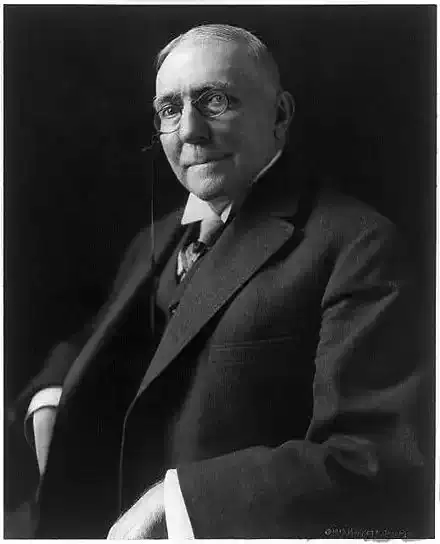
James Whitcomb Riley
Back From A Two-years' Sentence
Back From A Two-years' Sentence
Back from a two-years' sentence!
And though it had been ten,
You think, I were scarred no deeper
In the eyes of my fellow-men.
'My fellow-men--?' Sounds like a satire,
You think-- and I so allow,
Here in my home since childhood,
Yet more than a stranger now!
Pardon--! Not wholly a stranger--,
For I have a wife and child:
That woman has wept for two long years,
And yet last night she smiled--!
Smiled, as I leapt from the platform
Of the midnight train, and then--
All that I knew was that smile of hers,
And our babe in my arms again!
Back from a two-years' sentence--
But I've thought the whole thing through--,
A hint of it came when the bars swung back
And I looked straight up in the blue
Of the blessed skies with my hat off!
O-ho! I've a wife and child:
That woman has wept for two long years,
And yet last night she smiled!
Back from a two-years' sentence!
And though it had been ten,
You think, I were scarred no deeper
In the eyes of my fellow-men.
'My fellow-men--?' Sounds like a satire,
You think-- and I so allow,
Here in my home since childhood,
Yet more than a stranger now!
Pardon--! Not wholly a stranger--,
For I have a wife and child:
That woman has wept for two long years,
And yet last night she smiled--!
Smiled, as I leapt from the platform
Of the midnight train, and then--
All that I knew was that smile of hers,
And our babe in my arms again!
Back from a two-years' sentence--
But I've thought the whole thing through--,
A hint of it came when the bars swung back
And I looked straight up in the blue
Of the blessed skies with my hat off!
O-ho! I've a wife and child:
That woman has wept for two long years,
And yet last night she smiled!
245
Rudyard Kipling
Russia to the Pacifists
Russia to the Pacifists
God rest you, peaceful gentlemen, let nothing you dismay,
But--leave your sports a little while--the dead are borne
this way!
Armies dead and Cities dead, past all count or care.
God rest you, merry gentlemen, what portent see you there?
Singing:--Break ground for a wearied host
That have no ground to keep.
Give them the rest that they covet most . . .
And who shall next to sleep, good sirs,
In such a trench to sleep?
God rest you, peaceful gentlemen, but give us leave to pass.
We go to dig a nation's grave as great as England was.
For this Kingdom and this Glory and this Power and this Pride
Three hundred years it flourished--in three hundred days it
died.
Singing:--Pour oil for a frozen throng,
That lie about the ways.
Give them the warmth they have lacked so
long . . .
And what shall be next to blaze, good sirs,
On such a pyre to blaze?
God rest you, thoughtful gentlemen, and send your sleep is light!
Remains of this dominion no shadow, sound, or sight,
Except the sound of weeping and the sight of burning fire,
And the shadow of a people that is trampled into mire.
Singing:--Break bread for a starving folk
That perish in the field.
Give them their food as they take the yoke . . .
And who shall be next to yield, good sirs,
For such a bribe to yield?
God rest you merry gentlemen, and keep you in your mirth!
Was ever Kingdom turned so soon to ashes, blood and earth?
'Twixt the summer and the snow-seeding-time and frost--
Arms and victual, hope and counsel, name and country lost!
Singing:--Let down by the foot and the head--
Shovel and smooth it all !
So do we bury a Nation dead . . .
And who shall be next to fall, good sirs,
With your good help to fall?
God rest you, peaceful gentlemen, let nothing you dismay,
But--leave your sports a little while--the dead are borne
this way!
Armies dead and Cities dead, past all count or care.
God rest you, merry gentlemen, what portent see you there?
Singing:--Break ground for a wearied host
That have no ground to keep.
Give them the rest that they covet most . . .
And who shall next to sleep, good sirs,
In such a trench to sleep?
God rest you, peaceful gentlemen, but give us leave to pass.
We go to dig a nation's grave as great as England was.
For this Kingdom and this Glory and this Power and this Pride
Three hundred years it flourished--in three hundred days it
died.
Singing:--Pour oil for a frozen throng,
That lie about the ways.
Give them the warmth they have lacked so
long . . .
And what shall be next to blaze, good sirs,
On such a pyre to blaze?
God rest you, thoughtful gentlemen, and send your sleep is light!
Remains of this dominion no shadow, sound, or sight,
Except the sound of weeping and the sight of burning fire,
And the shadow of a people that is trampled into mire.
Singing:--Break bread for a starving folk
That perish in the field.
Give them their food as they take the yoke . . .
And who shall be next to yield, good sirs,
For such a bribe to yield?
God rest you merry gentlemen, and keep you in your mirth!
Was ever Kingdom turned so soon to ashes, blood and earth?
'Twixt the summer and the snow-seeding-time and frost--
Arms and victual, hope and counsel, name and country lost!
Singing:--Let down by the foot and the head--
Shovel and smooth it all !
So do we bury a Nation dead . . .
And who shall be next to fall, good sirs,
With your good help to fall?
422
James Whitcomb Riley
An Out-Worn Sappho
An Out-Worn Sappho
How tired I am! I sink down all alone
Here by the wayside of the Present. Lo,
Even as a child I hide my face and moan--
A little girl that may no farther go;
The path above me only seems to grow
More rugged, climbing still, and ever briered
With keener thorns of pain than these below;
And O the bleeding feet that falter so
And are so very tired!
Why, I have journeyed from the far-off Lands
Of Babyhood--where baby-lilies blew
Their trumpets in mine ears, and filled my hands
With treasures of perfume and honey-dew,
And where the orchard shadows ever drew
Their cool arms round me when my cheeks were fired
With too much joy, and lulled mine eyelids to,
And only let the starshine trickle through
In sprays, when I was tired!
Yet I remember, when the butterfly
Went flickering about me like a flame
That quenched itself in roses suddenly,
How oft I wished that _I_ might blaze the same,
And in some rose-wreath nestle with my name,
While all the world looked on it and admired.--
Poor moth!--Along my wavering flight toward fame
The winds drive backward, and my wings are lame
And broken, bruised and tired!
I hardly know the path from those old times;
I know at first it was a smoother one
Than this that hurries past me now, and climbs
So high, its far cliffs even hide the sun
And shroud in gloom my journey scarce begun.
I could not do quite all the world required--
I could not do quite all I should have done,
And in my eagerness I have outrun
My strength--and I am tired....
Just tired! But when of old I had the stay
Of mother-hands, O very sweet indeed
It was to dream that all the weary way
I should but follow where I now must lead--
For long ago they left me in my need,
And, groping on alone, I tripped and mired
Among rank grasses where the serpents breed
In knotted coils about the feet of speed.--
There first it was I tired.
And yet I staggered on, and bore my load
Right gallantly: The sun, in summer-time,
In lazy belts came slipping down the road
To woo me on, with many a glimmering rhyme
Rained from the golden rim of some fair clime,
That, hovering beyond the clouds, inspired
My failing heart with fancies so sublime
I half forgot my path of dust and grime,
Though I was growing tired.
And there were many voices cheering me:
I listened to sweet praises where the wind
Went laughing o'er my shoulders gleefully
And scattering my love-songs far behind;--
Until, at last, I thought the world so kind--
So rich in all my yearning soul desired--
So generous--so loyally inclined,
I grew to love and trust it.... I was blind--
Yea, blind as I was tired!
And yet one hand held me in creature-touch:
And O, how fair it was, how true and strong,
How it did hold my heart up like a crutch,
Till, in my dreams, I joyed to walk along
The toilsome way, contented with a song-'
Twas all of earthly things I had acquired,
And 'twas enough, I feigned, or right or wrong,
Since, binding me to man--a mortal thong--
It stayed me, growing tired....
Yea, I had e'en resigned me to the strait
Of earthly rulership--had bowed my head
Acceptant of the master-mind--the great
One lover--lord of all,--the perfected
Kiss-comrade of my soul;--had stammering said
My prayers to him;--all--all that he desired
I rendered sacredly as we were wed.-Nay--
nay!--'twas but a myth I worshipped.--
And--God of love!--how tired!
For, O my friends, to lose the latest grasp--
To feel the last hope slipping from its hold--
To feel the one fond hand within your clasp
Fall slack, and loosen with a touch so cold
Its pressure may not warm you as of old
Before the light of love had thus expired--
To know your tears are worthless, though they rolled
Their torrents out in molten drops of gold.-God's
pity! I am tired!
And I must rest.--Yet do not say 'She _died_,'
In speaking of me, sleeping here alone.
I kiss the grassy grave I sink beside,
And close mine eyes in slumber all mine own:
Hereafter I shall neither sob nor moan
Nor murmur one complaint;--all I desired,
And failed in life to find, will now be known--
So let me dream. Good night! And on the stone
Say simply: She was tired.
How tired I am! I sink down all alone
Here by the wayside of the Present. Lo,
Even as a child I hide my face and moan--
A little girl that may no farther go;
The path above me only seems to grow
More rugged, climbing still, and ever briered
With keener thorns of pain than these below;
And O the bleeding feet that falter so
And are so very tired!
Why, I have journeyed from the far-off Lands
Of Babyhood--where baby-lilies blew
Their trumpets in mine ears, and filled my hands
With treasures of perfume and honey-dew,
And where the orchard shadows ever drew
Their cool arms round me when my cheeks were fired
With too much joy, and lulled mine eyelids to,
And only let the starshine trickle through
In sprays, when I was tired!
Yet I remember, when the butterfly
Went flickering about me like a flame
That quenched itself in roses suddenly,
How oft I wished that _I_ might blaze the same,
And in some rose-wreath nestle with my name,
While all the world looked on it and admired.--
Poor moth!--Along my wavering flight toward fame
The winds drive backward, and my wings are lame
And broken, bruised and tired!
I hardly know the path from those old times;
I know at first it was a smoother one
Than this that hurries past me now, and climbs
So high, its far cliffs even hide the sun
And shroud in gloom my journey scarce begun.
I could not do quite all the world required--
I could not do quite all I should have done,
And in my eagerness I have outrun
My strength--and I am tired....
Just tired! But when of old I had the stay
Of mother-hands, O very sweet indeed
It was to dream that all the weary way
I should but follow where I now must lead--
For long ago they left me in my need,
And, groping on alone, I tripped and mired
Among rank grasses where the serpents breed
In knotted coils about the feet of speed.--
There first it was I tired.
And yet I staggered on, and bore my load
Right gallantly: The sun, in summer-time,
In lazy belts came slipping down the road
To woo me on, with many a glimmering rhyme
Rained from the golden rim of some fair clime,
That, hovering beyond the clouds, inspired
My failing heart with fancies so sublime
I half forgot my path of dust and grime,
Though I was growing tired.
And there were many voices cheering me:
I listened to sweet praises where the wind
Went laughing o'er my shoulders gleefully
And scattering my love-songs far behind;--
Until, at last, I thought the world so kind--
So rich in all my yearning soul desired--
So generous--so loyally inclined,
I grew to love and trust it.... I was blind--
Yea, blind as I was tired!
And yet one hand held me in creature-touch:
And O, how fair it was, how true and strong,
How it did hold my heart up like a crutch,
Till, in my dreams, I joyed to walk along
The toilsome way, contented with a song-'
Twas all of earthly things I had acquired,
And 'twas enough, I feigned, or right or wrong,
Since, binding me to man--a mortal thong--
It stayed me, growing tired....
Yea, I had e'en resigned me to the strait
Of earthly rulership--had bowed my head
Acceptant of the master-mind--the great
One lover--lord of all,--the perfected
Kiss-comrade of my soul;--had stammering said
My prayers to him;--all--all that he desired
I rendered sacredly as we were wed.-Nay--
nay!--'twas but a myth I worshipped.--
And--God of love!--how tired!
For, O my friends, to lose the latest grasp--
To feel the last hope slipping from its hold--
To feel the one fond hand within your clasp
Fall slack, and loosen with a touch so cold
Its pressure may not warm you as of old
Before the light of love had thus expired--
To know your tears are worthless, though they rolled
Their torrents out in molten drops of gold.-God's
pity! I am tired!
And I must rest.--Yet do not say 'She _died_,'
In speaking of me, sleeping here alone.
I kiss the grassy grave I sink beside,
And close mine eyes in slumber all mine own:
Hereafter I shall neither sob nor moan
Nor murmur one complaint;--all I desired,
And failed in life to find, will now be known--
So let me dream. Good night! And on the stone
Say simply: She was tired.
267
James Whitcomb Riley
A Feel In The Chris'mas-Air
A Feel In The Chris'mas-Air
They's a kind o' _feel_ in the air, to me.
When the Chris'mas-times sets in.
That's about as much of a mystery
As ever I've run ag'in!--
Fer instunce, now, whilse I gain in weight
And gineral health, I swear
They's a _goneness_ somers I can't quite state--
A kind o' _feel_ in the air.
They's a feel in the Chris'mas-air goes right
To the spot where a man _lives_ at!--
It gives a feller a' appetite--
They ain't no doubt about _that_!--
And yit they's _somepin_'--I don't know what--
That follers me, here and there,
And ha'nts and worries and spares me not--
A kind o' feel in the air!
They's a _feel_, as I say, in the air that's jest
As blame-don sad as sweet!--
In the same ra-sho as I feel the best
And am spryest on my feet,
They's allus a kind o' sort of a' _ache_
That I can't lo-cate no-where;--
But it comes with _Chris'mas_, and no mistake!--
A kind o' feel in the air.
Is it the racket the childern raise?-W'y,
_no_!--God bless 'em!--_no_!--
Is it the eyes and the cheeks ablaze--
Like my _own_ wuz, long ago?--
Is it the bleat o' the whistle and beat
O' the little toy-drum and blare
O' the horn?--_No! no!_--it is jest the sweet--
The sad-sweet feel in the air.
They's a kind o' _feel_ in the air, to me.
When the Chris'mas-times sets in.
That's about as much of a mystery
As ever I've run ag'in!--
Fer instunce, now, whilse I gain in weight
And gineral health, I swear
They's a _goneness_ somers I can't quite state--
A kind o' _feel_ in the air.
They's a feel in the Chris'mas-air goes right
To the spot where a man _lives_ at!--
It gives a feller a' appetite--
They ain't no doubt about _that_!--
And yit they's _somepin_'--I don't know what--
That follers me, here and there,
And ha'nts and worries and spares me not--
A kind o' feel in the air!
They's a _feel_, as I say, in the air that's jest
As blame-don sad as sweet!--
In the same ra-sho as I feel the best
And am spryest on my feet,
They's allus a kind o' sort of a' _ache_
That I can't lo-cate no-where;--
But it comes with _Chris'mas_, and no mistake!--
A kind o' feel in the air.
Is it the racket the childern raise?-W'y,
_no_!--God bless 'em!--_no_!--
Is it the eyes and the cheeks ablaze--
Like my _own_ wuz, long ago?--
Is it the bleat o' the whistle and beat
O' the little toy-drum and blare
O' the horn?--_No! no!_--it is jest the sweet--
The sad-sweet feel in the air.
267
James Whitcomb Riley
A Dream
A Dream
I dreamed I was a spider;
A big, fat, hungry spider;
A lusty, rusty spider
With a dozen palsied limbs;
With a dozen limbs that dangled
Where three wretched flies were tangled
And their buzzing wings were strangled
In the middle of their hymns.
And I mocked them like a demon--
A demoniacal demon
Who delights to be a demon
For the sake of sin alone;
And with fondly false embraces
Did I weave my mystic laces
Round their horror-stricken faces
Till I muffled every groan.
And I smiled to see them weeping,
For to see an insect weeping,
Sadly, sorrowfully weeping,
Fattens every spider's mirth;
And to note a fly's heart quaking,
And with anguish ever aching
Till you see it slowly breaking
Is the sweetest thing on earth.
I experienced a pleasure,
Such a highly-flavored pleasure,
Such intoxicating pleasure,
That I drank of it like wine;
And my mortal soul engages
That no spider on the pages
Of the history of ages
Felt a rapture more divine.
I careened around and capered--
Madly, mystically capered--
For three days and nights I capered
Round my web in wild delight;
Till with fierce ambition burning,
And an inward thirst and yearning
I hastened my returning
With a fiendish appetite.
And I found my victims dying,
'Ha!' they whispered, 'we are dying!'
Faintly whispered, 'we are dying,
And our earthly course is run.'
And the scene was so impressing
That I breathed a special blessing,
As I killed them with caressing
And devoured them one by one.
I dreamed I was a spider;
A big, fat, hungry spider;
A lusty, rusty spider
With a dozen palsied limbs;
With a dozen limbs that dangled
Where three wretched flies were tangled
And their buzzing wings were strangled
In the middle of their hymns.
And I mocked them like a demon--
A demoniacal demon
Who delights to be a demon
For the sake of sin alone;
And with fondly false embraces
Did I weave my mystic laces
Round their horror-stricken faces
Till I muffled every groan.
And I smiled to see them weeping,
For to see an insect weeping,
Sadly, sorrowfully weeping,
Fattens every spider's mirth;
And to note a fly's heart quaking,
And with anguish ever aching
Till you see it slowly breaking
Is the sweetest thing on earth.
I experienced a pleasure,
Such a highly-flavored pleasure,
Such intoxicating pleasure,
That I drank of it like wine;
And my mortal soul engages
That no spider on the pages
Of the history of ages
Felt a rapture more divine.
I careened around and capered--
Madly, mystically capered--
For three days and nights I capered
Round my web in wild delight;
Till with fierce ambition burning,
And an inward thirst and yearning
I hastened my returning
With a fiendish appetite.
And I found my victims dying,
'Ha!' they whispered, 'we are dying!'
Faintly whispered, 'we are dying,
And our earthly course is run.'
And the scene was so impressing
That I breathed a special blessing,
As I killed them with caressing
And devoured them one by one.
268
Rudyard Kipling
La Nuit Blanche
La Nuit Blanche
A much-discerning Public hold
The Singer generally sings
And prints and sells his past for gold.
Whatever I may here disclaim,
The very clever folk I sing to
Will most indubitably cling to
Their pet delusion, just the same.
I had seen, as the dawn was breaking
And I staggered to my rest,
Tari Devi softly shaking
From the Cart Road to the crest.
I had seen the spurs of Jakko
Heave and quiver, swell and sink.
Was it Earthquake or tobacco,
Day of Doom, or Night of Drink?
In the full, fresh fragrant morning
I observed a camel crawl,
Laws of gravitation scorning,
On the ceiling and the wall;
Then I watched a fender walking,
And I heard grey leeches sing,
And a red-hot monkey talking
Did not seem the proper thing.
Then a Creature, skinned and crimson,
Ran about the floor and cried,
And they said that I had the "jims" on,
And they dosed me with bromide,
And they locked me in my bedroom --
Me and one wee Blood Red Mouse --
Though I said: "To give my head room
You had best unroof the house."
But my words were all unheeded,
Though I told the grave M.D.
That the treatment really needed
Was a dip in open sea
That was lapping just below me,
Smooth as silver, white as snow,
And it took three men to throw me
When I found I could not go.
Half the night I watched the Heavens
Fizz like ' champagne --
Fly to sixes and to sevens,
Wheel and thunder back again;
And when all was peace and order
Save one planet nailed askew,
Much I wept because my warder
Would not let me sit it true.
After frenzied hours of wating,
When the Earth and Skies were dumb,
Pealed an awful voice dictating
An interminable sum,
Changing to a tangle story --
"What she said you said I said" --
Till the Moon arose in glory,
And I found her . . . in my head;
Then a Face came, blind and weeping,
And It couldn't wipe its eyes,
And It muttered I was keeping
Back the moonlight from the skies;
So I patted it for pity,
But it whistled shrill with wrath,
And a huge black Devil City
Poured its peoples on my path.
So I fled with steps uncertain
On a thousand-year long race,
But the bellying of the curtain
Kept me always in one place;
While the tumult rose and maddened
To the roar of Earth on fire,
Ere it ebbed and sank and saddened
To a whisper tense as wire.
In tolerable stillness
Rose one little, little star,
And it chuckled at my illness,
And it mocked me from afar;
And its breathren came and eyed me,
Called the Universe to aid,
Till I lay, with naught to hide me,
'Neath' the Scorn of All Things Made.
Dun and saffron, robed and splendid,
Broke the solemn, pitying Day,
And I knew my pains were ended,
And I turned and tried to pray;
But my speech was shattered wholly,
And I wept as children weep.
Till the dawn-wind, softly, slowly,
Brought to burning eyelids sleep.
A much-discerning Public hold
The Singer generally sings
And prints and sells his past for gold.
Whatever I may here disclaim,
The very clever folk I sing to
Will most indubitably cling to
Their pet delusion, just the same.
I had seen, as the dawn was breaking
And I staggered to my rest,
Tari Devi softly shaking
From the Cart Road to the crest.
I had seen the spurs of Jakko
Heave and quiver, swell and sink.
Was it Earthquake or tobacco,
Day of Doom, or Night of Drink?
In the full, fresh fragrant morning
I observed a camel crawl,
Laws of gravitation scorning,
On the ceiling and the wall;
Then I watched a fender walking,
And I heard grey leeches sing,
And a red-hot monkey talking
Did not seem the proper thing.
Then a Creature, skinned and crimson,
Ran about the floor and cried,
And they said that I had the "jims" on,
And they dosed me with bromide,
And they locked me in my bedroom --
Me and one wee Blood Red Mouse --
Though I said: "To give my head room
You had best unroof the house."
But my words were all unheeded,
Though I told the grave M.D.
That the treatment really needed
Was a dip in open sea
That was lapping just below me,
Smooth as silver, white as snow,
And it took three men to throw me
When I found I could not go.
Half the night I watched the Heavens
Fizz like ' champagne --
Fly to sixes and to sevens,
Wheel and thunder back again;
And when all was peace and order
Save one planet nailed askew,
Much I wept because my warder
Would not let me sit it true.
After frenzied hours of wating,
When the Earth and Skies were dumb,
Pealed an awful voice dictating
An interminable sum,
Changing to a tangle story --
"What she said you said I said" --
Till the Moon arose in glory,
And I found her . . . in my head;
Then a Face came, blind and weeping,
And It couldn't wipe its eyes,
And It muttered I was keeping
Back the moonlight from the skies;
So I patted it for pity,
But it whistled shrill with wrath,
And a huge black Devil City
Poured its peoples on my path.
So I fled with steps uncertain
On a thousand-year long race,
But the bellying of the curtain
Kept me always in one place;
While the tumult rose and maddened
To the roar of Earth on fire,
Ere it ebbed and sank and saddened
To a whisper tense as wire.
In tolerable stillness
Rose one little, little star,
And it chuckled at my illness,
And it mocked me from afar;
And its breathren came and eyed me,
Called the Universe to aid,
Till I lay, with naught to hide me,
'Neath' the Scorn of All Things Made.
Dun and saffron, robed and splendid,
Broke the solemn, pitying Day,
And I knew my pains were ended,
And I turned and tried to pray;
But my speech was shattered wholly,
And I wept as children weep.
Till the dawn-wind, softly, slowly,
Brought to burning eyelids sleep.
541
Rudyard Kipling
How the Camel Got His Hump
How the Camel Got His Hump
The Camel's hump is an ugly lump
Which well you may see at the Zoo;
But uglier yet is the hump we get
From having too little to do.
Kiddies and grown-ups too-oo-oo,
If we haven't enough to do-oo-oo,
We get the hump--
Cameelious hump--
The hump that is black and blue!
We climb out of bed with a frouzly head,
And a snarly-yarly voice.
We shiver and scowl and we grunt and we growl
At our bath and our boots and our toys;
And there ought to be a corner for me
(And I know' there is one for you)
When we get the hump--
Cameelious hump--
The hump that is black and blue!
The cure for this ill is not to sit still,
Or frowst with a book by the fire;
But to take a large hoe and a shovel also,
And dig till you gently perspire;
And then you will find that the sun and the wind,
And the Djinn of the Garden too,
Have lifted the hump--
The horrible hump--
The hump that is black and blue!
I get it as well as you-oo-oo--
If I haven't enough to do-oo-oo!
We all get hump--
Cameelious hump--
Kiddies and grown-ups too!
The Camel's hump is an ugly lump
Which well you may see at the Zoo;
But uglier yet is the hump we get
From having too little to do.
Kiddies and grown-ups too-oo-oo,
If we haven't enough to do-oo-oo,
We get the hump--
Cameelious hump--
The hump that is black and blue!
We climb out of bed with a frouzly head,
And a snarly-yarly voice.
We shiver and scowl and we grunt and we growl
At our bath and our boots and our toys;
And there ought to be a corner for me
(And I know' there is one for you)
When we get the hump--
Cameelious hump--
The hump that is black and blue!
The cure for this ill is not to sit still,
Or frowst with a book by the fire;
But to take a large hoe and a shovel also,
And dig till you gently perspire;
And then you will find that the sun and the wind,
And the Djinn of the Garden too,
Have lifted the hump--
The horrible hump--
The hump that is black and blue!
I get it as well as you-oo-oo--
If I haven't enough to do-oo-oo!
We all get hump--
Cameelious hump--
Kiddies and grown-ups too!
465
Rudyard Kipling
Heriot's Ford
Heriot's Ford
"What's that that hirples at my side?"
The foe that you must fight, my lord.
"That rides as fast as I can ride?"
The shadow of your might, my lord.
"Then wheel my horse against the foe!"
He's down and overpast, my lord.
You war against the sunset-glow,
The judgment follows fast, my lord!
"Oh, who will stay the sun's descent?"
King Joshua he is dead, my lord.
"I need an hour to repent!"
'Tis what our sister said, my lord.
"Oh, do not slay me in my sins!"
You're safe awhile with us, my lord.
"Nay, kill me ere my fear begins!"
We would not serve you thus, my lord.
"Where is the doom that I must face?"
Three little leagues away, my lord.
"Then mend the horses' laggard pace!"
We need them for next day, my lord.
"Next day--next day! Unloose my cords!"
Our sister needed none, my lord.
You had no mind to face our swords,
And--where can cowards run, my lord?
"You would not kill the soul alive?"
'Twas thus our sister cried, my lord.
"I dare not die with none to shrive."
But so our sister died, my lord.
"Then wipe the sweat from brow and cheek."
It runnels forth afresh, my lord.
"Uphold me--for the flesh is weak."
You've finished with the Flesh, my lord!
"What's that that hirples at my side?"
The foe that you must fight, my lord.
"That rides as fast as I can ride?"
The shadow of your might, my lord.
"Then wheel my horse against the foe!"
He's down and overpast, my lord.
You war against the sunset-glow,
The judgment follows fast, my lord!
"Oh, who will stay the sun's descent?"
King Joshua he is dead, my lord.
"I need an hour to repent!"
'Tis what our sister said, my lord.
"Oh, do not slay me in my sins!"
You're safe awhile with us, my lord.
"Nay, kill me ere my fear begins!"
We would not serve you thus, my lord.
"Where is the doom that I must face?"
Three little leagues away, my lord.
"Then mend the horses' laggard pace!"
We need them for next day, my lord.
"Next day--next day! Unloose my cords!"
Our sister needed none, my lord.
You had no mind to face our swords,
And--where can cowards run, my lord?
"You would not kill the soul alive?"
'Twas thus our sister cried, my lord.
"I dare not die with none to shrive."
But so our sister died, my lord.
"Then wipe the sweat from brow and cheek."
It runnels forth afresh, my lord.
"Uphold me--for the flesh is weak."
You've finished with the Flesh, my lord!
430
Rudyard Kipling
Harp Song of the Dane Women
Harp Song of the Dane Women
What is a woman that you forsake her,
And the hearth-fire and the home-acre.
To go with the old grey Widow-maker?
She has no house to lay a guest in
But one chill bed for all to rest in,
That the pale suns and the stray bergs nest in.
She has no strong white arms to fold you,
But the ten-times-fingering weed to hold you
Out on the rocks where the tide has rolled you.
Yet, when the signs of summer thicken,
And the ice breaks, and the birch-buds quicken,
Yearly you turn from our side, and sicken- -
Sicken again for the shouts and the slaughters.
You steal away to the lapping waters,
And look at your ship in her winter-quarters.
You forget our mirth, and talk at the tables,
The kine in the shed and the horse in the stables
To pitch her sides and go over her cables.
Then you drive out where the storm-clouds swallow,
And the sound of your oar-blades, falling hollow,
Is all we have left through the months to follow.
Ah, what is Woman that you forsake her,
And the hearth-fire and the home-acre,
To go with the old grey Widow-maker?
What is a woman that you forsake her,
And the hearth-fire and the home-acre.
To go with the old grey Widow-maker?
She has no house to lay a guest in
But one chill bed for all to rest in,
That the pale suns and the stray bergs nest in.
She has no strong white arms to fold you,
But the ten-times-fingering weed to hold you
Out on the rocks where the tide has rolled you.
Yet, when the signs of summer thicken,
And the ice breaks, and the birch-buds quicken,
Yearly you turn from our side, and sicken- -
Sicken again for the shouts and the slaughters.
You steal away to the lapping waters,
And look at your ship in her winter-quarters.
You forget our mirth, and talk at the tables,
The kine in the shed and the horse in the stables
To pitch her sides and go over her cables.
Then you drive out where the storm-clouds swallow,
And the sound of your oar-blades, falling hollow,
Is all we have left through the months to follow.
Ah, what is Woman that you forsake her,
And the hearth-fire and the home-acre,
To go with the old grey Widow-maker?
438
James Joyce
Dear Heart, Why Will You Use Me So?
Dear Heart, Why Will You Use Me So?
Dear heart, why will you use me so?
Dear eyes that gently me upbraid,
Still are you beautiful -- - but O,
How is your beauty raimented!
Through the clear mirror of your eyes,
Through the soft sigh of kiss to kiss,
Desolate winds assail with cries
The shadowy garden where love is.
And soon shall love dissolved be
When over us the wild winds blow -- -
But you, dear love, too dear to me,
Alas! why will you use me so?
Dear heart, why will you use me so?
Dear eyes that gently me upbraid,
Still are you beautiful -- - but O,
How is your beauty raimented!
Through the clear mirror of your eyes,
Through the soft sigh of kiss to kiss,
Desolate winds assail with cries
The shadowy garden where love is.
And soon shall love dissolved be
When over us the wild winds blow -- -
But you, dear love, too dear to me,
Alas! why will you use me so?
185
Page 1
Next