
Anger and Indignation
Poems in this topic
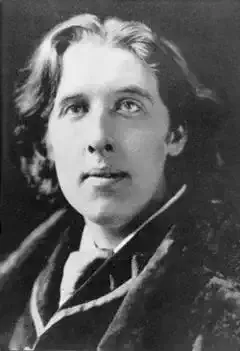
Oscar Wilde
Soneto: Sonnet To Liberty
Not that I love thy children, whose dull eyes
See nothing save their own unlovely woe,
Whose minds know nothing, nothing care to know,
But that the roar of thy Democracies,
Thy reigns of Terror, thy great Anarchies,
Mirror my wildest passions like the sea
And give my rage a brother -!Liberty!
For this sake only do thy dissonant cries
Delight my discreet soul, else might all kings
By bloody knout or treacherous cannonades
Rob nations of their rights inviolate
And I remain unmoved - and yet, and yet,
These Christs that die upon the barricades,
God knows it I am with them, in some things.
See nothing save their own unlovely woe,
Whose minds know nothing, nothing care to know,
But that the roar of thy Democracies,
Thy reigns of Terror, thy great Anarchies,
Mirror my wildest passions like the sea
And give my rage a brother -!Liberty!
For this sake only do thy dissonant cries
Delight my discreet soul, else might all kings
By bloody knout or treacherous cannonades
Rob nations of their rights inviolate
And I remain unmoved - and yet, and yet,
These Christs that die upon the barricades,
God knows it I am with them, in some things.
639
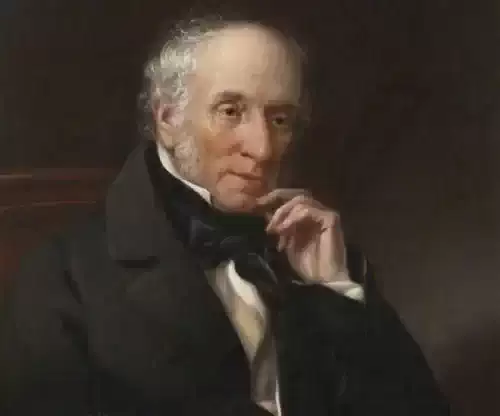
William Wordsworth
Andrew Jones
Andrew Jones
I hate that Andrew Jones; he'll breed
His children up to waste and pillage.
I wish the press-gang or the drum
With its tantara sound would come,
And sweep him from the village!
I said not this, because he loves
Through the long day to swear and tipple;
But for the poor dear sake of one
To whom a foul deed he had done,
A friendless man, a travelling cripple!
For this poor crawling helpless wretch,
Some horseman who was passing by,
A penny on the ground had thrown;
But the poor cripple was alone
And could not stoop--no help was nigh.
Inch-thick the dust lay on the ground
For it had long been droughty weather;
So with his staff the cripple wrought
Among the dust till he had brought
The half-pennies together.
It chanced that Andrew passed that way
Just at the time; and there he found
The cripple in the mid-day heat
Standing alone, and at his feet
He saw the penny on the ground.
He stopped and took the penny up:
And when the cripple nearer drew,
Quoth Andrew, "Under half-a-crown,
What a man finds is all his own,
And so, my Friend, good-day to you."
And 'hence' I said, that Andrew's boys
Will all be trained to waste and pillage;
And wished the press-gang, or the drum
With its tantara sound, would come
And sweep him from the village.
I hate that Andrew Jones; he'll breed
His children up to waste and pillage.
I wish the press-gang or the drum
With its tantara sound would come,
And sweep him from the village!
I said not this, because he loves
Through the long day to swear and tipple;
But for the poor dear sake of one
To whom a foul deed he had done,
A friendless man, a travelling cripple!
For this poor crawling helpless wretch,
Some horseman who was passing by,
A penny on the ground had thrown;
But the poor cripple was alone
And could not stoop--no help was nigh.
Inch-thick the dust lay on the ground
For it had long been droughty weather;
So with his staff the cripple wrought
Among the dust till he had brought
The half-pennies together.
It chanced that Andrew passed that way
Just at the time; and there he found
The cripple in the mid-day heat
Standing alone, and at his feet
He saw the penny on the ground.
He stopped and took the penny up:
And when the cripple nearer drew,
Quoth Andrew, "Under half-a-crown,
What a man finds is all his own,
And so, my Friend, good-day to you."
And 'hence' I said, that Andrew's boys
Will all be trained to waste and pillage;
And wished the press-gang, or the drum
With its tantara sound, would come
And sweep him from the village.
186

William Shakespeare
Witches Chant (from Macbeth)
Witches Chant (from Macbeth)
Round about the couldron go:
In the poisones entrails throw.
Toad,that under cold stone
Days and nights has thirty-one
Sweated venom sleeping got,
Boil thou first in the charmed pot.
Double,double toil and trouble;
Fire burn and cauldron bubble.
Fillet of a fenny snake,
In the cauldron boil and bake;
Eye of newt and toe of frog,
Wool of bat and tongue of dog,
Adder's fork and blindworm's sting,
Lizard's leg and howlet's wing.
For charm of powerful trouble,
Like a hell-broth boil and bubble.
Double,double toil and trouble;
Fire burn and couldron bubble.
Scale of dragon,tooth of wolf,
Witch's mummy, maw and gulf
Of the ravin'd salt-sea shark,
Root of hemlock digg'd in the dark,
Liver of blaspheming Jew;
Gall of goat; andslips of yew
silver'd in the moon's eclipse;
Nose of Turk, and Tartar's lips;
Finger of birth-strangled babe
Ditch-deliver'd by the drab,-
Make the gruel thick and slab:
Add thereto a tiger's chaudron,
For ingrediants of our cauldron.
Double,double toil and trouble,
Fire burn and cauldron bubble.
Round about the couldron go:
In the poisones entrails throw.
Toad,that under cold stone
Days and nights has thirty-one
Sweated venom sleeping got,
Boil thou first in the charmed pot.
Double,double toil and trouble;
Fire burn and cauldron bubble.
Fillet of a fenny snake,
In the cauldron boil and bake;
Eye of newt and toe of frog,
Wool of bat and tongue of dog,
Adder's fork and blindworm's sting,
Lizard's leg and howlet's wing.
For charm of powerful trouble,
Like a hell-broth boil and bubble.
Double,double toil and trouble;
Fire burn and couldron bubble.
Scale of dragon,tooth of wolf,
Witch's mummy, maw and gulf
Of the ravin'd salt-sea shark,
Root of hemlock digg'd in the dark,
Liver of blaspheming Jew;
Gall of goat; andslips of yew
silver'd in the moon's eclipse;
Nose of Turk, and Tartar's lips;
Finger of birth-strangled babe
Ditch-deliver'd by the drab,-
Make the gruel thick and slab:
Add thereto a tiger's chaudron,
For ingrediants of our cauldron.
Double,double toil and trouble,
Fire burn and cauldron bubble.
394
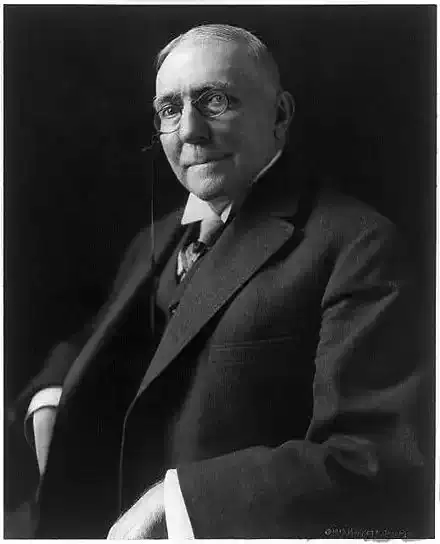
James Whitcomb Riley
Down On Wriggle Crick
Down On Wriggle Crick
'Best time to kill a hog's when he's fat.' --Old Saw.
Mostly folks is law-abidin'
Down on Wriggle Crick--,
Seein' they's no Squire residin'
In our bailywick;
No grand juries, no suppeenies,
Ner no vested rights to pick
Out yer man, jerk up and jail ef
He's outragin' Wriggle Crick!
Wriggle Crick hain't got no lawin',
Ner no suits to beat;
Ner no court-house gee-and-hawin'
Like a County-seat;
Hain't no waitin' round fer verdick,
Ner non-gittin' witness-fees;
Ner no thiefs 'at gits 'new heain's,'
By some lawyer slick as grease!
Wriggle Cricks's leadin' spirit
Is old Johnts Culwell--,
Keeps post-office, and right near it
Owns what's called 'The Grand Hotel--'
(Warehouse now--) buys wheat and ships it;
Gits out ties, and trades in stock,
And knows all the high-toned drummers
'Twixt South Bend and Mishawauk'
Last year comes along a feller--
Sharper 'an a lance-Stovepipe-
hat and silk umbreller,
And a boughten all-wool pants--,
Tinkerin of clocks and watches:
Says a trial's all he wants--
And rents out the tavern-office
Next to Uncle Johnts.
Well--. He tacked up his k'dentials,
And got down to biz--.
Captured Johnts by cuttin' stenchils
Fer them old wheat-sacks o' his--.
Fixed his clock, in the post-office--
Painted fer him, clean and slick,
'Crost his safe, in gold-leaf letters,
'J. Culwells's Wriggle Crick.'
Any kindo' job you keered to
Resk him with, and bring,
He'd fix fer you-- jest appeared to
Turn his hand to anything--!
Rings, er earbobs, er umbrellers--
Glue a cheer er chany doll--,
W'y, of all the beatin' fellers,
He Jest beat 'em all!
Made his friends, but wouldn't stop there--,
One mistake he learnt,
That was, sleepin' in his shop there--.
And one Sund'y night it burnt!
Come in one o' jest a-sweepin'
All the whole town high and dry--
And that feller, when they waked him,
Suffocatin', mighty nigh!
Johnts he drug him from the buildin',
He'pless-- 'peared to be--,
And the women and the childern
Drenchin' him with sympathy!
But I noticed Johnts helt on him
With a' extry lovin' grip,
And the men-folks gethered round him
In most warmest pardership!
That's the whole mess, grease-and-dopin'!
Johnt's safe was saved--,
But the lock was found sprung open,
And the inside caved.
Was no trial-- ner no jury--
Ner no jedge ner court-house-click--.
Circumstances alters cases
Down on Wriggle Crick!
'Best time to kill a hog's when he's fat.' --Old Saw.
Mostly folks is law-abidin'
Down on Wriggle Crick--,
Seein' they's no Squire residin'
In our bailywick;
No grand juries, no suppeenies,
Ner no vested rights to pick
Out yer man, jerk up and jail ef
He's outragin' Wriggle Crick!
Wriggle Crick hain't got no lawin',
Ner no suits to beat;
Ner no court-house gee-and-hawin'
Like a County-seat;
Hain't no waitin' round fer verdick,
Ner non-gittin' witness-fees;
Ner no thiefs 'at gits 'new heain's,'
By some lawyer slick as grease!
Wriggle Cricks's leadin' spirit
Is old Johnts Culwell--,
Keeps post-office, and right near it
Owns what's called 'The Grand Hotel--'
(Warehouse now--) buys wheat and ships it;
Gits out ties, and trades in stock,
And knows all the high-toned drummers
'Twixt South Bend and Mishawauk'
Last year comes along a feller--
Sharper 'an a lance-Stovepipe-
hat and silk umbreller,
And a boughten all-wool pants--,
Tinkerin of clocks and watches:
Says a trial's all he wants--
And rents out the tavern-office
Next to Uncle Johnts.
Well--. He tacked up his k'dentials,
And got down to biz--.
Captured Johnts by cuttin' stenchils
Fer them old wheat-sacks o' his--.
Fixed his clock, in the post-office--
Painted fer him, clean and slick,
'Crost his safe, in gold-leaf letters,
'J. Culwells's Wriggle Crick.'
Any kindo' job you keered to
Resk him with, and bring,
He'd fix fer you-- jest appeared to
Turn his hand to anything--!
Rings, er earbobs, er umbrellers--
Glue a cheer er chany doll--,
W'y, of all the beatin' fellers,
He Jest beat 'em all!
Made his friends, but wouldn't stop there--,
One mistake he learnt,
That was, sleepin' in his shop there--.
And one Sund'y night it burnt!
Come in one o' jest a-sweepin'
All the whole town high and dry--
And that feller, when they waked him,
Suffocatin', mighty nigh!
Johnts he drug him from the buildin',
He'pless-- 'peared to be--,
And the women and the childern
Drenchin' him with sympathy!
But I noticed Johnts helt on him
With a' extry lovin' grip,
And the men-folks gethered round him
In most warmest pardership!
That's the whole mess, grease-and-dopin'!
Johnt's safe was saved--,
But the lock was found sprung open,
And the inside caved.
Was no trial-- ner no jury--
Ner no jedge ner court-house-click--.
Circumstances alters cases
Down on Wriggle Crick!
285
James Whitcomb Riley
A Variation
A Variation
I am tired of this!
Nothing else but loving!
Nothing else but kiss and kiss,
Coo, and turtle-doving!
Can't you change the order some?
Hate me just a little--come!
Lay aside your 'dears,'
'Darlings,' 'kings,' and 'princes!'--
Call me knave, and dry your tears--
Nothing in me winces,--
Call me something low and base--
Something that will suit the case!
Wish I had your eyes
And their drooping lashes!
I would dry their teary lies
Up with lightning-flashes--
Make your sobbing lips unsheathe
All the glitter of your teeth!
Can't you lift one word--
With some pang of laughter--
Louder than the drowsy bird
Crooning 'neath the rafter?
Just one bitter word, to shriek
Madly at me as I speak!
How I hate the fair
Beauty of your forehead!
How I hate your fragrant hair!
How I hate the torrid
Touches of your splendid lips,
And the kiss that drips and drips!
Ah, you pale at last!
And your face is lifted
Like a white sail to the blast,
And your hands are shifted
Into fists: and, towering thus,
You are simply glorious!
Now before me looms
Something more than human;
Something more than beauty blooms
In the wrath of Woman--
Something to bow down before
Reverently and adore.
I am tired of this!
Nothing else but loving!
Nothing else but kiss and kiss,
Coo, and turtle-doving!
Can't you change the order some?
Hate me just a little--come!
Lay aside your 'dears,'
'Darlings,' 'kings,' and 'princes!'--
Call me knave, and dry your tears--
Nothing in me winces,--
Call me something low and base--
Something that will suit the case!
Wish I had your eyes
And their drooping lashes!
I would dry their teary lies
Up with lightning-flashes--
Make your sobbing lips unsheathe
All the glitter of your teeth!
Can't you lift one word--
With some pang of laughter--
Louder than the drowsy bird
Crooning 'neath the rafter?
Just one bitter word, to shriek
Madly at me as I speak!
How I hate the fair
Beauty of your forehead!
How I hate your fragrant hair!
How I hate the torrid
Touches of your splendid lips,
And the kiss that drips and drips!
Ah, you pale at last!
And your face is lifted
Like a white sail to the blast,
And your hands are shifted
Into fists: and, towering thus,
You are simply glorious!
Now before me looms
Something more than human;
Something more than beauty blooms
In the wrath of Woman--
Something to bow down before
Reverently and adore.
237
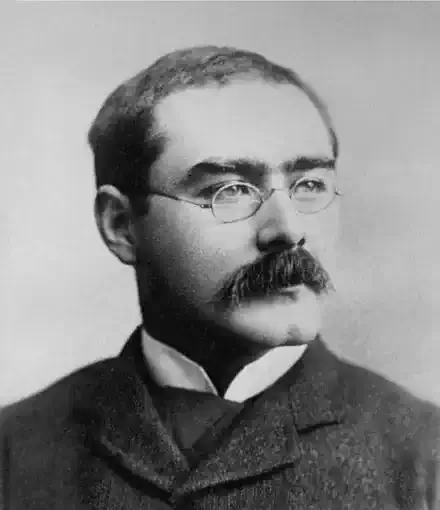
Rudyard Kipling
Late Came the God
Late Came the God
Late came the God, having sent his forerunners who were
not regarded--
Late, but in wrath;
Saying: "The wrong shall be paid, the contempt be rewarded
On all that she hath."
He poisoned the blade and struck home, the full bosom receiving
The wound and the venom in one, past cure or relieving.
He made treaty with Time to stand still that the grief might
be fresh--
Daily renewed and nightly pursued through her soul to her
flesh--
Mornings of memory, noontides of agony, midnights unslaked
for her,
Till the stones of the streets of her Hells and her Paradise ached
for her.
So she lived while her body corrupted upon her.
And she called on the Night for a sign, and a Sign was allowed,
And she builded an Altar and served by the light of her Vision--
Alone, without hope of regard or reward, but uncowed,
Resolute, selfless, divine.
These things she did in Love's honour...
What is a God beside Woman? Dust and derision!
Late came the God, having sent his forerunners who were
not regarded--
Late, but in wrath;
Saying: "The wrong shall be paid, the contempt be rewarded
On all that she hath."
He poisoned the blade and struck home, the full bosom receiving
The wound and the venom in one, past cure or relieving.
He made treaty with Time to stand still that the grief might
be fresh--
Daily renewed and nightly pursued through her soul to her
flesh--
Mornings of memory, noontides of agony, midnights unslaked
for her,
Till the stones of the streets of her Hells and her Paradise ached
for her.
So she lived while her body corrupted upon her.
And she called on the Night for a sign, and a Sign was allowed,
And she builded an Altar and served by the light of her Vision--
Alone, without hope of regard or reward, but uncowed,
Resolute, selfless, divine.
These things she did in Love's honour...
What is a God beside Woman? Dust and derision!
440
Rudyard Kipling
Hadramauti
Hadramauti
Who knows the heart of the Christian? How does he reason?
What are his measures and balances? Which is his season
For laughter, forbearance or bloodshed, and what devils move him
When he arises to smite us? I do not love him.
He invites the derision of strangers—he enters all places.
Booted, bareheaded he enters. With shouts and embraces
He asks of us news of the household whom we reckon nameless.
Certainly Allah created him forty-fold shameless!
So it is not in the Desert. One came to me weeping—
The Avenger of Blood on his track—I took him in keeping.
Demanding not whom he had slain, I refreshed him, I fed him
As he were even a brother. But Eblis had bred him.
He was the son of an ape, ill at ease in his clothing.
He talked with his head, hands and feet. I endured him with loathing.
Whatever his spirit conceived his countenance showed it
As a frog shows in a mud-puddle. Yet I abode it!
I fingered my beard and was dumb, in silence confronting him.
His soul was too shallow for silence, e'en with Death hunting him.
I said: "'Tis his weariness speaks," but, when he had rested,
He chirped in my face like some sparrow, and, presently, jested!
Wherefore slew I that stranger? He brought me dishonour.
I saddled my mare, Bijli, I set him upon her.
I gave him rice and goat's flesh. He bared me to laughter.
When he was gone from my tent, swift I followed after,
Taking my sword in my hand. The hot wine had filled him.
Under the stars he mocked me—therefore I killed him!
Who knows the heart of the Christian? How does he reason?
What are his measures and balances? Which is his season
For laughter, forbearance or bloodshed, and what devils move him
When he arises to smite us? I do not love him.
He invites the derision of strangers—he enters all places.
Booted, bareheaded he enters. With shouts and embraces
He asks of us news of the household whom we reckon nameless.
Certainly Allah created him forty-fold shameless!
So it is not in the Desert. One came to me weeping—
The Avenger of Blood on his track—I took him in keeping.
Demanding not whom he had slain, I refreshed him, I fed him
As he were even a brother. But Eblis had bred him.
He was the son of an ape, ill at ease in his clothing.
He talked with his head, hands and feet. I endured him with loathing.
Whatever his spirit conceived his countenance showed it
As a frog shows in a mud-puddle. Yet I abode it!
I fingered my beard and was dumb, in silence confronting him.
His soul was too shallow for silence, e'en with Death hunting him.
I said: "'Tis his weariness speaks," but, when he had rested,
He chirped in my face like some sparrow, and, presently, jested!
Wherefore slew I that stranger? He brought me dishonour.
I saddled my mare, Bijli, I set him upon her.
I gave him rice and goat's flesh. He bared me to laughter.
When he was gone from my tent, swift I followed after,
Taking my sword in my hand. The hot wine had filled him.
Under the stars he mocked me—therefore I killed him!
416
Rudyard Kipling
Cain and Abel
Cain and Abel
Western Version
Cain and Abel were brothers born.
(Koop-la! Come along, cows!)
One raised cattle and one raised corn.
(Koop-la! Come along! Co-hoe!)
And Cain he farmed by the river-side,
So he did not care how much it dried.
For he banked, and he sluiced, and he ditched and he led
(And the Corn don't care for the Horn)--
A-half Euphrates out of her bed
To water his dam' Corn!
But Abel herded out on the plains
Where you have to go by the dams and rains.
It happened, after a three-year drought,
The wells, and the springs, and the dams gave out.
The Herd-bulls came to Cain's new house
(They wanted water so!--)
With the hot red Sun between their brows,
Sayin' "Give us water for our pore cows!"
But Cain he told 'em--"No!"
The Cows they came to Cain's big house
With the cold white Moon between their brows,
Sayin' "Give some water to us pore cows!"
But Cain he told 'em--"No?"
The li'l Calves came to Cain's fine house
With the Evenin' Star between their brows,
Sayin' "'Give us water an' we'll be cows."
But Cain he told 'em--"No!"
The Herd-bulls led 'em back again,
An' Abel went an' said to Cain: --
"Oh sell me water, my brother dear,
Or there will be no beef this year."
And Cain he answered--"No! "
"Then draw your hatches, my brother true,
An' let a little water through."
But Cain he answered: -"No!
"My dams are tight an' my ditches are sound,
An' not a drop goes through or round
Till she's done her duty by the Corn.
"I will not sell, an' I will not draw,
An' if you breach, I'll have the Law,
As sure as you are borne! "
Then Abel took his best bull-goad,
An' holed a dyke on the Eden road.
He opened her up with foot an' hand,
An' let Euphrates loose on the land.
He spilled Euphrates out on the plain,
So's all his cattle could drink again.
Then Cain he saw what Abel done--
But, in those days, there was no Gun!
So he made him a club of a hickory-limb,
An' halted Abel an' said to him: --
"I did not sell an' I did not draw,
An' now you've breached I'll have the Law.
"You ride abroad in your hat and spurs,
Hell-hoofin' over my cucumbers!
"You pray to the Lord to send you luck
An' you loose your steers in my garden-truck:
"An' now you're bust, as you ought to be,
You can keep on prayin' but not to me!"
Then Abel saw it meant the life;
But, in those days, there was no Knife:
So he up with his big bull-goad instead,
But--Cain hit first and dropped him dead!
The Herd-bulls ran when they smelt the blood,
An' horned an' pawed in that Red Mud.
The Calves they bawled, and the Steers they milled,
Because it was the First Man Killed;
An' the whole Herd broke for the Land of Nod,
An' Cain was left to be judged by God!
But, seein' all he had had to bear,
I never could call the Judgment fair!
Western Version
Cain and Abel were brothers born.
(Koop-la! Come along, cows!)
One raised cattle and one raised corn.
(Koop-la! Come along! Co-hoe!)
And Cain he farmed by the river-side,
So he did not care how much it dried.
For he banked, and he sluiced, and he ditched and he led
(And the Corn don't care for the Horn)--
A-half Euphrates out of her bed
To water his dam' Corn!
But Abel herded out on the plains
Where you have to go by the dams and rains.
It happened, after a three-year drought,
The wells, and the springs, and the dams gave out.
The Herd-bulls came to Cain's new house
(They wanted water so!--)
With the hot red Sun between their brows,
Sayin' "Give us water for our pore cows!"
But Cain he told 'em--"No!"
The Cows they came to Cain's big house
With the cold white Moon between their brows,
Sayin' "Give some water to us pore cows!"
But Cain he told 'em--"No?"
The li'l Calves came to Cain's fine house
With the Evenin' Star between their brows,
Sayin' "'Give us water an' we'll be cows."
But Cain he told 'em--"No!"
The Herd-bulls led 'em back again,
An' Abel went an' said to Cain: --
"Oh sell me water, my brother dear,
Or there will be no beef this year."
And Cain he answered--"No! "
"Then draw your hatches, my brother true,
An' let a little water through."
But Cain he answered: -"No!
"My dams are tight an' my ditches are sound,
An' not a drop goes through or round
Till she's done her duty by the Corn.
"I will not sell, an' I will not draw,
An' if you breach, I'll have the Law,
As sure as you are borne! "
Then Abel took his best bull-goad,
An' holed a dyke on the Eden road.
He opened her up with foot an' hand,
An' let Euphrates loose on the land.
He spilled Euphrates out on the plain,
So's all his cattle could drink again.
Then Cain he saw what Abel done--
But, in those days, there was no Gun!
So he made him a club of a hickory-limb,
An' halted Abel an' said to him: --
"I did not sell an' I did not draw,
An' now you've breached I'll have the Law.
"You ride abroad in your hat and spurs,
Hell-hoofin' over my cucumbers!
"You pray to the Lord to send you luck
An' you loose your steers in my garden-truck:
"An' now you're bust, as you ought to be,
You can keep on prayin' but not to me!"
Then Abel saw it meant the life;
But, in those days, there was no Knife:
So he up with his big bull-goad instead,
But--Cain hit first and dropped him dead!
The Herd-bulls ran when they smelt the blood,
An' horned an' pawed in that Red Mud.
The Calves they bawled, and the Steers they milled,
Because it was the First Man Killed;
An' the whole Herd broke for the Land of Nod,
An' Cain was left to be judged by God!
But, seein' all he had had to bear,
I never could call the Judgment fair!
503
Rudyard Kipling
Bill 'Awkins
Bill 'Awkins
"'As anybody seen Bill 'Awkins?"
"Now 'ow in the devil would I know?"
"'E's taken my girl out walkin',
An' I've got to tell 'im so --
Gawd -- bless -- 'im!
I've got to tell 'im so."
"D'yer know what 'e's like, Bill 'Awkins?"
"Now what in the devil would I care?"
"'E's the livin', breathin' image of an organ-grinder's monkey,
With a pound of grease in 'is 'air --
Gawd -- bless -- 'im!
An' a pound o' grease in 'is 'air."
"An' s'pose you met Bill 'Awkins,
Now what in the devil 'ud ye do?"
"I'd open 'is cheek to 'is chin-strap buckle,
An' bung up 'is both eyes, too --
Gawd -- bless -- 'im!
An' bung up 'is both eyes, too!"
"Look 'ere, where 'e comes, Bill 'Awkins!
Now what in the devil will you say?"
"It isn't fit an' proper to be fightin' on a Sunday,
So I'll pass 'im the time o' day --
Gawd -- bless -- 'im!
I'll pass 'im the time o' day!"
"'As anybody seen Bill 'Awkins?"
"Now 'ow in the devil would I know?"
"'E's taken my girl out walkin',
An' I've got to tell 'im so --
Gawd -- bless -- 'im!
I've got to tell 'im so."
"D'yer know what 'e's like, Bill 'Awkins?"
"Now what in the devil would I care?"
"'E's the livin', breathin' image of an organ-grinder's monkey,
With a pound of grease in 'is 'air --
Gawd -- bless -- 'im!
An' a pound o' grease in 'is 'air."
"An' s'pose you met Bill 'Awkins,
Now what in the devil 'ud ye do?"
"I'd open 'is cheek to 'is chin-strap buckle,
An' bung up 'is both eyes, too --
Gawd -- bless -- 'im!
An' bung up 'is both eyes, too!"
"Look 'ere, where 'e comes, Bill 'Awkins!
Now what in the devil will you say?"
"It isn't fit an' proper to be fightin' on a Sunday,
So I'll pass 'im the time o' day --
Gawd -- bless -- 'im!
I'll pass 'im the time o' day!"
384
Rudyard Kipling
A Servant When He Reigneth
"A Servant When He Reigneth"
Three things make earth unquiet
And four she cannot brook
The godly Agur counted them
And put them in a book --
Those Four Tremendous Curses
With which mankind is cursed;
But a Servant when He Reigneth
Old Agur entered first.
An Handmaid that is Mistress
We need not call upon.
A Fool when he is full of Meat
Will fall asleep anon.
An Odious Woman Married
May bear a babe and mend;
But a Servant when He Reigneth
Is Confusion to the end.
His feet are swift to tumult,
His hands are slow to toil,
His ears are deaf to reason,
His lips are loud in broil.
He knows no use for power
Except to show his might.
He gives no heed to judgment
Unless it prove him right.
Because he served a master
Before his Kingship came,
And hid in all disaster
Behind his master's name,
So, when his Folly opens
The unnecessary hells,
A Servant when He Reigneth
Throws the blame on some one else.
His vows are lightly spoken,
His faith is hard to bind,
His trust is easy boken,
He fears his fellow-kind.
The nearest mob will move him
To break the pledge he gave --
Oh, a Servant when he Reigneth
Is more than ever slave!
Three things make earth unquiet
And four she cannot brook
The godly Agur counted them
And put them in a book --
Those Four Tremendous Curses
With which mankind is cursed;
But a Servant when He Reigneth
Old Agur entered first.
An Handmaid that is Mistress
We need not call upon.
A Fool when he is full of Meat
Will fall asleep anon.
An Odious Woman Married
May bear a babe and mend;
But a Servant when He Reigneth
Is Confusion to the end.
His feet are swift to tumult,
His hands are slow to toil,
His ears are deaf to reason,
His lips are loud in broil.
He knows no use for power
Except to show his might.
He gives no heed to judgment
Unless it prove him right.
Because he served a master
Before his Kingship came,
And hid in all disaster
Behind his master's name,
So, when his Folly opens
The unnecessary hells,
A Servant when He Reigneth
Throws the blame on some one else.
His vows are lightly spoken,
His faith is hard to bind,
His trust is easy boken,
He fears his fellow-kind.
The nearest mob will move him
To break the pledge he gave --
Oh, a Servant when he Reigneth
Is more than ever slave!
451

Roger Mcgough
Let Me Die a Youngman's Death
Let Me Die a Youngman's Death
Let me die a youngman's death
not a clean and inbetween
the sheets holywater death
not a famous-last-words
peaceful out of breath death
When I'm
and in constant good tumour
may I be mown down at dawn
by a bright red sports car
on my way home
from an allnight party
Or when I'm
with silver hair
and sitting in a barber's chair
may rival gangsters
with hamfisted tommyguns burst in
and give me a short back and insides
Or when I'm
and banned from the Cavern
may my mistress
catching me in bed with her daughter
and fearing for her son
cut me up into little pieces
and throw away every piece but one
Let me die a youngman's death
not a free from sin tiptoe in
candle wax and waning death
not a curtains drawn by angels borne
'what a nice way to go' death
Let me die a youngman's death
not a clean and inbetween
the sheets holywater death
not a famous-last-words
peaceful out of breath death
When I'm
and in constant good tumour
may I be mown down at dawn
by a bright red sports car
on my way home
from an allnight party
Or when I'm
with silver hair
and sitting in a barber's chair
may rival gangsters
with hamfisted tommyguns burst in
and give me a short back and insides
Or when I'm
and banned from the Cavern
may my mistress
catching me in bed with her daughter
and fearing for her son
cut me up into little pieces
and throw away every piece but one
Let me die a youngman's death
not a free from sin tiptoe in
candle wax and waning death
not a curtains drawn by angels borne
'what a nice way to go' death
805

Robert W. Service
Wrestling Match
Wrestling Match
What guts he had, the Dago lad
Who fought that Frenchman grim with guile;
For nigh an hour they milled like mad,
And mauled the mat in rare old style.
Then up and launched like catapults,
And tangled, twisted, clinched and clung,
Then tossed in savage somersaults,
And hacked and hammered, ducked and swung;
And groaned and grunted, sighed and cried,
Now knotted tight, now springing free;
To bend each other's bones they tried,
Their faces crisped in agony. . . .
Then as a rage rose, with tiger-bound,
They clashed and smashed, and flailed and flung,
And tripped and slipped, with hammer-pound,
And streamin sweat and straining lung,
The mighty mob roared out their joy,
And wild I heard a wench near-by
Shriek to the Frenchman: "Atta Boy!
Go to it, Jo-jo - kill the guy."
The boy from Rome was straight and slim,
And swift and springy as a bow;
The man from Metz was gaunt and grim,
But all the tricks he seemed to know.
'Twixt knee and calf with scissors-lock,
He gripped the lad's arm like a vice;
The prisoned hand went white as chalk,
And limp as death and cold as ice.
And then he tried to break the wrist,
And kidney-pounded with his knee,
But with a cry and lightning twist
The Roman youth had wrested free. . . .
Then like mad bulls they hooked and mauled,
And blindly butted, bone on bone;
Spread-eagled on the mat they sprawled,
And writhed and rocked with bitter moan.
Then faltered to their feet and hung
Upon the ropes with eyes of woe;
And then the Frenchman stooped and flung
The wop among the mob below,
Who helped to hoist him back again,
With cheers and jeers and course cat-calls,
To where the Gaul with might and main
Hung poised to kick his genitals
And drop him senseless in the ring. . . .
And then an old man cried: "My son!"
The maddened mob began to fling
Their chairs about - the fight was done.
Soft silver sandals tapped the sea;
Palms listened to the lack of sound;
The lucioles were lilting free,
The peace was precious and profound.
Oh had it been an evil dream? . . .
A chapel of the Saints I sought,
And thee before the alter gleam
I clasped my hands and thought and thought. . . .
What guts he had, the Dago lad
Who fought that Frenchman grim with guile;
For nigh an hour they milled like mad,
And mauled the mat in rare old style.
Then up and launched like catapults,
And tangled, twisted, clinched and clung,
Then tossed in savage somersaults,
And hacked and hammered, ducked and swung;
And groaned and grunted, sighed and cried,
Now knotted tight, now springing free;
To bend each other's bones they tried,
Their faces crisped in agony. . . .
Then as a rage rose, with tiger-bound,
They clashed and smashed, and flailed and flung,
And tripped and slipped, with hammer-pound,
And streamin sweat and straining lung,
The mighty mob roared out their joy,
And wild I heard a wench near-by
Shriek to the Frenchman: "Atta Boy!
Go to it, Jo-jo - kill the guy."
The boy from Rome was straight and slim,
And swift and springy as a bow;
The man from Metz was gaunt and grim,
But all the tricks he seemed to know.
'Twixt knee and calf with scissors-lock,
He gripped the lad's arm like a vice;
The prisoned hand went white as chalk,
And limp as death and cold as ice.
And then he tried to break the wrist,
And kidney-pounded with his knee,
But with a cry and lightning twist
The Roman youth had wrested free. . . .
Then like mad bulls they hooked and mauled,
And blindly butted, bone on bone;
Spread-eagled on the mat they sprawled,
And writhed and rocked with bitter moan.
Then faltered to their feet and hung
Upon the ropes with eyes of woe;
And then the Frenchman stooped and flung
The wop among the mob below,
Who helped to hoist him back again,
With cheers and jeers and course cat-calls,
To where the Gaul with might and main
Hung poised to kick his genitals
And drop him senseless in the ring. . . .
And then an old man cried: "My son!"
The maddened mob began to fling
Their chairs about - the fight was done.
Soft silver sandals tapped the sea;
Palms listened to the lack of sound;
The lucioles were lilting free,
The peace was precious and profound.
Oh had it been an evil dream? . . .
A chapel of the Saints I sought,
And thee before the alter gleam
I clasped my hands and thought and thought. . . .
186

Homer
The Iliad: Book 24
The Iliad: Book 24
The assembly now broke up and the people went their ways each to his
own ship. There they made ready their supper, and then bethought
them of the blessed boon of sleep; but Achilles still wept for
thinking of his dear comrade, and sleep, before whom all things bow,
could take no hold upon him. This way and that did he turn as he
yearned after the might and manfulness of Patroclus; he thought of all
they had done together, and all they had gone through both on the
field of battle and on the waves of the weary sea. As he dwelt on
these things he wept bitterly and lay now on his side, now on his
back, and now face downwards, till at last he rose and went out as one
distraught to wander upon the seashore. Then, when he saw dawn
breaking over beach and sea, he yoked his horses to his chariot, and
bound the body of Hector behind it that he might drag it about. Thrice
did he drag it round the tomb of the son of Menoetius, and then went
back into his tent, leaving the body on the ground full length and
with its face downwards. But Apollo would not suffer it to be
disfigured, for he pitied the man, dead though he now was; therefore
he shielded him with his golden aegis continually, that he might
take no hurt while Achilles was dragging him.
Thus shamefully did Achilles in his fury dishonour Hector; but the
blessed gods looked down in pity from heaven, and urged Mercury,
slayer of Argus, to steal the body. All were of this mind save only
Juno, Neptune, and Jove's grey-eyed daughter, who persisted in the
hate which they had ever borne towards Ilius with Priam and his
people; for they forgave not the wrong done them by Alexandrus in
disdaining the goddesses who came to him when he was in his
sheepyards, and preferring her who had offered him a wanton to his
ruin.
When, therefore, the morning of the twelfth day had now come,
Phoebus Apollo spoke among the immortals saying, "You gods ought to be
ashamed of yourselves; you are cruel and hard-hearted. Did not
Hector burn you thigh-bones of heifers and of unblemished goats? And
now dare you not rescue even his dead body, for his wife to look upon,
with his mother and child, his father Priam, and his people, who would
forthwith commit him to the flames, and give him his due funeral
rites? So, then, you would all be on the side of mad Achilles, who
knows neither right nor ruth? He is like some savage lion that in
the pride of his great strength and daring springs upon men's flocks
and gorges on them. Even so has Achilles flung aside all pity, and all
that conscience which at once so greatly banes yet greatly boons him
that will heed it. man may lose one far dearer than Achilles has losta
son, it may be, or a brother born from his own mother's womb; yet
when he has mourned him and wept over him he will let him bide, for it
takes much sorrow to kill a man; whereas Achilles, now that he has
slain noble Hector, drags him behind his chariot round the tomb of his
comrade. It were better of him, and for him, that he should not do so,
for brave though he be we gods may take it ill that he should vent his
fury upon dead clay."
Juno spoke up in a rage. "This were well," she cried, "O lord of the
silver bow, if you would give like honour to Hector and to Achilles;
but Hector was mortal and suckled at a woman's breast, whereas
Achilles is the offspring of a goddess whom I myself reared and
brought up. I married her to Peleus, who is above measure dear to
the immortals; you gods came all of you to her wedding; you feasted
along with them yourself and brought your lyre- false, and fond of low
company, that you have ever been."
Then said Jove, "Juno, be not so bitter. Their honour shall not be
equal, but of all that dwell in Ilius, Hector was dearest to the gods,
as also to myself, for his offerings never failed me. Never was my
altar stinted of its dues, nor of the drink-offerings and savour of
sacrifice which we claim of right. I shall therefore permit the body
of mighty Hector to be stolen; and yet this may hardly be without
Achilles coming to know it, for his mother keeps night and day
beside him. Let some one of you, therefore, send Thetis to me, and I
will impart my counsel to her, namely that Achilles is to accept a
ransom from Priam, and give up the body."
On this Iris fleet as the wind went forth to carry his message. Down
she plunged into the dark sea midway between Samos and rocky Imbrus;
the waters hissed as they closed over her, and she sank into the
bottom as the lead at the end of an ox-horn, that is sped to carry
death to fishes. She found Thetis sitting in a great cave with the
other sea-goddesses gathered round her; there she sat in the midst
of them weeping for her noble son who was to fall far from his own
land, on the rich plains of Troy. Iris went up to her and said,
"Rise Thetis; Jove, whose counsels fail not, bids you come to him."
And Thetis answered, "Why does the mighty god so bid me? I am in great
grief, and shrink from going in and out among the immortals. Still,
I will go, and the word that he may speak shall not be spoken in
vain."
The goddess took her dark veil, than which there can be no robe more
sombre, and went forth with fleet Iris leading the way before her. The
waves of the sea opened them a path, and when they reached the shore
they flew up into the heavens, where they found the all-seeing son
of Saturn with the blessed gods that live for ever assembled near him.
Minerva gave up her seat to her, and she sat down by the side of
father Jove. Juno then placed a fair golden cup in her hand, and spoke
to her in words of comfort, whereon Thetis drank and gave her back the
cup; and the sire of gods and men was the first to speak.
"So, goddess," said he, "for all your sorrow, and the grief that I
well know reigns ever in your heart, you have come hither to
Olympus, and I will tell you why I have sent for you. This nine days
past the immortals have been quarrelling about Achilles waster of
cities and the body of Hector. The gods would have Mercury slayer of
Argus steal the body, but in furtherance of our peace and amity
henceforward, I will concede such honour to your son as I will now
tell you. Go, then, to the host and lay these commands upon him; say
that the gods are angry with him, and that I am myself more angry than
them all, in that he keeps Hector at the ships and will not give him
up. He may thus fear me and let the body go. At the same time I will
send Iris to great Priam to bid him go to the ships of the Achaeans,
and ransom his son, taking with him such gifts for Achilles as may
give him satisfaction.
Silver-footed Thetis did as the god had told her, and forthwith down
she darted from the topmost summits of Olympus. She went to her
son's tents where she found him grieving bitterly, while his trusty
comrades round him were busy preparing their morning meal, for which
they had killed a great woolly sheep. His mother sat down beside him
and caressed him with her hand saying, "My son, how long will you keep
on thus grieving and making moan? You are gnawing at your own heart,
and think neither of food nor of woman's embraces; and yet these too
were well, for you have no long time to live, and death with the
strong hand of fate are already close beside you. Now, therefore, heed
what I say, for I come as a messenger from Jove; he says that the gods
are angry with you, and himself more angry than them all, in that
you keep Hector at the ships and will not give him up. Therefore let
him go, and accept a ransom for his body."
And Achilles answered, "So be it. If Olympian Jove of his own motion
thus commands me, let him that brings the ransom bear the body away."
Thus did mother and son talk together at the ships in long discourse
with one another. Meanwhile the son of Saturn sent Iris to the
strong city of Ilius. "Go," said he, "fleet Iris, from the mansions of
Olympus, and tell King Priam in Ilius, that he is to go to the ships
of the Achaeans and free the body of his dear son. He is to take
such gifts with him as shall give satisfaction to Achilles, and he
is to go alone, with no other Trojan, save only some honoured
servant who may drive his mules and waggon, and bring back the body of
him whom noble Achilles has slain. Let him have no thought nor fear of
death in his heart, for we will send the slayer of Argus to escort
him, and bring him within the tent of Achilles. Achilles will not kill
him nor let another do so, for he will take heed to his ways and sin
not, and he will entreat a suppliant with all honourable courtesy."
On this Iris, fleet as the wind, sped forth to deliver her
message. She went to Priam's house, and found weeping and
lamentation therein. His sons were seated round their father in the
outer courtyard, and their raiment was wet with tears: the old man sat
in the midst of them with his mantle wrapped close about his body, and
his head and neck all covered with the filth which he had clutched
as he lay grovelling in the mire. His daughters and his sons' wives
went wailing about the house, as they thought of the many and brave
men who lay dead, slain by the Argives. The messenger of Jove stood by
Priam and spoke softly to him, but fear fell upon him as she did so.
"Take heart," she said, "Priam offspring of Dardanus, take heart and
fear not. I bring no evil tidings, but am minded well towards you. I
come as a messenger from Jove, who though he be not near, takes
thought for you and pities you. The lord of Olympus bids you go and
ransom noble Hector, and take with you such gifts as shall give
satisfaction to Achilles. You are to go alone, with no Trojan, save
only some honoured servant who may drive your mules and waggon, and
bring back to the city the body of him whom noble Achilles has
slain. You are to have no thought, nor fear of death, for Jove will
send the slayer of Argus to escort you. When he has brought you within
Achilles' tent, Achilles will not kill you nor let another do so,
for he will take heed to his ways and sin not, and he will entreat a
suppliant with all honourable courtesy."
Iris went her way when she had thus spoken, and Priam told his
sons to get a mule-waggon ready, and to make the body of the waggon
fast upon the top of its bed. Then he went down into his fragrant
store-room, high-vaulted, and made of cedar-wood, where his many
treasures were kept, and he called Hecuba his wife. "Wife," said he,
"a messenger has come to me from Olympus, and has told me to go to the
ships of the Achaeans to ransom my dear son, taking with me such gifts
as shall give satisfaction to Achilles. What think you of this matter?
for my own part I am greatly moved to pass through the of the Achaeans
and go to their ships."
His wife cried aloud as she heard him, and said, "Alas, what has
become of that judgement for which you have been ever famous both
among strangers and your own people? How can you venture alone to
the ships of the Achaeans, and look into the face of him who has slain
so many of your brave sons? You must have iron courage, for if the
cruel savage sees you and lays hold on you, he will know neither
respect nor pity. Let us then weep Hector from afar here in our own
house, for when I gave him birth the threads of overruling fate were
spun for him that dogs should eat his flesh far from his parents, in
the house of that terrible man on whose liver I would fain fasten
and devour it. Thus would I avenge my son, who showed no cowardice
when Achilles slew him, and thought neither of Right nor of avoiding
battle as he stood in defence of Trojan men and Trojan women."
Then Priam said, "I would go, do not therefore stay me nor be as a
bird of ill omen in my house, for you will not move me. Had it been
some mortal man who had sent me some prophet or priest who divines
from sacrifice- I should have deemed him false and have given him no
heed; but now I have heard the goddess and seen her face to face,
therefore I will go and her saying shall not be in vain. If it be my
fate to die at the ships of the Achaeans even so would I have it;
let Achilles slay me, if I may but first have taken my son in my
arms and mourned him to my heart's comforting."
So saying he lifted the lids of his chests, and took out twelve
goodly vestments. He took also twelve cloaks of single fold, twelve
rugs, twelve fair mantles, and an equal number of shirts. He weighed
out ten talents of gold, and brought moreover two burnished tripods,
four cauldrons, and a very beautiful cup which the Thracians had given
him when he had gone to them on an embassy; it was very precious,
but he grudged not even this, so eager was he to ransom the body of
his son. Then he chased all the Trojans from the court and rebuked
them with words of anger. "Out," he cried, "shame and disgrace to me
that you are. Have you no grief in your own homes that you are come to
plague me here? Is it a small thing, think you, that the son of Saturn
has sent this sorrow upon me, to lose the bravest of my sons? Nay, you
shall prove it in person, for now he is gone the Achaeans will have
easier work in killing you. As for me, let me go down within the house
of Hades, ere mine eyes behold the sacking and wasting of the city."
He drove the men away with his staff, and they went forth as the old
man sped them. Then he called to his sons, upbraiding Helenus,
Paris, noble Agathon, Pammon, Antiphonus, Polites of the loud
battle-cry, Deiphobus, Hippothous, and Dius. These nine did the old
man call near him. "Come to me at once," he cried, "worthless sons who
do me shame; would that you had all been killed at the ships rather
than Hector. Miserable man that I am, I have had the bravest sons in
all Troy- noble Nestor, Troilus the dauntless charioteer, and Hector
who was a god among men, so that one would have thought he was son
to an immortal- yet there is not one of them left. Mars has slain them
and those of whom I am ashamed are alone left me. Liars, and light
of foot, heroes of the dance, robbers of lambs and kids from your
own people, why do you not get a waggon ready for me at once, and
put all these things upon it that I may set out on my way?"
Thus did he speak, and they feared the rebuke of their father.
They brought out a strong mule-waggon, newly made, and set the body of
the waggon fast on its bed. They took the mule-yoke from the peg on
which it hung, a yoke of boxwood with a knob on the top of it and
rings for the reins to go through. Then they brought a yoke-band
eleven cubits long, to bind the yoke to the pole; they bound it on
at the far end of the pole, and put the ring over the upright pin
making it fast with three turns of the band on either side the knob,
and bending the thong of the yoke beneath it. This done, they
brought from the store-chamber the rich ransom that was to purchase
the body of Hector, and they set it all orderly on the waggon; then
they yoked the strong harness-mules which the Mysians had on a time
given as a goodly present to Priam; but for Priam himself they yoked
horses which the old king had bred, and kept for own use.
Thus heedfully did Priam and his servant see to the yolking of their
cars at the palace. Then Hecuba came to them all sorrowful, with a
golden goblet of wine in her right hand, that they might make a
drink-offering before they set out. She stood in front of the horses
and said, "Take this, make a drink-offering to father Jove, and
since you are minded to go to the ships in spite of me, pray that
you may come safely back from the hands of your enemies. Pray to the
son of Saturn lord of the whirlwind, who sits on Ida and looks down
over all Troy, pray him to send his swift messenger on your right
hand, the bird of omen which is strongest and most dear to him of
all birds, that you may see it with your own eyes and trust it as
you go forth to the ships of the Danaans. If all-seeing Jove will
not send you this messenger, however set upon it you may be, I would
not have you go to the ships of the Argives."
And Priam answered, "Wife, I will do as you desire me; it is well to
lift hands in prayer to Jove, if so be he may have mercy upon me."
With this the old man bade the serving-woman pour pure water over
his hands, and the woman came, bearing the water in a bowl. He
washed his hands and took the cup from his wife; then he made the
drink-offering and prayed, standing in the middle of the courtyard and
turning his eyes to heaven. "Father Jove," he said, "that rulest
from Ida, most glorious and most great, grant that I may be received
kindly and compassionately in the tents of Achilles; and send your
swift messenger upon my right hand, the bird of omen which is
strongest and most dear to you of all birds, that I may see it with my
own eyes and trust it as I go forth to the ships of the Danaans."
So did he pray, and Jove the lord of counsel heard his prayer.
Forthwith he sent an eagle, the most unerring portent of all birds
that fly, the dusky hunter that men also call the Black Eagle. His
wings were spread abroad on either side as wide as the well-made and
well-bolted door of a rich man's chamber. He came to them flying
over the city upon their right hands, and when they saw him they
were glad and their hearts took comfort within them. The old man
made haste to mount his chariot, and drove out through the inner
gateway and under the echoing gatehouse of the outer court. Before him
went the mules drawing the four-wheeled waggon, and driven by wise
Idaeus; behind these were the horses, which the old man lashed with
his whip and drove swiftly through the city, while his friends
followed after, wailing and lamenting for him as though he were on his
road to death. As soon as they had come down from the city and had
reached the plain, his sons and sons-in-law who had followed him
went back to Ilius.
But Priam and Idaeus as they showed out upon the plain did not
escape the ken of all-seeing Jove, who looked down upon the old man
and pitied him; then he spoke to his son Mercury and said, "Mercury,
for it is you who are the most disposed to escort men on their way,
and to hear those whom you will hear, go, and so conduct Priam to
the ships of the Achaeans that no other of the Danaans shall see him
nor take note of him until he reach the son of Peleus."
Thus he spoke and Mercury, guide and guardian, slayer of Argus,
did as he was told. Forthwith he bound on his glittering golden
sandals with which he could fly like the wind over land and sea; he
took the wand with which he seals men's eyes in sleep, or wakes them
just as he pleases, and flew holding it in his hand till he came to
Troy and to the Hellespont. To look at, he was like a young man of
noble birth in the hey-day of his youth and beauty with the down
just coming upon his face.
Now when Priam and Idaeus had driven past the great tomb of Ilius,
they stayed their mules and horses that they might drink in the river,
for the shades of night were falling, when, therefore, Idaeus saw
Mercury standing near them he said to Priam, "Take heed, descendant of
Dardanus; here is matter which demands consideration. I see a man
who I think will presently fall upon us; let us fly with our horses,
or at least embrace his knees and implore him to take compassion
upon us?
When he heard this the old man's heart failed him, and he was in
great fear; he stayed where he was as one dazed, and the hair stood on
end over his whole body; but the bringer of good luck came up to him
and took him by the hand, saying, "Whither, father, are you thus
driving your mules and horses in the dead of night when other men
are asleep? Are you not afraid of the fierce Achaeans who are hard
by you, so cruel and relentless? Should some one of them see you
bearing so much treasure through the darkness of the flying night,
what would not your state then be? You are no longer young, and he who
is with you is too old to protect you from those who would attack you.
For myself, I will do you no harm, and I will defend you from any
one else, for you remind me of my own father."
And Priam answered, "It is indeed as you say, my dear son;
nevertheless some god has held his hand over me, in that he has sent
such a wayfarer as yourself to meet me so Opportunely; you are so
comely in mien and figure, and your judgement is so excellent that you
must come of blessed parents."
Then said the slayer of Argus, guide and guardian, "Sir, all that
you have said is right; but tell me and tell me true, are you taking
this rich treasure to send it to a foreign people where it may be
safe, or are you all leaving strong Ilius in dismay now that your
son has fallen who was the bravest man among you and was never lacking
in battle with the Achaeans?"
And Priam said, "Wo are you, my friend, and who are your parents,
that you speak so truly about the fate of my unhappy son?"
The slayer of Argus, guide and guardian, answered him, "Sir, you
would prove me, that you question me about noble Hector. Many a time
have I set eyes upon him in battle when he was driving the Argives
to their ships and putting them to the sword. We stood still and
marvelled, for Achilles in his anger with the son of Atreus suffered
us not to fight. I am his squire, and came with him in the same
ship. I am a Myrmidon, and my father's name is Polyctor: he is a
rich man and about as old as you are; he has six sons besides
myself, and I am the seventh. We cast lots, and it fell upon me to
sail hither with Achilles. I am now come from the ships on to the
plain, for with daybreak the Achaeans will set battle in array about
the city. They chafe at doing nothing, and are so eager that their
princes cannot hold them back."
Then answered Priam, "If you are indeed the squire of Achilles son
of Peleus, tell me now the Whole truth. Is my son still at the
ships, or has Achilles hewn him limb from limb, and given him to his
hounds?"
"Sir," replied the slayer of Argus, guide and guardian, "neither
hounds nor vultures have yet devoured him; he is still just lying at
the tents by the ship of Achilles, and though it is now twelve days
that he has lain there, his flesh is not wasted nor have the worms
eaten him although they feed on warriors. At daybreak Achilles drags
him cruelly round the sepulchre of his dear comrade, but it does him
no hurt. You should come yourself and see how he lies fresh as dew,
with the blood all washed away, and his wounds every one of them
closed though many pierced him with their spears. Such care have the
blessed gods taken of your brave son, for he was dear to them beyond
all measure."
The old man was comforted as he heard him and said, "My son, see
what a good thing it is to have made due offerings to the immortals;
for as sure as that he was born my son never forgot the gods that hold
Olympus, and now they requite it to him even in death. Accept
therefore at my hands this goodly chalice; guard me and with
heaven's help guide me till I come to the tent of the son of Peleus."
Then answered the slayer of Argus, guide and guardian, "Sir, you are
tempting me and playing upon my youth, but you shall not move me,
for you are offering me presents without the knowledge of Achilles
whom I fear and hold it great guiltless to defraud, lest some evil
presently befall me; but as your guide I would go with you even to
Argos itself, and would guard you so carefully whether by sea or land,
that no one should attack you through making light of him who was with
you."
The bringer of good luck then sprang on to the chariot, and
seizing the whip and reins he breathed fresh spirit into the mules and
horses. When they reached the trench and the wall that was before
the ships, those who were on guard had just been getting their
suppers, and the slayer of Argus threw them all into a deep sleep.
Then he drew back the bolts to open the gates, and took Priam inside
with the treasure he had upon his waggon. Ere long they came to the
lofty dwelling of the son of Peleus for which the Myrmidons had cut
pine and which they had built for their king; when they had built it
they thatched it with coarse tussock-grass which they had mown out
on the plain, and all round it they made a large courtyard, which
was fenced with stakes set close together. The gate was barred with
a single bolt of pine which it took three men to force into its place,
and three to draw back so as to open the gate, but Achilles could draw
it by himself. Mercury opened the gate for the old man, and brought in
the treasure that he was taking with him for the son of Peleus. Then
he sprang from the chariot on to the ground and said, "Sir, it is I,
immortal Mercury, that am come with you, for my father sent me to
escort you. I will now leave you, and will not enter into the presence
of Achilles, for it might anger him that a god should befriend
mortal men thus openly. Go you within, and embrace the knees of the
son of Peleus: beseech him by his father, his lovely mother, and his
son; thus you may move him."
With these words Mercury went back to high Olympus. Priam sprang
from his chariot to the ground, leaving Idaeus where he was, in charge
of the mules and horses. The old man went straight into the house
where Achilles, loved of the gods, was sitting. There he found him
with his men seated at a distance from him: only two, the hero
Automedon, and Alcimus of the race of Mars, were busy in attendance
about his person, for he had but just done eating and drinking, and
the table was still there. King Priam entered without their seeing
him, and going right up to Achilles he clasped his knees and kissed
the dread murderous hands that had slain so many of his sons.
As when some cruel spite has befallen a man that he should have
killed some one in his own country, and must fly to a great man's
protection in a land of strangers, and all marvel who see him, even so
did Achilles marvel as he beheld Priam. The others looked one to
another and marvelled also, but Priam besought Achilles saying, "Think
of your father, O Achilles like unto the gods, who is such even as I
am, on the sad threshold of old age. It may be that those who dwell
near him harass him, and there is none to keep war and ruin from
him. Yet when he hears of you being still alive, he is glad, and his
days are full of hope that he shall see his dear son come home to
him from Troy; but I, wretched man that I am, had the bravest in all
Troy for my sons, and there is not one of them left. I had fifty
sons when the Achaeans came here; nineteen of them were from a
single womb, and the others were borne to me by the women of my
household. The greater part of them has fierce Mars laid low, and
Hector, him who was alone left, him who was the guardian of the city
and ourselves, him have you lately slain; therefore I am now come to
the ships of the Achaeans to ransom his body from you with a great
ransom. Fear, O Achilles, the wrath of heaven; think on your own
father and have compassion upon me, who am the more pitiable, for I
have steeled myself as no man yet has ever steeled himself before
me, and have raised to my lips the hand of him who slew my son."
Thus spoke Priam, and the heart of Achilles yearned as he
bethought him of his father. He took the old man's hand and moved
him gently away. The two wept bitterly- Priam, as he lay at
Achilles' feet, weeping for Hector, and Achilles now for his father
and now for Patroclous, till the house was filled with their
lamentation. But when Achilles was now sated with grief and had
unburthened the bitterness of his sorrow, he left his seat and
raised the old man by the hand, in pity for his white hair and
beard; then he said, "Unhappy man, you have indeed been greatly
daring; how could you venture to come alone to the ships of the
Achaeans, and enter the presence of him who has slain so many of
your brave sons? You must have iron courage: sit now upon this seat,
and for all our grief we will hide our sorrows in our hearts, for
weeping will not avail us. The immortals know no care, yet the lot
they spin for man is full of sorrow; on the floor of Jove's palace
there stand two urns, the one filled with evil gifts, and the other
with good ones. He for whom Jove the lord of thunder mixes the gifts
he sends, will meet now with good and now with evil fortune; but he to
whom Jove sends none but evil gifts will be pointed at by the finger
of scorn, the hand of famine will pursue him to the ends of the world,
and he will go up and down the face of the earth, respected neither by
gods nor men. Even so did it befall Peleus; the gods endowed him
with all good things from his birth upwards, for he reigned over the
Myrmidons excelling all men in prosperity and wealth, and mortal
though he was they gave him a goddess for his bride. But even on him
too did heaven send misfortune, for there is no race of royal children
born to him in his house, save one son who is doomed to die all
untimely; nor may I take care of him now that he is growing old, for I
must stay here at Troy to be the bane of you and your children. And
you too, O Priam, I have heard that you were aforetime happy. They say
that in wealth and plenitude of offspring you surpassed all that is in
Lesbos, the realm of Makar to the northward, Phrygia that is more
inland, and those that dwell upon the great Hellespont; but from the
day when the dwellers in heaven sent this evil upon you, war and
slaughter have been about your city continually. Bear up against it,
and let there be some intervals in your sorrow. Mourn as you may for
your brave son, you will take nothing by it. You cannot raise him from
the dead, ere you do so yet another sorrow shall befall you."
And Priam answered, "O king, bid me not be seated, while Hector is
still lying uncared for in your tents, but accept the great ransom
which I have brought you, and give him to me at once that I may look
upon him. May you prosper with the ransom and reach your own land in
safety, seeing that you have suffered me to live and to look upon
the light of the sun."
Achilles looked at him sternly and said, "Vex me, sir, no longer;
I am of myself minded to give up the body of Hector. My mother,
daughter of the old man of the sea, came to me from Jove to bid me
deliver it to you. Moreover I know well, O Priam, and you cannot
hide it, that some god has brought you to the ships of the Achaeans,
for else, no man however strong and in his prime would dare to come to
our host; he could neither pass our guard unseen, nor draw the bolt of
my gates thus easily; therefore, provoke me no further, lest I sin
against the word of Jove, and suffer you not, suppliant though you
are, within my tents."
The old man feared him and obeyed. Then the son of Peleus sprang
like a lion through the door of his house, not alone, but with him
went his two squires Automedon and Alcimus who were closer to him than
any others of his comrades now that Patroclus was no more. These
unyoked the horses and mules, and bade Priam's herald and attendant be
seated within the house. They lifted the ransom for Hector's body from
the waggon. but they left two mantles and a goodly shirt, that
Achilles might wrap the body in them when he gave it to be taken home.
Then he called to his servants and ordered them to wash the body and
anoint it, but he first took it to a place where Priam should not
see it, lest if he did so, he should break out in the bitterness of
his grief, and enrage Achilles, who might then kill him and sin
against the word of Jove. When the servants had washed the body and
anointed it, and had wrapped it in a fair shirt and mantle, Achilles
himself lifted it on to a bier, and he and his men then laid it on the
waggon. He cried aloud as he did so and called on the name of his dear
comrade, "Be not angry with me, Patroclus," he said, "if you hear even
in the house of Hades that I have given Hector to his father for a
ransom. It has been no unworthy one, and I will share it equitably
with you."
Achilles then went back into the tent and took his place on the
richly inlaid seat from which he had risen, by the wall that was at
right angles to the one against which Priam was sitting. "Sir," he
said, "your son is now laid upon his bier and is ransomed according to
desire; you shall look upon him when you him away at daybreak; for the
present let us prepare our supper. Even lovely Niobe had to think
about eating, though her twelve children- six daughters and six
lusty sons- had been all slain in her house. Apollo killed the sons
with arrows from his silver bow, to punish Niobe, and Diana slew the
daughters, because Niobe had vaunted herself against Leto; she said
Leto had borne two children only, whereas she had herself borne
many- whereon the two killed the many. Nine days did they lie
weltering, and there was none to bury them, for the son of Saturn
turned the people into stone; but on the tenth day the gods in
heaven themselves buried them, and Niobe then took food, being worn
out with weeping. They say that somewhere among the rocks on the
mountain pastures of Sipylus, where the nymphs live that haunt the
river Achelous, there, they say, she lives in stone and still nurses
the sorrows sent upon her by the hand of heaven. Therefore, noble sir,
let us two now take food; you can weep for your dear son hereafter
as you are bearing him back to Ilius- and many a tear will he cost
you."
With this Achilles sprang from his seat and killed a sheep of
silvery whiteness, which his followers skinned and made ready all in
due order. They cut the meat carefully up into smaller pieces, spitted
them, and drew them off again when they were well roasted. Automedon
brought bread in fair baskets and served it round the table, while
Achilles dealt out the meat, and they laid their hands on the good
things that were before them. As soon as they had had enough to eat
and drink, Priam, descendant of Dardanus, marvelled at the strength
and beauty of Achilles for he was as a god to see, and Achilles
marvelled at Priam as he listened to him and looked upon his noble
presence. When they had gazed their fill Priam spoke first. "And
now, O king," he said, "take me to my couch that we may lie down and
enjoy the blessed boon of sleep. Never once have my eyes been closed
from the day your hands took the life of my son; I have grovelled
without ceasing in the mire of my stable-yard, making moan and
brooding over my countless sorrows. Now, moreover, I have eaten
bread and drunk wine; hitherto I have tasted nothing."
As he spoke Achilles told his men and the women-servants to set beds
in the room that was in the gatehouse, and make them with good red
rugs, and spread coverlets on the top of them with woollen cloaks
for Priam and Idaeus to wear. So the maids went out carrying a torch
and got the two beds ready in all haste. Then Achilles said laughingly
to Priam, "Dear sir, you shall lie outside, lest some counsellor of
those who in due course keep coming to advise with me should see you
here in the darkness of the flying night, and tell it to Agamemnon.
This might cause delay in the delivery of the body. And now tell me
and tell me true, for how many days would you celebrate the funeral
rites of noble Hector? Tell me, that I may hold aloof from war and
restrain the host."
And Priam answered, "Since, then, you suffer me to bury my noble son
with all due rites, do thus, Achilles, and I shall be grateful. You
know how we are pent up within our city; it is far for us to fetch
wood from the mountain, and the people live in fear. Nine days,
therefore, will we mourn Hector in my house; on the tenth day we
will bury him and there shall be a public feast in his honour; on
the eleventh we will build a mound over his ashes, and on the twelfth,
if there be need, we will fight."
And Achilles answered, "All, King Priam, shall be as you have
said. I will stay our fighting for as long a time as you have named."
As he spoke he laid his hand on the old man's right wrist, in
token that he should have no fear; thus then did Priam and his
attendant sleep there in the forecourt, full of thought, while
Achilles lay in an inner room of the house, with fair Briseis by his
side.
And now both gods and mortals were fast asleep through the
livelong night, but upon Mercury alone, the bringer of good luck,
sleep could take no hold for he was thinking all the time how to get
King Priam away from the ships without his being seen by the strong
force of sentinels. He hovered therefore over Priam's head and said,
"Sir, now that Achilles has spared your life, you seem to have no fear
about sleeping in the thick of your foes. You have paid a great
ransom, and have received the body of your son; were you still alive
and a prisoner the sons whom you have left at home would have to
give three times as much to free you; and so it would be if
Agamemnon and the other Achaeans were to know of your being here."
When he heard this the old man was afraid and roused his servant.
Mercury then yoked their horses and mules, and drove them quickly
through the host so that no man perceived them. When they came to
the ford of eddying Xanthus, begotten of immortal Jove, Mercury went
back to high Olympus, and dawn in robe of saffron began to break
over all the land. Priam and Idaeus then drove on toward the city
lamenting and making moan, and the mules drew the body of Hector. No
one neither man nor woman saw them, till Cassandra, fair as golden
Venus standing on Pergamus, caught sight of her dear father in his
chariot, and his servant that was the city's herald with him. Then she
saw him that was lying upon the bier, drawn by the mules, and with a
loud cry she went about the city saying, "Come hither Trojans, men and
women, and look on Hector; if ever you rejoiced to see him coming from
battle when he was alive, look now on him that was the glory of our
city and all our people."
At this there was not man nor woman left in the city, so great a
sorrow had possessed them. Hard by the gates they met Priam as he
was bringing in the body. Hector's wife and his mother were the
first to mourn him: they flew towards the waggon and laid their
hands upon his head, while the crowd stood weeping round them. They
would have stayed before the gates, weeping and lamenting the livelong
day to the going down of the sun, had not Priam spoken to them from
the chariot and said, "Make way for the mules to pass you.
Afterwards when I have taken the body home you shall have your fill of
weeping."
On this the people stood asunder, and made a way for the waggon.
When they had borne the body within the house they laid it upon a
bed and seated minstrels round it to lead the dirge, whereon the women
joined in the sad music of their lament. Foremost among them all
Andromache led their wailing as she clasped the head of mighty
Hector in her embrace. "Husband," she cried, "you have died young, and
leave me in your house a widow; he of whom we are the ill-starred
parents is still a mere child, and I fear he may not reach manhood.
Ere he can do so our city will be razed and overthrown, for you who
watched over it are no more- you who were its saviour, the guardian of
our wives and children. Our women will be carried away captives to the
ships, and I among them; while you, my child, who will be with me will
be put to some unseemly tasks, working for a cruel master. Or, may be,
some Achaean will hurl you (O miserable death) from our walls, to
avenge some brother, son, or father whom Hector slew; many of them
have indeed bitten the dust at his hands, for your father's hand in
battle was no light one. Therefore do the people mourn him. You have
left, O Hector, sorrow unutterable to your parents, and my own grief
is greatest of all, for you did not stretch forth your arms and
embrace me as you lay dying, nor say to me any words that might have
lived with me in my tears night and day for evermore."
Bitterly did she weep the while, and the women joined in her lament.
Hecuba in her turn took up the strains of woe. "Hector," she cried,
"dearest to me of all my children. So long as you were alive the
gods loved you well, and even in death they have not been utterly
unmindful of you; for when Achilles took any other of my sons, he
would sell him beyond the seas, to Samos Imbrus or rugged Lemnos;
and when he had slain you too with his sword, many a time did he
drag you round the sepulchre of his comrade- though this could not
give him life- yet here you lie all fresh as dew, and comely as one
whom Apollo has slain with his painless shafts."
Thus did she too speak through her tears with bitter moan, and
then Helen for a third time took up the strain of lamentation.
"Hector," said she, "dearest of all my brothers-in-law-for I am wife
to Alexandrus who brought me hither to Troy- would that I had died ere
he did so- twenty years are come and gone since I left my home and
came from over the sea, but I have never heard one word of insult or
unkindness from you. When another would chide with me, as it might
be one of your brothers or sisters or of your brothers' wives, or my
mother-in-law- for Priam was as kind to me as though he were my own
father- you would rebuke and check them with words of gentleness and
goodwill. Therefore my tears flow both for you and for my unhappy
self, for there is no one else in Troy who is kind to me, but all
shrink and shudder as they go by me."
She wept as she spoke and the vast crowd that was gathered round her
joined in her lament. Then King Priam spoke to them saying, "Bring
wood, O Trojans, to the city, and fear no cunning ambush of the
Argives, for Achilles when he dismissed me from the ships gave me
his word that they should not attack us until the morning of the
twelfth day."
Forthwith they yoked their oxen and mules and gathered together
before the city. Nine days long did they bring in great heaps wood,
and on the morning of the tenth day with many tears they took trave
Hector forth, laid his dead body upon the summit of the pile, and
set the fire thereto. Then when the child of morning rosy-fingered
dawn appeared on the eleventh day, the people again assembled, round
the pyre of mighty Hector. When they were got together, they first
quenched the fire with wine wherever it was burning, and then his
brothers and comrades with many a bitter tear gathered his white
bones, wrapped them in soft robes of purple, and laid them in a golden
urn, which they placed in a grave and covered over with large stones
set close together. Then they built a barrow hurriedly over it keeping
guard on every side lest the Achaeans should attack them before they
had finished. When they had heaped up the barrow they went back
again into the city, and being well assembled they held high feast
in the house of Priam their king.
Thus, then, did they celebrate the funeral of Hector tamer of
horses.
-THE END-
Translated by Samuel Butler
The assembly now broke up and the people went their ways each to his
own ship. There they made ready their supper, and then bethought
them of the blessed boon of sleep; but Achilles still wept for
thinking of his dear comrade, and sleep, before whom all things bow,
could take no hold upon him. This way and that did he turn as he
yearned after the might and manfulness of Patroclus; he thought of all
they had done together, and all they had gone through both on the
field of battle and on the waves of the weary sea. As he dwelt on
these things he wept bitterly and lay now on his side, now on his
back, and now face downwards, till at last he rose and went out as one
distraught to wander upon the seashore. Then, when he saw dawn
breaking over beach and sea, he yoked his horses to his chariot, and
bound the body of Hector behind it that he might drag it about. Thrice
did he drag it round the tomb of the son of Menoetius, and then went
back into his tent, leaving the body on the ground full length and
with its face downwards. But Apollo would not suffer it to be
disfigured, for he pitied the man, dead though he now was; therefore
he shielded him with his golden aegis continually, that he might
take no hurt while Achilles was dragging him.
Thus shamefully did Achilles in his fury dishonour Hector; but the
blessed gods looked down in pity from heaven, and urged Mercury,
slayer of Argus, to steal the body. All were of this mind save only
Juno, Neptune, and Jove's grey-eyed daughter, who persisted in the
hate which they had ever borne towards Ilius with Priam and his
people; for they forgave not the wrong done them by Alexandrus in
disdaining the goddesses who came to him when he was in his
sheepyards, and preferring her who had offered him a wanton to his
ruin.
When, therefore, the morning of the twelfth day had now come,
Phoebus Apollo spoke among the immortals saying, "You gods ought to be
ashamed of yourselves; you are cruel and hard-hearted. Did not
Hector burn you thigh-bones of heifers and of unblemished goats? And
now dare you not rescue even his dead body, for his wife to look upon,
with his mother and child, his father Priam, and his people, who would
forthwith commit him to the flames, and give him his due funeral
rites? So, then, you would all be on the side of mad Achilles, who
knows neither right nor ruth? He is like some savage lion that in
the pride of his great strength and daring springs upon men's flocks
and gorges on them. Even so has Achilles flung aside all pity, and all
that conscience which at once so greatly banes yet greatly boons him
that will heed it. man may lose one far dearer than Achilles has losta
son, it may be, or a brother born from his own mother's womb; yet
when he has mourned him and wept over him he will let him bide, for it
takes much sorrow to kill a man; whereas Achilles, now that he has
slain noble Hector, drags him behind his chariot round the tomb of his
comrade. It were better of him, and for him, that he should not do so,
for brave though he be we gods may take it ill that he should vent his
fury upon dead clay."
Juno spoke up in a rage. "This were well," she cried, "O lord of the
silver bow, if you would give like honour to Hector and to Achilles;
but Hector was mortal and suckled at a woman's breast, whereas
Achilles is the offspring of a goddess whom I myself reared and
brought up. I married her to Peleus, who is above measure dear to
the immortals; you gods came all of you to her wedding; you feasted
along with them yourself and brought your lyre- false, and fond of low
company, that you have ever been."
Then said Jove, "Juno, be not so bitter. Their honour shall not be
equal, but of all that dwell in Ilius, Hector was dearest to the gods,
as also to myself, for his offerings never failed me. Never was my
altar stinted of its dues, nor of the drink-offerings and savour of
sacrifice which we claim of right. I shall therefore permit the body
of mighty Hector to be stolen; and yet this may hardly be without
Achilles coming to know it, for his mother keeps night and day
beside him. Let some one of you, therefore, send Thetis to me, and I
will impart my counsel to her, namely that Achilles is to accept a
ransom from Priam, and give up the body."
On this Iris fleet as the wind went forth to carry his message. Down
she plunged into the dark sea midway between Samos and rocky Imbrus;
the waters hissed as they closed over her, and she sank into the
bottom as the lead at the end of an ox-horn, that is sped to carry
death to fishes. She found Thetis sitting in a great cave with the
other sea-goddesses gathered round her; there she sat in the midst
of them weeping for her noble son who was to fall far from his own
land, on the rich plains of Troy. Iris went up to her and said,
"Rise Thetis; Jove, whose counsels fail not, bids you come to him."
And Thetis answered, "Why does the mighty god so bid me? I am in great
grief, and shrink from going in and out among the immortals. Still,
I will go, and the word that he may speak shall not be spoken in
vain."
The goddess took her dark veil, than which there can be no robe more
sombre, and went forth with fleet Iris leading the way before her. The
waves of the sea opened them a path, and when they reached the shore
they flew up into the heavens, where they found the all-seeing son
of Saturn with the blessed gods that live for ever assembled near him.
Minerva gave up her seat to her, and she sat down by the side of
father Jove. Juno then placed a fair golden cup in her hand, and spoke
to her in words of comfort, whereon Thetis drank and gave her back the
cup; and the sire of gods and men was the first to speak.
"So, goddess," said he, "for all your sorrow, and the grief that I
well know reigns ever in your heart, you have come hither to
Olympus, and I will tell you why I have sent for you. This nine days
past the immortals have been quarrelling about Achilles waster of
cities and the body of Hector. The gods would have Mercury slayer of
Argus steal the body, but in furtherance of our peace and amity
henceforward, I will concede such honour to your son as I will now
tell you. Go, then, to the host and lay these commands upon him; say
that the gods are angry with him, and that I am myself more angry than
them all, in that he keeps Hector at the ships and will not give him
up. He may thus fear me and let the body go. At the same time I will
send Iris to great Priam to bid him go to the ships of the Achaeans,
and ransom his son, taking with him such gifts for Achilles as may
give him satisfaction.
Silver-footed Thetis did as the god had told her, and forthwith down
she darted from the topmost summits of Olympus. She went to her
son's tents where she found him grieving bitterly, while his trusty
comrades round him were busy preparing their morning meal, for which
they had killed a great woolly sheep. His mother sat down beside him
and caressed him with her hand saying, "My son, how long will you keep
on thus grieving and making moan? You are gnawing at your own heart,
and think neither of food nor of woman's embraces; and yet these too
were well, for you have no long time to live, and death with the
strong hand of fate are already close beside you. Now, therefore, heed
what I say, for I come as a messenger from Jove; he says that the gods
are angry with you, and himself more angry than them all, in that
you keep Hector at the ships and will not give him up. Therefore let
him go, and accept a ransom for his body."
And Achilles answered, "So be it. If Olympian Jove of his own motion
thus commands me, let him that brings the ransom bear the body away."
Thus did mother and son talk together at the ships in long discourse
with one another. Meanwhile the son of Saturn sent Iris to the
strong city of Ilius. "Go," said he, "fleet Iris, from the mansions of
Olympus, and tell King Priam in Ilius, that he is to go to the ships
of the Achaeans and free the body of his dear son. He is to take
such gifts with him as shall give satisfaction to Achilles, and he
is to go alone, with no other Trojan, save only some honoured
servant who may drive his mules and waggon, and bring back the body of
him whom noble Achilles has slain. Let him have no thought nor fear of
death in his heart, for we will send the slayer of Argus to escort
him, and bring him within the tent of Achilles. Achilles will not kill
him nor let another do so, for he will take heed to his ways and sin
not, and he will entreat a suppliant with all honourable courtesy."
On this Iris, fleet as the wind, sped forth to deliver her
message. She went to Priam's house, and found weeping and
lamentation therein. His sons were seated round their father in the
outer courtyard, and their raiment was wet with tears: the old man sat
in the midst of them with his mantle wrapped close about his body, and
his head and neck all covered with the filth which he had clutched
as he lay grovelling in the mire. His daughters and his sons' wives
went wailing about the house, as they thought of the many and brave
men who lay dead, slain by the Argives. The messenger of Jove stood by
Priam and spoke softly to him, but fear fell upon him as she did so.
"Take heart," she said, "Priam offspring of Dardanus, take heart and
fear not. I bring no evil tidings, but am minded well towards you. I
come as a messenger from Jove, who though he be not near, takes
thought for you and pities you. The lord of Olympus bids you go and
ransom noble Hector, and take with you such gifts as shall give
satisfaction to Achilles. You are to go alone, with no Trojan, save
only some honoured servant who may drive your mules and waggon, and
bring back to the city the body of him whom noble Achilles has
slain. You are to have no thought, nor fear of death, for Jove will
send the slayer of Argus to escort you. When he has brought you within
Achilles' tent, Achilles will not kill you nor let another do so,
for he will take heed to his ways and sin not, and he will entreat a
suppliant with all honourable courtesy."
Iris went her way when she had thus spoken, and Priam told his
sons to get a mule-waggon ready, and to make the body of the waggon
fast upon the top of its bed. Then he went down into his fragrant
store-room, high-vaulted, and made of cedar-wood, where his many
treasures were kept, and he called Hecuba his wife. "Wife," said he,
"a messenger has come to me from Olympus, and has told me to go to the
ships of the Achaeans to ransom my dear son, taking with me such gifts
as shall give satisfaction to Achilles. What think you of this matter?
for my own part I am greatly moved to pass through the of the Achaeans
and go to their ships."
His wife cried aloud as she heard him, and said, "Alas, what has
become of that judgement for which you have been ever famous both
among strangers and your own people? How can you venture alone to
the ships of the Achaeans, and look into the face of him who has slain
so many of your brave sons? You must have iron courage, for if the
cruel savage sees you and lays hold on you, he will know neither
respect nor pity. Let us then weep Hector from afar here in our own
house, for when I gave him birth the threads of overruling fate were
spun for him that dogs should eat his flesh far from his parents, in
the house of that terrible man on whose liver I would fain fasten
and devour it. Thus would I avenge my son, who showed no cowardice
when Achilles slew him, and thought neither of Right nor of avoiding
battle as he stood in defence of Trojan men and Trojan women."
Then Priam said, "I would go, do not therefore stay me nor be as a
bird of ill omen in my house, for you will not move me. Had it been
some mortal man who had sent me some prophet or priest who divines
from sacrifice- I should have deemed him false and have given him no
heed; but now I have heard the goddess and seen her face to face,
therefore I will go and her saying shall not be in vain. If it be my
fate to die at the ships of the Achaeans even so would I have it;
let Achilles slay me, if I may but first have taken my son in my
arms and mourned him to my heart's comforting."
So saying he lifted the lids of his chests, and took out twelve
goodly vestments. He took also twelve cloaks of single fold, twelve
rugs, twelve fair mantles, and an equal number of shirts. He weighed
out ten talents of gold, and brought moreover two burnished tripods,
four cauldrons, and a very beautiful cup which the Thracians had given
him when he had gone to them on an embassy; it was very precious,
but he grudged not even this, so eager was he to ransom the body of
his son. Then he chased all the Trojans from the court and rebuked
them with words of anger. "Out," he cried, "shame and disgrace to me
that you are. Have you no grief in your own homes that you are come to
plague me here? Is it a small thing, think you, that the son of Saturn
has sent this sorrow upon me, to lose the bravest of my sons? Nay, you
shall prove it in person, for now he is gone the Achaeans will have
easier work in killing you. As for me, let me go down within the house
of Hades, ere mine eyes behold the sacking and wasting of the city."
He drove the men away with his staff, and they went forth as the old
man sped them. Then he called to his sons, upbraiding Helenus,
Paris, noble Agathon, Pammon, Antiphonus, Polites of the loud
battle-cry, Deiphobus, Hippothous, and Dius. These nine did the old
man call near him. "Come to me at once," he cried, "worthless sons who
do me shame; would that you had all been killed at the ships rather
than Hector. Miserable man that I am, I have had the bravest sons in
all Troy- noble Nestor, Troilus the dauntless charioteer, and Hector
who was a god among men, so that one would have thought he was son
to an immortal- yet there is not one of them left. Mars has slain them
and those of whom I am ashamed are alone left me. Liars, and light
of foot, heroes of the dance, robbers of lambs and kids from your
own people, why do you not get a waggon ready for me at once, and
put all these things upon it that I may set out on my way?"
Thus did he speak, and they feared the rebuke of their father.
They brought out a strong mule-waggon, newly made, and set the body of
the waggon fast on its bed. They took the mule-yoke from the peg on
which it hung, a yoke of boxwood with a knob on the top of it and
rings for the reins to go through. Then they brought a yoke-band
eleven cubits long, to bind the yoke to the pole; they bound it on
at the far end of the pole, and put the ring over the upright pin
making it fast with three turns of the band on either side the knob,
and bending the thong of the yoke beneath it. This done, they
brought from the store-chamber the rich ransom that was to purchase
the body of Hector, and they set it all orderly on the waggon; then
they yoked the strong harness-mules which the Mysians had on a time
given as a goodly present to Priam; but for Priam himself they yoked
horses which the old king had bred, and kept for own use.
Thus heedfully did Priam and his servant see to the yolking of their
cars at the palace. Then Hecuba came to them all sorrowful, with a
golden goblet of wine in her right hand, that they might make a
drink-offering before they set out. She stood in front of the horses
and said, "Take this, make a drink-offering to father Jove, and
since you are minded to go to the ships in spite of me, pray that
you may come safely back from the hands of your enemies. Pray to the
son of Saturn lord of the whirlwind, who sits on Ida and looks down
over all Troy, pray him to send his swift messenger on your right
hand, the bird of omen which is strongest and most dear to him of
all birds, that you may see it with your own eyes and trust it as
you go forth to the ships of the Danaans. If all-seeing Jove will
not send you this messenger, however set upon it you may be, I would
not have you go to the ships of the Argives."
And Priam answered, "Wife, I will do as you desire me; it is well to
lift hands in prayer to Jove, if so be he may have mercy upon me."
With this the old man bade the serving-woman pour pure water over
his hands, and the woman came, bearing the water in a bowl. He
washed his hands and took the cup from his wife; then he made the
drink-offering and prayed, standing in the middle of the courtyard and
turning his eyes to heaven. "Father Jove," he said, "that rulest
from Ida, most glorious and most great, grant that I may be received
kindly and compassionately in the tents of Achilles; and send your
swift messenger upon my right hand, the bird of omen which is
strongest and most dear to you of all birds, that I may see it with my
own eyes and trust it as I go forth to the ships of the Danaans."
So did he pray, and Jove the lord of counsel heard his prayer.
Forthwith he sent an eagle, the most unerring portent of all birds
that fly, the dusky hunter that men also call the Black Eagle. His
wings were spread abroad on either side as wide as the well-made and
well-bolted door of a rich man's chamber. He came to them flying
over the city upon their right hands, and when they saw him they
were glad and their hearts took comfort within them. The old man
made haste to mount his chariot, and drove out through the inner
gateway and under the echoing gatehouse of the outer court. Before him
went the mules drawing the four-wheeled waggon, and driven by wise
Idaeus; behind these were the horses, which the old man lashed with
his whip and drove swiftly through the city, while his friends
followed after, wailing and lamenting for him as though he were on his
road to death. As soon as they had come down from the city and had
reached the plain, his sons and sons-in-law who had followed him
went back to Ilius.
But Priam and Idaeus as they showed out upon the plain did not
escape the ken of all-seeing Jove, who looked down upon the old man
and pitied him; then he spoke to his son Mercury and said, "Mercury,
for it is you who are the most disposed to escort men on their way,
and to hear those whom you will hear, go, and so conduct Priam to
the ships of the Achaeans that no other of the Danaans shall see him
nor take note of him until he reach the son of Peleus."
Thus he spoke and Mercury, guide and guardian, slayer of Argus,
did as he was told. Forthwith he bound on his glittering golden
sandals with which he could fly like the wind over land and sea; he
took the wand with which he seals men's eyes in sleep, or wakes them
just as he pleases, and flew holding it in his hand till he came to
Troy and to the Hellespont. To look at, he was like a young man of
noble birth in the hey-day of his youth and beauty with the down
just coming upon his face.
Now when Priam and Idaeus had driven past the great tomb of Ilius,
they stayed their mules and horses that they might drink in the river,
for the shades of night were falling, when, therefore, Idaeus saw
Mercury standing near them he said to Priam, "Take heed, descendant of
Dardanus; here is matter which demands consideration. I see a man
who I think will presently fall upon us; let us fly with our horses,
or at least embrace his knees and implore him to take compassion
upon us?
When he heard this the old man's heart failed him, and he was in
great fear; he stayed where he was as one dazed, and the hair stood on
end over his whole body; but the bringer of good luck came up to him
and took him by the hand, saying, "Whither, father, are you thus
driving your mules and horses in the dead of night when other men
are asleep? Are you not afraid of the fierce Achaeans who are hard
by you, so cruel and relentless? Should some one of them see you
bearing so much treasure through the darkness of the flying night,
what would not your state then be? You are no longer young, and he who
is with you is too old to protect you from those who would attack you.
For myself, I will do you no harm, and I will defend you from any
one else, for you remind me of my own father."
And Priam answered, "It is indeed as you say, my dear son;
nevertheless some god has held his hand over me, in that he has sent
such a wayfarer as yourself to meet me so Opportunely; you are so
comely in mien and figure, and your judgement is so excellent that you
must come of blessed parents."
Then said the slayer of Argus, guide and guardian, "Sir, all that
you have said is right; but tell me and tell me true, are you taking
this rich treasure to send it to a foreign people where it may be
safe, or are you all leaving strong Ilius in dismay now that your
son has fallen who was the bravest man among you and was never lacking
in battle with the Achaeans?"
And Priam said, "Wo are you, my friend, and who are your parents,
that you speak so truly about the fate of my unhappy son?"
The slayer of Argus, guide and guardian, answered him, "Sir, you
would prove me, that you question me about noble Hector. Many a time
have I set eyes upon him in battle when he was driving the Argives
to their ships and putting them to the sword. We stood still and
marvelled, for Achilles in his anger with the son of Atreus suffered
us not to fight. I am his squire, and came with him in the same
ship. I am a Myrmidon, and my father's name is Polyctor: he is a
rich man and about as old as you are; he has six sons besides
myself, and I am the seventh. We cast lots, and it fell upon me to
sail hither with Achilles. I am now come from the ships on to the
plain, for with daybreak the Achaeans will set battle in array about
the city. They chafe at doing nothing, and are so eager that their
princes cannot hold them back."
Then answered Priam, "If you are indeed the squire of Achilles son
of Peleus, tell me now the Whole truth. Is my son still at the
ships, or has Achilles hewn him limb from limb, and given him to his
hounds?"
"Sir," replied the slayer of Argus, guide and guardian, "neither
hounds nor vultures have yet devoured him; he is still just lying at
the tents by the ship of Achilles, and though it is now twelve days
that he has lain there, his flesh is not wasted nor have the worms
eaten him although they feed on warriors. At daybreak Achilles drags
him cruelly round the sepulchre of his dear comrade, but it does him
no hurt. You should come yourself and see how he lies fresh as dew,
with the blood all washed away, and his wounds every one of them
closed though many pierced him with their spears. Such care have the
blessed gods taken of your brave son, for he was dear to them beyond
all measure."
The old man was comforted as he heard him and said, "My son, see
what a good thing it is to have made due offerings to the immortals;
for as sure as that he was born my son never forgot the gods that hold
Olympus, and now they requite it to him even in death. Accept
therefore at my hands this goodly chalice; guard me and with
heaven's help guide me till I come to the tent of the son of Peleus."
Then answered the slayer of Argus, guide and guardian, "Sir, you are
tempting me and playing upon my youth, but you shall not move me,
for you are offering me presents without the knowledge of Achilles
whom I fear and hold it great guiltless to defraud, lest some evil
presently befall me; but as your guide I would go with you even to
Argos itself, and would guard you so carefully whether by sea or land,
that no one should attack you through making light of him who was with
you."
The bringer of good luck then sprang on to the chariot, and
seizing the whip and reins he breathed fresh spirit into the mules and
horses. When they reached the trench and the wall that was before
the ships, those who were on guard had just been getting their
suppers, and the slayer of Argus threw them all into a deep sleep.
Then he drew back the bolts to open the gates, and took Priam inside
with the treasure he had upon his waggon. Ere long they came to the
lofty dwelling of the son of Peleus for which the Myrmidons had cut
pine and which they had built for their king; when they had built it
they thatched it with coarse tussock-grass which they had mown out
on the plain, and all round it they made a large courtyard, which
was fenced with stakes set close together. The gate was barred with
a single bolt of pine which it took three men to force into its place,
and three to draw back so as to open the gate, but Achilles could draw
it by himself. Mercury opened the gate for the old man, and brought in
the treasure that he was taking with him for the son of Peleus. Then
he sprang from the chariot on to the ground and said, "Sir, it is I,
immortal Mercury, that am come with you, for my father sent me to
escort you. I will now leave you, and will not enter into the presence
of Achilles, for it might anger him that a god should befriend
mortal men thus openly. Go you within, and embrace the knees of the
son of Peleus: beseech him by his father, his lovely mother, and his
son; thus you may move him."
With these words Mercury went back to high Olympus. Priam sprang
from his chariot to the ground, leaving Idaeus where he was, in charge
of the mules and horses. The old man went straight into the house
where Achilles, loved of the gods, was sitting. There he found him
with his men seated at a distance from him: only two, the hero
Automedon, and Alcimus of the race of Mars, were busy in attendance
about his person, for he had but just done eating and drinking, and
the table was still there. King Priam entered without their seeing
him, and going right up to Achilles he clasped his knees and kissed
the dread murderous hands that had slain so many of his sons.
As when some cruel spite has befallen a man that he should have
killed some one in his own country, and must fly to a great man's
protection in a land of strangers, and all marvel who see him, even so
did Achilles marvel as he beheld Priam. The others looked one to
another and marvelled also, but Priam besought Achilles saying, "Think
of your father, O Achilles like unto the gods, who is such even as I
am, on the sad threshold of old age. It may be that those who dwell
near him harass him, and there is none to keep war and ruin from
him. Yet when he hears of you being still alive, he is glad, and his
days are full of hope that he shall see his dear son come home to
him from Troy; but I, wretched man that I am, had the bravest in all
Troy for my sons, and there is not one of them left. I had fifty
sons when the Achaeans came here; nineteen of them were from a
single womb, and the others were borne to me by the women of my
household. The greater part of them has fierce Mars laid low, and
Hector, him who was alone left, him who was the guardian of the city
and ourselves, him have you lately slain; therefore I am now come to
the ships of the Achaeans to ransom his body from you with a great
ransom. Fear, O Achilles, the wrath of heaven; think on your own
father and have compassion upon me, who am the more pitiable, for I
have steeled myself as no man yet has ever steeled himself before
me, and have raised to my lips the hand of him who slew my son."
Thus spoke Priam, and the heart of Achilles yearned as he
bethought him of his father. He took the old man's hand and moved
him gently away. The two wept bitterly- Priam, as he lay at
Achilles' feet, weeping for Hector, and Achilles now for his father
and now for Patroclous, till the house was filled with their
lamentation. But when Achilles was now sated with grief and had
unburthened the bitterness of his sorrow, he left his seat and
raised the old man by the hand, in pity for his white hair and
beard; then he said, "Unhappy man, you have indeed been greatly
daring; how could you venture to come alone to the ships of the
Achaeans, and enter the presence of him who has slain so many of
your brave sons? You must have iron courage: sit now upon this seat,
and for all our grief we will hide our sorrows in our hearts, for
weeping will not avail us. The immortals know no care, yet the lot
they spin for man is full of sorrow; on the floor of Jove's palace
there stand two urns, the one filled with evil gifts, and the other
with good ones. He for whom Jove the lord of thunder mixes the gifts
he sends, will meet now with good and now with evil fortune; but he to
whom Jove sends none but evil gifts will be pointed at by the finger
of scorn, the hand of famine will pursue him to the ends of the world,
and he will go up and down the face of the earth, respected neither by
gods nor men. Even so did it befall Peleus; the gods endowed him
with all good things from his birth upwards, for he reigned over the
Myrmidons excelling all men in prosperity and wealth, and mortal
though he was they gave him a goddess for his bride. But even on him
too did heaven send misfortune, for there is no race of royal children
born to him in his house, save one son who is doomed to die all
untimely; nor may I take care of him now that he is growing old, for I
must stay here at Troy to be the bane of you and your children. And
you too, O Priam, I have heard that you were aforetime happy. They say
that in wealth and plenitude of offspring you surpassed all that is in
Lesbos, the realm of Makar to the northward, Phrygia that is more
inland, and those that dwell upon the great Hellespont; but from the
day when the dwellers in heaven sent this evil upon you, war and
slaughter have been about your city continually. Bear up against it,
and let there be some intervals in your sorrow. Mourn as you may for
your brave son, you will take nothing by it. You cannot raise him from
the dead, ere you do so yet another sorrow shall befall you."
And Priam answered, "O king, bid me not be seated, while Hector is
still lying uncared for in your tents, but accept the great ransom
which I have brought you, and give him to me at once that I may look
upon him. May you prosper with the ransom and reach your own land in
safety, seeing that you have suffered me to live and to look upon
the light of the sun."
Achilles looked at him sternly and said, "Vex me, sir, no longer;
I am of myself minded to give up the body of Hector. My mother,
daughter of the old man of the sea, came to me from Jove to bid me
deliver it to you. Moreover I know well, O Priam, and you cannot
hide it, that some god has brought you to the ships of the Achaeans,
for else, no man however strong and in his prime would dare to come to
our host; he could neither pass our guard unseen, nor draw the bolt of
my gates thus easily; therefore, provoke me no further, lest I sin
against the word of Jove, and suffer you not, suppliant though you
are, within my tents."
The old man feared him and obeyed. Then the son of Peleus sprang
like a lion through the door of his house, not alone, but with him
went his two squires Automedon and Alcimus who were closer to him than
any others of his comrades now that Patroclus was no more. These
unyoked the horses and mules, and bade Priam's herald and attendant be
seated within the house. They lifted the ransom for Hector's body from
the waggon. but they left two mantles and a goodly shirt, that
Achilles might wrap the body in them when he gave it to be taken home.
Then he called to his servants and ordered them to wash the body and
anoint it, but he first took it to a place where Priam should not
see it, lest if he did so, he should break out in the bitterness of
his grief, and enrage Achilles, who might then kill him and sin
against the word of Jove. When the servants had washed the body and
anointed it, and had wrapped it in a fair shirt and mantle, Achilles
himself lifted it on to a bier, and he and his men then laid it on the
waggon. He cried aloud as he did so and called on the name of his dear
comrade, "Be not angry with me, Patroclus," he said, "if you hear even
in the house of Hades that I have given Hector to his father for a
ransom. It has been no unworthy one, and I will share it equitably
with you."
Achilles then went back into the tent and took his place on the
richly inlaid seat from which he had risen, by the wall that was at
right angles to the one against which Priam was sitting. "Sir," he
said, "your son is now laid upon his bier and is ransomed according to
desire; you shall look upon him when you him away at daybreak; for the
present let us prepare our supper. Even lovely Niobe had to think
about eating, though her twelve children- six daughters and six
lusty sons- had been all slain in her house. Apollo killed the sons
with arrows from his silver bow, to punish Niobe, and Diana slew the
daughters, because Niobe had vaunted herself against Leto; she said
Leto had borne two children only, whereas she had herself borne
many- whereon the two killed the many. Nine days did they lie
weltering, and there was none to bury them, for the son of Saturn
turned the people into stone; but on the tenth day the gods in
heaven themselves buried them, and Niobe then took food, being worn
out with weeping. They say that somewhere among the rocks on the
mountain pastures of Sipylus, where the nymphs live that haunt the
river Achelous, there, they say, she lives in stone and still nurses
the sorrows sent upon her by the hand of heaven. Therefore, noble sir,
let us two now take food; you can weep for your dear son hereafter
as you are bearing him back to Ilius- and many a tear will he cost
you."
With this Achilles sprang from his seat and killed a sheep of
silvery whiteness, which his followers skinned and made ready all in
due order. They cut the meat carefully up into smaller pieces, spitted
them, and drew them off again when they were well roasted. Automedon
brought bread in fair baskets and served it round the table, while
Achilles dealt out the meat, and they laid their hands on the good
things that were before them. As soon as they had had enough to eat
and drink, Priam, descendant of Dardanus, marvelled at the strength
and beauty of Achilles for he was as a god to see, and Achilles
marvelled at Priam as he listened to him and looked upon his noble
presence. When they had gazed their fill Priam spoke first. "And
now, O king," he said, "take me to my couch that we may lie down and
enjoy the blessed boon of sleep. Never once have my eyes been closed
from the day your hands took the life of my son; I have grovelled
without ceasing in the mire of my stable-yard, making moan and
brooding over my countless sorrows. Now, moreover, I have eaten
bread and drunk wine; hitherto I have tasted nothing."
As he spoke Achilles told his men and the women-servants to set beds
in the room that was in the gatehouse, and make them with good red
rugs, and spread coverlets on the top of them with woollen cloaks
for Priam and Idaeus to wear. So the maids went out carrying a torch
and got the two beds ready in all haste. Then Achilles said laughingly
to Priam, "Dear sir, you shall lie outside, lest some counsellor of
those who in due course keep coming to advise with me should see you
here in the darkness of the flying night, and tell it to Agamemnon.
This might cause delay in the delivery of the body. And now tell me
and tell me true, for how many days would you celebrate the funeral
rites of noble Hector? Tell me, that I may hold aloof from war and
restrain the host."
And Priam answered, "Since, then, you suffer me to bury my noble son
with all due rites, do thus, Achilles, and I shall be grateful. You
know how we are pent up within our city; it is far for us to fetch
wood from the mountain, and the people live in fear. Nine days,
therefore, will we mourn Hector in my house; on the tenth day we
will bury him and there shall be a public feast in his honour; on
the eleventh we will build a mound over his ashes, and on the twelfth,
if there be need, we will fight."
And Achilles answered, "All, King Priam, shall be as you have
said. I will stay our fighting for as long a time as you have named."
As he spoke he laid his hand on the old man's right wrist, in
token that he should have no fear; thus then did Priam and his
attendant sleep there in the forecourt, full of thought, while
Achilles lay in an inner room of the house, with fair Briseis by his
side.
And now both gods and mortals were fast asleep through the
livelong night, but upon Mercury alone, the bringer of good luck,
sleep could take no hold for he was thinking all the time how to get
King Priam away from the ships without his being seen by the strong
force of sentinels. He hovered therefore over Priam's head and said,
"Sir, now that Achilles has spared your life, you seem to have no fear
about sleeping in the thick of your foes. You have paid a great
ransom, and have received the body of your son; were you still alive
and a prisoner the sons whom you have left at home would have to
give three times as much to free you; and so it would be if
Agamemnon and the other Achaeans were to know of your being here."
When he heard this the old man was afraid and roused his servant.
Mercury then yoked their horses and mules, and drove them quickly
through the host so that no man perceived them. When they came to
the ford of eddying Xanthus, begotten of immortal Jove, Mercury went
back to high Olympus, and dawn in robe of saffron began to break
over all the land. Priam and Idaeus then drove on toward the city
lamenting and making moan, and the mules drew the body of Hector. No
one neither man nor woman saw them, till Cassandra, fair as golden
Venus standing on Pergamus, caught sight of her dear father in his
chariot, and his servant that was the city's herald with him. Then she
saw him that was lying upon the bier, drawn by the mules, and with a
loud cry she went about the city saying, "Come hither Trojans, men and
women, and look on Hector; if ever you rejoiced to see him coming from
battle when he was alive, look now on him that was the glory of our
city and all our people."
At this there was not man nor woman left in the city, so great a
sorrow had possessed them. Hard by the gates they met Priam as he
was bringing in the body. Hector's wife and his mother were the
first to mourn him: they flew towards the waggon and laid their
hands upon his head, while the crowd stood weeping round them. They
would have stayed before the gates, weeping and lamenting the livelong
day to the going down of the sun, had not Priam spoken to them from
the chariot and said, "Make way for the mules to pass you.
Afterwards when I have taken the body home you shall have your fill of
weeping."
On this the people stood asunder, and made a way for the waggon.
When they had borne the body within the house they laid it upon a
bed and seated minstrels round it to lead the dirge, whereon the women
joined in the sad music of their lament. Foremost among them all
Andromache led their wailing as she clasped the head of mighty
Hector in her embrace. "Husband," she cried, "you have died young, and
leave me in your house a widow; he of whom we are the ill-starred
parents is still a mere child, and I fear he may not reach manhood.
Ere he can do so our city will be razed and overthrown, for you who
watched over it are no more- you who were its saviour, the guardian of
our wives and children. Our women will be carried away captives to the
ships, and I among them; while you, my child, who will be with me will
be put to some unseemly tasks, working for a cruel master. Or, may be,
some Achaean will hurl you (O miserable death) from our walls, to
avenge some brother, son, or father whom Hector slew; many of them
have indeed bitten the dust at his hands, for your father's hand in
battle was no light one. Therefore do the people mourn him. You have
left, O Hector, sorrow unutterable to your parents, and my own grief
is greatest of all, for you did not stretch forth your arms and
embrace me as you lay dying, nor say to me any words that might have
lived with me in my tears night and day for evermore."
Bitterly did she weep the while, and the women joined in her lament.
Hecuba in her turn took up the strains of woe. "Hector," she cried,
"dearest to me of all my children. So long as you were alive the
gods loved you well, and even in death they have not been utterly
unmindful of you; for when Achilles took any other of my sons, he
would sell him beyond the seas, to Samos Imbrus or rugged Lemnos;
and when he had slain you too with his sword, many a time did he
drag you round the sepulchre of his comrade- though this could not
give him life- yet here you lie all fresh as dew, and comely as one
whom Apollo has slain with his painless shafts."
Thus did she too speak through her tears with bitter moan, and
then Helen for a third time took up the strain of lamentation.
"Hector," said she, "dearest of all my brothers-in-law-for I am wife
to Alexandrus who brought me hither to Troy- would that I had died ere
he did so- twenty years are come and gone since I left my home and
came from over the sea, but I have never heard one word of insult or
unkindness from you. When another would chide with me, as it might
be one of your brothers or sisters or of your brothers' wives, or my
mother-in-law- for Priam was as kind to me as though he were my own
father- you would rebuke and check them with words of gentleness and
goodwill. Therefore my tears flow both for you and for my unhappy
self, for there is no one else in Troy who is kind to me, but all
shrink and shudder as they go by me."
She wept as she spoke and the vast crowd that was gathered round her
joined in her lament. Then King Priam spoke to them saying, "Bring
wood, O Trojans, to the city, and fear no cunning ambush of the
Argives, for Achilles when he dismissed me from the ships gave me
his word that they should not attack us until the morning of the
twelfth day."
Forthwith they yoked their oxen and mules and gathered together
before the city. Nine days long did they bring in great heaps wood,
and on the morning of the tenth day with many tears they took trave
Hector forth, laid his dead body upon the summit of the pile, and
set the fire thereto. Then when the child of morning rosy-fingered
dawn appeared on the eleventh day, the people again assembled, round
the pyre of mighty Hector. When they were got together, they first
quenched the fire with wine wherever it was burning, and then his
brothers and comrades with many a bitter tear gathered his white
bones, wrapped them in soft robes of purple, and laid them in a golden
urn, which they placed in a grave and covered over with large stones
set close together. Then they built a barrow hurriedly over it keeping
guard on every side lest the Achaeans should attack them before they
had finished. When they had heaped up the barrow they went back
again into the city, and being well assembled they held high feast
in the house of Priam their king.
Thus, then, did they celebrate the funeral of Hector tamer of
horses.
-THE END-
Translated by Samuel Butler
147
Homer
The Iliad: Book 1
The Iliad: Book 1
Sing, O goddess, the anger of Achilles son of Peleus, that brought
countless ills upon the Achaeans. Many a brave soul did it send
hurrying down to Hades, and many a hero did it yield a prey to dogs
and vultures, for so were the counsels of Jove fulfilled from the
day on which the son of Atreus, king of men, and great Achilles, first
fell out with one another.
And which of the gods was it that set them on to quarrel? It was the
son of Jove and Leto; for he was angry with the king and sent a
pestilence upon the host to plague the people, because the son of
Atreus had dishonoured Chryses his priest. Now Chryses had come to the
ships of the Achaeans to free his daughter, and had brought with him a
great ransom: moreover he bore in his hand the sceptre of Apollo
wreathed with a suppliant's wreath and he besought the Achaeans, but
most of all the two sons of Atreus, who were their chiefs.
"Sons of Atreus," he cried, "and all other Achaeans, may the gods
who dwell in Olympus grant you to sack the city of Priam, and to reach
your homes in safety; but free my daughter, and accept a ransom for
her, in reverence to Apollo, son of Jove."
On this the rest of the Achaeans with one voice were for
respecting the priest and taking the ransom that he offered; but not
so Agamemnon, who spoke fiercely to him and sent him roughly away.
"Old man," said he, "let me not find you tarrying about our ships, nor
yet coming hereafter. Your sceptre of the god and your wreath shall
profit you nothing. I will not free her. She shall grow old in my
house at Argos far from her own home, busying herself with her loom
and visiting my couch; so go, and do not provoke me or it shall be the
worse for you."
The old man feared him and obeyed. Not a word he spoke, but went
by the shore of the sounding sea and prayed apart to King Apollo
whom lovely Leto had borne. "Hear me," he cried, "O god of the
silver bow, that protectest Chryse and holy Cilla and rulest Tenedos
with thy might, hear me oh thou of Sminthe. If I have ever decked your
temple with garlands, or burned your thigh-bones in fat of bulls or
goats, grant my prayer, and let your arrows avenge these my tears upon
the Danaans."
Thus did he pray, and Apollo heard his prayer. He came down
furious from the summits of Olympus, with his bow and his quiver
upon his shoulder, and the arrows rattled on his back with the rage
that trembled within him. He sat himself down away from the ships with
a face as dark as night, and his silver bow rang death as he shot
his arrow in the midst of them. First he smote their mules and their
hounds, but presently he aimed his shafts at the people themselves,
and all day long the pyres of the dead were burning.
For nine whole days he shot his arrows among the people, but upon
the tenth day Achilles called them in assembly- moved thereto by Juno,
who saw the Achaeans in their death-throes and had compassion upon
them. Then, when they were got together, he rose and spoke among them.
"Son of Atreus," said he, "I deem that we should now turn roving
home if we would escape destruction, for we are being cut down by
war and pestilence at once. Let us ask some priest or prophet, or some
reader of dreams (for dreams, too, are of Jove) who can tell us why
Phoebus Apollo is so angry, and say whether it is for some vow that we
have broken, or hecatomb that we have not offered, and whether he will
accept the savour of lambs and goats without blemish, so as to take
away the plague from us."
With these words he sat down, and Calchas son of Thestor, wisest
of augurs, who knew things past present and to come, rose to speak. He
it was who had guided the Achaeans with their fleet to Ilius,
through the prophesyings with which Phoebus Apollo had inspired him.
With all sincerity and goodwill he addressed them thus:
"Achilles, loved of heaven, you bid me tell you about the anger of
King Apollo, I will therefore do so; but consider first and swear that
you will stand by me heartily in word and deed, for I know that I
shall offend one who rules the Argives with might, to whom all the
Achaeans are in subjection. A plain man cannot stand against the anger
of a king, who if he swallow his displeasure now, will yet nurse
revenge till he has wreaked it. Consider, therefore, whether or no you
will protect me."
And Achilles answered, "Fear not, but speak as it is borne in upon
you from heaven, for by Apollo, Calchas, to whom you pray, and whose
oracles you reveal to us, not a Danaan at our ships shall lay his hand
upon you, while I yet live to look upon the face of the earth- no, not
though you name Agamemnon himself, who is by far the foremost of the
Achaeans."
Thereon the seer spoke boldly. "The god," he said, "is angry neither
about vow nor hecatomb, but for his priest's sake, whom Agamemnon
has dishonoured, in that he would not free his daughter nor take a
ransom for her; therefore has he sent these evils upon us, and will
yet send others. He will not deliver the Danaans from this
pestilence till Agamemnon has restored the girl without fee or
ransom to her father, and has sent a holy hecatomb to Chryse. Thus
we may perhaps appease him."
With these words he sat down, and Agamemnon rose in anger. His heart
was black with rage, and his eyes flashed fire as he scowled on
Calchas and said, "Seer of evil, you never yet prophesied smooth
things concerning me, but have ever loved to foretell that which was
evil. You have brought me neither comfort nor performance; and now you
come seeing among Danaans, and saying that Apollo has plagued us
because I would not take a ransom for this girl, the daughter of
Chryses. I have set my heart on keeping her in my own house, for I
love her better even than my own wife Clytemnestra, whose peer she
is alike in form and feature, in understanding and accomplishments.
Still I will give her up if I must, for I would have the people
live, not die; but you must find me a prize instead, or I alone
among the Argives shall be without one. This is not well; for you
behold, all of you, that my prize is to go elsewhither."
And Achilles answered, "Most noble son of Atreus, covetous beyond
all mankind, how shall the Achaeans find you another prize? We have no
common store from which to take one. Those we took from the cities
have been awarded; we cannot disallow the awards that have been made
already. Give this girl, therefore, to the god, and if ever Jove
grants us to sack the city of Troy we will requite you three and
fourfold."
Then Agamemnon said, "Achilles, valiant though you be, you shall not
thus outwit me. You shall not overreach and you shall not persuade me.
Are you to keep your own prize, while I sit tamely under my loss and
give up the girl at your bidding? Let the Achaeans find me a prize
in fair exchange to my liking, or I will come and take your own, or
that of Ajax or of Ulysses; and he to whomsoever I may come shall
rue my coming. But of this we will take thought hereafter; for the
present, let us draw a ship into the sea, and find a crew for her
expressly; let us put a hecatomb on board, and let us send Chryseis
also; further, let some chief man among us be in command, either Ajax,
or Idomeneus, or yourself, son of Peleus, mighty warrior that you are,
that we may offer sacrifice and appease the the anger of the god."
Achilles scowled at him and answered, "You are steeped in
insolence and lust of gain. With what heart can any of the Achaeans do
your bidding, either on foray or in open fighting? I came not
warring here for any ill the Trojans had done me. I have no quarrel
with them. They have not raided my cattle nor my horses, nor cut
down my harvests on the rich plains of Phthia; for between me and them
there is a great space, both mountain and sounding sea. We have
followed you, Sir Insolence! for your pleasure, not ours- to gain
satisfaction from the Trojans for your shameless self and for
Menelaus. You forget this, and threaten to rob me of the prize for
which I have toiled, and which the sons of the Achaeans have given me.
Never when the Achaeans sack any rich city of the Trojans do I receive
so good a prize as you do, though it is my hands that do the better
part of the fighting. When the sharing comes, your share is far the
largest, and I, forsooth, must go back to my ships, take what I can
get and be thankful, when my labour of fighting is done. Now,
therefore, I shall go back to Phthia; it will be much better for me to
return home with my ships, for I will not stay here dishonoured to
gather gold and substance for you."
And Agamemnon answered, "Fly if you will, I shall make you no
prayers to stay you. I have others here who will do me honour, and
above all Jove, the lord of counsel. There is no king here so
hateful to me as you are, for you are ever quarrelsome and ill
affected. What though you be brave? Was it not heaven that made you
so? Go home, then, with your ships and comrades to lord it over the
Myrmidons. I care neither for you nor for your anger; and thus will
I do: since Phoebus Apollo is taking Chryseis from me, I shall send
her with my ship and my followers, but I shall come to your tent and
take your own prize Briseis, that you may learn how much stronger I am
than you are, and that another may fear to set himself up as equal
or comparable with me."
The son of Peleus was furious, and his heart within his shaggy
breast was divided whether to draw his sword, push the others aside,
and kill the son of Atreus, or to restrain himself and check his
anger. While he was thus in two minds, and was drawing his mighty
sword from its scabbard, Minerva came down from heaven (for Juno had
sent her in the love she bore to them both), and seized the son of
Peleus by his yellow hair, visible to him alone, for of the others
no man could see her. Achilles turned in amaze, and by the fire that
flashed from her eyes at once knew that she was Minerva. "Why are
you here," said he, "daughter of aegis-bearing Jove? To see the
pride of Agamemnon, son of Atreus? Let me tell you- and it shall
surely be- he shall pay for this insolence with his life."
And Minerva said, "I come from heaven, if you will hear me, to bid
you stay your anger. Juno has sent me, who cares for both of you
alike. Cease, then, this brawling, and do not draw your sword; rail at
him if you will, and your railing will not be vain, for I tell youand
it shall surely be- that you shall hereafter receive gifts three
times as splendid by reason of this present insult. Hold, therefore,
and obey."
"Goddess," answered Achilles, "however angry a man may be, he must
do as you two command him. This will be best, for the gods ever hear
the prayers of him who has obeyed them."
He stayed his hand on the silver hilt of his sword, and thrust it
back into the scabbard as Minerva bade him. Then she went back to
Olympus among the other gods, and to the house of aegis-bearing Jove.
But the son of Peleus again began railing at the son of Atreus,
for he was still in a rage. "Wine-bibber," he cried, "with the face of
a dog and the heart of a hind, you never dare to go out with the
host in fight, nor yet with our chosen men in ambuscade. You shun this
as you do death itself. You had rather go round and rob his prizes
from any man who contradicts you. You devour your people, for you
are king over a feeble folk; otherwise, son of Atreus, henceforward
you would insult no man. Therefore I say, and swear it with a great
oath- nay, by this my sceptre which shalt sprout neither leaf nor
shoot, nor bud anew from the day on which it left its parent stem upon
the mountains- for the axe stripped it of leaf and bark, and now the
sons of the Achaeans bear it as judges and guardians of the decrees of
heaven- so surely and solemnly do I swear that hereafter they shall
look fondly for Achilles and shall not find him. In the day of your
distress, when your men fall dying by the murderous hand of Hector,
you shall not know how to help them, and shall rend your heart with
rage for the hour when you offered insult to the bravest of the
Achaeans."
With this the son of Peleus dashed his gold-bestudded sceptre on the
ground and took his seat, while the son of Atreus was beginning
fiercely from his place upon the other side. Then uprose
smooth-tongued Nestor, the facile speaker of the Pylians, and the
words fell from his lips sweeter than honey. Two generations of men
born and bred in Pylos had passed away under his rule, and he was
now reigning over the third. With all sincerity and goodwill,
therefore, he addressed them thus:
"Of a truth," he said, "a great sorrow has befallen the Achaean
land. Surely Priam with his sons would rejoice, and the Trojans be
glad at heart if they could hear this quarrel between you two, who are
so excellent in fight and counsel. I am older than either of you;
therefore be guided by me. Moreover I have been the familiar friend of
men even greater than you are, and they did not disregard my counsels.
Never again can I behold such men as Pirithous and Dryas shepherd of
his people, or as Caeneus, Exadius, godlike Polyphemus, and Theseus
son of Aegeus, peer of the immortals. These were the mightiest men
ever born upon this earth: mightiest were they, and when they fought
the fiercest tribes of mountain savages they utterly overthrew them. I
came from distant Pylos, and went about among them, for they would
have me come, and I fought as it was in me to do. Not a man now living
could withstand them, but they heard my words, and were persuaded by
them. So be it also with yourselves, for this is the more excellent
way. Therefore, Agamemnon, though you be strong, take not this girl
away, for the sons of the Achaeans have already given her to Achilles;
and you, Achilles, strive not further with the king, for no man who by
the grace of Jove wields a sceptre has like honour with Agamemnon. You
are strong, and have a goddess for your mother; but Agamemnon is
stronger than you, for he has more people under him. Son of Atreus,
check your anger, I implore you; end this quarrel with Achilles, who
in the day of battle is a tower of strength to the Achaeans."
And Agamemnon answered, "Sir, all that you have said is true, but
this fellow must needs become our lord and master: he must be lord
of all, king of all, and captain of all, and this shall hardly be.
Granted that the gods have made him a great warrior, have they also
given him the right to speak with railing?"
Achilles interrupted him. "I should be a mean coward," he cried,
"were I to give in to you in all things. Order other people about, not
me, for I shall obey no longer. Furthermore I say- and lay my saying
to your heart- I shall fight neither you nor any man about this
girl, for those that take were those also that gave. But of all else
that is at my ship you shall carry away nothing by force. Try, that
others may see; if you do, my spear shall be reddened with your
blood."
When they had quarrelled thus angrily, they rose, and broke up the
assembly at the ships of the Achaeans. The son of Peleus went back
to his tents and ships with the son of Menoetius and his company,
while Agamemnon drew a vessel into the water and chose a crew of
twenty oarsmen. He escorted Chryseis on board and sent moreover a
hecatomb for the god. And Ulysses went as captain.
These, then, went on board and sailed their ways over the sea. But
the son of Atreus bade the people purify themselves; so they
purified themselves and cast their filth into the sea. Then they
offered hecatombs of bulls and goats without blemish on the sea-shore,
and the smoke with the savour of their sacrifice rose curling up
towards heaven.
Thus did they busy themselves throughout the host. But Agamemnon did
not forget the threat that he had made Achilles, and called his trusty
messengers and squires Talthybius and Eurybates. "Go," said he, "to
the tent of Achilles, son of Peleus; take Briseis by the hand and
bring her hither; if he will not give her I shall come with others and
take her- which will press him harder."
He charged them straightly further and dismissed them, whereon
they went their way sorrowfully by the seaside, till they came to
the tents and ships of the Myrmidons. They found Achilles sitting by
his tent and his ships, and ill-pleased he was when he beheld them.
They stood fearfully and reverently before him, and never a word did
they speak, but he knew them and said, "Welcome, heralds, messengers
of gods and men; draw near; my quarrel is not with you but with
Agamemnon who has sent you for the girl Briseis. Therefore, Patroclus,
bring her and give her to them, but let them be witnesses by the
blessed gods, by mortal men, and by the fierceness of Agamemnon's
anger, that if ever again there be need of me to save the people
from ruin, they shall seek and they shall not find. Agamemnon is mad
with rage and knows not how to look before and after that the Achaeans
may fight by their ships in safety."
Patroclus did as his dear comrade had bidden him. He brought Briseis
from the tent and gave her over to the heralds, who took her with them
to the ships of the Achaeans- and the woman was loth to go. Then
Achilles went all alone by the side of the hoar sea, weeping and
looking out upon the boundless waste of waters. He raised his hands in
prayer to his immortal mother, "Mother," he cried, "you bore me doomed
to live but for a little season; surely Jove, who thunders from
Olympus, might have made that little glorious. It is not so.
Agamemnon, son of Atreus, has done me dishonour, and has robbed me
of my prize by force."
As he spoke he wept aloud, and his mother heard him where she was
sitting in the depths of the sea hard by the old man her father.
Forthwith she rose as it were a grey mist out of the waves, sat down
before him as he stood weeping, caressed him with her hand, and
said, "My son, why are you weeping? What is it that grieves you?
Keep it not from me, but tell me, that we may know it together."
Achilles drew a deep sigh and said, "You know it; why tell you
what you know well already? We went to Thebe the strong city of
Eetion, sacked it, and brought hither the spoil. The sons of the
Achaeans shared it duly among themselves, and chose lovely Chryseis as
the meed of Agamemnon; but Chryses, priest of Apollo, came to the
ships of the Achaeans to free his daughter, and brought with him a
great ransom: moreover he bore in his hand the sceptre of Apollo,
wreathed with a suppliant's wreath, and he besought the Achaeans,
but most of all the two sons of Atreus who were their chiefs.
"On this the rest of the Achaeans with one voice were for respecting
the priest and taking the ransom that he offered; but not so
Agamemnon, who spoke fiercely to him and sent him roughly away. So
he went back in anger, and Apollo, who loved him dearly, heard his
prayer. Then the god sent a deadly dart upon the Argives, and the
people died thick on one another, for the arrows went everywhither
among the wide host of the Achaeans. At last a seer in the fulness
of his knowledge declared to us the oracles of Apollo, and I was
myself first to say that we should appease him. Whereon the son of
Atreus rose in anger, and threatened that which he has since done. The
Achaeans are now taking the girl in a ship to Chryse, and sending
gifts of sacrifice to the god; but the heralds have just taken from my
tent the daughter of Briseus, whom the Achaeans had awarded to myself.
"Help your brave son, therefore, if you are able. Go to Olympus, and
if you have ever done him service in word or deed, implore the aid
of Jove. Ofttimes in my father's house have I heard you glory in
that you alone of the immortals saved the son of Saturn from ruin,
when the others, with Juno, Neptune, and Pallas Minerva would have put
him in bonds. It was you, goddess, who delivered him by calling to
Olympus the hundred-handed monster whom gods call Briareus, but men
Aegaeon, for he is stronger even than his father; when therefore he
took his seat all-glorious beside the son of Saturn, the other gods
were afraid, and did not bind him. Go, then, to him, remind him of all
this, clasp his knees, and bid him give succour to the Trojans. Let
the Achaeans be hemmed in at the sterns of their ships, and perish
on the sea-shore, that they may reap what joy they may of their
king, and that Agamemnon may rue his blindness in offering insult to
the foremost of the Achaeans."
Thetis wept and answered, "My son, woe is me that I should have
borne or suckled you. Would indeed that you had lived your span free
from all sorrow at your ships, for it is all too brief; alas, that you
should be at once short of life and long of sorrow above your peers:
woe, therefore, was the hour in which I bore you; nevertheless I
will go to the snowy heights of Olympus, and tell this tale to Jove,
if he will hear our prayer: meanwhile stay where you are with your
ships, nurse your anger against the Achaeans, and hold aloof from
fight. For Jove went yesterday to Oceanus, to a feast among the
Ethiopians, and the other gods went with him. He will return to
Olympus twelve days hence; I will then go to his mansion paved with
bronze and will beseech him; nor do I doubt that I shall be able to
persuade him."
On this she left him, still furious at the loss of her that had been
taken from him. Meanwhile Ulysses reached Chryse with the hecatomb.
When they had come inside the harbour they furled the sails and laid
them in the ship's hold; they slackened the forestays, lowered the
mast into its place, and rowed the ship to the place where they
would have her lie; there they cast out their mooring-stones and
made fast the hawsers. They then got out upon the sea-shore and landed
the hecatomb for Apollo; Chryseis also left the ship, and Ulysses
led her to the altar to deliver her into the hands of her father.
"Chryses," said he, "King Agamemnon has sent me to bring you back your
child, and to offer sacrifice to Apollo on behalf of the Danaans, that
we may propitiate the god, who has now brought sorrow upon the
Argives."
So saying he gave the girl over to her father, who received her
gladly, and they ranged the holy hecatomb all orderly round the
altar of the god. They washed their hands and took up the
barley-meal to sprinkle over the victims, while Chryses lifted up
his hands and prayed aloud on their behalf. "Hear me," he cried, "O
god of the silver bow, that protectest Chryse and holy Cilla, and
rulest Tenedos with thy might. Even as thou didst hear me aforetime
when I prayed, and didst press hardly upon the Achaeans, so hear me
yet again, and stay this fearful pestilence from the Danaans."
Thus did he pray, and Apollo heard his prayer. When they had done
praying and sprinkling the barley-meal, they drew back the heads of
the victims and killed and flayed them. They cut out the
thigh-bones, wrapped them round in two layers of fat, set some
pieces of raw meat on the top of them, and then Chryses laid them on
the wood fire and poured wine over them, while the young men stood
near him with five-pronged spits in their hands. When the
thigh-bones were burned and they had tasted the inward meats, they cut
the rest up small, put the pieces upon the spits, roasted them till
they were done, and drew them off: then, when they had finished
their work and the feast was ready, they ate it, and every man had his
full share, so that all were satisfied. As soon as they had had enough
to eat and drink, pages filled the mixing-bowl with wine and water and
handed it round, after giving every man his drink-offering.
Thus all day long the young men worshipped the god with song,
hymning him and chaunting the joyous paean, and the god took
pleasure in their voices; but when the sun went down, and it came on
dark, they laid themselves down to sleep by the stern cables of the
ship, and when the child of morning, rosy-fingered Dawn, appeared they
again set sail for the host of the Achaeans. Apollo sent them a fair
wind, so they raised their mast and hoisted their white sails aloft.
As the sail bellied with the wind the ship flew through the deep
blue water, and the foam hissed against her bows as she sped onward.
When they reached the wide-stretching host of the Achaeans, they
drew the vessel ashore, high and dry upon the sands, set her strong
props beneath her, and went their ways to their own tents and ships.
But Achilles abode at his ships and nursed his anger. He went not to
the honourable assembly, and sallied not forth to fight, but gnawed at
his own heart, pining for battle and the war-cry.
Now after twelve days the immortal gods came back in a body to
Olympus, and Jove led the way. Thetis was not unmindful of the
charge her son had laid upon her, so she rose from under the sea and
went through great heaven with early morning to Olympus, where she
found the mighty son of Saturn sitting all alone upon its topmost
ridges. She sat herself down before him, and with her left hand seized
his knees, while with her right she caught him under the chin, and
besought him, saying
"Father Jove, if I ever did you service in word or deed among the
immortals, hear my prayer, and do honour to my son, whose life is to
be cut short so early. King Agamemnon has dishonoured him by taking
his prize and keeping her. Honour him then yourself, Olympian lord
of counsel, and grant victory to the Trojans, till the Achaeans give
my son his due and load him with riches in requital."
Jove sat for a while silent, and without a word, but Thetis still
kept firm hold of his knees, and besought him a second time.
"Incline your head," said she, "and promise me surely, or else deny
me- for you have nothing to fear- that I may learn how greatly you
disdain me."
At this Jove was much troubled and answered, "I shall have trouble
if you set me quarrelling with Juno, for she will provoke me with
her taunting speeches; even now she is always railing at me before the
other gods and accusing me of giving aid to the Trojans. Go back
now, lest she should find out. I will consider the matter, and will
bring it about as wish. See, I incline my head that you believe me.
This is the most solemn that I can give to any god. I never recall
my word, or deceive, or fail to do what I say, when I have nodded my
head."
As he spoke the son of Saturn bowed his dark brows, and the
ambrosial locks swayed on his immortal head, till vast Olympus reeled.
When the pair had thus laid their plans, they parted- Jove to his
house, while the goddess quitted the splendour of Olympus, and plunged
into the depths of the sea. The gods rose from their seats, before the
coming of their sire. Not one of them dared to remain sitting, but all
stood up as he came among them. There, then, he took his seat. But
Juno, when she saw him, knew that he and the old merman's daughter,
silver-footed Thetis, had been hatching mischief, so she at once began
to upbraid him. "Trickster," she cried, "which of the gods have you
been taking into your counsels now? You are always settling matters in
secret behind my back, and have never yet told me, if you could help
it, one word of your intentions."
"Juno," replied the sire of gods and men, "you must not expect to be
informed of all my counsels. You are my wife, but you would find it
hard to understand them. When it is proper for you to hear, there is
no one, god or man, who will be told sooner, but when I mean to keep a
matter to myself, you must not pry nor ask questions."
"Dread son of Saturn," answered Juno, "what are you talking about?
I? Pry and ask questions? Never. I let you have your own way in
everything. Still, I have a strong misgiving that the old merman's
daughter Thetis has been talking you over, for she was with you and
had hold of your knees this self-same morning. I believe, therefore,
that you have been promising her to give glory to Achilles, and to
kill much people at the ships of the Achaeans."
"Wife," said Jove, "I can do nothing but you suspect me and find
it out. You will take nothing by it, for I shall only dislike you
the more, and it will go harder with you. Granted that it is as you
say; I mean to have it so; sit down and hold your tongue as I bid
you for if I once begin to lay my hands about you, though all heaven
were on your side it would profit you nothing."
On this Juno was frightened, so she curbed her stubborn will and sat
down in silence. But the heavenly beings were disquieted throughout
the house of Jove, till the cunning workman Vulcan began to try and
pacify his mother Juno. "It will be intolerable," said he, "if you two
fall to wrangling and setting heaven in an uproar about a pack of
mortals. If such ill counsels are to prevail, we shall have no
pleasure at our banquet. Let me then advise my mother- and she must
herself know that it will be better- to make friends with my dear
father Jove, lest he again scold her and disturb our feast. If the
Olympian Thunderer wants to hurl us all from our seats, he can do
so, for he is far the strongest, so give him fair words, and he will
then soon be in a good humour with us."
As he spoke, he took a double cup of nectar, and placed it in his
mother's hand. "Cheer up, my dear mother," said he, "and make the best
of it. I love you dearly, and should be very sorry to see you get a
thrashing; however grieved I might be, I could not help for there is
no standing against Jove. Once before when I was trying to help you,
he caught me by the foot and flung me from the heavenly threshold. All
day long from morn till eve, was I falling, till at sunset I came to
ground in the island of Lemnos, and there I lay, with very little life
left in me, till the Sintians came and tended me."
Juno smiled at this, and as she smiled she took the cup from her
son's hands. Then Vulcan drew sweet nectar from the mixing-bowl, and
served it round among the gods, going from left to right; and the
blessed gods laughed out a loud applause as they saw him ing
bustling about the heavenly mansion.
Thus through the livelong day to the going down of the sun they
feasted, and every one had his full share, so that all were satisfied.
Apollo struck his lyre, and the Muses lifted up their sweet voices,
calling and answering one another. But when the sun's glorious light
had faded, they went home to bed, each in his own abode, which lame
Vulcan with his consummate skill had fashioned for them. So Jove,
the Olympian Lord of Thunder, hied him to the bed in which he always
slept; and when he had got on to it he went to sleep, with Juno of the
golden throne by his side.
Translated by Samuel Butler
Sing, O goddess, the anger of Achilles son of Peleus, that brought
countless ills upon the Achaeans. Many a brave soul did it send
hurrying down to Hades, and many a hero did it yield a prey to dogs
and vultures, for so were the counsels of Jove fulfilled from the
day on which the son of Atreus, king of men, and great Achilles, first
fell out with one another.
And which of the gods was it that set them on to quarrel? It was the
son of Jove and Leto; for he was angry with the king and sent a
pestilence upon the host to plague the people, because the son of
Atreus had dishonoured Chryses his priest. Now Chryses had come to the
ships of the Achaeans to free his daughter, and had brought with him a
great ransom: moreover he bore in his hand the sceptre of Apollo
wreathed with a suppliant's wreath and he besought the Achaeans, but
most of all the two sons of Atreus, who were their chiefs.
"Sons of Atreus," he cried, "and all other Achaeans, may the gods
who dwell in Olympus grant you to sack the city of Priam, and to reach
your homes in safety; but free my daughter, and accept a ransom for
her, in reverence to Apollo, son of Jove."
On this the rest of the Achaeans with one voice were for
respecting the priest and taking the ransom that he offered; but not
so Agamemnon, who spoke fiercely to him and sent him roughly away.
"Old man," said he, "let me not find you tarrying about our ships, nor
yet coming hereafter. Your sceptre of the god and your wreath shall
profit you nothing. I will not free her. She shall grow old in my
house at Argos far from her own home, busying herself with her loom
and visiting my couch; so go, and do not provoke me or it shall be the
worse for you."
The old man feared him and obeyed. Not a word he spoke, but went
by the shore of the sounding sea and prayed apart to King Apollo
whom lovely Leto had borne. "Hear me," he cried, "O god of the
silver bow, that protectest Chryse and holy Cilla and rulest Tenedos
with thy might, hear me oh thou of Sminthe. If I have ever decked your
temple with garlands, or burned your thigh-bones in fat of bulls or
goats, grant my prayer, and let your arrows avenge these my tears upon
the Danaans."
Thus did he pray, and Apollo heard his prayer. He came down
furious from the summits of Olympus, with his bow and his quiver
upon his shoulder, and the arrows rattled on his back with the rage
that trembled within him. He sat himself down away from the ships with
a face as dark as night, and his silver bow rang death as he shot
his arrow in the midst of them. First he smote their mules and their
hounds, but presently he aimed his shafts at the people themselves,
and all day long the pyres of the dead were burning.
For nine whole days he shot his arrows among the people, but upon
the tenth day Achilles called them in assembly- moved thereto by Juno,
who saw the Achaeans in their death-throes and had compassion upon
them. Then, when they were got together, he rose and spoke among them.
"Son of Atreus," said he, "I deem that we should now turn roving
home if we would escape destruction, for we are being cut down by
war and pestilence at once. Let us ask some priest or prophet, or some
reader of dreams (for dreams, too, are of Jove) who can tell us why
Phoebus Apollo is so angry, and say whether it is for some vow that we
have broken, or hecatomb that we have not offered, and whether he will
accept the savour of lambs and goats without blemish, so as to take
away the plague from us."
With these words he sat down, and Calchas son of Thestor, wisest
of augurs, who knew things past present and to come, rose to speak. He
it was who had guided the Achaeans with their fleet to Ilius,
through the prophesyings with which Phoebus Apollo had inspired him.
With all sincerity and goodwill he addressed them thus:
"Achilles, loved of heaven, you bid me tell you about the anger of
King Apollo, I will therefore do so; but consider first and swear that
you will stand by me heartily in word and deed, for I know that I
shall offend one who rules the Argives with might, to whom all the
Achaeans are in subjection. A plain man cannot stand against the anger
of a king, who if he swallow his displeasure now, will yet nurse
revenge till he has wreaked it. Consider, therefore, whether or no you
will protect me."
And Achilles answered, "Fear not, but speak as it is borne in upon
you from heaven, for by Apollo, Calchas, to whom you pray, and whose
oracles you reveal to us, not a Danaan at our ships shall lay his hand
upon you, while I yet live to look upon the face of the earth- no, not
though you name Agamemnon himself, who is by far the foremost of the
Achaeans."
Thereon the seer spoke boldly. "The god," he said, "is angry neither
about vow nor hecatomb, but for his priest's sake, whom Agamemnon
has dishonoured, in that he would not free his daughter nor take a
ransom for her; therefore has he sent these evils upon us, and will
yet send others. He will not deliver the Danaans from this
pestilence till Agamemnon has restored the girl without fee or
ransom to her father, and has sent a holy hecatomb to Chryse. Thus
we may perhaps appease him."
With these words he sat down, and Agamemnon rose in anger. His heart
was black with rage, and his eyes flashed fire as he scowled on
Calchas and said, "Seer of evil, you never yet prophesied smooth
things concerning me, but have ever loved to foretell that which was
evil. You have brought me neither comfort nor performance; and now you
come seeing among Danaans, and saying that Apollo has plagued us
because I would not take a ransom for this girl, the daughter of
Chryses. I have set my heart on keeping her in my own house, for I
love her better even than my own wife Clytemnestra, whose peer she
is alike in form and feature, in understanding and accomplishments.
Still I will give her up if I must, for I would have the people
live, not die; but you must find me a prize instead, or I alone
among the Argives shall be without one. This is not well; for you
behold, all of you, that my prize is to go elsewhither."
And Achilles answered, "Most noble son of Atreus, covetous beyond
all mankind, how shall the Achaeans find you another prize? We have no
common store from which to take one. Those we took from the cities
have been awarded; we cannot disallow the awards that have been made
already. Give this girl, therefore, to the god, and if ever Jove
grants us to sack the city of Troy we will requite you three and
fourfold."
Then Agamemnon said, "Achilles, valiant though you be, you shall not
thus outwit me. You shall not overreach and you shall not persuade me.
Are you to keep your own prize, while I sit tamely under my loss and
give up the girl at your bidding? Let the Achaeans find me a prize
in fair exchange to my liking, or I will come and take your own, or
that of Ajax or of Ulysses; and he to whomsoever I may come shall
rue my coming. But of this we will take thought hereafter; for the
present, let us draw a ship into the sea, and find a crew for her
expressly; let us put a hecatomb on board, and let us send Chryseis
also; further, let some chief man among us be in command, either Ajax,
or Idomeneus, or yourself, son of Peleus, mighty warrior that you are,
that we may offer sacrifice and appease the the anger of the god."
Achilles scowled at him and answered, "You are steeped in
insolence and lust of gain. With what heart can any of the Achaeans do
your bidding, either on foray or in open fighting? I came not
warring here for any ill the Trojans had done me. I have no quarrel
with them. They have not raided my cattle nor my horses, nor cut
down my harvests on the rich plains of Phthia; for between me and them
there is a great space, both mountain and sounding sea. We have
followed you, Sir Insolence! for your pleasure, not ours- to gain
satisfaction from the Trojans for your shameless self and for
Menelaus. You forget this, and threaten to rob me of the prize for
which I have toiled, and which the sons of the Achaeans have given me.
Never when the Achaeans sack any rich city of the Trojans do I receive
so good a prize as you do, though it is my hands that do the better
part of the fighting. When the sharing comes, your share is far the
largest, and I, forsooth, must go back to my ships, take what I can
get and be thankful, when my labour of fighting is done. Now,
therefore, I shall go back to Phthia; it will be much better for me to
return home with my ships, for I will not stay here dishonoured to
gather gold and substance for you."
And Agamemnon answered, "Fly if you will, I shall make you no
prayers to stay you. I have others here who will do me honour, and
above all Jove, the lord of counsel. There is no king here so
hateful to me as you are, for you are ever quarrelsome and ill
affected. What though you be brave? Was it not heaven that made you
so? Go home, then, with your ships and comrades to lord it over the
Myrmidons. I care neither for you nor for your anger; and thus will
I do: since Phoebus Apollo is taking Chryseis from me, I shall send
her with my ship and my followers, but I shall come to your tent and
take your own prize Briseis, that you may learn how much stronger I am
than you are, and that another may fear to set himself up as equal
or comparable with me."
The son of Peleus was furious, and his heart within his shaggy
breast was divided whether to draw his sword, push the others aside,
and kill the son of Atreus, or to restrain himself and check his
anger. While he was thus in two minds, and was drawing his mighty
sword from its scabbard, Minerva came down from heaven (for Juno had
sent her in the love she bore to them both), and seized the son of
Peleus by his yellow hair, visible to him alone, for of the others
no man could see her. Achilles turned in amaze, and by the fire that
flashed from her eyes at once knew that she was Minerva. "Why are
you here," said he, "daughter of aegis-bearing Jove? To see the
pride of Agamemnon, son of Atreus? Let me tell you- and it shall
surely be- he shall pay for this insolence with his life."
And Minerva said, "I come from heaven, if you will hear me, to bid
you stay your anger. Juno has sent me, who cares for both of you
alike. Cease, then, this brawling, and do not draw your sword; rail at
him if you will, and your railing will not be vain, for I tell youand
it shall surely be- that you shall hereafter receive gifts three
times as splendid by reason of this present insult. Hold, therefore,
and obey."
"Goddess," answered Achilles, "however angry a man may be, he must
do as you two command him. This will be best, for the gods ever hear
the prayers of him who has obeyed them."
He stayed his hand on the silver hilt of his sword, and thrust it
back into the scabbard as Minerva bade him. Then she went back to
Olympus among the other gods, and to the house of aegis-bearing Jove.
But the son of Peleus again began railing at the son of Atreus,
for he was still in a rage. "Wine-bibber," he cried, "with the face of
a dog and the heart of a hind, you never dare to go out with the
host in fight, nor yet with our chosen men in ambuscade. You shun this
as you do death itself. You had rather go round and rob his prizes
from any man who contradicts you. You devour your people, for you
are king over a feeble folk; otherwise, son of Atreus, henceforward
you would insult no man. Therefore I say, and swear it with a great
oath- nay, by this my sceptre which shalt sprout neither leaf nor
shoot, nor bud anew from the day on which it left its parent stem upon
the mountains- for the axe stripped it of leaf and bark, and now the
sons of the Achaeans bear it as judges and guardians of the decrees of
heaven- so surely and solemnly do I swear that hereafter they shall
look fondly for Achilles and shall not find him. In the day of your
distress, when your men fall dying by the murderous hand of Hector,
you shall not know how to help them, and shall rend your heart with
rage for the hour when you offered insult to the bravest of the
Achaeans."
With this the son of Peleus dashed his gold-bestudded sceptre on the
ground and took his seat, while the son of Atreus was beginning
fiercely from his place upon the other side. Then uprose
smooth-tongued Nestor, the facile speaker of the Pylians, and the
words fell from his lips sweeter than honey. Two generations of men
born and bred in Pylos had passed away under his rule, and he was
now reigning over the third. With all sincerity and goodwill,
therefore, he addressed them thus:
"Of a truth," he said, "a great sorrow has befallen the Achaean
land. Surely Priam with his sons would rejoice, and the Trojans be
glad at heart if they could hear this quarrel between you two, who are
so excellent in fight and counsel. I am older than either of you;
therefore be guided by me. Moreover I have been the familiar friend of
men even greater than you are, and they did not disregard my counsels.
Never again can I behold such men as Pirithous and Dryas shepherd of
his people, or as Caeneus, Exadius, godlike Polyphemus, and Theseus
son of Aegeus, peer of the immortals. These were the mightiest men
ever born upon this earth: mightiest were they, and when they fought
the fiercest tribes of mountain savages they utterly overthrew them. I
came from distant Pylos, and went about among them, for they would
have me come, and I fought as it was in me to do. Not a man now living
could withstand them, but they heard my words, and were persuaded by
them. So be it also with yourselves, for this is the more excellent
way. Therefore, Agamemnon, though you be strong, take not this girl
away, for the sons of the Achaeans have already given her to Achilles;
and you, Achilles, strive not further with the king, for no man who by
the grace of Jove wields a sceptre has like honour with Agamemnon. You
are strong, and have a goddess for your mother; but Agamemnon is
stronger than you, for he has more people under him. Son of Atreus,
check your anger, I implore you; end this quarrel with Achilles, who
in the day of battle is a tower of strength to the Achaeans."
And Agamemnon answered, "Sir, all that you have said is true, but
this fellow must needs become our lord and master: he must be lord
of all, king of all, and captain of all, and this shall hardly be.
Granted that the gods have made him a great warrior, have they also
given him the right to speak with railing?"
Achilles interrupted him. "I should be a mean coward," he cried,
"were I to give in to you in all things. Order other people about, not
me, for I shall obey no longer. Furthermore I say- and lay my saying
to your heart- I shall fight neither you nor any man about this
girl, for those that take were those also that gave. But of all else
that is at my ship you shall carry away nothing by force. Try, that
others may see; if you do, my spear shall be reddened with your
blood."
When they had quarrelled thus angrily, they rose, and broke up the
assembly at the ships of the Achaeans. The son of Peleus went back
to his tents and ships with the son of Menoetius and his company,
while Agamemnon drew a vessel into the water and chose a crew of
twenty oarsmen. He escorted Chryseis on board and sent moreover a
hecatomb for the god. And Ulysses went as captain.
These, then, went on board and sailed their ways over the sea. But
the son of Atreus bade the people purify themselves; so they
purified themselves and cast their filth into the sea. Then they
offered hecatombs of bulls and goats without blemish on the sea-shore,
and the smoke with the savour of their sacrifice rose curling up
towards heaven.
Thus did they busy themselves throughout the host. But Agamemnon did
not forget the threat that he had made Achilles, and called his trusty
messengers and squires Talthybius and Eurybates. "Go," said he, "to
the tent of Achilles, son of Peleus; take Briseis by the hand and
bring her hither; if he will not give her I shall come with others and
take her- which will press him harder."
He charged them straightly further and dismissed them, whereon
they went their way sorrowfully by the seaside, till they came to
the tents and ships of the Myrmidons. They found Achilles sitting by
his tent and his ships, and ill-pleased he was when he beheld them.
They stood fearfully and reverently before him, and never a word did
they speak, but he knew them and said, "Welcome, heralds, messengers
of gods and men; draw near; my quarrel is not with you but with
Agamemnon who has sent you for the girl Briseis. Therefore, Patroclus,
bring her and give her to them, but let them be witnesses by the
blessed gods, by mortal men, and by the fierceness of Agamemnon's
anger, that if ever again there be need of me to save the people
from ruin, they shall seek and they shall not find. Agamemnon is mad
with rage and knows not how to look before and after that the Achaeans
may fight by their ships in safety."
Patroclus did as his dear comrade had bidden him. He brought Briseis
from the tent and gave her over to the heralds, who took her with them
to the ships of the Achaeans- and the woman was loth to go. Then
Achilles went all alone by the side of the hoar sea, weeping and
looking out upon the boundless waste of waters. He raised his hands in
prayer to his immortal mother, "Mother," he cried, "you bore me doomed
to live but for a little season; surely Jove, who thunders from
Olympus, might have made that little glorious. It is not so.
Agamemnon, son of Atreus, has done me dishonour, and has robbed me
of my prize by force."
As he spoke he wept aloud, and his mother heard him where she was
sitting in the depths of the sea hard by the old man her father.
Forthwith she rose as it were a grey mist out of the waves, sat down
before him as he stood weeping, caressed him with her hand, and
said, "My son, why are you weeping? What is it that grieves you?
Keep it not from me, but tell me, that we may know it together."
Achilles drew a deep sigh and said, "You know it; why tell you
what you know well already? We went to Thebe the strong city of
Eetion, sacked it, and brought hither the spoil. The sons of the
Achaeans shared it duly among themselves, and chose lovely Chryseis as
the meed of Agamemnon; but Chryses, priest of Apollo, came to the
ships of the Achaeans to free his daughter, and brought with him a
great ransom: moreover he bore in his hand the sceptre of Apollo,
wreathed with a suppliant's wreath, and he besought the Achaeans,
but most of all the two sons of Atreus who were their chiefs.
"On this the rest of the Achaeans with one voice were for respecting
the priest and taking the ransom that he offered; but not so
Agamemnon, who spoke fiercely to him and sent him roughly away. So
he went back in anger, and Apollo, who loved him dearly, heard his
prayer. Then the god sent a deadly dart upon the Argives, and the
people died thick on one another, for the arrows went everywhither
among the wide host of the Achaeans. At last a seer in the fulness
of his knowledge declared to us the oracles of Apollo, and I was
myself first to say that we should appease him. Whereon the son of
Atreus rose in anger, and threatened that which he has since done. The
Achaeans are now taking the girl in a ship to Chryse, and sending
gifts of sacrifice to the god; but the heralds have just taken from my
tent the daughter of Briseus, whom the Achaeans had awarded to myself.
"Help your brave son, therefore, if you are able. Go to Olympus, and
if you have ever done him service in word or deed, implore the aid
of Jove. Ofttimes in my father's house have I heard you glory in
that you alone of the immortals saved the son of Saturn from ruin,
when the others, with Juno, Neptune, and Pallas Minerva would have put
him in bonds. It was you, goddess, who delivered him by calling to
Olympus the hundred-handed monster whom gods call Briareus, but men
Aegaeon, for he is stronger even than his father; when therefore he
took his seat all-glorious beside the son of Saturn, the other gods
were afraid, and did not bind him. Go, then, to him, remind him of all
this, clasp his knees, and bid him give succour to the Trojans. Let
the Achaeans be hemmed in at the sterns of their ships, and perish
on the sea-shore, that they may reap what joy they may of their
king, and that Agamemnon may rue his blindness in offering insult to
the foremost of the Achaeans."
Thetis wept and answered, "My son, woe is me that I should have
borne or suckled you. Would indeed that you had lived your span free
from all sorrow at your ships, for it is all too brief; alas, that you
should be at once short of life and long of sorrow above your peers:
woe, therefore, was the hour in which I bore you; nevertheless I
will go to the snowy heights of Olympus, and tell this tale to Jove,
if he will hear our prayer: meanwhile stay where you are with your
ships, nurse your anger against the Achaeans, and hold aloof from
fight. For Jove went yesterday to Oceanus, to a feast among the
Ethiopians, and the other gods went with him. He will return to
Olympus twelve days hence; I will then go to his mansion paved with
bronze and will beseech him; nor do I doubt that I shall be able to
persuade him."
On this she left him, still furious at the loss of her that had been
taken from him. Meanwhile Ulysses reached Chryse with the hecatomb.
When they had come inside the harbour they furled the sails and laid
them in the ship's hold; they slackened the forestays, lowered the
mast into its place, and rowed the ship to the place where they
would have her lie; there they cast out their mooring-stones and
made fast the hawsers. They then got out upon the sea-shore and landed
the hecatomb for Apollo; Chryseis also left the ship, and Ulysses
led her to the altar to deliver her into the hands of her father.
"Chryses," said he, "King Agamemnon has sent me to bring you back your
child, and to offer sacrifice to Apollo on behalf of the Danaans, that
we may propitiate the god, who has now brought sorrow upon the
Argives."
So saying he gave the girl over to her father, who received her
gladly, and they ranged the holy hecatomb all orderly round the
altar of the god. They washed their hands and took up the
barley-meal to sprinkle over the victims, while Chryses lifted up
his hands and prayed aloud on their behalf. "Hear me," he cried, "O
god of the silver bow, that protectest Chryse and holy Cilla, and
rulest Tenedos with thy might. Even as thou didst hear me aforetime
when I prayed, and didst press hardly upon the Achaeans, so hear me
yet again, and stay this fearful pestilence from the Danaans."
Thus did he pray, and Apollo heard his prayer. When they had done
praying and sprinkling the barley-meal, they drew back the heads of
the victims and killed and flayed them. They cut out the
thigh-bones, wrapped them round in two layers of fat, set some
pieces of raw meat on the top of them, and then Chryses laid them on
the wood fire and poured wine over them, while the young men stood
near him with five-pronged spits in their hands. When the
thigh-bones were burned and they had tasted the inward meats, they cut
the rest up small, put the pieces upon the spits, roasted them till
they were done, and drew them off: then, when they had finished
their work and the feast was ready, they ate it, and every man had his
full share, so that all were satisfied. As soon as they had had enough
to eat and drink, pages filled the mixing-bowl with wine and water and
handed it round, after giving every man his drink-offering.
Thus all day long the young men worshipped the god with song,
hymning him and chaunting the joyous paean, and the god took
pleasure in their voices; but when the sun went down, and it came on
dark, they laid themselves down to sleep by the stern cables of the
ship, and when the child of morning, rosy-fingered Dawn, appeared they
again set sail for the host of the Achaeans. Apollo sent them a fair
wind, so they raised their mast and hoisted their white sails aloft.
As the sail bellied with the wind the ship flew through the deep
blue water, and the foam hissed against her bows as she sped onward.
When they reached the wide-stretching host of the Achaeans, they
drew the vessel ashore, high and dry upon the sands, set her strong
props beneath her, and went their ways to their own tents and ships.
But Achilles abode at his ships and nursed his anger. He went not to
the honourable assembly, and sallied not forth to fight, but gnawed at
his own heart, pining for battle and the war-cry.
Now after twelve days the immortal gods came back in a body to
Olympus, and Jove led the way. Thetis was not unmindful of the
charge her son had laid upon her, so she rose from under the sea and
went through great heaven with early morning to Olympus, where she
found the mighty son of Saturn sitting all alone upon its topmost
ridges. She sat herself down before him, and with her left hand seized
his knees, while with her right she caught him under the chin, and
besought him, saying
"Father Jove, if I ever did you service in word or deed among the
immortals, hear my prayer, and do honour to my son, whose life is to
be cut short so early. King Agamemnon has dishonoured him by taking
his prize and keeping her. Honour him then yourself, Olympian lord
of counsel, and grant victory to the Trojans, till the Achaeans give
my son his due and load him with riches in requital."
Jove sat for a while silent, and without a word, but Thetis still
kept firm hold of his knees, and besought him a second time.
"Incline your head," said she, "and promise me surely, or else deny
me- for you have nothing to fear- that I may learn how greatly you
disdain me."
At this Jove was much troubled and answered, "I shall have trouble
if you set me quarrelling with Juno, for she will provoke me with
her taunting speeches; even now she is always railing at me before the
other gods and accusing me of giving aid to the Trojans. Go back
now, lest she should find out. I will consider the matter, and will
bring it about as wish. See, I incline my head that you believe me.
This is the most solemn that I can give to any god. I never recall
my word, or deceive, or fail to do what I say, when I have nodded my
head."
As he spoke the son of Saturn bowed his dark brows, and the
ambrosial locks swayed on his immortal head, till vast Olympus reeled.
When the pair had thus laid their plans, they parted- Jove to his
house, while the goddess quitted the splendour of Olympus, and plunged
into the depths of the sea. The gods rose from their seats, before the
coming of their sire. Not one of them dared to remain sitting, but all
stood up as he came among them. There, then, he took his seat. But
Juno, when she saw him, knew that he and the old merman's daughter,
silver-footed Thetis, had been hatching mischief, so she at once began
to upbraid him. "Trickster," she cried, "which of the gods have you
been taking into your counsels now? You are always settling matters in
secret behind my back, and have never yet told me, if you could help
it, one word of your intentions."
"Juno," replied the sire of gods and men, "you must not expect to be
informed of all my counsels. You are my wife, but you would find it
hard to understand them. When it is proper for you to hear, there is
no one, god or man, who will be told sooner, but when I mean to keep a
matter to myself, you must not pry nor ask questions."
"Dread son of Saturn," answered Juno, "what are you talking about?
I? Pry and ask questions? Never. I let you have your own way in
everything. Still, I have a strong misgiving that the old merman's
daughter Thetis has been talking you over, for she was with you and
had hold of your knees this self-same morning. I believe, therefore,
that you have been promising her to give glory to Achilles, and to
kill much people at the ships of the Achaeans."
"Wife," said Jove, "I can do nothing but you suspect me and find
it out. You will take nothing by it, for I shall only dislike you
the more, and it will go harder with you. Granted that it is as you
say; I mean to have it so; sit down and hold your tongue as I bid
you for if I once begin to lay my hands about you, though all heaven
were on your side it would profit you nothing."
On this Juno was frightened, so she curbed her stubborn will and sat
down in silence. But the heavenly beings were disquieted throughout
the house of Jove, till the cunning workman Vulcan began to try and
pacify his mother Juno. "It will be intolerable," said he, "if you two
fall to wrangling and setting heaven in an uproar about a pack of
mortals. If such ill counsels are to prevail, we shall have no
pleasure at our banquet. Let me then advise my mother- and she must
herself know that it will be better- to make friends with my dear
father Jove, lest he again scold her and disturb our feast. If the
Olympian Thunderer wants to hurl us all from our seats, he can do
so, for he is far the strongest, so give him fair words, and he will
then soon be in a good humour with us."
As he spoke, he took a double cup of nectar, and placed it in his
mother's hand. "Cheer up, my dear mother," said he, "and make the best
of it. I love you dearly, and should be very sorry to see you get a
thrashing; however grieved I might be, I could not help for there is
no standing against Jove. Once before when I was trying to help you,
he caught me by the foot and flung me from the heavenly threshold. All
day long from morn till eve, was I falling, till at sunset I came to
ground in the island of Lemnos, and there I lay, with very little life
left in me, till the Sintians came and tended me."
Juno smiled at this, and as she smiled she took the cup from her
son's hands. Then Vulcan drew sweet nectar from the mixing-bowl, and
served it round among the gods, going from left to right; and the
blessed gods laughed out a loud applause as they saw him ing
bustling about the heavenly mansion.
Thus through the livelong day to the going down of the sun they
feasted, and every one had his full share, so that all were satisfied.
Apollo struck his lyre, and the Muses lifted up their sweet voices,
calling and answering one another. But when the sun's glorious light
had faded, they went home to bed, each in his own abode, which lame
Vulcan with his consummate skill had fashioned for them. So Jove,
the Olympian Lord of Thunder, hied him to the bed in which he always
slept; and when he had got on to it he went to sleep, with Juno of the
golden throne by his side.
Translated by Samuel Butler
135
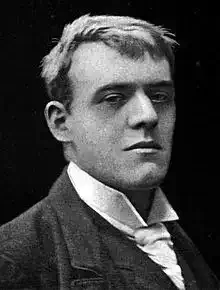
Hilaire Belloc
Lines to a Don
Lines to a Don
Remote and ineffectual Don
That dared attack my Chesterton,
With that poor weapon, half-impelled,
Unlearnt, unsteady, hardly held,
Unworthy for a tilt with men--
Your quavering and corroded pen;
Don poor at Bed and worse at Table,
Don pinched, Don starved, Don miserable;
Don stuttering, Don with roving eyes,
Don nervous, Don of crudities;
Don clerical, Don ordinary,
Don self-absorbed and solitary;
Don here-and-there, Don epileptic;
Don puffed and empty, Don dyspeptic;
Don middle-class, Don sycophantic,
Don dull, Don brutish, Don pedantic;
Don hypocritical, Don bad,
Don furtive, Don three-quarters mad;
Don (since a man must make and end),
Don that shall never be my friend.
Don different from those regal Dons!
With hearts of gold and lungs of bronze,
Who shout and bang and roar and bawl
The Absolute across the hall,
Or sail in amply bellying gown
Enormous through the Sacred Town,
Bearing from College to their homes
Deep cargoes of gigantic tomes;
Dons admirable! Dons of Might!
Uprising on my inward sight
Compact of ancient tales, and port
And sleep--and learning of a sort.
Dons English, worthy of the land;
Dons rooted; Dons that understand.
Good Dons perpetual that remain
A landmark, walling in the plain--
The horizon of my memories--
Like large and comfortable trees.
Don very much apart from these,
Thou scapegoat Don, thou Don devoted,
Don to thine own damnation quoted,
Perplexed to find thy trivial name
Reared in my verse to lasting shame.
Don dreadful, rasping Don and wearing,
Repulsive Don--Don past all bearing.
Don of the cold and doubtful breath,
Don despicable, Don of death;
Don nasty, skimpy, silent, level;
Don evil, Don that serves the devil.
Don ugly--that makes fifty lines.
There is a Canon which confines
A Rhymed Octosyllabic Curse
If written in Iambic Verse
To fifty lines. I never cut;
I far prefer to end it--but
Believe me I shall soon return.
My fires are banked, but still they burn
To write some more about the Don
That dared attack my Chesterton.
Remote and ineffectual Don
That dared attack my Chesterton,
With that poor weapon, half-impelled,
Unlearnt, unsteady, hardly held,
Unworthy for a tilt with men--
Your quavering and corroded pen;
Don poor at Bed and worse at Table,
Don pinched, Don starved, Don miserable;
Don stuttering, Don with roving eyes,
Don nervous, Don of crudities;
Don clerical, Don ordinary,
Don self-absorbed and solitary;
Don here-and-there, Don epileptic;
Don puffed and empty, Don dyspeptic;
Don middle-class, Don sycophantic,
Don dull, Don brutish, Don pedantic;
Don hypocritical, Don bad,
Don furtive, Don three-quarters mad;
Don (since a man must make and end),
Don that shall never be my friend.
Don different from those regal Dons!
With hearts of gold and lungs of bronze,
Who shout and bang and roar and bawl
The Absolute across the hall,
Or sail in amply bellying gown
Enormous through the Sacred Town,
Bearing from College to their homes
Deep cargoes of gigantic tomes;
Dons admirable! Dons of Might!
Uprising on my inward sight
Compact of ancient tales, and port
And sleep--and learning of a sort.
Dons English, worthy of the land;
Dons rooted; Dons that understand.
Good Dons perpetual that remain
A landmark, walling in the plain--
The horizon of my memories--
Like large and comfortable trees.
Don very much apart from these,
Thou scapegoat Don, thou Don devoted,
Don to thine own damnation quoted,
Perplexed to find thy trivial name
Reared in my verse to lasting shame.
Don dreadful, rasping Don and wearing,
Repulsive Don--Don past all bearing.
Don of the cold and doubtful breath,
Don despicable, Don of death;
Don nasty, skimpy, silent, level;
Don evil, Don that serves the devil.
Don ugly--that makes fifty lines.
There is a Canon which confines
A Rhymed Octosyllabic Curse
If written in Iambic Verse
To fifty lines. I never cut;
I far prefer to end it--but
Believe me I shall soon return.
My fires are banked, but still they burn
To write some more about the Don
That dared attack my Chesterton.
400
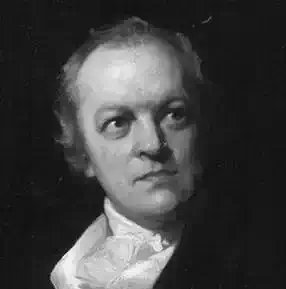
William Blake
A Poison Tree
A Poison Tree
I was angry with my friend:
I told my wrath, my wrath did end.
I was angry with my foe:
I told it not, my wrath did grow.
And I watered it in fears,
Night and morning with my tears;
And I sunned it with smiles,
And with soft deceitful wiles.
And it grew both day and night,
Till it bore an apple bright.
And my foe beheld it shine.
And he knew that it was mine,
And into my garden stole
When the night had veiled the pole;
In the morning glad I see
My foe outstretched beneath the tree.
I was angry with my friend:
I told my wrath, my wrath did end.
I was angry with my foe:
I told it not, my wrath did grow.
And I watered it in fears,
Night and morning with my tears;
And I sunned it with smiles,
And with soft deceitful wiles.
And it grew both day and night,
Till it bore an apple bright.
And my foe beheld it shine.
And he knew that it was mine,
And into my garden stole
When the night had veiled the pole;
In the morning glad I see
My foe outstretched beneath the tree.
733

Wilfred Owen
The Parable of the Old Man and the Young
The Parable of the Old Man and the Young
So Abram rose, and clave the wood, and went,
And took the fire with him, and a knife.
And as they sojourned both of them together,
Isaac the first-born spake and said, My Father,
Behold the preparations, fire and iron,
But where the lamb for this burnt-offering?
Then Abram bound the youth with belts and strops,
And builded parapets and trenches there,
And stretched forth the knife to slay his son.
When lo! an angel called him out of heaven,
Saying, Lay not thy hand upon the lad,
Neither do anything to him. Behold,
A ram, caught in a thicket by its horns;
Offer the Ram of Pride instead of him.
But the old man would not so, but slew his son,
And half the seed of Europe, one by one.
So Abram rose, and clave the wood, and went,
And took the fire with him, and a knife.
And as they sojourned both of them together,
Isaac the first-born spake and said, My Father,
Behold the preparations, fire and iron,
But where the lamb for this burnt-offering?
Then Abram bound the youth with belts and strops,
And builded parapets and trenches there,
And stretched forth the knife to slay his son.
When lo! an angel called him out of heaven,
Saying, Lay not thy hand upon the lad,
Neither do anything to him. Behold,
A ram, caught in a thicket by its horns;
Offer the Ram of Pride instead of him.
But the old man would not so, but slew his son,
And half the seed of Europe, one by one.
323
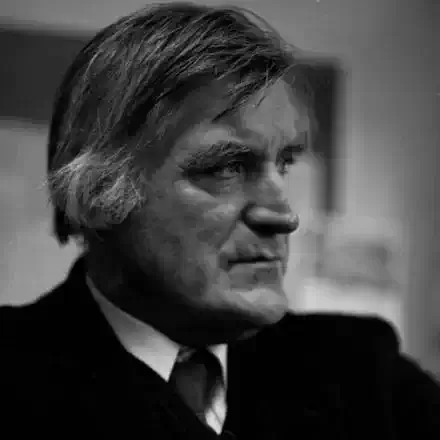
Ted Hughes
Thistles
Thistles
Against the rubber tongues of cows and the hoeing hands of men
Thistles spike the summer air
And crackle open under a blue-black pressure.
Every one a revengeful burst
Of resurrection, a grasped fistful
Of splintered weapons and Icelandic frost thrust up
From the underground stain of a decayed Viking.
They are like pale hair and the gutturals of dialects.
Every one manages a plume of blood.
Then they grow grey like men.
Mown down, it is a feud. Their sons appear
Stiff with weapons, fighting back over the same ground.
Against the rubber tongues of cows and the hoeing hands of men
Thistles spike the summer air
And crackle open under a blue-black pressure.
Every one a revengeful burst
Of resurrection, a grasped fistful
Of splintered weapons and Icelandic frost thrust up
From the underground stain of a decayed Viking.
They are like pale hair and the gutturals of dialects.
Every one manages a plume of blood.
Then they grow grey like men.
Mown down, it is a feud. Their sons appear
Stiff with weapons, fighting back over the same ground.
502
Ted Hughes
The Minotaur
The Minotaur
The mahogany table-top you smashed
Had been the broad plank top
Of my mother's heirloom sideboard-
Mapped with the scars of my whole life.
That came under the hammer.
That high stool you swung that day
Demented by my being
Twenty minutes late for baby-minding.
'Marvellous!' I shouted, 'Go on,
Smash it into kindling.
That's the stuff you're keeping out of your poems!'
And later, considered and calmer,
'Get that shoulder under your stanzas
And we'll be away.' Deep in the cave of your ear
The goblin snapped his fingers.
So what had I given him?
The bloody end of the skein
That unravelled your marriage,
Left your children echoing
Like tunnels in a labyrinth.
Left your mother a dead-end,
Brought you to the horned, bellowing
Grave of your risen father
And your own corpse in it.
The mahogany table-top you smashed
Had been the broad plank top
Of my mother's heirloom sideboard-
Mapped with the scars of my whole life.
That came under the hammer.
That high stool you swung that day
Demented by my being
Twenty minutes late for baby-minding.
'Marvellous!' I shouted, 'Go on,
Smash it into kindling.
That's the stuff you're keeping out of your poems!'
And later, considered and calmer,
'Get that shoulder under your stanzas
And we'll be away.' Deep in the cave of your ear
The goblin snapped his fingers.
So what had I given him?
The bloody end of the skein
That unravelled your marriage,
Left your children echoing
Like tunnels in a labyrinth.
Left your mother a dead-end,
Brought you to the horned, bellowing
Grave of your risen father
And your own corpse in it.
316
Wilfred Owen
On Seeing a Piece of Our Artillery Brought into Action
On Seeing a Piece of Our Artillery Brought into Action
Be slowly lifted up, thou long black arm,
Great gun towering towards Heaven, about to curse;
Sway steep against them, and for years rehearse
Huge imprecations like a blasting charm!
Reach at that Arrogance which needs thy harm,
And beat it down before its sins grow worse;
Spend our resentment, cannon,--yea, disburse
Our gold in shapes of flame, our breaths in storm.
Yet, for men's sakes whom thy vast malison
Must wither innocent of enmity,
Be not withdrawn, dark arm, thy spoilure done,
Safe to the bosom of our prosperity.
But when thy spell be cast complete and whole,
May God curse thee, and cut thee from our soul!
Be slowly lifted up, thou long black arm,
Great gun towering towards Heaven, about to curse;
Sway steep against them, and for years rehearse
Huge imprecations like a blasting charm!
Reach at that Arrogance which needs thy harm,
And beat it down before its sins grow worse;
Spend our resentment, cannon,--yea, disburse
Our gold in shapes of flame, our breaths in storm.
Yet, for men's sakes whom thy vast malison
Must wither innocent of enmity,
Be not withdrawn, dark arm, thy spoilure done,
Safe to the bosom of our prosperity.
But when thy spell be cast complete and whole,
May God curse thee, and cut thee from our soul!
171
Robert W. Service
The Parson's Son
The Parson's Son
This is the song of the parson's son, as he squats in his shack alone,
On the wild, weird nights, when the Northern Lights shoot up from the frozen zone,
And it's sixty below, and couched in the snow the hungry huskies moan:
"I'm one of the Arctic brotherhood, I'm an old-time pioneer.
I came with the first -- O God! how I've cursed this Yukon -- but still I'm here.
I've sweated athirst in its summer heat, I've frozen and starved in its cold;
I've followed my dreams by its thousand streams, I've toiled and moiled for its gold.
"Look at my eyes -- been snow-blind twice; look where my foot's half gone;
And that gruesome scar on my left cheek, where the frost-fiend bit to the bone.
Each one a brand of this devil's land, where I've played and I've lost the game,
A broken wreck with a craze for `hooch', and never a cent to my name.
"This mining is only a gamble; the worst is as good as the best;
I was in with the bunch and I might have come out right on top with the rest;
With Cormack, Ladue and Macdonald -- O God! but it's hell to think
Of the thousands and thousands I've squandered on cards and women and drink.
"In the early days we were just a few, and we hunted and fished around,
Nor dreamt by our lonely camp-fires of the wealth that lay under the ground.
We traded in skins and whiskey, and I've often slept under the shade
Of that lone birch tree on Bonanza, where the first big find was made.
"We were just like a great big family, and every man had his squaw,
And we lived such a wild, free, fearless life beyond the pale of the law;
Till sudden there came a whisper, and it maddened us every man,
And I got in on Bonanza before the big rush began.
"Oh, those Dawson days, and the sin and the blaze, and the town all open wide!
(If God made me in His likeness, sure He let the devil inside.)
But we all were mad, both the good and the bad, and as for the women, well --
No spot on the map in so short a space has hustled more souls to hell.
"Money was just like dirt there, easy to get and to spend.
I was all caked in on a dance-hall jade, but she shook me in the end.
It put me queer, and for near a year I never drew sober breath,
Till I found myself in the bughouse ward with a claim staked out on death.
"Twenty years in the Yukon, struggling along its creeks;
Roaming its giant valleys, scaling its god-like peaks;
Bathed in its fiery sunsets, fighting its fiendish cold --
Twenty years in the Yukon . . . twenty years -- and I'm old.
"Old and weak, but no matter, there's `hooch' in the bottle still.
I'll hitch up the dogs to-morrow, and mush down the trail to Bill.
It's so long dark, and I'm lonesome -- I'll just lay down on the bed;
To-morrow I'll go . . . to-morrow . . . I guess I'll play on the red.
". . . Come, Kit, your pony is saddled. I'm waiting, dear, in the court . . .
. . . Minnie, you devil, I'll kill you if you skip with that flossy sport . . .
. . . How much does it go to the pan, Bill? . . . play up, School, and play the game . . .
. . . Our Father, which art in heaven, hallowed be Thy name . . ."
This was the song of the parson's son, as he lay in his bunk alone,
Ere the fire went out and the cold crept in, and his blue lips ceased to moan,
And the hunger-maddened malamutes had torn him flesh from bone.
This is the song of the parson's son, as he squats in his shack alone,
On the wild, weird nights, when the Northern Lights shoot up from the frozen zone,
And it's sixty below, and couched in the snow the hungry huskies moan:
"I'm one of the Arctic brotherhood, I'm an old-time pioneer.
I came with the first -- O God! how I've cursed this Yukon -- but still I'm here.
I've sweated athirst in its summer heat, I've frozen and starved in its cold;
I've followed my dreams by its thousand streams, I've toiled and moiled for its gold.
"Look at my eyes -- been snow-blind twice; look where my foot's half gone;
And that gruesome scar on my left cheek, where the frost-fiend bit to the bone.
Each one a brand of this devil's land, where I've played and I've lost the game,
A broken wreck with a craze for `hooch', and never a cent to my name.
"This mining is only a gamble; the worst is as good as the best;
I was in with the bunch and I might have come out right on top with the rest;
With Cormack, Ladue and Macdonald -- O God! but it's hell to think
Of the thousands and thousands I've squandered on cards and women and drink.
"In the early days we were just a few, and we hunted and fished around,
Nor dreamt by our lonely camp-fires of the wealth that lay under the ground.
We traded in skins and whiskey, and I've often slept under the shade
Of that lone birch tree on Bonanza, where the first big find was made.
"We were just like a great big family, and every man had his squaw,
And we lived such a wild, free, fearless life beyond the pale of the law;
Till sudden there came a whisper, and it maddened us every man,
And I got in on Bonanza before the big rush began.
"Oh, those Dawson days, and the sin and the blaze, and the town all open wide!
(If God made me in His likeness, sure He let the devil inside.)
But we all were mad, both the good and the bad, and as for the women, well --
No spot on the map in so short a space has hustled more souls to hell.
"Money was just like dirt there, easy to get and to spend.
I was all caked in on a dance-hall jade, but she shook me in the end.
It put me queer, and for near a year I never drew sober breath,
Till I found myself in the bughouse ward with a claim staked out on death.
"Twenty years in the Yukon, struggling along its creeks;
Roaming its giant valleys, scaling its god-like peaks;
Bathed in its fiery sunsets, fighting its fiendish cold --
Twenty years in the Yukon . . . twenty years -- and I'm old.
"Old and weak, but no matter, there's `hooch' in the bottle still.
I'll hitch up the dogs to-morrow, and mush down the trail to Bill.
It's so long dark, and I'm lonesome -- I'll just lay down on the bed;
To-morrow I'll go . . . to-morrow . . . I guess I'll play on the red.
". . . Come, Kit, your pony is saddled. I'm waiting, dear, in the court . . .
. . . Minnie, you devil, I'll kill you if you skip with that flossy sport . . .
. . . How much does it go to the pan, Bill? . . . play up, School, and play the game . . .
. . . Our Father, which art in heaven, hallowed be Thy name . . ."
This was the song of the parson's son, as he lay in his bunk alone,
Ere the fire went out and the cold crept in, and his blue lips ceased to moan,
And the hunger-maddened malamutes had torn him flesh from bone.
200
Robert W. Service
The Monster
The Monster
When we might make with happy heart
This world a paradise,
With bombs we blast brave men apart,
With napalm carbonize.
Where we might till the sunny soil,
And sing for joy of life,
We spend our treasure and our toil
In bloody strife.
The fields of wheat are sheening gold,
The flocks have silver fleece;
The signs are sweetly manifold
Of plenty, praise and peace.
Yet see! The sky is like a cowl
Where grimy toilers bore
The shards of steel that feed the foul
Red maw of War.
Instead of butter give us guns;
Instead of sugur, shells.
Devoted mothers, bear your sons
To glut still hotter hells.
Alas! When will mad mankind wake
To banish evermore,
And damn for God in Heaven's sake
Mass Murder--WAR?
When we might make with happy heart
This world a paradise,
With bombs we blast brave men apart,
With napalm carbonize.
Where we might till the sunny soil,
And sing for joy of life,
We spend our treasure and our toil
In bloody strife.
The fields of wheat are sheening gold,
The flocks have silver fleece;
The signs are sweetly manifold
Of plenty, praise and peace.
Yet see! The sky is like a cowl
Where grimy toilers bore
The shards of steel that feed the foul
Red maw of War.
Instead of butter give us guns;
Instead of sugur, shells.
Devoted mothers, bear your sons
To glut still hotter hells.
Alas! When will mad mankind wake
To banish evermore,
And damn for God in Heaven's sake
Mass Murder--WAR?
165
Robert W. Service
The Last Supper
The Last Supper
Marie Vaux of the Painted Lips,
And the mouth so mocking gay,
A wanton you to the finger-tips,
Who break men's hearts in play;
A thing of dust I have striven for,
Honour and manhood given for,
Headlong to ruin driven for,
And this is the last, you say. . . .
Drinking your wine with dainty sips,
Marie Vaux of the Painted Lips.
Marie Vaux of the Painted Lips,
ong have you held your sway;
I have laughed at your merry quips -
Now is my time to pay.
What we sow we must reap again;
When we laugh we must weep again;
So to-night we will sleep again,
Nor wake until Judgement Day. . . .
'Tis a poisoned wine that your palate lips,
Marie Vaux of the Painted Lips.
Marie Vaux of the Painted Lips,
Down on your knees and pray;
Pray your last ere the moment slips,
Pray ere the dark and the terror grips,
And the bright world fades away.
Pray for the peace and the rest of us:
Here comes the Shape in quest of us,
Now we must go away. . . .
You and I in the grave's eclipse,
Marie Vaux of the painted Lips.
Marie Vaux of the Painted Lips,
And the mouth so mocking gay,
A wanton you to the finger-tips,
Who break men's hearts in play;
A thing of dust I have striven for,
Honour and manhood given for,
Headlong to ruin driven for,
And this is the last, you say. . . .
Drinking your wine with dainty sips,
Marie Vaux of the Painted Lips.
Marie Vaux of the Painted Lips,
ong have you held your sway;
I have laughed at your merry quips -
Now is my time to pay.
What we sow we must reap again;
When we laugh we must weep again;
So to-night we will sleep again,
Nor wake until Judgement Day. . . .
'Tis a poisoned wine that your palate lips,
Marie Vaux of the Painted Lips.
Marie Vaux of the Painted Lips,
Down on your knees and pray;
Pray your last ere the moment slips,
Pray ere the dark and the terror grips,
And the bright world fades away.
Pray for the peace and the rest of us:
Here comes the Shape in quest of us,
Now we must go away. . . .
You and I in the grave's eclipse,
Marie Vaux of the painted Lips.
115
Robert W. Service
The Key Of The Street
The Key Of The Street
"Miss Rosemary," I dourly said,
"Our balance verges on the red,
We must cut down our overhead.
One of the staff will have to go.
There's Mister Jones, he's mighty slow,
Although he does his best, I know.
"A deer old man; I like him well,
But age, alas! will always tell.
Miss Rosemary, please ring the bell
And tell old Jones to step this way . . .
Oh dear, oh dear, it isn't gay
To say the things I have to say.
"Come in and sit down, Mister Jones."
He thanks me in sepulchral tones.
Poor chap! I hear his creaking bones.
"Have a cigar? And how's your wife?
What's that! You're fearing for her life -
A cancer and the surgeon's knife. . . .
"Yes, operations are so dear,
But it's your comfort and your cheer
To know your job's so steady here."
These are his words; so meek and mild,
He looks just like a simple child . . .
Go! darn it! Suddenly I'm riled.
And so I say: "That's just too bad.
But Mister Jones. it's very sad,
You know what losses we have had.
We must cut down in times like these,
So here's a cheque, Oh take it please '
Twill help to pay your doctor's fees.
"And just to show how I appraise
Your work - despite these doleful days
I'm giving you . . . a little raise."
Said Rosemary: "Old Jones is crying."
Thought I: "Yes, each week I'll be sighing,
When from my pocket I am prying
Ten bucks to keep his wife from dying."
"Miss Rosemary," I dourly said,
"Our balance verges on the red,
We must cut down our overhead.
One of the staff will have to go.
There's Mister Jones, he's mighty slow,
Although he does his best, I know.
"A deer old man; I like him well,
But age, alas! will always tell.
Miss Rosemary, please ring the bell
And tell old Jones to step this way . . .
Oh dear, oh dear, it isn't gay
To say the things I have to say.
"Come in and sit down, Mister Jones."
He thanks me in sepulchral tones.
Poor chap! I hear his creaking bones.
"Have a cigar? And how's your wife?
What's that! You're fearing for her life -
A cancer and the surgeon's knife. . . .
"Yes, operations are so dear,
But it's your comfort and your cheer
To know your job's so steady here."
These are his words; so meek and mild,
He looks just like a simple child . . .
Go! darn it! Suddenly I'm riled.
And so I say: "That's just too bad.
But Mister Jones. it's very sad,
You know what losses we have had.
We must cut down in times like these,
So here's a cheque, Oh take it please '
Twill help to pay your doctor's fees.
"And just to show how I appraise
Your work - despite these doleful days
I'm giving you . . . a little raise."
Said Rosemary: "Old Jones is crying."
Thought I: "Yes, each week I'll be sighing,
When from my pocket I am prying
Ten bucks to keep his wife from dying."
224
Page 1
Next