

Poems in this theme
Soul
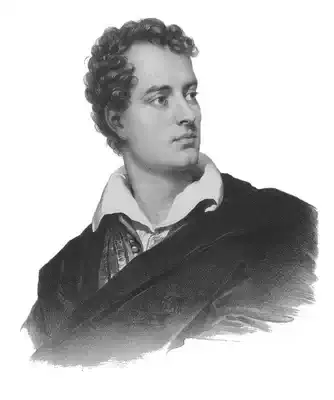
Lord Byron
If That High World
If That High World
If that high world, which lies beyond
Our own, surviving Love endears;
If there the cherish'd heart be fond,
The eye the same, except in tears How
welcome those untrodden spheres!
How sweet this very your to die!
To soar from earth and find all fears
Lost in thy light Eternity!
It must be so: 'tis not for self
That we so tremble on the brink;
And striving to o'erleap the gulf,
Yet cling to Being's severing link.
Oh! in that future let us think
To hold each heart the heart that shares;
With them the immortal waters drink,
And soul in soul grow deathless theirs
If that high world, which lies beyond
Our own, surviving Love endears;
If there the cherish'd heart be fond,
The eye the same, except in tears How
welcome those untrodden spheres!
How sweet this very your to die!
To soar from earth and find all fears
Lost in thy light Eternity!
It must be so: 'tis not for self
That we so tremble on the brink;
And striving to o'erleap the gulf,
Yet cling to Being's severing link.
Oh! in that future let us think
To hold each heart the heart that shares;
With them the immortal waters drink,
And soul in soul grow deathless theirs
521
Lord Byron
I Speak Not, I Trace Not, I Breathe Not Thy Name
I Speak Not, I Trace Not, I Breathe Not Thy Name
I speak not, I trace not, I breathe not thy name;
There is grief in the sound, there is guilt in the fame;
But the tear that now burns on my cheek may impart
The deep thoughts that dwell in that silence of heart.
Too brief for our passion, too long for our peace,
Were those hours can
their joy or their bitterness cease?
We repent, we abjure, we will break from our chain, We
will part, we will fly to unite
it again!
Oh! thine be the gladness, and mine be the guilt!
Forgive me, adored one! forsake
if thou wilt;
But the heart which is thine shall expire undebased,
And man shall not break it whatever
thou may'st.
And stern to the haughty, but humble to thee,
This soul in its bitterest blackness shall be;
And our days seem as swift, and our moments more sweet,
With thee at my side, than with worlds at our feet.
One sigh of thy sorrow, one look of thy love,
Shall turn me or fix, shall reward or reprove.
And the heartless may wonder at all I resign Thy
lips shall reply, not to them, but to mine.
May, 1814.
I speak not, I trace not, I breathe not thy name;
There is grief in the sound, there is guilt in the fame;
But the tear that now burns on my cheek may impart
The deep thoughts that dwell in that silence of heart.
Too brief for our passion, too long for our peace,
Were those hours can
their joy or their bitterness cease?
We repent, we abjure, we will break from our chain, We
will part, we will fly to unite
it again!
Oh! thine be the gladness, and mine be the guilt!
Forgive me, adored one! forsake
if thou wilt;
But the heart which is thine shall expire undebased,
And man shall not break it whatever
thou may'st.
And stern to the haughty, but humble to thee,
This soul in its bitterest blackness shall be;
And our days seem as swift, and our moments more sweet,
With thee at my side, than with worlds at our feet.
One sigh of thy sorrow, one look of thy love,
Shall turn me or fix, shall reward or reprove.
And the heartless may wonder at all I resign Thy
lips shall reply, not to them, but to mine.
May, 1814.
656
Lord Byron
Herod's Lament For Mariamne
Herod's Lament For Mariamne
Oh, Mariamne! now for thee
The heart of which thou bled'st is bleeding;
Revenge is lost in agony,
And wild remorse to rage succeeding.
Oh, Mariamne! where art thou?
Thou canst not hear my bitter pleading:
Ah! could'st thouthou
would'st pardon now,
Though Heaven were to my prayer unheeding.
And is she dead?and
did they dare
Obey my frenzy's jealous raving?
My wrath but doom'd my own despair:
The sword that smote her's o'er me waving.But
thou art cold, my murder'd love!
And this dark heart is vainly craving
For her who soars alone above,
And leaves my soul unworthy saving.
She's gone, who shared my diadem;
She sunk, with her my joys entombing;
I swept that flower from Judah's stem,
Whose leaves for me alone were blooming;
And mine's the guilt, and mine the hell,
This bosom's desolation dooming;
And I have earn'd those tortures well,
Which unconsumed are still consuming!
Oh, Mariamne! now for thee
The heart of which thou bled'st is bleeding;
Revenge is lost in agony,
And wild remorse to rage succeeding.
Oh, Mariamne! where art thou?
Thou canst not hear my bitter pleading:
Ah! could'st thouthou
would'st pardon now,
Though Heaven were to my prayer unheeding.
And is she dead?and
did they dare
Obey my frenzy's jealous raving?
My wrath but doom'd my own despair:
The sword that smote her's o'er me waving.But
thou art cold, my murder'd love!
And this dark heart is vainly craving
For her who soars alone above,
And leaves my soul unworthy saving.
She's gone, who shared my diadem;
She sunk, with her my joys entombing;
I swept that flower from Judah's stem,
Whose leaves for me alone were blooming;
And mine's the guilt, and mine the hell,
This bosom's desolation dooming;
And I have earn'd those tortures well,
Which unconsumed are still consuming!
691
Lord Byron
From The Prometheus Vinctus Of Aeschylus
From The Prometheus Vinctus Of Aeschylus
Great Jove, to whose almighty throne
Both gods and mortals homage pay,
Ne'er may my soul thy power disown,
Thy dread behests ne'er disobey.
Oft shall the sacred victim fall
In seagirt
Ocean's mossy hall;
My voice shall raise no impious strain
'Gainst him who rules the sky and azure main.
How different now thy joyless fate,
Since first Hesione thy bride,
When placed aloft in godlike state,
The blushing beauty by the side,
Thou sat'st, while reverend Ocean smiled,
And mirthful strains the hours beguiled;
The Nymphs and Tritons dances around,
Nor yet thy doom was fix'd, nor Jove relentless frown'd.
Great Jove, to whose almighty throne
Both gods and mortals homage pay,
Ne'er may my soul thy power disown,
Thy dread behests ne'er disobey.
Oft shall the sacred victim fall
In seagirt
Ocean's mossy hall;
My voice shall raise no impious strain
'Gainst him who rules the sky and azure main.
How different now thy joyless fate,
Since first Hesione thy bride,
When placed aloft in godlike state,
The blushing beauty by the side,
Thou sat'st, while reverend Ocean smiled,
And mirthful strains the hours beguiled;
The Nymphs and Tritons dances around,
Nor yet thy doom was fix'd, nor Jove relentless frown'd.
540
Lord Byron
From The Last Hill That Looks On Thy Once Holy Dome
From The Last Hill That Looks On Thy Once Holy Dome
I.
From the last hill that looks on thy once holy dome,
I beheld thee, Oh Sion! when rendered to Rome:
'Twas thy last sun went down, and the flames of thy fall
Flash'd back on the last glance I gave to thy wall.
II.
I look'd for thy temple, I look'd for my home,
And forgot for a moment my bondage to come;
I beheld but the deathfire
that fed on thy fane,
And the fastfetter'd
hands that made vengeance in vain.
III.
Oh many an eve, the high spot whence I gazed
Had reflected the last beam of day as it blazed;
While I stood on the height, and beheld the decline
Of the rays from the mountain that shone on thy shrine.
IV.
And now on that mountain I stood on that day,
But I marked not the twilight beam melting away;
Oh! would that the lightning had glared in its stead,
And the thunderbolt burst on the conqueror's head!
V.
But the Gods of the Pagan shall never profane
The shrine where Jehovah disdain'd not to reign;
And scattered and scorn'd as thy people may be,
Our worship, oh Father! is only for thee.
I.
From the last hill that looks on thy once holy dome,
I beheld thee, Oh Sion! when rendered to Rome:
'Twas thy last sun went down, and the flames of thy fall
Flash'd back on the last glance I gave to thy wall.
II.
I look'd for thy temple, I look'd for my home,
And forgot for a moment my bondage to come;
I beheld but the deathfire
that fed on thy fane,
And the fastfetter'd
hands that made vengeance in vain.
III.
Oh many an eve, the high spot whence I gazed
Had reflected the last beam of day as it blazed;
While I stood on the height, and beheld the decline
Of the rays from the mountain that shone on thy shrine.
IV.
And now on that mountain I stood on that day,
But I marked not the twilight beam melting away;
Oh! would that the lightning had glared in its stead,
And the thunderbolt burst on the conqueror's head!
V.
But the Gods of the Pagan shall never profane
The shrine where Jehovah disdain'd not to reign;
And scattered and scorn'd as thy people may be,
Our worship, oh Father! is only for thee.
474
Lord Byron
Fill The Goblet Again: A Song
Fill The Goblet Again: A Song
Fill the goblet again! for I never before
Felt the glow which now gladdens my heart to its core;
Let us drink!who
would not?since,
through life's varied round,
In the goblet alone no deception is found.
I have tried in its turn all that life can supply;
I have bask'd in the beam of a dark rolling eye;
I have loved!who
has not?but
what heart can declare
That pleasure existed while passion was there?
In the days of my youth, when the heart's in its spring,
And dreams that affection can never take wing,
I had friends!who
has not?but
what tongue will avow,
That friends, rosy wine! are so faithful as thou?
The heart of a mistress some boy may estrange,
Friendship shifts with the sunbeamthou
never canst change;
Thou grow'st oldwho
does not?but
on earth what appears,
Whose virtues, like thine, still increase with its years?
Yet if blest to the utmost that love can bestow,
Should a rival bow down to our idol below,
We aree jealous!who
is not?thou
hast no such alloy;
For the more that enjoy thee, the more we enjoy.
Then the season of youth and its vanities past,
For refuge we fly to the goblet at last;
There we finddo
we not?in
the flow of the soul,
That truth, as of yore, is confined to the bowl.
When the box of Pandora was opened on earth,
And Misery's triumph commenced over Mirth,
Hope was left,was
she not?but
the goblet we kiss,
And care not for Hope, who are certain of bliss.
Long life to the grape! for when summer is flown,
The age of our nectar shall gladden our own:
We must diewho
shall not?May
our sins be forgiven,
And Hebe shall never be idle in heaven.
Fill the goblet again! for I never before
Felt the glow which now gladdens my heart to its core;
Let us drink!who
would not?since,
through life's varied round,
In the goblet alone no deception is found.
I have tried in its turn all that life can supply;
I have bask'd in the beam of a dark rolling eye;
I have loved!who
has not?but
what heart can declare
That pleasure existed while passion was there?
In the days of my youth, when the heart's in its spring,
And dreams that affection can never take wing,
I had friends!who
has not?but
what tongue will avow,
That friends, rosy wine! are so faithful as thou?
The heart of a mistress some boy may estrange,
Friendship shifts with the sunbeamthou
never canst change;
Thou grow'st oldwho
does not?but
on earth what appears,
Whose virtues, like thine, still increase with its years?
Yet if blest to the utmost that love can bestow,
Should a rival bow down to our idol below,
We aree jealous!who
is not?thou
hast no such alloy;
For the more that enjoy thee, the more we enjoy.
Then the season of youth and its vanities past,
For refuge we fly to the goblet at last;
There we finddo
we not?in
the flow of the soul,
That truth, as of yore, is confined to the bowl.
When the box of Pandora was opened on earth,
And Misery's triumph commenced over Mirth,
Hope was left,was
she not?but
the goblet we kiss,
And care not for Hope, who are certain of bliss.
Long life to the grape! for when summer is flown,
The age of our nectar shall gladden our own:
We must diewho
shall not?May
our sins be forgiven,
And Hebe shall never be idle in heaven.
462
Lord Byron
Fare Thee Well
Fare Thee Well
Fare thee well! and if for ever,
Still for ever, fare thee well:
Even though unforgiving, never
'Gainst thee shall my heart rebel.
Would that breast were bared before thee
Where thy head so oft hath lain.
While that placid sleep came o'er thee
Which thou ne'er canst know again;
Would that breast, by thee glanced over,
Every inmost thought could show!
Then thou wouldst at last discover
'Twas not well to spurn it so.
Though the world for this commend theeThough
it smile upon the blow,
Even its praises must offend thee,
Founded on another's woe:
Though my many faults defaced me,
Could no other arm be found,
Than the one which once embraced me,
To inflict a cureless wound?
Yet, oh yet, thyself deceive not;
Love may sink by slow decay,
But by sudden wrench, believe not
Hearts can thus be torn away:
Still thine own its life retaineth,
Still must mine, though bleeding, beat;
And the undying thought which paineth
Is that
we no more may meet.
These are words of deeper sorrow
Than the wail above the dead;
Both shall live, but every morrow
Wake us from a widow'd bed.
And when thou wouldst solace gather,
When our child's first accents flow,
Wilt thou teach her to say 'Father!'
Though his care she must forego?
When her little hands shall press thee,
When her lip to thine is press'd
Think of him whose prayer shall bless thee,
Think of him thy love had bless'd!
Should her lineaments resemble
Those thou never more may'st see,
Then thy heart will softly tremble
With a pulse yet true to me.
All my faults perchance thou knowest,
All my madness none can know;
All my hopes where'er thou goest,
Wither, yet with thee they go.
Every feeling hath been shaken;
Pride, which not a world could bow,
Bows to theeby
thee forsaken,
Even my soul forsakes me now:
But 'tis doneall
words are idleWords
from me are vainer still;
But the thoughts we cannot bridle
Force their way without the will.
Fare thee well! thus disunited,
Torn from every nearer tie
Sear 'd in heart, and lone, and blighted,
More than this I scarce can die.
Fare thee well! and if for ever,
Still for ever, fare thee well:
Even though unforgiving, never
'Gainst thee shall my heart rebel.
Would that breast were bared before thee
Where thy head so oft hath lain.
While that placid sleep came o'er thee
Which thou ne'er canst know again;
Would that breast, by thee glanced over,
Every inmost thought could show!
Then thou wouldst at last discover
'Twas not well to spurn it so.
Though the world for this commend theeThough
it smile upon the blow,
Even its praises must offend thee,
Founded on another's woe:
Though my many faults defaced me,
Could no other arm be found,
Than the one which once embraced me,
To inflict a cureless wound?
Yet, oh yet, thyself deceive not;
Love may sink by slow decay,
But by sudden wrench, believe not
Hearts can thus be torn away:
Still thine own its life retaineth,
Still must mine, though bleeding, beat;
And the undying thought which paineth
Is that
we no more may meet.
These are words of deeper sorrow
Than the wail above the dead;
Both shall live, but every morrow
Wake us from a widow'd bed.
And when thou wouldst solace gather,
When our child's first accents flow,
Wilt thou teach her to say 'Father!'
Though his care she must forego?
When her little hands shall press thee,
When her lip to thine is press'd
Think of him whose prayer shall bless thee,
Think of him thy love had bless'd!
Should her lineaments resemble
Those thou never more may'st see,
Then thy heart will softly tremble
With a pulse yet true to me.
All my faults perchance thou knowest,
All my madness none can know;
All my hopes where'er thou goest,
Wither, yet with thee they go.
Every feeling hath been shaken;
Pride, which not a world could bow,
Bows to theeby
thee forsaken,
Even my soul forsakes me now:
But 'tis doneall
words are idleWords
from me are vainer still;
But the thoughts we cannot bridle
Force their way without the will.
Fare thee well! thus disunited,
Torn from every nearer tie
Sear 'd in heart, and lone, and blighted,
More than this I scarce can die.
526
Lord Byron
Farewell To The Muse
Farewell To The Muse
Thou Power! who hast ruled me through Infancy's days,
Young offspring of Fancy, 'tis time we should part;
Then rise on the gale this the last of my lays,
The coldest effusion which springs from my heart.
This bosom, responsive to rapture no more,
Shall hush thy wild notes, nor implore thee to sing;
The feelings of childhood, which taught thee to soar,
Are wafted far distant on Apathy's wing.
Though simple the themes of my rude flowing Lyre,
Yet even these themes are departed for ever;
No more beam the eyes which my dream could inspire,
My visions are flown, to return, alas, never!
When drain'd is the nectar which gladdens the bowl,
How vain is the effort delight to prolong!
When cold is the beauty which dwelt in my soul,
What magic of Fancy can lengthen my song?
Can the lips sing of Love in the desert alone,
Of kisses and smiles which they now must resign?
Or dwell with delight on the hours that are flown?
Ah, no! for those hours can no longer be mine.
Can they speak of the friends that I lived but to love?
Ah, surely Affection ennobles the strain!
But how can my numbers in sympathy move,
When I scarcely can hope to behold them again?
Can I sing of the deeds which my Fathers have done,
And raise my loud harp to the fame of my Sires?
For glories like theirs, oh, how faint is my tone!
For Heroes' exploits how unequal my fires!
Untouch'd, then, my Lyre shall reply to the blast'
Tis hush'd; and my feeble endeavors are o'er;
And those who have heard it will pardon the past,
When they know that its murmurs shall vibrate no more.
And soon shall its wild erring notes be forgot,
Since early affection and love is o'ercast:
Oh! blest had my Fate been, and happy my lot,
Had the first strain of love been the dearest, the last.
Farewell, my young Muse! since we now can ne'er meet;
If our songs have been languid, they surely are few:
Let us hope that the present at least will be sweetThe
presentwhich
seals our eternal Adieu.
Thou Power! who hast ruled me through Infancy's days,
Young offspring of Fancy, 'tis time we should part;
Then rise on the gale this the last of my lays,
The coldest effusion which springs from my heart.
This bosom, responsive to rapture no more,
Shall hush thy wild notes, nor implore thee to sing;
The feelings of childhood, which taught thee to soar,
Are wafted far distant on Apathy's wing.
Though simple the themes of my rude flowing Lyre,
Yet even these themes are departed for ever;
No more beam the eyes which my dream could inspire,
My visions are flown, to return, alas, never!
When drain'd is the nectar which gladdens the bowl,
How vain is the effort delight to prolong!
When cold is the beauty which dwelt in my soul,
What magic of Fancy can lengthen my song?
Can the lips sing of Love in the desert alone,
Of kisses and smiles which they now must resign?
Or dwell with delight on the hours that are flown?
Ah, no! for those hours can no longer be mine.
Can they speak of the friends that I lived but to love?
Ah, surely Affection ennobles the strain!
But how can my numbers in sympathy move,
When I scarcely can hope to behold them again?
Can I sing of the deeds which my Fathers have done,
And raise my loud harp to the fame of my Sires?
For glories like theirs, oh, how faint is my tone!
For Heroes' exploits how unequal my fires!
Untouch'd, then, my Lyre shall reply to the blast'
Tis hush'd; and my feeble endeavors are o'er;
And those who have heard it will pardon the past,
When they know that its murmurs shall vibrate no more.
And soon shall its wild erring notes be forgot,
Since early affection and love is o'ercast:
Oh! blest had my Fate been, and happy my lot,
Had the first strain of love been the dearest, the last.
Farewell, my young Muse! since we now can ne'er meet;
If our songs have been languid, they surely are few:
Let us hope that the present at least will be sweetThe
presentwhich
seals our eternal Adieu.
496
Lord Byron
Epistle To Augusta
Epistle To Augusta
I.
My sister! my sweet sister! if a name
Dearer and purer were, it should be thine;
Mountains and seas divide us, but I claim
No tears, but tenderness to answer mine:
Go where I will, to me thou art the sameA
loved regret which I would not resign,
There yet are two things in my destiny,
A
world to roam through, and a home with thee.
II.
The first were nothinghad
I still the last,
It were the haven of my happiness;
But other claims and other ties thou hast,
And mine is not the wish to make them less.
A strange doom is thy father's son's, and past
Recalling, as it lies beyond redress;
Reversed for him our grandsire's fate of yore,
He had no rest at sea, nor I on shore.
III.
If my inheritance of storms hath been
In other elements, and on the rocks
Of perils, overlook'd or unforeseen,
I have sustain'd my share of worldly shocks,
The fault was mine; nor do I seek to screen
My errors with defensive paradox;
I have been cunning in mine overthrow,
The careful pilot of my proper woe.
IV.
Mine were my faults, and mine be their reward.
My whole life was a contest, since the day
That gave me being, gave me that which marr'd
The gift,a
fate, or will, that walk'd astray;
And I at times have found the struggle hard,
And thought of shaking off my bonds of clay:
But now I fain would for a time survive,
If but to see what next can well arrive.
V.
Kingdoms and empires in my little day
I have outlived, and yet I am not old;
And when I look on this, the petty spray
Of my own years of trouble, which have roll'd
Like a wild bay of breakers, melts away
SomethingI
know not whatdoes
still uphold
A spirit of slight patience; not in vain,
Even for its own sake, do we purchase pain.
VI.
Perhaps the workings of defiance stir
Within me or
perhaps a cold despair,
Brought on when ills habitually recur,
Perhaps a kinder clime, or purer air,
(For even to this may change of soul refer,
And with light armour we may learn to bear,)
Have taught me a strange quiet, which was not
The chief companion of a calmer lot.
VII.
I feel almost at times as I have felt
In happy childhood; trees, and flowers, and brooks,
Which do remember me of where I dwelt
Ere my young mind was sacrificed to books,
Come as of yore upon me, and can melt
My heart with recognition of their looks;
And even at moments I could think I see
Some living thing to lovebut
none like thee.
VIII.
Here are the Alpine landscapes which create
A fund for contemplation;to
admire
Is a brief feeling of a trivial date;
But something worthier do such scenes inspire:
Here to be lonely is not desolate'
For much I view which I could most desire,
And, above all, a lake I can behold
Lovelier, not dearer, than our own of old.
IX.
Oh that thou wert but with me! but
I grow
The fool of my own wishes, and forget
The solitude which I have vaunted so
Has lost its praise in this but one regret;
There may be others which I less may show
I am not of the plaintive mood, and yet
I feel an ebb in my philosophy,
And the tide rising in my alter'd eye.
X.
I did remind thee of our own dear Lake,
By the old Hall which may be mine no more.
Leman's is fair; but think not I forsake
The sweet remembrance of a dearer shore:
Sad havoc Time must with my memory make,
Ere that or thou can fade these eyes before;
Though, like all things which I have loved they are
Resign 'd For ever, or divided far.
XI.
The world is all before me; I but ask
Of Nature that with which she will comply
It is but in her summer's sun to bask,
To mingle with the quiet of her sky,
To see her gentle face without a mask,
And never gaze on it with apathy.
She was my early friend, and now shall be
My sister till
I look again on thee.
XII.
I can reduce all feelings but this one;
And that I would not; for at length I see
Such scenes as those wherein my life begun.
The earliest even
the only paths for me Had
I but sooner learnt the crowd to shun,
I had been better than I now can be;
The passions which have torn me would have slept;
I had not suffer'd, and thou hadst not wept.
XIII.
With false Ambition what had I to do?
Little with Love, and least of all with Fame;
And yet they came unsought, and with me grew,
And made me all which they can make a
name.
Yet this was not the end I did pursue;
Surely I once beheld a nobler aim.
But all is over I
am one the more
To baffled millions which have gone before.
XIV.
And for the future, this world's future may
From me demand but little of my care;
I have outlived myself by many a day;
Having survived so many things that were;
My years have been no slumber, but the prey
Of ceaseless vigils; for I had the share
Of life which might have fill'd a century,
Before its fourth in time had pass'd me by.
XV.
And for the remnant which may be to come
I am content; and for the past I feel
Not thankless,for
within the crowded sum
Of struggles, happiness at times would steal,
And for the present, I would not benumb
My feelings further. Nor
shall I conceal
That with all this I still can look around,
And worship Nature with a thought profound.
XVI.
For thee, my own sweet sister, in thy heart
I know myself secure, as thou in mine;
We were and are I
am, even as thou art
Beings who ne'er each other can resign;
It is the same, together or apart,
From life's commencement to its slow decline
We are entwinedlet
death come slow or fast,
The tie which bound the first endures the last!
I.
My sister! my sweet sister! if a name
Dearer and purer were, it should be thine;
Mountains and seas divide us, but I claim
No tears, but tenderness to answer mine:
Go where I will, to me thou art the sameA
loved regret which I would not resign,
There yet are two things in my destiny,
A
world to roam through, and a home with thee.
II.
The first were nothinghad
I still the last,
It were the haven of my happiness;
But other claims and other ties thou hast,
And mine is not the wish to make them less.
A strange doom is thy father's son's, and past
Recalling, as it lies beyond redress;
Reversed for him our grandsire's fate of yore,
He had no rest at sea, nor I on shore.
III.
If my inheritance of storms hath been
In other elements, and on the rocks
Of perils, overlook'd or unforeseen,
I have sustain'd my share of worldly shocks,
The fault was mine; nor do I seek to screen
My errors with defensive paradox;
I have been cunning in mine overthrow,
The careful pilot of my proper woe.
IV.
Mine were my faults, and mine be their reward.
My whole life was a contest, since the day
That gave me being, gave me that which marr'd
The gift,a
fate, or will, that walk'd astray;
And I at times have found the struggle hard,
And thought of shaking off my bonds of clay:
But now I fain would for a time survive,
If but to see what next can well arrive.
V.
Kingdoms and empires in my little day
I have outlived, and yet I am not old;
And when I look on this, the petty spray
Of my own years of trouble, which have roll'd
Like a wild bay of breakers, melts away
SomethingI
know not whatdoes
still uphold
A spirit of slight patience; not in vain,
Even for its own sake, do we purchase pain.
VI.
Perhaps the workings of defiance stir
Within me or
perhaps a cold despair,
Brought on when ills habitually recur,
Perhaps a kinder clime, or purer air,
(For even to this may change of soul refer,
And with light armour we may learn to bear,)
Have taught me a strange quiet, which was not
The chief companion of a calmer lot.
VII.
I feel almost at times as I have felt
In happy childhood; trees, and flowers, and brooks,
Which do remember me of where I dwelt
Ere my young mind was sacrificed to books,
Come as of yore upon me, and can melt
My heart with recognition of their looks;
And even at moments I could think I see
Some living thing to lovebut
none like thee.
VIII.
Here are the Alpine landscapes which create
A fund for contemplation;to
admire
Is a brief feeling of a trivial date;
But something worthier do such scenes inspire:
Here to be lonely is not desolate'
For much I view which I could most desire,
And, above all, a lake I can behold
Lovelier, not dearer, than our own of old.
IX.
Oh that thou wert but with me! but
I grow
The fool of my own wishes, and forget
The solitude which I have vaunted so
Has lost its praise in this but one regret;
There may be others which I less may show
I am not of the plaintive mood, and yet
I feel an ebb in my philosophy,
And the tide rising in my alter'd eye.
X.
I did remind thee of our own dear Lake,
By the old Hall which may be mine no more.
Leman's is fair; but think not I forsake
The sweet remembrance of a dearer shore:
Sad havoc Time must with my memory make,
Ere that or thou can fade these eyes before;
Though, like all things which I have loved they are
Resign 'd For ever, or divided far.
XI.
The world is all before me; I but ask
Of Nature that with which she will comply
It is but in her summer's sun to bask,
To mingle with the quiet of her sky,
To see her gentle face without a mask,
And never gaze on it with apathy.
She was my early friend, and now shall be
My sister till
I look again on thee.
XII.
I can reduce all feelings but this one;
And that I would not; for at length I see
Such scenes as those wherein my life begun.
The earliest even
the only paths for me Had
I but sooner learnt the crowd to shun,
I had been better than I now can be;
The passions which have torn me would have slept;
I had not suffer'd, and thou hadst not wept.
XIII.
With false Ambition what had I to do?
Little with Love, and least of all with Fame;
And yet they came unsought, and with me grew,
And made me all which they can make a
name.
Yet this was not the end I did pursue;
Surely I once beheld a nobler aim.
But all is over I
am one the more
To baffled millions which have gone before.
XIV.
And for the future, this world's future may
From me demand but little of my care;
I have outlived myself by many a day;
Having survived so many things that were;
My years have been no slumber, but the prey
Of ceaseless vigils; for I had the share
Of life which might have fill'd a century,
Before its fourth in time had pass'd me by.
XV.
And for the remnant which may be to come
I am content; and for the past I feel
Not thankless,for
within the crowded sum
Of struggles, happiness at times would steal,
And for the present, I would not benumb
My feelings further. Nor
shall I conceal
That with all this I still can look around,
And worship Nature with a thought profound.
XVI.
For thee, my own sweet sister, in thy heart
I know myself secure, as thou in mine;
We were and are I
am, even as thou art
Beings who ne'er each other can resign;
It is the same, together or apart,
From life's commencement to its slow decline
We are entwinedlet
death come slow or fast,
The tie which bound the first endures the last!
546
Lord Byron
Don Juan: Canto The Tenth
Don Juan: Canto The Tenth
When Newton saw an apple fall, he found
In that slight startle from his contemplation'
Tis said (for I 'll not answer above ground
For any sage's creed or calculation)A
mode of proving that the earth turn'd round
In a most natural whirl, called 'gravitation;'
And this is the sole mortal who could grapple,
Since Adam, with a fall or with an apple.
Man fell with apples, and with apples rose,
If this be true; for we must deem the mode
In which Sir Isaac Newton could disclose
Through the then unpaved stars the turnpike road,
A thing to counterbalance human woes:
For ever since immortal man hath glow'd
With all kinds of mechanics, and full soon
Steamengines
will conduct him to the moon.
And wherefore this exordium?Why,
just now,
In taking up this paltry sheet of paper,
My bosom underwent a glorious glow,
And my internal spirit cut a caper:
And though so much inferior, as I know,
To those who, by the dint of glass and vapour,
Discover stars and sail in the wind's eye,
I wish to do as much by poesy.
In the wind's eye I have sail'd, and sail; but for
The stars, I own my telescope is dim:
But at least I have shunn'd the common shore,
And leaving land far out of sight, would skim
The ocean of eternity: the roar
Of breakers has not daunted my slight, trim,
But still seaworthy
skiff; and she may float
Where ships have founder'd, as doth many a boat.
We left our hero, Juan, in the bloom
Of favouritism, but not yet in the blush;
And far be it from my Muses to presume
(For I have more than one Muse at a push)
To follow him beyond the drawingroom:
It is enough that Fortune found him flush
Of youth, and vigour, beauty, and those things
Which for an instant clip enjoyment's wings.
But soon they grow again and leave their nest.
'Oh!' saith the Psalmist, 'that I had a dove's
Pinions to flee away, and be at rest!'
And who that recollects young years and loves,Though
hoary now, and with a withering breast,
And palsied fancy, which no longer roves
Beyond its dimm'd eye's sphere,but
would much rather
Sigh like his son, than cough like his grandfather?
But sighs subside, and tears (even widows') shrink,
Like Arno in the summer, to a shallow,
So narrow as to shame their wintry brink,
Which threatens inundations deep and yellow!
Such difference doth a few months make. You 'd think
Grief a rich field which never would lie fallow;
No more it doth, its ploughs but change their boys,
Who furrow some new soil to sow for joys.
But coughs will come when sighs departand
now
And then before sighs cease; for oft the one
Will bring the other, ere the lakelike
brow
Is ruffled by a wrinkle, or the sun
Of life reach'd ten o'clock: and while a glow,
Hectic and brief as summer's day nigh done,
O'erspreads the cheek which seems too pure for clay,
Thousands blaze, love, hope, die,how
happy they!
But Juan was not meant to die so soon.
We left him in the focus of such glory
As may be won by favour of the moon
Or ladies' fanciesrather
transitory
Perhaps; but who would scorn the month of June,
Because December, with his breath so hoary,
Must come? Much rather should he court the ray,
To hoard up warmth against a wintry day.
Besides, he had some qualities which fix
Middleaged
ladies even more than young:
The former know what's what; while newfledged
chicks
Know little more of love than what is sung
In rhymes, or dreamt (for fancy will play tricks)
In visions of those skies from whence Love sprung.
Some reckon women by their suns or years,
I rather think the moon should date the dears.
And why? because she's changeable and chaste.
I know no other reason, whatsoe'er
Suspicious people, who find fault in haste,
May choose to tax me with; which is not fair,
Nor flattering to 'their temper or their taste,'
As my friend Jeffrey writes with such an air:
However, I forgive him, and I trust
He will forgive himself;if
not, I must.
Old enemies who have become new friends
Should so continue'
tis a point of honour;
And I know nothing which could make amends
For a return to hatred: I would shun her
Like garlic, howsoever she extends
Her hundred arms and legs, and fain outrun her.
Old flames, new wives, become our bitterest foesConverted
foes should scorn to join with those.
This were the worst desertion:renegadoes,
Even shuffling Southey, that incarnate lie,
Would scarcely join again the 'reformadoes,'
Whom he forsook to fill the laureate's sty:
And honest men from Iceland to Barbadoes,
Whether in Caledon or Italy,
Should not veer round with every breath, nor seize
To pain, the moment when you cease to please.
The lawyer and the critic but behold
The baser sides of literature and life,
And nought remains unseen, but much untold,
By those who scour those double vales of strife.
While common men grow ignorantly old,
The lawyer's brief is like the surgeon's knife,
Dissecting the whole inside of a question,
And with it all the process of digestion.
A legal broom's a moral chimneysweeper,
And that's the reason he himself's so dirty;
The endless soot bestows a tint far deeper
Than can be hid by altering his shirt; he
Retains the sable stains of the dark creeper,
At least some twentynine
do out of thirty,
In all their habits;not
so you, I own;
As Caesar wore his robe you wear your gown.
And all our little feuds, at least all mine,
Dear Jefferson, once my most redoubted foe
(As far as rhyme and criticism combine
To make such puppets of us things below),
Are over: Here's a health to 'Auld Lang Syne!'
I do not know you, and may never know
Your facebut
you have acted on the whole
Most nobly, and I own it from my soul.
And when I use the phrase of 'Auld Lang Syne!'
'Tis not address'd to youthe
more 's the pity
For me, for I would rather take my wine
With you, than aught (save Scott) in your proud city.
But somehow,it
may seem a schoolboy's whine,
And yet I seek not to be grand nor witty,
But I am half a Scot by birth, and bred
A whole one, and my heart flies to my head,
As 'Auld Lang Syne' brings Scotland, one and all,
Scotch plaids, Scotch snoods, the blue hills, and clear streams,
The Dee, the Don, Balgounie's brig's black wall,
All my boy feelings, all my gentler dreams
Of what I then dreamt, clothed in their own pall,
Like Banquo's offspring;floating
past me seems
My childhood in this childishness of mine:
I care not'
tis a glimpse of 'Auld Lang Syne.'
And though, as you remember, in a fit
Of wrath and rhyme, when juvenile and curly,
I rail'd at Scots to show my wrath and wit,
Which must be own'd was sensitive and surly,
Yet 't is in vain such sallies to permit,
They cannot quench young feelings fresh and early:
I 'scotch'd not kill'd' the Scotchman in my blood,
And love the land of 'mountain and of flood.'
Don Juan, who was real, or ideal,For
both are much the same, since what men think
Exists when the once thinkers are less real
Than what they thought, for mind can never sink,
And 'gainst the body makes a strong appeal;
And yet 'tis very puzzling on the brink
Of what is call'd eternity, to stare,
And know no more of what is here, than there;
Don Juan grew a very polish'd RussianHow
we won't mention, why we need not say:
Few youthful minds can stand the strong concussion
Of any slight temptation in their way;
But his just now were spread as is a cushion
Smooth'd for a monarch's seat of honour; gay
Damsels, and dances, revels, ready money,
Made ice seem paradise, and winter sunny.
The favour of the empress was agreeable;
And though the duty wax'd a little hard,
Young people at his time of life should be able
To come off handsomely in that regard.
He was now growing up like a green tree, able
For love, war, or ambition, which reward
Their luckier votaries, till old age's tedium
Make some prefer the circulating medium.
About this time, as might have been anticipated,
Seduced by youth and dangerous examples,
Don Juan grew, I fear, a little dissipated;
Which is a sad thing, and not only tramples
On our fresh feelings, butas
being participated
With all kinds of incorrigible samples
Of frail humanitymust
make us selfish,
And shut our souls up in us like a shellfish.
This we pass over. We will also pass
The usual progress of intrigues between
Unequal matches, such as are, alas!
A young lieutenant's with a not old queen,
But one who is not so youthful as she was
In all the royalty of sweet seventeen.
Sovereigns may sway materials, but not matter,
And Death, the sovereign's sovereign, though the great
Gracchus of all mortality, who levels
With his Agrarian laws the high estate
Of him who feasts, and fights, and roars, and revels,
To one small grassgrown
patch (which must await
Corruption for its crop) with the poor devils
Who never had a foot of land till now,Death's
a reformer, all men must allow.
He lived (not Death, but Juan) in a hurry
Of waste, and haste, and glare, and gloss, and glitter,
In this gay clime of bearskins
black and furryWhich
(though I hate to say a thing that 's bitter)
Peep out sometimes, when things are in a flurry,
Through all the 'purple and fine linen,' fitter
For Babylon's than Russia's royal harlotAnd
neutralize her outward show of scarlet.
And this same state we won't describe: we would
Perhaps from hearsay, or from recollection;
But getting nigh grim Dante's 'obscure wood,'
That horrid equinox, that hateful section
Of human years, that halfway
house, that rude
Hut, whence wise travellers drive with circumspection
Life's sad posthorses
o'er the dreary frontier
Of age, and looking back to youth, give one tear;
I won't describe,that
is, if I can help
Description; and I won't reflect,that
is,
If I can stave off thought, whichas
a whelp
Clings to its teatsticks
to me through the abyss
Of this odd labyrinth; or as the kelp
Holds by the rock; or as a lover's kiss
Drains its first draught of lips:but,
as I said,
I won't philosophise, and will be read.
Juan, instead of courting courts, was courted,A
thing which happens rarely: this he owed
Much to his youth, and much to his reported
Valour; much also to the blood he show'd,
Like a racehorse;
much to each dress he sported,
Which set the beauty off in which he glow'd,
As purple clouds befringe the sun; but most
He owed to an old woman and his post.
He wrote to Spain:and
all his near relations,
Perceiving fie was in a handsome way
Of getting on himself, and finding stations
For cousins also, answer'd the same day.
Several prepared themselves for emigrations;
And eating ices, were o'erheard to say,
That with the addition of a slight pelisse,
Madrid's and Moscow's climes were of a piece.
His mother, Donna Inez, finding, too,
That in the lieu of drawing on his banker,
Where his assets were waxing rather few,
He had brought his spending to a handsome anchor,Replied,
'that she was glad to see him through
Those pleasures after which wild youth will hanker;
As the sole sign of man's being in his senses
Is, learning to reduce his past expenses.
'She also recommended him to God,
And no less to God's Son, as well as Mother,
Warn'd him against Greek worship, which looks odd
In Catholic eyes; but told him, too, to smother
Outward dislike, which don't look well abroad;
Inform'd him that he had a little brother
Born in a second wedlock; and above
All, praised the empress's maternal love.
'She could not too much give her approbation
Unto an empress, who preferr'd young men
Whose age, and what was better still, whose nation
And climate, stopp'd all scandal (now and then):At
home it might have given her some vexation;
But where thermometers sunk down to ten,
Or five, or one, or zero, she could never
Believe that virtue thaw'd before the river.'
Oh for a fortyparson
power to chant
Thy praise, Hypocrisy! Oh for a hymn
Loud as the virtues thou dost loudly vaunt,
Not practise! Oh for trumps of cherubim!
Or the eartrumpet
of my good old aunt,
Who, though her spectacles at last grew dim,
Drew quiet consolation through its hint,
When she no more could read the pious print.
She was no hypocrite at least, poor soul,
But went to heaven in as sincere a way
As any body on the elected roll,
Which portions out upon the judgment day
Heaven's freeholds, in a sort of doomsday scroll,
Such as the conqueror William did repay
His knights with, lotting others' properties
Into some sixty thousand new knights' fees.
I can't complain, whose ancestors are there,
Erneis, Radulphuseightandforty
manors
(If that my memory doth not greatly err)
Were their reward for following Billy's banners:
And though I can't help thinking 'twas scarce fair
To strip the Saxons of their hydes, like tanners;
Yet as they founded churches with the produce,
You'll deem, no doubt, they put it to a good use.
The gentle Juan flourish'd, though at times
He felt like other plants called sensitive,
Which shrink from touch, as monarchs do from rhymes,
Save such as Southey can afford to give.
Perhaps he long'd in bitter frosts for climes
In which the Neva's ice would cease to live
Before Mayday:
perhaps, despite his duty,
In royalty's vast arms he sigh d for beauty:
Perhapsbut,
sans perhaps, we need not seek
For causes young or old: the cankerworm
Will feed upon the fairest, freshest cheek,
As well as further drain the wither'd form:
Care, like a housekeeper, brings every week
His bills in, and however we may storm,
They must be paid: though six days smoothly run,
The seventh will bring blue devils or a dun.
I don't know how it was, but he grew sick:
The empress was alarm'd, and her physician
(The same who physick'd Peter) found the tick
Of his fierce pulse betoken a condition
Which augur'd of the dead, however quick
Itself, and show'd a feverish disposition;
At which the whole court was extremely troubled,
The sovereign shock'd, and all his medicines doubled.
Low were the whispers, manifold the rumours:
Some said he had been poison'd by Potemkin;
Others talk'd learnedly of certain tumours,
Exhaustion, or disorders of the same kin;
Some said 'twas a concoction of the humours,
Which with the blood too readily will claim kin;
Others again were ready to maintain,
''Twas only the fatigue of last campaign.'
But here is one prescription out of many:
'Sodae sulphat. 3vj. 3fs. Mannae optim.
Aq. fervent. f. 3ifs. 3ij. tinct. Sennae
Haustus' (And here the surgeon came and cupp'd him)
'Rx Pulv Com gr. iij. Ipecacuanhae'
(With more beside if Juan had not stopp'd 'em).
'Bolus Potassae Sulphuret. sumendus,
Et haustus ter in die capiendus.'
This is the way physicians mend or end us,
Secundum artem: but although we sneer
In healthwhen
ill, we call them to attend us,
Without the least propensity to jeer:
While that 'hiatus maxime deflendus'
To be fill'd up by spade or mattock's near,
Instead of gliding graciously down Lethe,
We tease mild Baillie, or soft Abernethy.
Juan demurr'd at this first notice to
Quit; and though death had threaten'd an ejection,
His youth and constitution bore him through,
And sent the doctors in a new direction.
But still his state was delicate: the hue
Of health but flicker'd with a faint reflection
Along his wasted cheek, and seem'd to gravel
The facultywho
said that he must travel.
The climate was too cold, they said, for him,
Meridianborn,
to bloom in. This opinion
Made the chaste Catherine look a little grim,
Who did not like at first to lose her minion:
But when she saw his dazzling eye wax dim,
And drooping like an eagle's with clipt pinion,
She then resolved to send him on a mission,
But in a style becoming his condition.
There was just then a kind of a discussion,
A sort of treaty or negotiation
Between the British cabinet and Russian,
Maintain'd with all the due prevarication
With which great states such things are apt to push on;
Something about the Baltic's navigation,
Hides, trainoil,
tallow, and the rights of Thetis,
Which Britons deem their 'uti possidetis.'
So Catherine, who had a handsome way
Of fitting out her favourites, conferr'd
This secret charge on Juan, to display
At once her royal splendour, and reward
His services. He kiss'd hands the next day,
Received instructions how to play his card,
Was laden with all kinds of gifts and honours,
Which show'd what great discernment was the donor's.
But she was lucky, and luck 's all. Your queens
Are generally prosperous in reigning;
Which puzzles us to know what Fortune means.
But to continue: though her years were waning
Her climacteric teased her like her teens;
And though her dignity brook'd no complaining,
So much did Juan's setting off distress her,
She could not find at first a fit successor.
But time, the comforter, will come at last;
And fourandtwenty
hours, and twice that number
Of candidates requesting to be placed,
Made Catherine taste next night a quiet slumber:Not
that she meant to fix again in haste,
Nor did she find the quantity encumber,
But always choosing with deliberation,
Kept the place open for their emulation.
While this high post of honour's in abeyance,
For one or two days, reader, we request
You'll mount with our young hero the conveyance
Which wafted him from Petersburgh: the best
Barouche, which had the glory to display once
The fair czarina's autocratic crest,
When, a new lphigene, she went to Tauris,
Was given to her favourite, and now bore his.
A bulldog,
and a bullfinch, and an ermine,
All private favourites of Don Juan;for
(Let deeper sages the true cause determine)
He had a kind of inclination, or
Weakness, for what most people deem mere vermin,
Live animals: an old maid of threescore
For cats and birds more penchant ne'er display'd,
Although he was not old, nor even a maid;
The animals aforesaid occupied
Their station: there were valets, secretaries,
In other vehicles; but at his side
Sat little Leila, who survived the parries
He made 'gainst Cossacque sabres, in the wide
Slaughter of Ismail. Though my wild Muse varies
Her note, she don't forget the infant girl
Whom he preserved, a pure and living pearl
Poor little thing! She was as fair as docile,
And with that gentle, serious character,
As rare in living beings as a fossile
Man, 'midst thy mouldy mammoths, 'grand Cuvier!'
Ill fitted was her ignorance to jostle
With this o'erwhelming world, where all must err:
But she was yet but ten years old, and therefore
Was tranquil, though she knew not why or wherefore.
Don Juan loved her, and she loved him, as
Nor brother, father, sister, daughter love.
I cannot tell exactly what it was;
He was not yet quite old enough to prove
Parental feelings, and the other class,
Call'd brotherly affection, could not move
His bosom,for
he never had a sister:
Ah! if he had, how much he would have miss'd her!
And still less was it sensual; for besides
That he was not an ancient debauchee
(Who like sour fruit, to stir their veins' salt tides,
As acids rouse a dormant alkali),
Although ('twill happen as our planet guides)
His youth was not the chastest that might be,
There was the purest Platonism at bottom
Of all his feelingsonly
he forgot 'em.
Just now there was no peril of temptation;
He loved the infant orphan he had saved,
As patriots (now and then) may love a nation;
His pride, too, felt that she was not enslaved
Owing to him;as
also her salvation
Through his means and the church's might be paved.
But one thing's odd, which here must be inserted,
The little Turk refused to be converted.
'Twas strange enough she should retain the impression
Through such a scene of change, and dread, and slaughter;
But though three bishops told her the transgression,
She show'd a great dislike to holy water:
She also had no passion for confession;
Perhaps she had nothing to confess:no
matter,
Whate'er the cause, the church made little of itShe
still held out that Mahomet was a prophet.
In fact, the only Christian she could bear
Was Juan; whom she seem'd to have selected
In place of what her home and friends once were.
He naturally loved what he protected:
And thus they form'd a rather curious pair,
A guardian green in years, a ward connected
In neither clime, time, blood, with her defender;
And yet this want of ties made theirs more tender.
They journey'd on through Poland and through Warsaw,
Famous for mines of salt and yokes of iron:
Through Courland also, which that famous farce saw
Which gave her dukes the graceless name of 'Biron.'
'Tis the same landscape which the modern Mars saw,
Who march'd to Moscow, led by Fame, the siren!
To lose by one month's frost some twenty years
Of conquest, and his guard of grenadiers.
Let this not seem an anticlimax:
'
Oh!
My guard! my old guard exclaim'd!' exclaim'd that god of day.
Think of the Thunderer's falling down below
Carotidarterycutting
Castlereagh!
Alas, that glory should be chill'd by snow!
But should we wish to warm us on our way
Through Poland, there is Kosciusko's name
Might scatter fire through ice, like Hecla's flame.
From Poland they came on through Prussia Proper,
And Konigsberg the capital, whose vaunt,
Besides some veins of iron, lead, or copper,
Has lately been the great Professor Kant.
Juan, who cared not a tobaccostopper
About philosophy, pursued his jaunt
To Germany, whose somewhat tardy millions
Have princes who spur more than their postilions.
And thence through Berlin, Dresden, and the like,
Until he reach'd the castellated Rhine:Ye
glorious Gothic scenes! how much ye strike
All phantasies, not even excepting mine;
A grey wall, a green ruin, rusty pike,
Make my soul pass the equinoctial line
Between the present and past worlds, and hover
Upon their airy confine, halfseasover.
But Juan posted on through Manheim, Bonn,
Which Drachenfels frowns over like a spectre
Of the good feudal times forever gone,
On which I have not time just now to lecture.
From thence he was drawn onwards to Cologne,
A city which presents to the inspector
Eleven thousand maidenheads of bone,
The greatest number flesh hath ever known.
From thence to Holland's Hague and Helvoetsluys,
That waterland
of Dutchmen and of ditches,
Where juniper expresses its best juice,
The poor man's sparkling substitute for riches.
Senates and sages have condemn'd its useBut
to deny the mob a cordial, which is
Too often all the clothing, meat, or fuel,
Good government has left them, seems but cruel.
Here he embark'd, and with a flowing sail
Went bounding for the island of the free,
Towards which the impatient wind blew half a gale;
High dash'd the spray, the bows dipp'd in the sea,
And seasick
passengers turn'd somewhat pale;
But Juan, season'd, as he well might be,
By former voyages, stood to watch the skiffs
Which pass'd, or catch the first glimpse of the cliffs.
At length they rose, like a white wall along
The blue sea's border; and I Don Juan feltWhat
even young strangers feel a little strong
At the first sight of Albion's chalky beltA
kind of pride that he should be among
Those haughty shopkeepers, who sternly dealt
Their goods and edicts out from pole to pole,
And made the very billows pay them toll.
I've no great cause to love that spot of earth,
Which holds what might have been the noblest nation;
But though I owe it little but my birth,
I feel a mix'd regret and veneration
For its decaying fame and former worth.
Seven years (the usual term of transportation)
Of absence lay one's old resentments level,
When a man's country 's going to the devil.
Alas! could she but fully, truly, know
How her great name is now throughout abhorr'd:
How eager all the earth is for the blow
Which shall lay bare her bosom to the sword;
How all the nations deem her their worst foe,
That worse than worst of foes, the once adored
False friend, who held out freedom to mankind,
And now would chain them, to the very mind:
Would she be proud, or boast herself the free,
Who is but first of slaves? The nations are
In prison,but
the gaoler, what is he?
No less a victim to the bolt and bar.
Is the poor privilege to turn the key
Upon the captive, freedom? He's as far
From the enjoyment of the earth and air
Who watches o'er the chain, as they who wear.
Don Juan now saw Albion's earliest beauties,
Thy cliffs, dear Dover! harbour, and hotel;
Thy customhouse,
with all its delicate duties;
Thy waiters running mucks at every bell;
Thy packets, all whose passengers are booties
To those who upon land or water dwell;
And last, not least, to strangers uninstructed,
Thy long, long bills, whence nothing is deducted.
Juan, though careless, young, and magnifique,
And rich in rubles, diamonds, cash, and credit,
Who did not limit much his bills per week,
Yet stared at this a little, though he paid it
(His Maggior Duomo, a smart, subtle Greek,
Before him summ'd the awful scroll and read it);
But doubtless as the air, though seldom sunny,
Is free, the respiration's worth the money.
On with the horses! Off to Canterbury!
Tramp, tramp o'er pebble, and splash, splash through puddle;
Hurrah! how swiftly speeds the post so merry!
Not like slow Germany, wherein they muddle
Along the road, as if they went to bury
Their fare; and also pause besides, to fuddle
With 'schnapps'sad
dogs! whom 'Hundsfot,' or 'Verflucter,'
Affect no more than lightning a conductor.
Now there is nothing gives a man such spirits,
Leavening his blood as cayenne doth a curry,
As going at full speedno
matter where its
Direction be, so 'tis but in a hurry,
And merely for the sake of its own merits;
For the less cause there is for all this flurry,
The greater is the pleasure in arriving
At the great end of travelwhich
is driving.
They saw at Canterbury the cathedral;
Black Edward's helm, and Becket's bloody stone,
Were pointed out as usual by the bedral,
In the same quaint, uninterested tone:There's
glory again for you, gentle reader! All
Ends in a rusty casque and dubious bone,
Halfsolved
into these sodas or magnesias;
Which form that bitter draught, the human species.
The effect on Juan was of course sublime:
He breathed a thousand Cressys, as he saw
That casque, which never stoop'd except to Time.
Even the bold Churchman's tomb excited awe,
Who died in the then great attempt to climb
O'er kings, who now at least must talk of law
Before they butcher. Little Leila gazed,
And ask'd why such a structure had been raised:
And being told it was 'God's house,' she said
He was well lodged, but only wonder'd how
He suffer'd Infidels in his homestead,
The cruel Nazarenes, who had laid low
His holy temples in the lands which bred
The True Believers:and
her infant brow
Was bent with grief that Mahomet should resign
A mosque so noble, flung like pearls to swine.
Oh! oh! through meadows managed like a garden,
A paradise of hops and high production;
For after years of travel by a bard in
Countries of greater heat, but lesser suction,
A green field is a sight which makes him pardon
The absence of that more sublime construction,
Which mixes up vines, olives, precipices,
Glaciers, volcanos, oranges, and ices.
And when I think upon a pot of beerBut
I won't weep!and
so drive on, postilions!
As the smart boys spurr'd fast in their career,
Juan admired these highways of free millions;
A country in all senses the most dear
To foreigner or native, save some silly ones,
Who 'kick against the pricks' just at this juncture,
And for their pains get only a fresh puncture.
What a delightful thing's a turnpike road!
So smooth, so level, such a mode of shaving
The earth, as scarce the eagle in the broad
Air can accomplish, with his wide wings waving.
Had such been cut in Phaeton's time, the god
Had told his son to satisfy his craving
With the York mail;but
onward as we roll,
'Surgit amari aliquid'the
toll
Alas, how deeply painful is all payment!
Take lives, take wives, take aught except men's purses:
As Machiavel shows those in purple raiment,
Such is the shortest way to general curses.
They hate a murderer much less than a claimant
On that sweet ore which every body nurses;Kill
a man's family, and he may brook it,
But keep your hands out of his breeches' pocket.
So said the Florentine: ye monarchs, hearken
To your instructor. Juan now was borne,
Just as the day began to wane and darken,
O'er the high hill, which looks with pride or scorn
Toward the great city.Ye
who have a spark in
Your veins of Cockney spirit, smile or mourn
According as you take things well or ill;Bold
Britons, we are now on Shooter's Hill!
The sun went down, the smoke rose up, as from
A halfunquench'd
volcano, o'er a space
Which well beseem'd the 'Devil's drawingroom,'
As some have qualified that wondrous place:
But Juan felt, though not approaching home,
As one who, though he were not of the race,
Revered the soil, of those true sons the mother,
Who butcher'd half the earth, and bullied t'other.
A mighty mass of brick, and smoke, and shipping,
Dirty and dusky, but as wide as eye
Could reach, with here and there a sail just skipping
In sight, then lost amidst the forestry
Of masts; a wilderness of steeples peeping
On tiptoe through their seacoal
canopy;
A huge, dun cupola, like a foolscap crown
On a fool's headand
there is London Town!
But Juan saw not this: each wreath of smoke
Appear'd to him but as the magic vapour
Of some alchymic furnace, from whence broke
The wealth of worlds (a wealth of tax and paper):
The gloomy clouds, which o'er it as a yoke
Are bow'd, and put the sun out like a taper,
Were nothing but the natural atmosphere,
Extremely wholesome, though but rarely clear.
He pausedand
so will I; as doth a crew
Before they give their broadside. By and by,
My gentle countrymen, we will renew
Our old acquaintance; and at least I 'll try
To tell you truths you will not take as true,
Because they are so;a
male Mrs. Fry,
With a soft besom will I sweep your halls,
And brush a web or two from off the walls.
Oh Mrs. Fry! Why go to Newgate? Why
Preach to poor rogues? And wherefore not begin
With Carlton, or with other houses? Try
Your head at harden'd and imperial sin.
To mend the people 's an absurdity,
A jargon, a mere philanthropic din,
Unless you make their betters better:Fy!
I thought you had more religion, Mrs. Fry.
Teach them the decencies of good threescore;
Cure them of tours, hussar and highland dresses;
Tell them that youth once gone returns no more,
That hired huzzas redeem no land's distresses;
Tell them Sir William Curtis is a bore,
Too dull even for the dullest of excesses,
The witless Falstaff of a hoary Hal,
A fool whose bells have ceased to ring at all.
Tell them, though it may be perhaps too late,
On life's worn confine, jaded, bloated, sated,
To set up vain pretence of being great,
'T is not so to be good; and be it stated,
The worthiest kings have ever loved least state;
And tell themBut
you won't, and I have prated
Just now enough; but by and by I'll prattle
Like Roland's horn in Roncesvalles' battle.
When Newton saw an apple fall, he found
In that slight startle from his contemplation'
Tis said (for I 'll not answer above ground
For any sage's creed or calculation)A
mode of proving that the earth turn'd round
In a most natural whirl, called 'gravitation;'
And this is the sole mortal who could grapple,
Since Adam, with a fall or with an apple.
Man fell with apples, and with apples rose,
If this be true; for we must deem the mode
In which Sir Isaac Newton could disclose
Through the then unpaved stars the turnpike road,
A thing to counterbalance human woes:
For ever since immortal man hath glow'd
With all kinds of mechanics, and full soon
Steamengines
will conduct him to the moon.
And wherefore this exordium?Why,
just now,
In taking up this paltry sheet of paper,
My bosom underwent a glorious glow,
And my internal spirit cut a caper:
And though so much inferior, as I know,
To those who, by the dint of glass and vapour,
Discover stars and sail in the wind's eye,
I wish to do as much by poesy.
In the wind's eye I have sail'd, and sail; but for
The stars, I own my telescope is dim:
But at least I have shunn'd the common shore,
And leaving land far out of sight, would skim
The ocean of eternity: the roar
Of breakers has not daunted my slight, trim,
But still seaworthy
skiff; and she may float
Where ships have founder'd, as doth many a boat.
We left our hero, Juan, in the bloom
Of favouritism, but not yet in the blush;
And far be it from my Muses to presume
(For I have more than one Muse at a push)
To follow him beyond the drawingroom:
It is enough that Fortune found him flush
Of youth, and vigour, beauty, and those things
Which for an instant clip enjoyment's wings.
But soon they grow again and leave their nest.
'Oh!' saith the Psalmist, 'that I had a dove's
Pinions to flee away, and be at rest!'
And who that recollects young years and loves,Though
hoary now, and with a withering breast,
And palsied fancy, which no longer roves
Beyond its dimm'd eye's sphere,but
would much rather
Sigh like his son, than cough like his grandfather?
But sighs subside, and tears (even widows') shrink,
Like Arno in the summer, to a shallow,
So narrow as to shame their wintry brink,
Which threatens inundations deep and yellow!
Such difference doth a few months make. You 'd think
Grief a rich field which never would lie fallow;
No more it doth, its ploughs but change their boys,
Who furrow some new soil to sow for joys.
But coughs will come when sighs departand
now
And then before sighs cease; for oft the one
Will bring the other, ere the lakelike
brow
Is ruffled by a wrinkle, or the sun
Of life reach'd ten o'clock: and while a glow,
Hectic and brief as summer's day nigh done,
O'erspreads the cheek which seems too pure for clay,
Thousands blaze, love, hope, die,how
happy they!
But Juan was not meant to die so soon.
We left him in the focus of such glory
As may be won by favour of the moon
Or ladies' fanciesrather
transitory
Perhaps; but who would scorn the month of June,
Because December, with his breath so hoary,
Must come? Much rather should he court the ray,
To hoard up warmth against a wintry day.
Besides, he had some qualities which fix
Middleaged
ladies even more than young:
The former know what's what; while newfledged
chicks
Know little more of love than what is sung
In rhymes, or dreamt (for fancy will play tricks)
In visions of those skies from whence Love sprung.
Some reckon women by their suns or years,
I rather think the moon should date the dears.
And why? because she's changeable and chaste.
I know no other reason, whatsoe'er
Suspicious people, who find fault in haste,
May choose to tax me with; which is not fair,
Nor flattering to 'their temper or their taste,'
As my friend Jeffrey writes with such an air:
However, I forgive him, and I trust
He will forgive himself;if
not, I must.
Old enemies who have become new friends
Should so continue'
tis a point of honour;
And I know nothing which could make amends
For a return to hatred: I would shun her
Like garlic, howsoever she extends
Her hundred arms and legs, and fain outrun her.
Old flames, new wives, become our bitterest foesConverted
foes should scorn to join with those.
This were the worst desertion:renegadoes,
Even shuffling Southey, that incarnate lie,
Would scarcely join again the 'reformadoes,'
Whom he forsook to fill the laureate's sty:
And honest men from Iceland to Barbadoes,
Whether in Caledon or Italy,
Should not veer round with every breath, nor seize
To pain, the moment when you cease to please.
The lawyer and the critic but behold
The baser sides of literature and life,
And nought remains unseen, but much untold,
By those who scour those double vales of strife.
While common men grow ignorantly old,
The lawyer's brief is like the surgeon's knife,
Dissecting the whole inside of a question,
And with it all the process of digestion.
A legal broom's a moral chimneysweeper,
And that's the reason he himself's so dirty;
The endless soot bestows a tint far deeper
Than can be hid by altering his shirt; he
Retains the sable stains of the dark creeper,
At least some twentynine
do out of thirty,
In all their habits;not
so you, I own;
As Caesar wore his robe you wear your gown.
And all our little feuds, at least all mine,
Dear Jefferson, once my most redoubted foe
(As far as rhyme and criticism combine
To make such puppets of us things below),
Are over: Here's a health to 'Auld Lang Syne!'
I do not know you, and may never know
Your facebut
you have acted on the whole
Most nobly, and I own it from my soul.
And when I use the phrase of 'Auld Lang Syne!'
'Tis not address'd to youthe
more 's the pity
For me, for I would rather take my wine
With you, than aught (save Scott) in your proud city.
But somehow,it
may seem a schoolboy's whine,
And yet I seek not to be grand nor witty,
But I am half a Scot by birth, and bred
A whole one, and my heart flies to my head,
As 'Auld Lang Syne' brings Scotland, one and all,
Scotch plaids, Scotch snoods, the blue hills, and clear streams,
The Dee, the Don, Balgounie's brig's black wall,
All my boy feelings, all my gentler dreams
Of what I then dreamt, clothed in their own pall,
Like Banquo's offspring;floating
past me seems
My childhood in this childishness of mine:
I care not'
tis a glimpse of 'Auld Lang Syne.'
And though, as you remember, in a fit
Of wrath and rhyme, when juvenile and curly,
I rail'd at Scots to show my wrath and wit,
Which must be own'd was sensitive and surly,
Yet 't is in vain such sallies to permit,
They cannot quench young feelings fresh and early:
I 'scotch'd not kill'd' the Scotchman in my blood,
And love the land of 'mountain and of flood.'
Don Juan, who was real, or ideal,For
both are much the same, since what men think
Exists when the once thinkers are less real
Than what they thought, for mind can never sink,
And 'gainst the body makes a strong appeal;
And yet 'tis very puzzling on the brink
Of what is call'd eternity, to stare,
And know no more of what is here, than there;
Don Juan grew a very polish'd RussianHow
we won't mention, why we need not say:
Few youthful minds can stand the strong concussion
Of any slight temptation in their way;
But his just now were spread as is a cushion
Smooth'd for a monarch's seat of honour; gay
Damsels, and dances, revels, ready money,
Made ice seem paradise, and winter sunny.
The favour of the empress was agreeable;
And though the duty wax'd a little hard,
Young people at his time of life should be able
To come off handsomely in that regard.
He was now growing up like a green tree, able
For love, war, or ambition, which reward
Their luckier votaries, till old age's tedium
Make some prefer the circulating medium.
About this time, as might have been anticipated,
Seduced by youth and dangerous examples,
Don Juan grew, I fear, a little dissipated;
Which is a sad thing, and not only tramples
On our fresh feelings, butas
being participated
With all kinds of incorrigible samples
Of frail humanitymust
make us selfish,
And shut our souls up in us like a shellfish.
This we pass over. We will also pass
The usual progress of intrigues between
Unequal matches, such as are, alas!
A young lieutenant's with a not old queen,
But one who is not so youthful as she was
In all the royalty of sweet seventeen.
Sovereigns may sway materials, but not matter,
And Death, the sovereign's sovereign, though the great
Gracchus of all mortality, who levels
With his Agrarian laws the high estate
Of him who feasts, and fights, and roars, and revels,
To one small grassgrown
patch (which must await
Corruption for its crop) with the poor devils
Who never had a foot of land till now,Death's
a reformer, all men must allow.
He lived (not Death, but Juan) in a hurry
Of waste, and haste, and glare, and gloss, and glitter,
In this gay clime of bearskins
black and furryWhich
(though I hate to say a thing that 's bitter)
Peep out sometimes, when things are in a flurry,
Through all the 'purple and fine linen,' fitter
For Babylon's than Russia's royal harlotAnd
neutralize her outward show of scarlet.
And this same state we won't describe: we would
Perhaps from hearsay, or from recollection;
But getting nigh grim Dante's 'obscure wood,'
That horrid equinox, that hateful section
Of human years, that halfway
house, that rude
Hut, whence wise travellers drive with circumspection
Life's sad posthorses
o'er the dreary frontier
Of age, and looking back to youth, give one tear;
I won't describe,that
is, if I can help
Description; and I won't reflect,that
is,
If I can stave off thought, whichas
a whelp
Clings to its teatsticks
to me through the abyss
Of this odd labyrinth; or as the kelp
Holds by the rock; or as a lover's kiss
Drains its first draught of lips:but,
as I said,
I won't philosophise, and will be read.
Juan, instead of courting courts, was courted,A
thing which happens rarely: this he owed
Much to his youth, and much to his reported
Valour; much also to the blood he show'd,
Like a racehorse;
much to each dress he sported,
Which set the beauty off in which he glow'd,
As purple clouds befringe the sun; but most
He owed to an old woman and his post.
He wrote to Spain:and
all his near relations,
Perceiving fie was in a handsome way
Of getting on himself, and finding stations
For cousins also, answer'd the same day.
Several prepared themselves for emigrations;
And eating ices, were o'erheard to say,
That with the addition of a slight pelisse,
Madrid's and Moscow's climes were of a piece.
His mother, Donna Inez, finding, too,
That in the lieu of drawing on his banker,
Where his assets were waxing rather few,
He had brought his spending to a handsome anchor,Replied,
'that she was glad to see him through
Those pleasures after which wild youth will hanker;
As the sole sign of man's being in his senses
Is, learning to reduce his past expenses.
'She also recommended him to God,
And no less to God's Son, as well as Mother,
Warn'd him against Greek worship, which looks odd
In Catholic eyes; but told him, too, to smother
Outward dislike, which don't look well abroad;
Inform'd him that he had a little brother
Born in a second wedlock; and above
All, praised the empress's maternal love.
'She could not too much give her approbation
Unto an empress, who preferr'd young men
Whose age, and what was better still, whose nation
And climate, stopp'd all scandal (now and then):At
home it might have given her some vexation;
But where thermometers sunk down to ten,
Or five, or one, or zero, she could never
Believe that virtue thaw'd before the river.'
Oh for a fortyparson
power to chant
Thy praise, Hypocrisy! Oh for a hymn
Loud as the virtues thou dost loudly vaunt,
Not practise! Oh for trumps of cherubim!
Or the eartrumpet
of my good old aunt,
Who, though her spectacles at last grew dim,
Drew quiet consolation through its hint,
When she no more could read the pious print.
She was no hypocrite at least, poor soul,
But went to heaven in as sincere a way
As any body on the elected roll,
Which portions out upon the judgment day
Heaven's freeholds, in a sort of doomsday scroll,
Such as the conqueror William did repay
His knights with, lotting others' properties
Into some sixty thousand new knights' fees.
I can't complain, whose ancestors are there,
Erneis, Radulphuseightandforty
manors
(If that my memory doth not greatly err)
Were their reward for following Billy's banners:
And though I can't help thinking 'twas scarce fair
To strip the Saxons of their hydes, like tanners;
Yet as they founded churches with the produce,
You'll deem, no doubt, they put it to a good use.
The gentle Juan flourish'd, though at times
He felt like other plants called sensitive,
Which shrink from touch, as monarchs do from rhymes,
Save such as Southey can afford to give.
Perhaps he long'd in bitter frosts for climes
In which the Neva's ice would cease to live
Before Mayday:
perhaps, despite his duty,
In royalty's vast arms he sigh d for beauty:
Perhapsbut,
sans perhaps, we need not seek
For causes young or old: the cankerworm
Will feed upon the fairest, freshest cheek,
As well as further drain the wither'd form:
Care, like a housekeeper, brings every week
His bills in, and however we may storm,
They must be paid: though six days smoothly run,
The seventh will bring blue devils or a dun.
I don't know how it was, but he grew sick:
The empress was alarm'd, and her physician
(The same who physick'd Peter) found the tick
Of his fierce pulse betoken a condition
Which augur'd of the dead, however quick
Itself, and show'd a feverish disposition;
At which the whole court was extremely troubled,
The sovereign shock'd, and all his medicines doubled.
Low were the whispers, manifold the rumours:
Some said he had been poison'd by Potemkin;
Others talk'd learnedly of certain tumours,
Exhaustion, or disorders of the same kin;
Some said 'twas a concoction of the humours,
Which with the blood too readily will claim kin;
Others again were ready to maintain,
''Twas only the fatigue of last campaign.'
But here is one prescription out of many:
'Sodae sulphat. 3vj. 3fs. Mannae optim.
Aq. fervent. f. 3ifs. 3ij. tinct. Sennae
Haustus' (And here the surgeon came and cupp'd him)
'Rx Pulv Com gr. iij. Ipecacuanhae'
(With more beside if Juan had not stopp'd 'em).
'Bolus Potassae Sulphuret. sumendus,
Et haustus ter in die capiendus.'
This is the way physicians mend or end us,
Secundum artem: but although we sneer
In healthwhen
ill, we call them to attend us,
Without the least propensity to jeer:
While that 'hiatus maxime deflendus'
To be fill'd up by spade or mattock's near,
Instead of gliding graciously down Lethe,
We tease mild Baillie, or soft Abernethy.
Juan demurr'd at this first notice to
Quit; and though death had threaten'd an ejection,
His youth and constitution bore him through,
And sent the doctors in a new direction.
But still his state was delicate: the hue
Of health but flicker'd with a faint reflection
Along his wasted cheek, and seem'd to gravel
The facultywho
said that he must travel.
The climate was too cold, they said, for him,
Meridianborn,
to bloom in. This opinion
Made the chaste Catherine look a little grim,
Who did not like at first to lose her minion:
But when she saw his dazzling eye wax dim,
And drooping like an eagle's with clipt pinion,
She then resolved to send him on a mission,
But in a style becoming his condition.
There was just then a kind of a discussion,
A sort of treaty or negotiation
Between the British cabinet and Russian,
Maintain'd with all the due prevarication
With which great states such things are apt to push on;
Something about the Baltic's navigation,
Hides, trainoil,
tallow, and the rights of Thetis,
Which Britons deem their 'uti possidetis.'
So Catherine, who had a handsome way
Of fitting out her favourites, conferr'd
This secret charge on Juan, to display
At once her royal splendour, and reward
His services. He kiss'd hands the next day,
Received instructions how to play his card,
Was laden with all kinds of gifts and honours,
Which show'd what great discernment was the donor's.
But she was lucky, and luck 's all. Your queens
Are generally prosperous in reigning;
Which puzzles us to know what Fortune means.
But to continue: though her years were waning
Her climacteric teased her like her teens;
And though her dignity brook'd no complaining,
So much did Juan's setting off distress her,
She could not find at first a fit successor.
But time, the comforter, will come at last;
And fourandtwenty
hours, and twice that number
Of candidates requesting to be placed,
Made Catherine taste next night a quiet slumber:Not
that she meant to fix again in haste,
Nor did she find the quantity encumber,
But always choosing with deliberation,
Kept the place open for their emulation.
While this high post of honour's in abeyance,
For one or two days, reader, we request
You'll mount with our young hero the conveyance
Which wafted him from Petersburgh: the best
Barouche, which had the glory to display once
The fair czarina's autocratic crest,
When, a new lphigene, she went to Tauris,
Was given to her favourite, and now bore his.
A bulldog,
and a bullfinch, and an ermine,
All private favourites of Don Juan;for
(Let deeper sages the true cause determine)
He had a kind of inclination, or
Weakness, for what most people deem mere vermin,
Live animals: an old maid of threescore
For cats and birds more penchant ne'er display'd,
Although he was not old, nor even a maid;
The animals aforesaid occupied
Their station: there were valets, secretaries,
In other vehicles; but at his side
Sat little Leila, who survived the parries
He made 'gainst Cossacque sabres, in the wide
Slaughter of Ismail. Though my wild Muse varies
Her note, she don't forget the infant girl
Whom he preserved, a pure and living pearl
Poor little thing! She was as fair as docile,
And with that gentle, serious character,
As rare in living beings as a fossile
Man, 'midst thy mouldy mammoths, 'grand Cuvier!'
Ill fitted was her ignorance to jostle
With this o'erwhelming world, where all must err:
But she was yet but ten years old, and therefore
Was tranquil, though she knew not why or wherefore.
Don Juan loved her, and she loved him, as
Nor brother, father, sister, daughter love.
I cannot tell exactly what it was;
He was not yet quite old enough to prove
Parental feelings, and the other class,
Call'd brotherly affection, could not move
His bosom,for
he never had a sister:
Ah! if he had, how much he would have miss'd her!
And still less was it sensual; for besides
That he was not an ancient debauchee
(Who like sour fruit, to stir their veins' salt tides,
As acids rouse a dormant alkali),
Although ('twill happen as our planet guides)
His youth was not the chastest that might be,
There was the purest Platonism at bottom
Of all his feelingsonly
he forgot 'em.
Just now there was no peril of temptation;
He loved the infant orphan he had saved,
As patriots (now and then) may love a nation;
His pride, too, felt that she was not enslaved
Owing to him;as
also her salvation
Through his means and the church's might be paved.
But one thing's odd, which here must be inserted,
The little Turk refused to be converted.
'Twas strange enough she should retain the impression
Through such a scene of change, and dread, and slaughter;
But though three bishops told her the transgression,
She show'd a great dislike to holy water:
She also had no passion for confession;
Perhaps she had nothing to confess:no
matter,
Whate'er the cause, the church made little of itShe
still held out that Mahomet was a prophet.
In fact, the only Christian she could bear
Was Juan; whom she seem'd to have selected
In place of what her home and friends once were.
He naturally loved what he protected:
And thus they form'd a rather curious pair,
A guardian green in years, a ward connected
In neither clime, time, blood, with her defender;
And yet this want of ties made theirs more tender.
They journey'd on through Poland and through Warsaw,
Famous for mines of salt and yokes of iron:
Through Courland also, which that famous farce saw
Which gave her dukes the graceless name of 'Biron.'
'Tis the same landscape which the modern Mars saw,
Who march'd to Moscow, led by Fame, the siren!
To lose by one month's frost some twenty years
Of conquest, and his guard of grenadiers.
Let this not seem an anticlimax:
'
Oh!
My guard! my old guard exclaim'd!' exclaim'd that god of day.
Think of the Thunderer's falling down below
Carotidarterycutting
Castlereagh!
Alas, that glory should be chill'd by snow!
But should we wish to warm us on our way
Through Poland, there is Kosciusko's name
Might scatter fire through ice, like Hecla's flame.
From Poland they came on through Prussia Proper,
And Konigsberg the capital, whose vaunt,
Besides some veins of iron, lead, or copper,
Has lately been the great Professor Kant.
Juan, who cared not a tobaccostopper
About philosophy, pursued his jaunt
To Germany, whose somewhat tardy millions
Have princes who spur more than their postilions.
And thence through Berlin, Dresden, and the like,
Until he reach'd the castellated Rhine:Ye
glorious Gothic scenes! how much ye strike
All phantasies, not even excepting mine;
A grey wall, a green ruin, rusty pike,
Make my soul pass the equinoctial line
Between the present and past worlds, and hover
Upon their airy confine, halfseasover.
But Juan posted on through Manheim, Bonn,
Which Drachenfels frowns over like a spectre
Of the good feudal times forever gone,
On which I have not time just now to lecture.
From thence he was drawn onwards to Cologne,
A city which presents to the inspector
Eleven thousand maidenheads of bone,
The greatest number flesh hath ever known.
From thence to Holland's Hague and Helvoetsluys,
That waterland
of Dutchmen and of ditches,
Where juniper expresses its best juice,
The poor man's sparkling substitute for riches.
Senates and sages have condemn'd its useBut
to deny the mob a cordial, which is
Too often all the clothing, meat, or fuel,
Good government has left them, seems but cruel.
Here he embark'd, and with a flowing sail
Went bounding for the island of the free,
Towards which the impatient wind blew half a gale;
High dash'd the spray, the bows dipp'd in the sea,
And seasick
passengers turn'd somewhat pale;
But Juan, season'd, as he well might be,
By former voyages, stood to watch the skiffs
Which pass'd, or catch the first glimpse of the cliffs.
At length they rose, like a white wall along
The blue sea's border; and I Don Juan feltWhat
even young strangers feel a little strong
At the first sight of Albion's chalky beltA
kind of pride that he should be among
Those haughty shopkeepers, who sternly dealt
Their goods and edicts out from pole to pole,
And made the very billows pay them toll.
I've no great cause to love that spot of earth,
Which holds what might have been the noblest nation;
But though I owe it little but my birth,
I feel a mix'd regret and veneration
For its decaying fame and former worth.
Seven years (the usual term of transportation)
Of absence lay one's old resentments level,
When a man's country 's going to the devil.
Alas! could she but fully, truly, know
How her great name is now throughout abhorr'd:
How eager all the earth is for the blow
Which shall lay bare her bosom to the sword;
How all the nations deem her their worst foe,
That worse than worst of foes, the once adored
False friend, who held out freedom to mankind,
And now would chain them, to the very mind:
Would she be proud, or boast herself the free,
Who is but first of slaves? The nations are
In prison,but
the gaoler, what is he?
No less a victim to the bolt and bar.
Is the poor privilege to turn the key
Upon the captive, freedom? He's as far
From the enjoyment of the earth and air
Who watches o'er the chain, as they who wear.
Don Juan now saw Albion's earliest beauties,
Thy cliffs, dear Dover! harbour, and hotel;
Thy customhouse,
with all its delicate duties;
Thy waiters running mucks at every bell;
Thy packets, all whose passengers are booties
To those who upon land or water dwell;
And last, not least, to strangers uninstructed,
Thy long, long bills, whence nothing is deducted.
Juan, though careless, young, and magnifique,
And rich in rubles, diamonds, cash, and credit,
Who did not limit much his bills per week,
Yet stared at this a little, though he paid it
(His Maggior Duomo, a smart, subtle Greek,
Before him summ'd the awful scroll and read it);
But doubtless as the air, though seldom sunny,
Is free, the respiration's worth the money.
On with the horses! Off to Canterbury!
Tramp, tramp o'er pebble, and splash, splash through puddle;
Hurrah! how swiftly speeds the post so merry!
Not like slow Germany, wherein they muddle
Along the road, as if they went to bury
Their fare; and also pause besides, to fuddle
With 'schnapps'sad
dogs! whom 'Hundsfot,' or 'Verflucter,'
Affect no more than lightning a conductor.
Now there is nothing gives a man such spirits,
Leavening his blood as cayenne doth a curry,
As going at full speedno
matter where its
Direction be, so 'tis but in a hurry,
And merely for the sake of its own merits;
For the less cause there is for all this flurry,
The greater is the pleasure in arriving
At the great end of travelwhich
is driving.
They saw at Canterbury the cathedral;
Black Edward's helm, and Becket's bloody stone,
Were pointed out as usual by the bedral,
In the same quaint, uninterested tone:There's
glory again for you, gentle reader! All
Ends in a rusty casque and dubious bone,
Halfsolved
into these sodas or magnesias;
Which form that bitter draught, the human species.
The effect on Juan was of course sublime:
He breathed a thousand Cressys, as he saw
That casque, which never stoop'd except to Time.
Even the bold Churchman's tomb excited awe,
Who died in the then great attempt to climb
O'er kings, who now at least must talk of law
Before they butcher. Little Leila gazed,
And ask'd why such a structure had been raised:
And being told it was 'God's house,' she said
He was well lodged, but only wonder'd how
He suffer'd Infidels in his homestead,
The cruel Nazarenes, who had laid low
His holy temples in the lands which bred
The True Believers:and
her infant brow
Was bent with grief that Mahomet should resign
A mosque so noble, flung like pearls to swine.
Oh! oh! through meadows managed like a garden,
A paradise of hops and high production;
For after years of travel by a bard in
Countries of greater heat, but lesser suction,
A green field is a sight which makes him pardon
The absence of that more sublime construction,
Which mixes up vines, olives, precipices,
Glaciers, volcanos, oranges, and ices.
And when I think upon a pot of beerBut
I won't weep!and
so drive on, postilions!
As the smart boys spurr'd fast in their career,
Juan admired these highways of free millions;
A country in all senses the most dear
To foreigner or native, save some silly ones,
Who 'kick against the pricks' just at this juncture,
And for their pains get only a fresh puncture.
What a delightful thing's a turnpike road!
So smooth, so level, such a mode of shaving
The earth, as scarce the eagle in the broad
Air can accomplish, with his wide wings waving.
Had such been cut in Phaeton's time, the god
Had told his son to satisfy his craving
With the York mail;but
onward as we roll,
'Surgit amari aliquid'the
toll
Alas, how deeply painful is all payment!
Take lives, take wives, take aught except men's purses:
As Machiavel shows those in purple raiment,
Such is the shortest way to general curses.
They hate a murderer much less than a claimant
On that sweet ore which every body nurses;Kill
a man's family, and he may brook it,
But keep your hands out of his breeches' pocket.
So said the Florentine: ye monarchs, hearken
To your instructor. Juan now was borne,
Just as the day began to wane and darken,
O'er the high hill, which looks with pride or scorn
Toward the great city.Ye
who have a spark in
Your veins of Cockney spirit, smile or mourn
According as you take things well or ill;Bold
Britons, we are now on Shooter's Hill!
The sun went down, the smoke rose up, as from
A halfunquench'd
volcano, o'er a space
Which well beseem'd the 'Devil's drawingroom,'
As some have qualified that wondrous place:
But Juan felt, though not approaching home,
As one who, though he were not of the race,
Revered the soil, of those true sons the mother,
Who butcher'd half the earth, and bullied t'other.
A mighty mass of brick, and smoke, and shipping,
Dirty and dusky, but as wide as eye
Could reach, with here and there a sail just skipping
In sight, then lost amidst the forestry
Of masts; a wilderness of steeples peeping
On tiptoe through their seacoal
canopy;
A huge, dun cupola, like a foolscap crown
On a fool's headand
there is London Town!
But Juan saw not this: each wreath of smoke
Appear'd to him but as the magic vapour
Of some alchymic furnace, from whence broke
The wealth of worlds (a wealth of tax and paper):
The gloomy clouds, which o'er it as a yoke
Are bow'd, and put the sun out like a taper,
Were nothing but the natural atmosphere,
Extremely wholesome, though but rarely clear.
He pausedand
so will I; as doth a crew
Before they give their broadside. By and by,
My gentle countrymen, we will renew
Our old acquaintance; and at least I 'll try
To tell you truths you will not take as true,
Because they are so;a
male Mrs. Fry,
With a soft besom will I sweep your halls,
And brush a web or two from off the walls.
Oh Mrs. Fry! Why go to Newgate? Why
Preach to poor rogues? And wherefore not begin
With Carlton, or with other houses? Try
Your head at harden'd and imperial sin.
To mend the people 's an absurdity,
A jargon, a mere philanthropic din,
Unless you make their betters better:Fy!
I thought you had more religion, Mrs. Fry.
Teach them the decencies of good threescore;
Cure them of tours, hussar and highland dresses;
Tell them that youth once gone returns no more,
That hired huzzas redeem no land's distresses;
Tell them Sir William Curtis is a bore,
Too dull even for the dullest of excesses,
The witless Falstaff of a hoary Hal,
A fool whose bells have ceased to ring at all.
Tell them, though it may be perhaps too late,
On life's worn confine, jaded, bloated, sated,
To set up vain pretence of being great,
'T is not so to be good; and be it stated,
The worthiest kings have ever loved least state;
And tell themBut
you won't, and I have prated
Just now enough; but by and by I'll prattle
Like Roland's horn in Roncesvalles' battle.
461
Lord Byron
Don Juan: Canto The Fourteenth
Don Juan: Canto The Fourteenth
If from great nature's or our own abyss
Of thought we could but snatch a certainty,
Perhaps mankind might find the path they missBut
then 'twould spoil much good philosophy.
One system eats another up, and this
Much as old Saturn ate his progeny;
For when his pious consort gave him stones
In lieu of sons, of these he made no bones.
But System doth reverse the Titan's breakfast,
And eats her parents, albeit the digestion
Is difficult. Pray tell me, can you make fast,
After due search, your faith to any question?
Look back o'er ages, ere unto the stake fast
You bind yourself, and call some mode the best one.
Nothing more true than not to trust your senses;
And yet what are your other evidences?
For me, I know nought; nothing I deny,
Admit, reject, contemn; and what know you,
Except perhaps that you were born to die?
And both may after all turn out untrue.
An age may come, Font of Eternity,
When nothing shall be either old or new.
Death, so call'd, is a thing which makes men weep,
And yet a third of life is pass'd in sleep.
A sleep without dreams, after a rough day
Of toil, is what we covet most; and yet
How clay shrinks back from more quiescent clay!
The very Suicide that pays his debt
At once without instalments (an old way
Of paying debts, which creditors regret)
Lets out impatiently his rushing breath,
Less from disgust of life than dread of death.
'Tis round him, near him, here, there, every where;
And there's a courage which grows out of fear,
Perhaps of all most desperate, which will dare
The worst to know it:when
the mountains rear
Their peaks beneath your human foot, and there
You look down o'er the precipice, and drear
The gulf of rock yawns,you
can't gaze a minute
Without an awful wish to plunge within it.
'Tis true, you don't but,
pale and struck with terror,
Retire: but look into your past impression!
And you will find, though shuddering at the mirror
Of your own thoughts, in all their selfconfession,
The lurking bias, be it truth or error,
To the unknown; a secret prepossession,
To plunge with all your fears but
where? You know not,
And that's the reason why you do or
do not.
But what's this to the purpose? you will say.
Gent. reader, nothing; a mere speculation,
For which my sole excuse is '
tis my way;
Sometimes with and sometimes without occasion
I write what's uppermost, without delay:
This narrative is not meant for narration,
But a mere airy and fantastic basis,
To build up common things with common places.
You know, or don't know, that great Bacon saith,
'Fling up a straw, 'twill show the way the wind blows;'
And such a straw, borne on by human breath,
Is poesy, according as the mind glows;
A paper kite which flies 'twixt life and death,
A shadow which the onward soul behind throws:
And mine's a bubble, not blown up for praise,
But just to play with, as an infant plays.
The world is all before me or
behind;
For I have seen a portion of that same,
And quite enough for me to keep in mind;Of
passions, too, I have proved enough to blame,
To the great pleasure of our friends, mankind,
Who like to mix some slight alloy with fame;
For I was rather famous in my time,
Until I fairly knock'd it up with rhyme.
I have brought this world about my ears, and eke
The other; that's to say, the clergy, who
Upon my head have bid their thunders break
In pious libels by no means a few.
And yet I can't help scribbling once a week,
Tiring old readers, nor discovering new.
In youth I wrote because my mind was full,
And now because I feel it growing dull.
But 'why then publish?'There
are no rewards
Of fame or profit when the world grows weary.
I ask in turn,Why
do you play at cards?
Why drink? Why read?To
make some hour less dreary.
It occupies me to turn back regards
On what I've seen or ponder'd, sad or cheery;
And what I write I cast upon the stream,
To swim or sink I
have had at least my dream.
I think that were I certain of success,
I hardly could compose another line:
So long I've battled either more or less,
That no defeat can drive me from the Nine.
This feeling 'tis not easy to express,
And yet 'tis not affected, I opine.
In play, there are two pleasures for your choosing The
one is winning, and the other losing.
Besides, my Muse by no means deals in fiction:
She gathers a repertory of facts,
Of course with some reserve and slight restriction,
But mostly sings of human things and acts And
that's one cause she meets with contradiction;
For too much truth, at first sight, ne'er attracts;
And were her object only what's call'd glory,
With more ease too she 'd tell a different story.
Love, war, a tempest surely
there 's variety;
Also a seasoning slight of lucubration;
A bird'seye
view, too, of that wild, Society;
A slight glance thrown on men of every station.
If you have nought else, here 's at least satiety
Both in performance and in preparation;
And though these lines should only line portmanteaus,
Trade will be all the better for these Cantos.
The portion of this world which I at present
Have taken up to fill the following sermon,
Is one of which there's no description recent.
The reason why is easy to determine:
Although it seems both prominent and pleasant,
There is a sameness in its gems and ermine,
A dull and family likeness through all ages,
Of no great promise for poetic pages.
With much to excite, there's little to exalt;
Nothing that speaks to all men and all times;
A sort of varnish over every fault;
A kind of commonplace,
even in their crimes;
Factitious passions, wit without much salt,
A want of that true nature which sublimes
Whate'er it shows with truth; a smooth monotony
Of character, in those at least who have got any.
Sometimes, indeed, like soldiers off parade,
They break their ranks and gladly leave the drill;
But then the rollcall
draws them back afraid,
And they must be or seem what they were: still
Doubtless it is a brilliant masquerade;
But when of the first sight you have had your fill,
It palls at
least it did so upon me,
This paradise of pleasure and ennui.
When we have made our love, and gamed our gaming,
Drest, voted, shone, and, may be, something more;
With dandies dined; heard senators declaiming;
Seen beauties brought to market by the score,
Sad rakes to sadder husbands chastely taming;
There's little left but to be bored or bore.
Witness those 'cidevant
jeunes hommes' who stem
The stream, nor leave the world which leaveth them.
'Tis said indeed
a general complaint That
no one has succeeded in describing
The monde, exactly as they ought to paint:
Some say, that authors only snatch, by bribing
The porter, some slight scandals strange and quaint,
To furnish matter for their moral gibing;
And that their books have but one style in common My
lady's prattle, filter'd through her woman.
But this can't well be true, just now; for writers
Are grown of the beau monde a part potential:
I've seen them balance even the scale with fighters,
Especially when young, for that's essential.
Why do their sketches fail them as inditers
Of what they deem themselves most consequential,
The real portrait of the highest tribe?
'Tis that, in fact, there's little to describe.
'Haud ignara loquor;' these are Nugae, 'quarum
Pars parva fui,' but still art and part.
Now I could much more easily sketch a harem,
A battle, wreck, or history of the heart,
Than these things; and besides, I wish to spare 'em,
For reasons which I choose to keep apart.
'Vetabo Cereris sacrum qui vulgarit'
Which means that vulgar people must not share it.
And therefore what I throw off is ideal Lower'd,
leaven'd, like a history of freemasons;
Which bears the same relation to the real,
As Captain Parry's voyage may do to Jason's.
The grand arcanum's not for men to see all;
My music has some mystic diapasons;
And there is much which could not be appreciated
In any manner by the uninitiated.
Alas! worlds fall and
woman, since she fell'd
The world (as, since that history less polite
Than true, hath been a creed so strictly held)
Has not yet given up the practice quite.
Poor thing of usages! coerced, compell'd,
Victim when wrong, and martyr oft when right,
Condemn'd to childbed,
as men for their sins
Have shaving too entail'd upon their chins,
A daily plague, which in the aggregate
May average on the whole with parturition.
But as to women, who can penetrate
The real sufferings of their she condition?
Man's very sympathy with their estate
Has much of selfishness, and more suspicion.
Their love, their virtue, beauty, education,
But form good housekeepers, to breed a nation.
All this were very well, and can't be better;
But even this is difficult, Heaven knows,
So many troubles from her birth beset her,
Such small distinction between friends and foes,
The gilding wears so soon from off her fetter,
That but
ask any woman if she'd choose
(Take her at thirty, that is) to have been
Female or male? a schoolboy or a queen?
'Petticoat influence' is a great reproach,
Which even those who obey would fain be thought
To fly from, as from hungry pikes a roach;
But since beneath it upon earth we are brought,
By various joltings of life's hackney coach,
I for one venerate a petticoatA
garment of a mystical sublimity,
No matter whether russet, silk, or dimity.
Much I respect, and much I have adored,
In my young days, that chaste and goodly veil,
Which holds a treasure, like a miser's hoard,
And more attracts by all it doth concealA
golden scabbard on a Damasque sword,
A loving letter with a mystic seal,
A cure for grief for
what can ever rankle
Before a petticoat and peeping ankle?
And when upon a silent, sullen day,
With a sirocco, for example, blowing,
When even the sea looks dim with all its spray,
And sulkily the river's ripple's flowing,
And the sky shows that very ancient gray,
The sober, sad antithesis to glowing,'
Tis pleasant, if then any thing is pleasant,
To catch a glimpse even of a pretty peasant.
We left our heroes and our heroines
In that fair clime which don't depend on climate,
Quite independent of the Zodiac's signs,
Though certainly more difficult to rhyme at,
Because the sun, and stars, and aught that shines,
Mountains, and all we can be most sublime at,
Are there oft dull and dreary as a dun Whether
a sky's or tradesman's is all one.
An indoor
life is less poetical;
And out of door hath showers, and mists, and sleet,
With which I could not brew a pastoral.
But be it as it may, a bard must meet
All difficulties, whether great or small,
To spoil his undertaking or complete,
And work away like spirit upon matter,
Embarrass'd somewhat both with fire and water.
Juan in
this respect, at least, like saints Was
all things unto people of all sorts,
And lived contentedly, without complaints,
In camps, in ships, in cottages, or courts Born
with that happy soul which seldom faints,
And mingling modestly in toils or sports.
He likewise could be most things to all women,
Without the coxcombry of certain she men.
A fox hunt
to a foreigner is strange;
'T is also subject to the double danger
Of tumbling first, and having in exchange
Some pleasant jesting at the awkward stranger:
But Juan had been early taught to range
The wilds, as doth an Arab turn'd avenger,
So that his horse, or charger, hunter, hack,
Knew that he had a rider on his back.
And now in this new field, with some applause,
He clear'd hedge, ditch, and double post, and rail,
And never craned, and made but few 'faux pas,'
And only fretted when the scent 'gan fail.
He broke, 'tis true, some statutes of the laws
Of hunting for
the sagest youth is frail;
Rode o'er the hounds, it may be, now and then,
And once o'er several country gentlemen.
But on the whole, to general admiration
He acquitted both himself and horse: the squires
Marvell'd at merit of another nation;
The boors cried 'Dang it? who'd have thought it?'Sires,
The Nestors of the sporting generation,
Swore praises, and recall'd their former fires;
The huntsman's self relented to a grin,
And rated him almost a whipperin.
Such were his trophiesnot
of spear and shield,
But leaps, and bursts, and sometimes foxes' brushes;
Yet I must own,although
in this I yield
To patriot sympathy a Briton's blushes,He
thought at heart like courtly Chesterfield,
Who, after a long chase o'er hills, dales, bushes,
And what not, though he rode beyond all price,
Ask'd next day, 'If men ever hunted twice?'
He also had a quality uncommon
To early risers after a long chase,
Who wake in winter ere the cock can summon
December's drowsy day to his dull race,A
quality agreeable to woman,
When her soft, liquid words run on apace,
Who likes a listener, whether saint or sinner,He
did not fall asleep just after dinner;
But, light and airy, stood on the alert,
And shone in the best part of dialogue,
By humouring always what they might assert,
And listening to the topics most in vogue;
Now grave, now gay, but never dull or pert;
And smiling but in secretcunning
rogue!
He ne'er presumed to make an error clearer;In
short, there never was a better hearer.
And then he danced;all
foreigners excel
The serious Angles in the eloquence
Of pantomime;he
danced, I say, right well,
With emphasis, and also with good senseA
thing in footing indispensable;
He danced without theatrical pretence,
Not like a balletmaster
in the van
Of his drill'd nymphs, but like a gentleman.
Chaste were his steps, each kept within due bound,
And elegance was sprinkled o'er his figure;
Like swift Camilla, he scarce skimm'd the ground,
And rather held in than put forth his vigour;
And then he had an ear for music's sound,
Which might defy a crotchet critic's rigour.
Such classic passans
flawsset
off our hero,
He glanced like a personified Bolero;
Or, like a flying Hour before Aurora,
In Guido's famous fresco which alone
Is worth a tour to Rome, although no more a
Remnant were there of the old world's sole throne.
The 'tout ensemble' of his movements wore a
Grace of the soft ideal, seldom shown,
And ne'er to be described; for to the dolour
Of bards and prosers, words are void of colour.
No marvel then he was a favourite;
A full grown
Cupid, very much admired;
A little spoilt, but by no means so quite;
At least he kept his vanity retired.
Such was his tact, he could alike delight
The chaste, and those who are not so much inspired.
The Duchess of FitzFulke,
who loved 'tracasserie,'
Began to treat him with some small 'agacerie.'
She was a fine and somewhat fullblown
blonde,
Desirable, distinguish'd, celebrated
For several winters in the grand, grand monde.
I'd rather not say what might be related
Of her exploits, for this were ticklish ground;
Besides there might be falsehood in what's stated:
Her late performance had been a dead set
At Lord Augustus FitzPlantagenet.
This noble personage began to look
A little black upon this new flirtation;
But such small licences must lovers brook,
Mere freedoms of the female corporation.
Woe to the man who ventures a rebuke!
'Twill but precipitate a situation
Extremely disagreeable, but common
To calculators when they count on woman.
The circle smiled, then whisper'd, and then sneer'd;
The Misses bridled, and the matrons frown'd;
Some hoped things might not turn out as they fear'd;
Some would not deem such women could be found;
Some ne'er believed one half of what they heard;
Some look'd perplex'd, and others look'd profound;
And several pitied with sincere regret
Poor Lord Augustus FitzPlantagenet.
But what is odd, none ever named the duke,
Who, one might think, was something in the affair;
True, he was absent, and, 'twas rumour'd, took
But small concern about the when, or where,
Or what his consort did: if he could brook
Her gaieties, none had a right to stare:
Theirs was that best of unions, past all doubt,
Which never meets, and therefore can't fall out.
But, oh! that I should ever pen so sad a line!
Fired with an abstract love of virtue, she,
My Dian of the Ephesians, Lady Adeline,
Began to think the duchess' conduct free;
Regretting much that she had chosen so bad a line,
And waxing chiller in her courtesy,
Look'd grave and pale to see her friend's fragility,
For which most friends reserve their sensibility.
There's nought in this bad world like sympathy:
'Tis so becoming to the soul and face,
Sets to soft music the harmonious sigh,
And robes sweet friendship in a Brussels lace.
Without a friend, what were humanity,
To hunt our errors up with a good grace?
Consoling us with '
Would you had thought twice!
Ah, if you had but follow'd my advice!'
O job! you had two friends: one's quite enough,
Especially when we are ill at ease;
They are but bad pilots when the weather's rough,
Doctors less famous for their cures than fees.
Let no man grumble when his friends fall off,
As they will do like leaves at the first breeze:
When your affairs come round, one way or t'other,
Go to the coffeehouse,
and take another.
But this is not my maxim: had it been,
Some heartaches
had been spared me: yet I care notI
would not be a tortoise in his screen
Of stubborn shell, which waves and weather wear not.
'Tis better on the whole to have felt and seen
That which humanity may bear, or bear not:
'Twill teach discernment to the sensitive,
And not to pour their ocean in a sieve.
Of all the horrid, hideous notes of woe,
Sadder than owlsongs
or the midnight blast,
Is that portentous phrase, 'I told you so,'
Utter'd by friends, those prophets of the past,
Who, 'stead of saying what you now should do,
Own they foresaw that you would fall at last,
And solace your slight lapse 'gainst 'bonos mores,'
With a long memorandum of old stories.
The Lady Adeline's serene severity
Was not confined to feeling for her friend,
Whose fame she rather doubted with posterity,
Unless her habits should begin to mend:
But Juan also shared in her austerity,
But mix'd with pity, pure as e'er was penn'd:
His inexperience moved her gentle ruth,
And (as her junior by six weeks) his youth.
These forty days' advantage of her yearsAnd
hers were those which can face calculation,
Boldly referring to the list of peers
And noble births, nor dread the enumerationGave
her a right to have maternal fears
For a young gentleman's fit education,
Though she was far from that leap year, whose leap,
In female dates, strikes Time all of a heap.
This may be fix'd at somewhere before thirtySay
sevenandtwenty;
for I never knew
The strictest in chronology and virtue
Advance beyond, while they could pass for new.
O Time! why dost not pause? Thy scythe, so dirty
With rust, should surely cease to hack and hew.
Reset it; shave more smoothly, also slower,
If but to keep thy credit as a mower.
But Adeline was far from that ripe age,
Whose ripeness is but bitter at the best:
'Twas rather her experience made her sage,
For she had seen the world and stood its test,
As I have said inI
forget what page;
My Muse despises reference, as you have guess'd
By this time;but
strike six from seven and
twenty,
And you will find her sum of years in plenty.
At sixteen she came out; presented, vaunted,
She put all coronets into commotion:
At seventeen, too, the world was still enchanted
With the new Venus of their brilliant ocean:
At eighteen, though below her feet still panted
A hecatomb of suitors with devotion,
She had consented to create again
That Adam, call'd 'The happiest of men.'
Since then she had sparkled through three glowing winters,
Admired, adored; but also so correct,
That she had puzzled all the acutest hinters,
Without the apparel of being circumspect:
They could not even glean the slightest splinters
From off the marble, which had no defect.
She had also snatch'd a moment since her marriage
To bear a son and heir and
one miscarriage.
Fondly the wheeling fireflies
flew around her,
Those little glitterers of the London night;
But none of these possess'd a sting to wound her She
was a pitch beyond a coxcomb's flight.
Perhaps she wish'd an aspirant profounder;
But whatsoe'er she wish'd, she acted right;
And whether coldness, pride, or virtue dignify
A woman, so she's good, what does it signify?
I hate a motive, like a lingering bottle
Which with the landlord makes too long a stand,
Leaving allclaretless
the unmoisten'd throttle,
Especially with politics on hand;
I hate it, as I hate a drove of cattle,
Who whirl the dust as simooms whirl the sand;
I hate it, as I hate an argument,
A laureate's ode, or servile peer's 'content.'
'Tis sad to hack into the roots of things,
They are so much intertwisted with the earth;
So that the branch a goodly verdure flings,
I reck not if an acorn gave it birth.
To trace all actions to their secret springs
Would make indeed some melancholy mirth;
But this is not at present my concern,
And I refer you to wise Oxenstiern.
With the kind view of saving an eclat,
Both to the duchess and diplomatist,
The Lady Adeline, as soon's she saw
That Juan was unlikely to resist
(For foreigners don't know that a faux pas
In England ranks quite on a different list
From those of other lands unblest with juries,
Whose verdict for such sin a certain cure is);
The Lady Adeline resolved to take
Such measures as she thought might best impede
The farther progress of this sad mistake.
She thought with some simplicity indeed;
But innocence is bold even at the stake,
And simple in the world, and doth not need
Nor use those palisades by dames erected,
Whose virtue lies in never being detected.
It was not that she fear'd the very worst:
His Grace was an enduring, married man,
And was not likely all at once to burst
Into a scene, and swell the clients' clan
Of Doctors' Commons: but she dreaded first
The magic of her Grace's talisman,
And next a quarrel (as he seem'd to fret)
With Lord Augustus FitzPlantagenet.
Her Grace, too, pass'd for being an intrigante,
And somewhat mechante in her amorous sphere;
One of those pretty, precious plagues, which haunt
A lover with caprices soft and dear,
That like to make a quarrel, when they can't
Find one, each day of the delightful year;
Bewitching, torturing, as they freeze or glow,
And what
is worst of all won't
let you go:
The sort of thing to turn a young man's head,
Or make a Werter of him in the end.
No wonder then a purer soul should dread
This sort of chaste liaison for a friend;
It were much better to be wed or dead,
Than wear a heart a woman loves to rend.
'T is best to pause, and think, ere you rush on,
If that a 'bonne fortune' be really 'bonne.'
And first, in the o'erflowing of her heart,
Which really knew or thought it knew no guile,
She call'd her husband now and then apart,
And bade him counsel Juan. With a smile
Lord Henry heard her plans of artless art
To wean Don Juan from the siren's wile;
And answer'd, like a statesman or a prophet,
In such guise that she could make nothing of it.
Firstly, he said, 'he never interfered
In any body's business but the king's:'
Next, that 'he never judged from what appear'd,
Without strong reason, of those sort of things:'
Thirdly, that 'Juan had more brain than beard,
And was not to be held in leading strings;'
And fourthly, what need hardly be said twice,
'That good but rarely came from good advice.'
And, therefore, doubtless to approve the truth
Of the last axiom, he advised his spouse
To leave the parties to themselves, forsooth At
least as far as bienseance allows:
That time would temper Juan's faults of youth;
That young men rarely made monastic vows;
That opposition only more attaches But
here a messenger brought in despatches:
And being of the council call'd 'the Privy,'
Lord Henry walk'd into his cabinet,
To furnish matter for some future Livy
To tell how he reduced the nation's debt;
And if their full contents I do not give ye,
It is because I do not know them yet;
But I shall add them in a brief appendix,
To come between mine epic and its index.
But ere he went, he added a slight hint,
Another gentle commonplace
or two,
Such as are coin'd in conversation's mint,
And pass, for want of better, though not new:
Then broke his packet, to see what was in 't,
And having casually glanced it through,
Retired; and, as went out, calmly kiss'd her,
Less like a young wife than an aged sister.
He was a cold, good, honourable man,
Proud of his birth, and proud of every thing;
A goodly spirit for a state divan,
A figure fit to walk before a king;
Tall, stately, form'd to lead the courtly van
On birthdays, glorious with a star and string;
The very model of a chamberlainAnd
such I mean to make him when I reign.
But there was something wanting on the wholeI
don't know what, and therefore cannot tellWhich
pretty womenthe
sweet souls!call
soul.
Certes it was not body; he was well
Proportion'd, as a poplar or a pole,
A handsome man, that human miracle;
And in each circumstance of love or war
Had still preserved his perpendicular.
Still there was something wanting, as I've said That
undefinable 'Je ne scais quoi,'
Which, for what I know, may of yore have led
To Homer's Iliad, since it drew to Troy
The Greek Eve, Helen, from the Spartan's bed;
Though on the whole, no doubt, the Dardan boy
Was much inferior to King Menelaus:But
thus it is some women will betray us.
There is an awkward thing which much perplexes,
Unless like wise Tiresias we had proved
By turns the difference of the several sexes;
Neither can show quite how they would be loved.
The sensual for a short time but connects us,
The sentimental boasts to be unmoved;
But both together form a kind of centaur,
Upon whose back 'tis better not to venture.
A something allsufficient
for the heart
Is that for which the sex are always seeking:
But how to fill up that same vacant part?
There lies the ruband
this they are but weak in.
Frail mariners afloat without a chart,
They run before the wind through high seas breaking;
And when they have made the shore through every shock,
'Tis odd, or odds, it may turn out a rock.
There is a flower call'd 'Love in Idleness,'
For which see Shakspeare's everblooming garden;I
will not make his great description less,
And beg his British godship's humble pardon,
If in my extremity of rhyme's distress,
I touch a single leaf where he is warden;But
though the flower is different, with the French
Or Swiss Rousseau, cry 'Voila la Pervenche!'
Eureka! I have found it! What I mean
To say is, not that love is idleness,
But that in love such idleness has been
An accessory, as I have cause to guess.
Hard labour's an indifferent gobetween;
Your men of business are not apt to express
Much passion, since the merchantship,
the Argo,
Convey'd Medea as her supercargo.
'Beatus ille procul!' from 'negotiis,'
Saith Horace; the great little poet's wrong;
His other maxim, 'Noscitur a sociis,'
Is much more to the purpose of his song;
Though even that were sometimes too ferocious,
Unless good company be kept too long;
But, in his teeth, whate'er their state or station,
Thrice happy they who have an occupation!
Adam exchanged his Paradise for ploughing,
Eve made up millinery with fig leaves The
earliest knowledge from the tree so knowing,
As far as I know, that the church receives:
And since that time it need not cost much showing,
That many of the ills o'er which man grieves,
And still more women, spring from not employing
Some hours to make the remnant worth enjoying.
And hence high life is oft a dreary void,
A rack of pleasures, where we must invent
A something wherewithal to be annoy'd.
Bards may sing what they please about Content;
Contented, when translated, means but cloy'd;
And hence arise the woes of sentiment,
Blue devils, and blue stockings,
and romances
Reduced to practice, and perform'd like dances.
I do declare, upon an affidavit,
Romances I ne'er read like those I have seen;
Nor, if unto the world I ever gave it,
Would some believe that such a tale had been:
But such intent I never had, nor have it;
Some truths are better kept behind a screen,
Especially when they would look like lies;
I therefore deal in generalities.
'An oyster may be cross'd in love,'and
why?
Because he mopeth idly in his shell,
And heaves a lonely subterraqueous sigh,
Much as a monk may do within his cell:
And apropos
of monks, their piety
With sloth hath found it difficult to dwell;
Those vegetables of the Catholic creed
Are apt exceedingly to run to seed.
O Wilberforce! thou man of black renown,
Whose merit none enough can sing or say,
Thou hast struck one immense Colossus down,
Thou moral Washington of Africa!
But there's another little thing, I own,
Which you should perpetrate some summer's day,
And set the other halt of earth to rights;
You have freed the blacks now
pray shut up the whites.
Shut up the baldcoot
bully Alexander!
Ship off the Holy Three to Senegal;
Teach them that 'sauce for goose is sauce for gander,'
And ask them how they like to be in thrall?
Shut up each high heroic salamander,
Who eats fire gratis (since the pay's but small);
Shut up no,
not the King, but the Pavilion,
Or else 'twill cost us all another million.
Shut up the world at large, let Bedlam out;
And you will be perhaps surprised to find
All things pursue exactly the same route,
As now with those of soi disant
sound mind.
This I could prove beyond a single doubt,
Were there a jot of sense among mankind;
But till that point d'appui is found, alas!
Like Archimedes, I leave earth as 'twas.
Our gentle Adeline had one defectHer
heart was vacant, though a splendid mansion;
Her conduct had been perfectly correct,
As she had seen nought claiming its expansion.
A wavering spirit may be easier wreck'd,
Because 'tis frailer, doubtless, than a stanch one;
But when the latter works its own undoing,
Its inner crash is like an earthquake's ruin.
She loved her lord, or thought so; but that love
Cost her an effort, which is a sad toil,
The stone of Sisyphus, if once we move
Our feelings 'gainst the nature of the soil.
She had nothing to complain of, or reprove,
No bickerings, no connubial turmoil:
Their union was a model to behold,
Serene and noble,conjugal,
but cold.
There was no great disparity of years,
Though much in temper; but they never clash'd:
They moved like stars united in their spheres,
Or like the Rhone by Leman's waters wash'd,
Where mingled and yet separate appears
The river from the lake, all bluely dash'd
Through the serene and placid glassy deep,
Which fain would lull its riverchild
to sleep.
Now when she once had ta'en an interest
In any thing, however she might flatter
Herself that her intentions were the best,
Intense intentions are a dangerous matter:
Impressions were much stronger than she guess'd,
And gather'd as they run like growing water
Upon her mind; the more so, as her breast
Was not at first too readily impress'd.
But when it was, she had that lurking demon
Of double nature, and thus doubly named Firmness
yclept in heroes, kings, and seamen,
That is, when they succeed; but greatly blamed
As obstinacy, both in men and women,
Whene'er their triumph pales, or star is tamed:And
'twill perplex the casuist in morality
To fix the due bounds of this dangerous quality.
Had Buonaparte won at Waterloo,
It had been firmness; now 'tis pertinacity:
Must the event decide between the two?
I leave it to your people of sagacity
To draw the line between the false and true,
If such can e'er be drawn by man's capacity:
My business is with Lady Adeline,
Who in her way too was a heroine.
She knew not her own heart; then how should I?
I think not she was then in love with Juan:
If so, she would have had the strength to fly
The wild sensation, unto her a new one:
She merely felt a common sympathy
(I will not say it was a false or true one)
In him, because she thought he was in danger,Her
husband's friend, her own, young, and a stranger,
She was, or thought she was, his friend and
this
Without the farce of friendship, or romance
Of Platonism, which leads so oft amiss
Ladies who have studied friendship but in France,
Or Germany, where people purely kiss.
To thus much Adeline would not advance;
But of such friendship as man's may to man be
She was as capable as woman can be.
No doubt the secret influence of the sex
Will there, as also in the ties of blood,
An innocent predominance annex,
And tune the concord to a finer mood.
If free from passion, which all friendship checks,
And your true feelings fully understood,
No friend like to a woman earth discovers,
So that you have not been nor will be lovers.
Love bears within its breast the very germ
Of change; and how should this be otherwise?
That violent things more quickly find a term
Is shown through nature's whole analogies;
And how should the most fierce of all be firm?
Would you have endless lightning in the skies?
Methinks Love's very title says enough:
How should 'the tender passion' e'er be tough?
Alas! by all experience, seldom yet
(I merely quote what I have heard from many)
Had lovers not some reason to regret
The passion which made Solomon a zany.
I've also seen some wives (not to forget
The marriage state, the best or worst of any)
Who were the very paragons of wives,
Yet made the misery of at least two lives.
I've also seen some female friends ('tis odd,
But trueas,
if expedient, I could prove)
That faithful were through thick and thin, abroad,
At home, far more than ever yet was LoveWho
did not quit me when Oppression trod
Upon me; whom no scandal could remove;
Who fought, and fight, in absence, too, my battles,
Despite the snake Society's loud rattles.
Whether Don Juan and chaste Adeline
Grew friends in this or any other sense,
Will be discuss'd hereafter, I opine:
At present I am glad of a pretence
To leave them hovering, as the effect is fine,
And keeps the atrocious reader in suspense;
The surest way for ladies and for books
To bait their tender, or their tenter, hooks.
Whether they rode, or walk'd, or studied Spanish
To read Don Quixote in the original,
A pleasure before which all others vanish;
Whether their talk was of the kind call'd 'small,'
Or serious, are the topics I must banish
To the next Canto; where perhaps I shall
Say something to the purpose, and display
Considerable talent in my way.
Above all, I beg all men to forbear
Anticipating aught about the matter:
They'll only make mistakes about the fair,
And Juan too, especially the latter.
And I shall take a much more serious air
Than I have yet done, in this epic satire.
It is not clear that Adeline and Juan
Will fall; but if they do, 'twill be their ruin.
But great things spring from little:Would
you think,
That in our youth, as dangerous a passion
As e'er brought man and woman to the brink
Of ruin, rose from such a slight occasion,
As few would ever dream could form the link
Of such a sentimental situation?
You'll never guess, I 'll bet you millions, milliardsIt
all sprung from a harmless game at billiards.
'Tis strange,but
true; for truth is always strange;
Stranger than fiction; if it could be told,
How much would novels gain by the exchange!
How differently the world would men behold!
How oft would vice and virtue places change!
The new world would be nothing to the old,
If some Columbus of the moral seas
Would show mankind their souls' antipodes.
What 'antres vast and deserts idle' then
Would be discover'd in the human soul!
What icebergs in the hearts of mighty men,
With selflove
in the centre as their pole!
What Anthropophagi are nine of ten
Of those who hold the kingdoms in control
Were things but only call'd by their right name,
Caesar himself would be ashamed of fame.
If from great nature's or our own abyss
Of thought we could but snatch a certainty,
Perhaps mankind might find the path they missBut
then 'twould spoil much good philosophy.
One system eats another up, and this
Much as old Saturn ate his progeny;
For when his pious consort gave him stones
In lieu of sons, of these he made no bones.
But System doth reverse the Titan's breakfast,
And eats her parents, albeit the digestion
Is difficult. Pray tell me, can you make fast,
After due search, your faith to any question?
Look back o'er ages, ere unto the stake fast
You bind yourself, and call some mode the best one.
Nothing more true than not to trust your senses;
And yet what are your other evidences?
For me, I know nought; nothing I deny,
Admit, reject, contemn; and what know you,
Except perhaps that you were born to die?
And both may after all turn out untrue.
An age may come, Font of Eternity,
When nothing shall be either old or new.
Death, so call'd, is a thing which makes men weep,
And yet a third of life is pass'd in sleep.
A sleep without dreams, after a rough day
Of toil, is what we covet most; and yet
How clay shrinks back from more quiescent clay!
The very Suicide that pays his debt
At once without instalments (an old way
Of paying debts, which creditors regret)
Lets out impatiently his rushing breath,
Less from disgust of life than dread of death.
'Tis round him, near him, here, there, every where;
And there's a courage which grows out of fear,
Perhaps of all most desperate, which will dare
The worst to know it:when
the mountains rear
Their peaks beneath your human foot, and there
You look down o'er the precipice, and drear
The gulf of rock yawns,you
can't gaze a minute
Without an awful wish to plunge within it.
'Tis true, you don't but,
pale and struck with terror,
Retire: but look into your past impression!
And you will find, though shuddering at the mirror
Of your own thoughts, in all their selfconfession,
The lurking bias, be it truth or error,
To the unknown; a secret prepossession,
To plunge with all your fears but
where? You know not,
And that's the reason why you do or
do not.
But what's this to the purpose? you will say.
Gent. reader, nothing; a mere speculation,
For which my sole excuse is '
tis my way;
Sometimes with and sometimes without occasion
I write what's uppermost, without delay:
This narrative is not meant for narration,
But a mere airy and fantastic basis,
To build up common things with common places.
You know, or don't know, that great Bacon saith,
'Fling up a straw, 'twill show the way the wind blows;'
And such a straw, borne on by human breath,
Is poesy, according as the mind glows;
A paper kite which flies 'twixt life and death,
A shadow which the onward soul behind throws:
And mine's a bubble, not blown up for praise,
But just to play with, as an infant plays.
The world is all before me or
behind;
For I have seen a portion of that same,
And quite enough for me to keep in mind;Of
passions, too, I have proved enough to blame,
To the great pleasure of our friends, mankind,
Who like to mix some slight alloy with fame;
For I was rather famous in my time,
Until I fairly knock'd it up with rhyme.
I have brought this world about my ears, and eke
The other; that's to say, the clergy, who
Upon my head have bid their thunders break
In pious libels by no means a few.
And yet I can't help scribbling once a week,
Tiring old readers, nor discovering new.
In youth I wrote because my mind was full,
And now because I feel it growing dull.
But 'why then publish?'There
are no rewards
Of fame or profit when the world grows weary.
I ask in turn,Why
do you play at cards?
Why drink? Why read?To
make some hour less dreary.
It occupies me to turn back regards
On what I've seen or ponder'd, sad or cheery;
And what I write I cast upon the stream,
To swim or sink I
have had at least my dream.
I think that were I certain of success,
I hardly could compose another line:
So long I've battled either more or less,
That no defeat can drive me from the Nine.
This feeling 'tis not easy to express,
And yet 'tis not affected, I opine.
In play, there are two pleasures for your choosing The
one is winning, and the other losing.
Besides, my Muse by no means deals in fiction:
She gathers a repertory of facts,
Of course with some reserve and slight restriction,
But mostly sings of human things and acts And
that's one cause she meets with contradiction;
For too much truth, at first sight, ne'er attracts;
And were her object only what's call'd glory,
With more ease too she 'd tell a different story.
Love, war, a tempest surely
there 's variety;
Also a seasoning slight of lucubration;
A bird'seye
view, too, of that wild, Society;
A slight glance thrown on men of every station.
If you have nought else, here 's at least satiety
Both in performance and in preparation;
And though these lines should only line portmanteaus,
Trade will be all the better for these Cantos.
The portion of this world which I at present
Have taken up to fill the following sermon,
Is one of which there's no description recent.
The reason why is easy to determine:
Although it seems both prominent and pleasant,
There is a sameness in its gems and ermine,
A dull and family likeness through all ages,
Of no great promise for poetic pages.
With much to excite, there's little to exalt;
Nothing that speaks to all men and all times;
A sort of varnish over every fault;
A kind of commonplace,
even in their crimes;
Factitious passions, wit without much salt,
A want of that true nature which sublimes
Whate'er it shows with truth; a smooth monotony
Of character, in those at least who have got any.
Sometimes, indeed, like soldiers off parade,
They break their ranks and gladly leave the drill;
But then the rollcall
draws them back afraid,
And they must be or seem what they were: still
Doubtless it is a brilliant masquerade;
But when of the first sight you have had your fill,
It palls at
least it did so upon me,
This paradise of pleasure and ennui.
When we have made our love, and gamed our gaming,
Drest, voted, shone, and, may be, something more;
With dandies dined; heard senators declaiming;
Seen beauties brought to market by the score,
Sad rakes to sadder husbands chastely taming;
There's little left but to be bored or bore.
Witness those 'cidevant
jeunes hommes' who stem
The stream, nor leave the world which leaveth them.
'Tis said indeed
a general complaint That
no one has succeeded in describing
The monde, exactly as they ought to paint:
Some say, that authors only snatch, by bribing
The porter, some slight scandals strange and quaint,
To furnish matter for their moral gibing;
And that their books have but one style in common My
lady's prattle, filter'd through her woman.
But this can't well be true, just now; for writers
Are grown of the beau monde a part potential:
I've seen them balance even the scale with fighters,
Especially when young, for that's essential.
Why do their sketches fail them as inditers
Of what they deem themselves most consequential,
The real portrait of the highest tribe?
'Tis that, in fact, there's little to describe.
'Haud ignara loquor;' these are Nugae, 'quarum
Pars parva fui,' but still art and part.
Now I could much more easily sketch a harem,
A battle, wreck, or history of the heart,
Than these things; and besides, I wish to spare 'em,
For reasons which I choose to keep apart.
'Vetabo Cereris sacrum qui vulgarit'
Which means that vulgar people must not share it.
And therefore what I throw off is ideal Lower'd,
leaven'd, like a history of freemasons;
Which bears the same relation to the real,
As Captain Parry's voyage may do to Jason's.
The grand arcanum's not for men to see all;
My music has some mystic diapasons;
And there is much which could not be appreciated
In any manner by the uninitiated.
Alas! worlds fall and
woman, since she fell'd
The world (as, since that history less polite
Than true, hath been a creed so strictly held)
Has not yet given up the practice quite.
Poor thing of usages! coerced, compell'd,
Victim when wrong, and martyr oft when right,
Condemn'd to childbed,
as men for their sins
Have shaving too entail'd upon their chins,
A daily plague, which in the aggregate
May average on the whole with parturition.
But as to women, who can penetrate
The real sufferings of their she condition?
Man's very sympathy with their estate
Has much of selfishness, and more suspicion.
Their love, their virtue, beauty, education,
But form good housekeepers, to breed a nation.
All this were very well, and can't be better;
But even this is difficult, Heaven knows,
So many troubles from her birth beset her,
Such small distinction between friends and foes,
The gilding wears so soon from off her fetter,
That but
ask any woman if she'd choose
(Take her at thirty, that is) to have been
Female or male? a schoolboy or a queen?
'Petticoat influence' is a great reproach,
Which even those who obey would fain be thought
To fly from, as from hungry pikes a roach;
But since beneath it upon earth we are brought,
By various joltings of life's hackney coach,
I for one venerate a petticoatA
garment of a mystical sublimity,
No matter whether russet, silk, or dimity.
Much I respect, and much I have adored,
In my young days, that chaste and goodly veil,
Which holds a treasure, like a miser's hoard,
And more attracts by all it doth concealA
golden scabbard on a Damasque sword,
A loving letter with a mystic seal,
A cure for grief for
what can ever rankle
Before a petticoat and peeping ankle?
And when upon a silent, sullen day,
With a sirocco, for example, blowing,
When even the sea looks dim with all its spray,
And sulkily the river's ripple's flowing,
And the sky shows that very ancient gray,
The sober, sad antithesis to glowing,'
Tis pleasant, if then any thing is pleasant,
To catch a glimpse even of a pretty peasant.
We left our heroes and our heroines
In that fair clime which don't depend on climate,
Quite independent of the Zodiac's signs,
Though certainly more difficult to rhyme at,
Because the sun, and stars, and aught that shines,
Mountains, and all we can be most sublime at,
Are there oft dull and dreary as a dun Whether
a sky's or tradesman's is all one.
An indoor
life is less poetical;
And out of door hath showers, and mists, and sleet,
With which I could not brew a pastoral.
But be it as it may, a bard must meet
All difficulties, whether great or small,
To spoil his undertaking or complete,
And work away like spirit upon matter,
Embarrass'd somewhat both with fire and water.
Juan in
this respect, at least, like saints Was
all things unto people of all sorts,
And lived contentedly, without complaints,
In camps, in ships, in cottages, or courts Born
with that happy soul which seldom faints,
And mingling modestly in toils or sports.
He likewise could be most things to all women,
Without the coxcombry of certain she men.
A fox hunt
to a foreigner is strange;
'T is also subject to the double danger
Of tumbling first, and having in exchange
Some pleasant jesting at the awkward stranger:
But Juan had been early taught to range
The wilds, as doth an Arab turn'd avenger,
So that his horse, or charger, hunter, hack,
Knew that he had a rider on his back.
And now in this new field, with some applause,
He clear'd hedge, ditch, and double post, and rail,
And never craned, and made but few 'faux pas,'
And only fretted when the scent 'gan fail.
He broke, 'tis true, some statutes of the laws
Of hunting for
the sagest youth is frail;
Rode o'er the hounds, it may be, now and then,
And once o'er several country gentlemen.
But on the whole, to general admiration
He acquitted both himself and horse: the squires
Marvell'd at merit of another nation;
The boors cried 'Dang it? who'd have thought it?'Sires,
The Nestors of the sporting generation,
Swore praises, and recall'd their former fires;
The huntsman's self relented to a grin,
And rated him almost a whipperin.
Such were his trophiesnot
of spear and shield,
But leaps, and bursts, and sometimes foxes' brushes;
Yet I must own,although
in this I yield
To patriot sympathy a Briton's blushes,He
thought at heart like courtly Chesterfield,
Who, after a long chase o'er hills, dales, bushes,
And what not, though he rode beyond all price,
Ask'd next day, 'If men ever hunted twice?'
He also had a quality uncommon
To early risers after a long chase,
Who wake in winter ere the cock can summon
December's drowsy day to his dull race,A
quality agreeable to woman,
When her soft, liquid words run on apace,
Who likes a listener, whether saint or sinner,He
did not fall asleep just after dinner;
But, light and airy, stood on the alert,
And shone in the best part of dialogue,
By humouring always what they might assert,
And listening to the topics most in vogue;
Now grave, now gay, but never dull or pert;
And smiling but in secretcunning
rogue!
He ne'er presumed to make an error clearer;In
short, there never was a better hearer.
And then he danced;all
foreigners excel
The serious Angles in the eloquence
Of pantomime;he
danced, I say, right well,
With emphasis, and also with good senseA
thing in footing indispensable;
He danced without theatrical pretence,
Not like a balletmaster
in the van
Of his drill'd nymphs, but like a gentleman.
Chaste were his steps, each kept within due bound,
And elegance was sprinkled o'er his figure;
Like swift Camilla, he scarce skimm'd the ground,
And rather held in than put forth his vigour;
And then he had an ear for music's sound,
Which might defy a crotchet critic's rigour.
Such classic passans
flawsset
off our hero,
He glanced like a personified Bolero;
Or, like a flying Hour before Aurora,
In Guido's famous fresco which alone
Is worth a tour to Rome, although no more a
Remnant were there of the old world's sole throne.
The 'tout ensemble' of his movements wore a
Grace of the soft ideal, seldom shown,
And ne'er to be described; for to the dolour
Of bards and prosers, words are void of colour.
No marvel then he was a favourite;
A full grown
Cupid, very much admired;
A little spoilt, but by no means so quite;
At least he kept his vanity retired.
Such was his tact, he could alike delight
The chaste, and those who are not so much inspired.
The Duchess of FitzFulke,
who loved 'tracasserie,'
Began to treat him with some small 'agacerie.'
She was a fine and somewhat fullblown
blonde,
Desirable, distinguish'd, celebrated
For several winters in the grand, grand monde.
I'd rather not say what might be related
Of her exploits, for this were ticklish ground;
Besides there might be falsehood in what's stated:
Her late performance had been a dead set
At Lord Augustus FitzPlantagenet.
This noble personage began to look
A little black upon this new flirtation;
But such small licences must lovers brook,
Mere freedoms of the female corporation.
Woe to the man who ventures a rebuke!
'Twill but precipitate a situation
Extremely disagreeable, but common
To calculators when they count on woman.
The circle smiled, then whisper'd, and then sneer'd;
The Misses bridled, and the matrons frown'd;
Some hoped things might not turn out as they fear'd;
Some would not deem such women could be found;
Some ne'er believed one half of what they heard;
Some look'd perplex'd, and others look'd profound;
And several pitied with sincere regret
Poor Lord Augustus FitzPlantagenet.
But what is odd, none ever named the duke,
Who, one might think, was something in the affair;
True, he was absent, and, 'twas rumour'd, took
But small concern about the when, or where,
Or what his consort did: if he could brook
Her gaieties, none had a right to stare:
Theirs was that best of unions, past all doubt,
Which never meets, and therefore can't fall out.
But, oh! that I should ever pen so sad a line!
Fired with an abstract love of virtue, she,
My Dian of the Ephesians, Lady Adeline,
Began to think the duchess' conduct free;
Regretting much that she had chosen so bad a line,
And waxing chiller in her courtesy,
Look'd grave and pale to see her friend's fragility,
For which most friends reserve their sensibility.
There's nought in this bad world like sympathy:
'Tis so becoming to the soul and face,
Sets to soft music the harmonious sigh,
And robes sweet friendship in a Brussels lace.
Without a friend, what were humanity,
To hunt our errors up with a good grace?
Consoling us with '
Would you had thought twice!
Ah, if you had but follow'd my advice!'
O job! you had two friends: one's quite enough,
Especially when we are ill at ease;
They are but bad pilots when the weather's rough,
Doctors less famous for their cures than fees.
Let no man grumble when his friends fall off,
As they will do like leaves at the first breeze:
When your affairs come round, one way or t'other,
Go to the coffeehouse,
and take another.
But this is not my maxim: had it been,
Some heartaches
had been spared me: yet I care notI
would not be a tortoise in his screen
Of stubborn shell, which waves and weather wear not.
'Tis better on the whole to have felt and seen
That which humanity may bear, or bear not:
'Twill teach discernment to the sensitive,
And not to pour their ocean in a sieve.
Of all the horrid, hideous notes of woe,
Sadder than owlsongs
or the midnight blast,
Is that portentous phrase, 'I told you so,'
Utter'd by friends, those prophets of the past,
Who, 'stead of saying what you now should do,
Own they foresaw that you would fall at last,
And solace your slight lapse 'gainst 'bonos mores,'
With a long memorandum of old stories.
The Lady Adeline's serene severity
Was not confined to feeling for her friend,
Whose fame she rather doubted with posterity,
Unless her habits should begin to mend:
But Juan also shared in her austerity,
But mix'd with pity, pure as e'er was penn'd:
His inexperience moved her gentle ruth,
And (as her junior by six weeks) his youth.
These forty days' advantage of her yearsAnd
hers were those which can face calculation,
Boldly referring to the list of peers
And noble births, nor dread the enumerationGave
her a right to have maternal fears
For a young gentleman's fit education,
Though she was far from that leap year, whose leap,
In female dates, strikes Time all of a heap.
This may be fix'd at somewhere before thirtySay
sevenandtwenty;
for I never knew
The strictest in chronology and virtue
Advance beyond, while they could pass for new.
O Time! why dost not pause? Thy scythe, so dirty
With rust, should surely cease to hack and hew.
Reset it; shave more smoothly, also slower,
If but to keep thy credit as a mower.
But Adeline was far from that ripe age,
Whose ripeness is but bitter at the best:
'Twas rather her experience made her sage,
For she had seen the world and stood its test,
As I have said inI
forget what page;
My Muse despises reference, as you have guess'd
By this time;but
strike six from seven and
twenty,
And you will find her sum of years in plenty.
At sixteen she came out; presented, vaunted,
She put all coronets into commotion:
At seventeen, too, the world was still enchanted
With the new Venus of their brilliant ocean:
At eighteen, though below her feet still panted
A hecatomb of suitors with devotion,
She had consented to create again
That Adam, call'd 'The happiest of men.'
Since then she had sparkled through three glowing winters,
Admired, adored; but also so correct,
That she had puzzled all the acutest hinters,
Without the apparel of being circumspect:
They could not even glean the slightest splinters
From off the marble, which had no defect.
She had also snatch'd a moment since her marriage
To bear a son and heir and
one miscarriage.
Fondly the wheeling fireflies
flew around her,
Those little glitterers of the London night;
But none of these possess'd a sting to wound her She
was a pitch beyond a coxcomb's flight.
Perhaps she wish'd an aspirant profounder;
But whatsoe'er she wish'd, she acted right;
And whether coldness, pride, or virtue dignify
A woman, so she's good, what does it signify?
I hate a motive, like a lingering bottle
Which with the landlord makes too long a stand,
Leaving allclaretless
the unmoisten'd throttle,
Especially with politics on hand;
I hate it, as I hate a drove of cattle,
Who whirl the dust as simooms whirl the sand;
I hate it, as I hate an argument,
A laureate's ode, or servile peer's 'content.'
'Tis sad to hack into the roots of things,
They are so much intertwisted with the earth;
So that the branch a goodly verdure flings,
I reck not if an acorn gave it birth.
To trace all actions to their secret springs
Would make indeed some melancholy mirth;
But this is not at present my concern,
And I refer you to wise Oxenstiern.
With the kind view of saving an eclat,
Both to the duchess and diplomatist,
The Lady Adeline, as soon's she saw
That Juan was unlikely to resist
(For foreigners don't know that a faux pas
In England ranks quite on a different list
From those of other lands unblest with juries,
Whose verdict for such sin a certain cure is);
The Lady Adeline resolved to take
Such measures as she thought might best impede
The farther progress of this sad mistake.
She thought with some simplicity indeed;
But innocence is bold even at the stake,
And simple in the world, and doth not need
Nor use those palisades by dames erected,
Whose virtue lies in never being detected.
It was not that she fear'd the very worst:
His Grace was an enduring, married man,
And was not likely all at once to burst
Into a scene, and swell the clients' clan
Of Doctors' Commons: but she dreaded first
The magic of her Grace's talisman,
And next a quarrel (as he seem'd to fret)
With Lord Augustus FitzPlantagenet.
Her Grace, too, pass'd for being an intrigante,
And somewhat mechante in her amorous sphere;
One of those pretty, precious plagues, which haunt
A lover with caprices soft and dear,
That like to make a quarrel, when they can't
Find one, each day of the delightful year;
Bewitching, torturing, as they freeze or glow,
And what
is worst of all won't
let you go:
The sort of thing to turn a young man's head,
Or make a Werter of him in the end.
No wonder then a purer soul should dread
This sort of chaste liaison for a friend;
It were much better to be wed or dead,
Than wear a heart a woman loves to rend.
'T is best to pause, and think, ere you rush on,
If that a 'bonne fortune' be really 'bonne.'
And first, in the o'erflowing of her heart,
Which really knew or thought it knew no guile,
She call'd her husband now and then apart,
And bade him counsel Juan. With a smile
Lord Henry heard her plans of artless art
To wean Don Juan from the siren's wile;
And answer'd, like a statesman or a prophet,
In such guise that she could make nothing of it.
Firstly, he said, 'he never interfered
In any body's business but the king's:'
Next, that 'he never judged from what appear'd,
Without strong reason, of those sort of things:'
Thirdly, that 'Juan had more brain than beard,
And was not to be held in leading strings;'
And fourthly, what need hardly be said twice,
'That good but rarely came from good advice.'
And, therefore, doubtless to approve the truth
Of the last axiom, he advised his spouse
To leave the parties to themselves, forsooth At
least as far as bienseance allows:
That time would temper Juan's faults of youth;
That young men rarely made monastic vows;
That opposition only more attaches But
here a messenger brought in despatches:
And being of the council call'd 'the Privy,'
Lord Henry walk'd into his cabinet,
To furnish matter for some future Livy
To tell how he reduced the nation's debt;
And if their full contents I do not give ye,
It is because I do not know them yet;
But I shall add them in a brief appendix,
To come between mine epic and its index.
But ere he went, he added a slight hint,
Another gentle commonplace
or two,
Such as are coin'd in conversation's mint,
And pass, for want of better, though not new:
Then broke his packet, to see what was in 't,
And having casually glanced it through,
Retired; and, as went out, calmly kiss'd her,
Less like a young wife than an aged sister.
He was a cold, good, honourable man,
Proud of his birth, and proud of every thing;
A goodly spirit for a state divan,
A figure fit to walk before a king;
Tall, stately, form'd to lead the courtly van
On birthdays, glorious with a star and string;
The very model of a chamberlainAnd
such I mean to make him when I reign.
But there was something wanting on the wholeI
don't know what, and therefore cannot tellWhich
pretty womenthe
sweet souls!call
soul.
Certes it was not body; he was well
Proportion'd, as a poplar or a pole,
A handsome man, that human miracle;
And in each circumstance of love or war
Had still preserved his perpendicular.
Still there was something wanting, as I've said That
undefinable 'Je ne scais quoi,'
Which, for what I know, may of yore have led
To Homer's Iliad, since it drew to Troy
The Greek Eve, Helen, from the Spartan's bed;
Though on the whole, no doubt, the Dardan boy
Was much inferior to King Menelaus:But
thus it is some women will betray us.
There is an awkward thing which much perplexes,
Unless like wise Tiresias we had proved
By turns the difference of the several sexes;
Neither can show quite how they would be loved.
The sensual for a short time but connects us,
The sentimental boasts to be unmoved;
But both together form a kind of centaur,
Upon whose back 'tis better not to venture.
A something allsufficient
for the heart
Is that for which the sex are always seeking:
But how to fill up that same vacant part?
There lies the ruband
this they are but weak in.
Frail mariners afloat without a chart,
They run before the wind through high seas breaking;
And when they have made the shore through every shock,
'Tis odd, or odds, it may turn out a rock.
There is a flower call'd 'Love in Idleness,'
For which see Shakspeare's everblooming garden;I
will not make his great description less,
And beg his British godship's humble pardon,
If in my extremity of rhyme's distress,
I touch a single leaf where he is warden;But
though the flower is different, with the French
Or Swiss Rousseau, cry 'Voila la Pervenche!'
Eureka! I have found it! What I mean
To say is, not that love is idleness,
But that in love such idleness has been
An accessory, as I have cause to guess.
Hard labour's an indifferent gobetween;
Your men of business are not apt to express
Much passion, since the merchantship,
the Argo,
Convey'd Medea as her supercargo.
'Beatus ille procul!' from 'negotiis,'
Saith Horace; the great little poet's wrong;
His other maxim, 'Noscitur a sociis,'
Is much more to the purpose of his song;
Though even that were sometimes too ferocious,
Unless good company be kept too long;
But, in his teeth, whate'er their state or station,
Thrice happy they who have an occupation!
Adam exchanged his Paradise for ploughing,
Eve made up millinery with fig leaves The
earliest knowledge from the tree so knowing,
As far as I know, that the church receives:
And since that time it need not cost much showing,
That many of the ills o'er which man grieves,
And still more women, spring from not employing
Some hours to make the remnant worth enjoying.
And hence high life is oft a dreary void,
A rack of pleasures, where we must invent
A something wherewithal to be annoy'd.
Bards may sing what they please about Content;
Contented, when translated, means but cloy'd;
And hence arise the woes of sentiment,
Blue devils, and blue stockings,
and romances
Reduced to practice, and perform'd like dances.
I do declare, upon an affidavit,
Romances I ne'er read like those I have seen;
Nor, if unto the world I ever gave it,
Would some believe that such a tale had been:
But such intent I never had, nor have it;
Some truths are better kept behind a screen,
Especially when they would look like lies;
I therefore deal in generalities.
'An oyster may be cross'd in love,'and
why?
Because he mopeth idly in his shell,
And heaves a lonely subterraqueous sigh,
Much as a monk may do within his cell:
And apropos
of monks, their piety
With sloth hath found it difficult to dwell;
Those vegetables of the Catholic creed
Are apt exceedingly to run to seed.
O Wilberforce! thou man of black renown,
Whose merit none enough can sing or say,
Thou hast struck one immense Colossus down,
Thou moral Washington of Africa!
But there's another little thing, I own,
Which you should perpetrate some summer's day,
And set the other halt of earth to rights;
You have freed the blacks now
pray shut up the whites.
Shut up the baldcoot
bully Alexander!
Ship off the Holy Three to Senegal;
Teach them that 'sauce for goose is sauce for gander,'
And ask them how they like to be in thrall?
Shut up each high heroic salamander,
Who eats fire gratis (since the pay's but small);
Shut up no,
not the King, but the Pavilion,
Or else 'twill cost us all another million.
Shut up the world at large, let Bedlam out;
And you will be perhaps surprised to find
All things pursue exactly the same route,
As now with those of soi disant
sound mind.
This I could prove beyond a single doubt,
Were there a jot of sense among mankind;
But till that point d'appui is found, alas!
Like Archimedes, I leave earth as 'twas.
Our gentle Adeline had one defectHer
heart was vacant, though a splendid mansion;
Her conduct had been perfectly correct,
As she had seen nought claiming its expansion.
A wavering spirit may be easier wreck'd,
Because 'tis frailer, doubtless, than a stanch one;
But when the latter works its own undoing,
Its inner crash is like an earthquake's ruin.
She loved her lord, or thought so; but that love
Cost her an effort, which is a sad toil,
The stone of Sisyphus, if once we move
Our feelings 'gainst the nature of the soil.
She had nothing to complain of, or reprove,
No bickerings, no connubial turmoil:
Their union was a model to behold,
Serene and noble,conjugal,
but cold.
There was no great disparity of years,
Though much in temper; but they never clash'd:
They moved like stars united in their spheres,
Or like the Rhone by Leman's waters wash'd,
Where mingled and yet separate appears
The river from the lake, all bluely dash'd
Through the serene and placid glassy deep,
Which fain would lull its riverchild
to sleep.
Now when she once had ta'en an interest
In any thing, however she might flatter
Herself that her intentions were the best,
Intense intentions are a dangerous matter:
Impressions were much stronger than she guess'd,
And gather'd as they run like growing water
Upon her mind; the more so, as her breast
Was not at first too readily impress'd.
But when it was, she had that lurking demon
Of double nature, and thus doubly named Firmness
yclept in heroes, kings, and seamen,
That is, when they succeed; but greatly blamed
As obstinacy, both in men and women,
Whene'er their triumph pales, or star is tamed:And
'twill perplex the casuist in morality
To fix the due bounds of this dangerous quality.
Had Buonaparte won at Waterloo,
It had been firmness; now 'tis pertinacity:
Must the event decide between the two?
I leave it to your people of sagacity
To draw the line between the false and true,
If such can e'er be drawn by man's capacity:
My business is with Lady Adeline,
Who in her way too was a heroine.
She knew not her own heart; then how should I?
I think not she was then in love with Juan:
If so, she would have had the strength to fly
The wild sensation, unto her a new one:
She merely felt a common sympathy
(I will not say it was a false or true one)
In him, because she thought he was in danger,Her
husband's friend, her own, young, and a stranger,
She was, or thought she was, his friend and
this
Without the farce of friendship, or romance
Of Platonism, which leads so oft amiss
Ladies who have studied friendship but in France,
Or Germany, where people purely kiss.
To thus much Adeline would not advance;
But of such friendship as man's may to man be
She was as capable as woman can be.
No doubt the secret influence of the sex
Will there, as also in the ties of blood,
An innocent predominance annex,
And tune the concord to a finer mood.
If free from passion, which all friendship checks,
And your true feelings fully understood,
No friend like to a woman earth discovers,
So that you have not been nor will be lovers.
Love bears within its breast the very germ
Of change; and how should this be otherwise?
That violent things more quickly find a term
Is shown through nature's whole analogies;
And how should the most fierce of all be firm?
Would you have endless lightning in the skies?
Methinks Love's very title says enough:
How should 'the tender passion' e'er be tough?
Alas! by all experience, seldom yet
(I merely quote what I have heard from many)
Had lovers not some reason to regret
The passion which made Solomon a zany.
I've also seen some wives (not to forget
The marriage state, the best or worst of any)
Who were the very paragons of wives,
Yet made the misery of at least two lives.
I've also seen some female friends ('tis odd,
But trueas,
if expedient, I could prove)
That faithful were through thick and thin, abroad,
At home, far more than ever yet was LoveWho
did not quit me when Oppression trod
Upon me; whom no scandal could remove;
Who fought, and fight, in absence, too, my battles,
Despite the snake Society's loud rattles.
Whether Don Juan and chaste Adeline
Grew friends in this or any other sense,
Will be discuss'd hereafter, I opine:
At present I am glad of a pretence
To leave them hovering, as the effect is fine,
And keeps the atrocious reader in suspense;
The surest way for ladies and for books
To bait their tender, or their tenter, hooks.
Whether they rode, or walk'd, or studied Spanish
To read Don Quixote in the original,
A pleasure before which all others vanish;
Whether their talk was of the kind call'd 'small,'
Or serious, are the topics I must banish
To the next Canto; where perhaps I shall
Say something to the purpose, and display
Considerable talent in my way.
Above all, I beg all men to forbear
Anticipating aught about the matter:
They'll only make mistakes about the fair,
And Juan too, especially the latter.
And I shall take a much more serious air
Than I have yet done, in this epic satire.
It is not clear that Adeline and Juan
Will fall; but if they do, 'twill be their ruin.
But great things spring from little:Would
you think,
That in our youth, as dangerous a passion
As e'er brought man and woman to the brink
Of ruin, rose from such a slight occasion,
As few would ever dream could form the link
Of such a sentimental situation?
You'll never guess, I 'll bet you millions, milliardsIt
all sprung from a harmless game at billiards.
'Tis strange,but
true; for truth is always strange;
Stranger than fiction; if it could be told,
How much would novels gain by the exchange!
How differently the world would men behold!
How oft would vice and virtue places change!
The new world would be nothing to the old,
If some Columbus of the moral seas
Would show mankind their souls' antipodes.
What 'antres vast and deserts idle' then
Would be discover'd in the human soul!
What icebergs in the hearts of mighty men,
With selflove
in the centre as their pole!
What Anthropophagi are nine of ten
Of those who hold the kingdoms in control
Were things but only call'd by their right name,
Caesar himself would be ashamed of fame.
524
Lord Byron
Don Juan: Canto the Eleventh
Don Juan: Canto the Eleventh
I
When Bishop Berkeley said "there was no matter,"
And proved it'
twas no matter what he sald:
They say his system 'tis in vain to batter,
Too subtle for the airiest human head;
And yet who can believe it! I would shatter
Gladly all matters down to stone or lead,
Or adamant, to find the World a spirit,
And wear my head, denying that I wear it.II
What a sublime discovery 'twas to make the
Universe universal egotism,
That all's idealall
ourselves: I'll stake the
World (be it what you will) that that's no schism.
Oh Doubt!if
thou be'st Doubt, for which some take thee,
But which I doubt extremelythou
sole prism
Of the Truth's rays, spoil not my draught of spirit!
Heaven's brandy, though our brain can hardly bear it.III
For ever and anon comes Indigestion
(Not the most "dainty Ariel") and perplexes
Our soarings with another sort of question:
And that which after all my spirit vexes,
Is, that I find no spot where Man can rest eye on,
Without confusion of the sorts and sexes,
Of beings, stars, and this unriddled wonder,
The World, which at the worst's a glorious blunderIV
If it be chanceor,
if it be according
To the Old Text, still better: lest it should
Turn out so, we'll say nothing 'gainst the wording,
As several people think such hazards rude.
They're right; our days are too brief for affording
Space to dispute what no one ever could
Decide, and everybody one day will
Know very clearlyor
at least lie still.V
And therefore will I leave off metaphysical
Discussion, which is neither here nor there:
If I agree that what is, is; then this I call
Being quite perspicuous and extremely fair.
The truth is, I've grown lately rather phthisical:
I don't know what the reason isthe
air
Perhaps; but as I suffer from the shocks
Of illness, I grow much more orthodox.VI
The first attack at once prov'd the Divinity
(But that I never doubted, nor the Devil);
The next, the Virgin's mystical virginity;
The third, the usual Origin of Evil;
The fourth at once establish'd the whole Trinity
On so uncontrovertible a level,
That I devoutly wish'd the three were four
On purpose to believe so much the more.VII
To our theme.The
man who has stood on the Acropolis,
And look'd down over Attica; or he
Who has sail'd where picturesque Constantinople is,
Or seen Timbuctoo, or hath taken tea
In smalley'd
China's crockeryware
metropolis,
Or sat amidst the bricks of Nineveh,
May not think much of London's first appearanceBut
ask him what he thinks of it a year hence!VIII
Don Juan had got out on Shooter's Hill;
Sunset the time, the place the same declivity
Which looks along that vale of good and ill
Where London streets ferment in full activity,
While everything around was calm and still,
Except the creak of wheels, which on their pivot he
Heard, and that beelike,
bubbling, busy hum
Of cities, that boil over with their scumIX
I say, Don Juan, wrapp'd in contemplation,
Walk'd on behind his carriage, o'er the summit,
And lost in wonder of so great a nation,
Gave way to't, since he could not overcome it.
"And here," he cried, "is Freedom's chosen station;
Here peals the People's voice nor can entomb it
Racks, prisons, inquisitions; resurrection
Awaits it, each new meeting or election.X
"Here are chaste wives, pure lives; her people pay
But what they please; and if that things be dear,
'Tis only that they love to throw away
Their cash, to show how much they have ayear.
Here laws are all inviolate; none lay
Traps for the traveller; every highway's clear;
Here"he
was interrupted by a knife,
With"
Damn your eyes! your money or your life!"XI
These freeborn
sounds proceeded from four pads
In ambush laid, who had perceiv'd him loiter
Behind his carriage; and, like handy lads,
Had seiz'd the lucky hour to reconnoitre,
In which the heedless gentleman who gads
Upon the road, unless he prove a fighter
May find himself within that isle of riches
Expos'd to lose his life as well as breeches.XII
Juan, who did not understand a word
Of English, save their shibboleth, "God damn!"
And even that he had so rarely heard,
He sometimes thought 'twas only their Salam,"
Or "God be with you!"and
'tis not absurd
To think so, for half English as I am
(To my misfortune) never can I say
I heard them wish "God with you," save that wayXIII
Juan yet quickly understood their gesture,
And being somewhat choleric and sudden,
Drew forth a pocket pistol from his vesture,
And fired it into one assailant's pudding,
Who fell, as rolls an ox o'er in his pasture,
And roar'd out, as he writh'd his native mud in,
Unto his nearest follower or henchman,
"Oh Jack! I'm floor'd by that ere bloody Frenchman!"XIV
On which Jack and his train set off at speed,
And Juan's suite, late scatter'd at a distance,
Came up, all marvelling at such a deed,
And offering, as usual, late assistance.
Juan, who saw the moon's late minion bleed
As if his veins would pour out his existence,
Stood calling out for bandages and lint,
And wish'd he had been less hasty with his flint.XV
"Perhaps,"thought he,"it is the country's wont
To welcome foreigners in this way: now
I recollect some innkeepers who don't
Differ, except in robbing with a bow,
In lieu of a bare blade and brazen front.
But what is to be done? I can't allow
The fellow to lie groaning on the road:
So take him up, I'll help you with the load."XVI
But ere they could perform this pious duty,
The dying man cried, "Hold! I've got my gruel!
Oh! for a glass of max ! We've miss'd our bootyLet
me die where I am!" And as the fuel
Of life shrunk in his heart, and thick and sooty
The drops fell from his deathwound,
and he drew ill
His breath, he from his swelling throat untied
A kerchief, crying "Give Sal that!"and
died.XVII
The cravat stain'd with bloody drops fell down
Before Don Juan's feet: he could not tell
Exactly why it was before him thrown,
Nor what the meaning of the man's farewell.
Poor Tom was once a kiddy upon town,
A thorough varmint, and a real swell,
Full flash, all fancy, until fairly diddled,
His pockets first and then his body riddled.XVIII
Don Juan, having done the best he could
In all the circumstances of the case,
As soon as "Crowner's 'quest" allow'd, pursu'd
His travels to the capital apace;
Esteeming it a little hard he should
In twelve hours' time, and very little space,
Have been oblig'd to slay a freeborn
native
In selfdefence:
this made him meditative.XIX
He from the world had cut off a great man,
Who in his time had made heroic bustle.
Who in a row like Tom could lead the van,
Booze in the ken, or at the spellken hustle?
Who queer a flat? Who (spite of Bowstreet's ban)
On the high tobyspice
so flash the muzzle?
Who on a lark, with blackeyed
Sal (his blowing),
So prime, so swell, so nutty, and so knowing?XX
But Tom's no moreand
so no more of Tom.
Heroes must die; and by God's blessing 'tis
Not long before the most of them go home.
Hail! Thamis, hail! Upon thy verge it is
That Juan's chariot, rolling like a drum
In thunder, holds the way it can't well miss,
Through Kennington and all the other "tons,"
Which make us wish ourselves in town at once;XXI
Through Groves, so called as being void of trees,
(Like lucus from no light); through prospects nam'd
Mount Pleasant, as containing nought to please,
Nor much to climb; through little boxes fram'd
Of bricks, to let the dust in at your ease,
With "To be let," upon their doors proclaim'd;
Through "Rows" most modestly call'd "Paradise,"
Which Eve might quit without much sacrifice;XXII
Through coaches, drays, chok'd turnpikes, and a whirl
Of wheels, and roar of voices, and confusion;
Here taverns wooing to a pint of "purl,"
There mails fast flying off like a delusion;
There barbers' blocks with periwigs in curl
In windows; here the lamplighter's infusion
Slowly distill'd into the glimmering glass
(For in those days we had not got to gas);XXIII
Through this, and much, and more, is the approach
Of travellers to mighty Babylon:
Whether they come by horse, or chaise, or coach,
With slight exceptions, all the ways seem one.
I could say more, but do not choose to encroach
Upon the guidebook's
privilege. The sun
Had set some time, and night was on the ridge
Of twilight, as the party cross'd the bridge.XXIV
That's rather fine, the gentle sound of ThamisWho
vindicates a moment, too, his streamThough
hardly heard through multifarious "damme's":
The lamps of Westminster's more regular gleam,
The breadth of pavement, and yon shrine where Fame is
A spectral residentwhose
pallid beam
In shape of moonshine hovers o'er the pileMake
this a sacred part of Albion's Isle.XXV
The Druid's groves are goneso
much the better:
Stonehenge is notbut
what the devil is it?But
Bedlam still exists with its sage fetter,
That madmen may not bite you on a visit;
The Bench too seats or suits full many a debtor;
The Mansion House too (though some people quiz it)
To me appears a stiff yet grand erection;
But then the Abbey's worth the whole collection.XXVI
The line of lights too, up to Charing Cross,
Pall Mall, and so forth, have a coruscation
Like gold as in comparison to dross,
Match'd with the Continent's illumination,
Whose cities Night by no means deigns to gloss.
The French were not yet a lamplighting
nation,
And when they grew soon
their newfound
lantern,
Instead of wicks, they made a wicked man turn.XXVII
A row of Gentlemen along the streets
Suspended may illuminate mankind,
As also bonfires made of country seats;
But the old way is best for the purblind:
The other looks like phosphorus on sheets,
A sort of [lang l]ignis fatuus[lang e] to the mind,
Which, though 'tis certain to perplex and frighten,
Must burn more mildly ere it can enlighten.XXVIII
But London's so well lit, that if Diogenes
Could recommence to hunt his honest man
And found him not amidst the various progenies
Of this enormous city's spreading spawn,
'Twere not for want of lamps to aid his dodging his
Yet undiscover'd treasure. What I can,
I've done to find the same throughout life's journey,
But see the World is only one attorney.XXIX
Over the stones still rattling, up Pall Mall,
Through crowds and carriages, but waxing thinner
As thunder'd knockers broke the long seal'd spell
Of doors 'gainst duns, and to an early dinner
Admitted a small party as night fell,
Don Juan, our young diplomatic sinner,
Pursu'd his path, and drove past some hotels,
St. James's Palace, and St. James's "Hells."XXX
They reach'd the hotel: forth stream'd from the front door
A tide of wellclad
waiters, and around
The mob stood, and as usual several score
Of those pedestrian Paphians who abound
In decent London when the daylight's o'er;
Commodious but immoral, they are found
Useful, like Malthus, in promoting marriage:
But Juan now is stepping from his carriageXXXI
Into one of the sweetest of hotels,
Especially for foreignersand
mostly
For those whom favour or whom fortune swells,
And cannot find a bill's small items costly.
There many an envoy either dwelt or dwells
(The den of many a diplomatic lost lie),
Until to some conspicuous square they pass,
And blazon o'er the door their names in brass.XXXII
Juan, whose was a delicate commission,
Private, though publicly important, bore
No title to point out with due precision
The exact affair on which he was sent o'er.
'Twas merely known, that on a secret mission
A foreigner of rank had grac'd our shore,
Young, handsome and accomplish'd, who was said
(In whispers) to have turn'd his Sovereign's head.XXXIII
Some rumour also of some strange adventures
Had gone before him, and his wars and loves;
And as romantic heads are pretty painters,
And, above all, an Englishwoman's roves
Into the excursive, breaking the indentures
Of sober reason, wheresoe'er it moves,
He found himself extremely in the fashion,
Which serves our thinking people for a passion.XXXIV
I don't mean that they are passionless, but quite
The contrary; but then 'tis in the head;
Yet as the consequences are as bright
As if they acted with the heart instead,
What after all can signify the site
Of ladies' lucubrations? So they lead
In safety to the place for which you start,
What matters if the road be head or heart?XXXV
Juan presented in the proper place,
To proper placement, every Russ credential;
And was receiv'd with all the due grimace
By those who govern in the mood potential,
Who, seeing a handsome stripling with smooth face,
Thought (what in state affairs is most essential)
That they as easily might do the youngster,
As hawks may pounce upon a woodland songster.XXXVI
They err'd, as aged men will do; but by
And by we'll talk of that; and if we don't,
'T will be because our notion is not high
Of politicians and their double front,
Who live by lies, yet dare not boldly lie:
Now, what I love in women is, they won't
Or can't do otherwise than lie, but do it
So well, the very truth seems falsehood to it.XXXVII
And, after all, what is a lie? 'Tis but
The truth in masquerade; and I defy
Historians, heroes, lawyers, priests, to put
A fact without some leaven of a lie.
The very shadow of true Truth would shut
Up annals, revelations, poesy,
And prophecyexcept
it should be dated
Some years before the incidents related.XXXVIII
Prais'd be all liars and all lies! Who now
Can tax my mild Muse with misanthropy?
She rings the World's "Te Deum," and her brow
Blushes for those who will not: but to sigh
Is idle; let us like most others bow,
Kiss hands, feet, any part of Majesty,
After the good example of "Green Erin,"
Whose shamrock now seems rather worse for wearing.XXXIX
Don Juan was presented, and his dress
And mien excited general admiration;
I don't know which was more admir'd or less:
One monstrous diamond drew much observation,
Which Catherine in a moment of "ivresse"
(In love or brandy's fervent fermentation)
Bestow'd upon him, as the public learn'd;
And, to say truth, it had been fairly earn'd.XL
Besides the ministers and underlings,
Who must be courteous to the accredited
Diplomatists of rather wavering kings,
Until their royal riddle's fully read,
The very clerksthose
somewhat dirty springs
Of Office, or the House of Office, fed
By foul corruption into streamseven
they
Were hardly rude enough to earn their pay.XLI
And insolence no doubt is what they are
Employ'd for, since it is their daily labour,
In the dear offices of peace or war;
And should you doubt, pray ask of your next neighbour,
When for a passport, or some other bar
To freedom, he applied (a grief and a bore),
If he found not this spawn of taxborn
riches,
Like lapdogs,
the least civil sons of b{}{
}{
}{
}{
}
s.XLII
But Juan was receiv'd with much "empressement" These
phrases of refinement I must borrow
From our next neighbours' land, where, like a chessman,
There is a move set down for joy or sorrow,
Not only in mere talking, but the press. Man
In islands is, it seems, downright and thorough,
More than on continentsas
if the sea
(See Billingsgate) made even the tongue more free.XLIII
And yet the British "Damme" 's rather Attic,
Your continental oaths are but incontinent,
And turn on things which no aristocratic
Spirit would name, and therefore even I won't anent
This subject quote; as it would be schismatic
In politesse, and have a sound affronting in 't;
But "Damme" 's quite ethereal, though too daringPlatonic
blasphemy, the soul of swearing.XLIV
For downright rudeness, ye may stay at home;
For true or false politeness (and scarce that
Now) you may cross the blue deep and white foam:
The first the emblem (rarely though) of what
You leave behind, the next of much you come
To meet. However, 'tis no time to chat
On general topics: poems must confine
Themselves to Unity, like this of mine.XLV
In the great worldwhich,
being interpreted,
Meaneth the West or worst end of a city,
And about twice two thousand people bred
By no means to be very wise or witty,
But to sit up while others lie in bed,
And look down on the Universe with pityJuan,
as an inveterate patrician,
Was well receiv'd by persons of condition.XLVI
He was a bachelor, which is a matter
Of import both to virgin and to bride,
The former's hymeneal hopes to flatter;
And (should she not hold fast by love or pride)
'Tis also of some momemt to the latter:
A rib's a thorn in a wed gallant's side,
Requires decorum, and is apt to double
The horrid sinand
what's still worse the trouble.XLVII
But Juan was a bachelorof
arts,
And parts, and hearts: he danc'd and sung, and had
An air as sentimental as Mozart's
Softest of melodies; and could be sad
Or cheerful, without any "flaws or starts,"
Just at the proper time; and though a lad,
Had seen the worldwhich
is a curious sight,
And very much unlike what people write.XLVIII
Fair virgins blush'd upon him; wedded dames
Bloom'd also in less transitory hues;
For both commodities dwell by the Thames
The painting and the painted; Youth, Ceruse,
Against his heart preferr'd their usual claims,
Such as no gentleman can quite refuse;
Daughters admir'd his dress, and pious mothers
Inquir'd his income, and if he had brothers.XLIX
The milliners who furnish "drapery Misses"
Throughout the season, upon speculation
Of payment ere the Honeymoon's last kisses
Have wan'd into a crescent's coruscation,
Thought such an opportunity as this is,
Of a rich foreigner's initiation,
Not to be overlook'dand
gave such credit,
That future bridegrooms swore, and sigh'd, and paid it.L
The Blues, that tender tribe, who sigh o'er sonnets,
And with the pages of the last Review
Line the interior of their heads or bonnets,
Advanc'd in all their azure's highest hue:
They talk'd bad French or Spanish, and upon its
Late authors ask'd him for a hint or two;
And which was softest, Russian or Castilian?
And whether in his travels he saw Ilion?LI
Juan, who was a little superficial,
And not in literature a great Drawcansir,
Examin'd by this learned and especial
Jury of matrons, scarce knew what to answer:
His duties warlike, loving or official,
His steady application as a dancer,
Had kept him from the brink of Hippocrene,
Which now he found was blue instead of green.LII
However, he replied at hazard, with
A modest confidence and calm assurance,
Which lent his learned lucubrations pith,
And pass'd for arguments of good endurance.
That prodigy, Miss Araminta Smith
(Who at sixteen translated "Hercules Furens"
Into as furious English), with her best look,
Set down his sayings in her commonplace
book.LIII
Juan knew several languagesas
well
He mightand
brought them up with skill, in time
To save his fame with each accomplish'd belle,
Who still regretted that he did not rhyme.
There wanted but this requisite to swell
His qualities (with them) into sublime:
Lady FitzFrisky,
and Miss M{ae}via Mannish,
Both long'd extremely to be sung in Spanish.LIV
However, he did pretty well, and was
Admitted as an aspirant to all
The coteries, and, as in Banquo's glass,
At great assemblies or in parties small,
He saw ten thousand living authors pass,
That being about their average numeral;
Also the eighty "greatest living poets,"
As every paltry magazine can show it's .LV
In twice five years the "greatest living poet,"
Like to the champion in the fisty ring,
Is call'd on to support his claim, or show it,
Although 'tis an imaginary thing,
Even Ialbeit
I'm sure I did not know it,
Nor sought of foolscap subjects to be kingWas
reckon'd, a considerable time,
The grand Napoleon of the realms of rhyme.LVI
But Juan was my Moscow, and Faliero
My Leipsic, and my Mont Saint Jean seem Cain:
"La Belle Alliance" of dunces down at zero,
Now that the Lion's fall'n, may rise again,
But I will fall at least as fell my hero;
Nor reign at all, or as a monarch reign;
Or to some lonely isle of jailors go,
With turncoat Southey for my turnkey Lowe.LVII
Sir Walter reign'd before me; Moore and Campbell
Before and after; but now grown more holy,
The Muses upon Sion's hill must ramble
With poets almost clergymen, or wholly;
And Pegasus has a psalmodic amble
Beneath the very Reverend Rowley Powley,
Who shoes the glorious animal with stilts,
A modern Ancient Pistol"
by the hilts!"LVIII
Still he excels that artificial hard
Labourer in the same vineyard, though the vine
Yields him but vinegar for his rewardThat
neutralis'd dull Dorus of the Nine;
That swarthy Sporus, neither man nor bard;
That ox of verse, who ploughs for every line:
Cambyses' roaring Romans beat at least
The howling Hebrews of Cybele's priest.LIX
Then there's my gentle Euphues, who, they say,
Sets up for being a sort of moral me ;
He'll find it rather difficult some day
To turn out both, or either, it may be.
Some persons think that Coleridge hath the sway;
And Wordsworth has supporters, two or three;
And that deepmouth'd
Boeotian "Savage Landor"
Has taken for a swan rogue Southey's gander.LX
John Keats, who was kill'd off by one critique,
Just as he really promis'd something great,
If not intelligible, without Greek
Contriv'd to talk about the gods of late,
Much as they might have been suppos'd to speak.
Poor fellow! His was an untoward fate;
'Tis strange the mind, that very fiery particle,
Should let itself be snuff'd out by an article.LXI
The list grows long of live and dead pretenders
To that which none will gainor
none will know
The conqueror at least; who, ere Time renders
His last award, will have the long grass grow
Above his burntout
brain, and sapless cinders.
If I might augur, I should rate but low
Their chances; they're too numerous, like the thirty
Mock tyrants, when Rome's annals wax'd but dirty.LXII
This is the literary lower empire,
Where the pr{ae}torian bands take up the matter;
A "dreadful trade," like his who "gathers samphire,"
The insolent soldiery to soothe and flatter,
With the same feelings as you'd coax a vampire,
Now, were I once at home, and in good satire,
I'd try conclusions with those Janizaries,
And show them what an intellectual war is.LXIII
I think I know a trick or two, would turn
Their flanks; but it is hardly worth my while,
With such small gear to give myself concern:
Indeed I've not the necessary bile;
My natural temper's really aught but stern,
And even my Muse's worst reproof's a smile;
And then she drops a brief and modern curtsy,
And glides away, assur'd she never hurts ye.LXIV
My Juan, whom I left in deadly peril
Amongst live poets and blue ladies, pass'd
With some small profit through that field so sterile,
Being tir'd in time, and, neither least nor last,
Left it before he had been treated very ill;
And henceforth found himself more gaily class'd
Amongst the higher spirits of the day,
The sun's true son, no vapour, but a ray.LXV
His morns he pass'd in businesswhich
dissected,
Was, like all business, a laborious nothing
That leads to lassitude, the most infected
And CentaurNessus
garb of mortal clothing,
And on our sofas makes us lie dejected,
And talk in tender horrors of our loathing
All kinds of toil, save for our country's goodWhich
grows no better, though 'tis time it should.LXVI
His afternoons he pass'd in visits, luncheons,
Lounging and boxing; and the twilight hour
In riding round those vegetable puncheons
Call'd "Parks," where there is neither fruit nor flower
Enough to gratify a bee's slight munchings;
But after all it is the only "bower"
(In Moore's phrase) where the fashionable fair
Can form a slight acquaintance with fresh air.LXVII
Then dress, then dinner, then awakes the world!
Then glare the lamps, then whirl the wheels, then roar
Through street and square fast flashing chariots hurl'd
Like harness'd meteors; then along the floor
Chalk mimics painting; then festoons are twirl'd;
Then roll the brazen thunders of the door,
Which opens to the thousand happy few
An earthly Paradise of "Or Molu."LXVIII
There stands the noble hostess, nor shall sink
With the threethousandth
curtsy; there the waltz,
The only dance which teaches girls to think,
Makes one in love even with its very faults.
Saloon, room, hall, o'erflow beyond their brink,
And long the latest of arrivals halts,
'Midst royal dukes and dames condemn'd to climb,
And gain an inch of staircase at a time.LXIX
Thrice happy he who, after a survey
Of the good company, can win a corner,
A door that's in or boudoir out of the way,
Where he may fix himself like small "Jack Horner,"
And let the Babel round run as it may,
And look on as a mourner, or a scorner,
Or an approver, or a mere spectator,
Yawning a little as the night grows later.LXX
But this won't do, save by and by; and he
Who, like Don Juan, takes an active share
Must steer with care through all that glittering sea
Of gems and plumes and pearls and silks, to where
He deems it is his proper place to be;
Dissolving in the waltz to some soft air,
Or proudlier prancing with mercurial skill,
Where Science marshals forth her own quadrille.LXXI
Or, if he dance not, but hath higher views
Upon an heiress or his neighbour's bride,
Let him take care that that which he pursues
Is not at once too palpably descried.
Full many an eager gentleman oft rues
His haste; impatience is a blundering guide
Amongst a people famous for reflection,
Who like to play the fool with circumspection.LXXII
But, if you can contrive, get next at supper;
Or, if forestalled, get opposite and ogle:
Oh, ye ambrosial moments! always upper
In mind, a sort of sentimental bogle,
Which sits for ever upon Memory's crupper,
The ghost of vanish'd pleasures once in vogue! Ill
Can tender souls relate the rise and fall
Of hopes and fears which shake a single ball.LXXIII
But these precautionary hints can touch
Only the common run, who must pursue,
And watch and ward; whose plans a word too much
Or little overturns; and not the few
Or many (for the number's sometimes such)
Whom a good mien, especially if new,
Or fame, or name, for wit, war, sense or nonsense,
Permits whate'er they please, or did not long since.LXXIV
Our hero, as a hero young and handsome,
Noble, rich, celebrated, and a stranger,
Like other slaves of course must pay his ransom
Before he can escape from so much danger
As will environ a conspicuous man. Some
Talk about poetry, and "rack and manger,"
And ugliness, disease, as toil and troubleI
wish they knew the life of a young noble.LXXV
They are young, but know not youthit
is anticipated;
Handsome but wasted, rich without a sou;
Their vigour in a thousand arms is dissipated;
Their cash comes from , their wealth goes to a Jew;
Both senates see their nightly votes participated
Between the tyrant's and the tribunes' crew;
And having voted, din'd, drunk, gam'd and whor'd,
The family vault receives another lord.LXXVI
"Where is the World," cries Young, "at eighty ? Where
The World in which a man was born?" Alas!
Where is the world of eight years past? 'Twas there I
look for it'
tis gone, a Globe of Glass!
Crack'd, shiver'd, vanish'd, scarcely gaz'd on, ere
A silent change dissolves the glittering mass.
Statesmen, chiefs, orators, queens, patriots, kings,
And dandiesall
are gone on the wind's wings.LXXVII
Where is Napoleon the Grand? God knows:
Where little Castlereagh? The devil can tell:
Where Grattan, Curran, Sheridan, all those
Who bound the Bar or Senate in their spell?
Where is the unhappy Queen, with all her woes?
And where the Daughter, whom the Isles lov'd well?
Where are those martyr'd saints the Five per Cents?
And whereoh,
where the devil are the Rents?LXXVIII
Where's Brummell? Dish'd. Where's Long Pole Wellesley? Diddled.
Where's Whitbread? Romilly? Where's George the Third?
Where is his will? (That's not so soon unriddled.)
And where is "Fum" the Fourth, our "royal bird"?
Gone down, it seems, to Scotland to be fiddled
Unto by Sawney's violin, we have heard:
"Caw me, caw thee"for
six months hath been hatching
This scene of royal itch and loyal scratching.LXXIX
Where is Lord This? And where my Lady That?
The Honourable Mistresses and Misses?
Some laid aside like an old Opera hat,
Married, unmarried, and remarried (this is
An evolution oft perform'd of late).
Where are the Dublin shoutsand
London hisses?
Where are the Grenvilles? Turn'd as usual. Where
My friends the Whigs? Exactly where they were.LXXX
Where are the Lady Carolines and Franceses?
Divorc'd or doing thereanent. Ye annals
So brilliant, where the list of routs and dances is,
Thou Morning Post, sole record of the panels
Broken in carriages, and all the phantasies
Of fashion, say what streams now fill those channels?
Some die, some fly, some languish on the Continent,
Because the times have hardly left them one tenant.LXXXI
Some who once set their caps at cautious dukes,
Have taken up at length with younger brothers:
Some heiresses have bit at sharpers' hooks:
Some maids have been made wives, some merely mothers:
Others have lost their fresh and fairy looks:
In short, the list of alterations bothers.
There's little strange in this, but something strange is
The unusual quickness of these common changes.LXXXII
Talk not of seventy years as age! in seven
I have seen more changes, down from monarchs to
The humblest individuals under heaven,
Than might suffice a moderate century through.
I knew that nought was lasting, but now even
Change grows too changeable, without being new:
Nought's permanent among the human race,
Except the Whigs not getting into place.LXXXIII
I have seen Napoleon, who seem'd quite a Jupiter,
Shrink to a Saturn. I have seen a Duke
(No matter which) turn politician stupider,
If that can well be, than his wooden look.
But it is time that I should hoist my "blue Peter,"
And sail for a new theme: I have seenand
shook
To see itthe
King hiss'd, and then caress'd;
But don't pretend to settle which was best.LXXXIV
I have seen the Landholders without a rapI
have seen Joanna SouthcoteI
have seen
The House of Commons turn'd to a taxtrapI
have seen that sad affair of the late QueenI
have seen crowns worn instead of a fool's cap
I have seen a Congress doing all that's meanI
have seen some nations, like o'erloaded asses,
Kick off their burthensmeaning
the high classes.LXXXV
I have seen small poets, and great prosers, and
Interminablenot
eternal speakersI
have seen the funds at war with house and landI
have seen the country gentlemen turn squeakers
I have seen the people ridden o'er like sand
By slaves on horsebackI
have seen malt liquors
Exchang'd for "thin potations" by John BullI
have seen John half detect himself a fool.LXXXVI
But "carpe diem," Juan, "carpe, carpe!"
Tomorrow
sees another race as gay
And transient, and devour'd by the same harpy.
"Life's a poor player"then
"play out the play,
Ye villains!" and above all keep a sharp eye
Much less on what you do than what you say:
Be hypocritical, be cautious, be
Not what you seem , but always what you see .LXXXVII
But how shall I relate in other cantos
Of what befell our hero in the land,
Which 'tis the common cry and lie to vaunt as
A moral country? But I hold my handFor
I disdain to write an Atalantis;
But 'tis as well at once to understand,
You are not a moral people, and you know it,
Without the aid of too sincere a poet.LXXXVIII
What Juan saw and underwent shall be
My topic, with of course the due restriction
Which is requir'd by proper courtesy;
And recollect the work is only fiction,
And that I sing of neither mine nor me,
Though every scribe, in some slight turn of diction,
Will hint allusions never meant . Ne'er doubt
This when
I speak, I don't hint , but speak out .LXXXIX
Whether he married with the third or fourth
Offspring of some sage husbandhunting
countess,
Or whether with some virgin of more worth
(I mean in Fortune's matrimonial bounties),
He took to regularly peopling Earth,
Of which your lawful, awful wedlock fount isOr
whether he was taken in for damages,
For being too excursive in his homagesXC
Is yet within the unread events of time.
Thus far, go forth, thou Lay, which I will back
Against the same given quantity of rhyme,
For being as much the subject of attack
As ever yet was any work sublime,
By those who love to say that white is black.
So much the better!I
may stand alone,
But would not change my free thoughts for a throne.
I
When Bishop Berkeley said "there was no matter,"
And proved it'
twas no matter what he sald:
They say his system 'tis in vain to batter,
Too subtle for the airiest human head;
And yet who can believe it! I would shatter
Gladly all matters down to stone or lead,
Or adamant, to find the World a spirit,
And wear my head, denying that I wear it.II
What a sublime discovery 'twas to make the
Universe universal egotism,
That all's idealall
ourselves: I'll stake the
World (be it what you will) that that's no schism.
Oh Doubt!if
thou be'st Doubt, for which some take thee,
But which I doubt extremelythou
sole prism
Of the Truth's rays, spoil not my draught of spirit!
Heaven's brandy, though our brain can hardly bear it.III
For ever and anon comes Indigestion
(Not the most "dainty Ariel") and perplexes
Our soarings with another sort of question:
And that which after all my spirit vexes,
Is, that I find no spot where Man can rest eye on,
Without confusion of the sorts and sexes,
Of beings, stars, and this unriddled wonder,
The World, which at the worst's a glorious blunderIV
If it be chanceor,
if it be according
To the Old Text, still better: lest it should
Turn out so, we'll say nothing 'gainst the wording,
As several people think such hazards rude.
They're right; our days are too brief for affording
Space to dispute what no one ever could
Decide, and everybody one day will
Know very clearlyor
at least lie still.V
And therefore will I leave off metaphysical
Discussion, which is neither here nor there:
If I agree that what is, is; then this I call
Being quite perspicuous and extremely fair.
The truth is, I've grown lately rather phthisical:
I don't know what the reason isthe
air
Perhaps; but as I suffer from the shocks
Of illness, I grow much more orthodox.VI
The first attack at once prov'd the Divinity
(But that I never doubted, nor the Devil);
The next, the Virgin's mystical virginity;
The third, the usual Origin of Evil;
The fourth at once establish'd the whole Trinity
On so uncontrovertible a level,
That I devoutly wish'd the three were four
On purpose to believe so much the more.VII
To our theme.The
man who has stood on the Acropolis,
And look'd down over Attica; or he
Who has sail'd where picturesque Constantinople is,
Or seen Timbuctoo, or hath taken tea
In smalley'd
China's crockeryware
metropolis,
Or sat amidst the bricks of Nineveh,
May not think much of London's first appearanceBut
ask him what he thinks of it a year hence!VIII
Don Juan had got out on Shooter's Hill;
Sunset the time, the place the same declivity
Which looks along that vale of good and ill
Where London streets ferment in full activity,
While everything around was calm and still,
Except the creak of wheels, which on their pivot he
Heard, and that beelike,
bubbling, busy hum
Of cities, that boil over with their scumIX
I say, Don Juan, wrapp'd in contemplation,
Walk'd on behind his carriage, o'er the summit,
And lost in wonder of so great a nation,
Gave way to't, since he could not overcome it.
"And here," he cried, "is Freedom's chosen station;
Here peals the People's voice nor can entomb it
Racks, prisons, inquisitions; resurrection
Awaits it, each new meeting or election.X
"Here are chaste wives, pure lives; her people pay
But what they please; and if that things be dear,
'Tis only that they love to throw away
Their cash, to show how much they have ayear.
Here laws are all inviolate; none lay
Traps for the traveller; every highway's clear;
Here"he
was interrupted by a knife,
With"
Damn your eyes! your money or your life!"XI
These freeborn
sounds proceeded from four pads
In ambush laid, who had perceiv'd him loiter
Behind his carriage; and, like handy lads,
Had seiz'd the lucky hour to reconnoitre,
In which the heedless gentleman who gads
Upon the road, unless he prove a fighter
May find himself within that isle of riches
Expos'd to lose his life as well as breeches.XII
Juan, who did not understand a word
Of English, save their shibboleth, "God damn!"
And even that he had so rarely heard,
He sometimes thought 'twas only their Salam,"
Or "God be with you!"and
'tis not absurd
To think so, for half English as I am
(To my misfortune) never can I say
I heard them wish "God with you," save that wayXIII
Juan yet quickly understood their gesture,
And being somewhat choleric and sudden,
Drew forth a pocket pistol from his vesture,
And fired it into one assailant's pudding,
Who fell, as rolls an ox o'er in his pasture,
And roar'd out, as he writh'd his native mud in,
Unto his nearest follower or henchman,
"Oh Jack! I'm floor'd by that ere bloody Frenchman!"XIV
On which Jack and his train set off at speed,
And Juan's suite, late scatter'd at a distance,
Came up, all marvelling at such a deed,
And offering, as usual, late assistance.
Juan, who saw the moon's late minion bleed
As if his veins would pour out his existence,
Stood calling out for bandages and lint,
And wish'd he had been less hasty with his flint.XV
"Perhaps,"thought he,"it is the country's wont
To welcome foreigners in this way: now
I recollect some innkeepers who don't
Differ, except in robbing with a bow,
In lieu of a bare blade and brazen front.
But what is to be done? I can't allow
The fellow to lie groaning on the road:
So take him up, I'll help you with the load."XVI
But ere they could perform this pious duty,
The dying man cried, "Hold! I've got my gruel!
Oh! for a glass of max ! We've miss'd our bootyLet
me die where I am!" And as the fuel
Of life shrunk in his heart, and thick and sooty
The drops fell from his deathwound,
and he drew ill
His breath, he from his swelling throat untied
A kerchief, crying "Give Sal that!"and
died.XVII
The cravat stain'd with bloody drops fell down
Before Don Juan's feet: he could not tell
Exactly why it was before him thrown,
Nor what the meaning of the man's farewell.
Poor Tom was once a kiddy upon town,
A thorough varmint, and a real swell,
Full flash, all fancy, until fairly diddled,
His pockets first and then his body riddled.XVIII
Don Juan, having done the best he could
In all the circumstances of the case,
As soon as "Crowner's 'quest" allow'd, pursu'd
His travels to the capital apace;
Esteeming it a little hard he should
In twelve hours' time, and very little space,
Have been oblig'd to slay a freeborn
native
In selfdefence:
this made him meditative.XIX
He from the world had cut off a great man,
Who in his time had made heroic bustle.
Who in a row like Tom could lead the van,
Booze in the ken, or at the spellken hustle?
Who queer a flat? Who (spite of Bowstreet's ban)
On the high tobyspice
so flash the muzzle?
Who on a lark, with blackeyed
Sal (his blowing),
So prime, so swell, so nutty, and so knowing?XX
But Tom's no moreand
so no more of Tom.
Heroes must die; and by God's blessing 'tis
Not long before the most of them go home.
Hail! Thamis, hail! Upon thy verge it is
That Juan's chariot, rolling like a drum
In thunder, holds the way it can't well miss,
Through Kennington and all the other "tons,"
Which make us wish ourselves in town at once;XXI
Through Groves, so called as being void of trees,
(Like lucus from no light); through prospects nam'd
Mount Pleasant, as containing nought to please,
Nor much to climb; through little boxes fram'd
Of bricks, to let the dust in at your ease,
With "To be let," upon their doors proclaim'd;
Through "Rows" most modestly call'd "Paradise,"
Which Eve might quit without much sacrifice;XXII
Through coaches, drays, chok'd turnpikes, and a whirl
Of wheels, and roar of voices, and confusion;
Here taverns wooing to a pint of "purl,"
There mails fast flying off like a delusion;
There barbers' blocks with periwigs in curl
In windows; here the lamplighter's infusion
Slowly distill'd into the glimmering glass
(For in those days we had not got to gas);XXIII
Through this, and much, and more, is the approach
Of travellers to mighty Babylon:
Whether they come by horse, or chaise, or coach,
With slight exceptions, all the ways seem one.
I could say more, but do not choose to encroach
Upon the guidebook's
privilege. The sun
Had set some time, and night was on the ridge
Of twilight, as the party cross'd the bridge.XXIV
That's rather fine, the gentle sound of ThamisWho
vindicates a moment, too, his streamThough
hardly heard through multifarious "damme's":
The lamps of Westminster's more regular gleam,
The breadth of pavement, and yon shrine where Fame is
A spectral residentwhose
pallid beam
In shape of moonshine hovers o'er the pileMake
this a sacred part of Albion's Isle.XXV
The Druid's groves are goneso
much the better:
Stonehenge is notbut
what the devil is it?But
Bedlam still exists with its sage fetter,
That madmen may not bite you on a visit;
The Bench too seats or suits full many a debtor;
The Mansion House too (though some people quiz it)
To me appears a stiff yet grand erection;
But then the Abbey's worth the whole collection.XXVI
The line of lights too, up to Charing Cross,
Pall Mall, and so forth, have a coruscation
Like gold as in comparison to dross,
Match'd with the Continent's illumination,
Whose cities Night by no means deigns to gloss.
The French were not yet a lamplighting
nation,
And when they grew soon
their newfound
lantern,
Instead of wicks, they made a wicked man turn.XXVII
A row of Gentlemen along the streets
Suspended may illuminate mankind,
As also bonfires made of country seats;
But the old way is best for the purblind:
The other looks like phosphorus on sheets,
A sort of [lang l]ignis fatuus[lang e] to the mind,
Which, though 'tis certain to perplex and frighten,
Must burn more mildly ere it can enlighten.XXVIII
But London's so well lit, that if Diogenes
Could recommence to hunt his honest man
And found him not amidst the various progenies
Of this enormous city's spreading spawn,
'Twere not for want of lamps to aid his dodging his
Yet undiscover'd treasure. What I can,
I've done to find the same throughout life's journey,
But see the World is only one attorney.XXIX
Over the stones still rattling, up Pall Mall,
Through crowds and carriages, but waxing thinner
As thunder'd knockers broke the long seal'd spell
Of doors 'gainst duns, and to an early dinner
Admitted a small party as night fell,
Don Juan, our young diplomatic sinner,
Pursu'd his path, and drove past some hotels,
St. James's Palace, and St. James's "Hells."XXX
They reach'd the hotel: forth stream'd from the front door
A tide of wellclad
waiters, and around
The mob stood, and as usual several score
Of those pedestrian Paphians who abound
In decent London when the daylight's o'er;
Commodious but immoral, they are found
Useful, like Malthus, in promoting marriage:
But Juan now is stepping from his carriageXXXI
Into one of the sweetest of hotels,
Especially for foreignersand
mostly
For those whom favour or whom fortune swells,
And cannot find a bill's small items costly.
There many an envoy either dwelt or dwells
(The den of many a diplomatic lost lie),
Until to some conspicuous square they pass,
And blazon o'er the door their names in brass.XXXII
Juan, whose was a delicate commission,
Private, though publicly important, bore
No title to point out with due precision
The exact affair on which he was sent o'er.
'Twas merely known, that on a secret mission
A foreigner of rank had grac'd our shore,
Young, handsome and accomplish'd, who was said
(In whispers) to have turn'd his Sovereign's head.XXXIII
Some rumour also of some strange adventures
Had gone before him, and his wars and loves;
And as romantic heads are pretty painters,
And, above all, an Englishwoman's roves
Into the excursive, breaking the indentures
Of sober reason, wheresoe'er it moves,
He found himself extremely in the fashion,
Which serves our thinking people for a passion.XXXIV
I don't mean that they are passionless, but quite
The contrary; but then 'tis in the head;
Yet as the consequences are as bright
As if they acted with the heart instead,
What after all can signify the site
Of ladies' lucubrations? So they lead
In safety to the place for which you start,
What matters if the road be head or heart?XXXV
Juan presented in the proper place,
To proper placement, every Russ credential;
And was receiv'd with all the due grimace
By those who govern in the mood potential,
Who, seeing a handsome stripling with smooth face,
Thought (what in state affairs is most essential)
That they as easily might do the youngster,
As hawks may pounce upon a woodland songster.XXXVI
They err'd, as aged men will do; but by
And by we'll talk of that; and if we don't,
'T will be because our notion is not high
Of politicians and their double front,
Who live by lies, yet dare not boldly lie:
Now, what I love in women is, they won't
Or can't do otherwise than lie, but do it
So well, the very truth seems falsehood to it.XXXVII
And, after all, what is a lie? 'Tis but
The truth in masquerade; and I defy
Historians, heroes, lawyers, priests, to put
A fact without some leaven of a lie.
The very shadow of true Truth would shut
Up annals, revelations, poesy,
And prophecyexcept
it should be dated
Some years before the incidents related.XXXVIII
Prais'd be all liars and all lies! Who now
Can tax my mild Muse with misanthropy?
She rings the World's "Te Deum," and her brow
Blushes for those who will not: but to sigh
Is idle; let us like most others bow,
Kiss hands, feet, any part of Majesty,
After the good example of "Green Erin,"
Whose shamrock now seems rather worse for wearing.XXXIX
Don Juan was presented, and his dress
And mien excited general admiration;
I don't know which was more admir'd or less:
One monstrous diamond drew much observation,
Which Catherine in a moment of "ivresse"
(In love or brandy's fervent fermentation)
Bestow'd upon him, as the public learn'd;
And, to say truth, it had been fairly earn'd.XL
Besides the ministers and underlings,
Who must be courteous to the accredited
Diplomatists of rather wavering kings,
Until their royal riddle's fully read,
The very clerksthose
somewhat dirty springs
Of Office, or the House of Office, fed
By foul corruption into streamseven
they
Were hardly rude enough to earn their pay.XLI
And insolence no doubt is what they are
Employ'd for, since it is their daily labour,
In the dear offices of peace or war;
And should you doubt, pray ask of your next neighbour,
When for a passport, or some other bar
To freedom, he applied (a grief and a bore),
If he found not this spawn of taxborn
riches,
Like lapdogs,
the least civil sons of b{}{
}{
}{
}{
}
s.XLII
But Juan was receiv'd with much "empressement" These
phrases of refinement I must borrow
From our next neighbours' land, where, like a chessman,
There is a move set down for joy or sorrow,
Not only in mere talking, but the press. Man
In islands is, it seems, downright and thorough,
More than on continentsas
if the sea
(See Billingsgate) made even the tongue more free.XLIII
And yet the British "Damme" 's rather Attic,
Your continental oaths are but incontinent,
And turn on things which no aristocratic
Spirit would name, and therefore even I won't anent
This subject quote; as it would be schismatic
In politesse, and have a sound affronting in 't;
But "Damme" 's quite ethereal, though too daringPlatonic
blasphemy, the soul of swearing.XLIV
For downright rudeness, ye may stay at home;
For true or false politeness (and scarce that
Now) you may cross the blue deep and white foam:
The first the emblem (rarely though) of what
You leave behind, the next of much you come
To meet. However, 'tis no time to chat
On general topics: poems must confine
Themselves to Unity, like this of mine.XLV
In the great worldwhich,
being interpreted,
Meaneth the West or worst end of a city,
And about twice two thousand people bred
By no means to be very wise or witty,
But to sit up while others lie in bed,
And look down on the Universe with pityJuan,
as an inveterate patrician,
Was well receiv'd by persons of condition.XLVI
He was a bachelor, which is a matter
Of import both to virgin and to bride,
The former's hymeneal hopes to flatter;
And (should she not hold fast by love or pride)
'Tis also of some momemt to the latter:
A rib's a thorn in a wed gallant's side,
Requires decorum, and is apt to double
The horrid sinand
what's still worse the trouble.XLVII
But Juan was a bachelorof
arts,
And parts, and hearts: he danc'd and sung, and had
An air as sentimental as Mozart's
Softest of melodies; and could be sad
Or cheerful, without any "flaws or starts,"
Just at the proper time; and though a lad,
Had seen the worldwhich
is a curious sight,
And very much unlike what people write.XLVIII
Fair virgins blush'd upon him; wedded dames
Bloom'd also in less transitory hues;
For both commodities dwell by the Thames
The painting and the painted; Youth, Ceruse,
Against his heart preferr'd their usual claims,
Such as no gentleman can quite refuse;
Daughters admir'd his dress, and pious mothers
Inquir'd his income, and if he had brothers.XLIX
The milliners who furnish "drapery Misses"
Throughout the season, upon speculation
Of payment ere the Honeymoon's last kisses
Have wan'd into a crescent's coruscation,
Thought such an opportunity as this is,
Of a rich foreigner's initiation,
Not to be overlook'dand
gave such credit,
That future bridegrooms swore, and sigh'd, and paid it.L
The Blues, that tender tribe, who sigh o'er sonnets,
And with the pages of the last Review
Line the interior of their heads or bonnets,
Advanc'd in all their azure's highest hue:
They talk'd bad French or Spanish, and upon its
Late authors ask'd him for a hint or two;
And which was softest, Russian or Castilian?
And whether in his travels he saw Ilion?LI
Juan, who was a little superficial,
And not in literature a great Drawcansir,
Examin'd by this learned and especial
Jury of matrons, scarce knew what to answer:
His duties warlike, loving or official,
His steady application as a dancer,
Had kept him from the brink of Hippocrene,
Which now he found was blue instead of green.LII
However, he replied at hazard, with
A modest confidence and calm assurance,
Which lent his learned lucubrations pith,
And pass'd for arguments of good endurance.
That prodigy, Miss Araminta Smith
(Who at sixteen translated "Hercules Furens"
Into as furious English), with her best look,
Set down his sayings in her commonplace
book.LIII
Juan knew several languagesas
well
He mightand
brought them up with skill, in time
To save his fame with each accomplish'd belle,
Who still regretted that he did not rhyme.
There wanted but this requisite to swell
His qualities (with them) into sublime:
Lady FitzFrisky,
and Miss M{ae}via Mannish,
Both long'd extremely to be sung in Spanish.LIV
However, he did pretty well, and was
Admitted as an aspirant to all
The coteries, and, as in Banquo's glass,
At great assemblies or in parties small,
He saw ten thousand living authors pass,
That being about their average numeral;
Also the eighty "greatest living poets,"
As every paltry magazine can show it's .LV
In twice five years the "greatest living poet,"
Like to the champion in the fisty ring,
Is call'd on to support his claim, or show it,
Although 'tis an imaginary thing,
Even Ialbeit
I'm sure I did not know it,
Nor sought of foolscap subjects to be kingWas
reckon'd, a considerable time,
The grand Napoleon of the realms of rhyme.LVI
But Juan was my Moscow, and Faliero
My Leipsic, and my Mont Saint Jean seem Cain:
"La Belle Alliance" of dunces down at zero,
Now that the Lion's fall'n, may rise again,
But I will fall at least as fell my hero;
Nor reign at all, or as a monarch reign;
Or to some lonely isle of jailors go,
With turncoat Southey for my turnkey Lowe.LVII
Sir Walter reign'd before me; Moore and Campbell
Before and after; but now grown more holy,
The Muses upon Sion's hill must ramble
With poets almost clergymen, or wholly;
And Pegasus has a psalmodic amble
Beneath the very Reverend Rowley Powley,
Who shoes the glorious animal with stilts,
A modern Ancient Pistol"
by the hilts!"LVIII
Still he excels that artificial hard
Labourer in the same vineyard, though the vine
Yields him but vinegar for his rewardThat
neutralis'd dull Dorus of the Nine;
That swarthy Sporus, neither man nor bard;
That ox of verse, who ploughs for every line:
Cambyses' roaring Romans beat at least
The howling Hebrews of Cybele's priest.LIX
Then there's my gentle Euphues, who, they say,
Sets up for being a sort of moral me ;
He'll find it rather difficult some day
To turn out both, or either, it may be.
Some persons think that Coleridge hath the sway;
And Wordsworth has supporters, two or three;
And that deepmouth'd
Boeotian "Savage Landor"
Has taken for a swan rogue Southey's gander.LX
John Keats, who was kill'd off by one critique,
Just as he really promis'd something great,
If not intelligible, without Greek
Contriv'd to talk about the gods of late,
Much as they might have been suppos'd to speak.
Poor fellow! His was an untoward fate;
'Tis strange the mind, that very fiery particle,
Should let itself be snuff'd out by an article.LXI
The list grows long of live and dead pretenders
To that which none will gainor
none will know
The conqueror at least; who, ere Time renders
His last award, will have the long grass grow
Above his burntout
brain, and sapless cinders.
If I might augur, I should rate but low
Their chances; they're too numerous, like the thirty
Mock tyrants, when Rome's annals wax'd but dirty.LXII
This is the literary lower empire,
Where the pr{ae}torian bands take up the matter;
A "dreadful trade," like his who "gathers samphire,"
The insolent soldiery to soothe and flatter,
With the same feelings as you'd coax a vampire,
Now, were I once at home, and in good satire,
I'd try conclusions with those Janizaries,
And show them what an intellectual war is.LXIII
I think I know a trick or two, would turn
Their flanks; but it is hardly worth my while,
With such small gear to give myself concern:
Indeed I've not the necessary bile;
My natural temper's really aught but stern,
And even my Muse's worst reproof's a smile;
And then she drops a brief and modern curtsy,
And glides away, assur'd she never hurts ye.LXIV
My Juan, whom I left in deadly peril
Amongst live poets and blue ladies, pass'd
With some small profit through that field so sterile,
Being tir'd in time, and, neither least nor last,
Left it before he had been treated very ill;
And henceforth found himself more gaily class'd
Amongst the higher spirits of the day,
The sun's true son, no vapour, but a ray.LXV
His morns he pass'd in businesswhich
dissected,
Was, like all business, a laborious nothing
That leads to lassitude, the most infected
And CentaurNessus
garb of mortal clothing,
And on our sofas makes us lie dejected,
And talk in tender horrors of our loathing
All kinds of toil, save for our country's goodWhich
grows no better, though 'tis time it should.LXVI
His afternoons he pass'd in visits, luncheons,
Lounging and boxing; and the twilight hour
In riding round those vegetable puncheons
Call'd "Parks," where there is neither fruit nor flower
Enough to gratify a bee's slight munchings;
But after all it is the only "bower"
(In Moore's phrase) where the fashionable fair
Can form a slight acquaintance with fresh air.LXVII
Then dress, then dinner, then awakes the world!
Then glare the lamps, then whirl the wheels, then roar
Through street and square fast flashing chariots hurl'd
Like harness'd meteors; then along the floor
Chalk mimics painting; then festoons are twirl'd;
Then roll the brazen thunders of the door,
Which opens to the thousand happy few
An earthly Paradise of "Or Molu."LXVIII
There stands the noble hostess, nor shall sink
With the threethousandth
curtsy; there the waltz,
The only dance which teaches girls to think,
Makes one in love even with its very faults.
Saloon, room, hall, o'erflow beyond their brink,
And long the latest of arrivals halts,
'Midst royal dukes and dames condemn'd to climb,
And gain an inch of staircase at a time.LXIX
Thrice happy he who, after a survey
Of the good company, can win a corner,
A door that's in or boudoir out of the way,
Where he may fix himself like small "Jack Horner,"
And let the Babel round run as it may,
And look on as a mourner, or a scorner,
Or an approver, or a mere spectator,
Yawning a little as the night grows later.LXX
But this won't do, save by and by; and he
Who, like Don Juan, takes an active share
Must steer with care through all that glittering sea
Of gems and plumes and pearls and silks, to where
He deems it is his proper place to be;
Dissolving in the waltz to some soft air,
Or proudlier prancing with mercurial skill,
Where Science marshals forth her own quadrille.LXXI
Or, if he dance not, but hath higher views
Upon an heiress or his neighbour's bride,
Let him take care that that which he pursues
Is not at once too palpably descried.
Full many an eager gentleman oft rues
His haste; impatience is a blundering guide
Amongst a people famous for reflection,
Who like to play the fool with circumspection.LXXII
But, if you can contrive, get next at supper;
Or, if forestalled, get opposite and ogle:
Oh, ye ambrosial moments! always upper
In mind, a sort of sentimental bogle,
Which sits for ever upon Memory's crupper,
The ghost of vanish'd pleasures once in vogue! Ill
Can tender souls relate the rise and fall
Of hopes and fears which shake a single ball.LXXIII
But these precautionary hints can touch
Only the common run, who must pursue,
And watch and ward; whose plans a word too much
Or little overturns; and not the few
Or many (for the number's sometimes such)
Whom a good mien, especially if new,
Or fame, or name, for wit, war, sense or nonsense,
Permits whate'er they please, or did not long since.LXXIV
Our hero, as a hero young and handsome,
Noble, rich, celebrated, and a stranger,
Like other slaves of course must pay his ransom
Before he can escape from so much danger
As will environ a conspicuous man. Some
Talk about poetry, and "rack and manger,"
And ugliness, disease, as toil and troubleI
wish they knew the life of a young noble.LXXV
They are young, but know not youthit
is anticipated;
Handsome but wasted, rich without a sou;
Their vigour in a thousand arms is dissipated;
Their cash comes from , their wealth goes to a Jew;
Both senates see their nightly votes participated
Between the tyrant's and the tribunes' crew;
And having voted, din'd, drunk, gam'd and whor'd,
The family vault receives another lord.LXXVI
"Where is the World," cries Young, "at eighty ? Where
The World in which a man was born?" Alas!
Where is the world of eight years past? 'Twas there I
look for it'
tis gone, a Globe of Glass!
Crack'd, shiver'd, vanish'd, scarcely gaz'd on, ere
A silent change dissolves the glittering mass.
Statesmen, chiefs, orators, queens, patriots, kings,
And dandiesall
are gone on the wind's wings.LXXVII
Where is Napoleon the Grand? God knows:
Where little Castlereagh? The devil can tell:
Where Grattan, Curran, Sheridan, all those
Who bound the Bar or Senate in their spell?
Where is the unhappy Queen, with all her woes?
And where the Daughter, whom the Isles lov'd well?
Where are those martyr'd saints the Five per Cents?
And whereoh,
where the devil are the Rents?LXXVIII
Where's Brummell? Dish'd. Where's Long Pole Wellesley? Diddled.
Where's Whitbread? Romilly? Where's George the Third?
Where is his will? (That's not so soon unriddled.)
And where is "Fum" the Fourth, our "royal bird"?
Gone down, it seems, to Scotland to be fiddled
Unto by Sawney's violin, we have heard:
"Caw me, caw thee"for
six months hath been hatching
This scene of royal itch and loyal scratching.LXXIX
Where is Lord This? And where my Lady That?
The Honourable Mistresses and Misses?
Some laid aside like an old Opera hat,
Married, unmarried, and remarried (this is
An evolution oft perform'd of late).
Where are the Dublin shoutsand
London hisses?
Where are the Grenvilles? Turn'd as usual. Where
My friends the Whigs? Exactly where they were.LXXX
Where are the Lady Carolines and Franceses?
Divorc'd or doing thereanent. Ye annals
So brilliant, where the list of routs and dances is,
Thou Morning Post, sole record of the panels
Broken in carriages, and all the phantasies
Of fashion, say what streams now fill those channels?
Some die, some fly, some languish on the Continent,
Because the times have hardly left them one tenant.LXXXI
Some who once set their caps at cautious dukes,
Have taken up at length with younger brothers:
Some heiresses have bit at sharpers' hooks:
Some maids have been made wives, some merely mothers:
Others have lost their fresh and fairy looks:
In short, the list of alterations bothers.
There's little strange in this, but something strange is
The unusual quickness of these common changes.LXXXII
Talk not of seventy years as age! in seven
I have seen more changes, down from monarchs to
The humblest individuals under heaven,
Than might suffice a moderate century through.
I knew that nought was lasting, but now even
Change grows too changeable, without being new:
Nought's permanent among the human race,
Except the Whigs not getting into place.LXXXIII
I have seen Napoleon, who seem'd quite a Jupiter,
Shrink to a Saturn. I have seen a Duke
(No matter which) turn politician stupider,
If that can well be, than his wooden look.
But it is time that I should hoist my "blue Peter,"
And sail for a new theme: I have seenand
shook
To see itthe
King hiss'd, and then caress'd;
But don't pretend to settle which was best.LXXXIV
I have seen the Landholders without a rapI
have seen Joanna SouthcoteI
have seen
The House of Commons turn'd to a taxtrapI
have seen that sad affair of the late QueenI
have seen crowns worn instead of a fool's cap
I have seen a Congress doing all that's meanI
have seen some nations, like o'erloaded asses,
Kick off their burthensmeaning
the high classes.LXXXV
I have seen small poets, and great prosers, and
Interminablenot
eternal speakersI
have seen the funds at war with house and landI
have seen the country gentlemen turn squeakers
I have seen the people ridden o'er like sand
By slaves on horsebackI
have seen malt liquors
Exchang'd for "thin potations" by John BullI
have seen John half detect himself a fool.LXXXVI
But "carpe diem," Juan, "carpe, carpe!"
Tomorrow
sees another race as gay
And transient, and devour'd by the same harpy.
"Life's a poor player"then
"play out the play,
Ye villains!" and above all keep a sharp eye
Much less on what you do than what you say:
Be hypocritical, be cautious, be
Not what you seem , but always what you see .LXXXVII
But how shall I relate in other cantos
Of what befell our hero in the land,
Which 'tis the common cry and lie to vaunt as
A moral country? But I hold my handFor
I disdain to write an Atalantis;
But 'tis as well at once to understand,
You are not a moral people, and you know it,
Without the aid of too sincere a poet.LXXXVIII
What Juan saw and underwent shall be
My topic, with of course the due restriction
Which is requir'd by proper courtesy;
And recollect the work is only fiction,
And that I sing of neither mine nor me,
Though every scribe, in some slight turn of diction,
Will hint allusions never meant . Ne'er doubt
This when
I speak, I don't hint , but speak out .LXXXIX
Whether he married with the third or fourth
Offspring of some sage husbandhunting
countess,
Or whether with some virgin of more worth
(I mean in Fortune's matrimonial bounties),
He took to regularly peopling Earth,
Of which your lawful, awful wedlock fount isOr
whether he was taken in for damages,
For being too excursive in his homagesXC
Is yet within the unread events of time.
Thus far, go forth, thou Lay, which I will back
Against the same given quantity of rhyme,
For being as much the subject of attack
As ever yet was any work sublime,
By those who love to say that white is black.
So much the better!I
may stand alone,
But would not change my free thoughts for a throne.
584
Lord Byron
Damætas
Damætas
In law an infant, and in years a boy,
In mind a slave to every vicious joy;
From every sense of shame and virtue wean'd;
In lies an adept, in deceit a fiend;
Versed in hypocrisy, while yet a child;
Fickle as wind, of inclinations wild;
Women his dupe, his heedless friend a tool;
Old in the world, though scarcely broke from school;
Damætas ran through all the maze of sin,
And found the goal when others just begin:
Even still conflicting passions shake his soul,
And bid him drain the dregs of pleasure's bowl;
But, pall'd with vice, he breaks his former chain,
And what was once his bliss appears his bane.
In law an infant, and in years a boy,
In mind a slave to every vicious joy;
From every sense of shame and virtue wean'd;
In lies an adept, in deceit a fiend;
Versed in hypocrisy, while yet a child;
Fickle as wind, of inclinations wild;
Women his dupe, his heedless friend a tool;
Old in the world, though scarcely broke from school;
Damætas ran through all the maze of sin,
And found the goal when others just begin:
Even still conflicting passions shake his soul,
And bid him drain the dregs of pleasure's bowl;
But, pall'd with vice, he breaks his former chain,
And what was once his bliss appears his bane.
416
Lord Byron
Childe Harold's Pilgrimage: A Romaunt. Canto III.
Childe Harold's Pilgrimage: A Romaunt. Canto III.
I.
Is thy face like thy mother's, my fair child!
Ada! sole daughter of my house and heart?
When last I saw thy young blue eyes they smiled,
And then we parted,not
as now we part,
But with a hope.Awaking
with a start,
The waters heave around me; and on high
The winds lift up their voices: I depart,
Whither I know not; but the hour's gone by,
When Albion's lessening shores could grieve or glad mine eye.
II.
Once more upon the waters! yet once more!
And the waves bound beneath me as a steed
That knows his rider. Welcome, to their roar!
Swift be their guidance, wheresoe'er it lead!
Though the strain'd mast should quiver as a reed,
And the rent canvas fluttering strew the gale,
Still must I on; for I am as a weed,
Flung from the rock, on Ocean's foam, to sail
Where'er the surge may sweep, or tempest's breath prevail.
III.
In my youth's summer I did sing of One,
The wandering outlaw of his own dark mind;
Again I seize the theme then but begun,
And bear it with me, as the rushing wind
Bears the cloud onwards: in that Tale I find
The furrows of long thought, and driedup
tears,
Which, ebbing, leave a sterile track behind,
O'er which all heavily the journeying years
Plod the last sands of life,where
not a flower appears.
IV.
Since my young days of passionjoy,
or pain,
Perchance my heart and harp have lost a string,
And both may jar: it may be, that in vain
I would essay as I have sung to sing.
Yet, though a dreary strain, to this I cling;
So that it wean me from the weary dream
Of selfish grief or gladnessso
it fling
Forgetfulness around meit
shall seem
To me, though to none else, a not ungrateful theme.
V.
He, who grown aged in this world of woe,
In deeds, not years, piercing the depths of life,
So that no wonder waits him; nor below
Can love, or sorrow, fame, ambition, strife,
Cut to his heart again with the keen knife
Of silent, sharp endurance: he can tell
Why thought seeks refuge in lone caves, yet rife
With airy images, and shapes which dwell
Still unimpair'd, though old, in the soul's haunted cell.
VI.
'Tis to create, and in creating life
A being more intense, that we endow
With form our fancy, gaining as we give
The life we image, even as I do now.
What am I? Nothing; but not so art thou,
Soul of my thought! with whom I traverse earth,
Invisible but gazing, as I grow
Mix'd with thy spirit, blended with thy birth,
And feeling still with thee in my crush'd feeling's dearth.
VII.
Yet must I think less wildly:I
have thought
Too long and darkly, till my brain became,
In its own eddy boiling and o'erwrought,
A whirling gulf of phantasy and flame:
And thus, untaught in youth my heart to tame,
My springs of life were poison'd. 'Tis too late!
Yet am I chang'd; though still enough the same
In strength to bear what time can not abate,
And feed on bitter fruits without accusing Fate.
VIII.
Something too much of this:but
now 'tis past,
And the spell closes with its silent seal.
Long absent HAROLD reappears
at last;
He of the breast which fain no more would feel,
Wrung with the wounds which kill not, but ne'er heal;
Yet Time, who changes all, had altered him
In sould and aspect as in age: years steal
Fire from the mind as vigour from the limb;
And life's enchanted cup but sparkles near the brim.
IX.
His had been quaff'd too quickly, and he found
The dregs were wormwood; but he fill'd again,
And from a purer fount, on holier ground,
And deem'd its spring perpetual; but in vain!
Still round him clung invisibly a chain
Which gall'd for ever, fettering though unseen,
And heavy though it clank'd not; worn with pain,
Which pined although it spoke not, and grew keen,
Entering with every step, he took, through many a scene.
X.
Secure in guarded coldness, he had mix'd
Again in fancied safety with his kind,
And deem'd his spirit now so firmly fix'd
And sheath'd with an invulnerable mind,
That, if no joy, no sorrow lurk'd behind;
And he, as one, might midst the many stand
Unheeded, searching through the crowd to find
Fit speculation! such as in strange land
He found in wonderworks
of God and Nature's hand.
XI.
But who can view the ripened rose, nor seek
To wear it? who can curiously behold
The smoothness and the sheen of beauty's cheek,
Nor feel the heart can never all grow old?
Who can contemplate Fame through clouds unfold
The star which rises o'er her steep, nor climb?
Harold, once more within the vortex, roll'd
On with the giddy circle, chasing Time,
Yet with a nobler aim than in his youth's fond prime.
XII.
But soon he knew himself the most unfit
Of men to herd with man; with whom he held
Little in common; untaught to submit
His thoughts to others, though his soul was quell'd
In youth by his own thoughts; still uncompell'd,
He would not yield dominion of his mind
To spirits against whom his own rebell'd;
Proud though in desolation; which could find
A life within itself, to breathe without mankind.
XIII.
Where rose the mountains, there to him were friends;
Where roll'd the ocean, theron was his home;
Where a blue sky, and glowing clime, extends,
He had the passion and the power to roam;
The desert, forest, cavern, breaker's foam,
Were unto him companionship; they spake
A mutual language, clearer than the tome
Of his land's tongue, which he would oft forsake
For Nature's pages glass'd by sunbeams on the lake.
XIV.
Like the Chaldean, he could watch the stars,
Till he had peopled them with beings bright
As their own beams; and earth, and earthborn
jars,
And human frailties, were forgotten quite:
Could he have kept his spirit to that flight
He had been happy; but this clay will sink
Its spark immortal, envying it the light
To which it mounts, as if to break the link
That keeps us from yon heaven which woos us to its brink.
XV.
But in Man's dwellings he became a thing
Restless and worn, and stern and wearisome,
Droop'd as a wildborn
falcon with clipt wing,
To whom the boundless air alone were home:
Then came his fit again, which to o'ercome,
As eagerly the barr'dup
bird will beat
His breast and beak against his wiry dome
Till the blood tinge his plumage, so the heat
Of his impeded soul would through his bosom eat.
XVI.
Selfexiled
Harold wanders forth again,
With nought of hope left, but with less of gloom;
The very knowledge that he lived in vain,
That all was over on this side the tomb,
Had made Despair a smilingness assume,
Which, though 'twer wild,as
on the plundered wreck
When mariners would madly meet their doom
With draughts intemperate on the sinking deck,Did
yet inspire a cheer, which he forbore to check.
XVII.
Stop!for
thy tread is on an Empire's dust!
An earthquake's spoil is sepulchred below!
Is the spot mark'd with no colossal bust?
Nor column trophied for triumphal show?
None; but the moral's truth tells simpler so,
As the ground was before, thus let it be;How
that red rain hath made the harvest grow!
And is this all the world has gained by thee
Thou first and last of fields! kingmaking
Victory?
XVIII.
And Harold stands upon this place of skulls,
The grave of France, the deadly Waterloo!
How in an hour the power which gave annuls
Its gifts, transferring fame as fleeting too!
In 'pride of place' here last the eagle flew,
Then tore with bloody talon the rent plain,
Pierced by the shaft of banded nations through;
Ambition's life and labours all were vain;
He wears the shattered links of the world's broken chain.
XIX.
Fit retribution! Gaul may champ the bit
And foam in fetters;but
is Earth more free?
Did nations combat to make One submit;
Or league to teach all kings true sovereignty?
What! shall reviving Thraldom again be
The patchedup
idol of enlightened days?
Shall we, who struck the Lion down, shall we
Pay the Wolf homage? proffering lowly gaze
And servile knees to thrones? No; prove before ye praise!
XX.
If not, o'er one fallen despot boast no more!
In vain fair cheeks were furrowed with hot tears
For Europe's flowers long rooted up before
The trampler of her vineyards; in vain years
Of death, depopulation, bondage, fears,
Have all been borne, and broken by the accord
Of rousedup
millions: all tha tmost endears
Glory, is when the myrtle wreathes a sword
Such as Harmodius drew on Athen's tyrant lord.
XXI.
There was a sound of revelry by night,
And Belgium's capital had gathered then
Her Beauty and her Chivalry, and bright
The lamps shone o'er fair women and brave men;
A thousand hearts beat happily; and when
Music arose with its voluptuous swell,
Soft eyes look'd love to eyes which spake again,
And all went merry as a marriagebell;
But hush! hark! a deep sound strikes like a rising knell!
XXII.
Did ye not hear it?No;
'twas but the wind,
Or the car rattling o'er the stony stret;
On with the dance! let joy e unconfined;
No sleep till morn, when Youth and Pleasure meet
To chase the glowing Hours with flying feetBut,
hark!that
heavy sound breaks in once more,
As if the clouds its echo would repeat;
And nearer, clearer, deadlier than before!
Arm! Arm! and outit
isthe
cannon's opening roar!
XXIII.
Within a windowed niche of that high hall
Sate Brunswick's fated chieftain; he did hear
That sound the first amidst the festival,
And caught its tone with Death's prophetic ear;
And when they smiled because he deem'd it near,
His heart more turly knew hat peal too well
Which stretch'd his father on a bloody bier,
And roused the vengeance blood alone could quell:
He rush'd into the field, and, foremost fighting, fell.
XXIV.
Ah! then and there was hurrying to and fro,
And gathering tears, and tremblings of distress,
And cheeks all pale, which but an hour ago
Blush'd at the priase of their own loveliness;
And there were sudden partings, such as press
The life from out young hearts, and choking sighs
Which ne'er might be repeated; who could guess
If ever more should meet those mutual eyes,
Since upon nights so sweet such awful morn could rise?
XXV.
And there was mounting in hot haste: the steed,
The mustering squadron, and the clattering car,
Went pouring forward in impetuous speed,
And swiftly forming in the ranks of war;
And the deep thunder peal on peal afar;
And near, the beat of the alarming drum
Roused up the soldier ere the morning star;
While throng'd the citizens with terror dumb,
Or whispering, with white lips'
The foe! They come! they come!'
XXVI.
And wild and high the 'Cameron's gathering' rose!
The warnote
of Lochiel, which Albyn's hills
Have heard, and heard, too, have her Saxon foes:How
in the noon of night that pibroch thrills,
Savage and shrill! But with the breath which fills
Their mountainpipe,
so fill the mountaineers
With the fierce native daring which instils
The stirring memory of a thousand years,
And Evan's, Donald's fame rings in each clansman's ears!
XXVII.
And Ardennes waves above them her green leaves,
Dewy with nature's teardrops,
as they pass,
Grieving, if aught inanimate e'er grieves,
Over the unreturning brave,alas!
Ere evening to be trodden like the grass
Which now beneath them, but above shall grow
In its next verdure, when this fiery mass
Of living valour, rolling on the foe
And burning with high hope, shall moulder cold and low.
XXVIII.
Last noon beheld them full of lusty life,
Last eve in Beauty's circle proudly gay,
The midnight brought the signalsound
of strife,
The morn the marshalling in arms,the
day
Battle's magnificentlystern
array!
The thunderclouds
close o'er it, which when rent
The earth is covered thick with other clay,
Which her own clay shall cover, heaped and pent,
Rider and horse,friend,
foe,in
one red burial blent!
XXIX.
Their praise is hymn'd by loftier harps than mine;
Yet one I would select from that proud throng,
Partly because they blend me with his line,
And partly that I did his sire some wrong,
And partly that bright names will hallow song;
And his was of the bravest, and when shower'd
The deathbolts
deadliest the thinn'd files along,
Even where the thickest of war's tempest lower'd,
They reach'd no nobler breast than thine, young, gallant Howard!
XXX.
There have been tears and breaking hearts for thee,
And mine were nothing, had I such to give;
But when I stood beneath the fresh green tree,
Which living waves where thou didst cease to live,
And saw around me the wide field revive
With fruits and fertile promise, and the Spring
Come forth her work of gladness to contrive,
With all her reckless birds upon the wing,
I turn'd from all she brought to those she could not bring.
XXXI.
I turn'd to thee, to thousands, of whom each
And one as all a ghastly gap did make
In his own kind and kindred, whom to teach
Forgetfulness were mercy for their sake;
The Archangel's trump, not Glory's, must awake
Those whom they thirst for; though the sound of Fame
May for a moment sooth, it cannot slake
The fever of vain longing, and the name
So honoured but assumes a stronger, bitterer claim.
XXXII.
They mourn, but smile at length; and, smiling, mourn:
The tree will wither long before it fall;
The hull drives on, though mast and sail be torn;
The rooftree
sinks, but moulders on the hall
In massy hoariness; the ruined wall
Stands when its windworn
batlements are gone;
The bars survive the captive they enthral;
The day drags through though storms keep out the sun;
And thus the heart will break, yet brokenly live on:
XXXIII.
Even as a broken mirrow, which the glass
In every fragment multiplies; and makes
A thousand images of one that was,
The same, and still the more, the more it breaks;
And thus the heart will do which not forsakes,
Living in shattered guise, and still, and cold,
And bloodless, with its sleepless sorrow aches,
Yet withers on till all without is old,
Shewing no visible sign, for such things are untold.
XXXIV.
There is a very life in our despair,
Vitality of poison,a
quick root
Which feeds these deadly brances; for it were
As nothing did we die; but Life will suit
Itself to Sorrow's most detested fruit,
Like to the apples on the Dead Sea's shore,
All ashes to the taste: Did man compute
Existence by enjoyment, and count o'er
Such hours 'gainst years of life,says,
would he name threescore?
XXXV.
The Psalmist numbered out the years of man:
They are enough; and if thy tale be true,
Thou, who didst grudge him even that fleeting span,
More than enough, thoufatal Waterloo!
Millions of tongues record thee, and anew
Their children's lips shall echo them, and say'
Here, where the sword united nations drew,
Our countrymen were warring on that day!'
And this is much, and all which will not pass away.
XXXVI.
There sunk the greatest, nor the worst of men,
Whose spirit antithetically mixt
One moment of the mightiest, and again
On little objects with like firmness fixt,
Extreme in all things! hadst thou been betwixt,
Thy throne had still been thine, or never been;
For daring made thy rise as fall: thou seek'st
Even now to reassume
the imperial mien,
And shake the world, the Thunderer of the scene!
XXXVII.
Conqueror and captive of the earth art thou!
She trembles at thee still, and thy wild name
Was ne'er more bruited in men's minds than now
That thou art nothing, save the jest of Fame,
Who wooed thee once, thy vassal, and became
The flatterer of thy fierceness, till thou wert
A god unto thyself; nor less the same
To the astounded kingdoms all inert,
Who deem'd thee for a time whate'er thou didst assert.
XXXVIII.
Oh, more or less than manin
high or low,
Battling with nations, flying from the field;
Now making monarchs' necks thy footstool, now
More than thy meanest soldier taught to yield;
An empire thou couldst crush, command, rebuild,
But govern not thy pettiest passion, nor,
However deeply in men's spirits skill'd,
Look through thine own, nor curb the lust of war,
Nor learn that tempted Fate will leave the loftiest star.
XXXIX.
Yet well thy sould hath brook'd the turning tide
With that untaught innate philosophy,
Which, be it wisdom, coldness, or deep pride,
Is gall and wormwood to an enemy.
When the whole host of hatred stood hard by,
To watch and mock thee shrinking, thou hast smiled
With a sedate and allenduring
eye;When
Fortune fled her spoil'd and favourite child,
He stood unbowed beneath the ills upon him piled.
XL.
Sager than in thy fortunes; for in them
Ambition steel'd thee on too far to show
That just habitual scorn which could contemn
Men and their thoughts; 'twas wise to feel, not so
To wear it ever on thy lip and brow,
And spurn the instruments thou wert to use
Till they were turn'd unto thine overthrow:
'Tis but a worthless world to win or lose;
So hath it proved to thee, and all such lot who choose.
XLI.
If, like a tower upon a headlong rock,
Thou hadst been made to stand or fall alone,
Such scorn of man had help'd to brave the shock;
But men's thoughts were the steps which paved thy throne,
Their admiratio nthy best weapon sone;
The part of Philip's son was thine, not then
(Unless aside thy purple had been thrown)
Like stern Diogenes to mock at men;
For sceptred cynics earth were far too wide a den.
XLII.
But quiet to quick bosoms is a hell,
And there had been thy bane; there is a fire
And motion of the sould which will not dwell
In its own narrow being, but aspire
Beyond the fitting medium of desire;
And, but once kindled, quenchless evermore,
Preys upon high adventure, nor can tire
Of aught but rest; a fever at the core,
Fatal to him who bears, to all who ever bore.
XLIII.
This makes the madmen who have made men mad
By their contagion; Conquerors and Kings,
Founders of sects and systems, to whom add
Sophists, Bards, Statesmen, all unquiet things
Which stir too strongly the soul's secret springs,
And are themselves the fools to whose they fool;
Envied, yet how unenviable! what stings
Are theirs! One breast laid open were a school
Which would unteach mankind the lust to shine or rule:
XLIV.
Their breath is agitation, and their life
A storm whereon they ride, to sink at last,
And yet so nurs'd and bigotted to strife,
That should their days, surviving perils past,
Melt to calm twilight, they feel overcast
With sorrow and supineness, and so die;
Even as a flame unfed, which runs to waste
With its own flickering, or a sword laid by
Which eats into itself, and rusts ingloriously.
XLV.
He who ascends to mountaintops,
shall find
The loftiest peaks most wrapt in clouds and snow;
He who surpasses or subdues mankind,
Must look down on the hate of those below.
Though high above the sun of glory glow,
And far beneath the earth and ocean ocean spread,
Round him are icy rocks, and loudly blow
Contending tempests on his naked head,
And thus reward the toils which to those summits led.
XLVI.
Away with these! true Wisdom's world will be
Within its own creation, or in thine,
Maternal Nature! for who teems like thee,
Thus on the banks of thy majestic Rhine?
There Harold gazes on a work divine,
A blending of all beauties; streams and dells,
Fruit, foilage, crag, wood, cornfield, mountain, vine,
And chiefless castles breathing stern farewells
From gray but leafy walls, where Ruin greenly dwells.
XLVII.
And there they stand, as stands a lofty mind,
Worn, but unstooping to the baser crowd,
All tenantless, save to the crannying wind,
Or holding dark communion with the cloud.
There was a day when they were young and proud,
Banners on high, and battles pass'd below;
But they who fought are in a bloody shroud,
And those which waved are shredless dust ere now,
And the bleak battlements shall bear no future blow.
XLVIII.
Beneath these battlements, within those walls,
Power dwelt amidst her passions; in proud state
Each robber chief upheld his armed halls,
Doing his evil will, nor less elate
Than mightier heroes of a longer date.
What want these outlaws conquerors should have
But History's purchased page to call them great?
A wider space, an ornamented grave?
Their hopes were not less warm, their souls were full as brave.
XLIX.
In their baronial feuds and single fields,
What deed of prowess unrecorded died!
And Love, which lent a blazon to their shields,
With emblems well devised by amorous pride,
Through all the mail of iron hearts would glide;
But still their flame was fierceness, and drew on
Keen contest and destruction near allied,
And many a tower for some fair mischief won,
Saw the discoloured Rhine beneath its ruin run.
L.
But Thou, exulting and abounding river!
Making thy waves a blessing as they flow
Through banks whose beauty would endure for ever
Could man but leave thy bright creation so,
Nor its fair promise from the surface mow
With the sharp scythe of conflict,then
to see
Thy valley of sweet waters, were to know
Earth paved like Heaven; and to seem such to me
Even now what wants thy stream?that
it should Lethe be.
LI.
A thousand battles have assail'd thy banks,
But these and half their fame have pass'd away,
And Slaughter heap'd on high his weltering ranks;
Their very graves are gone, band what are they?
Thy tide wash'd down the blood of yesterday,
And all was stainless, and on thy clear stream
Glass'd with its dancing light the sunny ray;
But o'er the blackened memory's blighting dream
Thy waves would vainly roll, all sweeping as they seem.
LII.
Thus Harold inly said, and pass'd along,
Yet not insensibly to all which here
Awoke the jocund birds to early song
In glens which might have made even exile dear:
Though on his brow were graven lines austere,
And tranquil sternnes which had ta'en the place
Of feelings fierier far but less severe,
Joy was not always absent from his face,
But o'er it in such scenes would steal with transient trace.
LIII.
Nor was all love shut from him, though his days
Of passion had consumed themselves to dust.
It is in vain that we would coldly gaze
On such as smile upon us; the heart must
Leak kindly back to kindness, though disgust
Hath wean'd it from all worldlings: thus he felt,
For there was soft remembrance, and sweet trust
In one fond breast, to which his own would melt,
And in its tenderer hour on that his bosom dwelt.
LIV.
And he had learn'd to love,I
know not why,
For this in such as him seems strange of mood,The
helpless looks of blooming infancy,
Even in its earliest nurture; what subdued,
To change like this, a mind so far imbued
With scorn of man, it little boots to know;
But thus it was; and though in solitude
Small power the nipp'd affections have to grow,
In him this glowed when all beside had ceased to glow.
LV.
And there was one soft breast, as hath been said,
Which unto his was bound by stronger ties
Than the church links withal; and, though unwed,
That love was pure, and, far above disguise,
Had stood the test of mortal enmities
Still undivided, and cemented more
By peril, dreaded most in female eyes;
But this was firm, and from a foreign shore
Well to that heart might his these absent greetings pour!
1
The castled crag of Drachenfels
Frowns o'er the wide and winding Rhine,
Whose breast of waters broadly swells
Between the banks which bear the vine,
And hills all rich with blossomed trees,
And fields which promise corn and wine,
And scattered cities crowning these,
Whose far white walls along them shine,
Have strewed a scene, which I should see
With double joy were thou with me!
2
And peasant girls, with deep blue eyes,
And hand which offer early flowers,
Walk smiling o'er this paradise
Above, the frequent feudal towers
Through green leaves lift their walls of grey,
And many a rock which steeply lours,
And noble arch in proud decay,
Look o'er this vale of vintagebowers;
But one thing want these banks of Rhine,Thy
gentle hand to clasp in mine!
3
I send the lilies given to me;
Though long before thy hand they touch,
I know that they must withered be,
But yet reject them not as such;
For I have cherish'd them as dear,
Because they yet may meet thine eye,
And guide thy sould to mine even here,
When thou behold'st them drooping night,
And knowst them gathered by the Rhine,
And offered from my heart to thine!
4
The river nobly foams and flows,
The charm of this enchanted ground,
And all its thousand turns disclose
Some fresher beauty varying round;
The haughtiest breast its wish might bound
Through life to dwell delighted here;
Nor could on earth a spot be found
To nature and to me so dear,
Could thy dear eyes in following mine
Still sweeten more these banks of Rhine!
LVI.
By Coblentz, on a rise of gentle ground,
There is a small and simply pyramid,
Crowning the summit of the verdant mound;
Beneath its base are heroes' ashes hid,
Our enemy's,but
let not that forbid
Honour to Marceau! o'er whose early tomb
Tears, big tears, gush'd from the rough soldier's lid,
Lamenting and yet envying such a doom,
Falling for France, whose rights he battled to resume.
LVII.
Brief, brave, and glorious was his young career,His
mourners were two hosts, his friends and foes;
And fitly may the stranger lingering here
Pray for his gallant spirit's bright repose;
For he was Freedom's champion, one of those,
The few in number, who had not o'erstept
The charter to chastise which she bestows
On such as wield her weapons; he had kept
The whiteness of his soul, and thus men o'er him wept.
LVIII.
Here Ehrenbreitstein, with her shattered wall
Black with the miner's blast, upon her height
Yet shows of what she was, when shell and ball
Rebounding idly on her strength did light;
A tower of victory! from whence the flight
Of baffled foes was watch'd along the plain:
But Peace destroy'd what War could never blight,
And laid those proud roofs bare to Summer's rainOn
which the iron shower for years had pour'd in vain.
LIX.
Adieu to thee, fair Rhine! How long delighted
The stranger fain would linger on his way!
Thine is a scene alike where souls united
Or lonely Contemplation thus might stray;
And could the ceaseless vultures cease to prey
On selfcondemning
bosoms, it were here,
Where Nature, nor too sombre nor too gay,
Wild but not rude, awful yet not austere,
Is to the mellow Earth as Autumn to the year.
LX.
Adieu to thee again! a vain adieu!
There can be found no farewell to scene like thine;
The mind is coloured by thy every hue;
And if reluctantly the eyes resign
Their cherish'd gaze upon thee, lovely Rhine!
'Tis with the thankful glance of parting praise;
More mighty spots may risemore
glaring shine,
But none unite in one attaching maze
The brilliant, fair, and soft,the
glories of old days,
LXI.
The negligently grand, the fruitful bloom
Of coming ripeness, the white city's sheen,
The rolling stream, the precipice's gloom,
The forest's growth, and Gothic's walls between,
The wild rocks shaped as they had turrets been
In mockery of man's art; and these withal
A race of faces happy as the scene,
Whose fertile bounties extend to all,
Still sprining o'er thy banks, though Empires near them fall.
LXII.
But these recede. Above me are the Alps,
The palaces of Nature, whose vast walls
Have pinnacled in clouds their snowy scalps,
And throned Eternity in icy halls
Of cold sublimity, where forms and falls
The avalanchethe
thunderbolt of snow!
All which expands the spirit, yet appals,
Gather around these summits, as to show
How Earth may pierce to Heaven, yet leave vain man below.
LXIII.
But ere these matchless heights I dare to scan,
There is a spot should not be pass'd in vain,Morat!
the proud, the patriot field! where man
May gaze on ghastly trophies of the slain,
Nor blush for those who conquered on that plain;
Here Burgundy bequeath'd his tombless host,
A bony heap, through ages to remain,
Themselves their monument;the
Stygian coast
Unsepulchred they roam'd, and shriek'd each wandering ghost.
LXIV.
While Waterloo with Cannae's carnage vies,
Morat and Marathon twin names shall stand;
They were true Glory's stainless victories,
Won by the unambitious heart and hand
Of a proud, brotherly, and civic band,
All unbought champions in no princely cause
Of viceentail'd
Corruption; they no land
Doom'd to bewail the blasphemy of laws
Making kings' rights divine, by some Draconic clause.
LXV.
By a lone wall a lonelier column rears
A gray and griefworn
aspect of old days,
'Tis the last remnant of the wreck of years,
And looks as with the wildbewildered
gaze
Of one to stone converted by amaze,
Yet still with consciousness; and there it stands
Making a marvel that it not decays,
When the coeval pride of human hands,
Levell'd Aventicum, hath strewed her subject lands.
LXVI.
And thereoh!
sweet and sacred be the name!Juliathe
daughter, the devotedgave
Her youth to Heaven; her heart, beneath a claim
Nearest to Heaven's, broke o'er a father's grave.
Justice is sworn 'gainst tears, and hers would crave
The life she lived in; but the judge was just,
And then she died on him she could not save.
Their tomb was simple, and without a bust,
And held within their urn one mind, one heart, one dust.
LXVII.
But these are deeds which should not ass away,
And names that must not wither, though the earth
Forgets her empires with a just decay,
The enslavers and the enslaved, their death and birth;
The high, the mountainmajesty
of worth
Should be, and shall, survivor of its woe,
And from its immortality look forth
In the sun's face, like yonder Alpine snow;
Imperishably pure beyond all things below.
LXVIII.
Lake Leman woos me with its crystal face,
The mirror where the stars and mountains view
The stillness of their aspect in each trace
Its clear depth yields of their far height and hue:
There is too much of man here, to look through
With a fit mindt he might which I behold;
But soon in me shall Loneliness renew
Thoughts hid, but not less cherish'd than of old,
Ere mingling with the herd had penn'd me in their fold.
LXIX.
To fly from, need not be to hate, mankind;
All are not fit with them to stire and toil,
Nor is it discontent to keep the mind
Deep in its fountain, lest it overvoil
In the hot throng, where we become the spoil
Of our infection, till too late and long
We may deplore and struggle with the coil,
In wretched interchange of wrong for wrong
'Midst a contentious world, striving where none are strong.
LXX.
There, in a moment, we may plunge our years
In fatal penitence, and in the blight
Of our own soul, turn all our blood to tears,
And colour things to come with hues of Night;
The race of life becomes a hopeless flight
To those that walk in darkness: on the sea,
The boldest steer but where their ports invite,
But there are wanderers o'er Eternity
Whose bark drives on and one, and anchored ne'er shall be.
LXXI.
Is it not better, then, to be alone,
And love Earth only for its earthly sake?
By the blue rushing of the arrowy Rhone,
Or the pure bosom of its nursing lake,
Which feeds it as a mother who doth make
A fair but froward infant her own care,
Kissing its cries away as these awake;Is
it not better thus our lives to wear,
Than join the crushing crowd, doom'd to inflict or bear?
LXXII.
I live not in myself, but I become
Portion of that around me; and to me
High mountains are a feeling, but the hum
Of human cities torture: I can see
Nothing to loathe in nature, save to be
A link reluctant in a fleshly chain,
Class'd among creatures, when the soul can flee,
And with the sky, the peak, the heaving plain
Of ocean, or the stars, mingle, and not in vain.
LXXIII.
And thus I am absorb'd, and this is life:
I look upon the peopled desart past,
As on a place of agony and strife,
Where, for some sin, to Sorrow I was cast,
To act and suffer, but remount at last
With a fresh pinion; which I feel to spring,
Though young, yet waxing vigorous, as the blast
Which it would cope with, on delighted wing,
Spurning the claycold
bonds with round our being cling.
LXXIV.
And when, at length, the mind shall all be free
From what it hates in this degraded form,
Reft of its carnal life, save what shall be
Existent happier in the fly and worm,When
elements to elements conform,
And dust is as it should be, shall I note
Feel all I see, less dazzling, but more warm?
The bodiless thought? the Spirit of each spot?
Of which, even now, I share at times the immortal lot?
LXXV.
Are not the mountains, waves, and skies, a part
Of me and of my soul, as I of them?
Is not the love of these deep in my heart
With a pure passion? should I not contemn
All objects, if compared with these? and stem
A tide of suffering, rather than forego
Such feelings for the hard and worldly phlegm
Of those whose eyes are only turn'd below,
Gazing upon the ground, with thoughts which dare not glow?
LXXVI.
But this is not my theme; and I return
To that which is immediate, and require
Those who find contemplation in the urn,
To look on One, whose dust was once all fire,
A native of the land where I respire
The clear air for a whilea
passing guest,
Where he became a being,whose
desire
Was to be glorious; 'twas a foolish quest,
The which to gain and keep, he sacrificied all rest.
LXXVII.
Here the selftorturing
sophist, wild Rousseau,
The apostle of affliction, he who threw
Enchantment over passion, and from woe
Wrung overwhelming eloquence, first drew
The breath which made him wretched; yet he knew
How to make madness beautiful, and cast
O'er erring deeds and thoughts, a heavenly hue
Of words, like sunbeams, dazzling as they past
The eyes, which o'er them shed tears feelingly and fast.
LXXVIII.
His love was passion's essenceas
a tree
On fire by lightning; with ethereal flame
Kindled he was, and blasted; for to be
Thus, and enamoured, were in him the same.
But his was not the love of living dame,
Nor of the dead who rise upon our dreams
But of ideal beauty, which became
In him existence, and o'erflowering teems
Along his burning page, distempered though it seems
LXXIX.
This breathed itself to life in Júlie, this
Invested her with all that's wild and sweet;
This hallowed, too, the memorable kiss
Which every morn his fevered lip would greet,
From hers, who but with friendship his would meet;
But to that gentle touch, through brain and breast
Flash'd the thrill'd spirit's lovedevouring
heat;
In that absorbing sigh perchance more blest,
Than vulgar minds may be with all they seek possest.
LXXX.
His life was one long war with selfsought
foes,
Or friends by him selfbanish'd;
for his mind
Had grown Suspicion's sanctuary, and chose
For its own cruel sacrifice, the kind,
'Gainst whom he raged with fury strange and blind.
But he was phrenzied,wherefore,
who may know?
Since cause might be which skill could never find;
But he was phrenzied by disease or woe,
To that worst pitch of all, which wears a reasoning show.
LXXXI.
For then he was inspired, and from him came,
As from the Pythian's mystic cave of your,
Those oracles which set the world in flame,
Nor ceased to burn till kingdoms were no more:
Did he not this for France? which lay before
Bowed to the inborn tyranny of years?
Broken and trembling, to the yoke she bore,
Till by the voice of him and his compeers,
Roused up too much wrath which follows o'ergrown fears?
LXXXII.
They made themselves a fearful monument!
The wreck of old opinionsthings
which grew
Breathed from the birth of time: the veil they rent,
And what behind it lay, all earth shall view.
But good with ill they also overthrew,
Leaving but ruins, wherewith to rebuild
Upon the same foundation, and renew
Dungeons and thrones, which the same hour refill'd,
As heretofore, because ambitio was selfwill'd.
LXXXIII.
But this will not endure, nor be endured!
Mankind have felt their strength, and made it felt.
They might have used it better, but, allured
By their new vigour, sternly have they dealt
On one another; pity ceased to melt
With her once natural charities. But they,
Who in oppression's darkness caved had dwelt,
They were not eagles, nourish'd with the day;
What marvel then, at times, if they mistook their prey?
LXXXIV.
What deep wounds ever closed without a scar?
The heart's bleed longest, and but heal to wear
That which disfigures it; and they who war
With their own hopes, and have been vanquish'd, bear
Silence, but not submission: in his lair
Fix'd Passion holds his breath, until the hour
Which shall atone for years; none need despair:
It came, it cometh, and will come,the
power
To punish or forgivein
one we shall be slower.
LXXXV.
Clear, placid Leman! thy contrasted lake,
With the wild world I dwelt in, is a thing
Which warns me, with its stillness, to forsake
Earth's troubled waters for a purer spring.
This quiet sail is as a noiseless wing
To waft me from distraction; once I loved
Torn ocean's roar, but thy soft murmuring
Sounds sweet as if a sister's voice reproved,
That I with stern delights should e'er have been so moved.
LXXXVI.
It is the hush of night, and all between
Thy margin and the mountains, dusk, yet clear,
Mellowed and mingling, yet distinctly seen,
Save darken'd Jura, whose capt heights appear
Precipitously steep; and drawing near,
There breathes a living fragrance from the shore,
Of flowers yet fresh with childhood; on the ear
Drops the light drip of the suspended oar,
Or chirps the grasshopped one goodnight
carol more;
LXXXVII.
He is an evening reveller, who makes
His life an infancy, and sings his fill;
At intervals, some bird from out the brakes,
Starts into voice a moment, then is still.
There seems a floating whisper on the hill,
But that is fancy, for the starlight dews
All silently their tears of love instil,
Weeping themselves away, till they infuse
Deep into Nature's breast the spirit of her hues.
LXXXVIII.
Ye stars! which are the poetry of heaven!
If in your bright leaves we would read the fate
Of men and empires,'
tis to be forgiven,
That in our aspirations to be great,
Our destinies o'erleap their mortal state,
And claim a kindred with you; for ye are
A beauty and a mystery, and create
In us such love and reverence from afar,
That fortune, fame, power, life, have named themselves a star.
LXXXIX.
All heaven and earth are stillthough
not in sleep,
But breathless, as we grow when feeling most;
And silent, as we stand in thoughts too deep:All
heaven and earth are still: From the high host
Of stars, to the lull'd lake and mountaincoast,
All is concentered in a life intense,
Where not a beam, nor air, nor leaf is lost,
But hath a part of beings, and a sense
Of that which is of all Creator and defence.
XC.
Then stirs the feeling infinite, so felt
In solitude, where we are least alone;
A truth, which through our being then doth melt
And purifies from self: it is a tone,
The soul and source of music, which makes known
Eternal harmony, and sheds a charm,
Like to the fabled Cytherea's zone,
Binding all things with beauty;'
twould disarm
The spectre Death, had he substantial power to harm.
XCI.
Not vainly did the early Persian make
His altar the high places and the peak
Of eartho'ergazing
mountains, and thus take
A fit and unwall'd temple, there to seek
The Spirit, in whose honour shrines are weak,
Uprear'd of human hands. Come, and compare
Columns and idoldwellings,
Goth or Greek,
With Nature's realms of worship, earth and air,
Nor fix on fond abodes to circumscribe thy prayer!
XCII.
The sky is changed!and
such a change! Oh night,
And storm, and darkness, ye are wondrous strong,
Yet lovely in your strength, as is the light
Of a dark eye in woman! Far along,
From peak to peak, the rattling crags among
Leaps the live thunder! Not from one lone cloud,
But every mountain now hath found a tongue,
And Jura answers, through her misty shroud,
Back to the joyous Alps, who call to her aloud!
XCIII.
And this is in the night:Most
glorious night!
Thou wert not sent for slumber! let me be
A sharer in thy fierce and far delight,A
portion of the tempest and of thee!
How the lit lake shines, a phosphoric sea,
And the big rain comes dancing to the earth!
And now again 'tis black,and
now, the glee
Of the loud hills shakes with its mountainmirth,
As if they did rejoice o'er a young earthquake's birth.
XCIV.
Now, where the swift Rhone cleaves his way between
Heights which appear as lovers who have parted
In hate, whose mining depths so intervene,
That they can meet no more, though brokenhearted;
Though in their souls, which thus each other thwarted,
Love was the very root of the fond rage
Which blighted their life's bloom, and then departed:Itself
expired, but leaving them an age
Of years all winters,war
within themselves to wage.
XCV.
Now, where the quick Rhone thus hath cleft his way,
The mightiest of the storms hath ta'en his stand:
For here, not one, but many, make their play,
And fling their thunderbolts
from hand to hand,
Flashinig and cast around: of all the band,
The brightest throught these parted hills hath fork'd
His lightnings,as
if he did understand,
That in such gaps as desolation work'd,
There the hot shaft should blast whatever therein lurk'd.
XCVI.
Sky, mountains, river, winds, lake, lightnings! ye!
With night, and clouds, and thunder, and a soul
To make these felt and feeling, well may be
Things that have made me watchful; the far rool
Of your departing voices, is the knoll
Of what in me is sleepless,if
I rest.
But where of ye, oh tempests! is the goal?
Are ye like those within the human breast?
Or do ye find, at length, like eagles, some high nest?
XCVII.
Could I embody and unbosom now
That which is most within me,could
I wreak
My thoughts upon expression, and thus throw
Soul, heart, mind, passions, feelings, strong or weak,
All that I would have sought, and all I seek,
Bear, know, feel, and yet breathinto
one word,
And that one word were Lightning, I would speak;
But as it is, I live and die unheard,
With a most voiceless thought, sheathing it as a sword.
XCVIII.
The morn is up again, the dewy morn,
With breath all incense, and with cheek all bloom,
Laughing the clouds away with playful scorn,
And living as if earth contain'd no tomb,And
glowing into day: we may resume
The march of our existence: and thus I,
Still on thy shores, fair Leman! may find room
And food for meditation, nor pass by
Much, that may give us pause, if pondered fittingly.
XCIX.
Clarens! sweet Clarens, birthplace
of deep Love!
Thine air is the young breath of passionate thought;
Thy trees take root in Love; the snows above
The very Glaciers have his colours caught,
And sunset
into rosehues
sees them wrought
By rays which sleep there lovingly: the rocks,
The permanent crags, tell here of Love, who sought
In them a refuge from the worldly shocks,
Which stir and sting the soul with hope that woos, then mocks.
C.
Clarens! by heavenly feet thy paths are trod,Undying
Love's who here ascends a throne
To which the steps are mountains; where the god
Is a pervading life and light,so
shown
Not on those summits solely, nor alone
In the still cave and forest: o'er the flower
His eye is sparkling, and his breath hath blown,
His soft and summer breath, whose tender power
Passes the strength of storms in their most desolate hour.
CI.
All things are here of him; from the black pines,
Which are his shade on high, and the loud roar
Of torrents, where he listeneth, to the vines
Which slope his green path downward to the shore,
Where the bowed waters meet him, and adore,
Kissing his feet with murmurs; and the wood,
The covert of old trees, with trunks all hoar,
But light leaves, young as joy, stands were it stood,
Offering to him, and his, a populous solitude,
CII.
A populous solitude of bees and birds,
And fairy form'd and many coloured things,
Who worship him with notes more sweet than words,
And innocently open their glad wings,
Fearless and full of life: the gush of springs,
And fall of lofty fountains, and the bend
Of stirring brances, and the bud which brings
The swiftest thought of beauty, here extend,
Mingling, and made by Love, unto one mighty end.
CIII.
He who hath loved not, here would learn that lore,
And make his heart a spirit; he who knows
That tender mystery, will love the more,
For this is Love's recess, where vain men's woes,
And the world's waste, have driven him far from those,
For 'tis his nature to advance or die;
He stands not still, but or decays, or grows
Into a boundless blessing, which may vie
With the immortal lights, in its eternity!
CIV.
'Twas not for fiction chose Rousseau this spot,
Peopling it with affections; but he found
It was the scene which passio nmust allot
To the mind's purifed beings; 'twas the ground
Where early Love his Psyche's zone unbound,
And hallowed it with loveliness: 'tis ne,
And wonderful, and deep, and hath a sound,
And sense, and sight of sweetness; here the Rhone
Hath spread himself a couch, the Alps have rear'd a throne.
CV.
Lausanne! and Ferney! ye have been the abodes
Of names which unto you bequeath'd a name;
Mortals, who sought and found, by dangerous roads,
A path to perpetuity of fame:
They were gigantic minds, and their steep aim,
Was, Titanlike,
on daring doubts to pile
Thoughts which should call down thunder, and the flame
Of Heaven, again assail'd, if Heaven the while
On man and man's research could deign to more than smile.
CVI.
The one was fire and fickleness, a child,
Most mutable in wishes, but in mind,
A wit as various,gay,
grave, sage, or wild,Historian,
board, philosopher, combined;
He multiplied himself among mankind,
The Proteus of their talents: But his own
Breathed most in ridicult,which,
as the wind,
Blew where it listed, laying all things prine,Now
to o'erthrow a fool, and now to shake a throne.
CVII.
The other, deep and slow, exhausting thought,
And hiving wisdom with each studious year,
In meditation dwelt, with learning wrought,
And shaped his weapon with an edge severe,
Sapping a solemn creed with solemn sneer;
The lord of irony,that
masterspell,
Which stung his foes to wrath, which grew from fear,
And doom'd him to the zealot's ready Hell,
Which answers to all doubts so eloquently well.
CVIII.
Yet, peace be with their ashes,for
by them,
If merited, the penalty is paid;
It is not ours to judge,far
less condemn;
The hour must come when such things shall be made
Known unto all,or
hope and dread allay'd
By slumber, on one pillow,in
the dust,
Which, thus much we are sure, must lie decay'd;
And when it shall revive, as is our trust,
'Twill be to be forgiven, or suffer what is just.
CIX.
But let me quit man's works, again to read
His Maker's, spread around me, and suspend
This page, which from my reveries I feed,
Until it seems prolonging without end.
The clouds above me to the white Alps tend,
And I must pierce them, and survey whate'er
May be permitted, as my steps I bend
To their most great and growing region, where
The earth to her embrace compels the powers of air.
CX.
Italia! too, Italia! looking on thee,
Full flashes on the soul the light of ages,
Since the fierce Carthaginian almost won thee,
TO the last halo of the chiefs and sages,
Who glorify thy consecrated pages;
Thou wert the throne and grave of empires; still,
The fount at which the panting mind assuages
Her thirst for knowledge, quaffing there her fill,
Flowers from the eternal source of Rome's imperial hill.
CXI.
Thus far I have proceeded in a theme
Renewed with no kind auspices:to
feel
We are not what we have been, and to deem
We are not what we should be,and
to steel
The heart against itself; and to conceal,
With a proud caution, love, or hate, or aught,Passion
or feeling, purpose, grief or zeal,Which
is the tyrant spirit of our thought,
Is a stern task of soul:No
matter,it
is taught.
CXII.
And for these words, thus woven into song,
It may be that they are a harmless wile,The
colouring of the scenes which fleet along,
Which I would seize, in passing, to beguile
My breast, or that of others, for a while.
Fame is the thirst of youth,but
I am not
So young as to regard men's frown or smile,
As loss or guerdon of a glorious lot;
I stood and stand alone,remembered
or forgot.
CXIII.
I have not loved the world, nor the world me;
I have not flattered its rank breath, nor bow'd
To its idolatries a patient knee,Nor
coin'd my cheek to smiles,nor
cried aloud
In worship of an echo; in the crowd
They could not deem me one of such; I stood
Among them, but not of them; in a shroud
Of thoughts which were not their thoughts, and still could,
Had I not filed my mind, which thus itself subdued.
CXIV.
I have not loved the world, nor the world me,But
let us part fair foes; I do believe,
Though I have found them not, that there may be
Words which are things,hopes
which will not deceive,
And virtues which are merciful, nor weave
Snares for the failing: I would also deem
O'er others' griefs that some sincerely grieve;
That two, or one, are almost what the seem,That
goodness is no name, and happiness no dream.
CXV.
My daughter! with thy name this song begunMy
daughter! with thy name thus much shall endI
see thee not,I
hear thee not,but
none
Can be so wrapt in thee; thou art the friend
To whom the shadows of far years extend:
Albeit my brow thou never should'st behold,
My voice shall with thy future visions blend,
And reach into thy heart,when
mine is cold,A
token and a tone, even from thy father's mould.
CXVI.
To aid thy mind's development,to
watch
Thy dawn of litle joys,to
sit and see
Almost thy very growth,to
view thee catch
Knowledge of objects,wonders
yet to thee!
To hold thee lightly on a gentle knee,
And print on thy soft cheek a parent's kiss,Thsi,
it should seem, was not reserv'd for me;
Yet this was in my nature:as
it is,
I know not what is there, yet something like to this.
CXVII.
Yet, though dull Hate as duty should be taught,
I know that thou wilt love me; though my name
Should be shut from thee, as a spell still fraught
With desolation,and
a broken claim:
Though the grave closed between us,'
twere the same,
I know that thou wilt love me; thought to drain
My blood from out thy being, were an aim,
And an attainment,all
would be in vain,Still
thou would'st love me, still that more than life retain.
CXVIII.
The child of love,though
born in bitterness,
And nurtured in convulsion,of
thy sire
These were the elements,and
thine no less.
As yet such are around thee,but
thy fire
Shall be more tempered, and thy hope far higher.
Sweet be thy cradled slumbers! O'er the sea,
And from the mountains where I now respire,
Fain would I waft such blessing upon thee,
As, with a sigh, I deem thou might'st have been to me!
I.
Is thy face like thy mother's, my fair child!
Ada! sole daughter of my house and heart?
When last I saw thy young blue eyes they smiled,
And then we parted,not
as now we part,
But with a hope.Awaking
with a start,
The waters heave around me; and on high
The winds lift up their voices: I depart,
Whither I know not; but the hour's gone by,
When Albion's lessening shores could grieve or glad mine eye.
II.
Once more upon the waters! yet once more!
And the waves bound beneath me as a steed
That knows his rider. Welcome, to their roar!
Swift be their guidance, wheresoe'er it lead!
Though the strain'd mast should quiver as a reed,
And the rent canvas fluttering strew the gale,
Still must I on; for I am as a weed,
Flung from the rock, on Ocean's foam, to sail
Where'er the surge may sweep, or tempest's breath prevail.
III.
In my youth's summer I did sing of One,
The wandering outlaw of his own dark mind;
Again I seize the theme then but begun,
And bear it with me, as the rushing wind
Bears the cloud onwards: in that Tale I find
The furrows of long thought, and driedup
tears,
Which, ebbing, leave a sterile track behind,
O'er which all heavily the journeying years
Plod the last sands of life,where
not a flower appears.
IV.
Since my young days of passionjoy,
or pain,
Perchance my heart and harp have lost a string,
And both may jar: it may be, that in vain
I would essay as I have sung to sing.
Yet, though a dreary strain, to this I cling;
So that it wean me from the weary dream
Of selfish grief or gladnessso
it fling
Forgetfulness around meit
shall seem
To me, though to none else, a not ungrateful theme.
V.
He, who grown aged in this world of woe,
In deeds, not years, piercing the depths of life,
So that no wonder waits him; nor below
Can love, or sorrow, fame, ambition, strife,
Cut to his heart again with the keen knife
Of silent, sharp endurance: he can tell
Why thought seeks refuge in lone caves, yet rife
With airy images, and shapes which dwell
Still unimpair'd, though old, in the soul's haunted cell.
VI.
'Tis to create, and in creating life
A being more intense, that we endow
With form our fancy, gaining as we give
The life we image, even as I do now.
What am I? Nothing; but not so art thou,
Soul of my thought! with whom I traverse earth,
Invisible but gazing, as I grow
Mix'd with thy spirit, blended with thy birth,
And feeling still with thee in my crush'd feeling's dearth.
VII.
Yet must I think less wildly:I
have thought
Too long and darkly, till my brain became,
In its own eddy boiling and o'erwrought,
A whirling gulf of phantasy and flame:
And thus, untaught in youth my heart to tame,
My springs of life were poison'd. 'Tis too late!
Yet am I chang'd; though still enough the same
In strength to bear what time can not abate,
And feed on bitter fruits without accusing Fate.
VIII.
Something too much of this:but
now 'tis past,
And the spell closes with its silent seal.
Long absent HAROLD reappears
at last;
He of the breast which fain no more would feel,
Wrung with the wounds which kill not, but ne'er heal;
Yet Time, who changes all, had altered him
In sould and aspect as in age: years steal
Fire from the mind as vigour from the limb;
And life's enchanted cup but sparkles near the brim.
IX.
His had been quaff'd too quickly, and he found
The dregs were wormwood; but he fill'd again,
And from a purer fount, on holier ground,
And deem'd its spring perpetual; but in vain!
Still round him clung invisibly a chain
Which gall'd for ever, fettering though unseen,
And heavy though it clank'd not; worn with pain,
Which pined although it spoke not, and grew keen,
Entering with every step, he took, through many a scene.
X.
Secure in guarded coldness, he had mix'd
Again in fancied safety with his kind,
And deem'd his spirit now so firmly fix'd
And sheath'd with an invulnerable mind,
That, if no joy, no sorrow lurk'd behind;
And he, as one, might midst the many stand
Unheeded, searching through the crowd to find
Fit speculation! such as in strange land
He found in wonderworks
of God and Nature's hand.
XI.
But who can view the ripened rose, nor seek
To wear it? who can curiously behold
The smoothness and the sheen of beauty's cheek,
Nor feel the heart can never all grow old?
Who can contemplate Fame through clouds unfold
The star which rises o'er her steep, nor climb?
Harold, once more within the vortex, roll'd
On with the giddy circle, chasing Time,
Yet with a nobler aim than in his youth's fond prime.
XII.
But soon he knew himself the most unfit
Of men to herd with man; with whom he held
Little in common; untaught to submit
His thoughts to others, though his soul was quell'd
In youth by his own thoughts; still uncompell'd,
He would not yield dominion of his mind
To spirits against whom his own rebell'd;
Proud though in desolation; which could find
A life within itself, to breathe without mankind.
XIII.
Where rose the mountains, there to him were friends;
Where roll'd the ocean, theron was his home;
Where a blue sky, and glowing clime, extends,
He had the passion and the power to roam;
The desert, forest, cavern, breaker's foam,
Were unto him companionship; they spake
A mutual language, clearer than the tome
Of his land's tongue, which he would oft forsake
For Nature's pages glass'd by sunbeams on the lake.
XIV.
Like the Chaldean, he could watch the stars,
Till he had peopled them with beings bright
As their own beams; and earth, and earthborn
jars,
And human frailties, were forgotten quite:
Could he have kept his spirit to that flight
He had been happy; but this clay will sink
Its spark immortal, envying it the light
To which it mounts, as if to break the link
That keeps us from yon heaven which woos us to its brink.
XV.
But in Man's dwellings he became a thing
Restless and worn, and stern and wearisome,
Droop'd as a wildborn
falcon with clipt wing,
To whom the boundless air alone were home:
Then came his fit again, which to o'ercome,
As eagerly the barr'dup
bird will beat
His breast and beak against his wiry dome
Till the blood tinge his plumage, so the heat
Of his impeded soul would through his bosom eat.
XVI.
Selfexiled
Harold wanders forth again,
With nought of hope left, but with less of gloom;
The very knowledge that he lived in vain,
That all was over on this side the tomb,
Had made Despair a smilingness assume,
Which, though 'twer wild,as
on the plundered wreck
When mariners would madly meet their doom
With draughts intemperate on the sinking deck,Did
yet inspire a cheer, which he forbore to check.
XVII.
Stop!for
thy tread is on an Empire's dust!
An earthquake's spoil is sepulchred below!
Is the spot mark'd with no colossal bust?
Nor column trophied for triumphal show?
None; but the moral's truth tells simpler so,
As the ground was before, thus let it be;How
that red rain hath made the harvest grow!
And is this all the world has gained by thee
Thou first and last of fields! kingmaking
Victory?
XVIII.
And Harold stands upon this place of skulls,
The grave of France, the deadly Waterloo!
How in an hour the power which gave annuls
Its gifts, transferring fame as fleeting too!
In 'pride of place' here last the eagle flew,
Then tore with bloody talon the rent plain,
Pierced by the shaft of banded nations through;
Ambition's life and labours all were vain;
He wears the shattered links of the world's broken chain.
XIX.
Fit retribution! Gaul may champ the bit
And foam in fetters;but
is Earth more free?
Did nations combat to make One submit;
Or league to teach all kings true sovereignty?
What! shall reviving Thraldom again be
The patchedup
idol of enlightened days?
Shall we, who struck the Lion down, shall we
Pay the Wolf homage? proffering lowly gaze
And servile knees to thrones? No; prove before ye praise!
XX.
If not, o'er one fallen despot boast no more!
In vain fair cheeks were furrowed with hot tears
For Europe's flowers long rooted up before
The trampler of her vineyards; in vain years
Of death, depopulation, bondage, fears,
Have all been borne, and broken by the accord
Of rousedup
millions: all tha tmost endears
Glory, is when the myrtle wreathes a sword
Such as Harmodius drew on Athen's tyrant lord.
XXI.
There was a sound of revelry by night,
And Belgium's capital had gathered then
Her Beauty and her Chivalry, and bright
The lamps shone o'er fair women and brave men;
A thousand hearts beat happily; and when
Music arose with its voluptuous swell,
Soft eyes look'd love to eyes which spake again,
And all went merry as a marriagebell;
But hush! hark! a deep sound strikes like a rising knell!
XXII.
Did ye not hear it?No;
'twas but the wind,
Or the car rattling o'er the stony stret;
On with the dance! let joy e unconfined;
No sleep till morn, when Youth and Pleasure meet
To chase the glowing Hours with flying feetBut,
hark!that
heavy sound breaks in once more,
As if the clouds its echo would repeat;
And nearer, clearer, deadlier than before!
Arm! Arm! and outit
isthe
cannon's opening roar!
XXIII.
Within a windowed niche of that high hall
Sate Brunswick's fated chieftain; he did hear
That sound the first amidst the festival,
And caught its tone with Death's prophetic ear;
And when they smiled because he deem'd it near,
His heart more turly knew hat peal too well
Which stretch'd his father on a bloody bier,
And roused the vengeance blood alone could quell:
He rush'd into the field, and, foremost fighting, fell.
XXIV.
Ah! then and there was hurrying to and fro,
And gathering tears, and tremblings of distress,
And cheeks all pale, which but an hour ago
Blush'd at the priase of their own loveliness;
And there were sudden partings, such as press
The life from out young hearts, and choking sighs
Which ne'er might be repeated; who could guess
If ever more should meet those mutual eyes,
Since upon nights so sweet such awful morn could rise?
XXV.
And there was mounting in hot haste: the steed,
The mustering squadron, and the clattering car,
Went pouring forward in impetuous speed,
And swiftly forming in the ranks of war;
And the deep thunder peal on peal afar;
And near, the beat of the alarming drum
Roused up the soldier ere the morning star;
While throng'd the citizens with terror dumb,
Or whispering, with white lips'
The foe! They come! they come!'
XXVI.
And wild and high the 'Cameron's gathering' rose!
The warnote
of Lochiel, which Albyn's hills
Have heard, and heard, too, have her Saxon foes:How
in the noon of night that pibroch thrills,
Savage and shrill! But with the breath which fills
Their mountainpipe,
so fill the mountaineers
With the fierce native daring which instils
The stirring memory of a thousand years,
And Evan's, Donald's fame rings in each clansman's ears!
XXVII.
And Ardennes waves above them her green leaves,
Dewy with nature's teardrops,
as they pass,
Grieving, if aught inanimate e'er grieves,
Over the unreturning brave,alas!
Ere evening to be trodden like the grass
Which now beneath them, but above shall grow
In its next verdure, when this fiery mass
Of living valour, rolling on the foe
And burning with high hope, shall moulder cold and low.
XXVIII.
Last noon beheld them full of lusty life,
Last eve in Beauty's circle proudly gay,
The midnight brought the signalsound
of strife,
The morn the marshalling in arms,the
day
Battle's magnificentlystern
array!
The thunderclouds
close o'er it, which when rent
The earth is covered thick with other clay,
Which her own clay shall cover, heaped and pent,
Rider and horse,friend,
foe,in
one red burial blent!
XXIX.
Their praise is hymn'd by loftier harps than mine;
Yet one I would select from that proud throng,
Partly because they blend me with his line,
And partly that I did his sire some wrong,
And partly that bright names will hallow song;
And his was of the bravest, and when shower'd
The deathbolts
deadliest the thinn'd files along,
Even where the thickest of war's tempest lower'd,
They reach'd no nobler breast than thine, young, gallant Howard!
XXX.
There have been tears and breaking hearts for thee,
And mine were nothing, had I such to give;
But when I stood beneath the fresh green tree,
Which living waves where thou didst cease to live,
And saw around me the wide field revive
With fruits and fertile promise, and the Spring
Come forth her work of gladness to contrive,
With all her reckless birds upon the wing,
I turn'd from all she brought to those she could not bring.
XXXI.
I turn'd to thee, to thousands, of whom each
And one as all a ghastly gap did make
In his own kind and kindred, whom to teach
Forgetfulness were mercy for their sake;
The Archangel's trump, not Glory's, must awake
Those whom they thirst for; though the sound of Fame
May for a moment sooth, it cannot slake
The fever of vain longing, and the name
So honoured but assumes a stronger, bitterer claim.
XXXII.
They mourn, but smile at length; and, smiling, mourn:
The tree will wither long before it fall;
The hull drives on, though mast and sail be torn;
The rooftree
sinks, but moulders on the hall
In massy hoariness; the ruined wall
Stands when its windworn
batlements are gone;
The bars survive the captive they enthral;
The day drags through though storms keep out the sun;
And thus the heart will break, yet brokenly live on:
XXXIII.
Even as a broken mirrow, which the glass
In every fragment multiplies; and makes
A thousand images of one that was,
The same, and still the more, the more it breaks;
And thus the heart will do which not forsakes,
Living in shattered guise, and still, and cold,
And bloodless, with its sleepless sorrow aches,
Yet withers on till all without is old,
Shewing no visible sign, for such things are untold.
XXXIV.
There is a very life in our despair,
Vitality of poison,a
quick root
Which feeds these deadly brances; for it were
As nothing did we die; but Life will suit
Itself to Sorrow's most detested fruit,
Like to the apples on the Dead Sea's shore,
All ashes to the taste: Did man compute
Existence by enjoyment, and count o'er
Such hours 'gainst years of life,says,
would he name threescore?
XXXV.
The Psalmist numbered out the years of man:
They are enough; and if thy tale be true,
Thou, who didst grudge him even that fleeting span,
More than enough, thoufatal Waterloo!
Millions of tongues record thee, and anew
Their children's lips shall echo them, and say'
Here, where the sword united nations drew,
Our countrymen were warring on that day!'
And this is much, and all which will not pass away.
XXXVI.
There sunk the greatest, nor the worst of men,
Whose spirit antithetically mixt
One moment of the mightiest, and again
On little objects with like firmness fixt,
Extreme in all things! hadst thou been betwixt,
Thy throne had still been thine, or never been;
For daring made thy rise as fall: thou seek'st
Even now to reassume
the imperial mien,
And shake the world, the Thunderer of the scene!
XXXVII.
Conqueror and captive of the earth art thou!
She trembles at thee still, and thy wild name
Was ne'er more bruited in men's minds than now
That thou art nothing, save the jest of Fame,
Who wooed thee once, thy vassal, and became
The flatterer of thy fierceness, till thou wert
A god unto thyself; nor less the same
To the astounded kingdoms all inert,
Who deem'd thee for a time whate'er thou didst assert.
XXXVIII.
Oh, more or less than manin
high or low,
Battling with nations, flying from the field;
Now making monarchs' necks thy footstool, now
More than thy meanest soldier taught to yield;
An empire thou couldst crush, command, rebuild,
But govern not thy pettiest passion, nor,
However deeply in men's spirits skill'd,
Look through thine own, nor curb the lust of war,
Nor learn that tempted Fate will leave the loftiest star.
XXXIX.
Yet well thy sould hath brook'd the turning tide
With that untaught innate philosophy,
Which, be it wisdom, coldness, or deep pride,
Is gall and wormwood to an enemy.
When the whole host of hatred stood hard by,
To watch and mock thee shrinking, thou hast smiled
With a sedate and allenduring
eye;When
Fortune fled her spoil'd and favourite child,
He stood unbowed beneath the ills upon him piled.
XL.
Sager than in thy fortunes; for in them
Ambition steel'd thee on too far to show
That just habitual scorn which could contemn
Men and their thoughts; 'twas wise to feel, not so
To wear it ever on thy lip and brow,
And spurn the instruments thou wert to use
Till they were turn'd unto thine overthrow:
'Tis but a worthless world to win or lose;
So hath it proved to thee, and all such lot who choose.
XLI.
If, like a tower upon a headlong rock,
Thou hadst been made to stand or fall alone,
Such scorn of man had help'd to brave the shock;
But men's thoughts were the steps which paved thy throne,
Their admiratio nthy best weapon sone;
The part of Philip's son was thine, not then
(Unless aside thy purple had been thrown)
Like stern Diogenes to mock at men;
For sceptred cynics earth were far too wide a den.
XLII.
But quiet to quick bosoms is a hell,
And there had been thy bane; there is a fire
And motion of the sould which will not dwell
In its own narrow being, but aspire
Beyond the fitting medium of desire;
And, but once kindled, quenchless evermore,
Preys upon high adventure, nor can tire
Of aught but rest; a fever at the core,
Fatal to him who bears, to all who ever bore.
XLIII.
This makes the madmen who have made men mad
By their contagion; Conquerors and Kings,
Founders of sects and systems, to whom add
Sophists, Bards, Statesmen, all unquiet things
Which stir too strongly the soul's secret springs,
And are themselves the fools to whose they fool;
Envied, yet how unenviable! what stings
Are theirs! One breast laid open were a school
Which would unteach mankind the lust to shine or rule:
XLIV.
Their breath is agitation, and their life
A storm whereon they ride, to sink at last,
And yet so nurs'd and bigotted to strife,
That should their days, surviving perils past,
Melt to calm twilight, they feel overcast
With sorrow and supineness, and so die;
Even as a flame unfed, which runs to waste
With its own flickering, or a sword laid by
Which eats into itself, and rusts ingloriously.
XLV.
He who ascends to mountaintops,
shall find
The loftiest peaks most wrapt in clouds and snow;
He who surpasses or subdues mankind,
Must look down on the hate of those below.
Though high above the sun of glory glow,
And far beneath the earth and ocean ocean spread,
Round him are icy rocks, and loudly blow
Contending tempests on his naked head,
And thus reward the toils which to those summits led.
XLVI.
Away with these! true Wisdom's world will be
Within its own creation, or in thine,
Maternal Nature! for who teems like thee,
Thus on the banks of thy majestic Rhine?
There Harold gazes on a work divine,
A blending of all beauties; streams and dells,
Fruit, foilage, crag, wood, cornfield, mountain, vine,
And chiefless castles breathing stern farewells
From gray but leafy walls, where Ruin greenly dwells.
XLVII.
And there they stand, as stands a lofty mind,
Worn, but unstooping to the baser crowd,
All tenantless, save to the crannying wind,
Or holding dark communion with the cloud.
There was a day when they were young and proud,
Banners on high, and battles pass'd below;
But they who fought are in a bloody shroud,
And those which waved are shredless dust ere now,
And the bleak battlements shall bear no future blow.
XLVIII.
Beneath these battlements, within those walls,
Power dwelt amidst her passions; in proud state
Each robber chief upheld his armed halls,
Doing his evil will, nor less elate
Than mightier heroes of a longer date.
What want these outlaws conquerors should have
But History's purchased page to call them great?
A wider space, an ornamented grave?
Their hopes were not less warm, their souls were full as brave.
XLIX.
In their baronial feuds and single fields,
What deed of prowess unrecorded died!
And Love, which lent a blazon to their shields,
With emblems well devised by amorous pride,
Through all the mail of iron hearts would glide;
But still their flame was fierceness, and drew on
Keen contest and destruction near allied,
And many a tower for some fair mischief won,
Saw the discoloured Rhine beneath its ruin run.
L.
But Thou, exulting and abounding river!
Making thy waves a blessing as they flow
Through banks whose beauty would endure for ever
Could man but leave thy bright creation so,
Nor its fair promise from the surface mow
With the sharp scythe of conflict,then
to see
Thy valley of sweet waters, were to know
Earth paved like Heaven; and to seem such to me
Even now what wants thy stream?that
it should Lethe be.
LI.
A thousand battles have assail'd thy banks,
But these and half their fame have pass'd away,
And Slaughter heap'd on high his weltering ranks;
Their very graves are gone, band what are they?
Thy tide wash'd down the blood of yesterday,
And all was stainless, and on thy clear stream
Glass'd with its dancing light the sunny ray;
But o'er the blackened memory's blighting dream
Thy waves would vainly roll, all sweeping as they seem.
LII.
Thus Harold inly said, and pass'd along,
Yet not insensibly to all which here
Awoke the jocund birds to early song
In glens which might have made even exile dear:
Though on his brow were graven lines austere,
And tranquil sternnes which had ta'en the place
Of feelings fierier far but less severe,
Joy was not always absent from his face,
But o'er it in such scenes would steal with transient trace.
LIII.
Nor was all love shut from him, though his days
Of passion had consumed themselves to dust.
It is in vain that we would coldly gaze
On such as smile upon us; the heart must
Leak kindly back to kindness, though disgust
Hath wean'd it from all worldlings: thus he felt,
For there was soft remembrance, and sweet trust
In one fond breast, to which his own would melt,
And in its tenderer hour on that his bosom dwelt.
LIV.
And he had learn'd to love,I
know not why,
For this in such as him seems strange of mood,The
helpless looks of blooming infancy,
Even in its earliest nurture; what subdued,
To change like this, a mind so far imbued
With scorn of man, it little boots to know;
But thus it was; and though in solitude
Small power the nipp'd affections have to grow,
In him this glowed when all beside had ceased to glow.
LV.
And there was one soft breast, as hath been said,
Which unto his was bound by stronger ties
Than the church links withal; and, though unwed,
That love was pure, and, far above disguise,
Had stood the test of mortal enmities
Still undivided, and cemented more
By peril, dreaded most in female eyes;
But this was firm, and from a foreign shore
Well to that heart might his these absent greetings pour!
1
The castled crag of Drachenfels
Frowns o'er the wide and winding Rhine,
Whose breast of waters broadly swells
Between the banks which bear the vine,
And hills all rich with blossomed trees,
And fields which promise corn and wine,
And scattered cities crowning these,
Whose far white walls along them shine,
Have strewed a scene, which I should see
With double joy were thou with me!
2
And peasant girls, with deep blue eyes,
And hand which offer early flowers,
Walk smiling o'er this paradise
Above, the frequent feudal towers
Through green leaves lift their walls of grey,
And many a rock which steeply lours,
And noble arch in proud decay,
Look o'er this vale of vintagebowers;
But one thing want these banks of Rhine,Thy
gentle hand to clasp in mine!
3
I send the lilies given to me;
Though long before thy hand they touch,
I know that they must withered be,
But yet reject them not as such;
For I have cherish'd them as dear,
Because they yet may meet thine eye,
And guide thy sould to mine even here,
When thou behold'st them drooping night,
And knowst them gathered by the Rhine,
And offered from my heart to thine!
4
The river nobly foams and flows,
The charm of this enchanted ground,
And all its thousand turns disclose
Some fresher beauty varying round;
The haughtiest breast its wish might bound
Through life to dwell delighted here;
Nor could on earth a spot be found
To nature and to me so dear,
Could thy dear eyes in following mine
Still sweeten more these banks of Rhine!
LVI.
By Coblentz, on a rise of gentle ground,
There is a small and simply pyramid,
Crowning the summit of the verdant mound;
Beneath its base are heroes' ashes hid,
Our enemy's,but
let not that forbid
Honour to Marceau! o'er whose early tomb
Tears, big tears, gush'd from the rough soldier's lid,
Lamenting and yet envying such a doom,
Falling for France, whose rights he battled to resume.
LVII.
Brief, brave, and glorious was his young career,His
mourners were two hosts, his friends and foes;
And fitly may the stranger lingering here
Pray for his gallant spirit's bright repose;
For he was Freedom's champion, one of those,
The few in number, who had not o'erstept
The charter to chastise which she bestows
On such as wield her weapons; he had kept
The whiteness of his soul, and thus men o'er him wept.
LVIII.
Here Ehrenbreitstein, with her shattered wall
Black with the miner's blast, upon her height
Yet shows of what she was, when shell and ball
Rebounding idly on her strength did light;
A tower of victory! from whence the flight
Of baffled foes was watch'd along the plain:
But Peace destroy'd what War could never blight,
And laid those proud roofs bare to Summer's rainOn
which the iron shower for years had pour'd in vain.
LIX.
Adieu to thee, fair Rhine! How long delighted
The stranger fain would linger on his way!
Thine is a scene alike where souls united
Or lonely Contemplation thus might stray;
And could the ceaseless vultures cease to prey
On selfcondemning
bosoms, it were here,
Where Nature, nor too sombre nor too gay,
Wild but not rude, awful yet not austere,
Is to the mellow Earth as Autumn to the year.
LX.
Adieu to thee again! a vain adieu!
There can be found no farewell to scene like thine;
The mind is coloured by thy every hue;
And if reluctantly the eyes resign
Their cherish'd gaze upon thee, lovely Rhine!
'Tis with the thankful glance of parting praise;
More mighty spots may risemore
glaring shine,
But none unite in one attaching maze
The brilliant, fair, and soft,the
glories of old days,
LXI.
The negligently grand, the fruitful bloom
Of coming ripeness, the white city's sheen,
The rolling stream, the precipice's gloom,
The forest's growth, and Gothic's walls between,
The wild rocks shaped as they had turrets been
In mockery of man's art; and these withal
A race of faces happy as the scene,
Whose fertile bounties extend to all,
Still sprining o'er thy banks, though Empires near them fall.
LXII.
But these recede. Above me are the Alps,
The palaces of Nature, whose vast walls
Have pinnacled in clouds their snowy scalps,
And throned Eternity in icy halls
Of cold sublimity, where forms and falls
The avalanchethe
thunderbolt of snow!
All which expands the spirit, yet appals,
Gather around these summits, as to show
How Earth may pierce to Heaven, yet leave vain man below.
LXIII.
But ere these matchless heights I dare to scan,
There is a spot should not be pass'd in vain,Morat!
the proud, the patriot field! where man
May gaze on ghastly trophies of the slain,
Nor blush for those who conquered on that plain;
Here Burgundy bequeath'd his tombless host,
A bony heap, through ages to remain,
Themselves their monument;the
Stygian coast
Unsepulchred they roam'd, and shriek'd each wandering ghost.
LXIV.
While Waterloo with Cannae's carnage vies,
Morat and Marathon twin names shall stand;
They were true Glory's stainless victories,
Won by the unambitious heart and hand
Of a proud, brotherly, and civic band,
All unbought champions in no princely cause
Of viceentail'd
Corruption; they no land
Doom'd to bewail the blasphemy of laws
Making kings' rights divine, by some Draconic clause.
LXV.
By a lone wall a lonelier column rears
A gray and griefworn
aspect of old days,
'Tis the last remnant of the wreck of years,
And looks as with the wildbewildered
gaze
Of one to stone converted by amaze,
Yet still with consciousness; and there it stands
Making a marvel that it not decays,
When the coeval pride of human hands,
Levell'd Aventicum, hath strewed her subject lands.
LXVI.
And thereoh!
sweet and sacred be the name!Juliathe
daughter, the devotedgave
Her youth to Heaven; her heart, beneath a claim
Nearest to Heaven's, broke o'er a father's grave.
Justice is sworn 'gainst tears, and hers would crave
The life she lived in; but the judge was just,
And then she died on him she could not save.
Their tomb was simple, and without a bust,
And held within their urn one mind, one heart, one dust.
LXVII.
But these are deeds which should not ass away,
And names that must not wither, though the earth
Forgets her empires with a just decay,
The enslavers and the enslaved, their death and birth;
The high, the mountainmajesty
of worth
Should be, and shall, survivor of its woe,
And from its immortality look forth
In the sun's face, like yonder Alpine snow;
Imperishably pure beyond all things below.
LXVIII.
Lake Leman woos me with its crystal face,
The mirror where the stars and mountains view
The stillness of their aspect in each trace
Its clear depth yields of their far height and hue:
There is too much of man here, to look through
With a fit mindt he might which I behold;
But soon in me shall Loneliness renew
Thoughts hid, but not less cherish'd than of old,
Ere mingling with the herd had penn'd me in their fold.
LXIX.
To fly from, need not be to hate, mankind;
All are not fit with them to stire and toil,
Nor is it discontent to keep the mind
Deep in its fountain, lest it overvoil
In the hot throng, where we become the spoil
Of our infection, till too late and long
We may deplore and struggle with the coil,
In wretched interchange of wrong for wrong
'Midst a contentious world, striving where none are strong.
LXX.
There, in a moment, we may plunge our years
In fatal penitence, and in the blight
Of our own soul, turn all our blood to tears,
And colour things to come with hues of Night;
The race of life becomes a hopeless flight
To those that walk in darkness: on the sea,
The boldest steer but where their ports invite,
But there are wanderers o'er Eternity
Whose bark drives on and one, and anchored ne'er shall be.
LXXI.
Is it not better, then, to be alone,
And love Earth only for its earthly sake?
By the blue rushing of the arrowy Rhone,
Or the pure bosom of its nursing lake,
Which feeds it as a mother who doth make
A fair but froward infant her own care,
Kissing its cries away as these awake;Is
it not better thus our lives to wear,
Than join the crushing crowd, doom'd to inflict or bear?
LXXII.
I live not in myself, but I become
Portion of that around me; and to me
High mountains are a feeling, but the hum
Of human cities torture: I can see
Nothing to loathe in nature, save to be
A link reluctant in a fleshly chain,
Class'd among creatures, when the soul can flee,
And with the sky, the peak, the heaving plain
Of ocean, or the stars, mingle, and not in vain.
LXXIII.
And thus I am absorb'd, and this is life:
I look upon the peopled desart past,
As on a place of agony and strife,
Where, for some sin, to Sorrow I was cast,
To act and suffer, but remount at last
With a fresh pinion; which I feel to spring,
Though young, yet waxing vigorous, as the blast
Which it would cope with, on delighted wing,
Spurning the claycold
bonds with round our being cling.
LXXIV.
And when, at length, the mind shall all be free
From what it hates in this degraded form,
Reft of its carnal life, save what shall be
Existent happier in the fly and worm,When
elements to elements conform,
And dust is as it should be, shall I note
Feel all I see, less dazzling, but more warm?
The bodiless thought? the Spirit of each spot?
Of which, even now, I share at times the immortal lot?
LXXV.
Are not the mountains, waves, and skies, a part
Of me and of my soul, as I of them?
Is not the love of these deep in my heart
With a pure passion? should I not contemn
All objects, if compared with these? and stem
A tide of suffering, rather than forego
Such feelings for the hard and worldly phlegm
Of those whose eyes are only turn'd below,
Gazing upon the ground, with thoughts which dare not glow?
LXXVI.
But this is not my theme; and I return
To that which is immediate, and require
Those who find contemplation in the urn,
To look on One, whose dust was once all fire,
A native of the land where I respire
The clear air for a whilea
passing guest,
Where he became a being,whose
desire
Was to be glorious; 'twas a foolish quest,
The which to gain and keep, he sacrificied all rest.
LXXVII.
Here the selftorturing
sophist, wild Rousseau,
The apostle of affliction, he who threw
Enchantment over passion, and from woe
Wrung overwhelming eloquence, first drew
The breath which made him wretched; yet he knew
How to make madness beautiful, and cast
O'er erring deeds and thoughts, a heavenly hue
Of words, like sunbeams, dazzling as they past
The eyes, which o'er them shed tears feelingly and fast.
LXXVIII.
His love was passion's essenceas
a tree
On fire by lightning; with ethereal flame
Kindled he was, and blasted; for to be
Thus, and enamoured, were in him the same.
But his was not the love of living dame,
Nor of the dead who rise upon our dreams
But of ideal beauty, which became
In him existence, and o'erflowering teems
Along his burning page, distempered though it seems
LXXIX.
This breathed itself to life in Júlie, this
Invested her with all that's wild and sweet;
This hallowed, too, the memorable kiss
Which every morn his fevered lip would greet,
From hers, who but with friendship his would meet;
But to that gentle touch, through brain and breast
Flash'd the thrill'd spirit's lovedevouring
heat;
In that absorbing sigh perchance more blest,
Than vulgar minds may be with all they seek possest.
LXXX.
His life was one long war with selfsought
foes,
Or friends by him selfbanish'd;
for his mind
Had grown Suspicion's sanctuary, and chose
For its own cruel sacrifice, the kind,
'Gainst whom he raged with fury strange and blind.
But he was phrenzied,wherefore,
who may know?
Since cause might be which skill could never find;
But he was phrenzied by disease or woe,
To that worst pitch of all, which wears a reasoning show.
LXXXI.
For then he was inspired, and from him came,
As from the Pythian's mystic cave of your,
Those oracles which set the world in flame,
Nor ceased to burn till kingdoms were no more:
Did he not this for France? which lay before
Bowed to the inborn tyranny of years?
Broken and trembling, to the yoke she bore,
Till by the voice of him and his compeers,
Roused up too much wrath which follows o'ergrown fears?
LXXXII.
They made themselves a fearful monument!
The wreck of old opinionsthings
which grew
Breathed from the birth of time: the veil they rent,
And what behind it lay, all earth shall view.
But good with ill they also overthrew,
Leaving but ruins, wherewith to rebuild
Upon the same foundation, and renew
Dungeons and thrones, which the same hour refill'd,
As heretofore, because ambitio was selfwill'd.
LXXXIII.
But this will not endure, nor be endured!
Mankind have felt their strength, and made it felt.
They might have used it better, but, allured
By their new vigour, sternly have they dealt
On one another; pity ceased to melt
With her once natural charities. But they,
Who in oppression's darkness caved had dwelt,
They were not eagles, nourish'd with the day;
What marvel then, at times, if they mistook their prey?
LXXXIV.
What deep wounds ever closed without a scar?
The heart's bleed longest, and but heal to wear
That which disfigures it; and they who war
With their own hopes, and have been vanquish'd, bear
Silence, but not submission: in his lair
Fix'd Passion holds his breath, until the hour
Which shall atone for years; none need despair:
It came, it cometh, and will come,the
power
To punish or forgivein
one we shall be slower.
LXXXV.
Clear, placid Leman! thy contrasted lake,
With the wild world I dwelt in, is a thing
Which warns me, with its stillness, to forsake
Earth's troubled waters for a purer spring.
This quiet sail is as a noiseless wing
To waft me from distraction; once I loved
Torn ocean's roar, but thy soft murmuring
Sounds sweet as if a sister's voice reproved,
That I with stern delights should e'er have been so moved.
LXXXVI.
It is the hush of night, and all between
Thy margin and the mountains, dusk, yet clear,
Mellowed and mingling, yet distinctly seen,
Save darken'd Jura, whose capt heights appear
Precipitously steep; and drawing near,
There breathes a living fragrance from the shore,
Of flowers yet fresh with childhood; on the ear
Drops the light drip of the suspended oar,
Or chirps the grasshopped one goodnight
carol more;
LXXXVII.
He is an evening reveller, who makes
His life an infancy, and sings his fill;
At intervals, some bird from out the brakes,
Starts into voice a moment, then is still.
There seems a floating whisper on the hill,
But that is fancy, for the starlight dews
All silently their tears of love instil,
Weeping themselves away, till they infuse
Deep into Nature's breast the spirit of her hues.
LXXXVIII.
Ye stars! which are the poetry of heaven!
If in your bright leaves we would read the fate
Of men and empires,'
tis to be forgiven,
That in our aspirations to be great,
Our destinies o'erleap their mortal state,
And claim a kindred with you; for ye are
A beauty and a mystery, and create
In us such love and reverence from afar,
That fortune, fame, power, life, have named themselves a star.
LXXXIX.
All heaven and earth are stillthough
not in sleep,
But breathless, as we grow when feeling most;
And silent, as we stand in thoughts too deep:All
heaven and earth are still: From the high host
Of stars, to the lull'd lake and mountaincoast,
All is concentered in a life intense,
Where not a beam, nor air, nor leaf is lost,
But hath a part of beings, and a sense
Of that which is of all Creator and defence.
XC.
Then stirs the feeling infinite, so felt
In solitude, where we are least alone;
A truth, which through our being then doth melt
And purifies from self: it is a tone,
The soul and source of music, which makes known
Eternal harmony, and sheds a charm,
Like to the fabled Cytherea's zone,
Binding all things with beauty;'
twould disarm
The spectre Death, had he substantial power to harm.
XCI.
Not vainly did the early Persian make
His altar the high places and the peak
Of eartho'ergazing
mountains, and thus take
A fit and unwall'd temple, there to seek
The Spirit, in whose honour shrines are weak,
Uprear'd of human hands. Come, and compare
Columns and idoldwellings,
Goth or Greek,
With Nature's realms of worship, earth and air,
Nor fix on fond abodes to circumscribe thy prayer!
XCII.
The sky is changed!and
such a change! Oh night,
And storm, and darkness, ye are wondrous strong,
Yet lovely in your strength, as is the light
Of a dark eye in woman! Far along,
From peak to peak, the rattling crags among
Leaps the live thunder! Not from one lone cloud,
But every mountain now hath found a tongue,
And Jura answers, through her misty shroud,
Back to the joyous Alps, who call to her aloud!
XCIII.
And this is in the night:Most
glorious night!
Thou wert not sent for slumber! let me be
A sharer in thy fierce and far delight,A
portion of the tempest and of thee!
How the lit lake shines, a phosphoric sea,
And the big rain comes dancing to the earth!
And now again 'tis black,and
now, the glee
Of the loud hills shakes with its mountainmirth,
As if they did rejoice o'er a young earthquake's birth.
XCIV.
Now, where the swift Rhone cleaves his way between
Heights which appear as lovers who have parted
In hate, whose mining depths so intervene,
That they can meet no more, though brokenhearted;
Though in their souls, which thus each other thwarted,
Love was the very root of the fond rage
Which blighted their life's bloom, and then departed:Itself
expired, but leaving them an age
Of years all winters,war
within themselves to wage.
XCV.
Now, where the quick Rhone thus hath cleft his way,
The mightiest of the storms hath ta'en his stand:
For here, not one, but many, make their play,
And fling their thunderbolts
from hand to hand,
Flashinig and cast around: of all the band,
The brightest throught these parted hills hath fork'd
His lightnings,as
if he did understand,
That in such gaps as desolation work'd,
There the hot shaft should blast whatever therein lurk'd.
XCVI.
Sky, mountains, river, winds, lake, lightnings! ye!
With night, and clouds, and thunder, and a soul
To make these felt and feeling, well may be
Things that have made me watchful; the far rool
Of your departing voices, is the knoll
Of what in me is sleepless,if
I rest.
But where of ye, oh tempests! is the goal?
Are ye like those within the human breast?
Or do ye find, at length, like eagles, some high nest?
XCVII.
Could I embody and unbosom now
That which is most within me,could
I wreak
My thoughts upon expression, and thus throw
Soul, heart, mind, passions, feelings, strong or weak,
All that I would have sought, and all I seek,
Bear, know, feel, and yet breathinto
one word,
And that one word were Lightning, I would speak;
But as it is, I live and die unheard,
With a most voiceless thought, sheathing it as a sword.
XCVIII.
The morn is up again, the dewy morn,
With breath all incense, and with cheek all bloom,
Laughing the clouds away with playful scorn,
And living as if earth contain'd no tomb,And
glowing into day: we may resume
The march of our existence: and thus I,
Still on thy shores, fair Leman! may find room
And food for meditation, nor pass by
Much, that may give us pause, if pondered fittingly.
XCIX.
Clarens! sweet Clarens, birthplace
of deep Love!
Thine air is the young breath of passionate thought;
Thy trees take root in Love; the snows above
The very Glaciers have his colours caught,
And sunset
into rosehues
sees them wrought
By rays which sleep there lovingly: the rocks,
The permanent crags, tell here of Love, who sought
In them a refuge from the worldly shocks,
Which stir and sting the soul with hope that woos, then mocks.
C.
Clarens! by heavenly feet thy paths are trod,Undying
Love's who here ascends a throne
To which the steps are mountains; where the god
Is a pervading life and light,so
shown
Not on those summits solely, nor alone
In the still cave and forest: o'er the flower
His eye is sparkling, and his breath hath blown,
His soft and summer breath, whose tender power
Passes the strength of storms in their most desolate hour.
CI.
All things are here of him; from the black pines,
Which are his shade on high, and the loud roar
Of torrents, where he listeneth, to the vines
Which slope his green path downward to the shore,
Where the bowed waters meet him, and adore,
Kissing his feet with murmurs; and the wood,
The covert of old trees, with trunks all hoar,
But light leaves, young as joy, stands were it stood,
Offering to him, and his, a populous solitude,
CII.
A populous solitude of bees and birds,
And fairy form'd and many coloured things,
Who worship him with notes more sweet than words,
And innocently open their glad wings,
Fearless and full of life: the gush of springs,
And fall of lofty fountains, and the bend
Of stirring brances, and the bud which brings
The swiftest thought of beauty, here extend,
Mingling, and made by Love, unto one mighty end.
CIII.
He who hath loved not, here would learn that lore,
And make his heart a spirit; he who knows
That tender mystery, will love the more,
For this is Love's recess, where vain men's woes,
And the world's waste, have driven him far from those,
For 'tis his nature to advance or die;
He stands not still, but or decays, or grows
Into a boundless blessing, which may vie
With the immortal lights, in its eternity!
CIV.
'Twas not for fiction chose Rousseau this spot,
Peopling it with affections; but he found
It was the scene which passio nmust allot
To the mind's purifed beings; 'twas the ground
Where early Love his Psyche's zone unbound,
And hallowed it with loveliness: 'tis ne,
And wonderful, and deep, and hath a sound,
And sense, and sight of sweetness; here the Rhone
Hath spread himself a couch, the Alps have rear'd a throne.
CV.
Lausanne! and Ferney! ye have been the abodes
Of names which unto you bequeath'd a name;
Mortals, who sought and found, by dangerous roads,
A path to perpetuity of fame:
They were gigantic minds, and their steep aim,
Was, Titanlike,
on daring doubts to pile
Thoughts which should call down thunder, and the flame
Of Heaven, again assail'd, if Heaven the while
On man and man's research could deign to more than smile.
CVI.
The one was fire and fickleness, a child,
Most mutable in wishes, but in mind,
A wit as various,gay,
grave, sage, or wild,Historian,
board, philosopher, combined;
He multiplied himself among mankind,
The Proteus of their talents: But his own
Breathed most in ridicult,which,
as the wind,
Blew where it listed, laying all things prine,Now
to o'erthrow a fool, and now to shake a throne.
CVII.
The other, deep and slow, exhausting thought,
And hiving wisdom with each studious year,
In meditation dwelt, with learning wrought,
And shaped his weapon with an edge severe,
Sapping a solemn creed with solemn sneer;
The lord of irony,that
masterspell,
Which stung his foes to wrath, which grew from fear,
And doom'd him to the zealot's ready Hell,
Which answers to all doubts so eloquently well.
CVIII.
Yet, peace be with their ashes,for
by them,
If merited, the penalty is paid;
It is not ours to judge,far
less condemn;
The hour must come when such things shall be made
Known unto all,or
hope and dread allay'd
By slumber, on one pillow,in
the dust,
Which, thus much we are sure, must lie decay'd;
And when it shall revive, as is our trust,
'Twill be to be forgiven, or suffer what is just.
CIX.
But let me quit man's works, again to read
His Maker's, spread around me, and suspend
This page, which from my reveries I feed,
Until it seems prolonging without end.
The clouds above me to the white Alps tend,
And I must pierce them, and survey whate'er
May be permitted, as my steps I bend
To their most great and growing region, where
The earth to her embrace compels the powers of air.
CX.
Italia! too, Italia! looking on thee,
Full flashes on the soul the light of ages,
Since the fierce Carthaginian almost won thee,
TO the last halo of the chiefs and sages,
Who glorify thy consecrated pages;
Thou wert the throne and grave of empires; still,
The fount at which the panting mind assuages
Her thirst for knowledge, quaffing there her fill,
Flowers from the eternal source of Rome's imperial hill.
CXI.
Thus far I have proceeded in a theme
Renewed with no kind auspices:to
feel
We are not what we have been, and to deem
We are not what we should be,and
to steel
The heart against itself; and to conceal,
With a proud caution, love, or hate, or aught,Passion
or feeling, purpose, grief or zeal,Which
is the tyrant spirit of our thought,
Is a stern task of soul:No
matter,it
is taught.
CXII.
And for these words, thus woven into song,
It may be that they are a harmless wile,The
colouring of the scenes which fleet along,
Which I would seize, in passing, to beguile
My breast, or that of others, for a while.
Fame is the thirst of youth,but
I am not
So young as to regard men's frown or smile,
As loss or guerdon of a glorious lot;
I stood and stand alone,remembered
or forgot.
CXIII.
I have not loved the world, nor the world me;
I have not flattered its rank breath, nor bow'd
To its idolatries a patient knee,Nor
coin'd my cheek to smiles,nor
cried aloud
In worship of an echo; in the crowd
They could not deem me one of such; I stood
Among them, but not of them; in a shroud
Of thoughts which were not their thoughts, and still could,
Had I not filed my mind, which thus itself subdued.
CXIV.
I have not loved the world, nor the world me,But
let us part fair foes; I do believe,
Though I have found them not, that there may be
Words which are things,hopes
which will not deceive,
And virtues which are merciful, nor weave
Snares for the failing: I would also deem
O'er others' griefs that some sincerely grieve;
That two, or one, are almost what the seem,That
goodness is no name, and happiness no dream.
CXV.
My daughter! with thy name this song begunMy
daughter! with thy name thus much shall endI
see thee not,I
hear thee not,but
none
Can be so wrapt in thee; thou art the friend
To whom the shadows of far years extend:
Albeit my brow thou never should'st behold,
My voice shall with thy future visions blend,
And reach into thy heart,when
mine is cold,A
token and a tone, even from thy father's mould.
CXVI.
To aid thy mind's development,to
watch
Thy dawn of litle joys,to
sit and see
Almost thy very growth,to
view thee catch
Knowledge of objects,wonders
yet to thee!
To hold thee lightly on a gentle knee,
And print on thy soft cheek a parent's kiss,Thsi,
it should seem, was not reserv'd for me;
Yet this was in my nature:as
it is,
I know not what is there, yet something like to this.
CXVII.
Yet, though dull Hate as duty should be taught,
I know that thou wilt love me; though my name
Should be shut from thee, as a spell still fraught
With desolation,and
a broken claim:
Though the grave closed between us,'
twere the same,
I know that thou wilt love me; thought to drain
My blood from out thy being, were an aim,
And an attainment,all
would be in vain,Still
thou would'st love me, still that more than life retain.
CXVIII.
The child of love,though
born in bitterness,
And nurtured in convulsion,of
thy sire
These were the elements,and
thine no less.
As yet such are around thee,but
thy fire
Shall be more tempered, and thy hope far higher.
Sweet be thy cradled slumbers! O'er the sea,
And from the mountains where I now respire,
Fain would I waft such blessing upon thee,
As, with a sigh, I deem thou might'st have been to me!
649
Lord Byron
Bright Be The Place Of Thy Soul!
Bright Be The Place Of Thy Soul!
Bright be the place of thy soul!
No lovelier spirit than thine
E'er burst from its mortal control
In the orbs of the blessed to shine.
On earth thou wert all but divine,
As thy soul shall immortally be;
And our sorrow may cease to repine,
When we know that thy God is with thee.
Light be the turf of thy tomb!
May its verdure like emeralds be:
There should not be the shadow of gloom
In aught that reminds us of thee.
Young flowers and an evergreen tree
May spring from the spot of thy rest:
But nor cypress nor yew let us see;
For why should we mourn for the blest?
Bright be the place of thy soul!
No lovelier spirit than thine
E'er burst from its mortal control
In the orbs of the blessed to shine.
On earth thou wert all but divine,
As thy soul shall immortally be;
And our sorrow may cease to repine,
When we know that thy God is with thee.
Light be the turf of thy tomb!
May its verdure like emeralds be:
There should not be the shadow of gloom
In aught that reminds us of thee.
Young flowers and an evergreen tree
May spring from the spot of thy rest:
But nor cypress nor yew let us see;
For why should we mourn for the blest?
471
Lord Byron
And Wilt Thou Weep When I Am Low?
And Wilt Thou Weep When I Am Low?
And wilt thou weep when I am low?
Sweet lady! speak those words again:
Yet if they grieve thee, say not soI
would not give that bosom pain.
My heart is sad, my hopes are gone,
My blood runs coldly through my breast;
And when I perish, thou alone
Wilt sigh above my place of rest.
And yet, methinks, a gleam of peace
Doth through my cloud of anguish shine:
And for a while my sorrows cease,
To know thy heart hath felt for mine.
Oh lady! blessd be that tearIt
falls for one who cannot weep;
Such precious drops are doubly dear
To those whose eyes no tear may steep.
Sweet lady! once my heart was warm
With every feeling soft as thine;
But Beauty's self hath ceased to charm
A wretch created to repine.
Yet wilt thou weep when I am low?
Sweet lady! speak those words again:
Yet if they grieve thee, say not soI
would not give that bosom pain.
And wilt thou weep when I am low?
Sweet lady! speak those words again:
Yet if they grieve thee, say not soI
would not give that bosom pain.
My heart is sad, my hopes are gone,
My blood runs coldly through my breast;
And when I perish, thou alone
Wilt sigh above my place of rest.
And yet, methinks, a gleam of peace
Doth through my cloud of anguish shine:
And for a while my sorrows cease,
To know thy heart hath felt for mine.
Oh lady! blessd be that tearIt
falls for one who cannot weep;
Such precious drops are doubly dear
To those whose eyes no tear may steep.
Sweet lady! once my heart was warm
With every feeling soft as thine;
But Beauty's self hath ceased to charm
A wretch created to repine.
Yet wilt thou weep when I am low?
Sweet lady! speak those words again:
Yet if they grieve thee, say not soI
would not give that bosom pain.
476
Lord Byron
Answer To Some Elegant Verses Sent By A Friend To The Author, Complaining
Answer To Some Elegant Verses Sent By A Friend To The Author, Complaining
That One Of His Descriptions Was Rather Too Warmly Drawn
'But if any old lady, knight, priest or physician
Should condemn me for printing a second edition;
If good Madam Squintum my work should abuse,
May I venture to give her a smack of my muse?'~New Bath Guide.
CANDOUR compels me, BECHER! to commend
The verse which blends the censor with the friend.
Your strong yet just reproof extorts applause
From me, the heedless and imprudent cause.
For this wild error which pervades my strain,
I sue for pardon, — must I sue In vain?
The wise sometlrnes ftom Wisdom's ways depart:
Can youth then hush the dlctates of the heart?
Precepts of prudence curb, but can't control
The fierce emotions of the flowing soul.
When Love's delirium haunts the glowing mind
Limping Decorum lingers far behind:
Vainly the dotard mends her prudish pace,
Outstript and vanquish'd In the mental chase.
The young, the old, have worn the chains of love;
Let those they ne'er confined my lay reprove:
Let those whose souls Conternn the pleasing power
Their censures on the hapless victim shower.
Oh! how I hate the nerveless, frigid song,
The ceaseless echo of the rhyming throng,
Whose labour'd lines In chilling numbers flow,
To paint a pang the author ne'er can know!
The artless Helicon I boast is youth;—
My lyre, the heart; my muse, the simple truth.
Far be 't from me the 'vlrgin's stand' to 'taint':
Seduction's dread is here no slight restraint.
The maid whose virgin breast is void of guile,
Whose wishes dimple in a modest smile,
Whose downcast eye disdains the wanton leer,
Firzn in her virtue's strength, yet not severe
She whom a conscious grace shall thus refine
Will ne'er be 'tainted' by a strain of mine.
But for the nymph whose premature desires
Torment her bosom with unholy fires,
No net to snare her willing heart is spread
Sho would have fallen, though she ne'er had read.
For me, I fain would please the chosen few,
Whose souls, to feeling and to nature true,
Will spare the childish verse, and not destroy
The light effusions of a heedless boy.
I seek not glory from the senseless crowd;
Of fancied laurels I shall ne'er he proud;
Their warrnest plaudits I would scarcely prize,
Their sneers or censures I alike despise.
That One Of His Descriptions Was Rather Too Warmly Drawn
'But if any old lady, knight, priest or physician
Should condemn me for printing a second edition;
If good Madam Squintum my work should abuse,
May I venture to give her a smack of my muse?'~New Bath Guide.
CANDOUR compels me, BECHER! to commend
The verse which blends the censor with the friend.
Your strong yet just reproof extorts applause
From me, the heedless and imprudent cause.
For this wild error which pervades my strain,
I sue for pardon, — must I sue In vain?
The wise sometlrnes ftom Wisdom's ways depart:
Can youth then hush the dlctates of the heart?
Precepts of prudence curb, but can't control
The fierce emotions of the flowing soul.
When Love's delirium haunts the glowing mind
Limping Decorum lingers far behind:
Vainly the dotard mends her prudish pace,
Outstript and vanquish'd In the mental chase.
The young, the old, have worn the chains of love;
Let those they ne'er confined my lay reprove:
Let those whose souls Conternn the pleasing power
Their censures on the hapless victim shower.
Oh! how I hate the nerveless, frigid song,
The ceaseless echo of the rhyming throng,
Whose labour'd lines In chilling numbers flow,
To paint a pang the author ne'er can know!
The artless Helicon I boast is youth;—
My lyre, the heart; my muse, the simple truth.
Far be 't from me the 'vlrgin's stand' to 'taint':
Seduction's dread is here no slight restraint.
The maid whose virgin breast is void of guile,
Whose wishes dimple in a modest smile,
Whose downcast eye disdains the wanton leer,
Firzn in her virtue's strength, yet not severe
She whom a conscious grace shall thus refine
Will ne'er be 'tainted' by a strain of mine.
But for the nymph whose premature desires
Torment her bosom with unholy fires,
No net to snare her willing heart is spread
Sho would have fallen, though she ne'er had read.
For me, I fain would please the chosen few,
Whose souls, to feeling and to nature true,
Will spare the childish verse, and not destroy
The light effusions of a heedless boy.
I seek not glory from the senseless crowd;
Of fancied laurels I shall ne'er he proud;
Their warrnest plaudits I would scarcely prize,
Their sneers or censures I alike despise.
417
Lord Byron
Adrian's Address To His Soul When Dying
Adrian's Address To His Soul When Dying
Ah! gentle, fleeting, wav'ring sprite,
Friend and associate of this clay!
To what unknown region borne,
Wilt thou now wing thy distant flight?
No more with wonted humour gay,
But pallid, cheerless, and forlorn.
[Animula! vagula, blandula,
Hospes comesque corporis,
Quæ nunc abibis in locaPallidula,
rigida, nudula,
Nec, ut soles, dabis jocos?]
Ah! gentle, fleeting, wav'ring sprite,
Friend and associate of this clay!
To what unknown region borne,
Wilt thou now wing thy distant flight?
No more with wonted humour gay,
But pallid, cheerless, and forlorn.
[Animula! vagula, blandula,
Hospes comesque corporis,
Quæ nunc abibis in locaPallidula,
rigida, nudula,
Nec, ut soles, dabis jocos?]
333
Lord Byron
All Is Vanity, Saieth the Preacher
All Is Vanity, Saieth the Preacher
I.
Fame, wisdom, love, and power were mine,
And health and youth possess'd me;
My goblets blush'd from every vine,
And lovely forms caress'd me;
I sunn'd my heart in beauty's eyes,
And felt my soul grow tender:
All earth can give, or mortal prize,
Was mine of regal splendour.
II.
I strive to number o'er what days
Remembrance can discover,
Which all that life or earth displays
Would lure me to live over.
There rose no day, there roll'd no hour
Of pleasure unembitter'd;
And not a trapping deck'd my power
That gall'd not while it glitter'd.
III.
The serpent of the field, by art
And spells, is won from harming;
But that which coils around the heart,
Oh! who hath pwer of charming?
It will not list to wisdom's lore,
Nor music's voice can lure it;
But there it stings for evermore
The soul that must endure it.
I.
Fame, wisdom, love, and power were mine,
And health and youth possess'd me;
My goblets blush'd from every vine,
And lovely forms caress'd me;
I sunn'd my heart in beauty's eyes,
And felt my soul grow tender:
All earth can give, or mortal prize,
Was mine of regal splendour.
II.
I strive to number o'er what days
Remembrance can discover,
Which all that life or earth displays
Would lure me to live over.
There rose no day, there roll'd no hour
Of pleasure unembitter'd;
And not a trapping deck'd my power
That gall'd not while it glitter'd.
III.
The serpent of the field, by art
And spells, is won from harming;
But that which coils around the heart,
Oh! who hath pwer of charming?
It will not list to wisdom's lore,
Nor music's voice can lure it;
But there it stings for evermore
The soul that must endure it.
484
Lord Byron
A Spirit Passed Before Me [From Job]
A Spirit Passed Before Me [From Job]
A spirit passed before me: I beheld
The face of immortality unveiledDeep
sleep came down on every eye save mineAnd
there it stood,all
formlessbut
divine:
Along my bones the creeping flesh did quake;
And as my damp hair stiffened, thus it spake:
'Is man more just than God? Is man more pure
Than He who deems even Seraphs insecure?
Creatures of clayvain
dwellers in the dust!
The moth survives you, and are ye more just?
Things of a day! you wither ere the night,
Heedless and blind to Wisdom's wasted light!'
A spirit passed before me: I beheld
The face of immortality unveiledDeep
sleep came down on every eye save mineAnd
there it stood,all
formlessbut
divine:
Along my bones the creeping flesh did quake;
And as my damp hair stiffened, thus it spake:
'Is man more just than God? Is man more pure
Than He who deems even Seraphs insecure?
Creatures of clayvain
dwellers in the dust!
The moth survives you, and are ye more just?
Things of a day! you wither ere the night,
Heedless and blind to Wisdom's wasted light!'
447
Lord Byron
A Fragment: When, To Their Airy Hall
A Fragment: When, To Their Airy Hall
When, to their airy hall, my father's voice
Shall call my spirit, joyful in their choice;
When, poised upon the gale, my form shall ride,
Or, dark in mist, descend the mountains side;
Oh! may my shade behold no sculptured urns,
To mark the spot where earth to earth returns!
No lengthen'd scroll, no praiseencumber'd
stone;
My epitaph shall be my name alone:
If that with honour fail to crown my clay,
Oh! may no other fame my deeds repay!
That, only that, shall single out the spot;
By that remember'd, or with that forgot.
When, to their airy hall, my father's voice
Shall call my spirit, joyful in their choice;
When, poised upon the gale, my form shall ride,
Or, dark in mist, descend the mountains side;
Oh! may my shade behold no sculptured urns,
To mark the spot where earth to earth returns!
No lengthen'd scroll, no praiseencumber'd
stone;
My epitaph shall be my name alone:
If that with honour fail to crown my clay,
Oh! may no other fame my deeds repay!
That, only that, shall single out the spot;
By that remember'd, or with that forgot.
397
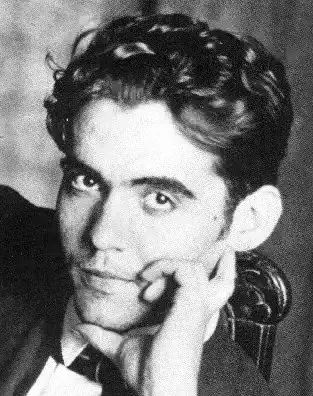
Federico García Lorca
Ode to Walt Whitman
Ode to Walt Whitman
By the East River and the Bronx
boys were singing, exposing their waists
with the wheel, with oil, leather, and the hammer.
Ninety thousand miners taking silver from the rocks
and children drawing stairs and perspectives.
But none of them could sleep,
none of them wanted to be the river,
none of them loved the huge leaves
or the shoreline's blue tongue.
By the East River and the Queensboro
boys were battling with industry
and the Jews sold to the river faun
the rose of circumcision,
and over bridges and rooftops, the mouth of the sky emptied
herds of bison driven by the wind.
But none of them paused,
none of them wanted to be a cloud,
none of them looked for ferns
or the yellow wheel of a tambourine.
As soon as the moon rises
the pulleys will spin to alter the sky;
a border of needles will besiege memory
and the coffins will bear away those who don't work.
New York, mire,
New York, mire and death.
What angel is hidden in your cheek?
Whose perfect voice will sing the truths of wheat?
Who, the terrible dream of your stained anemones?
Not for a moment, Walt Whitman, lovely old man,
have I failed to see your beard full of butterflies,
nor your corduroy shoulders frayed by the moon,
nor your thighs pure as Apollo's,
nor your voice like a column of ash,
old man, beautiful as the mist,
you moaned like a bird
with its sex pierced by a needle.
Enemy of the satyr,
enemy of the vine,
and lover of bodies beneath rough cloth...
Not for a moment, virile beauty,
who among mountains of coal, billboards, and railroads,
dreamed of becoming a river and sleeping like a river
with that comrade who would place in your breast
the small ache of an ignorant leopard.
Not for a moment, Adam of blood, Macho,
man alone at sea, Walt Whitman, lovely old man,
because on penthouse roofs,
gathered at bars,
emerging in bunches from the sewers,
trembling between the legs of chauffeurs,
or spinning on dance floors wet with absinthe,
the faggots, Walt Whitman, point you out.
He's one, too! That's right! And they land
on your luminous chaste beard,
blonds from the north, blacks from the sands,
crowds of howls and gestures,
like cats or like snakes,
the faggots, Walt Whitman, the faggots,
clouded with tears, flesh for the whip,
the boot, or the teeth of the lion tamers.
He's one, too! That's right! Stained fingers
point to the shore of your dream
when a friend eats your apple
with a slight taste of gasoline
and the sun sings in the navels
of boys who play under bridges.
But you didn't look for scratched eyes,
nor the darkest swamp where someone submerges children,
nor frozen saliva,
nor the curves slit open like a toad's belly
that the faggots wear in cars and on terraces
while the moon lashes them on the street corners of terror.
You looked for a naked body like a river.
Bull and dream who would join wheel with seaweed,
father of your agony, camellia of your death,
who would groan in the blaze of your hidden equator.
Because it's all right if a man doesn't look for his delight
in tomorrow morning's jungle of blood.
The sky has shores where life is avoided
and there are bodies that shouldn't repeat themselves in the dawn.
Agony, agony, dream, ferment, and dream.
This is the world, my friend, agony, agony.
Bodies decompose beneath the city clocks,
war passes by in tears, followed by a million gray rats,
the rich give their mistresses
small illuminated dying things,
and life is neither noble, nor good, nor sacred.
Man is able, if he wishes, to guide his desire
through a vein of coral or a heavenly naked body.
Tomorrow, loves will become stones, and Time
a breeze that drowses in the branches.
That's why I don't raise my voice, old Walt Whitman,
against the little boy who writes
the name of a girl on his pillow,
nor against the boy who dresses as a bride
in the darkness of the wardrobe,
nor against the solitary men in casinos
who drink prostitution's water with revulsion,
nor against the men with that green look in their eyes
who love other men and burn their lips in silence.
But yes against you, urban faggots,
tumescent flesh and unclean thoughts.
Mothers of mud. Harpies. Sleepless enemies
of the love that bestows crowns of joy.
Always against you, who give boys
drops of foul death with bitter poison.
Always against you,
Fairies of North America,
Pájaros of Havana,
Jotos of Mexico,
Sarasas of Cádiz,
Apios of Seville,
Cancos of Madrid,
Floras of Alicante,
Adelaidas of Portugal.
Faggots of the world, murderers of doves!
Slaves of women. Their bedroom bitches.
Opening in public squares like feverish fans
or ambushed in rigid hemlock landscapes.
No quarter given! Death
spills from your eyes
and gathers gray flowers at the mire's edge.
No quarter given! Attention!
Let the confused, the pure,
the classical, the celebrated, the supplicants
close the doors of the bacchanal to you.
And you, lovely Walt Whitman, stay asleep on the Hudson's banks
with your beard toward the pole, openhanded.
Soft clay or snow, your tongue calls for
comrades to keep watch over your unbodied gazelle.
Sleep on, nothing remains.
Dancing walls stir the prairies
and America drowns itself in machinery and lament.
I want the powerful air from the deepest night
to blow away flowers and inscriptions from the arch where you sleep,
and a black child to inform the gold-craving whites
that the kingdom of grain has arrived.
By the East River and the Bronx
boys were singing, exposing their waists
with the wheel, with oil, leather, and the hammer.
Ninety thousand miners taking silver from the rocks
and children drawing stairs and perspectives.
But none of them could sleep,
none of them wanted to be the river,
none of them loved the huge leaves
or the shoreline's blue tongue.
By the East River and the Queensboro
boys were battling with industry
and the Jews sold to the river faun
the rose of circumcision,
and over bridges and rooftops, the mouth of the sky emptied
herds of bison driven by the wind.
But none of them paused,
none of them wanted to be a cloud,
none of them looked for ferns
or the yellow wheel of a tambourine.
As soon as the moon rises
the pulleys will spin to alter the sky;
a border of needles will besiege memory
and the coffins will bear away those who don't work.
New York, mire,
New York, mire and death.
What angel is hidden in your cheek?
Whose perfect voice will sing the truths of wheat?
Who, the terrible dream of your stained anemones?
Not for a moment, Walt Whitman, lovely old man,
have I failed to see your beard full of butterflies,
nor your corduroy shoulders frayed by the moon,
nor your thighs pure as Apollo's,
nor your voice like a column of ash,
old man, beautiful as the mist,
you moaned like a bird
with its sex pierced by a needle.
Enemy of the satyr,
enemy of the vine,
and lover of bodies beneath rough cloth...
Not for a moment, virile beauty,
who among mountains of coal, billboards, and railroads,
dreamed of becoming a river and sleeping like a river
with that comrade who would place in your breast
the small ache of an ignorant leopard.
Not for a moment, Adam of blood, Macho,
man alone at sea, Walt Whitman, lovely old man,
because on penthouse roofs,
gathered at bars,
emerging in bunches from the sewers,
trembling between the legs of chauffeurs,
or spinning on dance floors wet with absinthe,
the faggots, Walt Whitman, point you out.
He's one, too! That's right! And they land
on your luminous chaste beard,
blonds from the north, blacks from the sands,
crowds of howls and gestures,
like cats or like snakes,
the faggots, Walt Whitman, the faggots,
clouded with tears, flesh for the whip,
the boot, or the teeth of the lion tamers.
He's one, too! That's right! Stained fingers
point to the shore of your dream
when a friend eats your apple
with a slight taste of gasoline
and the sun sings in the navels
of boys who play under bridges.
But you didn't look for scratched eyes,
nor the darkest swamp where someone submerges children,
nor frozen saliva,
nor the curves slit open like a toad's belly
that the faggots wear in cars and on terraces
while the moon lashes them on the street corners of terror.
You looked for a naked body like a river.
Bull and dream who would join wheel with seaweed,
father of your agony, camellia of your death,
who would groan in the blaze of your hidden equator.
Because it's all right if a man doesn't look for his delight
in tomorrow morning's jungle of blood.
The sky has shores where life is avoided
and there are bodies that shouldn't repeat themselves in the dawn.
Agony, agony, dream, ferment, and dream.
This is the world, my friend, agony, agony.
Bodies decompose beneath the city clocks,
war passes by in tears, followed by a million gray rats,
the rich give their mistresses
small illuminated dying things,
and life is neither noble, nor good, nor sacred.
Man is able, if he wishes, to guide his desire
through a vein of coral or a heavenly naked body.
Tomorrow, loves will become stones, and Time
a breeze that drowses in the branches.
That's why I don't raise my voice, old Walt Whitman,
against the little boy who writes
the name of a girl on his pillow,
nor against the boy who dresses as a bride
in the darkness of the wardrobe,
nor against the solitary men in casinos
who drink prostitution's water with revulsion,
nor against the men with that green look in their eyes
who love other men and burn their lips in silence.
But yes against you, urban faggots,
tumescent flesh and unclean thoughts.
Mothers of mud. Harpies. Sleepless enemies
of the love that bestows crowns of joy.
Always against you, who give boys
drops of foul death with bitter poison.
Always against you,
Fairies of North America,
Pájaros of Havana,
Jotos of Mexico,
Sarasas of Cádiz,
Apios of Seville,
Cancos of Madrid,
Floras of Alicante,
Adelaidas of Portugal.
Faggots of the world, murderers of doves!
Slaves of women. Their bedroom bitches.
Opening in public squares like feverish fans
or ambushed in rigid hemlock landscapes.
No quarter given! Death
spills from your eyes
and gathers gray flowers at the mire's edge.
No quarter given! Attention!
Let the confused, the pure,
the classical, the celebrated, the supplicants
close the doors of the bacchanal to you.
And you, lovely Walt Whitman, stay asleep on the Hudson's banks
with your beard toward the pole, openhanded.
Soft clay or snow, your tongue calls for
comrades to keep watch over your unbodied gazelle.
Sleep on, nothing remains.
Dancing walls stir the prairies
and America drowns itself in machinery and lament.
I want the powerful air from the deepest night
to blow away flowers and inscriptions from the arch where you sleep,
and a black child to inform the gold-craving whites
that the kingdom of grain has arrived.
752
Federico García Lorca
Las Seis Cuerdas
Las Seis Cuerdas
La guitarra,
hace llorar a los sueños.
El sollozo de las almas
perdidas,
se escapa por su boca
redonda.
Y como la tarántula
teje una gran estrella
para cazar suspiros,
que flotan en su negro
aljibe de madera.
La guitarra,
hace llorar a los sueños.
El sollozo de las almas
perdidas,
se escapa por su boca
redonda.
Y como la tarántula
teje una gran estrella
para cazar suspiros,
que flotan en su negro
aljibe de madera.
655
Federico García Lorca
Gacela of Unforseen Love
Gacela of Unforseen Love
No one understood the perfume
of the dark magnolia of your womb.
Nobody knew that you tormented
a hummingbird of love between your teeth.
A thousand Persian little horses fell asleep
in the plaza with moon of your forehead,
while through four nights I embraced
your waist, enemy of the snow.
Between plaster and jasmins, your glance
was a pale branch of seeds.
I sought in my heart to give you
the ivory letters that say "siempre",
"siempre", "siempre" : garden of my agony,
your body elusive always,
that blood of your veins in my mouth,
your mouth already lightless for my death.
No one understood the perfume
of the dark magnolia of your womb.
Nobody knew that you tormented
a hummingbird of love between your teeth.
A thousand Persian little horses fell asleep
in the plaza with moon of your forehead,
while through four nights I embraced
your waist, enemy of the snow.
Between plaster and jasmins, your glance
was a pale branch of seeds.
I sought in my heart to give you
the ivory letters that say "siempre",
"siempre", "siempre" : garden of my agony,
your body elusive always,
that blood of your veins in my mouth,
your mouth already lightless for my death.
853