

Poems in this theme
Soul
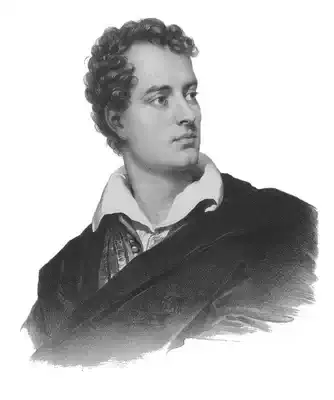
Lord Byron
The Prayer Of Nature
The Prayer Of Nature
Father of Light! great God of Heaven!
Hear'st thou the accents of despair?
Can guilt like man's be e'er forgiven?
Can vice atone for crimes by prayer?
Father of Light, on thee I call!
Thou seest my soul is dark within;
Thou who canst'mark the sparrow's fall,
Avert from me the death of sin.
No shrine I seek, to sects unknown;
Oh, point to me the path of truth!
Thy dread omnipotence I own;
Spare, yet amend, the faults of youth.
Let bigots rear a gloomy fane,
Let superstitition hail the pile,
Let priests, to spread their sable reign,
With tales of mystic rites beguile.
Shall man confine his Maker's sway
To Gothic domes of mouldering stone?
Thy temple is the face of the day;
Earth, ocean, heaven, thy boundless throne.
Shall man condemn his race to hell,
Unless they bend in pompous form?
Tell us that all, of one who fell,
Must perish in the mingling storm?
Shall each pretend to reach the skies,
Yet doom his brother to expire,
Whose soul a different hope supplies,
Or doctrines less severe inspire?
Shall these, by creeds they can't expound,
Prepare a fancied bliss or woe?
Shall reptiles, grovelling on the ground,
Their great Creator's purpose know?
Shall those, who live for self alone,
Whose years float on in a daily crime Shall
they by Faith for guilt atone,
And live beyond the bounds of Time?
Father! no prophet's laws I seek,Thy
laws in Nature's works appear;I
own myself corrupt and weak,
Yet will I pray, for thou wilt hear!
Thou, who canst guide the wandering star
Through trackness realms of other's space;
Who calm'st the elemental war,
Whose hand from pole to pole I trace.
Thou, who in wisdom placed me here,
Who, when thou wilt, canst take me hence,
Ah! whilst I tread this earthly sphere,
Extend to me thy wide defence.
To Thee, my God, to thee I call!
Whatever weal or woe betide,
By thy command I rise or fall,
In thy protection I confide.
If, when this dust to dust's restored,
My soul shall float on airy wing,
How shall thy glorious name adored
Inspire her feedle voice to sing!
But, if this fleeting spirit share
With clay the gaves eternal bed,
While life yet throbs I raise my prayer,
Though doom'd no more to quit the dead.
To Thee I breathe my humble strain;
Grateful for all thy mercies past,
And hope, my God, to thee again
This erring life may fly at last.
December 29, 1806
Father of Light! great God of Heaven!
Hear'st thou the accents of despair?
Can guilt like man's be e'er forgiven?
Can vice atone for crimes by prayer?
Father of Light, on thee I call!
Thou seest my soul is dark within;
Thou who canst'mark the sparrow's fall,
Avert from me the death of sin.
No shrine I seek, to sects unknown;
Oh, point to me the path of truth!
Thy dread omnipotence I own;
Spare, yet amend, the faults of youth.
Let bigots rear a gloomy fane,
Let superstitition hail the pile,
Let priests, to spread their sable reign,
With tales of mystic rites beguile.
Shall man confine his Maker's sway
To Gothic domes of mouldering stone?
Thy temple is the face of the day;
Earth, ocean, heaven, thy boundless throne.
Shall man condemn his race to hell,
Unless they bend in pompous form?
Tell us that all, of one who fell,
Must perish in the mingling storm?
Shall each pretend to reach the skies,
Yet doom his brother to expire,
Whose soul a different hope supplies,
Or doctrines less severe inspire?
Shall these, by creeds they can't expound,
Prepare a fancied bliss or woe?
Shall reptiles, grovelling on the ground,
Their great Creator's purpose know?
Shall those, who live for self alone,
Whose years float on in a daily crime Shall
they by Faith for guilt atone,
And live beyond the bounds of Time?
Father! no prophet's laws I seek,Thy
laws in Nature's works appear;I
own myself corrupt and weak,
Yet will I pray, for thou wilt hear!
Thou, who canst guide the wandering star
Through trackness realms of other's space;
Who calm'st the elemental war,
Whose hand from pole to pole I trace.
Thou, who in wisdom placed me here,
Who, when thou wilt, canst take me hence,
Ah! whilst I tread this earthly sphere,
Extend to me thy wide defence.
To Thee, my God, to thee I call!
Whatever weal or woe betide,
By thy command I rise or fall,
In thy protection I confide.
If, when this dust to dust's restored,
My soul shall float on airy wing,
How shall thy glorious name adored
Inspire her feedle voice to sing!
But, if this fleeting spirit share
With clay the gaves eternal bed,
While life yet throbs I raise my prayer,
Though doom'd no more to quit the dead.
To Thee I breathe my humble strain;
Grateful for all thy mercies past,
And hope, my God, to thee again
This erring life may fly at last.
December 29, 1806
570
Lord Byron
The Harp The Monarch Minstrel Swept
The Harp The Monarch Minstrel Swept
The harp the monarch minstrel swept,
The King of men, the loved of Heaven,
Which Music hallow'd while she wept
O'er tones her heart of hearts had given,
Redoubled be her tears, its chords are riven!
It soften'd men of iron mould,
It gave them virtues not their own;
No ear so dull, no soul so cold,
That felt not, fired not to the tone,
Till David's lyre grew mightier than his throne!
It told the triumphs of our King,
It wafted glory to our God;
It made our gladden'd valleys ring,
The cedars bow, the mountains nod;
Its sound aspired to heaven and there abode!
Since then, though heard on earth no more,
Devotion and her daughter Love
Still bid the bursting spirit soar
To sounds that seem as from above,
In dreams that day's broad light can not remove.
The harp the monarch minstrel swept,
The King of men, the loved of Heaven,
Which Music hallow'd while she wept
O'er tones her heart of hearts had given,
Redoubled be her tears, its chords are riven!
It soften'd men of iron mould,
It gave them virtues not their own;
No ear so dull, no soul so cold,
That felt not, fired not to the tone,
Till David's lyre grew mightier than his throne!
It told the triumphs of our King,
It wafted glory to our God;
It made our gladden'd valleys ring,
The cedars bow, the mountains nod;
Its sound aspired to heaven and there abode!
Since then, though heard on earth no more,
Devotion and her daughter Love
Still bid the bursting spirit soar
To sounds that seem as from above,
In dreams that day's broad light can not remove.
460
Lord Byron
The Dream
The Dream
I
Our life is twofold; Sleep hath its own world,
A boundary between the things misnamed
Death and existence: Sleep hath its own world,
And a wide realm of wild reality,
And dreams in their development have breath,
And tears, and tortures, and the touch of joy;
They leave a weight upon our waking thoughts,
They take a weight from off waking toils,
They do divide our being; they become
A portion of ourselves as of our time,
And look like heralds of eternity;
They pass like spirits of the past they
speak
Like sibyls of the future; they have power The
tyranny of pleasure and of pain;
They make us what we were not what
they will,
And shake us with the vision that's gone by,
The dread of vanished shadows Are
they so?
Is not the past all shadow? What
are they?
Creations of the mind? The
mind can make
Substances, and people planets of its own
With beings brighter than have been, and give
A breath to forms which can outlive all flesh.
I would recall a vision which I dreamed
Perchance in sleep for
in itself a thought,
A slumbering thought, is capable of years,
And curdles a long life into one hour.
II
I saw two beings in the hues of youth
Standing upon a hill, a gentle hill,
Green and of mild declivity, the last
As 'twere the cape of a long ridge of such,
Save that there was no sea to lave its base,
But a most living landscape, and the wave
Of woods and cornfields,
and the abodes of men
Scattered at intervals, and wreathing smoke
Arising from such rustic roofs: the hill
Was crowned with a peculiar diadem
Of trees, in circular array, so fixed,
Not by the sport of nature, but of man:
These two, a maiden and a youth, were there
Gazing the
one on all that was beneath
Fair as herself but
the boy gazed on her;
And both were young, and one was beautiful:
And both were young yet
not alike in youth.
As the sweet moon on the horizon's verge,
The maid was on the eve of womanhood;
The boy had fewer summers, but his heart
Had far outgrown his years, and to his eye
There was but one beloved face on earth,
And that was shining on him; he had looked
Upon it till it could not pass away;
He had no breath, no being, but in hers:
She was his voice; he did not speak to her,
But trembled on her words; she was his sight,
For his eye followed hers, and saw with hers,
Which coloured all his objects; he
had ceased
To live within himself: she was his life,
The ocean to the river of his thoughts,
Which terminated all; upon a tone,
A touch of hers, his blood would ebb and flow,
And his cheek change tempestuously his
heart
Unknowing of its cause of agony.
But she in these fond feelings had no share:
Her sighs were not for him; to her he was
Even as a brother but
no more; 'twas much,
For brotherless she was, save in the name
Her infant friendship had bestowed on him;
Herself the solitary scion left
Of a timehonoured
race. It
was a name
Which pleased him, and yet pleased him not and
why?
Time taught him a deep answer when
she loved
Another; even now she loved another,
And on the summit of that hill she stood
Looking afar if yet her lover's steed
Kept pace with her expectancy, and flew.
III
A change came o'er the spirit of my dream.
There was an ancient mansion, and before
Its walls there was a steed caparisoned:
Within an antique Oratory stood
The Boy of whom I spake; he
was alone,
And pale, and pacing to and fro: anon
He sate him down, and seized a pen, and traced
Words which I could not guess of; then he leaned
His bowed head on his hands and shook, as 'twere
With a convulsion then
rose again,
And with his teeth and quivering hands did tear
What he had written, but he shed no tears.
And he did calm himself, and fix his brow
Into a kind of quiet: as he paused,
The Lady of his love reentered
there;
She was serene and smiling then, and yet
She knew she was by him beloved; she knew For
quickly comes such knowledge that
his heart
Was darkened with her shadow, and she saw
That he was wretched, but she saw not all.
He rose, and with a cold and gentle grasp
He took her hand; a moment o'er his face
A tablet of unutterable thoughts
Was traced, and then it faded, as it came;
He dropped the hand he held, and with slow steps
Retired, but not as bidding her adieu,
For they did part with mutual smiles; he passed
From out the massy gate of that old Hall,
And mounting on his steed he went his way;
And ne'er repassed that hoary threshold more.
IV
A change came o'er the spirit of my dream.
The Boy was sprung to manhood: in the wilds
Of fiery climes he made himself a home,
And his Soul drank their sunbeams; he was girt
With strange and dusky aspects; he was not
Himself like what he had been; on the sea
And on the shore he was a wanderer;
There was a mass of many images
Crowded like waves upon me, but he was
A part of all; and in the last he lay
Reposing from the noontide sultriness,
Couched among fallen columns, in the shade
Of ruined walls that had survived the names
Of those who reared them; by his sleeping side
Stood camels grazing, and some goodly steeds
Were fastened near a fountain; and a man,
Glad in a flowing garb, did watch the while,
While many of his tribe slumbered around:
And they were canopied by the blue sky,
So cloudless, clear, and purely beautiful,
That God alone was to be seen in heaven.
V
A change came o'er the spirit of my dream.
The Lady of his love was wed with One
Who did not love her better: in her home,
A thousand leagues from his, her
native home,
She dwelt, begirt with growing Infancy,
Daughters and sons of Beauty, but
behold!
Upon her face there was a tint of grief,
The settled shadow of an inward strife,
And an unquiet drooping of the eye,
As if its lid were charged with unshed tears.
What could her grief be? she
had all she loved,
And he who had so loved her was not there
To trouble with bad hopes, or evil wish,
Or illrepressed
affliction, her pure thoughts.
What could her grief be? she
had loved him not,
Nor given him cause to deem himself beloved,
Nor could he be a part of that which preyed
Upon her mind a
spectre of the past.
VI
A change came o'er the spirit of my dream.
The Wanderer was returned. I
saw him stand
Before an altar with
a gentle bride;
Her face was fair, but was not that which made
The Starlight of his Boyhood; as
he stood
Even at the altar, o'er his brow there came
The selfsame aspect and the quivering shock
That in the antique Oratory shook
His bosom in its solitude; and then As
in that hour a
moment o'er his face
The tablet of unutterable thoughts
Was traced and
then it faded as it came,
And he stood calm and quiet, and he spoke
The fitting vows, but heard not his own words,
And all things reeled around him; he could see
Not that which was, nor that which should have been But
the old mansion, and the accustomed hall,
And the remembered chambers, and the place,
The day, the hour, the sunshine, and the shade,
All things pertaining to that place and hour,
And her who was his destiny, came back
And thrust themselves between him and the light;
What business had they there at such a time?
VII
A change came o'er the spirit of my dream.
The Lady of his love; Oh!
she was changed,
As by the sickness of the soul; her mind
Had wandered from its dwelling, and her eyes,
They had not their own lustre, but the look
Which is not of the earth; she was become
The queen of a fantastic realm; her thoughts
Were combinations of disjointed things;
And forms impalpable and unperceived
Of others' sight familiar were to hers.
And this the world calls frenzy; but the wise
Have a far deeper madness, and the glance
Of melancholy is a fearful gift;
What is it but the telescope of truth?
Which strips the distance of its fantasies,
And brings life near in utter nakedness,
Making the cold reality too real!
VIII
A change came o'er the spirit of my dream.
The Wanderer was alone as heretofore,
The beings which surrounded him were gone,
Or were at war with him; he was a mark
For blight and desolation, compassed round
With Hatred and Contention; Pain was mixed
In all which was served up to him, until,
Like to the Pontic monarch of old days,
He fed on poisons, and they had no power,
But were a kind of nutriment; he lived
Through that which had been death to many men,
And made him friends of mountains; with the stars
And the quick Spirit of the Universe
He held his dialogues: and they did teach
To him the magic of their mysteries;
To him the book of Night was opened wide,
And voices from the deep abyss revealed
A marvel and a secret. Be
it so.
IX
My dream is past; it had no further change.
It was of a strange order, that the doom
Of these two creatures should be thus traced out
Almost like a reality the
one
To end in madness both
in misery.
I
Our life is twofold; Sleep hath its own world,
A boundary between the things misnamed
Death and existence: Sleep hath its own world,
And a wide realm of wild reality,
And dreams in their development have breath,
And tears, and tortures, and the touch of joy;
They leave a weight upon our waking thoughts,
They take a weight from off waking toils,
They do divide our being; they become
A portion of ourselves as of our time,
And look like heralds of eternity;
They pass like spirits of the past they
speak
Like sibyls of the future; they have power The
tyranny of pleasure and of pain;
They make us what we were not what
they will,
And shake us with the vision that's gone by,
The dread of vanished shadows Are
they so?
Is not the past all shadow? What
are they?
Creations of the mind? The
mind can make
Substances, and people planets of its own
With beings brighter than have been, and give
A breath to forms which can outlive all flesh.
I would recall a vision which I dreamed
Perchance in sleep for
in itself a thought,
A slumbering thought, is capable of years,
And curdles a long life into one hour.
II
I saw two beings in the hues of youth
Standing upon a hill, a gentle hill,
Green and of mild declivity, the last
As 'twere the cape of a long ridge of such,
Save that there was no sea to lave its base,
But a most living landscape, and the wave
Of woods and cornfields,
and the abodes of men
Scattered at intervals, and wreathing smoke
Arising from such rustic roofs: the hill
Was crowned with a peculiar diadem
Of trees, in circular array, so fixed,
Not by the sport of nature, but of man:
These two, a maiden and a youth, were there
Gazing the
one on all that was beneath
Fair as herself but
the boy gazed on her;
And both were young, and one was beautiful:
And both were young yet
not alike in youth.
As the sweet moon on the horizon's verge,
The maid was on the eve of womanhood;
The boy had fewer summers, but his heart
Had far outgrown his years, and to his eye
There was but one beloved face on earth,
And that was shining on him; he had looked
Upon it till it could not pass away;
He had no breath, no being, but in hers:
She was his voice; he did not speak to her,
But trembled on her words; she was his sight,
For his eye followed hers, and saw with hers,
Which coloured all his objects; he
had ceased
To live within himself: she was his life,
The ocean to the river of his thoughts,
Which terminated all; upon a tone,
A touch of hers, his blood would ebb and flow,
And his cheek change tempestuously his
heart
Unknowing of its cause of agony.
But she in these fond feelings had no share:
Her sighs were not for him; to her he was
Even as a brother but
no more; 'twas much,
For brotherless she was, save in the name
Her infant friendship had bestowed on him;
Herself the solitary scion left
Of a timehonoured
race. It
was a name
Which pleased him, and yet pleased him not and
why?
Time taught him a deep answer when
she loved
Another; even now she loved another,
And on the summit of that hill she stood
Looking afar if yet her lover's steed
Kept pace with her expectancy, and flew.
III
A change came o'er the spirit of my dream.
There was an ancient mansion, and before
Its walls there was a steed caparisoned:
Within an antique Oratory stood
The Boy of whom I spake; he
was alone,
And pale, and pacing to and fro: anon
He sate him down, and seized a pen, and traced
Words which I could not guess of; then he leaned
His bowed head on his hands and shook, as 'twere
With a convulsion then
rose again,
And with his teeth and quivering hands did tear
What he had written, but he shed no tears.
And he did calm himself, and fix his brow
Into a kind of quiet: as he paused,
The Lady of his love reentered
there;
She was serene and smiling then, and yet
She knew she was by him beloved; she knew For
quickly comes such knowledge that
his heart
Was darkened with her shadow, and she saw
That he was wretched, but she saw not all.
He rose, and with a cold and gentle grasp
He took her hand; a moment o'er his face
A tablet of unutterable thoughts
Was traced, and then it faded, as it came;
He dropped the hand he held, and with slow steps
Retired, but not as bidding her adieu,
For they did part with mutual smiles; he passed
From out the massy gate of that old Hall,
And mounting on his steed he went his way;
And ne'er repassed that hoary threshold more.
IV
A change came o'er the spirit of my dream.
The Boy was sprung to manhood: in the wilds
Of fiery climes he made himself a home,
And his Soul drank their sunbeams; he was girt
With strange and dusky aspects; he was not
Himself like what he had been; on the sea
And on the shore he was a wanderer;
There was a mass of many images
Crowded like waves upon me, but he was
A part of all; and in the last he lay
Reposing from the noontide sultriness,
Couched among fallen columns, in the shade
Of ruined walls that had survived the names
Of those who reared them; by his sleeping side
Stood camels grazing, and some goodly steeds
Were fastened near a fountain; and a man,
Glad in a flowing garb, did watch the while,
While many of his tribe slumbered around:
And they were canopied by the blue sky,
So cloudless, clear, and purely beautiful,
That God alone was to be seen in heaven.
V
A change came o'er the spirit of my dream.
The Lady of his love was wed with One
Who did not love her better: in her home,
A thousand leagues from his, her
native home,
She dwelt, begirt with growing Infancy,
Daughters and sons of Beauty, but
behold!
Upon her face there was a tint of grief,
The settled shadow of an inward strife,
And an unquiet drooping of the eye,
As if its lid were charged with unshed tears.
What could her grief be? she
had all she loved,
And he who had so loved her was not there
To trouble with bad hopes, or evil wish,
Or illrepressed
affliction, her pure thoughts.
What could her grief be? she
had loved him not,
Nor given him cause to deem himself beloved,
Nor could he be a part of that which preyed
Upon her mind a
spectre of the past.
VI
A change came o'er the spirit of my dream.
The Wanderer was returned. I
saw him stand
Before an altar with
a gentle bride;
Her face was fair, but was not that which made
The Starlight of his Boyhood; as
he stood
Even at the altar, o'er his brow there came
The selfsame aspect and the quivering shock
That in the antique Oratory shook
His bosom in its solitude; and then As
in that hour a
moment o'er his face
The tablet of unutterable thoughts
Was traced and
then it faded as it came,
And he stood calm and quiet, and he spoke
The fitting vows, but heard not his own words,
And all things reeled around him; he could see
Not that which was, nor that which should have been But
the old mansion, and the accustomed hall,
And the remembered chambers, and the place,
The day, the hour, the sunshine, and the shade,
All things pertaining to that place and hour,
And her who was his destiny, came back
And thrust themselves between him and the light;
What business had they there at such a time?
VII
A change came o'er the spirit of my dream.
The Lady of his love; Oh!
she was changed,
As by the sickness of the soul; her mind
Had wandered from its dwelling, and her eyes,
They had not their own lustre, but the look
Which is not of the earth; she was become
The queen of a fantastic realm; her thoughts
Were combinations of disjointed things;
And forms impalpable and unperceived
Of others' sight familiar were to hers.
And this the world calls frenzy; but the wise
Have a far deeper madness, and the glance
Of melancholy is a fearful gift;
What is it but the telescope of truth?
Which strips the distance of its fantasies,
And brings life near in utter nakedness,
Making the cold reality too real!
VIII
A change came o'er the spirit of my dream.
The Wanderer was alone as heretofore,
The beings which surrounded him were gone,
Or were at war with him; he was a mark
For blight and desolation, compassed round
With Hatred and Contention; Pain was mixed
In all which was served up to him, until,
Like to the Pontic monarch of old days,
He fed on poisons, and they had no power,
But were a kind of nutriment; he lived
Through that which had been death to many men,
And made him friends of mountains; with the stars
And the quick Spirit of the Universe
He held his dialogues: and they did teach
To him the magic of their mysteries;
To him the book of Night was opened wide,
And voices from the deep abyss revealed
A marvel and a secret. Be
it so.
IX
My dream is past; it had no further change.
It was of a strange order, that the doom
Of these two creatures should be thus traced out
Almost like a reality the
one
To end in madness both
in misery.
693
Lord Byron
The Corsair
The Corsair
'O'er the glad waters of the dark blue sea,
Our thoughts as boundless, and our soul's as free
Far as the breeze can bear, the billows foam,
Survey our empire, and behold our home!
These are our realms, no limits to their swayOur
flag the sceptre all who meet obey.
Ours the wild life in tumult still to range
From toil to rest, and joy in every change.
Oh, who can tell? not thou, luxurious slave!
Whose soul would sicken o'er the heaving wave;
Not thou, vain lord of wantonness and ease!
whom slumber soothes not pleasure
cannot please Oh,
who can tell, save he whose heart hath tried,
And danced in triumph o'er the waters wide,
The exulting sense the
pulse's maddening play,
That thrills the wanderer of that trackless way?
That for itself can woo the approaching fight,
And turn what some deem danger to delight;
That seeks what cravens shun with more than zeal,
And where the feebler faint can only feel Feel
to
the rising bosom's inmost core,
Its hope awaken and Its spirit soar?
No dread of death if with us die our foes Save
that it seems even duller than repose:
Come when it will we
snatch the life of life When
lost what
recks it but disease or strife?
Let him who crawls enamour'd of decay,
Cling to his couch, and sicken years away:
Heave his thick breath, and shake his palsied head;
Ours the
fresh turf; and not the feverish bed.
While gasp by gasp he falters forth his soul,
Ours with one pang one
bound escapes
control.
His corse may boast its urn and narrow cave,
And they who loath'd his life may gild his grave:
Ours are the tears, though few, sincerely shed,
When Ocean shrouds and sepulchres our dead.
For us, even banquets fond regret supply
In the red cup that crowns our memory;
And the brief epitaph in danger's day,
When those who win at length divide the prey,
And cry, Remembrance saddening o'er each brow,
How had the brave who fell exulted now!'
II.
Such were the notes that from the Pirate's isle
Around the kindling watchfire
rang the while:
Such were the sounds that thrill'd the rocks along,
And unto ears as rugged seem'd a song!
In scatter'd groups upon the golden sand,
They gamecarouseconverseor
whet the brand:
Select the armsto
each his blade assign,
And careless eye the blood that dims its shine.
Repair the boat, replace the helm or oar,
While others straggling muse along the shore:
For the wild bird the busy springes set,
Or spread beneath the sun the dripping net:
Gaze where some distant sail a speck supplies
With all the 'thirsting eve of Enterprise:
Tell o'er the tales of many a night of toil,
And marvel where they next shall seize a spoil:
No matter wheretheir
chief's allotment this;
Theirs, to believe no prey nor plan amiss.
But who that CHIEF? his name on every shore
Is famed and fear'd they
ask and know no more.
With these he mingles not but to command;
Few are his words, but keen his eye and hand.
Ne'er seasons he with mirth their jovial mess
But they forgive his silence for success.
Ne'er for his lip the purpling cup they fill,
That goblet passes him untasted still And
for his fare the
rudest of his crew
Would that, in turn, have pass'd untasted too;
Earth's coarsest bread, the garden's homeliest roots,
And scarce the summer luxury of fruits,
His short repast in humbleness supply
With all a hermit's board would scarce deny.
But while he shuns the grosser joys of sense,
His mind seems nourish'd by that abstinence.
'Steer to that shore! ' they
sail. 'Do this!' '
tis done:
'Now form and follow me!' the
spoil is won.
Thus prompt his accents and his actions still,
And all obey and few inquire his will;
So To such, brief answer and contemptuous eye
Convey reproof, nor further deign reply.
III.
'A sail! sail!
' a
promised prize to Hope!
Her nation flag
how
speaks the telescope?
No prize, alas! but yet a welcome sail:
The bloodred
signal glitters in the gale.
Yes she
is ours a
home returning
bark Blow
fair thou breeze! she
anchors ere the dark.
Already doubled is the cape our
bay
Receives that prow which proudly spurns the spray.
How gloriously her gallant course she goes!
Her white wings flying never
from her foesShe
walks the waters like a thing of life,
And seems to dare the elements to strife.
Who would not brave the battlefire,
the wreck,
To move the monarch of her peopled deck?
IV.
Hoarse o'er her side the rustling cable rings;
The sails are furl'd; and anchoring round she swings;
And gathering loiterers on the land discern
Her boat descending from the latticed stem.
'Tis mann'dthe
oars keep concert to the strand,
Till grates her keel upon the shallow sand.
Hail to the welcome shout! the
friendly speech!
When hand grasps hand uniting on the beach;
The smile, the question, and the quick reply,
And the heart's promise of festivity!
V.
The tidings spread, and gathering grows the crowd;
The hum of voices, and the laughter loud,
And woman's gentler anxious tone is heard Friends',
husbands', lovers' names in each dear word:
'Oh! are they safe? we ask not of success But
shall we see them? will their accents bless?
From where the battle roars, the billows chafe
They doubtless boldly did but
who are safe?
Here let them haste to gladden and surprise,
And kiss the doubt from these delighted eyes!'
VI.
'Where is our chief? for him we bear report And
doubt that joy which
hails our coming short;
Yet thus sincere, 'tis cheering, though so brief;
But, Juan! instant guide us to our chief:
Our greeting paid, we'll feast on our return,
And all shall hear what each may wish to learn.'
Ascending slowly by the rockhewn
way,
To where his watchtower
beetles o'er the bay,
By bushy brake, and wild flowers blossoming,
And freshness breathing from each silver spring,
Whose scatter'd streams from granite basins burst,
Leap into life, and sparkling woo your thirst;
From crag to cliff they mount Near
yonder cave,
What lonely straggler looks along the wave?
In pensive posture leaning on the brand,
Not oft a restingstaff
to that red hand?
'Tis he 'tis Conrad here,
as wont, alone;
On Juan!
on
and
make our purpose known.
The bark he views and
tell him we would greet
His ear with tidings he must quickly meet:
We dare not yet approachthou
know'st his mood
When strange or uninvited steps intrude.'
VII.
Him Juan sought, and told of their intent;He
spake not, but a sign express'd assent.
These Juan calls they
come to
their salute
He bends him slightly, but his lips are mute.
'These letters, Chief, are from the Greek the
spy,
Who still proclaims our spoil or peril nigh:
Whate'er his tidings, we can well report,
Much that' '
Peace, peace! ' he
cuts their prating short.
Wondering they turn, abash'd, while each to each
Conjecture whispers in his muttering speech:
They watch his glance with many a stealing look
To gather how that eye the tidings took;
But, this as if he guess'd, with head aside,
Perchance from some emotion, doubt, or pride,
He read the scroll '
My tablets, Juan' hark Where
is Gonsalvo?'
'In the anchor'd bark'
'There let him stay to
him this order bear Back
to your duty for
my course prepare:
Myself this enterprise tonight
will share.'
'Tonight,
Lord Conrad!'
'Ay! at set of sun:
The breeze will freshen when the day is done.
My corslet, cloak one
hour and we are gone.
Sling on thy bugle see
that free from rust
My carbinelock
springs worthy of my trust.
Be the edge sharpen'd of my boardingbrand,
And give its guard more room to fit my hand.
This let the armourer with speed dispose
Last time, it more fatigued my arm than foes:
Mark that the signalgun
be duly fired,
To tell us when the hour of stay's expired.'
VIII.
They make obeisance, and retire in haste,
Too soon to seek again the watery waste:
Yet they repine not so
that Conrad guides;
And who dare question aught that he decides?
That man of loneliness and mystery
Scarce seen to smile, and seldom heard to sigh;
Whose name appals the fiercest of his crew,
And tints each swarthy cheek with sallower hue;
Still sways their souls with that commanding art
That dazzles, leads, yet chills the vulgar heart.
What is that spell, that thus his lawless train
Confess and envy, yet oppose in vain?
What should it be, that thus their faith can bind?
The power of Thought the
magic of the Mind!
Link'd with success, assumed and kept with skill,
That moulds another's weakness to its will;
Wields with their hands, but, still to these unknown,
Makes even their mightiest deeds appear his own
Such hath it been shall be beneath
the sun
The many still must labour for the one!
'Tis Nature's doom but
let the wretch who toils
Accuse not, hate not him who wears the spoils.
Oh! if he knew the weight of splendid chains,
How light the balance of his humbler pains!
IX.
Unlike the heroes of each ancient race,
Demons in act, but Gods at least in face,
In Conrad's form seems little to admire,
Though his dark eyebrow shades a glance of fire:
Robust but not Herculean to
the sight
No giant frame sets forth his common height;
Yet, in the whole, who paused to look again,
Saw more than marks the crowd of vulgar men;
They gaze and marvel how and
still confess
That thus it is, but why they cannot guess.
Sunbumt
his cheek, his forehead high and pale
The sable curls in wild profusion veil;
And oft perforce his rising lip reveals
The haughtier thought it curbs, but scarce conceals
Though smooth his voice, and calm his general mien'
Still seems there something he would not have seen
His features' deepening lines and varying hue
At times attracted, yet perplex'd the view,
As if within that murkiness of mind
Work'd feelings fearful, and yet undefined
Such might it be that
none could truly tell Too
close inquiry his stern glance would quell.
There breathe but few whose aspect might defy
The full encounter of his searching eye;
He had the skill, when Cunning's gaze would seek
To probe his heart and watch his changing cheek
At once the observer's purpose to espy,
And on himself roll back his scrutiny,
Lest he to Conrad rather should betray
Some secret thought, than drag that chief's to day.
There was a laughing Devil in his sneer,
That raised emotions both of rage and fear;
And where his frown of hatred darkly fell,
Hope withering fled, and Mercy sigh'd farewell!
X.
Slight are the outward signs of evil thought,
Withinwithin'
twas there the spirit wrought!
Love shows all changesHate,
Ambition, Guile,
Betray no further than the bitter smile;
The lip's least curl, the lightest paleness thrown
Along the govern'd aspect, speak alone
Of deeper passions; and to judge their mien,
He, who would see, must be himself unseen.
Thenwith
the hurried tread, the upward eye,
The clenched hand, the pause of agony,
That listens, starting, lest the step too near
Approach intrusive on that mood of fear;
Thenwith
each feature working from the heart,
With feelings, loosed to strengthennot
depart,
That rise, convulse, contendthat
freeze, or glow
Flush in the' cheek, or damp upon the brow;
Then, Stranger! if thou canst, and tremblest not
Behold his soulthe
rest that soothes his lot!
Mark how that lone and blighted bosom sears
The scathing thought of execrated years!
Beholdbut
who hath seen, or e'er shall see,
Man as himselfthe
secret spirit free?
XI.
Yet was not Conrad thus by Nature sent
To lead the guiltyguilt's
worse instrumentHis
soul was changed, before his deeds had driven
Him forth to war with man and forfeit heaven
Warp'd by the world in Disappointment's school,
In words too wise, in conduct there a fool;
Too firm to yield, and far too proud to stoop,
Doom'd by his very virtues for a dupe,
He cursed those virtues as the cause of ill,
And not the traitors who betray'd him still;
Nor deem'd that gifts bestow'd on better men
Had left him joy, and means to give again
Fear'd, shunn'd, belied, ere youth had lost her force,
He hated man too much to feel remorse,
And thought the voice of wrath a sacred call,
To pay the injuries of some on all.
He knew himself a villainbut
he deem'd
The rest no better than the thing he seem'd
And scorn'd'the best as hypocrites who hid
Those deeds the bolder spirit plainly did.
He knew himself detested, but he knew
The hearts that loath'd him, crouch'd and dreaded too.
Lone, wild, and strange, he stood alike exempt
From all affection and from all contempt;
His name could sadden, and his acts surprise;
But they that fear'd him dared not to despise;
Man spurns the worm, but pauses ere he wake
The slumbering venom of the folded snake:
The first may turn, but not avenge the blow;
The last expires, but leaves no living foe;
Fast to the doom'd offender's form it clings,
And he may crushnot
conquerstill
it stings!
XII.
None are all evilquickening
round his heart
One softer feeling would not yet depart
Oft could he sneer at others as beguiled
By passions worthy of a fool or child;
Yet 'gainst that passion vainly still he strove,
And even in him it asks the name of Love!
Yes, it was loveunchangeableunchanged,
Felt but for one from whom he never ranged;
Though fairest captives daily met his eye,
He shunn'd, nor sought, but coldly pass'd them by;
Though many a beauty droop'd in prison'd bower,
None ever sooth'd his most unguarded hour.
Yesit
was Loveif
thoughts of tenderness
Tried in temptation, strengthen'd by distress
Unmoved by absence, firm in every clime,
And yetoh
more than all! untired by time;
Which nor defeated hope, nor baffled wile,
Could render sullen were she near to smile,
Nor rage could fire, nor sickness fret to vent
On her one murmur of his discontent;
Which still would meet with joy, with calmness part,
Lest that his look of grief should reach her heart;
Which nought removed, nor menaced to removeIf
there be love in mortalsthis
was love!
He was a villainay,
reproaches shower
On himbut
not the passion, nor its power,
Which only proved, all other virtues gone,
Not guilt itself could quench this loveliest one!
XIII.
He paused a momenttill
his hastening men
Pass'd the first winding downward to the glen.
'Strange tidings!many
a peril have I pass'd
Nor know I why this next appears the last!
Yet so my heart forebodes, but must not fear
Nor shall my followers find me falter here.
'Tis rash to meet, but surer death to wait
Till here they hunt us to undoubted fate;
And, if my plan but hold, and Fortune smile,
We'll furnish mourners for our funeral pile.
Ay, let them slumberpeaceful
be their dreams!
Morn ne'er awoke them with such brilliant beams
As kindle high toflight
(but blow, thou breeze!)
To warm these slow avengers of the sea
Now to MedoraOh!
my sinking heart,
Long may her own be lighter than thou art!
Yet was I bravemean
boast where all are brave!
Ev'n insects sting for aught they seek to save.
This common courage which with brutes we share
That owes its' deadliest efforts to despair,
Small merit claimsbut
'twas my nobler hope
To teach my few with numbers still to cope;
Long have I led themnot
to vainly bleed:
No medium nowwe
perish or succeed;
So let it beit
irks not me to die;
But thus to urge them whence they cannot fly.
My lot hath long had little of my care,
But chafes my pride thus baffled in the snare:
Is this my skill? my craft? to set at last
Hope, power, and life upon a single cast?
Oh' Fate!accuse
thy folly, not thy fate!
She may redeem thee still, not yet too late.'
XIV.
Thus with himself communion held he, till
He reach'd the summit of his towercrown'd hill:
There at the portal pausedor
wild and soft
He heard those accents never heard too oft
Through the high lattice far yet sweet they rung,
And these the notes his bird of beauty sung:
1.
'Deep in my soul that tender secret dwells,
Lonely and lost to light for evermore,
Save when to thine my heart responsive swells,
Then trembles into silence as before
2.
'There, in its centre' a sepulchral lamp
Burns the slow flame, eternal, but unseen;
Which not the darkness of despair can damp,
Though vain its ray as it had never been.
3.
'Remember meOh!
pass not thou my grave
Without one thought whose relics there recline
The only pang my bosom dare not brave
Must be to find forgetfulness in thine.
4.
'My fondest, faintest, latest accents hearGrief
for the dead not virtue can reprove;
Then give me all I ever ask'da
tear,
The firstlastsole
reward of so much love!'
He pass'd the portal, cross'd the corridor,
And reach'd the chamber as the strain gave o'er:
'My own Medora! sure thy song is sad'
'In Conrad's absence wouldst thou have it glad?
Without thine ear to listen to my lay,
Still must my song my thoughts, my soul betray:
Still must each action to my bosom suit,
My heart unhush'd, although my lips were mute!
Oh! many a night on this lone couch reclined,
My dreaming fear with storms hath wing'd the wind,
And deem'd the breath that faintly fann'd thy sail
The murmuring prelude of the ruder gale;
Though soft, it seem'd the low prophetic dirge,
That mourn'd thee floating on the savage surge;
Still would I rise to rouse the beacon fire,
Lest spies less true should let the blaze expire;
And many a restless hour outwatch'd each star,
And morning cameand
still thou wert afar.
Oh! how the chill blast on my bosom blew,
And day broke dreary on my troubled view,
And still I gazed and gazedand
not a prow
Was granted to my tears, my truth, my vow!
At length 'twas noonI
hail'd and blest the mast
That met my sightit
near'dAlas!
it pass'd!
Another cameOh
God! 'twas thine at last!
Would that those days were over! wilt thou ne'er,
My Conrad! learn the joys of peace to share?
Sure thou hast more than wealth, and many a home
As bright as this invites us not to roam:
Thou know'st it is not peril that I fear,
I only tremble when thou art not here;
Then not for mine, but that far dearer life,
Which flies from love and languishes for strifeHow
strange that heart, to me so tender still,
Should war with nature and its better will!'
'Yea, strange indeedthat
heart hath long been changed;
Wormlike
'twas trampled, adderlike
avenged,
Without one hope on earth beyond thy love,
And scarce a glimpse of mercy from above.
Yet the same feeling which thou dost condemn,
My very love to thee is hate to them,
So closely mingling here, that disentwined,
I cease to love thee when I love mankind:
Yet dread not this the
proof of all the past
Assures the future that my love will last;
But oh,
Medora! nerve thy gentler heart;
This hour againbut
not for longwe
part.'
'This hour we partmy
heart foreboded this:
Thus ever fade my fairy dreams of bliss.
This hourit
cannot bethis
hour away!
Yon bark hath hardly anchor'd in the bay:
Her consort still is absent, and her crew
Have need of rest before they toil anew:
My love! thou mock'st my weakness; and wouldst steel
My breast before the time when it must feel;
But trifle now no more with my distress,
Such mirth hath less of play than bitterness.
Be silent, Conrad! dearest!
come and share
The feast these hands delighted to prepare;
Light toil! to cull and dress thy frugal fare!
See, I have pluck'd the fruit that promised best,
And where not sure, perplex'd, but pleased, I guess'd
At such as seem'd the fairest; thrice the hill
My steps have wound to try the coolest rill;
Yes! thy sherbet tonight will sweetly flow,
See how it sparkles in its vase of snow!
The grapes' gay juice thy bosom never cheers;
Thou more than Moslem when the cup appears:
Think not I mean to chidefor
I rejoice
What others deem a penance is thy choice.
But come, the board is spread; our silver lamp
Is trimm'd, and heeds not the sirocco's damp:
Then shall my handmaids while the time along,
And join with me the dance, or wake the song;
Or my guitar, which still thou lov'st to hear'
Shall soothe or lullor,
should it vex thine ear
We'll turn the' tale, by Ariosto told,
Of fair Olympia loved and left of old.
Why, thou wert worse than he who broke his vow
To that lost damsel, shouldst thou leave me now;
Or even that traitor chiefI've
seen thee smile,
When the dear sky show'd Ariadne's Isle,
Which I have pointed from these cliffs the while:
And thus half sportive, half in fear, I said,
Lest time should rake that doubt to more than dread,
Thus Conrad, too, win quit me for the main;
And he deceived mefor
he came again!'
'Again, againand
oft againmy
love!
If there be life below, and hope above,
He will returnbut
now, the moments bring
The time of parting with redoubled wing:
The why, the where what
boots it now to tell?
Since all must end in that wild word farewell!
Yet would I faindid
time allow discloseFear
notthese
are no formidable foes
And here shall watch a more than wonted guard,
For sudden siege and long defence prepared:
Nor be thou lonely, though thy lord 's away,
Our matrons and thy handmaids with thee stay;
And this thy comfortthat,
when next we meet,
Security shall make repose more sweet.
List!'
tis the bugle! 'Juan
shrilly blew'
One kissone
moreanotherOh!
Adieu!'
She roseshe
sprungshe
clung to his embrace,
Till his heart heaved beneath her hidden face:
He dared not raise to his that deepblue
eye,
Which downcast droop'd in tearless agony.
Her long fair hair lay floating o'er his arms,
In all the wildness of dishevell'd charms;
Scarce beat that bosom where his image dwelt
So fullthat
feeling seem'd almost Unfelt!
Harkpeals
the thunder of the signalgun
It told 'twas sunset, and he cursed that sun.
Againagainthat
form he madly press'd,
Which mutely clasp'd, imploringly caress'd!
And tottering to the couch his bride he bore,
One moment gazed, as if to gaze no more;
Felt that for him earth held but her alone,
Kiss'd her cold foreheadturn'dis
Conrad gone?
XV.
'And is he gone?' on sudden solitude
How oft that fearful question will intrude
'Twas but an instant past, and here he stood!
And now 'without
the portal's porch she rush'd,
And then at length her tears in freedom gush'd;
Big, bright, and fast, unknown to her they fell;
But still her lips refused to send'
Farewell!'
For in that wordthat
fatal wordhowe'er
We promise, hope, believe, there breathes despair.
O'er every feature of that still, pale face,
Had sorrow fix'd what time can ne'er erase:
The tender blue of that large loving eye
Grew frozen with its gaze on vacancy,
TillOh?
how far!it
caught a glimpse of him,
And then it flow'd, and phrensied seem'd to swim
Through those' long, dark, and glistening lashes dew'd
With drops of sadness oft to be renew'd.
'He's gone! 'against
her heart that hand is driven,
Convulsed and quickthen
gently raised to heaven:
She look'd and saw the heaving of the main;
The white sail set she dared not look again;
But turn'd with sickening soul within the gate
'It is no dream and
I am desolate!'
XVI.
From crag to crag descending, swiftly sped
Stern Conrad down, nor once he turn'd his head;
But shrunk whene'er the windings of his way
Forced on his eye what he would not survey,
His lone but lovely dwelling on the steep,
That hail'd him first when homeward from the deep
And shethe
dim and melancholy star,
Whose ray of beauty reach'd him from afar
On her he must not gaze, he must not think,
There he might restbut
on Destruction's brink:
Yet once almost he stopp'd, and nearly gave
His fate to chance, his projects to the wave:
But noit
must not bea
worthy chief
May melt, but not betray to woman's grief.
He sees his bark, he notes how fair the wind,
And sternly gathers all his might of mind:
Again he hurries onand
as he hears
The dang of tumult vibrate on his ears,
The busy sounds, the bustle of the shore,
The shout, the signal, and the dashing oar;
As marks his eye the seaboy on the mast,
The anchors rise, the sails unfurling fast,
The waving kerchiefs of the crowd that urge
That mute adieu to those who stem the surge;
And more than all, his bloodred
flag aloft,
He marvell'd how his heart could seem so soft.
Fire in his glance, and wildness in his breast
He feels of all his former self possest;
He bounds he
fliesuntil
his footsteps reach
The verge where ends the cliff, begins the beach,
There checks his speed; but pauses less to breathe
The breezy freshness of the deep beneath,
Than there his wonted statelier step renew;
Nor rush, disturb'd by haste, to vulgar view:
For well had Conrad learn'd to curb the crowd,
By arts that veil and oft preserve the proud;
His was the lofty port, the distant mien,
That seems to shun the sightand
awes if seen:
The solemn aspect, and the highborn
eye,
That checks low mirth, but lacks not courtesy;
All these he wielded to command assent:
But where he wish'd to win, so well unbent
That kindness cancell'd fear in those who heard,
And others' gifts show'd mean beside his word,
When echo'd to the heart as from his own
His deep yet tender melody of tone:
But such was foreign to his wonted mood,
He cared not what he soften'd, but subdued:
The evil passions of his youth had made
Him value less who lovedthan
what obey'd.
XVII.
Around him mustering ranged his ready guard,
Before him Juan stands '
Are all prepared?'
They are nay
more embark'd:
the boats
Waits but my Chief'
My sword, and my capote.'
Soon firmly girded on, and lightly slung,
His belt and cloak were o'er his shoulders flung:
'Call Pedro here!' He comes and
Conrad bends,
With all the courtesy he deign'd his friends;
'Receive these tablets, and peruse with care,
Words of high trust and truth are graven there;
Double the guard, and when Anselmo's bark
Arrives, let him alike these orders mark:
In three days (serve the breeze) the sun shall shine
On our return till
then all peace be thine!'
This said, his brother Pirate's hand he wrung,
Then to his boat with haughty gesture sprung.
Flash'd the dipt oars, and sparkling with the stroke,
Around the waves' phosphoric brightness broke;
They gain the vessel on
the deck he stands, Shrieks
the shrill whistle, ply the busy hands He
marks how well the ship her helm obeys,
How gallant all her crew, and deigns to praise.
His eyes of pride to young Gonsalvo turn Why
doth he start, and inly seem to mourn?
Alas! those eyes beheld his rocky tower
And live a moment o'er the parting hour;
She his
Medora did
she mark the prow?
Ah! never loved he half so much as now!
But much must yet be done ere dawn of day Again
he mans himself and turns away;
Down to the cabin with Gonsalvo bends,
And there unfolds his plan, his means, and ends;
Before them burns the lamp, and spreads the chart,
And all that speaks and aids the naval art;
They to the midnight watch protract debate;
To anxious eyes what hour is ever late?
Meantime, the steady breeze serenely blew,
And fast and falconlike
the vessel flew;
Pass'd the high headlands of each clustering isle,
To gain their port long
long
ere morning smile:
And soon the nightglass
through the narrow bay
Discovers where the Pacha's galleys lay.
Count they each sail, and mark how there supine
The lights in vain o'er heedless Moslem shine.
Secure, unnoted, Conrad's prow pass'd by,
And anchor'd where his ambush meant to lie;
Screen'd from espial by the jutting cape,
That rears on high its rude fantastic shape.
Then rose his band to duty not
from sleep Equipp'd
for deeds alike on land or deep;
While lean'd their leader o'er the fretting flood,
And calmly talk'dand
yet he talk'd of blood!
CANTO THE SECOND
'Conoscestci dubiosi desiri?'~Dante
I.
IN Coron's bay floats many a galley light,
Through Coron's lattices the lamps are bright
For Seyd, the Pacha, makes a feast tonight:
A feast for promised triumph yet to come,
When he shall drag the fetter'd Rovers home;
This hath he sworn by Allah and his sword,
And faithful to his firman and his word,
His summon'd prows collect along the coast,
And great the gathering crews, and loud the boast;
Already shared the captives and the prize,
Though far the distant foe they thus despise
'Tis but to sail no
doubt tomorrow's
Sun
Will see the Pirates bound, their haven won!
Meantime the watch may slumber, if they will,
Nor only wake to war, but dreaming kill.
Though all, who can, disperse on shore and seek
To flesh their glowing valour on the Greek;
How well such deed becomes the turban'd brave To
bare the sabre's edge before a slave!
Infest his dwelling but
forbear to slay,
Their arms are strong, yet merciful today,
And do not deign to smite because they may!
Unless some gay caprice suggests the blow,
To keep in practice for the coming foe.
Revel and rout the evening hours beguile,
And they who wish to wear a head must smile
For Moslem mouths produce their choicest cheer,
And hoard their curses, till the coast is clear.
II.
High in his hall reclines the turban'd Seyd;
Aroundthe
bearded chiefs he came to lead.
Removed the banquet, and the last pilaff Forbidden
draughts, 'tis said, he dared to quaff,
Though to the rest the sober berry's juice
The slaves bear round for rigid Moslems' use;
The long chibouque's dissolving cloud supply,
While dance the Almas to wild minstrelsy.
The rising morn will view the chiefs embark;
But waves are somewhat treacherous in the dark:
And revellers may more securely sleep
On silken couch than o'er the rugged deep:
Feast there who can nor
combat till they must,
And less to conquest than to Korans trust:
And yet the numbers crowded in his host
Might warrant more than even the Pacha's boast.
III.
With cautious reverence from the outer gate
Slow stalks the slave, whose office there to wait,
Bows his bent head, his hand salutes the floor,
Ere yet his tongue the trusted tidings bore:
'A captive Dervise, from the Pirate's nest
Escaped, is here himself
would tell the rest.'
He took the sign from Seyd's assenting eye,
And led the holy man in silence nigh.
His arms were folded on his darkgreen
vest,
His step was feeble, and his look deprest;
Yet worn he seem'd of hardship more than years,
And pale his cheek with penance, not from fears.
Vow'd to his God his
sable locks he wore,
And these his lofty cap rose proudly o'er:
Around his form his loose long robe was thrown
And wrapt 'a breast bestow'd on heaven alone;
Submissive, yet with selfpossession
mann'd,
He calmly, met the curious eyes that scann d;
And question of his coming fain would seek,
Before the Pacha's will allow'd to speak.
IV.
Whence com'st thou, Dervise?'
'From the outlaw's den,
A fugitive '
'Thy capture where and when?'
From Scalanova's port to Scio's isle,
The Saick was bound; but Allah did not smile
Upon our course the
Moslem merchant's gains
The Rovers won; our limbs have worn their chains.
I had no death to fear, nor wealth to boast
Beyond the wandering freedom which I lost;
At length a fisher's humble boat by night
Afforded hope, and offer'd chance of flight;
I seized the hour, and find my safety here With
thee most
mighty Pacha! who can fear?'
'How speed the outlaws? stand they well prepared,
Their plunder'd wealth, and robber's rock, to guard?
Dream they of this our preparation, doom'd
To view with fire their scorpion nest consumed?'
'Pacha! the fetter'd captive's mourning eye,
That weeps for flight, but ill can play the spy;
I only heard the reckless waters roar
Those waves that would not bear me from the shore;
I only mark'd the glorious sun and sky,
Too bright, too blue, or my captivity;
And felt that all which Freedom's bosom cheers
Must break my chain before it dried my tears.
This may'st thou judge, at least, from my escape,
They little deem of aught in peril's shape;
Else vainly had I pray'd or sought the chance
That leads me here if
eyed with vigilance
The careless guard that did not see me fly
May watch as idly when thy power is nigh.
Pacha! my limbs are faint and
nature craves
Food for my hunger, rest from tossing waves:
Permit my absence peace
be with thee! Peace
With all around! now
grant repose release.'
'Stay, Dervise! I have more to question stay,
I do command thee sit
dost
hear? obey!
More I must ask, and food the slaves shall bring
Thou shalt not pine where all are banqueting:
The supper done prepare
thee to reply,
Clearly and full I
love not mystery.'
'Twere vain to guess what shook the pious man,
Who look'd not lovingly on that Divan;
Nor show'd high relish for the banquet prest,
And less respect for every fellow guest.
'Twas but a moment's peevish hectic pass'd
Along his cheek, and tranquillised as fast:
He sate him down in silence, and his look
Resumed the calmness which before forsook:
This feast was usher'd in, but sumptuous fare
He shunn'd as if some poison mingled there.
For one so long condemn'd to toil and fast,
Methinks he strangely spares the rich repast.
'What ails thee, Dervise? eat dost
thou suppose
This feast a Christian's? or my friends thy foes?
Why dost thou shun the salt? that sacred pledge,
Which once partaken, blunts the sabre's edge,
Makes ev'n contending tribes in peace unite,
And hated hosts seem brethren to the sight!'
'Salt seasons daintiesand
my food is still
The humblest root, my drink the simplest rill;
And my stern vow and order's laws oppose
To break or mingle bread with friends or foes;
It may seem strange if
there be aught to dread,
That peril rests upon my single head;
But for thy sway nay
more thy
Sultan's throne,
I taste nor bread nor banquet save
alone;
Infringed our order's rule, the Prophet's rage
To Mecca's dome might bar my pilgrimage.'
'Well as
thou wilt ascetic
as thou art One
question answer; then in peace depart.
How many ? Ha!
it cannot sure be day?
What star what
sun is bursting on the bay?
It shines a lake of fire ! away
away!
Ho! treachery! my guards! my scimitar!
The galleys feed the flames and
I afar!
Accursed Dervise! these
thy tidings thou
Some villain spyseize
cleave him slay
him now!'
Up rose the Dervise with that burst of light,
Nor less his change of form appall'd the sight:
Up rose that Dervise not
in saintly garb,
But like a warrior bounding on his barb,
Dash'd his high cap, and tore his robe away Shone
his mail'd breast, and flash'd his sabre's ray!
His dose but glittering casque, and sable plume,
More glittering eye, and black brow's sabler gloom,
Glared on the Moslems' eyes some Afrit sprite,
Whose demon deathblow
left no hope for fight.
The wild confusion, and the swarthy glow
Of flames on high, and torches from below;
The shriek of terror, and the mingling yell For
swords began to dash' and shouts to swell
Flung o'er that spot of earth the air of hell!
Distracted, to and fro, the flying slaves
Behold but bloody shore and fiery waves;
Nought heeded they the Pacha's angry cry,
They seize that Dervise!seize
on Zatanai!
He saw their terrorcheck'd
the first dispair
That urged him but to stand and perish there,
Since far too early and too well obey'd,
The flame was kindled ere the signal made;
He saw their terror from
his baldric drew
His
buglebrief
the blastbut
shrilly blew;
'Tis answered'
Well ye speed, my gallant crew!
Why did I doubt their quickness of career?
And deem design had left me single here?'
Sweeps his long armthat
sabre's whirling sway
Sheds fast atonement for its first delay;
Completes his fury what their fear begun,
And makes the many basely quail to one.
The cloven turbans o'er the chamber spread,
And scarce an arm dare rise to guard its head:
Even Seyd, convulsed, o'erwhelm'd, with rage surprise,
Retreats before him, though he still defies.
No craven he and
yet he dreads the blow,
So much Confusion magnifies his foe!
His blazing galleys still distract his sight,
He tore his beard, and foaming fled the fight;
For now the pirates pass'd the Haram gate,
And burst within and
it were death to wait
Where wild Amazement shrieking kneeling
throws
The sword aside in
vain the blood o'erflows!
The Corsairs pouring, haste to where within
Invited Conrad's bugle, and the din
Of groaning victims, and wild cries for life,
Proclaim'd how well he did the work of strife.
They shout to find him grim and lonely there,
A glutted tiger mangling in his lair!
But short their greeting, shorter his reply
'Tis well but Seyd escapes, and he must dieMuch
hath been done, but more remains to do Their
galleys blaze why
not their city too?'
V.
Quick at the word they seized him each a torch'
And fire the dome from minaret to porch.
A stern delight was fix'd in Conrad's eye,
But sudden sunk for
on his ear the cry
Of women struck, and like a deadly knell
Knock'd at that heart unmoved by battle's yell.
'Oh! burst the Haram wrong
not on your lives
One female form remember we
have wives.
On them such outrage Vengeance will repay;
Man is our foe, and such 'tis ours to slay:
But still we spared must
spare the weaker prey.
Oh! I forgot but
Heaven will not forgive
If at my word the helpless cease to live;
Follow who will I
go we
yet have time
Our souls to lighten of at least a crime.'
He climbs the crackling stair, he bursts the door,
Nor feels his feet glow scorching with the floor;
His breath choked gasping with the volumed smoke,
But still from room to room his way he broke.
They search they
find they
save: with lusty arms
Each bears a prize of unregarded charms;
Calm their loud fears; sustain their sinking frames
With all the care defenceless beauty claims
So well could Conrad tame their fiercest mood,
And check the very hands with gore imbrued.
But who is she? whom Conrad's arms convey
From reeking pile and combat's wreck away Who
but the love of him he dooms to bleed?
The Haram queen but
still the slave of Seyd!
VI.
Brief time had Conrad now to greet Gulnare,
Few words to reassure
the trembling fair
For in that pause compassion snatch'd from war,
The foe before retiring, fast and far,
With wonder saw their footsteps unpursued,
First slowlier fled then
rallied then
withstood.
This Seyd perceives, then first perceives how few?
Compared with his, the Corsair's roving crew,
And blushes o'er his error, as he eyes
The ruin wrought by panic and surprise.
Alla il Alla! Vengeance swells the cry Shame
mounts to rage that must atone or die!
And flame for flame and blood for blood must tell,
The tide of triumph ebbs that flow'd too well When
wrath returns to renovated strife,
And those who fought for conquest strike for life
Conrad beheld the danger he
beheld
His followers faint by freshening foes repell'd:
'One effort one
to
break the circling host!'
They form unite
charge
waver
all
is lost!
Within a narrower ring compress'd, beset,
Hopeless, not heartless, strive and struggle yet Ah!
now they fight in firmest file no more,
Hemm'd in, cut off, cleft down, and trampled o'er,
But each strikes singly, silently, and home,
And sinks outwearied rather than o'ercome,
His last faint quittance rendering with his breath,
Till the blade glimmers in the grasp of death!
VII.
But first, ere came the rallying host to blows,
And rank to rank, and hand to hand oppose,
Gulnare and all her Haram handmaids freed,
Safe in the dome of one who held their creed,
By Conrad's mandate safely were bestow'd
And dried those tears for life and fame that flow'd:
And when that darkeyed
lady, young Gulnare
Recall'd those thoughts late wandering in despair
Much did she marvel o'er the courtesy
That smooth'd his accents, soften'd in his eye:
'Twas strangethat
robber thus with gore bedew'd
Seem'd gentler then than Seyd in fondest mood.
The Pacha woo'd as if he deem'd the slave
Must seem delighted with the heart he gave
The Corsair vow'd protection, soothed affright
As if his homage were a woman's right.
'The wish is wrongnay,
worse for female vain:
Yet much I long to view that chief again;
If but to thank for, what my fear forget,
The life my loving lord remember'd not!'
VIII.
And him she saw, where thickest carnage spread,
But gather'd breathing from the happier dead;
Far from his band, and battling with a host
That deem right dearly won the field he lost,
Fell'd bleeding
baffled
of the death he sought,
And snatch'd to expiate all the ills he wrought;
Preserved to linger and to live in vain,
While Vengeance ponder'd o'er new plans of pain,
And stanch'd the blood she saves to shed again But
drop for drop, for Seyd's unglutted eye
Would doom him ever dying ne'er
to die!
Can this be he? triumphant late she saw
When his red hand's wild gesture waved a law!
'Tis he indeed disarm'd
but undeprest,
His sole regret the life he still possest;
His wounds too slight, though taken with that will,
Which would have kiss'd the hand that then could kill.
Oh were there none, of all the many given,
To send his soul he
scarcely ask'd to heaven?
Must he alone of all retain his breath,
Who more than all had striven and struck for death?
He deeply felt what
mortal hearts must feel,
When thus reversed on faithless fortune's wheel,
For crimes committed, and the victor's threat
Of lingering tortures to repay the debt He
deeply, darkly felt; but evil pride
That led to perpetrate, now serves to hide.
Still in his stern and selfcollected
mien
A conqueror's more than captive's air is seen
Though faint with wasting toil and stiffening wound,
But few that saw so
calmly gazed around:
Though the far shouting of the distant crowd,
Their tremors o'er, rose insolently loud,
The better warriors who beheld him near,
Insulted not the foe who taught them fear;
And the grim guards that to his durance led,
In silence eyed him with a secret dread
IX.
The Leech was sentbut
not in mercy there,
To note how much the life yet left could bear;
He found enough to load with heaviest chain,
And promise feeling for the wrench of pain;
Tomorrow
yea
tomorrow's
evening gun
Will sinking see impalement's pangs begun'
And rising with the wonted blush of morn
Behold how well or ill those pangs are borne.
Of torments this the longest and the worst,
Which adds all other agony to thirst,
That day by day death still forbears to slake,
While famish'd vultures flit around the stake.
'Oh! Water water!
' smiling Hate denies
The victim's prayer, for if he drinks he dies.
This was his doom; the
Leech, the guard were gone,
And left proud Conrad fetter'd and alone.
X.
'Twere vain to paint to what his feelings grew It
even were doubtful if their victim knew.
There is a war, a chaos of the mind,
When all its elements convulsed, combined,
Lie dark and jarring with perturbed force,
And gnashing with impenitent Remorse That
juggling fiend, who never spake before
But cries 'I warn'd thee!' when the deed is o'er.
Vain voice! the spirit burning but unbent
May writhe, rebel the
weak alone repent!
Even in that lonely hour when most it feels,
And, to itself; all, all that self reveals,No
single passion, and no ruling thought
That leaves the rest, as once, unseen, unsought,
But the wild prospect when the soul reviews,
All rushing through their thousand avenues Ambition's
dreams expiring, love's regret,
Endanger'd glory, life itself beset;
The joy untasted, the contempt or hate
'Gainst those who fain would triumph in our fate
The hopeless' past, the hasting future driven
Too quickly on to guess of hell or heaven;
Deeds, thoughts, and words, perhaps remember'd not
So keenly till that hour, but ne'er forgot;
Things light or lovely in their acted time,
But now to stern reflection each a crime;
The withering sense of evil unreveal'd,
Not cankering less because the more con ceal'd All,
in a word, from which all eyes must start,
That opening sepulchre the
naked heart
Bares with its buried woes, till Pride awake,
To snatch the mirror from the souland
break.
Ay, Pride can veil, and Courage brave it all All
all
before
beyond
the
deadliest fall.
Each hath some fear, and he who least betrays,
The only hypocrite deserving praise:
Not the loud recreant wretch who boasts and flies;
But he who looks on deathand
silent dies.
So steel'd by pondering o'er his far career,
He halfway
meets him should he menace near!
XI.
In the high chamber of his highest tower
Sate Conrad, fetter'd in the Pacha's power.
His palace perish'd in the flame this
fort
Contain'd at once his captive and his court.
Not much could Conrad of his sentence blame,
His foe, if vanquish'd, had but shared the same:Alone
he satein
solitude had scann'd
His guilty bosom, but that breast he mann'd:
One thought alone he could not dared
not meet '
Oh, how these tidings will Medora greet?'
Then only
then his
clanking hands he raised,
And strain'd with rage the chain on which he gazed
But soon he found, or feign'd, or dream'd relief,
And smiled in selfderision
of his grief,
'And now come torture when it will or
may,
More need of rest to nerve me for the day!'
This said, with languor to his mat he crept,
And, whatsoe'er his visions, quickly slept
'Twas hardly midnight when that fray begun,
For Conrad's plans matured, at once were done:
And Havoc loathes so much the waste of time,
She scarce had left an uncommitted crime.
One hour beheld him since the tide he stemm'd Disguised,
discover'd, conquering, ta'en, condemn'd A
chief on land, an outlaw on the deep
Destroying, saving, prison'd, and asleep!
XII.
He slept in calmest seeming, for his breath
Was hush'd so deep Ah!
happy if in death!
He slept Who
o'er his placid slumber bends?
His foes are gone, and here he hath no friends;
Is it some seraph sent to grant him grace?
No, 'tis an earthly form with heavenly face!
Its white arm raised a lamp yet
gently hid,
Lest the ray flash abruptly on the lid
Of that closed eye, which opens but to pain,
And once unclosed but
once may close again
That form, with eye so dark, and cheek so fair,
And auburn waves of gemm'd and braided hair;
With shape of fairy lightness naked
foot,
That shines like snow, and falls on earth as mute Through
guards and dunnest night how came it there?
Ah! rather ask what will not woman dare?
Whom youth and pity lead like thee, Gulnare!
She could not sleep and
while the Pacha's rest
In muttering dreams yet saw his pirateguest
She left his side his
signetring
she bore
Which oft in sport adorn'd her hand before And
with it, scarcely question'd, won her way
Through drowsy guards that must that sign obey.
Worn out with toil, and tired with changing blows
Their eyes had' envied Conrad his repose;
And chill and nodding at the turret door,
They stretch their listless limbs, and watch no more;
Just raised their heads to hail the signetring,
Nor ask or what or who the sign may bring.
XIII.
She gazed in wonder, 'Can he calmly sleep,
While other eyes his fall or ravage weep?
And mine in restlessness are wandering here What
sudden spell hath made this man so dear?
True'
tis to him my life, and more, I owe,
And me and mine he spared from worse than woe:
'Tis late to think but
soft, his slumber breaks How
heavily he sighs! he
starts awakes!'
He raised his head, and dazzled with the light,
His eye seem'd dubious if it saw aright:
He moved his hand the
grating of his chain
Too harshly told him that he lived again.
'What is that form? if not a shape of air,
Methinks, my jailor's face shows wondrous fair!'
'Pirate! thou know'st me notbut
I am one,
Grateful for deeds thou hast too rarely done;
Look on me and
remember her, thy hand
Snatch'd from the flames, and thy more fearful band.
I come through darkness and I scarce know why Yet
not to hurt I
would not see thee die'
'If so, kind lady! thine the only eye
That would not here in that gay hope delight:
Theirs is the chance and
let them use their right.
But still I thank their courtesy or thine,
That would confess me at so fair a shrine!'
Strange though it seem yet
with extremest grief
Is link'd a mirth it
doth not bring relief That
playfulness of Sorrow ne'er beguiles,
And smiles in bitterness but
still it smiles;
And sometimes with the wisest and the best,
Till even the scaffold echoes with their jest!
Yet not the joy to which it seems akin It
may deceive all hearts, save that within.
Whate'er it was that flash'd on Conrad, now
A laughing wildness half unbent his brow
And these his accents had a sound of mirth,
As if the last he could enjoy on earth;
Yet 'gainst his nature for
through that short life,
Few thoughts had he to spare from gloom and strife.
XIV.
'Corsair! thy doom is named but
I have power
To soothe the Pacha in his weaker hour.
Thee would I spare nay
more would
save thee now,
But this time
hope
nor
even thy strength allow;
But all I can, I will: at least, delay
The sentence that remits thee scarce a day.
More now were ruin even
thyself were loth
The vain attempt should bring but doom to both.'
'Yes! loth indeed:my
soul is nerved to all,
Or fall'n too low to fear a further fall:
Tempt not thyself with peril me
with hope
Of flight from foes with whom I could not cope:
Unfit to vanquish, shall I meanly fly,
The one of all my band that would not die?
Yet there is one to whom my memory clings,
Till to these eyes her own wild softness springs.
My sole resources in the path I trod
Were these my
bark, my sword, my love, my God!
The last I left in youth! he
leaves me now And
Man but works his will to lay me low.
I have no thought to mock his throne with prayer
Wrung from the coward crouching of despair;
It is enough I
breathe, and I can bear.
My sword is shaken from the worthless hand
That might have better kept so true a brand;
My bark is sunk or captive but
my love For
her in sooth my voice would mount above:
Oh! she is all that still to earth can bind And
this will break a heart so more than kind,
And blight a form till
thine appear'd, Gulnare!
Mine eye ne'er ask'd if others were as fair.'
'Thou lov'st another then? but
what to me
Is this '
tis nothing nothing
e'er can be:
But yet thou
lov'st and
Oh!
I envy those
Whose hearts on hearts as faithful can repose,
Who never feel the voidthe
wandering thought
That sighs o'er vision~such as mine hath wrought.'
'Lady methought thy love was his, for whom
This arm redeem'd thee from a fiery tomb.
'My love stern Seyd's! Oh No
No
not
my love Yet
much this heart, that strives no more, once strove
To meet his passion but it would not be.
I felt I
feel love
dwells with with
the free.
I am a slave, a favour'd slave at best,
To share his splendour, and seem very blest!
Oft must my soul the question undergo,
Of '
Dost thou love?' and burn to answer, 'No!'
Oh! hard it is that fondness to sustain,
And struggle not to feel averse in vain;
But harder still the heart's recoil to bear,
And hide from one perhaps
another there.
He takes the hand I give not, nor withhold Its
pulse nor check'd, nor quicken'dcalmly
cold:
And when resign'd, it drops a lifeless weight
From one I never loved enough to hate.
No warmth these lips return by his imprest,
And chill'd remembrance shudders o'er the rest.
Yes had
lever proved that passion's zeal,
The change to hatred were at least to feel:
But still he goes unmourn'd, returns unsought,
And oft when present absent
from my thought.
Or when reflection comes and
come it must I
fear that henceforth 'twill but bring disgust;
I am his slave but,
in despite of pride,
'Twere worse than bondage to become his bride.
Oh! that this dotage of his breast would cease:
Or seek another and give mine release,
But yesterday I
could have said, to peace!
Yes, if unwonted fondness now I feign,
Remember captive! 'tis to break thy chain;
Repay the life that to thy hand I owe
To give thee back to all endear'd below,
Who share such love as I can never know.
Farewell, morn breaks, and I must now away:
'Twill cost me dear but
dread no death today!'
XV.
She press'd his fetter'd fingers to her heart,
And bow'd her head, and turn'd her to de part,
And noiseless as a lovely dream is gone.
And was she here? and is he now alone?
What gem hath dropp'd and sparkles o'er his chain?
The tear most sacred, shed for others' pain,
That starts at once bright
pure
from
Pity's mine
Already polish'd by the hand divine!
Oh! too convincing deangerously
dear In
woman's eye the unanswerable tear
That weapon of her weakness she can wield,
To save, subdue at once her spear and shield:
Avoid it Virtue
ebbs and Wisdom errs,
Too fondly gazing on that grief of hers!
What lost a world, and bade a hero fly?
The timid tear in Cleopatra's eye.
Yet be the soft triumvir's fault forgiven;
By this how
many lose not earth but
heaven!
Consign their souls to man's eternal foe,
And seal their own to spare some wanton's woe!
XVI.
'Tis morn, and o'er his alter'd features play
The beams without
the hope of yesterday.
What shall he be ere night? perchance a thing
O'er which the raven flaps her funeral wing
By his closed eye unheeded and unfelt;
While sets that sun, and dews of evening melt,
Chin wet, and misty round each stiffen'd limb,
Refreshing earth reviving
all but him!
CANTO THE THIRD
'Come vedi ancor
non m'abbandona'~Dante
I.
Slow sinks, more lovely ere his race be run,
Along Morea's hills the setting sun;
Not, as in Northern climes, obscurely bright,
But one unclouded blaze of living light!
O'er the hush'd deep the yellow beam he throws,
Gilds the green wave, that trembles as it glows.
On old Ægina's rock and Idra's isle,
The god of gladness sheds his parting smile;
O'er his own regions lingering, loves to shine,
Though there his altars are no more divine.
Descending fast the mountain shadows kiss
Thy glorious gulf; unconquer'd Salamis!
Their azure arches through the long expanse
More deeply purpled meet his mellowing glance,
And tenderest tints, along their summits driven,
Mark his gay course, and own the hues of heaven;
Tm, darkly shaded from the land and deep,
Behind his Delphian cliff he sinks to sleep.
On such an eve, his palest beam he cast,
When Athens!
here thy Wisest look'd his last.
How watch'd thy better sons his farewell ray,
That closed their murder'd sage's latest day!
Not yet not
yet Sol
pauses on the hill
The precious hour of parting lingers still;
But sad his light to agonising eyes,
And dark the mountain's once delightful dyes:
Gloom o'er the lovely land he seem'd to pour,
The land, where Phoebus never frown'd before;
But ere he sank below Cithæron's head,
The cup of woe was quaff'd the
spirit fled
The soul of him who scorn'd to fear or fly Who
lived and died, as none can live or die!
But lo! from high Hymettus to the plain,
The queen of night asserts her silent reign.
No murky vapour, herald of the storm,
Hides her fair face, nor girds her glowing form:
With cornice glimmering as the moonbeams
play,
There the white column greets her grateful ray,
And, bright around with quivering beams beset,
Her emblem sparkles o'er the minaret:
The groves of olive scatter'd dark and wide
Where meek Cephisus pours his scanty tide,
The cypress saddening by the sacred mosque,
The gleaming turret of the gay kiosk,
And, dun and sombre 'mid the holy calm,
Near Theseus' fane yon solitary palm,
All tinged with varied hues arrest the eye And
dull were his that pass'd them heedless by.
Again the Ægean, heard no more afar,
Lulls his chafed breast from elemental war;
Again his waves in milder tints unfold
Their long array of sapphire and of gold,
Mix'd with the shades of many a distant isle,
That frown where
gentler ocean seems to smile.
II.
Not now my themewhy
turn my thoughts to thee?
Oh! who can look along thy native sea.
Nor dwell upon thy name, whate'er the tale
So much its magic must o'er all prevail?
Who that beheld that Sun upon thee set,
Fair Athens! could thine evening face for get?
Not he whose
heart nor time nor distance frees,
Spellbound
within the clustering Cyclades!
Nor seems this homage foreign to its strain,
His Corsair's isle was once thine own domain Would
that with freedom it were thine again!
III.
The Sun hath sunk and,
darker than the night,
Sinks with its beam upon the beacon height
Medora's heart the
third day's come and gone With
it he comes not sends
not faithless
one!
The wind was fair though light; and storms were none. 70
Last eve Anselmo's bark return'd, and yet
His only tidings that they had not met!
Though wild, as now, far different were the tale
Had Conrad waited for that single sail.
The nightbreeze
freshens she
that day had pass'd
In watching all that Hope proclaim'd a mast;
Sadly she sate on high Impatience
bore
At last her footsteps to the midnight shore,
And there she wander'd, heedless of the spray
That dash'd her garments oft, and warn'd away:
She saw not, felt not this nor
dared depart,
Nor deem'd it cold her
chill was at her heart;
Till grew such certainty from that suspense
His very sight had shock'd from life or sense!
It came at last a
sad and shatter'd boat,
Whose inmates first beheld whom first they sought;
Some bleeding all
most wretched these
the few Scarce
knew they how escaped this
all they knew.
In silence, darkling, each appear'd to wait
His fellow's mournful guess at Conrad's fate:
Something they would have said; but seem'd to fear
To trust their accents to Medora's ear.
She saw at once, yet sunk not trembled
not Beneath
that grief, that loneliness of lot;
Within that meek fair form were feelings high,
That deem'd not, till they found, their energy
While yet was Hope they soften'd, flutter'd wept All
lost that
softness died not but
it slept;
And o'er its slumber rose that Strength which said,
'With nothing left to love, there's nought to dread.'
'Tis more than nature's; like the burning 'night
Delirium gathers from the fever's height.
'Silent you stand nor
would I hear you tell
What speak
not breathe
not for
I know it well Yet
would I ask almost
my lip denies
The quick
your answer tell
me where he lies.'
'Lady! we know not scarce
with life we fled
But here is one denies that he is dead:
He saw him bound: and bleeding but
alive.'
She heard no further '
twas in vain to strive So
throbb'd each vein each
thought till
then withstood;
Her own dark soul these
words at once subdued:
She totters falls
and
senseless had the wave
Perchance but snatched her from another grave,
But that with hands though rude, yet weeping eyes,
They yield such aid as Pity's haste supplies:
Dash o'er her deathlike cheek the ocean dew,
Raise, fan, sustaintill
life returns anew;
Awake her handmaids, with the matrons leave
That fainting form o'er which they gaze and grieve;
Then seek Anselmo's cavern, to report
The tale too tedious when
the triumph short.
IV.
In that wild council words wax'd warm and strange
With thoughts of ransom, rescue, and revenge;
All, save repose or flight: still lingering there
Breathed Conrad's spirit, and forbade despair
Whate'er his fate the
breasts he form'd and led
Will save him living, or appease him dead
Woe to his foes! there yet survive a few
Whose deeds are daring, as their hearts are true.
V.
Within the Haram's Secret chamber sate
Stern Seyd, still pondering o'er his Captive's fate;
His thoughts on love and hate alternate dwell,
Now with Gulnare, and now in Conrad's cell;
Here at his feet the lovely slave reclined
Surveys his brow would
soothe his gloom of mind;
While many an anxious glance her large dark eye
Sends in its idle search for sympathy,
His only bends in seeming o'er his beads,
But inly views his victim as he bleeds.
'Pacha! the day is time; and on thy crest
Sits Triumph Conrad
taken fall'n
the rest!
His doom is fix'd he
dies; and well his fate
Was earn'd yet
much too worthless for thy hate:
Methinks, a short release, for ransom told
With all his treasure, not unwisely sold;
Report speaks largely of his piratehoard
Would
that of this my Pacha were the lord!
While baffled, weaken'd by this fatal fray Watch'd
follow'd
he
were then an easier prey;
But once cut off the
remnant of his band
Embark their wealth, and seek a safer strand.'
'Gulnare! if
for each drop of blood a gem
Were offer'd rich as Stamboul's diadem;
If for each hair of his a massy mine
Of virgin ore should supplicating shine;
If all our Arab tales divulge or dream
Of wealth were here that
gold should not redeem!
It had not now redeem'd a single hour,
But that I know him fetter'd, in my power;
And, thirsting for revenge, I ponder still
On pangs that longest rack, and latest kill.'
'Nay, Seyd! I seek not to restrain thy rage,
Too justly moved for mercy to assuage;
My thoughts were only to secure for thee
His riches thus
released, he were not free:
Disabled, shorn of half his might and band,
His capture could but wait thy first command.'
His capture could! shall I then resign
One day to him the
wretch already mine?
Release my foe!at
whose remonstrance? thine!
Fair suitor! to
thy virtuous gratitude,
That thus repays this Giaour's relenting mood,
Which thee and thine alone of all could spare,
No doubt regardless
if the prize were fair,
My thanks and praise alike are due now
hear!
I have a counsel for thy gentler ear:
I do mistrust thee, woman! and each word
Of thine stamps truth on all Suspicion heard.
Borne in his arms through fire from yon Serai Say,
wert thou lingering there with him to fly?
Thou need'st not answer thy
confession speaks
Already reddening on thy guilty cheeks;
Then, lovely dame, bethink thee! and beware:
'Tis not his: life alone may claim such care!
Another word and nay
I
need no more.
Accursed was the moment when he bore
Thee from the flames, which better far but
no I
then had mourn'd thee with a lover's woe Now
'tis thy lord that warns deceitful
thing!
Know'st thou that I can clip thy wanton wing?
In words alone I am not wont to chafe:
Look to thyself nor
deem thy falsehood safe!'
He rose and
slowly, sternly thence withdrew,
Rage in his eye and threats in his adieu:
Ah! little reck'd that chief of womanhood Which
frowns ne'er quell'd, nor menaces subdued
And little deem'd he what thy heart, Gulnare!
When soft could feel, and when incensed could dare.
His doubts appear'd to wrong nor
yet she knew
How deep the root from whence compassion grew She
was a slave from
such may captives claim
A fellowfeeling,
differing but in name;
Still half unconscious heedless
of his wrath,
Again she ventured on the dangerous path,
Again his rage repell'd until
arose
That strife of thought, the source of woman's woes!
VI.
Meanwhile, long, anxious, weary, still the same
Roll'd day and night: his soul could terror tame This
fearful interval of doubt and dread,
When every hour might doom him worse than dead,
When every step that echo'd by the gate,
Might entering lead where axe and stake await;
When every voice that grated on his ear
Might be the last that he could ever hear;
Could terror tame that
spirit stern and high
Had proved unwilling as unfit to die;
'Twas worn perhaps
decay'd yet
silent bore
That conflict, deadlier far than all before:
The heat of fight, the hurry of the gale,
Leave scarce one thought inert enough to quail;
But bound and fix'd in fetter'd solitude,
To pine, the prey of every changing mood;
To gaze on thine own heart; and meditate
Irrevocable faults, and coming fate Too
late the last to shun the
first to mend To
count the hours that struggle to thine end,
With not a friend to animate, and tell
To other ears that death became thee well;
Around thee foes to forge the ready lie,
And blot life's latest scene with calumny;
Before thee tortures, which the soul can dare,
Yet doubts how well the shrinking flesh may bear
But deeply feels' a single cry would shame To
valour's praise thy last and dearest claim;
The life thou leav'st below, denied above
By kind monopolists of heavenly love;
And more than doubtful paradise thy
heaven
Of earthly hope thy
loved one from thee riven.
Such were the thoughts that outlaw must sustain,
And govern pangs surpassing mortal pain:
And those sustain'd he boots
it well or ill?
Since not to sink beneath, is something still!
VII.
The first day pass'd he
saw not her Gulnare
The
second, thirdand
still she came not there;
But what her words avouch'd, her charms had done,
Or else he had not seen another sun.
The fourth day roll'd along, and with the night
Came storm and darkness in their mingling might.
Oh! how he listen'd to the rushing deep,
That ne'er till now so broke upon his sleep;
And his wild spirit wilder wishes sent,
Roused by the roar of his own element!
Oft had he ridden on that winged wave,
And loved its roughness for the speed it gave;
And now its dashing echo'd on his ear,
Along known voice alas!
too vainly near!
Loud sung the wind above; and, doubly
Shook o'er his turret cell the thundercloud;
And flash'd the lightning by the latticed bar,
To him more genial thanthe midnight star:
Close to the glimmering grate he dragg'd his chain
And hoped that peril might not prove in vain.
He raised his iron hand to Heaven, and pray'd
One pitying flash to mar the form it made:
His steel and impious prayer attract alike The
storm roll'd onward, and disdain'd to strike;
Its peal wax'd fainter eased
he
felt alone,
As if some faithless friend had spurn'd his groan!
VIII.
The midnight pass'd, and to the massy door
A light step came it
paused it
moved once more;
Slow turns the grating bolt and sullen key:
'Tis as his heart foreboded that
fair she!
Whate'er her sins, to him a guardian saint,
And beauteous still as hermit's hope can paint;
Yet changed since last within that cell she came,
More pale her cheek, more tremulous her frame:
On him she cast her dark and hurried eye,
Which spoke before her accents '
Thou must die!
Yes, thou must die there
is but one resource
The last the
worst if
torture were not worse.'
'Lady! I look to none; my lips proclaim
What last proclaim'd they Conrad
still the same:
Why shouldst thou seek an outlaw's life to spare,
And change the sentence I deserve to bear?
Well have I earn'd nor
here alone the
meed
of Seyd's revenge, by many a lawless deed.'
'Why should I seek? Because Oh!
didst thou not
Redeem my life from worse than slavery's lot?
Why should I seek? hath
misery made thee blind
To the fond workings of a woman's mind?
And must I say? albeit
my heart rebel
With all that woman feels, but should not tell Because,
despite thy crimes, that heart is moved:
It fear'd thee, thank'd thee, pitied, madden'd, loved.
Reply not, tell not now thy tale again,
Thou lov'st another, and I love in vain:
Though fond as mine her bosom, form more fair,
I rush through peril which she would not dare.
If that thy heart to hers were truly dear,
Were I thine own thou wert not lonely here:
An outlaw's spouse and leave her lord to roam!
What hath such gentle dame to do with home?
But speak not now o'er
thine and o'er my head
Hangs the keen sabre by a single thread;
If thou hast courage still, and wouldst be free,
Receive this poniard rise
and follow me!'
Ay in
my chains! my steps will gently tread,
With these adornments, o'er each slumbering head!
Thou hast forgot is
this a garb for flight?
Or is that instrument more fit for fight?'
'Misdoubting Corsair! I have gain'd the guard,
Ripe for revolt, and greedy for reward.
A single word of mine removes that chain:
Without some aid how here could I remain?
Well, since we met, hath sped my busy time,
If in aught evil, for thy sake the crime:
The crime '
tis none to punish those of Seyd.
That hated tyrant, Conrad he
must bleed!
I see thee shudder, but my soul is changed Wrong'd,
spurn'd, reviled, and it shall be avenged Accused
of what till now my heart ' disdain'd Too
faithful, though to bitter bondage chain'd.
Yes, smile! but
he had little cause to sneer,
I was not treacherous then, nor thou too dear:
But he has said it and
the jealous well Those
tyrants, teasing, tempting to rebel Deserve
the fate their fretting lips foretell.
I never loved he
bought me somewhat
high Since
with me came a heart he could not buy.
I was a slave unmurmuring; he hath said,
But for his rescue I with thee had fled.
'Twas false thou know'st but
let such augurs rue,
Their words are omens insult renders true.
Nor was thy respite granted to my prayer;
This fleeting grace was only to prepare
New torments for thy life, and my despair.
Mine too he threatens; but his dotage still
Would fain reserve me for his lordly will:
When wearier of these fleeting charms and me,
There yawns the sack, and yonder rolls the sea!
What, am I then a toy for dotard's play,
To wear but till the gilding frets away?
I saw thee loved
thee owe
thee all would
save,
If but to show how grateful is a slave.
But had he not thus menaced fame and life (
And well he keeps his oaths pronounced in strife) I
still had saved thee, but the Pacha spared.
Now I am all thine own, for all prepared:
Thou lov'st me not, nor know'st or
but the worst.
Alas! this love that
hatred are
the first Oh!
couldst thou prove my truth, thou wouldst not start,
Nor fear the fire that lights an Eastern heart;
'Tis now the beacon of thy safety now
It points within the port a Mainote prow:
But in one chamber, where our path must lead,
There sleeps he
must not wake the
oppressor Seyd!'
'Gulnar~GulnareI
never felt till now
My abject fortune, wither'd fame so low:
Seyd is mine enemy; had swept my band
From earth with ruthless but with open hand,
And therefore came I, in my bark of war,
To smite the smiter with the scimitar;
Such is my weapon not
the secret knife;
Who spares a woman's seeks not slumber's life.
Thine saved I gladly, Lady not
for this;
Let me not deem that mercy shown amiss.
Now fare thee well more
peace be with thy breast!
Night wears apace, my last of earthly rest!'
'Rest! rest! by sunrise must thy sinews shake,
And thy limbs writhe around the ready stake.
I heard the order saw
I
will not see If
thou wilt perish, I will fall with thee.
My life, my love, my hatred all
below
Are on this cast Corsair!
'tis but a blow!
Without it flight were idle how
evade
His sure pursuit? my
wrongs too unrepaid,
My youth disgraced, the long, long wasted years,
One blow shall cancel with our future fears;
But since the dagger suits thee less than brand,
I'll try the firmness of a female hand.
The guards, are gain'd one
moment all were o'er Corsair!
we meet in safety or no more;
If errs my feeble hand, the morning cloud
Will hover o'er thy scaffold, and my shroud
IX.
She turn'd, and vanish'd ere he could reply,
But his glance follow'd far with eager eye;
And gathering, as he could, the links that bound
His form, to curl their length, and curb their sound,
Since bar and bolt no more his steps preclude,
He, fast as fetter'd limbs allow, pursued.
'Twas dark and winding, and he knew not where
That passage led; nor lamp nor guard was there:
He sees a dusky glimmeringshall
he seek
Or shun that ray so indistinct and weak?
Chance guides his steps a
freshness seems to bear
Full on his brow, as if from morning air;
He reach'd an open gallery on
his eye
Gleam'd the last star of night, the clearing sky:
Yet scarcely heeded these another
light
From a lone chamber struck upon his sight.
Towards it he moved; a scarcely closing door
Reveal'd the ray within, but nothing more.
With hasty step a figure outward pass'd,
Then paused, and turn'd and
paused '
tis she at last!
No poniard in that hand, nor sign of ill '
Thanks to that softening heart she
could not kill!'
Again he look'd, the wildness of her eye
Starts from the day abrupt and fearfully.
She stopp'd threw
back her dark farfloating
hair,
That nearly veil'd her face and bosom fair,
As if she late had bent her leaning head
Above some object of her doubt or dread.
They meet upon
her brow unknown,
forgot Her
hurrying hand had left '
twas but a spot
Its hue was all he saw, and scarce withstood Oh!
slight but certain pledge of crime '
tis blood!
X.
He had seen battle he
had brooded lone
O'er promised pangs to sentenced guilt foreshown;
He had been tempted, chasten'd, and the chain
Yet on his arms might ever there remain:
But ne'er from strife, captivity, remorse From
all his feelings in their inmost force So
thrill'd, so shudder'd every creeping vein
As now they froze before that purple stain.
That spot of blood, that light but guilty streak,
Had banish'd all the beauty from her cheek!
Blood he had view'd, could view unmoved but
then
It flow'd in combat, or was shed by men!
XI.
'Tis donehe
nearly waked but
it is done.
Corsair! he perish'd thou
art dearly won.
All words would now be vain away
away!
Our bark is tossing '
tis already day.
The few gain'd over, now are wholly mine
And these thy yet surviving band shall join:
Anon my voice shall vindicate my hand,
When once our sail forsakes this hated strand.'
XII.
She clapp'd her hands, and through the gallery pour,
Equipp'd for flight, her vassa1s Greek
and Moor;
Silent but quick they stoop, his chains un bind;
Once more his limbs are free as mountain wind!
But on his heavy heart such sadness sate,
As if they there transfer'd that iron weight.
No words are utter'd at
her sign, a door
Reveals the secret passage to the shore:
The city lies behind they
speed, they reach
The glad waves dancing on the yellow beach;
And Conrad following, at her beck , obey'd,
Nor cared he now if rescued or betray'd;
Resistance were as useless as if Seyd
Yet lived to view the doom his ire decreed.
XIII.
Embark'd, the sail unfurl'd, the light breeze blew www.
PoemHunter.com The
World's Poetry Archive
How much had Conrad's memory to review!
Sunk be in contemplation, till the cape
Where last he anchor'd rear'd its giant shape.
Ah! since that fatal night, though brief the time,
Had swept an age of terror, grief, and crime.
As its far shadow frown'd above the mast,
He veil'd his face, and sorrow'd as he pass'd;
He thought of all Gonsalvo
and his band,
His fleeting triumph and his failing hand;
He thought on her afar, his lonely bride:
He turn'd and saw Gulnare,
the homicide!
XIV.
Sbe watch'd his features till she could not bear
Their freezing aspect and averted air;
And that strange fierceness, foreign to her eye,
Fell quench'd in tears, too late to shed or dry.
She knelt beside him and his hand she press'd,
'Thou may'st forgive, though Allah's self detest;
But for that deed of darkness what wert thou?
Reproach me but
not yet Oh!
spare me now!
I am not what I seem this
fearful night
My brain bewilder'd do
not madden quite
If I had never loved though less my guilt,
Thou hadst not lived to hate
me if
thou wilt.'
XV.
She wrongs his thoughts, they more himself upbraid
Than her, though undesign'd' the wretch be made;
But speechless all, deep, dark, and unexprest,
They bleed within that silent cell his
breast
Still onward, fair the breeze, nor rough the surge,
The blue waves sport around the stern they urge;
Far on the horizon's verge appears a speck
A spot a
mast a
sail an
armed deck!
Their little bark her men of watch descry,
And ampler canvas woos the wind from high;
She bears her down majestically near,
Speed on her prow, and terror in her tier;
A flash is seen the
ball beyond their bow
Booms harmless, hissing to the deep below.
Uprose keen Conrad from his silent trance,
A long, long absent gladness in his glance;
'Tis minemy
bloodred
flag! Again again
I
am not all deserted on the main!'
They own the signal, answer to the ball,
Hoist out the boat at once, and slacken sail.
'Tis Conrad! Conrad!' shouting from the deck,
Command nor duty could their transport check!
With light alacrity and gaze of pride,
They view him mount once more his vessel's side;
A smile relaxing in each rugged face,
Their arms can scarce for bear a rough embrace.
He, half forgetting danger and defeat,
Returns their greeting as a chief may greet,
Wrings with a cordial grasp Anselmo's hand,
And feels he yet can conquer and command!
XVI.
These greetings o'er, the feelings that o'erflow,
Yet grieve to win him back without a blow;
They sail'd prepared for vengeance had
they known
A woman's hand secured that deed her own,
She were their queen less
scrupulous are they
Than haughty Conrad how they win their way.
With many an asking smile, and wondering stare,
They whisper round, and gaze upon Gulnare;
And her at
once above beneath
her sex
Whom blood appall'd not, their regards perplex.
To Conrad turns her faint imploring eye,
She drops her veil, and stands in silence by;
Her arms are meekly folded on that breast,
Which Conrad
safe to
fate resign'd the rest.
Though worse than frenzy could that bosom fill,
Extreme in love or hate, in good or ill,
The worst of crimes had left her woman still!
XVII.
This Conrad mark'd, and felt ah!
could he less? Hate
of that deed, but grief for her distress;
What she has done no tears can wash away,
And Heaven must punish on its angry day:
But it
was done: he knew, whate'er her guilt,
For him that poniard smote, that blood was spilt;
And he was free! and she for him had given
Her all on earth, and more than all in heaven!
And now he turn'd him to that darkeyed
slave
Whose brow was bow'd beneath the glance he gave,
Who now seem'd changed and humbled, faint and meek,
But varying oft the colour of her cheek
To deeper shades of paleness all
its red
That fearful spot which stain'd it from the dead!
He took that hand it
trembled now
too late So
soft in love, so wildly nerved in hate;
He clasp'd that hand it
trembled and
his own
Had lost its firmness, and his voice its tone. 540
'Gulnare! ' but
she replied not '
dear Gulnare!'
She raised her eye her
only answer there At
once she sought and sunk in his embrace:
If he had driven her from that restingplace,
His had been more or less than mortal heart,
But good
or ill it
bade her not depart.
Perchance, but for the bodings of his breast,
His latest virtue then had join'd the rest.
Yet even Medora might forgive the kiss
That ask'd from form so fair no more than this,
The first, the last that Frailty stole from Faith To
lips where Love had lavish'd all his breath
To lips whose
broken sighs such fragrance fling,
As he had fann'd them freshly with his wing!
XVIII.
They gain by twilight's hour their lonely isle
To them the very rocks appear to smile;
The haven hums with many a cheering sound,
The beacons him their wonted stations round,
The boats are darting o'er the curly bay,
And sportive dolphins bend them through the spray;
Even the hoarse seabird's
shrill, discordant shriek
Greets like the welcome of his tuneless beak!
Beneath each lamp that through its lattice gleams,
Their fancy paints the friends that trim the beams
Oh! what can sanctify the joys of home,
Like Hope's gay glance from Ocean's troubled foam?
XIX.
The lights are high on beacon and from bower,
And 'midst them Conrad seeks Medora's tower:
He looks in vain '
tis strange and
all remark,
Amid so many, hers alone is dark
'Tis strange of yore its welcome never fall'd,
Nor now, perchance, extinguish'd, only veil'd.
With the first boat descends he for the shore, 573
And looks impatient on the lingering oar.
Oh! for a wing beyond the falcon's flight,
To bear him like an arrow to that height!
With the first pause the resting rowers gave,
He waits not, looks not leaps
into the wave,
Strives through the surge, bestrides the beach, and high
Ascends the path familiar to his eye.
He reach'd his turret door he
paused no
sound
Broke from within; and all was night around
He knock'd, and loudly footstep
nor reply
Announced that any heard or deem'd him nigh;
He knock'd, but faintly for
his trembling hand
Refused to aid his heavy heart's demand.
The portal opens tis
a wellknown
face,
But not the form he panted to embrace.
Its lips are silent twice
his own essay'd,
And fail'd to frame the question they delay'd;
It quits his grasp expiring in the fall.
He would not wait for that reviving ray As
soon could he have linger'd there for day;
But, glimmering through the dusky corridor,
Another chequers o'er the shadow'd floor.
His steps the chamber gain his
eyes behold
All that his heart believed not yet
fortold!
XX.
He turn'd not spoke
not sunk
not fix'd
his look,
And set the anxious frame that lately shook:
He gazed how
long we gaze despite of pain,
And know, but dare not own, we gaze in vain!
In life it self she was so still and fair,
That death with gender aspect wither'd there;
And the cold flowers her colder hand contain'd,
In that last grasp as tenderly were strain'd
As if she scarcely felt, but feign'd asleep,
And made it almost mockery yet to weep:
The long dark lashes fringed her lids of snow
And veil'd thought
shrinks from all that lurk'd below Oh!
o'er the eye Death most exerts his might,
And hurls the spirit from her throne of light;
Sinks those blue orbs in that long last eclipse,
But spares, as yet, the charm around her lips Yet,
yet they seem as they forbore to smile,
And wish'd repose, but
only for awhile;
But the white shroud, and each extended tress?
Long, fairbut
spread in utter lifelessness,
Which, late the sport of every summer wind,
Escaped the baffled wreath that strove to bind;
These and
the pale pure cheek, became the bier But
she is nothing wherefore
is he here?
XXI.
He ask'd no questionall
were answer'd now
By the first glance on that still, marble brow.
It was enough she
died what
reck'd it how?
The love of youth, the hope of better years,
The source of softest wishes, tenderest fears,
The only living thing he could not hate,
Was reft at once and
he deserved his fate,
But did not feel it less;the
good explore,
For peace, those realms where guilt can never soar:
The proud, the wayward who
have fix'd below
Their joy, and find this earth enough for woe,
Lose in that one their all perchance
a mite But
who in patience parts with all delight?
Full many a stoic eye and aspect stern
Mask hearts where grief hath little left to learn;
And many a withering thought lies hid, not lost
In smiles tha't least befit who wear them most.
XXII.
By those, that deepest feel, Is ill exprest
The indistinctness of the suffering breast;
Where thousand thoughts begin to end in one,
Which seeks from all the refuge found in none;
No words suffice the secret soul to show,
For Truth denies all eloquence to Woe.
On Conrad's stricken soul exhaustion prest,
And stupor almost lull'd it into rest;
So feeble now his
mother's softness crept
To those wild eyes, which like an infant's wept:
It was the very weakness of his brain,
Which thus confess'd without relieving pain.
None saw his trickling tears perchance
if seen,
That useless flood of grief had never been:
Nor long they flow'd he
dried them to
In helpless hopeless
brokenness
of heart:
The sun goes forth, but Conrad's day is dim;
And the night cometh ne'er
to pass from him.
There is no darkness like the cloud of mind,
On Grief's vain eye the
blindest of the blind!
Which may not dare
not see but turns aside
To blackest shade nor
will endure a guide!
XXIII.
His heart was form'd for softness warp'd
to wrong;
Betray'd too early, and beguiled too long;
Each feeling pure as
falls the dropping dew
Within the grot like
that had harden'd too;
Less clear perchance, its earthly trials pass'd,
But sunk, and chill'd, and petrified at last.
Yet tempests wear, and lightning cleaves the rock;
If such his heart, so shatter'd it the shock.
There grew one flower beneath its rugged brow,
Though dark the shade it
shelter'd saved
till now.
The thunder came that
bolt hath blasted both,
The Granite's firmness, and the Lily' growth:
The gentle plant hath left no leaf to tell
Its tale, but shrunk and wither'd where it fell
And of its cold protector, blacken round
But shiver'd fragments on the barren ground!
XXIV.
'Tis morn to
venture on his lonely hour
Few dare; though now Anselmo sought his tower.
He was not there, nor seen along the shore;
Ere night, alarm'd, their isle is traversed o'er:
Another morn another
bids them seek,
And shout his name till echo waxeth weak;
Mount: grotto, cavern, valley search'd in vain,
They find on shore a seaboat's
broken chain:
Their hope revivesthey
follow o'er the main.
'Tis idle all moons
roll on moons away,
And Conrad comes not, came not since that day:
Nor trace, nor tidings of his doom declare
Where lives his grief, or perish'd his despair!
Long mourn'd his band whom none could mourn beside;
And fair the monument they gave his bride:
For him they raise not the recording stone His
death yet dubious, deeds too widely known;
He left a Corsair's name to other times,
Link'd with one virtue, and a thousand crimes.
'O'er the glad waters of the dark blue sea,
Our thoughts as boundless, and our soul's as free
Far as the breeze can bear, the billows foam,
Survey our empire, and behold our home!
These are our realms, no limits to their swayOur
flag the sceptre all who meet obey.
Ours the wild life in tumult still to range
From toil to rest, and joy in every change.
Oh, who can tell? not thou, luxurious slave!
Whose soul would sicken o'er the heaving wave;
Not thou, vain lord of wantonness and ease!
whom slumber soothes not pleasure
cannot please Oh,
who can tell, save he whose heart hath tried,
And danced in triumph o'er the waters wide,
The exulting sense the
pulse's maddening play,
That thrills the wanderer of that trackless way?
That for itself can woo the approaching fight,
And turn what some deem danger to delight;
That seeks what cravens shun with more than zeal,
And where the feebler faint can only feel Feel
to
the rising bosom's inmost core,
Its hope awaken and Its spirit soar?
No dread of death if with us die our foes Save
that it seems even duller than repose:
Come when it will we
snatch the life of life When
lost what
recks it but disease or strife?
Let him who crawls enamour'd of decay,
Cling to his couch, and sicken years away:
Heave his thick breath, and shake his palsied head;
Ours the
fresh turf; and not the feverish bed.
While gasp by gasp he falters forth his soul,
Ours with one pang one
bound escapes
control.
His corse may boast its urn and narrow cave,
And they who loath'd his life may gild his grave:
Ours are the tears, though few, sincerely shed,
When Ocean shrouds and sepulchres our dead.
For us, even banquets fond regret supply
In the red cup that crowns our memory;
And the brief epitaph in danger's day,
When those who win at length divide the prey,
And cry, Remembrance saddening o'er each brow,
How had the brave who fell exulted now!'
II.
Such were the notes that from the Pirate's isle
Around the kindling watchfire
rang the while:
Such were the sounds that thrill'd the rocks along,
And unto ears as rugged seem'd a song!
In scatter'd groups upon the golden sand,
They gamecarouseconverseor
whet the brand:
Select the armsto
each his blade assign,
And careless eye the blood that dims its shine.
Repair the boat, replace the helm or oar,
While others straggling muse along the shore:
For the wild bird the busy springes set,
Or spread beneath the sun the dripping net:
Gaze where some distant sail a speck supplies
With all the 'thirsting eve of Enterprise:
Tell o'er the tales of many a night of toil,
And marvel where they next shall seize a spoil:
No matter wheretheir
chief's allotment this;
Theirs, to believe no prey nor plan amiss.
But who that CHIEF? his name on every shore
Is famed and fear'd they
ask and know no more.
With these he mingles not but to command;
Few are his words, but keen his eye and hand.
Ne'er seasons he with mirth their jovial mess
But they forgive his silence for success.
Ne'er for his lip the purpling cup they fill,
That goblet passes him untasted still And
for his fare the
rudest of his crew
Would that, in turn, have pass'd untasted too;
Earth's coarsest bread, the garden's homeliest roots,
And scarce the summer luxury of fruits,
His short repast in humbleness supply
With all a hermit's board would scarce deny.
But while he shuns the grosser joys of sense,
His mind seems nourish'd by that abstinence.
'Steer to that shore! ' they
sail. 'Do this!' '
tis done:
'Now form and follow me!' the
spoil is won.
Thus prompt his accents and his actions still,
And all obey and few inquire his will;
So To such, brief answer and contemptuous eye
Convey reproof, nor further deign reply.
III.
'A sail! sail!
' a
promised prize to Hope!
Her nation flag
how
speaks the telescope?
No prize, alas! but yet a welcome sail:
The bloodred
signal glitters in the gale.
Yes she
is ours a
home returning
bark Blow
fair thou breeze! she
anchors ere the dark.
Already doubled is the cape our
bay
Receives that prow which proudly spurns the spray.
How gloriously her gallant course she goes!
Her white wings flying never
from her foesShe
walks the waters like a thing of life,
And seems to dare the elements to strife.
Who would not brave the battlefire,
the wreck,
To move the monarch of her peopled deck?
IV.
Hoarse o'er her side the rustling cable rings;
The sails are furl'd; and anchoring round she swings;
And gathering loiterers on the land discern
Her boat descending from the latticed stem.
'Tis mann'dthe
oars keep concert to the strand,
Till grates her keel upon the shallow sand.
Hail to the welcome shout! the
friendly speech!
When hand grasps hand uniting on the beach;
The smile, the question, and the quick reply,
And the heart's promise of festivity!
V.
The tidings spread, and gathering grows the crowd;
The hum of voices, and the laughter loud,
And woman's gentler anxious tone is heard Friends',
husbands', lovers' names in each dear word:
'Oh! are they safe? we ask not of success But
shall we see them? will their accents bless?
From where the battle roars, the billows chafe
They doubtless boldly did but
who are safe?
Here let them haste to gladden and surprise,
And kiss the doubt from these delighted eyes!'
VI.
'Where is our chief? for him we bear report And
doubt that joy which
hails our coming short;
Yet thus sincere, 'tis cheering, though so brief;
But, Juan! instant guide us to our chief:
Our greeting paid, we'll feast on our return,
And all shall hear what each may wish to learn.'
Ascending slowly by the rockhewn
way,
To where his watchtower
beetles o'er the bay,
By bushy brake, and wild flowers blossoming,
And freshness breathing from each silver spring,
Whose scatter'd streams from granite basins burst,
Leap into life, and sparkling woo your thirst;
From crag to cliff they mount Near
yonder cave,
What lonely straggler looks along the wave?
In pensive posture leaning on the brand,
Not oft a restingstaff
to that red hand?
'Tis he 'tis Conrad here,
as wont, alone;
On Juan!
on
and
make our purpose known.
The bark he views and
tell him we would greet
His ear with tidings he must quickly meet:
We dare not yet approachthou
know'st his mood
When strange or uninvited steps intrude.'
VII.
Him Juan sought, and told of their intent;He
spake not, but a sign express'd assent.
These Juan calls they
come to
their salute
He bends him slightly, but his lips are mute.
'These letters, Chief, are from the Greek the
spy,
Who still proclaims our spoil or peril nigh:
Whate'er his tidings, we can well report,
Much that' '
Peace, peace! ' he
cuts their prating short.
Wondering they turn, abash'd, while each to each
Conjecture whispers in his muttering speech:
They watch his glance with many a stealing look
To gather how that eye the tidings took;
But, this as if he guess'd, with head aside,
Perchance from some emotion, doubt, or pride,
He read the scroll '
My tablets, Juan' hark Where
is Gonsalvo?'
'In the anchor'd bark'
'There let him stay to
him this order bear Back
to your duty for
my course prepare:
Myself this enterprise tonight
will share.'
'Tonight,
Lord Conrad!'
'Ay! at set of sun:
The breeze will freshen when the day is done.
My corslet, cloak one
hour and we are gone.
Sling on thy bugle see
that free from rust
My carbinelock
springs worthy of my trust.
Be the edge sharpen'd of my boardingbrand,
And give its guard more room to fit my hand.
This let the armourer with speed dispose
Last time, it more fatigued my arm than foes:
Mark that the signalgun
be duly fired,
To tell us when the hour of stay's expired.'
VIII.
They make obeisance, and retire in haste,
Too soon to seek again the watery waste:
Yet they repine not so
that Conrad guides;
And who dare question aught that he decides?
That man of loneliness and mystery
Scarce seen to smile, and seldom heard to sigh;
Whose name appals the fiercest of his crew,
And tints each swarthy cheek with sallower hue;
Still sways their souls with that commanding art
That dazzles, leads, yet chills the vulgar heart.
What is that spell, that thus his lawless train
Confess and envy, yet oppose in vain?
What should it be, that thus their faith can bind?
The power of Thought the
magic of the Mind!
Link'd with success, assumed and kept with skill,
That moulds another's weakness to its will;
Wields with their hands, but, still to these unknown,
Makes even their mightiest deeds appear his own
Such hath it been shall be beneath
the sun
The many still must labour for the one!
'Tis Nature's doom but
let the wretch who toils
Accuse not, hate not him who wears the spoils.
Oh! if he knew the weight of splendid chains,
How light the balance of his humbler pains!
IX.
Unlike the heroes of each ancient race,
Demons in act, but Gods at least in face,
In Conrad's form seems little to admire,
Though his dark eyebrow shades a glance of fire:
Robust but not Herculean to
the sight
No giant frame sets forth his common height;
Yet, in the whole, who paused to look again,
Saw more than marks the crowd of vulgar men;
They gaze and marvel how and
still confess
That thus it is, but why they cannot guess.
Sunbumt
his cheek, his forehead high and pale
The sable curls in wild profusion veil;
And oft perforce his rising lip reveals
The haughtier thought it curbs, but scarce conceals
Though smooth his voice, and calm his general mien'
Still seems there something he would not have seen
His features' deepening lines and varying hue
At times attracted, yet perplex'd the view,
As if within that murkiness of mind
Work'd feelings fearful, and yet undefined
Such might it be that
none could truly tell Too
close inquiry his stern glance would quell.
There breathe but few whose aspect might defy
The full encounter of his searching eye;
He had the skill, when Cunning's gaze would seek
To probe his heart and watch his changing cheek
At once the observer's purpose to espy,
And on himself roll back his scrutiny,
Lest he to Conrad rather should betray
Some secret thought, than drag that chief's to day.
There was a laughing Devil in his sneer,
That raised emotions both of rage and fear;
And where his frown of hatred darkly fell,
Hope withering fled, and Mercy sigh'd farewell!
X.
Slight are the outward signs of evil thought,
Withinwithin'
twas there the spirit wrought!
Love shows all changesHate,
Ambition, Guile,
Betray no further than the bitter smile;
The lip's least curl, the lightest paleness thrown
Along the govern'd aspect, speak alone
Of deeper passions; and to judge their mien,
He, who would see, must be himself unseen.
Thenwith
the hurried tread, the upward eye,
The clenched hand, the pause of agony,
That listens, starting, lest the step too near
Approach intrusive on that mood of fear;
Thenwith
each feature working from the heart,
With feelings, loosed to strengthennot
depart,
That rise, convulse, contendthat
freeze, or glow
Flush in the' cheek, or damp upon the brow;
Then, Stranger! if thou canst, and tremblest not
Behold his soulthe
rest that soothes his lot!
Mark how that lone and blighted bosom sears
The scathing thought of execrated years!
Beholdbut
who hath seen, or e'er shall see,
Man as himselfthe
secret spirit free?
XI.
Yet was not Conrad thus by Nature sent
To lead the guiltyguilt's
worse instrumentHis
soul was changed, before his deeds had driven
Him forth to war with man and forfeit heaven
Warp'd by the world in Disappointment's school,
In words too wise, in conduct there a fool;
Too firm to yield, and far too proud to stoop,
Doom'd by his very virtues for a dupe,
He cursed those virtues as the cause of ill,
And not the traitors who betray'd him still;
Nor deem'd that gifts bestow'd on better men
Had left him joy, and means to give again
Fear'd, shunn'd, belied, ere youth had lost her force,
He hated man too much to feel remorse,
And thought the voice of wrath a sacred call,
To pay the injuries of some on all.
He knew himself a villainbut
he deem'd
The rest no better than the thing he seem'd
And scorn'd'the best as hypocrites who hid
Those deeds the bolder spirit plainly did.
He knew himself detested, but he knew
The hearts that loath'd him, crouch'd and dreaded too.
Lone, wild, and strange, he stood alike exempt
From all affection and from all contempt;
His name could sadden, and his acts surprise;
But they that fear'd him dared not to despise;
Man spurns the worm, but pauses ere he wake
The slumbering venom of the folded snake:
The first may turn, but not avenge the blow;
The last expires, but leaves no living foe;
Fast to the doom'd offender's form it clings,
And he may crushnot
conquerstill
it stings!
XII.
None are all evilquickening
round his heart
One softer feeling would not yet depart
Oft could he sneer at others as beguiled
By passions worthy of a fool or child;
Yet 'gainst that passion vainly still he strove,
And even in him it asks the name of Love!
Yes, it was loveunchangeableunchanged,
Felt but for one from whom he never ranged;
Though fairest captives daily met his eye,
He shunn'd, nor sought, but coldly pass'd them by;
Though many a beauty droop'd in prison'd bower,
None ever sooth'd his most unguarded hour.
Yesit
was Loveif
thoughts of tenderness
Tried in temptation, strengthen'd by distress
Unmoved by absence, firm in every clime,
And yetoh
more than all! untired by time;
Which nor defeated hope, nor baffled wile,
Could render sullen were she near to smile,
Nor rage could fire, nor sickness fret to vent
On her one murmur of his discontent;
Which still would meet with joy, with calmness part,
Lest that his look of grief should reach her heart;
Which nought removed, nor menaced to removeIf
there be love in mortalsthis
was love!
He was a villainay,
reproaches shower
On himbut
not the passion, nor its power,
Which only proved, all other virtues gone,
Not guilt itself could quench this loveliest one!
XIII.
He paused a momenttill
his hastening men
Pass'd the first winding downward to the glen.
'Strange tidings!many
a peril have I pass'd
Nor know I why this next appears the last!
Yet so my heart forebodes, but must not fear
Nor shall my followers find me falter here.
'Tis rash to meet, but surer death to wait
Till here they hunt us to undoubted fate;
And, if my plan but hold, and Fortune smile,
We'll furnish mourners for our funeral pile.
Ay, let them slumberpeaceful
be their dreams!
Morn ne'er awoke them with such brilliant beams
As kindle high toflight
(but blow, thou breeze!)
To warm these slow avengers of the sea
Now to MedoraOh!
my sinking heart,
Long may her own be lighter than thou art!
Yet was I bravemean
boast where all are brave!
Ev'n insects sting for aught they seek to save.
This common courage which with brutes we share
That owes its' deadliest efforts to despair,
Small merit claimsbut
'twas my nobler hope
To teach my few with numbers still to cope;
Long have I led themnot
to vainly bleed:
No medium nowwe
perish or succeed;
So let it beit
irks not me to die;
But thus to urge them whence they cannot fly.
My lot hath long had little of my care,
But chafes my pride thus baffled in the snare:
Is this my skill? my craft? to set at last
Hope, power, and life upon a single cast?
Oh' Fate!accuse
thy folly, not thy fate!
She may redeem thee still, not yet too late.'
XIV.
Thus with himself communion held he, till
He reach'd the summit of his towercrown'd hill:
There at the portal pausedor
wild and soft
He heard those accents never heard too oft
Through the high lattice far yet sweet they rung,
And these the notes his bird of beauty sung:
1.
'Deep in my soul that tender secret dwells,
Lonely and lost to light for evermore,
Save when to thine my heart responsive swells,
Then trembles into silence as before
2.
'There, in its centre' a sepulchral lamp
Burns the slow flame, eternal, but unseen;
Which not the darkness of despair can damp,
Though vain its ray as it had never been.
3.
'Remember meOh!
pass not thou my grave
Without one thought whose relics there recline
The only pang my bosom dare not brave
Must be to find forgetfulness in thine.
4.
'My fondest, faintest, latest accents hearGrief
for the dead not virtue can reprove;
Then give me all I ever ask'da
tear,
The firstlastsole
reward of so much love!'
He pass'd the portal, cross'd the corridor,
And reach'd the chamber as the strain gave o'er:
'My own Medora! sure thy song is sad'
'In Conrad's absence wouldst thou have it glad?
Without thine ear to listen to my lay,
Still must my song my thoughts, my soul betray:
Still must each action to my bosom suit,
My heart unhush'd, although my lips were mute!
Oh! many a night on this lone couch reclined,
My dreaming fear with storms hath wing'd the wind,
And deem'd the breath that faintly fann'd thy sail
The murmuring prelude of the ruder gale;
Though soft, it seem'd the low prophetic dirge,
That mourn'd thee floating on the savage surge;
Still would I rise to rouse the beacon fire,
Lest spies less true should let the blaze expire;
And many a restless hour outwatch'd each star,
And morning cameand
still thou wert afar.
Oh! how the chill blast on my bosom blew,
And day broke dreary on my troubled view,
And still I gazed and gazedand
not a prow
Was granted to my tears, my truth, my vow!
At length 'twas noonI
hail'd and blest the mast
That met my sightit
near'dAlas!
it pass'd!
Another cameOh
God! 'twas thine at last!
Would that those days were over! wilt thou ne'er,
My Conrad! learn the joys of peace to share?
Sure thou hast more than wealth, and many a home
As bright as this invites us not to roam:
Thou know'st it is not peril that I fear,
I only tremble when thou art not here;
Then not for mine, but that far dearer life,
Which flies from love and languishes for strifeHow
strange that heart, to me so tender still,
Should war with nature and its better will!'
'Yea, strange indeedthat
heart hath long been changed;
Wormlike
'twas trampled, adderlike
avenged,
Without one hope on earth beyond thy love,
And scarce a glimpse of mercy from above.
Yet the same feeling which thou dost condemn,
My very love to thee is hate to them,
So closely mingling here, that disentwined,
I cease to love thee when I love mankind:
Yet dread not this the
proof of all the past
Assures the future that my love will last;
But oh,
Medora! nerve thy gentler heart;
This hour againbut
not for longwe
part.'
'This hour we partmy
heart foreboded this:
Thus ever fade my fairy dreams of bliss.
This hourit
cannot bethis
hour away!
Yon bark hath hardly anchor'd in the bay:
Her consort still is absent, and her crew
Have need of rest before they toil anew:
My love! thou mock'st my weakness; and wouldst steel
My breast before the time when it must feel;
But trifle now no more with my distress,
Such mirth hath less of play than bitterness.
Be silent, Conrad! dearest!
come and share
The feast these hands delighted to prepare;
Light toil! to cull and dress thy frugal fare!
See, I have pluck'd the fruit that promised best,
And where not sure, perplex'd, but pleased, I guess'd
At such as seem'd the fairest; thrice the hill
My steps have wound to try the coolest rill;
Yes! thy sherbet tonight will sweetly flow,
See how it sparkles in its vase of snow!
The grapes' gay juice thy bosom never cheers;
Thou more than Moslem when the cup appears:
Think not I mean to chidefor
I rejoice
What others deem a penance is thy choice.
But come, the board is spread; our silver lamp
Is trimm'd, and heeds not the sirocco's damp:
Then shall my handmaids while the time along,
And join with me the dance, or wake the song;
Or my guitar, which still thou lov'st to hear'
Shall soothe or lullor,
should it vex thine ear
We'll turn the' tale, by Ariosto told,
Of fair Olympia loved and left of old.
Why, thou wert worse than he who broke his vow
To that lost damsel, shouldst thou leave me now;
Or even that traitor chiefI've
seen thee smile,
When the dear sky show'd Ariadne's Isle,
Which I have pointed from these cliffs the while:
And thus half sportive, half in fear, I said,
Lest time should rake that doubt to more than dread,
Thus Conrad, too, win quit me for the main;
And he deceived mefor
he came again!'
'Again, againand
oft againmy
love!
If there be life below, and hope above,
He will returnbut
now, the moments bring
The time of parting with redoubled wing:
The why, the where what
boots it now to tell?
Since all must end in that wild word farewell!
Yet would I faindid
time allow discloseFear
notthese
are no formidable foes
And here shall watch a more than wonted guard,
For sudden siege and long defence prepared:
Nor be thou lonely, though thy lord 's away,
Our matrons and thy handmaids with thee stay;
And this thy comfortthat,
when next we meet,
Security shall make repose more sweet.
List!'
tis the bugle! 'Juan
shrilly blew'
One kissone
moreanotherOh!
Adieu!'
She roseshe
sprungshe
clung to his embrace,
Till his heart heaved beneath her hidden face:
He dared not raise to his that deepblue
eye,
Which downcast droop'd in tearless agony.
Her long fair hair lay floating o'er his arms,
In all the wildness of dishevell'd charms;
Scarce beat that bosom where his image dwelt
So fullthat
feeling seem'd almost Unfelt!
Harkpeals
the thunder of the signalgun
It told 'twas sunset, and he cursed that sun.
Againagainthat
form he madly press'd,
Which mutely clasp'd, imploringly caress'd!
And tottering to the couch his bride he bore,
One moment gazed, as if to gaze no more;
Felt that for him earth held but her alone,
Kiss'd her cold foreheadturn'dis
Conrad gone?
XV.
'And is he gone?' on sudden solitude
How oft that fearful question will intrude
'Twas but an instant past, and here he stood!
And now 'without
the portal's porch she rush'd,
And then at length her tears in freedom gush'd;
Big, bright, and fast, unknown to her they fell;
But still her lips refused to send'
Farewell!'
For in that wordthat
fatal wordhowe'er
We promise, hope, believe, there breathes despair.
O'er every feature of that still, pale face,
Had sorrow fix'd what time can ne'er erase:
The tender blue of that large loving eye
Grew frozen with its gaze on vacancy,
TillOh?
how far!it
caught a glimpse of him,
And then it flow'd, and phrensied seem'd to swim
Through those' long, dark, and glistening lashes dew'd
With drops of sadness oft to be renew'd.
'He's gone! 'against
her heart that hand is driven,
Convulsed and quickthen
gently raised to heaven:
She look'd and saw the heaving of the main;
The white sail set she dared not look again;
But turn'd with sickening soul within the gate
'It is no dream and
I am desolate!'
XVI.
From crag to crag descending, swiftly sped
Stern Conrad down, nor once he turn'd his head;
But shrunk whene'er the windings of his way
Forced on his eye what he would not survey,
His lone but lovely dwelling on the steep,
That hail'd him first when homeward from the deep
And shethe
dim and melancholy star,
Whose ray of beauty reach'd him from afar
On her he must not gaze, he must not think,
There he might restbut
on Destruction's brink:
Yet once almost he stopp'd, and nearly gave
His fate to chance, his projects to the wave:
But noit
must not bea
worthy chief
May melt, but not betray to woman's grief.
He sees his bark, he notes how fair the wind,
And sternly gathers all his might of mind:
Again he hurries onand
as he hears
The dang of tumult vibrate on his ears,
The busy sounds, the bustle of the shore,
The shout, the signal, and the dashing oar;
As marks his eye the seaboy on the mast,
The anchors rise, the sails unfurling fast,
The waving kerchiefs of the crowd that urge
That mute adieu to those who stem the surge;
And more than all, his bloodred
flag aloft,
He marvell'd how his heart could seem so soft.
Fire in his glance, and wildness in his breast
He feels of all his former self possest;
He bounds he
fliesuntil
his footsteps reach
The verge where ends the cliff, begins the beach,
There checks his speed; but pauses less to breathe
The breezy freshness of the deep beneath,
Than there his wonted statelier step renew;
Nor rush, disturb'd by haste, to vulgar view:
For well had Conrad learn'd to curb the crowd,
By arts that veil and oft preserve the proud;
His was the lofty port, the distant mien,
That seems to shun the sightand
awes if seen:
The solemn aspect, and the highborn
eye,
That checks low mirth, but lacks not courtesy;
All these he wielded to command assent:
But where he wish'd to win, so well unbent
That kindness cancell'd fear in those who heard,
And others' gifts show'd mean beside his word,
When echo'd to the heart as from his own
His deep yet tender melody of tone:
But such was foreign to his wonted mood,
He cared not what he soften'd, but subdued:
The evil passions of his youth had made
Him value less who lovedthan
what obey'd.
XVII.
Around him mustering ranged his ready guard,
Before him Juan stands '
Are all prepared?'
They are nay
more embark'd:
the boats
Waits but my Chief'
My sword, and my capote.'
Soon firmly girded on, and lightly slung,
His belt and cloak were o'er his shoulders flung:
'Call Pedro here!' He comes and
Conrad bends,
With all the courtesy he deign'd his friends;
'Receive these tablets, and peruse with care,
Words of high trust and truth are graven there;
Double the guard, and when Anselmo's bark
Arrives, let him alike these orders mark:
In three days (serve the breeze) the sun shall shine
On our return till
then all peace be thine!'
This said, his brother Pirate's hand he wrung,
Then to his boat with haughty gesture sprung.
Flash'd the dipt oars, and sparkling with the stroke,
Around the waves' phosphoric brightness broke;
They gain the vessel on
the deck he stands, Shrieks
the shrill whistle, ply the busy hands He
marks how well the ship her helm obeys,
How gallant all her crew, and deigns to praise.
His eyes of pride to young Gonsalvo turn Why
doth he start, and inly seem to mourn?
Alas! those eyes beheld his rocky tower
And live a moment o'er the parting hour;
She his
Medora did
she mark the prow?
Ah! never loved he half so much as now!
But much must yet be done ere dawn of day Again
he mans himself and turns away;
Down to the cabin with Gonsalvo bends,
And there unfolds his plan, his means, and ends;
Before them burns the lamp, and spreads the chart,
And all that speaks and aids the naval art;
They to the midnight watch protract debate;
To anxious eyes what hour is ever late?
Meantime, the steady breeze serenely blew,
And fast and falconlike
the vessel flew;
Pass'd the high headlands of each clustering isle,
To gain their port long
long
ere morning smile:
And soon the nightglass
through the narrow bay
Discovers where the Pacha's galleys lay.
Count they each sail, and mark how there supine
The lights in vain o'er heedless Moslem shine.
Secure, unnoted, Conrad's prow pass'd by,
And anchor'd where his ambush meant to lie;
Screen'd from espial by the jutting cape,
That rears on high its rude fantastic shape.
Then rose his band to duty not
from sleep Equipp'd
for deeds alike on land or deep;
While lean'd their leader o'er the fretting flood,
And calmly talk'dand
yet he talk'd of blood!
CANTO THE SECOND
'Conoscestci dubiosi desiri?'~Dante
I.
IN Coron's bay floats many a galley light,
Through Coron's lattices the lamps are bright
For Seyd, the Pacha, makes a feast tonight:
A feast for promised triumph yet to come,
When he shall drag the fetter'd Rovers home;
This hath he sworn by Allah and his sword,
And faithful to his firman and his word,
His summon'd prows collect along the coast,
And great the gathering crews, and loud the boast;
Already shared the captives and the prize,
Though far the distant foe they thus despise
'Tis but to sail no
doubt tomorrow's
Sun
Will see the Pirates bound, their haven won!
Meantime the watch may slumber, if they will,
Nor only wake to war, but dreaming kill.
Though all, who can, disperse on shore and seek
To flesh their glowing valour on the Greek;
How well such deed becomes the turban'd brave To
bare the sabre's edge before a slave!
Infest his dwelling but
forbear to slay,
Their arms are strong, yet merciful today,
And do not deign to smite because they may!
Unless some gay caprice suggests the blow,
To keep in practice for the coming foe.
Revel and rout the evening hours beguile,
And they who wish to wear a head must smile
For Moslem mouths produce their choicest cheer,
And hoard their curses, till the coast is clear.
II.
High in his hall reclines the turban'd Seyd;
Aroundthe
bearded chiefs he came to lead.
Removed the banquet, and the last pilaff Forbidden
draughts, 'tis said, he dared to quaff,
Though to the rest the sober berry's juice
The slaves bear round for rigid Moslems' use;
The long chibouque's dissolving cloud supply,
While dance the Almas to wild minstrelsy.
The rising morn will view the chiefs embark;
But waves are somewhat treacherous in the dark:
And revellers may more securely sleep
On silken couch than o'er the rugged deep:
Feast there who can nor
combat till they must,
And less to conquest than to Korans trust:
And yet the numbers crowded in his host
Might warrant more than even the Pacha's boast.
III.
With cautious reverence from the outer gate
Slow stalks the slave, whose office there to wait,
Bows his bent head, his hand salutes the floor,
Ere yet his tongue the trusted tidings bore:
'A captive Dervise, from the Pirate's nest
Escaped, is here himself
would tell the rest.'
He took the sign from Seyd's assenting eye,
And led the holy man in silence nigh.
His arms were folded on his darkgreen
vest,
His step was feeble, and his look deprest;
Yet worn he seem'd of hardship more than years,
And pale his cheek with penance, not from fears.
Vow'd to his God his
sable locks he wore,
And these his lofty cap rose proudly o'er:
Around his form his loose long robe was thrown
And wrapt 'a breast bestow'd on heaven alone;
Submissive, yet with selfpossession
mann'd,
He calmly, met the curious eyes that scann d;
And question of his coming fain would seek,
Before the Pacha's will allow'd to speak.
IV.
Whence com'st thou, Dervise?'
'From the outlaw's den,
A fugitive '
'Thy capture where and when?'
From Scalanova's port to Scio's isle,
The Saick was bound; but Allah did not smile
Upon our course the
Moslem merchant's gains
The Rovers won; our limbs have worn their chains.
I had no death to fear, nor wealth to boast
Beyond the wandering freedom which I lost;
At length a fisher's humble boat by night
Afforded hope, and offer'd chance of flight;
I seized the hour, and find my safety here With
thee most
mighty Pacha! who can fear?'
'How speed the outlaws? stand they well prepared,
Their plunder'd wealth, and robber's rock, to guard?
Dream they of this our preparation, doom'd
To view with fire their scorpion nest consumed?'
'Pacha! the fetter'd captive's mourning eye,
That weeps for flight, but ill can play the spy;
I only heard the reckless waters roar
Those waves that would not bear me from the shore;
I only mark'd the glorious sun and sky,
Too bright, too blue, or my captivity;
And felt that all which Freedom's bosom cheers
Must break my chain before it dried my tears.
This may'st thou judge, at least, from my escape,
They little deem of aught in peril's shape;
Else vainly had I pray'd or sought the chance
That leads me here if
eyed with vigilance
The careless guard that did not see me fly
May watch as idly when thy power is nigh.
Pacha! my limbs are faint and
nature craves
Food for my hunger, rest from tossing waves:
Permit my absence peace
be with thee! Peace
With all around! now
grant repose release.'
'Stay, Dervise! I have more to question stay,
I do command thee sit
dost
hear? obey!
More I must ask, and food the slaves shall bring
Thou shalt not pine where all are banqueting:
The supper done prepare
thee to reply,
Clearly and full I
love not mystery.'
'Twere vain to guess what shook the pious man,
Who look'd not lovingly on that Divan;
Nor show'd high relish for the banquet prest,
And less respect for every fellow guest.
'Twas but a moment's peevish hectic pass'd
Along his cheek, and tranquillised as fast:
He sate him down in silence, and his look
Resumed the calmness which before forsook:
This feast was usher'd in, but sumptuous fare
He shunn'd as if some poison mingled there.
For one so long condemn'd to toil and fast,
Methinks he strangely spares the rich repast.
'What ails thee, Dervise? eat dost
thou suppose
This feast a Christian's? or my friends thy foes?
Why dost thou shun the salt? that sacred pledge,
Which once partaken, blunts the sabre's edge,
Makes ev'n contending tribes in peace unite,
And hated hosts seem brethren to the sight!'
'Salt seasons daintiesand
my food is still
The humblest root, my drink the simplest rill;
And my stern vow and order's laws oppose
To break or mingle bread with friends or foes;
It may seem strange if
there be aught to dread,
That peril rests upon my single head;
But for thy sway nay
more thy
Sultan's throne,
I taste nor bread nor banquet save
alone;
Infringed our order's rule, the Prophet's rage
To Mecca's dome might bar my pilgrimage.'
'Well as
thou wilt ascetic
as thou art One
question answer; then in peace depart.
How many ? Ha!
it cannot sure be day?
What star what
sun is bursting on the bay?
It shines a lake of fire ! away
away!
Ho! treachery! my guards! my scimitar!
The galleys feed the flames and
I afar!
Accursed Dervise! these
thy tidings thou
Some villain spyseize
cleave him slay
him now!'
Up rose the Dervise with that burst of light,
Nor less his change of form appall'd the sight:
Up rose that Dervise not
in saintly garb,
But like a warrior bounding on his barb,
Dash'd his high cap, and tore his robe away Shone
his mail'd breast, and flash'd his sabre's ray!
His dose but glittering casque, and sable plume,
More glittering eye, and black brow's sabler gloom,
Glared on the Moslems' eyes some Afrit sprite,
Whose demon deathblow
left no hope for fight.
The wild confusion, and the swarthy glow
Of flames on high, and torches from below;
The shriek of terror, and the mingling yell For
swords began to dash' and shouts to swell
Flung o'er that spot of earth the air of hell!
Distracted, to and fro, the flying slaves
Behold but bloody shore and fiery waves;
Nought heeded they the Pacha's angry cry,
They seize that Dervise!seize
on Zatanai!
He saw their terrorcheck'd
the first dispair
That urged him but to stand and perish there,
Since far too early and too well obey'd,
The flame was kindled ere the signal made;
He saw their terror from
his baldric drew
His
buglebrief
the blastbut
shrilly blew;
'Tis answered'
Well ye speed, my gallant crew!
Why did I doubt their quickness of career?
And deem design had left me single here?'
Sweeps his long armthat
sabre's whirling sway
Sheds fast atonement for its first delay;
Completes his fury what their fear begun,
And makes the many basely quail to one.
The cloven turbans o'er the chamber spread,
And scarce an arm dare rise to guard its head:
Even Seyd, convulsed, o'erwhelm'd, with rage surprise,
Retreats before him, though he still defies.
No craven he and
yet he dreads the blow,
So much Confusion magnifies his foe!
His blazing galleys still distract his sight,
He tore his beard, and foaming fled the fight;
For now the pirates pass'd the Haram gate,
And burst within and
it were death to wait
Where wild Amazement shrieking kneeling
throws
The sword aside in
vain the blood o'erflows!
The Corsairs pouring, haste to where within
Invited Conrad's bugle, and the din
Of groaning victims, and wild cries for life,
Proclaim'd how well he did the work of strife.
They shout to find him grim and lonely there,
A glutted tiger mangling in his lair!
But short their greeting, shorter his reply
'Tis well but Seyd escapes, and he must dieMuch
hath been done, but more remains to do Their
galleys blaze why
not their city too?'
V.
Quick at the word they seized him each a torch'
And fire the dome from minaret to porch.
A stern delight was fix'd in Conrad's eye,
But sudden sunk for
on his ear the cry
Of women struck, and like a deadly knell
Knock'd at that heart unmoved by battle's yell.
'Oh! burst the Haram wrong
not on your lives
One female form remember we
have wives.
On them such outrage Vengeance will repay;
Man is our foe, and such 'tis ours to slay:
But still we spared must
spare the weaker prey.
Oh! I forgot but
Heaven will not forgive
If at my word the helpless cease to live;
Follow who will I
go we
yet have time
Our souls to lighten of at least a crime.'
He climbs the crackling stair, he bursts the door,
Nor feels his feet glow scorching with the floor;
His breath choked gasping with the volumed smoke,
But still from room to room his way he broke.
They search they
find they
save: with lusty arms
Each bears a prize of unregarded charms;
Calm their loud fears; sustain their sinking frames
With all the care defenceless beauty claims
So well could Conrad tame their fiercest mood,
And check the very hands with gore imbrued.
But who is she? whom Conrad's arms convey
From reeking pile and combat's wreck away Who
but the love of him he dooms to bleed?
The Haram queen but
still the slave of Seyd!
VI.
Brief time had Conrad now to greet Gulnare,
Few words to reassure
the trembling fair
For in that pause compassion snatch'd from war,
The foe before retiring, fast and far,
With wonder saw their footsteps unpursued,
First slowlier fled then
rallied then
withstood.
This Seyd perceives, then first perceives how few?
Compared with his, the Corsair's roving crew,
And blushes o'er his error, as he eyes
The ruin wrought by panic and surprise.
Alla il Alla! Vengeance swells the cry Shame
mounts to rage that must atone or die!
And flame for flame and blood for blood must tell,
The tide of triumph ebbs that flow'd too well When
wrath returns to renovated strife,
And those who fought for conquest strike for life
Conrad beheld the danger he
beheld
His followers faint by freshening foes repell'd:
'One effort one
to
break the circling host!'
They form unite
charge
waver
all
is lost!
Within a narrower ring compress'd, beset,
Hopeless, not heartless, strive and struggle yet Ah!
now they fight in firmest file no more,
Hemm'd in, cut off, cleft down, and trampled o'er,
But each strikes singly, silently, and home,
And sinks outwearied rather than o'ercome,
His last faint quittance rendering with his breath,
Till the blade glimmers in the grasp of death!
VII.
But first, ere came the rallying host to blows,
And rank to rank, and hand to hand oppose,
Gulnare and all her Haram handmaids freed,
Safe in the dome of one who held their creed,
By Conrad's mandate safely were bestow'd
And dried those tears for life and fame that flow'd:
And when that darkeyed
lady, young Gulnare
Recall'd those thoughts late wandering in despair
Much did she marvel o'er the courtesy
That smooth'd his accents, soften'd in his eye:
'Twas strangethat
robber thus with gore bedew'd
Seem'd gentler then than Seyd in fondest mood.
The Pacha woo'd as if he deem'd the slave
Must seem delighted with the heart he gave
The Corsair vow'd protection, soothed affright
As if his homage were a woman's right.
'The wish is wrongnay,
worse for female vain:
Yet much I long to view that chief again;
If but to thank for, what my fear forget,
The life my loving lord remember'd not!'
VIII.
And him she saw, where thickest carnage spread,
But gather'd breathing from the happier dead;
Far from his band, and battling with a host
That deem right dearly won the field he lost,
Fell'd bleeding
baffled
of the death he sought,
And snatch'd to expiate all the ills he wrought;
Preserved to linger and to live in vain,
While Vengeance ponder'd o'er new plans of pain,
And stanch'd the blood she saves to shed again But
drop for drop, for Seyd's unglutted eye
Would doom him ever dying ne'er
to die!
Can this be he? triumphant late she saw
When his red hand's wild gesture waved a law!
'Tis he indeed disarm'd
but undeprest,
His sole regret the life he still possest;
His wounds too slight, though taken with that will,
Which would have kiss'd the hand that then could kill.
Oh were there none, of all the many given,
To send his soul he
scarcely ask'd to heaven?
Must he alone of all retain his breath,
Who more than all had striven and struck for death?
He deeply felt what
mortal hearts must feel,
When thus reversed on faithless fortune's wheel,
For crimes committed, and the victor's threat
Of lingering tortures to repay the debt He
deeply, darkly felt; but evil pride
That led to perpetrate, now serves to hide.
Still in his stern and selfcollected
mien
A conqueror's more than captive's air is seen
Though faint with wasting toil and stiffening wound,
But few that saw so
calmly gazed around:
Though the far shouting of the distant crowd,
Their tremors o'er, rose insolently loud,
The better warriors who beheld him near,
Insulted not the foe who taught them fear;
And the grim guards that to his durance led,
In silence eyed him with a secret dread
IX.
The Leech was sentbut
not in mercy there,
To note how much the life yet left could bear;
He found enough to load with heaviest chain,
And promise feeling for the wrench of pain;
Tomorrow
yea
tomorrow's
evening gun
Will sinking see impalement's pangs begun'
And rising with the wonted blush of morn
Behold how well or ill those pangs are borne.
Of torments this the longest and the worst,
Which adds all other agony to thirst,
That day by day death still forbears to slake,
While famish'd vultures flit around the stake.
'Oh! Water water!
' smiling Hate denies
The victim's prayer, for if he drinks he dies.
This was his doom; the
Leech, the guard were gone,
And left proud Conrad fetter'd and alone.
X.
'Twere vain to paint to what his feelings grew It
even were doubtful if their victim knew.
There is a war, a chaos of the mind,
When all its elements convulsed, combined,
Lie dark and jarring with perturbed force,
And gnashing with impenitent Remorse That
juggling fiend, who never spake before
But cries 'I warn'd thee!' when the deed is o'er.
Vain voice! the spirit burning but unbent
May writhe, rebel the
weak alone repent!
Even in that lonely hour when most it feels,
And, to itself; all, all that self reveals,No
single passion, and no ruling thought
That leaves the rest, as once, unseen, unsought,
But the wild prospect when the soul reviews,
All rushing through their thousand avenues Ambition's
dreams expiring, love's regret,
Endanger'd glory, life itself beset;
The joy untasted, the contempt or hate
'Gainst those who fain would triumph in our fate
The hopeless' past, the hasting future driven
Too quickly on to guess of hell or heaven;
Deeds, thoughts, and words, perhaps remember'd not
So keenly till that hour, but ne'er forgot;
Things light or lovely in their acted time,
But now to stern reflection each a crime;
The withering sense of evil unreveal'd,
Not cankering less because the more con ceal'd All,
in a word, from which all eyes must start,
That opening sepulchre the
naked heart
Bares with its buried woes, till Pride awake,
To snatch the mirror from the souland
break.
Ay, Pride can veil, and Courage brave it all All
all
before
beyond
the
deadliest fall.
Each hath some fear, and he who least betrays,
The only hypocrite deserving praise:
Not the loud recreant wretch who boasts and flies;
But he who looks on deathand
silent dies.
So steel'd by pondering o'er his far career,
He halfway
meets him should he menace near!
XI.
In the high chamber of his highest tower
Sate Conrad, fetter'd in the Pacha's power.
His palace perish'd in the flame this
fort
Contain'd at once his captive and his court.
Not much could Conrad of his sentence blame,
His foe, if vanquish'd, had but shared the same:Alone
he satein
solitude had scann'd
His guilty bosom, but that breast he mann'd:
One thought alone he could not dared
not meet '
Oh, how these tidings will Medora greet?'
Then only
then his
clanking hands he raised,
And strain'd with rage the chain on which he gazed
But soon he found, or feign'd, or dream'd relief,
And smiled in selfderision
of his grief,
'And now come torture when it will or
may,
More need of rest to nerve me for the day!'
This said, with languor to his mat he crept,
And, whatsoe'er his visions, quickly slept
'Twas hardly midnight when that fray begun,
For Conrad's plans matured, at once were done:
And Havoc loathes so much the waste of time,
She scarce had left an uncommitted crime.
One hour beheld him since the tide he stemm'd Disguised,
discover'd, conquering, ta'en, condemn'd A
chief on land, an outlaw on the deep
Destroying, saving, prison'd, and asleep!
XII.
He slept in calmest seeming, for his breath
Was hush'd so deep Ah!
happy if in death!
He slept Who
o'er his placid slumber bends?
His foes are gone, and here he hath no friends;
Is it some seraph sent to grant him grace?
No, 'tis an earthly form with heavenly face!
Its white arm raised a lamp yet
gently hid,
Lest the ray flash abruptly on the lid
Of that closed eye, which opens but to pain,
And once unclosed but
once may close again
That form, with eye so dark, and cheek so fair,
And auburn waves of gemm'd and braided hair;
With shape of fairy lightness naked
foot,
That shines like snow, and falls on earth as mute Through
guards and dunnest night how came it there?
Ah! rather ask what will not woman dare?
Whom youth and pity lead like thee, Gulnare!
She could not sleep and
while the Pacha's rest
In muttering dreams yet saw his pirateguest
She left his side his
signetring
she bore
Which oft in sport adorn'd her hand before And
with it, scarcely question'd, won her way
Through drowsy guards that must that sign obey.
Worn out with toil, and tired with changing blows
Their eyes had' envied Conrad his repose;
And chill and nodding at the turret door,
They stretch their listless limbs, and watch no more;
Just raised their heads to hail the signetring,
Nor ask or what or who the sign may bring.
XIII.
She gazed in wonder, 'Can he calmly sleep,
While other eyes his fall or ravage weep?
And mine in restlessness are wandering here What
sudden spell hath made this man so dear?
True'
tis to him my life, and more, I owe,
And me and mine he spared from worse than woe:
'Tis late to think but
soft, his slumber breaks How
heavily he sighs! he
starts awakes!'
He raised his head, and dazzled with the light,
His eye seem'd dubious if it saw aright:
He moved his hand the
grating of his chain
Too harshly told him that he lived again.
'What is that form? if not a shape of air,
Methinks, my jailor's face shows wondrous fair!'
'Pirate! thou know'st me notbut
I am one,
Grateful for deeds thou hast too rarely done;
Look on me and
remember her, thy hand
Snatch'd from the flames, and thy more fearful band.
I come through darkness and I scarce know why Yet
not to hurt I
would not see thee die'
'If so, kind lady! thine the only eye
That would not here in that gay hope delight:
Theirs is the chance and
let them use their right.
But still I thank their courtesy or thine,
That would confess me at so fair a shrine!'
Strange though it seem yet
with extremest grief
Is link'd a mirth it
doth not bring relief That
playfulness of Sorrow ne'er beguiles,
And smiles in bitterness but
still it smiles;
And sometimes with the wisest and the best,
Till even the scaffold echoes with their jest!
Yet not the joy to which it seems akin It
may deceive all hearts, save that within.
Whate'er it was that flash'd on Conrad, now
A laughing wildness half unbent his brow
And these his accents had a sound of mirth,
As if the last he could enjoy on earth;
Yet 'gainst his nature for
through that short life,
Few thoughts had he to spare from gloom and strife.
XIV.
'Corsair! thy doom is named but
I have power
To soothe the Pacha in his weaker hour.
Thee would I spare nay
more would
save thee now,
But this time
hope
nor
even thy strength allow;
But all I can, I will: at least, delay
The sentence that remits thee scarce a day.
More now were ruin even
thyself were loth
The vain attempt should bring but doom to both.'
'Yes! loth indeed:my
soul is nerved to all,
Or fall'n too low to fear a further fall:
Tempt not thyself with peril me
with hope
Of flight from foes with whom I could not cope:
Unfit to vanquish, shall I meanly fly,
The one of all my band that would not die?
Yet there is one to whom my memory clings,
Till to these eyes her own wild softness springs.
My sole resources in the path I trod
Were these my
bark, my sword, my love, my God!
The last I left in youth! he
leaves me now And
Man but works his will to lay me low.
I have no thought to mock his throne with prayer
Wrung from the coward crouching of despair;
It is enough I
breathe, and I can bear.
My sword is shaken from the worthless hand
That might have better kept so true a brand;
My bark is sunk or captive but
my love For
her in sooth my voice would mount above:
Oh! she is all that still to earth can bind And
this will break a heart so more than kind,
And blight a form till
thine appear'd, Gulnare!
Mine eye ne'er ask'd if others were as fair.'
'Thou lov'st another then? but
what to me
Is this '
tis nothing nothing
e'er can be:
But yet thou
lov'st and
Oh!
I envy those
Whose hearts on hearts as faithful can repose,
Who never feel the voidthe
wandering thought
That sighs o'er vision~such as mine hath wrought.'
'Lady methought thy love was his, for whom
This arm redeem'd thee from a fiery tomb.
'My love stern Seyd's! Oh No
No
not
my love Yet
much this heart, that strives no more, once strove
To meet his passion but it would not be.
I felt I
feel love
dwells with with
the free.
I am a slave, a favour'd slave at best,
To share his splendour, and seem very blest!
Oft must my soul the question undergo,
Of '
Dost thou love?' and burn to answer, 'No!'
Oh! hard it is that fondness to sustain,
And struggle not to feel averse in vain;
But harder still the heart's recoil to bear,
And hide from one perhaps
another there.
He takes the hand I give not, nor withhold Its
pulse nor check'd, nor quicken'dcalmly
cold:
And when resign'd, it drops a lifeless weight
From one I never loved enough to hate.
No warmth these lips return by his imprest,
And chill'd remembrance shudders o'er the rest.
Yes had
lever proved that passion's zeal,
The change to hatred were at least to feel:
But still he goes unmourn'd, returns unsought,
And oft when present absent
from my thought.
Or when reflection comes and
come it must I
fear that henceforth 'twill but bring disgust;
I am his slave but,
in despite of pride,
'Twere worse than bondage to become his bride.
Oh! that this dotage of his breast would cease:
Or seek another and give mine release,
But yesterday I
could have said, to peace!
Yes, if unwonted fondness now I feign,
Remember captive! 'tis to break thy chain;
Repay the life that to thy hand I owe
To give thee back to all endear'd below,
Who share such love as I can never know.
Farewell, morn breaks, and I must now away:
'Twill cost me dear but
dread no death today!'
XV.
She press'd his fetter'd fingers to her heart,
And bow'd her head, and turn'd her to de part,
And noiseless as a lovely dream is gone.
And was she here? and is he now alone?
What gem hath dropp'd and sparkles o'er his chain?
The tear most sacred, shed for others' pain,
That starts at once bright
pure
from
Pity's mine
Already polish'd by the hand divine!
Oh! too convincing deangerously
dear In
woman's eye the unanswerable tear
That weapon of her weakness she can wield,
To save, subdue at once her spear and shield:
Avoid it Virtue
ebbs and Wisdom errs,
Too fondly gazing on that grief of hers!
What lost a world, and bade a hero fly?
The timid tear in Cleopatra's eye.
Yet be the soft triumvir's fault forgiven;
By this how
many lose not earth but
heaven!
Consign their souls to man's eternal foe,
And seal their own to spare some wanton's woe!
XVI.
'Tis morn, and o'er his alter'd features play
The beams without
the hope of yesterday.
What shall he be ere night? perchance a thing
O'er which the raven flaps her funeral wing
By his closed eye unheeded and unfelt;
While sets that sun, and dews of evening melt,
Chin wet, and misty round each stiffen'd limb,
Refreshing earth reviving
all but him!
CANTO THE THIRD
'Come vedi ancor
non m'abbandona'~Dante
I.
Slow sinks, more lovely ere his race be run,
Along Morea's hills the setting sun;
Not, as in Northern climes, obscurely bright,
But one unclouded blaze of living light!
O'er the hush'd deep the yellow beam he throws,
Gilds the green wave, that trembles as it glows.
On old Ægina's rock and Idra's isle,
The god of gladness sheds his parting smile;
O'er his own regions lingering, loves to shine,
Though there his altars are no more divine.
Descending fast the mountain shadows kiss
Thy glorious gulf; unconquer'd Salamis!
Their azure arches through the long expanse
More deeply purpled meet his mellowing glance,
And tenderest tints, along their summits driven,
Mark his gay course, and own the hues of heaven;
Tm, darkly shaded from the land and deep,
Behind his Delphian cliff he sinks to sleep.
On such an eve, his palest beam he cast,
When Athens!
here thy Wisest look'd his last.
How watch'd thy better sons his farewell ray,
That closed their murder'd sage's latest day!
Not yet not
yet Sol
pauses on the hill
The precious hour of parting lingers still;
But sad his light to agonising eyes,
And dark the mountain's once delightful dyes:
Gloom o'er the lovely land he seem'd to pour,
The land, where Phoebus never frown'd before;
But ere he sank below Cithæron's head,
The cup of woe was quaff'd the
spirit fled
The soul of him who scorn'd to fear or fly Who
lived and died, as none can live or die!
But lo! from high Hymettus to the plain,
The queen of night asserts her silent reign.
No murky vapour, herald of the storm,
Hides her fair face, nor girds her glowing form:
With cornice glimmering as the moonbeams
play,
There the white column greets her grateful ray,
And, bright around with quivering beams beset,
Her emblem sparkles o'er the minaret:
The groves of olive scatter'd dark and wide
Where meek Cephisus pours his scanty tide,
The cypress saddening by the sacred mosque,
The gleaming turret of the gay kiosk,
And, dun and sombre 'mid the holy calm,
Near Theseus' fane yon solitary palm,
All tinged with varied hues arrest the eye And
dull were his that pass'd them heedless by.
Again the Ægean, heard no more afar,
Lulls his chafed breast from elemental war;
Again his waves in milder tints unfold
Their long array of sapphire and of gold,
Mix'd with the shades of many a distant isle,
That frown where
gentler ocean seems to smile.
II.
Not now my themewhy
turn my thoughts to thee?
Oh! who can look along thy native sea.
Nor dwell upon thy name, whate'er the tale
So much its magic must o'er all prevail?
Who that beheld that Sun upon thee set,
Fair Athens! could thine evening face for get?
Not he whose
heart nor time nor distance frees,
Spellbound
within the clustering Cyclades!
Nor seems this homage foreign to its strain,
His Corsair's isle was once thine own domain Would
that with freedom it were thine again!
III.
The Sun hath sunk and,
darker than the night,
Sinks with its beam upon the beacon height
Medora's heart the
third day's come and gone With
it he comes not sends
not faithless
one!
The wind was fair though light; and storms were none. 70
Last eve Anselmo's bark return'd, and yet
His only tidings that they had not met!
Though wild, as now, far different were the tale
Had Conrad waited for that single sail.
The nightbreeze
freshens she
that day had pass'd
In watching all that Hope proclaim'd a mast;
Sadly she sate on high Impatience
bore
At last her footsteps to the midnight shore,
And there she wander'd, heedless of the spray
That dash'd her garments oft, and warn'd away:
She saw not, felt not this nor
dared depart,
Nor deem'd it cold her
chill was at her heart;
Till grew such certainty from that suspense
His very sight had shock'd from life or sense!
It came at last a
sad and shatter'd boat,
Whose inmates first beheld whom first they sought;
Some bleeding all
most wretched these
the few Scarce
knew they how escaped this
all they knew.
In silence, darkling, each appear'd to wait
His fellow's mournful guess at Conrad's fate:
Something they would have said; but seem'd to fear
To trust their accents to Medora's ear.
She saw at once, yet sunk not trembled
not Beneath
that grief, that loneliness of lot;
Within that meek fair form were feelings high,
That deem'd not, till they found, their energy
While yet was Hope they soften'd, flutter'd wept All
lost that
softness died not but
it slept;
And o'er its slumber rose that Strength which said,
'With nothing left to love, there's nought to dread.'
'Tis more than nature's; like the burning 'night
Delirium gathers from the fever's height.
'Silent you stand nor
would I hear you tell
What speak
not breathe
not for
I know it well Yet
would I ask almost
my lip denies
The quick
your answer tell
me where he lies.'
'Lady! we know not scarce
with life we fled
But here is one denies that he is dead:
He saw him bound: and bleeding but
alive.'
She heard no further '
twas in vain to strive So
throbb'd each vein each
thought till
then withstood;
Her own dark soul these
words at once subdued:
She totters falls
and
senseless had the wave
Perchance but snatched her from another grave,
But that with hands though rude, yet weeping eyes,
They yield such aid as Pity's haste supplies:
Dash o'er her deathlike cheek the ocean dew,
Raise, fan, sustaintill
life returns anew;
Awake her handmaids, with the matrons leave
That fainting form o'er which they gaze and grieve;
Then seek Anselmo's cavern, to report
The tale too tedious when
the triumph short.
IV.
In that wild council words wax'd warm and strange
With thoughts of ransom, rescue, and revenge;
All, save repose or flight: still lingering there
Breathed Conrad's spirit, and forbade despair
Whate'er his fate the
breasts he form'd and led
Will save him living, or appease him dead
Woe to his foes! there yet survive a few
Whose deeds are daring, as their hearts are true.
V.
Within the Haram's Secret chamber sate
Stern Seyd, still pondering o'er his Captive's fate;
His thoughts on love and hate alternate dwell,
Now with Gulnare, and now in Conrad's cell;
Here at his feet the lovely slave reclined
Surveys his brow would
soothe his gloom of mind;
While many an anxious glance her large dark eye
Sends in its idle search for sympathy,
His only bends in seeming o'er his beads,
But inly views his victim as he bleeds.
'Pacha! the day is time; and on thy crest
Sits Triumph Conrad
taken fall'n
the rest!
His doom is fix'd he
dies; and well his fate
Was earn'd yet
much too worthless for thy hate:
Methinks, a short release, for ransom told
With all his treasure, not unwisely sold;
Report speaks largely of his piratehoard
Would
that of this my Pacha were the lord!
While baffled, weaken'd by this fatal fray Watch'd
follow'd
he
were then an easier prey;
But once cut off the
remnant of his band
Embark their wealth, and seek a safer strand.'
'Gulnare! if
for each drop of blood a gem
Were offer'd rich as Stamboul's diadem;
If for each hair of his a massy mine
Of virgin ore should supplicating shine;
If all our Arab tales divulge or dream
Of wealth were here that
gold should not redeem!
It had not now redeem'd a single hour,
But that I know him fetter'd, in my power;
And, thirsting for revenge, I ponder still
On pangs that longest rack, and latest kill.'
'Nay, Seyd! I seek not to restrain thy rage,
Too justly moved for mercy to assuage;
My thoughts were only to secure for thee
His riches thus
released, he were not free:
Disabled, shorn of half his might and band,
His capture could but wait thy first command.'
His capture could! shall I then resign
One day to him the
wretch already mine?
Release my foe!at
whose remonstrance? thine!
Fair suitor! to
thy virtuous gratitude,
That thus repays this Giaour's relenting mood,
Which thee and thine alone of all could spare,
No doubt regardless
if the prize were fair,
My thanks and praise alike are due now
hear!
I have a counsel for thy gentler ear:
I do mistrust thee, woman! and each word
Of thine stamps truth on all Suspicion heard.
Borne in his arms through fire from yon Serai Say,
wert thou lingering there with him to fly?
Thou need'st not answer thy
confession speaks
Already reddening on thy guilty cheeks;
Then, lovely dame, bethink thee! and beware:
'Tis not his: life alone may claim such care!
Another word and nay
I
need no more.
Accursed was the moment when he bore
Thee from the flames, which better far but
no I
then had mourn'd thee with a lover's woe Now
'tis thy lord that warns deceitful
thing!
Know'st thou that I can clip thy wanton wing?
In words alone I am not wont to chafe:
Look to thyself nor
deem thy falsehood safe!'
He rose and
slowly, sternly thence withdrew,
Rage in his eye and threats in his adieu:
Ah! little reck'd that chief of womanhood Which
frowns ne'er quell'd, nor menaces subdued
And little deem'd he what thy heart, Gulnare!
When soft could feel, and when incensed could dare.
His doubts appear'd to wrong nor
yet she knew
How deep the root from whence compassion grew She
was a slave from
such may captives claim
A fellowfeeling,
differing but in name;
Still half unconscious heedless
of his wrath,
Again she ventured on the dangerous path,
Again his rage repell'd until
arose
That strife of thought, the source of woman's woes!
VI.
Meanwhile, long, anxious, weary, still the same
Roll'd day and night: his soul could terror tame This
fearful interval of doubt and dread,
When every hour might doom him worse than dead,
When every step that echo'd by the gate,
Might entering lead where axe and stake await;
When every voice that grated on his ear
Might be the last that he could ever hear;
Could terror tame that
spirit stern and high
Had proved unwilling as unfit to die;
'Twas worn perhaps
decay'd yet
silent bore
That conflict, deadlier far than all before:
The heat of fight, the hurry of the gale,
Leave scarce one thought inert enough to quail;
But bound and fix'd in fetter'd solitude,
To pine, the prey of every changing mood;
To gaze on thine own heart; and meditate
Irrevocable faults, and coming fate Too
late the last to shun the
first to mend To
count the hours that struggle to thine end,
With not a friend to animate, and tell
To other ears that death became thee well;
Around thee foes to forge the ready lie,
And blot life's latest scene with calumny;
Before thee tortures, which the soul can dare,
Yet doubts how well the shrinking flesh may bear
But deeply feels' a single cry would shame To
valour's praise thy last and dearest claim;
The life thou leav'st below, denied above
By kind monopolists of heavenly love;
And more than doubtful paradise thy
heaven
Of earthly hope thy
loved one from thee riven.
Such were the thoughts that outlaw must sustain,
And govern pangs surpassing mortal pain:
And those sustain'd he boots
it well or ill?
Since not to sink beneath, is something still!
VII.
The first day pass'd he
saw not her Gulnare
The
second, thirdand
still she came not there;
But what her words avouch'd, her charms had done,
Or else he had not seen another sun.
The fourth day roll'd along, and with the night
Came storm and darkness in their mingling might.
Oh! how he listen'd to the rushing deep,
That ne'er till now so broke upon his sleep;
And his wild spirit wilder wishes sent,
Roused by the roar of his own element!
Oft had he ridden on that winged wave,
And loved its roughness for the speed it gave;
And now its dashing echo'd on his ear,
Along known voice alas!
too vainly near!
Loud sung the wind above; and, doubly
Shook o'er his turret cell the thundercloud;
And flash'd the lightning by the latticed bar,
To him more genial thanthe midnight star:
Close to the glimmering grate he dragg'd his chain
And hoped that peril might not prove in vain.
He raised his iron hand to Heaven, and pray'd
One pitying flash to mar the form it made:
His steel and impious prayer attract alike The
storm roll'd onward, and disdain'd to strike;
Its peal wax'd fainter eased
he
felt alone,
As if some faithless friend had spurn'd his groan!
VIII.
The midnight pass'd, and to the massy door
A light step came it
paused it
moved once more;
Slow turns the grating bolt and sullen key:
'Tis as his heart foreboded that
fair she!
Whate'er her sins, to him a guardian saint,
And beauteous still as hermit's hope can paint;
Yet changed since last within that cell she came,
More pale her cheek, more tremulous her frame:
On him she cast her dark and hurried eye,
Which spoke before her accents '
Thou must die!
Yes, thou must die there
is but one resource
The last the
worst if
torture were not worse.'
'Lady! I look to none; my lips proclaim
What last proclaim'd they Conrad
still the same:
Why shouldst thou seek an outlaw's life to spare,
And change the sentence I deserve to bear?
Well have I earn'd nor
here alone the
meed
of Seyd's revenge, by many a lawless deed.'
'Why should I seek? Because Oh!
didst thou not
Redeem my life from worse than slavery's lot?
Why should I seek? hath
misery made thee blind
To the fond workings of a woman's mind?
And must I say? albeit
my heart rebel
With all that woman feels, but should not tell Because,
despite thy crimes, that heart is moved:
It fear'd thee, thank'd thee, pitied, madden'd, loved.
Reply not, tell not now thy tale again,
Thou lov'st another, and I love in vain:
Though fond as mine her bosom, form more fair,
I rush through peril which she would not dare.
If that thy heart to hers were truly dear,
Were I thine own thou wert not lonely here:
An outlaw's spouse and leave her lord to roam!
What hath such gentle dame to do with home?
But speak not now o'er
thine and o'er my head
Hangs the keen sabre by a single thread;
If thou hast courage still, and wouldst be free,
Receive this poniard rise
and follow me!'
Ay in
my chains! my steps will gently tread,
With these adornments, o'er each slumbering head!
Thou hast forgot is
this a garb for flight?
Or is that instrument more fit for fight?'
'Misdoubting Corsair! I have gain'd the guard,
Ripe for revolt, and greedy for reward.
A single word of mine removes that chain:
Without some aid how here could I remain?
Well, since we met, hath sped my busy time,
If in aught evil, for thy sake the crime:
The crime '
tis none to punish those of Seyd.
That hated tyrant, Conrad he
must bleed!
I see thee shudder, but my soul is changed Wrong'd,
spurn'd, reviled, and it shall be avenged Accused
of what till now my heart ' disdain'd Too
faithful, though to bitter bondage chain'd.
Yes, smile! but
he had little cause to sneer,
I was not treacherous then, nor thou too dear:
But he has said it and
the jealous well Those
tyrants, teasing, tempting to rebel Deserve
the fate their fretting lips foretell.
I never loved he
bought me somewhat
high Since
with me came a heart he could not buy.
I was a slave unmurmuring; he hath said,
But for his rescue I with thee had fled.
'Twas false thou know'st but
let such augurs rue,
Their words are omens insult renders true.
Nor was thy respite granted to my prayer;
This fleeting grace was only to prepare
New torments for thy life, and my despair.
Mine too he threatens; but his dotage still
Would fain reserve me for his lordly will:
When wearier of these fleeting charms and me,
There yawns the sack, and yonder rolls the sea!
What, am I then a toy for dotard's play,
To wear but till the gilding frets away?
I saw thee loved
thee owe
thee all would
save,
If but to show how grateful is a slave.
But had he not thus menaced fame and life (
And well he keeps his oaths pronounced in strife) I
still had saved thee, but the Pacha spared.
Now I am all thine own, for all prepared:
Thou lov'st me not, nor know'st or
but the worst.
Alas! this love that
hatred are
the first Oh!
couldst thou prove my truth, thou wouldst not start,
Nor fear the fire that lights an Eastern heart;
'Tis now the beacon of thy safety now
It points within the port a Mainote prow:
But in one chamber, where our path must lead,
There sleeps he
must not wake the
oppressor Seyd!'
'Gulnar~GulnareI
never felt till now
My abject fortune, wither'd fame so low:
Seyd is mine enemy; had swept my band
From earth with ruthless but with open hand,
And therefore came I, in my bark of war,
To smite the smiter with the scimitar;
Such is my weapon not
the secret knife;
Who spares a woman's seeks not slumber's life.
Thine saved I gladly, Lady not
for this;
Let me not deem that mercy shown amiss.
Now fare thee well more
peace be with thy breast!
Night wears apace, my last of earthly rest!'
'Rest! rest! by sunrise must thy sinews shake,
And thy limbs writhe around the ready stake.
I heard the order saw
I
will not see If
thou wilt perish, I will fall with thee.
My life, my love, my hatred all
below
Are on this cast Corsair!
'tis but a blow!
Without it flight were idle how
evade
His sure pursuit? my
wrongs too unrepaid,
My youth disgraced, the long, long wasted years,
One blow shall cancel with our future fears;
But since the dagger suits thee less than brand,
I'll try the firmness of a female hand.
The guards, are gain'd one
moment all were o'er Corsair!
we meet in safety or no more;
If errs my feeble hand, the morning cloud
Will hover o'er thy scaffold, and my shroud
IX.
She turn'd, and vanish'd ere he could reply,
But his glance follow'd far with eager eye;
And gathering, as he could, the links that bound
His form, to curl their length, and curb their sound,
Since bar and bolt no more his steps preclude,
He, fast as fetter'd limbs allow, pursued.
'Twas dark and winding, and he knew not where
That passage led; nor lamp nor guard was there:
He sees a dusky glimmeringshall
he seek
Or shun that ray so indistinct and weak?
Chance guides his steps a
freshness seems to bear
Full on his brow, as if from morning air;
He reach'd an open gallery on
his eye
Gleam'd the last star of night, the clearing sky:
Yet scarcely heeded these another
light
From a lone chamber struck upon his sight.
Towards it he moved; a scarcely closing door
Reveal'd the ray within, but nothing more.
With hasty step a figure outward pass'd,
Then paused, and turn'd and
paused '
tis she at last!
No poniard in that hand, nor sign of ill '
Thanks to that softening heart she
could not kill!'
Again he look'd, the wildness of her eye
Starts from the day abrupt and fearfully.
She stopp'd threw
back her dark farfloating
hair,
That nearly veil'd her face and bosom fair,
As if she late had bent her leaning head
Above some object of her doubt or dread.
They meet upon
her brow unknown,
forgot Her
hurrying hand had left '
twas but a spot
Its hue was all he saw, and scarce withstood Oh!
slight but certain pledge of crime '
tis blood!
X.
He had seen battle he
had brooded lone
O'er promised pangs to sentenced guilt foreshown;
He had been tempted, chasten'd, and the chain
Yet on his arms might ever there remain:
But ne'er from strife, captivity, remorse From
all his feelings in their inmost force So
thrill'd, so shudder'd every creeping vein
As now they froze before that purple stain.
That spot of blood, that light but guilty streak,
Had banish'd all the beauty from her cheek!
Blood he had view'd, could view unmoved but
then
It flow'd in combat, or was shed by men!
XI.
'Tis donehe
nearly waked but
it is done.
Corsair! he perish'd thou
art dearly won.
All words would now be vain away
away!
Our bark is tossing '
tis already day.
The few gain'd over, now are wholly mine
And these thy yet surviving band shall join:
Anon my voice shall vindicate my hand,
When once our sail forsakes this hated strand.'
XII.
She clapp'd her hands, and through the gallery pour,
Equipp'd for flight, her vassa1s Greek
and Moor;
Silent but quick they stoop, his chains un bind;
Once more his limbs are free as mountain wind!
But on his heavy heart such sadness sate,
As if they there transfer'd that iron weight.
No words are utter'd at
her sign, a door
Reveals the secret passage to the shore:
The city lies behind they
speed, they reach
The glad waves dancing on the yellow beach;
And Conrad following, at her beck , obey'd,
Nor cared he now if rescued or betray'd;
Resistance were as useless as if Seyd
Yet lived to view the doom his ire decreed.
XIII.
Embark'd, the sail unfurl'd, the light breeze blew www.
PoemHunter.com The
World's Poetry Archive
How much had Conrad's memory to review!
Sunk be in contemplation, till the cape
Where last he anchor'd rear'd its giant shape.
Ah! since that fatal night, though brief the time,
Had swept an age of terror, grief, and crime.
As its far shadow frown'd above the mast,
He veil'd his face, and sorrow'd as he pass'd;
He thought of all Gonsalvo
and his band,
His fleeting triumph and his failing hand;
He thought on her afar, his lonely bride:
He turn'd and saw Gulnare,
the homicide!
XIV.
Sbe watch'd his features till she could not bear
Their freezing aspect and averted air;
And that strange fierceness, foreign to her eye,
Fell quench'd in tears, too late to shed or dry.
She knelt beside him and his hand she press'd,
'Thou may'st forgive, though Allah's self detest;
But for that deed of darkness what wert thou?
Reproach me but
not yet Oh!
spare me now!
I am not what I seem this
fearful night
My brain bewilder'd do
not madden quite
If I had never loved though less my guilt,
Thou hadst not lived to hate
me if
thou wilt.'
XV.
She wrongs his thoughts, they more himself upbraid
Than her, though undesign'd' the wretch be made;
But speechless all, deep, dark, and unexprest,
They bleed within that silent cell his
breast
Still onward, fair the breeze, nor rough the surge,
The blue waves sport around the stern they urge;
Far on the horizon's verge appears a speck
A spot a
mast a
sail an
armed deck!
Their little bark her men of watch descry,
And ampler canvas woos the wind from high;
She bears her down majestically near,
Speed on her prow, and terror in her tier;
A flash is seen the
ball beyond their bow
Booms harmless, hissing to the deep below.
Uprose keen Conrad from his silent trance,
A long, long absent gladness in his glance;
'Tis minemy
bloodred
flag! Again again
I
am not all deserted on the main!'
They own the signal, answer to the ball,
Hoist out the boat at once, and slacken sail.
'Tis Conrad! Conrad!' shouting from the deck,
Command nor duty could their transport check!
With light alacrity and gaze of pride,
They view him mount once more his vessel's side;
A smile relaxing in each rugged face,
Their arms can scarce for bear a rough embrace.
He, half forgetting danger and defeat,
Returns their greeting as a chief may greet,
Wrings with a cordial grasp Anselmo's hand,
And feels he yet can conquer and command!
XVI.
These greetings o'er, the feelings that o'erflow,
Yet grieve to win him back without a blow;
They sail'd prepared for vengeance had
they known
A woman's hand secured that deed her own,
She were their queen less
scrupulous are they
Than haughty Conrad how they win their way.
With many an asking smile, and wondering stare,
They whisper round, and gaze upon Gulnare;
And her at
once above beneath
her sex
Whom blood appall'd not, their regards perplex.
To Conrad turns her faint imploring eye,
She drops her veil, and stands in silence by;
Her arms are meekly folded on that breast,
Which Conrad
safe to
fate resign'd the rest.
Though worse than frenzy could that bosom fill,
Extreme in love or hate, in good or ill,
The worst of crimes had left her woman still!
XVII.
This Conrad mark'd, and felt ah!
could he less? Hate
of that deed, but grief for her distress;
What she has done no tears can wash away,
And Heaven must punish on its angry day:
But it
was done: he knew, whate'er her guilt,
For him that poniard smote, that blood was spilt;
And he was free! and she for him had given
Her all on earth, and more than all in heaven!
And now he turn'd him to that darkeyed
slave
Whose brow was bow'd beneath the glance he gave,
Who now seem'd changed and humbled, faint and meek,
But varying oft the colour of her cheek
To deeper shades of paleness all
its red
That fearful spot which stain'd it from the dead!
He took that hand it
trembled now
too late So
soft in love, so wildly nerved in hate;
He clasp'd that hand it
trembled and
his own
Had lost its firmness, and his voice its tone. 540
'Gulnare! ' but
she replied not '
dear Gulnare!'
She raised her eye her
only answer there At
once she sought and sunk in his embrace:
If he had driven her from that restingplace,
His had been more or less than mortal heart,
But good
or ill it
bade her not depart.
Perchance, but for the bodings of his breast,
His latest virtue then had join'd the rest.
Yet even Medora might forgive the kiss
That ask'd from form so fair no more than this,
The first, the last that Frailty stole from Faith To
lips where Love had lavish'd all his breath
To lips whose
broken sighs such fragrance fling,
As he had fann'd them freshly with his wing!
XVIII.
They gain by twilight's hour their lonely isle
To them the very rocks appear to smile;
The haven hums with many a cheering sound,
The beacons him their wonted stations round,
The boats are darting o'er the curly bay,
And sportive dolphins bend them through the spray;
Even the hoarse seabird's
shrill, discordant shriek
Greets like the welcome of his tuneless beak!
Beneath each lamp that through its lattice gleams,
Their fancy paints the friends that trim the beams
Oh! what can sanctify the joys of home,
Like Hope's gay glance from Ocean's troubled foam?
XIX.
The lights are high on beacon and from bower,
And 'midst them Conrad seeks Medora's tower:
He looks in vain '
tis strange and
all remark,
Amid so many, hers alone is dark
'Tis strange of yore its welcome never fall'd,
Nor now, perchance, extinguish'd, only veil'd.
With the first boat descends he for the shore, 573
And looks impatient on the lingering oar.
Oh! for a wing beyond the falcon's flight,
To bear him like an arrow to that height!
With the first pause the resting rowers gave,
He waits not, looks not leaps
into the wave,
Strives through the surge, bestrides the beach, and high
Ascends the path familiar to his eye.
He reach'd his turret door he
paused no
sound
Broke from within; and all was night around
He knock'd, and loudly footstep
nor reply
Announced that any heard or deem'd him nigh;
He knock'd, but faintly for
his trembling hand
Refused to aid his heavy heart's demand.
The portal opens tis
a wellknown
face,
But not the form he panted to embrace.
Its lips are silent twice
his own essay'd,
And fail'd to frame the question they delay'd;
It quits his grasp expiring in the fall.
He would not wait for that reviving ray As
soon could he have linger'd there for day;
But, glimmering through the dusky corridor,
Another chequers o'er the shadow'd floor.
His steps the chamber gain his
eyes behold
All that his heart believed not yet
fortold!
XX.
He turn'd not spoke
not sunk
not fix'd
his look,
And set the anxious frame that lately shook:
He gazed how
long we gaze despite of pain,
And know, but dare not own, we gaze in vain!
In life it self she was so still and fair,
That death with gender aspect wither'd there;
And the cold flowers her colder hand contain'd,
In that last grasp as tenderly were strain'd
As if she scarcely felt, but feign'd asleep,
And made it almost mockery yet to weep:
The long dark lashes fringed her lids of snow
And veil'd thought
shrinks from all that lurk'd below Oh!
o'er the eye Death most exerts his might,
And hurls the spirit from her throne of light;
Sinks those blue orbs in that long last eclipse,
But spares, as yet, the charm around her lips Yet,
yet they seem as they forbore to smile,
And wish'd repose, but
only for awhile;
But the white shroud, and each extended tress?
Long, fairbut
spread in utter lifelessness,
Which, late the sport of every summer wind,
Escaped the baffled wreath that strove to bind;
These and
the pale pure cheek, became the bier But
she is nothing wherefore
is he here?
XXI.
He ask'd no questionall
were answer'd now
By the first glance on that still, marble brow.
It was enough she
died what
reck'd it how?
The love of youth, the hope of better years,
The source of softest wishes, tenderest fears,
The only living thing he could not hate,
Was reft at once and
he deserved his fate,
But did not feel it less;the
good explore,
For peace, those realms where guilt can never soar:
The proud, the wayward who
have fix'd below
Their joy, and find this earth enough for woe,
Lose in that one their all perchance
a mite But
who in patience parts with all delight?
Full many a stoic eye and aspect stern
Mask hearts where grief hath little left to learn;
And many a withering thought lies hid, not lost
In smiles tha't least befit who wear them most.
XXII.
By those, that deepest feel, Is ill exprest
The indistinctness of the suffering breast;
Where thousand thoughts begin to end in one,
Which seeks from all the refuge found in none;
No words suffice the secret soul to show,
For Truth denies all eloquence to Woe.
On Conrad's stricken soul exhaustion prest,
And stupor almost lull'd it into rest;
So feeble now his
mother's softness crept
To those wild eyes, which like an infant's wept:
It was the very weakness of his brain,
Which thus confess'd without relieving pain.
None saw his trickling tears perchance
if seen,
That useless flood of grief had never been:
Nor long they flow'd he
dried them to
In helpless hopeless
brokenness
of heart:
The sun goes forth, but Conrad's day is dim;
And the night cometh ne'er
to pass from him.
There is no darkness like the cloud of mind,
On Grief's vain eye the
blindest of the blind!
Which may not dare
not see but turns aside
To blackest shade nor
will endure a guide!
XXIII.
His heart was form'd for softness warp'd
to wrong;
Betray'd too early, and beguiled too long;
Each feeling pure as
falls the dropping dew
Within the grot like
that had harden'd too;
Less clear perchance, its earthly trials pass'd,
But sunk, and chill'd, and petrified at last.
Yet tempests wear, and lightning cleaves the rock;
If such his heart, so shatter'd it the shock.
There grew one flower beneath its rugged brow,
Though dark the shade it
shelter'd saved
till now.
The thunder came that
bolt hath blasted both,
The Granite's firmness, and the Lily' growth:
The gentle plant hath left no leaf to tell
Its tale, but shrunk and wither'd where it fell
And of its cold protector, blacken round
But shiver'd fragments on the barren ground!
XXIV.
'Tis morn to
venture on his lonely hour
Few dare; though now Anselmo sought his tower.
He was not there, nor seen along the shore;
Ere night, alarm'd, their isle is traversed o'er:
Another morn another
bids them seek,
And shout his name till echo waxeth weak;
Mount: grotto, cavern, valley search'd in vain,
They find on shore a seaboat's
broken chain:
Their hope revivesthey
follow o'er the main.
'Tis idle all moons
roll on moons away,
And Conrad comes not, came not since that day:
Nor trace, nor tidings of his doom declare
Where lives his grief, or perish'd his despair!
Long mourn'd his band whom none could mourn beside;
And fair the monument they gave his bride:
For him they raise not the recording stone His
death yet dubious, deeds too widely known;
He left a Corsair's name to other times,
Link'd with one virtue, and a thousand crimes.
683
Lord Byron
The Adieu
The Adieu
Written Under The Impression That The Author Would Soon Die.
Adieu, thou Hill! where early joy
Spread roses o'er my brow;
Where Science seeks each loitering boy
With knowledge to endow.
Adieu, my youthful friends or foes,
Partners of former bliss or woes;
No more through Ida's paths we stray;
Soon must I share the gloomy cell,
Whose ever‑slumbering inmates dwell
Unconscious of the day.
Adieu, ye hoary Regal Fanes,
Ye spires of Granta's vale,
Where Learning robed in sable reigns,
And Melancholy pale.
Ye comrades of the jovial hour,
Ye tenants of the classic bower,
On Cama's verdant margin placed,
Adieu! while memory still is mine,
For, offerings on Oblivion's shrine,
These scenes must be effaced.
Adieu, ye mountains of the clime
Where grew my youthful years;
Where Loch na Garr in snows sublime
His giant summit rears.
Why did my childhood wander forth
From you, ye regions of the North,
With sons of pride to roam?
Why did I quit my Highland cave,
Mar's dusky heath, and Dee's clear wave,
To seek a Sotheron home!
Hall of my Sires! a long farewellYet
why to thee adieu?
Thy vaults will echo back my knell,
Thy towers my tomb will view:
The faltering tongue which sung thy fall,
And former glories of thy Hall,
Forgets its wonted simple noteBut
yet the Lyre retains the strings,
And sometimes, on Æolian wings,
In dying strains may float.
Fields which surround yon rustic cot,
While yet I linger here,
Adieu! you are not now forgot,
To retrospection dear.
Streamlet! along whose rippling surge
My youthful limbs were wont to urge,
At noontide heat, their pliant course;
Plunging with ardour from the shore,
Thy springs will lave these limbs no more,
Deprived of active force.
And shall I here forget the scene,
Still nearest to my breast?
Rocks rise and rivers roll between
The spot which passion blest;
Yet, Mary, all thy beauties seem
Fresh as in Love's bewitching dream,
To me in smiles display'd;
Till slow disease resigns his prey
To Death, the parent of decay,
Thine image cannot fade.
And thou, my Friend! whose gentle love
Yet thrills my bosom's chords,
How much thy friendship was above
Description's power of words!
Still near my breast thy gift I wear
Which sparkled once with Feeling's tear,
Of Love the pure, the sacred gem;
Our souls were equal, and our lot
In that dear moment quite forgot;
Let Pride alone condemn!
All, all is dark and cheerless now!
No smile of Love's deceit
Can warm my veins with wonted glow,
Can bid Life's pulses beat:
Not e'en the hope of future fame
Can wake my faint, exhausted frame,
Or crown with fancied wreaths my head.
Mine is a short inglorious race,To
humble in the dust my face,
And mingle with the dead.
Oh Fame! thou goddess of my heart;
On him who gains thy praise,
Pointless must fall the Spectre's dart,
Consumed in Glory's blaze;
But me she beckons from the earth,
My name obscure, unmark'd my birth,
My life a short and vulgar dream:
Lost in the dull, ignoble crowd,
My hopes recline within a shroud,
My fate is Lathe's stream.
When I repose beneath the sod,
Unheeded in the clay,
Where once my playful footsteps trod,
Where now my head must lay,
The weed of Pity will be shed
In dewdrops
o'er my narrow bed,
By nightly skies, and storms alone;
No mortal eye will deign to steep
With tears the dark sepulchral deep
Which hides a name unknown.
Forget this world, my restless sprite,
Turn, turn thy thoughts to Heaven:
There must thou soon direct thy flight,
If errors are forgiven.
To bigots and to sects unknown,
Bow down beneath the Almighty's Throne;
To Him address thy trembling prayer:
He, who is merciful and just,
Will not reject a child of dust,
Although his meanest care.
Father of Light! to Thee I call;
My soul is dark within:
Thou who canst mark the sparrow's fall,
Avert the death of sin.
Thou, who canst guide the wandering star,
Who calm'st the elemental war,
Whose mantle is yon boundless sky,
My thoughts, my words, my crimes forgive:
And, since I soon must cease to live,
Instruct me how to die.
Written Under The Impression That The Author Would Soon Die.
Adieu, thou Hill! where early joy
Spread roses o'er my brow;
Where Science seeks each loitering boy
With knowledge to endow.
Adieu, my youthful friends or foes,
Partners of former bliss or woes;
No more through Ida's paths we stray;
Soon must I share the gloomy cell,
Whose ever‑slumbering inmates dwell
Unconscious of the day.
Adieu, ye hoary Regal Fanes,
Ye spires of Granta's vale,
Where Learning robed in sable reigns,
And Melancholy pale.
Ye comrades of the jovial hour,
Ye tenants of the classic bower,
On Cama's verdant margin placed,
Adieu! while memory still is mine,
For, offerings on Oblivion's shrine,
These scenes must be effaced.
Adieu, ye mountains of the clime
Where grew my youthful years;
Where Loch na Garr in snows sublime
His giant summit rears.
Why did my childhood wander forth
From you, ye regions of the North,
With sons of pride to roam?
Why did I quit my Highland cave,
Mar's dusky heath, and Dee's clear wave,
To seek a Sotheron home!
Hall of my Sires! a long farewellYet
why to thee adieu?
Thy vaults will echo back my knell,
Thy towers my tomb will view:
The faltering tongue which sung thy fall,
And former glories of thy Hall,
Forgets its wonted simple noteBut
yet the Lyre retains the strings,
And sometimes, on Æolian wings,
In dying strains may float.
Fields which surround yon rustic cot,
While yet I linger here,
Adieu! you are not now forgot,
To retrospection dear.
Streamlet! along whose rippling surge
My youthful limbs were wont to urge,
At noontide heat, their pliant course;
Plunging with ardour from the shore,
Thy springs will lave these limbs no more,
Deprived of active force.
And shall I here forget the scene,
Still nearest to my breast?
Rocks rise and rivers roll between
The spot which passion blest;
Yet, Mary, all thy beauties seem
Fresh as in Love's bewitching dream,
To me in smiles display'd;
Till slow disease resigns his prey
To Death, the parent of decay,
Thine image cannot fade.
And thou, my Friend! whose gentle love
Yet thrills my bosom's chords,
How much thy friendship was above
Description's power of words!
Still near my breast thy gift I wear
Which sparkled once with Feeling's tear,
Of Love the pure, the sacred gem;
Our souls were equal, and our lot
In that dear moment quite forgot;
Let Pride alone condemn!
All, all is dark and cheerless now!
No smile of Love's deceit
Can warm my veins with wonted glow,
Can bid Life's pulses beat:
Not e'en the hope of future fame
Can wake my faint, exhausted frame,
Or crown with fancied wreaths my head.
Mine is a short inglorious race,To
humble in the dust my face,
And mingle with the dead.
Oh Fame! thou goddess of my heart;
On him who gains thy praise,
Pointless must fall the Spectre's dart,
Consumed in Glory's blaze;
But me she beckons from the earth,
My name obscure, unmark'd my birth,
My life a short and vulgar dream:
Lost in the dull, ignoble crowd,
My hopes recline within a shroud,
My fate is Lathe's stream.
When I repose beneath the sod,
Unheeded in the clay,
Where once my playful footsteps trod,
Where now my head must lay,
The weed of Pity will be shed
In dewdrops
o'er my narrow bed,
By nightly skies, and storms alone;
No mortal eye will deign to steep
With tears the dark sepulchral deep
Which hides a name unknown.
Forget this world, my restless sprite,
Turn, turn thy thoughts to Heaven:
There must thou soon direct thy flight,
If errors are forgiven.
To bigots and to sects unknown,
Bow down beneath the Almighty's Throne;
To Him address thy trembling prayer:
He, who is merciful and just,
Will not reject a child of dust,
Although his meanest care.
Father of Light! to Thee I call;
My soul is dark within:
Thou who canst mark the sparrow's fall,
Avert the death of sin.
Thou, who canst guide the wandering star,
Who calm'st the elemental war,
Whose mantle is yon boundless sky,
My thoughts, my words, my crimes forgive:
And, since I soon must cease to live,
Instruct me how to die.
498
Lord Byron
Stanzas To Augusta (II.)
Stanzas To Augusta (II.)
I.
Though the day of my destiny's over,
And the star of my fate hath declined,
Thy soft heart refused to discover
The faults which so many could find;
Though thy soul with my grief was acquainted,
It shrunk not to share it with me,
And the love which my spirit hath painted
It never hath found but in thee.
II.
Then when nature around me is smiling,
The last smile which answers to mine,
I do not believe it beguiling,
Because it reminds me of thine;
And when winds are at war with the ocean.
As the breasts I believed in with me,
If their billows excite an emotion,
It is that they bear me from thee.
III.
Though the rock of my last hope is shiver'd,
And its fragments are sunk in the wave,
Though I feel that my soul is deliver'd
To pain it
shall not be its slave.
There is many a pang to pursue me:
They may crush, but they shall not contemn;
They may torture, but shall not subdue me
'Tis of thee that I think not
of them.
IV.
Though human, thou didst not deceive me,
Though woman, thou didst not forsake,
Though loved, thou forborest to grieve me,
Though slander'd, thou never couldst shake;
Though trusted, thou didst not disclaim me,
Though parted, it was not to fly,
Though watchful, 'twas not to defame me,
Nor, mute, that the world might belie.
V.
Yet I blame not the world, nor despise it,
Nor the war of the many with one;
If my soul was not fitted to prize it,
'Twas folly not sooner to shun:
And if dearly that error hath cost me,
And more than I once could foresee,
I have found that, whatever it lost me,
It could not deprive me of thee.
VI.
From the wreck of the past, which hath perish'd
Thus much I at least may recall
It hath taught me that what I most cherish'd
Deserved to be dearest of all:
In the desert a fountain is springing,
In the wide waste there still is a tree,
And a bird in the solitude singing,
Which speaks to my spirit of thee.
I.
Though the day of my destiny's over,
And the star of my fate hath declined,
Thy soft heart refused to discover
The faults which so many could find;
Though thy soul with my grief was acquainted,
It shrunk not to share it with me,
And the love which my spirit hath painted
It never hath found but in thee.
II.
Then when nature around me is smiling,
The last smile which answers to mine,
I do not believe it beguiling,
Because it reminds me of thine;
And when winds are at war with the ocean.
As the breasts I believed in with me,
If their billows excite an emotion,
It is that they bear me from thee.
III.
Though the rock of my last hope is shiver'd,
And its fragments are sunk in the wave,
Though I feel that my soul is deliver'd
To pain it
shall not be its slave.
There is many a pang to pursue me:
They may crush, but they shall not contemn;
They may torture, but shall not subdue me
'Tis of thee that I think not
of them.
IV.
Though human, thou didst not deceive me,
Though woman, thou didst not forsake,
Though loved, thou forborest to grieve me,
Though slander'd, thou never couldst shake;
Though trusted, thou didst not disclaim me,
Though parted, it was not to fly,
Though watchful, 'twas not to defame me,
Nor, mute, that the world might belie.
V.
Yet I blame not the world, nor despise it,
Nor the war of the many with one;
If my soul was not fitted to prize it,
'Twas folly not sooner to shun:
And if dearly that error hath cost me,
And more than I once could foresee,
I have found that, whatever it lost me,
It could not deprive me of thee.
VI.
From the wreck of the past, which hath perish'd
Thus much I at least may recall
It hath taught me that what I most cherish'd
Deserved to be dearest of all:
In the desert a fountain is springing,
In the wide waste there still is a tree,
And a bird in the solitude singing,
Which speaks to my spirit of thee.
690
Lord Byron
Stanzas For Music: There's Not A Joy The World Can Give
Stanzas For Music: There's Not A Joy The World Can Give
There's not a joy the world can give like that it takes away
When the glow of early thought declines in feeling's dull decay;
'Tis not on youth's smooth cheek the blush alone, which fades so fast,
But the tender bloom of heart is gone, ere youth itself be past.
Then the few whose spirits float above the wreck of happiness
Are driven o'er the shoals of guilt, or ocean of excess:
The magnet of their course is gone, or only points in vain
The shore to which their shivered sail shall never stretch again.
Then the mortal coldness of the soul like death itself comes down;
It cannot feel for others' woes, it dare not dream its own;
That heavy chill has frozen o'er the fountain of our tears,
And though the eye may sparkle still, 'tis where the ice appears.
Though wit may flash from fluent lips, and mirth distract the breast,
Through midnight hours that yield no more their former hope of rest,
'Tis but as ivyleaves
around the ruined turret wreath—
All green and wildly fresh without, but worn and grey beneath.
Oh, could I feel as I have felt, or be what I have been,
Or weep as I could once have wept, o'er many a vanished scene;
As springs in deserts found seem sweet, all brackish though they be,
So, midst the withered waste of life, those tears would flow to me.
There's not a joy the world can give like that it takes away
When the glow of early thought declines in feeling's dull decay;
'Tis not on youth's smooth cheek the blush alone, which fades so fast,
But the tender bloom of heart is gone, ere youth itself be past.
Then the few whose spirits float above the wreck of happiness
Are driven o'er the shoals of guilt, or ocean of excess:
The magnet of their course is gone, or only points in vain
The shore to which their shivered sail shall never stretch again.
Then the mortal coldness of the soul like death itself comes down;
It cannot feel for others' woes, it dare not dream its own;
That heavy chill has frozen o'er the fountain of our tears,
And though the eye may sparkle still, 'tis where the ice appears.
Though wit may flash from fluent lips, and mirth distract the breast,
Through midnight hours that yield no more their former hope of rest,
'Tis but as ivyleaves
around the ruined turret wreath—
All green and wildly fresh without, but worn and grey beneath.
Oh, could I feel as I have felt, or be what I have been,
Or weep as I could once have wept, o'er many a vanished scene;
As springs in deserts found seem sweet, all brackish though they be,
So, midst the withered waste of life, those tears would flow to me.
390
Lord Byron
Sonnet, To The Same (Genevra)
Sonnet, To The Same (Genevra)
Thy cheek is pale with thought, but not from woe,
And yet so lovely, that if Mirth could flush
Its rose of whiteness with the brightest blush,
My heart would wish away that ruder glow:
And dazzle not thy deepblue
eyesbut,
oh!
While gazing on them sterner eyes will gush,
And into mine my mother's weakness rush,
Soft as the last drops round heaven's airy bow.
For, through thy long dark lashes low depending,
The soul of melancholy Gentleness
Gleams like a seraph from the sky descending,
Above all pain, yet pitying all distress;
At once such majesty with sweetness blending,
I worship more, but cannot love thee less.
Thy cheek is pale with thought, but not from woe,
And yet so lovely, that if Mirth could flush
Its rose of whiteness with the brightest blush,
My heart would wish away that ruder glow:
And dazzle not thy deepblue
eyesbut,
oh!
While gazing on them sterner eyes will gush,
And into mine my mother's weakness rush,
Soft as the last drops round heaven's airy bow.
For, through thy long dark lashes low depending,
The soul of melancholy Gentleness
Gleams like a seraph from the sky descending,
Above all pain, yet pitying all distress;
At once such majesty with sweetness blending,
I worship more, but cannot love thee less.
506
Lord Byron
Sonnet - to Genevra
Sonnet - to Genevra
Thy cheek is pale with thought, but not from woe,
And yet so lovely, that if Mirth could flush
Its rose of whiteness with the brightest blush,
My heart would wish away that ruder glow:
And dazzle not thy deepblue
eyesbut,
oh!
While gazing on them sterner eyes will gush,
And into mine my mother's weakness rush,
Soft as the last drops round Heaven's airy bow.
For, though thy long dark lashes low depending,
The soul of melancholy Gentleness
Gleams like a Seraph from the sky descending,
Above all pain, yet pitying all distress;
At once such majesty with sweetness blending,
I worship more, but cannot love thee less.
Thy cheek is pale with thought, but not from woe,
And yet so lovely, that if Mirth could flush
Its rose of whiteness with the brightest blush,
My heart would wish away that ruder glow:
And dazzle not thy deepblue
eyesbut,
oh!
While gazing on them sterner eyes will gush,
And into mine my mother's weakness rush,
Soft as the last drops round Heaven's airy bow.
For, though thy long dark lashes low depending,
The soul of melancholy Gentleness
Gleams like a Seraph from the sky descending,
Above all pain, yet pitying all distress;
At once such majesty with sweetness blending,
I worship more, but cannot love thee less.
653
Lord Byron
So We'll Go No More a-Roving
So We'll Go No More a-Roving
So we'll go no more aroving
So late into the night,
Though the heart still be as loving,
And the moon still be as bright.
For the sword outwears its sheath,
And the soul outwears the breast,
And the heart must pause to breathe,
And love itself have rest.
Though the night was made for loving,
And the day returns too soon,
Yet we'll go no more aroving
By the light of the moon.
So we'll go no more aroving
So late into the night,
Though the heart still be as loving,
And the moon still be as bright.
For the sword outwears its sheath,
And the soul outwears the breast,
And the heart must pause to breathe,
And love itself have rest.
Though the night was made for loving,
And the day returns too soon,
Yet we'll go no more aroving
By the light of the moon.
594
Lord Byron
Remind Me Not, Remind Me Not
Remind Me Not, Remind Me Not
Remind me not, remind me not,
Of those beloved, those vanish'd hours,
When all my soul was given to thee;
Hours that may never be forgot,
Till Time unnerves our vital powers,
And thou and I shall cease to be.
Can I forgetcanst
thou forget,
When playing with thy golden hair,
How quick thy fluttering heart did move?
Oh! by my soul, I see thee yet,
With eyes so languid, breast so fair,
And lips, though silent, breathing love.
When thus reclining on my breast,
Those eyes threw back a glance so sweet,
As half reproach'd yet rais'd desire,
And still we near and nearer prest,
And still our glowing lips would meet,
As if in kisses to expire.
And then those pensive eyes would close,
And bid their lids each other seek,
Veiling the azure orbs below;
While their long lashes' darken'd gloss
Seem'd stealing o'er thy brilliant cheek,
Like raven's plumage smooth'd on snow.
I dreamt last night our love return'd,
And, sooth to say, that very dream
Was sweeter in its phantasy,
Than if for other hearts I burn'd,
For eyes that ne'er like thine could beam
In Rapture's wild reality.
Then tell me not, remind me not,
Of hours which, though for ever gone,
Can still a pleasing dream restore,
Till Thou and I shall be forgot,
And senseless, as the mouldering stone
Which tells that we shall be no more.
Remind me not, remind me not,
Of those beloved, those vanish'd hours,
When all my soul was given to thee;
Hours that may never be forgot,
Till Time unnerves our vital powers,
And thou and I shall cease to be.
Can I forgetcanst
thou forget,
When playing with thy golden hair,
How quick thy fluttering heart did move?
Oh! by my soul, I see thee yet,
With eyes so languid, breast so fair,
And lips, though silent, breathing love.
When thus reclining on my breast,
Those eyes threw back a glance so sweet,
As half reproach'd yet rais'd desire,
And still we near and nearer prest,
And still our glowing lips would meet,
As if in kisses to expire.
And then those pensive eyes would close,
And bid their lids each other seek,
Veiling the azure orbs below;
While their long lashes' darken'd gloss
Seem'd stealing o'er thy brilliant cheek,
Like raven's plumage smooth'd on snow.
I dreamt last night our love return'd,
And, sooth to say, that very dream
Was sweeter in its phantasy,
Than if for other hearts I burn'd,
For eyes that ne'er like thine could beam
In Rapture's wild reality.
Then tell me not, remind me not,
Of hours which, though for ever gone,
Can still a pleasing dream restore,
Till Thou and I shall be forgot,
And senseless, as the mouldering stone
Which tells that we shall be no more.
502
Lord Byron
Prometheus
Prometheus
Titan! to whose immortal eyes
The sufferings of mortality,
Seen in their sad reality,
Were not as things that gods despise;
What was thy pity's recompense?
A silent suffering, and intense;
The rock, the vulture, and the chain,
All that the proud can feel of pain,
The agony they do not show,
The suffocating sense of woe,
Which speaks but in its loneliness,
And then is jealous lest the sky
Should have a listener, nor will sigh
Until its voice is echoless.
Titan! to thee the strife was given
Between the suffering and the will,
Which torture where they cannot kill;
And the inexorable Heaven,
And the deaf tyranny of Fate,
The ruling principle of Hate,
Which for its pleasure doth create
The things it may annihilate,
Refus'd thee even the boon to die:
The wretched gift Eternity
Was thineand
thou hast borne it well.
All that the Thunderer wrung from thee
Was but the menace which flung back
On him the torments of thy rack;
The fate thou didst so well foresee,
But would not to appease him tell;
And in thy Silence was his Sentence,
And in his Soul a vain repentance,
And evil dread so ill dissembled,
That in his hand the lightnings trembled.
Thy Godlike crime was to be kind,
To render with thy precepts less
The sum of human wretchedness,
And strengthen Man with his own mind;
But baffled as thou wert from high,
Still in thy patient energy,
In the endurance, and repulse
Of thine impenetrable Spirit,
Which Earth and Heaven could not convulse,
A mighty lesson we inherit:
Thou art a symbol and a sign
To Mortals of their fate and force;
Like thee, Man is in part divine,
A troubled stream from a pure source;
And Man in portions can foresee
His own funereal destiny;
His wretchedness, and his resistance,
And his sad unallied existence:
To which his Spirit may oppose
Itselfand
equal to all woes,
And a firm will, and a deep sense,
Which even in torture can descry
Its own concenter'd recompense,
Triumphant where it dares defy,
And making Death a Victory.
Titan! to whose immortal eyes
The sufferings of mortality,
Seen in their sad reality,
Were not as things that gods despise;
What was thy pity's recompense?
A silent suffering, and intense;
The rock, the vulture, and the chain,
All that the proud can feel of pain,
The agony they do not show,
The suffocating sense of woe,
Which speaks but in its loneliness,
And then is jealous lest the sky
Should have a listener, nor will sigh
Until its voice is echoless.
Titan! to thee the strife was given
Between the suffering and the will,
Which torture where they cannot kill;
And the inexorable Heaven,
And the deaf tyranny of Fate,
The ruling principle of Hate,
Which for its pleasure doth create
The things it may annihilate,
Refus'd thee even the boon to die:
The wretched gift Eternity
Was thineand
thou hast borne it well.
All that the Thunderer wrung from thee
Was but the menace which flung back
On him the torments of thy rack;
The fate thou didst so well foresee,
But would not to appease him tell;
And in thy Silence was his Sentence,
And in his Soul a vain repentance,
And evil dread so ill dissembled,
That in his hand the lightnings trembled.
Thy Godlike crime was to be kind,
To render with thy precepts less
The sum of human wretchedness,
And strengthen Man with his own mind;
But baffled as thou wert from high,
Still in thy patient energy,
In the endurance, and repulse
Of thine impenetrable Spirit,
Which Earth and Heaven could not convulse,
A mighty lesson we inherit:
Thou art a symbol and a sign
To Mortals of their fate and force;
Like thee, Man is in part divine,
A troubled stream from a pure source;
And Man in portions can foresee
His own funereal destiny;
His wretchedness, and his resistance,
And his sad unallied existence:
To which his Spirit may oppose
Itselfand
equal to all woes,
And a firm will, and a deep sense,
Which even in torture can descry
Its own concenter'd recompense,
Triumphant where it dares defy,
And making Death a Victory.
537
Lord Byron
On this Day I Complete my Thirty-Sixth Year
On this Day I Complete my Thirty-Sixth Year
'Tis time the heart should be unmoved,
Since others it hath ceased to move:
Yet, though I cannot be beloved,
Still let me love!
My days are in the yellow leaf;
The flowers and fruits of love are gone;
The worm, the canker, and the grief
Are mine alone!
The fire that on my bosom preys
Is lone as some volcanic isle;
No torch is kindled at its blazeA
funeral pile.
The hope, the fear, the jealous care,
The exalted portion of the pain
And power of love, I cannot share,
But wear the chain.
But 'tis not thusand
'tis not hereSuch
thoughts should shake my soul nor now,
Where glory decks the hero's bier,
Or binds his brow.
The sword, the banner, and the field,
Glory and Greece, around me see!
The Spartan, borne upon his shield,
Was not more free.
Awake! (not Greeceshe
is awake!)
Awake, my spirit! Think through whom
Thy lifeblood
tracks its parent lake,
And then strike home!
Tread those reviving passions down,
Unworthy manhood!unto
thee
Indifferent should the smile or frown
Of beauty be.
If thou regrett'st thy youth, why live?
The land of honourable death
Is here:up
to the field, and give
Away thy breath!
Seek outless
often sought than foundA
soldier's grave, for thee the best;
Then look around, and choose thy ground,
And take thy rest.
'Tis time the heart should be unmoved,
Since others it hath ceased to move:
Yet, though I cannot be beloved,
Still let me love!
My days are in the yellow leaf;
The flowers and fruits of love are gone;
The worm, the canker, and the grief
Are mine alone!
The fire that on my bosom preys
Is lone as some volcanic isle;
No torch is kindled at its blazeA
funeral pile.
The hope, the fear, the jealous care,
The exalted portion of the pain
And power of love, I cannot share,
But wear the chain.
But 'tis not thusand
'tis not hereSuch
thoughts should shake my soul nor now,
Where glory decks the hero's bier,
Or binds his brow.
The sword, the banner, and the field,
Glory and Greece, around me see!
The Spartan, borne upon his shield,
Was not more free.
Awake! (not Greeceshe
is awake!)
Awake, my spirit! Think through whom
Thy lifeblood
tracks its parent lake,
And then strike home!
Tread those reviving passions down,
Unworthy manhood!unto
thee
Indifferent should the smile or frown
Of beauty be.
If thou regrett'st thy youth, why live?
The land of honourable death
Is here:up
to the field, and give
Away thy breath!
Seek outless
often sought than foundA
soldier's grave, for thee the best;
Then look around, and choose thy ground,
And take thy rest.
534
Lord Byron
On Chillon
On Chillon
Eternal Spirit of the chainless Mind!
Brightest in dungeons, Liberty, thou art;
For there thy habitation is the heart—
The heart which love of thee alone can bind;
And when thy sons to fetters are consigned,
To
fetters, and the damp vault's dayless gloom—
Their country conquers with their martyrdom,
And Freedom's fame finds wings on every wind.
Chillon! thy prison is a holy place,
And thy sad floor and altar, for 'twas trod,
Until his very steps have left a trace,
Worn, as if thy cold pavement were a sod,
By Bonnivard.—May none those marks efface!
For they appeal from tyranny to God.
Eternal Spirit of the chainless Mind!
Brightest in dungeons, Liberty, thou art;
For there thy habitation is the heart—
The heart which love of thee alone can bind;
And when thy sons to fetters are consigned,
To
fetters, and the damp vault's dayless gloom—
Their country conquers with their martyrdom,
And Freedom's fame finds wings on every wind.
Chillon! thy prison is a holy place,
And thy sad floor and altar, for 'twas trod,
Until his very steps have left a trace,
Worn, as if thy cold pavement were a sod,
By Bonnivard.—May none those marks efface!
For they appeal from tyranny to God.
563
Lord Byron
On A Nun
On A Nun
Of two fair virgins, modest, though admired,
Heaven made us happy; and now, wretched sires,
Heaven for a nobler doom their worth desires,
And gazing upon either, both required.
Mine, while the torch of Hymen newly fired
Becomes extinguish'd, soon too
soon expires:
But thine, within the closing grate retired,
Eternal captive, to her God aspires.
But thou at least from out the jealous door,
Which shuts between your never meeting
eyes,
May'st hear her sweet and pious voice once more:
I to the marble, where my daughter lies,
Rush, the
swoln flood of bitterness I pour,
And knock, and knock, and knock but none replies.
Of two fair virgins, modest, though admired,
Heaven made us happy; and now, wretched sires,
Heaven for a nobler doom their worth desires,
And gazing upon either, both required.
Mine, while the torch of Hymen newly fired
Becomes extinguish'd, soon too
soon expires:
But thine, within the closing grate retired,
Eternal captive, to her God aspires.
But thou at least from out the jealous door,
Which shuts between your never meeting
eyes,
May'st hear her sweet and pious voice once more:
I to the marble, where my daughter lies,
Rush, the
swoln flood of bitterness I pour,
And knock, and knock, and knock but none replies.
442
Lord Byron
On A Cornelian Heart Which Was Broken
On A Cornelian Heart Which Was Broken
Illfated
Heart! And can it be,
That thou should'st thus be rent in vain?
Have years of care for thine and thee
Alike been all employ'd in vain?
Yet precious seems each shatter'd part
And every fragment dearer grown
Since he who wears thee feels thou art
A fitter emblem of his own.
March 16, 1812
Illfated
Heart! And can it be,
That thou should'st thus be rent in vain?
Have years of care for thine and thee
Alike been all employ'd in vain?
Yet precious seems each shatter'd part
And every fragment dearer grown
Since he who wears thee feels thou art
A fitter emblem of his own.
March 16, 1812
400
Lord Byron
Oh! Weep For Those
Oh! Weep For Those
I.
Oh! Weep for those that wept by Babel's stream,
Whose shrines are desolate, whose land a dream,
Weep for the harp of Judah's broken shellMournwhere
their God that dweltthe
Godless dwell!
II.
And where shall Israel lave her bleeding feet?
And when shall Zion's songs agains seem sweet?
And Judah's melody once more rejoice
The hearts that leap'd before its heavenly voice?
III.
Tribes of the wandering foot and weary breast!
How shall ye flee away and be at rest!
The wilddove
hath her nestthe
fox his caveMankind
their CountryIsrael
but the grave.
I.
Oh! Weep for those that wept by Babel's stream,
Whose shrines are desolate, whose land a dream,
Weep for the harp of Judah's broken shellMournwhere
their God that dweltthe
Godless dwell!
II.
And where shall Israel lave her bleeding feet?
And when shall Zion's songs agains seem sweet?
And Judah's melody once more rejoice
The hearts that leap'd before its heavenly voice?
III.
Tribes of the wandering foot and weary breast!
How shall ye flee away and be at rest!
The wilddove
hath her nestthe
fox his caveMankind
their CountryIsrael
but the grave.
691
Lord Byron
My Soul is Dark
My Soul is Dark
My soul is dark Oh!
quickly string
The harp I yet can brook to hear;
And let thy gentle fingers fling
Its melting murmurs o'er mine ear.
If in this heart a hope be dear,
That sound shall charm it forth again:
If in these eyes there lurk a tear,
'Twill flow, and cease to burn my brain.
But bid the strain be wild and deep,
Nor let thy notes of joy be first:
I tell thee, minstrel, I must weep,
Or else this heavy heart will burst;
For it hath been by sorrow nursed,
And ached in sleepless silence, long;
And now 'tis doomed to know the worst,
And break at once or
yield to song.
My soul is dark Oh!
quickly string
The harp I yet can brook to hear;
And let thy gentle fingers fling
Its melting murmurs o'er mine ear.
If in this heart a hope be dear,
That sound shall charm it forth again:
If in these eyes there lurk a tear,
'Twill flow, and cease to burn my brain.
But bid the strain be wild and deep,
Nor let thy notes of joy be first:
I tell thee, minstrel, I must weep,
Or else this heavy heart will burst;
For it hath been by sorrow nursed,
And ached in sleepless silence, long;
And now 'tis doomed to know the worst,
And break at once or
yield to song.
467
Lord Byron
Monody On The Death Of The Right Hon. R. B. Sheridan
Monody On The Death Of The Right Hon. R. B. Sheridan
When the last sunshine of expiring day
In summer's twilight weeps itself away,
Who hath not felt the softness of the hour
Sink on the heart, as dew along the flower?
With a pure feeling which absorbs and awes
While Nature makes that melancholy pause,
Her breathing moment on the bridge where Time
Of light and darkness forms an arch sublime,
Who hath not shared that calm, so still and deep,
The voiceless thought which would not speak but weep,
A holy concord, and a bright regret,
A glorious sympathy with suns that set?
'Tis not harsh sorrow, but a tenderer woe,
Nameless, but dear to gentle hearts below,
Felt without bitterness, but full and clear,
A sweet dejection, a transparent tear,
Unmix'd with worldly grief or selfish stain,
Shed without shame, and secret without pain.
Even as the tenderness that hour instils
When Summer's day declines along the hills.
So feels the fulness of our heart and eyes
When all of Genius which can perish dies.
A mighty Spirit is eclipsed a
Power
Hath pass'd from day to darkness to
whose hour
Of light no likeness is bequeath'd no
name,
Focus at once of all the rays of Fame!
The flash of Wit, the bright Intelligence,
The beam of Song, the blaze of Eloquence,
Set with their Sun, but still have left behind
The enduring produce of immortal Mind;
Fruits of a genial morn, and glorious noon,
A deathless part of him who died too soon.
But small that portion of the wondrous whole,
These sparkling segments of that circling soul,
Which all embraced, and lighten'd over all,
To cheer, to pierce, to please, or to appal.
From the charm'd council to the festive board,
Of human feelings the unbounded lord;
In whose acclaim the loftiest voices vied,
The praised, the proud, who made his praise their pride.
When the loud cry of trampled Hindostan
Arose to Heaven in her appeal from man,
His was the thunder, his the avenging rod,
The wrath the
delegated voice of God!
Which shook the nations through his lips, and blazed
Till vanquish 'd senates trembled as they praised.
And here, oh! here, where yet all young and warm,
The gay creations of is spirit charm,
The matchless dialogue, the deathless wit,
Which knew not what it was to intermit;
The glowing portraits, fresh from life, that bring
Home to our hearts the truth from which they spring;
These wondrous beings of his fancy, wrought
To fulness by the fiat of his thought,
Here in their first abode you still may meet,
Bright with the hues of his Promethean heat;
A halo of the light of other days,
Which still the splendour of its orb betrays.
But should there be to whom the fatal blight
Of failing Wisdom yields a base delight,
Men who exult when minds of heavenly tone
Jar in the music which was born their own,
Still let them pause ah!
little do they know
That what to them seem'd Vice might be but Woo.
Hard is his fate on whom the public gaze
Is fix'd for ever to detract or praise;
Repose denies her requiem to his name,
And Folly loves the martyrdom of Fame.
The secret enemy whose sleepless eye
Stands sentinel, accuser, judge, and spy,
The foe, the fool, the jealous, and the vain,
The envious who but breathe in others' pain,
Behold the host! delighting to deprave,
Who track the steps of Glory to the grave,
Watch every fault that daring Genius owes
Half to the ardour which its birth bestows,
Distort the troth, accumulate the lie,
And pile the pyramid of Calumny!
These are his portion but
if join'd to these
Gaunt Poverty should league with deep Disease,
If the high Spirit must forget to soar,
And stoop to strive with Misery at the door,
To soothe Indignity and
face to face
Meet sordid Rage, and wrestle with Disgrace,
To find in Hope but the renew'd caress,
The serpentfold
of further Faithlessness:If
such may be the ills which men assail,
What marvel if at last the mightiest fail?
Breasts to whom all the strength of feeling given
Bear hearts electriccharged
with fire from Heaven,
Black with the rude collision inly torn,
By clouds surrounded, and on whirlwinds
borne,
Driven o'er the lowering atmosphere that nurst
Thoughts which have turn'd to thunderscorch, and burst.
But far from us and from our mimic scene
Such things should be if
such have ever been
Ours be the gentler wish, the kinder task,
To give the tribute Glory need not ask,
To mourn the vanish'd beam, and add our mite
Of praise in payment of a long delight.
Ye Orators! whom yet our councils yield,
Mourn for the veteran Hero of your field!
The worthy rival of the wondrous Three!
Whose words were sparks of Immortality!
Ye Bards! to whom the Drama's muse is dear,
He was your Masteremulate
him her!
Ye men of wit and social eloquence!
He was your brother bear
his ashes hence!
While Powers of mind almost of boundless range,
Complete in kind, as various in their change,
While Eloquence, Wit, Poesy, and Mirth,
That humbler Harmonist of care on Earth,
Survive within our souls while
lives our sense
Of pride in Merit's proud preeminence,
Long shall we seek his likeness, long in vain,
And turn to all of him which may remain,
Sighing that nature form'd but one such man,
And broke the die in
moulding Sheridan!
When the last sunshine of expiring day
In summer's twilight weeps itself away,
Who hath not felt the softness of the hour
Sink on the heart, as dew along the flower?
With a pure feeling which absorbs and awes
While Nature makes that melancholy pause,
Her breathing moment on the bridge where Time
Of light and darkness forms an arch sublime,
Who hath not shared that calm, so still and deep,
The voiceless thought which would not speak but weep,
A holy concord, and a bright regret,
A glorious sympathy with suns that set?
'Tis not harsh sorrow, but a tenderer woe,
Nameless, but dear to gentle hearts below,
Felt without bitterness, but full and clear,
A sweet dejection, a transparent tear,
Unmix'd with worldly grief or selfish stain,
Shed without shame, and secret without pain.
Even as the tenderness that hour instils
When Summer's day declines along the hills.
So feels the fulness of our heart and eyes
When all of Genius which can perish dies.
A mighty Spirit is eclipsed a
Power
Hath pass'd from day to darkness to
whose hour
Of light no likeness is bequeath'd no
name,
Focus at once of all the rays of Fame!
The flash of Wit, the bright Intelligence,
The beam of Song, the blaze of Eloquence,
Set with their Sun, but still have left behind
The enduring produce of immortal Mind;
Fruits of a genial morn, and glorious noon,
A deathless part of him who died too soon.
But small that portion of the wondrous whole,
These sparkling segments of that circling soul,
Which all embraced, and lighten'd over all,
To cheer, to pierce, to please, or to appal.
From the charm'd council to the festive board,
Of human feelings the unbounded lord;
In whose acclaim the loftiest voices vied,
The praised, the proud, who made his praise their pride.
When the loud cry of trampled Hindostan
Arose to Heaven in her appeal from man,
His was the thunder, his the avenging rod,
The wrath the
delegated voice of God!
Which shook the nations through his lips, and blazed
Till vanquish 'd senates trembled as they praised.
And here, oh! here, where yet all young and warm,
The gay creations of is spirit charm,
The matchless dialogue, the deathless wit,
Which knew not what it was to intermit;
The glowing portraits, fresh from life, that bring
Home to our hearts the truth from which they spring;
These wondrous beings of his fancy, wrought
To fulness by the fiat of his thought,
Here in their first abode you still may meet,
Bright with the hues of his Promethean heat;
A halo of the light of other days,
Which still the splendour of its orb betrays.
But should there be to whom the fatal blight
Of failing Wisdom yields a base delight,
Men who exult when minds of heavenly tone
Jar in the music which was born their own,
Still let them pause ah!
little do they know
That what to them seem'd Vice might be but Woo.
Hard is his fate on whom the public gaze
Is fix'd for ever to detract or praise;
Repose denies her requiem to his name,
And Folly loves the martyrdom of Fame.
The secret enemy whose sleepless eye
Stands sentinel, accuser, judge, and spy,
The foe, the fool, the jealous, and the vain,
The envious who but breathe in others' pain,
Behold the host! delighting to deprave,
Who track the steps of Glory to the grave,
Watch every fault that daring Genius owes
Half to the ardour which its birth bestows,
Distort the troth, accumulate the lie,
And pile the pyramid of Calumny!
These are his portion but
if join'd to these
Gaunt Poverty should league with deep Disease,
If the high Spirit must forget to soar,
And stoop to strive with Misery at the door,
To soothe Indignity and
face to face
Meet sordid Rage, and wrestle with Disgrace,
To find in Hope but the renew'd caress,
The serpentfold
of further Faithlessness:If
such may be the ills which men assail,
What marvel if at last the mightiest fail?
Breasts to whom all the strength of feeling given
Bear hearts electriccharged
with fire from Heaven,
Black with the rude collision inly torn,
By clouds surrounded, and on whirlwinds
borne,
Driven o'er the lowering atmosphere that nurst
Thoughts which have turn'd to thunderscorch, and burst.
But far from us and from our mimic scene
Such things should be if
such have ever been
Ours be the gentler wish, the kinder task,
To give the tribute Glory need not ask,
To mourn the vanish'd beam, and add our mite
Of praise in payment of a long delight.
Ye Orators! whom yet our councils yield,
Mourn for the veteran Hero of your field!
The worthy rival of the wondrous Three!
Whose words were sparks of Immortality!
Ye Bards! to whom the Drama's muse is dear,
He was your Masteremulate
him her!
Ye men of wit and social eloquence!
He was your brother bear
his ashes hence!
While Powers of mind almost of boundless range,
Complete in kind, as various in their change,
While Eloquence, Wit, Poesy, and Mirth,
That humbler Harmonist of care on Earth,
Survive within our souls while
lives our sense
Of pride in Merit's proud preeminence,
Long shall we seek his likeness, long in vain,
And turn to all of him which may remain,
Sighing that nature form'd but one such man,
And broke the die in
moulding Sheridan!
446
Lord Byron
Lachin Y Gair
Lachin Y Gair
Away, ye gay landscapes, ye garden of roses!
In you let the minions of luxury rove;
Restore me to the rocks, where the snowflake reposes,
Though still they are sacred to freedom and love:
Yet, Caledonia, beloved are thy mountains,
Round their white summits though elements war;
Though cataracts foam 'stead of smoothflowing
fountains,
I sigh for the valley of dark Loch na Garr.
Ah! there my young footsteps in infancy wandered;
My cap was teh bonnet, my cloak was the plaid;
On chieftains long perished my memory pondered,
As daily I strode through the pinecovered
glade;
I sought not my home till the day's dying glory
Gave place to the rays of the bright polar star;
For fancy was cheered by traditional story,
Disclosed by the natives of dark Loch na Garr.
"Shades of the dead! have I not heard your voices
Rise on the nightrolling
breath of the gale?"
Surely the soul of the hero rejoices,
And rides on the wind, o'er his own Highland vale.
Rouch Loch na Garr while the stormy mist gathers,
Winter presides in his cold icy car:
Clouds there encircle the forms of my fathers;
They dwell in the tempests of dark Loch na Garr.
"Illstarred,
though brave, did no visions foreboding
Tell you that fate had forsaken your cause?"
Ah! were you destined to die at Culloden,
Victory crowned not your fall with applause:
Still were you happy in death's earthy slumber,
You rest with your clan in the caves of Braemar;
The pibroch resounds, to the piper's loud number,
Your deeds on the echoes of dark Loch na Garr.
Years have rolled on, Loch na Garr, since I left you,
Years must elapse ere I tread you again:
Nature of verdure and flowers has bereft you,
Yet still are you dearer than Albion's plain.
England! thy beauties are tame and domestic
To one who has roved o'er the mountains afar:
Oh for the crags that are wild and majestic!
The steep frowning glories of the dark Loch na Garr.
Away, ye gay landscapes, ye garden of roses!
In you let the minions of luxury rove;
Restore me to the rocks, where the snowflake reposes,
Though still they are sacred to freedom and love:
Yet, Caledonia, beloved are thy mountains,
Round their white summits though elements war;
Though cataracts foam 'stead of smoothflowing
fountains,
I sigh for the valley of dark Loch na Garr.
Ah! there my young footsteps in infancy wandered;
My cap was teh bonnet, my cloak was the plaid;
On chieftains long perished my memory pondered,
As daily I strode through the pinecovered
glade;
I sought not my home till the day's dying glory
Gave place to the rays of the bright polar star;
For fancy was cheered by traditional story,
Disclosed by the natives of dark Loch na Garr.
"Shades of the dead! have I not heard your voices
Rise on the nightrolling
breath of the gale?"
Surely the soul of the hero rejoices,
And rides on the wind, o'er his own Highland vale.
Rouch Loch na Garr while the stormy mist gathers,
Winter presides in his cold icy car:
Clouds there encircle the forms of my fathers;
They dwell in the tempests of dark Loch na Garr.
"Illstarred,
though brave, did no visions foreboding
Tell you that fate had forsaken your cause?"
Ah! were you destined to die at Culloden,
Victory crowned not your fall with applause:
Still were you happy in death's earthy slumber,
You rest with your clan in the caves of Braemar;
The pibroch resounds, to the piper's loud number,
Your deeds on the echoes of dark Loch na Garr.
Years have rolled on, Loch na Garr, since I left you,
Years must elapse ere I tread you again:
Nature of verdure and flowers has bereft you,
Yet still are you dearer than Albion's plain.
England! thy beauties are tame and domestic
To one who has roved o'er the mountains afar:
Oh for the crags that are wild and majestic!
The steep frowning glories of the dark Loch na Garr.
508
Lord Byron
Lara
Lara
LARA. [1]
CANTO THE FIRST.
I.
The Serfs are glad through Lara's wide domain, [2]
And slavery half forgets her feudal chain;
He, their unhoped, but unforgotten lord —
The long selfexiled
chieftain is restored:
There be bright faces in the busy hall,
Bowls on the board, and banners on the wall;
Far chequering o'er the pictured window, plays
The unwonted fagots' hospitable blaze;
And gay retainers gather round the hearth,
With tongues all loudness, and with eyes all mirth.
II.
The chief of Lara is return'd again:
And why had Lara cross'd the bounding main?
Left by his sire, too young such loss to know,
Lord of himself; — that heritage of woe,
That fearful empire which the human breast
But holds to rob the heart within of rest! —
With none to check, and few to point in time
The thousand paths that slope the way to crime;
Then, when he most required commandment, then
Had Lara's daring boyhood govern'd men.
It skills not, boots not, step by step to trace
His youth through all the mazes of its race;
Short was the course his restlessness had run,
But long enough to leave him half undone.
III.
And Lara left in youth his fatherland;
But from the hour he waved his parting hand
Each trace wax'd fainter of his course, till all
Had nearly ceased his memory to recall.
His sire was dust, his vassals could declare,
'Twas all they knew, that Lara was not there;
Nor sent, nor came he, till conjecture grew
Cold in the many, anxious in the few.
His hall scarce echoes with his wonted name,
His portrait darkens in its fading frame,
Another chief consoled his destined bride,
The young forgot him, and the old had died;
"Yet doth he live!" exclaims the impatient heir,
And sighs for sables which he must not wear.
A hundred scutcheons deck with gloomy grace
The Laras' last and longest dwellingplace;
But one is absent from the mouldering file,
That now were welcome to that Gothic pile.
IV.
He comes at last in sudden loneliness,
And whence they know not, why they need not guess;
They more might marvel, when the greeting's o'er,
Not that he came, but came not long before:
No train is his beyond a single page,
Of foreign aspect, and of tender age.
Years had roll'd on, and fast they speed away
To those that wander as to those that stay;
But lack of tidings from another clime
Had lent a flagging wing to weary Time.
They see, they recognise, yet almost deem
The present dubious, or the past a dream.
He lives, nor yet is past his manhood's prime,
Though sear'd by toil, and something touch'd by time;
His faults, whate'er they were, if scarce forgot,
Might be untaught him by his varied lot;
Nor good nor ill of late were known, his name
Might yet uphold his patrimonial fame.
His soul in youth was haughty, but his sins
No more than pleasure from the stripling wins;
And such, if not yet harden'd in their course,
Might be redeem'd, nor ask a long remorse.
V.
And they indeed were changed — 'tis quickly seen,
Whate'er he be, 'twas not what he had been:
That brow in furrow'd lines had fix'd at last,
And spake of passions, but of passion past;
The pride, but not the fire, of early days,
Coldness of mien, and carelessness of praise;
A high demeanour, and a glance that took
Their thoughts from others by a single look;
And that sarcastic levity of tongue,
The stinging of a heart the world hath stung,
That darts in seeming playfulness around,
And makes those feel that will not own the wound:
All these seem'd his, and something more beneath
Than glance could well reveal, or accent breathe.
Ambition, glory, love, the common aim
That some can conquer, and that all would claim,
Within his breast appear'd no more to strive,
Yet seem'd as lately they had been alive;
And some deep feeling it were vain to trace
At moments lighten'd o'er his livid face.
VI.
Not much he loved long question of the past,
Nor told of wondrous wilds, and deserts vast,
In those far lands where he had wander'd lone,
And — as himself would have it seem — unknown:
Yet these in vain his eye could scarcely scan,
Nor glean experience from his fellowman;
But what he had beheld he shunn'd to show,
As hardly worth a stranger's care to know;
If still more prying such inquiry grew,
His brow fell darker, and his words more few.
VII.
Not unrejoiced to see him once again,
Warm was his welcome to the haunts of men;
Born of high lineage, link'd in high command,
He mingled with the magnates of his land;
Join'd the carousals of the great and gay,
And saw them smile or sigh their hours away;
But still he only saw, and did not share
The common pleasure or the general care;
He did not follow what they all pursued,
With hope still baffled, still to be renew'd;
Nor shadowy honour, nor substantial gain,
Nor beauty's preference, and the rival's pain:
Around him some mysterious circle thrown
Repell'd approach, and showed him still alone;
Upon his eye sate something of reproof,
That kept at least frivolity aloof;
And things more timid that beheld him near,
In silence gazed, or whisper'd mutual fear;
And they the wiser, friendlier few confess'd
They deem'd him better than his air express'd.
VIII.
'Twas strange — in youth all action and all life,
Burning for pleasure, not averse from strife;
Woman — the field — the ocean — all that gave
Promise of gladness, peril of a grave,
In turn he tried — he ransack'd all below,
And found his recompence in joy or woe,
No tame, trite medium; for his feelings sought
In that intenseness an escape from thought:
The tempest of his heart in scorn had gazed
On that the feebler elements hath raised;
The rapture of his heart had look'd on high,
And ask'd if greater dwelt beyond the sky:
Chain'd to excess, the slave of each extreme,
How woke he from the wildness of that dream?
Alas! he told not — but he did awake
To curse the wither'd heart that would not break.
IX.
Books, for his volume heretofore was Man,
With eye more curious he appear'd to scan,
And oft, in sudden mood, for many a day
From all communion he would start away:
And then, his rarely call'd attendants said,
Through night's long hours would sound his hurried tread
O'er the dark gallery, where his fathers frown'd
In rude but antique portraiture around.
They heard, but whisper'd — "that must not be known —
The sound of words less earthly than his own.
Yes, they who chose might smile, but some had seen
They scarce knew what, but more than should have been.
Why gazed he so upon the ghastly head
Which hands profane had gather'd from the dead,
That still beside his open'd volume lay,
As if to startle all save him away?
Why slept he not when others were at rest?
Why heard no music, and received no guest?
All was not well, they deem'd — but where the wrong?
Some knew perchance — but 'twere a tale too long;
And such besides were too discreetly wise,
To more than hint their knowledge in surmise;
But if they would — they could" — around the board,
Thus Lara's vassals prattled of their lord.
X.
It was the night — and Lara's glassy stream
The stars are studding, each with imaged beam:
So calm, the waters scarcely seem to stray,
And yet they glide like happiness away;
Reflecting far and fairylike
from high
The immortal lights that live along the sky:
Its banks are fringed with many a goodly tree,
And flowers the fairest that may feast the bee;
Such in her chaplet infant Dian wove,
And Innocence would offer to her love.
These deck the shore; the waves their channel make
In windings bright and mazy like the snake.
All was so still, so soft in earth and air,
You scarce would start to meet a spirit there;
Secure that nought of evil could delight
To walk in such a scene, on such a night!
It was a moment only for the good:
So Lara deem'd, nor longer there he stood,
But turn'd in silence to his castlegate;
Such scene his soul no more could contemplate.
Such scene reminded him of other days,
Of skies more cloudless, moons of purer blaze,
Of nights more soft and frequent, hearts that now —
No — no — the storm may beat upon his brow,
Unfelt — unsparing — but a night like this,
A night of beauty mock'd such breast as his.
XI.
He turn'd within his solitary hall,
And his high shadow shot along the wall;
There were the painted forms of other times,
'Twas all they left of virtues or of crimes,
Save vague tradition; and the gloomy vaults
That hid their dust, their foibles, and their faults;
And half a column of the pompous page,
That speeds the specious tale from age to age:
When history's pen its praise or blame supplies,
And lies like truth, and still most truly lies.
He wandering mused, and as the moonbeam shone
Through the dim lattice o'er the floor of stone,
And the high fretted roof, and saints, that there
O'er Gothic windows knelt in pictured prayer,
Reflected in fantastic figures grew,
Like life, but not like mortal life, to view;
His bristling locks of sable, brow of gloom,
And the wide waving of his shaken plume,
Glanced like a spectre's attributes, and gave
His aspect all that terror gives the grave.
XII.
'Twas midnight — all was slumber; the lone light
Dimm'd in the lamp, as loth to break the night.
Hark! there be murmurs heard in Lara's hall —
A sound — voice — a shriek — a fearful call!
A long, loud shriek — and silence — did they hear
That frantic echo burst the sleeping ear?
They heard and rose, and tremulously brave
Rush where the sound invoked their aid to save;
They come with halflit
tapers in their hands,
And snatch'd in startled haste unbelted brands.
XIII.
Cold as the marble where his length was laid,
Pale as the beam that o'er his features play'd,
Was Lara stretch'd; his halfdrawn
sabre near,
Dropp'd it should seem in more than nature's fear;
Yet he was firm, or had been firm till now,
And still defiance knit his gather'd brow;
Though mix'd with terror, senseless as he lay,
There lived upon his lip the wish to slay;
Some halfform'd
threat in utterance there had died,
Some imprecation of despairing pride;
His eye was almost seal'd, but not forsook
Even in its trance the gladiator's look,
That oft awake his aspect could disclose,
And now was fix'd in horrible repose.
They raise him — bear him: hush! he breathes, he speaks!
The swarthy blush recolours in his cheeks,
His lip resumes its red, his eye, though dim,
Rolls wide and wild, each slowly quivering limb
Recalls its function, but his words are strung
In terms that seem not of his native tongue;
Distinct but strange, enough they understand
To deem them accents of another land,
And such they were, and meant to meet an ear
That hears him not — alas! that cannot hear!
XIV.
His page approach'd, and he alone appear'd
To know the import of the words they heard;
And by the changes of his cheek and brow
They were not such as Lara should avow,
Nor he interpret, yet with less surprise
Than those around their chieftain's state he eyes,
But Lara's prostrate form he bent beside,
And in that tongue which seem'd his own replied,
And Lara heeds those tones that gently seem
To soothe away the horrors of his dream;
If dream it were, that thus could overthrow
A breast that needed not ideal woe.
XV.
Whate'er his frenzy dream'd or eye beheld,
If yet remember'd ne'er to be reveal'd,
Rests at his heart: the custom'd morning came,
And breathed new vigour in his shaking frame;
And solace sought he none from priest nor leech,
And soon the same in movement and in speech
As heretofore he fill'd the passing hours,
Nor less he smiles, nor more his forehead lours
Than these were wont; and if the coming night
Appear'd less welcome now to Lara's sight,
He to his marvelling vassals shew'd it not,
Whose shuddering proved their fear was less forgot.
In trembling pairs (alone they dared not) crawl
The astonish'd slaves, and shun the fated hall;
The waving banner, and the clapping door;
The rustling tapestry, and the echoing floor;
The long dim shadows of surrounding trees,
The flapping bat, the night song of the breeze;
Aught they behold or hear their thought appals
As evening saddens o'er the dark gray walls.
XVI.
Vain thought! that hour of ne'er unravell'd gloom
Came not again, or Lara could assume
A seeming of forgetfulness that made
His vassals more amazed nor less afraid —
Had memory vanish'd then with sense restored?
Since word, nor look, nor gesture of their lord
Betray'd a feeling that recall'd to these
That fever'd moment of his mind's disease.
Was it a dream? was his the voice that spoke
Those strange wild accents; his the cry that broke
Their slumber? his the oppress'd o'erlabour'd
heart
That ceased to beat, the look that made them start?
Could he who thus had suffer'd, so forget
When such as saw that suffering shudder yet?
Or did that silence prove his memory fix'd
Too deep for words, indelible, unmix'd
In that corroding secresy which gnaws
The heart to shew the effect, but not the cause?
Not so in him; his breast had buried both,
Nor common gazers could discern the growth
Of thoughts that mortal lips must leave half told;
They choke the feeble words that would unfold.
XVII.
In him inexplicably mix'd appear'd
Much to be loved and hated, sought and fear'd;
Opinion varying o'er his hidden lot,
In praise or railing ne'er his name forgot;
His silence form'd a theme for others' prate —
They guess'd — they gazed — they fain would know his fate.
What had he been? what was he, thus unknown,
Who walk'd their world, his lineage only known?
A hater of his kind? yet some would say,
With them he could seem gay amidst the gay;
But own'd that smile, if oft observed and near,
Waned in its mirth and wither'd to a sneer;
That smile might reach his lip, but pass'd not by,
None e'er could trace its laughter to his eye:
Yet there was softness too in his regard,
At times, a heart as not by nature hard,
But once perceived, his spirit seem'd to chide
Such weakness, as unworthy of its pride,
And steel'd itself, as scorning to redeem
One doubt from others' half withheld esteem;
In selfinflicted
penance of a breast
Which tenderness might once have wrung from rest;
In vigilance of grief that would compel
The soul to hate for having loved too well.
XVIII.
There was in him a vital scorn of all:
As if the worst had fall'n which could befall,
He stood a stranger in this breathing world,
An erring spirit from another hurled;
A thing of dark imaginings, that shaped
By choice the perils he by chance escaped;
But 'scaped in vain, for in their memory yet
His mind would half exult and half regret:
With more capacity for love than earth
Bestows on most of mortal mould and birth,
His early dreams of good outstripp'd the truth,
And troubled manhood follow'd baffled youth;
With thought of years in phantom chase misspent,
And wasted powers for better purpose lent;
And fiery passions that had pour'd their wrath
In hurried desolation o'er his path,
And left the better feelings all at strife
In wild reflection o'er his stormy life;
But haughty still, and loth himself to blame,
He call'd on Nature's self to share the shame,
And charged all faults upon the fleshly form
She gave to clog the soul, and feast the worm;
'Till he at last confounded good and ill,
And half mistook for fate the acts of will:
Too high for common selfishness, he could
At times resign his own for others' good,
But not in pity, not because he ought,
But in some strange perversity of thought,
That sway'd him onward with a secret pride
To do what few or none would do beside;
And this same impulse would, in tempting time,
Mislead his spirit equally to crime;
So much he soar'd beyond, or sunk beneath
The men with whom he felt condemn'd to breathe,
And long'd by good or ill to separate
Himself from all who shared his mortal state;
His mind abhorring this had fix'd her throne
Far from the world, in regions of her own;
Thus coldly passing all that pass'd below,
His blood in temperate seeming now would flow:
Ah! happier if it ne'er with guilt had glow'd,
But ever in that icy smoothness flow'd:
'Tis true, with other men their path he walk'd,
And like the rest in seeming did and talk'd,
Nor outraged Reason's rules by flaw nor start,
His madness was not of the head, but heart;
And rarely wander'd in his speech, or drew
His thoughts so forth as to offend the view.
XIX.
With all that chilling mystery of mien,
And seeming gladness to remain unseen,
He had (if 'twere not nature's boon) an art
Of fixing memory on another's heart:
It was not love, perchance — nor hate — nor aught
That words can image to express the thought;
But they who saw him did not see in vain,
And once beheld, would ask of him again:
And those to whom he spake remember'd well,
And on the words, however light, would dwell.
None knew nor how, nor why, but he entwined
Himself perforce around the hearer's mind;
There he was stamp'd, in liking, or in hate,
If greeted once; however brief the date
That friendship, pity, or aversion knew,
Still there within the inmost thought he grew.
You could not penetrate his soul, but found
Despite your wonder, to your own he wound.
His presence haunted still; and from the breast
He forced an allunwilling
interest;
Vain was the struggle in that mental net,
His spirit seem'd to dare you to forget!
XX.
There is a festival, where knights and dames,
And aught that wealth or lofty lineage claims,
Appear — a highborn
and a welcomed guest
To Otho's hall came Lara with the rest.
The long carousal shakes the illumined hall,
Well speeds alike the banquet and the ball;
And the gay dance of bounding Beauty's train
Links grace and harmony in happiest chain:
Blest are the early hearts and gentle hands
That mingle there in well according bands;
It is a sight the careful brow might smooth,
And make Age smile, and dream itself to youth,
And Youth forget such hour was pass'd on earth,
So springs the exulting bosom to that mirth!
XXI.
And Lara gazed on these sedately glad,
His brow belied him if his soul was sad,
And his glance follow'd fast each fluttering fair,
Whose steps of lightness woke no echo there:
He lean'd against the lofty pillar nigh
With folded arms and long attentive eye,
Nor mark'd a glance so sternly fix'd on his,
Ill brook'd high Lara scrutiny like this:
At length he caught it, 'tis a face unknown,
But seems as searching his, and his alone;
Prying and dark, a stranger's by his mien,
Who still till now had gazed on him unseen;
At length encountering meets the mutual gaze
Of keen inquiry, and of mute amaze;
On Lara's glance emotion gathering grew,
As if distrusting that the stranger threw;
Along the stranger's aspect fix'd and stern
Flash'd more than thence the vulgar eye could learn.
XXII.
"'Tis he!" the stranger cried, and those that heard
Reecho'd
fast and far the whisper'd word.
"'Tis he!" — "'Tis who?" they question far and near,
Till louder accents rang on Lara's ear;
So widely spread, few bosoms well could brook
The general marvel, or that single look;
But Lara stirr'd not, changed not, the surprise
That sprung at first to his arrested eyes
Seem'd now subsided, neither sunk nor raised
Glanced his eye round, though still the stranger gazed;
And drawing nigh, exclaim'd, with haughty sneer,
"'Tis he! — how came he thence? — what doth he here?"
XXIII.
It were too much for Lara to pass by
Such question, so repeated fierce and high;
With look collected, but with accent cold,
More mildly firm than petulantly bold,
He turn'd, and met the inquisitorial tone —
"My name is Lara! — when thine own is known,
Doubt not my fitting answer to requite
The unlook'd for courtesy of such a knight.
'Tis Lara! — further wouldst thou mark or ask?
I shun no question, and I wear no mask."
"Thou shunn'st no question! Ponder — is there none
Thy heart must answer, though thine ear would shun?
And deem'st thou me unknown too? Gaze again!
At least thy memory was not given in vain.
Oh! never canst thou cancel half her debt,
Eternity forbids thee to forget."
With slow and searching glance upon his face
Grew Lara's eyes, but nothing there could trace
They knew, or chose to know — with dubious look
He deign'd no answer, but his head he shook,
And half contemptuous turn'd to pass away;
But the stern stranger motion'd him to stay.
"A word! — I charge thee stay, and answer here
To one, who, wert thou noble, were thy peer,
But as thou wast and art — nay, frown not, lord,
If false, 'tis easy to disprove the word —
But as thou wast and art, on thee looks down,
Distrusts thy smiles, but shakes not at thy frown.
Art thou not he? whose deeds — "
"Whate'er I be,
Words wild as these, accusers like to thee,
I list no further; those with whom they weigh
May hear the rest, nor venture to gainsay
The wondrous tale no doubt thy tongue can tell,
Which thus begins courteously and well.
Let Otho cherish here his polish'd guest,
To him my thanks and thoughts shall be express'd."
And here their wondering host hath interposed —
"Whate'er there be between you undisclosed,
This is no time nor fitting place to mar
The mirthful meeting with a wordy war.
If thou, Sir Ezzelin, hast ought to show
Which it befits Count Lara's ear to know,
Tomorrow,
here, or elsewhere, as may best
Beseem your mutual judgment, speak the rest;
I pledge myself for thee, as not unknown,
Though, like Count Lara, now return'd alone
From other lands, almost a stranger grown;
And if from Lara's blood and gentle birth
I augur right of courage and of worth,
He will not that untainted line belie,
Nor aught that knighthood may accord deny."
"Tomorrow
be it," Ezzelin replied,
"And here our several worth and truth be tried:
I gage my life, my falchion to attest
My words, so may I mingle with the blest!"
What answers Lara? to its centre shrunk
His soul, in deep abstraction sudden sunk;
The words of many, and the eyes of all
That there were gather'd, seem'd on him to fall;
But his were silent, his appear'd to stray
In far forgetfulness away — away —
Alas! that heedlessness of all around
Bespoke remembrance only too profound.
XXIV.
"Tomorrow!
— ay, tomorrow!"
— further word
Than those repeated none from Lara heard;
Upon his brow no outward passion spoke,
From his large eye no flashing anger broke;
Yet there was something fix'd in that low tone
Which shew'd resolve, determined, though unknown.
He seized his cloak — his head he slightly bow'd,
And passing Ezzelin he left the crowd;
And as he pass'd him, smiling met the frown
With which that chieftain's brow would bear him down:
It was nor smile of mirth, nor struggling pride
That curbs to scorn the wrath it cannot hide;
But that of one in his own heart secure
Of all that he would do, or could endure.
Could this mean peace? the calmness of the good?
Or guilt grown old in desperate hardihood?
Alas! too like in confidence are each
For man to trust to mortal look or speech;
From deeds, and deeds alone, may he discern
Truths which it wrings the unpractised heart to learn.
XXV.
And Lara call'd his page, and went his way —
Well could that stripling word or sign obey:
His only follower from those climes afar
Where the soul glows beneath a brighter star;
For Lara left the shore from whence he sprung,
In duty patient, and sedate though young;
Silent as him he served, his fate appears
Above his station, and beyond his years.
Though not unknown the tongue of Lara's land,
In such from him he rarely heard command;
But fleet his step, and clear his tones would come,
When Lara's lip breathed forth the words of home:
Those accents, as his native mountains dear,
Awake their absent echoes in his ear,
Friends', kindreds', parents', wonted voice recall,
Now lost, abjured, for one — his friend, his all:
For him earth now disclosed no other guide;
What marvel then he rarely left his side?
XXVI.
Light was his form, and darkly delicate
That brow whereon his native sun had sate,
But had not marr'd, though in his beams he grew,
The cheek where oft the unbidden blush shone through;
Yet not such blush as mounts when health would show
All the heart's hue in that delighted glow;
But 'twas a hectic tint of secret care
That for a burning moment fever'd there;
And the wild sparkle of his eye seem'd caught
From high, and lighten'd with electric thought,
Though its black orb those long low lashes' fringe
Had temper'd with a melancholy tinge;
Yet less of sorrow than of pride was there,
Or, if 'twere grief, a grief that none should share:
And pleased not him the sports that please his age,
The tricks of youth, the frolics of the page;
For hours on Lara he would fix his glance,
As allforgotten
in that watchful trance;
And from his chief withdrawn, he wander'd lone,
Brief were his answers, and his questions none;
His walk the wood, his sport some foreign book;
His restingplace
the bank that curbs the brook;
He seem'd, like him he served, to live apart
From all that lures the eye, and fills the heart;
To know no brotherhood; and take from earth
No gift beyond that bitter boon — our birth.
XXVII.
If aught he loved, 'twas Lara; but was shown
His faith in reverence and in deeds alone;
In mute attention; and his care, which guess'd
Each wish, fulfill'd it ere the tongue express'd.
Still there was haughtiness in all he did,
A spirit deep that brook'd not to be chid;
His zeal, though more than that of servile hands,
In act alone obeys, his air commands;
As if 'twas Lara's less than his desire
That thus he served, but surely not for hire.
Slight were the tasks enjoin'd him by his lord,
To hold the stirrup, or to bear the sword;
To tune his lute, or, if he will'd it more,
On tomes of other times and tongues to pore;
But ne'er to mingle with the menial train,
To whom he shew'd not deference nor disdain,
But that wellworn
reserve which proved he knew
No sympathy with that familiar crew:
His soul, whate'er his station or his stem,
Could bow to Lara, not descend to them.
Of higher birth he seem'd, and better days,
Nor mark of vulgar toil that hand betrays,
So femininely white it might bespeak
Another sex, when match'd with that smooth cheek,
But for his garb, and something in his gaze,
More wild and high than woman's eye betrays;
A latent fierceness that far more became
His fiery climate than his tender frame:
True, in his words it broke not from his breast,
But from his aspect might be more than guess'd.
Kaled his name, though rumour said he bore
Another ere he left his mountain shore;
For sometimes he would hear, however nigh,
That name repeated loud without reply,
As unfamiliar, or, if roused again,
Start to the sound, as but remember'd then;
Unless 'twas Lara's wonted voice that spake,
For then, ear, eyes, and heart would all awake.
XXVIII.
He had look'd down upon the festive hall,
And mark'd that sudden strife so mark'd of all;
And when the crowd around and near him told
Their wonder at the calmness of the bold,
Their marvel how the highborn
Lara bore
Such insult from a stranger, doubly sore,
The colour of young Kaled went and came,
The lip of ashes, and the cheek of flame;
And o'er his brow the dampening heartdrops
threw
The sickening iciness of that cold dew
That rises as the busy bosom sinks
With heavy thoughts from which reflection shrinks.
Yes — there be things which we must dream and dare
And execute ere thought be half aware:
Whate'er might Kaled's be, it was enow
To seal his lip, but agonise his brow.
He gazed on Ezzelin till Lara cast
That sidelong smile upon on the knight he pass'd;
When Kaled saw that smile his visage fell,
As if on something recognised right well;
His memory read in such a meaning more
Than Lara's aspect unto others wore.
Forward he sprung — a moment, both were gone,
And all within that hall seem'd left alone;
Each had so fix'd his eye on Lara's mien,
All had so mix'd their feelings with that scene,
That when his long dark shadow through the porch
No more relieves the glare of yon high torch,
Each pulse beats quicker, and all bosoms seem
To bound as doubting from too black a dream,
Such as we know is false, yet dread in sooth,
Because the worst is ever nearest truth.
And they are gone — but Ezzelin is there,
With thoughtful visage and imperious air;
But long remain'd not; ere an hour expired
He waved his hand to Otho, and retired.
XXIX.
The crowd are gone, the revellers at rest;
The courteous host, and allapproving
guest,
Again to that accustom'd couch must creep
Where joy subsides, and sorrow sighs to sleep,
And man, o'erlabour'd with his being's strife,
Shrinks to that sweet forgetfulness of life:
There lie love's feverish hope. and cunning's guile,
Hate's working brain and lull'd ambition's wile;
O'er each vain eye oblivion's pinions wave,
And quench'd existence crouches in a grave.
What better name may slumber's bed become?
Night's sepulchre, the universal home,
Where weakness, strength, vice, virtue, sunk supine,
Alike in naked helplessness recline;
Glad for awhile to heave unconscious breath,
Yet wake to wrestle with the dread of death,
And shun, though day but dawn on ills increased,
That sleep, the loveliest, since it dreams the least.
______
CANTO THE SECOND.
I.
Night wanes — the vapours round the mountains curl'd,
Melt into morn, and Light awakes the world.
Man has another day to swell the past,
And lead him near to little, but his last;
But mighty Nature bounds as from her birth,
The sun is in the heavens, and life on earth;
Flowers in the valley, splendour in the beam,
Health on the gale, and freshness in the stream.
Immortal man! behold her glories shine,
And cry, exulting inly, "They are thine!"
Gaze on, while yet thy gladden'd eye may see,
A morrow comes when they are not for thee;
And grieve what may above thy senseless bier,
Nor earth nor sky will yield a single tear;
Nor cloud shall gather more, nor leaf shall fall,
Nor gale breathe forth one sigh for thee, for all;
But creeping things shall revel in their spoil,
And fit thy clay to fertilise the soil.
II.
'Tis morn — 'tis noon — assembled in the hall,
The gather'd chieftains come to Otho's call:
'Tis now the promised hour, that must proclaim
The life or death of Lara's future fame;
When Ezzelin his charge may here unfold,
And whatsoe'er the tale, it must be told.
His faith was pledged, and Lara's promise given,
To meet it in the eye of man and Heaven.
Why comes he not? Such truths to be divulged,
Methinks the accuser's rest is long indulged.
III.
The hour is past, and Lara too is there,
With selfconfiding,
coldly patient air;
Why comes not Ezzelin? The hour is past,
And murmurs rise, and Otho's brow's o'ercast,
"I know my friend! his faith I cannot fear,
If yet he be on earth, expect him here;
The roof that held him in the valley stands
Between my own and noble Lara's lands;
My halls from such a guest had honour gain'd,
Nor had Sir Ezzelin his host disdain'd,
But that some previous proof forbade his stay,
And urged him to prepare against today;
The word I pledge for his I pledge again,
Or will myself redeem his knighthood's stain."
He ceased — and Lara answer'd, "I am here
To lend at thy demand a listening ear,
To tales of evil from a stranger's tongue,
Whose words already might my heart have wrung,
But that I deem'd him scarcely less than mad,
Or, at the worst, a foe ignobly bad.
I know him not — but me it seems he knew
In lands where — but I must not trifle too:
Produce this babbler — or redeem the pledge;
Here in thy hold, and with thy falchion's edge."
Proud Otho on the instant, reddening, threw
His glove on earth, and forth his sabre flew.
"The last alternative befits me best,
And thus I answer for mine absent guest."
With cheek unchanging from its sallow gloom,
However near his own or other's tomb;
With hand, whose almost careless coolness spoke
Its grasp wellused
to deal the sabrestroke;
With eye, though calm, determined not to spare,
Did Lara too his willing weapon bare.
In vain the circling chieftains round them closed,
For Otho's frenzy would not be opposed;
And from his lip those words of insult fell —
His sword is good who can maintain them well.
IV.
Short was the conflict; furious, blindly rash,
Vain Otho gave his bosom to the gash:
He bled, and fell; but not with deadly wound,
Stretch'd by a dextrous sleight along the ground.
"Demand thy life!" He answer'd not: and then
From that red floor he ne'er had risen again,
For Lara's brow upon the moment grew
Almost to blackness in its demon hue;
And fiercer shook his angry falchion now
Than when his foe's was levell'd at his brow;
Then all was stern collectedness and art,
Now rose the unleaven'd hatred of his heart;
So little sparing to the foe he fell'd,
That when the approaching crowd his arm withheld
He almost turn'd the thirsty point on those
Who thus for mercy dared to interpose;
But to a moment's thought that purpose bent;
Yet look'd he on him still with eye intent,
As if he loathed the ineffectual strife
That left a foe, howe'er o'erthrown, with life;
As if to search how far the wound he gave
Had sent its victim onward to his grave.
V.
They raised the bleeding Otho, and the Leech
Forbade all present question, sign, and speech;
The others met within a neighbouring hall,
And he, incensed and heedless of them all,
The cause and conqueror in this sudden fray,
In haughty silence slowly strode away;
He back'd his steed, his homeward path he took,
Nor cast on Otho's tower a single look.
VI.
But where was he? that meteor of a night,
Who menaced but to disappear with light.
Where was this Ezzelin? who came and went
To leave no other trace of his intent.
He left the dome of Otho long ere morn,
In darkness, yet so well the path was worn
He could not miss it: near his dwelling lay;
But there he was not, and with coming day
Came fast inquiry, which unfolded nought
Except the absence of the chief it sought.
A chamber tenantless, a steed at rest,
His host alarm'd, his murmuring squires distress'd:
Their search extends along, around the path,
In dread to met the marks of prowlers' wrath:
But none are there, and not a brake hath borne
Nor gout of blood, nor shred of mantle torn;
Nor fall nor struggle hath defaced the grass,
Which still retains a mark where murder was;
Nor dabbling fingers left to tell the tale,
The bitter print of each convulsive nail,
When agonised hands that cease to guard,
Wound in that pang the smoothness of the sward.
Some such had been, if here a life was reft,
But these were not; and doubting hope is left;
And strange suspicion, whispering Lara's name,
Now daily mutters o'er his blacken'd fame;
Then sudden silent when his form appear'd,
Awaits the absence of the thing it fear'd;
Again its wonted wondering to renew,
And dye conjecture with a darker hue.
VII.
Days roll along, and Otho's wounds are heal'd,
But not his pride; and hate no more conceal'd:
He was a man of power, and Lara's foe,
The friend of all who sought to work him woe,
And from his country's justice now demands
Account of Ezzelin at Lara's hands.
Who else than Lara could have cause to fear
His presence? who had made him disappear,
If not the man on whom his menaced charge
Had sate too deeply were he left at large?
The general rumour ignorantly loud,
The mystery dearest to the curious crowd;
The seeming friendlessness of him who strove
To win no confidence, and wake no love;
The sweeping fierceness which his soul betray'd,
The skill with which he wielded his keen blade;
Where had his arm unwarlike caught that art?
Where had that fierceness grown upon his heart?
For it was not the blind capricious rage
A word can kindle and a word assuage;
But the deep working of a soul unmix'd
With aught of pity where its wrath had fix'd;
Such as long power and overgorged success
Concentrates into all that's merciless:
These, link'd with that desire which ever sways
Mankind, the rather to condemn than praise,
'Gainst Lara gathering raised at length a storm,
Such as himself might fear, and foes would form,
And he must answer for the absent head
Of one that haunts him still, alive or dead.
VIII.
Within that land was many a malcontent,
Who cursed the tyranny to which he bent;
That soil full many a wringing despot saw,
Who work'd his wantonness in form of law;
Long war without and frequent broil within
Had made a path for blood and giant sin,
That waited but a signal to begin
New havoc, such as civil discord blends,
Which knows no neuter, owns but foes or friends;
Fix'd in his feudal fortress each was lord,
In word and deed obey'd, in soul abhorr'd.
Thus Lara had inherited his lands,
And with them pining hearts and sluggish hands;
But that long absence from his native clime
Had left him stainless of oppression's crime,
And now, diverted by his milder sway,
All dread by slow degrees had worn away;
The menials felt their usual awe alone,
But more for him than them that fear was grown;
They deem'd him now unhappy, though at first
Their evil judgment augur'd of the worst,
And each long restless night, and silent mood,
Was traced to sickness, fed by solitude:
And though his lonely habits threw of late
Gloom o'er his chamber, cheerful was his gate;
For thence the wretched ne'er unsoothed withdrew,
For them, at least, his soul compassion knew.
Cold to the great, contemptuous to the high,
The humble pass'd not his unheeding eye;
Much he would speak not, but beneath his roof
They found asylum oft, and ne'er reproof.
And they who watch'd might mark that, day by day,
Some new retainers gather'd to his sway;
But most of late, since Ezzelin was lost,
He play'd the courteous lord and bounteous host:
Perchance his strife with Otho made him dread
Some snare prepared for his obnoxious head;
Whate'er his view, his favour more obtains
With these, the people, than his fellow thanes.
If this were policy, so far 'twas sound,
The million judged but of him as they found;
From him by sterner chiefs to exile driven
They but required a shelter, and 'twas given.
By him no peasant mourn'd his rifled cot,
And scarce the serf could murmur o'er his lot;
With him old avarice found its hoard secure,
With him contempt forbore to mock the poor;
Youth present cheer and promised recompense
Detain'd, till all too late to part from thence:
To hate he offer'd, with the coming change,
The deep reversion of delay'd revenge;
To love, long baffled by the unequal match,
The wellwon
charms success was sure to snatch.
All now was ripe, he waits but to proclaim
That slavery nothing which was still a name.
The moment came, the hour when Otho thought
Secure at last the vengeance which he sought
His summons found the destined criminal
Begirt by thousands in his swarming hall,
Fresh from their feudal fetters newly riven,
Defying earth, and confident of heaven.
That morning he had freed the soilbound
slaves
Who dig no land for tyrants but their graves!
Such is their cry — some watchword for the fight
Must vindicate the wrong, and warp the right;
Religion — freedom — vengeance — what you will,
A word's enough to raise mankind to kill;
Some factious phrase by cunning caught and spread,
That guilt may reign, and wolves and worms be fed!
IX.
Throughout that clime the feudal chiefs had gain'd
Such sway, their infant monarch hardly reign'd;
Now was the hour for faction's rebel growth,
The serfs contemn'd the one, and hated both:
They waited but a leader, and they found
One to their cause inseparably bound;
By circumstance compell'd to plunge again,
In selfdefence,
amidst the strife of men.
Cut off by some mysterious fate from those
Whom birth and nature meant not for his foes,
Had Lara from that night, to him accurst,
Prepared to meet, but not alone, the worst:
Some reason urged, whate'er it was, to shun
Inquiry into deeds at distance done;
By mingling with his own the cause of all,
E'en if he fail'd, he still delay'd his fall.
The sullen calm that long his bosom kept,
The storm that once had spent itself and slept,
Roused by events that seem'd foredoom'd to urge
His gloomy fortunes to their utmost verge,
Burst forth, and made him all he once had been,
And is again; he only changed the scene.
Light care had he for life, and less for fame,
But not less fitted for the desperate game:
He deem'd himself mark'd out for others' hate,
And mock'd at ruin, so they shared his fate.
What cared he for the freedom of the crowd?
He raised the humble but to bend the proud.
He had hoped quiet in his sullen lair,
But man and destiny beset him there:
Inured to hunters, he was found at bay;
And they must kill, they cannot snare the prey.
Stern, unambitious, silent he had been
Henceforth a calm spectator of life's scene;
But dragg'd again upon the arena, stood
A leader not unequal to the feud;
In voice — mien — gesture — savage nature spoke,
And from his eye the gladiator broke.
X.
What boots the oftrepeated
tale of strife,
The feast of vultures, and the waste of life?
The varying fortune of each separate field,
The fierce that vanquish, and the faint that yield?
The smoking ruin, and the crumbled wall?
In this the struggle was the same with all;
Save that distemper'd passions lent their force
In bitterness that banish'd all remorse.
None sued, for Mercy know her cry was vain,
The captive died upon the battleslain:
In either cause, one rage alone possess'd
The empire of the alternate victor's breast;
And they that smote for freedom or for sway,
Deem'd few were slain, while more remain'd to slay.
It was too late to check the wasting brand,
And Desolation reap'd the famish'd land;
The torch was lighted, and the flame was spread,
And Carnage smiled upon her daily bread.
XI.
Fresh with the nerve the newborn
impulse strung,
The first success to Lara's numbers clung:
But that vain victory hath ruin'd all;
They form no longer to their leader's call:
In blind confusion on the foe they press,
And think to snatch is to secure success.
The lust of booty, and the thirst of hate,
Lure on the broken brigands to their fate:
In vain he doth whate'er a chief may do,
To check the headlong fury of that crew,
In vain their stubborn ardour he would tame,
The hand that kindles cannot quench the flame.
The wary foe alone hath turn'd their mood,
And shewn their rashness to that erring brood:
The feign'd retreat, the nightly ambuscade,
The daily harass, and the fight delay'd,
The long privation of the hoped supply,
The tentless rest beneath the humid sky,
The stubborn wall that mocks the leaguer's art,
And palls the patience of his baffled heart,
Of these they had not deem'd: the battleday
They could encounter as a veteran may;
But more preferr'd the fury of the strife,
And present death, to hourly suffering life:
And famine wrings, and fever sweeps away
His numbers melting fast from their array;
Intemperate triumph fades to discontent,
And Lara's soul alone seems still unbent:
But few remain to aid his voice and hand,
And thousands dwindled to a scanty band:
Desperate, though few, the last and best remain'd
To mourn the discipline they late disdain'd.
One hope survives, the frontier is not far,
And thence they may escape from native war;
And bear within them to the neighbouring state
An exile's sorrows, or an outlaw's hate:
Hard is the task their fatherland to quit,
But harder still to perish or submit.
XII.
It is resolved — they march — consenting Night
Guides with her star their dim and torchless flight;
Already they perceive its tranquil beam
Sleep on the surface of the barrier stream;
Already they descry — Is yon the bank?
Away! 'tis lined with many a hostile rank.
Return or fly! — What glitters in the rear?
'Tis Otho's banner — the pursuer's spear!
Are those the shepherds' fires upon the height?
Alas! they blaze too widely for the flight:
Cut off from hope, and compass'd in the toil,
Less blood, perchance, hath bought a richer spoil!
XIII.
A moment's pause — 'tis but to breathe their band
Or shall they onward press, or here withstand?
It matters little — if they charge the foes
Who by their borderstream
their march oppose,
Some few, perchance, may break and pass the line,
However link'd to baffle such design.
"The charge be ours! to wait for their assault
Were fate well worthy of a coward's halt."
Forth flies each sabre, rein'd is every steed,
And the next word shall scarce outstrip the deed:
In the next tone of Lara's gathering breath
How many shall but hear the voice of death!
XIV.
His blade is bared — in him there is an air
As deep, but far too tranquil for despair;
A something of indifference more than then
Becomes the bravest, if they feel for men.
He turn'd his eye on Kaled, ever near,
And still too faithful to betray one fear;
Perchance 'twas but the moon's dim twilight threw
Along his aspect an unwonted hue
Of mournful paleness, whose deep tint express'd
The truth, and not the terror of his breast.
This Lara mark'd, and laid his hand on his:
It trembled not in such an hour as this;
His lip was silent, scarcely beat his heart,
His eye alone proclaim'd —
"We will not part!
Thy band may perish, or thy friends may flee,
Farewell to life, but not adieu to thee!"
The word hath pass'd his lips, and onward driven,
Pours the link'd band through ranks asunder riven;
Well has each steed obey'd the armed heel,
And flash the scimitars, and rings the steel;
Outnumber'd, not outbraved, they still oppose
Despair to daring, and a front to foes;
And blood is mingled with the dashing stream,
Which runs all redly till the morning beam.
XV.
Commanding, aiding, animating all,
Where foe appear'd to press, or friend to fall,
Cheers Lara's voice, and waves or strikes his steel,
Inspiring hope himself had ceased to feel.
None fled, for well they knew that flight were vain,
But those that waver turn to smite again,
While yet they find the firmest of the foe
Recoil before their leader's look and blow;
Now girt with numbers, now almost alone,
He foils their ranks, or reunites his own;
Himself he spared not — once they seem'd to fly —
Now was the time, he waved his hand on high,
And shook — Why sudden droops that plumed crest?
The shaft is sped — the arrow's in his breast!
That fatal gesture left the unguarded side,
And Death hath stricken down yon arm of pride.
The word of triumph fainted from his tongue;
That hand, so raised, how droopingly it hung!
But yet the sword instinctively retains,
Though from its fellow shrink the falling reins;
These Kaled snatches: dizzy with the blow,
And senseless bending o'er his saddlebow
Perceives not Lara that his anxious page
Beguiles his charger from the combat's rage:
Meantime his followers charge and charge again;
Too mix'd the slayers now to heed the slain!
XVI.
Day glimmers on the dying and the dead,
The cloven cuirass, and the helmless head;
The warhorse
masterless is on the earth,
And that last gasp hath burst his bloody girth:
And near, yet quivering with what life remain'd,
The heel that urged him, and the hand that rein'd:
And some too near that rolling torrent lie,
Whose waters mock the lip of those that die;
That panting thirst which scorches in the breath
Of those that die the soldier's fiery death,
In vain impels the burning mouth to crave
One drop — the last — to cool it for the grave;
With feeble and convulsive effort swept
Their limbs along the crimson'd turf have crept:
The faint remains of life such struggles waste,
But yet they reach the stream, and bend to taste:
They feel its freshness, and almost partake —
Why pause? — No further thirst have they to slake —
It is unquench'd, and yet they feel it not —
It was an agony — but now forgot!
XVII.
Beneath a lime, remoter from the scene,
Where but for him that strife had never been,
A breathing but devoted warrior lay:
'Twas Lara bleeding fast from life away.
His follower once, and now his only guide,
Kneels Kaled watchful o'er his welling side,
And with his scarf would stanch the tides that rush
With each convulsion in a blacker gush;
And then, as his faint breathing waxes low,
In feebler, not less fatal tricklings flow:
He scarce can speak, but motions him 'tis vain,
And merely adds another throb to pain.
He clasps the hand that pang which would assuage,
And sadly smiles his thanks to that dark page,
Who nothing fears, nor feels, nor heeds, nor sees,
Save that damp brow which rests upon his knees;
Save that pale aspect, where the eye, though dim,
Held all the light that shone on earth for him.
XVIII.
The foe arrives, who long had search'd the field,
Their triumph nought till Lara too should yield;
They would remove him, but they see 'twere vain,
And he regards them with a calm disdain,
That rose to reconcile him with his fate,
And that escape to death from living hate:
And Otho comes, and leaping from his steed,
Looks on the bleeding foe that made him bleed,
And questions of his state; he answers not,
Scarce glances on him as on one forgot,
And turns to Kaled: — each remaining word,
They understood not, if distinctly heard;
His dying tones are in that other tongue,
To which some strange remembrance wildly clung.
They spake of other scenes, but what — is known
To Kaled, whom their meaning reach'd alone;
And he replied, though faintly, to their sound,
While gazed the rest in dumb amazement round:
They seem'd even then — that twain — unto the last
To half forget the present in the past;
To share between themselves some separate fate,
Whose darkness none beside should penetrate.
XIX.
Their words though faint were many — from the tone
Their import those who heard could judge alone;
From this, you might have deem'd young Kaled's death
More near than Lara's by his voice and breath,
So sad, so deep, and hesitating broke
The accents his scarcemoving
pale lips spoke;
But Lara's voice, though low, at first was clear
And calm, till murmuring death gasp'd hoarsely near:
But from his visage little could we guess,
So unrepentant, dark, and passionless,
Save that when struggling nearer to his last,
Upon that page his eye was kindly cast;
And once, as Kaled's answering accents ceased,
Rose Lara's hand, and pointed to the East:
Whether (as then the breaking sun from high
Roll'd back the clouds) the morrow caught his eye,
Or that 'twas chance, or some remember'd scene
That raised his arm to point where such had been,
Scarce Kaled seem'd to know, but turn'd away,
As if his heart abhorr'd that coming day,
And shrunk his glance before that morning light
To look on Lara's brow — where all grew night.
Yet sense seem'd left, though better were its loss;
For when one near display'd the absolving cross,
And proffer'd to his touch the holy bead,
Of which his parting soul might own the need,
He look'd upon it with an eye profane,
And smiled — Heaven pardon! if 'twere with disdain;
And Kaled, though he spoke not, nor withdrew
From Lara's face his fix'd despairing view,
With brow repulsive, and with gesture swift,
Flung back the hand which held the sacred gift,
As if such but disturb'd the expiring man,
Nor seem'd to know his life but then began,
The life immortal infinite, secure,
To all for whom that cross hath made it sure!
XX.
But gasping heaved the breath that Lara drew,
And dull the film along his dim eye grew;
His limbs stretch'd fluttering, and his head droop'd o'er
The weak yet still untiring knee that bore:
He press'd the hand he held upon his heart —
It beats no more, but Kaled will not part
With the cold grasp, but feels, and feels in vain,
For that faint throb which answers not again.
"It beats!" — Away, thou dreamer! he is gone —
It once was Lara which thou look'st upon.
XXI.
He gazed, as if not yet had pass'd away
The haughty spirit of that humble clay;
And those around have roused him from his trance,
But cannot tear from thence his fixed glance;
And when in raising him from where he bore
Within his arms the form that felt no more,
He saw the head his breast would still sustain,
Roll down like earth to earth upon the plain;
He did not dash himself thereby, nor tear
The glossy tendrils of his raven hair,
But strove to stand and gaze, but reel'd and fell,
Scarce breathing more than that he loved so well.
Than that he lov'd! Oh! never yet beneath
The breast of man such trusty love may breathe!
That trying moment hath at once reveal'd
The secret long and yet but half conceal'd;
In baring to revive that lifeless breast,
Its grief seem'd ended, but the sex confess'd;
And life return'd, and Kaled felt no shame —
What now to her was Womanhood or Fame?
XXII.
And Lara sleeps not where his fathers sleep,
But where he died his grave was dug as deep;
Nor is his mortal slumber less profound,
Though priest nor bless'd, nor marble deck'd the mound;
And he was mourn'd by one whose quiet grief,
Less loud, outlasts a people's for their chief.
Vain was all question ask'd her of the past,
And vain e'en menace — silent to the last;
She told nor whence nor why she left behind
Her all for one who seem'd but little kind.
Why did she love him? Curious fool! — be still —
Is human love the growth of human will?
To her he might be gentleness; the stern
Have deeper thoughts than your dull eyes discern,
And when they love, your smilers guess not how
Beats the strong heart, though less the lips avow.
They were not common links that form'd the chain
That bound to Lara Kaled's heart and brain;
But that wild tale she brook'd not to unfold,
And seal'd is now each lip that could have told.
XXIII.
They laid him in the earth, and on his breast,
Besides the wound that sent his soul to rest,
They found the scattered dints of many a scar
Which were not planted there in recent war:
Where'er had pass'd his summer years of life,
It seems they vanish'd in a land of strife;
But all unknown his glory or his guilt,
These only told that somewhere blood was spilt.
And Ezzelin, who might have spoke the past,
Return'd no more — that night appear'd his last.
XXIV.
Upon that night (a peasant's is the tale)
A Serf that cross'd the intervening vale,
When Cynthia's light almost gave way to morn,
And nearly veil'd in mist her waning horn;
A Serf, that rose betimes to thread the wood,
And hew the bough that bought his children's food,
Pass'd by the river that divides the plain
Of Otho's lands and Lara's broad domain:
He heard a tramp — a horse and horseman broke
From out the wood — before him was a cloak
Wrapt round some burthen at his saddlebow,
Bent was his head, and hidden was his brow.
Roused by the sudden sight at such a time,
And some foreboding that it might be crime,
Himself unheeded watch'd the stranger's course,
Who reach'd the river, bounded from his horse,
And lifting thence the burthen which he bore,
Heaved up the bank, and dash'd it from the shore, [3]
Then paused, and look'd, and turn'd, and seem'd to watch,
And still another hurried glance would snatch,
And follow with his step the stream that flow'd,
As if even yet too much its surface show'd:
At once he started, stoop'd, around him strewn
The winter floods had scatter'd heaps of stone;
Of these the heaviest thence he gather'd there,
And slung them with a more than common care.
Meantime the Serf had crept to where unseen
Himself might safely mark what this might mean.
He caught a glimpse, as of a floating breast,
And something glitter'd starlike on the vest,
But ere he well could mark the buoyant trunk,
A massy fragment smote it, and it sunk:
It rose again, but indistinct to view,
And left the waters of a purple hue,
Then deeply disappear'd: the horseman gazed
Till ebb'd the latest eddy it had raised;
Then turning, vaulted on his pawing steed,
And instant spurr'd him into panting speed.
His face was mask'd — the features of the dead,
If dead it were, escaped the observer's dread;
But if in sooth a star its bosom bore,
Such is the badge that knighthood ever wore,
And such 'tis known Sir Ezzelin had worn
Upon the night that led to such a morn.
If thus he perish'd, Heaven receive his soul!
His undiscover'd limbs to ocean roll;
And charity upon the hope would dwell
It was not Lara's hand by which he fell.
XXV.
And Kaled — Lara — Ezzelin, are gone,
Alike without their monumental stone!
The first, all efforts vainly strove to wean
From lingering where her chieftain's blood had been.
Grief had so tamed a spirit once too proud,
Her tears were few, her wailing never loud;
But furious would you tear her from the spot
Where yet she scarce believed that he was not,
Her eye shot forth with all the living fire
That haunts the tigress in her whelpless ire;
But left to waste her weary moments there,
She talk'd all idly unto shapes of air,
Such as the busy brain of Sorrow paints,
And woos to listen to her fond complaints;
And she would sit beneath the very tree,
Where lay his drooping head upon her knee;
And in that posture where she saw him fall,
His words, his looks, his dying grasp recall;
And she had shorn, but saved her raven hair,
And oft would snatch it from her bosom there,
And fold and press it gently to the ground,
As if she stanch'd anew some phantom's wound.
Herself would question, and for him reply;
Then rising, start, and beckon him to fly
From some imagined spectre in pursuit;
Then seat her down upon some linden's root,
And hide her visage with her meagre hand,
Or trace strange characters along the sand. —
This could not last — she lies by him she loved;
Her tale untold — her truth too dearly proved.
Byron's Notes.
1. The reader of "Lara" may probably regard it as a sequel to a poem that recently
appeared: whether the cast of the hero's character, the turn of his adventures, and the
general outline and colouring of the story, may not encourage such a supposition, shall
be left to his determination. [The poem is "The Corsair."]
2. The reader is advised that the name only of Lara being Spanish, and no
circumstance of local or national description fixing the scene or hero of the poem to
any country or age, the word "Serf," which could not be correctly applied to the lower
classes in Spain, who were never vassals of the soil, has nevertheless been employed
to designate the followers of our fictitious chieftain.
3. The event in this section was suggested by the description of the death, or rather
burial, of the Duke of Gandia. The most interesting and particular account of it is given
by Burchard, and is in substance as follows: — "On the eighth day of June, the Cardinal
of Valenza and the Duke of Gandia, sons of the Pope, supped with their mother,
Vanozza, near the church of S. Pietro ad vincula; several other persons being present
at the entertainment. A late hour approaching, and the cardinal having reminded his
brother, that it was time to return to the apostolic palace, they mounted their horses or
mules, with only a few attendants, and proceeded together as far as the palace of
Cardinal Ascanio Sforza, when the duke informed the cardinal that, before he returned
home, he had to pay a visit of pleasure. Dismissing therefore all his attendants,
excepting his staffiero, or footman, and a person in a mask, who had paid him a visit
whilst at supper, and who, during the space of a month, or thereabouts, previous to
this time, had called upon him almost daily at the apostolic palace, he took this person
behind him on his mule, and proceeded to the street of the Jews, where he quitted his
servant, directing him to remain there until a certain hour; when, if he did not return,
he might repair to the palace. The duke then seated the person in the mask behind
him, and rode, I know not whither; but in that night he was assassinated, and thrown
into the river. The servant, after having been dismissed, was also assaulted and
mortally wounded; and although he was attended with great care, yet such was his
situation that he could give no intelligible account of what had befallen his master. In
the morning, the duke not having returned to the palace, his servants began to be
alarmed; and one of them informed the pontiff of the evening excursion of his sons,
and that the duke had not yet made his appearance. This gave the pope no small
anxiety; but he conjectured that the duke had been attracted by some courtesan to
pass the night with her, and, not choosing to quit the house in open day, waited till the
following evening to return home. When, however, the evening arrived, and he found
himself disappointed in his expectations, he became deeply afflicted, and began to
make inquiries from different persons, whom he ordered to attend him for that
purpose. Amongst these was a man named Giorgio Schiavoni, who, having discharged
some timber from a bark in the river, had remained on board the vessel to watch it;
and being interrogated whether he had seen any one thrown into the river on the night
preceding, he replied, that he saw two men on foot, who came down the street, and
looked diligently about, to observe whether any person was passing. That seeing no
one, they returned, and a short time later two others came, and looked around in the
same manner as the former: no person still appearing, they gave a sign to their
companions, when a man came, mounted on a white horse, having behind him a dead
body, the head and arms of which hung on one side, and the feet on the other side of
the horse; the two persons on foot supporting the body to prevent its falling. They thus
proceeded towards that part where the filth of the city is usually discharged into the
river, and turning the horse, with his tail towards the water, the two persons took the
dead body by the arms and feet, and with all their strength flung it into the river. The
person on horseback then asked if they had thrown it in; to which they replied, 'Signor,
si' (Yes, Sir). He then looked towards the river, and seeing a mantle floating in the
stream, he inquired what it was that appeared black, to which they answered, it was a
mantle; and one of them throw stones upon it, in consequence of which it sunk. The
attendants of the pontiff then inquired from Giorgio why he had not revealed this to the
governor of the city; to which he replied, that he had seen in his time a hundred dead
bodies thrown into the river at the same place, without any inquiry being made
respecting them; and that he had not, therefore, considered it as a matter of any
importance. The fishermen and seamen were then collected. and ordered to search the
river, where on the following evening, they found the body of the duke, with his habit
entire, and thirty ducats in his purse. He was pierced with nine wounds, one of which
was in his throat, the others in his hand, body, and limbs. No sooner was the pontiff
informed of the death of his son, and that he had been thrown, like filth, into the river,
than, giving way to his grief, he shut himself up in a chamber, and wept bitterly. The
Cardinal of Segovia, and other attendants on the pope, went to the door, and after
many hours spent in persuasions and exhortations, prevailed upon him to admit them.
From the evening of Wednesday till the following Saturday the pope took no food; nor
did he sleep from Thursday morning till the same hour on the ensuing day. At length,
however, giving way to the entreaties of his attendants, he began to restrain his
sorrow, and to consider the injury which his own health might sustain by the further
indulgence of his grief." — Roscoe's Leo the Tenth, vol. i. p. 265.
LARA. [1]
CANTO THE FIRST.
I.
The Serfs are glad through Lara's wide domain, [2]
And slavery half forgets her feudal chain;
He, their unhoped, but unforgotten lord —
The long selfexiled
chieftain is restored:
There be bright faces in the busy hall,
Bowls on the board, and banners on the wall;
Far chequering o'er the pictured window, plays
The unwonted fagots' hospitable blaze;
And gay retainers gather round the hearth,
With tongues all loudness, and with eyes all mirth.
II.
The chief of Lara is return'd again:
And why had Lara cross'd the bounding main?
Left by his sire, too young such loss to know,
Lord of himself; — that heritage of woe,
That fearful empire which the human breast
But holds to rob the heart within of rest! —
With none to check, and few to point in time
The thousand paths that slope the way to crime;
Then, when he most required commandment, then
Had Lara's daring boyhood govern'd men.
It skills not, boots not, step by step to trace
His youth through all the mazes of its race;
Short was the course his restlessness had run,
But long enough to leave him half undone.
III.
And Lara left in youth his fatherland;
But from the hour he waved his parting hand
Each trace wax'd fainter of his course, till all
Had nearly ceased his memory to recall.
His sire was dust, his vassals could declare,
'Twas all they knew, that Lara was not there;
Nor sent, nor came he, till conjecture grew
Cold in the many, anxious in the few.
His hall scarce echoes with his wonted name,
His portrait darkens in its fading frame,
Another chief consoled his destined bride,
The young forgot him, and the old had died;
"Yet doth he live!" exclaims the impatient heir,
And sighs for sables which he must not wear.
A hundred scutcheons deck with gloomy grace
The Laras' last and longest dwellingplace;
But one is absent from the mouldering file,
That now were welcome to that Gothic pile.
IV.
He comes at last in sudden loneliness,
And whence they know not, why they need not guess;
They more might marvel, when the greeting's o'er,
Not that he came, but came not long before:
No train is his beyond a single page,
Of foreign aspect, and of tender age.
Years had roll'd on, and fast they speed away
To those that wander as to those that stay;
But lack of tidings from another clime
Had lent a flagging wing to weary Time.
They see, they recognise, yet almost deem
The present dubious, or the past a dream.
He lives, nor yet is past his manhood's prime,
Though sear'd by toil, and something touch'd by time;
His faults, whate'er they were, if scarce forgot,
Might be untaught him by his varied lot;
Nor good nor ill of late were known, his name
Might yet uphold his patrimonial fame.
His soul in youth was haughty, but his sins
No more than pleasure from the stripling wins;
And such, if not yet harden'd in their course,
Might be redeem'd, nor ask a long remorse.
V.
And they indeed were changed — 'tis quickly seen,
Whate'er he be, 'twas not what he had been:
That brow in furrow'd lines had fix'd at last,
And spake of passions, but of passion past;
The pride, but not the fire, of early days,
Coldness of mien, and carelessness of praise;
A high demeanour, and a glance that took
Their thoughts from others by a single look;
And that sarcastic levity of tongue,
The stinging of a heart the world hath stung,
That darts in seeming playfulness around,
And makes those feel that will not own the wound:
All these seem'd his, and something more beneath
Than glance could well reveal, or accent breathe.
Ambition, glory, love, the common aim
That some can conquer, and that all would claim,
Within his breast appear'd no more to strive,
Yet seem'd as lately they had been alive;
And some deep feeling it were vain to trace
At moments lighten'd o'er his livid face.
VI.
Not much he loved long question of the past,
Nor told of wondrous wilds, and deserts vast,
In those far lands where he had wander'd lone,
And — as himself would have it seem — unknown:
Yet these in vain his eye could scarcely scan,
Nor glean experience from his fellowman;
But what he had beheld he shunn'd to show,
As hardly worth a stranger's care to know;
If still more prying such inquiry grew,
His brow fell darker, and his words more few.
VII.
Not unrejoiced to see him once again,
Warm was his welcome to the haunts of men;
Born of high lineage, link'd in high command,
He mingled with the magnates of his land;
Join'd the carousals of the great and gay,
And saw them smile or sigh their hours away;
But still he only saw, and did not share
The common pleasure or the general care;
He did not follow what they all pursued,
With hope still baffled, still to be renew'd;
Nor shadowy honour, nor substantial gain,
Nor beauty's preference, and the rival's pain:
Around him some mysterious circle thrown
Repell'd approach, and showed him still alone;
Upon his eye sate something of reproof,
That kept at least frivolity aloof;
And things more timid that beheld him near,
In silence gazed, or whisper'd mutual fear;
And they the wiser, friendlier few confess'd
They deem'd him better than his air express'd.
VIII.
'Twas strange — in youth all action and all life,
Burning for pleasure, not averse from strife;
Woman — the field — the ocean — all that gave
Promise of gladness, peril of a grave,
In turn he tried — he ransack'd all below,
And found his recompence in joy or woe,
No tame, trite medium; for his feelings sought
In that intenseness an escape from thought:
The tempest of his heart in scorn had gazed
On that the feebler elements hath raised;
The rapture of his heart had look'd on high,
And ask'd if greater dwelt beyond the sky:
Chain'd to excess, the slave of each extreme,
How woke he from the wildness of that dream?
Alas! he told not — but he did awake
To curse the wither'd heart that would not break.
IX.
Books, for his volume heretofore was Man,
With eye more curious he appear'd to scan,
And oft, in sudden mood, for many a day
From all communion he would start away:
And then, his rarely call'd attendants said,
Through night's long hours would sound his hurried tread
O'er the dark gallery, where his fathers frown'd
In rude but antique portraiture around.
They heard, but whisper'd — "that must not be known —
The sound of words less earthly than his own.
Yes, they who chose might smile, but some had seen
They scarce knew what, but more than should have been.
Why gazed he so upon the ghastly head
Which hands profane had gather'd from the dead,
That still beside his open'd volume lay,
As if to startle all save him away?
Why slept he not when others were at rest?
Why heard no music, and received no guest?
All was not well, they deem'd — but where the wrong?
Some knew perchance — but 'twere a tale too long;
And such besides were too discreetly wise,
To more than hint their knowledge in surmise;
But if they would — they could" — around the board,
Thus Lara's vassals prattled of their lord.
X.
It was the night — and Lara's glassy stream
The stars are studding, each with imaged beam:
So calm, the waters scarcely seem to stray,
And yet they glide like happiness away;
Reflecting far and fairylike
from high
The immortal lights that live along the sky:
Its banks are fringed with many a goodly tree,
And flowers the fairest that may feast the bee;
Such in her chaplet infant Dian wove,
And Innocence would offer to her love.
These deck the shore; the waves their channel make
In windings bright and mazy like the snake.
All was so still, so soft in earth and air,
You scarce would start to meet a spirit there;
Secure that nought of evil could delight
To walk in such a scene, on such a night!
It was a moment only for the good:
So Lara deem'd, nor longer there he stood,
But turn'd in silence to his castlegate;
Such scene his soul no more could contemplate.
Such scene reminded him of other days,
Of skies more cloudless, moons of purer blaze,
Of nights more soft and frequent, hearts that now —
No — no — the storm may beat upon his brow,
Unfelt — unsparing — but a night like this,
A night of beauty mock'd such breast as his.
XI.
He turn'd within his solitary hall,
And his high shadow shot along the wall;
There were the painted forms of other times,
'Twas all they left of virtues or of crimes,
Save vague tradition; and the gloomy vaults
That hid their dust, their foibles, and their faults;
And half a column of the pompous page,
That speeds the specious tale from age to age:
When history's pen its praise or blame supplies,
And lies like truth, and still most truly lies.
He wandering mused, and as the moonbeam shone
Through the dim lattice o'er the floor of stone,
And the high fretted roof, and saints, that there
O'er Gothic windows knelt in pictured prayer,
Reflected in fantastic figures grew,
Like life, but not like mortal life, to view;
His bristling locks of sable, brow of gloom,
And the wide waving of his shaken plume,
Glanced like a spectre's attributes, and gave
His aspect all that terror gives the grave.
XII.
'Twas midnight — all was slumber; the lone light
Dimm'd in the lamp, as loth to break the night.
Hark! there be murmurs heard in Lara's hall —
A sound — voice — a shriek — a fearful call!
A long, loud shriek — and silence — did they hear
That frantic echo burst the sleeping ear?
They heard and rose, and tremulously brave
Rush where the sound invoked their aid to save;
They come with halflit
tapers in their hands,
And snatch'd in startled haste unbelted brands.
XIII.
Cold as the marble where his length was laid,
Pale as the beam that o'er his features play'd,
Was Lara stretch'd; his halfdrawn
sabre near,
Dropp'd it should seem in more than nature's fear;
Yet he was firm, or had been firm till now,
And still defiance knit his gather'd brow;
Though mix'd with terror, senseless as he lay,
There lived upon his lip the wish to slay;
Some halfform'd
threat in utterance there had died,
Some imprecation of despairing pride;
His eye was almost seal'd, but not forsook
Even in its trance the gladiator's look,
That oft awake his aspect could disclose,
And now was fix'd in horrible repose.
They raise him — bear him: hush! he breathes, he speaks!
The swarthy blush recolours in his cheeks,
His lip resumes its red, his eye, though dim,
Rolls wide and wild, each slowly quivering limb
Recalls its function, but his words are strung
In terms that seem not of his native tongue;
Distinct but strange, enough they understand
To deem them accents of another land,
And such they were, and meant to meet an ear
That hears him not — alas! that cannot hear!
XIV.
His page approach'd, and he alone appear'd
To know the import of the words they heard;
And by the changes of his cheek and brow
They were not such as Lara should avow,
Nor he interpret, yet with less surprise
Than those around their chieftain's state he eyes,
But Lara's prostrate form he bent beside,
And in that tongue which seem'd his own replied,
And Lara heeds those tones that gently seem
To soothe away the horrors of his dream;
If dream it were, that thus could overthrow
A breast that needed not ideal woe.
XV.
Whate'er his frenzy dream'd or eye beheld,
If yet remember'd ne'er to be reveal'd,
Rests at his heart: the custom'd morning came,
And breathed new vigour in his shaking frame;
And solace sought he none from priest nor leech,
And soon the same in movement and in speech
As heretofore he fill'd the passing hours,
Nor less he smiles, nor more his forehead lours
Than these were wont; and if the coming night
Appear'd less welcome now to Lara's sight,
He to his marvelling vassals shew'd it not,
Whose shuddering proved their fear was less forgot.
In trembling pairs (alone they dared not) crawl
The astonish'd slaves, and shun the fated hall;
The waving banner, and the clapping door;
The rustling tapestry, and the echoing floor;
The long dim shadows of surrounding trees,
The flapping bat, the night song of the breeze;
Aught they behold or hear their thought appals
As evening saddens o'er the dark gray walls.
XVI.
Vain thought! that hour of ne'er unravell'd gloom
Came not again, or Lara could assume
A seeming of forgetfulness that made
His vassals more amazed nor less afraid —
Had memory vanish'd then with sense restored?
Since word, nor look, nor gesture of their lord
Betray'd a feeling that recall'd to these
That fever'd moment of his mind's disease.
Was it a dream? was his the voice that spoke
Those strange wild accents; his the cry that broke
Their slumber? his the oppress'd o'erlabour'd
heart
That ceased to beat, the look that made them start?
Could he who thus had suffer'd, so forget
When such as saw that suffering shudder yet?
Or did that silence prove his memory fix'd
Too deep for words, indelible, unmix'd
In that corroding secresy which gnaws
The heart to shew the effect, but not the cause?
Not so in him; his breast had buried both,
Nor common gazers could discern the growth
Of thoughts that mortal lips must leave half told;
They choke the feeble words that would unfold.
XVII.
In him inexplicably mix'd appear'd
Much to be loved and hated, sought and fear'd;
Opinion varying o'er his hidden lot,
In praise or railing ne'er his name forgot;
His silence form'd a theme for others' prate —
They guess'd — they gazed — they fain would know his fate.
What had he been? what was he, thus unknown,
Who walk'd their world, his lineage only known?
A hater of his kind? yet some would say,
With them he could seem gay amidst the gay;
But own'd that smile, if oft observed and near,
Waned in its mirth and wither'd to a sneer;
That smile might reach his lip, but pass'd not by,
None e'er could trace its laughter to his eye:
Yet there was softness too in his regard,
At times, a heart as not by nature hard,
But once perceived, his spirit seem'd to chide
Such weakness, as unworthy of its pride,
And steel'd itself, as scorning to redeem
One doubt from others' half withheld esteem;
In selfinflicted
penance of a breast
Which tenderness might once have wrung from rest;
In vigilance of grief that would compel
The soul to hate for having loved too well.
XVIII.
There was in him a vital scorn of all:
As if the worst had fall'n which could befall,
He stood a stranger in this breathing world,
An erring spirit from another hurled;
A thing of dark imaginings, that shaped
By choice the perils he by chance escaped;
But 'scaped in vain, for in their memory yet
His mind would half exult and half regret:
With more capacity for love than earth
Bestows on most of mortal mould and birth,
His early dreams of good outstripp'd the truth,
And troubled manhood follow'd baffled youth;
With thought of years in phantom chase misspent,
And wasted powers for better purpose lent;
And fiery passions that had pour'd their wrath
In hurried desolation o'er his path,
And left the better feelings all at strife
In wild reflection o'er his stormy life;
But haughty still, and loth himself to blame,
He call'd on Nature's self to share the shame,
And charged all faults upon the fleshly form
She gave to clog the soul, and feast the worm;
'Till he at last confounded good and ill,
And half mistook for fate the acts of will:
Too high for common selfishness, he could
At times resign his own for others' good,
But not in pity, not because he ought,
But in some strange perversity of thought,
That sway'd him onward with a secret pride
To do what few or none would do beside;
And this same impulse would, in tempting time,
Mislead his spirit equally to crime;
So much he soar'd beyond, or sunk beneath
The men with whom he felt condemn'd to breathe,
And long'd by good or ill to separate
Himself from all who shared his mortal state;
His mind abhorring this had fix'd her throne
Far from the world, in regions of her own;
Thus coldly passing all that pass'd below,
His blood in temperate seeming now would flow:
Ah! happier if it ne'er with guilt had glow'd,
But ever in that icy smoothness flow'd:
'Tis true, with other men their path he walk'd,
And like the rest in seeming did and talk'd,
Nor outraged Reason's rules by flaw nor start,
His madness was not of the head, but heart;
And rarely wander'd in his speech, or drew
His thoughts so forth as to offend the view.
XIX.
With all that chilling mystery of mien,
And seeming gladness to remain unseen,
He had (if 'twere not nature's boon) an art
Of fixing memory on another's heart:
It was not love, perchance — nor hate — nor aught
That words can image to express the thought;
But they who saw him did not see in vain,
And once beheld, would ask of him again:
And those to whom he spake remember'd well,
And on the words, however light, would dwell.
None knew nor how, nor why, but he entwined
Himself perforce around the hearer's mind;
There he was stamp'd, in liking, or in hate,
If greeted once; however brief the date
That friendship, pity, or aversion knew,
Still there within the inmost thought he grew.
You could not penetrate his soul, but found
Despite your wonder, to your own he wound.
His presence haunted still; and from the breast
He forced an allunwilling
interest;
Vain was the struggle in that mental net,
His spirit seem'd to dare you to forget!
XX.
There is a festival, where knights and dames,
And aught that wealth or lofty lineage claims,
Appear — a highborn
and a welcomed guest
To Otho's hall came Lara with the rest.
The long carousal shakes the illumined hall,
Well speeds alike the banquet and the ball;
And the gay dance of bounding Beauty's train
Links grace and harmony in happiest chain:
Blest are the early hearts and gentle hands
That mingle there in well according bands;
It is a sight the careful brow might smooth,
And make Age smile, and dream itself to youth,
And Youth forget such hour was pass'd on earth,
So springs the exulting bosom to that mirth!
XXI.
And Lara gazed on these sedately glad,
His brow belied him if his soul was sad,
And his glance follow'd fast each fluttering fair,
Whose steps of lightness woke no echo there:
He lean'd against the lofty pillar nigh
With folded arms and long attentive eye,
Nor mark'd a glance so sternly fix'd on his,
Ill brook'd high Lara scrutiny like this:
At length he caught it, 'tis a face unknown,
But seems as searching his, and his alone;
Prying and dark, a stranger's by his mien,
Who still till now had gazed on him unseen;
At length encountering meets the mutual gaze
Of keen inquiry, and of mute amaze;
On Lara's glance emotion gathering grew,
As if distrusting that the stranger threw;
Along the stranger's aspect fix'd and stern
Flash'd more than thence the vulgar eye could learn.
XXII.
"'Tis he!" the stranger cried, and those that heard
Reecho'd
fast and far the whisper'd word.
"'Tis he!" — "'Tis who?" they question far and near,
Till louder accents rang on Lara's ear;
So widely spread, few bosoms well could brook
The general marvel, or that single look;
But Lara stirr'd not, changed not, the surprise
That sprung at first to his arrested eyes
Seem'd now subsided, neither sunk nor raised
Glanced his eye round, though still the stranger gazed;
And drawing nigh, exclaim'd, with haughty sneer,
"'Tis he! — how came he thence? — what doth he here?"
XXIII.
It were too much for Lara to pass by
Such question, so repeated fierce and high;
With look collected, but with accent cold,
More mildly firm than petulantly bold,
He turn'd, and met the inquisitorial tone —
"My name is Lara! — when thine own is known,
Doubt not my fitting answer to requite
The unlook'd for courtesy of such a knight.
'Tis Lara! — further wouldst thou mark or ask?
I shun no question, and I wear no mask."
"Thou shunn'st no question! Ponder — is there none
Thy heart must answer, though thine ear would shun?
And deem'st thou me unknown too? Gaze again!
At least thy memory was not given in vain.
Oh! never canst thou cancel half her debt,
Eternity forbids thee to forget."
With slow and searching glance upon his face
Grew Lara's eyes, but nothing there could trace
They knew, or chose to know — with dubious look
He deign'd no answer, but his head he shook,
And half contemptuous turn'd to pass away;
But the stern stranger motion'd him to stay.
"A word! — I charge thee stay, and answer here
To one, who, wert thou noble, were thy peer,
But as thou wast and art — nay, frown not, lord,
If false, 'tis easy to disprove the word —
But as thou wast and art, on thee looks down,
Distrusts thy smiles, but shakes not at thy frown.
Art thou not he? whose deeds — "
"Whate'er I be,
Words wild as these, accusers like to thee,
I list no further; those with whom they weigh
May hear the rest, nor venture to gainsay
The wondrous tale no doubt thy tongue can tell,
Which thus begins courteously and well.
Let Otho cherish here his polish'd guest,
To him my thanks and thoughts shall be express'd."
And here their wondering host hath interposed —
"Whate'er there be between you undisclosed,
This is no time nor fitting place to mar
The mirthful meeting with a wordy war.
If thou, Sir Ezzelin, hast ought to show
Which it befits Count Lara's ear to know,
Tomorrow,
here, or elsewhere, as may best
Beseem your mutual judgment, speak the rest;
I pledge myself for thee, as not unknown,
Though, like Count Lara, now return'd alone
From other lands, almost a stranger grown;
And if from Lara's blood and gentle birth
I augur right of courage and of worth,
He will not that untainted line belie,
Nor aught that knighthood may accord deny."
"Tomorrow
be it," Ezzelin replied,
"And here our several worth and truth be tried:
I gage my life, my falchion to attest
My words, so may I mingle with the blest!"
What answers Lara? to its centre shrunk
His soul, in deep abstraction sudden sunk;
The words of many, and the eyes of all
That there were gather'd, seem'd on him to fall;
But his were silent, his appear'd to stray
In far forgetfulness away — away —
Alas! that heedlessness of all around
Bespoke remembrance only too profound.
XXIV.
"Tomorrow!
— ay, tomorrow!"
— further word
Than those repeated none from Lara heard;
Upon his brow no outward passion spoke,
From his large eye no flashing anger broke;
Yet there was something fix'd in that low tone
Which shew'd resolve, determined, though unknown.
He seized his cloak — his head he slightly bow'd,
And passing Ezzelin he left the crowd;
And as he pass'd him, smiling met the frown
With which that chieftain's brow would bear him down:
It was nor smile of mirth, nor struggling pride
That curbs to scorn the wrath it cannot hide;
But that of one in his own heart secure
Of all that he would do, or could endure.
Could this mean peace? the calmness of the good?
Or guilt grown old in desperate hardihood?
Alas! too like in confidence are each
For man to trust to mortal look or speech;
From deeds, and deeds alone, may he discern
Truths which it wrings the unpractised heart to learn.
XXV.
And Lara call'd his page, and went his way —
Well could that stripling word or sign obey:
His only follower from those climes afar
Where the soul glows beneath a brighter star;
For Lara left the shore from whence he sprung,
In duty patient, and sedate though young;
Silent as him he served, his fate appears
Above his station, and beyond his years.
Though not unknown the tongue of Lara's land,
In such from him he rarely heard command;
But fleet his step, and clear his tones would come,
When Lara's lip breathed forth the words of home:
Those accents, as his native mountains dear,
Awake their absent echoes in his ear,
Friends', kindreds', parents', wonted voice recall,
Now lost, abjured, for one — his friend, his all:
For him earth now disclosed no other guide;
What marvel then he rarely left his side?
XXVI.
Light was his form, and darkly delicate
That brow whereon his native sun had sate,
But had not marr'd, though in his beams he grew,
The cheek where oft the unbidden blush shone through;
Yet not such blush as mounts when health would show
All the heart's hue in that delighted glow;
But 'twas a hectic tint of secret care
That for a burning moment fever'd there;
And the wild sparkle of his eye seem'd caught
From high, and lighten'd with electric thought,
Though its black orb those long low lashes' fringe
Had temper'd with a melancholy tinge;
Yet less of sorrow than of pride was there,
Or, if 'twere grief, a grief that none should share:
And pleased not him the sports that please his age,
The tricks of youth, the frolics of the page;
For hours on Lara he would fix his glance,
As allforgotten
in that watchful trance;
And from his chief withdrawn, he wander'd lone,
Brief were his answers, and his questions none;
His walk the wood, his sport some foreign book;
His restingplace
the bank that curbs the brook;
He seem'd, like him he served, to live apart
From all that lures the eye, and fills the heart;
To know no brotherhood; and take from earth
No gift beyond that bitter boon — our birth.
XXVII.
If aught he loved, 'twas Lara; but was shown
His faith in reverence and in deeds alone;
In mute attention; and his care, which guess'd
Each wish, fulfill'd it ere the tongue express'd.
Still there was haughtiness in all he did,
A spirit deep that brook'd not to be chid;
His zeal, though more than that of servile hands,
In act alone obeys, his air commands;
As if 'twas Lara's less than his desire
That thus he served, but surely not for hire.
Slight were the tasks enjoin'd him by his lord,
To hold the stirrup, or to bear the sword;
To tune his lute, or, if he will'd it more,
On tomes of other times and tongues to pore;
But ne'er to mingle with the menial train,
To whom he shew'd not deference nor disdain,
But that wellworn
reserve which proved he knew
No sympathy with that familiar crew:
His soul, whate'er his station or his stem,
Could bow to Lara, not descend to them.
Of higher birth he seem'd, and better days,
Nor mark of vulgar toil that hand betrays,
So femininely white it might bespeak
Another sex, when match'd with that smooth cheek,
But for his garb, and something in his gaze,
More wild and high than woman's eye betrays;
A latent fierceness that far more became
His fiery climate than his tender frame:
True, in his words it broke not from his breast,
But from his aspect might be more than guess'd.
Kaled his name, though rumour said he bore
Another ere he left his mountain shore;
For sometimes he would hear, however nigh,
That name repeated loud without reply,
As unfamiliar, or, if roused again,
Start to the sound, as but remember'd then;
Unless 'twas Lara's wonted voice that spake,
For then, ear, eyes, and heart would all awake.
XXVIII.
He had look'd down upon the festive hall,
And mark'd that sudden strife so mark'd of all;
And when the crowd around and near him told
Their wonder at the calmness of the bold,
Their marvel how the highborn
Lara bore
Such insult from a stranger, doubly sore,
The colour of young Kaled went and came,
The lip of ashes, and the cheek of flame;
And o'er his brow the dampening heartdrops
threw
The sickening iciness of that cold dew
That rises as the busy bosom sinks
With heavy thoughts from which reflection shrinks.
Yes — there be things which we must dream and dare
And execute ere thought be half aware:
Whate'er might Kaled's be, it was enow
To seal his lip, but agonise his brow.
He gazed on Ezzelin till Lara cast
That sidelong smile upon on the knight he pass'd;
When Kaled saw that smile his visage fell,
As if on something recognised right well;
His memory read in such a meaning more
Than Lara's aspect unto others wore.
Forward he sprung — a moment, both were gone,
And all within that hall seem'd left alone;
Each had so fix'd his eye on Lara's mien,
All had so mix'd their feelings with that scene,
That when his long dark shadow through the porch
No more relieves the glare of yon high torch,
Each pulse beats quicker, and all bosoms seem
To bound as doubting from too black a dream,
Such as we know is false, yet dread in sooth,
Because the worst is ever nearest truth.
And they are gone — but Ezzelin is there,
With thoughtful visage and imperious air;
But long remain'd not; ere an hour expired
He waved his hand to Otho, and retired.
XXIX.
The crowd are gone, the revellers at rest;
The courteous host, and allapproving
guest,
Again to that accustom'd couch must creep
Where joy subsides, and sorrow sighs to sleep,
And man, o'erlabour'd with his being's strife,
Shrinks to that sweet forgetfulness of life:
There lie love's feverish hope. and cunning's guile,
Hate's working brain and lull'd ambition's wile;
O'er each vain eye oblivion's pinions wave,
And quench'd existence crouches in a grave.
What better name may slumber's bed become?
Night's sepulchre, the universal home,
Where weakness, strength, vice, virtue, sunk supine,
Alike in naked helplessness recline;
Glad for awhile to heave unconscious breath,
Yet wake to wrestle with the dread of death,
And shun, though day but dawn on ills increased,
That sleep, the loveliest, since it dreams the least.
______
CANTO THE SECOND.
I.
Night wanes — the vapours round the mountains curl'd,
Melt into morn, and Light awakes the world.
Man has another day to swell the past,
And lead him near to little, but his last;
But mighty Nature bounds as from her birth,
The sun is in the heavens, and life on earth;
Flowers in the valley, splendour in the beam,
Health on the gale, and freshness in the stream.
Immortal man! behold her glories shine,
And cry, exulting inly, "They are thine!"
Gaze on, while yet thy gladden'd eye may see,
A morrow comes when they are not for thee;
And grieve what may above thy senseless bier,
Nor earth nor sky will yield a single tear;
Nor cloud shall gather more, nor leaf shall fall,
Nor gale breathe forth one sigh for thee, for all;
But creeping things shall revel in their spoil,
And fit thy clay to fertilise the soil.
II.
'Tis morn — 'tis noon — assembled in the hall,
The gather'd chieftains come to Otho's call:
'Tis now the promised hour, that must proclaim
The life or death of Lara's future fame;
When Ezzelin his charge may here unfold,
And whatsoe'er the tale, it must be told.
His faith was pledged, and Lara's promise given,
To meet it in the eye of man and Heaven.
Why comes he not? Such truths to be divulged,
Methinks the accuser's rest is long indulged.
III.
The hour is past, and Lara too is there,
With selfconfiding,
coldly patient air;
Why comes not Ezzelin? The hour is past,
And murmurs rise, and Otho's brow's o'ercast,
"I know my friend! his faith I cannot fear,
If yet he be on earth, expect him here;
The roof that held him in the valley stands
Between my own and noble Lara's lands;
My halls from such a guest had honour gain'd,
Nor had Sir Ezzelin his host disdain'd,
But that some previous proof forbade his stay,
And urged him to prepare against today;
The word I pledge for his I pledge again,
Or will myself redeem his knighthood's stain."
He ceased — and Lara answer'd, "I am here
To lend at thy demand a listening ear,
To tales of evil from a stranger's tongue,
Whose words already might my heart have wrung,
But that I deem'd him scarcely less than mad,
Or, at the worst, a foe ignobly bad.
I know him not — but me it seems he knew
In lands where — but I must not trifle too:
Produce this babbler — or redeem the pledge;
Here in thy hold, and with thy falchion's edge."
Proud Otho on the instant, reddening, threw
His glove on earth, and forth his sabre flew.
"The last alternative befits me best,
And thus I answer for mine absent guest."
With cheek unchanging from its sallow gloom,
However near his own or other's tomb;
With hand, whose almost careless coolness spoke
Its grasp wellused
to deal the sabrestroke;
With eye, though calm, determined not to spare,
Did Lara too his willing weapon bare.
In vain the circling chieftains round them closed,
For Otho's frenzy would not be opposed;
And from his lip those words of insult fell —
His sword is good who can maintain them well.
IV.
Short was the conflict; furious, blindly rash,
Vain Otho gave his bosom to the gash:
He bled, and fell; but not with deadly wound,
Stretch'd by a dextrous sleight along the ground.
"Demand thy life!" He answer'd not: and then
From that red floor he ne'er had risen again,
For Lara's brow upon the moment grew
Almost to blackness in its demon hue;
And fiercer shook his angry falchion now
Than when his foe's was levell'd at his brow;
Then all was stern collectedness and art,
Now rose the unleaven'd hatred of his heart;
So little sparing to the foe he fell'd,
That when the approaching crowd his arm withheld
He almost turn'd the thirsty point on those
Who thus for mercy dared to interpose;
But to a moment's thought that purpose bent;
Yet look'd he on him still with eye intent,
As if he loathed the ineffectual strife
That left a foe, howe'er o'erthrown, with life;
As if to search how far the wound he gave
Had sent its victim onward to his grave.
V.
They raised the bleeding Otho, and the Leech
Forbade all present question, sign, and speech;
The others met within a neighbouring hall,
And he, incensed and heedless of them all,
The cause and conqueror in this sudden fray,
In haughty silence slowly strode away;
He back'd his steed, his homeward path he took,
Nor cast on Otho's tower a single look.
VI.
But where was he? that meteor of a night,
Who menaced but to disappear with light.
Where was this Ezzelin? who came and went
To leave no other trace of his intent.
He left the dome of Otho long ere morn,
In darkness, yet so well the path was worn
He could not miss it: near his dwelling lay;
But there he was not, and with coming day
Came fast inquiry, which unfolded nought
Except the absence of the chief it sought.
A chamber tenantless, a steed at rest,
His host alarm'd, his murmuring squires distress'd:
Their search extends along, around the path,
In dread to met the marks of prowlers' wrath:
But none are there, and not a brake hath borne
Nor gout of blood, nor shred of mantle torn;
Nor fall nor struggle hath defaced the grass,
Which still retains a mark where murder was;
Nor dabbling fingers left to tell the tale,
The bitter print of each convulsive nail,
When agonised hands that cease to guard,
Wound in that pang the smoothness of the sward.
Some such had been, if here a life was reft,
But these were not; and doubting hope is left;
And strange suspicion, whispering Lara's name,
Now daily mutters o'er his blacken'd fame;
Then sudden silent when his form appear'd,
Awaits the absence of the thing it fear'd;
Again its wonted wondering to renew,
And dye conjecture with a darker hue.
VII.
Days roll along, and Otho's wounds are heal'd,
But not his pride; and hate no more conceal'd:
He was a man of power, and Lara's foe,
The friend of all who sought to work him woe,
And from his country's justice now demands
Account of Ezzelin at Lara's hands.
Who else than Lara could have cause to fear
His presence? who had made him disappear,
If not the man on whom his menaced charge
Had sate too deeply were he left at large?
The general rumour ignorantly loud,
The mystery dearest to the curious crowd;
The seeming friendlessness of him who strove
To win no confidence, and wake no love;
The sweeping fierceness which his soul betray'd,
The skill with which he wielded his keen blade;
Where had his arm unwarlike caught that art?
Where had that fierceness grown upon his heart?
For it was not the blind capricious rage
A word can kindle and a word assuage;
But the deep working of a soul unmix'd
With aught of pity where its wrath had fix'd;
Such as long power and overgorged success
Concentrates into all that's merciless:
These, link'd with that desire which ever sways
Mankind, the rather to condemn than praise,
'Gainst Lara gathering raised at length a storm,
Such as himself might fear, and foes would form,
And he must answer for the absent head
Of one that haunts him still, alive or dead.
VIII.
Within that land was many a malcontent,
Who cursed the tyranny to which he bent;
That soil full many a wringing despot saw,
Who work'd his wantonness in form of law;
Long war without and frequent broil within
Had made a path for blood and giant sin,
That waited but a signal to begin
New havoc, such as civil discord blends,
Which knows no neuter, owns but foes or friends;
Fix'd in his feudal fortress each was lord,
In word and deed obey'd, in soul abhorr'd.
Thus Lara had inherited his lands,
And with them pining hearts and sluggish hands;
But that long absence from his native clime
Had left him stainless of oppression's crime,
And now, diverted by his milder sway,
All dread by slow degrees had worn away;
The menials felt their usual awe alone,
But more for him than them that fear was grown;
They deem'd him now unhappy, though at first
Their evil judgment augur'd of the worst,
And each long restless night, and silent mood,
Was traced to sickness, fed by solitude:
And though his lonely habits threw of late
Gloom o'er his chamber, cheerful was his gate;
For thence the wretched ne'er unsoothed withdrew,
For them, at least, his soul compassion knew.
Cold to the great, contemptuous to the high,
The humble pass'd not his unheeding eye;
Much he would speak not, but beneath his roof
They found asylum oft, and ne'er reproof.
And they who watch'd might mark that, day by day,
Some new retainers gather'd to his sway;
But most of late, since Ezzelin was lost,
He play'd the courteous lord and bounteous host:
Perchance his strife with Otho made him dread
Some snare prepared for his obnoxious head;
Whate'er his view, his favour more obtains
With these, the people, than his fellow thanes.
If this were policy, so far 'twas sound,
The million judged but of him as they found;
From him by sterner chiefs to exile driven
They but required a shelter, and 'twas given.
By him no peasant mourn'd his rifled cot,
And scarce the serf could murmur o'er his lot;
With him old avarice found its hoard secure,
With him contempt forbore to mock the poor;
Youth present cheer and promised recompense
Detain'd, till all too late to part from thence:
To hate he offer'd, with the coming change,
The deep reversion of delay'd revenge;
To love, long baffled by the unequal match,
The wellwon
charms success was sure to snatch.
All now was ripe, he waits but to proclaim
That slavery nothing which was still a name.
The moment came, the hour when Otho thought
Secure at last the vengeance which he sought
His summons found the destined criminal
Begirt by thousands in his swarming hall,
Fresh from their feudal fetters newly riven,
Defying earth, and confident of heaven.
That morning he had freed the soilbound
slaves
Who dig no land for tyrants but their graves!
Such is their cry — some watchword for the fight
Must vindicate the wrong, and warp the right;
Religion — freedom — vengeance — what you will,
A word's enough to raise mankind to kill;
Some factious phrase by cunning caught and spread,
That guilt may reign, and wolves and worms be fed!
IX.
Throughout that clime the feudal chiefs had gain'd
Such sway, their infant monarch hardly reign'd;
Now was the hour for faction's rebel growth,
The serfs contemn'd the one, and hated both:
They waited but a leader, and they found
One to their cause inseparably bound;
By circumstance compell'd to plunge again,
In selfdefence,
amidst the strife of men.
Cut off by some mysterious fate from those
Whom birth and nature meant not for his foes,
Had Lara from that night, to him accurst,
Prepared to meet, but not alone, the worst:
Some reason urged, whate'er it was, to shun
Inquiry into deeds at distance done;
By mingling with his own the cause of all,
E'en if he fail'd, he still delay'd his fall.
The sullen calm that long his bosom kept,
The storm that once had spent itself and slept,
Roused by events that seem'd foredoom'd to urge
His gloomy fortunes to their utmost verge,
Burst forth, and made him all he once had been,
And is again; he only changed the scene.
Light care had he for life, and less for fame,
But not less fitted for the desperate game:
He deem'd himself mark'd out for others' hate,
And mock'd at ruin, so they shared his fate.
What cared he for the freedom of the crowd?
He raised the humble but to bend the proud.
He had hoped quiet in his sullen lair,
But man and destiny beset him there:
Inured to hunters, he was found at bay;
And they must kill, they cannot snare the prey.
Stern, unambitious, silent he had been
Henceforth a calm spectator of life's scene;
But dragg'd again upon the arena, stood
A leader not unequal to the feud;
In voice — mien — gesture — savage nature spoke,
And from his eye the gladiator broke.
X.
What boots the oftrepeated
tale of strife,
The feast of vultures, and the waste of life?
The varying fortune of each separate field,
The fierce that vanquish, and the faint that yield?
The smoking ruin, and the crumbled wall?
In this the struggle was the same with all;
Save that distemper'd passions lent their force
In bitterness that banish'd all remorse.
None sued, for Mercy know her cry was vain,
The captive died upon the battleslain:
In either cause, one rage alone possess'd
The empire of the alternate victor's breast;
And they that smote for freedom or for sway,
Deem'd few were slain, while more remain'd to slay.
It was too late to check the wasting brand,
And Desolation reap'd the famish'd land;
The torch was lighted, and the flame was spread,
And Carnage smiled upon her daily bread.
XI.
Fresh with the nerve the newborn
impulse strung,
The first success to Lara's numbers clung:
But that vain victory hath ruin'd all;
They form no longer to their leader's call:
In blind confusion on the foe they press,
And think to snatch is to secure success.
The lust of booty, and the thirst of hate,
Lure on the broken brigands to their fate:
In vain he doth whate'er a chief may do,
To check the headlong fury of that crew,
In vain their stubborn ardour he would tame,
The hand that kindles cannot quench the flame.
The wary foe alone hath turn'd their mood,
And shewn their rashness to that erring brood:
The feign'd retreat, the nightly ambuscade,
The daily harass, and the fight delay'd,
The long privation of the hoped supply,
The tentless rest beneath the humid sky,
The stubborn wall that mocks the leaguer's art,
And palls the patience of his baffled heart,
Of these they had not deem'd: the battleday
They could encounter as a veteran may;
But more preferr'd the fury of the strife,
And present death, to hourly suffering life:
And famine wrings, and fever sweeps away
His numbers melting fast from their array;
Intemperate triumph fades to discontent,
And Lara's soul alone seems still unbent:
But few remain to aid his voice and hand,
And thousands dwindled to a scanty band:
Desperate, though few, the last and best remain'd
To mourn the discipline they late disdain'd.
One hope survives, the frontier is not far,
And thence they may escape from native war;
And bear within them to the neighbouring state
An exile's sorrows, or an outlaw's hate:
Hard is the task their fatherland to quit,
But harder still to perish or submit.
XII.
It is resolved — they march — consenting Night
Guides with her star their dim and torchless flight;
Already they perceive its tranquil beam
Sleep on the surface of the barrier stream;
Already they descry — Is yon the bank?
Away! 'tis lined with many a hostile rank.
Return or fly! — What glitters in the rear?
'Tis Otho's banner — the pursuer's spear!
Are those the shepherds' fires upon the height?
Alas! they blaze too widely for the flight:
Cut off from hope, and compass'd in the toil,
Less blood, perchance, hath bought a richer spoil!
XIII.
A moment's pause — 'tis but to breathe their band
Or shall they onward press, or here withstand?
It matters little — if they charge the foes
Who by their borderstream
their march oppose,
Some few, perchance, may break and pass the line,
However link'd to baffle such design.
"The charge be ours! to wait for their assault
Were fate well worthy of a coward's halt."
Forth flies each sabre, rein'd is every steed,
And the next word shall scarce outstrip the deed:
In the next tone of Lara's gathering breath
How many shall but hear the voice of death!
XIV.
His blade is bared — in him there is an air
As deep, but far too tranquil for despair;
A something of indifference more than then
Becomes the bravest, if they feel for men.
He turn'd his eye on Kaled, ever near,
And still too faithful to betray one fear;
Perchance 'twas but the moon's dim twilight threw
Along his aspect an unwonted hue
Of mournful paleness, whose deep tint express'd
The truth, and not the terror of his breast.
This Lara mark'd, and laid his hand on his:
It trembled not in such an hour as this;
His lip was silent, scarcely beat his heart,
His eye alone proclaim'd —
"We will not part!
Thy band may perish, or thy friends may flee,
Farewell to life, but not adieu to thee!"
The word hath pass'd his lips, and onward driven,
Pours the link'd band through ranks asunder riven;
Well has each steed obey'd the armed heel,
And flash the scimitars, and rings the steel;
Outnumber'd, not outbraved, they still oppose
Despair to daring, and a front to foes;
And blood is mingled with the dashing stream,
Which runs all redly till the morning beam.
XV.
Commanding, aiding, animating all,
Where foe appear'd to press, or friend to fall,
Cheers Lara's voice, and waves or strikes his steel,
Inspiring hope himself had ceased to feel.
None fled, for well they knew that flight were vain,
But those that waver turn to smite again,
While yet they find the firmest of the foe
Recoil before their leader's look and blow;
Now girt with numbers, now almost alone,
He foils their ranks, or reunites his own;
Himself he spared not — once they seem'd to fly —
Now was the time, he waved his hand on high,
And shook — Why sudden droops that plumed crest?
The shaft is sped — the arrow's in his breast!
That fatal gesture left the unguarded side,
And Death hath stricken down yon arm of pride.
The word of triumph fainted from his tongue;
That hand, so raised, how droopingly it hung!
But yet the sword instinctively retains,
Though from its fellow shrink the falling reins;
These Kaled snatches: dizzy with the blow,
And senseless bending o'er his saddlebow
Perceives not Lara that his anxious page
Beguiles his charger from the combat's rage:
Meantime his followers charge and charge again;
Too mix'd the slayers now to heed the slain!
XVI.
Day glimmers on the dying and the dead,
The cloven cuirass, and the helmless head;
The warhorse
masterless is on the earth,
And that last gasp hath burst his bloody girth:
And near, yet quivering with what life remain'd,
The heel that urged him, and the hand that rein'd:
And some too near that rolling torrent lie,
Whose waters mock the lip of those that die;
That panting thirst which scorches in the breath
Of those that die the soldier's fiery death,
In vain impels the burning mouth to crave
One drop — the last — to cool it for the grave;
With feeble and convulsive effort swept
Their limbs along the crimson'd turf have crept:
The faint remains of life such struggles waste,
But yet they reach the stream, and bend to taste:
They feel its freshness, and almost partake —
Why pause? — No further thirst have they to slake —
It is unquench'd, and yet they feel it not —
It was an agony — but now forgot!
XVII.
Beneath a lime, remoter from the scene,
Where but for him that strife had never been,
A breathing but devoted warrior lay:
'Twas Lara bleeding fast from life away.
His follower once, and now his only guide,
Kneels Kaled watchful o'er his welling side,
And with his scarf would stanch the tides that rush
With each convulsion in a blacker gush;
And then, as his faint breathing waxes low,
In feebler, not less fatal tricklings flow:
He scarce can speak, but motions him 'tis vain,
And merely adds another throb to pain.
He clasps the hand that pang which would assuage,
And sadly smiles his thanks to that dark page,
Who nothing fears, nor feels, nor heeds, nor sees,
Save that damp brow which rests upon his knees;
Save that pale aspect, where the eye, though dim,
Held all the light that shone on earth for him.
XVIII.
The foe arrives, who long had search'd the field,
Their triumph nought till Lara too should yield;
They would remove him, but they see 'twere vain,
And he regards them with a calm disdain,
That rose to reconcile him with his fate,
And that escape to death from living hate:
And Otho comes, and leaping from his steed,
Looks on the bleeding foe that made him bleed,
And questions of his state; he answers not,
Scarce glances on him as on one forgot,
And turns to Kaled: — each remaining word,
They understood not, if distinctly heard;
His dying tones are in that other tongue,
To which some strange remembrance wildly clung.
They spake of other scenes, but what — is known
To Kaled, whom their meaning reach'd alone;
And he replied, though faintly, to their sound,
While gazed the rest in dumb amazement round:
They seem'd even then — that twain — unto the last
To half forget the present in the past;
To share between themselves some separate fate,
Whose darkness none beside should penetrate.
XIX.
Their words though faint were many — from the tone
Their import those who heard could judge alone;
From this, you might have deem'd young Kaled's death
More near than Lara's by his voice and breath,
So sad, so deep, and hesitating broke
The accents his scarcemoving
pale lips spoke;
But Lara's voice, though low, at first was clear
And calm, till murmuring death gasp'd hoarsely near:
But from his visage little could we guess,
So unrepentant, dark, and passionless,
Save that when struggling nearer to his last,
Upon that page his eye was kindly cast;
And once, as Kaled's answering accents ceased,
Rose Lara's hand, and pointed to the East:
Whether (as then the breaking sun from high
Roll'd back the clouds) the morrow caught his eye,
Or that 'twas chance, or some remember'd scene
That raised his arm to point where such had been,
Scarce Kaled seem'd to know, but turn'd away,
As if his heart abhorr'd that coming day,
And shrunk his glance before that morning light
To look on Lara's brow — where all grew night.
Yet sense seem'd left, though better were its loss;
For when one near display'd the absolving cross,
And proffer'd to his touch the holy bead,
Of which his parting soul might own the need,
He look'd upon it with an eye profane,
And smiled — Heaven pardon! if 'twere with disdain;
And Kaled, though he spoke not, nor withdrew
From Lara's face his fix'd despairing view,
With brow repulsive, and with gesture swift,
Flung back the hand which held the sacred gift,
As if such but disturb'd the expiring man,
Nor seem'd to know his life but then began,
The life immortal infinite, secure,
To all for whom that cross hath made it sure!
XX.
But gasping heaved the breath that Lara drew,
And dull the film along his dim eye grew;
His limbs stretch'd fluttering, and his head droop'd o'er
The weak yet still untiring knee that bore:
He press'd the hand he held upon his heart —
It beats no more, but Kaled will not part
With the cold grasp, but feels, and feels in vain,
For that faint throb which answers not again.
"It beats!" — Away, thou dreamer! he is gone —
It once was Lara which thou look'st upon.
XXI.
He gazed, as if not yet had pass'd away
The haughty spirit of that humble clay;
And those around have roused him from his trance,
But cannot tear from thence his fixed glance;
And when in raising him from where he bore
Within his arms the form that felt no more,
He saw the head his breast would still sustain,
Roll down like earth to earth upon the plain;
He did not dash himself thereby, nor tear
The glossy tendrils of his raven hair,
But strove to stand and gaze, but reel'd and fell,
Scarce breathing more than that he loved so well.
Than that he lov'd! Oh! never yet beneath
The breast of man such trusty love may breathe!
That trying moment hath at once reveal'd
The secret long and yet but half conceal'd;
In baring to revive that lifeless breast,
Its grief seem'd ended, but the sex confess'd;
And life return'd, and Kaled felt no shame —
What now to her was Womanhood or Fame?
XXII.
And Lara sleeps not where his fathers sleep,
But where he died his grave was dug as deep;
Nor is his mortal slumber less profound,
Though priest nor bless'd, nor marble deck'd the mound;
And he was mourn'd by one whose quiet grief,
Less loud, outlasts a people's for their chief.
Vain was all question ask'd her of the past,
And vain e'en menace — silent to the last;
She told nor whence nor why she left behind
Her all for one who seem'd but little kind.
Why did she love him? Curious fool! — be still —
Is human love the growth of human will?
To her he might be gentleness; the stern
Have deeper thoughts than your dull eyes discern,
And when they love, your smilers guess not how
Beats the strong heart, though less the lips avow.
They were not common links that form'd the chain
That bound to Lara Kaled's heart and brain;
But that wild tale she brook'd not to unfold,
And seal'd is now each lip that could have told.
XXIII.
They laid him in the earth, and on his breast,
Besides the wound that sent his soul to rest,
They found the scattered dints of many a scar
Which were not planted there in recent war:
Where'er had pass'd his summer years of life,
It seems they vanish'd in a land of strife;
But all unknown his glory or his guilt,
These only told that somewhere blood was spilt.
And Ezzelin, who might have spoke the past,
Return'd no more — that night appear'd his last.
XXIV.
Upon that night (a peasant's is the tale)
A Serf that cross'd the intervening vale,
When Cynthia's light almost gave way to morn,
And nearly veil'd in mist her waning horn;
A Serf, that rose betimes to thread the wood,
And hew the bough that bought his children's food,
Pass'd by the river that divides the plain
Of Otho's lands and Lara's broad domain:
He heard a tramp — a horse and horseman broke
From out the wood — before him was a cloak
Wrapt round some burthen at his saddlebow,
Bent was his head, and hidden was his brow.
Roused by the sudden sight at such a time,
And some foreboding that it might be crime,
Himself unheeded watch'd the stranger's course,
Who reach'd the river, bounded from his horse,
And lifting thence the burthen which he bore,
Heaved up the bank, and dash'd it from the shore, [3]
Then paused, and look'd, and turn'd, and seem'd to watch,
And still another hurried glance would snatch,
And follow with his step the stream that flow'd,
As if even yet too much its surface show'd:
At once he started, stoop'd, around him strewn
The winter floods had scatter'd heaps of stone;
Of these the heaviest thence he gather'd there,
And slung them with a more than common care.
Meantime the Serf had crept to where unseen
Himself might safely mark what this might mean.
He caught a glimpse, as of a floating breast,
And something glitter'd starlike on the vest,
But ere he well could mark the buoyant trunk,
A massy fragment smote it, and it sunk:
It rose again, but indistinct to view,
And left the waters of a purple hue,
Then deeply disappear'd: the horseman gazed
Till ebb'd the latest eddy it had raised;
Then turning, vaulted on his pawing steed,
And instant spurr'd him into panting speed.
His face was mask'd — the features of the dead,
If dead it were, escaped the observer's dread;
But if in sooth a star its bosom bore,
Such is the badge that knighthood ever wore,
And such 'tis known Sir Ezzelin had worn
Upon the night that led to such a morn.
If thus he perish'd, Heaven receive his soul!
His undiscover'd limbs to ocean roll;
And charity upon the hope would dwell
It was not Lara's hand by which he fell.
XXV.
And Kaled — Lara — Ezzelin, are gone,
Alike without their monumental stone!
The first, all efforts vainly strove to wean
From lingering where her chieftain's blood had been.
Grief had so tamed a spirit once too proud,
Her tears were few, her wailing never loud;
But furious would you tear her from the spot
Where yet she scarce believed that he was not,
Her eye shot forth with all the living fire
That haunts the tigress in her whelpless ire;
But left to waste her weary moments there,
She talk'd all idly unto shapes of air,
Such as the busy brain of Sorrow paints,
And woos to listen to her fond complaints;
And she would sit beneath the very tree,
Where lay his drooping head upon her knee;
And in that posture where she saw him fall,
His words, his looks, his dying grasp recall;
And she had shorn, but saved her raven hair,
And oft would snatch it from her bosom there,
And fold and press it gently to the ground,
As if she stanch'd anew some phantom's wound.
Herself would question, and for him reply;
Then rising, start, and beckon him to fly
From some imagined spectre in pursuit;
Then seat her down upon some linden's root,
And hide her visage with her meagre hand,
Or trace strange characters along the sand. —
This could not last — she lies by him she loved;
Her tale untold — her truth too dearly proved.
Byron's Notes.
1. The reader of "Lara" may probably regard it as a sequel to a poem that recently
appeared: whether the cast of the hero's character, the turn of his adventures, and the
general outline and colouring of the story, may not encourage such a supposition, shall
be left to his determination. [The poem is "The Corsair."]
2. The reader is advised that the name only of Lara being Spanish, and no
circumstance of local or national description fixing the scene or hero of the poem to
any country or age, the word "Serf," which could not be correctly applied to the lower
classes in Spain, who were never vassals of the soil, has nevertheless been employed
to designate the followers of our fictitious chieftain.
3. The event in this section was suggested by the description of the death, or rather
burial, of the Duke of Gandia. The most interesting and particular account of it is given
by Burchard, and is in substance as follows: — "On the eighth day of June, the Cardinal
of Valenza and the Duke of Gandia, sons of the Pope, supped with their mother,
Vanozza, near the church of S. Pietro ad vincula; several other persons being present
at the entertainment. A late hour approaching, and the cardinal having reminded his
brother, that it was time to return to the apostolic palace, they mounted their horses or
mules, with only a few attendants, and proceeded together as far as the palace of
Cardinal Ascanio Sforza, when the duke informed the cardinal that, before he returned
home, he had to pay a visit of pleasure. Dismissing therefore all his attendants,
excepting his staffiero, or footman, and a person in a mask, who had paid him a visit
whilst at supper, and who, during the space of a month, or thereabouts, previous to
this time, had called upon him almost daily at the apostolic palace, he took this person
behind him on his mule, and proceeded to the street of the Jews, where he quitted his
servant, directing him to remain there until a certain hour; when, if he did not return,
he might repair to the palace. The duke then seated the person in the mask behind
him, and rode, I know not whither; but in that night he was assassinated, and thrown
into the river. The servant, after having been dismissed, was also assaulted and
mortally wounded; and although he was attended with great care, yet such was his
situation that he could give no intelligible account of what had befallen his master. In
the morning, the duke not having returned to the palace, his servants began to be
alarmed; and one of them informed the pontiff of the evening excursion of his sons,
and that the duke had not yet made his appearance. This gave the pope no small
anxiety; but he conjectured that the duke had been attracted by some courtesan to
pass the night with her, and, not choosing to quit the house in open day, waited till the
following evening to return home. When, however, the evening arrived, and he found
himself disappointed in his expectations, he became deeply afflicted, and began to
make inquiries from different persons, whom he ordered to attend him for that
purpose. Amongst these was a man named Giorgio Schiavoni, who, having discharged
some timber from a bark in the river, had remained on board the vessel to watch it;
and being interrogated whether he had seen any one thrown into the river on the night
preceding, he replied, that he saw two men on foot, who came down the street, and
looked diligently about, to observe whether any person was passing. That seeing no
one, they returned, and a short time later two others came, and looked around in the
same manner as the former: no person still appearing, they gave a sign to their
companions, when a man came, mounted on a white horse, having behind him a dead
body, the head and arms of which hung on one side, and the feet on the other side of
the horse; the two persons on foot supporting the body to prevent its falling. They thus
proceeded towards that part where the filth of the city is usually discharged into the
river, and turning the horse, with his tail towards the water, the two persons took the
dead body by the arms and feet, and with all their strength flung it into the river. The
person on horseback then asked if they had thrown it in; to which they replied, 'Signor,
si' (Yes, Sir). He then looked towards the river, and seeing a mantle floating in the
stream, he inquired what it was that appeared black, to which they answered, it was a
mantle; and one of them throw stones upon it, in consequence of which it sunk. The
attendants of the pontiff then inquired from Giorgio why he had not revealed this to the
governor of the city; to which he replied, that he had seen in his time a hundred dead
bodies thrown into the river at the same place, without any inquiry being made
respecting them; and that he had not, therefore, considered it as a matter of any
importance. The fishermen and seamen were then collected. and ordered to search the
river, where on the following evening, they found the body of the duke, with his habit
entire, and thirty ducats in his purse. He was pierced with nine wounds, one of which
was in his throat, the others in his hand, body, and limbs. No sooner was the pontiff
informed of the death of his son, and that he had been thrown, like filth, into the river,
than, giving way to his grief, he shut himself up in a chamber, and wept bitterly. The
Cardinal of Segovia, and other attendants on the pope, went to the door, and after
many hours spent in persuasions and exhortations, prevailed upon him to admit them.
From the evening of Wednesday till the following Saturday the pope took no food; nor
did he sleep from Thursday morning till the same hour on the ensuing day. At length,
however, giving way to the entreaties of his attendants, he began to restrain his
sorrow, and to consider the injury which his own health might sustain by the further
indulgence of his grief." — Roscoe's Leo the Tenth, vol. i. p. 265.
499
Lord Byron
Inscription On The Monument Of A Newfoundland Dog
Inscription On The Monument Of A Newfoundland Dog
When some proud son of man returns to earth,
Unknown to glory, but upheld by birth,
The sculptor's art exhausts the pomp of woe,
And storied urns record who rest below:
When all is done, upon the tomb is seen,
Not what he was, but what he should have been:
But the poor dog, in life the firmest friend,
The first to welcome, foremost to defend,
Whose honest heart, is still his master's own,
Who labours, fights, lives, breathes for him alone,
Unhonour'd falls, unnoticed all his worth,
Denied in heaven the soul he held on earth,
While man, vain insect! hopes to be forgiven,
And claims himself a sole exclusive heaven.
Oh man! thou feeble tenant of an hour,
Debased by slavery, or corrupt by power,
Who knows thee well must quit thee with disgust,
Degraded mass of animated dust!
Thy love is lust, thy friendship all a cheat,
Thy smiles hypocrisy, thy words deceit!
By nature vile, ennobled but by name,
Each kindred brute might bid thee blush for shame.
Ye! who perchance behold this simple urn,
Pass onit
honours none you wish to mourn:
To mark a friend's remains these stones arise;
I never knew but one,and
here he lies.
When some proud son of man returns to earth,
Unknown to glory, but upheld by birth,
The sculptor's art exhausts the pomp of woe,
And storied urns record who rest below:
When all is done, upon the tomb is seen,
Not what he was, but what he should have been:
But the poor dog, in life the firmest friend,
The first to welcome, foremost to defend,
Whose honest heart, is still his master's own,
Who labours, fights, lives, breathes for him alone,
Unhonour'd falls, unnoticed all his worth,
Denied in heaven the soul he held on earth,
While man, vain insect! hopes to be forgiven,
And claims himself a sole exclusive heaven.
Oh man! thou feeble tenant of an hour,
Debased by slavery, or corrupt by power,
Who knows thee well must quit thee with disgust,
Degraded mass of animated dust!
Thy love is lust, thy friendship all a cheat,
Thy smiles hypocrisy, thy words deceit!
By nature vile, ennobled but by name,
Each kindred brute might bid thee blush for shame.
Ye! who perchance behold this simple urn,
Pass onit
honours none you wish to mourn:
To mark a friend's remains these stones arise;
I never knew but one,and
here he lies.
449
Lord Byron
In The Valley Of The Waters
In The Valley Of The Waters
In the valley of the waters we wept o'er the day
When the host of the stranger made Salem his prey,
And our heads on our bosoms all droopingly lay,
And our hearts were so full of the land far away.
The song they demanded in vainit
lay still
In our souls as the wind that died on the hill;
They called for the harpbut
our blood they shall spill
Ere our right hand shall teach them one tone of our skill.
All stringlessly hung on the willow's sad tree,
As dead as her dead leaf those mute harps must be;
Our hands may be fetter'dour
tears still are free,
For our God and our gloryand,
Sion!Oh,
thee.
In the valley of the waters we wept o'er the day
When the host of the stranger made Salem his prey,
And our heads on our bosoms all droopingly lay,
And our hearts were so full of the land far away.
The song they demanded in vainit
lay still
In our souls as the wind that died on the hill;
They called for the harpbut
our blood they shall spill
Ere our right hand shall teach them one tone of our skill.
All stringlessly hung on the willow's sad tree,
As dead as her dead leaf those mute harps must be;
Our hands may be fetter'dour
tears still are free,
For our God and our gloryand,
Sion!Oh,
thee.
558
Lord Byron
Impromptu, In Reply To A Friend
Impromptu, In Reply To A Friend
When, from the heart where Sorrow sits,
Her dusky shadow mounts too high,
And o'er the changing aspect flits,
And clouds the brow, or fills the eye;
Heed not that gloom, which soon shall sink:
My thoughts their dungeon know too well;
Back to my breast the wanderers shrink,
And droop within their silent cell.
When, from the heart where Sorrow sits,
Her dusky shadow mounts too high,
And o'er the changing aspect flits,
And clouds the brow, or fills the eye;
Heed not that gloom, which soon shall sink:
My thoughts their dungeon know too well;
Back to my breast the wanderers shrink,
And droop within their silent cell.
417