

Poems in this theme
Soul
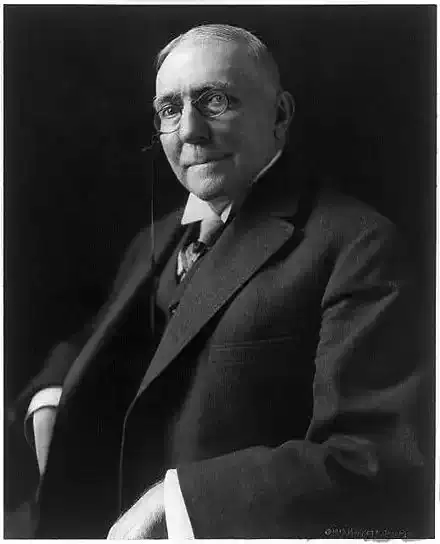
James Whitcomb Riley
Judith
Judith
O her eyes are amber-fine--
Dark and deep as wells of wine,
While her smile is like the noon
Splendor of a day of June.
If she sorrow--lo! her face
It is like a flowery space
In bright meadows, overlaid
With light clouds and lulled with shade
If she laugh--it is the trill
Of the wayward whippoorwill
Over upland pastures, heard
Echoed by the mocking-bird
In dim thickets dense with bloom
And blurred cloyings of perfume.
If she sigh--a zephyr swells
Over odorous asphodels
And wan lilies in lush plots
Of moon-drown'd forget-me-nots.
Then, the soft touch of her hand--
Takes all breath to understand
What to liken it thereto!--
Never roseleaf rinsed with dew
Might slip soother-suave than slips
Her slow palm, the while her lips
Swoon through mine, with kiss on kiss
Sweet as heated honey is.
O her eyes are amber-fine--
Dark and deep as wells of wine,
While her smile is like the noon
Splendor of a day of June.
If she sorrow--lo! her face
It is like a flowery space
In bright meadows, overlaid
With light clouds and lulled with shade
If she laugh--it is the trill
Of the wayward whippoorwill
Over upland pastures, heard
Echoed by the mocking-bird
In dim thickets dense with bloom
And blurred cloyings of perfume.
If she sigh--a zephyr swells
Over odorous asphodels
And wan lilies in lush plots
Of moon-drown'd forget-me-nots.
Then, the soft touch of her hand--
Takes all breath to understand
What to liken it thereto!--
Never roseleaf rinsed with dew
Might slip soother-suave than slips
Her slow palm, the while her lips
Swoon through mine, with kiss on kiss
Sweet as heated honey is.
303
James Whitcomb Riley
He And I
He And I
Just drifting on together--
He and I--
As through the balmy weather
Of July
Drift two thistle-tufts imbedded
Each in each--by zephyrs wedded--
Touring upward, giddy-headed,
For the sky.
And, veering up and onward,
Do we seem
Forever drifting dawnward
In a dream,
Where we meet song-birds that know us,
And the winds their kisses blow us,
While the years flow far below us
Like a stream.
And we are happy--very--
He and I--
Aye, even glad and merry
Though on high
The heavens are sometimes shrouded
By the midnight storm, and clouded
Till the pallid moon is crowded
From the sky.
My spirit ne'er expresses
Any choice
But to clothe him with caresses
And rejoice;
And as he laughs, it is in
Such a tone the moonbeams glisten
And the stars come out to listen
To his voice.
And so, whate'er the weather,
He and I,--
With our lives linked thus together,
Float and fly
As two thistle-tufts imbedded
Each in each--by zephyrs wedded--
Touring upward, giddy-headed,
For the sky.
Just drifting on together--
He and I--
As through the balmy weather
Of July
Drift two thistle-tufts imbedded
Each in each--by zephyrs wedded--
Touring upward, giddy-headed,
For the sky.
And, veering up and onward,
Do we seem
Forever drifting dawnward
In a dream,
Where we meet song-birds that know us,
And the winds their kisses blow us,
While the years flow far below us
Like a stream.
And we are happy--very--
He and I--
Aye, even glad and merry
Though on high
The heavens are sometimes shrouded
By the midnight storm, and clouded
Till the pallid moon is crowded
From the sky.
My spirit ne'er expresses
Any choice
But to clothe him with caresses
And rejoice;
And as he laughs, it is in
Such a tone the moonbeams glisten
And the stars come out to listen
To his voice.
And so, whate'er the weather,
He and I,--
With our lives linked thus together,
Float and fly
As two thistle-tufts imbedded
Each in each--by zephyrs wedded--
Touring upward, giddy-headed,
For the sky.
309
James Whitcomb Riley
Harlie
Harlie
Fold the little waxen hands
Lightly. Let your warmest tears
Speak regrets, but never fears,--
Heaven understands!
Let the sad heart, o'er the tomb,
Lift again and burst in bloom
Fragrant with a prayer as sweet
As the lily at your feet.
Bend and kiss the folded eyes--
They are only feigning sleep
While their truant glances peep
Into Paradise.
See, the face, though cold and white,
Holds a hint of some delight
E'en with Death, whose finger-tips
Rest upon the frozen lips.
When, within the years to come,
Vanished echoes live once more--
Pattering footsteps on the floor,
And the sounds of home,--
Let your arms in fancy fold
Little Harlie as of old--
As of old and as he waits
At the City's golden gates.
Fold the little waxen hands
Lightly. Let your warmest tears
Speak regrets, but never fears,--
Heaven understands!
Let the sad heart, o'er the tomb,
Lift again and burst in bloom
Fragrant with a prayer as sweet
As the lily at your feet.
Bend and kiss the folded eyes--
They are only feigning sleep
While their truant glances peep
Into Paradise.
See, the face, though cold and white,
Holds a hint of some delight
E'en with Death, whose finger-tips
Rest upon the frozen lips.
When, within the years to come,
Vanished echoes live once more--
Pattering footsteps on the floor,
And the sounds of home,--
Let your arms in fancy fold
Little Harlie as of old--
As of old and as he waits
At the City's golden gates.
283
James Whitcomb Riley
Grant At Rest-- August 8, 1885
Grant At Rest-- August 8, 1885
Sir Launcelot rode overthwart and endlong in a wide forest, and held no
path but as wild adventure led him... And he returned and came again to his
horse, and took off his saddle and his bridle, and let him pasture; and
unlaced his helm, and ungirdled his sword, and laid him down to sleep upon
his shield before the cross. --Age of Chivalary
_Grant_
What shall we say of the soldier. Grant,
His sword put by and his great soul free?
How shall we cheer him now or chant
His requiem befittingly?
The fields of his conquest now are seen
Ranged no more with his armed men--
But the rank and file of the gold and green
Of the waving grain is there again.
Though his valiant life is a nation's pride,
And his death heroic and half divine,
And our grief as great as the world is wide,
There breaks in speech but a single line--:
We loved him living, revere him dead--!
A silence then on our lips is laid:
We can say no thing that has not been said,
Nor pray one prayer that has not been prayed.
But a spirit within us speaks: and lo,
We lean and listen to wondrous words
That have a sound as of winds that blow,
And the voice of waters and low of herds;
And we hear, as the song flows on serene,
The neigh of horses, and then the beat
Of hooves that skurry o'er pastures green,
And the patter and pad of a boy's bare feet.
A brave lad, wearing a manly brow,
Knit as with problems of grave dispute,
And a face, like the bloom of the orchard bough,
Pink and pallid, but resolute;
And flushed it grows as the clover-bloom,
And fresh it gleams as the morning dew,
As he reins his steed where the quick quails boom
Up from the grasses he races through.
And ho! As he rides what dreams are his?
And what have the breezes to suggest--?
Do they whisper to him of shells that whiz
O'er fields made ruddy with wrongs redressed?
Does the hawk above him an Eagle float?
Does he thrill and his boyish heart beat high,
Hearing the ribbon about his throat
Flap as a Flag as the winds go by?
And does he dream of the Warrior's fame--
This Western boy in his rustic dress?
For in miniature, this is the man that came
Riding out of the Wilderness--!
The selfsame figure-- the knitted brow--
The eyes full steady-- the lips full mute--
And the face, like the bloom of the orchard bough,
Pink and pallid, but resolute.
Ay, this is the man, with features grim
And stoical as the Sphinx's own,
That heard the harsh guns calling him,
As musical as the bugle blown,
When the sweet spring heavens were clouded o'er
With a tempest, glowering and wild,
And our country's flag bowed down before
Its bursting wrath as a stricken child.
Thus, ready mounted and booted and spurred,
He loosed his bridle and dashed away--!
Like a roll of drums were his hoof-beats heard,
Like the shriek of the fife his charger's neigh!
And over his shoulder and backward blown,
We heard his voice, and we saw the sod
Reel, as our wild steeds chased his own
As though hurled on by the hand of God!
And still, in fancy, we see him ride
In the blood-red front of a hundred frays,
His face set stolid, but glorified
As a knight's of the old Arthurian days:
And victor ever as courtly too,
Gently lifting the vanquished foe,
And staying him with a hand as true
As dealt the deadly avenging blow.
So brighter than all of the cluster of stars
Of the flag enshrouding his form to-day,
His face shines forth from the grime of wars
With a glory that shall not pass away:
He rests at last: he has borne his part
Of salutes and salvos and cheers on cheers--
But O the sobs of his country's heart,
And the driving rain of a nations tears!
Sir Launcelot rode overthwart and endlong in a wide forest, and held no
path but as wild adventure led him... And he returned and came again to his
horse, and took off his saddle and his bridle, and let him pasture; and
unlaced his helm, and ungirdled his sword, and laid him down to sleep upon
his shield before the cross. --Age of Chivalary
_Grant_
What shall we say of the soldier. Grant,
His sword put by and his great soul free?
How shall we cheer him now or chant
His requiem befittingly?
The fields of his conquest now are seen
Ranged no more with his armed men--
But the rank and file of the gold and green
Of the waving grain is there again.
Though his valiant life is a nation's pride,
And his death heroic and half divine,
And our grief as great as the world is wide,
There breaks in speech but a single line--:
We loved him living, revere him dead--!
A silence then on our lips is laid:
We can say no thing that has not been said,
Nor pray one prayer that has not been prayed.
But a spirit within us speaks: and lo,
We lean and listen to wondrous words
That have a sound as of winds that blow,
And the voice of waters and low of herds;
And we hear, as the song flows on serene,
The neigh of horses, and then the beat
Of hooves that skurry o'er pastures green,
And the patter and pad of a boy's bare feet.
A brave lad, wearing a manly brow,
Knit as with problems of grave dispute,
And a face, like the bloom of the orchard bough,
Pink and pallid, but resolute;
And flushed it grows as the clover-bloom,
And fresh it gleams as the morning dew,
As he reins his steed where the quick quails boom
Up from the grasses he races through.
And ho! As he rides what dreams are his?
And what have the breezes to suggest--?
Do they whisper to him of shells that whiz
O'er fields made ruddy with wrongs redressed?
Does the hawk above him an Eagle float?
Does he thrill and his boyish heart beat high,
Hearing the ribbon about his throat
Flap as a Flag as the winds go by?
And does he dream of the Warrior's fame--
This Western boy in his rustic dress?
For in miniature, this is the man that came
Riding out of the Wilderness--!
The selfsame figure-- the knitted brow--
The eyes full steady-- the lips full mute--
And the face, like the bloom of the orchard bough,
Pink and pallid, but resolute.
Ay, this is the man, with features grim
And stoical as the Sphinx's own,
That heard the harsh guns calling him,
As musical as the bugle blown,
When the sweet spring heavens were clouded o'er
With a tempest, glowering and wild,
And our country's flag bowed down before
Its bursting wrath as a stricken child.
Thus, ready mounted and booted and spurred,
He loosed his bridle and dashed away--!
Like a roll of drums were his hoof-beats heard,
Like the shriek of the fife his charger's neigh!
And over his shoulder and backward blown,
We heard his voice, and we saw the sod
Reel, as our wild steeds chased his own
As though hurled on by the hand of God!
And still, in fancy, we see him ride
In the blood-red front of a hundred frays,
His face set stolid, but glorified
As a knight's of the old Arthurian days:
And victor ever as courtly too,
Gently lifting the vanquished foe,
And staying him with a hand as true
As dealt the deadly avenging blow.
So brighter than all of the cluster of stars
Of the flag enshrouding his form to-day,
His face shines forth from the grime of wars
With a glory that shall not pass away:
He rests at last: he has borne his part
Of salutes and salvos and cheers on cheers--
But O the sobs of his country's heart,
And the driving rain of a nations tears!
312
James Whitcomb Riley
George Mullen's Confession
George Mullen's Confession
For the sake of guilty conscience, and the heart that ticks the
time
Of the clockworks of my nature, I desire to say that I'm
A weak and sinful creature, as regards my daily walk
The last five years and better. It ain't worth while to talk-
I've been too mean to tell it! I've been so hard, you see,
And full of pride, and--onry--now there's the word for me--
Just onry--and to show you, I'll give my history
With vital points in question, and I think you'll all agree.
I was always stiff and stubborn since I could recollect,
And had an awful temper, and never would reflect;
And always into trouble--I remember once at school
The teacher tried to flog me, and I reversed that rule.
O I was bad I tell you! And it's a funny move
That a fellow wild as I was could ever fall in love;
And it's a funny notion that an animal like me,
Under a girl's weak fingers was as tame as tame could be!
But it's so, and sets me thinking of the easy way she had
Of cooling down my temper--though I'd be fighting mad.
'My Lion Queen' I called her--when a spell of mine occurred
She'd come in a den of feelings and quell them with a word.
I'll tell you how she loved me--and what her people thought:
When I asked to marry Annie they said 'they reckoned not--
That I cut too many didoes and monkey-shines to suit
Their idea of a son-in-law, and I could go, to boot!'
I tell you that thing riled me! Why, I felt my face turn white,
And my teeth shut like a steel trap, and the fingers of my right
Hand pained me with their pressure--all the rest's a mystery
Till I heard my Annie saying--'I'm going, too, you see.'
We were coming through the gateway, and she wavered for a spell
When she heard her mother crying and her raving father yell
That she wa'n't no child of his'n--like an actor in a play
We saw at Independence, coming through the other day.
Well! that's the way we started. And for days and weeks and
months
And even years we journeyed on, regretting never once
Of starting out together upon the path of life--
Akind o' sort o' husband, but a mighty loving wife,--
And the cutest little baby--little Grace--I see her now
A-standin' on the pig-pen as her mother milked the cow--
And I can hear her shouting--as I stood unloading straw,-'
I'm ain't as big as papa, but I'm biggerest'n ma.'
Now folks that never married don't seem to understand
That a little baby's language is the sweetest ever planned--
Why, I tell you it's pure music, and I'll just go on to say
That I sometimes have a notion that the angels talk that way!
There's a chapter in this story I'd be happy to destroy;
I could burn it up before you with a mighty sight of joy;
But I'll go ahead and give it--not in detail, no, my friend,
For it takes five years of reading before you find the end.
My Annie's folks relented--at least, in some degree;
They sent one time for Annie, but they didn't send for me.
The old man wrote the message with a heart as hot and dry
As a furnace--'Annie Mullen, come and see your mother die.'
I saw the slur intended--why I fancied I could see
The old man shoot the insult like a poison dart at me;
And in that heat of passion I swore an inward oath
That if Annie pleased her father she could never please us both.
I watched her--dark and sullen--as she hurried on her shawl;
I watched her--calm and cruel, though I saw her tear-drops fall;
I watched her--cold and heartless, though I heard her moaning,
call
For mercy from high Heaven--and I smiled throughout it all.
Why even when she kissed me, and her tears were on my brow,
As she murmured, 'George, forgive me--I must go to mother now!'
Such hate there was within me that I answered not at all,
But calm, and cold and cruel, I smiled throughout it all.
But a shadow in the doorway caught my eye, and then the face
Full of innocence and sunshine of little baby Grace.
And I snatched her up and kissed her, and I softened through and
through
For a minute when she told me 'I must kiss her muvver too.'
I remember, at the starting, how I tried to freeze again
As I watched them slowly driving down the little crooked lane--
When Annie shouted something that ended in a cry,
And how I tried to whistle and it fizzled in a sigh.
I remember running after, with a glimmer in my sight--
Pretending I'd discovered that the traces wasn't right;
And the last that I remember, as they disappeared from view,
Was little Grace a-calling, 'I see papa! Howdy-do!'
And left alone to ponder, I again took up my hate
For the old man who would chuckle that I was desolate;
And I mouthed my wrongs in mutters till my pride called up the
pain
His last insult had given me--until I smiled again
Till the wild beast in my nature was raging in the den--
With no one now to quell it, and I wrote a letter then
Full of hissing things, and heated with so hot a heat of hate
That my pen flashed out black lightning at a most terrific rate.
I wrote that 'she had wronged me when she went away from me--
Though to see her dying mother 'twas her father's victory,
And a woman that could waver when her husband's pride was rent
Was no longer worthy of it.' And I shut the house and went.
To tell of my long exile would be of little good--
Though I couldn't half-way tell it, and I wouldn't if I could!
I could tell of California--of a wild and vicious life;
Of trackless plains, and mountains, and the Indian's
scalping-knife.
I could tell of gloomy forests howling wild with threats of
death;
I could tell of fiery deserts that have scorched me with their
breath;
I could tell of wretched outcasts by the hundreds, great and
small,
And could claim the nasty honor of the greatest of them all.
I could tell of toil and hardship; and of sickness and disease,
And hollow-eyed starvation, but I tell you, friend, that these
Are trifles in comparison with what a fellow feels
With that bloodhound, Remorsefulness, forever at his heels.
I remember--worn and weary of the long, long years of care,
When the frost of time was making early harvest of my hair--
I remember, wrecked and hopeless of a rest beneath the sky,
My resolve to quit the country, and to seek the East, and die.
I remember my long journey, like a dull, oppressive dream,
Across the empty prairies till I caught the distant gleam
Of a city in the beauty of its broad and shining stream
On whose bosom, flocked together, float the mighty swans of
steam.
I remember drifting with them till I found myself again
In the rush and roar and rattle of the engine and the train;
And when from my surroundings something spoke of child and wife,
It seemed the train was rumbling through a tunnel in my life.
Then I remember something--like a sudden burst of light--
That don't exactly tell it, but I couldn't tell it right--
A something clinging to me with its arms around my neck--
A little girl, for instance--or an angel, I expect--
For she kissed me, cried and called me 'her dear papa,' and I
felt
My heart was pure virgin gold, and just about to melt--
And so it did--it melted in a mist of gleaming rain
When she took my hand and whispered, 'My mama's on the train.'
There's some things I can dwell on, and get off pretty well,
But the balance of this story I know I couldn't tell;
So I ain't going to try it, for to tell the reason why-I'm
so chicken-hearted lately I'd be certain 'most to cry.
For the sake of guilty conscience, and the heart that ticks the
time
Of the clockworks of my nature, I desire to say that I'm
A weak and sinful creature, as regards my daily walk
The last five years and better. It ain't worth while to talk-
I've been too mean to tell it! I've been so hard, you see,
And full of pride, and--onry--now there's the word for me--
Just onry--and to show you, I'll give my history
With vital points in question, and I think you'll all agree.
I was always stiff and stubborn since I could recollect,
And had an awful temper, and never would reflect;
And always into trouble--I remember once at school
The teacher tried to flog me, and I reversed that rule.
O I was bad I tell you! And it's a funny move
That a fellow wild as I was could ever fall in love;
And it's a funny notion that an animal like me,
Under a girl's weak fingers was as tame as tame could be!
But it's so, and sets me thinking of the easy way she had
Of cooling down my temper--though I'd be fighting mad.
'My Lion Queen' I called her--when a spell of mine occurred
She'd come in a den of feelings and quell them with a word.
I'll tell you how she loved me--and what her people thought:
When I asked to marry Annie they said 'they reckoned not--
That I cut too many didoes and monkey-shines to suit
Their idea of a son-in-law, and I could go, to boot!'
I tell you that thing riled me! Why, I felt my face turn white,
And my teeth shut like a steel trap, and the fingers of my right
Hand pained me with their pressure--all the rest's a mystery
Till I heard my Annie saying--'I'm going, too, you see.'
We were coming through the gateway, and she wavered for a spell
When she heard her mother crying and her raving father yell
That she wa'n't no child of his'n--like an actor in a play
We saw at Independence, coming through the other day.
Well! that's the way we started. And for days and weeks and
months
And even years we journeyed on, regretting never once
Of starting out together upon the path of life--
Akind o' sort o' husband, but a mighty loving wife,--
And the cutest little baby--little Grace--I see her now
A-standin' on the pig-pen as her mother milked the cow--
And I can hear her shouting--as I stood unloading straw,-'
I'm ain't as big as papa, but I'm biggerest'n ma.'
Now folks that never married don't seem to understand
That a little baby's language is the sweetest ever planned--
Why, I tell you it's pure music, and I'll just go on to say
That I sometimes have a notion that the angels talk that way!
There's a chapter in this story I'd be happy to destroy;
I could burn it up before you with a mighty sight of joy;
But I'll go ahead and give it--not in detail, no, my friend,
For it takes five years of reading before you find the end.
My Annie's folks relented--at least, in some degree;
They sent one time for Annie, but they didn't send for me.
The old man wrote the message with a heart as hot and dry
As a furnace--'Annie Mullen, come and see your mother die.'
I saw the slur intended--why I fancied I could see
The old man shoot the insult like a poison dart at me;
And in that heat of passion I swore an inward oath
That if Annie pleased her father she could never please us both.
I watched her--dark and sullen--as she hurried on her shawl;
I watched her--calm and cruel, though I saw her tear-drops fall;
I watched her--cold and heartless, though I heard her moaning,
call
For mercy from high Heaven--and I smiled throughout it all.
Why even when she kissed me, and her tears were on my brow,
As she murmured, 'George, forgive me--I must go to mother now!'
Such hate there was within me that I answered not at all,
But calm, and cold and cruel, I smiled throughout it all.
But a shadow in the doorway caught my eye, and then the face
Full of innocence and sunshine of little baby Grace.
And I snatched her up and kissed her, and I softened through and
through
For a minute when she told me 'I must kiss her muvver too.'
I remember, at the starting, how I tried to freeze again
As I watched them slowly driving down the little crooked lane--
When Annie shouted something that ended in a cry,
And how I tried to whistle and it fizzled in a sigh.
I remember running after, with a glimmer in my sight--
Pretending I'd discovered that the traces wasn't right;
And the last that I remember, as they disappeared from view,
Was little Grace a-calling, 'I see papa! Howdy-do!'
And left alone to ponder, I again took up my hate
For the old man who would chuckle that I was desolate;
And I mouthed my wrongs in mutters till my pride called up the
pain
His last insult had given me--until I smiled again
Till the wild beast in my nature was raging in the den--
With no one now to quell it, and I wrote a letter then
Full of hissing things, and heated with so hot a heat of hate
That my pen flashed out black lightning at a most terrific rate.
I wrote that 'she had wronged me when she went away from me--
Though to see her dying mother 'twas her father's victory,
And a woman that could waver when her husband's pride was rent
Was no longer worthy of it.' And I shut the house and went.
To tell of my long exile would be of little good--
Though I couldn't half-way tell it, and I wouldn't if I could!
I could tell of California--of a wild and vicious life;
Of trackless plains, and mountains, and the Indian's
scalping-knife.
I could tell of gloomy forests howling wild with threats of
death;
I could tell of fiery deserts that have scorched me with their
breath;
I could tell of wretched outcasts by the hundreds, great and
small,
And could claim the nasty honor of the greatest of them all.
I could tell of toil and hardship; and of sickness and disease,
And hollow-eyed starvation, but I tell you, friend, that these
Are trifles in comparison with what a fellow feels
With that bloodhound, Remorsefulness, forever at his heels.
I remember--worn and weary of the long, long years of care,
When the frost of time was making early harvest of my hair--
I remember, wrecked and hopeless of a rest beneath the sky,
My resolve to quit the country, and to seek the East, and die.
I remember my long journey, like a dull, oppressive dream,
Across the empty prairies till I caught the distant gleam
Of a city in the beauty of its broad and shining stream
On whose bosom, flocked together, float the mighty swans of
steam.
I remember drifting with them till I found myself again
In the rush and roar and rattle of the engine and the train;
And when from my surroundings something spoke of child and wife,
It seemed the train was rumbling through a tunnel in my life.
Then I remember something--like a sudden burst of light--
That don't exactly tell it, but I couldn't tell it right--
A something clinging to me with its arms around my neck--
A little girl, for instance--or an angel, I expect--
For she kissed me, cried and called me 'her dear papa,' and I
felt
My heart was pure virgin gold, and just about to melt--
And so it did--it melted in a mist of gleaming rain
When she took my hand and whispered, 'My mama's on the train.'
There's some things I can dwell on, and get off pretty well,
But the balance of this story I know I couldn't tell;
So I ain't going to try it, for to tell the reason why-I'm
so chicken-hearted lately I'd be certain 'most to cry.
327
James Whitcomb Riley
Farmer Whipple--Bachelor
Farmer Whipple--Bachelor
It's a mystery to see me--a man o' fifty-four,
Who's lived a cross old bachelor fer thirty year' and more-A-
lookin' glad and smilin'! And they's none o' you can say
That you can guess the reason why I feel so good to-day!
I must tell you all about it! But I'll have to deviate
A little in beginnin', so's to set the matter straight
As to how it comes to happen that I never took a wife--
Kindo' 'crawfish' from the Present to the Springtime of my life!
I was brought up in the country: Of a family of five--
Three brothers and a sister--I'm the only one alive,--
Fer they all died little babies; and 'twas one o' Mother's ways,
You know, to want a daughter; so she took a girl to raise.
The sweetest little thing she was, with rosy cheeks, and fat--
We was little chunks o' shavers then about as high as that!
But someway we sort a' SUITED-like! and Mother she'd declare
She never laid her eyes on a more lovin' pair
Than WE was! So we growed up side by side fer thirteen year',
And every hour of it she growed to me more dear!-W'y,
even Father's dyin', as he did, I do believe
Warn't more affectin' to me than it was to see her grieve!
I was then a lad o' twenty; and I felt a flash o' pride
In thinkin' all depended on ME now to pervide
Fer Mother and fer Mary; and I went about the place
With sleeves rolled up--and workin', with a mighty smilin'
face.--
Fer SOMEPIN' ELSE was workin'! but not a word I said
Of a certain sort o' notion that was runnin' through my head,-'
Some day I'd maybe marry, and a BROTHER'S love was one
Thing--a LOVER'S was another!' was the way the notion run!
I remember onc't in harvest, when the 'cradle-in' ' was done,
(When the harvest of my summers mounted up to twenty-one),
I was ridin' home with Mary at the closin' o' the day-A-
chawin' straws and thinkin', in a lover's lazy way!
And Mary's cheeks was burnin' like the sunset down the lane:
I noticed she was thinkin', too, and ast her to explain.
Well--when she turned and KISSED ME, WITH HER ARMS AROUND
ME--LAW!
I'd a bigger load o' Heaven than I had a load o' straw!
I don't p'tend to learnin', but I'll tell you what's a fac',
They's a mighty truthful sayin' somers in a' almanac--
Er SOMERS--'bout 'puore happiness'--perhaps some folks'll laugh
At the idy--'only lastin' jest two seconds and a half.'-
But it's jest as true as preachin'!--fer that was a SISTER'S
kiss,
And a sister's lovin' confidence a-tellin' to me this:-'
SHE was happy, BEIN' PROMISED TO THE SON O' FARMER BROWN.'--
And my feelin's struck a pardnership with sunset and went down!
I don't know HOW I acted, and I don't know WHAT I said,--
Fer my heart seemed jest a-turnin' to an ice-cold lump o' lead;
And the hosses kind o'glimmered before me in the road,
And the lines fell from my fingers--And that was all I knowed-
Fer--well, I don't know HOW long--They's a dim rememberence
Of a sound o' snortin' horses, and a stake-and-ridered fence
A-whizzin' past, and wheat-sheaves a-dancin' in the air,
And Mary screamin' 'Murder!' and a-runnin' up to where
_I_ was layin' by the roadside, and the wagon upside down
A-leanin' on the gate-post, with the wheels a-whirlin' roun'!
And I tried to raise and meet her, but I couldn't, with a vague
Sort o' notion comin' to me that I had a broken leg.
Well, the women nussed me through it; but many a time I'd sigh
As I'd keep a-gittin' better instid o' goin' to die,
And wonder what was left ME worth livin' fer below,
When the girl I loved was married to another, don't you know!
And my thoughts was as rebellious as the folks was good and kind
When Brown and Mary married--Railly must 'a' been my MIND
Was kind o' out o' kilter!--fer I hated Brown, you see,
Worse'n PIZEN--and the feller whittled crutches out fer ME--
And done a thousand little ac's o' kindness and respec'--
And me a-wishin' all the time that I could break his neck!
My relief was like a mourner's when the funeral is done
When they moved to Illinois in the Fall o' Forty-one.
Then I went to work in airnest--I had nothin' much in view
But to drownd out rickollections--and it kep' me busy, too!
But I slowly thrived and prospered, tel Mother used to say
She expected yit to see me a wealthy man some day.
Then I'd think how little MONEY was, compared to happiness--
And who'd be left to use it when I died I couldn't guess!
But I've still kep' speculatin' and a-gainin' year by year,
Tel I'm payin' half the taxes in the county, mighty near!
Well!--A year ago er better, a letter comes to hand
Astin' how I'd like to dicker fer some Illinois land-'
The feller that had owned it,' it went ahead to state,
'Had jest deceased, insolvent, leavin' chance to speculate,'--
And then it closed by sayin' that I'd 'better come and see.'-
I'd never been West, anyhow--a'most too wild fer ME,
I'd allus had a notion; but a lawyer here in town
Said I'd find myself mistakend when I come to look around.
So I bids good-by to Mother, and I jumps aboard the train,
A-thinkin' what I'd bring her when I come back home again--
And ef she'd had an idy what the present was to be,
I think it's more'n likely she'd 'a' went along with me!
Cars is awful tejus ridin', fer all they go so fast!
But finally they called out my stoppin'-place at last:
And that night, at the tavern, I dreamp' I was a train
O' cars, and SKEERED at somepin', runnin' down a country lane!
Well, in the morning airly--after huntin' up the man--
The lawyer who was wantin' to swap the piece o' land--
We started fer the country; and I ast the history
Of the farm--its former owner--and so forth, etcetery!
And--well--it was interESTin'--I su'prised him, I suppose,
By the loud and frequent manner in which I blowed my nose!--
But his su'prise was greater, and it made him wonder more,
When I kissed and hugged the widder when she met us at the
door!--
IT WAS MARY: . . . They's a feelin' a-hidin' down in here--
Of course I can't explain it, ner ever make it clear.--
It was with us in that meetin', I don't want you to fergit!
And it makes me kind o'nervous when I think about it yit!
I BOUGHT that farm, and DEEDED it, afore I left the town
With 'title clear to mansions in the skies,' to Mary Brown!
And fu'thermore, I took her and the CHILDERN--fer you see,
They'd never seed their Grandma--and I fetched 'em home with me.
So NOW you've got an idy why a man o' fifty-four,
Who's lived a cross old bachelor fer thirty year' and more
Is a-lookin' glad and smilin'!--And I've jest come into town
To git a pair o' license fer to MARRY Mary Brown.
It's a mystery to see me--a man o' fifty-four,
Who's lived a cross old bachelor fer thirty year' and more-A-
lookin' glad and smilin'! And they's none o' you can say
That you can guess the reason why I feel so good to-day!
I must tell you all about it! But I'll have to deviate
A little in beginnin', so's to set the matter straight
As to how it comes to happen that I never took a wife--
Kindo' 'crawfish' from the Present to the Springtime of my life!
I was brought up in the country: Of a family of five--
Three brothers and a sister--I'm the only one alive,--
Fer they all died little babies; and 'twas one o' Mother's ways,
You know, to want a daughter; so she took a girl to raise.
The sweetest little thing she was, with rosy cheeks, and fat--
We was little chunks o' shavers then about as high as that!
But someway we sort a' SUITED-like! and Mother she'd declare
She never laid her eyes on a more lovin' pair
Than WE was! So we growed up side by side fer thirteen year',
And every hour of it she growed to me more dear!-W'y,
even Father's dyin', as he did, I do believe
Warn't more affectin' to me than it was to see her grieve!
I was then a lad o' twenty; and I felt a flash o' pride
In thinkin' all depended on ME now to pervide
Fer Mother and fer Mary; and I went about the place
With sleeves rolled up--and workin', with a mighty smilin'
face.--
Fer SOMEPIN' ELSE was workin'! but not a word I said
Of a certain sort o' notion that was runnin' through my head,-'
Some day I'd maybe marry, and a BROTHER'S love was one
Thing--a LOVER'S was another!' was the way the notion run!
I remember onc't in harvest, when the 'cradle-in' ' was done,
(When the harvest of my summers mounted up to twenty-one),
I was ridin' home with Mary at the closin' o' the day-A-
chawin' straws and thinkin', in a lover's lazy way!
And Mary's cheeks was burnin' like the sunset down the lane:
I noticed she was thinkin', too, and ast her to explain.
Well--when she turned and KISSED ME, WITH HER ARMS AROUND
ME--LAW!
I'd a bigger load o' Heaven than I had a load o' straw!
I don't p'tend to learnin', but I'll tell you what's a fac',
They's a mighty truthful sayin' somers in a' almanac--
Er SOMERS--'bout 'puore happiness'--perhaps some folks'll laugh
At the idy--'only lastin' jest two seconds and a half.'-
But it's jest as true as preachin'!--fer that was a SISTER'S
kiss,
And a sister's lovin' confidence a-tellin' to me this:-'
SHE was happy, BEIN' PROMISED TO THE SON O' FARMER BROWN.'--
And my feelin's struck a pardnership with sunset and went down!
I don't know HOW I acted, and I don't know WHAT I said,--
Fer my heart seemed jest a-turnin' to an ice-cold lump o' lead;
And the hosses kind o'glimmered before me in the road,
And the lines fell from my fingers--And that was all I knowed-
Fer--well, I don't know HOW long--They's a dim rememberence
Of a sound o' snortin' horses, and a stake-and-ridered fence
A-whizzin' past, and wheat-sheaves a-dancin' in the air,
And Mary screamin' 'Murder!' and a-runnin' up to where
_I_ was layin' by the roadside, and the wagon upside down
A-leanin' on the gate-post, with the wheels a-whirlin' roun'!
And I tried to raise and meet her, but I couldn't, with a vague
Sort o' notion comin' to me that I had a broken leg.
Well, the women nussed me through it; but many a time I'd sigh
As I'd keep a-gittin' better instid o' goin' to die,
And wonder what was left ME worth livin' fer below,
When the girl I loved was married to another, don't you know!
And my thoughts was as rebellious as the folks was good and kind
When Brown and Mary married--Railly must 'a' been my MIND
Was kind o' out o' kilter!--fer I hated Brown, you see,
Worse'n PIZEN--and the feller whittled crutches out fer ME--
And done a thousand little ac's o' kindness and respec'--
And me a-wishin' all the time that I could break his neck!
My relief was like a mourner's when the funeral is done
When they moved to Illinois in the Fall o' Forty-one.
Then I went to work in airnest--I had nothin' much in view
But to drownd out rickollections--and it kep' me busy, too!
But I slowly thrived and prospered, tel Mother used to say
She expected yit to see me a wealthy man some day.
Then I'd think how little MONEY was, compared to happiness--
And who'd be left to use it when I died I couldn't guess!
But I've still kep' speculatin' and a-gainin' year by year,
Tel I'm payin' half the taxes in the county, mighty near!
Well!--A year ago er better, a letter comes to hand
Astin' how I'd like to dicker fer some Illinois land-'
The feller that had owned it,' it went ahead to state,
'Had jest deceased, insolvent, leavin' chance to speculate,'--
And then it closed by sayin' that I'd 'better come and see.'-
I'd never been West, anyhow--a'most too wild fer ME,
I'd allus had a notion; but a lawyer here in town
Said I'd find myself mistakend when I come to look around.
So I bids good-by to Mother, and I jumps aboard the train,
A-thinkin' what I'd bring her when I come back home again--
And ef she'd had an idy what the present was to be,
I think it's more'n likely she'd 'a' went along with me!
Cars is awful tejus ridin', fer all they go so fast!
But finally they called out my stoppin'-place at last:
And that night, at the tavern, I dreamp' I was a train
O' cars, and SKEERED at somepin', runnin' down a country lane!
Well, in the morning airly--after huntin' up the man--
The lawyer who was wantin' to swap the piece o' land--
We started fer the country; and I ast the history
Of the farm--its former owner--and so forth, etcetery!
And--well--it was interESTin'--I su'prised him, I suppose,
By the loud and frequent manner in which I blowed my nose!--
But his su'prise was greater, and it made him wonder more,
When I kissed and hugged the widder when she met us at the
door!--
IT WAS MARY: . . . They's a feelin' a-hidin' down in here--
Of course I can't explain it, ner ever make it clear.--
It was with us in that meetin', I don't want you to fergit!
And it makes me kind o'nervous when I think about it yit!
I BOUGHT that farm, and DEEDED it, afore I left the town
With 'title clear to mansions in the skies,' to Mary Brown!
And fu'thermore, I took her and the CHILDERN--fer you see,
They'd never seed their Grandma--and I fetched 'em home with me.
So NOW you've got an idy why a man o' fifty-four,
Who's lived a cross old bachelor fer thirty year' and more
Is a-lookin' glad and smilin'!--And I've jest come into town
To git a pair o' license fer to MARRY Mary Brown.
375
James Whitcomb Riley
Dan Paine
Dan Paine
Old friend of mine, whose chiming name
Has been the burthen of a rhyme
Within my heart since first I came
To know thee in thy mellow prime;
With warm emotions in my breast
That can but coldly be expressed,
And hopes and wishes wild and vain,
I reach my hand to thee, Dan Paine.
In fancy, as I sit alone
In gloomy fellowship with care,
I hear again thy cheery tone,
And wheel for thee an easy chair;
And from my hand the pencil falls--
My book upon the carpet sprawls,
As eager soul and heart and brain,
Leap up to welcome thee, Dan Paine.
A something gentle in thy mein,
A something tender in thy voice,
Has made my trouble so serene,
I can but weep, from very choice.
And even then my tears, I guess,
Hold more of sweet than bitterness,
And more of gleaming shine than rain,
Because of thy bright smile, Dan Paine.
The wrinkles that the years have spun
And tangled round thy tawny face,
Are kinked with laughter, every one,
And fashioned in a mirthful grace.
And though the twinkle of thine eyes
Is keen as frost when Summer dies,
It can not long as frost remain
While thy warm soul shines out, Dan Paine.
And so I drain a health to thee;--
May merry Joy and jolly Mirth
Like children clamber on thy knee,
And ride thee round the happy earth!
And when, at last, the hand of Fate
Shall lift the latch of Canaan's gate,
And usher me in thy domain,
Smile on me just as now, Dan Paine.
Old friend of mine, whose chiming name
Has been the burthen of a rhyme
Within my heart since first I came
To know thee in thy mellow prime;
With warm emotions in my breast
That can but coldly be expressed,
And hopes and wishes wild and vain,
I reach my hand to thee, Dan Paine.
In fancy, as I sit alone
In gloomy fellowship with care,
I hear again thy cheery tone,
And wheel for thee an easy chair;
And from my hand the pencil falls--
My book upon the carpet sprawls,
As eager soul and heart and brain,
Leap up to welcome thee, Dan Paine.
A something gentle in thy mein,
A something tender in thy voice,
Has made my trouble so serene,
I can but weep, from very choice.
And even then my tears, I guess,
Hold more of sweet than bitterness,
And more of gleaming shine than rain,
Because of thy bright smile, Dan Paine.
The wrinkles that the years have spun
And tangled round thy tawny face,
Are kinked with laughter, every one,
And fashioned in a mirthful grace.
And though the twinkle of thine eyes
Is keen as frost when Summer dies,
It can not long as frost remain
While thy warm soul shines out, Dan Paine.
And so I drain a health to thee;--
May merry Joy and jolly Mirth
Like children clamber on thy knee,
And ride thee round the happy earth!
And when, at last, the hand of Fate
Shall lift the latch of Canaan's gate,
And usher me in thy domain,
Smile on me just as now, Dan Paine.
263
James Whitcomb Riley
By Her White Bed
By Her White Bed
By her white bed I muse a little space:
She fell asleep--not very long ago,--
And yet the grass was here and not the snow--
The leaf, the bud, the blossom, and--her face!-Midsummer's
heaven above us, and the grace
Of Lovers own day, from dawn to afterglow;
The fireflies' glimmering, and the sweet and low
Plaint of the whip-poor-wills, and every place
In thicker twilight for the roses' scent.
Then _night_.--She slept--in such tranquility,
I walk atiptoe still, nor _dare_ to weep,
Feeling, in all this hush, she rests content--
That though God stood to wake her for me, she
Would mutely plead: 'Nay, Lord! Let _him_ so sleep.'
By her white bed I muse a little space:
She fell asleep--not very long ago,--
And yet the grass was here and not the snow--
The leaf, the bud, the blossom, and--her face!-Midsummer's
heaven above us, and the grace
Of Lovers own day, from dawn to afterglow;
The fireflies' glimmering, and the sweet and low
Plaint of the whip-poor-wills, and every place
In thicker twilight for the roses' scent.
Then _night_.--She slept--in such tranquility,
I walk atiptoe still, nor _dare_ to weep,
Feeling, in all this hush, she rests content--
That though God stood to wake her for me, she
Would mutely plead: 'Nay, Lord! Let _him_ so sleep.'
298
James Whitcomb Riley
Blooms Of May
Blooms Of May
But yesterday!...
O blooms of May,
And summer roses--Where-away?
O stars above,
And lips of love
And all the honeyed sweets thereof!
O lad and lass
And orchard-pass,
And briered lane, and daisied grass!
O gleam and gloom,
And woodland bloom,
And breezy breaths of all perfume!--
No more for me
Or mine shall be
Thy raptures--save in memory,--
No more--no more--
Till through the Door
Of Glory gleam the days of yore.
But yesterday!...
O blooms of May,
And summer roses--Where-away?
O stars above,
And lips of love
And all the honeyed sweets thereof!
O lad and lass
And orchard-pass,
And briered lane, and daisied grass!
O gleam and gloom,
And woodland bloom,
And breezy breaths of all perfume!--
No more for me
Or mine shall be
Thy raptures--save in memory,--
No more--no more--
Till through the Door
Of Glory gleam the days of yore.
290
James Whitcomb Riley
Bedouin
Bedouin
O love is like an untamed steed!--
So hot of heart and wild of speed,
And with fierce freedom so in love,
The desert is not vast enough,
With all its leagues of glimmering sands,
To pasture it! Ah, that my hands
Were more than human in their strength,
That my deft lariat at length
Might safely noose this splendid thing
That so defies all conquering!
Ho! but to see it whirl and reel--
The sands spurt forward--and to feel
The quivering tension of the thong
That throned me high, with shriek and song!
To grapple tufts of tossing mane--
To spurn it to its feet again,
And then, sans saddle, rein or bit,
To lash the mad life out of it!
O love is like an untamed steed!--
So hot of heart and wild of speed,
And with fierce freedom so in love,
The desert is not vast enough,
With all its leagues of glimmering sands,
To pasture it! Ah, that my hands
Were more than human in their strength,
That my deft lariat at length
Might safely noose this splendid thing
That so defies all conquering!
Ho! but to see it whirl and reel--
The sands spurt forward--and to feel
The quivering tension of the thong
That throned me high, with shriek and song!
To grapple tufts of tossing mane--
To spurn it to its feet again,
And then, sans saddle, rein or bit,
To lash the mad life out of it!
306
James Whitcomb Riley
Away
Away
I cannot say, and I will not say
That he is dead--. He is just away!
With a cheery smile, and a wave of the hand
He has wandered into an unknown land,
And left us dreaming how very fair
It needs must be, since he lingers there.
And you-- O you, who the wildest yearn
For the old-time step and the glad return--,
Think of him faring on, as dear
In the love of There as the love of Here;
And loyal still, as he gave the blows
Of his warrior-strength to his country's foes--.
Mild and gentle, as he was brave--,
When the sweetest love of his life he gave
To simple things--: Where the violets grew
Blue as the eyes they were likened to,
The touches of his hands have strayed
As reverently as his lips have prayed:
When the little brown thrush that harshly chirred
Was dear to him as the mocking-bird;
And he pitied as much as a man in pain
A writhing honey-bee wet with rain--.
Think of him still as the same, I say:
He is not dead-- he is just away!
I cannot say, and I will not say
That he is dead--. He is just away!
With a cheery smile, and a wave of the hand
He has wandered into an unknown land,
And left us dreaming how very fair
It needs must be, since he lingers there.
And you-- O you, who the wildest yearn
For the old-time step and the glad return--,
Think of him faring on, as dear
In the love of There as the love of Here;
And loyal still, as he gave the blows
Of his warrior-strength to his country's foes--.
Mild and gentle, as he was brave--,
When the sweetest love of his life he gave
To simple things--: Where the violets grew
Blue as the eyes they were likened to,
The touches of his hands have strayed
As reverently as his lips have prayed:
When the little brown thrush that harshly chirred
Was dear to him as the mocking-bird;
And he pitied as much as a man in pain
A writhing honey-bee wet with rain--.
Think of him still as the same, I say:
He is not dead-- he is just away!
319
James Whitcomb Riley
A Worn-Out Pencil
A Worn-Out Pencil
Welladay!
Here I lay
You at rest--all worn away,
O my pencil, to the tip
Of our old companionship!
Memory
Sighs to see
What you are, and used to be,
Looking backward to the time
When you wrote your earliest rhyme!--
When I sat
Filing at
Your first point, and dreaming that
Your initial song should be
Worthy of posterity.
With regret
I forget
If the song be living yet,
Yet remember, vaguely now,
It was honest, anyhow.
You have brought
Me a thought--
Truer yet was never taught,--
That the silent song is best,
And the unsung worthiest.
So if I,
When I die,
May as uncomplainingly
Drop aside as now you do,
Write of me, as I of you:--
Here lies one
Who begun
Life a-singing, heard of none;
And he died, satisfied,
With his dead songs by his side.
Welladay!
Here I lay
You at rest--all worn away,
O my pencil, to the tip
Of our old companionship!
Memory
Sighs to see
What you are, and used to be,
Looking backward to the time
When you wrote your earliest rhyme!--
When I sat
Filing at
Your first point, and dreaming that
Your initial song should be
Worthy of posterity.
With regret
I forget
If the song be living yet,
Yet remember, vaguely now,
It was honest, anyhow.
You have brought
Me a thought--
Truer yet was never taught,--
That the silent song is best,
And the unsung worthiest.
So if I,
When I die,
May as uncomplainingly
Drop aside as now you do,
Write of me, as I of you:--
Here lies one
Who begun
Life a-singing, heard of none;
And he died, satisfied,
With his dead songs by his side.
285
James Whitcomb Riley
A Spring Song And A Later
A Spring Song And A Later
She sang a song of May for me,
Wherein once more I heard
The mirth of my glad infancy--
The orchard's earliest bird--
The joyous breeze among the trees
New-clad in leaf and bloom,
And there the happy honey-bees
In dewy gleam and gloom.
So purely, sweetly on the sense
Of heart and spirit fell
Her song of Spring, its influence--
Still irresistible,--
Commands me here--with eyes ablur--
To mate her bright refrain.
Though I but shed a rhyme for her
As dim as Autumn rain.
She sang a song of May for me,
Wherein once more I heard
The mirth of my glad infancy--
The orchard's earliest bird--
The joyous breeze among the trees
New-clad in leaf and bloom,
And there the happy honey-bees
In dewy gleam and gloom.
So purely, sweetly on the sense
Of heart and spirit fell
Her song of Spring, its influence--
Still irresistible,--
Commands me here--with eyes ablur--
To mate her bright refrain.
Though I but shed a rhyme for her
As dim as Autumn rain.
272
James Whitcomb Riley
A Passing Hail
A Passing Hail
Let us rest ourselves a bit!
Worry?-- wave your hand to it --
Kiss your finger-tips and smile
It farewell a little while.
Weary of the weary way
We have come from Yesterday,
Let us fret not, instead,
Of the wary way ahead.
Let us pause and catch our breath
On the hither side of death,
While we see the tender shoots
Of the grasses -- not the roots,--
While we yet look down -- not up --
To seek out the buttercup
And the daisy where they wave
O'er the green home of the grave.
Let us launch us smoothly on
The soft billows of the lawn,
And drift out across the main
Of our childish dreams again:
Voyage off, beneath the trees,
O'er the field's enchanted seas,
Where the lilies are our sails,
And our sea-gulls, nightingales:
Where no wilder storm shall beat
Than the wind that waves the wheat,
And no tempest-burst above
The old laughs we used to love:
Lose all troubles -- gain release,
Languor, and exceeding peace,
Cruising idly o'er the vast,
Calm mid-ocean of the Past.
Let us rest ourselves a bit!
Worry? -- Wave your hand to it --
Kiss your finger-tips and smile
It fare well a little while.
Let us rest ourselves a bit!
Worry?-- wave your hand to it --
Kiss your finger-tips and smile
It farewell a little while.
Weary of the weary way
We have come from Yesterday,
Let us fret not, instead,
Of the wary way ahead.
Let us pause and catch our breath
On the hither side of death,
While we see the tender shoots
Of the grasses -- not the roots,--
While we yet look down -- not up --
To seek out the buttercup
And the daisy where they wave
O'er the green home of the grave.
Let us launch us smoothly on
The soft billows of the lawn,
And drift out across the main
Of our childish dreams again:
Voyage off, beneath the trees,
O'er the field's enchanted seas,
Where the lilies are our sails,
And our sea-gulls, nightingales:
Where no wilder storm shall beat
Than the wind that waves the wheat,
And no tempest-burst above
The old laughs we used to love:
Lose all troubles -- gain release,
Languor, and exceeding peace,
Cruising idly o'er the vast,
Calm mid-ocean of the Past.
Let us rest ourselves a bit!
Worry? -- Wave your hand to it --
Kiss your finger-tips and smile
It fare well a little while.
321
James Whitcomb Riley
A Letter To A Friend
A Letter To A Friend
The past is like a story
I have listened to in dreams
That vanished in the glory
Of the Morning's early gleams;
And--at my shadow glancing--
I feel a loss of strength,
As the Day of Life advancing
Leaves it shorn of half its length.
But it's all in vain to worry
At the rapid race of Time--
And he flies in such a flurry
When I trip him with a rhyme,
I'll bother him no longer
Than to thank you for the thought
That 'my fame is growing stronger
As you really think it ought.'
And though I fall below it,
I might know as much of mirth
To live and die a poet
Of unacknowledged worth;
For Fame is but a vagrant--
Though a loyal one and brave,
And his laurels ne'er so fragrant
As when scattered o'er the grave.
The past is like a story
I have listened to in dreams
That vanished in the glory
Of the Morning's early gleams;
And--at my shadow glancing--
I feel a loss of strength,
As the Day of Life advancing
Leaves it shorn of half its length.
But it's all in vain to worry
At the rapid race of Time--
And he flies in such a flurry
When I trip him with a rhyme,
I'll bother him no longer
Than to thank you for the thought
That 'my fame is growing stronger
As you really think it ought.'
And though I fall below it,
I might know as much of mirth
To live and die a poet
Of unacknowledged worth;
For Fame is but a vagrant--
Though a loyal one and brave,
And his laurels ne'er so fragrant
As when scattered o'er the grave.
248
James Whitcomb Riley
A Feel In The Chris'mas-Air
A Feel In The Chris'mas-Air
They's a kind o' _feel_ in the air, to me.
When the Chris'mas-times sets in.
That's about as much of a mystery
As ever I've run ag'in!--
Fer instunce, now, whilse I gain in weight
And gineral health, I swear
They's a _goneness_ somers I can't quite state--
A kind o' _feel_ in the air.
They's a feel in the Chris'mas-air goes right
To the spot where a man _lives_ at!--
It gives a feller a' appetite--
They ain't no doubt about _that_!--
And yit they's _somepin_'--I don't know what--
That follers me, here and there,
And ha'nts and worries and spares me not--
A kind o' feel in the air!
They's a _feel_, as I say, in the air that's jest
As blame-don sad as sweet!--
In the same ra-sho as I feel the best
And am spryest on my feet,
They's allus a kind o' sort of a' _ache_
That I can't lo-cate no-where;--
But it comes with _Chris'mas_, and no mistake!--
A kind o' feel in the air.
Is it the racket the childern raise?-W'y,
_no_!--God bless 'em!--_no_!--
Is it the eyes and the cheeks ablaze--
Like my _own_ wuz, long ago?--
Is it the bleat o' the whistle and beat
O' the little toy-drum and blare
O' the horn?--_No! no!_--it is jest the sweet--
The sad-sweet feel in the air.
They's a kind o' _feel_ in the air, to me.
When the Chris'mas-times sets in.
That's about as much of a mystery
As ever I've run ag'in!--
Fer instunce, now, whilse I gain in weight
And gineral health, I swear
They's a _goneness_ somers I can't quite state--
A kind o' _feel_ in the air.
They's a feel in the Chris'mas-air goes right
To the spot where a man _lives_ at!--
It gives a feller a' appetite--
They ain't no doubt about _that_!--
And yit they's _somepin_'--I don't know what--
That follers me, here and there,
And ha'nts and worries and spares me not--
A kind o' feel in the air!
They's a _feel_, as I say, in the air that's jest
As blame-don sad as sweet!--
In the same ra-sho as I feel the best
And am spryest on my feet,
They's allus a kind o' sort of a' _ache_
That I can't lo-cate no-where;--
But it comes with _Chris'mas_, and no mistake!--
A kind o' feel in the air.
Is it the racket the childern raise?-W'y,
_no_!--God bless 'em!--_no_!--
Is it the eyes and the cheeks ablaze--
Like my _own_ wuz, long ago?--
Is it the bleat o' the whistle and beat
O' the little toy-drum and blare
O' the horn?--_No! no!_--it is jest the sweet--
The sad-sweet feel in the air.
286
James Whitcomb Riley
A Dream Of Long Ago
A Dream Of Long Ago
Lying listless in the mosses
Underneath a tree that tosses
Flakes of sunshine, and embosses
Its green shadow with the snow-Drowsy-
eyed, I sink in slumber
Born of fancies without number--
Tangled fancies that encumber
Me with dreams of long ago.
Ripples of the river singing;
And the water-lilies swinging
Bells of Parian, and ringing
Peals of perfume faint and fine,
While old forms and fairy faces
Leap from out their hiding-places
In the past, with glad embraces
Fraught with kisses sweet as wine.
Willows dip their slender fingers
O'er the little fisher's stringers,
While he baits his hook and lingers
Till the shadows gather dim;
And afar off comes a calling
Like the sounds of water falling,
With the lazy echoes drawling
Messages of haste to him.
Little naked feet that tinkle
Through the stubble-fields, and twinkle
Down the winding road, and sprinkle
Little mists of dusty rain,
While in pasture-lands the cattle
Cease their grazing with a rattle
Of the bells whose clappers tattle
To their masters down the lane.
Trees that hold their tempting treasures
O'er the orchard's hedge embrasures,
Furnish their forbidden pleasures
As in Eden lands of old;
And the coming of the master
Indicates a like disaster
To the frightened heart that faster
Beats pulsations manifold.
Puckered lips whose pipings tingle
In staccato notes that mingle
Musically with the jingle-
Haunted winds that lightly fan
Mellow twilights, crimson-tinted
By the sun, and picture-printed
Like a book that sweetly hinted
Of the Nights Arabian.
Porticoes with columns plaited
And entwined with vines and freighted
With a bloom all radiated
With the light of moon and star;
Where some tender voice is winging
In sad flights of song, and singing
To the dancing fingers flinging
Dripping from the sweet guitar.
Would my dreams were never taken
From me: that with faith unshaken
I might sleep and never waken
On a weary world of woe!
Links of love would never sever
As I dreamed them, never, never!
I would glide along forever
Through the dreams of long ago.
Lying listless in the mosses
Underneath a tree that tosses
Flakes of sunshine, and embosses
Its green shadow with the snow-Drowsy-
eyed, I sink in slumber
Born of fancies without number--
Tangled fancies that encumber
Me with dreams of long ago.
Ripples of the river singing;
And the water-lilies swinging
Bells of Parian, and ringing
Peals of perfume faint and fine,
While old forms and fairy faces
Leap from out their hiding-places
In the past, with glad embraces
Fraught with kisses sweet as wine.
Willows dip their slender fingers
O'er the little fisher's stringers,
While he baits his hook and lingers
Till the shadows gather dim;
And afar off comes a calling
Like the sounds of water falling,
With the lazy echoes drawling
Messages of haste to him.
Little naked feet that tinkle
Through the stubble-fields, and twinkle
Down the winding road, and sprinkle
Little mists of dusty rain,
While in pasture-lands the cattle
Cease their grazing with a rattle
Of the bells whose clappers tattle
To their masters down the lane.
Trees that hold their tempting treasures
O'er the orchard's hedge embrasures,
Furnish their forbidden pleasures
As in Eden lands of old;
And the coming of the master
Indicates a like disaster
To the frightened heart that faster
Beats pulsations manifold.
Puckered lips whose pipings tingle
In staccato notes that mingle
Musically with the jingle-
Haunted winds that lightly fan
Mellow twilights, crimson-tinted
By the sun, and picture-printed
Like a book that sweetly hinted
Of the Nights Arabian.
Porticoes with columns plaited
And entwined with vines and freighted
With a bloom all radiated
With the light of moon and star;
Where some tender voice is winging
In sad flights of song, and singing
To the dancing fingers flinging
Dripping from the sweet guitar.
Would my dreams were never taken
From me: that with faith unshaken
I might sleep and never waken
On a weary world of woe!
Links of love would never sever
As I dreamed them, never, never!
I would glide along forever
Through the dreams of long ago.
264
James Whitcomb Riley
A Dream
A Dream
I dreamed I was a spider;
A big, fat, hungry spider;
A lusty, rusty spider
With a dozen palsied limbs;
With a dozen limbs that dangled
Where three wretched flies were tangled
And their buzzing wings were strangled
In the middle of their hymns.
And I mocked them like a demon--
A demoniacal demon
Who delights to be a demon
For the sake of sin alone;
And with fondly false embraces
Did I weave my mystic laces
Round their horror-stricken faces
Till I muffled every groan.
And I smiled to see them weeping,
For to see an insect weeping,
Sadly, sorrowfully weeping,
Fattens every spider's mirth;
And to note a fly's heart quaking,
And with anguish ever aching
Till you see it slowly breaking
Is the sweetest thing on earth.
I experienced a pleasure,
Such a highly-flavored pleasure,
Such intoxicating pleasure,
That I drank of it like wine;
And my mortal soul engages
That no spider on the pages
Of the history of ages
Felt a rapture more divine.
I careened around and capered--
Madly, mystically capered--
For three days and nights I capered
Round my web in wild delight;
Till with fierce ambition burning,
And an inward thirst and yearning
I hastened my returning
With a fiendish appetite.
And I found my victims dying,
'Ha!' they whispered, 'we are dying!'
Faintly whispered, 'we are dying,
And our earthly course is run.'
And the scene was so impressing
That I breathed a special blessing,
As I killed them with caressing
And devoured them one by one.
I dreamed I was a spider;
A big, fat, hungry spider;
A lusty, rusty spider
With a dozen palsied limbs;
With a dozen limbs that dangled
Where three wretched flies were tangled
And their buzzing wings were strangled
In the middle of their hymns.
And I mocked them like a demon--
A demoniacal demon
Who delights to be a demon
For the sake of sin alone;
And with fondly false embraces
Did I weave my mystic laces
Round their horror-stricken faces
Till I muffled every groan.
And I smiled to see them weeping,
For to see an insect weeping,
Sadly, sorrowfully weeping,
Fattens every spider's mirth;
And to note a fly's heart quaking,
And with anguish ever aching
Till you see it slowly breaking
Is the sweetest thing on earth.
I experienced a pleasure,
Such a highly-flavored pleasure,
Such intoxicating pleasure,
That I drank of it like wine;
And my mortal soul engages
That no spider on the pages
Of the history of ages
Felt a rapture more divine.
I careened around and capered--
Madly, mystically capered--
For three days and nights I capered
Round my web in wild delight;
Till with fierce ambition burning,
And an inward thirst and yearning
I hastened my returning
With a fiendish appetite.
And I found my victims dying,
'Ha!' they whispered, 'we are dying!'
Faintly whispered, 'we are dying,
And our earthly course is run.'
And the scene was so impressing
That I breathed a special blessing,
As I killed them with caressing
And devoured them one by one.
288
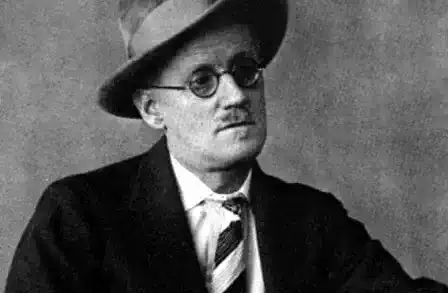
James Joyce
Sleep Now, O Sleep Now
Sleep Now, O Sleep Now
Sleep now, O sleep now,
O you unquiet heart!
A voice crying "Sleep now"
Is heard in my heart.
The voice of the winter
Is heard at the door.
O sleep, for the winter
Is crying "Sleep no more."
My kiss will give peace now
And quiet to your heart -- -
Sleep on in peace now,
O you unquiet heart!
Sleep now, O sleep now,
O you unquiet heart!
A voice crying "Sleep now"
Is heard in my heart.
The voice of the winter
Is heard at the door.
O sleep, for the winter
Is crying "Sleep no more."
My kiss will give peace now
And quiet to your heart -- -
Sleep on in peace now,
O you unquiet heart!
186
James Joyce
Rain Has Fallen All the Day
Rain Has Fallen All the Day
Rain has fallen all the day.
O come among the laden trees:
The leaves lie thick upon the way
Of memories.
Staying a little by the way
Of memories shall we depart.
Come, my beloved, where I may
Speak to your heart.
Rain has fallen all the day.
O come among the laden trees:
The leaves lie thick upon the way
Of memories.
Staying a little by the way
Of memories shall we depart.
Come, my beloved, where I may
Speak to your heart.
176
James Joyce
Of That So Sweet Imprisonment
Of That So Sweet Imprisonment
Of that so sweet imprisonment
My soul, dearest, is fain -- -
Soft arms that woo me to relent
And woo me to detain.
Ah, could they ever hold me there
Gladly were I a prisoner!
Dearest, through interwoven arms
By love made tremulous,
That night allures me where alarms
Nowise may trouble us;
But lseep to dreamier sleep be wed
Where soul with soul lies prisoned.
Of that so sweet imprisonment
My soul, dearest, is fain -- -
Soft arms that woo me to relent
And woo me to detain.
Ah, could they ever hold me there
Gladly were I a prisoner!
Dearest, through interwoven arms
By love made tremulous,
That night allures me where alarms
Nowise may trouble us;
But lseep to dreamier sleep be wed
Where soul with soul lies prisoned.
339
James Joyce
Now, O Now in This Brown Land
Now, O Now in This Brown Land
Now, O now, in this brown land
Where Love did so sweet music make
We two shall wander, hand in hand,
Forbearing for old friendship' sake,
Nor grieve because our love was gay
Which now is ended in this way.
A rogue in red and yellow dress
Is knocking, knocking at the tree;
And all around our loneliness
The wind is whistling merrily.
The leaves -- - they do not sigh at all
When the year takes them in the fall.
Now, O now, we hear no more
The vilanelle and roundelay!
Yet will we kiss, sweetheart, before
We take sad leave at close of day.
Grieve not, sweetheart, for anything -- -
The year, the year is gathering.
Now, O now, in this brown land
Where Love did so sweet music make
We two shall wander, hand in hand,
Forbearing for old friendship' sake,
Nor grieve because our love was gay
Which now is ended in this way.
A rogue in red and yellow dress
Is knocking, knocking at the tree;
And all around our loneliness
The wind is whistling merrily.
The leaves -- - they do not sigh at all
When the year takes them in the fall.
Now, O now, we hear no more
The vilanelle and roundelay!
Yet will we kiss, sweetheart, before
We take sad leave at close of day.
Grieve not, sweetheart, for anything -- -
The year, the year is gathering.
170
James Joyce
O Sweetheart, Hear You
O Sweetheart, Hear You
O Sweetheart, hear you
Your lover's tale;
A man shall have sorrow
When friends him fail.
For he shall know then
Friends be untrue
And a little ashes
Their words come to.
But one unto him
Will softly move
And softly woo him
In ways of love.
His hand is under
Her smooth round breast;
So he who has sorrow
Shall have rest.
O Sweetheart, hear you
Your lover's tale;
A man shall have sorrow
When friends him fail.
For he shall know then
Friends be untrue
And a little ashes
Their words come to.
But one unto him
Will softly move
And softly woo him
In ways of love.
His hand is under
Her smooth round breast;
So he who has sorrow
Shall have rest.
150
James Joyce
Love Came to Us
Love Came to Us
Love came to us in time gone by
When one at twilight shyly played
And one in fear was standing nigh -- -
For Love at first is all afraid.
We were grave lovers. Love is past
That had his sweet hours many a one;
Welcome to us now at the last
The ways that we shall go upon.
Love came to us in time gone by
When one at twilight shyly played
And one in fear was standing nigh -- -
For Love at first is all afraid.
We were grave lovers. Love is past
That had his sweet hours many a one;
Welcome to us now at the last
The ways that we shall go upon.
178